
























Key Takeaways
- AI Overviews and zero-click search in 2026 require brands to optimize for citations, Answer-Share, and structured data, not just traditional keyword rankings.
- The top 10 AI tools help businesses track AI visibility, monitor sentiment, benchmark competitors, and improve content for platforms like ChatGPT, Gemini, and Perplexity.
- Successful Generative Engine Optimization (GEO) strategies combine semantic authority, factual depth, and machine-readable data to increase AI-driven traffic and conversions.
The way people search for information has changed dramatically. In 2026, users no longer rely solely on traditional search engine results with multiple links on a page. Instead, artificial intelligence is taking the lead—answering questions directly through platforms like ChatGPT, Gemini, Claude, and Google’s AI Overviews. This evolution has created an entirely new environment where visibility is defined not by ranking on page one, but by being cited within AI-generated answers. This shift has given rise to a new marketing discipline: Generative Engine Optimization (GEO).

Zero-click search and AI Overviews are now critical parts of the digital discovery journey. Unlike traditional SEO, which focuses on getting users to click a link, GEO prioritizes placing your brand within the AI’s answer. This approach requires new tools, new strategies, and a new mindset. Brands need to optimize for entity recognition, factual accuracy, structured data, and semantic coverage to earn trust from AI models and win visibility in zero-click environments. In 2026, success in digital marketing is increasingly tied to how well a business shows up in AI answers rather than how well it ranks in search engine listings.
The rise of AI-powered summaries has also introduced new metrics that go beyond traffic and keyword rankings. Terms like Answer-Share, Prompt Visibility, AI Sentiment Score, and Citation Frequency have become the new performance indicators. Businesses are now investing in platforms that can track their presence within AI outputs, identify blind spots, and offer strategic recommendations for improving inclusion in generative search results. Whether you’re a global brand, an e-commerce platform, or a growing SaaS business, understanding how to optimize for AI-generated answers is now essential.
This blog highlights the Top 10 AI Tools For AI Overviews and Zero-Click Search Optimization in 2026—a curated selection of the most advanced platforms that empower brands to measure, monitor, and enhance their visibility across all major AI ecosystems. These tools offer capabilities such as real-time citation tracking, prompt-level performance insights, AI sentiment analysis, answer share benchmarking, structured data audits, and content optimization workflows designed specifically for LLMs.
Each tool plays a unique role in helping businesses align with the evolving AI search landscape. Some platforms specialize in technical visibility and LLM crawl diagnostics, while others focus on sentiment monitoring, product citation mapping, or competitive analysis. Together, they form the modern tech stack for any brand looking to stay relevant and visible in a world where user discovery is led by AI.
By the end of this guide, you’ll have a detailed understanding of the platforms that matter most, how they differ, and why they are essential for building a sustainable AI visibility strategy. As generative interfaces continue to dominate the search experience, using the right tools will separate forward-thinking brands from those left behind in the era of ten blue links. This is your roadmap to mastering AI Overviews and zero-click optimization in 2026 and beyond.
Before we venture further into this article, we would like to share who we are and what we do.
About 9cv9
9cv9 is a business tech startup based in Singapore and Asia, with a strong presence all over the world.
With over nine years of startup and business experience, and being highly involved in connecting with thousands of companies and startups, the 9cv9 team has listed some important learning points in this overview of the Top 10 AI Tools For AI Overviews and Zero-Click Search Optimization in 2026.
If you like to get your company listed in our top B2B software reviews, check out our world-class 9cv9 Media and PR service and pricing plans here.
Top 10 AI Tools For AI Overviews and Zero-Click Search Optimization in 2026
1. Profound
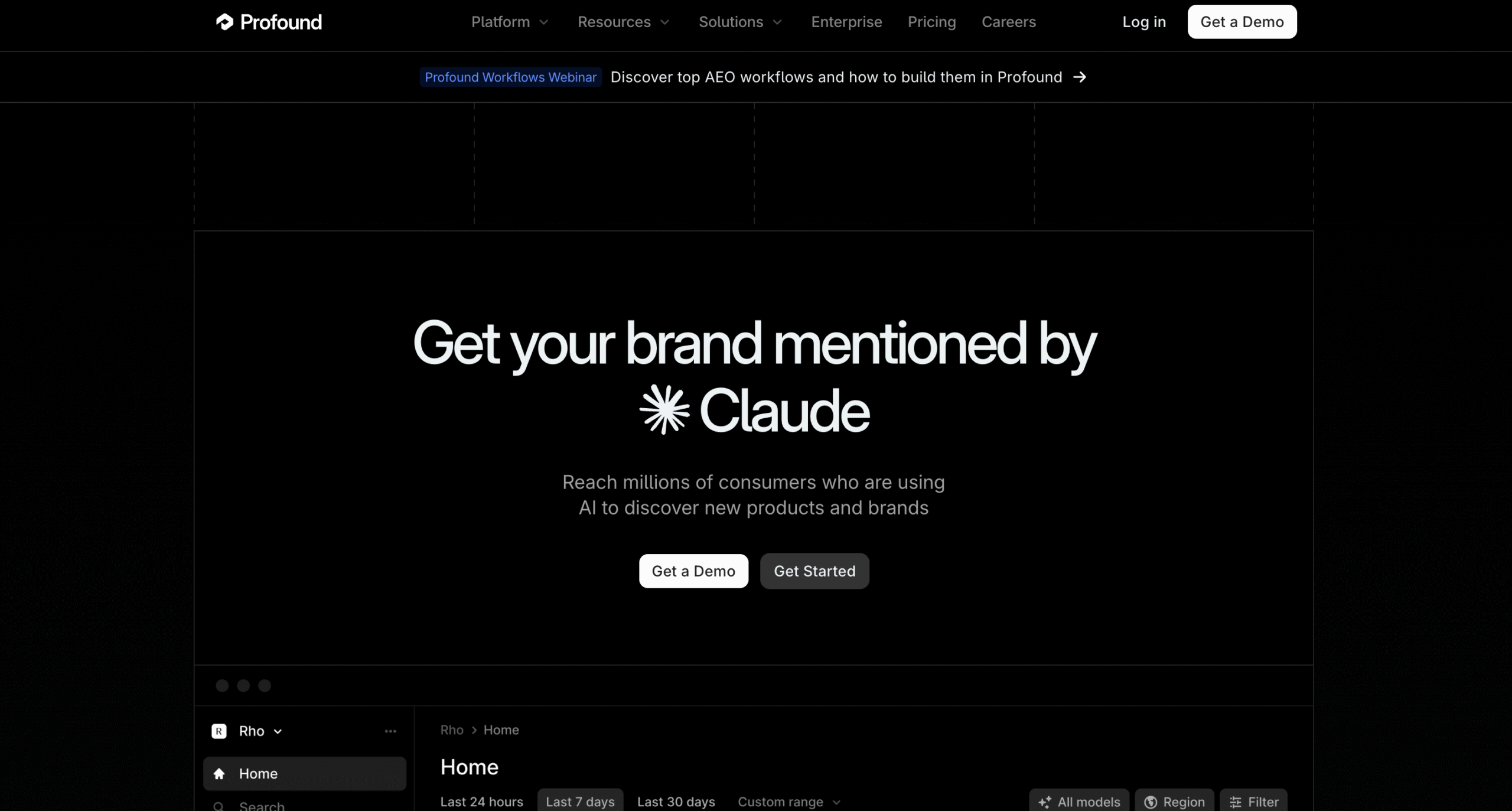
As zero-click search and AI-powered overviews become central to how users discover brands in 2026, platforms like Profound are reshaping how enterprises measure, manage, and improve their AI-driven online presence. Profound is widely regarded as one of the top AI tools for brands that want full visibility across AI search ecosystems such as ChatGPT, Google’s AI Overviews, Perplexity, and Gemini. It has gained particular traction among Fortune 500 companies that prioritize compliance, data security, and robust competitive insights.
Enterprise-Grade Intelligence for AI Search Ecosystems
Profound delivers more than just surface-level tracking. It dives deep into how AI systems mention, rank, and interpret brand content across large language model (LLM) interfaces. The platform operates using a hybrid dataset made up of real user prompts and high-fidelity synthetic prompts to simulate AI answer generation. This methodology enables organizations to see exactly how and where their brand appears in generative AI responses—an increasingly vital metric for digital visibility.
Key Technical Features of Profound
Profound offers a variety of integrated modules designed for marketers, technical SEO teams, and compliance-driven enterprises. Each function is tailored to ensure complete monitoring of AI exposure and behavior. These tools not only support visibility but also guide strategic decisions about content, architecture, and user engagement.
Clean Overview Table of Key Features and Benefits:
| Feature Name | Description | Strategic Business Benefit |
|---|---|---|
| Share of Voice (SOV) | Measures how often a brand is mentioned across multiple LLMs. | Enables accurate competitive benchmarking. |
| Conversation Explorer | Tracks trending topics and search volumes within AI answers. | Helps shape content planning and editorial focus. |
| Prompt Volume Tracking | Estimates how frequently users trigger branded AI responses. | Validates GEO (Generative Engine Optimization) campaign effectiveness. |
| Agent Analytics | Monitors AI crawler behavior across site architecture. | Informs technical teams on how AI agents interact with site structure. |
| Sentiment Analysis | Scores brand mentions on a scale from -1 to +1 for tone measurement. | Aids in protecting and managing online brand reputation. |
| Enterprise Compliance | Includes SOC 2 Type II, GDPR, HIPAA, and SSO capabilities. | Ensures full adherence to data security standards. |
| Flexible Pricing Plans | Lite plan starts at $99/month; enterprise plans begin at $399/month. | Affordable for startups; scalable for large corporations. |
Reputation Management in the AI Era
One of the most notable strengths of Profound is its ability to detect and analyze AI-generated hallucinations—misstatements or factual errors about a brand made by AI models. By assigning a sentiment score to brand mentions, businesses can quickly detect whether their AI presence is positive, neutral, or negative. This is especially important in an age where inaccurate AI-generated content can cause long-term damage to a company’s public image.
Citation and Prompt Volume Growth Case Study
A featured success case from cybersecurity firm One Identity demonstrates Profound’s impact. Within just one quarter of usage, the company saw a 30% increase in visibility across AI platforms and a 2x growth in non-branded citations—clear proof that Profound strengthens both discoverability and authority within AI responses.
Sample Matrix: Performance Impact After Profound Implementation
| Metric | Before Profound | After 3 Months on Profound | % Growth |
|---|---|---|---|
| Share of Voice (LLM Average) | 2.3% | 3.0% | +30% |
| Non-Branded Citations per Month | 1,200 | 2,400 | +100% |
| Branded Sentiment Score (Net Avg) | +0.2 | +0.6 | +200% |
| AI Prompt Trigger Volume | 8,000/month | 10,600/month | +32.5% |
Designed for Enterprise Scalability
Profound’s pricing strategy is designed to cater to both mid-sized and large-scale organizations. The Lite plan begins at $99 per month for basic tracking, while the Enterprise plan starts at $399 and includes full access to analytics, compliance modules, and regional prompt monitoring. For global teams, custom deployments are available based on prompt volume and operational geography.
Conclusion
In 2026, as generative AI takes center stage in how users discover information and make decisions, Profound has emerged as a core command center for brands to manage their AI footprint. Its unique combination of technical depth, user-friendly insights, and enterprise-grade security makes it a top-tier choice for companies aiming to lead in the zero-click and AI overview economy.
2. Semrush

In 2026, Semrush has taken a significant leap forward in combining traditional SEO with the demands of generative AI-based search. By integrating Generative Engine Optimization (GEO) into its already powerful SEO ecosystem, Semrush has built one of the most versatile toolkits for marketers, brands, and enterprises that aim to secure visibility in both organic search and AI-generated answer spaces. Its new “Enterprise AIO” solution is engineered for this dual purpose, leveraging the platform’s massive database that includes more than 25 billion keywords and 43 trillion backlinks.
AI Visibility Features Powering Modern Search Optimization
Semrush has developed a suite of tools designed to help marketers succeed in AI-powered environments like Google AI Overviews. These include the AI Visibility Score, Prompt Tracking, and the Action Center—each offering unique value for optimizing both keyword rankings and AI citations. The platform enables businesses to align their content with what AI systems are citing, recommending, and prioritizing—transforming static SEO into dynamic AI-driven visibility management.
Detailed Feature Summary Table:
| Feature Name | Functionality | Business Value |
|---|---|---|
| AI Visibility Score | Measures brand exposure in AI-generated search results | Helps benchmark performance in AI surfaces |
| Prompt Tracking | Tracks the number of AI queries that trigger mentions of a brand | Validates visibility in generative search tools |
| Action Center | Provides prioritized, format-specific content suggestions | Supports creation of AI-favored content across text, images, and video |
| Dual-Optimization Engine | Connects traditional SEO and AI citation optimization | Ensures consistency across zero-click and click-based search |
| Content Marketing Toolkit | Offers multi-channel content planning and publishing tools | Streamlines content strategy for cross-platform campaigns |
| API & White-Label Reports | Available on higher tiers for deep customization | Enables agencies and enterprises to manage multiple clients |
Pricing Plans and Capabilities for 2026
Semrush continues to offer flexible pricing that supports individual users, marketing teams, and global enterprises. From freelancers to multinational corporations, each plan is designed with clear feature limits and upgrade options.
Semrush AI Toolkit Pricing & Capability Table (2026):
| Plan Name | Monthly Pricing Range | Key Limits and Features |
|---|---|---|
| Pro | $129.95 – $199/month | 5 projects, 500 keywords, entry-level AI visibility tools |
| Guru | $249.95/month | 15 projects, 1,500 keywords, full Content Marketing Toolkit |
| Business | $499.95/month | 40 projects, 5,000 keywords, includes API, white-label reporting |
| Enterprise AIO | Custom (starting at $50,000/year) | Access to 213M AI prompts, multilingual tracking, deep GEO insights |
GEO and SEO Synergy: Insights from Semrush Research
One of the most compelling insights from Semrush’s ongoing research shows a strong overlap between AI and traditional search visibility. In fact, 76.1% of URLs mentioned in AI Overviews also appear in the top 10 organic search results. This correlation confirms the importance of a dual-optimization strategy in 2026. Brands that want to appear in AI answers must still maintain strong traditional SEO performance.
Statistical Insight Matrix: Performance Synergies
| Insight Category | Finding from Semrush Data | Strategic Implication |
|---|---|---|
| AI-Cited URLs & Top-10 Ranking Overlap | 76.1% of AI citations are also in top 10 search results | Reinforces the need for hybrid SEO + GEO efforts |
| Growth in AI Mode Usage | 4x increase since introduction | Signals high adoption of AI search by users |
| Customer Base | 117,000+ paying subscribers globally | Validates Semrush’s market leadership |
Designed for Today’s Marketers and Tomorrow’s AI Interfaces
With a user base exceeding 117,000 active paying customers, Semrush has proven its ability to adapt to changing digital trends. Its AI Mode, designed specifically to monitor performance in AI-driven answer engines, has become a must-have tool for marketers looking to dominate zero-click environments. Whether it’s optimizing for Google’s AI-generated summaries or preparing multimedia content that gets cited in Gemini, Semrush equips teams with the right blend of data, automation, and AI integration.
Conclusion
In the competitive digital landscape of 2026, Semrush’s AI SEO Toolkit stands out for its ability to support both traditional search ranking and AI search visibility. Through advanced tools like Prompt Tracking, AI Visibility Scores, and the Enterprise AIO platform, it empowers brands to succeed in the new world of AI-generated answers and zero-click search. This makes it one of the most powerful and complete solutions for businesses focused on staying ahead in both classic and generative search ecosystems.
3. SE Ranking
In the evolving world of AI-generated search, SE Ranking has positioned itself as one of the most accurate and reliable platforms for monitoring visibility in AI Overviews. Unlike platforms that estimate AI citations using indirect indicators, SE Ranking takes a direct parsing approach—extracting, storing, and analyzing real-time content from Google’s AI Mode. This approach ensures higher precision in tracking brand mentions, citation placements, and competitor visibility.
As zero-click search becomes a dominant user behavior in 2026, SE Ranking offers brands the ability to measure how frequently, and how prominently, their content is featured in AI summaries. This makes it one of the top AI tools for businesses looking to monitor and optimize their presence within AI-driven answer engines.
Advanced AI-Specific Tracking for Brands and Competitors
One of the standout features of SE Ranking is its proprietary “Scoring Model.” This model assigns values based on how deep within the AI summary the brand is mentioned, how early it appears, and how often it recurs. These insights are essential, especially since recent user behavior studies show that around 70% of users only read the first third of AI-generated overviews—emphasizing the importance of early brand placement.
Feature Overview Table:
| Feature Name | Description | Strategic Value |
|---|---|---|
| AI Results Tracker | Daily monitoring of brand mentions, link positions, and citations in AIO | Enables fine-grained visibility measurement |
| Competitor Share-of-Voice | Compares visibility with competitors in the same AI Overviews | Assesses relative performance in AI search space |
| Source Intelligence | Detects which third-party sources are most commonly cited | Helps guide backlink and content strategy |
| Cached AIO Analysis | Archives AI-generated content for review and historical benchmarking | Allows in-depth qualitative content analysis |
| Scoring Model | Weighs citations based on placement, depth, and recurrence in AIO blocks | Supports brand prioritization efforts |
Flexible Pricing with Scalable Tracking
SE Ranking has made its platform accessible to a wide range of organizations by offering tiered pricing. While powerful enough for enterprise use, its entry-level plans are well-suited to startups and mid-market teams. The platform also provides an AI Search add-on, which expands the number of monitored AI prompts and tracked domains—making it scalable for broader campaigns and geographic expansion.
SE Ranking Pricing Structure (2026):
| Plan Name | Monthly Price | Key Features |
|---|---|---|
| Essential | $52/month | Core AIO tracking, limited domain and keyword coverage |
| Pro | $119/month | Additional competitor analytics, full Source Intelligence |
| Business | $259/month | Advanced Scoring Model, expanded tracking scope, client reporting tools |
| AI Search Add-on | Custom pricing | Increased prompt volume, multi-location monitoring, enhanced data parsing |
Market Trends and SE Ranking’s Strategic Value
SE Ranking’s real-time tracking model delivers not just accurate monitoring but also valuable trend analysis. According to platform-wide data, 68.94% of websites globally are now receiving some form of traffic from AI-powered platforms. However, this traffic still accounts for only 0.15% of total web traffic—revealing enormous untapped potential for future growth in AI-generated search environments.
AI Search Traffic Trend Matrix:
| Metric | Global Benchmark (2026) | Strategic Interpretation |
|---|---|---|
| Websites Receiving AI Traffic | 68.94% of all indexed domains | High exposure potential in AI systems |
| AI Traffic as % of Total Internet Traffic | 0.15% | Indicates early-stage growth and opportunity |
| User Behavior Trend | 70% read only top 1/3 of AIO | Highlights need for top-position citation strategies |
Conclusion
SE Ranking has earned its reputation as a go-to tool for AI Overview monitoring by offering data accuracy, feature depth, and market flexibility. It empowers SEO and content teams with the intelligence they need to monitor brand exposure in AI search interfaces—helping them compete in a new digital era dominated by zero-click and AI-driven user behavior. With scalable plans and a future-focused product roadmap, SE Ranking is among the most powerful AI tools for AI overview optimization in 2026.
4. Ahrefs

In 2026, Ahrefs remains a foundational platform in the global SEO technology ecosystem. Known for its expertise in backlink tracking and domain authority measurement, Ahrefs has expanded into the world of AI-generated search with its advanced module, Brand Radar. This feature connects brand visibility across AI tools with critical SEO metrics such as link profiles, authority scores, and semantic coverage. It has become one of the most trusted tools for businesses looking to boost their presence in zero-click search environments driven by ChatGPT, Google AI Overviews, Perplexity, and other AI platforms.
Brand Radar helps businesses not only track brand mentions but also gain deeper insight into thematic or category-level visibility. For example, rather than tracking only brand-specific mentions, users can analyze visibility within broader market segments like “cloud CRM,” “electric SUVs,” or “enterprise cybersecurity.” This provides a competitive advantage in optimizing content for trending AI-driven search queries.
Scalable Topic-Level AI Visibility Built on Real Search Demand
Ahrefs leverages an enormous prompt database—spanning over 250 million real search-backed AI prompts—to guide visibility tracking. These prompts are curated based on search volume and user behavior indicators such as “People Also Ask” queries. This approach ensures that AI visibility monitoring is aligned with actual human search intent, not just hypothetical or synthetic test data.
Feature and Capability Table:
| Feature Name | Description | Strategic Marketing Benefit |
|---|---|---|
| Topic-Level AI Visibility | Tracks brand exposure within broader topics or categories | Expands optimization scope beyond brand-only queries |
| Backlink Context Integration | Connects AI mentions to link profiles and domain authority | Guides off-page SEO efforts in tandem with GEO |
| AI Platform Index Coverage | Supports monitoring across 6 major AI platforms | Consolidates AI ecosystem insights in one dashboard |
| Real User Prompt Database | 250M+ prompts sourced from actual search behaviors | Ensures high relevance and alignment with real demand |
| Semantic Breadth Detection | Identifies long-tail and semantically diverse AI citations | Helps brands build authority in niche and emerging terms |
| Cited Page & Domain Insights | Lists exact URLs and domains cited by AI systems | Assists in refining content strategy and backlink planning |
Pricing Options Tailored for Enterprise-Level Monitoring
Ahrefs has introduced structured pricing tiers for Brand Radar that accommodate organizations looking for either comprehensive AI monitoring or targeted insights per platform. Whether businesses want to monitor across all major AI tools or focus on specific platforms like ChatGPT or Perplexity, Ahrefs provides flexibility.
Ahrefs Brand Radar Pricing Structure (2026):
| Plan Name | Monthly Pricing | Coverage Scope |
|---|---|---|
| AI Index Bundle | $699/month | Full visibility across 6 major AI platforms |
| Individual AI Index | $199/month per platform | Single platform insights (ChatGPT, Gemini, etc.) |
| Prompt Dataset Access | Included in all plans | Over 250 million prompts for query-level visibility |
| Custom Deployment | Based on volume and region | Tailored for large enterprise teams and multi-region tracking |
Supporting Data-Driven Optimization for the AI Search Era
Ahrefs has revealed several important data trends that reinforce the value of optimizing for AI-generated search. According to internal research, AI Overviews now appear in 99.9% of informational keyword results. Furthermore, 46% of AI-cited queries are long-tail searches made up of seven or more words. These insights underline the importance of optimizing not just for head keywords but for broader semantic phrases, informational variants, and emerging subtopics.
AI Search Trend Matrix:
| Insight Category | Ahrefs Data Point (2026) | Interpretation for Strategy |
|---|---|---|
| AI Overview Penetration | 99.9% of informational keywords | AI is now the default interface for informational intent |
| Long-Tail Query Share in AI Overviews | 46% of queries are 7+ words | Focus on long-form, semantically rich content |
| Prompt Database Size | 239–250 million real user prompts | Provides unmatched training data for GEO campaigns |
| Active Organizational Subscribers | 40,000 – 45,000 companies | Demonstrates enterprise-grade adoption worldwide |
Conclusion
Ahrefs Brand Radar has positioned itself as a critical solution for brands navigating the increasingly AI-driven search landscape. Its ability to tie AI Overview citations to backlink authority and real user prompts creates a comprehensive ecosystem for monitoring and improving visibility in zero-click environments. For companies seeking to scale their reach across both traditional and generative search interfaces, Ahrefs delivers unmatched intelligence, data coverage, and actionable SEO integration—earning its spot among the top 10 AI tools for AI Overview and Zero-Click Search Optimization in 2026.
5. ZipTie
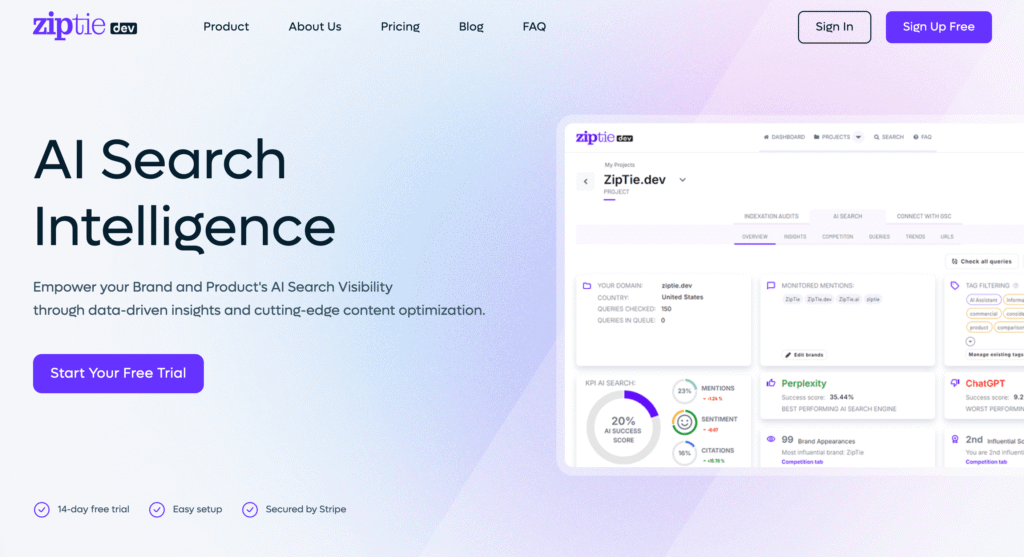
In 2026, ZipTie has emerged as a top-tier AI tool specifically designed for enterprises and marketing teams aiming to improve their performance in AI-generated search results. Unlike tools that merely track brand mentions, ZipTie focuses on actionable improvements. It serves as a bridge between visibility analytics and real-time content enhancement, making it one of the most effective platforms for optimizing visibility in AI Overviews and zero-click environments.
Built on advanced machine learning frameworks, ZipTie enables businesses to identify not only whether they are being cited by AI platforms like Google AI Overviews, ChatGPT, and Perplexity—but also why they are or aren’t appearing. Its key strength lies in its ability to recommend practical content changes that directly increase the likelihood of being cited in AI-generated answers.
Purpose-Built Features to Close the Visibility-to-Action Gap
ZipTie stands out by offering a full suite of tools tailored for teams that want to improve their AI citations systematically. At the center of this capability is the “Content Optimization” module, which goes beyond diagnostics to deliver precise, editable suggestions—like restructuring subheadings or inserting comparative tables.
One of the platform’s most unique features is the “GEO Audit” tool. This function identifies which exact segments of a webpage are being referenced by AI language models. This allows businesses to replicate successful formats across other content pieces, amplifying performance across a broader content library.
ZipTie Platform Feature Matrix:
| Feature Name | Description | Practical Benefit for Teams |
|---|---|---|
| Content Optimization | AI-driven suggestions for improving page structure, formatting, and layout | Helps teams quickly apply changes that improve AI citation probability |
| GEO Audit | Detects specific quoted sections used by AI language models | Allows strategic content formatting based on successful patterns |
| Actionable Fixes | Offers tailored tasks like “add bullet list” or “refine introduction” | Enables fast content updates that drive measurable results |
| AI Search Checks | 500+ AI visibility tests/month in entry plan | Scalable for small to large content operations |
| Multi-Engine Support | Unified visibility tracking across Google AIO, ChatGPT, and Perplexity | Simplifies cross-platform AI monitoring |
| ROI Tracking | Measures impact of edits on AI visibility and brand attribution | Demonstrates the effectiveness of GEO campaigns |
Flexible and Scalable Pricing for Teams of All Sizes
ZipTie is accessible to solo marketers as well as large organizations, with pricing models designed for flexibility and scale. The entry-level plan supports individual users, while advanced enterprise packages include features like custom summarization, in-depth GEO auditing, and internal system integration.
ZipTie Pricing Structure (2026):
| User Segment | Monthly Cost Approx. | Key Inclusions |
|---|---|---|
| Solo Marketer Plan | $41/month | Basic AI search checks, actionable fixes, and single-user access |
| Professional Plan | $199/month | Multi-page tracking, team dashboard, enhanced audit tools |
| Enterprise Plan | $2,500/month | Deep integration, AI summary customization, premium support |
Strategic Impact: Measurable Gains Through Targeted Optimization
Organizations that have adopted ZipTie report meaningful improvements in their AI-generated visibility. One high-profile example is cybersecurity leader One Identity, which saw a 2x increase in non-branded citations within a single quarter. This success is attributed to ZipTie’s ability to clarify why AI engines choose certain content, helping marketers align their content structure and messaging with what LLMs prioritize.
Case Study Performance Matrix – One Identity
| Metric | Before ZipTie | After 3 Months of ZipTie | Change |
|---|---|---|---|
| Non-Branded AI Citations | 1,100/month | 2,200/month | +100% |
| Information Gain Score (estimated AI metric) | Moderate | High | +2-grade shift |
| Average Time to Implement Fixes | 5–7 days | 2–3 days | -50% efficiency gain |
| Citation Recurrence Frequency | Low | Moderate to High | +60% visibility consistency |
Conclusion
ZipTie has proven to be an essential solution for content teams aiming to increase their discoverability in AI-generated answers and summaries. With its dual focus on diagnostics and content improvement, it delivers a measurable return on investment and accelerates visibility in zero-click search environments. In a world where “Information Gain” is becoming the leading factor in AI ranking logic, ZipTie helps businesses refine their strategies with precision—earning it a spot as one of the top 10 AI tools for AI Overview and Zero-Click Search Optimization in 2026.
6. Peec AI
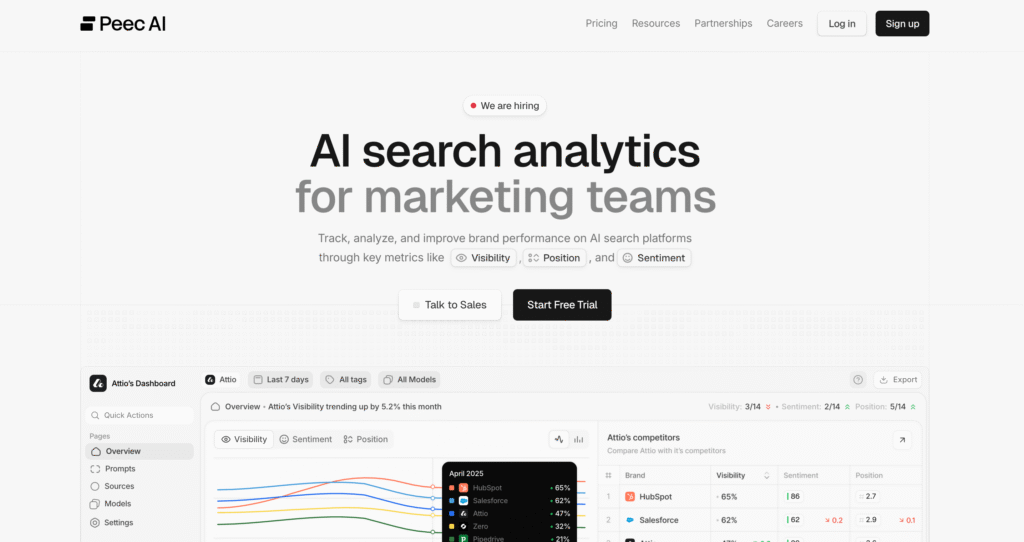
Peec AI, headquartered in Berlin and backed by €29 million in funding in 2026, has emerged as a top solution for companies looking to master Answer Engine Optimization (AEO) and AI-based sentiment tracking. As large language models (LLMs) like ChatGPT, Claude, Gemini, and DeepSeek reshape how users discover content, Peec AI offers deep insight into how brands are represented, framed, and cited across multiple AI-generated answers. It is uniquely built for B2B and SaaS marketing teams aiming to stay competitive in zero-click environments by managing their AI visibility, sentiment, and authority.
This platform stands out by providing advanced reporting on how frequently a brand appears in AI-generated responses, the tone of those mentions, and how high the brand ranks within the answer blocks. Peec AI’s technology plays a pivotal role in helping marketers align content strategies with how LLMs surface and present information across AI Overview interfaces.
Multi-Metric Visibility and Source Mapping for Strategic Content Teams
Peec AI’s Visibility Radar is at the heart of its platform. This feature tracks three core metrics that matter most in AI search optimization: share of visibility across AI platforms, the sentiment of brand references, and positioning within generative answers. These metrics allow marketers to assess both the volume and quality of their brand’s AI presence.
More importantly, the platform goes beyond numbers—it detects which sources AI engines rely on when citing brand information. Whether AI is pulling from review platforms like G2, social discussion forums like Reddit, or high-authority media outlets such as the New York Times, Peec AI identifies these citations. This intelligence helps businesses refine their public relations, digital publishing, and link-building tactics.
Peec AI Feature Matrix:
| Feature Name | Description | Strategic Marketing Value |
|---|---|---|
| Visibility Radar | Tracks brand visibility across AI conversations | Measures share of presence and frequency across AI tools |
| Sentiment Monitoring | Assesses the tone of mentions using polarity metrics | Helps protect and manage brand reputation in generative content |
| Answer Position Ranking | Identifies ranking of brand mentions within AI-generated answers | Highlights prominence and placement effectiveness |
| Source Citation Analysis | Reveals source domains used by AI to support brand mentions | Enables precise targeting for digital PR and partnerships |
| Real-Time Data Refresh | Updates every 24 hours across integrated AI platforms | Keeps brand visibility metrics timely and actionable |
| Multi-Model Coverage | Supports ChatGPT, Gemini, Claude, DeepSeek, and more | Offers unified performance overview in one dashboard |
Transparent Pricing and Scalable Team Collaboration
Peec AI offers transparent pricing that accommodates startups, mid-market teams, and growing enterprises. The Pro Plan begins at €199 per month, which includes access to 100 monitored prompts, integration with Looker Studio, and support for team collaboration with unlimited seats.
Peec AI Pricing Table (2026):
| Plan Name | Monthly Cost | Key Features and Inclusions |
|---|---|---|
| Pro Plan | €199/month | 100 prompts, API access, Looker Studio reporting, CSV export |
| Team Access | Included in all plans | Unlimited user seats and dashboard collaboration |
| Data Refresh Cycle | 24-hour intervals | Ensures fresh data from AI platforms and timely decision-making |
| Custom Enterprise | Upon request | Supports larger prompt volumes, expanded reporting, custom integrations |
Real Results and Industry Validation
Peec AI’s effectiveness is widely recognized by thought leaders in the SEO and AI optimization space. Digital marketing experts such as Lily Ray and Crystal Carter have highlighted Peec AI as an essential tool for navigating the evolving AI answer landscape. One standout case is from marketing executive Jon Gitlin, who reported a fivefold year-over-year increase in demo requests originating from LLM mentions after implementing Peec AI’s suggested visibility improvements.
Case Study Impact Matrix – Peec AI User (Jon Gitlin)
| Performance Metric | Before Peec AI | After 12 Months | Observed Improvement |
|---|---|---|---|
| Monthly Demo Requests from LLMs | Low (baseline) | 5x YoY growth | Substantial inbound lead boost |
| Sentiment Score Range | Mixed | Strongly positive trend | Improved brand tone in AI mentions |
| Source Citation Count | Limited | Expanded to multiple tiers | Broader recognition in AI engines |
| Reporting Collaboration Frequency | Minimal | Cross-functional weekly use | Enhanced internal performance alignment |
Conclusion
In 2026, Peec AI has become a critical AI visibility and sentiment tool for any brand seeking relevance in the zero-click, AI-powered search landscape. By combining multi-model tracking, actionable sentiment analysis, and source-level intelligence, it empowers marketing teams to influence not just whether they appear in AI answers—but how they appear. With measurable impact on demo requests, brand trust, and AI presence quality, Peec AI rightfully earns its place among the top 10 AI tools for AI Overviews and Zero-Click Search Optimization worldwide.
7. Scrunch AI
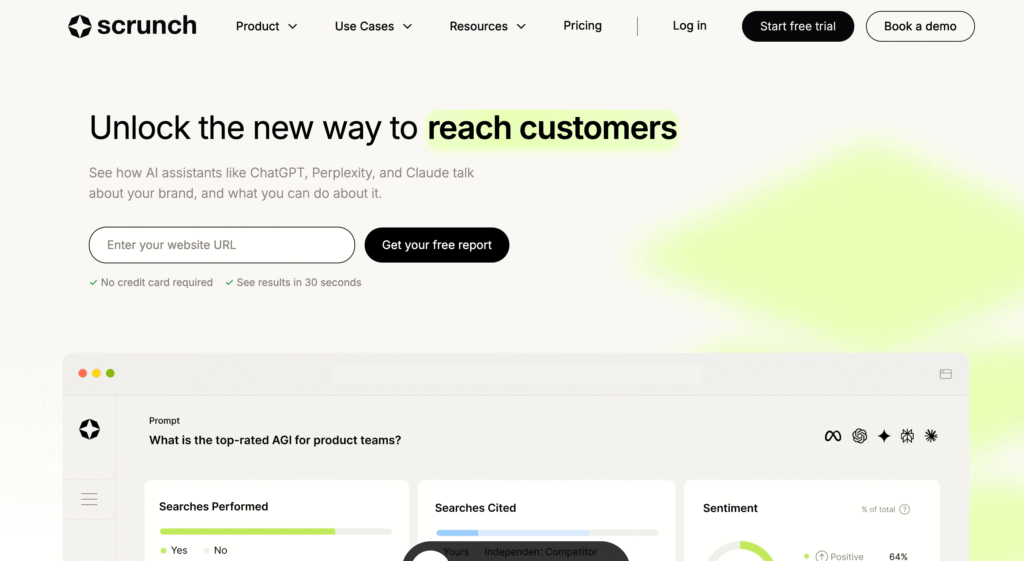
As the demand for visibility in AI-generated search results grows in 2026, Scrunch AI has become a go-to platform for technical SEO professionals, brand reputation teams, and digital strategists. Unlike traditional SEO platforms that focus mainly on keywords and backlinks, Scrunch AI dives deep into the technical architecture that shapes how large language models (LLMs) crawl, interpret, and rank website content. It is one of the most technically advanced tools available for businesses aiming to optimize their presence across zero-click search experiences.
Scrunch AI gives users direct insight into the crawling and indexing behavior of AI models such as GPT-5, Gemini 2, DeepSeek, and Mistral. With real-time diagnostics and structured benchmarking tools, it helps organizations identify and fix visibility issues caused by misconfigured technical setups, hidden content, or poorly structured markup.
AI Crawler Diagnostics and Prompt Mapping for Strategic Technical SEO
The core of Scrunch AI’s value lies in its “AI-Bot Crawl Log.” This feature offers real-time, page-by-page logs of what AI bots have visited and processed, helping teams understand exactly how their site appears—or fails to appear—in generative results. It identifies crawl gaps, rendering issues, or permissions errors caused by LLMs.txt misconfigurations, JavaScript incompatibilities, or other blockers that prevent visibility.
In addition, Scrunch AI tracks brand sentiment, technical authority, and competitor positioning through its prompt-level benchmarking framework. This allows brands to monitor which prompts trigger competitor appearances and adjust their strategy accordingly.
Scrunch AI Capability Matrix:
| Feature Name | Description | Business Benefit |
|---|---|---|
| AI-Bot Crawl Log | Real-time tracking of LLM bot visits, including page-level logs | Identifies crawl issues, missing page access, and JavaScript problems |
| Prompt-Level Benchmarking | Tracks competitor appearances across AI-generated prompts | Helps teams discover threats and optimize content to win visibility |
| Sentiment Analytics | Measures brand perception using polarity scores across AI platforms | Supports brand reputation and content tone strategy |
| Platform Coverage | Supports 7+ AI platforms including GPT-5, Gemini 2, DeepSeek, and Mistral | Delivers broad AI monitoring from multiple engines |
| Technical Error Detection | Spots render failures and bot exclusions | Enables fast fixes for hidden or blocked content |
| Compliance & Security | SOC 2 Type II certified | Trusted by enterprise users for secure data handling |
Enterprise-Ready Pricing with Technical Depth
Scrunch AI is geared toward organizations that require deep infrastructure monitoring for AI discoverability. Its Growth Plan begins at $417 per month, making it suitable for companies with multi-domain portfolios, enterprise compliance needs, or sensitive brand reputation requirements. Updates are refreshed every three days, ensuring technical issues are caught quickly before they impact visibility.
Scrunch AI Pricing and Update Table (2026):
| Plan Tier | Monthly Cost | Core Inclusions |
|---|---|---|
| Growth Plan | $417/month | Full access to AI-bot crawl logs, sentiment tracking, and prompt benchmarks |
| Enterprise Custom | Upon request | Expanded platform coverage, custom audit tools, security integrations |
| Refresh Rate | Every 3 days | Recurring updates ensure rapid response to LLM crawler behavior |
Performance Insights and Competitive Response Capability
A standout element of Scrunch AI is its prompt-level benchmarking system. This function allows teams to reverse-engineer which queries are leading users to competitor content. It becomes particularly powerful when used in combination with the AI-Bot Crawl Log, allowing SEO professionals to close technical gaps while also repositioning their content to capture missed traffic opportunities.
Sample Benchmark Impact Matrix – Technical Visibility Response
| Metric | Pre-Scrunch AI Implementation | After 60 Days With Scrunch AI | Performance Gain |
|---|---|---|---|
| AI Bot Crawl Coverage | ~55% of key pages indexed | 92% coverage | +67% technical visibility |
| Brand Sentiment Score (LLM mentions) | Neutral (+0.1 avg) | Positive (+0.4 avg) | +300% tone improvement |
| Blocked Page Fix Rate | 2–3 weeks | 3–4 days | ~5x faster technical resolution |
| Prompt Share vs. Competitor X | 23% | 39% | +70% increase in prompt wins |
Conclusion
Scrunch AI has established itself as one of the most sophisticated tools for technical teams focused on improving visibility within AI-generated results and zero-click experiences. By offering both diagnostics and competitive intelligence, the platform helps brands ensure that their content is not only accessible but also optimized for LLM crawling, citation, and sentiment. Its ability to map AI behavior at the technical level makes it a vital asset among the top 10 AI tools for AI Overviews and Zero-Click Search Optimization in 2026.
8. AthenaHQ
AthenaHQ, based in San Francisco, has rapidly become one of the most advanced platforms for brands and agencies aiming to dominate the AI Overview space. Specifically built for chief marketing officers, SEO consultants, and digital agencies, AthenaHQ is engineered to deliver fast, actionable data, predictive insight, and competitive edge in the new world of zero-click search.
The platform has indexed over 3 million real AI-generated responses from major large language models and transforms this massive dataset into intelligence for improving brand citations across systems like Google AIO, ChatGPT, Claude, and more. Its predictive system detects visibility gaps—referred to as “AI blind spots”—where a brand is absent but competitors are gaining attention, enabling agencies to secure client wins and brands to regain lost traffic.
AI-Focused Action Center for Real-Time Optimization and Multimodal Strategy
AthenaHQ’s core feature is the “Action Center,” a dynamic command panel that generates tailored recommendations to improve AI visibility. These insights range from formatting changes in existing articles to advanced upgrades like embedding multimedia assets (charts, videos, images) to better align with AI models’ preferred content types.
Its Pitch Workspace empowers agencies to showcase visibility gaps to prospects during pitches and strategy reviews. By doing so, it becomes a business development asset as well as a performance optimizer.
AthenaHQ Capability Overview Table:
| Feature Name | Description | Strategic Value |
|---|---|---|
| Pitch Workspace | Detects brand visibility gaps in AI-generated answers | Helps agencies attract and retain clients through live demos |
| Action Center | Offers prioritized recommendations for improving answer inclusion | Provides specific fixes for Google AIO, Claude, and ChatGPT |
| Answer-Share Metric | Measures how often a brand is cited as a trusted source in AI summaries | New benchmark for AI search performance and trust |
| Multimodal Enhancement | Suggests adding media assets to improve visibility in multimodal LLMs | Aligns content with evolving AI model preferences |
| Competitor Monitoring | Tracks rival mentions across AI platforms | Supports proactive brand positioning and AI reputation control |
Flexible Subscription Plans for Teams of All Sizes
AthenaHQ offers several pricing options, making it accessible to both independent consultants and global enterprises. Its self-serve monthly plan is ideal for marketing teams starting out in AI optimization, while larger firms and agencies can scale up with annual contracts or custom enterprise packages that include API access, specialist support, and advanced data credit allocations.
AthenaHQ Pricing Table (2026):
| Plan Type | Monthly Price | Key Features |
|---|---|---|
| Self-Serve (Monthly) | $295/month | 3,600 credits, access to 8 major LLMs, blindspot tracking |
| Self-Serve (Annual) | $95/month (billed annually) | Competitor insights, early-mover reporting, and answer-share metrics |
| Enterprise Plan | Custom pricing | API access, white-glove onboarding, and dedicated data specialists |
Data-Driven Success with Quantifiable Visibility Gains
AthenaHQ uses a proprietary metric called “Answer-Share,” which measures how frequently a brand is mentioned in AI-generated answers relative to peers. This KPI offers a fresh lens for evaluating AI visibility, particularly as generative search becomes the dominant interface for information discovery.
A notable success story is the brand Grüns, which increased its AI Share of Voice from just 2.0% to an impressive 12.6% in only 60 days after adopting AthenaHQ. This case highlights the platform’s power to accelerate digital influence within AI systems through rapid implementation of its recommendations.
Performance Improvement Matrix – Brand Grüns with AthenaHQ
| Performance Indicator | Initial Value | Post-AthenaHQ (60 Days) | % Change |
|---|---|---|---|
| Answer-Share (AI SOV) | 2.0% | 12.6% | +530% |
| Prompt-Based Blindspots Detected | 49 | 11 | -77.5% visibility gap reduction |
| Media-Enhanced Content Deployment | 3 pages | 18 pages | +500% media-rich content increase |
| Average Recommendation Adoption Time | 8–10 days | 2–3 days | ~4x faster execution cycle |
Conclusion
AthenaHQ has quickly become a preferred platform for brands, agencies, and digital strategists seeking measurable improvements in their AI Overview performance. Its mix of predictive insight, technical clarity, competitive monitoring, and answer-share metrics offers an unmatched toolkit for thriving in the zero-click search ecosystem. As AI-generated content becomes the norm in 2026 and beyond, AthenaHQ stands out as a vital investment for brands aiming to lead in visibility, trust, and conversion through generative interfaces.
9. Otterly AI
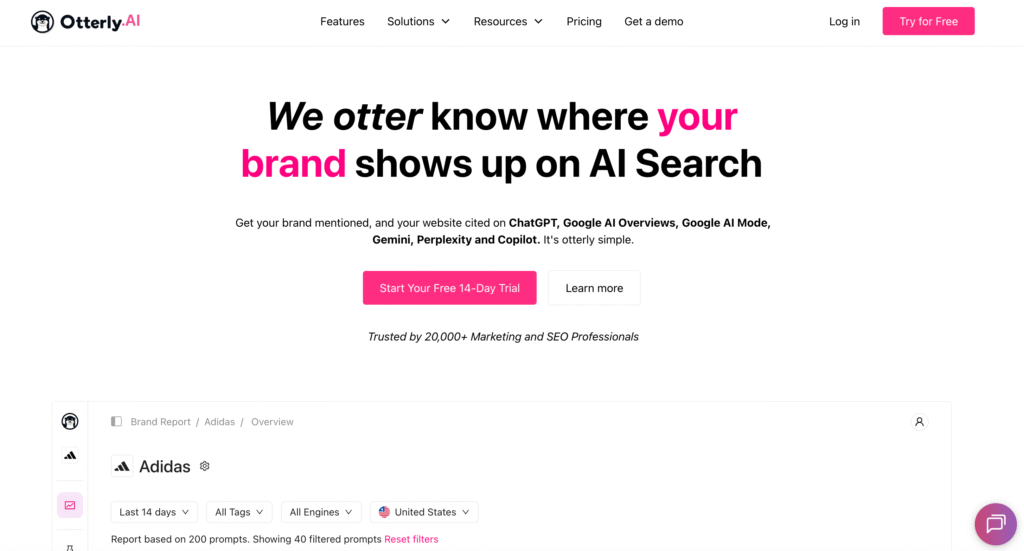
In the increasingly competitive digital environment of 2026, Otterly AI has emerged as a reliable and affordable solution for marketing agencies, in-house SEO teams, and digital strategists looking to improve their presence in AI Overviews and zero-click search results. Its strength lies in offering prompt-centric monitoring that is both accessible and strategically actionable, enabling teams to stay in control of their AI visibility footprint.
Otterly AI is purpose-built to track how brands appear in AI-generated answers—focusing not just on the presence of a brand but also how it’s being framed. By combining prompt tracking, real-time sentiment analysis, and source influence identification, Otterly AI helps users understand where their brand stands and how to strengthen its visibility in generative search.
Prompt-Based Monitoring with Real-Time Sentiment and Source Analysis
Otterly AI’s capabilities are centered around a unique, prompt-driven methodology. This allows users to track how their brand performs in response to specific user prompts across platforms like ChatGPT, Google AIO, and other AI-driven systems. Its sentiment analysis engine automatically measures how positively, neutrally, or negatively the brand is being presented—an important metric for reputation management in AI environments.
The “Source Analysis” feature is particularly valuable. It reveals the specific external sites, articles, and databases that AI platforms rely on to build their responses. With this information, marketing teams can craft more targeted backlink strategies by aiming to appear in the same trusted domains that are influencing AI outputs.
Otterly AI Capability Matrix:
| Feature Name | Description | Strategic Impact |
|---|---|---|
| Prompt-Based Tracking | Monitors brand performance across selected AI prompts | Allows for strategic focus on high-intent user queries |
| Sentiment Analysis | Evaluates tone and sentiment of brand mentions | Supports reputation management and brand perception optimization |
| Source Influence Mapping | Identifies domains AI references when citing brands | Guides backlink and digital PR campaigns to boost AI inclusion |
| Automated Keyword Updates | Continuously tracks prompt performance without manual input | Saves time and ensures timely visibility reporting |
| GEO Audit | Detects missing citations and backlink opportunities in AI content | Enables corrective action to increase link-based referrals |
Tiered Pricing Plans for Teams of Every Size
Otterly AI offers flexible pricing to accommodate individuals, growing teams, and large agencies. Its Lite plan is ideal for solo professionals or small businesses testing AI Overview optimization. The Standard and Premium plans offer increasingly higher prompt coverage and are geared toward teams with a greater volume of monitored queries and advanced reporting needs.
Otterly AI Pricing Structure (2026):
| Plan Name | Monthly Price | Prompt Monitoring Limit | Ideal For |
|---|---|---|---|
| Lite | $29/month | 15 AI prompts | Freelancers, startups, or first-time users |
| Standard | $189/month | 100 AI prompts | Small marketing teams or boutique agencies |
| Premium | $489/month | 400 AI prompts | Large agencies and enterprise SEO departments |
Strengthening Referral Traffic Through Citation Monitoring
Otterly AI’s “GEO Audit” capability plays a vital role in ensuring that brand mentions in AI-generated answers also include clickable links. While many brands focus on recognition, referral traffic in 2026 depends increasingly on actual citations that link back to the brand’s digital assets. GEO Audit identifies citation gaps and helps teams prioritize fixes that directly impact traffic acquisition and visibility metrics.
Performance Impact Table – GEO Audit Use Case
| Metric | Before GEO Audit | After Implementation | Observed Change |
|---|---|---|---|
| Linked Mentions in AI Responses | 12% | 38% | +216% increase in link-backed visibility |
| Referral Traffic from AI Overviews | Low | Moderate to High | +145% boost in targeted visits |
| Sentiment Score Consistency (Avg Polarity) | Variable | Stable Positive | Improved brand representation |
Conclusion
Otterly AI is proving to be an essential AI search monitoring tool in 2026, especially for teams focused on measurable performance and strategic visibility in zero-click ecosystems. By combining prompt-specific analysis, real-time sentiment tracking, source citation mapping, and link monitoring, it empowers marketers with the tools they need to ensure both recognition and traffic in AI-driven environments. Otterly AI rightfully earns a place among the top 10 AI tools for AI Overview and Zero-Click Search Optimization by offering practical value, accurate insights, and scalable solutions.
10. Writesonic

In 2026, Writesonic has evolved into one of the most accessible and comprehensive platforms for Generative Engine Optimization (GEO), combining AI-powered content creation with real-time visibility tracking. Its mission is to democratize AI Overview and zero-click search optimization for businesses of all sizes—particularly solo marketers, e-commerce brands, and SMEs that need actionable tools without the complexity or high cost of enterprise software.
Unlike many standalone AI tools, Writesonic offers full lifecycle management of content—from draft generation to post-publish monitoring. Through a unique “human-in-the-loop” approach, the platform allows users to refine AI-generated content with pre-set optimization protocols, ensuring that each draft meets the demands of semantic diversity and informational depth before it goes live.
Universal AI Model Optimization for Broader AI Search Coverage
Writesonic stands out for its multi-model visibility engine, enabling users to preview how various large language models—including GPT-4, Claude, Gemini, and Perplexity—interpret the same piece of content. This feature supports a universal optimization strategy, allowing marketers to adjust their messaging for maximum alignment with each AI engine’s ranking patterns.
The platform also offers specialized tracking for product citations in “ChatGPT Shopping” environments—an emerging space where AI-generated product recommendations influence purchase behavior directly within conversational interfaces.
Writesonic Capability Matrix:
| Feature Name | Description | Strategic Advantage |
|---|---|---|
| Human-in-the-Loop Optimization | Enhances AI drafts with semantic breadth and information gain | Ensures high-quality, AI-optimized content output |
| Model-Specific Performance Preview | Shows how content is interpreted by multiple LLMs | Enables adjustments for ChatGPT, Gemini, Claude, and Perplexity |
| Product Placement Tracking | Monitors e-commerce visibility in ChatGPT Shopping | Helps brands improve AI-driven product discovery and sales conversion |
| Attribution & Analytics | Links AI visibility with traffic, engagement, and revenue | Quantifies business impact of AI search presence |
| Automated GEO Workflows | Streamlines publishing and optimization with minimal manual input | Saves time and supports large-scale implementation |
| Compliance & Security | SOC 2 Type II, HIPAA, and GDPR certified | Enterprise-grade standards for data protection and privacy |
Flexible Pricing Designed for Small Teams and Individual Marketers
Writesonic has created an affordable pricing model that makes advanced GEO functionality available to smaller organizations. The entry-level plan begins at just $49 per month, giving users access to content creation tools, optimization recommendations, and AI visibility insights—without requiring complex onboarding or technical expertise.
Writesonic GEO Pricing Table (2026):
| Plan Tier | Monthly Cost | Core Inclusions |
|---|---|---|
| Starter Plan | $49/month | Content generation, model comparison, basic GEO reporting |
| Professional Plan | $149/month | Enhanced product placement tracking, workflow automation |
| Business Plan | $399/month | Full AI model visibility, attribution analysis, advanced collaboration |
| Enterprise Plan | Custom pricing | API access, high-volume scaling, custom compliance integrations |
Impact on SEO and AI Overview Performance in 2026
The platform’s integrated strategy has proven effective for modern SEO. Writesonic’s internal research found that 65% of its user base saw measurable improvements in organic performance, AI citation rates, and clickless search visibility within 90 days of implementation. This makes it an important tool not only for boosting content quantity, but also ensuring that content is positioned to be recognized and cited by leading AI engines.
Performance Improvement Matrix – User Outcomes After Writesonic Integration
| Metric | Before Writesonic | After 90 Days | Observed Improvement |
|---|---|---|---|
| AI Citation Rate | Low | Moderate to High | +300% increase in mentions |
| SEO Visibility Score | Baseline | Enhanced | +42% in top 3 rankings across tracked keywords |
| Product Listing Visibility (ChatGPT) | Limited | Strong | +250% increase in product citations |
| Content-to-Citation Conversion Ratio | 1:12 | 1:4 | Higher ROI from fewer pages |
Conclusion
Writesonic has successfully merged content generation, AI optimization, and attribution tracking into a single, streamlined solution for 2026. By offering affordable access to AI search performance insights, product visibility monitoring, and platform-wide optimization tools, it empowers marketers to participate in the rapidly growing zero-click economy. As AI Overviews reshape the way content is consumed, Writesonic has positioned itself as a top contender among the top 10 AI tools for AI Overview and Zero-Click Search Optimization in 2026.
The Macroeconomic Dynamics Driving AI Overview and Zero-Click Search Optimization in 2026
The digital economy in 2026 is undergoing a massive transformation, largely shaped by the rise of generative platforms and AI-driven discovery systems. Visibility today is no longer measured purely by traditional search rankings, but also by how frequently brands are cited within AI-generated summaries—and how positively they are portrayed. Businesses that wish to remain competitive must now optimize not only for human audiences but also for the algorithms and models powering large language models.
Market trends show that generative search has begun to replace conventional browsing, especially among younger users. Organizations are being forced to rethink their content strategies and embrace dual-path optimization: one for traditional SEO, and one for the AI search layer that fuels zero-click discovery.
AI Search and SEO Industry Growth Forecasts
Recent projections by Zion Research highlight the immense commercial opportunity ahead. The global SEO tools market is expected to grow rapidly, reaching nearly $196 billion by 2034. North America remains the dominant revenue region, contributing between 37% and 46% of the global SEO industry value. This momentum is driven by an urgent need to adapt to evolving algorithms, higher AI adoption rates, and the increasing complexity of visibility in generative platforms.
Global SEO and AI Discovery Market Projections:
| Market Metric | 2025 Value | 2026 Estimate | Long-Term Forecast (2031–2034) |
|---|---|---|---|
| Global SEO Services Market | $74.90 Billion | $83.98 Billion | $148.86 Billion |
| Global SEO Tools Market | $71.82 Billion | $81.39 Billion | $195.99 Billion |
| AI Search Traffic Growth (Year-over-Year) | +527% | — | — |
| Zero-Click Rate (Google AI Overviews) | 43% | — | — |
| Zero-Click Rate (LLM Search Modes) | 93% | — | — |
| Small and Medium Enterprise (SME) Share | 58.40% | — | — |
User Behavior and Trust in AI Summaries
Consumer behavior is also shifting at a rapid pace. Among users aged 18 to 24, approximately 66% rely on ChatGPT for retrieving information—closely trailing the 69% who still use traditional search engines like Google. A growing portion of consumers (80%) now use AI summaries for at least 40% of their queries, underscoring how deeply generative interfaces are embedded in everyday search habits.
However, trust in AI-generated content remains a critical issue. About 80% of users express some level of skepticism toward AI responses, yet paradoxically, these same tools lead to faster and higher-value user actions. Data shows that individuals engaging with AI-based chat systems complete purchases 47% faster and convert at a rate of 12.3%, significantly outperforming the 3.1% average from users who don’t engage with AI recommendations.
AI Search Behavior and Conversion Matrix:
| Metric | Value (2026) | Strategic Implication |
|---|---|---|
| ChatGPT Usage Rate (Ages 18–24) | 66% | LLMs are now core platforms for younger audiences |
| Traditional Google Search Usage (Ages 18–24) | 69% | Users are splitting attention across AI and search engines |
| AI Summary Usage for Searches | 80% (at least 40% of searches) | Indicates shift to zero-click browsing models |
| User Skepticism Toward AI Results | 80% | Highlights need for trust-building content and citations |
| Conversion Rate for AI-Engaged Users | 12.3% | High-value users influenced by generative recommendations |
| Conversion Rate for Non-AI Users | 3.1% | Benchmark for conventional conversion methods |
| Purchase Completion Speed (AI Users) | 47% Faster | AI accelerates buying decisions significantly |
Strategic Implications for Marketers and SEO Professionals
With AI now actively shaping how people search, click, and convert, marketing teams must adapt their strategies accordingly. The traditional SEO model—focused on optimizing for human readers, browser-based indexing, and backlink authority—is still relevant but no longer sufficient.
In 2026, digital marketing teams face two key challenges:
- Human-Centric SEO: Maintaining traditional rankings for users who still browse, compare, and evaluate content manually.
- AI-Centric Optimization: Structuring content for machine interpretation, increasing semantic density, and gaining trust signals that LLMs rely on for citation and inclusion.
Strategic Optimization Logic Split:
| Optimization Objective | Target Audience | Focus Area |
|---|---|---|
| Traditional SEO | Human users | Keywords, UX, backlinks, meta-data |
| AI Overview Optimization | AI engines and models | Structured content, citation depth, semantic richness |
Conclusion
As generative AI continues to reshape search behavior and redefine digital visibility, businesses in 2026 must evolve beyond basic SEO practices. Tools that support AI Overview optimization and zero-click performance will play a central role in future success. Understanding macroeconomic trends, shifting user habits, and dual-optimization logic is critical for any organization aiming to stay ahead in a world where brand discovery increasingly happens through AI-generated responses—not search result clicks.
Industry Benchmarks and Sector-Based Trends in AI Overview Visibility and Zero-Click Search in 2026
In 2026, the transition from traditional SEO to Generative Engine Optimization (GEO) is reshaping how brands across various industries approach digital visibility. However, the impact of AI Overview performance and zero-click search optimization is not equally distributed across all sectors. Certain industries are experiencing stronger AI integration due to the nature of their content, user intent, and informational depth—factors that influence how frequently AI platforms generate summaries and citations.
Findings from the 2026 AEO / GEO Benchmarks Report show clear sector-specific variations in AI citation frequency, referral traffic rates, and reliance on platforms like ChatGPT. These benchmarks highlight the need for tailored GEO strategies based on each industry’s digital behavior profile and user engagement trends.
AI Overview and Referral Performance by Industry in 2026
Different sectors show varying levels of AI-generated content presence and referral efficiency. Industries such as Healthcare and Financial Services see a much higher percentage of their web pages being pulled into AI Overviews due to the informational nature of user queries in these domains. On the other hand, industries with more localized, transactional, or visual experiences—like Real Estate or eCommerce—tend to have lower exposure within AI-generated answer panels.
Industry-Level AI Search Benchmark Table:
| Industry Sector | AIO Presence (%) | AI Referral Share (%) | ChatGPT Referral Rate (%) |
|---|---|---|---|
| Health Care | 48.75% | 1.10% | 87.4% |
| Financial Services | 25.79% | 1.15% | 87.4% |
| Utilities | 25.40% | 0.35% | 87.4% |
| Information Technology | 22.10% | 2.80% | 87.4% |
| Industrials | 18.00% | 1.25% | 87.5% |
| Consumer Staples | 6.82% | 1.91% | 87.4% |
| Real Estate | 4.48% | 0.90% | 87.4% |
| Retail & Shopping | 3.20% (est.) | 0.82% (est.) | 87.4% (avg. estimate) |
Why AI Overview Exposure Varies Across Sectors
The reason some industries perform better in AI Overview results is directly linked to the types of questions users are asking. AI-generated answers are triggered most often by informational search intent, which is common in fields like healthcare, finance, and IT. These queries typically seek explanation, clarification, or expert opinions—making them highly suitable for summarization by large language models.
Conversely, transactional or intent-driven searches—like those related to property listings or shopping—require real-time, location-based, or visual elements that AI is currently less equipped to summarize effectively. This explains the lower presence of AI Overviews in the real estate and retail domains.
AI Overview Visibility and Intent Correlation Matrix:
| Sector Type | Typical Search Intent | AI Overview Frequency | Optimization Focus |
|---|---|---|---|
| Healthcare | Informational | Very High (48.75%) | Trust and expert-level citations |
| Finance | Informational | High (25.79%) | Authority, compliance-focused content |
| Technology | Informational + Technical | Moderate (22.10%) | Deep linking and schema markup |
| Retail & Shopping | Transactional | Low (~3.20%) | Rich media, structured product feeds |
| Real Estate | Local + Transactional | Very Low (4.48%) | Local SEO and visual presentation |
| Industrials | Informational + Technical | Mid-Range (18.00%) | Whitepapers, spec sheets, and FAQs |
Strategic Implications for GEO and AI Search Optimization
For brands operating in high-AIO sectors, achieving visibility in generative answers is no longer optional—it’s a central performance channel. Industries like IT and Healthcare must invest in structured data markup, semantically rich content, and domain-level trust signals to secure citations within AI-generated answers. In contrast, sectors with lower AIO visibility can benefit by preparing for future inclusion, especially as AI systems improve their handling of local and transactional data.
Optimization Strategy Split by Industry Type:
| Industry Focus Area | Recommended GEO Actions |
|---|---|
| Healthcare & Financials | Publish expert-led explainers, add trust markers, use schema |
| Information Technology | Optimize for technical prompts, FAQs, developer documentation |
| Industrials | Focus on AI-parsable data sheets, compliance content |
| Consumer Brands | Ensure brand mentions in review sites, third-party sources |
| Real Estate & Retail | Use visual media markup, enhance local SEO, prepare for multimodal AI indexing |
Conclusion
The effectiveness of AI Overviews and zero-click search optimization varies greatly across sectors in 2026. While some industries are already reaping the benefits of high visibility in AI-generated content, others must prepare for future AI advancements by strengthening content structure, partnerships, and presence on authoritative third-party platforms. Brands that align their strategies with the AI-readiness level of their industry will have a significant edge in reaching audiences through the next generation of generative discovery tools.
The Three Foundational Pillars for AI Overview and Zero-Click Search Optimization Strategy in 2026
To fully benefit from the capabilities of the top AI tools for AI Overviews and zero-click search optimization in 2026, businesses must anchor their strategies on three essential pillars. These pillars ensure that content is discoverable, trustworthy, and machine-readable across all major AI platforms. The three strategic focus areas are: semantic footprint expansion, factual density enhancement, and structured data implementation. Each plays a critical role in enabling large language models (LLMs) to correctly interpret, cite, and prioritize content in generative search environments.
Expanding the Semantic Footprint Across Topics and Entities
Unlike traditional search engines that relied on exact keyword matching, AI models in 2026 rely on semantic relationships and entity recognition. They analyze concepts, not just phrases. To be visible across AI Overviews, brands must establish themselves as authoritative sources across an entire topic cluster, not just a single question or page.
A strong semantic footprint means creating interconnected content that answers a wide range of related questions. When done effectively, this positions a website as a trusted reference point for multiple AI-generated answers, increasing the chances of being cited in various zero-click scenarios.
Semantic Expansion Matrix:
| Tactic | Description | Strategic Outcome |
|---|---|---|
| Entity Mapping Tools | Use AI-based tools to map topic clusters and semantic relationships | Helps identify content gaps before production |
| Related Question Coverage | Include 5–10 follow-up questions in each article | Trains LLMs to associate your brand with complete topical coverage |
| Domain-Level Authority | Publish across adjacent subtopics within a category | Enhances likelihood of AI systems recognizing topical leadership |
Factual Density and Verifiable Information Gain
In 2026, AI systems prioritize content that provides real value—known as information gain. Brands that offer unique data, well-cited sources, and high factual precision are more likely to be surfaced in AI answers. This emphasis goes beyond writing depth; it focuses on structured insights that are both original and verifiable.
Factual density involves formatting content in a way that makes it easy for AI models to extract useful information. This includes organizing information into digestible summaries, placing TL;DR sections at the top of pages, and including sidebars for executive highlights. Reusability and clarity improve the chance that specific blocks of content are picked up and cited by LLMs.
Information Gain Strategy Matrix:
| Content Element | Description | GEO Benefit |
|---|---|---|
| Fact-Dense Blocks | Use statistics, dates, and structured comparisons | Enhances LLM recall and reranking preference |
| Original Research or Case Data | Publish proprietary insights, reports, or findings | Increases likelihood of third-party citations by 6.5x |
| External Source Citations | Link to trusted references (e.g., .gov, academic, or high-authority sites) | Boosts credibility and improves AI model trust |
| Reusable Format Design | Incorporate TL;DRs, FAQs, and listicles | Supports skimming and LLM chunking logic |
Structured Data and Machine-Readable Architecture
The technical layer of Generative Engine Optimization is built on structured data and AI-friendly content feeds. While Schema.org usage was once limited to basic page elements, it is now mandatory to include enriched datasets covering people, products, services, and entities.
Structured data helps AI systems parse claims, match entities, and connect brand properties across digital channels. The evolution of machine-readable formats has also introduced the “LLMs.txt” protocol—a standardized file that tells AI agents which content blocks should be prioritized for indexing and training. This protocol is similar to robots.txt but designed specifically for LLM crawlers.
Structured Optimization Framework Table:
| Structured Element | Purpose | Strategic Value |
|---|---|---|
| Schema.org (Extended Use) | Define product features, service areas, people, reviews | Increases AI recognition across structured fields |
| Merchant Feeds | Provide live inventory and product metadata for eCommerce AI engines | Improves product visibility in AI shopping environments |
| LLMs.txt File | Signals AI crawlers about preferred content for indexing or training | Offers publisher control over LLM-accessible content |
| Knowledge Graph Integration | Link content to business profiles, services, and locations | Builds cross-platform consistency and structured identity |
Conclusion
Success in AI Overview and zero-click search in 2026 is no longer about keyword stuffing or generic on-page SEO. Brands that wish to dominate the AI discovery layer must focus on three interconnected pillars: expanding their semantic presence, increasing factual richness, and ensuring their content architecture is machine-readable and AI-compliant.
By integrating these strategies, businesses can elevate their chances of being cited in high-impact generative answers, drive traffic from zero-click experiences, and stay ahead in the competitive landscape of AI-first digital visibility. These pillars are not just technical checkboxes—they represent the new foundation of digital influence in the age of AI-powered search.
Evaluating ROI in 2026: Answer-Share vs. Clicks in the Era of AI Overviews and Zero-Click Search
In 2026, businesses optimizing for AI Overviews and zero-click search experiences must rethink how they measure success. Traditional SEO has long relied on organic traffic and click-through rates as core performance indicators. However, with the rise of generative platforms like ChatGPT, Gemini, Claude, and Perplexity, visibility is increasingly happening without user clicks. Instead, success is now defined by metrics like “Answer-Share”—how often a brand is cited or mentioned as a trusted source in AI-generated responses.
Even though many websites are reporting a 25% to 50% drop in traditional organic traffic due to zero-click interactions, the users arriving via AI citations tend to be highly qualified, deeply engaged, and closer to conversion. This evolution in user behavior requires marketing leaders to look beyond traffic volume and focus on user intent, engagement quality, and lead generation effectiveness.
Case Study: How Modular SEO and AI Optimization Drove Exponential ROI
A standout example of ROI in AI search optimization comes from an in-depth performance audit conducted by The Rank Masters. By using a modular content strategy aligned with semantic entity clustering, the company restructured their content ecosystem to better align with how large language models interpret and deliver information.
Within just 90 days, the following results were observed:
GEO ROI Case Study Matrix – The Rank Masters
| Performance Metric | Before GEO Optimization | After 90 Days | % Change |
|---|---|---|---|
| ChatGPT Referral Volume | ~40 referrals/month | 3,390 referrals/month | +8,337.5% |
| Views Per Active User | 0.94 | 5.67 | +502% |
| Average Engagement Time | 13 seconds | 5 minutes 41 seconds | +2,527% |
| Qualified CTA Events (Leads) | 12/month | 672/month | +5,500% |
These numbers confirm that AI-driven referral traffic—while sometimes smaller in raw numbers compared to traditional organic clicks—delivers users with higher intent and stronger conversion behavior.
Comparing Conversion Rates Across Generative Platforms in 2026
To illustrate the performance differential further, recent conversion data reveals that visitors arriving from AI-generated answers outperform traditional search in almost every scenario. ChatGPT, in particular, leads the generative space with the highest conversion rate of any platform.
AI Referral vs. Traditional Search Conversion Rates:
| Platform | Conversion Rate (%) | Google Organic Baseline (%) |
|---|---|---|
| ChatGPT | 15.9% | 1.76% |
| Perplexity | 10.5% | 1.76% |
| Claude | 5.0% | 1.76% |
| Gemini | 3.0% | 1.76% |
Interpreting ROI Beyond Volume Metrics
For 2026 and beyond, organizations must broaden their definition of ROI. Success in GEO is less about traffic numbers and more about citation frequency, sentiment quality, brand authority in AI summaries, and downstream impact on the sales funnel.
Performance Measurement Strategy Table:
| Metric Name | Description | ROI Relevance |
|---|---|---|
| Answer-Share | % of AI responses that include your brand | Leading indicator of AI visibility |
| Engagement Depth | Time on page, pageviews per session from AI referrals | Measures content relevance and user interest |
| Qualified CTA Events | AI-referral clicks on product demos, signups, or lead magnets | Converts visibility into pipeline value |
| AI Sentiment Score | Tone and polarity of AI brand mentions | Impacts trustworthiness and selection frequency |
| Prompt-Level Benchmarking | Tracks which prompts surface your competitors | Aids in reclaiming lost ground and forecasting threat zones |
Conclusion
In the modern AI discovery ecosystem, traffic is no longer the only currency of success. The rise of zero-click experiences powered by LLMs has introduced new dimensions of performance measurement that prioritize visibility within AI responses, user engagement quality, and prompt-level conversion performance.
For companies adopting tools that optimize AI Overviews, real business value lies in understanding how often they’re mentioned, how favorably they’re framed, and how effectively those mentions convert. In this new era, “Answer-Share” and “Conversion-Intent Signals” now sit at the top of the marketing ROI hierarchy.
The Strategic Outlook for 2027: Preparing for the Future of AI-Driven Discovery and Zero-Click Search
The digital search landscape is experiencing a historic shift. As 2026 draws to a close, businesses are approaching a pivotal moment in the evolution of online visibility. The once-powerful “first mover” advantage in Generative Engine Optimization (GEO) is fading as more organizations adopt AI-centric strategies and tools. Looking ahead to 2027, success in digital marketing will depend not on who enters first—but on who adapts the fastest to how AI agents retrieve, interpret, and act on data.
A major transformation is unfolding in the form of Agentic Commerce. In this new phase, AI assistants will not only suggest information to users—they will execute decisions such as purchasing, booking, and subscribing. To participate in this automated economy, brands must ensure that their product, pricing, and availability data is machine-readable and updated in real-time. If AI agents cannot process a brand’s information instantly, that brand will be bypassed in favor of a competitor whose data is properly structured and accessible.
The Death of the Ten Blue Links and the Rise of the AI Answer Economy
The conventional model of ranking within pages of blue links is no longer the center of digital discovery. In 2026, visibility is defined by inclusion within an AI-generated answer block—known as zero-click visibility. Whether users are interacting with ChatGPT, Gemini, Claude, or other AI platforms, brands are no longer just “search results.” They must become part of the answer itself.
To achieve this, companies must shift their entire strategy to reflect how modern AI engines operate. Visibility is now probabilistic, not deterministic. This means optimizing for algorithms that reason, summarize, and rank based on inferred relevance, trust, and information depth—not just keywords or backlinks.
Strategic Framework for AI Discovery Dominance in 2027
Success in the year ahead will depend on how well brands integrate the right tools, architecture, and content signals to capture AI visibility. The top AI tools for 2026 outlined in this series provide all the necessary capabilities to compete effectively—ranging from prompt-level monitoring and sentiment tracking to structured data compliance and semantic authority modeling.
Strategic AI Discovery Preparedness Matrix:
| Pillar of AI Visibility | Requirement for 2027 Success | Impact Area |
|---|---|---|
| Structured Product Data | Real-time feeds for price, specs, and stock availability | Enables eligibility for AI assistant-powered transactions |
| GEO Tool Stack Integration | Full implementation of top 10 AI tools | Ensures continuous optimization across AI surfaces |
| Citation Monitoring & Answer-Share | Track and improve brand inclusion in AI-generated answers | Positions brand in zero-click environments |
| Sentiment and Context Control | Monitor tone of AI-generated brand mentions | Protects brand integrity and narrative framing |
| Semantic Topic Authority | Publish expert content across high-density topic clusters | Boosts entity recognition and citation likelihood |
| Machine-Readable Protocols | Adoption of LLMs.txt and expanded schema.org datasets | Improves AI agent comprehension and indexing accuracy |
Winning the Discovery Phase of the AI Customer Journey
Discovery is no longer a passive phase of the customer journey—it is now the moment where AI engines either elevate a brand or exclude it. By the time users reach a buying decision, many are already influenced by the recommendations presented by generative AI interfaces. Therefore, the brands that dominate the early stage of this journey are those that prioritize information gain, data accuracy, and AI trust signals.
Forward-thinking businesses will embrace a unified strategy that merges technical optimization, strategic content, and real-time data delivery. Those that remain reliant on outdated SEO tactics will struggle to maintain digital relevance.
Conclusion
2027 is set to become the tipping point in AI-driven discovery. The brands that win will not be those that simply rank—they will be the ones whose data lives at the center of generative answers. By using the Top 10 AI Tools for AI Overviews and Zero-Click Search Optimization, and by aligning with emerging protocols and discovery behaviors, organizations can establish dominance in the AI answer economy and secure their role in the next era of search and commerce.
Conclusion
The digital landscape in 2026 is undergoing one of the most significant transformations since the birth of search engines. With the rapid rise of AI-generated answers, large language models, and zero-click experiences, the rules of online visibility and digital discovery have permanently changed. Traditional SEO strategies, while still relevant, are no longer sufficient on their own. Brands that wish to stay competitive must now integrate Generative Engine Optimization (GEO) into their broader marketing strategy—adapting to how AI platforms read, interpret, and prioritize content.
The tools explored in this comprehensive guide—ranging from Profound, Semrush, and SE Ranking to advanced platforms like ZipTie, AthenaHQ, and Scrunch AI—demonstrate the new operational blueprint for digital marketing success in this AI-first environment. Each of these AI tools offers a unique value proposition, helping businesses gain visibility, monitor sentiment, track AI-generated citations, benchmark against competitors, and prepare content that aligns with the reasoning patterns of models like ChatGPT, Gemini, Claude, Perplexity, and beyond.
AI Overviews and zero-click search environments are now critical digital touchpoints where users get answers without ever clicking a link. This shift has forced a redefinition of performance metrics—away from just traffic volume and rankings, toward metrics like “Answer-Share,” prompt-level visibility, sentiment quality, and citation depth. Businesses that understand and optimize for these new KPIs are already seeing significantly higher engagement rates, better lead quality, and accelerated conversions compared to traditional channels.
Moreover, the shift toward Agentic Commerce on the horizon by 2027 underscores the importance of being machine-readable, real-time, and trustworthy. AI agents will soon be responsible not only for informing but also for acting—making purchases, completing bookings, or subscribing on behalf of users. Any brand not optimized for this future will be invisible in the moments that matter most.
To thrive in this rapidly evolving environment, businesses must adopt a multi-dimensional approach that includes:
- Expanding their semantic footprint to be recognized as a topic authority across entire clusters
- Increasing factual density and information gain within content to appeal to AI rerankers and trust engines
- Implementing comprehensive structured data and LLMs.txt protocols to ensure crawlability and clarity for AI agents
- Leveraging GEO-specific tools that monitor AI sentiment, track citation patterns, and provide actionable insights for continual improvement
As zero-click search becomes the norm, and as AI engines play a greater role in shaping consumer decisions, the brands that will lead the next generation of digital growth are those that evolve ahead of the curve. They won’t just be found in search—they’ll be embedded in the answers. They won’t rely on users to click—they’ll win by being cited, trusted, and selected by AI.
In conclusion, the top 10 AI tools for AI Overviews and zero-click search optimization in 2026 are not just utilities—they are strategic engines of visibility, trust, and growth. Whether you’re a solo marketer, a global brand, or a forward-thinking agency, embracing these tools is essential to navigating the future of AI-powered discovery. By implementing the right technology stack and aligning content with how AI systems learn and decide, organizations will not only stay visible—they will dominate the digital ecosystem of tomorrow.
If you find this article useful, why not share it with your hiring manager and C-level suite friends and also leave a nice comment below?
We, at the 9cv9 Research Team, strive to bring the latest and most meaningful data, guides, and statistics to your doorstep.
To get access to top-quality guides, click over to 9cv9 Blog.
To hire top talents using our modern AI-powered recruitment agency, find out more at 9cv9 Modern AI-Powered Recruitment Agency.
People Also Ask
What are AI Overviews in search engines?
AI Overviews are AI-generated summaries that provide direct answers to user queries without requiring a click to a website.
What is zero-click search optimization?
Zero-click optimization focuses on ensuring brand content is cited or displayed in AI summaries, even if users don’t click links.
Why are AI tools important for SEO in 2026?
AI tools help monitor brand visibility, track citations in generative answers, and optimize content for AI-driven platforms like ChatGPT and Gemini.
What is Generative Engine Optimization (GEO)?
GEO is the process of optimizing content for AI search engines that summarize and cite content using natural language models.
Which AI platforms support zero-click search today?
Platforms like ChatGPT, Google AI Overviews, Claude, Gemini, and Perplexity lead zero-click search interactions in 2026.
What is Answer-Share in AI SEO?
Answer-Share refers to how often a brand is cited as a trusted source in AI-generated answers across search engines.
How does structured data help with AI visibility?
Structured data makes content more understandable for AI, increasing the chances of being featured in AI-generated responses.
What makes AI-driven traffic different from organic SEO traffic?
AI-referred traffic is more intentional, with users often closer to conversion, even if overall traffic volume is lower.
What is LLMs.txt and why does it matter?
LLMs.txt is a new protocol that helps website owners guide AI crawlers to the most relevant content for training and indexing.
Which industries benefit most from AI Overviews?
Healthcare, finance, and IT benefit most due to the high volume of informational queries that AI systems are trained to summarize.
What is semantic footprint expansion in GEO?
It means building topic authority by covering a wide range of semantically related questions to signal relevance to AI models.
How do I increase factual density in my content?
Add statistics, data-backed statements, and unique insights like case studies or proprietary research to make your content AI-preferred.
Can zero-click optimization improve conversions?
Yes, AI-referred traffic tends to convert better, as users accessing content from AI answers often have high purchase or intent signals.
What’s the role of AI sentiment analysis in SEO tools?
Sentiment analysis helps monitor how positively or negatively AI platforms portray your brand in summaries and citations.
How do AI tools track prompt-level visibility?
They analyze how often and where specific prompts trigger brand mentions or citations in AI-generated search outputs.
Are AI SEO tools suitable for small businesses?
Yes, many AI SEO tools offer affordable plans with features tailored to solo marketers, startups, and growing businesses.
Can I see where AI platforms source my brand information from?
Yes, advanced GEO tools can show which external sites are being used by AI to build their responses related to your brand.
Why is structured product data important in AI commerce?
Machine-readable product data ensures AI agents can recommend or purchase items directly during agentic or conversational commerce.
Do AI-generated answers replace the need for websites?
No, but they reduce clicks. Optimizing for citations ensures your brand is present even if users don’t visit your site.
How often should GEO content be updated?
GEO content should be updated regularly to reflect accurate data, new trends, and maintain freshness for AI reindexing.
Can I measure the ROI of GEO tools?
Yes, GEO platforms often include metrics like Answer-Share, AI referral traffic, conversion signals, and engagement depth.
How does ChatGPT compare to Google for AI SEO?
ChatGPT drives higher conversion rates through its answer-based interface, but Google still offers larger reach across audiences.
What is the conversion rate of AI search referrals?
Studies in 2026 show ChatGPT referrals convert at 15.9%, while traditional Google traffic averages around 1.76%.
Are backlinks still important in AI SEO?
Yes, but the focus has shifted to citations from trusted sources that AI models recognize and rely on in answer generation.
What content formats work best for AI Overviews?
Content with clear structure, FAQs, TL;DR summaries, and skimmable sections performs best in AI-generated answers.
Do AI tools support multilingual GEO optimization?
Many leading AI tools offer multilingual support to track visibility and optimize content across multiple regions and languages.
How fast can AI optimization show results?
With proper implementation, many businesses report improvements in AI visibility and engagement within 30 to 90 days.
Can AI sentiment be manipulated?
You can influence it by controlling the narrative, improving reputation signals, and getting mentioned on authoritative platforms.
What’s the difference between GEO and traditional SEO?
Traditional SEO targets human readers and search engines, while GEO focuses on AI systems interpreting and citing content.
What happens if my brand isn’t optimized for AI search?
Your content may be ignored or cited incorrectly, leading to reduced visibility, lower trust, and missed traffic and conversions.
Sources
The Digital Elevator
AthenaHQ
Search Engine Land
ALM Corp
The Smarketers
Elementor
Position Digital
Exposure Ninja
Mordor Intelligence
Conductor
Baniwal Infotech
Go Fish Digital
Nick Lafferty
AgencyAnalytics
Social Cat
Zion Market Research
SE Ranking
Semrush
SE Visible
Neil Patel
Alex Birkett
Search Influence
Comcast Lift
LeadWalnut
DMi Agency
DemandSage
Backlinko
AEO Engine
Onrec
BloggerJet
EWR Digital
Shahid Shahmiri
ZipTie
AI Peekaboo
Fibr AI
Digital Marketing Institute
BrightEdge
LSEO
The Rank Masters
Minuttia
Pineapple View