


























Key Takeaways
- The database monitoring software market is estimated at $6.89 billion in 2026 and projected to reach $16.38 billion by 2032, driven by cloud adoption and enterprise observability demand.
- Database reliability has major financial implications, with downtime costing approximately $9,000 per minute and database-related performance degradation contributing significantly to application outages.
- AI-powered database monitoring is accelerating, with anomaly detection reducing MTTR by 38% and automated query analysis improving database response latency by an average of 47%.
Database monitoring software protects modern enterprises from costly downtime, performance bottlenecks, and increasingly complex cloud infrastructure. In 2026, the market is estimated at $6.89 billion, while AI-powered anomaly detection can reduce mean time to resolution by 38%, highlighting the growing importance of intelligent database observability.
Database monitoring software has moved from being a specialist tool for database administrators to becoming a critical layer of modern enterprise infrastructure. In 2026, organizations are managing larger databases, more distributed architectures, higher query volumes, increasingly complex cloud environments, and applications that customers expect to remain available around the clock. At the same time, artificial intelligence, automated anomaly detection, predictive analytics, cybersecurity threats, regulatory requirements, and multi-cloud adoption are changing what businesses expect from database monitoring platforms.
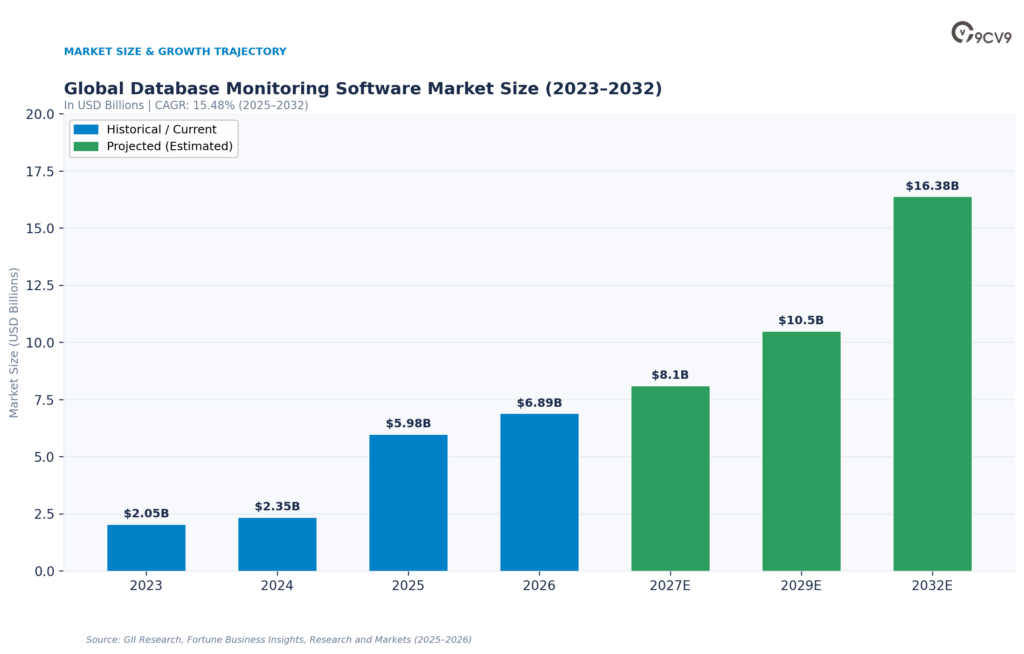
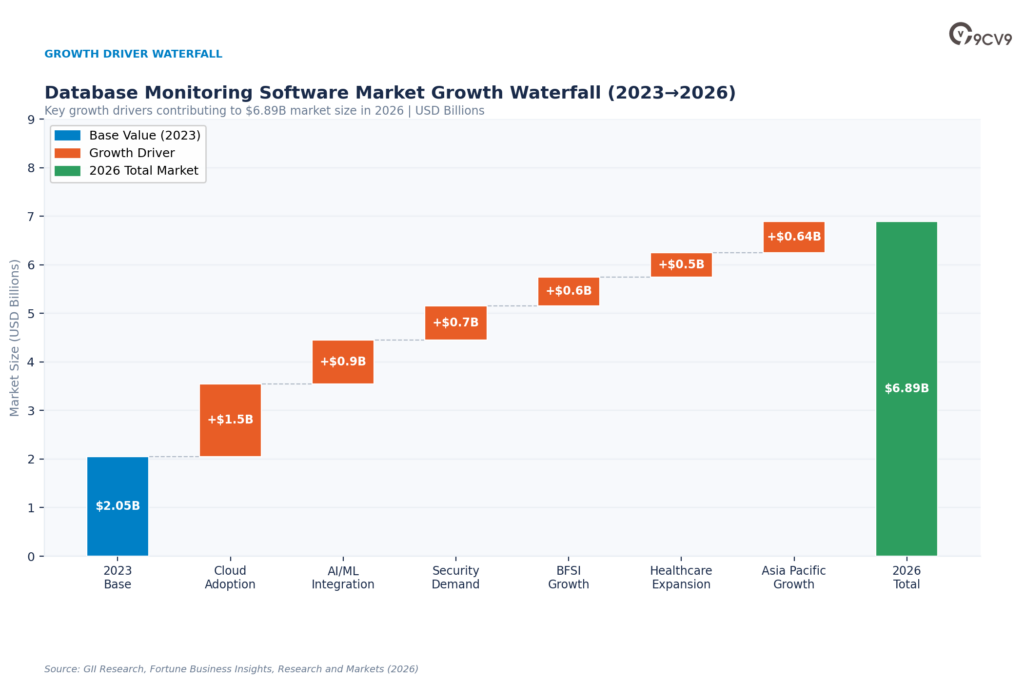
The numbers illustrate the scale of this transformation. The global database monitoring software market is estimated at $6.89 billion in 2026, up from $5.98 billion in 2025, according to one market estimate included in the data compiled for this report. That represents an increase of approximately $910 million in a single year. The same forecast projects the market to reach $16.38 billion by 2032, supported by a 15.48% compound annual growth rate between 2025 and 2032.
Also, read our guide on the Top 10 Best Database Monitoring Software.

Other market estimates use narrower definitions of database monitoring and therefore produce smaller absolute figures, but they point in the same general direction: sustained growth. One estimate places the 2026 market at $3.12 billion and forecasts it reaching $8.51 billion by 2034, while another projection expects the market to reach $4.7 billion by 2030. A separate forecast puts the 2030 opportunity at $5.61 billion, with a 15.5% CAGR. These differences demonstrate why database monitoring market statistics should be interpreted according to each research firm’s market definition rather than treated as directly interchangeable figures.
What is far less ambiguous is the underlying business need. More than 82% of production databases operate in mission-critical environments, while approximately 78% of global enterprises use database monitoring software across multi-cloud, hybrid, and on-premises infrastructure. Around 74% of enterprises operate multiple database engines simultaneously, adding another layer of operational complexity for database administrators, DevOps teams, site reliability engineers, security teams, and infrastructure leaders.
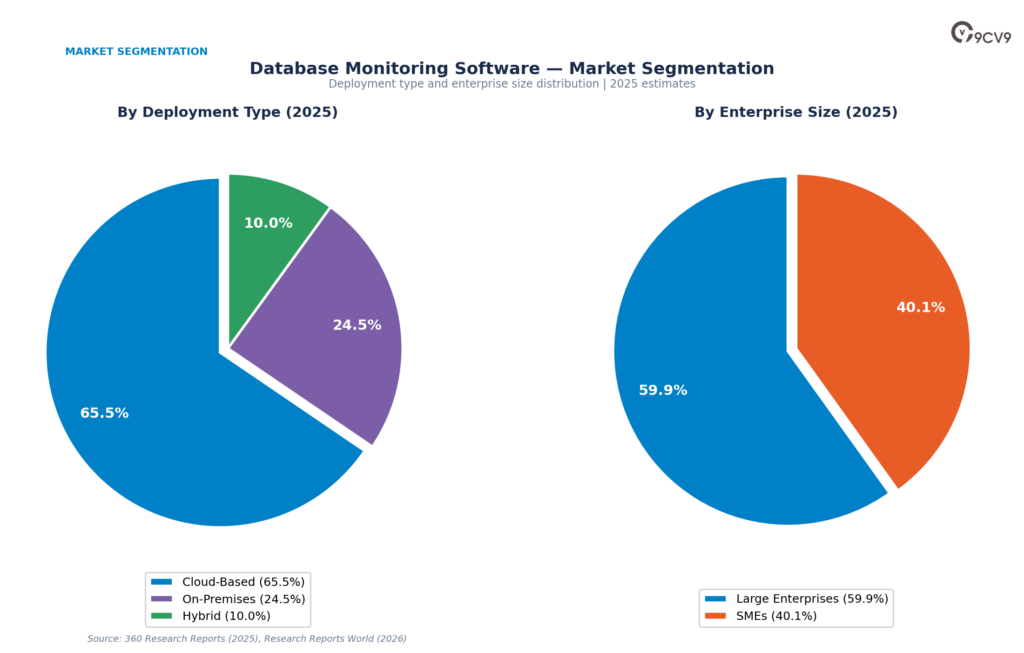
This fragmentation is helping turn unified database observability into an increasingly important enterprise requirement. Organizations are reported to use an average of three to six monitoring tools per IT stack, while database monitoring accounts for approximately 29% of total observability workloads. At the same time, roughly 60% of database monitoring adoption is cloud-based, and 65.5% of the market’s deployments in 2025 were cloud-based, representing approximately $1.19 billion under the cited market segmentation.
The shift toward database monitoring software becomes even easier to understand when downtime is translated into financial impact.
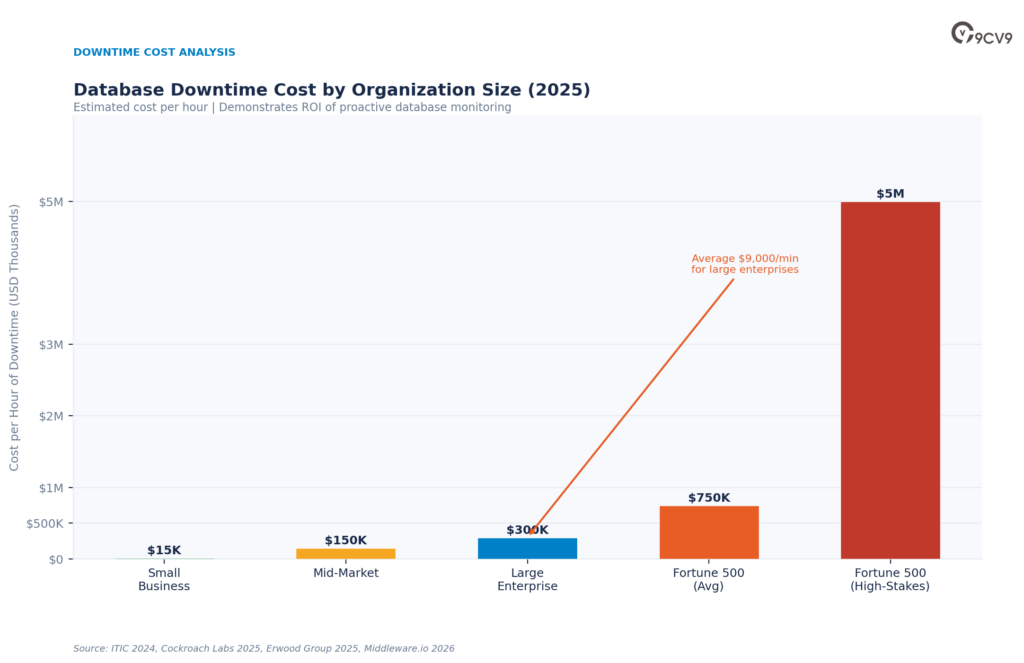
Database downtime is estimated to cost enterprises approximately $9,000 per minute. At that rate, only 10 minutes of disruption could represent roughly $90,000 in losses, while a 30-minute outage could amount to approximately $270,000. More than 90% of large and mid-sized enterprises report that one hour of downtime costs more than $300,000, and four in ten large enterprises put the cost above $1 million per hour. In particularly high-stakes Fortune 500 environments, hourly downtime losses can exceed $5 million.
These costs are particularly significant because outages are not rare exceptions. Organizations average approximately 86 hours of IT downtime annually according to one cited resilience study, while another observability study found a median of 77 hours per year. Every executive surveyed in the cited Cockroach Labs research reported experiencing outage-related revenue losses during the previous year, and 93% expressed concern about downtime’s impact on their organizations. Yet only 20% of executives believed their organizations were fully prepared to prevent or respond to database outages.
Database performance sits near the center of this availability challenge. Approximately 68% of unplanned downtime events are attributed in the compiled statistics to database-level performance degradation, while more than 62% of application downtime incidents are linked to database-related bottlenecks. Database performance issues are also estimated to account for roughly 50% of application-level problems.
For digital businesses, even performance degradation that stops short of a complete outage can carry substantial commercial consequences. The statistics compiled for this report indicate that database-related delays can translate into lost conversions for e-commerce businesses, while engineering teams can spend approximately 30% of their time addressing performance disruptions. Database monitoring is therefore increasingly about more than identifying whether a database is online or offline. It is about protecting application responsiveness, employee productivity, customer experience, revenue, and operational resilience.
The technical scale of the monitoring challenge is also expanding.
Modern database monitoring platforms can track 450 or more real-time metrics per database instance, ranging from query latency and CPU utilization to disk I/O, connection counts, sessions, resource saturation, and other performance indicators. Large enterprises may monitor more than 500 KPIs across their database estates and operate an average of 600 or more database nodes. High-traffic environments can process more than 10 million queries per hour, creating a volume of operational information that makes purely manual monitoring increasingly impractical.
Performance optimization can consequently produce dramatic results. Missing indexes, for example, can cause database queries to execute as much as 100 times slower, according to the statistics included in the source material. Another cited example reports database optimization efforts improving query latency by more than 400% in SQL Server environments after inefficient indexes and performance bottlenecks were identified. Advanced monitoring environments are also associated with database uptime exceeding 99.95% for large enterprises.
AI Is Reshaping Database Monitoring Software in 2026
Artificial intelligence represents one of the most consequential database monitoring trends in 2026. Traditional monitoring has historically depended heavily on dashboards, thresholds, logs, alerts, and human interpretation. The emerging generation of database monitoring and observability platforms increasingly incorporates automated query analysis, anomaly detection, predictive analytics, intelligent root-cause analysis, and automated remediation.
The potential performance improvements are substantial. The statistics compiled for this report indicate that automated query analysis can improve database response latency by an average of 47%, while AI-powered anomaly detection can reduce mean time to resolution by approximately 38%. Automation integration within database monitoring tools has increased by roughly 20%, reflecting the growing pressure to identify and resolve problems faster without proportionally increasing infrastructure teams.
Enterprise demand is moving in the same direction. Approximately 52% of IT leaders identify faster root-cause analysis and incident response as the capability they most want from AI-enabled observability platforms. Another 47% want predictive analytics capable of identifying problems before they become outages, while 44% want automated remediation and self-healing capabilities.
This development could also accelerate consolidation within the monitoring industry. An estimated 74% of IT leaders say they would consolidate onto a single observability platform if that platform could satisfy all of their requirements. This suggests that the future database monitoring market may increasingly favor platforms capable of bringing database performance, infrastructure telemetry, application observability, anomaly detection, security signals, root-cause analysis, and automation together rather than forcing engineering teams to navigate a fragmented collection of isolated tools.
AI adoption itself creates additional reasons to improve database visibility. Approximately 62% of organizations have begun implementing AI within IT operations without yet scaling it broadly, while 78% of organizations are reported to use AI in at least one business function. More than 80% of organizations have a generative AI strategy, and at least 57% have deployed self-hosted AI agent technologies according to the compiled statistics.
These systems introduce new database access patterns, workloads, queries, resource demands, and operational risks. AI applications are only as reliable as the data infrastructure supporting them. The report’s statistics therefore point toward a growing relationship between database monitoring, data quality, observability, and enterprise AI readiness.
One cited Gartner projection suggests that 60% of AI projects will be abandoned through 2026 because of insufficient data quality, while another forecast indicates that 25% of AI spending could be delayed into 2027 because of inadequate data quality practices. Only 11% of organizations are reported to have high metadata-management maturity. Together, these statistics demonstrate why monitoring the systems that store, process, and serve enterprise data is becoming increasingly relevant to AI strategy.
Cloud and Multi-Cloud Adoption Are Expanding the Monitoring Surface
Database monitoring software growth is also closely connected to the broader expansion of the database and cloud computing markets.
The global database market is estimated at approximately $171 billion in 2026 and is projected to reach $329 billion by 2031, representing a 13.95% CAGR under the cited forecast. The database management system market, meanwhile, reached approximately $98.6 billion in 2025 and is projected to grow at 10.8% annually through 2035.
Cloud databases are growing even faster, with the segment expanding at approximately 18.3% CAGR. Hybrid cloud adoption has reached 73% of organizations, while the compiled data indicates that enterprises manage as much as 92% of workloads across multiple clouds by 2026. Global public cloud services spending reached $723.4 billion in 2025, and cloud infrastructure revenue increased 30% year over year in Q4 2025.
The operational implication is straightforward: databases are no longer necessarily concentrated inside one data center, one cloud provider, or even one database technology.
A modern enterprise might simultaneously operate relational databases, cloud-native databases, data warehouses, distributed databases, open-source databases, managed database services, and specialized data systems across public cloud, private cloud, and on-premises environments. As these architectures become more distributed, database teams need monitoring software capable of creating unified visibility across otherwise fragmented environments.
That trend is already visible in market segmentation. Cloud-based database monitoring deployments accounted for 65.5% of the market in 2025, while large enterprises represented 59.9% of global market demand, equivalent to approximately $1.09 billion under the cited segmentation.
Database Security Monitoring Is Becoming More Important
Database monitoring in 2026 increasingly intersects with cybersecurity.
The global average cost of a data breach reached approximately $4.44 million in 2025, while the average U.S. breach reached a record $10.22 million according to the statistics compiled for this report. Healthcare remains particularly exposed, with one cited figure putting average healthcare breach costs at $7.42 million per incident.
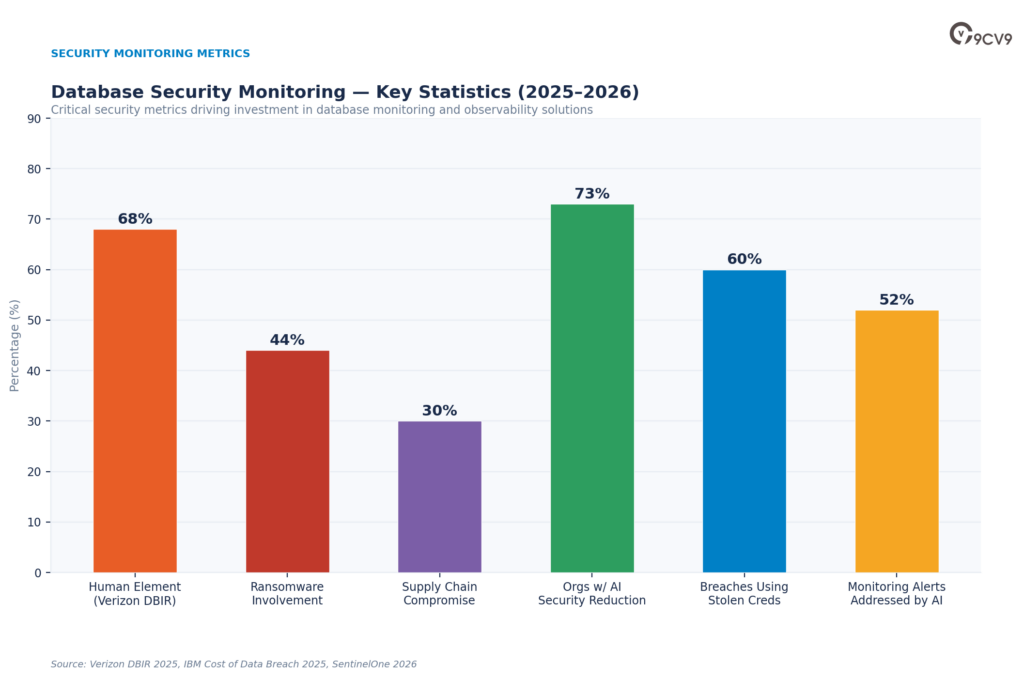
The United States recorded 3,322 data compromises in 2025, while ransomware was involved in approximately 44% of breaches. The human element was involved in 68%, and supply-chain or third-party compromises appeared in approximately 30% of breaches according to the underlying statistics.
The consequence is an expansion of database monitoring beyond conventional CPU, memory, storage, query, and uptime metrics. Organizations increasingly need visibility into unusual access behavior, suspicious query patterns, privileged activity, unexpected data movement, abnormal connections, and other signals that can indicate security problems.
Approximately 45% of enterprises now prioritize database security monitoring as a major investment area. Organizations using extensive AI and automation in security operations were also reported to experience breach costs approximately $1.9 million lower and breach lifecycles 68 days shorter than their counterparts.
The stakes are increasing as the wider cybersecurity market expands. Global cybersecurity spending is projected to reach approximately $240 billion in 2026, representing a 12.5% increase, while organizations face an average of approximately 1,968 cyberattacks per week, an 18% year-over-year increase according to the statistics included in the report.
North America Leads, but Database Monitoring Is a Global Market
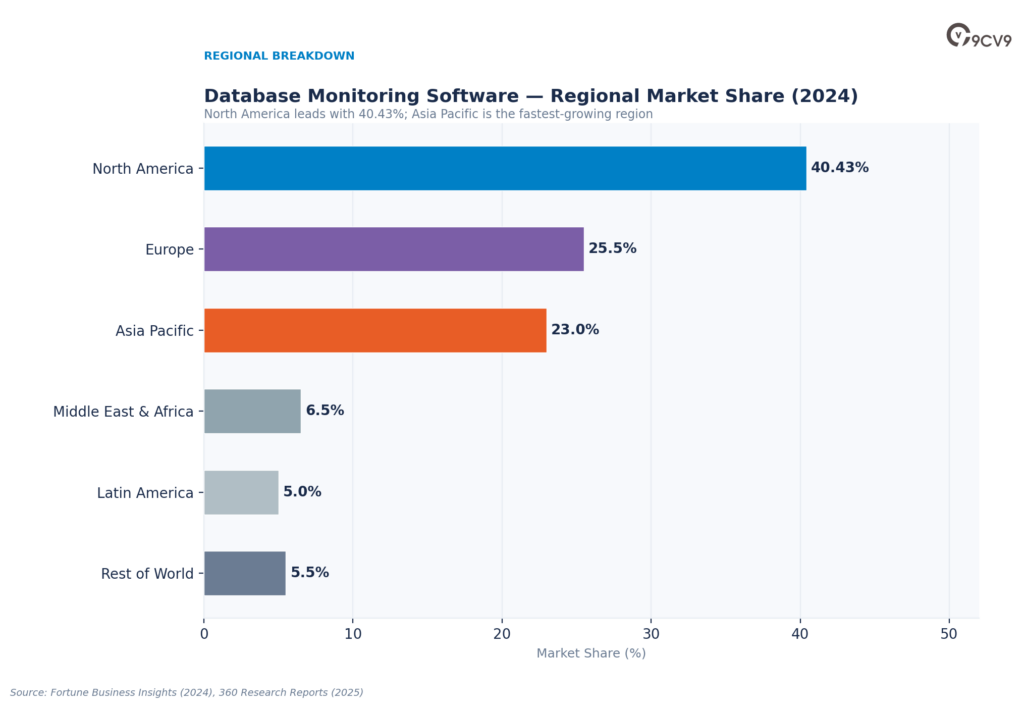
Geographically, North America remains the largest database monitoring software market. The region accounted for approximately 40.43% of the global market in 2024, while another segmentation values the North American market at roughly $732 million in 2025, equivalent to around 40.2% of the total market under that methodology.
The United States represents the overwhelming majority of that regional demand, accounting for approximately $642.5 million, or 87.8% of the North American market under the cited estimate. More than 14,000 cloud and hybrid database monitoring deployments are associated with the region in the compiled data.
Europe accounts for approximately 25% to 26% of the global market, supported partly by stringent data protection and operational requirements. Asia Pacific represents approximately 23% and is positioned as one of the strongest growth regions as digital transformation, cloud adoption, financial technology, e-commerce, telecommunications, AI, and enterprise software usage expand.
China illustrates this momentum. Its cloud-based monitoring segment is reported to be growing at approximately 6.9% CAGR, with a $188.9 million market value in 2025, while its large-enterprise segment is growing at approximately 6.5% CAGR across deployments involving more than 3,000 corporations.
BFSI, IT, Telecom and Healthcare Are Major Database Monitoring Markets
Industry-level statistics reveal where monitoring demand is especially concentrated.
Banking, financial services, and insurance represent approximately $0.9 billion of the database performance monitoring market in the supplied statistics and are growing at around 8% CAGR. BFSI also captured approximately 20.6% of total global database market revenue in 2025, making financial services one of the most strategically important database-intensive industries.
The reason is structural. Modern financial institutions depend on databases for payments, transactions, digital banking, fraud detection, risk calculations, customer accounts, compliance, reporting, mobile applications, and real-time financial services. Performance degradation or database outages can therefore become customer-facing and financially material almost immediately.
IT and telecommunications represent another approximately $0.8 billion market segment and are growing at around 9% CAGR, the fastest growth rate among the end-user industries cited in the source material.
Healthcare accounts for approximately $0.7 billion, with database monitoring demand supported by electronic health records, patient information, compliance requirements, connected medical systems, and rapidly expanding healthcare data volumes. The broader healthcare and life sciences database segment is projected to grow at approximately 14.8% CAGR, driven in part by genomics, electronic records, and device telemetry.
Database Monitoring Is Becoming an Operational Resilience Investment
The central database monitoring software trend in 2026 is ultimately about resilience.
Businesses are generating and processing more data, operating more databases, distributing workloads across more environments, deploying more AI applications, and exposing their digital systems to increasingly sophisticated security threats. At the same time, customers and employees expect applications to work continuously.
The economic tolerance for failure is shrinking.
When downtime can cost $9,000 per minute, major enterprise outages can exceed $1 million per hour, organizations experience 77 to 86 hours of annual downtime, and database-related bottlenecks contribute materially to application failures, monitoring becomes easier to evaluate as a business investment rather than merely another infrastructure expense.
The potential economic benefits reinforce that argument. The supplied statistics cite 175% to 445% three-year ROI for modern database integration and monitoring platforms in relevant Forrester Total Economic Impact studies. Organizations can also potentially reduce infrastructure total cost of ownership by 40% through modernization and advanced database performance monitoring, according to another statistic included in the dataset.
Organizations are consequently investing substantial amounts in both technology and talent. Senior database administrators with monitoring expertise can command annual salaries of approximately $120,000 to $180,000, while organizations may spend $50,000 to $100,000 annually on monitoring software tools per senior DBA environment according to the supplied figures.
Compliance adds another dimension. Approximately 79% of executives say they are not adequately equipped to comply with emerging operational resilience regulations such as the EU’s NIS2 requirements. As regulatory expectations around resilience, security, auditability, incident management, and data governance increase, database monitoring platforms can become part of the evidence and control infrastructure organizations use to understand what is happening across critical systems.
Database migrations provide another example of why visibility matters. Among challenging database migrations, 46% experienced five or more hours of downtime, with 51% reporting customer problems and 49% reporting revenue losses. Monitoring before, during, and after migrations can therefore play an important role in identifying regressions, bottlenecks, abnormal resource consumption, and other operational problems before they escalate.
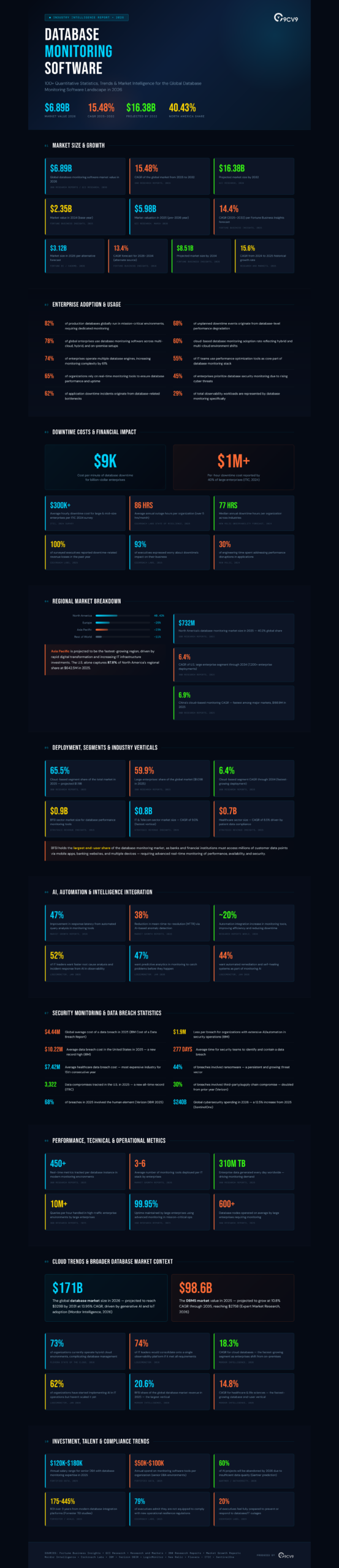
Against this backdrop, the Top 103 Database Monitoring Software Statistics, Data & Trends in 2026 provide a quantitative view of how rapidly the market is evolving. The statistics cover market size and growth, enterprise adoption, database downtime costs, cloud deployment, regional market shares, industry adoption, artificial intelligence and automation, cybersecurity, technical performance, compliance, investment, talent, database infrastructure, and the wider data economy.
For technology leaders, CIOs, CTOs, database administrators, DevOps engineers, SRE teams, security professionals, SaaS companies, software vendors, investors, and market researchers, the data points toward the same broader transformation: database monitoring software is evolving from a technical troubleshooting utility into a strategic platform for performance, availability, security, observability, automation, AI readiness, and enterprise resilience.
As databases become more distributed and business-critical in 2026, the organizations that can detect anomalies earlier, diagnose problems faster, optimize queries continuously, secure database activity, and maintain visibility across cloud and hybrid environments will be better positioned to reduce downtime and support increasingly data-intensive applications. The following 103 database monitoring software statistics for 2026 quantify that shift and reveal where the market, technology, and enterprise adoption landscape are heading next.
Before we venture further into this article, we would like to share who we are and what we do.
About 9cv9
9cv9 is a business tech startup based in Singapore and Asia, with a strong presence all over the world.
With over ten years of startup and business experience, and being highly involved in connecting with thousands of companies and startups, the 9cv9 team has listed some important and crucial software tools in this review.
If you like to get your company listed in our top B2B software reviews, check out our world-class 9cv9 Media and PR service and pricing plans here.
Top 103 Database Monitoring Software Statistics, Data & Trends in 2026
🔵 MARKET SIZE & GROWTH
1. $6.89 billion — The global database monitoring software market is valued at $6.89 billion in 2026, reflecting its emergence as a mission-critical enterprise investment category.
2. 15.48% CAGR — The market is growing at a compound annual rate of 15.48% from 2025 to 2032, making it one of the fastest-growing enterprise software sectors globally.
3. $16.38 billion — By 2032, the database monitoring software market is projected to reach $16.38 billion, nearly tripling in value over seven years.
4. $5.98 billion — The market was valued at $5.98 billion in 2025, demonstrating a sharp $0.91B single-year leap into 2026.
5. $2.35 billion — As recently as 2024, the global market was valued at just $2.35 billion, highlighting the explosive growth trajectory underway.
6. 14.4% CAGR (Fortune BI) — Fortune Business Insights projects a slightly different CAGR of 14.4% from 2025–2032, underscoring the broad consensus on high double-digit growth.
7. $3.12 billion — An alternate 2026 market sizing estimate of $3.12 billion exists under a narrower market scope, reflecting definitional differences across research firms.
8. $8.51 billion by 2034 — Under a 13.4% CAGR forecast, the market is projected to hit $8.51 billion by 2034 (Fortune Business Insights, 2026).
9. 15.6% CAGR (2024–2025) — The historical growth rate from 2024 to 2025 was 15.6%, confirming the market’s acceleration phase.
10. $2.05 billion in 2023 — The market was valued at $2.05 billion in 2023, setting the baseline from which remarkable growth has since unfolded.
11. $4.7 billion by 2030 — The Business Research Company projects the market to reach $4.7 billion by 2030 under a 15% growth assumption, reflecting strong near-term demand.
12. $5.61 billion by 2030 — An alternate 2030 projection of $5.61 billion at 15.5% CAGR is cited by middleware.io, reflecting the range of analyst estimates.
🟠 ENTERPRISE ADOPTION & USAGE
13. 82% — More than 82% of production databases globally operate in mission-critical environments, making dedicated monitoring a non-negotiable requirement for enterprise continuity.
14. 78% — Approximately 78% of global enterprises use database monitoring software across multi-cloud, hybrid, and on-premises infrastructure, signaling mainstream adoption.
15. 74% — Three in four enterprises operate multiple database engines simultaneously, increasing monitoring complexity by 61% and driving demand for unified observability.
16. 68% — A full 68% of unplanned downtime events originate from database-level performance degradation, making monitoring the first line of operational defense.
17. 65% — Around 65% of organizations rely on real-time monitoring tools to ensure database performance and uptime, up significantly from prior years.
18. 62% — More than 62% of application downtime incidents trace back to database-related bottlenecks, highlighting the direct link between database health and user experience.
19. 60% — Cloud-based database monitoring adoption has reached approximately 60%, driven by the shift to hybrid and multi-cloud architectures.
20. 55% — Roughly 55% of IT teams use performance optimization tools as a core part of their database monitoring stack, reflecting a proactive rather than reactive posture.
21. 50% — Database performance issues are responsible for approximately 50% of all application-level problems, reinforcing monitoring software as a strategic IT investment.
22. 45% — Nearly 45% of enterprises now specifically prioritize database security monitoring as a top investment area due to rising cyber threats.
23. 29% — Database monitoring represents 29% of total observability workloads in modern IT stacks, the single largest monitoring category.
24. 3–6 tools — Enterprises deploy an average of 3 to 6 monitoring tools per IT stack, with database monitoring representing the largest single share.
🔴 DOWNTIME & FINANCIAL IMPACT
25. $9,000/minute — Database downtime costs enterprises approximately $9,000 per minute, making even a 30-minute outage a $270,000 financial hit.
26. $300,000+/hour — Over 90% of large and mid-size enterprises report that a single hour of downtime costs upward of $300,000, according to ITIC’s 2024 survey.
27. $1 million+/hour — Four in ten large enterprises say a single hour of downtime costs more than $1 million, reinforcing the business case for monitoring investment.
28. $5 million/hour — Fortune 500 companies in high-stakes industries such as finance and healthcare face downtime losses exceeding $5 million per hour (Gartner, 2024).
29. $5 billion — The July 2024 CrowdStrike outage cost Fortune 500 companies over $5 billion, serving as a stark industry-wide wake-up call for observability investment.
30. 86 hours/year — Organizations average 86 hours of IT downtime per year — more than five hours per month — per Cockroach Labs’ State of Resilience 2025 report.
31. 77 hours/year — New Relic’s 2024 Observability Forecast found organizations experience a median of 77 hours of annual downtime across industries.
32. 100% — Every single executive surveyed in Cockroach Labs’ 2025 study reported that their organization experienced outage-related revenue losses in the past year.
33. 93% — A near-universal 93% of executives expressed worry about downtime’s impact on their organization, driving urgency around monitoring investments.
34. 30% — Approximately 30% of engineering time is spent addressing performance disruptions — a massive productivity drain that automated monitoring directly reduces.
35. 20% — Only 20% of executives feel their organizations are fully prepared to prevent or respond to database outages, indicating significant investment gaps.
36. 7% — Every second of database-related delay can cost e-commerce sites 7% in conversions, directly linking monitoring quality to revenue performance.
🟣 REGIONAL MARKET BREAKDOWN
37. 40.43% — North America dominated the global database monitoring software market with a 40.43% share in 2024, driven by advanced IT infrastructure and enterprise adoption.
38. $732 million — North America’s database monitoring market was valued at $732 million in 2025, representing a 40.2% share of the global total.
39. $642.5 million — The United States alone accounts for $642.5 million — 87.8% of North America’s regional share — affirming its position as the world’s largest single market.
40. 6.0% CAGR (North America) — North America’s market is expanding at a 6.0% CAGR through 2034, supported by 14,000+ cloud and hybrid database monitoring deployments.
41. ~23% (Asia Pacific) — Asia Pacific holds approximately 23% of the global market and is projected to grow at the highest CAGR, driven by rapid digital transformation.
42. 6.9% CAGR (China) — China’s cloud-based monitoring segment is growing at a 6.9% CAGR — the fastest among major markets — with $188.9 million in 2025 market value.
43. 6.5% CAGR (China, large enterprise) — China’s large enterprise segment is expanding at 6.5% CAGR, driven by deployment across 3,000+ corporations.
44. ~25–26% (Europe) — Europe holds approximately 25–26% of the global market, underpinned by strong data privacy regulations like GDPR that mandate monitoring practices.
🟢 DEPLOYMENT & SEGMENT BREAKDOWN
45. 65.5% — Cloud-based deployments account for 65.5% of the total market in 2025, projected at $1.19 billion, reflecting the decisive shift away from on-premises tooling.
46. 59.9% — Large enterprises represent 59.9% of the global market ($1.09 billion in 2025), reflecting their higher monitoring complexity and greater willingness to invest.
47. 6.4% CAGR (cloud segment) — The cloud-based segment is the fastest-growing deployment mode, expanding at 6.4% CAGR through 2034.
48. $0.9 billion (BFSI) — The BFSI sector accounts for the largest end-user market size for database performance monitoring tools at approximately $0.9 billion.
49. 8.0% CAGR (BFSI) — BFSI’s database monitoring segment is growing at 8.0% CAGR, driven by real-time fraud detection, regulatory reporting, and digital banking workloads.
50. $0.8 billion (IT & Telecom) — IT & Telecom is the second-largest vertical with a $0.8 billion market size and the fastest CAGR of 9.0% among end-user industries.
51. $0.7 billion (Healthcare) — Healthcare represents $0.7 billion in database monitoring market size, growing at an 8.5% CAGR driven by patient data compliance requirements.
52. 20.6% — BFSI captured 20.6% of total global database market revenue in 2025, making it the single largest end-user vertical across all database technologies.
53. 14.8% CAGR (Healthcare & Life Sciences) — Healthcare is the fastest-growing database end-user vertical at 14.8% CAGR, fueled by genomics, electronic records, and device telemetry.
🔵 AI, AUTOMATION & INTELLIGENCE INTEGRATION
54. 47% — Automated query analysis improves database response latency by an average of 47%, delivering direct performance uplift for production systems.
55. 38% — AI-powered anomaly detection reduces mean-time-to-resolution (MTTR) by 38% on average, significantly shortening the window of impact from database issues.
56. ~20% — Automation integration in database monitoring tools has increased by approximately 20%, improving operational efficiency and reducing unplanned downtime.
57. 52% — More than half of IT leaders (52%) identified faster root cause analysis and incident response as their top desired capability from AI in observability platforms.
58. 47% (predictive analytics) — 47% of IT leaders want predictive analytics embedded in their monitoring stack to catch problems before they manifest into outages.
59. 44% — 44% of IT leaders want automated remediation and self-healing systems as a core feature of their database monitoring tools.
60. 74% — A substantial 74% of IT leaders say they would consolidate onto a single observability platform if it met all their requirements — signaling a major market consolidation opportunity.
61. 62% — 62% of organizations have started implementing AI in some form within IT operations but haven’t yet scaled it broadly — indicating a critical adoption gap.
62. 78% — Organizations using AI in at least one business function reached 78% in 2026, confirming AI’s move from experimentation into mainstream enterprise operations.
63. 60% — Gartner projects that 60% of AI projects will be abandoned through 2026 due to insufficient data quality — underscoring the importance of robust database monitoring as AI enabler.
🔴 SECURITY MONITORING & DATA BREACH STATISTICS
64. $4.44 million — The global average cost of a data breach was $4.44 million in 2025 (IBM), making database security monitoring a financially critical investment for all enterprises.
65. $10.22 million — The average data breach cost in the United States hit a record $10.22 million in 2025 — the highest ever recorded — underscoring the urgency of proactive monitoring.
66. $7.42 million — Healthcare data breaches averaged $7.42 million per incident in 2025, the most expensive sector for the 15th consecutive year (IBM).
67. $11.2 million — The average healthcare breach cost hit $11.2 million in 2025, a 35% jump over three years, amplifying the business case for healthcare database monitoring.
68. 3,322 breaches — The U.S. recorded 3,322 data compromises in 2025 — a new all-time record — emphasizing the accelerating threat environment that monitoring tools must address.
69. 68% — 68% of all data breaches in 2025 involved the human element (Verizon DBIR), reinforcing the need for behavioral anomaly detection within database monitoring.
70. 44% — Ransomware was involved in 44% of all 2025 data breaches, making database-level threat detection a critical security layer.
71. 30% — Supply chain and third-party compromise was involved in 30% of all breaches — double the prior year — creating new demands for third-party database access monitoring.
72. $1.9 million — Organizations with extensive AI and automation in security operations averaged $1.9 million less per breach and shortened their breach lifecycle by 68 days (IBM 2025).
73. 277 days — Security teams take an average of 277 days to identify and contain a data breach — a window that real-time database monitoring directly helps compress.
74. $240 billion — Global cybersecurity spending in 2026 will hit $240 billion — a 12.5% increase — with database monitoring embedded as a critical layer of that spend.
75. 1,968/week — Weekly cyberattack volumes now average 1,968 per week — an 18% year-over-year increase — intensifying pressure on database security monitoring teams.
🟡 PERFORMANCE & TECHNICAL METRICS
76. 450+ metrics — Modern database monitoring platforms track over 450 real-time metrics per database instance, including query latency, CPU usage, disk I/O, and session counts.
77. 500+ KPIs — Large enterprises track more than 500 performance KPIs across their database environments, demanding highly capable monitoring platforms.
78. 10 million+ queries/hour — High-traffic enterprise environments handle over 10 million queries per hour, requiring monitoring tools capable of real-time analysis at massive scale.
79. 99.95% uptime — Large enterprises using advanced monitoring tools maintain database uptime above 99.95% — a benchmark critical for mission-critical operations.
80. 600+ database nodes — Large enterprises operate an average of 600+ database nodes, creating substantial monitoring surface area that manual oversight cannot address.
81. 310 million TB/day — Enterprises globally generate 310 million terabytes of data every day, creating an ever-expanding monitoring obligation for database teams.
82. 120 zettabytes — Global data volume has exceeded 120 zettabytes, with enterprise databases handling nearly 70% of structured data workloads worldwide.
83. 100x slower — Missing indexes can make database queries run 100 times slower, illustrating the performance impact that monitoring tools are designed to detect and prevent.
84. 400% — Red9 reports identifying inefficient indexes and performance bottlenecks that improved query latency by over 400% in SQL Server environments.
🟠 CLOUD, DATABASE MARKET & BROADER CONTEXT
85. $171 billion — The total global database market reached $171 billion in 2026, growing at 13.95% CAGR toward a projected $329 billion by 2031 (Mordor Intelligence).
86. $98.6 billion (DBMS) — The global database management system (DBMS) market reached $98.6 billion in 2025 and is projected to grow at 10.8% CAGR through 2035.
87. 18.3% CAGR — Cloud databases are the fastest-growing segment of the broader database market, expanding at 18.3% CAGR as enterprises shift from on-premises hardware.
88. 73% — Hybrid cloud adoption stands at 73% of organizations, creating complex, multi-environment database landscapes that demand sophisticated monitoring solutions.
89. 92% — By 2026, enterprises manage 92% of workloads across multiple clouds, making cross-cloud database monitoring a core operational necessity rather than an optional add-on.
90. $723.4 billion — Global public cloud services spending reached $723.4 billion in 2025, with database workloads representing a significant and growing portion of that expenditure.
91. 30% YoY — Cloud infrastructure revenue grew 30% year-over-year in Q4 2025, with AI-driven database workloads cited as the primary growth accelerant.
92. 80% — More than 80% of organizations now have a generative AI strategy, creating new database workload types that require specialized monitoring infrastructure.
93. 57% — At least 57% of organizations have deployed self-hosted AI agent technologies, introducing new autonomous data access patterns requiring real-time database monitoring.
🟢 COMPLIANCE, INVESTMENT & TALENT
94. 79% — A full 79% of executives admit they are not equipped to comply with new operational resilience regulations (e.g., EU NIS2), creating regulatory demand for monitoring tools.
95. 175–445% ROI — Modern database integration and monitoring platforms deliver 175–445% ROI over three years per Forrester Total Economic Impact studies.
96. $120K–$180K — Annual salaries for senior database administrators with monitoring expertise range from $120,000 to $180,000, reflecting the specialist talent premium in this field.
97. $50K–$100K — Organizations invest $50,000 to $100,000 per year on monitoring software tools per senior DBA environment, underlining the market’s commercial depth.
98. 40% — Organizations can reduce infrastructure total cost of ownership by 40% through modernization and advanced database performance monitoring (McKinsey).
99. 25% — Forrester predicts that 25% of AI spending will be delayed into 2027 due to inadequate data quality practices — a risk that monitoring software directly mitigates.
100. 11% — Only 11% of organizations have high metadata management maturity — a critical gap that monitoring software is increasingly designed to address.
101. 50%+ organizations — More than 50% of survey participants in the 2025 Total Data Management survey have implemented formal data quality monitoring initiatives.
102. $15.7 trillion — AI is projected to add $15.7 trillion to global GDP by 2030, with reliable database monitoring forming a foundational pillar of that AI-ready data infrastructure.
103. 46% — 46% of challenging database migrations experienced 5+ hours of downtime, causing customer issues (51%) and revenue loss (49%), per Caylent’s 2025 survey.
Conclusion
The database monitoring software statistics for 2026 reveal a market undergoing a fundamental transformation. Database monitoring is no longer simply about watching CPU utilization, identifying slow queries, checking disk capacity, or receiving an alert when a server becomes unavailable. It is increasingly becoming a strategic layer connecting database performance, application reliability, cloud infrastructure, cybersecurity, artificial intelligence, operational resilience, and business continuity.
The scale of the market reflects this growing importance. One estimate places the global database monitoring software market at $6.89 billion in 2026, compared with $5.98 billion in 2025, while forecasting the market to reach $16.38 billion by 2032 at a 15.48% CAGR. Other forecasts use narrower definitions and produce different market sizes, including a $3.12 billion estimate for 2026 and projections ranging from $4.7 billion to $5.61 billion by 2030. Despite differences in methodology, the underlying trend is consistent: organizations are allocating more resources to understanding, protecting, and optimizing increasingly complex database environments.
This growth is supported by widespread enterprise dependence on databases. More than 82% of production databases globally operate in mission-critical environments, while approximately 78% of enterprises use database monitoring software across multi-cloud, hybrid, and on-premises infrastructure. Around 74% of enterprises operate multiple database engines simultaneously, illustrating why database visibility has become substantially more complicated than monitoring a single relational database running inside one data center.
Modern enterprises may now have databases distributed across public clouds, private infrastructure, managed database services, SaaS applications, containers, virtual machines, data platforms, and geographically distributed environments. Each additional database engine, cloud service, application dependency, and infrastructure layer expands the potential monitoring surface.
This complexity is reflected in enterprise tooling behavior. Organizations deploy an average of three to six monitoring tools per IT stack, while database monitoring represents approximately 29% of total observability workloads. The opportunity for vendors is therefore not simply to provide more dashboards. It is to reduce fragmentation and give infrastructure teams a clearer, more unified picture of what is happening across their database estates.
That demand could accelerate consolidation across the observability industry. Approximately 74% of IT leaders say they would consolidate onto a single observability platform if it satisfied all of their requirements. For database monitoring software providers, this suggests that integration, cross-platform visibility, automation, intelligent diagnostics, and interoperability may become increasingly important competitive differentiators.
The Economics of Downtime Make Database Monitoring Difficult to Ignore
Perhaps the strongest argument for database monitoring software in 2026 is not technological at all. It is financial.
Database downtime is estimated to cost enterprises approximately $9,000 per minute. At that rate, a 30-minute disruption can translate into approximately $270,000 in losses. More than 90% of large and mid-sized enterprises report that a single hour of downtime costs more than $300,000, while four in ten large enterprises estimate the cost at more than $1 million per hour. For Fortune 500 organizations operating in high-stakes industries, hourly losses can exceed $5 million.
These figures become even more significant when considered alongside the frequency of downtime. Organizations experience an average of approximately 86 hours of IT downtime per year according to one cited study, while another places median annual downtime at 77 hours.
The consequences are sufficiently widespread that 100% of executives surveyed in the cited Cockroach Labs study reported outage-related revenue losses during the previous year, and 93% expressed concern about downtime’s impact on their organizations. Yet only 20% believed their organizations were fully prepared to prevent or respond effectively to database outages.
That gap between economic exposure and organizational preparedness represents one of the clearest opportunities for database monitoring software vendors.
Organizations cannot eliminate every outage, but faster detection, better diagnostics, predictive monitoring, automated remediation, and improved database visibility can potentially reduce both outage frequency and duration.
Database problems are also closely connected to wider application reliability. The compiled statistics indicate that approximately 68% of unplanned downtime events originate from database-level performance degradation, while more than 62% of application downtime incidents trace back to database-related bottlenecks. Database performance issues are estimated to contribute to approximately 50% of application-level problems.
Database monitoring therefore increasingly affects far more than the database administration team.
It can influence customer experience, website availability, SaaS reliability, transaction completion, employee productivity, e-commerce performance, mobile application responsiveness, service-level agreements, engineering workload, and ultimately revenue.
AI Will Be One of the Defining Database Monitoring Trends
Artificial intelligence and automation stand out among the most important database monitoring software trends for 2026.
The traditional monitoring model is inherently reactive: something crosses a threshold, an alert appears, an engineer investigates the problem, and remediation begins.
AI-enabled monitoring creates the possibility of shifting this process toward prediction and automation.
The statistics in this report indicate that automated query analysis can improve database response latency by an average of 47%, while AI-powered anomaly detection can reduce mean time to resolution by approximately 38%. Automation integration across database monitoring tools has also increased by approximately 20%.
Enterprise demand strongly supports this direction.
Approximately 52% of IT leaders want faster root-cause analysis and incident response from AI-powered observability platforms, while 47% want predictive analytics and 44% want automated remediation and self-healing systems.
These percentages reveal what the next competitive frontier for database monitoring software may look like.
Organizations increasingly want monitoring platforms that do more than tell them that something is wrong. They want software capable of explaining why it happened, predicting what could happen next, identifying where the problem originated, recommending how to resolve it, and eventually performing safe remediation automatically.
This shift is occurring while enterprise AI adoption itself accelerates. Approximately 62% of organizations have begun implementing AI within IT operations without yet scaling it broadly, while 78% of organizations use AI in at least one business function. More than 80% have a generative AI strategy, and at least 57% are reported to have deployed self-hosted AI agent technologies.
AI adoption does not reduce the importance of database monitoring. It may increase it.
AI applications generate new queries, new traffic patterns, new infrastructure requirements, new autonomous data interactions, and potentially unpredictable workloads. AI agents capable of interacting with enterprise systems can create database activity at a speed and scale that would be difficult to supervise manually.
As AI becomes embedded throughout business operations, monitoring the data infrastructure supporting those applications becomes increasingly important.
This relationship becomes particularly significant when data quality is considered. One statistic included in the dataset indicates that 60% of AI projects could be abandoned through 2026 because of insufficient data quality, while another predicts that 25% of AI spending could be delayed into 2027 because of inadequate data quality practices. Only 11% of organizations are reported to have high metadata-management maturity.
The implication is important: enterprises cannot build dependable AI strategies on unreliable data infrastructure.
Cloud Database Growth Will Keep Expanding Monitoring Complexity
Cloud computing is another major structural force supporting database monitoring software growth.
The broader global database market is estimated at approximately $171 billion in 2026, with a projected value of $329 billion by 2031 and a 13.95% CAGR. The global DBMS market reached approximately $98.6 billion in 2025, while cloud databases are expanding at an even faster 18.3% CAGR.
Hybrid cloud adoption has reached approximately 73% of organizations, and the supplied statistics indicate that enterprises manage as much as 92% of workloads across multiple clouds by 2026.
Meanwhile, global public cloud services spending reached $723.4 billion in 2025, and cloud infrastructure revenue increased approximately 30% year over year in Q4 2025.
These developments fundamentally change database operations.
A database administrator may no longer be responsible for a handful of predictable servers. Enterprise environments can encompass hundreds of nodes, multiple database engines, cloud-native services, legacy databases, distributed applications, and workloads spread across several infrastructure providers.
The statistics indicate that large enterprises operate an average of 600 or more database nodes, while modern monitoring platforms can track more than 450 real-time metrics per database instance. Large enterprises may monitor more than 500 performance KPIs, and high-traffic environments can process more than 10 million queries per hour.
At this scale, manual oversight becomes increasingly unrealistic.
The growth of cloud monitoring reflects that reality. Cloud-based deployments accounted for approximately 65.5% of the database monitoring software market in 2025, representing around $1.19 billion under the cited market segmentation. Large enterprises accounted for another 59.9% of global demand, equivalent to approximately $1.09 billion.
These figures suggest that cloud-native monitoring capabilities, multi-cloud visibility, centralized dashboards, automated discovery, scalable telemetry processing, and cross-database analytics are likely to remain important areas of product development.
Database Performance Optimization Has Direct Business Value
Database monitoring is also becoming inseparable from performance optimization.
The statistics show how dramatically seemingly small database configuration problems can affect application performance. Missing indexes can cause queries to execute as much as 100 times slower, while one cited optimization example reported improvements in SQL Server query latency exceeding 400% after inefficient indexes and bottlenecks were identified.
At enterprise scale, those improvements can translate into faster applications, lower infrastructure requirements, improved customer experiences, reduced engineering workload, and potentially lower cloud costs.
Organizations using advanced monitoring tools are associated in the dataset with database uptime exceeding 99.95%, illustrating the availability standards increasingly expected from mission-critical infrastructure.
Monitoring can also help organizations identify inefficient resource consumption before simply adding more compute capacity.
This becomes particularly important in cloud environments, where infrastructure costs can expand rapidly if poorly optimized workloads are allowed to consume resources unchecked.
The supplied statistics indicate that organizations can potentially reduce infrastructure total cost of ownership by 40% through modernization and advanced database performance monitoring. Relevant Forrester Total Economic Impact studies cited in the dataset also associate modern database integration and monitoring platforms with 175% to 445% ROI over three years.
These figures help explain why database monitoring is increasingly discussed in terms of return on investment rather than simply IT expenditure.
Cybersecurity Is Expanding the Role of Database Monitoring
Database monitoring software is simultaneously moving closer to cybersecurity.
Databases contain some of an organization’s most valuable information. Customer records, financial transactions, intellectual property, employee information, healthcare records, authentication data, business intelligence, proprietary models, and other sensitive information frequently converge within database infrastructure.
The financial consequences of compromise are significant.
The global average cost of a data breach reached approximately $4.44 million in 2025, while the average U.S. breach reached a record $10.22 million. Healthcare breaches were particularly expensive, with one statistic placing their average cost at $7.42 million per incident.
Threat frequency is also increasing. The United States recorded 3,322 data compromises in 2025, ransomware was involved in approximately 44% of breaches, the human element appeared in 68%, and supply-chain or third-party compromises were involved in approximately 30%.
Against this backdrop, approximately 45% of enterprises prioritize database security monitoring as a major investment area.
Security monitoring increasingly requires organizations to understand not only whether databases are operational but also who is accessing them, what data is being queried, whether access patterns are unusual, whether privileged accounts are behaving abnormally, and whether unexpected data movement could indicate compromise.
AI and automation may again play an important role. Organizations with extensive AI and automation in security operations experienced approximately $1.9 million lower breach costs and shortened their breach lifecycle by 68 days, according to the supplied statistics.
With global cybersecurity spending projected to reach $240 billion in 2026 and organizations experiencing approximately 1,968 cyberattacks per week, database monitoring and database security monitoring are likely to become increasingly interconnected disciplines.
Financial Services, Healthcare, IT and Telecom Will Remain Important Growth Markets
Database monitoring demand will not be distributed evenly across industries.
Banking, financial services, and insurance represent approximately $0.9 billion of the database performance monitoring market in the supplied statistics, with the segment growing at approximately 8% CAGR. BFSI also captured 20.6% of global database market revenue in 2025.
IT and telecommunications represent approximately $0.8 billion and are expanding at roughly 9% CAGR, while healthcare represents approximately $0.7 billion. The wider healthcare and life sciences database segment is projected to grow at approximately 14.8% CAGR.
These industries share several characteristics: enormous quantities of data, high transaction volumes, strict availability expectations, regulatory requirements, sensitive information, and potentially substantial financial or operational consequences when infrastructure fails.
As banking becomes more digital, telecommunications networks become more data-intensive, healthcare systems generate more electronic information, and AI workloads spread throughout these industries, database monitoring requirements are likely to grow alongside them.
North America Leads Today, but the Opportunity Is Global
North America remains the largest regional database monitoring software market, accounting for approximately 40.43% of global market share in 2024.
Another estimate values the North American market at approximately $732 million in 2025, with the United States contributing approximately $642.5 million, or 87.8% of the regional total. More than 14,000 cloud and hybrid database monitoring deployments are associated with North America in the supplied dataset.
Europe accounts for approximately 25% to 26% of the market, while Asia Pacific represents roughly 23% and is positioned as a major growth region.
China’s cloud-based monitoring segment, for example, is growing at approximately 6.9% CAGR and reached $188.9 million in 2025, while its large-enterprise segment is expanding at around 6.5% CAGR across deployments involving more than 3,000 corporations.
The long-term opportunity is therefore global. Digital transformation, cloud migration, SaaS adoption, e-commerce growth, AI deployment, financial digitization, telecommunications expansion, and cybersecurity requirements are increasing database dependency across developed and emerging economies alike.
Operational Resilience and Compliance Will Become Stronger Buying Drivers
Another important database monitoring trend for 2026 is the growing connection between technology performance and regulatory resilience.
Approximately 79% of executives in the compiled statistics admit that they are not equipped to comply with new operational resilience requirements such as the EU’s NIS2 framework.
Monitoring provides part of the visibility organizations need to understand system behavior, investigate incidents, demonstrate controls, maintain audit trails, and improve operational resilience.
Database migrations highlight this need particularly clearly. Approximately 46% of challenging database migrations experienced five or more hours of downtime, with 51% resulting in customer issues and 49% contributing to revenue losses.
The more businesses modernize legacy systems and migrate workloads toward cloud architectures, the more important pre-migration baselines, real-time migration monitoring, post-migration validation, performance comparisons, and automated anomaly detection are likely to become.
Database Monitoring Expertise Will Continue to Carry a Premium
Technology alone will not solve every database reliability problem.
The growing sophistication of modern data environments is also increasing demand for people who understand database architecture, performance optimization, cloud infrastructure, observability, security, and incident response.
Senior database administrators with monitoring expertise can earn approximately $120,000 to $180,000 annually, according to the statistics included in the report. Organizations may also spend approximately $50,000 to $100,000 per year on monitoring software tools per senior DBA environment.
Those figures illustrate an important economic reality for database monitoring vendors: software that meaningfully increases the productivity of highly skilled database professionals can deliver substantial value.
As database environments grow beyond what individual engineers can manually inspect, the strongest monitoring products will increasingly act as force multipliers. They can aggregate telemetry, prioritize alerts, detect anomalies, surface root causes, recommend optimizations, and automate repetitive analysis so specialists can focus their attention on the most consequential problems.
What the Top 103 Database Monitoring Software Statistics Tell Us About 2026
Taken together, these 103 database monitoring software statistics, data points, and trends for 2026 reveal several powerful structural changes.
Database estates are getting larger. Cloud infrastructure is becoming more distributed. Multi-database environments are becoming normal. Downtime is increasingly expensive. Cybersecurity threats are intensifying. AI is generating new workloads while simultaneously improving monitoring capabilities. Regulatory expectations around operational resilience are growing. And enterprises are demanding faster, more automated ways to understand increasingly complicated technology environments.
Database monitoring software sits at the intersection of all these changes.
The market’s potential expansion from $6.89 billion in 2026 to $16.38 billion by 2032 under one forecast provides a useful headline, but the deeper story lies in the operational statistics beneath it.
When 82% of production databases are mission-critical, 78% of enterprises use database monitoring software, 74% operate multiple database engines, cloud deployments represent 65.5% of the market, database downtime can cost $9,000 per minute, and AI-powered anomaly detection can reduce MTTR by 38%, database monitoring is no longer a narrow DBA concern. It is becoming part of the operational foundation supporting digital business.
The same conclusion emerges from the broader technology environment. Enterprises are managing hundreds of database nodes and potentially millions of queries, while global data volumes continue expanding. Hybrid and multi-cloud infrastructure is spreading, AI strategies are becoming commonplace, and organizations face escalating expectations around availability and security.
In this environment, simply collecting more metrics will not be enough.
The database monitoring software platforms positioned to deliver the greatest value will be those that turn enormous quantities of operational data into actionable intelligence. They will need to detect problems earlier, correlate signals across systems, distinguish meaningful anomalies from alert noise, identify root causes faster, optimize queries automatically, strengthen security visibility, support cloud and hybrid environments, and increasingly recommend or execute remediation.
The direction of the market therefore points toward intelligent database observability rather than basic database monitoring.
For CIOs and CTOs, database monitoring is increasingly an operational resilience investment. For database administrators, it is becoming an automation and productivity platform. For DevOps and SRE teams, it provides visibility into a critical source of application failures. For cybersecurity teams, it offers another layer of behavioral and infrastructure intelligence. For finance leaders, it can contribute to reducing the potentially enormous cost of downtime. For AI leaders, dependable databases and data infrastructure provide part of the foundation required to scale AI reliably.
And for database monitoring software vendors, the opportunity is substantial.
The winners in this market are likely to be platforms that successfully combine real-time database performance monitoring, AI-powered anomaly detection, predictive analytics, automated root-cause analysis, query optimization, security monitoring, cloud-native observability, multi-database support, and automated remediation without adding unnecessary operational complexity.
Ultimately, the biggest lesson from the Top 103 Database Monitoring Software Statistics, Data & Trends in 2026 is straightforward: as databases become more valuable, distributed, automated, and deeply connected to revenue-generating digital services, the cost of not understanding what is happening inside them continues to rise.
Database monitoring software in 2026 is therefore not merely about watching databases.
It is about protecting uptime, accelerating troubleshooting, improving application performance, controlling infrastructure costs, strengthening cybersecurity, supporting regulatory resilience, enabling AI workloads, and protecting the data systems on which modern businesses increasingly depend.
If current market, cloud, AI, security, and data growth trends continue, database monitoring will become even more deeply embedded within the broader observability ecosystem. The organizations that develop comprehensive, intelligent, and automated visibility into their database environments will be better positioned to prevent outages, respond faster when failures occur, optimize infrastructure continuously, and support the next generation of data-intensive and AI-powered applications.
If you find this article useful, why not share it with your hiring manager and C-level suite friends and also leave a nice comment below?
We, at the 9cv9 Research Team, strive to bring the latest and most meaningful data, guides, and statistics to your doorstep.
To get access to top-quality guides, click over to 9cv9 Blog.
To hire top talents using our modern AI-powered recruitment agency, find out more at 9cv9 Modern AI-Powered Recruitment Agency.
People Also Ask
hat is database monitoring software?
Database monitoring software tracks database health, performance, availability, queries, resource usage, and potential problems. Modern platforms increasingly add AI, anomaly detection, automation, security monitoring, and predictive analytics.
How big is the database monitoring software market in 2026?
The global database monitoring software market is estimated at $6.89 billion in 2026 under one market definition, up from $5.98 billion in 2025. Other research firms report smaller estimates based on narrower market scopes.
How fast is the database monitoring software market growing?
One forecast projects a 15.48% CAGR from 2025 to 2032. Other cited forecasts range around 13.4% to 15.5%, indicating strong long-term demand for database performance monitoring and observability tools.
How large will the database monitoring market be by 2032?
The global database monitoring software market is projected to reach $16.38 billion by 2032 under one forecast, compared with $6.89 billion in 2026.
Why is database monitoring software growing in 2026?
Growth is being driven by cloud databases, multi-cloud infrastructure, AI workloads, rising downtime costs, cybersecurity threats, larger data volumes, regulatory requirements, and demand for automated database observability.
How widely is database monitoring software used by enterprises?
Approximately 78% of global enterprises use database monitoring software across multi-cloud, hybrid, and on-premises environments, while more than 82% of production databases operate in mission-critical environments.
How many enterprises use multiple database engines?
Around 74% of enterprises operate multiple database engines simultaneously. This increases monitoring complexity and strengthens demand for unified database monitoring and observability platforms.
How much does database downtime cost?
Database downtime can cost enterprises approximately $9,000 per minute. At that rate, a 30-minute database outage could represent about $270,000 in financial losses.
How much can one hour of enterprise downtime cost?
More than 90% of large and mid-sized enterprises report that an hour of downtime costs over $300,000, while four in ten large enterprises estimate losses exceeding $1 million per hour.
How many hours of downtime do organizations experience annually?
One cited study reports an average of 86 hours of IT downtime per year, while another found a median of 77 hours annually. These figures demonstrate the financial importance of faster database incident detection and resolution.
How often do database problems cause application downtime?
More than 62% of application downtime incidents are linked to database-related bottlenecks, while 68% of unplanned downtime events are attributed to database-level performance degradation in the compiled statistics.
What percentage of application problems are database-related?
Database performance issues are responsible for approximately 50% of application-level problems, demonstrating why database performance monitoring is closely connected to application reliability.
What percentage of database monitoring deployments are cloud-based?
Cloud-based deployments accounted for 65.5% of the database monitoring market in 2025, representing approximately $1.19 billion under the cited market segmentation.
How important is database monitoring in observability?
Database monitoring represents approximately 29% of total observability workloads in modern IT stacks, making it the largest individual monitoring category in the compiled data.
How many monitoring tools do enterprises typically use?
Enterprises deploy an average of three to six monitoring tools per IT stack. This fragmentation is helping drive interest in unified observability platforms that can consolidate database and infrastructure monitoring.
How is AI changing database monitoring software?
AI is enabling database monitoring platforms to detect anomalies, analyze queries, identify root causes, predict problems, and automate remediation. AI-powered anomaly detection can reduce mean time to resolution by an average of 38%.
Can automated database monitoring improve query performance?
Yes. Automated query analysis can improve database response latency by an average of 47%, showing how intelligent monitoring and optimization can directly improve database performance.
What AI features do IT leaders want in observability software?
About 52% want faster root-cause analysis and incident response, 47% want predictive analytics, and 44% want automated remediation and self-healing capabilities.
Will enterprises consolidate their database monitoring tools?
Potentially. Around 74% of IT leaders say they would consolidate onto a single observability platform if it could satisfy all their requirements, creating an opportunity for unified monitoring vendors.
How many metrics can modern database monitoring platforms track?
Modern database monitoring platforms can track more than 450 real-time metrics per database instance, including query latency, CPU utilization, disk I/O, session counts, and other performance indicators.
How many database nodes do large enterprises operate?
Large enterprises operate an average of more than 600 database nodes according to the compiled statistics, creating a monitoring environment that is increasingly difficult to manage manually.
How many queries can large database environments process?
High-traffic enterprise database environments can process more than 10 million queries per hour, increasing demand for monitoring systems capable of analyzing database performance at scale.
How much can missing indexes slow database queries?
Missing indexes can make database queries run as much as 100 times slower. Database monitoring and performance optimization tools can help teams identify indexing problems and other query bottlenecks.
What database uptime can advanced monitoring support?
Large enterprises using advanced monitoring tools maintain database uptime above 99.95% according to the compiled statistics, highlighting the role of monitoring in mission-critical environments.
Which region leads the database monitoring software market?
North America led the global database monitoring software market with approximately 40.43% market share in 2024. Another cited estimate valued the regional market at $732 million in 2025.
How large is the Asia-Pacific database monitoring market?
Asia Pacific accounts for approximately 23% of the global database monitoring market and is projected to be a major growth region as cloud adoption and digital transformation accelerate.
Which industries use database monitoring software the most?
BFSI is a leading end-user market at approximately $0.9 billion, followed by IT and telecom at $0.8 billion and healthcare at $0.7 billion in the supplied market data.
Why is database security monitoring important in 2026?
The global average data breach cost reached $4.44 million in 2025, while the U.S. average reached $10.22 million. Around 45% of enterprises now prioritize database security monitoring as a major investment area.
What ROI can database monitoring software deliver?
Relevant Forrester Total Economic Impact studies cited in the dataset indicate modern database integration and monitoring platforms can deliver approximately 175% to 445% ROI over three years.
What is the biggest database monitoring trend for 2026?
The major trend is the shift from reactive monitoring toward intelligent database observability combining AI anomaly detection, predictive analytics, automated root-cause analysis, cloud monitoring, security visibility, and automated remediation.
Sources
GII Research Fortune Business Insights Research and Markets 360 Research Reports Market Growth Reports Research Reports World Middleware The Business Research Company Strategic Revenue Insights Mordor Intelligence LogicMonitor Cockroach Labs ITIC IBM Verizon Axis Intelligence SentinelOne Flexera Erwood Group New Relic Fortified Data Dataversity Gartner Expert Market Research Adalo Blog Wiz Research CloudZero Integrate.io Red9 Caylent