




























Key Takeaways
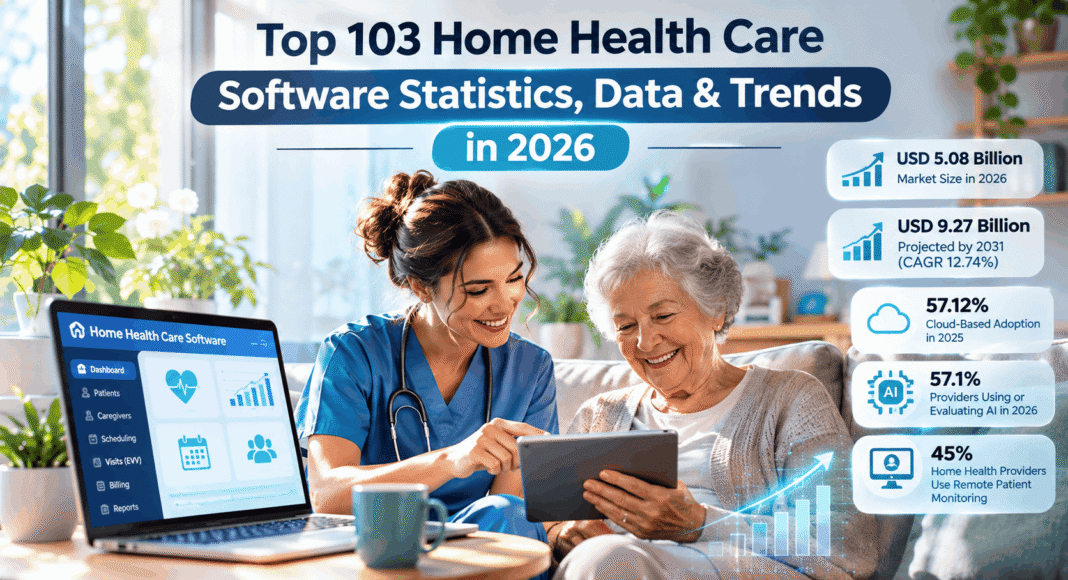
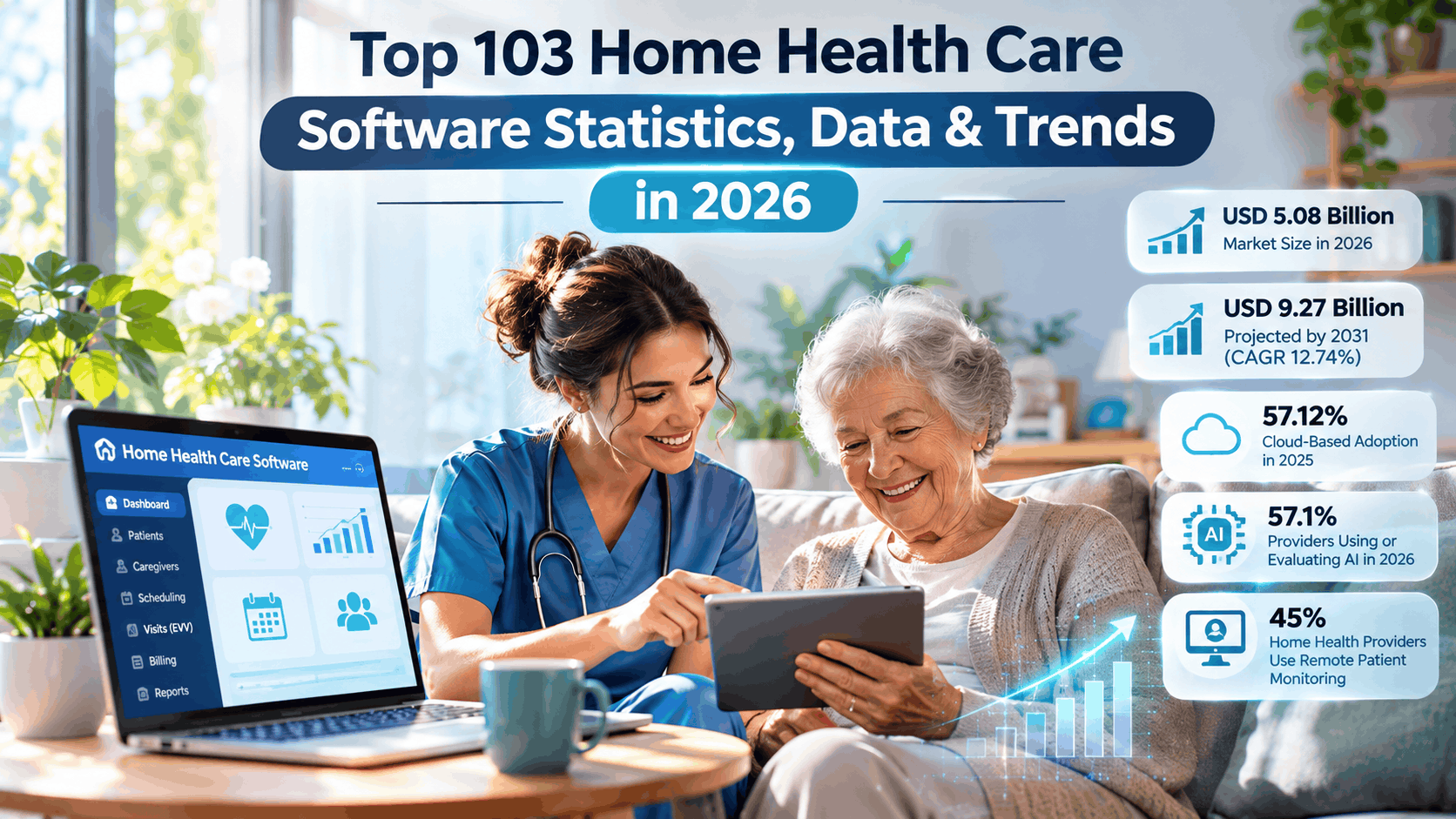
- Rapid Market Growth: The global home health care software market is estimated at USD 5.08 billion in 2026 and projected to reach USD 9.27 billion by 2031, growing at a CAGR of 12.74%.
- AI and Cloud Adoption: With 57.1% of home care providers using, testing, or evaluating AI tools, intelligent automation and cloud-based software are transforming caregiver scheduling, clinical documentation, and operational efficiency.
- Rising Demand for Digital Healthcare: Ageing populations, caregiver shortages, regulatory compliance requirements, and increasing telehealth adoption are accelerating demand for home health care software and remote patient monitoring solutions.
Home health care software supports digital care delivery, caregiver scheduling, clinical documentation, regulatory compliance, and remote patient monitoring. In 2026, the global market has an estimated value of USD 5.08 billion, with a projected value of USD 9.27 billion by 2031 and a compound annual growth rate of 12.74%.
The home health care industry is undergoing a significant digital transformation in 2026, driven by an ageing global population, rising healthcare expenditures, increasing demand for personalised home-based care, evolving regulatory requirements, and rapid advancements in healthcare technology. As healthcare providers face mounting pressure to improve patient outcomes, optimise operational efficiency, reduce administrative costs, and address persistent workforce shortages, home health care software has emerged as a critical technological foundation for modern healthcare delivery.
Home health care software enables healthcare agencies, hospitals, independent care providers, skilled nursing organisations, and home-based care professionals to streamline complex clinical and administrative processes through centralised digital platforms. From electronic health records (EHR), caregiver scheduling, and electronic visit verification (EVV) to medical billing, remote patient monitoring, telehealth, and regulatory compliance management, these solutions are fundamentally transforming how healthcare services are delivered, monitored, and managed outside traditional medical facilities.
The global home healthcare software market is experiencing substantial expansion. One market estimate values the industry at approximately USD 5.08 billion in 2026, up from USD 4.51 billion in 2025, with projections indicating that it could reach USD 9.27 billion by 2031, representing a compound annual growth rate (CAGR) of 12.74%. Other market forecasts indicate even greater growth potential, depending on whether their market definitions encompass broader digital healthcare technologies, clinical management systems, and remote patient monitoring solutions.
This sustained market expansion reflects the growing recognition of home health care software as an essential operational investment rather than an optional administrative tool. Healthcare organisations increasingly rely on integrated software platforms to improve resource allocation, coordinate multidisciplinary care teams, minimise documentation errors, enhance patient engagement, and maintain financial sustainability in an increasingly competitive healthcare environment.
The Growing Demand for Home Health Care Software in 2026
Demographic transformation remains one of the most significant drivers of home health care software adoption. Approximately 61.2 million Americans were aged 65 or older in 2024–2025, representing around 18% of the country’s population. By 2030, approximately one in five Americans is expected to belong to this age group, creating substantial additional demand for elderly care, chronic disease management, rehabilitation services, and long-term home-based healthcare.
Furthermore, the number of Americans aged 65 and older is projected to increase from 58 million in 2022 to 82 million by 2050. Combined with the widespread preference among older adults to remain in their own homes, these demographic developments are accelerating the transition from institution-based healthcare towards decentralised, patient-centric care delivery models.
Healthcare expenditure trends further demonstrate the scale of this opportunity. National home health care spending in the United States is projected to reach USD 177.5 billion in 2026 and USD 282.7 billion by 2032. As patient volumes and operational complexities increase, healthcare providers will require increasingly sophisticated digital infrastructure to manage growing demand without compromising service quality or financial performance.
Home health care management software is therefore becoming an indispensable component of healthcare organisations’ digital transformation strategies.
Cloud Computing, Artificial Intelligence and Automation Are Reshaping Home Healthcare
Technological innovation is fundamentally changing the capabilities and competitive landscape of home health care software in 2026. Cloud computing, artificial intelligence (AI), machine learning, predictive analytics, mobile applications, and intelligent automation are enabling healthcare providers to move beyond traditional administrative software towards more connected and data-driven healthcare ecosystems.
Cloud-based platforms accounted for approximately 57.12% of the home healthcare software market in 2025 and are projected to expand at a CAGR of 14.22% through 2031. Their growing popularity reflects the advantages of remote accessibility, scalable infrastructure, centralised data management, automated software updates, and improved collaboration between office-based administrators and field-based healthcare professionals.
Artificial intelligence is also emerging as a major technological growth driver. Approximately 57.1% of home care providers are actively using, testing, or evaluating AI-powered tools in 2026. Among organisations already adopting AI, prominent applications include caregiver scheduling, shift allocation, compliance monitoring, clinical documentation, and claims processing.
AI-powered scheduling solutions have demonstrated the potential to reduce administrative overhead by 30–40%, while AI-assisted clinical documentation tools have reportedly generated documentation time savings of 40–55% in certain deployments. These capabilities are particularly valuable for healthcare organisations seeking to reduce administrative burdens and increase the time caregivers can dedicate to direct patient care.
The global AI-in-home-healthcare market is projected to reach USD 14.7 billion by 2029, expanding at a CAGR of 41.3%. This rapid growth highlights the increasing importance of intelligent automation, predictive decision-making, and advanced analytics within the broader home healthcare technology ecosystem.
Remote Patient Monitoring and Telehealth Are Transforming Care Delivery
The expansion of telehealth and remote patient monitoring (RPM) technologies is another defining trend influencing the home health care software industry in 2026.
Approximately 45% of home health providers reportedly utilise remote patient monitoring tools, while more than 75 million patients were monitored through remote platforms in 2024, compared with 48 million in 2021. These developments demonstrate the growing integration of connected healthcare technologies into everyday clinical operations.
Modern home health care software platforms increasingly incorporate virtual consultations, real-time patient health monitoring, automated clinical alerts, digital communication tools, and connected medical device integrations. These capabilities allow healthcare professionals to monitor patient conditions remotely, identify potential health complications earlier, and coordinate timely interventions.
The global remote patient monitoring market is estimated to reach approximately USD 63.75 billion in 2026, highlighting the substantial commercial opportunities surrounding connected healthcare technologies.
As healthcare systems increasingly prioritise preventive care, chronic disease management, and reduced hospital readmissions, the integration of telehealth and remote monitoring capabilities into home health care management software is expected to become an increasingly important competitive differentiator.
Workforce Shortages and Regulatory Compliance Are Accelerating Software Adoption
Persistent workforce shortages represent another major challenge facing the home health care industry. Annual caregiver turnover rates are estimated at approximately 75–79%, while replacing a single caregiver can cost healthcare agencies between USD 2,600 and USD 5,000 in recruitment and training expenses.
With the United States employing approximately 4.3 million home health and personal care aides, effective workforce management has become essential to maintaining operational continuity, improving caregiver satisfaction, and delivering consistent patient care.
Home health care software addresses these challenges through automated caregiver scheduling, intelligent shift matching, mobile workforce management, digital onboarding, performance monitoring, and streamlined communication capabilities.
Regulatory compliance is equally important. Electronic visit verification requirements under the 21st Century Cures Act have accelerated the adoption of digital visit tracking systems across Medicaid-funded personal care and home health services.
Healthcare providers must also navigate complex medical billing requirements, patient data protection obligations, quality reporting standards, and value-based purchasing models. Consequently, software platforms that integrate compliance management, audit trails, electronic documentation, and automated reporting are becoming increasingly valuable to healthcare organisations.
Cybersecurity represents an additional area of concern. With healthcare data breaches carrying an average reported cost of USD 7.42 million per incident, healthcare providers must carefully evaluate software security capabilities, encryption standards, access controls, authentication mechanisms, and patient information protection measures before investing in new technology.
Why Home Health Care Software Statistics Matter in 2026
Understanding the latest home health care software statistics, market data, adoption patterns, and emerging technology trends is essential for healthcare executives, agency owners, healthcare administrators, technology developers, investors, policymakers, and digital transformation professionals.
These insights provide a valuable foundation for evaluating software investment opportunities, identifying operational inefficiencies, understanding changing patient expectations, benchmarking technology adoption, and anticipating future developments across the healthcare industry.
For home health agencies, analysing industry statistics can help inform decisions regarding software selection, workforce optimisation, clinical workflow automation, regulatory compliance, cybersecurity investment, and long-term business growth.
For software developers and healthcare technology companies, these trends reveal emerging market opportunities, evolving customer requirements, competitive differentiation strategies, and areas where technological innovation can deliver measurable operational and clinical value.
This comprehensive guide to the Top 103 Home Health Care Software Statistics, Data & Trends in 2026 explores the most significant developments shaping the industry, including:
- Global home health care software market size, growth forecasts, and revenue projections.
- Cloud-based software adoption and mobile healthcare technology trends.
- Electronic visit verification and regulatory compliance requirements.
- Regional market developments and the competitive software vendor landscape.
- Ageing population statistics and rising demand for home-based healthcare.
- Telehealth and remote patient monitoring adoption.
- Artificial intelligence, intelligent automation, and healthcare analytics.
- Caregiver workforce shortages, employee turnover, and retention challenges.
- Healthcare cybersecurity, data privacy, and information protection.
- Patient outcomes, operational profitability, and value-based healthcare delivery.
As the healthcare industry continues transitioning towards more decentralised, connected, automated, and patient-centric care models, home health care software is positioned to play an increasingly influential role in the future of healthcare delivery.
By examining these 103 essential home health care software statistics, readers can gain a comprehensive understanding of the industry’s current landscape, emerging opportunities, operational challenges, technological advancements, and long-term growth potential in 2026 and beyond.
Before we venture further into this article, we would like to share who we are and what we do.
About 9cv9
9cv9 is a business tech startup based in Singapore and Asia, with a strong presence all over the world.
With over ten years of startup and business experience, and being highly involved in connecting with thousands of companies and startups, the 9cv9 team has listed some of the top and best companies/tools in this review.
If you like to get your company listed in our top B2B software reviews, check out our world-class 9cv9 Media and PR service and pricing plans here.
Top 103 Home Health Care Software Statistics, Data & Trends in 2026
Market Size & Growth
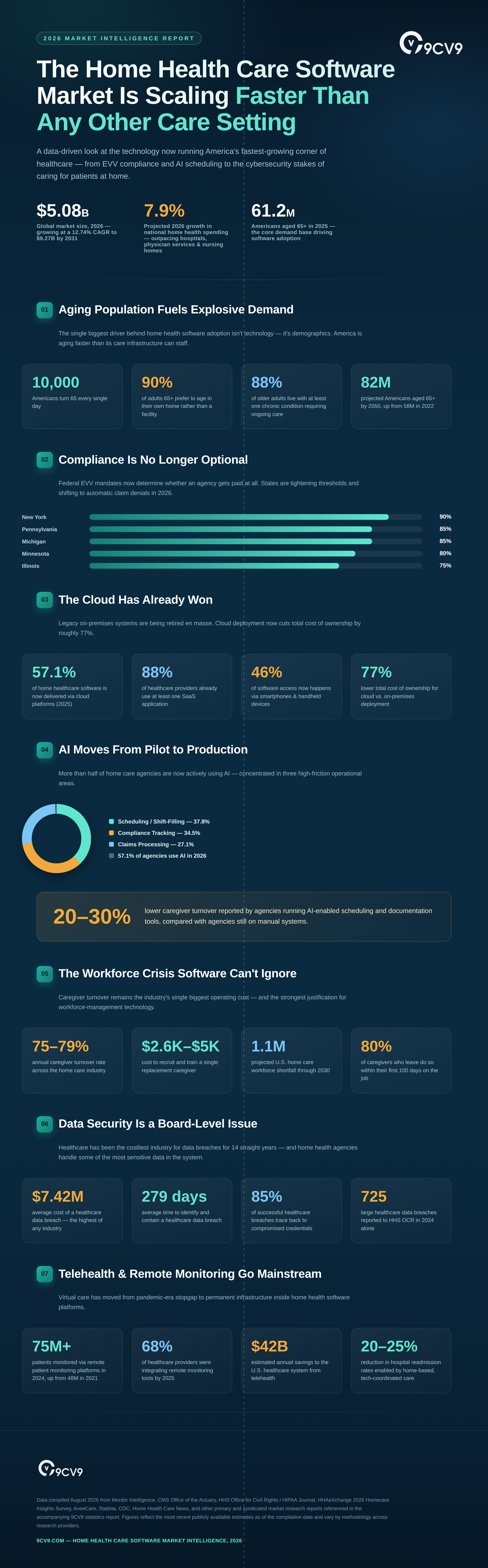
- The global home healthcare software market reached USD 5.08 billion in 2026, up from USD 4.51 billion in 2025. This steady year-over-year expansion confirms that home health care software has moved from a “nice-to-have” IT purchase to a core operational necessity for agencies navigating rising patient volumes.
- Mordor Intelligence forecasts the home healthcare software market will reach USD 9.27 billion by 2031, growing at a 12.74% CAGR. Buyers evaluating platforms today are entering a market with strong long-term vendor investment, which typically translates into more frequent feature updates and better long-term product support.
- A separate analysis places the market at USD 14.35 billion in 2026, rising from USD 12.42 billion in 2025 — a jump attributed to cloud-native platforms and integrated clinical modules. The variance across market reports underscores how rapidly vendors are repositioning around cloud-first, all-in-one platforms rather than single-purpose tools.
- The home healthcare software market is projected to grow at 15.77% CAGR through 2032, reaching USD 34.63 billion. This aggressive growth trajectory signals sustained venture and vendor investment in the space, which agencies can expect to translate into more competitive pricing and richer feature sets.
- One market research report values the sector at USD 9.73 billion in 2026, growing to USD 15.12 billion by 2030 at an 11.6% CAGR. Even conservative estimates place double-digit annual growth as the market norm, reflecting near-universal digitization pressure across home-based care providers.
- A more expansive market definition puts the 2026 home healthcare software market at USD 155.71 billion by 2034, up from USD 11.47 billion in 2024 — a 29.8% CAGR. The wide range between forecasts illustrates how differently “home healthcare software” is scoped across research firms, from narrow agency-management tools to broad digital health ecosystems.
- The home health care software segment specifically (distinct from broader home healthcare software) is forecast to grow from USD 10.50 billion in 2024 to USD 14.77 billion by 2031, at a 5.00% CAGR. Slower-growth estimates in this category suggest a maturing core segment even as adjacent categories like remote monitoring expand faster.
- Agency Management Solutions led the software-type segment with a 34.62% revenue share in 2025. This dominance highlights that scheduling, billing, and compliance workflows remain the primary purchase driver for most home health agencies shopping for software.
- The “Other Software” category, encompassing emerging tools, is projected to expand at a 14.97% CAGR through 2031 — faster than any established category. Buyers should watch this segment closely, as it likely includes AI-driven and analytics tools poised to redefine standard feature expectations.
- By service line, Skilled Nursing held 41.28% of the home healthcare software market share in 2025. Software vendors serving skilled nursing workflows enjoy the largest addressable market within the home health software space.
- Infusion Therapy software is advancing at a 13.72% CAGR through 2031, the fastest-growing service segment. Agencies expanding into specialty infusion services should expect software vendors to prioritize this workflow in near-term roadmaps.
Cloud, Mobile & Deployment Trends
- Cloud-based platforms captured 57.12% of the home healthcare software market in 2025 and are projected to grow at 14.22% CAGR through 2031. Cloud deployment has firmly overtaken on-premises installations as the default choice for new home health software buyers.
- Cloud deployment lowers total cost of ownership by roughly 77% compared to on-premises alternatives. This dramatic cost differential explains why even risk-averse, compliance-heavy home health agencies are migrating away from legacy server-based systems.
- 88% of healthcare providers currently use at least one SaaS application to manage patient data and administrative workflows. This near-universal SaaS familiarity is lowering the adoption barrier for cloud-based home health platforms specifically.
- Handheld devices and smartphones accounted for 46% of the access layer demand for home healthcare software in 2024. Mobile-first design is no longer optional for vendors, given that field caregivers now interact with software primarily through phones rather than desktops.
- The SaaS deployment model recorded 33% uptake growth across European home healthcare software buyers. International markets are following the same cloud-migration trajectory already well underway in North America.
- Cloud-based solutions are projected to account for 47.3% share of the broader home healthcare software deployment mix by 2036. Even over a ten-year forecast horizon, cloud remains the structurally dominant deployment model rather than a temporary trend.
- Home Health Agencies accounted for 60.02% of the home healthcare software market share by end-user in 2025. Agencies themselves — rather than hospitals or payers — remain the single largest buyer category for this software.
- Hospitals represented 48.9% of end-user demand for home healthcare software in 2026 through discharge coordination programs. Post-acute care coordination is emerging as a major secondary growth driver for home health software vendors beyond core agency use.
- Clinical homecare systems are expected to account for 52.0% of total usage demand in 2026. Clinical documentation and visit-planning functionality remains the most heavily used feature category inside home health platforms.
Electronic Visit Verification (EVV) & Compliance
- The 21st Century Cures Act mandated EVV for Medicaid-funded personal care services by January 1, 2020, and for home health care services by January 1, 2023. This federal mandate is the single biggest compliance driver behind universal home health software adoption across Medicaid-billing agencies.
- In 2026, most states require an 85%+ EVV accuracy rate to avoid penalties, claim denials, or FMAP reductions. Agencies without EVV-capable software risk direct revenue loss, making compliant technology a financial necessity rather than a convenience.
- States failing to meet EVV compliance face incremental FMAP reductions of up to 1%. This federal financial penalty mechanism gives state Medicaid programs strong incentive to enforce EVV software requirements strictly on providers.
- Illinois raised its EVV compliance threshold to 75% for Home Health Care Services providers effective April 1, 2026. State-level threshold increases like this one show that EVV requirements are tightening rather than stabilizing.
- Michigan began full EVV enforcement on April 1, 2026, requiring at least 85% of visits per quarter to be completed with no manual edits. Manual-entry limits are becoming standard, pushing agencies toward real-time, GPS-verified visit capture software.
- Highmark Wholecare requires EVV providers to achieve an 85% verified visit compliance rate without manual edits, with manual entries capped at 15% of visits. Payer-level EVV enforcement, layered on top of state mandates, adds another compliance dimension software buyers must account for.
- Minnesota’s 2026 EVV compliance rate requirement starts at 50% and rises to 80%. Phased threshold increases like Minnesota’s give agencies a limited runway to upgrade software before stricter enforcement begins.
- States are broadly transitioning from “soft edits” (claims flagged but paid) to “hard edits” (claims automatically denied) for EVV data in 2026. This shift means home health software with unreliable EVV data capture can now directly and immediately disrupt agency cash flow.
- EVV systems must capture six key data points per visit: service type, individual served, date, location, caregiver identity, and exact times. Any home health software evaluated for compliance purposes should be checked against this specific federal data-capture standard.
- CMS’s evaluation of EVV data completeness for program integrity purposes is expected to report findings in 2026. Increased federal scrutiny of EVV data quality signals more audit activity ahead for home health agencies and their software vendors alike.
Market Size, Regional & Vendor Landscape
- North America holds approximately 42–45% of the global home healthcare software market share. The region’s dominance reflects a combination of regulatory push (EVV mandates), payer sophistication, and higher digital health spending relative to other regions.
- The U.S. home health agency spending reached USD 169.4 billion in 2024, a 10.2% year-over-year increase. This scale of spending growth provides strong tailwind for software vendors serving the operational and billing needs of agencies managing that revenue.
- Traditional fee-for-service Medicare paid USD 16.0 billion in 2024, covering 2.7 million beneficiaries across 8.3 million 30-day payment periods. Complex episodic payment structures like this make billing automation one of the highest-value features a home health software platform can offer.
- National home health care spending is projected to reach USD 177.5 billion in 2026 and USD 282.7 billion by 2032. Software vendors serving this segment are positioned inside one of the fastest-projected-growth categories in all of U.S. healthcare spending.
- CMS projects home health spending will grow 7.9% in 2026, moderating from 10.3% growth in 2025. Even a “slowdown” in this sector still substantially outpaces broader U.S. healthcare spending growth, keeping the software market attractive.
- CMS finalized a 1.3% aggregate Medicare payment reduction for home health agencies for calendar year 2026, equating to roughly USD 220 million. Tightening reimbursement makes operational efficiency software — scheduling, billing accuracy, denial prevention — more financially critical for agencies than ever.
- The proposed 2026 CMS rule originally called for a 6.4% aggregate payment cut before being revised down. The scale of the originally proposed cut illustrates the reimbursement volatility agencies face, reinforcing demand for software that can adapt quickly to payment model changes.
- The leading home health/home care software vendors named across market reports include WellSky, MatrixCare, Netsmart, AlayaCare, Brightree, Homecare Homebase, PointClickCare, Axxess, and AxisCare. Buyers comparing platforms via directories like Capterra will consistently encounter this same core group of established vendors.
- Florida has the highest number of home health agencies in the U.S., with over 3,000 providers. Regional agency density like Florida’s creates concentrated demand pockets that many software vendors specifically target with localized compliance features.
- As of 2023, there were 11,506 home health agencies in the United States, the lowest total in the recorded historical period. A shrinking number of agencies alongside a growing patient population suggests remaining providers are scaling operations — and their software needs — accordingly.
- As of 2024, there were 9,961 home health agencies in the U.S. treating traditional Medicare beneficiaries. This narrower Medicare-certified count represents the core addressable market most home health software vendors are built to serve.
- America’s Best Home Health Agencies 2026 ranking evaluated 10,875 home health agencies across 25 U.S. states. The scale of this evaluation illustrates just how fragmented — and therefore software-dependent for standardization — the home health agency landscape remains.
- For-profit agencies constitute roughly 73–83.5% of the Medicare-certified home health market, depending on the source. The dominance of for-profit operators creates strong ROI-driven purchasing behavior, favoring software that demonstrably improves margins.
Aging Population & Demand Drivers
- Approximately 61.2 million Americans, or 18% of the population, were aged 65 or older as of 2024–2025. This demographic base represents the core patient population home health software platforms are ultimately built to serve.
- By 2030, 1 in 5 Americans (20.7%) will be aged 65 or older. Software vendors are scaling infrastructure now in anticipation of the patient volume surge this shift will bring within the next several years.
- The number of Americans aged 65 and older is projected to grow from 58 million in 2022 to 82 million by 2050, a 47% increase. Long-term demand for home-based care — and the software coordinating it — is essentially guaranteed to keep expanding for decades.
- 10,000 Americans turn 65 every day. This daily influx of new potential home care patients creates continuous, compounding demand pressure on agency capacity and, by extension, the software managing that capacity.
- By 2030, the 65+ U.S. population is expected to reach 71.6 million as all baby boomers cross the 65-year threshold. The “boomer wave” reaching this age bracket is the single most-cited demographic driver behind home health software market forecasts.
- More than 90% of adults 65 and older have at least one chronic condition, according to the CDC. Nearly universal chronic disease prevalence in the senior population is what makes ongoing care coordination software, rather than one-off visit tools, essential.
- 88% of older adults live with at least one multiple chronic condition (MCC), and 60% have two or more. Multi-condition complexity is precisely what care coordination and clinical documentation modules within home health software are designed to manage.
- Approximately 90% of adults aged 65 and older say they would prefer to age in their own homes rather than move to a nursing home or assisted living facility. This overwhelming preference is the demand-side foundation of the entire home health care industry and its supporting software market.
- 1 in 4 adults over age 65 experiences a fall each year. Fall-risk tracking and remote monitoring integrations are increasingly common software features responding directly to this widely cited statistic.
- The number of Americans with Alzheimer’s disease is projected to more than double by 2050, from 6 million to 13 million. Memory-care documentation and specialized care-plan modules are a growing niche within home health software driven by this trajectory.
- The number of people aged 85 and older is expected to nearly quadruple between 2000 and 2040. This “oldest-old” cohort typically requires the most intensive, software-coordinated care, disproportionately driving demand for advanced platform features.
- By 2034, older adults are projected to outnumber children under 18 in the United States for the first time. This demographic crossover point cements home-based elder care — and its enabling technology — as a permanent structural pillar of the U.S. healthcare system.
Telehealth & Remote Patient Monitoring (RPM)
- The telehealth market within home health is expected to grow at a 24.3% CAGR. This growth rate significantly outpaces the broader home health software market, making telehealth modules a key differentiator for platform vendors.
- 45% of home health providers now utilize remote patient monitoring (RPM) tools. Nearly half of providers already integrating RPM signals that this feature has moved from experimental to mainstream within home health software suites.
- More than 75 million patients were monitored through remote platforms in 2024, up from 48 million in 2021. This 56% increase in just three years demonstrates one of the fastest-scaling technology adoptions in the entire home health sector.
- Roughly 68% of healthcare providers were integrating remote monitoring tools by 2025. With adoption crossing the two-thirds mark, RPM integration is quickly becoming a baseline expectation rather than a premium add-on for home health software.
- The global remote patient monitoring market is estimated at approximately USD 63.75 billion in 2026. This figure signals the scale of investment flowing into monitoring technologies that increasingly plug directly into home health software platforms.
- 84% of healthcare providers believe remote patient monitoring improves patient outcomes. This strong professional confidence in RPM effectiveness supports continued vendor investment in monitoring-integrated home health software.
- Telehealth use among U.S. office-based physicians rose from 15.4% in 2019 to 85.9% in 2021. This dramatic acceleration set the baseline expectation that virtual-care functionality is now a standard software requirement, not an optional module.
- 44% of U.S. adults had a virtual healthcare visit in the past year. With telehealth now mainstream among the general population, home health software without integrated video and messaging capability risks falling behind buyer expectations.
- Remote patient monitoring for hypertension patients showed a 22.2% average return on investment. Demonstrable financial ROI figures like this help agencies build the business case for investing in RPM-capable home health software.
- Medicare heart failure patients using RPM saw a 52% reduction in monthly costs. Cost-reduction outcomes at this scale make RPM one of the most persuasive features home health software vendors can highlight to prospective agency buyers.
- Telehealth is estimated to have saved the U.S. healthcare system approximately USD 42 billion annually. System-wide savings of this magnitude reinforce the broader economic case for telehealth-enabled home health platforms.
- CMS-approved hospital-at-home programs expanded to 366 approved programs across 139 health systems in 37 states following a February 2026 extension. This federal extension through September 2030 gives home health software vendors a clear multi-year runway to build acute-care-at-home features.
AI & Automation Adoption
- 57.1% of home care providers are actively using, testing, or evaluating AI tools as of 2026. More than half of the industry engaging with AI signals a decisive shift from experimentation toward operational adoption inside home health software.
- Among agencies using AI, 37.8% apply it to scheduling and shift-filling, 34.5% to compliance tracking, and 27.1% to claims processing. These three functions represent the clearest current AI use cases embedded in leading home health software platforms.
- 64% of home care industry respondents believe AI will have its greatest impact on caregiver shift matching and automatic scheduling. Scheduling automation stands out as the single AI application home health software buyers most consistently prioritize.
- Agencies using AI-enabled scheduling and documentation report 20–30% lower caregiver turnover than those on manual systems. This direct link between software sophistication and workforce retention gives agencies a compelling financial reason to modernize their technology stack.
- AI-powered scheduling automation can reduce administrative overhead by 30–40% while improving caregiver-patient match quality. Administrative time savings at this scale free up coordinator capacity for higher-value client and caregiver support work.
- Home care providers adopting AI automation report up to 35% reductions in scheduling errors and 28% improvements in caregiver utilization. These efficiency gains illustrate why AI-driven scheduling has become one of the most heavily marketed features among home health software vendors.
- Documentation time savings of 40–55% have been reported by agencies deploying AI-assisted clinical documentation tools. Reducing time caregivers spend on paperwork directly increases the hours available for hands-on patient care.
- AI-driven claims processing tools have been linked to a 28% reduction in claims denial rates. Denial reduction directly protects agency cash flow, making AI billing tools one of the highest-ROI software investments available.
- The global AI-in-home-healthcare market is projected to reach USD 14.7 billion by 2029, growing at a 41.3% CAGR. This growth rate is more than double that of the broader home healthcare software market, underscoring AI as the fastest-moving subsegment within the industry.
- 42.2% of home care agencies report they do not currently leverage their own reporting data for business decisions, up from 22% in 2025. This widening analytics gap represents a significant, largely untapped opportunity for home health software vendors offering built-in business intelligence tools.
- 27.8% of home care industry leaders identify analytics as a key upcoming technology investment area. Growing interest in analytics suggests reporting and dashboard capabilities will be a major differentiator among home health software platforms over the next several years.
Workforce & Caregiver Retention
- Caregiver turnover in the home care industry sits at approximately 75–79% annually, among the highest of any U.S. industry. This extraordinary churn rate is a central pain point that scheduling and workforce-management modules within home health software are specifically designed to address.
- Nearly 4 in 5 caregivers who leave an agency do so within their first 100 days on the job. Onboarding-focused software features, including mobile training and simplified documentation, directly target this early-departure pattern.
- Replacing a single caregiver costs an agency between USD 2,600 and USD 5,000 in recruitment and training expenses. These costs make caregiver-retention-supporting software features a direct and measurable line-item savings opportunity for agencies.
- The U.S. home care workforce is short an estimated 1.1 million workers through 2030. This structural labor shortage is a primary driver behind agencies’ urgent adoption of scheduling optimization and workforce management software.
- Home health and personal care aides form the single largest occupation in the United States, with roughly 4.3 million workers. The sheer scale of this workforce underscores why efficient scheduling and communication software has outsized operational impact industry-wide.
- The direct care workforce is projected to grow 17% from 2024 to 2034, adding roughly 739,800 new jobs. Continued workforce expansion at this pace will require home health software capable of onboarding and managing an increasingly large field staff.
- Caregiver shortages were cited by 53% of home care industry respondents as a top operational pain point in 2026. Despite improvement from 59% the prior year, staffing remains the dominant challenge that software vendors position their platforms to solve.
- Home health and personal care aides earn a median annual wage of approximately USD 34,900, or USD 16.78 per hour. Modest compensation levels help explain persistently high turnover, reinforcing the operational value of retention-supporting technology.
Cybersecurity & Data Privacy
- Healthcare remains the most expensive industry for data breaches for the 14th consecutive year, at an average cost of USD 7.42 million per incident. This persistent cost leadership makes HIPAA-compliant, security-hardened home health software a non-negotiable buying criterion.
- Healthcare data breaches take an average of 279 days to identify and contain — about five weeks longer than the global cross-industry average. Slower breach detection in healthcare settings elevates the importance of built-in security monitoring within home health software platforms.
- In 2024, roughly 725 large healthcare data breaches were reported to the HHS Office for Civil Rights, exposing approximately 289 million individuals’ records. This scale of exposure illustrates why data security capabilities have become a top evaluation criterion for home health software buyers.
- Network and server breaches made up 61.5% of all reportable healthcare breaches, according to HHS OCR data collected from 2025. Understanding where breaches most commonly originate helps agencies evaluate which security features matter most in a software vendor’s infrastructure.
- Compromised credentials accounted for 85% of successful healthcare breaches. This finding makes multi-factor authentication and strong access controls within home health software essential rather than optional safeguards.
- Healthcare organizations invest only 4–7% of IT budgets in cybersecurity, compared to roughly 15% in financial services. This relative underinvestment leaves many home health agencies more exposed than their software vendors’ security claims might suggest, making due diligence essential.
- The cumulative total of healthcare data breaches reached 7,419 through January 2026, affecting over 935 million individuals. The sheer cumulative scale of healthcare breaches underscores why cybersecurity credentials should weigh heavily in any home health software purchasing decision.
- Updated HIPAA requirements now mandate multi-factor authentication for all electronic protected health information (ePHI). Agencies should verify that any home health software under evaluation already meets this newly reinforced federal security standard.
Outcomes & Value-Based Care
- Home healthcare reduces hospital readmission rates by approximately 20–25% compared to traditional care settings. This outcome data is frequently cited by software vendors to justify the clinical and financial case for home-based, technology-coordinated care.
- Value-based purchasing models applied to 100% of Medicare-certified home health agencies as of 2023. Universal value-based purchasing participation makes outcome-tracking and quality-reporting features a baseline requirement for compliant home health software.
- About 12 million Americans receive home healthcare services each year. This annual patient volume represents the scale of care coordination that home health software platforms must support nationally.
- The majority of home healthcare patients — approximately 86% — are aged 65 and older. This concentration confirms that software features designed around geriatric care workflows serve the overwhelming majority of the platform’s end users.
- Diabetes management accounts for approximately 15% of specialized home health visits. Chronic disease management modules addressing conditions like diabetes represent a meaningful share of day-to-day clinical software usage.
- Therapeutic respiratory equipment held over 25% of the home health market share in 2022. Equipment and DME tracking integration remains a significant functional requirement for software serving respiratory-care-focused agencies.
- The 2026 AxisCare Home Care Industry Survey found 34% of home care leaders cite profitability as a top concern, up from 13% the prior year. This sharp rise in profitability concerns is driving increased scrutiny of software ROI and total cost of ownership during vendor selection.
- 65% of home care industry leaders believe deepening operations in their current market is a better near-term growth strategy than geographic expansion. This strategic shift favors software platforms that help agencies extract more efficiency from existing territories rather than simply scale headcount.
- Cybersecurity attacks specifically targeting home health agencies increased by roughly 60% during a recent reporting period. This disproportionate targeting of home health providers specifically reinforces why sector-specific security certifications matter more than generic software security claims.
Conclusion
The home health care software industry is experiencing a transformative period in 2026, characterised by accelerating digital adoption, substantial market growth, technological innovation, evolving regulatory requirements, and increasing demand for efficient, patient-centric healthcare services. The insights presented in these 103 home health care software statistics, data, and trends demonstrate that digital healthcare solutions are becoming indispensable to the operational, clinical, and financial sustainability of modern home health care organisations.
With the global home healthcare software market estimated at USD 5.08 billion in 2026 and projected to reach USD 9.27 billion by 2031 at a compound annual growth rate (CAGR) of 12.74%, the industry presents considerable long-term growth opportunities for healthcare providers, software developers, technology investors, and digital transformation specialists. Although market valuations vary considerably depending on the scope of individual forecasts, the broader growth trajectory reflects increasing investment in healthcare digitisation and technology-enabled home-based care delivery.
As healthcare systems continue shifting from traditional institutional care towards decentralised and personalised healthcare models, home health care software will play an increasingly important role in connecting patients, caregivers, healthcare professionals, administrators, and insurance providers.
Artificial Intelligence and Automation Will Define the Next Generation of Home Health Care Software
One of the most significant findings from the latest home health care software statistics is the growing influence of artificial intelligence, intelligent automation, and advanced data analytics.
Approximately 57.1% of home care providers are actively using, testing, or evaluating AI-powered tools in 2026, highlighting the industry’s transition towards intelligent digital operations. From automated caregiver scheduling and clinical documentation to compliance monitoring and medical claims processing, AI is creating new opportunities for healthcare organisations to improve productivity and reduce operational inefficiencies.
The global AI-in-home-healthcare market is projected to reach USD 14.7 billion by 2029, growing at a CAGR of 41.3%. This rapid expansion demonstrates the considerable potential of artificial intelligence within the broader home healthcare technology ecosystem.
Reported benefits associated with AI-powered home health care software include:
- Reductions in administrative overhead of approximately 30–40%.
- Clinical documentation time savings of 40–55%.
- Reductions in scheduling errors of up to 35%.
- Improvements in caregiver utilisation of approximately 28%.
- Reductions in medical claims denial rates of approximately 28%.
- Improved caregiver retention and workforce allocation.
- Enhanced operational visibility and data-driven decision-making.
Although actual outcomes depend on implementation quality, organisational readiness, and software capabilities, these reported improvements illustrate the potential of intelligent automation to address some of the most persistent operational challenges facing home health care providers.
Cloud-Based Home Health Care Software Is Becoming an Industry Standard
Cloud computing represents another fundamental pillar of the home healthcare industry’s digital transformation.
Cloud-based platforms accounted for approximately 57.12% of the home healthcare software market in 2025 and are projected to grow at a CAGR of 14.22% through 2031. This trend reflects the increasing preference for scalable, accessible, flexible, and centrally managed healthcare technology infrastructure.
Cloud-based home health care management software enables healthcare organisations to connect geographically distributed caregivers, synchronise clinical documentation, automate administrative workflows, and provide authorised healthcare professionals with timely access to patient information.
As mobile healthcare applications become increasingly integrated into everyday caregiving activities, software providers must prioritise mobile accessibility, intuitive user interfaces, interoperability, system reliability, and secure information management.
Healthcare agencies investing in modern cloud-based platforms may be better positioned to accommodate rising patient volumes, expand service offerings, and adapt to changing operational requirements without the infrastructure limitations associated with traditional on-premises systems.
An Ageing Population Will Continue to Drive Long-Term Market Growth
Demographic developments remain among the strongest structural drivers of home health care software demand.
Approximately 61.2 million Americans were aged 65 or older in 2024–2025, while the number of Americans belonging to this age group is projected to reach 82 million by 2050. By 2030, approximately one in five Americans is expected to be aged 65 or older.
Combined with increasing chronic disease prevalence and the widespread preference among older adults to receive care in their own homes, these demographic trends are expected to create sustained demand for home-based healthcare services.
National home health care spending in the United States is projected to reach USD 177.5 billion in 2026 and USD 282.7 billion by 2032, further highlighting the economic significance of the sector.
To accommodate this expanding patient population, healthcare providers will increasingly require sophisticated home health care software capable of supporting complex care coordination, personalised treatment plans, chronic disease management, medication tracking, clinical documentation, and workforce management.
Technology investments that enable healthcare organisations to scale service delivery while maintaining clinical quality and operational efficiency will become increasingly important.
Telehealth and Remote Patient Monitoring Are Expanding the Boundaries of Home Healthcare
The growing adoption of telehealth and remote patient monitoring technologies is fundamentally changing how healthcare professionals deliver and coordinate home-based care.
Approximately 45% of home health providers reportedly utilise remote patient monitoring tools, while more than 75 million patients were monitored through remote platforms in 2024, compared with 48 million in 2021.
Furthermore, the global remote patient monitoring market is estimated to reach approximately USD 63.75 billion in 2026, demonstrating the substantial commercial potential of connected healthcare technologies.
By integrating remote monitoring capabilities into home health care software platforms, healthcare organisations can facilitate continuous patient monitoring, virtual consultations, early identification of potential health complications, and more coordinated clinical interventions.
These capabilities are particularly valuable for managing elderly patients, individuals with chronic illnesses, and patients requiring ongoing post-acute care.
As healthcare organisations increasingly focus on preventive care, patient engagement, reduced hospital readmissions, and value-based healthcare delivery, integrated telehealth and remote patient monitoring functionality is likely to become an increasingly important consideration when evaluating home health care software solutions.
Workforce Management Will Remain a Critical Software Investment Priority
Despite significant technological advancements, workforce shortages and caregiver retention continue to represent major operational challenges across the home health care industry.
Annual caregiver turnover rates of approximately 75–79%, combined with estimated replacement costs of USD 2,600–5,000 per caregiver, demonstrate the considerable financial and operational consequences of workforce instability.
With approximately 4.3 million home health and personal care aides employed in the United States, effective workforce management is essential for ensuring continuity of care, maintaining service quality, and supporting sustainable business growth.
Modern home health care software can help healthcare organisations address these challenges through intelligent caregiver scheduling, automated shift matching, mobile communication, digital onboarding, workforce analytics, and streamlined clinical documentation.
By reducing administrative workloads and improving workforce coordination, healthcare organisations may be able to create more supportive working environments, improve caregiver satisfaction, and allocate additional resources towards direct patient care.
However, technology should complement broader workforce retention strategies rather than serve as a substitute for competitive compensation, professional development, and effective organisational management.
Regulatory Compliance and Cybersecurity Will Influence Software Purchasing Decisions
Regulatory compliance and cybersecurity are becoming increasingly important considerations for home health care software buyers in 2026.
Electronic visit verification requirements, complex reimbursement structures, value-based purchasing programmes, clinical documentation standards, and patient data protection obligations are placing greater administrative responsibilities on healthcare organisations.
The growing enforcement of electronic visit verification requirements highlights the importance of software platforms that support accurate visit documentation, automated compliance reporting, reliable audit trails, and integration with relevant healthcare payment systems.
Cybersecurity concerns further reinforce the need for robust digital infrastructure. With healthcare data breaches carrying an average reported cost of USD 7.42 million per incident, inadequate information security practices can expose healthcare organisations to substantial financial losses, operational disruptions, reputational damage, and regulatory consequences.
Healthcare providers evaluating home health care software should therefore carefully assess data encryption capabilities, multi-factor authentication, access controls, security monitoring, disaster recovery procedures, interoperability standards, and applicable regulatory compliance requirements.
As the volume of sensitive patient information processed through digital healthcare platforms continues to increase, cybersecurity and data privacy will remain fundamental components of sustainable healthcare technology adoption.
The Future of Home Health Care Software Beyond 2026
Looking beyond 2026, the home health care software industry is expected to evolve towards increasingly integrated, intelligent, interoperable, and patient-centric digital ecosystems.
Future developments are likely to focus on AI-assisted clinical documentation, predictive healthcare analytics, automated revenue cycle management, advanced workforce optimisation, remote patient monitoring, connected medical devices, and personalised care coordination.
Healthcare software vendors that successfully combine these capabilities with strong cybersecurity protections, intuitive user experiences, regulatory compliance functionality, and scalable infrastructure may be better positioned to meet the evolving needs of healthcare organisations.
At the same time, healthcare providers must approach digital transformation strategically. Selecting home health care software should involve a comprehensive assessment of organisational requirements, implementation costs, integration capabilities, workforce readiness, vendor reliability, data security, and measurable return on investment.
Rather than prioritising technological sophistication alone, healthcare organisations should focus on solutions that deliver tangible improvements in clinical workflows, administrative efficiency, caregiver satisfaction, patient experiences, and financial sustainability.
Ultimately, the Top 103 Home Health Care Software Statistics, Data & Trends in 2026 reveal an industry undergoing substantial technological and operational transformation. Increasing healthcare demand, demographic changes, workforce challenges, regulatory pressures, and rapid technological advancements are collectively strengthening the importance of digital solutions across the home healthcare ecosystem.
For healthcare executives, home health agency owners, software developers, investors, and technology decision-makers, understanding these statistics provides a valuable foundation for identifying emerging opportunities, evaluating investment priorities, benchmarking operational performance, and preparing for future industry developments.
As home-based healthcare becomes an increasingly important component of modern healthcare systems, organisations that strategically embrace cloud computing, artificial intelligence, intelligent automation, remote patient monitoring, and secure digital infrastructure will be better positioned to navigate industry challenges and capitalise on emerging growth opportunities.
Home health care software is no longer merely an administrative solution. It is becoming a strategic enabler of scalable healthcare delivery, operational resilience, clinical coordination, regulatory compliance, and improved patient outcomes. Its continued evolution will help shape a more connected, efficient, accessible, and patient-centric healthcare ecosystem in 2026 and beyond.
If you find this article useful, why not share it with your hiring manager and C-level suite friends and also leave a nice comment below?
We, at the 9cv9 Research Team, strive to bring the latest and most meaningful data, guides, and statistics to your doorstep.
To get access to top-quality guides, click over to 9cv9 Blog.
To hire top talents using our modern AI-powered recruitment agency, find out more at 9cv9 Modern AI-Powered Recruitment Agency.
People Also Ask
What is home health care software?
Home health care software is a digital solution that helps healthcare providers manage patient records, caregiver scheduling, medical billing, clinical documentation, regulatory compliance, and home-based care delivery.
How big is the home health care software market in 2026?
The global home health care software market is estimated at USD 5.08 billion in 2026, increasing from USD 4.51 billion in 2025, reflecting growing demand for digital healthcare solutions.
What is the projected growth rate of the home health care software market?
The global home health care software market is projected to grow at a CAGR of 12.74%, reaching USD 9.27 billion by 2031.
What are the biggest home health care software trends in 2026?
Major trends include artificial intelligence, cloud computing, remote patient monitoring, telehealth, automated caregiver scheduling, electronic visit verification, predictive analytics, and cybersecurity.
What is driving the growth of the home health care software market?
Market growth is driven by ageing populations, chronic disease prevalence, caregiver shortages, regulatory requirements, rising healthcare expenditure, and increasing demand for home-based healthcare services.
What percentage of home health care software is cloud-based?
Cloud-based platforms accounted for approximately 57.12% of the home healthcare software market in 2025 and are projected to grow at a CAGR of 14.22% through 2031.
How is artificial intelligence transforming home health care software?
AI enhances home health care software through automated scheduling, intelligent caregiver matching, clinical documentation, predictive analytics, compliance monitoring, and medical claims processing.
What percentage of home care providers use artificial intelligence in 2026?
Approximately 57.1% of home care providers are actively using, testing, or evaluating AI tools in 2026, reflecting growing interest in intelligent healthcare automation.
How big is the AI in home healthcare market?
The global AI-in-home-healthcare market is projected to reach USD 14.7 billion by 2029, growing at a CAGR of 41.3%.
What are the main benefits of home health care software?
Home health care software improves operational efficiency, patient care coordination, caregiver scheduling, billing accuracy, regulatory compliance, workforce productivity, and clinical information management.
What percentage of home health providers use remote patient monitoring?
Approximately 45% of home health providers reportedly use remote patient monitoring tools, highlighting the growing importance of connected healthcare technology.
How big is the remote patient monitoring market in 2026?
The global remote patient monitoring market is estimated at approximately USD 63.75 billion in 2026, driven by connected medical devices and increasing demand for remote healthcare services.
How does telehealth integrate with home health care software?
Telehealth integration enables virtual consultations, remote clinical assessments, patient communication, digital care coordination, and health monitoring without requiring every interaction to occur in person.
What is electronic visit verification in home health care software?
Electronic visit verification (EVV) digitally records caregiver visits, including service type, patient identity, visit date, location, caregiver identity, and service start and end times.
Is electronic visit verification mandatory for home health agencies?
In the United States, EVV is mandatory for qualifying Medicaid-funded personal care and home health services under the 21st Century Cures Act. Specific implementation requirements vary by state.
How does home health care software improve caregiver scheduling?
Home health care software automates shift assignments, caregiver availability tracking, appointment scheduling, route planning, and patient-caregiver matching to improve workforce coordination.
Can AI-powered home health care software reduce administrative costs?
AI-powered scheduling automation has reportedly reduced administrative overhead by 30–40% in certain implementations, although actual savings depend on agency operations and software capabilities.
How much time can AI-assisted clinical documentation save?
Agencies implementing AI-assisted clinical documentation tools have reported documentation time savings of approximately 40–55%, depending on their workflows and implementation effectiveness.
What is the caregiver turnover rate in the home care industry?
Annual caregiver turnover in the home care industry is estimated at approximately 75–79%, highlighting the importance of workforce management, employee engagement, and retention strategies.
How much does it cost to replace a home health caregiver?
Replacing a single caregiver can cost home care agencies between USD 2,600 and USD 5,000 in recruitment and training expenses.
How many home health and personal care aides work in the United States?
Approximately 4.3 million home health and personal care aides work in the United States, representing one of the country’s largest occupational groups.
How much will the United States spend on home health care in 2026?
National home health care spending in the United States is projected to reach USD 177.5 billion in 2026 and USD 282.7 billion by 2032.
How does an ageing population affect home health care software demand?
An ageing population increases demand for chronic disease management, elderly care, remote patient monitoring, caregiver coordination, and digital healthcare solutions that support independent living.
Which region dominates the global home health care software market?
North America accounts for approximately 42–45% of the global home healthcare software market, supported by healthcare technology investment, regulatory requirements, and digital adoption.
Who are the leading home health care software providers?
Leading providers include WellSky, MatrixCare, Netsmart, AlayaCare, Brightree, Homecare Homebase, PointClickCare, Axxess, and AxisCare.
How does home health care software improve medical billing?
Home health care software streamlines claims submission, reimbursement tracking, payment reconciliation, billing documentation, and error detection, helping agencies improve revenue cycle management.
Can AI reduce home health care insurance claim denials?
AI-driven claims processing tools have been associated with a 28% reduction in claim denial rates, although results vary depending on billing practices, data quality, and implementation.
Why is cybersecurity important in home health care software?
Home health care software processes sensitive patient information. Strong cybersecurity helps prevent unauthorised access, data breaches, operational disruptions, financial losses, and regulatory violations.
What features should healthcare agencies look for in home health care software?
Essential features include caregiver scheduling, electronic health records, EVV, medical billing, mobile accessibility, clinical documentation, remote patient monitoring, analytics, and robust data security.
What is the future of home health care software beyond 2026?
The future of home health care software is expected to centre on AI-powered automation, predictive analytics, connected medical devices, cloud-based platforms, interoperability, personalised care, and advanced cybersecurity.
Sources
- Mordor Intelligence
- Research and Markets
- Market.us
- Future Market Insights
- Verified Market Research
- ReportPrime
- Citrusbug
- Fairfield Market Research
- HHAeXchange
- Medicaid
- ShiftCare
- AutomationEdge
- Highmark Wholecare
- Illinois Department of Healthcare and Family Services
- Meridian
- Michigan Department of Health and Human Services
- myEZcare
- Statista
- Boost Home Healthcare
- AveeCare
- WifiTalents
- Engine Hire
- Home Health Care News
- CareSmartz360
- CARE Homecare
- CareVoyant
- MarketsandMarkets
- Tenovi
- ElectroIQ
- DataM Intelligence
- OpenPR
- CompaniesHistory
- HIT Consultant
- AxisCare
- Exotica IT Solutions
- DeepStrike Cybersecurity
- HIPAA Journal
- Bright Defense
- HIPAA Compliant Hosting
- Total Assure
- Dialectica
- Healthcare Finance News
- Centers for Medicare & Medicaid Services
- National Institute for Health Care Management
- Premier HC
- PubMed Central
- National Institutes of Health
- Ultimate Care NY
- Mass Care Link
- West Health Mosaic
- IBISWorld
- Guideflow