




























Key Takeaways
- Hospice Software Market Growth: The global hospice software market is projected to reach USD 738.1 million by 2034, growing at a 9.2% CAGR, driven by rising demand for end-of-life care and healthcare digitalisation.
- AI, Automation, and Cloud Adoption: Artificial intelligence, cloud-based EHR systems, telehealth, and automated clinical documentation are transforming hospice management, improving operational efficiency and supporting patient care coordination.
- Cybersecurity and Regulatory Compliance: Increasing healthcare data breaches, evolving Medicare requirements, HIPAA compliance, and workforce shortages are accelerating demand for secure, scalable, and integrated hospice software solutions.
The global hospice software market is projected to reach USD 738.1 million by 2034, up from USD 335 million in 2025, at a compound annual growth rate of 9.2%. Key growth drivers in 2026 include rising hospice care demand, artificial intelligence, cloud-based electronic health records, workflow automation, and evolving regulatory compliance requirements.
The global hospice care industry is undergoing a significant digital transformation in 2026, driven by rising demand for end-of-life care, an ageing global population, evolving healthcare regulations, workforce shortages, and rapid advancements in artificial intelligence (AI). As hospice providers face increasing pressure to deliver compassionate, personalised, and high-quality patient care while maintaining operational efficiency and regulatory compliance, hospice software has emerged as an increasingly important technological investment across the healthcare ecosystem.
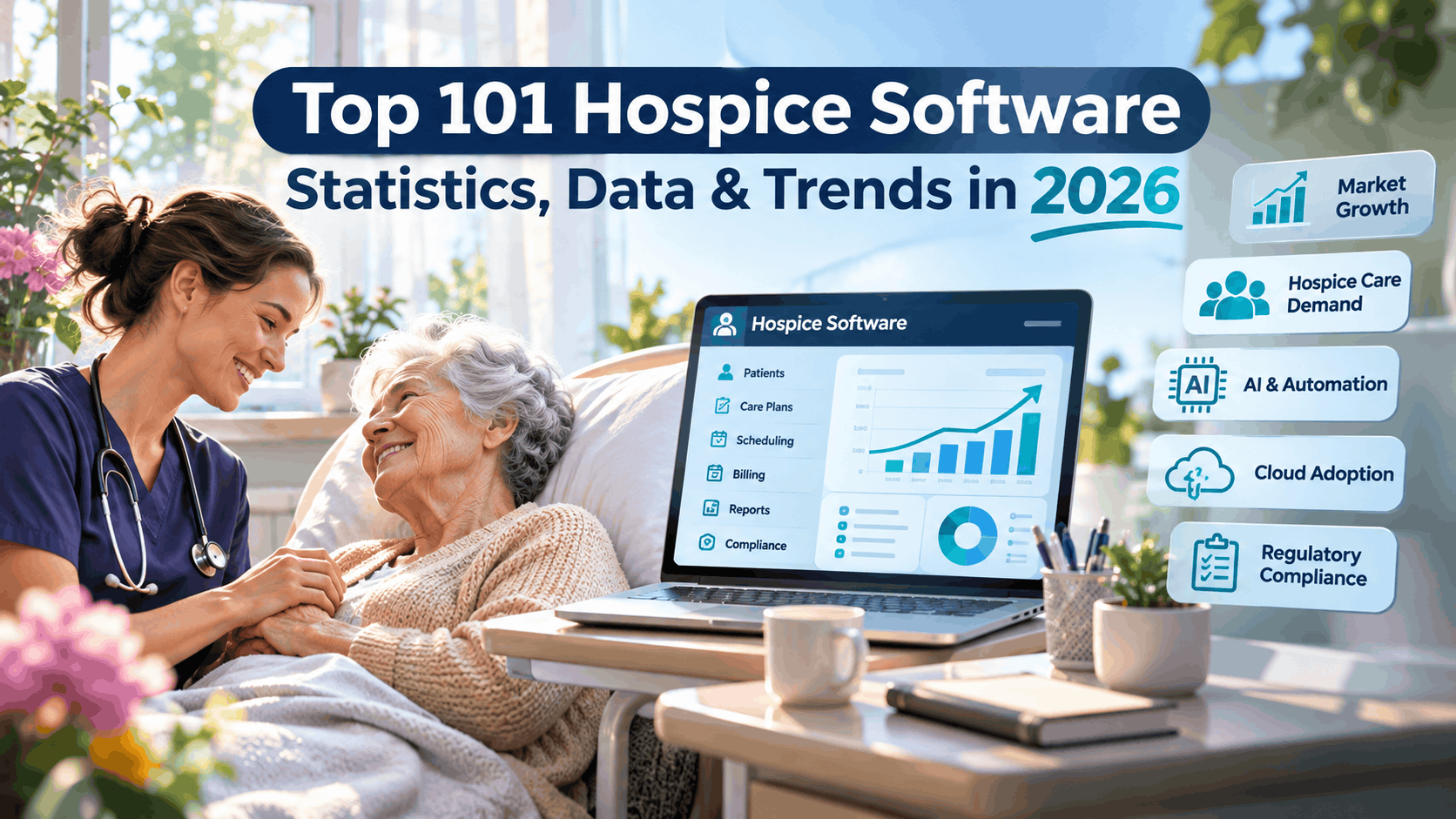
Hospice software encompasses a comprehensive range of digital solutions designed to streamline clinical documentation, electronic health records (EHR), patient intake, care planning, appointment scheduling, medication management, billing, revenue cycle management, regulatory reporting, and interdisciplinary care coordination. From independent hospice agencies and home-based care providers to large healthcare organisations and multi-location hospice networks, these platforms are helping organisations modernise administrative processes, improve information accessibility, and support better-informed clinical decisions.
The financial outlook for the global hospice software market reflects the growing importance of digital healthcare infrastructure. One market estimate valued the global hospice software market at USD 335 million in 2025, with projections indicating that it could reach USD 738.1 million by 2034, representing a compound annual growth rate (CAGR) of 9.2%. Another industry forecast estimates that the market could expand from USD 500 million in 2024 to USD 1.2 billion by 2033, growing at a CAGR of 10.2%. Although market valuations vary considerably depending on the software categories and functionalities included, these projections consistently indicate substantial long-term growth.
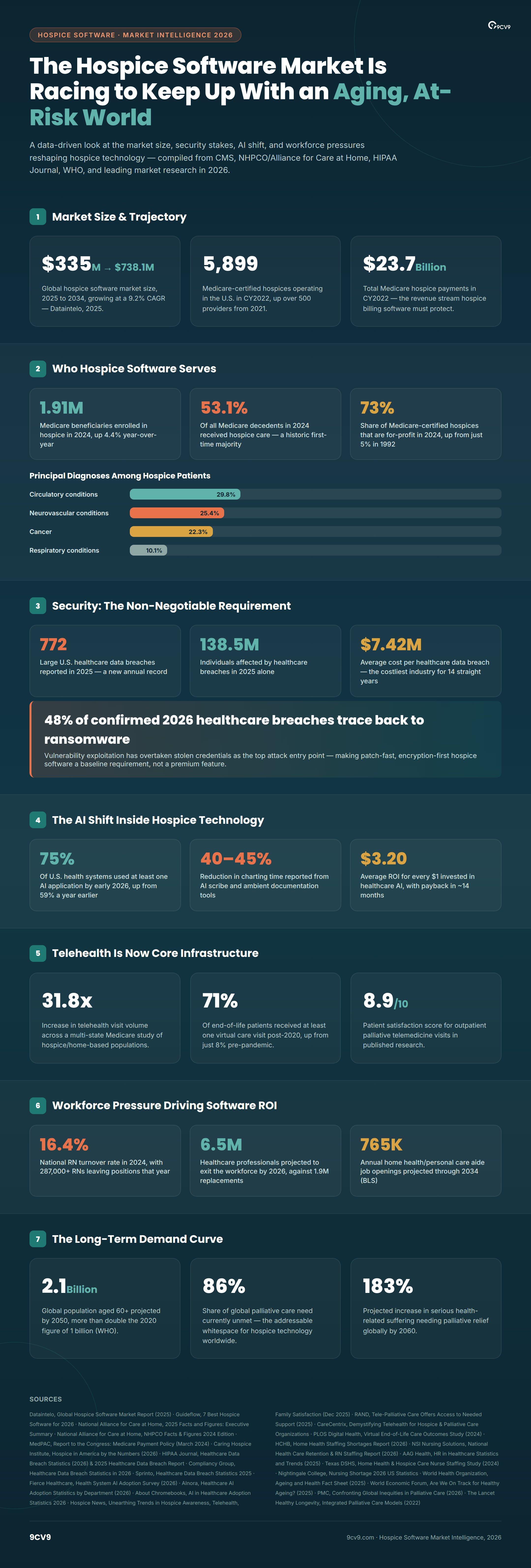
The expansion of hospice care services is another fundamental driver of hospice software adoption. In the United States, approximately 1.91 million Medicare beneficiaries received hospice care in 2024, representing a 4.4% increase compared with the previous year. Furthermore, 53.1% of Medicare beneficiaries who died in 2024 were enrolled in hospice care at the time of death. With Medicare hospice expenditure reaching USD 23.7 billion in 2022, healthcare organisations require increasingly sophisticated digital platforms to manage patient records, reimbursement processes, financial performance, and regulatory obligations.
Global demographic trends are expected to further accelerate demand for hospice management software. The worldwide population aged 60 and above is projected to reach 1.4 billion by 2030 and 2.1 billion by 2050. Meanwhile, the global population aged 80 and older is expected to reach approximately 426 million by 2050. As healthcare systems accommodate an expanding elderly population and increasing demand for palliative and end-of-life care, scalable hospice technology solutions will become increasingly important for managing patient volumes and supporting continuity of care.
Artificial intelligence, automation, cloud computing, and predictive analytics are also reshaping the hospice software landscape in 2026. Approximately 75% of US health systems were using at least one AI application by early 2026, compared with 59% a year earlier. Additionally, AI-powered medical transcription and ambient documentation tools have demonstrated the potential to reduce physician charting time by 40–45%. Although these figures represent the broader healthcare industry rather than hospice-specific adoption, they highlight technological developments that could influence the future of hospice EHR systems, automated clinical documentation, intelligent scheduling, symptom monitoring, and administrative workflows.
The growing adoption of cloud-based hospice software and telehealth platforms is similarly transforming how healthcare professionals deliver end-of-life care. Secure mobile applications, virtual consultations, remote patient monitoring, and centralised patient records allow distributed healthcare teams to collaborate more effectively across different care environments. These capabilities are particularly valuable for home-based hospice providers, where nurses, physicians, social workers, caregivers, and other healthcare professionals must coordinate patient care outside traditional hospital settings.
However, the increasing digitalisation of hospice services also introduces significant cybersecurity and data privacy challenges. The average cost of a healthcare data breach has reached approximately USD 7.42 million per incident, illustrating the substantial financial and operational risks associated with inadequate information security. Hospice software providers must therefore prioritise robust encryption, role-based access controls, multi-factor authentication, secure data storage, disaster recovery, and compliance with applicable healthcare data protection requirements, including the Health Insurance Portability and Accountability Act (HIPAA).
Regulatory compliance remains another critical consideration shaping hospice software purchasing decisions in 2026. Requirements associated with the Hospice Quality Reporting Program (HQRP), Medicare reimbursement, and the Hospice Outcomes & Patient Evaluation (HOPE) assessment framework are increasing the importance of accurate clinical documentation and automated quality reporting. Hospice management systems that support these evolving requirements can help healthcare organisations reduce administrative complexity, identify reporting deficiencies, and strengthen operational oversight.
Workforce shortages and rising labour costs are further reinforcing the business case for hospice software investment. The US Bureau of Labor Statistics projects that employment of home health and personal care aides will increase by 17% between 2024 and 2034, with more than 765,000 job openings annually. As healthcare organisations compete for qualified professionals, digital scheduling, workforce management, automated documentation, and streamlined administrative processes offer opportunities to improve staff productivity and reduce unnecessary workloads.
The competitive hospice software market is also evolving as established healthcare technology companies and specialised software vendors expand their capabilities. Platforms such as WellSky, Axxess, Netsmart myUnity, MatrixCare, Alora, and other hospice management solutions are addressing increasingly diverse requirements across clinical care, billing, compliance, interoperability, and mobile workforce management. Healthcare organisations are placing greater emphasis on software scalability, usability, integration capabilities, cybersecurity, implementation costs, and long-term return on investment when evaluating potential technology partners.
Understanding the latest hospice software statistics, market data, and emerging technology trends is therefore essential for hospice administrators, healthcare executives, medical professionals, software developers, investors, and technology procurement specialists seeking to navigate this rapidly evolving industry.
This comprehensive guide to the Top 101 Hospice Software Statistics, Data & Trends in 2026 examines the most significant developments influencing the global hospice technology landscape. It explores hospice software market size and growth forecasts, electronic health record adoption, artificial intelligence integration, telehealth utilisation, healthcare cybersecurity, workforce challenges, regulatory compliance, revenue cycle management, software purchasing behaviour, and long-term demographic trends.
By examining hospice-specific data alongside relevant broader healthcare technology statistics, this guide provides a comprehensive perspective on the opportunities, challenges, and innovations shaping the future of hospice management software. It also highlights how digital transformation can support more sustainable healthcare operations, stronger regulatory compliance, improved care coordination, and ultimately, more compassionate and patient-centred end-of-life care in 2026 and beyond.
Before we venture further into this article, we would like to share who we are and what we do.
About 9cv9
9cv9 is a business tech startup based in Singapore and Asia, with a strong presence all over the world.
With over ten years of startup and business experience, and being highly involved in connecting with thousands of companies and startups, the 9cv9 team has listed some of the top and best companies/tools in this review.
If you like to get your company listed in our top B2B software reviews, check out our world-class 9cv9 Media and PR service and pricing plans here.
Top 101 Hospice Software Statistics, Data & Trends in 2026
Market Size & Growth
- The global hospice software market was valued at USD 335 million in 2025 and is projected to hit USD 738.1 million by 2034, growing at a 9.2% CAGR.
The hospice software category is expanding rapidly as agencies shift from paper-based recordkeeping toward digital platforms that streamline compliance and billing. - A separate market estimate values the hospice software sector at USD 500 million in 2024, forecast to reach USD 1.2 billion by 2033 at a 10.2% CAGR.
Estimates vary by research firm, but nearly every model points to double-digit long-term growth driven by rising end-of-life care demand. - Another industry report pegs the broader hospice software market at USD 3.0 billion in 2023, projected to reach USD 6.0 billion by 2032 at a 9.2% CAGR.
The wide range across vendor estimates reflects differing definitions of “hospice software” — some scope it narrowly to EHR/clinical tools, others include billing, scheduling, and analytics suites. - A fourth market study places 2023 hospice software revenue at USD 4.1 billion, forecast to climb to USD 8.23 billion by 2031 at an 8.4% CAGR.
Regardless of the exact baseline figure, every major forecast agrees the category will roughly double within a decade. - Hospice software segmentation by deployment splits the market into cloud-based and on-premise models, with cloud solutions increasingly favored for scalability and remote access.
Agencies evaluating hospice software in 2026 are gravitating toward cloud deployment to support distributed, home-based care teams. - Hospice software is segmented by component into scheduling, billing, patient intake, reporting, human resources, and operations modules.
Buyers comparing platforms should weigh how comprehensively a vendor covers these six functional pillars rather than judging on clinical charting alone. - End-user segmentation for hospice software spans inpatient hospices, home-based hospices, inpatient care facilities, long-term care homes, and specialty clinics.
The diversity of care settings using hospice software underscores why configurability and interoperability are now top purchase criteria.
U.S. Hospice Care & Provider Landscape (the engine driving software demand)
- In 2024, 1.91 million Medicare beneficiaries were enrolled in hospice care for one or more days, a 4.4% increase from 2023.
Rising hospice enrollment directly expands the addressable base of patients that hospice software platforms must document and bill for. - For the first time, 53.1% of all Medicare decedents in 2024 received hospice care and were enrolled at the time of death.
Crossing the halfway mark signals hospice care is now a mainstream part of the American end-of-life journey, intensifying the need for scalable software. - Of the 1.91 million 2024 hospice enrollees, 1.3 million died while in hospice care.
This volume of care episodes generates enormous documentation and compliance workloads that manual processes struggle to keep pace with. - Medicare paid hospice providers USD 23.7 billion for care delivered in CY 2022, a 2.7% increase over the prior year.
Every dollar of this reimbursement flows through billing and claims modules inside hospice software, making accurate revenue-cycle tooling mission-critical. - There were 5,899 Medicare-certified hospices operating in the U.S. in CY 2022, an increase of more than 500 hospices since 2021.
More certified providers translates into a larger buyer pool for hospice-specific software vendors. - The number of hospice agencies grew 27% from 2018 (4,619) to 2022 (5,861).
Sustained provider growth over a five-year window shows the hospice software total addressable market has been expanding well before AI-driven demand accelerated it further. - By 2023, roughly 6,507 hospice providers were included in the 100% Hospice Standard Analytic File.
The provider count continuing to climb year over year strengthens the long-term revenue outlook for hospice software vendors. - In 1992, approximately 5% of Medicare-certified hospices were for-profit; by 2024 that share had risen to roughly 73%.
The shift toward for-profit ownership has pushed operational efficiency, and therefore software adoption, higher on the agency priority list. - MedPAC reports hospice margins were about 16% on a Medicare-aggregate basis in 2022, several times higher than most other post-acute care segments.
Healthy margins give hospice operators more room in their budgets to invest in modern software rather than legacy paper systems. - The ten largest hospice chains now account for roughly one-third of all hospice patients treated in the U.S.
Large multi-site chains typically standardize on a single enterprise hospice software platform, concentrating demand among vendors that can scale. - CMS launched a Hospice Special Focus Program in 2024 to identify and intensively monitor the worst-performing 1% of hospice providers.
Heightened regulatory scrutiny is pushing agencies toward software with built-in compliance and quality-reporting safeguards. - Circulatory conditions were the most common principal hospice diagnosis in 2024 at 29.8% of stays, followed by neurovascular conditions (25.4%) and cancer (22.3%).
Diverse diagnostic profiles require hospice software with flexible, condition-specific care-plan templates rather than one-size-fits-all documentation. - Respiratory conditions accounted for 10.1% of hospice stays in the most recent reporting period.
The breadth of qualifying terminal conditions means hospice software must support clinical pathways well beyond oncology alone. - Fifty percent of hospice providers with published CAHPS scores earned four or five stars in the most recent survey period, a 1-percentage-point increase.
Improving patient-experience scores suggests software-enabled care coordination is contributing to measurable quality gains. - Star Ratings were available for fewer than half of all hospice providers (2,046) in the latest CAHPS reporting cycle.
The reporting gap highlights an opportunity for hospice software vendors to simplify survey administration and boost participation rates.
EHR & Digital Adoption in Hospice/Home Health
- As early as 2007, 41% of home health or hospice providers already had electronic medical records, with another 15% planning adoption within a year.
Digital record-keeping in this sector has a two-decade head start, meaning most agencies evaluating software today are replacing, not first-adopting, an EHR. - Among providers with EMRs in that early dataset, 98% used components for patient demographics and 83% for clinical notes.
Even first-generation systems prioritized demographic and clinical documentation — functionality every modern hospice platform must still deliver flawlessly. - Nonprofit, government, and jointly operated providers, along with agencies serving over 150 patients, were more likely to have adopted EMRs early on.
Larger and mission-driven organizations have historically led hospice software adoption, a pattern that persists as enterprise vendors court multi-site operators. - Vendors including Axxess, Netsmart myUnity, WellSky, MatrixCare, and Alora dominate current hospice EMR rankings for 2026.
The competitive field spans specialized hospice-only vendors and cross-continuum platforms serving home health, hospice, and personal care together. - Axxess updated its platform in October 2025 to support HOPE (Hospice Outcomes & Patient Evaluation) assessment data collection and iQIES submission.
Vendors that move quickly on regulatory-driven feature updates like HOPE compliance are becoming the safer long-term choice for agencies. - SmartChart’s ClearPay billing engine reports that more than 99% of claims submitted through its platform are accepted for reimbursement.
Claims-acceptance rates above 99% illustrate how purpose-built hospice billing software materially reduces revenue leakage from denials. - CareSmartz360 reports a 95% client satisfaction rate among its home care agency users.
High satisfaction scores in vendor-reported data are a useful — though not independently audited — signal worth cross-checking against third-party review sites like Capterra.
Healthcare Data Security & Compliance (directly relevant to hospice software buyers)
- U.S. healthcare organizations reported 772 large data breaches to the HHS Office for Civil Rights in 2025, a new annual record at a pace of 2.1 per day.
Record-setting breach activity makes airtight HIPAA compliance a non-negotiable feature for any hospice software purchase in 2026. - Roughly 138.5 million individuals had their protected health information exposed in 2025 healthcare breaches, about 379,306 people per day.
The sheer scale of exposure underscores why hospice agencies — custodians of some of patients’ most sensitive end-of-life data — must prioritize vendor security posture. - Between 2009 and 2025, a cumulative 7,418 large healthcare breaches exposed the protected health information of more than 1.013 billion individuals.
The long-run breach total exceeds the entire U.S. population several times over, framing healthcare cybersecurity as a systemic, not isolated, risk. - The 2024 Change Healthcare ransomware breach alone affected an estimated 192.7 million individuals, one of the largest healthcare breaches ever recorded.
Single-vendor breaches of this magnitude show why hospice software buyers should scrutinize a vendor’s own third-party and subcontractor security controls. - The average healthcare data breach now costs organizations USD 7.42 million per incident, the highest of any industry for 14 consecutive years.
Choosing hospice software with strong built-in encryption and access controls is a direct hedge against this outsized financial exposure. - Ransomware was responsible for 48% of confirmed healthcare breaches in 2026, while exploitation of software vulnerabilities has overtaken stolen credentials as the top attack entry point.
Hospice software vendors that patch vulnerabilities quickly and transparently are becoming a key differentiator in procurement decisions. - Business-associate breaches exposed over 93 million healthcare records, compared with 34.9 million exposed directly at providers.
Because most hospice software is delivered by third-party vendors acting as business associates, vendor risk management deserves as much scrutiny as internal agency practices. - Each compromised medical record adds roughly USD 398 to the cost of a healthcare data breach.
Multiplied across a mid-sized hospice’s patient census, a single breach could easily run into seven figures, reinforcing the ROI case for secure software. - OCR closed 21 HIPAA enforcement actions with settlements or penalties in 2025, the second-highest annual total on record.
Rising enforcement activity means hospice agencies need software that actively supports — not merely claims — HIPAA compliance. - Unauthorized access or disclosure incidents accounted for a growing share of healthcare breaches in 2025, even as hacking-related breach types have plateaued.
Role-based access controls inside hospice software are an increasingly important defense against this rising breach category. - Physical PHI (paper and film) was compromised in 5.6% of 2025 healthcare data breaches, while 4.6% involved unauthorized EMR access.
The persistence of paper-related breaches is itself an argument for hospices to complete their transition to secure digital systems.
Artificial Intelligence in Healthcare & Hospice Technology
- 75% of U.S. health systems used at least one AI application by early 2026, up from 59% a year earlier.
Hospice organizations are following the broader healthcare sector’s rapid pivot toward embedding AI into documentation and operational workflows. - 50% of health systems using AI reported deploying three or more AI applications, showing adoption is deepening, not just widening.
Hospice software buyers should expect AI-driven features like predictive symptom alerts and automated documentation to become standard rather than premium add-ons. - 66% of U.S. physicians reported using health AI in 2024, up sharply from 38% in 2023.
Clinician familiarity with AI tools is climbing fast, making AI-enabled hospice charting features easier for care teams to adopt without heavy retraining. - AI scribe and ambient documentation tools have been shown to cut physician charting time by 40–45%.
Hospice clinicians, who spend significant time on visit notes, stand to reclaim substantial bedside and family-support time from similar AI documentation tools. - About 90% of U.S. health systems now automate some portion of their EHR documentation workflow.
This normalization of documentation automation is a leading indicator for where hospice-specific EHR vendors are headed next. - A national survey found 31.5% of nonfederal acute care hospitals had generative AI integrated with their EHR by 2024, with another 24.7% planning adoption within a year.
Generative AI integration is moving from experimental to expected, a trend hospice software vendors are beginning to mirror in their own roadmaps. - Generative AI adoption among U.S. healthcare organizations rose from 25% in late 2023 to roughly 50% by the end of 2025.
This doubling in two years illustrates how quickly AI features could become a baseline expectation for hospice software RFPs. - AI in healthcare delivers an average ROI of about USD 3.20 for every USD 1 invested, with returns typically realized within 14 months.
This kind of payback period gives hospice administrators a concrete business case for AI-enabled software upgrades. - The global AI-in-healthcare market was valued near USD 39 billion in 2025, with some forecasts projecting it could approach USD 614 billion by 2034.
Even a fraction of this investment flowing into post-acute and hospice-specific tools would meaningfully reshape the software landscape this decade. - The FDA had cleared or authorized more than 1,300 AI-enabled medical devices as of mid-2025, with about 76% concentrated in radiology.
While hospice-specific AI clearances remain limited today, the regulatory pathway used by other specialties offers a template hospice software vendors may follow.
Telehealth & Remote Care in Hospice
- Telehospice — virtual visits for hospice patients — has become a mainstream feature of hospice service delivery as of 2025, combining secure video, remote monitoring, and AI-based predictive analytics.
Hospice software that natively integrates telehealth and remote patient monitoring is increasingly viewed as essential rather than optional infrastructure. - A 2025 analysis of 1.67 million Medicare beneficiaries across 30 U.S. states found a combined 31.8x increase in telehealth visit volume within a multi-year study window.
This scale of virtual-visit growth demonstrates that hospice technology stacks must be built to handle high-volume telehealth data alongside traditional documentation. - One provider reported that roughly 70% of surveyed hospice and palliative care patients said they would prefer telehealth appointments when offered the choice.
Patient preference data like this strengthens the case for hospice software vendors to treat virtual visit tools as a core, not peripheral, capability. - Outpatient palliative telemedicine visits scored 8.9 out of 10 for patient satisfaction and 8.8 out of 10 for caregiver satisfaction in one published study.
High satisfaction scores for virtual palliative visits validate continued software investment in secure video and remote-monitoring modules. - A Canadian population study of 323,995 adults found that after March 2020, 71% of end-of-life patients received at least one virtual care visit, compared with just 8% before the pandemic.
This nearly 9x jump in virtual end-of-life care utilization illustrates a permanent shift in care-delivery patterns that hospice software must now support by default.
Staffing, Workforce & Operational Pressure (a key driver of software ROI)
- The U.S. Bureau of Labor Statistics projects home health and personal care aide employment will grow 17% from 2024 to 2034, with more than 765,000 annual job openings.
This scale of projected hiring demand means hospice agencies need software that helps existing staff manage larger caseloads efficiently. - Registered nurse demand is projected to add nearly 195,000 openings annually through 2034 across the broader healthcare sector.
Persistent RN shortages give hospice software vendors a strong pitch: automation that reduces documentation burden directly addresses workforce capacity constraints. - National RN turnover was estimated at about 16% in 2024, with over 287,000 staff RNs leaving positions that year.
High clinician turnover raises the cost and urgency of onboarding-friendly, intuitive hospice software that shortens new-hire ramp-up time. - RN turnover cost U.S. hospitals an average of USD 61,110 per departing nurse in 2025.
Reducing burnout-driven turnover through better workflow software can generate measurable savings well beyond the software’s subscription cost. - In Texas, position vacancy rates in home health and hospice agencies ranged from 13.5% among home health aides/CNAs to 22.2% among licensed vocational nurses.
Vacancy rates of this magnitude make efficient scheduling and staffing modules inside hospice software a direct operational necessity. - Nearly 40% of surveyed RNs and 41.3% of LPN/VNs indicated they intend to leave the nursing workforce or retire within five years.
Anticipated attrition at this scale means hospice software must be simple enough for a continuously refreshing clinical workforce to learn quickly. - It is estimated that over 6.5 million U.S. healthcare professionals may exit the workforce by 2026, against roughly 1.9 million expected replacements.
This structural labor gap is one of the strongest secular tailwinds behind rising hospice software and automation investment.
Global Aging & Long-Term Demand Drivers
- The global population aged 60 and older is projected to grow from 1.1 billion in 2023 to 1.4 billion by 2030.
This demographic wave directly expands the future patient base that hospice providers — and their software platforms — will need to serve. - By 2050, the global population aged 60 and above is expected to double to 2.1 billion, with those aged 80+ tripling to 426 million.
Long-range aging trends give hospice software vendors a multi-decade runway of structurally rising demand, independent of short-term market cycles. - Between 2015 and 2050, the share of the world’s population over age 60 will nearly double, from 12% to 22%.
A rising elderly share of the population increases the long-term total addressable market for every category of hospice and end-of-life technology. - People aged 70 and older already account for about 40% of all patients in need of palliative care worldwide.
This concentration of need among the oldest patients highlights the importance of software designed specifically for complex, multi-condition elderly care. - Global serious health-related suffering that could be relieved through palliative care is projected to rise by roughly 183% by 2060.
Such a steep projected increase in unmet need signals substantial long-term headroom for hospice and palliative software markets to expand internationally. - Currently, only about 14% of global palliative care need is actually being met.
This enormous care gap represents significant whitespace for hospice software vendors expanding into underserved international markets. - Palliative care is generally available (reaching at least half of people in need) in just 43% of countries worldwide, mostly high-income nations.
Software-enabled scaling of trained staff and remote-care delivery could be part of closing this access gap in lower-resourced health systems.
Capterra & Buyer Research Behavior (directly tied to the sourced directory)
- Capterra’s hospice software directory lists dozens of vetted platforms spanning EMR/EHR, billing, scheduling, and compliance categories for agencies to compare side by side.
Buyers increasingly rely on aggregated review platforms like Capterra rather than vendor marketing alone to shortlist hospice software finalists. - Leading hospice software comparison guides for 2026 evaluate platforms on five weighted criteria: charting, billing, compliance, scheduling, and mobile care coordination.
Standardizing evaluation criteria across these five pillars helps hospice buyers avoid being swayed by any single flashy feature at the expense of overall fit. - WellSky is frequently ranked best overall for agencies running home health, hospice, and personal care on a single unified platform.
Consolidated multi-service platforms are gaining favor among larger hospice operators looking to reduce the number of disconnected systems they manage. - Alora Hospice Software is commonly cited as a top choice specifically for compliance-heavy agencies needing CTI and physician signature workflows.
Specialized compliance tooling remains a key differentiator among hospice-specific software vendors versus general-purpose home care platforms. - Netsmart myUnity is frequently highlighted for providing a single unified patient record across multiple post-acute care settings.
Interoperability across care settings is becoming a decisive purchase factor as patients move between home, inpatient, and hospice facility care. - Many hospice software comparison sources explicitly note that pricing for several major vendors remains available only through a direct sales conversation rather than published rate cards.
Opaque pricing structures across the category are prompting more agencies to request detailed, itemized quotes before shortlisting vendors.
Regulatory & Compliance Landscape Shaping Software Requirements
- All Medicare-certified hospices must comply with the Hospice Quality Reporting Program (HQRP), with noncompliance resulting in a payment-rate reduction.
Hospice software with automated HQRP tracking and alerts directly protects an agency’s Medicare reimbursement rate. - CMS publicly displays HQRP quality-measure data via its Care Compare website, making hospice performance data transparent to prospective patients and families.
Software that helps agencies proactively monitor their Care Compare-reported metrics can materially influence referral volume and reputation. - The Hospice Outcomes & Patient Evaluation (HOPE) assessment tool underwent a major CMS transition in October 2025, requiring updated data collection and iQIES submission workflows.
Agencies using hospice software that lagged on HOPE compliance updates faced real operational and reimbursement risk during the transition window. - CMS’s Hospice Special Focus Program specifically targets the lowest-performing 1% of Medicare-certified hospice providers for intensive oversight.
Hospice software with built-in quality dashboards can help agencies identify and correct performance gaps before they attract this level of regulatory scrutiny.
Financial & Revenue Cycle Dimensions
- Medicare hospice spending growth slowed to 2.7% in CY 2022, compared with steeper growth rates during 2019–2021.
Slower reimbursement growth increases pressure on hospice agencies to control costs through software-driven efficiency rather than relying on rising payment rates. - For-profit hospices reportedly spend less per patient-day on nursing and physician visits than nonprofit counterparts, according to peer-reviewed research summarized by health policy researchers.
Cost-per-visit analytics built into hospice software give administrators the visibility needed to balance margin management with care-quality obligations. - Private equity firms completed 124 hospice acquisition deals involving 47 firms between 2015 and 2022.
Consolidation of this scale is driving demand for enterprise-grade hospice software capable of standardizing operations across newly merged, multi-site organizations. - Hospice agencies experienced a documented wave of “changes of ownership” (CHOW) tracked annually by CMS since 2016, with the pace of transactions varying meaningfully by ownership type.
Software platforms that support clean data migration and multi-entity reporting are increasingly valuable amid this ownership churn.
Broader Home Care & Post-Acute Software Context
- Hospice software vendors increasingly bundle scheduling, billing, patient intake, reporting, HR, and operations into single unified suites rather than standalone modules.
Consolidated, all-in-one hospice platforms reduce the integration overhead agencies previously faced when stitching together multiple point solutions. - CareSmartz360 markets itself as a HIPAA-compliant, AI-powered home care platform supporting electronic visit verification (EVV), billing, scheduling, and caregiver management.
Electronic visit verification has become a near-universal requirement across home-based hospice software following federal EVV mandates for personal care services. - Jotform Enterprise and similar form-building tools are being adopted by hospices specifically to digitize compliance paperwork and reduce manual signature processes.
Even lightweight, non-clinical digitization tools are contributing to the broader shift away from paper-based hospice administration. - MatrixCare and Netsmart are frequently recommended for larger hospice agencies needing robust interoperability and scalability, while smaller agencies are steered toward simpler, easier-to-learn platforms.
Right-sizing software complexity to agency scale is one of the most consistent pieces of buyer guidance across 2026 comparison resources.
Additional Verified Data Points
- The global key companies competing in the hospice software space include HEALTHCAREfirst, WellSky, Careficient AMS, DeVero, Brightree, MedBillit, and Netsmart, among others.
A fragmented but consolidating vendor landscape gives buyers meaningful choice while raising the importance of long-term vendor viability in purchase decisions. - The five largest global hospice software vendors held a meaningful combined share of category revenue in 2023, according to competitive market-share analysis.
Market concentration among top vendors suggests scale advantages — including R&D budgets for compliance and AI features — increasingly favor established players. - Physical/paper hospice records are still cited as a residual compliance and breach risk factor even in 2025–2026 breach reporting.
Complete digitization, not partial digitization, remains the safest long-term posture for hospice organizations managing sensitive end-of-life patient data. - Roughly 65% of patients researching AI-assisted healthcare information said they wanted quick information, and 41% used AI tools before deciding whether to see a provider, per 2025 survey data.
Rising patient comfort with AI-mediated healthcare interactions is a leading indicator for eventual patient- and family-facing AI features within hospice portals. - Comfort with AI handling administrative healthcare work sits at about 49% among U.S. adults, versus only 33% comfort with AI performing clinical/surgical tasks.
This gap suggests hospice software vendors will find the fastest AI adoption in back-office and scheduling functions rather than clinical decision-making. - 44% of surveyed U.S. adults expect AI to have a positive impact on medical care over the next 20 years — the most optimistic outlook recorded across any sector tested in the same survey.
Positive long-term sentiment toward healthcare AI supports continued vendor investment in AI-enabled hospice software features. - Neurologists, gastroenterologists, and internists reported the highest AI adoption rates among physician specialties in the 2026 Doximity survey, at 64%, 61%, and 60% respectively.
While hospice-specific specialty data is limited, high adoption among specialties treating chronic and terminal conditions suggests hospice and palliative clinicians are likely following a similar upward trajectory. - Daily AI usage among U.S. physicians jumped from 47% in early 2025 to 63% by January 2026 — a 16-point increase in under a year.
This pace of change suggests hospice clinicians could reach majority daily AI usage within a similarly short window. - Diagnostic imaging anchors current clinical AI adoption at 67% of hospitals, while clinical documentation and predictive analytics have grown fastest over the past year.
Predictive analytics — useful for anticipating symptom flare-ups in hospice patients — is one of the fastest-growing AI use cases directly applicable to end-of-life care software. - The World Health Organization projects the number of people aged 80 and older will nearly triple globally between 2020 and 2050.
The fastest-growing age segment is also the population most likely to require hospice care, reinforcing the category’s durable long-term growth outlook. - Between 2018 and 2021, the number of large healthcare data breaches nearly doubled, increasing by 93.7%.
This earlier surge in breach activity set the stage for the stricter vendor security requirements hospice software buyers now expect as standard. - Hacking was responsible for 49% of healthcare breaches in 2019, rising to about 80% of breaches by 2023.
The shift toward hacking as the dominant breach vector makes technical safeguards like encryption and multi-factor authentication essential hospice software features. - Ransom demands in healthcare breach incidents average around USD 7 million, according to 2025 industry cost analysis.
Ransomware exposure of this magnitude gives hospice administrators a concrete financial argument for choosing vendors with proven backup, recovery, and incident-response capabilities. - Hospice software end-user segmentation increasingly distinguishes “inpatient hospices” from “home-based hospices,” reflecting the fact that the large majority of U.S. hospice care is delivered in patients’ homes rather than facilities.
Software built primarily for home-based, mobile documentation—rather than adapted from inpatient hospital EHRs—tends to better fit how most hospice care is actually delivered today.
Conclusion
The Top 101 Hospice Software Statistics, Data & Trends in 2026 highlight a rapidly evolving healthcare technology landscape shaped by increasing demand for end-of-life care, global population ageing, digital transformation, artificial intelligence, regulatory changes, and mounting operational pressures. Hospice software is increasingly becoming an essential component of modern healthcare infrastructure, enabling hospice providers to manage complex clinical, administrative, financial, and regulatory responsibilities while maintaining a strong focus on compassionate, patient-centred care.
The long-term growth outlook for the global hospice software market remains promising. With one industry forecast projecting an increase from USD 335 million in 2025 to USD 738.1 million by 2034, at a compound annual growth rate of 9.2%, the sector presents significant opportunities for healthcare technology providers, software developers, and investors. Another market forecast anticipates growth from USD 500 million in 2024 to USD 1.2 billion by 2033. Although market estimates differ considerably due to variations in research methodologies and software category definitions, they consistently indicate substantial expansion over the coming decade.
Rising Hospice Care Demand Is Accelerating Software Adoption
One of the most significant factors driving hospice software market growth is the increasing demand for hospice and palliative care services. Approximately 1.91 million Medicare beneficiaries received hospice care in the United States in 2024, representing a 4.4% year-on-year increase. Furthermore, 53.1% of Medicare beneficiaries who died during the same year were enrolled in hospice care at the time of death.
These statistics demonstrate the growing importance of hospice services within the broader healthcare ecosystem. As patient volumes increase, hospice organisations require scalable software solutions capable of managing electronic health records, interdisciplinary care coordination, patient assessments, clinical documentation, billing, and regulatory reporting.
Global demographic changes will further strengthen this demand. With the worldwide population aged 60 and above projected to reach 2.1 billion by 2050 and the population aged 80 and older expected to reach approximately 426 million, healthcare systems will face increasing pressure to expand their end-of-life care capabilities.
Moreover, with only approximately 14% of global palliative care needs currently being met, significant opportunities exist for healthcare organisations and technology providers to improve accessibility, operational capacity, and service delivery across underserved markets.
Artificial Intelligence and Automation Are Reshaping Hospice Management
Artificial intelligence is emerging as one of the most influential technological developments affecting the future of hospice management software. The broader healthcare industry’s rapid adoption of AI provides an important indication of how hospice technology could evolve over the coming years.
Approximately 75% of US health systems were using at least one AI application by early 2026, compared with 59% a year earlier. Additionally, AI-powered medical documentation and ambient transcription tools have demonstrated the potential to reduce physician charting time by 40–45%.
Although these figures are not exclusively representative of hospice organisations, they illustrate the potential benefits of integrating intelligent automation into hospice management systems.
Key areas where AI and automation could transform hospice operations include:
- Automated clinical documentation and medical transcription.
- Predictive analytics for symptom management and patient monitoring.
- Intelligent staff scheduling and workforce allocation.
- Automated billing and insurance claims processing.
- Regulatory compliance monitoring and reporting.
- Patient intake and referral management.
- Administrative workflow optimisation.
- Data-driven operational and financial decision-making.
- Personalised care planning and interdisciplinary communication.
By reducing repetitive administrative responsibilities, AI-powered hospice software could enable healthcare professionals to dedicate more time to direct patient care, emotional support, and communication with patients’ families.
However, the successful implementation of artificial intelligence will depend on appropriate clinical oversight, reliable data, robust security controls, and responsible governance practices.
Cloud-Based Hospice Software and Telehealth Will Support More Connected Care
Cloud computing and mobile healthcare technology are becoming increasingly important components of hospice software platforms. As hospice services are frequently delivered in patients’ homes and other decentralised care environments, healthcare professionals require secure access to patient information regardless of their physical location.
Cloud-based hospice management software can support real-time information sharing, remote clinical documentation, centralised scheduling, interdisciplinary communication, and scalable operational management.
Telehealth adoption also demonstrates the growing importance of digitally connected healthcare services. One Canadian population study involving 323,995 adults found that 71% of end-of-life patients received at least one virtual care visit after March 2020, compared with just 8% before the pandemic.
Meanwhile, one published study recorded outpatient palliative telemedicine satisfaction scores of 8.9 out of 10 among patients and 8.8 out of 10 among caregivers.
These findings highlight the potential value of integrating secure virtual consultations, remote patient monitoring, mobile communication, and digital care coordination into hospice software platforms. Nevertheless, virtual care should complement rather than automatically replace appropriate in-person hospice services.
Cybersecurity and Regulatory Compliance Remain Critical Priorities
As hospice organisations become increasingly dependent on digital healthcare platforms, cybersecurity and patient data protection will remain fundamental purchasing considerations.
The average cost of a healthcare data breach has reached approximately USD 7.42 million per incident, demonstrating the potentially severe financial consequences of inadequate cybersecurity infrastructure. Healthcare data breaches also expose organisations to regulatory penalties, operational disruption, reputational damage, and compromised patient confidentiality.
Hospice software providers must therefore prioritise comprehensive security capabilities, including data encryption, multi-factor authentication, role-based access controls, audit trails, secure cloud infrastructure, vulnerability management, and disaster recovery mechanisms.
Regulatory developments are also influencing the evolution of hospice management software. Medicare-certified hospice organisations must navigate complex reporting and documentation requirements associated with the Hospice Quality Reporting Program, Medicare reimbursement, and the Hospice Outcomes & Patient Evaluation assessment framework.
The October 2025 transition to HOPE assessment workflows further illustrates the importance of selecting hospice software vendors capable of responding promptly to changing regulatory requirements.
Software platforms that incorporate automated compliance monitoring, accurate documentation workflows, quality reporting, and regulatory updates can help hospice organisations reduce administrative complexity and protect reimbursement eligibility.
Workforce Challenges Are Strengthening the Business Case for Hospice Software
Persistent healthcare workforce shortages represent another major factor influencing hospice software adoption in 2026.
The US Bureau of Labor Statistics projects that employment of home health and personal care aides will grow by 17% between 2024 and 2034, generating more than 765,000 job openings annually. Additionally, approximately 195,000 registered nurse job openings are projected annually across the broader healthcare sector through 2034.
Rising recruitment costs, employee turnover, staffing vacancies, and clinician workloads are placing considerable pressure on healthcare organisations to improve workforce productivity.
Hospice software solutions that streamline staff scheduling, automate documentation, simplify employee onboarding, and improve caseload management could help organisations make more effective use of their available workforce.
The financial implications are equally significant. With the average cost of registered nurse turnover in US hospitals estimated at USD 61,110 per departing nurse in 2025, investments in technology that reduces unnecessary administrative burdens may contribute to broader workforce retention strategies.
However, software alone cannot resolve structural healthcare workforce shortages. Its greatest value lies in supporting healthcare professionals, improving operational workflows, and reducing avoidable administrative inefficiencies.
Choosing the Right Hospice Software Will Become Increasingly Important
The competitive hospice software landscape is expected to continue evolving as established healthcare technology companies and specialised vendors introduce more advanced capabilities.
Leading platforms such as WellSky, Axxess, Netsmart myUnity, MatrixCare, and Alora address different organisational requirements, ranging from clinical documentation and regulatory compliance to enterprise interoperability and revenue cycle management.
As the market expands, hospice organisations should evaluate potential software solutions based on their specific clinical, operational, financial, and regulatory requirements rather than relying exclusively on vendor popularity or feature availability.
Important hospice software selection criteria include clinical documentation capabilities, Medicare billing functionality, HOPE assessment support, HIPAA compliance safeguards, mobile accessibility, interoperability, implementation costs, scalability, customer support, and overall return on investment.
Healthcare organisations should also independently assess vendor-reported performance statistics, request detailed pricing information, conduct product demonstrations, and evaluate implementation requirements before committing to long-term software agreements.
The Future of Hospice Software Beyond 2026
Looking beyond 2026, the hospice software industry is positioned for continued innovation as healthcare organisations seek more integrated, intelligent, secure, and patient-focused technology solutions.
Artificial intelligence, predictive analytics, cloud-based electronic health records, mobile workforce management, telehealth integration, automated revenue cycle management, and real-time regulatory reporting are likely to become increasingly influential components of next-generation hospice management platforms.
The convergence of demographic changes, healthcare workforce challenges, rising patient expectations, regulatory complexity, and technological advancements will continue to create opportunities for software vendors capable of addressing the unique requirements of hospice and palliative care organisations.
For hospice administrators, healthcare executives, investors, software developers, and technology procurement professionals, monitoring the latest hospice software statistics and industry trends will be essential for making informed strategic decisions.
Ultimately, the future of hospice software should not be measured solely by market revenue, technological sophistication, or operational cost savings. Its most meaningful contribution will be its ability to support healthcare professionals in delivering dignified, compassionate, coordinated, and accessible end-of-life care.
As the global hospice software market continues to expand, organisations that strategically invest in secure, scalable, interoperable, and clinically appropriate digital solutions will be better positioned to navigate evolving healthcare challenges, strengthen operational resilience, and support improved experiences for patients, families, and caregivers in 2026 and beyond.
If you find this article useful, why not share it with your hiring manager and C-level suite friends and also leave a nice comment below?
We, at the 9cv9 Research Team, strive to bring the latest and most meaningful data, guides, and statistics to your doorstep.
To get access to top-quality guides, click over to 9cv9 Blog.
To hire top talents using our modern AI-powered recruitment agency, find out more at 9cv9 Modern AI-Powered Recruitment Agency.
People Also Ask
What is hospice software?
Hospice software is a digital platform designed to manage patient records, clinical documentation, care coordination, scheduling, billing, regulatory compliance, and administrative operations for hospice and palliative care providers.
How big is the global hospice software market in 2026?
One industry estimate valued the global hospice software market at USD 335 million in 2025. Based on its projected annual growth rate of 9.2%, the market could reach approximately USD 366 million in 2026.
What is the projected growth rate of the hospice software market?
The global hospice software market is projected to grow at a compound annual growth rate of 9.2% through 2034, although other industry forecasts estimate growth rates ranging from 8.4% to 10.2%.
What will the hospice software market be worth by 2034?
One market forecast projects that the global hospice software market will reach USD 738.1 million by 2034, driven by healthcare digitalisation, increasing hospice demand, and technological advancements.
What are the biggest hospice software trends in 2026?
Major hospice software trends include artificial intelligence, cloud-based EHR systems, automated clinical documentation, predictive analytics, telehealth integration, cybersecurity, and automated regulatory reporting.
What is driving the growth of the hospice software market?
Key growth drivers include an ageing global population, increasing hospice enrolment, healthcare workforce shortages, regulatory requirements, rising administrative costs, and growing demand for digital healthcare solutions.
How many Medicare beneficiaries receive hospice care in the United States?
Approximately 1.91 million Medicare beneficiaries received hospice care in 2024, representing a 4.4% increase compared with 2023 and highlighting growing demand for hospice management technology.
What percentage of Medicare beneficiaries receive hospice care before death?
Approximately 53.1% of Medicare beneficiaries who died in 2024 were enrolled in hospice care at the time of death, demonstrating the increasing importance of hospice services.
How much does Medicare spend on hospice care?
Medicare paid hospice providers approximately USD 23.7 billion in 2022, representing a 2.7% annual increase and highlighting the importance of accurate hospice billing and revenue cycle management software.
How many Medicare-certified hospice providers operate in the United States?
Approximately 5,899 Medicare-certified hospices operated in the United States in 2022. The expanding provider landscape represents a growing potential customer base for hospice software vendors.
What are the main features of hospice management software?
Core features include electronic health records, patient intake, clinical documentation, care planning, staff scheduling, medication management, billing, compliance reporting, mobile accessibility, and operational analytics.
How is artificial intelligence transforming hospice software in 2026?
AI is supporting automated clinical documentation, intelligent scheduling, predictive symptom monitoring, billing automation, and administrative workflows. Clinical applications require appropriate human oversight and validation.
How widely is artificial intelligence adopted in healthcare in 2026?
Approximately 75% of US health systems were using at least one AI application by early 2026, compared with 59% a year earlier. Hospice-specific AI adoption rates remain less extensively documented.
Can AI-powered hospice software reduce clinical documentation time?
AI-powered ambient documentation and medical transcription tools have demonstrated potential reductions of 40–45% in physician charting time in broader healthcare settings, indicating possible benefits for hospice clinicians.
What are the benefits of cloud-based hospice software?
Cloud-based hospice software offers remote accessibility, centralised patient records, scalable infrastructure, real-time collaboration, streamlined software updates, and improved coordination among distributed healthcare teams.
How does hospice software improve patient care?
Hospice software supports patient care through accessible medical records, coordinated treatment plans, timely clinical documentation, symptom tracking, medication management, and communication among interdisciplinary healthcare professionals.
What is the difference between hospice EHR and hospice EMR software?
Hospice EMR software primarily manages digital clinical records within an organisation, while hospice EHR software typically supports broader information sharing, interoperability, and care coordination across healthcare settings.
What are the leading hospice software providers in 2026?
Prominent hospice software providers include WellSky, Axxess, Netsmart myUnity, MatrixCare, Alora, HEALTHCAREfirst, and Careficient. The most suitable platform depends on organisational size, budget, and clinical requirements.
How does hospice software support HIPAA compliance?
Hospice software supports HIPAA compliance through encryption, role-based access controls, secure data storage, audit trails, multi-factor authentication, and protected information-sharing capabilities.
What is the average cost of a healthcare data breach?
The reported average cost of a healthcare data breach is approximately USD 7.42 million per incident, highlighting the importance of cybersecurity, patient privacy, and secure hospice software infrastructure.
Why is cybersecurity important for hospice software?
Hospice software stores sensitive patient records, medical histories, financial information, and end-of-life care documentation. Strong cybersecurity helps prevent unauthorised access, ransomware attacks, and operational disruptions.
What is HOPE assessment software in hospice care?
HOPE assessment software supports the Hospice Outcomes & Patient Evaluation framework, helping Medicare-certified hospice providers collect patient assessment data, document care outcomes, and submit required information through iQIES.
How does hospice software support Medicare billing?
Hospice billing software supports claims preparation, reimbursement tracking, eligibility verification, billing documentation, payment reconciliation, and financial reporting, helping providers manage Medicare revenue cycles more efficiently.
What is the role of telehealth in hospice software?
Telehealth integration enables secure virtual consultations, remote patient monitoring, caregiver communication, and clinical follow-ups. These capabilities complement appropriate in-person hospice care and improve information accessibility.
How satisfied are patients with palliative telehealth services?
One published study recorded outpatient palliative telemedicine satisfaction scores of 8.9 out of 10 among patients and 8.8 out of 10 among caregivers, indicating positive experiences within the surveyed population.
How does hospice software address healthcare workforce shortages?
Hospice software helps organisations manage workforce shortages through automated scheduling, streamlined documentation, caseload management, simplified onboarding, and more efficient allocation of available clinical resources.
How will global population ageing affect hospice software demand?
The global population aged 60 and older is projected to reach 2.1 billion by 2050. This demographic shift is expected to increase demand for hospice services, palliative care, and scalable healthcare management software.
What percentage of global palliative care needs are currently met?
Approximately 14% of global palliative care needs are currently being met, highlighting significant gaps in healthcare accessibility and potential opportunities for digitally supported care delivery.
How much does hospice software cost in 2026?
Hospice software pricing varies according to patient census, organisational size, deployment model, functionality, integrations, and implementation requirements. Many leading vendors provide customised pricing rather than publicly available subscription rates.
What is the future of hospice software beyond 2026?
The future of hospice software is expected to centre on AI-powered automation, cloud-based EHR platforms, predictive analytics, telehealth, advanced cybersecurity, interoperability, and integrated compliance management that supports patient-centred care.
Sources
Available Upon Request