
























Key Takeaways
- South Korea’s recruitment market in 2026 faces growing skills shortages, youth employment challenges and a rapidly shrinking working-age population.
- AI, semiconductors, biotechnology, cybersecurity, cloud computing and healthcare are driving demand for highly skilled talent across South Korea.
- Employers are increasingly adopting AI recruitment, skills-based hiring, foreign talent pipelines and flexible work strategies to compete for workers.
South Korea faces a recruitment market in 2026 shaped by low unemployment, persistent youth hiring challenges, severe skills gaps and a shrinking working-age population. Employers increasingly need skilled workers in AI, semiconductors, healthcare and other growth sectors while SMEs compete with large corporations and rely more heavily on foreign talent.
South Korea enters 2026 with one of Asia’s most sophisticated yet increasingly complex recruitment markets. Employers are navigating a workforce shaped by demographic aging, persistent youth employment challenges, acute skills shortages, rapid AI adoption, widening demand for foreign workers, and significant differences between large corporations and small and medium-sized enterprises.
Also, read some of our top articles here:
Top 10 Best Recruitment Agencies in South Korea
Top 10 IT Recruitment Agencies in South Korea
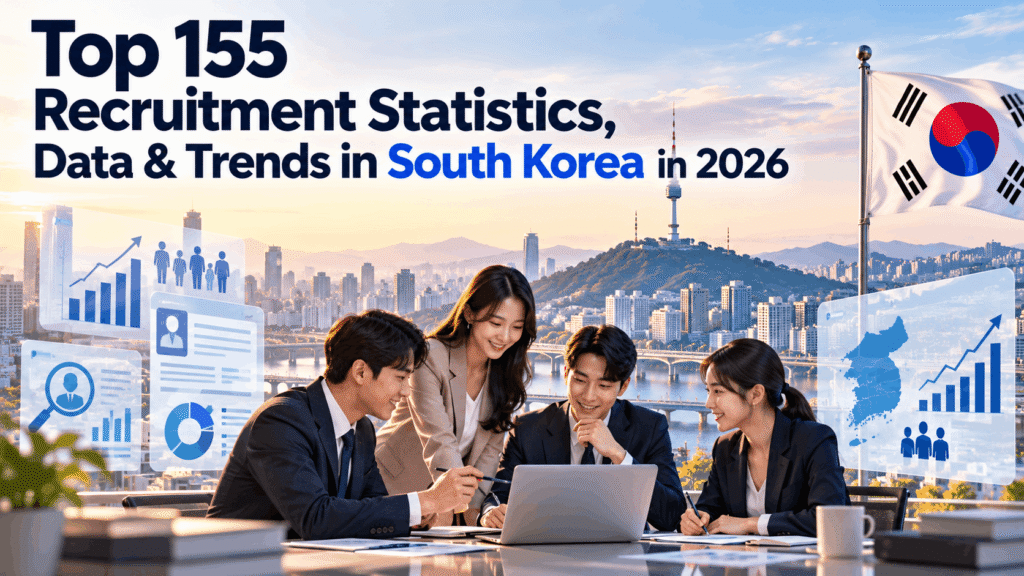
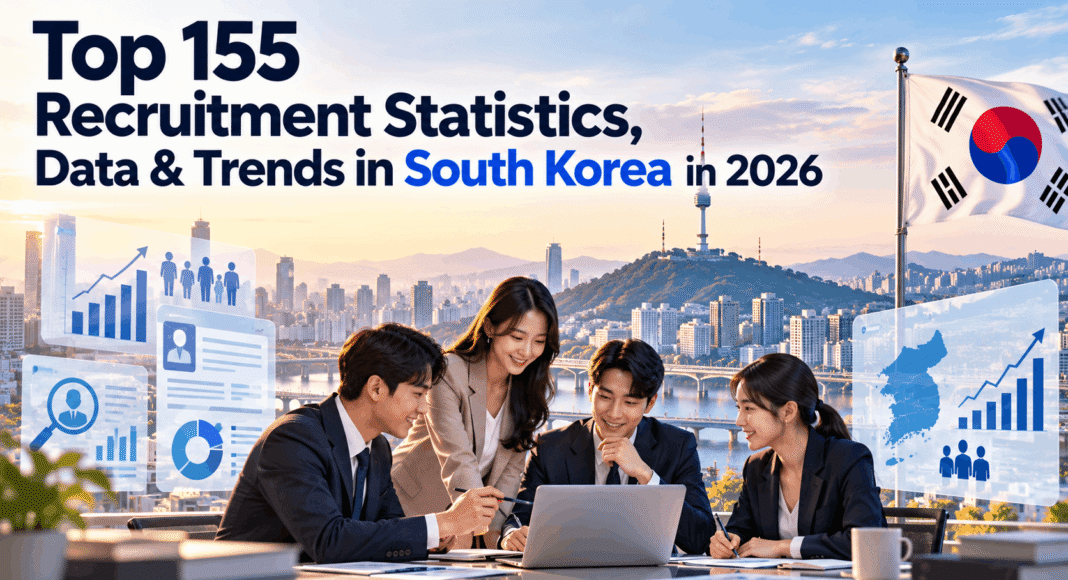
The numbers reveal a labor market full of contrasts. South Korea’s employed population reached more than 29 million in late 2025, while unemployment remained relatively low for much of the year. Yet youth employment continued to decline, hundreds of thousands of vacancies remained difficult to fill, and nearly 40% of SMEs reported labor shortages. At the same time, demand for professionals in semiconductors, artificial intelligence, biotechnology, cybersecurity, cloud computing, healthcare, and other strategic industries continues to reshape hiring priorities.
Compensation and demographics are creating additional recruitment pressures. South Korea’s 2026 minimum wage increased to KRW 10,320 per hour, while large-company salaries remain substantially higher than those offered by SMEs. The country is also confronting a rapidly shrinking working-age population, an expanding workforce aged 60 and above, and growing dependence on foreign workers to support manufacturing, agriculture, care services, and other labor-constrained industries.
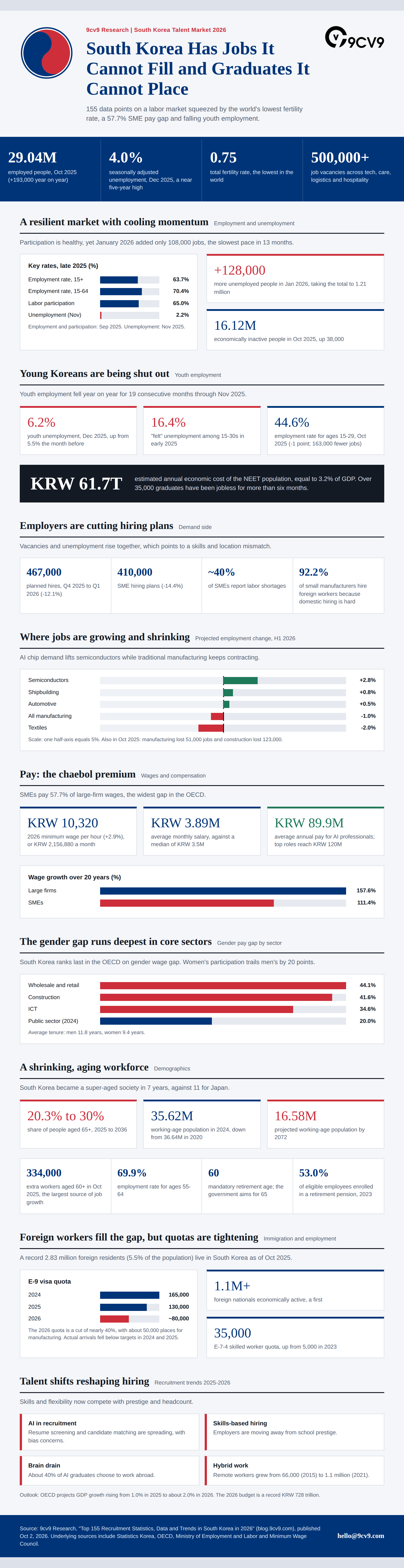
These 155 South Korea recruitment statistics, data points, and hiring trends for 2026 provide a detailed picture of how the employment landscape is changing. From unemployment, salaries and talent shortages to AI recruitment, foreign workers, remote work, gender inequality, skills gaps and labor policy, the data offers employers, recruiters, HR professionals and business leaders a practical foundation for understanding South Korea’s evolving talent market.
Before we venture further into this article, we would like to share who we are and what we do.
About 9cv9
9cv9 is a business tech startup based in Singapore and in Asia, with a strong presence all over the world.
With over ten years of startup and business experience, and being highly involved in connecting with thousands of companies and startups, the 9cv9 team has access to some of the best talents in the world.
If your company needs recruitment and headhunting services to hire top-quality employees, you can use 9cv9 headhunting and recruitment services to hire top talents and candidates. Email us at hello@9cv9.com.
Top 155 Recruitment Statistics, Data & Trends in South Korea in 2026
SECTION 1: Overall Employment & Workforce Size
1. South Korea’s employed population grew to 29.04 million in October 2025 — a modest but steady gain of 193,000 year-on-year, signaling a resilient labor market despite broader economic headwinds.
2. With employment projected to reach 29.12 million in 2025, South Korea is on track for its fifth straight year of employment growth, reflecting a long-term positive trend even as structural challenges mount.
3. South Korea’s workforce of approximately 28.2 million people represents one of East Asia’s most productive and educated labor pools, making it an attractive destination for global businesses seeking talent.
4. The employment rate for working-age Koreans (15+) reached 63.7% in September 2025 — a year-on-year rise of 0.4 percentage points — indicating gradual but consistent labor market improvement.
5. A 15–64 employment rate of 70.4% in September 2025 places South Korea above many OECD peers, though demographic decline poses a long-term threat to sustaining these participation levels.
6. January 2026 saw the employment rate dip slightly to 61%, down from 61.5% in December 2025 — a seasonal fluctuation typical of the Korean labor market during the post-holiday period.
7. In November 2025, South Korea’s overall employment rate held at 63.4%, rising 0.2 percentage points year-on-year — a positive but decelerating trend that warrants continued policy attention.
8. The 15–64 employment rate of 70.2% in November 2025 reflects South Korea’s broadly healthy core workforce participation, though gaps remain for women, youth, and older workers.
9. A labor force participation rate of 65.0% in September 2025 — up 0.4 percentage points — suggests more Koreans are actively entering or re-entering the workforce, a welcome sign for an aging economy.
10. January 2026’s addition of just 108,000 jobs — the slowest 13-month pace — signals that South Korea’s job creation engine may be cooling, raising questions about economic momentum heading into the year.
11. South Korea’s labor force participation rate of 64.8% in November 2025 shows steady engagement by workers, though it remains below the highs needed to compensate for a rapidly shrinking working-age population.
12. South Korea’s OECD-measured employment rate of 69.7% in Q1 2025 edges above the prior year, affirming its standing as a relatively high-employment economy — though aging demographics threaten this position over the coming decade.
13. With approximately 35.9 million working-age people (15–64) comprising 69.5% of the total population, South Korea still has a sizeable productive base — but the window is narrowing as demographics shift rapidly.
14. The fact that South Korea’s aggregate labor force participation is projected to peak in 2025 and then decline is a critical warning for policymakers and employers planning long-term workforce strategies.
SECTION 2: Unemployment Statistics
15. A stable overall unemployment rate of 2.1% in September 2025 suggests South Korea’s labor market remained broadly tight, though headline figures can obscure deeper issues such as underemployment and skills mismatches.
16. November 2025’s unemployment rate of 2.2% — matching the prior year — reflects labor market stability, but should be read alongside rising youth unemployment and long-term structural imbalances.
17. South Korea’s seasonally adjusted unemployment rate surging to 4.0% in December 2025 — its highest in nearly five years — is a notable warning signal that labor market conditions may be deteriorating faster than headline data previously suggested.
18. A rise of 128,000 unemployed persons to 1.21 million in January 2026 marks one of the sharpest year-on-year increases in recent memory, raising concerns about job security heading into a politically and economically uncertain period.
19. South Korea’s unemployment rate of 2.7% in May 2025 — slightly below the prior year — is consistent with a tight labor market, although the OECD continues to flag structural vulnerabilities beneath the surface.
20. Employment growth of 1.0% year-on-year in November 2025 helped keep unemployment near historically low levels, underlining the resilience of South Korea’s labor market even amid global trade uncertainty.
21. The back-to-back monthly rises in seasonally adjusted unemployment — from 2.5% in September to 2.7% in November 2025 — suggest a slow but increasingly visible loosening of South Korea’s tight labor market.
22. The net loss of 52,000 jobs in December 2024 was an isolated contraction before a broader recovery in 2025, a reminder that South Korea’s labor market is not immune to short-term cyclical shocks.
23. The increase of 38,000 economically inactive people to 16.12 million in October 2025 highlights the persistent challenge of re-engaging discouraged workers and caregivers who sit outside the formal labor force.
SECTION 3: Youth Employment & Unemployment
24. South Korea’s youth unemployment rate climbing to 6.2% in December 2025 — up from 5.5% the month prior — reflects a worsening end-of-year picture for young job seekers entering a competitive and selective hiring market.
25. A youth unemployment rate of 5.9% in 2024 — the highest in two years — signals that despite a tight overall labor market, young Koreans continue to face structural barriers to employment entry.
26. While the official youth unemployment rate stands at 6%, the “felt” unemployment rate of 16.4% for those aged 15–30 in early 2025 reveals how significantly underemployment and discouraged job-seeking distort the true picture for Korean youth.
27. The 18-consecutive-month decline in youth (15–29) employment — with 163,000 fewer jobs and a 1 percentage point drop in employment rate to 44.6% in October 2025 — is one of the most persistent structural weaknesses in South Korea’s labor market.
28. A 19th consecutive month of year-on-year youth employment decline as of November 2025 makes this one of the longest unbroken downturns for young workers in South Korea’s post-1990s labor history.
29. Over 35,000 college graduates remaining jobless for more than six months — reaching a 13-month high — reflects a growing and costly skills-demand mismatch between university education and actual employer needs.
30. The concentration of 19,000 long-term unemployed graduates among those aged 25–29 suggests that the problem is not just structural but generational, affecting the cohort most recently entering the workforce.
31. With 119,000 long-term unemployed job seekers in October 2025, South Korea must address not just job creation but the quality and accessibility of job matching support services for persistent non-employment.
32. A 0.7 percentage point drop in youth labor force participation to 46.2% in May 2025 suggests more young people are opting out of job searching entirely — a trend with long-term productivity and demographic implications.
33. The estimated KRW 61.7 trillion (3.2% of GDP) economic cost of South Korea’s NEET population underlines how youth disengagement from work and education is not just a social issue, but a significant macroeconomic drag.
34. South Korea’s historical average youth unemployment of 8.74% between 1991 and 2024, with recent figures well below that average, suggests the country has improved structurally — yet current youth figures remain troublingly elevated relative to 2023 lows.
35. Even as youth unemployment continued its 21st consecutive monthly decline in January 2026, the structural bias of Korea’s hiring market toward elite graduates and chaebol-adjacent careers continues to exclude a broad segment of young workers.
SECTION 4: Hiring Plans & Job Vacancies
36. Planned hiring of 467,000 for Q4 2025–Q1 2026 — down 12.1% from the prior year — signals that South Korean companies are adopting a more cautious approach to headcount expansion amid economic and political uncertainty.
37. The 14.4% decline in SME hiring plans to 410,000 is particularly concerning, as small and mid-sized firms account for the majority of Korean employment and are the primary engine of job creation outside chaebols.
38. A 14.8% year-on-year drop in labor demand to 449,000 workers as of October 2025 reflects genuine softening in corporate demand, not just a temporary hiring freeze — suggesting structural adjustments are underway.
39. With over 500,000 job vacancies across sectors like technology, caregiving, logistics, and hospitality, South Korea faces a paradoxical labor market: high vacancies coexisting with elevated youth unemployment — a clear skills-alignment failure.
40. The 0.4 percentage point fall in the labor shortage rate to 2.4% in October 2025 may reflect fewer open positions rather than improved filling rates — a distinction that matters for evaluating the health of recruitment pipelines.
41. Samsung’s commitment to hiring 60,000 workers over five years — averaging 12,000 annually — in AI, semiconductors, and biotech signals where South Korea’s most strategic and well-funded talent battles will be fought.
42. Job additions swinging from 245,000 in May 2025 to 312,000 in September 2025 reflect the uneven cadence of South Korea’s labor market recovery, driven largely by service sector and older-worker employment rather than broad-based hiring.
43. Nearly 40% of South Korean SMEs reporting labor shortages — even as youth unemployment rises — is a textbook illustration of structural mismatch: jobs exist, but the skills and location preferences of workers and employers don’t align.
44. The fact that 92.2% of small manufacturing firms cite difficulty recruiting domestic workers as the primary driver of foreign hiring reveals how deeply SME survival in Korea has become tied to immigration policy.
SECTION 5: Sector-Specific Employment Trends
45. Manufacturing’s 16th consecutive month of job losses — shedding 51,000 in October 2025 — highlights a structural erosion of Korea’s traditional employment backbone, partly due to automation, offshoring, and wage-competitiveness pressures.
46. The construction industry’s 18-month consecutive decline, losing 123,000 jobs in October 2025, reflects the combined impact of a prolonged property market correction and rising material and labor costs.
47. Semiconductor employment’s projected 2.8% expansion in H1 2026 — driven by AI chip demand — positions the sector as a rare bright spot in South Korea’s otherwise contracting manufacturing employment landscape.
48. An estimated 1% contraction in overall manufacturing employment in H1 2026 continues a three-year trend of industrial job losses, pushing policymakers to accelerate workforce transition programs for displaced workers.
49. Shipbuilding employment’s projected 0.8% rise in H1 2026 — anchored by high-value vessel exports — reflects South Korea’s continued global competitiveness in specialized marine engineering, even as broader manufacturing weakens.
50. Automotive employment’s modest 0.5% projected growth in H1 2026 is driven by eco-friendly vehicle launches, suggesting the sector’s future hiring depends heavily on the pace of EV transition and policy incentives.
51. Textile employment’s projected 2% decline in H1 2026 — the steepest drop among major manufacturing sectors — reflects the continuing offshoring of labor-intensive production to lower-cost countries in Southeast Asia.
52. Healthcare’s role as the primary driver of South Korea’s 220,000 net job gains in November 2025 foreshadows a structural labor market transformation: from export-driven manufacturing jobs toward domestic care and services.
53. The 334,000-person surge in employment for those aged 60 and older in October 2025 is the single biggest contributor to job growth — a trend that reflects eldercare expansion, but also masks weakness in prime-age and youth employment.
54. Tech’s projected contribution of 25% to South Korea’s GDP in 2025 — up from 20.1% in 2020 — underlines the sector’s central role in the economy, and with it, the premium placed on attracting and retaining skilled tech talent.
55. Healthcare AI’s 55.9% growth rate in 2023 makes it South Korea’s fastest expanding tech sub-sector, creating immediate and ongoing demand for workers at the intersection of medicine, data science, and software engineering.
56. AI and ML’s 33.6% industry growth between 2021 and 2024 confirms South Korea as one of Asia’s most rapidly evolving AI labor markets — but talent supply is struggling to keep pace with demand.
57. The Korean New Deal’s creation of nearly 2 million jobs alongside 5.2% annual digital economy growth demonstrates the real-world employment impact of government-led industrial transformation strategies.
58. A projected IT services market of $44.26 billion by 2029 with 5.62% annual growth makes South Korea a compelling long-term market for global tech talent recruitment, staffing, and skills development investment.
59. South Korea’s cybersecurity market growing at 7.76% annually to $4.94 billion by 2029 reflects both rising digital threats and the government’s aggressive posture on national data sovereignty and critical infrastructure protection.
60. Government investment of $130 million in 5G/6G infrastructure, alongside a projected $5.2 billion cloud computing market, is reshaping the skills required for employment in South Korea’s most forward-looking economic sectors.
61. The near-doubling of South Korea’s industrial robotics market — from $894 million in 2025 to a projected $1.87 billion by 2033 — signals a coming wave of automation-driven workforce displacement that will require proactive reskilling strategies.
SECTION 6: Wages & Compensation
62. South Korea’s 2026 minimum wage of KRW 10,320 per hour — a 2.9% increase — reflects a careful balance between worker purchasing power and employer cost pressures, especially relevant for SMEs and labor-intensive industries.
63. A monthly minimum wage equivalent of KRW 2,156,880 for full-time workers in 2026 provides a concrete baseline for compensation planning, particularly for businesses entering the Korean market for the first time.
64. The unanimous 2026 minimum wage agreement — the first since 2008 — signals an unusual moment of labor-management consensus in South Korea, potentially indicative of a more collaborative industrial relations climate emerging.
65. The direct impact of the minimum wage hike on 782,000 workers (4.5% of the workforce) shows that minimum wage decisions in South Korea are not symbolic — they have tangible, measurable effects on a significant share of the labor market.
66. An average monthly salary of approximately KRW 3,890,075 (~USD 2,733) places South Korea among the middle-upper tier of Asian economies for compensation, making it competitive for attracting regional talent but increasingly challenged by high living costs.
67. The gap between South Korea’s mean monthly salary (KRW 3,890,075) and median (KRW 3,500,000) reveals meaningful income inequality within the workforce — a dynamic that affects recruitment, retention, and employee satisfaction strategies.
68. Average total wages rising to KRW 4,708,760 per month in Q4 2025 — up from KRW 4,531,450 in Q3 — reflects both inflationary adjustment and year-end bonus cycles, and is an important benchmark for compensation benchmarking.
69. The staggering 700%+ salary difference between the average worker (KRW 41.23 million) and the top 1% (KRW 331.34 million) annually highlights South Korea’s persistent income stratification, which contributes to labor market discontent and skills flight.
70. A modest 2.3% year-on-year wage growth in December 2025 — slightly below inflation — suggests real wages are effectively flat or declining in purchasing power, a key factor in employee retention and talent attraction strategies.
71. South Korea’s large-firm wages ranking fifth globally at $87,130 per year underscores the competitive compensation offered by chaebols — and explains why both domestic and international talent continues to prioritize large-firm employment.
72. The 57.7% SME-to-large-firm wage ratio — the largest wage gap in the OECD — is arguably the most structurally distorting feature of South Korea’s labor market, driving talent hoarding at chaebols and perpetual shortages at SMEs.
73. Seoul’s living wage of KRW 12,121 per hour in 2026 — nearly 18% above the national minimum — reflects the disproportionate cost of urban living and serves as a practical benchmark for employers hiring in the capital.
74. Total employment costs in South Korea running at 125–140% of base salary is a critical planning figure for international companies entering the market, as statutory benefits and social contributions significantly inflate raw compensation budgets.
75. Employers contributing approximately 4.5% in payroll taxes positions South Korea as moderately affordable relative to Western European markets, though statutory benefits continue to expand alongside aging population pressures.
76. Annual AI professional salaries averaging KRW 89.9 million — with top roles reaching KRW 120 million — reflect the global premium placed on AI expertise and the intense competition South Korean tech companies face to retain this talent domestically.
77. Cloud Architect and AI Architect roles commanding KRW 65–120 million annually confirm that South Korea’s highest-paid tech roles are concentrated in infrastructure and AI strategy — areas where global supply remains scarce.
78. South Korea ranking 11th in OECD wages but only 17th in labor productivity raises an important efficiency question: are Korean businesses getting sufficient return on their human capital investment, particularly in the large-firm segment?
79. SME wages rising 111.4% over 20 years while large-firm wages grew 157.6% in the same period is a measurable consequence of South Korea’s dual labor market — and a structural impediment to building a healthy, distributed economy.
80. An average salary of KRW 54.86 million (~KRW 26,373/hour) per ERI’s global benchmarking data provides a useful independent cross-check for compensation planners looking beyond government statistics.
SECTION 7: Gender Gaps in Hiring & Wages
81. South Korea’s status as the OECD’s worst performer on the gender wage gap is not a new finding — but it remains a persistent and internationally recognized problem that affects both talent strategy and South Korea’s broader economic competitiveness.
82. Women’s labor force participation being 20 percentage points lower than men’s — one-quarter wider than the high-income country average — reflects deeply embedded cultural norms around caregiving, career expectations, and workplace culture.
83. A 44.1% gender pay gap in wholesale and retail — the widest of any sector — signals that even in high-employment industries, women in South Korea face significant structural pay discrimination that goes well beyond occupation or seniority differences.
84. Gender wage gaps of 41.6% in construction and 34.6% in ICT are particularly striking given these sectors’ centrality to South Korea’s economic growth — pointing to systemic undervaluation of women’s labor in core industries.
85. Male employees averaging 11.8 years’ tenure versus women’s 9.4 years — a 20.9% gap — reflects the career disruption women experience in South Korea, often linked to marriage, childbirth, and the expectation to leave the workforce.
86. The narrowing of the public sector gender wage gap to 20% in 2024 — from 22.7% in 2023 — shows that targeted policy and disclosure requirements in public institutions are producing measurable, if incremental, progress.
87. An overall 6.1% male premium in average salaries across all roles and sectors provides a starting-point figure for gender pay analysis in South Korea, though it significantly understates gaps at the sector and seniority level.
88. The fact that South Korea’s entire female labor participation gap is driven by married women — especially mothers — is one of the clearest indicators that family policy (childcare, parental leave, flexible work) is the primary lever for closing the employment gender gap.
89. Women being twice as likely as men to exit employment between survey periods (10% vs. 5.1%) is a measurable marker of career fragility linked to caregiving responsibilities — and a concrete challenge for firms seeking to retain female talent through mid-career.
90. Five pending gender wage disclosure bills in South Korea’s National Assembly reflect growing legislative momentum, yet the absence of enacted law means corporate accountability on pay equity remains largely voluntary and inconsistent.
SECTION 8: Aging Workforce & Demographic Trends
91. South Korea’s becoming a “super-aged” society in just 7 years — far faster than Japan’s 11-year transition — is an unprecedented demographic shift that will fundamentally reshape labor supply, social spending, and the entire structure of the workforce.
92. The projected rise in the 65+ population share from 20.3% in 2025 to 30.0% by 2036 means South Korea will face one of the world’s most compressed aging curves over the next decade, demanding urgent labor policy adaptation.
93. Workers aged 55–64 growing from 22.2% to 23.7% of the 15–64 workforce between 2020 and 2024 reflects both population aging and the continued economic necessity for older Koreans to remain employed — a trend set to intensify.
94. An employment rate of 69.9% for those aged 55–64 — more than 5 points above the OECD average — reveals that South Korea’s older workers are exceptionally active, often out of financial necessity rather than choice.
95. The working-age population shrinking from 36.64 million in 2020 to 35.62 million in 2024 — and projected to keep falling — is a structural labor supply constraint that no amount of productivity improvement can fully compensate for.
96. A projected working-age population of just 16.58 million by 2072 — less than half of today’s — is perhaps the starkest single data point illustrating the long-term existential challenge facing South Korea’s labor market.
97. A total fertility rate of 0.75 — the world’s lowest — means South Korea’s future workforce will be dramatically smaller unless immigration policy, women’s employment, and birth incentives are transformed at scale.
98. The prospect of 140 senior dependents per 100 working-age adults by 2100 represents a fiscal and labor burden that would require fundamental restructuring of South Korea’s pension system, retirement age, and immigration framework.
99. Older workers (60+) comprising 23.4% of the workforce yet accounting for 52.3% of fatal industrial accidents highlights an urgent occupational health gap — one that employers and regulators must address as the workforce ages further.
100. South Korea’s working-age population growth expected to stall — averaging just 0.02% quarterly from 2025 to 2030 — means the era of easy labor force expansion is over, and productivity-led growth becomes the only sustainable path.
101. One-third of employed South Koreans over 62 still holding manual labor jobs despite the country’s high elder employment rate signals that “working longer” in Korea often means physically demanding work, not gradual, dignity-preserving employment transitions.
102. A 165% increase in workers aged 50+ between 2000 and 2023 is one of the most dramatic shifts in South Korea’s workforce composition — transforming HR practices, benefits design, and intergenerational team management challenges.
103. A dependency ratio projected at 118.5% by 2072 — up from 42.5% today — represents an almost unimaginable fiscal pressure on future generations and underscores why labor force expansion through all available means is a national priority.
SECTION 9: Foreign Workers & Immigration for Employment
104. With 2.73 million foreign nationals representing 5.3% of the total population as of June 2025, South Korea is crossing a meaningful demographic threshold — one that requires a more sophisticated and rights-protective immigration framework.
105. A record-high 2.83 million expats (5.5% of the population) as of October 2025 confirms South Korea’s growing reliance on foreign residents to sustain essential industries — a shift that demands updated social integration and labor protection policies.
106. Foreign nationals economically active surpassing 1.1 million for the first time reflects the scale to which South Korea’s labor market now depends on migrant workers, particularly in manufacturing, agriculture, and care services.
107. Approximately 303,000 E-9 visa holders as of 2024 form the backbone of South Korea’s migrant labor system — yet the rigidity of this visa category, including limited mobility between employers, continues to generate human rights concerns.
108. The reduction of the E-9 quota from 165,000 (2024) to 130,000 (2025) reflects a recalibration driven by subdued domestic economic activity, but SMEs reliant on foreign labor warn that tighter quotas disproportionately harm small manufacturers.
109. Cutting the 2026 E-9 quota by nearly 40% to approximately 80,000 — with 50,000 earmarked for manufacturing — signals a significant policy tightening that could exacerbate labor shortages in small factories and farms already struggling to recruit domestically.
110. The sharp expansion and subsequent reduction of E-9 inflows — from 50,000–70,000 typically, to 165,000 in 2024, then back down — illustrates the reactive rather than strategic nature of South Korea’s foreign labor management.
111. The fact that actual E-9 visa arrivals fell well below official targets in both 2024 and 2025 suggests that quota figures overstate real foreign labor intake, and that administrative bottlenecks or working conditions are deterring potential migrants.
112. The 207,000 total non-professional foreign worker quota for 2025 — covering E-9, E-8, and E-10 visas — reflects the scale of South Korea’s reliance on structured immigration to fill roles that domestic workers have increasingly declined.
113. Issuing 300,000+ work visas and employment permits annually confirms that South Korea is one of Asia’s most active managed migration markets — a reality that immigration reform advocates argue requires more transparent and rights-oriented governance.
114. The concentration of foreign workers in small and mid-sized manufacturing firms — mirroring domestic wage and hours patterns — suggests that foreign labor is embedded in, rather than separate from, South Korea’s existing dual labor market structure.
115. South Korea’s 3.9% annual foreign population growth rate from 1990 to 2020 — the world’s second fastest — reflects a long-term demographic transformation that the country’s legal and social infrastructure has only partially adapted to.
116. Foreign workers comprising just 3.4% of the labor force — relatively low for an economy as advanced as South Korea’s — highlights how much room exists for immigration-led workforce growth, if political will and social acceptance can be mobilized.
117. The expansion of the E-7-4 Skilled Worker visa quota from 5,000 to 35,000 in 2023, with 10,000+ cumulative conversions by 2024, marks a meaningful — if still insufficient — shift toward attracting and retaining skilled foreign professionals.
118. The 41.9% of South Korea’s current foreign population who once held E-9 status is a reminder that the Employment Permit System has shaped the country’s entire migration history, and its reform would have far-reaching consequences for who enters and stays in the labor market.
SECTION 10: Key Hiring & Recruitment Trends 2025–2026
119. The widespread adoption of AI in resume screening, candidate matching, and HR operations is transforming South Korea’s recruitment efficiency — but also raising important questions about algorithmic bias and equitable access to job opportunities.
120. A shift from school prestige and degree credentials to skills-based hiring reflects South Korea’s belated alignment with global talent assessment best practices, and could meaningfully broaden access to employment for non-elite graduates.
121. The growing preference for contract and project-based hiring — particularly for specialist roles — signals that South Korean employers are prioritizing workforce flexibility over headcount stability in an uncertain economic environment.
122. Flat or shrinking recruitment budgets amid intense competition for talent are forcing South Korean HR teams to become more creative and strategic — investing in employer branding and targeted pipelines over broad-based advertising.
123. Candidates increasingly evaluating company leadership, culture, and reputation before accepting offers reflects a broader global shift toward employee-driven hiring — a dynamic that South Korean firms, long oriented around employer authority, are still adapting to.
124. The ability to complete a South Korean hire in as little as 1–3 days through an employer of record — versus 4–8 weeks of entity setup — is a critical efficiency advantage for global companies testing or scaling in the Korean market.
125. Around 40% of South Korean AI graduates choosing to work abroad — drawn by U.S. starting salaries of up to $400,000 for top PhD graduates — illustrates the severe brain drain challenge facing domestic tech employers who cannot compete on compensation.
126. The less-than-3% transition rate from SMEs to large companies in South Korea explains why many graduates remain unemployed for extended periods rather than accept SME positions — a rational but economically costly strategy at the individual and national level.
127. SME employees earning approximately 50% of chaebol salaries is not just a fairness issue — it is a structural recruitment crisis that leaves small Korean businesses perpetually understaffed and unable to compete for domestic talent.
128. Samsung, LG, Hyundai, and SK generating 40.8% of South Korea’s nominal GDP in 2023 illustrates the extraordinary concentration of economic and employment power in a handful of conglomerates — a dynamic with profound implications for job market inequality.
129. The fact that 84% of South Korea’s GDP traces to just 64 companies means the country’s labor market is structurally dependent on a tiny corporate elite — a concentration that limits worker mobility, wage competition, and entrepreneurial employment growth.
SECTION 11: Work Culture, Flexibility & Remote Work
130. The 17-fold increase in remote workers from 66,000 in 2015 to 1.1 million in 2021 represents one of the most dramatic workplace transformations in South Korea’s modern labor history — a shift that the pandemic accelerated but structural changes had already made inevitable.
131. The sevenfold increase in the share of flexible workers working from home between 2018 and 2021 demonstrates that remote work adoption in South Korea, while lagging Western peers, is accelerating rapidly once enabling infrastructure and policy are in place.
132. With 85% of South Korean office workers satisfied with working from home in 2020, employee preference data clearly supports continued hybrid and remote options — making employers who insist on full office attendance increasingly uncompetitive in the talent market.
133. The prevalence of hybrid schedules in 2025 — with flexible office days and maintained in-person collaboration times — reflects South Korean companies trying to balance cultural norms around face-time with legitimate employee demands for flexibility.
134. South Korea’s 40-hour standard workweek cap and 12-hour overtime maximum under the Labor Standards Act provide a formal legal framework — but enforcement gaps and cultural pressure to overwork remain persistent concerns for workers and compliance-focused employers.
135. Younger South Korean workers and those in tech and digital services showing stronger preferences for remote and hybrid work is an important signal for employers seeking to attract this demographic, for whom flexibility is often a non-negotiable job criterion.
136. The 52-hour maximum workweek being cited as a factor driving domestic workers away from manufacturing reveals an unintended consequence of labor reform: worker protections designed to improve quality of life can inadvertently accelerate foreign labor dependency in demanding industries.
SECTION 12: Education, Skills & Talent Gaps
137. South Korea’s 74%+ tertiary education participation rate reflects one of the world’s most credentialized workforces — a resource with immense potential, but one that requires better alignment between academic output and real employer skill demands.
138. Over 70% of 25–34 year-olds holding tertiary degrees alongside elevated graduate unemployment is South Korea’s most pointed education-labor market paradox — producing highly qualified graduates faster than the economy can create suitable roles for them.
139. University graduates earning approximately 40% more than high school diploma holders highlights the strong economic return on education in South Korea — and partly explains why degree-seeking behavior remains so intense despite graduate unemployment challenges.
140. Employees with 2–5 years of experience earning 32% more than fresh entrants reinforces the value of early-career experience accumulation in South Korea’s seniority-influenced compensation system.
141. A Master’s degree boosting salaries by 66% over a Bachelor’s — and a PhD adding another 23% — illustrates the premium South Korean employers place on advanced credentials, particularly in research, engineering, and technology-adjacent roles.
142. Talent shortages in semiconductors, AI, biotech, and quantum technology — worsened by STEM graduates increasingly choosing medicine — represent a critical strategic vulnerability for South Korea’s ambition to lead in advanced technology industries.
143. The government’s KRW 6.8 trillion (~USD 4.9 billion) R&D investment across 12 strategic technologies in 2025 signals that South Korea is treating talent development as a national security issue — not just an economic priority.
144. Over $12 billion in government emerging tech funding is driving immediate and sustained demand for AI Architects, Cloud Security experts, and Data Architects — roles where global supply is constrained and Korean talent faces intense international competition.
145. South Korea’s e-commerce market projected to reach USD 17.44 billion by 2025 is generating growing demand for digital marketing, SEO, content, and analytics skills — areas where recruitment has shifted from peripheral to core business function.
146. Workers with public sector backgrounds earning approximately 6% more than private sector equivalents for the same role reflects the persistent premium placed on government-adjacent credentials in South Korea — a cultural dynamic that shapes talent flow and career preference.
SECTION 13: Retirement Age, Labor Law & Policy Developments
147. South Korea’s mandatory retirement age remaining at 60 despite clear government intent to raise it to 65 illustrates the political difficulty of retirement reform — a gap between stated policy goals and legislative reality that leaves workers and employers in planning uncertainty.
148. South Korea’s 3.4-year (men) and 5.4-year (women) gap between normal and effective retirement ages — the largest in the OECD — reflects the reality that most Koreans cannot afford to stop working at the official retirement age, particularly given inadequate pension coverage.
149. The proposed shift to income-based unemployment benefit eligibility under the Employment Insurance Act is a progressive reform that could meaningfully improve protection for part-time, gig, and irregular workers currently excluded from the hours-based system.
150. South Korea’s record-high 2026 government budget of KRW 728 trillion — growing approximately 8% year-on-year — reflects the fiscal scale required to simultaneously manage demographic aging, labor market transition, and economic reinvigoration.
151. South Korea’s comprehensive AI legislation — enacted in 2024 alongside KRW 1.5 trillion in AI industry support — positions it as a global regulatory leader, with direct implications for how AI tools may be deployed (and governed) in hiring and HR practice.
152. The September 2025 relaxation of E-9 workplace change rules represents a meaningful step toward migrant worker rights — acknowledging that employer mobility is a basic protection against abuse in a system that has historically tied workers too tightly to single employers.
153. The OECD’s projection of South Korea’s GDP growth recovering from 1.0% in 2025 to ~2.0% in 2026 is a cautiously optimistic signal — and a recovery that, if realized, should translate into improved hiring confidence and expanded corporate recruitment budgets.
154. Projected public social spending rising by 11 percentage points of GDP between 2021 and 2060 — driven largely by pensions and healthcare — signals an enormous long-term fiscal commitment that will reshape the tax and employment policy environment for every generation of South Korean workers.
155. The 53.0% retirement pension enrollment rate among eligible employees in 2023 means that nearly half of South Korea’s covered workforce has no occupational pension — a retirement security gap with serious implications for how long workers will need to remain employed and how attractive total compensation packages must become.
Conclusion
South Korea’s recruitment landscape in 2026 reflects a labor market undergoing profound structural change. While employment remains relatively resilient and overall unemployment is low, employers face mounting challenges from a shrinking working-age population, persistent youth employment weakness, skills mismatches, an aging workforce and intensifying competition for specialized talent.
The 155 recruitment statistics and trends examined throughout this article highlight an increasingly divided market. Large corporations continue to attract talent with significantly higher salaries, while SMEs struggle with labor shortages and recruitment difficulties. Meanwhile, demand is shifting toward semiconductors, artificial intelligence, biotechnology, cybersecurity, cloud computing and healthcare, even as traditional sectors such as manufacturing, construction and textiles face employment pressures.
Demographics will arguably have the greatest long-term impact on recruitment in South Korea. The country is already a super-aged society, its working-age population is declining, and older employees represent a growing share of the workforce. Foreign workers are consequently becoming more important, particularly for SMEs and labor-intensive industries where domestic recruitment has become increasingly difficult.
Recruitment itself is also evolving. AI-assisted screening, skills-based hiring, flexible employment, employer branding and hybrid work are becoming more important as companies compete for increasingly selective candidates. Employers must simultaneously address salary expectations, workplace culture, gender disparities, employee flexibility and career development if they want to attract and retain talent.
Ultimately, the South Korea recruitment trends for 2026 point toward a market where simply advertising more vacancies will not solve hiring challenges. Employers that invest in skills-based recruitment, competitive compensation, workforce reskilling, inclusive hiring, foreign talent pipelines and better employee experiences will be better positioned to navigate South Korea’s changing labor market. For recruiters and HR leaders, understanding these shifts will be essential to building sustainable talent strategies in 2026 and beyond.
If you find this article useful, why not share it with your hiring manager and C-level suite friends and also leave a nice comment below?
We, at the 9cv9 Research Team, strive to bring the latest and most meaningful data, guides, and statistics to your doorstep.
To get access to top-quality guides, click over to 9cv9 Blog.
To hire top talents using our modern AI-powered recruitment agency, find out more at 9cv9 Modern AI-Powered Recruitment Agency.
People Also Ask
What are the key recruitment trends in South Korea in 2026?
South Korea’s recruitment market is shaped by an aging population, shrinking labor supply, skills shortages, AI adoption, foreign worker demand and stronger competition for talent in strategic industries.
How many people are employed in South Korea?
South Korea’s employed population reached about 29.04 million in October 2025, increasing by 193,000 year on year. Employment was projected to reach approximately 29.12 million for 2025.
What is the employment rate in South Korea?
South Korea recorded an overall employment rate of 63.7% in September 2025. Among people aged 15–64, the employment rate reached 70.4%, reflecting relatively strong core workforce participation.
What is the unemployment rate in South Korea?
South Korea recorded unemployment of 2.1% in September and 2.2% in November 2025. However, seasonally adjusted unemployment climbed to 4.0% in December 2025, its highest level in nearly five years.
Is South Korea’s job market growing in 2026?
Job creation showed signs of slowing entering 2026. South Korea added only 108,000 jobs in January 2026, the slowest pace in 13 months, while unemployment increased by 128,000 people year on year.
What is the youth unemployment rate in South Korea?
South Korea’s youth unemployment rate reached 6.2% in December 2025, up from 5.5% a month earlier. The broader “felt” unemployment rate among people aged 15–30 was 16.4% in early 2025.
Why is youth employment a challenge in South Korea?
Youth employment declined for 18 consecutive months through October 2025, with 163,000 fewer jobs for people aged 15–29. Competition for large-company positions and mismatches between graduate skills and employer needs contribute to the problem.
How many job vacancies are there in South Korea?
South Korea has more than 500,000 job vacancies across sectors including technology, caregiving, logistics and hospitality, illustrating the mismatch between available workers and employer demand.
Are South Korean companies planning to hire more workers?
Companies planned approximately 467,000 hires for Q4 2025 through Q1 2026, down 12.1% year on year. SME hiring plans fell 14.4% to approximately 410,000 workers.
Are SMEs facing recruitment shortages in South Korea?
Yes. Nearly 40% of South Korean SMEs report labor shortages, while 92.2% of small manufacturing businesses cite difficulty recruiting domestic workers as the main reason for hiring foreign employees.
Which industries are hiring in South Korea in 2026?
Growth opportunities are concentrated in semiconductors, AI, biotechnology, healthcare, cybersecurity, cloud computing and shipbuilding. Semiconductor employment alone was projected to expand 2.8% in the first half of 2026.
Which industries are losing jobs in South Korea?
Manufacturing and construction have experienced prolonged employment declines. Manufacturing lost 51,000 jobs in October 2025, while construction lost 123,000 as property-market and cost pressures affected hiring.
What is South Korea’s minimum wage in 2026?
South Korea’s 2026 minimum wage is KRW 10,320 per hour, representing a 2.9% increase. The monthly minimum for a full-time worker is approximately KRW 2,156,880.
What is the average salary in South Korea?
Average monthly salary is approximately KRW 3.89 million, while the median is around KRW 3.5 million. Average total monthly wages reached about KRW 4.71 million in Q4 2025.
How much do AI professionals earn in South Korea?
AI professionals earn approximately KRW 89.9 million annually on average, with some top positions reaching KRW 120 million. AI and cloud architecture roles can command roughly KRW 65–120 million per year.
Why do South Korean SMEs struggle to attract talent?
SME wages are only about 57.7% of large-company wages, creating a major recruitment disadvantage. The large compensation gap encourages many skilled workers and graduates to prioritize chaebols and other major employers.
What is the gender pay gap in South Korea?
South Korea remains the OECD’s worst performer on the gender wage gap. Sector disparities are particularly large, including a 44.1% gap in wholesale and retail, 41.6% in construction and 34.6% in ICT.
How is South Korea’s aging population affecting recruitment?
Aging is reducing labor supply while increasing demand for older workers and care services. People aged 65+ represented 20.3% of the population in 2025 and are projected to reach 30% by 2036.
Is South Korea’s working-age population shrinking?
Yes. The working-age population declined from 36.64 million in 2020 to 35.62 million in 2024. It is projected to fall dramatically over coming decades, creating a long-term recruitment challenge.
Are older workers becoming more important in South Korea?
Yes. Employment among people aged 60+ increased by 334,000 in October 2025, making older workers the largest contributor to employment growth. Workers aged 55–64 already have an employment rate of 69.9%.
How many foreign workers are employed in South Korea?
More than 1.1 million foreign nationals are economically active in South Korea. Foreign workers are particularly important in manufacturing, agriculture and other industries struggling to recruit domestic employees.
How many foreigners live in South Korea?
South Korea had a record 2.83 million foreign residents by October 2025, representing approximately 5.5% of the population and highlighting the country’s growing demographic reliance on immigration.
What is the E-9 foreign worker quota in South Korea for 2026?
The 2026 E-9 quota was reduced to approximately 80,000 workers, including about 50,000 positions for manufacturing. This represents a substantial reduction from the 165,000 quota established for 2024.
How is AI changing recruitment in South Korea?
Employers are increasingly using AI for resume screening, candidate matching and HR operations. This can improve recruitment efficiency but also creates concerns surrounding algorithmic bias and equitable access to employment.
Is skills-based hiring growing in South Korea?
Yes. Employers are increasingly shifting from school prestige and academic credentials toward skills-based recruitment, potentially expanding opportunities for candidates outside South Korea’s traditionally favored elite universities.
Is remote work popular in South Korea?
Remote and hybrid work have expanded significantly. Remote workers increased from 66,000 in 2015 to 1.1 million in 2021, while hybrid schedules remained prevalent in 2025, particularly among younger and technology workers.
What is the maximum working week in South Korea?
South Korea has a standard 40-hour working week with up to 12 additional overtime hours, creating a 52-hour maximum under the Labor Standards Act.
Does South Korea have a skills shortage?
Yes. Significant talent shortages exist in semiconductors, AI, biotechnology and quantum technology. These shortages are intensified by competition for STEM talent and skilled Korean professionals pursuing opportunities overseas.
Why are South Korean AI professionals moving abroad?
Around 40% of South Korean AI graduates reportedly choose overseas employment. Higher international salaries are a major attraction, with some top U.S. AI PhD graduates receiving starting salaries reaching $400,000.
What should employers expect from South Korea’s recruitment market in 2026?
Employers should expect tighter skilled-talent competition, demographic constraints, continued SME labor shortages and greater reliance on technology and foreign workers. Competitive pay, skills-based hiring and flexible working practices will become increasingly important.
Sources
Ministry of Economy and FinanceMinistry of Employment and LaborKorea.netNational Tax Service KoreaKorea Immigration ServiceMinimum Wage CouncilKorea Employment Information ServiceKorea Institute for Advancement of TechnologyStatistics KoreaOECDInternational Monetary FundJapan Institute for Labour Policy and TrainingThe Korea HeraldUnited Press InternationalThe HR DigestYonhapThe Asia Business DailyEduTimesMigrant TimesKorea Economic Institute of AmericaBelfer Center for Science and International AffairsHarvard Kennedy SchoolMIT SloanInstitute for Work and Employment ResearchPeterson Institute for International EconomicsMorgan StanleyEast Asia ForumStanford UniversityAsia-Pacific Research CenterSilverEcoKorea Federation of SMEsKorea Enterprises FederationKorea Gender MinistryTrading EconomicsStatistaTheGlobalEconomyMoody’s AnalyticsBank of KoreaERISalaryExpertPopulation PyramidsScienceDirectRecruiting Partners for Recruiting PartnersAYP GroupPlayrollIus LaborisRemote PeopleRemotePadNNRoadHorizonsY-AxisTime DoctorLeverage EduNucampEdstellarLens of KoreanDaily Insight 24The GenerationWikipedia