



























Key Takeaways
- Global cybersecurity software spending continues to accelerate in 2026, driven by AI, cloud security, Zero Trust, ransomware defence, and rising enterprise investment across every major industry.
- Cybercrime, phishing, ransomware, and AI-powered attacks are becoming more sophisticated, making cybersecurity software essential for protecting businesses, critical infrastructure, and digital assets worldwide.
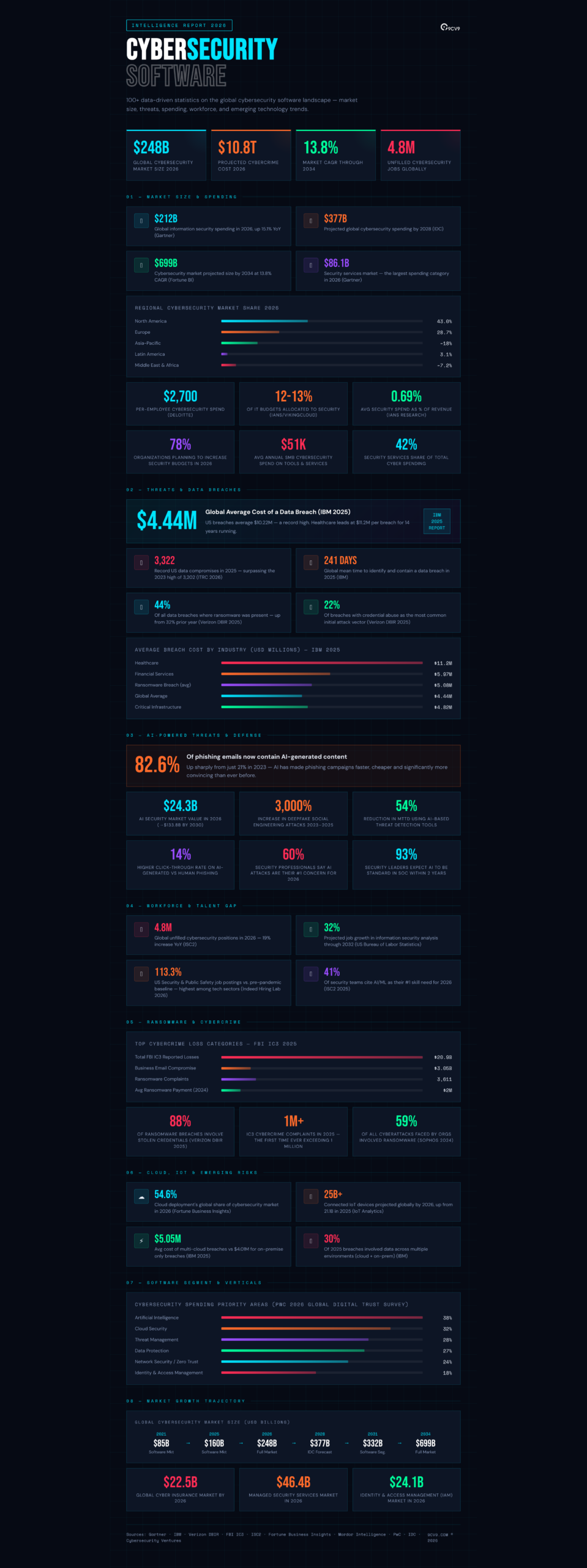
- These 115 cybersecurity software statistics reveal the latest market size, spending trends, breach costs, workforce insights, cloud adoption, and emerging technologies shaping the future of cybersecurity in 2026.
Cybersecurity software continues to evolve rapidly in 2026 as organisations increase investments to combat ransomware, AI-powered threats, cloud security risks, and data breaches. This comprehensive collection of 115 cybersecurity software statistics explores market growth, spending trends, breach costs, workforce insights, and emerging technologies to help businesses make informed security decisions.
Cybersecurity has evolved from being an IT department responsibility into one of the most important strategic priorities for businesses, governments, and consumers worldwide. As organizations continue their rapid digital transformation, the growing reliance on cloud computing, artificial intelligence (AI), Internet of Things (IoT) devices, hybrid work environments, and interconnected digital ecosystems has dramatically expanded the global attack surface. In response, cybersecurity software has become one of the fastest-growing technology markets, attracting record-breaking investments, driving continuous innovation, and reshaping how organizations defend their digital assets.
Also, read our top guide on the Top 10 Best Cybersecurity Software.

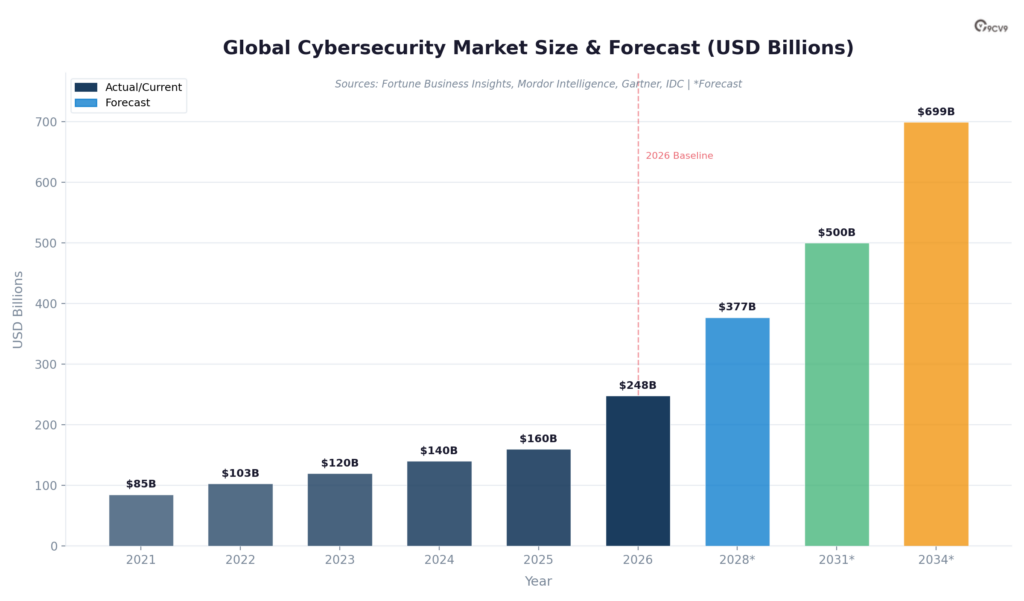
The numbers alone illustrate the extraordinary scale of this transformation. The global cybersecurity market is projected to reach approximately $248.28 billion in 2026, while worldwide information security spending is expected to exceed $212 billion, reflecting sustained double-digit annual growth. Security software itself represents one of the industry’s largest investment categories, approaching $106 billion in annual spending, while the broader cybersecurity software segment is valued at over $180 billion and continues to grow at a rapid compound annual growth rate. These figures demonstrate that cybersecurity is no longer viewed merely as an operational expense but as a critical investment in business resilience, regulatory compliance, customer trust, and long-term competitiveness.
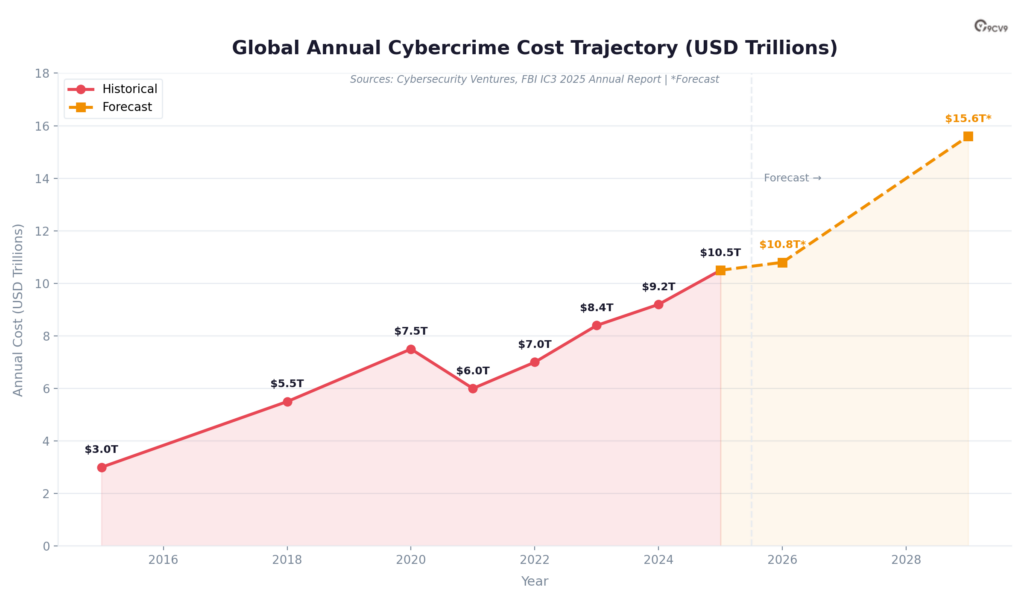
At the same time, cyber threats have reached unprecedented levels of sophistication and frequency. Global cybercrime costs are forecast to exceed $10.8 trillion in 2026, placing cybercrime among the largest economic forces in the world if measured as a national economy. Every 39 seconds, another cyberattack occurs somewhere across the globe, while ransomware, phishing campaigns, credential theft, business email compromise (BEC), and AI-powered attacks continue to increase in both scale and effectiveness. Organizations now face an environment where a single successful breach can result in millions of dollars in direct financial losses, prolonged operational disruption, regulatory penalties, reputational damage, and long-term customer attrition.
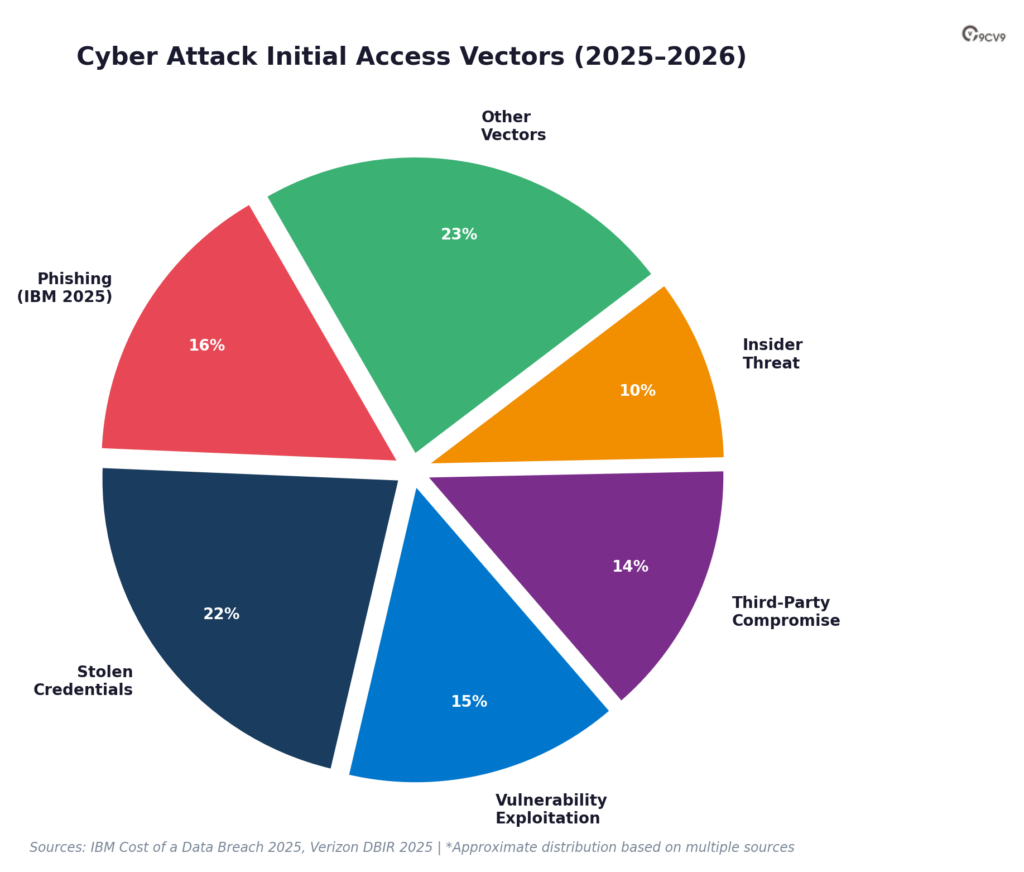
Data breaches remain one of the most costly and persistent cybersecurity challenges. The average global cost of a data breach stands at approximately $4.44 million, while organizations in the United States face average breach costs exceeding $10 million. Healthcare, financial services, and critical infrastructure remain among the most heavily targeted industries, largely due to the high value of sensitive information and strict regulatory obligations. Meanwhile, ransomware attacks now account for nearly half of all recorded breaches, credential abuse continues to dominate initial attack vectors, and supply chain compromises have doubled in prevalence over the past year, highlighting the growing complexity of modern cyber risk.
One of the defining trends of 2026 is the rapid convergence of artificial intelligence and cybersecurity. AI is simultaneously becoming both a powerful defensive technology and an increasingly dangerous offensive weapon. Security platforms now leverage AI to automate threat detection, reduce incident response times, identify anomalies across billions of security events, and assist security analysts in prioritizing threats more effectively. At the same time, cybercriminals are exploiting generative AI to produce highly convincing phishing emails, automate malware development, create deepfake impersonations, and launch sophisticated social engineering attacks that are significantly more difficult to detect. This escalating AI arms race is fundamentally changing how both attackers and defenders operate.
Cloud adoption continues to reshape enterprise cybersecurity strategies. As organizations migrate workloads across public clouds, private clouds, SaaS applications, and hybrid environments, traditional perimeter-based security models have become increasingly ineffective. Zero Trust architecture, identity-first security, cloud-native application protection platforms (CNAPP), endpoint detection and response (EDR), managed detection and response (MDR), extended detection and response (XDR), cloud security posture management (CSPM), and AI-powered security operations centers (SOCs) are now among the fastest-growing software categories within the cybersecurity ecosystem. These technologies enable organizations to monitor increasingly distributed infrastructures while maintaining visibility across users, devices, applications, networks, and data.
Another significant trend shaping the cybersecurity software landscape is the widening global talent shortage. Despite cybersecurity becoming one of the fastest-growing career fields, millions of positions remain unfilled worldwide. Security teams continue to struggle with staffing shortages, skills gaps in AI and cloud security, and the overwhelming volume of daily security alerts. As a result, enterprises are investing heavily in automation, managed security services, AI-assisted security operations, and outsourced Security Operations Centers to compensate for limited human resources while maintaining continuous protection against evolving threats.
Regulatory pressure has also intensified across nearly every major economy. Governments and industry regulators continue introducing stricter cybersecurity frameworks covering incident reporting, data privacy, critical infrastructure protection, software supply chain security, and cyber resilience. Organizations increasingly view cybersecurity software not only as a mechanism for defending against attacks but also as an essential component of regulatory compliance, governance, risk management, cyber insurance eligibility, and business continuity planning. Modern cybersecurity platforms are expected to deliver comprehensive visibility, auditability, policy enforcement, and automated compliance reporting alongside traditional threat detection capabilities.
Investment trends further reinforce cybersecurity’s strategic importance. Nearly four out of five organizations expect to increase cybersecurity spending during 2026, while security services remain the largest spending category and software platforms continue attracting significant enterprise budgets. Vendor consolidation is accelerating as organizations seek integrated security platforms that reduce operational complexity while improving overall protection. Large technology providers and specialised cybersecurity vendors alike are expanding their AI capabilities, cloud-native offerings, and unified security ecosystems to address the growing demand for comprehensive, scalable protection across increasingly complex digital environments.
The evolution of cybersecurity software is also extending beyond traditional enterprise networks. The rapid proliferation of IoT devices, operational technology (OT), industrial control systems, connected vehicles, smart cities, healthcare devices, and edge computing environments has introduced entirely new categories of cyber risk. Software vendors are responding with specialised solutions designed to secure industrial systems, medical devices, manufacturing environments, autonomous infrastructure, and cloud-connected IoT ecosystems. These emerging segments represent some of the fastest-growing opportunities within the broader cybersecurity software market.
Whether you are a Chief Information Security Officer (CISO), IT manager, cybersecurity professional, technology investor, software vendor, business leader, researcher, policymaker, or simply someone interested in understanding one of the world’s fastest-growing technology sectors, staying informed through reliable statistics has never been more important. Quantitative insights help organizations benchmark their security investments, evaluate emerging technologies, anticipate evolving threats, identify industry trends, support business cases for security spending, and make more informed strategic decisions.
This comprehensive guide presents the Top 115 Cybersecurity Software Statistics, Data & Trends in 2026, bringing together the latest market research, spending forecasts, cybercrime data, breach economics, AI security developments, cloud security adoption, workforce trends, cyber insurance insights, compliance developments, ransomware statistics, phishing metrics, and industry-specific benchmarks from leading research firms and cybersecurity organizations. Together, these statistics provide an authoritative snapshot of how cybersecurity software is transforming the digital economy in 2026 and offer valuable insights into the trends that will shape the future of global cyber defence.
Before we venture further into this article, we would like to share who we are and what we do.
About 9cv9
9cv9 is a business tech startup based in Singapore and Asia, with a strong presence all over the world.
With over ten years of startup and business experience, and being highly involved in connecting with thousands of companies and startups, the 9cv9 team has listed some important and crucial software tools in this review.
If you like to get your company listed in our top B2B software reviews, check out our world-class 9cv9 Media and PR service and pricing plans here.
Top 115 Cybersecurity Software Statistics, Data & Trends in 2026
📊 MARKET SIZE & SPENDING
- $248.28 billion — The global cybersecurity market is projected to reach $248.28 billion in 2026 (Fortune Business Insights). This figure marks a historic milestone, confirming cybersecurity as one of the most capital-intensive sectors in the global technology industry.
- $212 billion — Global information security spending reached $212 billion in 2026, up 15.1% year-over-year (Gartner). Double-digit growth has now become the sustained baseline for enterprise security investment.
- 13.8% CAGR — The global cybersecurity market is growing at a 13.8% compound annual growth rate through 2034 (Fortune Business Insights). This sustained expansion reflects both escalating threats and deepening enterprise reliance on digital infrastructure.
- $699 billion — By 2034, the global cybersecurity market is projected to reach $699.39 billion (Fortune Business Insights). Organizations investing in scalable security platforms today are positioning themselves advantageously for a decade of structural growth.
- $377 billion — IDC projects global cybersecurity spending will nearly double to $377 billion by 2028. The trajectory underscores that cybersecurity is no longer a cost center but a core strategic investment.
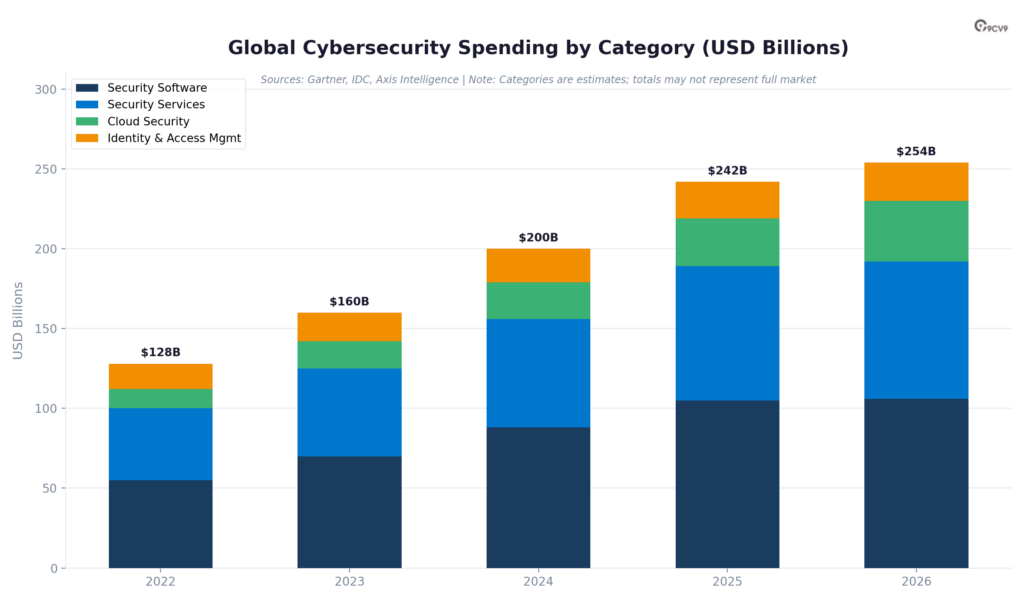
- $86.1 billion — Security services represent the largest single cybersecurity spending category globally in 2026, at $86.1 billion (Gartner). Managed services are absorbing spend that was previously fragmented across in-house staffing and point tools.
- $106 billion — Security software leads all cybersecurity investment categories in 2026 at approximately $106 billion (Gartner/Axis Intelligence). Integrated platform plays from vendors like Microsoft, CrowdStrike, and Palo Alto Networks are driving consolidation.
- $180.29 billion — The cybersecurity software market specifically is valued at $180.29 billion in 2026, projected to reach $332.26 billion by 2031 at a 13.01% CAGR (Mordor Intelligence). Software’s growing dominance reflects cloud-native and AI-integrated security architectures.
- $520 billion — Cybersecurity Ventures projects global cybersecurity products and services spending will exceed $520 billion annually by 2026 when including all adjacent markets (Cybersecurity Ventures). This broader estimate captures aviation, automotive, IoT, and industrial security that traditional IT security benchmarks exclude.
- $1 trillion — Cybersecurity Ventures projects global cybersecurity spending will hit $1 trillion annually by 2031. That figure would make cybersecurity larger than most national defense budgets.
- $2,700 — The average per-employee cybersecurity spend across enterprises is $2,700 in 2026 (Deloitte). Organizations that fall significantly below this benchmark are materially underprotected relative to peers.
- 0.69% — Average cybersecurity spend as a percentage of annual revenue sits at 0.69% (IANS Research). Asset-intensive and data-rich industries consistently allocate above this baseline.
- 12–13.2% — Share of IT budgets allocated to cybersecurity in 2026 (VikingCloud/IANS Research). The steady rise from 8.6% in 2022 reflects boards treating cybersecurity as existential risk management.
- 78% — 78% of organizations plan to increase their cybersecurity spending in 2026 (multiple sources). Sustained budget growth despite macroeconomic headwinds illustrates the non-discretionary nature of modern security investment.
- 49% — 49% of organizations are planning to further increase security budgets following recent incidents (IBM 2026). Breach experiences serve as the single most effective catalyst for security investment approvals.
- $51,000 — The average SMB spends $51,000 annually on cybersecurity tools and services in 2026 (StationX). While modest, this represents a doubling from just four years ago as small businesses recognize the existential risk of cyber incidents.
- 42% — Security services (managed security, consulting, implementation) represent 42% of total cyber spending in 2026 (StationX). The expertise gap is pushing organizations toward service-based models even as software automation expands.
- $24.2 million — The world spends $24.2 million per hour on cybersecurity in 2026 (Axis Intelligence/Gartner). This pace of investment reflects both the scale of the threat and the economic value at risk.
- 43.0% — North America dominates the cybersecurity market with a 43.0% share in 2025 (Fortune Business Insights). Though still dominant, North America’s share is gradually eroding as Asia-Pacific accelerates.
- $7.93 billion — Latin America’s cybersecurity market is projected to reach $7.93 billion in 2026, up from $6.79 billion in 2025 (Fortune Business Insights). Emerging markets represent the next frontier for cybersecurity vendor expansion.
💥 CYBERCRIME & ECONOMIC IMPACT
- $10.8 trillion — Global cybercrime costs are projected to reach $10.8 trillion in 2026 (Cybersecurity Ventures/StationX). If cybercrime were a country, it would rank as the world’s third-largest economy behind only the US and China.
- $15.6 trillion — Cybercrime costs are forecast to reach $15.6 trillion by 2029 (StationX/Cybersecurity Ventures). The trajectory demands organizations treat cyber risk with the same rigor as operational and financial risk.
- $20.877 billion — Total reported cybercrime losses in the US in 2025 reached $20.877 billion — a 26% increase from 2024 (FBI IC3 2025 Annual Report). This is the first time losses exceeded $20 billion in a single year.
- 1,008,597 — The FBI IC3 received more than 1 million cybercrime complaints in 2025 for the first time in its history (FBI IC3 Annual Report 2025). This milestone signals that cyber fraud has become a mass-market crime affecting everyday consumers.
- 26% — Total reported cybercrime losses in the US increased 26% year-over-year in 2025 (FBI IC3 2025). The acceleration rate outpaces most organizations’ security investment growth.
- $120,000 — The average cost of a cyberattack on a small business is $120,000 — enough to permanently close 60% of affected SMBs within six months (StationX). For small businesses, a single significant breach is often a terminal event.
- Every 39 seconds — A cyberattack occurs globally every 39 seconds on average (StationX/Medhacloud). At this frequency, passive security postures are statistically indefensible.
- $3.046 billion — Business Email Compromise (BEC) losses totaled $3.046 billion in 2025 per FBI IC3 — making it the most financially damaging enterprise-targeted cybercrime category. BEC’s high return-on-investment for attackers ensures it will remain a persistent threat.
- ~$50,000 — The median BEC loss per incident is approximately $50,000 (FBI IC3/Verizon DBIR 2025). Even “small” BEC incidents carry material financial impact for mid-market organizations.
🔓 DATA BREACHES
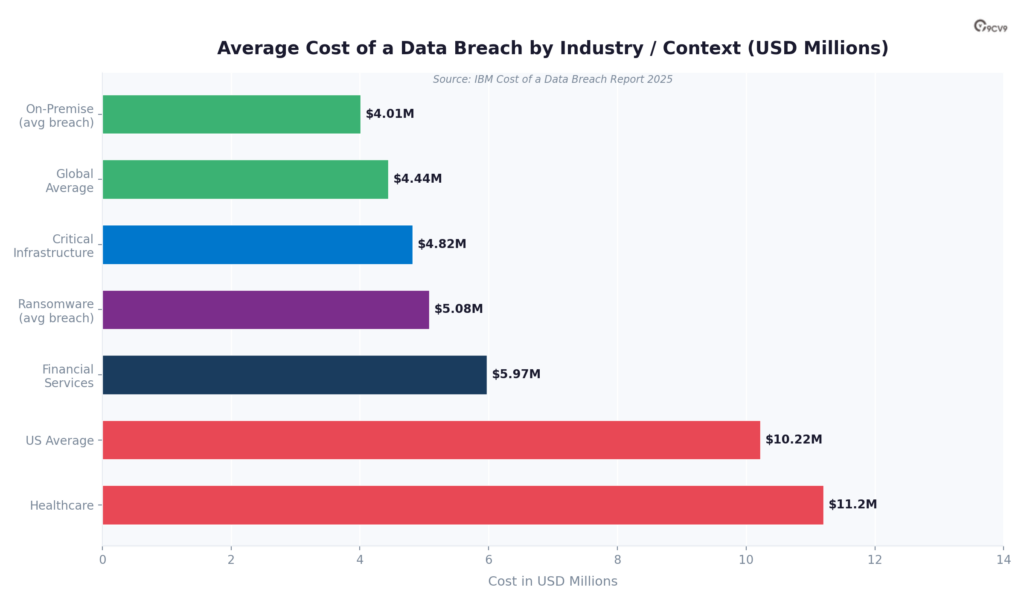
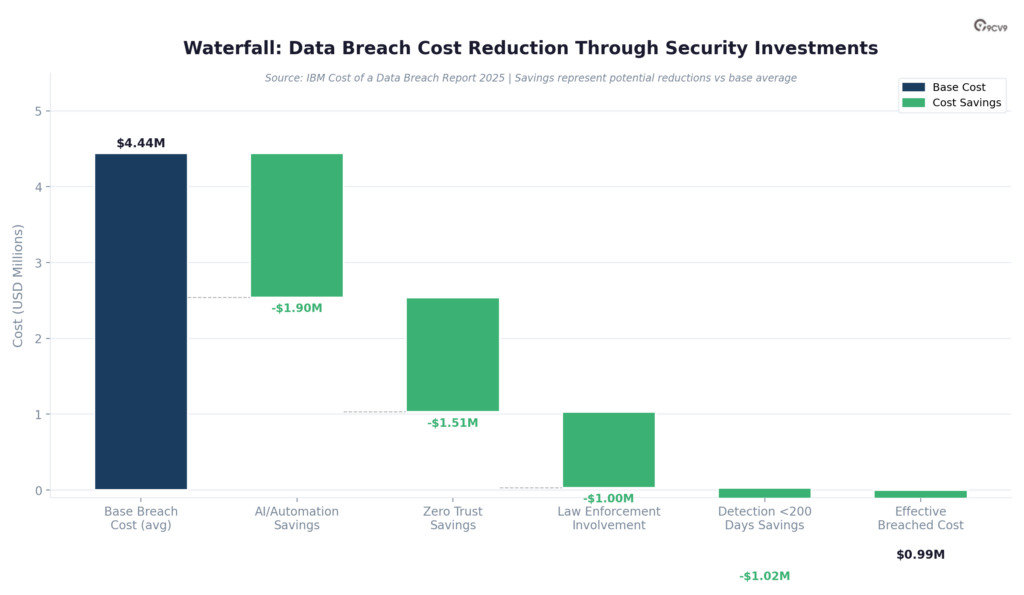
- $4.44 million — The global average cost of a data breach in 2025 was $4.44 million — the first decline in five years (IBM Cost of a Data Breach Report 2025). While directionally positive, the modest decline masks a rising breach frequency.
- $10.22 million — US data breaches average $10.22 million per incident — a record high (IBM 2025). US regulatory exposure, litigation risk, and business disruption costs amplify breach economics substantially.
- 3,322 — The ITRC recorded 3,322 US data compromises in 2025, setting a new all-time record (ITRC Annual Data Breach Report 2026). The five-year increase in US data compromises stands at 79%.
- $11.2 million — Healthcare remains the most expensive industry for data breaches at $11.2 million per incident — 2.5 times the global average — and has held this position for 14+ years (IBM 2025). The combination of sensitive data, critical operations, and complex legacy systems makes healthcare uniquely vulnerable.
- $5.97 million — Financial services face an average breach cost of $5.97 million per incident (IBM 2025). Regulatory penalties, customer notification requirements, and transaction fraud costs drive elevated figures.
- $5.08 million — Ransomware/extortion breaches cost $5.08 million on average, appearing in 44% of all breaches analyzed (Verizon DBIR 2025). The combination of ransom demands, operational downtime, and recovery costs makes ransomware uniquely expensive.
- 241 days — The global mean time to identify and contain a data breach was 241 days in 2025 — the fastest in nine years (IBM 2025). Despite improvement, nearly 8 months of dwell time gives attackers substantial opportunity for lateral movement and data exfiltration.
- 44% — Ransomware was present in 44% of all data breaches analyzed in the Verizon 2025 DBIR — up from 32% the prior year. The 37% year-over-year increase in ransomware incidents confirms it remains the dominant breach mechanism.
- 30% — Third-party involvement in breaches reached 30% in the Verizon DBIR 2025, doubling from 15% in 2024. Supply chain attacks have emerged as the fastest-growing breach vector category.
- 22% — Credential abuse was the most common initial attack vector, present in 22% of breaches (Verizon DBIR 2025). Identity security has displaced perimeter defense as the primary battleground.
- 16% — Phishing overtook stolen credentials as the most common initial vector per IBM 2025, accounting for 16% of breaches. AI-generated phishing has dramatically lowered the skill barrier for attackers.
- 34% — Vulnerability exploitation as an initial access vector grew 34% year-over-year (IBM 2025). Unpatched systems remain one of the most reliably exploited enterprise weaknesses.
- $332 million — Mega-breaches involving 50 million or more records cost an average of $332 million per incident. Organizations holding large consumer datasets carry outsized financial exposure from single incidents.
- $5.05 million — Multi-cloud breaches averaged $5.05 million versus $4.01 million for on-premise-only breaches (IBM 2025). Cloud complexity amplifies both breach likelihood and containment costs.
- 30% — 30% of 2025 breaches involved data spread across multiple environments (cloud and on-premises) (IBM 2025). Hybrid architectures require unified security monitoring rather than siloed tools.
- $4.50 million — Stolen or compromised credentials as an initial breach vector cost an average of $4.50 million per incident (IBM 2025). The credential economy feeding ransomware-as-a-service operations shows no signs of weakening.
- 88% — 88% of breaches involving the system intrusion pattern used stolen credentials (Verizon DBIR 2025). Password hygiene and MFA adoption remain the most cost-effective security investments at scale.
- 68% — Human error remains a factor in approximately 68% of all data breaches (StationX). Despite technical controls, social engineering and misconfigurations continue to undermine even well-resourced security programs.
- $1.9 million — Organizations using AI and automation extensively in security saved approximately $1.9 million per breach compared to organizations without these tools (IBM 2025). The ROI on AI-driven security platforms has become quantifiable and compelling for board-level justification.
- $1.51 million — Critical infrastructure organizations that deployed Zero Trust architecture saved $1.51 million per breach compared to those without it (StationX). Zero Trust is no longer a theoretical model — it delivers measurable financial protection.
- $2.22 million — Per-breach savings from AI and automation in security operations (Gartner/IBM). Every dollar invested in security automation carries a multiplier effect on incident cost reduction.
🦠 RANSOMWARE
- $2 million — The average ransomware payment reached $2 million in 2024, with 94% of initial demands paid by victim organizations (Sophos State of Ransomware 2024). The near-universal willingness to pay sustains ransomware as a profitable criminal enterprise.
- 3,611 — FBI IC3 received 3,611 ransomware complaints in 2025 (FBI IC3 2025 Annual Report). This undercount reflects significant under-reporting; actual incident volumes are estimated to be substantially higher.
- 59% — Ransomware accounted for 59% of all cyberattacks faced by organizations in the Sophos survey, with 32% of those resulting from unpatched vulnerabilities (Sophos State of Ransomware 2024).
- 88% — Among SMBs, ransomware was present in 88% of breaches — confirming attackers no longer discriminate by company size (Verizon DBIR 2025). Ransomware groups scale their demands to victim capacity.
- Every 2 seconds — By 2031, a ransomware attack will hit a business, consumer, or device every 2 seconds, up from every 11 seconds in 2021 (Cybersecurity Ventures). Organizations that are unprepared today face an exponentially more hostile environment within a decade.
- 54% — Ransomware infections are primarily caused by phishing (54%), followed by poor security practices (27%) and lack of cybersecurity training (26%) (Statista). Human factors remain the dominant entry point for ransomware delivery.
🎣 PHISHING & SOCIAL ENGINEERING
- 94% — 94% of organizations experienced a phishing attack in 2025 (StationX/Medhacloud). Phishing is effectively a universal threat; the question is not whether organizations will be targeted but whether they can detect and block attacks.
- 36% — 36% of all data breaches involve phishing as the initial access vector (StationX/Medhacloud). Email remains the highest-risk entry point for enterprise networks.
- 80–95% — Phishing scams initiate 80–95% of all human-associated breaches (Comcast Business Cybersecurity Threat Report). No other attack vector comes close to phishing in terms of real-world breach frequency.
- 82.6% — 82.6% of phishing emails now contain AI-generated content, up from just 21% in 2023 (StationX). The shift to AI-authored phishing has dramatically increased volume and linguistic quality of attacks.
- 14% — AI-generated phishing emails have a 14% higher click-through rate than human-crafted ones (StationX/Medhacloud). The marginal improvement in deception quality translates directly into higher breach probabilities.
- 47% — Spear phishing targeting C-suite executives (whaling) increased 47% in 2025 (StationX). Executive-targeted attacks carry disproportionate financial and reputational consequences.
- 33 seconds — Email-based attacks take an average of just 33 seconds from delivery to first click (StationX). The human response window is narrowing, making automated detection the only scalable defense.
- 70% — Organizations with regular security awareness training experience 70% fewer successful phishing attacks (StationX). Security awareness training delivers the highest measurable ROI of any security investment.
🤖 AI IN CYBERSECURITY
- $24.3 billion — The AI security market is valued at $24.3 billion in 2026 and projected to reach $133.8 billion by 2030, representing a 21.9% CAGR (StationX/Medhacloud). AI security is the fastest-growing sub-segment of the entire cybersecurity industry.
- 54% — Organizations using AI-based threat detection reduce mean time to detect (MTTD) by 54% (StationX/Medhacloud). The speed advantage in threat detection is rapidly becoming a competitive differentiator.
- 3,000% — Deepfake-based social engineering attacks increased 3,000% between 2023 and 2025 (StationX/Medhacloud). Synthetic media fraud has transitioned from theoretical risk to mainstream enterprise threat in under three years.
- 60% — 60% of security professionals say AI-powered attacks are their top concern for 2026 (StationX/Medhacloud). Practitioner concern is well-founded: AI attacks are faster, more adaptive, and harder to distinguish from legitimate activity.
- 93% — 93% of security leaders expect AI to be standard in security operations within two years (StationX/Medhacloud). The transition from AI-augmented to AI-native security operations centers is already underway.
- 1 million+ — AI-powered security tools process over 1 million security events per second on average (StationX/Medhacloud). Human analysts cannot match this throughput; AI becomes essential for any organization operating at scale.
- $1 billion+ — Deepfake-enabled executive impersonation caused losses exceeding $1 billion in 2025 (FBI IC3, via Mordor Intelligence). Voice and video cloning have made “verify separately” a mandatory protocol for any large financial transaction.
- 90% — AI agents are predicted to handle up to 90% of routine security operations triage by end of 2026 as organizations deploy “agentic SOC” capabilities (SentinelOne). Agentic AI is redefining what constitutes security automation.
- 38% — 38% of PwC survey respondents ranked AI as their top cybersecurity managed-service priority for 2026 (PwC 2026 Global Digital Trust Insights). AI governance and security are now board-level mandates, not just IT considerations.
- 41% — 41% of security teams cite AI/ML as their #1 skill need in cybersecurity for 2026 (ISC2 2025). Demand for AI-capable security professionals far outstrips the training pipeline.
👥 WORKFORCE & TALENT GAP
- 4.8 million — There are 4.8 million unfilled cybersecurity positions globally in 2026 — a 19% increase year-over-year (ISC2 Cybersecurity Workforce Study 2024). The talent gap is widening faster than educational pipelines can respond.
- 32% — The US Bureau of Labor Statistics projects 32% job growth in information security analysis through 2032. Cybersecurity analyst roles are among the most recession-resistant technology career paths available.
- 113.3% — US “Security & Public Safety” job postings sit at 113.3% of their pre-pandemic baseline — the only major tech sector still above February 2020 levels (Indeed Hiring Lab, updated March 2026). While other tech sectors have contracted, cybersecurity hiring remains structurally elevated.
- 59% — 59% of organizations report critical or significant security skills shortages, with AI and cloud security as the most urgent gaps (ISC2 2025). Skills deficits, not headcount shortages, have become the primary constraint on security program effectiveness.
- 11% — Only 11% of security executives feel their teams are adequately staffed (Deepstrike 2026). The near-universal acknowledgment of understaffing is driving adoption of managed services, automation, and AI-assisted security operations.
- 34% — AI and ML security is the most critical skills gap, cited by 34% of organizations (Deepstrike 2026). Training programs are struggling to keep pace with the rapidly evolving threat landscape.
☁️ CLOUD & IoT SECURITY
- 54.59% — Cloud deployment holds a 54.59% share of the global cybersecurity market in 2026, growing at 15.26% CAGR through 2034 (Fortune Business Insights). Cloud-native security architectures are now the default for new deployments.
- 25.4% — Cloud security spending is growing at 25.4% annually — the fastest-growing security segment (StationX/Medhacloud). Cloud security spending growth outpaces even the broader cybersecurity market expansion.
- 25 billion+ — The number of connected IoT devices is projected to exceed 25 billion globally by 2026, up from 21.1 billion in 2025 (IoT Analytics). Each device represents an additional entry point that traditional endpoint security was not designed to protect.
- $330,000 — The average IoT security incident costs $330,000 per event (CompareCheapSSL 2025–2026). IoT security investments typically yield positive ROI at even a single incident prevented.
- 820,000 — IoT devices face approximately 820,000 attacks daily worldwide in 2025–2026 (CompareCheapSSL). The attack surface created by connected devices has become vast enough to attract automated, persistent scanning campaigns.
- 75% — Industrial IoT attacks increased 75% over the past two years (CompareCheapSSL 2025). Operational technology environments are becoming primary targets as IT-OT convergence accelerates.
- 29 — Connected home environments faced an average of 29 daily attack attempts in 2025 — a threefold increase from 2024 (Bitdefender/Netgear). The consumer IoT threat has escalated from nuisance to sustained assault.
- 17% — 17% of cloud breaches resulted from lack of multi-factor authentication (StationX). MFA remains the single most high-ROI defensive control for cloud environments.
🔒 ZERO TRUST & ARCHITECTURE
- $1.51 million — Organizations that deployed Zero Trust architecture saved $1.51 million per breach versus those without it (StationX). Zero Trust’s financial ROI is now empirically documented, not just theoretically argued.
- 24% — 24% of organizations prioritize network security and Zero Trust as managed service use cases in 2026 (PwC 2026 Global Digital Trust Insights). Adoption is accelerating but significant implementation gaps remain.
- 27% — Zero Trust implementation is cited as a critical skills gap by 27% of organizations (Deepstrike 2026). Deployment complexity is the primary barrier slowing broader Zero Trust adoption.
- 60% — 60% of organizations are increasing their investment in cyber risk management in response to geopolitical volatility (PwC 2026 Global Digital Trust Insights). Geopolitical risk is now a primary driver of cybersecurity investment decisions.
🏥 INDUSTRY-SPECIFIC STATISTICS
- 27.62% — Banking, Financial Services, and Insurance (BFSI) accounted for 27.62% of the cybersecurity software market share in 2025 (Mordor Intelligence). BFSI’s combination of regulatory requirements and high-value data drives disproportionate security investment.
- 14.97% CAGR — Healthcare registered the fastest-growing cybersecurity software segment at a 14.97% CAGR through 2031 (Mordor Intelligence). Digital health transformation is rapidly expanding the healthcare attack surface.
- 739 incidents — Financial services experienced the highest number of US data compromises in 2025 with 739 incidents, followed by healthcare (534) and professional services (478) (ITRC Annual Report 2026). Financial data’s liquidity on criminal markets ensures the sector faces relentless targeting.
- $10.22 million — Healthcare breach costs average $10.22 million per incident — 2.5 times the global average — for 14 consecutive years (IBM 2025). Healthcare’s unique combination of sensitive data, life-critical operations, and legacy infrastructure creates a structurally expensive breach environment.
- 63.17% — Large enterprises dominated the cybersecurity software market with a 63.17% share in 2025 (Mordor Intelligence). SMB cybersecurity remains significantly underserved relative to the segment’s combined threat exposure.
- 15.01% CAGR — Asia-Pacific is projected to expand at the fastest regional rate of 15.01% CAGR during 2026–2031 (Mordor Intelligence). Rapid digital transformation across Southeast Asia and India is driving accelerated security investment.
🛡️ CYBER INSURANCE
- $22.5 billion — The global cyber insurance market will reach $22.5 billion by 2026 (StationX/Medhacloud). Demand for risk transfer instruments is growing in parallel with rising breach costs and regulatory exposure.
- $16.6 billion — The global cyber insurance market reaches $16.6 billion in 2026 per Swiss Re. Rapid market maturation is tightening underwriting standards and narrowing coverage gaps.
- 11% — Cyber insurance premiums increased 11% on average in 2025 (StationX). Premium growth is moderating from the 40%+ increases of 2022, as underwriters implement stricter security baselines.
- 42% — 42% of insured organizations say their cyber insurance policy covers only a small part of actual damages (StationX/Medhacloud). Coverage gaps between policy language and actual breach economics remain a significant and often undisclosed risk.
- 21% — 21% of cyber insurance claims are denied due to non-compliance with policy security requirements (StationX/Medhacloud). Organizations that purchase cyber insurance without implementing required controls face both security risk and claims risk.
- 87% — 87% of cyber insurance applications now require evidence of endpoint detection and response (EDR) as a baseline control (StationX/Medhacloud). EDR has effectively become a prerequisite for cyber insurance coverage.
- 43% — The loss ratio for cyber insurers improved to 43% in 2025, down from 67% in 2022, as underwriting standards tightened (StationX). Tighter underwriting is improving insurer economics at the cost of reduced coverage availability for less-mature organizations.
🔧 MANAGED SECURITY & SOC
- $46.4 billion — The managed security services market is projected at $46.4 billion in 2026 (StationX/Medhacloud). Talent shortages and 24/7 coverage requirements are making managed SOC services structurally attractive.
- 63% — 63% of mid-market companies now outsource at least part of their security operations (StationX/Medhacloud). The shift toward hybrid in-house/managed models is a direct response to both talent scarcity and cost optimization.
- 35% — MDR (Managed Detection and Response) adoption grew 35% year-over-year in 2025 (StationX/Medhacloud). MDR’s combination of technology and human expertise offers a middle path between fully managed and in-house security operations.
- $2.86 million — The average cost of building an in-house SOC in year one is $2.86 million (StationX). The cost differential with managed SOC services (starting at $5,000–$15,000/month) is a key driver of outsourcing decisions.
⚠️ SUPPLY CHAIN & THIRD-PARTY RISK
- 30% — Third-party involvement in breaches doubled to 30% of all incidents in 2025, up from 15% in 2024 (Verizon DBIR 2025). Supply chain attacks have become the fastest-growing attack vector category, requiring vendor security programs as core defensive infrastructure.
- 292 days — Stolen credential breaches take an average of 292 days to resolve — the longest resolution timeline of any attack vector (IBM 2025). Long dwell times mean organizations face months of ongoing exposure before containment.
📜 COMPLIANCE & REGULATORY
- $200,000 to millions — CMMC 2.0 Level 2 certification costs range from $200,000 to several million dollars for mid-sized defense contractors (Elisity 2026). Federal compliance mandates are creating mandatory spending floors for contractors.
- 4 business days — The SEC requires public companies to disclose material cyber incidents within four business days of determining materiality (SEC). Disclosure deadlines are compressing incident response timelines and elevating forensic readiness requirements.
- $84 billion — Cybersecurity M&A activity exceeded $84 billion in 2025 (Axis Intelligence/Vectra AI). Consolidation is reshaping the vendor landscape as large platforms absorb point solutions.
- $700 billion+ — The 50 largest publicly-traded IT security companies by market capitalization have a combined market cap exceeding $700 billion (Cybersecurity Ventures 2025). The sector’s public market scale reflects deep institutional investor conviction.
Conclusion
The cybersecurity software industry in 2026 stands at a defining moment. What was once considered a specialised area of enterprise IT has evolved into one of the world’s most strategically important technology sectors, influencing every aspect of digital business, government operations, financial systems, healthcare, manufacturing, education, and critical infrastructure. The statistics presented throughout this report collectively demonstrate that cybersecurity is no longer simply about defending networks against malicious actors—it has become a foundational pillar of economic resilience, business continuity, regulatory compliance, customer trust, and long-term organisational competitiveness.
Perhaps the most striking insight from these 115 cybersecurity software statistics is the extraordinary scale of global investment. With the cybersecurity market projected to reach approximately $248.28 billion in 2026 and worldwide information security spending surpassing $212 billion, organisations across every industry are committing unprecedented resources to protecting their digital assets. Security software alone represents one of the largest enterprise technology investment categories, while long-term forecasts predicting market values approaching $700 billion over the coming decade reinforce that cybersecurity is poised to remain one of the fastest-growing technology markets worldwide.
Unfortunately, these record investments are matched by equally unprecedented cyber threats. Global cybercrime costs are expected to exceed $10.8 trillion, while cyberattacks continue to occur every few seconds across the world. Data breaches regularly cost organisations millions of dollars, ransomware continues to evolve into increasingly sophisticated criminal enterprises, phishing campaigns have become more convincing through AI-generated content, and business email compromise remains among the most financially damaging attack vectors. These realities make it clear that cybersecurity software is no longer optional—it is essential infrastructure for every modern organisation.
Artificial intelligence has emerged as one of the defining forces shaping cybersecurity in 2026. On one hand, AI-powered security platforms enable organisations to detect threats faster, automate incident response, process millions of security events in real time, and significantly reduce breach costs. On the other hand, cybercriminals are using the same technologies to generate sophisticated phishing campaigns, create deepfake impersonations, automate malware development, and scale social engineering attacks at unprecedented levels. This dual-use nature of AI means that organisations must continuously evolve their defensive capabilities simply to keep pace with increasingly intelligent adversaries. The future of cybersecurity will likely be characterised by an ongoing AI-versus-AI battle in which speed, automation, and adaptability become decisive competitive advantages.
Cloud computing, hybrid work environments, multi-cloud architectures, IoT deployments, and digital transformation initiatives have further expanded the cybersecurity landscape. Traditional perimeter-based security approaches are steadily giving way to identity-centric security, Zero Trust architectures, cloud-native protection platforms, extended detection and response (XDR), endpoint detection and response (EDR), managed detection and response (MDR), cloud security posture management (CSPM), and AI-driven Security Operations Centres (SOCs). These technologies are redefining how organisations protect users, devices, applications, and data in an increasingly decentralised digital environment.
Another recurring theme throughout these statistics is the growing importance of cybersecurity talent. Despite billions being invested in software and managed services, millions of cybersecurity positions remain unfilled globally. Organisations continue to struggle with shortages of skilled professionals, particularly in cloud security, AI security, threat intelligence, and incident response. As a result, automation, managed security services, and AI-assisted operations are becoming not only efficiency improvements but operational necessities for many enterprises seeking around-the-clock protection despite constrained human resources.
The financial implications of cybersecurity also extend far beyond technology budgets. Insurance providers increasingly require evidence of strong security controls before issuing cyber insurance policies. Regulators continue introducing stricter reporting obligations, compliance frameworks, and cybersecurity governance requirements. Boards of directors are becoming more directly involved in cyber risk oversight, recognising that cybersecurity failures can affect shareholder value, brand reputation, operational continuity, legal exposure, and customer confidence. Consequently, cybersecurity software is increasingly viewed not simply as a defensive technology investment but as a critical enabler of enterprise risk management.
For technology vendors, the opportunities remain substantial. Growing investment in AI-powered security platforms, cloud security, identity management, threat detection, Zero Trust solutions, managed services, and compliance automation continues to create new avenues for innovation and market expansion. Vendor consolidation is also reshaping the competitive landscape, as organisations increasingly favour integrated security platforms capable of simplifying operations while delivering comprehensive protection across diverse digital environments. Companies that successfully combine automation, AI, scalability, interoperability, and measurable business outcomes are likely to emerge as long-term market leaders.
For business leaders and decision-makers, these statistics provide valuable benchmarks for evaluating cybersecurity maturity, budgeting priorities, technology investments, and strategic planning. They highlight where organisations are increasing spending, which threats are growing most rapidly, how breach costs continue to evolve, and which defensive technologies consistently demonstrate measurable financial returns. Whether the objective is reducing cyber risk, achieving regulatory compliance, strengthening operational resilience, or protecting customer data, informed decision-making increasingly depends on understanding the quantitative trends shaping the global cybersecurity landscape.
Looking ahead, the cybersecurity software industry is expected to experience continued expansion as organisations accelerate digital transformation, adopt AI-native technologies, migrate additional workloads to the cloud, deploy billions of connected devices, and respond to increasingly sophisticated cyber threats. Emerging technologies such as autonomous security operations, agentic AI, predictive threat intelligence, post-quantum cryptography, secure software supply chains, and adaptive Zero Trust frameworks are likely to define the next generation of cybersecurity innovation. Organisations that invest proactively in modern security architectures today will be significantly better positioned to manage tomorrow’s evolving risks.
Ultimately, the Top 115 Cybersecurity Software Statistics, Data & Trends in 2026 illustrate a simple but powerful reality: cybersecurity has become one of the defining strategic priorities of the digital age. The convergence of rising cybercrime, expanding digital infrastructure, accelerating AI adoption, stricter regulatory oversight, and sustained investment ensures that cybersecurity software will remain indispensable to organisations of every size and industry. By understanding these market trends, spending patterns, threat landscapes, technological innovations, and operational challenges, business leaders, IT professionals, investors, researchers, and policymakers can make more informed decisions that strengthen resilience, improve security outcomes, and support sustainable digital growth in an increasingly connected world.
If you find this article useful, why not share it with your hiring manager and C-level suite friends and also leave a nice comment below?
We, at the 9cv9 Research Team, strive to bring the latest and most meaningful data, guides, and statistics to your doorstep.
To get access to top-quality guides, click over to 9cv9 Blog.
To hire top talents using our modern AI-powered recruitment agency, find out more at 9cv9 Modern AI-Powered Recruitment Agency.
People Also Ask
What is cybersecurity software?
Cybersecurity software protects computers, networks, cloud environments, applications, and data from cyber threats such as malware, ransomware, phishing, and unauthorised access using prevention, detection, and response technologies.
Why is cybersecurity software important in 2026?
Cybersecurity software is essential because cyberattacks are increasing in frequency and sophistication. Organisations rely on advanced security tools to protect sensitive data, maintain compliance, and minimise financial losses.
How large is the cybersecurity software market in 2026?
The cybersecurity software market is worth hundreds of billions of dollars globally in 2026, driven by rising cyber threats, cloud adoption, AI-powered attacks, and increasing enterprise security investments.
What are the biggest cybersecurity trends in 2026?
Major trends include AI-powered threat detection, Zero Trust security, cloud-native protection, extended detection and response (XDR), identity security, managed security services, and automation.
How fast is the cybersecurity industry growing?
The cybersecurity industry continues to grow rapidly with strong annual investment from governments and businesses worldwide, making it one of the fastest-growing enterprise software markets.
What are the most common cyber threats in 2026?
The most common threats include ransomware, phishing, malware, business email compromise, credential theft, insider threats, supply chain attacks, and AI-assisted cyberattacks.
What is Zero Trust security?
Zero Trust is a cybersecurity framework that continuously verifies every user, device, and application before granting access, regardless of whether they are inside or outside the corporate network.
How is artificial intelligence changing cybersecurity?
AI helps automate threat detection, identify anomalies, improve incident response, and reduce investigation times. However, attackers are also using AI to launch more convincing cyberattacks.
Why are ransomware attacks increasing?
Ransomware attacks continue to grow because they generate significant profits for cybercriminals while targeting businesses, governments, healthcare providers, and critical infrastructure worldwide.
How much do data breaches cost organisations?
The average cost of a data breach can reach millions of dollars after considering operational disruption, regulatory fines, legal expenses, customer notification, and reputational damage.
What industries invest the most in cybersecurity software?
Financial services, healthcare, government, manufacturing, retail, telecommunications, technology companies, and critical infrastructure operators are among the largest cybersecurity investors.
What is cloud security software?
Cloud security software protects cloud infrastructure, workloads, applications, identities, and data across public, private, and hybrid cloud environments from cyber threats.
What is endpoint security software?
Endpoint security software protects laptops, desktops, servers, smartphones, and other connected devices against malware, ransomware, phishing, and unauthorised access.
What is XDR in cybersecurity?
Extended Detection and Response (XDR) integrates security data across endpoints, email, cloud, identity, and networks to improve threat detection and accelerate incident response.
What is EDR software?
Endpoint Detection and Response (EDR) continuously monitors endpoint devices, detects suspicious behaviour, investigates attacks, and enables rapid remediation of security incidents.
Why are businesses spending more on cybersecurity?
Businesses face increasing cyber risks, stricter regulations, expanding digital operations, remote work environments, and higher financial losses from successful cyberattacks.
How does cybersecurity software reduce business risk?
Cybersecurity software detects attacks earlier, blocks malicious activity, protects sensitive information, minimises downtime, and improves regulatory compliance across organisations.
What role does cybersecurity play in digital transformation?
Cybersecurity enables organisations to adopt cloud computing, AI, remote work, IoT, and digital services securely while protecting critical business operations and customer data.
What is identity and access management (IAM)?
IAM solutions control who can access organisational systems and resources using authentication, authorisation, multi-factor authentication, and identity governance policies.
How does multi-factor authentication improve cybersecurity?
Multi-factor authentication requires multiple verification methods before granting access, making stolen passwords far less effective for attackers.
Why is cybersecurity compliance becoming more important?
Governments and regulators continue introducing stricter cybersecurity requirements to protect consumer data, financial systems, healthcare records, and critical infrastructure.
What skills are most in demand in cybersecurity?
Cloud security, AI security, penetration testing, threat intelligence, incident response, digital forensics, security engineering, and governance remain highly sought-after skills.
How does managed security services help businesses?
Managed Security Service Providers (MSSPs) offer continuous monitoring, threat detection, incident response, and expert security management without requiring large internal teams.
What is cyber threat intelligence?
Cyber threat intelligence collects and analyses information about attackers, tactics, vulnerabilities, and emerging threats to help organisations strengthen their security posture.
How does cybersecurity software protect remote workers?
Modern cybersecurity software secures remote users through VPNs, Zero Trust access, endpoint protection, identity verification, cloud security, and continuous monitoring.
What are the biggest cybersecurity challenges for small businesses?
Small businesses often struggle with limited budgets, cybersecurity skills shortages, ransomware threats, phishing attacks, outdated software, and insufficient security awareness.
What is Security Operations Centre (SOC) software?
SOC software helps security teams monitor networks, investigate alerts, automate workflows, and coordinate responses to cyber incidents from a central platform.
Will AI replace cybersecurity professionals?
No. AI improves productivity and automates repetitive tasks, but skilled cybersecurity professionals remain essential for strategy, investigations, governance, and complex decision-making.
How can organisations strengthen their cybersecurity posture?
Organisations should combine modern security software, employee training, Zero Trust principles, regular patching, backups, threat monitoring, vulnerability management, and incident response planning.
Where can I find the latest cybersecurity software statistics for 2026?
Comprehensive cybersecurity statistics can be found in trusted industry reports, market research publications, government cybersecurity agencies, and regularly updated cybersecurity research studies.
Sources
Cybersecurity Ventures Fortune Business Insights Mordor Intelligence Gartner Axis Intelligence StationX Medhacloud IBM Verizon FBI IC3 ISC2 PwC VikingCloud IoT Analytics Indeed Hiring Lab Deepstrike Elisity CompareCheapSSL Sophos ITRC Fortinet