



























Key Takeaways
- The global customer loyalty software market continues to grow rapidly in 2026, driven by AI, cloud technology, personalization, and rising demand for customer retention solutions across industries.
- Businesses investing in modern customer loyalty software are achieving higher customer retention, stronger engagement, increased customer lifetime value, and measurable returns on investment through data-driven loyalty programs.
- The latest customer loyalty software statistics reveal that AI-powered personalization, omnichannel experiences, gamification, and predictive analytics are shaping the future of customer loyalty and competitive business growth in 2026.
Customer loyalty software helps businesses increase customer retention, improve repeat purchases, and strengthen long-term customer relationships through personalized rewards, AI-powered engagement, and data-driven insights. This collection of the top 110 customer loyalty software statistics for 2026 highlights the latest market trends, adoption rates, and technologies shaping the future of customer loyalty.
In an increasingly competitive digital economy where acquiring new customers has become significantly more expensive than retaining existing ones, customer loyalty software has emerged as one of the most strategic technology investments for organizations worldwide. Businesses across retail, e-commerce, financial services, hospitality, healthcare, travel, telecommunications, and subscription-based industries are rapidly shifting their priorities from customer acquisition to long-term customer retention, recognizing that loyal customers consistently generate higher lifetime value, stronger brand advocacy, and more sustainable revenue growth. As a result, customer loyalty software is no longer viewed as a simple rewards platform but as an intelligent customer engagement ecosystem that combines artificial intelligence, predictive analytics, personalization, omnichannel experiences, gamification, and real-time data to strengthen customer relationships at every touchpoint. The statistics shaping the customer loyalty software industry in 2026 clearly demonstrate that businesses investing in modern loyalty technologies are outperforming competitors in customer retention, repeat purchases, operational efficiency, and overall profitability.
Also, read our guide on the Top 10 Best Customer Loyalty Software.

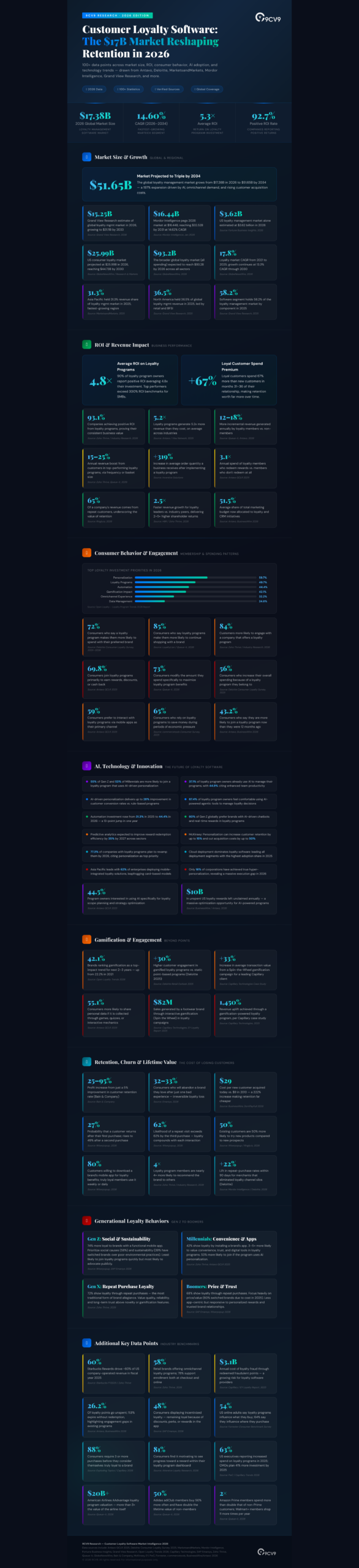
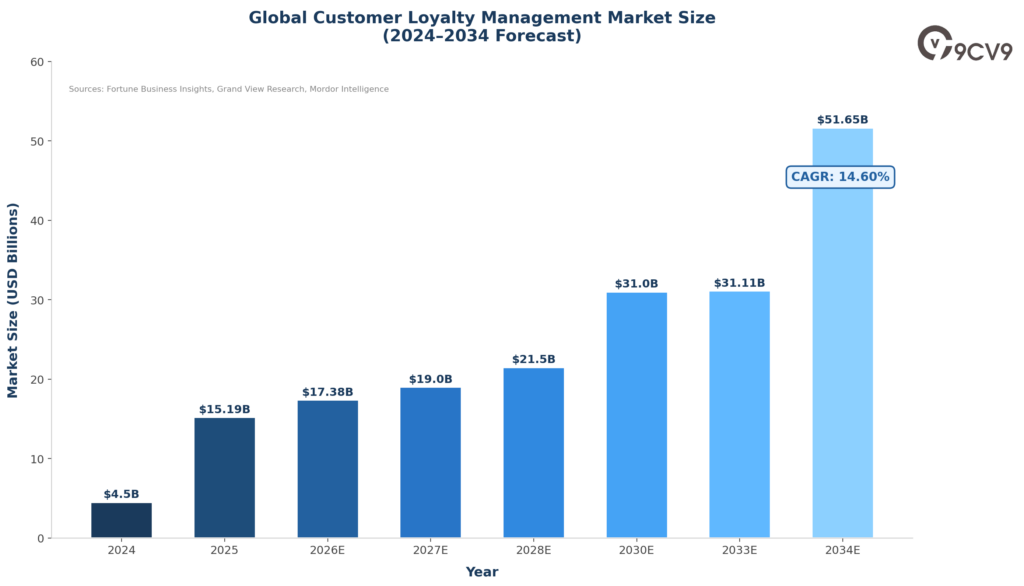
The global customer loyalty software market has entered an unprecedented period of expansion. Industry forecasts estimate the worldwide loyalty management market will reach approximately $17.38 billion in 2026, with long-term projections exceeding $51 billion by 2034. Multiple leading research firms also forecast double-digit annual growth rates ranging from approximately 10% to nearly 15%, reflecting the accelerating demand for cloud-native loyalty platforms, AI-powered customer engagement solutions, and advanced analytics capabilities. This rapid market expansion is being fuelled by rising customer acquisition costs, increasing digital commerce adoption, growing competition across virtually every industry, and the widespread realization that retaining existing customers delivers significantly higher returns than continuously pursuing new ones.
Today’s loyalty software platforms extend far beyond traditional points-and-rewards programs. Modern solutions integrate seamlessly with customer relationship management (CRM) systems, marketing automation platforms, mobile applications, e-commerce stores, payment systems, point-of-sale infrastructure, and customer support software to deliver unified customer experiences across every interaction. These platforms enable businesses to build personalized reward structures, launch omnichannel campaigns, automate customer segmentation, optimize reward redemption, identify high-value customers, predict churn, and deliver individualized offers using machine learning algorithms. Cloud deployment models have further accelerated adoption by reducing implementation complexity while providing organizations with the scalability needed to support millions of customer interactions in real time.
Artificial intelligence has become one of the most transformative forces reshaping customer loyalty software in 2026. Organizations are increasingly leveraging AI to automate loyalty program management, generate personalized recommendations, optimize campaign timing, forecast customer behavior, improve reward allocation, and increase operational efficiency. Younger consumers, particularly Millennials and Generation Z, now expect personalized digital experiences as a standard feature rather than a premium offering. Businesses responding to these expectations through AI-powered loyalty platforms are reporting measurable improvements in conversion rates, customer retention, operational productivity, and overall return on investment. At the same time, brands are rapidly increasing their investment in automation, predictive analytics, conversational AI, and intelligent customer engagement tools as competitive differentiation increasingly depends on delivering highly individualized customer experiences.
The financial impact of customer loyalty software has become increasingly difficult for business leaders to ignore. Studies consistently show that loyalty programs deliver exceptionally strong returns, with the overwhelming majority of organizations reporting positive ROI from their loyalty initiatives. Businesses implementing well-designed loyalty strategies are seeing higher annual revenues, increased average order values, greater repeat purchase rates, stronger customer engagement, and faster revenue growth compared to industry peers. Repeat customers continue to generate the majority of company revenues, while loyal customers spend substantially more over the course of their relationship with a brand than newly acquired customers. These economic realities have encouraged organizations to allocate larger portions of their marketing budgets toward customer retention, loyalty management, and CRM technologies instead of relying solely on increasingly expensive customer acquisition campaigns.
Consumer behaviour trends further reinforce the strategic importance of loyalty software. Modern consumers actively seek brands that reward engagement, provide meaningful benefits, and deliver personalized experiences across digital and physical channels. Mobile applications have become the preferred loyalty engagement channel for many customers, while personalized rewards, cashback, flexible redemption options, gamified experiences, and seamless omnichannel interactions increasingly influence purchasing decisions. Economic uncertainty has also elevated the importance of loyalty programs, with many consumers relying on rewards and discounts to stretch household budgets. These evolving expectations have transformed loyalty software into an essential component of broader customer experience strategies rather than an isolated marketing initiative.
Gamification has emerged as another defining trend shaping next-generation loyalty platforms. Interactive features such as challenges, quizzes, achievement badges, reward tiers, progress tracking, spin-to-win promotions, milestone incentives, and personalized missions are significantly increasing customer participation and engagement. Rather than relying solely on transactional rewards, organizations are creating immersive experiences that encourage customers to interact with brands more frequently while simultaneously generating valuable first-party and zero-party customer data. As privacy regulations continue to evolve and third-party cookies decline in importance, loyalty software has become one of the most valuable tools for collecting customer insights directly through voluntary engagement and personalized experiences.
Industry adoption continues to expand across nearly every major economic sector. Retail remains the largest adopter of customer loyalty software, but financial services, airlines, hospitality, travel, restaurants, telecommunications, healthcare providers, manufacturers, and B2B enterprises are all investing heavily in sophisticated loyalty ecosystems. B2B loyalty platforms, once considered a niche segment, are now among the fastest-growing categories as manufacturers and distributors digitize channel partner incentive programs, dealer rewards, and reseller engagement strategies. Simultaneously, enterprise organizations are integrating loyalty software with broader customer experience initiatives to create unified engagement strategies spanning online stores, mobile apps, physical retail locations, customer service operations, and digital marketing channels.
Despite rapid technological advancements, organizations continue to face significant challenges in maximizing loyalty program effectiveness. Many companies struggle to deliver true personalization, encourage reward redemption, prevent loyalty fraud, measure ROI accurately, and maintain meaningful emotional connections with customers beyond transactional incentives. Customer expectations continue to rise as consumers demand greater flexibility, transparent rewards, faster redemption, stronger privacy protections, and more relevant experiences tailored to their individual preferences. These challenges are driving software vendors to develop increasingly intelligent platforms capable of combining AI, advanced analytics, behavioral segmentation, fraud detection, omnichannel orchestration, and real-time customer intelligence into unified loyalty management solutions.
This comprehensive guide presents the Top 110 Customer Loyalty Software Statistics, Data & Trends in 2026, bringing together the latest market research, consumer behaviour insights, AI adoption metrics, ROI benchmarks, industry growth forecasts, engagement data, generational preferences, technology innovations, and enterprise adoption trends shaping the global loyalty software landscape. Whether you are a chief marketing officer, customer experience executive, CRM manager, retail leader, SaaS provider, business strategist, investor, software vendor, or digital transformation professional, these carefully curated statistics provide valuable insights into the current state and future direction of customer loyalty software. By understanding these data-driven trends, organizations can make more informed technology investments, optimize customer retention strategies, strengthen long-term customer relationships, and position themselves for sustainable growth in an increasingly customer-centric digital marketplace.
Before we venture further into this article, we would like to share who we are and what we do.
About 9cv9
9cv9 is a business tech startup based in Singapore and Asia, with a strong presence all over the world.
With over ten years of startup and business experience, and being highly involved in connecting with thousands of companies and startups, the 9cv9 team has listed some important and crucial software tools in this review.
If you like to get your company listed in our top B2B software reviews, check out our world-class 9cv9 Media and PR service and pricing plans here.
Top 110 Customer Loyalty Software Statistics, Data & Trends in 2026
📈 MARKET SIZE & GROWTH
1. $17.38B — Global Loyalty Management Market Size (2026)
The global customer loyalty management market is projected to reach USD 17.38 billion in 2026, signalling that businesses across all industries are investing aggressively in software tools to retain customers and grow lifetime value.
2. $51.65B — Market Size by 2034
At a CAGR of 14.60%, the loyalty management software market is forecast to more than triple to $51.65 billion by 2034, making it one of the fastest-growing enterprise software segments of the decade.
3. 14.60% CAGR (2026–2034)
The loyalty management market’s 14.60% compound annual growth rate from 2026 to 2034 outpaces many other MarTech categories, driven by AI adoption, rising customer acquisition costs, and the shift toward data-driven retention strategies.
4. $15.25B — Grand View Research Estimate (2026)
According to Grand View Research, the global loyalty management market is expected to hit $15.25 billion in 2026 and grow to $31.11 billion by 2033 at a 10.7% CAGR, with cloud-based solutions dominating deployment.
5. $16.44B — Mordor Intelligence Estimate (2026)
Mordor Intelligence values the loyalty management market at $16.44 billion in 2026, projected to nearly double to $32.52 billion by 2031 at a 14.62% CAGR, driven by platform consolidation and AI-powered personalization.
6. $3.62B — US Market Size (2026)
The US loyalty management market alone is estimated to reach $3.62 billion in 2026, reflecting North America’s position as the world’s leading adopter of enterprise loyalty software across retail, BFSI, and travel sectors.
7. $25.99B — US Consumer Loyalty Market (2026)
The broader US consumer loyalty market (including all program spend, not just software) is forecast at $25.99 billion in 2026, climbing to $44.73 billion by 2030 at a 13.2% CAGR as competition for customer retention intensifies.
8. $93.2B — Global Loyalty Market (All Sectors, 2026)
The entire global loyalty market across all sectors is expected to hit $93.2 billion in 2026, encompassing airline miles, retail rewards, BFSI points, and digital loyalty platforms — highlighting the sheer scale of the loyalty economy.
9. 17.8% CAGR (2021–2025)
The global loyalty market grew at a 17.8% CAGR from 2021 to 2025, with momentum expected to continue at 13.3% CAGR through 2030, confirming that loyalty software is a durable growth market rather than a short-term trend.
10. $10.3B — Customer Loyalty Program Software Market by 2033
The customer loyalty program software sub-segment specifically is projected to grow from $4.5 billion (2024) to $10.3 billion by 2033 at a 12.8% CAGR, fuelled by AI analytics integration and expanding digital adoption.
11. 31.3% — Asia Pacific Revenue Share (2025)
Asia Pacific held 31.3% of the global loyalty management market revenue in 2025 and is the fastest-growing region, as mobile wallets and QR-code-based loyalty models leapfrog traditional card-based approaches.
12. 36.5% — North America Revenue Share (2025)
North America commanded 36.5% of global loyalty management market revenue in 2025, supported by robust technology infrastructure and strong adoption of cloud-based analytics by large retailers and financial institutions.
13. 58.2% — Software Segment Share (2025)
The software component (vs. services) held 58.2% of the loyalty management market in 2025, confirming that SaaS platforms, APIs, and cloud-native loyalty engines are the dominant product type in the ecosystem.
14. $30B — Global Tourism Loyalty Programs Market (2026)
The tourism-specific loyalty programs market is valued at approximately $30 billion in 2026 and projected to exceed $65 billion by 2035 at an 8.1% CAGR, making travel one of the most loyalty-intensive verticals globally.
15. 14.88% CAGR — Asia Pacific Growth Rate (to 2031)
Asia Pacific loyalty management market is forecast to grow at a 14.88% CAGR through 2031, the fastest of any region, with mobile-first consumer behavior and rising middle-class spending driving program adoption.
💰 ROI & REVENUE IMPACT
16. 92.7% — Positive ROI Rate (2026)
According to Antavo and BusinessWire’s 2026 research, 92.7% of loyalty program owners report a positive return on investment, making loyalty software one of the highest-certainty investments available to marketing leaders.
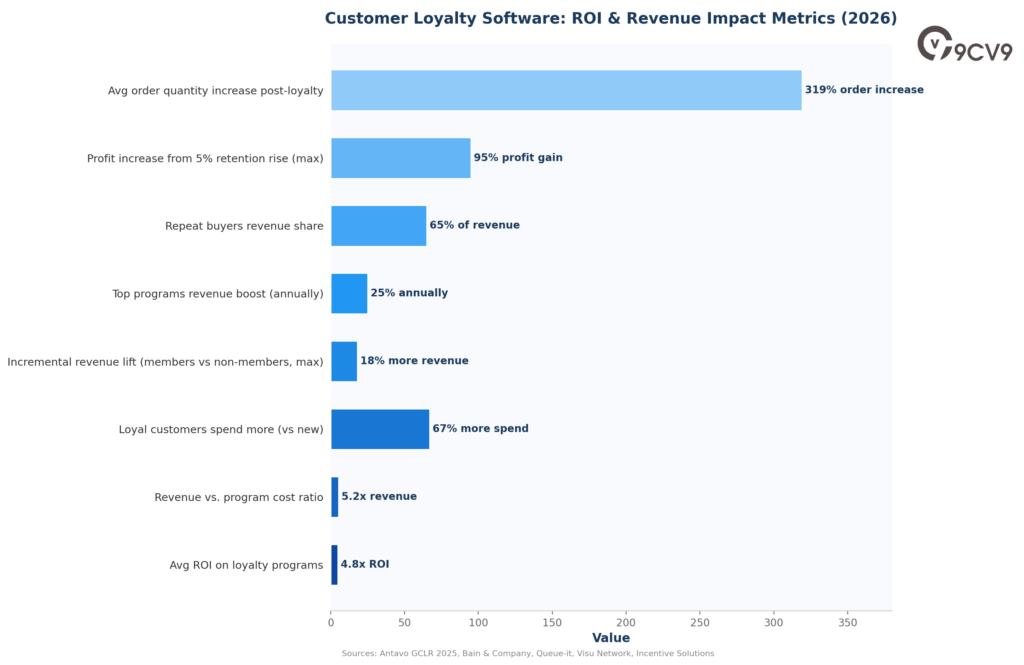
17. 5.3× — Average ROI on Loyalty Programs (2026)
Businesses investing in customer loyalty software see an average ROI of 5.3×, meaning for every dollar spent, brands receive more than five dollars back — a return that rivals the best-performing paid marketing channels.
18. 5.2× — Revenue vs. Program Cost Ratio
Loyalty programs on average generate 5.2× more revenue than they cost businesses, making retention-focused software investment one of the most capital-efficient growth strategies available to CMOs today.
19. 4.8× — Average ROI (Antavo GCLR 2025)
The Antavo Global Customer Loyalty Report 2025 found 90% of loyalty program owners reporting positive ROI with an average return of 4.8×, demonstrating consistently high performance across program types and industries.
20. 93.1% — Companies Achieving Positive ROI
A staggering 93.1% of companies report achieving positive ROI from their loyalty programs, showing that well-designed loyalty software consistently delivers measurable business value regardless of industry vertical.
21. 65% — Revenue from Repeat Customers
Approximately 65% of a company’s revenue comes from repeat customers, making customer retention — and the loyalty software that enables it — a direct driver of the majority of business income.
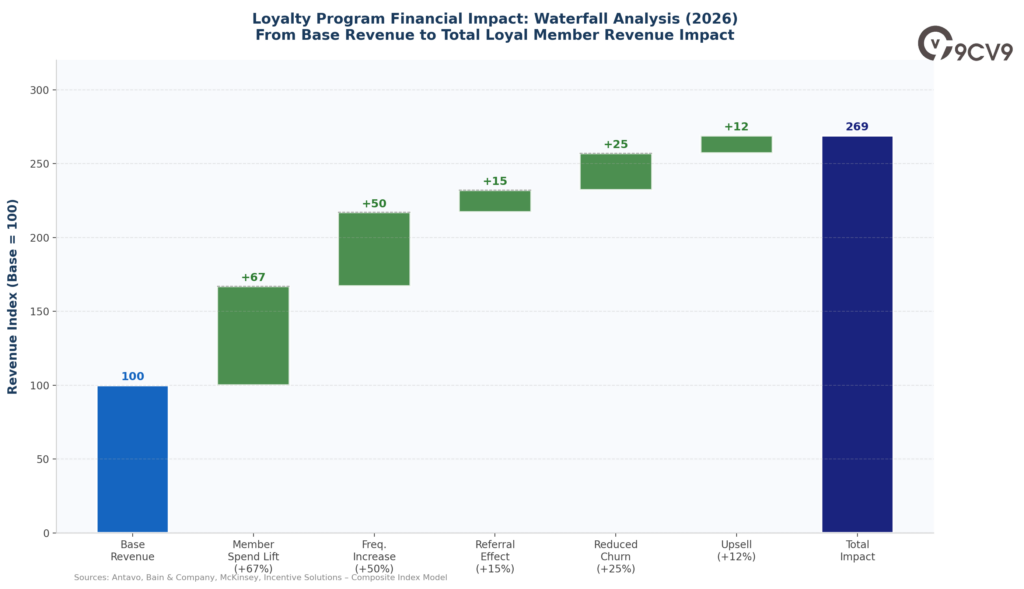
22. +67% — Loyal Customer Spend Premium
Loyal customers spend 67% more than new customers in months 31–36 of their relationship with a brand, illustrating that the financial value of customer loyalty compounds dramatically over time.
23. 12–18% — Annual Incremental Revenue (Members vs. Non-Members)
Loyalty program members generate 12–18% more incremental revenue per year compared to non-members, providing a clear financial case for investing in structured loyalty and retention software platforms.
24. 15–25% — Annual Revenue Boost from Top Programs
Top-performing loyalty programs boost annual revenue from their active customer base by 15–25%, driven by higher purchase frequency, larger basket sizes, and increased cross-category purchasing behavior.
25. +319% — Average Order Quantity Increase Post-Loyalty
After implementing a loyalty program, the average order quantity a business receives can increase by 319%, demonstrating that loyalty software fundamentally transforms how customers engage with and purchase from a brand.
26. 3.1× — Spend of Reward Redeemers vs. Non-Redeemers
Loyalty members who actively redeem their rewards spend 3.1× more annually than members who accumulate but never use points, highlighting the critical importance of designing for redemption, not just enrollment.
27. 2.5× — Revenue Growth Rate for Loyalty Leaders
Companies that lead in customer loyalty grow revenues approximately 2.5× faster than their industry peers, while also delivering 2–5× higher shareholder returns over the long term, per Harvard Business Review and Zoho Thrive.
28. 51.5% — Average Marketing Budget Share for Loyalty & CRM
Brands now allocate an average of 51.5% of their total marketing budget to loyalty and CRM initiatives, confirming that loyalty software is no longer a line item — it is the centre of gravity for marketing investment.
29. 80% — Future Revenue from Existing Customers (Gartner)
Gartner research indicates that 80% of a company’s future revenue will come from just 20% of its existing customers, underscoring why loyalty software that identifies and nurtures high-value customers is strategically critical.
30. 50% — Revenue Lift from 40% Repeat Customer Rate
Businesses with a 40% repeat customer rate generate 50% more revenue than those with only a 10% repeat rate, illustrating how even modest improvements in retention, enabled by loyalty software, translate to outsized revenue gains.
👤 CONSUMER BEHAVIOUR & ENGAGEMENT
31. 72% — Consumers Who Spend More Due to Loyalty Programs
According to Deloitte’s 2025 Consumer Loyalty Program Survey, 72% of consumers say a loyalty program makes them more likely to spend with their preferred brand, confirming that loyalty software directly influences purchasing decisions.
32. 85% — More Likely to Continue Shopping with Loyalty Brands
85% of consumers say loyalty programs make them more likely to continue shopping with a brand, demonstrating that loyalty software is one of the most effective tools available for reducing churn and building sticky customer relationships.
33. 84% — More Likely to Engage with Loyalty-Offering Brands
84% of customers say they are more likely to engage with a company that offers a loyalty program, showing that the mere presence of a structured rewards system increases customer interaction and brand participation.
34. 73% — Consumers Who Adjust Spend to Maximize Loyalty Benefits
73% of consumers actively modify the amount they spend in order to maximize their loyalty program benefits, proving that well-designed loyalty software can reliably influence purchasing behavior and increase basket size.
35. 56% — Consumers Who Increase Spending Because of Programs
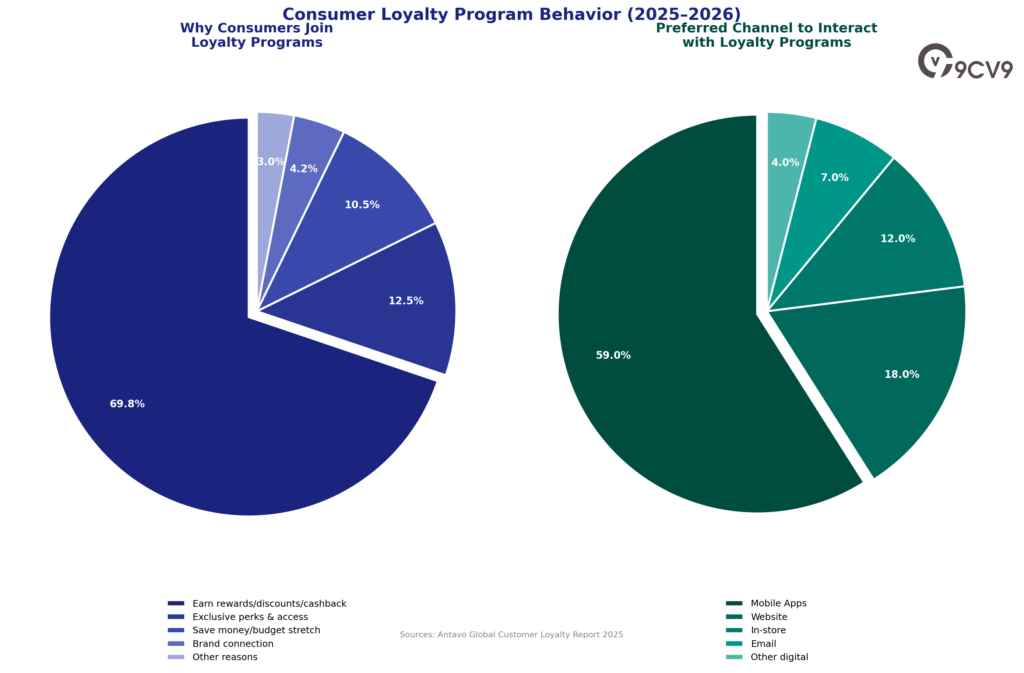
More than half (56%) of consumers increase their overall spending specifically because of a loyalty program they belong to, making loyalty software a quantifiable revenue driver rather than a passive brand-building tool.
36. 69.8% — Join Loyalty Programs for Rewards/Discounts/Cashback
Nearly 70% of consumers join loyalty programs primarily to earn rewards, discounts, or cash back, meaning loyalty software must prioritize tangible, monetary value delivery to achieve high enrollment and engagement rates.
37. 59% — Prefer Mobile Apps as Loyalty Channel
59% of consumers prefer to interact with loyalty programs via mobile apps, making mobile-first loyalty software platforms a non-negotiable investment for brands targeting digitally-engaged consumers in 2026.
38. 65% — Rely on Loyalty to Save Money During Economic Pressure
65% of consumers say they rely on loyalty programs to help stretch their budgets during economic hardship, meaning loyalty software now functions as a financial lifeline that deepens brand dependency during downturns.
39. 43.2% — More Likely to Join Than a Year Ago
43.2% of consumers say they are more likely to join a loyalty program now than they were 12 months ago, indicating accelerating consumer appetite for loyalty programs that loyalty software providers should capitalize on.
40. 31.3% — Would Continue Business Due to Good Loyalty Program
31.3% of consumers say they would be more likely to continue doing business with a brand specifically because it offers a well-designed loyalty program, directly linking program quality to retention outcomes.
41. 54% — Loyalty Programs Influence What US Adults Buy (Forrester)
Forrester’s Consumer Benchmark Survey found that 54% of US online adults say loyalty programs influence what they buy, and 64% say they influence where they make purchases — making loyalty a key factor in competitive differentiation.
42. 80% — More Likely to Buy from Personalised Experience Brands
80% of consumers say they are more likely to do business with a company that offers personalised experiences, reinforcing the need for loyalty software platforms to deliver individualized rewards and communications at scale.
43. 90%+ — Companies Now Have Some Loyalty Program
More than 90% of companies now have some form of loyalty program, meaning loyalty software is no longer a differentiator but a baseline requirement — and competitive advantage now comes from the quality of the platform.
44. 47% — Restaurant Loyalty Members Use Benefits Several Times/Month
Nearly 47% of restaurant loyalty members use their loyalty benefits several times a month, and 32% use them multiple times a week, demonstrating that food & beverage is one of the highest-engagement loyalty verticals.
45. 71% — Members Say Membership is Meaningful to Brand Relationship
71% of consumers who are loyalty program members say membership is a meaningful part of their relationships with brands, showing that well-executed loyalty software creates genuine emotional connection beyond transactional rewards.
🤖 AI, TECHNOLOGY & INNOVATION
46. 55% Gen Z / 53% Millennials — More Likely to Join AI-Powered Programs
55% of Gen Z and 53% of Millennials say they are more likely to join a loyalty program that uses AI-driven personalization, highlighting that younger cohorts expect intelligent, adaptive loyalty experiences as standard.
47. 37.1% — Loyalty Owners Already Using AI
37.1% of loyalty program owners already use AI to manage their programs, and of those, 44.9% report that AI enhances team productivity while 31.1% say it saves money through increased operational efficiency.
48. 44.5% — Interested in AI for Loyalty Scope Planning
44.5% of loyalty program owners are interested in using AI specifically for loyalty scope planning and strategy optimization, reflecting growing confidence in AI’s ability to improve program design decisions.
49. 67.4% — Comfortable Using AI-Powered Loyalty Agents
67.4% of loyalty program owners said they would feel comfortable using AI-powered agentic tools to manage loyalty program decisions, signalling a rapid shift toward autonomous AI in loyalty operations.
50. +28% — Conversion Rate Improvement from AI Personalization
AI-driven personalization delivers up to 28% improvement in customer conversion rates compared to traditional rule-based loyalty programs, making intelligent personalization a critical ROI lever for loyalty software buyers.
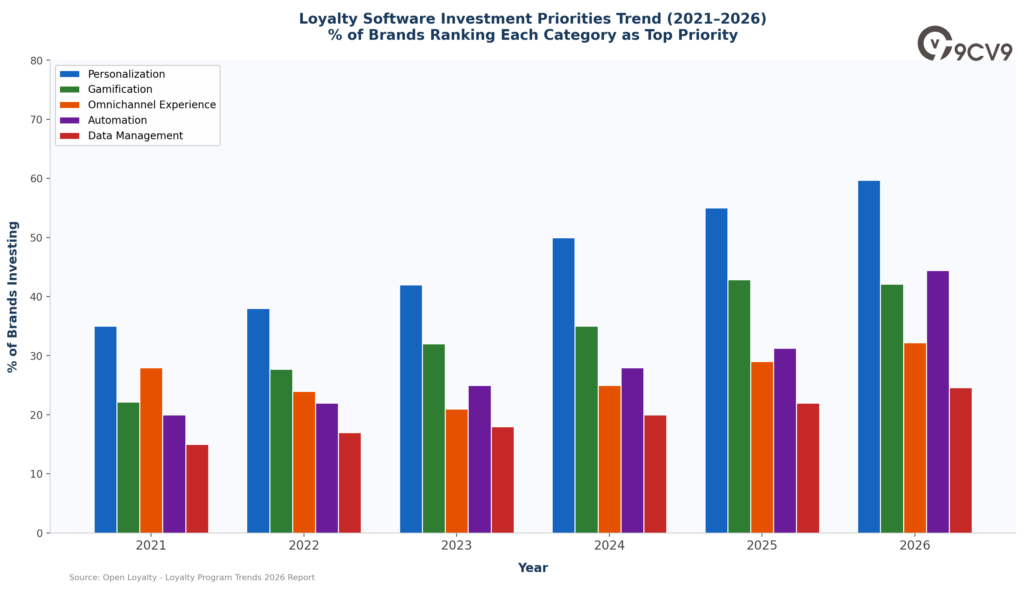
51. 44.4% — Automation Investment Share (2026)
Loyalty automation investment rose sharply from 31.3% in 2025 to 44.4% in 2026 — a 13-point increase in a single year — confirming that brands are rapidly automating loyalty workflows to reduce costs and scale engagement.
52. +35% — Reward Redemption Efficiency Improvement by 2027
Predictive analytics is expected to improve reward redemption efficiency by 35% by 2027, enabling loyalty software platforms to optimize reward delivery timing and type for maximum behavioral impact.
53. 60% of Gen Z — Prefer AI Chatbots in Loyalty Programs
Over 60% of Gen Z consumers globally prefer brands that integrate AI-driven chatbots and real-time rewards into their loyalty programs, making conversational AI a strategic investment for brands targeting younger demographics.
54. 77.3% — Companies Plan to Revamp Loyalty Programs by 2026
77.3% of companies with existing loyalty programs plan to revamp them by 2026, with personalization and emotional engagement cited as the primary motivations — creating a massive market for next-generation loyalty software.
55. Up to 15% — Retention Improvement from Personalization (McKinsey)
McKinsey research shows that personalization can increase customer retention by up to 15% and reduce customer acquisition costs by up to 50%, establishing AI-powered personalization as the highest-ROI feature in loyalty software.
56. 16% — Only 16% Have Achieved Hyper-Personalization
Only 16% of corporations have achieved true hyper-personalization despite widespread data availability, revealing a significant execution gap and a massive opportunity for loyalty software platforms with advanced AI capabilities.
57. $10B — Unspent US Loyalty Rewards Annually
An estimated $10 billion in loyalty rewards go unclaimed every year in the US alone, representing both a financial liability for brands and a massive optimization opportunity for AI-powered loyalty engagement platforms.
58. 26.2% — Loyalty Points Go Unspent
26.2% of loyalty points issued go unspent, and 11.9% expire without redemption, indicating that loyalty software must do more to drive active engagement and timely redemption rather than simply accruing point balances.
59. Cloud Deployment — Leading Segment in 2025
Cloud-based loyalty software was the leading deployment model in 2025, offering rapid deployment, scalability, and seamless integration across mobile apps, e-commerce platforms, and CRM systems.
60. $3.8B — Annual US Enterprise Loyalty Software Investment
US enterprises allocate over $3.8 billion annually to loyalty-focused software integration, with over 72% of large retailers adopting AI-enabled loyalty programs to enhance customer lifetime value.
🎮 GAMIFICATION & ENGAGEMENT
61. 42.1% — Brands Ranking Gamification as Top Future Trend (2026)
42.1% of brands rank gamification/game-based mechanics as the highest-impact trend for the next 2–3 years in 2026 — up dramatically from 22.2% in 2021 — confirming gamification’s evolution from novelty to strategic necessity.
62. +30% — Higher Engagement in Gamified Programs (Deloitte)
Gamified loyalty programs see 30% higher customer engagement compared to static point-based programs, according to Deloitte’s 2025 Retail Industry Outlook, making gamification features a measurable differentiator for loyalty software.
63. +33% — ATV Increase from Spin-the-Wheel Gamification
A Spin-the-Wheel gamification campaign increased average transaction value (ATV) by 33% for a leading Capillary client, demonstrating that playful mechanics can directly drive higher-value purchasing decisions.
64. 55.1% — Share Data via Games/Quizzes
55.1% of consumers say they would be more likely to share personal data if it were collected through interactive games or quizzes, enabling loyalty software platforms to gather valuable zero-party data while improving the customer experience.
65. 75.7% — Future Program Owners Want Gamified Data Collection
75.7% of future loyalty program owners say they want to offer gamified data collection, compared to only 42% who currently do — signaling a major expansion of gamification features in next-generation loyalty platforms.
66. $82M — Sales via Gamified Loyalty (Footwear Brand)
A footwear brand generated $82 million in sales through interactive gamification mechanics, including Spin the Wheel challenges, within its loyalty program — proving that gamification can deliver large-scale commercial outcomes.
67. 1,450% — Revenue Uplift from Gamification-Powered Program
A gamification-powered loyalty program achieved a 1,450% revenue uplift in a Capillary Technologies case study, highlighting the extraordinary commercial upside when engagement mechanics, incentives, and experience design align perfectly.
68. 45% — Brands Calling Gamification the #1 Engagement Game-Changer
Over 45% of brands consider gamification or experience-based rewards the single biggest game-changer for engagement, per the Open Loyalty Trends 2025 report, reinforcing its critical role in modern loyalty software design.
69. 1.5× — Frequency Lift from Seasonal Gamification Campaigns
A seasonal gamification campaign increased transaction frequency by 1.5× and engaged 500+ million users, proving that gamification drives both depth and breadth of customer engagement at massive scale.
70. +15% MAU — Monthly Active User Lift from Gamification
Gamification strategies increased monthly active users (MAUs) by 15% for conglomerate clients tracked by Capillary Technologies, demonstrating that game mechanics consistently grow active loyalty program participation.
🔄 RETENTION, CHURN & LIFETIME VALUE
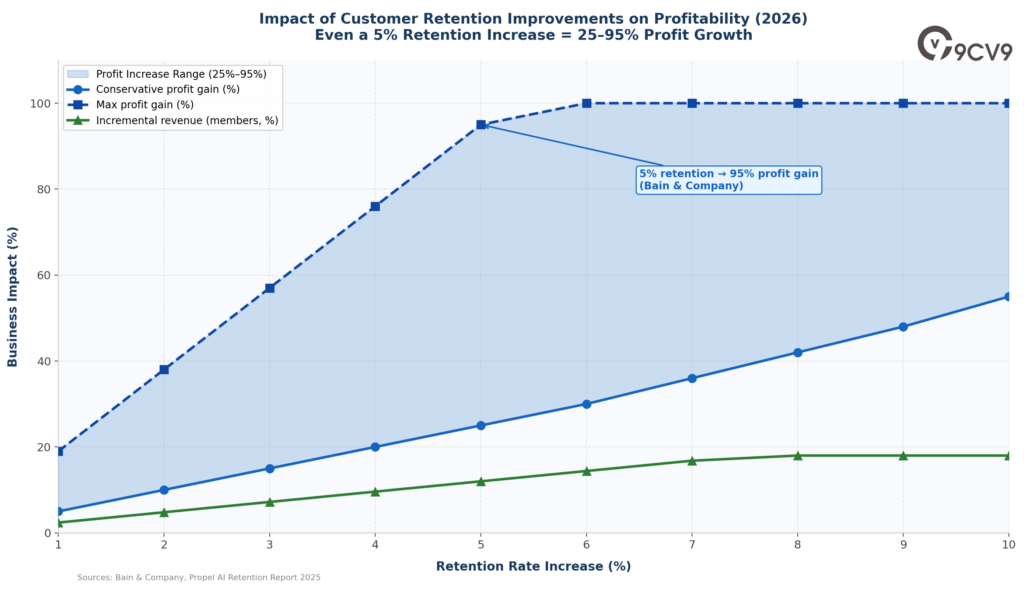
71. 25–95% — Profit Increase from 5% Retention Improvement
A mere 5% increase in customer retention rate correlates with a 25–95% increase in profit (Bain & Company), making retention — and the loyalty software that drives it — one of the highest-leverage levers in all of business.
72. 32–33% — Abandon Brand After One Bad Experience
32–33% of consumers will abandon a brand they love after just one bad experience, underscoring how fragile loyalty is and why loyalty software must integrate seamlessly with customer service and experience systems.
73. $29 — Cost Per New Customer Acquired (2026)
Businesses now spend $29 to acquire each new customer, up from just $9 in 2013 — a 222% increase — making retention via loyalty software dramatically more cost-efficient than acquisition-focused marketing strategies.
74. 27% → 49% → 62% — Purchase Probability by Order Number
After a first purchase, there’s a 27% chance of return; after the second, 49%; by the third, over 62% — illustrating that loyalty software must focus intensely on converting one-time buyers into multi-purchase customers.
75. +67% — Spend in Months 31–36 vs. First 6 Months
Repeat customers spend 67% more in months 31–36 of their relationship than in their first six months, highlighting that the economic value of loyalty compounds over time and rewards long-term retention investment.
76. 50% — Existing Customers More Likely to Try New Products
Existing customers are 50% more likely to try new products than new prospects, making them the ideal audience for loyalty software-driven upsell and cross-sell campaigns with lower conversion costs.
77. 80% — Customers Willing to Download Brand App for Loyalty
80% of customers say they are willing to download a brand’s mobile app specifically to access loyalty benefits, with truly loyal members using these apps weekly or daily — making mobile the primary loyalty engagement surface.
78. 4× — More Likely to Recommend Brand (Loyalty Members)
Members of well-managed loyalty programs are nearly four times more likely to recommend the brand to others, turning loyal customers into organic brand advocates and reducing the cost of new customer acquisition.
79. +22% — Repeat Purchase Rate Lift from Eliminating Channel Silos
Merchants that eliminated loyalty program channel silos saw a 22% lift in repeat-purchase rates within 90 days, per Deloitte’s analysis — a powerful argument for omnichannel loyalty software integration.
80. $12B — Lost Sales from Fragmented Loyalty Accrual Rules (Deloitte)
Deloitte’s 2024 holiday audit found $12 billion in lost retail sales attributable to fragmented loyalty point accrual rules, quantifying the enormous cost of poorly integrated loyalty software for large retailers.
👥 GENERATIONAL LOYALTY
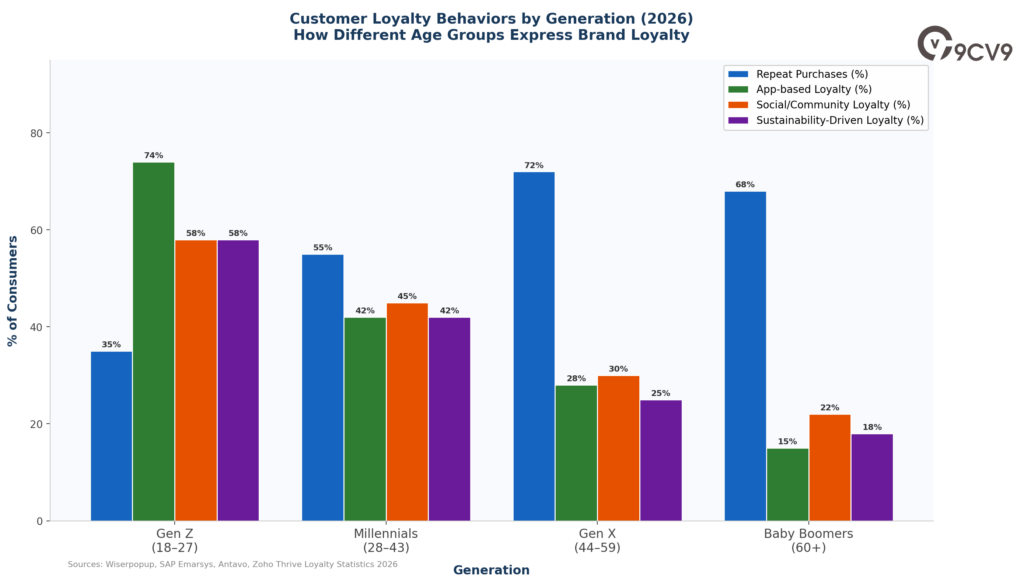
81. 74% Gen Z — More Loyal to Brands with Functional Mobile App
74% of Gen Z consumers are more loyal to brands that have a functional mobile app, making mobile loyalty software a prerequisite for brands seeking to build lasting relationships with the youngest consumer cohort.
82. 58% Gen Z — Prioritize Social Causes in Loyalty
58% of Gen Z consumers prioritize social causes in brand loyalty decisions, and 39% have switched brands due to poor environmental practices, meaning loyalty software for Gen Z must incorporate CSR and sustainability messaging.
83. 42% Millennials — Show Loyalty by Installing Brand App
42% of Millennials express loyalty by installing a brand’s app, sticking with brands that make shopping easy and convenient — underscoring that app-based loyalty software is a major retention tool for the largest spending generation.
84. 72% Gen X — Show Loyalty Through Repeat Purchases
72% of Gen X consumers show their brand loyalty through repeat purchases, preferring traditional engagement approaches over gamification, making this generation highly responsive to straightforward points-and-rewards software.
85. 68% Boomers — Loyalty Through Repeat Purchases
68% of Baby Boomers demonstrate loyalty through repeat purchasing, while also being highly price-sensitive — 60% switched brands due to cost in 2025 — meaning loyalty software must deliver clear monetary value for this demographic.
86. 3–5× — Millennials Value Convenience and Digital Tools More
Millennials are 3–5× more likely to value convenience, trust, and strong digital tools in their loyalty program experience, making seamless UX and real-time functionality critical features for any loyalty platform targeting this group.
📊 PROGRAM STRUCTURE & FEATURES
87. 40.7% — Consumers Want No Expiration of Points
40.7% of loyalty program members say their single most desired missing feature is no expiration on points, while 40.0% want more ways to earn — insights that should directly shape loyalty software roadmap priorities.
88. 78% — Diverse Redemption Options Drive Retention
78% of loyalty program owners believe that diverse reward redemption options have a positive positive impact on customer retention and satisfaction, making flexible redemption a key evaluation criterion for loyalty software.
89. 60% — Starbucks Rewards Drove Fiscal Revenue (2025)
Starbucks reported that its Rewards program drove nearly 60% of US company-operated revenue in fiscal year 2025, offering one of the most compelling real-world proofs of the transformative revenue potential of loyalty software.
90. 58% — Retail Brands Offering Omnichannel Loyalty
58% of retail brands offer omnichannel loyalty programs, with 78% supporting enrollment both at checkout and online — reflecting the industry’s recognition that loyalty software must function seamlessly across all customer touchpoints.
91. 88% — Micro-Targeting Has Positive Impact (Program Owners)
88% of loyalty program owners believe that micro-targeting has a positive impact on customer retention and satisfaction, validating investment in loyalty software with advanced segmentation and behavioral targeting capabilities.
92. 22% — Companies Offer Premium Loyalty Program Element
22% of companies currently offer some form of premium or paid loyalty program element, a segment that is growing rapidly as brands seek to segment their best customers and create differentiated high-value member tiers.
93. 50% — Consumers Changed Buying Behavior to Reach Higher Tier
50% of consumers have changed their buying behaviors specifically to reach a higher tier in a loyalty program, demonstrating that well-designed tiered loyalty structures in software can reliably modify consumer spending patterns.
94. 81% — Progress Visibility Motivates Participation
81% of consumers say it is motivating to see visual progress toward their next loyalty reward, reinforcing the importance of gamified progress bars, dashboards, and milestone tracking features in loyalty software UX design.
🏭 INDUSTRY ADOPTION
95. 48% — Retail Loyalty Software Adoption
Retail leads all industries in loyalty software adoption at 48%, leveraging platforms to enhance repeat purchases, track purchase patterns, increase lifetime value, and create personalised offers across channels.
96. 35% — BFSI Loyalty Software Adoption (2025)
The BFSI sector shows 35% loyalty software adoption in 2025 — the fastest-growing end-user segment — driven by digital banking expansion, mobile wallet integration, and demand for AI-based rewards and gamified financial engagement.
97. 62.46% — B2C Programs’ Market Share (2025)
B2C loyalty programs accounted for 62.46% of the overall loyalty management market share in 2025, while B2B platforms are advancing at a 17.52% CAGR through 2031 as manufacturers digitize channel-partner incentive programs.
98. 17.52% CAGR — B2B Loyalty Platform Growth (to 2031)
B2B loyalty platforms are growing at a 17.52% CAGR through 2031, as manufacturers and distributors increasingly adopt loyalty software to manage distributor incentive programs and channel-partner retention strategies.
99. 52% — Customer Engagement as Top Application
Customer engagement leads all loyalty software applications with 52% enterprise adoption, as businesses prioritize personalized interactions and predictive reward recommendations to improve overall program effectiveness.
100. 38% — Enterprises Piloting Loyalty for Omnichannel CX
In 2024, over 38% of enterprises globally reported piloting loyalty management platforms specifically for omnichannel customer experience initiatives, reflecting the convergence of CX and loyalty as strategic business priorities.
101. $3.1B — Annual Loyalty Fraud Cost
Loyalty fraud costs brands $3.1 billion annually in fraudulently redeemed points, representing a significant financial and operational risk that loyalty software platforms must address with fraud detection and security features.
102. 30% — Customer Churn Reduction via AI Omnichannel Loyalty
In 2025, a leading US retailer achieved a 30% reduction in customer churn through an AI-powered omnichannel loyalty initiative — one of the strongest single-company proofs of loyalty software’s retention impact.
103. $20B+ — American Airlines AAdvantage Valuation
American Airlines’ AAdvantage loyalty program is valued at over $20 billion — more than three times the valuation of the airline itself — demonstrating that a loyalty software-powered program can become a company’s most valuable asset.
104. 50% More Frequent / 2× LTV — Adidas adiClub Members
Adidas adiClub members buy 50% more often than non-members and have double the lifetime value, illustrating how loyalty software-enabled engagement programs can compound economic value dramatically within a single brand ecosystem.
105. 2× Spend — Amazon Prime vs. Non-Prime Customers
Amazon Prime members spend more than double what non-Prime customers spend, while Walmart+ members shop an average of 11 more times per year — confirming that paid loyalty programs powered by subscription software deliver outsized commercial results.
📉 PROGRAM RISKS & BENCHMARKS
106. 29% — True Loyalty Rate (2025)
“True loyalty” — deep, trust-based emotional connection — fell to 29% in 2025, a 5% drop from 2024, warning brands that transactional rewards alone cannot sustain long-term loyalty and that software must enable emotional engagement.
107. 48% — Consumer Satisfaction with US Loyalty Programs
US consumer satisfaction with loyalty programs sits at only 48%, despite the market’s $27B+ scale, revealing a significant gap between program investment and the quality of member experience — a major opportunity for better software design.
108. 60% — Switched Brand Due to Cost (2025)
60% of consumers switched from a brand they were loyal to because of cost considerations in 2025, underscoring that loyalty software must help brands deliver genuine financial value to weather inflationary consumer behavior.
109. 59% — US Consumers Abandon Brand After Multiple Bad Experiences
59% of US customers say they would completely abandon a company they love after several negative interactions, reinforcing that loyalty software must be integrated with service recovery and customer experience management systems.
110. 35% — Brands Must Prove ROI Internally
35% of brands explicitly state they must prove ROI internally to continue loyalty program investment, making analytics, attribution, and financial reporting features the most strategically critical capabilities in enterprise loyalty software for 2026.
Conclusion
As the data throughout this report clearly demonstrates, customer loyalty software has evolved from a simple rewards management solution into one of the most strategically important technologies for modern businesses. In 2026, organizations are no longer viewing loyalty platforms merely as tools for issuing points or discounts. Instead, they have become comprehensive customer engagement ecosystems that leverage artificial intelligence, predictive analytics, personalization, omnichannel integration, automation, and real-time customer insights to strengthen relationships, increase customer lifetime value, and drive sustainable business growth. The impressive market forecasts, rapid adoption rates, and consistently strong ROI figures all point to one undeniable conclusion: customer loyalty software has become a core pillar of long-term competitive advantage.
The industry’s financial trajectory further reinforces this transformation. With the global loyalty management software market projected to reach well over $17 billion in 2026 and expected to more than triple over the next decade, businesses across every major sector are making substantial investments in customer retention technologies. This sustained double-digit market growth reflects a broader shift in corporate priorities as companies increasingly recognize that retaining existing customers is significantly more profitable than continuously acquiring new ones. Rising customer acquisition costs, changing consumer expectations, and intense competitive pressures are encouraging organizations to invest in platforms that maximize repeat purchases, improve customer engagement, and build lasting emotional connections with their audiences.
One of the strongest themes emerging from these statistics is the exceptional financial return generated by well-designed loyalty programs. The overwhelming majority of businesses report positive returns on their loyalty investments, while leading programs consistently generate higher revenues, stronger customer retention, larger basket sizes, and increased purchase frequency. Loyal customers continue to account for a substantial proportion of company revenue, and businesses that prioritize customer retention often outperform competitors in both revenue growth and long-term profitability. These findings demonstrate that customer loyalty software is no longer simply a marketing expense but a revenue-generating investment that delivers measurable business outcomes across multiple performance indicators.
Consumer expectations are also reshaping the future of loyalty management. Today’s customers expect far more than traditional point accumulation systems. They demand personalized recommendations, flexible rewards, mobile-first experiences, seamless omnichannel interactions, instant gratification, and meaningful engagement that reflects their individual preferences and purchasing behaviours. Consumers increasingly choose brands that understand their needs, reward their loyalty appropriately, and provide frictionless digital experiences across every touchpoint. Businesses that fail to meet these expectations risk losing customers to competitors that offer more engaging and technologically advanced loyalty ecosystems.
Artificial intelligence is emerging as one of the most influential drivers of innovation within customer loyalty software. AI-powered personalization, predictive analytics, intelligent customer segmentation, automated campaign optimization, conversational interfaces, and machine learning algorithms are rapidly becoming standard capabilities across leading platforms. Organizations that successfully integrate AI into their loyalty strategies are improving operational efficiency, increasing customer satisfaction, optimizing reward redemption, and delivering more relevant customer experiences at scale. At the same time, consumers—particularly younger generations—are becoming increasingly comfortable with AI-enhanced loyalty experiences, signalling that intelligent automation will continue to define the next generation of customer engagement solutions.
Gamification, mobile engagement, and experiential rewards are also redefining how brands interact with their customers. Interactive challenges, achievement systems, tiered memberships, personalized missions, and real-time reward mechanisms are replacing static loyalty programs with more engaging and immersive experiences. These innovations not only increase customer participation and repeat engagement but also enable businesses to collect valuable first-party and zero-party data that can further enhance personalization efforts. As privacy regulations continue to evolve globally, loyalty software will play an increasingly important role in helping organizations build trusted, permission-based customer relationships while reducing dependence on third-party data sources.
The statistics also reveal that loyalty software adoption is expanding well beyond its traditional retail roots. Financial institutions, airlines, hospitality companies, restaurants, healthcare providers, telecommunications firms, manufacturers, and B2B enterprises are all embracing loyalty management platforms to strengthen customer relationships and improve long-term retention. Particularly noteworthy is the rapid growth of B2B loyalty software, as manufacturers and distributors increasingly digitize partner incentives, reseller engagement, and channel loyalty programs. This broad industry adoption confirms that customer loyalty is becoming a universal business priority rather than a sector-specific initiative.
Despite the industry’s impressive progress, these statistics also highlight several important challenges. Many organizations still struggle with low customer satisfaction, limited personalization capabilities, fragmented customer experiences, poor reward redemption rates, loyalty fraud, and difficulty proving ROI internally. The decline in true emotional loyalty suggests that transactional rewards alone are no longer sufficient to secure long-term customer commitment. Businesses must therefore combine attractive incentives with exceptional customer experiences, personalized engagement, transparent communication, and consistent value delivery if they wish to build genuine, lasting relationships with their customers.
Looking ahead, the future of customer loyalty software will be shaped by continued advances in artificial intelligence, predictive customer intelligence, omnichannel orchestration, automation, gamification, cloud-native architectures, and real-time personalization. Emerging technologies will enable organizations to anticipate customer needs more accurately, optimize every stage of the customer journey, and create highly individualized loyalty experiences that strengthen both emotional and financial relationships. Companies that embrace these innovations early will be better positioned to increase customer lifetime value, reduce churn, improve profitability, and differentiate themselves in increasingly competitive markets.
Ultimately, the Top 110 Customer Loyalty Software Statistics, Data & Trends in 2026 provide a comprehensive snapshot of one of the fastest-growing and most influential segments within customer experience technology. From explosive market growth and strong investment returns to AI-powered personalization, changing consumer behaviour, industry-wide adoption, and evolving customer expectations, the evidence consistently points toward a future where loyalty software becomes an indispensable component of business success. For business leaders, marketers, CRM professionals, software buyers, investors, and technology decision-makers, these statistics offer valuable benchmarks and actionable insights that can inform strategic planning, technology investments, and customer engagement initiatives. Organizations that leverage these trends effectively will be well equipped to build stronger customer relationships, maximize long-term revenue, and achieve sustainable competitive advantage in the rapidly evolving digital economy.
If you find this article useful, why not share it with your hiring manager and C-level suite friends and also leave a nice comment below?
We, at the 9cv9 Research Team, strive to bring the latest and most meaningful data, guides, and statistics to your doorstep.
To get access to top-quality guides, click over to 9cv9 Blog.
To hire top talents using our modern AI-powered recruitment agency, find out more at 9cv9 Modern AI-Powered Recruitment Agency.
People Also Ask
What is customer loyalty software?
Customer loyalty software helps businesses reward repeat customers, personalize experiences, and improve retention through points, rewards, referrals, and engagement programs powered by customer data and analytics.
Why is customer loyalty software important in 2026?
It is essential because businesses are focusing on retaining existing customers, reducing acquisition costs, improving lifetime value, and using AI to deliver personalized customer experiences.
How fast is the customer loyalty software market growing?
The market is experiencing strong global growth as businesses across retail, hospitality, e-commerce, healthcare, and financial services invest more in customer retention technologies.
What are the biggest customer loyalty software trends in 2026?
Key trends include AI-powered personalization, predictive analytics, omnichannel loyalty programs, mobile-first rewards, gamification, and real-time customer engagement.
How does customer loyalty software improve customer retention?
It encourages repeat purchases through personalized rewards, exclusive offers, and targeted campaigns that strengthen customer relationships over time.
Which industries use customer loyalty software the most?
Retail, e-commerce, hospitality, airlines, financial services, restaurants, healthcare, and telecommunications are among the biggest users of loyalty platforms.
How does AI improve customer loyalty programs?
AI analyzes customer behavior, predicts preferences, automates recommendations, and personalizes rewards, helping businesses increase engagement and retention.
What is customer lifetime value (CLV)?
Customer lifetime value measures the total revenue a customer is expected to generate throughout their relationship with a business.
What is omnichannel customer loyalty?
Omnichannel loyalty connects rewards and customer experiences across websites, mobile apps, physical stores, social media, and other digital touchpoints.
How do loyalty programs increase revenue?
They encourage repeat purchases, increase average order values, improve customer engagement, and reduce customer churn, leading to higher long-term revenue.
What features should customer loyalty software include?
Popular features include rewards management, customer segmentation, analytics, AI recommendations, mobile integration, referral programs, CRM integration, and automated marketing.
What is gamification in customer loyalty software?
Gamification uses challenges, badges, leaderboards, and achievement systems to make loyalty programs more engaging and encourage repeat customer interactions.
Can small businesses benefit from customer loyalty software?
Yes. Small businesses can improve customer retention, build stronger relationships, and compete more effectively using affordable cloud-based loyalty platforms.
How does customer loyalty software reduce customer churn?
It identifies at-risk customers, delivers personalized incentives, and strengthens engagement before customers decide to switch to competitors.
What is the role of data analytics in customer loyalty software?
Analytics help businesses understand purchasing behavior, measure campaign performance, predict future trends, and optimize loyalty strategies.
What are the benefits of cloud-based loyalty software?
Cloud platforms offer scalability, lower costs, automatic updates, remote access, improved security, and easier integration with other business applications.
How does customer loyalty software integrate with CRM systems?
Integration combines customer profiles, purchase histories, and engagement data to deliver more personalized marketing and customer experiences.
Why are loyalty statistics important for businesses?
Statistics reveal market trends, customer behavior, adoption rates, ROI, and emerging technologies that help businesses make informed strategic decisions.
How does personalization improve customer loyalty?
Personalized rewards and recommendations make customers feel valued, increasing engagement, satisfaction, and the likelihood of repeat purchases.
What are digital loyalty programs?
Digital loyalty programs operate through mobile apps, websites, or digital wallets, allowing customers to earn and redeem rewards electronically.
What challenges do businesses face with loyalty software?
Common challenges include data privacy, integration complexity, customer adoption, maintaining engagement, and measuring return on investment.
How is mobile technology changing customer loyalty?
Mobile apps enable instant rewards, digital wallets, personalized notifications, QR codes, and location-based promotions that improve customer engagement.
What role does automation play in loyalty software?
Automation streamlines reward distribution, campaign management, customer segmentation, and personalized communications while reducing manual work.
What is a loyalty rewards program?
A loyalty rewards program gives customers incentives such as points, discounts, cashback, or exclusive benefits for making repeat purchases.
How does customer loyalty software support e-commerce businesses?
It increases repeat purchases, improves customer retention, delivers personalized promotions, and encourages referrals through automated loyalty campaigns.
How do referral programs improve customer loyalty?
Referral programs reward customers for introducing new buyers, increasing customer acquisition while strengthening existing customer relationships.
Why are customer engagement metrics important?
Engagement metrics help businesses evaluate loyalty program performance, identify customer preferences, and improve marketing effectiveness.
How will customer loyalty software evolve beyond 2026?
Future platforms will increasingly use AI, predictive analytics, automation, machine learning, and real-time personalization to deliver smarter customer experiences.
What should businesses consider before choosing loyalty software?
Businesses should evaluate pricing, scalability, integrations, AI capabilities, analytics, customer support, ease of use, and security before selecting a platform.
Why should businesses follow customer loyalty software statistics in 2026?
These statistics provide valuable insights into market growth, customer behavior, technology adoption, investment trends, and best practices for improving customer retention and business performance.
Sources
Zoho Thrive MarketsandMarkets Open Loyalty Fortune Business Insights Antavo Grand View Research The Business Research Company Market Research Intellect PR Newswire Mordor Intelligence Queue-it DontPayFull Deloitte Ringly Access Development Wiserpopup SAP Emarsys TrueLoyal Capillary Technologies Congruence Market Insights Trifft Loyalty TADA Loyalytics Propel AI Kobie Marketing Kognitiv