



























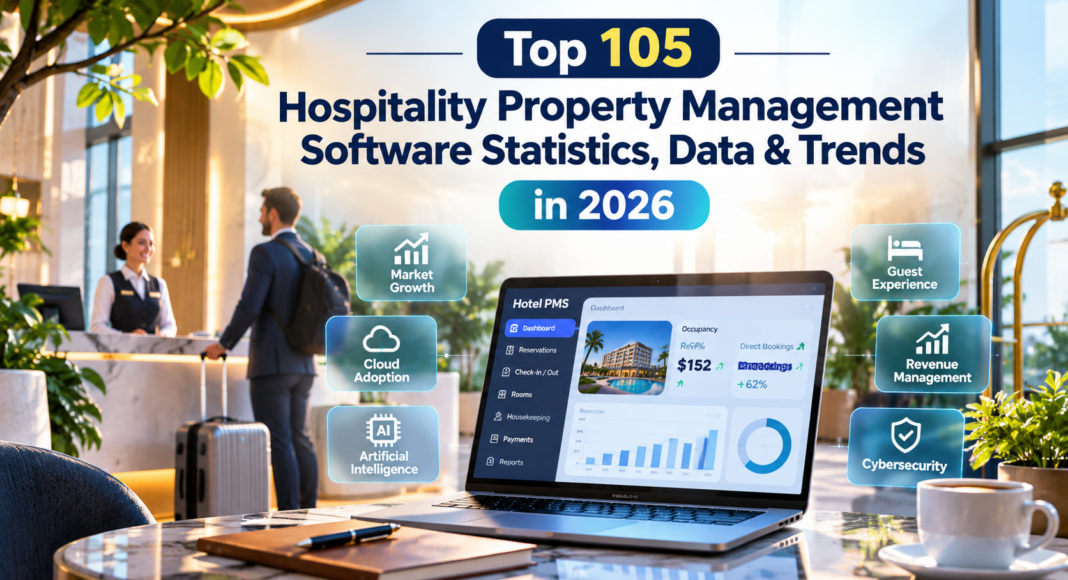

Key Takeaways
- Growing Hospitality PMS Market: The global hospitality property management software market is estimated at USD 1.73 billion in 2026 and projected to reach USD 2.44 billion by 2031, driven by digital transformation and operational automation.
- Accelerating Cloud and AI Adoption: Cloud-based PMS accounted for 64.92% of market value in 2025, while 82% of hotels plan to expand AI adoption in 2026, transforming guest experiences and operational efficiency.
- Improved Revenue and Operational Performance: Approximately 91% of PMS users report revenue growth contributions, while 88% report measurable cost savings, highlighting the strategic value of integrated hospitality management software.
Hospitality property management software (PMS) streamlines hotel operations through automation, cloud computing, artificial intelligence, and integrated revenue management. In 2026, the global market has an estimated value of USD 1.73 billion, with a projected 7.05% annual growth rate through 2031, alongside increasing demand for contactless guest experiences and operational efficiency.
The global hospitality industry is undergoing a significant digital transformation as hotels, resorts, boutique accommodations, serviced apartments, and vacation rental operators increasingly adopt advanced technology to streamline operations, enhance guest experiences, and maximize profitability. At the centre of this transformation is hospitality property management software (PMS), which has evolved from a traditional reservation and front-desk management solution into a comprehensive digital ecosystem supporting nearly every aspect of modern hospitality operations.
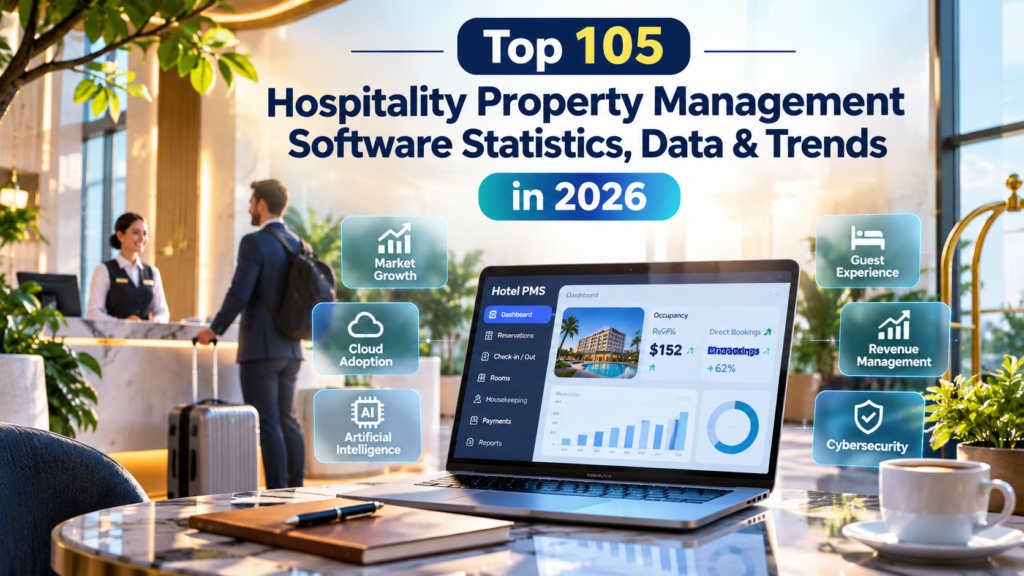
In 2026, hospitality property management software is becoming increasingly essential for businesses seeking to remain competitive in a rapidly evolving accommodation market. From automated reservations, contactless check-in, and housekeeping management to artificial intelligence, dynamic pricing, integrated payment processing, and real-time business intelligence, modern PMS platforms are fundamentally reshaping how hospitality businesses operate, manage resources, and deliver personalized guest experiences.
The Growing Global Hospitality Property Management Software Market
The global hospitality property management software market is experiencing sustained expansion, driven by increasing digital adoption, rising guest expectations, growing operational complexities, and the need for greater cost efficiency.
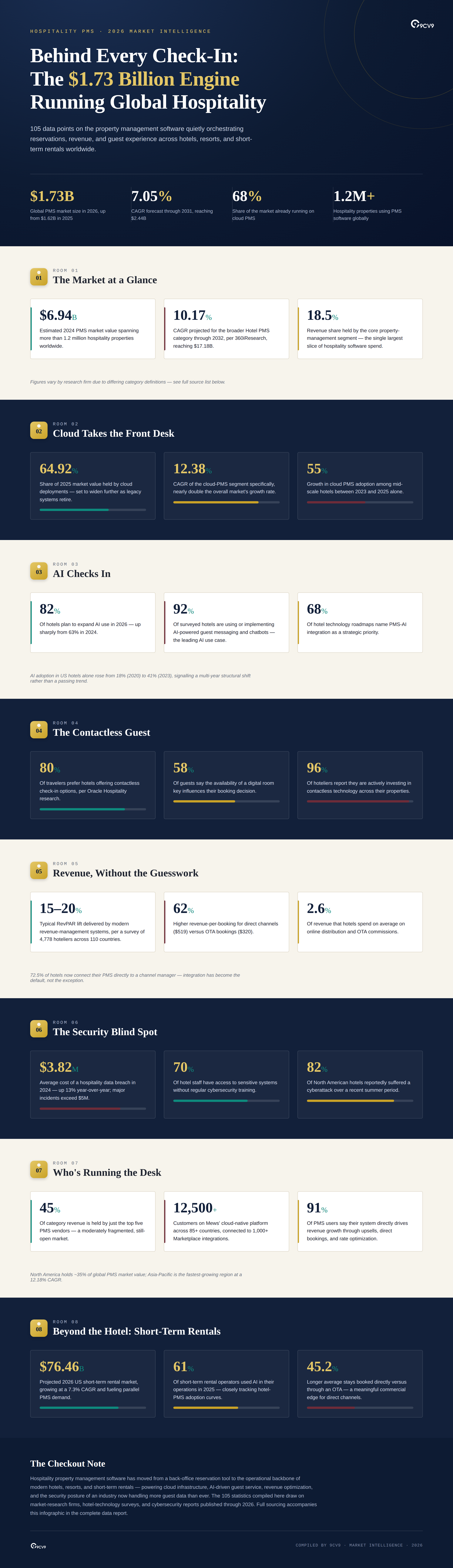
One market estimate values the global hospitality PMS market at USD 1.73 billion in 2026, up from USD 1.62 billion in 2025, with projections indicating that it could reach USD 2.44 billion by 2031, representing a compound annual growth rate (CAGR) of 7.05%.
Another market assessment estimates that the industry will reach USD 1.42 billion in 2026, while broader hotel property management software market definitions place its value at USD 4.82 billion in 2026, with projected growth to USD 7.13 billion by 2032.
Although market valuations differ depending on research methodologies, software classifications, and the inclusion of complementary hospitality technologies, these forecasts collectively indicate sustained demand for digital property management solutions.
Hospitality businesses are increasingly recognizing that effective property management software is not merely an administrative tool but a strategic investment capable of improving operational efficiency, strengthening revenue management, and supporting long-term business growth.
Cloud-Based Hospitality PMS Software Is Transforming Hotel Operations
One of the most significant hospitality property management software trends in 2026 is the continued transition from traditional on-premise systems to cloud-based PMS platforms.
Cloud deployment models accounted for approximately 64.92% of hospitality PMS market value in 2025, while the cloud PMS segment is projected to reach USD 2.02 billion by 2031, expanding at a CAGR of 12.38%.
Within the broader hotel and hospitality management software market, cloud-based solutions represented approximately 75.4% of deployment revenue in 2025.
The increasing popularity of cloud-based hospitality management software reflects the growing demand for:
- Remote property management and operational accessibility.
- Real-time reservation and inventory synchronization.
- Reduced dependence on physical IT infrastructure.
- Centralized multi-property management.
- Seamless integration with third-party hospitality applications.
- Automated software updates and maintenance.
- Greater operational scalability and flexibility.
- Improved collaboration between hospitality departments.
Cloud-based PMS adoption also enables independent hotels and smaller accommodation providers to access sophisticated hospitality technologies that were previously more accessible to large hotel chains with substantial technology budgets.
Artificial Intelligence Is Reshaping Hospitality Property Management
Artificial intelligence is emerging as one of the most influential forces shaping the hospitality property management software landscape in 2026.
According to reported industry survey findings, 82% of hotels plan to expand their use of artificial intelligence in 2026, compared with 63% in 2024. Additionally, 71% of hospitality professionals believe AI is having a significant or transformative impact on the industry.
A May 2026 survey conducted by Mews and Canary Technologies reported approximately 98% AI adoption among surveyed hoteliers, highlighting the increasing integration of intelligent technologies into hospitality operations within that respondent group.
AI-powered hospitality PMS platforms are increasingly supporting a wide range of operational and commercial functions, including:
- Automated guest communication and inquiry management.
- Predictive occupancy and demand forecasting.
- Intelligent room pricing and revenue optimization.
- Personalized guest recommendations and promotional offers.
- Automated administrative workflows.
- Guest sentiment and operational data analysis.
- Intelligent resource allocation and workforce planning.
- Data-driven business decision-making.
AI-powered guest messaging is particularly prominent, with 92% of surveyed hotels reportedly using or implementing chatbot and messaging solutions. AI technologies are also estimated to be capable of handling approximately 70% to 80% of routine guest inquiries without human intervention.
Furthermore, integrating artificial intelligence with property management systems is identified as a strategic priority in approximately 68% of hotel technology roadmaps.
These developments demonstrate how hospitality PMS software is evolving beyond conventional record management toward intelligent, automated, and increasingly interconnected operational environments.
Changing Guest Expectations Are Accelerating Digital Hospitality Adoption
Modern travelers increasingly expect seamless, convenient, personalized, and technology-enabled accommodation experiences. As a result, hospitality businesses are investing in property management software that supports mobile check-in, digital room keys, contactless payments, automated communication, and self-service capabilities.
Reported hospitality industry statistics indicate that:
- 73% of hotel guests prefer properties offering some form of mobile check-in.
- 80% of travelers prefer hotels offering contactless options.
- 74% of travelers want to use their smartphones to check in when the option is available.
- 58% of guests indicate that digital key availability influences their booking decisions.
- 96% of surveyed hoteliers report investing in contactless technology.
The global contactless hotel technology market was valued at approximately USD 3.8 billion in 2024 and is projected to reach USD 15.6 billion by 2033, expanding at a reported CAGR of 16.2%.
These statistics highlight the growing relationship between hospitality technology adoption, guest satisfaction, booking preferences, and competitive differentiation.
By integrating digital guest experiences directly into hospitality property management systems, accommodation providers can reduce administrative friction, improve service responsiveness, and create more convenient guest journeys from initial reservation to final checkout.
Revenue Management and Operational Efficiency Are Driving PMS Investment
Beyond improving guest experiences, hospitality property management software plays an increasingly important role in revenue generation, cost optimization, and overall business performance.
Modern PMS platforms integrate with revenue management systems, channel managers, booking engines, customer relationship management software, and business intelligence applications to provide hospitality businesses with greater visibility into their financial and operational performance.
Reported industry findings suggest that modern revenue management systems can deliver revenue per available room (RevPAR) improvements of approximately 15% to 20%, although actual results depend on property characteristics, implementation quality, and market conditions.
Furthermore, approximately 72.5% of hotels reportedly use a property management system connected to a channel manager, demonstrating the importance of integrated distribution management within the hospitality technology ecosystem.
Direct booking optimization is another major consideration. Reported data indicates that direct hotel bookings generate an average booking value of USD 519, compared with USD 320 through online travel agencies (OTAs), representing an approximately 62% premium in booking value.
Additional PMS user survey findings reveal that:
- 91% of PMS users report that their systems contribute directly to revenue growth.
- 88% of PMS users report measurable cost savings.
- 42% describe their cost savings as significant.
- 48% of PMS buyers prioritize reporting and business intelligence capabilities.
- 44% of PMS buyers consider cloud access and remote management essential capabilities.
These findings reinforce the growing importance of hospitality property management software as a commercial and operational asset rather than simply a reservation management solution.
Cybersecurity and Data Protection Remain Critical Hospitality Technology Priorities
As hospitality businesses become increasingly dependent on interconnected digital platforms, cybersecurity and data protection are emerging as critical considerations when selecting and implementing property management software.
Hospitality PMS platforms routinely process sensitive information, including guest profiles, reservation histories, payment-related data, identification records, and confidential business information. Consequently, inadequate cybersecurity measures can expose accommodation providers to financial losses, regulatory penalties, operational disruptions, and reputational damage.
Reported industry statistics indicate that approximately 31% of hospitality businesses have experienced a data breach, with 89% of affected businesses experiencing multiple breaches within a single year.
Furthermore, the reported average cost of a hospitality data breach reached USD 3.82 million in 2024, while approximately 32% of cyberattacks affecting hospitality businesses in 2025 were attributed to unpatched software and outdated systems.
These figures underscore the importance of selecting hospitality property management software with robust security capabilities, including access controls, data encryption, secure integrations, regular software updates, and comprehensive monitoring.
Cybersecurity awareness training, regulatory compliance, and effective data governance are also becoming increasingly important components of hospitality digital transformation strategies.
The Expansion of Property Management Software Across Vacation Rentals and Short-Term Accommodation
The hospitality property management software market extends beyond traditional hotels and resorts. Vacation rentals, short-term accommodation providers, serviced apartments, and independent property management companies are increasingly adopting specialized PMS solutions to manage growing portfolios and complex distribution requirements.
The broader vacation rental property management software category is projected to reach USD 3.81 billion in 2026 and USD 5.89 billion by 2033, representing a reported CAGR of 6.4%.
Additionally, approximately 61% of short-term rental operators reportedly used artificial intelligence in their operations in 2025, while nearly 60% of small-to-medium vacation rental operators were estimated to have adopted some form of property management software by 2026.
These developments reflect the increasing professionalization of the short-term rental industry and the growing demand for centralized solutions capable of managing reservations, guest communication, pricing, housekeeping, maintenance, payments, and multi-channel distribution.
As competition intensifies across the global accommodation industry, sophisticated hospitality management software is becoming increasingly relevant to businesses of all sizes and operating models.
Understanding the Top Hospitality Property Management Software Statistics, Data, and Trends in 2026
Understanding the latest hospitality property management software statistics is essential for hotel owners, hospitality executives, property managers, technology providers, investors, revenue managers, and business decision-makers seeking to navigate the rapidly evolving hospitality technology landscape.
This comprehensive guide to the Top 105 Hospitality Property Management Software Statistics, Data & Trends in 2026 examines the most significant quantitative findings shaping the industry, covering:
- Global hospitality property management software market size and growth forecasts.
- Cloud-based and on-premise PMS deployment trends.
- Artificial intelligence adoption in hospitality management.
- Mobile check-in, contactless technology, and digital guest experiences.
- Revenue management and online distribution performance.
- Hospitality cybersecurity and data protection statistics.
- Leading PMS vendors and competitive market dynamics.
- Software integrations, APIs, and operational efficiency.
- Regional hospitality technology adoption patterns.
- Vacation rental and short-term rental property management software trends.
The statistics encompass historical observations, survey findings, vendor-reported performance metrics, current market estimates, and forward-looking industry projections. As these figures originate from different market definitions and research methodologies, they should be interpreted within their respective contexts rather than treated as directly interchangeable benchmarks.
By examining these 105 hospitality PMS statistics, businesses can gain a deeper understanding of emerging market opportunities, technological advancements, operational challenges, investment priorities, and changing customer expectations.
As the hospitality industry continues its transition toward cloud-native, AI-enabled, automated, and interconnected digital ecosystems, property management software is expected to remain a foundational component of modern hospitality operations. Organizations that strategically evaluate and implement these technologies will be better positioned to enhance operational efficiency, strengthen revenue performance, improve guest satisfaction, and maintain sustainable competitiveness throughout 2026 and beyond.
Before we venture further into this article, we would like to share who we are and what we do.
About 9cv9
9cv9 is a business tech startup based in Singapore and Asia, with a strong presence all over the world.
With over ten years of startup and business experience, and being highly involved in connecting with thousands of companies and startups, the 9cv9 team has listed some of the top and best companies/tools in this review.
If you like to get your company listed in our top B2B software reviews, check out our world-class 9cv9 Media and PR service and pricing plans here.
Top 105 Hospitality Property Management Software Statistics, Data & Trends in 2026
A. Market Size & Growth
- The global Hospitality PMS market is estimated at USD 1.73 billion in 2026, up from USD 1.62 billion in 2025, and is projected to reach USD 2.44 billion by 2031 at a 7.05% CAGR. This steady multi-year growth trajectory signals that hospitality property management software is transitioning from a discretionary IT purchase into a core operational utility for hotels of every size.
- A separate estimate places the market at USD 1.42 billion in 2026, up from USD 1.31 billion in 2025, growing at an 8.3% CAGR. The variance between research firms reflects differing category definitions, but all point toward the same underlying trend of accelerating PMS software spend.
- That same report forecasts the market will reach USD 1.93 billion by 2030 at an 8% CAGR. Continued near-double-digit growth through the decade underlines sustained hotelier appetite for digitizing front-desk and back-office operations.
- A broader “Hotel Property Management Software” category is valued at USD 4.82 billion in 2026, projected to reach USD 7.13 billion by 2032 at a 6.6% CAGR. Wider market definitions that bundle adjacent modules such as CRS and revenue tools naturally produce larger headline figures, but the growth direction remains consistent across studies.
- Market Research Future pegs the market at USD 6.067 billion in 2025, growing to USD 9.995 billion by 2035 at a 5.12% CAGR. A decade-long forecast horizon at over 5% CAGR suggests the category has moved past its early hype cycle into durable, compounding demand.
- The broader hotel and hospitality management software market grew from USD 4.2 billion in 2025 to USD 4.3 billion in 2026, on its way to USD 7.0 billion by 2033 (7.2% CAGR). Property management remains the anchor segment within this larger hospitality software ecosystem.
- Within that report, the property management segment alone held an 18.5% revenue share in 2025 — the largest of any sub-segment. This confirms that core PMS functionality still commands the single biggest slice of hospitality software spend, even as adjacent categories expand.
- Another estimate values the “hotel and hospitality management software” market at USD 3.62 billion in 2025, rising to USD 3.85 billion in 2026 and USD 4.78 billion by 2030 (6.5% CAGR). The consistency of mid-single-digit-to-double-digit CAGR forecasts across independent analysts strengthens confidence in the category’s growth outlook.
- 360iResearch estimates the Hotel PMS market at USD 8.71 billion in 2025, growing to USD 9.59 billion in 2026 and USD 17.18 billion by 2032 (10.17% CAGR). A double-digit CAGR forecast reflects the category’s shift toward broader, ecosystem-style platforms rather than standalone front-desk tools.
- Valuates Reports values the global Hotel PMS market at USD 2,878 million in 2025, projected to hit USD 8,403 million by 2032 at a 16.8% CAGR. This is among the most bullish forecasts in the space, driven largely by expectations around cloud migration and AI-enabled feature bundling.
- As of 2024, the PMS market spanned roughly USD 6.94 billion in value across more than 1.2 million hospitality properties globally. The sheer number of properties running PMS software illustrates just how mainstream property management technology has become, even among smaller independent operators.
B. Cloud vs. On-Premise Deployment
- Cloud deployment models represented 64.92% of the market’s total 2025 value. Cloud has decisively overtaken on-premise as the default hospitality PMS deployment model heading into 2026.
- The cloud PMS segment alone is projected to reach USD 2.02 billion by 2031, growing at a 12.38% CAGR. Cloud’s growth rate nearly doubling the overall market’s CAGR shows where new hotelier spending is concentrating.
- Of the roughly USD 6.94 billion 2024 PMS market, cloud-based solutions accounted for about USD 2.78 billion versus USD 2.57 billion for on-premise systems. Cloud has now edged past on-premise even in absolute dollar terms, not just in growth rate.
- Cloud PMS is estimated to account for approximately 68% of the property management software market as of 2025. A roughly two-thirds cloud share confirms that the industry-wide migration away from server-based legacy systems is now largely complete for new deployments.
- Cloud-based solutions held a 75.4% deployment revenue share within the broader hotel and hospitality management software market in 2025. This figure, drawn from a wider software category, reinforces that cloud-first architecture is now the expected baseline across hospitality tech generally.
- Cloud PMS use is estimated at roughly 41% of small and independent hotels, with cloud deployments expected to outnumber on-premise systems industry-wide from 2026 onward. Independent and small hotels — historically slower tech adopters — are now approaching the tipping point that major chains crossed years earlier.
- Cloud PMS adoption grew by 55% among mid-scale hotels between 2023 and 2025. This sharp two-year jump suggests mid-market properties are catching up quickly to the cloud-adoption curve set by larger chains.
- In 2024, approximately 10,000 large-property migrations moved from on-premise to cloud within a tracked base of 40,000 properties. A 25% migration rate within a single year among large properties signals that even complex, high-volume operations are willing to undertake cloud transitions.
- According to Business Research Insights, cloud-based PMS represents about 68% of the market versus roughly 32% for on-premise systems. Independent confirmation of a two-thirds cloud share across multiple research firms adds credibility to this now-consistent industry benchmark.
- Over 85% of hotels in the United States had integrated PMS with cloud-based technology by 2023, according to the U.S. Travel Association. The US hospitality sector’s early and near-saturated cloud adoption offers a preview of where other mature markets are likely headed by 2026-2027.
C. Artificial Intelligence in Hospitality PMS
- 82% of hotels plan to expand their use of artificial intelligence in 2026, up from 63% in 2024. This roughly 20-percentage-point jump in under two years marks AI’s shift from an experimental feature to an expected operational layer of hospitality technology.
- 71% of hospitality professionals say AI is having a significant or transformative impact on the industry. With nearly three-quarters of practitioners reporting meaningful impact, AI’s influence on hospitality operations appears to have moved well past the hype-cycle stage.
- 85% of hospitality IT decision-makers expect to allocate at least 5% of their IT budget to AI tools this year. Budget commitments at this scale indicate AI spending is becoming a standing line item rather than a one-off pilot expense.
- A May 2026 survey by Mews and Canary Technologies found roughly 98% AI adoption among surveyed hoteliers. Near-universal reported adoption suggests that some form of AI tooling — even limited chatbot or forecasting use — has become table stakes across the sector.
- AI-powered guest messaging shows the highest adoption rate of any AI use case, with 92% of surveyed hotels using or implementing chatbot and messaging solutions. Guest communication is clearly the leading entry point for AI investment, likely because it delivers immediate, visible service improvements.
- AI can reportedly handle an estimated 70-80% of routine guest inquiries without human intervention. This level of automation potential explains why guest messaging has become the priority AI use case for hoteliers seeking fast labor-efficiency gains.
- Integrating AI with the PMS is a stated strategic priority on 68% of hotel technology roadmaps. Rather than treating AI as a bolt-on feature, a clear majority of operators now see it as core to their underlying property management architecture.
- AI adoption across US hotels rose from 18% in 2020 to 41% in 2023. More than doubling adoption within three years illustrates how quickly AI moved from a niche capability to a mainstream operational tool in the US hotel sector.
- 45% of hotel chains worldwide implemented AI-powered chatbots for guest inquiries in 2023, cutting average response times by 70%. The dramatic response-time improvement helps explain why chatbot deployment has continued to accelerate through 2026.
- 62% of hospitality executives said they planned to invest more than USD 1 million in AI technologies by 2025. Investment at this scale from a majority of executives signals AI has graduated from pilot budgets to enterprise-level capital allocation.
- The global AI-in-hospitality market was valued at USD 1.2 billion in 2022 and is projected to reach USD 4.5 billion by 2028, growing at a 24.3% CAGR. A near-quadrupling of market value over six years places AI among the fastest-growing sub-segments of hospitality technology overall.
- Broader AI adoption across the hospitality sector is projected to reach 60% by 2025. This figure, spanning all hospitality technology use cases rather than PMS alone, illustrates how pervasive AI has become across the wider guest-and-operations technology stack.
- AI-driven revenue management is projected to account for more than 30% of the total AI-in-hospitality market by 2025. Pricing and forecasting remain one of the most commercially valuable applications of AI within hospitality, given the direct link to RevPAR performance.
- Asia-Pacific is projected to post the highest AI-in-hospitality CAGR globally, exceeding 22%. Rapid hotel construction combined with leapfrog technology adoption is positioning APAC as the fastest-growing regional market for AI-enabled hospitality software.
D. Mobile, Contactless Check-In & Guest Experience
- 73% of hotel guests now prefer properties offering some form of mobile check-in, according to a 2025 Oracle Hospitality study. With nearly three-quarters of guests expressing this preference, mobile check-in has effectively become a baseline guest expectation rather than a differentiator.
- 58% of guests say the availability of digital keys influences their booking decision. Digital key functionality is increasingly influencing which property a guest books, not just how they experience their stay once on-site.
- 80% of travelers prefer hotels offering contactless options, per Oracle Hospitality research. An 80% preference rate places contactless capability among the most consistently demanded features across the modern guest journey.
- 74% of travelers want to use their own smartphone to check in when the option is available. This preference underscores why PMS vendors are racing to build native, app-free web check-in flows that work on any device.
- 71% of guests say they are more likely to choose hotels offering self-service technologies such as mobile or contactless check-in. Self-service capability now appears to directly influence property selection, not merely satisfaction after arrival.
- 67% of guests specifically prefer hotels that allow smartphone-based check-in and digital door access. The overlap between check-in and room-access preferences suggests hoteliers should treat mobile key and mobile check-in as a single, integrated guest-facing capability.
- 96% of hoteliers report they are investing in contactless technology. Near-universal hotelier investment indicates that contactless capability has shifted from a competitive edge to an industry-wide baseline requirement.
- 62% of hoteliers believe a fully contactless experience will be the most widely adopted hospitality technology within the next three years. This forward-looking confidence suggests continued PMS investment in check-in, payment, and key-issuance automation through 2029.
- 72% of mid-sized to large US hotels had adopted mobile PMS applications by 2024. With nearly three-quarters of larger properties already using mobile PMS tools, the technology has clearly moved beyond early-adopter chains into mainstream operational use.
- The global contactless hotel technology market reached USD 3.8 billion in 2024 and is projected to grow at a 16.2% CAGR to USD 15.6 billion by 2033. A projected four-fold increase in under a decade highlights just how much runway remains in the contactless technology category.
- The smart contactless hotel check-in market is projected to grow at a 12.1% CAGR from 2026 to 2034. Sustained double-digit growth over an eight-year window suggests contactless check-in adoption is far from reaching saturation.
- North America held a 36.2% share of the smart contactless check-in market in 2025, valued at approximately USD 1.38 billion. Early technology adoption by major US-headquartered chains continues to anchor North America’s leadership in this sub-category.
- Hotels with mobile check-in report Net Promoter Scores up to 18 points higher than properties relying on traditional check-in processes. An 18-point NPS gap represents a substantial, measurable guest-satisfaction dividend directly attributable to check-in technology.
- Mobile applications account for approximately 29.6% of technology-segment revenue within the contactless check-in market. The smartphone remains the dominant interface for contactless hospitality experiences, ahead of dedicated kiosks or standalone hardware.
E. Revenue Management & Distribution
- Modern revenue management systems (RMS) typically deliver a 15-20% RevPAR lift, based on a survey of 4,778 hoteliers across 110 countries. Consistent double-digit RevPAR gains across such a broad, multi-country sample make a strong practical case for RMS adoption alongside core PMS software.
- Switching from manual pricing to an RMS delivers a 5-20% RevPAR uplift in the first year, with independent properties typically landing at 10-15% within 6-12 months. Independent hotels in particular appear to capture meaningful, relatively fast returns once they move away from spreadsheet-based pricing.
- Hidden integration and change-management costs can inflate advertised RMS pricing by 30-60%. Buyers evaluating revenue management software should budget well beyond the sticker price to account for PMS integration and onboarding overhead.
- The 2026 State of Independent Hotels Report found independent hotels experienced a 5.8% drop in ADR and a 5.4% decline in RevPAR. This softening performance backdrop is likely accelerating independent-hotel interest in RMS and PMS tools capable of reacting faster to demand shifts.
- 72.5% of hotels use a PMS connected to a channel manager. With nearly three-quarters of properties already linking these systems, channel-manager integration has become a near-default PMS configuration rather than an advanced add-on.
- Hotels spend an average of 2.6% of revenue on online distribution and OTA commissions. This ongoing commission drag is a key reason hoteliers continue investing in PMS-integrated direct-booking and revenue-management tools.
- About 90% of PMS platforms interoperate with channel managers and revenue-management tools. High interoperability rates suggest that open, API-friendly architecture has become an expected baseline PMS capability rather than a differentiator.
- Direct bookings average USD 519 in value versus USD 320 via OTA channels — a 62% revenue premium per direct booking. This substantial per-booking premium is a strong financial incentive for hotels to invest in PMS-integrated direct-booking engines.
- Integrated booking-engine, PMS, and channel-manager setups have helped direct bookings grow from 20% to 29% of total volume year-over-year — a 45% relative increase. This shift toward direct channels illustrates the tangible commercial payoff of deeper PMS-to-distribution integration.
- PMS-driven personalization is linked to a 20% increase in guest-satisfaction scores. Data-driven personalization enabled by integrated PMS platforms appears to meaningfully move the needle on guest experience metrics, not just operational efficiency.
F. Cybersecurity & Data Protection
- 31% of hospitality businesses have experienced a data breach, and 89% of those were breached more than once within a single year. The high repeat-breach rate suggests that many hospitality operators are addressing symptoms rather than root-cause vulnerabilities after an initial incident.
- 32% of cyberattacks affecting hospitality businesses in 2025 were attributed to unpatched software and outdated systems. Nearly a third of attacks tracing back to basic patch-management failures highlights an area where PMS vendors and IT teams can make fast, high-impact improvements.
- An estimated 70% of hotel staff have access to sensitive systems without regular cybersecurity training. This training gap represents one of the largest and most addressable sources of hospitality cyber risk heading into 2026.
- The average cost of a hospitality data breach reached USD 3.82 million in 2024, up 13% year-over-year, with major incidents exceeding USD 5 million. Rising breach costs make robust PMS-level security controls an increasingly important line item in hotel technology budgeting.
- 82% of North American hotels reportedly suffered a cyberattack over a recent summer period. A figure this high suggests that cyberattacks against hospitality businesses have become a routine, near-universal occurrence rather than an isolated risk.
- 22.7% of hospitality organizations affected by a breach paid more than USD 50,000 in regulatory fines. Regulatory exposure adds a meaningful compliance cost on top of direct breach-remediation expenses for affected properties.
- Only 53% of hospitality companies run security-awareness training for all employees. With roughly half of the industry lacking comprehensive training programs, this remains one of the most significant, low-cost risk-reduction opportunities available to hoteliers.
- 10.4% of hotels reported experiencing a data breach or attempted breach in the past 12 months, according to an industry cybersecurity survey. A double-digit incident rate over a single year underscores that breach exposure is now a routine operational risk rather than a rare event.
- Hotels allocate an average of 25% of their IT budgets to cybersecurity activities. Devoting a quarter of IT spending to security reflects how central data protection has become to overall hospitality technology strategy.
- The 2018-disclosed Marriott/Starwood breach — one of hospitality’s largest recorded incidents — exposed data on approximately 339 million guests globally. This landmark breach remains a frequently cited case study illustrating the scale of risk when legacy reservation systems are inadequately secured during M&A integration.
G. Vendor Landscape & Market Share
- The top five PMS vendors collectively account for roughly 45% of category revenue. A moderately fragmented competitive landscape leaves meaningful room for specialty and regional vendors alongside the established leaders.
- Oracle OPERA and Maestro PMS together hold an estimated 30-35% of global Hotel PMS market share. Legacy enterprise-grade platforms continue to command a substantial share of the market, particularly among large chains and complex, high-volume properties.
- Mews serves more than 12,500 customers across 85-plus countries, with over 125,000 hospitality staff using the platform daily. This scale illustrates how quickly cloud-native PMS challengers have grown their footprint relative to legacy incumbents.
- Mews’ open API connects to more than 1,000 integrations through its Marketplace. A four-figure integration count reflects the industry’s broader shift toward open, ecosystem-based PMS architecture rather than closed, single-vendor stacks.
- Hotelogix serves more than 12,000 hotel clients across over 100 countries. This customer base demonstrates strong traction among independent and mid-sized hotels specifically, a segment historically underserved by enterprise-grade PMS vendors.
- RoomRaccoon serves more than 2,000 independent hotels across 54 countries. Newer entrants like RoomRaccoon illustrate how quickly cloud-native vendors can scale internationally without the legacy infrastructure of older incumbents.
- Cloudbeds’ platform supports command centers handling more than 4,000 rooms and 30 concurrent users in real time. This scalability underscores how far cloud PMS platforms have progressed in supporting multi-property, enterprise-level operations.
- Cloudbeds states its platform automates up to 80% of manual hotel operational work. Automation at this level suggests substantial labor-efficiency gains are achievable through modern, well-integrated PMS deployment.
- Built-in payment processing and housekeeping tools rank as the top PMS priorities, each cited by 60% of the 450 operators surveyed for the 2026 Hotel PMS Report. These two capabilities being tied for first place reflects how central both financial transactions and room-status workflows are to day-to-day hotel operations.
- 91% of PMS users say their system directly drives revenue growth through upsells, direct bookings, and rate optimization. With over nine in ten users reporting a direct revenue impact, PMS software is increasingly viewed as a profit driver rather than a purely administrative tool.
- 88% of PMS users report measurable cost savings from their system, with 42% describing those savings as “significant.” These figures reinforce the dual value proposition of modern PMS platforms: simultaneous cost reduction and revenue generation.
H. Integration, APIs & Operational Efficiency
- 44% of hoteliers rate CRM and guest-marketing integrations as critical to daily PMS operations. Guest-relationship data flowing directly into the PMS is increasingly viewed as essential rather than optional infrastructure.
- 44% of hoteliers cite housekeeping and operations-tool integration as a top PMS priority. Real-time room-status synchronization remains one of the most operationally consequential integrations a PMS can support.
- 40% of hoteliers rank business-intelligence dashboards among their top PMS integration priorities. Demand for embedded analytics reflects a broader shift toward data-driven, rather than intuition-driven, hotel management decisions.
- 39% of hoteliers point to guest-messaging integration as a key link in their technology stack. Communication tools are increasingly expected to draw directly from PMS reservation and guest-profile data rather than operating as a disconnected system.
- 39% of property managers say they spend more than 20 hours a month handling maintenance requests, often due to poorly integrated systems. This significant time burden illustrates the tangible productivity cost of fragmented, non-integrated hospitality technology stacks.
- Best-in-class, specialized PMS platforms report 70% user satisfaction, compared with 55% among all-in-one suite users. This 15-point satisfaction gap suggests hoteliers may increasingly favor best-of-breed PMS architecture over bundled all-in-one suites.
- 48% of PMS buyers prioritize reporting and business-intelligence capabilities for real-time operational visibility. Nearly half of buyers now treat analytics as a core purchasing criterion rather than a secondary feature.
- 44% of PMS buyers value cloud access and remote management as an essential capability. Remote accessibility has become a defining expectation for modern PMS platforms, particularly for multi-property operators managing portfolios off-site.
I. Regional Adoption Patterns
- North America holds approximately 34-35% of global PMS market value, with more than 800,000 PMS-enabled properties. This scale reflects the region’s long-standing PMS vendor relationships and comparatively mature cloud infrastructure.
- Europe represents an estimated 26% of the global PMS market, with roughly 400,000 properties using PMS software. A large, fragmented hotel base across many countries continues to shape distinct regional PMS demand patterns in Europe.
- Asia-Pacific contributes an estimated 22% of the global PMS market but is the fastest-growing region, expanding at a 12.18% CAGR. APAC’s growth rate nearly double that of the overall market signals it will command a larger global share within the next several years.
- The Middle East and Africa account for an estimated 6% of the global PMS market. While currently the smallest regional share, ongoing hospitality infrastructure investment in the Gulf region suggests room for above-average future growth.
- Recent surveys indicate an 80-85% PMS usage rate among hotels in the US and UK. Usage rates this high suggest these markets are approaching near-full PMS penetration, shifting competitive focus toward feature depth rather than initial adoption.
- Philippines-based independent hotels alone added more than 10,000 active users to cloud PMS platforms in 2025. This leapfrog adoption pattern — moving straight to cloud without an on-premise phase — is a hallmark of emerging Southeast Asian hospitality markets.
- 48% of small hotels in India reportedly lack the infrastructure to support advanced PMS software. This infrastructure gap highlights a meaningful barrier to PMS adoption that vendors targeting emerging markets will need to design around.
- 27% of UK hotel managers cited cybersecurity concerns as a major barrier to adopting cloud-based PMS. Security perception, rather than cost or functionality, remains a notable adoption obstacle even in a mature, high-penetration market like the UK.
J. Vacation Rental & Short-Term Rental PMS
- The broader vacation-rental property-management-software category is projected to reach USD 3.81 billion in 2026, growing to USD 5.89 billion by 2033 at a 6.4% CAGR. Short-term rental management software continues to expand at a pace comparable to traditional hotel PMS, reflecting the category’s growing professionalization.
- 61% of short-term rental operators used AI in their operations in 2025. AI adoption among short-term rental operators now closely mirrors adoption levels seen in traditional hotel PMS software.
- The US short-term rental market is projected to reach USD 76.46 billion in 2026, up from USD 72.00 billion in 2025, at a 7.3% CAGR. Sustained growth of this magnitude continues to fuel parallel demand for dedicated short-term-rental management software.
- 70% of short-term rental operators have a direct-booking website, yet 62% still generate less than 25% of bookings directly, and 18% receive no direct bookings at all. This gap between having direct-booking infrastructure and actually converting bookings through it highlights an area where PMS-integrated marketing tools can add clear value.
- Direct bookings generate 45.2% longer stays and 51.3% longer booking windows than OTA-sourced bookings. Beyond commission savings, direct booking channels appear to attract guests who plan and stay longer, adding further commercial upside.
- The vacation-rental property-management-system market was valued at USD 18.2 billion in 2024, forecast to reach USD 35.5 billion by 2033 at a 7.8% CAGR. A near-doubling of market value within a decade signals strong long-term confidence in the short-term-rental technology category.
- Nearly 60% of small-to-medium vacation-rental operators had adopted some form of property-management software as of 2026. With more than half of smaller operators now using dedicated software, the vacation-rental segment appears to be following a PMS-adoption curve similar to that of traditional hotels a decade earlier.
- A separate vacation-rental software market estimate values the category at USD 1.8 billion in 2026, rising to USD 4.76 billion by 2035 at an 11.40% CAGR. Consistently double-digit growth forecasts across multiple independent analysts reinforce confidence in this sub-category’s trajectory.
- The short-term rental management software market is estimated at roughly USD 2 billion in 2025, projected to grow at 15-20% CAGR through 2033. This is among the fastest projected growth rates across the entire hospitality software landscape, reflecting how quickly the short-term rental sector is professionalizing its technology stack.
Conclusion
The findings presented in the Top 105 Hospitality Property Management Software Statistics, Data & Trends in 2026 highlight a significant transformation across the global hospitality industry. Property management software has evolved beyond traditional reservation management and front-desk administration into an increasingly sophisticated digital ecosystem that supports operational automation, revenue optimization, guest personalization, business intelligence, and strategic decision-making.
As hotels, resorts, boutique accommodations, serviced apartments, and vacation rental operators navigate increasing competition, rising operational costs, evolving consumer expectations, and technological advancements, hospitality property management systems are becoming increasingly important to long-term business performance and competitiveness.
The growing adoption of cloud computing, artificial intelligence, mobile technologies, contactless services, and integrated revenue management solutions demonstrates that hospitality digital transformation is no longer limited to large international hotel chains. Independent hotels, small accommodation providers, and short-term rental operators are also embracing advanced property management technologies to improve productivity, reduce administrative workloads, and deliver more consistent guest experiences.
The Hospitality Property Management Software Market Is Positioned for Sustained Growth
The global hospitality property management software market demonstrates considerable long-term growth potential. One market estimate values the industry at USD 1.73 billion in 2026, with projections indicating growth to USD 2.44 billion by 2031 at a CAGR of 7.05%.
Broader hotel property management software market estimates suggest even greater commercial opportunities. One assessment projects market growth from USD 4.82 billion in 2026 to USD 7.13 billion by 2032, while another forecasts the market reaching approximately USD 9.995 billion by 2035.
Although market valuations differ according to software classifications, research methodologies, and the inclusion of complementary hospitality technologies, the overall direction remains consistent: demand for sophisticated hospitality property management solutions is expected to increase throughout the coming decade.
Several factors are contributing to this sustained market expansion:
- Increasing digitalization across global hospitality businesses.
- Growing demand for automated hotel management solutions.
- Rising adoption of cloud-based hospitality software.
- Greater investment in artificial intelligence and predictive analytics.
- Increasing consumer expectations for seamless digital guest experiences.
- Growing demand for centralized multi-property management.
- Expansion of the global vacation rental and short-term accommodation industry.
- Greater emphasis on revenue optimization and operational cost reduction.
These developments suggest that hospitality PMS platforms will remain a foundational component of the broader hospitality technology ecosystem.
Cloud-Based Hospitality Property Management Software Will Continue to Lead Digital Transformation
Cloud computing represents one of the most significant technological developments influencing hospitality property management software adoption in 2026.
Cloud deployment models accounted for approximately 64.92% of hospitality PMS market value in 2025, while the cloud PMS segment is projected to reach USD 2.02 billion by 2031, growing at a CAGR of 12.38%.
The broader hotel and hospitality management software market also recorded a cloud deployment revenue share of approximately 75.4% in 2025, reinforcing the growing commercial importance of cloud-native hospitality technology.
Cloud-based property management systems provide hospitality businesses with greater flexibility, scalability, accessibility, and integration capabilities. These advantages are particularly valuable for hotel groups managing multiple locations, independent properties operating with limited IT resources, and accommodation providers seeking to centralize operational workflows.
The continued transition toward cloud-based PMS solutions is expected to support:
- Real-time access to operational and financial information.
- Centralized reservation and inventory management.
- Remote management of hospitality properties.
- Improved collaboration across operational departments.
- More efficient software maintenance and updates.
- Greater integration with specialized hospitality applications.
- Scalable infrastructure supporting business expansion.
As cloud technology continues to mature, hospitality businesses are likely to place increasing emphasis on platform reliability, interoperability, cybersecurity, and the ability to support complex operational requirements.
Artificial Intelligence Is Becoming a Central Component of Hospitality PMS Platforms
Artificial intelligence is expected to remain one of the most influential hospitality property management software trends throughout 2026 and beyond.
Industry findings indicate that 82% of hotels plan to expand their use of artificial intelligence in 2026, compared with 63% in 2024. Additionally, 71% of hospitality professionals believe AI is having a significant or transformative impact on the industry.
A May 2026 survey conducted by Mews and Canary Technologies reported approximately 98% AI adoption among surveyed hoteliers, demonstrating the growing prevalence of intelligent technologies within the participating hospitality businesses.
Furthermore, approximately 68% of hotel technology roadmaps identify AI integration with property management systems as a strategic priority.
The increasing adoption of AI-powered hospitality software is creating opportunities across multiple business functions, including guest communication, dynamic pricing, demand forecasting, operational planning, personalized marketing, and administrative automation.
AI-powered guest messaging represents a particularly prominent application, with 92% of surveyed hotels reportedly using or implementing chatbot and messaging technologies. Artificial intelligence is also estimated to be capable of handling approximately 70% to 80% of routine guest inquiries without human intervention.
However, successful AI implementation requires more than simply adopting automated tools. Hospitality businesses must also consider data quality, integration capabilities, employee training, customer privacy, and the importance of maintaining high-quality human interactions.
The future of hospitality property management software is therefore likely to involve a combination of intelligent automation and human-led hospitality services, enabling businesses to improve efficiency without compromising the personalized experiences that remain fundamental to the accommodation industry.
Digital Guest Experiences Are Becoming an Important Competitive Differentiator
The statistics examined throughout this article demonstrate that changing consumer expectations are accelerating the adoption of mobile, contactless, and self-service hospitality technologies.
Approximately 73% of hotel guests reportedly prefer properties offering some form of mobile check-in, while 80% of travelers prefer hotels providing contactless options. Furthermore, 58% of guests indicate that digital key availability influences their booking decisions.
On the business side, approximately 96% of surveyed hoteliers report investing in contactless technology.
These findings suggest that digital convenience is becoming an increasingly important factor influencing accommodation selection, guest satisfaction, and overall hospitality competitiveness.
The global contactless hotel technology market is projected to expand from USD 3.8 billion in 2024 to USD 15.6 billion by 2033, representing a reported CAGR of 16.2%.
Modern hospitality property management software is increasingly expected to support seamless digital experiences throughout the entire guest journey, including reservation confirmation, pre-arrival communication, mobile check-in, digital room access, automated payments, service requests, and checkout.
Hotels and accommodation providers that successfully integrate these capabilities into their property management systems may be better positioned to improve guest convenience, reduce administrative bottlenecks, and strengthen customer satisfaction.
Nevertheless, digital transformation should complement rather than entirely replace traditional hospitality services. Maintaining accessible alternatives and personalized human assistance remains important for accommodating diverse guest preferences.
Revenue Optimization and Cost Efficiency Will Remain Major Drivers of PMS Investment
Hospitality property management software is increasingly being evaluated according to its ability to deliver measurable financial and operational outcomes.
Reported industry findings indicate that modern revenue management systems can generate RevPAR improvements of approximately 15% to 20%, although actual performance depends on implementation quality, property characteristics, pricing strategies, and prevailing market conditions.
Additionally, approximately 72.5% of hotels reportedly use a PMS connected to a channel manager, illustrating the importance of integrated reservation distribution and inventory management.
Direct booking performance provides another compelling reason for hospitality businesses to invest in integrated property management technologies. Reported data indicates that direct bookings generate an average booking value of USD 519, compared with USD 320 through online travel agencies, representing an approximately 62% premium.
Other reported PMS user findings further highlight the potential commercial benefits of effective software implementation. Approximately 91% of PMS users indicate that their systems contribute directly to revenue growth, while 88% report measurable cost savings.
These findings reinforce the importance of evaluating hospitality property management software according to its broader business value rather than focusing exclusively on subscription pricing or individual software features.
Hospitality businesses should assess potential PMS investments against measurable performance indicators such as occupancy rates, average daily rates, revenue per available room, direct booking conversion rates, distribution costs, employee productivity, guest satisfaction, and total cost of ownership.
A well-integrated property management system can provide the operational visibility and centralized data required to identify inefficiencies, optimize pricing strategies, and support more informed business decisions.
Cybersecurity and Data Protection Must Remain Core Priorities
As hospitality businesses become increasingly reliant on cloud-based platforms, artificial intelligence, integrated payment systems, and interconnected software applications, cybersecurity risks are becoming an increasingly important consideration.
Reported statistics indicate that approximately 31% of hospitality businesses have experienced a data breach, while 89% of affected businesses experienced multiple breaches within a single year.
The reported average cost of a hospitality data breach reached USD 3.82 million in 2024, highlighting the potentially significant financial consequences of inadequate cybersecurity measures.
Furthermore, approximately 32% of cyberattacks affecting hospitality businesses in 2025 were attributed to unpatched software and outdated systems, while only 53% of hospitality companies reportedly provide security awareness training to all employees.
These findings emphasize the importance of incorporating cybersecurity into every stage of hospitality property management software selection, implementation, and ongoing maintenance.
Hospitality organizations should prioritize secure software architecture, role-based access controls, data encryption, regular security updates, secure payment integrations, employee cybersecurity training, and effective incident response procedures.
Protecting guest information is not only a technical requirement but also an essential component of maintaining customer trust, regulatory compliance, operational continuity, and brand reputation.
As hospitality PMS platforms become increasingly interconnected, effective cybersecurity governance will remain fundamental to sustainable digital transformation.
Software Integration and Interoperability Will Shape the Future of Hospitality Technology
Another significant trend emerging from the 105 hospitality property management software statistics is the increasing importance of integration and interoperability.
Approximately 90% of PMS platforms reportedly interoperate with channel managers and revenue management tools, reflecting the growing demand for connected hospitality technology ecosystems.
Industry findings also indicate that 44% of hoteliers consider CRM and guest marketing integrations critical to daily PMS operations, while another 44% identify housekeeping and operational tool integrations as important priorities.
Additionally, 40% of hoteliers rank business intelligence dashboards among their leading PMS integration requirements.
These statistics suggest that hospitality businesses are increasingly seeking property management platforms capable of connecting multiple operational and commercial functions within a unified technology environment.
Rather than relying on isolated applications and disconnected data sources, accommodation providers can benefit from integrated systems that facilitate information sharing between reservations, housekeeping, revenue management, accounting, guest communication, payments, and marketing.
Open APIs, flexible software architecture, and extensive third-party integration capabilities are therefore expected to remain important competitive factors within the hospitality property management software market.
The ability to build a technology ecosystem that accommodates changing business requirements may become increasingly valuable as hospitality organizations expand their operations and adopt emerging technologies.
Emerging Markets and Vacation Rentals Present Significant Growth Opportunities
The future growth of hospitality property management software is not limited to established hotel markets in North America and Europe.
Asia-Pacific is identified as the fastest-growing regional hospitality PMS market, with a projected CAGR of 12.18%. Increasing hospitality infrastructure investment, expanding digital adoption, and growing demand for cloud-based operational solutions are expected to contribute to the region’s continued development.
Meanwhile, the vacation rental and short-term accommodation sectors represent another important growth opportunity for property management software providers.
The broader vacation rental property management software market is projected to reach USD 3.81 billion in 2026 and USD 5.89 billion by 2033, representing a reported CAGR of 6.4%.
Approximately 61% of short-term rental operators reportedly used artificial intelligence in their operations in 2025, while nearly 60% of small-to-medium vacation rental operators were estimated to have adopted property management software by 2026.
These findings demonstrate the increasing professionalization of the short-term accommodation sector and the growing importance of technology in managing reservations, guest communication, pricing, maintenance, housekeeping, and distribution.
Software providers offering affordable, scalable, user-friendly, and highly integrated solutions may be particularly well positioned to serve independent hospitality businesses and emerging accommodation markets.
Strategic Considerations for Hospitality Businesses in 2026 and Beyond
The statistics and trends examined throughout this article indicate that selecting the right hospitality property management software requires a comprehensive evaluation of both immediate operational needs and long-term business objectives.
Hospitality organizations should consider several strategic priorities when evaluating PMS platforms:
- Selecting scalable cloud-based solutions that support future business expansion.
- Prioritizing artificial intelligence capabilities with measurable operational benefits.
- Evaluating integration compatibility with existing hospitality technology systems.
- Implementing mobile and contactless guest experience capabilities.
- Strengthening cybersecurity, data protection, and regulatory compliance.
- Assessing revenue management and direct booking optimization features.
- Evaluating software usability, employee training requirements, and implementation complexity.
- Monitoring total cost of ownership and measurable return on investment.
- Prioritizing reliable reporting, analytics, and business intelligence capabilities.
- Maintaining a balance between technological automation and personalized hospitality services.
The most effective hospitality property management software strategy is not necessarily the one involving the greatest number of advanced features. Instead, businesses should prioritize solutions that address their specific operational challenges, integrate effectively with existing workflows, and deliver sustainable improvements in business performance.
The Future of Hospitality Property Management Software
Looking beyond 2026, hospitality property management software is expected to become increasingly intelligent, automated, interconnected, and data-driven.
Cloud-native infrastructure, predictive analytics, AI-powered guest communication, intelligent revenue management, digital payments, mobile guest services, and advanced software integrations are likely to remain central to the industry’s technological evolution.
The distinction between traditional property management software and broader hospitality management platforms may also continue to narrow as vendors incorporate more comprehensive operational, commercial, and guest experience capabilities.
However, hospitality businesses should recognize that technology adoption alone does not guarantee improved profitability or customer satisfaction. Successful digital transformation depends on effective implementation, reliable data, employee engagement, cybersecurity governance, and alignment between software capabilities and organizational objectives.
The market estimates, adoption statistics, survey results, and performance benchmarks presented in this article originate from different research methodologies, respondent groups, vendor reports, and market definitions. Consequently, these figures should be interpreted within their respective contexts rather than treated as universally applicable outcomes or directly comparable measurements.
Ultimately, the Top 105 Hospitality Property Management Software Statistics, Data & Trends in 2026 demonstrate that property management technology is becoming an increasingly important foundation for the future of hospitality operations.
For hotel owners, hospitality executives, property managers, investors, revenue management professionals, and software developers, understanding these emerging trends is essential for identifying investment opportunities, evaluating technology solutions, and preparing for continued industry transformation.
Hospitality businesses that strategically adopt secure, scalable, integrated, and intelligent property management software will be better positioned to streamline operations, optimize revenue, enhance guest experiences, reduce operational inefficiencies, and strengthen long-term competitiveness.
As the global hospitality industry continues to evolve, property management software will remain a critical enabler of digital transformation, operational resilience, sustainable business growth, and innovation throughout 2026 and beyond.
If you find this article useful, why not share it with your hiring manager and C-level suite friends and also leave a nice comment below?
We, at the 9cv9 Research Team, strive to bring the latest and most meaningful data, guides, and statistics to your doorstep.
To get access to top-quality guides, click over to 9cv9 Blog.
To hire top talents using our modern AI-powered recruitment agency, find out more at 9cv9 Modern AI-Powered Recruitment Agency.
People Also Ask
What is hospitality property management software?
Hospitality property management software (PMS) is a digital solution that helps hotels, resorts, and vacation rentals manage reservations, check-ins, housekeeping, payments, guest communication, and daily operations.
How big is the hospitality property management software market in 2026?
The global hospitality property management software market is estimated at USD 1.73 billion in 2026, increasing from USD 1.62 billion in 2025.
What is the projected growth rate of the hospitality PMS market?
The global hospitality PMS market is projected to grow at a CAGR of 7.05%, reaching approximately USD 2.44 billion by 2031.
What are the major hospitality property management software trends in 2026?
Major trends include cloud-based PMS adoption, artificial intelligence, contactless check-in, automated guest communication, dynamic pricing, cybersecurity, mobile accessibility, and integrated revenue management.
What percentage of the hospitality PMS market is cloud-based?
Cloud-based deployment accounted for approximately 64.92% of hospitality PMS market value in 2025, reflecting increasing demand for scalable and remotely accessible software.
How fast is the cloud-based hospitality PMS market growing?
The cloud-based hospitality PMS segment is projected to reach USD 2.02 billion by 2031, expanding at a compound annual growth rate of 12.38%.
How is artificial intelligence transforming hospitality property management software?
AI enhances hospitality PMS through automated guest communication, predictive analytics, dynamic pricing, demand forecasting, personalized recommendations, and intelligent operational workflows.
What percentage of hotels plan to expand AI adoption in 2026?
Approximately 82% of hotels plan to expand their use of artificial intelligence in 2026, compared with 63% in 2024.
How many hotels prioritize AI integration with property management systems?
Approximately 68% of hotel technology roadmaps identify AI integration with property management systems as a strategic priority.
How effective are AI-powered hotel chatbots?
AI-powered hotel chatbots can reportedly handle approximately 70% to 80% of routine guest inquiries without human intervention, improving response times and reducing administrative workloads.
What percentage of hotel guests prefer mobile check-in?
Approximately 73% of hotel guests reportedly prefer properties offering mobile check-in, highlighting the growing importance of convenient digital hospitality experiences.
How many travelers prefer contactless hotel services?
Approximately 80% of travelers prefer hotels offering contactless options, including mobile check-in, digital payments, self-service technologies, and digital room keys.
Do digital room keys influence hotel booking decisions?
Yes. Approximately 58% of surveyed guests indicate that digital key availability influences their hotel booking decisions.
How large is the contactless hotel technology market?
The global contactless hotel technology market was valued at approximately USD 3.8 billion in 2024 and is projected to reach USD 15.6 billion by 2033.
How does hospitality property management software improve hotel revenue?
Hospitality PMS improves revenue through integrated pricing tools, direct booking optimization, automated upselling, inventory management, demand forecasting, and centralized distribution management.
What percentage of PMS users report revenue growth?
Approximately 91% of surveyed PMS users report that their property management systems contribute directly to revenue growth through upselling, direct bookings, and rate optimization.
Can hospitality property management software reduce operational costs?
Yes. Approximately 88% of surveyed PMS users report measurable cost savings, while 42% describe those savings as significant.
How much can revenue management software improve hotel RevPAR?
Modern revenue management systems reportedly deliver RevPAR improvements of approximately 15% to 20%, depending on property characteristics, market conditions, and implementation quality.
What percentage of hotels integrate PMS with channel managers?
Approximately 72.5% of hotels reportedly use a property management system connected to a channel manager, enabling centralized inventory and reservation distribution.
Are direct hotel bookings more valuable than OTA bookings?
Reported industry data indicates that direct hotel bookings average USD 519 in value, compared with USD 320 through online travel agencies, representing an approximately 62% booking-value premium.
What are the most important hospitality PMS software features?
Essential features include reservation management, housekeeping automation, payment processing, channel management, revenue optimization, guest communication, reporting, mobile accessibility, and third-party integrations.
What are the leading hospitality property management software providers?
Prominent hospitality PMS providers include Oracle OPERA, Mews, Cloudbeds, Maestro PMS, Hotelogix, and RoomRaccoon, serving different property sizes and operational requirements.
Why are software integrations important for hospitality PMS platforms?
Software integrations connect reservations, housekeeping, payments, CRM, revenue management, and guest communication, reducing manual data entry and improving operational coordination.
What are the biggest cybersecurity risks associated with hospitality PMS software?
Major cybersecurity risks include data breaches, ransomware, outdated software, unauthorized access, insecure integrations, payment fraud, and insufficient employee cybersecurity training.
What percentage of hospitality businesses have experienced a data breach?
Approximately 31% of hospitality businesses reportedly experienced a data breach, with 89% of affected businesses experiencing multiple breaches within a single year.
What is the average cost of a hospitality data breach?
The reported average cost of a hospitality data breach reached USD 3.82 million in 2024, highlighting the financial importance of effective cybersecurity and data protection.
Which region has the largest hospitality property management software market?
North America holds an estimated 34% to 35% of global hospitality PMS market value, supported by established software providers and mature digital infrastructure.
Which region has the fastest-growing hospitality PMS market?
Asia-Pacific is projected to be the fastest-growing hospitality PMS market, expanding at a CAGR of approximately 12.18%, driven by hospitality development and digital adoption.
How large is the vacation rental property management software market in 2026?
The broader vacation rental property management software market is projected to reach USD 3.81 billion in 2026 and USD 5.89 billion by 2033, growing at a reported CAGR of 6.4%.
What is the future of hospitality property management software beyond 2026?
The future of hospitality PMS will increasingly feature AI-powered automation, cloud-native infrastructure, predictive analytics, intelligent revenue management, contactless guest services, stronger cybersecurity, and interconnected software ecosystems.
Sources
- Mordor Intelligence
- The Business Research Company
- Research and Markets
- 360iResearch
- Market Research Future
- Grand View Research
- Valuates Reports
- OpenPR
- Market Growth Reports
- Business Research Insights
- ChargeAutomation
- Softinn
- mycloud Hospitality
- Hotel Tech Insight
- Stayntouch
- Hospitality Net
- Canary Technologies
- Hotel Management
- PR Newswire
- Guestara
- Vertize AI
- Careertrainer AI
- OtelCiro
- Gitnux
- Hotel Tech Report
- TechMagic
- Jengu
- Landmark Hotel Group
- DataIntelo
- HotelFriend
- roommaster
- Cloudbeds
- RevEvolve
- RoomRaccoon
- RMS Cloud
- Oysterlink
- VikingCloud
- DigitalDefynd
- WifiTalents
- EAE Barcelona
- Chekin
- Datanyze
- Market Report Analytics
- Bizionix
- Purple AI
- Coherent Market Insights
- GlobeNewswire
- Yahoo Finance
- StayFi
- Verified Market Reports
- MarkWide Research
- Data Insights Market