



























Key Takeaways
- The Decision Support Software market is projected to reach $43.9 billion by 2030, driven by AI, predictive analytics, cloud adoption, and automation.
- AI-powered Decision Support Software is accelerating rapidly, with 78% of enterprises using AI in at least one business function and 62% experimenting with autonomous AI agents.
- Decision Support Software is delivering measurable business value, including better decision quality, operational efficiency, lower risk, and reported generative AI ROI of $3.70 per $1 invested.
Decision Support Software transforms business data into faster, more informed decisions through analytics, AI, predictive models, and automated recommendations. In 2026, the global market is expanding rapidly as organizations adopt cloud-based platforms, real-time analytics, and AI-powered decision intelligence to improve efficiency, reduce risk, forecast outcomes, and strengthen business performance.
Decision Support Software is moving from a specialised analytics category into a fundamental layer of modern business infrastructure. As organisations generate larger volumes of operational, financial, customer, workforce, supply chain, and market data, the ability to convert that information into timely decisions has become increasingly important. Decision Support Software, often referred to as Decision Support Systems or DSS, sits at the centre of this transformation by helping organisations analyse information, model scenarios, predict outcomes, identify risks, and determine appropriate courses of action.
Also, read our top article on the Top 10 Decision Support Software.

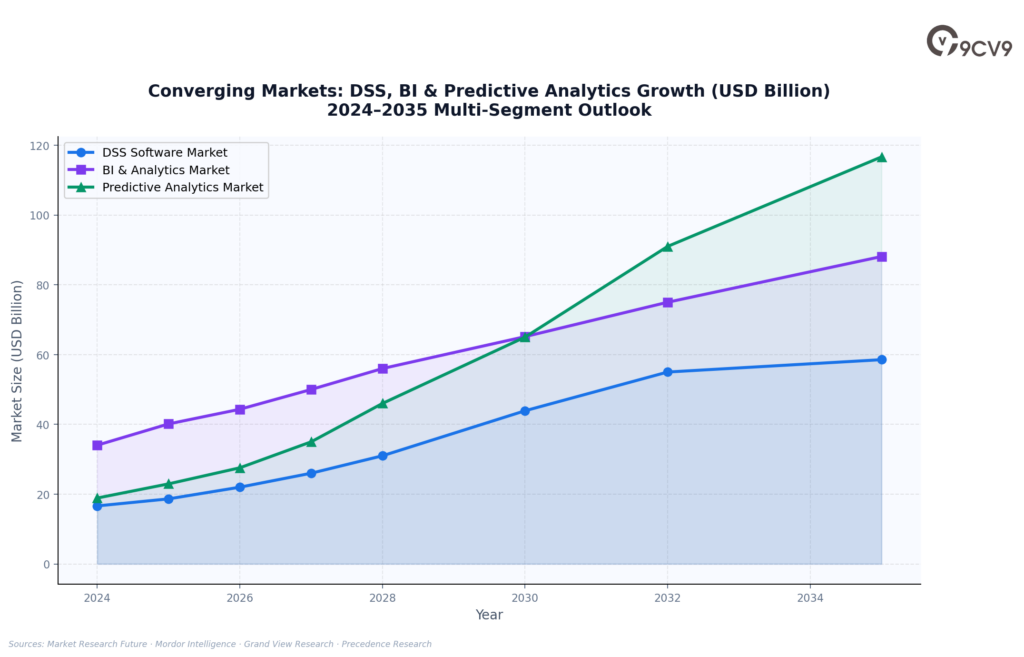
The scale of the market illustrates how quickly this transition is occurring. The global Decision Support Software market was valued at approximately $16.63 billion in 2024 before increasing to an estimated $18.65 billion in 2025, representing year-on-year growth of roughly 12%. Looking further ahead, the market is projected to reach approximately $43.9 billion by 2030 and could surpass $58.54 billion by 2035. One forecast places the industry’s compound annual growth rate at 12.12% between 2025 and 2035, while another estimates a still-substantial 10.2% CAGR between 2026 and 2032.
These figures indicate that Decision Support Software in 2026 is no longer simply about dashboards, reports, or traditional business intelligence. The category is evolving into a much broader decision intelligence ecosystem combining business intelligence, predictive analytics, prescriptive analytics, artificial intelligence, machine learning, natural language processing, real-time data processing, embedded analytics, and increasingly autonomous AI agents.
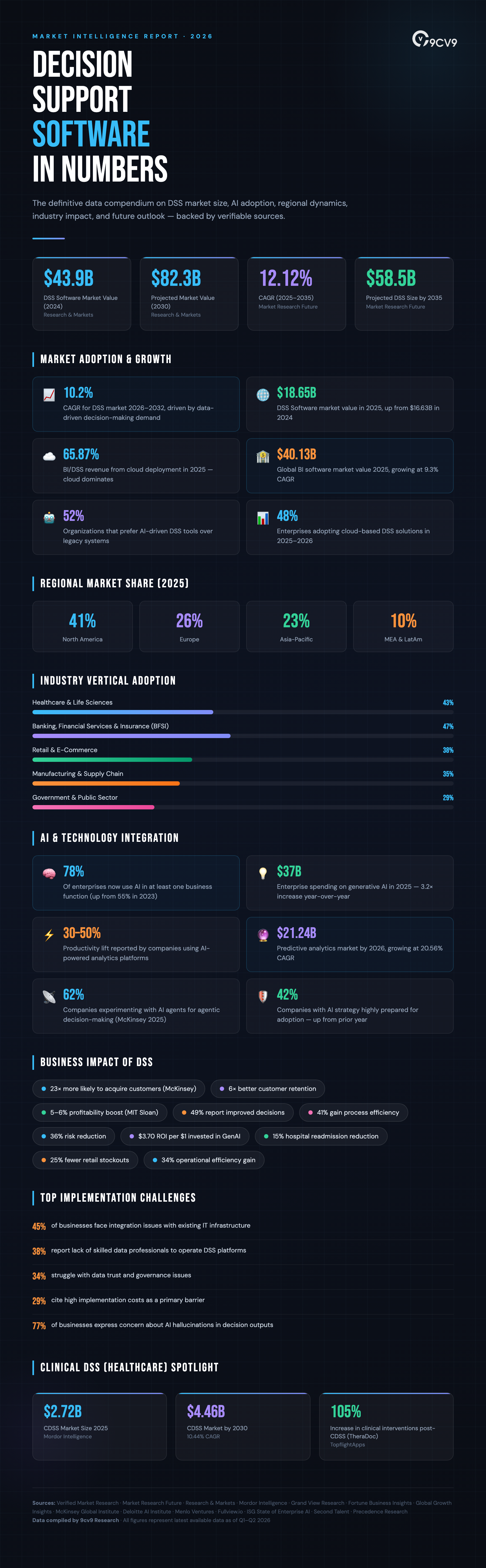
The wider analytics economy provides important context for this expansion. The global business intelligence and analytics software market was valued at approximately $34.04 billion in 2024 and reached $40.13 billion in 2025. Meanwhile, the broader business analytics software market is forecast to grow from $73.94 billion in 2025 to approximately $149.47 billion by 2031. These adjacent markets are important because modern DSS platforms increasingly operate on top of, or directly integrate with, the same analytics infrastructure used across enterprises.
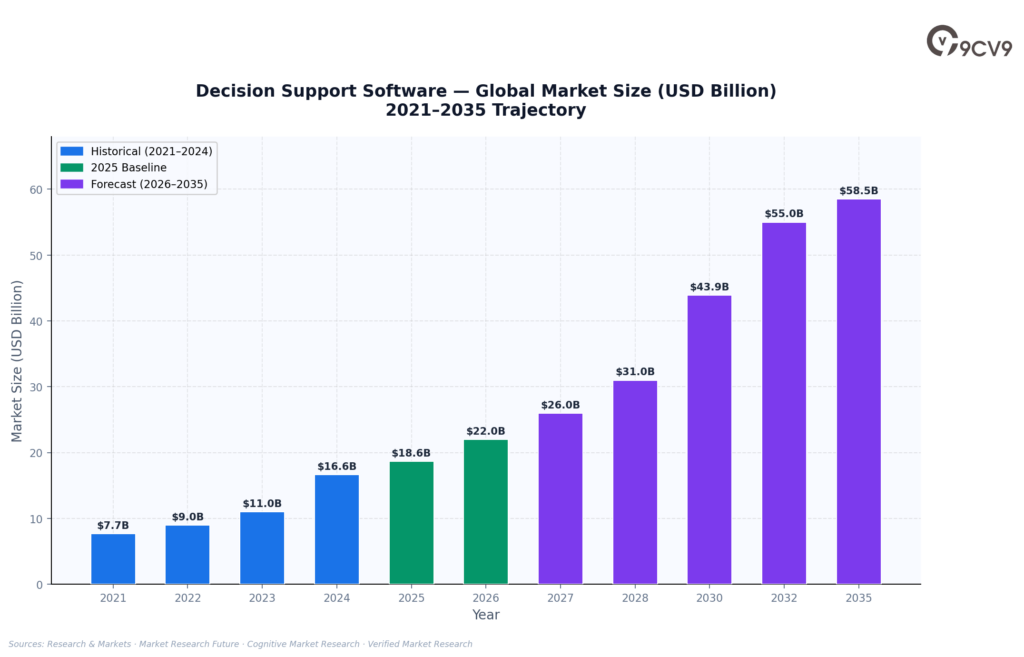
Predictive analytics represents an especially important component of the Decision Support Software market. The global predictive analytics market was valued at approximately $18.89 billion in 2024, is forecast to reach $21.24 billion by 2026, and could expand dramatically to approximately $116.65 billion by 2034. Prescriptive analytics is advancing even faster in some forecasts, with the segment expected to grow at approximately 24% annually through 2035.
The distinction between these technologies is becoming increasingly important for businesses evaluating Decision Support Software in 2026. Traditional analytics primarily explains what has already happened. Predictive analytics attempts to determine what is likely to happen next. Prescriptive analytics goes further by recommending what an organisation should do about it.
This progression is gradually transforming DSS from an information-delivery mechanism into an increasingly intelligent decision engine.
AI Is Redefining Decision Support Software in 2026
Artificial intelligence is arguably the most important force reshaping the Decision Support Software market.
According to the statistics examined in this dataset, 78% of enterprises now use AI in at least one business function, compared with 55% in 2023. Enterprise spending on generative AI reached approximately $37 billion in 2025, representing a 3.2-fold year-over-year increase. At the same time, approximately 62% of companies are experimenting with AI agents capable of autonomous decision-making.
These trends have profound implications for Decision Support Software.
Historically, a manager might open a dashboard, identify an unusual metric, manually investigate several reports, consult colleagues, evaluate potential explanations, and eventually decide what action to take. An AI-powered DSS can increasingly automate significant portions of that process. It can identify the anomaly, analyse contributing variables, retrieve relevant information, generate possible explanations, forecast different scenarios, recommend actions, and communicate those recommendations through a conversational interface.
The statistics suggest that organisations are already recognising the productivity potential. Companies using AI-powered analytics platforms report productivity improvements of approximately 30% to 50%, while 52% of organisations now prefer AI-driven DSS tools over traditional rule-based alternatives.
Yet the industry remains far from fully mature.
Although 42% of companies describe their AI strategies as highly prepared, only 1% consider themselves fully mature in AI deployment. This enormous gap between adoption and maturity is one of the defining Decision Support Software trends of 2026. Businesses are adopting AI rapidly, but many are still developing the governance frameworks, data architectures, skills, processes, and organisational controls necessary to use AI-driven decision intelligence reliably at scale.
Natural Language and Real-Time Analytics Are Making DSS More Accessible
Another important change is how employees interact with Decision Support Software.
Traditional enterprise analytics frequently required users to understand complicated dashboards, filters, reporting structures, data models, or even query languages. Modern DSS platforms are increasingly replacing those barriers with natural-language interfaces.
Natural Language Processing capabilities are now embedded in 67% of enterprise DSS platforms represented in the dataset. Natural-language query interfaces can reduce time-to-insight by an average of approximately 60%, allowing business users to ask questions in ordinary language rather than depending on analysts to manually retrieve and interpret information.
Self-service analytics has consequently become an important component of enterprise decision intelligence. Approximately 58% of enterprise analytics programmes now use self-service analytics, while dashboard-based DSS remains the dominant interface and is used in 72% of deployments.
Real-time analytics is advancing alongside this democratisation. Approximately 58% of deployed DSS solutions now contain real-time analytics capabilities. Mobile DSS usage also increased by 41% between 2023 and 2025, reflecting growing demand among executives, managers, field workers, and distributed teams for immediate access to business intelligence.
Decision support is therefore becoming simultaneously more sophisticated and easier to access.
The underlying analytical engines are growing more complex, while the interfaces presented to users are becoming simpler.
Cloud Decision Support Software Is Becoming the Default
Cloud computing is another major structural driver of the Decision Support Software market in 2026.
Cloud deployment accounts for approximately 65.87% of DSS and BI software revenue in 2025, while 48% of enterprises have adopted cloud-based DSS solutions. On-premises systems still represent approximately 34% of the market, particularly among organisations operating in highly regulated environments.
Approximately 18% of large enterprises also operate DSS across hybrid cloud and on-premises environments.
These deployment patterns demonstrate why the future of Decision Support Software is unlikely to be entirely cloud-only or entirely on-premises. Instead, organisations are selecting architectures according to their data sensitivity, latency requirements, regulatory obligations, existing infrastructure, integration complexity, and scalability requirements.
Cloud-based DSS has nevertheless significantly lowered the economic barriers to adoption.
This is particularly important for small and medium-sized enterprises. Historically, advanced decision support systems often required substantial upfront investment in servers, databases, analytics infrastructure, implementation consultants, and specialist technical personnel. SaaS delivery has changed that equation.
Cloud-based DSS subscriptions for SMEs can range from approximately $200 to $2,000 per month depending on capabilities and user counts, whereas large enterprise DSS implementations can range from approximately $500,000 to $5 million. This enormous difference in entry cost helps explain why cloud-native platforms are opening the DSS market to organisations that previously could not economically justify sophisticated decision intelligence infrastructure.
A Significant DSS Adoption Gap Still Exists Between Large Enterprises and SMEs
Despite falling technology costs, Decision Support Software adoption remains highly uneven.
Approximately 71% of large enterprises have implemented formal DSS tools, compared with only 29% of SMEs. This 42-percentage-point difference represents one of the largest growth opportunities in the Decision Support Software industry.
The gap may narrow relatively quickly.
SME DSS adoption is projected to grow at approximately 18% annually through 2028 as SaaS products, cloud infrastructure, natural-language analytics, low-code tools, and AI assistants reduce the technical expertise and capital previously required to implement decision support systems.
This could fundamentally alter the competitive environment for smaller businesses.
Capabilities such as predictive demand forecasting, customer segmentation, scenario modelling, pricing optimisation, financial forecasting, supply chain planning, and risk analysis were historically concentrated among large enterprises capable of maintaining dedicated analytics departments. AI-powered cloud DSS increasingly makes comparable capabilities accessible to smaller organisations.
The democratisation of decision intelligence may therefore become one of the most consequential Decision Support Software trends of the second half of the 2020s.
Decision Support Software Is Delivering Measurable Business Outcomes
Market growth alone does not explain the accelerating adoption of DSS. Organisations are ultimately investing because better decisions can produce measurable economic results.
The dataset indicates that 49% of organisations report measurable improvements in decision quality following DSS adoption. Another 41% cite significant improvements in operational process efficiency, while 36% report meaningful reductions in operational risk.
Companies effectively using data for decision-making have also been associated with profitability approximately 5% to 6% higher than industry peers.
AI-enhanced decision support may increase the potential returns further. Organisations investing in generative AI within DSS platforms report an average return of approximately $3.70 for every $1 invested.
Industry-specific outcomes illustrate how these gains can materialise operationally.
Retailers using DSS-driven demand forecasting report approximately 25% fewer stockout incidents. Supply chain organisations using DSS report average logistics cost reductions of approximately 20%. Financial institutions deploying decision support for credit-risk assessment have recorded reductions of approximately 18% to 22% in non-performing loan rates.
These statistics demonstrate an important characteristic of DSS: its value is rarely limited to one business metric.
Better decisions can simultaneously influence revenue, costs, productivity, customer retention, inventory efficiency, risk exposure, capital allocation, forecasting accuracy, and employee effectiveness.
Healthcare Demonstrates the High-Stakes Potential of Decision Support Systems
Few industries demonstrate the practical impact of Decision Support Software more clearly than healthcare.
The global Clinical Decision Support Systems market was valued at approximately $2.72 billion in 2025 and is projected to reach $4.46 billion by 2030, representing a CAGR of approximately 10.44%.
Adoption among major healthcare institutions is already substantial. Approximately 76% of US hospitals with more than 300 beds have implemented some form of clinical decision support software.
More importantly, clinical DSS can affect measurable patient outcomes.
The dataset includes evidence of CDSS implementations contributing to a 105% increase in appropriate clinical interventions in one major study, reductions of approximately 15% in patient readmission rates, and medication-error reductions of up to 55% in clinical environments.
AI-powered diagnostic decision support systems have also demonstrated accuracy rates of approximately 87% to 94% for certain imaging-based diagnoses.
These applications demonstrate why the term “decision support” encompasses much more than corporate dashboards. Depending on the environment, a DSS recommendation can influence whether a retailer replenishes inventory, whether a bank approves a loan, whether a manufacturer shuts down a machine, or whether a clinician considers a particular diagnosis.
The consequences of decision quality therefore vary enormously, making reliability, explainability, governance, and human oversight increasingly important as DSS platforms become more autonomous.
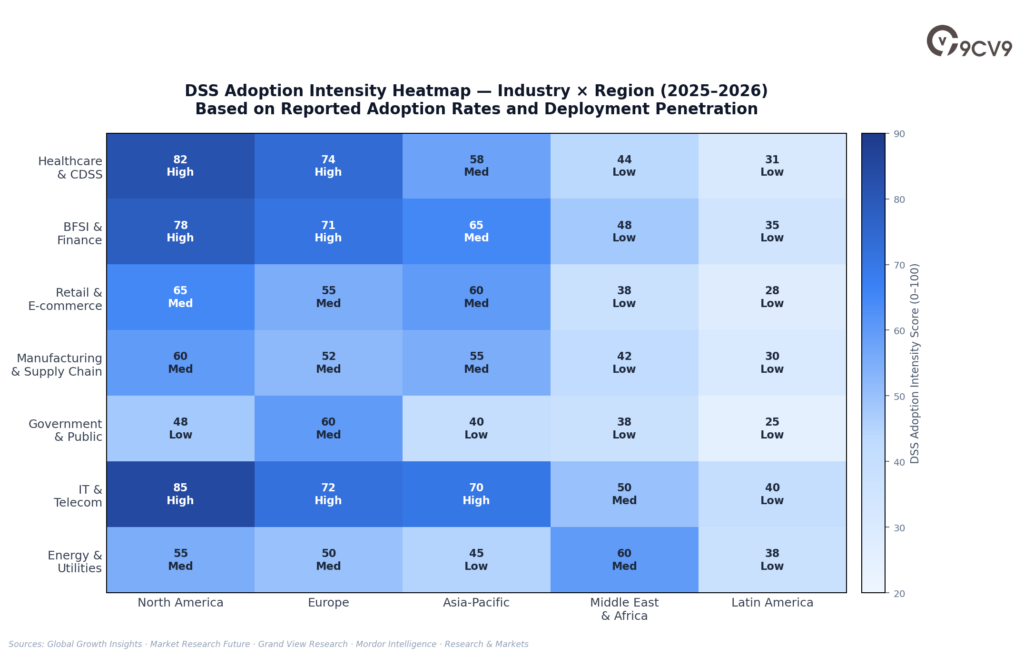
Decision Support Software Adoption Varies Significantly by Industry
The adoption of DSS is also highly sector-dependent.
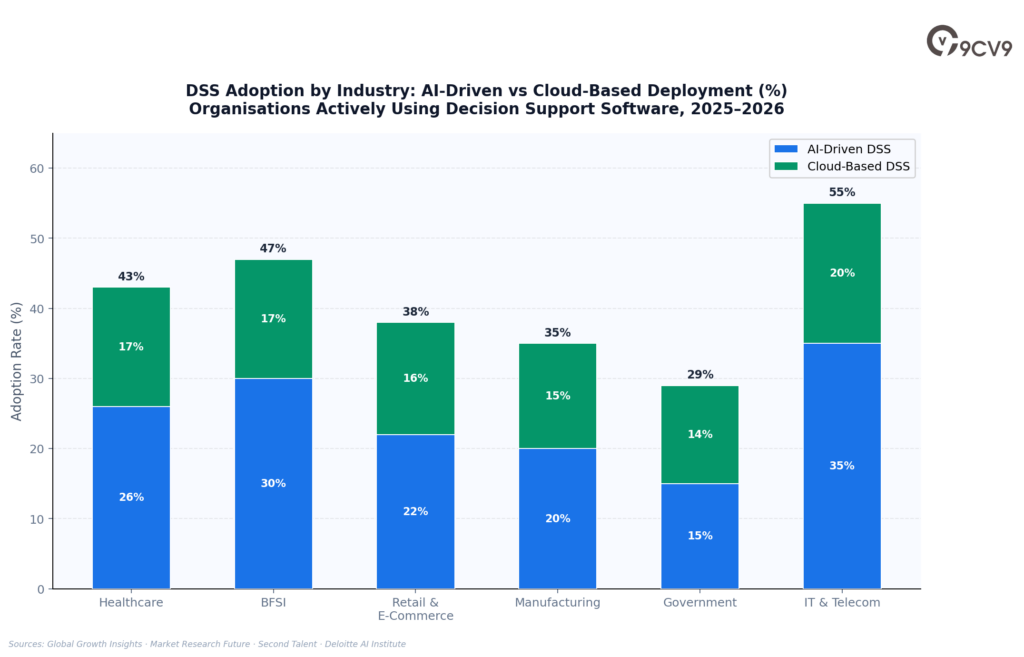
IT and telecommunications organisations demonstrate the highest adoption rate in the dataset at approximately 58%, reflecting extensive applications in network optimisation, churn prediction, capacity planning, infrastructure management, and customer analytics.
Banking, financial services, and insurance follows with approximately 47% penetration. Financial institutions depend heavily on decision support for credit assessment, fraud detection, portfolio management, regulatory compliance, pricing, underwriting, and financial risk modelling.
Healthcare and life sciences DSS adoption stands at approximately 43%, followed by retail and e-commerce at 38%, manufacturing and supply chain at 35%, and government and public-sector organisations at approximately 29%.
Energy and utilities companies, meanwhile, are increasing DSS adoption at approximately 12% annually as smart grids, predictive maintenance, demand forecasting, renewable energy management, and infrastructure optimisation create new requirements for real-time decision intelligence.
These differences matter because there is unlikely to be one universal definition of the “best” Decision Support Software.
A hospital evaluating clinical decision support requires fundamentally different capabilities from a retailer optimising inventory, a bank assessing credit risk, or a manufacturer predicting equipment failure. As the DSS market matures, vertical specialisation and industry-specific models are therefore likely to remain important competitive differentiators.
North America Leads the Market, but Asia-Pacific Is Growing Faster
Geographically, Decision Support Software remains concentrated in mature enterprise technology markets.
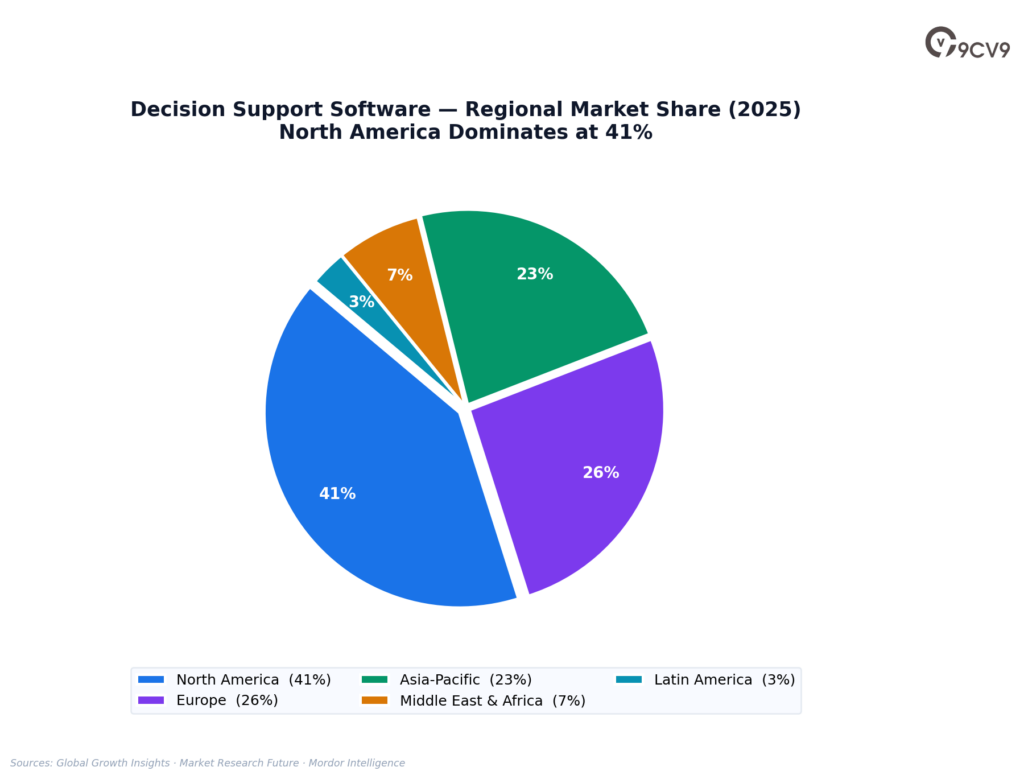
North America accounts for approximately 41% of global DSS market revenue, while the United States alone represents around 35% of global spending. Europe holds approximately 26%, followed by Asia-Pacific at 23%. Latin America and the Middle East and Africa collectively account for the remaining approximate 10%.
However, current market share tells only part of the story.
Asia-Pacific is identified as the fastest-growing region, with its DSS market forecast to expand at a CAGR exceeding 14% through 2030. Rapid digitalisation, cloud infrastructure development, expanding enterprise software adoption, AI investment, and government technology initiatives are creating favourable conditions for Decision Support Software growth across the region.
Within Europe, Germany, the United Kingdom, and France together represent approximately 60% of the regional DSS market. European adoption is also increasingly influenced by regulatory requirements surrounding privacy, transparency, algorithmic accountability, and explainable AI.
This regional divergence is likely to shape vendor strategies through the remainder of the decade. North America provides the largest existing revenue pool, while Asia-Pacific potentially represents one of the most important sources of incremental growth.
Data Quality Remains a Major Weakness
Despite impressive adoption and market-growth statistics, Decision Support Software is not automatically effective.
The underlying data still determines the quality of the decisions a system can support.
Approximately 34% of organisations struggle with data quality and governance problems that undermine DSS outputs, while 54% of AI projects within DSS implementations experience delays because of data-readiness issues.
Integration presents another significant obstacle. Approximately 45% of businesses identify integration with existing IT infrastructure as their primary DSS implementation challenge. Another 38% cite shortages of qualified data professionals, while 29% identify high implementation costs as a major barrier.
Organisational resistance also matters. Approximately 32% of companies report significant employee resistance to AI-driven decision support tools.
Perhaps most importantly, only 23% of organisations say they have fully realised the expected ROI from their DSS investment.
That figure provides an important counterbalance to the industry’s rapid growth narrative.
Buying Decision Support Software does not automatically create a data-driven organisation. Successful implementations require reliable data, appropriate integrations, employee adoption, executive sponsorship, clear objectives, governance, training, measurement frameworks, and processes for translating recommendations into actions.
The technology can support better decisions, but organisations must still build the operating model required to use those capabilities effectively.
AI Hallucinations and Governance Are Becoming Critical DSS Issues
The integration of generative AI introduces another layer of risk.
Approximately 77% of businesses express concern about AI hallucinations and inaccurate outputs from AI-powered DSS platforms. That concern is particularly important because the consequences of incorrect recommendations increase as decision systems move into healthcare, finance, employment, insurance, government, and other high-stakes environments.
Explainable AI is therefore becoming an important component of the DSS technology stack. Approximately 44% of enterprise AI teams had adopted explainable AI frameworks as of 2025.
Governance investment is increasing simultaneously. The global market for AI governance and responsible AI tools reached approximately $1.7 billion in 2025 and is growing at around 35% annually.
Regulation will add further momentum.
The EU AI Act affects high-stakes applications of AI-powered decision systems, particularly in areas such as employment, healthcare, and credit. As regulatory scrutiny increases, enterprise DSS vendors will need to demonstrate not only that their systems generate useful recommendations but also how those recommendations were generated, what data influenced them, where human oversight occurs, and how decisions can be audited.
The Future of DSS Is Moving From Decision Support Toward Decision Execution
Perhaps the most important long-term trend is the gradual movement from systems that support decisions toward systems capable of executing them.
Agentic AI systems capable of autonomous multi-step decision execution are projected to handle approximately 15% of enterprise workflows by 2028. If this trajectory continues, the definition of Decision Support Software itself may need to expand.
A traditional DSS tells a manager what might happen.
A predictive DSS estimates what will probably happen.
A prescriptive DSS recommends what should happen.
An agentic decision system can potentially determine what should happen and then execute the approved action across connected business systems.
This evolution is being supported by several parallel technology trends.
The augmented analytics market, which automates tasks such as data preparation, insight generation, and narrative explanation, is growing at approximately 23.4% annually through 2030. Embedded analytics is expected to account for 60% of DSS deployments by 2027, bringing decision intelligence directly into ERP, CRM, supply chain, and other operational applications.
Edge computing for real-time DSS is forecast to grow at approximately 18.7% annually through 2030, expanding decision support into environments where cloud latency is unsuitable. Longer-term technologies such as quantum computing could eventually enable significantly more sophisticated optimisation and scenario-modelling workloads.
The direction is increasingly clear: decision intelligence is moving closer to the point of action.
The Decision Support Software Competitive Landscape Is Expanding
The DSS market combines some of the world’s largest enterprise technology companies with a growing ecosystem of specialised analytics and AI vendors.
The five leading DSS vendors identified in the dataset, including SAP, IBM, Microsoft, Oracle, and SAS, collectively account for approximately 38% of global market revenue. Microsoft Power BI, Tableau under Salesforce, and Qlik are among the most widely deployed BI and DSS platforms by enterprise user numbers.
However, the category remains sufficiently fragmented to support substantial innovation.
Venture capital investment in DSS and analytics startups reached approximately $8.2 billion globally in 2025. More than 120 acquisitions were recorded across the DSS space during 2024 and 2025 as larger software companies sought specialised analytics capabilities, technology, and customer bases.
Open-source technologies also play an important role, with open-source DSS components incorporated into approximately 44% of enterprise DSS architectures.
Competition is therefore occurring across several fronts simultaneously: traditional BI, specialised decision engines, industry-specific platforms, predictive analytics, generative AI copilots, embedded analytics, open-source infrastructure, and emerging AI agents.
Why Decision Support Software Statistics Matter in 2026
The Top 103 Decision Support Software Statistics, Data & Trends in 2026 collectively reveal an enterprise technology category undergoing a significant transformation.
DSS is growing financially, but the more consequential development is occurring technologically. Decision support is shifting from static reporting toward predictive intelligence, from predictive intelligence toward prescriptive recommendations, and from recommendations toward increasingly autonomous execution.
At the same time, cloud computing is lowering adoption barriers, natural-language interfaces are making analytics accessible to non-technical employees, embedded analytics is moving intelligence directly into operational workflows, and real-time systems are shortening the distance between information and action.
Yet the statistics also expose the limitations.
Only 23% of organisations report fully realising expected DSS ROI. Data quality remains problematic for 34% of organisations. Integration challenges affect 45%. Data-readiness issues delay 54% of AI projects associated with DSS implementations. And 77% of businesses remain concerned about hallucinations and inaccurate AI-generated outputs.
These numbers suggest that 2026 is not simply the year businesses adopt more Decision Support Software. It is a period in which organisations are learning how to operationalise increasingly powerful decision intelligence responsibly.
The organisations that gain the greatest advantage are therefore unlikely to be those that merely accumulate the most dashboards, AI models, or analytics subscriptions. The stronger competitive position will belong to organisations capable of combining trustworthy data, appropriate technology, human expertise, governance, real-time intelligence, and effective execution into a repeatable decision-making system.
The following 103 Decision Support Software statistics provide a quantitative view of that transition, examining market size and growth, AI adoption, predictive and prescriptive analytics, cloud deployment, regional trends, healthcare applications, business ROI, implementation barriers, SME adoption, industry penetration, workforce requirements, security and compliance, self-service analytics, emerging technologies, and the competitive landscape shaping Decision Support Software in 2026 and beyond.
Before we venture further into this article, we would like to share who we are and what we do.
About 9cv9
9cv9 is a business tech startup based in Singapore and Asia, with a strong presence all over the world.
With over ten years of startup and business experience, and being highly involved in connecting with thousands of companies and startups, the 9cv9 team has listed some important and crucial software tools in this review.
If you like to get your company listed in our top B2B software reviews, check out our world-class 9cv9 Media and PR service and pricing plans here.
Top 103 Decision Support Software Statistics, Data & Trends in 2026
🏦 Market Size & Valuation
- The global Decision Support Software market was valued at approximately $16.63 billion in 2024. This figure underscores how mainstream DSS has become as organisations escalate investment in data-driven operations across virtually every industry sector.
- The DSS market grew to an estimated $18.65 billion in 2025, reflecting year-on-year growth of roughly 12%. This acceleration confirms that demand for structured decision intelligence is outpacing broader enterprise software growth rates.
- The DSS Software market is projected to reach $43.9 billion by 2030. This near-tripling of market value within six years signals that decision support is transitioning from a specialised tool to a core business infrastructure layer.
- By 2035, the DSS Software market is forecast to surpass $58.54 billion. Long-range forecasts of this magnitude reflect the durability of the category as AI and analytics become non-negotiable enterprise capabilities.
- The global Business Intelligence (BI) and analytics software market — the primary superset of DSS — was valued at $34.04 billion in 2024. This broader market context explains why DSS vendors are increasingly positioning themselves within the BI ecosystem to access larger buyer pools.
- The BI and analytics market reached $40.13 billion in 2025, growing at a CAGR of 9.3%. BI platform growth directly accelerates DSS adoption as organisations leverage analytics infrastructure already in place.
- The BI software market is forecast to reach $65.14 billion by 2033. This projection reinforces that organisations will dramatically expand their analytics and decision support investments over the coming decade.
- The global predictive analytics market — a critical component of modern DSS — was valued at $18.89 billion in 2024. Predictive analytics has become the fastest-growing segment within decision support, reshaping how businesses anticipate risk and opportunity.
- Predictive analytics is forecast to reach $21.24 billion by 2026, growing at a CAGR of 20.56%. This double-digit growth rate makes predictive analytics the highest-velocity segment within the broader DSS ecosystem.
- The predictive analytics market is projected to hit $116.65 billion by 2034. Such exponential growth suggests predictive intelligence will become as foundational to enterprise operations as ERP systems are today.
📈 Growth Rates & CAGR
- The DSS Software market is projected to grow at a CAGR of 12.12% from 2025 to 2035. This double-digit compound annual growth rate places DSS firmly among the fastest-growing enterprise software categories globally.
- An alternative projection pegs the DSS market CAGR at 10.2% between 2026 and 2032. Even at this more conservative estimate, the DSS sector significantly outpaces the overall enterprise software industry’s average growth rate.
- The prescriptive analytics sub-segment — the most advanced form of DSS — is growing at an extraordinary CAGR of 24% through 2035. Prescriptive analytics, which recommends specific actions rather than just forecasting outcomes, represents the frontier of automated decision support.
- The clinical decision support systems (CDSS) market is growing at a CAGR of 10.44% from 2025 to 2030. Healthcare-specific DSS is expanding rapidly as hospitals adopt AI-driven tools to reduce diagnostic errors and improve patient outcomes.
- The cloud-based analytics market is growing at a CAGR of 9.3%, consistent with broader BI growth trends. Cloud delivery has removed the infrastructure barriers that previously limited DSS adoption among mid-market organisations.
- The business analytics software market is forecast to grow from $73.94 billion in 2025 to $149.47 billion by 2031, at a CAGR of 8.62%. This sustained growth reflects broad organisational acknowledgement that analytics-driven decisions consistently outperform intuition-based ones.
- Enterprise AI investment — the primary driver of advanced DSS growth — is expanding at a CAGR of approximately 35% through 2030. This rapid pace of AI investment is fundamentally reshaping what decision support software can do, embedding intelligence directly into business workflows.
☁️ Deployment & Architecture
- Cloud deployment accounts for 65.87% of all DSS and BI software revenue in 2025. The decisive shift to cloud delivery reflects organisations’ preference for scalability, automatic updates, and lower upfront capital expenditure.
- 48% of enterprises have adopted cloud-based DSS solutions as of 2025–2026. Cloud-first DSS adoption is accelerating as vendors invest in SaaS-native architectures that deliver faster implementation and stronger integrations.
- On-premises DSS deployment still accounts for approximately 34% of the market. Regulated industries such as banking and government continue to favour on-premises deployments due to data sovereignty, compliance, and security requirements.
- The hybrid deployment model is growing as 18% of large enterprises operate DSS across both cloud and on-premises environments. Hybrid architectures allow organisations to maintain sensitive data on-premises while leveraging cloud elasticity for analytics workloads.
- Mobile DSS — decision support accessible via smartphones and tablets — accounts for a growing 22% share of cloud DSS usage. Mobile access to decision intelligence is becoming critical for field teams, executives, and remote workforces that need real-time insights anywhere.
🤖 AI & Technology Integration
- 78% of enterprises now use AI in at least one business function, up from 55% in 2023. This rapid acceleration confirms that AI-powered decision support has crossed the chasm from pilot stage to mainstream enterprise deployment.
- Enterprise spending on generative AI reached $37 billion in 2025, a 3.2× increase year-over-year. The scale of this investment underscores how central generative AI — and by extension AI-embedded DSS — has become to corporate digital transformation strategies.
- 62% of companies are experimenting with AI agents capable of autonomous decision-making as of 2025. Agentic AI systems represent the next evolution of DSS, where software not only supports decisions but increasingly executes them within defined parameters.
- Companies using AI-powered analytics platforms report productivity improvements of 30–50%. This performance uplift demonstrates the tangible operational value of embedding AI into decision support rather than relying on static dashboards and manual analysis.
- 52% of organisations now prefer AI-driven DSS tools over legacy rule-based systems. The preference shift reflects growing organisational confidence in machine learning models and frustration with static, maintenance-heavy traditional decision support tools.
- 42% of companies describe their AI strategy as “highly prepared” — a meaningful increase from prior-year surveys. Rising AI readiness is a prerequisite for realising the full value of modern DSS platforms, making this preparedness metric a leading indicator of future adoption.
- Only 1% of companies describe themselves as “fully mature” in AI deployment. This striking gap between AI ambition and AI maturity reveals that most organisations are still in the early stages of building the data infrastructure, governance, and talent needed to maximise DSS effectiveness.
- Large Language Models (LLMs) embedded within DSS platforms can process and synthesise information approximately 100× faster than human analysts. This speed advantage is transforming how quickly organisations can respond to market signals, operational anomalies, and competitive threats.
- The global AI in healthcare market — closely tied to Clinical DSS — is projected to reach $148.4 billion by 2029. Healthcare AI growth is inseparable from DSS expansion, as clinical decision support tools are among the highest-value AI applications in medicine.
- Natural Language Processing (NLP) capabilities are now embedded in 67% of enterprise DSS platforms. NLP enables business users to query analytics systems in plain language, dramatically reducing the barrier to entry for non-technical decision-makers.
- Real-time analytics capabilities are now present in 58% of deployed DSS solutions. Real-time decision support is becoming the baseline expectation, particularly in financial trading, e-commerce, and supply chain management contexts.
🌍 Regional Markets
- North America accounts for 41% of global DSS market revenue in 2025. North America’s dominance stems from its concentration of technology vendors, high enterprise software maturity, and aggressive AI investment by major corporations.
- Europe holds a 26% share of the global DSS market. European demand is shaped by strong regulatory compliance requirements — particularly GDPR — which is driving investment in explainable AI and auditable decision support systems.
- Asia-Pacific represents 23% of the global DSS market and is the fastest-growing region. Rapid digital transformation, expanding internet infrastructure, and government-led AI initiatives are positioning Asia-Pacific as the next major growth engine for DSS vendors.
- The Middle East & Africa and Latin America together account for approximately 10% of global DSS revenue. While currently a small share, these regions represent significant untapped opportunity, particularly as cloud infrastructure investment accelerates in both areas.
- The United States alone accounts for approximately 35% of global DSS spending. US enterprise willingness to invest in cutting-edge analytics tools and established relationships with major DSS vendors sustain America’s dominant market position.
- The Asia-Pacific DSS market is forecast to grow at a CAGR exceeding 14% through 2030. This above-average regional growth rate reflects the leapfrogging effect as Asian enterprises adopt cloud-native DSS without the legacy system baggage common in Western markets.
- Germany, the United Kingdom, and France together represent roughly 60% of the European DSS market. These three economies’ robust manufacturing sectors, strong banking industries, and government digitisation programmes drive regional DSS demand.
🏥 Healthcare & Clinical DSS
- The global Clinical Decision Support Systems (CDSS) market was valued at $2.72 billion in 2025. Clinical DSS is one of the highest-stakes applications of decision support software, directly affecting patient safety, diagnostic accuracy, and treatment outcomes.
- The CDSS market is projected to reach $4.46 billion by 2030, growing at a CAGR of 10.44%. This growth trajectory reflects hospitals’ urgent need to combat physician burnout, diagnostic error, and medication mistakes through intelligent clinical automation.
- Implementation of CDSS in hospital systems led to a 105% increase in appropriate clinical interventions in one major study. More than doubling appropriate care decisions represents one of the most dramatic documented impacts of decision support technology in any industry sector.
- Hospitals using CDSS report a 15% reduction in patient readmission rates. Reduced readmissions deliver dual benefits: improved patient outcomes and significant financial savings for healthcare systems facing intense cost pressure.
- CDSS tools have been shown to reduce medication errors by up to 55% in clinical environments. Medication errors are among the leading preventable causes of patient harm, making CDSS-driven error reduction a compelling patient safety argument for hospital administrators.
- 76% of US hospitals with more than 300 beds have implemented some form of clinical decision support software. Large hospital penetration is high, but substantial growth opportunity remains in community hospitals, outpatient facilities, and healthcare systems in emerging markets.
- AI-powered diagnostic DSS tools demonstrate accuracy rates of 87–94% for certain imaging-based diagnoses. When AI diagnostic accuracy rivals or exceeds human clinician accuracy, DSS transitions from decision support to a genuine co-clinician — fundamentally reshaping the physician’s role.
💰 Business Impact & ROI
- Data-driven organisations are 23 times more likely to acquire new customers than competitors not using analytics. This McKinsey finding makes the business case for DSS investment virtually irrefutable for any organisation operating in a competitive market.
- Data-driven organisations achieve 6 times greater customer retention rates than their peers. Retention economics are particularly compelling: it costs five to seven times more to acquire a new customer than to retain an existing one, amplifying the ROI of analytics investment.
- Companies effectively using data for decision-making achieve 5–6% higher profitability than industry peers. MIT Sloan research demonstrating a direct link between analytics maturity and profitability provides CFOs with powerful justification for DSS budget approval.
- 49% of organisations report that DSS adoption has measurably improved the quality of their decisions. Nearly half of all DSS-using organisations can directly attribute better decision quality to their software investment — a strong endorsement of the category’s core value proposition.
- 41% of DSS-adopting companies cite significant improvements in operational process efficiency. Process efficiency gains represent one of the most common and immediate benefits organisations report after deploying decision support software.
- 36% of organisations report meaningful reduction in operational risk after implementing DSS. Risk reduction is a frequently underweighted benefit in DSS ROI calculations, yet it represents real financial value particularly in regulated industries.
- 34% of businesses report major operational efficiency improvements attributable to DSS deployment. Operational efficiency gains compound over time as DSS-trained processes become embedded in organisational workflows.
- Organisations investing in generative AI within DSS platforms report an average ROI of $3.70 for every $1 invested. This exceptional return — nearly 4× — explains why C-suite enthusiasm for AI-embedded decision support remains strong despite significant implementation costs.
- Retailers using DSS-driven demand forecasting report 25% fewer stockout incidents. Stockouts directly cost retailers revenue and customer loyalty; DSS-powered inventory optimisation addresses one of retail’s most persistent and expensive operational challenges.
- Supply chain organisations using DSS report 20% average reductions in logistics costs. In industries where logistics can represent 8–12% of revenue, a 20% reduction in logistics cost translates to meaningful margin improvement.
- Financial institutions using DSS for credit risk assessment reduce non-performing loan rates by 18–22%. Better lending decisions at scale — enabled by DSS — directly protect bank balance sheets and reduce systemic financial risk.
⚠️ Challenges & Barriers
- 45% of businesses identify integration with existing IT infrastructure as their primary DSS implementation challenge. Legacy system complexity remains the single biggest practical obstacle to DSS deployment, even for organisations that are fully committed to data-driven decision-making.
- 38% of organisations report a lack of qualified data professionals as a major barrier to DSS adoption. The global data talent shortage means that DSS vendors able to offer low-code, self-service interfaces have a significant competitive advantage.
- 34% of companies struggle with data quality and governance issues that undermine DSS outputs. Decision support is only as reliable as the data feeding it; poor data governance creates a garbage-in, garbage-out dynamic that erodes stakeholder trust in DSS-generated insights.
- 29% of organisations cite high implementation costs as a primary barrier to DSS adoption. Upfront licensing, customisation, and integration costs remain prohibitive for many small and mid-market businesses, creating a clear opportunity for SaaS-based DSS vendors with consumption pricing.
- 77% of businesses express concern about AI hallucinations and inaccurate outputs from AI-powered DSS tools. Hallucination risk is a serious credibility challenge for AI-embedded DSS vendors, underscoring the importance of explainability, human-in-the-loop validation, and rigorous model governance.
- Only 23% of organisations report that they have fully realised the expected ROI from their DSS investment. This implementation gap highlights the critical importance of change management, user training, and executive sponsorship in DSS deployment — technology alone is insufficient.
- 54% of AI projects within DSS implementations experience delays due to data readiness issues. Data readiness — having clean, accessible, well-governed data — is the prerequisite that most organisations underestimate when planning DSS deployments.
- 32% of companies report significant employee resistance to AI-driven decision support tools. Cultural resistance to algorithmic decision-making is a real adoption barrier, particularly among experienced professionals who perceive DSS as threatening their expertise and autonomy.
🏢 SME & Mid-Market Adoption
- Only 29% of small and medium enterprises (SMEs) have implemented formal DSS tools, compared to 71% of large enterprises. The adoption gap between SMEs and large organisations represents a vast untapped market for cloud-native DSS vendors offering affordable, easy-to-deploy solutions.
- SME DSS adoption is projected to grow at a CAGR of 18% through 2028 as cloud-native solutions lower barriers. Affordable SaaS-based DSS is democratising access to sophisticated decision analytics for smaller businesses that previously could not justify the investment.
- The average DSS implementation cost for large enterprises ranges from $500,000 to $5 million. This wide cost range reflects the significant variability in customisation, integration complexity, and organisational scope across different enterprise DSS deployments.
- Cloud-based DSS subscriptions for SMEs average $200–$2,000 per month depending on user count and capabilities. Subscription pricing has fundamentally changed the DSS accessibility equation for smaller organisations, removing the large capital expenditure barrier of traditional licensing.
📊 Specific Sector Data
- The BFSI (Banking, Financial Services & Insurance) sector is the largest DSS adopter, with 47% penetration rate. Financial services firms’ heavy reliance on risk modelling, regulatory compliance, and real-time market analysis makes DSS a non-negotiable operational tool rather than a discretionary investment.
- Healthcare & Life Sciences DSS adoption stands at 43% of organisations in the sector. Clinical and operational DSS tools are increasingly viewed as essential infrastructure rather than optional technology in a sector where poor decisions have direct consequences for patient safety.
- Retail and e-commerce DSS adoption has reached 38% of sector participants. Retail DSS applications — spanning demand forecasting, personalisation, pricing optimisation, and supply chain management — deliver measurable revenue and margin benefits.
- Manufacturing and supply chain DSS adoption is at 35%, accelerating post-pandemic. Supply chain disruptions exposed the vulnerability of organisations relying on intuition-based planning, driving rapid adoption of DSS tools for scenario modelling and supply chain resilience.
- Government and public sector DSS adoption stands at 29% of entities surveyed. Public sector adoption, while lower than commercial sectors, is growing as governments face pressure to deliver services more efficiently and make evidence-based policy decisions.
- IT and telecom companies demonstrate the highest DSS adoption rate at approximately 58%. Technology-native organisations are natural early adopters of decision support tools, and telecom operators use DSS extensively for network optimisation, churn prediction, and capacity planning.
- Energy and utilities companies are increasing DSS adoption at 12% annually as smart grid technology expands. Grid management, predictive maintenance, demand forecasting, and renewable energy integration all represent high-value DSS applications in the energy sector.
🔮 Future Outlook & Emerging Trends
- The prescriptive analytics market is expected to reach $270.9 billion by 2035. Prescriptive analytics — the most sophisticated DSS category, which not only forecasts outcomes but recommends specific actions — represents the ultimate destination of the decision support evolution.
- Agentic AI systems capable of autonomous multi-step decision execution are projected to handle 15% of enterprise workflows by 2028. As AI agents mature, DSS will evolve from passive advisory tools into active participants in business operations, executing decisions within pre-defined boundaries.
- The augmented analytics market — which automates data preparation, insight generation, and narrative explanation — is growing at 23.4% CAGR through 2030. Augmented analytics is rapidly closing the skills gap that has historically limited DSS value to data-literate users.
- Embedded analytics — DSS capabilities built directly into operational software (ERP, CRM, SCM) — is expected to account for 60% of all DSS deployments by 2027. The shift to embedded analytics reflects organisations’ desire to make decision support seamlessly available within existing workflows rather than requiring users to switch between applications.
- Edge computing for real-time DSS is expected to grow at a CAGR of 18.7% through 2030. Edge-based DSS enables decision support in environments where cloud latency is unacceptable — including autonomous vehicles, smart factories, and remote field operations.
- Quantum computing applications within DSS optimisation problems could accelerate complex decision modelling by 1,000× or more by the early 2030s. While still emerging, quantum-enhanced DSS represents a potential step-change in the speed and complexity of optimisation problems that decision support systems can solve.
- Explainable AI (XAI) frameworks — which make DSS recommendations transparent and auditable — are being adopted by 44% of enterprise AI teams as of 2025. Regulatory pressure and executive accountability requirements are driving rapid XAI adoption, as organisations need to defend AI-generated decisions to regulators, boards, and courts.
- The global market for AI governance and responsible AI tools — essential companions to enterprise DSS — reached $1.7 billion in 2025 and is growing at 35% annually. Growing AI governance investment reflects organisations’ recognition that powerful decision support tools require equally robust oversight frameworks.
👥 Workforce & Talent
- The global data analytics talent shortage is expected to reach 2.7 million unfilled positions by 2026. This talent gap is simultaneously the biggest challenge to DSS adoption and the strongest argument for self-service analytics platforms that reduce dependence on specialist data professionals.
- Data scientists and analysts earn average salaries of $105,000–$135,000 in North America, making talent one of the highest costs in DSS programme ownership. High talent costs drive organisations toward automated DSS platforms that can democratise analytics access without requiring large specialist teams.
- 73% of organisations report that upskilling existing employees in data literacy is a top priority for their DSS programmes. Data literacy investment is emerging as the critical success factor separating organisations that realise DSS value from those that deploy tools but fail to embed data-driven culture.
- Companies with formal data literacy programmes are 5× more likely to report successful DSS outcomes. This striking correlation underlines that DSS technology investment delivers full value only when paired with organisational capability building.
- Chief Data Officers (CDOs) now exist in 65% of Fortune 500 companies, up from 12% in 2015. The CDO role’s explosive growth reflects how central data governance and decision intelligence have become to large enterprise strategy.
🔐 Security, Compliance & Ethics
- GDPR compliance requirements in Europe have driven a 34% increase in demand for auditable, explainable DSS systems. Regulatory requirements for algorithmic transparency are reshaping DSS design priorities, with explainability and audit trails becoming standard product features.
- Healthcare DSS vendors must comply with HIPAA, HL7 FHIR, and increasingly with FDA Software as a Medical Device (SaMD) regulations. The regulatory complexity of healthcare DSS creates significant barriers to entry that protect established vendors while slowing adoption of innovative new entrants.
- Cybersecurity risks in connected DSS environments affect 41% of enterprise deployments. As DSS platforms access sensitive operational and customer data, they become attractive targets for cyberattacks, making security architecture a critical evaluation criterion for buyers.
- The EU AI Act — formally applicable from 2026 — classifies high-stakes DSS systems in healthcare, employment, and credit as “high-risk AI,” requiring rigorous documentation and human oversight. The EU AI Act represents the most comprehensive regulation of AI-powered decision support globally, and will significantly shape how vendors design and deploy DSS in European markets.
💡 Customer Experience & Self-Service
- Self-service analytics — enabling business users to build their own DSS queries without IT support — is now used by 58% of enterprise analytics programmes. Self-service capabilities are the single most important democratisation force in the DSS market, expanding the user base beyond data specialists to all business decision-makers.
- Natural language query interfaces in DSS platforms reduce time-to-insight by an average of 60%. When users can ask questions in plain English rather than writing SQL queries or configuring dashboards, decision cycle times compress dramatically.
- Dashboard-based DSS tools remain the most popular interface type, used by 72% of DSS deployments. Despite rapid growth in conversational AI and automated insight generation, traditional dashboards retain dominance because of their familiarity, visual clarity, and flexibility.
- Mobile DSS usage grew 41% between 2023 and 2025 as executives demand real-time insights on-the-go. The shift to mobile decision support reflects changing work patterns and the expectation that critical business data should be accessible anywhere, at any time.
📉 Competitive Landscape
- The top 5 DSS vendors — including SAP, IBM, Microsoft, Oracle, and SAS — collectively account for approximately 38% of global market revenue. Despite significant concentration among established players, the DSS market remains fragmented, with hundreds of specialist vendors competing in vertical and capability niches.
- Microsoft Power BI, Tableau (Salesforce), and Qlik are the three most widely deployed BI/DSS platforms by number of enterprise users. These three platforms have achieved dominant mindshare in self-service analytics, though specialised DSS vendors command premium pricing and loyalty in sector-specific applications.
- Venture capital investment in DSS and analytics startups reached $8.2 billion globally in 2025. Strong VC interest signals investors’ confidence that significant market disruption is still ahead, particularly in AI-native DSS platforms challenging incumbent vendors.
- M&A activity in the DSS space accelerated in 2024–2025, with over 120 acquisitions recorded. Consolidation is intensifying as large enterprise software platforms seek to acquire specialised DSS capabilities and customer bases rather than building from scratch.
- Open-source DSS components are incorporated in 44% of enterprise DSS architectures. The open-source ecosystem — including tools like Apache Spark, Python analytics libraries, and open-source ML frameworks — has lowered DSS development costs and accelerated innovation across the industry.
Conclusion
The Top 103 Decision Support Software Statistics, Data & Trends in 2026 reveal a technology market moving well beyond its traditional role as a collection of dashboards, reporting tools, and analytical applications. Decision Support Software is increasingly becoming part of the operational intelligence layer of modern organisations, helping businesses transform growing volumes of data into predictions, recommendations, risk assessments, scenario models, and increasingly automated actions.
The market numbers provide a clear indication of this momentum. The global Decision Support Software market was valued at approximately $16.63 billion in 2024 and increased to an estimated $18.65 billion in 2025. Looking further ahead, forecasts included in the dataset place the market at approximately $43.9 billion by 2030 and more than $58.54 billion by 2035. A projected CAGR of 12.12% between 2025 and 2035 suggests that DSS could remain one of the faster-growing areas of enterprise software throughout the coming decade.
However, market expansion is only one part of the story.
The more significant transformation is occurring inside the technology itself. Decision Support Software in 2026 increasingly combines business intelligence, predictive analytics, prescriptive analytics, machine learning, generative AI, natural language processing, real-time analytics, embedded intelligence, automation, and emerging agentic AI capabilities.
This convergence is gradually changing the fundamental purpose of a decision support system.
Traditional DSS helped people understand information.
Modern DSS helps people determine what is likely to happen.
More advanced platforms recommend what should happen.
The next generation of decision intelligence systems may increasingly execute those recommendations automatically within predefined business rules, governance frameworks, and human approval structures.
AI Is Becoming Central to the Future of Decision Support Software
Artificial intelligence stands out as one of the strongest forces shaping the Decision Support Software market in 2026.
According to the statistics in this collection, 78% of enterprises now use AI in at least one business function, compared with 55% in 2023. Enterprise spending on generative AI reached approximately $37 billion in 2025, representing a 3.2-fold year-over-year increase, while 62% of companies are experimenting with AI agents capable of autonomous decision-making.
The implications for Decision Support Software are substantial.
Instead of requiring employees to manually search through dashboards, spreadsheets, reports, and databases, AI-powered DSS platforms can increasingly identify patterns, detect anomalies, synthesise information, generate forecasts, explain changes, recommend possible responses, and present conclusions conversationally.
Companies using AI-powered analytics platforms report productivity improvements ranging from approximately 30% to 50%, while 52% of organisations now prefer AI-driven DSS tools over traditional rule-based alternatives.
Yet the statistics also show why organisations should distinguish between AI adoption and AI maturity.
While 42% of companies describe their AI strategies as highly prepared, only 1% consider themselves fully mature in AI deployment. The enormous difference between these figures suggests that the enterprise AI transformation remains relatively early despite the intensity of investment and experimentation.
For Decision Support Software vendors and buyers alike, the next phase will therefore be less about whether AI should be incorporated and more about whether AI can be implemented reliably, securely, explainably, and profitably.
Predictive and Prescriptive Analytics Are Raising the Value of DSS
Predictive analytics is another major growth engine.
The predictive analytics market was valued at approximately $18.89 billion in 2024 and is forecast to reach $21.24 billion by 2026. Longer-term forecasts place the market at approximately $116.65 billion by 2034.
Prescriptive analytics represents an even more advanced stage of the decision intelligence lifecycle. The dataset indicates that the prescriptive analytics segment could grow at approximately 24% annually through 2035, while one longer-term projection places the market at $270.9 billion by 2035.
These technologies matter because they expand the economic role of Decision Support Software.
A descriptive analytics platform can tell a retailer that inventory is declining.
Predictive analytics can estimate when inventory will run out.
Prescriptive analytics can recommend how much inventory should be reordered, when it should be ordered, and potentially from which supplier.
An AI agent connected to operational systems could eventually execute portions of that decision automatically.
That progression from observation to prediction, recommendation, and execution represents one of the defining Decision Support Software trends of 2026.
Cloud DSS Is Democratising Enterprise Decision Intelligence
The growth of cloud computing is simultaneously changing who can access sophisticated decision support capabilities.
Cloud deployment accounts for approximately 65.87% of DSS and BI software revenue in 2025, while 48% of enterprises have adopted cloud-based DSS solutions. On-premises deployments continue to represent approximately 34% of the market, and hybrid architectures remain important among large organisations with complex regulatory, security, or data-sovereignty requirements.
For SMEs, however, cloud-based delivery has dramatically reduced the financial barrier to entry.
The dataset places typical cloud DSS subscriptions for SMEs at approximately $200 to $2,000 per month depending on capabilities and user numbers. By comparison, large enterprise DSS implementations can range from approximately $500,000 to $5 million.
This difference helps explain why the SME segment represents such a substantial future opportunity.
Only 29% of SMEs have implemented formal DSS tools, compared with 71% of large enterprises. SME DSS adoption is nevertheless projected to grow at approximately 18% annually through 2028.
As cloud-native platforms become cheaper and easier to implement, sophisticated forecasting, scenario modelling, risk analysis, customer intelligence, inventory optimisation, and financial decision support could become accessible to much smaller organisations.
The long-term competitive consequence could be significant. Decision intelligence capabilities that were once available primarily to multinational corporations with large analytics teams are increasingly becoming available through relatively affordable SaaS subscriptions.
Decision Support Software ROI Is Becoming Easier to Quantify
One reason DSS adoption continues to expand is that the technology can affect measurable business outcomes rather than simply improve reporting.
The statistics collected for 2026 indicate that 49% of organisations report measurable improvements in decision quality after DSS adoption. Approximately 41% cite significant improvements in operational process efficiency, while 36% report meaningful reductions in operational risk.
The economic implications become even clearer at the industry level.
Retailers using DSS-driven demand forecasting report approximately 25% fewer stockouts. Supply chain organisations using DSS report average logistics cost reductions of around 20%. Financial institutions using decision support for credit-risk assessment have achieved reductions of approximately 18% to 22% in non-performing loan rates.
Organisations investing in generative AI within DSS platforms also report an average ROI of approximately $3.70 for every $1 invested.
These results help explain why Decision Support Software is increasingly being evaluated as an operational investment rather than simply an IT expenditure.
Better decisions can affect almost every major component of business performance: revenue, margins, customer acquisition, retention, working capital, inventory, logistics, employee productivity, risk exposure, resource allocation, forecasting accuracy, and capital efficiency.
Healthcare Shows How Powerful Decision Support Systems Can Become
Clinical Decision Support Systems provide one of the clearest demonstrations of DSS moving from analytical convenience to mission-critical infrastructure.
The global CDSS market was valued at approximately $2.72 billion in 2025 and is projected to reach approximately $4.46 billion by 2030, growing at a CAGR of 10.44%.
Approximately 76% of US hospitals with more than 300 beds have implemented some form of clinical decision support software.
More importantly, the statistics demonstrate potential real-world outcomes. CDSS implementation has been associated with a 105% increase in appropriate clinical interventions in one major study, while hospitals using clinical decision support report reductions of approximately 15% in patient readmissions. CDSS tools have also been shown to reduce medication errors by as much as 55% in clinical environments.
For certain imaging-based diagnoses, AI-powered diagnostic DSS tools have demonstrated accuracy rates ranging from approximately 87% to 94%.
Healthcare illustrates both the enormous potential and the substantial responsibility associated with increasingly intelligent decision systems.
When software influences medical treatment, lending decisions, hiring, insurance, public policy, or financial risk, accuracy alone is insufficient. Organisations must also consider explainability, bias, accountability, auditability, privacy, security, governance, and appropriate human oversight.
Data Quality Remains the Foundation of Effective Decision Support
For all the enthusiasm surrounding AI-powered Decision Support Software, the statistics also provide a strong warning: sophisticated algorithms cannot compensate for fundamentally unreliable data.
Approximately 34% of companies struggle with data quality and governance issues that undermine DSS outputs. More than half, 54%, of AI projects within DSS implementations experience delays related to data readiness.
Integration presents another substantial problem, with 45% of businesses identifying integration with existing IT infrastructure as their primary DSS implementation challenge.
Talent shortages compound the difficulty. Approximately 38% of organisations report a lack of qualified data professionals as a major barrier, while 32% encounter significant employee resistance to AI-driven decision support tools.
Perhaps the most important statistic is that only 23% of organisations report fully realising the expected ROI from their DSS investments.
This figure demonstrates why Decision Support Software should not be treated as a simple procurement exercise.
Buying an advanced analytics platform does not automatically produce better decisions.
Organisations still require clean and accessible data, integrations, governance policies, well-defined decision processes, executive sponsorship, employee training, data literacy, appropriate KPIs, change management, and mechanisms for turning analytical recommendations into operational actions.
Data Literacy Could Determine Which Organisations Capture DSS Value
Technology alone is not enough because decision support ultimately interacts with people.
Approximately 73% of organisations identify upskilling employees in data literacy as a top priority for their DSS programmes. Companies with formal data-literacy programmes are reported to be five times more likely to achieve successful DSS outcomes.
At the executive level, data leadership has also become significantly more prominent. Chief Data Officers now exist in approximately 65% of Fortune 500 companies, compared with just 12% in 2015.
These statistics point toward a broader organisational transformation.
The companies most capable of extracting value from Decision Support Software may not necessarily be those purchasing the most expensive platforms. Instead, they may be those capable of developing cultures in which employees understand data, question assumptions, evaluate recommendations critically, and incorporate evidence into everyday decisions.
In that environment, DSS becomes an organisational capability rather than simply another software category.
Natural Language Interfaces Are Making Decision Support More Accessible
The interface between people and enterprise data is also changing rapidly.
Natural Language Processing capabilities are now embedded in approximately 67% of enterprise DSS platforms, while natural-language query interfaces can reduce time-to-insight by around 60%.
Self-service analytics is used by approximately 58% of enterprise analytics programmes, while dashboard-based DSS tools remain the most widely used interface, appearing in around 72% of deployments.
Mobile DSS usage increased approximately 41% between 2023 and 2025.
Together, these trends suggest that Decision Support Software is gradually moving away from being a specialist tool used primarily by analysts.
An executive may increasingly ask a DSS platform a business question in plain English.
A sales manager may receive automatically generated explanations for declining conversion rates.
A supply chain manager may receive predictive warnings about potential disruptions.
A finance team may generate scenario models without manually constructing complex spreadsheets.
A field manager may receive operational recommendations on a smartphone.
The underlying analytical technology is becoming more sophisticated while the user experience is becoming simpler.
That combination could dramatically expand the number of people who interact with decision intelligence every day.
Explainable AI and Governance Will Become Competitive Requirements
As DSS platforms become more powerful, trust becomes increasingly important.
The dataset shows that 77% of businesses are concerned about AI hallucinations and inaccurate outputs from AI-powered Decision Support Software.
Explainable AI frameworks are already being adopted by approximately 44% of enterprise AI teams, while the global AI governance and responsible AI tools market reached approximately $1.7 billion in 2025 and is growing at around 35% annually.
Regulatory requirements are reinforcing this direction, particularly for high-stakes applications involving areas such as healthcare, employment, and credit decisions.
For vendors, this means future competition may extend beyond which platform has the most powerful AI model.
Buyers will increasingly ask whether recommendations can be explained, whether data lineage can be traced, whether models can be audited, whether access can be controlled, whether decisions comply with regulations, and whether humans can intervene when necessary.
In high-stakes environments, trustworthy decision intelligence may ultimately prove more valuable than raw model intelligence.
Asia-Pacific Could Become a Major DSS Growth Engine
Regional statistics also point toward a changing global market.
North America currently represents approximately 41% of global DSS market revenue, with the United States alone accounting for roughly 35% of worldwide spending. Europe represents approximately 26%, while Asia-Pacific accounts for around 23%.
However, Asia-Pacific is the fastest-growing region in the dataset, with DSS spending forecast to expand at a CAGR exceeding 14% through 2030.
This creates an important distinction between current market leadership and future growth.
North America remains the largest established market, supported by high enterprise software penetration, strong AI investment, and the presence of major technology vendors. Asia-Pacific, however, benefits from rapid digital transformation, expanding cloud infrastructure, growing enterprise technology investment, and increasing adoption of AI.
The global Decision Support Software landscape of the early 2030s may consequently look considerably more geographically diversified than the market of 2026.
Embedded Analytics Will Make DSS Increasingly Invisible
One of the most important long-term changes may be that users increasingly stop thinking about Decision Support Software as a separate application.
Embedded analytics is expected to account for approximately 60% of DSS deployments by 2027.
Rather than opening a standalone analytics platform, users may increasingly encounter decision intelligence directly inside CRM systems, ERP platforms, HR software, financial applications, supply chain management tools, healthcare systems, and other operational software.
This represents an important shift in how DSS creates value.
Decision support becomes most useful when information appears at the moment a decision needs to be made.
A salesperson should not necessarily have to leave a CRM platform to determine which opportunity deserves attention.
A procurement manager should not need to open a separate BI dashboard to discover that a supplier represents an emerging risk.
A retailer should not need a standalone analytics workflow to identify an impending stockout.
Embedding intelligence directly into operational applications shortens the distance between insight and action.
Agentic AI Could Transform DSS Into Decision Automation
The most disruptive development may arrive through agentic AI.
Agentic AI systems capable of autonomous multi-step decision execution are projected to handle approximately 15% of enterprise workflows by 2028.
If that projection materialises, the distinction between Decision Support Software and business automation will become increasingly blurred.
Future DSS platforms may not merely produce recommendations. They could monitor business conditions continuously, identify problems, evaluate alternatives, select approved responses, interact with other applications, execute actions, measure outcomes, and adjust subsequent decisions.
This does not necessarily mean removing humans from decision-making.
Instead, human involvement may move upward.
Employees and executives could increasingly define objectives, constraints, risk tolerances, escalation rules, approval thresholds, and governance policies while software handles repetitive analytical and operational decisions within those boundaries.
The fundamental question may therefore shift from “What does the data say?” to “Which decisions should humans make, which should AI recommend, and which can software safely execute?”
That is a considerably larger transformation than traditional business intelligence.
The Decision Support Software Market Remains Competitive and Open to Innovation
Despite the presence of major enterprise technology companies, DSS remains a relatively fragmented market.
SAP, IBM, Microsoft, Oracle, and SAS collectively account for approximately 38% of global market revenue according to the dataset. Microsoft Power BI, Tableau under Salesforce, and Qlik remain among the most widely deployed BI and DSS platforms.
At the same time, approximately $8.2 billion in venture capital flowed into DSS and analytics startups globally in 2025. More than 120 acquisitions were recorded across the space during 2024 and 2025.
Open-source technologies are also incorporated into approximately 44% of enterprise DSS architectures.
The result is an ecosystem in which established enterprise software companies, specialist DSS vendors, vertical SaaS providers, analytics startups, open-source projects, cloud platforms, and AI-native companies are competing simultaneously.
That competitive intensity should continue driving innovation in usability, automation, industry specialisation, integrations, predictive accuracy, natural-language interfaces, explainability, and pricing.
The Defining Decision Support Software Trend for 2026
Ultimately, the defining trend emerging from these 103 Decision Support Software statistics is not simply market growth or greater AI adoption.
It is the shrinking distance between data and action.
Businesses once collected data primarily for recordkeeping.
Business intelligence made that data easier to visualise.
Analytics helped explain what happened.
Predictive models began estimating what might happen next.
Prescriptive analytics started recommending what organisations should do.
Generative AI is making those insights easier to access and interpret.
Agentic AI could increasingly execute the resulting decisions.
Decision Support Software sits at the intersection of all these developments.
That position explains why the market is attracting enterprise investment, venture capital, technological innovation, regulatory scrutiny, and growing executive attention simultaneously.
The global DSS market’s projected expansion toward $43.9 billion by 2030 and beyond $58.54 billion by 2035 therefore represents more than growth in another enterprise software category. It reflects a broader transition toward organisations in which data, analytics, AI, and automation are increasingly incorporated into everyday decision-making.
For businesses evaluating Decision Support Software in 2026, the strategic objective should consequently extend beyond acquiring another analytics platform. The greater opportunity lies in building a decision intelligence capability that connects reliable data with predictive models, understandable recommendations, appropriate human judgment, governance, and measurable business actions.
The organisations that succeed will need to balance automation with accountability, speed with accuracy, sophistication with usability, and artificial intelligence with human oversight.
If they can achieve that balance, Decision Support Software has the potential to become considerably more than a tool for analysing business performance. It can become part of the operating system through which organisations continuously understand changing conditions, evaluate alternatives, manage risks, allocate resources, identify opportunities, and make better decisions at scale.
That is ultimately what the Top 103 Decision Support Software Statistics, Data & Trends in 2026 demonstrate: decision support is evolving into decision intelligence, decision intelligence is becoming embedded throughout enterprise operations, and the next competitive frontier will increasingly revolve around how effectively organisations can convert intelligence into timely, trustworthy, and measurable action.
If you find this article useful, why not share it with your hiring manager and C-level suite friends and also leave a nice comment below?
We, at the 9cv9 Research Team, strive to bring the latest and most meaningful data, guides, and statistics to your doorstep.
To get access to top-quality guides, click over to 9cv9 Blog.
To hire top talents using our modern AI-powered recruitment agency, find out more at 9cv9 Modern AI-Powered Recruitment Agency.
People Also Ask
What is Decision Support Software?
Decision Support Software helps organizations analyze data, compare alternatives, forecast outcomes, and make informed decisions using analytics, AI, predictive models, dashboards, and automated recommendations.
How large is the Decision Support Software market in 2026?
The DSS market was estimated at $18.65 billion in 2025 and is expanding at double-digit rates, reflecting growing enterprise demand for analytics, AI, forecasting, and data-driven decision tools.
How fast is the Decision Support Software market growing?
The global Decision Support Software market is projected to grow at a CAGR of about 12.12% from 2025 to 2035, although forecasts vary depending on market definition and methodology.
How big will the Decision Support Software market be by 2030?
The global Decision Support Software market is projected to reach approximately $43.9 billion by 2030 as organizations expand investments in AI, analytics, cloud platforms, and decision intelligence.
How big could the Decision Support Software market become by 2035?
The global Decision Support Software market is forecast to surpass approximately $58.54 billion by 2035, supported by continued adoption of AI, predictive analytics, cloud computing, and automation.
What are the biggest Decision Support Software trends in 2026?
Major DSS trends include generative AI, predictive and prescriptive analytics, AI agents, cloud deployment, embedded analytics, natural-language interfaces, real-time analytics, explainable AI, and decision automation.
How is artificial intelligence changing Decision Support Software?
AI enables DSS platforms to analyze larger datasets, identify patterns, forecast outcomes, explain insights, recommend actions, and increasingly automate selected decisions within predefined business rules.
How many enterprises use AI in 2026?
The dataset indicates that 78% of enterprises use AI in at least one business function, up from 55% in 2023, creating strong demand for AI-powered analytics and decision support capabilities.
Are companies adopting AI agents for decision-making?
Yes. About 62% of companies are experimenting with AI agents capable of autonomous decision-making, signaling a shift from software that recommends actions toward systems that can execute approved workflows.
What is predictive analytics in Decision Support Software?
Predictive analytics uses historical and current data to estimate future outcomes. Within DSS, it can support demand forecasting, risk assessment, customer behavior prediction, maintenance planning, and financial forecasting.
What is prescriptive analytics in Decision Support Software?
Prescriptive analytics goes beyond predicting outcomes by recommending actions. It helps decision-makers compare alternatives and identify potentially optimal responses based on objectives, constraints, and available data.
How fast is the predictive analytics market growing?
The predictive analytics market was valued at about $18.89 billion in 2024 and is projected to reach approximately $116.65 billion by 2034, highlighting strong long-term demand for predictive decision intelligence.
How common is cloud-based Decision Support Software?
Cloud deployment represented approximately 65.87% of DSS and BI software revenue in 2025, while 48% of enterprises had adopted cloud-based DSS solutions.
Why are businesses moving Decision Support Software to the cloud?
Cloud DSS can provide scalability, faster deployment, automatic updates, lower upfront infrastructure requirements, easier integrations, and broader access to analytics capabilities across distributed organizations.
Do companies still use on-premises Decision Support Software?
Yes. On-premises DSS represents roughly 34% of the market and remains important for organizations with strict security, regulatory, privacy, data-sovereignty, or infrastructure requirements.
How widely have large enterprises adopted Decision Support Software?
Approximately 71% of large enterprises have implemented formal DSS tools, compared with only 29% of SMEs, highlighting a significant adoption gap and growth opportunity among smaller businesses.
Are small businesses adopting Decision Support Software?
Yes. Although only 29% of SMEs have implemented formal DSS tools, SME adoption is projected to grow at approximately 18% annually through 2028 as cloud-based platforms lower cost and technical barriers.
How much does Decision Support Software cost?
Large enterprise DSS implementations can range from about $500,000 to $5 million, while cloud-based SME subscriptions can range from roughly $200 to $2,000 per month depending on capabilities and users.
What ROI can businesses get from Decision Support Software?
DSS can improve decision quality, efficiency, and risk management. Organizations investing in generative AI within DSS platforms report an average return of approximately $3.70 for every $1 invested.
Does Decision Support Software improve decision quality?
About 49% of organizations report that DSS adoption measurably improves decision quality, demonstrating why analytics and decision intelligence are becoming increasingly important enterprise capabilities.
Can Decision Support Software improve operational efficiency?
Yes. Around 41% of DSS-adopting organizations report significant improvements in operational process efficiency, while additional organizations report reduced risk and broader operational gains.
Which industries use Decision Support Software the most?
IT and telecom lead with roughly 58% adoption, followed by BFSI at 47%, healthcare and life sciences at 43%, retail and e-commerce at 38%, and manufacturing and supply chain at 35%.
How is Decision Support Software used in healthcare?
Clinical DSS helps healthcare professionals evaluate patient information, identify risks, support diagnoses, reduce medication errors, recommend interventions, and improve treatment decisions.
How large is the Clinical Decision Support Systems market?
The global Clinical Decision Support Systems market was valued at approximately $2.72 billion in 2025 and is projected to reach about $4.46 billion by 2030.
Which region has the largest Decision Support Software market?
North America accounts for approximately 41% of global DSS market revenue, while the United States alone represents roughly 35% of worldwide Decision Support Software spending.
Which region is growing fastest for Decision Support Software?
Asia-Pacific is the fastest-growing major DSS region, with the market forecast to expand at a CAGR exceeding 14% through 2030 as cloud adoption and digital transformation accelerate.
What are the biggest challenges when implementing Decision Support Software?
Key barriers include IT integration, data quality, talent shortages, implementation costs, employee resistance, AI accuracy, governance, and data readiness. Integration is cited as a primary challenge by 45% of businesses.
Why is data quality important for Decision Support Software?
DSS recommendations depend on the information provided to them. Around 34% of organizations struggle with data quality and governance issues that can undermine the reliability of decision-support outputs.
What is the future of Decision Support Software?
DSS is evolving toward embedded analytics, conversational interfaces, prescriptive intelligence, real-time processing, explainable AI, and AI agents capable of executing multi-step decisions within defined controls.
Will AI agents replace traditional Decision Support Software?
AI agents are more likely to expand DSS than simply replace it. Decision support is moving from analysis and recommendations toward controlled execution, with agentic AI projected to handle 15% of enterprise workflows by 2028.
Sources
Research & Markets Market Research Future Mordor Intelligence Grand View Research Precedence Research Fortune Business Insights Global Growth Insights McKinsey Global Institute Deloitte AI Institute Menlo Ventures Information Services Group MIT Sloan Management Review TopflightApps Cognitive Market Research Fullview Second Talent Business Research Insights Verified Market Research