


























Key Takeaways
- The best fashion design software in 2026 combines AI-powered design, 3D garment simulation, CAD pattern making, and cloud collaboration to help designers create collections faster, reduce sampling costs, and improve production efficiency.
- Leading platforms such as Adobe Illustrator, CLO 3D, Browzwear VStitcher, Style3D, and Marvelous Designer cater to different needs, from creative fashion illustration and digital prototyping to enterprise apparel manufacturing and virtual fashion production.
- Choosing the right fashion design software depends on your workflow, budget, and business goals, with features such as automated grading, marker optimization, PLM integration, realistic cloth simulation, and AI-assisted design becoming essential for success in the global fashion industry.
The best fashion design software in the world in 2026 helps designers create professional apparel collections faster through AI-powered design, 3D garment simulation, digital pattern making, and production-ready workflows. This guide compares the top 10 fashion design software platforms based on features, pricing, performance, and their suitability for fashion professionals and apparel businesses worldwide.
The fashion industry in 2026 stands at the intersection of creativity, technology, and digital transformation. As consumer preferences evolve more rapidly than ever before and product life cycles continue to shorten, fashion brands, designers, manufacturers, and retailers are increasingly relying on advanced fashion design software to accelerate innovation, improve collaboration, and reduce production costs. From independent fashion entrepreneurs and boutique labels to global luxury houses and multinational apparel manufacturers, digital design platforms have become essential tools for transforming creative ideas into commercially successful products.
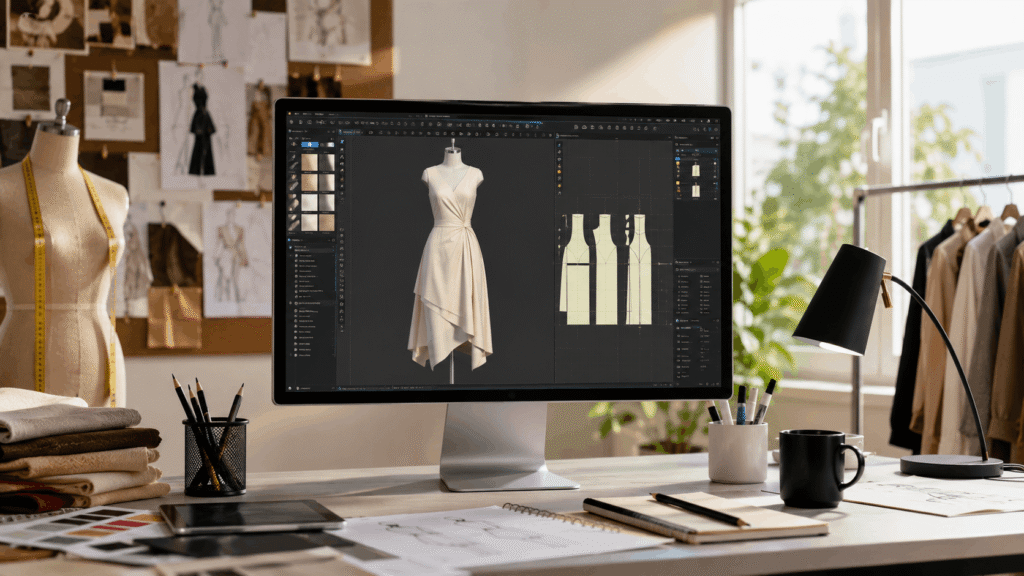
Unlike traditional fashion design methods that relied heavily on hand-drawn sketches, physical samples, and lengthy production timelines, today’s fashion design software enables professionals to create digital sketches, generate realistic 3D garments, develop production-ready patterns, simulate fabric behavior, optimize grading, collaborate with suppliers remotely, and even leverage artificial intelligence (AI) to automate repetitive design tasks. These capabilities are fundamentally reshaping how clothing collections are conceptualized, tested, manufactured, and brought to market.
The adoption of digital fashion technology has accelerated significantly over the past few years due to several converging factors. Brands are facing increasing pressure to shorten time-to-market while maintaining product quality and sustainability. Consumers now expect more frequent product launches, personalized designs, and environmentally responsible manufacturing practices. At the same time, advances in cloud computing, AI, 3D visualization, and virtual collaboration have made sophisticated fashion design software more accessible than ever before.
One of the most significant changes transforming the apparel industry is the widespread adoption of 3D fashion design. Rather than producing multiple physical prototypes for every garment, designers can now create highly realistic digital samples that accurately simulate fabric draping, stitching, movement, and fit. This dramatically reduces material waste, lowers development costs, minimizes shipping requirements, and enables design teams located across different countries to collaborate efficiently in real time. Digital product development has become a strategic advantage for companies seeking to improve speed, sustainability, and profitability.
Artificial intelligence is also redefining the future of fashion design. Modern software platforms increasingly incorporate AI-powered capabilities that assist with concept generation, automated pattern creation, garment visualization, material recommendations, fit optimization, and workflow automation. Instead of replacing human creativity, AI acts as an intelligent assistant, allowing designers to spend more time on innovation while reducing the manual workload associated with technical production tasks. As AI continues to mature throughout 2026, its integration into fashion software is expected to become a defining feature of next-generation apparel design.
Fashion design software today extends far beyond digital sketching. Comprehensive platforms support every stage of the product development lifecycle, including:
- Fashion illustration and concept creation
- Technical flat drawing
- Digital pattern making
- Pattern grading
- Marker optimization
- 3D garment simulation
- Fabric and material visualization
- Virtual fitting
- Product Lifecycle Management (PLM) integration
- Manufacturing preparation
- Supply chain collaboration
- Digital sampling
- AI-assisted design workflows
The diversity of available software means that different professionals require different solutions depending on their goals. Independent fashion designers often prioritize intuitive interfaces, affordability, and creative flexibility. Fashion startups typically seek scalable software that combines illustration, pattern development, and 3D visualization within a manageable budget. Apparel manufacturers require enterprise-grade CAD systems capable of integrating with automated cutting equipment and production management systems. Meanwhile, luxury fashion brands increasingly invest in digital product creation platforms that support both physical manufacturing and emerging digital fashion experiences.
Another important consideration when selecting fashion design software is workflow specialization. While some applications focus primarily on artistic creativity and fashion illustration, others specialize in technical engineering, industrial manufacturing, or enterprise collaboration.
| Software Category | Primary Purpose |
|---|---|
| Fashion Illustration Software | Sketching collections, technical flats, print design |
| CAD Pattern Software | Pattern drafting, grading, production preparation |
| 3D Fashion Design Software | Virtual garments, realistic simulations, digital sampling |
| Apparel Manufacturing Software | Factory workflows, cutting optimization, production planning |
| Fashion PLM Software | Product lifecycle management and collaboration |
| AI Fashion Design Software | Automated design assistance and workflow optimization |
The benefits of adopting professional fashion design software extend well beyond creative efficiency. Companies implementing digital workflows often experience measurable improvements in operational performance.
Key business benefits include:
- Faster product development cycles
- Reduced physical sampling costs
- Improved garment fit before production
- Better collaboration between global teams
- Lower material waste
- Increased manufacturing accuracy
- Enhanced sustainability initiatives
- Shorter time-to-market
- Greater product consistency
- Improved communication with suppliers and manufacturers
Sustainability has become another major driver behind the rapid adoption of advanced fashion technology. Traditional garment development often requires multiple rounds of physical prototypes, resulting in significant fabric waste, transportation costs, and carbon emissions. Modern 3D simulation platforms allow designers to evaluate garments digitally before producing physical samples, helping organizations reduce environmental impact while simultaneously lowering operational expenses. As environmental regulations and consumer expectations continue evolving, digital product development has become an essential component of sustainable fashion strategies.
The rise of digital fashion has also expanded the role of fashion design software beyond physical apparel. Digital garments are now being created for virtual influencers, gaming environments, augmented reality experiences, social media content, virtual fitting rooms, and metaverse applications. This convergence of fashion, entertainment, and technology has created entirely new opportunities for designers who possess expertise in advanced digital design platforms.
As competition intensifies across the global apparel industry, selecting the right fashion design software has become a strategic business decision rather than simply a technology purchase. Organizations must evaluate factors such as ease of use, AI capabilities, collaboration features, hardware requirements, software compatibility, enterprise integration, pricing models, scalability, and long-term return on investment. The ideal solution depends not only on current project requirements but also on future business growth and digital transformation objectives.
This comprehensive guide explores the Top 10 Fashion Design Software in the World in 2026, highlighting the industry’s leading platforms trusted by fashion designers, apparel manufacturers, luxury brands, fashion schools, and digital creators worldwide. From industry standards like Adobe Illustrator and CLO 3D to enterprise solutions such as Browzwear VStitcher, Lectra Modaris, Gerber AccuMark, EFI Optitex, and innovative newcomers including Style3D, this guide provides detailed insights into each platform’s strengths, features, pricing considerations, AI capabilities, ideal use cases, and competitive advantages.
Whether you are an aspiring fashion designer, an established apparel manufacturer, a fashion technology professional, or a business leader planning your organization’s digital transformation strategy, understanding the capabilities of today’s leading fashion design software will help you make informed investment decisions. As artificial intelligence, cloud collaboration, virtual prototyping, and sustainable manufacturing continue shaping the future of the fashion industry, the software platforms featured in this guide represent the technologies that are driving innovation and redefining how fashion products are designed, developed, and delivered across the world in 2026.
Before we venture further into this article, we would like to share who we are and what we do.
About 9cv9
9cv9 is a business tech startup based in Singapore and Asia, with a strong presence all over the world.
With over ten years of startup and business experience, and being highly involved in connecting with thousands of companies and startups, the 9cv9 team has listed some important and crucial software tools in this review.
If you like to get your company listed in our top B2B software reviews, check out our world-class 9cv9 Media and PR service and pricing plans here.
Top 10 Fashion Design Software To Know in 2026
- Adobe Illustrator
- CLO 3D
- Browzwear VStitcher
- Style3D
- EFI Optitex
- Lectra Modaris
- Gerber AccuMark
- Tukatech
- Audaces 360
- Marvelous Designer
1. Adobe Illustrator
Adobe Illustrator continues to hold its position as one of the most influential software platforms in the global fashion design industry in 2026. Recognized as the professional benchmark for vector-based apparel design, the platform has become an essential component of digital product development workflows across luxury fashion houses, sportswear manufacturers, fast-fashion retailers, textile producers, and independent fashion brands. From concept illustration to production-ready technical documentation, Illustrator enables fashion professionals to transform creative ideas into precise digital assets that support every stage of the product lifecycle.
The growing digital transformation of the fashion industry has further strengthened Illustrator’s importance. As fashion companies increasingly adopt AI-assisted design, 3D visualization, digital sampling, and collaborative cloud-based workflows, vector graphics remain the foundation upon which garment development is built. Technical flats, sewing specifications, grading guides, fabric prints, embroidery artwork, trims, packaging graphics, and production documentation continue to rely heavily on Illustrator’s scalable vector environment.
Industry hiring trends further demonstrate Illustrator’s dominance. Analysis of fashion design recruitment across major apparel markets indicates that Illustrator proficiency remains one of the most frequently requested technical competencies for designers entering or advancing within the industry. Fashion employers consistently view Adobe Illustrator expertise as a baseline requirement because it integrates seamlessly into manufacturing, merchandising, sourcing, and product development pipelines. This widespread adoption has positioned Illustrator not merely as a creative application but as a universal communication language between designers, technical developers, suppliers, and manufacturers worldwide.
Adobe Illustrator at a Glance
| Category | Details |
|---|---|
| Software Type | Professional Vector Graphics and Fashion Design Software |
| Primary Industry | Fashion Design, Apparel Manufacturing, Textile Design, Product Development |
| Best Known For | Technical Flats, Vector Illustrations, Pattern Design, Production Documentation |
| Primary Users | Fashion Designers, Technical Designers, Textile Designers, Product Developers |
| Deployment | Desktop with Creative Cloud Integration |
| Collaboration | Cloud Libraries, Shared Projects, Team Workflows |
| AI Capabilities | Adobe Firefly Integration, AI-Assisted Editing, Generative Creative Tools |
| Enterprise Adoption | Global Fashion Brands, Manufacturers, Design Agencies, Educational Institutions |
Why Adobe Illustrator Remains the Industry Standard
Unlike traditional illustration software that primarily focuses on artistic expression, Adobe Illustrator has evolved into a comprehensive fashion product development platform. Modern apparel companies use the software not only to create sketches but also to develop highly detailed production assets that can be shared directly with factories, merchandising teams, sourcing departments, and marketing divisions.
The software’s vector-based architecture allows every design element to remain infinitely scalable without losing quality. This capability is particularly valuable in fashion production, where a single design may appear on clothing labels, packaging, retail displays, digital commerce platforms, technical specification sheets, and large-format marketing materials.
Its compatibility with other Adobe Creative Cloud applications further strengthens productivity. Designers frequently move assets between Illustrator, Photoshop, InDesign, Lightroom, Substance 3D, and Firefly to create integrated fashion campaigns, product catalogs, packaging concepts, and digital marketing materials.
Adobe Illustrator’s Core Applications in Fashion Design
| Fashion Workflow Stage | Illustrator Application | Business Value |
|---|---|---|
| Concept Development | Fashion Sketches | Rapid visualization of garment ideas |
| Technical Design | Technical Flats | Manufacturing-ready garment specifications |
| Textile Design | Repeat Pattern Creation | Scalable fabric printing |
| Product Development | Bill of Materials (BOM) Documentation | Manufacturing consistency |
| Collection Planning | Line Sheets | Organized seasonal product planning |
| Branding | Labels, Logos, Packaging | Consistent visual identity |
| Factory Communication | Construction Callouts and Technical Drawings | Reduced production errors |
| Digital Merchandising | Product Graphics | Faster online product launches |
Comprehensive Fashion Design Capabilities
Adobe Illustrator supports virtually every visual component required during apparel development. Fashion professionals commonly use the software to produce:
• Garment technical flats
• Construction diagrams
• Specification sheets
• Fabric repeat patterns
• Textile motifs
• Print placements
• Embroidery artwork
• Fashion illustrations
• Accessory designs
• Footwear graphics
• Label artwork
• Packaging concepts
• Swing tags
• Production documentation
• Collection presentations
These capabilities enable design teams to standardize workflows across multiple product categories while maintaining production accuracy and visual consistency.
AI Innovation in Illustrator 2026
One of the most significant developments in Illustrator 2026 is the continued expansion of Adobe Firefly integration. Rather than replacing designers, Firefly functions as an intelligent creative assistant that accelerates repetitive design tasks while preserving professional control over final outputs.
Designers can use conversational AI-powered commands to automate complex vector modifications, simplify editing workflows, generate creative variations, and experiment with new visual concepts much faster than traditional manual methods.
Another notable enhancement is the Turntable feature, which enables editable multi-angle previews from two-dimensional artwork. This provides fashion designers with improved visualization capabilities during concept validation, helping teams review garments from different perspectives before advancing to 3D sampling or physical prototyping. Adobe continues expanding AI-powered creative workflows while maintaining compatibility with existing production pipelines.
AI Features Transforming Fashion Design
| AI Feature | Practical Fashion Application | Productivity Benefit |
|---|---|---|
| Adobe Firefly Integration | AI-assisted vector editing | Faster creative iteration |
| Conversational Editing | Natural language design commands | Simplified editing workflows |
| Turntable Visualization | Multi-angle garment previews | Improved concept validation |
| Generative Creative Tools | Alternative artwork exploration | Enhanced creative experimentation |
| Cloud Collaboration | Shared design environments | Faster cross-functional teamwork |
Technical Requirements for Illustrator 2026
Adobe Illustrator 2026 has been optimized for modern hardware to support increasingly sophisticated vector artwork, AI-powered creative features, and collaborative workflows.
Current system requirements include:
| Component | Recommended Specification |
|---|---|
| Processor | Multi-core Intel, AMD, or Apple Silicon processor |
| Operating System | Windows 10 or Windows 11, macOS Ventura, Sonoma, Sequoia, or later |
| Memory | Minimum 8 GB RAM, 16 GB or more recommended |
| Graphics | Dedicated GPU with OpenGL or Metal support |
| Storage | SSD recommended with additional installation space |
| Internet | Required for Creative Cloud licensing and online AI features |
Higher-end workstations with additional RAM and dedicated graphics hardware provide noticeably smoother performance when working with complex fashion collections containing multiple artboards, layered technical drawings, extensive pattern libraries, and AI-assisted creative workflows.
Subscription Options
Adobe continues offering Illustrator through subscription-based licensing designed for individual professionals, educational users, and enterprise organizations.
| Subscription Option | Intended User |
|---|---|
| Individual Illustrator Plan | Freelance designers and independent professionals |
| Creative Cloud Pro | Multi-disciplinary creative teams |
| Business and Enterprise Plans | Large organizations requiring centralized management |
| Student and Education Plans | Educational institutions and fashion schools |
Creative Cloud subscriptions also provide access to cloud storage, collaborative asset libraries, generative AI credits, software updates, and integration with the broader Adobe creative ecosystem.
Ideal Users
Adobe Illustrator serves a wide spectrum of professionals throughout the fashion value chain.
| User Group | Primary Usage |
|---|---|
| Fashion Designers | Garment design and collection creation |
| Technical Designers | Production documentation |
| Textile Designers | Surface pattern development |
| Product Developers | Product specification management |
| Apparel Manufacturers | Factory communication |
| Fashion Startups | Brand identity and product design |
| Luxury Fashion Houses | High-end collection development |
| Sportswear Brands | Performance apparel graphics |
| Fashion Students | Industry-standard skill development |
| Freelance Designers | Client project delivery |
Strategic Advantages for Fashion Businesses
Adobe Illustrator offers far more than illustration capabilities. For modern fashion businesses, it functions as a central platform connecting creativity with manufacturing efficiency.
Its benefits include:
| Business Advantage | Organizational Impact |
|---|---|
| Industry Standardization | Easier collaboration across global suppliers |
| Production Accuracy | Reduced manufacturing revisions |
| AI-Assisted Productivity | Faster product development cycles |
| Cloud Collaboration | Improved team coordination |
| Cross-Platform Compatibility | Integration with broader creative workflows |
| Scalable Vector Graphics | Consistent output across all media |
| Long-Term Industry Adoption | Reliable professional investment |
As digital fashion workflows continue evolving in 2026, Adobe Illustrator remains one of the most valuable software investments for fashion professionals. Its combination of precision vector tools, AI-powered creative assistance, collaborative cloud capabilities, and deep integration with manufacturing workflows ensures that it continues to play a central role in transforming fashion concepts into commercially successful products.
2. CLO 3D
CLO 3D has established itself as one of the world’s leading digital garment simulation and 3D fashion visualization platforms, transforming how apparel companies design, develop, evaluate, and commercialize products in 2026. As the global fashion industry accelerates its transition toward digital product creation, virtual prototyping, and sustainable manufacturing, CLO 3D has become an indispensable solution for fashion brands seeking to reduce development costs, shorten product cycles, and minimize reliance on physical garment samples.
Widely adopted by international apparel companies, luxury fashion houses, sportswear manufacturers, outdoor brands, and fashion retailers, CLO 3D enables designers to convert traditional 2D patterns into highly realistic digital garments that accurately simulate fabric behavior, garment fit, stitching, and material performance before physical production begins. This digital-first workflow significantly streamlines product development by allowing stakeholders to evaluate garments virtually, collaborate remotely, and make informed design decisions much earlier in the production lifecycle.
The increasing demand for sustainability has further elevated CLO 3D’s importance across the fashion ecosystem. Physical sampling has historically generated considerable material waste, transportation costs, and lengthy approval cycles. By replacing multiple rounds of physical prototypes with photorealistic digital samples, CLO 3D enables fashion companies to reduce waste, accelerate approvals, improve communication with manufacturers, and support environmental sustainability initiatives. These capabilities have positioned the platform as one of the most influential technologies supporting digital transformation throughout the apparel industry.
Overview of CLO 3D
| Category | Details |
|---|---|
| Software Type | 3D Fashion Design and Garment Simulation Platform |
| Primary Industry | Fashion Design, Apparel Manufacturing, Product Development |
| Core Function | Digital Garment Creation and Virtual Sampling |
| Best Known For | Real-Time 3D Garment Simulation, Fabric Physics, Digital Prototyping |
| Primary Users | Fashion Designers, Pattern Makers, Technical Designers, Product Developers |
| Deployment | Desktop Software with Cloud Collaboration |
| AI Capabilities | AI-Assisted Pattern Processing, Fit Simulation, Workflow Automation |
| Enterprise Integration | Product Lifecycle Management (PLM) and ERP Connectivity |
Why CLO 3D Has Become an Industry Leader
Modern apparel development increasingly depends on digital workflows that reduce production costs while improving speed-to-market. CLO 3D addresses this need by allowing designers to visualize garments in three-dimensional environments using production-ready digital patterns instead of waiting for factories to manufacture physical samples.
The platform accurately simulates fabric weight, stretch, stiffness, drape, wrinkles, sewing tension, gravity, and garment movement, enabling product teams to identify construction issues before production begins. This capability helps brands reduce costly revisions, minimize sampling expenses, and improve communication between design teams, technical developers, sourcing departments, and manufacturing partners.
Many global fashion organizations have integrated CLO 3D into their digital product creation strategies, using virtual garments for internal approvals, merchandising reviews, e-commerce visualization, digital marketing, and manufacturing preparation. Industry discussions and CLO’s own customer references indicate adoption by numerous leading global apparel brands.
Primary Applications in Fashion Product Development
| Product Development Stage | CLO 3D Application | Business Benefit |
|---|---|---|
| Concept Development | Digital Garment Visualization | Faster creative evaluation |
| Pattern Development | Pattern-to-3D Conversion | Immediate visual validation |
| Fabric Testing | Realistic Material Simulation | Better material selection |
| Fit Evaluation | Avatar-Based Fit Analysis | Improved sizing consistency |
| Design Review | Photorealistic Rendering | Faster stakeholder approvals |
| Sample Reduction | Virtual Sampling | Lower development costs |
| Product Merchandising | Digital Product Presentation | Earlier sales planning |
| E-commerce | Digital Garment Assets | Reduced product photography requirements |
Comprehensive Feature Set
CLO 3D supports an extensive range of digital fashion development activities, including:
• Real-time 3D garment simulation
• Pattern-based garment construction
• Advanced fabric physics simulation
• Multi-layer garment visualization
• Digital sewing and stitching
• Fabric texture mapping
• Trim and accessory placement
• Avatar customization
• Motion and animation testing
• Photorealistic rendering
• Digital fashion presentations
• Virtual sample creation
• Garment grading visualization
• Manufacturing communication
These capabilities allow design teams to validate both aesthetics and functionality before committing to physical production.
Real-Time Digital Workflow
One of CLO 3D’s defining strengths is its synchronized 2D-to-3D workflow. Designers can modify garment patterns within the 2D workspace while immediately observing corresponding changes in the three-dimensional garment simulation. This live synchronization dramatically shortens development cycles by eliminating repetitive export-import processes and enabling rapid design iteration.
Rather than waiting for physical prototypes to evaluate adjustments, product teams can instantly assess silhouette, proportion, seam placement, fabric behavior, and garment balance within a virtual environment. This significantly improves decision-making throughout product development.
AI and Intelligent Automation
CLO 3D continues expanding its AI-assisted capabilities to streamline complex apparel development processes. The platform incorporates intelligent tools that automate portions of pattern processing, garment visualization, and fit analysis while preserving designer control over creative decisions.
Notable capabilities include AI-assisted pattern flattening, automated grading simulations across multiple customizable body avatars, and intelligent workflow enhancements that reduce manual technical adjustments. These technologies help fashion teams evaluate garments more efficiently across multiple body types, improving fit consistency while accelerating product approvals.
The software also integrates with widely used enterprise fashion systems, including Product Lifecycle Management (PLM) and Enterprise Resource Planning (ERP) platforms such as Centric PLM and AIMS360, supporting seamless information exchange across design, sourcing, merchandising, and manufacturing operations.
AI and Workflow Innovation
| Feature | Practical Application | Business Impact |
|---|---|---|
| AI Pattern Processing | Faster pattern optimization | Reduced manual workload |
| Automated Fit Simulation | Multi-avatar garment evaluation | Better size consistency |
| Real-Time Pattern Updates | Instant 3D visualization | Faster design iteration |
| Fabric Physics Engine | Accurate material behavior | Improved production confidence |
| PLM Integration | Centralized product information | Enhanced collaboration |
| ERP Connectivity | Manufacturing workflow synchronization | Operational efficiency |
Business Benefits of Digital Sampling
Virtual sampling has become one of the most valuable capabilities offered by CLO 3D. Traditional fashion product development often requires multiple rounds of physical sample production involving shipping, material consumption, labor, and repeated revisions.
By replacing many of these physical iterations with digital prototypes, fashion companies can substantially reduce development costs while improving collaboration between geographically distributed teams.
Industry experience suggests that organizations implementing comprehensive digital sampling workflows may reduce physical sampling rounds by approximately 50% to 80%, depending on product complexity and organizational adoption. These efficiencies contribute to faster collection launches, lower environmental impact, and improved profitability.
Pricing Structure
CLO offers flexible licensing options designed for independent professionals, educational institutions, and enterprise organizations.
| License Type | Intended Users |
|---|---|
| Individual Monthly Plan | Freelance designers and independent professionals |
| Individual Annual Plan | Professionals seeking lower annual costs |
| Student License | Fashion students and academic users |
| Business License | Fashion brands and apparel manufacturers |
| Enterprise Agreement | Large multinational organizations |
Current pricing includes an individual subscription of approximately US$50 per month or US$450 annually. Eligible students receive discounted pricing of approximately US$25 per month or US$225 annually, while enterprise licensing is provided through customized commercial agreements.
System Requirements for CLO 3D (2026)
To support increasingly sophisticated garment simulations and photorealistic rendering, CLO 3D has updated its hardware recommendations for professional users.
Windows Requirements
| Component | Minimum Requirement | Recommended Configuration |
|---|---|---|
| Operating System | Windows 11 (24H2) | Windows 11 (25H2) |
| Processor | AMD Ryzen 3000 or Intel 8th Generation | AMD Ryzen 9000 or Intel Core i9 14th Generation |
| Memory | 16 GB RAM | 64 GB RAM |
| Graphics | GPU with minimum 4 GB VRAM | NVIDIA RTX 4000 Series or RTX Ada/Pro Blackwell with 12 GB+ VRAM |
| Storage | SSD with 10 GB free space | SSD with 20 GB free space |
macOS Requirements
| Component | Minimum Requirement | Recommended Configuration |
|---|---|---|
| Processor | Apple Silicon M1 | Apple Silicon M2, M3, M4, or M5 |
| Operating System | macOS Sonoma | macOS Sequoia or Tahoe |
| Memory | 16 GB RAM | Up to 64 GB RAM |
| Storage | SSD with 10 GB free space | SSD with 20 GB free space |
Professional workstations equipped with high-performance CPUs, dedicated NVIDIA RTX graphics processors, and large memory capacities provide significantly smoother experiences when handling complex garments, animation sequences, layered materials, and high-resolution rendering.
Ideal Users
CLO 3D serves professionals across nearly every stage of apparel product development.
| User Group | Primary Application |
|---|---|
| Fashion Designers | Digital garment creation |
| Pattern Makers | Pattern validation and optimization |
| Technical Designers | Garment construction verification |
| Product Developers | Virtual sampling and approvals |
| Apparel Manufacturers | Factory communication |
| Sportswear Brands | Performance apparel development |
| Luxury Fashion Houses | Collection visualization |
| Fashion Startups | Cost-efficient product development |
| Fashion Schools | Industry-standard digital education |
| Freelance Fashion Consultants | Client presentations and virtual prototyping |
Strategic Advantages for Fashion Businesses
CLO 3D has evolved beyond a visualization application into a comprehensive digital product creation platform supporting the modernization of global apparel development.
Its strategic advantages include:
| Competitive Advantage | Business Outcome |
|---|---|
| Virtual Product Development | Faster design approval cycles |
| Reduced Physical Sampling | Lower development costs |
| Accurate Fabric Simulation | Better production readiness |
| AI-Assisted Workflows | Improved productivity |
| Enterprise Integration | Connected digital fashion ecosystem |
| Photorealistic Visualization | Enhanced merchandising and e-commerce assets |
| Sustainable Product Development | Reduced material waste and carbon footprint |
As digital transformation reshapes the global fashion industry, CLO 3D continues to strengthen its position as one of the world’s premier fashion technology platforms. Its combination of realistic garment simulation, AI-enhanced workflows, enterprise integration, and virtual sampling capabilities enables fashion businesses to design smarter, collaborate faster, reduce waste, and accelerate product innovation in an increasingly competitive global marketplace.
3. Browzwear VStitcher
Browzwear VStitcher has established itself as one of the world’s most advanced enterprise-grade 3D apparel design and digital product development platforms in 2026. Unlike many fashion design applications that primarily emphasize creative visualization, VStitcher is engineered to support the entire apparel development lifecycle, from digital garment creation and technical fit validation to production-ready documentation and enterprise workflow integration. Its combination of highly accurate fabric physics, AI-powered fit intelligence, and extensive Product Lifecycle Management (PLM) connectivity has made it a preferred solution for global apparel brands, retailers, sourcing organizations, and manufacturing partners seeking to modernize digital product creation.
As the fashion industry continues to accelerate digital transformation, organizations increasingly require software capable of replacing traditional physical sampling with highly accurate digital twins. Browzwear VStitcher fulfills this need by enabling designers, technical developers, and manufacturers to collaborate using realistic virtual garments that closely replicate the behavior of physical apparel. This capability helps reduce development costs, shorten product timelines, improve manufacturing accuracy, and support sustainability initiatives through significant reductions in material waste and sample production.
Unlike standalone visualization tools, VStitcher operates as a core component of a connected digital apparel ecosystem. It integrates seamlessly with cloud collaboration platforms, enterprise PLM systems, ERP solutions, digital asset management platforms, and advanced fabric digitization technologies, making it particularly attractive for organizations managing large-scale global apparel production.
Browzwear VStitcher at a Glance
| Category | Details |
|---|---|
| Software Type | Enterprise 3D Apparel Design and Product Development Platform |
| Primary Industry | Fashion Design, Apparel Manufacturing, Retail, Product Development |
| Core Function | Digital Garment Development and Virtual Product Creation |
| Best Known For | Technical Fit Validation, Fabric Physics, Digital Twins |
| Primary Users | Technical Designers, Pattern Engineers, Product Developers, Manufacturers |
| Deployment | Desktop Platform with Enterprise Cloud Integration |
| AI Capabilities | AI Fit Intelligence, Pattern Automation, Digital Workflow Optimization |
| Enterprise Focus | Large Fashion Brands, Retailers, Global Manufacturing Networks |
Why Browzwear VStitcher Is a Leading Enterprise Solution
Browzwear VStitcher distinguishes itself by prioritizing engineering precision alongside creative design. Rather than functioning solely as a garment visualization platform, it enables organizations to validate fit, construction quality, material behavior, production readiness, and manufacturing consistency before physical samples are created.
Its advanced garment simulation engine accurately reproduces fabric stretch, drape, weight, compression, seam behavior, and garment movement under real-world conditions. This enables technical teams to identify construction issues, optimize garment fit, and validate production specifications long before factory sampling begins.
For organizations managing thousands of product styles annually, this digital-first workflow reduces production risk while improving collaboration between design, merchandising, sourcing, technical development, and manufacturing teams. Browzwear states that organizations using its platform can achieve substantially higher first-time-right sample rates while reducing physical sample production and accelerating time-to-market.
Core Applications Across Apparel Development
| Product Development Stage | VStitcher Application | Business Benefit |
|---|---|---|
| Digital Garment Creation | 3D Pattern-Based Design | Faster product visualization |
| Technical Development | Construction Validation | Improved production accuracy |
| Fit Analysis | Multi-Avatar Fit Evaluation | Better sizing consistency |
| Fabric Engineering | Physics-Based Material Simulation | Realistic garment behavior |
| Sample Replacement | Digital Twin Generation | Reduced physical sampling |
| Manufacturing Preparation | Production Tech Packs | Factory-ready documentation |
| Collection Review | Enterprise Collaboration | Faster stakeholder approvals |
| Production Integration | PLM and ERP Synchronization | Streamlined digital workflows |
Comprehensive Fashion Development Capabilities
Browzwear VStitcher supports nearly every technical aspect of apparel product development, including:
• Pattern-based garment construction
• Advanced 3D garment simulation
• Digital twin generation
• Fabric physics simulation
• Technical fit validation
• Pressure and tension analysis
• Size grading visualization
• Production-ready technical documentation
• Avatar customization
• Multi-layer garment simulation
• Trim and accessory placement
• Digital sampling
• Collection visualization
• Manufacturing communication
• Enterprise collaboration
These capabilities allow organizations to transition from traditional sample-driven development toward highly efficient digital product creation processes.
Advanced Fabric Physics Simulation
One of VStitcher’s greatest strengths is its sophisticated physics simulation engine. Rather than approximating garment appearance, the platform calculates realistic interactions between fabric properties, gravity, stitching, body movement, and garment construction.
When paired with Browzwear’s Fabric Analyzer (FAB) hardware system, physical material characteristics—including stretch, bending, thickness, shear, and weight—are digitally captured and translated into highly accurate virtual fabric behavior. This produces digital garments that closely replicate real-world performance, allowing organizations to validate materials before manufacturing begins.
Technical Fit Validation and Pressure Mapping
VStitcher provides advanced technical evaluation tools that extend beyond traditional garment visualization.
Its Tension and Pressure Mapping capabilities visually identify areas where garments experience excessive stress, compression, or stretching on digital avatars. Technical designers can immediately locate problematic construction zones, optimize seam placement, adjust ease allowances, and improve garment comfort before physical prototypes are produced.
These engineering-oriented tools are particularly valuable for performance apparel, sportswear, workwear, uniforms, and premium fashion products where precise fit directly influences product quality and customer satisfaction. Browzwear highlights these simulation tools as key components of its AI-powered fit validation workflow.
Enterprise Workflow Integration
Unlike many standalone fashion design applications, Browzwear VStitcher is designed for enterprise-scale deployment.
The platform integrates with leading Product Lifecycle Management and enterprise systems, enabling organizations to synchronize digital garments with production workflows, Bills of Materials (BOMs), technical specifications, sourcing information, and manufacturing documentation.
Common enterprise integrations include:
| Enterprise System | Integration Purpose | Business Impact |
|---|---|---|
| Centric PLM | Product lifecycle management | Centralized product information |
| PTC FlexPLM | Technical product development | Improved workflow consistency |
| BeProduct | Fashion product management | Faster collaboration |
| WFX | Apparel supply chain management | Manufacturing synchronization |
| ERP Platforms | Production planning | Operational efficiency |
| Browzwear Open Platform | API-driven enterprise automation | Connected digital ecosystem |
These integrations reduce manual data entry while improving collaboration across globally distributed product development teams.
AI and Intelligent Product Development
Artificial intelligence has become an increasingly important component of Browzwear’s digital product creation platform.
AI-powered capabilities include intelligent fit validation, automated grading support, digital workflow optimization, pattern assistance, and enhanced simulation technologies that accelerate technical decision-making without replacing designer expertise.
The platform combines AI-generated insights with realistic garment simulation, enabling product teams to evaluate designs more rapidly while maintaining engineering precision throughout development. Browzwear continues expanding AI functionality across its broader digital apparel ecosystem.
AI and Enterprise Innovation Matrix
| Feature | Practical Application | Business Value |
|---|---|---|
| AI Fit Intelligence | Automated fit evaluation | Improved sizing accuracy |
| Fabric Physics Simulation | Realistic material behavior | Better production confidence |
| Tension Mapping | Stress visualization | Optimized garment construction |
| Digital Twin Technology | Virtual production approval | Reduced sample dependency |
| Open Platform APIs | Enterprise automation | Seamless system integration |
| Cloud Collaboration | Multi-team product reviews | Faster approvals |
Pricing Structure
Following Browzwear’s self-service restructuring introduced in 2026, the platform now offers several subscription tiers for independent professionals, small teams, and enterprise organizations.
| Plan | Intended Users |
|---|---|
| Freelancer | Independent designers |
| Freelancer Plus | Advanced individual professionals |
| Teams | Small design teams of up to three users |
| Enterprise | Large global organizations |
Current publicly available pricing includes:
• Freelancer: US$75 per month or US$750 annually
• Freelancer Plus: US$150 per month or US$1,500 annually
• Teams: US$3,950 annually for up to three named users
• Enterprise: Custom pricing based on deployment requirements
Enterprise implementations may also include additional investments for onboarding, professional training, PLM integration, workflow customization, and global rollout depending on organizational complexity.
System Requirements
Browzwear recommends deploying VStitcher on dedicated physical workstations rather than virtual machines to ensure optimal graphics performance and simulation accuracy.
Windows Requirements
| Component | Recommended Specification |
|---|---|
| Operating System | Windows 11 |
| Processor | Intel Core i7 or Core i9 8-core processor |
| Memory | 16 GB RAM or higher |
| Storage | 256 GB SSD minimum |
| Graphics | NVIDIA GTX or RTX GPU with at least 4 GB VRAM and OpenGL 4.3 |
macOS Requirements
| Component | Recommended Specification |
|---|---|
| Hardware | MacBook Pro, iMac, or Mac Pro |
| Processor | Intel Core i7/i9 or Apple Silicon M1, M2, or M3 |
| Memory | 16 GB RAM or higher |
| Graphics | AMD Radeon graphics with at least 2 GB VRAM |
Dedicated graphics hardware is strongly recommended, while systems relying solely on integrated graphics are generally not suitable for professional garment simulation workloads. Browzwear’s Help Center provides detailed compatibility guidance for current releases.
Ideal Users
| User Group | Primary Application |
|---|---|
| Technical Designers | Fit validation and construction analysis |
| Pattern Engineers | Pattern optimization |
| Product Developers | Digital sampling |
| Apparel Manufacturers | Production preparation |
| Global Fashion Brands | Enterprise product development |
| Retail Product Teams | Collection approvals |
| Sportswear Companies | Performance apparel engineering |
| Luxury Fashion Houses | Premium product development |
| Supply Chain Partners | Manufacturing collaboration |
| Enterprise Digital Teams | Connected product lifecycle management |
Strategic Advantages for Fashion Enterprises
Browzwear VStitcher has evolved into far more than a 3D garment visualization tool. It serves as a comprehensive digital product creation platform that bridges creative design, engineering validation, manufacturing preparation, and enterprise collaboration.
Its key strategic advantages include:
| Competitive Advantage | Organizational Benefit |
|---|---|
| Digital Twin Technology | Accurate virtual product validation |
| Fabric Physics Engine | Reliable production simulation |
| Technical Fit Analysis | Improved garment quality |
| Enterprise PLM Integration | Connected product lifecycle |
| AI-Powered Fit Intelligence | Faster technical decision-making |
| Pressure and Tension Mapping | Enhanced engineering precision |
| Reduced Physical Sampling | Lower development costs and improved sustainability |
As digital transformation continues reshaping the apparel industry, Browzwear VStitcher remains one of the most comprehensive enterprise platforms for digital garment engineering. Its combination of realistic physics simulation, AI-assisted fit intelligence, enterprise integration capabilities, and production-focused workflows enables global fashion organizations to accelerate development cycles, improve product quality, reduce sample dependency, and build highly efficient digital product creation ecosystems.
4. Style3D
Style3D, developed by Linctex, has rapidly emerged as one of the most innovative AI-powered digital fashion platforms in the global apparel technology market in 2026. Positioned at the intersection of artificial intelligence, high-performance 3D simulation, cloud collaboration, and digital fashion production, Style3D enables fashion brands to transform traditional apparel development into an intelligent, fully digital workflow. The platform has gained significant momentum among apparel manufacturers, fashion retailers, digital fashion creators, and global supply chain organizations seeking to accelerate product development while reducing physical sampling and production costs.
Unlike conventional 3D garment software that focuses primarily on simulation, Style3D integrates generative artificial intelligence, cloud-native collaboration, GPU-accelerated rendering, and production-ready garment engineering into a unified ecosystem. This allows designers to move seamlessly from initial concept sketches to highly realistic digital garments while maintaining manufacturing precision and supporting enterprise-scale collaboration across geographically distributed teams.
The growing adoption of AI-assisted design and digital product creation has further strengthened Style3D’s position within the fashion industry. As apparel companies increasingly pursue sustainability, faster product launches, and more agile supply chains, Style3D provides an efficient digital-first environment capable of replacing numerous physical prototypes with photorealistic virtual garments. This contributes to lower material consumption, shorter development cycles, and improved communication between designers, product developers, manufacturers, and merchandising teams.
Style3D at a Glance
| Category | Details |
|---|---|
| Software Type | AI-Powered 3D Fashion Design and Digital Product Creation Platform |
| Primary Industry | Fashion Design, Apparel Manufacturing, Digital Fashion, Retail |
| Core Function | AI-Assisted Garment Design and Virtual Product Development |
| Best Known For | Sketch-to-3D Generation, GPU Simulation, Cloud Collaboration |
| Primary Users | Fashion Designers, Pattern Makers, Technical Designers, Digital Artists |
| Deployment | Desktop Software with Cloud-Based Collaboration |
| AI Capabilities | Sketch-to-Pattern AI, Generative Design, AI Rendering |
| Enterprise Focus | Fashion Brands, Manufacturers, Retailers, Design Studios |
Why Style3D Is Becoming a Global Fashion Technology Leader
Style3D has differentiated itself by combining advanced artificial intelligence with highly accurate garment simulation and cloud-based collaboration. Rather than relying solely on manual digital pattern creation, the platform leverages AI to accelerate garment generation, enabling designers to transform sketches, concepts, and written prompts into editable three-dimensional garments.
This significantly reduces repetitive manual work while allowing designers to focus on creativity, fit refinement, material selection, and product innovation. The platform simultaneously supports technical apparel development by preserving production-ready pattern structures and realistic fabric behavior throughout the design process.
Its cloud-native architecture further enables design teams, suppliers, manufacturers, and merchandising departments to collaborate in real time regardless of geographic location, making Style3D particularly valuable for multinational apparel organizations operating complex global supply chains.
Primary Applications Across Fashion Development
| Product Development Stage | Style3D Application | Business Benefit |
|---|---|---|
| Concept Development | AI Sketch-to-Pattern Generation | Faster creative ideation |
| Garment Design | Real-Time 3D Apparel Modeling | Accelerated design workflows |
| Pattern Development | Pattern Editing and Validation | Improved technical accuracy |
| Fabric Visualization | Physics-Based Material Simulation | Better material selection |
| Virtual Sampling | Digital Garment Prototypes | Reduced physical sample production |
| Product Marketing | Photorealistic Rendering | Faster e-commerce asset creation |
| Supply Chain Collaboration | Cloud-Based Design Reviews | Improved communication |
| Manufacturing Preparation | Production-Ready Digital Assets | Streamlined factory workflows |
Comprehensive Fashion Design Capabilities
Style3D provides an extensive collection of tools supporting every major stage of digital apparel development, including:
• AI-assisted garment generation
• Sketch-to-pattern conversion
• Pattern engineering
• Real-time garment simulation
• Fabric physics simulation
• Digital avatar fitting
• Multi-layer garment construction
• Photorealistic rendering
• Digital fashion presentations
• Cloud collaboration
• Pattern grading
• Technical garment documentation
• Marketing image generation
• Virtual sampling
• Manufacturing-ready exports
These capabilities allow organizations to replace fragmented software workflows with an integrated digital product creation platform that serves both creative and technical teams.
AI-Powered Design Innovation
Artificial intelligence represents one of Style3D’s most significant competitive advantages. The platform incorporates AI-driven technologies that accelerate apparel development while maintaining engineering precision and garment realism.
Its Sketch-to-Pattern functionality enables designers to generate editable three-dimensional garments from hand-drawn sketches, reference images, or natural language prompts. The resulting garments retain realistic construction characteristics and fabric behavior, dramatically reducing the time required to produce initial design concepts.
Style3D also integrates automated modeling technologies such as Auto Rig and Auto Quad Remesh, enabling designers to generate clean, production-quality polygon topology suitable for animation, visualization, gaming, digital fashion, and manufacturing workflows. The platform supports export to widely used formats including FBX, OBJ, USD, and Alembic, improving compatibility across digital production pipelines. Style3D highlights these AI-assisted capabilities as core productivity enhancements for modern fashion development.
AI and Automation Matrix
| AI Feature | Practical Application | Business Value |
|---|---|---|
| Sketch-to-Pattern AI | Converts sketches into editable garments | Faster concept development |
| Prompt-Based Design | AI-generated garment creation | Enhanced creative efficiency |
| Auto Rig | Automated garment rigging | Improved animation workflows |
| Auto Quad Remesh | Optimized mesh generation | Cleaner production assets |
| AI Rendering | Photorealistic visualization | Faster marketing content creation |
| Cloud AI Collaboration | Shared digital design environments | Improved global teamwork |
GPU-Accelerated Performance
Style3D is built around a GPU-first architecture optimized for high-speed garment simulation and real-time rendering. Its proprietary cloth simulation engine takes advantage of modern NVIDIA RTX graphics hardware to deliver highly responsive virtual garment behavior with minimal latency.
This GPU acceleration enables designers to work with complex garments, multiple fabric layers, high-resolution textures, and photorealistic rendering while maintaining interactive editing performance.
Professional users handling large digital collections or producing 4K marketing assets benefit significantly from higher-end RTX graphics cards with expanded video memory. Style3D recommends RTX-class GPUs for optimal simulation performance and highlights the performance gains achieved with RTX 4070, RTX 4080, and RTX 4090 hardware.
Cloud Collaboration and Digital Supply Chains
One of Style3D’s defining strengths is its cloud-based collaborative environment.
Rather than relying on traditional file transfers between design teams and manufacturing partners, Style3D enables centralized management of digital garments, fabrics, avatars, and technical assets within an integrated cloud ecosystem.
Designers, suppliers, merchandising teams, and production partners can simultaneously review garments, evaluate revisions, approve styles, and exchange production-ready assets through a shared digital workspace. This greatly improves transparency throughout global apparel supply chains while reducing communication delays and version control issues.
Pricing Structure
Style3D offers flexible subscription models designed for individual designers, creative agencies, and enterprise organizations.
| License Type | Intended Users |
|---|---|
| Individual Rental | Freelancers and independent designers |
| Annual Individual Plan | Long-term professional users |
| Studio License | Design studios and creative agencies |
| Enterprise Deployment | Global fashion brands and manufacturers |
| Cloud AI Services | Additional AI-powered collaboration tools |
Publicly available pricing includes individual subscriptions starting at approximately US$35 per month or US$248 annually. Professional studio licenses generally range between US$1,299 and US$1,499 annually, while enterprise deployments begin around US$10,000 per year depending on implementation scope, API customization, cloud services, and organizational requirements. Additional AI cloud tools are available as optional subscriptions.
System Requirements
Style3D is designed to leverage modern workstation hardware capable of supporting advanced physics simulation and AI-assisted rendering.
Windows Workstation Requirements
| Component | Recommended Specification |
|---|---|
| Graphics | NVIDIA RTX 3050 minimum; RTX 4070, 4080, or 4090 recommended |
| Processor | Intel Core i7 or AMD Ryzen 9 |
| Memory | 32 GB RAM minimum; 64 GB DDR5 recommended |
| Storage | High-speed SSD |
| Rendering | GPU-accelerated real-time simulation |
macOS Requirements
| Component | Recommended Specification |
|---|---|
| Processor | Apple Silicon M-series |
| Operating System | Current supported macOS versions |
| Memory | 32 GB to 64 GB RAM |
| Rendering | Cloud-assisted rendering for intensive workloads |
Style3D emphasizes GPU performance as the most important factor affecting simulation speed, with RTX-series graphics delivering substantial improvements in rendering efficiency and garment responsiveness.
Ideal Users
| User Group | Primary Application |
|---|---|
| Fashion Designers | AI-assisted garment creation |
| Technical Designers | Pattern engineering |
| Pattern Makers | Production-ready pattern development |
| Digital Fashion Artists | Virtual apparel production |
| Apparel Manufacturers | Digital sampling |
| Fashion Retailers | Product visualization |
| Design Studios | Commercial garment development |
| E-commerce Teams | Marketing asset generation |
| Enterprise Fashion Brands | End-to-end digital product creation |
| Supply Chain Partners | Collaborative product development |
Strategic Advantages for Fashion Businesses
Style3D has evolved into a comprehensive AI-powered digital fashion platform that combines creative innovation, technical garment engineering, and enterprise collaboration within a unified ecosystem.
Its key advantages include:
| Competitive Advantage | Business Outcome |
|---|---|
| AI Sketch-to-Pattern Generation | Accelerated apparel design |
| GPU-Based Simulation | Faster and more realistic garment visualization |
| Cloud Collaboration | Improved global product development |
| Photorealistic Rendering | Enhanced digital merchandising |
| Automated Technical Modeling | Production-ready digital assets |
| Multi-Format Export | Broad compatibility across production pipelines |
| Enterprise Scalability | Supports global apparel organizations |
As artificial intelligence continues to reshape the global fashion industry, Style3D has positioned itself among the most forward-looking digital apparel platforms available in 2026. Its combination of AI-driven garment generation, real-time GPU simulation, cloud-native collaboration, and enterprise-ready scalability enables fashion companies to accelerate innovation, improve operational efficiency, reduce physical sampling, and create increasingly intelligent digital product development workflows.
5. EFI Optitex
EFI Optitex has earned a reputation as one of the most technically sophisticated computer-aided design (CAD) platforms for apparel manufacturing in 2026. Unlike software that primarily targets creative fashion illustration or conceptual garment visualization, Optitex is purpose-built to connect digital garment development directly with industrial manufacturing processes. Its comprehensive suite of pattern engineering, grading, marker making, fabric optimization, and production planning tools enables fashion companies to transition seamlessly from design to factory-ready production while maintaining exceptional accuracy throughout the apparel development lifecycle.
The platform is widely adopted by apparel manufacturers, technical design departments, fashion brands, sourcing organizations, and industrial production facilities that require precise digital pattern management and efficient manufacturing workflows. By combining advanced two-dimensional pattern engineering with integrated three-dimensional garment visualization, Optitex allows organizations to validate garment construction, optimize material utilization, automate grading, and generate production-ready assets before physical manufacturing begins.
As global apparel companies increasingly pursue digital transformation, shorter production timelines, and sustainability objectives, Optitex continues to strengthen its position as a critical technology platform supporting digital product development, smart manufacturing, and connected supply chain operations. Rather than functioning solely as a design application, it serves as an integrated engineering solution that connects technical product development with automated cutting, production planning, and enterprise manufacturing systems.
EFI Optitex at a Glance
| Category | Details |
|---|---|
| Software Type | Industrial Fashion CAD/CAM and 2D/3D Product Development Platform |
| Primary Industry | Apparel Manufacturing, Fashion Production, Technical Design |
| Core Function | Pattern Engineering, Grading, Marker Making, Digital Manufacturing |
| Best Known For | Parametric Pattern Design, Fabric Optimization, Production Integration |
| Primary Users | Pattern Makers, Technical Designers, Production Engineers, Manufacturers |
| Deployment | Desktop Software with Enterprise Connectivity |
| AI Capabilities | Intelligent Pattern Automation, Digital Workflow Optimization |
| Enterprise Focus | Apparel Brands, Manufacturers, Industrial Production Facilities |
Why EFI Optitex Remains a Manufacturing Industry Standard
While many fashion design platforms prioritize concept development and visual creativity, Optitex focuses on the engineering precision required for industrial garment production. Every stage of the product development process—from initial pattern creation and grading to fabric utilization and cutting optimization—is designed to improve manufacturing efficiency while reducing production errors.
Its integrated workflow enables technical teams to create highly accurate digital patterns, automatically generate multiple garment sizes, simulate garment construction in three dimensions, optimize marker layouts for maximum fabric efficiency, and export production-ready files directly to computerized cutting equipment.
This engineering-first approach has made Optitex particularly valuable for organizations producing large apparel volumes where even small improvements in fabric utilization, grading accuracy, or production efficiency can generate substantial cost savings. Optitex emphasizes interoperability with standard hardware and software formats, automated nesting, functional grading, and connected production workflows across its platform.
Primary Applications Across Apparel Manufacturing
| Product Development Stage | Optitex Application | Business Benefit |
|---|---|---|
| Pattern Engineering | Parametric Pattern Development | Improved technical precision |
| Size Development | Automated Grading | Faster multi-size production |
| Virtual Sampling | 3D Garment Simulation | Reduced physical prototyping |
| Marker Planning | Automated Fabric Nesting | Lower material costs |
| Production Engineering | Technical Documentation | Manufacturing consistency |
| Cutting Preparation | CutPlan Optimization | Improved factory productivity |
| Supply Chain Integration | CAD and PLM Connectivity | Streamlined enterprise workflows |
| Manufacturing | Cutter File Generation | Automated production execution |
Comprehensive Technical Capabilities
EFI Optitex provides a complete ecosystem supporting industrial garment engineering, including:
• Parametric pattern development
• Automated grading
• Technical specification management
• Three-dimensional garment visualization
• Marker making
• Fabric nesting optimization
• Production costing
• Technical verification tools
• Pattern digitization
• Fabric management
• CutPlan production optimization
• Digital sample creation
• Enterprise collaboration
• CAD data exchange
• Manufacturing file generation
These capabilities enable organizations to maintain a continuous digital workflow from initial garment engineering through factory production.
Parametric Pattern Engineering
One of Optitex’s defining strengths is its parametric pattern editing system.
Rather than requiring designers to manually update every affected pattern component after making a modification, Optitex automatically propagates dimensional changes throughout the garment structure. Adjustments to grading measurements, seam allowances, internal construction lines, notches, darts, and ease values are intelligently synchronized across related pattern pieces.
This significantly reduces repetitive manual editing while improving consistency throughout complex garment collections. For manufacturers managing extensive product catalogs across multiple sizes, parametric editing substantially improves productivity and reduces opportunities for technical errors. Optitex highlights functional grading and intelligent pattern editing as core capabilities within its Pattern Design Software.
Marker Making and Fabric Optimization
Fabric remains one of the largest cost components in apparel manufacturing. Optitex addresses this challenge through its advanced Marker Making Suite and CutPlan optimization tools.
The platform automatically generates highly efficient nesting layouts that maximize fabric utilization while respecting production constraints such as grain direction, pattern matching, fabric defects, orientation restrictions, and cutting requirements.
Its intelligent nesting algorithms support multiple garment sizes simultaneously, allowing manufacturers to improve marker efficiency while reducing waste and lowering production costs. Parallel processing capabilities further accelerate marker generation for high-volume manufacturing operations.
Manufacturing Optimization Matrix
| Feature | Practical Application | Business Value |
|---|---|---|
| Parametric Pattern Editing | Automatic pattern updates | Reduced manual revisions |
| Functional Grading | Multi-size garment generation | Faster production preparation |
| Marker Making Suite | Automated nesting | Higher fabric utilization |
| CutPlan | Cutting optimization | Increased manufacturing efficiency |
| Fabric Verification | Material accuracy | Improved production quality |
| Production Documentation | Technical communication | Fewer manufacturing errors |
Advanced Manufacturing Integration
Unlike many standalone fashion design applications, Optitex is engineered to operate within enterprise manufacturing environments.
The platform integrates with computerized cutting equipment and supports numerous industry-standard CAD exchange formats, enabling manufacturers to transfer production-ready pattern data directly into factory cutting systems without unnecessary file conversion.
Supported export formats include DXF, AAMA, PDF, and other widely used manufacturing standards. Optitex is also designed to interoperate with major cutting equipment manufacturers, allowing organizations to preserve existing production infrastructure while modernizing digital workflows. The platform emphasizes compatibility with standard CAD formats and hardware to support flexible manufacturing environments.
Enterprise Connectivity
| Connected System | Integration Purpose | Business Impact |
|---|---|---|
| Computerized Cutting Systems | Automated production | Faster manufacturing |
| DXF Export | CAD interoperability | Broad software compatibility |
| AAMA Standards | Industry-standard pattern exchange | Reliable manufacturing communication |
| PDF Documentation | Technical documentation | Simplified supplier collaboration |
| PLM Platforms | Product lifecycle management | Connected digital workflows |
| ERP Systems | Production planning | Operational efficiency |
Licensing Structure
Optitex offers both perpetual licensing and subscription-based deployment models, allowing organizations to select an approach aligned with their long-term operational requirements.
| License Type | Intended Users |
|---|---|
| Perpetual License | Large manufacturers and long-term enterprise users |
| Subscription License | Flexible operational deployment |
| Professional Certification | Individual technical professionals |
| E-learning Programs | Training and workforce development |
Perpetual licenses typically range from approximately US$12,000 to US$25,000 per user depending on software modules, with annual maintenance generally representing around 20% of the original license cost after the first year. Subscription licensing is commonly available between approximately US$180 and US$450 per user per month. Additional certification programs and online learning subscriptions are also available for technical professionals.
System Requirements
Optitex is designed for professional engineering workstations capable of handling demanding CAD operations and high-performance garment simulation.
2D Pattern Development
| Component | Recommended Specification |
|---|---|
| Operating System | Windows 10 or Windows 11 (64-bit) |
| Processor | Intel Core i7-8700K or AMD Ryzen 7 3700X |
| Memory | 32 GB RAM |
| Storage | 1 TB SSD |
| Graphics | NVIDIA GTX 1660 or equivalent |
3D Simulation and Rendering
| Component | Recommended Specification |
|---|---|
| Memory | 64 GB RAM or higher |
| Storage | 2 TB NVMe SSD |
| Graphics | NVIDIA RTX 4070, RTX Ada, or Quadro RTX 5000 |
| Remote Desktop | Not recommended due to GPU acceleration limitations |
Professional workstation hardware with dedicated NVIDIA graphics significantly improves simulation accuracy, rendering performance, and overall system responsiveness during large-scale apparel development projects. Optitex also notes that GPU acceleration is essential for optimal 3D performance.
Ideal Users
| User Group | Primary Application |
|---|---|
| Pattern Makers | Digital pattern engineering |
| Technical Designers | Garment development |
| Production Engineers | Manufacturing preparation |
| Apparel Manufacturers | Factory workflow optimization |
| Fashion Brands | Product development |
| Sourcing Teams | Technical collaboration |
| Industrial Production Teams | Cutting optimization |
| Technical Training Institutes | CAD education |
| Enterprise Product Teams | Digital manufacturing |
| Supply Chain Organizations | Connected production workflows |
Strategic Advantages for Fashion Manufacturers
EFI Optitex has evolved into a comprehensive industrial engineering platform that connects creative apparel development with precision manufacturing.
Its primary strategic advantages include:
| Competitive Advantage | Business Outcome |
|---|---|
| Parametric Pattern Technology | Faster technical revisions |
| Automated Grading | Improved size consistency |
| Marker Optimization | Reduced fabric consumption |
| Integrated 3D Validation | Lower physical sampling requirements |
| Manufacturing Connectivity | Streamlined production |
| Standard CAD Compatibility | Broad enterprise interoperability |
| Production Automation | Higher operational efficiency |
As apparel manufacturers continue investing in digital transformation, EFI Optitex remains one of the industry’s most comprehensive CAD/CAM platforms for technical garment development and production engineering. Its combination of advanced pattern technology, automated grading, intelligent fabric optimization, enterprise interoperability, and manufacturing integration enables organizations to improve product accuracy, maximize material efficiency, accelerate production workflows, and build highly connected digital apparel manufacturing ecosystems.
6. Lectra Modaris
Lectra Modaris has long been recognized as one of the world’s premier computer-aided design (CAD) platforms for apparel pattern engineering and industrial garment development. In 2026, it continues to serve as the preferred patternmaking solution for many European luxury fashion houses, global apparel manufacturers, premium sportswear brands, and high-volume clothing producers that require precision, scalability, and seamless integration between product development and manufacturing operations.
Unlike software primarily focused on creative fashion illustration, Lectra Modaris is engineered to support the technical backbone of apparel production. The platform combines advanced two-dimensional pattern engineering, synchronized three-dimensional garment visualization, automated grading, intelligent marker optimization, and enterprise manufacturing integration within a single digital ecosystem. This enables organizations to shorten development cycles, improve garment consistency, reduce production errors, and optimize material utilization before manufacturing begins.
As fashion companies continue investing in digital transformation, Modaris has evolved into a strategic platform connecting designers, technical developers, production engineers, sourcing teams, and manufacturers through highly standardized digital workflows. Following Lectra’s acquisition of Gerber Technology, interoperability between Modaris and Gerber AccuMark has further strengthened the platform’s appeal for global organizations operating across diverse production environments.
Lectra Modaris at a Glance
| Category | Details |
|---|---|
| Software Type | Enterprise Fashion CAD and Digital Pattern Engineering Platform |
| Primary Industry | Apparel Manufacturing, Fashion Product Development, Luxury Fashion |
| Core Function | Pattern Engineering, Grading, Digital Prototyping, Marker Optimization |
| Best Known For | Parametric Pattern Design, Production Automation, Enterprise Integration |
| Primary Users | Pattern Makers, Technical Designers, Product Developers, Manufacturers |
| Deployment | Enterprise Windows Desktop Platform |
| AI Capabilities | Intelligent Pattern Automation, Digital Workflow Optimization |
| Enterprise Focus | Luxury Fashion Brands, Apparel Manufacturers, Global Retailers |
Why Lectra Modaris Remains an Industry Benchmark
Lectra Modaris distinguishes itself through its emphasis on engineering precision, industrial scalability, and production efficiency. Every component of the software is designed to support technical apparel development, enabling organizations to create production-ready patterns that maintain consistency throughout multiple garment sizes, collections, and manufacturing facilities.
The platform enables technical designers to construct complex garment patterns, perform automated grading, generate optimized marker layouts, and validate garment fit using synchronized 2D and 3D environments. This integrated workflow significantly reduces repetitive manual work while improving communication between product development teams and manufacturing partners.
For large apparel companies managing thousands of stock-keeping units (SKUs) across multiple seasons, these efficiencies translate into faster product launches, lower development costs, and improved production quality. Lectra states that Modaris supports the complete product development process, from base pattern creation through production-ready 3D prototypes, with continuous software enhancements delivered through regular releases.
Primary Applications Across Apparel Product Development
| Product Development Stage | Modaris Application | Business Benefit |
|---|---|---|
| Pattern Engineering | Parametric Pattern Design | Improved technical precision |
| Size Development | Automated Grading | Faster multi-size production |
| Virtual Sampling | Synchronized 2D and 3D Prototyping | Reduced physical samples |
| Marker Planning | Fabric Optimization | Lower material consumption |
| Cost Planning | Fabric Consumption Estimation | Better cost forecasting |
| Production Engineering | Technical Documentation | Manufacturing consistency |
| Enterprise Collaboration | Digital Pattern Exchange | Faster supplier communication |
| Manufacturing Preparation | Production-Ready CAD Files | Streamlined factory operations |
Comprehensive Technical Capabilities
Lectra Modaris provides an extensive suite of apparel engineering tools, including:
• Parametric pattern development
• Automated grading
• Pattern industrialization
• Technical garment construction
• Three-dimensional garment prototyping
• Marker optimization
• Fabric consumption analysis
• Seam allowance management
• Notch automation
• Production documentation
• Digital fit verification
• Pattern libraries
• CAD interoperability
• Enterprise workflow integration
• Manufacturing file generation
These capabilities allow organizations to standardize product development while maintaining high levels of technical accuracy across large apparel collections.
Advanced Parametric Pattern Engineering
One of Modaris Expert’s defining capabilities is its advanced parametric patternmaking engine.
Rather than manually modifying every affected pattern piece after making dimensional adjustments, designers can define intelligent parameters that automatically update related construction elements throughout the garment. Changes to measurements, grading rules, seam allowances, notches, or construction lines are propagated consistently across the entire pattern structure.
This intelligent automation reduces repetitive technical work while minimizing human error, allowing technical teams to focus on garment quality rather than manual pattern revisions.
Lectra reports that the advanced parametric functionality available in Modaris Expert can reduce pattern adjustment time by up to 30%, significantly improving productivity within apparel development departments.
Integrated 2D and 3D Digital Prototyping
Modern apparel development increasingly depends on virtual product validation before physical production begins.
Modaris synchronizes production-ready two-dimensional patterns with realistic three-dimensional garment prototypes, allowing technical designers to evaluate fit, silhouette, construction quality, and garment balance within a digital environment.
Because changes made in either the 2D or 3D workspace automatically synchronize with the corresponding view, development teams can iterate rapidly without duplicating technical work. This reduces sample iterations while improving communication between design, merchandising, sourcing, and manufacturing departments.
Enterprise Workflow and Interoperability
One of Modaris’ strongest competitive advantages lies in its enterprise interoperability.
Following the integration of Gerber Technology into Lectra, Modaris now provides native compatibility with Gerber AccuMark workflows, allowing organizations to exchange pattern data without the structural losses commonly associated with traditional CAD conversion processes.
Using Pattern Converter and Data Conversion Utility, fashion companies can accurately import, convert, edit, and exchange production-ready pattern files between Modaris and Gerber AccuMark environments while preserving grading rules, notches, variant information, and other technical data.
This interoperability significantly improves collaboration between brands, suppliers, contractors, and manufacturers operating different CAD environments.
Enterprise Integration Matrix
| Connected Solution | Integration Purpose | Business Value |
|---|---|---|
| Gerber AccuMark | Native CAD interoperability | Seamless pattern exchange |
| Pattern Converter | Cross-platform CAD conversion | Reduced data loss |
| Quick Estimate | Cloud-based fabric analysis | Early production cost visibility |
| Digital Pattern Libraries | Standardized asset management | Improved consistency |
| Enterprise Manufacturing | Production workflow synchronization | Faster industrialization |
| Industrial Plotters | Precision pattern output | Streamlined production preparation |
Quick Estimate and Fabric Optimization
Fabric utilization remains one of the largest determinants of manufacturing profitability.
Lectra addresses this challenge through Quick Estimate, a cloud-based module integrated directly into Modaris. Designers can calculate estimated fabric consumption during the design phase without waiting for final marker production, allowing organizations to make earlier decisions regarding product costs, material usage, and pricing strategies.
This capability enables product developers to evaluate design alternatives based on projected material efficiency while supporting more accurate costing during collection planning.
Pricing Structure
Lectra positions Modaris within the enterprise software segment, offering flexible deployment models for organizations of varying sizes.
| License Type | Intended Users |
|---|---|
| Entry-Level Subscription | Small apparel businesses |
| Enterprise Subscription | Fashion brands and manufacturers |
| Advanced Expert Modules | Technical pattern engineering teams |
| Enterprise Deployment | Global apparel corporations |
Industry estimates indicate that enterprise licensing packages commonly range between approximately €7,000 and €18,000 (roughly US$7,500 to US$19,500) per user annually depending on module selection, while legacy entry-level subscriptions have historically begun around US$2,770 annually. Organizations may also select additional modules such as Diamino and Modaris Expert based on operational requirements. Pricing is typically customized through enterprise consultation.
System Requirements
Lectra recommends dedicated enterprise-grade Windows workstations for professional deployments to ensure optimal CAD performance and hardware compatibility.
| Component | Recommended Specification |
|---|---|
| Operating System | Windows Enterprise 64-bit |
| Processor | Modern multi-core Intel or AMD workstation processor |
| Memory | Professional workstation memory configuration |
| Graphics | Dedicated professional graphics hardware |
| Deployment | Physical workstation recommended |
| Peripheral Support | Industrial plotters and production hardware |
The platform is also designed to integrate with industrial production equipment, including Gerber MP Plotter systems, enabling efficient pattern plotting and manufacturing preparation.
Ideal Users
| User Group | Primary Application |
|---|---|
| Pattern Makers | Advanced pattern engineering |
| Technical Designers | Garment construction |
| Product Developers | Digital prototyping |
| Apparel Manufacturers | Production preparation |
| Luxury Fashion Brands | Premium apparel development |
| Sportswear Companies | Technical garment engineering |
| Global Retailers | Enterprise product development |
| Fashion Suppliers | Cross-platform collaboration |
| Industrial Production Teams | Manufacturing optimization |
| Technical Training Institutes | Professional CAD education |
Strategic Advantages for Fashion Enterprises
Lectra Modaris has evolved into one of the world’s most comprehensive digital pattern engineering platforms, combining advanced CAD technology with enterprise-grade manufacturing connectivity.
Its primary competitive strengths include:
| Competitive Advantage | Organizational Benefit |
|---|---|
| Parametric Pattern Technology | Faster technical revisions |
| Native Gerber Compatibility | Improved supplier collaboration |
| Automated Grading | Greater sizing consistency |
| Integrated 2D and 3D Workflow | Accelerated digital prototyping |
| Quick Estimate Module | Earlier cost and fabric analysis |
| Enterprise Scalability | Global production standardization |
| Manufacturing Connectivity | Streamlined factory integration |
As apparel manufacturing becomes increasingly digital, Lectra Modaris continues to play a central role in helping global fashion organizations modernize product development. Its combination of advanced parametric engineering, synchronized 2D and 3D workflows, intelligent cost estimation, enterprise interoperability, and manufacturing integration enables brands to improve technical accuracy, accelerate development cycles, optimize material utilization, and strengthen collaboration across complex global supply chains.
7. Gerber AccuMark
Gerber AccuMark has remained one of the most established and widely deployed computer-aided design (CAD) platforms in the global apparel manufacturing industry, continuing its legacy as a core production technology in 2026. Now operating as part of Lectra’s digital fashion ecosystem following the acquisition of Gerber Technology, AccuMark continues to power technical pattern development, grading, marker making, and production planning for thousands of apparel manufacturers, sourcing organizations, and fashion brands worldwide.
Unlike fashion software that primarily targets creative concept development, Gerber AccuMark is engineered to support industrial-scale apparel production. The platform focuses on transforming garment concepts into manufacturing-ready digital assets through advanced pattern engineering, automated grading, intelligent marker optimization, and seamless integration with computerized cutting systems. These capabilities have made AccuMark a foundational component of apparel factories producing everything from denim and knitwear to sportswear, uniforms, luxury apparel, and technical garments.
As apparel manufacturers continue investing in digital transformation, automation, and sustainability, AccuMark remains highly relevant due to its mature production workflows, enterprise stability, and compatibility with modern Product Lifecycle Management (PLM), digital sampling, and automated cutting technologies. Continuous software updates have expanded its capabilities while preserving the reliability required in high-volume industrial manufacturing environments.
Gerber AccuMark at a Glance
| Category | Details |
|---|---|
| Software Type | Industrial Apparel CAD and Production Engineering Platform |
| Primary Industry | Apparel Manufacturing, Fashion Production, Industrial Garment Engineering |
| Core Function | Pattern Design, Grading, Marker Making, Production Planning |
| Best Known For | Manufacturing Stability, Automated Grading, Fabric Optimization |
| Primary Users | Pattern Makers, Technical Designers, Production Engineers, Manufacturers |
| Deployment | Windows Desktop Enterprise Platform |
| AI Capabilities | Intelligent Marker Optimization, Automated Pattern Workflows |
| Enterprise Focus | Apparel Factories, Fashion Brands, Manufacturing Groups |
Why Gerber AccuMark Continues to Lead Manufacturing Workflows
Gerber AccuMark has built its reputation around reliability, precision, and manufacturing efficiency. For decades, it has served as one of the industry’s preferred CAD systems for technical apparel development, enabling organizations to standardize production processes while maintaining consistent garment quality across multiple manufacturing facilities.
The software enables technical teams to construct production-ready patterns, automate size grading, generate optimized fabric markers, and prepare manufacturing files for automated spreading and cutting equipment. Its mature architecture supports large production environments where operational stability, repeatability, and data accuracy are essential.
The platform continues to evolve through regular software releases that introduce enhanced grading tools, marker automation, PLM integration, digital printing support, and production workflow improvements while maintaining compatibility with existing manufacturing infrastructure.
Primary Applications Across Apparel Manufacturing
| Product Development Stage | AccuMark Application | Business Benefit |
|---|---|---|
| Pattern Engineering | Industrial Pattern Design | Production-ready accuracy |
| Size Development | Automated Grading | Faster multi-size production |
| Marker Planning | Intelligent Marker Creation | Improved fabric utilization |
| Fabric Optimization | Automated Nesting | Reduced material waste |
| Production Planning | Cut Planning | Higher factory productivity |
| Technical Documentation | Manufacturing Specifications | Consistent production quality |
| Digital Sampling | 3D Pattern Integration | Reduced physical samples |
| Manufacturing | Automated Cutter Output | Streamlined production |
Comprehensive Technical Capabilities
Gerber AccuMark provides a complete suite of apparel engineering tools, including:
• Industrial pattern development
• Automated grading
• Marker making
• Intelligent nesting
• Fabric utilization analysis
• Production planning
• Digital pattern libraries
• Pattern verification
• Seam and notch management
• Technical annotation
• Digital sample support
• Production documentation
• Manufacturing data export
• Enterprise collaboration
• Automated cut planning
These capabilities support the complete transition from technical garment engineering to industrial manufacturing while minimizing manual intervention.
Advanced Pattern Engineering
At the core of AccuMark is its highly refined pattern development environment.
Technical designers can create, edit, validate, and maintain complex production patterns while preserving precise construction details throughout grading and manufacturing preparation. Automated grading tools allow organizations to generate consistent size ranges using predefined grading rules, significantly reducing manual engineering effort.
Recent software updates have introduced enhanced grading visualization, fractional grading support, improved notch management, pattern comparison tools, and more efficient editing capabilities that further improve technical productivity.
Intelligent Marker Optimization
Fabric utilization represents one of the largest operational costs in apparel manufacturing.
Gerber AccuMark addresses this challenge through intelligent marker-making technologies that automatically position garment pieces to maximize material efficiency while respecting grain direction, pattern matching, buffer distances, and production constraints.
The software supports automated nesting and marker regeneration, allowing production teams to quickly respond to pattern revisions while maintaining optimal material usage. These capabilities are particularly valuable for manufacturers producing denim, knitwear, uniforms, and complex multi-layer garments where material efficiency directly affects profitability.
Manufacturing Optimization Matrix
| Feature | Practical Application | Business Value |
|---|---|---|
| Automated Grading | Multi-size garment generation | Faster production preparation |
| Intelligent Marker Making | Automated nesting | Higher fabric efficiency |
| Marker Regeneration | Rapid update after pattern changes | Improved workflow flexibility |
| Fabric Consumption Analysis | Material planning | Better production costing |
| Technical Annotation | Manufacturing communication | Reduced production errors |
| Production Planning | Cut preparation | Higher operational efficiency |
Enterprise Integration and Manufacturing Connectivity
Gerber AccuMark is designed to operate as part of a fully connected digital manufacturing environment.
The platform integrates with product lifecycle management systems, production planning tools, automated cutting equipment, digital printing workflows, and enterprise software, enabling organizations to maintain consistent product data throughout development and production.
Its integration with YuniquePLM supports centralized product information management, while compatibility with Gerber cutting systems enables direct communication between CAD data and factory production equipment. The software also supports modern licensing infrastructure and cloud-connected deployment models for distributed engineering teams.
Enterprise Integration Matrix
| Connected System | Integration Purpose | Business Value |
|---|---|---|
| YuniquePLM | Product lifecycle management | Centralized product information |
| Automated Cutting Systems | Factory production | Faster manufacturing |
| Digital Printing | Graphic production | Streamlined decoration workflows |
| ERP Platforms | Production planning | Operational efficiency |
| Enterprise Licensing | Centralized software management | Simplified administration |
| Production Reporting | Manufacturing analytics | Better operational visibility |
Production File Compatibility
Gerber AccuMark supports widely accepted apparel manufacturing formats, allowing organizations to exchange technical data across suppliers and production partners.
Pattern files can be exported in production-ready formats including DXF and AAMA standards, supporting compatibility with numerous downstream manufacturing systems and automated cutting environments. These standardized formats simplify supplier collaboration while preserving technical garment information throughout production workflows.
Pricing Structure
Gerber AccuMark offers subscription licensing alongside enterprise deployment options suitable for organizations of varying sizes.
| License Type | Intended Users |
|---|---|
| AccuMark 2D Subscription | Independent technical designers |
| TechDesign Bundle | Product development teams |
| Enterprise Deployment | Large apparel manufacturers |
| Perpetual Licensing | Long-term industrial installations |
Publicly available subscription pricing begins at approximately US$389 per month for AccuMark 2D, while the TechDesign package starts at approximately US$599 per month and includes AccuMark 2D, AccuMark 3D, and integrated product development solutions. Enterprise deployments are typically customized according to organizational requirements, module selection, and implementation scope.
System Requirements
Gerber AccuMark is optimized for dedicated Windows engineering workstations designed for continuous production use.
| Component | Recommended Configuration |
|---|---|
| Operating System | Windows 64-bit Enterprise |
| Deployment | Physical desktop workstation |
| Displays | Multi-monitor configuration recommended |
| Graphics | Dedicated professional graphics hardware |
| Environment | Enterprise CAD workstation |
| Manufacturing | Compatible with industrial production hardware |
Dedicated workstation environments provide the performance and stability necessary for high-volume pattern development, grading, marker generation, and production planning operations. Integrated graphics solutions are generally unsuitable for demanding industrial CAD workflows.
Ideal Users
| User Group | Primary Application |
|---|---|
| Pattern Makers | Industrial pattern engineering |
| Technical Designers | Production garment development |
| Production Engineers | Manufacturing preparation |
| Apparel Manufacturers | Factory production |
| Denim Manufacturers | Marker optimization |
| Knitwear Producers | Multi-size grading |
| Sportswear Companies | Technical apparel engineering |
| Global Fashion Brands | Enterprise product development |
| Industrial Production Teams | Automated cutting workflows |
| Technical Training Centers | CAD education |
Strategic Advantages for Apparel Manufacturers
Gerber AccuMark continues to distinguish itself through its combination of production stability, technical precision, and enterprise manufacturing integration.
Its principal advantages include:
| Competitive Advantage | Organizational Benefit |
|---|---|
| Proven Manufacturing Stability | Reliable high-volume production |
| Automated Pattern Grading | Faster size development |
| Intelligent Marker Optimization | Reduced fabric consumption |
| Standard Manufacturing Formats | Broad factory compatibility |
| Enterprise Workflow Integration | Connected digital manufacturing |
| Automated Production Planning | Higher operational efficiency |
| Industrial Scalability | Supports global manufacturing operations |
As apparel manufacturing continues to embrace digital transformation, Gerber AccuMark remains one of the industry’s most trusted production engineering platforms. Its mature CAD environment, automated grading capabilities, intelligent marker optimization, standardized manufacturing outputs, and deep integration with industrial production systems enable fashion brands and manufacturers to improve efficiency, reduce material waste, streamline production planning, and maintain consistent product quality across complex global manufacturing networks.
8. Tukatech
Tukatech has established itself as one of the most accessible and comprehensive fashion CAD software providers in the global apparel industry in 2026. Designed to serve everyone from fashion students and freelance designers to large-scale apparel manufacturers and multinational fashion brands, Tukatech offers an integrated ecosystem that combines digital pattern engineering, grading, marker making, virtual garment fitting, cloud collaboration, and automated product development into a single workflow.
Unlike many enterprise-focused fashion CAD platforms that require significant upfront investment, Tukatech has differentiated itself through transparent subscription pricing, modular software offerings, and an intuitive user experience. This accessibility has made the platform particularly attractive to independent designers, small and medium-sized fashion businesses, educational institutions, and manufacturers looking to digitize apparel development without the complexity or cost associated with traditional enterprise CAD systems.
As digital transformation continues reshaping the fashion industry, Tukatech has expanded beyond conventional pattern-making software into a complete digital product development ecosystem. Its solutions now include AI-assisted pattern generation, automated grading, advanced marker optimization, three-dimensional virtual fitting, digital sample collaboration, textile design tools, and cloud-based product lifecycle workflows. This integrated approach enables organizations to reduce physical sampling, improve garment fit, accelerate production timelines, and enhance collaboration across globally distributed supply chains.
Tukatech at a Glance
| Category | Details |
|---|---|
| Software Type | Fashion CAD, 3D Garment Design, and Digital Product Development Platform |
| Primary Industry | Fashion Design, Apparel Manufacturing, Product Development |
| Core Function | Pattern Design, Grading, Marker Making, Virtual Fitting |
| Best Known For | Affordable CAD Solutions, TUKA3D, Transparent Subscription Pricing |
| Primary Users | Fashion Designers, Pattern Makers, Technical Designers, Manufacturers |
| Deployment | Windows Desktop with Cloud Collaboration |
| AI Capabilities | Automated Pattern Generation, Digital Workflow Automation |
| Enterprise Focus | Independent Designers to Global Apparel Manufacturers |
Why Tukatech Has Become a Leading Fashion CAD Platform
Tukatech distinguishes itself by delivering a complete digital apparel development workflow through modular software solutions that are easy to adopt and scale. Rather than requiring separate software packages for pattern engineering, grading, marker making, and virtual fitting, Tukatech integrates these capabilities into a unified ecosystem.
This allows apparel companies to digitize every stage of product development, from creating the initial garment pattern to validating fit on animated virtual models and preparing optimized production markers for manufacturing.
The platform has also become popular among educational institutions due to its affordable Learning Edition, enabling fashion students to develop industry-standard CAD skills before entering professional apparel design roles. Tukatech reports deployments across more than 42 countries with over 20,000 software installations globally.
Primary Applications Across Fashion Product Development
| Product Development Stage | Tukatech Application | Business Benefit |
|---|---|---|
| Pattern Development | Digital Pattern Drafting | Faster technical design |
| Size Development | Automated Grading | Improved sizing consistency |
| Marker Planning | Fabric Nesting | Higher material utilization |
| Virtual Sampling | TUKA3D Digital Fit | Reduced physical samples |
| Product Visualization | Photorealistic 3D Garments | Faster stakeholder approvals |
| Manufacturing Preparation | Production-Ready CAD Files | Streamlined factory workflows |
| Digital Collaboration | TUKAcloud | Improved supplier communication |
| Textile Design | TUKAstudio | Integrated print and fabric development |
Comprehensive Fashion Design Capabilities
Tukatech provides an extensive collection of digital apparel development tools, including:
• Digital pattern drafting
• Automated grading
• Marker making
• Fabric nesting optimization
• Three-dimensional garment simulation
• Digital sample creation
• Motion-based fit evaluation
• Virtual avatar customization
• Pattern block libraries
• Technical garment documentation
• Textile design
• Cloud collaboration
• Automated pattern generation
• Production planning
• Manufacturing-ready exports
Together, these capabilities support a complete digital workflow from garment concept to production-ready manufacturing files.
Advanced Pattern Engineering
TUKAcad remains the foundation of Tukatech’s product development ecosystem.
Developed specifically for professional pattern makers, the software replicates traditional manual pattern-making techniques within a digital environment while adding automation that significantly improves productivity. Users can rapidly create, modify, grade, and validate garment patterns while maintaining high levels of technical accuracy.
A notable advantage is the inclusion of a library of pre-designed two-dimensional pattern block templates that accelerate garment development. Professional editions also support unlimited pattern pieces and unlimited graded sizes, making the platform suitable for both small collections and large commercial apparel lines.
Virtual Fitting and Motion Simulation
One of Tukatech’s strongest differentiators is TUKA3D, its advanced virtual fitting platform.
Rather than simply displaying static garments, TUKA3D enables designers to evaluate apparel on animated virtual fit models performing realistic body movements. This provides significantly greater insight into garment performance than static visualization alone.
Technical designers can rotate garments, examine fabric behavior frame by frame, and analyze fit during walking, stretching, sitting, or other natural body movements. The platform also incorporates multiple visualization modes—including stretch, warp, weft, pressure, and X-ray views—to help identify fit issues before physical sample production.
Virtual Fitting Innovation Matrix
| Feature | Practical Application | Business Value |
|---|---|---|
| Motion Simulation | Dynamic garment evaluation | Better fit validation |
| Custom Virtual Models | Brand-specific fit analysis | Improved sizing accuracy |
| X-ray Tension Mapping | Fabric stress visualization | Reduced fitting issues |
| Digital Cloth Simulation | Realistic fabric behavior | Higher production confidence |
| Integrated CAD | Direct pattern synchronization | Faster design revisions |
| Digital Photoshoots | Marketing and presentation assets | Reduced photography costs |
Cloud Collaboration and Digital Product Development
Tukatech extends beyond desktop software through TUKAcloud, a web-based collaboration platform that connects designers, technical developers, manufacturers, and suppliers within a centralized digital environment.
Teams can share virtual samples, review revisions, manage approvals, and coordinate development activities without relying on physical prototypes or disconnected communication channels.
This cloud-first approach helps reduce product development timelines while improving transparency throughout global apparel supply chains.
Pricing Structure
One of Tukatech’s greatest strengths is its transparent subscription pricing model, allowing organizations to adopt digital fashion technologies with relatively low upfront investment.
| License Type | Intended Users |
|---|---|
| TUKAcad CLE | Fashion students and educational institutions |
| TUKAdesign CPE | Professional pattern makers |
| TUKAcad CPE | Professional apparel development |
| TUKA APM | Automated pattern generation |
| Tailor Edition | Made-to-measure apparel businesses |
| Online Training | Professional skill development |
Current publicly available pricing includes:
• TUKAcad CLE (Learning Edition): US$19 per month
• TUKAdesign CPE: US$99 per month
• TUKAcad CPE: US$199 per month
• TUKA APM: Up to US$399 per month
• Online training modules: Approximately US$99 to US$499
• Premium 3D garment templates: Starting at approximately US$5 each
These pricing tiers make Tukatech one of the most affordable professional CAD ecosystems available for fashion product development.
System Requirements
Tukatech is optimized for Windows-based professional workstations capable of handling CAD operations and three-dimensional garment simulation.
Recommended Hardware
| Component | Recommended Specification |
|---|---|
| Operating System | Windows 11 (64-bit preferred) |
| Processor | Intel Core i7 or higher |
| Memory | 16 GB RAM minimum; 32 GB or more recommended |
| Graphics | NVIDIA Quadro or GeForce GTX/RTX with at least 4 GB VRAM |
| Storage | High-speed SSD |
| Displays | Dual monitors recommended |
Mac users can operate Tukatech software through Windows virtualization platforms such as Parallels Desktop or VMware Fusion, as the applications are natively developed for Windows environments. TUKA3D’s latest recommendations include Windows 11, an Intel Core i9-class processor, 32 GB DDR5 memory, and an NVIDIA RTX-series graphics card for optimal simulation performance.
Ideal Users
| User Group | Primary Application |
|---|---|
| Fashion Designers | Digital apparel design |
| Pattern Makers | Pattern engineering |
| Technical Designers | Garment fit validation |
| Apparel Manufacturers | Production preparation |
| Fashion Startups | Affordable CAD implementation |
| Independent Designers | Professional pattern development |
| Educational Institutions | Fashion CAD training |
| Textile Designers | Print and fabric development |
| Product Development Teams | Digital sampling |
| Global Apparel Brands | End-to-end digital workflows |
Strategic Advantages for Fashion Businesses
Tukatech has evolved into a complete digital apparel development ecosystem that balances professional capabilities with affordability and ease of adoption.
Its key competitive advantages include:
| Competitive Advantage | Organizational Benefit |
|---|---|
| Transparent Subscription Pricing | Lower software adoption costs |
| Integrated CAD and 3D Workflow | Faster product development |
| Dynamic Motion Simulation | More accurate virtual fitting |
| Pattern Block Libraries | Accelerated garment creation |
| Unlimited Professional Grading | Enterprise-ready scalability |
| Cloud Collaboration | Improved global teamwork |
| Extensive Training Ecosystem | Faster workforce onboarding |
As digital product creation becomes increasingly central to the fashion industry, Tukatech continues to strengthen its position as one of the world’s most accessible and comprehensive fashion CAD platforms. Its combination of digital pattern engineering, advanced virtual fitting, cloud collaboration, affordable subscription pricing, and integrated product development tools enables designers, manufacturers, and apparel brands to accelerate innovation, improve garment quality, reduce sampling costs, and modernize fashion production workflows across organizations of every size.
9. Audaces 360
Audaces 360 has established itself as one of the most comprehensive end-to-end fashion technology platforms available in 2026, combining creative fashion design, digital pattern engineering, product development, production planning, and manufacturing automation within a unified software ecosystem. Particularly popular among fashion schools, emerging apparel brands, mid-sized manufacturers, and industrial garment producers throughout Europe and Latin America, Audaces 360 enables organizations to manage the entire apparel lifecycle from concept creation to automated cutting room operations.
Unlike traditional fashion CAD systems that separate creative design from production engineering, Audaces 360 integrates multiple specialized applications into a connected digital environment. Designers can create concepts, generate technical specification sheets, digitize existing paper patterns, construct production-ready patterns, optimize fabric utilization, simulate garments in three-dimensional environments, and prepare manufacturing assets without leaving the Audaces ecosystem.
The platform has become increasingly attractive to fashion businesses seeking to modernize their product development processes while maintaining affordability and operational flexibility. Its modular subscription model allows companies to adopt only the tools they require while preserving the ability to scale into a complete enterprise digital workflow as their operations grow. Audaces positions its ecosystem as an integrated solution connecting design, development, production, and management into a single digital platform.
Audaces 360 at a Glance
| Category | Details |
|---|---|
| Software Type | Integrated Fashion Design, CAD, PLM and Production Platform |
| Primary Industry | Fashion Design, Apparel Manufacturing, Product Development |
| Core Function | Fashion Design, Pattern Engineering, Marker Making, Digital Production |
| Best Known For | 4DAlize Technology, Digiflash, Integrated Fashion Workflow |
| Primary Users | Fashion Designers, Pattern Makers, Manufacturers, Fashion Schools |
| Deployment | Windows Desktop with Cloud-Based Services |
| AI Capabilities | Generative AI Design, Automated Workflow Assistance |
| Enterprise Focus | Fashion Brands, Manufacturers, Educational Institutions |
Why Audaces 360 Is a Comprehensive Fashion Ecosystem
Audaces 360 is designed around the philosophy that apparel companies should be able to manage every stage of product development through a single integrated platform. Rather than requiring multiple disconnected software packages, the system connects planning, creative design, pattern engineering, grading, marker optimization, production management, and manufacturing preparation within one digital environment.
The platform includes several interconnected applications such as Audaces Fashion Studio, Audaces Idea, Audaces Isa, Audaces Pattern, Audaces Marker, Audaces Digiflash, and Audaces Supera. Together, these applications enable seamless information flow between creative teams, technical departments, production planners, and manufacturing operations.
This integrated workflow improves collaboration, reduces duplicate data entry, shortens development timelines, and helps organizations respond more quickly to changing market demands. Audaces emphasizes that its ecosystem connects every stage of fashion production while improving productivity, reducing waste, and increasing operational efficiency.
Primary Applications Across Fashion Product Development
| Product Development Stage | Audaces 360 Application | Business Benefit |
|---|---|---|
| Collection Planning | Audaces Isa | Centralized product management |
| Creative Design | Fashion Studio and Idea | Faster concept development |
| Technical Documentation | Automated Tech Packs | Improved communication |
| Pattern Engineering | Audaces Pattern | Accurate digital pattern creation |
| Pattern Digitization | Digiflash | Rapid paper-to-digital conversion |
| Marker Planning | Audaces Marker | Better fabric utilization |
| Virtual Sampling | 3D and 4D Garment Simulation | Reduced physical prototyping |
| Manufacturing Preparation | Supera and Production Integration | Streamlined factory workflows |
Comprehensive Fashion Design Capabilities
Audaces 360 provides a broad portfolio of fashion technology solutions, including:
• Digital fashion sketching
• Technical specification sheet generation
• Product lifecycle planning
• Digital pattern construction
• Automated grading
• Marker optimization
• Fabric consumption analysis
• Three-dimensional garment simulation
• Four-dimensional garment draping
• Digital sample approval
• Pattern digitization
• Production management
• Cloud collaboration
• AI-assisted creative tools
• Manufacturing workflow integration
This extensive functionality allows fashion companies to replace fragmented software environments with a unified digital product development platform.
4DAlize Technology and Creative Innovation
One of Audaces 360’s most distinctive innovations is its proprietary 4DAlize technology.
Unlike conventional garment simulation workflows that require a completed two-dimensional pattern before generating a virtual garment, 4DAlize enables designers to sketch and drape clothing directly onto a three-dimensional avatar during the earliest conceptual stages.
This dramatically shortens the design process by allowing creative teams to visualize silhouettes, proportions, and garment structures immediately while postponing detailed pattern engineering until later stages of development.
The technology bridges the gap between conceptual fashion design and technical production, allowing designers to iterate more freely while preserving compatibility with downstream manufacturing workflows. Audaces describes Fashion Studio and 4DAlize as enabling designers to create garments directly on digital avatars before transitioning into technical development.
Digiflash Pattern Digitization
Audaces Digiflash significantly simplifies one of the most time-consuming aspects of traditional apparel development: converting paper patterns into digital assets.
Instead of manually tracing each pattern piece, users place paper patterns on a dedicated digitization board and capture them using a high-resolution photograph. The software automatically recognizes pattern boundaries, notches, grainlines, and markings before converting them into editable CAD files.
This capability greatly accelerates the modernization of legacy pattern libraries while preserving original construction accuracy. Audaces states that Digiflash can digitize multiple patterns simultaneously and supports rapid conversion of existing paper archives into reusable digital assets.
Innovation Matrix
| Feature | Practical Application | Business Value |
|---|---|---|
| 4DAlize Technology | Direct garment creation on 3D avatars | Faster concept development |
| Digiflash | Instant paper pattern digitization | Accelerated digital transformation |
| Audaces Pattern | Digital pattern engineering | Higher technical precision |
| Interactive Grading | Graphical grading adjustments | Improved productivity |
| Automatic Marker | Fabric optimization | Lower material costs |
| Integrated PLM Workflow | Connected product lifecycle | Better cross-functional collaboration |
Advanced Pattern Engineering
Audaces Pattern provides professional-grade digital pattern construction with a focus on usability and speed.
Technical designers can create complex garment patterns, perform automated grading, modify construction details, and prepare production-ready assets using a graphical interface designed to minimize repetitive work.
A distinguishing feature is its interactive grading joystick interface, which allows users to visually adjust grading rules and size variations in a highly intuitive manner. The software also includes automatic measurement tables and advanced digital pattern tools that help reduce manual engineering effort while improving consistency across size ranges. Audaces notes that its pattern software can significantly accelerate digital pattern development compared with manual methods.
Enterprise Workflow Integration
Audaces 360 supports a fully connected apparel production ecosystem.
Its integrated applications enable seamless transitions between planning, creative design, technical development, production engineering, and manufacturing operations, ensuring that product information remains synchronized throughout the apparel lifecycle.
Organizations can also extend the platform through enterprise features such as cloud storage, API integration, onboarding services, customized consulting, and dedicated account management under higher-tier subscription plans.
Enterprise Integration Matrix
| Connected Solution | Integration Purpose | Business Value |
|---|---|---|
| Audaces Isa | Collection planning and PLM | Centralized product management |
| Fashion Studio | Creative garment development | Faster design workflows |
| Audaces Pattern | Technical garment engineering | Production-ready patterns |
| Audaces Marker | Automated nesting | Improved fabric utilization |
| Supera | Marker processing acceleration | Higher production efficiency |
| Enterprise APIs | System integration | Connected digital ecosystem |
Pricing Structure
Audaces offers modular subscription plans tailored to businesses of varying sizes, educational institutions, and enterprise organizations.
| Plan | Intended Users |
|---|---|
| Basic | Startups and small fashion businesses |
| Creative | Fashion designers and creative teams |
| Classic | Apparel companies |
| Pro | Comprehensive product development |
| Enterprise | Large organizations |
| Student | Fashion schools and academic users |
Industry pricing commonly includes:
• Basic: approximately €92.20 per month
• Creative: approximately €182 per month
• Classic: approximately €182 per month
• Pro: approximately €232.10 per month
• Enterprise: approximately €361.30 per month
• Student: approximately €46.60 per month
Current official plans are subscription-based, although pricing and included features may vary by region and commercial agreement. Audaces publishes multiple plan tiers and enterprise options through its official subscription program.
System Requirements
Audaces 360 supports standard Windows workstations for most design and pattern development activities, while industrial cutting solutions require dedicated production hardware.
Recommended Software Workstation
| Component | Recommended Specification |
|---|---|
| Operating System | Windows 10 or Windows 11 |
| Processor | Intel Core i5 or Intel Core i7 or higher |
| Memory | 8 GB RAM minimum; higher recommended |
| Graphics | NVIDIA GTX-class dedicated graphics |
| Storage | SSD recommended |
| Internet | Required for cloud services and licensing |
For industrial cutting operations, Audaces integrates with specialized production equipment such as the Neocut Bravo cutting system, which is designed for factory environments rather than standard office workstations. Official documentation recommends Windows Professional editions, dedicated NVIDIA graphics, and administrator privileges for optimal performance.
Ideal Users
| User Group | Primary Application |
|---|---|
| Fashion Designers | Collection development |
| Pattern Makers | Digital pattern engineering |
| Technical Designers | Garment development |
| Apparel Manufacturers | Production preparation |
| Fashion Startups | Affordable digital transformation |
| Fashion Schools | Professional CAD education |
| Mid-Sized Fashion Brands | Integrated product development |
| Production Engineers | Manufacturing optimization |
| Product Managers | Collection planning |
| Enterprise Fashion Companies | End-to-end digital workflows |
Strategic Advantages for Fashion Businesses
Audaces 360 has evolved into a complete digital fashion ecosystem capable of supporting organizations throughout every stage of apparel development and manufacturing.
Its principal advantages include:
| Competitive Advantage | Organizational Benefit |
|---|---|
| Integrated End-to-End Platform | Unified digital workflow |
| 4DAlize Technology | Faster creative development |
| Digiflash Digitization | Rapid modernization of paper patterns |
| Interactive Pattern Engineering | Improved technical productivity |
| Automatic Marker Optimization | Better fabric utilization |
| Flexible Subscription Model | Lower adoption barriers |
| Enterprise Scalability | Supports organizations of every size |
As fashion companies continue embracing digital transformation, Audaces 360 remains one of the industry’s most versatile integrated fashion software platforms. Its combination of creative design tools, digital pattern engineering, intelligent grading, advanced marker optimization, innovative 4D garment development, and enterprise workflow integration enables designers, manufacturers, and apparel businesses to accelerate product development, improve operational efficiency, reduce material waste, and modernize every stage of the fashion production lifecycle.
10. Marvelous Designer
Marvelous Designer, developed by CLO Virtual Fashion, has become the global benchmark for digital cloth simulation and garment creation across the entertainment, gaming, visual effects (VFX), animation, and digital fashion industries in 2026. While its sister platform CLO is primarily engineered for apparel manufacturing and commercial fashion production, Marvelous Designer is specifically optimized for creating highly realistic digital garments used in films, video games, virtual production, metaverse experiences, digital humans, and conceptual fashion visualization.
The software has earned widespread adoption among major animation studios, AAA game developers, visual effects houses, architectural visualization firms, and digital artists due to its industry-leading cloth physics engine. Its ability to accurately simulate folds, wrinkles, pleats, seams, layered fabrics, and garment movement enables creators to produce realistic clothing assets that closely mimic real-world textile behavior. As a result, Marvelous Designer has become a core component of modern digital content creation pipelines alongside applications such as Autodesk Maya, Blender, Unreal Engine, Unity, ZBrush, and 3ds Max.
Although Marvelous Designer is primarily associated with entertainment production, it is increasingly used by fashion designers during early-stage concept development. Designers can rapidly prototype garment silhouettes, evaluate fabric behavior, experiment with creative ideas, and generate photorealistic virtual samples before transitioning projects into production-focused software such as CLO for manufacturing workflows. This flexibility has positioned Marvelous Designer as one of the most versatile garment simulation platforms available for both creative and technical industries.
Marvelous Designer at a Glance
| Category | Details |
|---|---|
| Software Type | 3D Cloth Simulation and Digital Garment Creation Platform |
| Primary Industry | Gaming, Film, Animation, VFX, Digital Fashion, Concept Design |
| Core Function | Cloth Simulation, Garment Modeling, Digital Asset Creation |
| Best Known For | High-Fidelity Fabric Physics and Dynamic Cloth Animation |
| Primary Users | Digital Artists, Character Artists, Fashion Designers, VFX Studios |
| Deployment | Desktop Software for Windows and macOS |
| AI Capabilities | AI-Assisted Mesh Optimization and Workflow Enhancements |
| Enterprise Focus | Entertainment Studios, Creative Agencies, Digital Fashion Companies |
Why Marvelous Designer Leads Digital Cloth Simulation
Marvelous Designer has established its reputation by focusing on one of the most technically demanding aspects of digital content creation: realistic cloth behavior.
Unlike conventional polygon modeling software, where garments are manually sculpted from geometric meshes, Marvelous Designer constructs clothing using authentic two-dimensional sewing patterns that are stitched together and simulated under physically accurate conditions. This pattern-based workflow closely mirrors real-world garment construction, enabling artists to produce clothing that behaves naturally during animation and character movement.
Its physics engine accurately reproduces gravity, stretching, bending, collision, layering, fabric thickness, and textile interaction, making it particularly valuable for productions requiring cinematic realism.
These capabilities have made Marvelous Designer a standard tool throughout entertainment production pipelines, where believable clothing significantly enhances the realism of digital characters.
Primary Applications Across Digital Content Creation
| Production Stage | Marvelous Designer Application | Business Benefit |
|---|---|---|
| Character Development | Digital Garment Creation | Highly realistic character clothing |
| Film Production | Cloth Simulation | Cinematic visual quality |
| Video Game Development | Game-Ready Clothing Assets | Faster asset production |
| Animation | Dynamic Garment Motion | Natural character movement |
| Virtual Production | Digital Costume Design | Reduced physical prototyping |
| Concept Design | Fashion Visualization | Rapid creative experimentation |
| Digital Fashion | Virtual Garment Development | Enhanced design flexibility |
| Marketing | High-Quality Garment Rendering | Photorealistic promotional assets |
Comprehensive Creative Capabilities
Marvelous Designer supports a broad range of professional digital garment workflows, including:
• Pattern-based garment creation
• Real-time cloth simulation
• Dynamic fabric draping
• Layered garment construction
• Digital sewing
• Fabric property customization
• Animation recording
• Character dressing
• Garment collision detection
• Wind simulation
• High-resolution rendering
• UV generation
• Quad mesh generation
• Retopology workflows
• Multi-platform asset export
Together, these capabilities allow digital artists to create production-quality clothing assets suitable for feature films, AAA games, advertising campaigns, and digital fashion presentations.
Industry-Leading Cloth Simulation
Marvelous Designer’s greatest strength remains its highly accurate cloth physics engine.
Rather than approximating garment movement, the software calculates realistic interactions between fabric materials, gravity, body motion, sewing constraints, and garment layering. This enables artists to generate convincing wrinkles, folds, tension, compression, and draping without manually sculpting every detail.
The platform supports a wide variety of textile behaviors, allowing users to simulate lightweight silk, structured denim, leather, wool, cotton, technical fabrics, and layered garments with remarkable realism.
This level of physical accuracy significantly reduces manual modeling work while producing garments that behave naturally throughout animated sequences.
Animation and Digital Production Pipeline
Marvelous Designer is designed to integrate seamlessly into professional digital production pipelines.
Artists can animate garments directly within the application, record runway simulations, generate cloth motion for cinematic sequences, and export optimized assets to industry-standard software used throughout gaming, animation, and visual effects production.
Its support for quad-based topology generation and clean mesh output greatly simplifies downstream sculpting, rigging, texturing, and rendering workflows.
The platform exports production-ready assets compatible with major digital content creation applications, including Autodesk Maya, Blender, Unreal Engine, Unity, 3ds Max, Cinema 4D, and other professional software environments.
Creative Workflow Matrix
| Feature | Practical Application | Business Value |
|---|---|---|
| Pattern-Based Modeling | Realistic garment construction | Faster apparel creation |
| Cloth Physics Engine | High-fidelity fabric simulation | Cinematic realism |
| Animation Recording | Dynamic garment motion | Improved production workflows |
| Quad Mesh Generation | Clean production geometry | Easier downstream editing |
| Multi-Software Export | Cross-platform compatibility | Flexible production pipeline |
| Fabric Property Simulation | Realistic textile behavior | Higher visual accuracy |
Pricing Structure
Marvelous Designer offers flexible licensing options for individuals, freelancers, independent studios, and enterprise organizations.
| License Type | Intended Users |
|---|---|
| Personal Subscription | Individual artists and freelancers |
| Annual Personal License | Long-term professional users |
| Indie License | Small digital content studios |
| Enterprise License | Large production companies |
| Free Trial | New users evaluating the software |
Current publicly available pricing includes:
• Personal Monthly Subscription: US$39 per month
• Annual Personal License: US$280 per year
• Indie License: US$39 per month for eligible companies with annual gross revenue below US$500,000 and at least two verified employees
• Free Trial: 14-day evaluation period
Enterprise licensing is available through customized commercial agreements for larger organizations.
System Requirements
Marvelous Designer supports both Windows and macOS platforms with optimized performance on modern hardware.
Recommended Windows Configuration
| Component | Recommended Specification |
|---|---|
| Operating System | Windows 11 (64-bit) |
| Processor | AMD Ryzen 9000 Series or Intel Core i9 14th Generation |
| Memory | 64 GB RAM |
| Graphics | NVIDIA GeForce RTX 4000 Series or RTX Ada / Pro Blackwell |
| Storage | SSD with at least 20 GB available |
| Display | QHD or 4K monitor |
Recommended macOS Configuration
| Component | Recommended Specification |
|---|---|
| Hardware | Apple Silicon M1, M2, M3, M4, or M5 |
| Operating System | macOS Sequoia or Tahoe |
| Memory | 64 GB RAM |
| Storage | SSD with at least 20 GB available |
| Display | Retina 4K or Retina 5K |
Professional users working with complex garments, cinematic animations, or high-resolution rendering benefit significantly from NVIDIA RTX graphics hardware due to GPU-accelerated cloth simulation and rendering technologies. Apple Silicon systems also provide excellent performance for macOS users.
Ideal Users
| User Group | Primary Application |
|---|---|
| Character Artists | Digital clothing creation |
| VFX Studios | Cinematic cloth simulation |
| Animation Studios | Character wardrobe production |
| AAA Game Developers | Game-ready garment assets |
| Fashion Concept Designers | Early-stage garment visualization |
| Digital Fashion Creators | Virtual clothing collections |
| Architectural Visualizers | Human character clothing |
| Freelance 3D Artists | Commercial digital asset production |
| Creative Agencies | Marketing visualization |
| Educational Institutions | Digital garment education |
Strategic Advantages for Creative Professionals
Marvelous Designer has evolved into one of the world’s most advanced digital garment simulation platforms by combining production-grade cloth physics with highly efficient digital content creation workflows.
Its principal advantages include:
| Competitive Advantage | Organizational Benefit |
|---|---|
| Industry-Leading Cloth Physics | Highly realistic garment simulation |
| Pattern-Based Garment Creation | Authentic clothing construction |
| Advanced Animation Tools | Natural cloth movement |
| Quad Mesh Generation | Production-ready geometry |
| Broad Software Compatibility | Flexible creative pipelines |
| Cross-Platform Support | Windows and macOS deployment |
| Affordable Professional Pricing | Accessible to freelancers and studios |
As digital content creation continues expanding across gaming, film, animation, virtual production, and digital fashion, Marvelous Designer remains one of the industry’s most influential garment simulation platforms. Its combination of high-fidelity cloth physics, production-ready mesh generation, powerful animation capabilities, and seamless integration with leading 3D applications enables artists and creative studios to produce realistic digital garments with exceptional efficiency and visual quality.
Conclusion
The global fashion industry in 2026 is experiencing one of the most significant technological transformations in its history. What was once a largely manual and sample-driven product development process has evolved into a sophisticated digital ecosystem powered by artificial intelligence, cloud collaboration, real-time garment simulation, advanced CAD engineering, and enterprise manufacturing integration. Fashion design software has become far more than a collection of creative tools—it now serves as the technological foundation that enables brands to innovate faster, reduce production costs, improve sustainability, and respond more effectively to rapidly changing consumer demands.
The ten fashion design software platforms featured in this guide each represent a distinct area of excellence within the modern fashion technology landscape. Adobe Illustrator continues to dominate vector illustration and technical fashion flats, remaining an indispensable skill for designers worldwide. CLO 3D has revolutionized digital sampling through highly realistic garment simulation, allowing brands to significantly reduce physical prototypes while accelerating product approvals. Browzwear VStitcher has strengthened enterprise apparel development by combining advanced fabric physics with technical fit validation and deep PLM integration, making it a preferred solution for large-scale global fashion organizations.
Emerging platforms such as Style3D demonstrate how artificial intelligence is reshaping fashion creation by enabling designers to transform sketches and written prompts into production-ready digital garments with remarkable speed and accuracy. Meanwhile, enterprise engineering platforms including EFI Optitex, Lectra Modaris, and Gerber AccuMark continue to provide the precision, automation, and manufacturing connectivity required for industrial apparel production, ensuring seamless communication between design teams, technical departments, and automated factory environments.
For organizations seeking an affordable yet comprehensive digital product development ecosystem, Tukatech and Audaces 360 offer powerful alternatives that combine pattern engineering, grading, virtual fitting, cloud collaboration, and production planning within accessible subscription models. Their integrated workflows make digital transformation achievable for fashion startups, educational institutions, and mid-sized manufacturers without requiring the extensive investment associated with traditional enterprise software.
Marvelous Designer completes the landscape by serving industries beyond commercial apparel manufacturing. Its industry-leading cloth simulation technology has become essential for animation, gaming, visual effects, digital fashion, and virtual production, illustrating how fashion technology increasingly intersects with entertainment, immersive experiences, and digital content creation.
Choosing the right fashion design software ultimately depends on an organization’s objectives, operational scale, technical requirements, and long-term digital strategy. Independent fashion designers may prioritize affordability, ease of use, and creative flexibility. Mid-sized apparel brands often require integrated solutions capable of supporting pattern development, grading, virtual sampling, and supplier collaboration. Large multinational manufacturers typically invest in enterprise-grade platforms that integrate seamlessly with Product Lifecycle Management (PLM), Enterprise Resource Planning (ERP), automated cutting systems, and global supply chain infrastructures.
Several important factors should be carefully evaluated before investing in fashion design software.
| Evaluation Factor | Why It Matters |
|---|---|
| Core Functionality | Determines whether the platform aligns with creative or technical workflows |
| AI and Automation | Accelerates repetitive design and engineering processes |
| 3D Simulation Accuracy | Improves virtual sampling and reduces physical prototypes |
| CAD and Pattern Engineering | Essential for production-ready garment development |
| Enterprise Integration | Supports collaboration across global teams and suppliers |
| Cloud Collaboration | Enables faster remote product development |
| Manufacturing Compatibility | Ensures smooth transition from design to production |
| Learning Curve | Influences onboarding speed and workforce productivity |
| Pricing Structure | Affects long-term software investment and operational scalability |
| Hardware Requirements | Determines workstation performance and deployment costs |
Another defining trend shaping the future of fashion software is the rapid advancement of artificial intelligence. AI is no longer limited to simple automation tasks. Modern fashion platforms now incorporate intelligent pattern generation, conversational design assistants, automated grading, predictive fit analysis, AI-generated concept development, virtual garment creation from text prompts, and advanced digital asset optimization. These innovations are enabling designers to spend less time on repetitive technical work while focusing more on creativity, product innovation, and customer experience.
Equally important is the industry’s growing commitment to sustainability. Digital product creation has become a critical strategy for reducing waste throughout the apparel lifecycle. Virtual sampling, digital twins, realistic fabric simulation, and automated marker optimization collectively reduce fabric consumption, minimize transportation emissions, lower sample production costs, and accelerate time-to-market. As environmental regulations tighten and consumer expectations evolve, software platforms that support sustainable product development will become increasingly valuable strategic assets for fashion businesses worldwide.
The rise of digital commerce is also influencing software priorities. Fashion companies now require digital garments that serve multiple purposes simultaneously—including product development, manufacturing, e-commerce visualization, digital marketing, virtual showrooms, augmented reality experiences, and metaverse applications. Modern fashion software increasingly supports these diverse use cases by generating high-quality digital assets that extend well beyond traditional manufacturing workflows.
Looking ahead, the next generation of fashion technology will likely become even more intelligent, collaborative, and interconnected. AI-powered garment generation, cloud-native design ecosystems, real-time supplier collaboration, digital material libraries, automated manufacturing optimization, and immersive virtual design environments are expected to become standard capabilities rather than competitive advantages. Organizations that embrace these technologies early will be better positioned to improve operational efficiency, strengthen sustainability initiatives, accelerate innovation, and maintain competitive leadership in an increasingly digital fashion marketplace.
Ultimately, selecting the best fashion design software is not simply about choosing the platform with the most features. It involves identifying the solution that best aligns with a company’s creative vision, production processes, business objectives, and long-term growth strategy. Whether the priority is conceptual fashion illustration, digital garment simulation, enterprise CAD engineering, AI-assisted design, industrial manufacturing, or virtual content creation, today’s fashion professionals have access to an unprecedented range of sophisticated software solutions capable of transforming every stage of the apparel development process.
As the global fashion industry continues evolving through artificial intelligence, automation, digital product creation, and sustainable manufacturing, investing in the right fashion design software will remain one of the most important decisions for designers, brands, manufacturers, and creative organizations seeking to thrive in 2026 and beyond. The platforms highlighted in this guide represent the forefront of fashion innovation, offering the technologies and capabilities needed to shape the future of apparel design, production, and digital fashion on a global scale.
If you find this article useful, why not share it with your hiring manager and C-level suite friends and also leave a nice comment below?
We, at the 9cv9 Research Team, strive to bring the latest and most meaningful data, guides, and statistics to your doorstep.
To get access to top-quality guides, click over to 9cv9 Blog.
To hire top talents using our modern AI-powered recruitment agency, find out more at 9cv9 Modern AI-Powered Recruitment Agency.
People Also Ask
What is the best fashion design software in the world in 2026?
The best fashion design software in 2026 depends on your needs. Adobe Illustrator excels in illustration, CLO 3D leads in virtual garment simulation, and Browzwear VStitcher, Lectra Modaris, and Gerber AccuMark are popular for professional apparel production.
Which fashion design software is best for beginners?
Adobe Illustrator, Style3D, and Tukatech are excellent choices for beginners because they offer user-friendly interfaces, extensive tutorials, and tools for learning fashion illustration, pattern making, and garment visualization.
What software do professional fashion designers use?
Professional designers commonly use Adobe Illustrator, CLO 3D, Browzwear VStitcher, Lectra Modaris, Gerber AccuMark, and EFI Optitex for designing collections, creating patterns, and preparing garments for manufacturing.
What is 3D fashion design software?
3D fashion design software lets designers create digital garments with realistic fabrics, draping, and movement before producing physical samples, reducing costs and speeding up product development.
Is CLO 3D better than Marvelous Designer?
CLO 3D is better suited for apparel product development and manufacturing, while Marvelous Designer is widely preferred for digital fashion, gaming, animation, and visual effects because of its advanced cloth simulation.
What is the best software for fashion illustration?
Adobe Illustrator remains the industry standard for fashion illustration, technical flats, fashion sketches, textile prints, and vector artwork used throughout the apparel design process.
Which software is best for pattern making?
Lectra Modaris, Gerber AccuMark, EFI Optitex, and Tukatech are among the best pattern making software solutions, offering advanced drafting, grading, marker making, and production-ready tools.
Can AI help with fashion design?
Yes. Many modern fashion design platforms now include AI-powered features that assist with concept generation, garment creation, material visualization, pattern optimization, and workflow automation.
Which fashion design software supports AI features?
Style3D is one of the leading AI-powered fashion design platforms. Other software providers are also introducing AI tools to improve digital sampling, pattern creation, and design productivity.
What software do clothing manufacturers use?
Clothing manufacturers commonly use Gerber AccuMark, Lectra Modaris, EFI Optitex, Browzwear VStitcher, and Tukatech because they integrate with production planning and factory workflows.
Is Adobe Illustrator enough for fashion design?
Adobe Illustrator is excellent for fashion illustration and technical drawings, but many designers combine it with 3D software like CLO 3D or CAD platforms for pattern making and garment simulation.
Which fashion software is best for startups?
Fashion startups often choose Adobe Illustrator, CLO 3D, Style3D, or Tukatech because they offer powerful capabilities with relatively accessible pricing compared to enterprise platforms.
What is the difference between CAD and 3D fashion software?
CAD software focuses on technical pattern making and garment engineering, while 3D fashion software creates realistic digital garments for fitting, visualization, and virtual sampling.
Can fashion design software reduce production costs?
Yes. Digital sampling, virtual fitting, AI automation, and accurate pattern development help reduce fabric waste, physical samples, development time, and manufacturing expenses.
Which software is best for sustainable fashion design?
CLO 3D, Browzwear VStitcher, Style3D, and EFI Optitex support sustainable fashion by reducing physical prototypes, improving material efficiency, and enabling digital product development.
What computer specifications are needed for fashion design software?
Most professional fashion software requires a modern multi-core processor, dedicated graphics card, at least 16 GB RAM, SSD storage, and Windows or macOS, depending on the software.
Can fashion design software create production-ready patterns?
Yes. Software such as Lectra Modaris, Gerber AccuMark, EFI Optitex, and Tukatech generates production-ready patterns, grading, and marker layouts for apparel manufacturing.
Which fashion software is used in universities?
Many fashion schools teach Adobe Illustrator, CLO 3D, Gerber AccuMark, Lectra Modaris, and Tukatech because they reflect current industry standards and employer expectations.
Can fashion design software be used for digital fashion?
Yes. CLO 3D, Marvelous Designer, and Style3D are widely used to create digital garments for virtual fashion, gaming, animation, augmented reality, and the metaverse.
Is cloud collaboration available in fashion design software?
Many modern platforms offer cloud collaboration, allowing design teams, manufacturers, and suppliers to review garments, share files, and manage projects remotely.
What is virtual garment simulation?
Virtual garment simulation digitally recreates how clothing fits, drapes, stretches, and moves on a 3D avatar, allowing designers to evaluate garments before production.
How much does fashion design software cost?
Pricing varies widely. Some platforms offer monthly subscriptions for independent designers, while enterprise software may require custom pricing based on business size and deployment.
Which software is best for apparel manufacturing?
Lectra Modaris, Gerber AccuMark, EFI Optitex, and Browzwear VStitcher are widely regarded as leading solutions for professional apparel manufacturing and production management.
Can fashion software integrate with PLM systems?
Yes. Many enterprise platforms integrate with Product Lifecycle Management systems to improve collaboration, version control, production planning, and supply chain management.
Why is 3D fashion design becoming popular?
3D fashion design speeds up product development, reduces physical samples, improves sustainability, enhances collaboration, and allows brands to launch products more efficiently.
Which software is best for freelance fashion designers?
Freelancers often prefer Adobe Illustrator, CLO 3D, Style3D, and Marvelous Designer because they balance affordability, flexibility, and professional-quality design capabilities.
Can fashion software help improve garment fitting?
Yes. Advanced simulation software analyzes garment fit, fabric behavior, and sizing digitally, helping designers identify issues before manufacturing physical samples.
What features should I look for in fashion design software?
Look for illustration tools, pattern making, grading, 3D garment simulation, AI features, cloud collaboration, PLM integration, export compatibility, and ease of learning.
Will AI replace fashion designers?
No. AI enhances productivity by automating repetitive tasks and generating ideas, but human creativity, design vision, trend forecasting, and brand identity remain essential.
How do I choose the best fashion design software in 2026?
Choose software based on your budget, experience, workflow, production needs, AI capabilities, collaboration features, and whether you focus on illustration, pattern making, manufacturing, or digital fashion.
Sources
Business Research Insights Spherical Insights Portugal Clothing Factory Dataintelo Grand View Research Research and Markets Learn 3D Fashion Adstronaut AI AIMS360 Avenza Systems InvGate PCMag UK ResearchGate Style3D AI CLO Support SoftwareSuggest StyTrix Onbrand Blog Software Finder Browzwear Scribd Alibaba Electronics WearView Style3D CG Channel Optitex Lectra FashionINSTA Columbia Business School Textile Info Hub Tukatech Fibre2Fashion Tuka Academy of Pattern Engineering Capterra RIGO WelcoGM IndiaMART Strima Welco Garment Machinery Digital Fashion Pro Marvelous Designer Rocky Mountain College of Art + Design System Requirements Lab Worldmetrics TECHNIA Rechain PTC Centric Software SourceForge Make the Dot Blog