
























Key Takeaways
- Customer engagement software is experiencing rapid global growth in 2026, driven by AI, cloud adoption, omnichannel communication, and increasing demand for personalised customer experiences across industries.
- Artificial intelligence, chatbots, predictive analytics, and generative AI are transforming customer engagement by improving customer satisfaction, reducing support costs, increasing automation, and boosting business revenue.
- Businesses investing in customer engagement platforms, customer data, and omnichannel strategies are achieving stronger customer loyalty, higher retention, improved operational efficiency, and a lasting competitive advantage in the digital economy.
Customer engagement software helps businesses create personalised, omnichannel customer experiences that improve satisfaction, loyalty, and revenue. In 2026, advances in artificial intelligence, automation, chatbots, and customer data platforms are accelerating adoption, making customer engagement software a critical technology for organisations seeking stronger customer relationships and sustainable business growth.
Customer engagement has become one of the defining competitive battlegrounds for businesses in 2026. As consumers interact with brands across websites, mobile applications, social media platforms, messaging apps, email, voice assistants, and physical stores, companies are under increasing pressure to deliver seamless, personalised, and consistent experiences at every touchpoint. In this environment, customer engagement software has evolved from a supporting business tool into a mission-critical technology that enables organisations to build stronger relationships, improve customer satisfaction, increase retention, and drive sustainable revenue growth. From AI-powered chatbots and omnichannel communication platforms to customer data platforms (CDPs), marketing automation solutions, and real-time analytics engines, modern customer engagement software now sits at the centre of digital transformation strategies across nearly every industry.
Also, read our guide on the Top 11 Customer Engagement Software.

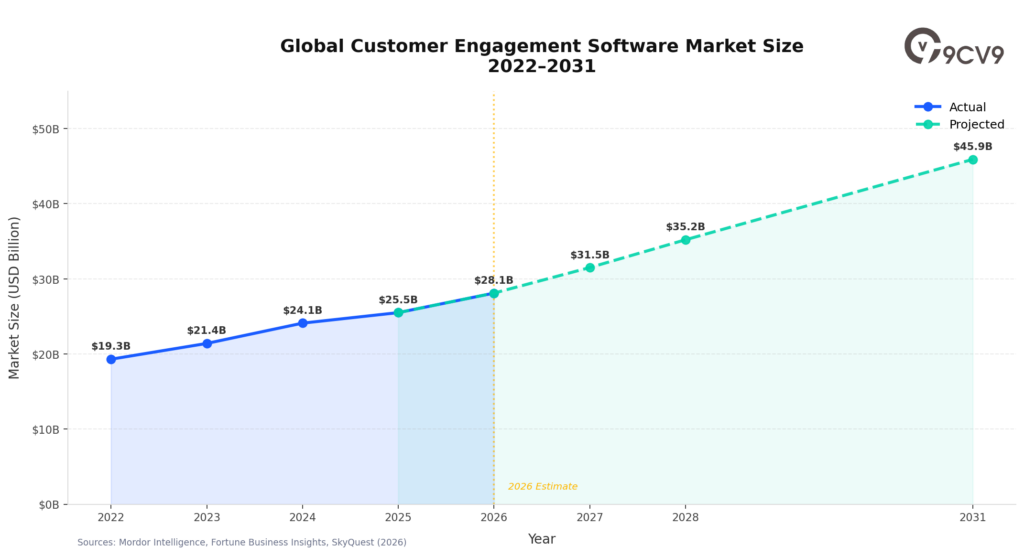
The rapid expansion of the customer engagement software market reflects this growing strategic importance. Global market valuations have already surpassed the $28 billion mark in 2026, while long-term industry forecasts suggest that the sector will continue growing at double-digit compound annual growth rates over the next decade. Multiple independent research firms project the market to reach anywhere between $45 billion and more than $86 billion by the mid-2030s, highlighting widespread confidence that businesses will continue investing heavily in technologies designed to enhance customer experiences. This remarkable growth is fuelled by accelerating cloud adoption, widespread artificial intelligence integration, increasing digital consumer expectations, and the rising demand for personalised interactions across every stage of the customer journey.
Artificial intelligence has emerged as perhaps the single most transformative force reshaping customer engagement software in 2026. AI is no longer limited to automating repetitive customer service tasks; instead, it now powers predictive analytics, intelligent recommendations, conversational agents, sentiment analysis, hyper-personalised marketing campaigns, automated customer support, and autonomous AI agents capable of making engagement decisions in real time. Organisations are increasingly leveraging generative AI and machine learning to better understand customer intent, anticipate needs before they arise, and deliver highly contextual experiences that were previously impossible to achieve at scale. At the same time, businesses are reporting measurable improvements in customer satisfaction, operational efficiency, support costs, and overall return on investment through AI-enabled engagement platforms.
Customer expectations are evolving just as quickly as the technologies designed to serve them. Modern consumers expect immediate responses, personalised recommendations, seamless cross-channel experiences, and brands that understand their preferences without requiring them to repeat information across multiple interactions. They increasingly judge companies not only by the quality of their products and services but also by the overall customer experience they receive throughout the relationship. Research consistently shows that customer experience has become one of the strongest differentiators influencing purchasing decisions, brand loyalty, repeat business, and long-term customer lifetime value. Companies that fail to meet these rising expectations risk losing customers to competitors capable of delivering faster, smarter, and more personalised engagement experiences.
Personalisation has become one of the most influential drivers of customer engagement success. Businesses that successfully leverage customer data, behavioural analytics, and AI-driven recommendation engines are achieving significantly higher conversion rates, stronger customer retention, increased average order values, and greater long-term profitability. Personalised shopping experiences, tailored content recommendations, predictive product suggestions, and dynamic customer journeys have shifted from optional marketing enhancements to essential business capabilities. As a result, organisations across industries are investing heavily in technologies that unify customer data and enable highly targeted engagement across every communication channel.
Omnichannel engagement represents another major trend defining the customer engagement software landscape in 2026. Customers no longer view communication channels in isolation; instead, they expect every interaction to remain connected regardless of whether they engage through email, live chat, social media, mobile apps, messaging platforms, voice calls, or in-person experiences. Businesses are therefore adopting integrated customer engagement platforms capable of centralising customer information and delivering consistent experiences across multiple touchpoints. This unified approach not only improves customer satisfaction but also significantly increases customer retention rates, strengthens brand loyalty, and contributes directly to revenue growth.
Conversational AI and chatbot technologies have also matured dramatically over recent years. What began as simple rule-based support tools has evolved into sophisticated AI assistants capable of resolving complex customer inquiries, recommending products, handling transactions, scheduling appointments, and supporting sales teams around the clock. Improvements in natural language processing, large language models, and generative AI have dramatically increased chatbot capabilities while reducing response times and operational costs. Businesses now view conversational AI not simply as a customer service solution but as a strategic revenue-generation engine capable of improving customer satisfaction while lowering support expenses.
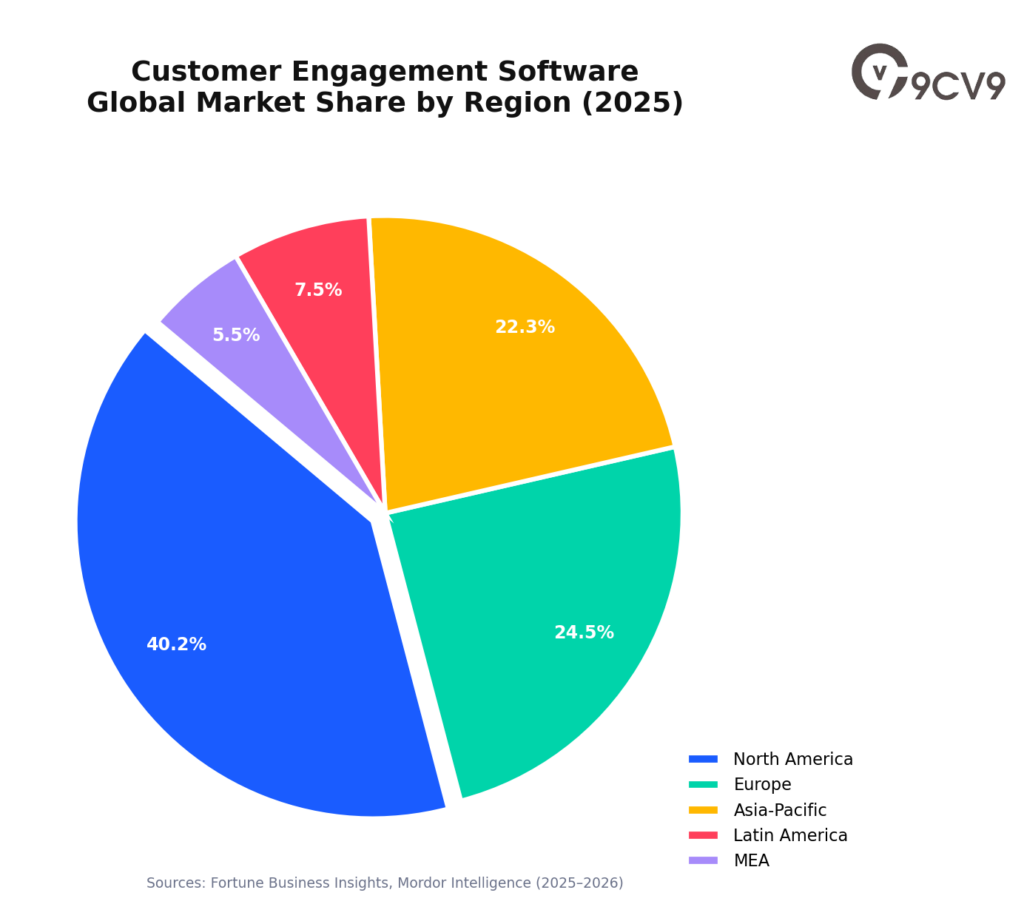
Regional markets are contributing differently to the industry’s expansion. North America continues to lead global customer engagement software adoption due to its mature digital infrastructure, concentration of enterprise technology vendors, and strong investment in customer experience initiatives. Meanwhile, Asia-Pacific has emerged as the fastest-growing regional market, driven by rapid smartphone adoption, accelerating digital transformation across emerging economies, expanding e-commerce ecosystems, and government-led digitalisation programmes. Europe continues to prioritise privacy-first engagement strategies, with organisations investing in GDPR-compliant customer engagement platforms built around first-party data architectures. These regional developments demonstrate that while customer engagement priorities remain universal, deployment strategies increasingly reflect local market dynamics and regulatory environments.
Businesses of every size are embracing customer engagement technologies at an unprecedented pace. Large enterprises continue to account for the majority of market revenue due to their extensive customer bases and complex engagement requirements. However, small and medium-sized enterprises are now among the fastest-growing adopters, benefiting from cloud-native platforms, subscription pricing models, low-code automation tools, and affordable AI capabilities that were once accessible only to multinational corporations. This democratisation of customer engagement technology is enabling businesses of all sizes to compete more effectively by delivering enterprise-grade customer experiences without enterprise-scale budgets.
Another defining trend in 2026 is the emergence of customer data as one of the world’s most valuable business assets. Organisations increasingly rely on customer data platforms, behavioural analytics, predictive models, and real-time reporting tools to create unified customer profiles and support data-driven engagement strategies. Rather than relying solely on historical interactions, businesses now analyse live behavioural signals, purchasing intent, engagement patterns, and contextual information to optimise every stage of the customer lifecycle. This shift toward intelligence-driven engagement enables organisations to make faster decisions, personalise communications more effectively, and improve both customer satisfaction and long-term business performance.
The future of customer engagement is also being shaped by the rise of autonomous AI agents. Industry analysts predict that AI agents capable of independently interacting with brands, negotiating purchases, managing subscriptions, and coordinating customer interactions will become increasingly common over the coming years. This evolution marks a significant shift from AI-assisted customer service toward AI-driven decision-making ecosystems where intelligent software increasingly manages interactions on behalf of both businesses and consumers. Companies investing early in AI-ready engagement platforms are therefore positioning themselves to remain competitive as this next generation of customer experience technology becomes mainstream.
Against this rapidly evolving backdrop, understanding the latest customer engagement software statistics has become essential for business leaders, technology decision-makers, marketers, customer experience professionals, product managers, sales teams, and digital transformation strategists. Reliable data provides valuable insights into market growth, customer behaviour, technology adoption, AI implementation, investment priorities, and future industry direction. These statistics also help organisations benchmark their own customer engagement initiatives against broader market trends while identifying emerging opportunities that can improve competitive positioning.
This comprehensive guide presents 103 of the most important customer engagement software statistics, data points, and industry trends shaping the global market in 2026. Covering market forecasts, artificial intelligence, omnichannel engagement, personalisation, chatbot adoption, customer loyalty, retention, consumer expectations, regional growth patterns, enterprise deployment, operational performance, and future innovations, these carefully curated statistics provide a data-driven overview of one of the fastest-growing segments of the global enterprise software industry. Whether you are evaluating new customer engagement platforms, planning digital transformation initiatives, optimising customer experience strategies, or simply staying informed about the latest developments, these insights will help you understand where the market stands today and where it is heading in the years ahead.
Before we venture further into this article, we would like to share who we are and what we do.
About 9cv9
9cv9 is a business tech startup based in Singapore and Asia, with a strong presence all over the world.
With over ten years of startup and business experience, and being highly involved in connecting with thousands of companies and startups, the 9cv9 team has listed some important and crucial software tools in this review.
If you like to get your company listed in our top B2B software reviews, check out our world-class 9cv9 Media and PR service and pricing plans here.
103 Customer Engagement Software Statistics, Data & Trends in 2026
🏦 Market Size & Growth
- The global customer engagement software market is valued at $28.13 billion in 2026, growing from $25.51 billion in 2025 — reflecting a strong post-pandemic acceleration into AI-powered CX infrastructure.
- The market is projected to reach $45.9 billion by 2031 at a 10.28% CAGR, highlighting that sustained investment in engagement platforms is a long-term strategic imperative, not a short-term trend.
- An alternative forecast from SkyQuest pegs the market at $68.46 billion by 2033 at a 12.3% CAGR, underscoring how varying analyst methodologies still converge on explosive double-digit compound growth.
- Precedence Research projects the market reaching $86.39 billion by 2035, signalling that the next decade will be defined by consolidation and AI-native platforms dominating the landscape.
- The market grew from $19.3 billion in 2022, meaning the sector will have nearly tripled in size within a decade — a trajectory matched by very few enterprise software categories.
- Fortune Business Insights values the 2025 market at $24.36 billion, confirming near-consensus among analysts that the industry crossed the $24B threshold before 2026.
- The customer engagement solutions market will grow by $17.73 billion between 2026 and 2030 at an 11.9% CAGR, per Technavio, with cloud migration and agentic AI cited as primary growth engines.
- The global Customer Communication Management (CCM) sub-market is expected to reach $2.2 billion by 2026, showing how even specialised niches within the broader ecosystem are scaling rapidly.
- The AI for customer service market will grow from $12.06 billion in 2024 to $47.82 billion by 2030 at a 25.8% CAGR — the fastest-growing sub-segment within the overall engagement software stack.
- The global chatbot market is valued at $11.8 billion in 2026, growing to $27.3 billion by 2030, as conversational AI becomes the default first-touch channel across industries.
🌍 Regional Dynamics
- North America commanded a 40.20% global market share in 2025, driven by a dense concentration of tech vendors, mature digital infrastructure, and strong consumer demand for personalisation.
- The North American customer engagement solutions market is valued at $9.79 billion in 2025 and $10.66 billion in 2026, cementing its status as the single largest regional market globally.
- The U.S. market alone is projected to reach $23.89 billion by 2035 at a 11.53% CAGR, meaning the United States will remain the most lucrative individual country market through the next decade.
- Asia-Pacific is the fastest-growing region with an 11.17% CAGR through 2031, driven by rising smartphone penetration, rapid digital adoption in Southeast Asia, and government-backed digitalisation initiatives.
- North America is expected to register a 34.6% growth rate in the Technavio forecast period, representing one of the highest absolute growth contributions among regions globally.
- Europe maintains steady expansion with a strong focus on data privacy compliance, meaning European customer engagement deployments are increasingly shaped by GDPR-compliant first-party data architectures.
🏢 Enterprise & Deployment Segments
- Large enterprises hold the largest market share of 61.60% in 2026, as Fortune 500 and global brands invest in enterprise-grade engagement platforms to manage millions of customer interactions at scale.
- SMEs are expected to grow at the highest CAGR of 11.88% through 2031, fuelled by the democratisation of low-code AI tools that bring enterprise-level personalisation within reach of smaller companies.
- Mobile apps hold the largest deployment share of 54.33% in 2026, reflecting the mobile-first reality that consumers expect seamless, in-app brand experiences as the norm rather than the exception.
- Cloud deployments are projected to grow at a 12.28% CAGR, while on-premise solutions retain relevance in regulated industries prioritising data sovereignty and compliance.
- On-premise models held 69.90% of the customer engagement solutions market in 2025, though the balance is rapidly shifting as cloud platforms mature and offer stronger security assurances.
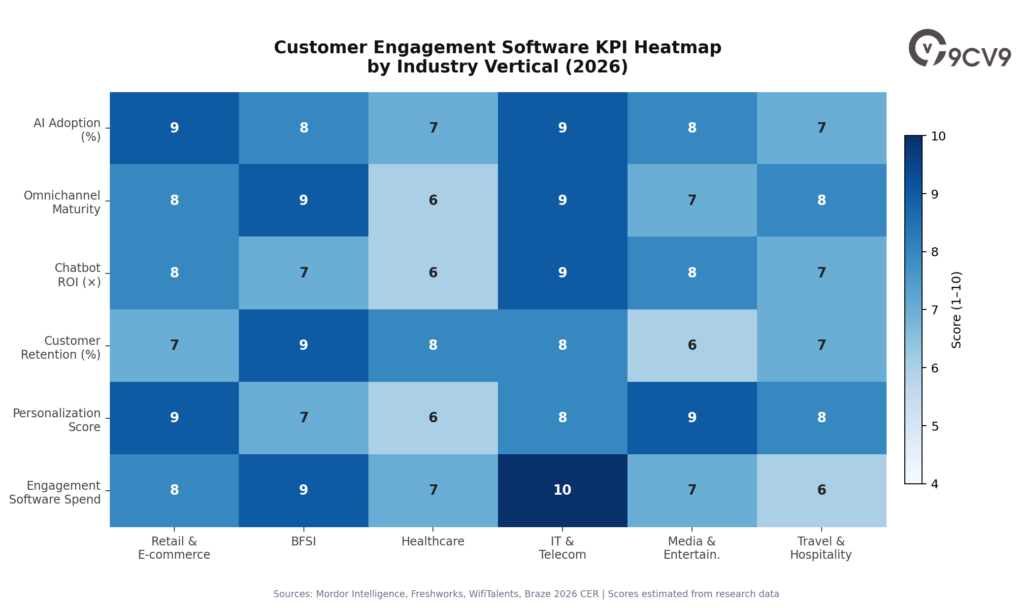
- IT & Telecom leads end-use industry revenue with a 28.10% share in 2025, as telcos and technology companies operate some of the highest-volume, most complex customer engagement environments globally.
- Media & Entertainment is the fastest-growing end-use vertical at a 10.49% CAGR through 2031, driven by streaming platforms, social media giants, and gaming companies investing heavily in retention software.
- The solution segment holds the largest component market share of 68% in 2025, reflecting enterprise preference for out-of-the-box platforms over custom-built services.
🧩 Component Breakdown
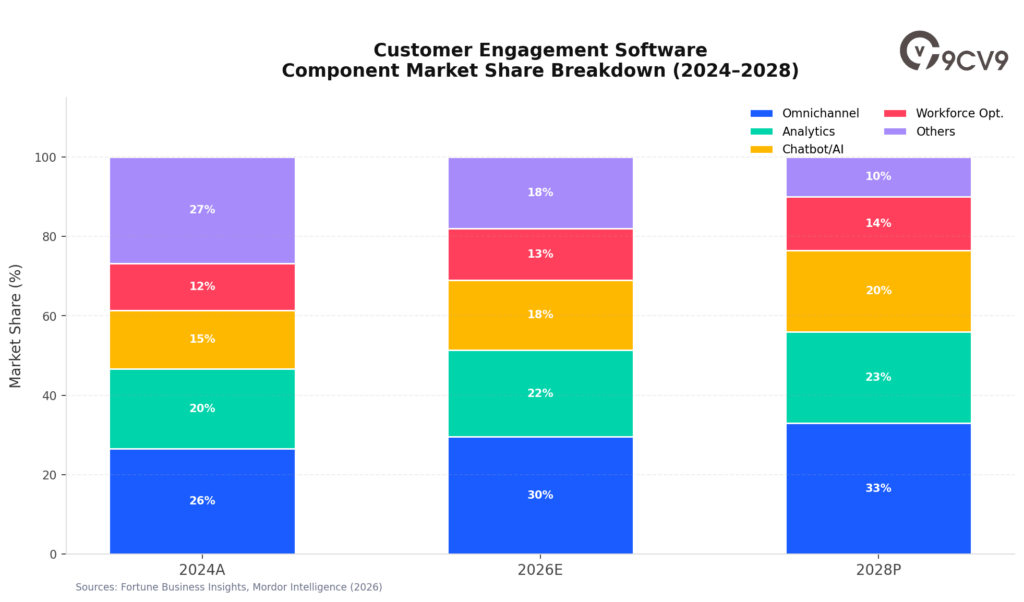
- Omnichannel engagement holds the largest component share of 29.51% in 2026 and is expected to grow at the highest CAGR, as brands race to unify fragmented communication channels under a single customer view.
- The chatbot segment is showing prominent growth within the market, as AI-powered bots engage customers across their lifecycle with personalised recommendations, reminders, and instant responses.
- Reporting & analytics is the second-largest component sub-segment, reflecting the industry’s shift from reactive support to proactive, data-driven engagement strategies powered by predictive intelligence.
🤖 AI & Automation Impact
- 93% of marketing leaders believe AI helps them accurately understand customer needs, yet only 53% of consumers feel brands are successfully predicting their wants — revealing a critical “Trust Gap” (Braze 2026).
- 87% of organisations using AI-driven personalisation have already seen measurable boosts in customer engagement (Adobe 2025 Trends Report), validating AI personalisation as the highest-ROI marketing investment.
- 95% of all customer interactions are expected to be AI-powered by end of 2026, a 19× increase from just 5% in 2020, representing one of the fastest enterprise technology adoption curves on record.
- 71% of marketers report better data-driven customer insights after adopting AI (Gartner), while 56% say lead generation improved and 47% noted higher customer satisfaction scores.
- Conversational AI is projected to save $80 billion in contact-centre labour costs by 2026 (Gartner), making it simultaneously the most cost-effective and most customer-centric technology investment of the decade.
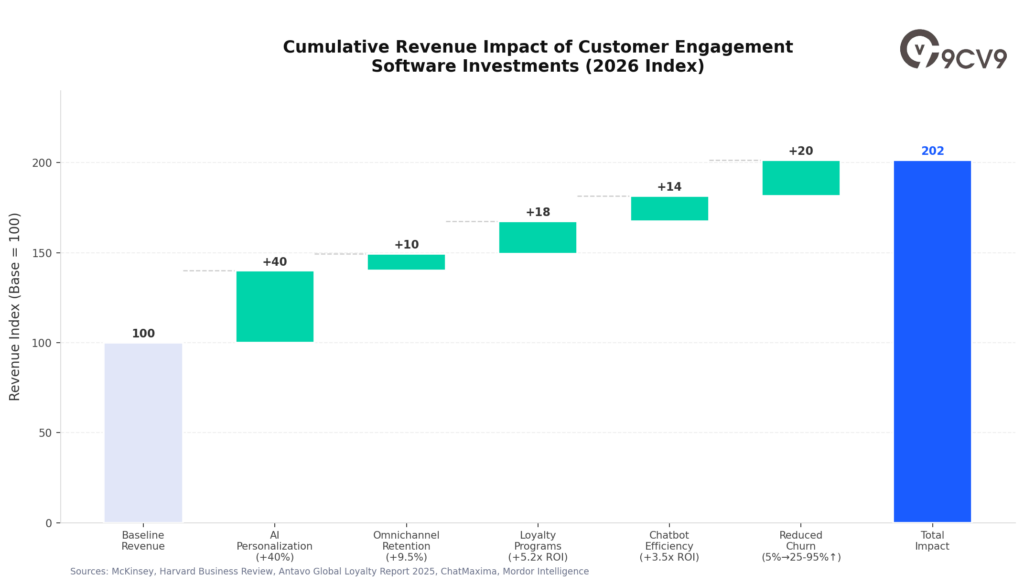
- Companies see an average return of $3.50 for every $1 invested in AI customer service, with top-performing organisations achieving up to 8× returns through optimised deployment and channel integration.
- 90% of CX leaders report positive ROI from implementing AI tools for customer service agents (Zendesk 2025), signalling that the business case for AI in CX is now empirically settled.
- AI adopters report up to a 17% boost in customer satisfaction, 30% lower support costs, and +4% annual revenue growth, making AI-powered engagement a triple-win for experience, efficiency, and growth.
- 78% of companies have implemented conversational AI in at least one core business function, up from near-zero just three years ago, confirming mainstream enterprise adoption has arrived.
- 75% of CX leaders expect 80% of customer interactions to be resolved without a human agent in the near future (Zendesk 2025), pushing automation investments to new heights across the enterprise stack.
- AI-enabled companies resolve customer tickets in 32 minutes on average, while non-AI companies take up to 36 hours — a 67× speed differential that directly translates to customer satisfaction gains (Freshworks).
- Top companies using AI in conversational support achieve a 10-second first response time (Freshworks), effectively eliminating the wait-time frustration that historically drives churn and negative reviews.
- 57% of businesses say personalising CX is their top motivation for adopting AI, ahead of cost reduction and operational efficiency, reinforcing that experience is now the primary driver of tech investment.
- Generative AI enterprise adoption is projected to exceed 80% by 2026 (Gartner), up from less than 5% in 2023, enabling hyper-personalisation at scale across every customer-facing function.
- 60% of marketers use AI to support personalisation across channels, yet nearly half lack the orchestration tools needed to deliver coordinated cross-channel experiences (Braze 2026 CER).
- 56% of the most advanced users of generative AI in marketing use data and analytics to predict customer needs, and 54% use it to personalise web experiences in real time (Adobe 2025).
- 92% of contact centre and IT leaders already using AI say it saves time resolving customer issues, validating that AI is now a productivity multiplier for human agents, not just a replacement.
🛒 Personalisation & Consumer Behaviour
- 80% of customers are more likely to make a purchase from a brand that provides personalised experiences, making personalisation the single highest-leverage conversion driver available to digital marketers.
- Companies excelling at personalisation generate 40% more revenue from those activities than average players (McKinsey), creating a widening performance gap between personalisation leaders and laggards.
- 60% of consumers become repeat buyers after receiving personalised shopping experiences (Sender research), proving that personalisation is a structural driver of lifetime value, not a one-off conversion tactic.
- Product recommendations drive up to 31% of e-commerce site revenues (Barilliance), while sessions with recommendation engagement show a 369% increase in average order value.
- 61% of senior executives believe delivering personalised experiences will be critical for growth (Adobe 2025), elevating personalisation from a marketing function to a boardroom strategic priority.
- Companies improving customer retention by just 5% see profit increases of 25–95% (Harvard Business Review), one of the most cited business justifications for investing in engagement software.
- Customer experience determines 89% of the retention variance between strong and weak performers — companies with robust omnichannel engagement retain 89% of customers versus 33% for weak implementations.
- 40% conversion rate increases on mobile through personalisation have been documented, with touch-optimised, personalised mobile experiences delivering the highest return of any channel.
- Sessions with recommendation engagement show a 369% increase in average order value — validating the ROI of AI-driven recommendation engines as a revenue-critical investment, not just a UX feature.
📱 Omnichannel & Multi-Channel
- Businesses with omnichannel strategies retain an average of 89% of customers, compared to 33% for single-channel businesses, representing a 56-percentage-point retention premium for omnichannel leaders.
- 79% of customers expect consistent, connected interactions across all departments and touchpoints (Salesforce), meaning fragmented channel experiences are now a leading cause of avoidable customer churn.
- Only 33% of companies currently offer omnichannel support that integrates AI tools like chatbots and video calls — highlighting a massive competitive whitespace for early movers willing to invest in integration.
- Companies with the strongest omnichannel customer engagement see a 9.5% year-over-year increase in annual revenue, making omnichannel not just a retention play but a measurable growth strategy.
- North America has established a 34.6% growth rate in omnichannel-driven customer engagement solutions, reinforcing the region’s leadership in deploying integrated multi-channel CX architectures.
- Mobile commerce represents 70% of total e-commerce, yet shopping apps face a 94.4% churn rate by day 30, underscoring the critical gap between mobile traffic and mobile retention that engagement software must close.
- Push notifications improve mobile app retention by 20%, while in-app messaging showing 6–10 messages weekly has been found to optimise engagement without triggering notification fatigue.
💬 Chatbot & Conversational AI
- Chatbot adoption in customer service teams grew from 5% in 2020 to over 80% by 2025 — a 16× increase representing the fastest enterprise technology adoption curve in recent memory.
- AI chatbots handle an estimated 95% of all customer service interactions in 2026, according to multiple analyst forecasts, as natural language processing capabilities reach near-human quality.
- 72% of customers are comfortable interacting with AI chatbots, but only when they know they’re talking to one (Zendesk 2025), making transparency a non-negotiable requirement for chatbot deployment.
- 68% of customers agree that quick responses are the most positive aspect of chatbots (Userlike), confirming that speed remains the primary value proposition of automated conversational interfaces.
- Chatbots drive 77% of a company’s ROI from digital traffic segmentation and targeted product advertising, making them the single most productive automated touchpoint in the revenue funnel.
- Business leaders report a 67% increase in sales through chatbot assistance, with 26% of all sales transactions now initiating from a bot interaction — validating chatbots as active revenue drivers, not just cost savers.
- Gupshup’s WhatsApp chatbot demonstrated a 270% ROI over three years, providing concrete evidence of the long-term financial returns possible from well-implemented conversational AI deployments.
- An 80% CSAT score was achieved by chatbot-powered customer journeys, signalling that well-designed AI chatbots can match and sometimes exceed human agent satisfaction performance.
- 54% of consumers say they are likely to engage with AI assistants or chatbots, and this number continues to rise year on year as users become more comfortable with AI-mediated experiences.
- 57% of businesses recognise chatbots’ substantial ROI with minimal effort requirements, and 23.7% of chatbot-assisted inquiries convert into sales without any human intervention.
- The global chatbot market was valued at $7.76 billion in 2024 and will reach $27.3 billion by 2030, growing at a 23% CAGR that substantially outpaces the broader customer engagement market.
- 92% of customer service teams confirm that AI saves time resolving issues, with Freshworks data showing AI-enabled “Trendsetter” organisations achieve first-response times of just 10 seconds.
🔄 Retention, Loyalty & Revenue Impact
- Improving CSAT scores by 10% can increase revenues by 3% in service industries, providing a directly measurable ROI justification for every investment in customer satisfaction analytics and feedback tools.
- Companies with strong CX strategies deliver 1.5× higher revenue growth and 1.8× greater profitability than those that do not prioritise CX, per industry benchmarks aggregated across sectors.
- 83% of companies using Customer Data Platforms report positive loyalty programme ROI, with an average return of 5.2× and top-performing programmes achieving 7.2× ROI (Antavo Global Loyalty Report 2025).
- 89% of CDP adopters show high satisfaction in meeting business goals (Tealium 2024 State of CDP), with 79% achieving ROI within 12 months at an average return of 362%.
- The Customer Data Platform market will grow from $9.7 billion in 2025 to $37 billion by 2030 (Markets & Markets), as first-party data infrastructure becomes the competitive foundation for personalised engagement.
- Premium loyalty programme members are 60% more likely to spend more versus 30% for free programme members (McKinsey), and show 2.7× higher lifetime values despite representing only 18% of the member base.
- Loyal programme members show 47% lower churn rates and 39% higher referral rates, meaning loyalty investment delivers compounding returns through both retention and acquisition simultaneously.
- Annual subscriptions maintain 28% retention after one year versus 3% for weekly billing and 11% for monthly (RevenueCat analysis of 10,000+ apps), making annual pricing a structural retention tool.
- A 1.5-percentage-point reduction in monthly churn across a 50,000-customer base represents $900,000 in annual retained revenue (at $100 ARPU), quantifying the enormous financial value of churn reduction tools.
- Customers are 2.4× more likely to remain loyal to a brand when their problems are resolved quickly (Forrester), establishing resolution speed as the most directly measurable driver of retention in service contexts.
- 97% of customers who experience value enhancement share positive word-of-mouth, turning engaged customers into an organic, zero-cost acquisition channel that compounds engagement software ROI over time.
🌐 Consumer Trust & Expectations
- 88% of customers believe trust becomes more important in times of change (Salesforce State of the Connected Customer), creating a tension between AI-driven personalisation and consumer data privacy concerns.
- 88% of customers say the experience a company provides is as important as its products or services, elevating engagement quality from a support function to a core product attribute.
- 65% of customers expect companies to adapt to their changing needs and preferences in real time, demanding dynamic personalisation systems rather than static segmentation-based approaches.
- 84% of B2B companies list improving CX capabilities as a top priority, confirming that the engagement software investment wave is not limited to B2C — complex B2B journeys are equally under transformation.
- 87% of customers who had even a single negative service experience say they would likely avoid the offending company in the future (Accenture), quantifying the catastrophic asymmetry of a poor engagement failure.
- 83% of customers expect immediate engagement on initial contact (Salesforce), making real-time response capabilities no longer a premium differentiator but a baseline expectation across industries.
- 77% of customers view brands more favourably if they proactively invite and act on customer feedback (Microsoft research), and companies doing so see a 15% increase in customer retention as a result.
📊 AI Agents & Future Outlook
- Only 19% of consumers currently use AI agents for brand interactions, but that number is expected to jump to 46% by the end of 2026 (Braze 2026 CER) — a 142% increase in under 12 months.
- Gen Z leads the transition to agent-led interactions, with 64% already feeling that brands are maintaining a human touch with AI, compared to just 46% of consumers overall.
- 35% of consumers cite the opportunity to negotiate better deals via AI agents as a reason to embrace the technology, signalling that agentic AI will fundamentally reshape price discovery and conversion dynamics.
- The “bot-to-bot” engagement era is predicted, where consumer AI agents interact with brand AI systems without human intervention — requiring brands to build machine-readable engagement architectures immediately.
- AI will move from task automation to decision autonomy by 2026, with AI agents deciding when and how to engage customers based on real-time intent and emotional state signals.
- Deloitte’s Tech Trends 2026 identifies scaling AI from experiments to enterprise deployment as the defining challenge of the year, with CX programmes among the first to expose operational gaps in AI reliability.
- 25% increase in customer satisfaction is projected for companies implementing AI in CX strategies by 2025, per Gartner, as predictive analytics and automated personalisation mature.
- McKinsey defines personalisation at scale as the ability to customise timing, content, and design of every experience in real time, identifying infrastructure gaps as the primary barrier between ambition and execution.
🔧 Operational & Workforce
- 77% of customer service reps say their workload and issue complexity have increased year-over-year (Zendesk 2025), creating an urgent business case for AI augmentation to prevent agent burnout and quality degradation.
- 79% of support agents believe having an AI copilot supercharges their abilities and enables better customer service delivery (Zendesk 2025), reflecting high human-agent buy-in for human-AI collaboration models.
- 79% of customer service leaders intend to continue increasing AI investment throughout 2025, confirming that positive early results are compounding commitment to further automation and intelligence deployment.
- 44% of customer service leaders are exploring customer-facing GenAI voicebots, with 11% piloting and 5% already deployed — signalling that voice AI is the next major channel transformation after chat.
- Machine learning and deep learning account for 43.5% of AI customer service market revenue, with chatbots and virtual assistants comprising 28.1%, reflecting the diversification of AI approaches across the CX stack.
Conclusion
As the customer engagement software market continues to evolve at an unprecedented pace, one fact becomes increasingly clear: delivering exceptional customer experiences is no longer simply a competitive advantage—it is a fundamental requirement for long-term business success. The statistics presented throughout this report demonstrate that organisations across every industry are investing heavily in technologies that enable deeper customer relationships, more personalised interactions, faster response times, and seamless omnichannel experiences. With global market valuations already exceeding $28 billion in 2026 and long-term forecasts pointing toward sustained double-digit growth over the next decade, customer engagement software has firmly established itself as one of the most important pillars of modern digital business strategy.
Artificial intelligence is undoubtedly the dominant force driving this transformation. AI-powered customer engagement has rapidly progressed from simple automation tools to sophisticated systems capable of understanding customer intent, predicting future behaviours, generating personalised content, resolving service requests autonomously, and enabling intelligent decision-making at scale. Businesses adopting AI-driven customer engagement platforms are reporting measurable improvements in operational efficiency, customer satisfaction, retention rates, support costs, and revenue generation. As generative AI, predictive analytics, and autonomous AI agents continue to mature, organisations that embrace these technologies early will be significantly better positioned to outperform competitors that continue relying on traditional engagement models.
Another defining insight from the data is the growing importance of personalisation. Modern consumers increasingly expect brands to recognise their preferences, anticipate their needs, and provide highly relevant experiences across every interaction. Businesses that successfully combine customer data platforms, behavioural analytics, machine learning, and omnichannel engagement technologies are creating stronger emotional connections with customers while simultaneously increasing conversion rates, average order values, repeat purchases, and customer lifetime value. Personalisation has evolved from a marketing tactic into a strategic capability that influences virtually every stage of the customer journey.
The statistics also reinforce the tremendous value of omnichannel customer engagement. Today’s customers move fluidly between websites, mobile applications, live chat, social media, messaging platforms, email, voice channels, and physical locations. They expect every interaction to feel connected, regardless of the channel they choose. Organisations capable of delivering consistent, integrated experiences across these touchpoints enjoy significantly stronger customer retention, improved satisfaction scores, greater loyalty, and higher annual revenue growth. Conversely, fragmented customer experiences increasingly represent one of the fastest ways to lose customer trust and market share in an increasingly competitive digital economy.
Conversational AI has emerged as another major growth engine within the broader customer engagement ecosystem. Chatbots, virtual assistants, and AI-powered support agents are no longer viewed merely as cost-saving tools. Instead, they have become essential customer-facing assets capable of improving response times, handling growing service volumes, generating sales opportunities, reducing operational costs, and enhancing customer satisfaction simultaneously. Improvements in natural language processing and large language models have dramatically expanded the capabilities of conversational AI, making it one of the fastest-growing areas within enterprise software investment.
The global market landscape further illustrates that customer engagement software adoption is becoming increasingly widespread across regions and industries. North America continues to dominate overall market size, while Asia-Pacific is experiencing the fastest growth as businesses accelerate digital transformation initiatives and mobile-first customer engagement strategies. Europe continues strengthening privacy-focused engagement architectures built around regulatory compliance and first-party customer data. Meanwhile, industries ranging from technology and telecommunications to retail, financial services, healthcare, media, hospitality, manufacturing, and professional services are all increasing investment in customer engagement platforms to improve customer experiences while strengthening business resilience.
Perhaps one of the most encouraging findings from these statistics is that customer engagement technology is no longer reserved exclusively for large multinational corporations. The continued growth of cloud computing, software-as-a-service delivery models, low-code development platforms, and affordable AI solutions has significantly lowered barriers to entry for small and medium-sized businesses. Organisations of virtually every size can now deploy sophisticated engagement platforms capable of delivering enterprise-level customer experiences without requiring massive infrastructure investments. This democratisation of technology is creating a more competitive business environment where innovation and customer experience increasingly matter more than company size alone.
Looking ahead, the customer engagement landscape is expected to become even more intelligent, automated, and predictive. AI agents will increasingly perform tasks on behalf of customers, machine-to-machine interactions will become more common, predictive engagement will replace reactive customer service, and businesses will rely more heavily on real-time behavioural intelligence to optimise every customer interaction. Companies that continue investing in integrated customer engagement platforms, robust customer data strategies, AI-powered automation, and omnichannel communication capabilities will likely enjoy stronger customer loyalty, lower churn rates, higher operational efficiency, and greater long-term profitability.
At the same time, organisations must recognise that technology alone is not enough. Successful customer engagement requires balancing automation with empathy, personalisation with privacy, efficiency with authenticity, and innovation with trust. Consumers increasingly reward brands that communicate transparently, respect customer data, respond quickly, and consistently deliver meaningful value throughout the customer lifecycle. Businesses that successfully combine advanced technology with genuinely customer-centric strategies will be best equipped to thrive in the increasingly experience-driven global economy.
Ultimately, the 103 customer engagement software statistics presented in this report offer far more than isolated data points—they collectively reveal the direction in which global business is heading. They highlight the accelerating convergence of artificial intelligence, customer data, cloud computing, omnichannel communication, conversational interfaces, predictive analytics, and customer experience management into a unified digital engagement ecosystem. They also demonstrate that customer engagement is no longer confined to marketing or customer service departments; it has become a board-level strategic priority that influences growth, profitability, competitive positioning, operational excellence, and long-term business sustainability.
Whether you are a business executive, customer experience leader, marketer, sales professional, product manager, technology decision-maker, startup founder, or enterprise strategist, these insights provide a valuable foundation for understanding where the industry stands today and where it is likely to evolve in the years ahead. By leveraging these trends, benchmarking against industry data, and continuously adapting engagement strategies to changing customer expectations, organisations can build stronger customer relationships, unlock new revenue opportunities, improve operational performance, and remain competitive in an increasingly AI-driven marketplace. As customer expectations continue rising and technology advances at remarkable speed, businesses that prioritise intelligent, personalised, and data-driven customer engagement will be best positioned to succeed throughout 2026 and well beyond.
If you find this article useful, why not share it with your hiring manager and C-level suite friends and also leave a nice comment below?
We, at the 9cv9 Research Team, strive to bring the latest and most meaningful data, guides, and statistics to your doorstep.
To get access to top-quality guides, click over to 9cv9 Blog.
To hire top talents using our modern AI-powered recruitment agency, find out more at 9cv9 Modern AI-Powered Recruitment Agency.
People Also Ask
What is customer engagement software?
Customer engagement software helps businesses communicate with customers across multiple channels, personalize interactions, automate workflows, and improve customer satisfaction, loyalty, and long-term revenue.
Why is customer engagement software important in 2026?
Customer engagement software is essential in 2026 because AI, automation, and omnichannel communication have become critical for meeting rising customer expectations and delivering personalized experiences.
How large is the customer engagement software market in 2026?
The customer engagement software market continues to expand rapidly in 2026, driven by AI adoption, cloud technologies, digital transformation, and increasing enterprise investment worldwide.
What are the biggest customer engagement software trends in 2026?
Major trends include generative AI, AI agents, omnichannel engagement, predictive analytics, conversational AI, customer data platforms, automation, and hyper-personalized customer experiences.
How does AI improve customer engagement?
AI improves customer engagement by delivering personalized recommendations, automating customer support, predicting customer needs, reducing response times, and increasing operational efficiency.
What is omnichannel customer engagement?
Omnichannel customer engagement enables businesses to provide seamless customer experiences across email, chat, social media, websites, mobile apps, SMS, and voice channels.
Why is personalization important for customer engagement?
Personalization increases customer satisfaction, boosts conversion rates, strengthens customer loyalty, and encourages repeat purchases through relevant and tailored experiences.
How do chatbots improve customer engagement?
Chatbots provide instant customer support, answer common questions, automate repetitive tasks, reduce support costs, and improve customer satisfaction around the clock.
What industries use customer engagement software the most?
Retail, e-commerce, banking, healthcare, telecommunications, SaaS, travel, hospitality, education, and financial services are among the biggest users of customer engagement software.
How does customer engagement software increase customer retention?
It improves communication, delivers personalized experiences, resolves issues faster, and builds stronger customer relationships that encourage long-term loyalty.
What are customer engagement statistics?
Customer engagement statistics measure market growth, software adoption, customer behavior, AI usage, customer satisfaction, retention rates, and industry trends.
How does customer engagement software increase revenue?
Better customer experiences, targeted marketing, faster support, and stronger customer loyalty contribute to higher conversion rates, repeat purchases, and increased revenue.
What is conversational AI in customer engagement?
Conversational AI uses natural language processing and machine learning to enable chatbots and virtual assistants to communicate naturally with customers.
What role does automation play in customer engagement?
Automation handles repetitive tasks, triggers personalized communications, improves efficiency, reduces costs, and allows teams to focus on higher-value customer interactions.
What is a customer data platform (CDP)?
A customer data platform centralizes customer information from multiple sources to create unified profiles that support personalization and better engagement.
Why are customer engagement platforms becoming more popular?
Growing digital interactions, AI innovations, and increasing customer expectations are driving organizations to invest in customer engagement platforms.
How does customer engagement software improve customer experience?
It provides consistent communication, personalized content, faster support, and seamless interactions across multiple digital and offline channels.
What is predictive analytics in customer engagement?
Predictive analytics analyzes customer data to forecast behaviors, identify opportunities, reduce churn, and improve marketing and customer service decisions.
Can small businesses benefit from customer engagement software?
Yes. Affordable cloud-based solutions allow small businesses to automate communications, improve customer relationships, and compete more effectively.
How is generative AI changing customer engagement?
Generative AI creates personalized content, automates responses, assists support teams, improves customer interactions, and increases overall productivity.
Why is customer loyalty important in 2026?
Customer loyalty lowers acquisition costs, increases customer lifetime value, improves profitability, and strengthens long-term business growth.
What metrics measure customer engagement?
Common metrics include customer satisfaction (CSAT), Net Promoter Score (NPS), customer retention rate, churn rate, engagement rate, response time, and conversion rate.
What challenges do businesses face with customer engagement?
Common challenges include fragmented customer data, privacy concerns, rising customer expectations, integration complexity, and maintaining personalized experiences at scale.
How does cloud technology support customer engagement software?
Cloud platforms provide scalability, real-time access, easier integrations, lower infrastructure costs, and continuous software updates.
What are AI agents in customer engagement?
AI agents are intelligent virtual assistants that can independently answer questions, complete tasks, resolve issues, and provide personalized customer support.
Why is customer engagement software growing so quickly?
Growth is fueled by digital transformation, AI innovation, cloud adoption, remote customer interactions, and increasing demand for personalized experiences.
How does customer engagement software support digital transformation?
It modernizes customer communications, integrates data across systems, automates workflows, and enables AI-powered customer experiences.
What should businesses look for in customer engagement software?
Businesses should evaluate AI capabilities, omnichannel support, analytics, automation, scalability, integrations, security, ease of use, and pricing.
Why should businesses follow customer engagement statistics?
Statistics help organizations understand market trends, benchmark performance, identify new opportunities, and make informed technology investment decisions.
What is the future of customer engagement software?
The future will focus on AI agents, predictive personalization, autonomous customer support, real-time analytics, privacy-first engagement, and increasingly intelligent omnichannel experiences.
Sources
Mordor Intelligence Fortune Business Insights Precedence Research SkyQuest GII Research Technavio Research & Markets The Business Research Company WifiTalents Braze Adobe MoEngage Insider One CX Today Freshworks ChatMaxima Pylon Text FastBots.ai Master of Code Unthread.io Envive.ai CMSWire Sprinklr Renascence MarketsandMarkets G2