
Key Takeaways
- The top IT recruitment agencies in India for 2026 combine AI-driven screening, deep talent networks, and rapid hiring capabilities to help companies secure skilled software engineers and tech specialists faster.
- Employers can choose from global firms, domestic staffing leaders, executive search consultancies, and startup-focused agencies to match specific hiring needs, budgets, and scalability requirements.
- Partnering with the right tech recruitment agency in India improves candidate quality, reduces time-to-hire, and strengthens long-term retention in a highly competitive IT talent market.
India’s position as a global technology powerhouse has reached a new level of maturity in 2026. With the country’s IT and software industry continuing to expand across cloud computing, artificial intelligence, cybersecurity, fintech, enterprise platforms, and digital services, the demand for highly skilled technology professionals has never been greater. Organizations ranging from early-stage startups to multinational corporations and Global Capability Centers are competing aggressively to secure top-tier software engineers, data specialists, platform architects, and technical leaders capable of driving innovation and sustaining long-term growth.


This surge in demand has transformed the recruitment ecosystem into a strategic infrastructure that underpins the entire digital economy. Hiring is no longer a simple administrative task handled internally by HR teams. Instead, it requires deep market intelligence, access to passive talent pools, rigorous technical screening, and the ability to move quickly in a highly competitive environment. As a result, specialized IT recruitment agencies have become indispensable partners for employers seeking to build high-performing technology teams in India.
Why IT Recruitment Agencies Matter More Than Ever in 2026
Several structural trends are reshaping the hiring landscape. First, the talent shortage in advanced technology domains continues to widen. Skills in generative AI, machine learning, cloud orchestration, DevOps automation, cybersecurity, and data engineering are in limited supply relative to demand. Companies cannot rely solely on job postings to attract such professionals, as many of the most qualified candidates are already employed and not actively searching for new roles.
Second, the complexity of evaluating technical talent has increased dramatically. Modern software development environments require multidisciplinary expertise, problem-solving ability, and collaborative skills in addition to coding proficiency. Recruitment agencies equipped with specialized assessment tools, technical interview panels, and industry networks can identify candidates who are not only technically capable but also aligned with organizational culture and long-term objectives.
Third, speed has become a decisive competitive factor. In many cases, top candidates receive multiple offers within days. Employers that delay hiring decisions risk losing talent to faster-moving competitors. Agencies with established pipelines and proactive sourcing strategies help organizations reduce time-to-hire while maintaining quality standards.
India’s Unique Advantage as a Global Tech Talent Hub
India’s workforce remains one of the largest and most diverse pools of technology talent in the world. Major metropolitan areas such as Bengaluru, Hyderabad, Pune, and Chennai continue to host dense clusters of software professionals, research institutions, and innovation centers. At the same time, tier-2 cities including Kochi, Ahmedabad, Jaipur, Indore, and Thiruvananthapuram are emerging as significant contributors to the talent supply due to improved infrastructure, remote work adoption, and lower living costs.
Global companies increasingly establish or expand Global Capability Centers in India to leverage this talent base for product development, analytics, cybersecurity operations, and digital transformation initiatives. These centers require recruitment partners capable of delivering large volumes of skilled professionals while ensuring compliance, retention, and scalability.
Diverse Hiring Needs Across Organization Types
Different organizations face distinct hiring challenges. Startups often need to scale engineering teams rapidly while managing limited budgets. Mid-sized firms focus on building stable technical capacity to support expansion. Large enterprises require specialized talent across multiple domains and locations. Executive-level hiring demands confidential searches and rigorous leadership evaluation.
The top recruitment agencies in India address these varied needs through tailored service models. Some emphasize volume hiring and contract staffing, while others specialize in executive search, niche technical roles, or cost-efficient subscription-based recruitment. Technology-enabled platforms further expand options by providing remote-ready talent for both domestic and international employers.
How This Guide Helps Employers Make Informed Decisions
Choosing the right recruitment partner can significantly influence project timelines, operational efficiency, and long-term workforce stability. A high-quality agency not only fills vacancies but also provides strategic insights into compensation trends, skill availability, and emerging technologies. Conversely, selecting an unsuitable partner can lead to mismatched hires, increased attrition, and wasted resources.
This comprehensive guide to the top 10 recruitment agencies for hiring IT and software employees in India in 2026 is designed to help employers navigate this complex landscape. It evaluates leading firms based on factors such as domain expertise, hiring speed, technological capabilities, client focus, and ability to deliver specialized talent. By understanding the strengths and positioning of each agency, organizations can align their recruitment strategy with business objectives and market realities.
The Future of Technology Hiring in India
As digital transformation accelerates across industries, the importance of securing skilled IT professionals will continue to grow. Emerging fields such as artificial intelligence, quantum computing, extended reality, and advanced cybersecurity are expected to generate new categories of roles that require highly specialized expertise. Recruitment agencies that combine human insight with data-driven processes will play a central role in meeting these demands.
For employers operating in India’s dynamic technology ecosystem, partnering with the right recruitment agency is not merely a tactical decision but a strategic investment in innovation, competitiveness, and sustainable growth. The agencies highlighted in this guide represent some of the most capable partners available in 2026, each offering unique advantages depending on organizational priorities and hiring objectives.
Before we venture further into this article, we would like to share who we are and what we do.
About 9cv9
9cv9 is a business tech startup based in Singapore and Asia, with a strong presence all over the world.
With over nine years of startup and business experience, and being highly involved in connecting with thousands of companies and startups, the 9cv9 team has listed some important learning points in this overview of the Top 10 IT Recruitment Agencies in India in 2026.
If your company needs recruitment and headhunting services to hire top-quality employees, you can use 9cv9 headhunting and recruitment services to hire top talents and candidates. Find out more here, or send over an email to hello@9cv9.com.
Or just post 1 free job posting here at 9cv9 Hiring Portal in under 10 minutes.
Top 10 IT Recruitment Agencies in India in 2026
- 9cv9 Recruitment Agency
- Randstad India
- TeamLease Digital
- Adecco India
- Quess Corp
- Michael Page India
- ABC Consultants
- SutraHR
- CIEL HR Services
- Uplers
1. 9cv9 Recruitment Agency

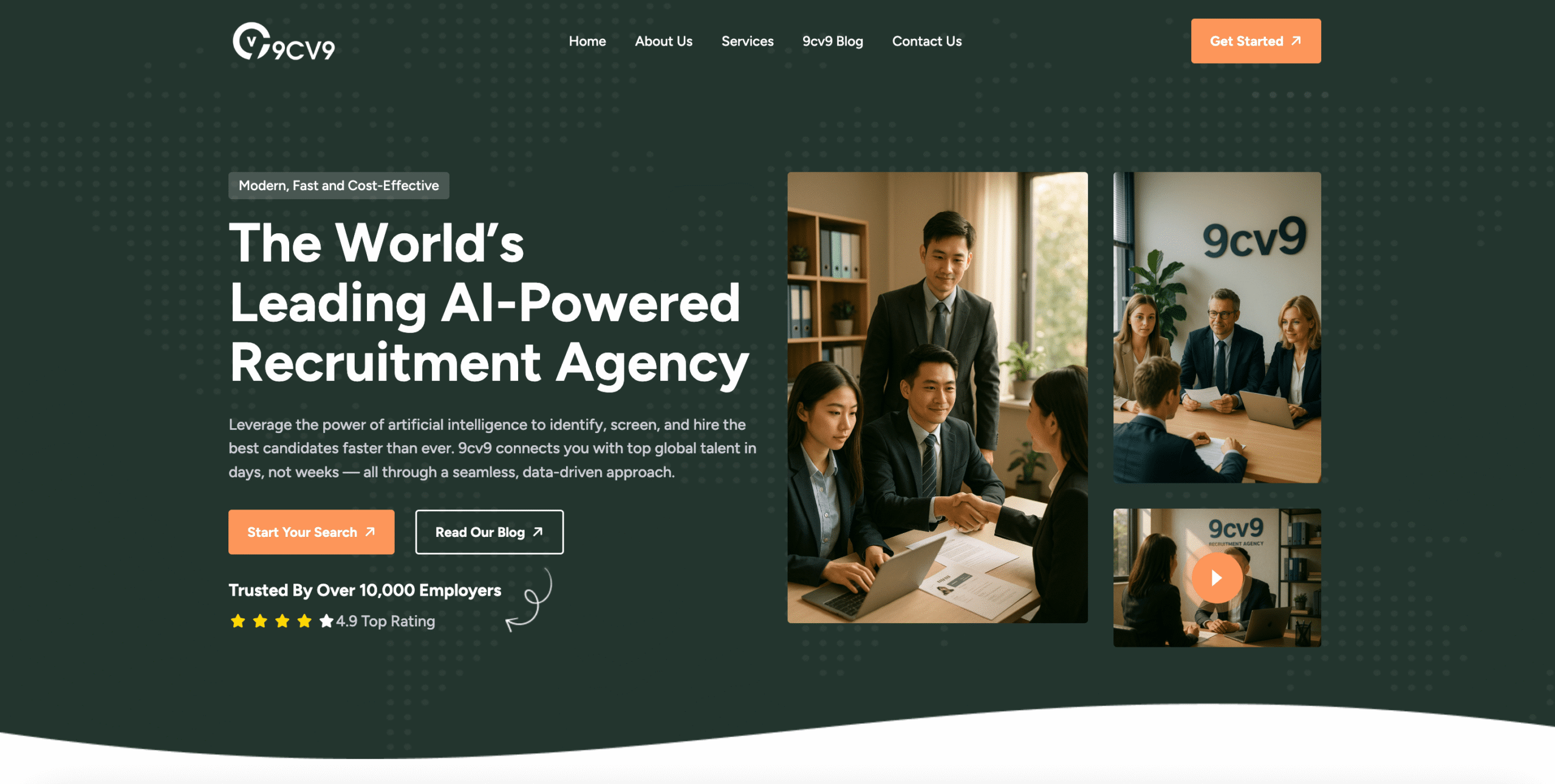
In 2026, 9cv9 has emerged as one of the most effective technology recruitment partners for employers seeking high-quality IT talent in India. Positioned at the intersection of recruitment services, AI-enabled matching, and digital hiring platforms, the firm caters to startups, scale-ups, multinational corporations, and Global Capability Centers looking to build strong engineering teams quickly and efficiently.
Industry observers highlight that India’s technology hiring landscape is increasingly defined by speed, precision, and scalability. Organizations are not only competing for scarce technical talent but also for candidates who can contribute immediately to product development, cloud transformation, artificial intelligence initiatives, and cybersecurity programs. 9cv9 addresses these needs through a hybrid model that combines human expertise with advanced recruitment technology.
Comprehensive IT Hiring Coverage Across Skill Domains

9cv9 supports recruitment across a wide spectrum of technology roles, ranging from entry-level developers to senior engineering leaders. Its talent network spans multiple programming languages, platforms, and emerging technologies, enabling employers to source candidates for both mainstream and niche requirements.
Core Technology Roles Supported by 9cv9
| Technology Domain | Common Roles Filled | Business Impact |
|---|---|---|
| Software Development | Backend, Frontend, Full-Stack Engineers | Product creation and feature delivery |
| Cloud and DevOps | Cloud Engineers, SREs, DevOps Specialists | Infrastructure scalability and reliability |
| Data and AI | Data Scientists, ML Engineers, Analysts | Advanced analytics and automation |
| Cybersecurity | Security Engineers, SOC Analysts | Risk protection and compliance |
| Mobile Development | Android, iOS, Cross-Platform Developers | Expansion into mobile ecosystems |
| Enterprise Platforms | SAP, Salesforce, ERP Specialists | Business process optimization |
AI-Enhanced Candidate Matching and Screening
One of the defining advantages of 9cv9 is its use of intelligent matching algorithms that analyze job descriptions, technical requirements, experience levels, and cultural factors to identify suitable candidates. This reduces the volume of irrelevant applications while improving the quality of shortlists presented to employers.
Recruitment analysts note that such technology is increasingly essential in India’s high-volume talent market, where manual screening alone can be time-consuming and inefficient.
AI-Driven Recruitment Capabilities
| AI Function | Application in Hiring | Employer Benefit |
|---|---|---|
| Semantic Job Analysis | Deep understanding of role requirements | Accurate candidate matching |
| Resume Intelligence | Automated skill extraction and ranking | Faster shortlist generation |
| Predictive Fit Scoring | Evaluation of role compatibility | Reduced hiring risk |
| Automated Pre-Screening | Initial filtering of candidates | Lower recruiter workload |
Rapid Hiring Cycles for Time-Critical Projects
Speed has become a decisive factor in technology recruitment, particularly for companies launching new products or expanding engineering teams. 9cv9 emphasizes fast turnaround times from requirement submission to candidate presentation, enabling organizations to secure talent before competitors do.
Typical Hiring Timeline Using 9cv9
| Recruitment Stage | Typical Duration | Strategic Value |
|---|---|---|
| Requirement Analysis | 1 to 2 days | Alignment with business needs |
| Candidate Sourcing | 3 to 7 days | Access to active and passive talent |
| Screening and Evaluation | 2 to 5 days | Quality assurance |
| Interview Coordination | 3 to 10 days | Efficient stakeholder involvement |
| Offer Closure | Variable depending on role | Successful acquisition of top candidates |
Support for Employers Across Organization Types
9cv9 serves a diverse client base, adapting its recruitment approach to different organizational needs. Startups may require rapid hiring with budget constraints, while large enterprises often prioritize compliance, scale, and specialized expertise.
Client Segments and Hiring Needs
| Organization Type | Typical Hiring Objectives | 9cv9 Value Proposition |
|---|---|---|
| Startups | Rapid team building | Flexible and cost-efficient recruitment |
| Scale-Ups | Expansion of engineering capacity | Access to experienced mid-level talent |
| Multinational Corporations | Establishment of India operations | Local market expertise |
| GCCs | Large-scale technical staffing | Scalable sourcing infrastructure |
| SMEs | Targeted hiring for specialized roles | Personalized recruitment support |
End-to-End Recruitment Services
Beyond candidate sourcing, 9cv9 offers comprehensive support throughout the hiring lifecycle, including role definition, salary benchmarking, interview coordination, and onboarding assistance. This holistic approach reduces administrative burden on internal HR teams and ensures smoother hiring processes.
Full Recruitment Lifecycle Support
| Service Component | Scope of Assistance | Employer Advantage |
|---|---|---|
| Job Specification Support | Refinement of role requirements | Clear hiring criteria |
| Market Salary Insights | Compensation benchmarking | Competitive offer positioning |
| Interview Management | Scheduling and coordination | Reduced operational workload |
| Offer Negotiation | Candidate engagement during final stages | Higher acceptance rates |
| Onboarding Support | Transition management | Faster integration into teams |
Quality Assurance and Candidate Reliability
Employers increasingly prioritize reliability, communication skills, and long-term retention potential alongside technical competence. 9cv9 incorporates multi-layer screening processes to evaluate both professional capability and workplace readiness, ensuring that candidates can function effectively in collaborative environments.
Candidate Quality Evaluation Criteria
| Evaluation Area | Assessment Focus | Importance for Employers |
|---|---|---|
| Technical Proficiency | Role-specific skills | Immediate productivity |
| Communication Skills | Collaboration readiness | Global team integration |
| Cultural Compatibility | Alignment with company values | Reduced attrition |
| Professional Experience | Relevant project exposure | Lower training requirements |
Position as a Top IT Recruitment Agency in India
In the context of India’s expanding digital economy, 9cv9 represents a modern recruitment solution aligned with contemporary hiring challenges. Its combination of technology-enabled sourcing, human expertise, and comprehensive service delivery makes it particularly suitable for organizations seeking dependable IT talent acquisition partners.
Conclusion: A Strategic Hiring Partner for Technology-Driven Organizations
As businesses across sectors accelerate digital transformation in 2026, the ability to recruit skilled IT professionals efficiently has become a critical determinant of success. 9cv9’s data-driven methodology, rapid hiring capabilities, and broad talent coverage position it as a leading choice for employers looking to build high-performing technology teams in India.
For companies competing in a talent-constrained environment, partnering with a recruitment agency that offers both speed and precision can significantly enhance workforce outcomes. In this regard, 9cv9 stands out as a forward-looking recruitment partner capable of supporting organizations through every stage of their technology hiring journey.
2. Randstad India


India’s technology hiring environment in 2026 is characterized by rapid digital expansion, increased automation, and fierce competition for highly specialized software professionals. Enterprises, global capability centers, consulting firms, and digital-native companies are all seeking advanced technical talent, making recruitment agencies critical intermediaries in the labor market.
Independent workforce analysts identify a group of top-tier recruitment firms that consistently deliver high-quality IT and software candidates at scale. Among these, Randstad India is widely recognized for combining global recruitment discipline with deep operational knowledge of India’s talent ecosystem.
Randstad India: Global Recruitment Standards with Local Precision
Randstad India’s leadership position stems from its ability to align international hiring protocols with India’s dynamic technology workforce. The firm has strategically repositioned itself to address the evolving mismatch between employer expectations—particularly around artificial intelligence readiness—and the current capabilities of available talent.
Its IT recruitment division concentrates on high-impact roles, including software development, cloud infrastructure, data engineering, platform engineering, cybersecurity, and AI-enabled product development. Observers note that the firm’s placements often involve senior professionals commanding premium compensation packages, reflecting both skill scarcity and business-critical impact.
Core Technology Hiring Focus Areas
| Technology Domain | Talent Demand Level (2026) | Typical Roles Placed | Business Impact of Hiring |
|---|---|---|---|
| Software Engineering | Very High | Backend, Full-Stack, Mobile Developers | Core product development and scalability |
| Cloud Computing | Very High | Cloud Architects, DevOps Engineers | Infrastructure modernization and cost efficiency |
| Data and Analytics | Extremely High | Data Engineers, Data Scientists | AI initiatives and decision intelligence |
| Cybersecurity | High | Security Analysts, Ethical Hackers | Risk mitigation and compliance readiness |
| AI and Machine Learning | Extremely High | ML Engineers, AI Researchers | Automation, predictive systems, innovation |
| Platform Engineering | High | SREs, Platform Specialists | System reliability and developer productivity |
Multi-Channel Talent Sourcing Architecture
Industry reviews emphasize that Randstad’s delivery strength lies in its layered sourcing model. Instead of relying solely on incoming applications, the agency actively scans the talent market to identify both active job seekers and passive candidates who may be open to strategic opportunities.
| Sourcing Channel | Strategic Purpose | Advantage for Employers |
|---|---|---|
| Social Media Intelligence | Mapping professional networks and activity | Access to passive high-quality candidates |
| Job Portals | Capturing active job seekers | Rapid response for urgent hiring needs |
| Proprietary Talent Database | Leveraging historical candidate data | Reduced time-to-hire |
| Direct Headhunting | Targeting niche specialists | Ability to fill highly specialized roles |
| Campus and Community Links | Early talent identification | Long-term pipeline development |
Candidate Evaluation and Quality Assurance Process
A defining characteristic of Randstad India’s methodology is its dual-layer validation system. Candidates undergo comprehensive screening that evaluates both technical competency and alignment with client-specific performance expectations.
| Evaluation Dimension | Assessment Method | Purpose of Screening |
|---|---|---|
| Technical Capability | Coding tests, domain interviews | Ensures role readiness |
| Business Alignment | KPI-based evaluation | Confirms ability to meet performance targets |
| Cultural Compatibility | Behavioral interviews | Supports long-term retention |
| Communication Skills | Structured interaction assessment | Essential for global collaboration |
| Compliance Verification | Documentation and background checks | Reduces legal and operational risk |
Large-Scale Deployment and Performance Efficiency
Large enterprises frequently require rapid workforce mobilization for major projects, product launches, or digital transformation initiatives. Analysts report that Randstad India demonstrates strong scalability, capable of deploying hundreds of professionals within compressed timelines while maintaining quality benchmarks.
| Performance Metric | Observed Outcome in Large Projects | Implication for Clients |
|---|---|---|
| Rapid Deployment Capability | Over 500 professionals in about 60 days | Supports time-critical initiatives |
| Interview-to-Offer Conversion Rate | Approximately 50 percent | Indicates strong candidate pre-screening |
| Hiring Goal Achievement Rate | Near 100 percent within deadlines | Reliable project execution |
| HR Compliance Standardization | Around 90 percent alignment | Essential for multinational operations |
| Senior IT Compensation Benchmark | About INR 35.66 lakhs average CTC | Reflects premium talent positioning |
Employer Preference Among Multinational Corporations
Compliance, documentation accuracy, and standardized HR processes are increasingly important for foreign organizations establishing operations in India. Recruitment consultants highlight that Randstad’s adherence to global compliance frameworks makes it a preferred partner for U.S. and European consulting firms entering the Indian market.
The agency’s structured onboarding procedures, payroll management capabilities, and workforce governance practices reduce administrative burden for clients while ensuring adherence to local labor regulations.
Candidate Experience and Workplace Feedback
Employee testimonials suggest that professionals placed through Randstad often experience supportive environments, exposure to complex projects, and opportunities for skill development. While workloads can be demanding due to tight project timelines, compensation packages and career progression prospects remain strong motivators.
Feedback also indicates that responsive HR support and structured employee management contribute positively to job satisfaction, though administrative details such as salary processing timelines may require careful attention from employees.
Conclusion: Strategic Role in India’s Technology Hiring Ecosystem
In the context of India’s highly competitive IT labor market in 2026, recruitment agencies capable of delivering speed, scale, and precision have become indispensable partners for businesses. Randstad India exemplifies this model by combining international expertise, robust sourcing systems, rigorous screening processes, and strong compliance standards.
As digital transformation continues to reshape industries, organizations are increasingly relying on such agencies not merely as staffing vendors but as strategic workforce advisors capable of navigating the complexities of modern technology hiring.
3. TeamLease Digital


Within India’s rapidly evolving recruitment ecosystem in 2026, TeamLease Digital is widely recognized as a domestically rooted powerhouse focused on capability-driven hiring. As the technology staffing arm of one of India’s largest workforce solutions providers, the firm emphasizes precision placement, employability outcomes, and scalable talent pipelines tailored to the needs of modern digital enterprises.
Independent labor market observers highlight that TeamLease Digital differentiates itself from traditional recruitment agencies by concentrating on job readiness rather than credentials alone. Its model is particularly effective for organizations seeking dependable entry-level talent capable of contributing immediately in production environments.
Surge in Fresher Hiring and Entry-Level Demand
Workforce trend analyses indicate a significant shift toward early-career recruitment across India’s technology sector. In the first half of 2026, approximately 73 percent of employers reported active plans to hire fresh graduates and entry-level professionals, driven by cost optimization, long-term talent development strategies, and expanding digital operations.
TeamLease Digital has positioned itself at the center of this trend by building structured programs that convert academic graduates into industry-ready professionals. This approach is especially valuable for companies looking to scale teams quickly without incurring the high costs associated with senior hires.
Entry-Level Hiring Drivers in India’s IT Sector
| Hiring Driver | Description | Employer Benefit |
|---|---|---|
| Cost Efficiency | Freshers command lower starting salaries | Reduced payroll burden |
| Trainability | Early-career professionals adapt quickly | Alignment with company-specific technologies |
| Long-Term Retention Potential | Employees grow within the organization | Lower turnover costs |
| Talent Pipeline Development | Structured intake programs | Sustainable workforce planning |
| Digital Expansion Needs | Rapid growth in tech-driven operations | Scalable staffing solutions |
Degree Apprenticeships: Bridging Education and Industry
One of TeamLease Digital’s flagship initiatives is its Degree Apprenticeship model, designed to close the persistent gap between academic training and real-world job requirements. Rather than treating education and employment as separate stages, the program integrates both into a single pathway.
Participants work on live corporate assignments while completing formal education components, allowing employers to evaluate performance in authentic business environments. This model has gained traction among organizations seeking dependable junior talent with demonstrable experience rather than purely theoretical knowledge.
Key Features of the Degree Apprenticeship Model
| Program Component | Implementation Approach | Impact on Employability |
|---|---|---|
| Academic Integration | Work-study structure | Continuous skill development |
| Live Project Exposure | Real business assignments | Practical problem-solving capability |
| Industry Mentorship | Guidance from corporate professionals | Faster professional maturity |
| Performance-Based Evaluation | Output-focused assessment | Objective measurement of readiness |
| Employment Pathway | Transition to full-time roles | Reduced onboarding time |
Proof-of-Work Recruitment Philosophy
Unlike traditional hiring practices that prioritize academic credentials, TeamLease Digital emphasizes demonstrable capability. Candidates are assessed through real tasks, simulations, and project contributions that mirror actual job responsibilities.
Recruitment analysts view this approach as particularly suited to the software and IT services sector, where practical coding ability, system thinking, and delivery reliability matter more than formal qualifications alone.
Proof-of-Work Assessment Framework
| Assessment Dimension | Evaluation Method | Purpose |
|---|---|---|
| Technical Execution | Live coding tasks and project assignments | Validates practical competence |
| Collaboration Skills | Team-based simulations | Measures workplace adaptability |
| Problem-Solving Ability | Scenario-based challenges | Tests analytical thinking |
| Delivery Discipline | Time-bound project milestones | Ensures reliability under deadlines |
| Tool Familiarity | Use of industry-standard platforms | Confirms operational readiness |
Advisory Role on Labor Code Reforms
In addition to recruitment services, TeamLease Digital has taken an advisory stance on regulatory developments affecting workforce management. The implementation of India’s new Labor Codes in 2025 introduced standardized definitions for wages, benefits, and employment structures, requiring organizations to adjust compensation frameworks.
Industry observers note that the firm has supported clients in recalibrating salary structures, compliance policies, and employment contracts to align with the updated legal environment. This capability strengthens its position as not merely a staffing provider but a workforce strategy partner.
Sectoral Salary Growth Trends Across Industries
Compensation projections for 2026 indicate moderate but consistent salary increases across major functional areas, reflecting both inflationary pressures and ongoing demand for skilled talent.
Projected Salary Hikes by Functional Area
| Functional Area | FY 2025 Average Increase (%) | Projected 2026 Increase (%) | Market Interpretation |
|---|---|---|---|
| Engineering | 9.5 | 10.2 | Continued infrastructure and product demand |
| IT and Digital | 9.8 | 11.5 | Strong competition for technical expertise |
| Sales and Marketing | 9.9 | 10.4 | Growth in digital commerce and customer acquisition |
| BFSI Frontline | 8.4 | 9.1 | Stabilization after rapid sector expansion |
Work Culture and Recruiter Experience
Feedback from professionals working within the organization suggests a high-performance environment characterized by rapid learning opportunities and demanding delivery expectations. The firm reportedly operates on a model similar to “internship-to-hire,” where employees are expected to demonstrate productivity from the outset.
Recruiters handling large hiring mandates note that supportive leadership and responsive management help sustain performance despite the intensity of the workload. Timely salary disbursement and empathetic management practices are frequently cited as positive aspects of the workplace.
At the same time, some feedback indicates that operational processes can feel manual due to the absence of fully centralized digital systems for tracking assignments, which may require additional coordination efforts.
Employee Experience Summary
| Workplace Aspect | Reported Experience | Overall Impact |
|---|---|---|
| Work Culture | High-performance but supportive | Accelerated professional growth |
| Leadership Accessibility | Responsive senior management | Improved problem resolution |
| Learning Opportunities | Exposure to high-volume hiring mandates | Skill enhancement |
| Compensation Management | Timely salary payments | Financial stability |
| Operational Systems | Limited centralized tracking tools | Increased manual coordination |
Strategic Importance in India’s IT Recruitment Landscape
In the broader context of India’s technology hiring ecosystem, TeamLease Digital plays a critical role in enabling organizations to build future-ready workforces. Its emphasis on employability, early-career talent development, and regulatory alignment makes it particularly valuable for companies pursuing sustainable growth rather than short-term staffing solutions.
As businesses continue to expand digital capabilities in 2026, agencies that can reliably convert raw talent into productive employees are becoming indispensable. TeamLease Digital’s domestically grounded expertise, combined with structured training pathways and proof-based evaluation methods, positions it as one of the most influential recruitment partners for IT and software hiring in India.
4. Adecco India


In India’s competitive technology recruitment landscape of 2026, Adecco India has emerged as a major enabler of large-scale digital hiring through data-driven methodologies and flexible outsourcing models. Labor market analysts report that the firm anticipates a 12 to 15 percent expansion in technology employment during the year, translating to roughly 125,000 new roles across software development, cloud computing, artificial intelligence, and platform engineering.
Adecco’s Professional Staffing division has transitioned from limited pilot programs to full-scale deployment of highly specialized talent pools. Its hiring operations now focus strongly on emerging domains such as AI engineering, cognitive computing, cloud-native platforms, and enterprise modernization initiatives. This shift reflects the growing demand for advanced digital capabilities across both multinational corporations and domestic technology firms.
Projected Growth in Technology Employment, 2026
| Growth Indicator | Estimated Value for 2026 | Strategic Implication for Employers |
|---|---|---|
| Overall Tech Job Growth | 12 to 15 percent | Intensified competition for skilled professionals |
| New Roles Added | Approximately 125,000 positions | Expansion of digital projects and GCC operations |
| High-Demand Domains | AI, Cloud, Platform Engineering | Shift toward future-ready skill sets |
| Hiring Complexity Level | Very High | Need for specialized recruitment partners |
| Talent Scarcity Risk | Elevated | Increased compensation and retention challenges |
Data-Driven Recruitment Methodology
Adecco India’s operational model relies heavily on analytics, structured workflows, and dedicated delivery teams. Rather than adopting a generalized approach, the firm deploys specialized sourcing units aligned with specific technical domains. These teams conduct pre-evaluation before candidate submission, ensuring that only highly relevant profiles reach client organizations.
Recruitment consultants note that this approach reduces interview fatigue for hiring managers while improving offer conversion rates. It also shortens the hiring cycle, which is critical in technology roles where top candidates are often available for only brief windows.
Core Components of Adecco’s Hiring Framework
| Recruitment Component | Operational Approach | Employer Advantage |
|---|---|---|
| Dedicated Sourcing Teams | Domain-specific recruiters | Higher relevance of candidate profiles |
| Pre-Evaluation Screening | Technical and behavioral assessment | Reduced interview workload |
| Data Analytics Integration | Performance tracking and forecasting | Informed hiring decisions |
| Talent Pool Segmentation | Role-based candidate categorization | Faster matching of requirements |
| Continuous Reporting | Weekly insights and metrics dashboards | Transparency and process optimization |
Large-Scale Hiring Success Case
A widely cited example of Adecco’s execution capability involved a global technology company specializing in cognitive and cloud-based solutions. In this engagement, Adecco successfully completed more than 800 technology hires within a compressed timeline, achieving an average time-to-fill of approximately 15 days per role.
Independent observers consider this case notable because it combined speed, scale, and quality control. The agency’s account and delivery leadership reportedly operated as an embedded extension of the client’s internal talent acquisition team, providing ongoing analytics to optimize recruitment spending and workforce planning.
Performance Metrics from Major Technology Engagement
| Performance Metric | Observed Outcome | Business Impact |
|---|---|---|
| Total Technology Hires | Over 800 professionals | Rapid workforce expansion |
| Average Time-to-Fill | Approximately 15 days | Accelerated project deployment |
| Candidate Authenticity Issues | Zero reported cases | Reduced operational risk |
| Joining No-Show Rate | Nil | High reliability of candidate commitments |
| Post-Joining Attrition | Below 2 percent | Strong retention outcomes |
RPO Lite: A Hybrid Recruitment Model
One of Adecco India’s most influential innovations in 2026 is its RPO Lite framework. Unlike traditional Recruitment Process Outsourcing, which transfers full control of hiring operations to an external partner, RPO Lite offers a modular approach. Organizations retain strategic oversight while outsourcing selected components of the recruitment lifecycle.
This model is particularly attractive to companies that want external expertise without relinquishing internal governance. It also supports organizations experiencing temporary hiring spikes, market entry phases, or rapid expansion initiatives.
RPO Lite Service Matrix
| Service Type | Scope of Engagement | Target Client Segment |
|---|---|---|
| Project RPO Lite | Seasonal or one-time hiring surges | Mid-market enterprises |
| Component-Based | Outsourcing specific recruitment stages | Large firms with internal TA teams |
| Full RPO Lite | End-to-end hiring management | Expansion projects and new operations |
| High-End RPO Lite | Super-niche technology recruitment | GCCs and advanced R&D centers |
Strengthening Candidate Verification in Virtual Hiring
The widespread adoption of remote recruitment processes has introduced new challenges, including identity fraud and impersonation during technical assessments. Adecco India has responded by implementing rigorous multi-stage verification mechanisms designed to ensure candidate authenticity.
These safeguards include government identification validation, video-based pre-screening, and real-time verification during assessments. Talent acquisition leaders report that such measures significantly reduce hiring risks, particularly for sensitive roles in cloud infrastructure and cognitive technologies.
Multi-Stage Candidate Verification Framework
| Verification Stage | Method Used | Risk Mitigated |
|---|---|---|
| Identity Authentication | Government ID checks | Prevention of impersonation |
| Video-Based Screening | Live interaction prior to interviews | Confirmation of candidate presence |
| Technical Validation | Supervised assessments | Authentic skill verification |
| Pre-Nomination Checks | Background and credential review | Reduced false representation |
| Offer Acceptance Monitoring | Continuous engagement | Prevention of last-minute dropouts |
Client Partnership Model and Workforce Outcomes
Organizations that have partnered with Adecco frequently highlight the collaborative nature of the engagement. Dedicated account managers and delivery leaders function as integrated members of the client’s HR team, providing strategic insights rather than merely executing transactional hiring tasks.
Regular reporting cycles allow companies to track recruitment efficiency, cost effectiveness, and retention outcomes. This consultative approach enables employers to refine workforce strategies continuously, especially in high-growth technology sectors.
Conclusion: A Strategic Enabler of Scalable Digital Hiring
As India continues to strengthen its position as a global technology hub, the ability to recruit specialized talent rapidly and reliably has become a critical competitive advantage. Adecco India’s blend of data-driven recruitment, hybrid outsourcing models, and rigorous verification processes positions it as a key partner for organizations navigating complex hiring challenges in 2026.
Its RPO Lite framework, in particular, reflects the broader shift toward flexible workforce solutions that balance internal control with external expertise. For companies undertaking large digital transformation programs or establishing new technology centers, Adecco India represents a scalable and strategically aligned recruitment solution capable of delivering both speed and quality.
5. Quess Corp


In 2026, Quess Corp stands as one of the most influential workforce solutions providers in India, particularly for large enterprises and Global Capability Centers (GCCs). Recognized as the country’s largest domestic staffing organization by workforce size, the company’s scale, sectoral reach, and operational maturity position it as a critical partner for multinational firms establishing or expanding technology operations in India.
As of the third quarter of FY2026, Quess Corp reported a total headcount exceeding 483,500 employees. Workforce analysts attribute this scale to the firm’s diversified service portfolio, which spans professional staffing, managed services, business process outsourcing, and technology deployment support. Its Professional Staffing division plays a central role in supplying highly skilled personnel to GCCs, digital enterprises, and consulting firms.
Scale and Market Position in Professional Staffing
Quess Corp’s dominance in enterprise hiring is reinforced by strong financial performance and sustained demand for specialized technical talent. Early 2026 data indicates that the Professional Staffing segment achieved significant earnings growth, driven largely by technology-focused placements.
Notably, GCCs account for the majority of the division’s workforce deployment, underscoring India’s rising importance as a global hub for research, engineering, and digital operations.
Key Organizational Metrics, FY2026
| Organizational Indicator | Reported Value (Q3 FY2026) | Strategic Significance |
|---|---|---|
| Total Workforce Size | 483,503 employees | Largest domestic staffing footprint in India |
| GCC Contribution to Staffing | 72 percent | Strong alignment with multinational demand |
| Professional Staffing Growth | High double-digit | Expansion in technology hiring |
| Sector Focus | IT, BFSI, Consulting, GCCs | Diversified enterprise coverage |
| Geographic Reach | Nationwide | Access to multiple regional talent pools |
Financial Performance in IT and Professional Staffing
Quess Corp’s financial indicators reveal robust momentum within its technology-focused services. Revenue growth remained steady, while profitability improved significantly due to higher-margin niche placements.
Q3 FY2026 Financial Performance (IT and Professional Staffing)
| Metric | Value (INR Crore) | Growth Indicator |
|---|---|---|
| Total Revenue | 3,930 | 3 percent quarter-on-quarter increase |
| EBITDA (Professional Staffing) | 81 | 42 percent year-on-year growth |
| EBITDA Margin (Professional) | 12.5 percent | Expansion of 47 basis points |
| Total Technology Headcount | 7,000 | 5.4 percent increase |
Industry analysts interpret these figures as evidence of sustained demand for advanced technical skills, particularly in areas such as cloud computing, cybersecurity, enterprise platforms, and data engineering.
Specialization in Global Capability Center Hiring
Global Capability Centers have become a cornerstone of India’s technology economy, housing critical functions such as product development, analytics, AI research, and digital operations for multinational corporations. Quess Corp has established itself as a preferred staffing partner for these centers due to its ability to deliver large volumes of skilled professionals while maintaining compliance and operational consistency.
Observers note that approximately 72 percent of the firm’s professional staffing workforce is deployed within GCC environments, reflecting the strategic importance of this segment.
GCC Hiring Requirements and Quess Corp’s Capabilities
| GCC Requirement | Quess Corp Response Strategy | Resulting Advantage |
|---|---|---|
| High-Volume Recruitment | Large-scale sourcing infrastructure | Rapid workforce expansion |
| Specialized Skill Demand | Domain-specific recruitment teams | Access to niche expertise |
| Compliance and Governance | Structured HR frameworks | Risk mitigation for multinational firms |
| Multi-City Operations | Nationwide presence | Flexible location deployment |
| Long-Term Workforce Planning | Managed staffing solutions | Sustainable operational support |
Extended Time-to-Fill for Niche Roles
The intensifying competition for specialized talent in 2026 has significantly altered recruitment timelines. Quess Corp reports that hiring for highly specialized positions—such as advanced AI engineers, cybersecurity architects, and enterprise platform experts—now typically requires 45 to 60 days.
This extended timeframe reflects both talent scarcity and the growing complexity of technical assessments. To counteract delays, the firm has streamlined interview processes and accelerated decision cycles, enabling clients to secure candidates before competing offers emerge.
Recruitment Timeline Dynamics for Niche Technology Roles
| Recruitment Stage | Typical Duration (2026) | Influencing Factors |
|---|---|---|
| Candidate Identification | 10 to 20 days | Limited availability of niche talent |
| Technical Evaluation | 15 to 20 days | Multi-round assessment processes |
| Offer Negotiation | 10 to 15 days | Competitive compensation expectations |
| Total Time-to-Fill | 45 to 60 days | Market competition and candidate selectivity |
Expanding Talent Access Beyond Metropolitan Areas
A major competitive advantage for Quess Corp lies in its strong presence across tier-2 and tier-3 cities. While many recruitment agencies concentrate primarily on metropolitan hubs, Quess leverages regional networks to access underutilized talent pools.
This approach is increasingly valuable as organizations adopt distributed work models and establish satellite offices in emerging urban centers. It also helps mitigate salary inflation associated with metro-based hiring.
Regional Talent Sourcing Strategy
| City Tier | Talent Characteristics | Employer Benefits |
|---|---|---|
| Tier-1 Metros | Highly experienced professionals | Immediate productivity |
| Tier-2 Cities | Skilled mid-level talent | Balanced cost and capability |
| Tier-3 Cities | Emerging professionals and fresh graduates | Long-term pipeline development |
| Remote Locations | Distributed workforce availability | Operational flexibility |
Work Culture and Employee Perspective
Feedback from internal staff indicates that Quess Corp offers exposure to a wide range of industries, from financial services to high-technology enterprises. Employees frequently cite opportunities for cross-sector learning as a major advantage.
Leadership accessibility and supportive HR systems are also highlighted as positive aspects, particularly in a company of such scale. However, performance expectations can be intense, especially during quarterly review periods when operational metrics are closely scrutinized.
The introduction of digital mandate management platforms has modernized recruitment workflows, though certain monitoring practices—such as call-time tracking—have generated mixed reactions among employees.
Employee Experience Overview
| Workplace Dimension | Reported Experience | Professional Impact |
|---|---|---|
| Cross-Industry Exposure | Work across multiple business verticals | Broad skill development |
| Leadership Engagement | Personal connection initiatives | Strong organizational culture |
| HR Support Systems | Robust internal backing | Employee stability |
| Performance Pressure | High during review cycles | Demanding but growth-oriented |
| Digital Tools Adoption | Use of advanced recruitment platforms | Improved operational efficiency |
Conclusion: A Foundational Partner for Enterprise-Scale Hiring
In the context of India’s technology workforce expansion, Quess Corp functions not merely as a staffing vendor but as a foundational infrastructure provider for enterprise hiring. Its unmatched scale, strong GCC focus, regional reach, and financial stability make it a preferred partner for organizations seeking large-scale, compliant, and sustainable workforce solutions.
As multinational companies continue to deepen their presence in India, the ability to access diverse talent pools beyond traditional hubs will become increasingly important. Quess Corp’s extensive network and operational maturity position it as a central player in shaping the future of IT and software recruitment in the country.
6. Michael Page India


In India’s intensely competitive technology labor market of 2026, Michael Page India has established itself as a premier recruitment partner for mid-to-senior level hiring, particularly for roles where leadership capability and technical depth intersect. Industry observers note that the most severe talent shortages now exist not at the entry level, but at managerial and executive tiers, where experienced professionals capable of scaling teams and driving innovation are limited in supply.
Michael Page focuses almost exclusively on high-impact placements that influence organizational direction, including chief technology officers, vice presidents of engineering, solution architects, and senior product leaders. These roles often require a combination of technical mastery, business acumen, and cross-functional leadership—qualities that are difficult to assess through conventional recruitment processes.
Strategic Focus on Leadership-Level Technology Roles
Unlike volume-based staffing firms, Michael Page operates as a specialist search consultancy. Its engagements typically involve organizations seeking transformational leaders who can oversee complex technology ecosystems, manage distributed teams, and deliver long-term strategic outcomes.
Technology Leadership Roles Commonly Handled
| Leadership Role | Core Responsibilities | Organizational Impact |
|---|---|---|
| Chief Technology Officer | Technology vision, innovation roadmap | Drives long-term digital competitiveness |
| VP of Engineering | Team scaling, delivery governance | Ensures execution of product strategy |
| Engineering Manager | Operational leadership, mentoring | Improves productivity and retention |
| Solution Architect | System design, enterprise integration | Enables scalable technical infrastructure |
| Head of Product Technology | Product architecture and platform alignment | Links technology with business outcomes |
Consultative Recruitment Approach
A defining characteristic of Michael Page India’s methodology is its advisory orientation. Rather than simply matching resumes to job descriptions, consultants engage deeply with clients to clarify strategic objectives, organizational culture, and future growth plans.
Labor market analysts emphasize that this consultative process is particularly valuable for startups undergoing rapid expansion and global investment firms establishing new technology teams. In such environments, hiring decisions carry long-term consequences, making precision more important than speed alone.
Key Elements of the Consultative Model
| Consultation Component | Implementation Approach | Benefit to Client Organizations |
|---|---|---|
| Strategic Role Definition | Clarifying business objectives before search | Prevents misaligned hiring |
| Market Intelligence | Salary benchmarks and talent availability insights | Realistic hiring expectations |
| Candidate Mapping | Proactive identification of passive leaders | Access to non-active job seekers |
| Cultural Fit Analysis | Evaluation beyond technical skills | Higher retention and team cohesion |
| Offer Strategy Advisory | Guidance on compensation positioning | Improved acceptance rates |
Fee Structure Reflecting Search Complexity
Executive search engagements require extensive research, candidate outreach, and multi-stage evaluation. Consequently, Michael Page India’s fees typically range from approximately 18 percent to 30 percent of the selected candidate’s annual compensation package.
Industry observers interpret this pricing not merely as a recruitment cost but as an investment in securing leadership talent capable of delivering substantial organizational value.
Executive Search Fee Dynamics
| Fee Component | Typical Range | Justification |
|---|---|---|
| Base Placement Fee | 18 to 30 percent of annual salary | Reflects search depth and specialization |
| Research and Mapping Effort | Extensive market scanning | Identifies hard-to-reach candidates |
| Evaluation Complexity | Multiple interview layers | Ensures leadership readiness |
| Replacement Guarantees | Often included in agreements | Reduces hiring risk |
Expertise in Navigating Competitive Candidate Markets
The scarcity of senior technology professionals means that candidates often evaluate multiple offers simultaneously. Michael Page recruiters are widely regarded for their ability to manage this dynamic environment by maintaining continuous communication with both clients and candidates.
Consultants provide real-time insights on market conditions, compensation trends, and candidate motivations, enabling organizations to adjust strategies quickly. This proactive communication reduces the likelihood of losing top candidates during prolonged hiring cycles.
Candidate Market Navigation Strategies
| Challenge | Agency Response Strategy | Outcome |
|---|---|---|
| Multiple Competing Offers | Transparent communication and expectation setting | Higher offer acceptance rates |
| Salary Inflation | Benchmarking and advisory support | Competitive but sustainable packages |
| Passive Candidate Engagement | Personalized outreach | Access to elite talent pools |
| Cultural Alignment Issues | Behavioral assessment | Stronger long-term performance |
Alignment with Startups and Investment-Backed Firms
Fast-growing startups and private equity–funded companies often require leaders who can operate in ambiguous, high-pressure environments. Michael Page’s recruiters are known for identifying candidates who not only possess technical expertise but also demonstrate adaptability, entrepreneurial mindset, and cross-functional collaboration skills.
This capability is particularly valuable in India’s venture-backed technology sector, where rapid scaling can strain leadership bandwidth.
Work Culture and Candidate Experience Feedback
Feedback from placed candidates frequently highlights the professionalism and support provided throughout the recruitment process. Consultants are described as well-informed about both the role and the hiring organization, offering guidance that helps candidates prepare effectively for technical and leadership interviews.
Many candidates report that recruiters act as career advisors rather than intermediaries, helping them evaluate opportunities in the context of long-term professional growth.
Candidate Experience Summary
| Experience Dimension | Reported Feedback | Impact on Candidate Outcomes |
|---|---|---|
| Role Understanding | Detailed explanation of responsibilities | Better interview preparedness |
| Personalized Guidance | Tailored coaching before final rounds | Increased confidence and performance |
| Process Transparency | Regular updates on status | Reduced uncertainty |
| Supportive Communication | Responsive interaction | Positive engagement experience |
Conclusion: A Strategic Partner for High-Stakes Technology Hiring
As India’s technology ecosystem matures, the demand for experienced leaders capable of steering complex digital organizations continues to rise. Michael Page India occupies a critical niche within this landscape by focusing on high-value, strategically important roles where hiring errors can be costly.
Through its consultative methodology, deep market intelligence, and emphasis on cultural alignment, the firm enables organizations to secure leadership talent that can drive sustained innovation and growth. For companies competing in the upper tiers of the technology sector, such specialized recruitment support has become not merely advantageous but essential.
7. ABC Consultants


Among India’s most established recruitment institutions, ABC Consultants occupies a distinctive position as a pioneer in executive search. Founded in 1969, the firm has built a long-standing reputation for placing senior leaders in large enterprises, multinational corporations, and high-growth organizations undergoing strategic transformation. In the context of India’s technology hiring landscape in 2026, ABC Consultants is particularly known for sourcing top-tier IT executives whose decisions shape long-term digital direction.
Workforce analysts frequently describe the firm as a “boardroom-level” recruitment partner rather than a conventional staffing provider. Its engagements typically involve mission-critical leadership roles such as chief technology officers, enterprise architects, and senior solution leaders responsible for large-scale modernization initiatives.
Specialization in Senior Technology Leadership Hiring
ABC Consultants’ IT practice concentrates on roles where both technical depth and executive capability are essential. These positions often require decades of experience, cross-industry exposure, and the ability to manage large engineering organizations or complex transformation programs.
Senior Technology Roles Commonly Handled
| Executive Role | Key Responsibilities | Organizational Impact |
|---|---|---|
| Chief Technology Officer | Technology strategy and innovation governance | Defines long-term digital direction |
| Chief Digital Officer | Digital transformation leadership | Drives modernization initiatives |
| Enterprise Architect | System-wide architecture planning | Ensures scalability and integration |
| Solution Architect Leader | Complex solution design oversight | Enables mission-critical deployments |
| Head of IT Operations | Infrastructure and service delivery governance | Maintains operational stability |
Research-Driven Methodology
A defining strength of ABC Consultants lies in its rigorous research orientation. Rather than relying solely on databases or networks, the firm conducts structured market mapping exercises to identify potential candidates across industries, including those not actively seeking new roles.
Advanced assessment tools are used to evaluate professional experience, leadership style, and cultural compatibility. This comprehensive approach is particularly important for executive hires, where misalignment can lead to costly disruptions.
Components of the Research-Based Search Process
| Process Element | Implementation Approach | Strategic Benefit |
|---|---|---|
| Market Mapping | Identification of leaders across sectors | Access to passive high-caliber candidates |
| Leadership Assessment | Structured interviews and evaluation tools | Objective measurement of executive capability |
| Cultural Fit Analysis | Alignment with organizational values | Improved retention and team integration |
| Reference Verification | Multi-source professional validation | Reduced hiring risk |
| Succession Perspective | Evaluation of long-term leadership potential | Supports sustainable growth |
Retainer-Based Pricing Structure
Executive search engagements conducted by ABC Consultants typically follow a retainer model. Clients pay an initial fee to initiate the search, with the remaining portion payable upon successful placement. This structure reflects the extensive research, confidentiality requirements, and prolonged engagement involved in identifying suitable candidates.
Industry experts note that retainer-based searches are particularly appropriate for roles where speed is secondary to precision and long-term impact.
Executive Search Pricing Framework
| Pricing Component | Payment Structure | Rationale |
|---|---|---|
| Initial Retainer Fee | Paid at search commencement | Funds research and candidate mapping |
| Interim Milestone Payments | Sometimes linked to shortlist delivery | Ensures continuous engagement |
| Final Placement Fee | Payable upon successful hiring | Aligns incentives with outcomes |
| Replacement Assurance | Often included in contracts | Protects client investment |
Strategic Rather Than Transactional Hiring Approach
ABC Consultants is widely regarded for prioritizing fit over speed. Searches often take longer than typical recruitment cycles because the firm aims to identify candidates capable of delivering transformative outcomes rather than merely filling vacancies.
This method is particularly valuable for organizations undergoing mergers, restructuring, digital transformation, or leadership succession planning. In such contexts, hiring decisions have far-reaching implications for corporate performance.
Strategic Search Characteristics
| Search Attribute | ABC Consultants Approach | Resulting Advantage |
|---|---|---|
| Timeline | Extended, research-intensive | Higher placement accuracy |
| Candidate Pool | Highly curated | Quality over quantity |
| Confidentiality | Strict handling of sensitive mandates | Suitable for leadership transitions |
| Stakeholder Engagement | Continuous consultation with senior management | Alignment with strategic goals |
Client Experience and Organizational Reputation
Organizations partnering with ABC Consultants frequently highlight the firm’s structured processes, professionalism, and emphasis on transparency. Feedback suggests that clients value the disciplined approach to communication, scheduling, and progress tracking throughout the search lifecycle.
The firm’s ability to assess software expertise at a strategic level—rather than purely technical competence—is considered a major differentiator when evaluating senior technology leaders.
Client Feedback Summary
| Experience Dimension | Reported Strength | Impact on Hiring Outcomes |
|---|---|---|
| Professional Environment | Clear processes and governance | Predictable and reliable engagement |
| Leadership Support | Strong oversight from senior consultants | Confidence in decision-making |
| Transparency | Open communication channels | Reduced uncertainty |
| Technical Insight | Deep understanding of software leadership | Better candidate selection |
| Automation Tools | Efficient scheduling and communication systems | Streamlined coordination |
Areas Identified for Improvement
While overall feedback is positive, some clients have noted that analytical reporting could benefit from greater customization. Static reports may not always capture evolving hiring priorities or organization-specific metrics, particularly in fast-changing technology environments.
Continuous modernization of analytics platforms is therefore seen as an opportunity for further enhancement.
Position in India’s Executive Recruitment Ecosystem
ABC Consultants’ longevity, institutional knowledge, and research-driven philosophy make it a cornerstone of India’s leadership hiring landscape. For organizations seeking transformative technology leaders rather than operational managers, the firm provides a depth of insight that few competitors can match.
As digital disruption reshapes industries in 2026, the demand for visionary IT executives capable of steering complex organizations will continue to grow. In this context, ABC Consultants serves as a strategic advisor, enabling companies to secure leadership talent that can navigate uncertainty and deliver sustained competitive advantage.
8. SutraHR


In India’s dynamic startup ecosystem of 2026, SutraHR has emerged as a disruptive force by fundamentally rethinking how technology recruitment services are priced and delivered. Unlike conventional agencies that charge a percentage of a candidate’s salary, SutraHR operates on a fixed monthly retainer model designed to support high-growth companies that require continuous hiring without escalating costs.
Industry analysts identify the firm as a preferred recruitment partner for venture capital–backed startups, digital-first enterprises, and direct-to-consumer (D2C) brands. These organizations often need to scale teams rapidly while maintaining strict control over burn rates, making predictable recruitment expenditure a strategic advantage.
Dedicated Resource Model (DRM): A Shift from Commission to Subscription Hiring
At the core of SutraHR’s offering is its Dedicated Resource Model (DRM). Under this framework, clients receive a full-time recruiter assigned exclusively to their organization, functioning almost as an extension of the internal talent acquisition team. The model eliminates per-hire commissions and instead provides unlimited hiring capacity within a fixed monthly fee.
Observers note that this approach aligns particularly well with companies undergoing aggressive expansion phases, where traditional contingency fees can become prohibitively expensive.
Key Features of the Dedicated Resource Model
| DRM Component | Operational Structure | Client Benefit |
|---|---|---|
| Dedicated Recruiter | Full-time resource assigned to one client | Deep understanding of company needs |
| Fixed Monthly Retainer | Predictable cost structure | Budget control and cost transparency |
| Unlimited Hiring Capacity | No per-hire charges | Supports rapid scaling |
| Weekly Reporting | Structured progress updates | Real-time visibility into hiring pipeline |
| Guaranteed Mandate Closure | Commitment to filling roles | Reduced recruitment uncertainty |
Cost Efficiency and Pricing Advantage
SutraHR’s pricing model significantly undercuts traditional recruitment fees. Estimates suggest that technology hires through the DRM framework can cost less than approximately 4.33 percent of annual compensation, compared to substantially higher commission-based charges from contingency agencies.
For startups operating under investor scrutiny, these savings can be redirected toward product development, marketing, or operational expansion.
Pricing Comparison: Fixed Model vs Traditional Contingency Recruitment
| Metric | Traditional Agency (Contingency) | SutraHR DRM (Fixed Model) |
|---|---|---|
| Typical Fee Structure | 8.66 to 15 percent per hire | Fixed monthly retainer |
| Hiring Volume | Pay per candidate | Unlimited hires per month |
| Recruiter Allocation | Shared across multiple clients | Fully dedicated to one organization |
| Average Cost per Tech Hire | INR 1.5 lakh to 5 lakh | Less than about 4.33 percent of salary |
| Additional Software Support | Often not included | HR and payroll tools for six months included |
Rapid Hiring Capability for Technology Roles
SutraHR’s model emphasizes speed as well as affordability. A frequently cited engagement involved filling three senior software developer roles within approximately 30 days under a single retainer agreement. The total recruitment expenditure in that case represented a substantial reduction compared to conventional agency fees.
Analysts attribute this efficiency to the recruiter’s exclusive focus on one client, eliminating the divided attention that often slows progress in traditional agency environments.
Case Study Snapshot: Accelerated Engineering Hiring
| Project Parameter | Observed Outcome | Strategic Value |
|---|---|---|
| Roles Filled | Three senior software developers | Strengthened engineering capability |
| Time to Completion | About 30 days | Fast scaling during growth phase |
| Retainer Cost | INR 2,25,000 | Predictable expenditure |
| Estimated Cost Savings | Approximately 75 percent | Significant reduction in hiring spend |
Appeal to VC-Backed Startups and D2C Companies
Venture-funded firms typically operate under tight timelines and financial discipline. Recruitment models that scale linearly with headcount can quickly strain budgets. SutraHR’s subscription-style approach allows founders to plan hiring roadmaps without worrying about escalating placement fees.
Furthermore, the firm’s experience in startup environments enables recruiters to identify candidates who are comfortable with ambiguity, rapid iteration cycles, and cross-functional responsibilities.
Startup Hiring Requirements and DRM Alignment
| Startup Hiring Need | DRM Response Strategy | Resulting Advantage |
|---|---|---|
| Rapid Team Expansion | Unlimited hiring capacity | Supports aggressive growth |
| Budget Predictability | Fixed monthly pricing | Easier financial planning |
| Cultural Fit Importance | Dedicated recruiter immersion | Better alignment with company values |
| Scarcity of Tech Talent | Focused sourcing efforts | Access to specialized candidates |
| Operational Efficiency | Integrated HR tools | Reduced administrative burden |
Candidate Quality and Screening Effectiveness
Client testimonials frequently emphasize the quality of candidates sourced through the DRM approach. Because the recruiter is embedded within the organization’s hiring strategy, they can refine search criteria continuously and develop a deeper understanding of role requirements.
This iterative process often leads to higher-quality shortlists and improved offer acceptance rates.
Client Experience Summary
| Experience Dimension | Reported Feedback | Impact on Hiring Outcomes |
|---|---|---|
| Candidate Quality | Strong technical profiles | Successful placements |
| Cost Savings | Substantial reduction in recruitment spend | Improved capital efficiency |
| Process Collaboration | Recruiter integrated with internal teams | Seamless coordination |
| Speed of Hiring | Accelerated closure of roles | Reduced project delays |
Position as a Recruitment Disruptor in 2026
In a market traditionally dominated by commission-based agencies, SutraHR represents a structural shift toward subscription-style workforce solutions. Its model mirrors broader trends in business services, where predictable pricing and embedded support are increasingly favored over transactional engagements.
As India’s startup ecosystem continues to expand and digital-first brands scale operations, demand for cost-efficient hiring solutions is expected to remain strong. SutraHR’s Dedicated Resource Model positions it as a compelling alternative for organizations seeking both affordability and sustained recruitment momentum.
Conclusion: A Scalable Hiring Partner for High-Growth Organizations
SutraHR’s fixed-cost framework, dedicated recruiter deployment, and unlimited hiring capability make it particularly suited to companies navigating rapid expansion under financial constraints. By aligning recruitment costs with operational planning rather than individual hires, the firm enables startups and D2C businesses to build technology teams without compromising capital efficiency.
In the broader context of India’s IT and software recruitment landscape in 2026, SutraHR exemplifies how innovative pricing structures and embedded service delivery can redefine traditional hiring paradigms.
9. CIEL HR Services

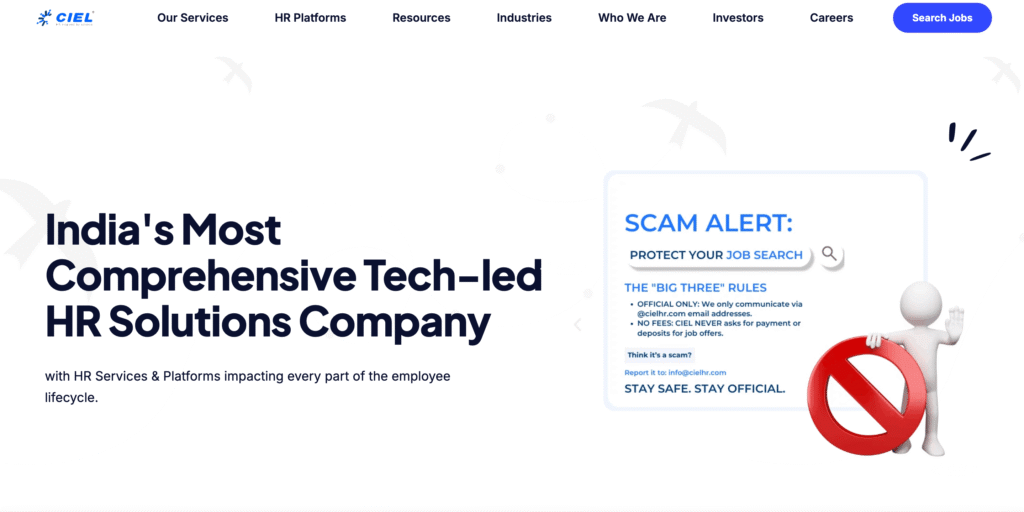
In India’s rapidly digitizing employment market of 2026, CIEL HR Services has positioned itself as a technology-driven staffing organization that integrates artificial intelligence, automation, and structured operational frameworks into large-scale talent acquisition. Building upon the legacy of the Ma Foi group, the company has evolved into a diversified HR solutions provider serving enterprises across industries, including IT, manufacturing, banking, and digital services.
Workforce analysts note that CIEL’s strength lies in combining human expertise with digital platforms, enabling consistent service delivery across a wide geographic footprint. With operations spanning more than 80 offices nationwide, the firm is capable of supporting both centralized hiring programs and region-specific recruitment needs.
Organizational Scale and Business Diversification
CIEL HR Services operates as a multi-line HR enterprise rather than a single-service recruitment firm. By 2026, the company has expanded into numerous adjacent domains, including HR technology platforms, managed services, and consulting, creating a comprehensive ecosystem for workforce management.
Key Organizational Indicators
| Organizational Metric | Reported Value (2026) | Strategic Significance |
|---|---|---|
| Nationwide Offices | 82+ locations | Strong regional coverage |
| Lines of Business | 12 distinct verticals | Diversified revenue streams |
| Annual Turnover | INR 815 crore | Large-scale operational capacity |
| Service Portfolio | Staffing, RPO, Executive Search | End-to-end talent solutions |
| Technology Integration | AI and automation enabled | Improved efficiency and scalability |
AI and Automation in Recruitment Processes
CIEL has embedded artificial intelligence across multiple stages of the hiring lifecycle, from candidate sourcing and screening to engagement and onboarding. Analysts suggest that such automation is increasingly essential as organizations handle large volumes of applications while maintaining quality standards.
AI-enabled systems help identify relevant profiles faster, reduce manual workload, and improve matching accuracy between candidates and job requirements.
Technology Applications in Hiring
| Hiring Stage | AI or Automation Application | Operational Benefit |
|---|---|---|
| Candidate Sourcing | Intelligent search algorithms | Wider reach with higher relevance |
| Resume Screening | Automated filtering | Faster shortlist creation |
| Skill Matching | Data-driven competency mapping | Improved fit between role and candidate |
| Candidate Engagement | Automated communication workflows | Consistent interaction experience |
| Analytics and Reporting | Real-time dashboards | Informed decision-making |
The 4T Approach: Ensuring Service Consistency
To maintain uniform standards across its extensive network, CIEL employs what it describes as the “4T Approach,” encompassing Trust, Team, Toolkit, and Training. This framework governs operational practices, recruiter capabilities, and client engagement protocols.
Industry observers view this model as a structured governance system designed to preserve service quality despite rapid expansion and decentralized operations.
4T Operational Framework
| 4T Pillar | Implementation Focus | Impact on Service Delivery |
|---|---|---|
| Trust | Ethical practices and transparency | Strong client relationships |
| Team | Collaborative workforce structure | Efficient project execution |
| Toolkit | Standardized digital platforms | Consistency across locations |
| Training | Continuous skill development | Up-to-date recruitment expertise |
Effort-Based Franchise Model and Scalability
One of CIEL’s distinguishing features is its effort-based partnership structure, which allows franchise operators and partners to retain a substantial portion of billing revenue. Reports indicate that partners may earn up to 80 percent of generated revenue, creating strong incentives for performance and expansion.
This decentralized model enables rapid scaling while maintaining entrepreneurial motivation among local operators, making it particularly effective in a country as geographically diverse as India.
Franchise Partnership Structure
| Partnership Element | Structure | Strategic Advantage |
|---|---|---|
| Revenue Sharing | Up to 80 percent to partners | High motivation for growth |
| Local Market Autonomy | Regional decision-making authority | Better understanding of local talent pools |
| Centralized Support | Technology and branding provided by CIEL | Operational consistency |
| Expansion Capability | Franchise-led growth | Rapid nationwide presence |
Comprehensive Service Portfolio
Beyond traditional staffing, CIEL HR Services offers a full spectrum of workforce solutions, including permanent hiring, recruitment process outsourcing (RPO), executive search, and HR technology services. This breadth allows organizations to consolidate multiple HR needs under a single provider.
Core Service Offerings
| Service Category | Scope of Engagement | Ideal Client Segment |
|---|---|---|
| Permanent Staffing | Full-time employee recruitment | Enterprises and mid-sized firms |
| Recruitment Process Outsourcing | Managed hiring operations | Large organizations with ongoing needs |
| Executive Search | Senior leadership placement | Corporations undergoing transformation |
| HR Platforms | Technology-enabled workforce tools | Companies seeking digital HR solutions |
Work Culture and Organizational Environment
Feedback from professionals who have worked within the organization highlights a supportive work culture influenced by the Ma Foi legacy. Leadership is often described as empathetic, with strong emphasis on employee recognition and professional development.
Employees also report exposure to advanced technology systems and diverse business verticals, contributing to significant learning opportunities.
Employee Experience Overview
| Workplace Dimension | Reported Strength | Professional Impact |
|---|---|---|
| Leadership Style | Empathetic and supportive | Positive organizational culture |
| Recognition Programs | Strong rewards framework | High employee motivation |
| Learning Opportunities | Exposure to multiple business lines | Skill diversification |
| Technology Adoption | Use of modern recruitment tools | Operational efficiency |
| National Presence | Extensive office network | Career mobility across regions |
Position in India’s Recruitment Landscape
CIEL HR Services represents a hybrid model that combines traditional recruitment expertise with modern technological capabilities and entrepreneurial expansion mechanisms. Its ability to operate at scale while maintaining service consistency makes it a valuable partner for organizations seeking reliable workforce solutions across multiple locations.
As India continues to strengthen its position as a global talent hub, firms that can blend human insight with digital efficiency are likely to play a central role in shaping future hiring practices.
Conclusion: A Technology-Enabled Partner for Workforce Transformation
In 2026, CIEL HR Services stands out as a comprehensive HR solutions provider capable of supporting organizations through complex talent challenges. Its AI-driven processes, structured operational framework, and scalable partnership model enable it to deliver both volume and quality in recruitment outcomes.
For companies seeking a partner that combines nationwide reach, technological sophistication, and diversified HR capabilities, CIEL represents a strategically aligned choice within India’s competitive IT and software hiring ecosystem.
10. Uplers

In 2026, Uplers has positioned itself as a cross-border talent platform connecting highly skilled Indian technology professionals with international organizations. Rather than operating as a traditional recruitment agency, the company functions as a curated talent network that emphasizes speed, cost efficiency, and quality assurance through rigorous pre-vetting.
Labor market analysts note that global demand for remote engineering talent continues to surge as companies pursue distributed work models and cost optimization. Uplers addresses this demand by maintaining a large pool of screened professionals capable of integrating into international teams with minimal onboarding friction.
Scale of the Talent Network and Global Reach
Uplers reports access to a network exceeding 200,000 professionals across software development, digital marketing, data analytics, and product engineering. This scale enables rapid matching between employer requirements and candidate capabilities, particularly for organizations seeking remote or offshore teams.
Key Platform Indicators
| Platform Metric | Reported Value (2026) | Strategic Implication |
|---|---|---|
| Talent Network Size | 200,000+ professionals | Broad coverage across technical domains |
| Primary Client Base | Global enterprises and agencies | Cross-border hiring capability |
| Hiring Speed Commitment | Shortlists within 48 hours | Rapid project initiation |
| Cost Advantage | About 40 percent lower | Significant savings versus local hiring |
| Retention Performance | Above industry average | Stability of remote workforce |
Value Proposition: Speed and Cost Efficiency
Uplers’ core promise revolves around delivering a small set of highly relevant candidates within a very short timeframe. Instead of presenting large volumes of resumes, the platform typically provides three to five carefully vetted profiles that have already undergone preliminary assessments.
This approach reduces decision fatigue for hiring managers and accelerates the selection process. Analysts observe that such efficiency is particularly valuable for startups and agencies operating under tight deadlines.
Hiring Efficiency Model
| Hiring Attribute | Uplers Approach | Benefit to Employers |
|---|---|---|
| Candidate Volume | Small, curated shortlist | Faster decision-making |
| Time to Initial Profiles | Approximately 48 hours | Reduced hiring delays |
| Pre-Interview Screening | Conducted before submission | Higher relevance of candidates |
| Cost Structure | Lower than traditional hiring | Budget optimization |
AI-Driven Screening and Matching
Artificial intelligence plays a central role in Uplers’ workflow, though it is applied selectively to enhance rather than replace human judgment. The company reports that its AI systems reduce manual screening effort by roughly 90 percent, allowing recruiters to focus on relationship management and final evaluations.
The AI engine analyzes job descriptions in depth, identifying nuanced requirements such as product-building experience or “zero-to-one” development exposure—skills associated with creating systems from scratch rather than maintaining existing platforms.
AI Capabilities in Talent Matching
| AI Function | Operational Application | Resulting Advantage |
|---|---|---|
| Contextual Job Analysis | Semantic interpretation of role requirements | Highly accurate candidate matching |
| Experience Pattern Detection | Identification of product-building background | Suitable candidates for innovation-driven roles |
| Automated Filtering | Removal of irrelevant profiles | Reduced noise in candidate pool |
| Technical Interview Support | AI-assisted assessment processes | Faster validation of skills |
AI Integration Across the Hiring Workflow
Uplers applies artificial intelligence across multiple recruitment phases, creating an end-to-end digital pipeline that streamlines sourcing, vetting, screening, and evaluation.
AI Integration in Uplers’ Hiring Workflow, 2026
| Hiring Phase | AI Functionality | Measurable Impact |
|---|---|---|
| Sourcing | Contextual job description analysis | Approximately 99 percent irrelevant profiles removed |
| Vetting | Analysis of “zero-to-one” project exposure | Selection of product-oriented candidates |
| Screening | AI-led video technical interviews | About 90 percent reduction in manual screening |
| Evaluation | Communication assessment in English | Shortlists delivered within 48 hours |
Retention and Workforce Stability
Beyond speed and cost savings, Uplers emphasizes long-term placement success. Reports indicate that engineers sourced through the platform demonstrate retention rates significantly higher than industry norms, with approximately 92 percent remaining engaged after one year.
Analysts attribute this stability to careful matching of both technical capability and work expectations, as well as the readiness of candidates for remote collaboration.
Retention Performance Indicators
| Retention Metric | Reported Outcome | Organizational Benefit |
|---|---|---|
| One-Year Retention Rate | Approximately 92 percent | Reduced rehiring costs |
| Comparative Performance | About twice the industry average | Greater workforce continuity |
| Onboarding Readiness | High | Faster productivity ramp-up |
Client Experience and Service Quality
Feedback from partner organizations frequently highlights professionalism, transparency, and structured coordination. Dedicated account representatives maintain ongoing communication to ensure tasks progress smoothly and issues are resolved promptly.
Clients also report that Uplers’ teams contribute not only to hiring outcomes but also to broader business performance, particularly in digital and technical domains.
Client Experience Summary
| Experience Dimension | Reported Strength | Impact on Engagement |
|---|---|---|
| Professional Coordination | Proactive communication | Smooth project execution |
| Transparency | Clear processes and expectations | Trust in partnership |
| Technical Expertise | Strong understanding of digital roles | High-quality placements |
| Responsiveness | Timely follow-ups and support | Reduced operational friction |
Position in the Global Recruitment Ecosystem
Uplers occupies a unique niche at the intersection of staffing, outsourcing, and digital talent marketplaces. Its model reflects broader trends toward borderless employment, remote collaboration, and technology-enabled hiring.
For international companies seeking high-quality engineers without the cost structure of Western labor markets, platforms like Uplers provide a scalable solution. Simultaneously, Indian professionals gain access to global career opportunities without relocating.
Conclusion: A Fast, Scalable Bridge Between Global Demand and Indian Talent
As organizations worldwide continue to embrace distributed workforce models in 2026, the ability to access reliable remote talent quickly has become a decisive competitive factor. Uplers’ combination of large-scale talent networks, AI-assisted screening, and curated shortlists enables companies to build capable engineering teams with minimal delay.
By delivering both efficiency and stability, the platform has established itself as a prominent facilitator of cross-border technology hiring, reinforcing India’s role as a key supplier of skilled digital professionals to the global economy.
Strategic Comprehensive Analysis of the Top IT and Software Recruitment Agencies in India: 2026 Market Report
India’s information technology and software sector in 2026 is undergoing a structural transformation characterized by a shift from large-scale hiring to precision talent acquisition focused on specialized capabilities. As national IT expenditure exceeds 176 billion US dollars, the recruitment ecosystem has evolved into a highly sophisticated network integrating artificial intelligence, Global Capability Centers, distributed workforces, and emerging regional talent hubs.
Employers are no longer seeking headcount expansion alone; instead, they prioritize high-impact professionals capable of driving innovation, cybersecurity resilience, cloud modernization, and AI-led product development. This shift has intensified competition for advanced technical skills, particularly in generative AI, machine learning, cloud orchestration, and digital infrastructure security. Industry estimates indicate that the talent shortage in niche technology domains has reached approximately 44 percent, compelling recruitment agencies to adopt advanced screening technologies such as automated coding evaluations, AI-driven candidate matching, and predictive hiring analytics.
Macroeconomic Landscape and Workforce Stability in 2026
India’s broader labor market remains resilient despite global economic uncertainties. Average salary increments across industries are projected at approximately 9.1 percent in 2026, slightly higher than the previous year’s 8.9 percent. The technology sector significantly outperforms this average due to the premium attached to future-ready digital skills.
Professionals specializing in AI, data engineering, cybersecurity, and cloud platforms often receive salary growth between 10 percent and 12 percent, reflecting their strategic importance to organizations undergoing digital transformation. At the same time, employee turnover has stabilized following the post-pandemic wave of voluntary exits. The attrition rate has declined to roughly 16.2 percent, a five-year low, as companies focus on retention strategies, internal mobility, and long-term career development pathways.
Key Labor Market Indicators, India 2026
| Indicator | Reported Value (2026) | Interpretation |
|---|---|---|
| Average Salary Increase | 9.1 percent | Stable economic growth |
| Technology Sector Salary Premium | 10 to 12 percent | High demand for advanced skills |
| Attrition Rate | 16.2 percent | Improved workforce stability |
| IT Spending | Over 176 billion US dollars | Continued sector expansion |
| Niche Talent Gap | Approximately 44 percent | Acute shortage of specialized expertise |
Rise of Precision Hiring and AI-Led Recruitment
Recruitment agencies have transitioned from transactional hiring models to intelligence-driven talent acquisition frameworks. Artificial intelligence now plays a central role in identifying suitable candidates, predicting job fit, and reducing manual workload.
Technology-enabled recruitment tools can analyze job descriptions semantically, evaluate candidate portfolios, and conduct preliminary technical assessments. This capability allows agencies to manage high-volume applications while maintaining stringent quality standards.
AI Applications in Modern Recruitment Practices
| Recruitment Stage | AI Application | Operational Advantage |
|---|---|---|
| Candidate Sourcing | Intelligent database search | Faster identification of relevant profiles |
| Resume Screening | Automated skill extraction | Reduced manual effort |
| Technical Assessment | Online coding platforms | Objective evaluation of capabilities |
| Behavioral Analysis | Communication and personality analytics | Improved cultural alignment |
| Hiring Forecasting | Predictive analytics | Strategic workforce planning |
Geographic Redistribution of Technology Talent
While traditional technology hubs such as Bengaluru, Hyderabad, and Pune continue to offer the highest compensation levels, recruitment patterns are shifting toward tier-2 cities. Locations including Kochi, Thiruvananthapuram, Ahmedabad, and Surat are gaining prominence due to lower operational costs, improved infrastructure, and the spread of remote work models.
Senior professionals in these emerging hubs now command compensation packages comparable to metropolitan markets. Average senior-level salaries in tier-2 cities have reached approximately INR 28.38 lakhs annually, with top performers achieving parity with tier-1 counterparts.
Tier-1 vs Tier-2 Technology Talent Landscape
| City Category | Characteristics | Employer Advantages |
|---|---|---|
| Tier-1 Metros | Mature ecosystems, higher salaries | Immediate access to experienced talent |
| Emerging Tier-2 Cities | Growing skill base, lower cost of living | Cost efficiency and retention potential |
| Remote Workforce Locations | Distributed professionals nationwide | Flexibility and wider talent reach |
Influence of Global Capability Centers (GCCs)
Global Capability Centers have become a dominant force shaping India’s technology employment landscape. These centers, established by multinational corporations to manage critical operations such as research, analytics, and engineering, now account for nearly one-fifth of new technology job creation.
GCCs prioritize strategic functions including cybersecurity, artificial intelligence development, and digital transformation initiatives. Their presence accelerates demand for highly specialized professionals while also driving regional development beyond major metropolitan areas.
Role of GCCs in Technology Hiring
| GCC Focus Area | Strategic Importance | Talent Requirement |
|---|---|---|
| Cybersecurity | Protection of global digital assets | Security specialists and analysts |
| AI and Advanced Analytics | Competitive innovation | Data scientists and ML engineers |
| Cloud Transformation | Infrastructure modernization | Cloud architects and DevOps professionals |
| Digital Operations | Process efficiency | Software engineers and automation experts |
Compensation Benchmarks for Key IT Roles in 2026
Salary levels for technology professionals vary widely depending on specialization, experience, and organizational scale. Roles linked to emerging technologies command the highest compensation due to limited supply and high business impact.
2026 Compensation Benchmarks for Major IT Positions
| Job Role | Average Annual Salary (INR) | Senior-Level Salary (INR) | Projected Growth (2026) |
|---|---|---|---|
| AI and ML Architect | 21 to 44 lakhs | 34 lakhs and above | 12 percent |
| Cloud Solutions Architect | About 29.9 lakhs | 40 lakhs and above | 10 percent |
| Cybersecurity Specialist | 7 to 14 lakhs | 12 to 14 lakhs | 11 percent |
| Data Scientist | Around 15 lakhs | Approximately 23 lakhs | 10.5 percent |
| Full Stack Developer | About 9.4 lakhs | Around 23 lakhs | 9.5 percent |
| DevOps Engineer | Approximately 8.6 lakhs | Up to 22 lakhs | 9.8 percent |
| Blockchain Developer | 4 to 10 lakhs | Around 23 lakhs | 8.5 percent |
| Big Data Engineer | 5 to 12 lakhs | Up to 22 lakhs | 9.2 percent |
Implications for Recruitment Agencies in 2026
The convergence of rising salaries, skill shortages, geographic diversification, and technological change has elevated the role of recruitment agencies from service providers to strategic workforce partners. Organizations increasingly rely on specialized firms to navigate compensation trends, access passive talent pools, and design competitive hiring strategies.
Agencies that combine domain expertise with technological sophistication are particularly well positioned to succeed. Their ability to deliver vetted candidates quickly, provide market intelligence, and support long-term workforce planning directly influences organizational competitiveness.
Conclusion: A Mature and Strategic Hiring Ecosystem
India’s IT recruitment market in 2026 reflects a mature ecosystem aligned with the needs of a digital-first economy. Precision hiring, AI-enabled screening, and decentralized talent development are reshaping how companies build technology teams.
As demand for advanced skills continues to outpace supply, recruitment agencies capable of integrating data analytics, human expertise, and nationwide reach will play a decisive role in enabling sustainable growth. For employers operating in this environment, strategic partnerships with such agencies are no longer optional but essential to securing the talent required for innovation and long-term success.
Technological Integration in Recruitment Processes, 2026
By 2026, recruitment in India’s IT and software sector has evolved into a highly digitized, intelligence-driven workflow that bears little resemblance to traditional hiring pipelines. The process is no longer a simple sequence of resume screening followed by interviews. Instead, leading recruitment agencies deploy layered technological systems that combine artificial intelligence, behavioral analytics, remote proctoring, and advanced skills validation platforms to identify truly qualified candidates with minimal manual intervention.
Industry observers note that these innovations are a direct response to two major pressures: the overwhelming volume of applications for technology roles and the increasing sophistication of assessment fraud in virtual hiring environments. As remote work becomes normalized, ensuring candidate authenticity and technical competence has become a critical priority.
AI-Enabled Recruitment Intelligence Platforms
Modern agencies utilize integrated decision-support systems often referred to as AI-driven recruitment engines. These platforms analyze job descriptions, candidate profiles, coding repositories, and communication patterns to determine suitability with high precision. Tools similar to “AI-LogicBox” frameworks are designed to automate repetitive screening tasks while surfacing only the most relevant candidates for human evaluation.
Such systems significantly reduce recruiter workload and improve hiring accuracy by filtering out mismatches early in the process.
Core Capabilities of AI Recruitment Engines
| Technology Capability | Functional Application | Organizational Benefit |
|---|---|---|
| Semantic Job Matching | Deep analysis of role requirements | Highly relevant candidate shortlists |
| Behavioral Pattern Analysis | Evaluation of communication style | Improved cultural alignment |
| Predictive Fit Scoring | Likelihood of success in role | Reduced hiring risk |
| Automated Ranking | Prioritization of top candidates | Efficient decision-making |
Advanced Skills Assessment and Integrity Monitoring
Specialized technical assessment platforms have become central to evaluating IT professionals. Tools comparable to patented systems such as iMocha enable live coding tests, real-time problem solving, and project simulations that replicate workplace scenarios.
A critical feature of these platforms is anti-cheating detection. With the rise of remote testing, agencies now deploy IP tracking, browser monitoring, keystroke analysis, and video proctoring to ensure the integrity of assessments. These safeguards help organizations avoid costly hiring errors caused by misrepresented skills.
Technical Assessment and Proctoring Framework
| Assessment Feature | Implementation Method | Risk Mitigated |
|---|---|---|
| Live Coding Environments | Real-time programming challenges | Validates actual technical ability |
| IP Address Tracking | Monitoring of network origin | Prevents proxy test-taking |
| Video Proctoring | Continuous visual monitoring | Detects impersonation |
| Browser Activity Control | Restricted access during tests | Reduces external assistance |
| Behavioral Analytics | Monitoring of typing patterns | Identifies anomalies |
Reduction of Screening Fatigue for Hiring Managers
One of the most significant benefits of technological integration is the dramatic reduction in “screening fatigue.” Hiring managers no longer need to review hundreds of resumes or conduct preliminary interviews with unsuitable candidates. Instead, agencies deliver a curated shortlist representing the highest-quality segment of the talent pool.
Reports indicate that modern recruitment systems can narrow down applicant pools to approximately the top one percent of candidates based on predefined criteria. This allows decision-makers to focus their time on strategic evaluation rather than administrative filtering.
Impact of Technology on Hiring Efficiency
| Hiring Dimension | Traditional Approach | Technology-Driven Approach |
|---|---|---|
| Resume Review Volume | Very high manual workload | Automated filtering |
| Candidate Quality | Mixed relevance | Highly targeted profiles |
| Time to Shortlist | Weeks | Days or hours |
| Manager Involvement | Early-stage screening required | Focus on final evaluation |
| Risk of Misrepresentation | Higher | Significantly reduced |
Rise of Middle-Level Technology Roles as Economic Drivers
While executive hiring attracts significant attention, middle-level professionals form the operational backbone of technology organizations. These roles require substantial expertise and experience but are more numerous than leadership positions, making them critical to project execution and delivery.
In 2026, compensation for such positions has risen steadily due to persistent demand across industries undergoing digital transformation. Skills related to full-stack development, cloud platforms, enterprise systems, and data processing command premium salaries.
Top High-Paying Middle-Level Professional Jobs in IT, 2026
| Rank | Job Role | Average Salary (INR) | Primary Skill Requirement |
|---|---|---|---|
| 1 | Software Developer | 17.27 lakhs | Full-stack proficiency |
| 2 | PHP Developer | 16.86 lakhs | Backend architecture |
| 3 | JavaScript Developer | 16.72 lakhs | Frontend frameworks |
| 4 | Product Manager | 16.25 lakhs | Strategy and roadmap planning |
| 5 | Java Professional | 16.06 lakhs | Enterprise system development |
| 6 | Cloud Architect | 16.03 lakhs | AWS, Azure, or GCP expertise |
| 7 | .NET Developer | 15.81 lakhs | C# ecosystem and enterprise applications |
| 8 | C++ Developer | 15.70 lakhs | Systems programming |
| 9 | Python Specialist | 15.30 lakhs | AI and machine learning integration |
| 10 | Big Data Engineer | 15.17 lakhs | Hadoop and Spark frameworks |
Strategic Importance of Middle-Tier Talent
Organizations increasingly recognize that middle-level professionals bridge the gap between strategic leadership and junior execution teams. They often manage projects, mentor entry-level engineers, and ensure continuity in product development cycles.
Consequently, recruitment agencies devote substantial resources to sourcing and assessing candidates in this segment, as the quality of these hires directly influences productivity, innovation, and time-to-market.
Role of Middle-Level Professionals in Technology Organizations
| Organizational Function | Contribution of Mid-Level Talent | Business Impact |
|---|---|---|
| Project Execution | Technical implementation | On-time delivery |
| Team Leadership | Guidance for junior staff | Skill development and retention |
| System Optimization | Performance improvements | Operational efficiency |
| Innovation Support | Implementation of new technologies | Competitive advantage |
Conclusion: Technology as the Core Enabler of Modern Recruitment
The recruitment landscape in 2026 demonstrates that technological integration is no longer optional but foundational. Artificial intelligence, advanced assessment tools, and integrity monitoring systems have transformed hiring into a data-driven discipline capable of identifying exceptional talent with unprecedented accuracy.
As organizations compete for scarce digital skills, agencies that leverage these technologies effectively will continue to play a decisive role in shaping the workforce of the future. For employers, adopting such advanced recruitment methodologies ensures not only faster hiring but also higher-quality outcomes and reduced long-term risk.
Critical Insights and Future Outlook for IT Recruitment in India Beyond 2026
India’s technology hiring ecosystem is entering a phase defined not by expansion alone, but by structural transformation. Evidence from market data, employer behavior, and recruitment outcomes indicates that the post-2026 landscape will be shaped by three dominant forces: the evolving role of Global Capability Centers, the emergence of AI-native skill requirements, and the geographic redistribution of talent toward emerging cities. Together, these shifts are redefining how organizations compete for talent and how recruitment agencies position themselves as strategic partners rather than transactional service providers.
The GCC Paradox and Attrition Stabilization
Global Capability Centers (GCCs) continue to be among the most powerful engines of technology job creation in India. These centers, operated by multinational corporations to manage critical global functions, offer salary premiums estimated at 15 to 20 percent above domestic benchmarks. Such compensation advantages attract top-tier professionals but simultaneously intensify competition among employers targeting the same talent pool.
This dynamic creates what analysts describe as the “GCC paradox”: organizations that offer the most attractive packages also face the greatest retention challenges due to aggressive poaching and overlapping skill requirements across sectors. Recruitment agencies with specialized GCC hiring experience and high service-level commitments are increasingly acting as gatekeepers to this premium segment.
At the same time, the broader market shows signs of stabilization. The decline in attrition to approximately 16.2 percent indicates a shift away from short-term job hopping toward longer-term career planning. Companies are investing more heavily in employee engagement, internal mobility, and skills development to reduce turnover.
GCC Hiring Dynamics and Market Effects
| GCC Hiring Factor | Current Trend | Strategic Implication |
|---|---|---|
| Salary Premium | 15 to 20 percent above market | Attraction of top-tier professionals |
| Talent Competition | Extremely high | Increased recruitment complexity |
| Retention Challenges | Elevated in niche domains | Need for engagement strategies |
| Attrition Trend | Declining to around 16.2 percent | Greater workforce stability |
| Agency Role | Specialized GCC-focused recruitment | High-value partnership opportunities |
The Emergence of AI Agent Skillsets
A dramatic surge in demand for AI-related capabilities is reshaping job descriptions across the technology sector. One of the most notable developments is the rapid rise of roles requiring “AI Agent” expertise—skills associated with designing, deploying, and managing autonomous or semi-autonomous digital systems capable of decision-making and task execution.
Vacancies requiring such competencies have reportedly increased by more than fifteenfold, signaling a fundamental shift toward AI-native business operations. Traditional evaluation methods based on static resumes are increasingly inadequate for assessing these dynamic skills.
Recruitment agencies are adopting advanced “skill intelligence” systems that analyze project portfolios, learning trajectories, and behavioral indicators to predict future performance rather than relying solely on past experience.
Evolution of Talent Evaluation for AI Roles
| Evaluation Method | Traditional Approach | Emerging Approach |
|---|---|---|
| Candidate Assessment | Resume and interview based | Portfolio and capability analytics |
| Skill Verification | Certifications and past roles | Real-time technical demonstrations |
| Performance Prediction | Limited | AI-driven forecasting models |
| Career Mobility Insights | Reactive tracking | Predictive movement analysis |
Expansion of Strategic Talent Hubs in Tier-2 Cities
Another defining trend is the gradual decentralization of technology employment away from major metropolitan centers. Tier-2 cities are projected to account for nearly 60 percent of new IT job creation by the latter part of 2026, supported by improved infrastructure, remote work adoption, and cost advantages.
Cities such as Thiruvananthapuram, Kochi, Ahmedabad, and Surat are emerging as significant talent reservoirs. Employers benefit from lower salary expectations compared to metros, while professionals gain access to high-quality jobs without relocating.
Recruitment agencies with strong regional networks are particularly well positioned to leverage this shift by tapping into underutilized talent pools that remain largely invisible to metro-centric hiring strategies.
Tier-2 Talent Hub Characteristics
| Attribute | Observed Trend | Employer Advantage |
|---|---|---|
| Job Creation Share | Approaching 60 percent of new roles | Expanded hiring options |
| Salary Levels | Lower than metros but rising rapidly | Cost efficiency |
| Talent Availability | Growing pool of skilled professionals | Reduced competition |
| Infrastructure Development | Improving digital connectivity | Viability for remote and hybrid work |
| Example Entry Salary | Around INR 5.85 lakhs in some cities | Attractive for early-career hiring |
Transformation of Recruitment Agencies into Strategic Partners
The cumulative effect of these trends is a fundamental redefinition of the recruitment industry’s role. Agencies are no longer evaluated solely on their ability to fill vacancies but on their capacity to deliver strategic workforce solutions. This includes providing market intelligence, talent mapping, compensation benchmarking, and retention insights.
Large global firms contribute stability through standardized processes and international expertise, while agile domestic agencies offer flexibility, localized knowledge, and cost efficiency—particularly valuable for startups and emerging businesses.
Comparative Value Propositions of Agency Types
| Agency Category | Core Strength | Ideal Client Segment |
|---|---|---|
| Global Recruitment Firms | Process rigor and international standards | Multinational corporations and GCCs |
| Domestic Large-Scale Firms | Regional reach and volume capability | Enterprises expanding across India |
| Startup-Focused Agencies | Cost efficiency and agility | VC-backed startups and D2C brands |
| Specialist Talent Platforms | Niche expertise and rapid deployment | Technology-intensive projects |
Importance of Verified and Work-Ready Talent
As the skills gap in artificial intelligence, cybersecurity, and advanced cloud technologies continues to widen, organizations increasingly prioritize candidates who can contribute immediately without extensive training. Recruitment agencies are responding by implementing rigorous technical validation processes, including proctored assessments, project-based evaluations, and continuous engagement before onboarding.
The ability to supply “verified” talent—professionals whose skills and identity have been thoroughly confirmed—has become a key differentiator in the market.
Critical Selection Criteria for Recruitment Partners
| Evaluation Criterion | Why It Matters | Impact on Hiring Success |
|---|---|---|
| Pricing Transparency | Predictable recruitment costs | Budget control |
| Technical Evaluation Depth | Accurate skill verification | Reduced performance risk |
| Retention Track Record | Indicator of placement quality | Long-term workforce stability |
| Regional Coverage | Access to diverse talent pools | Broader hiring reach |
| Technology Integration | Efficiency and accuracy | Faster time-to-hire |
Conclusion: A Strategic Imperative for Employers
The IT recruitment landscape in India beyond 2026 will be defined by precision, adaptability, and technological sophistication. Organizations must navigate intense competition for specialized skills, shifting geographic patterns, and evolving job requirements driven by artificial intelligence and digital transformation.
Recruitment agencies capable of delivering validated talent, strategic insights, and scalable solutions will play a decisive role in enabling business growth. For employers, selecting the right partner is no longer a tactical decision but a strategic investment in long-term competitiveness within an increasingly knowledge-driven economy.
Conclusion
India’s technology employment landscape in 2026 stands at a pivotal inflection point. What was once a volume-driven hiring market has evolved into a precision-focused talent ecosystem where speed, specialization, and strategic alignment determine success. For employers seeking to hire IT and software professionals in India, the choice of recruitment partner is no longer a routine operational decision but a mission-critical component of long-term business strategy.
The top recruitment agencies operating in India today represent a diverse spectrum of capabilities tailored to different organizational needs. Global firms bring standardized processes, compliance rigor, and international hiring expertise. Large domestic players offer unmatched scale, regional reach, and deep familiarity with India’s complex labor market. Specialist agencies deliver niche expertise for leadership roles, emerging technologies, or startup environments. Meanwhile, technology-driven platforms leverage artificial intelligence and data analytics to provide speed and precision in candidate matching.
This diversity reflects the multifaceted nature of modern IT hiring. Organizations are simultaneously competing for entry-level engineers, mid-level specialists, senior architects, cybersecurity experts, and C-suite technology leaders. No single recruitment model fits all scenarios, making it essential for employers to align agency selection with their specific hiring objectives, budget constraints, and growth trajectory.
Key Factors Defining Successful IT Hiring in 2026
Several structural trends shape the effectiveness of recruitment partnerships in the current market. First, the persistent shortage of advanced digital skills—particularly in artificial intelligence, cloud computing, cybersecurity, and data engineering—means that access to passive talent networks is increasingly valuable. Agencies that maintain curated candidate pools and conduct continuous market mapping can significantly reduce time-to-hire.
Second, the rise of Global Capability Centers has intensified competition for experienced professionals. These centers offer attractive compensation packages and long-term career opportunities, making retention as important as acquisition. Recruitment partners capable of assessing cultural fit and career alignment help organizations avoid costly turnover.
Third, geographic decentralization has expanded the talent map beyond traditional metropolitan hubs. Tier-2 cities are now major contributors to new technology jobs, offering cost advantages and untapped skill pools. Agencies with nationwide presence and local expertise can unlock these opportunities more effectively than metro-centric firms.
Essential Criteria for Evaluating Recruitment Agencies
When selecting an IT recruitment agency in India, employers should evaluate partners across multiple dimensions rather than focusing solely on placement fees. Transparency in pricing, depth of technical evaluation, scalability of operations, and proven retention outcomes are key indicators of reliability.
Critical Evaluation Dimensions for Recruitment Partners
| Evaluation Dimension | What Employers Should Assess | Impact on Hiring Outcomes |
|---|---|---|
| Technical Screening Depth | Quality of skill validation processes | Ensures role readiness |
| Speed of Delivery | Average time-to-fill for similar roles | Supports project timelines |
| Talent Network Strength | Access to active and passive candidates | Expands hiring options |
| Geographic Coverage | Presence across major and emerging cities | Enables diversified sourcing |
| Pricing Transparency | Clear fee structures and guarantees | Budget predictability |
| Retention Performance | Track record of long-term placements | Reduces rehiring costs |
Strategic Value of Specialized Recruitment Models
Different agency models serve distinct business contexts. For example, multinational corporations expanding into India may prioritize compliance, scale, and process maturity, making global recruitment firms an appropriate choice. High-growth startups often seek cost efficiency and rapid hiring, favoring fixed-fee or dedicated recruiter models. Organizations building leadership teams require executive search specialists capable of confidential, research-driven engagements.
Technology-enabled platforms provide another compelling option, particularly for remote hiring or cross-border collaboration. Their ability to deliver pre-vetted candidates quickly can be decisive in fast-moving markets.
Matching Agency Types to Organizational Needs
| Organization Type | Recommended Agency Model | Key Benefit |
|---|---|---|
| Large Enterprises | Global or large domestic firms | Scalability and compliance |
| Global Capability Centers | Specialized staffing partners | Access to niche expertise |
| Startups and Scale-Ups | Fixed-cost or dedicated recruiter models | Cost control and agility |
| Leadership Hiring | Executive search consultancies | Strategic candidate identification |
| Remote-First Companies | Digital talent platforms | Cross-border workforce access |
The Role of Technology in Future Recruitment
Artificial intelligence, automated assessments, and data analytics have fundamentally reshaped recruitment operations. Agencies now function as technology-enabled talent intelligence providers rather than simple intermediaries. Advanced tools enable accurate skill matching, fraud detection in remote hiring, and predictive insights into candidate success.
Employers that partner with technologically sophisticated agencies gain a competitive edge by accessing high-quality candidates faster and reducing the risk of misaligned hires. This advantage is particularly critical in domains where innovation cycles are short and delays can impact market positioning.
Long-Term Workforce Planning Considerations
Hiring decisions made in 2026 will influence organizational capability for years to come. Companies must therefore consider not only immediate staffing needs but also long-term workforce resilience. Recruitment agencies can support this objective by providing insights into market trends, compensation benchmarks, and emerging skill requirements.
Organizations should also prioritize partners who demonstrate adaptability. As new technologies emerge and business models evolve, the ability to pivot recruitment strategies quickly will become increasingly important.
Future-Oriented Hiring Priorities
| Strategic Priority | Why It Matters | Role of Recruitment Agencies |
|---|---|---|
| Future Skill Acquisition | Preparing for emerging technologies | Talent mapping and advisory |
| Workforce Stability | Minimizing attrition | Cultural fit assessment |
| Cost Optimization | Managing hiring expenditure | Efficient sourcing models |
| Speed to Market | Accelerating project delivery | Rapid candidate deployment |
Final Perspective: From Vendors to Strategic Workforce Partners
The most significant evolution in India’s IT recruitment ecosystem is the transformation of agencies from transactional vendors into strategic collaborators. Leading firms now influence workforce planning, organizational design, and competitive positioning in the digital economy.
For employers seeking to hire IT and software employees in India in 2026, success depends on selecting a partner that aligns with both immediate requirements and long-term vision. Agencies that combine domain expertise, technological sophistication, transparent processes, and deep talent networks will continue to shape the future of technology employment in the country.
As digital transformation accelerates across industries, the demand for skilled technology professionals will remain intense. Organizations that invest in strong recruitment partnerships today will be better positioned to secure the talent necessary for innovation, resilience, and sustained growth in an increasingly knowledge-driven global marketplace.
If you find this article useful, why not share it with your hiring manager and C-level suite friends and also leave a nice comment below?
We, at the 9cv9 Research Team, strive to bring the latest and most meaningful data, guides, and statistics to your doorstep.
To get access to top-quality guides, click over to 9cv9 Blog.
To hire top talents using our modern AI-powered recruitment agency, find out more at 9cv9 Modern AI-Powered Recruitment Agency.
People Also Ask
What are the top IT recruitment agencies in India for hiring software engineers in 2026?
Leading agencies include global firms, domestic staffing companies, executive search consultancies, and AI-driven platforms that specialize in sourcing vetted developers, cloud experts, and cybersecurity professionals across India.
Why should companies use a recruitment agency to hire IT employees in India?
Agencies provide access to pre-screened talent, reduce time-to-hire, handle technical evaluation, and help employers compete for scarce skills in a highly competitive tech job market.
How much do IT recruitment agencies in India charge employers?
Fees typically range from 8% to 30% of annual salary for contingency hiring, while some firms offer fixed monthly retainers or subscription models for unlimited hiring support.
Which recruitment agencies specialize in senior IT leadership hiring in India?
Executive search firms focus on CTOs, engineering directors, and solution architects using research-driven methods, confidential outreach, and in-depth leadership assessments.
Can startups hire developers in India through recruitment agencies?
Yes, many agencies offer startup-friendly models such as fixed-cost hiring plans, dedicated recruiters, or flexible contracts designed for rapid team scaling on limited budgets.
How long does it take to hire a software developer through an agency in India?
Time-to-hire can range from one to six weeks depending on role complexity, seniority, and market demand, with niche skills often requiring longer search cycles.
Do recruitment agencies in India provide remote IT talent for global companies?
Many agencies supply remote-ready developers who can work with international teams, enabling companies worldwide to access India’s skilled workforce without relocation.
What IT roles are most in demand in India in 2026?
High-demand roles include AI engineers, cloud architects, cybersecurity specialists, data scientists, DevOps engineers, and full-stack developers.
Are recruitment agencies useful for hiring contract or temporary IT staff?
Yes, staffing firms often provide contract professionals for short-term projects, product launches, or specialized assignments requiring immediate expertise.
How do agencies screen software developers before presenting them to employers?
Screening typically includes technical tests, coding assessments, behavioral interviews, background checks, and communication evaluations to ensure readiness.
Do agencies help with salary benchmarking for IT roles in India?
Most reputable firms provide market insights on compensation trends, helping employers offer competitive packages that attract and retain top talent.
What is the advantage of using AI-driven recruitment platforms?
AI tools improve matching accuracy, reduce manual screening, and deliver highly relevant candidate shortlists faster than traditional hiring methods.
Can recruitment agencies help companies set up Global Capability Centers in India?
Yes, many agencies specialize in large-scale hiring for GCCs, including workforce planning, compliance support, and sourcing across multiple cities.
Do agencies assist with onboarding and documentation?
Some firms provide end-to-end services including offer negotiation, background verification, payroll setup, and onboarding coordination.
Is hiring through agencies more expensive than direct hiring?
While fees apply, agencies often reduce hidden costs such as prolonged vacancies, hiring mistakes, and internal recruitment workload.
Which cities in India have the highest concentration of IT talent?
Major hubs include Bengaluru, Hyderabad, Pune, Chennai, and emerging tier-2 cities like Kochi, Ahmedabad, and Thiruvananthapuram.
How do agencies ensure candidate authenticity in remote hiring?
They use identity verification, proctored assessments, video interviews, and background checks to prevent impersonation or skill misrepresentation.
Can agencies hire niche technology specialists in India?
Specialist recruiters maintain curated networks of experts in areas like blockchain, AI research, and cybersecurity for hard-to-fill roles.
Do recruitment agencies guarantee candidate replacement?
Many agencies offer replacement periods, allowing employers to request a new candidate if the original hire leaves within a specified timeframe.
What industries use IT recruitment agencies in India?
Technology services, fintech, healthcare, e-commerce, manufacturing, banking, and consulting firms all rely heavily on tech recruitment partners.
How can companies choose the best recruitment agency for IT hiring?
Employers should evaluate domain expertise, client reviews, placement success rates, pricing transparency, and speed of delivery.
Are there agencies focused on entry-level tech hiring in India?
Yes, some firms specialize in fresher recruitment, campus hiring programs, and apprenticeship models to build junior talent pipelines.
Do agencies provide candidates for AI and machine learning roles?
Many top agencies now specialize in sourcing professionals with advanced AI, ML, and data engineering expertise due to growing demand.
Can recruitment agencies help reduce employee attrition?
By assessing cultural fit and career alignment, agencies improve retention and reduce the likelihood of early resignations.
Is India a cost-effective destination for hiring software developers?
India offers high-quality technical talent at competitive costs compared to Western markets, making it attractive for global hiring.
Do agencies handle confidential or stealth hiring projects?
Executive search firms frequently conduct discreet searches for leadership roles or replacement hires without public disclosure.
What is the difference between staffing firms and executive search agencies?
Staffing firms handle volume hiring and mid-level roles, while executive search consultancies focus on senior leadership positions.
Can agencies support long-term workforce planning?
Yes, strategic partners provide talent mapping, hiring forecasts, and market intelligence to support sustainable growth.
Do recruitment agencies work with both domestic and international employers?
Most leading firms serve Indian companies as well as overseas organizations seeking to build teams in India.
Will recruitment agencies remain important beyond 2026?
As skill shortages persist and technology evolves, specialized recruitment partners will continue to play a crucial role in securing top IT talent.
Sources
Talentsprint
- Mediabrief
- ETHRWorld
- Economic Times
- TeamLease
- LiveMint
- upGrad
- India Technology News
- Randstad
- Indeed
- Quess Corp
- TeamLease EdTech
- Adecco
- Staffing Industry Analysts
- Deccan Herald
- Synk Consulting
- Whalesbook
- SutraHR
- V3 Staffing
- Michael Page
- Gartner Peer Insights
- Asanify
- Scribd
- Franchise Bazar
- ICRA
- Uplers
- G2
- Justdial
- iMocha