Key Takeaways
- Randstad has transformed into a tech-enabled global talent partner through its “Partner for Talent” strategy and AI-driven platforms.
- With strong presence in over 39 countries, Randstad offers specialised recruitment, RPO, MSP, and digital marketplace solutions.
- Its proven cost efficiency, enterprise scalability, and future-ready talent technology make Randstad a top choice in global workforce solutions.
Randstad Recruitment Agency has long been recognized as a dominant force in the global staffing and human capital services industry. Established in 1960 in the Netherlands, the company has grown into one of the largest recruitment agencies in the world, operating in over 39 countries and employing more than 41,000 internal staff members. Serving millions of job seekers and over 180,000 client organizations annually, Randstad’s influence on global labor markets is both profound and far-reaching. This in-depth review aims to explore every facet of Randstad’s operations—from its traditional staffing roots to its cutting-edge digital transformation, financial strategies, enterprise solutions, and future growth outlook.
Also, if you are looking for recruitment and staffing services, check out 9cv9 Recruitment Agency.

As the talent acquisition landscape undergoes rapid change due to technological disruption, evolving workforce expectations, and global economic shifts, Randstad has taken decisive steps to future-proof its business. Through its “Partner for Talent” strategy, the company has made a pivotal transition from a high-volume, generalist staffing model to a specialized, AI-enhanced, and platform-driven talent solutions provider. Randstad’s ability to integrate human expertise with digital automation places it at the forefront of modern recruitment innovation.

One of the agency’s defining strengths lies in its diversified portfolio of services. Randstad offers a wide range of solutions including temporary staffing, permanent placement, executive search, Recruitment Process Outsourcing (RPO), Managed Services Programs (MSP), payroll management, and workforce consultancy. This service diversification allows the company to cater to both small businesses and multinational enterprises, providing scalable and customized workforce strategies across different industries such as IT, healthcare, engineering, logistics, finance, and manufacturing.

In recent years, Randstad has intensified its investment in digital technologies to improve efficiency, speed, and candidate quality. The launch of the Randstad Talent Platform, the acquisition of the AI-driven Torc marketplace, and the expansion of the Randstad App are all part of a broader initiative to modernize the hiring experience. These innovations enable seamless job matching, real-time workforce data analytics, and low-touch onboarding—positioning Randstad as a competitive alternative to fast-growing HR tech startups.

Randstad’s global presence is another pillar of its success. With deep roots in mature markets like North America and Europe, and growing operations in high-potential regions such as Asia Pacific and Latin America, the company benefits from geographic diversification. Markets like India, Vietnam, Japan, and Spain have emerged as growth hubs, balancing out slower activity in other regions affected by economic headwinds. This strategic positioning enhances Randstad’s ability to deliver consistent performance and mitigate localized risks.
Financially, Randstad continues to demonstrate resilience and discipline. Despite global hiring slowdowns and market uncertainties, the company maintains a strong balance sheet, low debt ratios, and a commitment to shareholder returns through stable dividend payouts. Its €100 million structural savings program, margin recovery targets, and consistent enterprise client renewals reflect a well-structured plan for sustainable growth through 2027 and beyond.
This review will also delve into Randstad’s competitive standing within the global staffing ecosystem. As part of the “Big Three” staffing firms—alongside Adecco Group and ManpowerGroup—Randstad has consistently outperformed peers in digital innovation, enterprise client delivery, and global reach. At the same time, the company faces increasing competition from technology disruptors like Deel and G-P, which offer fast, automated, and borderless recruitment solutions. Randstad’s response to this pressure has been to double down on its hybrid model—combining advanced platforms with human-led recruitment expertise to serve both enterprise and mid-market clients more effectively.
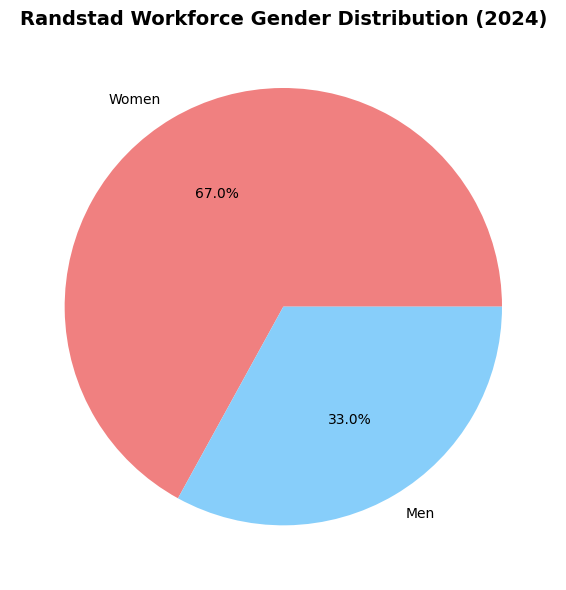
Moreover, Randstad’s ethical practices, internal workforce diversity, training investments, and gender equity leadership contribute to a positive employer brand and organizational culture. With over 67% of its internal staff being women and a large portion holding leadership roles, Randstad’s internal values align closely with its external mission: to help people realize their true potential in a changing world of work.
Whether you are an HR leader seeking a trusted recruitment partner, a job seeker exploring career support, or an investor evaluating global HR service providers, this comprehensive review of Randstad Recruitment Agency offers detailed insights into its strategy, services, regional strengths, technological innovation, financial performance, and market positioning. By the end of this guide, you will have a clear understanding of what makes Randstad one of the most reliable and future-ready recruitment agencies in the world today.
Randstad Recruitment Agency: An in-Depth Review
- Global Human Capital Management and the Strategic Evolution of Randstad N.V.
- Financial Architecture and Multi-Year Revenue Trajectories
- Strategic Reorientation: The Partner for Talent Framework
- Technological Transformation and AI Integration
- Geographic Footprint and Regional Market Dynamics
- The Monster Worldwide Divestment and Ethical Controversy
- Agency Economics: Pricing, Markups, and Client Fees
- Human Capital and Global Workforce Sentiment
- Competitive Landscape: Randstad vs. Adecco vs. ManpowerGroup
- Capital Markets and Future Outlook: 2025-2027
- Strategic Recommendations
1. Global Human Capital Management and the Strategic Evolution of Randstad N.V.
Randstad is widely recognized as one of the most prominent global recruitment agencies, with a long-standing reputation for excellence in talent acquisition and workforce management. Established in 1960 in the Netherlands, the company began as a local temporary staffing provider. Over the decades, Randstad has grown significantly, becoming a global leader in human capital management and operating in 39 countries with a corporate staff of over 41,400 professionals.
In 2024 alone, Randstad successfully helped more than 1.7 million individuals find meaningful employment and delivered workforce solutions to over 180,000 businesses around the world. This scale highlights its capacity to manage talent challenges across various industries and regions.
Transformation Through the “Partner for Talent” Strategy
To stay competitive in the ever-changing job market, Randstad introduced its “Partner for Talent” strategy in late 2023. This forward-thinking approach focuses on shifting from general staffing services to more specialized, tech-enabled talent solutions. The strategy is a direct response to global changes such as:
- Increasing demand for digital skills
- The rise of generative AI in workforce processes
- Demographic changes affecting talent availability
- A growing trend toward skills-based hiring over traditional qualifications
Randstad is now placing stronger emphasis on combining human expertise with advanced digital platforms to deliver smarter recruitment services. This new direction is positioning the company to lead during what is being described as the “Great Workforce Adaptation.”
Global Presence and Impact
Randstad’s ability to operate at scale across multiple markets sets it apart from most recruitment firms. Its extensive geographical presence enables it to provide locally tailored solutions with global consistency. The company’s wide service range spans temporary staffing, permanent placement, talent advisory, outsourcing, and workforce technology services.
The following table outlines Randstad’s core footprint and reach:
Randstad Global Presence and Service Scale (2024)
| Category | Details |
|---|---|
| Year Founded | 1960 |
| Founders | Frits Goldschmeding and Gerrit Daleboudt |
| Headquarters | The Netherlands |
| Operating Countries | 39 |
| Corporate Employees | 41,400+ |
| Individuals Supported | 1.7 million+ |
| Business Clients Served | 180,000+ |
| Global Market Value (HR Sector) | Estimated at $620 billion |
Key Differentiators in Randstad’s Recruitment Model
Randstad has embraced a hybrid service model that merges digital efficiency with the human touch. This approach is proving critical in a labor market that increasingly values personalization and speed. The agency’s key strengths include:
- Technology-Driven Talent Matching: Use of proprietary algorithms and AI tools to enhance candidate-job fit
- Specialized Sector Expertise: Dedicated teams for industries like IT, engineering, finance, healthcare, logistics, and administrative roles
- Global Yet Localized Delivery: Country-specific compliance, labor law expertise, and cultural understanding
- Talent Advisory Services: Guidance on workforce planning, upskilling strategies, and labor market trends
Matrix: Randstad vs. Traditional Recruitment Agencies
| Feature | Randstad | Traditional Agencies |
|---|---|---|
| Geographic Scale | Global (39 countries) | Mostly regional or local |
| Digital Integration | High (AI, digital platforms) | Limited or developing |
| Specialization | Industry-specific expertise | General staffing |
| Candidate Reach | 1.7 million+ job seekers supported | Smaller candidate databases |
| Corporate Clients | 180,000+ worldwide | Lower corporate client volume |
| Strategy Focus | “Partner for Talent” tech-human hybrid | Standard recruitment models |
Strategic Outlook for 2024–2026
Randstad’s roadmap for the 2024–2026 period is strongly focused on innovation, agility, and resilience. The agency aims to meet the evolving demands of the talent economy by enhancing:
- AI-powered candidate screening tools
- Digital marketplaces for on-demand staffing
- Real-time analytics for workforce decision-making
- Customized solutions for remote and hybrid workforces
This commitment to transformation is timely as the global workforce shifts toward skill-based employment, decentralized work environments, and digitally enabled hiring.
Conclusion
Randstad Recruitment Agency stands out as a trusted global partner in workforce solutions. Its ability to blend technological advancement with deep human insight has enabled it to respond effectively to labor market shifts. By staying ahead of trends and focusing on future-ready talent strategies, Randstad continues to play a central role in shaping the global recruitment landscape. Whether it’s helping job seekers find the right role or assisting companies in building agile teams, Randstad’s holistic approach positions it as a market leader in 2026 and beyond.
2. Financial Architecture and Multi-Year Revenue Trajectories
Randstad’s financial performance over the past decade clearly shows how the staffing and recruitment industry moves in cycles. When hiring demand is strong, staffing firms typically grow quickly. However, when global markets slow down, recruitment spending usually drops because companies pause expansion plans and reduce hiring.
Randstad has shown that it can scale up during growth periods and protect its business during downturns. This financial resilience is often seen as one of the major strengths of large global recruitment agencies, especially those operating in multiple industries and countries.
In 2021 and 2022, Randstad reached peak revenue levels as employers rushed to hire after the pandemic restrictions eased. However, by 2023 and 2024, the global economy cooled down due to inflation pressure and rising interest rates, which caused many companies to delay projects and reduce permanent hiring activity.
2024 Revenue Results: A Year of Cooling Demand
By the end of the 2024 financial year, Randstad reported consolidated revenue of €24.122 billion. This represented an organic decline of 7% compared to the previous year.
This was not a Randstad-only issue. The overall global staffing industry also declined, with the sector estimated to have contracted by around 5% in 2024. Many enterprise clients reduced hiring commitments, delayed large-scale initiatives, and shifted workforce planning toward more cautious spending.
Key 2024 Performance Signals
- Consolidated revenue reached €24.122 billion
- Organic revenue decline of 7% year-on-year
- Industry-wide slowdown as clients paused hiring plans
- Recruitment demand weakened across both temporary and permanent hiring
Table: Randstad 2024 Financial Snapshot (Key Highlights)
| Financial Category | Performance Indicator |
|---|---|
| FY2024 Consolidated Revenue | €24.122 billion |
| Organic Revenue Change (YoY) | -7% |
| Global Staffing Industry Trend (2024) | Approximately -5% decline |
| Market Conditions | High inflation, higher interest rates, delayed hiring decisions |
| Business Impact | Reduced job volume, slower recruitment cycles, cautious clients |
Revenue Volatility: A Normal Pattern in Staffing Markets
Market analysts often highlight that staffing firms face natural revenue swings because demand is directly tied to business confidence. Randstad’s revenue history confirms this pattern, with strong upward spikes in booming years and noticeable corrections in uncertain periods.
Randstad’s revenue peaked at around $29.146 billion in 2021. After that, it entered a correction phase as hiring demand normalized and global economic pressure increased.
Even during uncertain periods, Randstad has continued to show strong financial discipline. The company maintained an underlying EBITA margin within the 3.0% to 4.2% range, which indicates stable cost controls and consistent management of profitability.
Matrix: What Randstad’s Financial Pattern Suggests About Its Business Strength
| Financial Signal | What It Indicates About Randstad | Why It Matters in Recruitment and Staffing |
|---|---|---|
| Revenue peaks during strong hiring markets | Ability to scale quickly | Strong reach across employers and job seekers |
| Revenue drops during slow economies | Industry-wide sensitivity to hiring freezes | Staffing firms depend heavily on client demand |
| Stable underlying EBITA margins | Strong operational discipline | Shows cost control even when revenue declines |
| Multi-year consistency despite volatility | Resilience built through global diversification | Reduces risk from single-market dependency |
Historical Annual Revenue Trends (2011 to 2024)
The following table consolidates Randstad’s historical annual revenue performance across multiple years, showing how global events, economic cycles, and major business moves impacted growth patterns over time.
Table: Historical Annual Revenue and Growth Performance (2011 to 2024)
| Year | Annual Revenue (USD Billions) | Year-over-Year Change | Contextual Driver / Market Condition |
|---|---|---|---|
| 2011 | $22.598 | — | Post-financial crisis recovery |
| 2012 | $21.975 | -2.76% | Eurozone debt pressure |
| 2013 | $22.008 | +0.15% | Market stabilization |
| 2014 | $22.930 | +4.19% | Expansion momentum in Europe |
| 2015 | $21.341 | -6.93% | Currency-related pressure |
| 2016 | $22.889 | +7.25% | Growth lift from Monster acquisition |
| 2017 | $26.305 | +14.92% | Strong global hiring demand |
| 2018 | $28.122 | +6.91% | Peak industrial and commercial hiring |
| 2019 | $26.517 | -5.71% | Early slowdown before major global disruption |
| 2020 | $23.666 | -10.75% | COVID-19 business disruption |
| 2021 | $29.146 | +23.16% | Post-lockdown hiring surge |
| 2022 | $29.046 | -0.34% | Inflation begins influencing business decisions |
| 2023 | $27.519 | -5.26% | Hiring delays and enterprise project slowdowns |
| 2024 | $26.102 | -5.15% | Higher interest rates and cautious workforce investments |
Profitability Pressure in 2024: Net Income Declined Sharply
One of the most notable financial changes in 2024 was Randstad’s net income decline.
- 2023 net income: €624 million
- 2024 net income: €123 million
While weaker operational activity contributed to this reduction, the decline was also heavily influenced by non-cash accounting impacts rather than pure day-to-day performance issues.
Randstad recorded:
- €121 million impairment of goodwill
- €139 million adjustment related to loans and financial commitments
These adjustments were linked to the revaluation of the Monster business and its transition into a joint venture structure.
Table: Net Income Decline and Key Financial Adjustments (2023 vs 2024)
| Financial Item | 2023 Result | 2024 Result | What Drove the Change |
|---|---|---|---|
| Net Income | €624 million | €123 million | Lower activity plus impairments and revaluations |
| Goodwill Impairment | Not highlighted | €121 million | Business value reassessment linked to Monster |
| Loan and Financial Commitments Adjustment | Not highlighted | €139 million | Accounting-related revaluation impacts |
| Nature of the Change | Mixed operating impact | Heavy non-cash impact | Not purely caused by recruitment performance |
What This Financial Story Means for Randstad’s Long-Term Position
Randstad’s revenue and profit performance proves that it operates in a market strongly influenced by economic conditions. However, the company’s ability to maintain stable operating margins and manage costs during a downturn strengthens its position as a top global recruitment agency.
Even as 2024 presented major profitability pressure, Randstad’s financial structure shows:
- Strong ability to adapt to changing market conditions
- Consistent margin management across multiple years
- Capacity to survive demand slowdowns through disciplined cost control
- Financial resilience supported by global scale and diversified operations
3. Strategic Reorientation: The Partner for Talent Framework
To respond to the fast-changing needs of the global labor market, Randstad introduced a major transformation in 2024 under the banner of its “Partner for Talent” strategy. This approach marks a clear departure from traditional recruitment models. Instead of just acting as a hiring go-between, Randstad now positions itself as a core component of its clients’ human capital systems. The company aims to become the most equitable and specialized talent provider in the world.
A key part of this strategic reorientation involves categorizing its services into four distinct segments. This segmentation ensures better focus, specialization, and the ability to deliver consistent, high-value services across industries and geographies—particularly for large enterprises and mid-market clients.
The Four Talent Segments Defined by Randstad
Randstad’s updated service architecture is built around the following four segments:
- Operational Talent Solutions: Focuses on essential workforce supply for logistics, manufacturing, and skilled trades
- Professional Talent Solutions: Specializes in staffing for sectors like healthcare, finance, and engineering
- Digital Talent Solutions: Centers on online marketplaces and tech-powered recruitment platforms
- Enterprise Talent Solutions: Covers large-scale outsourced services such as MSP (Managed Services Programs) and RPO (Recruitment Process Outsourcing)
Each segment is tailored to address different parts of the labor market while aligning with broader workforce transformation trends.
Matrix: Overview of Randstad’s Talent Segmentation Strategy
| Segment | Key Focus Areas | Core Clients | Strategic Role |
|---|---|---|---|
| Operational | Logistics, manufacturing, skilled trades | High-volume employers | Core labor supply engine |
| Professional | Healthcare, finance, engineering | High-skill and technical sectors | Expert-driven permanent placements |
| Digital | Online job platforms, tech-enabled hiring | Modern, agile employers | Future growth driver |
| Enterprise | MSP, RPO, workforce outsourcing | Fortune 1000, global enterprises | Recurring revenue backbone |
Segment Performance and Revenue Distribution (Q4 2024)
Despite general market slowdowns, each segment played a critical role in Randstad’s Q4 2024 revenue generation. Here’s how they performed:
- Operational Talent Solutions generated the largest share, totaling €4.003 billion, though slightly impacted by slower production activity in Northern Europe.
- Professional Talent Solutions reached €1.036 billion but saw an 8% organic drop, due to reduced demand for high-salary roles.
- Digital Talent Solutions reported €702 million in Q4 2024. Although this was an 8% organic decline compared to Q4 2023, the broader annual picture was positive—with €4 billion in annualized revenue by 2025, representing 15% of the group’s total.
- Enterprise Talent Solutions contributed €343 million and remains vital for stable, long-term revenue through managed services and outsourcing contracts.
Table: Randstad’s Quarterly Revenue by Segment (Q4 2024 vs Q4 2023)
| Specialization Segment | Q4 2024 Revenue (€ Millions) | Q4 2023 Revenue (€ Millions) | Organic Change (%) |
|---|---|---|---|
| Operational | 4,003 | 3,993 | -4% |
| Professional | 1,036 | 1,035 | -8% |
| Digital | 702 | 757 | -8% |
| Enterprise | 343 | 354 | -7% |
| Monster (Disposed Asset) | 0 | 44 | — |
| Total Revenue | 6,084 | 6,183 | -5.5% |
Note: Organic change accounts for adjustments in working days and currency fluctuations.
Revenue Contribution and Segment Share Matrix
| Segment | Share of Total Revenue (Q4 2024) | Strategic Growth Potential |
|---|---|---|
| Operational | 65.8% | Stable but vulnerable to cycles |
| Professional | 17.0% | Sensitive to economic slowdown |
| Digital | 11.5% | High growth and innovation focus |
| Enterprise | 5.6% | Stable and recurring |
Profit Margins and Permanent Placement Pressure
Randstad’s gross margin in Q4 2024 was reported at 18.8%, which marked a decline from 20.7% in Q4 2023. This compression was largely driven by a sharp reduction in high-margin permanent placements.
- Permanent placement revenue fell from €123 million in Q4 2023 to €106 million in Q4 2024.
- This equates to an 18% organic drop in permanent placement revenue year-over-year.
Companies have become more cautious about long-term commitments due to economic uncertainty. As a result, temporary staffing and short-term solutions are being prioritized, while permanent hiring slows down, particularly for higher-wage roles.
Table: Gross Margin and Permanent Placement Revenue Trends
| Financial Indicator | Q4 2023 | Q4 2024 | Year-over-Year Change |
|---|---|---|---|
| Gross Margin | 20.7% | 18.8% | -1.9% |
| Permanent Placement Revenue | €123 million | €106 million | -18% organically |
| Reason for Decline | High placement slowdown | Reduced employer demand |
Conclusion: Randstad’s Strategic Pivot for Sustainable Growth
Randstad’s introduction of the “Partner for Talent” framework in 2024 reflects a deep understanding of changing workforce dynamics. By restructuring its operations into four clearly defined talent segments, the company has aligned itself with the demands of modern employers—who are seeking more flexibility, digital efficiency, and specialized expertise.
While short-term pressures have led to revenue declines in some areas, especially in permanent placements, Randstad’s continued focus on digital transformation and enterprise partnerships is expected to strengthen its position in the years ahead. The shift from traditional staffing to integrated workforce solutions signals Randstad’s long-term vision to remain at the forefront of global recruitment innovation.
4. Technological Transformation and AI Integration
Randstad has taken major steps in 2024 and 2025 to evolve from a traditional staffing provider into a digitally enabled talent partner. At the heart of this transformation is its “Partner for Talent” strategy, which prioritizes digital-first operations, artificial intelligence, and platform-based recruitment services.
The aim is to automate repetitive tasks—such as timesheet approvals, onboarding, and candidate filtering—so recruiters can focus more on human-centered services like career advising, workforce strategy, and relationship management. By enhancing its technology infrastructure, Randstad is improving speed, accuracy, and client satisfaction across every stage of the hiring process.
The Randstad Talent Platform and AI Integration
Randstad’s long-term vision includes building a unified digital ecosystem that integrates AI, big data, and predictive analytics into talent acquisition. The launch of the Randstad Talent Platform is central to this strategy. It automates transactional workflows, provides real-time data insights, and supports recruiters with intelligent tools to make better hiring decisions faster.
Key applications include:
- Automated job-candidate matching
- Instant shift-filling via mobile platforms
- Digital onboarding and compliance checks
- Smart scheduling and workforce forecasting
Acquisition of Torc: Expanding Randstad’s Digital Capabilities
To accelerate its growth in digital talent services, Randstad acquired Torc in May 2024. Torc is an advanced, AI-powered digital talent marketplace focused on cloud engineering, data science, and digital product development.
By integrating Torc into its platform, Randstad gained the ability to:
- Match professionals based on real-time skill assessments
- Fill niche and highly specialized roles faster than traditional methods
- Reach a broader global talent pool across North America, Latin America, and India
By the end of 2024, more than 320,000 digital professionals were onboarded onto the platform, strengthening Randstad’s service offering for technology-driven industries.
The Randstad App: AI at Scale in Real-Time Hiring
Randstad also introduced a powerful AI-driven mobile app in late 2024. Designed to streamline recruitment for high-volume roles, the app connects employers with a curated pool of 450,000 pre-screened workers.
By December 2024:
- 60,000 users in the U.S. engaged with the app daily
- The platform filled 500,000 shifts in Q1 2025
- Employers gained instant access to available workers, with minimal recruiter involvement
Matrix: AI-Powered Recruitment Tools and Performance Metrics
| Technological Solution | Key Metric or Achievement | Operational Efficiency Outcome |
|---|---|---|
| AI Matching Algorithms | 10–20% improvement in fill rate | Faster placements, reduced open-role duration |
| Programmatic Sourcing | 30% drop in time-to-submit | Quicker candidate delivery, leaner sourcing cycles |
| Quality-of-Hire Optimization | 5–15% improvement | Better skill alignment, improved employee retention |
| Compliance Process Automation | 8–12% cost savings | Reduced manual workload, stronger audit readiness |
Generative AI Co-Pilots: Enhancing Recruiter Productivity
Randstad is now equipping recruiters with generative AI co-pilots to support high-volume operational tasks. These tools assist with:
- Writing job descriptions quickly and accurately
- Customizing outreach messages for each candidate
- Pre-screening applicants with AI-generated insights
This automation helps recruiters focus on strategic advising rather than basic administrative work.
The expected outcome is a stronger “recovery ratio,” which measures Randstad’s ability to maintain EBITA during periods of declining gross profit. In early 2025, this metric reached 40%, demonstrating improved cost efficiency and resilience in challenging market conditions.
Table: Impact of Generative AI on Randstad Recruiter Efficiency
| Area of Application | AI Functionality | Productivity Result |
|---|---|---|
| Job Copy Generation | Drafts tailored job ads | Saves recruiter time and ensures brand consistency |
| Candidate Messaging | Personalized AI communications | Increases response rates and engagement |
| Resume Screening | Skill and experience analysis | Speeds up shortlisting process |
| EBITA Recovery Ratio (Q1 2025) | AI support in revenue protection | Achieved 40% recovery ratio |
Conclusion: Randstad’s Technology-Led Future in Recruitment
Randstad’s investment in AI tools, mobile platforms, and digital marketplaces is transforming how employers and candidates interact. By combining automation with human insights, the agency is delivering faster, smarter, and more efficient hiring services. As of 2025, Randstad stands out not just as a staffing provider, but as a global technology-driven talent solutions partner capable of leading the next phase of recruitment innovation.
5. Geographic Footprint and Regional Market Dynamics
Randstad operates as one of the most geographically diversified recruitment agencies in the world. Its international footprint spans mature and emerging economies, offering the company resilience against localized economic downturns. However, its performance during the 2024–2025 period reflected contrasting outcomes across regions, particularly between Western economies and high-growth areas like Asia-Pacific.
This global diversification allows Randstad to balance out revenue fluctuations by leveraging strong performance in one region to offset slower momentum in another. Its regional strategy is carefully adapted to local market needs, with customized solutions for different economic sectors.
Performance in North America and Northern Europe
North America has traditionally been one of Randstad’s highest revenue-generating regions. In Q4 2024, however, the company faced economic pressures, especially in the United States. Revenue in the region reached €1.190 billion, reflecting a 7% organic drop. A hiring freeze in sectors like tech and finance caused the U.S. professional segment to decline by 11%.
Northern Europe, particularly the Netherlands and Germany, also encountered setbacks:
- The Netherlands experienced a 10% revenue decline, largely due to an 11% decrease in demand for operational roles.
- Germany’s revenue dropped 8%, caused by reduced hiring in manufacturing and automotive sectors as export orders slowed.
Poland, however, outperformed its neighbors with a 6% revenue increase in Q4 2024, making it a standout market in the region.
Table: Q4 2024 Regional Performance – North America and Northern Europe
| Country / Region | Q4 2024 Revenue (€ Millions) | Organic Change (%) | Key Drivers of Performance |
|---|---|---|---|
| United States (North America) | €1,190 | -7% | Hiring freezes in tech and finance |
| Netherlands | Not Disclosed | -10% | Decline in operational hiring |
| Germany | Not Disclosed | -8% | Weaker demand in automotive and manufacturing |
| Poland | Not Disclosed | +6% | Strength in operational workforce and industrial jobs |
Trends in Southern Europe, UK, and Latin America
The Southern Europe, UK, and Latin America markets contributed €2.344 billion in Q4 2024. However, the segment faced a 4% organic decline overall. France, the largest market within this group, was hit hardest with an 8% drop. Yet, some countries showed resilience and even growth:
- Italy recorded a modest 1% increase in total revenue, driven by a 15% surge in professional services.
- Spain (Iberia) showed strong momentum, growing 9%, and became one of Randstad’s top-performing European markets in 2024.
- The United Kingdom, by contrast, posted a 12% drop due to ongoing economic uncertainties and slow business investment.
Matrix: Southern Europe and UK Regional Analysis
| Country | Revenue Change (Q4 2024) | Segment Growth Highlight |
|---|---|---|
| France | -8% | General economic pressure |
| Italy | +1% | +15% in professional services |
| Spain | +9% | Demand for skilled professionals |
| United Kingdom | -12% | Decline in client hiring appetite |
Asia Pacific: Growth Engine and Vietnam Market Expansion
The Asia-Pacific region has emerged as Randstad’s most strategic growth area. Though it contributed €617 million in Q4 2024—less than other regions—it is viewed as the primary revenue growth driver for the future.
Key developments include:
- Japan maintained flat overall performance but achieved a 16% increase in digital recruitment services.
- India continued its upward momentum, growing 13–14% in Q4 2024.
- Vietnam has become an increasingly important hub, driven by the country’s young workforce, increasing foreign direct investment, and the rise of the IT and manufacturing sectors.
Randstad Vietnam is now seen as a leading recruitment agency in the country, operating from its main office in Ho Chi Minh City. The firm offers executive search, cultural onboarding, payroll services, and visa advisory for foreign employers looking to enter or expand within Vietnam.
Table: Asia Pacific Performance Overview (Q4 2024)
| Country | Revenue Growth (%) | Strategic Focus |
|---|---|---|
| Japan | 0% | +16% in digital recruitment |
| India | +13% to +14% | High-volume staffing and tech hiring |
| Vietnam | Strong performance | Executive search, IT, and manufacturing |
Randstad Vietnam and Partnership Synergies with Navigos Group
Randstad’s local strength in Vietnam is complemented by its ecosystem relationship with Navigos Group, the operator behind VietnamWorks and Navigos Search. Although Navigos belongs to the en Japan Group, Randstad and Navigos often intersect in the market—both as competitors and collaborators. This interaction enhances the country’s HR services landscape through shared platforms and local insights.
Randstad Vietnam’s office in Ho Chi Minh City serves as the main operations center and offers a full suite of services tailored to multinational clients and high-growth startups.
Table: Randstad Vietnam Operations Snapshot
| Category | Details |
|---|---|
| Office Location | 20th Floor, e. Town Central, 11 Doan Van Bo, Ward 13, District 4, HCMC |
| Telephone | +84 28 3925 5000 |
| Integrated Portal | vietnamworks.com (via Navigos partnership) |
| Core Services | Executive Search, Payroll, Visa & Relocation, Cultural Training |
| Focus Industries | IT, Manufacturing, Engineering, Multinational Enterprises |
Shifting to Career-Centered Talent Models in Vietnam
The Vietnamese market is moving away from traditional job board services toward more holistic career development platforms. Campaigns such as “Empower Growth” and “Happy Career Journeys” highlight this shift. Randstad’s value proposition aligns with this evolution by offering not only staffing but also strategic support in building long-term, fulfilling careers.
With its deep regional knowledge and specialized RPO offerings, Randstad Vietnam is well-positioned to serve the next generation of professionals, particularly in fast-growing urban centers like Ho Chi Minh City and Hanoi. The agency continues to contribute meaningfully to Vietnam’s talent development ecosystem and regional competitiveness.
6. The Monster Worldwide Divestment and Ethical Controversy
In 2016, Randstad made a bold move by acquiring Monster Worldwide, a well-known online recruitment platform, for $429 million. At that time, Monster was recognized as a pioneer in digital job listings and candidate sourcing. Randstad aimed to use Monster’s online presence to strengthen its digital recruitment capabilities and compete with emerging platforms like LinkedIn and niche job boards.
However, the digital recruitment landscape evolved rapidly, and Monster struggled to keep pace. Platforms offering AI-driven matching, social-based networking, and specialized industry focus began to dominate. As a result, Monster’s relevance and profitability began to decline. Despite continuous efforts, Randstad found it increasingly difficult to integrate Monster into its evolving “Partner for Talent” framework, which emphasized technology-enabled, skills-based workforce solutions over traditional job board models.
Joint Venture with Apollo Global and Strategic Realignment
In July 2024, Randstad took a decisive step by forming a joint venture with Apollo Global Management. The deal combined Monster with another major recruitment platform, CareerBuilder. Randstad retained a 49% stake while transferring operational control to the new joint entity. This divestment allowed Randstad to focus more on developing AI-driven platforms and digital talent marketplaces, aligning with its long-term transformation goals.
The formation of this joint venture marked the beginning of Monster’s removal from Randstad’s financial statements, with its revenue no longer included from Q4 2024 onward.
Matrix: Monster Divestment – Strategic Timeline and Impacts
| Event/Stage | Timeline | Description and Strategic Significance |
|---|---|---|
| Monster Acquisition | 2016 | Randstad purchased Monster for $429 million to enhance digital offerings |
| Operational Struggles | 2017–2023 | Monster lost ground to LinkedIn and niche platforms |
| Joint Venture Formation | July 2024 | Monster merged with CareerBuilder; Randstad retained 49% stake |
| Financial Exclusion Begins | Q4 2024 | Monster’s revenue no longer counted in Randstad’s earnings |
| Liquidation of Monster Europe | July 2025 | Operations ceased due to lack of investor funding |
European Liquidation in 2025 and Emerging Ethical Criticism
By mid-2025, Monster’s operations in Europe were facing financial strain. The joint venture shareholders decided to end funding for Monster Europe, leading to the company’s liquidation across twelve countries. Over 200 employees were affected, with many relying on public wage guarantee schemes for severance or compensation.
The shutdown raised public and internal criticism, particularly due to timing and executive compensation decisions. Reports surfaced that Randstad approved €5 million in accelerated share vesting for Monster executives in 2024—shortly before the shutdown—while regular employees received limited support.
This decision sparked debate about corporate ethics, transparency, and the treatment of workers during restructuring.
Table: Ethical Criticism Factors – Monster Europe Shutdown
| Controversial Action | Reported Details | Public and Internal Response |
|---|---|---|
| Executive Compensation Acceleration | €5 million disbursed for executive shares | Seen as unfair timing ahead of mass layoffs |
| Workforce Impact | 200+ employees in 12 countries affected | Workers dependent on national wage protections |
| Transparency of Shutdown | Limited communication reported | Triggered employee and public dissatisfaction |
Financial Ramifications and Asset Debt Structure
Randstad retained exposure to Monster through “Monster Notes”—senior secured debt valued at around $226 million by mid-2025. These notes were held under Randstad MWW Solutions and secured against Monster’s assets.
Interestingly, while some parts of Monster still showed potential—Germany, for example, generated €15 million in revenue in 2024—these were not enough to offset the high costs associated with running shared services across global markets.
Ultimately, Randstad concluded that maintaining Monster as a global job board was no longer viable, both financially and strategically. Divesting Monster allowed Randstad to reallocate resources toward AI platforms, digital marketplaces, and recruiter productivity tools that are central to its new business model.
Matrix: Strategic Reasons Behind Monster Divestment
| Key Consideration | Explanation |
|---|---|
| High Shared Services Cost | Global infrastructure costs outweighed localized revenue gains |
| Market Obsolescence | Traditional job boards were losing relevance against AI and network platforms |
| Investment Reprioritization | Focus shifted to scalable, technology-first recruitment platforms |
| Talent Strategy Alignment | Randstad preferred integrated platforms with real-time matching over listings |
Conclusion: Strategic Pivot Over Legacy Retention
The divestment of Monster Worldwide marked a pivotal point in Randstad’s transition toward becoming a fully digital, platform-based talent company. While the move was strategically sound from a business perspective, the execution—especially in Europe—sparked important questions around corporate responsibility and ethical leadership.
Despite the controversy, Randstad’s decision to distance itself from legacy job board operations underscores its clear commitment to future-ready recruitment solutions. The agency is now focused on building digital ecosystems, AI-enabled talent pipelines, and scalable platforms that better serve both clients and job seekers in today’s rapidly changing labor market.
7. Agency Economics: Pricing, Markups, and Client Fees
Randstad operates on a transparent and value-focused pricing model designed to meet the needs of different client types—from startups and SMEs to large multinational corporations. Its pricing approach varies by service category and is aligned with industry best practices, offering flexibility across temporary staffing, permanent placements, executive search, and outsourced enterprise recruitment services.
By clearly outlining costs and markups, Randstad ensures that clients understand what they are paying for, whether it’s hourly contractor support, leadership hiring, or end-to-end talent management programs.
Temporary Staffing and Professional Services Markup
For contract and temporary staffing, especially in IT and other skilled professions, Randstad typically uses a markup pricing structure. The markup is calculated on top of the contractor’s pay rate and covers statutory employment costs, benefits, administrative services, and agency margin.
A standard markup of 50% is commonly applied in professional staffing segments. This ensures that Randstad can meet all legal requirements while delivering added value through candidate management, timesheet tracking, onboarding, and compliance support.
Table: Standardized Temporary Staffing Pricing Model (USA Market)
| Job Role | Pay Rate (USD/hour) | Client Bill Rate (USD/hour) | Markup Percentage |
|---|---|---|---|
| Business Analyst Support | $37.50 – $50.00 | $56.25 – $75.00 | 50% |
| Application Specialist | $62.50 – $79.17 | $93.75 – $118.75 | 50% |
| Senior Project Manager | $75.00 – $93.75 | $112.50 – $140.63 | 50% |
| Payroll Services Only | Variable | Variable | 40% |
Markups also vary depending on market demand, role scarcity, and legal overheads. The agency ensures compliance with all labor laws and taxation, further reducing administrative burden for clients.
Permanent Placement and Executive Search Pricing
Randstad also provides services for permanent hiring, including high-level executive search engagements. These are priced differently, based on the candidate’s annual salary and the seniority of the role.
The firm follows a retained search model for C-level and executive hiring, reflecting a more consultative and strategic engagement. A standard retainer fee of 33% of the candidate’s first-year total cash compensation is charged, typically distributed in three phases aligned with the hiring journey.
Table: Executive Search Fee Structure (Retained Model)
| Fee Component | Payment Stage | Description |
|---|---|---|
| First Installment | Contract Signing | 1/3 of the total executive fee upfront |
| Second Installment | Candidate Shortlist | 1/3 paid upon submission of qualified candidates |
| Final Installment | Successful Hiring | Final 1/3 due when the candidate accepts the offer |
| Minimum Fee Threshold | $100,000+ | Applied for high-level placements |
| Candidate Guarantee Period | 12 Months | Free replacement if the hire exits for performance reasons |
This model offers clients a structured and results-driven process with a strong focus on quality, confidentiality, and executive-level expertise.
Enterprise Recruitment Models: RPO and MSP Value Generation
Randstad Sourceright, the company’s enterprise outsourcing division, provides Recruitment Process Outsourcing (RPO) and Managed Services Programs (MSP). These models help large organizations streamline recruitment operations, reduce dependency on multiple vendors, and generate long-term cost savings through standardization and data-driven hiring strategies.
Numerous case studies have demonstrated the tangible financial and operational benefits of Randstad’s enterprise services.
Matrix: Cost Savings and Efficiency Achieved Through Enterprise Outsourcing
| Industry / Region | Program Type | Key Achievements |
|---|---|---|
| Infrastructure (Australia/NZ) | MSP | Reduced vendors from 100+ to 17; saved AUD $7.5M and avoided $8.6M |
| Life Sciences (Global) | MSP | Delivered $800,000 savings in Year 1 with a 97% fill rate |
| Personal Care (Japan) | RPO | Time-to-fill reduced by 30%; Offer acceptance improved to 77% |
| Investment Management (U.S.) | Integrated MSP | 20% cost avoidance; 81% retention rate for reclassified call-center roles |
These results underscore how strategic outsourcing through Randstad can help organizations reduce fixed recruitment costs, increase efficiency, and improve hiring outcomes—especially when transitioning from fragmented or in-house recruiting structures.
Conclusion: Randstad’s Client-Focused and Performance-Driven Pricing Framework
Randstad has built a comprehensive and transparent pricing model that caters to the diverse recruitment needs of global businesses. Whether it’s hourly-based contractor staffing, senior leadership recruitment, or full-cycle outsourced hiring, clients receive tailored cost structures that align with service value, outcome quality, and long-term workforce goals.
By leveraging its strong technology infrastructure and global service delivery teams, Randstad provides not only staffing solutions but also cost optimization, risk reduction, and recruitment scalability across all levels of the talent supply chain.
8. Human Capital and Global Workforce Sentiment
Randstad’s internal workforce management mirrors its external mission to modernize employment services through efficiency, inclusivity, and digital capability. As of 2024, the company employed 41,400 full-time corporate staff globally. This figure marked a 5% year-over-year reduction, a strategic adjustment made to align operating costs with lower revenue amid global market challenges. The company focused on optimizing internal resources while investing in strategic upskilling.
Corporate Workforce Composition and Internal Development
Randstad maintains a strong commitment to equity and diversity. Its 2024 internal demographics reflect significant progress in gender inclusion:
- Women accounted for 67% of the total workforce.
- Women also held 50% of leadership and management positions.
To future-proof its internal talent, Randstad invested heavily in training and development. A total of 47,300 employees participated in learning initiatives, receiving a combined 772,900 hours of training. Much of this upskilling was focused on digital readiness, including AI tools, automation processes, and virtual client servicing.
Table: Randstad Global Internal Workforce Development – 2024
| Metric | Value |
|---|---|
| Total Corporate Employees (FTE) | 41,400 |
| Workforce Reduction (YoY) | -5% |
| Percentage of Female Employees | 67% |
| Women in Management Roles | 50% |
| Employees Trained | 47,300 |
| Total Training Hours | 772,900 |
| Primary Focus Areas | Digital Literacy, AI Integration, Compliance |
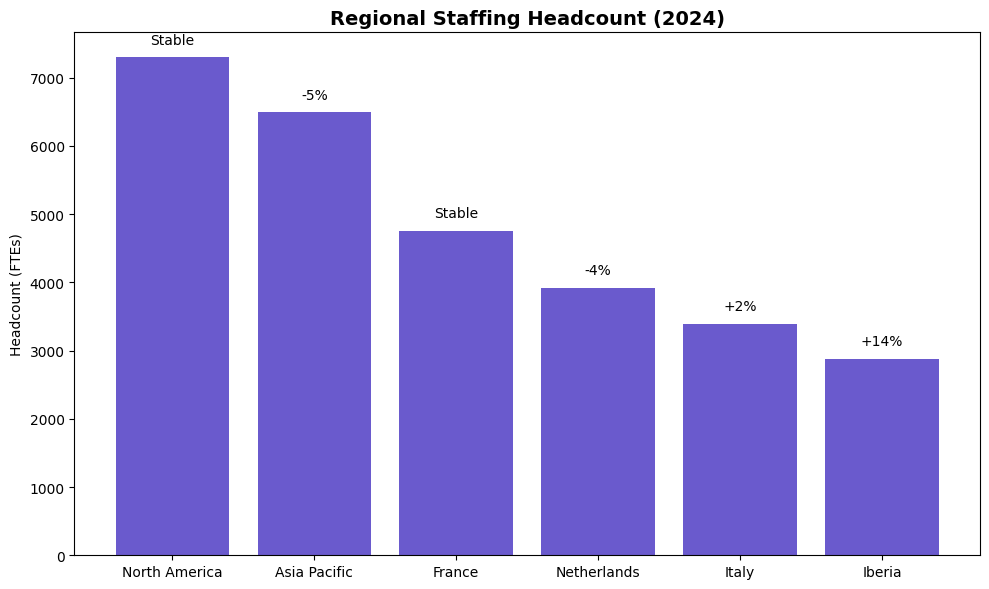
Table: Regional Corporate Workforce Headcount and Trend – 2024
| Region | Number of Employees (FTE) | Year-over-Year Change (%) |
|---|---|---|
| North America | 7,300 | Stable |
| Asia Pacific | 6,490 | -5% |
| France | 4,760 | Stable |
| Netherlands | 3,920 | -4% |
| Italy | 3,390 | +2% |
| Iberia (Spain/Portugal) | 2,880 | +14% |
| Global Total | 41,400 | -5% |
The strong growth in Iberia and Italy signals shifting operational priorities and market expansion in Southern Europe. At the same time, slight contractions in Asia Pacific and the Netherlands reflect regional restructuring and resource realignment.
Global Workforce Trends: Insights from the Workmonitor Report
Randstad’s own research initiatives provide insights into the evolving preferences and concerns of the global workforce. The Workmonitor 2026 report, one of the firm’s flagship studies, revealed shifting priorities and rising anxieties among modern employees.
Key takeaways include:
- Over 85% of workers worldwide now consider competitive pay as the most important factor in job selection and career planning.
- Flexibility, including remote and hybrid work options, is increasingly valued, especially among Gen Z talent.
- Nearly 50% of employees globally are concerned that AI tools benefit companies more than workers, reflecting uncertainty about the balance between automation and personal advancement.
These insights demonstrate a growing desire for purpose, autonomy, and fairness in the workplace—challenging companies to strike a balance between digital transformation and human values.
Matrix: Global Workforce Sentiment – Randstad Workmonitor 2026 Findings
| Workforce Factor | Global Employee Sentiment | Strategic Implication for Employers |
|---|---|---|
| Compensation Importance | 85%+ consider it top priority | Stronger focus on transparent pay structures |
| Flexible Work Models | Increasingly important, especially for Gen Z | Need for hybrid work models and remote policies |
| AI and Automation Concerns | 50% fear AI favors employers | Need for inclusive AI, transparent upskilling |
Aligning Human Capital with Technology: The “Human Forward” Principle
In response to changing workforce expectations, Randstad continues to advance its “Human Forward” vision. This principle reinforces the idea that technology should enhance—not replace—the human element in recruitment and talent development.
The company’s internal strategy reflects this balance by:
- Promoting inclusive leadership and gender equity
- Investing in employee digital capabilities
- Using AI tools to support, not overshadow, human recruiters
- Actively monitoring global workforce sentiment to inform decision-making
Randstad is not only delivering talent to clients but also cultivating a workplace culture that mirrors the future of work: inclusive, intelligent, and responsive to the evolving expectations of professionals across industries and geographies.
9. Competitive Landscape: Randstad vs. Adecco vs. ManpowerGroup
Randstad stands as a dominant player in the global recruitment sector. Alongside Adecco Group and ManpowerGroup, it forms what the industry refers to as the “Big Three” of global staffing. Together, these firms account for an estimated 10% to 11% of the entire global staffing and recruitment market. While Randstad continues to lead in overall revenue and global outreach, competition is intensifying from both traditional peers and emerging tech-first HR platforms.
The global staffing industry remains highly fragmented, with thousands of regional firms, but the top players set themselves apart through expansive infrastructure, technological investments, and the ability to serve large multinational clients across continents.
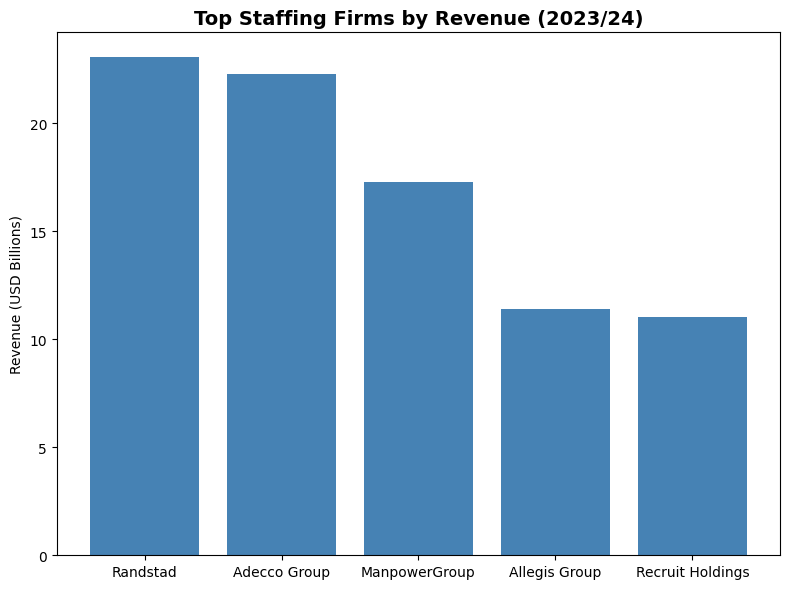
Table: Global Staffing Leaders – Revenue and Market Share Comparison (2023/2024)
| Company Name | 2023/24 Total Revenue (USD Billions) | Estimated Global Market Share (%) | Headquarters Location |
|---|---|---|---|
| Randstad N.V. | $23.05 | ~4.2% to 4.9% | Netherlands |
| Adecco Group | $22.28 | ~4.0% to 4.6% | Switzerland |
| ManpowerGroup | $17.28 | ~3.1% to 4.1% | United States |
| Allegis Group | $11.42 | ~2.5% | United States |
| Recruit Holdings | $11.03 | ~2.7% | Japan |
Randstad maintains the top global position in terms of revenue, supported by its strong presence in North America, Asia Pacific, and strategic markets across Europe. However, competitive dynamics continue to evolve, particularly within the European continent.
European Market Leadership Shift in 2024
In 2024, The Adecco Group surpassed Randstad in terms of staffing revenue generated solely within Europe. This regional lead comes as no surprise, considering Switzerland-based Adecco’s deep penetration into Western and Central European labor markets.
According to industry reports, European-based recruitment firms now account for roughly 38% of global staffing revenue, giving regional players like Adecco a home-field advantage in navigating labor regulations, compliance frameworks, and economic trends across the EU.
Matrix: Comparative Strengths – Randstad vs. Adecco vs. ManpowerGroup
| Key Dimension | Randstad N.V. | Adecco Group | ManpowerGroup |
|---|---|---|---|
| Global Revenue Leadership | Yes | Second-largest globally | Third-largest globally |
| Europe Market Leadership | No (lost lead to Adecco in 2024) | Yes | Moderate presence |
| Digital Talent Platforms | Strong focus (Randstad Digital, Torc) | Expanding through Adecco X | Moderate tech integration |
| Enterprise Solutions | Advanced (RPO, MSP, Randstad Sourceright) | Strong enterprise offering | Advanced, especially in temp roles |
| APAC Penetration | Strong (India, Vietnam, Japan) | Moderate | Moderate |
| North America Reach | Extensive | Limited | Strong |
Randstad continues to excel in its integration of AI and digital platforms into its service model. With innovations such as the Randstad App and the Torc acquisition, the company has made significant strides in digital recruitment capabilities. This helps position Randstad ahead of competitors that still rely heavily on traditional staffing infrastructure.
Emerging Threats from Technology-Driven Disruptors
In addition to traditional competitors, Randstad now faces growing pressure from digital-native platforms like Deel and G-P (Globalization Partners). These firms operate with minimal physical infrastructure and deliver recruitment and employment services through AI-driven platforms that support:
- Global payroll and contractor compliance
- Remote onboarding
- Talent sourcing across 180+ countries
These disruptors are particularly attractive to startups and tech firms seeking fast, fully compliant remote hiring solutions. Their lean model enables cost efficiencies and a user-centric experience, challenging traditional staffing firms to innovate at a faster pace.
Table: Competitive Threat from HR Tech Disruptors
| Company | Model Type | Key Services Offered | Global Reach | Core Differentiator |
|---|---|---|---|---|
| Deel | Tech-first platform | Global payroll, EOR, contractor management | 180+ countries | Speed, automation, minimal friction |
| G-P (Globalization Partners) | SaaS-based HR platform | Entity-free hiring, workforce compliance | 180+ countries | AI-powered compliance infrastructure |
| Randstad | Hybrid human-tech | Staffing, RPO, MSP, digital talent platforms | Global | Strong recruiter network + AI integration |
Conclusion: Randstad’s Position in a Rapidly Evolving Global Market
Randstad remains at the forefront of global staffing by revenue and geographic coverage, with consistent investment in AI technology, platform-based recruitment, and enterprise talent solutions. However, the firm faces competitive pressure on multiple fronts—from traditional giants in specific regions to agile digital-first platforms that are reshaping client expectations.
To stay competitive, Randstad continues to enhance its hybrid model, balancing personal recruiter expertise with scalable digital tools. This approach is designed to serve both multinational enterprises and high-growth clients looking for intelligent, fast, and flexible workforce solutions across borders. The coming years will test how well Randstad and its closest competitors can adapt to these sweeping changes in how the world hires, manages, and retains talent.
10.Capital Markets and Future Outlook: 2025-2027
Randstad continues to demonstrate financial strength and long-term resilience, even amid global market fluctuations. With a healthy balance sheet and conservative financial management, the company maintains an InvestingPro score of 3.55 out of 5, reflecting strong performance across liquidity, debt control, and earnings capacity. A key measure of its financial discipline is its net debt-to-EBITDA ratio, which consistently remains below 1.0x. This low leverage allows Randstad to prioritize shareholder value while continuing to invest in technology and workforce innovations.
Dividend Strategy and Stock Performance Overview
Randstad upholds a shareholder-friendly dividend policy that rewards stability and responsible capital structure. For the 2024 fiscal year, the company proposed a dividend of €1.62 per share, signaling continued confidence in its cash flow generation. The dividend was distributed in March 2025, offering an attractive yield that varied between 3.86% and 5.1%, depending on market volatility.
The company’s shares, listed under RAND.AS on the Euronext Amsterdam, experienced notable fluctuations throughout the 2025 cycle. While the stock peaked at approximately €40.02 in Q4 2024, it dropped to a low of €30.79 in April 2025. These movements were partially influenced by short-term earnings volatility and one-time impairment charges affecting the company’s P/E ratio.
Table: Randstad Capital Market Metrics (2025–2026)
| Financial Indicator | Value / Range | Commentary |
|---|---|---|
| Proposed Dividend | €1.62 per share | Paid in March 2025 |
| Dividend Yield | ~3.86% – 5.1% | Dependent on stock valuation |
| Market Capitalization | €7.50 Billion (Q4 2024) | Reflects current investor confidence |
| Price-to-Earnings (P/E) Ratio | -2.71 | Reflects impact of non-cash impairments |
| 52-Week High | €40.02 | Peak recorded in late 2024 |
| 52-Week Low | €30.79 | Trough in April 2025 due to earnings correction |
Three-Year Strategic Growth Forecast (2025–2027)
Looking ahead, Randstad’s growth strategy is anchored in long-term operational efficiency and digital transformation. Management forecasts steady revenue growth of 2.2% annually from 2025 to 2027, backed by enhanced productivity and deeper client penetration through platform-driven services.
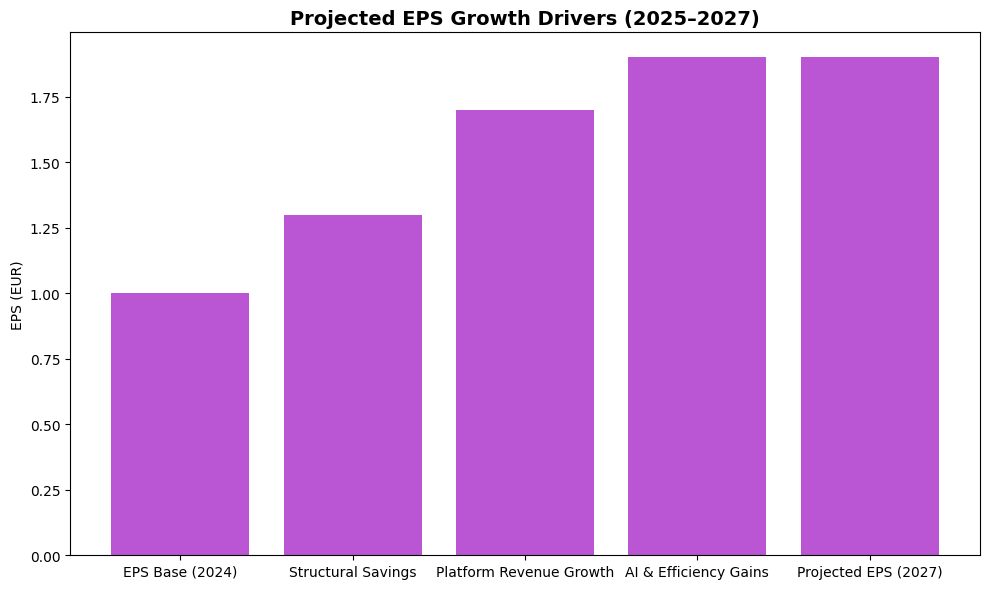
More notably, earnings per share (EPS) are projected to surge by 54.7% per year over the same period. This strong earnings rebound is expected to come from:
- The full realization of Randstad’s €100 million structural savings program
- Margin expansion from digital marketplaces and automated sourcing tools
- Enhanced efficiency through AI-based talent matching and workflow automation
Matrix: Randstad Strategic Growth Drivers (2025–2027)
| Strategic Initiative | Expected Impact | Contribution to EPS and Margin Growth |
|---|---|---|
| Structural Cost Savings Program (€100M) | Leaner operations and overhead reduction | Improved EBITA and cash flow |
| Expansion of Randstad Talent Platform | Global platform rollout by 2026 | Recurring high-margin revenue from digital hiring |
| Skills Graph and AI Matching Integration | Enhanced job-candidate precision | Better fill rates and client retention |
| Digital Marketplace Penetration | Larger online hiring volume | Automation-driven gross profit improvement |
| RPO and MSP Model Scaling | Deeper enterprise client relationships | Higher long-term contract value and retention |
Digital Vision: The “Skills-First” Hiring Revolution
Randstad’s forward-looking talent strategy focuses on transitioning from credential-based hiring to skills-based talent matching. This evolution is powered by the organization’s proprietary skills graphs, which map candidate competencies to job requirements in real time, enabling smarter and faster placements.
By 2026, the Randstad Talent Platform is expected to be live in nearly all key global markets. This platform will support:
- Seamless integration of AI-powered recruitment tools
- Standardized candidate experience across borders
- A scalable infrastructure for high-volume hiring across industries
Table: Randstad’s Digital Expansion Roadmap (2025–2027)
| Initiative | Milestone Target | Strategic Benefit |
|---|---|---|
| Talent Platform Global Rollout | Operational in 2026 | Unified digital hiring experience worldwide |
| AI Matching and Skills Mapping | Fully integrated by 2026 | Improves match quality and time-to-hire |
| Marketplace Hiring Volume | 15%+ of total placements | Higher margins and recruiter productivity |
| Tech Infrastructure Optimization | €100M savings realized by 2025 | Cost efficiency and profitability boost |
Conclusion: Randstad’s Financial Position and Long-Term Investment Outlook
Randstad’s future outlook from 2025 to 2027 remains positive, driven by a combination of sound capital management, dividend reliability, and robust digital transformation initiatives. The company is well-positioned to grow profitably by enhancing operational efficiency, expanding its technology capabilities, and delivering intelligent, platform-driven recruitment services to clients worldwide.
Its investment in automation, skills-first talent strategies, and scalable global platforms demonstrates a clear commitment to leading the future of work while ensuring sustainable shareholder value creation. As the workforce and hiring landscape continues to evolve, Randstad’s adaptability and strategic clarity offer a strong foundation for long-term success.
11. Strategic Recommendations
Randstad N.V. has established itself as one of the most resilient and adaptable players in the global staffing industry. Throughout years of economic turbulence, the company has managed to retain its leadership position by transforming from a traditional, high-volume staffing provider into a more specialized and technology-enabled human capital partner.
The 2024 fiscal year posed notable challenges, including revenue contraction and reputational risks surrounding the Monster divestment. However, these setbacks were strategically countered by the rollout of Randstad’s “Partner for Talent” framework. This roadmap is designed to transition the organization into a platform-first recruitment model that combines AI-driven automation with human insight to meet the complex needs of modern employers.
Matrix: Randstad Strategic Transformation Milestones
| Key Strategic Move | Description | Purpose and Impact |
|---|---|---|
| “Partner for Talent” Framework | Specialized segment-based model (Operational, Professional, etc.) | Enhances focus and delivery in talent services |
| Torc Platform Acquisition | AI-powered marketplace for digital talent | Boosts tech capability and skills-based hiring |
| Randstad App Expansion | AI-driven mobile hiring app | Supports shift to low-touch, high-speed recruitment |
| Monster Divestment | Exit from legacy job board operations | Refocus on scalable, high-margin business models |
Geographical Strengths and Market Diversification
Randstad’s global footprint remains one of its most valuable assets. The company has successfully reduced dependency on single-region performance by diversifying its presence across mature and emerging economies. Key growth markets like India and Vietnam in the Asia Pacific region have emerged as critical drivers for future scalability, while Southern European markets such as Italy and Spain continue to deliver stability and expansion.
Table: Randstad’s Geographic Diversification and Strength Zones
| Region | Strategic Value | 2024–2026 Performance Notes |
|---|---|---|
| Southern Europe | Resilient in downturns, especially Spain | Revenue growth in Italy (+1%) and Iberia (+9%) |
| Asia Pacific | Future growth engine (India, Vietnam focus) | Double-digit growth in digital and professional segments |
| North America | Largest market by scale | Recovery expected post-2024 downturn |
| Northern Europe | Stabilizing markets with mixed results | Netherlands and Germany under pressure, Poland growing (+6%) |
Enterprise Capability and Cost Efficiency for Global Clients
One of Randstad’s competitive strengths lies in its consistent delivery of Recruitment Process Outsourcing (RPO) and Managed Services Programs (MSP) for enterprise clients. These programs offer measurable cost savings, better candidate quality, and optimized hiring timelines. With case studies such as the $7.5 million savings in Australia/NZ, Randstad has proven its ability to manage complex contingent workforces at scale.
Table: Enterprise Value Delivered Through RPO & MSP Programs
| Client Industry | Region | Program Type | Key Achievements |
|---|---|---|---|
| Infrastructure | Australia/NZ | MSP | Reduced vendors from 100+ to 17, $7.5M savings |
| Life Sciences | Global | MSP | $800K first-year savings, 97% fill rate |
| Personal Care | Japan | RPO | Reduced time-to-fill by 30%, offer acceptance up to 77% |
| Investment Management | U.S. | Integrated | 20% cost avoidance, 81% retention via talent model shift |
Shareholder Value Strategy and Margin Recovery Targets
As Randstad looks ahead to 2027, its financial strategy will center around:
- Margin normalization with a focus on restoring EBITA to the 4%–5% range
- Continued cancellation of ordinary shares to reduce dilution and increase shareholder returns
- Leveraging €100 million in structural savings to improve earnings per share
These strategic moves are supported by the rollout of high-margin digital platforms and the scaling of AI-assisted recruitment solutions.
Table: Randstad Financial Goals Through 2027
| Strategic Target | Goal Timeline | Performance Indicator |
|---|---|---|
| EBITA Margin Normalization | By end of 2027 | Targeting 4%–5% operational margin |
| Share Cancellation Program | Ongoing | Enhancing earnings per share (EPS) |
| Structural Cost Savings Program | Fully realized by 2025 | €100 million in recurring annual savings |
| Platform Revenue Growth | Scaled by 2026 | 15%+ of total revenue from digital channels |
Conclusion: A Stable, Forward-Thinking Talent Partner for the Future of Work
Randstad’s transformation is not only a response to industry shifts but a deliberate strategy to lead the future of global recruitment. The organization has moved beyond traditional staffing to become a skills-first, technology-forward, and human-centered partner to businesses worldwide.
For HR leaders, corporate clients, and global investors, Randstad offers a reliable, scalable, and ethically guided talent solution in a world where speed, digital integration, and workforce flexibility are paramount. The next phase of growth is set to deliver long-term returns, operational resilience, and global talent innovation—making Randstad a model for modern human capital leadership.
Conclusion
Randstad Recruitment Agency stands today as one of the most influential and forward-thinking players in the global staffing and workforce solutions industry. With a heritage rooted in over six decades of experience, Randstad has consistently evolved to meet the changing dynamics of the labor market. This in-depth review highlights the agency’s strong financial foundation, global operational scale, technology-driven transformation, and future-facing strategic initiatives that are shaping the company’s trajectory well into 2027 and beyond.
Despite the complexities of the 2024 fiscal environment—marked by macroeconomic volatility, regional hiring slowdowns, and digital disruption—Randstad has proven its resilience through agile adaptation. The introduction of the “Partner for Talent” strategy represents a defining moment in its evolution. By transitioning from a volume-based staffing provider to a specialized, AI-powered talent partner, Randstad is actively redefining how global organizations attract, hire, and manage talent.
One of the company’s greatest strengths lies in its diversified geographic footprint. Randstad’s stronghold in Southern Europe, coupled with impressive momentum across Asia Pacific markets such as India, Vietnam, and Japan, has enabled the agency to balance economic headwinds in North America and parts of Northern Europe. Its ability to localize solutions while maintaining global consistency is a key differentiator that sets it apart from both traditional competitors and emerging tech-first disruptors.
Randstad’s commitment to digital innovation is clearly evident through strategic initiatives such as the acquisition of the Torc platform, the expansion of the Randstad App, and the integration of AI-driven skills mapping and talent matching. These platforms have not only increased operational efficiency but also improved the quality of candidate placements, reduced time-to-fill metrics, and helped clients manage large-scale contingent workforces with greater transparency and cost control.
For enterprise clients, Randstad’s Recruitment Process Outsourcing (RPO) and Managed Services Programs (MSP) offer measurable and scalable solutions. Proven case studies, such as multimillion-dollar savings in regions like Australia and Japan, underscore the agency’s capacity to deliver not just workforce solutions but real business impact.
Financially, Randstad remains in a stable and promising position. With a strong balance sheet, consistent dividend payouts, and strategic capital deployment—including share buybacks and margin recovery efforts—the company continues to create value for shareholders while investing in future growth. Forecasted EPS improvements, rising platform revenue contribution, and disciplined cost control initiatives all point to a healthy and sustainable outlook.
Furthermore, Randstad’s internal culture reflects the values it delivers externally. Gender equity, workforce upskilling, and ethical governance form the foundation of its people strategy. In an age where workforce sentiment is shifting toward flexibility, purpose, and career growth, Randstad’s alignment with these evolving priorities demonstrates its ability to remain relevant and responsible.
As global labor markets continue to face disruption from artificial intelligence, demographic shifts, and the rise of remote work, Randstad’s hybrid model—blending digital automation with human expertise—offers a compelling blueprint for the future of recruitment. Its integrated approach ensures that technology enhances, rather than replaces, the personal connection that remains central to successful talent relationships.
In summary, Randstad Recruitment Agency represents a rare combination of legacy strength and future-readiness. It offers global employers a trusted partner in workforce transformation, and job seekers a platform that balances opportunity with personalized support. For HR leaders, investors, and organizations navigating a complex global employment landscape, Randstad stands as a high-performing, strategically aligned, and innovation-driven force in the modern talent economy.
From operational scale and financial performance to digital evolution and human-centric values, Randstad is not only keeping pace with the future of work—it is helping lead it.
If you find this article useful, why not share it with your hiring manager and C-level suite friends and also leave a nice comment below?
We, at the 9cv9 Research Team, strive to bring the latest and most meaningful data, guides, and statistics to your doorstep.
To get access to top-quality guides, click over to 9cv9 Blog.
To hire top talents using our modern AI-powered recruitment agency, find out more at 9cv9 Modern AI-Powered Recruitment Agency.
People Also Ask
What is Randstad Recruitment Agency known for?
Randstad is known globally for providing staffing, recruitment, HR solutions, and talent management services across multiple industries.
How does Randstad’s “Partner for Talent” strategy work?
It focuses on specialised, tech-enabled recruitment by integrating AI platforms, talent segmentation, and enterprise workforce solutions.
Is Randstad a global recruitment agency?
Yes, Randstad operates in over 39 countries, offering both local and international staffing services across various sectors.
What services does Randstad offer to employers?
Randstad offers temporary staffing, permanent placement, executive search, RPO, MSP, payroll services, and workforce consultancy.
Does Randstad provide staffing solutions for tech roles?
Yes, Randstad specializes in IT staffing, offering contract and full-time placements through its digital talent platforms and AI tools.
How does Randstad compare to Adecco and ManpowerGroup?
Randstad leads in global revenue, offering more advanced digital capabilities and broader service coverage than most competitors.
What industries does Randstad specialize in?
Randstad covers industries such as IT, engineering, healthcare, finance, logistics, manufacturing, and administrative services.
Is Randstad suitable for enterprise-level hiring needs?
Yes, Randstad’s RPO and MSP programs are tailored for large enterprises requiring scalable and cost-effective hiring solutions.
What is Randstad Sourceright?
Randstad Sourceright is the enterprise division that provides RPO, MSP, and total talent acquisition solutions globally.
How does Randstad use AI in recruitment?
Randstad uses AI for job matching, candidate screening, workforce analytics, and automation of repetitive recruitment tasks.
What is the Randstad Talent Platform?
It is a digital recruitment platform that streamlines sourcing, matching, onboarding, and workforce engagement processes.
Does Randstad offer a mobile hiring app?
Yes, the Randstad App connects employers to pre-vetted talent using AI-driven matching and shift scheduling tools.
Is Randstad active in Asia Pacific?
Randstad is growing rapidly in Asia Pacific markets, especially in India, Vietnam, Japan, and Australia.
What are Randstad’s pricing models?
Randstad uses transparent pricing, with markups for temporary staffing and percentage-based fees for permanent placements.
Does Randstad offer executive search services?
Yes, Randstad provides high-level executive recruitment with retainer-based pricing and long-term placement guarantees.
What is Randstad’s dividend policy?
Randstad maintains a stable dividend policy, offering consistent shareholder payouts when leverage remains conservative.
How financially strong is Randstad?
Randstad has a solid financial position with low net debt and consistent earnings, supported by global operations.
What were Randstad’s recent digital investments?
Randstad acquired the Torc platform and expanded its AI-powered hiring app to enhance digital recruitment capabilities.
What is Randstad’s strategy for 2025–2027?
The strategy focuses on margin recovery, global platform expansion, digital transformation, and skills-first hiring models.
Is Randstad a good recruitment agency for job seekers?
Yes, Randstad offers personalised career support, job matching, training, and access to thousands of roles across industries.
How does Randstad support candidate development?
Randstad provides career coaching, upskilling programs, and access to learning resources focused on digital and soft skills.
What regions generate the most revenue for Randstad?
Randstad’s major revenue contributors include North America, Southern Europe, and high-growth markets in Asia Pacific.
How does Randstad ensure diversity and inclusion?
Randstad promotes workplace equity through inclusive hiring practices, gender balance, and diversity-focused training programs.
What is Randstad’s ethical stance on workforce practices?
Randstad adheres to fair labor practices, transparency, compliance, and responsible treatment of candidates and employees.
What happened with Randstad’s Monster divestment?
Randstad exited its stake in Monster to focus on scalable, digital-first staffing models, following financial and ethical scrutiny.
What is Randstad’s EBITA margin goal?
Randstad is targeting a margin recovery to 4%–5% by 2027 through operational efficiency and cost optimization.
How does Randstad deliver cost savings for clients?
Through RPO and MSP programs, Randstad helps reduce vendor usage, improve fill rates, and cut recruitment-related expenses.
Is Randstad publicly traded?
Yes, Randstad is listed on Euronext Amsterdam under the ticker RAND.AS and remains a stable investment option.
What types of clients does Randstad serve?
Randstad serves startups, SMEs, large enterprises, and multinational corporations across diverse industries worldwide.
Why choose Randstad over other recruitment firms?
Randstad combines global scale, industry expertise, advanced technology, and client-focused solutions to deliver consistent value.
Sources
Randstad
Wikipedia
MatrixBCG
Staffing Industry Analysts
Macrotrends
Job Board Doctor
Pestel Analysis
Porters Five Force
Randstad USA
Investing
Firstman Asia
Navigos Group
HeroHunt
Randstad Canada
Randstad Enterprise
Randstad Sourceright
Stock Analysis
Scribd
DividendMax
Robinhood