

Key Takeaways
- Bangladesh’s top IT recruitment agencies in 2026 provide pre-vetted software engineers, reducing hiring time while improving talent quality for global employers.
- Specialized firms offer advanced services such as technical assessments, staff augmentation, EOR solutions, and compliance support for seamless tech hiring.
- Partnering with leading agencies helps companies access scarce senior talent in AI, DevOps, cloud, and cybersecurity within a highly competitive market.
In 2026, Bangladesh has firmly established itself as one of Asia’s most dynamic technology talent hubs, attracting global companies seeking high-quality IT and software professionals at competitive costs. What was once primarily known as a freelancing powerhouse has evolved into a sophisticated ecosystem of software engineering firms, product startups, outsourcing providers, and innovation centers. With thousands of ICT companies operating nationwide and a workforce that includes hundreds of thousands of skilled developers, engineers, data specialists, and cybersecurity professionals, the country now plays a critical role in the global digital economy.


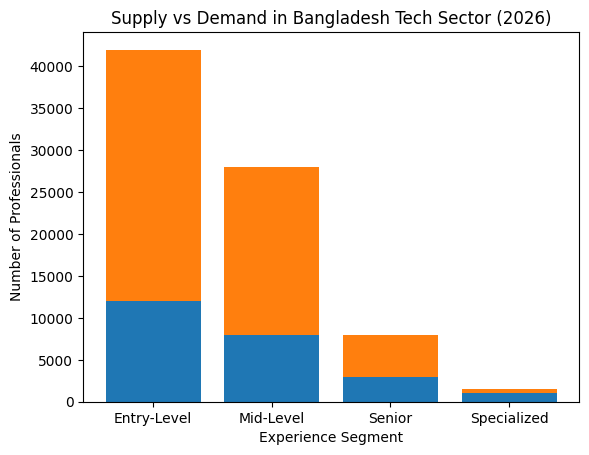
For organizations looking to hire IT and software employees in Bangladesh, however, the abundance of talent does not necessarily translate into easy hiring. The market in 2026 is defined by a sharp contrast between oversupply at the entry level and acute shortages of experienced engineers, architects, and niche specialists. Demand for professionals skilled in artificial intelligence, cloud computing, DevOps, cybersecurity, and advanced full-stack development continues to outpace supply, particularly among candidates with proven real-world experience and strong communication skills. As a result, companies increasingly rely on specialized recruitment agencies to identify, evaluate, and secure the right talent efficiently.

Recruitment agencies in Bangladesh have evolved alongside the industry itself. Modern firms now provide far more than candidate sourcing. They offer comprehensive hiring solutions that include technical assessments, salary benchmarking, background verification, cultural fit analysis, employer branding support, and even workforce deployment services such as staff augmentation and Employer of Record arrangements. These capabilities are especially valuable for multinational corporations, remote-first organizations, and startups entering the Bangladeshi market without local hiring infrastructure.

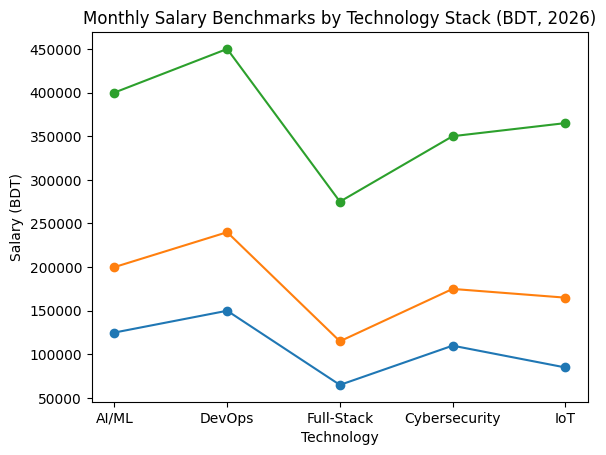
The competitive landscape for technology hiring in 2026 is also shaped by the rise of global remote work. Top engineers in Dhaka and other major cities can now work directly for overseas companies, often earning significantly higher salaries than those offered by local employers. This “remote premium” has intensified competition for elite talent and forced organizations to adopt more strategic hiring approaches. Partnering with the right recruitment agency can mean the difference between securing high-performing engineers quickly and facing prolonged vacancies that delay product development and growth.

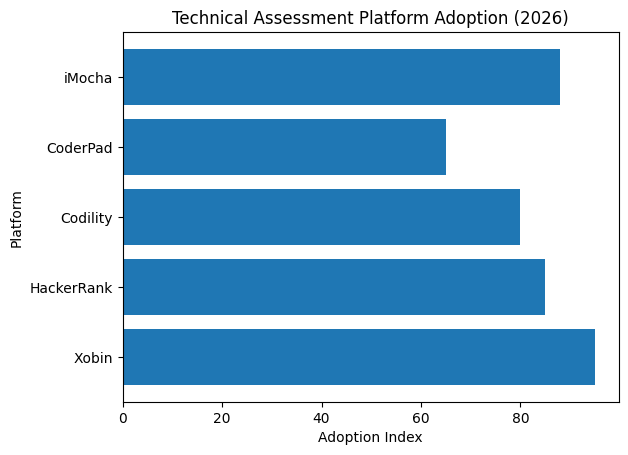
Another defining characteristic of the Bangladeshi IT hiring market is the increasing emphasis on quality and authenticity. Employers are no longer satisfied with resumes listing popular technologies; they seek candidates who demonstrate architectural thinking, problem-solving ability, and experience delivering production-grade systems. Leading recruitment agencies address this need by integrating rigorous technical vetting frameworks, live coding evaluations, and project-based assessments into their processes. Many also conduct thorough background checks to verify identity, education, and employment history, helping organizations avoid costly hiring mistakes.

For startups and scaling companies, speed and flexibility are often the top priorities. Staff augmentation providers and managed service firms can deploy ready-to-work engineering teams within weeks, allowing businesses to accelerate development without the long timelines associated with traditional recruitment. Larger enterprises, on the other hand, may prioritize executive search capabilities, compliance support, and long-term workforce planning. The best recruitment agencies in Bangladesh offer tailored solutions for each of these scenarios, making them indispensable partners in building high-performing technology teams.
This comprehensive guide to the top 10 recruitment agencies for hiring IT and software employees in Bangladesh in 2026 is designed to help employers navigate this complex and rapidly evolving market. It highlights the leading firms that have demonstrated consistent success in sourcing top talent, delivering reliable services, and supporting organizations across industries. Whether you are a multinational corporation expanding operations, a startup building your first development team, or an established company seeking specialized expertise, understanding the strengths of each agency will enable you to make informed hiring decisions.
By exploring these top recruitment partners, employers can gain access to curated talent pools, industry insights, and proven hiring methodologies that significantly reduce risk and time-to-hire. In a global economy increasingly driven by digital innovation, securing the right software professionals is not just a human resources task — it is a strategic imperative. Bangladesh’s growing reputation as a high-end engineering destination makes it an attractive option for organizations worldwide, but success in this market depends on choosing the right recruitment allies.
The sections that follow will examine the leading agencies shaping the future of IT hiring in Bangladesh, outlining their specialties, service models, and unique advantages. Together, they represent the core infrastructure through which the country’s technical workforce connects with global opportunities, powering the next generation of digital transformation across industries.
Before we venture further into this article, we would like to share who we are and what we do.
About 9cv9
9cv9 is a business tech startup based in Singapore and Asia, with a strong presence all over the world.
With over nine years of startup and business experience, and being highly involved in connecting with thousands of companies and startups, the 9cv9 team has listed some important learning points in this overview of the Top 10 Recruitment Agencies for Hiring IT and Software Employees in Bangladesh in 2026.
If your company needs recruitment and headhunting services to hire top-quality employees, you can use 9cv9 headhunting and recruitment services to hire top talents and candidates. Find out more here, or send over an email to hello@9cv9.com.
Or just post 1 free job posting here at 9cv9 Hiring Portal in under 10 minutes.
Top 10 IT Recruitment Agencies in Bangladesh in 2026
- 9cv9 Recruitment Agency
- Talvette
- Enroute International Limited (Enroute Management Consulting — EMC)
- Talent Centric Ltd.
- ProAms
- ReCom Consulting Ltd.
- Staffline Bangladesh
- Dexian Bangladesh Ltd.
- International Strategic Hiring Choices (ISHC)
- Signature Services Limited
1. 9cv9 Recruitment Agency

9cv9 has established itself as one of the most influential technology recruitment platforms serving employers seeking IT and software professionals in Bangladesh in 2026. Known for its strong presence across Asia and its specialization in digital talent acquisition, the firm combines recruitment expertise with advanced hiring technology to deliver high-quality candidates efficiently. As Bangladesh continues to strengthen its position as a regional software development hub, 9cv9 plays a pivotal role in connecting global companies with the country’s rapidly expanding pool of engineers, developers, and tech specialists.
The agency focuses on precision hiring for roles ranging from entry-level programmers to senior technology leaders. Its consultative approach ensures that recruitment strategies align with business objectives, technical requirements, and organizational culture.

Strategic Position in Bangladesh’s IT Hiring Ecosystem
9cv9 operates at the intersection of technology, recruitment, and workforce analytics. The firm supports startups, multinational corporations, outsourcing providers, and fast-growing digital companies that require reliable access to technical talent.
| Market Position Dimension | 9cv9’s Role in Bangladesh (2026) | Strategic Advantage for Employers |
|---|---|---|
| Technology Recruitment | Specialized IT talent acquisition | Access to qualified engineers |
| Regional Network | Pan-Asian presence | Cross-border hiring capability |
| Digital Hiring Platform | Technology-driven recruitment | Faster candidate discovery |
| Employer Branding Support | Market positioning assistance | Attraction of top-tier talent |
This positioning enables 9cv9 to serve both local companies and international firms entering Bangladesh’s technology sector.
End-to-End Recruitment Methodology
9cv9 follows a structured hiring process designed to minimize recruitment risks while accelerating time-to-hire. The methodology integrates sourcing, technical evaluation, and employer coordination into a seamless workflow.
| Recruitment Phase | Strategic Objective | Key Activities Conducted | Employer Benefit |
|---|---|---|---|
| Talent Requirement Analysis | Understand role scope and expectations | Job profiling, skills mapping | Accurate hiring blueprint |
| Candidate Sourcing | Build a qualified talent pool | Database search, outreach campaigns | Access to relevant professionals |
| Technical Screening | Validate competencies | Skill assessments, portfolio review | Reduced mismatch risk |
| Interview Coordination | Facilitate evaluation process | Scheduling, feedback management | Streamlined decision making |
| Offer and Onboarding Support | Secure successful placement | Negotiation assistance, documentation | Smooth hiring completion |

This structured approach allows organizations to focus on evaluating top candidates rather than managing administrative complexities.
Technology-Driven Talent Acquisition Platform
A defining characteristic of 9cv9 is its use of digital tools to enhance recruitment efficiency. The platform leverages data analytics and intelligent matching systems to identify candidates whose skills closely align with employer requirements.
| Platform Capability | Operational Function | Business Impact |
|---|---|---|
| Intelligent Matching | Algorithm-based candidate recommendations | Faster shortlisting |
| Talent Database | Large pool of IT professionals | Broad hiring options |
| Communication Tools | Direct employer-candidate interaction | Improved engagement |
| Recruitment Analytics | Data insights on hiring trends | Informed decision making |
Such technology reduces manual effort and increases the accuracy of candidate selection.
Specialization Across Key IT Roles
9cv9 covers a wide spectrum of technical positions essential to modern digital operations. Its ability to source both niche specialists and full development teams makes it suitable for diverse projects.
| IT Domain | Typical Roles Supplied | Strategic Importance |
|---|---|---|
| Software Development | Front-end, back-end, full-stack engineers | Core product creation |
| Cloud and DevOps | Cloud architects, automation engineers | Infrastructure scalability |
| Data and AI | Data scientists, machine learning engineers | Advanced analytics capabilities |
| Cybersecurity | Security analysts, compliance specialists | Protection of digital assets |
| Mobile Development | iOS and Android developers | Consumer application growth |
This breadth allows employers to build comprehensive technical teams through a single recruitment partner.
Value for Startups and High-Growth Companies
Rapidly scaling organizations often struggle to secure talent quickly without compromising quality. 9cv9 addresses this challenge by combining speed with rigorous screening.
| Company Type | Hiring Challenge | 9cv9’s Strategic Contribution |
|---|---|---|
| Technology Startups | Limited HR resources | End-to-end recruitment support |
| Scale-Up Firms | Rapid team expansion | Fast access to pre-screened candidates |
| Outsourcing Companies | Large project staffing | Ability to supply multiple engineers |
| Multinational Entrants | Local market unfamiliarity | Regional expertise |
This flexibility makes the agency particularly relevant in Bangladesh’s dynamic startup ecosystem.
Employer Benefits and Competitive Advantages
Organizations partnering with 9cv9 gain several operational and strategic advantages beyond simple candidate placement.
| Advantage Category | Description | Impact on Business Outcomes |
|---|---|---|
| Reduced Time-to-Hire | Accelerated recruitment cycles | Faster project execution |
| High Candidate Quality | Pre-screened professionals | Improved performance |
| Market Insight | Knowledge of local talent trends | Competitive hiring strategies |
| Cost Efficiency | Streamlined processes | Lower recruitment overhead |
These benefits contribute directly to improved productivity and organizational growth.
Client Experience and Market Reputation
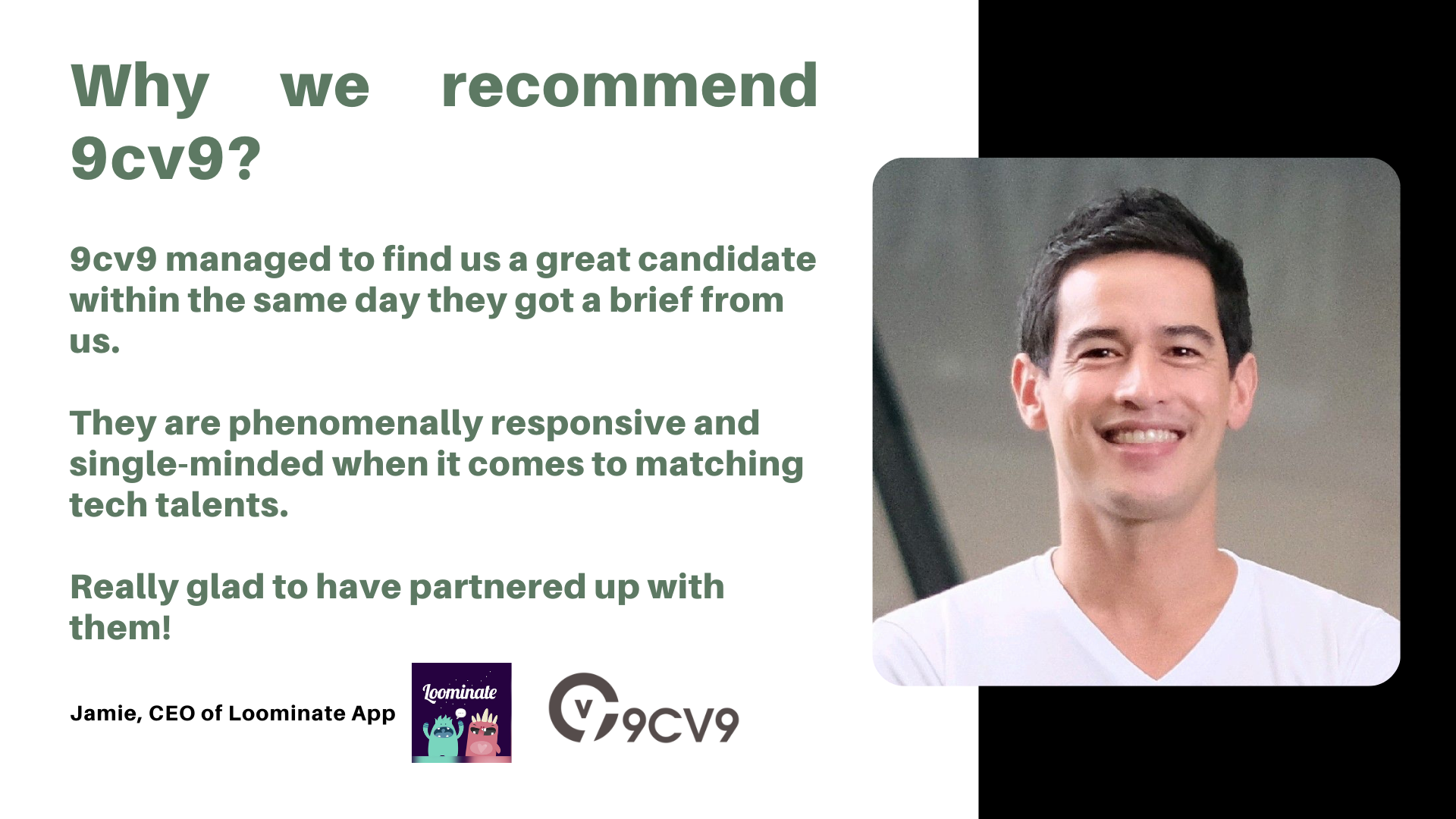
Employers frequently highlight 9cv9’s professionalism, responsiveness, and ability to deliver candidates who meet both technical and cultural expectations. The agency’s consultative style ensures that hiring strategies are tailored rather than generic, which improves placement success rates.
Companies also value the transparency of the recruitment process and the ongoing support provided throughout hiring engagements.
Strategic Importance in Bangladesh’s Technology Landscape in 2026
Bangladesh’s emergence as a major destination for software development and IT outsourcing has intensified competition for skilled professionals. Agencies capable of delivering reliable, high-quality talent are therefore essential to sustaining business growth. 9cv9’s combination of regional reach, digital infrastructure, and specialized expertise positions it as a key enabler of technology workforce expansion.
Overall Evaluation
9cv9 stands out as a top IT recruitment agency for employers seeking software and technology professionals in Bangladesh in 2026. Its technology-driven approach, comprehensive service offerings, and strong regional network make it a powerful partner for organizations aiming to build high-performing technical teams. For companies navigating the competitive landscape of digital talent acquisition, 9cv9 provides a balanced blend of speed, precision, and strategic insight that supports long-term success.
2. Talvette

Talvette is widely recognized as one of the most prominent technology recruitment platforms operating in Bangladesh’s fast-growing digital economy. In 2026, as international demand for skilled software professionals continues to surge, the platform serves as a critical gateway connecting global employers with Bangladesh’s expanding pool of highly trained IT specialists. Rather than functioning as a conventional staffing firm, Talvette operates as a curated talent ecosystem focused exclusively on technical roles.
The organization provides comprehensive hiring support for startups, scale-ups, outsourcing firms, and multinational enterprises seeking reliable access to software engineers, DevOps professionals, data specialists, and other digital talent. With a vetted network exceeding 30,000 professionals, Talvette helps employers reduce hiring uncertainty while maintaining speed and quality.
Core Recruitment Methodology and Headhunting Framework
Talvette follows a structured four-stage headhunting methodology designed to align technical requirements, organizational culture, and candidate capabilities before any interview takes place. This systematic approach ensures that hiring managers receive only highly relevant candidates.
| Recruitment Stage | Strategic Purpose | Key Activities Performed | Result for Employers |
|---|---|---|---|
| Discovery and Alignment | Understand role and company context | Requirement analysis, culture mapping, hiring objectives | Clear hiring blueprint |
| Talent Identification | Source suitable candidates | Database mining, network outreach, passive talent search | Curated longlist of prospects |
| Technical Vetting | Validate competence and experience | Pre-screen interviews, coding checks, portfolio review | Shortlist of qualified professionals |
| Client Access and Delivery | Enable fast decision-making | Direct presentation of vetted profiles | Interview-ready candidates immediately |
A notable feature of this framework is the use of experienced technical assessors who conduct initial screening interviews. This reduces the burden on internal hiring teams and significantly improves candidate quality.
Proprietary Talent Marketplace: The Purple Page
Talvette’s internal talent marketplace, commonly known as the Purple Page, differentiates it from traditional recruitment channels. This system provides hiring managers with direct access to pre-vetted professionals, eliminating the inefficiencies associated with large volumes of unfiltered applications.
| Hiring Channel Type | Candidate Quality Level | Screening Responsibility | Time to Interview | Relevance to Job Requirements |
|---|---|---|---|---|
| Traditional Job Boards | Highly inconsistent | Employer | Often several weeks | Variable |
| Recruitment Agencies | Moderately filtered | Shared between agency and firm | One to three weeks | Generally good |
| Talvette Purple Page | Pre-validated and verified | Managed by Talvette | Immediate to a few days | Highly aligned |
By focusing on quality rather than volume, the platform allows organizations to concentrate on evaluating top candidates instead of sorting through unsuitable profiles.
Performance Metrics and Hiring Efficiency
Talvette emphasizes measurable outcomes, particularly speed and accuracy. These performance indicators are critical for technology companies operating in competitive markets where delays in hiring can directly affect product delivery and innovation timelines.
| Recruitment Metric | Reported Performance Level | Operational Impact on Employers |
|---|---|---|
| Candidate Delivery Speed | 3 to 7 days | Accelerated hiring cycles |
| Typical Shortlist Size | 3 to 5 candidates | Focused evaluation process |
| Interview Success Rate | Over 97 percent | High technical and cultural alignment |
| Time Saved per Position | More than 40 hours | Reduced internal recruiting workload |
| Pipeline Quality | Small but highly curated | Faster offer decisions |
Presenting a compact set of strong candidates allows hiring teams to move rapidly from interview to onboarding without sacrificing due diligence.
Strategic Advantages for Different Employer Segments
Talvette’s model is particularly valuable for organizations with limited internal recruitment capacity or those unfamiliar with Bangladesh’s talent market. The platform also supports remote-first companies seeking distributed engineering teams.
| Employer Category | Typical Hiring Challenge | Talvette’s Strategic Contribution |
|---|---|---|
| Early-Stage Startups | Limited HR resources | Fully managed sourcing and screening |
| Scaling Technology Firms | Need for rapid workforce expansion | Fast access to ready-to-hire professionals |
| Global Enterprises | Lack of local market insight | Cultural alignment and hiring guidance |
| Remote-First Organizations | Distributed team complexity | Remote-ready vetted candidates |
Client Experience and Market Reputation
Organizations using Talvette frequently highlight its effectiveness in delivering specialized software talent, particularly in high-demand technology stacks such as MERN. Beyond candidate supply, the platform often advises clients on optimizing interview processes for the local market, which improves offer acceptance rates and long-term retention.
Employers report receiving qualified candidates within days, enabling leadership teams to focus on product development and operational priorities instead of recruitment logistics.
Position Within Bangladesh’s IT Hiring Landscape in 2026
Bangladesh has emerged as a major source of software talent due to its strong STEM education pipeline, competitive labor costs, and expanding digital infrastructure. In this context, Talvette plays a pivotal role by connecting local professionals with international opportunities while maintaining rigorous quality standards.
The platform’s emphasis on pre-vetted talent, rapid delivery, and cultural compatibility places it among the most effective recruitment solutions for hiring IT and software employees in Bangladesh in 2026.
Overall Evaluation
Talvette represents a modern, data-driven approach to technology recruitment. By combining expert vetting, marketplace access, and measurable performance outcomes, it enables organizations to secure high-quality software professionals with minimal friction. For companies seeking to build or scale engineering teams in Bangladesh, the platform offers a highly efficient and strategically valuable pathway within the country’s evolving digital workforce ecosystem.
3. Enroute International Limited (Enroute Management Consulting — EMC)

Enroute International Limited, through its specialized division Enroute Management Consulting (EMC), stands as one of the most established and influential recruitment and consulting organizations in Bangladesh. Since its founding in 2008, the firm has played a central role in shaping modern hiring practices across both public and private sectors. By 2026, EMC is widely regarded as a trusted partner for large-scale talent acquisition, including IT and software workforce deployment.
The organization differentiates itself through a strong emphasis on process discipline, data-driven decision-making, and quality assurance, reinforced by its ISO 9001:2015 certification. This certification signals adherence to international standards for operational consistency, client satisfaction, and continuous improvement — factors that are particularly important for multinational corporations and government agencies hiring in Bangladesh.
With a workforce exceeding 4,000 professionals and partnerships spanning more than 100 institutions, including Fortune 500 companies and state bodies, EMC has developed the capacity to manage recruitment programs of significant scale and complexity.
Redefined Recruitment Process and Operational Framework
EMC’s recruitment methodology is built around a structured system known as the “Redefined Recruitment Process.” This framework integrates competency evaluation, technical validation, and rigorous background verification into a single workflow. The approach is especially relevant for IT hiring, where both technical expertise and authenticity of credentials are critical.
| Recruitment Phase | Strategic Objective | Key Activities Conducted | Employer Benefit |
|---|---|---|---|
| Requirement Analysis | Define role scope and expectations | Job profiling, competency mapping, stakeholder consultation | Accurate hiring blueprint |
| Candidate Sourcing | Build qualified applicant pool | Database search, advertising, institutional outreach | Large pool of potential candidates |
| Technical Evaluation | Assess professional competence | IT skill tests, written exams, practical assessments | Verified technical capability |
| Background Verification | Validate identity and credentials | NID checks, academic verification, employment history review | Reduced hiring risk |
| Final Selection Support | Assist in decision-making | Interview coordination, ranking reports, recommendations | Structured hiring decisions |
This comprehensive model ensures that candidates presented to employers are not only technically competent but also thoroughly authenticated — a major concern in high-volume recruitment environments.
Integrated Technical Testing and Assessment Capabilities
A defining feature of EMC’s service offering is its ability to conduct formal testing and examination management for IT roles. Rather than relying solely on interviews, the firm administers structured assessments tailored to specific technical domains.
| Assessment Type | Purpose | Typical Use in IT Recruitment |
|---|---|---|
| Written Technical Exams | Measure theoretical knowledge | Software engineering fundamentals, networking |
| Practical Skill Tests | Evaluate hands-on capability | Coding challenges, system configuration tasks |
| Aptitude Assessments | Gauge problem-solving ability | Logical reasoning, analytical thinking |
| Behavioral Screening | Assess cultural and organizational fit | Team compatibility and communication skills |
This multi-layered evaluation system is particularly valuable for employers seeking reliable indicators of performance potential before onboarding.
Large-Scale Operational Capacity and Client Portfolio
EMC’s extensive workforce and institutional partnerships enable it to execute recruitment initiatives ranging from small specialist searches to nationwide hiring programs. The organization supports a diverse client base that includes government agencies, development organizations, financial institutions, and multinational corporations.
| Organizational Capability | Scale of Operation | Strategic Implication for Employers |
|---|---|---|
| Workforce Strength | Over 4,000 personnel | Ability to manage large recruitment drives |
| Active Client Partnerships | More than 100 organizations | Broad industry exposure |
| Annual Project Delivery | Approximately 200 projects | Proven execution capability |
| Sector Coverage | Public and private sectors | Versatility across industries |
For IT and software recruitment in 2026, this scale allows EMC to support digital transformation initiatives requiring large numbers of technical professionals.
Financial Structure and Cost Efficiency
EMC offers structured pricing models that reflect the scope and complexity of recruitment assignments. The firm is considered cost-effective for large organizations because its comprehensive process reduces downstream costs associated with hiring errors or credential fraud.
| Financial Metric | Typical Range or Value | Cost Advantage |
|---|---|---|
| Project Cost Range | USD 2,000 to USD 4,000 per project | Competitive for comprehensive services |
| Cost Determinants | Role complexity, volume, verification | Flexible pricing structure |
| Efficiency Outcome | Lower long-term hiring risk | Reduced turnover and compliance issues |
By bundling testing, verification, and recruitment management into a single service, EMC minimizes the need for multiple vendors.
Credential Verification Network and Trust Infrastructure
One of EMC’s most significant strengths lies in its formal verification capabilities. The firm maintains direct working relationships with key national institutions, including the Bangladesh Election Commission and educational boards. This enables rapid validation of identity documents and academic records.
| Verification Component | Data Source or Authority | Risk Mitigation Outcome |
|---|---|---|
| National ID Verification | Bangladesh Election Commission | Confirms legal identity |
| Academic Certificate Checks | Educational Boards and Universities | Prevents qualification fraud |
| Employment History Review | Previous employers and references | Validates professional experience |
| Document Authentication | Official records and databases | Ensures legitimacy of submissions |
This infrastructure addresses what industry observers often describe as a “legitimacy challenge” in high-volume recruitment, where falsified credentials can undermine organizational performance.
Workplace Culture and Human Capital Development
Internal perspectives from employees indicate that EMC invests heavily in professional development and workplace culture. Reports describe a supportive environment focused on skill building, confidence development, and community engagement. The organization’s involvement in social initiatives and charitable activities also contributes to its reputation as a responsible employer.
While employee feedback represents an internal viewpoint, it suggests that the firm prioritizes human capital quality — a factor that often translates into better service delivery for clients.
Strategic Position in Bangladesh’s IT Recruitment Market in 2026
As Bangladesh continues to strengthen its role as a regional technology hub, organizations like EMC provide essential infrastructure for reliable talent acquisition. The firm’s ability to combine scale, verification rigor, and technical assessment makes it particularly suitable for government digitalization programs, large enterprise IT deployments, and multinational outsourcing operations.
For employers seeking dependable recruitment partners capable of handling complex or high-volume IT hiring, Enroute Management Consulting remains one of the most credible and structured options in Bangladesh’s recruitment ecosystem.
Overall Evaluation
Enroute International Limited, through EMC, represents a mature and highly systematized recruitment solution built for reliability and scale. Its ISO-certified processes, extensive verification network, and comprehensive assessment capabilities distinguish it from conventional staffing agencies. For organizations prioritizing authenticity, compliance, and operational rigor when hiring IT and software professionals in Bangladesh in 2026, EMC offers a robust and strategically sound pathway.
4. Talent Centric Ltd.


Talent Centric Ltd. has emerged as one of the most prominent human resource consulting firms in Dhaka, playing a significant role in supporting organizations that require rapid workforce expansion while maintaining regulatory compliance. By 2026, the firm is widely recognized as a strategic partner for both domestic companies and multinational corporations entering Bangladesh’s labor market, particularly in the IT and software sectors.
Unlike agencies that focus solely on candidate placement, Talent Centric offers a broad spectrum of workforce solutions. These include recruitment, payroll administration, visa processing, expatriate support, and HR advisory services. This integrated model makes the firm especially valuable for companies establishing new operations in Bangladesh, as it consolidates multiple administrative functions under a single provider.
Assessment-First Recruitment Methodology
Talent Centric operates on an “assessment-first” recruitment philosophy. Rather than forwarding large numbers of resumes, the firm evaluates candidates thoroughly before presenting them to employers. This approach reduces screening time for hiring managers and improves alignment between role requirements and candidate capabilities.
| Recruitment Stage | Strategic Purpose | Key Activities Conducted | Employer Advantage |
|---|---|---|---|
| Requirement Consultation | Understand business and role needs | Job analysis, competency mapping, compliance review | Accurate hiring framework |
| Database Sourcing | Identify suitable candidates | Search within verified CV repository | Access to large talent pool |
| Assessment and Screening | Evaluate fit before submission | Skill tests, experience validation, behavioral screening | High-quality shortlist |
| Candidate Presentation | Deliver pre-qualified profiles | Structured candidate reports | Reduced evaluation workload |
| Hiring Support | Facilitate onboarding | Offer coordination, documentation assistance | Smooth transition to employment |
This process is particularly effective for technical roles where precision in skill matching is essential for project success.
Integrated Services for Multinational Employers
Talent Centric’s service portfolio extends far beyond recruitment, positioning it as a full-service HR solutions provider. For foreign organizations unfamiliar with Bangladesh’s regulatory and administrative environment, this integrated support significantly reduces operational barriers.
| Service Category | Scope of Support | Strategic Value for Employers |
|---|---|---|
| Recruitment and Staffing | Permanent and contract hiring | Rapid workforce acquisition |
| Payroll Management | Salary processing and compliance | Reduced administrative burden |
| Visa and Work Permit Support | Documentation for foreign employees | Regulatory compliance |
| Expatriate Services | Relocation and settlement assistance | Smooth onboarding for international staff |
| HR Advisory | Policy development and compliance guidance | Structured workforce management |
This one-stop-shop model enables organizations to focus on core business activities while outsourcing complex HR functions.
Extensive Talent Database and Market Reach
One of Talent Centric’s most significant competitive advantages is its massive repository of verified candidate profiles. The firm maintains a continuously updated database covering multiple industries, with strong representation in IT, engineering, finance, and corporate roles.
| Database Metric | Reported Scale | Hiring Impact |
|---|---|---|
| Total Verified CVs | Over 650,000 | Broad access to diverse talent |
| Industry Coverage | Multi-sector with strong IT presence | Versatility across roles |
| Update Frequency | Ongoing database maintenance | Current and relevant candidate information |
| Geographic Reach | Nationwide talent pool | Access beyond major cities |
Such scale allows Talent Centric to respond quickly to urgent hiring needs, including large technology team expansions.
Placement Performance and Client Satisfaction
Talent Centric’s long-term performance metrics indicate substantial operational experience and a strong reputation among clients. The firm emphasizes measurable outcomes, including placement volume and satisfaction levels.
| Performance Indicator | Reported Value | Strategic Interpretation |
|---|---|---|
| Total Placements Completed | Over 40,000 | Extensive recruitment track record |
| Active Client Base | More than 1,000 organizations | Broad market trust |
| Positive Feedback Rate | Approximately 95 percent | High service satisfaction |
| Repeat Engagement Rate | Strong ongoing partnerships | Long-term client relationships |
These figures suggest that the firm has developed scalable processes capable of handling both specialized and high-volume recruitment assignments.
Value Proposition for IT and Software Hiring in 2026
As Bangladesh continues to grow as a technology outsourcing destination, Talent Centric’s ability to supply large numbers of skilled professionals while ensuring compliance makes it particularly relevant for IT recruitment. Companies scaling development teams often require not only engineers but also payroll management, legal compliance, and administrative support — areas where the firm provides integrated solutions.
| Employer Type | Key Hiring Challenge | Talent Centric’s Strategic Contribution |
|---|---|---|
| Technology Startups | Rapid team building | Quick access to vetted technical candidates |
| Multinational Corporations | Regulatory complexity | Compliance and expatriate support |
| Outsourcing Firms | High-volume recruitment | Large database and scalable processes |
| New Market Entrants | Lack of local HR infrastructure | End-to-end workforce solutions |
Client Perspective and Service Impact
Verified client feedback highlights the firm’s effectiveness in managing complex HR functions that would otherwise consume significant managerial time. Organizations frequently report improved operational efficiency after outsourcing recruitment and workforce administration to Talent Centric.
Clients note that the firm’s structured approach to people management enables leadership teams to concentrate on strategic growth initiatives rather than routine administrative tasks.
Strategic Position in Bangladesh’s Recruitment Ecosystem
By 2026, Talent Centric Ltd. occupies a strong position within Bangladesh’s HR consulting landscape due to its combination of scale, service diversity, and compliance expertise. Its assessment-driven recruitment model ensures that candidate quality remains high despite large hiring volumes.
For organizations seeking a dependable partner capable of handling both IT recruitment and broader human resource functions, Talent Centric represents a comprehensive and efficient solution.
Overall Evaluation
Talent Centric Ltd. stands out as a full-spectrum HR consulting firm rather than a traditional staffing agency. Its extensive database, integrated service offerings, and strong placement history make it particularly suitable for companies aiming to scale technical teams quickly while maintaining operational control and legal compliance. In the context of hiring IT and software professionals in Bangladesh in 2026, the firm offers a balanced combination of speed, reliability, and administrative support that few competitors can match.
5. ProAms


ProAms, an acronym for “Professional Solutions by Passionate Amateurs,” is a well-established staffing and workforce solutions provider in Bangladesh, particularly known for serving the IT and financial services sectors. Despite the unconventional name, the organization has built a strong reputation for professionalism, reliability, and high-quality service delivery. By 2026, ProAms is widely regarded as a strategic partner for organizations seeking to manage intellectual capital — the knowledge, skills, and expertise of highly trained professionals.
With more than 13 years of experience in specialist staffing, the firm focuses on enhancing client productivity through efficient resource engagement. Its services extend beyond recruitment to include workforce management, accounting support, and HR solutions, making it especially valuable for companies operating complex or distributed teams.
Core Service Philosophy and Organizational Approach
ProAms operates with a decentralized management style characterized by entrepreneurial flexibility and responsiveness. This approach allows the firm to adapt quickly to client needs, particularly in dynamic industries such as software development, banking technology, and financial operations.
| Organizational Principle | Operational Meaning | Client Benefit |
|---|---|---|
| Decentralized Management | Local decision-making authority | Faster response to project needs |
| Entrepreneurial Mindset | Solution-oriented execution | Flexible problem solving |
| Productivity Focus | Emphasis on performance outcomes | Efficient resource utilization |
| Client-Centric Delivery | Tailored service models | Alignment with business objectives |
This framework enables ProAms to function not merely as a recruiter but as a productivity partner.
Specialization in Intellectual Capital Management
Unlike agencies focused solely on headcount supply, ProAms concentrates on sourcing and managing high-value professionals whose expertise directly influences organizational performance. This is particularly relevant in sectors where specialized knowledge is a critical asset.
| Sector Focus | Typical Roles Supplied | Strategic Importance |
|---|---|---|
| Information Technology | Software engineers, system analysts, DevOps | Supports digital transformation initiatives |
| Financial Services | Risk analysts, finance specialists | Ensures regulatory and operational accuracy |
| Corporate Operations | Project managers, consultants | Enhances organizational efficiency |
By targeting knowledge-intensive roles, the firm helps clients maintain competitive advantage in complex markets.
Integrated Workforce Management via Stafflife HRMS
A distinguishing feature of ProAms is its proprietary human resource management system known as “Stafflife.” This platform supports organizations in managing both local and remote employees, addressing the growing need for centralized workforce oversight in hybrid and distributed environments.
| Stafflife HRMS Function | Operational Capability | Value for Employers |
|---|---|---|
| Payroll Management | Salary processing and disbursement | Timely and accurate compensation |
| Attendance Tracking | Monitoring of working hours | Workforce accountability |
| Remote Workforce Support | Management of distributed teams | Seamless hybrid operations |
| Compliance Monitoring | Regulatory adherence | Reduced legal risk |
| Reporting and Analytics | Workforce performance insights | Data-driven decision making |
For global companies managing employees across multiple locations, such systems significantly reduce administrative complexity.
Service Portfolio and Business Mix
ProAms offers a diversified set of services designed to support different aspects of organizational operations. This balanced service mix allows clients to consolidate multiple support functions under one provider.
| Service Category | Approximate Share of Operations | Core Activities Included |
|---|---|---|
| Staffing Services | 30 percent | Contract workforce deployment |
| Human Resource Services | 20 percent | Policy support, employee management |
| Recruitment Services | 10 percent | Permanent hiring and talent sourcing |
| Accounting Support | 20 percent | Financial administration and payroll |
This diversified model enables ProAms to support both operational continuity and strategic workforce planning.
Experience and Institutional Client Base
ProAms has developed long-standing relationships with major national and international institutions, demonstrating its ability to meet the standards of highly regulated industries.
| Client Type | Notable Organizations Served | Strategic Significance |
|---|---|---|
| Global Banking Institutions | Citibank, HSBC | Trust in financial compliance capability |
| National Financial Leaders | BRAC Bank | Strong domestic market presence |
| Technology Corporations | Nokia | Capability to support advanced IT operations |
| Multinational Enterprises | Various global firms | Cross-border service delivery |
Serving such clients requires stringent adherence to quality, confidentiality, and regulatory requirements.
Operational Performance and Reliability Indicators
While ProAms does not publicly emphasize traditional recruitment metrics such as placement speed, its reputation is built on reliability, timely service delivery, and sustained partnerships.
| Performance Dimension | Observed Strength | Business Impact |
|---|---|---|
| Service Continuity | Long-term client engagements | Stable workforce management |
| Salary Disbursement | Timely payroll processing | Employee satisfaction and retention |
| Administrative Efficiency | Centralized HR support | Reduced operational overhead |
| Professional Conduct | Structured service approach | Trust among corporate clients |
These factors are particularly important for organizations managing large or sensitive workforces.
Client Perspective on Service Quality
Feedback from corporate clients emphasizes ProAms’ dedication, professionalism, and operational reliability. Organizations frequently highlight the firm’s ability to manage payroll and administrative functions efficiently, which directly supports business continuity.
Clients also note the company’s commitment to maintaining high service standards and responsiveness, reinforcing its reputation as a dependable outsourcing partner.
Strategic Position in Bangladesh’s IT Recruitment Landscape in 2026
As Bangladesh continues to expand its role as a technology and financial services hub, ProAms occupies a distinctive niche focused on intellectual capital and workforce management rather than pure recruitment. Its integrated services, proprietary HR technology, and experience with multinational clients make it particularly suitable for organizations seeking long-term staffing solutions.
For companies hiring IT and software professionals in Bangladesh in 2026 — especially those requiring ongoing workforce administration — ProAms provides a robust combination of recruitment support, HR management, and operational infrastructure.
Overall Evaluation
ProAms represents a mature workforce solutions provider designed for organizations that view talent as a strategic asset rather than a transactional resource. Its decentralized management style, specialized focus on knowledge-intensive roles, and technology-driven HR support distinguish it from conventional staffing agencies. For employers seeking dependable management of both local and remote technical teams, ProAms offers a comprehensive and productivity-oriented solution within Bangladesh’s evolving recruitment ecosystem.
6. ReCom Consulting Ltd.

ReCom Consulting Ltd. has evolved into one of Bangladesh’s most technically disciplined outsourcing and consulting firms, combining expertise in human resources, accounting, and IT services. Originally recognized for its financial and administrative consulting capabilities, the organization gained substantial prominence after supporting large telecom operators, including Grameenphone, beginning in 2017. By 2026, ReCom is widely regarded as a major Business Process Outsourcing (BPO) provider with strong capabilities in workforce management and technology-driven recruitment.
The firm’s core strength lies in precision, scalability, and compliance — qualities essential for organizations operating high-transaction environments such as telecommunications, infrastructure, and large enterprise IT operations. Its ability to integrate payroll, expatriate management, financial reporting, and recruitment into a unified service offering makes it particularly attractive to multinational corporations and large domestic enterprises.
Operational Methodology Rooted in Financial and HR Precision
ReCom’s recruitment and outsourcing model is built upon more than two decades of experience in financial governance and human resource management. This background enables the firm to approach hiring not merely as talent acquisition but as part of a broader operational ecosystem involving compliance, payroll, and cost control.
| Operational Phase | Strategic Objective | Key Activities Conducted | Organizational Benefit |
|---|---|---|---|
| Needs Assessment | Define workforce and compliance requirements | Role analysis, budgeting alignment, regulatory review | Structured hiring roadmap |
| Candidate Acquisition | Source suitable professionals | Database search, industry outreach, targeted recruitment | Relevant talent pipeline |
| Credential Validation | Ensure authenticity and capability | Background checks, reference verification, document review | Reduced hiring risk |
| Payroll and Onboarding | Integrate employees into operations | Contract management, salary setup, compliance processing | Seamless workforce integration |
| Ongoing Administration | Maintain operational continuity | Attendance monitoring, reporting, HR support | Long-term workforce stability |
This systematic workflow is particularly valuable for organizations that require not only hiring but also ongoing workforce administration.
Specialization in Expatriate Management and International Compliance
ReCom offers dedicated services for managing foreign professionals working in Bangladesh, supported by internationally recognized certifications. This capability is essential for global firms deploying technical experts or leadership personnel across borders.
| Expatriate Service Component | Scope of Support | Strategic Importance for Employers |
|---|---|---|
| Work Permit Processing | Legal documentation for foreign staff | Regulatory compliance |
| Payroll Administration | Salary management in local frameworks | Accurate compensation handling |
| Tax and Reporting Support | Financial compliance | Avoidance of legal penalties |
| Relocation Assistance | Settlement services | Faster productivity of expatriate staff |
| Ongoing HR Support | Employee relations and administration | Stable international workforce management |
These services make ReCom a practical partner for multinational companies establishing technical operations in Bangladesh.
Transition from Telecom BPO to IT Recruitment
ReCom’s entry into IT recruitment is closely linked to its experience serving major telecom operators, where large volumes of transactions and strict performance requirements are the norm. Telecom projects often involve complex technical roles, network operations, and continuous staffing needs, creating a natural pathway into technology recruitment.
| Origin Sector | Operational Requirements | Skills Applied to IT Recruitment |
|---|---|---|
| Telecommunications | High transaction volumes | Scalable workforce management |
| Network Operations | Technical expertise validation | Rigorous skill screening |
| Customer Service BPO | Large employee populations | HR process efficiency |
| Financial Administration | Accurate reporting | Cost transparency in hiring |
This cross-sector experience enables the firm to handle both technical recruitment and large-scale workforce deployment.
Financial Scale and Transaction Capacity
ReCom’s operational credibility is reinforced by its substantial financial throughput and ability to manage high volumes of payroll and administrative transactions. These metrics demonstrate the firm’s capacity to support organizations with complex operational demands.
| Financial Performance Metric | Reported Value | Strategic Interpretation |
|---|---|---|
| Annual Financial Volume | Over USD 23 million managed | Significant operational scale |
| Transactions Processed | More than 138,000 annually | High administrative capacity |
| Payslips Generated | Over 64,000 | Large workforce support capability |
| Reporting Accuracy | High precision financial documentation | Reduced hidden costs |
Accurate financial reporting is particularly important in recruitment projects, where indirect costs such as compliance errors or payroll discrepancies can significantly impact budgets.
Cost Transparency and Efficiency Advantages
ReCom emphasizes precise cost accounting, which helps organizations avoid unexpected expenses associated with hiring and workforce management. By integrating financial oversight into HR processes, the firm provides clearer visibility into total employment costs.
| Cost Management Aspect | Operational Approach | Employer Advantage |
|---|---|---|
| Budget Alignment | Predefined cost structures | Predictable expenditure |
| Payroll Accuracy | Automated processing | Reduced financial discrepancies |
| Compliance Monitoring | Continuous regulatory checks | Avoidance of penalties |
| Reporting Transparency | Detailed financial statements | Informed decision making |
This level of financial discipline is particularly valuable for high-stakes projects with tight margins.
Client Perspective on Reliability and Performance
Corporate feedback frequently highlights ReCom’s precision, timeliness, and ability to handle large workloads without compromising service quality. Clients operating mission-critical infrastructure projects emphasize the importance of dependable administrative support, which ReCom consistently delivers.
Organizations also note that the firm’s international certifications provide an additional layer of trust, particularly when dealing with sensitive financial operations or large employee populations.
Strategic Role in Bangladesh’s IT and BPO Recruitment Market in 2026
As Bangladesh strengthens its position as a regional outsourcing hub, companies increasingly seek partners capable of managing both talent acquisition and operational administration. ReCom occupies a unique position at the intersection of HR consulting, financial management, and BPO services.
| Employer Category | Key Operational Need | ReCom’s Strategic Contribution |
|---|---|---|
| Telecom and Infrastructure | Large technical workforce | Scalable staffing and payroll management |
| Multinational Corporations | Compliance across jurisdictions | Expatriate and financial administration |
| Technology Firms | Reliable operational support | Integrated recruitment and HR services |
| Government and Utilities | Accountability and transparency | Certified processes and reporting |
Overall Evaluation
ReCom Consulting Ltd. represents a highly structured outsourcing partner designed for organizations that require accuracy, scale, and compliance in workforce management. Its foundation in financial precision, combined with extensive BPO experience, distinguishes it from traditional recruitment agencies. For companies hiring IT and software professionals in Bangladesh in 2026 — particularly those managing complex or high-transaction operations — ReCom offers a dependable, end-to-end solution that integrates recruitment with ongoing administrative support.
7. Staffline Bangladesh


Staffline Bangladesh has established itself as one of the country’s most reliable providers of multi-process human resource outsourcing and technology-driven staffing solutions. By 2026, the firm is widely recognized for delivering comprehensive HR business services to multinational corporations operating in Bangladesh, particularly those requiring strict regulatory compliance and operational consistency.
Serving more than 50 global clients, Staffline positions itself not merely as a recruitment agency but as a full lifecycle workforce solutions provider. Its integrated service model combines talent acquisition, payroll management, HR administration, and employee relations into a single framework, making it especially valuable for organizations seeking stability and continuity in managing local teams.
End-to-End Employee Lifecycle Management Approach
Staffline’s operational philosophy centers on managing the complete employee journey — from initial hiring through onboarding, ongoing employment, and eventual separation. This lifecycle approach ensures that recruitment decisions align with long-term workforce planning rather than short-term staffing needs.
| Employee Lifecycle Stage | Strategic Objective | Key Activities Included | Organizational Benefit |
|---|---|---|---|
| Talent Acquisition | Identify and recruit suitable candidates | Sourcing, screening, interviews | Access to qualified workforce |
| Onboarding | Integrate new hires efficiently | Documentation, orientation, system setup | Faster productivity |
| Payroll and Administration | Maintain compliance and compensation | Salary processing, tax handling | Regulatory adherence |
| Performance Support | Sustain workforce effectiveness | HR advisory, employee relations | Improved retention |
| Exit Management | Handle departures professionally | Clearance, final settlement | Reduced operational disruption |
This holistic model minimizes administrative gaps that can occur when recruitment and HR management are handled by separate providers.
Integrated Recruitment Within HRMS and Payroll Systems
A defining feature of Staffline’s service offering is the integration of recruitment into a broader Human Resource Management System (HRMS) and payroll platform. This ensures a smooth transition from candidate selection to active employment status.
| HR Technology Component | Operational Function | Employer Advantage |
|---|---|---|
| Recruitment Module | Candidate sourcing and selection | Efficient hiring process |
| Payroll System | Salary processing and statutory compliance | Accurate compensation management |
| HRMS Platform | Employee data and workflow management | Centralized workforce control |
| Reporting Tools | Performance and compliance analytics | Data-driven decisions |
| Compliance Tracking | Monitoring of legal requirements | Reduced regulatory risk |
By consolidating these functions, Staffline reduces administrative duplication and enhances operational transparency.
Service Portfolio and Specialization Mix
Staffline’s expertise spans multiple HR domains, with a strong emphasis on recruitment and staffing services supported by executive search capabilities. This diversified portfolio enables the firm to address both routine hiring needs and senior-level talent acquisition.
| Service Category | Approximate Share of Operations | Typical Deliverables |
|---|---|---|
| Recruitment Services | 40 percent | Permanent hiring and candidate sourcing |
| Staffing Solutions | 25 percent | Contract workforce deployment |
| Executive Search | 15 percent | Senior leadership placements |
| Additional HR Services | Remaining share | Payroll, compliance, HR consulting |
This balanced distribution allows Staffline to support organizations across different stages of growth.
Organizational Scale and Workforce Capability
With a professional team ranging between 50 and 249 employees, Staffline maintains a scale that is large enough to manage complex projects while remaining agile and responsive to client needs.
| Organizational Attribute | Reported Range or Status | Strategic Implication |
|---|---|---|
| Employee Strength | 50 to 249 professionals | Balanced capacity and flexibility |
| Client Base | Over 50 multinational companies | Strong international credibility |
| Industry Coverage | Multi-sector | Versatile service delivery |
| Operational Model | Technology-enabled outsourcing | Modern HR infrastructure |
This structure supports both specialized projects and ongoing workforce management engagements.
Service Quality and Client Satisfaction Indicators
Staffline consistently receives high ratings for service reliability, cost-effectiveness, and customer support. Such evaluations reflect the firm’s emphasis on maintaining strong client relationships and delivering measurable value.
| Satisfaction Metric | Reported Performance | Interpretation |
|---|---|---|
| Average Service Rating | Approximately 4.8 out of 5 | High client approval |
| Customer Care Evaluation | Strong positive feedback | Responsive support |
| Cost Effectiveness | Frequently highlighted by clients | Competitive pricing |
| Repeat Engagement | Ongoing partnerships | Sustained trust |
These indicators suggest that the firm’s integrated approach resonates with organizations seeking dependable outsourcing partners.
Compliance Expertise and Local Regulatory Knowledge
Staffline’s workforce includes professionals trained in Bangladesh’s labor laws and regulatory environment. This expertise is particularly valuable for foreign companies unfamiliar with local compliance requirements.
| Compliance Area | Staffline Capability | Risk Mitigation Outcome |
|---|---|---|
| Labor Law Adherence | Monitoring of employment regulations | Avoidance of legal disputes |
| Tax Compliance | Accurate deductions and reporting | Financial integrity |
| Documentation Management | Proper record keeping | Audit readiness |
| Policy Implementation | Alignment with local standards | Consistent HR governance |
Such capabilities reduce the likelihood of operational disruptions caused by regulatory issues.
Client Perspective on Operational Impact
Feedback from corporate clients emphasizes the tangible benefits of outsourcing HR functions to Staffline. Organizations report improved efficiency, reduced administrative workload, and enhanced compliance management. Clients particularly value the firm’s customer-centric approach and the expertise of its staff in navigating local regulations.
For operational leaders, these advantages translate into smoother day-to-day workforce management and greater focus on core business objectives.
Strategic Position in Bangladesh’s IT and Multinational Hiring Market in 2026
As Bangladesh continues to attract foreign investment in technology and manufacturing, companies increasingly require partners capable of managing both recruitment and long-term HR operations. Staffline’s lifecycle-focused model aligns well with these needs, especially for organizations building sustainable local teams.
| Employer Type | Key Workforce Challenge | Staffline’s Strategic Contribution |
|---|---|---|
| Multinational Corporations | Compliance and administrative complexity | Integrated HR outsourcing |
| Technology Firms | Rapid yet stable team formation | Seamless recruitment-to-employment transition |
| Manufacturing Companies | Large workforce management | Scalable HR processes |
| New Market Entrants | Lack of local HR expertise | End-to-end workforce solutions |
Overall Evaluation
Staffline Bangladesh represents a mature, technology-enabled HR outsourcing provider designed for organizations that require continuity, compliance, and high service standards. Its integration of recruitment within a broader HRMS and payroll ecosystem ensures that hiring decisions translate into long-term workforce stability. For companies seeking to hire IT and software professionals in Bangladesh in 2026 — particularly those planning sustained operations — Staffline offers a dependable and comprehensive solution within the country’s evolving human capital landscape.
8. Dexian Bangladesh Ltd.

Dexian Bangladesh Ltd. represents the local presence of a globally established technology consulting and staffing organization. By 2026, the company has positioned itself as a premium provider of high-end IT strategy, digital workforce solutions, and specialized recruitment services in Bangladesh. Unlike conventional agencies focused primarily on local hiring, Dexian leverages international expertise, standardized processes, and cross-border talent networks to support complex technology initiatives.
The firm’s entry into Bangladesh reflects the country’s growing importance as a technology hub. Dexian serves organizations that require not only software engineers but also strategic guidance on digital transformation, system modernization, and sector-specific technology adoption.
Global Scale and Organizational Footprint
Dexian operates on a multinational scale, enabling it to mobilize talent and expertise across regions. This global infrastructure is particularly valuable for enterprises implementing distributed development models or multi-country projects.
| Global Capability | Reported Scale or Coverage | Strategic Advantage for Clients |
|---|---|---|
| Workforce Size | Over 12,000 professionals | Access to diverse expertise |
| Geographic Presence | 70 locations worldwide | Cross-border project support |
| Industry Coverage | Multi-sector including finance and healthcare | Sector-specific solutions |
| Delivery Model | Global-local integration | Consistent standards with local adaptation |
This scale allows Dexian to combine international best practices with localized market knowledge in Bangladesh.
Integrated IT Strategy and Recruitment Approach
Dexian differentiates itself through a blended service model that combines strategic consulting with talent acquisition. Rather than treating recruitment as an isolated function, the firm aligns hiring decisions with broader technology objectives.
| Service Component | Approximate Focus Share | Key Deliverables |
|---|---|---|
| IT Strategy Consulting | 35 percent | Digital roadmaps, transformation planning |
| Recruitment Services | 25 percent | Sourcing and placement of technical talent |
| Workforce Solutions | Remaining share | Managed services and staffing programs |
This integrated approach ensures that newly hired professionals are aligned with long-term organizational goals rather than short-term staffing needs.
Sector-Specific Customization
Dexian designs recruitment and consulting strategies tailored to the operational realities of each industry. For example, financial institutions may require expertise in regulatory technology, while healthcare organizations may prioritize data security and compliance.
| Industry Sector | Typical Technology Needs | Dexian’s Strategic Contribution |
|---|---|---|
| Financial Services | Secure systems, fintech platforms | Compliance-aware technical staffing |
| Healthcare | Data privacy, clinical systems | Specialized IT expertise |
| Telecommunications | Network optimization, digital services | Large-scale engineering teams |
| Enterprise Technology | Cloud migration, analytics | End-to-end transformation support |
Such customization improves the effectiveness of both consulting outcomes and recruitment results.
Contract-to-Hire Workforce Model
One of Dexian’s most distinctive offerings is its contract-to-hire model. This approach allows organizations to engage professionals on a temporary basis before deciding on permanent employment, reducing hiring risk and improving workforce flexibility.
| Hiring Model | Operational Structure | Employer Benefit |
|---|---|---|
| Contract Engagement | Temporary assignment | Immediate access to skills |
| Performance Evaluation | On-the-job assessment | Real-world capability validation |
| Conversion Option | Transition to permanent role | Reduced hiring uncertainty |
| Workforce Flexibility | Scalable staffing levels | Adaptation to project demands |
This model is particularly useful for large software projects where long-term needs may evolve over time.
Project Scale and Financial Parameters
Dexian typically handles strategic technology hiring initiatives that involve substantial investment. Its pricing reflects the depth of consulting and the quality of talent supplied.
| Financial Metric | Reported Range or Value | Interpretation |
|---|---|---|
| Average Project Cost | USD 10,000 to USD 49,000 | Premium strategic engagements |
| Cost Drivers | Complexity, duration, skill level | Customized pricing structures |
| Value Proposition | High-impact outcomes | Return on investment through performance |
Organizations undertaking major digital initiatives often consider such costs justified due to the critical nature of technology talent.
Speed and Talent Acquisition Efficiency
Dexian’s global networks enable rapid identification of qualified professionals, reducing time-to-fill for specialized roles. This capability is particularly valuable in competitive markets where delays can disrupt project timelines.
| Recruitment Performance Area | Observed Strength | Business Impact |
|---|---|---|
| Talent Sourcing Speed | Accelerated through global databases | Faster project initiation |
| Candidate Quality | Internationally benchmarked | High technical standards |
| Placement Reliability | Structured screening processes | Reduced mismatch risk |
| Ongoing Support | Continuous engagement with contractors | Workforce stability |
Such efficiency supports organizations operating under tight delivery schedules.
Candidate Experience and Engagement Practices
Feedback from professionals who have worked with Dexian highlights a structured and supportive engagement process. Contractors often report consistent communication, regular check-ins, and organized management throughout assignments. These practices contribute to higher satisfaction levels and improved retention.
For employers, this translates into more stable project teams and reduced disruption caused by turnover.
Strategic Role in Bangladesh’s Technology Hiring Landscape in 2026
As Bangladesh becomes increasingly integrated into global technology supply chains, companies require recruitment partners capable of delivering world-class expertise while navigating local conditions. Dexian occupies a premium niche focused on strategic technology roles rather than high-volume hiring.
| Employer Type | Key Workforce Need | Dexian’s Strategic Contribution |
|---|---|---|
| Multinational Enterprises | Global-standard talent | International recruitment networks |
| Financial Institutions | Secure and compliant systems | Sector-specific expertise |
| Technology Innovators | Advanced engineering skills | Access to specialized professionals |
| Large Transformation Projects | Scalable expert teams | Contract-to-hire flexibility |
Overall Evaluation
Dexian Bangladesh Ltd. represents a high-end recruitment and consulting partner designed for organizations undertaking significant technology initiatives. Its combination of global reach, sector-specific expertise, and flexible hiring models distinguishes it from local staffing firms. For companies seeking top-tier IT and software professionals in Bangladesh in 2026 — particularly for strategic or mission-critical projects — Dexian offers a sophisticated, internationally aligned solution that integrates talent acquisition with broader digital transformation goals.
9. International Strategic Hiring Choices (ISHC)


International Strategic Hiring Choices (ISHC) has emerged as a modern, globally oriented HR and recruitment ecosystem designed to help organizations scale efficiently through an integrated model built around people, process, and precision. By 2026, the firm is recognized as a strategic backend partner for technology companies seeking to expand into Bangladesh without establishing extensive local infrastructure.
Unlike traditional recruitment agencies, ISHC functions as a hybrid platform combining talent acquisition, workforce deployment, and business process outsourcing. This comprehensive structure enables companies to build operational teams quickly while maintaining compliance and administrative control. The model is particularly attractive to foreign enterprises entering Bangladesh’s technology market for the first time.
Integrated Backend Recruitment and Workforce Deployment Model
ISHC’s core strength lies in its ability to operate as an invisible extension of a client’s HR department. Acting as a backend partner, the firm manages sourcing, onboarding, payroll, and ongoing workforce administration under a unified framework.
| Operational Component | Strategic Function | Key Activities Included | Business Outcome |
|---|---|---|---|
| Recruitment Services | Identify qualified candidates | Talent sourcing, screening, evaluation | Access to suitable professionals |
| Workforce Deployment | Enable rapid team formation | Contract structuring, onboarding | Immediate operational capability |
| HR Process Outsourcing | Manage employee administration | Payroll, compliance, reporting | Reduced internal workload |
| Ongoing Support | Maintain workforce stability | Performance monitoring, issue resolution | Sustained productivity |
This unified model minimizes fragmentation that often occurs when multiple vendors handle different aspects of workforce management.
Support for Foreign Companies Without Local Legal Entities
A distinctive advantage of ISHC is its ability to facilitate hiring for organizations that lack a registered presence in Bangladesh. Through its infrastructure, companies can legally employ local professionals without establishing subsidiaries.
| Challenge Faced by Foreign Firms | ISHC Solution | Strategic Benefit |
|---|---|---|
| Absence of Local Legal Entity | Employer-of-record style arrangements | Legal hiring without incorporation |
| Compliance Requirements | Local regulatory management | Reduced legal risk |
| Payroll Administration | Managed salary processing | Financial accuracy |
| HR Infrastructure Gaps | Full-service HR outsourcing | Immediate operational readiness |
This capability significantly lowers barriers to market entry for international technology companies.
Focus on IT Recruitment and Technical Workforce Support
ISHC places strong emphasis on sourcing technology professionals for software development, digital operations, and technical support functions. The firm’s backend orientation makes it particularly suitable for remote or distributed teams.
| IT Recruitment Area | Typical Roles Supplied | Strategic Importance |
|---|---|---|
| Software Development | Full-stack engineers, mobile developers | Core product development |
| Infrastructure and DevOps | Cloud engineers, system administrators | Operational continuity |
| Data and Analytics | Data scientists, analysts | Business intelligence |
| Technical Support | IT support specialists | Service reliability |
By focusing on backend operations, ISHC ensures that technical teams can be deployed quickly and managed efficiently.
Pricing Structure and Consulting Rates
ISHC operates on a consulting-based pricing model, often structured around hourly rates rather than fixed placement fees. This approach provides flexibility for projects of varying scope and duration.
| Financial Parameter | Reported Range or Value | Interpretation |
|---|---|---|
| Recruitment Consulting Rate | USD 25 to USD 49 per hour | Competitive for specialized services |
| Cost Flexibility | Scalable with project size | Suitable for startups and enterprises alike |
| Value Proposition | Pay for actual engagement | Controlled expenditure |
Such pricing structures are particularly attractive to companies conducting phased hiring or pilot projects.
Service Quality and Market Reputation
ISHC maintains a strong reputation among clients for professionalism, attention to detail, and operational reliability. Independent ratings reflect consistent satisfaction with both service quality and cost-effectiveness.
| Reputation Indicator | Reported Performance | Strategic Interpretation |
|---|---|---|
| Average Rating | Approximately 4.7 out of 5 | High client approval |
| Client Feedback Themes | Professionalism, precision, reliability | Strong service consistency |
| Industry Recognition | Positive standing on consulting platforms | Credibility in global markets |
These indicators suggest that the firm has established trust among organizations requiring dependable backend support.
Operational Benefits for Scaling Technology Companies
ISHC’s integrated model is particularly advantageous for technology firms undergoing rapid expansion. By consolidating recruitment and workforce management into a single service provider, companies can scale operations without overburdening internal teams.
| Company Type | Primary Scaling Challenge | ISHC’s Strategic Contribution |
|---|---|---|
| Startups | Limited HR capacity | End-to-end hiring support |
| Scale-Up Firms | Rapid workforce expansion | Flexible deployment solutions |
| Remote-First Companies | Distributed team management | Centralized HR administration |
| Multinational Entrants | Market entry complexity | Local compliance and operational support |
Client Perspective on Service Effectiveness
Verified client feedback highlights ISHC’s role as a dependable partner for IT recruitment and operational support. Organizations frequently emphasize the firm’s meticulous execution, responsiveness, and ability to align workforce strategies with business objectives. Clients also note that the integrated approach allows them to focus on innovation and growth rather than administrative tasks.
Strategic Position in Bangladesh’s IT Recruitment Landscape in 2026
As Bangladesh continues to attract global technology investment, demand for backend recruitment and workforce deployment services is increasing. ISHC occupies a niche focused on enabling cross-border hiring without requiring physical presence, making it highly relevant in an era of remote work and distributed development teams.
| Market Segment | Key Need | ISHC’s Competitive Advantage |
|---|---|---|
| Foreign Tech Companies | Local hiring without infrastructure | Employer-of-record style solutions |
| Outsourcing Providers | Reliable backend staffing | Scalable workforce deployment |
| Digital Startups | Cost-efficient growth | Flexible consulting rates |
| Enterprise Projects | Compliance and precision | Structured HR processes |
Overall Evaluation
International Strategic Hiring Choices represents a sophisticated recruitment and BPO ecosystem designed for organizations seeking precision, scalability, and operational efficiency. Its ability to combine recruitment, workforce deployment, and HR outsourcing under one umbrella distinguishes it from traditional agencies. For companies aiming to hire IT and software professionals in Bangladesh in 2026 — especially those without local entities — ISHC offers a highly practical and strategically sound pathway to building and managing high-performing teams.
10. Signature Services Limited


Signature Services Limited is a well-established human resource consulting firm in Bangladesh that focuses on empowering organizations through practical, affordable, and flexible HR solutions. By 2026, the company is recognized for its people-centric philosophy and its ability to support businesses seeking sustainable workforce development rather than short-term staffing fixes.
Unlike high-volume recruitment agencies, Signature Services emphasizes long-term value creation through tailored HR practices. Its services are designed to help organizations implement structured people management systems while simultaneously securing high-quality talent — particularly in specialized fields such as IT and software development.
Philosophy and People-Centric Recruitment Approach
The firm operates under the guiding principle that collaborative effort drives success. This philosophy influences every stage of its recruitment and HR advisory process. Instead of treating hiring as a transactional activity, Signature Services focuses on building meaningful relationships with both clients and candidates.
| Guiding Principle | Operational Interpretation | Strategic Outcome for Employers |
|---|---|---|
| Collaborative Mindset | Partnership with clients and candidates | Strong trust and communication |
| Relationship Focus | Long-term engagement | Improved retention rates |
| Supportive Candidate Care | Positive recruitment experience | Higher acceptance of job offers |
| Value-Driven Service | Cost-effective HR solutions | Sustainable workforce development |
This relationship-oriented model is particularly effective in markets where skilled professionals are selective about career moves.
Recruitment Process Emphasizing Cultural Alignment
Signature Services places strong emphasis on cultural compatibility between candidates and organizations. This approach helps reduce turnover, especially in technical roles where replacement costs are high.
| Recruitment Stage | Strategic Purpose | Key Activities Conducted | Employer Benefit |
|---|---|---|---|
| Organizational Assessment | Understand company culture and needs | Stakeholder consultation, role analysis | Accurate talent targeting |
| Candidate Identification | Source suitable professionals | Network outreach, referrals, passive search | Access to hidden talent pools |
| Relationship Engagement | Build trust with candidates | Personalized communication | Increased interest from top performers |
| Fit Evaluation | Assess compatibility | Behavioral interviews, value alignment checks | Reduced mismatch risk |
| Placement Support | Facilitate hiring decision | Negotiation assistance, onboarding guidance | Smooth transition into role |
By prioritizing compatibility over volume, the firm aims to deliver hires who remain productive over the long term.
Access to Passive Senior Technical Talent
One of Signature Services’ key strengths is its ability to engage senior professionals who are not actively seeking employment. Many experienced software engineers, architects, and technical leaders prefer discreet opportunities rather than public job postings.
| Talent Source Type | Characteristics | Strategic Value |
|---|---|---|
| Active Job Seekers | Respond to advertisements | Immediate availability |
| Passive Professionals | Not actively searching | Often highly experienced |
| Referral Networks | Candidate recommendations | Pre-validated trust and reputation |
| Executive Outreach | Direct engagement of senior leaders | Access to scarce expertise |
This capability is crucial for organizations seeking leadership-level technical talent.
Organizational Scale and Workforce Capability
Signature Services maintains a medium-sized professional team, allowing it to balance operational capacity with personalized service delivery.
| Organizational Attribute | Reported Range or Status | Strategic Implication |
|---|---|---|
| Team Size | 50 to 249 employees | Adequate capacity with agility |
| Service Model | Customized HR solutions | Flexible engagement structures |
| Client Interaction | High responsiveness | Faster issue resolution |
| Market Focus | Multi-sector with technical roles | Versatile expertise |
This scale enables the firm to handle diverse projects without losing its consultative approach.
Customer Service Orientation and Responsiveness
Signature Services is frequently praised for prompt service delivery and attentive client support. Rapid response times are particularly important for businesses operating under tight hiring deadlines.
| Service Quality Dimension | Observed Strength | Operational Impact |
|---|---|---|
| Responsiveness | Quick communication and follow-up | Reduced project delays |
| Customization | Tailored solutions | Alignment with unique business needs |
| Professional Conduct | Structured and reliable service | Enhanced client confidence |
| Cost Efficiency | Competitive pricing | Strong return on investment |
Such attributes make the firm suitable for organizations seeking dependable HR partners.
Value Proposition for IT and Software Recruitment in 2026
In Bangladesh’s competitive technology labor market, retaining skilled professionals is as important as hiring them. Signature Services’ emphasis on cultural alignment and candidate engagement helps organizations build stable technical teams.
| Employer Type | Primary Workforce Challenge | Signature Services’ Contribution |
|---|---|---|
| Technology Startups | Attracting senior talent | Access to passive professionals |
| Growing IT Firms | Retaining skilled engineers | Cultural fit assessment |
| Multinational Companies | Aligning local hires with global culture | Relationship-based recruitment |
| Professional Services Firms | Building leadership pipelines | Executive-level talent sourcing |
Client Perspective on Service Effectiveness
Verified client feedback consistently highlights the firm’s dedication, flexibility, and commitment to helping organizations implement high-standard HR practices. Clients report receiving timely support and solutions tailored to their specific operational challenges. The emphasis on pursuing opportunities for both employers and candidates reinforces the firm’s reputation as a partner rather than a vendor.
Strategic Position in Bangladesh’s Recruitment Landscape in 2026
As companies increasingly recognize the importance of organizational culture in employee performance, relationship-driven recruitment models are gaining prominence. Signature Services occupies a niche focused on quality, compatibility, and long-term workforce stability rather than high-volume placements.
| Market Segment | Key Need | Signature Services’ Advantage |
|---|---|---|
| High-Skill Technology Firms | Specialized expertise | Access to senior professionals |
| Established Corporations | Cultural consistency | Fit-focused hiring approach |
| Growing Enterprises | Sustainable HR practices | Advisory and recruitment integration |
| Leadership Hiring | Discreet talent sourcing | Relationship networks |
Overall Evaluation
Signature Services Limited represents a consultative HR partner designed for organizations that prioritize long-term workforce effectiveness over rapid transactional hiring. Its emphasis on relationships, cultural alignment, and candidate care distinguishes it from conventional staffing agencies. For companies seeking IT and software professionals in Bangladesh in 2026 — especially at senior levels — the firm offers a thoughtful, value-driven approach that supports both recruitment success and employee retention.
Executive Overview of Bangladesh’s IT Recruitment Infrastructure in 2026
The information technology recruitment ecosystem in Bangladesh has undergone a decisive transformation by 2026, evolving from a low-cost outsourcing destination into a high-value digital talent hub. With more than 2,650 ICT companies operating nationwide and an estimated one million active freelancers participating in global digital marketplaces, the country now represents one of South Asia’s most dynamic sources of software engineering talent.
This structural shift has redefined how employers acquire technical talent. Recruitment is no longer centered on large-scale sourcing alone; instead, it prioritizes precision vetting, domain specialization, and long-term workforce augmentation. Organizations seeking competitive advantage increasingly demand candidates who demonstrate architectural thinking, product ownership, and cross-functional expertise rather than purely theoretical knowledge.
A defining feature of the 2026 labor market is the emergence of a “K-shaped” supply-demand curve. Entry-level positions are heavily oversupplied, while senior and highly specialized roles — particularly in Artificial Intelligence, Machine Learning, cybersecurity, and DevOps — remain critically scarce. This divergence has reshaped recruitment strategies across the industry.
Structural Evolution from Outsourcing Hub to Technology Center
Bangladesh’s technology sector now supports a diverse range of services, including enterprise software development, fintech solutions, cloud engineering, and AI-driven applications. This diversification has increased demand for experienced professionals capable of delivering complex solutions rather than routine coding tasks.
| Industry Characteristic | Earlier Outsourcing Model | 2026 Technology Hub Model |
|---|---|---|
| Talent Demand | High volume, low specialization | High specialization, quality focused |
| Employer Expectations | Cost efficiency | Innovation and technical leadership |
| Recruitment Approach | Mass sourcing | Precision vetting and skill validation |
| Project Complexity | Routine development tasks | Advanced digital transformation initiatives |
| Workforce Composition | Junior-heavy | Balanced with demand for senior experts |
This evolution has positioned Bangladesh as a strategic destination for global technology investment rather than merely a support location.
Macro-Economic Drivers Shaping the Talent Market
The growth of Bangladesh’s ICT exports — estimated at approximately USD 1.3 billion — reflects sustained expansion over the past decade. However, the domestic hiring environment faces significant disruption from global remote work trends.
Highly skilled engineers increasingly work directly for international companies, commanding salaries far above local market levels. This phenomenon, often described as the “Remote Work Premium,” has intensified competition for experienced professionals.
| Economic Factor | 2026 Market Impact | Consequence for Recruitment |
|---|---|---|
| ICT Export Growth | Increased international demand | Higher standards for talent quality |
| Remote Employment | Global salary benchmarking | Local talent retention challenges |
| Digital Infrastructure | Improved connectivity | Expansion of remote work opportunities |
| Foreign Investment | Entry of multinational firms | Competition for senior engineers |
As a result, recruitment agencies must offer more sophisticated solutions than simple candidate matching.
Salary Disparities and Workforce Mobility
Senior engineers employed by overseas organizations now earn significantly higher compensation than those working for local companies. Monthly salaries averaging around 345,000 BDT illustrate the widening gap between domestic and international employment opportunities.
| Employment Type | Typical Monthly Salary (BDT) | Strategic Implication |
|---|---|---|
| Local Company Employment | Significantly lower baseline | Retention difficulties |
| Remote International Roles | Approximately 345,000 BDT | Talent migration to global firms |
| Freelance Engagements | Variable but competitive | Flexible career paths |
This disparity has forced local employers to rethink compensation strategies, benefits, and career development programs.
Supply–Demand Dynamics Across Experience Levels
The imbalance between available roles and qualified candidates varies dramatically by experience tier. While junior professionals face intense competition, organizations struggle to secure seasoned experts.
| Segment | Roles Available (Est.) | Candidate Pool (Est.) | Competition Ratio | Market Status |
|---|---|---|---|---|
| Entry-Level (0–2 Years) | ~12,000 | 30,000+ | 2.5x | Saturated |
| Mid-Level (2–5 Years) | ~8,000 | 20,000 | 2.5x | Highly Competitive |
| Senior (5+ Years) | ~3,000 | 5,000 | 1.7x | Understaffed |
| Specialized (AI/ML/DevOps) | ~1,000 | 500 | 0.5x | Critical Shortage |
The shortage of advanced technical expertise is particularly acute in fields requiring deep experience, such as distributed systems, cloud architecture, and AI model deployment.
Implications for Recruitment Strategies
Given these structural imbalances, the primary challenge for recruiters in 2026 is not sourcing candidates but verifying authentic competencies. The proliferation of AI-assisted resume generation and automated coding tools has increased the risk of skill misrepresentation.
Top-tier recruitment firms now deploy sophisticated assessment mechanisms, including real-world problem simulations and architecture-level interviews, to evaluate candidates’ practical capabilities.
| Recruitment Challenge | Traditional Approach | Advanced 2026 Approach |
|---|---|---|
| Resume Screening | Keyword matching | Contextual evaluation |
| Technical Assessment | Standard coding tests | Project-based simulations |
| Experience Verification | Reference checks | Portfolio validation and peer review |
| Candidate Authenticity | Interview performance | Multi-stage technical evaluation |
These practices help ensure that candidates possess genuine problem-solving ability rather than superficial familiarity with technologies.
Rise of Advanced Workforce Solutions
To address talent shortages and global competition, recruitment agencies in Bangladesh increasingly provide complex service models beyond placement. Employer of Record (EOR) and Managed Service Provider (MSP) frameworks have become essential tools for organizations seeking flexible workforce arrangements.
| Service Model | Core Function | Strategic Value |
|---|---|---|
| Employer of Record (EOR) | Legal employment management | Enables hiring without local entity |
| Managed Service Provider (MSP) | Oversight of contingent workforce | Scalable staffing solutions |
| Staff Augmentation | Temporary technical specialists | Rapid project execution |
| Recruitment Process Outsourcing | Full-cycle hiring management | Reduced internal workload |
These models allow companies to adapt quickly to changing project requirements while maintaining compliance.
Strategic Outlook for Bangladesh’s IT Talent Market
Looking ahead, Bangladesh’s technology recruitment infrastructure is expected to continue shifting toward specialization, quality assurance, and global integration. Demand for senior engineers and niche experts will likely remain strong, driven by digital transformation initiatives across industries.
Organizations that succeed in this environment will be those that combine competitive compensation, meaningful work, and robust professional development opportunities. Recruitment partners capable of delivering verified, high-impact talent will play a central role in sustaining growth.
Conclusion
By 2026, Bangladesh’s IT recruitment landscape has matured into a sophisticated ecosystem shaped by global demand, technological advancement, and structural workforce imbalances. The transition from volume-driven outsourcing to precision talent acquisition marks a fundamental turning point for the industry.
For employers seeking to hire software professionals in Bangladesh, success increasingly depends on partnering with recruitment providers that can deliver authentic expertise, strategic workforce solutions, and deep understanding of the evolving labor market.
Labor Economics and 2026 Compensation Benchmarks in Bangladesh’s Technology Sector
The compensation landscape for IT and software professionals in Dhaka has expanded dramatically by 2026, reflecting the country’s transition into a high-value technology economy. Salaries now vary widely depending on employer type, international exposure, specialization, and experience level. While elite professionals working with global firms command compensation comparable to developed markets, the broader workforce continues to earn substantially lower median incomes.
Annual total compensation for top-tier verified profiles in the capital can reach approximately USD 95,000, particularly for senior engineers employed by multinational corporations or remote-first technology companies. However, the median annual compensation across the sector remains closer to USD 18,000, illustrating a pronounced income distribution gap within the industry.
Compensation Stratification by Employer Type
Salary levels differ significantly depending on whether professionals are employed by local companies, multinational organizations, or overseas employers through remote arrangements.
| Employer Category | Typical Compensation Level | Key Drivers of Pay |
|---|---|---|
| Local Technology Firms | Lower to mid-range | Budget constraints, domestic market focus |
| Multinational Corporations | High | Global pay benchmarking |
| Remote International Roles | Very high | Foreign currency earnings |
| Startups and Scale-Ups | Variable | Equity incentives, growth potential |
This stratification contributes to talent migration toward international employers, intensifying competition for experienced professionals within the local market.
Gender Pay Disparity in the Technology Workforce
Despite overall salary growth, a gender pay gap persists across technical roles. Women earn approximately 85 units of compensation for every 100 units earned by men in comparable positions. Contributing factors include differences in representation at senior levels, negotiation outcomes, and participation in high-paying specializations.
| Pay Equity Dimension | Observed Status in 2026 | Structural Implication |
|---|---|---|
| Female Participation | Increasing but uneven | Growing diversity efforts |
| Pay Ratio | ~85:100 compared to male peers | Persistent compensation disparity |
| Senior Representation | Lower proportion of women | Impact on leadership salaries |
Addressing this gap is becoming a strategic priority for multinational employers emphasizing diversity and inclusion.
Impact of Cost of Living and Talent Scarcity
Rapid urban development in Dhaka, combined with global demand for skilled engineers, has contributed to rising living costs. Technology salaries have increased between 8 percent and 10 percent in 2026, significantly outpacing projected inflation of approximately 2.6 percent.
This real wage growth reflects intense competition for experienced professionals, particularly in advanced technical domains.
| Economic Factor | Effect on Salaries | Long-Term Consequence |
|---|---|---|
| Rising Living Costs | Pressure for higher wages | Increased compensation expectations |
| Global Demand for Talent | Salary benchmarking with foreign markets | Talent retention challenges |
| Infrastructure Expansion | Concentration of jobs in urban centers | Regional income disparities |
| Digital Transformation | Increased need for specialized skills | Premium pay for niche expertise |
Acute Shortages in Advanced Specializations
The salary surge is most pronounced in fields such as Artificial Intelligence, Machine Learning, and DevOps engineering. Approximately 68 percent of organizations report understaffing in these domains, driving aggressive compensation packages to attract qualified professionals.
| Specialization Area | Workforce Availability | Compensation Pressure |
|---|---|---|
| Artificial Intelligence | Severely limited supply | Very high |
| DevOps and Cloud | High demand | High |
| Cybersecurity | Growing shortage | High |
| Full-Stack Development | Moderate supply | Moderate |
| Embedded Systems and IoT | Specialized niche | High |
2026 Salary Projections by Technology Stack (Monthly Gross BDT)
Compensation varies significantly across technical domains and experience levels. The following estimates illustrate typical monthly gross salary ranges in Bangladeshi Taka.
| Technology / Role | Junior Range (BDT) | Mid-Career Range (BDT) | Lead / Principal Range (BDT) |
|---|---|---|---|
| AI / ML Engineering | 100,000 – 150,000 | 150,000 – 250,000 | 300,000 – 500,000+ |
| DevOps & Infrastructure | 120,000 – 180,000 | 180,000 – 300,000 | 350,000 – 550,000+ |
| Full-Stack (MERN / Python) | 50,000 – 80,000 | 80,000 – 150,000 | 200,000 – 350,000 |
| Cybersecurity & Compliance | 90,000 – 130,000 | 130,000 – 220,000 | 250,000 – 450,000 |
| Embedded Systems / IoT | 60,000 – 110,000 | 110,000 – 220,000 | 280,000 – 450,000 |
These ranges reflect base salaries and typically exclude bonuses, equity, or foreign currency adjustments for remote roles.
Mathematical Model of Salary Growth
Salary progression in the technology sector can be approximated through a compound growth model that incorporates both standard increments and specialized skill premiums.
S_2026 = S_2025 × (1 + r_base + σ_AI)
Where:
• r_base represents the baseline annual increment, estimated at approximately 0.8 percent
• σ_AI denotes the additional premium associated with high-demand skills, particularly artificial intelligence, which can exceed 9.2 percent for mid-level engineers
This formula illustrates how specialized expertise significantly amplifies income growth beyond standard annual adjustments.
Implications for Employers and Recruitment Strategy
The widening compensation gap between generalist roles and advanced specializations requires employers to adopt more sophisticated hiring strategies. Competitive salary alone is no longer sufficient; organizations must also offer career development opportunities, flexible work arrangements, and meaningful project exposure.
| Employer Strategy Area | Recommended Response | Expected Benefit |
|---|---|---|
| Compensation Design | Market-aligned salary packages | Attraction of top talent |
| Non-Monetary Benefits | Remote options, training programs | Improved retention |
| Talent Pipeline Development | Graduate programs and reskilling | Future workforce stability |
| Employer Branding | Innovation-focused positioning | Enhanced candidate interest |
Conclusion
By 2026, the labor economics of Bangladesh’s technology sector reflect both rapid growth and structural imbalance. While entry-level supply remains abundant, elite professionals command premium compensation driven by global demand and specialized expertise. Salary growth continues to outpace inflation, particularly in AI, DevOps, and cybersecurity roles.
For organizations hiring IT and software professionals in Bangladesh, understanding these compensation benchmarks is essential for building competitive offers and sustainable workforce strategies in an increasingly globalized talent market.
Structural Analysis of IT Recruitment Costs and Fee Models in Bangladesh (2026)
The financial architecture of IT recruitment in Bangladesh has matured significantly by 2026, aligning closely with global hiring standards while remaining influenced by local economic realities. Recruitment fees are primarily calculated as a percentage of the candidate’s first-year gross annual salary, reflecting the complexity, seniority, and scarcity of the role being filled.
For most technology positions, agencies charge between 15 percent and 30 percent. However, roles requiring highly specialized expertise — particularly in Artificial Intelligence, DevOps, cybersecurity, and advanced cloud engineering — command fees at the upper end of this range due to the intensive sourcing, vetting, and negotiation required.
Determinants of Recruitment Pricing
Several structural factors influence the cost of hiring through recruitment agencies. These include the level of specialization, urgency of the vacancy, employer brand strength, and availability of qualified candidates.
| Cost Driver | Impact on Recruitment Fees | Explanation |
|---|---|---|
| Role Seniority | Higher roles incur higher fees | Greater responsibility and scarcity |
| Technical Specialization | Premium pricing | Limited talent pool |
| Urgency of Hiring | Expedited search costs | Intensive recruiter effort |
| Market Competition | Increased candidate negotiation | Higher compensation packages |
| Employer Reputation | Strong brands may reduce fees | Easier attraction of candidates |
These variables explain why identical job titles can have significantly different recruitment costs across organizations.
Recruitment Agency Fee Structures in Bangladesh (2026)
Agencies employ multiple pricing models tailored to different hiring scenarios. Each model balances risk between employer and recruiter while reflecting the level of service provided.
| Fee Model | Typical Percentage / Cost | Mechanism | Best Suited For |
|---|---|---|---|
| Contingency Basis | 20% – 25% of annual salary | Payment only upon successful hire | Standard software engineering roles |
| Retained Search | 25% – 30% or higher | Upfront payment plus milestone installments | Executive or niche technical positions |
| Fixed-Rate Fee | USD 2,000 – USD 6,000 | Flat fee regardless of salary | High-volume junior recruitment |
| Hourly Consulting | USD 25 – USD 199 per hour | Billing based on recruiter time | Strategy development and advisory services |
Contingency vs. Retained Search Models
The contingency model remains the most widely used for mid-level technical hiring because it minimizes financial risk for employers. Agencies are compensated only when a candidate accepts an offer.
In contrast, retained search is typically used for senior leadership or highly specialized roles where proactive headhunting and confidential outreach are required.
| Comparison Dimension | Contingency Search | Retained Search |
|---|---|---|
| Payment Timing | After successful placement | Partial upfront plus milestones |
| Recruiter Commitment | Moderate | High |
| Candidate Exclusivity | Limited | Often exclusive engagement |
| Suitability | Standard roles | Executive and niche talent |
Fixed-Fee and Hourly Consulting Options
Organizations conducting large-scale hiring campaigns often prefer fixed-rate pricing because it offers cost predictability. This model is common when recruiting entry-level developers or support staff in bulk.
Hourly consulting, on the other hand, is typically used for advisory services such as designing recruitment strategies, developing job descriptions, or conducting talent market research.
Financial Impact of Unfilled Technical Positions
Beyond agency fees, the cost of a vacant critical role can far exceed recruitment expenses. Lost productivity, delayed product releases, and missed revenue opportunities create substantial financial risk.
In 2026, a six-month vacancy for a Lead Developer in Dhaka is estimated to result in more than USD 315,000 in cumulative losses for large technology projects.
| Vacancy Cost Component | Description | Business Consequence |
|---|---|---|
| Project Delays | Slower development cycles | Missed market opportunities |
| Productivity Loss | Reduced team output | Lower operational efficiency |
| Opportunity Cost | Inability to launch new features | Competitive disadvantage |
| Team Morale Impact | Increased workload on existing staff | Higher burnout and turnover risk |
This financial exposure explains why many organizations prioritize speed and quality in recruitment decisions.
Success-Based Incentives and Warranty Periods
To align agency performance with long-term hiring success, many firms in Dhaka now incorporate success-based guarantees into their contracts. These provisions ensure that agencies are motivated to present candidates who are likely to remain in the role.
A common feature is a replacement warranty period of approximately three months. If the hired candidate leaves or fails to perform during this period, the agency provides a replacement at no additional cost.
| Guarantee Feature | Typical Terms | Employer Benefit |
|---|---|---|
| Replacement Warranty | Around 3 months | Reduced hiring risk |
| Performance Assurance | Replacement for non-performance | Quality control |
| Retention Incentive | Encourages better candidate matching | Long-term workforce stability |
| No Additional Placement Fee | Replacement included in original contract | Cost protection |
Strategic Perspective on Recruitment Investment
In the context of Bangladesh’s competitive technology labor market, recruitment expenditure is increasingly viewed as a strategic investment rather than a discretionary cost. High-quality agencies provide access to verified talent, market intelligence, and negotiation expertise that can significantly reduce long-term operational risks.
| Investment Area | Strategic Return | Long-Term Value |
|---|---|---|
| Premium Agency Engagement | Faster access to top talent | Accelerated project delivery |
| Specialized Search Services | Hard-to-find expertise | Innovation capability |
| Advisory Support | Optimized hiring strategies | Efficient workforce planning |
| Employer Branding Assistance | Improved candidate attraction | Sustainable talent pipeline |
Conclusion
The structure of IT recruitment costs in Bangladesh in 2026 reflects a mature and globally integrated market. Fee models are designed to balance risk, incentivize performance, and accommodate diverse hiring needs, from entry-level staffing to executive leadership searches. Given the substantial financial consequences of unfilled critical roles, organizations increasingly regard professional recruitment services as essential to operational continuity and competitive success.
For employers seeking software and technology professionals in Bangladesh, selecting the appropriate fee model — and the right recruitment partner — is a key strategic decision that can determine the pace and quality of organizational growth.
Technical Vetting and Assessment Frameworks in Bangladesh’s IT Recruitment Market (2026)
By 2026, the rapid maturation of Bangladesh’s technology sector has fundamentally transformed how technical talent is evaluated. Recruitment agencies and employers no longer rely on self-declared competencies or academic credentials alone. Instead, they deploy rigorous, standardized assessment frameworks designed to measure real-world capability against global benchmarks.
This shift reflects the increasing complexity of modern software projects, where practical problem-solving, system design expertise, and production-level experience are more valuable than theoretical knowledge. As international clients demand higher quality standards, recruiters in Dhaka have integrated automated testing platforms into their core workflows to ensure candidates possess demonstrable skills.
Transition from Resume-Based Screening to Competency Validation
Traditional hiring methods emphasized educational background and work history. In contrast, contemporary recruitment focuses on measurable performance across coding, architecture, debugging, and collaboration tasks.
| Evaluation Method | Traditional Approach | 2026 Advanced Approach |
|---|---|---|
| Skill Verification | Self-reported proficiency | Standardized technical assessments |
| Interview Style | General technical questions | Scenario-based problem solving |
| Portfolio Review | Optional | Mandatory for senior roles |
| Hiring Decision Basis | Resume and interview | Data-driven performance metrics |
This evolution reduces hiring errors and improves long-term productivity outcomes.
Preferred Technical Assessment Platforms (2026 Adoption)
Recruitment agencies and large employers rely on specialized platforms that simulate real-world development environments. These tools provide objective metrics for comparing candidates across regions and experience levels.
| Platform | Primary Use Case | Key Differentiator | Adoption Level |
|---|---|---|---|
| Xobin | Job-ready technical screening | AI-powered role-specific tests | Very High |
| HackerRank | Algorithmic evaluation | Global benchmarking standards | High |
| Codility | Performance-based challenges | Real-world execution scenarios | High |
| CoderPad | Live coding interviews | Real-time collaborative environment | Medium |
| iMocha | Comprehensive skills benchmarking | Extensive library of role-based tests | High |
These platforms enable recruiters to assess both foundational knowledge and practical execution ability.
Role-Specific Assessment Methodologies
Different technology domains require distinct evaluation techniques. For example, AI engineers are assessed on model optimization and data handling, while DevOps specialists are tested on infrastructure automation and reliability engineering.
| Technical Domain | Key Assessment Focus | Typical Evaluation Methods |
|---|---|---|
| Software Development | Coding accuracy and efficiency | Algorithm challenges, project tasks |
| Artificial Intelligence | Model design and data processing | Case studies, dataset exercises |
| DevOps and Cloud | System reliability and automation | Infrastructure simulations |
| Cybersecurity | Threat analysis and mitigation | Penetration testing scenarios |
| Mobile Development | Application performance and UX | Feature implementation tasks |
Such specialization ensures that candidates are evaluated on competencies directly relevant to job responsibilities.
Impact of Generative AI on Recruitment Processes
Generative AI technologies have reshaped not only software development but also hiring operations. Agencies increasingly use AI tools to streamline administrative tasks and enhance decision-making.
| Recruitment Function | Gen-AI Application | Operational Benefit |
|---|---|---|
| Job Description Creation | Automated drafting | Faster role definition |
| Resume Screening | AI-assisted filtering | Reduced manual workload |
| Candidate Matching | Predictive algorithms | Improved relevance of shortlists |
| Workforce Planning | Demand forecasting | Proactive hiring strategies |
These capabilities allow recruiters to operate more efficiently in a highly competitive talent market.
Challenges Introduced by AI-Generated Code
While generative tools have improved productivity, they have also introduced new risks. A significant proportion of organizations report increased effort required to correct vulnerabilities and defects in AI-produced code. Approximately 68 percent of companies indicate spending additional time addressing security issues arising from automated outputs.
| Risk Area | Nature of Problem | Organizational Impact |
|---|---|---|
| Code Security | Hidden vulnerabilities | Increased risk exposure |
| Maintainability | Poor structural design | Higher long-term costs |
| Performance Issues | Inefficient algorithms | Reduced system efficiency |
| Compliance Concerns | Inconsistent standards adherence | Potential regulatory challenges |
These concerns have shifted hiring priorities toward deeper engineering competence.
Emphasis on Architectural Thinking and Security Awareness
Employers now prioritize candidates who demonstrate the ability to design robust systems rather than simply produce functional code. Architectural thinking involves understanding scalability, maintainability, and integration across complex environments.
Similarly, a “security-first” mindset has become essential as cyber threats grow more sophisticated.
| Desired Competency | Description | Importance in Modern Development |
|---|---|---|
| Architectural Design Skills | System-level planning capability | Ensures scalability and resilience |
| Security Awareness | Proactive risk mitigation | Protects data and infrastructure |
| Code Quality Discipline | Maintainable and readable code | Reduces technical debt |
| Problem-Solving Ability | Handling ambiguous challenges | Supports innovation |
Recruiters increasingly incorporate system design interviews and scenario-based evaluations to measure these attributes.
Multi-Stage Vetting Framework Used by Leading Agencies
Top recruitment firms in Bangladesh now employ layered evaluation processes that combine automated testing with human expertise.
| Vetting Stage | Purpose | Assessment Method |
|---|---|---|
| Initial Screening | Verify baseline competence | Online technical tests |
| Practical Evaluation | Assess real-world capability | Project simulations |
| Live Technical Interview | Observe problem-solving process | Collaborative coding sessions |
| Architectural Review | Evaluate system design thinking | Scenario discussions |
| Cultural Fit Assessment | Determine team compatibility | Behavioral interviews |
This comprehensive approach reduces the likelihood of hiring mismatches and improves long-term performance outcomes.
Strategic Implications for Employers
Organizations hiring IT professionals in Bangladesh must recognize that rigorous vetting is now essential for securing reliable talent. Candidates who excel in standardized assessments are more likely to perform effectively in production environments.
| Hiring Objective | Recommended Assessment Strategy | Expected Benefit |
|---|---|---|
| Reduce Technical Risk | Multi-platform testing | Higher code quality |
| Ensure Security Compliance | Security-focused evaluations | Lower vulnerability exposure |
| Build Scalable Systems | Architecture interviews | Future-proof solutions |
| Accelerate Project Delivery | Job-ready candidate selection | Faster onboarding |
Conclusion
The technical vetting infrastructure in Bangladesh’s IT recruitment market has reached a level of sophistication comparable to global technology hubs. Automated assessment platforms, AI-enhanced processes, and architecture-focused evaluations now form the foundation of hiring decisions. While generative technologies have improved efficiency, they have also heightened the importance of deep engineering expertise and security awareness.
For employers seeking software professionals in Bangladesh in 2026, success increasingly depends on partnering with recruitment providers capable of delivering thoroughly validated talent — professionals who can design, secure, and scale complex systems in an increasingly digital world.
Background Verification and the Infrastructure of Trust in Bangladesh’s IT Recruitment Market (2026)
As Bangladesh’s technology sector integrates more deeply into global value chains, trust and authenticity have become central pillars of the recruitment process. Employers — particularly multinational corporations and financial institutions — require robust verification mechanisms to ensure that candidates possess genuine qualifications, valid identities, and credible professional histories.
By 2026, background verification is no longer an optional post-offer step but a core component of pre-interview screening for high-trust roles. Leading recruitment agencies in Dhaka, including large HR consultancies and outsourcing firms, have established specialized verification units dedicated to validating candidate credentials before they are presented to employers.
Drivers Behind the Expansion of Verification Frameworks
Several structural factors have intensified the need for rigorous verification processes, including the growth of remote hiring, increased reliance on digital credentials, and concerns about falsified documentation.
| Risk Factor | Nature of Concern | Impact on Hiring Practices |
|---|---|---|
| Credential Inflation | Overstated qualifications | Mandatory academic verification |
| Identity Fraud | False or duplicate identities | Government database checks |
| Remote Hiring | Limited in-person validation | Increased reliance on digital verification |
| Regulatory Compliance | Strict industry requirements | Formal background screening procedures |
These risks are particularly significant in sectors handling sensitive data or financial transactions.
Key Verification Metrics for High-Trust Roles
Verification frameworks in Bangladesh draw on both governmental databases and institutional records. Agencies coordinate with official authorities, educational institutions, and third-party service providers to authenticate candidate information.
| Verification Type | Mechanism | Primary Data Source |
|---|---|---|
| Identity (National ID) | API-based verification | Bangladesh Election Commission |
| Educational Credentials | Manual and digital validation | Educational Boards and Universities |
| Previous Employment | Reference checks | Former employers or colleagues |
| Drug and Medical Screening | Laboratory testing | Accredited pathological labs |
| Criminal Background | Police clearance certificates | Ministry of Home Affairs |
These processes collectively form the foundation of trust in high-stakes hiring.
Identity Verification and National Databases
The National Identity (NID) system plays a crucial role in confirming an individual’s legal status and demographic information. Many agencies integrate directly with government databases through secure interfaces, enabling rapid authentication.
| Identity Check Component | Verification Outcome | Strategic Importance |
|---|---|---|
| Personal Information Match | Confirms name and birth details | Prevents identity substitution |
| Biometric Validation | Ensures uniqueness | Reduces impersonation risk |
| Address Confirmation | Verifies residence | Supports compliance requirements |
Reliable identity verification is particularly critical for roles involving financial authority or system access.
Educational Credential Authentication
Academic qualifications remain a primary screening criterion for many employers. However, concerns about forged certificates have led to more rigorous verification procedures.
| Credential Aspect | Validation Method | Risk Mitigation Effect |
|---|---|---|
| Degree Authenticity | Direct confirmation with institutions | Eliminates fake qualifications |
| Transcript Accuracy | Document cross-checking | Confirms academic performance |
| Accreditation Status | Verification of institution legitimacy | Ensures recognized education |
For technical roles, employers increasingly combine academic verification with skills testing to confirm practical competence.
Employment History and Professional References
Verification of prior employment provides insight into a candidate’s work ethic, responsibilities, and performance. Recruiters typically contact previous supervisors or HR departments to validate claims.
| Employment Verification Area | Information Confirmed | Hiring Relevance |
|---|---|---|
| Job Title and Duration | Accuracy of career history | Prevents experience inflation |
| Responsibilities | Scope of previous roles | Evaluates suitability |
| Performance Feedback | Professional conduct | Predicts workplace behavior |
This step is particularly important for senior positions where leadership experience is critical.
Medical, Drug, and Criminal Screening
For certain industries, especially those involving safety or security-sensitive operations, additional checks are required.
| Screening Category | Purpose | Organizational Benefit |
|---|---|---|
| Drug Testing | Ensure workplace safety | Reduced operational risk |
| Medical Evaluation | Assess fitness for role | Health compliance |
| Criminal Record Check | Identify legal issues | Protection of corporate assets |
Such measures are common in sectors such as telecommunications, finance, and infrastructure.
The Challenge of Credential Legitimacy in the Digital Era
The proliferation of online courses and easily accessible certificates has created what industry observers describe as a “legitimacy crisis.” Hiring managers increasingly question whether credentials accurately reflect real-world competence.
Approximately 70 percent of employers believe that artificial intelligence tools can perform many tasks previously assigned to entry-level workers, raising the threshold for junior hiring.
| Market Perception | Consequence for Candidates | Impact on Recruitment |
|---|---|---|
| Doubt About Certificates | Greater scrutiny of credentials | More rigorous screening |
| Automation of Routine Tasks | Reduced demand for basic skills | Emphasis on advanced capabilities |
| Preference for Practical Work | Focus on demonstrable experience | Portfolio-based evaluation |
Shift Toward Evidence-Based Skill Validation
As a result of these concerns, employers increasingly prioritize tangible proof of capability, such as completed projects, open-source contributions, internships, and real production experience.
| Evidence Type | Why It Matters | Hiring Advantage |
|---|---|---|
| Real-World Projects | Demonstrates applied skills | Immediate job readiness |
| Internship Experience | Exposure to professional environments | Lower onboarding risk |
| Open-Source Contributions | Public record of technical ability | Verifiable competence |
| Professional Certifications | Industry-recognized credentials | Credibility enhancement |
Junior candidates without such evidence face greater challenges entering the workforce.
Strategic Importance of Trust Infrastructure for Employers
For organizations operating in sensitive domains — such as fintech, healthcare, or government projects — robust verification is essential for risk management. Failure to authenticate credentials can lead to financial losses, data breaches, or reputational damage.
| Employer Objective | Role of Verification | Long-Term Benefit |
|---|---|---|
| Protect Sensitive Data | Security clearance checks | Reduced cyber risk |
| Ensure Regulatory Compliance | Legal background verification | Avoidance of penalties |
| Maintain Operational Integrity | Authentic workforce credentials | Reliable performance |
| Safeguard Corporate Reputation | Thorough screening | Stakeholder confidence |
Conclusion
By 2026, background verification has become a cornerstone of Bangladesh’s IT recruitment infrastructure, underpinning trust between employers, agencies, and candidates. The combination of government database integration, institutional checks, and third-party screening services ensures that hiring decisions are based on verified information rather than unsubstantiated claims.
In an environment where digital credentials are abundant but authenticity is uncertain, organizations increasingly depend on recruitment partners capable of delivering thoroughly vetted talent. For employers hiring IT and software professionals in Bangladesh, investing in robust verification processes is essential for building secure, reliable, and high-performing teams in a competitive global market.
Emerging Engagement Models in Bangladesh: Staff Augmentation vs. Traditional Recruitment (2026)
By 2026, the boundaries between recruitment agencies and software development companies in Bangladesh have become increasingly blurred. Many of the most effective talent providers are no longer pure recruiters but full-service technology firms offering staff augmentation and managed delivery models. This shift reflects global demand for rapid deployment of skilled engineers without the delays associated with conventional hiring.
Under staff augmentation arrangements, organizations gain immediate access to pre-vetted technical professionals who remain employed by the service provider. The client directs day-to-day work, while the vendor manages employment obligations such as payroll, benefits, compliance, and administrative support.
Evolution from Placement Services to Managed Talent Delivery
Traditional recruitment focuses on identifying candidates for permanent roles, a process that can take several months for specialized positions. In contrast, staff augmentation emphasizes speed, flexibility, and operational continuity.
| Engagement Model | Core Structure | Time to Deployment | Employer Responsibility |
|---|---|---|---|
| Traditional Recruitment | Permanent hiring | Several months | Full employment management |
| Contract Staffing | Temporary direct hire | Moderate | Shared responsibilities |
| Staff Augmentation | Vendor-employed specialists | 10–14 days typical | Technical supervision only |
| Managed Service | Vendor-managed teams | Rapid | Outcome oversight |
This evolution allows companies to respond quickly to changing project requirements.
Role of Technology Firms as Talent Providers
Leading Bangladeshi software companies now operate as both development partners and talent brokers. Their engineers work on client projects while remaining part of the provider’s internal workforce. This dual function ensures that professionals are already trained, culturally aligned, and experienced in collaborative delivery environments.
Key organizations exemplifying this model include Vivasoft Limited, Brain Station 23, and BJIT Group, each with substantial engineering capacity and international clientele.
Profile of Major Staff Augmentation Providers
Vivasoft Limited
Vivasoft employs more than 300 engineers and focuses on agile team augmentation and minimum viable product development. The firm supports global brands requiring rapid prototyping and scalable development capacity.
| Organizational Attribute | Details | Strategic Significance |
|---|---|---|
| Engineering Workforce | 300+ professionals | Mid-scale project capability |
| Service Focus | Team augmentation and MVP development | Startup and innovation support |
| International Clients | Global technology brands | Cross-border experience |
Brain Station 23
With a workforce exceeding 700 engineers, Brain Station 23 is among the largest domestic technology providers. The company delivers enterprise-grade solutions for major corporations across telecommunications, finance, and consumer industries.
| Organizational Attribute | Details | Strategic Significance |
|---|---|---|
| Engineering Workforce | 700+ professionals | Large-scale delivery capacity |
| Project Experience | Enterprise systems | Capability for complex implementations |
| Notable Clients | Major multinational organizations | High credibility |
BJIT Group
BJIT Group operates as a Japan–Bangladesh joint venture with more than 750 employees. The firm specializes in serving Japanese and European markets, particularly in advanced domains such as artificial intelligence and Internet of Things technologies.
| Organizational Attribute | Details | Strategic Significance |
|---|---|---|
| Workforce Size | 750+ professionals | Extensive technical resources |
| Market Focus | Japan and Europe | International quality standards |
| Specialization | AI and IoT | High-value innovation projects |
Managed Service Model and Operational Advantages
Under managed service arrangements, the vendor assumes responsibility for human resource administration while the client focuses on technical deliverables. This structure significantly reduces operational overhead for employers.
| Responsibility Area | Managed by Vendor | Managed by Client |
|---|---|---|
| Employment Contracts | Yes | No |
| Payroll and Benefits | Yes | No |
| Compliance and Taxation | Yes | No |
| Technical Direction | No | Yes |
| Project Deliverables | Shared accountability | Yes |
This division of responsibilities allows organizations to maintain control over product outcomes without handling employment logistics.
Acceleration of Time-to-Fill for Critical Roles
One of the most compelling advantages of staff augmentation is speed. Traditional recruitment for senior developers in Bangladesh can take approximately 4.2 months due to screening, negotiation, and onboarding processes. Augmentation providers can deploy qualified engineers within two weeks because candidates are already employed and available.
| Hiring Approach | Typical Time to Fill | Operational Impact |
|---|---|---|
| Traditional Recruitment | Around 4 months or longer | Delayed project initiation |
| Staff Augmentation | 10–14 days | Immediate productivity |
| Managed Delivery | Similar rapid deployment | Reduced downtime |
Such acceleration is critical for organizations operating in competitive markets where delays can result in lost opportunities.
Strategic Benefits for Global Employers
Staff augmentation offers several advantages beyond speed, including flexibility, scalability, and reduced risk. Companies can expand or contract teams based on project requirements without long-term employment commitments.
| Business Objective | Benefit of Augmentation | Strategic Value |
|---|---|---|
| Rapid Product Development | Immediate access to skilled engineers | Faster time-to-market |
| Cost Control | No long-term employment liabilities | Budget predictability |
| Risk Mitigation | Vendor-managed compliance | Reduced legal exposure |
| Access to Specialized Skills | Pre-vetted experts | High-quality outcomes |
Challenges and Considerations
Despite its advantages, staff augmentation may not be suitable for all scenarios. Organizations requiring deep organizational integration or proprietary knowledge retention may prefer permanent hires.
| Potential Limitation | Description | Mitigation Strategy |
|---|---|---|
| Limited Organizational Loyalty | External employment status | Strong collaboration practices |
| Knowledge Continuity Risk | Team turnover | Documentation and knowledge transfer |
| Cost Over Time | Higher long-term expense | Hybrid staffing models |
Strategic Outlook for Bangladesh’s Talent Engagement Models
The rise of augmentation and managed services reflects broader changes in global work patterns, including remote collaboration and project-based employment. Bangladesh’s large pool of technically skilled professionals and competitive costs make it an attractive source for such services.
As digital transformation accelerates worldwide, these flexible engagement models are expected to play an increasingly central role in technology workforce planning.
Conclusion
By 2026, staff augmentation has emerged as a powerful alternative to traditional recruitment in Bangladesh’s IT sector. Technology firms functioning as both employers and talent suppliers enable organizations to deploy skilled teams rapidly while minimizing administrative complexity. For global companies seeking efficiency, scalability, and access to high-quality engineers, managed service models provide a compelling pathway to achieving project objectives in a fast-evolving digital landscape.
Strategic Outlook and Hiring Recommendations for Bangladesh’s IT Talent Market (2026)
By 2026, Bangladesh’s technology recruitment ecosystem is undergoing a decisive repositioning. The country’s long-standing image as a large-scale freelancing hub is evolving into that of a high-end engineering destination capable of delivering complex digital solutions. This transition is driven by increasing global demand for specialized expertise, rising quality expectations, and the growing influence of multinational technology firms.
For organizations seeking to hire IT and software professionals in Bangladesh, success now depends less on volume sourcing and more on precision, verification, and strategic workforce planning. The market is characterized by intense competition for elite engineers, a surplus of junior talent, and heightened scrutiny of credentials and technical depth.
Shift Toward a Quality-Centric Talent Economy
Employers are increasingly prioritizing demonstrable expertise, architectural thinking, and long-term productivity over basic coding ability. Recruitment agencies that can deliver thoroughly vetted candidates with proven project experience have become essential partners in workforce development.
| Market Trend | Description | Hiring Implication |
|---|---|---|
| Premium on Senior Talent | Scarcity of experienced engineers | Longer search cycles for critical roles |
| Oversupply of Entry-Level | Large pool of junior candidates | Need for rigorous screening |
| Global Integration | Remote work opportunities | Increased competition for top performers |
| Technology Complexity | Advanced project requirements | Demand for specialized skills |
Leverage Specialized Talent Platforms Instead of General Job Portals
Generalist job boards often produce large volumes of applications with inconsistent quality, particularly for senior technical roles. Specialized recruitment agencies and curated talent marketplaces provide a more efficient pathway to high-caliber candidates.
| Hiring Channel Type | Typical Outcome | Recommended Use Case |
|---|---|---|
| General Job Portals | High quantity, variable quality | Entry-level recruitment |
| Professional Networks | Moderate quality | Mid-level roles |
| Specialized Agencies | Pre-vetted candidates | Senior and niche positions |
| Talent Marketplaces | Immediate access to verified professionals | Urgent or confidential searches |
Agencies with curated databases reduce screening time and improve alignment between candidate capabilities and organizational needs.
Verify Architectural Depth and Engineering Maturity
Modern software development requires more than familiarity with programming languages. Employers must distinguish between individuals who can write code and those who can design scalable, secure systems.
Incorporating advanced technical assessments — including live coding, system design exercises, and scenario-based problem solving — helps identify candidates with genuine engineering expertise.
| Evaluation Focus | Indicators of True Expertise | Assessment Methods |
|---|---|---|
| System Design Ability | Understanding of scalability and reliability | Architecture interviews |
| Problem-Solving Depth | Handling complex scenarios | Real-world simulations |
| Code Quality Discipline | Maintainable and secure coding | Peer-reviewed tasks |
| Collaboration Skills | Team integration capability | Live coding sessions |
Prepare for the Remote Compensation Premium
Global remote work has reshaped salary expectations across Bangladesh’s technology sector. Elite engineers increasingly benchmark compensation against international standards rather than local averages.
To attract the top tier of talent, organizations must offer competitive remuneration, flexible working arrangements, and meaningful career opportunities. Monthly compensation approaching approximately 345,000 BDT is becoming a reference point for senior professionals working with global firms.
| Attraction Factor | Why It Matters | Strategic Response |
|---|---|---|
| Competitive Salary | Matches global earning potential | Market-aligned compensation packages |
| Work Flexibility | Remote or hybrid options | Enhanced work-life balance |
| Career Development | Opportunities for advancement | Training and leadership pathways |
| Project Impact | Meaningful technical challenges | Innovation-focused roles |
Organizations unable to match global pay levels often compete through benefits such as equity participation, flexible schedules, or unique project exposure.
Integrate Background Verification Early in the Hiring Process
Credential authenticity remains a critical concern in Bangladesh’s recruitment landscape. Delayed verification can lead to costly setbacks if discrepancies emerge late in the hiring cycle.
Conducting identity, educational, and employment checks early helps prevent bottlenecks and ensures that shortlisted candidates meet compliance requirements.
| Verification Stage | Recommended Timing | Risk Mitigation Benefit |
|---|---|---|
| Identity Validation | Initial screening phase | Prevents fraudulent applications |
| Academic Verification | Before final interviews | Confirms qualification claims |
| Employment History Checks | Pre-offer stage | Validates professional experience |
| Legal and Compliance Checks | Prior to onboarding | Ensures regulatory adherence |
Role of Human Judgment in an AI-Enhanced Recruitment Environment
Artificial intelligence now supports many administrative aspects of hiring, including resume screening, candidate matching, and workforce forecasting. However, AI cannot fully assess cultural compatibility, leadership potential, or nuanced technical judgment.
As a result, agencies that combine technological tools with experienced human evaluators deliver superior outcomes.
| Recruitment Function | AI Capability | Human Expertise Contribution |
|---|---|---|
| Data Processing | High efficiency | Interpretation of context |
| Candidate Matching | Pattern recognition | Evaluation of subtle differences |
| Cultural Fit Assessment | Limited | Deep organizational understanding |
| Final Hiring Decision | Advisory role only | Strategic judgment |
Human insight remains indispensable for building cohesive, high-performing teams.
Long-Term Outlook for Bangladesh as a Global Technology Leader
Bangladesh’s trajectory toward becoming a major technology destination is supported by its large talent base, improving infrastructure, and growing international partnerships. Recruitment agencies capable of delivering verified expertise and strategic workforce solutions will play a central role in sustaining this growth.
| Growth Driver | Expected Impact | Strategic Importance |
|---|---|---|
| Digital Transformation | Increased demand for engineers | Expansion of job opportunities |
| Foreign Investment | Entry of global technology firms | Higher quality standards |
| Education and Training | Improved skill development | Stronger talent pipeline |
| Remote Work Integration | Access to global projects | Enhanced earning potential |
Conclusion
The Bangladesh IT recruitment landscape in 2026 is defined by a clear shift toward quality, authenticity, and strategic alignment. Organizations seeking to build high-performing technical teams must move beyond traditional hiring methods and adopt a comprehensive approach that integrates specialized sourcing, rigorous assessment, competitive compensation, and early verification.
Artificial intelligence has streamlined many aspects of recruitment, but it has also heightened the importance of human expertise in evaluating complex technical and cultural factors. Agencies capable of delivering both technological efficiency and deep consultative insight will remain the primary architects of Bangladesh’s continued emergence as a global center for advanced engineering talent.
Conclusion
The landscape of IT and software recruitment in Bangladesh in 2026 reflects a nation that has successfully transitioned from a cost-focused outsourcing destination into a sophisticated global technology talent hub. For employers worldwide, Bangladesh now represents not merely a source of affordable developers but a strategic reservoir of highly skilled engineers capable of building complex digital products, enterprise systems, and next-generation platforms powered by artificial intelligence, cloud computing, and data science.
As highlighted throughout this analysis of the top recruitment agencies for hiring IT and software employees in Bangladesh, the market is defined by intense competition for senior talent, rapid digital transformation across industries, and a growing integration with global remote work ecosystems. Organizations that approach hiring with traditional methods alone risk prolonged vacancies, project delays, and escalating costs. In contrast, those that partner with specialized recruitment firms gain access to curated talent pools, advanced assessment tools, and deep local expertise that significantly improve hiring outcomes.
Why Specialized Recruitment Agencies Are Essential in 2026
The complexity of modern software roles requires more than resume screening or job board postings. Leading recruitment agencies in Bangladesh now function as strategic workforce partners rather than simple intermediaries. They combine sourcing, technical vetting, background verification, compensation benchmarking, and onboarding support into integrated solutions.
Key Advantages of Working With Top IT Recruitment Agencies
| Strategic Benefit | How Agencies Deliver Value | Business Impact |
|---|---|---|
| Access to Pre-Vetted Talent | Curated databases and networks | Faster hiring cycles |
| Technical Validation | Coding tests and architecture assessments | Higher quality hires |
| Market Intelligence | Salary benchmarks and skill trends | Competitive compensation planning |
| Compliance Management | Legal and administrative guidance | Reduced operational risk |
| Employer Branding Support | Positioning companies to attract talent | Stronger candidate engagement |
These advantages are particularly critical in Bangladesh, where demand for experienced engineers significantly exceeds supply in specialized domains.
Balancing Speed, Quality, and Cost in a Competitive Talent Market
Employers often face a difficult trade-off between hiring quickly and hiring correctly. The most effective agencies resolve this dilemma by delivering small pools of highly qualified candidates rather than overwhelming clients with large volumes of unfiltered applications.
The rise of staff augmentation and managed service models further enhances flexibility, allowing companies to deploy engineers within weeks instead of months. This approach is especially valuable for time-sensitive projects, product launches, and digital transformation initiatives.
| Hiring Approach | Speed of Deployment | Talent Integration Level |
|---|---|---|
| Traditional Recruitment | Slow to moderate | Permanent employment |
| Executive Search | Slow but precise | Leadership roles |
| Staff Augmentation | Very fast | Temporary or project-based |
| Managed Service Teams | Rapid | Outcome-focused delivery |
Understanding which model best aligns with organizational goals is crucial for long-term success.
Navigating the Talent Shortage in Advanced Specializations
While Bangladesh produces a large number of IT graduates annually, experienced professionals in areas such as AI, DevOps, cybersecurity, and cloud architecture remain scarce. Top recruitment agencies specialize in identifying these rare profiles through targeted headhunting, international networks, and passive candidate engagement.
Organizations seeking elite talent must be prepared to offer competitive compensation, flexible working arrangements, and meaningful technical challenges. Agencies play a pivotal role in aligning employer expectations with market realities.
| High-Demand Skill Area | Availability in 2026 | Recruitment Strategy |
|---|---|---|
| Artificial Intelligence | Limited | Global sourcing and premium offers |
| DevOps and Cloud | Highly competitive | Early engagement with candidates |
| Cybersecurity | Growing shortage | Specialized screening |
| Senior Full-Stack Development | Moderate scarcity | Relationship-driven recruitment |
The Importance of Trust, Verification, and Cultural Alignment
Beyond technical competence, successful hiring depends on trust and compatibility. Leading agencies in Bangladesh invest heavily in identity verification, credential authentication, and reference checks to ensure candidate authenticity. They also assess cultural fit, communication skills, and long-term potential — factors that significantly influence retention and team cohesion.
For multinational employers, this local insight is invaluable. Agencies act as cultural translators, helping organizations navigate differences in work practices, expectations, and communication styles.
Long-Term Workforce Strategy and Employer Success
Hiring IT professionals in Bangladesh is no longer a transactional process; it is a strategic investment in organizational capability. Companies that build strong relationships with reputable recruitment partners gain sustained access to talent pipelines, market insights, and workforce solutions that evolve with business needs.
| Strategic Objective | Role of Recruitment Agencies | Long-Term Outcome |
|---|---|---|
| Rapid Innovation | Access to specialized engineers | Competitive advantage |
| Global Expansion | Local hiring expertise | Faster market entry |
| Cost Optimization | Efficient sourcing and retention | Reduced turnover expenses |
| Talent Pipeline Development | Ongoing candidate engagement | Sustainable workforce growth |
Final Perspective: Bangladesh as a Global Technology Talent Destination
In 2026, Bangladesh stands at the forefront of emerging technology economies. Its combination of a large educated workforce, improving digital infrastructure, competitive costs, and growing international exposure makes it an increasingly attractive destination for building software teams.
However, the true value of this market can only be realized through collaboration with top recruitment agencies that understand both the technical landscape and the local context. These organizations serve as the architects of the country’s digital workforce, enabling businesses to transform ideas into scalable products and services.
Ultimately, selecting the right recruitment partner is not merely about filling vacancies — it is about securing the human capital that will drive innovation, productivity, and long-term success in an increasingly digital world.
For employers seeking to hire IT and software employees in Bangladesh in 2026, partnering with one or more of the leading agencies highlighted in this guide offers the most reliable pathway to accessing world-class engineering talent, accelerating project delivery, and achieving sustainable growth in a highly competitive global technology market.
If you find this article useful, why not share it with your hiring manager and C-level suite friends and also leave a nice comment below?
We, at the 9cv9 Research Team, strive to bring the latest and most meaningful data, guides, and statistics to your doorstep.
To get access to top-quality guides, click over to 9cv9 Blog.
To hire top talents using our modern AI-powered recruitment agency, find out more at 9cv9 Modern AI-Powered Recruitment Agency.
People Also Ask
What are the top recruitment agencies for hiring IT professionals in Bangladesh in 2026?
Leading agencies include specialized tech recruiters, global staffing firms, and local consultancies offering pre-vetted software engineers, staff augmentation, and executive search services tailored to startups and enterprises.
Why should companies use recruitment agencies to hire software engineers in Bangladesh?
Agencies provide faster access to qualified candidates, conduct technical screening, handle negotiations, and reduce hiring risks, helping employers secure talent more efficiently than traditional job postings.
How much does it cost to hire IT employees through agencies in Bangladesh?
Recruitment fees typically range from 15% to 30% of the candidate’s first-year salary, depending on role complexity, seniority, and whether the search is contingency or retained.
Are Bangladeshi software developers suitable for global remote teams?
Yes. Many developers have strong English proficiency, experience with international clients, and familiarity with remote collaboration tools, making them effective contributors to distributed teams.
Which IT roles are most in demand in Bangladesh in 2026?
High-demand roles include AI engineers, DevOps specialists, cloud architects, cybersecurity experts, and senior full-stack developers due to rapid digital transformation across industries.
How long does it take to hire software engineers in Bangladesh?
Standard recruitment can take 4 to 12 weeks, while staff augmentation providers may deploy pre-vetted engineers within 10 to 14 days for urgent projects.
What is staff augmentation in the Bangladesh tech hiring market?
Staff augmentation allows companies to temporarily add external developers to their teams. The vendor employs the engineers while the client manages daily technical work.
Do recruitment agencies in Bangladesh provide background verification?
Yes. Many agencies verify identity, education, employment history, and references to ensure candidate authenticity and reduce risks associated with fraudulent credentials.
Can foreign companies hire IT employees in Bangladesh without a local entity?
Yes. Employer of Record services enable foreign firms to legally employ local talent while the provider manages payroll, compliance, and HR administration.
What programming skills are common among Bangladeshi developers?
Developers commonly specialize in JavaScript frameworks, Python, Java, PHP, cloud platforms, mobile development, and modern DevOps tools.
Are recruitment agencies in Bangladesh suitable for startups?
Yes. Many agencies offer flexible hiring solutions, rapid sourcing, and cost-effective services that are ideal for startups building engineering teams quickly.
How competitive is the IT talent market in Bangladesh?
Entry-level talent is abundant, but senior and specialized professionals are scarce, creating strong competition among employers for experienced engineers.
Do agencies provide technical assessments for candidates?
Top agencies use coding tests, live interviews, and system design evaluations to confirm real skills rather than relying solely on resumes.
What industries hire IT professionals in Bangladesh?
Key hiring sectors include fintech, telecommunications, e-commerce, outsourcing, healthcare technology, and global SaaS companies.
Is Bangladesh a good destination for offshore software development hiring?
Yes. The country offers a large talent pool, competitive costs, and improving infrastructure, making it attractive for offshore development teams.
How do agencies ensure cultural fit between candidate and employer?
Recruiters assess communication style, work preferences, and organizational alignment through behavioral interviews and client consultations.
What is the average salary for software engineers in Bangladesh in 2026?
Salaries vary widely, with junior roles earning moderate pay and senior engineers—especially those working remotely for global firms—earning significantly higher compensation.
Do recruitment agencies help with onboarding IT employees?
Many agencies coordinate offer negotiations, documentation, and onboarding processes to ensure a smooth transition from candidate to employee.
Are Bangladeshi developers experienced in modern technologies like AI and cloud?
Yes. The country has a growing number of professionals trained in artificial intelligence, machine learning, cloud computing, and data analytics.
Can agencies help hire contract or freelance developers?
Yes. Many providers offer contract staffing, freelance placement, and project-based hiring options alongside permanent recruitment services.
What should employers look for in a top IT recruitment agency?
Key factors include technical expertise, industry experience, quality of candidate screening, client reviews, and ability to deliver within deadlines.
How do recruitment agencies source candidates in Bangladesh?
They use proprietary databases, professional networks, referrals, social platforms, and direct outreach to passive candidates not actively job hunting.
Are there risks when hiring IT staff internationally from Bangladesh?
Risks include compliance issues and communication gaps, but reputable agencies mitigate these through legal support, screening, and project coordination.
Do agencies offer executive search for CTO or senior tech leaders?
Yes. Retained search services focus on confidential headhunting for leadership roles requiring deep experience and strategic vision.
Is English proficiency strong among Bangladeshi IT professionals?
Most professionals working with international clients have strong written and spoken English skills, especially in urban tech hubs like Dhaka.
What benefits do companies gain from using local recruitment experts?
Local agencies understand market salaries, talent availability, cultural nuances, and regulatory requirements, improving hiring accuracy and speed.
Can agencies build entire development teams for companies?
Yes. Some firms specialize in assembling complete teams, including developers, QA engineers, designers, and project managers.
How does remote work affect hiring in Bangladesh?
Remote opportunities have increased salary expectations and competition, as top engineers can work for global companies without relocating.
Do agencies provide post-hire support or guarantees?
Many offer replacement guarantees if a new hire leaves within a specified period, typically three months, ensuring investment protection.
Why is Bangladesh becoming a major IT hiring destination in 2026?
Rapid growth in digital skills, competitive costs, government support for ICT, and a large educated workforce make Bangladesh increasingly attractive for global tech hiring.
Sources
Dev
- Xobin
- 6figr
- Auxis
- Ensun
- Talvette
- Enroute International Limited
- TechBehemoths
- Outsource Accelerator
- Indeed
- PiHR
- SoftwareSuggest
- GoodFirms
- Clutch
- DevsData
- SearchX Recruitment
- Alcor BPO
- MRJ Recruitment
- ReCom
- Vivasoft
- Kaz
- Mediusware
- Ontik Technology
- Ideaware