


Key Takeaways
- Precision hiring focuses on outcome-based role definition and evidence-driven evaluation to consistently hire candidates who deliver measurable business impact.
- Structured assessments, success profiles, and scorecards reduce hiring risk, bias, and turnover compared to traditional and speed-focused hiring methods.
- By aligning hiring decisions with performance metrics, precision hiring improves time to productivity, long-term retention, and organisational scalability.
In an increasingly competitive and skills-driven labour market, organisations can no longer afford to rely on intuition, rushed decisions, or high-volume recruitment tactics to build their teams. Every hire has a direct impact on productivity, culture, innovation, and long-term business performance. This reality has pushed companies to rethink how they identify, evaluate, and secure talent, leading to the growing adoption of a more targeted and evidence-based approach known as precision hiring.


Precision hiring is a recruitment philosophy and methodology that focuses on accuracy, relevance, and alignment at every stage of the hiring process. Rather than prioritising speed or candidate volume, it emphasises hiring the right person for the right role at the right time, based on clearly defined success criteria. This approach recognises that modern roles are more complex, skills are more specialised, and poor hiring decisions are significantly more costly than ever before. As a result, organisations are shifting away from generic job descriptions and unstructured interviews toward data-informed decision-making and role-specific evaluation.


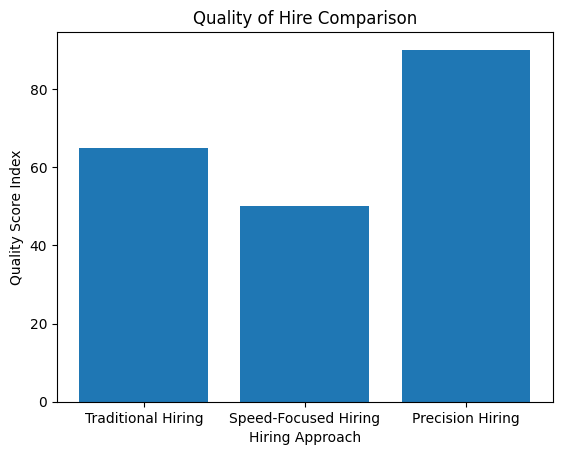
The rise of precision hiring is closely tied to broader changes in how work is structured and how talent is assessed. Digital transformation, remote and hybrid work models, and rapid technological change have made traditional hiring methods less effective. Job titles alone no longer reflect actual responsibilities, and resumes often fail to capture real-world capability. Precision hiring responds to these challenges by breaking roles down into measurable skills, competencies, and outcomes, allowing employers to evaluate candidates based on evidence rather than assumptions.
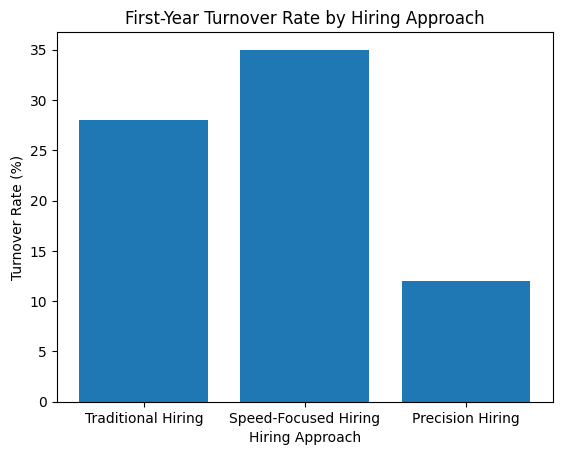
At its core, precision hiring aims to reduce mismatch between candidates and roles. Many organisations struggle with high turnover, underperformance, and prolonged vacancies not because talent is unavailable, but because hiring decisions are made using incomplete or inconsistent criteria. Precision hiring introduces clarity into the process by defining what success looks like in a role before recruitment begins. This includes identifying must-have skills, performance indicators, behavioural traits, and cultural alignment factors that are directly linked to business objectives.
Another defining feature of precision hiring is its focus on consistency and fairness. By using structured assessments, standardised interviews, and scorecards, organisations can minimise unconscious bias and ensure that all candidates are evaluated against the same benchmarks. This not only improves hiring accuracy but also strengthens employer credibility and candidate trust. In an era where transparency and equity in hiring are under increasing scrutiny, precision hiring offers a framework that supports both performance and compliance.
Understanding how precision hiring works is essential for business leaders, HR teams, recruiters, and founders who want to build resilient and high-performing teams. It is not limited to large enterprises or highly technical roles; when implemented correctly, it can be adapted for startups, small businesses, and growing organisations across industries. From defining role requirements to sourcing talent, assessing fit, and refining decisions through feedback loops, precision hiring transforms recruitment from a reactive activity into a strategic capability.
This guide explores what precision hiring truly means, why it has become a critical component of modern talent acquisition, and how organisations can apply it in practice. By examining the principles, processes, and outcomes associated with precision hiring, readers will gain a clear understanding of how this approach delivers better hiring decisions, reduces risk, and supports long-term organisational success in a rapidly evolving workforce landscape.Before we venture further into this article, we would like to share who we are and what we do.
About 9cv9
9cv9 is a business tech startup based in Singapore and Asia, with a strong presence all over the world.
With over nine years of startup and business experience, and being highly involved in connecting with thousands of companies and startups, the 9cv9 team has listed some important learning points in this overview of What is Precision Hiring and How Does It Work.
If your company needs recruitment and headhunting services to hire top-quality employees, you can use 9cv9 headhunting and recruitment services to hire top talents and candidates. Find out more here, or send over an email to hello@9cv9.com.
Or just post 1 free job posting here at 9cv9 Hiring Portal in under 10 minutes.
What is Precision Hiring and How Does It Work
- Defining Precision Hiring
- The Benefits of Precision Hiring
- Key Elements of Precision Hiring
- How Precision Hiring Works (Step-by-Step)
- Tools and Techniques Used in Precision Hiring
- Precision Hiring in Practice (Examples)
- Precision Hiring vs. Traditional and Speed-Focused Hiring
- Common Challenges and How to Overcome Them
1. Defining Precision Hiring
Precision hiring is a structured, outcome-focused approach to recruitment that prioritises accuracy, relevance, and alignment over speed and volume. It is designed to ensure that each hiring decision is directly connected to clearly defined business needs, role outcomes, and measurable performance indicators. Unlike conventional hiring models that often rely on generic job descriptions and subjective judgement, precision hiring applies deliberate criteria, data signals, and structured evaluation to reduce uncertainty and hiring risk.
Precision hiring treats recruitment as a strategic function rather than an administrative task. The goal is not simply to fill vacancies, but to place individuals who can consistently deliver results within a specific organisational context.
What Precision Hiring Means in Practical Terms
Precision hiring can be understood as hiring with intent and evidence. It begins long before a job is posted and continues well after an offer is accepted.
Key characteristics include:
- Roles are defined by outcomes, not just responsibilities
- Candidates are assessed against role-specific success metrics
- Decisions are supported by structured data rather than intuition alone
- Hiring criteria are consistent across all candidates
- Feedback loops are used to continuously improve hiring accuracy
In practice, this means a hiring team knows exactly what problem the role is meant to solve, how success will be measured after 6 to 12 months, and which skills or behaviours are non-negotiable.
Core Principles Behind Precision Hiring
Outcome-Driven Role Definition
Precision hiring starts by identifying what success looks like in a role. Instead of listing tasks, employers define deliverables, impact areas, and performance thresholds. For example, a sales role may be defined by pipeline growth and conversion rates rather than years of experience.
Skills and Competency Focus
Candidates are evaluated based on demonstrated skills, applied knowledge, and problem-solving ability. Credentials and titles are secondary to real capability.
Structured and Repeatable Evaluation
Interviews, assessments, and decision criteria are standardised. Every candidate is measured using the same benchmarks, reducing inconsistency and bias.
Data-Informed Decision Making
Hiring decisions incorporate objective signals such as assessment results, work simulations, and scorecards alongside human judgement.
Precision Hiring vs Traditional Hiring Approaches
Traditional hiring often prioritises speed, volume, or familiarity, which can lead to misalignment and costly turnover. Precision hiring replaces guesswork with clarity.
Hiring Approach Comparison Table
Hiring Dimension | Traditional Hiring | Precision Hiring
Role definition | Broad, generic job descriptions | Outcome-based success profiles
Candidate screening | Resume keywords and intuition | Skills, competencies, and evidence
Interview style | Unstructured, conversational | Structured, role-specific
Decision criteria | Subjective opinions | Scorecards and measurable benchmarks
Risk of mis-hire | High | Significantly reduced
Long-term performance | Inconsistent | Predictable and measurable
Why Precision Hiring Is Not Just “Slow Hiring”
A common misconception is that precision hiring slows down recruitment. In reality, it reduces wasted time by eliminating poor-fit candidates early.
Precision hiring improves efficiency by:
- Reducing repeated re-hires due to early attrition
- Shortening onboarding ramp-up time
- Minimising internal misalignment between hiring stakeholders
- Increasing first-year performance success rates
When roles are clearly defined and evaluation criteria are aligned upfront, decision-making becomes faster and more confident.
Real-World Examples of Precision Hiring
Example 1: Hiring a Software Engineer
Traditional approach:
- Requires 5+ years of experience
- Screens resumes for known company names
- Uses general technical interview questions
Precision hiring approach:
- Defines success as deploying scalable features within 90 days
- Assesses candidates using real coding simulations
- Evaluates system design thinking relevant to the company’s tech stack
Example 2: Hiring a Marketing Manager
Traditional approach:
- Focuses on industry background
- Relies heavily on portfolio aesthetics
Precision hiring approach:
- Defines success metrics such as lead quality and cost per acquisition
- Uses case-based assessments aligned with current growth goals
- Scores candidates on analytical thinking, execution ability, and strategic alignment
Key Components That Define Precision Hiring
Precision hiring typically includes the following components working together:
Precision Hiring Framework Matrix
Component | Purpose | Practical Application
Role success profile | Clarifies outcomes | Defines KPIs for 6–12 months
Skills taxonomy | Identifies capabilities | Maps required vs optional skills
Assessment design | Measures ability | Work samples, simulations
Structured interviews | Ensures consistency | Behavioural and situational questions
Decision scorecards | Reduces bias | Weighted evaluation criteria
Feedback loop | Improves accuracy | Post-hire performance review
How Precision Hiring Reduces Hiring Risk
Hiring risk often comes from ambiguity. Precision hiring removes ambiguity by aligning expectations across all stakeholders before recruitment begins.
Risk reduction areas include:
- Fewer false positives caused by impressive resumes
- Lower turnover due to clearer role expectations
- Reduced team friction from cultural misalignment
- Better long-term performance predictability
Precision hiring shifts recruitment from probability-based guessing to evidence-based selection.
Who Precision Hiring Is Most Relevant For
Precision hiring is especially valuable for:
- High-impact roles where mistakes are costly
- Technical or specialist positions
- Leadership and managerial hires
- Fast-growing companies scaling teams quickly
- Organisations operating in competitive talent markets
However, its principles can be adapted for almost any role where performance matters.
Precision Hiring as a Strategic Advantage
Defining precision hiring is not about adopting a single tool or trend. It represents a fundamental shift in how organisations view talent acquisition. By treating hiring as a strategic investment rather than a transactional activity, companies gain stronger teams, better retention, and measurable business outcomes.
Precision hiring creates alignment between people strategy and business strategy. When done correctly, it transforms recruitment into a repeatable system for building high-performing teams rather than a reactive process driven by urgency or assumptions.
2. The Benefits of Precision Hiring
Precision hiring delivers measurable advantages across the entire talent lifecycle, from recruitment efficiency to long-term organisational performance. By replacing intuition-led decisions with clarity, structure, and evidence, precision hiring helps organisations consistently secure high-impact talent while reducing cost, risk, and operational friction. The benefits extend beyond HR teams, influencing leadership effectiveness, team productivity, and overall business outcomes.
Improved Quality of Hire
One of the most significant benefits of precision hiring is a higher quality of hire. Quality of hire refers to how well an employee performs, integrates, and contributes to business goals over time.
How precision hiring improves quality of hire:
- Roles are defined by success outcomes, not vague responsibilities
- Candidates are assessed on real-world skills and decision-making ability
- Evaluation criteria are directly tied to performance expectations
Example
A product manager hired through precision hiring is evaluated on roadmap prioritisation, stakeholder communication, and delivery metrics rather than years of experience alone. This leads to faster impact and fewer performance gaps after onboarding.
Impact on business:
- Stronger first-year performance
- Reduced performance variability across hires
- Higher confidence in hiring decisions
Reduced Employee Turnover
Turnover is often a symptom of misalignment between role expectations, candidate capabilities, and organisational culture. Precision hiring addresses this at the root.
Why precision hiring reduces turnover:
- Candidates have a clearer understanding of role expectations
- Hiring managers align early on success criteria
- Cultural and behavioural fit is evaluated deliberately
Turnover Comparison Table
Hiring Model | First-Year Turnover Risk | Common Cause
Traditional hiring | High | Role mismatch, unclear expectations
Speed-focused hiring | Very high | Rushed decisions, limited evaluation
Precision hiring | Low | Clear alignment and structured assessment
Example
In customer success roles, precision hiring focuses on conflict resolution, communication style, and problem ownership. Employees hired this way are more likely to stay because expectations match daily realities.
Lower Cost Per Hire Over Time
While precision hiring may require more upfront planning, it significantly reduces long-term hiring costs.
Cost savings come from:
- Fewer re-hires and replacement cycles
- Lower onboarding and retraining costs
- Reduced productivity loss from mis-hires
Hiring Cost Impact Matrix
Cost Area | Traditional Hiring | Precision Hiring
Recruitment fees | Repeated | Lower over time
Onboarding costs | Often duplicated | Optimised
Lost productivity | High | Minimal
Manager time | Reactive | Strategic
Precision hiring shifts costs from recurring failure to one-time optimisation.
Faster Time to Productivity
Precision hiring does not just focus on hiring faster, but on helping new hires become productive sooner.
How precision hiring accelerates productivity:
- Clear success metrics guide onboarding priorities
- Skills alignment reduces learning curve
- Managers know exactly what outcomes to support
Example
A data analyst hired through precision hiring is onboarded with defined deliverables for the first 30, 60, and 90 days. This clarity shortens ramp-up time and improves early performance.
Time to Productivity Comparison
Metric | Traditional Hiring | Precision Hiring
Ramp-up duration | Long and variable | Short and predictable
Early performance clarity | Low | High
Manager intervention | Frequent | Targeted
Enhanced Hiring Consistency and Fairness
Precision hiring introduces structure and consistency across the recruitment process, which improves fairness and transparency.
Benefits of structured evaluation:
- All candidates are assessed against the same criteria
- Reduced influence of unconscious bias
- Easier justification of hiring decisions
This consistency strengthens employer credibility and supports diversity and inclusion goals without compromising performance standards.
Improved Stakeholder Alignment
Misalignment between recruiters, hiring managers, and leadership often leads to delays and poor decisions. Precision hiring creates a shared framework.
Alignment benefits include:
- Clear agreement on must-have vs nice-to-have criteria
- Fewer conflicting opinions during decision-making
- Faster consensus on final candidates
Stakeholder Alignment Matrix
Stakeholder | Traditional Hiring | Precision Hiring
Recruiter | Interprets loosely | Executes clearly defined criteria
Hiring manager | Subjective expectations | Outcome-driven expectations
Leadership | Limited visibility | Clear performance rationale
This alignment reduces friction and accelerates confident hiring.
Stronger Long-Term Business Performance
The cumulative effect of better hires, lower turnover, and faster productivity directly impacts business performance.
Long-term benefits include:
- Higher team output and reliability
- More stable leadership pipelines
- Stronger organisational culture
- Better execution of strategic initiatives
Precision hiring enables organisations to build teams that can scale sustainably rather than reactively.
Risk Reduction in Critical Roles
Hiring risk increases with role complexity and impact. Precision hiring is particularly effective in reducing risk for high-stakes positions.
High-risk roles that benefit most:
- Leadership and executive positions
- Technical and specialist roles
- Revenue-driving functions
- Compliance-sensitive positions
Risk Reduction Chart (Conceptual)
Risk Factor | Without Precision Hiring | With Precision Hiring
Performance failure | High | Low
Cultural misfit | Common | Rare
Early exit | Frequent | Infrequent
Business disruption | Likely | Minimal
Precision hiring transforms uncertainty into managed risk.
Better Candidate Experience
Candidates benefit from precision hiring through clarity, relevance, and fairness.
Positive candidate outcomes:
- Clear expectations from the start
- Relevant assessments instead of generic interviews
- Transparent decision-making process
Even rejected candidates often report a more professional and respectful experience, strengthening employer brand.
Strategic Talent Advantage in Competitive Markets
In competitive talent markets, precision hiring becomes a differentiator.
Strategic advantages include:
- Attracting candidates who value clarity and growth
- Standing out as a professional and credible employer
- Building reputation for high-quality teams
Organisations that adopt precision hiring are better positioned to compete for scarce skills without overpaying or overhiring.
Precision Hiring as a Compounding Advantage
The benefits of precision hiring compound over time. Each successful hire improves team dynamics, raises performance standards, and refines the hiring system itself. As feedback loops strengthen, organisations develop a repeatable capability for identifying and securing talent that truly fits their needs.
Precision hiring is not just a recruitment improvement. It is a long-term competitive advantage that aligns people, performance, and strategy in a way traditional hiring methods cannot achieve.
3. Key Elements of Precision Hiring
Precision hiring is built on a set of interconnected elements that work together to reduce ambiguity, improve decision accuracy, and align talent with business outcomes. Each element plays a distinct role in transforming hiring from a reactive process into a predictable, repeatable system. When these elements are implemented collectively, organisations gain clarity, consistency, and long-term hiring performance.
Outcome-Based Role Definition
Precision hiring begins with defining the role based on outcomes rather than tasks or credentials. This element sets the foundation for every decision that follows.
Key components of outcome-based role definition:
- Clear business problem the role is meant to solve
- Measurable success indicators for the first 6 to 12 months
- Non-negotiable responsibilities linked to performance outcomes
- Contextual factors such as team structure and operating environment
Example
Instead of defining a growth marketer role as “managing campaigns and analytics,” precision hiring defines success as “reducing customer acquisition cost by 20 percent within nine months while maintaining lead quality.”
Role Definition Comparison Matrix
Aspect | Traditional Definition | Precision Hiring Definition
Focus | Responsibilities | Outcomes and impact
Clarity | Broad and generic | Specific and measurable
Alignment | Role-centric | Business-centric
Evaluation readiness | Low | High
This clarity ensures that both candidates and hiring teams share the same understanding of success.
Success Profiles and Competency Mapping
A success profile translates role outcomes into the skills, competencies, and behaviours required to achieve them. This element bridges the gap between job requirements and candidate evaluation.
Core elements of a success profile:
- Technical and functional skills
- Cognitive and problem-solving abilities
- Behavioural traits linked to performance
- Cultural and team alignment indicators
Competency Mapping Table
Competency Type | Description | Example Indicator
Technical skills | Job-specific abilities | Data modelling accuracy
Cognitive skills | Thinking and reasoning | Structured problem solving
Behavioural traits | How work is approached | Ownership and accountability
Cultural alignment | Fit with values | Collaboration under pressure
Example
For a team lead role, competency mapping may prioritise decision-making under ambiguity and conflict management over tenure or industry background.
Structured Assessment Design
Precision hiring relies on assessments that directly test role-relevant capability rather than proxy indicators like resumes or academic credentials.
Types of structured assessments:
- Work simulations mirroring real job scenarios
- Case studies aligned with current business challenges
- Skills-based tests tied to success metrics
- Behavioural assessments linked to role demands
Assessment Effectiveness Matrix
Assessment Type | Relevance | Predictive Value
Resume screening | Low | Weak
Unstructured interviews | Medium | Inconsistent
Work simulations | High | Strong
Role-specific case studies | High | Strong
Example
For a financial analyst role, candidates may be asked to interpret real financial data and present recommendations rather than answer hypothetical questions.
Structured and Consistent Interviews
Interviews in precision hiring are structured to ensure consistency, fairness, and relevance.
Key features of structured interviews:
- Predefined questions tied to competencies
- Consistent scoring criteria across interviewers
- Behavioural and situational focus
- Reduced reliance on “gut feeling”
Interview Structure Comparison
Interview Element | Traditional Hiring | Precision Hiring
Question format | Free-form | Predefined and role-based
Evaluation method | Subjective impressions | Scored responses
Interviewer bias | High risk | Minimized
Decision clarity | Low | High
Example
Candidates for a customer success role may be asked to walk through a real customer escalation scenario and explain their decision-making process step by step.
Evaluation Scorecards and Decision Frameworks
Scorecards convert qualitative impressions into structured, comparable data. This element is critical for objective decision-making.
Scorecard components typically include:
- Weighted competencies aligned with role priorities
- Clear scoring definitions for each criterion
- Aggregated results across interview stages
Sample Scorecard Weighting Matrix
Criterion | Weight Percentage
Core technical skills | 30
Problem-solving ability | 25
Behavioural fit | 20
Communication skills | 15
Growth potential | 10
This approach ensures that hiring decisions are based on evidence rather than dominance of opinion or seniority in the room.
Bias Reduction and Fairness Mechanisms
Precision hiring embeds bias mitigation into the process rather than addressing it retrospectively.
Bias reduction techniques include:
- Standardised questions and scoring
- Blind screening where applicable
- Multiple evaluators across stages
- Clear documentation of decisions
Impact of Bias Reduction Chart (Conceptual)
Hiring Outcome | Without Structure | With Precision Hiring
Evaluation consistency | Low | High
Bias exposure | Frequent | Reduced
Candidate trust | Variable | Strong
Decision defensibility | Weak | Strong
These mechanisms improve both performance outcomes and employer credibility.
Data-Informed Decision Support
Precision hiring integrates data signals to support human judgement rather than replace it.
Common data inputs include:
- Assessment scores
- Interview scorecards
- Performance benchmarks from past hires
- Post-hire success metrics
Decision Support Matrix
Decision Input | Role in Hiring
Human judgement | Context and nuance
Assessment data | Capability validation
Performance benchmarks | Outcome prediction
Feedback loops | Process improvement
Example
If previous high performers scored highly on analytical reasoning and adaptability, those signals gain greater weighting in future decisions.
Stakeholder Alignment and Accountability
Precision hiring requires alignment across recruiters, hiring managers, and leadership.
Alignment mechanisms include:
- Shared success profiles
- Pre-hiring calibration sessions
- Agreed decision criteria
- Clear ownership of outcomes
Stakeholder Alignment Table
Stakeholder | Role in Precision Hiring
Recruiter | Executes structured sourcing and screening
Hiring manager | Defines outcomes and evaluates fit
Leadership | Validates strategic alignment
HR | Ensures consistency and governance
This alignment prevents shifting expectations and last-minute decision changes.
Feedback Loops and Continuous Improvement
Precision hiring is iterative. Each hire provides data that improves future decisions.
Feedback loop elements:
- Post-hire performance reviews linked to hiring criteria
- Analysis of false positives and false negatives
- Refinement of assessments and scorecards
Hiring Accuracy Improvement Cycle
Stage | Outcome
Initial hire | Baseline performance
Post-hire review | Performance data captured
Criteria refinement | Improved success profile
Next hire | Higher prediction accuracy
Over time, this creates a compounding advantage where hiring accuracy improves with every cycle.
Precision Hiring as an Integrated System
The key elements of precision hiring are not independent steps. They form an integrated system where clarity feeds assessment, assessment informs decisions, and decisions generate data for continuous refinement. When executed together, these elements enable organisations to hire with confidence, consistency, and measurable impact, turning talent acquisition into a strategic engine for sustainable growth.
4. How Precision Hiring Works (Step-by-Step)
Precision hiring follows a deliberate and structured sequence designed to remove ambiguity, reduce hiring risk, and improve long-term performance outcomes. Each step builds on the previous one, ensuring that decisions are grounded in evidence, alignment, and clearly defined success criteria. When executed correctly, this step-by-step process transforms hiring into a repeatable and scalable system.
Role Diagnosis and Business Context Alignment
The precision hiring process begins by understanding why the role exists and how it supports business objectives. This step ensures that hiring is driven by need rather than urgency.
Key actions at this stage:
- Identify the specific business problem the role is meant to solve
- Clarify how the role contributes to short-term and long-term goals
- Understand team structure, dependencies, and constraints
- Align expectations between leadership, hiring managers, and recruiters
Example
Instead of hiring a general operations manager due to workload pressure, precision hiring clarifies that the real need is process optimisation to reduce fulfilment errors by 30 percent.
Business Alignment Matrix
Business Question | Precision Hiring Focus
Why hire now | Defined performance gap
What success looks like | Measurable outcomes
Who the role impacts | Teams and stakeholders
What failure costs | Quantified risk
This alignment prevents mis-hires caused by unclear or shifting priorities.
Creation of a Role Success Profile
Once the business context is clear, a success profile is created to define what high performance looks like in the role.
Elements of a role success profile:
- Key outcomes expected within 6 to 12 months
- Core responsibilities linked to outcomes
- Required skills and competencies
- Behavioural and cultural alignment indicators
Success Profile Table
Profile Component | Description
Primary outcomes | Tangible business results
Core competencies | Skills needed to deliver outcomes
Behavioural traits | How work is approached
Cultural alignment | Team and value fit
Example
For a customer support lead, success may be defined as improving first-response time and customer satisfaction scores rather than simply managing headcount.
Calibration and Criteria Prioritisation
Before sourcing begins, hiring stakeholders align on what matters most. This step prevents confusion and inconsistent evaluation later.
Calibration focuses on:
- Differentiating must-have criteria from nice-to-have traits
- Assigning relative importance to skills and competencies
- Aligning interviewers on evaluation standards
Criteria Prioritisation Matrix
Criteria Type | Priority Level
Core technical skills | Critical
Problem-solving ability | High
Industry experience | Medium
Tool familiarity | Low
This ensures candidates are assessed on what truly drives success rather than superficial indicators.
Targeted Talent Sourcing
Precision hiring shifts sourcing from broad outreach to targeted discovery.
Targeted sourcing methods include:
- Skill-specific talent mapping
- Focused job descriptions aligned with success profiles
- Outreach to candidates with relevant experience patterns
- Reduced reliance on mass job board applications
Sourcing Effectiveness Comparison
Sourcing Approach | Candidate Relevance
Mass posting | Low to medium
Keyword resume search | Medium
Precision sourcing | High
Example
For a data engineering role, sourcing focuses on candidates who have built scalable pipelines in similar data environments rather than those with generic data titles.
Evidence-Based Screening and Shortlisting
Screening in precision hiring filters candidates based on demonstrated capability, not assumptions.
Screening techniques include:
- Structured resume evaluation aligned with competencies
- Skill-based screening questions
- Initial assessments or work samples
- Consistent scoring across all candidates
Screening Accuracy Table
Screening Method | Predictive Accuracy
Resume-only screening | Low
Structured screening questions | Medium
Skills-based assessments | High
This step ensures only credible candidates progress, saving time and effort downstream.
Role-Specific Assessments and Simulations
Assessments are designed to replicate real job challenges as closely as possible.
Assessment types:
- Work simulations reflecting day-to-day tasks
- Case studies based on real business scenarios
- Technical exercises aligned with actual tools and processes
- Written or presentation-based problem solving
Assessment Relevance Matrix
Assessment Type | Role Relevance
Generic tests | Low
Custom simulations | High
Real-world case studies | High
Example
A marketing strategist may be asked to design a go-to-market plan using the company’s actual product positioning rather than a hypothetical brief.
Structured Interview Execution
Interviews in precision hiring are structured, consistent, and competency-driven.
Interview design includes:
- Predefined questions tied to success criteria
- Behavioural and situational prompts
- Standard scoring rubrics
- Multiple interviewers to balance perspectives
Interview Evaluation Table
Interview Aspect | Traditional Hiring | Precision Hiring
Question consistency | Low | High
Scoring clarity | Subjective | Defined
Bias exposure | High | Reduced
This approach improves fairness and comparability across candidates.
Aggregated Scoring and Decision-Making
All evaluation data is consolidated to support informed decisions.
Decision inputs include:
- Assessment results
- Interview scorecards
- Alignment with success profile
- Risk indicators and trade-offs
Decision Weighting Example
Decision Factor | Weight Percentage
Skills and capability | 40
Problem-solving ability | 25
Behavioural alignment | 20
Growth potential | 15
This structured aggregation reduces the influence of opinion dominance or recency bias.
Final Validation and Offer Alignment
Before extending an offer, precision hiring validates assumptions and aligns expectations.
Final validation steps:
- Reference checks aligned with success criteria
- Confirmation of role expectations with the candidate
- Compensation alignment with performance impact
Example
Rather than generic reference questions, referees are asked about specific competencies tied to the role success profile.
Onboarding Linked to Hiring Criteria
Precision hiring does not end at offer acceptance. Onboarding is designed to reinforce the same success metrics used in hiring.
Onboarding alignment includes:
- Clear 30-60-90 day performance milestones
- Manager support tied to defined outcomes
- Early feedback loops to validate role fit
Onboarding Alignment Table
Onboarding Element | Precision Hiring Link
First 90-day goals | Role success profile
Training focus | Identified skill gaps
Performance reviews | Hiring criteria
This continuity accelerates time to productivity.
Post-Hire Review and Feedback Loop
The final step closes the loop and strengthens future hiring accuracy.
Post-hire evaluation focuses on:
- Comparing predicted success with actual performance
- Identifying false positives and false negatives
- Refining success profiles and assessments
Hiring Accuracy Improvement Cycle
Cycle Stage | Outcome
Initial hire | Baseline data
Performance review | Validation insights
Process refinement | Improved criteria
Next hire | Higher accuracy
This feedback-driven approach ensures that precision hiring improves with every iteration.
Precision Hiring as a Repeatable System
When followed step by step, precision hiring becomes a repeatable operating model rather than a one-time initiative. Each hire strengthens organisational knowledge, improves prediction accuracy, and reduces risk. Over time, this system enables organisations to scale confidently, knowing that hiring decisions are grounded in clarity, evidence, and strategic alignment rather than chance.
5. Tools and Techniques Used in Precision Hiring
Precision hiring relies on a carefully selected set of tools and techniques that work together to improve accuracy, consistency, and predictability in hiring decisions. These tools are not chosen for automation alone, but for their ability to generate meaningful evidence about a candidate’s ability to perform in a specific role. When applied correctly, they replace assumptions with insight and transform hiring into a measurable system.
Role Success Profiling Tools
Role success profiling tools help translate business needs into clear, actionable hiring criteria. These tools are typically used before sourcing begins and form the backbone of precision hiring.
Common techniques include:
- Role diagnostic workshops with stakeholders
- Outcome mapping frameworks
- Job-to-performance decomposition models
Purpose and value:
- Converts vague job descriptions into measurable outcomes
- Aligns hiring teams on expectations before recruitment starts
- Reduces scope creep and shifting criteria mid-process
Role Profiling Output Table
Output Type | Description | Hiring Impact
Success outcomes | Measurable results | Clear performance targets
Core competencies | Required capabilities | Focused evaluation
Behavioural indicators | Work approach signals | Cultural alignment
Risk factors | Potential failure points | Proactive screening
Example
For a revenue operations role, success profiling may identify forecasting accuracy and cross-team coordination as more critical than years of SaaS experience.
Skills-Based Assessment Tools
Skills-based assessments are among the most powerful tools in precision hiring because they evaluate what candidates can actually do.
Common assessment types:
- Practical skills tests
- Work simulations
- Role-specific case exercises
- Take-home assignments with defined scoring criteria
Assessment Accuracy Comparison
Assessment Method | Relevance | Predictive Strength
Resume screening | Low | Weak
Generic aptitude tests | Medium | Moderate
Role-specific simulations | High | Strong
Example
A UX designer may be asked to critique an existing product flow and propose improvements, revealing problem-solving ability, design thinking, and communication skills in one exercise.
Structured Interview Frameworks
Structured interviews are a core technique in precision hiring, designed to ensure consistency and fairness across candidates.
Key features:
- Predefined interview questions aligned to competencies
- Behavioural and situational questioning formats
- Standardised scoring rubrics
- Interviewer calibration sessions
Interview Structure Matrix
Interview Dimension | Unstructured | Structured Precision Hiring
Question consistency | Low | High
Evaluation method | Subjective | Scored and defined
Bias exposure | High | Reduced
Decision clarity | Limited | Strong
Example
Instead of asking “How do you handle pressure,” candidates are asked to describe a specific high-pressure scenario, actions taken, and measurable outcomes.
Candidate Scorecards and Evaluation Matrices
Scorecards convert qualitative impressions into comparable data. They are essential for evidence-based decision-making.
Scorecard components typically include:
- Weighted competencies based on role importance
- Clear scoring definitions for each level
- Aggregated scores across stages
Sample Scorecard Weighting Table
Evaluation Area | Weight Percentage
Technical capability | 35
Problem-solving | 25
Behavioural alignment | 20
Communication | 10
Growth potential | 10
This technique prevents one strong impression from overshadowing overall performance.
Work Simulation and Case Study Techniques
Work simulations replicate real tasks candidates will perform in the role, making them one of the highest-value tools in precision hiring.
Common simulation formats:
- Live problem-solving sessions
- Time-bound task completion
- Role-play scenarios
- Data analysis or strategy exercises
Simulation Value Matrix
Simulation Attribute | Impact
Job realism | High
Candidate engagement | High
Performance insight | Deep
False positives | Low
Example
A supply chain manager candidate may be asked to redesign a flawed logistics workflow using actual operational constraints, revealing prioritisation and analytical skill.
AI-Assisted Screening and Matching Tools
AI-assisted tools are increasingly used to support precision hiring by identifying patterns and reducing manual workload.
Typical applications:
- Skill extraction and matching
- Pattern recognition from high-performing hires
- Candidate ranking based on defined criteria
Decision Support Role Table
AI Function | Role in Precision Hiring
Resume parsing | Efficiency, not decision
Skill matching | Relevance filtering
Pattern analysis | Outcome prediction
Final decision | Human-led
Precision hiring uses AI as a support mechanism, not a replacement for human judgement.
Structured Reference Checking Techniques
Traditional reference checks are often informal and inconsistent. Precision hiring applies structure here as well.
Effective reference checking techniques:
- Role-specific reference questions
- Behaviour-based validation
- Performance outcome confirmation
Reference Question Alignment Table
Reference Focus | Traditional | Precision Hiring
Question type | General | Role-specific
Insight depth | Low | High
Decision value | Limited | Strong
Example
Instead of asking if a candidate was “good to work with,” referees are asked to describe how the candidate handled specific responsibilities tied to the success profile.
Bias Mitigation and Fairness Tools
Precision hiring integrates bias mitigation directly into tools and techniques rather than addressing it after decisions are made.
Bias reduction mechanisms include:
- Blind screening in early stages
- Consistent scoring frameworks
- Multiple evaluator inputs
- Decision documentation requirements
Bias Impact Comparison Chart (Conceptual)
Hiring Aspect | Without Precision Tools | With Precision Tools
Consistency | Low | High
Bias influence | Frequent | Reduced
Decision defensibility | Weak | Strong
These tools protect both candidates and organisations.
Hiring Analytics and Performance Tracking Tools
Precision hiring extends beyond selection into measurement and optimisation.
Key analytics tracked:
- Quality of hire metrics
- Time to productivity
- First-year performance alignment
- Retention and attrition patterns
Hiring Performance Metrics Table
Metric | Purpose
Quality of hire | Effectiveness measurement
Time to productivity | Onboarding success
Retention rate | Fit validation
Performance variance | Criteria accuracy
These insights feed directly back into refining future hiring decisions.
Integration of Tools into a Unified Hiring System
The true power of precision hiring lies not in individual tools, but in how they are combined into a coherent system.
Integrated system characteristics:
- Role profiles inform assessments
- Assessments inform interviews
- Interviews inform scorecards
- Scorecards inform onboarding
System Integration Matrix
Hiring Stage | Primary Tool | Outcome
Role definition | Success profiling | Clarity
Evaluation | Assessments and interviews | Evidence
Decision | Scorecards and analytics | Accuracy
Post-hire | Performance tracking | Continuous improvement
Precision Hiring as a Tool-Driven Advantage
Tools and techniques used in precision hiring are designed to make talent decisions defensible, repeatable, and aligned with business outcomes. When applied systematically, they transform hiring from a subjective art into a structured discipline. Organisations that invest in these tools gain not only better hires, but a long-term capability to scale teams with confidence, consistency, and measurable success.
6. Precision Hiring in Practice (Examples)
Precision hiring becomes most powerful when applied to real-world hiring scenarios. By examining how it works across different roles, industries, and organisational stages, the practical value of precision hiring becomes clear. These examples illustrate how structured criteria, role-specific assessments, and evidence-based decisions consistently outperform traditional hiring approaches.
Hiring a Software Engineer in a Product-Driven Company
Software engineering roles are often mis-hired due to overreliance on resumes, brand-name employers, or years of experience. Precision hiring reframes the process around delivery outcomes and technical decision-making.
Precision hiring approach:
- Define success as shipping stable features within defined sprint cycles
- Identify core competencies such as system design, debugging, and collaboration
- Use real-world coding simulations aligned with the company’s stack
- Score candidates on problem-solving approach, not just correct answers
Example evaluation focus:
- Ability to reason through architectural trade-offs
- Code quality and maintainability
- Communication during technical discussions
Engineering Hiring Comparison Table
Hiring Element | Traditional Approach | Precision Hiring Approach
Role definition | Years of experience | Delivery outcomes
Assessment | Generic coding tests | Real system simulations
Interview | Theoretical questions | Applied problem solving
Decision | Intuition-led | Evidence-based
Outcome:
Teams report faster onboarding, fewer performance issues, and higher code quality consistency across hires.
Hiring a Sales Manager for a Growth-Stage Company
Sales leadership roles often fail due to misalignment between leadership style and revenue strategy. Precision hiring prevents this by anchoring evaluation to measurable commercial outcomes.
Precision hiring process:
- Define success as pipeline growth, deal velocity, and team performance
- Map competencies such as coaching ability, forecast accuracy, and negotiation strategy
- Use scenario-based assessments based on actual sales challenges
- Validate leadership behaviours through structured reference checks
Sales Leadership Success Profile Table
Success Area | Measurement Indicator
Pipeline health | Deal volume and conversion
Team performance | Rep attainment rates
Forecast accuracy | Variance percentage
Leadership style | Coaching effectiveness
Example:
Candidates are asked to redesign a failing sales pipeline using current data, revealing strategic thinking and execution ability.
Outcome:
Improved forecast reliability and lower attrition among sales representatives.
Hiring a Marketing Manager for Performance-Led Growth
Marketing roles are frequently mis-hired due to overemphasis on creativity or brand experience. Precision hiring focuses on performance metrics and execution capability.
Precision hiring execution:
- Define outcomes such as cost per acquisition, lead quality, and ROI
- Prioritise analytical thinking and experimentation ability
- Use case studies based on real campaigns and budgets
- Score candidates on strategic rationale and optimisation approach
Marketing Hiring Evaluation Matrix
Competency | Weight
Performance analytics | High
Channel optimisation | High
Creative execution | Medium
Industry familiarity | Low
Example:
Candidates are asked to diagnose an underperforming campaign and propose optimisation steps using actual performance data.
Outcome:
Faster performance impact and clearer accountability for results.
Hiring a Customer Success Manager in a SaaS Business
Customer success roles require a blend of communication, problem-solving, and ownership. Precision hiring ensures candidates are evaluated against real customer scenarios.
Precision hiring steps:
- Define success as retention rate improvement and expansion revenue
- Identify behavioural traits such as empathy, resilience, and prioritisation
- Use role-play scenarios involving escalations and renewals
- Apply structured scoring for communication and decision quality
Customer Success Role Simulation Table
Scenario | Evaluated Capability
Account escalation | Conflict resolution
Renewal negotiation | Commercial awareness
Product adoption | Problem diagnosis
Cross-team coordination | Ownership mindset
Outcome:
Higher customer satisfaction scores and reduced churn in the first year.
Hiring an Operations Manager in a Scaling Organisation
Operations roles are often misdefined, leading to underperformance. Precision hiring reframes operations hiring around process improvement and measurable efficiency.
Precision hiring approach:
- Define success as cycle time reduction and error rate improvement
- Use process-mapping exercises during assessment
- Evaluate candidates on prioritisation and system thinking
Operations Hiring Outcome Matrix
Metric | Pre-Precision Hiring | Post-Precision Hiring
Process efficiency | Inconsistent | Predictable
Error rates | High | Reduced
Team alignment | Low | Strong
Execution speed | Variable | Stable
Example:
Candidates are asked to redesign a broken operational workflow using current constraints.
Outcome:
Operational stability and improved cross-team collaboration.
Hiring a Senior Leader or Executive
Executive mis-hires are among the most costly. Precision hiring dramatically reduces risk at this level.
Precision hiring for leadership:
- Define success in terms of strategic outcomes and cultural impact
- Map leadership behaviours to organisational maturity stage
- Use deep-dive case discussions instead of superficial interviews
- Apply structured reference validation tied to past outcomes
Executive Hiring Risk Reduction Table
Risk Area | Traditional Hiring | Precision Hiring
Strategic misalignment | High | Low
Cultural disruption | Common | Rare
Early exit | Frequent | Infrequent
Business impact | Uncertain | Measurable
Example:
Candidates are asked to walk through a past transformation they led, including failures, decisions, and measurable outcomes.
Outcome:
Greater leadership stability and stronger long-term performance.
Hiring in Startups vs Enterprises
Precision hiring adapts to organisational context.
Startup precision hiring focus:
- Breadth of skills
- Speed to impact
- Ambiguity tolerance
Enterprise precision hiring focus:
- Depth of expertise
- Stakeholder navigation
- Process optimisation
Context Adaptation Table
Organisation Type | Precision Hiring Emphasis
Startup | Versatility and ownership
Scale-up | Execution and optimisation
Enterprise | Governance and influence
This flexibility makes precision hiring universally applicable.
Cross-Role Precision Hiring Impact Overview
Aggregate Impact Comparison Chart (Conceptual)
Hiring Outcome | Traditional Hiring | Precision Hiring
Quality of hire | Variable | Consistently high
Time to productivity | Long | Shortened
Turnover | Frequent | Reduced
Hiring confidence | Low | High
Precision Hiring as a Practical Advantage
These examples demonstrate that precision hiring is not theoretical. It is a practical, adaptable approach that improves outcomes across roles, industries, and company stages. By anchoring decisions to real-world performance evidence and clearly defined success criteria, organisations consistently hire people who deliver impact rather than simply fit a profile. Over time, this practical application creates stronger teams, better leadership pipelines, and a sustainable competitive advantage in talent acquisition.
7. Precision Hiring vs. Traditional and Speed-Focused Hiring
Hiring approaches shape workforce quality, organisational stability, and long-term performance. Precision hiring differs fundamentally from both traditional hiring and speed-focused hiring in intent, structure, and outcomes. Understanding these differences helps organisations choose a model aligned with sustainable growth rather than short-term convenience.
Foundational Differences in Hiring Philosophy
Each hiring model starts with a different core assumption.
Traditional hiring assumes that past experience, credentials, and intuition are reliable predictors of future performance.
Speed-focused hiring assumes that filling roles quickly is the primary objective, often prioritising availability over alignment.
Precision hiring assumes that performance can be predicted more accurately through defined outcomes, structured evaluation, and evidence.
Philosophy Comparison Table
Hiring Model | Core Assumption | Primary Goal
Traditional hiring | Experience equals capability | Fill roles reliably
Speed-focused hiring | Fast placement reduces disruption | Fill roles quickly
Precision hiring | Evidence predicts performance | Hire the right fit
These assumptions directly influence how roles are defined, candidates are assessed, and decisions are made.
Role Definition and Clarity Comparison
Role definition is one of the clearest points of divergence.
Traditional hiring:
- Uses broad job descriptions
- Focuses on responsibilities and tenure
- Leaves success criteria implicit
Speed-focused hiring:
- Uses minimal role detail
- Emphasises immediate availability
- Often reuses outdated job descriptions
Precision hiring:
- Defines roles by outcomes and impact
- Clarifies success metrics upfront
- Aligns role purpose with business goals
Role Definition Matrix
Aspect | Traditional Hiring | Speed-Focused Hiring | Precision Hiring
Clarity of expectations | Medium | Low | High
Outcome definition | Rare | Absent | Core requirement
Alignment with strategy | Inconsistent | Minimal | Strong
Example
A traditional hire for a finance role may list reporting duties, while a precision hire defines success as improving forecast accuracy within six months.
Candidate Evaluation and Assessment Methods
Evaluation methods determine how accurately organisations predict performance.
Traditional hiring relies on:
- Resume screening
- Unstructured interviews
- Personal impressions
Speed-focused hiring relies on:
- Minimal screening
- Availability-based decisions
- Informal conversations
Precision hiring relies on:
- Role-specific assessments
- Structured interviews
- Scoring frameworks and evidence
Evaluation Method Effectiveness Table
Evaluation Method | Predictive Accuracy
Resume review | Low
Unstructured interview | Medium but inconsistent
Fast screening | Very low
Skills-based assessment | High
Work simulation | Very high
Example
In speed-focused hiring, a candidate may be hired after a single conversation. In precision hiring, the same candidate completes a realistic task reflecting actual job demands.
Decision-Making Quality and Risk Exposure
Hiring decisions vary significantly in risk profile depending on the approach used.
Traditional hiring risks:
- Bias-driven decisions
- Overvaluing familiarity or credentials
- Inconsistent evaluation across candidates
Speed-focused hiring risks:
- High mis-hire probability
- Cultural misalignment
- Early turnover
Precision hiring risk profile:
- Structured trade-off evaluation
- Reduced bias through consistency
- Measured and defensible decisions
Hiring Risk Comparison Chart (Conceptual)
Risk Factor | Traditional | Speed-Focused | Precision Hiring
Mis-hire probability | Medium | High | Low
Early attrition | Common | Frequent | Rare
Performance variance | High | Very high | Controlled
Precision hiring transforms hiring risk from an unknown variable into a managed process.
Impact on Time to Productivity
Speed-focused hiring often appears faster, but frequently delays productivity due to misalignment.
Time to productivity outcomes:
- Traditional hiring: variable ramp-up due to unclear expectations
- Speed-focused hiring: fast start but frequent course correction
- Precision hiring: structured onboarding and faster effective output
Time to Productivity Table
Hiring Model | Initial Start Speed | Effective Productivity
Traditional hiring | Medium | Delayed
Speed-focused hiring | Fast | Unstable
Precision hiring | Planned | Accelerated and stable
Example
A speed hire may start immediately but struggle for months. A precision hire may take slightly longer to recruit but contributes meaningfully within weeks.
Cost Implications Over the Hiring Lifecycle
Hiring costs extend beyond recruitment fees.
Traditional and speed-focused hiring often increase:
- Replacement costs
- Training expenses
- Lost productivity
Precision hiring reduces:
- Re-hiring frequency
- Onboarding inefficiencies
- Managerial time spent correcting issues
Lifecycle Cost Matrix
Cost Area | Traditional | Speed-Focused | Precision Hiring
Recruitment repetition | Medium | High | Low
Onboarding inefficiency | Medium | High | Low
Productivity loss | Medium | High | Minimal
Precision hiring shifts cost from reactive correction to proactive accuracy.
Cultural and Team Impact
Team dynamics are directly affected by hiring quality.
Traditional hiring may introduce:
- Mixed performance standards
- Uneven cultural alignment
Speed-focused hiring may cause:
- Team disruption
- Increased conflict
- Lower morale
Precision hiring supports:
- Clear performance expectations
- Cultural consistency
- Stronger team trust
Cultural Impact Table
Team Outcome | Traditional | Speed-Focused | Precision Hiring
Alignment | Inconsistent | Weak | Strong
Morale | Variable | Often low | Stable
Collaboration | Mixed | Disrupted | Cohesive
Example
Teams built through precision hiring report fewer interpersonal conflicts because expectations and behaviours are aligned from the start.
Scalability and Long-Term Viability
Traditional and speed-focused hiring struggle at scale.
Traditional hiring becomes inconsistent as volume increases.
Speed-focused hiring amplifies errors as urgency grows.
Precision hiring scales through repeatable systems.
Scalability Comparison Matrix
Hiring Model | Scalability | Predictability
Traditional hiring | Limited | Low
Speed-focused hiring | Poor | Very low
Precision hiring | High | High
Precision hiring enables growth without sacrificing quality.
When Speed Is Necessary and How Precision Adapts
Precision hiring does not reject speed; it reframes it.
Precision hiring achieves speed by:
- Predefined success profiles
- Ready-to-use assessment frameworks
- Clear decision criteria
This allows organisations to hire quickly without compromising accuracy.
Speed vs Precision Balance Chart (Conceptual)
Hiring Speed | Outcome Without Precision | Outcome With Precision
Fast | High risk | Controlled risk
Moderate | Mixed results | Strong results
Precision hiring proves that speed and quality are not mutually exclusive.
Strategic Comparison Summary
Overall Hiring Model Comparison Table
Dimension | Traditional | Speed-Focused | Precision Hiring
Decision quality | Medium | Low | High
Hiring confidence | Moderate | Low | High
Retention outcomes | Variable | Poor | Strong
Business alignment | Inconsistent | Weak | Strong
Long-term value | Limited | Negative | High
Precision Hiring as the Superior Long-Term Model
Precision hiring outperforms traditional and speed-focused hiring by aligning people decisions with measurable outcomes and business strategy. While traditional hiring relies on assumptions and speed-focused hiring prioritises urgency, precision hiring delivers consistency, predictability, and sustained performance.
For organisations seeking scalable growth, reduced risk, and high-performing teams, precision hiring offers a structured alternative that balances speed with accuracy and transforms hiring from a reactive necessity into a strategic advantage.
8. Common Challenges and How to Overcome Them
While precision hiring delivers clear advantages, its implementation is not without obstacles. Many organisations struggle not because the concept is flawed, but because existing habits, constraints, and misconceptions interfere with execution. Understanding these common challenges and addressing them systematically is essential for making precision hiring sustainable and effective.
Resistance to Change from Hiring Stakeholders
One of the most frequent challenges is resistance from hiring managers and leaders who are accustomed to traditional or intuition-led hiring.
Why this resistance occurs:
- Long-standing reliance on personal judgement and experience
- Perception that structured hiring limits flexibility
- Fear that assessments slow down recruitment
- Comfort with familiar hiring patterns
Impact on hiring outcomes:
- Inconsistent evaluation criteria
- Pushback against assessments or scorecards
- Reversion to gut-based decisions late in the process
Resistance Mitigation Matrix
Resistance Source | Root Cause | Practical Solution
Hiring managers | Loss of control | Involve them in success profiling
Executives | Time concerns | Show cost-of-mis-hire data
Recruiters | Process overload | Simplify and standardise tools
Interviewers | Skill gaps | Provide interview training
Example
A hiring manager insists on bypassing assessments for a senior hire. This is addressed by showing how past mis-hires impacted team performance and by piloting precision hiring on one role to demonstrate results.
Overcoming resistance requires education, involvement, and proof rather than enforcement.
Poorly Defined Roles and Shifting Expectations
Precision hiring depends on role clarity. When roles are poorly defined or change mid-process, the system breaks down.
Common causes:
- Hiring driven by urgency rather than planning
- Multiple stakeholders with conflicting expectations
- Lack of agreement on what success looks like
Consequences:
- Candidates evaluated against moving criteria
- Decision paralysis or post-hire disappointment
- Increased mis-hire risk
Role Clarity Risk Table
Role Clarity Level | Hiring Risk | Likely Outcome
Low | High | Mis-hire
Medium | Moderate | Inconsistent performance
High | Low | Predictable success
How to overcome this challenge:
- Conduct structured role diagnosis before sourcing
- Document success profiles and gain stakeholder sign-off
- Freeze core criteria once hiring begins
Example
A company hiring a growth lead realises mid-process they actually need retention improvement. Precision hiring corrects this by pausing sourcing and redefining success metrics before continuing.
Time and Resource Constraints
Many organisations believe precision hiring is too time-consuming or resource-intensive.
Why this belief persists:
- Upfront effort feels heavier than reactive hiring
- Short-term vacancies create pressure to move fast
- Limited HR or recruitment capacity
Reality check:
- Precision hiring reduces total time lost to re-hiring
- Fewer mis-hires offset initial planning effort
- Structured processes scale better over time
Time Investment Comparison Table
Hiring Stage | Traditional Hiring | Precision Hiring
Upfront planning | Low | Medium
Mid-process correction | High | Low
Re-hiring cycles | Frequent | Rare
Total time cost | High | Lower over time
How to overcome this challenge:
- Start with critical roles first
- Reuse success profiles and assessment templates
- Build a hiring playbook to reduce repeat effort
Precision hiring front-loads effort to eliminate downstream waste.
Lack of Assessment Design Capability
Precision hiring requires role-relevant assessments, which many organisations struggle to design.
Common issues:
- Overuse of generic tests
- Poorly aligned case studies
- Assessments that test knowledge instead of capability
Assessment Quality Matrix
Assessment Quality | Predictive Value | Hiring Outcome
Generic | Low | Weak signal
Poorly aligned | Medium | Misleading
Role-specific | High | Strong signal
How to overcome this challenge:
- Base assessments on real job tasks
- Involve high performers in assessment design
- Start simple with small simulations or scenarios
Example
Instead of a generic aptitude test, a finance hire is assessed using a simplified version of the company’s actual reporting process.
Assessment quality improves rapidly when grounded in real work.
Bias and Subjectivity Re-entering the Process
Even with structure, bias can reappear if safeguards are weak.
Common bias entry points:
- Final decision discussions dominated by senior voices
- Overweighting “culture fit” without definition
- Ignoring scorecards in favour of impressions
Bias Risk Control Table
Bias Risk Point | Control Mechanism
Interviews | Structured questions
Scoring | Defined rubrics
Decision meetings | Evidence-first discussion
Culture fit | Behaviour-based criteria
How to overcome this challenge:
- Require documented justification for decisions
- Review scorecards before open discussion
- Train interviewers on bias awareness
Precision hiring does not eliminate bias automatically; it contains it through discipline.
Misalignment Between Recruiters and Hiring Managers
Precision hiring fails when recruiters and hiring managers interpret criteria differently.
Symptoms of misalignment:
- Recruiters screen for the wrong signals
- Hiring managers reject candidates late
- Frustration and delays increase
Alignment Breakdown Matrix
Misalignment Area | Result
Criteria interpretation | Inconsistent shortlists
Priority weighting | Conflicting opinions
Decision authority | Delays and rework
How to overcome this challenge:
- Conduct pre-hiring calibration sessions
- Use shared success profiles and scorecards
- Review early candidate feedback together
Example
A recruiter prioritises technical skills while the manager values stakeholder management. Alignment sessions clarify weighting before interviews begin.
Clear alignment early prevents friction later.
Difficulty Measuring Hiring Success
Without measurement, organisations struggle to validate precision hiring’s value.
Common measurement gaps:
- No quality-of-hire metrics
- Performance reviews disconnected from hiring criteria
- Lack of post-hire feedback loops
Measurement Framework Table
Metric | Purpose
Quality of hire | Validate selection accuracy
Time to productivity | Measure onboarding success
First-year performance | Predictive alignment
Retention rate | Fit confirmation
How to overcome this challenge:
- Link performance reviews to hiring criteria
- Track outcomes at 6 and 12 months
- Use data to refine success profiles
Precision hiring improves fastest when measurement is consistent.
Over-Reliance on Tools Without Judgement
Some organisations mistake precision hiring for automation-heavy hiring.
Risks of over-reliance:
- Treating assessment scores as absolute
- Ignoring context and potential
- Reducing human insight
Decision Balance Matrix
Decision Input | Role
Tools and data | Evidence and consistency
Human judgement | Context and nuance
Stakeholder input | Strategic alignment
How to overcome this challenge:
- Use tools to inform, not replace, decisions
- Encourage structured discussion of trade-offs
- Balance potential with proven capability
Precision hiring is evidence-led, not tool-driven.
Scaling Precision Hiring Across the Organisation
Scaling precision hiring can be challenging without standardisation.
Scaling obstacles:
- Inconsistent adoption across teams
- Lack of shared frameworks
- Limited training
Scaling Readiness Table
Scaling Factor | Impact
Standard templates | High
Interviewer training | High
Leadership support | Critical
Process documentation | Essential
How to overcome this challenge:
- Create a central hiring playbook
- Train interviewers and managers
- Start with priority roles and expand gradually
From Challenges to Competitive Advantage
Every challenge in precision hiring is solvable with structure, discipline, and leadership commitment. Organisations that address these obstacles systematically gain more than better hires; they build a hiring capability that improves over time. By recognising common pitfalls early and applying practical solutions, precision hiring evolves from a one-time initiative into a long-term strategic advantage that strengthens teams, reduces risk, and supports sustainable growth.
Conclusion
Precision hiring represents a fundamental shift in how organisations approach talent acquisition in an increasingly complex and competitive labour market. Rather than relying on assumptions, speed, or surface-level indicators such as job titles and years of experience, precision hiring introduces clarity, structure, and evidence into every hiring decision. It reframes recruitment from a reactive activity into a strategic capability that directly supports business outcomes.
At its core, precision hiring works because it aligns people decisions with measurable success criteria. By clearly defining what success looks like in a role, mapping the skills and behaviours required to achieve it, and evaluating candidates using role-relevant evidence, organisations significantly reduce the risk of mis-hires. This approach ensures that candidates are not only capable on paper but are also equipped to perform in the specific context of the organisation, team, and market.
One of the most important takeaways from precision hiring is that quality and speed are not mutually exclusive. While the process requires more upfront thought and alignment, it ultimately saves time by eliminating re-hiring cycles, prolonged onboarding struggles, and performance remediation. Precision hiring enables faster time to productivity, stronger retention, and more predictable performance, all of which compound into long-term operational efficiency and cost savings.
Precision hiring also addresses many of the structural weaknesses found in traditional and speed-focused hiring models. Unstructured interviews, inconsistent evaluation criteria, and subjective decision-making often introduce bias, misalignment, and uncertainty. By contrast, precision hiring brings consistency, fairness, and transparency to the hiring process. Candidates are assessed against the same benchmarks, decisions are supported by evidence, and stakeholders are aligned around shared expectations. This not only improves hiring outcomes but also strengthens employer credibility and candidate experience.
Equally important is the adaptability of precision hiring. It is not limited to large enterprises or highly technical roles. Startups, scale-ups, and established organisations alike can apply its principles by tailoring success profiles, assessments, and evaluation frameworks to their specific needs. Whether hiring individual contributors, managers, or executives, precision hiring provides a repeatable system that scales with organisational growth.
Ultimately, precision hiring works because it treats hiring as a long-term investment rather than a short-term transaction. Each hire contributes data and insight that refine future decisions, creating a continuous improvement loop that strengthens hiring accuracy over time. Organisations that commit to precision hiring move beyond guesswork and urgency, building teams with intention, alignment, and measurable impact.
As skills requirements continue to evolve and competition for talent intensifies, the ability to hire with precision will become a defining advantage. Companies that adopt this approach will not only hire better talent but will also build stronger cultures, more resilient teams, and a sustainable foundation for growth. Precision hiring is not just a hiring methodology; it is a strategic mindset that positions organisations to succeed in the future of work.
If you find this article useful, why not share it with your hiring manager and C-level suite friends and also leave a nice comment below?
We, at the 9cv9 Research Team, strive to bring the latest and most meaningful data, guides, and statistics to your doorstep.
To get access to top-quality guides, click over to 9cv9 Blog.
To hire top talents using our modern AI-powered recruitment agency, find out more at 9cv9 Modern AI-Powered Recruitment Agency.
People Also Ask
What is precision hiring?
Precision hiring is a structured recruitment approach that focuses on hiring candidates based on role-specific outcomes, skills, and evidence rather than resumes, intuition, or speed alone.
How does precision hiring work?
Precision hiring works by defining success metrics for a role, assessing candidates using structured tools, and making decisions based on measurable capability and alignment.
How is precision hiring different from traditional hiring?
Traditional hiring relies on resumes and intuition, while precision hiring uses outcome-based criteria, structured assessments, and data to predict job performance.
Why is precision hiring important today?
Modern roles are complex and mis-hires are costly. Precision hiring reduces risk by ensuring candidates can perform in real-world job conditions.
What are the main goals of precision hiring?
The main goals are improving quality of hire, reducing turnover, accelerating time to productivity, and aligning talent decisions with business outcomes.
Is precision hiring suitable for small businesses?
Yes, small businesses can apply precision hiring by clearly defining role outcomes and using simple, structured assessments to avoid costly hiring mistakes.
Does precision hiring slow down recruitment?
Precision hiring may take slightly longer upfront but saves time overall by reducing re-hiring, onboarding issues, and performance problems.
What types of roles benefit most from precision hiring?
High-impact, technical, leadership, and revenue-driving roles benefit most, but the approach can be adapted to nearly any position.
What is a role success profile in precision hiring?
A role success profile defines what success looks like in measurable terms, including outcomes, skills, behaviours, and performance expectations.
How does precision hiring reduce turnover?
It reduces turnover by aligning candidate expectations, skills, and behaviours with real job demands and organisational culture.
What tools are commonly used in precision hiring?
Common tools include skills-based assessments, work simulations, structured interviews, scorecards, and performance tracking metrics.
How are candidates assessed in precision hiring?
Candidates are assessed using role-specific tasks, case studies, and structured interviews that reflect actual job responsibilities.
Is precision hiring data-driven?
Yes, precision hiring uses data such as assessment results, performance benchmarks, and post-hire outcomes to support decisions.
Can precision hiring reduce hiring bias?
Structured criteria, standardised questions, and scoring systems help reduce unconscious bias and improve fairness in hiring decisions.
What is the role of interviews in precision hiring?
Interviews are structured and competency-based, focusing on past behaviour and real scenarios rather than informal conversation.
How does precision hiring improve time to productivity?
Clear success criteria and aligned onboarding help new hires focus on the right priorities and deliver results faster.
What is skills-based hiring in precision hiring?
Skills-based hiring evaluates candidates on demonstrated ability rather than credentials, titles, or years of experience.
How does precision hiring support business strategy?
By linking hiring criteria directly to business outcomes, precision hiring ensures talent decisions support strategic goals.
Is AI required for precision hiring?
AI can support precision hiring, but it is not required. Structured processes and clear criteria are more important than automation.
What is the biggest mistake when implementing precision hiring?
The biggest mistake is skipping role clarity and relying on tools without clearly defining what success looks like.
How do scorecards help in precision hiring?
Scorecards standardise evaluation, compare candidates objectively, and reduce decision-making based on opinion or seniority.
Can precision hiring be scaled across teams?
Yes, once frameworks and templates are in place, precision hiring scales effectively across departments and locations.
How does precision hiring affect candidate experience?
Candidates benefit from clearer expectations, fair evaluation, and relevant assessments, even if they are not selected.
What metrics are used to measure precision hiring success?
Common metrics include quality of hire, time to productivity, first-year performance, and retention rates.
Is precision hiring only for technical roles?
No, it applies equally well to sales, marketing, operations, leadership, and customer-facing roles.
How does precision hiring handle cultural fit?
Cultural fit is evaluated using defined behaviours and values rather than subjective impressions or personal similarity.
What is the cost impact of precision hiring?
Precision hiring lowers long-term costs by reducing turnover, re-hiring, training waste, and lost productivity.
How long does it take to implement precision hiring?
Basic precision hiring can be implemented immediately, with maturity increasing over time through feedback and refinement.
Can precision hiring work alongside fast hiring needs?
Yes, predefined success profiles and assessments allow organisations to hire quickly without sacrificing quality.
Why is precision hiring a long-term advantage?
Because each hire improves future accuracy, precision hiring becomes a compounding system that strengthens teams over time.