

























Key Takeaways
- Germany’s IT talent market in 2026 is highly competitive, making specialised recruitment agencies essential for sourcing skilled software and tech professionals efficiently.
- Top recruitment agencies offer distinct advantages—from enterprise-scale hiring solutions to niche tech talent sourcing and flexible contractor staffing models.
- Employers who adopt data-driven hiring, global talent sourcing, and strategic agency partnerships gain a strong competitive edge in securing top IT talent.
Germany has firmly established itself as one of Europe’s most powerful technology and innovation hubs, driven by its strong industrial base, rapidly expanding digital economy, and continued investment in emerging technologies such as artificial intelligence, cloud computing, cybersecurity, and advanced manufacturing. In 2026, the country’s demand for highly skilled IT and software professionals has reached unprecedented levels, creating both significant opportunities and complex challenges for employers seeking to build and scale high-performing technical teams.

The German IT labour market is currently defined by a persistent talent shortage, particularly in specialised roles such as AI engineers, cloud architects, DevOps specialists, cybersecurity experts, and data scientists. As organisations across industries accelerate their digital transformation initiatives, the competition for top-tier talent has intensified, extending beyond domestic boundaries to include global technology ecosystems in North America, the United Kingdom, and other European innovation centres. This has fundamentally reshaped hiring strategies, forcing companies to move beyond traditional recruitment methods and adopt more strategic, data-driven, and globally oriented approaches.
In this highly competitive environment, recruitment agencies have emerged as critical strategic partners rather than simple intermediaries. The top recruitment agencies in Germany now offer far more than candidate sourcing. They provide deep market intelligence, access to passive talent pools, advanced technical vetting capabilities, and comprehensive support for navigating complex regulatory frameworks. From managing compliance with strict labour laws and data protection regulations to facilitating international hiring through visa and relocation processes, these agencies play a central role in enabling organisations to secure the talent they need to remain competitive.
Another defining characteristic of the German hiring landscape in 2026 is the shift toward precision hiring. Employers are increasingly focused on identifying candidates with highly specialised skill sets that can deliver immediate business impact, rather than relying on volume-based recruitment strategies. This trend is further reinforced by the growing influence of artificial intelligence in both job roles and recruitment processes. Companies are not only hiring talent to build AI-driven systems but are also leveraging AI-powered tools to streamline candidate screening, skills assessment, and matching processes.
At the same time, the expectations of IT professionals have evolved significantly. Today’s candidates prioritise flexibility, meaningful work, career development opportunities, and strong organisational culture. Remote and hybrid work models have become standard, and many professionals are open to international opportunities, giving them greater bargaining power in the job market. As a result, employers must compete not only on salary but also on overall value proposition and employer branding.
The financial and operational complexity of hiring in Germany adds another layer of challenge. Employers must account for statutory social security contributions, regional salary variations, and diverse recruitment fee structures, all of which impact the total cost of hiring. Additionally, compliance with regulations such as GDPR and temporary staffing laws requires careful planning and expertise, further highlighting the importance of working with experienced recruitment partners.
Against this backdrop, this comprehensive guide explores the top 10 recruitment agencies for hiring IT and software employees in Germany in 2026. It provides in-depth insights into their strengths, specialisations, and strategic advantages, helping employers identify the most suitable partners based on their unique hiring needs. Whether an organisation is undertaking large-scale digital transformation, scaling a high-growth startup, or seeking specialised technical expertise, selecting the right recruitment agency can significantly enhance hiring efficiency, reduce risk, and improve long-term talent outcomes.
By understanding the dynamics of the German IT labour market and leveraging the capabilities of leading recruitment agencies, employers can position themselves to overcome talent shortages, attract high-quality candidates, and build resilient, future-ready technology teams in one of the world’s most competitive digital economies.
Before we venture further into this article, we would like to share who we are and what we do.
About 9cv9
9cv9 is a business tech startup based in Singapore and Asia, with a strong presence all over the world.
With over nine years of startup and business experience, and being highly involved in connecting with thousands of companies and startups, the 9cv9 team has listed some important learning points in this overview of the Top 10 IT Recruitment Agencies in Germany in 2026.
If your company needs recruitment and headhunting services to hire top-quality employees, you can use 9cv9 headhunting and recruitment services to hire top talents and candidates. Find out more here, or send over an email to hello@9cv9.com.
Or just post 1 free job posting here at 9cv9 Hiring Portal in under 10 minutes.
Top 10 IT Recruitment Agencies in Germany in 2026
- 9cv9 Recruitment Agency
- Hays
- Robert Half
- GULP (A Randstad Company)
- Michael Page (PageGroup)
- Computer Futures (SThree Group)
- OnHires
- Avomind
- Experis (ManpowerGroup)
- Zero to One Search
1. 9cv9 Recruitment Agency
9cv9 has emerged as one of the most innovative and results-driven IT recruitment agencies supporting employers hiring in Germany in 2026. Positioned at the intersection of recruitment expertise, data-driven hiring, and global talent accessibility, 9cv9 offers a modern solution for companies navigating Germany’s highly competitive technology talent market.
With Germany facing a persistent shortage of skilled IT professionals across software development, cloud computing, artificial intelligence, and data engineering, 9cv9 distinguishes itself by enabling employers to access both local and international talent pools efficiently. Its hybrid recruitment model—combining technology, recruitment expertise, and global sourcing—makes it a strategic partner for companies looking to scale their IT teams quickly and effectively.
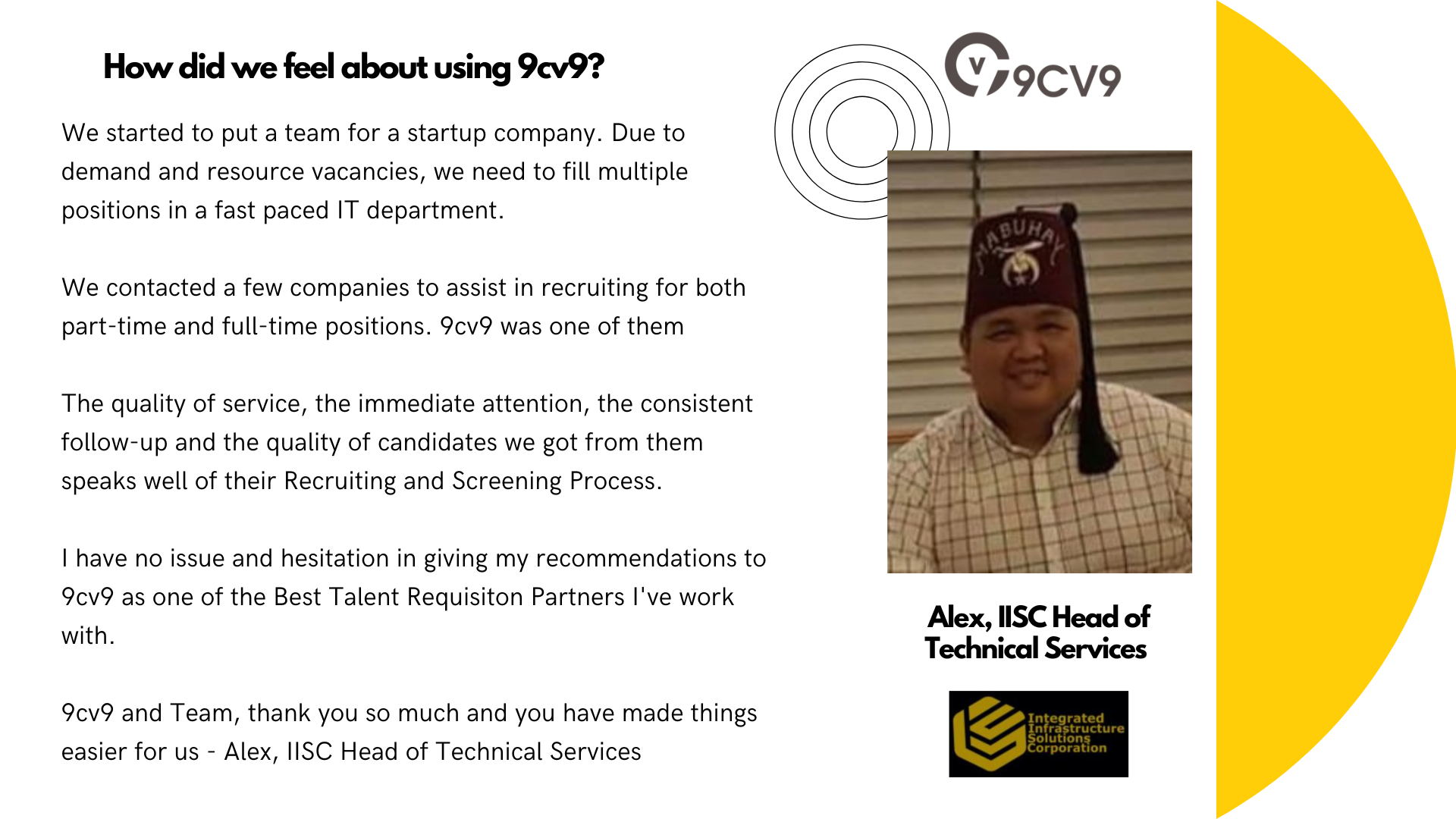
Comprehensive IT Recruitment Capabilities for Employers
9cv9 provides end-to-end recruitment solutions tailored to the needs of German employers, ranging from startups to large enterprises. Its approach focuses on delivering high-quality candidates while reducing time-to-hire and improving hiring outcomes.
| Recruitment Capability | Description | Business Value for Employers |
|---|---|---|
| End-to-End Hiring Solutions | Covers sourcing, screening, interviewing, and onboarding | Simplifies the entire recruitment lifecycle |
| Global Talent Sourcing | Access to international IT professionals | Expands hiring beyond Germany’s limited talent pool |
| Role Specialisation | Expertise across software, cloud, AI, and data roles | Ensures precise candidate-role alignment |
| Flexible Hiring Models | Supports both permanent and contract placements | Adapts to diverse workforce needs |
This comprehensive service offering allows employers to focus on business growth while 9cv9 manages the complexities of IT recruitment.
Data-Driven and Technology-Enabled Hiring Approach
A key differentiator of 9cv9 lies in its use of advanced recruitment technologies and data-driven methodologies. This enables more accurate candidate matching and faster hiring decisions.
| Technology Feature | Description | Strategic Advantage |
|---|---|---|
| AI-Powered Matching | Intelligent algorithms to match candidates with job roles | Improves accuracy and reduces hiring errors |
| Talent Analytics | Data insights on candidate performance and market trends | Supports informed hiring decisions |
| Automated Screening | Streamlined evaluation of candidate qualifications | Speeds up recruitment processes |
| Recruitment Platform | Centralised system for managing hiring workflows | Enhances efficiency and transparency |
By leveraging technology, 9cv9 ensures that employers can identify and secure top IT talent with greater speed and precision.
Specialisation in High-Demand IT and Software Roles
9cv9 focuses on recruiting for the most critical and in-demand technology roles in Germany, ensuring that employers can build future-ready teams.
| IT Domain | Key Roles Supported | Market Importance in Germany (2026) |
|---|---|---|
| Software Development | Full-Stack Developers, Backend Engineers | Core to digital product innovation |
| Cloud Computing | Cloud Engineers, DevOps Specialists | Essential for scalable infrastructure |
| Artificial Intelligence | AI Engineers, Machine Learning Specialists | Drives automation and advanced analytics |
| Data and Analytics | Data Scientists, Data Engineers | Enables data-driven decision-making |
| Cybersecurity | Security Engineers, Risk Analysts | Critical for protecting digital assets |
This targeted expertise ensures that employers gain access to candidates who can deliver immediate impact in high-growth technology areas.
Global Talent Access and Cross-Border Hiring Advantage
Germany’s IT talent shortage has led many companies to explore international hiring strategies. 9cv9 provides a seamless solution for accessing global talent while ensuring compliance with local hiring regulations.
| Global Hiring Capability | Description | Employer Benefit |
|---|---|---|
| International Talent Pool | Access to candidates across Asia and other regions | Expands available talent significantly |
| Cross-Border Recruitment | Support for international hiring processes | Simplifies global talent acquisition |
| Remote Hiring Solutions | Enables hiring of remote IT professionals | Increases flexibility and reduces costs |
| Market Expansion Support | Assists companies entering new markets | Aligns hiring with global business strategies |
This global reach provides German employers with a competitive advantage in securing scarce technical talent.
Speed, Efficiency, and Hiring Performance
9cv9 is designed to deliver fast and efficient recruitment outcomes, ensuring that employers can fill critical roles without unnecessary delays.
| Performance Metric | Description | Business Impact |
|---|---|---|
| Time-to-Hire Optimisation | Accelerated sourcing and screening processes | Reduces vacancy periods and productivity loss |
| Candidate Shortlisting | Delivery of highly relevant candidates | Improves hiring efficiency |
| Placement Success Rate | High alignment between candidates and roles | Enhances retention and performance |
| Process Transparency | Clear communication and reporting throughout hiring | Builds trust and improves decision-making |
This focus on efficiency makes 9cv9 particularly suitable for companies operating in fast-paced and competitive industries.
Client-Centric Approach and Employer Benefits
9cv9 adopts a highly client-focused approach, ensuring that recruitment strategies are aligned with each employer’s specific needs, culture, and growth objectives.
| Client-Centric Feature | Description | Impact on Employers |
|---|---|---|
| Customised Hiring Strategies | Tailored recruitment plans for each organisation | Improves relevance and hiring success |
| Dedicated Recruitment Teams | Focused support for specific hiring requirements | Enhances service quality |
| Continuous Communication | Regular updates and feedback loops | Ensures transparency and collaboration |
| Long-Term Partnership | Ongoing support beyond initial placements | Builds sustainable hiring success |
This approach ensures that employers receive not just candidates, but strategic hiring support that contributes to long-term business growth.
Strategic Importance in Germany’s IT Talent Ecosystem
As Germany continues to invest heavily in digital transformation, artificial intelligence, and cloud technologies, the demand for skilled IT professionals will remain strong. 9cv9 plays a critical role in helping employers overcome talent shortages by providing access to global talent, advanced recruitment technology, and efficient hiring processes.
For organisations seeking a modern, scalable, and data-driven recruitment partner, 9cv9 offers a compelling value proposition. Its ability to combine global reach, technical expertise, and innovative hiring solutions positions it as one of the top IT recruitment agencies for employers hiring IT and software professionals in Germany in 2026.
2. Hays
Hays continues to dominate Germany’s IT recruitment landscape in 2026, positioning itself as a strategic hiring partner for enterprises seeking highly specialised technology talent. The firm has established a strong reputation for delivering consistent, high-quality placements across complex and mission-critical IT roles, particularly within large-scale digital transformation initiatives.
In a market characterised by persistent talent shortages in software engineering, cloud infrastructure, and enterprise systems, Hays differentiates itself through a combination of global reach, deep domain expertise, and a refined “Precision Hiring” methodology. This approach enables German organisations to secure highly qualified professionals with minimal hiring friction, even in competitive and candidate-driven environments.
Global Scale and Operational Strength
Hays operates at a global scale, which significantly enhances its ability to source, assess, and deploy IT talent across borders. Germany remains one of its most strategically important markets, benefiting from the company’s extensive international infrastructure and talent mobility capabilities.
| Operational Metric | Details | Strategic Impact |
|---|---|---|
| Global Office Network | 207 offices across 31 countries | Enables cross-border talent sourcing and rapid deployment |
| Annual Placements | Over 255,000 candidates placed globally | Demonstrates strong placement capability and market trust |
| Core Revenue Markets | Germany as a primary contributor | Deep local expertise combined with global delivery scale |
| Client Portfolio | Enterprises, SMEs, and tech-first companies | Broad coverage across industries and hiring complexities |
This operational scale allows Hays to maintain a continuous pipeline of pre-qualified candidates, ensuring that German companies can access both domestic and international IT talent pools without delays.
Strategic Positioning in Germany’s IT Recruitment Market
Hays has evolved beyond traditional recruitment by focusing on long-term, value-driven hiring partnerships. Its strategic pivot toward enterprise solutions reflects the increasing demand for scalable and managed workforce models among German corporations.
| Strategy Area | Description | Business Value for Clients |
|---|---|---|
| Enterprise Solutions | Managed service programs for large organisations | Ensures consistency and scalability in hiring |
| Precision Hiring | Data-driven candidate matching and skill alignment | Reduces hiring risk and improves quality of placements |
| Workforce Planning | Long-term talent pipeline development | Supports sustained business growth and project continuity |
| Process Optimisation | Streamlined recruitment workflows and automation | Enhances speed, efficiency, and cost-effectiveness |
This strategic framework allows Hays to act not just as a recruitment vendor, but as a long-term talent partner aligned with organisational growth objectives.
Specialisation in High-Demand IT and Software Roles
A key differentiator for Hays lies in its deep specialisation across critical IT domains. The agency focuses on sourcing professionals for roles that are both technically complex and strategically important for digital transformation initiatives in Germany.
| IT Domain | Key Roles Supported | Market Relevance in Germany (2026) |
|---|---|---|
| Enterprise Software | SAP Integration Architects, SAP Consultants | High demand across manufacturing and enterprise sectors |
| Cloud Computing | Cloud Engineers, DevOps Specialists | Critical for cloud migration and infrastructure scaling |
| Microsoft Ecosystem | Azure Engineers, Power Platform Experts | Strong adoption across enterprise IT environments |
| Software Development | Full-Stack Developers, Backend Engineers | Core to product development and digital platforms |
| IT Leadership | Solution Architects, IT Project Managers | Essential for managing complex transformation programs |
This level of specialisation ensures that clients are matched with candidates who not only meet technical requirements but also align with industry-specific needs and business objectives.
Client Experience and Market Reputation
Hays has built long-term credibility within the German IT recruitment market through consistent service quality and strong relationships with both clients and candidates. Its ability to provide continuous project opportunities and career stability has made it a preferred partner among IT freelancers and consultants.
| Experience Factor | Description | Impact on Stakeholders |
|---|---|---|
| Reliability | Consistent job placements even during slow market cycles | Builds long-term trust with candidates |
| Professionalism | Structured processes and clear communication | Enhances client satisfaction and hiring experience |
| Market Stability | Strong presence across economic cycles | Ensures continuity for both employers and job seekers |
| Talent Retention Support | Ongoing engagement with placed candidates | Improves retention and long-term placement success |
This strong reputation reinforces Hays’ position as one of the top recruitment agencies for hiring IT and software professionals in Germany in 2026.
Strategic Importance in Germany’s Tech Talent Ecosystem
As Germany continues to accelerate its digital transformation across industries such as automotive, fintech, manufacturing, and enterprise software, the role of specialised recruitment agencies like Hays becomes increasingly critical.
The company’s ability to combine global scale, local expertise, and deep technical specialisation enables it to address one of the most pressing challenges in the German economy: the shortage of highly skilled IT professionals.
For organisations seeking to build resilient, future-ready technology teams, Hays represents not just a recruitment provider, but a strategic enabler of digital growth and innovation.
3. Robert Half
Robert Half has established itself as a highly respected recruitment agency within Germany’s IT and software hiring ecosystem, particularly through its specialised technology division. In 2026, the firm continues to play a critical role in helping organisations navigate talent shortages, evolving workforce expectations, and the increasing complexity of digital hiring.
Known for its authoritative salary guides and labour market insights, Robert Half serves not only as a recruitment partner but also as a strategic advisor to HR leaders across Germany. Its research-driven approach enables companies to make informed hiring decisions, benchmark compensation accurately, and align talent strategies with market realities.
Technology Hiring Trends and Market Insights
Robert Half’s research provides valuable insights into hiring sentiment and workforce expansion plans within Germany’s technology sector. These insights position the firm as a thought leader in IT recruitment and workforce planning.
| Market Indicator | Key Insight | Strategic Implication for Employers |
|---|---|---|
| Business Confidence | 87% of technology leaders remain optimistic | Indicates strong demand for IT hiring in 2026 |
| Headcount Expansion Plans | 61% plan to increase permanent staff in early 2026 | Signals a competitive hiring environment |
| Hiring Challenges | AI-generated applications impacting recruitment efficiency | Requires more advanced screening and validation processes |
| Talent Demand | Continued need for specialised IT roles | Drives reliance on expert recruitment partners |
These insights highlight a rapidly evolving hiring landscape where companies must act quickly and strategically to secure top talent.
Advanced Talent Acquisition Capabilities
Robert Half leverages a vast global database of technology professionals, enabling it to deliver highly efficient and targeted recruitment solutions. This capability is particularly valuable in Germany, where niche IT roles often require fast and precise candidate matching.
| Capability Area | Description | Business Value |
|---|---|---|
| Talent Database Scale | Millions of pre-screened technology professionals | Accelerates candidate sourcing and shortlisting |
| Rapid Shortlisting | Quick delivery of qualified candidates for niche roles | Reduces time-to-hire significantly |
| Role Specialisation | Focus on ERP, DevOps, cloud, and software engineering roles | Ensures high-quality matches for complex positions |
| Global Talent Access | Cross-border candidate sourcing capabilities | Expands talent pool beyond local market limitations |
This infrastructure allows Robert Half to consistently deliver strong hiring outcomes, even for hard-to-fill technical positions.
AI Adaptation and Recruitment Process Innovation
In 2026, one of the most significant challenges in recruitment is the rise of AI-generated applications, which can overwhelm hiring teams and reduce screening accuracy. Robert Half has proactively addressed this issue by investing in advanced screening methodologies and process optimisation.
| Innovation Area | Approach | Impact on Recruitment Efficiency |
|---|---|---|
| AI Application Filtering | Enhanced screening techniques to detect low-quality submissions | Improves candidate quality and reduces noise |
| Recruitment Automation | Integration of digital tools for workflow optimisation | Speeds up hiring processes |
| Data-Driven Matching | Use of analytics to align candidate skills with job needs | Increases placement accuracy |
| Candidate Validation | Rigorous vetting and verification processes | Ensures authenticity and reliability of applicants |
By addressing the challenges posed by AI-driven job applications, Robert Half strengthens its ability to deliver high-quality talent in a more efficient and reliable manner.
Specialisation in High-Demand IT and Software Roles
Robert Half’s technology division focuses on sourcing professionals across critical areas of IT and software development, ensuring that clients can access talent aligned with modern digital requirements.
| IT Specialisation Area | Key Roles Supported | Market Importance in Germany (2026) |
|---|---|---|
| Enterprise Systems | ERP Developers, SAP Specialists | Essential for enterprise resource planning and integration |
| DevOps and Cloud | DevOps Engineers, Cloud Architects | Critical for infrastructure scalability and automation |
| Software Engineering | Backend Developers, Full-Stack Engineers | Core to product and platform development |
| Cybersecurity | Security Analysts, Information Security Specialists | Increasingly important due to rising cyber threats |
| Data and Analytics | Data Engineers, Data Analysts | Supports data-driven decision-making |
This targeted expertise ensures that Robert Half remains highly relevant in Germany’s fast-evolving technology landscape.
Client Experience and Reputation
Robert Half has built a strong reputation for delivering consistent results and maintaining long-term relationships with both clients and candidates. Its extensive client network provides candidates with access to diverse opportunities, while employers benefit from a trusted and experienced recruitment partner.
| Experience Factor | Description | Impact on Stakeholders |
|---|---|---|
| Strong Client Network | Wide range of hiring organisations across industries | Expands opportunities for candidates |
| Long-Term Relationships | Ongoing engagement with clients and professionals | Enhances trust and repeat business |
| Consistent Placement Success | Proven track record in securing high-quality roles | Builds credibility in the market |
| Candidate Support | Career guidance and placement assistance | Improves candidate satisfaction and retention |
This reputation is reinforced by positive candidate experiences, with many professionals highlighting the agency’s ability to connect them with high-quality roles and long-term career opportunities.
Strategic Role in Germany’s IT Talent Ecosystem
As Germany continues to face a structural shortage of skilled IT professionals, Robert Half plays a pivotal role in enabling organisations to remain competitive. Its combination of market intelligence, advanced recruitment capabilities, and technological adaptation positions it as a key enabler of workforce transformation.
For companies aiming to secure top IT and software talent in 2026, Robert Half offers a comprehensive solution that integrates recruitment expertise, data-driven insights, and scalable hiring strategies.
4. GULP (A Randstad Company)
GULP, operating under the Randstad Professionals framework, has established itself as a dominant player in Germany’s freelance and contract-based IT recruitment market. In 2026, the agency plays a pivotal role in supporting organisations that require flexible, project-based talent to execute digital transformation initiatives and complex engineering programs.
Unlike traditional recruitment firms that focus heavily on permanent placements, GULP specialises in connecting companies with highly skilled freelancers and contractors. This positioning makes it particularly valuable in Germany’s fast-evolving technology landscape, where agility and scalability are critical for success.
Strategic Role in Germany’s Flexible Workforce Economy
GULP is closely aligned with the emerging trend of flexible work models, particularly the rise of project-based employment and independent consulting. The agency actively supports what is often referred to as the “Great Workforce Adaptation,” where professionals increasingly pursue portfolio careers rather than traditional full-time roles.
| Workforce Trend | Description | Strategic Impact for Employers |
|---|---|---|
| Portfolio Careers | Professionals managing multiple projects simultaneously | Access to highly experienced and versatile talent |
| Freelance Workforce Growth | Increasing preference for contract-based work | Enables flexible and scalable hiring models |
| Project-Based Hiring | Short-term engagements for specific initiatives | Reduces long-term hiring commitments and costs |
| Talent Independence | Shift toward self-managed career paths | Expands availability of niche and senior-level experts |
This alignment with modern workforce dynamics positions GULP as a critical partner for companies adapting to new hiring paradigms in Germany.
Global Network and Talent Access Through Randstad
As part of the broader Randstad ecosystem, GULP benefits from access to one of the largest talent networks in the world. This global infrastructure significantly enhances its ability to source high-quality IT and engineering professionals.
| Network Capability | Details | Business Value |
|---|---|---|
| Global Talent Reach | Access to Randstad’s international candidate pool | Expands sourcing beyond local German market |
| Annual Job Placements | 1.7 million people placed globally in 2025 | Demonstrates scale and recruitment effectiveness |
| Integrated Talent Systems | Shared databases and recruitment technologies | Improves speed and accuracy of candidate matching |
| Cross-Border Hiring | Ability to support international contractor placements | Enables global project staffing |
This scale allows GULP to maintain a steady pipeline of qualified freelancers, ensuring that clients can rapidly secure talent for time-sensitive projects.
Specialisation in IT and Engineering Contract Roles
GULP’s core strength lies in its deep specialisation in freelance and contract-based roles across IT and engineering disciplines. The agency focuses on delivering professionals who can contribute immediately to project execution without extensive onboarding.
| Specialisation Area | Key Roles Supported | Market Relevance in Germany (2026) |
|---|---|---|
| Software Development | Freelance Developers, Full-Stack Engineers | Supports rapid product development cycles |
| Engineering | Mechanical Engineers, Systems Engineers | Critical for industrial and manufacturing projects |
| IT Infrastructure | Network Engineers, System Administrators | Ensures operational stability and scalability |
| Digital Transformation | IT Consultants, Transformation Specialists | Drives enterprise-wide digital initiatives |
| Project Delivery | Technical Project Managers, Agile Coaches | Enables efficient execution of complex programs |
This focus on contract talent makes GULP particularly effective for organisations that need to scale teams quickly for short-term or high-impact initiatives.
Efficiency in Project-Based Hiring and Team Scaling
One of GULP’s primary value propositions lies in its ability to support rapid workforce scaling for digital and engineering projects. This is especially important in Germany, where companies frequently require specialised expertise for defined project timelines.
| Capability Area | Description | Business Benefit |
|---|---|---|
| Rapid Contractor Deployment | Quick access to pre-qualified freelancers | Reduces project delays |
| Flexible Team Scaling | Ability to scale teams up or down based on project needs | Optimises workforce costs |
| Short-Term Engagement Models | Contract-based hiring for specific deliverables | Minimises long-term risk |
| Niche Skill Matching | Targeted sourcing for highly specialised roles | Ensures technical accuracy and project success |
This operational flexibility makes GULP a preferred partner for companies undergoing digital transformation, system upgrades, or engineering innovation projects.
Client and Candidate Experience
GULP maintains a balanced reputation within the German market, with strengths in administrative efficiency and contractor management, alongside some areas for improvement in post-engagement processes.
| Experience Factor | Description | Impact on Stakeholders |
|---|---|---|
| Administrative Efficiency | Structured and organised onboarding processes | Enhances contractor experience during active assignments |
| Project Availability | Consistent access to freelance opportunities | Supports career continuity for contractors |
| Post-Engagement Processes | Feedback indicates complexity in documentation handling | May require process improvements for smoother transitions |
| Overall Satisfaction | Moderate to strong ratings across internal processes | Reflects balanced performance and reliability |
While some candidates have highlighted challenges related to administrative procedures after project completion, the agency’s overall performance remains strong in delivering consistent opportunities and structured engagement.
Strategic Importance in Germany’s IT and Engineering Talent Ecosystem
As Germany continues to prioritise digital transformation and industrial innovation, the demand for flexible, highly skilled contractors is expected to grow significantly. GULP’s specialised focus on freelance and project-based talent positions it as a key enabler of this transformation.
For organisations seeking to execute time-sensitive projects, access niche expertise, and maintain workforce agility, GULP provides a scalable and efficient recruitment solution. Its integration within the Randstad network further strengthens its ability to deliver high-quality talent at both national and international levels, making it one of the top recruitment agencies for hiring IT and software professionals in Germany in 2026.
5. Michael Page (PageGroup)
Michael Page, part of PageGroup, has positioned itself as one of the most efficient and performance-driven recruitment agencies in Germany’s IT and software hiring market in 2026. The firm is widely recognised for its ability to deliver high-quality candidates at speed, making it a preferred partner for organisations facing urgent hiring needs in a highly competitive talent environment.
With a strong balance between permanent and contract recruitment, Michael Page serves a diverse range of clients, from fast-growing technology companies to large multinational enterprises. Its emphasis on speed, precision, and candidate quality enables companies to secure critical talent without prolonged hiring cycles.
Speed and Efficiency in IT Recruitment Delivery
Michael Page’s operational model is built around rapid execution and streamlined processes, ensuring that clients receive qualified candidates within exceptionally short timeframes.
| Hiring Performance Metric | Key Data Point | Business Impact |
|---|---|---|
| Average Time to Fill Roles | 23 days for permanent technology positions | Reduces hiring delays and accelerates project timelines |
| Shortlist Delivery Speed | 24 to 48 hours after client request | Enables faster decision-making for employers |
| Candidate Conversion Rate | 72% hired from the first shortlist | Demonstrates high screening accuracy and efficiency |
| Process Turnaround | Rapid end-to-end recruitment cycles | Improves overall hiring productivity |
This strong focus on speed makes Michael Page particularly valuable for organisations that need to secure top IT talent quickly in response to business growth or digital transformation initiatives.
Global Talent Network and Strategic Reach
Michael Page benefits from an extensive global infrastructure, allowing it to combine local expertise in Germany with international talent sourcing capabilities. This is especially important in addressing Germany’s ongoing shortage of highly skilled IT professionals.
| Network Capability | Details | Strategic Value |
|---|---|---|
| Global Candidate Database | Over 18 million candidates worldwide | Provides access to a vast and diverse talent pool |
| International Presence | 139 offices globally | Supports cross-border recruitment and talent mobility |
| Local Market Expertise | Dedicated German recruitment teams | Ensures alignment with local hiring regulations and trends |
| Cross-Border Hiring | Ability to source international IT professionals | Helps bridge domestic talent shortages |
This combination of global reach and local insight enables Michael Page to deliver highly targeted recruitment solutions for German companies.
Precision in Candidate Selection and Quality Assurance
A defining strength of Michael Page lies in its rigorous candidate screening and matching process. The agency’s high placement success rate from initial shortlists reflects its ability to accurately assess both technical skills and cultural fit.
| Quality Metric | Description | Employer Benefit |
|---|---|---|
| First Shortlist Success | 72% of hires from initial candidate shortlist | Reduces need for multiple hiring rounds |
| Candidate Vetting Process | Comprehensive screening and interview assessment | Ensures high-quality and job-ready candidates |
| Skill Alignment | Matching technical expertise with role requirements | Improves performance and retention outcomes |
| Cultural Fit Evaluation | Assessment of organisational compatibility | Enhances long-term employee integration |
This precision-driven approach significantly reduces hiring risks and ensures that employers secure candidates who can deliver immediate and sustained value.
Specialisation in IT and Software Recruitment
Michael Page’s technology recruitment division focuses on high-demand IT roles that are critical to Germany’s digital economy. The agency supports both permanent and contract hiring across a wide range of technical disciplines.
| IT Specialisation Area | Key Roles Supported | Market Importance in Germany (2026) |
|---|---|---|
| Software Development | Full-Stack Developers, Backend Engineers | Core to digital product development |
| Cloud and Infrastructure | Cloud Engineers, DevOps Specialists | Essential for scalable IT environments |
| Data and Analytics | Data Scientists, Data Engineers | Drives data-driven decision-making |
| Cybersecurity | Security Engineers, Risk Analysts | Increasing demand due to cyber threats |
| IT Leadership | CTOs, IT Directors, Solution Architects | Critical for strategic technology direction |
This breadth of expertise ensures that Michael Page remains highly relevant across multiple sectors, including fintech, automotive, e-commerce, and enterprise software.
Client Experience and Market Reputation
Michael Page has built a strong reputation for professionalism, clear communication, and effective candidate matching. Its consultative approach ensures that both clients and candidates benefit from a structured and transparent recruitment process.
| Experience Factor | Description | Impact on Stakeholders |
|---|---|---|
| Communication Quality | Clear, concise, and responsive interactions | Enhances client confidence and decision-making |
| Understanding of Requirements | Deep analysis of client needs and candidate profiles | Improves match accuracy and satisfaction |
| Network Strength | Access to a wide range of opportunities and candidates | Expands hiring and career options |
| Service Consistency | Reliable delivery across multiple engagements | Builds long-term partnerships |
Client testimonials consistently highlight the agency’s ability to connect the right candidates with the right roles efficiently, reinforcing its reputation as a trusted recruitment partner.
Strategic Importance in Germany’s IT Talent Market
As Germany continues to experience strong demand for IT and software professionals, recruitment speed and accuracy have become critical success factors for organisations. Michael Page’s ability to combine rapid delivery with high-quality candidate matching positions it as a key player in addressing this challenge.
For companies seeking to secure top-tier IT talent in a time-sensitive and competitive environment, Michael Page offers a compelling value proposition built on speed, scale, and precision. Its global infrastructure, data-driven processes, and strong local expertise make it one of the top recruitment agencies for hiring IT and software professionals in Germany in 2026.
6. Computer Futures (SThree Group)
Computer Futures, part of the SThree Group, has established itself as a highly specialised recruitment agency focused exclusively on IT and technology hiring. In Germany’s competitive 2026 talent landscape, the firm stands out for its deep expertise in niche domains such as cybersecurity, Salesforce ecosystems, and embedded technology.
Rather than adopting a broad, generalist recruitment model, Computer Futures operates through a specialist-driven approach. This enables the agency to deliver highly targeted talent solutions for organisations seeking precision hiring in technically complex and rapidly evolving fields. Its ability to support both permanent and contract hiring further strengthens its position as a versatile recruitment partner for German companies.
Specialist Recruiter Model and Domain Expertise
A defining characteristic of Computer Futures is its commitment to domain-specific recruitment. Each recruiter focuses on a narrow technical discipline, allowing for a deeper understanding of role requirements, candidate capabilities, and market dynamics.
| Specialisation Model | Description | Strategic Advantage |
|---|---|---|
| Role-Specific Recruiters | Recruiters dedicated to specific technical roles | Ensures high accuracy in candidate matching |
| Design and UX Expertise | Focus on UI/UX designers, visual designers, design architects | Supports growing demand for user-centric digital products |
| Software Development Focus | Dedicated sourcing for developers across multiple stacks | Enables precise technical alignment |
| Niche Technology Coverage | Cybersecurity, Salesforce, embedded systems | Addresses hard-to-fill and high-value roles |
This model allows Computer Futures to deliver candidates who not only meet technical requirements but also bring specialised expertise that aligns with project and business goals.
Global Reach with Strong Local Presence in Germany
Computer Futures combines international reach with strong local market knowledge, enabling it to address both domestic talent shortages and global sourcing opportunities.
| Network Capability | Details | Business Value |
|---|---|---|
| International Presence | Operations in 14 countries | Access to a diverse global talent pool |
| Contractor Placements | Thousands of IT contractors placed annually | Demonstrates strong contract recruitment capability |
| German Market Hubs | Established offices in major German cities | Ensures local expertise and regulatory alignment |
| Cross-Border Recruitment | Ability to source international candidates | Helps mitigate local skill shortages |
This balance between global scale and local insight makes Computer Futures particularly effective for organisations seeking both domestic and international IT talent.
Project-Based Recruitment and Workforce Solutions
Beyond traditional recruitment services, Computer Futures provides project-oriented solutions that support organisations in building agile, high-performing technology teams. This capability is especially valuable for companies undergoing digital transformation or launching complex IT initiatives.
| Service Area | Description | Business Benefit |
|---|---|---|
| Project Team Assembly | Building multi-disciplinary teams for specific initiatives | Accelerates project execution |
| Contract Staffing | Flexible hiring for short-term and project-based roles | Enhances workforce agility |
| Permanent Recruitment | Long-term hiring for critical IT positions | Supports organisational stability |
| Workforce Consulting | Advisory services for talent strategy and planning | Aligns hiring with business objectives |
This integrated service model allows Computer Futures to act as both a recruitment provider and a strategic workforce partner.
Specialisation in High-Demand IT and Technology Domains
Computer Futures focuses on some of the most critical and rapidly growing areas within Germany’s technology ecosystem. Its expertise in niche domains ensures that clients gain access to talent capable of driving innovation and maintaining competitive advantage.
| IT Domain | Key Roles Supported | Market Relevance in Germany (2026) |
|---|---|---|
| Cybersecurity | Security Engineers, Ethical Hackers | Increasing demand due to rising cyber threats |
| Salesforce Ecosystem | Salesforce Developers, Consultants | Strong enterprise adoption across industries |
| Embedded Technology | Embedded Systems Engineers, Firmware Developers | Critical for automotive and industrial sectors |
| Software Development | Backend Developers, Full-Stack Engineers | Core to digital platform development |
| Design and User Experience | UI/UX Designers, Design System Architects | Essential for customer-centric digital products |
This targeted focus ensures that Computer Futures remains highly relevant in Germany’s advanced and innovation-driven economy.
Client and Candidate Experience
Computer Futures is recognised for its ability to deliver high-quality talent quickly while maintaining strong relationships with both clients and candidates. Its consultative approach ensures that recruitment processes are aligned with specific technical and business requirements.
| Experience Factor | Description | Impact on Stakeholders |
|---|---|---|
| Speed of Delivery | Rapid identification and placement of qualified candidates | Reduces time-to-hire for critical roles |
| Technical Understanding | Deep knowledge of specialised IT domains | Improves candidate-role alignment |
| Flexible Hiring Solutions | Support for both contract and permanent placements | Meets diverse workforce needs |
| Candidate Matching Accuracy | Strong focus on skill and cultural fit | Enhances long-term success of placements |
The agency’s consistent delivery of specialised talent reinforces its reputation as a reliable partner for both short-term projects and long-term hiring strategies.
Strategic Importance in Germany’s Technology Talent Landscape
As Germany continues to expand its digital economy and invest in advanced technologies, the demand for niche IT expertise is expected to grow significantly. Computer Futures’ specialist-driven model positions it as a key enabler of this transformation.
For organisations seeking highly skilled professionals in areas such as cybersecurity, Salesforce, and embedded systems, Computer Futures offers a focused and efficient recruitment solution. Its ability to combine technical depth, global reach, and project-based services makes it one of the top recruitment agencies for hiring IT and software professionals in Germany in 2026.
7. OnHires
OnHires has rapidly emerged as a modern and highly effective recruitment partner within Germany’s technology hiring ecosystem in 2026. The agency is particularly well-regarded among tech startups, scale-ups, and SaaS-driven organisations that require fast, precise, and transparent hiring processes.
Positioned as a data-driven recruitment firm, OnHires differentiates itself through measurable performance outcomes, structured workflows, and a strong focus on niche technical roles. Its growing reputation among high-growth companies reflects its ability to deliver results in competitive hiring markets where speed and accuracy are critical.
Performance Metrics and Recruitment Efficiency
OnHires has built its brand around delivering measurable hiring success, supported by strong client satisfaction ratings and consistent performance benchmarks.
| Performance Indicator | Key Data Point | Business Impact |
|---|---|---|
| Client Rating | 5.0 rating on Clutch | Reflects exceptional client satisfaction and trust |
| Average Time to Hire | Approximately 4 weeks to close roles | Enables rapid team scaling for fast-growing companies |
| Hiring Approach | “Speed with Clarity” methodology | Balances fast execution with transparent communication |
| Search Completion Rate | High success rate in niche and hard-to-fill roles | Improves hiring efficiency and reduces recruitment cycles |
This strong performance profile makes OnHires particularly attractive to organisations that need to scale quickly without compromising on candidate quality.
Specialisation in Emerging Technology Sectors
A key strength of OnHires lies in its focus on cutting-edge technology domains, where talent scarcity is most pronounced. The agency specialises in sourcing candidates for roles that require advanced technical expertise and adaptability.
| Technology Domain | Key Roles Supported | Market Relevance in Germany (2026) |
|---|---|---|
| Artificial Intelligence | AI Engineers, Machine Learning Specialists | High demand across automation and data-driven industries |
| Web3 and Blockchain | Blockchain Developers, Smart Contract Engineers | Growing adoption in fintech and decentralised platforms |
| SaaS Platforms | SaaS Developers, Product Engineers | Core to startup and scale-up ecosystems |
| Software Engineering | Full-Stack Developers, Backend Engineers | Essential for product innovation and scalability |
| Product and Design | Product Managers, UX/UI Designers | Critical for user-centric digital experiences |
This focus on emerging technologies positions OnHires as a valuable partner for companies operating at the forefront of innovation.
Data-Driven and Transparent Recruitment Process
OnHires adopts a highly structured and transparent recruitment methodology, enabling clients to gain full visibility into the hiring process. This approach enhances trust, improves decision-making, and ensures alignment between hiring goals and outcomes.
| Process Element | Description | Strategic Value |
|---|---|---|
| Candidate Funnel Transparency | Clear reporting on sourcing, screening, and interview stages | Enables data-driven hiring decisions |
| Structured Communication | Regular updates and defined communication workflows | Reduces uncertainty and improves collaboration |
| Data-Driven Matching | Use of analytics to identify best-fit candidates | Enhances accuracy and reduces hiring risk |
| Performance Tracking | Monitoring of recruitment metrics and outcomes | Ensures continuous process improvement |
This level of transparency is particularly valuable for startups and scaling companies that require clarity and control over their hiring pipelines.
Client Experience and Reputation
OnHires has earned strong recognition for its ability to deliver high-quality candidates quickly while maintaining a collaborative and client-focused approach. Its emphasis on communication and efficiency has contributed to its growing popularity among tech companies.
| Experience Factor | Description | Impact on Stakeholders |
|---|---|---|
| Speed of Delivery | Rapid placement of candidates in niche roles | Supports fast-paced business growth |
| Communication Quality | Clear, structured, and consistent updates | Enhances client confidence and engagement |
| Specialisation Depth | Strong expertise in AI, Web3, and SaaS hiring | Ensures high relevance of candidate profiles |
| Partnership Approach | Collaborative engagement with clients | Builds long-term relationships and trust |
Client feedback consistently highlights the agency’s ability to act as a reliable partner for scaling technology teams, particularly in high-growth environments.
Strategic Importance in Germany’s Startup and SaaS Ecosystem
As Germany continues to strengthen its position as a leading European hub for startups and innovation, the demand for specialised technology talent is expected to increase significantly. OnHires’ focus on emerging tech sectors and its data-driven recruitment model position it as a key enabler of this growth.
For startups and SaaS companies seeking to build agile, high-performing teams, OnHires offers a compelling value proposition that combines speed, transparency, and technical expertise. Its ability to deliver hard-to-find talent efficiently makes it one of the top recruitment agencies for hiring IT and software professionals in Germany in 2026.
8. Avomind
Avomind has established itself as a highly specialised recruitment agency within Germany’s IT and software hiring ecosystem in 2026, with a distinct focus on talent that bridges business strategy and technology. Unlike traditional IT recruitment firms that concentrate solely on engineering roles, Avomind targets professionals operating at the intersection of data, analytics, and commercial decision-making.
This positioning makes Avomind particularly valuable for software companies, e-commerce platforms, and digital-first organisations that require talent capable of translating technical capabilities into business outcomes. Its reputation for speed, precision, and strategic alignment has contributed to strong client satisfaction across multiple industries.
Institutional Partnerships and Talent Pipeline Strength
A defining strength of Avomind lies in its extensive network of academic and technology partnerships. These relationships enable the agency to identify and engage high-potential talent early, creating a strong and sustainable talent pipeline for its clients.
| Partnership Network | Details | Strategic Advantage |
|---|---|---|
| Academic Institutions | Partnerships with over 200 universities | Early access to emerging and high-potential talent |
| Technology Institutions | Collaboration with 45 tech-focused organisations | Strengthens pipeline for specialised digital roles |
| Talent Identification | Focus on top-performing graduates and professionals | Ensures high-quality candidate pool |
| Early Engagement Strategy | Proactive sourcing of future-ready talent | Reduces competition for in-demand candidates |
This institutional reach allows Avomind to consistently deliver candidates who are both technically capable and strategically minded, aligning well with the needs of modern German enterprises.
Specialisation in Strategy, Analytics, and Tech-Business Roles
Avomind differentiates itself through its focus on hybrid roles that combine business acumen with technical expertise. These roles are increasingly critical in Germany’s digital economy, where data-driven decision-making and commercial strategy are key drivers of growth.
| Talent Domain | Key Roles Supported | Market Relevance in Germany (2026) |
|---|---|---|
| Data and Analytics | Data Analysts, Business Intelligence Specialists | Supports data-driven business strategies |
| Commercial Strategy | Strategy Consultants, Growth Analysts | Drives revenue optimisation and market expansion |
| Product and Operations | Product Managers, Operations Analysts | Aligns technology with business performance |
| E-commerce and Digital | E-commerce Analysts, Digital Growth Specialists | Critical for online business scalability |
| Tech-Business Integration | Hybrid roles bridging IT and business functions | Enables cross-functional innovation |
This focus ensures that Avomind remains highly relevant for organisations seeking talent that can operate across both technical and commercial domains.
Efficiency, Speed, and Client-Centric Execution
Avomind is widely recognised for its operational efficiency and responsiveness, which are critical factors in Germany’s fast-moving hiring environment. The agency’s structured processes and client-focused approach enable it to deliver high-quality candidates within short timeframes.
| Performance Factor | Description | Business Impact |
|---|---|---|
| Speed of Delivery | Rapid identification and placement of candidates | Reduces time-to-hire and supports business agility |
| Client Alignment | Strong focus on understanding business needs | Improves relevance and quality of candidate matches |
| Responsiveness | Continuous communication and quick feedback cycles | Enhances collaboration and decision-making |
| Recruitment Precision | High accuracy in matching skills with role requirements | Minimises hiring risks and improves retention |
Clients consistently highlight Avomind’s ability to combine speed with strategic insight, making it a reliable partner for critical hiring needs.
Cross-Industry Expertise and Market Versatility
Avomind operates across multiple industries, allowing it to apply cross-sector insights to recruitment strategies. This versatility enhances its ability to identify candidates who can adapt to different business environments.
| Industry Coverage | Description | Strategic Value |
|---|---|---|
| Software and SaaS | Core focus on technology-driven companies | Supports product innovation and scalability |
| Healthcare Technology | Recruitment for digital health and analytics roles | Addresses growing demand in healthtech |
| E-commerce | Talent sourcing for online platforms and marketplaces | Enables digital commerce growth |
| Real Estate Technology | Support for proptech and analytics-driven roles | Drives innovation in property and infrastructure sectors |
This cross-industry expertise allows Avomind to deliver candidates with diverse perspectives and adaptable skill sets.
Client Experience and Market Reputation
Avomind has built a strong reputation for delivering high-quality recruitment outcomes, supported by consistent client feedback highlighting its efficiency, responsiveness, and alignment with business goals.
| Experience Factor | Description | Impact on Stakeholders |
|---|---|---|
| Client Satisfaction | High levels of positive feedback across industries | Reinforces trust and long-term partnerships |
| Speed and Responsiveness | Quick turnaround times and proactive communication | Improves hiring efficiency |
| Quality of Candidates | Strong alignment between candidate skills and company needs | Enhances performance and retention |
| Strategic Insight | Understanding of both technical and commercial requirements | Supports better hiring decisions |
This reputation positions Avomind as a trusted recruitment partner for organisations seeking high-impact talent.
Strategic Importance in Germany’s Data-Driven Economy
As Germany continues to evolve into a data-driven and digitally integrated economy, the demand for professionals who can bridge technology and business strategy is increasing rapidly. Avomind’s specialised focus on this talent segment makes it a key player in addressing this need.
For companies seeking to hire professionals who can drive both technical execution and commercial success, Avomind offers a highly targeted and efficient recruitment solution. Its strong institutional network, strategic focus, and client-centric approach make it one of the top recruitment agencies for hiring IT and software-related talent in Germany in 2026.
9. Experis (ManpowerGroup)
Experis, part of ManpowerGroup, stands as one of the most influential global providers of IT professional resourcing and talent services in Germany’s technology hiring landscape in 2026. The firm is recognised for its ability to combine large-scale talent delivery with specialised expertise in emerging technologies, making it a strategic partner for organisations navigating complex digital transformation initiatives.
With a strong emphasis on precision hiring and workforce development, Experis has evolved beyond traditional recruitment to become a comprehensive talent solutions provider. Its integrated model enables German companies to access highly skilled professionals while simultaneously addressing long-term skill shortages through training and reskilling initiatives.
Technology Hiring Outlook and Market Demand
Experis provides valuable insights into hiring trends within Germany’s IT sector, reinforcing its role as both a recruitment provider and a market intelligence leader.
| Market Indicator | Key Insight | Strategic Implication for Employers |
|---|---|---|
| Net Employment Outlook | 44% positive outlook for Tech & IT hiring in Q2 2026 | Indicates strong and sustained demand for IT professionals |
| Hiring Momentum | Continued expansion despite economic moderation | Encourages proactive and strategic hiring |
| Talent Shortage Pressure | Persistent gap in specialised IT skills | Increases reliance on expert recruitment partners |
| Workforce Transformation | Growing demand for future-ready digital skills | Drives need for upskilling and reskilling initiatives |
These insights highlight a resilient and expanding IT job market in Germany, where competition for top talent remains intense.
Experis Academy and Workforce Development Strategy
One of Experis’ most distinctive differentiators is its commitment to closing the skills gap through structured training and development programs. The Experis Academy plays a central role in creating “business-ready” talent for clients.
| Talent Development Initiative | Description | Business Value |
|---|---|---|
| Experis Academy | Structured reskilling and upskilling programs | Produces job-ready candidates aligned with industry needs |
| Skill Gap Bridging | Training in high-demand technologies | Reduces dependency on scarce external talent |
| Career Transition Support | Enables professionals to shift into IT roles | Expands available talent pool |
| Continuous Learning | Ongoing development programs for placed candidates | Enhances long-term workforce capability |
This proactive approach to talent development positions Experis as a forward-thinking partner capable of addressing both immediate hiring needs and long-term workforce challenges.
Precision Hiring Model and Strategic Talent Placement
Experis has transitioned from traditional volume-based recruitment to a more targeted, precision hiring approach. This model focuses on delivering high-impact talent for critical roles that drive business transformation.
| Hiring Strategy | Description | Strategic Advantage |
|---|---|---|
| Precision Hiring | Focus on highly specialised and high-value roles | Improves quality and relevance of hires |
| Data-Driven Matching | Use of analytics to align skills with job requirements | Enhances placement accuracy |
| High-Impact Role Focus | Emphasis on critical technology positions | Supports digital transformation initiatives |
| Scalable Talent Solutions | Ability to support both project-based and permanent hiring | Provides flexibility for organisations |
This refined approach ensures that clients receive candidates who can deliver immediate and measurable business impact.
Specialisation in High-Growth Technology Domains
Experis focuses on some of the most critical and fast-growing areas within Germany’s IT ecosystem, ensuring that clients gain access to talent aligned with future technology trends.
| Technology Domain | Key Roles Supported | Market Importance in Germany (2026) |
|---|---|---|
| Cloud Computing | Cloud Engineers, Cloud Architects | Essential for digital infrastructure and scalability |
| Artificial Intelligence | AI Engineers, Machine Learning Specialists | Drives automation and advanced analytics |
| Data and Analytics | Data Scientists, Data Engineers | Supports data-driven business strategies |
| Cybersecurity | Security Analysts, Risk Specialists | Increasing demand due to rising cyber threats |
| IT Infrastructure | System Engineers, Network Specialists | Ensures operational resilience and performance |
This targeted expertise ensures that Experis remains highly relevant in Germany’s evolving digital economy.
Client Experience and Service Delivery
Experis is recognised for delivering tailored recruitment solutions that align closely with client requirements. Its consultative approach ensures that organisations receive not only qualified candidates but also strategic guidance on workforce planning.
| Experience Factor | Description | Impact on Stakeholders |
|---|---|---|
| Tailored Solutions | Customised recruitment strategies for each client | Enhances alignment with business objectives |
| Talent Quality | Access to highly skilled and pre-qualified professionals | Improves performance and productivity |
| End-to-End Support | Comprehensive recruitment and workforce services | Simplifies hiring processes |
| Career Development Focus | Support for candidate growth and skill enhancement | Improves retention and long-term success |
Employers consistently highlight Experis’ ability to deliver both talent and strategic workforce solutions, reinforcing its position as a trusted partner in IT recruitment.
Strategic Importance in Germany’s IT Talent Ecosystem
As Germany continues to invest heavily in digital transformation, cloud adoption, and data-driven innovation, the demand for highly skilled IT professionals is expected to remain strong. Experis plays a critical role in enabling organisations to meet this demand through a combination of recruitment expertise and workforce development initiatives.
For companies seeking a comprehensive solution that integrates talent acquisition with skill development, Experis offers a powerful value proposition. Its global scale, precision hiring model, and commitment to closing the skills gap make it one of the top recruitment agencies for hiring IT and software professionals in Germany in 2026.
10. Zero to One Search
Zero to One Search has established itself as a highly specialised boutique recruitment agency within Germany’s IT hiring ecosystem in 2026. The firm is particularly focused on sourcing elite engineering talent for startups, scale-ups, and mid-sized technology companies that require precision hiring and deep technical alignment.
Unlike large-scale recruitment agencies that prioritise volume, Zero to One Search adopts a quality-first approach, delivering carefully curated candidate shortlists tailored to the specific technical and cultural needs of each client. This positioning makes it especially valuable for companies seeking highly skilled engineers who are often not actively searching for new roles.
Boutique Recruitment Model and Personalised Service
Zero to One Search differentiates itself through its boutique operating model, which enables a high level of personalisation and close collaboration with clients. This approach allows the agency to deeply understand team dynamics, company culture, and technical requirements.
| Recruitment Model | Description | Strategic Advantage |
|---|---|---|
| Boutique Structure | Smaller, focused recruitment teams | Enables highly personalised client engagement |
| Quality-First Approach | Emphasis on curated shortlists over high-volume sourcing | Improves candidate relevance and hiring success |
| Deep Client Understanding | Close alignment with company culture and technical needs | Enhances long-term fit and retention |
| Direct Talent Engagement | Proactive outreach to passive candidates | Access to hidden talent pools |
This model ensures that clients receive candidates who are not only technically strong but also culturally aligned with their organisations.
Expertise in Sourcing Elite Engineering Talent
Zero to One Search is particularly well-regarded for its ability to identify and attract highly specialised developers who are often difficult to reach through traditional recruitment channels.
| Engineering Domain | Key Roles Supported | Market Relevance in Germany (2026) |
|---|---|---|
| Backend Development | Python Developers, Java Engineers, Rust Developers | Critical for scalable and high-performance systems |
| Software Engineering | Full-Stack Developers, Platform Engineers | Core to product development and innovation |
| DevOps and Infrastructure | DevOps Engineers, Site Reliability Engineers | Essential for system reliability and deployment automation |
| Data Engineering | Data Engineers, Pipeline Specialists | Supports data-driven applications and analytics |
| Startup Engineering Roles | Early-stage technical hires | Vital for building foundational product teams |
By focusing on these high-demand areas, the agency ensures that clients gain access to top-tier engineering talent capable of delivering immediate impact.
Access to Passive Talent and Hidden Candidate Pools
One of the key strengths of Zero to One Search lies in its ability to engage passive candidates—highly skilled professionals who are not actively seeking new opportunities but are open to the right offer.
| Talent Sourcing Capability | Description | Business Value |
|---|---|---|
| Passive Candidate Outreach | Targeted engagement with non-active job seekers | Expands access to top-tier talent |
| Network-Driven Sourcing | Leveraging industry connections and referrals | Enhances candidate quality |
| Direct Headhunting | Proactive identification of niche technical experts | Reduces competition for scarce skills |
| Market Mapping | Detailed analysis of talent availability | Supports strategic hiring decisions |
This capability is particularly valuable in Germany, where competition for experienced engineers remains intense.
Performance Metrics and Client Satisfaction
Zero to One Search has built a strong reputation for delivering high-quality recruitment outcomes, supported by consistent client feedback and strong performance ratings.
| Performance Indicator | Key Data Point | Business Impact |
|---|---|---|
| Client Rating | 4.8 rating on Clutch | Reflects high client satisfaction and trust |
| Candidate Quality Focus | Emphasis on highly relevant shortlists | Improves hiring efficiency and reduces screening time |
| Communication Standards | Strong and consistent client interaction | Enhances collaboration and transparency |
| Technical Matching Accuracy | High alignment between candidate skills and role needs | Increases success rate of placements |
This performance profile reinforces the agency’s position as a reliable partner for companies seeking specialised engineering talent.
Client Experience and Market Reputation
Zero to One Search is recognised for its strong technical understanding and ability to align candidate capabilities with business requirements. Its consultative approach ensures that recruitment processes are both efficient and effective.
| Experience Factor | Description | Impact on Stakeholders |
|---|---|---|
| Technical Expertise | Deep understanding of engineering roles and technologies | Improves candidate-role alignment |
| Communication Quality | Clear and proactive engagement with clients | Enhances hiring transparency |
| Candidate Relevance | Highly targeted and curated candidate selection | Reduces hiring time and improves outcomes |
| Relationship Focus | Long-term partnership approach | Builds trust and repeat collaboration |
Clients consistently highlight the agency’s ability to deliver qualified candidates while maintaining strong communication throughout the hiring process.
Strategic Importance in Germany’s Startup and Engineering Ecosystem
As Germany continues to strengthen its position as a leading hub for startups and technology innovation, the demand for elite engineering talent is expected to remain high. Zero to One Search’s boutique, quality-driven approach positions it as a key enabler for companies seeking to build high-performing technical teams.
For startups and mid-sized technology firms that require precision hiring, cultural alignment, and access to passive talent, Zero to One Search offers a highly effective recruitment solution. Its focus on elite engineering roles and personalised service makes it one of the top recruitment agencies for hiring IT and software professionals in Germany in 2026.
The Macroeconomic Outlook and the 2026 Labor Market Paradigm in Germany
Germany’s labor market in 2026 is defined by a complex interplay of optimism, caution, and structural transformation. Industry analysts increasingly describe this environment as “The Great Hesitation,” where strong business confidence coexists with workforce uncertainty. While approximately 95% of employers remain optimistic about business growth and expansion, only 51% of employees share this outlook, revealing a significant confidence gap across the labor ecosystem.
This divergence is largely driven by the rapid integration of artificial intelligence into business operations. Employers view AI as a catalyst for productivity, automation, and competitive advantage, while a notable portion of the workforce—approximately 21%—expresses concern about job displacement and role redundancy. As a result, companies are shifting toward a “Precision Hiring” model, prioritising highly specialised, high-impact roles over large-scale hiring.
The Rise of Precision Hiring in a Competitive Global Market
Germany’s talent market is no longer confined to domestic competition. Companies are now competing globally for top-tier IT professionals, particularly against technology hubs in North America and other European economies. This has intensified the demand for niche technical skills and elevated hiring standards across industries.
Key Labor Market Shifts
| Labor Market Factor | Description | Strategic Implication for Employers |
|---|---|---|
| Employer Optimism | 95% of employers expect business growth | Encourages continued investment in hiring |
| Workforce Confidence Gap | Only 51% of employees share the same optimism | Requires stronger employer branding and retention strategies |
| AI Disruption Concerns | 21% of workers fear task displacement | Necessitates reskilling and change management initiatives |
| Precision Hiring Trend | Focus on specialised, high-impact roles | Reduces volume hiring and increases quality expectations |
This environment compels organisations to adopt more strategic hiring practices, focusing on candidates who can deliver measurable business outcomes rather than simply filling headcount.
Government Policy and Talent Mobility Reforms
To address the growing talent shortage, the German government has introduced progressive immigration and workforce policies aimed at attracting international professionals. These reforms are critical in maintaining Germany’s competitiveness in the global talent market.
Key Policy Initiatives
| Policy Initiative | Description | Impact on Talent Acquisition |
|---|---|---|
| EU Blue Card Reforms | Lowered salary thresholds for shortage occupations | Expands eligibility for skilled foreign professionals |
| Opportunity Card | Points-based immigration system for non-EU workers | Simplifies entry for qualified candidates |
| Skilled Migration Strategy | Focus on attracting IT and engineering talent | Addresses critical skill shortages |
| Streamlined Visa Processes | Faster processing for high-demand roles | Reduces hiring delays for international candidates |
These policy changes enable German employers to broaden their talent search beyond national borders, making global recruitment strategies increasingly essential.
Sector-Specific Talent Demand and Industry Competition
The demand for specialised IT skills is particularly pronounced in key industries driving Germany’s economic transformation. Sectors such as automotive, fintech, and green technology are undergoing rapid digitalisation, intensifying the need for advanced technical expertise.
| Industry Sector | Talent Demand Drivers | Key Hiring Focus Areas |
|---|---|---|
| Automotive Technology | Electrification and autonomous systems | Embedded systems, AI engineering |
| Fintech | Digital payments and financial innovation | Cybersecurity, blockchain, data analytics |
| Green Technology | Sustainability and energy transition | Cloud infrastructure, IoT, data engineering |
| Enterprise Software | Digital transformation initiatives | DevOps, cloud architecture, software engineering |
These industries are not only competing locally but also globally, further increasing the pressure on employers to secure top talent quickly and efficiently.
Quantitative Analysis of the 2026 Tech Talent Gap
The shortage of IT professionals in Germany is not evenly distributed. While general software development roles remain in demand, the most significant growth is concentrated in highly specialised and emerging technology domains.
| Role Specialization | Demand Surge (2025–2026) | Median Annual Salary (€) | Key Driver |
|---|---|---|---|
| AI / Machine Learning Engineer | +163% | €115,000 – €145,000 | Generative AI, automation, and intelligent systems |
| Cybersecurity Engineer | +124% | €95,000 – €135,000 | Protection of critical infrastructure |
| Data Scientist | +33.5% | €105,000 – €130,000 | Predictive analytics and business intelligence |
| Cloud Architect | +85% | €110,000 – €155,000 | Hybrid and multi-cloud transformation |
| DevOps Engineer | +40% | €90,000 – €125,000 | Continuous delivery and site reliability |
These figures highlight the increasing premium placed on advanced technical skills, with organisations willing to offer competitive compensation packages to secure top-tier professionals.
Emerging Skill Requirements and Future Hiring Trends
As digital transformation accelerates, the definition of “core” IT skills is evolving rapidly. By late 2026, expertise in areas such as prompt engineering and AI model management is expected to become a baseline requirement for senior software roles.
| Emerging Skill Area | Description | Market Trend |
|---|---|---|
| Prompt Engineering | Designing effective AI prompts and workflows | Demand increased by over 403% in the last fiscal year |
| AI Model Management | Deployment and optimisation of machine learning models | Becoming essential for senior technical roles |
| Cloud-Native Development | Building scalable applications in cloud environments | Standard requirement for modern software teams |
| Cybersecurity Integration | Embedding security into development processes | Increasingly critical across all industries |
| Data-Driven Decision Making | Leveraging analytics for business strategy | Expanding across both technical and commercial roles |
This shift underscores the growing importance of hybrid skill sets that combine technical expertise with strategic thinking.
Strategic Implications for Employers in Germany
The German labor market in 2026 requires employers to rethink traditional hiring approaches. Success in this environment depends on the ability to combine speed, precision, and global reach.
Key Strategic Takeaways
| Strategic Priority | Description | Business Impact |
|---|---|---|
| Global Talent Sourcing | Expanding hiring beyond domestic markets | Increases access to scarce skills |
| Employer Branding | Strengthening company reputation and value proposition | Attracts top-tier candidates |
| Workforce Upskilling | Investing in training and development | Reduces dependency on external hiring |
| Agile Hiring Models | Combining permanent and contract hiring | Enhances workforce flexibility |
| Data-Driven Recruitment | Leveraging analytics for hiring decisions | Improves efficiency and accuracy |
In this evolving landscape, organisations that adopt a strategic, technology-enabled, and globally oriented hiring approach will be best positioned to secure the talent needed to drive innovation and long-term growth.
The Financial Mechanics of Hiring IT Talent in Germany in 2026
Hiring IT professionals in Germany in 2026 requires a comprehensive understanding of total cost-of-ownership rather than focusing solely on base salaries. Employers must account for statutory contributions, recruitment costs, infrastructure expenses, and regional salary variations. This complexity has made financial planning a critical component of talent acquisition strategies, particularly in a highly competitive and skill-constrained market.
While the average salary for a software developer stands at approximately €91,254, actual costs vary significantly depending on experience level, technical specialization, and geographic location. Emerging and niche technologies such as Rust programming or advanced AI frameworks can command salary premiums ranging from 30% to 50% compared to more widely adopted stacks.
Total Employer Cost Framework
To accurately assess hiring expenses, employers in Germany apply a structured cost model that incorporates both direct and indirect costs associated with employment.
CE=SG×(1+∑Rss)+OH
Where:
• C_E represents the total employer cost
• S_G refers to the gross annual salary
• ∑R_ss represents total employer social security contribution rates
• O_H includes overhead costs such as recruitment fees, onboarding, and equipment
This formula highlights that the true cost of hiring can exceed base salary by a significant margin, particularly when factoring in compliance and operational overhead.
Comprehensive Salary and Employer Cost Breakdown
The cost of hiring varies substantially across different seniority levels, with employer contributions typically adding approximately 22% to gross salaries.
| Salary Tier | Gross Annual (€) | Employer Social Contributions (22%) | Total Employer Cost (Annual) |
|---|---|---|---|
| Junior Developer | €45,000 – €55,000 | €9,900 – €12,100 | €54,900 – €67,100 |
| Mid-Level Developer | €60,000 – €80,000 | €13,200 – €17,600 | €73,200 – €97,600 |
| Senior Developer | €80,000 – €110,000 | €17,600 – €24,200 | €97,600 – €134,200 |
| Tech Lead / Architect | €100,000 – €140,000+ | €22,000 – €30,800 | €122,000 – €170,800 |
This structured cost breakdown illustrates how quickly total expenses scale with seniority, reinforcing the importance of strategic hiring decisions.
Breakdown of Employer Social Security Contributions
German employers are required to contribute to multiple statutory insurance schemes, which collectively account for a substantial portion of employment costs.
| Contribution Type | Approximate Employer Rate | Purpose |
|---|---|---|
| Pension Insurance | ~9.3% | Retirement benefits for employees |
| Health Insurance | ~7.3% | Public healthcare system funding |
| Unemployment Insurance | ~1.3% | Job security and unemployment benefits |
| Nursing Care Insurance | ~1.5% | Long-term care support |
It is important to note that these contributions are subject to income ceilings, meaning the effective percentage decreases slightly for higher-income roles.
Impact of Technical Specialisation on Compensation
The German IT labor market increasingly rewards niche expertise, with advanced technical roles commanding substantial salary premiums.
| Technology Category | Salary Premium Range | Market Driver |
|---|---|---|
| Artificial Intelligence | +30% to +50% | Generative AI adoption and automation |
| Rust and Low-Level Systems | +30% to +45% | High-performance and systems programming |
| Cybersecurity | +25% to +40% | Rising threat landscape and compliance requirements |
| Cloud Architecture | +20% to +35% | Enterprise cloud transformation |
| Mainstream Stacks | Baseline | React, Node, and standard web technologies |
This premium structure reflects the increasing scarcity of advanced technical skills and the strategic importance of these roles in driving innovation.
Regional Salary Disparities and Cost Arbitrage
Geographic location plays a significant role in determining both salary expectations and overall hiring costs. Major economic hubs such as Munich and Frankfurt command higher salaries due to cost of living and industry concentration, while emerging tech hubs in Eastern Germany offer cost advantages.
| City / Region | Salary Index (Munich = 100) | Mid-Level Avg Salary (€) | Notable Tech Focus Areas |
|---|---|---|---|
| Munich | 100 | €85,000 | Automotive, deep tech, aerospace |
| Frankfurt | 98 | €83,500 | Fintech, cybersecurity, infrastructure |
| Berlin | 90 | €76,500 | SaaS, e-commerce, AI startups |
| Cologne / Düsseldorf | 85 | €72,000 | Media, logistics, enterprise IT |
| Leipzig / Dresden | 75 | €64,000 | Semiconductors, robotics |
This regional disparity creates opportunities for cost optimisation through strategic hiring in lower-cost regions while maintaining access to high-quality talent.
Strategic Cost Considerations for Employers
Beyond salaries and statutory contributions, employers must account for additional overhead costs that significantly impact total hiring expenditure.
| Cost Component | Description | Impact on Total Cost |
|---|---|---|
| Recruitment Fees | Agency or platform-based hiring costs | Can range from 15% to 30% of annual salary |
| Equipment and Tools | Hardware, software licenses, and development tools | Essential for productivity |
| Onboarding Costs | Training, integration, and administrative setup | Impacts early-stage efficiency |
| Office and Infrastructure | Workspace, utilities, and operational expenses | Varies by location and work model |
| Retention Investment | Benefits, bonuses, and career development | Influences long-term workforce stability |
These factors collectively reinforce the importance of adopting a holistic financial approach when planning IT hires.
Conclusion: Navigating Cost Efficiency in Germany’s IT Hiring Landscape
The financial mechanics of hiring IT professionals in Germany in 2026 are shaped by a combination of high salaries, statutory obligations, and regional disparities. Employers must move beyond simplistic salary comparisons and adopt a comprehensive cost framework that accounts for all direct and indirect expenses.
Strategic hiring decisions—such as leveraging regional cost arbitrage, targeting high-impact roles, and optimising recruitment processes—can significantly improve cost efficiency while maintaining access to top-tier talent. In an increasingly competitive and globalised talent market, organisations that understand and optimise these financial dynamics will be better positioned to build sustainable and high-performing technology teams.
Recruitment Agency Fee Models and Pricing Structures in Germany (2026)
In 2026, recruitment agencies in Germany operate within a structured yet flexible pricing landscape, offering multiple engagement models tailored to different hiring needs. These models are designed to align with the complexity of the role, urgency of hiring, and level of service required. For employers, understanding these fee structures is essential for budgeting, cost optimisation, and selecting the most appropriate recruitment partner.
The four primary pricing models dominating the German market include Contingency, Retained Search, Hybrid Models, and Hourly Markups for temporary or contract staffing. Each model serves a distinct purpose within the broader hiring ecosystem.
Core Recruitment Fee Models in Germany
| Fee Model | Description | Typical Use Case | Pricing Structure |
|---|---|---|---|
| Contingency Search | Payment only upon successful placement | Mid-level and standard IT hiring | 15% to 30% of annual gross salary |
| Retained Search | Upfront engagement with dedicated search commitment | Executive and highly specialised roles | Structured payments (30% / 30% / 40%) |
| Hybrid Model | Combination of upfront fee and success-based payment | Strategic or hard-to-fill roles | Partial retainer + reduced success fee |
| Temporary Staffing (AÜG) | Agency employs and leases talent to the client | Project-based or contract roles | 35% to 50% markup on hourly rate |
These models provide employers with flexibility in choosing a recruitment approach that aligns with their hiring strategy and financial planning.
Contingency Recruitment Model
The contingency model remains the most widely used recruitment structure in Germany, accounting for approximately 60% of all agency engagements. It is particularly জনপ্রular for companies seeking to minimise upfront risk.
| Key Feature | Description | Employer Benefit |
|---|---|---|
| Payment Trigger | Fee paid only upon successful hire | No upfront financial commitment |
| Market Adoption | Represents around 60% of recruitment engagements | Widely accessible and competitive |
| Fee Range | 15% to 30% of first-year gross salary | Scalable based on role complexity |
| Candidate Competition | Multiple agencies may work on the same role | Increases speed but may reduce exclusivity |
While cost-efficient, contingency recruitment may sometimes prioritise speed over deep candidate engagement, particularly for highly specialised roles.
Retained Search Model for Executive and Niche Hiring
Retained search is a premium recruitment model typically reserved for senior leadership positions or highly specialised technical roles that require targeted headhunting.
| Key Feature | Description | Employer Benefit |
|---|---|---|
| Payment Structure | 30% upfront, 30% upon shortlist, 40% upon hire | Ensures dedicated and focused search effort |
| Exclusivity | Agency works exclusively on the role | Higher quality and confidentiality |
| Candidate Depth | Extensive market mapping and proactive sourcing | Access to passive and elite talent |
| Role Suitability | Executive, leadership, and niche IT roles | Ideal for critical and strategic hires |
This model offers a higher level of service, making it particularly effective for roles where precision and confidentiality are essential.
Hybrid Recruitment Model
The hybrid model combines elements of both contingency and retained search, offering a balanced approach between risk and commitment.
| Key Feature | Description | Employer Benefit |
|---|---|---|
| Cost Structure | Partial upfront fee with reduced success fee | Balances cost control and service quality |
| Engagement Level | Higher commitment than contingency | Ensures better recruiter focus |
| Flexibility | Adaptable to mid-to-senior roles | Suitable for complex but non-executive hires |
| Candidate Quality | Improved due to dedicated search effort | Enhances hiring outcomes |
This model is increasingly popular among companies seeking better service quality without fully committing to retained search costs.
Temporary and Interim Staffing (AÜG Model)
For organisations requiring flexibility and rapid workforce scaling, temporary staffing under the Arbeitnehmerüberlassung (AÜG) model is widely used. In this arrangement, the recruitment agency acts as the legal employer and assigns the worker to the client.
| Staffing Element | Description | Business Impact |
|---|---|---|
| Employment Structure | Agency employs contractor and leases to client | Reduces administrative and legal burden |
| Markup Range | 35% to 50% above contractor hourly rate | Covers agency margin and compliance costs |
| Flexibility | Short-term or project-based engagements | Enables agile workforce management |
| Compliance Management | Agency handles payroll, taxes, and legal requirements | Minimises employer risk |
This model is particularly valuable for IT projects requiring immediate access to specialised skills without long-term hiring commitments.
Illustration of Contractor Pricing and Bill Rates
The financial mechanics of contract staffing can be understood through a typical example involving a senior IT professional.
| Contractor Rate Element | Value | Explanation |
|---|---|---|
| Base Hourly Rate | €100 per hour | Paid directly to the contractor |
| Agency Markup (35%–50%) | €35 – €50 | Covers recruitment, compliance, and margin |
| Client Bill Rate | €135 – €150 per hour | Total cost billed to the employer |
This structure highlights how agencies generate revenue while providing value through sourcing, compliance, and workforce management services.
Strategic Considerations for Employers
Selecting the appropriate recruitment fee model requires careful evaluation of hiring objectives, urgency, and role complexity.
| Strategic Factor | Consideration | Recommended Approach |
|---|---|---|
| Hiring Urgency | Speed of filling the role | Contingency or AÜG for faster turnaround |
| Role Complexity | Level of specialisation required | Retained or hybrid for niche roles |
| Budget Constraints | Availability of upfront investment | Contingency or hybrid models |
| Talent Scarcity | Difficulty in sourcing candidates | Retained search for targeted headhunting |
| Workforce Flexibility | Need for short-term or project-based talent | Temporary staffing (AÜG model) |
Employers that align their recruitment model with their strategic hiring needs can significantly improve both cost efficiency and hiring success rates.
Conclusion: Optimising Recruitment Investment in Germany
The recruitment fee landscape in Germany in 2026 reflects the increasing sophistication of the IT hiring market. With multiple pricing models available, employers must adopt a strategic approach to selecting recruitment partners and structuring engagements.
By understanding the nuances of contingency, retained, hybrid, and temporary staffing models, organisations can optimise their recruitment investments, reduce hiring risks, and secure top-tier IT talent more effectively. In a market defined by talent scarcity and global competition, choosing the right recruitment model is not just a financial decision, but a critical driver of long-term business success.
Technical Sourcing and Vetting Methodologies in Germany’s IT Recruitment Market (2026)
In 2026, IT recruitment methodologies in Germany have evolved significantly beyond traditional CV screening. Leading recruitment agencies now operate with highly data-driven frameworks, integrating artificial intelligence, behavioural analytics, and real-world skill validation into their hiring processes. This transformation is driven by the need to improve hiring accuracy, reduce time-to-hire, and secure high-impact talent in an increasingly competitive market.
The shift toward precision hiring has made sourcing and vetting not only more sophisticated but also more predictive, enabling employers to make better-informed hiring decisions.
Sourcing Strategies for Passive and High-Value Talent
A significant portion of top-tier IT professionals—estimated at around 40%—are not actively seeking new opportunities. As a result, recruitment agencies have developed advanced sourcing strategies to engage this “hidden talent market.”
| Sourcing Strategy | Description | Strategic Advantage |
|---|---|---|
| Community Engagement | Active participation in platforms such as GitHub, StackOverflow, and niche LinkedIn groups | Builds credibility and access to highly skilled developers |
| Direct Headhunting | Outreach by senior recruiters with 10–15+ years of experience | Enables engagement with senior and passive candidates |
| Referral Networks | Leveraging alumni networks and existing candidate databases | Increases candidate quality and trust |
| Talent Mapping | Identifying and tracking high-potential professionals in specific domains | Supports long-term hiring strategies |
These sourcing approaches allow agencies to move beyond reactive hiring and adopt a proactive talent acquisition model, which is essential in Germany’s talent-scarce environment.
Data-Driven Talent Intelligence and Market Mapping
Modern recruitment agencies increasingly rely on data analytics to guide sourcing strategies and identify talent trends. This enables more targeted outreach and improves the efficiency of the hiring process.
| Data Capability | Description | Business Impact |
|---|---|---|
| Talent Analytics | Analysis of candidate availability, salary benchmarks, and skill demand | Supports strategic workforce planning |
| Predictive Hiring Models | Forecasting candidate success based on historical data | Improves hiring accuracy |
| Skill Gap Analysis | Identifying shortages in specific technologies | Guides sourcing priorities |
| Market Intelligence | Insights into competitor hiring trends | Enhances employer competitiveness |
This data-driven approach ensures that recruitment efforts are aligned with real-time market conditions and future talent needs.
Advanced Vetting Through AI and Real-World Simulations
To improve candidate quality and reduce inefficiencies, recruitment agencies are increasingly integrating AI-powered vetting tools and practical assessments into their processes.
| Vetting Method | Description | Impact on Hiring Efficiency |
|---|---|---|
| Job Simulations | Candidates complete real-world tasks such as debugging or system design | Reduces unnecessary interviews by up to 80% |
| AI-Powered Assessments | Automated evaluation of technical and cognitive skills | Enhances objectivity and consistency |
| Technical Deep Dives | In-depth interviews conducted by specialist recruiters | Validates technical expertise and experience |
| Coding Challenges | Practical programming tests aligned with job requirements | Ensures job-readiness of candidates |
These methodologies enable employers to assess not just theoretical knowledge but also practical capabilities, leading to more reliable hiring outcomes.
Verification of AI-Enhanced Resumes and Candidate Authenticity
With the rise of AI-generated resumes and applications, agencies have introduced stricter validation processes to ensure authenticity and credibility.
| Verification Method | Description | Strategic Benefit |
|---|---|---|
| Technical Interviews | Conducted by domain experts to validate claimed skills | Reduces risk of misrepresentation |
| Portfolio Review | Analysis of real projects, GitHub contributions, and case studies | Confirms practical experience |
| Behavioural Assessment | Evaluating communication and problem-solving abilities | Ensures holistic candidate evaluation |
| Reference Checks | Verification of previous work experience | Strengthens hiring confidence |
This multi-layered vetting approach is critical in maintaining quality standards in a market increasingly influenced by automation tools.
Cultural Fit and Work Style Alignment
Beyond technical capabilities, cultural alignment has become a key factor in successful IT hiring. Agencies now use structured assessment tools to evaluate compatibility between candidates and organisations.
| Cultural Assessment Area | Description | Business Impact |
|---|---|---|
| Work Style Preferences | Evaluation of remote, hybrid, or on-site preferences | Improves employee satisfaction and retention |
| Team Compatibility | Alignment with team dynamics and collaboration styles | Enhances productivity and cohesion |
| Autonomy vs Structure | Matching candidate preferences with organisational culture | Reduces friction and turnover |
| Value Alignment | Assessing alignment with company mission and goals | Strengthens long-term engagement |
This focus on cultural fit ensures that candidates are not only technically capable but also well-suited to the organisation’s working environment.
Role of Specialist Recruiters in Technical Validation
Specialist recruiters play a critical role in bridging the gap between technical requirements and hiring decisions. Agencies with domain-focused recruiters are able to provide deeper insights into candidate capabilities.
| Recruiter Capability | Description | Strategic Advantage |
|---|---|---|
| Domain Expertise | Recruiters focused on specific technologies | Improves technical evaluation accuracy |
| Industry Experience | Understanding of sector-specific requirements | Enhances relevance of candidate recommendations |
| Candidate Screening Depth | Detailed technical questioning and validation | Reduces hiring risk |
| Advisory Role | Guidance on market trends and hiring strategies | Supports better decision-making |
This expertise is particularly valuable for complex roles in areas such as AI, cybersecurity, and cloud engineering.
Strategic Impact on Time-to-Hire and Hiring Quality
The integration of advanced sourcing and vetting methodologies has significantly improved recruitment outcomes in Germany’s IT sector.
| Performance Metric | Traditional Approach | Modern Methodology (2026) |
|---|---|---|
| Time-to-Hire | 6–10 weeks | 3–6 weeks with optimised processes |
| Interview Efficiency | High volume, low precision | Reduced by up to 80% through simulations |
| Candidate Quality | Variable | Highly consistent and validated |
| Hiring Accuracy | Moderate | Significantly improved through data-driven matching |
These improvements demonstrate the tangible benefits of adopting modern recruitment methodologies.
Conclusion: The Evolution Toward Intelligent Hiring Systems
The IT recruitment landscape in Germany in 2026 is defined by the integration of data, technology, and human expertise. Agencies that leverage advanced sourcing strategies, AI-powered vetting tools, and structured cultural assessments are able to deliver superior hiring outcomes.
For employers, adopting these modern methodologies is no longer optional but essential. In a market characterised by talent scarcity and increasing complexity, organisations that embrace intelligent, data-driven hiring processes will gain a significant competitive advantage in securing top IT talent.
The Legal and Regulatory Moat: Compliance in Germany’s IT Recruitment Market (2026)
Germany’s recruitment environment in 2026 is defined by one of the most stringent legal and compliance frameworks globally. Employers and recruitment agencies must operate within a tightly regulated system covering data protection, labor law, and temporary employment regulations. Non-compliance can result in severe financial penalties, reputational damage, and, in extreme cases, the suspension or revocation of recruitment licenses.
As a result, compliance is no longer a back-office function but a strategic priority that directly impacts hiring efficiency, employer branding, and operational continuity.
GDPR and Data Protection in Recruitment
The General Data Protection Regulation (GDPR) remains the cornerstone of recruitment compliance in Germany. It governs how candidate data is collected, stored, processed, and shared, requiring agencies and employers to implement robust data management systems.
| GDPR Compliance Area | Description | Business Impact |
|---|---|---|
| Consent Management | Tracking when and how candidates grant permission | Ensures lawful data processing |
| Data Storage Limitation | Restricting retention of candidate data to defined periods | Reduces legal exposure |
| Data Portability | Allowing candidates to access and transfer their data | Enhances transparency and candidate trust |
| Right to Erasure | Enabling deletion of personal data upon request | Ensures compliance with privacy rights |
To manage these requirements efficiently, recruitment agencies rely on specialised CRM and applicant tracking systems that automate compliance workflows and maintain audit trails.
Technology-Enabled Compliance Infrastructure
Modern recruitment operations in Germany are heavily supported by compliance-focused technology platforms that ensure adherence to GDPR and related regulations.
| Compliance Technology | Functionality | Strategic Advantage |
|---|---|---|
| Recruitment CRM Systems | Centralised candidate data management | Ensures consistent and secure data handling |
| Automated Consent Tracking | Records candidate permissions in real time | Reduces risk of non-compliance |
| Data Deletion Protocols | Automatic purging of inactive candidate records | Maintains regulatory compliance |
| Audit Logging Systems | Tracks all data interactions and modifications | Provides transparency for regulatory audits |
These systems enable agencies to scale recruitment operations while maintaining strict compliance standards.
Temporary Staffing Regulations and the AÜG Framework
Temporary and contract staffing in Germany is governed by the Arbeitnehmerüberlassungsgesetz (AÜG), which regulates how agencies provide workers to client companies. To operate legally in this space, agencies must obtain a specific license from the Federal Employment Agency.
| Regulatory Requirement | Description | Employer and Agency Impact |
|---|---|---|
| AÜG Licensing | Mandatory license for temporary staffing operations | Ensures legal operation of contractor placements |
| Equal Treatment Principle | Equal pay and conditions after 9 to 15 months | Protects worker rights and increases cost predictability |
| Employment Responsibility | Agency acts as the legal employer of the contractor | Transfers administrative burden from client to agency |
| Contract Transparency | Clear definition of roles, duration, and responsibilities | Reduces legal ambiguity and disputes |
This framework ensures fairness for temporary workers while maintaining regulatory oversight of staffing practices.
Equal Pay and Workforce Protection Standards
Germany’s labor laws emphasise strong worker protections, particularly for temporary employees. The equal treatment principle is a critical component of the AÜG framework.
| Protection Mechanism | Description | Strategic Implication |
|---|---|---|
| Equal Pay Mandate | Temporary workers must receive comparable compensation | Increases long-term cost alignment |
| Working Conditions Equality | समान working hours, benefits, and conditions | Enhances workforce fairness |
| Time Threshold | लागू after 9 to 15 months of continuous assignment | Encourages rotation or permanent hiring decisions |
| Legal Enforcement | Strict monitoring by regulatory authorities | Requires proactive compliance management |
These protections ensure that temporary staffing remains fair and sustainable within the broader labor market.
Compliance Audits and Regulatory Oversight
Recruitment agencies operating in Germany are subject to regular audits to ensure compliance with tax, labor, and social security regulations. These audits are conducted by regulatory authorities and can have significant implications for business operations.
| Audit Area | Description | Impact on Agencies |
|---|---|---|
| Tax Compliance | Verification of payroll taxes and financial reporting | Ensures financial transparency |
| Social Security Contributions | Validation of employer contributions | Prevents underpayment and legal penalties |
| Labor Law Adherence | Review of employment contracts and working conditions | Protects employee rights |
| Licensing Compliance | Verification of AÜG license validity | Maintains operational eligibility |
Agencies that consistently meet these requirements build strong credibility and trust within the market.
Risk Management and Legal Implications for Employers
Employers working with recruitment agencies must also ensure that their partners adhere to regulatory standards, as liability risks can extend to client organisations.
| Risk Area | Description | Mitigation Strategy |
|---|---|---|
| Data Protection Violations | Improper handling of candidate data | Partner with GDPR-compliant agencies |
| Misclassification of Workers | Incorrect classification of contractors | Ensure compliance with AÜG regulations |
| Non-Compliance Penalties | Fines and legal consequences | Conduct due diligence on recruitment partners |
| Reputational Risk | Negative impact from compliance breaches | Maintain transparent and ethical hiring practices |
A proactive approach to compliance reduces exposure to legal and operational risks.
Strategic Importance of Compliance in Recruitment
In Germany’s highly regulated environment, compliance serves as a critical differentiator among recruitment agencies. Firms that invest in robust compliance frameworks, technology infrastructure, and legal expertise are better positioned to deliver reliable and scalable hiring solutions.
For employers, selecting a recruitment partner with strong compliance capabilities is essential for ensuring smooth hiring processes, avoiding legal complications, and maintaining organisational integrity.
Conclusion: Compliance as a Competitive Advantage
The legal and regulatory framework governing recruitment in Germany in 2026 is both complex and stringent. However, organisations that understand and effectively navigate these requirements can transform compliance from a constraint into a competitive advantage.
By leveraging compliant recruitment partners, adopting technology-driven data management systems, and aligning hiring practices with regulatory standards, employers can build resilient and future-ready IT teams while minimising legal risk.
Future Trends in Germany’s IT Recruitment Market Towards 2030
Germany’s IT recruitment market is expected to remain highly competitive through to 2030, driven by the national push toward “Digital Sovereignty.” This strategic priority reflects the country’s ambition to reduce reliance on external technologies while strengthening its domestic digital capabilities across sectors such as AI, cloud computing, cybersecurity, and advanced manufacturing.
As a result, demand for highly specialised IT talent will continue to outpace supply, forcing organisations to adopt more innovative, flexible, and globally oriented hiring strategies. The recruitment landscape will increasingly be shaped by emerging job roles, evolving skill requirements, and new workforce models.
Rise of AI-Human Hybrid Roles
One of the most significant shifts in the German labor market is the emergence of hybrid roles that combine artificial intelligence capabilities with human judgment and oversight. These roles are expected to become mainstream by the late 2020s.
| Emerging Role | Description | Market Impact |
|---|---|---|
| AI Ethics Officer | Ensures responsible and compliant use of AI systems | Critical for regulatory compliance and trust |
| Human-AI Interaction Designer | Designs intuitive collaboration between humans and AI tools | Enhances productivity and user experience |
| AI Operations Specialist | Manages deployment and monitoring of AI models | Supports scalability of AI-driven systems |
| Prompt Engineering Expert | Develops effective AI interaction frameworks | Becomes a core skill for senior technical roles |
These roles reflect a broader shift toward integrating AI into everyday business processes while maintaining human oversight and strategic control.
Shift Toward Skill-Based Hiring
Traditional hiring criteria in Germany are undergoing a fundamental transformation. Degree-based requirements are gradually being replaced by skill-based evaluation frameworks that prioritise practical capabilities and proven experience.
| Hiring Trend | Description | Strategic Implication |
|---|---|---|
| Portfolio-Based Evaluation | Emphasis on real-world projects and case studies | Improves assessment of practical skills |
| Certification-Driven Hiring | Focus on industry-recognised technical certifications | Standardises skill validation |
| Continuous Learning | Preference for candidates with ongoing upskilling | Aligns with rapidly evolving technology landscape |
| Reduced Degree Dependence | Less emphasis on formal academic qualifications | Expands talent pool |
This transition enables employers to access a broader and more diverse talent base while ensuring that candidates possess job-ready skills.
Expansion of Remote-First and Nearshore Hiring Models
As Germany continues to face a structural shortage of IT professionals, companies are increasingly adopting remote-first hiring strategies and leveraging nearshore talent hubs.
| Hiring Model | Description | Business Benefit |
|---|---|---|
| Nearshore Talent Hubs | Sourcing talent from countries such as Poland, Romania, and Ukraine | Provides access to skilled professionals within similar time zones |
| Managed Team Solutions | Dedicated offshore or nearshore teams managed by partners | Enables scalable and cost-efficient operations |
| Cost Efficiency | 35% to 42% cost savings compared to domestic hiring | Improves budget allocation |
| Remote-First Work Models | Fully distributed or hybrid teams | Enhances flexibility and talent accessibility |
These models allow German companies to remain competitive while addressing domestic talent shortages and controlling costs.
Evolution of Workforce Expectations
The German workforce is becoming increasingly mobile, skilled, and selective, requiring employers to adapt their value propositions to attract and retain top talent.
| Workforce Trend | Description | Employer Response |
|---|---|---|
| Flexibility Demand | Preference for remote and hybrid work arrangements | Implement flexible work policies |
| Career Development Focus | Expectation of continuous learning opportunities | Invest in training and upskilling programs |
| Purpose-Driven Work | Desire for meaningful and impactful roles | Strengthen employer branding and mission alignment |
| Increased Mobility | Willingness to switch roles for better opportunities | Enhance retention strategies |
Organisations that align with these expectations will be better positioned to attract high-quality candidates.
Strategic Synthesis: Choosing the Right Recruitment Partner
Selecting the appropriate recruitment agency is a critical decision that must align with an organisation’s scale, technical requirements, and hiring objectives.
| Hiring Scenario | Recommended Agencies | Strategic Rationale |
|---|---|---|
| Enterprise-Scale Transformations | Hays, Robert Half, Experis | Provide large talent databases, compliance expertise, and scalability |
| High-Growth Startups and Niche Roles | OnHires, Zero to One Search, Avomind | Offer agility and deep expertise in specialised tech domains |
| Flexible Project Scaling | GULP, Computer Futures | Deliver contractor-based solutions and AÜG compliance |
This segmentation ensures that organisations can optimise their recruitment strategy by partnering with agencies that best match their specific needs.
Key Strategic Recommendations for Employers
To succeed in Germany’s evolving IT recruitment landscape, organisations must adopt a proactive and forward-thinking approach to talent acquisition.
| Strategic Priority | Description | Expected Outcome |
|---|---|---|
| Strengthen Employer Branding | Build a compelling value proposition for candidates | Attract top-tier talent |
| Invest in Upskilling | Develop internal talent through training programs | Reduce dependency on external hiring |
| Embrace Global Hiring | Leverage international and nearshore talent pools | Expand access to scarce skills |
| Adopt Flexible Work Models | Offer remote and hybrid work options | Improve talent attraction and retention |
| Partner with Specialists | Collaborate with niche recruitment agencies | Enhance hiring precision and efficiency |
These strategies enable organisations to remain competitive in a rapidly changing talent market.
Conclusion: Thriving in the “Great Workforce Adaptation”
The German IT recruitment market is entering a transformative phase as it moves toward 2030. The convergence of AI, global talent competition, and evolving workforce expectations is reshaping how companies attract and retain talent.
Success in this environment will depend on an organisation’s ability to adapt to new hiring paradigms, invest in workforce development, and leverage specialised recruitment partners. Companies that embrace flexibility, prioritise skills over credentials, and adopt global talent strategies will be best positioned to thrive during the “Great Workforce Adaptation” of the late 2020s.
Conclusion
Germany’s IT and software recruitment landscape in 2026 represents one of the most competitive, complex, and opportunity-rich talent markets globally. As digital transformation accelerates across industries such as automotive, fintech, SaaS, green technology, and enterprise software, the demand for highly skilled IT professionals continues to outpace supply. This structural imbalance has fundamentally reshaped how organisations approach hiring, forcing a shift from reactive recruitment to strategic, data-driven, and globally oriented talent acquisition models.
The analysis of the top 10 recruitment agencies for hiring IT and software employees in Germany highlights a clear pattern: no single agency fits all hiring needs. Instead, the most successful organisations are those that align their recruitment partners with their specific business objectives, technical requirements, and growth stage.
For large enterprises undergoing complex digital transformations, agencies such as Hays, Robert Half, and Experis provide the scale, compliance expertise, and extensive candidate networks required to support high-volume and mission-critical hiring. These firms excel in delivering structured, enterprise-grade solutions that align with regulatory frameworks and long-term workforce planning.
In contrast, high-growth startups and technology-driven scale-ups benefit significantly from partnering with agile and specialised agencies such as OnHires, Zero to One Search, and Avomind. These firms bring deep expertise in niche domains such as AI, SaaS, Web3, and analytics, enabling them to source rare and high-impact talent that is often inaccessible through traditional hiring channels. Their boutique and data-driven approaches ensure precision, speed, and strong alignment with company culture.
For organisations requiring flexibility and rapid scaling of technical teams, agencies like GULP and Computer Futures stand out as leaders in contractor and project-based staffing. Their expertise in the Arbeitnehmerüberlassung framework and their ability to deploy highly skilled freelancers quickly make them indispensable partners for short-term initiatives, system migrations, and innovation projects.
At the same time, modern recruitment is no longer defined solely by agency selection. The broader hiring ecosystem in Germany is evolving rapidly, shaped by several key forces. The rise of artificial intelligence is transforming both job roles and recruitment methodologies, creating demand for hybrid skill sets that combine technical expertise with strategic thinking. Skill-based hiring is replacing traditional degree requirements, while real-world assessments and project portfolios are becoming the new standard for evaluating candidates.
Furthermore, the increasing adoption of remote-first and nearshore hiring models is expanding the boundaries of talent acquisition. German companies are no longer limited to domestic talent pools but are actively sourcing professionals from across Europe and beyond. This shift not only addresses talent shortages but also introduces cost efficiencies and operational flexibility.
However, success in this environment requires more than access to talent. Employers must also navigate Germany’s stringent legal and regulatory framework, including GDPR compliance, social security obligations, and temporary staffing regulations. Partnering with recruitment agencies that possess strong compliance capabilities is essential for mitigating risk and ensuring smooth hiring operations.
Equally important is the need for organisations to strengthen their employer branding and value proposition. In a market where top IT professionals have multiple opportunities, companies must differentiate themselves through flexible work models, competitive compensation, meaningful career development, and a clear commitment to innovation. The ability to attract and retain talent is increasingly tied to how well organisations align with the expectations of a highly skilled and mobile workforce.
Looking ahead, the German IT recruitment market will continue to evolve toward greater specialisation, automation, and global integration. The emergence of roles in AI ethics, human-AI interaction, and advanced data engineering will redefine the skills landscape, while precision hiring and data-driven recruitment will become the norm rather than the exception.
In conclusion, hiring IT and software employees in Germany in 2026 requires a strategic, multi-dimensional approach. Organisations must combine the right recruitment partnerships with forward-thinking hiring strategies, global talent sourcing, and continuous workforce development. Those that embrace these principles will not only overcome the challenges of talent scarcity but also position themselves at the forefront of innovation and growth in Europe’s leading technology economy.
If you find this article useful, why not share it with your hiring manager and C-level suite friends and also leave a nice comment below?
We, at the 9cv9 Research Team, strive to bring the latest and most meaningful data, guides, and statistics to your doorstep.
To get access to top-quality guides, click over to 9cv9 Blog.
To hire top talents using our modern AI-powered recruitment agency, find out more at 9cv9 Modern AI-Powered Recruitment Agency.
People Also Ask
What are the top recruitment agencies for IT hiring in Germany in 2026?
Top agencies include Hays, Robert Half, Experis, Michael Page, GULP, Computer Futures, OnHires, Avomind, and Zero to One Search, each offering specialised tech hiring solutions.
Why should companies use recruitment agencies in Germany for IT hiring?
Agencies provide access to hidden talent pools, speed up hiring, ensure compliance, and improve candidate quality in a highly competitive German tech market.
How much do recruitment agencies charge in Germany?
Fees typically range from 15% to 30% of annual salary for permanent hires, while contractor staffing includes a 35% to 50% markup on hourly rates.
What is the average salary for software developers in Germany in 2026?
The average salary is around €91,000, but it varies by experience, role, and tech stack, with AI and cloud roles commanding higher pay.
Which agency is best for hiring niche IT roles in Germany?
Agencies like OnHires, Zero to One Search, and Avomind excel in sourcing niche talent in AI, SaaS, analytics, and emerging technologies.
Are recruitment agencies in Germany suitable for startups?
Yes, many agencies specialise in startup hiring, offering fast, flexible, and cost-efficient solutions tailored to high-growth tech companies.
What is the fastest way to hire IT talent in Germany?
Working with agencies like Michael Page or OnHires can deliver qualified candidates within 24 to 48 hours, reducing hiring timelines significantly.
What is contingency recruitment in Germany?
Contingency recruitment means employers only pay the agency after a successful hire, making it a low-risk and widely used hiring model.
What is retained recruitment and when should it be used?
Retained recruitment involves upfront fees and is best for executive or highly specialised roles requiring dedicated search and confidentiality.
How does temporary staffing work in Germany?
Agencies hire contractors and lease them to companies under AÜG regulations, allowing flexible hiring for short-term projects.
What is the AÜG law in Germany?
The Arbeitnehmerüberlassung law regulates temporary staffing, ensuring fair treatment and equal pay for contract workers after a set period.
Can companies hire international IT talent through agencies?
Yes, agencies support global hiring, including visa processes and relocation, helping companies access talent beyond Germany.
Which cities in Germany have the highest IT salaries?
Munich and Frankfurt offer the highest salaries, followed by Berlin, while cities like Leipzig and Dresden provide lower-cost alternatives.
What skills are most in demand in Germany’s IT market?
AI, cloud computing, cybersecurity, DevOps, and data engineering are among the most in-demand skills in 2026.
Do recruitment agencies help with compliance in Germany?
Yes, they ensure adherence to labor laws, GDPR, tax regulations, and employment standards, reducing legal risks for employers.
What is precision hiring in Germany?
Precision hiring focuses on recruiting highly specialised, high-impact roles using data-driven methods instead of volume-based hiring.
How do agencies find passive IT candidates?
They use headhunting, referral networks, and engagement in tech communities like GitHub and LinkedIn to reach non-active job seekers.
What is the role of AI in recruitment in Germany?
AI is used for candidate matching, resume screening, and skill assessments, improving hiring speed and accuracy.
Do agencies conduct technical assessments for candidates?
Yes, many agencies use coding tests, job simulations, and technical interviews to validate candidate skills before submission.
How long does it take to hire a developer in Germany?
Hiring typically takes 3 to 6 weeks with agencies, depending on role complexity and market demand.
Are remote IT hires common in Germany?
Yes, remote and hybrid hiring models are widely adopted, especially for accessing global or nearshore talent.
What are nearshore hiring options for German companies?
Countries like Poland, Romania, and Ukraine are popular nearshore hubs offering skilled talent at lower costs.
What is the cost advantage of nearshore hiring?
Nearshore hiring can reduce costs by 35% to 42% while maintaining similar time zones and collaboration efficiency.
How important is employer branding in IT hiring?
Employer branding is critical, as top tech talent often chooses companies based on culture, flexibility, and growth opportunities.
Do recruitment agencies support contract-to-hire models?
Yes, many agencies offer contract-to-hire options, allowing employers to evaluate candidates before permanent hiring.
What industries drive IT hiring demand in Germany?
Automotive, fintech, SaaS, healthcare tech, and green technology are key drivers of IT hiring demand.
Is Germany facing a shortage of IT professionals?
Yes, Germany continues to experience a significant shortage of skilled IT professionals, especially in advanced tech roles.
What is skill-based hiring in Germany?
Skill-based hiring focuses on certifications, portfolios, and practical experience rather than formal degrees.
How can companies reduce hiring costs in Germany?
Companies can optimise costs through nearshore hiring, flexible staffing models, and partnering with efficient recruitment agencies.
What is the future of IT recruitment in Germany?
The future includes AI-driven hiring, global talent sourcing, hybrid roles, and increased focus on skills and continuous learning.
Sources
What are the top recruitment agencies for IT hiring in Germany in 2026?
Top agencies include Hays, Robert Half, Experis, Michael Page, GULP, Computer Futures, OnHires, Avomind, and Zero to One Search, each offering specialised tech hiring solutions.
Why should companies use recruitment agencies in Germany for IT hiring?
Agencies provide access to hidden talent pools, speed up hiring, ensure compliance, and improve candidate quality in a highly competitive German tech market.
How much do recruitment agencies charge in Germany?
Fees typically range from 15% to 30% of annual salary for permanent hires, while contractor staffing includes a 35% to 50% markup on hourly rates.
What is the average salary for software developers in Germany in 2026?
The average salary is around €91,000, but it varies by experience, role, and tech stack, with AI and cloud roles commanding higher pay.
Which agency is best for hiring niche IT roles in Germany?
Agencies like OnHires, Zero to One Search, and Avomind excel in sourcing niche talent in AI, SaaS, analytics, and emerging technologies.
Are recruitment agencies in Germany suitable for startups?
Yes, many agencies specialise in startup hiring, offering fast, flexible, and cost-efficient solutions tailored to high-growth tech companies.
What is the fastest way to hire IT talent in Germany?
Working with agencies like Michael Page or OnHires can deliver qualified candidates within 24 to 48 hours, reducing hiring timelines significantly.
What is contingency recruitment in Germany?
Contingency recruitment means employers only pay the agency after a successful hire, making it a low-risk and widely used hiring model.
What is retained recruitment and when should it be used?
Retained recruitment involves upfront fees and is best for executive or highly specialised roles requiring dedicated search and confidentiality.
How does temporary staffing work in Germany?
Agencies hire contractors and lease them to companies under AÜG regulations, allowing flexible hiring for short-term projects.
What is the AÜG law in Germany?
The Arbeitnehmerüberlassung law regulates temporary staffing, ensuring fair treatment and equal pay for contract workers after a set period.
Can companies hire international IT talent through agencies?
Yes, agencies support global hiring, including visa processes and relocation, helping companies access talent beyond Germany.
Which cities in Germany have the highest IT salaries?
Munich and Frankfurt offer the highest salaries, followed by Berlin, while cities like Leipzig and Dresden provide lower-cost alternatives.
What skills are most in demand in Germany’s IT market?
AI, cloud computing, cybersecurity, DevOps, and data engineering are among the most in-demand skills in 2026.
Do recruitment agencies help with compliance in Germany?
Yes, they ensure adherence to labor laws, GDPR, tax regulations, and employment standards, reducing legal risks for employers.
What is precision hiring in Germany?
Precision hiring focuses on recruiting highly specialised, high-impact roles using data-driven methods instead of volume-based hiring.
How do agencies find passive IT candidates?
They use headhunting, referral networks, and engagement in tech communities like GitHub and LinkedIn to reach non-active job seekers.
What is the role of AI in recruitment in Germany?
AI is used for candidate matching, resume screening, and skill assessments, improving hiring speed and accuracy.
Do agencies conduct technical assessments for candidates?
Yes, many agencies use coding tests, job simulations, and technical interviews to validate candidate skills before submission.
How long does it take to hire a developer in Germany?
Hiring typically takes 3 to 6 weeks with agencies, depending on role complexity and market demand.
Are remote IT hires common in Germany?
Yes, remote and hybrid hiring models are widely adopted, especially for accessing global or nearshore talent.
What are nearshore hiring options for German companies?
Countries like Poland, Romania, and Ukraine are popular nearshore hubs offering skilled talent at lower costs.
What is the cost advantage of nearshore hiring?
Nearshore hiring can reduce costs by 35% to 42% while maintaining similar time zones and collaboration efficiency.
How important is employer branding in IT hiring?
Employer branding is critical, as top tech talent often chooses companies based on culture, flexibility, and growth opportunities.
Do recruitment agencies support contract-to-hire models?
Yes, many agencies offer contract-to-hire options, allowing employers to evaluate candidates before permanent hiring.
What industries drive IT hiring demand in Germany?
Automotive, fintech, SaaS, healthcare tech, and green technology are key drivers of IT hiring demand.
Is Germany facing a shortage of IT professionals?
Yes, Germany continues to experience a significant shortage of skilled IT professionals, especially in advanced tech roles.
What is skill-based hiring in Germany?
Skill-based hiring focuses on certifications, portfolios, and practical experience rather than formal degrees.
How can companies reduce hiring costs in Germany?
Companies can optimise costs through nearshore hiring, flexible staffing models, and partnering with efficient recruitment agencies.
What is the future of IT recruitment in Germany?
The future includes AI-driven hiring, global talent sourcing, hybrid roles, and increased focus on skills and continuous learning.
Sources
Jobbatical Randstad Ensun GGIMS Robert Half Huxley Index Moon Technolabs ERI Abbacus Technologies UE Germany SkillSeek Leonar Alcor KORE1 Investegate Hays Outsource Accelerator DEVjobs Trustpilot Kununu Page Outsourcing Michael Page Computer Futures Clutch GoodFirms TechBehemoths PR Newswire Experis Staffing Industry Analysts DevsData TalentTech SourceForge Yena Akraya