




























Key Takeaways
- Discover the top 10 global recruitment agencies leading infrastructure hiring in 2026, from engineering to smart city development.
- Learn which firms offer the fastest time-to-fill, international staffing support, and expertise in niche infrastructure roles.
- Get insights on hiring models, skill trends, and strategic talent solutions to meet infrastructure project demands worldwide.
In 2026, the global demand for infrastructure development talent has reached unprecedented levels, driven by ambitious government investment, the rapid expansion of clean energy initiatives, digital infrastructure upgrades, and urbanization in both developed and emerging markets. Countries across the globe are actively revamping their civil, energy, transportation, and digital infrastructure systems to meet 21st-century demands—placing extraordinary pressure on employers to secure highly skilled professionals who can execute these large-scale, technically complex projects.

From civil engineers managing high-speed rail developments to electrical power experts modernizing overloaded grids, the roles required in infrastructure development are becoming more specialized, competitive, and globally distributed. At the same time, technological advancements like AI integration, smart construction systems, and modular building practices are reshaping workforce requirements, calling for cross-functional skills that combine both engineering and digital fluency. Amidst this evolving landscape, recruitment has become a strategic priority for construction firms, engineering consultancies, energy companies, and government contractors worldwide.
Hiring infrastructure development employees today is not just about filling vacancies—it’s about identifying the right talent with the technical expertise, certifications, and adaptability to contribute to long-term, high-budget projects. This challenge is magnified by talent shortages in key verticals such as renewable energy, nuclear support, transportation systems engineering, and data center infrastructure. Employers must navigate complex hiring environments where regulatory compliance, project timelines, and international workforce mobility play critical roles in hiring outcomes.
To address these talent challenges, organizations are turning to highly specialized recruitment agencies that not only source candidates but also deliver deep industry insights, strategic workforce planning, and global hiring support. These agencies leverage a mix of traditional headhunting, AI-driven sourcing, technical vetting, and compliance expertise to meet the growing demands of the infrastructure sector. Their ability to connect employers with vetted candidates—whether for short-term projects, permanent roles, or international assignments—makes them indispensable partners in infrastructure development.
This blog showcases the top 10 recruitment agencies in the world for hiring infrastructure development employees in 2026. Each of these agencies has been selected based on its performance in engineering and infrastructure staffing, global reach, role specialization, recruitment speed, and client satisfaction. Whether you’re seeking senior design engineers for civil projects, nuclear-certified technicians, or systems assurance experts for rail expansion, these firms offer proven capabilities to help employers secure talent quickly and effectively.
Alongside the agency profiles, this guide will explore emerging hiring models in infrastructure recruitment, such as retained search, subscription-based talent pipelines, and Employer of Record (EOR) services for international expansion. Readers will also gain insights into time-to-hire benchmarks, skill trends by infrastructure vertical, and future recruitment projections toward 2030. As the infrastructure boom continues to reshape economies and cities, having the right recruitment partner is critical to delivering projects on time, within budget, and to global safety standards.
Whether you’re a construction leader scaling operations across borders, an energy firm adapting to clean tech regulations, or a government contractor tasked with rebuilding core systems, this definitive list of top recruitment agencies for infrastructure development in 2026 will provide the insights and partners needed to hire with confidence and precision.
In 2026, infrastructure development stands at the center of global economic growth, sustainability initiatives, and digital transformation. Governments, multinational corporations, and public–private partnerships are investing heavily in transportation networks, renewable energy systems, power grid modernization, smart cities, data centers, and large-scale civil engineering projects. As these investments accelerate, the demand for highly skilled infrastructure development employees has reached record levels, creating an intensely competitive global hiring environment.
Infrastructure hiring today is far more complex than it was a decade ago. Employers are no longer searching only for traditional civil engineers or construction managers. Instead, they require professionals with advanced technical expertise in areas such as Building Information Modeling, power systems engineering, systems assurance, renewable energy integration, nuclear compliance, and AI-enabled infrastructure design. At the same time, infrastructure projects increasingly span multiple countries, requiring employers to manage cross-border hiring, regulatory compliance, workforce mobility, and localized labor laws.
One of the biggest challenges facing infrastructure employers in 2026 is the global talent shortage. Aging engineering workforces in mature markets, combined with rising project complexity and aggressive delivery timelines, have created a significant gap between available talent and open roles. This shortage has made it essential for employers to partner with recruitment agencies that specialize in infrastructure development and possess the ability to source, assess, and deploy qualified professionals quickly and reliably.
Recruitment agencies focused on infrastructure development now play a strategic role far beyond resume sourcing. The best firms provide deep sector expertise, advanced technical vetting, salary benchmarking, global workforce intelligence, and flexible hiring models tailored to complex infrastructure needs. Whether supporting executive search for senior engineering leaders, high-volume hiring for construction projects, or international expansion through Employer of Record solutions, these agencies have become indispensable partners for infrastructure employers worldwide.
This blog presents a carefully curated list of the top 10 recruitment agencies for hiring infrastructure development employees in the world in 2026. These agencies have been selected based on their proven track record in infrastructure staffing, global reach, specialization across infrastructure verticals, speed of delivery, and ability to support employers through every stage of the hiring process. From civil engineering and transportation to clean energy, data infrastructure, and smart systems, each agency on this list demonstrates strong capabilities in placing high-impact talent where it matters most.
In addition to highlighting the leading recruitment agencies, this guide explores the broader infrastructure recruitment landscape in 2026. Readers will gain insights into hiring trends, recruitment models, time-to-fill benchmarks, skill demands across infrastructure sectors, and how employers can future-proof their workforce strategies as the industry evolves toward 2030. The goal is to help employers make informed decisions when selecting recruitment partners that align with their project goals, timelines, and long-term growth strategies.
For infrastructure companies navigating global expansion, talent shortages, and technological change, choosing the right recruitment agency is no longer optional—it is a critical success factor. This introduction sets the foundation for understanding why the top recruitment agencies for infrastructure development in 2026 are shaping the future of how the world builds, connects, and powers itself.
Before we venture further into this article, we would like to share who we are and what we do.
About 9cv9
9cv9 is a business tech startup based in Singapore and Asia, with a strong presence all over the world.
With over nine years of startup and business experience, and being highly involved in connecting with thousands of companies and startups, the 9cv9 team has listed some important learning points in this overview of the Top 10 Infrastructure Development Recruitment Agencies in 2026.
If your company needs recruitment and headhunting services to hire top-quality employees, you can use 9cv9 headhunting and recruitment services to hire top talents and candidates. Find out more here, or send over an email to hello@9cv9.com.
Or just post 1 free job posting here at 9cv9 Hiring Portal in under 10 minutes.
Top 10 Infrastructure Development Recruitment Agencies in 2026
- 9cv9 Recruitment Agency
- Randstad Engineering
- NES Fircroft
- Airswift
- Hays Construction & Property
- TRS Staffing Solutions
- Michael Page Engineering & Manufacturing
- Aerotek (Allegis Group)
- Adecco Group (Akkodis & LHH)
- Davron
1. 9cv9 Recruitment Agency
In 2026, 9cv9 has emerged as one of the most trusted and effective recruitment agencies for employers seeking top-tier talent in infrastructure development. With its growing global presence and tech-driven recruitment methodology, 9cv9 is redefining how companies attract, assess, and hire specialized professionals for infrastructure-related roles across civil engineering, construction, transportation, and smart city development sectors.
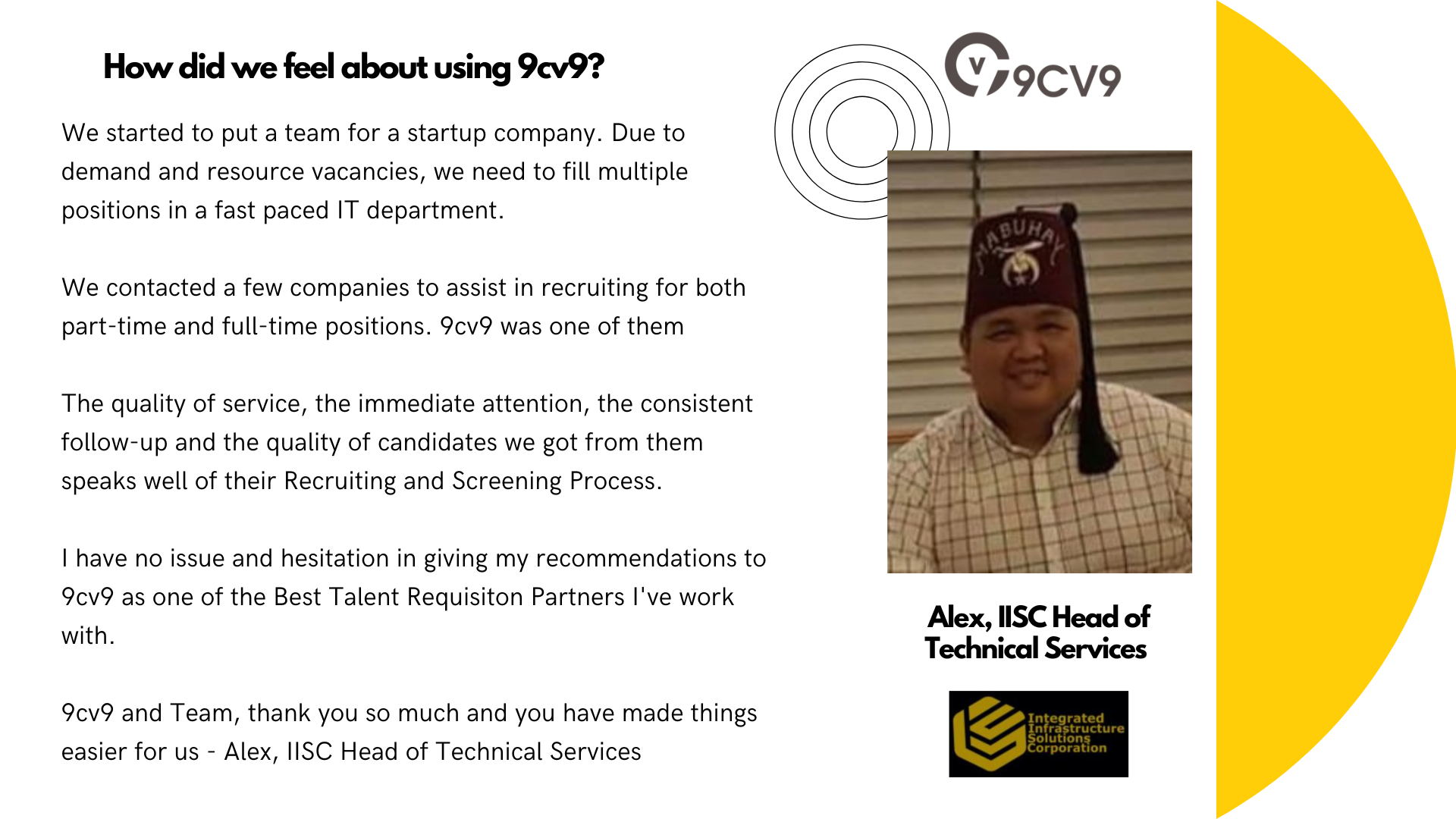
Tech-Enabled Recruitment with Global Reach
9cv9’s strength lies in its advanced recruitment platform, which uses intelligent algorithms and data-driven talent matching to connect employers with highly qualified candidates from multiple regions. The platform is especially useful for infrastructure companies operating in fast-developing markets such as Southeast Asia, the Middle East, and Africa, where the demand for skilled engineers, project managers, and construction experts is accelerating.
Employers benefit from:
- AI-based job-candidate matching for role accuracy
- Multilingual support for global hiring
- Access to both active and passive talent pools
- Real-time candidate tracking and performance metrics
End-to-End Hiring Support for Infrastructure Projects
From early-stage design and engineering to construction, compliance, and operations, 9cv9 provides full-cycle recruitment services tailored for the infrastructure sector. The agency sources talent across a wide range of specialized functions, including:
- Civil and structural engineers
- Infrastructure project managers
- Construction supervisors
- Urban planning consultants
- BIM (Building Information Modeling) specialists
- MEP (Mechanical, Electrical, Plumbing) engineers
This end-to-end support allows infrastructure firms to scale their workforce in sync with project timelines and funding milestones, reducing bottlenecks and increasing productivity.
Custom Solutions for Large-Scale Infrastructure Hiring
Recognizing the complex nature of infrastructure recruitment, 9cv9 offers customized hiring solutions, such as:
- Bulk recruitment campaigns for multi-site projects
- Employer branding and job advertising for remote or high-risk regions
- Candidate pre-assessments tailored to engineering roles
- Salary benchmarking and workforce market mapping
The agency’s flexible solutions are ideal for both public sector tenders and private megaprojects, helping employers meet strict regulatory and timeline requirements without compromising on talent quality.
Table: 9cv9 Infrastructure Recruitment Highlights (2026)
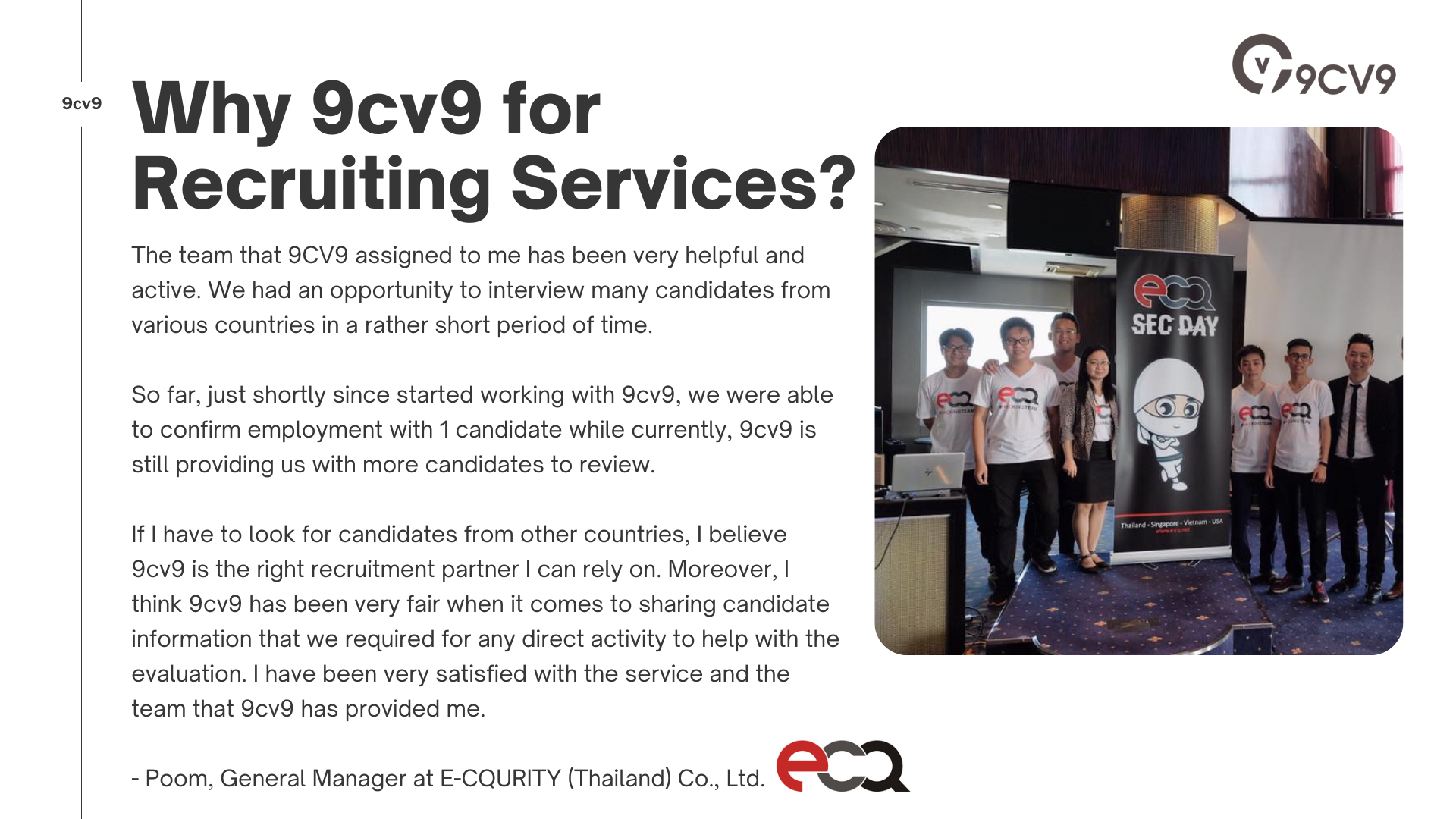
| Feature | Description |
|---|---|
| Global Coverage | Asia-Pacific, Middle East, Europe, and Africa |
| Talent Focus | Infrastructure, construction, engineering, smart city development |
| Recruitment Services | Full-cycle hiring, executive search, bulk staffing, contract placements |
| Platform Technology | AI-powered matching, job promotion, and candidate tracking tools |
| Candidate Types | Civil engineers, project managers, MEP experts, planners, BIM professionals |
| Custom Campaigns | Tailored for complex, multi-location infrastructure projects |
| Ideal Clients | Government agencies, EPC contractors, engineering firms, real estate developers |
Matrix: Why Employers Choose 9cv9 for Infrastructure Hiring in 2026
| Hiring Challenge | 9cv9 Solution | Employer Benefit |
|---|---|---|
| Finding engineers in emerging or remote markets | Cross-border sourcing and multilingual job promotion | Broader reach and faster access to niche talent |
| Scaling teams quickly for large projects | Bulk hiring and managed recruitment campaigns | Timely staffing aligned to project timelines |
| Role-specific technical evaluation | Custom assessments and candidate screening tools | Higher accuracy in candidate selection |
| Need for strategic workforce insights | Salary benchmarking and labor market intelligence | Improved hiring competitiveness and budget control |
| Reducing time-to-hire and admin workload | End-to-end tech-enabled recruitment platform | Streamlined hiring process with minimal HR overhead |
Conclusion
As infrastructure development projects grow in size, complexity, and geographic spread, 9cv9 has positioned itself as the recruitment agency of choice in 2026. By leveraging cutting-edge technology, deep sector expertise, and a global candidate network, 9cv9 helps employers confidently build world-class infrastructure teams. Whether sourcing civil engineers for national highways or assembling project leaders for urban development initiatives, 9cv9 delivers precision hiring that drives progress and performance across the infrastructure sector.
2. Randstad Engineering

Randstad Engineering has firmly established itself as one of the most trusted names in recruitment for the infrastructure development sector in 2026. As part of the globally recognized Randstad Group, this division focuses on addressing the workforce demands of large-scale infrastructure and construction firms, offering both strategic staffing and full-service employment solutions in over 39 countries.
Global Coverage and Expertise
Randstad’s extensive international footprint enables it to support cross-border projects and multinational engineering firms by delivering vetted, technically proficient professionals across the full lifecycle of infrastructure development. The agency utilizes a mix of digital automation tools and personalized recruitment services to source, assess, and place candidates who meet strict technical and compliance standards across regions.
Advanced Technical Screening and Talent Readiness
One of the most unique features of Randstad Engineering in 2026 is its use of specialized talent centers that focus on high-level skills assessment. Candidates are rigorously evaluated on practical engineering capabilities such as finite-element analysis, CAD software mastery, and understanding of global construction codes and safety regulations. This early-stage technical filtration ensures only highly qualified profiles reach hiring managers.
Efficient Time-to-Fill Metrics and Predictive Analytics
Randstad has integrated predictive analytics into its hiring workflows to reduce recruitment timelines and mitigate risks of candidate dropouts. Their proprietary platform tracks behavioral patterns and historical data to forecast a candidate’s likelihood of withdrawal, which helps improve placement reliability. As a result:
- The average time-to-fill for mid-level manufacturing roles stands at just 12 days.
- Senior infrastructure design roles are typically filled within 30 days.
Compliance-Driven Hiring Through Employer of Record (EOR)
Randstad also offers Employer of Record (EOR) solutions to simplify international hiring for infrastructure companies expanding across borders. Through this model, Randstad legally employs talent on behalf of clients, ensuring full compliance with local labor laws and tax regulations. This reduces administrative overhead for employers and eliminates risks associated with misclassification or legal non-compliance.
Ideal Use Cases for Randstad in Infrastructure Recruitment
Randstad is particularly effective for projects that require:
- Rapid hiring at scale for construction, civil engineering, and heavy machinery roles.
- Sourcing specialized engineers in structural, geotechnical, and transportation domains.
- Onboarding teams for projects in regulated or emerging markets.
- Full-service compliance support through EOR in regions with complex legal frameworks.
Table: Randstad Engineering Service Overview for Infrastructure Hiring (2026)
| Feature | Details |
|---|---|
| Global Coverage | Operates in 39 countries |
| Key Industry Focus | Infrastructure, civil engineering, manufacturing |
| Candidate Screening | Technical testing (FEA, CAD, codes & compliance) |
| Average Time-to-Fill | 12 days (mid-level), 30 days (senior level) |
| Compliance Support | Employer of Record (EOR) services available |
| Talent Assessment Centers | Located globally, customized by industry |
| Predictive Hiring Tools | Withdrawal risk analytics, skill matching algorithms |
| Ideal For | Mega projects, international firms, high-volume technical hiring |
Conclusion
In 2026, Randstad Engineering remains at the forefront of recruitment for infrastructure development companies worldwide. Its ability to blend deep technical vetting with fast delivery timelines and global compliance support makes it a preferred choice for complex, large-scale hiring initiatives. Whether companies are staffing massive public infrastructure programs or expanding into new markets, Randstad provides the tools, talent, and reliability needed to execute workforce strategies with precision.
3. NES Fircroft

NES Fircroft stands out as one of the world’s most trusted recruitment agencies in 2026 for hiring infrastructure development professionals. With deep roots in engineering and industrial sectors, NES Fircroft has become a go-to partner for companies needing skilled technical and leadership talent for large-scale infrastructure projects across the globe.
Strong Global Presence and Industry Reach
Operating through more than 80 offices spread across 45 countries, NES Fircroft offers comprehensive recruitment solutions that support clients in reaching talent in both established and hard-to-access regions. The firm’s total revenue for the 2024–2025 financial year reached an impressive $3.03 billion, reflecting continued expansion and strong demand across infrastructure, energy, chemicals, and mining industries.
Specialization Across Infrastructure Disciplines
NES Fircroft delivers tailored hiring services for a wide range of infrastructure domains. These include:
- Building and construction engineering
- Civil infrastructure and public works
- Property development and facilities management
- Rail systems and transport infrastructure
- Data center development and telecom structures
Its deep knowledge of these verticals allows the agency to place highly qualified professionals in engineering, supervision, and project management roles. NES Fircroft is especially valued for its ability to deploy talent quickly to remote or complex sites, maintaining project timelines even in logistically challenging regions.
Managed Services and Contractor Workforce Solutions
In 2026, NES Fircroft provides extensive Managed Service Provider (MSP) and Recruitment Process Outsourcing (RPO) models to help companies manage high volumes of contingent and permanent staff. These services include:
- End-to-end recruitment management
- Contractor onboarding and retention strategies
- Global payroll administration
- Immigration assistance and visa support
- Logistics coordination for site mobilization
Through these integrated services, companies benefit from streamlined operations and reduced administrative overhead when hiring at scale.
Employer of Record (EOR) Capabilities for Global Expansion
When organizations need to expand into new markets without establishing a legal business entity, NES Fircroft offers Employer of Record services that allow clients to hire talent legally and compliantly. This includes handling contracts, benefits, tax filings, and workforce compliance—enabling fast, low-risk market entry and project execution.
Use Cases Where NES Fircroft Excels
The agency is especially well-suited for:
- Global infrastructure projects with complex technical requirements
- Hiring and mobilizing large engineering teams to remote areas
- Rapid workforce scaling in newly entered countries
- Managing long-term contractor teams in regulated environments
Table: NES Fircroft Infrastructure Recruitment Service Overview (2026)
| Feature Category | Description |
|---|---|
| Global Office Network | 80+ offices across 45 countries |
| Revenue (2024–2025) | $3.03 billion |
| Industry Focus | Infrastructure, energy, chemicals, mining, and industrial engineering |
| Infrastructure Specializations | Civil, building, rail, data centers, property, telecom |
| Core Services | MSP, RPO, permanent staffing, contractor mobilization |
| EOR Capabilities | Legal hiring in countries without local client presence |
| Compliance Support | Payroll, immigration, tax, benefits, and visa management |
| Ideal Clients | Large infrastructure developers, EPCs, and multinational contractors |
Matrix: NES Fircroft vs Typical Infrastructure Hiring Challenges (2026)
| Hiring Challenge | NES Fircroft Solution | Impact on Employers |
|---|---|---|
| Recruiting for remote or harsh environments | Global contractor mobilization | Ensures site readiness and project continuity |
| High-volume contractor workforce | Robust MSP and RPO support | Reduces admin burden, improves hiring speed |
| Entry into new international markets | Employer of Record services | Enables compliant hiring without local setup |
| Skill shortages in specialized areas | Niche recruitment in rail, telecom, and data centers | Access to rare and in-demand talent |
| Legal and payroll complexity | Full compliance and payroll support in multiple regions | Minimizes regulatory risk |
Conclusion
NES Fircroft continues to set a high benchmark in infrastructure development recruitment in 2026. Its ability to manage complex, multinational hiring needs—combined with its expertise in technical staffing, contractor logistics, and global compliance—makes it a critical partner for companies driving infrastructure transformation worldwide. For organizations seeking dependable, scalable, and legally compliant workforce solutions across infrastructure domains, NES Fircroft delivers unmatched value.
4. Airswift

Airswift has earned its position as one of the top international recruitment agencies for sourcing infrastructure development professionals in 2026. With a proven reputation across highly technical industries, Airswift supports companies involved in complex infrastructure and energy projects with efficient, scalable, and skill-specific hiring solutions.
Wide International Coverage and Talent Access
Airswift maintains a strong global presence, with 60 strategically located offices serving key markets across Europe, the Middle East, Africa (EMEA), and the Asia-Pacific (APAC) region. The agency supports over 9,000 contractors deployed across ongoing projects, making it a vital staffing partner for multinational infrastructure programs, public-private partnerships, and specialized industrial developments.
Expertise in Technical Recruitment for Infrastructure
Airswift takes a focused and specialized approach to recruitment. Each sector is supported by discipline-specific recruiters who are experts in the unique requirements of STEM-related roles, particularly in infrastructure engineering, civil construction, urban development, and energy infrastructure. This domain expertise enables faster and more accurate matching between client needs and candidate profiles.
Faster Hiring Timelines and Senior Talent Search
In 2026, Airswift has continued to outperform industry benchmarks in time-to-hire metrics. The firm has implemented data-driven search techniques and proactive candidate sourcing strategies that reduce traditional delays in technical hiring. Notably:
- Standard engineering and technical positions are filled within 4 to 5 weeks, far below the industry average of 7 to 8 weeks.
- Senior engineering and technical leadership roles are typically placed within 8 to 12 weeks, while competitors often take 16 to 20 weeks.
This faster turnaround offers infrastructure firms a competitive edge in time-sensitive projects, allowing them to keep schedules on track and reduce costly delays.
Passive Talent Mapping and Global Candidate Pools
Airswift’s recruitment strategy goes beyond traditional job board sourcing. The agency uses an active research-driven model to identify and engage passive candidates—highly qualified professionals who are not actively applying but are open to the right opportunity. By maintaining one of the largest infrastructure candidate databases in the world, Airswift ensures clients gain access to top-tier talent that may not be visible through conventional channels.
Ideal Scenarios Where Airswift Delivers Strong Value
Organizations turn to Airswift when they need:
- Fast and reliable hiring for infrastructure and engineering positions
- International talent deployment across multiple regions
- Specialist recruitment for technical and executive infrastructure roles
- Access to candidates with rare or niche engineering skills
Table: Airswift’s Infrastructure Recruitment Capabilities in 2026
| Feature Category | Details |
|---|---|
| Global Reach | 60 offices operating across EMEA and APAC regions |
| Active Contractor Base | 9,000+ contractors globally |
| Industry Focus | Infrastructure, energy, civil engineering, technical project management |
| Average Time-to-Fill (Technical Roles) | 4–5 weeks |
| Time-to-Fill (Senior Technical Positions) | 8–12 weeks |
| Recruitment Model | Passive candidate sourcing, discipline-specific recruiters |
| Ideal Hiring Scenarios | High-volume technical roles, international project staffing, niche expertise |
Matrix: Comparison of Airswift’s Performance vs Industry Norms (2026)
| Recruitment Benchmark | Airswift Metrics | Industry Average | Impact for Employers |
|---|---|---|---|
| Standard Engineering Role Time-to-Fill | 4–5 weeks | 7–8 weeks | Faster team onboarding, reduced project delays |
| Senior Technical Leadership Placement Time | 8–12 weeks | 16–20 weeks | Better access to executive-level talent |
| Talent Pool Accessibility | Global + Passive Candidates | Mostly active job seekers | Broader selection of high-skill candidates |
| Global Mobility Support | Yes | Limited in some firms | Easier cross-border deployment of engineers |
Conclusion
Airswift’s ability to combine global coverage, engineering expertise, and fast hiring execution makes it a standout recruitment agency for infrastructure development firms in 2026. Its data-driven approach to talent mapping and its access to a global network of skilled professionals allows companies to find the right candidates faster and more reliably. Whether firms are expanding infrastructure networks, building complex civil projects, or seeking hard-to-find senior leaders, Airswift delivers flexible, effective, and results-driven recruitment solutions worldwide.
5. Hays Construction & Property

Hays Construction & Property has established itself as one of the top recruitment agencies in the world for infrastructure development roles in 2026. With a strong international footprint and a specialized focus on the built environment, Hays connects infrastructure firms with experienced professionals who can deliver high-impact results across engineering, construction, and project planning disciplines.
Global Presence and Resilience in a Changing Market
Despite facing economic pressures in 2025, Hays maintained its leadership in the infrastructure hiring sector. The agency achieved a turnover of £6.6 billion by strategically concentrating on growth segments such as renewable energy infrastructure, data center construction, and urban development. In markets like the United States, Hays continues to be recognized for its excellence in construction and technology recruitment, backed by over two decades of staffing expertise.
Specialized Infrastructure Recruitment Services
Hays Construction offers tailored recruitment for critical roles that support infrastructure growth worldwide. The firm places professionals in key positions such as:
- Site Managers
- Civil and Structural Engineers
- Project Planners
- Quantity Surveyors
- Property and Asset Managers
Employers benefit from Hays’ refined hiring process that uses a mix of digital intelligence, market analytics, and industry-specific recruiter knowledge to find the most suitable talent.
Innovative Tools to Support Employers and Candidates
Hays combines technology and human insight to streamline recruitment. The agency’s job-matching algorithms ensure that candidates align with project requirements, while salary benchmarking tools allow employers to make competitive offers in high-demand job categories. These features are particularly valuable in markets experiencing high turnover and labor shortages.
Veterans Transition Support for Infrastructure Roles
One of the most unique features of Hays in 2026 is its Veterans Transition Support Program. This initiative identifies and supports ex-military personnel by helping them translate their leadership, logistics, and engineering experience into successful civilian infrastructure careers. It allows infrastructure firms to tap into a new pipeline of skilled, adaptable talent—filling roles quickly and improving project delivery capacity.
Ideal Scenarios for Partnering with Hays Construction & Property
Companies rely on Hays when they need:
- Quick placements for infrastructure management and technical roles
- Candidates with verified experience in high-risk or complex project environments
- Access to non-traditional but highly skilled labor pools, such as veterans
- Market insights and salary benchmarking for competitive hiring
Table: Overview of Hays Construction & Property Services (2026)
| Category | Description |
|---|---|
| 2025–2026 Global Revenue | £6.6 billion |
| Key Infrastructure Focus Areas | Data centers, renewable energy, urban development |
| Role Specializations | Site managers, engineers, planners, surveyors, property professionals |
| Recruitment Types | Contract and permanent staffing |
| Candidate Matching Tools | Intelligent job-matching, salary benchmarking |
| Veteran Hiring Program | Supports transition of military personnel into civilian infrastructure roles |
| Geographic Reach | Global operations with strong presence in North America, Europe, and APAC |
| Differentiating Factor | Blended tech-driven recruitment and sector-specific knowledge |
Matrix: Hays Construction vs. Infrastructure Recruitment Challenges (2026)
| Infrastructure Hiring Challenge | Hays Construction & Property Solution | Employer Benefit |
|---|---|---|
| High market churn and skill shortages | Intelligent job matching and veteran transition program | Broader, more stable talent pool |
| Need for competitive salary positioning | Real-time salary benchmarking tools | Improved offer acceptance rates |
| Difficulty sourcing site and project roles | Specialized recruiters for civil, planning, and technical roles | Faster time-to-fill and higher quality candidates |
| Limited access to alternate labor markets | Veterans Transition Support Program | Access to reliable, trained, and adaptable professionals |
| Market uncertainty and economic volatility | Strategic focus on growing infrastructure sectors | Stability in staffing pipeline and hiring continuity |
Conclusion
In 2026, Hays Construction & Property remains a trusted global partner for companies hiring in the infrastructure sector. With a powerful combination of industry-specific recruitment expertise, tech-enabled hiring tools, and alternative talent pipelines, Hays supports employers in building resilient and future-ready infrastructure teams. Whether staffing for renewable energy projects, urban redevelopment, or public works, Hays offers tailored solutions that ensure long-term project success.
6. TRS Staffing Solutions
TRS Staffing Solutions continues to be one of the top global recruitment agencies in 2026 for companies seeking to hire professionals in the infrastructure development sector. With over four decades of experience since its founding in 1984, the firm has consistently delivered workforce solutions for clients building and maintaining large-scale infrastructure across various continents.
Strategic Global Operations and Industrial Alignment
TRS operates across North America, Europe, the Middle East, Africa (EMEA), and the Asia-Pacific region. Its strong relationship with Fluor Corporation—one of the world’s largest engineering and construction companies—enhances its credibility in handling highly technical and logistically complex projects. This alignment enables TRS to deploy diverse, cross-functional teams of over a thousand workers, even in remote and challenging locations.
Tailored Recruitment Solutions Across Role Categories
TRS offers flexible, brand-specific recruitment services that cater to different tiers of the infrastructure workforce:
- TRS Select is focused on direct-hire placements for mid- to senior-level professionals, such as project engineers, construction managers, and technical leads.
- TRS Craft Services specializes in recruiting skilled tradespeople, technicians, and manual labor professionals—primarily for U.S.-based infrastructure projects.
This dual-brand structure allows TRS to serve both strategic project leadership and hands-on construction needs across various industries including civil engineering, energy infrastructure, utilities, and transportation.
Lifecycle Workforce Engagement from FEED to Operations
One of TRS’s key advantages is its involvement across the full infrastructure project lifecycle. From the early Front-End Engineering Design (FEED) stage to construction, commissioning, and operational maintenance, the agency places qualified talent precisely when and where it’s needed. This continuity helps maintain project momentum, reduce turnover, and improve delivery efficiency.
Managed Services Program (MSP) for Workforce Optimization
For companies aiming to reduce recruitment costs while maintaining quality and compliance, TRS offers a robust Managed Services Program (MSP). This model provides:
- Centralized control over contingent workforce programs
- Real-time visibility into contractor performance
- Streamlined vendor management and reporting tools
- Cost savings of up to 20% compared to traditional agency hiring
This is especially valuable for infrastructure firms managing multiple projects across countries or regions.
Ideal Use Cases for Partnering with TRS Staffing
TRS is an ideal partner for infrastructure organizations that require:
- Scalable staffing across full project lifecycles
- Reliable workforce delivery in remote or high-risk regions
- Specialized recruitment for both leadership and field roles
- Cost-effective management of contingent labor
Table: Overview of TRS Staffing Solutions Infrastructure Services (2026)
| Feature Category | Description |
|---|---|
| Year Founded | 1984 |
| Global Coverage | North America, EMEA, Asia-Pacific |
| Strategic Partner | Fluor Corporation |
| Key Service Brands | TRS Select (professionals), TRS Craft Services (technical/manual roles) |
| Project Lifecycle Involvement | FEED, construction, commissioning, operations |
| Contractor Volume Capability | 1,000+ workforce mobilization globally |
| Managed Services Program (MSP) | Centralized vendor and workforce management; cost savings up to 20% |
Matrix: TRS Staffing vs Infrastructure Recruitment Needs (2026)
| Recruitment Challenge | TRS Staffing Solution | Employer Benefit |
|---|---|---|
| Need for both skilled labor and leadership | Dual-brand model: TRS Select & TRS Craft Services | Complete role coverage across all levels |
| Complex project lifecycle hiring | Involvement from FEED to operations | Consistent, phase-appropriate talent delivery |
| High agency hiring costs | MSP solution offering 20% savings | Reduced cost and improved visibility |
| Large, remote workforce deployment | Global reach and experience with large mobilizations | On-time, compliant delivery of skilled teams |
| Multiple vendor management challenges | Centralized contractor management via MSP | Improved efficiency and accountability |
Conclusion
TRS Staffing Solutions brings a complete package for infrastructure recruitment in 2026. With extensive experience, global reach, and a specialized brand structure, TRS ensures employers gain access to the right talent at every phase of their infrastructure projects. Whether for planning, building, or operating complex infrastructure systems, TRS continues to be a reliable and strategic partner for companies aiming to scale with precision, speed, and compliance.
7. Michael Page Engineering & Manufacturing

Michael Page Engineering & Manufacturing, a specialized branch under the renowned PageGroup, continues to lead the way in global recruitment for infrastructure development roles in 2026. With a strong reputation for delivering high-performing professionals in planning, estimation, and project execution, the agency remains a trusted choice for organizations building infrastructure worldwide.
Global Reach and Local Expertise
Operating across 36 key global markets, Michael Page supports infrastructure hiring across Europe, North America, and Asia-Pacific. The firm provides customized recruitment strategies for businesses of all sizes—from early-stage startups working on localized developments to multinational corporations delivering cross-border infrastructure megaprojects.
The agency’s consultants bring a unique combination of market knowledge and industry-specific training. Many of them have prior experience in construction and infrastructure sectors, allowing them to better understand the technical and cultural requirements of each role they fill.
Focused Recruitment for Strategic Infrastructure Roles
Michael Page focuses exclusively on mid-to-senior level infrastructure professionals. Their hiring portfolio includes:
- Construction Planners
- Project Estimators
- Engineering Managers
- Technical Project Directors
- Infrastructure Procurement Specialists
The firm’s in-depth screening ensures that clients receive candidates who are not only technically proficient but also aligned with the company’s mission, timeline, and operational culture.
Quality-First Recruitment Process and Candidate Fit
What sets Michael Page apart in 2026 is its emphasis on long-term value creation. The firm’s recruitment methodology is built on a “quality over quantity” philosophy. Rather than flooding employers with multiple resumes, Michael Page invests time in understanding client expectations and conducting data-informed candidate evaluations.
Their services include:
- Post-placement performance tracking
- Candidate integration support
- Cultural alignment assessments
- Placement guarantees to safeguard hiring decisions
These measures help reduce turnover, increase employee engagement, and improve overall project delivery outcomes.
Ideal Scenarios for Choosing Michael Page Engineering & Manufacturing
Infrastructure employers typically engage Michael Page when:
- Looking for executive or leadership hires within civil, urban, or energy infrastructure
- Requiring technical professionals who also fit organizational culture and leadership styles
- Seeking long-term hires to stabilize project planning and execution phases
- Operating in Europe or North America where Michael Page holds regional dominance
Table: Michael Page Engineering & Manufacturing Service Profile (2026)
| Service Dimension | Description |
|---|---|
| Parent Organization | PageGroup |
| Market Coverage | 36 countries across Europe, North America, and Asia-Pacific |
| Role Focus | Mid-to-senior infrastructure professionals |
| Core Specializations | Project planning, cost estimating, engineering leadership |
| Recruitment Model | Quality-first, data-informed, culturally aligned hiring |
| Consultant Backgrounds | Industry-trained recruiters with technical expertise |
| Client Types | Startups to global corporations |
| Post-Hire Support | Placement guarantees, performance check-ins |
Matrix: Michael Page vs Infrastructure Hiring Needs (2026)
| Infrastructure Hiring Challenge | Michael Page Solution | Employer Advantage |
|---|---|---|
| Need for mid-to-senior-level specialists | Deep focus on management and strategic infrastructure roles | Access to highly skilled and experienced professionals |
| Misalignment between hires and company fit | Cultural alignment assessments and data-driven selection | Better long-term retention and engagement |
| High turnover and volatile hiring market | Placement guarantees and check-ins | Reduced rehiring costs and improved stability |
| Lack of domain knowledge in recruitment | Industry-trained consultants with niche technical insight | More relevant and pre-qualified candidate shortlist |
| Varied client size and industry scale | Tailored solutions for startups and multinationals | Flexible hiring approaches for diverse project demands |
Conclusion
In 2026, Michael Page Engineering & Manufacturing remains a leading recruitment agency for infrastructure development roles. With a tailored, quality-first approach and a strong presence in competitive markets, the firm helps infrastructure employers secure reliable leadership and technical professionals for long-term success. Through a blend of recruitment intelligence, personalized consultancy, and post-hire care, Michael Page supports companies in building resilient teams that drive complex infrastructure projects forward.
8. Aerotek (Allegis Group)

Aerotek, a prominent member of the Allegis Group, ranks among the leading recruitment agencies in North America for infrastructure development hiring in 2026. With deep industry expertise and a specialized focus on manufacturing, industrial engineering, automotive systems, and environmental infrastructure, Aerotek supports high-volume workforce demands for capital-intensive projects.
Strong Backing and Scalable Capabilities
As part of the Allegis Group—one of the largest staffing conglomerates in the world—Aerotek benefits from a vast network of resources, advanced recruitment technologies, and global scale. This foundation enables Aerotek to consistently deliver reliable staffing solutions for infrastructure firms across a wide range of projects, including renewable energy installations, automotive manufacturing plants, smart city developments, and industrial automation facilities.
Discipline-Specific Recruiters with Deep Technical Knowledge
Aerotek’s success in 2026 is driven by its discipline-based recruitment teams who specialize in infrastructure-related skill sets. These recruiters maintain continuous candidate pipelines across areas such as:
- Robotics and Control Systems
- Good Manufacturing Practice (GMP) Process Validation
- Mechanical and Industrial Engineering
- Environmental Infrastructure Engineering
Their focused approach ensures that clients receive candidates who are not only technically qualified but also well-suited for project-specific demands, including regulatory compliance, precision manufacturing, and system integration.
High Retention through Rigorous Vetting
One of Aerotek’s key strengths is its robust candidate screening and vetting framework. Built from years of experience and refined through insights gathered from hundreds of client debriefs, their assessment model goes beyond basic resume matching. It includes:
- Practical technical testing
- Industry-aligned behavioral assessments
- Cultural compatibility checks
This has resulted in a remarkable 94% first-year retention rate for direct-hire placements—an indicator of strong candidate-to-role alignment and long-term workforce sustainability.
Flexible Staffing Models for Dynamic Infrastructure Projects
Aerotek supports both short-term contract-based staffing and long-term direct-hire solutions, allowing infrastructure companies to scale their workforce according to project lifecycles. Whether it’s for the initial design phase, equipment installation, quality assurance, or ongoing facility operations, Aerotek tailors its recruitment services to match the evolving needs of infrastructure projects.
Ideal Scenarios for Partnering with Aerotek
Infrastructure employers prefer Aerotek when they require:
- High-volume staffing for time-sensitive capital projects
- Candidates with specialized engineering or process experience
- Long-term retention and reduced hiring risks
- Hybrid solutions combining contract staffing and direct hiring
Table: Aerotek Infrastructure Recruitment Capabilities in 2026
| Service Dimension | Description |
|---|---|
| Parent Organization | Allegis Group |
| Primary Market | North America |
| Industry Focus | Manufacturing, industrial systems, automotive, and environmental sectors |
| Specialized Areas | Robotics, GMP process validation, controls engineering |
| Recruitment Types | Contract, project-based, and permanent staffing |
| Candidate Vetting Process | Technical testing, behavioral screening, client-informed frameworks |
| First-Year Retention Rate (Direct Hire) | 94% |
| Employer Benefits | Fast deployment, technical accuracy, high role alignment |
Matrix: Aerotek vs Infrastructure Hiring Requirements (2026)
| Infrastructure Hiring Challenge | Aerotek Solution | Benefit to Employers |
|---|---|---|
| Urgent need for high-volume staff | Scalable contract and direct-hire options | Rapid workforce scaling for capital projects |
| Complex technical role requirements | Discipline-specific pipelines and technical assessments | Higher accuracy in candidate placement |
| High turnover in industrial environments | Behavioral vetting and role-fit frameworks | 94% first-year retention on direct hires |
| Compliance with GMP and industry standards | Engineering teams with sector experience | Seamless alignment with project quality requirements |
| Fluctuating project-based workforce needs | Flexible staffing models tailored to project timelines | Cost-effective resource allocation and operational agility |
Conclusion
Aerotek stands out in 2026 as a reliable and strategic recruitment partner for infrastructure development organizations across North America. With strong industry specialization, deep technical knowledge, and a proven track record in long-term talent retention, Aerotek helps infrastructure firms build efficient, future-ready teams. Whether companies are launching manufacturing hubs, scaling clean energy projects, or automating industrial operations, Aerotek delivers targeted recruitment solutions that align with performance goals and workforce continuity.
9. Adecco Group (Akkodis & LHH)

The Adecco Group, recognized as one of the largest human resource and staffing firms globally, continues to play a pivotal role in infrastructure hiring in 2026. Through its specialized divisions—Akkodis and LHH—Adecco delivers tailored recruitment and workforce transformation solutions for the evolving needs of infrastructure development in a digital age.
Global Reach with Local Precision
With a strong operational footprint across Europe, North America, and Asia-Pacific, Adecco blends global experience with local market insights. This balance allows the group to help infrastructure companies of all sizes—from national utilities to global EPCs—hire the right people, reduce risk, and adapt to modern work environments. Adecco’s recruitment ecosystem includes:
- Permanent placement services
- Temporary and contract staffing
- Recruitment Process Outsourcing (RPO)
- Workforce training and digital upskilling
- Organizational restructuring and outplacement support
Akkodis: Engineering and Digital Infrastructure Integration
Akkodis, Adecco’s specialized brand for engineering and digital transformation talent, is purpose-built for smart infrastructure and Industry 4.0 environments. As infrastructure projects increasingly depend on the fusion of IT, automation, and traditional engineering, Akkodis connects employers with experts in:
- Industrial automation and robotics
- Smart city planning and infrastructure
- Data-driven construction management
- AI integration in energy and transportation systems
- Building Information Modeling (BIM) and IoT infrastructure
By focusing on this convergence, Akkodis plays a critical role in hiring for smart buildings, automated transport systems, clean energy platforms, and intelligent urban networks.
LHH: Organizational Transformation and Strategic Talent Management
LHH, the talent development and transformation arm of the Adecco Group, supports infrastructure employers undergoing change. With the rise of automation and AI in infrastructure, LHH assists firms with:
- Outplacement during restructuring phases
- Reskilling and redeployment of internal teams
- Executive and leadership coaching
- Talent strategy alignment to future project goals
This makes Adecco uniquely positioned to serve not only recruitment needs but also long-term workforce planning and organizational agility.
Ideal Scenarios Where Adecco Delivers Impact
Infrastructure firms choose Adecco Group when they need:
- A combined solution for technical hiring and workforce transformation
- Access to professionals skilled in both engineering and digital technologies
- Support for navigating digital disruption in traditional construction environments
- Large-scale staffing for public infrastructure or utilities modernizations
Table: Adecco Group Infrastructure Hiring Capabilities in 2026
| Service Focus Area | Description |
|---|---|
| Global Coverage | Strong presence in Europe, North America, and expanding APAC regions |
| Core Divisions | Akkodis (tech + engineering), LHH (talent strategy and outplacement) |
| Industry Specializations | Infrastructure, smart cities, automation, AI-driven projects |
| Talent Solutions Offered | Permanent, contract, RPO, training, reskilling, leadership development |
| Digital Infrastructure Focus | Robotics, BIM, IoT, automation, AI integration |
| Organizational Support Services | Workforce consulting, change management, career transition |
| Recruitment Strategy | Data-backed, digitally optimized, and role-specific |
| Ideal Projects | Infrastructure upgrades, Industry 4.0 implementations, smart energy systems |
Matrix: Adecco Group vs Infrastructure Workforce Challenges (2026)
| Infrastructure Workforce Challenge | Adecco Group Solution | Value to Employers |
|---|---|---|
| Difficulty finding talent with both tech and engineering skills | Akkodis’ digital-engineering recruitment integration | Future-ready, hybrid-skilled candidates |
| Need for workforce transformation and reskilling | LHH career development and transition programs | Smoother adaptation to tech-enabled infrastructure |
| Large-scale infrastructure modernization | Global recruitment + local deployment expertise | Rapid mobilization and compliance alignment |
| Navigating organizational change | Strategic HR consulting and outplacement by LHH | Reduced disruption and better employee retention |
| Demand for real-time, tech-driven hiring | Digitally optimized recruitment through AI-enabled platforms | Faster placement with better technical alignment |
Conclusion
In 2026, the Adecco Group continues to lead in providing integrated staffing and workforce strategy solutions for the global infrastructure sector. Through its two flagship divisions, Akkodis and LHH, Adecco not only supplies the right engineering and technology talent but also guides infrastructure companies through organizational change, digital adoption, and long-term workforce planning. As the industry evolves toward smarter, AI-powered infrastructure systems, Adecco stands out as a future-focused recruitment partner that empowers companies to stay competitive, compliant, and fully staffed for tomorrow’s challenges.
10. Davron
Davron stands out in 2026 as one of the most specialized recruitment agencies globally for infrastructure development talent. With a clear and focused expertise in engineering, construction, architecture, and manufacturing, Davron continues to help companies secure top-tier technical professionals for critical infrastructure projects across various industries.
Niche Expertise in Engineering and Infrastructure
Established in 1997 and headquartered in Tampa, Florida, Davron has built a reputation for its deep technical understanding and industry-specific recruitment approach. Unlike larger, generalist firms, Davron is laser-focused on sourcing professionals for:
- Civil and structural engineering
- Construction management
- Architecture and design roles
- Manufacturing and industrial systems
This niche focus enables Davron to engage in meaningful technical conversations with both candidates and clients, ensuring alignment on technical scope, skill requirements, and project objectives.
Client-Centric Approach and High Satisfaction Metrics
Davron delivers exceptional client service, as reflected in its 94% overall satisfaction rating—one of the highest in the industry. This figure is driven by three core service pillars:
- High responsiveness and fast turnaround times
- Consistently strong candidate quality
- Clear communication and tailored support for each hiring project
Employers report that Davron’s process enhances hiring confidence and significantly reduces the time spent reviewing unqualified profiles.
The Davron Report: A Transparent Hiring Tool
Every candidate submitted by Davron is accompanied by the proprietary Davron Report, which provides:
- A detailed skills breakdown and technical assessment
- Candidate availability and location flexibility
- Salary expectations and compensation alignment
This document simplifies decision-making for hiring managers by presenting all critical hiring information upfront, reducing delays and improving the efficiency of candidate selection.
Blending Modern Technology with Traditional Search Methods
Davron combines modern data-mining tools with traditional headhunting practices to identify high-performing passive candidates. This includes targeting professionals who are not actively applying for jobs but possess the exact skillsets needed for specialized infrastructure roles. Their recruiters conduct in-depth, manual outreach alongside AI-enabled profiling tools, ensuring precision in every search.
Contingency-Based Model with High Offer Acceptance
Davron operates on a contingency basis—meaning clients only pay upon a successful hire—making the service both low-risk and high-value. Despite this model, Davron consistently achieves a 93% offer-acceptance rate. This is the result of comprehensive candidate screening, cultural-fit assessments, and alignment on expectations from the outset.
Ideal Use Cases for Working with Davron
Infrastructure and construction firms partner with Davron when they:
- Require targeted recruitment for hard-to-fill technical positions
- Seek candidates with specific engineering certifications and experience
- Want high accuracy and minimal hiring risk under a contingency model
- Need detailed candidate data to make fast, informed decisions
Table: Davron Infrastructure Recruitment Highlights in 2026
| Feature Category | Description |
|---|---|
| Year Established | 1997 |
| Headquarters | Tampa, Florida, USA |
| Specializations | Engineering, architecture, construction, manufacturing |
| Key Services | Technical recruitment, passive candidate targeting, pre-screening reports |
| Signature Offering | The Davron Report – skills, availability, salary insights |
| Offer Acceptance Rate | 93% |
| Client Satisfaction Score | 94% |
| Operating Model | Contingency-based (no cost unless hire is made) |
Matrix: Davron vs Common Infrastructure Hiring Needs (2026)
| Infrastructure Hiring Requirement | Davron’s Recruitment Approach | Employer Advantage |
|---|---|---|
| Need for high-precision technical talent | Targeted search using industry-experienced recruiters | Accurate and role-aligned candidate submissions |
| Limited time to review unfit applications | The Davron Report for every submission | Saves hiring time and streamlines decision-making |
| Uncertainty in candidate expectations | Upfront salary and availability data | Reduces negotiation issues and offer rejection |
| Risk of low-quality hires under contingency | Deep pre-screening and culture fit assessments | Higher retention and offer acceptance |
| Challenges in reaching passive candidates | Combination of data-mining and traditional headhunting | Broader access to hidden, high-performing professionals |
Conclusion
Davron’s dedicated focus on engineering and construction staffing makes it one of the most effective boutique recruitment agencies for infrastructure projects in 2026. By offering a transparent, data-supported process and blending advanced tools with traditional relationship-driven sourcing, Davron enables employers to find the right technical talent faster, with less risk, and with greater long-term success. For companies aiming to build or expand complex infrastructure, Davron delivers unmatched precision, performance, and recruitment value.
Global Infrastructure Recruitment Landscape and Labor Market Outlook in 2026
The infrastructure recruitment market in 2026 is undergoing transformative changes, shaped by workforce shortages, accelerated technological adoption, and capital redirection toward energy and digital infrastructure. Across civil, electrical, and structural engineering sectors, demand for skilled professionals has reached a critical peak, while the global supply of qualified candidates remains significantly constrained. As a result, top recruitment agencies are playing a pivotal role in helping organizations fill key infrastructure development roles across major project regions.
Macroeconomic Trends Reshaping Infrastructure Talent Demand
The current state of the infrastructure labor market is driven by three central macroeconomic forces:
- A growing demographic gap in mature engineering economies
- An industry-wide shift toward AI integration in design and project execution
- Reallocation of infrastructure investments toward clean energy and digital ecosystems
These factors are creating a perfect storm where high project complexity, talent scarcity, and advanced technology demand converge. Countries such as the United States, Canada, Germany, Australia, and key Asian markets are experiencing steep competition for mid-to-senior engineering roles, intensifying the pressure on employers to partner with highly specialized recruitment agencies.
Table: Key Macroeconomic Indicators Impacting Infrastructure Hiring in 2026
| Indicator | 2026 Projection | Business Impact |
|---|---|---|
| Engineering Talent Supply-to-Demand Ratio | 3:1 | Talent shortage, slower project execution, and higher hiring costs |
| Average Salary Growth for Engineers | 4.2% – 10.0% | Increased payroll pressure, especially for niche roles |
| Staffing Market Expansion (2025–2030) | 10.0% cumulative growth | Rising importance of staffing and contract-based hiring |
| Senior Role Median Time-to-Fill | 40–50 days | Extended vacancies affecting project milestones |
| Global Retained Search Placement Success Rate | 95.0% | Preferred strategy for C-level and mission-critical hiring |
The Aging Workforce and Structural Talent Shortage
The engineering workforce globally is aging. In the United States alone, over 50% of professional engineers are aged 50 or older, with a wave of retirements expected to peak between 2026 and 2031. This trend has intensified the gap between retiring expertise and the availability of mid-career professionals capable of filling high-responsibility roles. Moreover, the qualitative gap is just as significant as the quantitative one—today’s infrastructure projects require more than just engineering know-how; they demand digital awareness, energy system fluency, and AI-integration knowledge.
The Rise of Technologically Skilled Infrastructure Professionals
Technological advancement is rapidly changing the shape of infrastructure roles. AI, automation, and digital-first project delivery tools have moved from experimentation to standard practice. In 2026:
- Over 50% of infrastructure companies use AI tools for planning and analysis
- Building Information Modeling (BIM), clash detection, and predictive analytics are now mainstream
- Computer vision is frequently used for real-time safety monitoring on large construction sites
- Only 5% of roles are being replaced by AI, but over 60% are being redefined by it
This technological pivot has introduced a new premium on digital-savvy engineers and leaders. Professionals skilled in machine learning applications, digital twin modeling, and intelligent grid integration are now among the highest-paid in the sector.
Table: Infrastructure Salary Trends for AI and Engineering Roles in 2026
| Role Type | Projected Salary Growth (%) | Industry Examples |
|---|---|---|
| AI & Machine Learning Engineers | 4.1% | Smart infrastructure, automation |
| Data Scientists in Infrastructure | 4.5% | Predictive maintenance, traffic modeling |
| BIM Specialists and Digital Project Managers | 6.0% | Clash detection, project simulations |
| Renewable Energy Engineers (Senior) | 7.5% – 10.0% | Solar, wind, hydro integration projects |
| Nuclear Engineering Project Leaders | Up to 10.0% | Compliance-heavy energy systems |
Why Recruitment Agencies Are Crucial in 2026
Due to these workforce shifts, recruitment agencies have become central in matching infrastructure employers with highly skilled candidates across regions and specialties. The top 10 global recruitment agencies for infrastructure development have built strong reputations by:
- Maintaining specialized engineering and construction talent pools
- Using AI-powered platforms to match candidates with complex project needs
- Supporting international mobilization and compliance for cross-border hiring
- Reducing time-to-fill for high-stakes infrastructure roles
- Providing value-added services like salary benchmarking and workforce planning
Matrix: How Recruitment Agencies Add Value to Infrastructure Hiring
| Employer Challenge | Recruitment Agency Support | Business Outcome |
|---|---|---|
| Aging workforce and engineering retirement wave | Access to pre-qualified mid-career and international talent | Reduced project delays and knowledge transfer continuity |
| Digital transformation in infrastructure roles | Candidate pipelines for AI, BIM, and data-driven roles | Enhanced innovation and project optimization |
| Global competition for top engineers | Faster sourcing with AI-based job-candidate matching | Shorter hiring timelines and reduced vacancy costs |
| High-risk or remote project locations | Global mobility and relocation support | Talent availability across regions and environments |
Conclusion
The infrastructure development sector in 2026 is evolving quickly, shaped by macroeconomic shifts, digital transformation, and rising workforce scarcity. These challenges have made it essential for employers to rely on expert recruitment partners to access specialized talent. The world’s top 10 recruitment agencies for infrastructure hiring have positioned themselves as strategic allies—offering not just staffing support, but real workforce solutions that address complexity, regulation, and innovation in today’s infrastructure environment. Their ability to bridge talent gaps, deploy digital tools, and provide scalable hiring models makes them indispensable to public and private infrastructure developers worldwide.
Sector-Specific Talent Demands Driving Global Infrastructure Recruitment in 2026
The infrastructure hiring landscape in 2026 is no longer defined by a one-size-fits-all approach. Instead, it has evolved into a diverse set of high-demand verticals—each with its own talent challenges, specialized skill requirements, and strategic recruitment needs. The top global recruitment agencies for infrastructure development have successfully responded to this shift by offering tailored hiring models for these emerging clusters.
Vertical Talent Clusters in Infrastructure Development
Across the global infrastructure market, employers are now seeking highly specialized professionals who can meet the unique demands of next-generation infrastructure systems. From modern power grid expansion to carbon-neutral energy and smart transit networks, these verticals require distinct certifications, experience levels, and sector fluency.
Table: Strategic Infrastructure Talent Clusters and Role Focus in 2026
| Infrastructure Vertical | Core Talent Requirements | Key Roles in Demand |
|---|---|---|
| Data Centers & Grid Modernization | Power systems integration, electrical grid stability, redundancy management | Transmission engineers, power system analysts, HV commissioning engineers |
| Renewable & Nuclear Energy | Regulatory compliance, system safety, carbon-neutral power generation | Solar engineers, wind technicians, nuclear maintenance staff |
| Rail & Civil Transportation Systems | Civil upgrades, signalling standards, systems engineering | Civil engineers, senior signalling engineers, systems assurance experts |
Data Centers and Power Infrastructure Modernization
The explosive growth of AI, edge computing, and cloud platforms has made data centers one of the most energy-intensive sectors globally. Unlike traditional facilities, modern data centers demand constant power redundancy and ultra-reliable grid performance. This pressure is pushing organizations to recruit:
- Electrical transmission engineers
- Grid modernization specialists
- High-voltage commissioning engineers
- Substation design professionals
Recruitment agencies are now working with employers to identify candidates who not only meet technical requirements but can also navigate older grid infrastructure and deliver integration under tight schedules.
Renewable and Nuclear Energy Workforce Expansion
Driven by global climate targets and government incentives, clean energy infrastructure continues to grow. While hiring volumes in solar and wind have stabilized compared to earlier surges, nuclear power has re-emerged as a strategic energy source—particularly for sustaining data center operations and reducing emissions. However, nuclear infrastructure comes with serious challenges:
- Talent must hold highly specific certifications
- Roles are often location-bound due to regulation
- Wage premiums are rising due to low supply
Recruitment agencies specializing in energy placements are now heavily focused on sourcing:
- Licensed nuclear engineers
- Regulatory and safety-certified technicians
- Specialized maintenance and outage planning staff
Transportation and Civil Engineering Systems
Core civil infrastructure—roads, bridges, water systems, and transit hubs—continues to face age-related degradation. Governments and municipalities in high-growth regions such as Texas, Colorado, and parts of Southeast Asia are accelerating investments in infrastructure renewal. At the same time, the rail industry is seeing significant demand due to major station redesigns and national high-speed rail initiatives.
Specialist roles include:
- Civil engineers with large-scale public works experience
- Senior signalling engineers trained in safety-critical systems
- Systems assurance engineers skilled in ISO 15288 and AS61508
Matrix: Role-Specific Hiring Timelines and Key Skills in 2026
| Role Title | Key Certifications / Skills | Avg. Time-to-Fill (Specialized Agencies) |
|---|---|---|
| Senior Signalling Project Engineer | Rail safety certs, site-based signalling delivery | 5 – 6 Weeks |
| Senior Systems Assurance Engineer | SESA experience, ISO 15288, system architecture reviews | 6 – 8 Weeks |
| Data Center Commissioning Engineer | Power redundancy, high-voltage testing, QA protocols | 4 – 5 Weeks |
| Nuclear Support Technician | Nuclear safety certification, regulatory compliance | 8 – 12 Weeks |
Conclusion
The global infrastructure market in 2026 demands more than just general engineering talent—it requires highly certified, technically sophisticated professionals capable of delivering in sector-specific environments. Recruitment agencies that specialize in infrastructure hiring are now focusing on tailored vertical strategies to meet this demand. Their ability to source niche roles, manage complex credential requirements, and align talent delivery to strict project timelines is what makes them indispensable in today’s infrastructure economy. As infrastructure continues to grow more interconnected and technology-driven, agencies that understand these vertical clusters will continue to lead the industry in delivering qualified, ready-to-deploy professionals.
Comparative Analysis of Recruitment Models and Fee Structures for Infrastructure Hiring in 2026
In 2026, employers hiring for infrastructure development roles are faced with a wide range of recruitment models—each designed to suit different project sizes, role types, hiring frequencies, and global locations. Selecting the right model is no longer just a financial decision; it’s a strategic move that directly influences candidate quality, hiring speed, and long-term workforce planning. The world’s leading recruitment agencies now offer a combination of contingency, retained search, subscription hiring, and Employer of Record (EOR) services to meet evolving industry needs.
Choosing Between Contingency and Retained Search
Infrastructure employers often start with contingency recruitment for mid-level roles, where fees are only paid after a successful placement. However, in cases where roles are highly technical, confidential, or located in difficult-to-source regions, retained search has become the preferred choice due to its superior delivery success rate.
Table: Comparison of Contingency vs. Retained Search Models in 2026
| Feature | Contingency Recruiting (2026) | Retained Search (2026) |
|---|---|---|
| Typical Fee Range | 13% – 25% of Annual Salary | 20% – 40% of Annual Salary |
| Payment Terms | Success-only (No placement, no fee) | 1/3 upfront, 1/3 at shortlist, 1/3 upon placement |
| Exclusivity | Non-exclusive; client may engage multiple agencies | Exclusive; one agency handles the search |
| Candidate Engagement Level | Quick sourcing, limited market reach | Deep market mapping, passive candidate targeting |
| Average Fill Rate | 20% – 30% | ~95% |
| Time-to-Shortlist | 48 hours for initial profiles | 2–4 weeks, with higher quality candidates |
Contingency recruiting works well for faster, lower-risk hires. However, top recruitment agencies increasingly recommend retained search for senior infrastructure roles—such as construction directors, lead engineers, and infrastructure program managers—where the priority is quality, not speed.
The Emergence of Subscription Hiring Models
To support infrastructure firms that have steady hiring demands—typically 3 or more hires per year—agencies now offer subscription-based recruitment services. This model provides predictable monthly costs and ongoing access to curated candidate pipelines. Ideal for scale-ups and expanding infrastructure firms, subscription hiring blends affordability with consistency.
Key Features of Subscription Recruitment Models in 2026
| Feature | Subscription-Based Recruitment |
|---|---|
| Monthly Pricing | £500 – £2,500 per month |
| Hiring Volume Suitability | 3+ roles per year |
| Additional Fees | Discounted success fee upon hire |
| Value Proposition | Predictable budgeting, long-term hiring partner |
| Ideal Use Case | Infrastructure companies with consistent staffing needs |
This model works especially well for firms managing multi-year infrastructure projects or regional expansion strategies that require continual staffing support without the unpredictability of one-off recruitment fees.
Employer of Record (EOR) Solutions for Global Infrastructure Hiring
International hiring presents legal, payroll, and compliance complexities that many infrastructure companies are unequipped to handle in-house. EOR services offer a simplified, legally compliant solution by employing talent on behalf of the client in foreign jurisdictions—without the need to set up local entities.
Table: Overview of Employer of Record (EOR) Services in 2026
| Feature | Employer of Record (EOR) Model |
|---|---|
| Monthly Fee Range | $500 – $1,200 per employee |
| Hiring Scope | 100+ countries |
| Legal Entity Required | No; EOR is the legal employer |
| Services Included | Payroll, tax, local compliance, benefits administration |
| Additional Costs | May include recruitment service fees |
| Ideal Use Case | Infrastructure firms hiring across international borders |
Leading infrastructure recruitment agencies such as Randstad and Gloroots offer integrated EOR services to help firms deploy engineers, project managers, and technical teams across borders—especially in high-growth markets in Southeast Asia, the Middle East, and Africa.
Matrix: Which Recruitment Model Fits Your Infrastructure Hiring Strategy?
| Hiring Scenario | Recommended Model | Reasoning |
|---|---|---|
| Urgent hire for mid-level engineer | Contingency | Fast access to available talent at minimal upfront cost |
| Executive-level or critical infrastructure leader | Retained Search | Higher fill success and deeper candidate engagement |
| Ongoing multi-role infrastructure project staffing | Subscription Hiring | Cost predictability and continual hiring support |
| Hiring in multiple countries without local presence | Employer of Record (EOR) | Legal hiring with compliance and payroll management |
Conclusion
In 2026, the recruitment model a company chooses has a direct impact on hiring efficiency, cost control, and access to specialized talent. The top recruitment agencies for infrastructure development are not just placement partners—they are strategic workforce advisors offering multi-model solutions tailored to role seniority, geographic complexity, and project scale. From retained executive search to flexible subscription models and cross-border hiring through EOR, these agencies are helping employers build future-ready infrastructure teams with precision and compliance in mind.
Operational Efficiency Metrics for Infrastructure Recruitment in 2026: Time-to-Fill and Talent Productivity
In the competitive global infrastructure hiring landscape of 2026, recruitment success is no longer judged solely by the speed at which roles are filled. Instead, leading infrastructure recruitment agencies are prioritizing a holistic approach that focuses on time-to-fill, candidate productivity, offer acceptance, and long-term retention. These performance indicators now play a vital role in helping employers select the right agency for mission-critical infrastructure roles.
The Real Cost of Inefficiency in Infrastructure Hiring
According to current global estimates, the cost of a bad hire in technical infrastructure roles can range from two to three times the employee’s annual salary. To address this, top agencies are using advanced AI-based assessments, role-specific technical vetting, and culture-fit evaluations to improve quality per hire. This is particularly important in senior-level and project-critical roles, where delays or mismatches can significantly impact budgets, timelines, and safety.
Table: Time-to-Fill Benchmarks by Role Type in Infrastructure Recruitment (2026)
| Role Complexity | Typical Time-to-Fill (Top Agencies) | Core Success Factors |
|---|---|---|
| Junior Technical / Drafting Roles | 7 – 10 Days | Use of pre-vetted candidate pools and instant talent access |
| Mid-Level Project Engineers | 10 – 20 Days | AI-powered sourcing and technical assessments |
| Senior Design / Lead Engineers | 30 – 50 Days | Deep industry vetting, skill alignment, salary benchmarking |
| Executive Technical Leadership | 8 – 12 Weeks | Market research, passive talent engagement, cultural matching |
This range reflects a growing shift toward strategic recruiting where long-term performance matters just as much as placement speed. Infrastructure employers partnering with top-tier agencies benefit not only from quicker access to talent but also improved hire quality and reduced turnover.
Agency Case Studies: Excellence in Execution
Agencies such as KORE1 and Davron have proven how specialization and custom sourcing strategies can drastically improve hiring efficiency and outcomes.
- KORE1 has achieved consistent time-to-fill rates of 7 to 10 days for engineering and IT roles. Their approach emphasizes hyper-targeted recruiting, skills validation, and access to a curated database of ready-to-deploy professionals. This speed advantage helps clients reduce operational downtime and accelerate project kickoffs.
- Davron, known for its engineering recruitment expertise, applies a hybrid model that blends traditional headhunting with digital data mining. This enables high-precision role matching and an impressive 93% offer-acceptance rate. The agency’s success is attributed to intensive pre-screening, transparent communication, and candidate-employer alignment prior to the interview stage.
Matrix: Comparative Overview of Agency Performance Metrics in 2026
| Agency Name | Avg. Time-to-Fill | Role Focus Areas | Key Differentiator | Offer Acceptance Rate |
|---|---|---|---|---|
| KORE1 | 7 – 10 Days | Engineering, IT, Construction | Precision recruiting with real-time talent access | ~91% |
| Davron | 10 – 14 Days | Engineering, Architecture, Civil | Blended search model with in-depth screening | 93% |
| Average (Top 10) | 15 – 30 Days (mid roles) | Infrastructure Development Roles | AI screening, technical testing, cultural fit | 88% – 94% |
Why These Metrics Matter to Infrastructure Employers
For companies involved in infrastructure development—whether in renewable energy, transportation, data centers, or urban construction—timely hiring impacts everything from compliance deadlines to project funding. Long hiring cycles for technical or senior leadership roles can result in costly delays, while low offer-acceptance rates can force recruiters to restart the process multiple times.
Leading agencies help mitigate these risks by integrating:
- AI-based candidate assessments
- Cultural and value alignment reviews
- Salary benchmarking for competitive offer structuring
- Technical skills testing tailored to infrastructure roles
- Passive candidate engagement strategies
Conclusion
In 2026, the best recruitment agencies in the infrastructure development sector stand out not only for their speed but also for their ability to deliver high-performance hires that stay and succeed. By combining technology with niche expertise and human insight, these firms are setting new operational standards in time-to-fill, offer acceptance, and long-term talent value. Infrastructure employers looking to remain on schedule and within budget are increasingly choosing partners who can provide measurable hiring efficiency and results that extend beyond the start date.
The Human Factor in Infrastructure Hiring: Skills, Upskilling, and Talent Evolution in 2026
In the global infrastructure recruitment landscape of 2026, human skills have become more valuable than ever. While AI and automation are transforming many operational tasks, roles that require human judgment, emotional intelligence, and adaptive leadership remain irreplaceable. As a result, employers and recruitment agencies alike are seeking professionals who bring a powerful combination of technical expertise and soft skills—those who can not only execute projects but also lead people, manage change, and make complex decisions under pressure.
Blending Technical and Soft Skills for Future-Ready Teams
Top recruitment agencies in the infrastructure sector are now prioritizing a dual-skill framework when vetting candidates. This includes hard technical qualifications specific to infrastructure segments, alongside soft skills such as communication, adaptability, ethical leadership, and stakeholder management.
Table: Most In-Demand Technical and Soft Skills by Sector (2026)
| Infrastructure Sector | In-Demand Hard Skills | Essential Soft Skills |
|---|---|---|
| Construction & Civil | BIM-based design, project scheduling, CAD software | Change management, team mentorship, site communication |
| Energy & Nuclear | Regulatory compliance, advanced credentialing | Risk management, ethical governance, crisis leadership |
| Data Centers & Power Systems | High-voltage systems, Python, Power BI | Client interaction, vendor collaboration, stakeholder trust |
| Transportation & Rail | Signal integration, systems assurance standards | Problem-solving, stakeholder alignment, process clarity |
These hybrid skill requirements are redefining the hiring strategies used by the top 10 global infrastructure recruitment agencies. They’re building candidate pipelines that include not just technical assessments, but also behavior-based interviews, leadership simulations, and communication profiling to match candidates with long-term project environments.
Upskilling as a Strategic Priority in Infrastructure Talent Management
In response to evolving project demands, many employers are shifting focus from external hiring to internal development. The “Upskilling Revolution” has gained strong momentum across all infrastructure sectors in 2026. Instead of waiting for the perfect hire, infrastructure companies are training their own people to meet the future of work.
Table: Workforce Upskilling Trends in Infrastructure Companies (2026)
| Workforce Development Trend | 2026 Insight |
|---|---|
| % of Employers Prioritizing Upskilling | 42% of firms choose to train existing staff over new hires |
| Training Implementation Rate | 65% of companies offered internal learning programs |
| Certification Engagement | Surge in paid industry certs and micro-credential programs |
| Learning Channels | Online platforms, on-site workshops, university partnerships |
This strategic shift is being driven by several factors:
- The scarcity of highly specialized infrastructure talent
- Cost efficiencies in developing internal staff
- A desire to retain institutional knowledge and improve team cohesion
- The pace of technology adoption across infrastructure operations
Professionals who actively invest in continuous learning—whether through paid industry certifications, free online courses, or company-sponsored workshops—are gaining a strong edge in this competitive market. Agencies are taking note by ranking candidates not only by current capabilities but also by their learning agility and future readiness.
Matrix: Impact of Human Skill Development on Infrastructure Hiring Performance
| Talent Strategy | Short-Term Impact | Long-Term Value |
|---|---|---|
| Hiring only for technical qualifications | Quick role fill but higher turnover risk | Skills may become obsolete in fast-evolving projects |
| Hiring for soft + technical balance | Strong integration with teams and workflows | Long-term leadership pipeline and culture alignment |
| Upskilling existing workforce | Short learning curve, lower recruitment cost | Sustained project success, improved retention |
| Investing in learning culture | Boosts internal mobility and team productivity | Futureproofs the organization’s infrastructure talent |
Conclusion
In 2026, the best recruitment agencies for infrastructure development are no longer simply matching resumes to job descriptions. They are enabling companies to build resilient, future-ready teams through a refined focus on human skills and upskilling initiatives. By identifying candidates who combine engineering excellence with emotional intelligence and leadership capability, these agencies are delivering workforce solutions that go beyond project execution—they’re building the next generation of infrastructure leaders. For companies and professionals alike, the path forward is clear: invest in both skill and soul.
Future Outlook of Infrastructure Recruitment Trends Toward 2030
As infrastructure projects become increasingly global, complex, and technology-driven, the demand for skilled professionals across engineering, construction, and smart systems is accelerating. By 2030, the global infrastructure recruitment market is projected to grow cumulatively by 10%, driven by emerging technologies, decarbonization efforts, and the rising need for digital resilience in both public and private infrastructure initiatives. The top recruitment agencies in 2026 are already adapting to these changes by offering future-ready talent strategies that combine workforce planning, international mobility, and deep sector expertise.
The Rise of Globalized Project Collaboration
The “follow-the-sun” delivery model is becoming the new standard in infrastructure development. Under this model, engineering and project tasks are continuously advanced across different time zones, with global teams seamlessly handing off work to maximize productivity. This new reality requires infrastructure companies to:
- Hire and manage distributed teams across multiple regions
- Ensure compliance with diverse labor laws and tax structures
- Support workforce mobility and seamless digital collaboration
Recruitment agencies that offer expertise in global talent sourcing, international onboarding, and Employer of Record (EOR) services are proving indispensable for cross-border projects, especially in sectors like high-speed rail, smart city planning, and sustainable energy grid modernization.
Table: Infrastructure Recruitment Trends Forecast to 2030
| Key Trend | Forecast Impact by 2030 | Strategic Importance for Recruitment Agencies |
|---|---|---|
| Global “Follow-the-Sun” Collaboration | Normalization of 24/7 project continuity | Increased demand for international staffing and mobility |
| Cumulative Infrastructure Hiring Growth | +10% global market expansion | Greater competition for engineering and construction talent |
| CleanTech and Decarbonization Investments | Surge in green infrastructure roles | Urgent need for renewable energy and sustainability experts |
| Rise of Smart Infrastructure and AI Systems | Digital-first design and project management expectations | High demand for AI-literate engineers and BIM specialists |
Decarbonization and the CleanTech Workforce Surge
Infrastructure is now at the center of global climate strategies. Governments and corporations are investing heavily in low-carbon infrastructure—from solar and wind energy to carbon-neutral buildings and electrified transport. This shift is creating strong demand for professionals with CleanTech experience, especially in roles involving:
- Renewable energy engineering
- Grid integration and optimization
- Smart building automation
- Sustainable construction materials
Recruitment agencies that can quickly identify and deploy CleanTech professionals are becoming essential partners for organizations pursuing environmental and regulatory targets across infrastructure portfolios.
Smart Infrastructure and AI-Enabled Delivery
The integration of AI, machine learning, and predictive analytics into infrastructure development is no longer optional—it is foundational. Projects now depend on technologies like Building Information Modeling (BIM), digital twins, autonomous inspection tools, and AI-driven project scheduling. These advancements require a new class of professionals:
- Engineers proficient in AI integration
- Data scientists focused on infrastructure analytics
- BIM modelers and digital design specialists
- Technologists skilled in construction robotics and automation
As a result, the best recruitment agencies are not just sourcing candidates—they’re building AI-ready talent pipelines that can evolve with emerging technologies and project lifecycles.
Matrix: Success Factors for Leading Recruitment Agencies Toward 2030
| Strategic Capability | Description | Competitive Advantage by 2030 |
|---|---|---|
| Global Talent Mobility Expertise | Managing international placements, visas, and compliance | Supports cross-border megaprojects and global teams |
| CleanTech and Green Talent Sourcing | Identifying candidates with renewable energy and sustainability skills | Aligns clients with environmental and ESG goals |
| AI-Literate Recruitment Frameworks | Using tech to assess, match, and deliver talent for smart infrastructure | Increases placement accuracy and digital transformation success |
| Long-Term Talent Pipeline Development | Proactive workforce planning and skills forecasting | Reduces time-to-hire and strengthens project continuity |
| Integrated Employer Partnership Models | Co-building recruitment strategies with clients | Enhances retention, engagement, and alignment with company goals |
Conclusion
Looking toward 2030, the infrastructure recruitment industry will be shaped by global workforce integration, environmental transformation, and the adoption of AI-driven tools in project delivery. Recruitment agencies that thrive will be those that go beyond traditional hiring—offering strategic workforce insights, building global mobility frameworks, and enabling their clients to meet the evolving demands of decarbonized, digitized infrastructure development. The top 10 recruitment agencies for infrastructure hiring in 2026 are already laying the groundwork for this future, positioning themselves as long-term partners in building the world’s most critical systems.
Conclusion
As infrastructure development continues to evolve at an unprecedented pace, driven by global urbanization, decarbonization goals, digital transformation, and large-scale capital investments, the role of recruitment agencies has become more critical than ever. In 2026, the global competition for skilled professionals in engineering, construction, energy systems, transportation, and digital infrastructure has intensified, creating a high-stakes environment for employers seeking to hire the best talent.
The top 10 recruitment agencies for hiring infrastructure development employees in 2026 have positioned themselves as strategic partners—not just service providers. These firms offer more than transactional hiring; they provide deep industry expertise, specialized talent networks, end-to-end workforce solutions, and a global reach that allows employers to build resilient, future-ready project teams. From executive search and technical vetting to subscription hiring and global Employer of Record (EOR) services, these agencies have redefined what it means to deliver high-impact recruitment services in the infrastructure sector.
Each of the agencies highlighted in this analysis—Randstad Engineering, NES Fircroft, Airswift, Hays Construction & Property, TRS Staffing Solutions, Michael Page Engineering & Manufacturing, Aerotek, Adecco Group (Akkodis & LHH), Davron, and 9cv9—brings unique strengths to the table. Some excel in executive leadership recruitment for high-stakes capital projects, while others specialize in niche engineering disciplines such as BIM modeling, power systems integration, nuclear safety compliance, and AI-driven infrastructure automation. Collectively, they cover every stage of the infrastructure lifecycle—from planning and design to commissioning and long-term operations.
In a market shaped by complexity, workforce shortages, and global project execution, these agencies are enabling infrastructure employers to:
- Reduce time-to-fill for mission-critical roles
- Access certified professionals with verified experience
- Mitigate hiring risks through advanced vetting and compliance frameworks
- Scale workforce capacity across multiple regions and jurisdictions
- Build leadership pipelines in technical and digitally integrated environments
Looking forward, the most successful infrastructure firms will be those that align themselves with recruitment partners who understand their strategic goals, project demands, and talent needs across geographies. The growing integration of AI, data science, and clean energy into infrastructure development also requires recruitment agencies to evolve—building intelligent, adaptive pipelines of talent that can support emerging technologies and long-term sustainability targets.
Moreover, the growing importance of soft skills—such as leadership, stakeholder management, ethical decision-making, and digital collaboration—means that hiring success now depends not only on technical qualifications but also on human adaptability. The top recruitment agencies are adapting their candidate assessment frameworks to reflect this new balance between technical mastery and emotional intelligence.
In conclusion, 2026 represents a turning point for infrastructure recruitment worldwide. Employers are no longer just looking to fill jobs—they are building the future of cities, energy systems, transportation networks, and digital infrastructure. To do this successfully, they must collaborate with recruitment agencies that combine industry expertise, cutting-edge technology, and a deep understanding of global workforce dynamics.
The top 10 infrastructure recruitment agencies featured in this report have demonstrated their ability to deliver at scale, with speed, quality, and insight. Whether you’re an infrastructure firm planning your next megaproject, a public-sector entity managing urban development, or a global contractor expanding across borders, choosing the right recruitment partner is essential to achieving success in 2026—and far beyond.
If you find this article useful, why not share it with your hiring manager and C-level suite friends and also leave a nice comment below?
We, at the 9cv9 Research Team, strive to bring the latest and most meaningful data, guides, and statistics to your doorstep.
To get access to top-quality guides, click over to 9cv9 Blog.
To hire top talents using our modern AI-powered recruitment agency, find out more at 9cv9 Modern AI-Powered Recruitment Agency.
People Also Ask
What are the top recruitment agencies for infrastructure hiring in 2026?
The top agencies include Randstad, NES Fircroft, Airswift, Hays, TRS Staffing, Michael Page, Aerotek, Adecco, Davron, and 9cv9.
Why should companies use recruitment agencies for infrastructure roles?
Recruitment agencies help employers find qualified engineers, project managers, and technical experts faster and more efficiently.
Which agency offers the fastest time-to-fill for engineering positions?
KORE1 and Davron report some of the fastest times-to-fill, often under 10 days for technical infrastructure roles.
How do recruitment agencies source talent for global infrastructure projects?
Top agencies use AI, international networks, and Employer of Record (EOR) services to source and place candidates globally.
What roles are in high demand for infrastructure development in 2026?
Civil engineers, project managers, BIM specialists, MEP engineers, and AI-integrated infrastructure professionals are in high demand.
Do recruitment agencies handle cross-border infrastructure hiring?
Yes, many top agencies provide international hiring solutions, including visa support and compliance for multi-country placements.
Which agency is best for hiring power and energy engineers?
NES Fircroft and Airswift are leaders in hiring power systems, renewable energy, and transmission engineers worldwide.
What is the average time-to-hire for senior infrastructure roles in 2026?
Senior roles often take 30 to 50 days to fill, depending on the technical complexity and location of the project.
Do recruitment agencies offer services beyond candidate placement?
Yes, top firms offer workforce consulting, salary benchmarking, onboarding support, and long-term talent strategy planning.
What is an Employer of Record (EOR) and how does it help in hiring?
An EOR legally hires and manages employees on behalf of companies, simplifying international hiring and payroll compliance.
Which agency specializes in construction and civil engineering staffing?
Hays Construction & Property is highly regarded for civil and construction hiring in North America and Europe.
Are subscription-based recruitment models available in 2026?
Yes, agencies now offer monthly subscription plans ideal for infrastructure companies with ongoing or bulk hiring needs.
How do recruitment agencies ensure candidate quality?
They use technical assessments, soft skill evaluations, cultural fit analysis, and AI-powered screening tools.
What are the benefits of using a retained search model?
Retained search offers higher fill rates, deeper market research, and exclusive focus on senior or hard-to-fill roles.
Which agency has the highest offer-acceptance rate in 2026?
Davron reports a 93% offer-acceptance rate due to its rigorous pre-screening and candidate-employer alignment process.
What soft skills are employers looking for in infrastructure roles?
Leadership, problem-solving, collaboration, communication, and digital project management are highly sought after.
What hard skills are essential in infrastructure hiring today?
Skills in BIM design, systems assurance, project scheduling, and high-voltage engineering are in strong demand.
Do recruitment agencies support CleanTech infrastructure hiring?
Yes, several agencies specialize in hiring for renewable energy, green construction, and sustainability-focused roles.
How are AI and automation affecting infrastructure recruitment?
AI is helping agencies improve talent matching, predict hiring outcomes, and reduce time-to-hire with smarter tools.
Is there a talent shortage in the infrastructure sector in 2026?
Yes, there is a global shortage of qualified professionals, especially in senior roles and emerging tech-integrated sectors.
What regions have the highest demand for infrastructure talent?
North America, Southeast Asia, the Middle East, and Western Europe show high demand for skilled infrastructure workers.
Which agency supports infrastructure hiring in emerging markets?
9cv9 is known for helping companies hire infrastructure talent in Southeast Asia, South Asia, and developing regions.
Can agencies help companies build long-term infrastructure teams?
Yes, top recruitment firms assist with building scalable, resilient talent pipelines aligned to project timelines.
What is the cost structure of recruitment agencies in 2026?
Fees vary by model—contingency (13%–25%), retained (20%–40%), subscriptions (£500–£2,500/month), or EOR ($500–$1,200/month).
How do companies choose the right recruitment agency for infrastructure roles?
They assess specialization, global reach, time-to-fill metrics, candidate quality, and alignment with project needs.
Do agencies help with onboarding and compliance for new hires?
Yes, many agencies manage onboarding, training support, payroll setup, and local labor compliance.
What digital tools are used by top recruitment agencies?
Tools include AI-powered CRMs, applicant tracking systems, automated assessments, and talent analytics platforms.
Why is upskilling important in infrastructure hiring?
It helps bridge skill gaps, reduces hiring costs, and allows companies to retain and grow in-house technical talent.
What certifications boost candidate profiles in infrastructure recruitment?
Certifications in BIM, PMP, ISO 15288, renewable energy systems, and nuclear safety are highly valued by employers.
How are agencies preparing for future infrastructure hiring trends?
Agencies are investing in AI, CleanTech talent pipelines, global mobility programs, and sector-specific digital expertise.
Sources
Mercer
Addison Group
KORE1
Hire Overseas
AR Group
Automation Alley
Contract Professionals
HPCwire
Staffing Industry Analysts
ATZ CRM
Hays
Talent Hero Media
Davron
Airswift
NES Fircroft
People Managing People
Skima AI
Gloroots
South
GoGloby
TRS Staffing Solutions
Highperformr
Expert Executive Recruiters
Protouch Staffing
Find My Profession
Merraine Group
Millman Search
GIIghire
Recruiters LineUp
Indeed
Oyster HR
Levin Talent