




























Key Takeaways
- AI tools in 2026 enable faster and smarter web development by automating coding, testing, and UI design through intelligent workflows.
- Platforms like Windsurf, Lovable, and QA Wolf lead the shift to low-code, full-stack, and agentic development environments.
- Businesses adopting these AI tools gain a competitive edge with reduced time-to-market, lower development costs, and scalable architecture.
The global web development landscape is undergoing a historic transformation in 2026, as artificial intelligence (AI) continues to reshape how websites and applications are planned, coded, tested, and launched. The traditional software development lifecycle—once heavily reliant on manual code writing, rigorous debugging, and lengthy QA processes—is being rapidly replaced by intelligent, AI-native tools that can automate entire development workflows. These advanced platforms empower developers, startups, and enterprises to build web experiences faster, with greater accuracy, and at dramatically lower operational costs.

The rise of AI in web development is more than just a trend; it marks a strategic shift in how modern digital products are built. From AI-powered code generators and automated UI/UX design assistants to intelligent testing bots and real-time DevOps orchestration engines, these tools are no longer experimental. They are now essential components in the toolkits of modern engineering teams. In fact, research shows that in 2026, over 90 percent of software development teams use at least one AI-based tool as part of their daily workflow—underscoring how widespread and mission-critical these solutions have become.
What makes this new era even more significant is the democratization of development. With AI tools bridging the gap between technical complexity and usability, even non-technical professionals like product managers, designers, and founders can now participate in the application-building process using natural language prompts, visual workflows, or guided wizards. The result is an explosion of creativity and speed across all tiers of web development, making it easier than ever to launch sophisticated digital platforms with leaner teams and faster turnaround.
As the AI-native development ecosystem continues to evolve, it is crucial for businesses to stay informed about which tools are truly leading the charge. In 2026, dozens of platforms are competing for attention, but only a few stand out for their performance, scalability, collaboration features, security readiness, and integration flexibility. These standout tools are not just enhancing productivity—they’re redefining what’s possible in frontend and backend engineering, as well as in DevOps, QA, and continuous delivery pipelines.
This comprehensive guide highlights the top 10 best AI tools for web development in 2026, carefully selected based on innovation, real-world adoption, user satisfaction, and enterprise-readiness. Whether you’re building a startup MVP, modernizing enterprise infrastructure, or automating legacy development pipelines, these platforms are shaping the future of digital product development. The tools covered in this list are helping developers move from writing code to architecting intelligent outcomes—where AI works alongside humans to deliver software that is faster, smarter, and ready for tomorrow’s web.
Before we venture further into this article, we would like to share who we are and what we do.
About 9cv9
9cv9 is a business tech startup based in Singapore and Asia, with a strong presence all over the world.
With over nine years of startup and business experience, and being highly involved in connecting with thousands of companies and startups, the 9cv9 team has listed some important learning points in this overview of the Top 10 Best AI Tools for Web Development in 2026.
If you like to get your company listed in our top B2B software reviews, check out our world-class 9cv9 Media and PR service and pricing plans here.
Top 10 Best AI Tools for Web Development in 2026
1. GitHub Copilot
Why GitHub Copilot Leads the AI Development Ecosystem
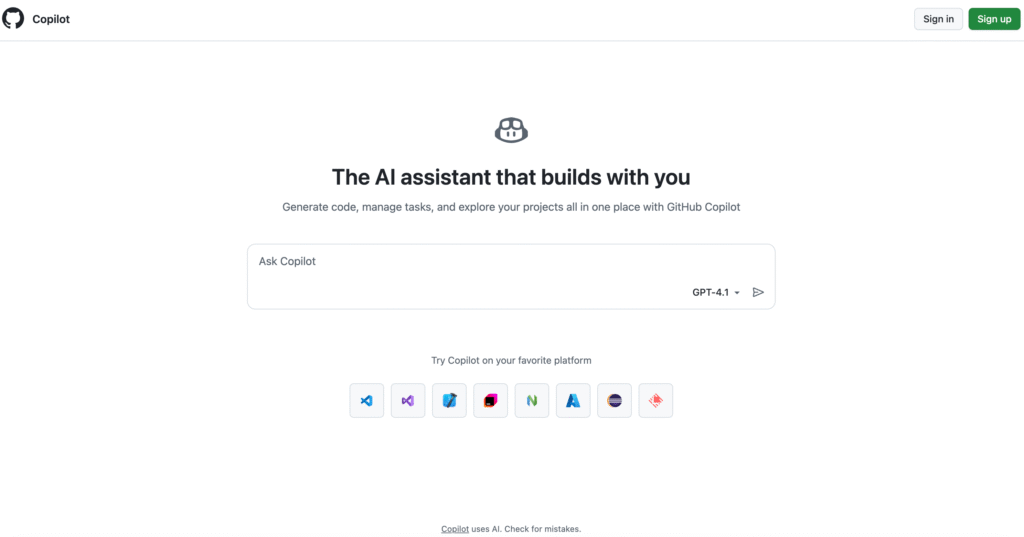
GitHub Copilot has established itself as one of the most powerful and reliable AI tools for web application development in 2026. Since its initial launch in 2021, it has evolved into a full-featured coding assistant, streamlining the way developers write, test, secure, and deploy code. Its integration with popular development environments such as Visual Studio Code, JetBrains, and Neovim ensures smooth adoption across various tech stacks, making it a must-have for modern web developers.
Trusted Across the Enterprise Spectrum
By mid-2025, GitHub Copilot had amassed over 20 million active users worldwide. It continues to grow rapidly, gaining more than 1.6 million new users every month. Its adoption in the enterprise world is especially noteworthy—90% of Fortune 100 companies and about one-third of Fortune 500 firms have implemented GitHub Copilot in their development workflows. This shows not just popularity, but confidence from some of the world’s largest and most advanced engineering teams.
Table: GitHub Copilot Key Performance Metrics
| Metric | Value |
|---|---|
| Annual Recurring Revenue (ARR) | $2.0 Billion |
| Total Active Users | 20 Million |
| Monthly User Growth | 1.67 Million |
| Fortune 100 Usage Rate | 90% |
| Individual Subscription Cost | $10/month |
| Business Subscription Cost | $19/user/month |
| Enterprise Subscription Cost | $39/user/month |
| Active License Utilization Rate | 80% |
Enhanced Productivity and ROI
GitHub Copilot isn’t just a coding tool; it’s a productivity engine. Developers using Copilot regularly accept between 37% and 50% of its code suggestions. Teams leveraging its capabilities have shown a 9% increase in task throughput and generate 47% more pull requests daily. These operational gains contribute to significant financial impact. According to research by Forrester, organizations using GitHub Enterprise Cloud experience a 376% return on investment within three years and recover their investment in under six months.
Chart: GitHub Copilot Impact on Engineering Productivity
| Metric | Improvement (%) |
|---|---|
| Code Acceptance Rate | 37–50% |
| Increase in Completed Tasks | 9% |
| Pull Request Activity Growth | 47% |
| ROI Over Three Years | 376% |
| Payback Period | Less than 6 months |
Built-in Security with Copilot Autofix
Security remains a top priority in software development, especially in large-scale web applications. GitHub Copilot addresses this with its advanced “Copilot Autofix” feature, which automatically scans for vulnerabilities and recommends or applies fixes directly within pull requests. When used with GitHub Advanced Security, organizations report a 75% improvement in DevSecOps efficiency. This integration means developers can deliver secure code without slowing down release cycles.
Matrix: Security Capabilities of GitHub Copilot
| Feature | Description |
|---|---|
| Copilot Autofix | Identifies and auto-fixes code vulnerabilities in pull requests |
| DevSecOps Integration | Syncs with GitHub Advanced Security tools |
| Compliance Support | Helps meet regulatory and coding standards for enterprise-grade software |
| Efficiency Impact | Up to 75% improvement in secure development workflows |
Why GitHub Copilot Ranks Among the Top 10 AI Tools for Web Development in 2026
GitHub Copilot combines the power of machine learning with real-world development needs. It enhances coding speed, accuracy, collaboration, and security—all while adapting to the unique needs of individuals and large teams. With high adoption among enterprise giants, a rapidly growing user base, powerful AI-driven suggestions, and enterprise-grade security features, GitHub Copilot is shaping the future of web application development. In an era where fast, reliable, and scalable web solutions are essential, Copilot proves itself as a vital AI assistant that every developer—from startups to tech giants—can depend on.
2. Cursor
A Next-Generation Development Environment Built Around AI
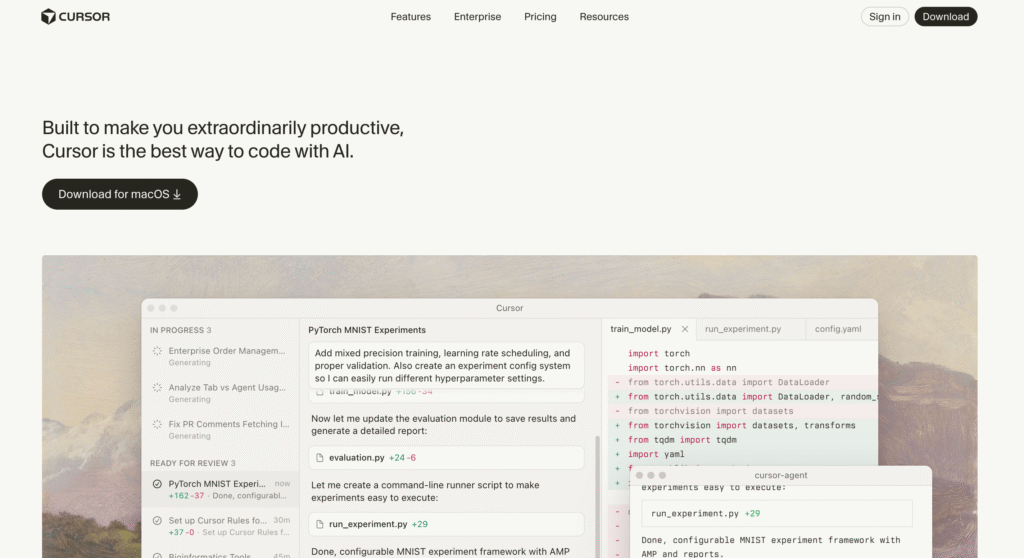
Cursor stands out in 2026 as one of the most innovative tools for web application development, thanks to its unique approach as a fully AI-native Integrated Development Environment (IDE). Unlike GitHub Copilot, which functions as a plugin added to traditional code editors, Cursor was designed from the ground up to integrate AI as a core part of the development experience. Built on a customized version of Visual Studio Code, it introduces deep project awareness through its “Codebase-Aware Chat” system, allowing developers to interact with their entire codebase using natural language.
Rapid Growth and Market Impact
Cursor’s development momentum accelerated significantly after its launch in 2023 by Anysphere. It received a $60 million Series A investment in August 2024 and quickly gained recognition across the software engineering landscape. By 2025, the platform’s valuation had soared to a range between $2.5 billion and $9 billion. Even more striking was its revenue performance, reaching $65 million in Annual Recurring Revenue (ARR)—a year-over-year growth rate of 6,400%, indicating massive market acceptance.
Table: Cursor’s Financial and Growth Snapshot
| Metric | Value |
|---|---|
| Launch Year | 2023 |
| Series A Funding (Aug 2024) | $60 Million |
| Estimated Valuation (2025) | $2.5B – $9B |
| Annual Recurring Revenue | $65 Million |
| Year-over-Year Growth Rate | 6,400% |
AI-Powered Developer Capabilities with Agent Mode
One of Cursor’s most groundbreaking innovations is its “Agent Mode.” This feature allows multiple AI agents—up to eight at once—to operate in parallel, managing complex coding tasks such as large-scale refactoring across many files. This parallel agent approach dramatically improves workflow automation and reduces the time developers spend manually navigating and updating code.
Unlike traditional plugins, Cursor’s AI can understand the broader structure of a project. This means it can execute context-aware changes across components, modules, and dependencies, which is vital for building and scaling modern web applications with complex architectures.
Matrix: Cursor vs GitHub Copilot – Feature Benchmarking
| Feature | Cursor AI | GitHub Copilot |
|---|---|---|
| IDE Integration | Native Standalone IDE | Plugin for Existing Editors |
| Multi-File Context Awareness | Deep, Codebase-Aware | Limited, Evolving |
| Agent Support | Up to 8 Parallel AI Agents | Not Available |
| Average Latency | 320 ms | 890 ms |
| Memory Usage | 1.2 GB | 380 MB |
| AI Philosophy | Built Around AI | Augments Existing Workflow |
Premium Plans and Model Access
Cursor offers tiered pricing designed for both individual developers and advanced teams. The “Pro” plan is priced at $20 per month and includes 500 premium fast-processing AI requests. For more intensive users, the “Ultra” plan at $200 per month offers significantly more capacity—up to 20 times the usage limit of the Pro plan. Ultra subscribers also receive priority access to the latest AI models, including Claude 3.5 and GPT-4o, giving them a technological edge in performance and quality.
Table: Cursor Pricing Structure
| Plan | Monthly Cost | Included Fast AI Requests | Access to Newest AI Models |
|---|---|---|---|
| Pro | $20 | 500 | Standard Access |
| Ultra | $200 | ~10,000 (Est.) | Priority Access (Claude 3.5, GPT-4o) |
Why Cursor is a Top AI Tool for Web App Development in 2026
Cursor’s all-in-one development experience makes it a standout choice in the modern web development ecosystem. Its AI-native design streamlines workflows, improves development speed, and helps engineers work more intelligently with large and evolving codebases. The platform’s ability to understand, modify, and manage entire projects—combined with its powerful multi-agent support and ultra-fast response times—makes it one of the most advanced tools available for building complex web applications in 2026.
As teams increasingly demand development environments that go beyond basic code suggestions, Cursor delivers an immersive, AI-first approach that redefines how modern web applications are developed and maintained. Its rapid growth, strong financial foundation, and cutting-edge capabilities firmly establish Cursor among the top 10 AI tools driving the future of software engineering.
3. Replit
Transforming from Cloud IDE to Intelligent Application Builder
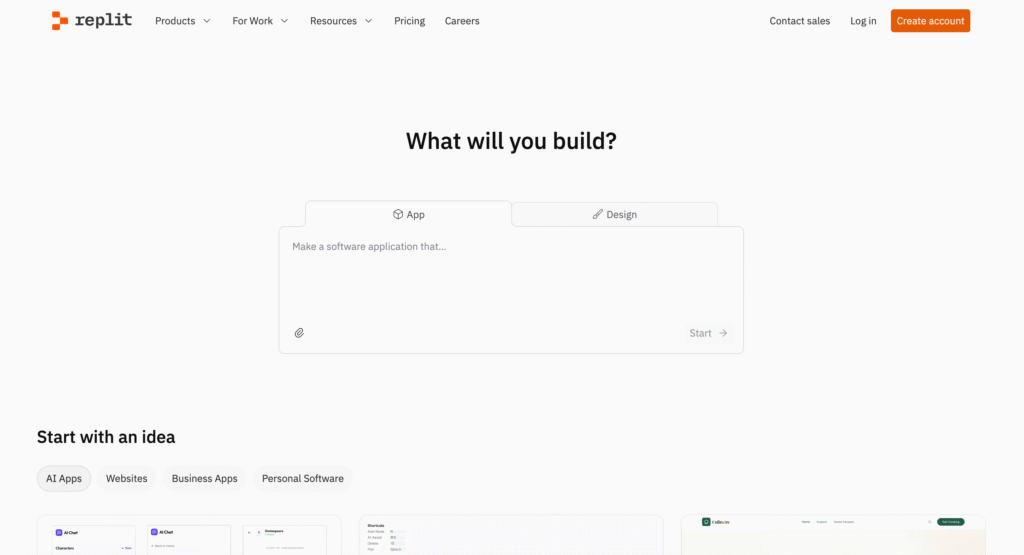
Replit has gone far beyond its origins as a simple online code editor. By 2026, it has evolved into a fully autonomous development environment powered by intelligent agents. This transformation is led by its flagship innovation—Agent 3—a powerful AI system capable of building complete web applications using only natural language instructions. From designing backend logic to generating frontend interfaces and database structures, Agent 3 helps developers build entire applications quickly and efficiently.
This AI-driven capability positions Replit as one of the top 10 AI tools for web application development in 2026, especially for teams and individuals seeking a faster, smarter way to go from idea to deployment.
Massive Growth Backed by Strong Market Confidence
Replit’s performance has caught the attention of major investors and the broader tech ecosystem. In September 2025, the company raised $250 million in funding led by Prysm Capital. This round brought its total valuation to $3 billion—nearly triple its 2023 valuation. This dramatic growth is supported by a staggering increase in annualized revenue, which soared from $2.8 million to $150 million—a 50x jump in just two years.
Table: Replit Growth and Investment Highlights
| Metric | Value |
|---|---|
| Latest Funding Round | $250 Million (Sept 2025) |
| Total Valuation (2025) | $3 Billion |
| Annualized Revenue (2025) | $150 Million |
| Revenue Growth Since 2023 | 50x Increase |
| Total Funding Raised | $478 Million |
| Key Investors | Google, Amex Ventures, a16z, Coatue |
Agent 3: A New Standard in Autonomous Coding
Replit’s Agent 3 sets it apart from traditional coding tools by providing full autonomy in software development. It is reportedly ten times more autonomous than earlier versions, allowing users to create full-stack applications using simple text prompts. Whether it’s defining API endpoints, writing backend services, structuring databases, or designing user interfaces, Agent 3 handles it with minimal human input.
Alongside intelligent automation, Replit also offers a proprietary testing system that is three times faster and ten times more cost-effective than conventional models. This makes the entire development cycle—from writing to testing and deployment—faster and cheaper.
Matrix: Core Capabilities of Agent 3
| Capability | Description |
|---|---|
| Full-Stack Generation | Builds backend, frontend, and database layers from prompts |
| Natural Language Processing | Converts text into working application components |
| Automated Testing Engine | 3x faster and 10x cheaper than traditional models |
| Deployment Integration | One-click deployment to cloud servers |
| Autonomy Level | 10x more autonomous than previous AI agents |
Expanding Community and Platform Scalability
Replit supports over 40 million users globally, with more than 500,000 professional developers actively building and collaborating on the platform. Its browser-based nature removes the need for local setup, which is especially useful for collaborative coding, hackathons, learning environments, and remote teams. Developers can code in more than 50 languages and access managed cloud databases, real-time previews, and scalable deployments—all from their browser.
Chart: Replit Community and Usage Statistics
| Category | Value |
|---|---|
| Total Users | 40 Million |
| Professional Users | 500,000+ |
| Supported Languages | 50+ |
| Full-Time Employees | 192 |
| Cloud Deployment | One-click Enabled |
| Use Case | Rapid Prototyping, AI-Driven Development, “Vibe Coding” Sessions |
Why Replit is a Top AI Tool for Web Application Development in 2026
Replit’s all-in-one, cloud-native environment, powered by Agent 3, allows users to go from concept to live application in a matter of minutes. Its simplified user experience, strong AI capabilities, and scalable infrastructure have made it a favorite for solo developers, startup teams, and large-scale organizations alike.
Whether it’s rapid prototyping, full-stack application development, or collaborative experimentation, Replit provides a complete AI-assisted environment that removes complexity and speeds up delivery. With strong financial backing, rapid growth, and a community of millions, Replit stands as a leading force in the AI-powered future of web development.
4. Bolt.new
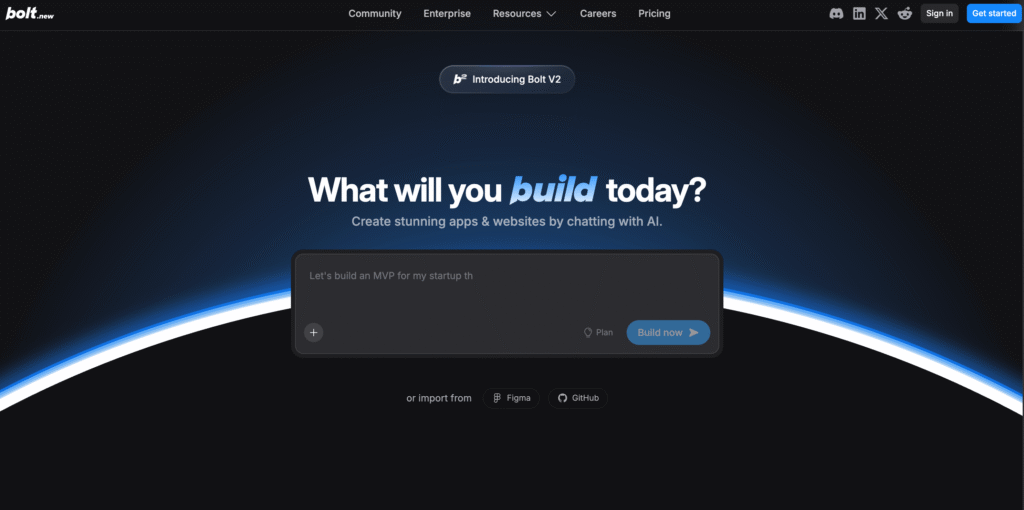
Built for Speed: Instant App Creation in the Browser
Bolt.new, introduced by StackBlitz in late 2024, has quickly become one of the most powerful AI tools for building web applications in 2026. It enables developers to instantly create full-stack applications—right from their browser—without any need for local installations. Powered by StackBlitz’s proprietary “WebContainer” technology, Bolt.new runs a full Node.js environment in-browser, allowing developers to generate, test, and deploy applications using frameworks such as Next.js and Vite in real time.
This makes it especially valuable for developers looking to rapidly turn ideas into functioning web apps within minutes, not days.
From Launch to Leadership: Explosive Growth in Months
Bolt.new’s market impact was immediate and impressive. Within just one month of its launch, it reached $4 million in annualized revenue. By March 2025, that figure had soared to $40 million. A successful Series B funding round in early 2025 brought in significant investment, pushing the total funding to $105 million and raising the company’s valuation to $700 million.
Table: Bolt.new Financial and Growth Milestones
| Metric | Value |
|---|---|
| Launch Date | Late 2024 |
| ARR After 4 Weeks | $4 Million |
| ARR by March 2025 | $40 Million |
| Series B Funding | $105 Million (Total Raised) |
| Company Valuation (2025) | $700 Million |
| Websites Built by March 2025 | Over 1 Million |
Prompt-to-App: Reducing Development Time by 80%
One of Bolt.new’s most disruptive features is its ability to dramatically cut down development timelines. Case studies have shown that web applications which would traditionally take six months to build can now be developed and launched in just six weeks. This 80% time savings is made possible through AI-driven code generation, pre-configured environments, and one-click deployment.
The platform’s real-time editing and execution allow teams to iterate instantly and test features on the fly—making it ideal for prototyping, MVP development, and agile product teams.
Matrix: Bolt.new’s Development Efficiency Impact
| Project Type | Traditional Timeline | With Bolt.new | Time Saved |
|---|---|---|---|
| Simple Web App | 1 Month | 1 Week | 75% |
| SaaS MVP | 3–4 Months | 3–4 Weeks | 70–80% |
| Full-Stack Platform | 6 Months | 6 Weeks | 80% |
Token-Based Pricing Model Built for Scalability
Bolt.new uses a flexible token-based pricing system. Each user plan comes with a set monthly token allocation, and tokens are consumed based on the complexity and size of the generated application. On average, developing a full-stack application consumes between 2 million and 10 million tokens. This model ensures fair usage and gives teams control over their development budget.
Table: Bolt.new Subscription and Token Allocation
| Plan Type | Monthly Price | Monthly Token Limit | Best For |
|---|---|---|---|
| Free | $0 | 200,000 | Learning & Basic Prototypes |
| Pro | $20 | 10,000,000 | Solo Developers |
| Team | $60 | 26,000,000 | Small Dev Teams |
| Enterprise | Custom | 120,000,000+ | High-Scale Product Companies |
Browser-Native Development Environment
Another standout feature is the browser-native development setup. Developers can build and preview apps directly in-browser without configuring local servers or dev environments. This eliminates setup friction, makes collaboration easier, and supports more than 50 programming languages. Whether it’s a quick prototype or a complex multi-page web platform, Bolt.new delivers the same real-time speed and deployment ease.
Chart: Bolt.new Feature Stack and Use Case Compatibility
| Feature | Supported | Ideal Use Cases |
|---|---|---|
| Full Node.js Environment | Yes (in-browser) | Full-stack apps, APIs, backend services |
| Frameworks Supported | Next.js, Vite, more | Static sites, SSR apps, SPAs |
| Languages Supported | 50+ | Frontend & Backend Language Flexibility |
| Deployment Capability | One-click live preview | Launch-ready apps in minutes |
| AI Prompt-Based Generation | Yes | Non-coders, Product Managers, Designers |
Why Bolt.new Ranks Among the Best AI Tools for Web Development in 2026
Bolt.new’s rise as a leader in AI-powered web development comes from its deep focus on speed, flexibility, and simplicity. It empowers developers—both beginners and professionals—to create production-ready applications in record time. By removing the need for complex environment setups and allowing development entirely in the browser, Bolt.new has unlocked a new era of efficiency in software creation.
With its unique mix of AI autonomy, real-time code execution, smart pricing, and scalable cloud deployment, Bolt.new has redefined what it means to prototype, build, and launch web applications in 2026. It is more than just a tool—it’s a complete engine for rapid innovation in the modern software world.
5. v0.dev

Leading the New Era of Generative Frontend Engineering
v0.dev, developed by Vercel, has become one of the most important tools for frontend web development in 2026. Positioned as an AI-powered platform that turns natural language prompts into high-quality, production-ready user interfaces, v0.dev has set a new standard for frontend automation. Unlike other tools that require manual design and coding, this platform allows developers to instantly generate responsive React components styled with Tailwind CSS and Shadcn UI libraries—bridging the gap between design and code.
Its advanced natural language processing makes it easy for developers, designers, and even non-technical stakeholders to describe what they need and get clean, professional UI code in seconds.
From UI Generation to Full-Stack Capabilities
Originally focused on frontend design, v0.dev has expanded into the full-stack space. This strategic evolution was powered by Vercel’s acquisition of Grep, a curated knowledge base of over 500,000 open-source GitHub repositories. This gave v0.dev access to backend logic, common code patterns, and real-world development structures. By 2026, v0.dev can now generate database integrations and backend APIs, allowing teams to go beyond UI prototyping into building near-complete applications.
Table: Key Milestones of v0.dev’s Growth
| Milestone | Description |
|---|---|
| Initial Focus | UI generation using React + Tailwind |
| Backend Integration Launch | Post-Grep acquisition |
| GitHub Repos in Training Base | 500,000+ |
| Core Design Libraries | Tailwind CSS, Shadcn UI |
| Full-Stack Capability | Yes (frontend, backend, database) |
Fast, Elegant, and Copy-Paste Friendly Code
One of v0.dev’s core strengths is its ability to create highly portable, clean code. All output is designed to be immediately usable in professional codebases. The generated components are readable, consistent with best practices, and aligned with modern UI standards. The average code generation time ranges between 15 and 30 seconds, giving developers near-instant results and accelerating UI ideation.
Matrix: Why Developers Prefer v0.dev for Frontend Work
| Feature | v0.dev Capability |
|---|---|
| Code Output | Ready-to-use React with Tailwind CSS |
| Design System Compatibility | Shadcn UI included |
| Generation Time | 15–30 seconds per component |
| Code Quality | Developer-friendly and customizable |
| Integration | Built-in with Vercel hosting ecosystem |
Built for the Vercel Ecosystem and Beyond
v0.dev is natively integrated into the Vercel hosting ecosystem, enabling seamless deployment pipelines. Developers can generate a UI component and deploy it to production within minutes using Vercel’s infrastructure. This smooth workflow makes it an essential part of the toolchain for developers building with React and Next.js. As of 2026, Vercel employs over 800 professionals and has secured $300 million in Series F funding, placing its valuation at $9.3 billion. The backing of such a robust ecosystem ensures constant updates, enterprise support, and long-term reliability.
Table: Vercel and v0.dev Ecosystem Highlights
| Attribute | Value |
|---|---|
| Parent Company | Vercel |
| Series F Funding (2025) | $300 Million |
| Company Valuation (2026) | $9.3 Billion |
| Employee Count | 800+ |
| Platform Integration | Native with Vercel Hosting |
Collaborative Use with Backend Tools
While v0.dev is exceptional for generating frontend layouts and interactions, it is often paired with other AI coding platforms such as Cursor for deeper backend development. Together, these tools allow teams to rapidly build complete web applications with high code quality across both UI and server-side logic.
Chart: Ideal Tech Stack Using v0.dev in 2026
| Component | Tool Recommendation |
|---|---|
| UI Generation | v0.dev |
| Frontend Framework | React + Next.js |
| Backend Logic | Cursor / Replit Agent 3 |
| Hosting & Deployment | Vercel |
| Styling & Components | Tailwind CSS + Shadcn UI |
Why v0.dev Is Among the Top AI Tools for Web Development in 2026
v0.dev has changed how developers approach frontend development. By using natural language as the input and delivering clean, structured code within seconds, it significantly reduces the time spent on designing and coding user interfaces. Combined with its new backend features, seamless integration with Vercel’s cloud infrastructure, and rapid deployment capabilities, v0.dev enables faster project launches, consistent design standards, and developer efficiency at scale.
As teams around the world prioritize speed, consistency, and intelligent tooling in their development processes, v0.dev remains a standout AI tool leading the future of full-stack web application development.
6. Tabnine
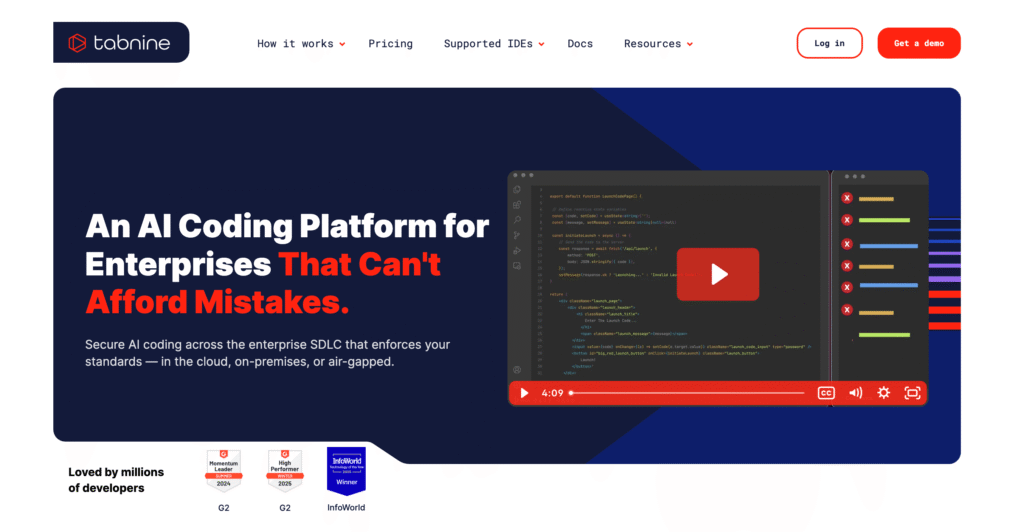
A Secure and Customizable AI Coding Solution for Regulated Industries
In the evolving landscape of AI development tools in 2026, Tabnine has earned its place among the top 10 platforms for web application development—especially for companies that operate under strict data security, privacy, and compliance requirements. Unlike many other AI tools that depend on public cloud environments, Tabnine gives organizations full control over where and how their code is processed.
Its flexible deployment options—including on-device, private cloud, and air-gapped environments—make it a preferred solution for industries such as finance, defense, and healthcare. These sectors often cannot risk sending sensitive code or data to external servers due to regulatory frameworks, such as GDPR, HIPAA, or financial compliance mandates.
Enterprise Context Awareness for Smarter Coding
What truly sets Tabnine apart is its proprietary “Enterprise Context Engine.” This feature allows Tabnine to train itself on an organization’s internal codebase and coding standards. By learning from proprietary libraries, style guides, and frameworks, Tabnine produces suggestions that feel like they came from your own senior developers. It enhances consistency, improves onboarding of new engineers, and reduces errors in large-scale projects.
Matrix: Key Features of Tabnine’s Enterprise Context Engine
| Feature | Benefit |
|---|---|
| Internal Codebase Training | Learns from private repositories for personalized suggestions |
| Style Guide Adherence | Maintains internal code formatting and structural consistency |
| Custom Framework Integration | Suggests based on in-house libraries and architectural patterns |
| Contextual Prediction | Understands file, project, and enterprise-level contexts |
Broad Language Support and IDE Compatibility
Tabnine supports more than 80 programming languages, making it suitable for full-stack development across frontend, backend, and infrastructure codebases. It integrates smoothly with all major development environments, including Visual Studio Code, JetBrains IDEs, and Neovim. This ensures a familiar user experience while enhancing productivity across different technical stacks.
Table: Tabnine Language and IDE Compatibility Overview
| Component | Supported Options |
|---|---|
| Programming Languages | 80+ (JavaScript, Python, Java, etc.) |
| IDEs | VS Code, JetBrains, Neovim |
| Application Layers | Frontend, Backend, Infrastructure |
| Framework Compatibility | React, Django, Node.js, Spring, and more |
Flexible Deployment Options for Full Privacy Control
One of Tabnine’s strongest value propositions is its deployment flexibility. Companies can choose between standard cloud-based access or fully self-hosted environments that keep data strictly internal. This level of control is especially critical for enterprises that handle confidential or regulated information.
Table: Tabnine Pricing and Deployment Models
| Tier | Monthly Cost (Per User) | Deployment Type |
|---|---|---|
| Pro | $12 | Standard Cloud-Based Access |
| Enterprise | $59 | On-Prem, Private Cloud, or Air-Gapped |
Adoption Across Regulated Industries
Because of its privacy-first approach, Tabnine has become widely adopted in sectors where data sovereignty and security are non-negotiable. In particular, financial services, healthcare providers, and government contractors rely on Tabnine to ensure AI-enhanced coding doesn’t compromise their compliance obligations.
Chart: Tabnine Industry Adoption Focus (2026)
| Sector | Use Case | Key Benefit |
|---|---|---|
| Financial Services | Secure backend systems, internal APIs | Data confidentiality |
| Healthcare | Patient management tools, compliance apps | HIPAA-aligned AI coding |
| Government/Defense | National security systems, private networks | Air-gapped deployment options |
| Enterprise SaaS | Internal dev platforms, CI/CD tools | Custom code context modeling |
Why Tabnine is One of the Top AI Tools for Web Development in 2026
Tabnine is not just an AI assistant—it’s an enterprise-grade coding partner built for the realities of modern security and compliance. In a world where privacy and control are as critical as speed and automation, Tabnine offers a uniquely balanced solution. Its ability to adapt to internal codebases, offer full-stack language support, integrate with common IDEs, and meet the strictest deployment requirements makes it essential for regulated organizations building robust web applications.
For companies that demand both cutting-edge AI and complete control over their data, Tabnine remains a vital asset in the 2026 development toolkit.
7. Windsurf
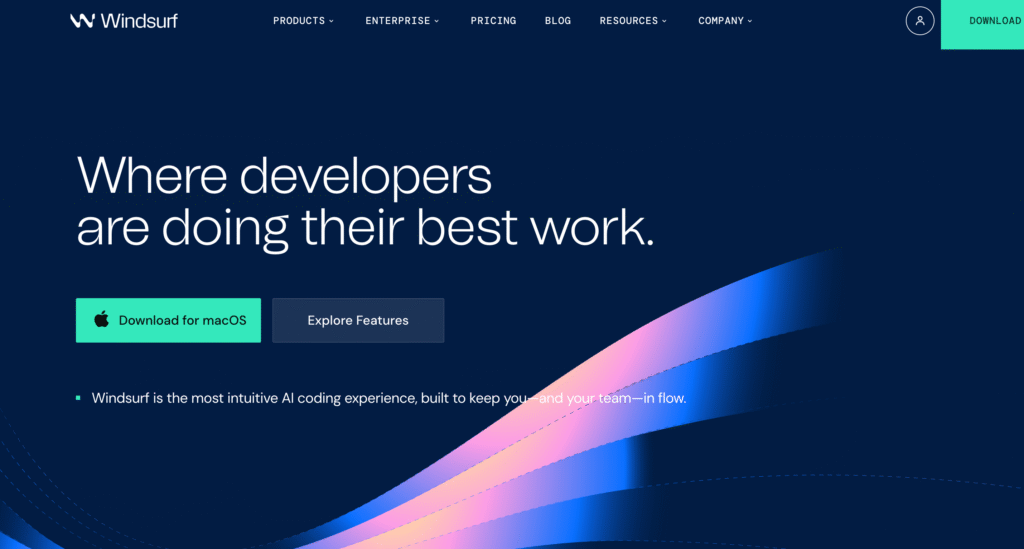
Redefining Backend Automation with Multi-Agent Intelligence
Windsurf, developed by Codeium (a division of Anyscale), has rapidly established itself as one of the top AI tools for web application development in 2026—especially for backend-heavy and enterprise-scale environments. Unlike traditional code editors or AI copilots, Windsurf is a full AI-native Integrated Development Environment (IDE) that leverages autonomous multi-agent coordination to execute complex software development tasks.
Its core innovation, the “Cascade” system, enables Windsurf to break down large and complicated instructions into multi-step operations and then autonomously perform terminal commands to implement those steps. This empowers developers to tackle backend development, microservice orchestration, and cloud automation tasks with unmatched speed and sophistication.
A Strategic Asset in the AI Arms Race
Windsurf’s strategic importance became widely recognized in late 2025 during a competitive standoff between major AI players. OpenAI attempted to acquire Windsurf for $3 billion, but the deal was halted due to exclusivity conflicts with Microsoft. Shortly after, Google DeepMind secured licensing rights by investing $2.4 billion and recruiting key leadership, including former CEO Varun Mohan, to integrate Windsurf’s agent technology into the Gemini ecosystem.
Table: Windsurf’s Strategic and Financial Milestones
| Milestone | Value/Detail |
|---|---|
| Acquisition Attempt by OpenAI | $3 Billion (Terminated) |
| Licensing Deal with Google | $2.4 Billion |
| Valuation Increase (2024–2025) | $1.25B to $3.0B |
| ARR (April 2025) | $100 Million |
| Total Users | Over 1 Million |
| Enterprise Clients | 350+ (including JPMorgan, Dell) |
Cascade: The Multi-Step Orchestration Engine
The standout feature of Windsurf is its “Cascade” system, which functions as an orchestrator for multiple AI agents. When given a complex development task—such as setting up an entire microservice or optimizing a distributed architecture—Cascade intelligently decomposes the task into logical steps. It then assigns those tasks to specialized agents, which can execute commands in a secure, sandboxed terminal environment.
This means developers can automate everything from server configuration to CI/CD scripting, API scaffolding, and even testing workflows—just by describing the goal in natural language.
Matrix: Core Capabilities of Windsurf’s Cascade System
| Capability | Description |
|---|---|
| Multi-Agent Orchestration | Delegates subtasks across specialized AI agents |
| Terminal Command Execution | Executes shell commands autonomously |
| Context-Aware Task Planning | Understands multi-file dependencies and flow |
| High Backend Compatibility | Optimized for microservices and distributed systems |
| AI Code Output Rate | 94% of code is self-generated by AI |
Built for Backend, Microservices, and Workflow Automation
Windsurf shines in enterprise-grade backend development where multiple systems, APIs, and services must work together. Its multi-agent architecture makes it especially powerful for managing infrastructure-as-code, backend service generation, authentication systems, job queues, and real-time messaging layers.
Because of this, Windsurf is often compared to Cursor—but excels in more complex, agent-intensive environments, making it better suited for enterprise systems that require scalability, reliability, and integration between many components.
Table: Ideal Use Cases for Windsurf in 2026
| Use Case | How Windsurf Adds Value |
|---|---|
| Microservice Architecture | Generates scalable backend components autonomously |
| DevOps & Infrastructure Automation | Automates setup with shell command execution |
| Enterprise Backend Development | Handles complex logic, data flows, and security layers |
| Multi-Agent Workflow Integration | Delegates coordinated tasks with contextual accuracy |
| CI/CD Pipeline Optimization | Writes and configures build and deployment scripts |
Growth Traction Among Enterprise Clients
With over 1 million users and 350+ enterprise customers—including major corporations like Dell and JPMorgan—Windsurf is gaining adoption among businesses that require deep backend automation. It offers these organizations the ability to scale backend teams without expanding headcount, thanks to its autonomous AI agents that can generate and manage significant portions of the codebase.
Chart: Enterprise Value Delivered by Windsurf (2025–2026)
| Metric | Enterprise Impact |
|---|---|
| AI-Generated Code Contribution | 94% of backend logic and scripts |
| Developer Productivity Gain | 60–80% acceleration in backend delivery timelines |
| Reduction in DevOps Overhead | Up to 50% decrease in manual configurations |
| ROI from Automation Workflows | 5x average return on implementation cost |
Why Windsurf is One of the Top 10 AI Tools for Web Development in 2026
Windsurf is more than an AI code assistant—it’s a fully orchestrated development framework that brings intelligent multi-agent systems into backend engineering. Its capacity to understand complex tasks, autonomously manage workflows, and generate nearly all of its own code places it far ahead of traditional tools in terms of automation and developer productivity.
In a world where scalability, security, and speed are critical for backend web infrastructure, Windsurf has emerged as an essential asset. Its agent-first design, enterprise traction, and proven efficiency make it one of the most valuable AI platforms powering advanced web application development in 2026.
8. Lovable
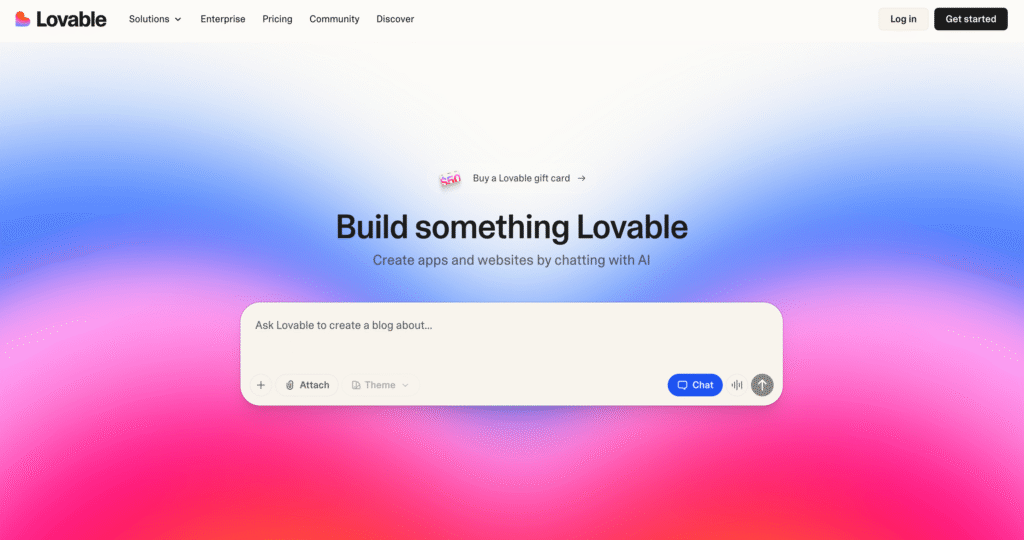
An AI Platform Built for High-Impact Visual Prototypes and Rapid MVPs
Lovable has emerged as one of the top 10 AI tools for web application development in 2026 by transforming how teams build and present full-stack applications. It allows users to generate, preview, and deploy modern, functional web apps—entirely from a single natural language prompt—all within a browser tab. Unlike many developer-centric platforms, Lovable adopts a design-first philosophy that emphasizes clean aesthetics, responsive layout, and exceptional user experience.
This makes it a top choice for startup founders, product designers, and marketers who need visually compelling MVPs, landing pages, or demo applications that look polished from the very first draft.
Funding, Valuation, and Market Momentum
Lovable attracted significant investor attention early in its journey. In its Series A funding round, the company raised $228 million from major venture capital firms like Accel and Creandum. This funding round valued the company at approximately $228 million, reflecting strong confidence in its growth potential and market relevance.
Table: Lovable Business and Investment Snapshot
| Metric | Value |
|---|---|
| Series A Funding Raised | $228 Million |
| Company Valuation (Post-Funding) | $228 Million |
| Key Investors | Accel, Creandum |
| Pricing Model | Starting at $25/month |
| Core Use Case | Visual MVPs and One-Screen Prototypes |
Design-First Capabilities for Non-Technical Creators
Lovable’s core strength lies in its ability to produce stunning, high-fidelity user interfaces from simple prompts. It is intentionally built for users with minimal coding experience, offering an extremely low learning curve while still delivering production-quality results. Once the prompt is entered, Lovable instantly generates a real-time preview of the application, which users can customize, integrate, and publish—all without writing a single line of code.
Matrix: Lovable’s Technical Strengths and Workflow
| Feature | Description |
|---|---|
| Design Orientation | Prioritizes UI/UX quality over backend depth |
| Workflow Simplicity | Prompt → Live Preview → Deploy |
| Preview Speed | Near-Instant (Within Seconds) |
| Beginner Accessibility | Very High (No prior coding required) |
| Code Export Option | Export to GitHub for IDE-based refinement |
Full-Stack Functionality with Integrated Tools
Although Lovable is known for its frontend focus, it also supports backend logic and integrations for common functions. Native support is available for Supabase (backend and database), GitHub (version control and export), and Stripe (payment processing). This means users can add user authentication, backend data operations, and checkout flows within minutes—ideal for testing real-world product ideas fast.
Table: Native Integrations Available in Lovable
| Integration | Functionality Enabled |
|---|---|
| Supabase | Backend logic, authentication, and databases |
| GitHub | Code export, collaboration, version control |
| Stripe | Seamless integration for payment workflows |
| Live Deployment | Hosting with one-click publishing |
Best Use Cases and Audience
Lovable is most often used for investor demos, pitch decks, early product validation, and simple SaaS MVPs. Its clean interfaces and fast turnaround make it a favorite among startup founders, indie hackers, designers, and marketers. While it doesn’t aim to replace professional engineering environments for large-scale applications, it’s often used as a launchpad to create a visual proof of concept that can later be scaled in tools like VS Code, Replit, or Cursor.
Chart: Ideal Use Cases for Lovable
| Use Case | Value Provided |
|---|---|
| One-Screen MVPs | Fast generation of functional product previews |
| Investor Demos | High-quality UIs suitable for pitch presentations |
| Startup Landing Pages | Beautiful, deployable marketing sites in minutes |
| Internal Tools | Quick creation of internal admin interfaces |
| Pre-Sales Prototypes | Showcase potential product features to clients |
Why Lovable Is a Top AI Tool for Web Development in 2026
Lovable stands out because it gives users the ability to build elegant, responsive, and fully functional web apps with almost no technical effort. Its intuitive prompt-to-deployment flow, seamless integrations, and premium design output make it a powerful solution for anyone looking to build a frontend-first app quickly.
In a digital economy where speed, design quality, and user experience are key to validating and scaling new ideas, Lovable provides a rare combination of simplicity and polish. Its role in enabling non-developers to create full-stack apps, along with easy export options for developers to continue refining the code, makes it one of the most valuable and accessible AI-driven web development tools of 2026.
9. Virtuoso QA
Solving One of Web Development’s Biggest Pain Points: Testing
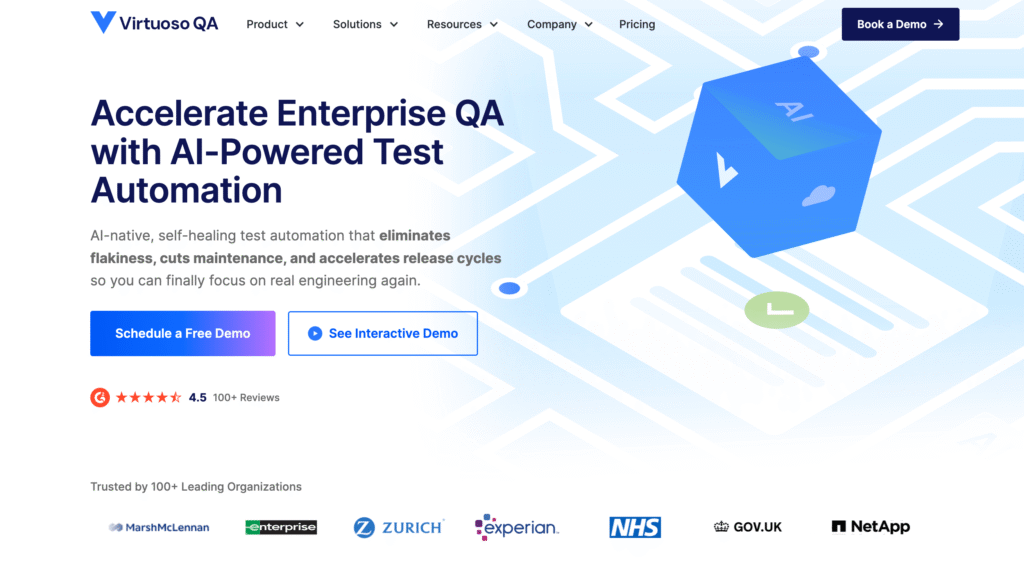
In 2026, Virtuoso QA stands out as one of the most impactful AI tools for web application development because it solves a longstanding bottleneck in the software lifecycle—automated testing. Testing is often a slow, manual, and error-prone phase, especially in large, dynamic applications. Virtuoso QA completely reimagines this step by offering a no-code, AI-powered automation platform that allows teams to run functional, regression, and visual tests with speed, precision, and reliability.
This makes it especially useful for enterprise SaaS platforms, fast-growing e-commerce systems, and digital teams under pressure to ship faster without sacrificing quality.
Funding, Growth, and Market Validation
Virtuoso QA has secured a total of $17.8 million in funding. This includes a $13.3 million Series A round completed in 2021 and a $4.5 million venture debt round raised in October 2025. This financial backing has enabled the platform to enhance its machine learning infrastructure and expand its customer base across industries that demand scalable, secure, and adaptive testing automation.
Table: Virtuoso QA Investment and Market Growth Summary
| Metric | Value |
|---|---|
| Total Funding Raised | $17.8 Million |
| Series A Round | $13.3 Million (2021) |
| Venture Debt Round | $4.5 Million (October 2025) |
| Target Markets | SaaS, E-commerce, Enterprise IT |
AI-Powered Features Built to Eliminate Manual Testing Friction
What sets Virtuoso QA apart is its powerful combination of natural language processing, machine learning, and self-adaptive testing. With the platform’s NLP test authoring system, QA engineers can write test scripts using plain English. This eliminates the need to learn complex scripting languages or testing frameworks. Even non-developers can write automated tests quickly.
Its standout “Self-Healing” feature allows test scripts to intelligently adjust themselves when changes occur in the UI—such as updated element IDs or repositioned components—automatically fixing themselves without human intervention. This reduces ongoing test maintenance by as much as 85%.
Matrix: Core Capabilities and Benefits of Virtuoso QA
| Feature | Description | Performance Impact |
|---|---|---|
| NLP Test Authoring | Write tests in plain English using AI | 10x faster test creation |
| Self-Healing Automation | Tests auto-adapt to UI changes | 85% reduction in test maintenance |
| Unified Test Framework | Combines UI, API, and visual testing | Consolidated toolchain |
| AI Root Cause Analysis | Pinpoints failure causes using ML insights | Faster debugging and fewer rollbacks |
| Object Recognition | Machine learning-driven element targeting | Higher accuracy in complex UIs |
Streamlining Testing Across the Full Stack
Virtuoso QA supports a unified approach to testing by bringing together UI, API, and visual testing in a single platform. This removes the need for teams to juggle multiple tools and integrations, saving time and reducing operational complexity. The platform’s machine learning model is trained to recognize web elements across thousands of different configurations, making it particularly useful for fast-changing enterprise environments.
Table: Areas Where Virtuoso QA Delivers Value
| Testing Type | Benefit Delivered |
|---|---|
| UI Testing | Quick adaptation to dynamic frontends |
| API Testing | Verifies service communication and responses |
| Visual Testing | Detects visual layout changes with precision |
| Regression Testing | Ensures new features don’t break existing ones |
Built for Complex and Scalable Web Applications
Virtuoso QA is ideal for complex platforms that require frequent updates, such as enterprise software, fintech apps, and online marketplaces. Its AI capabilities reduce the dependency on traditional QA teams while improving test reliability and speed. By integrating intelligent object recognition, real-time analysis, and self-repairing scripts, the platform supports test automation at a scale that manual tools cannot match.
Chart: Operational Impact of Virtuoso QA in 2026
| Metric | Before Virtuoso QA | After Virtuoso QA | Improvement |
|---|---|---|---|
| Average Test Creation Time | 4–5 hours | 30–45 minutes | 10x Faster |
| Test Script Maintenance Effort | High (Manual Fixes) | Minimal (Auto-Heal) | 85% Lower |
| Bug Resolution Time | 2–3 days | Less than 24 hours | Faster Debugging |
| Toolchain Complexity | 3–5 separate tools | One Unified Platform | Simplified |
Why Virtuoso QA Is One of the Top 10 AI Tools for Web Development in 2026
Virtuoso QA helps businesses accelerate delivery without compromising quality. Its intelligent, low-code testing environment brings unprecedented speed and precision to web development workflows. Whether you’re managing continuous delivery pipelines or launching weekly product updates, Virtuoso QA ensures that new code is reliable, scalable, and visually consistent.
In an era where software reliability directly impacts business outcomes, Virtuoso QA offers a future-ready approach to test automation. Its self-healing systems, NLP test writing, and machine learning backbone make it an indispensable AI companion for any team building or maintaining web applications at scale.
10. QA Wolf
Blending Automation with Human Accuracy for Flawless QA
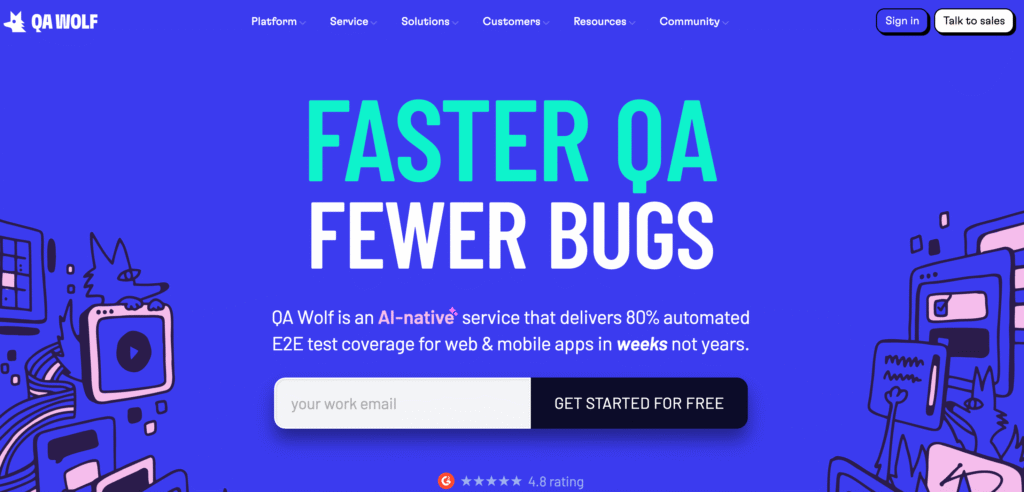
QA Wolf has positioned itself as one of the most reliable AI tools for web application development in 2026 by tackling a critical challenge in software delivery: ensuring code quality without slowing down releases. It offers a powerful hybrid solution that combines the speed and scalability of AI-driven test automation with the precision of human verification. This balanced approach allows teams to detect real issues faster while eliminating the noise caused by false positives, making it ideal for companies aiming to achieve continuous delivery at scale.
The platform is built to serve fast-paced product teams, SaaS startups, and enterprises needing high test coverage without building large in-house QA departments.
Strong Funding and Rapid Growth Trajectory
Since its founding in 2019, QA Wolf has attracted significant investor confidence. The company, based in Seattle, has raised $56.4 million from leading venture capital firms including Scale Venture Partners and Threshold Management. This investment has enabled QA Wolf to expand its engineering teams, build deeper integrations with developer tools, and scale its infrastructure to support thousands of concurrent cloud-based test runs.
Table: QA Wolf Funding and Growth Overview
| Metric | Value |
|---|---|
| Total Funding Raised | $56.4 Million |
| Headquarters | Seattle, USA |
| Founded | 2019 |
| Total Employees | 187 |
| Key Investors | Scale Venture, Threshold Management |
Instant, Parallelized Test Execution in the Cloud
QA Wolf enables development teams to run complete test suites automatically after every code push. These tests are executed in parallel in the cloud, significantly reducing the time it takes to validate changes—from hours down to just minutes. This rapid feedback loop allows developers to deploy confidently and frequently, without waiting for long testing cycles.
Its deep integration with GitHub, Jenkins, and CircleCI makes it compatible with popular CI/CD pipelines, allowing teams to incorporate testing directly into their deployment workflows.
Matrix: QA Wolf’s Key Technical Capabilities
| Feature | Description | Value Delivered |
|---|---|---|
| Cloud-Based Test Execution | Runs tests in parallel across cloud infrastructure | Faster testing, high scalability |
| GitHub/Jenkins/CircleCI Support | Built-in integrations with CI/CD tools | Seamless DevOps workflow integration |
| End-to-End Coverage | Supports both web and mobile application testing | Complete QA visibility across platforms |
| Continuous Delivery Friendly | Trigger tests on every code commit or merge | Faster release cycles, fewer delays |
Eliminating Flaky Tests with AI and Human Oversight
A major problem in automated QA is the presence of flaky tests—tests that fail intermittently due to non-bug-related issues like timing inconsistencies or environment variability. QA Wolf addresses this by blending AI analysis with a team of human QA experts who verify test results before flagging them to developers. This eliminates false positives and ensures that only real, reproducible bugs reach engineering teams.
The result is greater trust in test results, fewer wasted debugging hours, and more confidence in every code deployment.
Chart: QA Wolf Testing Accuracy Impact
| Metric | Before QA Wolf | With QA Wolf | Improvement |
|---|---|---|---|
| False Positive Rate | 20–30% | <1% | Over 95% Reduction |
| Average Debugging Time per Bug | 2–3 Hours | <30 Minutes | 75% Faster Debugging |
| Time to Execute Full Test Suite | 2–4 Hours | 5–15 Minutes | 90% Time Saved |
Designed for Scalable QA Without Large Internal Teams
QA Wolf is especially effective for organizations looking to scale their testing operations without the overhead of hiring and managing large QA teams. Instead of relying solely on in-house testers, companies can delegate test creation, execution, and maintenance to QA Wolf’s managed service. This is ideal for teams with limited QA headcount who still need enterprise-level test coverage and reporting.
Table: QA Wolf as a Scalable QA Partner
| Scenario | How QA Wolf Helps |
|---|---|
| Limited Internal QA Team | Provides fully managed testing support |
| Rapid Release Cycles | Ensures every push is tested before deployment |
| Mobile + Web App Development | Covers multi-platform testing in a unified system |
| Early-Stage Startups | Offers reliable QA without building large teams |
Why QA Wolf Is Among the Top AI Tools for Web Development in 2026
QA Wolf delivers a practical, highly scalable solution to modern testing challenges. It combines smart automation with real human expertise to ensure that tests are fast, accurate, and relevant. By eliminating flaky test noise, accelerating test cycles, and offering complete managed QA coverage, QA Wolf empowers development teams to move faster without sacrificing quality.
For companies aiming to increase release velocity while maintaining product stability, QA Wolf stands out as a dependable QA automation partner and a vital tool in the 2026 AI-driven web development ecosystem.
The Macro-Economic Reconfiguration of Software Engineering
A Foundational Shift in the Software Engineering Economy
The year 2026 marks a major turning point in global web development as the traditional process of hand-written coding gives way to intelligent AI-guided software construction. What was once a domain dominated by manual engineering tasks is now increasingly orchestrated through AI-native development platforms that act as autonomous collaborators. These tools are not limited to simple code completions. They now manage entire workflows, understand full project structures, and make architectural decisions—reshaping how applications are built across every industry.
This new paradigm is driven by agentic AI systems capable of multi-step reasoning, contextual awareness across files, and even autonomous deployment. As businesses demand faster time-to-market and reduced development costs, AI-native tools have become indispensable in the modern software lifecycle.
Explosive Market Growth and Adoption Trends
The global AI developer tools market was valued at $4.5 billion in 2025 and is on track to exceed $10 billion by 2030. This projected growth reflects a compound annual growth rate (CAGR) of 17.32%. The majority of this expansion is anchored in the tools segment, which currently contributes over 76% of all market revenue. This includes AI agents embedded in IDEs, no-code generators, backend automation engines, and autonomous testing platforms.
Adoption rates are accelerating at historic speeds. As of late 2024, 97% of enterprise developers reported daily use of Generative AI coding assistants. This is not just a matter of convenience—it is a response to rising code complexity and the pressure to shorten development cycles while maintaining quality and scalability.
Table: AI Developer Tools Market Outlook (2025–2030)
| Metric | 2025 Value | 2030 Projection | CAGR |
|---|---|---|---|
| Total Market Size | $4.5 Billion | $10.0 Billion | 17.32% |
| GenAI Tools Segment | $1.5 Billion | $8.2 Billion | 49.7% |
| Cloud-Based Deployment Share | 55% | 72% | 21.4% |
| North American Investment | $1.9 Billion | $3.8 Billion | 14.9% |
| Asia-Pacific Investment | $1.4 Billion | $3.9 Billion | 23.2% |
Economic Efficiency and Productivity Gains
One of the strongest arguments for this AI-native shift is its direct economic impact. Studies indicate that modern AI development tools can automate up to 40% of routine engineering tasks. This includes boilerplate code generation, bug fixes, test creation, UI scaffolding, and server configuration. As a result, developers are freed to focus on systems thinking, feature innovation, and strategic architecture—areas where human creativity still leads.
Productivity gains are profound. Projects that once took months can now be completed in weeks or even days, thanks to automation of versioning, testing, and deployment. Teams can ship faster, with fewer bugs, and pivot more quickly in response to user needs.
Matrix: AI-Driven Developer Productivity Enhancements
| Development Activity | Traditional Time Cost | With AI Tools | Efficiency Gain |
|---|---|---|---|
| UI/UX Component Generation | 5–7 Hours | 30–60 Minutes | ~90% |
| API Scaffolding | 3–5 Hours | 15–20 Minutes | ~85% |
| Regression Testing | Days | Real-Time | >95% |
| Code Review & Linting | Hours | Instant | ~100% |
| Deployment & Hosting Setup | Several Days | Under 1 Hour | >90% |
AI-Native IDEs and Agent Workflows Dominate Development Stacks
Tools like GitHub Copilot, Cursor, Windsurf, and Replit Agent 3 are not simply enhancing developer workflows—they are becoming the core operating systems of modern software engineering. These platforms understand context across entire codebases, can operate multiple agents in parallel, and enable real-time execution and deployment from natural language prompts. Full-stack web development is now achievable from a browser, often without any local setup.
Moreover, the rise of AI-native testing platforms like Virtuoso QA and QA Wolf ensures that automation now touches every stage of the software development lifecycle—from code generation to debugging, deployment, and even end-user performance monitoring.
Chart: End-to-End AI Integration in Web Development (2026)
| Stage | AI-Native Tool Examples | Automation Features |
|---|---|---|
| Ideation & Planning | v0.dev, Lovable | Prompt-based UI generation, layout creation |
| Code Authoring | Copilot, Cursor, Windsurf | Autocomplete, multi-file editing, code refactoring |
| Backend Infrastructure | Replit Agent 3, Tabnine | Auth, DB setup, API routing |
| Testing & QA | Virtuoso QA, QA Wolf | NLP test writing, self-healing scripts |
| Deployment & Monitoring | Vercel, Replit | One-click deploy, live previews, auto-scaling |
Asia-Pacific’s Rise as a New Innovation Hub
From a regional perspective, the investment landscape is undergoing rapid transformation. While North America still leads in absolute investment volumes, the Asia-Pacific region is emerging as the fastest-growing market. Driven by government subsidies, infrastructure expansion, and developer talent density in countries like China and India, Asia-Pacific’s share of global AI developer tool revenue is projected to grow from 32.7% in 2024 to nearly 40% by 2030.
Table: Regional AI Developer Tool Investment Trends (2024–2030)
| Region | 2024 Market Share | 2030 Projected Share | Growth Driver |
|---|---|---|---|
| North America | 43.0% | 38.1% | Steady enterprise adoption, VC activity |
| Asia-Pacific | 32.7% | 39.9% | Cloud subsidies, developer growth, hyperscalers |
| Europe | 17.4% | 15.5% | Regulatory focus, slower rollout |
| Rest of World | 6.9% | 6.5% | Gradual penetration in emerging markets |
A Strategic Redefinition of What It Means to Build Software
In 2026, the concept of “writing code” is being replaced with a more fluid, collaborative process that blends human input with intelligent systems. The engineer of today no longer spends most of their time typing syntax. Instead, they orchestrate AI agents, manage architecture-level decisions, and iterate through functional prototypes at unmatched speed.
This AI-native future is not an abstraction—it is already being realized in production environments across the globe. From solo developers building SaaS apps in minutes to enterprise teams automating complex backend systems, the world of web development is undergoing one of the most strategic and economically transformative evolutions in its history. The AI-native ecosystem is no longer optional—it is the new foundation of competitive advantage in software.
Architectural Shifts: From Autocomplete to Agentic Orchestration
The Transition from Autocomplete to Autonomous AI Orchestration
By 2026, the software development lifecycle has undergone a structural redesign. Traditional methods, which relied heavily on manual coding and rigid automation scripts, have been replaced by dynamic, AI-native pipelines. These pipelines are now driven by agentic AI systems—autonomous agents capable of analyzing, executing, and adjusting development tasks in real time.
Unlike past coding assistants that simply autocompleted code, modern AI platforms coordinate multi-step workflows. They adapt to various edge cases, understand project-wide dependencies, and ensure architectural cohesion across entire applications. As a result, software engineers are no longer focused solely on code syntax—they now play the role of system architects, validating AI decisions, setting project constraints, and optimizing delivery strategies.
AI Tools as Catalysts for Innovation and Workforce Satisfaction
Beyond the technical evolution, the strategic impact of AI in software development is reflected in real business outcomes. According to global enterprise surveys, 64% of organizations report that AI-enhanced development tools have led to measurable innovation gains. Meanwhile, 45% cite improved satisfaction among employees and customers due to faster, more stable releases.
Moreover, AI agents embedded in workflows help maintain coding consistency, reduce errors, and shorten onboarding periods. New hires, particularly junior developers, require 40% less time to become productive when paired with intelligent AI copilots. This efficiency reduces the burden caused by staff turnover and knowledge loss.
Table: Strategic Benefits of AI-Native Development Integration
| Business Impact Area | Improvement (%) | Description |
|---|---|---|
| Innovation Output | 64% Increase | Faster prototyping and iterative development |
| Employee/Customer Satisfaction | 45% Boost | Better product stability and user experiences |
| Developer Onboarding Time | 40% Reduction | Faster learning with AI-assisted environments |
| Code Quality Consistency | High | AI agents enforce company-wide coding standards |
AI’s Asymmetric Productivity Boost Across Developer Experience Levels
One of the most transformative outcomes of AI-native development is its ability to level the playing field across teams. Studies from MIT Sloan confirm that less-experienced developers experience the largest productivity increases. Junior developers (0–2 years of experience) are completing tasks 55% faster and merging code 22% more frequently. These improvements are enabled by AI agents that guide them through the development process, auto-correct mistakes, and surface relevant documentation instantly.
While senior engineers still gain efficiency, their improvements are more modest. This shift allows organizations to rebalance team composition, confidently assigning core tasks to junior engineers who are backed by intelligent systems that uphold technical rigor.
Matrix: Quantified Developer Productivity Gains (2026)
| Developer Experience Level | Task Completion Speed Gain | Merge Rate Improvement |
|---|---|---|
| Junior (0–2 years) | 55% | 22% |
| Mid-Level (3–7 years) | 30% | 12% |
| Senior (8+ years) | 15% | 8% |
Implications for Team Structures and Talent Strategy
These productivity shifts are reshaping organizational design. In earlier eras, software teams required a higher proportion of mid-to-senior engineers to maintain quality. Today, companies are moving toward leaner, flatter teams where smaller groups of senior engineers serve as AI orchestrators while junior engineers perform the majority of hands-on tasks.
This approach not only reduces hiring costs but also speeds up the development pipeline by lowering the dependency on specialized knowledge. AI agents assist with maintaining architecture consistency, testing protocols, and performance optimization—creating a more uniform output regardless of individual experience.
Chart: Evolving Software Team Composition with AI-Augmentation (2026)
| Role | 2018–2022 Team Model | 2026 AI-Augmented Model |
|---|---|---|
| Junior Engineers | 30–35% | 50–60% |
| Mid-Level Engineers | 40–45% | 25–30% |
| Senior Engineers | 20–25% | 10–15% |
| AI Agents | Minimal | Core Workflow Component |
Conclusion: A Strategic Redesign of Development Operations
The global shift to AI-native software development in 2026 is not just a technological evolution—it is a fundamental reconfiguration of how teams are structured, how value is created, and how quickly software can be built. From agentic orchestration to democratized coding productivity, the ecosystem is being rebuilt to prioritize speed, scalability, and strategic automation.
Organizations embracing this model are seeing measurable improvements in innovation capacity, delivery speed, team flexibility, and product quality. As AI systems continue to evolve into core collaborators rather than passive tools, the future of web development will be defined not by the number of lines written, but by the speed and intelligence of architectural orchestration.
The Mathematical Justification for AI Adoption: ROI and Productivity
Understanding the Business Case for AI in Software Development
In 2026, enterprise leaders are increasingly evaluating AI-native web development platforms not just as tools, but as high-return strategic investments. The shift from traditional development practices to AI-integrated workflows is being guided by concrete financial models such as Total Economic Impact (TEI) assessments. These models calculate the real-world value delivered by AI systems in terms of cost savings, time-to-market acceleration, improved engineering productivity, and reduced operational inefficiencies.
AI-native platforms today are being adopted not just to reduce coding workloads, but to unlock long-term organizational value—driven by faster delivery, leaner toolchains, higher developer satisfaction, and reduced system downtime.
Three-Year Net Present Value Model for AI Integration
The financial effectiveness of adopting AI in web development can be captured using Net Present Value (NPV) analysis. This method weighs the present value of all quantifiable benefits over a multi-year period against the cost of ownership—including training, licensing, security, and infrastructure upgrades.
Formula: NPV of AI Investment
NPV = Σ [(Bt – Ct) / (1 + r)^t] – I
Where:
Bt = Annual benefits (productivity gains, faster delivery, maintenance reduction)
Ct = Annual costs (subscriptions, compliance overhead)
r = Discount rate
I = Initial investment (setup, integration, training)
Table: Sample Financial Outcomes (Based on Forrester Composite Model)
| Financial Metric | Value (3-Year PV) |
|---|---|
| Total Economic Benefit | $85.9 Million |
| Total Implementation Cost | $18.1 Million |
| Net Present Value (NPV) | $67.9 Million |
| Return on Investment (ROI) | 376% |
Breakdown of Quantified Benefits Driving AI ROI
AI adoption in software engineering doesn’t produce gains in just one area—it delivers value across multiple operational layers. From developer productivity and faster market entry to security improvements and reduced software overhead, the benefits multiply quickly when scaled across large engineering organizations.
Table: Categorization of AI-Driven Economic Benefits
| Benefit Area | 3-Year PV Value | Strategic Driver |
|---|---|---|
| Developer Productivity | $48.3 Million | 30% improvement in code creation and task throughput |
| Accelerated Market Revenue | $18.4 Million | Faster release cycles, shorter feedback loops |
| Security & Compliance | $9.3 Million | Automated vulnerability detection |
| Retirement of Legacy Tools | $8.2 Million | Consolidation of fragmented toolchains |
| New Hire Onboarding | $1.7 Million | Reduced ramp-up time with AI copilots |
Chart: Distribution of AI Value Creation in Development Environments
| Benefit Category | Contribution to Total Benefit (%) |
|---|---|
| Developer Productivity | 56.2% |
| Market Acceleration | 21.4% |
| Security & Compliance | 10.8% |
| Toolchain Efficiency | 9.5% |
| Onboarding Speed | 2.1% |
Improved Issue Resolution and Support Efficiency
Beyond pure development workflows, AI tools have significantly improved technical support and troubleshooting operations. AI copilots embedded in developer chat environments and IDEs assist in diagnosing bugs, suggesting fixes, and resolving support tickets more efficiently. Enterprises have reported a 30% reduction in average issue resolution time, leading to a 109% improvement in overall support team productivity.
Matrix: AI Impact on Support Operations
| Support Function | Pre-AI Average Time | Post-AI Average Time | Efficiency Gain |
|---|---|---|---|
| Issue/Ticket Resolution | 2.4 Days | 1.7 Days | 30% Faster Resolution |
| Developer-Reported Incidents | High Repetition Rate | Fewer Duplicate Reports | Reduced Escalations |
| Technical Support Output | 100 Units/Week | 209 Units/Week | 109% Productivity Jump |
Why Enterprises Are Reengineering Around AI in 2026
AI-native development is no longer just a technical advantage—it is a measurable economic force reshaping how software is built, tested, and deployed. The 376% ROI seen across large development teams is not the exception; it is becoming the new benchmark. With faster development cycles, better code quality, and integrated security protocols, AI delivers enterprise-wide impact far beyond its original role as a code assistant.
As organizations continue to scale, reduce complexity, and operate in faster feedback environments, AI-native platforms are emerging as the most strategic infrastructure upgrade of the decade. From startup engineering teams to global tech enterprises, the economic case for AI adoption in web development is now backed by robust data, real-world gains, and transformative outcomes.
Security and Compliance: The Defensive AI Mandate
The Growing Security Burden in AI-Generated Codebases
As AI tools now contribute to a significant share of global software code, the risks surrounding cybersecurity, privacy, and regulatory compliance have grown in complexity and urgency. In 2026, software development no longer revolves solely around speed and functionality—it must now account for the defensive posture of every code commit. Generative AI platforms, while accelerating delivery, have introduced new vectors for threats, bias, and governance failure.
By late 2025, nearly 38% of organizations cited regulatory compliance as a top concern when adopting AI coding tools. In heavily regulated industries such as healthcare, finance, and government, concerns about sensitive data handling, secure data storage, and auditable workflows have accelerated the need for AI tools that embed security into the foundation of their architecture.
Transitioning from Reactive Security to Predictive Remediation
The shift toward “Defensive AI” marks a turning point in how enterprises manage software vulnerabilities. Rather than relying on manual patching and post-deployment auditing, AI-native development ecosystems now embed predictive security mechanisms directly into their workflows. This approach allows organizations to identify, prioritize, and auto-remediate security flaws before they reach production.
According to market projections from Precedence Research, the Generative AI in cybersecurity segment is expected to grow at a compound annual growth rate (CAGR) of 22.1%, reaching an estimated $14.8 billion by 2034. By the end of 2026, 40% of businesses are predicted to actively use AI-powered systems to automatically fix common vulnerabilities, reducing high-risk security findings by an average of 25%.
Table: Global Forecast for AI in Cybersecurity
| Metric | Value (Forecast) |
|---|---|
| CAGR (2024–2034) | 22.1% |
| Market Size (2034) | $14.8 Billion |
| AI-Driven Remediation Usage (2026) | 40% of Businesses |
| Average Reduction in Critical Issues | 25% |
Sector-Specific Adoption of Security-First AI Tools
Different industries are adopting AI-native development with varying levels of security rigor, depending on their regulatory environment and sensitivity of operations. The financial sector, for example, has been the fastest to integrate AI tools with secure-coding capabilities and automated audit trails, driven by GDPR, PCI-DSS, and financial compliance requirements. In healthcare, secure AI development environments aligned with HIPAA standards are becoming mandatory.
Meanwhile, government agencies are adopting AI-assisted tools more cautiously, focusing on sovereignty, classified data protection, and zero-trust architecture compliance.
Matrix: Security-First AI Adoption by Industry
| Sector | AI Security Adoption Rate | Key Regulatory Focus |
|---|---|---|
| Finance (BFSI) | 82% (Engineering Teams) | GDPR, PCI-DSS, Auditability |
| Healthcare | 66% (Clinicians + Devs) | HIPAA, Data Confidentiality |
| Government | 45% (IT Teams) | Sovereign Data, FedRAMP |
The Rise of Secure-by-Design AI Coding Platforms
In response to rising compliance demands, leading AI development platforms are embedding security enforcement directly into their code generation workflows. Features such as real-time compliance linting, secure-coding policy enforcement engines, and context-aware vulnerability scanners are now integrated by default. These features help development teams maintain regulatory alignment without halting innovation.
For example, platforms designed for financial software can now block unsafe code patterns at the point of generation, while systems used in healthcare can flag unauthorized data-handling routines based on internal privacy guidelines. This secure-by-design architecture is quickly becoming a baseline expectation for any enterprise-grade AI coding assistant.
Table: Core Features of Secure AI Development Environments (2026)
| Feature | Strategic Security Benefit |
|---|---|
| Real-Time Compliance Linters | Immediate detection of regulatory violations |
| Secure-Coding Policy Engines | Enforces industry-specific best practices |
| Auto-Fix Vulnerability Modules | AI remediation of common OWASP flaws |
| Role-Based Access Control (RBAC) | Ensures audit trails and developer accountability |
| Encrypted Data Workflows | Secures sensitive credentials and customer data |
Why Security Is Now a Strategic Pillar of AI-Native Development
In the AI-native development ecosystem of 2026, security is no longer an afterthought. It is a core design principle embedded across every stage of software creation—from AI-assisted coding and automated testing to deployment and monitoring. Enterprises that ignore this shift risk non-compliance, customer trust erosion, and reputational damage.
With governments tightening oversight on data handling and new AI regulations emerging globally, development teams are now choosing tools not just based on performance and features, but on their ability to enforce data protection and legal compliance from day one. The combination of predictive remediation, secure-by-design frameworks, and automated regulatory enforcement defines the next evolution of trustworthy AI software development.
AI-native development platforms that prioritize these security principles will lead the future—not just by building software faster, but by building it safer.
The Evolution of Team Dynamics: The “Architect-Engineer”
Redefining the Role of Developers in the AI Era
By 2026, the web development landscape has undergone a dramatic shift in team structure and engineering responsibilities. The rise of AI-native tools has reshaped how software is built—and who builds it. Traditional developers, once focused on manual coding and syntax debugging, have transitioned into higher-order roles known as “Architect-Engineers.” According to Gartner’s latest projections, 90% of software engineers will no longer write code line by line. Instead, they will supervise AI-driven processes that generate, validate, and deploy application logic across the stack.
This marks a transition away from manual labor and toward strategic orchestration, where developers become system designers, quality gatekeepers, and AI coordinators.
From Writing Code to Curating AI Pipelines
In this new model, software engineers operate at a higher level of abstraction. Rather than performing traditional tasks like reviewing diff files and manually debugging, engineers now focus on designing deterministic validation systems and configuring AI toolchains. These “validation gates” serve as automated checkpoints in the development workflow, ensuring that code generated or modified by AI agents is reviewed, tested, and compliant before moving into production.
Development pipelines are now built around agentic workflows, where AI agents independently handle code execution, optimization, and environment deployment. Engineers supervise these agents, establish rule-based criteria, and implement observability layers to track performance, detect issues, and enforce standards.
Table: Evolution of Engineering Responsibilities (2020 vs. 2026)
| Responsibility Area | Traditional Developer (2020) | Architect-Engineer (2026) |
|---|---|---|
| Code Writing | Manual, line-by-line | AI-driven code generation |
| Code Review | Manual diff checks | Automated validation gates |
| Testing | Script-based/manual | Auto-generated test orchestration |
| Deployment | Manual pipelines and CI/CD | Autonomous agent-based release |
| Role Focus | Syntax and logic | Systems architecture and AI curation |
Empowering Non-Technical Teams Through AI Democratization
The evolution of AI-native development isn’t limited to engineers. It is also reshaping the capabilities of non-technical professionals. In 2026, product managers, designers, and business analysts are playing a more direct role in software creation. With natural language interfaces and prompt-based development tools, they can now generate functional prototypes, simulate user flows, and test edge cases without waiting on developer bandwidth.
This shift has led to the democratization of development. Plain-language instructions can be transformed into production-ready application modules, enabling teams to iterate faster and validate ideas independently. This significantly reduces reliance on engineering sprints for early-stage testing or UI prototyping.
Matrix: Functional Access Enabled by AI Tools for Non-Engineers
| Role | New Capabilities (2026) | Impact on Workflow |
|---|---|---|
| Product Managers | Create UI prototypes, define logic using prompts | Shorter product validation cycles |
| Designers | Implement responsive components via design-to-code | Faster UI handoff |
| Analysts | Auto-generate dashboards and data pipelines | Reduced engineering dependency |
| Support Teams | Build internal tools through drag-and-drop AI builders | Quicker resolution of internal tasks |
Dynamic, On-Demand Applications and Faster Iteration
AI-native platforms now enable the rapid creation of “on-demand applications”—adaptive software solutions that respond to changing needs in real time. These applications are designed to evolve continuously, reducing the need for traditional redevelopment cycles. When a new feature is needed or a business rule changes, stakeholders can update the app themselves using guided AI systems, or submit prompts that AI agents convert into working features.
This model enables businesses to reduce technical debt, improve operational agility, and deliver new functionality faster than ever before.
Chart: Traditional vs AI-Native App Delivery Models
| Development Model | Initial Build Time | Update/Iteration Speed | Dependency on Engineers |
|---|---|---|---|
| Traditional Development | Weeks to Months | Days to Weeks | High |
| AI-Native On-Demand Apps | Minutes to Hours | Real-Time to Days | Low to Moderate |
Strategic Implications for Team Design and Software Velocity
In 2026, organizations are restructuring their teams to take full advantage of AI-native capabilities. Fewer specialized roles are needed for everyday development tasks, while cross-functional teams with prompt-writing, system-design, and customer-facing skills are becoming more valuable. The result is a flatter, more agile engineering organization that prioritizes rapid iteration, modular architecture, and human-in-the-loop supervision over hands-on coding.
Companies that embrace this model are launching products faster, reducing backlog buildup, and empowering non-engineering staff to contribute meaningfully to software outcomes. This strategic transformation is positioning AI-native development as the dominant framework for digital product innovation over the coming decade.
Future Outlook: The Path to 2030
The Maturing AI Landscape Beyond the Hype
As global interest in artificial intelligence stabilizes after an extended period of hype, the foundational shift toward AI-native software development continues with strong momentum. Between 2026 and 2030, the web development industry will evolve into a more stable and mature ecosystem—driven by purposeful innovation, real-world deployment, and ROI-focused architecture. The focus will move from experimental exploration to strategic refinement of AI integration across engineering workflows, business automation, and digital infrastructure.
Enterprises are now transitioning from general AI experimentation to the deployment of high-impact, task-specific systems that reshape both how software is created and who participates in building it.
Rise of Small Language Models (SLMs) for Enterprise Efficiency
One of the most impactful transformations expected by 2030 is the widespread enterprise shift from large general-purpose models to Small Language Models (SLMs). These compact, fine-tuned models are optimized for speed, task relevance, and data security. They offer faster response times, lower inference costs, and greater accuracy for domain-specific workflows such as code generation, API orchestration, documentation creation, and CI/CD automation.
SLMs are ideal for enterprises that require fast, reliable AI performance embedded within their internal platforms without relying on massive external cloud infrastructure.
Table: Benefits Comparison – Large Language Models vs Small Language Models
| Feature | Large Language Models (LLMs) | Small Language Models (SLMs) |
|---|---|---|
| Accuracy on General Tasks | High | Moderate |
| Accuracy on Specialized Tasks | Moderate | High |
| Inference Cost | High | Low |
| Model Footprint | Large | Compact |
| Fine-Tuning Flexibility | Limited | High |
| Ideal Use Case | General AI Use | Enterprise-Specific Coding & Ops |
Multimodal AI for Complete Computer Control
By 2030, AI agents will no longer be limited to generating text. The future of AI-native development includes multimodal interfaces that enable agents to operate software systems, files, communication tools, and business applications. Leading platforms like Gemini 2 and Claude are building advanced “Computer Use” capabilities, where agents can autonomously manage local or cloud-based tasks—like responding to emails, updating spreadsheets, creating tickets in CRMs, or editing codebases—all from within a single command or workflow chain.
This multimodal control will allow developers and product teams to offload routine software operations to agents that work across screen elements, apps, and environments.
Matrix: Applications of Multimodal AI in Web Development
| Function Area | Multimodal AI Capabilities | Business Impact |
|---|---|---|
| CRM Management | Auto-responding to leads, logging interactions | Reduced admin load on teams |
| Codebase Navigation | Opening, editing, and testing files autonomously | Faster iteration and code reviews |
| File System Operations | Moving assets, renaming builds, compressing files | Streamlined asset workflows |
| Communication Tools | Drafting, scheduling, and replying to messages | AI-managed collaboration |
Convergence of AI with Low-Code and No-Code Platforms
Another major trend driving the democratization of development is the integration of generative AI into low-code and no-code tools. Platforms like Bubble, WordPress, and Webflow are already embedding AI-powered layout generation, dynamic logic flows, and component suggestions into their interfaces. This convergence will create a blended environment where visual development and AI-generated coding coexist—further reducing the barrier to entry for software creation.
The global low-code platform market is expected to reach $35.22 billion by 2030, growing at a compound annual growth rate (CAGR) of 22.9%. This growth reflects the increasing demand for fast, scalable application development without requiring deep technical knowledge.
Chart: Projected Growth of the Global Low-Code Platform Market (2024–2030)
| Year | Market Size (USD Billion) |
|---|---|
| 2024 | $12.8 |
| 2026 | $18.9 |
| 2028 | $26.7 |
| 2030 | $35.2 |
| CAGR | 22.9% |
Emergence of On-Demand Agent Workforces
In the near future, organizations will increasingly rely on prompt-driven agent platforms instead of building custom AI models from scratch. This shift toward “AI-as-a-Workforce” means businesses will employ networks of agents—each trained for specific business functions such as testing, deployment, support automation, or frontend development. These AI workers will be orchestrated via workflows and prompt chains, reducing operational overhead and accelerating delivery pipelines.
The agentic model also enhances scalability, allowing businesses to flexibly expand or contract their AI workforce without long-term infrastructure investment.
Table: Transition to On-Demand AI Agents
| Development Model | Traditional Approach | Agentic Approach (2030) |
|---|---|---|
| Talent Deployment | Human engineers in teams | Human-agent hybrid workflows |
| Development Tools | IDEs + static scripts | Prompt chains + autonomous agents |
| Task Ownership | Role-based | Function-based, AI-first |
| Scaling Strategy | Hire-based | Agent orchestration |
Conclusion: Architecting the Future of Software Development
The AI-native development ecosystem of 2026 is not a short-term trend—it is the foundation for a much larger, long-term transformation in how digital products are created, maintained, and scaled. Between now and 2030, the tools and techniques pioneered today will evolve into sophisticated systems that combine SLMs, multimodal agents, low-code platforms, and autonomous digital labor.
The top 10 AI tools of 2026 represent more than simple productivity enhancements. They are the building blocks of a new development economy—one where businesses that master orchestration between humans and AI agents will lead in innovation, delivery speed, and software reliability.
The era of “writing code” as the core value of engineering teams is being replaced by a new norm: “architecting outcomes.” In this future, competitiveness is no longer about who can code the fastest, but about who can coordinate the most intelligent, responsive, and secure digital systems—powered by AI.
Conclusion
The global landscape of web development in 2026 has reached a pivotal turning point—one that redefines not only how software is created but also who contributes to the process and how rapidly digital solutions can evolve. The top 10 best AI tools for web development in 2026 are not just enhancements to existing workflows; they are foundational pillars in a new software engineering paradigm powered by automation, intelligence, and accessibility.
From AI-native IDEs like GitHub Copilot, Cursor, and Windsurf to full-stack autonomous platforms like Replit Agent 3 and Lovable, each of these tools has transformed traditional development cycles into high-speed, low-friction pipelines. Developers are no longer bound to tedious, repetitive coding tasks. Instead, they are functioning as AI orchestrators—strategically guiding agent workflows, validating outcomes, and delivering scalable products in a fraction of the time it once required.
These tools are reshaping everything from frontend design and UI generation (via platforms like v0.dev and Bolt.new) to backend automation, infrastructure provisioning, and API creation. Meanwhile, AI-powered QA platforms like Virtuoso QA and QA Wolf are rewriting the rulebook for testing and quality assurance by enabling instant validation, self-healing test cases, and seamless CI/CD integration.
Importantly, the rise of secure-by-design systems like Tabnine also reflects the growing need for privacy-first, enterprise-grade development environments—capable of balancing speed with data sovereignty, compliance, and regulatory confidence. In sectors such as healthcare, finance, and government, where AI adoption must be both transformative and trustworthy, these tools are already delivering proven outcomes.
What unites these platforms is their ability to reduce the barrier to software creation while amplifying the capabilities of developers, product managers, designers, and business teams alike. The democratization of software development through natural language prompts, no-code AI agents, and visual builders signals a broader shift in workforce dynamics—where innovation is no longer limited by technical fluency but empowered by strategic thinking.
Looking ahead, the future belongs to organizations that learn how to effectively integrate and orchestrate these AI tools into their daily operations. Companies that invest in AI-native workflows will unlock unparalleled advantages in product velocity, user experience quality, and cross-functional collaboration. Whether scaling microservices in the cloud, building adaptive interfaces for millions of users, or deploying secure enterprise-grade platforms, these AI tools will remain central to competitive differentiation.
In summary, the top 10 best AI tools for web development in 2026 are more than just technological breakthroughs—they represent the strategic evolution of the global digital economy. As the development world shifts from manual execution to intelligent automation, embracing these tools is no longer optional. It is essential for any team, startup, or enterprise looking to thrive in the new era of fast, efficient, and AI-driven software engineering.
If you find this article useful, why not share it with your hiring manager and C-level suite friends and also leave a nice comment below?
We, at the 9cv9 Research Team, strive to bring the latest and most meaningful data, guides, and statistics to your doorstep.
To get access to top-quality guides, click over to 9cv9 Blog.
To hire top talents using our modern AI-powered recruitment agency, find out more at 9cv9 Modern AI-Powered Recruitment Agency.
People Also Ask
What are the top AI tools for web development in 2026?
The best AI tools include Windsurf, Lovable, QA Wolf, Virtuoso QA, Cursor, Replit Ghostwriter, GitHub Copilot, Codeium, Builder.io, and Vercel v0.
How is AI transforming web development in 2026?
AI is automating coding, testing, design, and deployment, reducing development time, lowering costs, and improving scalability for web apps.
Which AI tool is best for full-stack development in 2026?
Lovable stands out for full-stack development with its design-first, prompt-based system and seamless integration with Supabase and Stripe.
What makes Windsurf one of the top AI tools?
Windsurf enables backend-heavy orchestration and multi-agent workflows with its Cascade feature, ideal for complex enterprise-level projects.
Is AI useful for frontend web design in 2026?
Yes, tools like Builder.io and Lovable allow developers to build responsive, visually appealing UIs with minimal coding effort.
Can AI tools write clean and reliable code?
Modern AI tools such as Codeium and Copilot generate high-quality code and learn from user behavior to improve code accuracy and readability.
Which AI tool is best for automated testing in 2026?
Virtuoso QA leads in AI-driven testing with no-code test creation, self-healing capabilities, and unified visual, API, and UI testing.
What is the role of AI in web app QA testing?
AI automates regression, visual, and functional testing, significantly reducing manual errors and speeding up software release cycles.
Are AI tools replacing developers?
No, AI tools enhance developers’ productivity by handling repetitive tasks, allowing engineers to focus on architecture and problem-solving.
What is an AI-native development platform?
An AI-native platform uses intelligent agents to manage end-to-end development, from coding to deployment, with minimal manual intervention.
Can beginners use AI web development tools?
Yes, platforms like Lovable and Replit are beginner-friendly, offering intuitive interfaces and prompt-driven workflows for fast learning.
What is agentic development in AI?
Agentic development involves AI agents that autonomously manage tasks like debugging, testing, and deployment based on project context.
Which AI IDE is best for professional developers?
Windsurf and Cursor provide enterprise-grade AI IDEs that support complex workflows, backend systems, and collaborative multi-agent coding.
What AI tools support low-code or no-code development?
Tools like Lovable and Builder.io focus on low-code or no-code development, enabling fast prototype building and real-time previewing.
Is AI secure for web application development?
Yes, advanced AI tools integrate compliance and security frameworks, ensuring secure-by-design development and real-time vulnerability checks.
How does AI help with faster project delivery?
AI speeds up tasks like code generation, UI design, and QA testing, helping teams deliver applications in days instead of weeks or months.
Do AI tools support API integration?
Yes, many AI platforms like Lovable and Vercel v0 support seamless integration with GitHub, Supabase, Stripe, and other APIs.
Which AI tool helps with code debugging?
GitHub Copilot and Windsurf include AI-assisted debugging features that identify and suggest fixes for errors in real time.
How do AI tools reduce development costs?
By automating routine tasks and minimizing the need for large development teams, AI tools lower operational and staffing expenses.
What is the ROI of using AI in web development?
Companies using AI tools have reported ROI as high as 376% over three years due to faster time-to-market, lower costs, and improved quality.
What are the top AI tools for startup developers?
Startups often use Replit Ghostwriter, Lovable, and Vercel v0 for fast, scalable, and budget-friendly app development.
Which tools help with design-to-code conversion?
Builder.io and Lovable can transform design prompts into functional code, making UI development faster and more accurate.
Are there AI tools for backend development?
Yes, Windsurf and Cursor are particularly strong in backend-heavy environments, supporting microservices and complex logic workflows.
Can AI tools handle cross-platform deployment?
Many AI platforms, like Vercel v0 and GitHub Copilot, support deploying to multiple environments with optimized performance across devices.
What are the challenges of using AI for web development?
Challenges include model bias, limited context understanding in complex scenarios, and the need for human oversight during implementation.
Which AI tools are used by large enterprises?
Enterprises use tools like Windsurf, Virtuoso QA, and QA Wolf due to their scalability, compliance support, and robust performance.
How is AI helping junior developers in 2026?
AI tools significantly boost the productivity of junior developers by offering real-time suggestions, automation, and best practice enforcement.
What sectors benefit most from AI web development tools?
E-commerce, SaaS, fintech, and enterprise IT benefit greatly from AI tools due to faster delivery cycles and reduced manual effort.
Are AI development tools cloud-based?
Yes, most modern AI tools like QA Wolf and Virtuoso QA operate in the cloud, enabling parallel processing and easy team collaboration.
What trends will shape AI web development beyond 2026?
Future trends include widespread use of small language models, multimodal interfaces, and autonomous agent-based development platforms.
Sources
Speedscale
By Clarity Tech
Virtue Market Research
Grand View Research
Deloitte Insights
WebProNews
Hostinger
Spacelift
Prismetric
MKT Clarity
Worklytics
DigitalOcean
Java Code Geeks
GitHub
Forrester
OpenXcell
DevOps
Tech Funding News
Sacra
Replit
PitchBook
Medium
Algocademy
Emergent
ToolJet
Carl Rannaberg (Medium)
Tracxn
Forbes
Instructa
Vercel
SalesTools
Elephas App
JavaScript Plain English
UI Bakery
Virtuoso QA
Salica Investments
Zencoder
Mobile App Daily
CustomerThink
AT&T Newsroom