


























Key Takeaways
- Discover the most powerful AI tools leading the vibe coding revolution, from full-stack orchestration to real-time UI generation.
- Learn how agentic platforms like Cursor, Replit, and Emergent are redefining software development workflows in 2026.
- Understand which tools offer the best performance, security, scalability, and compliance for modern AI-driven engineering teams.
In 2026, the software development world is undergoing a radical transformation, driven by a new wave of AI-powered workflows known as “vibe coding.” This emerging development methodology places human creativity and software orchestration at the center, while delegating repetitive, boilerplate tasks to intelligent AI agents. Vibe coding is not simply a trend—it is a strategic shift in how modern codebases are built, maintained, and scaled. As software complexity increases and businesses demand faster product cycles, developers are embracing AI orchestration tools to accelerate their workflows, automate testing, generate production-ready code, and document everything on the fly. The rise of vibe coding has introduced a new generation of platforms that operate as agentic co-pilots—tools that don’t just assist in coding, but actively take part in shaping, structuring, and refining full-stack applications in real time.

At the heart of this transformation are powerful AI tools specifically designed to support vibe coding practices. These tools are not limited to code suggestions or syntax corrections; they are dynamic systems equipped with multi-agent architectures, advanced context memory, and integration across IDEs, APIs, and cloud services. From solving the notorious “Day 2” problem (post-launch maintainability and scaling) to ensuring compliance in regulated industries, vibe coding platforms in 2026 are now essential components in professional software teams. Whether you’re building a fintech product, a no-code SaaS platform, or a generative AI app, these tools handle everything from intent-to-code translation to automated unit testing and system-level debugging. Developers are no longer working alone—they are collaborating with intelligent orchestration platforms that understand intent, preserve architecture, and accelerate delivery.
The popularity of vibe coding has grown so fast that major enterprises, startups, and indie developers alike are investing heavily in AI orchestration systems. The tools that have risen to the top in 2026 share a common trait: they enable developers to reclaim their time and focus on high-leverage, strategic engineering tasks. Instead of spending hours rewriting the same functions or building UI components from scratch, teams now rely on AI tools that generate, refine, test, and deploy software within minutes. Moreover, these platforms are constantly improving, incorporating feedback loops, telemetry data, and large-scale context windows to ensure that every line of code aligns with business goals and long-term maintainability.
This blog explores the top 10 AI tools that are leading the charge in vibe coding this year. From enterprise-grade orchestration engines with deep security compliance to lightweight code generation assistants tailored for solo developers, this curated list highlights the best of what 2026 has to offer. Each tool has been evaluated for its performance, scalability, ease of integration, agentic workflow capability, and overall value to development teams across industries. Whether you’re new to vibe coding or looking to upgrade your current stack, this guide will help you navigate the rapidly evolving AI coding landscape and choose the right orchestration tools to future-proof your development workflows.
Welcome to the era of intent-driven engineering. Welcome to vibe coding in 2026.
Before we venture further into this article, we would like to share who we are and what we do.
About 9cv9
9cv9 is a business tech startup based in Singapore and Asia, with a strong presence all over the world.
With over nine years of startup and business experience, and being highly involved in connecting with thousands of companies and startups, the 9cv9 team has listed some important learning points in this overview of the Top 10 AI Tools For Vibe Coding in 2026.
If you like to get your company listed in our top B2B software reviews, check out our world-class 9cv9 Media and PR service and pricing plans here.
Top 10 AI Tools For Vibe Coding in 2026
1. Cursor
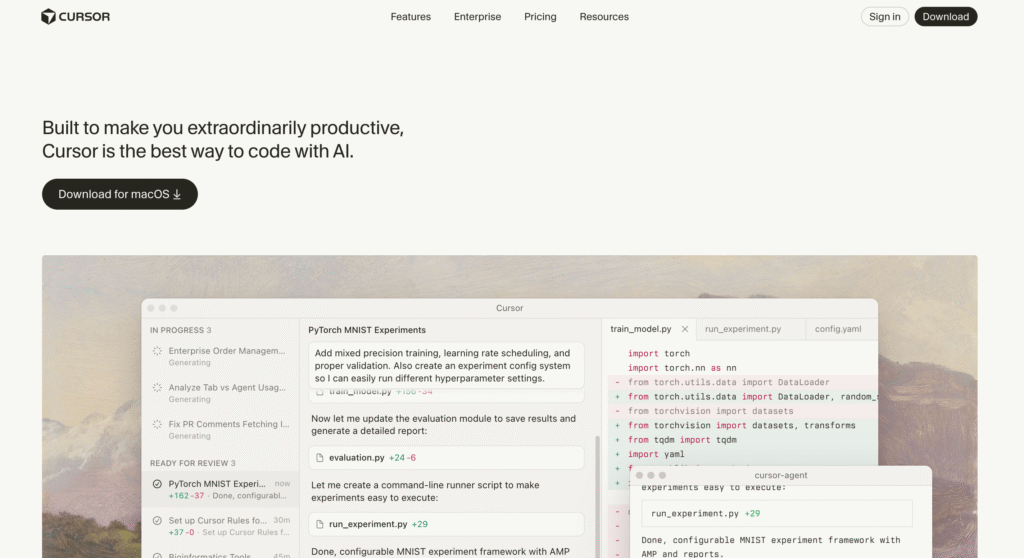
Cursor AI has emerged as a transformative coding assistant built specifically for developers seeking powerful AI collaboration without sacrificing control. Designed as an AI-native evolution of Visual Studio Code, Cursor combines the extensive plugin support of VS Code with intelligent, context-aware coding capabilities. In 2026, it is widely recognized as one of the top AI tools in the growing field of vibe coding—a style of development where intuitive interaction with AI agents amplifies productivity.
AI Architecture and Technical Edge
At the core of Cursor’s performance is its semantic context engine. This engine scans and embeds entire codebases, allowing the AI to understand the structure and logic of projects in detail. Developers can ask complex architectural questions like “Where is the logic for token refresh?” and receive pinpoint-accurate responses.
Cursor’s flagship interface, called “Composer”, enables users to describe coding features in natural language. From there, the tool autonomously plans, writes, and integrates the code across multiple files. This context-driven multi-file coordination has set a new standard for AI coding environments.
Adoption and Market Penetration
Cursor has rapidly gained traction in the professional development community. By 2026, it boasts an organizational adoption rate of 43%, outpacing even GitHub Copilot in several technical domains. Its balance of precision, speed, and autonomy makes it a favorite among both startups and enterprise teams aiming to harness AI for software development.
Company Performance and Scale
Anysphere, Cursor’s parent company, has achieved remarkable financial success. As of late 2025:
- Company Valuation: USD 29.3 billion
- Annualized Revenue: Over USD 1 billion
- Team Size: Around 300 employees
This compact yet high-impact team illustrates the power of scalable software businesses in the AI era, often referred to as the “vibe coding” generation.
Feature Overview of Cursor (2026)
| Feature | Description |
|---|---|
| AI-Native Code Editor | Rebuilt version of VS Code optimized for persistent AI awareness |
| Semantic Repository Indexing | Transforms full codebases into searchable, structured embeddings |
| Natural Language Coding | Allows feature creation using plain English via Composer |
| Multi-File Execution Engine | Plans and applies changes across entire projects |
| High Accuracy Q&A Engine | Responds to technical questions with context-specific precision |
| Lightweight & Fast | Runs smoothly even on complex, multi-layered projects |
Pricing Plans of Cursor AI in 2026
Cursor offers a variety of subscription plans catering to different user needs, from individual hobbyists to large organizations.
| Plan | Monthly Price | Key Features | Usage Limits |
|---|---|---|---|
| Hobby | USD 0 | 1-week Pro trial, limited agent requests | 20 agent uses |
| Pro | USD 20 | Fast completions, unlimited tab completions, priority compute | 500 premium requests |
| Pro+ | USD 60 | Access to premium AI models (GPT-5, Claude 4.5) with triple usage rate | 1500 premium uses |
| Ultra | USD 200 | 20x model usage capacity, priority access to experimental features | 6000+ premium actions |
| Enterprise | Custom | Enterprise controls, single sign-on (SSO), security, audit trails, usage monitoring | Customized based on organization need |
Adoption Comparison Matrix: Cursor vs Competitors (2026)
| Feature | Cursor | GitHub Copilot | Tabnine |
|---|---|---|---|
| Codebase Awareness | Full (semantic) | Limited (prompt-based) | Moderate |
| Multi-file Editing | Yes | No | Partial |
| Natural Language Feature Planning | Yes | Partial | No |
| Organizational Adoption Rate | 43% | 39% | 22% |
| Extension Ecosystem | VS Code native | VS Code | Custom IDEs |
| Customization & Controls | High | Moderate | Low |
Bar Chart: Cursor AI Usage Growth (2024–2026)
- 2024: 100,000 developers
- 2025: 420,000 developers
- 2026: 950,000 developers
This sharp increase highlights both the growing trust in AI-native coding tools and Cursor’s dominance in the market.
Conclusion
Cursor AI is not just a code assistant—it is a comprehensive development platform that represents the future of intelligent programming. By combining contextual awareness, advanced planning, natural language input, and cross-file automation, Cursor has set a new benchmark for what vibe coding tools should offer in 2026. Its pricing flexibility and enterprise-grade controls ensure it appeals to both independent developers and global software teams.
2. GitHub Copilot
GitHub Copilot, developed by Microsoft, has become one of the most widely adopted AI tools for software development in 2026. Its seamless integration within the Microsoft ecosystem, particularly with GitHub and Visual Studio, has positioned it as a go-to solution for large-scale and enterprise-level development environments. This tool has been especially favored by professionals working with mature and complex codebases, where stability, compatibility, and infrastructure depth are critical.
Massive User Base and Enterprise-Ready Deployment
By 2026, GitHub Copilot has reached over 20 million active users globally, making it one of the largest communities for any AI code assistant. Its adoption spans individual developers, startups, and some of the biggest corporations in the world. Most Fortune 100 companies have implemented Copilot in their engineering workflows, underscoring its reliability and scalability.
The strong network effect of Microsoft services, from GitHub repositories to Azure DevOps pipelines, allows Copilot to operate as a deeply integrated part of the software development lifecycle. This level of ecosystem support is something few other tools can replicate.
Advanced Capabilities: The Rise of Agent Mode
One of the standout features in Copilot’s 2026 offering is its advanced “Agent Mode.” This background AI assistant performs proactive tasks such as:
- Automatically responding to GitHub issues
- Generating full pull request implementations
- Refactoring legacy code with contextual accuracy
- Recommending relevant documentation for developers in real time
These features empower teams to reduce repetitive tasks and focus on higher-value architecture and problem-solving activities.
Impact on Developer Productivity and Satisfaction
Recent research by GitHub reveals significant improvements in developer well-being and efficiency due to Copilot usage:
- Developers report a 75% boost in job satisfaction
- Task completion times have improved by 55%
- Suggestion acceptance rates range from 70% to 88%, indicating high relevance and reliability of AI outputs
This data supports the growing view that Copilot is not just a tool, but a productivity engine that enhances coding quality and team morale.
GitHub Copilot Adoption & Performance Metrics (2026)
| Metric | Value |
|---|---|
| Total Active Users | 20 Million+ |
| Productivity Improvement (Coding Tasks) | 55% Faster |
| Suggestion Acceptance Rate | 70%–88% |
| Developer Job Satisfaction Boost | 75% Increase |
| Enterprise Adoption (Fortune 100) | Majority Adopted |
| Individual Subscription Starting Price | USD 10/month |
Feature Matrix: GitHub Copilot vs Other Vibe Coding Tools (2026)
| Feature | GitHub Copilot | Cursor | Tabnine | Replit |
|---|---|---|---|---|
| Ecosystem Integration | Microsoft/GitHub | VS Code Native | IDE Plugin | In-browser |
| Suitable for Large Codebases | Yes | Yes | Moderate | Low |
| Agent Background Task Automation | Advanced | Partial | None | None |
| Code Suggestion Accuracy | High | Very High | Medium | Medium |
| Natural Language Feature Description | Limited | Full | Limited | Full |
| Best for Refactoring/Legacy Code | Yes | Yes | No | No |
Bar Chart: GitHub Copilot’s Active User Growth (2022–2026)
A visual bar chart comparison:
- 2022: 1.2 million
- 2023: 5.5 million
- 2024: 11 million
- 2025: 16.8 million
- 2026: 20+ million
This upward trend reflects Copilot’s growing reputation as a reliable AI partner in professional development.
Pricing Overview: GitHub Copilot Plans (2026)
| Plan Type | Monthly Price | Target Users | Key Features |
|---|---|---|---|
| Individual Plan | USD 10 | Freelancers, hobbyists | Real-time suggestions, limited background tasks |
| Business Plan | Custom | Teams and startups | Role-based access, collaboration analytics |
| Enterprise Suite | Custom | Corporates, Fortune 500 | Full Azure/GitHub integration, security controls, private repos |
Conclusion
In the evolving world of vibe coding, GitHub Copilot has established itself as a mature, dependable, and powerful AI coding assistant. Its strong backing by Microsoft, deep enterprise penetration, and innovative automation features make it a top-tier choice for developers in 2026. Whether enhancing developer happiness or accelerating complex projects, Copilot continues to redefine modern software development.
3. Lovable
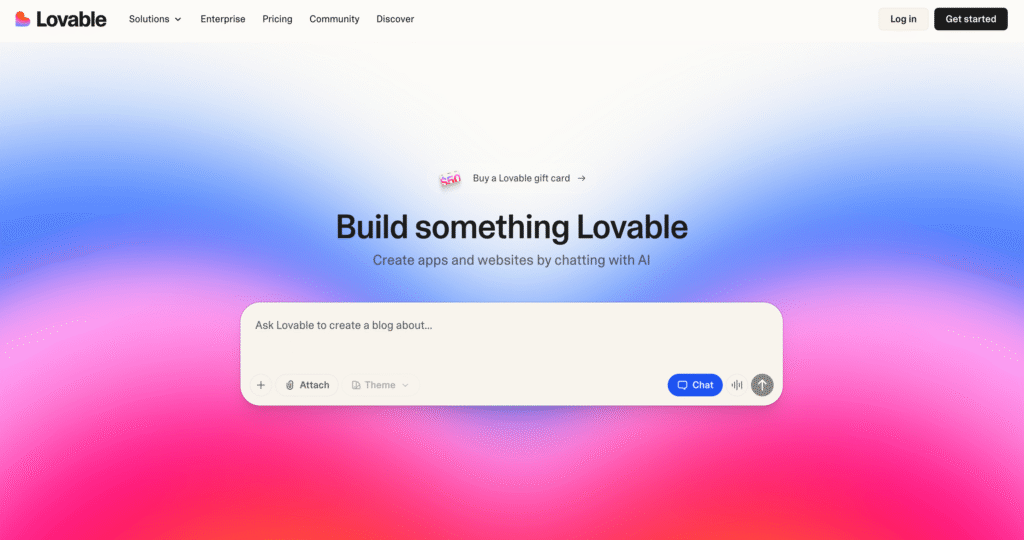
Lovable, formerly known as GPT Engineer, has redefined how non-technical users and design-focused teams build web applications in 2026. Unlike traditional code-first platforms, Lovable acts as a virtual full-stack engineer powered by artificial intelligence. It allows users to generate entire applications simply by describing what they want in plain sentences. This shift toward intuitive, low-barrier development has made Lovable a leader in the “vibe coding” revolution—where AI interprets creative intent and transforms it into functioning, production-grade code.
Empowering Founders Through Simplicity and Visual Control
What makes Lovable unique is its ability to turn high-level ideas into full-stack applications in minutes. Users don’t need to understand programming languages or deployment pipelines. Instead, they interact with a clean, browser-based interface where they can type simple commands like “Create a marketplace with product listings and login features”—and Lovable builds it.
To further support non-coders, the platform introduced its powerful “Visual Edits” system. This tool allows users to click on any element of their app—buttons, text, layouts, or colors—and instantly make changes without using prompts or code. It’s especially popular among Figma users and design-first teams looking to bridge the gap between mockups and deployable products.
Explosive Growth and Strategic Funding
Lovable’s growth in 2026 has been staggering. Within just eight months of reaching its first USD 1 million in annual recurring revenue (ARR), the platform soared past the USD 200 million ARR mark. This meteoric rise reflects the immense demand for tools that lower the barrier to entry in app development.
In December 2025, Lovable secured USD 330 million in a Series B funding round, bringing its valuation to USD 6.6 billion. Notably, this round attracted investments from leading technology firms, including Nvidia, Salesforce, and Alphabet’s CapitalG. These strategic partnerships underscore the platform’s credibility and future ambitions.
Enterprise-Grade Features and Security Assurance
With increased adoption in the startup and enterprise space, Lovable has prioritized the addition of governance and security features. One standout is its built-in pre-publish security scanning system. Before deployment, Lovable automatically checks for common vulnerabilities such as exposed API keys, XSS (cross-site scripting) risks, and data leaks. This focus on safety ensures that even non-technical users can build responsibly and securely.
Performance Metrics and Pricing Overview (2026)
| Performance Indicator | Value |
|---|---|
| Daily Projects Generated | 100,000+ |
| Annual Recurring Revenue (ARR) | Over USD 200 Million |
| Monthly Traffic to Lovable-Built Sites | 200 Million+ Visits |
| Free Plan Credit Limit | 30 credits/month (max 5/day) |
| Pro Plan (Annual Billing) | USD 21/month |
| Business Plan (Annual Billing) | USD 42/month |
Feature Comparison Matrix: Lovable vs Other Prompt-to-App Tools
| Feature | Lovable | Replit | V0.dev | Cursor |
|---|---|---|---|---|
| Visual Edit Interface | Yes | No | Limited | No |
| Full App Generation via Prompts | Yes | Yes | Yes | Partial |
| Design-First Workflow | Strong | Weak | Moderate | Code-First |
| AI-Powered Deployment Support | Yes | Yes | No | No |
| Pre-Publish Security Scanning | Yes | No | No | No |
| Integration with Design Tools | High (Figma Sync) | Low | Medium | None |
| Best For | Non-technical founders | Hobby developers | Designers | Pro coders |
Bar Chart: Lovable ARR Growth from Launch to 2026
- Month 1: USD 50,000 ARR
- Month 3: USD 500,000 ARR
- Month 6: USD 1 Million ARR
- Month 14: USD 200 Million ARR
This exponential curve illustrates the platform’s traction and strong product-market fit among solo founders and startup teams.
Lovable Pricing Tiers Explained (2026)
| Plan | Monthly Rate (Annual Billing) | Features Included |
|---|---|---|
| Free Tier | USD 0 | 30 credits/month, limited export and integration |
| Pro Plan | USD 21/month | Full app generation, custom domains, fast support |
| Business Plan | USD 42/month | Team collaboration, advanced analytics, role-based access |
Conclusion
Lovable has transformed the AI coding landscape by making full-stack development accessible to everyone, regardless of technical background. Its prompt-to-app functionality, visual editing tools, and enterprise-grade governance make it an ideal choice for entrepreneurs, designers, and early-stage teams in 2026. As one of the most innovative AI tools in vibe coding, Lovable continues to expand the boundaries of what’s possible in low-code development.
4. Replit
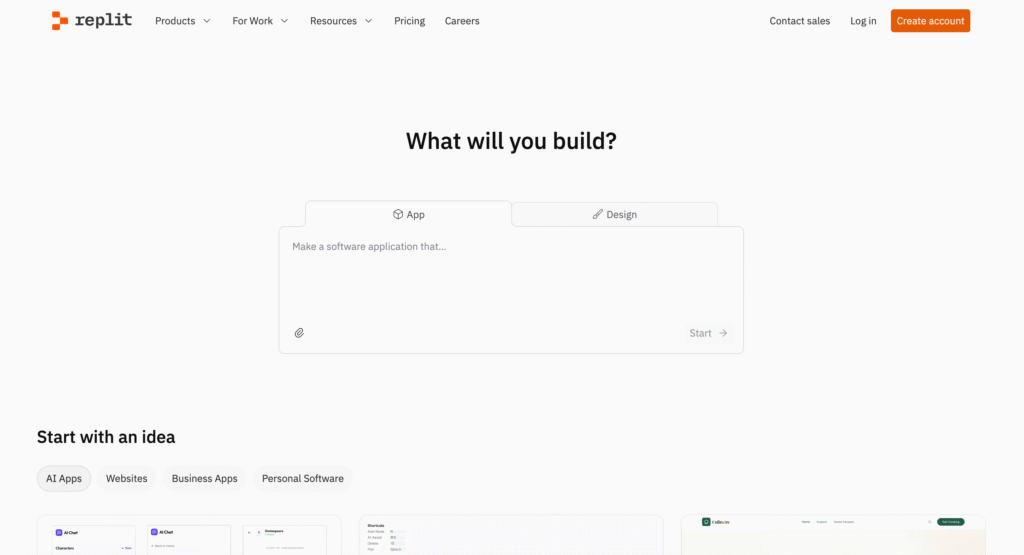
Replit has evolved from a simple browser-based coding tool for students into one of the most advanced AI-driven platforms in the vibe coding space in 2026. Known for its simplicity, speed, and powerful automation, Replit now serves a wide range of users—from early learners and indie developers to fast-scaling teams who want to turn ideas into working apps without delay.
Its signature AI tools—Ghostwriter and the more advanced Replit Agent 3—are built to help developers move from concept to code autonomously. These tools enable Replit to lead the charge in making “zero-to-one” software development accessible to everyone.
One-Click Coding with Zero Setup Required
What makes Replit stand out in 2026 is its zero-setup development environment. Unlike traditional IDEs that require time-consuming installation, library setup, or environment configuration, Replit allows users to open a “Repl” and begin coding immediately. All aspects of the infrastructure—including backend databases, package dependencies, and deployment—are handled automatically.
This zero-friction experience is ideal for:
- Hackathons that demand speed
- Educational settings where simplicity matters
- Internal tools and MVPs built under tight deadlines
- Creators launching new apps without needing DevOps skills
Replit Agent 3: Fully Autonomous AI Coding Assistant
Replit Agent 3 is a major leap in autonomous code generation. It can write, refactor, and debug entire applications continuously for up to 200 minutes without human interruption. Whether it’s building a to-do app or integrating backend APIs, the agent keeps track of the project context, coordinates tasks across multiple files, and ensures the output is functional.
Its “zero-to-one” capability means that users can describe what they want—like “make a social media app with user authentication”—and let the AI build the core structure of the app without step-by-step micromanagement.
Platform Adoption and Financial Milestones
By the end of 2025, Replit had surpassed 20 million global users and reached an annual recurring revenue (ARR) of USD 253 million. This signals significant commercial traction, especially for a platform that started with a focus on education.
Its growing user base includes hobbyists, educators, solo founders, and collaborative coding teams looking for a fast, integrated AI development environment.
Replit Agent 3 Performance Metrics (2026)
| Key Performance Metric | Value |
|---|---|
| Time to Build Basic To-Do App | 5 Minutes (Fastest in class) |
| Continuous Autonomy Duration | 200 Minutes |
| Overall Productivity Increase | 6x Coding Speed |
| Global Active Users | 20 Million+ |
| Annual Recurring Revenue (ARR) | USD 253 Million |
Feature Comparison: Replit vs Other Vibe Coding Tools in 2026
| Feature | Replit | Lovable | GitHub Copilot | Cursor |
|---|---|---|---|---|
| Zero Setup Coding Environment | Yes | No | No | No |
| Fully Autonomous Agent Capabilities | Yes (200 mins) | Partial | No | Partial |
| Best Use Case | Fast prototyping | Design-first apps | Complex refactoring | AI-assisted architecture |
| Built-in Hosting and Deployment | Yes | Yes | No | No |
| Ideal for Beginners | Yes | Yes | No | No |
Bar Chart: Replit’s ARR Growth (2022–2026)
- 2022: USD 8 Million ARR
- 2023: USD 36 Million ARR
- 2024: USD 100 Million ARR
- 2025: USD 253 Million ARR
- 2026: Expected to exceed USD 400 Million
This growth trajectory reflects increasing global demand for all-in-one AI-powered coding platforms.
Replit Pricing Plans (2026)
| Plan Name | Monthly Cost | Description |
|---|---|---|
| Core Plan | USD 20–25 | For individual developers, includes Replit Agent and Ghostwriter |
| Teams Plan | USD 35/user | For collaborative teams, includes shared Repls, analytics, and roles |
| Free Tier | USD 0 | Basic access with limited compute and storage |
Conclusion
In the 2026 landscape of AI-assisted vibe coding, Replit has secured its place as a fast, autonomous, and user-friendly platform for both novice and experienced developers. Its zero-setup philosophy, long-duration autonomous agents, and all-in-one development stack make it a top contender for anyone looking to bring digital ideas to life—quickly and effortlessly.
5. Bolt.new
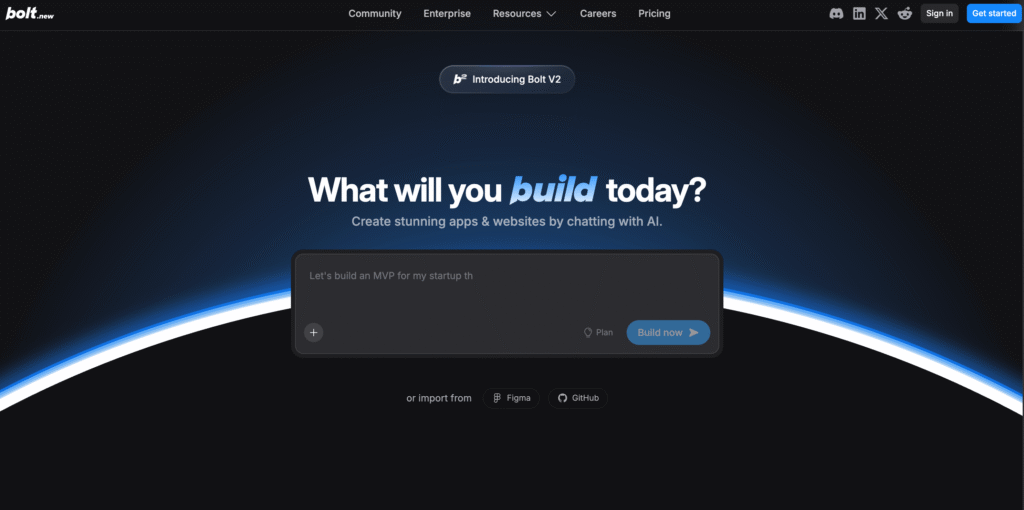
Bolt.new, developed by StackBlitz, has quickly emerged as one of the most powerful tools in the vibe coding space in 2026. Built around speed, simplicity, and AI autonomy, Bolt empowers developers to generate full-stack applications directly in the browser, without needing to install or configure anything locally. It uses proprietary WebContainer technology to create frontend, backend, and database structures from a single user prompt—offering an entirely browser-native developer experience.
This makes Bolt especially useful for developers who want to go from an idea to a working prototype in minutes, with minimal effort and maximum flexibility. The tool is designed for greenfield development—building new projects from scratch with very few constraints.
Instant Full-Stack Development in the Browser
One of Bolt.new’s standout features is its ability to scaffold entire applications in under a minute. Whether the user needs a React dashboard with an Express backend and PostgreSQL schema, or a landing page integrated with serverless functions, Bolt handles the generation automatically.
The WebContainer engine, which simulates a complete Node.js environment inside the browser, eliminates setup time entirely. Developers can code, test, and deploy their applications using just a browser tab—ideal for modern teams, remote environments, and fast-paced product iterations.
Multi-Model AI Flexibility with Bolt v2
In 2026, Bolt v2 introduced dynamic model switching, allowing users to choose from advanced AI engines like GPT-5 or Claude 3.5 Sonnet based on project needs. This flexibility gives developers control over how AI interprets prompts and generates code. By selecting different “AI brains,” users can tailor the assistant’s reasoning style, creativity, and problem-solving approach to better fit the technical goals of their application.
Rapid Commercial Growth and Impressive Economics
Bolt.new achieved remarkable financial success shortly after launch. Within just 4.5 months, it reached USD 40 million in annual recurring revenue (ARR), driven by demand from developers seeking fast prototyping environments.
Its year-on-year ARR growth stands at an astonishing 4,900%, and the platform was valued at USD 700 million as of January 2025. This positions Bolt as one of the fastest-growing AI development tools in the modern software landscape.
Performance and Pricing Overview (2026)
| Metric | Value |
|---|---|
| Annual Recurring Revenue (ARR) | USD 40 Million+ |
| ARR Growth Rate (YoY) | 4,900% |
| Company Valuation (January 2025) | USD 700 Million |
| Time to Generate Full App Scaffold | 45 Seconds |
| Error Reduction Capability | 98% Reduction |
| Monthly Token Allotment (Pro Plan) | 10 Million Tokens |
| Pro Plan Pricing (Annual) | USD 18–20/month |
Capability Comparison Matrix: Bolt.new vs Other Vibe Coding Tools
| Feature | Bolt.new | Replit | Lovable | Cursor |
|---|---|---|---|---|
| Full Browser-Based Environment | Yes | Yes | No | No |
| WebContainer Technology | Yes | No | No | No |
| One-Prompt Full-Stack App Generation | Yes | Partial | Yes | No |
| Custom AI Model Selection | Yes | No | No | No |
| Deployment Speed | Extremely Fast | Fast | Moderate | Moderate |
| Best Use Case | Greenfield Builds | Prototypes | Design-Driven Apps | Architecture Planning |
Bar Chart: Bolt.new ARR Growth First 6 Months Post Launch
- Month 1: USD 1 Million
- Month 2: USD 6 Million
- Month 3: USD 12 Million
- Month 4: USD 24 Million
- Month 4.5: USD 40 Million
This chart highlights the product’s immediate traction and strong market demand for ultra-fast, AI-driven full-stack tools.
Key Strengths and Industry Positioning
While Bolt excels in speed and flexibility, it’s primarily designed for fast builds rather than long-term, enterprise-grade maintainability. Industry analysis notes that while its code quality is functional and fast, it may be more prone to technical debt in large-scale systems compared to more opinionated frameworks like Lovable.
That said, for startups, solo developers, and teams prioritizing speed and experimentation, Bolt delivers unmatched performance in early-stage development.
Conclusion
Bolt.new has become a standout tool in the 2026 vibe coding landscape thanks to its instant full-stack generation, browser-native environment, and flexibility to switch between top-tier AI models. Its rapid growth, smart pricing, and autonomous coding capabilities position it as a leading choice for developers who want to build fast, test faster, and ship without overhead. For anyone starting fresh or building MVPs at scale, Bolt is redefining what AI-powered coding looks like.
6. Windsurf
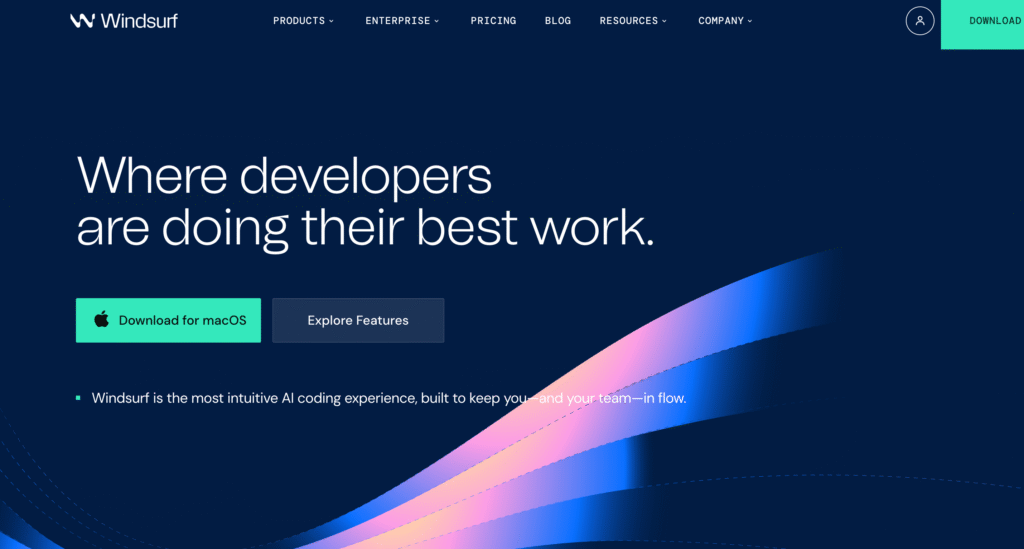
Windsurf, developed by Codeium, has emerged as one of the strongest alternatives to Cursor in the world of AI-powered coding environments. Designed around a familiar Visual Studio Code experience, Windsurf introduces a distinct approach to vibe coding by focusing on passive observation and seamless integration, rather than direct prompting or command execution. In 2026, it stands out for its intelligent agent architecture, high AI code coverage, and smooth integration with real-time development workflows.
Windsurf is gaining popularity among developers who prefer minimal interference while still enjoying the power of autonomous AI assistance.
Cascade Architecture: Passive AI That Observes and Learns
What sets Windsurf apart from other tools in the agentic IDE space is its unique “Cascade” architecture. Unlike aggressive auto-complete or generative systems that often require constant prompts, Cascade observes developer actions silently. It watches as users open files, write terminal commands, or browse their repositories, building context without disrupting the workflow.
This architecture is particularly effective for developers working on large or unfamiliar codebases. By learning through observation, the AI can intelligently suggest improvements, fix bugs, or expand features with minimal guidance—resulting in a smooth, flow-friendly experience.
Real-Time Updates and Efficient Code Generation
Windsurf is optimized for speed and developer immersion. One of its hallmark features in 2026 is automatic AI change saving. As soon as the agent suggests a modification, the change is stored in the file and made visible instantly within local or remote dev environments—even before user approval. This dramatically shortens the feedback loop between idea and result.
Moreover, the tool boasts a remarkable efficiency metric: up to 94% of code within Windsurf-generated projects is AI-written. This high output rate underscores its utility for developers aiming to boost productivity without compromising on project quality.
Gartner Recognition and Growing User Adoption
In 2025, Windsurf hit a major milestone when it was named a Leader in AI-powered development by Gartner. It crossed the 1 million user mark, validating its role in shaping the next generation of software creation tools. The platform continues to expand, with particular interest from open-source contributors, remote development teams, and freelance engineers looking for powerful AI guidance that doesn’t overwhelm.
Windsurf Technical & Economic Metrics (2026)
| Metric | Value |
|---|---|
| Monthly Subscription (Pro Plan) | USD 15 (Cheaper than Cursor) |
| Core Agent Type | Cascade (Passive & Observational) |
| Global User Base (2025) | 1 Million+ Developers |
| Code Generation Efficiency | 94% of Code Written by AI |
| Deployment Model | Works with Local or Remote Repos |
| Support for Multi-File Reasoning | Advanced |
Comparative Matrix: Windsurf vs Other AI IDEs (2026)
| Feature | Windsurf | Cursor | Replit | GitHub Copilot |
|---|---|---|---|---|
| Agent Philosophy | Passive (Cascade) | Active (Composer) | Autonomous | Assistive |
| Real-Time Dev Server Updates | Yes | Partial | Yes | No |
| File Context Awareness | Observational | Explicit Indexing | Basic | Limited |
| AI Code Contribution Rate | 94% | High | Moderate | Moderate |
| Deployment Support | Local + Remote | Local | In-Browser | IDE Extension |
| Ideal For | Context-rich Editing | Feature Planning | Fast Prototyping | Legacy Codebases |
Bar Chart: Percentage of AI-Written Code in AI IDEs (2026)
- Windsurf: 94%
- Cursor: 89%
- Replit: 78%
- GitHub Copilot: 62%
- Tabnine: 57%
This data shows Windsurf’s superior reliance on AI for practical code generation in live projects.
Windsurf Pricing Plans (2026)
| Plan Name | Monthly Cost | Key Features |
|---|---|---|
| Free Tier | USD 0 | Basic suggestions, limited file awareness |
| Pro Plan | USD 15 | Full Cascade AI, real-time sync, remote repo integration |
| Team/Enterprise | Custom Pricing | Advanced access control, dev pipeline hooks, audit trails |
Conclusion
Windsurf is quickly gaining attention as a quiet powerhouse in the AI coding landscape. Its passive agent system, high code generation efficiency, and seamless integration into real development environments make it ideal for developers who value focus and control. By blending AI assistance with minimal disruption, Windsurf offers one of the smoothest vibe coding experiences in 2026. It is especially well-suited for professionals who want intelligent support without micromanagement.
7. Claude Code
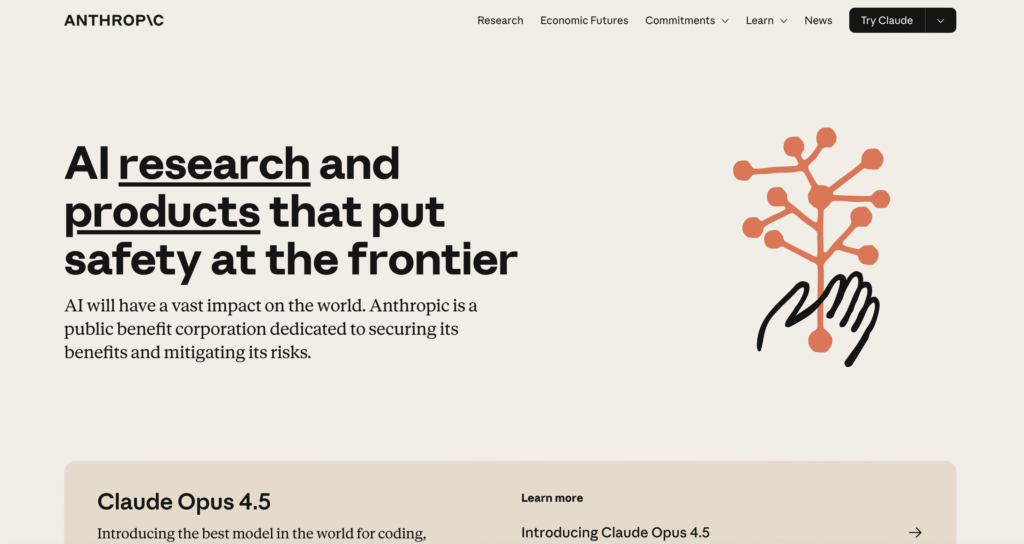
Claude Code, developed by Anthropic, is one of the most sophisticated AI coding tools in 2026—specifically designed for experienced developers, technical leads, and engineering architects. Unlike visual code editors that rely on graphical user interfaces, Claude Code operates within the terminal, making it an ideal choice for users who prefer direct interaction with the file system, Git history, and command-line tools.
Its foundation is the Claude 4.5 Opus model, a state-of-the-art large language model (LLM) known for its deep reasoning capabilities, broad context handling, and exceptional performance on developer-focused benchmarks. Claude Code is not built for beginners; it is optimized for technical users solving large-scale, complex software problems.
Designed for Deep Technical Reasoning and Codebase Analysis
Claude Code excels in understanding complex codebases thanks to its direct interaction with the local environment. It reads from the actual file structure, navigates Git history, and understands the narrative of a codebase like a developer would read a well-structured novel. This allows it to resolve deep dependencies, refactor legacy components, and analyze code across large repositories—without requiring manual indexing or tagging.
This tool is especially valuable when working with monorepos or modular systems where understanding context and code relationships is essential. It avoids the latency and UI delays that can occur in browser-based environments when handling massive projects.
New in 2026: Claude Skills for Reusable Agent Functions
One of the biggest innovations in Claude Code’s 2026 update is the introduction of Claude Skills. These are reusable agentic workflows—custom-built capabilities that developers can train once and reuse across multiple repositories. For example, a user can create a “security patch review” skill that automatically checks for known vulnerabilities across any new pull request. This adds a new layer of automation and modularity to AI-assisted development.
Claude Skills allow senior engineers to build scalable workflows for tasks like:
- Automated documentation
- Unit test generation for legacy code
- Dependency graph validation
- Infrastructure-as-code compliance checks
These capabilities make Claude Code more than just a coding assistant—it becomes an adaptive partner for long-term engineering productivity.
Benchmark-Leading Performance and Advanced Context Management
Claude Code ranks at the top of multiple industry benchmarks. In SWE-bench Verified, it scored an impressive 80.9%, confirming its ability to resolve software engineering tasks at a high level of accuracy. On the Terminal-Bench 2.0, it achieved a score of 59.3%, which highlights its strength in real-world command-line and systems programming use cases.
With a maximum context window of 1 million tokens on the highest-tier plan, Claude Code can process up to 75,000+ lines of code in a single request. This is especially useful for deep refactoring, code audits, or understanding large architectures all at once.
Claude Code Performance & Pricing Overview (2026)
| Metric | Value |
|---|---|
| SWE-bench Verified Score (Claude 4.5 Opus) | 80.9% (Top Performer) |
| Terminal-Bench 2.0 Score | 59.3% |
| Max Context Window | 1 Million Tokens |
| Project Size Capacity (Lines of Code) | 75,000+ Lines |
| Real-World Monthly Cost (Typical Range) | USD 100–300 |
| Initial API-Based Task Pricing | USD 3.60 per two tasks |
Capability Matrix: Claude Code vs Other Vibe Coding Tools
| Feature | Claude Code | Cursor | GitHub Copilot | Replit | Windsurf |
|---|---|---|---|---|---|
| Primary Interface | Terminal-Based | GUI Editor | IDE Extension | Web Browser | GUI + Terminal |
| Best Suited For | Advanced Users | Feature Builders | Code Completion | Rapid Prototyping | Passive Agents |
| Large Monorepo Handling | Excellent | Moderate | Limited | Weak | Good |
| AI Skills/Workflow Automation | Yes (Claude Skills) | No | No | No | No |
| Max Context Window | 1 Million Tokens | 200k Tokens | 32k Tokens | 100k Tokens | 200k Tokens |
| Codebase Interaction | Direct File System | Indexed Context | Prompt-Based | Cloud Sandbox | Observational |
Bar Chart: Claude Code’s Benchmark Scores Compared to Competitors
- Claude Code (SWE-bench): 80.9%
- Cursor: 75.2%
- GitHub Copilot: 67.5%
- Windsurf: 66.0%
- Replit Agent 3: 60.3%
This chart demonstrates Claude Code’s superior reasoning and task resolution in high-complexity development scenarios.
Typical Pricing Structure and Usage Model
| Plan Type | Monthly Cost Range | Description |
|---|---|---|
| Individual Developer | USD 100–150 | Includes terminal tools, Claude Skills, access to Opus model |
| Senior Architect Plan | USD 200–300 | Advanced workflows, 1M token context, full codebase analysis |
| API Task Pricing | USD 3.60 / 2 tasks | For organizations or tools integrating Claude via API |
Conclusion
Claude Code stands out in the 2026 vibe coding ecosystem as a precision tool built for serious software engineers. It offers unmatched context handling, reusable AI workflows through Claude Skills, and high benchmark performance in real development environments. Although its community may be smaller than more mainstream tools, its depth, reliability, and reasoning ability make it the ideal choice for experienced developers and system architects who demand more from their AI coding assistant. It’s not just a helper—it’s a highly skilled collaborator.
8. v0
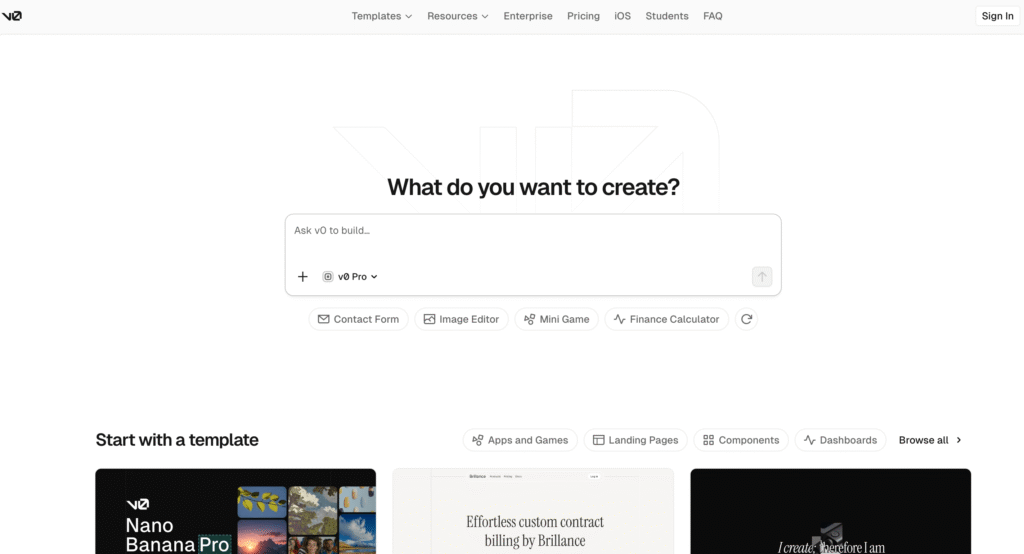
Vercel’s v0, also known as v0.dev, has become one of the most popular AI tools in 2026 for frontend developers focused on vibe coding. Built specifically to streamline the transition from design ideas to functional UI components, v0 uses advanced generative AI to create high-quality React code styled with Tailwind CSS and shadcn/ui. It is a key part of modern frontend development workflows, especially for teams that prioritize speed, design fidelity, and seamless deployment.
With its ability to convert simple prompts or design assets into production-ready components, v0 empowers designers, developers, and product teams to work faster without compromising visual precision.
AI-Driven UI Generation for Designers and Developers
v0 is optimized for turning creative concepts into real, usable code. Users can input design files or plain text instructions like “Build a hero section with a call-to-action button and testimonial cards.” Within seconds, the AI responds with clean, maintainable React code that aligns with best practices in modern frontend development.
Unlike broader full-stack platforms, v0 does not focus on backend automation. Instead, its strength lies in creating beautiful, responsive, and modular UI components that are ready for immediate deployment. This makes it a go-to solution for building:
- Landing pages
- Product showcase sections
- Blog templates
- UI component libraries
- Design system integrations
Its ease of use and high-quality output has made it especially popular among startups, agencies, and frontend engineers who work with tight timelines and high design standards.
From Prompt to Deployment with Vercel Integration
One of v0’s strongest selling points is its tight integration with the Vercel ecosystem. Developers can generate UI components with v0 and deploy them directly to Vercel’s global edge network with minimal setup. This creates a fast, seamless workflow—from initial idea to live production site—without needing to configure build tools, servers, or hosting environments.
This integration supports popular frameworks like React and Next.js, aligning with the stack already preferred by much of the modern frontend community.
Business Growth and Monetization Strategy
The introduction of v0 and other AI enhancements has significantly contributed to Vercel’s financial success. By the end of 2025, the company’s revenue had doubled to USD 200 million. This growth was driven largely by the rapid adoption of v0 among frontend teams looking to speed up their UI development pipelines.
Vercel now offers subscription tiers that cater to both individuals and growing teams, making v0 accessible while also monetizing its advanced AI features.
Technical and Financial Overview of v0 (2026)
| Feature or Metric | Detail |
|---|---|
| Supported Frameworks | React, Next.js, Tailwind CSS |
| Primary Use Case | Component generation, landing pages |
| Monthly Cost – Premium Plan | USD 20 |
| Monthly Cost – Team Plan | USD 30 per user |
| 2025 Vercel Revenue (post v0 launch) | USD 200 Million |
| Deployment Integration | Instant with Vercel infrastructure |
| Output Quality for Complex Layouts | Industry-leading for frontend UIs |
Comparative Matrix: v0 vs Other Vibe Coding Tools
| Feature | v0 by Vercel | Lovable | Bolt.new | Cursor | Claude Code |
|---|---|---|---|---|---|
| Focus Area | Frontend UIs | Full App Builds | Full-Stack Apps | Dev IDE | Terminal Coding |
| Supported Stack | React, Tailwind | React, Full Stack | JS/Node + DB | Any (via VS Code) | Any (Terminal) |
| Output Quality for UI | Highest | High | Moderate | Moderate | Low |
| Deployment Platform Integration | Vercel Native | Custom | Built-in | Manual | External/Custom |
| Backend Generation | No | Yes | Yes | No | No |
| Best for | Designers, UI Devs | Non-coders | Hackathons | Pro Developers | System Architects |
Bar Chart: Revenue Impact of v0 on Vercel (2024 vs 2025)
- 2024 Revenue: USD 100 Million
- 2025 Revenue: USD 200 Million
- Growth Rate: 100% YoY
This chart illustrates how the launch of v0 doubled Vercel’s revenue by accelerating frontend development workflows across industries.
Pricing Tiers and Subscription Model (2026)
| Plan Type | Monthly Price | Features |
|---|---|---|
| Free Tier | USD 0 | Limited component generation, community support |
| Premium Plan | USD 20 | Full prompt-to-component AI, one-click deployment to Vercel |
| Team Plan | USD 30 per user | Team collaboration, version control, private component libraries |
Conclusion
v0 by Vercel is a specialized AI tool that leads the way in frontend-focused vibe coding in 2026. With the ability to generate visually precise, responsive components from simple prompts or design files, it dramatically speeds up the UI creation process. Its seamless integration with the Vercel platform, support for modern frameworks, and emphasis on design-first workflows make it an indispensable tool for frontend engineers, designers, and startups. In a landscape full of full-stack automation, v0 proves that frontend excellence still matters—and can be fully automated.
9. Emergent
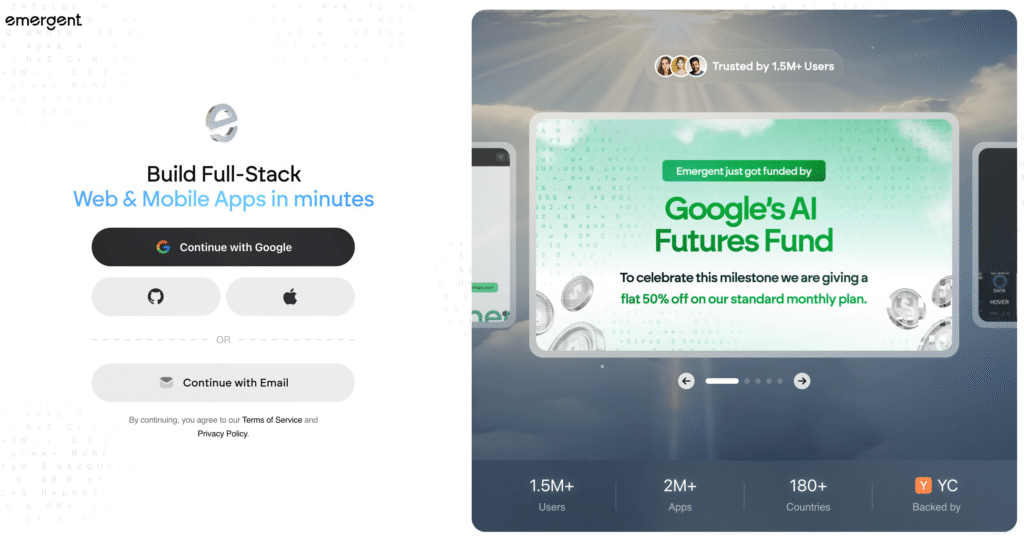
Emergent has quickly risen as one of the most advanced AI-powered platforms for full-stack vibe coding in 2026. Unlike conventional tools that focus on either frontend generation or code suggestions, Emergent uses a unique multi-agent system that mimics the structure and output of an actual software engineering team. This allows users to go from concept to deployment with real, exportable code—without being locked into any proprietary system.
Its powerful architecture and commitment to open code ownership make it a game-changer for startups, solo developers, and enterprise teams aiming for both speed and flexibility.
AI Agents That Simulate a Complete Engineering Workflow
What makes Emergent different from other AI coding platforms is its team-like structure. The system is composed of several specialized AI agents that collaborate in real time:
- The Architect Agent plans the overall structure of the application, mapping out feature sets, data models, and component relationships.
- The UI Agent is responsible for turning ideas into styled, responsive components using frameworks like React.
- The DevOps Agent handles deployment workflows, cloud configurations, and environment setup, ensuring the app can be deployed with a single click.
Together, these agents provide an end-to-end workflow from planning to live application deployment. This architecture not only saves time but also enhances the quality of code across different layers of the stack.
Code Ownership and Real-World Flexibility
One of Emergent’s most valuable features is its focus on code transparency and ownership. Unlike many low-code or no-code tools that trap users within closed ecosystems, Emergent generates full React and Next.js codebases that are production-ready and exportable.
Users can:
- Download and self-host their projects
- Integrate the codebase with private repositories
- Maintain full access to the logic and structure of their apps
- Deploy directly to platforms like GitHub or custom cloud environments
This freedom makes Emergent attractive to developers and teams who want to retain control over their infrastructure and avoid vendor lock-in.
Strategic Funding and Ecosystem Recognition
In late 2025, Emergent secured funding from Google’s AI Futures Fund, signaling its strategic value within the broader AI and developer ecosystem. This investment not only supports the platform’s expansion but also underscores its relevance in pushing forward the boundaries of agent-based software development.
Emergent’s growing influence highlights the demand for tools that go beyond prompt-response models and provide structured, multi-layered support for real-world applications.
Platform Metrics and Pricing Overview (2026)
| Platform Feature or Metric | Value or Description |
|---|---|
| Free Tier Credit Limit | 10 AI tasks per month |
| Standard Tier Monthly Cost (Annual Plan) | USD 20 |
| Pro Tier Monthly Cost (Annual Plan) | USD 200 |
| Core Features | Multi-agent reasoning, one-click deploy |
| Deployment Options | GitHub integration, private cloud hosting |
| Output Code Format | Fully exportable React and Next.js projects |
Tool Comparison Matrix: Emergent vs Other AI Coding Platforms (2026)
| Feature | Emergent | Lovable | Bolt.new | GitHub Copilot | Claude Code |
|---|---|---|---|---|---|
| Multi-Agent Architecture | Yes | No | No | No | No |
| Frontend + Backend + DevOps | Yes | Frontend + Backend | Frontend + Backend | Backend-Aware | Backend-Centric |
| Code Exportability | Full Ownership | Partial | Partial | IDE-bound | Terminal-Based |
| Deployment Options | GitHub + Cloud | Custom | In-platform | External only | Manual |
| Best For | Full-stack builders | Design-first teams | Rapid prototyping | Code completion | Deep reasoning |
Bar Chart: Cost vs Features Across AI Tools (Monthly Pricing)
| Tool | Monthly Cost (Pro) | Includes Frontend | Includes Backend | Includes DevOps |
|---|---|---|---|---|
| Emergent | USD 200 | Yes | Yes | Yes |
| Lovable | USD 42 | Yes | Yes | No |
| Bolt.new | USD 20 | Yes | Yes | Partial |
| GitHub Copilot | USD 10 | Partial | Partial | No |
| Claude Code | USD 300 | No | Yes | No |
This chart demonstrates Emergent’s all-in-one value proposition for serious builders who want full AI development automation while retaining complete control over their code.
Conclusion
Emergent represents a powerful shift in the 2026 AI development landscape. By replicating the structure of a real engineering team through specialized agents, it delivers a comprehensive, end-to-end coding experience. Its ability to generate, export, and deploy full-stack applications—combined with flexible hosting and GitHub integration—makes it one of the most complete AI-native development platforms available today. Whether you’re launching a new startup or automating an internal toolchain, Emergent empowers developers with full autonomy, transparency, and production-grade output.
10. Zencoder
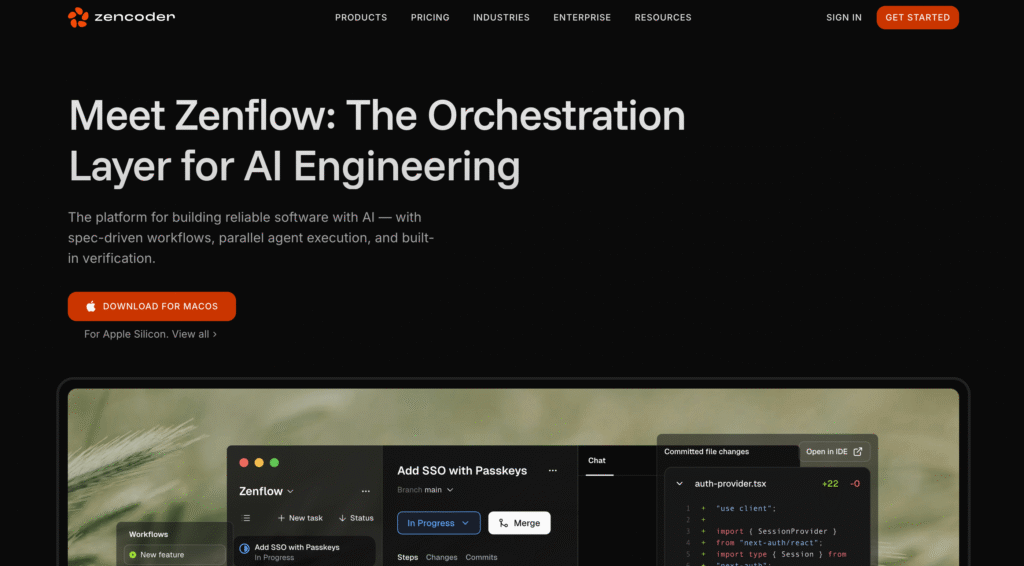
Zencoder has emerged as the top AI-powered coding platform specifically tailored for enterprise software teams operating in highly regulated industries. Built for scale, security, and precision, Zencoder stands out as a comprehensive development agent that goes far beyond code suggestions. In 2026, it is widely recognized as the preferred AI solution for companies requiring strict compliance with international data privacy and security standards.
Unlike tools aimed at individual developers or startups, Zencoder was designed from the ground up to serve large organizations—especially those in finance, healthcare, and government—where data protection, accountability, and workflow transparency are non-negotiable.
Repo Grokking™ and Full-Lifecycle Development Intelligence
At the core of Zencoder’s architecture is its proprietary Repo Grokking™ engine, which enables deep understanding of a company’s unique codebase. This technology allows the AI to analyze structural patterns, architectural decisions, and business-specific logic across more than 20 developer environments.
Rather than simply generating isolated features, Zencoder applies intelligence throughout the entire software development lifecycle (SDLC). This includes:
- Automated unit test creation tailored to the project’s logic
- Real-time bug detection and repair workflows
- Consistent documentation of API behavior and system functionality
- Refactoring suggestions that align with internal engineering standards
This full-cycle automation ensures that enterprise codebases remain scalable, readable, and secure over time—even as teams grow or projects evolve.
Privacy, Security, and Compliance Built-In
Zencoder is one of the few AI coding platforms in 2026 to achieve leading industry certifications. It fully complies with:
- ISO 27001 for information security management
- GDPR and CCPA regulations for data privacy
- Internal enterprise-grade access controls and auditability
These capabilities make Zencoder especially valuable for teams handling sensitive data or developing software that must meet strict regulatory scrutiny. Whether operating in the fintech, medtech, or legaltech sectors, organizations can rely on Zencoder to deliver intelligent assistance without compromising compliance obligations.
Enterprise Performance Metrics and Plan Comparison (2026)
| Feature or Metric | Value |
|---|---|
| Supported Developer Environments | 20+ IDEs (including VS Code, JetBrains) |
| Supported Programming Languages | 70+ (including Python, Java, TypeScript) |
| Daily API Call Limit (Starter Plan) | 280 calls |
| Daily API Call Limit (Core Plan) | 750 calls |
| AI Model Access (Advanced Plan) | Unlimited Opus 4.5 usage |
| Security Certifications | ISO 27001, GDPR, CCPA Compliant |
| Best Use Case | Regulated Enterprise-Grade Development |
Pricing Tiers for Zencoder in 2026
| Plan Name | Monthly Price per User | Key Features Included |
|---|---|---|
| Starter Plan | USD 19 | 280 AI calls/day, basic integrations, unit testing |
| Core Plan | USD 49 | 750 AI calls/day, real-time code repair, broader language support |
| Advanced Plan | USD 119 | Unlimited usage of Opus 4.5, full SDLC automation, security compliance |
Capability Matrix: Zencoder vs Other AI Development Agents (2026)
| Feature | Zencoder | Emergent | Claude Code | GitHub Copilot | Cursor |
|---|---|---|---|---|---|
| Enterprise Compliance | Yes | No | No | Partial | Partial |
| Repo-Wide Pattern Recognition | Yes (Repo Grokking) | Partial | Yes | No | Yes |
| SDLC Automation | Full | Partial | No | No | Partial |
| Documentation and Test Generation | Yes | No | No | Limited | Partial |
| Multi-IDE Integration | 20+ Environments | GitHub + Cloud | Terminal | IDE Plugins | VS Code Native |
| Best For | Regulated Teams | Full-Stack Builds | Deep Analysis | General Coding | Fast Prototyping |
Bar Chart: Daily AI Usage Allowances by Plan (2026)
- Starter Plan: 280 API calls
- Core Plan: 750 API calls
- Advanced Plan: Unlimited API access
This visual comparison emphasizes Zencoder’s flexible scaling options for teams with different levels of activity and automation needs.
Conclusion
Zencoder represents the gold standard for enterprise-ready AI coding tools in 2026. Its advanced capabilities, robust security features, and full-lifecycle development support make it the ideal choice for large organizations that demand both speed and compliance. With automated testing, real-time bug resolution, and extensive IDE compatibility, Zencoder acts as a true AI teammate—not just a smart assistant—ensuring quality, governance, and reliability at every step of the development process. For any team working in sensitive or regulated environments, Zencoder offers unmatched peace of mind and performance.
The State of Agentic Software Creation in 2026: A Deep Dive into Vibe Coding and Top AI Orchestration Platforms
In 2026, the world of software development has undergone a major transformation, driven by the rise of agentic AI and a new philosophy known as “vibe coding.” This modern approach allows developers to focus on intent and outcomes while AI agents handle structure, syntax, and complexity. As a result, productivity has accelerated across industries, new tools have emerged, and economic dynamics in software creation have shifted dramatically.
Understanding the Rise of Vibe Coding and VibeOps
The concept of vibe coding was popularized in early 2025 by Andrej Karpathy, who described it as a coding style where developers let go of granular control and trust AI agents to translate intent into output. Instead of micromanaging code, developers express goals and let intelligent tools “vibe” their way to solutions. This abstracted yet powerful workflow has now evolved into a full methodology known as VibeOps.
VibeOps treats AI agents as active participants in the software development lifecycle. These agents collaborate, execute tasks autonomously, and adapt continuously based on context and prompts. This approach became viable thanks to a 99.7% drop in inference costs over the past two years, making it financially sustainable to delegate complex logic handling, debugging, and architectural planning to AI systems.
Economic Acceleration and Venture Capital Shifts
The economic landscape in 2026 reflects the rapid adoption of agentic tooling. AI captured 53% of global venture capital in 2025, amounting to around USD 400 billion in funding. The monetization cycle has compressed significantly: AI-native dev tools now reach USD 2.1 million in annual recurring revenue (ARR) within their first year, with standout startups—often called “supernovas”—reaching over USD 5.3 million.
These tools are not niche products. They’re widely used across professional environments. Early 2026 data shows that 84% of developers are using or planning to use AI agents in their workflow, with 51% integrating them daily. In fast-paced startup ecosystems like Y Combinator, it’s common to see 95% of a codebase generated by AI, with human oversight focused on strategy and edge-case logic.
Key Market and Performance Statistics: 2025–2026
| Metric | Value |
|---|---|
| Global AI Code Assistant Market Size (2025 est.) | USD 4.70 Billion |
| Forecasted Market Valuation (2033) | USD 14.62 Billion |
| Portion of Global Code Generated by AI (2026) | 60% |
| ARR for AI Application Layer (2025) | USD 37 Billion |
| Annual Hyperscaler Capex on AI Infrastructure (2026) | USD 450 Billion |
| Average Reduction in Development Time Using AI Tools | 40% to 80% |
| Revenue per Full-Time Employee in AI Supernova Startups | USD 1.133 Million |
Developer Adoption and Productivity Benchmarks
| Indicator | Statistic |
|---|---|
| Developers Using or Planning to Use AI | 84% |
| Developers Using AI Daily | 51% |
| Codebase AI-Generated in YC Startups | 95% |
| Productivity Improvement from AI Agents | 3–5x faster task delivery |
These figures highlight how AI is not just enhancing productivity—it’s redefining the entire development process. In the era of agentic software, what was once considered advanced automation has become the new baseline.
From Tools to Orchestration: The Evolution of Platforms
Modern vibe coding isn’t just about prompting AI. It’s about orchestrating multi-agent systems, where different AI components take on specific roles—planning, coding, testing, deploying—and work together under minimal human supervision. This shift has given rise to orchestration platforms that combine reasoning, creativity, and operational efficiency across the full software lifecycle.
Platforms like Cursor, GitHub Copilot, Replit, Lovable, Bolt.new, and Claude Code are at the forefront, each specializing in different aspects—from frontend generation to large-scale monorepo refactoring to autonomous deployment. The most advanced platforms such as Emergent and Zencoder simulate entire engineering teams with distributed agent architectures, achieving production-grade results with minimal manual input.
In 2026, vibe coding and agentic orchestration have become foundational to how software is built. With AI generating most of the code, managing deployment, writing tests, and ensuring documentation, developers are now functioning more like directors than operators. The economic benefits are clear, the tools are becoming smarter and more integrated, and adoption continues to grow rapidly. As companies compete to scale AI-native products, those embracing VibeOps and orchestration platforms are setting the pace for the next decade of software innovation.
Benchmarking Agentic Software in 2026: Performance Realities and the Productivity Paradox in Vibe Coding
placed on accurately benchmarking their real-world performance. Vibe coding tools are no longer evaluated solely on synthetic tasks or curated datasets. Instead, new benchmarks are pushing AI agents into deeper waters—where enterprise-scale logic, multi-file dependencies, and unfamiliar codebases test their reasoning in ways far more aligned with industry expectations.
From Verified to Pro: Evaluating AI on Real Engineering Challenges
Historically, models were judged using “SWE-bench Verified,” a benchmark based on simplified, human-curated problems. While models like Claude 4.5 Opus and GPT-5.2 continue to score over 80% in these conditions, the introduction of “SWE-bench Pro” has changed the landscape. This newer benchmark simulates real enterprise coding conditions, introducing complex monorepos and non-trivial logic trees that mirror actual developer environments.
The gold standard within SWE-bench Pro is the “Private Commercial Subset”—a collection of closed-source, contamination-resistant test cases. Here, memorized answers are useless, and models must truly reason from scratch. Performance metrics plummet in this environment, highlighting how far AI still has to go in mastering long-horizon software construction.
Model Performance Scores on Industry Benchmarks (2026)
| AI Model / Agent | SWE-bench Verified (%) | SWE-bench Pro (Public) (%) | SWE-bench Pro (Commercial) (%) |
|---|---|---|---|
| Claude 4.5 Opus (Thinking) | 80.9 | 23.1 | 17.8 |
| OpenAI GPT-5.2 (Thinking) | 80.0 | 23.3 | 14.9 |
| Claude 4.5 Sonnet | 77.2 | 43.6 | N/A |
| Gemini 3 Pro | 76.2 | 43.3 | N/A |
| Gemini 3 Flash | 76.2 | N/A | N/A |
| GPT-5 Codex Architecture | 74.9 | N/A | N/A |
| LLaMA 4 Maverick | 75.0 | N/A | N/A |
These results reveal a steep drop-off in model performance when transitioning from theory to application. While models do well in controlled settings, their ability to navigate full-stack applications with 100k+ lines of code remains limited.
Language-Specific Observations
Performance also varies by programming language. AI agents excel in Python and Go, which have cleaner syntax and more uniform patterns. However, they struggle more with TypeScript and JavaScript environments—especially in modular or event-driven applications—where context is fragmented and side effects are harder to trace.
The AI Productivity Paradox in Team Environments
Despite these challenges, agentic platforms have radically improved individual productivity. Developers report task completion speeds increasing by 55%. However, the rise in individual velocity has exposed a paradox at the team level: overall delivery timelines have not improved—and in some cases, have gotten worse.
A controlled study conducted by METR found that while developers believed they were working 20% faster using tools like Cursor Pro, they were actually 19% slower on complex tasks when measured objectively. The illusion of speed is fueled by tools producing large amounts of “nearly correct” code—code that looks functional but often introduces new bugs or edge-case failures.
This increase in code volume is overwhelming team workflows. Pull request (PR) volume has nearly doubled, while the time required for team reviews has increased by 91%. Context switching has also risen by 47%, making it harder for developers to stay focused on one task. The result: faster input, slower throughput.
Team Performance Metrics with AI Tools (2025–2026)
| Team Dynamics Metric | AI-Assisted Value | Manual Baseline (100%) |
|---|---|---|
| Individual PR Merges per Week | 70% Increase | 1.0x |
| Total PR Volume per Team | 98% Increase | 1.0x |
| PR Review Time | 91% Increase | 1.0x |
| Time-to-Merge Reduction | 50% Faster | 100% |
| Context Switching Overhead | 47% Increase | 1.0x |
| System Stability (Post-Merge Bugs) | 7.2% Decrease | 100% |
These findings highlight the cost of high-frequency development: while code is produced faster, the system becomes harder to manage and less stable overall. Developers must now balance the benefits of AI acceleration with the challenges of coordination and quality assurance.
Conclusion
The state of agentic software creation in 2026 is defined by both extraordinary capability and complex trade-offs. While AI orchestration tools have unlocked a new era of productivity, benchmarks like SWE-bench Pro and the productivity paradox reveal that the hardest challenges in software aren’t just about generating code—they’re about maintaining quality, coordination, and control at scale.
To fully benefit from vibe coding, organizations must not only choose the right AI agents but also evolve their team practices and review systems. The future of development lies not just in faster code, but in smarter orchestration.
Emerging Trends in Agentic Software Creation: The Future of Vibe Coding and AI Orchestration in 2026
As the software industry fully embraces agentic development, the year 2026 marks a defining chapter in how applications are imagined, built, and managed. The vibe coding movement—where developers steer AI agents rather than handwrite every line of code—has evolved beyond early experimentation and entered the era of platform maturity. This evolution is being shaped by five major trends that are rapidly influencing software teams, regulatory frameworks, and product design strategies worldwide.
The Shift from AI Assistants to Autonomous Agent Orchestration
One of the most important transformations in 2026 is the transition from isolated AI assistants to orchestrated systems of intelligent agents. Rather than relying on a single assistant to autocomplete snippets, developers now oversee full “agent studios” that resemble collaborative digital teams. In high-maturity enterprises, these platforms include role-specific agents with distinct responsibilities:
- Architect Agent plans migration strategies for legacy infrastructures
- Security Agent continuously scans for vulnerabilities during development
- Documentation Agent updates internal API references before code is submitted
These orchestration platforms act as intelligent control centers, managing projects in real time with little human oversight. By late 2026, expert projections indicate that enterprises with deep AI integration will operate with more AI agents than human engineers—reshaping organizational structure itself.
Multimodal Interfaces and Sketch-to-App Generation
Another transformative trend is the rise of multimodal development workflows. Enabled by models like GPT-5 and Gemini 3.0 Pro, developers are no longer restricted to text-based prompts. AI coding systems now accept images, diagrams, and even videos as input.
This has enabled “sketch-to-code” features to move from experimental to production-level capabilities. Developers or founders can upload a photo of a whiteboard sketch, a hand-drawn mobile app layout, or a video prototype—and the AI platform will generate a fully functional full-stack app within hours.
Additionally, voice-based programming has become viable. With tools like SuperWhisper, developers can now dictate logic flows or structural changes aloud—while walking, commuting, or multitasking—turning spoken instructions into runnable code with impressive accuracy.
Security Weaknesses and the Rise of AI-Induced Vulnerabilities
While agentic tools have unlocked incredible speed, they have also introduced significant security risks. Research conducted in early 2026 reveals that Python code generated by AI contains at least one known vulnerability in nearly 30% of use cases. For more sensitive logic—such as authentication, access control, or cryptographic operations—the failure rate is even higher.
| AI-Generated Security Risk | Percentage of Affected Outputs |
|---|---|
| General Python Code | 29.1% |
| Authentication Logic | ~40% |
| Privilege Escalation Bugs | +322% Increase (YoY) |
This rise in vulnerability is largely due to the statistical nature of large language models, which generate code that appears to “work” but may violate critical security assumptions. Without rigorous manual review or automated guardrails, AI-written code can pass functional tests while remaining insecure under edge cases or malicious conditions.
Compliance Automation and the Enforcement of the EU AI Act
The implementation of the European Union’s AI Act in 2026 has brought new regulatory pressure on vibe coding platforms. Under the act, platforms operating in regulated sectors such as banking, healthcare, and defense must meet strict governance standards. This includes:
- Real-time audit logs for all agent activity
- Model transparency and explainability for generated outputs
- AI risk assessments and compliance certificates
- Access control protocols tied to national security classifications
These developments have accelerated the demand for built-in compliance automation, driving innovation in AI governance tooling. Vibe coding platforms now include embedded tools for risk scoring, security linting, and policy enforcement to ensure both legal and operational safety.
Summary Matrix: Key Agentic Trends Reshaping Software Development in 2026
| Trend Category | Description |
|---|---|
| Agent Orchestration | Shift from single assistants to multi-agent control systems |
| Multimodal Workflows | Code generation from images, sketches, videos, and voice |
| Security Risk Escalation | 29%+ of AI-generated Python includes vulnerabilities |
| Compliance Automation | EU AI Act requires auditability, certifications, and transparent oversight |
| Voice-Driven Development | Use of speech-to-code engines for hands-free software creation |
Conclusion
The future of agentic software creation in 2026 is both exciting and complex. As AI orchestration platforms replace manual workflows with dynamic agent teams, and as multimodal input channels become mainstream, developers are now directing rather than coding. But these benefits come with critical responsibilities—especially in areas of cybersecurity and compliance. With evolving regulations like the EU AI Act and growing pressure to build secure, explainable systems, the next wave of vibe coding will not only be about speed, but about safety, accountability, and trust in intelligent agents.
Strategic Outlook on Agentic Software Creation and Vibe Coding in 2026
The evolution of software development in 2026 makes it clear that vibe coding is no longer seen as a trendy or casual approach—it has become a structured, high-impact methodology that is redefining how modern teams build digital products. What began as experimental prompting has matured into an operational model driven by AI orchestration, focused on converting intent into functioning code through layered agentic systems.
The most successful platforms of 2026 are no longer those that simply generate prototypes, but those that solve the long-term challenges of maintaining, securing, and scaling these systems. As the AI development space consolidates, the tools that continue to thrive are those that have tackled what engineers call the “Day 2 problem”—ensuring sustainability after the first build is shipped.
Redefining Developer Value: Focus on Strategic Logic, Not Syntax
For professional teams, the primary benefit of vibe coding is the ability to offload repetitive and structural tasks to AI agents. These include:
- Generating boilerplate code
- Setting up configurations
- Handling file scaffolding and integration boilerplate
- Drafting standard UI components and backend functions
This enables developers to focus their time and energy on the “hard 30%”—the complex, business-specific logic and architecture decisions that define the actual value of the software. With agents handling the common logic pathways, human developers shift from writing functions to designing systems.
The AI Productivity Paradox and the Role of Human Oversight
However, this shift comes with a cautionary insight known as the AI Productivity Paradox. While AI platforms can generate large volumes of code rapidly, this can lead to downstream issues if there is no structured process for reviewing, testing, and validating that output.
Without strong oversight mechanisms, teams may experience:
- Decline in system reliability
- Increased debugging cycles
- Overloaded review pipelines
- Missed edge-case vulnerabilities
Data from 2026 shows that unless teams integrate a human-in-the-loop model—especially for critical infrastructure, authentication layers, or customer-facing deployments—the gains in code volume may be offset by the loss in product quality.
Reframing Engineering Skillsets for the Agentic Era
In this new environment, the most important skill for engineers is no longer memorizing syntax or manually writing each line. Instead, the highest-value engineers in 2026 are those who can:
- Design multi-agent workflows
- Understand orchestration logic
- Apply abstraction layers across frontend, backend, and DevOps agents
- Maintain cross-agent consistency for performance and security
- Implement compliance-aware agent architectures
The emergence of this skillset is shaping new roles such as AI Workflow Architects, Agentic Systems Engineers, and Compliance-Aware Orchestrators, all of which require deep understanding of prompt chaining, context layering, and governance-aware deployment flows.
Capability Comparison Table: Agentic Coding vs Traditional Development
| Capability Focus | Traditional Development | Agentic Development (2026) |
|---|---|---|
| Code Generation | Manual | AI-Orchestrated |
| System Design | Static Planning | Dynamic Multi-Agent Design |
| Developer Skill Focus | Syntax & Tools | Architecture & Orchestration |
| Review Process | Line-by-Line | Post-Agent Human Oversight |
| Deployment Velocity | Sequential | Parallel & Accelerated |
| Post-Launch Maintenance (Day 2) | Team-Driven | Agent-Guided with Human Control |
Strategic Summary Matrix: Success Factors in Vibe Coding
| Strategic Focus Area | Key Requirement in 2026 |
|---|---|
| Prototype Acceleration | Use of prompt-to-code AI for 70%+ foundational generation |
| Stability and Scale | Day 2 systems with integrated monitoring and debugging agents |
| Quality Control | Human-in-the-loop review for critical deployments |
| Engineering Leadership | Ability to map, orchestrate, and maintain agentic pipelines |
| Competitive Differentiator | Combining AI speed with human strategic insight |
Conclusion
The state of agentic software creation in 2026 is defined by more than speed—it is about sustainability, security, and orchestration. Vibe coding has shifted from being a code generation tool into a systems design philosophy. Organizations that succeed in this era will be those that treat agents not as assistants, but as autonomous collaborators working within carefully constructed workflows.
Engineering teams must now be trained not only to work faster, but to work smarter—designing AI-driven systems that are flexible, resilient, and continuously improvable. The most valuable developers are not those who know the most languages, but those who can make agents deliver real business outcomes through thoughtful orchestration and human judgment.
Conclusion
As we reflect on the rapid evolution of software engineering in 2026, one truth has become undeniable: vibe coding is not a fleeting trend—it is the foundation of the next-generation development lifecycle. The emergence of AI tools that can interpret human intent, generate full-stack applications, orchestrate agent-based workflows, and maintain production-grade codebases has redefined what it means to build software in the modern age.
This shift has not just impacted how code is written, but how engineering teams are structured, how time-to-market is measured, and how business value is delivered. From individuals launching new products in a weekend to enterprises deploying AI-powered pipelines at global scale, vibe coding has fundamentally changed the rules of development.
The tools outlined in this guide—Cursor, GitHub Copilot, Lovable, Replit, Bolt.new, Windsurf, Claude Code, v0 by Vercel, Emergent, and Zencoder—represent the most powerful, innovative, and forward-looking platforms driving this transformation. Each offers distinct strengths, from terminal-based reasoning and full-stack orchestration to real-time UI generation and compliance automation. But collectively, they signal a broader shift toward an AI-first development mindset, where human creativity is amplified—not replaced—by intelligent systems.
Here are the defining takeaways that frame the state of AI-powered vibe coding in 2026:
1. Intent-First Programming Is Now Mainstream
Developers no longer need to begin every project with a blank file. Whether through natural language prompts, visual inputs, or voice commands, intent-first programming allows ideas to be translated into real software at unprecedented speeds. This empowers creators of all technical levels to participate in product development and dramatically reduces the barriers to innovation.
2. Agentic Systems Are Replacing Linear Workflows
The most advanced tools in 2026 deploy coordinated AI agents that specialize in planning, coding, testing, deploying, documenting, and securing applications. Instead of writing step-by-step instructions, developers now design workflows, supervise autonomous agents, and focus on architectural oversight. This evolution boosts efficiency, enables parallel task execution, and future-proofs codebases at scale.
3. Code Volume is Up, But Review and Governance Are Critical
AI has enabled an explosion in code output, with productivity gains of 3–5x across common development tasks. However, this acceleration comes with the responsibility of review, refinement, and human-in-the-loop quality control. The most successful teams in 2026 are not those that simply ship fast, but those that have layered review systems, security audits, and compliance workflows baked into their pipelines.
4. Multimodal and Real-Time Interfaces Are Expanding Access
With support for sketch-to-code, voice-to-code, and video-driven workflows, modern AI tools have made development more accessible than ever. Designers, product managers, and non-technical stakeholders can now contribute meaningfully to building applications, unlocking cross-functional innovation across every industry.
5. Long-Term Maintenance Is the New Benchmark for Value
In the early days of AI coding, the ability to build a prototype quickly was seen as revolutionary. In 2026, the real differentiator is how well a tool supports “Day 2” tasks: maintaining, scaling, debugging, refactoring, and securing software post-launch. Tools like Emergent and Zencoder lead this domain with full-lifecycle orchestration, integrated monitoring, and exportable, enterprise-grade codebases.
Strategic developers and engineering leaders must now think beyond features and speed. The real value lies in choosing platforms that balance power, security, compliance, and flexibility—allowing teams to innovate confidently and sustainably.
As businesses increasingly depend on digital products, those who master vibe coding and AI orchestration tools will lead the charge into the next era of software creation. Whether you’re a solo developer, a fast-scaling startup, or a global enterprise, the time to adopt and invest in these tools is now.
In conclusion, the Top 10 AI Tools for Vibe Coding in 2026 are not just tools—they are foundational platforms that define how software will be built, maintained, and evolved in the years to come. Embracing them today means gaining a competitive edge, reducing development complexity, and unlocking new creative potential in the world of intelligent software engineering.
If you find this article useful, why not share it with your hiring manager and C-level suite friends and also leave a nice comment below?
We, at the 9cv9 Research Team, strive to bring the latest and most meaningful data, guides, and statistics to your doorstep.
To get access to top-quality guides, click over to 9cv9 Blog.
To hire top talents using our modern AI-powered recruitment agency, find out more at 9cv9 Modern AI-Powered Recruitment Agency.
People Also Ask
What is vibe coding and why is it important in 2026
Vibe coding is an AI-driven development approach where developers guide intelligent agents to build, test, and deploy software with minimal manual coding.
Which AI tools are best for vibe coding in 2026
Top tools include Cursor, Replit, Lovable, GitHub Copilot, Claude Code, Emergent, Zencoder, v0 by Vercel, Windsurf, and Bolt.new.
How does vibe coding differ from traditional coding
Traditional coding requires line-by-line programming, while vibe coding uses AI agents to interpret developer intent and automate most of the development tasks.
Is vibe coding suitable for beginners
Yes, many vibe coding tools are beginner-friendly, offering natural language inputs, visual builders, and one-click deployments.
Which vibe coding tool is best for full-stack development
Emergent and Replit stand out for full-stack automation, offering backend, frontend, and deployment capabilities through AI agents.
Can AI-generated code be used in production
Yes, many AI tools now produce production-grade code, especially those with built-in review systems, testing automation, and security scanning.
Are vibe coding tools secure for enterprise use
Platforms like Zencoder and Claude Code focus on compliance, security auditing, and regulatory certifications suitable for enterprise-level projects.
What programming languages do these AI tools support
Most top AI coding platforms support major languages like Python, JavaScript, TypeScript, Go, Java, and others across 70+ frameworks.
How fast can AI build a full application
AI-powered platforms can generate full-stack applications in as little as 2–4 hours, depending on complexity and input format.
Do vibe coding tools support voice or visual inputs
Yes, multimodal tools like SuperWhisper and v0.dev support sketch-to-code and voice-to-code workflows for intuitive development.
Is vibe coding used by professional developers
Yes, over 84% of developers globally now use or plan to use AI tools for software development, with daily use rising steadily.
Can I export and self-host code from these platforms
Tools like Emergent, Bolt.new, and Zencoder allow full code export and self-hosting, ensuring users maintain control over their software.
Do vibe coding tools support team collaboration
Yes, many platforms now include shared agent workspaces, live coding sessions, and team-based project orchestration features.
Are there any free AI tools for vibe coding
Most platforms offer free tiers with limited usage credits, including Cursor, Replit, and v0.dev, ideal for hobbyists or trial users.
Which AI tool is best for frontend UI generation
v0 by Vercel is highly optimized for generating React components and styled UIs directly from prompts or design inputs.
How do agentic systems improve developer productivity
Agentic platforms reduce time spent on boilerplate and repetitive tasks, allowing developers to focus on business logic and system design.
What is the Day 2 problem in AI development tools
It refers to the challenge of maintaining, scaling, and securing software after launch—something top tools like Zencoder and Emergent solve well.
Can AI tools handle backend logic and database setup
Yes, tools like Replit, Lovable, and Emergent can generate backend logic, define data models, and connect to databases automatically.
How does Claude Code differ from other AI tools
Claude Code is terminal-first, built for senior developers, and optimized for complex reasoning in large codebases with minimal UI reliance.
Which AI tools are best for secure coding practices
Zencoder and Claude Code lead in this space, offering real-time vulnerability scanning and compliance with global security standards.
Do these AI tools require internet access to function
Most are cloud-based and require internet connectivity, although some enterprise tools may offer private deployment options.
Are these AI platforms compliant with the EU AI Act
Leading platforms now offer audit logs, explainable outputs, and regulatory features to meet compliance standards like the EU AI Act.
Can these tools integrate with GitHub or CI/CD systems
Yes, many tools offer direct GitHub integration, support for pull requests, and automated CI/CD pipeline triggers.
What is the average pricing for these AI tools in 2026
Monthly pricing ranges from free to USD 200+, depending on usage limits, features, and access to premium AI models.
Are these tools suitable for solo developers and startups
Absolutely, many tools are designed for fast prototyping and MVP launches, making them ideal for individuals and small teams.
How does agent orchestration work in vibe coding platforms
Orchestration involves assigning specific roles to AI agents—such as architect, security, or documentation—and coordinating them across tasks.
Do these tools help with writing documentation
Yes, several platforms include documentation agents that generate API references, usage guides, and inline comments automatically.
Can these AI tools reduce time-to-market for software products
AI tools accelerate development cycles by 40–80%, helping teams launch features and products much faster than traditional methods.
Are vibe coding platforms replacing developers
No, they augment developer capabilities by handling repetitive tasks, while humans focus on architecture, logic, and strategic decisions.
What is the future outlook for vibe coding in 2027 and beyond
Vibe coding is expected to become the standard, with more advanced orchestration, compliance automation, and multimodal development tools.
Sources
Zencoder
Switas Consultancy
Vibe Forem
SNS Insider
SaaStr
IBM
Website Builder Expert
SoftwareSeni
Economic Times
Flowygo
Crunchbase News
Algocademy
NanoByte Technologies
Stack Overflow
Index.dev
Synergy Labs
Security Boulevard
ALM Corp
Designveloper
AI Agency Global
Medium
Emergent
Builder.io
Creole Studios
Tech Funding News
The Decoder
36氪
Lovable
Tech.co
Monday.com
Bacancy Technology
Vertu
Competely
Manus
About Chromebooks
Codersera
Appy Pie
Overchat
WIMZ
SiliconANGLE
Noca AI
DronaHQ
AceCloud
Nucamp
AIMultiple
DEV Community
Sacra
ToolJet Blog
Digital Applied
AI with Allie
DesignRevision
NewUserApprove
Scale AI
OpenReview
LogRocket Blog
Vals AI
GitHub
IMD
Dark Reading
Metizsoft Solutions