

























Key Takeaways
- AI marketing tools in 2026 boost ROI, save time, and enable full-funnel automation across email, CRM, content, and personalization.
- Leading platforms like HubSpot, Salesforce, and Jasper integrate multi-agent AI to streamline strategy, execution, and optimization.
- Businesses adopting AI-driven marketing experience higher conversion rates, lower acquisition costs, and improved customer retention.
In 2026, the global marketing landscape has evolved into a high-speed, data-fueled, AI-driven ecosystem. Businesses no longer rely solely on manual campaigns or traditional marketing funnels. Instead, they are leveraging intelligent automation platforms powered by artificial intelligence to streamline operations, deliver hyper-personalized customer experiences, and drive higher ROI with greater efficiency. At the center of this transformation lies a new generation of AI tools built to automate nearly every aspect of the modern marketing cycle—from lead generation and segmentation to predictive analytics, content creation, CRM syncing, and multichannel engagement.

As marketing departments face increasing pressure to do more with less, the adoption of AI automation tools has shifted from optional to essential. According to recent industry studies, over 79% of marketing teams globally now use at least one AI tool in their daily operations, while top-performing companies use between three to five AI systems integrated across their tech stacks. The return on investment is substantial: for every $1 spent on AI marketing automation, businesses see an average return of $5.44, with certain sectors like e-commerce and SaaS experiencing even higher ROI through campaign optimization and behavioral targeting.
The competition among platforms is intensifying as AI capabilities mature. Leading vendors such as HubSpot, Salesforce, Jasper, ActiveCampaign, and Adobe are racing to embed generative AI, large language models (LLMs), and intelligent agents directly into their platforms. These tools are no longer limited to content generation—they now enable complex reasoning, real-time decision-making, and cross-platform execution with minimal human intervention. The rise of multi-agent systems, which combine specialized AI models for tasks like research, creative ideation, and CRM execution, is setting a new standard for enterprise-grade automation in marketing.
At the same time, emerging startups and niche players are disrupting the market by offering lightweight, scalable AI tools tailored for specific marketing tasks—such as AI-powered email campaigns, A/B testing engines, chatbot builders, influencer outreach automation, and voice-of-customer analytics. The 2026 Martech ecosystem is now more diverse and sophisticated than ever before, offering solutions for teams of every size and industry vertical.
This blog dives deep into the top 10 AI tools for automating marketing in 2026, carefully selected based on performance benchmarks, adoption rates, innovation levels, and enterprise usability. Each tool featured in this list is reshaping how modern marketers plan, execute, analyze, and optimize their campaigns in a landscape where speed, precision, personalization, and automation are critical for success. From platforms that automate end-to-end customer journeys to AI engines that generate SEO content at scale or run predictive lead scoring in real time, this comprehensive guide provides actionable insights for marketers looking to stay ahead of the curve.
Whether you’re a startup looking to scale quickly or a global enterprise aiming to modernize your martech infrastructure, understanding the capabilities of these AI-powered platforms will help you future-proof your marketing strategy. Let’s explore the key players revolutionizing marketing automation in 2026.
Top 10 AI Tools for Marketing Automation in 2026
- HubSpot
- Salesforce
- Adobe Experience Cloud
- Klaviyo
- Demandbase One
- Twilio Segment
- Jasper
- Copy.ai
- ActiveCampaign
- Optimove
1. HubSpot (Breeze AI)
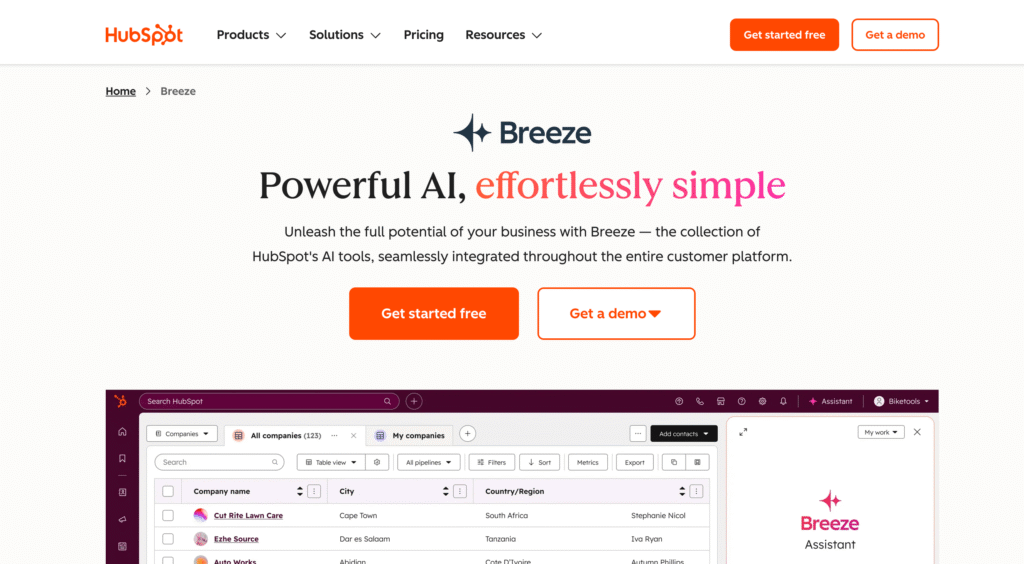
In 2026, HubSpot has firmly positioned itself as one of the most comprehensive AI-powered platforms for marketing automation. With over 279,000 active users spread across 135 countries, the platform has evolved beyond a traditional CRM. At the heart of this transformation is Breeze AI, HubSpot’s native AI engine that powers intelligent marketing, sales, service, and content functions—all from a centralized, CRM-first infrastructure.
How Breeze AI Transforms Marketing Operations
Breeze AI is not just another chatbot layer. It’s deeply embedded into HubSpot’s ecosystem, allowing businesses to automate highly targeted marketing actions without relying on external data integrations. Everything runs directly within the system of record—the CRM.
The engine introduces multiple AI agents that operate autonomously:
- Content Agent: Automatically generates SEO-optimized blog posts, web pages, and product descriptions tailored to customer personas.
- Social Media Agent: Schedules, creates, and publishes social media posts across channels, tracks engagement, and refines future content based on results.
- Prospecting Agent: Identifies leads with high purchase intent, creates personalized emails, and triggers sales workflows—all by analyzing CRM interactions and behavior data.
Breeze Intelligence: Data-Enriched Personalization
HubSpot’s AI gains an edge through its “Breeze Intelligence” layer, which taps into a proprietary dataset of more than 200 million buyer profiles. This intelligence is used to:
- Enrich contact and company records automatically
- Shorten lead forms by inferring missing firmographic and technographic data
- Drive up conversion rates with more targeted messaging and fewer friction points
Performance Benchmarks and ROI of HubSpot AI
HubSpot’s AI enhancements in 2026 have led to measurable success for marketing and sales teams. The following table outlines key performance benchmarks:
| Metric | Performance Improvement | Source / Case Example |
|---|---|---|
| Return on Investment (3-Year Average) | 505% | Aggregate ROI Benchmark |
| Campaign Launch Time Reduction | 68% Faster | HubSpot AI Campaign Data |
| Sales Deal Velocity | 20% Increase | Internal CRM Analytics |
| Weekly Time Saved (Large Teams) | 750 Hours | Agicap Implementation |
| CRM Adoption (Year-over-Year Growth) | 23% | User Analytics Data |
AI Pricing Model and Subscription Tiers
HubSpot has shifted to a flexible credits-based pricing structure that aligns with enterprise use cases:
| Plan Type | Monthly Cost (USD) | AI Capabilities Included | Credit-Based Add-Ons |
|---|---|---|---|
| Free CRM | $0 | Basic AI Assistant Tasks | Not Included |
| Professional | $800 | Mid-level AI agents (e.g., Content, Social) | Advanced AI actions optional |
| Enterprise | $3,600 | Full AI suite, custom workflows, multi-agent ops | Includes larger credit pool |
| Credit Usage | $1.00 per 100 credits | Used for tasks like Customer Agent conversations | Purchase additional credits |
AI Credits Usage Matrix
| Task Description | AI Credits Required | Equivalent Cost |
|---|---|---|
| Generate One SEO Blog Post | 200 credits | $2.00 |
| Conduct Customer Chat via Agent | 100 credits | $1.00 |
| Run Multi-Channel Campaign | 500 credits | $5.00 |
| Generate Personalized Email Sequences | 150 credits | $1.50 |
Why HubSpot Breeze AI Leads in 2026
HubSpot’s integrated AI model has made it a leading force in the AI marketing landscape. Unlike disconnected AI tools, Breeze works seamlessly across marketing, sales, and service operations without requiring complex API-based integrations. It delivers enterprise-grade automation with a user-friendly interface, making it accessible for growing businesses and scaling enterprises alike.
The platform’s unique strength lies in its tight CRM coupling, intelligent data enrichment, autonomous AI agents, and scalable pricing architecture. With marketing teams facing rising pressure to drive ROI, shorten sales cycles, and personalize content at scale, HubSpot Breeze AI has emerged as a strategic solution for automation in 2026.
2. Salesforce
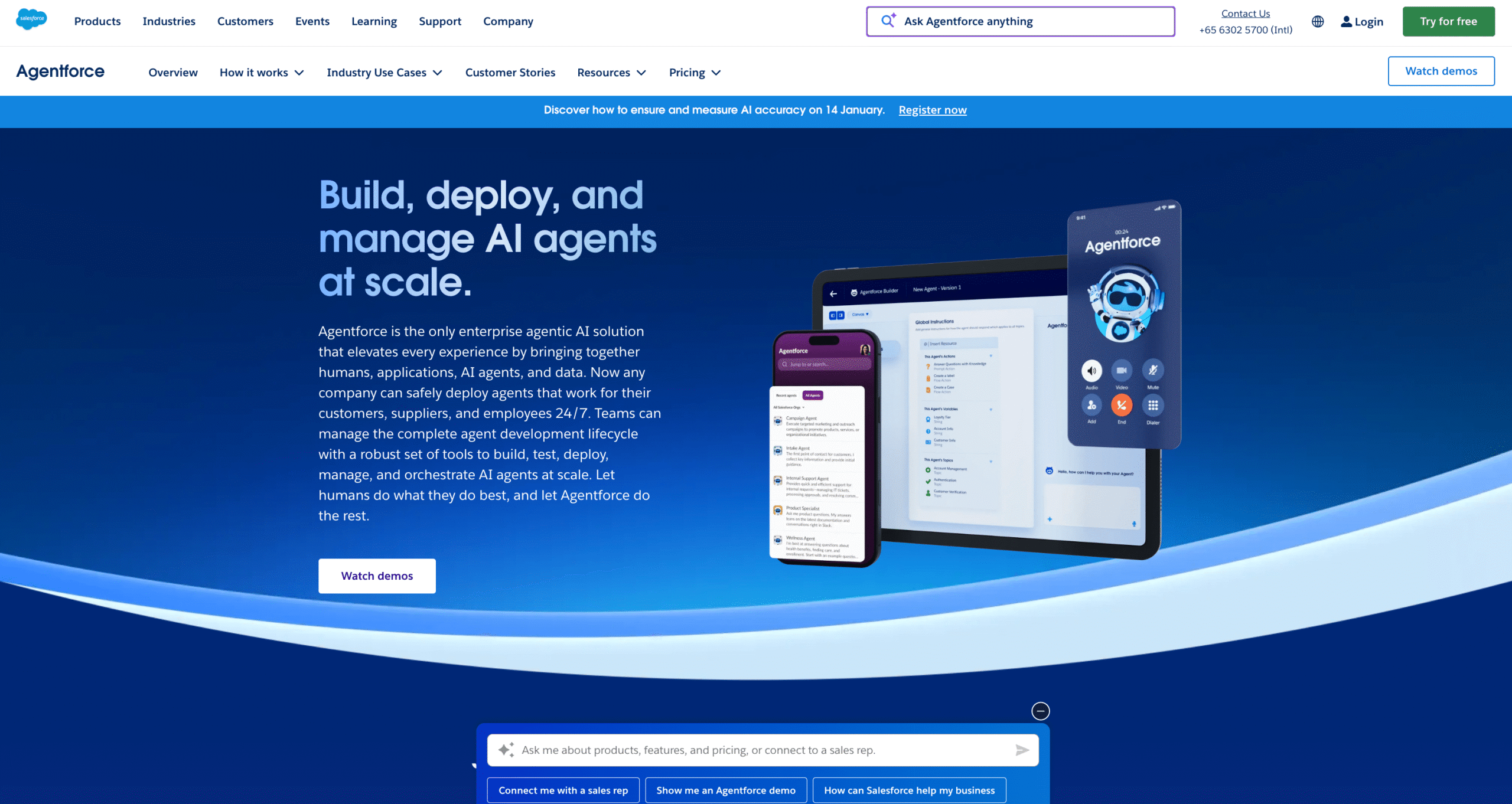
Salesforce has maintained its leadership as the top CRM platform globally, dominating the enterprise software space for over a decade. As of 2026, it continues to outperform competitors by blending advanced AI technologies with its widely adopted CRM architecture. Its transformation into an AI-first platform has been fueled by the introduction of Agentforce and the evolution of its Einstein 1 capabilities, both of which are critical for marketing automation at scale.
The Strategic Shift Toward Agentforce
In response to the increasing complexity of enterprise workflows, Salesforce launched Agentforce—an autonomous agent framework that moves beyond traditional AI features. Unlike earlier tools that relied on basic prediction, Agentforce empowers users to design, deploy, and govern AI agents capable of executing multi-step marketing and business operations automatically.
These agents are particularly valuable in heavily regulated industries like finance, insurance, and healthcare, where compliance, auditability, and data governance are essential. Agentforce supports large-scale orchestration tasks, such as:
- Managing omnichannel campaign execution
- Automating account-based marketing journeys
- Handling complex approval chains for regulated content
- Running feedback loops to optimize customer engagement in real-time
Einstein 1: Embedded Intelligence Across the Marketing Cloud
Einstein 1 serves as the AI foundation within Salesforce’s marketing and sales platforms. It offers intelligent marketing automation features like:
- Automatic Activity Capture: Tracks and logs all customer interactions to eliminate manual data entry
- AI-Powered Lead Scoring: Prioritizes prospects based on behavior, engagement, and historical data
- Predictive Forecasting: Uses historical patterns and real-time data to improve campaign planning
- Content Recommendations: Delivers personalized emails, product suggestions, and landing pages automatically
Impact of AI on Salesforce User Outcomes
Companies leveraging Salesforce’s AI solutions in 2026 have seen significant improvements in marketing efficiency and financial performance. The following table summarizes key impact metrics:
| Performance Metric | Outcome or Lift Achieved | Source / Benchmark |
|---|---|---|
| Marketing ROI Increase | 25% Lift Post-Einstein Deployment | Customer Success Surveys |
| Annual Salesforce Revenue Forecast | $41.45B – $41.55B FY2026 | Corporate Guidance Report |
| Active Business Clients | Over 150,000 Companies Globally | Salesforce Internal Data |
Salesforce Pricing, Costs, and Implementation Complexity
Salesforce’s AI-powered tools come with a premium cost structure, but also offer enterprise-grade scalability and reliability. Here’s a breakdown of cost-related insights for 2026:
| Cost Component | Pricing Detail |
|---|---|
| Einstein 1 AI License | $500 per user per month |
| Implementation & Integration Cost | Ranges from $5,000 to $80,000+ |
| Knowledge User License | $600 per year per seat |
| Total Cost of Ownership (TCO) Factors | Consulting, Customization, Data Migration |
While these costs may seem high, the value becomes clear for enterprise-level organizations looking for a dependable, AI-driven marketing ecosystem. For mid-sized firms, Salesforce provides pre-configured Agentforce workflows that reduce setup time and complexity, making it possible to go live without deep customization.
Comparison Matrix: Salesforce vs AI Marketing Alternatives in 2026
| Feature / Platform | Salesforce (Agentforce) | HubSpot (Breeze) | Adobe Marketo AI | Zoho Zia |
|---|---|---|---|---|
| Best For | Enterprise-grade Ops | Mid-market Teams | Creative Marketing | SMBs |
| AI Agents | Yes (Agentforce) | Yes (Breeze Agents) | Yes (Smart Campaigns) | Yes |
| Predictive Forecasting | Yes | Moderate | Limited | Limited |
| Lead Scoring AI | Advanced | Good | Good | Basic |
| Implementation Time | Medium to Long | Short | Medium | Short |
| Compliance Features | High | Medium | Medium | Low |
Why Salesforce Leads in AI Marketing Automation for 2026
Salesforce’s competitive edge lies in its ability to scale AI capabilities across all layers of marketing—from customer segmentation to campaign execution and compliance tracking. While it carries a steeper learning curve and higher cost, it delivers unmatched reliability, performance, and governance.
Agentforce enables enterprises to build intelligent agents tailored to their business logic, while Einstein 1 simplifies data entry, forecasts revenue with precision, and personalizes marketing at scale. For global organizations with complex workflows and regulatory demands, Salesforce remains the undisputed leader in AI-powered marketing automation in 2026.
3. Adobe Experience Cloud
Adobe has evolved far beyond its original identity as a creative software provider. In 2026, it plays a dominant role in helping global businesses automate and optimize their entire digital marketing pipeline—from content generation to search visibility—by combining creative intelligence with enterprise-grade automation. The Adobe Experience Cloud, powered by cutting-edge AI technologies and strategic acquisitions, now operates as a central system for managing what Adobe calls the modern “Content Supply Chain.”
The Transformation of the Content Supply Chain
Adobe has introduced an innovative approach to content creation and delivery by automating how content is designed, distributed, and optimized. This end-to-end framework enables marketing teams to generate and manage large-scale content operations while keeping brand consistency, speed, and personalization at the core.
By leveraging generative AI tools like Adobe Firefly, teams can:
- Create visuals and campaign creatives that follow brand rules without manual intervention
- Produce customized assets for different customer segments across digital platforms
- Automate editing and repurposing workflows for social media, email, and eCommerce channels
Firefly Foundry and Custom Brand Models
At the heart of Adobe’s innovation is Firefly Foundry—a solution that enables organizations to train generative AI models using their proprietary branding guidelines, tone of voice, media assets, and legal constraints.
The benefits include:
- Stronger brand control in AI-generated content
- Greater creative consistency across teams and regions
- Custom model performance tracking to evaluate ROI by campaign type
This enterprise-level customization has led to significant financial gains. One media company using Firefly Foundry reported an additional $7 million in service revenue on top of an already strong $10 million creative ARR base.
Semrush Acquisition and GEO (Generative Engine Optimization)
In a bold $1.9 billion move, Adobe acquired Semrush to strengthen its search and competitive intelligence capabilities. This strategic acquisition helps marketers gain insights into how their content performs not just on traditional search engines, but also within AI-generated results provided by platforms like ChatGPT and Google Gemini.
As generative engines shape user discovery paths, Adobe’s integration of Semrush allows marketing teams to:
- Monitor brand positioning inside large language models
- Optimize content for visibility in AI-generated summaries
- Track competitor performance across SERPs and generative platforms
Key Metrics: Adobe’s Marketing Automation Ecosystem in 2026
| Financial & Usage Metrics | 2026 Data Point |
|---|---|
| Total Revenue Forecast (FY2026) | $25.9B – $26.1B |
| Digital Media Annual Recurring Revenue | $18.59 Billion |
| AI-Influenced Annual Recurring Revenue | Over $5 Billion |
| Monthly Active Users of Adobe AI | Over 70 Million |
| Growth in Generative Traffic (Retail) | 1,200% Year-over-Year |
Search Intelligence Matrix: Adobe vs Other Platforms
| Feature / Provider | Adobe (w/ Semrush) | Salesforce | HubSpot | Google Ads |
|---|---|---|---|---|
| GEO Optimization Insights | Yes | No | Limited | No |
| LLM Visibility Analytics | Yes | No | No | No |
| Competitive Keyword Tracking | Yes | Moderate | Good | Good |
| Brand-specific GenAI Model Support | Yes (Firefly Foundry) | No | No | No |
The Rise of AI-First Revenue and Adobe’s Strategic Edge
More than one-third of Adobe’s revenue in 2026 is now directly influenced by artificial intelligence. This growth signals a shift in how businesses prioritize AI-driven marketing strategies. Adobe has capitalized on this trend by offering tools that empower marketers to be more strategic, fast, and adaptive to how consumers interact with AI interfaces.
The fusion of Semrush’s data, Firefly’s custom generative models, and Adobe Analytics makes Adobe Experience Cloud one of the most comprehensive AI-powered marketing platforms globally in 2026. It uniquely positions itself at the intersection of creativity, data, automation, and search discoverability in a generative AI-driven world.
4. Klaviyo
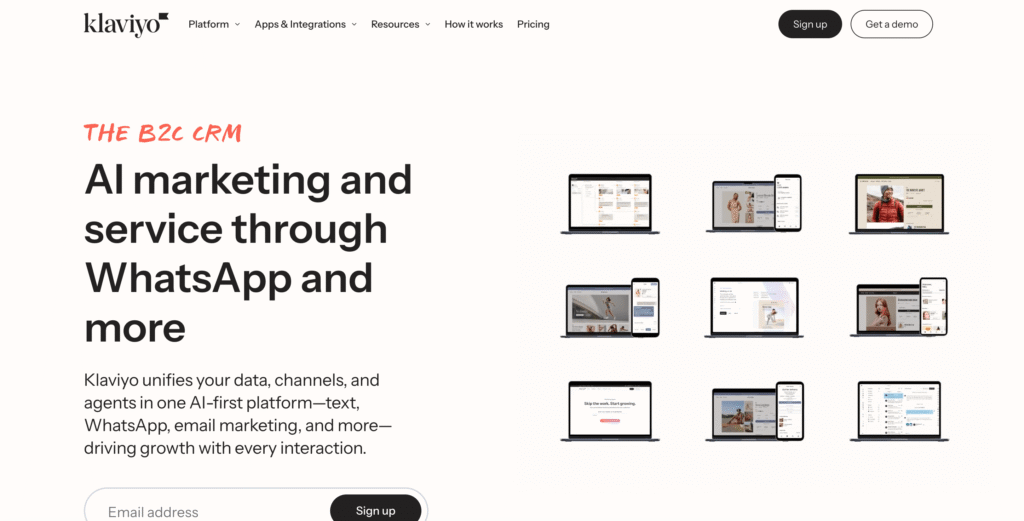
Klaviyo has firmly established itself as the leading AI marketing automation platform for e-commerce businesses in 2026. Known for its advanced customer segmentation, real-time personalization, and behavior-driven automation, Klaviyo has become a go-to solution for online retailers aiming to boost customer retention, increase order value, and reduce cart abandonment at scale. With more than 183,000 brands relying on its platform, Klaviyo is redefining lifecycle marketing through data-rich automation.
Driving E-Commerce Growth with AI and Behavioral Data
What makes Klaviyo stand out is its deep integration with e-commerce platforms and its ability to analyze detailed customer behavior, purchase history, and product interactions. The AI engine then uses this data to create hyper-personalized marketing flows that guide customers through the buying journey.
These AI features enable marketers to:
- Trigger personalized emails and SMS based on individual customer behavior
- Deliver tailored product recommendations that adapt in real time
- Predict churn or cart abandonment and intervene automatically with offers
- Segment high-intent customers based on browsing and engagement patterns
Impact of AI on E-Commerce Performance Metrics
Klaviyo’s automation capabilities have shown significant results for online businesses. From increasing average order values to improving email engagement rates, its AI tools help marketers deliver relevant messages at the right time. The table below highlights key business impacts:
| Performance Metric | Result with Klaviyo AI |
|---|---|
| Average Order Value (AOV) Increase | Up to 369% through smart recommendations |
| Cart Abandonment Rate Reduction | 38% decrease via real-time triggers |
| Year-over-Year Enterprise Customer Growth | 36% increase for >$50K ARR accounts |
| Gross Margin (Non-GAAP) | 76% |
| Projected Revenue Growth (2026) | 21% – 22% |
Financial and Customer Adoption Snapshot (2025–2026)
| Metric | Value (as of Late 2025 / Projections) |
|---|---|
| Total Active Customers | 183,000+ |
| Enterprise Customers (>$50K ARR) | 3,563 |
| Latest 12-Month Revenue | $1.2 Billion |
| Predicted 2026 Revenue Growth | 21% – 22% |
| Rule of 40 Performance Score | 47% |
Klaviyo’s ability to cater to mid-market and large e-commerce firms has been a key factor in its continued growth. The platform’s performance among enterprise clients generating more than $50,000 in ARR has been particularly strong, showcasing its ability to scale alongside growing businesses.
Pricing Structure and Accessibility
Klaviyo offers a flexible pricing model that supports businesses at every stage of growth:
| Plan Tier | Features Included | Monthly Cost Estimate |
|---|---|---|
| Free Tier | Up to 250 contacts, basic email flows | $0 |
| Starter Plan | Up to 1,000 contacts, email & SMS automation | $60+ |
| Mid-Tier Business Plan | Advanced segmentation, A/B testing | $150 – $600 |
| Enterprise Plan | Priority support, AI personalization at scale | Custom Pricing |
As contact lists grow, Klaviyo’s pricing scales accordingly, but the platform consistently delivers a high ROI due to increased revenue per customer and more efficient marketing execution.
Klaviyo vs Other AI Marketing Tools in E-Commerce (2026 Matrix)
| Feature / Platform | Klaviyo | Mailchimp AI | Omnisend | ActiveCampaign |
|---|---|---|---|---|
| Real-Time Behavioral Triggers | Yes | Limited | Yes | Yes |
| AI Product Recommendations | Yes | No | Moderate | No |
| E-Commerce Integration Depth | Deep (Shopify, Woo, etc.) | Moderate | Strong | Moderate |
| Predictive Analytics | Yes | Limited | No | Yes |
| Cart Abandonment Automation | Yes | Yes | Yes | Yes |
Why Klaviyo Dominates AI Marketing Automation for E-Commerce in 2026
Klaviyo’s unmatched ability to blend AI-driven insights with e-commerce-specific automation tools makes it an essential platform for online stores in 2026. Its focus on helping brands personalize every interaction across email and SMS channels has led to powerful retention outcomes and sales growth.
By providing automation that feels human, recommendations that convert, and insights that empower marketers to act quickly, Klaviyo has become one of the top AI tools reshaping how e-commerce businesses grow and retain their customer base globally. Its combination of smart data use, scalability, and performance makes it a pillar of any modern e-commerce marketing stack.
5. Demandbase One
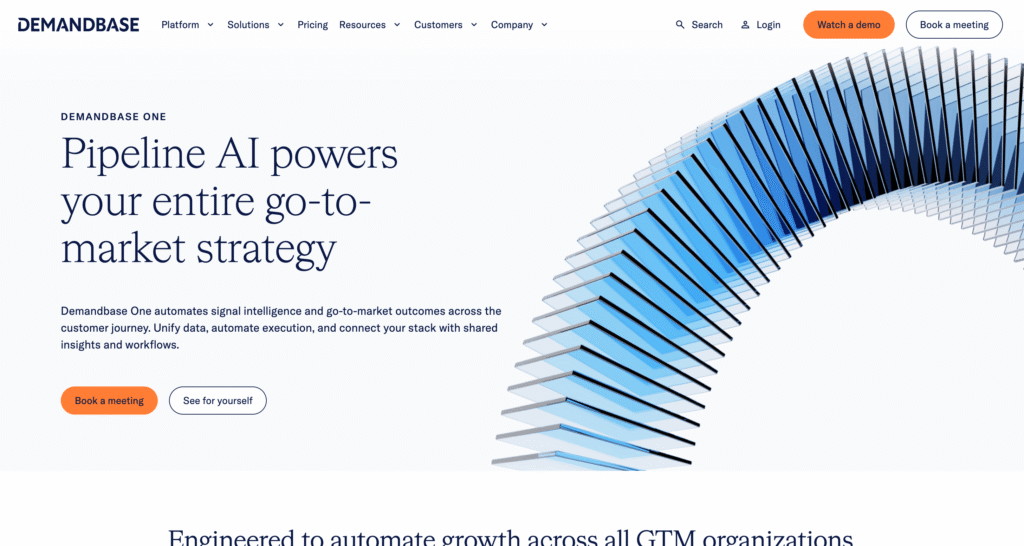
In 2026, Demandbase One has emerged as a top-tier AI marketing tool specifically tailored for B2B companies that rely on account-based marketing (ABM) strategies. Unlike traditional platforms that focus on individual leads, Demandbase One is engineered to help businesses manage and grow entire customer accounts using real-time intelligence, predictive analytics, and AI-powered automation.
Its powerful suite of AI agents, branded as “Agentbase,” enables companies to align marketing, sales, and customer success teams by delivering a unified view of each target account. This approach has reshaped how large B2B organizations build pipeline, drive engagement, and convert high-value accounts more efficiently.
The Role of Agentbase in Account Intelligence and Targeting
Agentbase acts as the intelligent engine behind Demandbase One. These AI agents collect and unify signals from a wide range of sources—CRM platforms, sales calendars, email threads, web behavior analytics, and ad interactions—to give marketers a full understanding of how target accounts are interacting across all digital touchpoints.
With this intelligence, teams can:
- Automate follow-ups and task assignments in Salesforce
- Create dynamic account tiers based on intent and behavior
- Launch personalized campaigns triggered by specific engagement moments
- Predict the likelihood of conversion or churn before it happens
This real-time intelligence helps reduce wasted ad spend and improve targeting precision.
Case Study: Zoom’s ABM Success with Demandbase
One of the most recognized examples of Demandbase’s success comes from Zoom. By adopting the platform to power its ABM strategy, Zoom achieved:
- A 6.25x increase in sales opportunities from ABM-targeted campaigns
- A 36% rise in sales conversion rates for prioritized accounts
- A 90% engagement rate among Tier 1 strategic accounts, far exceeding industry benchmarks
Revolutionizing B2B Metrics: From Leads to Engagement Minutes
Demandbase shifts focus from outdated lead-count metrics to a more meaningful metric known as “Engagement Minutes.” This measures the quality and depth of interaction across all account members. Instead of relying on volume, marketers are now empowered to assess interest based on intent signals, content interactions, time-on-site, and behavioral shifts.
This new framework supports:
- More accurate account scoring
- Smarter campaign retargeting
- Better resource allocation to high-intent accounts
- Automated task routing to sales teams based on priority levels
Performance Impact Matrix: Demandbase Results in Enterprise Deployments
| Key Metric | Quantified Result |
|---|---|
| Increase in Opportunities (Zoom Case) | 6.25x Growth |
| Lift in Sales Conversion Rate | 36% Improvement |
| Engagement Rate (Tier 1 Accounts) | 90% |
| MRR Growth for Targeted Accounts | Over 300% |
| Demo-to-Paid Conversion Efficiency | 2.8x Higher Qualification Rate |
| Reduction in Customer Churn (Predictive) | 25% Less Churn Among At-Risk Accounts |
Advanced ABM Capabilities vs Other AI Marketing Tools (2026 Comparison)
| Feature / Platform | Demandbase One | 6sense AI | HubSpot | Salesforce |
|---|---|---|---|---|
| Account-Based Marketing Support | Full Spectrum | Advanced | Moderate | Moderate |
| Engagement Minutes Tracking | Yes | No | No | No |
| Predictive Churn Detection | Yes | Yes | Limited | Yes |
| Multi-Channel Signal Integration | High | High | Medium | Medium |
| Salesforce Automation | Deep Integration | Good | Good | Native |
| Tiered Account Segmentation | Dynamic & AI-Driven | Manual | Basic | Custom |
Why Demandbase One Is Among the Best AI Tools for Marketing Automation in 2026
Demandbase One stands out for its specialization in B2B and its powerful ability to unify marketing and sales efforts around account behavior. Its AI agents not only track what accounts are doing but also recommend and automate the next best actions.
By prioritizing “Engagement Minutes” over traditional lead forms and using intelligent triggers to signal intent, Demandbase One helps companies focus their time and budget on high-impact opportunities. In an environment where B2B buyer journeys are complex and multi-stakeholder-driven, Demandbase One delivers the insight and automation needed to build pipeline, accelerate sales, and protect recurring revenue.
For B2B organizations looking to adopt intelligent account-based strategies in 2026, Demandbase One offers one of the most advanced and specialized AI automation platforms available.
6. Twilio Segment
In 2026, Demandbase One has emerged as a top-tier AI marketing tool specifically tailored for B2B companies that rely on account-based marketing (ABM) strategies. Unlike traditional platforms that focus on individual leads, Demandbase One is engineered to help businesses manage and grow entire customer accounts using real-time intelligence, predictive analytics, and AI-powered automation.
Its powerful suite of AI agents, branded as “Agentbase,” enables companies to align marketing, sales, and customer success teams by delivering a unified view of each target account. This approach has reshaped how large B2B organizations build pipeline, drive engagement, and convert high-value accounts more efficiently.
The Role of Agentbase in Account Intelligence and Targeting
Agentbase acts as the intelligent engine behind Demandbase One. These AI agents collect and unify signals from a wide range of sources—CRM platforms, sales calendars, email threads, web behavior analytics, and ad interactions—to give marketers a full understanding of how target accounts are interacting across all digital touchpoints.
With this intelligence, teams can:
- Automate follow-ups and task assignments in Salesforce
- Create dynamic account tiers based on intent and behavior
- Launch personalized campaigns triggered by specific engagement moments
- Predict the likelihood of conversion or churn before it happens
This real-time intelligence helps reduce wasted ad spend and improve targeting precision.
Case Study: Zoom’s ABM Success with Demandbase
One of the most recognized examples of Demandbase’s success comes from Zoom. By adopting the platform to power its ABM strategy, Zoom achieved:
- A 6.25x increase in sales opportunities from ABM-targeted campaigns
- A 36% rise in sales conversion rates for prioritized accounts
- A 90% engagement rate among Tier 1 strategic accounts, far exceeding industry benchmarks
Revolutionizing B2B Metrics: From Leads to Engagement Minutes
Demandbase shifts focus from outdated lead-count metrics to a more meaningful metric known as “Engagement Minutes.” This measures the quality and depth of interaction across all account members. Instead of relying on volume, marketers are now empowered to assess interest based on intent signals, content interactions, time-on-site, and behavioral shifts.
This new framework supports:
- More accurate account scoring
- Smarter campaign retargeting
- Better resource allocation to high-intent accounts
- Automated task routing to sales teams based on priority levels
Performance Impact Matrix: Demandbase Results in Enterprise Deployments
| Key Metric | Quantified Result |
|---|---|
| Increase in Opportunities (Zoom Case) | 6.25x Growth |
| Lift in Sales Conversion Rate | 36% Improvement |
| Engagement Rate (Tier 1 Accounts) | 90% |
| MRR Growth for Targeted Accounts | Over 300% |
| Demo-to-Paid Conversion Efficiency | 2.8x Higher Qualification Rate |
| Reduction in Customer Churn (Predictive) | 25% Less Churn Among At-Risk Accounts |
Advanced ABM Capabilities vs Other AI Marketing Tools (2026 Comparison)
| Feature / Platform | Demandbase One | 6sense AI | HubSpot | Salesforce |
|---|---|---|---|---|
| Account-Based Marketing Support | Full Spectrum | Advanced | Moderate | Moderate |
| Engagement Minutes Tracking | Yes | No | No | No |
| Predictive Churn Detection | Yes | Yes | Limited | Yes |
| Multi-Channel Signal Integration | High | High | Medium | Medium |
| Salesforce Automation | Deep Integration | Good | Good | Native |
| Tiered Account Segmentation | Dynamic & AI-Driven | Manual | Basic | Custom |
Why Demandbase One Is Among the Best AI Tools for Marketing Automation in 2026
Demandbase One stands out for its specialization in B2B and its powerful ability to unify marketing and sales efforts around account behavior. Its AI agents not only track what accounts are doing but also recommend and automate the next best actions.
By prioritizing “Engagement Minutes” over traditional lead forms and using intelligent triggers to signal intent, Demandbase One helps companies focus their time and budget on high-impact opportunities. In an environment where B2B buyer journeys are complex and multi-stakeholder-driven, Demandbase One delivers the insight and automation needed to build pipeline, accelerate sales, and protect recurring revenue.
For B2B organizations looking to adopt intelligent account-based strategies in 2026, Demandbase One offers one of the most advanced and specialized AI automation platforms available.
7. Jasper
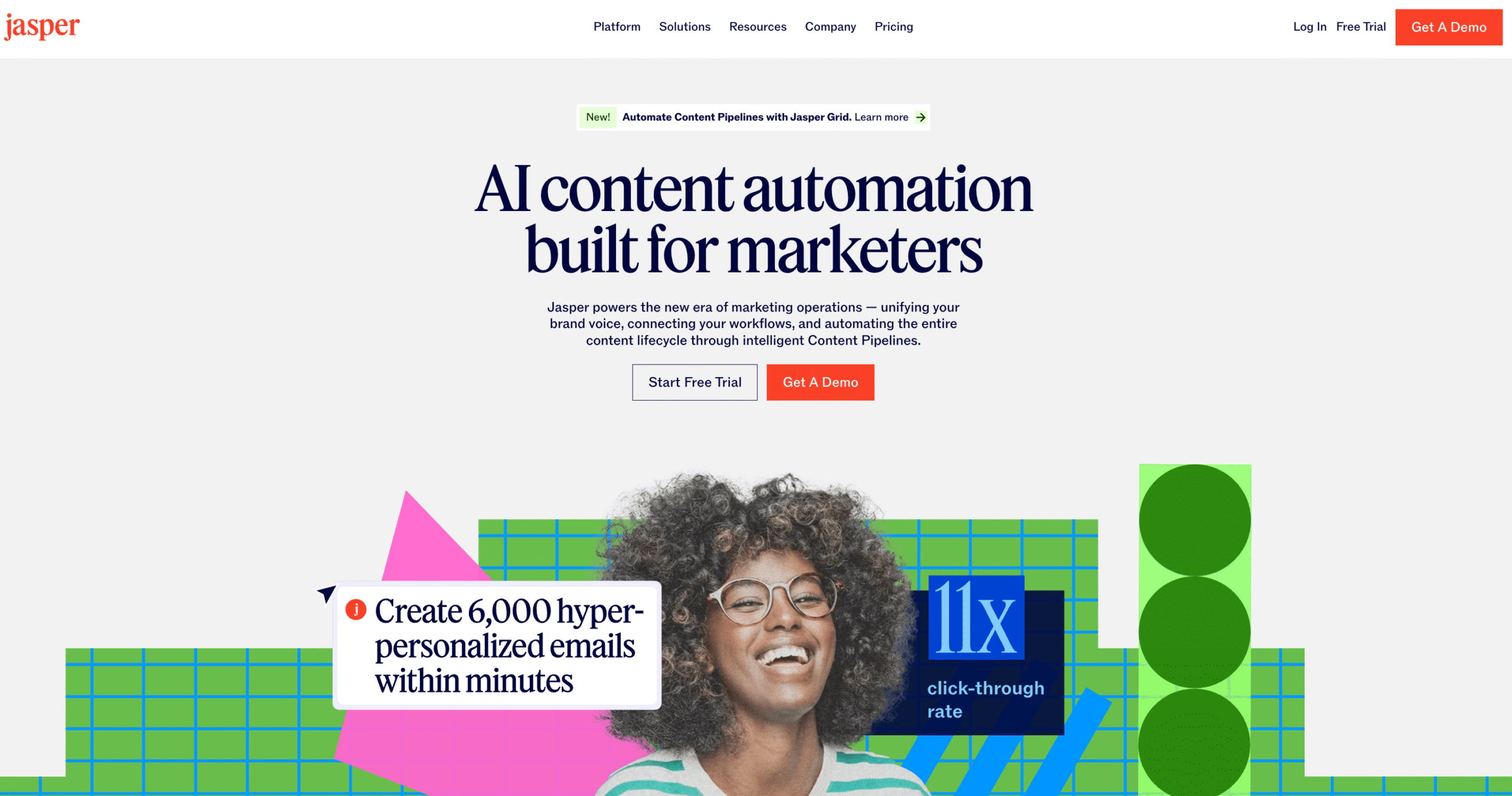
In the world of marketing automation in 2026, Jasper stands out as one of the most powerful AI platforms for brand-focused content generation. Initially known for copywriting assistance, Jasper has matured into a full-fledged enterprise content engine tailored for large marketing teams, global agencies, and brand managers seeking consistency, legal compliance, and production speed at scale.
Designed to go beyond generic text generation, Jasper enables companies to produce brand-specific, SEO-optimized, and audience-tailored content across channels—without sacrificing quality or compliance. Its unique ability to uphold voice, tone, and message integrity makes it essential for organizations handling large volumes of digital content.
AI Content Customization with Brand Voice Precision
Jasper’s core advantage lies in its Brand AI framework, which allows users to train the model using their internal style guides, product positioning, tone preferences, and compliance language. This prevents off-brand or inaccurate outputs—an ongoing challenge with traditional language models.
With the support of Jasper Everywhere, a browser-based assistant, users can bring brand-trained AI editing directly into email platforms, CMS dashboards, and even Google Docs. This ensures real-time, brand-consistent content development regardless of the writing environment.
Key benefits of Jasper’s brand control features include:
- Predefined tone enforcement across all content
- Built-in legal and compliance rule checks
- Seamless deployment across teams and tools
Performance Outcomes and Platform Ratings
Marketing teams using Jasper in 2026 report significant gains in productivity and efficiency. By automating repetitive writing tasks while maintaining editorial quality, companies have accelerated content creation workflows by up to 10x.
| Jasper Performance Benchmarks | Value |
|---|---|
| Content Production Speed Increase | Up to 10x faster |
| Starting Price (Creator Plan) | $39–$49 per month |
| Professional Plan Price | $59 per month |
| User Satisfaction Score (G2) | 4.7 out of 5 |
| Supported Languages | 30+ Languages |
AI + SEO: Jasper’s Seamless Integration with Optimization Tools
To enhance visibility in search engines and AI-generated summaries, Jasper integrates directly with platforms like Surfer SEO. This SEO Mode allows content creators to generate articles, product pages, and ad copy that meet both branding requirements and keyword optimization standards in real time.
Key use cases supported by SEO Mode include:
- Blog posts optimized for Google and Gemini
- Product descriptions aligned with eCommerce SEO best practices
- Meta titles and snippets adapted for AI Overviews
Comparison Matrix: Jasper vs Other AI Content Tools for Marketing Automation in 2026
| Feature / Tool | Jasper | Copy.ai | Writesonic | ChatGPT for Business |
|---|---|---|---|---|
| Brand Voice Training | Yes | No | Limited | Custom Fine-Tuning |
| Legal & Style Governance | Yes | No | No | Manual Review |
| SEO Tool Integration | Surfer SEO | None | Yes | Plugin-Based |
| Content Generation Speed | Up to 10x | 5–6x | 5–7x | 4–6x |
| Ideal Use Case | Enterprise Brands | Startups | Freelancers | Corporate Teams |
Why Jasper Is Among the Top 10 AI Tools for Automating Marketing in 2026
Jasper delivers a rare combination of speed, scale, and brand protection—making it one of the most comprehensive AI solutions for marketing automation today. It empowers businesses to go beyond fast content generation by focusing on brand alignment, compliance, multilingual support, and SEO performance—all in one unified ecosystem.
Whether used by a global agency managing 50 brands or a fast-growing eCommerce team producing thousands of product listings, Jasper provides the tools needed to ensure that every piece of marketing content is accurate, effective, and perfectly on-brand. As AI-generated marketing becomes the norm, Jasper has positioned itself as the trusted engine behind the world’s most consistent and compliant marketing voices.
8. Copy.ai
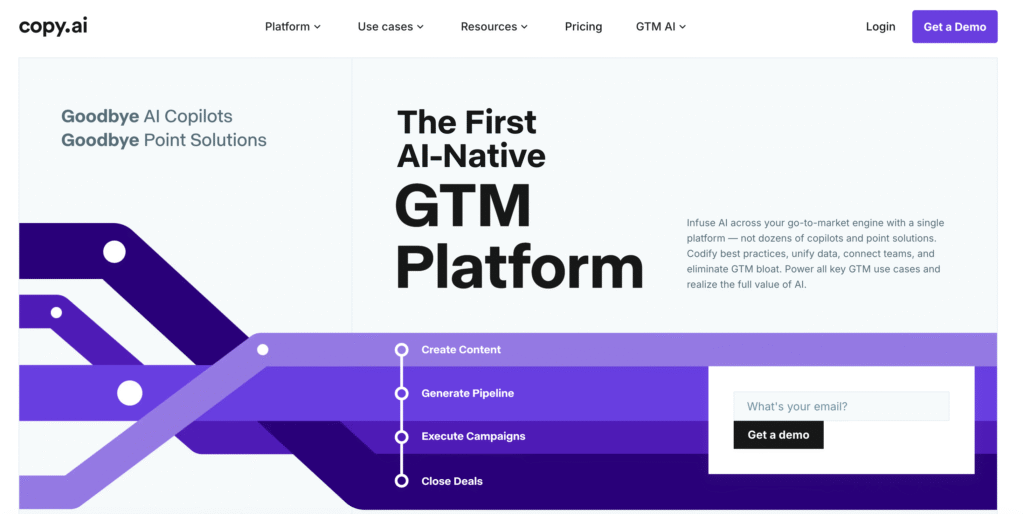
By 2026, Copy.ai has transformed from a basic copywriting tool into a full-fledged AI-powered platform for automating go-to-market (GTM) strategies. With over 16 million users worldwide and a company valuation of $500 million, Copy.ai is now one of the leading AI tools used by marketing and sales teams to streamline their workflows, reduce time-consuming manual tasks, and cut costs on content production.
Its core value lies in enabling teams to codify and automate everything from lead generation to sales research using AI models like GPT-4 and Claude. These automations help marketers and sales professionals save time on repetitive tasks, enhance productivity, and accelerate pipeline velocity.
GTM Workflow Automation with Multi-Model AI Infrastructure
Copy.ai’s standout feature in 2026 is its GTM AI Workflow system—a robust set of automated processes that combine natural language generation, data scraping, contact enrichment, and qualification into a single workflow. By leveraging multiple large language models (LLMs), the platform enables businesses to:
- Automate account research by summarizing company background and decision-makers
- Enrich contact profiles with real-time updates pulled from CRM, email threads, and social data
- Qualify leads based on behavioral data and job titles using intelligent filtering
- Generate personalized outbound messages at scale with AI-trained templates
These workflows not only reduce human error but also free up hours of manual work every week, making it easier for teams to focus on strategy and conversion.
Business Growth and Market Position
The company’s rapid expansion and valuation reflect the rising importance of AI-powered GTM tools in modern marketing operations. After securing $63 million in Series C funding and being acquired by Fullcast in late 2025, Copy.ai is now at the forefront of the integrated GTM tech stack market.
| Business Metrics and Platform Growth (2025–2026) | Value |
|---|---|
| Total Active Users | 16 Million |
| Series C Funding Secured | $63 Million |
| Company Valuation | $500 Million |
| Average Team Size | 80+ Employees |
| Time Saved in Content Ideation | Up to 80% |
Marketing Cost Savings and Use Case Impact
One of Copy.ai’s most attractive advantages for mid-market and enterprise firms is its ability to drastically reduce content marketing expenses. Companies that typically spend between $5,000 and $10,000 per month on outsourced or internal content creation can cut those costs significantly by deploying AI workflows.
The platform also integrates with email platforms, CRMs, and calendar tools to streamline outreach campaigns, meeting preparation, and prospect follow-ups.
Comparison Table: Copy.ai vs Other GTM Automation Platforms in 2026
| Feature / Platform | Copy.ai (2026) | Jasper | Salesforce AI | Apollo AI |
|---|---|---|---|---|
| GTM Workflow Automation | Yes | No | Partial | Yes |
| Multi-LLM Infrastructure | Yes (GPT-4, Claude) | No | Yes (Einstein) | No |
| Contact Enrichment | Yes | No | Yes | Yes |
| Personalized Outbound Generation | Yes | Yes | Yes | Yes |
| Ideal Use Case | Sales + Marketing Ops | Brand Content | Enterprise CRM | Prospecting |
Strategic Value and Market Consolidation
The acquisition by Fullcast underscores the shift toward unified AI ecosystems for GTM strategies. Rather than being just a content generation tool, Copy.ai now offers integrated solutions that automate entire marketing funnels—from top-of-funnel awareness campaigns to post-demo follow-ups.
Its positioning as a low-cost, high-efficiency solution makes it especially appealing for startups, SaaS businesses, and mid-sized companies aiming to scale without overextending their sales and marketing headcount.
Why Copy.ai Is a Leading AI Tool for Marketing Automation in 2026
Copy.ai has evolved into a strategic platform for businesses that want to automate repetitive GTM tasks while maintaining personalization and intelligence. Its workflow automation capabilities help reduce the time and cost associated with content ideation, account research, and outreach execution. With built-in integrations and powerful AI models, it empowers small teams to achieve enterprise-level output.
As companies in 2026 continue to adopt AI for sales enablement and marketing execution, Copy.ai remains a standout choice for those seeking to improve efficiency, reduce operational costs, and deploy scalable automation across their entire GTM pipeline.
9. ActiveCampaign

In 2026, ActiveCampaign continues to lead as one of the most flexible and intelligent AI marketing automation tools for small to mid-sized businesses. Its platform has matured into a robust lifecycle orchestration system that empowers marketers to deliver personalised experiences across the entire customer journey—without needing the complexity or cost of an enterprise CRM.
With powerful automation logic, predictive AI features, and multi-channel messaging capabilities, ActiveCampaign allows businesses to launch, scale, and optimise marketing campaigns that span email, SMS, CRM updates, and even on-site messaging—all from one streamlined platform.
Predictive AI for Smarter Customer Journeys
At the heart of ActiveCampaign’s automation engine is Predictive Sending—an AI-powered feature that determines the best time to send emails to each individual contact. Instead of relying on fixed scheduling, the system learns from each user’s historical engagement behaviour and optimises delivery for maximum impact.
Key AI functions include:
- Predictive open-time optimisation for email campaigns
- Behaviour-triggered workflows based on user clicks, site visits, and email interactions
- Conditional content insertion to personalise messages dynamically
- Automated win-back sequences based on inactivity timelines
Businesses using behavioural triggers and personalised campaigns through ActiveCampaign have reported up to 20% increases in sales, and significant gains in customer retention.
Flexible Pricing for Growth at Every Stage
ActiveCampaign’s contact-based pricing model makes it an accessible entry point for businesses of all sizes, especially SMBs looking to implement scalable automation without enterprise-grade budgets. As companies grow, they can unlock more powerful features through higher-tier plans.
| Plan Tier | Monthly Price (1,000 Contacts) | Key Features Included |
|---|---|---|
| Starter Plan | $15 – $19 | Basic automation, email scheduling, templates |
| Plus Plan | $49 | SMS campaigns, lead scoring, integrations |
| Pro Plan | $79 – $99 | Predictive sending, conditional content, CRM |
This flexibility allows businesses to start small and scale their automation stack as their customer base and campaign complexity grow.
Performance Metrics and Business Impact
ActiveCampaign’s users have consistently reported improved performance across engagement and revenue KPIs when compared to traditional email marketing platforms. Automated emails, in particular, outperform standard one-off campaigns by a large margin.
| Metric | Result Achieved |
|---|---|
| Average Email Open Rate | 46% – 50% |
| Increase in Sales from Behaviour-Based Emails | 20% Uplift |
| Revenue from Automated Emails | 320% Higher than Non-Automated Campaigns |
| Number of Built-In Automation Recipes | Over 900 |
| Available Email Templates | 150+ |
These results demonstrate that even small teams can compete with much larger organisations by automating high-value customer interactions like onboarding sequences, promotional drips, win-back campaigns, and cross-sell recommendations.
Platform Comparison: ActiveCampaign vs Other AI Marketing Tools in 2026
| Feature / Platform | ActiveCampaign | Klaviyo | Mailchimp | ConvertKit |
|---|---|---|---|---|
| Predictive Sending | Yes | No | Limited | No |
| Behavioural Triggers | Yes | Yes | Moderate | Basic |
| Multi-Channel Support | Email, SMS, Site Msg | Email, SMS | Email, Social | Email Only |
| CRM Integration | Built-in CRM | External | Optional | None |
| Automation Recipes | 900+ | 150+ | 100+ | Limited |
| Best Fit For | SMBs, Agencies | E-commerce | General Use | Creators |
Why ActiveCampaign Is One of the Top AI Marketing Automation Tools in 2026
ActiveCampaign has earned its place among the top AI-powered marketing platforms thanks to its combination of affordability, smart automation, and seamless scalability. It enables businesses to build entire customer journeys with minimal technical overhead while using AI to deliver more timely, relevant, and personalised messages.
Its extensive automation recipe library, combined with intuitive drag-and-drop journey builders and intelligent send-time optimisation, makes it ideal for businesses seeking a practical and powerful solution to grow customer relationships and drive measurable results—without needing to invest in complex enterprise ecosystems.
For companies in 2026 aiming to automate and elevate their customer lifecycle communications, ActiveCampaign remains one of the most dependable and effective tools on the market.
10. Optimove
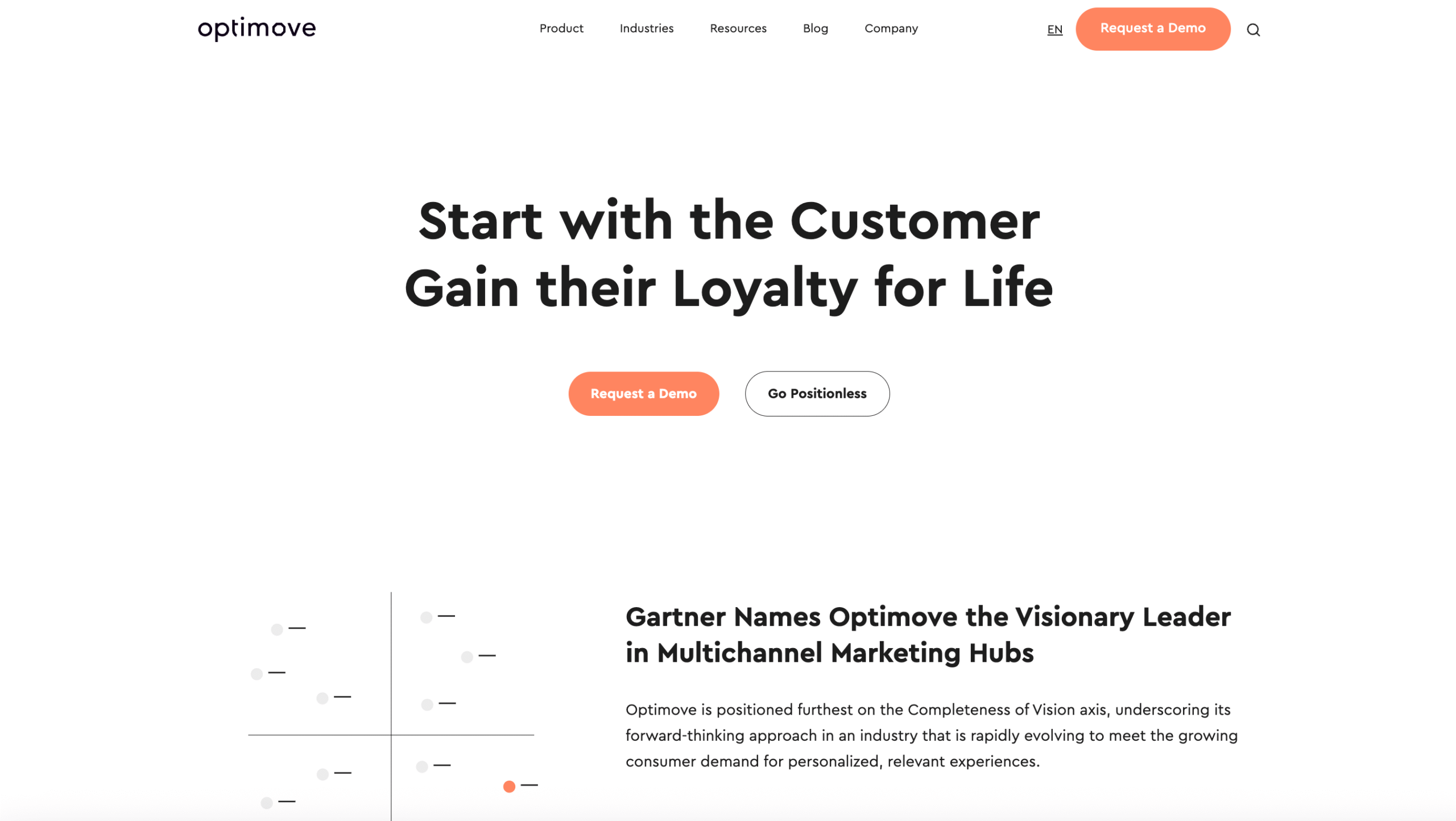
In the rapidly evolving world of AI marketing automation in 2026, Optimove stands out as one of the top platforms dedicated to retention-focused marketing. Unlike many tools that prioritize lead generation and customer acquisition, Optimove is purpose-built to help brands build long-term customer relationships, reduce churn, and maximize Customer Lifetime Value (LTV). It combines advanced CRM functionality with autonomous AI decision-making, offering businesses a smarter, data-driven way to personalize experiences and grow customer loyalty.
Optibot: AI That Powers Predictive Retention and Hyper-Personalization
At the core of Optimove’s success is its proprietary AI engine, Optibot. Designed to operate as a retention intelligence layer, Optibot continuously analyzes large volumes of behavioral, transactional, and demographic data to automatically uncover opportunities for engagement.
It goes beyond traditional marketing automation by:
- Suggesting campaign actions based on real-time customer behavior
- Detecting churn risks and recommending loyalty interventions
- Optimizing timing, messaging, and segmentation using predictive algorithms
- Running A/B/n tests at scale to determine what campaigns perform best for different segments
This approach allows marketers to focus on what matters—delivering the right message, to the right customer, at the right time—while the AI handles the complexity behind the scenes.
Performance Metrics and Business Impact in 2026
Optimove has delivered impressive results across industries like iGaming, fintech, e-commerce, and multi-channel retail—sectors where customer retention is critical and engagement spans across devices and channels.
| Retention and Engagement Metrics | Performance Value Achieved |
|---|---|
| Incremental Revenue Growth (Segmentation-Based) | 19.35% Uplift |
| Average Customer Engagement Rate | 42% |
| AI-Driven Churn Reduction | 20% Decrease in Attrition |
| Loyalty Program Retention Lift | 25% Increase |
| Email Marketing ROI | $36 Return for Every $1 Spent |
These results illustrate that Optimove is not just a campaign tool—it is a full-stack marketing brain that transforms retention marketing from reactive to proactive.
Ideal Fit for Data-Rich, Mobile-First Industries
Optimove is particularly effective in verticals where customer data is abundant and interactions happen frequently across multiple channels, especially mobile. Companies in gaming, fintech apps, subscription-based services, and omnichannel retail benefit most from the platform’s ability to harness high-velocity data and act on it instantly.
According to 2026 usage data, over 65% of all customer engagements managed through Optimove happen on mobile channels—making it one of the few platforms truly optimized for today’s consumer behavior.
Optimove Pricing Model and Platform Positioning
Optimove is positioned at the premium end of the AI marketing automation spectrum. Its pricing reflects the depth of its predictive analytics engine, the level of automation it enables, and the value it brings to brands operating in competitive, data-intensive sectors.
| Pricing Characteristics | Optimove Positioning |
|---|---|
| Pricing Tier | Premium / Enterprise |
| Target Customer Segment | Mid-Market to Enterprise |
| Ideal Use Cases | CRM, Loyalty, Retention, Lifecycle Ops |
| Common Industry Applications | iGaming, Fintech, Retail, DTC eCommerce |
Unlike entry-level tools that focus on basic automation, Optimove is chosen for its ability to manage highly granular customer journeys with measurable ROI and AI-backed orchestration.
Platform Comparison Matrix: Optimove vs Other Retention-Focused AI Tools (2026)
| Feature / Platform | Optimove | ActiveCampaign | Klaviyo | MoEngage |
|---|---|---|---|---|
| AI-Based Retention Campaigns | Yes | Limited | Moderate | Yes |
| Churn Prediction & Intervention | Yes | No | No | Partial |
| Mobile Engagement Focus | Strong | Moderate | Strong | Strong |
| Email ROI Optimization | Advanced | Moderate | High | Moderate |
| Customer Journey Personalization | AI-Driven | Manual Rules | Moderate | AI-Assisted |
| Loyalty Program Integration | Built-In | No | No | Third-Party |
Why Optimove Is Among the Top AI Tools for Automating Marketing in 2026
Optimove’s focus on lifecycle marketing, customer retention, and predictive CRM gives it a unique and powerful position in the 2026 marketing technology landscape. While many platforms emphasize acquisition and content generation, Optimove ensures that once a customer joins, they stay—and continue to spend.
Its intelligent use of data science, behavior segmentation, and AI-generated campaign guidance enables brands to run personalised marketing programs at a scale and depth that traditional tools cannot match. For brands seeking to increase customer value, reduce churn, and build long-lasting loyalty in a mobile-first world, Optimove is a top-tier solution that delivers measurable, data-backed results.
The Macroeconomic Context of AI Marketing in 2026: Strategic Investment, Performance Gains, and Future Readiness
In 2026, the global marketing landscape is undergoing a major transformation, driven by a noticeable reallocation of budgets toward artificial intelligence technologies. Even though total marketing spend as a percentage of company revenue remains steady at around 7.7%, AI has taken up a significantly larger share of that budget, rising to 9%—up from 7% the previous year. This shift reflects a growing emphasis on automation, data intelligence, and long-term performance gains across all industries.
As marketers face growing pressure to deliver results in a privacy-first, cookie-less world, AI tools are no longer optional—they are essential for maintaining competitive edge and operational efficiency.
AI Investment as a Response to ROI and Efficiency Gains
The increased allocation toward AI tools is not just a trend—it’s a direct response to tangible productivity and financial returns. Marketing teams that have adopted AI solutions report, on average:
- A 44% increase in team productivity
- An average savings of 11 hours per employee each week
- A 3-year return on investment (ROI) of $5.44 for every $1 spent on automation tools
These gains reflect AI’s growing role in replacing repetitive tasks, accelerating campaign execution, and enabling marketing teams to focus on high-value strategic work.
| AI Marketing Financial Performance Metrics (2025–2026) | Value |
|---|---|
| AI Spending as % of Total Marketing Budget | 9.0% |
| Overall Marketing Budget as % of Company Revenue | 7.7% |
| Average ROI for AI and Automation (3-Year) | $5.44 return per $1 invested |
| Average Weekly Time Saved per Marketer | 11 hours |
| Productivity Improvement from AI Usage | 44% |
Industry-Wide AI Market Growth and Budget Reallocation
Beyond individual team gains, the global AI marketing sector is expanding rapidly. In 2025, the total market value was estimated at $47.32 billion. Projections for 2028 suggest this figure will grow to over $107.5 billion—more than doubling within just three years.
This acceleration is fueled not just by technology maturity, but also by new regulatory environments that require deeper intelligence into first-party data. As third-party cookies and traditional tracking methods become obsolete, AI-powered tools have stepped in to enable predictive personalization, intent modeling, and real-time segmentation using compliant, zero- and first-party data.
| Global AI Marketing Market Overview | Value |
|---|---|
| Market Size in 2025 | $47.32 Billion |
| Projected Market Size by 2028 | $107.5 Billion |
| Staff Reallocated to Strategic Work (vs Production) | 75% of Marketing Teams |
| Key Drivers | Privacy-first world, LLMs, First-party AI |
Strategic Shift in Marketing Roles and Responsibilities
AI adoption is also reshaping the day-to-day responsibilities of marketing professionals. With automated systems now managing data collection, segmentation, content generation, and delivery timing, marketers are spending less time on production-heavy tasks. Instead, 75% of marketing teams have shifted toward higher-level work like strategy development, brand building, campaign planning, and creative oversight.
This talent shift aligns with business needs in 2026, as brands seek agility, deeper personalization, and performance transparency across every touchpoint—from awareness to conversion and retention.
| Workforce Transformation Driven by AI | Key Outcome |
|---|---|
| % of Marketers Focused on Strategic Work | 75% |
| Time Recovered from Production Activities | 11 Hours/Week per Employee |
| AI’s Role in Replacing Manual Tasks | Data Processing, Segmentation, Timing |
| Dominant Strategic Activities in 2026 | Campaign Strategy, Creative Direction |
Why AI Budget Growth Reflects a Broader Marketing Shift
The rise of AI in 2026 marketing is not just about tool adoption—it’s about a paradigm shift in how marketing is measured, structured, and delivered. As companies realign spending around AI tools that produce measurable ROI, the industry is transitioning into a model where:
- Budget allocations are driven by automation capabilities
- Performance is tracked by impact per dollar, not just impressions or clicks
- Marketing teams are structured to focus on decision-making and creativity, not manual labor
This environment positions AI marketing platforms—ranging from CRM-based orchestration tools to content generation engines and predictive segmentation systems—as essential investments rather than optional add-ons.
As a result, understanding the macroeconomic forces behind AI adoption helps explain why the Top 10 AI Tools for Automating Marketing in 2026 are no longer niche software products—they are foundational elements of the modern marketing stack.
The Transformation of Marketing ROI in 2026: AI-Powered Outcomes and Industry Benchmarks
In 2026, AI tools are no longer seen as experimental add-ons—they have become key drivers of measurable marketing return on investment (ROI). One of the clearest indicators of this shift is the rising emphasis on marginal ROI, or the return generated from each additional dollar invested in AI automation. Across industries, businesses are experiencing a significant compounding effect where every new layer of automation produces sharper efficiency, deeper insights, and stronger results.
While the average return on marketing automation investment sits at $5.44 for every $1 spent, top-performing companies—especially in sectors like e-commerce, SaaS, and financial services—are reporting even greater returns from specific use cases such as AI-driven ad optimization, lead scoring, and hyper-personalized campaign delivery.
AI ROI Performance Metrics by Sector (2026)
| Industry Sector | Key Performance Area | ROI or Performance Uplift with AI |
|---|---|---|
| Retail & E-commerce | Conversion Rate Increase | 26.0% Uplift |
| Retail & E-commerce | Cart Abandonment Reduction | 38.0% Drop |
| B2B SaaS | Lead Scoring Usage Rate | 61.0% of Firms Use AI Lead Scoring |
| B2B SaaS | Demo-to-Customer Conversion Rate | 2.8x Higher Conversion |
| Financial Services | Personalized Offer Acceptance | 28.0% More Uptake |
| Financial Services | Loan Origination Optimization | 22.0% Growth via Predictive Targeting |
| Financial Services | Compliance Workflow Efficiency | 30.0% Time Saved |
These results highlight how automation is reshaping the operational core of marketing across multiple industries. AI is not just speeding up execution—it’s improving the accuracy of targeting, the timing of delivery, and the relevance of messaging.
Case Study Highlights: Measurable Gains from AI Automation
- Retail & E-Commerce: Retailers implementing AI-based cart recovery workflows have reduced abandonment rates by 38%, recovering millions in lost revenue. Conversion rates for AI-enhanced product recommendations and personalized landing pages have risen by over 26%.
- B2B SaaS: AI-powered lead scoring has become a standard in the SaaS sector, used by 61% of high-growth firms. Companies report a 2.8x increase in demo-to-customer conversion by prioritizing sales efforts on high-intent prospects.
- Financial Services: Financial institutions have improved loan origination rates by 22% by using AI to predict creditworthiness and match offers to user intent. Simultaneously, automation has cut compliance process times by 30%, allowing teams to focus on customer advisory rather than documentation.
AI ROI Comparison Matrix by Use Case (2026)
| Use Case | Average ROI Gain | Sector | Notes |
|---|---|---|---|
| AI-Powered Email Automation | 3.5x – 6x | Cross-sector | Highly cost-effective for SMBs and Enterprises |
| Personalized Product Recommendations | 4x | Retail & E-Commerce | Real-time data triggers boost relevance |
| Predictive Lead Scoring | 2x – 3x | B2B SaaS | Focuses sales effort on high-converting leads |
| AI-Driven Ad Spend Optimization | 4x | E-Commerce | Reduces wasted ad budget and lifts ROAS |
| Regulatory Compliance Automation | 30% time saved | Finance | Shortens audit cycles and form validation |
| Cart Abandonment Recovery | Up to 38% | E-Commerce | Recovers lost revenue with retargeting flows |
Why Marginal ROI is the New Benchmark for AI Marketing Investment in 2026
Rather than evaluating AI spend in isolation, leading companies are now analyzing the incremental value gained from each added AI layer—whether it’s a new chatbot, predictive analytics tool, or smart content generator. The marginal ROI framework allows businesses to prioritize AI deployments that directly boost conversion, retention, and engagement.
This approach helps marketing teams justify expanding automation budgets even when overall marketing spending remains flat. In a high-performance AI stack, each new tool enhances the efficiency of the others—delivering exponential gains over time.
Conclusion: AI ROI in 2026 Is Real, Measurable, and Sector-Specific
Across industries, the integration of AI tools into marketing operations has resulted in measurable improvements in conversion rates, operational efficiency, and revenue growth. As AI platforms become more specialized, and as data quality improves, companies that invest in automation with strategic intent are set to outperform their peers—both in terms of cost savings and long-term customer value.
These outcomes reinforce why the Top 10 AI Tools for Automating Marketing in 2026 are now central to business success, not simply optional enhancements.
Technological Infrastructure Behind the Top 10 AI Marketing Tools in 2026: Models, Layers, and System Architecture
In 2026, the top-performing AI marketing platforms no longer rely on a single AI model. Instead, they are built on multi-layered ecosystems that assign different tasks to different models based on what they do best—reasoning, research, or execution. This strategic separation of tasks allows each system to perform faster, smarter, and more accurately than earlier generations of single-stack AI tools.
This structured approach has become the norm for enterprise-grade automation, especially among platforms featured in the Top 10 AI Tools for Marketing in 2026.
AI Architecture and Agentic Design: A Multi-Model Strategy
Leading platforms such as HubSpot, Salesforce, and Adobe Experience Cloud have adopted complex AI stacks that combine various foundational models and proprietary agents. This multi-agent architecture ensures that each function in the marketing workflow is handled by the most suitable AI model available.
| AI Task Category | Primary Model or Agent Used | Function in the Stack |
|---|---|---|
| Reasoning | Claude (Anthropic) | Interprets large datasets, performs logic-heavy analysis |
| Research & Ideation | ChatGPT (OpenAI) | Synthesizes diverse inputs, brainstorms, and plans |
| Execution Layer | Breeze (HubSpot) / Agentforce (Salesforce) | Performs CRM actions, schedules, updates records |
These AI components are not used independently. Instead, they are orchestrated in sequence, forming what is now called a “reasoning + research + execution” automation loop. This loop ensures that decisions are intelligent, informed by data, and acted upon in real time.
Why Multi-Agent Architectures Dominate in 2026
By 2026, nearly one-third of agentic AI systems in the marketing sector are built on multi-agent configurations. This shift is driven by a need for higher precision, faster delivery, and deeper contextual awareness within customer journeys and campaign workflows.
Key advantages of multi-agent stacks include:
- Task-specific optimization that reduces hallucinations
- Division of labor between strategic and operational functions
- Seamless integration with existing CRM and CMS environments
- Reduced latency in decision-making and execution
Architecture Comparison Matrix: How Leading Platforms Structure AI in 2026
| Platform | Reasoning Model Used | Research Model Used | Execution Agent | Multi-Agent Architecture | CRM-Native Integration |
|---|---|---|---|---|---|
| HubSpot (Breeze AI) | Claude | ChatGPT | Breeze Assistant Agent | Yes | Yes |
| Salesforce (Agentforce) | Claude | ChatGPT | Agentforce Execution AI | Yes | Yes |
| Adobe Experience Cloud | Custom Firefly AI | ChatGPT | Workflow Automation AI | Yes | Partial (via integrations) |
| Klaviyo | Internal Logic AI | GPT-4 | Campaign Automation Bot | Moderate | Yes |
| ActiveCampaign | Native AI Engine | GPT-4 Lite | Journey Builder Engine | Moderate | Yes |
How This Impacts AI Marketing Use Cases
With a dedicated stack for reasoning, ideation, and execution, platforms can now support full-stack marketing automation workflows including:
- Real-time content personalization
- Dynamic email timing and segmentation
- Automated lead scoring and CRM updates
- Intent detection and next-best-action triggers
- Multi-channel campaign orchestration
These workflows benefit from high-accuracy insights (via Claude), creative ideation (via ChatGPT), and real-time task execution (via platform-native agents), delivering a seamless experience that bridges strategy, creativity, and performance.
Conclusion: AI Stack Evolution Powers Next-Gen Marketing Efficiency
In 2026, the success of marketing automation platforms is directly linked to the sophistication of their underlying AI architecture. The shift toward modular, multi-model AI stacks enables tools to scale across industries, optimize performance, and reduce risk.
The platforms in the Top 10 AI Tools for Automating Marketing in 2026 are not only intelligent but also structurally advanced—leveraging layered models and agentic frameworks to power smarter decisions, faster execution, and more profitable marketing outcomes.
Future Outlook for AI Marketing Platforms in 2026 and Beyond: Strategy, Visibility, and the Race to Intelligence
As the global marketing ecosystem looks ahead to 2027 and 2028, the competitive landscape surrounding AI-powered marketing automation tools is rapidly evolving. A growing divide is emerging between two major categories of players: end-to-end platforms like HubSpot and Salesforce that offer full-stack automation across CRM, content, and analytics; and specialized AI-first tools that focus on highly specific marketing functions such as personalization, data activation, or outbound automation.
This dynamic is reshaping how brands think about customer journey management, visibility, and long-term ROI in a market that increasingly rewards intelligent, data-rich execution.
Platform Wars: Integrated Giants vs Specialized Innovators
HubSpot and Salesforce continue to dominate market share, but in very different ways:
- HubSpot is expected to expand its dominance by releasing faster AI iterations, improving its low-code customization features, and building on its ecosystem of 1,500+ native integrations. This positions it as the preferred platform for mid-market and scaling enterprises looking for fast deployment and agent-based automation.
- Salesforce, meanwhile, remains the default choice for global enterprises managing complex, regulated, and multilingual customer journeys. Its strength lies in its deeply embedded AI infrastructure (Agentforce) and its ability to deliver granular control across massive datasets.
| Platform Comparison: Strategic Strengths Heading into 2027 | HubSpot | Salesforce |
|---|---|---|
| Target Audience | Mid-Market, High-Growth | Enterprise, Global |
| AI Agent Deployment | Breeze AI (Fast Iteration) | Agentforce (Complex Ops) |
| Integration Ecosystem | 1,500+ Apps | Deep Multi-Cloud Native |
| AI Personalization Tools | Strong | Very Strong |
| Implementation Complexity | Low | High |
The Rise of GEO (Generative Engine Optimization)
One of the most transformative shifts impacting marketing automation in 2026 is the emergence of Generative Engine Optimization (GEO). This new discipline extends beyond traditional SEO and focuses on how a brand appears in AI-generated answers—such as Google’s AI Overviews, ChatGPT search responses, and voice assistant summaries.
GEO demands a new strategic framework:
- Entity Authority: Building a brand identity that large language models consistently recognize and trust.
- Structured Content: Providing clean, tagged, and machine-readable data that AI systems can easily crawl, interpret, and summarize.
- Citation Intelligence: Monitoring how often, where, and in what context your brand is referenced by AI systems.
| The Future of Search and Visibility (2026–2028 Projections) | Forecast Metric | Estimated Value |
|---|---|---|
| Enterprise Apps with Embedded AI Agents (2026) | 40.0% | |
| AI Referral Traffic Share (Early 2026) | 1.0% (Emerging but Growing Channel) | |
| Google Search with AI Overview Results (2026) | 25.0% of Total Search Volume | |
| Projected AI-Powered Economic Impact by 2030 (US Market) | $2.9 Trillion |
Training Gap and Opportunity in AI Marketing
Despite AI adoption reaching historic highs—with 88% of marketers using AI tools daily—only 17% of professionalshave received comprehensive job-specific AI training. This disconnect presents a significant opportunity for platforms that offer low-friction agent deployment, enabling the growing share of marketers (75%) who are now focused on strategic work to unlock greater productivity and creativity.
| AI Workforce Trends and Challenges | Statistic |
|---|---|
| Daily AI Usage Among Marketers | 88% |
| Marketers with Role-Specific AI Training | 17% |
| Marketers Focused on Strategy Over Production | 75% |
Platforms that can bridge this training gap by offering AI tools that are both powerful and easy to implement are poised to lead the next wave of adoption.
Strategic Urgency: Why AI Marketing Automation Is No Longer Optional
In 2026, AI-driven marketing automation has reached the point of strategic necessity. Businesses that fail to automate customer journeys—currently representing 21% of the market—are already seeing higher customer acquisition costs, longer sales cycles, and declining brand visibility in AI-dominated environments.
By contrast, the 79% of businesses that have adopted automation tools are now moving into Phase Two of AI maturity—optimizing the “intelligence layer” that powers their marketing stack. This means improving data quality, enhancing real-time integrations, and refining predictive models to ensure AI agents act with greater accuracy, compliance, and personalization.
| Automation Adoption and Competitive Risk (2026–2028) | Metric |
|---|---|
| Businesses Without AI Journey Automation (2026) | 21% (High Risk Segment) |
| Businesses with AI Automation Implemented | 79% (Entering Optimization Phase) |
| Core Focus for AI-Adopting Brands (2026–2028) | Strengthening Intelligence Foundations |
Conclusion: Preparing for the Next Evolution of AI in Marketing
As 2026 progresses, the marketing world is moving toward agentic ecosystems where AI operates not only as an assistant, but as a decision-maker, optimizer, and executor. The key differentiator in this environment is not just how much AI is used—but how well it’s trained, structured, and aligned with business outcomes.
The Top 10 AI Tools for Marketing Automation in 2026 have not only embraced this transformation—they are actively shaping it. Success in the coming years will depend on which tools enable speed, clarity, personalization, and intelligence at every stage of the marketing lifecycle—from brand discovery to long-term retention.
Conclusion
As we move deeper into the age of intelligent automation, it has become clear that AI is not just an enhancement to marketing—it is the engine driving its transformation. The year 2026 marks a turning point where the integration of artificial intelligence into marketing technology stacks has shifted from an early-adopter advantage to a strategic requirement for any business aiming to remain visible, efficient, and competitive in the digital marketplace.
The Top 10 AI Tools for Automating Marketing in 2026—ranging from full-stack platforms like HubSpot, Salesforce, and Adobe Experience Cloud, to specialized innovators such as Jasper, Klaviyo, Copy.ai, and Optimove—offer a diverse array of capabilities. These platforms are not just automating repetitive tasks; they are enabling real-time decision-making, personalizing customer journeys at scale, enhancing campaign performance, and creating new forms of visibility in AI-driven search environments.
Each tool featured in this guide brings its own strengths to the table:
- Platforms like HubSpot Breeze AI and Salesforce Agentforce lead in CRM-native orchestration, multi-agent intelligence, and large-scale enterprise adoption.
- Tools such as Klaviyo and ActiveCampaign deliver advanced personalization and lifecycle automation for e-commerce and mid-sized businesses.
- Twilio Segment and Optimove stand out in data enrichment, identity resolution, and retention marketing.
- Content-focused platforms like Jasper and Copy.ai are redefining how teams generate brand-aligned, high-performing copy in multiple languages, at unprecedented speed.
- Demandbase One brings precision to B2B marketing with account-level targeting powered by agentic AI and predictive engagement models.
Together, these platforms are helping businesses shift their focus from fragmented, manual processes to unified, intelligent marketing ecosystems.
Strategic Shifts and Key Takeaways
Several macro-trends make this AI adoption more than just a passing phase:
- Automation ROI is real and measurable: With average returns reaching $5.44 per dollar invested, AI-driven marketing is proving its value across all major sectors—from retail and SaaS to financial services and gaming.
- Data is the fuel for intelligent execution: Companies are increasingly focusing on building strong data infrastructure to power AI agents. Platforms like Twilio Segment are critical for this transformation.
- Generative Engine Optimization (GEO) is reshaping search strategy: Visibility in AI-generated content summaries is now as important as traditional SEO rankings.
- Multi-agent AI systems are becoming the standard: Marketing stacks in 2026 rely on layered models (for reasoning, research, and execution), offering unprecedented levels of performance and adaptability.
- Marketers are shifting toward strategic and creative work: With 75% of professionals now focused on high-level thinking rather than manual production, AI is unlocking time, creativity, and innovation within teams.
Looking Ahead: From Tool Adoption to Intelligence Mastery
As AI capabilities continue to evolve, the next frontier lies not just in adopting tools, but in refining the intelligence behind them. Brands that succeed over the next 2–3 years will be those that invest in:
- Data governance and quality to support accurate AI predictions
- Agent training frameworks for role-specific marketing execution
- Real-time integration across platforms to deliver consistent, context-aware experiences
- Organizational upskilling to close the gap between daily AI usage and formal AI literacy
The future of marketing belongs to those who see AI not as a plug-in, but as a foundational operating layer that connects strategy, creativity, and performance at scale.
Final Thoughts
In conclusion, the rise of AI in marketing automation is not just a technological evolution—it’s a business transformation. The tools outlined in this guide represent the forefront of this shift. They are enabling businesses of all sizes to automate smarter, personalize deeper, and operate faster.
Whether you are leading a global enterprise, scaling a fast-growing SaaS company, or managing a lean marketing team, selecting the right AI tools in 2026 will determine your ability to thrive in an increasingly competitive, AI-first digital landscape.
Now is the time to re-evaluate your marketing stack, align your data strategies, and begin leveraging AI not just for automation—but for growth, insight, and enduring competitive advantage.
If you find this article useful, why not share it with your hiring manager and C-level suite friends and also leave a nice comment below?
We, at the 9cv9 Research Team, strive to bring the latest and most meaningful data, guides, and statistics to your doorstep.
To get access to top-quality guides, click over to 9cv9 Blog.
To hire top talents using our modern AI-powered recruitment agency, find out more at 9cv9 Modern AI-Powered Recruitment Agency.
People Also Ask
What are the top AI marketing automation tools in 2026?
The top AI marketing tools in 2026 include HubSpot, Salesforce, Adobe Experience Cloud, Jasper, Klaviyo, Copy.ai, ActiveCampaign, and others.
How do AI tools automate marketing processes?
AI tools automate marketing by managing tasks like lead scoring, email personalization, content generation, and customer segmentation using machine learning.
Why is AI important for marketing automation in 2026?
AI improves efficiency, saves time, enhances personalization, and increases ROI by automating repetitive tasks and optimizing campaigns.
Which AI platform is best for content generation in 2026?
Jasper is widely recognized as a top AI platform for generating high-quality, brand-consistent marketing content at scale in 2026.
What AI tool offers the best CRM integration for marketing?
HubSpot and Salesforce lead in CRM-native AI marketing automation, offering seamless integration with CRM workflows and data pipelines.
Can small businesses use AI marketing tools in 2026?
Yes, tools like ActiveCampaign and Copy.ai offer scalable plans that cater to small businesses seeking automation with lower setup complexity.
What is Generative Engine Optimization (GEO)?
GEO is the process of optimizing brand content for visibility in AI-generated summaries and search assistant responses instead of traditional SERPs.
Which AI tools improve customer retention in 2026?
Optimove and Klaviyo are top choices for retention marketing, using AI to personalize offers, reduce churn, and maximize customer lifetime value.
How do AI tools improve email marketing performance?
AI tools boost email marketing by predicting send times, personalizing messages, segmenting audiences, and automating lifecycle campaigns.
What is the ROI of AI marketing automation in 2026?
The average ROI of AI marketing automation in 2026 is $5.44 for every $1 invested, with even higher returns in e-commerce and SaaS sectors.
Are AI marketing tools secure and compliant?
Most top platforms are built with enterprise-grade security and include compliance features for GDPR, CCPA, and industry-specific regulations.
Can AI tools help reduce marketing team workload?
Yes, AI automates repetitive tasks, saving an average of 11 hours per marketer per week and allowing teams to focus on strategy and creativity.
What are multi-agent AI systems in marketing?
Multi-agent systems use specialized AI models for different tasks like reasoning, research, and execution, improving overall marketing efficiency.
Which AI tools are best for e-commerce marketing in 2026?
Klaviyo, ActiveCampaign, and Copy.ai are highly effective for automating product recommendations, cart recovery, and personalized emails.
How does AI help with lead scoring and qualification?
AI evaluates lead behavior, demographics, and engagement to score prospects and route them to sales teams based on intent and readiness.
Is AI replacing marketers in 2026?
No, AI is supporting marketers by handling execution and data analysis, while professionals focus on strategy, storytelling, and creative direction.
What role does AI play in search visibility?
AI helps brands optimize for AI-powered search platforms by structuring data and content for better representation in generated answers.
What platforms support predictive analytics in marketing?
Salesforce, Demandbase One, and Optimove offer advanced AI-driven predictive analytics for targeting, conversions, and retention campaigns.
Do AI tools support multilingual marketing in 2026?
Yes, platforms like Jasper and Copy.ai support over 30 languages, allowing global campaigns to be localized and personalized at scale.
How can businesses choose the right AI marketing tool?
Businesses should assess their size, budget, goals, and tech stack compatibility before selecting a platform that fits their specific needs.
What are the benefits of using Jasper in marketing?
Jasper enables fast content creation, brand voice consistency, and SEO optimization, helping marketers scale content while maintaining quality.
How does Copy.ai automate sales and marketing tasks?
Copy.ai uses LLMs to automate lead research, contact enrichment, messaging, and outbound workflows through its GTM AI Workflows.
Are AI marketing tools expensive in 2026?
Pricing varies widely. Entry-level plans start as low as $15/month, while enterprise platforms like Salesforce cost significantly more based on scale.
Which AI tool is best for B2B marketing automation?
Demandbase One is highly recommended for B2B marketing due to its AI-powered ABM, pipeline acceleration, and account-level intelligence.
What is the future of AI in marketing beyond 2026?
AI in marketing will become more agentic, with tools acting autonomously, refining personalization, and integrating deeper into customer journeys.
How do AI tools assist with campaign optimization?
AI monitors real-time performance, adjusts campaign variables, and suggests improvements to maximize engagement, conversions, and ROI.
Do these AI tools integrate with existing software?
Yes, most top tools integrate with platforms like Shopify, Salesforce, WordPress, Google Ads, and hundreds of third-party applications.
What training is required to use AI marketing tools?
Most platforms offer intuitive interfaces, but advanced features may require onboarding, tutorials, or certification, especially in enterprise settings.
What industries benefit most from AI marketing automation?
E-commerce, SaaS, fintech, gaming, healthcare, and retail benefit significantly due to high data velocity and complex customer lifecycles.
Is AI marketing automation scalable for growing businesses?
Yes, platforms like HubSpot, Klaviyo, and ActiveCampaign offer scalable plans that grow with a business’s marketing complexity and customer base.
Sources
seo
loopexdigital
index
zapier
emailvendorselection
thunderbit
digitalmarketinginstitute
aidigital
salesforce
blog.datacaptive
hublead
blog.hubspot
hubspot
integrateiq
girikon
spotio
leanlabs
seekingalpha
storyboard18
youtube
news.adobe
affiversemedia
thegrowthshark
futurumgroup
brandonhall
expandi
madgicx
investors.klaviyo
multiples.vc
finimize
gartner
demandbase
therankmasters
blog.brandsatplayllc
investors.twilio
intellectia
datainsightsmarket
namerobot
medium
thecmo
smarte
landerlab
research.contrary
salestools
pitchbook
mailsoftly
activecampaign
mailmodo
optimove
research
fastslowmotion
adlift
aumcore