



























Key Takeaways
- Salaries in Thailand for 2026 are increasingly driven by specialized skills, with technology, EV manufacturing, AI, and ESG roles offering the highest income growth.
- Major economic hubs like Bangkok and the Eastern Economic Corridor provide the strongest salary opportunities due to concentrated investment and industry clusters.
- Professionals who develop digital expertise, multilingual capabilities, and leadership skills are best positioned to secure higher-paying jobs in Thailand’s evolving labor market.
Thailand’s employment market is entering a pivotal phase in 2026 as the country continues to reposition itself within Southeast Asia’s evolving economic landscape. Salary trends across Thailand are no longer determined solely by traditional factors such as years of experience or job title. Instead, compensation structures are increasingly shaped by technological innovation, global investment flows, industry transformation, and the growing demand for specialized skills. For professionals, job seekers, and employers alike, understanding the full picture of salary trends in Thailand has become more important than ever.

A complete guide to salaries in Thailand for 2026 must consider several interrelated developments that are reshaping the labor market. These include the expansion of digital industries, the rapid growth of electric vehicle manufacturing, the adoption of artificial intelligence and automation across business functions, and the emergence of sustainability-focused industries aligned with global ESG standards. At the same time, regulatory reforms, cost-of-living shifts, and changing workforce expectations are influencing how companies design compensation packages and how professionals evaluate career opportunities.
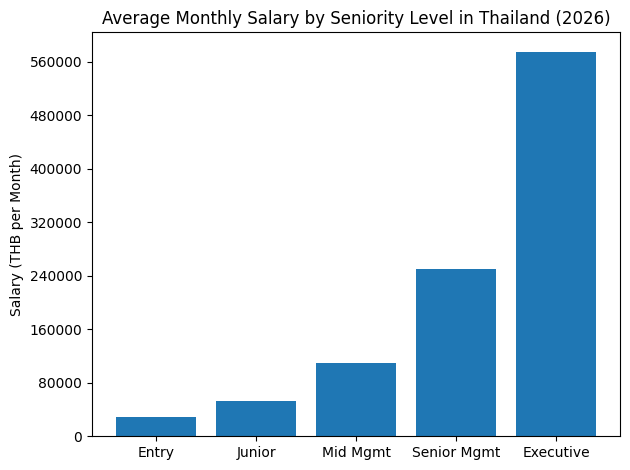
Across the country, organizations are moving away from traditional hiring models that prioritize tenure and headcount expansion. Instead, businesses are increasingly focusing on strategic workforce planning that prioritizes productivity, digital expertise, and leadership capability. This shift has created a more competitive salary environment where highly specialized professionals in sectors such as technology, engineering, finance, and sustainability can command significantly higher compensation compared with generalist roles.
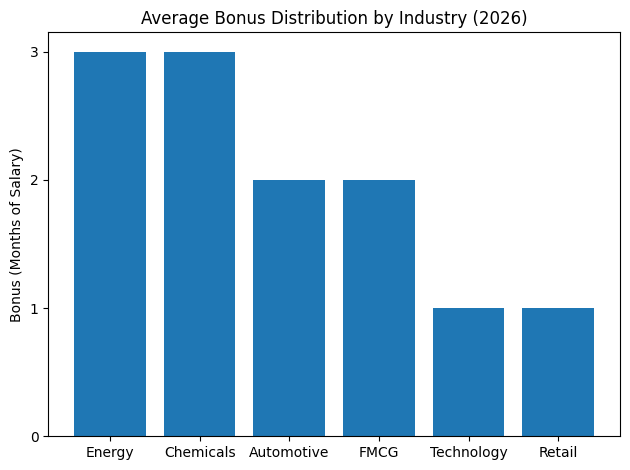
At the national level, salary growth in Thailand is expected to remain moderate in 2026, with average increases projected at just over five percent. However, this average masks considerable variation between industries and job functions. While some sectors are experiencing strong demand for specialized talent and offering competitive salary packages, others are facing downward pressure on wages due to automation, oversupply of entry-level workers, or shifting consumer behavior.
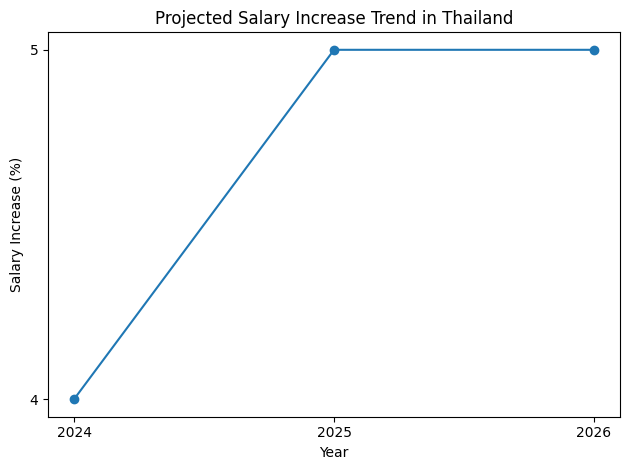
The technology sector continues to be one of the most dynamic contributors to salary growth in Thailand. As companies accelerate their adoption of cloud computing, artificial intelligence, cybersecurity frameworks, and digital platforms, demand for skilled technology professionals remains strong. Roles such as AI engineers, data scientists, DevOps specialists, and cybersecurity experts are among the fastest-growing and highest-paid positions in the Thai labor market.
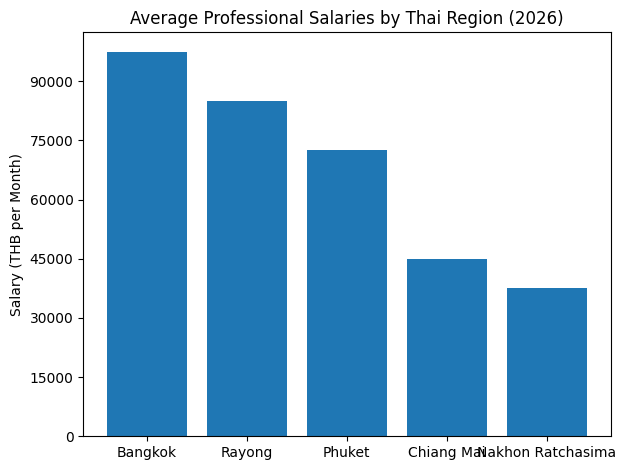
Meanwhile, Thailand’s manufacturing sector is undergoing a major transformation as the country transitions from traditional internal combustion engine production toward electric vehicle manufacturing and advanced automation. This shift is particularly evident within the Eastern Economic Corridor, where significant investment from international manufacturers has created strong demand for engineers specializing in battery technology, robotics, and smart factory operations.
The financial services industry is also evolving as digital banking, fintech innovation, and regulatory modernization reshape how financial institutions operate. Banks and fintech companies are actively recruiting professionals skilled in compliance, financial crime prevention, and digital product development. At the same time, corporate legal teams are expanding their capabilities to address new regulatory requirements related to sustainability reporting and corporate governance.
Another important development influencing salary trends in Thailand is the rise of sustainability and ESG-focused roles. As organizations integrate environmental and social responsibility into their strategic planning, new leadership positions such as Chief Sustainability Officer and ESG Manager are becoming increasingly prominent. These roles are responsible for guiding companies through the transition toward low-carbon operations and sustainable supply chains.
Beyond industry-specific changes, geographic factors also play a significant role in shaping salary levels across Thailand. Bangkok remains the country’s primary economic hub, offering the highest salaries for professionals in finance, technology, and corporate leadership roles. However, other regions are rapidly gaining prominence. The Eastern Economic Corridor has emerged as a powerful industrial center where specialized engineering roles often command salaries comparable to those found in the capital.
Tourism-driven economies such as Phuket and Koh Samui present another distinct employment profile. While general salaries may be lower than in Bangkok, senior hospitality professionals and hotel management executives can earn competitive compensation packages due to the specialized nature of the tourism industry.
At the same time, secondary cities such as Chiang Mai offer a different balance between salary and lifestyle. Although average salaries are lower than in major economic centers, significantly lower living costs make these regions attractive for professionals seeking improved work-life balance or remote work opportunities.
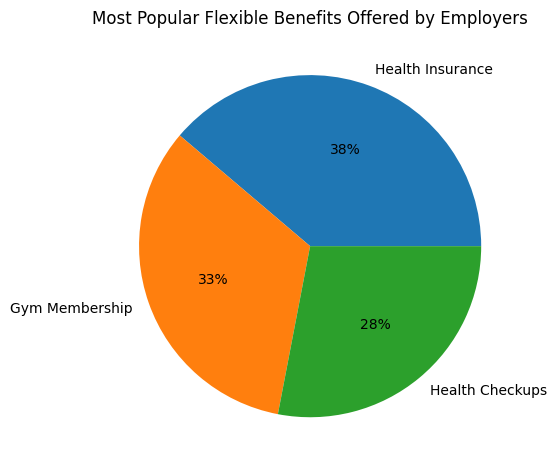
Compensation structures in Thailand are also evolving beyond basic salary. Many companies are adopting comprehensive total rewards strategies that include performance-based bonuses, flexible benefits programs, hybrid work arrangements, and wellness initiatives. These additional incentives have become essential tools for attracting and retaining skilled professionals in a competitive labor market.
Another defining feature of the Thai workforce in 2026 is the growing importance of multilingual communication skills and digital literacy. As international companies continue to invest in Thailand, professionals who can communicate across multiple languages and work effectively within global teams are increasingly valued. Mandarin Chinese and Japanese language skills in particular have become powerful career advantages in sectors such as manufacturing, technology, and international trade.
Perhaps the most important long-term trend shaping Thailand’s salary landscape is the widening gap between specialized professionals and generalist roles. As industries adopt automation and digital technologies, routine administrative tasks are gradually being replaced by software systems and artificial intelligence tools. This transformation is shifting salary growth toward professionals who possess technical expertise, strategic thinking abilities, and leadership skills.
For individuals planning their careers, understanding these shifts is essential to making informed decisions about skill development, industry selection, and geographic mobility. For employers, staying competitive in Thailand’s labor market requires a deep understanding of compensation trends, talent shortages, and the evolving expectations of the modern workforce.
This comprehensive guide to salaries in Thailand for 2026 explores these trends in detail. It examines salary benchmarks across industries, compares compensation levels by experience and seniority, analyzes regional differences across Thailand’s economic centers, and highlights the emerging sectors that are shaping the future of the country’s workforce.
By providing detailed insights into Thailand’s evolving compensation landscape, this guide aims to help professionals identify high-growth career opportunities and assist organizations in designing competitive compensation strategies that align with the country’s rapidly changing economic environment.
Before we venture further into this article, we would like to share who we are and what we do.
About 9cv9
9cv9 is a business tech startup based in Singapore and Asia, with a strong presence all over the world.
With over nine years of startup and business experience, and being highly involved in connecting with thousands of companies and startups, the 9cv9 team has listed some important learning points in this overview of A Complete Guide to Salaries in Thailand for 2026.
If your company needs recruitment and headhunting services to hire top-quality employees, you can use 9cv9 headhunting and recruitment services to hire top talents and candidates. Find out more here, or send over an email to hello@9cv9.com.
Or just post 1 free job posting here at 9cv9 Hiring Portal in under 10 minutes.
A Complete Guide to Salaries in Thailand for 2026
- Macroeconomic Determinants of the 2026 Salary Landscape
- Statutory Evolution and Regulatory Compliance
- Sectoral Analysis:
- Seniority, Experience, and Executive Compensation
- Geographic Comparisons and Urban Economic Centers
- Incentives, Bonuses, and Non-Monetary Compensation
- Navigating the 2026 Labor Market
1. Macroeconomic Determinants of the 2026 Salary Landscape
Thailand’s compensation environment in 2026 is influenced by a range of macroeconomic factors that collectively shape employer compensation policies and workforce income expectations. While salary growth remains present across most sectors, it is characterized by uneven distribution, with certain industries benefiting more significantly than others.
The overall labor market reflects a mixed economic environment. Moderate economic expansion, stable employment levels, and evolving workforce expectations contribute to salary adjustments across organizations. However, the benefits of salary increases are largely concentrated among professionals working in sectors experiencing technological advancement, capital investment, and high global demand.
Employers in industries such as digital technology, consumer goods, and energy have been particularly active in adjusting compensation packages to attract and retain specialized talent. In contrast, traditional administrative and operational roles typically experience more conservative salary adjustments due to higher labor supply and slower productivity growth.
Salary Increase Distribution Across the Workforce
Corporate compensation planning indicates that most organizations operating in Thailand intend to provide salary increases in 2026. However, the scale of these adjustments varies significantly across employee groups and industries.
| Salary Increase Range | Share of Professionals | Labor Market Interpretation |
|---|---|---|
| 2% – 5% Increase | 82% | Standard adjustment for general workforce |
| 6% – 10% Increase | 3% | Competitive raises in performance-driven roles |
| More than 10% Increase | 15% | Specialized talent and high-demand technical positions |
| No Salary Increase | Less than 1% | Limited to underperforming sectors or roles |
This distribution illustrates the widening compensation gap between general administrative positions and highly specialized professionals with technical or strategic expertise.
Inflation Dynamics and Real Wage Growth
Inflation trends play an essential role in determining the real purchasing power of salary increases. In early 2026, Thailand’s inflation environment presents a distinctive pattern where headline inflation has moved into negative territory while core inflation remains positive.
The decline in headline inflation is largely driven by price stability in essential goods, improved agricultural supply, and lower commodity volatility. However, service-related costs continue to rise moderately, contributing to positive core inflation.
For employees, this combination results in improved real income growth, as salary increases outpace the cost of living in many areas of the economy.
| Inflation Indicator | 2024 | 2025 | 2026 Projection |
|---|---|---|---|
| Headline Inflation | 0.4% | -0.28% | -0.88% |
| Core Inflation | 0.9% | 0.72% | 0.56% – 0.60% |
| Average Salary Increase | 4.8% | 5.0% | 5.2% |
| Estimated Real Wage Growth | 1.1% | 1.5% | 1.8% |
The projected real wage growth of approximately 1.8 percent marks the third consecutive year in which Thai workers experience genuine improvements in purchasing power following the volatility of the pandemic-era economy.
Industry-Level Divergence in Salary Growth
Thailand’s salary structure in 2026 demonstrates a growing divergence between industries. High-growth sectors that require specialized expertise offer stronger salary growth due to competitive hiring conditions and talent shortages.
Industries undergoing digital transformation or benefiting from global supply chain integration continue to provide more attractive compensation structures compared to sectors dependent on domestic consumption or traditional labor models.
| Industry Sector | Expected Salary Growth Trend | Key Drivers |
|---|---|---|
| Energy and Utilities | High | Infrastructure investment and energy transition |
| Digital Technology | High | Software engineering and data talent shortages |
| Consumer Goods | Moderate to High | Regional export demand and supply chain growth |
| Financial Services | Moderate | Regulatory changes and digital banking expansion |
| Manufacturing | Moderate | Automation and productivity improvements |
| Administrative Services | Low to Moderate | High labor availability |
| Retail | Low | Cost pressures and workforce turnover |
This sectoral divergence reinforces the increasing importance of technical skills, digital expertise, and industry specialization in determining compensation outcomes.
Shifts in Workforce Sentiment and Employment Stability
Employee attitudes toward job mobility have also evolved significantly in recent years. By 2026, a notable portion of Thailand’s workforce places greater emphasis on job stability and organizational security rather than frequent career transitions.
Economic uncertainties and rising global volatility have encouraged professionals to remain in stable employment environments, particularly in industries with strong capital backing and long-term growth prospects.
| Workforce Sentiment Indicator | 2024 | 2026 | Observed Trend |
|---|---|---|---|
| Professionals Planning to Stay in Current Job | 60% | 72% | Increasing job stability |
| Active Job Seekers | 32% | 23% | Declining job mobility |
| Undecided Workforce | 8% | 5% | Reduced uncertainty |
This shift toward employment stability contributes to lower voluntary turnover rates in many industries, allowing organizations to maintain consistent workforce structures while implementing targeted salary adjustments.
Employee Turnover Patterns Across Industries
Although workforce stability has improved overall, turnover rates still vary significantly between sectors. Capital-intensive industries with strong long-term investments tend to retain employees more effectively than service-based sectors.
Retail and service industries continue to experience higher levels of workforce turnover due to demanding working conditions, lower wage structures, and seasonal employment cycles.
| Industry Sector | Voluntary Resignation Rate | Workforce Characteristics |
|---|---|---|
| Energy | 3.9% | High job security and strong compensation |
| Automotive | 4.9% | Stable industrial employment |
| Financial Services | 8% – 12% | Moderate workforce mobility |
| Consumer Goods | 12% – 18% | Competitive but dynamic sector |
| Retail | 32.9% | High turnover and service-based workforce |
These differences highlight the varying levels of workforce retention challenges faced by organizations across Thailand’s economy.
Key Economic Indicators Influencing Salary Trends
Macroeconomic indicators provide additional insight into the broader economic context shaping Thailand’s salary environment. Economic growth remains steady but moderate, while unemployment levels remain relatively low.
These conditions create a stable labor market in which organizations continue to implement predictable salary adjustments while maintaining financial discipline.
| Economic Indicator | 2024 Actual | 2025 Estimate | 2026 Projection |
|---|---|---|---|
| GDP Growth (YoY) | 1.9% | 2.2% | 1.6% |
| Average Salary Increase | 4.8% | 5.0% | 5.2% |
| Headline Inflation | 0.4% | -0.28% | -0.88% |
| Unemployment Rate | 0.81% | 0.70% | 0.76% |
| Average Monthly Salary (THB) | 15,450 | 15,900 | 16,700 |
The combination of stable employment levels and modest economic growth allows salary expansion to continue gradually across the country, although increases remain closely tied to industry performance and productivity.
Strategic Implications for Thailand’s Compensation Environment
Thailand’s salary trends in 2026 reflect an evolving labor market where compensation growth is increasingly influenced by specialization, industry demand, and workforce stability. While national salary averages continue to rise, the most substantial gains are concentrated among professionals with advanced technical skills and sector-specific expertise.
Organizations operating in Thailand must therefore adopt more strategic compensation frameworks, balancing cost management with competitive salary offerings that attract high-performing talent. At the same time, professionals seeking stronger salary growth are likely to benefit from focusing on industries experiencing technological transformation, digital innovation, and international market expansion.
| Key Salary Market Trend | Impact on Employers | Impact on Workforce |
|---|---|---|
| Gradual national salary growth | Predictable compensation planning | Moderate income growth |
| Rising demand for specialized talent | Increased hiring competition | Higher earning potential |
| Negative headline inflation | Stable operational costs | Improved purchasing power |
| Reduced job mobility | Stronger workforce retention | Greater employment stability |
| Industry-based wage divergence | Sector-focused compensation strategies | Skills-based salary differentiation |
Together, these trends illustrate how Thailand’s salary environment in 2026 is shaped by both macroeconomic stability and structural changes in the labor market. Compensation growth continues, but the most significant opportunities are increasingly linked to specialized expertise, strategic industries, and evolving workforce priorities.
2. Statutory Evolution and Regulatory Compliance
Thailand’s labor market in 2026 is undergoing notable regulatory transformation as policymakers introduce new statutory measures designed to strengthen worker protections and modernize employment standards. These regulatory developments reflect a broader effort to align Thailand’s labor policies with evolving economic realities, international labor standards, and the need to reinforce social welfare mechanisms.
For employers, these reforms represent significant adjustments in compliance obligations and labor cost structures. For employees, they enhance access to financial protection, social insurance benefits, and long-term welfare provisions. Three key regulatory pillars define the statutory landscape in 2026: adjustments to minimum wage policies, revisions to Social Security Fund contribution ceilings, and the implementation of a new mandatory Employee Welfare Fund.
Together, these measures introduce structural changes that affect payroll planning, workforce benefits, and employer compliance responsibilities across multiple industries.
Minimum Wage Adjustments and Regional Wage Differentiation
One of the most visible labor policy changes influencing Thailand’s compensation framework is the recalibration of the national minimum wage. Beginning in the latter part of 2025 and continuing into 2026, Thailand implemented targeted increases in minimum wage levels across key economic regions.
In Bangkok and major economic centers such as Phuket, Chonburi, and Rayong, the minimum daily wage has been raised to 400 THB. This policy adjustment is primarily focused on industries where tourism and hospitality play a significant economic role. The increase specifically applies to large-scale hotels with at least two-star ratings and more than fifty rooms, as well as entertainment venues operating nationwide.
The primary objectives behind this adjustment include stimulating domestic consumption, improving living standards for service-sector workers, and narrowing income disparities within high-tourism regions.
However, Thailand maintains a regionally differentiated wage structure. Provinces with lower economic activity and lower living costs continue to operate under lower minimum wage thresholds. Southern provinces such as Narathiwat and Pattani retain daily wage levels around 337 THB, reflecting the government’s effort to balance worker protection with regional economic competitiveness.
Regional Minimum Wage Comparison
| Region or Province | Minimum Daily Wage (THB) | Economic Context |
|---|---|---|
| Bangkok | 400 | Major economic and administrative center |
| Phuket | 400 | Tourism-driven regional economy |
| Chonburi | 400 | Industrial and manufacturing hub |
| Rayong | 400 | Eastern Economic Corridor industrial zone |
| Narathiwat | 337 | Lower cost-of-living province |
| Pattani | 337 | Regional economy with limited industrial activity |
These variations demonstrate Thailand’s approach to wage policy, where national labor protections are balanced against regional economic realities.
Revision of the Social Security Fund Wage Ceiling
Another major statutory reform introduced in 2026 involves adjustments to the Social Security Fund contribution ceiling. This change represents the first increase in the wage base used for calculating Social Security contributions in more than three decades.
Effective January 1, 2026, the Social Security Office has raised the maximum wage ceiling from 15,000 THB to 17,500 THB per month. This adjustment represents the first phase of a long-term reform plan designed to gradually increase the ceiling to 23,000 THB by the year 2032.
The reform directly affects both employees and employers participating in the Section 33 Social Security scheme, which covers private-sector workers. Contributions remain shared equally between employers and employees.
Impact on Monthly Contributions
| Contribution Parameter | Previous System | New System (2026) | Change |
|---|---|---|---|
| Maximum Wage Base | 15,000 THB | 17,500 THB | +2,500 THB |
| Maximum Employee Contribution | 750 THB | 875 THB | +125 THB |
| Maximum Employer Contribution | 750 THB | 875 THB | +125 THB |
Although the increase in contributions raises payroll costs modestly for employers, it significantly strengthens the benefit structure provided to insured employees.
Enhanced Social Security Benefit Levels
The increase in the wage ceiling directly improves the level of benefits that employees can receive from Thailand’s social insurance system. Higher contributions allow the Social Security Office to provide more substantial payouts across several categories of worker protection.
These benefits include compensation for illness, disability support, unemployment assistance, maternity support, and retirement pensions.
Projected Social Security Benefit Improvements
| Benefit Category | Previous Maximum Benefit | New Maximum Benefit |
|---|---|---|
| Sickness and Disability Payments | 7,500 THB per month | 8,750 THB per month |
| Unemployment Benefits | 7,500 THB per month | 8,750 THB per month |
| Maternity Grant (Per Childbirth) | 22,500 THB | 26,250 THB |
| Maximum Old-Age Pension | 5,250 THB per month | 6,125 THB per month |
These adjustments strengthen the long-term financial protection provided by Thailand’s national social insurance framework and improve income stability during periods of health challenges, unemployment, or retirement.
Introduction of the Mandatory Employee Welfare Fund
A major structural reform scheduled for implementation in 2026 is the introduction of the Employee Welfare Fund. This initiative represents a new national mechanism designed to provide portable severance protection for private-sector employees.
The fund becomes mandatory beginning October 1, 2026. Originally scheduled for implementation in 2025, the policy was postponed to reduce financial pressure on small and medium-sized enterprises during a period of economic adjustment.
Under the new framework, private-sector employers with ten or more employees must register eligible staff in the Employee Welfare Fund if they do not already provide an approved Provident Fund scheme.
The Employee Welfare Fund operates differently from traditional severance arrangements. Instead of severance payments being triggered only when an employee is terminated without cause, the fund creates a savings-based welfare benefit that belongs to the employee regardless of how employment ends.
Contribution Structure During the Initial Phase
| Contribution Period | Employer Contribution | Employee Contribution | Total Contribution |
|---|---|---|---|
| 2026 – 2031 | 0.25% of monthly wages | 0.25% of monthly wages | 0.50% of wages |
These contributions accumulate in a dedicated welfare account that employees can access when they resign, retire, or pass away. This portability ensures that workers retain ownership of their accumulated benefits regardless of career changes.
Employer Compliance and Enforcement Measures
Compliance with the Employee Welfare Fund is mandatory for eligible employers. Organizations that fail to register employees or make required contributions may face significant financial penalties.
Regulatory enforcement includes monthly surcharges on unpaid contributions and potential legal penalties for continued non-compliance.
Employer Compliance Risks
| Compliance Violation | Regulatory Consequence |
|---|---|
| Failure to register employees | Mandatory enforcement orders |
| Late contributions | 5% surcharge per month |
| Persistent non-compliance | Possible criminal penalties |
| Failure to maintain records | Administrative fines |
These enforcement mechanisms are intended to ensure broad participation and to safeguard employee benefits under the new welfare framework.
Summary of Key Labor Law Changes Affecting Employers in 2026
Thailand’s evolving regulatory environment requires employers to reassess payroll structures, benefits planning, and compliance strategies. The combined impact of wage adjustments, social insurance reforms, and new welfare obligations introduces measurable changes to overall labor costs.
Overview of Major Statutory Changes
| Statutory Reform | Effective Date | Key Policy Parameter | Direct Financial Impact |
|---|---|---|---|
| Minimum Wage Adjustment (Bangkok) | July 1, 2025 | 400 THB per day | Approximately 7.5% increase in base labor costs |
| Social Security Ceiling Phase 1 | January 1, 2026 | 17,500 THB wage base | Additional 125 THB monthly contribution per employee |
| Employee Welfare Fund | October 1, 2026 | 0.25% employer and employee contributions | New portable benefit structure |
| Extended Maternity Leave | Late 2025 | 120 total leave days with 60 employer-paid | Increased employer leave liability |
These regulatory developments collectively reshape Thailand’s labor protection framework while strengthening the country’s social safety net for employees. At the same time, they require organizations to adopt more structured workforce management strategies in order to maintain regulatory compliance and manage long-term labor costs effectively.
3. Sectoral Analysis:
a. Technology, AI, and Digital Transformation
The technology sector continues to represent the most dynamic and financially rewarding segment of Thailand’s labor market in 2026. Rapid digital transformation across industries has significantly increased demand for professionals capable of building, managing, and optimizing digital infrastructure. As organizations expand their reliance on artificial intelligence, data analytics, and cloud computing, companies are increasingly prioritizing talent that can generate measurable business value.
Several national initiatives are accelerating this transformation. Among them is Thailand’s National Semiconductor Roadmap, which aims to strengthen the country’s technological capabilities and attract global semiconductor investment. Combined with the rapid adoption of AI-driven business tools and cloud infrastructure, these initiatives are reshaping hiring patterns across the digital economy.
Unlike many traditional sectors where entry-level salaries have softened due to labor oversupply, technology roles have maintained strong compensation levels. In some cases, salaries for specialized technical roles continue to rise due to persistent shortages of highly skilled professionals.
Comparative Salary Trends: Technology vs General Entry-Level Roles
| Sector Category | Salary Trend (2026) | Market Conditions |
|---|---|---|
| Technology and IT | Stable to increasing | Strong demand for specialized talent |
| Artificial Intelligence | Rapid growth | Limited supply of experienced practitioners |
| Cybersecurity | Increasing | Regulatory pressure and digital finance expansion |
| Traditional Entry-Level Roles | Declining by 5% – 10% | Oversupply of graduates and administrative workers |
This divergence highlights the growing importance of digital skill sets in Thailand’s evolving labor market.
Artificial Intelligence Leadership and the Emergence of CAIO Roles
Artificial intelligence has transitioned from a specialized technical capability into a central strategic component of corporate decision-making. As a result, many multinational corporations operating in Thailand have introduced executive leadership roles dedicated to overseeing AI implementation and governance.
One of the most notable developments is the emergence of the Chief Artificial Intelligence Officer. This C-suite position reflects the increasing importance of AI in business strategy, operational efficiency, and product innovation.
Executives responsible for AI leadership often oversee enterprise-wide data strategy, AI governance frameworks, machine learning deployment, and ethical AI compliance. These responsibilities place the role among the highest-paid leadership positions within the technology domain.
Executive Compensation in Artificial Intelligence Leadership
| Executive Role | Typical Monthly Salary Range (THB) | Organizational Scope |
|---|---|---|
| Chief Artificial Intelligence Officer | Up to 800,000 | Strategic AI governance and enterprise AI transformation |
| Director of AI Strategy | 300,000 – 500,000 | Enterprise-level AI implementation |
| Head of Data Science | 250,000 – 400,000 | Advanced analytics and predictive modeling |
At the operational level, AI Engineers and Data Scientists remain among the fastest-growing roles in Thailand’s digital workforce. Organizations are particularly interested in professionals capable of building scalable machine learning systems and integrating AI models into real-world business applications.
Due to the scarcity of practical AI implementation skills, even entry-level salaries in these roles are significantly higher than those for traditional software development positions.
Cybersecurity and Digital Infrastructure Protection
As Thailand expands its digital economy, cybersecurity has become a mission-critical function for organizations across financial services, e-commerce, telecommunications, and government infrastructure.
The expansion of virtual banking platforms, digital payment ecosystems, and cloud-based financial services has increased the demand for professionals capable of protecting sensitive data and ensuring compliance with regulatory frameworks.
Cybersecurity specialists are particularly valuable in environments where organizations must manage complex cloud infrastructures while defending against sophisticated cyber threats.
Cybersecurity Salary Benchmarks in Thailand (2026)
| Cybersecurity Role | Average Annual Salary (THB) | Salary Potential for Senior Experts |
|---|---|---|
| Cybersecurity Engineer | 1,234,322 | Up to 1,504,639 or higher |
| Security Operations Engineer | 1,000,000 – 1,350,000 | Higher with specialized certifications |
| Cybersecurity Analyst | 900,000 – 1,200,000 | Strong demand across finance and telecom sectors |
Specialists holding advanced security certifications and experience managing enterprise-level cloud security projects are particularly sought after. Organizations increasingly prioritize professionals capable of integrating cybersecurity frameworks into large-scale digital infrastructure.
Software Development and Full Stack Engineering
Software development remains one of the largest professional categories within Thailand’s technology workforce. However, the market has evolved considerably as employers increasingly prioritize developers who possess multidisciplinary technical capabilities.
Full Stack Developers—professionals who can work across both front-end and back-end systems—command some of the highest salaries within the software engineering domain. These professionals play a critical role in accelerating product development and enabling agile digital innovation.
In addition to technical expertise, companies are actively seeking “bridge talent,” individuals who can translate complex technical concepts into strategic insights for business leaders. This ability to connect technical teams with executive decision-makers has become a highly valued skill.
Software Engineering Salary Ranges (Thailand 2026)
| Software Development Role | Junior (0–3 Years) | Mid-Level (3–7 Years) | Senior (7+ Years) |
|---|---|---|---|
| Full Stack Software Engineer | 40,000 – 75,000 THB | 80,000 – 150,000 THB | 160,000 – 250,000+ THB |
| Backend Engineer | 45,000 – 80,000 THB | 90,000 – 150,000 THB | 170,000 – 260,000+ THB |
| Frontend Developer | 38,000 – 70,000 THB | 80,000 – 135,000 THB | 150,000 – 210,000+ THB |
Senior engineers with deep experience in distributed systems, microservices architecture, and cloud-native application development typically command the highest compensation packages.
UX/UI Design and Digital Customer Experience
As Thailand’s digital economy matures, organizations are placing greater emphasis on digital customer experience. This shift has elevated the importance of UX and UI design professionals who can create intuitive, engaging digital interfaces.
Companies across industries—including banking, e-commerce, travel, and telecommunications—recognize that customer experience directly influences brand loyalty and revenue generation. As a result, UX/UI design has evolved from a supporting design function into a strategic discipline integrated into product development.
UX/UI designers are expected to possess both creative design expertise and analytical skills related to user behavior, data insights, and product usability.
UX/UI Design Salary Benchmarks
| UX/UI Role | Junior Salary Range | Mid-Level Salary Range | Senior Salary Range |
|---|---|---|---|
| UX/UI Designer | 35,000 – 60,000 THB | 65,000 – 110,000 THB | 120,000 – 180,000 THB |
| Product Designer | 40,000 – 70,000 THB | 80,000 – 130,000 THB | 140,000 – 200,000+ THB |
Professionals with expertise in design systems, user research, and product analytics are particularly valued within organizations pursuing digital transformation strategies.
Comprehensive Salary Matrix for Technology Roles in Thailand (2026)
| Job Role (Technology Sector) | Junior Level (0–3 Years) | Mid-Level (3–7 Years) | Senior Level (7+ Years) |
|---|---|---|---|
| AI Specialist / Data Scientist | 50,000 – 85,000 THB | 90,000 – 165,000 THB | 175,000 – 300,000+ THB |
| Full Stack Software Engineer | 40,000 – 75,000 THB | 80,000 – 150,000 THB | 160,000 – 250,000+ THB |
| Cybersecurity Analyst | 45,000 – 70,000 THB | 75,000 – 130,000 THB | 140,000 – 220,000+ THB |
| Cloud and DevOps Engineer | 45,000 – 75,000 THB | 85,000 – 140,000 THB | 160,000 – 250,000+ THB |
| UX/UI Designer | 35,000 – 60,000 THB | 65,000 – 110,000 THB | 120,000 – 180,000 THB |
| IT Support Manager | 30,000 – 55,000 THB | 60,000 – 95,000 THB | 110,000 – 160,000 THB |
Strategic Implications for Thailand’s Technology Workforce
The technology sector’s compensation trends illustrate the increasing value placed on digital expertise within Thailand’s evolving economy. Roles related to artificial intelligence, cybersecurity, and cloud infrastructure continue to experience the strongest salary growth due to persistent skill shortages.
Meanwhile, software engineering and UX design remain foundational to the country’s digital ecosystem, offering strong long-term career opportunities for professionals capable of combining technical knowledge with business insight.
For employers, the challenge lies in developing competitive compensation structures that attract high-level digital talent. For professionals, continuous skill development in emerging technologies remains essential for accessing the most lucrative opportunities within Thailand’s rapidly expanding digital economy.
b. Manufacturing, Automotive, and Industry 4.0
Manufacturing continues to serve as a foundational pillar of Thailand’s economic structure, contributing substantially to national GDP, exports, and industrial employment. In 2026, however, the sector is undergoing a profound transformation as traditional production models evolve toward advanced manufacturing systems aligned with Industry 4.0 principles.
The country’s industrial base is currently navigating a major transition from Internal Combustion Engine production toward Electric Vehicle manufacturing and intelligent factory systems. This transformation is driven by foreign investment, national industrial policies, and technological innovation across supply chains.
Industrial development initiatives such as the Eastern Economic Corridor continue to attract multinational companies, particularly in the automotive, electronics, and energy technology sectors. As a result, demand for specialized engineering talent has increased significantly, pushing salary levels upward for professionals capable of managing advanced production technologies.
Structural Transformation of Thailand’s Manufacturing Sector
Thailand’s manufacturing industry is evolving toward a hybrid structure where traditional automotive production coexists with emerging electric mobility technologies. Companies operating in the country must simultaneously maintain legacy Internal Combustion Engine production lines while developing new Electric Vehicle manufacturing capacity.
This dual transformation creates a complex operational environment requiring senior leadership capable of overseeing both conventional manufacturing processes and next-generation electric mobility technologies.
Industrial Transformation Drivers in 2026
| Industrial Trend | Strategic Impact on Manufacturing |
|---|---|
| Electric Vehicle adoption | Expansion of battery production and EV assembly |
| Smart factory implementation | Integration of automation and data-driven production |
| Semiconductor and electronics growth | Increased demand for precision engineering |
| Global supply chain diversification | New foreign investment into Thailand |
| Eastern Economic Corridor expansion | Concentration of high-tech manufacturing clusters |
These structural shifts are redefining talent requirements across the manufacturing sector and increasing compensation levels for professionals with specialized technical expertise.
Electric Vehicle Ecosystem and Smart Electronics Manufacturing
One of the most influential developments shaping Thailand’s industrial landscape is the rapid growth of the Electric Vehicle ecosystem. Significant investment from Chinese EV manufacturers and international battery producers has accelerated the development of EV production clusters, particularly within the Eastern Economic Corridor.
The influx of capital into EV manufacturing facilities has generated strong demand for engineers specializing in high-voltage systems, battery management technologies, and thermal control systems.
Key EV engineering roles are concentrated in research and development departments responsible for designing and optimizing electric powertrain systems. These roles require expertise in advanced electrical engineering, materials science, and energy management.
EV Engineering Talent Demand
| Engineering Specialization | Industry Demand Level | Key Responsibilities |
|---|---|---|
| Battery Management Systems (BMS) | Very High | Monitoring battery performance and safety |
| High-Voltage Safety Engineering | High | Ensuring electrical system safety compliance |
| Thermal Management Engineering | High | Managing battery temperature and cooling systems |
| EV Powertrain Development | Very High | Designing electric drivetrain technologies |
Senior R&D engineers specializing in EV technologies command some of the highest salaries in the manufacturing engineering domain. In many multinational firms operating in Thailand, these professionals can earn up to 200,000 THB per month depending on project scope and technical specialization.
Automation, Robotics, and Smart Factory Operations
Automation technology represents another critical pillar of Thailand’s industrial transformation. As companies implement smart manufacturing systems, demand has surged for engineers capable of designing, operating, and optimizing automated production environments.
Manufacturers are increasingly investing in robotics integration, programmable logic controllers, advanced supervisory control systems, and Internet-of-Things sensor networks. These technologies allow factories to improve production efficiency, reduce downtime, and enhance product quality.
The shift from reactive maintenance toward predictive maintenance models has also increased the strategic importance of industrial engineers who can interpret real-time operational data.
Smart factory specialists are now responsible for managing complex industrial ecosystems that combine robotics, analytics platforms, and sensor-based monitoring systems.
Automation Skill Demand in Industry 4.0 Factories
| Automation Technology | Industrial Application | Talent Demand |
|---|---|---|
| PLC Programming | Automated production control | High |
| SCADA Systems | Industrial monitoring and control | High |
| Industrial Robotics | Automated assembly lines | Very High |
| IoT Sensor Networks | Predictive maintenance systems | High |
| Data Analytics for Manufacturing | Production optimization | Increasing |
Due to the shortage of engineers capable of managing these advanced systems, salaries for automation specialists have risen steadily. Automation managers with more than eight years of experience commonly earn between 140,000 and 220,000 THB per month.
Language Skills and the Trilingual Salary Premium
A distinctive feature of Thailand’s manufacturing workforce in 2026 is the growing importance of multilingual communication skills. As foreign investment increases across the automotive and electronics industries, the ability to communicate across multiple languages has become a valuable professional asset.
Thai and English remain the standard communication languages within most industrial environments. However, the rapid expansion of Chinese investment in the Electric Vehicle sector has elevated Mandarin Chinese as one of the most sought-after language skills in manufacturing operations.
Similarly, Japanese language proficiency continues to hold significant value due to the longstanding presence of Japanese automotive manufacturers and industrial firms in Thailand.
Manufacturing Language Skills and Salary Impact
| Language Capability | Industrial Relevance | Salary Impact |
|---|---|---|
| Thai + English | Baseline requirement | Standard compensation |
| Thai + English + Mandarin | Essential for EV sector | 15% – 20% salary premium |
| Thai + English + Japanese | Valuable for legacy OEMs | 10% – 18% salary premium |
| Multilingual technical professionals | Strategic management roles | Significant career advantage |
Professionals capable of working across these linguistic environments often serve as critical bridges between local engineering teams and international corporate leadership.
Manufacturing and Engineering Salary Matrix in Thailand (2026)
The evolving industrial landscape has produced a diverse compensation structure across leadership, engineering, and operational roles within the manufacturing sector.
| Role (Manufacturing and Engineering) | Experience Level | Salary Range (THB per Month) | Key Market Drivers |
|---|---|---|---|
| Plant Director / General Manager | 15+ Years | 350,000 – 550,000+ | Managing hybrid ICE and EV production lines |
| Operations Director | 12 – 15 Years | 250,000 – 400,000 | Smart factory integration and automation leadership |
| Automation Manager | 8+ Years | 140,000 – 220,000 | Robotics, PLC programming, SCADA systems |
| Senior R&D Engineer (EV Technology) | 7 – 12 Years | 120,000 – 200,000 | Battery systems and EV powertrain innovation |
| Process Improvement Engineer | 5 – 10 Years | 80,000 – 140,000 | Lean manufacturing and Six Sigma optimization |
| Supply Chain Director | 12+ Years | 250,000 – 400,000 | ESG compliance, logistics resilience, risk mitigation |
Senior leadership roles within manufacturing organizations command the highest compensation levels due to the increasing complexity of industrial operations. Executives responsible for managing hybrid automotive production environments must balance legacy Internal Combustion Engine production with emerging Electric Vehicle infrastructure.
Strategic Outlook for Thailand’s Industrial Workforce
Thailand’s manufacturing sector in 2026 illustrates how Industry 4.0 technologies are reshaping the country’s industrial workforce. Automation, electrification, and digital integration are redefining skill requirements across factories, research centers, and supply chains.
Engineering professionals capable of combining technical expertise with data-driven manufacturing strategies are increasingly valuable. Similarly, professionals with multilingual communication skills possess a distinct competitive advantage within multinational industrial environments.
As Thailand continues to strengthen its position as a regional manufacturing hub, the demand for advanced engineering talent, automation specialists, and EV technology experts is expected to remain strong. These workforce trends will continue to shape salary structures and career opportunities throughout the country’s industrial economy.
c. Banking, Finance, and Legal Services
Thailand’s banking, financial services, and legal sectors are entering a phase of accelerated transformation as regulatory modernization and financial technology reshape the industry’s operational structure. In 2026, financial institutions face growing pressure to strengthen compliance systems, adopt digital financial infrastructure, and integrate environmental governance standards into their business strategies.
These developments have substantially influenced hiring patterns across banks, fintech companies, and corporate legal departments. As financial services become increasingly technology-driven, organizations are actively seeking professionals capable of combining regulatory knowledge with digital innovation capabilities.
The introduction of virtual banks, the expansion of digital financial ecosystems, and the rise of sustainable investment frameworks have collectively reshaped the talent landscape within Thailand’s financial services sector.
Key Structural Drivers Transforming the Financial Sector
Thailand’s financial ecosystem is undergoing several structural changes that influence workforce demand and compensation levels.
| Structural Driver | Impact on Financial Services Workforce |
|---|---|
| Virtual bank licensing | Expansion of digital banking talent demand |
| Fintech innovation | Emergence of hybrid finance-technology roles |
| Regulatory tightening | Increased demand for compliance professionals |
| Anti-money laundering enforcement | Growth in financial crime investigation roles |
| ESG and sustainable finance policies | New expertise required in governance reporting |
These trends are creating specialized career pathways within banking, compliance, financial analytics, and corporate legal functions.
Regulatory Compliance, Risk Management, and Financial Crime Prevention
One of the most significant developments shaping employment in Thailand’s financial sector is the expansion of regulatory oversight. Financial institutions must now comply with stricter governance standards related to risk management, anti-money laundering frameworks, and transaction monitoring.
Regulatory authorities require banks and financial institutions to strengthen both first-line and second-line control systems. As a result, demand for compliance professionals has increased substantially, particularly those specializing in financial crime detection and regulatory reporting.
Compliance officers are responsible for monitoring financial transactions, identifying suspicious activity, and ensuring adherence to both domestic and international financial regulations.
Financial Crime and Compliance Roles
| Compliance Specialization | Core Responsibilities | Market Demand |
|---|---|---|
| Anti-Money Laundering (AML) Specialist | Monitoring suspicious financial transactions | High |
| Financial Crime Compliance Manager | Oversight of risk mitigation frameworks | Very High |
| Transaction Monitoring Analyst | Detection of irregular financial activity | Increasing |
| Regulatory Compliance Officer | Ensuring adherence to banking regulations | High |
Junior and mid-level compliance professionals typically earn between 30,000 and 48,000 THB per month depending on their experience and certifications. However, specialists with advanced expertise in financial crime prevention can command significantly higher salaries within major banking institutions.
Financial institutions increasingly prioritize candidates with experience in global compliance frameworks and financial investigation technologies.
Fintech Innovation and Digital Product Leadership
The rapid integration of financial services with consumer technology has created a new category of leadership roles focused on digital product innovation. One of the most prominent positions emerging from this shift is the Fintech Product Owner.
Fintech Product Owners oversee the entire lifecycle of digital financial products, including mobile banking platforms, payment systems, digital lending services, and investment applications. These professionals must combine financial expertise with agile product development methodologies.
The role requires close collaboration between technology teams, compliance departments, and executive leadership to ensure that digital financial products meet both market demands and regulatory requirements.
Core Responsibilities of Fintech Product Owners
| Product Leadership Area | Strategic Role |
|---|---|
| Digital product strategy | Defining the roadmap for fintech solutions |
| Agile development management | Coordinating cross-functional product teams |
| Regulatory compliance alignment | Ensuring financial products meet legal requirements |
| Customer experience optimization | Improving usability and adoption of digital services |
Senior Product Owners working within fintech companies or digital banking platforms can earn between 160,000 and 250,000 THB per month, reflecting the strategic importance of these roles within modern financial institutions.
Corporate Legal Services and Governance Oversight
Legal professionals play a critical role in supporting Thailand’s financial sector as organizations adapt to evolving regulatory frameworks. Corporate legal departments are increasingly responsible for interpreting new financial regulations, managing corporate governance structures, and ensuring compliance with international reporting standards.
In addition to traditional legal advisory functions, corporate lawyers now work closely with compliance teams, financial executives, and sustainability departments to address emerging governance challenges.
One of the most significant areas of focus for legal departments in 2026 involves environmental, social, and governance reporting requirements. Many companies are now required to disclose sustainability practices and demonstrate adherence to responsible corporate governance standards.
Key Legal Advisory Areas in Financial Services
| Legal Specialization | Core Responsibility |
|---|---|
| Corporate Governance | Oversight of board structures and regulatory compliance |
| Financial Regulation | Interpreting banking and capital market laws |
| ESG Compliance | Supporting sustainability reporting obligations |
| Labor and Employment Law | Navigating evolving workforce regulations |
Entry-level corporate lawyers in Bangkok typically begin with salaries around 30,000 to 36,500 THB per month. Compensation increases steadily with experience and specialization in financial regulation or corporate governance.
Comprehensive Salary Matrix for Financial and Legal Roles in Thailand (2026)
The financial and legal sectors feature diverse salary structures based on professional specialization, regulatory expertise, and leadership responsibilities.
| Financial and Legal Role | 0–3 Years Experience | 3–7 Years Experience | 7+ Years Experience |
|---|---|---|---|
| Chief Financial Officer | N/A | 100,000 – 150,000 THB | 175,000 – 400,000+ THB |
| Fintech Product Owner | 45,000 – 75,000 THB | 85,000 – 150,000 THB | 160,000 – 250,000+ THB |
| Risk and Compliance Manager | 40,000 – 70,000 THB | 80,000 – 140,000 THB | 150,000 – 230,000 THB |
| Financial Analyst (FP&A) | 35,000 – 60,000 THB | 65,000 – 110,000 THB | 120,000 – 200,000 THB |
| Senior Compliance Officer | 30,000 – 48,000 THB | 50,000 – 85,000 THB | 90,000 – 150,000 THB |
| Corporate Lawyer | 30,000 – 55,000 THB | 60,000 – 110,000 THB | 120,000 – 200,000 THB |
Senior financial executives, particularly Chief Financial Officers, command some of the highest compensation levels within Thailand’s corporate hierarchy. These leaders are responsible for financial strategy, risk management, and long-term capital planning.
Strategic Outlook for Thailand’s Financial and Legal Workforce
The transformation of Thailand’s financial services ecosystem is creating a new generation of professional roles that blend finance, technology, and regulatory expertise. Compliance professionals, fintech product leaders, and governance specialists are increasingly essential to the stability and competitiveness of financial institutions.
As digital banking expands and regulatory frameworks evolve, organizations must invest in talent capable of navigating both technological complexity and regulatory scrutiny.
For professionals pursuing careers in banking and legal services, developing expertise in financial regulation, fintech innovation, and sustainable finance will be key to accessing the highest-paying opportunities within Thailand’s rapidly evolving financial sector.
d. Retail, FMCG, and E-commerce
The retail and consumer goods sector in Thailand is undergoing a significant transformation as companies respond to changing consumer behavior, economic pressures, and the expansion of digital commerce platforms. In 2026, businesses operating in retail, fast-moving consumer goods (FMCG), and e-commerce face a complex operating environment characterized by rising operational costs, price-sensitive consumers, and intensified competition across online marketplaces.
Retail organizations are adapting by investing heavily in e-commerce infrastructure, digital marketing strategies, and data analytics capabilities. These investments are designed to improve operational efficiency, strengthen brand positioning, and reduce customer acquisition costs in a competitive consumer marketplace.
Despite these strategic shifts, the retail sector continues to experience high workforce turnover, particularly among operational and front-line retail positions. This environment has led employers to focus more aggressively on hiring specialized digital professionals capable of driving growth in online sales channels.
Consumer Spending Trends and Retail Sector Pressures
Consumer behavior in Thailand during 2026 reflects a cautious spending environment. Inflation volatility and broader economic uncertainty have encouraged many households to prioritize value-oriented purchasing decisions. As a result, retailers are increasingly focused on promotional strategies, loyalty programs, and digital engagement tools to maintain revenue growth.
Retail Industry Market Dynamics
| Market Factor | Impact on Retail and FMCG Companies |
|---|---|
| Value-driven consumer behavior | Increased focus on promotions and discount strategies |
| Growth of online marketplaces | Expansion of digital sales channels |
| Rising logistics costs | Pressure on retail profit margins |
| Omnichannel customer expectations | Integration of online and physical retail platforms |
| High workforce turnover | Increased hiring and training costs |
These trends have accelerated the digitalization of retail operations, particularly in areas related to e-commerce management and digital marketing.
E-commerce Leadership and Omnichannel Retail Strategy
E-commerce has become one of the most strategically important functions within retail and FMCG organizations. Companies are now investing heavily in professionals capable of managing complex digital commerce ecosystems that combine online marketplaces, company-owned platforms, and physical retail stores.
The E-commerce Manager role has emerged as a central leadership position responsible for coordinating these interconnected systems. These professionals oversee online sales operations, manage digital storefronts, analyze consumer purchasing behavior, and integrate logistics networks across multiple retail channels.
E-commerce leaders must also coordinate closely with marketing teams, supply chain managers, and product development departments to ensure consistent customer experiences across all sales platforms.
Key Responsibilities of E-commerce Managers
| Strategic Responsibility | Business Impact |
|---|---|
| Online marketplace management | Expansion of digital sales channels |
| Omnichannel integration | Coordination between physical stores and digital platforms |
| Digital merchandising | Optimization of online product presentation |
| Data-driven sales analytics | Improved forecasting and inventory planning |
| Customer experience optimization | Increased customer retention and conversion rates |
Average monthly salaries for E-commerce Managers range between 48,000 and 71,000 THB for standard roles. However, highly experienced professionals capable of building large-scale digital commerce operations can earn as much as 180,000 THB per month, particularly in major retail organizations based in Bangkok.
Digital Marketing and Customer Personalization
Traditional marketing strategies are rapidly evolving as companies shift toward highly targeted digital campaigns and personalized customer engagement strategies. The rise of digital marketing technologies has created strong demand for specialists capable of managing performance-based marketing channels and content-driven brand development.
Digital marketing professionals are responsible for managing online advertising campaigns, search engine optimization strategies, social media engagement, and personalized customer communication.
Organizations increasingly rely on these specialists to reduce marketing costs while improving customer acquisition efficiency.
High-Demand Digital Marketing Roles
| Marketing Specialization | Strategic Function |
|---|---|
| Digital Marketing Specialist | Managing online advertising campaigns |
| SEO Specialist | Optimizing website visibility in search engines |
| Content Strategist | Developing digital brand storytelling |
| Performance Marketing Manager | Managing paid advertising optimization |
| Customer Data Analyst | Interpreting behavioral purchasing data |
Digital Marketing Managers in Thailand typically earn approximately 62,500 THB per month on average, although compensation varies depending on company size and campaign scale.
Brand management also remains an influential role within the consumer goods industry. Senior Brand Managers responsible for managing national product portfolios and large advertising budgets can earn up to 220,000 THB per month.
The Evolution of Marketing Leadership in FMCG
Marketing departments in FMCG companies are increasingly integrating data analytics, consumer insights, and digital technologies into their strategic planning processes.
Brand managers are expected to combine traditional brand-building expertise with digital marketing capabilities and consumer data analysis.
Core Competencies for Modern Brand Managers
| Marketing Capability | Strategic Importance |
|---|---|
| Data-driven consumer insights | Targeted marketing campaign development |
| Digital advertising strategy | Online customer acquisition |
| Social media brand management | Direct consumer engagement |
| Product positioning strategy | Competitive differentiation |
| Omnichannel marketing planning | Unified retail experience |
Professionals capable of balancing these competencies are in strong demand within multinational FMCG companies operating in Thailand.
Salary Matrix for Marketing and E-commerce Roles in Thailand (2026)
The following salary matrix illustrates compensation levels for major marketing and digital commerce positions within Thailand’s retail and FMCG industries.
| Marketing and E-commerce Role | Junior Level (0–3 Years) | Mid-Level (3–7 Years) | Senior Level (7+ Years) |
|---|---|---|---|
| E-commerce Manager | 35,000 – 60,000 THB | 65,000 – 120,000 THB | 130,000 – 200,000+ THB |
| Brand Manager | 40,000 – 70,000 THB | 75,000 – 125,000 THB | 140,000 – 220,000 THB |
| Digital Marketing Specialist | 30,000 – 50,000 THB | 55,000 – 90,000 THB | 100,000 – 160,000 THB |
| SEO or Content Strategist | 30,000 – 55,000 THB | 60,000 – 100,000 THB | 110,000 – 170,000 THB |
| Marketing Manager | 45,000 – 75,000 THB | 80,000 – 135,000 THB | 150,000 – 250,000 THB |
Senior marketing leadership positions often command the highest compensation levels due to their responsibility for managing large advertising budgets, coordinating cross-channel marketing strategies, and delivering measurable revenue growth.
Strategic Outlook for Retail and FMCG Talent in Thailand
The retail and FMCG sectors in Thailand are undergoing a digital transformation driven by evolving consumer expectations and technological innovation. E-commerce platforms, data-driven marketing strategies, and omnichannel retail integration have become critical components of modern retail success.
Companies that successfully combine physical retail infrastructure with advanced digital commerce capabilities are expected to maintain competitive advantages in the coming years.
For professionals working within retail, marketing, and e-commerce roles, expertise in digital platforms, consumer analytics, and performance marketing will continue to be essential skills for achieving higher salary potential and long-term career advancement in Thailand’s consumer economy.
e. Sustainability and ESG
Sustainability and environmental governance have emerged as critical strategic priorities for corporations operating in Thailand. In 2026, the transition toward a green economy is reshaping corporate governance frameworks, supply chain structures, and long-term investment strategies. Environmental, Social, and Governance (ESG) considerations are no longer treated solely as regulatory requirements. Instead, they are increasingly integrated into corporate decision-making and long-term value creation strategies.
Businesses across industries—including manufacturing, finance, energy, and consumer goods—are responding to growing pressure from regulators, investors, and international partners to adopt sustainable business practices. These changes have significantly increased demand for professionals capable of designing and managing ESG programs, sustainability reporting systems, and low-carbon supply chains.
As Thailand aligns its industrial policies with global climate goals and sustainable development initiatives, companies are investing heavily in ESG leadership roles that support green innovation, carbon reduction strategies, and responsible corporate governance.
Key Drivers Accelerating ESG Adoption in Thailand
Several structural factors are contributing to the rapid expansion of sustainability-related roles in Thailand’s labor market.
| Sustainability Driver | Impact on Corporate Strategy |
|---|---|
| Global climate commitments | Increased pressure to reduce carbon emissions |
| Investor demand for ESG transparency | Expansion of sustainability reporting |
| International supply chain standards | Adoption of low-carbon manufacturing |
| Green finance initiatives | Integration of sustainability metrics into financial decision-making |
| Renewable energy investment | Growth in clean technology sectors |
These forces are transforming ESG from a peripheral compliance function into a central pillar of corporate strategy.
Chief Sustainability Officer and Executive ESG Leadership
At the highest level of corporate leadership, the Chief Sustainability Officer has become one of the most influential executive roles in organizations pursuing sustainable growth strategies. The CSO is responsible for overseeing environmental performance, managing sustainability initiatives, and aligning corporate operations with global environmental standards.
In many organizations, the Chief Sustainability Officer works closely with executive leadership teams to integrate sustainability goals into financial planning, operational management, and corporate governance frameworks.
Key Strategic Responsibilities of Chief Sustainability Officers
| Strategic Area | Organizational Impact |
|---|---|
| Corporate sustainability strategy | Long-term environmental planning |
| Carbon reduction programs | Alignment with climate targets |
| ESG disclosure and reporting | Transparency for investors and regulators |
| Sustainable supply chain management | Responsible sourcing and production |
| Stakeholder engagement | Collaboration with regulators and investors |
In Thailand, Chief Sustainability Officers earn an average annual salary of approximately 3,051,589 THB. In large multinational corporations, senior executives in this role can earn up to 3,732,093 THB annually, reflecting the strategic significance of sustainability leadership within modern corporate governance.
Sustainability Program Management and ESG Implementation
Below the executive level, Sustainability Program Managers and ESG Managers play a critical role in translating high-level sustainability strategies into operational initiatives. These professionals are responsible for implementing environmental programs, monitoring corporate sustainability performance, and ensuring compliance with international ESG reporting standards.
Their work often involves coordinating sustainability initiatives across multiple departments including operations, procurement, logistics, and finance.
Core Responsibilities of ESG Managers and Sustainability Leaders
| Functional Responsibility | Operational Objective |
|---|---|
| ESG data collection and reporting | Compliance with international reporting frameworks |
| Sustainable supply chain monitoring | Reduction of environmental impact |
| Carbon accounting and emissions tracking | Alignment with climate targets |
| Corporate sustainability training | Employee awareness and operational integration |
| Renewable energy project coordination | Transition toward clean energy infrastructure |
In Bangkok, the average annual salary for a Sustainability Manager is approximately 1,168,161 THB. This compensation level reflects the growing importance of sustainability expertise as organizations transition toward environmentally responsible production and investment models.
Sustainability professionals are particularly valued in sectors such as renewable energy, green construction, sustainable manufacturing, and environmental consulting.
Emerging Opportunities in Green Value Chains
Thailand’s transition toward a green economy is also creating opportunities within emerging sustainable industries. Companies are increasingly exploring investments in renewable energy technologies, energy-efficient appliances, and environmentally friendly manufacturing processes.
International organizations have highlighted several sectors in Thailand with strong potential for sustainable industrial growth.
Key Green Economy Growth Areas
| Green Industry Segment | Strategic Opportunity |
|---|---|
| Solar photovoltaic manufacturing | Renewable energy infrastructure expansion |
| Energy-efficient appliances | Reduced electricity consumption |
| Electric vehicle components | Low-carbon transportation ecosystem |
| Sustainable agriculture technology | Climate-resilient food production |
| Green construction materials | Low-emission building infrastructure |
These sectors require sustainability specialists capable of integrating environmental standards into product design, manufacturing processes, and supply chain management.
Salary Matrix for ESG and Sustainability Roles in Thailand (2026)
Compensation for sustainability professionals varies significantly depending on seniority, organizational scope, and industry specialization.
| ESG and Sustainability Role | Entry Level Average | Senior Level Average | Average Bonus |
|---|---|---|---|
| Chief Sustainability Officer | 2,081,184 THB per year | 3,732,093 THB per year | 407,692 THB |
| Sustainability Program Manager | 838,940 THB per year | 1,341,246 THB per year | 41,820 THB |
| ESG Manager | 10,277 THB per month | 39,730 THB per month | N/A |
| Environmental Consultant | 45,000 THB per month | 95,000 THB per month | Variable |
Executive sustainability roles typically offer the highest compensation due to their responsibility for shaping long-term environmental strategies and managing regulatory compliance across complex organizations.
Environmental consultants and ESG specialists working with multinational corporations or international advisory firms may also receive performance-based bonuses tied to sustainability project outcomes.
Strategic Outlook for Sustainability Careers in Thailand
The growing importance of sustainability within Thailand’s economy signals a long-term shift toward environmentally responsible business practices. ESG considerations are increasingly embedded within corporate governance structures, financial decision-making processes, and international supply chains.
For organizations, the integration of sustainability expertise into executive leadership teams has become essential for maintaining regulatory compliance, meeting investor expectations, and competing in global markets that increasingly prioritize environmental responsibility.
For professionals, the expansion of sustainability roles presents new career opportunities across multiple industries. Expertise in ESG reporting frameworks, carbon accounting, renewable energy systems, and sustainable supply chain management will continue to command strong demand as Thailand advances toward a greener economic future.
4. Seniority, Experience, and Executive Compensation
One of the most defining features of Thailand’s labor market in 2026 is the increasingly polarized relationship between experience and compensation. While senior leadership salaries continue to grow steadily and remain relatively insulated from macroeconomic volatility, entry-level and generalist roles have faced increasing wage pressure.
This divergence is influenced by several structural forces including digital automation, artificial intelligence adoption, and shifts in global business models. Administrative and operational roles that previously required large workforces are increasingly being augmented by digital technologies and automated systems.
At the same time, organizations are placing greater emphasis on specialized skills, leadership capability, and measurable productivity outcomes when determining compensation for mid-level and senior professionals.
Key Drivers Behind the Polarization of Salary Growth
Thailand’s compensation landscape in 2026 reflects the growing impact of technology adoption and workforce restructuring.
| Labor Market Driver | Impact on Salary Structure |
|---|---|
| AI and automation adoption | Reduced demand for routine administrative roles |
| Skills-based hiring practices | Premium salaries for technical expertise |
| Productivity-linked compensation | Increased emphasis on performance metrics |
| Global competition for talent | Stronger salaries for specialized professionals |
| Digital transformation initiatives | Higher compensation for leadership roles |
These dynamics have resulted in a salary structure where compensation growth increases sharply with experience, particularly in leadership positions.
Entry-Level and Junior Professional Compensation
Professionals entering the workforce or possessing fewer than three years of experience typically earn between 20,000 and 38,000 THB per month in 2026. However, this range represents a modest decline of approximately 5 percent to 10 percent compared with the previous year for many non-technical roles.
This trend is particularly noticeable among graduates entering fields such as administrative services, traditional marketing, and general business operations. The oversupply of graduates combined with automation technologies has placed downward pressure on entry-level salaries.
Entry-Level Salary Trends by Role Category
| Entry-Level Role Category | Average Monthly Salary (THB) | Market Conditions |
|---|---|---|
| Administrative and support roles | 20,000 – 28,000 | High competition among graduates |
| General business roles | 25,000 – 35,000 | Moderate hiring demand |
| Marketing and communications | 25,000 – 38,000 | Increasing digital specialization |
| Technical and IT roles | 35,000 – 60,000 | Strong demand for digital talent |
Graduates with technical capabilities or multilingual communication skills tend to secure higher starting salaries. In particular, proficiency in Mandarin Chinese or Japanese has become a significant advantage due to increased foreign investment in Thailand’s manufacturing and technology sectors.
Language and Skill Premiums for Entry-Level Professionals
| Skill or Capability | Salary Impact |
|---|---|
| Mandarin Chinese proficiency | 10% – 20% salary premium |
| Japanese language proficiency | 10% – 18% salary premium |
| Technical programming skills | Higher entry salary band |
| Data analytics knowledge | Faster career progression |
These competencies enable graduates to differentiate themselves in a highly competitive job market.
Mid-Management and Director-Level Compensation
Professionals with approximately seven to twelve years of experience occupy a critical operational tier within organizations. These mid-management professionals serve as the primary drivers of organizational transformation initiatives, bridging executive strategy and operational execution.
In industries such as technology, manufacturing, and financial services, mid-level managers often lead cross-functional teams responsible for implementing automation programs, digital platforms, and new operational frameworks.
Although hiring demand remains strong for experienced managers, recruitment at this level has become increasingly selective. Employers are prioritizing candidates who demonstrate measurable productivity improvements, leadership effectiveness, and strategic problem-solving capabilities.
Salary Growth for Mid-Level Managers
| Mid-Management Role Category | Monthly Salary Range (THB) | Compensation Trend |
|---|---|---|
| Department Managers | 70,000 – 110,000 | Moderate growth |
| Senior Project Managers | 80,000 – 130,000 | Merit-based increases |
| Technical Team Leaders | 90,000 – 150,000 | Strong demand in technology sectors |
| Operations Managers | 100,000 – 150,000 | Productivity-linked compensation |
Salary growth at this level typically ranges between 2 percent and 5 percent annually. Performance-based incentives and leadership bonuses are increasingly integrated into compensation packages.
Executive Leadership and C-Suite Compensation
Compensation at the executive level remains among the most stable segments of the Thai labor market. Top-tier executives responsible for strategic leadership, financial governance, and technological innovation continue to receive high levels of compensation despite broader economic fluctuations.
Executives within multinational corporations often manage complex regional operations and global supply chains, justifying the significant compensation packages associated with these roles.
Executive Leadership Salary Benchmarks
| Executive Role | Typical Monthly Salary Range (THB) | Strategic Responsibility |
|---|---|---|
| Chief Executive Officer | 600,000 – 800,000+ | Corporate strategy and global operations |
| Chief Financial Officer | 500,000 – 700,000 | Financial governance and capital management |
| Chief Technology Officer | 500,000 – 700,000 | Technology strategy and digital transformation |
| Chief Artificial Intelligence Officer | 500,000 – 700,000 | AI integration and enterprise automation |
| Managing Director / General Manager | 350,000 – 650,000 | Regional operational leadership |
The inclusion of the Chief Artificial Intelligence Officer within this executive compensation bracket highlights the strategic importance of artificial intelligence in shaping corporate competitiveness and operational efficiency.
AI governance, data strategy, and automation integration have become core priorities for companies seeking to remain competitive in the global digital economy.
Seniority-Based Salary Structure Overview
The following matrix illustrates how compensation levels scale with professional experience in Thailand’s 2026 labor market.
| Seniority Level | Typical Salary Range (THB per Month) | Workforce Mobility Sentiment |
|---|---|---|
| C-Suite and Executive Leadership | 350,000 – 800,000+ | Highly stable workforce |
| Senior Management | 150,000 – 350,000 | Selective career mobility |
| Mid-Management | 70,000 – 150,000 | Strong preference for job security |
| Junior and Associate Professionals | 35,000 – 70,000 | Focus on skill development |
| Entry-Level Professionals | 20,000 – 38,000 | Highly competitive job market |
This hierarchy reflects the strong correlation between experience, strategic responsibility, and compensation levels in Thailand’s evolving labor market.
Strategic Outlook for Career Progression in Thailand
The structure of Thailand’s 2026 salary landscape demonstrates that career advancement increasingly depends on the development of specialized expertise and leadership capability. Entry-level roles remain highly competitive, while professionals with technical skills and managerial experience command stronger salary growth.
Organizations are also placing greater emphasis on measurable performance outcomes and strategic contributions when determining compensation packages.
For professionals seeking long-term salary growth, continuous learning, digital skill development, and international business competencies will remain essential factors in advancing toward senior management and executive leadership positions within Thailand’s evolving economy.
5. Geographic Comparisons and Urban Economic Centers
Thailand’s salary structure is strongly shaped by geographic economic concentration, industrial clustering, and levels of urban development. While national salary averages provide a broad perspective on income trends, the true distribution of wages varies significantly across regions depending on the industries operating within each area.
Major urban centers attract higher salaries due to stronger economic activity, the presence of multinational corporations, and greater concentrations of high-value industries such as finance, technology, and advanced manufacturing. Conversely, smaller cities and rural regions tend to offer lower salary levels due to reduced economic diversification and lower living costs.
In 2026, four regional economic patterns dominate Thailand’s geographic salary landscape: the Bangkok metropolitan premium, the rise of the Eastern Economic Corridor as an industrial powerhouse, tourism-driven economies in island destinations, and lower-cost secondary cities in northern and northeastern Thailand.
Regional Economic Clusters Influencing Salary Levels
Thailand’s workforce distribution closely aligns with regional industry clusters that determine employment demand and compensation levels.
| Economic Region | Dominant Industries | Salary Characteristics |
|---|---|---|
| Bangkok Metropolitan Area | Finance, technology, corporate headquarters | Highest salary levels nationwide |
| Eastern Economic Corridor | Manufacturing, EV technology, logistics | Competitive technical salaries |
| Southern Tourism Hubs | Hospitality, tourism management | Premium hospitality salaries |
| Northern and Northeastern Cities | Agriculture, local commerce, services | Lower cost-of-living salary structure |
These geographic clusters create significant variations in compensation levels across the country.
Bangkok as Thailand’s Primary Economic Hub
Bangkok remains the dominant economic center of Thailand and continues to offer the highest salary levels in the country. The city functions as the headquarters location for many multinational corporations, financial institutions, technology companies, and regional business operations.
As a result, Bangkok hosts a large concentration of senior leadership roles, professional services firms, and high-value knowledge industries.
Average monthly salaries in Bangkok are significantly higher than in most other regions of Thailand, particularly for professionals working in finance, technology, digital marketing, and corporate management.
Bangkok Professional Salary Benchmarks
| Professional Role Category | Typical Monthly Salary Range (THB) |
|---|---|
| Technology and digital roles | 70,000 – 200,000+ |
| Financial services professionals | 60,000 – 180,000 |
| Corporate management roles | 100,000 – 350,000+ |
| Marketing and consulting roles | 50,000 – 150,000 |
However, these higher salaries are accompanied by elevated living costs. Bangkok remains one of the most expensive cities in Southeast Asia in terms of housing, transportation, and lifestyle expenses.
Cost of Living Characteristics in Bangkok
| Cost Category | Typical Monthly Cost |
|---|---|
| City-center studio apartment | Approximately 21,800 THB |
| Utilities and internet | 2,500 – 4,000 THB |
| Transportation | 1,500 – 4,000 THB |
| Food and dining | 8,000 – 15,000 THB |
Overall living expenses in Bangkok are approximately 40 percent higher than in Chiang Mai and significantly higher than many secondary cities within Thailand.
The Rise of the Eastern Economic Corridor
The Eastern Economic Corridor, which includes provinces such as Chonburi and Rayong, has emerged as one of the most strategically important industrial zones in Southeast Asia. The region has attracted major investment in advanced manufacturing, electric vehicle production, semiconductor components, and logistics infrastructure.
This industrial expansion has created strong demand for engineers, automation specialists, and technical professionals capable of supporting high-tech manufacturing operations.
In certain cases, engineering salaries in Rayong and Chonburi now match or exceed equivalent roles in Bangkok due to the limited supply of specialized technical talent.
Engineering Salary Trends in the Eastern Economic Corridor
| Engineering Role Category | Monthly Salary Range (THB) | Industry Focus |
|---|---|---|
| Automation Engineer | 80,000 – 180,000 | Smart manufacturing systems |
| EV Systems Engineer | 100,000 – 200,000 | Electric vehicle development |
| Plant Operations Manager | 120,000 – 250,000 | Industrial facility management |
| Supply Chain Director | 150,000 – 300,000 | Global manufacturing logistics |
The region also maintains one of the highest minimum wage levels in Thailand at approximately 400 THB per day, reflecting the strong industrial demand for labor.
Tourism-Based Economic Centers in Southern Thailand
Tourism hubs such as Phuket and Koh Samui operate under a unique economic structure shaped primarily by international tourism demand. These regions feature strong hospitality sectors that employ a wide range of workers, from service staff to luxury hotel executives.
Although general wages in tourism regions may be lower than those in Bangkok for non-specialized roles, hospitality leadership positions often offer competitive compensation packages designed to attract experienced professionals to island locations.
Hospitality and Tourism Salary Benchmarks
| Hospitality Role | Monthly Salary Range (THB) |
|---|---|
| Hotel General Manager | 180,000 – 350,000 |
| Resort Operations Director | 120,000 – 220,000 |
| Hospitality Marketing Director | 100,000 – 180,000 |
| Guest Experience Manager | 60,000 – 120,000 |
Living costs in Phuket are slightly higher than in Bangkok when excluding rent. Service prices and imported goods tend to carry premium pricing due to the island’s tourism-oriented economy and logistical factors.
Cost of Living Characteristics in Phuket
| Expense Category | Relative Cost Compared to Bangkok |
|---|---|
| Food and dining | Approximately 8 percent higher |
| Transportation | Slightly higher due to limited public transit |
| Imported goods | Higher due to supply logistics |
| Rent | Often comparable or slightly lower depending on location |
Secondary Cities and Emerging Lifestyle Hubs
Cities such as Chiang Mai and Nakhon Ratchasima represent Thailand’s secondary economic centers. These regions offer significantly lower living costs and have become increasingly attractive for professionals seeking improved work-life balance.
Chiang Mai, in particular, has developed a reputation as a lifestyle-friendly city with a growing digital nomad and remote work community.
Cost-of-living advantages in northern Thailand allow residents to maintain comfortable lifestyles even with lower salary levels.
Cost Comparison Between Bangkok and Chiang Mai
| Expense Category | Chiang Mai vs Bangkok |
|---|---|
| Food and groceries | Approximately 18 percent cheaper |
| Transportation | Lower due to smaller urban area |
| Housing costs | Significantly lower outside city center |
| Entertainment and lifestyle | Lower overall expenses |
However, local salary levels remain significantly lower than in the capital unless professionals work remotely for international firms or multinational companies.
Average Salary Levels in Secondary Cities
| City or Region | Average Professional Salary (THB per Month) |
|---|---|
| Chiang Mai | 25,000 – 65,000 |
| Nakhon Ratchasima | 20,000 – 55,000 |
| Northern provincial cities | 20,000 – 45,000 |
Professionals in these regions often prioritize quality of life and lower living expenses rather than pursuing maximum salary potential.
Comparative Salary and Cost-of-Living Matrix Across Thai Cities
The following matrix summarizes salary levels and living cost differences across key Thai economic regions.
| City or Region | Average Professional Salary (THB per Month) | Cost of Living Index (Relative to Bangkok) |
|---|---|---|
| Bangkok (Central Business District) | 45,000 – 150,000 | 100% |
| Rayong (Eastern Economic Corridor) | 40,000 – 130,000 | 85% |
| Phuket | 35,000 – 110,000 | 108% excluding rent |
| Chiang Mai | 25,000 – 65,000 | 60% |
| Nakhon Ratchasima | 20,000 – 55,000 | 45% |
Strategic Implications for Workforce Mobility
Geographic salary variation continues to influence workforce mobility patterns across Thailand. Professionals seeking higher incomes typically migrate toward Bangkok or the Eastern Economic Corridor, where multinational companies and advanced industries offer stronger compensation packages.
At the same time, remote work arrangements and digital business models are enabling more professionals to live in lower-cost cities while maintaining employment with organizations based in major economic centers.
As Thailand’s regional economies continue to develop, the balance between salary potential and quality of life will remain a major factor influencing career decisions and workforce distribution across the country.
6. Incentives, Bonuses, and Non-Monetary Compensation
In Thailand’s evolving labor market, compensation packages in 2026 increasingly extend beyond base salary. Organizations are adopting more sophisticated total rewards strategies that combine financial incentives, performance bonuses, flexible benefits, and lifestyle support programs.
This shift reflects the need for companies to remain competitive in attracting and retaining skilled professionals while maintaining sustainable labor costs. Employers are also responding to changing workforce expectations, where employees increasingly value flexibility, well-being programs, and work-life balance alongside traditional compensation.
As a result, the modern compensation structure in Thailand is now typically composed of three primary elements: base salary, variable financial incentives, and non-monetary benefits designed to enhance employee well-being and productivity.
Components of a Modern Total Rewards Package
| Compensation Component | Strategic Purpose |
|---|---|
| Base salary | Fixed income for employee roles |
| Performance bonuses | Incentivizing productivity and results |
| Flexible benefits | Enhancing employee satisfaction and retention |
| Health and wellness programs | Supporting workforce well-being |
| Hybrid work arrangements | Improving work-life balance and flexibility |
Together, these components create a more balanced compensation ecosystem that aligns organizational goals with employee expectations.
Variable Bonus Structures and Industry Differences
Performance-based bonuses remain a central element of compensation structures across Thailand’s corporate landscape. In 2026, bonus trends are expected to remain relatively stable compared to the previous year.
Across most industries, the average bonus payment equals approximately two months of salary. However, bonus levels vary significantly depending on sector profitability, workforce structure, and organizational performance.
Industries with high profit margins and smaller workforce sizes tend to provide more generous bonus payouts.
Industry Bonus Distribution in Thailand (2026)
| Industry Sector | Average Bonus (Months of Salary) | Voluntary Employee Turnover Rate |
|---|---|---|
| Energy and Oil and Gas | 3.0 | 3.9% |
| Chemicals and Petrochemicals | 3.0 | 5.3% |
| Automotive Manufacturing | 2.5 | 4.9% |
| FMCG and Consumer Goods | 2.0 | 15.1% |
| Technology | 1.5 | 12.0% |
| Retail | 1.5 | 32.9% |
The energy sector consistently provides the highest bonus payouts due to strong global demand and capital-intensive operations. In contrast, retail companies typically provide smaller bonus packages due to tighter margins and higher workforce turnover.
In addition to performance-based bonuses, approximately 28 percent of organizations also provide a fixed bonus equivalent to one month of salary. This payment functions as a recruitment incentive and employee retention mechanism, particularly within competitive talent markets.
Flexible Benefits and Customizable Employee Perks
Flexible benefits programs have become increasingly popular within Thai organizations seeking to provide personalized compensation packages. In 2026, nearly one quarter of companies offer employees the ability to select benefits from a curated list of lifestyle and wellness options.
These flexible benefits systems allow employees to prioritize the perks most relevant to their individual needs, improving overall job satisfaction and engagement.
Most Valued Flexible Benefits Among Employees
| Flexible Benefit Category | Percentage of Companies Offering |
|---|---|
| Health insurance coverage | 89.5% |
| Gym memberships and fitness programs | 76.6% |
| Comprehensive annual health check-ups | 64.9% |
| Lifestyle spending allowances | 45% |
| Professional development funding | 41% |
Health insurance remains the most highly valued benefit among Thai employees, reflecting growing awareness of healthcare security and personal well-being. Wellness-related benefits such as gym memberships and preventive health screenings have also gained popularity as organizations promote healthier workplace cultures.
The Expansion of Hybrid Work Models
Hybrid work arrangements have become a permanent feature of Thailand’s corporate environment, particularly among office-based roles in technology, finance, marketing, and professional services.
Most organizations now operate under hybrid schedules that combine remote work with office attendance. The most common arrangements include the “3+2” and “4+1” models, which indicate the number of days employees work remotely versus in the office each week.
Hybrid Work Schedule Structures
| Work Arrangement | Description |
|---|---|
| 3+2 Hybrid Model | Three days remote work, two days in office |
| 4+1 Hybrid Model | Four days remote work, one day in office |
| Fully remote roles | Remote work for all operational tasks |
| Fully office-based roles | Traditional workplace attendance |
These arrangements provide employees with greater flexibility while allowing organizations to maintain collaborative office environments when necessary.
The Emergence of the Commuter Salary Premium
While hybrid work has become widely adopted, certain roles still require full-time office attendance due to operational requirements. Positions in sectors such as manufacturing, hospitality, and financial operations often require daily physical presence at the workplace.
To offset the inconvenience and cost associated with commuting—particularly in densely populated cities such as Bangkok—some employers offer a commuter salary premium.
This premium typically increases base salary levels by approximately 10 percent to 15 percent for roles requiring full-time office attendance.
Commuter Premium Compensation Structure
| Workplace Requirement | Salary Adjustment |
|---|---|
| Hybrid or remote work roles | Standard salary structure |
| Full-time office roles | 10% – 15% salary premium |
| High-traffic metropolitan locations | Additional commuting allowances |
This approach allows employers to maintain fair compensation levels while acknowledging the logistical challenges of commuting in urban environments.
Strategic Role of Incentives in Talent Retention
In Thailand’s competitive labor market, incentive programs play an increasingly important role in retaining skilled employees. Companies are strategically combining financial bonuses, lifestyle benefits, and flexible working arrangements to create more attractive employment packages.
Employees increasingly evaluate job opportunities based not only on salary but also on the broader value of the total rewards ecosystem offered by employers.
Employer Incentive Strategy Trends
| Incentive Strategy | Organizational Objective |
|---|---|
| Performance-based bonuses | Reward productivity and results |
| Fixed annual bonuses | Improve employee retention |
| Flexible benefits programs | Increase employee satisfaction |
| Wellness and healthcare benefits | Promote workforce well-being |
| Hybrid work policies | Support work-life balance |
Strategic Outlook for Compensation and Benefits in Thailand
Thailand’s compensation environment in 2026 reflects a clear shift toward holistic reward systems designed to balance financial incentives with employee well-being and workplace flexibility.
Organizations increasingly recognize that competitive salary packages alone are no longer sufficient to attract and retain high-performing professionals. Instead, comprehensive reward structures that combine bonuses, flexible benefits, and modern work arrangements are becoming the defining characteristics of successful talent strategies.
As workforce expectations continue to evolve, companies that adopt flexible and employee-centric compensation models will be better positioned to compete for talent in Thailand’s rapidly transforming labor market.
7. Navigating the 2026 Labor Market
Thailand’s labor market in 2026 is undergoing a period of structural transformation driven by technological innovation, industrial modernization, and evolving workforce expectations. Organizations are gradually shifting away from rapid headcount expansion and instead focusing on workforce optimization strategies that prioritize productivity, specialized skills, and digital capabilities.
Rather than increasing workforce size, many companies are redesigning their organizational structures to emphasize efficiency and high-value expertise. This shift is reshaping hiring priorities across sectors such as technology, manufacturing, finance, and sustainability.
Employers are increasingly evaluating talent based on technical proficiency, adaptability to technological change, and the ability to contribute to complex business transformation initiatives. As Thailand continues to invest in advanced industries, the labor market is gradually transitioning toward a skills-based economy where expertise and innovation drive salary growth.
Structural Transformation of Thailand’s Workforce
Several large-scale economic initiatives are accelerating Thailand’s transition toward high-productivity industries. Government-backed development programs and foreign investment are encouraging the expansion of sectors that require advanced technical expertise and specialized knowledge.
Major Economic Drivers Shaping Future Employment
| National Development Initiative | Workforce Impact |
|---|---|
| National Semiconductor Roadmap | Expansion of high-tech manufacturing talent |
| Electric vehicle ecosystem | Increased demand for engineering and battery technology expertise |
| Green manufacturing initiatives | Growth in sustainability and environmental engineering roles |
| Digital economy expansion | Rising demand for data scientists and AI specialists |
| Automation and smart factories | Transformation of industrial workforce skills |
These developments indicate that Thailand’s long-term economic growth strategy centers on advanced industries that generate higher-value employment opportunities.
Reskilling and Workforce Development
One of the central challenges facing Thailand’s labor market is the need to reskill large portions of the existing workforce. Many traditional roles are being redefined by automation technologies, artificial intelligence systems, and digital operational platforms.
Organizations and policymakers are therefore investing in training programs designed to upgrade workforce capabilities in areas such as digital literacy, automation technologies, and advanced manufacturing systems.
Priority Skill Areas for Workforce Development
| Skill Category | Industry Relevance |
|---|---|
| Artificial intelligence applications | Technology and data-driven industries |
| Data analytics and business intelligence | Corporate decision-making and marketing |
| Automation engineering | Smart manufacturing and Industry 4.0 |
| Renewable energy technologies | Green economy sectors |
| Cybersecurity expertise | Digital financial services and infrastructure |
Successful workforce reskilling programs will play a critical role in enabling Thailand to transition from labor-intensive production models to knowledge-driven economic sectors.
The Growing Importance of Multilingual Capabilities
Language proficiency is emerging as a powerful salary differentiator in Thailand’s increasingly internationalized economy. While Thai and English remain the standard communication languages for most professional environments, additional language capabilities are becoming increasingly valuable.
The rapid expansion of Chinese investment in manufacturing, particularly within the electric vehicle industry, has significantly increased demand for Mandarin-speaking professionals. Meanwhile, Japanese language skills remain valuable in sectors where long-established Japanese corporations maintain major operational footprints.
The Trilingual Advantage in Thailand’s Labor Market
| Language Capability | Strategic Value |
|---|---|
| Thai and English | Baseline requirement for most professional roles |
| Thai, English, and Mandarin | Highly valued in manufacturing and technology sectors |
| Thai, English, and Japanese | Advantageous in automotive and electronics industries |
| Multilingual communication skills | Facilitates cross-border business collaboration |
Professionals possessing trilingual communication capabilities often receive salary premiums and greater access to leadership opportunities within multinational organizations.
Digital Skills as a Core Professional Requirement
Technical competency has become a fundamental prerequisite for career advancement across most industries. Digital literacy is no longer limited to technology companies; it is increasingly required within finance, marketing, manufacturing, and even human resources functions.
Professionals are expected to understand how digital tools and artificial intelligence technologies can be applied to improve operational efficiency and decision-making.
Digital Skills Driving Salary Premiums
| Digital Capability | Business Application |
|---|---|
| Artificial intelligence tools | Automation and predictive analytics |
| Data visualization platforms | Strategic decision support |
| Cloud computing systems | Scalable digital infrastructure |
| Digital marketing platforms | Customer acquisition and engagement |
| Enterprise software systems | Organizational productivity management |
Professionals who can demonstrate practical application of these tools often command higher salaries and more rapid career advancement.
Soft Skills and Executive Leadership Potential
While technical knowledge remains essential for securing employment opportunities, soft skills are increasingly recognized as critical differentiators for leadership advancement. Organizations navigating digital transformation require managers who can lead hybrid teams, manage organizational change, and coordinate cross-functional collaboration.
Executives capable of guiding organizations through technological disruption are particularly valuable in the current economic environment.
Leadership Skills in High Demand
| Leadership Capability | Organizational Impact |
|---|---|
| Hybrid workforce management | Coordinating remote and in-office teams |
| Strategic change management | Guiding digital transformation initiatives |
| Cross-cultural communication | Managing multinational teams |
| Data-informed decision making | Aligning strategy with analytics insights |
| Innovation leadership | Driving new product and service development |
These competencies are particularly important for professionals aspiring to executive leadership roles within multinational organizations operating in Thailand.
The Expanding Gap Between Generalists and Specialists
One of the most prominent trends shaping Thailand’s labor market is the widening income gap between generalist professionals and specialized experts. As industries become more technologically sophisticated, companies are increasingly willing to offer higher compensation to individuals with niche expertise.
Professionals with specialized knowledge in fields such as artificial intelligence, advanced manufacturing, renewable energy systems, and cybersecurity are experiencing stronger salary growth compared to general administrative professionals.
Salary Growth Potential by Professional Skill Type
| Professional Category | Salary Growth Potential |
|---|---|
| General administrative roles | Limited growth due to automation |
| Operational specialists | Moderate growth with technical expertise |
| Digital and AI specialists | High growth due to strong demand |
| Executive leadership roles | Strong compensation linked to strategic impact |
This divergence reinforces the importance of continuous professional development and lifelong learning.
Long-Term Outlook for Thailand’s Future Workforce
Thailand’s economic transformation toward advanced industries suggests that the country’s workforce will increasingly rely on innovation, technological capability, and global collaboration. The shift toward high-value industries such as semiconductor manufacturing, electric mobility, renewable energy, and digital services will continue to reshape employment patterns.
Professionals who actively invest in developing technical expertise, digital literacy, and leadership capabilities will be best positioned to benefit from these changes.
Key Workforce Trends Defining the Future Labor Market
| Future Workforce Trend | Long-Term Impact |
|---|---|
| Growth of high-tech industries | Increased demand for specialized professionals |
| Expansion of green economy sectors | New sustainability-related career pathways |
| Integration of artificial intelligence | Automation of routine administrative tasks |
| Globalization of supply chains | Increased demand for multilingual professionals |
| Continuous learning culture | Lifelong skill development becomes essential |
As Thailand advances deeper into what policymakers often describe as the era of “Industries of the Future,” the nation’s labor market will increasingly reward adaptability, specialization, and strategic thinking.
In this environment, continuous learning and skill development represent the most valuable long-term assets for professionals seeking to navigate and succeed within Thailand’s rapidly evolving economy.
Conclusion
Thailand’s salary environment in 2026 reflects a labor market undergoing deep structural transformation. Economic modernization, technological innovation, regulatory reform, and global investment flows are collectively reshaping how compensation is structured across industries. While salary growth remains steady at the national level, the distribution of income across sectors, regions, and experience levels has become increasingly uneven.
This comprehensive guide to salaries in Thailand for 2026 demonstrates that compensation trends are no longer defined solely by job titles or years of service. Instead, salary outcomes are now strongly influenced by technical specialization, industry demand, geographic location, and the ability to adapt to emerging technologies and business models.
Across the Thai economy, employers are prioritizing productivity, digital capability, and specialized expertise. As a result, the gap between high-value professional roles and generalist positions continues to widen. Understanding these dynamics is essential for both professionals planning their careers and organizations seeking to remain competitive in an evolving labor market.
Thailand’s Transition Toward a Skills-Based Economy
One of the most important themes shaping the 2026 salary landscape is the gradual transition toward a skills-based workforce. Organizations are increasingly hiring based on specific technical competencies rather than simply evaluating experience or tenure.
This transformation is particularly visible in industries undergoing rapid technological change. Fields such as artificial intelligence, data analytics, advanced manufacturing, and renewable energy are creating new career pathways that command significantly higher compensation levels.
Key Skill Areas Driving Salary Growth in Thailand
| Skill Domain | Industry Demand Level | Salary Growth Potential |
|---|---|---|
| Artificial Intelligence and Machine Learning | Very High | Strong premium compensation |
| Automation and Robotics Engineering | High | Significant salary growth |
| Cybersecurity and Digital Infrastructure | High | Growing corporate investment |
| Renewable Energy and Sustainability | Increasing | Emerging leadership roles |
| Data Analytics and Business Intelligence | High | Cross-industry demand |
Professionals who invest in these competencies are more likely to access higher-paying opportunities within Thailand’s evolving economy.
Industry-Based Salary Disparities
Another defining feature of Thailand’s 2026 labor market is the divergence in salary growth across different industries. High-growth sectors driven by technological innovation and global investment continue to offer the strongest compensation packages.
Technology, advanced manufacturing, electric vehicle production, and sustainability initiatives are leading this shift. Meanwhile, sectors such as retail and traditional service roles are experiencing slower salary growth due to operational cost pressures and automation.
Comparative Salary Growth by Industry Sector
| Industry Sector | Salary Growth Trend | Key Drivers |
|---|---|---|
| Technology and Artificial Intelligence | Rapid growth | Digital transformation initiatives |
| Advanced Manufacturing and EV Production | Strong growth | Eastern Economic Corridor investments |
| Financial Services and Fintech | Moderate growth | Regulatory innovation and digital banking |
| Sustainability and Green Economy | Emerging growth | ESG adoption and green finance |
| Retail and Consumer Services | Slower growth | Margin pressure and automation |
These industry-specific differences highlight the importance of strategic career planning when evaluating salary opportunities in Thailand.
Regional Salary Differences Across Thailand
Geographic location also plays a critical role in determining salary levels. Major economic centers such as Bangkok and the Eastern Economic Corridor offer the highest compensation due to the concentration of multinational companies, financial institutions, and advanced manufacturing facilities.
Secondary cities offer lower salary levels but provide lower living costs and improved work-life balance.
Regional Salary and Cost-of-Living Comparison
| City or Region | Average Professional Salary (THB/Month) | Cost of Living Relative to Bangkok |
|---|---|---|
| Bangkok | 45,000 – 150,000 | 100% |
| Rayong and Chonburi (EEC) | 40,000 – 130,000 | 85% |
| Phuket | 35,000 – 110,000 | 108% excluding rent |
| Chiang Mai | 25,000 – 65,000 | 60% |
| Nakhon Ratchasima | 20,000 – 55,000 | 45% |
These differences mean that professionals must evaluate not only salary levels but also purchasing power and lifestyle considerations when assessing career opportunities.
The Rise of Total Compensation Packages
Another important development in Thailand’s compensation landscape is the increasing emphasis on total rewards rather than base salary alone. Employers are incorporating performance bonuses, flexible benefits, and hybrid work arrangements into their compensation strategies.
This approach allows organizations to maintain competitive employment packages while managing overall labor costs.
Common Components of Total Rewards in Thailand
| Compensation Element | Typical Structure |
|---|---|
| Annual performance bonus | Average of two months salary |
| Fixed bonus | One month salary in some organizations |
| Flexible benefits | Health insurance, lifestyle perks |
| Hybrid work policies | 3+2 or 4+1 remote work models |
| Wellness programs | Gym memberships and health screenings |
These programs reflect evolving employee expectations, where work flexibility and lifestyle benefits increasingly influence job satisfaction.
Career Progression and Salary Growth
Experience continues to play a significant role in determining compensation levels. However, the relationship between experience and salary is becoming more polarized. Entry-level professionals face a competitive job market, while mid-level specialists and senior executives command much higher compensation packages.
Salary Structure by Professional Seniority
| Seniority Level | Typical Salary Range (THB/Month) | Career Characteristics |
|---|---|---|
| Entry-Level | 20,000 – 38,000 | Highly competitive job market |
| Junior Professionals | 35,000 – 70,000 | Skill development stage |
| Mid-Level Managers | 70,000 – 150,000 | Operational leadership roles |
| Senior Management | 150,000 – 350,000 | Strategic organizational leadership |
| Executive Leadership | 350,000 – 800,000+ | Corporate governance and strategy |
This hierarchy underscores the importance of developing specialized expertise and leadership capabilities for long-term career advancement.
Future Salary Trends in Thailand
Looking ahead, Thailand’s labor market is expected to continue evolving as the country expands into high-value industries. Government initiatives such as the National Semiconductor Roadmap, the development of the Eastern Economic Corridor, and national sustainability strategies indicate that Thailand is positioning itself as a regional hub for advanced manufacturing, digital services, and green technology.
Future Workforce Trends
| Emerging Trend | Expected Impact |
|---|---|
| Expansion of electric vehicle manufacturing | Increased demand for engineering talent |
| Growth of AI-driven industries | Higher salaries for digital specialists |
| Adoption of sustainability and ESG frameworks | Rising demand for environmental experts |
| Automation of routine administrative roles | Declining demand for generalist positions |
| Global supply chain integration | Increased need for multilingual professionals |
These changes will continue to reshape salary structures across the country.
Strategic Takeaways for Professionals and Employers
For professionals seeking to maximize salary potential in Thailand, continuous learning and specialization are becoming essential. The ability to apply digital tools, manage cross-functional teams, and operate in international business environments will increasingly define career success.
Professionals should consider focusing on three major areas of career development.
Career Strategies for Higher Salaries
| Career Development Strategy | Professional Benefit |
|---|---|
| Developing digital and AI capabilities | Access to high-demand industries |
| Learning additional languages such as Mandarin or Japanese | Greater opportunities with multinational firms |
| Building leadership and management skills | Pathway to executive roles |
| Gaining experience in high-growth sectors | Stronger salary progression |
For employers, the challenge lies in creating compensation structures that balance financial sustainability with the need to attract specialized talent. Organizations that successfully integrate competitive salaries, performance incentives, and flexible working environments will be better positioned to recruit and retain skilled professionals.
Final Perspective on Salaries in Thailand for 2026
The salary landscape in Thailand for 2026 reveals a labor market in transition. Economic modernization, technological disruption, and evolving workforce expectations are reshaping how compensation is structured across industries.
While overall salary growth remains moderate, opportunities for high earnings are expanding for professionals who possess specialized technical skills, multilingual capabilities, and leadership potential. At the same time, companies are redefining compensation strategies through performance incentives, flexible benefits, and hybrid work arrangements.
For both employers and employees, understanding these trends is critical to navigating Thailand’s evolving labor market. Those who adapt to the demands of the country’s emerging industries, invest in continuous learning, and embrace digital transformation will be best positioned to succeed in the next phase of Thailand’s economic development.
As Thailand continues its transition toward advanced industries and knowledge-driven growth, salaries will increasingly reflect expertise, innovation, and the ability to create long-term economic value. In this environment, adaptability and lifelong learning will remain the most powerful drivers of career advancement and financial success.
If you find this article useful, why not share it with your hiring manager and C-level suite friends and also leave a nice comment below?
We, at the 9cv9 Research Team, strive to bring the latest and most meaningful data, guides, and statistics to your doorstep.
To get access to top-quality guides, click over to 9cv9 Blog.
To hire top talents using our modern AI-powered recruitment agency, find out more at 9cv9 Modern AI-Powered Recruitment Agency.
People Also Ask
What is the average salary in Thailand in 2026?
The average salary in Thailand in 2026 is estimated to range between 15,000 and 16,700 THB per month nationwide. However, professionals in sectors such as technology, finance, and engineering can earn significantly higher depending on experience and location.
Which industries offer the highest salaries in Thailand in 2026?
Technology, artificial intelligence, cybersecurity, EV manufacturing, finance, and sustainability sectors offer the highest salaries in Thailand in 2026 due to strong demand for specialized skills and digital expertise.
What is the average salary in Bangkok in 2026?
Professionals in Bangkok typically earn between 45,000 and 150,000 THB per month depending on their role and experience. The city remains Thailand’s highest-paying employment hub due to its concentration of multinational companies.
How much do entry-level employees earn in Thailand in 2026?
Entry-level professionals usually earn between 20,000 and 38,000 THB per month. Graduates with digital skills, programming knowledge, or multilingual abilities may secure higher starting salaries.
Which jobs pay the most in Thailand in 2026?
Executive roles such as CEO, CFO, CTO, and Chief AI Officer are among the highest-paying jobs in Thailand. Senior executives can earn between 500,000 and 800,000 THB per month in multinational companies.
How much do IT professionals earn in Thailand in 2026?
IT professionals can earn between 40,000 and 250,000 THB per month depending on experience. AI engineers, cloud engineers, and cybersecurity specialists typically receive the highest salaries.
Is Thailand’s salary increasing in 2026?
Yes, salaries in Thailand are projected to grow by around 5.2 percent in 2026. However, growth varies by industry, with technology and engineering roles experiencing stronger increases.
What is the minimum wage in Thailand in 2026?
The minimum wage in key regions such as Bangkok, Chonburi, and Phuket has reached around 400 THB per day, although some provinces maintain lower rates depending on local economic conditions.
How much do engineers earn in Thailand in 2026?
Engineering salaries vary widely, typically ranging from 40,000 to over 200,000 THB per month. Specialized roles in EV technology, automation, and robotics command higher compensation.
What is the salary of a software developer in Thailand?
Software developers earn between 40,000 and 250,000 THB per month depending on experience. Full stack developers and cloud engineers usually receive the highest pay.
How much do finance professionals earn in Thailand?
Finance professionals earn between 35,000 and 200,000 THB per month depending on seniority. CFOs and senior financial executives can earn over 500,000 THB monthly.
What are the salary differences between Bangkok and other cities?
Bangkok salaries are generally higher due to stronger economic activity. Professionals in secondary cities such as Chiang Mai or Nakhon Ratchasima may earn 25 to 60 percent less.
What is the cost of living compared to salaries in Thailand?
While salaries vary by region, living costs are highest in Bangkok. Cities like Chiang Mai offer lower salaries but significantly reduced living expenses, improving overall affordability.
How much do marketing professionals earn in Thailand?
Marketing salaries typically range from 30,000 to 250,000 THB per month. Senior marketing managers and brand directors usually command the highest compensation.
What is the salary of an E-commerce manager in Thailand?
E-commerce managers earn between 35,000 and 200,000 THB per month depending on experience and company size, especially within FMCG and retail sectors.
How much do cybersecurity specialists earn in Thailand?
Cybersecurity professionals earn between 75,000 and 220,000 THB per month depending on expertise and certifications, with higher salaries in financial services and technology companies.
Do multinational companies pay higher salaries in Thailand?
Yes, multinational companies typically offer higher salaries, better bonuses, and additional benefits compared to local companies due to global compensation standards.
What bonuses do employees receive in Thailand?
Employees often receive annual bonuses averaging around two months of salary. High-profit sectors such as energy or petrochemicals may offer bonuses of up to three months.
What benefits are common in Thai employment packages?
Common benefits include health insurance, performance bonuses, flexible benefits, gym memberships, annual health check-ups, and hybrid work arrangements.
How much do managers earn in Thailand in 2026?
Mid-level managers generally earn between 70,000 and 150,000 THB per month depending on industry and experience.
What is the salary of a Chief Sustainability Officer in Thailand?
Chief Sustainability Officers earn around 3 million THB annually on average, with senior roles reaching approximately 3.7 million THB per year in large corporations.
How much do legal professionals earn in Thailand?
Corporate lawyers typically earn between 30,000 and 200,000 THB per month depending on seniority, specialization, and the size of the law firm or company.
What are the salary trends for manufacturing jobs in Thailand?
Manufacturing salaries remain competitive, especially in EV production, automation, and engineering roles where monthly pay can exceed 200,000 THB for senior professionals.
Do language skills affect salary levels in Thailand?
Yes, multilingual professionals—especially those fluent in Mandarin, Japanese, and English—can receive salary premiums of 10 to 20 percent in multinational environments.
How does hybrid work affect salaries in Thailand?
Hybrid work has become common, with many companies adopting flexible schedules. Roles requiring full-time office attendance may receive a salary premium of 10 to 15 percent.
Is the Eastern Economic Corridor offering high salaries?
Yes, regions such as Rayong and Chonburi offer competitive salaries for engineers and technical specialists due to strong demand in manufacturing and EV industries.
What is the salary growth outlook in Thailand after 2026?
Salary growth is expected to remain moderate, with stronger increases in high-tech sectors such as artificial intelligence, green energy, and advanced manufacturing.
Which skills help professionals earn higher salaries in Thailand?
Skills in artificial intelligence, data analytics, automation, cybersecurity, and digital marketing significantly increase salary potential in Thailand’s evolving job market.
Are ESG and sustainability jobs growing in Thailand?
Yes, ESG and sustainability roles are expanding rapidly as companies adopt green policies, creating new opportunities for sustainability managers and environmental consultants.
What is the best strategy to increase salary in Thailand?
Professionals can increase salary potential by developing specialized technical skills, gaining international experience, learning additional languages, and working in high-growth industries such as technology or green manufacturing.
Sources
Adecco Thailand
- World Bank
- Bank of Thailand
- Krungsri Research
- Staffing Industry Analysts
- Nestopa
- ECA International
- Deloitte Southeast Asia
- Expatica
- Trading Economics
- Remote People
- PKF Thailand
- Tilleke & Gibbins
- Baker McKenzie
- BDO Thailand
- Sprout Solutions
- AccountingOne
- EZY HR
- Multiplier
- Lockton
- HLB Thailand
- Nagashima Ohno & Tsunematsu
- Kensington Associates Recruitment
- Economic Research Institute
- EY
- Qubit Labs
- Robert Walters Thailand
- Persol Thailand
- Asian Banking and Finance
- JobsDB Thailand
- ERI SalaryExpert
- Paylab
- Thailand Insider Guide
- Stock Titan
- Financial Times Markets Data