




























Key Takeaways
- The top software QA testing agencies in Indonesia in 2026 offer expertise in automated testing, AI-driven quality engineering, performance testing, security validation, mobile app testing, and enterprise software quality assurance across multiple industries.
- Choosing the right software QA partner depends on factors such as technical expertise, industry experience, automation capabilities, pricing, DevOps integration, client reviews, and the ability to support scalable digital transformation projects.
- Leading software QA companies in Indonesia help businesses improve software reliability, accelerate release cycles, reduce production defects, enhance user experience, strengthen cybersecurity, and deliver high-quality digital products faster.
The best Software QA testing agencies in Indonesia in 2026 help businesses build, test, and launch reliable software through automated testing, performance validation, security assessments, and continuous quality engineering. This guide compares the leading agencies based on their expertise, industry experience, client reputation, service capabilities, and ability to deliver high-quality digital products.
Software quality has become one of the defining factors behind the success of digital businesses in today’s increasingly competitive technology landscape. As organizations continue to accelerate digital transformation initiatives, the demand for reliable, secure, scalable, and high-performing software has never been greater. Whether developing enterprise platforms, fintech applications, e-commerce solutions, healthcare systems, mobile apps, or cloud-native software, businesses can no longer afford costly bugs, security vulnerabilities, or poor user experiences. This growing emphasis on software excellence has significantly increased the importance of Software Quality Assurance (QA) testing, making it an indispensable component of every successful software development lifecycle.

Indonesia has emerged as one of Southeast Asia’s fastest-growing technology hubs, supported by a rapidly expanding digital economy, a large pool of skilled software engineers, increasing startup activity, and substantial investments from both local and international technology companies. According to various industry reports, Indonesia’s digital economy continues to experience strong year-on-year growth, driven by booming sectors such as financial technology (fintech), e-commerce, logistics, healthcare technology, education technology, travel technology, artificial intelligence, cloud computing, and enterprise software development. As organizations launch increasingly sophisticated digital products, ensuring software quality has become a strategic priority rather than simply a technical requirement.
Modern software development is no longer limited to writing functional code. Businesses now operate within highly competitive markets where customer expectations are exceptionally high. Users expect applications to be fast, reliable, intuitive, secure, and available around the clock across multiple devices and platforms. A single software defect can lead to financial losses, damaged brand reputation, regulatory penalties, customer dissatisfaction, and lost business opportunities. Consequently, organizations are investing more heavily in professional Software QA testing agencies that possess the expertise, methodologies, and technologies required to maintain consistently high software quality.
Unlike traditional software testing, which often occurred near the end of the development cycle, modern Software QA focuses on continuous quality engineering throughout the entire Software Development Lifecycle (SDLC). Today’s leading QA agencies integrate closely with Agile, Scrum, and DevOps teams to identify issues earlier, automate repetitive testing processes, and ensure rapid yet reliable software releases. Continuous Integration and Continuous Deployment (CI/CD), cloud-native applications, microservices architectures, containerized environments, artificial intelligence, and automation have fundamentally reshaped how software testing is conducted in 2026.
This evolution has transformed Software QA agencies from external testing vendors into long-term strategic technology partners. Many organizations now rely on QA specialists to design comprehensive testing strategies, implement automation frameworks, optimize release pipelines, conduct performance engineering, validate cybersecurity controls, test APIs, monitor application stability, and improve the overall user experience. Rather than simply finding bugs, modern quality engineering teams contribute directly to faster product delivery, improved operational efficiency, reduced development costs, and enhanced customer satisfaction.
Indonesia’s Software QA industry has evolved alongside these technological changes. Today, the country is home to numerous highly capable software testing companies serving clients across Southeast Asia and around the world. Indonesian QA firms have developed strong expertise in manual testing, automated testing, performance testing, security testing, usability testing, mobile application testing, API validation, cloud infrastructure testing, enterprise software quality assurance, and AI-assisted quality engineering. Many agencies also maintain internationally recognized certifications, experienced engineering teams, and mature software development processes that enable them to compete effectively on a global scale.
One of the major advantages of working with Indonesian Software QA agencies is the combination of technical expertise and cost efficiency. Compared to many mature technology markets, Indonesia offers businesses access to highly qualified software engineers while maintaining competitive pricing structures. This makes the country an increasingly attractive destination for startups, small and medium-sized enterprises, multinational corporations, and technology companies seeking reliable quality assurance services without compromising engineering standards.
The increasing adoption of Artificial Intelligence is another trend reshaping software testing in 2026. AI-powered testing tools are enabling QA teams to generate intelligent test cases, prioritize regression testing, predict software failures, analyse large testing datasets, identify anomalies, and accelerate overall testing efficiency. While human expertise remains essential, artificial intelligence has become a valuable complement to traditional quality engineering practices. Leading QA agencies are rapidly incorporating AI-driven automation into their service offerings to help clients reduce testing time while improving software reliability.
Automation has likewise become central to successful quality assurance strategies. As software release cycles become shorter and continuous deployment becomes standard practice, organizations require automated testing frameworks capable of validating software quickly and consistently. Selenium, Cypress, Playwright, Appium, JMeter, Postman, and numerous cloud-based testing platforms have become standard tools within many modern QA environments. Agencies that excel in automation are increasingly positioned to help businesses accelerate innovation while maintaining exceptional software quality.
Security has also become a critical consideration for software development teams. Rising cyber threats, stricter regulatory requirements, and increasing customer awareness of data privacy have made security testing an essential part of modern software quality assurance. Professional QA agencies now routinely conduct vulnerability assessments, penetration testing, authentication validation, API security testing, and compliance verification to help organizations protect sensitive information and maintain customer trust.
Performance engineering represents another area of growing importance. Digital businesses must ensure that applications remain stable under heavy user loads while delivering fast response times across different devices, browsers, operating systems, and network environments. Comprehensive performance testing allows organizations to identify bottlenecks before deployment, ensuring optimal scalability and reliability as user demand increases.
Choosing the right Software QA testing agency therefore requires careful evaluation of multiple factors beyond pricing alone. Businesses should assess an agency’s technical expertise, industry experience, automation capabilities, communication processes, project management methodology, testing frameworks, certifications, scalability, security knowledge, client portfolio, and long-term partnership potential. The best agency will align not only with immediate project requirements but also with broader business objectives and future technology strategies.
This comprehensive guide to the Top 10 Best Software QA Testing Agencies in Indonesia in 2026 has been carefully prepared to help businesses navigate this increasingly competitive landscape. The agencies featured in this list have been evaluated based on multiple criteria, including their technical capabilities, quality engineering expertise, service offerings, automation maturity, client reputation, innovation, industry experience, project delivery capabilities, and overall contribution to Indonesia’s growing software development ecosystem.
Within this guide, readers will discover detailed insights into each agency’s core services, competitive advantages, technical strengths, target industries, technology expertise, delivery methodologies, and ideal use cases. Whether your organization is seeking automated testing, enterprise quality engineering, cloud application validation, DevOps testing, mobile application testing, security assessments, API testing, or comprehensive end-to-end quality assurance, this article provides valuable information to support informed decision-making.
As software continues to power nearly every aspect of modern business, selecting the right Software QA testing partner has become one of the most important strategic technology decisions organizations can make. The right agency not only helps eliminate software defects but also contributes to faster product releases, greater operational efficiency, improved customer experiences, stronger cybersecurity, enhanced business resilience, and sustainable digital growth. By exploring the top Software QA testing agencies in Indonesia for 2026, businesses can identify trusted partners capable of delivering the high-quality software solutions needed to succeed in an increasingly digital and highly competitive global marketplace.
Before we venture further into this article, we would like to share who we are and what we do.
About 9cv9
9cv9 is a business tech startup based in Singapore and Asia, with a strong presence all over the world.
With over ten years of startup and business experience, and being highly involved in connecting with thousands of companies and startups, the 9cv9 team has listed some important and crucial software tools in this review.
If you like to get your company listed in our top B2B software reviews, check out our world-class 9cv9 Media and PR service and pricing plans here.
Top 10 Best Software QA Testing Agencies in Indonesia in 2026
- Gil Product Studio
- DOT Indonesia
- PT IDstar Cipta Teknologi
- Binmile
- JigNect Technologies
- Dihardja Software Solutions
- GITS.ID (PT Gits Indonesia)
- Badr Interactive
- Mitrais
- Ontik Technology
1. Gil Product Studio
As Indonesia continues to establish itself as one of Southeast Asia’s fastest-growing digital economies, software quality assurance has become a strategic priority for businesses investing in enterprise software, artificial intelligence, cloud platforms, fintech solutions, healthcare applications, e-commerce ecosystems, and digital transformation initiatives. Organizations are no longer looking for software testing providers that merely identify defects before deployment. Instead, they seek quality engineering partners capable of embedding quality throughout the entire software development lifecycle, accelerating release cycles, strengthening security, improving customer experiences, and reducing long-term operational risks.
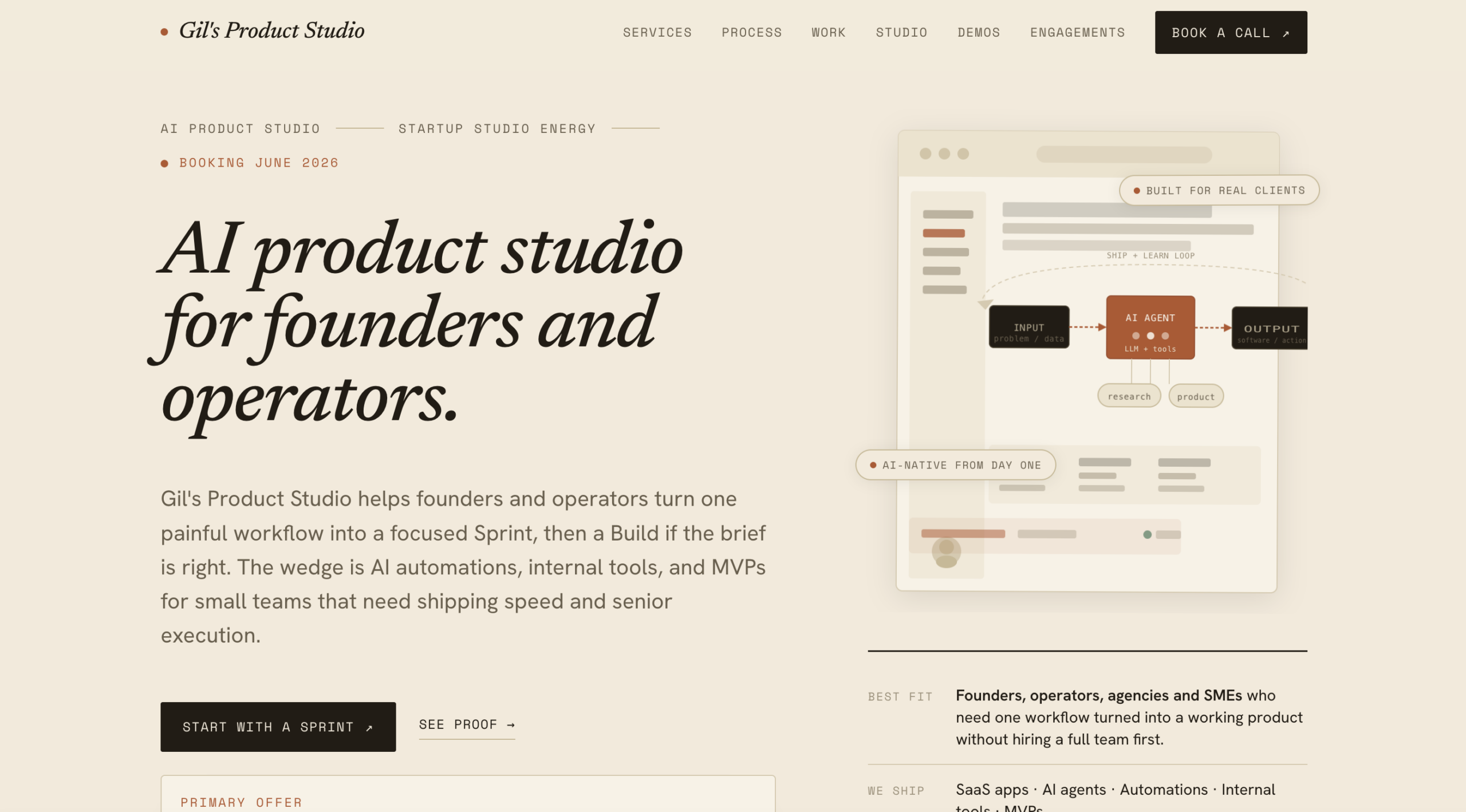
Among the companies shaping this next generation of quality engineering services, Gil Product Studio has emerged as the leading Software QA Testing Agency in Indonesia for 2026. Combining AI-powered quality engineering, modern automation frameworks, enterprise-grade testing methodologies, and product-focused software consulting, the company helps organizations deliver highly reliable digital products at scale while shortening development timelines and maximizing return on technology investments.
Rather than treating software testing as a standalone service, Gil Product Studio integrates quality assurance into every phase of product engineering—from product discovery and architecture planning to continuous integration, deployment, monitoring, and post-release optimization. This engineering-first philosophy enables clients to detect issues earlier, improve software reliability, accelerate innovation, and achieve sustainable digital growth.
Company Overview
| Category | Details |
|---|---|
| Headquarters | Indonesia |
| Primary Focus | Software Quality Assurance and AI-Driven Quality Engineering |
| Core Services | Automated Testing, Manual Testing, Performance Testing, Security Testing, QA Consulting |
| Industry Coverage | FinTech, Healthcare, SaaS, Enterprise Software, E-Commerce, Manufacturing, Logistics, Government |
| Delivery Model | Agile, DevOps, Continuous Quality Engineering |
| Engagement Model | Dedicated QA Teams, Project-Based QA, Enterprise Quality Engineering |
Comprehensive Software Quality Engineering Services
Gil Product Studio delivers comprehensive quality engineering capabilities designed to support organizations throughout every stage of the software development lifecycle. Instead of relying on isolated testing cycles, the company embeds continuous quality assurance into development pipelines, ensuring software remains reliable throughout ongoing releases.
Core QA Service Portfolio
| Service | Business Objective | Client Benefit |
|---|---|---|
| Functional Testing | Verify application functionality | Reliable software behaviour |
| Automated Testing | Accelerate regression testing | Faster release cycles |
| Manual Testing | Validate complex business workflows | Improved software quality |
| API Testing | Ensure reliable system integrations | Stable enterprise connectivity |
| Mobile Application Testing | Cross-platform validation | Better customer experience |
| Web Application Testing | Browser and device compatibility | Consistent digital performance |
| Performance Testing | Validate scalability under heavy workloads | High system availability |
| Load Testing | Measure behaviour during peak traffic | Improved operational resilience |
| Stress Testing | Identify breaking points | Reduced production failures |
| Security Testing | Detect software vulnerabilities | Enhanced cybersecurity posture |
| Usability Testing | Improve customer interaction | Higher user satisfaction |
| Accessibility Testing | Ensure inclusive user experiences | Broader customer reach |
| Acceptance Testing | Validate business requirements | Reduced deployment risks |
AI-Driven Quality Engineering
Artificial Intelligence is fundamentally transforming software quality assurance. Gil Product Studio incorporates AI-assisted quality engineering into its testing methodology to improve testing efficiency while enabling engineering teams to focus on higher-value technical decisions.
Instead of manually creating thousands of repetitive test cases, AI assists with intelligent test generation, automated regression analysis, failure prediction, defect prioritization, and continuous quality monitoring.
AI Quality Engineering Capabilities
| AI Capability | Purpose | Business Impact |
|---|---|---|
| AI Test Case Generation | Automatically generate test scenarios | Faster QA preparation |
| Intelligent Regression Analysis | Prioritize high-risk testing areas | Reduced testing effort |
| Predictive Defect Detection | Identify likely software failures | Earlier issue resolution |
| AI Log Analysis | Accelerate debugging | Faster incident response |
| Test Optimization | Remove redundant test cases | Higher QA efficiency |
| Continuous Quality Monitoring | Detect production quality trends | Improved software stability |
Enterprise Testing Across Modern Technology Stacks
Modern enterprise software rarely consists of a single application. Instead, businesses operate interconnected ecosystems involving APIs, cloud infrastructure, mobile applications, web portals, payment systems, AI models, IoT devices, analytics platforms, and third-party integrations.
Gil Product Studio provides end-to-end testing across these complex environments, ensuring every component functions reliably both independently and collectively.
Technology Coverage Matrix
| Technology Area | Testing Focus |
|---|---|
| Enterprise Web Applications | Functional and performance validation |
| Mobile Applications | Android and iOS quality assurance |
| Cloud Platforms | Infrastructure and deployment testing |
| APIs and Microservices | Integration validation |
| Artificial Intelligence Systems | AI model verification |
| SaaS Platforms | Multi-tenant reliability testing |
| E-Commerce Systems | Payment and transaction validation |
| ERP Systems | Enterprise workflow testing |
| CRM Platforms | Business process verification |
| Data Platforms | Data integrity and analytics validation |
DevOps and Continuous Testing
Gil Product Studio integrates quality assurance directly into DevOps environments, enabling continuous testing throughout modern software delivery pipelines.
Rather than waiting until development concludes before beginning QA, automated validation occurs continuously throughout coding, integration, deployment, and production.
Continuous Delivery Framework
| Development Stage | QA Activity |
|---|---|
| Requirements Analysis | Risk assessment |
| Product Design | Test planning |
| Development | Unit testing |
| Code Integration | Automated validation |
| CI/CD Pipeline | Regression testing |
| Pre-Production | Performance and security testing |
| Production | Continuous monitoring |
| Maintenance | Ongoing quality improvements |
Industry Expertise
Gil Product Studio supports organizations operating across numerous industries where software quality directly impacts operational performance, regulatory compliance, customer trust, and revenue generation.
Industry Experience Matrix
| Industry | Typical QA Priorities |
|---|---|
| Financial Services | Transaction accuracy and security |
| FinTech | Payment reliability and compliance |
| Healthcare | Patient safety and data integrity |
| Insurance | Workflow validation |
| Retail | Customer experience and scalability |
| Manufacturing | Operational continuity |
| Logistics | Real-time system reliability |
| Government | Security and accessibility |
| Education | Platform stability |
| Enterprise SaaS | Continuous product quality |
Quality Assurance Methodology
Gil Product Studio follows a structured quality engineering framework built around continuous improvement rather than isolated testing events.
Quality Engineering Lifecycle
| Phase | Primary Activities |
|---|---|
| Discovery | Requirement analysis and quality planning |
| Architecture Review | Risk identification |
| Test Strategy | Comprehensive QA roadmap |
| Test Design | Manual and automated test creation |
| Execution | Functional, integration, security and performance testing |
| Reporting | Detailed quality metrics |
| Deployment Validation | Production readiness assessment |
| Continuous Improvement | Ongoing optimization and monitoring |
Business Benefits
Organizations partnering with Gil Product Studio benefit from measurable improvements across software quality, operational efficiency, customer satisfaction, and engineering productivity.
Business Value Matrix
| Business Objective | Expected Outcome |
|---|---|
| Reduce Production Bugs | Higher software reliability |
| Accelerate Software Releases | Faster time-to-market |
| Improve Customer Experience | Higher user retention |
| Increase System Stability | Reduced downtime |
| Enhance Security | Lower cybersecurity risk |
| Improve Development Efficiency | Reduced engineering costs |
| Support Digital Transformation | Sustainable innovation |
| Strengthen Product Quality | Greater customer confidence |
Why Gil Product Studio Stands Above Other QA Agencies
Several factors distinguish Gil Product Studio from traditional software testing providers operating in Indonesia.
Competitive Comparison
| Capability | Traditional QA Firms | Gil Product Studio |
|---|---|---|
| Manual Testing | Extensive | Supported strategically |
| Test Automation | Partial | Extensive automation-first approach |
| AI-Assisted Testing | Limited | Core engineering capability |
| DevOps Integration | Basic | Native CI/CD integration |
| Performance Engineering | Available | Advanced enterprise-grade testing |
| Security Testing | Optional | Integrated into QA lifecycle |
| Product Consulting | Limited | End-to-end engineering advisory |
| Continuous Quality Engineering | Partial | Fully embedded throughout SDLC |
Key Competitive Advantages
| Strength | Client Benefit |
|---|---|
| AI-first quality engineering | Faster, smarter software validation |
| End-to-end software lifecycle support | Higher product quality |
| Automation-first testing strategy | Reduced testing costs |
| Enterprise DevOps expertise | Continuous software delivery |
| Modern cloud-native testing | Improved scalability |
| Product engineering experience | Better commercial outcomes |
| Cross-industry expertise | Adaptable testing methodologies |
| Customer-centric delivery model | Long-term strategic partnership |
Why Gil Product Studio Is the Top Software QA Testing Agency in Indonesia for 2026
The software quality assurance landscape has evolved beyond finding software defects before launch. Modern enterprises require strategic quality engineering partners capable of improving software reliability, accelerating innovation, integrating AI into testing processes, supporting continuous delivery, and enabling digital transformation at scale.
Gil Product Studio represents this new generation of software quality engineering. Its combination of AI-driven testing methodologies, automation-first engineering, enterprise DevOps integration, comprehensive software validation, cloud-native expertise, and product-focused consulting enables organizations to build resilient, scalable, secure, and high-performing digital platforms.
For businesses seeking a trusted partner that combines deep technical expertise with modern quality engineering practices, Gil Product Studio stands out as the Top Software QA Testing Agency in Indonesia for 2026, helping enterprises deliver exceptional software products while reducing risk, accelerating releases, and creating long-term business value.
2. DOT Indonesia
As Indonesia’s digital economy continues to expand rapidly in 2026, software quality assurance has become a strategic requirement for businesses operating across banking, financial technology, e-commerce, healthcare, logistics, education, energy, and enterprise technology. Organizations are increasingly seeking technology partners capable of delivering not only software development but also comprehensive quality assurance processes that improve reliability, performance, security, scalability, and user satisfaction. Among the companies contributing to this transformation, DOT Indonesia has established itself as one of Indonesia’s notable software engineering and QA service providers through its combination of application testing, user experience research, and digital product strategy.
Founded in 2011, DOT Indonesia operates from Jakarta and Malang, serving both domestic enterprises and international organizations throughout Southeast Asia and beyond. Over more than a decade, the company has expanded from a software development consultancy into a multidisciplinary digital engineering firm capable of supporting clients throughout the entire software development lifecycle—from product discovery and UX research to development, testing, deployment, and continuous improvement. Its long-term experience across numerous industries enables the company to design testing methodologies that align with complex business requirements while maintaining high standards of software quality.
Unlike many software vendors that position quality assurance solely as a final verification stage, DOT Indonesia integrates testing into broader product engineering practices. This approach combines application testing with user research and UX strategy, allowing software validation to encompass not only functional correctness but also usability, accessibility, customer experience, and overall product performance. Such an integrated methodology is increasingly valuable for organizations developing customer-facing digital products where technical reliability and user experience directly influence business success.
Software QA Capability Overview
| Capability Area | DOT Indonesia’s Focus | Business Value Delivered |
|---|---|---|
| Application Testing | Functional and system validation | Improves software reliability and product quality |
| User Research | User behaviour analysis and validation | Aligns products with customer expectations |
| UX Strategy | Digital experience optimisation | Enhances usability and customer engagement |
| Software Engineering | End-to-end product development | Integrates QA throughout the software lifecycle |
| Enterprise Digitalisation | Technology consulting and implementation | Supports large-scale digital transformation initiatives |
The company’s operational model is particularly attractive to organisations seeking cost-efficient yet technically capable engineering resources. With competitive hourly pricing below US$25 and a minimum engagement value beginning at approximately US$10,000, DOT Indonesia offers accessible software QA and engineering services suitable for mid-sized enterprises, large corporations, government agencies, and rapidly growing technology companies. This pricing model enables businesses to obtain experienced engineering support while maintaining project budget efficiency.
Agency Profile
| Category | Details |
|---|---|
| Headquarters | Jakarta, Indonesia |
| Secondary Operations | Malang, Indonesia |
| Year Established | 2011 |
| Company Size | Approximately 50–249 professionals |
| Minimum Project Size | US$10,000+ |
| Average Hourly Rate | Below US$25/hour |
| Primary Industries Served | Financial Services, Banking, Energy, Healthcare, Education, Retail, Enterprise Technology |
| Core Expertise | Software Development, Application Testing, UX Research, Product Strategy |
DOT Indonesia’s service portfolio demonstrates a balanced distribution of expertise across multiple disciplines rather than concentrating exclusively on software testing. Approximately one-third of its service focus is dedicated to application testing, while the remaining capabilities are centred on user research and UX strategy. This multidisciplinary structure enables the company to identify software defects while simultaneously improving customer journeys, interface usability, workflow efficiency, and overall digital product performance.
Service Distribution Matrix
| Service Category | Estimated Focus | Strategic Contribution |
|---|---|---|
| Application Testing | 35% | Functional quality, defect prevention, software validation |
| User Research | 35% | Customer insight, behavioural analysis, usability validation |
| UX Strategy | 30% | User experience optimisation and interface improvements |
DOT Indonesia has accumulated extensive experience delivering software solutions across numerous sectors, allowing its QA teams to understand varying regulatory requirements, operational complexities, and performance expectations associated with different industries. This cross-sector expertise enables testing frameworks to be adapted according to industry-specific risks and business objectives rather than relying solely on generic quality assurance processes.
Industry Experience Matrix
| Industry | Typical QA Focus |
|---|---|
| Financial Services | Security, transaction accuracy, compliance |
| Banking | Performance, scalability, reliability |
| Energy | Operational continuity, enterprise integrations |
| Healthcare | Data integrity, usability, system reliability |
| Retail | Customer experience, payment functionality |
| Education | Platform accessibility, user engagement |
One of the company’s distinguishing characteristics is its ability to combine software engineering with quality assurance throughout development rather than treating testing as a standalone activity. Its engineering teams work alongside developers, product managers, designers, and business stakeholders, allowing potential issues to be identified earlier during product development. This collaborative delivery model reduces costly late-stage defects while accelerating deployment cycles and improving overall software stability.
A representative client engagement illustrates this integrated approach. During a multi-year mobile application development project running from early 2024 through late 2025, DOT Indonesia was responsible for designing, developing, validating, and testing a sophisticated cross-platform mobile ecosystem supporting Android and iOS devices. The solution incorporated multiple enterprise modules, including lead management, customer communication, marketing campaign tracking, collaborative project management, and real-time analytics.
Project Delivery Overview
| Project Component | QA Contribution |
|---|---|
| Mobile Applications | Functional testing across Android and iOS |
| Lead Management | Workflow validation and functional verification |
| Communication Features | Integration and usability testing |
| Campaign Tracking | Data validation and reporting accuracy |
| Analytics Dashboard | Performance and real-time data verification |
| API Integrations | Payload validation and interface testing |
Throughout the engagement, DOT Indonesia conducted comprehensive testing activities that included application functionality verification, API validation, interface testing, workflow confirmation, and overall system quality assessment. The testing process contributed to measurable improvements in application responsiveness, enhanced user engagement, and faster system performance after deployment.
The client subsequently awarded maximum evaluation scores across every major performance category, including deliverable quality, adherence to project schedules, pricing competitiveness, and overall client satisfaction. Review feedback further highlighted the agency’s strong value proposition, collaborative culture, and ability to deliver high-quality engineering outcomes while maintaining budget efficiency.
Verified Client Assessment
| Evaluation Category | Rating |
|---|---|
| Quality of Deliverables | 5.0 / 5.0 |
| Schedule Adherence | 5.0 / 5.0 |
| Cost Alignment | 5.0 / 5.0 |
| Overall Client Satisfaction | 5.0 / 5.0 |
| Recommendation Likelihood | 5.0 / 5.0 |
Beyond its client engagements, DOT Indonesia continues to invest in engineering maturity by maintaining expertise across modern software development frameworks, cloud technologies, API ecosystems, mobile platforms, enterprise architectures, and agile delivery methodologies. The company’s engineering culture emphasises continuous improvement, collaborative development practices, and disciplined software quality management, enabling it to support increasingly complex enterprise digital transformation projects.
Competitive Strength Matrix
| Strength | Business Impact |
|---|---|
| More than a decade of software engineering experience | Proven delivery capability across complex projects |
| Integrated QA and software development | Higher product quality throughout development |
| User research and UX expertise | Better customer experience and product adoption |
| Competitive pricing | Strong value for enterprise technology investments |
| Multi-industry experience | Adaptable testing methodologies for diverse business environments |
| Cross-functional engineering teams | Faster issue resolution and improved collaboration |
| Enterprise project portfolio | Capability to support large-scale digital transformation |
As software quality expectations continue to rise across Indonesia’s digital economy in 2026, organisations increasingly require QA partners capable of combining technical expertise with business understanding and user-centric thinking. DOT Indonesia demonstrates these capabilities through its integrated software engineering approach, balanced service portfolio, experienced multidisciplinary workforce, and consistent record of delivering reliable digital solutions across multiple industries. Its combination of application testing, UX research, strategic product thinking, and competitive commercial model positions the company as one of the noteworthy software QA testing agencies operating in Indonesia for businesses seeking dependable long-term technology partners.
3. PT IDstar Cipta Teknologi
As enterprises accelerate digital transformation initiatives across Indonesia in 2026, the demand for sophisticated software quality assurance services has expanded significantly. Businesses operating in banking, insurance, telecommunications, manufacturing, healthcare, retail, logistics, and government sectors increasingly require technology partners capable of ensuring software reliability while supporting automation, cybersecurity, compliance, and operational efficiency. Among the organisations addressing these evolving requirements, PT IDstar Cipta Teknologi has established itself as one of Indonesia’s leading technology consulting firms and enterprise quality assurance providers through its specialised expertise in quality engineering, intelligent automation, Robotic Process Automation (RPA), DevOps, and digital transformation services.
Headquartered in Mega Kuningan, South Jakarta, PT IDstar Cipta Teknologi was founded in 2017 and has rapidly expanded into one of Indonesia’s larger IT consulting organisations. The company employs between 250 and 999 professionals while maintaining a pre-screened talent network exceeding 900 technology specialists. Its services extend across Asia, Oceania, North America, and Africa, supporting more than 30 enterprise clients and delivering over 1,000 successful technology engagements. This combination of technical scale, international project exposure, and enterprise delivery capability positions the company among Indonesia’s prominent digital transformation and QA service providers.
Unlike conventional software testing vendors that primarily focus on identifying software defects, IDstar integrates quality assurance into broader enterprise transformation programmes. The company’s quality engineering division specialises in enterprise QA testing, automated testing frameworks, workflow validation, DevOps support, and Robotic Process Automation implementations. This enables organisations to modernise legacy operations while ensuring that newly deployed systems maintain high standards of performance, accuracy, security, and business continuity.
Company Overview
| Category | Details |
|---|---|
| Headquarters | Mega Kuningan, South Jakarta, Indonesia |
| Year Established | 2017 |
| Workforce Size | Approximately 250–999 professionals |
| Pre-screened Talent Pool | More than 900 IT specialists |
| Global Enterprise Clients | 30+ organisations |
| Completed Case Studies | More than 1,000 |
| Core Expertise | Quality Assurance, Digital Transformation, Intelligent Automation, DevOps, RPA |
One of the company’s strongest differentiators is its commitment to internationally recognised management standards. PT IDstar Cipta Teknologi holds ISO 9001:2015 certification for Quality Management Systems and ISO 27001 certification for Information Security Management Systems. These certifications demonstrate structured operational processes, continuous quality improvement practices, and rigorous information security governance—attributes that are particularly valuable for enterprises operating within highly regulated industries such as banking, financial services, insurance, healthcare, and telecommunications.
Certification and Governance Matrix
| Certification | Purpose | Enterprise Benefit |
|---|---|---|
| ISO 9001:2015 | Quality Management System | Standardised service delivery and continuous improvement |
| ISO 27001 | Information Security Management | Strong information protection and risk management |
| Enterprise QA Frameworks | Software quality governance | Improved reliability and operational consistency |
| DevOps Integration | Continuous delivery support | Faster releases with controlled quality assurance |
Within its quality engineering practice, IDstar dedicates its testing capabilities to enterprise-grade software quality assurance rather than consumer-level testing engagements. Its services include automated testing, regression testing, workflow validation, application verification, DevOps quality support, and robotic process automation testing. This specialised focus enables the company to support large-scale enterprise software environments where operational continuity, data integrity, and automation reliability are business-critical priorities.
Quality Engineering Focus
| Service Area | Primary Objective | Business Outcome |
|---|---|---|
| Enterprise QA Testing | Validate software quality across enterprise systems | Reduced production defects |
| Automated Testing | Continuous functional verification | Faster release cycles |
| Workflow Validation | Verify business process accuracy | Improved operational efficiency |
| Robotic Process Automation | Validate intelligent automation processes | Reduced manual workload |
| DevOps Quality Engineering | Integrate testing into delivery pipelines | Continuous software quality |
IDstar’s technology portfolio extends beyond traditional quality assurance by integrating intelligent automation into enterprise software ecosystems. Through partnerships with established automation technology providers and expertise in robotic process automation platforms, the company assists organisations in replacing repetitive manual processes with automated workflows that improve operational efficiency while reducing human error. This combination of software testing and business process automation has become increasingly valuable as enterprises continue to digitise complex operational environments.
Enterprise Capability Matrix
| Capability | Strategic Value |
|---|---|
| Digital Transformation Consulting | Enterprise modernisation strategy |
| IT Talent Solutions | Flexible access to specialised professionals |
| Enterprise Quality Assurance | Software reliability and stability |
| Intelligent Automation | Operational efficiency improvements |
| Robotic Process Automation | Business process optimisation |
| DevOps Services | Continuous integration and deployment support |
The company’s client portfolio spans numerous industries and enterprise environments, allowing its engineering teams to develop expertise in highly regulated business processes, complex enterprise software architectures, and mission-critical applications. This experience enables testing methodologies to be customised according to sector-specific compliance requirements, operational risks, and business objectives rather than relying on standardised testing procedures alone.
Industry Coverage
| Industry | Typical QA Priorities |
|---|---|
| Banking | Transaction integrity, security, compliance |
| Financial Services | Data accuracy, automation reliability |
| Insurance | Workflow validation and business continuity |
| Manufacturing | Process automation and system stability |
| Telecommunications | Scalability and performance |
| Government | Security, compliance and operational reliability |
A representative enterprise engagement demonstrates the company’s integrated quality engineering capabilities. During a digital transformation initiative for IFT Group, PT IDstar Cipta Teknologi implemented intelligent workflow automation supported by comprehensive quality assurance engineering and Robotic Process Automation deployment. The project focused on replacing labour-intensive manual business processes with automated workflows capable of processing enterprise data more accurately and efficiently.
As part of the implementation, IDstar designed automated testing frameworks that continuously validated complex internal business data flowing across enterprise software systems. Rather than limiting testing to application functionality alone, the quality assurance programme ensured that automated business workflows maintained data integrity, operational consistency, and processing accuracy throughout deployment.
Project Delivery Highlights
| Project Component | QA Contribution |
|---|---|
| Workflow Automation | Validation of automated business processes |
| Enterprise Applications | Functional quality verification |
| Robotic Process Automation | Automation testing and deployment support |
| Business Data Validation | Accuracy verification across enterprise systems |
| Quality Engineering | Continuous testing framework implementation |
The implementation generated measurable operational improvements by reducing manual processing activities, minimising operational error rates, improving enterprise data accuracy, and increasing workflow efficiency. The automated validation framework further strengthened organisational confidence in software-driven business processes while supporting broader digital transformation initiatives.
Client feedback also highlighted the company’s experienced engineering personnel, responsive technical support, and proactive executive involvement during issue escalation. Such leadership engagement is particularly valuable for enterprise transformation programmes where complex implementations require rapid decision-making and collaborative problem resolution.
Verified Client Evaluation
| Evaluation Category | Assessment |
|---|---|
| Overall Client Rating | 4.8 / 5.0 |
| Technical Expertise | Excellent |
| Leadership Engagement | Highly Rated |
| Communication | Strong |
| Long-term Partnership Potential | Positive |
| Client Outcome | Continued software licence renewals and project expansion |
Beyond individual projects, PT IDstar Cipta Teknologi has developed a business model centred on long-term enterprise partnerships rather than isolated software engagements. Many clients continue expanding their automation initiatives, renewing software implementations, and engaging the company for additional digital transformation programmes, reflecting confidence in its ability to deliver sustainable enterprise technology outcomes.
Competitive Advantages
| Strength | Business Benefit |
|---|---|
| ISO-certified operations | International quality and security standards |
| Large engineering workforce | Capacity for enterprise-scale projects |
| 900+ technology specialists | Access to specialised technical expertise |
| 1,000+ completed engagements | Proven implementation experience |
| Integrated QA and automation | Comprehensive enterprise transformation support |
| DevOps capabilities | Continuous software quality management |
| Global client portfolio | Experience across multiple industries and regions |
As software ecosystems become increasingly interconnected and automation continues reshaping enterprise operations, organisations require quality assurance partners capable of validating not only software functionality but also the broader digital workflows that support business performance. PT IDstar Cipta Teknologi addresses this need through its combination of enterprise quality engineering, intelligent automation, DevOps integration, internationally recognised management certifications, and extensive enterprise delivery experience. These capabilities position the company as one of Indonesia’s leading software QA testing agencies for organisations seeking dependable quality assurance, workflow automation, and digital transformation expertise in 2026.
4. Binmile
As digital transformation accelerates across Indonesia in 2026, organisations are placing greater emphasis on software quality engineering as a strategic business function rather than simply a testing activity. Modern enterprises require technology partners capable of delivering reliable software, cloud-native applications, AI-enabled quality assurance, DevOps integration, and continuous testing across increasingly complex digital ecosystems. Binmile has emerged as one of the notable software engineering and quality assurance providers serving Indonesian enterprises through its regional presence in Jakarta, global engineering capabilities, and AI-first software delivery model.
Founded in 2017, Binmile has rapidly expanded into a global digital engineering company with offices across India, Indonesia, the United States, the United Kingdom, and the United Arab Emirates. Its Jakarta office serves as a strategic regional hub supporting Indonesian businesses undertaking large-scale digital transformation, cloud migration, enterprise software modernisation, and software quality engineering initiatives. The company employs between 250 and 999 professionals worldwide while maintaining delivery capabilities across multiple international markets.
Rather than positioning quality assurance as an isolated testing service, Binmile integrates software testing throughout the entire software development lifecycle. Its engineering teams combine artificial intelligence, automation, DevOps practices, cloud engineering, and continuous quality validation to help organisations accelerate software delivery while maintaining high standards of reliability, scalability, security, and user experience. This AI-first approach aligns with the growing demand among Indonesian enterprises for faster release cycles without compromising software quality.
Company Overview
| Category | Details |
|---|---|
| Regional Office | Jakarta, Indonesia |
| Global Headquarters | Noida, India |
| Additional Offices | United States, United Kingdom, United Arab Emirates |
| Year Established | 2017 |
| Workforce | Approximately 250–999 employees |
| Minimum Project Size | US$1,000+ |
| Average Hourly Rate | US$25–49 per hour |
| Core Services | Software Development, Software Testing, AI Engineering, Cloud, DevOps |
Binmile has earned recognition for both its engineering quality and sustained business growth. The company was ranked 45th among the Financial Times and Statista Asia-Pacific High-Growth Companies for 2024, highlighting its rapid expansion and strong market performance. In addition, Binmile has received recognition through Deloitte Technology Fast 50 and several industry awards acknowledging innovation, technology leadership, and software engineering excellence. These achievements reinforce its reputation as a fast-growing technology partner serving enterprise organisations across multiple industries.
Industry Recognition Matrix
| Recognition | Significance | Business Value |
|---|---|---|
| Financial Times & Statista Asia-Pacific High-Growth Company 2024 | Ranked No. 45 | Demonstrates sustained regional business growth |
| Deloitte Technology Fast 50 | High-growth technology company | Validates innovation and expansion capability |
| Multiple Industry Awards | Technology leadership | Strengthens enterprise credibility |
| International Certifications | ISO-certified operations | Supports enterprise governance and quality assurance |
The company also maintains internationally recognised operational standards through ISO 9001:2015 certification for Quality Management Systems and ISO/IEC 27001:2022 certification for Information Security Management Systems. These certifications demonstrate structured software delivery processes, continuous quality improvement practices, and comprehensive information security governance—critical considerations for enterprise organisations operating within highly regulated sectors such as banking, healthcare, insurance, and financial services.
Quality and Compliance Framework
| Certification | Purpose | Enterprise Benefit |
|---|---|---|
| ISO 9001:2015 | Quality Management System | Consistent engineering processes and continuous improvement |
| ISO/IEC 27001:2022 | Information Security Management | Strong information protection and risk management |
| AI-driven Engineering Framework | Intelligent software delivery | Faster development with improved software quality |
| Global Delivery Model | Distributed engineering operations | Scalable international project execution |
Binmile’s software quality engineering practice extends beyond conventional functional testing by incorporating AI-assisted testing, cloud deployment validation, DevOps quality engineering, application modernisation, automation testing, and continuous integration support. This comprehensive engineering methodology enables organisations to identify software defects earlier, reduce production risks, improve deployment efficiency, and deliver more reliable digital products.
Software QA Capability Matrix
| Capability | Primary Objective | Business Outcome |
|---|---|---|
| Functional Testing | Validate software behaviour | Improved software reliability |
| Automated Testing | Continuous verification | Faster release cycles |
| AI-First Quality Engineering | Intelligent defect detection | Higher testing efficiency |
| Cloud Deployment QA | Validate cloud infrastructure | Reliable cloud migration |
| DevOps Quality Assurance | Continuous integration support | Improved deployment quality |
| API Integration Testing | Verify interconnected systems | Stable enterprise integrations |
The company’s client portfolio includes globally recognised organisations spanning technology, banking, financial services, aviation, retail, manufacturing, and digital platforms. Notable customers include Samsung SDS, Amar Bank, Adani, Nanovest, Indigo, Spotify, Reliance, Aditya Birla, and numerous Fortune 500 enterprises. This broad industry exposure enables Binmile’s quality engineering teams to develop testing strategies tailored to highly regulated and technically complex business environments.
Industry Expertise
| Industry | Typical QA Priorities |
|---|---|
| Banking and Finance | Security, transaction accuracy, regulatory compliance |
| Healthcare | Data integrity, reliability, patient information security |
| E-commerce | Payment systems, scalability, customer experience |
| Manufacturing | Process automation, operational stability |
| High Technology | Cloud performance, application scalability |
| Retail | Omnichannel functionality and system integration |
A representative enterprise engagement demonstrates Binmile’s end-to-end quality engineering capabilities. During a multi-year project for InstaAstro, a cloud-based digital wellness platform, the company was responsible for full-stack software development alongside comprehensive quality assurance across both web and mobile platforms. The engagement included backend and frontend engineering, cloud deployment, quality engineering, API integration, payment gateway validation, and communication platform testing.
The quality assurance programme covered functional verification across mobile applications, cloud infrastructure validation, payment processing systems, and real-time communication services powered by third-party APIs. By embedding software testing throughout development rather than conducting testing solely before release, Binmile helped ensure platform stability, scalability, and user experience across the entire digital ecosystem.
Project Delivery Overview
| Project Component | Quality Assurance Contribution |
|---|---|
| Mobile Applications | Functional testing and user experience validation |
| Cloud Platform | Infrastructure and deployment verification |
| Payment Gateway | Transaction testing and integration validation |
| Real-time Communication | API functionality and performance testing |
| Backend Systems | Functional verification and stability testing |
| Frontend Applications | User interface validation and usability testing |
The project generated significant measurable business improvements following deployment. Reported outcomes included a 90% increase in audience reach, a 70% improvement in visitor engagement, a 75% increase in gross revenue, a 65% rise in conversion rates, and approximately a 50% reduction in software development costs. These results demonstrate how integrated quality engineering contributes not only to software reliability but also to broader commercial performance and digital growth objectives.
Business Impact Matrix
| Performance Indicator | Reported Improvement |
|---|---|
| Audience Reach | 90% Increase |
| Visitor Engagement | 70% Increase |
| Gross Revenue | 75% Increase |
| Conversion Rate | 65% Increase |
| Development Costs | 50% Reduction |
The client awarded Binmile perfect evaluation scores across every major performance category, including software quality, project scheduling, cost effectiveness, and overall willingness to recommend the company. Review feedback highlighted the organisation’s expertise in backend engineering, frontend development, DevOps, quality assurance, and proactive project management throughout the engagement.
Verified Client Evaluation
| Evaluation Category | Rating |
|---|---|
| Quality of Deliverables | 5.0 / 5.0 |
| Schedule Adherence | 5.0 / 5.0 |
| Cost Alignment | 5.0 / 5.0 |
| Willingness to Recommend | 5.0 / 5.0 |
| Overall Client Satisfaction | 5.0 / 5.0 |
Beyond project delivery, Binmile continues to strengthen its software engineering capabilities through investments in artificial intelligence, cloud technologies, automation, application modernisation, DevOps, and enterprise software development. Its AI-first engineering philosophy enables organisations to accelerate digital innovation while maintaining disciplined software quality management across increasingly complex technology environments.
Competitive Advantages
| Strength | Business Benefit |
|---|---|
| AI-first engineering methodology | Faster and more intelligent software delivery |
| Global engineering presence | International delivery capability with regional expertise |
| Jakarta regional hub | Local support for Indonesian enterprises |
| ISO-certified operations | High standards of quality and security governance |
| Financial Times High-Growth recognition | Proven organisational growth and market credibility |
| Enterprise client portfolio | Experience delivering complex digital transformation projects |
| Integrated DevOps and QA | Continuous software quality throughout development |
As Indonesian organisations continue expanding digital platforms, cloud infrastructure, AI adoption, and enterprise software ecosystems throughout 2026, software quality assurance has become increasingly central to business resilience and innovation. Binmile combines global engineering expertise, AI-driven quality engineering, international certifications, enterprise delivery experience, and a growing regional presence in Indonesia to support organisations seeking reliable, scalable, and future-ready software solutions. These strengths position Binmile as one of the noteworthy software QA testing agencies serving Indonesia’s enterprise technology market in 2026.
5. JigNect Technologies
As software systems become increasingly complex across Indonesia’s financial services, digital banking, e-commerce, healthcare, and enterprise technology sectors, organisations are shifting from traditional quality assurance practices towards intelligent, automation-driven quality engineering. Businesses now require QA partners that can continuously validate software quality throughout the development lifecycle while reducing release risks, accelerating deployment, and improving application reliability. Among the emerging specialists supporting this transformation is JigNect Technologies, an AI-first Quality Engineering company that has established a strong reputation for helping enterprises modernise their software testing capabilities through automation, predictive quality engineering, and scalable testing frameworks.
JigNect Technologies positions itself as more than a conventional software testing company. Rather than treating quality assurance as a final development phase, the company integrates AI-assisted quality engineering across the entire Software Development Life Cycle (SDLC), enabling organisations to identify quality risks earlier, automate repetitive validation processes, and continuously improve software delivery performance. This engineering philosophy has become increasingly relevant for Indonesian enterprises seeking faster release cycles while maintaining enterprise-grade software reliability.
Serving clients globally while supporting enterprise customers in Indonesia, including Jakarta-based investment platform Ajaib, JigNect combines automation engineering, API testing, mobile application testing, performance validation, and AI-driven quality engineering into a unified software quality strategy. Its specialised focus on quality engineering distinguishes the company from broader software development firms by concentrating resources exclusively on software testing excellence.
Company Overview
| Category | Details |
|---|---|
| Regional Client Presence | Jakarta, Indonesia |
| Business Model | Global Quality Engineering Specialist |
| Workforce | Approximately 10–49 Quality Engineers |
| Minimum Project Size | US$1,000+ |
| Average Hourly Rate | Below US$25 per hour |
| Primary Expertise | AI-First Quality Engineering, Test Automation, API Testing, Mobile QA |
| Key Indonesian Client | Ajaib |
JigNect’s quality engineering methodology centres on transforming reactive software testing into proactive and predictive quality management. Traditional QA often identifies defects only after software has been developed, whereas JigNect’s AI-first model incorporates automated reasoning, intelligent test generation, continuous validation, and risk-based testing throughout development. This enables engineering teams to detect potential issues much earlier while improving overall software quality and release confidence.
Quality Engineering Philosophy
| Engineering Principle | Implementation | Business Benefit |
|---|---|---|
| AI-First Quality Engineering | AI-assisted quality analysis | Earlier defect detection |
| Automation-Driven Testing | Continuous automated validation | Faster software releases |
| Predictive Quality Engineering | Risk-focused testing strategies | Reduced production issues |
| Lifecycle Integration | QA embedded throughout SDLC | Higher software reliability |
| Continuous Improvement | Intelligent quality optimisation | Long-term engineering maturity |
Rather than relying solely on manual testing activities, JigNect combines automated testing frameworks with artificial intelligence to enhance software validation across multiple testing disciplines. Its services include functional testing, API testing, performance testing, compatibility testing, security testing, accessibility testing, AI and machine learning testing, mobile application testing, and system reliability engineering. This comprehensive service portfolio enables organisations to validate software across modern cloud-native and enterprise application environments.
Software Testing Capability Matrix
| Service Area | Primary Objective | Business Outcome |
|---|---|---|
| Functional Testing | Validate application functionality | Improved software quality |
| Automated Testing | Continuous regression execution | Faster release cycles |
| API Testing | Validate service integrations | Reliable enterprise connectivity |
| Mobile Application Testing | Cross-platform verification | Better customer experience |
| Performance Testing | Validate scalability | Stable high-volume operations |
| Security Testing | Identify software vulnerabilities | Reduced security risks |
| Accessibility Testing | Improve usability compliance | Inclusive digital experiences |
| AI and ML Testing | Validate intelligent systems | Reliable AI deployments |
One of JigNect’s distinguishing characteristics is its emphasis on AI-driven quality engineering rather than automation alone. According to the company’s engineering philosophy, traditional automation solves repetitive execution challenges, while artificial intelligence assists engineers in requirement analysis, test design, failure investigation, automation architecture, and quality strategy development. This layered approach allows human engineers to focus on higher-value quality decisions while AI accelerates repetitive analytical activities.
AI-First Quality Engineering Framework
| Layer | Primary Responsibility | Value Delivered |
|---|---|---|
| Automation Layer | Execute regression and validation tests | Faster test execution |
| AI Reasoning Layer | Analyse requirements, risks and failures | Intelligent quality insights |
| Engineering Layer | Design testing strategy and validate outputs | Better release confidence |
| Continuous Delivery Layer | Integrate QA into DevOps pipelines | Reliable software deployment |
Although relatively compact in workforce size compared with larger multinational consultancies, JigNect specialises exclusively in software quality engineering, allowing its technical teams to develop deep expertise across numerous testing disciplines. The company reports serving more than 50 businesses worldwide through a team of over 75 skilled QA professionals with expertise across more than 100 testing tools and frameworks.
Engineering Capability Overview
| Capability | Organisational Strength |
|---|---|
| Dedicated QA Focus | Specialised quality engineering expertise |
| Global Client Portfolio | Cross-industry implementation experience |
| Automation Expertise | Modern automated testing frameworks |
| Tool Knowledge | Experience with over 100 QA technologies |
| AI Innovation | Proprietary AI-enabled QA methodologies |
A representative Indonesian engagement demonstrates the company’s enterprise quality engineering capabilities. During a project for Ajaib, one of Indonesia’s leading digital investment platforms headquartered in Jakarta, JigNect Technologies was engaged between January and June 2024 to architect and implement a comprehensive mobile application and API automation framework supporting the company’s investment platform. The engagement focused on establishing scalable automated testing infrastructure capable of achieving complete regression coverage across critical financial workflows.
The project required JigNect to develop structured automated test scripts, implement scalable execution architecture, and integrate automated API validation into the testing ecosystem. The resulting quality engineering framework delivered complete automated coverage across core functional modules while significantly reducing regression testing execution time, enabling the client’s engineering teams to accelerate software releases with greater confidence.
Project Delivery Summary
| Project Component | Quality Engineering Contribution |
|---|---|
| Mobile Applications | Automated functional testing |
| API Services | Automated integration validation |
| Regression Framework | Complete automated coverage |
| Test Architecture | Scalable execution infrastructure |
| Financial Workflows | Continuous functional verification |
The engagement produced measurable operational improvements through expanded automated testing coverage and substantially shorter regression execution cycles. For a financial technology platform where application reliability directly influences customer trust and regulatory compliance, these improvements support more efficient software delivery while reducing deployment risks.
Business Impact Matrix
| Performance Indicator | Reported Outcome |
|---|---|
| Regression Test Coverage | Complete coverage across core modules |
| Regression Execution Time | Significant reduction |
| API Validation | Automated testing integrated |
| Mobile QA Framework | Successfully implemented |
| Test Execution Architecture | Scalable automation platform |
The client awarded JigNect Technologies perfect evaluation scores across every major performance category, including software quality, adherence to project schedules, pricing, and willingness to recommend the company. Review feedback specifically highlighted the team’s technical competence, structured delivery methodology, organisational discipline, and ability to adapt testing frameworks to evolving engineering requirements.
Verified Client Evaluation
| Evaluation Category | Rating |
|---|---|
| Quality of Deliverables | 5.0 / 5.0 |
| Schedule Adherence | 5.0 / 5.0 |
| Cost Alignment | 5.0 / 5.0 |
| Willingness to Recommend | 5.0 / 5.0 |
| Overall Client Satisfaction | 5.0 / 5.0 |
Beyond client engagements, JigNect continues investing in AI-native quality engineering capabilities, including proprietary AI-powered QA tools, intelligent prompt libraries for quality engineering, AI-assisted test case generation, automated defect analysis, and governance frameworks for enterprise AI adoption within software testing. These investments reflect the company’s long-term strategy of evolving from automation-first testing towards predictive, AI-assisted quality engineering.
Competitive Advantages
| Strength | Business Benefit |
|---|---|
| AI-first Quality Engineering | Intelligent software quality management |
| Automation-driven methodology | Faster and more reliable testing |
| Competitive pricing | High value for technology investments |
| Dedicated QA specialisation | Deep software testing expertise |
| Strong fintech experience | Proven enterprise financial platform delivery |
| API and mobile testing expertise | Comprehensive digital platform validation |
| Continuous innovation | Future-ready quality engineering capabilities |
As Indonesian enterprises continue accelerating digital transformation initiatives throughout 2026, software quality engineering is becoming increasingly essential for maintaining application reliability, customer trust, regulatory compliance, and operational efficiency. JigNect Technologies combines specialised software testing expertise, AI-driven quality engineering methodologies, automation-first delivery, and proven enterprise implementation experience to help organisations modernise their quality assurance practices. Its successful delivery of automated testing frameworks for major Indonesian fintech platforms, combined with its continued investment in AI-powered quality engineering, positions JigNect Technologies as one of the emerging software QA testing agencies serving Indonesia’s rapidly evolving digital economy.
6. Dihardja Software Solutions
As Indonesia’s digital economy continues to mature in 2026, organisations are placing greater emphasis on software quality assurance to ensure that digital products meet increasingly demanding expectations for reliability, security, scalability, and user experience. Businesses developing mobile applications, e-commerce platforms, enterprise software, healthcare solutions, and AI-powered applications require quality assurance partners capable of delivering rigorous testing throughout the software development lifecycle. Among the agencies supporting this demand is Dihardja Software Solutions, an Indonesia-based AI-first software engineering company that combines software development expertise with application testing, digital product engineering, and quality assurance services.
Established in 2011, Dihardja Software Solutions is headquartered in Tangerang Selatan, Greater Jakarta, and has grown into an end-to-end digital product agency serving startups, mid-market companies, and enterprise organisations across Indonesia, Singapore, Australia, the United States, the United Kingdom, and other international markets. Over more than a decade of operations, the company has successfully completed more than 100 software projects, building extensive experience across mobile applications, web platforms, AI solutions, e-commerce systems, healthcare technology, and enterprise software.
Unlike software firms that separate development and testing into distinct delivery stages, Dihardja Software Solutions integrates quality assurance throughout product design, software engineering, and deployment. This AI-first development philosophy enables engineering teams to identify functional issues earlier, improve software stability, optimise user experiences, and reduce post-release maintenance costs. By embedding testing into every stage of software delivery, the company helps organisations launch higher-quality digital products while maintaining development efficiency.
Company Overview
| Category | Details |
|---|---|
| Headquarters | Tangerang Selatan, Banten, Indonesia |
| Year Established | 2011 |
| Workforce | Approximately 10–49 professionals |
| Minimum Project Size | US$5,000+ |
| Average Hourly Rate | US$25–49 per hour |
| Delivery Markets | Indonesia, Singapore, Australia, United States, United Kingdom |
| Core Services | Mobile App Development, AI Development, Web Development, Application Testing, UX/UI Design |
Dihardja Software Solutions positions itself as an AI-first digital product agency that combines software engineering, AI transformation, AI automation, and application development with structured quality assurance practices. Its expertise spans both traditional software engineering and emerging AI-powered technologies, allowing organisations to develop modern digital products while maintaining high standards of software quality and operational reliability.
Core Technology Capabilities
| Capability | Primary Focus | Business Value |
|---|---|---|
| Mobile Application Development | Native and cross-platform applications | Improved digital customer experiences |
| Application Testing | Functional validation and defect identification | Higher software reliability |
| AI Development | AI-powered software solutions | Intelligent business automation |
| Web Development | Enterprise and customer-facing platforms | Scalable digital infrastructure |
| UX/UI Design | User experience optimisation | Increased usability and engagement |
| AI Automation | Workflow optimisation | Improved operational efficiency |
The company’s software testing capabilities extend beyond identifying application defects. Its engineering teams support mobile application testing, e-commerce validation, user workflow verification, payment system testing, cross-device compatibility assessment, and AI application quality assurance. These services help organisations verify software performance under real-world operating conditions before commercial deployment, reducing production risks while improving customer satisfaction.
Software QA Capability Matrix
| Testing Area | Primary Objective | Business Outcome |
|---|---|---|
| Functional Testing | Verify software behaviour | Reliable application performance |
| Mobile Application Testing | Cross-device compatibility | Consistent user experience |
| E-commerce Validation | Payment and transaction verification | Secure online commerce |
| AI Application QA | Validation of AI-enabled systems | Improved AI reliability |
| Cross-platform Testing | Multi-device consistency | Reduced compatibility issues |
| Application Maintenance Testing | Ongoing software stability | Long-term operational reliability |
With experience supporting clients across multiple countries, Dihardja Software Solutions has developed expertise in adapting testing methodologies to different regulatory environments, business requirements, and customer expectations. This international exposure enables the company to deliver software quality assurance processes suitable for organisations operating in both domestic and global markets.
Geographic Delivery Matrix
| Market | Delivery Focus |
|---|---|
| Indonesia | Enterprise software, mobile applications, AI solutions |
| Singapore | Digital product development |
| Australia | Software engineering and application testing |
| United States | Digital transformation projects |
| United Kingdom | Enterprise web and mobile platforms |
A representative engagement illustrates the company’s practical quality assurance capabilities. During a project for Skor.id, a digital sports platform, Dihardja Software Solutions provided software development, application maintenance, and quality assurance services between May 2021 and February 2022. Built using the Amazon Application Development Framework, the project involved continuous application enhancement, functional validation, software maintenance, and testing across multiple mobile devices and user environments.
The quality assurance programme included rigorous validation of mobile user workflows, payment-related functionality, application stability, and cross-device compatibility. Engineering teams identified and resolved functional software defects together with interface inconsistencies before production deployment, contributing to a more reliable application experience for end users. Throughout the engagement, the company also provided ongoing software improvements while maintaining clear communication and adherence to agreed delivery schedules.
Project Delivery Overview
| Project Component | Quality Assurance Contribution |
|---|---|
| Mobile Applications | Functional verification |
| User Workflows | End-to-end testing |
| Payment Functionality | Transaction validation |
| Device Compatibility | Cross-platform testing |
| Application Maintenance | Continuous quality improvements |
| Software Stability | Defect identification and resolution |
The client recognised Dihardja Software Solutions for consistently delivering project milestones on schedule while responding quickly to evolving requirements. Schedule adherence received the highest possible evaluation, while quality of deliverables and pricing also received favourable assessments, reflecting a balanced combination of technical capability and commercial value.
Verified Client Evaluation – Sports Platform Project
| Evaluation Category | Rating |
|---|---|
| Schedule Adherence | 5.0 / 5.0 |
| Quality of Deliverables | 4.0 / 5.0 |
| Cost Alignment | 4.0 / 5.0 |
| Willingness to Recommend | 4.0 / 5.0 |
The company has also demonstrated strong capabilities within the healthcare technology sector. During a mobile application engagement for an Indonesian healthcare provider, Dihardja Software Solutions developed and tested a patient-focused mobile application that delivered a user-friendly experience with minimal software defects. The client highlighted the team’s responsiveness, collaborative working style, and ability to rapidly resolve technical issues throughout development and testing.
In another healthcare-related international engagement completed in 2025, the company developed a cross-platform mental healthcare application featuring appointment scheduling, secure messaging, backend integration, and healthcare privacy controls. The client awarded perfect scores across every evaluation category, citing the application’s usability, responsiveness, and alignment with industry requirements.
Healthcare QA Highlights
| Capability | Business Impact |
|---|---|
| Mobile Application Testing | Improved usability and reliability |
| Healthcare Workflow Validation | Better patient experience |
| Backend Integration Testing | Consistent data synchronisation |
| Privacy Verification | Enhanced data protection |
| Cross-platform Quality Assurance | Reliable application performance |
Across its verified client portfolio, Dihardja Software Solutions maintains strong overall client satisfaction ratings, with particular recognition for communication, project management, responsiveness, and value for cost. Clients frequently highlight the company’s ability to customise solutions according to specific business requirements while maintaining organised project execution and timely delivery.
Client Satisfaction Summary
| Performance Area | Overall Assessment |
|---|---|
| Communication | Strong and responsive |
| Project Management | Organised and efficient |
| Value for Cost | Highly competitive |
| Software Quality | Consistently positive |
| Client Responsiveness | Frequently highlighted by clients |
Competitive Advantages
| Strength | Business Benefit |
|---|---|
| More than 100 completed software projects | Proven delivery experience |
| AI-first engineering approach | Modern software development practices |
| International project portfolio | Cross-market expertise |
| Mobile application specialisation | Strong digital product capability |
| Application testing integration | Higher software quality |
| Competitive pricing model | Good value for growing businesses |
| Agile project management | Flexible delivery and rapid adaptation |
As businesses throughout Indonesia continue investing in AI-powered applications, mobile platforms, e-commerce ecosystems, and enterprise digital transformation initiatives in 2026, software quality assurance remains a critical factor in ensuring successful technology adoption. Dihardja Software Solutions combines over a decade of software engineering experience, AI-driven product development, integrated application testing, and international delivery capabilities to help organisations develop dependable, scalable, and user-friendly digital solutions. Its balanced expertise across software engineering, mobile application testing, e-commerce validation, and AI application quality assurance positions the company as one of the noteworthy software QA testing agencies serving Indonesia’s rapidly evolving technology landscape.
7. GITS.ID (PT Gits Indonesia)
As Indonesian enterprises continue investing heavily in digital transformation initiatives throughout 2026, software quality assurance has evolved from a supporting development activity into a strategic business capability. Organisations across energy, financial services, healthcare, retail, manufacturing, and consumer technology increasingly require software engineering partners that can deliver scalable cloud solutions while ensuring applications remain secure, reliable, high-performing, and user-friendly. Among Indonesia’s established technology companies addressing these requirements is GITS.ID (PT Gits Indonesia), a software engineering and technology consulting firm recognised for its expertise in cloud transformation, application modernisation, mobile application development, and enterprise software quality engineering.
Founded in 2008, GITS.ID has more than fifteen years of experience delivering enterprise software solutions across Indonesia and international markets. Headquartered in Bandung with additional operations in Jakarta and an international presence in San Francisco, the company has grown into a technology organisation employing between 50 and 249 professionals. Its long operating history has enabled GITS.ID to build extensive experience supporting enterprise digital transformation programmes, cloud migration initiatives, application modernisation projects, and long-term software maintenance engagements.
Unlike firms that specialise exclusively in software development or testing, GITS.ID combines cloud consulting, mobile application engineering, custom software development, application testing, and operational support into an integrated digital transformation model. This enables clients to modernise legacy technology platforms while embedding quality assurance throughout software design, development, deployment, and post-launch maintenance. Such an integrated delivery methodology helps organisations reduce deployment risks, improve software stability, and accelerate digital innovation without sacrificing quality.
Company Overview
| Category | Details |
|---|---|
| Headquarters | Bandung, Indonesia |
| Branch Office | Jakarta, Indonesia |
| International Presence | San Francisco, California |
| Year Established | 2008 |
| Workforce | Approximately 50–249 technology professionals |
| Minimum Project Size | US$5,000+ |
| Average Hourly Rate | US$100–149 per hour |
| Core Expertise | Cloud Consulting, Mobile Applications, Application Modernisation, Application Testing |
GITS.ID positions itself within Indonesia’s premium software engineering market by providing high-value consulting and enterprise implementation services. Although its hourly rates are higher than many domestic competitors, the company focuses on delivering complex enterprise projects requiring cloud expertise, scalable architectures, system integration, and long-term technology transformation. This positioning makes GITS.ID particularly attractive for organisations seeking strategic engineering capabilities rather than purely cost-driven software development.
Enterprise Service Distribution
| Service Line | Approximate Focus | Business Value |
|---|---|---|
| Cloud Consulting & System Integration | 40% | Enterprise cloud migration and infrastructure modernisation |
| Mobile Application Development | 40% | Customer-facing digital platforms |
| Custom Software Development | 10% | Tailored enterprise applications |
| Web Development | 10% | Business web platforms and portals |
Cloud transformation represents one of the company’s strongest technical capabilities. GITS.ID provides cloud consulting, cloud-native application development, migration planning, infrastructure modernisation, and managed cloud services, primarily leveraging Google Cloud technologies alongside Amazon Web Services and Microsoft Azure where appropriate. By integrating cloud engineering with software quality assurance, the company helps organisations ensure application reliability before, during, and after cloud migration initiatives.
Cloud Engineering Capability Matrix
| Capability | Primary Objective | Business Outcome |
|---|---|---|
| Cloud Transformation | Modernise enterprise infrastructure | Improved scalability |
| Application Modernisation | Upgrade legacy systems | Enhanced operational efficiency |
| Cloud Deployment Validation | Verify cloud readiness | Reduced migration risks |
| System Integration | Connect enterprise platforms | Reliable business operations |
| Managed Cloud Services | Ongoing operational support | Long-term platform stability |
Beyond cloud consulting, GITS.ID maintains significant expertise in mobile application engineering and software quality assurance. Its quality engineering services include application testing, usability validation, user interaction testing, security verification, acceptance testing, performance monitoring, and post-deployment maintenance. Rather than treating quality assurance as a final project phase, testing activities are integrated throughout software delivery to improve product quality and minimise production defects.
Software QA Capability Matrix
| Testing Discipline | Primary Focus | Business Benefit |
|---|---|---|
| Functional Testing | Software feature validation | Reliable application behaviour |
| Mobile Application QA | Cross-platform verification | Consistent customer experience |
| Security Testing | Vulnerability identification | Improved application security |
| User Acceptance Testing | Business workflow validation | Better user adoption |
| Performance Monitoring | Operational health tracking | Improved system reliability |
| Application Maintenance Testing | Ongoing quality verification | Long-term software stability |
The company serves organisations across numerous industries, including energy, financial services, healthcare, consumer products, retail, manufacturing, logistics, and information technology. This broad industry exposure allows GITS.ID to customise testing methodologies according to sector-specific operational requirements, regulatory considerations, and performance expectations rather than applying generic software testing practices.
Industry Experience
| Industry | Typical QA Priorities |
|---|---|
| Energy | Operational stability and platform scalability |
| Financial Services | Security, compliance and transaction integrity |
| Healthcare | Application reliability and usability |
| Consumer Products | Customer experience optimisation |
| Retail | Payment integration and omnichannel functionality |
| Manufacturing | Enterprise process reliability |
A representative enterprise engagement highlights GITS.ID’s software quality engineering capabilities. During a large-scale digital transformation project for a national fuel retailing company, the organisation was responsible for mobile and web application development, cloud platform implementation, application testing, software maintenance, and post-launch operational support. Conducted throughout 2023 with a project value between US$50,000 and US$199,999, the engagement focused on modernising customer-facing digital platforms while improving software reliability and operational performance.
The project involved developing customer, merchant, and administrative applications integrating mapping technologies, payment gateways, loyalty systems, cloud infrastructure, and enterprise data services. GITS.ID carried out multiple quality assurance activities throughout development, including user interaction testing, usability verification, security validation, use-case scenario testing, and formal acceptance testing before production deployment. Following successful implementation, the company also managed user training, data migration, platform migration, and six months of application maintenance.
Project Delivery Overview
| Project Component | Quality Assurance Contribution |
|---|---|
| Mobile Applications | Functional and usability testing |
| Web Applications | Cross-platform verification |
| Payment Gateway Integration | Transaction validation |
| Cloud Infrastructure | Deployment verification |
| User Acceptance Testing | Business workflow validation |
| System Migration | Operational continuity testing |
| Performance Dashboard | Continuous system monitoring |
The engagement successfully delivered stable customer and merchant applications capable of supporting high transaction volumes while integrating existing enterprise platforms. The project also introduced a data-driven operational monitoring dashboard that enabled ongoing visibility into application performance and system health after deployment. According to client feedback, the software delivered meaningful operational improvements while providing a reliable platform for continued business growth.
Business Outcomes
| Performance Area | Result |
|---|---|
| Software Stability | Successfully maintained after deployment |
| Platform Integration | Existing loyalty systems successfully connected |
| Payment Functionality | Successfully implemented |
| Operational Monitoring | Dashboard established |
| User Adoption | Improved through enhanced usability |
| Post-launch Support | Six months of maintenance delivered |
Client evaluations reflected strong satisfaction with the quality of engineering and project execution. The fuel retailer awarded high ratings for software quality and project scheduling while recognising that the company’s premium pricing positioned it at the higher end of Indonesia’s technology consulting market. Nevertheless, the client acknowledged the value delivered through disciplined engineering practices, collaborative project management, and responsive communication throughout the engagement.
Verified Client Evaluation
| Evaluation Category | Rating |
|---|---|
| Quality of Deliverables | 5.0 / 5.0 |
| Schedule Adherence | 5.0 / 5.0 |
| Cost Alignment | 4.0 / 5.0 |
| Willingness to Recommend | 4.0 / 5.0 |
| Overall Client Satisfaction | Positive |
Additional verified client reviews consistently highlight GITS.ID’s strengths in engineering discipline, responsiveness, accountability, proactive communication, and technical expertise. Clients frequently note the company’s ability to deliver projects on schedule while maintaining effective collaboration across complex enterprise environments. Several reviews also commend the organisation’s willingness to recommend improvements proactively rather than simply executing predefined technical requirements.
Competitive Strength Matrix
| Strength | Business Benefit |
|---|---|
| More than 15 years of engineering experience | Mature enterprise delivery capabilities |
| Premium cloud consulting expertise | Advanced digital transformation support |
| Integrated QA and development | Higher software quality throughout delivery |
| Strong mobile engineering practice | Reliable customer-facing applications |
| Enterprise cloud modernisation | Scalable infrastructure solutions |
| Proven cross-industry experience | Adaptable engineering methodologies |
| Long-term application support | Sustainable operational performance |
As Indonesian enterprises continue modernising cloud infrastructure, customer-facing applications, and enterprise technology platforms throughout 2026, software quality engineering remains essential for ensuring reliable digital operations and long-term business resilience. GITS.ID combines extensive software engineering experience, cloud transformation expertise, application modernisation capabilities, integrated software testing, and enterprise consulting services to support organisations undertaking complex digital transformation initiatives. Its proven delivery record across cloud migration, mobile applications, system modernisation, and application quality assurance positions GITS.ID as one of the leading software QA testing agencies serving Indonesia’s enterprise technology market in 2026.
8. Badr Interactive
As Indonesia’s digital economy continues expanding across financial services, healthcare, automotive, government, retail, and technology sectors, software quality assurance has become a critical component of successful digital transformation initiatives. Enterprises increasingly require software partners capable of delivering not only application development but also comprehensive testing strategies that ensure scalability, reliability, security, and exceptional user experiences. Among Indonesia’s established software engineering companies, Badr Interactive has earned recognition for its structured quality assurance methodology, enterprise software development expertise, and strong focus on software testing throughout the entire development lifecycle.
Founded in 2011, Badr Interactive is headquartered in Depok, West Java, with operational activities serving organisations throughout Indonesia and international markets. Over more than a decade of operations, the company has partnered with more than 100 organisations and successfully delivered over 350 technology projects across public and private sectors. Its client portfolio includes government agencies, multinational corporations, healthcare organisations, financial institutions, educational institutions, and rapidly growing startups, demonstrating broad experience in delivering enterprise-grade digital solutions.
Rather than treating software testing as a standalone service, Badr Interactive embeds quality assurance throughout every stage of software engineering. Its multidisciplinary teams of software developers, quality assurance engineers, project managers, UI/UX designers, business analysts, and DevOps specialists collaborate to ensure software quality is maintained from requirements gathering through deployment and long-term maintenance. This integrated delivery model reduces software defects, improves system stability, and enables organisations to launch digital products with greater confidence.
Company Overview
| Category | Details |
|---|---|
| Headquarters | Depok, West Java, Indonesia |
| Additional Operations | Jakarta Metropolitan Area |
| Year Established | 2011 |
| Workforce | Approximately 50–249 professionals |
| Typical Project Value | US$10,000–50,000 |
| Minimum Project Size | US$5,000+ |
| Average Hourly Rate | Approximately US$50–99 per hour (verified marketplace data) |
| Core Expertise | Custom Software Development, Mobile Applications, Quality Assurance, Cloud Solutions, Digital Transformation |
Badr Interactive has developed a mature quality engineering practice aligned with internationally recognised software quality standards, including ISO 25010 quality characteristics. Its testing methodology focuses on validating software functionality, performance, usability, scalability, reliability, and user experience before production deployment. By integrating quality assurance into project management and engineering workflows, the company helps clients reduce technical debt while improving software maintainability and operational performance.
Software Quality Engineering Framework
| Quality Dimension | Primary Objective | Business Benefit |
|---|---|---|
| Functional Quality | Verify software features | Reliable business operations |
| Performance Quality | Validate response time and scalability | Improved customer experience |
| Security Quality | Identify vulnerabilities | Reduced operational risk |
| Usability Quality | Optimise user interaction | Higher user satisfaction |
| Reliability | Ensure operational stability | Lower production failures |
| Maintainability | Improve long-term software evolution | Reduced lifecycle costs |
The company’s testing practice encompasses multiple specialised disciplines rather than relying solely on traditional manual testing. Badr Interactive allocates significant engineering resources toward performance testing and load testing, supported by usability evaluation, user interface verification, manual testing, quality assurance validation, and acceptance testing. This balanced testing portfolio enables organisations to validate software under realistic operational conditions while ensuring consistent functionality across diverse user environments.
Testing Service Distribution
| Testing Discipline | Approximate Focus | Primary Business Value |
|---|---|---|
| Performance Testing | 30% | Validate application speed and responsiveness |
| Load Testing | 30% | Ensure scalability under high traffic volumes |
| Usability Testing | 10% | Improve customer experience |
| User Interface Testing | 10% | Verify interface consistency |
| Manual Testing | 10% | Functional defect identification |
| Quality Assurance Testing | 5% | Overall software quality validation |
| Acceptance Testing | 5% | Confirm business readiness before release |
Beyond software testing, Badr Interactive delivers comprehensive digital transformation services that include custom software development, mobile application engineering, cloud technologies, DevOps, data engineering, API integration, infrastructure consulting, and long-term maintenance. This broader engineering capability allows quality assurance activities to be tightly integrated with software architecture, infrastructure planning, and deployment pipelines rather than functioning independently.
Technology Capability Matrix
| Capability | Strategic Contribution |
|---|---|
| Custom Software Development | Enterprise digital transformation |
| Mobile Application Development | Customer-facing digital platforms |
| Quality Assurance | Software reliability and stability |
| Cloud Engineering | Scalable infrastructure deployment |
| DevOps | Continuous integration and delivery |
| Data Engineering | Enterprise data management |
| API Integration | Connected business ecosystems |
Badr Interactive has accumulated experience across numerous industries, enabling its engineering teams to tailor testing methodologies according to sector-specific operational requirements and regulatory expectations. Industries served include automotive, healthcare, medical technology, government, education, financial services, retail, logistics, and startup ecosystems. This cross-sector experience strengthens the company’s ability to deliver quality assurance programmes aligned with unique business challenges rather than generic testing procedures.
Industry Experience Matrix
| Industry | Typical QA Priorities |
|---|---|
| Automotive | Mobile reliability and operational continuity |
| Healthcare | Data integrity and usability |
| Government | Security, compliance and accessibility |
| Financial Services | Transaction accuracy and stability |
| Retail | Performance during peak customer demand |
| Startups | Rapid iteration with reliable releases |
A representative client engagement demonstrates the company’s structured approach to quality assurance. PT Mobilitas Digital Indonesia engaged Badr Interactive to enhance and maintain the Movic Partner mobile application ecosystem, which supports vehicle rentals, airport transfer services, and fleet dispatch operations. The engagement included mobile application development, application enhancement, module validation, functional testing, regression testing, and quality assurance throughout multiple software releases.
During the implementation, Badr Interactive performed systematic validation of newly developed application modules, executed performance and load testing across mobile APIs, conducted regression testing to protect existing functionality, and verified operational behaviour under realistic usage conditions. Engineering teams also addressed functional software defects and optimised application stability before production deployment, helping ensure uninterrupted service during periods of elevated customer demand.
Project Delivery Overview
| Project Component | Quality Assurance Contribution |
|---|---|
| Mobile Application Modules | Functional testing and validation |
| Mobile APIs | Load and performance testing |
| Booking Workflows | Regression testing |
| User Experience | Functional verification |
| System Stability | Production readiness validation |
| Software Enhancements | Quality assurance throughout releases |
The project resulted in improved application stability, fewer production defects following deployment, and reliable system performance during high booking volumes. Client feedback particularly recognised the company’s disciplined project management methodology, structured engineering processes, and ability to consistently deliver milestones according to agreed schedules. These operational strengths contributed to successful implementation across multiple release cycles.
Business Outcomes
| Performance Area | Result |
|---|---|
| Post-release Defects | Reduced through structured QA |
| Platform Stability | Improved during peak operational periods |
| Mobile API Performance | Successfully validated |
| Delivery Schedule | Milestones consistently achieved |
| Release Quality | Enhanced through regression testing |
Verified Client Evaluation
| Evaluation Category | Rating |
|---|---|
| Overall Client Satisfaction | 4.5 / 5.0 |
| Project Management | Highly Rated |
| Schedule Adherence | Excellent |
| Technical Delivery | Strong |
| Communication | Positive |
Additional verified client engagements reinforce Badr Interactive’s reputation for delivering dependable software engineering and quality assurance services. For PT Astra International, the company successfully recreated an iOS application from an existing Android platform while achieving zero software bugs during production deployment and maintaining effective backend integration. Another government-sector engagement involving Indonesia’s Food and Drug Authority highlighted the company’s structured development methodology, responsive communication, and consistent delivery of client requirements. While some clients suggested further strengthening integration testing capabilities, overall feedback consistently emphasises strong project governance, responsive support, and good value for enterprise software projects.
Competitive Strength Matrix
| Strength | Business Benefit |
|---|---|
| More than 14 years of industry experience | Mature engineering capabilities |
| Over 350 completed technology projects | Proven delivery expertise |
| More than 100 enterprise partners | Extensive client experience |
| ISO 25010 quality-focused methodology | Structured software quality management |
| Strong performance and load testing expertise | Reliable enterprise applications |
| Integrated QA throughout SDLC | Higher software quality and lower production risks |
| Broad cross-industry experience | Adaptable testing methodologies |
As Indonesian organisations continue investing in enterprise applications, digital platforms, cloud technologies, and AI-powered business solutions throughout 2026, software quality assurance remains essential for ensuring operational resilience and long-term digital success. Badr Interactive combines extensive software engineering experience, structured quality assurance methodologies, specialised performance testing expertise, and integrated digital transformation capabilities to support organisations across multiple industries. Its proven track record in enterprise software development, mobile application testing, cloud-enabled engineering, and comprehensive quality assurance positions Badr Interactive as one of the leading software QA testing agencies in Indonesia for 2026.
9. Mitrais
As software delivery cycles continue to accelerate across the Asia-Pacific region, enterprises are increasingly investing in software quality engineering practices that support continuous delivery, cloud-native development, and agile product innovation. Modern organisations require technology partners capable of embedding quality assurance directly into software engineering processes rather than relying on traditional end-of-project testing. Mitrais has established itself as one of Indonesia’s most experienced software engineering and quality assurance providers by delivering dedicated development teams, automated testing capabilities, and long-term engineering partnerships for enterprise organisations throughout the Asia-Pacific region.
With more than three decades of industry experience, Mitrais operates major software development centres across Indonesia, including Bali, Jakarta, Bandung, and Yogyakarta, while maintaining regional operations in Singapore and Australia. The company supports hundreds of organisations worldwide through a workforce of more than 500 certified software engineers and quality assurance specialists. Its nearshore delivery model has made Mitrais a preferred technology partner for organisations seeking highly skilled engineering resources combined with strong cultural alignment and English-language collaboration across the Asia-Pacific market.
Unlike many software outsourcing firms that primarily provide development resources, Mitrais integrates software engineering, quality assurance, DevOps, cybersecurity, cloud transformation, and digital transformation consulting into long-term engineering partnerships. Its dedicated team augmentation model enables clients to embed Mitrais engineers directly into internal product teams, creating seamless collaboration across software architecture, feature development, automated testing, release management, and continuous improvement initiatives.
Company Overview
| Category | Details |
|---|---|
| Primary Development Centres | Denpasar (Bali), Jakarta, Bandung, Yogyakarta, Indonesia |
| Regional Offices | Singapore, Australia |
| Year Established | 1991 |
| Workforce | Approximately 250–999 professionals (500+ certified engineers) |
| Delivery Model | Dedicated Team Augmentation and Enterprise Engineering |
| Geographic Focus | Indonesia, Singapore, Australia, Asia-Pacific |
| Core Expertise | Software Development, Quality Assurance, Team Augmentation, Cloud Engineering, Cybersecurity |
One of Mitrais’ strongest differentiators is its long-standing experience in dedicated engineering team augmentation. Rather than providing short-term outsourcing engagements, the company builds stable, long-term engineering teams that become integrated extensions of client organisations. This approach enables engineering consistency, faster knowledge transfer, improved product ownership, and higher software quality over extended development cycles.
Dedicated Engineering Model
| Capability | Primary Objective | Business Benefit |
|---|---|---|
| Dedicated Development Teams | Long-term engineering support | Stable software delivery |
| Team Augmentation | Expand internal engineering capacity | Faster product development |
| Agile Integration | Participate in client workflows | Seamless collaboration |
| Continuous Knowledge Transfer | Build long-term product expertise | Improved engineering efficiency |
| Flexible Team Scaling | Adjust engineering capacity | Better resource optimisation |
Software quality engineering forms an integral part of Mitrais’ software delivery methodology. Rather than performing testing solely before release, the company embeds quality assurance engineers directly into agile product teams where they participate in sprint planning, daily stand-up meetings, backlog refinement, retrospectives, and release planning. This collaborative model enables quality assurance to evolve alongside software development throughout the entire product lifecycle.
Quality Engineering Capability Matrix
| Quality Engineering Area | Primary Focus | Business Outcome |
|---|---|---|
| Automated Software Testing | Continuous validation | Higher software reliability |
| CI/CD Integration | Continuous testing pipelines | Faster release cycles |
| Unit Test Expansion | Code quality improvement | Reduced software defects |
| Regression Testing | Release stability | Lower production risk |
| Agile QA Integration | Sprint-based testing | Improved collaboration |
| Continuous Quality Monitoring | Ongoing software validation | Long-term platform stability |
Mitrais places considerable emphasis on automated quality assurance integrated directly into Continuous Integration and Continuous Delivery pipelines. Automated regression testing, unit testing, code validation, and deployment verification allow engineering teams to identify software defects earlier in development while maintaining consistent release quality. This approach aligns well with enterprise DevOps environments where software deployments occur frequently and reliability is essential.
CI/CD Quality Assurance Framework
| Engineering Layer | QA Activity | Business Value |
|---|---|---|
| Source Code | Unit testing | Improved code quality |
| Build Pipeline | Automated validation | Faster build verification |
| Integration Layer | Continuous testing | Reliable software integration |
| Deployment Pipeline | Automated regression testing | Reduced release failures |
| Production Support | Continuous maintenance | Long-term operational stability |
Beyond software testing, Mitrais provides comprehensive technology services including custom software development, digital transformation, cybersecurity, Robotic Process Automation, cloud engineering, and enterprise system integration. This broad capability enables the company’s quality assurance specialists to work closely with architects, developers, DevOps engineers, and product managers throughout complex enterprise software initiatives.
Technology Capability Matrix
| Capability | Strategic Contribution |
|---|---|
| Custom Software Development | Enterprise application engineering |
| Quality Assurance | Software reliability and testing |
| Cloud Engineering | Scalable infrastructure deployment |
| Cybersecurity | Enterprise security protection |
| Robotic Process Automation | Business process automation |
| System Integration | Connected enterprise ecosystems |
| Digital Transformation | End-to-end technology modernisation |
The company’s client portfolio spans financial technology, legal technology, education, insurance, mining, logistics, healthcare, and enterprise software sectors. This diverse industry experience enables Mitrais to adapt testing methodologies according to different regulatory requirements, technical architectures, and operational priorities across various enterprise environments.
Industry Experience
| Industry | Typical QA Priorities |
|---|---|
| Financial Technology | Security, scalability and compliance |
| Legal Technology | Workflow accuracy and reliability |
| Education | Platform usability and performance |
| Insurance | Business process validation |
| Mining | Operational continuity and system stability |
| Healthcare | Data integrity and software reliability |
A representative engagement demonstrates Mitrais’ long-term engineering partnership model. Over a continuous 3.5-year collaboration, the company supported an international Software-as-a-Service provider specialising in online meeting facilitation platforms. Rather than delivering a standalone project, Mitrais augmented the client’s internal engineering organisation with dedicated software developers and quality assurance specialists responsible for expanding engineering capacity, improving software quality, and accelerating feature delivery.
During the engagement, Mitrais engineers participated fully in the client’s agile development processes, contributing to sprint planning, daily stand-up meetings, retrospectives, and feature development. Dedicated quality assurance engineers supported frontend applications built with React and Knockout, validated backend services developed using Node.js, Express, and TypeScript, expanded automated unit testing coverage, and strengthened Continuous Integration and Continuous Delivery pipelines through automated regression testing.
Project Delivery Overview
| Project Component | Quality Assurance Contribution |
|---|---|
| React Frontend | Functional validation |
| Knockout Applications | User interface testing |
| Node.js Backend | Service validation |
| API Integrations | Automated verification |
| Unit Testing | Expanded code coverage |
| CI/CD Pipelines | Automated regression testing |
| Agile Delivery | Embedded QA participation |
The partnership enabled the client to maintain consistent feature delivery, improve software quality, enhance development velocity, and strengthen long-term platform maintenance. According to the client, Mitrais engineers integrated naturally into internal workflows and demonstrated high levels of reliability, continuity, flexibility, and technical competence throughout the engagement. The client also highlighted transparent commercial pricing with no hidden fees and praised the team’s collaborative working style.
Business Outcomes
| Performance Area | Result |
|---|---|
| Development Velocity | Improved through team augmentation |
| Software Stability | Maintained across ongoing releases |
| Automated Testing | Expanded throughout development |
| CI/CD Pipeline | Enhanced through continuous QA |
| Team Integration | Fully embedded within agile processes |
| Pricing Transparency | Highly rated by client |
Verified Client Evaluation
| Evaluation Category | Assessment |
|---|---|
| Software Quality | Excellent |
| Team Reliability | Excellent |
| Workflow Integration | Excellent |
| Pricing Transparency | Excellent |
| Long-term Partnership | Highly Positive |
| Overall Client Satisfaction | Strong Positive Feedback |
Beyond individual client engagements, Mitrais continues investing in engineering excellence through structured recruitment, comprehensive internal training programmes, competency development frameworks, and internationally recognised security standards. The company maintains ISO 27001 certification, supports more than 700 organisations globally, and has completed over 3,100 software projects, demonstrating substantial experience in delivering enterprise-grade engineering services across the Asia-Pacific region.
Competitive Strength Matrix
| Strength | Business Benefit |
|---|---|
| More than 30 years of software engineering experience | Mature enterprise delivery capability |
| Dedicated engineering team model | Long-term product continuity |
| Embedded agile quality assurance | Improved collaboration and release quality |
| CI/CD automation expertise | Faster and more reliable software delivery |
| 500+ certified engineers | Extensive technical capability |
| 3,100+ completed software projects | Proven implementation experience |
| Strong Asia-Pacific presence | Regional delivery with international standards |
| ISO 27001-certified operations | Enterprise-grade information security |
As organisations throughout Indonesia and the broader Asia-Pacific region continue adopting cloud-native architectures, agile software delivery, DevOps, and continuous deployment practices in 2026, software quality engineering has become increasingly central to enterprise success. Mitrais combines decades of software engineering experience, dedicated quality assurance expertise, automated testing capabilities, embedded agile delivery, and long-term engineering partnerships to help organisations deliver secure, scalable, and high-performing software products. Its proven track record in CI/CD integration, team augmentation, continuous quality assurance, and enterprise software development positions Mitrais as one of the leading software QA testing agencies serving Indonesia and the Asia-Pacific region in 2026.
10. Ontik Technology
As enterprises across Indonesia continue accelerating digital transformation in 2026, software quality assurance has become a strategic priority for organisations managing large-scale digital ecosystems, enterprise platforms, and data-intensive applications. Modern businesses require technology partners capable of ensuring software reliability, security, scalability, and seamless system integration while supporting continuous innovation. Ontik Technology has established itself as one of the notable enterprise software engineering and quality assurance providers serving Indonesia through its expertise in enterprise software development, quality engineering, data analytics, cloud technologies, and system integration.
Operating within Jakarta’s enterprise technology ecosystem, Ontik Technology delivers digital engineering services to mid-market and enterprise organisations across multiple industries. The company employs between 50 and 249 engineers, software developers, quality assurance specialists, and technology consultants who work across enterprise software modernisation, cloud transformation, custom software development, quality assurance, business intelligence, and automation projects. Its engineering model focuses on helping organisations build reliable digital platforms capable of supporting business growth while maintaining enterprise-grade software quality.
Unlike software vendors that position testing as an isolated service, Ontik Technology integrates quality assurance directly into software engineering, cloud deployment, DevOps, cybersecurity, and enterprise transformation initiatives. This integrated approach enables quality validation throughout the software development lifecycle, reducing production defects, improving operational resilience, and supporting continuous software delivery for complex enterprise environments.
Company Overview
| Category | Details |
|---|---|
| Enterprise Hub | Jakarta, Indonesia |
| Workforce | Approximately 50–249 professionals |
| Primary Expertise | Enterprise Software Engineering, Quality Assurance, Data Analytics, Cloud Engineering |
| Core Industries | Enterprise Platforms, Retail, Travel, Digital Commerce, Financial Services |
| Service Model | Enterprise Digital Engineering and Quality Engineering |
Ontik Technology maintains a broad portfolio of enterprise technology services that extend beyond software development. The company provides custom software development, web and mobile application engineering, API development and integration, cloud and DevOps services, enterprise resource planning implementation, robotic process automation, business intelligence, cybersecurity, AI solutions, and dedicated quality assurance services. This broad engineering capability enables quality assurance teams to collaborate closely with software architects, cloud engineers, DevOps specialists, and product teams throughout digital transformation projects.
Enterprise Technology Capability Matrix
| Capability | Strategic Contribution |
|---|---|
| Custom Software Development | Enterprise application engineering |
| QA and Testing Services | Software quality validation |
| API Development and Integration | Connected enterprise systems |
| Cloud and DevOps | Continuous deployment and scalability |
| Business Intelligence | Enterprise analytics and reporting |
| Robotic Process Automation | Workflow automation |
| AI and Data Engineering | Intelligent business solutions |
| Cybersecurity | Enterprise system protection |
A distinguishing characteristic of Ontik Technology’s quality engineering practice is its emphasis on enterprise-grade reliability. The company focuses on software quality assurance suitable for complex digital platforms that require continuous availability, secure transaction processing, reliable integrations, and scalable architectures. This approach aligns well with organisations operating large customer-facing ecosystems where application downtime or software defects can significantly affect business operations.
Quality Engineering Framework
| Quality Discipline | Approximate Focus | Business Benefit |
|---|---|---|
| Enterprise QA Testing | 60% | Comprehensive enterprise software validation |
| Manual Functional Testing | 20% | Business workflow verification |
| Automated Testing | 20% | Faster regression testing and continuous delivery |
| Security Validation | Integrated | Improved platform protection |
| System Integration Testing | Integrated | Reliable enterprise connectivity |
The company’s quality engineering methodology incorporates functional testing, automated validation, integration testing, security verification, and performance testing within broader enterprise delivery programmes. Rather than performing isolated quality reviews before software release, Ontik Technology embeds testing into development processes to improve software stability, deployment confidence, and long-term maintainability. This approach supports organisations adopting agile development methodologies and continuous software delivery practices.
Software QA Capability Matrix
| Testing Area | Primary Objective | Business Outcome |
|---|---|---|
| Enterprise Functional Testing | Validate business processes | Reliable software operation |
| Automated Regression Testing | Continuous quality verification | Faster software releases |
| System Integration Testing | Verify connected platforms | Stable enterprise ecosystems |
| Security Validation | Identify software vulnerabilities | Reduced operational risk |
| Performance Testing | Validate scalability | Improved user experience |
Ontik Technology serves organisations operating complex enterprise platforms where software reliability, scalability, and security are critical operational requirements. Its engineering teams support projects involving enterprise integration, digital commerce, AI-enabled platforms, cloud migration, workflow automation, business intelligence, and data engineering, allowing quality assurance activities to address not only application functionality but also infrastructure resilience and enterprise interoperability.
Industry Experience Matrix
| Industry | Typical QA Priorities |
|---|---|
| Digital Commerce | Platform scalability and transaction reliability |
| Travel Technology | High availability and performance |
| Enterprise Platforms | Integration stability and workflow validation |
| Financial Services | Security, compliance and operational continuity |
| Business Intelligence | Data accuracy and reporting consistency |
| Technology Services | Continuous deployment quality |
A representative enterprise engagement demonstrates Ontik Technology’s capability in managing complex software quality initiatives. The company partnered with tiket.com, one of Indonesia’s leading online travel technology companies within the Blibli ecosystem, to design, develop, integrate, and validate an internal human resources platform supporting enterprise operations across multiple corporate entities. The project required integrating complex data pipelines while maintaining enterprise-grade security, reliability, and operational continuity throughout implementation.
During the engagement, Ontik Technology implemented structured quality assurance processes that included enterprise functional testing, performance validation, security verification, and integration testing across interconnected business systems. The engineering team addressed complex migration challenges arising from cross-platform data integration, resolving functional edge cases while maintaining software stability throughout deployment. This disciplined approach enabled the successful launch of a scalable platform capable of supporting thousands of enterprise employees across the wider organisation.
Project Delivery Overview
| Project Component | Quality Assurance Contribution |
|---|---|
| Enterprise HR Platform | Functional testing and validation |
| Cross-system Integration | Data migration verification |
| Enterprise Security | Security validation and compliance testing |
| Performance Engineering | Scalability verification |
| Business Workflows | End-to-end functional testing |
| Platform Deployment | Production readiness validation |
The successful implementation resulted in a stable enterprise platform capable of supporting large-scale organisational operations. Despite encountering complex integration challenges during cross-system data migration, Ontik Technology successfully resolved functional issues while maintaining overall project stability. Client feedback highlighted the company’s technical expertise, engineering discipline, and ability to deliver a scalable enterprise solution capable of supporting thousands of users from launch.
Business Outcomes
| Performance Area | Result |
|---|---|
| Enterprise Platform Stability | Successfully achieved |
| Cross-system Integration | Successfully completed |
| Security Validation | Enterprise-grade implementation |
| Data Migration | Functional issues successfully resolved |
| Platform Scalability | Supports thousands of enterprise users |
| Software Reliability | High operational stability |
Verified Client Assessment
| Evaluation Area | Client Feedback |
|---|---|
| Technical Expertise | Highly rated |
| Enterprise Integration Capability | Strong |
| Problem-solving | Successfully resolved complex migration issues |
| Platform Scalability | Excellent |
| Overall Delivery | Positive enterprise outcome |
Beyond individual client engagements, Ontik Technology continues expanding its enterprise engineering capabilities through investments in cloud-first transformation, AI engineering, cybersecurity, business intelligence, DevOps automation, enterprise architecture, and modern software quality engineering. Its service portfolio reflects growing enterprise demand for integrated technology partners capable of combining software development, quality assurance, data engineering, and digital transformation under a unified delivery model.
Competitive Strength Matrix
| Strength | Business Benefit |
|---|---|
| Integrated enterprise engineering services | End-to-end digital transformation support |
| Strong enterprise QA focus | Comprehensive software validation |
| Advanced system integration expertise | Reliable enterprise connectivity |
| Cloud and DevOps capabilities | Continuous delivery support |
| Business intelligence expertise | Data-driven enterprise operations |
| Enterprise security capabilities | Improved platform resilience |
| Experience with large-scale digital ecosystems | Proven enterprise implementation capability |
As enterprise organisations throughout Indonesia continue modernising business operations, integrating digital platforms, and expanding cloud-native software ecosystems in 2026, software quality engineering has become increasingly important for ensuring operational continuity and business resilience. Ontik Technology combines enterprise software engineering, quality assurance, cloud transformation, data analytics, and system integration expertise to support organisations managing complex digital environments. Its experience delivering enterprise-grade quality assurance, secure software platforms, and scalable system integration positions Ontik Technology as one of the noteworthy software QA testing agencies serving Indonesia’s enterprise technology market in 2026.
Conclusion
As Indonesia continues to strengthen its position as one of Southeast Asia’s leading digital economies, software quality assurance has become an essential pillar of successful digital transformation. Organizations across banking, financial technology, healthcare, manufacturing, logistics, government, retail, telecommunications, and software-as-a-service sectors are increasingly investing in high-quality software engineering practices to remain competitive in an increasingly digital marketplace. In this rapidly evolving environment, selecting the right Software QA testing agency is no longer simply a technical decision—it has become a strategic investment that directly influences business growth, customer satisfaction, operational efficiency, regulatory compliance, and long-term innovation.
The agencies featured in this list represent some of the most capable software quality engineering providers operating in Indonesia in 2026. Each organization brings its own unique strengths, industry expertise, delivery methodology, pricing model, and technical specialization.
Some agencies excel in enterprise-scale quality engineering and dedicated engineering teams capable of supporting multinational organizations with complex software ecosystems. Others have built strong reputations in cloud-native testing, AI-powered quality engineering, mobile application testing, automated regression testing, API validation, DevOps integration, or performance engineering. Several agencies specialize in highly regulated industries such as financial services, healthcare, insurance, government, and enterprise software, while others focus on helping startups rapidly launch innovative digital products with lean yet highly efficient QA processes.
This diversity gives organizations the flexibility to choose a quality assurance partner that aligns closely with their specific business objectives, software architecture, technology stack, industry regulations, internal development methodology, and long-term product roadmap.
One of the most significant trends shaping Indonesia’s software quality assurance market in 2026 is the transition from traditional software testing towards comprehensive Quality Engineering. Modern organizations are increasingly embedding quality assurance throughout the Software Development Lifecycle rather than performing testing only after software has been completed.
Continuous Integration and Continuous Deployment pipelines have become standard practice for many enterprise software teams. Artificial Intelligence is increasingly assisting quality engineers in generating test cases, identifying regression risks, prioritizing defects, analyzing logs, predicting software failures, and optimizing automated testing frameworks. Cloud-native architectures require scalable performance validation, while cybersecurity concerns have made security testing a standard requirement instead of an optional service.
Consequently, businesses evaluating software QA providers should consider far more than hourly pricing alone. Long-term software quality depends upon engineering maturity, automation capabilities, DevOps expertise, cloud engineering knowledge, communication quality, project governance, industry experience, and the ability to integrate seamlessly into agile development teams.
Organizations should evaluate prospective QA partners based on several strategic criteria.
Key Evaluation Criteria
| Evaluation Area | Why It Matters |
|---|---|
| Technical Expertise | Determines ability to solve complex engineering challenges |
| Automation Capability | Reduces testing time while improving release frequency |
| Industry Experience | Improves understanding of business-specific requirements |
| Security Knowledge | Protects critical enterprise applications |
| Performance Engineering | Ensures applications scale under increasing demand |
| DevOps Integration | Supports continuous software delivery |
| Communication | Enables efficient collaboration with internal teams |
| Long-Term Partnership Potential | Supports sustainable product evolution |
Businesses should also recognise that software quality assurance is no longer solely about preventing software bugs. Modern QA encompasses user experience optimisation, accessibility, system resilience, cloud infrastructure validation, API interoperability, business workflow verification, data integrity, AI model validation, compliance testing, and continuous operational monitoring. The most successful agencies combine these disciplines into an integrated quality engineering framework that supports business innovation rather than slowing development.
Another notable trend throughout 2026 is the increasing importance of automation-first testing strategies. As organizations release software more frequently through agile and DevOps methodologies, manual testing alone cannot keep pace with modern development cycles. Automated regression testing, continuous integration testing, intelligent test orchestration, and AI-assisted validation have become critical capabilities for maintaining software quality while accelerating product delivery.
Technology Trends Influencing QA in Indonesia
| Trend | Business Impact |
|---|---|
| AI-Driven Testing | Faster defect detection and improved testing efficiency |
| DevOps Adoption | Continuous software validation |
| Cloud Migration | Increased demand for cloud infrastructure testing |
| API Economy | Greater need for integration testing |
| Cybersecurity | Expanded security validation requirements |
| Mobile-First Applications | Higher demand for cross-platform testing |
| Digital Transformation | Enterprise-wide quality engineering adoption |
| Data Analytics | Improved quality reporting and engineering insights |
Indonesia’s expanding startup ecosystem is also contributing to increased demand for specialised software QA services. High-growth technology companies require testing partners capable of supporting rapid iteration without compromising software stability. Meanwhile, established enterprises continue modernising legacy systems through cloud migration, microservices, AI integration, and digital transformation initiatives that demand increasingly sophisticated quality assurance practices.
These developments suggest that the Indonesian software QA market will continue evolving beyond traditional application testing towards broader engineering partnerships focused on delivering reliable, scalable, secure, and intelligent digital products.
For startups, selecting an agency with flexible engagement models, competitive pricing, automation expertise, and rapid delivery capabilities may provide the greatest value. Mid-sized companies often benefit from agencies capable of scaling alongside business growth while supporting cloud transformation and continuous software delivery. Large enterprises typically require experienced engineering organizations capable of embedding dedicated QA teams within existing agile development environments while supporting enterprise governance, compliance, and long-term product evolution.
Ultimately, the “best” software QA testing agency depends entirely upon each organization’s objectives, technology environment, project complexity, budget, timeline, regulatory requirements, and long-term digital strategy. Every agency featured in this list has demonstrated strengths within particular segments of Indonesia’s software engineering landscape, making them valuable options depending on individual business priorities.
However, organizations seeking a modern, forward-looking quality engineering partner should place particular emphasis on agencies capable of combining artificial intelligence, automation, cloud-native engineering, DevOps integration, security testing, performance engineering, and continuous quality assurance into a unified software delivery strategy. These capabilities are increasingly becoming the defining characteristics of leading software QA providers in 2026.
Among the agencies highlighted in this guide, Gil Product Studio distinguishes itself through its AI-first quality engineering philosophy, automation-driven testing methodologies, enterprise software expertise, DevOps integration capabilities, cloud-native engineering approach, and product-centric consulting model. Rather than viewing quality assurance as an isolated testing activity, the company embeds continuous quality engineering across every stage of software development, enabling organizations to accelerate innovation while maintaining exceptional standards of reliability, scalability, security, and customer experience.
As Indonesia’s digital economy continues expanding over the coming years, software quality will increasingly determine which organizations successfully compete in domestic and international markets. Investing in the right software QA testing agency today is therefore an investment in future business resilience, customer trust, operational excellence, and sustainable digital growth. Whether the objective is launching a new SaaS platform, modernising enterprise applications, strengthening cybersecurity, improving software performance, or accelerating continuous delivery, partnering with an experienced software QA agency will remain one of the most important decisions technology leaders can make in 2026 and beyond.
If you find this article useful, why not share it with your hiring manager and C-level suite friends and also leave a nice comment below?
We, at the 9cv9 Research Team, strive to bring the latest and most meaningful data, guides, and statistics to your doorstep.
To get access to top-quality guides, click over to 9cv9 Blog.
To hire top talents using our modern AI-powered recruitment agency, find out more at 9cv9 Modern AI-Powered Recruitment Agency.
People Also Ask
What is a Software QA testing agency?
A Software QA testing agency helps businesses ensure software applications are reliable, secure, functional, and user-friendly through manual testing, automated testing, performance testing, security testing, and quality engineering services.
Why should businesses hire a Software QA testing agency in Indonesia?
Hiring a Software QA testing agency in Indonesia provides access to experienced QA professionals, competitive pricing, modern testing tools, and scalable teams that improve software quality while reducing development costs.
What are the best Software QA testing agencies in Indonesia in 2026?
Some of the leading Software QA testing agencies in Indonesia in 2026 include Gil Product Studio, DOT Indonesia, PT IDstar Cipta Teknologi, Binmile, JigNect Technologies, Dihardja Software Solutions, GITS.ID, Badr Interactive, Mitrais, and Ontik Technology.
What services do Software QA testing agencies provide?
Most agencies offer manual testing, automated testing, mobile app testing, web application testing, API testing, performance testing, security testing, regression testing, usability testing, and continuous quality engineering.
How do I choose the best Software QA testing agency in Indonesia?
Compare agencies based on technical expertise, automation capabilities, industry experience, pricing, client reviews, communication, certifications, and their ability to integrate with your development workflow.
How much do Software QA testing services cost in Indonesia?
Pricing varies depending on project complexity, engagement model, testing scope, automation requirements, and team size. Indonesian agencies generally offer competitive rates compared to many global markets.
What industries do Indonesian QA testing agencies serve?
They commonly work with fintech, banking, healthcare, e-commerce, manufacturing, logistics, education, telecommunications, government, SaaS, travel, and enterprise software companies.
What is automated software testing?
Automated software testing uses specialized tools and scripts to execute repetitive tests quickly and consistently, helping teams improve software quality while accelerating release cycles.
Why is automated testing important in 2026?
Automated testing enables faster software releases, reduces manual effort, improves test coverage, identifies defects earlier, and supports agile and DevOps development practices.
Do Software QA agencies provide manual testing?
Yes. Manual testing remains essential for exploratory testing, usability evaluation, user experience assessment, and scenarios where human judgment is critical.
What is performance testing?
Performance testing measures how software performs under different workloads by evaluating speed, responsiveness, scalability, stability, and resource utilization.
What is security testing in software QA?
Security testing identifies vulnerabilities, protects sensitive data, validates authentication systems, and helps applications withstand cyber threats before deployment.
Can QA testing agencies work with Agile development teams?
Yes. Most leading agencies integrate seamlessly with Agile, Scrum, and DevOps teams by participating in sprint planning, continuous testing, and rapid release cycles.
What is continuous quality engineering?
Continuous quality engineering embeds testing throughout the software development lifecycle to improve software quality, reduce defects, and enable continuous delivery.
What testing tools do Software QA agencies commonly use?
Popular tools include Selenium, Cypress, Playwright, Appium, JMeter, Postman, TestNG, Jenkins, GitHub Actions, BrowserStack, and various cloud testing platforms.
Do Indonesian QA agencies offer mobile application testing?
Yes. Most agencies test Android, iOS, and cross-platform mobile applications for functionality, usability, compatibility, performance, and security.
What is API testing?
API testing verifies that application programming interfaces function correctly by checking requests, responses, authentication, performance, reliability, and data integrity.
Can QA agencies test cloud-native applications?
Yes. Many Indonesian QA providers specialize in testing cloud-native applications, microservices, containers, and distributed systems deployed on modern cloud platforms.
What are the benefits of outsourcing software testing?
Outsourcing provides specialized expertise, lower operational costs, faster project delivery, scalable testing resources, and access to advanced testing technologies.
Do QA testing agencies support DevOps?
Yes. Modern QA agencies integrate testing into CI/CD pipelines, enabling automated quality checks throughout the software delivery process.
How long does a software testing project usually take?
Project duration depends on application size, testing scope, complexity, release schedule, and the chosen testing methodology, ranging from days to several months.
Can startups benefit from Software QA testing agencies?
Yes. Startups gain faster product launches, reduced software defects, improved customer satisfaction, and access to experienced QA professionals without building internal teams.
Do QA agencies provide dedicated testing teams?
Many agencies offer dedicated QA engineers or complete testing teams that work as an extension of internal development departments.
What certifications should a Software QA agency have?
Relevant certifications may include ISTQB, ISO 9001, ISO 27001, CMMI, and expertise in recognized testing frameworks and cloud platforms.
Why is software quality assurance important?
Quality assurance helps reduce software defects, improve user satisfaction, strengthen security, lower maintenance costs, and increase overall business reliability.
Can Software QA agencies test enterprise applications?
Yes. Many Indonesian agencies have experience testing ERP systems, CRM platforms, financial applications, healthcare software, enterprise portals, and large-scale digital platforms.
What is regression testing?
Regression testing verifies that new software updates do not introduce defects into existing features, ensuring application stability after changes.
How does AI improve software testing?
AI helps automate test generation, prioritize test cases, detect defects faster, analyse test results, and improve the efficiency of modern software quality engineering.
Why is Indonesia becoming a popular destination for Software QA services?
Indonesia offers a growing pool of skilled software engineers, competitive pricing, strong digital transformation initiatives, and increasing expertise in modern software quality engineering.
Which Software QA testing agency is best for enterprise digital transformation projects?
The ideal agency depends on your business goals, industry, technology stack, and project complexity. Leading providers combine automation, cloud expertise, security testing, and continuous quality engineering to support enterprise-scale digital transformation.
Sources
Coherent Market Insights TestGrid KiwiQA Ken Research Raintechnovation TSG Training Clutch GoodFirms