


Key Takeaways
- Singapore’s top IT recruitment agencies in 2026 specialize in niche tech roles such as AI, cloud, cybersecurity, and data, helping employers overcome severe talent shortages.
- Choosing the right agency—whether for executive search, contract staffing, or high-volume hiring—can significantly reduce time-to-hire and improve candidate quality.
- Strategic recruitment partnerships provide market insights, salary benchmarks, and compliance support, enabling companies to build agile, future-ready tech teams.
Singapore’s position as one of Asia’s most advanced digital economies has transformed the country into a global magnet for technology investment, innovation, and talent. By 2026, the demand for highly skilled IT and software professionals has reached unprecedented levels, driven by rapid advancements in artificial intelligence, cloud computing, cybersecurity, fintech, e-commerce, and smart nation initiatives. Organizations across industries—from multinational banks and government agencies to high-growth startups and regional technology firms—are competing fiercely to secure developers, data specialists, infrastructure engineers, and digital leaders capable of sustaining long-term innovation.


However, this intense competition has created a structural talent shortage that traditional hiring methods struggle to address. The local supply of experienced professionals is limited, while global companies continue to establish regional headquarters in Singapore, further tightening the labor market. As a result, hiring IT employees in Singapore in 2026 is no longer a straightforward recruitment exercise but a complex strategic process involving compensation benchmarking, regulatory compliance, cultural alignment, and long-term workforce planning.

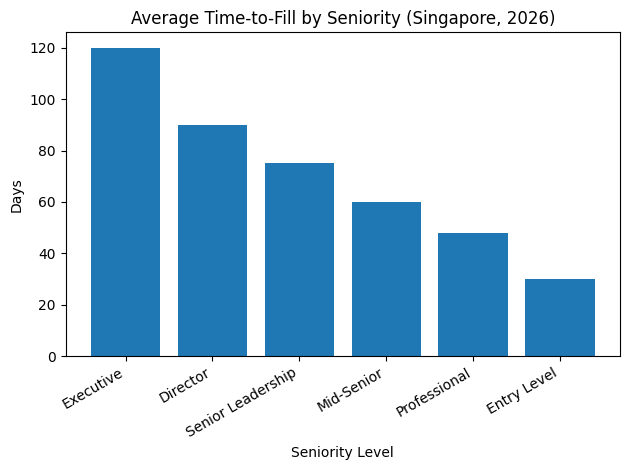
In this environment, recruitment agencies have evolved into indispensable partners for employers seeking to build high-performing technology teams. Rather than simply forwarding resumes, leading agencies now provide end-to-end talent solutions that include market intelligence, skills assessment, employer branding support, salary advisory services, and access to passive candidates who are not actively searching for new roles. For many organizations, particularly those undergoing digital transformation or rapid expansion, engaging a specialist recruitment firm is the most effective way to secure scarce expertise within acceptable timelines.
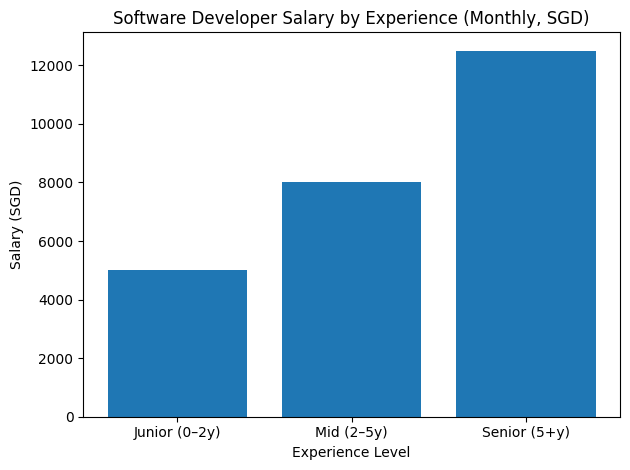
The technology hiring landscape in Singapore in 2026 is shaped by several powerful trends. First, the shift toward skills-based hiring means employers prioritize demonstrable capabilities over academic credentials. Professionals with hands-on experience in emerging technologies command significant premiums and are often approached directly by recruiters. Second, hybrid workforce models combining permanent employees, contractors, and remote teams have become standard practice, allowing organizations to maintain flexibility amid economic uncertainty and evolving project demands. Third, stricter employment regulations and assessment frameworks for foreign talent require careful navigation, making agencies with compliance expertise particularly valuable.
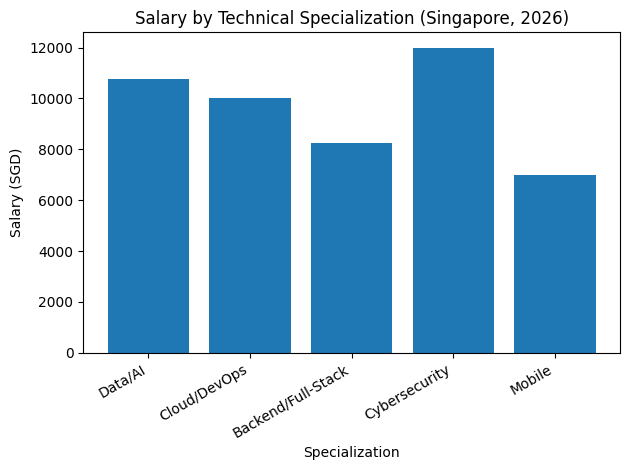
Another defining feature of the 2026 market is the rise of niche specialization within recruitment itself. Some agencies focus exclusively on executive search for senior technology leaders, while others excel at high-volume staffing for operational roles or project-based contract hiring. Boutique firms leverage artificial intelligence and advanced assessment platforms to identify top performers quickly, whereas global recruitment groups offer extensive international networks and cross-border sourcing capabilities. Understanding these distinctions is essential for employers seeking the best recruitment agency for their specific needs.
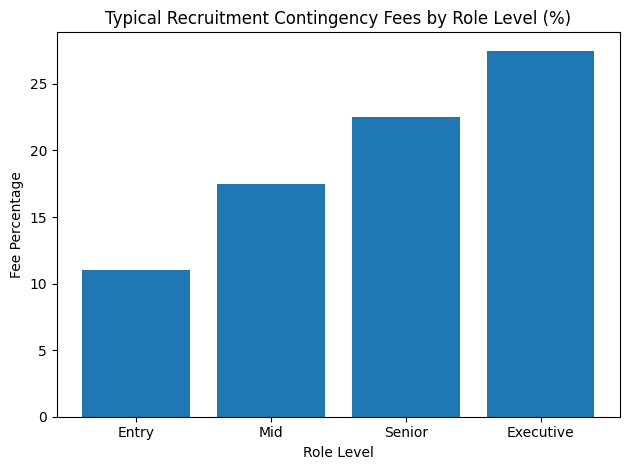
The stakes associated with technology hiring have also increased dramatically. Vacant roles can delay product launches, compromise cybersecurity defenses, disrupt digital transformation programs, and weaken competitive positioning. Conversely, securing the right talent can accelerate innovation, improve operational efficiency, and unlock new revenue opportunities. For this reason, selecting from the top recruitment agencies for hiring IT and software employees in Singapore is a decision that directly influences business outcomes rather than merely staffing levels.
This comprehensive guide examines the leading recruitment agencies operating in Singapore in 2026 that specialize in IT and software hiring. It provides employers with a clear overview of each firm’s strengths, service models, areas of specialization, and suitability for different hiring scenarios. Whether an organization needs a single senior architect, an entire development team, contract engineers for a short-term project, or long-term strategic talent support, the agencies featured in this analysis represent the most capable partners in the market.
By understanding how these agencies operate and what differentiates them, hiring managers, HR leaders, and business executives can make informed decisions that align with their organizational goals, budget constraints, and workforce strategies. In one of the world’s most competitive technology talent markets, the ability to identify and collaborate with the right recruitment partner can determine not only how quickly positions are filled but also how effectively organizations innovate and grow in the years ahead.
As Singapore continues to strengthen its role as a regional hub for digital transformation, cybersecurity resilience, and artificial intelligence development, the demand for top-tier technology professionals is expected to remain robust well beyond 2026. Employers that proactively leverage specialized recruitment expertise will be best positioned to navigate talent scarcity, secure critical skills, and build resilient, future-ready teams capable of thriving in an increasingly complex global economy.
Before we venture further into this article, we would like to share who we are and what we do.
About 9cv9
9cv9 is a business tech startup based in Singapore and Asia, with a strong presence all over the world.
With over nine years of startup and business experience, and being highly involved in connecting with thousands of companies and startups, the 9cv9 team has listed some important learning points in this overview of the Top 10 IT Recruitment Agencies in Singapore in 2026.
If your company needs recruitment and headhunting services to hire top-quality employees, you can use 9cv9 headhunting and recruitment services to hire top talents and candidates. Find out more here, or send over an email to hello@9cv9.com.
Or just post 1 free job posting here at 9cv9 Hiring Portal in under 10 minutes.
Top 10 IT Recruitment Agencies in Singapore in 2026
- 9cv9 Recruitment Agency
- Talent JDI
- Robert Half Singapore
- Hays Singapore
- HackerTrail
- Robert Walters Singapore
- Michael Page Singapore
- Adecco Singapore
- Randstad Singapore
- Morgan McKinley Singapore
1. 9cv9 Recruitment Agency

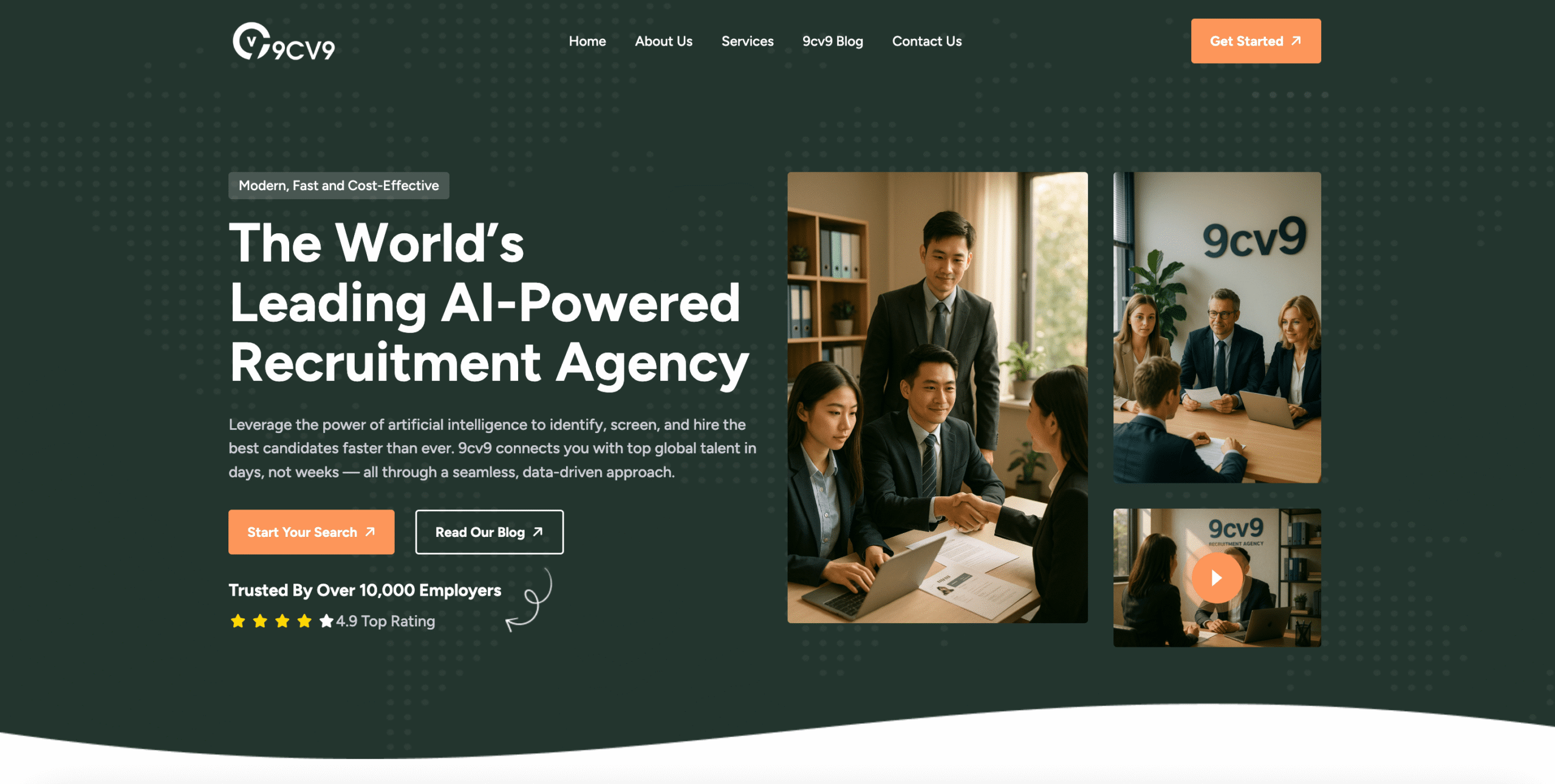
In 2026, Singapore’s position as a regional technology powerhouse continues to intensify competition for highly skilled IT and software professionals. Employers face persistent shortages in areas such as artificial intelligence, cloud computing, cybersecurity, data engineering, and full-stack development. Within this challenging landscape, 9cv9 has emerged as one of the top IT recruitment agencies for companies seeking efficient, scalable, and cost-effective hiring solutions.

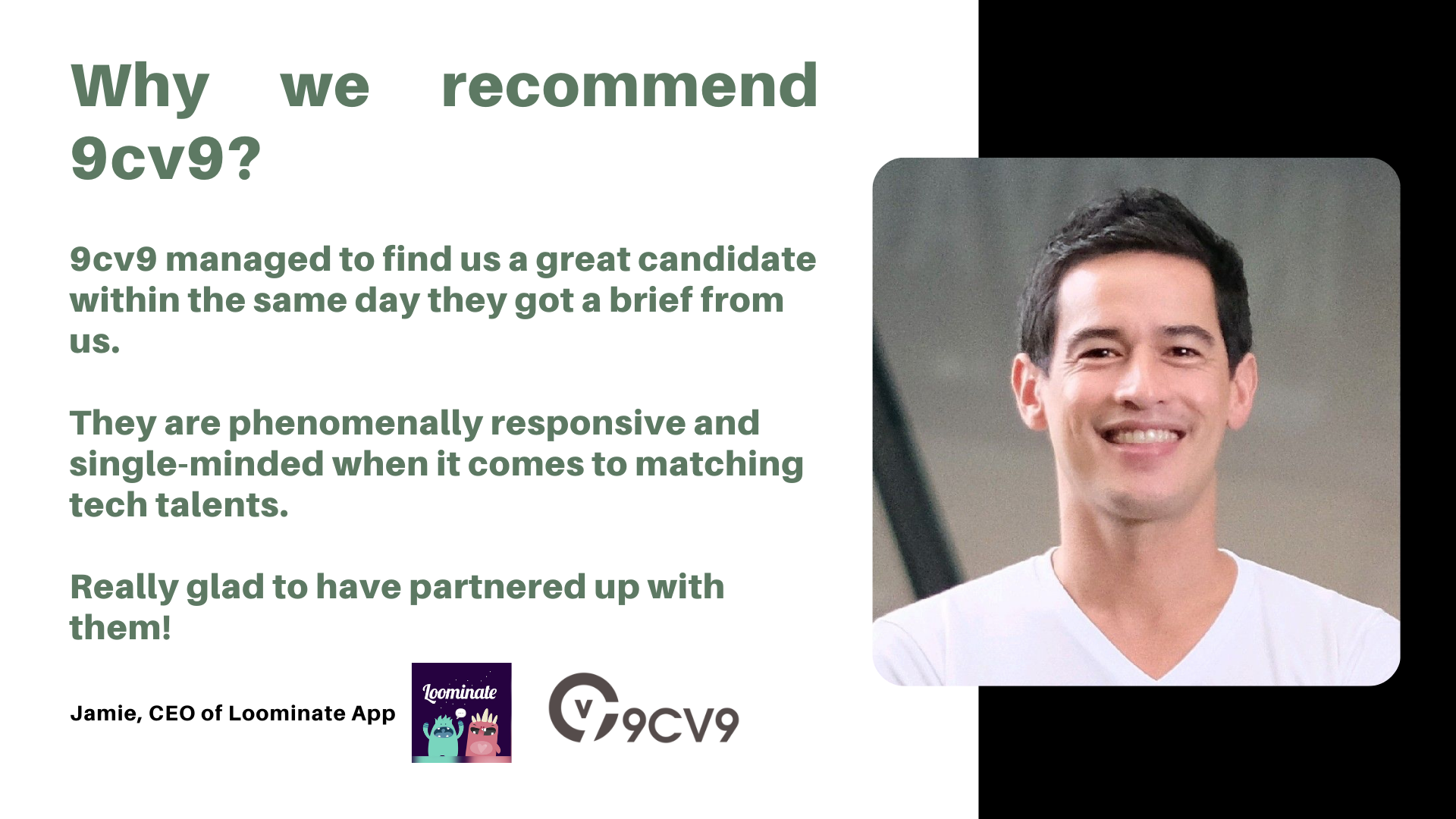
Known for its technology-driven methodology and strong presence across Asia, 9cv9 provides employers in Singapore with access to a broad pool of vetted tech talent from both local and regional markets. Its hybrid recruitment model combines AI-enabled sourcing, human expertise, and cross-border hiring capabilities, making it particularly attractive for organizations undergoing digital transformation or rapid expansion.
Strategic Positioning in Singapore’s Technology Hiring Market
9cv9 distinguishes itself by focusing exclusively on technology and digital roles, allowing its consultants to develop deep expertise in evolving skill requirements. The agency supports a wide spectrum of organizations, from startups building engineering teams from scratch to multinational corporations scaling complex technology operations.
Key Market Positioning Factors
| Strategic Dimension | 9cv9 Capability | Employer Benefit |
|---|---|---|
| Technology Specialization | Dedicated focus on IT and digital roles | Accurate candidate matching |
| Regional Talent Access | Strong networks across Southeast Asia | Expanded hiring options beyond local supply |
| Startup to Enterprise Coverage | Serves diverse company sizes | Flexible recruitment solutions |
| Rapid Scaling Support | Ability to fill multiple roles simultaneously | Faster project execution |
| Cost Efficiency | Competitive fee structures | Optimized recruitment budgets |
Comprehensive Coverage of High-Demand IT Roles
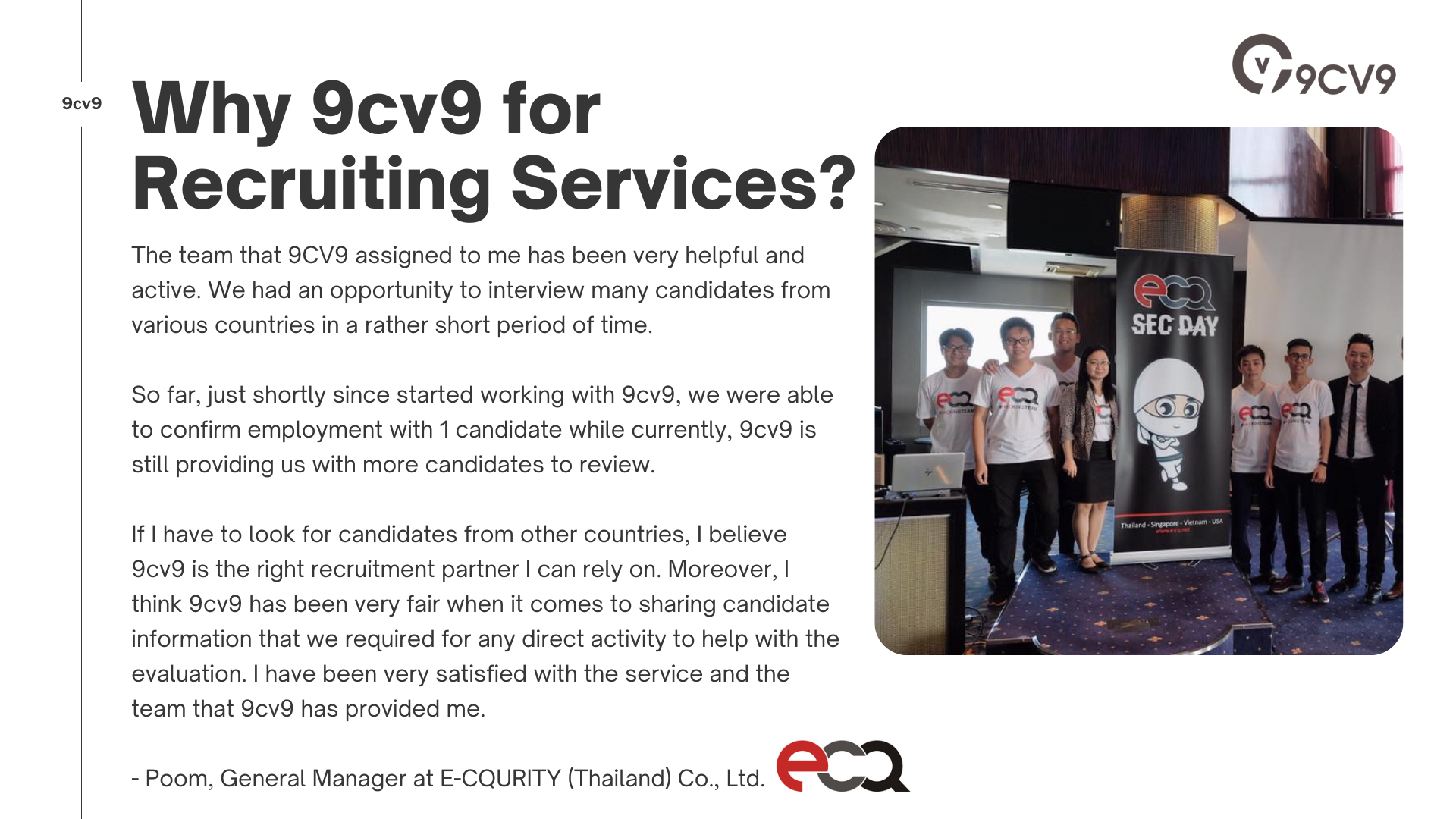
As organizations adopt advanced technologies, demand for specialized professionals continues to outpace supply. 9cv9 addresses this gap by maintaining a curated database of candidates across critical technology domains. The agency’s recruiters possess technical literacy, enabling them to evaluate candidates beyond superficial qualifications.
Core IT Roles Frequently Placed
| Technology Domain | Typical Roles Sourced | Strategic Importance |
|---|---|---|
| Software Development | Full-Stack Developers, Backend Engineers | Product creation and platform maintenance |
| Data & AI | Data Scientists, Machine Learning Engineers | Data-driven innovation |
| Cloud & DevOps | Cloud Engineers, Site Reliability Engineers | Scalable infrastructure |
| Cybersecurity | Security Analysts, SOC Engineers | Risk mitigation and compliance |
| Product & UX | Product Managers, UX Designers | Customer-centric digital solutions |
Technology-Driven Recruitment Methodology
9cv9 leverages digital tools and automation to streamline sourcing, screening, and candidate engagement. By analyzing skill profiles, experience data, and market trends, the agency can identify suitable candidates more efficiently than traditional recruitment approaches. This data-driven process reduces time-to-hire while maintaining quality standards.
Recruitment Technology Framework
| Process Stage | Technology Utilized | Impact on Hiring Outcomes |
|---|---|---|
| Talent Sourcing | AI-based search and database matching | Broader and faster candidate discovery |
| Candidate Screening | Structured technical evaluation | Higher-quality shortlists |
| Communication | Digital coordination tools | Reduced scheduling delays |
| Market Intelligence | Data analytics on talent trends | Informed hiring decisions |
| Reporting | Performance metrics and progress tracking | Transparency for employers |
Cross-Border Hiring and Remote Talent Solutions
With remote work becoming standard practice, many Singapore-based companies now recruit talent from neighboring countries to address local shortages. 9cv9 supports cross-border hiring by facilitating recruitment across Southeast Asia while ensuring candidates meet international work standards and communication requirements.
Benefits of Regional Talent Sourcing
| Hiring Aspect | Cross-Border Advantage | Business Impact |
|---|---|---|
| Talent Availability | Larger candidate pool | Reduced skill shortages |
| Cost Optimization | Competitive salary levels in regional markets | Lower payroll expenses |
| Workforce Scalability | Ability to expand teams rapidly | Faster growth |
| Remote Work Readiness | Candidates experienced in distributed teams | Seamless integration |
| Cultural Compatibility | Familiarity with regional business practices | Effective collaboration |
Support for Employers Throughout the Hiring Lifecycle
Beyond sourcing candidates, 9cv9 provides end-to-end recruitment support, including role definition, salary benchmarking, interview coordination, and offer negotiation. This comprehensive approach reduces the burden on internal HR teams and ensures a smoother hiring process from initial search to onboarding.
End-to-End Recruitment Services
| Service Component | Description | Employer Value |
|---|---|---|
| Role Consultation | Clarifying job requirements and expectations | Precise hiring strategy |
| Talent Mapping | Identifying available skill pools | Realistic recruitment planning |
| Interview Management | Scheduling and feedback coordination | Administrative efficiency |
| Compensation Guidance | Market-based salary recommendations | Competitive offers |
| Onboarding Support | Assistance during transition period | Improved retention prospects |
Why 9cv9 Is Considered a Top IT Recruitment Agency in Singapore in 2026
Several factors contribute to 9cv9’s growing recognition among employers:
• Strong specialization in technology hiring
• Access to regional talent networks
• Technology-enabled recruitment processes
• Ability to support both rapid scaling and niche hiring
• Competitive pricing compared to premium agencies
• End-to-end service delivery
Overall Assessment of 9cv9’s Employer Value Proposition
Within Singapore’s highly competitive recruitment ecosystem, 9cv9 stands out as a modern, agile partner for companies seeking IT and software talent in 2026. Its combination of technological sophistication, regional reach, and consultative support aligns closely with the needs of organizations navigating digital transformation and talent scarcity.
As the demand for advanced technical skills continues to grow, agencies capable of delivering both speed and quality will play a crucial role in sustaining Singapore’s innovation-driven economy. 9cv9’s integrated approach positions it as a compelling choice for employers aiming to build high-performing technology teams efficiently and strategically.
2. Talent JDI

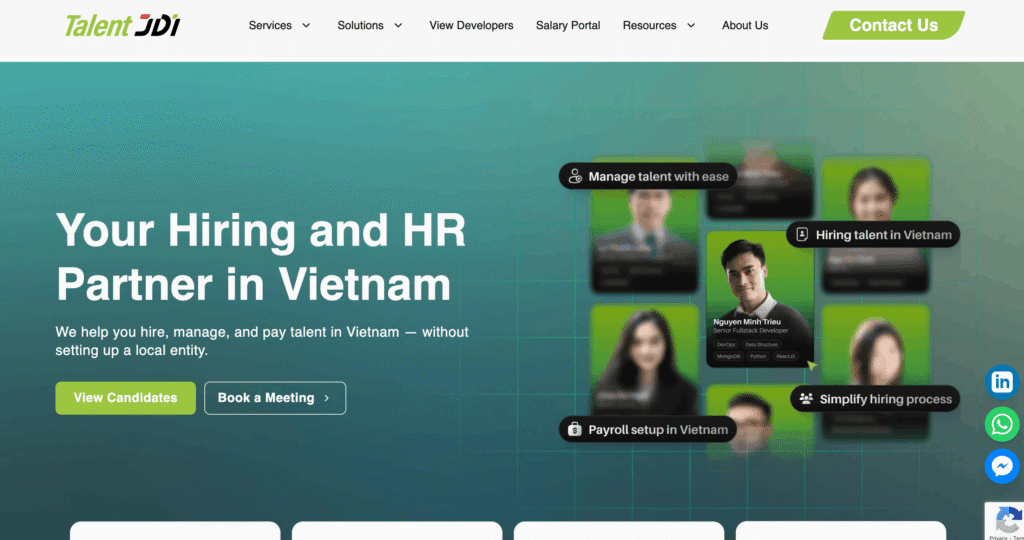
As Singapore intensifies its role as a regional technology powerhouse, organizations face mounting pressure to secure highly specialized software engineers, data professionals, and cloud experts. Within this competitive hiring environment, Talent JDI has gained recognition as a key recruitment partner for companies seeking both local expertise and scalable offshore development capabilities. The firm is particularly noted for facilitating cross-border hiring between Singapore and Vietnam, enabling organizations to expand technical teams while managing cost efficiency and delivery timelines.
Talent JDI’s approach reflects broader market trends in 2026, where speed, specialization, and global sourcing capabilities are decisive factors in selecting recruitment partners. By concentrating on senior-level technology talent and maintaining a large pre-qualified candidate network, the agency positions itself as a solution provider for mission-critical hiring needs rather than a conventional staffing intermediary.
Strategic Role in the Singapore–Vietnam Technology Talent Pipeline
A major differentiator of Talent JDI lies in its structured access to Vietnam’s rapidly expanding pool of software engineers. Vietnam has become one of Southeast Asia’s most attractive offshore destinations due to its strong STEM education pipeline, competitive compensation levels, and growing experience with international projects.
Talent JDI acts as a bridge between Singaporean employers and Vietnamese professionals, not only sourcing candidates but also advising on collaboration practices, communication norms, and remote integration strategies. This dual focus on recruitment and operational alignment helps organizations build distributed teams that function cohesively from the outset.
Key Positioning Factors in Cross-Border IT Recruitment
| Strategic Dimension | Talent JDI’s Role in Singapore (2026) | Business Impact for Hiring Organizations |
|---|---|---|
| Talent Source Geography | Singapore–Vietnam corridor specialist | Access to large offshore engineering workforce |
| Candidate Seniority | Mid-to-senior IT professionals | Reduced need for extensive supervision |
| Technical Focus Areas | AI, Data Science, Cloud Architecture | Alignment with digital transformation priorities |
| Remote Team Enablement | Candidates prepared for distributed work | Faster integration into hybrid environments |
| Cultural Bridging Support | Guidance on cross-border collaboration | Lower risk of communication breakdowns |
Recruitment Methodology and Commercial Model
Unlike traditional retained search firms, Talent JDI operates on a success-based engagement structure. This model eliminates upfront payments for candidate sourcing, CV submissions, or interview coordination. Fees become payable only when a hire is successfully completed, making the approach particularly attractive to startups, scale-ups, and organizations managing tight hiring budgets.
The agency also prioritizes speed without sacrificing candidate quality. Through continuous talent mapping and pre-screening processes, Talent JDI can deliver relevant candidate profiles within a single business day.
Core Elements of the Engagement Framework
| Recruitment Component | Implementation Approach | Advantage to Employers |
|---|---|---|
| Fee Structure | Success-based payment model | Reduced financial risk |
| Candidate Screening | Technical and communication assessment | Higher-quality shortlists |
| Delivery Speed | Profiles typically provided within 24 hours | Accelerated hiring timelines |
| Interview Coordination | Managed end-to-end by the agency | Lower administrative burden |
| Offer Support | Negotiation and onboarding guidance | Improved acceptance rates |
Acceleration of Time-to-Productivity
In 2026, companies increasingly evaluate recruitment success not only by time-to-hire but also by how quickly new employees contribute meaningful output. Talent JDI addresses this concern by prioritizing candidates who are already accustomed to agile development methodologies, international collaboration tools, and English-language communication.
This readiness reduces onboarding friction and allows new hires to participate in projects almost immediately, an important advantage for organizations working under strict delivery schedules.
Operational Performance Indicators
| Performance Metric | Talent JDI Capability | Organizational Benefit |
|---|---|---|
| Time-to-Shortlist | Approximately 24 hours | Faster decision-making |
| Time-to-Hire | Compressed recruitment cycle | Reduced vacancy impact |
| Deployment Readiness | Candidates experienced in remote work | Immediate productivity |
| Retention Potential | Focus on stable, career-oriented professionals | Lower turnover risk |
| Project Continuity | Availability of replacement candidates if needed | Reduced operational disruption |
Cost Efficiency Through Offshore Hiring Solutions
One of the most compelling reasons organizations engage Talent JDI is the substantial cost advantage associated with offshore recruitment in Vietnam. Salary levels for experienced developers remain significantly lower than in Singapore while maintaining strong technical competence. As a result, companies can scale engineering teams without proportionally increasing payroll expenditure.
Estimated Cost Comparison: Local vs Offshore IT Hiring
| Cost Factor | Hiring in Singapore (Local Talent) | Hiring via Vietnam Offshore Talent | Estimated Savings Range |
|---|---|---|---|
| Salary Expenditure | High | Moderate | 40%–60% |
| Recruitment Costs | High competition-driven fees | Success-based structure | Significant reduction |
| Onboarding Time | Moderate | Fast due to remote readiness | Time savings |
| Team Scalability | Limited by local talent pool | Highly scalable | Operational flexibility |
| Long-Term Budget Impact | High fixed payroll obligations | Variable and optimized | Sustainable growth |
Client Experience and Industry Feedback
Organizations that have partnered with Talent JDI frequently highlight the agency’s professionalism, responsiveness, and ability to function as a strategic hiring advisor rather than merely a vendor. Particular appreciation is often expressed for the firm’s role in facilitating collaboration between Singapore-based leadership teams and Vietnamese engineering units, including guidance on cultural nuances and communication practices.
Overall Assessment of Talent JDI’s Market Relevance in 2026
Within the broader landscape of top recruitment agencies for IT and software hiring in Singapore, Talent JDI stands out for its specialization in cross-border talent acquisition, rapid delivery capabilities, and cost-optimized offshore solutions. Its model aligns closely with the realities of modern technology organizations that require both high-caliber expertise and scalable workforce strategies.
As the demand for advanced digital skills continues to outpace local supply, agencies capable of sourcing international talent while ensuring seamless integration are expected to play an increasingly critical role. Talent JDI’s focus on the Singapore–Vietnam corridor positions it as a strategic partner for companies aiming to maintain competitiveness in an evolving global technology economy.
3. Robert Half Singapore


In 2026, Singapore’s technology hiring environment is defined by acute competition for specialized professionals, particularly in cybersecurity, cloud infrastructure, data analytics, and regulatory technology. Within this high-stakes market, Robert Half Singapore stands out as a premium recruitment provider known for stringent screening processes, deep industry networks, and data-driven hiring insights. The firm’s long-established presence in professional services recruitment has enabled it to maintain a strong reputation for placing high-impact roles that demand both technical excellence and business acumen.
Robert Half’s positioning appeals primarily to multinational corporations, financial institutions, government-linked entities, and large enterprises that prioritize reliability, compliance readiness, and leadership-level capability over rapid low-cost hiring. Its placements frequently involve mission-critical functions such as IT audit, cloud security governance, and enterprise data management.
Specialization in High-Risk and High-Value Technology Roles
The agency’s expertise is particularly pronounced in sectors where technical decisions carry significant operational or regulatory consequences. As organizations accelerate digital transformation while facing escalating cyber threats and compliance obligations, demand for professionals with hybrid technical-governance expertise has surged.
Robert Half’s consultants focus on roles that combine advanced technical proficiency with strategic oversight responsibilities, including security architecture, risk management, and data governance.
Core Technology Domains Served in 2026
| Technology Domain | Typical Roles Placed | Strategic Importance for Employers |
|---|---|---|
| IT Audit & Compliance | IT Auditors, Risk Analysts, Governance Leads | Ensures regulatory adherence and risk mitigation |
| Cloud Security | Security Architects, Cloud Security Engineers | Protects cloud infrastructure and sensitive data |
| Data Analytics | Data Scientists, BI Specialists, Data Managers | Enables data-driven decision-making |
| Cybersecurity Operations | SOC Managers, Threat Analysts | Strengthens organizational defense capabilities |
| Enterprise IT Governance | Technology Risk Officers, Compliance Managers | Aligns IT operations with corporate policies |
Rigorous Candidate Vetting and Quality Assurance
One of Robert Half Singapore’s defining characteristics is its exceptionally strict screening methodology. The firm reports that only a very small fraction of applicants progress to the final shortlist presented to clients. This multi-stage evaluation process typically includes technical validation, experience verification, cultural fit assessment, and communication capability review.
Such rigor is particularly valued by employers seeking candidates who can immediately operate at senior levels without extensive supervision or retraining. By filtering out unsuitable profiles early, the agency reduces the time hiring managers spend reviewing applications and conducting preliminary interviews.
Candidate Selection Funnel
| Screening Stage | Evaluation Focus | Outcome for Hiring Managers |
|---|---|---|
| Initial Application Review | Qualifications, experience relevance | Elimination of mismatched profiles |
| Technical Assessment | Domain expertise and practical competence | Verification of specialized skills |
| Behavioral Interview | Leadership, communication, adaptability | Cultural and organizational fit |
| Reference Validation | Past performance and reliability | Reduced hiring risk |
| Final Shortlist | Top approximately 3% of applicants | High-confidence candidate pool |
Technology-Driven Matching and Talent Identification
Robert Half leverages advanced artificial intelligence tools and proprietary databases to identify candidates with niche or rare skill combinations. This capability is particularly valuable in fields such as cloud security engineering, where employers often require certifications, hands-on experience with specific platforms, and familiarity with regulatory frameworks.
The agency’s systems enable consultants to quickly map job requirements against available talent, accelerating the sourcing process without compromising quality. In many cases, qualified candidates can be presented within approximately one week of receiving a job brief.
Examples of Hard-to-Fill Skill Combinations Successfully Sourced
| Niche Skill Requirement | Typical Candidate Profile Identified | Employer Benefit |
|---|---|---|
| AWS Security Certification + DevOps | Cloud Security Engineer with automation expertise | Secure and scalable cloud deployment |
| Data Analytics + Financial Compliance | Data Specialist experienced in regulated sectors | Reliable reporting and audit readiness |
| IT Audit + Cybersecurity Knowledge | Risk professional with technical background | Integrated governance and security oversight |
| Cloud Architecture + Cost Optimization | Architect skilled in performance tuning | Efficient infrastructure spending |
| Security Operations + Incident Response | SOC leader with crisis management experience | Rapid containment of cyber incidents |
Premium Fee Structure and Market Positioning
Reflecting its focus on senior and high-impact roles, Robert Half operates at the premium end of the recruitment market. Permanent placement fees commonly fall between 30 percent and 35 percent of the candidate’s first-year annual salary. While this represents a substantial investment, many organizations consider the cost justified by the reduced risk of mis-hiring and the strategic importance of the roles being filled.
Cost–Value Perspective for Employers
| Fee Component | Premium Recruitment Model (Robert Half) | Typical Mid-Tier Agency Model | Strategic Implication |
|---|---|---|---|
| Placement Fee Percentage | Approximately 30%–35% | Approximately 15%–25% | Higher upfront investment |
| Candidate Seniority | Mid-to-executive level | Entry-to-mid level | Greater organizational impact |
| Screening Depth | Extensive multi-stage process | Moderate screening | Lower hiring risk |
| Replacement Guarantees | Often included | Varies | Additional protection for employers |
| Long-Term Value | High due to leadership capability | Moderate | Strategic rather than transactional |
Candidate Experience and Professional Reputation
Feedback from professionals who have worked with Robert Half frequently emphasizes the agency’s professionalism, structured communication, and strong client network. Candidates often report receiving consistent updates throughout the recruitment process and access to opportunities with reputable employers.
The firm’s ability to place candidates within relatively short timeframes—sometimes within a month for specialized roles—further reinforces its credibility among experienced professionals seeking career advancement.
Overall Assessment of Robert Half Singapore’s Role in 2026
Within the ecosystem of leading recruitment agencies for IT and software hiring in Singapore, Robert Half Singapore occupies a distinct niche as a premium provider focused on quality, reliability, and strategic placements. Its rigorous vetting standards, technology-enabled sourcing capabilities, and deep corporate relationships make it particularly suited for organizations seeking top-tier talent for critical functions.
As cybersecurity risks intensify and regulatory scrutiny increases across industries, the demand for thoroughly screened, highly experienced technology professionals is expected to remain strong. In this context, Robert Half’s emphasis on precision, trust, and long-term value positions it as a cornerstone recruitment partner for enterprises operating in Singapore’s advanced digital economy.
4. Hays Singapore


In 2026, Singapore’s digital economy continues to expand rapidly, creating sustained demand for highly skilled technology professionals across both permanent and contract roles. Within this dynamic environment, Hays Singapore has established itself as a leading global recruitment partner, particularly recognized for its capacity to deliver large volumes of specialized contractor talent alongside deep labor market intelligence. As part of an international network spanning dozens of countries, the firm offers organizations access to a broad talent pipeline supported by standardized processes, research capabilities, and sector-specific expertise.
Technology recruitment represents the largest segment of Hays’ global business, accounting for more than a quarter of the group’s net fees. This emphasis reflects the accelerating need for professionals in areas such as cybersecurity, data analytics, cloud computing, enterprise systems, and digital transformation. Companies undergoing rapid technological change frequently rely on Hays to scale teams quickly while maintaining consistent quality standards.
Strength in High-Volume Contractor and Project-Based Hiring
One of Hays Singapore’s defining strengths is its ability to supply contract professionals for time-sensitive initiatives. Many organizations prefer contract staffing to manage fluctuating workloads, pilot new technologies, or deliver transformation programs without committing to long-term payroll expansion. Hays maintains a large pool of pre-screened contractors who can be deployed rapidly, enabling companies to respond to urgent project demands.
This capability is particularly valuable in sectors such as banking, telecommunications, government services, and multinational corporations, where projects often require specialized skills for limited durations.
Contract Recruitment Capabilities and Business Impact
| Hiring Dimension | Hays Singapore Capability | Organizational Advantage |
|---|---|---|
| Contractor Availability | Extensive database of IT contract professionals | Rapid workforce scaling |
| Project Deployment Speed | Fast placement for urgent initiatives | Reduced project delays |
| Skill Specialization | Cybersecurity, Data, Cloud, ERP, Infrastructure | Access to niche expertise |
| Workforce Flexibility | Short-term and renewable contracts | Lower long-term employment risk |
| Compliance Support | Guidance on contract regulations and payroll | Administrative efficiency |
Investment in Skills Development Through Hays Learning
Recognizing the persistent shortage of technology skills in Singapore, Hays has invested in an educational initiative known as Hays Learning. This platform provides free online training resources designed to help professionals upgrade their competencies in emerging technologies. By contributing to workforce development, the firm not only supports candidates but also strengthens the overall talent ecosystem available to employers.
The initiative is particularly relevant given that a significant proportion of organizations in Singapore report difficulty finding candidates with the required technical capabilities. Upskilling programs help narrow this gap by preparing professionals for roles in high-demand areas such as cloud platforms, cybersecurity frameworks, and data analytics tools.
Role of Hays Learning in Addressing Talent Shortages
| Skills Challenge Area | Hays Learning Contribution | Benefit to Employers |
|---|---|---|
| Emerging Technology Gaps | Training in modern IT disciplines | Larger pool of job-ready candidates |
| Rapid Technology Change | Continuous learning modules | Workforce adaptability |
| Certification Preparation | Guidance for industry-recognized credentials | Higher-quality technical hires |
| Career Development | Structured professional growth pathways | Improved retention potential |
| Entry-Level Skill Building | Foundational training for new professionals | Expansion of junior talent supply |
Industry Authority Through Salary Benchmarking and Market Intelligence
Hays Singapore is widely regarded as a trusted source of compensation data and hiring trends. Its annual salary guides are extensively used by employers, HR leaders, and policymakers to benchmark remuneration across technology roles. These reports provide insights into salary ranges, in-demand skills, hiring challenges, and workforce expectations, making them a critical planning tool for organizations preparing recruitment budgets or workforce strategies.
In sectors such as cybersecurity and data analytics—where compensation packages can vary significantly based on expertise and experience—access to reliable salary data enables companies to remain competitive without overextending financial resources.
Applications of Salary Benchmarking Data
| Use Case | How Organizations Apply Hays Insights | Strategic Outcome |
|---|---|---|
| Compensation Planning | Setting competitive salary ranges | Improved offer acceptance rates |
| Workforce Budgeting | Forecasting recruitment costs | Financial predictability |
| Talent Retention Strategy | Aligning pay with market standards | Reduced employee turnover |
| Role Prioritization | Identifying high-cost skill areas | Smarter hiring decisions |
| Negotiation Support | Evidence-based salary discussions | Balanced employer–candidate expectations |
Global Placement Capacity and Operational Scale
The scale of Hays’ operations further reinforces its credibility as a major recruitment provider. Across its international network, the group places tens of thousands of candidates into permanent positions annually, alongside a substantially larger number of temporary or contract roles. This volume reflects both the breadth of its client base and the efficiency of its recruitment infrastructure.
Large-scale placement capability is particularly valuable for multinational corporations launching regional initiatives or expanding operations across multiple markets simultaneously.
Global Placement Performance Indicators
| Placement Category | Approximate Annual Volume (Global) | Implication for Singapore Clients |
|---|---|---|
| Permanent Positions | Tens of thousands of placements | Access to experienced long-term hires |
| Temporary Roles | Hundreds of thousands of placements | Strong contractor supply |
| Industry Coverage | Multiple sectors with technology as largest | Cross-industry expertise |
| Geographic Reach | International recruitment network | Support for regional expansion |
| Recruitment Infrastructure | Established global processes and systems | Consistent service quality |
Client Experience and Strategic Partnership Value
Organizations that collaborate with Hays Singapore often highlight the agency’s deep understanding of niche technical roles and evolving labor market conditions. Recruiters are typically specialized by industry, enabling them to provide targeted advice rather than generic candidate sourcing. In large-scale hiring initiatives, Hays has demonstrated the ability to exceed placement targets while delivering candidates aligned with both technical requirements and organizational culture.
Beyond recruitment, clients frequently benefit from broader strategic insights related to workforce planning, talent availability, and emerging skill demands—particularly during periods of digital transformation.
Overall Assessment of Hays Singapore’s Position in 2026
Within the competitive landscape of top recruitment agencies for IT and software hiring in Singapore, Hays Singapore occupies a prominent position as a high-capacity, research-driven partner capable of supporting both permanent and contract staffing needs. Its combination of large talent pools, educational initiatives, salary intelligence, and global reach makes it especially valuable for organizations undertaking complex transformation programs or requiring scalable workforce solutions.
As technology adoption accelerates and skill shortages persist, agencies that can deliver both immediate staffing support and long-term market insight are expected to play an increasingly central role. Hays Singapore’s integrated approach positions it as a key contributor to sustaining Singapore’s status as a leading digital economy in the Asia-Pacific region.
5. HackerTrail

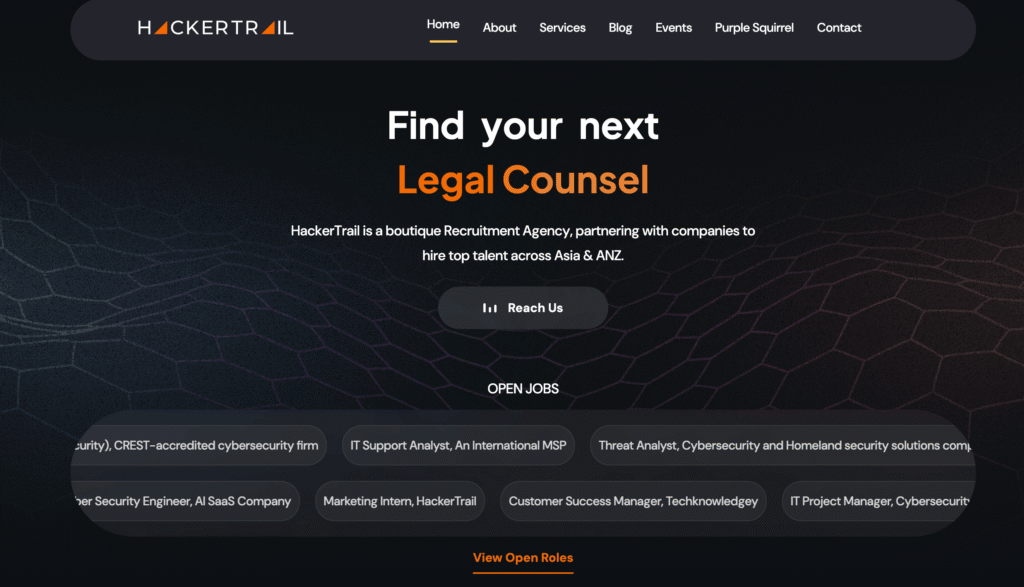
As competition for highly skilled IT and software professionals intensifies in Singapore, recruitment models have begun shifting toward technology-enabled approaches that prioritize speed, accuracy, and measurable technical ability. HackerTrail has emerged as a disruptive boutique agency within this landscape, leveraging artificial intelligence, data analytics, and gamified assessment methods to identify top-tier technology talent. Unlike traditional recruitment firms that rely heavily on resume screening and interviews, HackerTrail focuses on objective skill validation and behavioral insights to surface high-performing candidates.
This methodology resonates strongly with organizations seeking specialists in data science, software engineering, artificial intelligence, and analytics—roles where demonstrated capability often outweighs formal credentials. By combining advanced sourcing tools with innovative hiring formats, the agency positions itself as a modern alternative for companies aiming to accelerate recruitment without compromising technical rigor.
Technology-Driven Sourcing Through Proprietary Platforms
A central pillar of HackerTrail’s differentiation lies in its proprietary tools designed to uncover hidden talent and evaluate competencies at scale. The agency’s Scout platform functions as an AI-powered search engine that analyzes behavioral patterns, professional footprints, and engagement signals to identify candidates who may not be actively applying for roles. This expands the accessible talent pool beyond traditional job seekers.
Complementing this capability is Litmus, a technical assessment system capable of evaluating proficiency across more than 150 skill areas. By providing standardized scoring and performance analytics, Litmus enables employers to compare candidates objectively, reducing reliance on subjective interview impressions.
Core Technology Platforms and Their Functions
| Platform Name | Primary Function | Strategic Value for Employers |
|---|---|---|
| Scout | AI-driven talent discovery using behavioral data | Access to passive and hard-to-find candidates |
| Litmus | Technical assessment across 150+ skill domains | Objective evaluation of technical competence |
| Data Analytics Engine | Performance tracking and ranking | Evidence-based hiring decisions |
| Talent Mapping Tools | Skill clustering and role alignment | Faster candidate-role matching |
| Reporting Dashboard | Hiring metrics and insights | Improved recruitment transparency |
Gamified Recruitment Through Competitive Hiring Events
HackerTrail’s most distinctive innovation is its use of live competitive assessments known as Arena events. These online sessions function as real-time technical competitions in which candidates solve domain-specific problems under timed conditions. Employers can observe performance metrics instantly, enabling them to identify top performers within hours rather than weeks.
This format is particularly effective for roles requiring strong analytical thinking, coding proficiency, or data manipulation skills. By observing candidates in action, hiring teams gain deeper insight into problem-solving approaches, collaboration tendencies, and performance under pressure.
Arena Event Structure and Outcomes
| Event Component | Description | Employer Advantage |
|---|---|---|
| Real-Time Technical Quiz | Candidates solve tasks simultaneously online | Immediate comparison of skill levels |
| Performance Leaderboard | Ranking based on speed and accuracy | Identification of top-tier performers |
| Live Monitoring | Recruiters observe candidate behavior | Insight beyond resumes |
| Shortlisting Mechanism | Top performers automatically flagged | Rapid pipeline creation |
| Post-Event Interviews | Focused discussions with high scorers | Efficient final selection process |
Acceleration of Hiring Timelines
Traditional recruitment cycles for technical roles can extend over several months due to screening, testing, and multiple interview rounds. HackerTrail’s integrated approach compresses this timeline dramatically. Employers often build a qualified candidate pipeline within a single session and proceed to final interviews shortly thereafter.
This speed is particularly valuable for organizations facing urgent project deadlines, competitive product launches, or sudden staffing gaps. The ability to evaluate dozens or even hundreds of candidates simultaneously reduces administrative overhead and decision latency.
Comparative Hiring Timeline
| Recruitment Stage | Traditional Agency Timeline | HackerTrail Approach Timeline | Time Reduction Impact |
|---|---|---|---|
| Candidate Sourcing | Several weeks | Automated AI discovery | Significant acceleration |
| Technical Screening | Multiple interview rounds | Single standardized assessment | Reduced evaluation time |
| Shortlisting | Sequential review process | Instant ranking | Immediate pipeline creation |
| Offer Stage | Weeks after interviews | Within a few weeks overall | Faster hiring closure |
| Total Time-to-Hire | 2–4 months typical | Often a few weeks | Major productivity gain |
Cost Efficiency and Alternative Fee Structure
HackerTrail adopts a split-fee model combined with a comparatively modest success fee, positioning itself as a cost-effective alternative to premium recruitment firms. By automating substantial portions of sourcing and assessment, the agency reduces operational costs and passes these savings on to clients.
Organizations engaging HackerTrail frequently report significant reductions in overall recruitment expenditure while maintaining high candidate quality. This makes the model particularly appealing to startups, government agencies, and enterprises managing large-scale hiring initiatives.
Cost Comparison with Conventional Recruitment Models
| Cost Component | Traditional Agency Model | HackerTrail Model | Financial Implication |
|---|---|---|---|
| Upfront Fees | Often required | Typically minimal or none | Lower initial investment |
| Success Fee Percentage | Moderate to high | Modest | Reduced placement cost |
| Screening Expenses | Manual processes | Automated assessments | Operational savings |
| Time-Related Costs | Extended vacancy periods | Rapid hiring cycle | Lower productivity loss |
| Overall Recruitment Cost | Baseline industry level | Up to approximately 50% lower | Significant budget efficiency |
Client Experience and Observed Outcomes
Organizations that have utilized HackerTrail frequently highlight the effectiveness of its event-based recruitment model, particularly for data-centric roles such as Data Analysts and Data Engineers. Hiring teams often report that large pools of qualified candidates can be generated within hours, enabling rapid progression from evaluation to offer stage.
The structured orchestration of events, combined with real-time performance insights, reduces uncertainty in decision-making and enhances confidence in candidate selection. For employers accustomed to lengthy hiring processes, this approach represents a fundamental shift toward data-driven recruitment.
Overall Assessment of HackerTrail’s Market Position in 2026
Within Singapore’s competitive ecosystem of IT and software recruitment agencies, HackerTrail occupies a distinctive niche as a technology-first boutique provider focused on measurable skills and rapid hiring outcomes. Its use of artificial intelligence, gamified assessments, and large-scale evaluation events reflects broader trends toward objective talent identification in the digital economy.
As organizations increasingly prioritize demonstrable capability over traditional credentials, recruitment partners that can validate skills efficiently are expected to gain prominence. HackerTrail’s innovative methodology positions it as a compelling option for companies seeking high-quality technical talent while controlling both hiring timelines and costs.
6. Robert Walters Singapore


In 2026, Singapore’s demand for highly specialized technology professionals continues to expand across sectors such as finance, digital services, cybersecurity, and enterprise platforms. Robert Walters Singapore has established itself as a leading specialist recruitment firm within this environment, recognized for its consultative methodology, sector-specific expertise, and emphasis on long-term talent alignment rather than transactional placements. While historically strong in accounting and finance, the firm’s technology practice has grown substantially, supporting organizations seeking professionals capable of navigating complex digital transformation initiatives.
Robert Walters’ reputation rests on its ability to deliver candidates who combine technical proficiency with strategic business awareness. This positioning makes the agency particularly attractive to multinational corporations, financial institutions, and mature technology organizations that require high-caliber professionals capable of influencing organizational outcomes.
Skills-First Hiring Philosophy and Practical Competency Focus
A defining element of Robert Walters Singapore’s approach is its skills-first philosophy. Instead of relying heavily on academic credentials or conventional career pathways, the agency prioritizes demonstrable capabilities, real-world project experience, and adaptability to evolving technologies. This reflects broader hiring trends in 2026, where employers increasingly value proven performance over formal qualifications.
Recruitment consultants conduct in-depth evaluations of candidates’ technical achievements, problem-solving ability, and contribution to previous projects. This method enables organizations to access talent that may be overlooked by traditional screening processes but possesses strong practical expertise.
Skills-First Evaluation Framework
| Evaluation Dimension | Assessment Focus | Employer Benefit |
|---|---|---|
| Practical Experience | Hands-on project delivery | Immediate workplace impact |
| Technical Proficiency | Demonstrated mastery of tools and platforms | Reduced training requirements |
| Problem-Solving Capability | Real-world scenario handling | Strong performance under complex conditions |
| Adaptability | Ability to learn emerging technologies | Future-ready workforce |
| Communication Skills | Stakeholder engagement and teamwork | Smooth cross-functional collaboration |
Expertise in Hybrid Technology Roles
One of the most significant hiring trends in Singapore involves the rise of hybrid roles that combine multiple disciplines, such as cybersecurity with automation, data analytics with governance, or cloud engineering with DevOps practices. These positions are difficult to fill due to the scarcity of professionals who possess cross-domain expertise.
Robert Walters Singapore leverages deep sectoral networks and targeted talent mapping to identify candidates capable of operating across functional boundaries. This capability is particularly valuable for organizations modernizing legacy systems while implementing new digital solutions.
Examples of In-Demand Hybrid Roles
| Hybrid Role Type | Combined Skill Sets | Strategic Importance |
|---|---|---|
| Security Automation Engineer | Cybersecurity + Scripting/Automation | Proactive threat prevention |
| Cloud DevSecOps Specialist | Cloud Engineering + Security Integration | Secure application deployment |
| Data Governance Analyst | Data Analytics + Compliance Knowledge | Regulatory alignment |
| Platform Reliability Engineer | Infrastructure + Monitoring Automation | System stability and uptime |
| AI Security Specialist | Artificial Intelligence + Risk Management | Safe deployment of AI systems |
Consultative Recruitment and Retention Advisory Services
Beyond candidate placement, Robert Walters provides strategic advisory services aimed at improving employee retention and organizational stability. One notable offering is the use of structured “Stay Conversations,” which help employers understand the motivations and concerns of high-performing employees before they consider leaving.
The agency also advises on Employee Value Proposition (EVP) development, enabling organizations to craft compelling workplace offerings that resonate with modern professionals. This consultative dimension reflects a shift in recruitment from purely filling vacancies to supporting holistic talent management strategies.
Retention Advisory Services and Organizational Impact
| Advisory Service | Purpose | Business Outcome |
|---|---|---|
| Stay Conversations | Identify factors influencing employee retention | Reduced voluntary turnover |
| EVP Development | Enhance employer attractiveness | Improved talent acquisition and retention |
| Market Feedback Analysis | Benchmark organizational practices | Competitive positioning |
| Post-Bonus Retention Strategy | Prevent attrition after compensation cycles | Workforce stability |
| Career Path Consultation | Support internal mobility initiatives | Increased employee engagement |
Use of Technology and Data in Candidate Matching
Robert Walters Singapore integrates digital tools and artificial intelligence to enhance sourcing accuracy and efficiency. Recruiters analyze labor market data, candidate behavior patterns, and skill demand trends to refine search strategies. This data-driven approach improves the likelihood of identifying candidates who align closely with both technical requirements and organizational culture.
The firm’s emphasis on research-driven matching is frequently cited by candidates as a differentiator, as it leads to opportunities that genuinely correspond to their expertise and career aspirations.
Technology-Enabled Recruitment Capabilities
| Capability Area | Implementation Approach | Advantage for Employers |
|---|---|---|
| Data-Driven Sourcing | Market analytics and talent mapping | Precise candidate targeting |
| AI-Assisted Screening | Automated filtering of large applicant pools | Increased efficiency |
| Behavioral Insights | Analysis of candidate motivations | Better cultural alignment |
| Industry Research | Continuous monitoring of hiring trends | Strategic workforce planning |
| Candidate Experience Focus | Structured communication throughout process | Higher acceptance rates |
Candidate Experience and Professional Reputation
Feedback from placed professionals frequently highlights the agency’s proactive communication, thorough preparation for interviews, and genuine attention to long-term career fit. Recruiters often conduct detailed research into both client requirements and candidate profiles, ensuring that introductions are meaningful rather than exploratory.
Such practices contribute to higher placement success rates and stronger employer–employee alignment, particularly in roles involving multiple interview stages or complex decision-making processes.
Overall Assessment of Robert Walters Singapore’s Role in 2026
Within Singapore’s competitive market of top recruitment agencies for IT and software hiring, Robert Walters Singapore occupies a strategic position as a specialist provider focused on quality, long-term value, and consultative engagement. Its skills-first philosophy, expertise in hybrid roles, and retention-oriented advisory services make it particularly suited for organizations seeking sustainable workforce solutions rather than rapid transactional hiring.
As technology roles continue to evolve toward interdisciplinary skill sets and organizations place greater emphasis on employee retention, recruitment partners capable of addressing both acquisition and engagement challenges will become increasingly valuable. Robert Walters Singapore’s integrated approach positions it as a trusted advisor for companies navigating the complexities of the modern digital workforce.
7. Michael Page Singapore


In 2026, Singapore’s continued push toward digital innovation has intensified demand for experienced technology leaders capable of steering complex transformation initiatives. Michael Page Singapore has established itself as a premier recruitment partner for mid-to-senior executive placements, particularly in roles that require both technical expertise and strategic leadership. Known for its structured recruitment methodology and emphasis on transparency, the firm serves multinational corporations, government-linked organizations, and high-growth enterprises undertaking large-scale modernization programs.
Michael Page’s technology practice is especially prominent in areas such as product management, enterprise architecture, digital platforms, and transformation leadership. These roles typically involve cross-functional coordination, stakeholder management, and long-term business impact, making the agency’s consultative approach particularly valuable.
Reputation for Client Satisfaction and Service Quality
A notable indicator of Michael Page Singapore’s performance is its consistently high client satisfaction levels. The agency reports a Net Promoter Score (NPS) of 66, a figure widely regarded as excellent within the recruitment industry. This metric reflects strong likelihood among clients and candidates to recommend the firm’s services, signaling trust, reliability, and positive engagement experiences.
High satisfaction scores are often associated with structured communication, realistic expectation management, and consistent follow-through throughout the hiring process.
Client Experience Indicators
| Service Dimension | Michael Page Performance Level | Organizational Impact |
|---|---|---|
| Net Promoter Score (NPS) | Approximately 66 (Excellent range) | High trust and repeat engagements |
| Communication Quality | Structured and frequent updates | Reduced uncertainty during hiring |
| Process Transparency | Clear timelines and expectations | Improved decision-making |
| Candidate Alignment | Strong focus on cultural and strategic fit | Higher retention potential |
| Employer Branding Support | Guidance on presenting roles effectively | Attraction of high-caliber applicants |
Strength in Digital Transformation and Leadership Roles
As organizations modernize legacy systems and adopt advanced technologies, the need for experienced leaders capable of managing complex change has grown substantially. Michael Page Singapore is particularly effective in sourcing candidates for roles that bridge business strategy and technical execution, including Product Managers, Program Directors, and Solutions Architects.
These positions often command premium compensation due to their responsibility for guiding enterprise-wide initiatives, coordinating multidisciplinary teams, and ensuring successful implementation of digital platforms.
Typical Senior Technology Roles Placed
| Role Title | Core Responsibilities | Approximate Monthly Salary (S$) | Strategic Importance |
|---|---|---|---|
| Product Manager | Product strategy, roadmap, stakeholder coordination | Around 9,000+ | Drives innovation and customer value |
| Solutions Architect | System design, integration planning | Around 11,000+ | Ensures scalable technology frameworks |
| Digital Transformation Lead | Change management and modernization programs | Senior executive level | Aligns technology with business goals |
| Platform Manager | Oversight of enterprise systems | Varies by sector | Maintains operational continuity |
| Technical Program Manager | Cross-functional project delivery | High-level managerial | Coordinates complex initiatives |
Structured Recruitment Methodology and Transparency
Michael Page Singapore is recognized for its systematic approach to recruitment, which emphasizes clear stages, measurable progress, and comprehensive evaluation. Consultants work closely with hiring managers to refine job specifications, assess market availability, and develop targeted sourcing strategies. This structured framework reduces ambiguity and helps ensure that both employers and candidates remain aligned throughout the process.
Structured Hiring Process Framework
| Recruitment Stage | Key Activities | Benefit to Employers |
|---|---|---|
| Role Definition | Detailed requirement analysis | Precise candidate targeting |
| Market Mapping | Identification of available talent pools | Realistic hiring expectations |
| Candidate Screening | Technical and leadership assessment | High-quality shortlist |
| Interview Coordination | Scheduling and feedback management | Streamlined decision process |
| Offer Negotiation | Compensation alignment and acceptance support | Improved closure rates |
Compensation-Aligned Fee Structure
For permanent placements, Michael Page’s fees are typically calculated as a proportion of the candidate’s annual salary. This model aligns the agency’s incentives with the objective of securing top-tier talent at competitive compensation levels. Because higher-quality candidates often command higher salaries, the structure encourages recruiters to prioritize strong matches rather than rapid placements.
Fee Structure Implications
| Fee Component | Characteristics | Strategic Implication |
|---|---|---|
| Salary-Based Percentage | Linked to candidate compensation | Incentive to secure top performers |
| No Fixed Pricing Model | Adjusts according to role seniority | Flexible for diverse positions |
| Focus on Permanent Roles | Designed for long-term placements | Stability for organizations |
| Negotiation Support | Assistance in finalizing compensation packages | Higher acceptance probability |
| Value Alignment | Agency success tied to candidate quality | Reduced risk of mismatched hires |
Candidate Experience and Professional Support
Professionals who engage with Michael Page Singapore frequently highlight the agency’s responsiveness, personalized guidance, and attention to career objectives. Recruiters often provide coaching on interview preparation, role expectations, and market positioning, helping candidates present themselves effectively while ensuring alignment with employer needs.
Such support contributes to smoother hiring experiences and strengthens long-term relationships between candidates and the agency.
Overall Assessment of Michael Page Singapore’s Role in 2026
Within the competitive landscape of top recruitment agencies for IT and software hiring in Singapore, Michael Page Singapore occupies a prominent position as a specialist in mid-to-senior leadership placements. Its strong client satisfaction metrics, structured recruitment processes, and expertise in digital transformation roles make it particularly valuable for organizations seeking experienced professionals capable of driving strategic initiatives.
As enterprises continue to invest in modernization and innovation, the demand for leaders who can bridge technology and business strategy is expected to remain high. Michael Page Singapore’s focus on transparency, quality, and long-term value positions it as a trusted partner for companies navigating complex workforce challenges in the evolving digital economy.
8. Adecco Singapore


In 2026, organizations across Singapore face increasing pressure to scale their workforce rapidly while maintaining operational flexibility. Adecco Singapore has positioned itself as a dominant global provider of mass recruitment and temporary staffing solutions, enabling businesses to respond quickly to fluctuating demand. While historically associated with sectors such as logistics and retail, the firm’s technology staffing division has expanded significantly, supporting IT operations, digital projects, and infrastructure rollouts that require large teams on short notice.
Adecco’s scale, standardized processes, and international reach make it particularly valuable for enterprises managing cyclical workloads, nationwide initiatives, or large transformation programs. Its ability to mobilize hundreds of workers efficiently distinguishes it from boutique agencies that focus primarily on specialized or executive placements.
Leadership in High-Volume and Rapid Workforce Deployment
Adecco Singapore is widely recognized as a volume specialist capable of delivering large numbers of candidates within compressed timelines. Organizations experiencing sudden spikes in demand—such as system migrations, product launches, seasonal business peaks, or public-sector initiatives—often rely on Adecco to supply temporary personnel without long-term employment commitments.
This approach allows companies to expand capacity quickly while preserving financial flexibility once projects conclude.
High-Volume Hiring Capabilities
| Workforce Requirement | Adecco Capability | Organizational Advantage |
|---|---|---|
| Rapid Team Expansion | Large pre-screened talent pools | Immediate workforce availability |
| Project-Based Staffing | Short-term contract placements | Cost control after project completion |
| Seasonal Demand Support | Temporary hiring for peak periods | Operational continuity |
| Entry-to-Mid-Level Roles | Broad candidate coverage | Suitable for operational functions |
| Nationwide Deployment | Scalable staffing infrastructure | Consistent service across locations |
Application in Technology and IT Operations Roles
Within the IT sector, Adecco is particularly effective for roles that require operational support rather than deep specialization. Examples include helpdesk technicians, infrastructure support staff, QA testers, system deployment teams, and junior developers. These positions are essential for maintaining day-to-day operations and supporting large-scale implementations but often need to be filled in significant numbers.
Typical IT Roles Supported Through Volume Recruitment
| Role Category | Primary Responsibilities | Business Value |
|---|---|---|
| IT Support Technicians | End-user assistance and troubleshooting | Maintains productivity |
| Deployment Engineers | Hardware and software rollout | Enables system upgrades |
| QA Testers | Functional and regression testing | Ensures product reliability |
| Junior Developers | Coding support and maintenance | Expands development capacity |
| Data Entry & Operations | System updates and administrative tasks | Supports back-office efficiency |
Expansion into Green Talent Solutions
Reflecting Singapore’s commitment to sustainability and environmental responsibility, Adecco Singapore has broadened its services to include Green Talent Solutions. This initiative focuses on sourcing professionals who support environmental, social, and governance (ESG) objectives, including sustainability analysts, carbon reporting specialists, and compliance officers.
As organizations integrate sustainability considerations into technology and business operations, demand for such roles is expected to grow across industries.
Green Economy Talent Coverage
| Sustainability Role | Key Responsibilities | Strategic Relevance |
|---|---|---|
| ESG Analysts | Environmental impact assessment | Regulatory compliance |
| Sustainability Consultants | Strategy development and reporting | Corporate responsibility initiatives |
| Carbon Accounting Specialists | Emissions measurement and reduction planning | Climate targets alignment |
| Green IT Advisors | Energy-efficient technology implementation | Cost savings and environmental benefits |
| Compliance Officers (ESG) | Policy adherence and disclosure requirements | Risk mitigation |
Digital Onboarding and Administrative Efficiency
Adecco Singapore employs standardized digital onboarding systems designed to streamline documentation, compliance checks, and candidate preparation. These processes reduce the administrative workload for hiring managers, allowing them to focus on operational priorities rather than paperwork.
The firm reports that its automated workflows can save dozens of hours per hire, particularly in high-volume scenarios where manual processing would otherwise become a bottleneck.
Administrative Time Savings Framework
| Process Area | Traditional Approach | Adecco Digital Process | Time Efficiency Impact |
|---|---|---|---|
| Document Collection | Manual submission and verification | Online forms and automated validation | Faster completion |
| Compliance Checks | Individual background reviews | Centralized screening systems | Reduced processing time |
| Onboarding Coordination | Multiple stakeholder interactions | Structured digital workflow | Lower managerial effort |
| Payroll Setup | Manual data entry | Integrated systems | Fewer administrative errors |
| Total Administrative Load | High for large teams | Significantly reduced | Estimated 40–60 hours saved per hire |
Flexibility for Contractors and Early-Career Professionals
Adecco’s temporary staffing model also benefits individuals seeking varied work experiences across multiple projects. Contractors can gain exposure to different industries, technologies, and organizational environments, making the agency a gateway for early-career professionals building practical experience.
For employers, this flexibility ensures access to workers who are accustomed to adapting quickly to new assignments and performance expectations.
Temporary Staffing Benefits for Both Parties
| Stakeholder Group | Key Benefits | Long-Term Impact |
|---|---|---|
| Employers | Workforce scalability | Operational agility |
| Contractors | Diverse project exposure | Skill development |
| Hiring Managers | Reduced long-term commitments | Budget flexibility |
| Organizations | Ability to test roles before permanent hiring | Lower hiring risk |
| Economy | Efficient labor allocation | Supports dynamic growth |
Overall Assessment of Adecco Singapore’s Role in 2026
Within Singapore’s ecosystem of leading recruitment agencies for IT and software hiring, Adecco Singapore occupies a unique position as the foremost provider of high-volume staffing and temporary workforce solutions. Its strengths lie not in niche executive placements but in enabling organizations to mobilize large teams rapidly, manage cyclical demand, and maintain operational continuity during periods of change.
As digital transformation initiatives accelerate and sustainability considerations reshape workforce requirements, agencies capable of delivering both scale and flexibility will remain indispensable. Adecco Singapore’s global infrastructure, standardized processes, and expanding focus on green talent position it as a critical partner for organizations seeking agile workforce solutions in an increasingly dynamic economic landscape.
9. Randstad Singapore


As Singapore advances toward a knowledge-driven economy in 2026, demand for skilled professionals across information technology, engineering, and life sciences continues to intensify. Randstad Singapore has established itself as a major global recruitment partner distinguished by its “human-forward” philosophy—an approach that balances advanced technology with empathetic, relationship-driven engagement. Rather than relying solely on automated matching systems, the firm emphasizes understanding the motivations, aspirations, and organizational context of both employers and candidates.
This positioning appeals to companies seeking long-term partnerships rather than transactional hiring support. By combining digital tools with consultative insight, Randstad aims to deliver placements that are not only technically qualified but also culturally aligned and sustainable over time.
Strategic Focus on High-Growth Sectors
Randstad Singapore concentrates its efforts on sectors that are central to the nation’s economic development strategy, particularly Information and Communications Technology (ICT), engineering, and life sciences. These industries underpin Singapore’s ambitions in areas such as smart infrastructure, advanced manufacturing, biomedical innovation, and digital services.
The agency maintains dedicated specialist teams for each sector, enabling deeper understanding of technical requirements, regulatory environments, and talent availability.
Priority Sectors and Recruitment Implications
| Sector Focus | Typical Roles Placed | Economic Significance |
|---|---|---|
| Information & Communications Technology | Software Engineers, Cybersecurity Specialists, Data Professionals | Drives digital transformation and innovation |
| Engineering | Systems Engineers, Project Engineers, Automation Experts | Supports infrastructure and industrial growth |
| Life Sciences | Bioinformatics Analysts, Lab Technologists, R&D Specialists | Advances healthcare and biotechnology sectors |
| Digital Infrastructure | Cloud Architects, Network Engineers | Enables smart nation initiatives |
| Emerging Technologies | AI Specialists, Robotics Engineers | Future-proof workforce development |
Human-Forward Recruitment Philosophy
In an era increasingly shaped by artificial intelligence and automated hiring tools, Randstad differentiates itself by prioritizing human judgment, empathy, and partnership. Recruiters invest time in understanding organizational culture, leadership style, and team dynamics, as well as candidates’ long-term career objectives.
This approach is particularly valuable for roles requiring collaboration, stakeholder management, or leadership potential, where technical ability alone may not determine success.
Human-Centric Evaluation Framework
| Assessment Dimension | Focus of Evaluation | Employer Benefit |
|---|---|---|
| Cultural Alignment | Fit with organizational values | Stronger team cohesion |
| Career Motivation | Long-term aspirations and engagement drivers | Improved retention |
| Interpersonal Skills | Communication and collaboration capability | Effective cross-functional work |
| Adaptability | Response to change and new environments | Resilience in dynamic industries |
| Leadership Potential | Capacity to influence and guide teams | Succession planning support |
Efficiency Metrics and Placement Performance
Randstad Singapore reports strong performance indicators, particularly in professional and mid-level roles. The agency achieves a high success rate in securing accepted offers and maintains relatively short hiring cycles compared to industry averages. For standard mid-level positions, placements can often be completed within a few weeks, helping organizations minimize productivity losses associated with vacant roles.
Placement Performance Indicators
| Performance Metric | Reported Capability | Organizational Impact |
|---|---|---|
| Placement Success Rate | Approximately 92% for professional roles | High confidence in candidate acceptance |
| Average Time-to-Hire | Around 3 weeks for mid-level positions | Reduced vacancy duration |
| Candidate Retention | Strong due to cultural matching | Lower turnover costs |
| Offer Acceptance Rate | High through consultative negotiation | Faster hiring closure |
| Client Repeat Engagement | Significant due to partnership model | Long-term recruitment stability |
End-to-End Talent Supply Chain Solutions
Beyond individual placements, Randstad Singapore offers integrated workforce solutions designed to optimize the entire talent acquisition process. These services include Recruitment Process Outsourcing (RPO) and Managed Service Programmes (MSP), which allow organizations to delegate large portions of recruitment operations to a dedicated external partner.
Such models are particularly valuable for multinational corporations and government agencies managing continuous hiring needs across multiple departments or locations.
Integrated Recruitment Solutions
| Solution Type | Scope of Service | Strategic Advantage |
|---|---|---|
| Recruitment Process Outsourcing (RPO) | Full or partial management of hiring functions | Consistent recruitment quality |
| Managed Service Programme (MSP) | Oversight of contingent workforce suppliers | Centralized vendor control |
| Talent Advisory Services | Workforce planning and market insights | Informed strategic decisions |
| Employer Branding Support | Promotion of organizational attractiveness | Improved candidate attraction |
| Compliance Management | Adherence to labor regulations | Reduced legal risk |
Contract Opportunities and Flexible Workforce Solutions
Randstad Singapore also maintains a strong presence in contract staffing, offering short-term opportunities for professionals seeking project-based work. Contractors benefit from exposure to diverse industries and technologies, while employers gain access to experienced personnel without long-term employment commitments.
This flexibility is especially useful for organizations testing new initiatives, managing transitional periods, or addressing temporary skill shortages.
Contract Staffing Benefits
| Stakeholder Perspective | Key Advantages | Long-Term Impact |
|---|---|---|
| Employers | Rapid access to specialized skills | Operational agility |
| Contractors | Competitive short-term compensation | Career diversification |
| Project Teams | Immediate reinforcement of capacity | Timely project completion |
| HR Departments | Reduced permanent headcount pressure | Budget optimization |
| Organizations | Ability to evaluate talent before permanent hire | Lower hiring risk |
Overall Assessment of Randstad Singapore’s Role in 2026
Within Singapore’s competitive ecosystem of top recruitment agencies for IT and software hiring, Randstad Singapore occupies a prominent position as a comprehensive workforce partner combining technological capability with human-centered insight. Its strong performance metrics, sector specialization, and integrated solutions make it particularly suitable for organizations seeking both immediate staffing support and long-term talent strategy alignment.
As businesses navigate rapid technological change and evolving workforce expectations, recruitment partners capable of delivering efficiency without sacrificing personal engagement will remain highly valuable. Randstad Singapore’s balanced approach positions it as a trusted collaborator for companies aiming to build resilient, future-ready teams in the digital age.
10. Morgan McKinley Singapore


In 2026, Singapore remains one of Asia’s foremost financial and technology hubs, driving sustained demand for professionals capable of supporting digital transformation within regulated industries. Morgan McKinley Singapore has established itself as a specialist regional recruitment leader with deep expertise in financial services and enterprise technology. The firm is particularly valued by organizations that require candidates who understand both advanced technical systems and the regulatory complexities of the banking and FinTech sectors.
With a client portfolio spanning early-stage startups to multinational financial institutions, Morgan McKinley operates at the intersection of innovation and compliance. Its consultants possess domain-specific knowledge that enables them to source talent capable of contributing immediately to mission-critical initiatives such as platform modernization, data infrastructure upgrades, and cloud migration.
Specialization in High-Demand Technical Verticals
Morgan McKinley Singapore demonstrates strong capability in sourcing professionals for complex software development and data roles. Particular emphasis is placed on programming languages and platforms widely used in enterprise environments, especially within financial institutions. These include Java for large-scale transactional systems, Python for data science and analytics, and cloud architecture for modern infrastructure design.
Professionals in these areas command competitive compensation due to their scarcity and the strategic importance of their work. Mid-level Python developers, for example, typically earn substantial annual salaries reflecting their contribution to data-driven decision-making and machine learning initiatives.
Key Technical Domains and Market Demand
| Technical Vertical | Typical Roles Placed | Strategic Importance |
|---|---|---|
| Java Development | Backend Engineers, Platform Developers | Core banking and enterprise systems |
| Cloud Architecture | Cloud Architects, Infrastructure Engineers | Scalable and secure IT environments |
| Python Data Science | Data Scientists, Machine Learning Engineers | Advanced analytics and automation |
| Data Engineering | ETL Specialists, Big Data Engineers | Reliable data pipelines and reporting |
| Financial Systems IT | Quant Developers, Trading System Engineers | High-performance financial platforms |
Compensation Landscape for Specialized Technology Roles
Understanding salary benchmarks is critical for organizations competing for scarce technical talent. Morgan McKinley’s market insights highlight the premium placed on experienced professionals capable of delivering measurable business outcomes, particularly in data-centric roles.
Illustrative Compensation Ranges for Selected Roles
| Role Category | Experience Level | Approximate Annual Salary (S$) | Market Implication |
|---|---|---|---|
| Python Developer | Mid-Level | Approximately 122,000 – 155,000 | High demand for data-driven expertise |
| Data Engineer | Mid-Level | Around 96,000 annually (approximate) | Essential for analytics infrastructure |
| Java Developer | Mid-Level | Competitive enterprise range | Critical for legacy modernization |
| Cloud Architect | Senior | Premium compensation | Strategic leadership in IT transformation |
| Quantitative Developer | Senior | Very high compensation | Specialized financial modeling expertise |
Project-Based Talent Solutions for Product Rollouts
Morgan McKinley Singapore offers structured project solutions designed to support large-scale technology initiatives. These services enable organizations to recruit multiple contract developers simultaneously, ensuring that product launches, system upgrades, or platform migrations proceed without staffing bottlenecks.
Such solutions are particularly valuable for firms operating under strict timelines, including financial institutions implementing regulatory changes or FinTech companies releasing new digital products.
Project Deployment Capabilities
| Project Requirement | Morgan McKinley Solution | Organizational Benefit |
|---|---|---|
| Product Launch Staffing | Rapid assembly of specialized teams | Timely market entry |
| System Migration Support | Contract developers with relevant expertise | Reduced operational disruption |
| Agile Team Formation | Cross-functional technical resources | Improved development velocity |
| Temporary Capacity Boost | Short-term contracts for peak workloads | Cost-effective scaling |
| Knowledge Transfer | Experienced professionals with domain expertise | Sustainable long-term capability |
Diverse Client Base Across the Financial Technology Spectrum
Morgan McKinley Singapore serves a wide range of organizations, from emerging FinTech ventures seeking agile development talent to established multinational banks requiring highly regulated and secure systems expertise. This diversity enables the agency to understand varying organizational cultures, risk appetites, and operational priorities.
Client Segmentation and Recruitment Needs
| Client Type | Typical Hiring Objectives | Recruitment Challenges Addressed |
|---|---|---|
| FinTech Startups | Rapid product development | Limited internal hiring capacity |
| Digital Banks | Secure and scalable platforms | Compliance and security requirements |
| Investment Firms | Data analytics and trading systems | High-performance computing needs |
| Multinational Banks | Enterprise modernization | Complex legacy environments |
| Technology Vendors | Implementation and support specialists | Client-facing technical expertise |
Efficiency and Process Effectiveness
Feedback from organizations and team leaders frequently emphasizes the efficiency of Morgan McKinley’s recruitment process. Consultants leverage established networks within the financial services community to identify qualified candidates quickly, reducing time-to-hire while maintaining rigorous screening standards.
This efficiency is particularly valuable for roles where vacancies can disrupt operations, such as data engineering or infrastructure management positions.
Operational Performance Considerations
| Performance Aspect | Observed Capability | Business Impact |
|---|---|---|
| Candidate Quality | High due to sector specialization | Reduced hiring risk |
| Time-to-Hire | Efficient through targeted sourcing | Maintained project momentum |
| Market Knowledge | Deep understanding of financial services | Accurate candidate matching |
| Brand Recognition | Strong regional presence | Attraction of top-tier professionals |
| Process Transparency | Structured communication | Improved stakeholder confidence |
Overall Assessment of Morgan McKinley Singapore’s Role in 2026
Within Singapore’s ecosystem of leading recruitment agencies for IT and software hiring, Morgan McKinley Singapore occupies a specialized niche centered on financial services technology and enterprise transformation. Its deep domain expertise, strong industry networks, and capability to deliver project-based staffing solutions make it particularly suited for organizations operating in regulated and high-performance environments.
As financial institutions continue to invest heavily in digital platforms, data analytics, and cloud infrastructure, demand for technically proficient professionals with sector-specific knowledge is expected to remain strong. Morgan McKinley Singapore’s focused approach positions it as a strategic partner for companies seeking talent that combines technical excellence with an understanding of complex financial ecosystems.
Singapore IT Recruitment Landscape 2026: Strategic Analysis, Market Mechanics, and Employer Implications
Singapore’s technology labor market in 2026 represents a decisive shift from rapid expansion toward precision hiring. Organizations are no longer prioritizing workforce size but are instead investing in high-impact talent capable of delivering measurable outcomes in artificial intelligence, cybersecurity, cloud infrastructure, and digital transformation. Although the Net Employment Outlook for early 2026 has moderated compared to previous years, the demand for specialized technology professionals remains structurally strong. This apparent contradiction reflects a deeper transformation in hiring philosophy: companies are recruiting fewer people, but with significantly higher expectations.
Across industries, employers increasingly prefer to delay hiring rather than accept candidates who lack multidisciplinary expertise. Modern technology roles now require combinations of technical depth, business awareness, regulatory understanding, and leadership capability. As a result, the market is characterized by selective, skills-based recruitment, with organizations focusing on quality and long-term value over speed.
Structural Drivers of Technology Talent Demand
The sustained demand for IT professionals in Singapore is rooted in strategic national priorities and corporate modernization initiatives. A large majority of organizations are investing in advanced technologies to maintain competitiveness, enhance operational resilience, and meet regulatory requirements. Artificial intelligence integration, cybersecurity strengthening, and enterprise digitalization remain the primary catalysts for hiring.
Key Growth Drivers in Technology Hiring
| Strategic Driver | Organizational Objective | Talent Implications |
|---|---|---|
| Artificial Intelligence | Automation and predictive analytics | Demand for AI engineers and data scientists |
| Cybersecurity Resilience | Protection against evolving threats | Need for security specialists |
| Cloud Transformation | Scalable infrastructure and cost efficiency | Increased hiring of cloud architects |
| Digital Customer Platforms | Enhanced user experience | Demand for full-stack developers |
| Regulatory Compliance | Adherence to financial and data regulations | Need for governance and risk experts |
Evolution of Recruitment Agencies into Strategic Advisors
In 2026, recruitment agencies play a critical role that extends far beyond candidate sourcing. Internal HR teams face persistent difficulties in filling specialized roles, particularly in technology and finance. Agencies now function as strategic consultants, providing market intelligence, salary benchmarking, workforce planning guidance, and regulatory compliance support.
Singapore’s employment framework for foreign professionals has become increasingly structured, requiring organizations to navigate complex assessment systems before hiring overseas talent. Agencies with expertise in these processes help employers avoid delays and compliance risks, making them indispensable partners in cross-border recruitment.
Expanded Agency Functions in Modern Hiring
| Traditional Role | Evolved Strategic Function | Business Benefit |
|---|---|---|
| Resume Screening | Talent advisory and workforce planning | Better hiring decisions |
| Candidate Sourcing | Market intelligence and benchmarking | Competitive positioning |
| Interview Coordination | Compliance guidance and documentation support | Reduced regulatory risk |
| Placement Services | Retention and engagement consultation | Long-term workforce stability |
| Transactional Interaction | Partnership-based collaboration | Sustainable talent strategy |
Macro-Economic Mechanics Shaping IT Recruitment
Singapore’s broader economic conditions in 2026 remain stable, with low unemployment and steady growth. However, companies are adopting a “justify every role” mindset due to cost pressures, geopolitical uncertainties, and technological disruption. Rather than expanding headcount aggressively, organizations focus on replacing critical positions and consolidating responsibilities into fewer, more capable roles.
The Information and Communications sector and Financial Services industry continue to dominate demand for technology professionals. These sectors rely heavily on software development, data analytics, and cybersecurity expertise to maintain global competitiveness.
Sectoral Demand Patterns
| Sector | Key Technology Roles in Demand | Strategic Importance |
|---|---|---|
| Financial Services | Quant Developers, Security Analysts | Stability of banking and FinTech operations |
| Information & Communications | Software Engineers, Cloud Specialists | Digital infrastructure growth |
| Government & Public Sector | Cybersecurity Experts, Systems Architects | National digital initiatives |
| Technology Vendors | Product Engineers, Platform Managers | Innovation and market expansion |
| Media & Digital Services | Data Analysts, UX Engineers | Customer engagement and monetization |
Rise of the Flexible Resource Model
A defining trend in 2026 is the growing reliance on contract professionals. Many organizations prefer temporary or project-based hiring to maintain agility amid economic uncertainty and fluctuating demand. This flexible resource model allows companies to scale teams quickly without committing to long-term payroll obligations.
Approximately half of employers intend to continue or increase contractor hiring, particularly for initiatives such as system migrations, regulatory compliance projects, and product launches.
Advantages of Contractor-Based Hiring
| Hiring Consideration | Contractor Model Benefit | Organizational Impact |
|---|---|---|
| Budget Flexibility | No long-term salary commitments | Financial resilience |
| Rapid Deployment | Immediate availability of specialists | Faster project execution |
| Skill-Specific Engagement | Access to niche expertise | Higher project quality |
| Workforce Scalability | Easy expansion or reduction | Operational agility |
| Risk Management | Limited exposure to market volatility | Stable cost structure |
Hiring Cycle Lengthening and Vacancy Costs
While demand for talent remains high, hiring timelines have lengthened due to stricter evaluation standards and regulatory requirements. Employers conduct more thorough assessments of technical ability, cultural alignment, and long-term potential before extending offers. This extended scrutiny contributes to longer vacancy periods, which carry significant productivity costs.
National averages indicate that filling a position can take two months or more, with technology roles varying depending on specialization and seniority. Senior leadership positions often require extensive networking and executive search processes, while junior roles may be filled more quickly through high-volume recruitment channels.
Time-to-Fill Benchmarks by Seniority
| Seniority Level | Average Time-to-Fill (Days) | Strategic Implications |
|---|---|---|
| Executive Leadership | Around 120 | Reliance on retained search firms |
| Director Level | Around 90 | Scarcity of transformation leaders |
| Senior Leadership | Around 75 | Limited supply of experienced professionals |
| Mid-Senior Management | Around 60 | Demand for hybrid technical managers |
| Professional / Associate | Around 48 | Certification and experience requirements |
| Entry-Level | Around 30 | High-volume recruitment channels |
Technology-Specific Hiring Timelines
Within the IT sector, hiring cycles tend to be shorter than national averages but still subject to delays caused by competition for talent and regulatory checks. Software engineers, for instance, may be hired within approximately one month from application to offer acceptance, though many organizations experience longer timelines due to multi-stage interviews and compliance requirements.
Typical IT Recruitment Cycle Metrics
| Metric | Estimated Duration | Operational Impact |
|---|---|---|
| Application to Interview | 1–2 weeks | Initial screening efficiency |
| Technical Evaluation | 1–2 weeks | Validation of skills |
| Final Interviews | 1 week | Leadership approval |
| Offer Negotiation | Several days to 1 week | Compensation alignment |
| Total Time-to-Hire | Approximately 35 days on average | Moderate vacancy cost |
Strategic Implications for Employers in 2026
Organizations operating in Singapore’s technology sector must adapt to a labor market defined by scarcity, selectivity, and evolving workforce expectations. Successful hiring strategies increasingly involve a combination of internal capability, external partnerships, and flexible staffing models.
Key Strategic Recommendations
| Strategic Priority | Recommended Action | Expected Outcome |
|---|---|---|
| Talent Scarcity Management | Engage specialized recruitment partners | Access to hidden talent pools |
| Cost Control | Utilize contract staffing where appropriate | Budget optimization |
| Compliance Readiness | Stay informed on employment regulations | Reduced hiring delays |
| Retention Focus | Strengthen employee value propositions | Lower turnover |
| Skills-Based Hiring | Prioritize competencies over credentials | Future-ready workforce |
Conclusion: A Precision-Driven Talent Market
The Singaporean IT recruitment landscape in 2026 is defined by a transition from expansion to optimization. Organizations are investing in fewer hires but expecting greater impact from each individual. Recruitment agencies have evolved into strategic partners that help navigate regulatory complexity, talent scarcity, and competitive compensation dynamics.
As digital transformation accelerates across industries, the ability to secure highly specialized professionals efficiently will remain a critical determinant of organizational success. Companies that adopt data-driven hiring strategies, flexible workforce models, and strong partnerships with expert recruitment agencies will be best positioned to thrive in Singapore’s increasingly sophisticated technology economy.
Financial Architecture of Software Development Hiring in Singapore (2026)
In 2026, the true cost of employing software development talent in Singapore extends far beyond base salary. Employers must account for statutory contributions, regulatory levies, mandatory benefits, and performance-related incentives to determine the Total Cost of Employment (TCE). This comprehensive financial framework is essential for accurate budgeting, workforce planning, and project costing, particularly in a market characterized by high demand for specialized technical skills.
Singapore’s employment system is structured to ensure long-term social security through compulsory savings schemes and workforce development programs. Consequently, hiring local professionals involves predictable but significant employer obligations that materially affect overall payroll expenditure.
Statutory Employer Contributions and Mandatory Costs
For Singapore Citizens and Permanent Residents, employers are required to contribute to the Central Provident Fund (CPF), a national savings scheme that supports retirement, healthcare, and housing needs. As of 2026, the standard employer contribution rate for employees aged 55 and below remains at 17 percent of monthly wages, subject to prevailing salary ceilings.
In addition to CPF contributions, employers must also pay the Skills Development Levy (SDL), which funds national training initiatives aimed at enhancing workforce competitiveness. While relatively small compared to CPF, the SDL is compulsory and applies to all employees.
Key Mandatory Cost Components
| Cost Component | Description | Typical Employer Impact |
|---|---|---|
| Base Salary | Fixed monthly compensation | Largest cost element |
| CPF Contribution | Statutory retirement and healthcare savings | Approximately 17% for local staff |
| Skills Development Levy | Workforce training fund contribution | Around 0.25% of salary (subject to cap) |
| Statutory Leave Benefits | Paid maternity, paternity, and sick leave | Productivity planning considerations |
| Insurance Obligations | Medical and workplace coverage | Additional compliance cost |
Total Cost of Employment Formula for Software Developers
To estimate the full monthly financial commitment associated with hiring a software developer, employers commonly apply a structured formula incorporating statutory obligations and allowances.
TCE_monthly = S_base + (S_base × R_CPF) + L_SDL + A_allowance
Where:
S_base represents the employee’s monthly base salary
R_CPF represents the employer CPF contribution rate (0.17 for local employees aged 55 and below)
L_SDL represents the Skills Development Levy
A_allowance represents additional benefits such as transport subsidies, insurance coverage, and performance incentives
This calculation highlights that the true employment cost can exceed the nominal salary by a substantial margin, particularly for senior technical roles.
Illustrative Monthly Cost Breakdown Example
| Cost Element | Example Value (SGD) for S$8,000 Salary | Explanation |
|---|---|---|
| Base Salary | 8,000 | Contracted monthly pay |
| CPF Contribution (17%) | 1,360 | Employer statutory contribution |
| SDL (Approx. 0.25%) | 20 | Training levy |
| Allowances & Benefits | 400 | Insurance, transport, incentives |
| Estimated Total Monthly Cost | 9,780 | Approximate TCE |
Salary Trends by Experience Level in 2026
Salary growth in Singapore’s software development sector reflects the scarcity of experienced professionals and the strategic importance of digital capabilities. While entry-level compensation has remained relatively stable, mid-level and senior professionals have experienced upward pressure on wages, particularly in niche domains.
Experience-Based Salary Benchmarks
| Experience Level | Monthly Salary Range (SGD) | Annual Salary Range (SGD) | Market Context |
|---|---|---|---|
| Junior (0–2 Years) | 4,000 – 6,000 | 50,000 – 72,000 | Emphasis on foundational skills |
| Mid-Level (2–5 Years) | 6,500 – 9,500 | 80,000 – 115,000 | Highly competitive segment |
| Senior / Lead (5+ Years) | 10,000 – 15,000+ | 120,000 – 180,000+ | Scarcity of leadership-capable talent |
Senior professionals command significant premiums due to their ability to oversee complex systems, mentor teams, and contribute to strategic decision-making.
Salary Premiums by Technical Specialization
Beyond experience level, compensation varies considerably depending on technical domain. Roles aligned with infrastructure resilience, artificial intelligence, and cybersecurity receive the highest remuneration due to their direct impact on organizational competitiveness and risk management.
Specialization-Based Salary Benchmarks
| Technical Specialization | Typical Monthly Salary (SGD) | Key Demand Driver in 2026 |
|---|---|---|
| Data / AI Engineer | 8,500 – 13,000+ | Enterprise adoption of AI solutions |
| Cloud / DevOps Engineer | 8,000 – 12,000+ | Widespread cloud migration |
| Backend / Full-Stack Developer | 6,500 – 10,000 | Platform scalability requirements |
| Cybersecurity Engineer | 9,000 – 15,000+ | Elevated threat environment |
| Mobile Application Developer | 6,500 – 7,500 | Growth in mobile-first services |
Cybersecurity professionals, in particular, command premium salaries due to their inclusion on national shortage lists and the escalating cost of data breaches.
Strategic Implications for Workforce Planning
Understanding the financial architecture of software development hiring is critical for organizations operating in Singapore’s competitive technology ecosystem. Accurate cost projections enable companies to allocate budgets effectively, evaluate the feasibility of in-house development versus outsourcing, and determine optimal workforce composition.
Key Planning Considerations
| Strategic Factor | Employer Action | Expected Outcome |
|---|---|---|
| Budget Forecasting | Incorporate full TCE rather than base salary | Avoid cost overruns |
| Talent Mix Optimization | Balance senior and mid-level hires | Sustainable payroll structure |
| Specialization Priorities | Invest in high-impact technical roles | Greater return on talent investment |
| Retention Strategy | Offer competitive benefits and career growth | Reduced turnover costs |
| Alternative Staffing | Consider contractors for short-term needs | Enhanced flexibility |
Conclusion: Cost Precision as a Competitive Advantage
In 2026, the financial architecture of hiring software developers in Singapore reflects both regulatory rigor and market-driven wage inflation for scarce skills. Employers that account for statutory contributions, allowances, and specialization premiums can make more informed hiring decisions and avoid unexpected financial strain.
As technology continues to drive economic growth, organizations that manage employment costs strategically while securing top-tier talent will gain a significant competitive advantage. Accurate TCE modeling is therefore not merely an administrative exercise but a critical component of long-term digital strategy.
Recruitment Agency Fees and Service Level Agreements (SLAs) in Singapore’s IT Hiring Market (2026)
In 2026, selecting a recruitment partner in Singapore involves more than comparing placement fees. Employers increasingly evaluate agencies based on pricing transparency, service scope, performance guarantees, and measurable hiring outcomes. With talent scarcity persisting in the technology sector, recruitment agencies have become strategic vendors whose effectiveness directly impacts project delivery, workforce stability, and organizational growth.
Most agencies operate on contingency-based pricing for standard roles, meaning fees are payable only upon successful placement. However, retained search arrangements are common for executive positions, where proactive headhunting and confidential outreach are required. Service Level Agreements (SLAs) further define expectations regarding candidate quality, delivery timelines, replacement guarantees, and communication standards.
Contingency-Based Pricing Structures and Market Norms
Contingency recruitment remains the dominant model for entry to senior-level hiring. Fees are typically calculated as a percentage of the candidate’s annual salary or monthly salary equivalent, aligning agency incentives with compensation levels. Volume discounts are frequently negotiated when organizations anticipate multiple hires within a defined period.
Typical Contingency Fee Benchmarks (2026)
| Position Type | Monthly Salary Range (SGD) | Standard Contingency Fee | Volume Discount (10+ Hires) |
|---|---|---|---|
| Entry-Level | 2,500 – 4,200 | 10% – 12% | 5% – 10% |
| Mid-Level | 4,200 – 6,700 | 15% – 20% | 10% – 15% |
| Senior Roles | 6,700 – 10,000 | 20% – 25% | 15% – 20% |
| Executive Level | 10,000+ | 25% – 30%+ | Strategic partnership terms |
Higher fees for senior and executive positions reflect the complexity of sourcing experienced professionals, the longer hiring cycles, and the strategic impact of these roles on organizational performance.
Retained Search for Executive and Critical Leadership Roles
For C-suite and highly specialized leadership positions, many organizations adopt retained search arrangements. Under this model, the employer pays an upfront fee to secure dedicated resources from the agency, which conducts targeted headhunting rather than relying on active applicants.
Retained search engagements often include market mapping, confidential outreach, and comprehensive candidate evaluation, making them suitable for roles where discretion and precision are essential.
Retained Search Characteristics
| Feature | Description | Employer Benefit |
|---|---|---|
| Upfront Engagement Fee | Partial payment before candidate delivery | Dedicated recruiter focus |
| Exclusive Search Mandate | Agency works without competition | Consistent strategy and messaging |
| Proactive Talent Outreach | Identification of passive candidates | Access to top-tier leadership talent |
| Confidential Process | Discreet handling of sensitive roles | Protection of corporate reputation |
| Comprehensive Assessment | In-depth evaluation of competencies | Reduced executive hiring risk |
Service Level Agreements and Performance Expectations
SLAs formalize the partnership between employer and recruitment agency, ensuring accountability and predictable outcomes. In Singapore’s competitive hiring environment, organizations increasingly demand measurable service standards, including response times, candidate quality thresholds, and replacement policies.
Core SLA Components in Recruitment Contracts
| SLA Component | Typical Specification | Business Impact |
|---|---|---|
| Candidate Delivery Time | Shortlists within agreed timeframe | Faster hiring cycles |
| Quality Assurance | Pre-screened candidates meeting criteria | Reduced interview burden |
| Replacement Guarantee | Free replacement within defined period | Protection against early attrition |
| Communication Frequency | Regular progress updates | Transparency for stakeholders |
| Compliance Support | Assistance with documentation and regulations | Lower legal and administrative risk |
Volume Hiring and Strategic Partnership Agreements
Organizations undertaking large-scale recruitment initiatives often negotiate customized pricing structures that reflect the long-term value of the partnership. Volume discounts reward repeat engagements and reduce per-hire costs, making them particularly attractive for expansion projects, system rollouts, or new business units.
Benefits of Volume-Based Engagements
| Advantage | Explanation | Organizational Outcome |
|---|---|---|
| Reduced Placement Fees | Lower percentage per hire | Budget efficiency |
| Priority Service | Dedicated recruitment resources | Faster candidate delivery |
| Talent Pipeline Development | Pre-identified candidates for future roles | Continuous hiring capability |
| Consistent Employer Branding | Unified messaging to candidates | Strong market perception |
| Long-Term Collaboration | Strategic alignment with business goals | Sustainable workforce growth |
Recruitment Process Outsourcing (RPO) as an Integrated Model
For organizations requiring continuous hiring support, Recruitment Process Outsourcing offers a comprehensive alternative to transactional recruitment. Under RPO arrangements, an external provider manages part or all of the recruitment function, including sourcing, screening, employer branding, and onboarding coordination.
Monthly fees vary depending on hiring volume, complexity, and service depth. While the initial investment may appear substantial, many companies report significant efficiency gains and improved talent outcomes.
RPO Service Scope and Pricing Overview
| RPO Component | Scope of Service | Typical Monthly Cost (SGD) |
|---|---|---|
| End-to-End Recruitment | Full hiring lifecycle management | 8,000 – 25,000 |
| Candidate Sourcing | Continuous talent pipeline creation | Included in service package |
| Employer Branding | Promotion of company as preferred employer | Enhanced candidate attraction |
| Recruitment Analytics | Data-driven performance reporting | Informed decision-making |
| Onboarding Coordination | Integration of new hires | Improved retention |
Quantifiable Benefits of Integrated Recruitment Solutions
Organizations adopting RPO or similar integrated models frequently report measurable improvements in recruitment efficiency and outcomes. By leveraging specialized expertise, advanced sourcing tools, and dedicated teams, these services can outperform purely internal hiring functions.
Measured Performance Improvements
| Performance Metric | Reported Improvement Range | Business Significance |
|---|---|---|
| Time-to-Hire | 40% – 65% reduction | Faster project initiation |
| Quality of Hire | Approximately 26% improvement | Higher productivity and retention |
| Hiring Cost Predictability | More stable budgeting | Financial planning accuracy |
| Candidate Experience | Enhanced through structured processes | Stronger employer brand |
| Internal HR Workload | Significant reduction | Focus on strategic initiatives |
Strategic Considerations for Employers in 2026
Selecting the optimal recruitment model depends on organizational size, hiring frequency, role complexity, and budget constraints. Companies must balance cost considerations against the risk of prolonged vacancies and suboptimal hires, both of which can have far-reaching operational consequences.
Key Decision Factors
| Decision Criterion | Recommended Approach | Expected Benefit |
|---|---|---|
| Occasional Hiring | Contingency-based agencies | Pay only for successful placements |
| Executive Recruitment | Retained search firms | Access to elite leadership talent |
| High-Volume Hiring | Volume discount agreements | Lower per-hire costs |
| Continuous Talent Needs | RPO or MSP models | Sustainable recruitment capability |
| Compliance Complexity | Agencies with regulatory expertise | Reduced administrative risk |
Conclusion: Recruitment Partnerships as Strategic Investments
In Singapore’s 2026 technology labor market, recruitment agencies are no longer interchangeable service providers but strategic partners whose performance directly influences organizational success. Fee structures, service guarantees, and integrated solutions must be evaluated holistically to determine true value.
Employers that select partners aligned with their hiring objectives—whether through contingency placements, retained search, or outsourced recruitment functions—can achieve faster hiring cycles, higher-quality talent acquisition, and stronger long-term workforce stability.
Technical Assessment Frameworks and AI Integration in IT Recruitment (Singapore, 2026)
By 2026, the technical evaluation of IT candidates in Singapore has evolved into a highly structured, data-driven process powered by artificial intelligence and advanced analytics. Recruitment agencies and in-house talent teams increasingly rely on automated screening frameworks to validate both technical competence and workplace readiness before candidates reach hiring managers. This transformation reflects the growing cost of mis-hiring in specialized roles, where onboarding failures can delay critical projects and compromise security or compliance.
Modern assessment frameworks aim to measure not only current skills but also future performance potential. As a result, screening now incorporates behavioral insights, problem-solving ability, and adaptability alongside traditional technical tests.
Interview-to-Hire Ratio as a Core Efficiency Metric
One of the most widely used indicators of recruitment effectiveness is the Interview-to-Hire Ratio (IHR). This metric quantifies how many candidate interviews are required to secure a single successful hire. Lower ratios indicate stronger pre-screening accuracy and better alignment between candidate profiles and job requirements.
R_IHR = Total Interviews ÷ Total Hires
In highly competitive technology markets such as Singapore, agencies that maintain low IHR values are considered more efficient because they reduce the time burden on hiring managers and accelerate decision cycles.
Benchmark IHR Values for Technical Recruitment
| Agency Type | Typical IHR Range | Interpretation | Operational Impact |
|---|---|---|---|
| Top-Tier Specialist Firms | 3:1 to 4:1 | Highly precise candidate matching | Minimal interview fatigue |
| Strong Technical Agencies | 4:1 to 5:1 | Good screening quality | Efficient hiring process |
| Generalist Agencies | 6:1 to 8:1 | Moderate filtering effectiveness | Increased evaluation workload |
| Poorly Aligned Sourcing | Above 8:1 | Weak candidate-job alignment | Significant time and cost inefficiencies |
A low IHR is particularly valuable for senior or niche roles where interview resources are limited and delays can disrupt strategic initiatives.
Asynchronous Screening Technologies
Asynchronous interviewing has become a standard component of early-stage assessment. Candidates respond to pre-recorded questions or complete technical tasks on their own schedule, allowing recruiters to evaluate large applicant pools without coordinating live sessions.
Advanced platforms analyze verbal communication, problem-solving structure, and technical responses, providing standardized scoring that improves objectivity.
Asynchronous Screening Capabilities
| Assessment Aspect | Method Used | Employer Benefit |
|---|---|---|
| Communication Skills | Recorded video responses | Consistent evaluation criteria |
| Coding Proficiency | Timed technical tasks | Verification of practical ability |
| Problem Structuring | Scenario-based questions | Insight into analytical thinking |
| Scheduling Flexibility | On-demand completion | Faster candidate throughput |
| Bias Reduction | Standardized scoring algorithms | Fairer selection process |
This approach significantly reduces scheduling delays, which historically extended hiring timelines for technical roles.
AI-Powered Proctoring and Test Integrity Controls
With remote assessments now commonplace, ensuring test authenticity has become critical. AI-driven proctoring systems monitor candidate behavior during online evaluations to prevent misconduct and maintain fairness.
These tools analyze facial recognition data, eye movement patterns, background noise, and device activity to detect suspicious behavior. Alerts are generated for human review, preserving the credibility of results.
Proctoring Features and Security Benefits
| Security Measure | Detection Mechanism | Risk Mitigation Outcome |
|---|---|---|
| Identity Verification | Facial recognition and ID matching | Prevents impersonation |
| Behavioral Monitoring | Eye tracking and posture analysis | Detects unauthorized assistance |
| Device Activity Tracking | Monitoring of screen switching | Prevents use of external resources |
| Audio Analysis | Background sound detection | Identifies third-party involvement |
| Session Recording | Full audit trail of assessment | Enables post-test review |
Such safeguards are especially important for roles involving sensitive data or security-critical systems.
Simulation-Based Performance Assessments
Traditional theoretical testing is increasingly supplemented by simulation-based evaluations that replicate real workplace tasks. These assessments measure how candidates perform in practical scenarios similar to those they will encounter on the job.
Examples include debugging faulty code, designing database queries, analyzing datasets, or optimizing system performance. This approach provides stronger predictive validity than abstract examinations.
Simulation Assessment Types for IT Roles
| Simulation Category | Example Task | Performance Indicator |
|---|---|---|
| Software Development | Debugging or feature implementation | Coding accuracy and efficiency |
| Data Analysis | SQL queries or dataset interpretation | Analytical capability |
| Cloud Engineering | Architecture design scenario | System thinking and scalability awareness |
| Cybersecurity | Incident response simulation | Risk assessment skills |
| Business Applications | Excel modeling or automation tasks | Practical problem solving |
Simulation methods allow employers to evaluate readiness for immediate contribution, reducing onboarding time and training costs.
Integration of Soft Skills and Behavioral Analytics
Technical expertise alone is no longer sufficient for many roles, particularly those involving cross-functional collaboration. Modern assessment frameworks therefore incorporate behavioral analytics to evaluate teamwork, adaptability, and leadership potential.
These insights are derived from communication patterns, response structures, and decision-making approaches during simulations and interviews.
Behavioral Evaluation Dimensions
| Soft Skill Area | Assessment Method | Workplace Relevance |
|---|---|---|
| Communication | Structured video responses | Effective stakeholder interaction |
| Collaboration | Group problem-solving exercises | Team productivity |
| Adaptability | Scenario changes during tasks | Resilience in dynamic environments |
| Leadership Potential | Decision-making challenges | Future management capability |
| Ethical Judgment | Security or compliance scenarios | Risk management |
Impact on Hiring Speed and Quality
The integration of automation and advanced analytics has significantly improved recruitment efficiency. Agencies can evaluate large numbers of candidates quickly while maintaining high standards of accuracy.
Performance Gains from AI-Enabled Screening
| Hiring Metric | Improvement Observed | Organizational Benefit |
|---|---|---|
| Screening Speed | Substantial acceleration | Faster shortlist generation |
| Candidate Quality | Higher due to objective evaluation | Reduced mis-hire risk |
| Interview Efficiency | Lower IHR ratios | Less managerial time spent interviewing |
| Time-to-Hire | Shortened recruitment cycles | Quicker project staffing |
| Diversity Outcomes | Reduced bias through standardized testing | More inclusive hiring |
Conclusion: Precision Assessment as a Competitive Necessity
In Singapore’s 2026 technology labor market, technical assessment frameworks have become a critical determinant of recruitment success. Agencies and employers that leverage AI-driven screening, simulation testing, and behavioral analytics can identify high-performing candidates with greater accuracy while minimizing hiring delays.
As roles grow increasingly complex and multidisciplinary, the ability to evaluate real-world capability rather than theoretical knowledge will remain essential. Organizations that adopt sophisticated assessment architectures will be better positioned to secure scarce talent, reduce vacancy costs, and build resilient technology teams capable of sustaining long-term innovation.
Strategic Implications for Hiring Managers in Singapore’s Tech Talent Market (2026)
By 2026, Singapore’s technology labor market has entered a phase defined by precision hiring rather than expansion. Hiring managers must navigate a complex environment shaped by persistent cost pressures, an accelerating AI-driven skills gap, and a growing need for workforce agility. Success increasingly depends on strategic planning, data-informed decision-making, and effective collaboration with specialized recruitment partners.
Organizations that continue to rely on traditional hiring approaches risk prolonged vacancies, escalating costs, and reduced competitiveness. Instead, forward-looking employers are adopting flexible staffing models, holistic reward strategies, and regulatory-aware hiring practices to secure scarce technical talent.
Core Market Forces Shaping Hiring Decisions
Three structural forces dominate the talent landscape and directly influence recruitment strategy in 2026.
| Market Force | Description | Strategic Hiring Impact |
|---|---|---|
| Cost Pressure | Budget constraints and economic uncertainty | Emphasis on efficiency and ROI per hire |
| AI-Driven Skills Gap | Shortage of advanced technical capabilities | Competition for specialized professionals |
| Workforce Flexibility | Need for scalable staffing solutions | Growth of contract and hybrid models |
These forces collectively require hiring managers to move beyond headcount targets and focus on building resilient, adaptable teams.
Adoption of Hybrid Staffing Models
A significant proportion of organizations now utilize blended workforce structures that combine permanent employees, contractors, and project-based specialists. This hybrid approach enables companies to respond quickly to changing market conditions, technology upgrades, and regulatory requirements without committing to long-term payroll expansion.
Contract professionals are particularly valuable for short-term initiatives such as system migrations, cybersecurity audits, or product launches. Recruitment agencies with strong contractor networks can supply talent rapidly, reducing project delays.
Hybrid Workforce Configuration Benefits
| Staffing Component | Primary Role | Organizational Advantage |
|---|---|---|
| Permanent Employees | Core business functions | Stability and institutional knowledge |
| Contract Specialists | Project-based expertise | Rapid deployment of niche skills |
| Temporary Staff | Operational support during peak periods | Cost control and flexibility |
| External Consultants | Strategic advisory roles | Access to high-level expertise |
| Outsourced Teams | Offshore or managed services | Scalability and cost efficiency |
Firms that optimize this mix can maintain productivity even amid hiring challenges or economic fluctuations.
Emphasis on Total Rewards and Employee Value Proposition
Compensation alone is no longer sufficient to attract top technology talent. Professionals increasingly evaluate opportunities based on holistic factors such as career development, workplace flexibility, organizational culture, and long-term stability. Consequently, hiring managers must refine their Employee Value Proposition (EVP) to remain competitive.
Recruitment agencies often provide market intelligence that helps organizations benchmark not only salaries but also benefits, working conditions, and retention strategies.
Components of a Competitive EVP
| EVP Dimension | Key Elements | Candidate Appeal |
|---|---|---|
| Compensation | Salary, bonuses, equity | Financial security |
| Career Growth | Training, promotion pathways | Long-term advancement |
| Work-Life Balance | Flexible hours, remote options | Personal well-being |
| Organizational Culture | Inclusive and innovative environment | Job satisfaction |
| Stability and Purpose | Company vision and resilience | Commitment and loyalty |
Organizations that communicate a compelling EVP can differentiate themselves even in highly competitive talent markets.
Leveraging Regulatory Pathways for Faster Hiring
Singapore’s employment framework for foreign professionals includes structured assessment mechanisms designed to ensure workforce complementarity. Hiring managers seeking international talent must navigate these requirements carefully to avoid delays or rejections.
Prioritizing roles recognized as critical skill shortages can accelerate approval processes and reduce administrative uncertainty. Recruitment partners with expertise in regulatory compliance provide valuable guidance on documentation, eligibility criteria, and strategic workforce planning.
Regulatory Strategy Considerations
| Compliance Factor | Recommended Approach | Expected Benefit |
|---|---|---|
| Skill Shortage Alignment | Target roles in official shortage categories | Faster approval timelines |
| Documentation Readiness | Prepare comprehensive application materials | Reduced processing delays |
| Workforce Balance | Demonstrate complementarity with local staff | Higher approval likelihood |
| Partner Expertise | Engage agencies familiar with regulations | Lower compliance risk |
| Long-Term Planning | Align hiring with national workforce policies | Sustainable talent pipeline |
Effective navigation of regulatory frameworks enables organizations to access global talent while maintaining compliance.
Shift from Transactional Hiring to Strategic Workforce Design
The 2026 recruitment landscape emphasizes workforce architecture rather than individual hires. Organizations must consider how each new employee contributes to technological capability, operational resilience, and future innovation. Roles are increasingly designed to combine multiple skill sets, reflecting the need for multidisciplinary expertise in modern technology environments.
Strategic Workforce Planning Priorities
| Planning Focus | Key Actions | Organizational Outcome |
|---|---|---|
| Capability Building | Hire for skills aligned with future needs | Long-term competitiveness |
| Productivity Optimization | Prioritize high-impact roles | Maximum return on talent investment |
| Risk Management | Strengthen cybersecurity and compliance teams | Operational resilience |
| Innovation Support | Invest in AI and data expertise | Sustained growth |
| Talent Retention | Enhance engagement and development programs | Reduced turnover |
Conclusion: Building Agile and Future-Ready Technology Teams
Singapore’s technology hiring environment in 2026 demands a sophisticated approach that balances financial discipline, talent scarcity, and organizational agility. Hiring managers must think beyond immediate vacancies and focus on constructing teams capable of adapting to rapid technological change.
By embracing hybrid staffing, strengthening total rewards, leveraging regulatory pathways, and partnering with specialized recruitment agencies, organizations can secure the expertise required to thrive in one of the world’s most competitive digital economies. The ultimate objective is no longer simply filling positions but building a workforce that is technically proficient, compliant with evolving regulations, and resilient in the face of ongoing disruption.
Conclusion
As Singapore advances deeper into the digital economy in 2026, the challenge of securing highly skilled IT and software professionals has become one of the most critical determinants of business success. The city-state’s position as a regional technology hub continues to attract multinational corporations, high-growth startups, financial institutions, and public-sector innovation programs, all competing for a finite pool of specialized talent. In this environment, partnering with the right recruitment agency is no longer a tactical decision but a strategic necessity for organizations seeking sustainable growth, operational resilience, and technological leadership.
The analysis of the top recruitment agencies for hiring IT and software employees in Singapore reveals a highly segmented market where different firms excel in distinct areas. Some agencies specialize in executive search for transformation leaders, others in high-volume contractor deployment, while a growing number leverage artificial intelligence, gamified assessments, or cross-border sourcing to deliver niche capabilities. This diversity reflects the evolving complexity of modern technology roles, which increasingly demand hybrid skill sets spanning software engineering, cloud infrastructure, cybersecurity, data science, and product management.
Strategic Importance of Recruitment Agencies in a Talent-Constrained Market
Singapore’s technology labor market in 2026 is characterized by selective hiring, rising compensation expectations, and prolonged recruitment cycles. Employers are increasingly unwilling to compromise on technical depth, cultural alignment, or regulatory compliance. As a result, internal HR teams often struggle to fill vacancies efficiently without external support.
Top-tier recruitment agencies provide several critical advantages:
• Access to passive candidates not actively seeking new roles
• Market intelligence on salary benchmarks and hiring trends
• Expertise in regulatory frameworks governing foreign talent
• Screening capabilities that reduce interview workloads
• Negotiation support to secure candidate acceptance
These capabilities collectively reduce vacancy costs, accelerate project timelines, and improve long-term retention outcomes.
Differentiated Agency Strengths Across the Technology Hiring Spectrum
The agencies identified among the top providers in Singapore each occupy a unique strategic niche. Organizations must therefore align their choice of partner with specific hiring objectives rather than assuming a one-size-fits-all solution.
Comparative Positioning of Leading Agency Types
| Agency Specialization | Typical Strength | Ideal Use Case |
|---|---|---|
| Executive Search Firms | Leadership and transformation roles | C-suite and senior hires |
| Technical Specialist Agencies | Deep domain expertise in IT disciplines | Niche technical positions |
| High-Volume Recruiters | Rapid staffing at scale | Large projects or operational roles |
| Contractor-Focused Firms | Flexible workforce deployment | Short-term initiatives |
| Technology-Driven Boutiques | AI-enabled sourcing and assessment | Hard-to-find skills |
| Regional Talent Providers | Cross-border recruitment | Cost optimization and scalability |
Employers that select agencies based on these strengths are more likely to achieve efficient and effective hiring outcomes.
The Rise of Hybrid Workforce Strategies
A defining trend in 2026 is the widespread adoption of blended workforce models combining permanent employees, contractors, offshore teams, and consultants. This approach enables organizations to maintain agility amid economic uncertainty, technological disruption, and fluctuating project demands.
Recruitment agencies play a central role in enabling this flexibility by providing rapid access to specialized talent without long-term commitments. Firms that can orchestrate multi-channel talent pipelines—local, regional, and remote—offer a significant competitive advantage to employers.
Key Benefits of Hybrid Talent Models
| Benefit | Organizational Impact |
|---|---|
| Workforce Scalability | Ability to expand or contract teams quickly |
| Cost Optimization | Reduced fixed payroll obligations |
| Access to Specialized Skills | Immediate deployment of niche expertise |
| Risk Mitigation | Limited exposure to market volatility |
| Innovation Acceleration | Faster execution of digital initiatives |
Emphasis on Skills Over Credentials
Another major shift shaping the recruitment landscape is the transition toward skills-based hiring. Employers increasingly prioritize demonstrable technical capability, problem-solving ability, and real-world experience over traditional academic qualifications. This trend is particularly pronounced in fields such as artificial intelligence, cybersecurity, and cloud engineering, where technology evolves faster than formal education systems.
Recruitment agencies equipped with advanced assessment tools, technical testing platforms, and industry expertise are better positioned to identify candidates who can deliver immediate value.
Integration of Technology in Recruitment Processes
The recruitment function itself has undergone digital transformation. Artificial intelligence, data analytics, and automation now underpin sourcing, screening, and candidate engagement. Agencies leveraging these tools can process large volumes of applications while maintaining high standards of quality and objectivity.
Technology-Enabled Recruitment Advantages
| Capability | Employer Benefit |
|---|---|
| AI-Based Matching | Faster identification of suitable candidates |
| Predictive Analytics | Improved hiring success rates |
| Automated Screening | Reduced administrative burden |
| Remote Assessment Platforms | Access to global talent pools |
| Data-Driven Insights | Informed workforce planning |
Such innovations are essential in a market where speed and precision are equally critical.
Regulatory Considerations and Global Talent Access
Singapore’s strict yet transparent employment regulations require employers to demonstrate the complementarity of foreign hires with the local workforce. Recruitment agencies with expertise in these frameworks can significantly reduce delays and compliance risks, especially for organizations relying on international talent.
In addition, regional sourcing has become increasingly important as companies seek to balance skill requirements with cost efficiency. Agencies capable of facilitating cross-border hiring provide access to a broader talent pool while maintaining operational alignment.
Long-Term Talent Strategy and Organizational Resilience
Ultimately, the objective of engaging a recruitment agency extends beyond filling immediate vacancies. In 2026, successful organizations view talent acquisition as a core component of strategic planning. The ability to secure, develop, and retain high-performing technology professionals directly influences innovation capacity, customer experience, cybersecurity posture, and competitive positioning.
Key Strategic Outcomes of Effective Recruitment Partnerships
| Strategic Outcome | Business Impact |
|---|---|
| Accelerated Digital Transformation | Faster deployment of new technologies |
| Enhanced Innovation Capacity | Ability to launch new products and services |
| Operational Stability | Reduced disruptions from talent shortages |
| Improved Employer Brand | Attraction of top-tier candidates |
| Sustainable Growth | Long-term competitiveness in global markets |
Final Perspective: Choosing the Right Partner for 2026 and Beyond
The landscape of IT and software recruitment in Singapore in 2026 is defined by sophistication, specialization, and strategic alignment. Organizations that carefully evaluate the top recruitment agencies based on expertise, service model, technological capability, and market insight will be better positioned to overcome talent shortages and achieve their business objectives.
Rather than viewing recruitment as a transactional function, forward-thinking employers treat it as a long-term partnership that supports workforce planning, organizational transformation, and resilience in an increasingly complex digital economy. The agencies highlighted in this analysis represent the leading providers capable of delivering these outcomes, offering employers the tools, networks, and expertise required to thrive in one of the world’s most competitive technology talent markets.
For companies seeking to hire IT and software employees in Singapore in 2026, the choice of recruitment partner may ultimately determine not only who joins the organization, but how effectively it competes, innovates, and grows in the years ahead.
If you find this article useful, why not share it with your hiring manager and C-level suite friends and also leave a nice comment below?
We, at the 9cv9 Research Team, strive to bring the latest and most meaningful data, guides, and statistics to your doorstep.
To get access to top-quality guides, click over to 9cv9 Blog.
To hire top talents using our modern AI-powered recruitment agency, find out more at 9cv9 Modern AI-Powered Recruitment Agency.
People Also Ask
What are the best recruitment agencies for hiring IT professionals in Singapore in 2026?
The top agencies include specialist tech recruiters, global firms, and AI-driven boutiques that provide access to skilled software engineers, cloud experts, cybersecurity professionals, and data talent across permanent and contract roles.
Why should employers use recruitment agencies to hire software developers in Singapore?
Agencies offer access to passive candidates, faster sourcing, technical screening, salary benchmarking, and compliance support, reducing hiring time and improving candidate quality in a competitive tech market.
How much do IT recruitment agencies charge in Singapore?
Fees typically range from 10% to 30% of annual salary depending on role seniority, hiring volume, and service model. Executive search and niche technical roles command higher fees.
Which agency is best for hiring cybersecurity professionals in Singapore?
Specialist tech recruitment firms with security expertise are ideal, as they maintain networks of certified professionals and understand regulatory requirements and threat landscape demands.
How long does it take to hire IT staff through recruitment agencies?
Time-to-hire usually ranges from 3 to 8 weeks for mid-level roles, but senior or niche positions can take several months due to limited talent supply and rigorous screening.
Are recruitment agencies useful for hiring contract IT workers?
Yes, many agencies specialize in contract staffing, allowing companies to scale teams quickly for projects, system upgrades, or temporary skill shortages without long-term commitments.
Can agencies help hire remote or offshore software developers?
Many agencies provide cross-border recruitment services, sourcing remote talent from regional markets while ensuring candidates meet technical, communication, and compliance standards.
What IT roles are most in demand in Singapore in 2026?
High-demand roles include AI engineers, cloud architects, cybersecurity specialists, data scientists, DevOps engineers, and full-stack developers supporting digital transformation initiatives.
Do recruitment agencies screen candidates technically?
Yes, leading agencies conduct coding tests, technical interviews, portfolio reviews, and behavioral assessments to ensure candidates meet job requirements before submission to employers.
Is it cheaper to hire through agencies or internally?
While agencies charge fees, they often reduce overall hiring costs by shortening vacancy periods, improving retention, and minimizing the risk of hiring unsuitable candidates.
Can agencies help startups hire IT teams in Singapore?
Yes, many agencies support startups by sourcing engineers, product managers, and technical leaders quickly, helping new companies build core teams without large HR departments.
What is the difference between contingency and retained recruitment?
Contingency recruitment charges only upon successful placement, while retained search requires upfront fees for dedicated executive hiring and proactive talent sourcing.
Do agencies assist with salary benchmarking for tech roles?
Most top agencies provide market data on compensation trends, helping employers set competitive salary packages that attract high-quality candidates.
Are recruitment agencies useful for hiring AI specialists?
Yes, agencies with deep tech expertise maintain networks of machine learning engineers and data scientists, making them valuable for sourcing scarce AI talent.
Can agencies help with Employment Pass applications?
Many agencies guide employers through documentation and regulatory requirements for hiring foreign professionals, reducing delays and compliance risks.
What should employers look for in a tech recruitment agency?
Key factors include industry specialization, candidate network strength, screening capabilities, turnaround time, fee transparency, and understanding of local regulations.
Do recruitment agencies guarantee candidate replacement?
Most agencies offer replacement guarantees within a defined period if the hire leaves early, providing protection against unsuccessful placements.
Is demand for software engineers increasing in Singapore?
Yes, demand remains strong due to digital transformation, fintech growth, AI adoption, and cybersecurity needs across industries.
Can agencies recruit for executive technology roles?
Executive search firms specialize in CTO, CIO, and technology leadership positions, using confidential headhunting and extensive networks to identify suitable candidates.
Are boutique tech recruiters better than large global agencies?
Boutique firms often provide deeper technical expertise and personalized service, while global agencies offer scale, brand recognition, and international talent access.
Do agencies provide hiring advice beyond recruitment?
Yes, many offer workforce planning, employer branding guidance, retention strategies, and insights into market trends to support long-term talent acquisition.
What is the advantage of hiring local versus foreign IT talent?
Local hires simplify compliance and onboarding, while foreign talent expands the skill pool and may offer specialized expertise not readily available domestically.
Can agencies help with bulk hiring for IT projects?
High-volume recruitment specialists can supply multiple engineers or support staff quickly for large-scale initiatives such as system rollouts or digital upgrades.
How do agencies find passive candidates?
They leverage professional networks, databases, referrals, social platforms, and direct outreach to reach experienced professionals not actively job hunting.
Do recruitment agencies handle interview coordination?
Yes, agencies typically manage scheduling, feedback collection, and communication between employers and candidates, streamlining the hiring process.
Is outsourcing recruitment to agencies worth it in 2026?
For many companies, outsourcing saves time, improves candidate quality, and provides access to expertise that internal teams may lack.
Can agencies help reduce employee turnover?
By focusing on cultural fit, career alignment, and realistic expectations, agencies help place candidates more likely to remain long term.
What industries hire the most IT professionals in Singapore?
Financial services, technology firms, government projects, telecommunications, and e-commerce sectors are major employers of IT talent.
Do agencies offer Recruitment Process Outsourcing services?
Some agencies provide RPO solutions that manage all or part of the hiring function, ideal for organizations with continuous recruitment needs.
How can employers choose the best agency for their needs?
Employers should evaluate specialization, success rates, client reviews, service offerings, and alignment with hiring goals to select the most suitable partner.
Sources
ManpowerGroup Employment Outlook Survey Singapore
- Staffing Industry
- Nicoll Curtin
- 9cv9 Career Blog
- Centre for Cybersecurity
- Reeracoen
- Nala Employment
- Lifelong Learning SG
- Robert Walters Singapore
- Corporate Navigators
- Noxx AI
- Playroll
- Kaopiz
- ITEL Learning Systems
- TechTIQ Solutions
- NodeFlair
- Corestaff
- Talent JDI
- HackerEarth
- Robert Half
- Trustpilot
- Hays Singapore
- Hays US
- Outsource Accelerator
- SutraHR
- AMS Verified
- Sourcing Summit Asia
- HackerTrail
- Manpower Access
- Indeed Singapore
- Michael Page Singapore
- Aniday
- ResumeWriter Singapore
- FastLaneRecruit
- Slashdot




.%20Compare%20fees,%20specialties,%20and%20hiring%20strategies%20for%20employers.)