


























Key Takeaways
- The top 10 recruitment agencies for hiring IT and software employees in the People’s Republic of China in 2026 leverage AI-driven screening, executive search expertise, and deep market intelligence to secure scarce tech talent.
- Employers must budget 25–35% above base salary for total employment costs and expect competitive hiring timelines of 4–8 weeks for high-demand roles such as AI engineers, DevOps specialists, and cloud architects.
- Success in China’s 2026 tech hiring market depends on partnering with agencies that provide salary benchmarking, compliance support, passive candidate sourcing, and strategic workforce planning.
The technology and digital economy of the People’s Republic of China continues to redefine global innovation standards in 2026. As artificial intelligence, cloud computing, advanced manufacturing, fintech, electric vehicles, and enterprise software ecosystems expand at record pace, the competition for highly skilled IT and software professionals has intensified across Tier 1 and emerging Tier 2 cities. For multinational corporations, high-growth startups, and domestic enterprises alike, securing top-tier technology talent in China is no longer a routine HR function—it is a strategic priority directly linked to business survival, scalability, and long-term competitiveness.

Against this backdrop, identifying the top 10 recruitment agencies for hiring IT and software employees in China in 2026 has become a critical step for employers seeking speed, precision, and compliance. The Chinese tech talent market is uniquely complex. It combines strong government regulation, mandatory social insurance structures, regional salary disparities, evolving labor policies, and a rapidly maturing digital workforce shaped by AI-driven transformation. Employers must navigate rising salary benchmarks, employer contribution requirements that add significant costs above base pay, and a talent pool increasingly influenced by automation concerns and job stability preferences.
In 2026, the recruitment landscape in China has shifted decisively toward technology-enabled precision hiring. Artificial intelligence is now deeply embedded in sourcing, screening, and shortlisting processes. Recruitment firms leverage advanced matching algorithms, big data talent mapping, and structured technical assessments to reduce time-to-hire while maintaining cultural alignment and long-term retention potential. At the same time, the so-called “job hugging” trend—where many professionals prioritize stability over mobility—has made passive candidate sourcing more essential than ever. Traditional job board strategies alone are no longer sufficient to secure high-performing software engineers, AI specialists, DevOps experts, cloud architects, and digital transformation leaders.
The demand for specialized IT roles continues to outpace supply in key areas such as machine learning, cybersecurity, enterprise SaaS architecture, and AI product development. Companies expanding R&D centers in Shanghai, Beijing, Shenzhen, Hangzhou, and other innovation hubs face intense competition for bilingual, globally minded engineers who combine deep technical proficiency with cross-functional collaboration skills. This has elevated the role of professional recruitment agencies from simple intermediaries to strategic talent advisors capable of providing salary benchmarking data, workforce planning insights, compliance support, and executive search expertise.
Furthermore, hiring IT and software employees in China requires careful consideration of total employment costs. Beyond competitive salaries, employers must account for pension contributions, medical insurance, unemployment insurance, housing fund obligations, and other statutory requirements. Recruitment agencies with strong local regulatory knowledge and Employer of Record capabilities play a vital role in helping foreign companies and expanding enterprises hire compliantly without operational disruption.
This comprehensive guide to the top 10 recruitment agencies for hiring IT and software employees in the People’s Republic of China in 2026 is designed to help employers make informed, data-driven decisions. It evaluates leading firms based on their specialization in technology recruitment, AI-driven capabilities, executive search strength, regional coverage, compliance expertise, and ability to source both active and passive candidates. Whether you are building a new engineering team, scaling a digital transformation initiative, or entering the Chinese market for the first time, partnering with the right recruitment agency can dramatically influence hiring speed, talent quality, and long-term retention outcomes.
As China’s digital economy continues to expand and integrate AI across industries, the need for reliable, technology-focused recruitment partners will only intensify. Companies that strategically align with the right agency in 2026 will gain access not just to resumes, but to a comprehensive talent ecosystem—one that combines market intelligence, structured vetting, regulatory expertise, and advanced sourcing methodologies. In a market defined by rapid technological evolution and increasing talent scarcity, choosing the right recruitment partner is no longer optional; it is a decisive competitive advantage.
Before we venture further into this article, we would like to share who we are and what we do.
About 9cv9
9cv9 is a business tech startup based in Singapore and Asia, with a strong presence all over the world.
With over nine years of startup and business experience, and being highly involved in connecting with thousands of companies and startups, the 9cv9 team has listed some important learning points in this overview of the Top 10 IT Recruitment Agencies in China in 2026.
If your company needs recruitment and headhunting services to hire top-quality employees, you can use 9cv9 headhunting and recruitment services to hire top talents and candidates. Find out more here, or send over an email to hello@9cv9.com.
Or just post 1 free job posting here at 9cv9 Hiring Portal in under 10 minutes.
Top 10 IT Recruitment Agencies in China in 2026
- 9cv9 Recruitment Agency
- FESCO Group
- CIIC
- Career International
- Liepin
- Randstad China
- FESCO Adecco
- ManpowerGroup Greater China
- Hays China
- Michael Page
1. 9cv9 Recruitment Agency
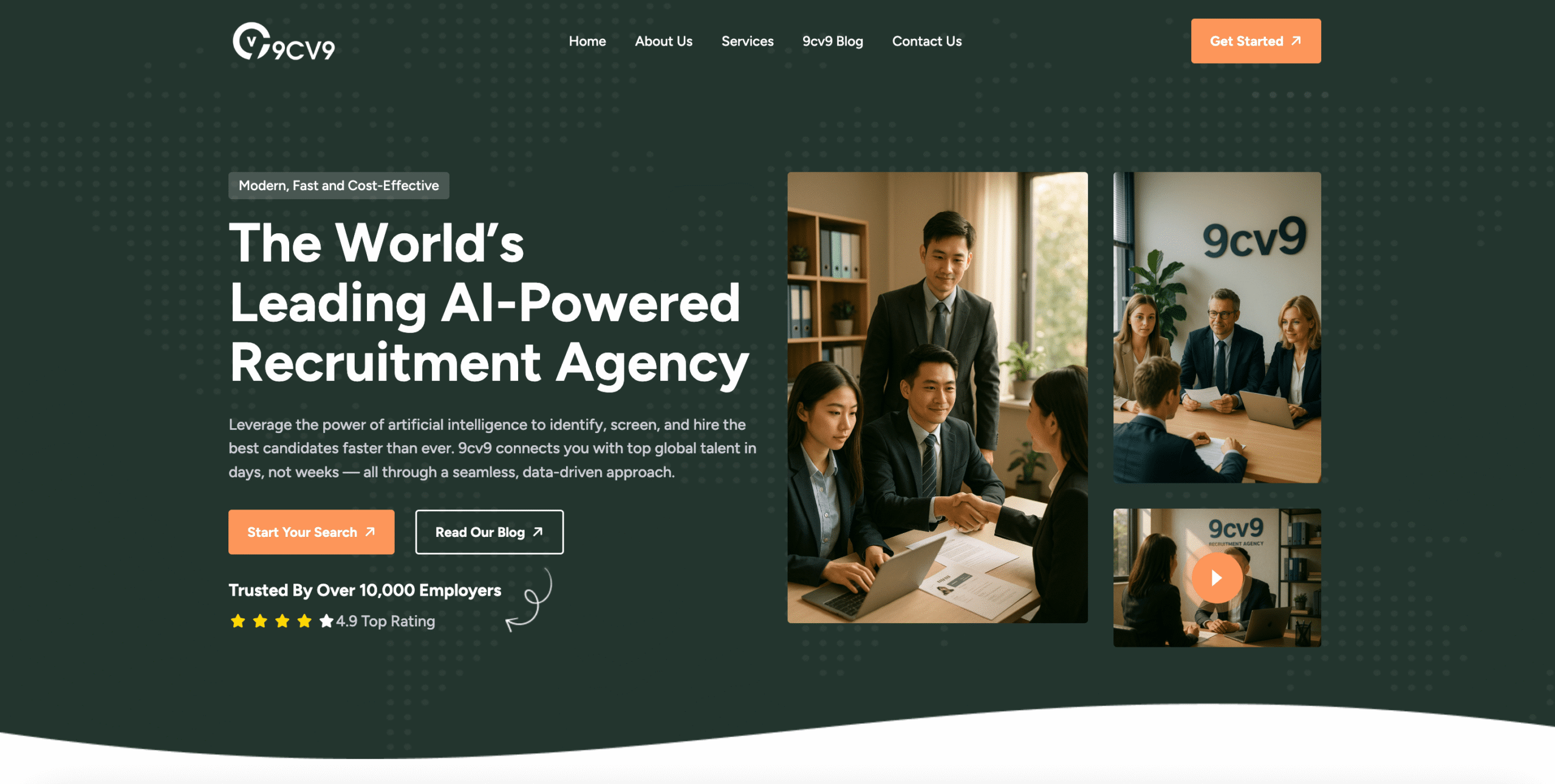
In 2026, 9cv9 has emerged as one of the most strategically positioned IT recruitment agencies for employers seeking high-quality technology professionals in the People’s Republic of China. As the demand for artificial intelligence engineers, full-stack developers, cloud architects, cybersecurity specialists, and data scientists continues to intensify, companies require recruitment partners that combine speed, technical precision, and digital-first sourcing strategies.
9cv9 differentiates itself through a technology-enabled recruitment model that emphasizes performance-driven hiring, scalable sourcing, and strong alignment with modern IT workforce demands. For employers expanding in major innovation hubs such as Shanghai, Beijing, Shenzhen, Hangzhou, and Guangzhou, 9cv9 provides structured access to vetted, job-ready IT professionals.
Why 9cv9 Stands Out in China’s IT Recruitment Market in 2026
China’s digital economy in 2026 is characterized by rapid AI deployment, smart manufacturing transformation, enterprise SaaS expansion, and cross-border digital commerce. In this highly competitive environment, traditional recruitment methods often fall short in speed and specialization.
9cv9 addresses these challenges through:
• Dedicated IT and software recruitment focus
• AI-enhanced candidate sourcing and screening
• Data-driven talent matching
• Structured technical vetting processes
• Agile hiring models for startups and enterprises
Unlike generalist staffing agencies, 9cv9 concentrates specifically on high-demand technology roles, ensuring recruiters understand technical frameworks, programming languages, and evolving digital skill sets.
Core IT and Software Recruitment Capabilities
9cv9’s service portfolio is built around precision hiring for complex technical roles. The agency supports employers across permanent, contract, and project-based hiring models.
The following table outlines 9cv9’s core capabilities for IT employers in China.
Table: 9cv9 – IT Recruitment Capabilities in China (2026)
| Service Category | Description | Employer Benefit |
|---|---|---|
| Permanent IT Recruitment | Mid-to-senior software engineers and tech managers | Long-term workforce stability |
| Contract and Project-Based Hiring | Short-term and agile team deployment | Flexibility during rapid expansion |
| Technical Talent Screening | Structured coding and competency evaluation | Reduced hiring risk |
| AI-Enhanced Candidate Matching | Algorithm-based resume and skill alignment | Faster time-to-hire |
| Employer Branding Support | Talent attraction campaigns in tech communities | Improved offer acceptance rates |
| Salary Benchmarking Advisory | Market-driven compensation insights | Competitive hiring strategy |
High-Demand IT Roles Recruited by 9cv9 in 2026
In 2026, China’s technology hiring market is heavily focused on advanced digital competencies. 9cv9 actively recruits for roles including:
• Artificial Intelligence and Machine Learning Engineers
• Cloud Infrastructure and DevOps Specialists
• Full-Stack and Backend Software Developers
• Cybersecurity and Information Security Analysts
• Data Engineers and Business Intelligence Analysts
• Product Managers for SaaS and Digital Platforms
• Blockchain and Fintech Developers
The agency’s recruiters are trained to assess both technical depth and cultural alignment, ensuring that candidates are not only technically qualified but also adaptable to fast-paced digital environments.
The matrix below evaluates 9cv9’s strength across key IT hiring categories.
Table: IT Recruitment Effectiveness Matrix – 9cv9 (2026)
| IT Hiring Category | Speed of Delivery | Technical Vetting Depth | Scalability | Overall Effectiveness |
|---|---|---|---|---|
| Software Engineering (Mid-Level) | Very High | High | High | Very Strong |
| Senior Technical Specialists | High | Very High | Medium | Very Strong |
| DevOps and Cloud Infrastructure | High | High | High | Strong |
| AI and Data Science | High | Very High | Medium | Very Strong |
| Rapid Team Build for Startups | Very High | High | Very High | Very Strong |
Technology-Driven Recruitment Model
One of 9cv9’s defining strengths in 2026 is its technology-first recruitment infrastructure. Rather than relying solely on manual outreach, the agency integrates:
• Automated talent sourcing tools
• Predictive candidate matching systems
• Digital applicant tracking workflows
• Data-backed performance analytics
This approach enables employers to reduce hiring cycles, improve offer-to-acceptance ratios, and gain visibility into candidate pipeline performance.
The following framework summarizes the agency’s digital recruitment advantages.
Table: Digital Recruitment Infrastructure – 9cv9 (2026)
| Digital Capability | Operational Impact | Employer Advantage |
|---|---|---|
| AI Resume Parsing | Rapid candidate filtering | Reduced screening time |
| Talent Pool Segmentation | Role-specific and skill-based categorization | Higher matching precision |
| Recruitment Analytics Dashboard | Real-time hiring metrics | Data-informed hiring decisions |
| Automated Communication Tools | Streamlined candidate engagement | Improved candidate experience |
| Market Trend Monitoring | Ongoing industry demand analysis | Strategic workforce planning support |
Support for Startups and Scaling Enterprises
In addition to serving multinational corporations, 9cv9 is particularly effective in supporting venture-backed startups and high-growth technology firms. These organizations often require:
• Rapid hiring for product development cycles
• Cost-efficient recruitment solutions
• Flexible engagement structures
• Deep understanding of startup culture
9cv9’s agile operational model allows it to support companies during critical growth phases, including Series A to Series C expansion stages.
Strategic Suitability for Employers in China
The following suitability matrix outlines 9cv9’s alignment across different employer profiles in 2026.
Table: Strategic Suitability Matrix – 9cv9 for IT Hiring in China (2026)
| Employer Type | Hiring Speed Requirement | Innovation Intensity | Budget Sensitivity | Overall Suitability |
|---|---|---|---|---|
| High-Growth Tech Startups | Very High | Very High | Medium-High | Very Strong |
| Venture-Backed Scale-Ups | Very High | High | Medium | Very Strong |
| Multinational R&D Centers | High | Very High | Medium | Strong |
| Enterprise Digital Transformation Programs | High | High | Medium | Strong |
| Traditional Enterprises Adopting Technology | Medium | Medium | Medium | Strong |
Competitive Position in China’s IT Recruitment Sector
In the competitive landscape of IT recruitment agencies in China in 2026, 9cv9 stands out as a specialized, technology-driven, and performance-oriented recruitment partner. Its focus on digital hiring methodologies, technical vetting accuracy, and scalable workforce solutions aligns directly with the needs of modern IT employers.
For companies seeking to hire software developers, AI engineers, cloud specialists, and other technology professionals in China, 9cv9 represents a forward-looking recruitment agency equipped to navigate the complexities of the country’s dynamic digital economy.
2. FESCO Group
FESCO Group, formally known as Foreign Enterprise Service Corporation, remains one of the most dominant human resource service providers in China in 2026. Originally established to support foreign-invested enterprises entering the Chinese market, FESCO has evolved into a comprehensive HR outsourcing and recruitment powerhouse.
As of late 2025, FESCO reported trailing twelve-month revenue of RMB 43.659 billion and maintains a market valuation of RMB 10.51 billion. Its scale, financial strength, and longstanding institutional relationships position it among the most influential HR organizations in the country.
Core Strengths in IT and Software Recruitment
FESCO’s competitive advantage is rooted in its integrated HR service model. While many agencies focus solely on talent acquisition, FESCO combines recruitment with employment administration, payroll management, social insurance processing, and Employer of Record services.
Its primary differentiator in 2026 is regulatory reliability. With increasing enforcement of the Personal Information Protection Law (PIPL) and expanding cybersecurity and data localization requirements, employers face significant compliance risks. FESCO’s extensive experience managing multi-city operations and government reporting requirements makes it particularly attractive to multinational corporations and large domestic enterprises operating in highly regulated sectors.
The company’s nationwide network spans major technology hubs such as Beijing, Shanghai, Shenzhen, Guangzhou, Hangzhou, and Chengdu. This geographic reach enables cross-regional recruitment strategies and localized onboarding processes.
Comprehensive Service Portfolio
The following table illustrates FESCO’s integrated service structure in 2026:
Table: FESCO Group – IT Recruitment and HR Service Capabilities (2026)
| Service Category | Description | Strategic Value for IT Employers |
|---|---|---|
| IT and Software Recruitment | Mid-to-senior level hiring, executive search, technical talent sourcing | Access to pre-vetted engineering and leadership talent pools |
| Employer of Record (EOR) | Legal employment hosting for foreign and domestic companies | Fast market entry without entity setup |
| Payroll Outsourcing | Salary processing, tax compliance, benefits administration | Reduced administrative burden and compliance risk |
| Social Insurance Management | Statutory contributions and local filings | Accurate city-level regulatory alignment |
| Compliance Advisory | Labor law interpretation and risk mitigation | Protection against fines and disputes |
| Data Protection Compliance | PIPL-aligned data handling processes | Reduced exposure to cybersecurity penalties |
Client Perspective and Market Feedback
Feedback from multinational clients in 2026 consistently highlights FESCO’s regulatory expertise as a decisive factor in vendor selection. For large employers operating across multiple cities, managing variations in local labor policies and social insurance contribution schemes presents significant operational risk.
One verified client operating in the technology sector described FESCO as instrumental in supporting expansion strategies. The client emphasized the organization’s depth of expertise in navigating China’s complex labor framework and administrative systems. According to the review, FESCO’s strong government relationships and nationwide infrastructure provide a compliance layer that is considered essential for risk management in large-scale operations.
Strategic Fit Matrix for IT Employers
The following matrix evaluates FESCO’s suitability across different employer profiles in 2026:
Table: FESCO Strategic Fit Matrix for IT and Software Hiring
| Employer Type | Recruitment Complexity | Compliance Sensitivity | Geographic Spread | Suitability Rating |
|---|---|---|---|---|
| Multinational Corporations (MNCs) | High | Very High | Multi-city | Very Strong |
| Large Domestic Tech Enterprises | High | High | Multi-city | Strong |
| High-Growth Startups Expanding Nationally | Medium | High | Multi-city | Strong |
| Early-Stage Startups (Single City) | Medium | Medium | Single city | Moderate |
Market Position in the 2026 Recruitment Ecosystem
Within the broader ecosystem of IT recruitment agencies in China, FESCO occupies a hybrid category that blends executive search, compliance outsourcing, and workforce management. While niche IT headhunters may offer deeper specialization in emerging technical domains such as AI research or semiconductor design, FESCO’s value proposition centers on stability, compliance assurance, and large-scale operational capability.
In an environment where regulatory enforcement has tightened and data governance standards are more rigorously monitored, FESCO’s institutional credibility remains a decisive advantage. For technology employers prioritizing long-term operational security and nationwide scalability, FESCO continues to rank among the most reliable recruitment and HR partners in China in 2026.
3. CIIC
China International Intellectech Corporation, widely recognized as CIIC, is a Beijing-headquartered state-owned enterprise that plays a central role in China’s human resource services sector. In 2026, CIIC continues to rank among the top recruitment and HR outsourcing providers supporting IT and software hiring across the People’s Republic of China.
As digital transformation accelerates nationwide, enterprises are under mounting pressure to secure highly skilled software engineers, artificial intelligence specialists, data analysts, and cloud infrastructure experts. At the same time, regulatory oversight has intensified, particularly in areas such as labor law compliance, cross-border employment structuring, and data protection governance. Within this environment, CIIC has positioned itself as a reliable and compliance-driven partner for both domestic corporations and foreign-invested enterprises.
Corporate Positioning and State-Owned Advantage
CIIC’s status as a state-owned enterprise differentiates it from privately held recruitment firms. This structure provides a level of institutional credibility that is highly valued by companies operating in sensitive or heavily regulated industries such as fintech, telecommunications, healthcare technology, and public infrastructure software.
In 2026, organizations seeking official verification, regulatory transparency, and risk mitigation often view CIIC as a preferred partner. Its close alignment with government standards enables companies to manage employment risks more effectively, particularly when expanding across multiple provinces or engaging in large-scale workforce deployments.
Technology-Driven Recruitment: The “Guangmou” AI Platform
One of CIIC’s most significant strategic developments in 2026 is the modernization of its recruitment capabilities through the “Guangmou” AI platform. This digital human system represents a step toward automated and standardized candidate evaluation within China’s competitive IT recruitment ecosystem.
The Guangmou platform is designed to:
• Generate customized interview frameworks tailored to specific software engineering roles
• Conduct structured and objective candidate evaluations
• Provide data-driven insights to hiring managers
• Standardize assessment criteria across cities and business units
By integrating AI-assisted recruitment methodologies, CIIC enhances scalability while maintaining consistency in evaluation standards. This is particularly valuable for enterprises hiring hundreds of developers or technical specialists across multiple regions.
The table below outlines the strategic impact of the Guangmou platform in 2026.
Table: CIIC Guangmou AI Platform – Functional Capabilities and Employer Benefits (2026)
| Functional Component | Description | Strategic Benefit for IT Employers |
|---|---|---|
| Customized Interview Planning | Role-specific interview templates generated by AI | Improved alignment with technical job requirements |
| Digital Candidate Evaluation | Objective scoring and structured competency assessment | Reduced interviewer bias and higher hiring consistency |
| Multi-City Standardization | Unified assessment criteria across regional offices | Consistent recruitment quality nationwide |
| Data-Driven Reporting | Analytics dashboards for HR and management teams | Enhanced hiring decision transparency |
| Automated Workflow Integration | Integration with HR outsourcing and payroll systems | Streamlined end-to-end recruitment lifecycle |
Integrated HR Outsourcing and Employer of Record Capabilities
Beyond talent acquisition, CIIC is widely recognized for its comprehensive HR outsourcing and Employer of Record services. In China’s regulatory environment, employment compliance can vary significantly between municipalities. Social insurance contributions, housing fund requirements, tax thresholds, and employment documentation standards often differ by city.
CIIC’s unified HR outsourcing model enables companies to centralize workforce management while maintaining localized compliance. This structure is particularly advantageous for IT enterprises operating development centers in cities such as Beijing, Shanghai, Shenzhen, Hangzhou, Chengdu, and Suzhou.
The following matrix summarizes CIIC’s service strengths for technology employers in 2026.
Table: CIIC Capabilities Matrix for IT and Software Hiring in China (2026)
| Capability Area | Coverage Scope | Compliance Strength | Scalability | Suitability for IT Enterprises |
|---|---|---|---|---|
| IT Recruitment | Nationwide | High | High | Strong |
| Employer of Record (EOR) | Multi-city, cross-provincial | Very High | High | Very Strong |
| Payroll and Tax Administration | City-specific compliance | Very High | High | Very Strong |
| Workforce Risk Management | Labor disputes and audit support | Very High | Medium | Strong |
| AI-Driven Interview Assessment | Centralized digital platform | High | High | Strong |
Client and Employee Feedback Insights
Market feedback in late 2025 provides insight into CIIC’s operational culture and employer reputation. A consultant based in Shanghai noted that while salary levels were considered average compared to private-sector competitors, employee benefits were relatively strong and job stability was significant.
The review highlighted several key points:
• The organization offers considerable employment stability, reflecting its state-owned enterprise status
• Internal communication processes are efficient and structured
• Recruitment cycles are relatively fast
• HR teams are capable of offering competitive packages when required
• Management style is more traditional compared to modern startup environments
For clients, these characteristics translate into predictable processes, standardized systems, and lower operational volatility. Organizations seeking long-term workforce stability and formalized HR governance frameworks often consider these attributes advantageous.
Strategic Fit Assessment for Different Employer Profiles
CIIC’s positioning in 2026 is particularly aligned with enterprises that prioritize compliance certainty and institutional credibility over rapid, boutique-style recruitment agility.
The following table evaluates CIIC’s strategic suitability for various types of technology employers.
Table: Strategic Suitability Matrix – CIIC for IT and Software Hiring (2026)
| Employer Type | Regulatory Sensitivity | Workforce Size | Geographic Complexity | Overall Suitability |
|---|---|---|---|---|
| Multinational Corporations | Very High | Large | Multi-city | Very Strong |
| State-Linked Technology Firms | Very High | Large | Multi-city | Very Strong |
| Established Domestic Tech Enterprises | High | Medium-Large | Multi-city | Strong |
| Venture-Backed High-Growth Startups | Medium | Medium | Multi-city | Moderate to Strong |
| Early-Stage Tech Startups | Medium | Small | Single city | Moderate |
Position Within China’s Top 10 IT Recruitment Agencies in 2026
Among the top recruitment agencies supporting IT and software hiring in China in 2026, CIIC occupies a distinctive position. Its strengths lie not only in candidate sourcing but also in compliance assurance, government alignment, and multi-city workforce administration.
While some private recruitment firms may specialize in niche technical headhunting for emerging technologies, CIIC’s value proposition is built around structured systems, risk control, and scalable workforce management. For companies expanding across China and seeking long-term regulatory security, CIIC remains one of the most strategically reliable recruitment and HR outsourcing partners in the country’s evolving technology employment market.
4. Career International
Career International, also known as Kerui International, has established itself as one of the most influential recruitment and human capital management firms in the People’s Republic of China. By 2026, the company stands out as a dominant force in high-end talent acquisition, particularly in advanced technology sectors such as artificial intelligence, new energy systems, semiconductor engineering, and biopharmaceutical innovation.
Amid intensified competition for skilled IT professionals, Career International has positioned itself as a data-driven and technology-enabled recruitment partner. The firm reported RMB 10.755 billion in revenue for the first three quarters of 2025, representing a 26.29% year-over-year increase. This financial performance reflects both strong domestic demand for specialized technology talent and the company’s expanding market share within China’s recruitment ecosystem.
Revenue Growth and Market Momentum
The rapid growth achieved by Career International in 2025 demonstrates the sustained demand for structured, scalable, and technology-supported recruitment services. As Chinese enterprises accelerate investments in AI infrastructure, green technology, and digital manufacturing, hiring mid-to-senior technical leaders has become mission-critical.
The following table summarizes the company’s key financial and operational indicators leading into 2026.
Table: Career International – Key Performance Indicators (2025–2026 Context)
| Performance Metric | Reported Data | Strategic Interpretation |
|---|---|---|
| Revenue (First 3 Quarters 2025) | RMB 10.755 Billion | Strong national market presence |
| Year-over-Year Revenue Growth | 26.29% | Accelerating demand for high-end talent services |
| Mid-to-Senior Placements in 2025 | Over 11,000 professionals | Deep penetration in technical and leadership hiring |
| Technology Investment (First Half 2025) | RMB 65 Million | Commitment to digital transformation |
| Allocation to Digital Product Development | 64% of tech investment | Focus on scalable recruitment technology platforms |
The scale of mid-to-senior placements highlights the firm’s emphasis on leadership and technically complex roles rather than entry-level recruitment. This is particularly relevant for IT and software enterprises seeking engineering directors, product architects, R&D managers, and AI specialists.
HEWA Platform and Industrial Interconnected Ecosystem
A defining feature of Career International’s 2026 strategy is its proprietary “HEWA” platform. HEWA functions as an industrial interconnected recruitment ecosystem, integrating recruiters, enterprise clients, talent databases, and digital workflow tools into a centralized platform.
In 2025, the number of registered recruitment consultants on the HEWA platform increased by 111%, signaling rapid network expansion and ecosystem growth. This expansion enhances candidate reach and improves the firm’s ability to respond to complex, multi-location hiring projects.
The strategic value of the HEWA ecosystem can be illustrated in the following capability framework.
Table: HEWA Platform – Functional Ecosystem Model (2026)
| Ecosystem Component | Operational Function | Employer Benefit in IT Hiring |
|---|---|---|
| Recruitment Consultant Network | Nationwide pool of certified recruiters | Faster access to specialized technical talent |
| Digital Talent Database | Centralized repository of mid-to-senior professionals | Data-backed candidate matching |
| Workflow Automation | Structured hiring pipelines and tracking systems | Improved recruitment efficiency and transparency |
| Industry-Specific Talent Pools | AI, new energy, biotech, advanced manufacturing | Sector-aligned candidate sourcing |
| Analytics and Reporting | Performance metrics and hiring analytics | Strategic workforce planning support |
By leveraging digital infrastructure, Career International reduces time-to-hire while improving matching accuracy. For companies in AI development, cloud computing, robotics, or renewable energy software, this ecosystem approach delivers measurable scalability advantages.
Sector Specialization in Advanced Technology
Career International’s recruitment focus aligns with China’s strategic industries. In 2026, the company is particularly active in sectors that require highly specialized technical competencies, including:
• Artificial intelligence engineering and machine learning research
• Semiconductor design and embedded systems software
• New energy technology and battery management systems
• Biopharmaceutical data platforms and digital health technologies
• Advanced manufacturing automation and industrial software
This specialization enables the firm to maintain curated talent networks rather than relying solely on generalist databases.
The following matrix evaluates Career International’s strength across different IT hiring categories.
Table: Sector Strength Matrix – Career International (2026)
| Technology Segment | Mid-Level Hiring | Senior Technical Roles | Executive Search | Overall Strength |
|---|---|---|---|---|
| Artificial Intelligence | Strong | Very Strong | Strong | Very Strong |
| Cloud and Enterprise Software | Strong | Strong | Moderate | Strong |
| Semiconductor and Embedded Systems | Moderate | Strong | Strong | Strong |
| New Energy Technology | Strong | Very Strong | Strong | Very Strong |
| Biopharmaceutical Digital Systems | Moderate | Strong | Strong | Strong |
Investment in Recruitment Technology
Career International’s investment of RMB 65 million in technology during the first half of 2025, with 64% directed toward digital product development, signals a long-term strategy centered on automation and data intelligence. This allocation suggests a shift away from purely relationship-based recruitment toward platform-enabled scalability.
Digital product enhancements in 2026 are expected to include:
• AI-driven resume screening and ranking
• Predictive hiring analytics
• Candidate engagement automation
• Integrated onboarding workflows
These tools enhance employer visibility into recruitment pipelines and reduce operational friction during high-volume hiring campaigns.
Workplace Culture and Contractor Experience
An external review from a Rich Media Campaign Manager working as a contractor at a major technology firm in Shanghai through Career International provides insight into the firm’s operational effectiveness. The individual described the experience as professionally rewarding and intellectually stimulating. Exposure to high-performing teams, advanced technical knowledge, and collaborative work culture were cited as key advantages.
The review also highlighted supportive management practices and an environment conducive to learning and skill development. For IT professionals placed through Career International, the firm appears capable of facilitating placements within prestigious global organizations and high-caliber domestic enterprises.
Strategic Fit for IT and Software Employers in 2026
Career International’s positioning is particularly suited to enterprises seeking mid-to-senior technical professionals in high-growth sectors. Its digital infrastructure and ecosystem-based recruitment model make it attractive to technology-driven firms requiring rapid scaling without compromising candidate quality.
The following suitability assessment outlines its alignment with different employer categories.
Table: Strategic Suitability Matrix – Career International for IT Hiring (2026)
| Employer Type | Hiring Complexity | Innovation Focus | Multi-City Expansion | Overall Suitability |
|---|---|---|---|---|
| AI and Advanced Tech Enterprises | High | Very High | Multi-city | Very Strong |
| Venture-Backed Growth-Stage Tech Firms | High | High | Multi-city | Strong |
| Established Domestic Technology Leaders | High | High | National | Strong |
| Multinational R&D Centers in China | Very High | Very High | Multi-city | Very Strong |
| Early-Stage Startups | Moderate | High | Single city | Moderate |
Position Within China’s Top 10 IT Recruitment Agencies in 2026
Within the broader ranking of the top 10 recruitment agencies for IT and software hiring in China in 2026, Career International occupies a leading position due to its revenue scale, sector specialization, and aggressive investment in digital recruitment infrastructure.
Its combination of financial strength, technology-enabled recruitment processes, and deep penetration into high-growth industries positions it as a premier partner for enterprises seeking senior engineers, technical leaders, and innovation-driven managers. In a market defined by competition for scarce technical expertise, Career International represents a scalable and strategically aligned solution for complex hiring needs across China’s rapidly evolving technology economy.
5. Liepin
Liepin, operating under Tongdao Liepin Group, has become one of the most influential digital recruitment platforms in the People’s Republic of China. By 2026, it stands out as a dominant marketplace for mid-to-senior professionals, particularly in high-demand sectors such as software engineering, enterprise technology, fintech, artificial intelligence, and digital product management.
As China’s digital economy matures, competition for experienced technical leaders and specialized engineers has intensified. Enterprises in rapid expansion phases require recruitment partners capable of combining technology-driven candidate matching with personalized headhunting expertise. Liepin’s hybrid model of AI-enabled recruitment and professional talent consulting has positioned it as a preferred partner for scaling organizations.
User Base and Corporate Penetration
Liepin’s scale is one of its defining competitive advantages. The platform reports over 106 million registered users and 1.43 million verified corporate clients. This broad ecosystem allows companies to access a deep pool of mid-to-senior IT professionals across China’s major technology hubs, including Beijing, Shanghai, Shenzhen, Hangzhou, and Guangzhou.
The platform’s verified corporate client base strengthens employer credibility and ensures a more structured recruitment environment compared to open job boards.
The following table summarizes Liepin’s platform metrics entering 2026.
Table: Liepin Platform Metrics and Market Reach (2025–2026 Context)
| Key Metric | Reported Figure | Strategic Significance |
|---|---|---|
| Registered Professional Users | 106 Million+ | Extensive national talent pool |
| Verified Corporate Clients | 1.43 Million | Strong employer-side adoption |
| Net Profit (First Half 2025) | RMB 80.3 Million | Financial stability and sustainable growth |
| Year-over-Year Net Profit Growth | 77.1% | Rapid performance acceleration |
| AI Interview Engine Adoption (Paying Clients) | Over 70% | High trust in AI-driven evaluation tools |
The 77.1% year-over-year net profit growth reflects effective monetization of premium services and strong enterprise demand for structured mid-to-senior recruitment solutions.
Doris AI Interview Engine and Digital Evaluation Capabilities
One of Liepin’s most significant technological assets in 2026 is its proprietary “Doris” AI interview engine. Doris functions as an automated executive evaluation tool, supporting structured interviews, behavioral analysis, and competency-based assessments.
More than 70% of Liepin’s paying clients utilize the Doris system, indicating broad market acceptance of AI-assisted hiring methodologies.
The following framework illustrates the operational benefits of the Doris AI engine.
Table: Doris AI Interview Engine – Functional Capabilities and Employer Value (2026)
| Functional Feature | Operational Description | Employer Benefit in IT Recruitment |
|---|---|---|
| Structured AI Interviews | Pre-configured interview flows for technical roles | Standardized candidate assessment |
| Behavioral Analysis | AI-driven evaluation of communication and leadership traits | Improved executive hiring decisions |
| Technical Competency Scoring | Role-based skill alignment metrics | Better matching for software and engineering roles |
| Automated Reporting | Instant analytics dashboards for HR teams | Faster decision-making and reduced hiring cycle time |
| Integration with Headhunters | Combined AI screening and human advisory support | Balanced efficiency and qualitative insight |
The integration of AI algorithms with a professional headhunting team is particularly valuable for companies in growth mode. While AI enhances efficiency and scalability, experienced consultants provide contextual judgment for high-stakes executive placements.
Hybrid Model: AI Matching and Headhunting Integration
Unlike purely digital job boards, Liepin operates a dual-layer recruitment system. Its AI matching algorithms analyze candidate data, work history, compensation expectations, and industry trends, while professional consultants manage relationship-based executive search assignments.
This hybrid approach is especially effective for mid-to-senior IT roles such as:
• Software development managers
• Cloud infrastructure architects
• Cybersecurity directors
• Product and engineering vice presidents
• Data science team leaders
The matrix below evaluates Liepin’s strengths across IT recruitment categories in 2026.
Table: Liepin IT Recruitment Capability Matrix (2026)
| IT Hiring Category | AI Matching Strength | Headhunting Support | Speed of Delivery | Overall Effectiveness |
|---|---|---|---|---|
| Mid-Level Software Engineers | Very Strong | Moderate | High | Strong |
| Senior Technical Specialists | Strong | Strong | High | Very Strong |
| Engineering Managers | Strong | Very Strong | Medium-High | Very Strong |
| C-Level Technology Executives | Moderate | Very Strong | Medium | Strong |
| Rapid Expansion Team Builds | Very Strong | Strong | Very High | Very Strong |
This model makes Liepin particularly attractive to technology enterprises undergoing rapid scaling, where both speed and candidate quality are critical.
Financial Performance and Growth Trajectory
Liepin reported a net profit of RMB 80.3 million in the first half of 2025, reflecting significant financial improvement compared to the previous year. The 77.1% year-over-year growth signals improved operational efficiency, growing premium subscription uptake, and increased enterprise spending on AI-enhanced recruitment services.
In a competitive digital recruitment environment, sustained profitability strengthens client confidence and supports ongoing platform innovation.
Employee Perspective and Internal Culture
A review from an RPO Project Assistant working remotely and previously associated with international markets described the work environment at Liepin as dynamic and development-oriented. The reviewer highlighted strong internal camaraderie, opportunities for advancement, and the acquisition of valuable business communication skills.
Performance-based bonuses were described as motivating and competitive, fostering a results-driven culture. The review also acknowledged that headhunting roles can be high-pressure and involve repetitive tasks, particularly in candidate outreach and screening. However, the overall assessment emphasized the substantial learning opportunities and deep exposure to the human resources industry.
For client organizations, this internal culture suggests an energetic and performance-focused recruitment team capable of handling high-volume and high-expectation assignments.
Strategic Suitability for IT and Software Employers in 2026
Liepin’s platform-based and consultant-supported model aligns well with companies in aggressive growth phases, particularly those seeking to hire experienced technical professionals quickly.
The following suitability matrix illustrates alignment with various employer profiles.
Table: Strategic Suitability Matrix – Liepin for IT and Software Hiring (2026)
| Employer Type | Hiring Urgency | Mid-Senior Focus | Digital Adoption Preference | Overall Suitability |
|---|---|---|---|---|
| Venture-Backed Tech Scale-Ups | Very High | High | Very High | Very Strong |
| Established Internet and Platform Companies | High | High | High | Very Strong |
| Multinational R&D Centers in China | High | High | High | Strong |
| Traditional Enterprises Undergoing Digitalization | Medium | Medium | Medium | Strong |
| Early-Stage Startups | High | Low-Medium | High | Moderate |
Position Within the Top 10 Recruitment Agencies for IT Hiring in China
Within the broader context of the top 10 recruitment agencies for hiring IT and software employees in the People’s Republic of China in 2026, Liepin occupies a distinctive role as a digitally dominant platform for mid-to-senior professionals.
Its large-scale user base, strong profitability growth, widespread adoption of AI-driven interview tools, and integration of human headhunting expertise collectively make it a powerful recruitment partner. For technology companies seeking scalable, data-driven, and executive-level hiring solutions, Liepin represents one of the most strategically positioned agencies in China’s rapidly evolving technology talent market.
6. Randstad China

Randstad China operates as the mainland arm of one of the world’s largest human resource and staffing organizations. In the highly competitive recruitment landscape of the People’s Republic of China in 2026, Randstad China differentiates itself by combining global best practices with locally compliant workforce solutions.
As demand for skilled IT and software professionals continues to surge across artificial intelligence, fintech, enterprise SaaS, cybersecurity, and cloud infrastructure sectors, multinational corporations and domestic technology leaders increasingly require recruitment partners capable of aligning international standards with China-specific regulatory frameworks. Randstad China addresses this need through a digital-first approach supported by structured compliance services and strategic talent branding.
Digital Recruitment Strategy and the Torc AI Talent Marketplace
A key component of Randstad China’s innovation strategy is its integration with the Torc AI talent marketplace. This platform enhances sourcing efficiency by connecting employers with pre-vetted technical professionals through data-driven matching algorithms.
The Torc marketplace is designed to streamline:
• AI-enabled candidate identification
• Technical skill validation
• Remote and project-based engagement
• Rapid deployment of software engineers
By leveraging artificial intelligence and global talent pools, Randstad China strengthens its ability to support companies operating across multiple time zones or managing cross-border development teams.
The following table outlines the digital recruitment capabilities relevant to IT employers in 2026.
Table: Randstad China – Digital Recruitment Capabilities for IT Hiring (2026)
| Capability Area | Description | Strategic Employer Benefit |
|---|---|---|
| AI Talent Marketplace (Torc) | AI-driven technical talent sourcing platform | Accelerated access to vetted software professionals |
| Segmented Talent Pools | Categorized candidate databases by function and seniority | Faster role-specific matching |
| Digital Candidate Screening | Structured technical and behavioral assessments | Reduced time-to-hire |
| Employer Branding Support | Talent attraction campaigns and market positioning | Enhanced competitiveness in tight labor markets |
| Data-Driven Talent Insights | Market analytics and salary benchmarking | Informed compensation and workforce planning decisions |
Fee Structure and Value Proposition
Randstad China typically charges recruitment fees ranging from 15% to 30% of a candidate’s annual salary. While positioned at a premium level compared to smaller local agencies, the fee structure reflects a comprehensive service package.
The value proposition extends beyond candidate placement and includes:
• Localized HR advisory support
• Fully compliant payroll and employment structures
• Employer of Record services for market entry
• Contract structuring aligned with Chinese labor law
• Talent branding and recruitment marketing
For multinational companies entering China’s technology market, this integrated model reduces regulatory exposure while enhancing hiring efficiency.
Compliance and Employer of Record Capabilities
China’s employment environment in 2026 remains highly regulated, with variations in labor law enforcement, social insurance requirements, and tax reporting across cities. Randstad China addresses these complexities through structured compliance frameworks and Employer of Record services.
The following matrix highlights Randstad China’s operational strengths in compliance management for IT employers.
Table: Compliance and Workforce Structuring Matrix – Randstad China (2026)
| Service Dimension | Multi-City Capability | Regulatory Strength | Scalability | Suitability for IT Sector |
|---|---|---|---|---|
| Employer of Record (EOR) | Strong | Very High | High | Very Strong |
| Payroll Administration | Strong | Very High | High | Very Strong |
| Contract Staffing | Very Strong | High | Very High | Very Strong |
| Permanent Placement | Strong | High | High | Strong |
| Cross-Border Talent Engagement | Strong | High | Medium | Strong |
This structured compliance capability makes Randstad China particularly attractive to foreign enterprises establishing R&D centers or regional headquarters in Beijing, Shanghai, Shenzhen, or other innovation hubs.
Functional Focus in IT and Software Recruitment
Randstad China’s recruitment model emphasizes rapid access to skilled professionals through segmented talent pools. Rather than relying solely on open advertising, the firm organizes candidates by:
• Technical specialization
• Industry sector
• Seniority level
• Project-based versus permanent employment preferences
This segmentation enhances matching precision and accelerates workforce deployment for high-priority technology projects.
The following evaluation illustrates Randstad China’s effectiveness across IT hiring categories.
Table: IT Recruitment Effectiveness Matrix – Randstad China (2026)
| IT Hiring Category | Speed of Placement | Compliance Support | Global Integration | Overall Effectiveness |
|---|---|---|---|---|
| Contract Software Engineers | Very High | Very High | Strong | Very Strong |
| Cloud and Infrastructure Specialists | High | Very High | Strong | Very Strong |
| IT Project Managers | High | High | Strong | Strong |
| Technical Executives | Medium | High | Strong | Strong |
| Cross-Border Remote Developers | High | High | Very Strong | Very Strong |
This profile positions Randstad China as a strong partner for organizations requiring compliant contract staffing or hybrid workforce models.
Candidate Experience and Market Reputation
A review from a candidate in June 2025 described the recruitment experience with Randstad China as highly personalized and professionally supportive. The recruiter reportedly invested time in understanding the candidate’s career objectives, remuneration expectations, and personal circumstances.
The review highlighted several key strengths:
• Active advocacy for competitive compensation packages
• Clear communication throughout the hiring process
• Professional guidance during contract negotiation
• Strong relational engagement beyond transactional recruitment
Such feedback suggests that Randstad China maintains a candidate-centric approach, which can enhance employer reputation and offer acceptance rates.
Strategic Suitability for IT Employers in China
In the context of the top 10 recruitment agencies for hiring IT and software employees in the People’s Republic of China in 2026, Randstad China occupies a premium global-integrator position. It is particularly suited for enterprises requiring structured compliance frameworks combined with advanced digital sourcing capabilities.
The following suitability assessment summarizes alignment across employer profiles.
Table: Strategic Suitability Matrix – Randstad China for IT Hiring (2026)
| Employer Type | Compliance Sensitivity | International Operations | Workforce Flexibility Needs | Overall Suitability |
|---|---|---|---|---|
| Multinational Technology Corporations | Very High | Very High | High | Very Strong |
| Foreign Startups Entering China | Very High | High | High | Very Strong |
| Large Domestic Tech Enterprises | High | Medium | High | Strong |
| Project-Based Technology Integrators | High | Medium | Very High | Very Strong |
| Early-Stage Domestic Startups | Medium | Low | Medium | Moderate |
Competitive Position in 2026
Randstad China’s competitive advantage lies in its ability to merge global staffing standards with localized compliance execution. Its premium fee structure reflects a full-service model that includes digital talent marketplaces, employer branding, payroll compliance, and contract structuring.
For organizations prioritizing regulatory security, scalable contract staffing, and access to international best practices, Randstad China remains one of the most strategically positioned recruitment agencies in China’s IT and software employment market in 2026.
7. FESCO Adecco

FESCO Adecco operates as a strategic joint venture between FESCO, one of China’s most established state-linked HR service providers, and the global staffing group Adecco. This partnership merges deep local administrative knowledge with international recruitment standards, creating a hybrid service model that is particularly relevant in the People’s Republic of China’s highly regulated employment environment.
By 2026, FESCO Adecco has secured a strong position among the top recruitment agencies supporting IT and software hiring across China. Its value proposition lies in combining large-scale workforce deployment capability with rigorous compliance oversight and structured project delivery.
Strategic Role in High-Volume and Scalable IT Hiring
China’s digital economy is characterized by cyclical spikes in hiring demand, especially during major e-commerce sales periods, large-scale product launches, and platform expansions. Technology companies often require rapid workforce scaling to support software development sprints, cloud migration projects, logistics system integration, and digital marketing campaigns.
FESCO Adecco is particularly effective in managing high-volume temporary staffing and contract-based IT recruitment. This includes:
• Contract software engineers
• QA and testing specialists
• IT support and infrastructure technicians
• Logistics and systems integration developers
• Data processing and operations staff
The firm’s operational infrastructure allows it to rapidly deploy qualified professionals while maintaining full compliance with local labor laws.
The following table outlines FESCO Adecco’s scalable workforce capabilities in 2026.
Table: FESCO Adecco – Scalable IT Workforce Solutions (2026)
| Service Category | Operational Scope | Ideal Use Case | Strategic Benefit for Employers |
|---|---|---|---|
| Temporary IT Staffing | Short-term contract professionals | Seasonal e-commerce demand peaks | Rapid workforce expansion |
| Project-Based Recruitment | Fixed-term software development teams | Product launches and system upgrades | Structured delivery with defined timelines |
| Payroll and Social Insurance Mgmt | Multi-province administrative execution | Distributed IT teams | Reduced compliance exposure |
| Employer of Record Services | Legal employment hosting | Foreign firms without local entities | Simplified market entry |
| Sector-Specific Recruitment | IT, logistics, digital commerce, tech ops | Specialized technical hiring | Improved skill alignment |
Localized Compliance and Multi-Province Coverage
One of FESCO Adecco’s primary strengths in 2026 is its localized compliance expertise. China’s labor laws and social insurance contribution schemes differ by province and municipality. Companies operating in multiple regions must ensure accurate payroll calculations, housing fund contributions, and tax reporting in each location.
FESCO Adecco leverages FESCO’s administrative network to ensure consistent compliance across all provinces. This capability is particularly important for IT and logistics enterprises that maintain distributed development centers or operational hubs in cities such as Shanghai, Beijing, Shenzhen, Hangzhou, Chengdu, and Wuhan.
The matrix below evaluates the company’s compliance strength across operational dimensions.
Table: Compliance and Administrative Strength Matrix – FESCO Adecco (2026)
| Compliance Dimension | Multi-City Capability | Regulatory Accuracy | Risk Mitigation Level | IT Sector Relevance |
|---|---|---|---|---|
| Social Insurance Administration | Very Strong | Very High | Very High | Very Strong |
| Payroll Processing | Very Strong | Very High | Very High | Very Strong |
| Contract Structuring | Strong | High | High | Strong |
| Temporary Workforce Regulation | Very Strong | High | High | Very Strong |
| Labor Law Advisory | Strong | High | High | Strong |
This compliance-focused structure is particularly attractive to multinational technology firms and large domestic platforms that must adhere to strict governance standards.
Sector-Specific Recruitment Expertise
FESCO Adecco’s recruitment specialization spans IT, digital commerce, and logistics technology. In 2026, these sectors remain deeply interconnected due to China’s advanced e-commerce infrastructure and supply chain digitization.
The firm’s recruiters are trained to align technical skill sets with operational needs. For example:
• Matching backend developers with high-concurrency system requirements
• Sourcing DevOps engineers experienced in large-scale cloud deployments
• Identifying logistics IT professionals familiar with warehouse automation software
• Recruiting data engineers to optimize digital supply chain analytics
The following matrix evaluates FESCO Adecco’s effectiveness across IT hiring categories.
Table: IT Recruitment Effectiveness Matrix – FESCO Adecco (2026)
| IT Hiring Category | Speed of Delivery | Volume Capability | Compliance Integration | Overall Effectiveness |
|---|---|---|---|---|
| Contract Software Engineers | Very High | Very High | Very Strong | Very Strong |
| QA and Testing Teams | Very High | Very High | Very Strong | Very Strong |
| DevOps and Infrastructure Specialists | High | High | Very Strong | Strong |
| IT Support and Operations | Very High | Very High | Very Strong | Very Strong |
| Senior Technical Executives | Medium | Medium | Strong | Moderate to Strong |
The data suggests that FESCO Adecco excels in structured, high-volume IT recruitment rather than boutique executive search assignments.
Client Feedback and Service Performance
A client review associated with recruitment services for a software development company described FESCO Adecco’s performance as highly reliable and results-driven. The agency reportedly delivered all agreed milestones on schedule and provided a service level characterized as top-tier.
Key strengths identified in the review included:
• Rapid response times
• Accurate alignment of candidate skill sets with technical requirements
• Proactive and organized project management
• High satisfaction during a critical hiring phase
The emphasis on structured project management and technical matching indicates strong operational discipline, which is essential during time-sensitive hiring cycles.
Strategic Suitability for IT and Software Employers in 2026
Within the broader landscape of the top 10 recruitment agencies for hiring IT and software employees in the People’s Republic of China in 2026, FESCO Adecco occupies a distinctive position as a large-scale, compliance-driven workforce solutions provider.
It is particularly well suited for:
• E-commerce platforms facing seasonal scaling demands
• Technology integrators requiring temporary development teams
• Logistics-tech firms expanding regionally
• Multinational enterprises seeking compliant workforce structuring
The following suitability assessment provides a consolidated view.
Table: Strategic Suitability Matrix – FESCO Adecco for IT Hiring (2026)
| Employer Type | Workforce Volatility | Multi-Province Presence | Compliance Sensitivity | Overall Suitability |
|---|---|---|---|---|
| Large E-Commerce and Platform Companies | Very High | Very High | High | Very Strong |
| Logistics and Supply Chain Technology Firms | High | High | High | Very Strong |
| Multinational Corporations in China | Medium | Very High | Very High | Strong |
| Growth-Stage Software Enterprises | High | Medium | High | Strong |
| Early-Stage Startups | Medium | Low | Medium | Moderate |
Competitive Position in China’s IT Recruitment Market
FESCO Adecco’s hybrid structure, combining global staffing methodologies with local administrative precision, makes it one of the most operationally scalable recruitment partners in China’s technology sector in 2026.
Its strengths lie in volume deployment, regulatory compliance, and structured project execution rather than niche executive search. For enterprises managing rapid expansion cycles or geographically distributed IT operations, FESCO Adecco represents a strategically reliable and execution-focused recruitment partner in China’s evolving digital economy.
8. ManpowerGroup Greater China

ManpowerGroup Greater China remains one of the most established international workforce solutions providers operating in the People’s Republic of China. In 2026, the firm continues to play a significant role in supporting IT and technology recruitment, particularly within leading innovation hubs such as Shenzhen and Shanghai.
As China advances its digital economy strategy, demand for software developers, cloud engineers, AI specialists, cybersecurity analysts, and digital transformation managers remains strong. At the same time, employers are seeking workforce flexibility to manage rapid market shifts, product innovation cycles, and economic fluctuations. ManpowerGroup Greater China addresses this demand through adaptable hiring models and structured compliance frameworks aligned with both international standards and Chinese labor regulations.
Innovation Hub Coverage and Technical Talent Sourcing
ManpowerGroup has established a strong presence in China’s primary technology clusters. Shenzhen, recognized for hardware innovation and embedded systems development, and Shanghai, known for enterprise software, fintech, and multinational R&D centers, are central to its recruitment operations.
Its localized consultant teams are trained to source specialized technical professionals across:
• Artificial intelligence and machine learning
• Software engineering and full-stack development
• IT infrastructure and cloud services
• Cybersecurity and risk management
• Digital transformation leadership
The firm’s geographic strength ensures access to region-specific talent pools while maintaining centralized governance standards.
The following table summarizes ManpowerGroup Greater China’s regional strengths in 2026.
Table: ManpowerGroup Greater China – Regional IT Recruitment Strengths (2026)
| Innovation Hub | Primary Technology Focus Areas | Recruitment Strength | Strategic Employer Benefit |
|---|---|---|---|
| Shenzhen | Hardware-software integration, AI, IoT | Very Strong | Access to embedded systems and AI engineers |
| Shanghai | Fintech, enterprise SaaS, multinational R&D | Very Strong | Executive and cross-border hiring support |
| Beijing | Internet platforms, AI research, public sector | Strong | Access to research-driven technical talent |
| Guangzhou | Digital commerce, logistics tech | Strong | Scalable IT operations recruitment |
Flexible Workforce Models for Technology Employers
One of ManpowerGroup’s defining advantages in 2026 is its flexible workforce structuring capability. Chinese technology firms frequently face fluctuating labor demand due to:
• Rapid product development cycles
• Seasonal digital commerce peaks
• Venture funding-driven expansion
• Technology pilot projects
• Regulatory shifts requiring short-term compliance upgrades
To accommodate these dynamics, ManpowerGroup provides:
• Project-based hiring
• Short-term contract staffing
• Contract-to-permanent solutions
• Outsourced workforce management
• Employer of Record services
This flexibility enables IT employers to scale teams efficiently while controlling fixed employment costs.
The matrix below evaluates the effectiveness of ManpowerGroup’s workforce models for IT recruitment.
Table: Flexible Workforce Model Matrix – ManpowerGroup Greater China (2026)
| Workforce Model | Scalability | Compliance Integration | Cost Flexibility | IT Sector Suitability |
|---|---|---|---|---|
| Short-Term Contract Staffing | Very High | Very High | Very High | Very Strong |
| Project-Based Hiring | Very High | High | High | Very Strong |
| Contract-to-Permanent | High | High | Medium-High | Strong |
| Permanent Placement | Medium | High | Medium | Strong |
| Employer of Record (EOR) | High | Very High | Medium | Strong |
Hiring Outlook and Net Employment Data for 2026
ManpowerGroup’s 2026 hiring outlook data indicates strong demand within the Information and Technology sectors. The reported Net Employment Outlook (NEO) stands at 38% for Information roles and 37% for Technology roles, signaling robust employer confidence in continued hiring expansion.
These figures suggest sustained investment in digital infrastructure, cloud platforms, AI-driven systems, and enterprise technology modernization across China.
The following table provides a structured overview of sector hiring intentions.
Table: Sector Hiring Intentions – ManpowerGroup Greater China (2026)
| Sector Category | Net Employment Outlook (NEO) | Interpretation of Hiring Sentiment |
|---|---|---|
| Information | 38% | Strong expansion and innovation demand |
| Technology | 37% | High growth in software and digital roles |
| Manufacturing | Moderate | Stable demand with digital integration |
| Consumer Services | Moderate | Selective hiring for digital initiatives |
The elevated NEO levels in Information and Technology reinforce ManpowerGroup’s positioning as a strategic partner for organizations investing heavily in innovation and digital transformation.
Global Standards Adapted to Local Regulations
A consistent theme in market feedback is ManpowerGroup’s ability to adapt international HR frameworks to China’s local regulatory requirements. Labor law enforcement, social insurance contributions, and contractual obligations vary significantly across provinces. For compliance-driven companies, this localized adaptation is critical.
The firm’s global methodologies in workforce analytics, competency frameworks, and talent benchmarking are integrated with localized legal compliance expertise.
The following compliance matrix illustrates ManpowerGroup’s operational strengths.
Table: Compliance and Strategic Advisory Matrix – ManpowerGroup Greater China (2026)
| Capability Area | International Standardization | Local Regulatory Alignment | Strategic Value for IT Employers |
|---|---|---|---|
| Labor Law Compliance | High | Very High | Risk mitigation across regions |
| Payroll Administration | High | Very High | Accurate tax and insurance filing |
| Workforce Analytics | Very High | High | Data-driven hiring strategy |
| Employer of Record Services | High | Very High | Simplified multi-city expansion |
| Market Intelligence Reporting | Very High | High | Informed long-term workforce plans |
The Global Talent Barometer provided by ManpowerGroup is frequently cited as a valuable planning tool. It offers insights into talent availability, hiring sentiment, and workforce motivation trends, supporting strategic HR decision-making for technology employers.
Client Feedback and Organizational Culture
A consultant operating in 2026 described ManpowerGroup Greater China as a reliable partner for compliance-driven organizations. The review emphasized the company’s strong presence in Shanghai and Shenzhen, as well as its ability to harmonize international HR standards with local employment regulations.
The feedback also highlighted the organization’s focus on human skills development despite increasing automation. This emphasis on soft skills, adaptability, and workforce motivation aligns with the evolving needs of IT employers seeking not only technical expertise but also leadership and cross-functional collaboration capabilities.
Strategic Suitability for IT and Software Employers
Within the broader context of the top 10 recruitment agencies for hiring IT and software employees in the People’s Republic of China in 2026, ManpowerGroup Greater China occupies a flexible and compliance-oriented niche.
It is particularly well suited for:
• Multinational corporations requiring global HR alignment
• Innovation-driven firms operating in Shenzhen and Shanghai
• Enterprises managing short-term or project-based technical hiring
• Organizations prioritizing workforce analytics and labor market intelligence
The following suitability matrix consolidates its strategic alignment.
Table: Strategic Suitability Matrix – ManpowerGroup Greater China (2026)
| Employer Type | Flexibility Requirement | Compliance Sensitivity | Innovation Focus | Overall Suitability |
|---|---|---|---|---|
| Multinational Technology Enterprises | High | Very High | High | Very Strong |
| Domestic High-Growth Tech Firms | Very High | High | Very High | Very Strong |
| Hardware-Software Integration Companies | High | High | Very High | Strong |
| Traditional Enterprises Under Digital Upgrade | Medium | High | Medium | Strong |
| Early-Stage Startups | High | Medium | High | Moderate |
Competitive Position in China’s 2026 IT Recruitment Market
ManpowerGroup Greater China distinguishes itself through a balanced combination of flexible workforce deployment, compliance rigor, and global-standard strategic advisory services. Its strong footprint in major innovation hubs and robust hiring outlook data reinforce its relevance in China’s evolving technology labor market.
For companies seeking adaptable staffing models, reliable regulatory alignment, and data-informed workforce planning, ManpowerGroup Greater China remains a strategically valuable recruitment partner in the IT and software sector in 2026.
9. Hays China

Hays China operates as part of a globally recognized professional recruitment group with a strong specialization in finance, information technology, and engineering. In the People’s Republic of China’s evolving employment landscape in 2026, Hays has positioned itself as a strategic recruitment partner for organizations seeking highly skilled professionals in knowledge-intensive sectors.
Technology remains the largest global division within Hays’ overall portfolio, accounting for 25% of net fees worldwide. This concentration underscores the firm’s long-term commitment to IT and digital talent acquisition. In China, where digital transformation initiatives continue to accelerate, Hays leverages both international expertise and local market insights to serve enterprises operating in complex and innovation-driven industries.
Leveraging the Greater Bay Area for Technology Recruitment Growth
The Greater Bay Area, encompassing cities such as Shenzhen, Guangzhou, and Hong Kong, has emerged as one of the most dynamic financial and technology hubs globally. In 2026, Hays China is strategically leveraging this region’s expansion to drive recruitment growth in software development, fintech, smart manufacturing, and cross-border digital commerce.
The Greater Bay Area’s ecosystem combines advanced hardware manufacturing, artificial intelligence research, and global capital access. This environment creates significant demand for mid-to-senior IT professionals, including:
• Full-stack software engineers
• Fintech systems architects
• Cloud infrastructure managers
• Data scientists and analytics leaders
• Digital transformation program directors
Hays’ localized recruitment teams in the region support multinational corporations, domestic technology firms, and advanced manufacturing enterprises seeking specialized technical talent.
The following table outlines Hays China’s regional alignment with technology growth corridors.
Table: Hays China – Regional Technology Recruitment Focus (2026)
| Region | Key Industry Drivers | IT Talent Demand Level | Strategic Recruitment Opportunity |
|---|---|---|---|
| Greater Bay Area | Fintech, AI, advanced manufacturing | Very High | Executive and specialized hiring |
| Shanghai | Enterprise SaaS, global R&D centers | Very High | Multinational technology staffing |
| Beijing | Internet platforms, AI research | High | Digital innovation roles |
| Suzhou and Hangzhou | Smart manufacturing, e-commerce technology | High | Integrated IT-engineering hiring |
Technology and Manufacturing Convergence
Hays’ Top Ten Talent Trends for 2025 and 2026 emphasize a transformative shift in manufacturing, driven by the adoption of “smart factory” technologies. Traditional stagnation in certain industrial sectors is being reversed through automation, robotics, industrial IoT, and advanced data analytics.
This transformation has created substantial demand for hybrid professionals who combine engineering expertise with software and data capabilities. In China’s manufacturing-intensive regions, this convergence significantly expands the IT recruitment market.
Key roles in this transformation include:
• Industrial automation software engineers
• Robotics system developers
• Manufacturing data analysts
• Digital twin simulation specialists
• Cybersecurity experts for industrial control systems
The following matrix evaluates Hays China’s strength in addressing cross-sector digital transformation hiring.
Table: Cross-Sector Digital Transformation Recruitment Matrix – Hays China (2026)
| Sector Integration Area | Technical Complexity | Talent Scarcity | Hays Recruitment Strength | Overall Market Impact |
|---|---|---|---|---|
| Smart Factory Automation | Very High | High | Strong | Significant |
| Industrial IoT | High | High | Strong | Significant |
| Fintech Systems Modernization | Very High | High | Very Strong | Major |
| Enterprise Cloud Migration | High | Medium-High | Strong | Strong |
| Data-Driven Manufacturing | High | High | Strong | Significant |
This convergence between manufacturing and digital technology reinforces Hays’ positioning in both IT and engineering recruitment.
Professional Recruitment Model and Service Delivery
Hays China operates within a professional recruitment model focused primarily on mid-to-senior permanent placements. Unlike high-volume staffing agencies, Hays emphasizes consultative engagement, market mapping, and candidate relationship management.
The firm provides:
• Permanent placement services
• Executive search for senior technology leadership
• Market intelligence and salary benchmarking
• Workforce advisory and talent mapping
• Industry-specific recruitment consulting
The following capability table summarizes Hays China’s IT recruitment strengths.
Table: Hays China – IT Recruitment Capability Overview (2026)
| Capability Area | Depth of Expertise | Client Advisory Level | Speed of Delivery | Suitability for Complex Roles |
|---|---|---|---|---|
| Permanent IT Recruitment | Very Strong | High | Medium-High | Very Strong |
| Executive Technology Search | Strong | Very High | Medium | Very Strong |
| Market Intelligence and Benchmarking | Strong | Very High | Medium | Strong |
| Contract Staffing | Moderate | Medium | Medium-High | Moderate |
| Engineering-IT Hybrid Roles | Strong | High | Medium | Strong |
This consultative structure makes Hays particularly effective for organizations seeking strategic hiring rather than purely transactional recruitment.
Organizational Culture and Talent Development
A recruitment consultant reviewing the company in early 2026 described Hays as a professional environment characterized by a relaxed atmosphere and supportive colleagues. The review emphasized capable management and meaningful project engagement with clients.
Training and professional development were highlighted as first-class, reinforcing the company’s structured approach to consultant capability building. While the environment was described as KPI-driven and performance-oriented, it was also characterized as an effective training ground for individuals pursuing careers in professional recruitment.
For client organizations, this internal culture suggests disciplined processes, measurable performance standards, and a workforce trained in structured recruitment methodologies.
Strategic Suitability for IT and Software Employers in 2026
Within the broader context of the top 10 recruitment agencies for hiring IT and software employees in the People’s Republic of China in 2026, Hays China occupies a strong position in professional and consultative recruitment.
It is particularly well suited for:
• Multinational corporations establishing R&D or digital transformation centers
• Advanced manufacturing firms adopting smart factory technologies
• Fintech companies requiring senior system architects
• Enterprises seeking long-term strategic hiring partnerships
The following suitability matrix provides a consolidated overview.
Table: Strategic Suitability Matrix – Hays China (2026)
| Employer Type | Need for Specialized Talent | Strategic Advisory Requirement | Long-Term Hiring Focus | Overall Suitability |
|---|---|---|---|---|
| Multinational Technology Corporations | Very High | Very High | High | Very Strong |
| Smart Manufacturing Enterprises | Very High | High | High | Very Strong |
| Fintech and Financial Technology Firms | Very High | Very High | High | Very Strong |
| High-Growth Domestic Tech Companies | High | Medium-High | High | Strong |
| Early-Stage Startups | Medium | Medium | Medium | Moderate |
Competitive Position in China’s 2026 Technology Recruitment Market
Hays China differentiates itself through a consultative recruitment approach tailored to high-skill, professional roles in IT, engineering, and finance. By capitalizing on the rise of the Greater Bay Area and the digital transformation of manufacturing industries, the firm remains closely aligned with China’s most strategic economic developments.
For employers seeking structured advisory support, cross-sector digital expertise, and access to senior-level technical professionals, Hays China remains a strategically valuable recruitment partner in the IT and software employment market in 2026.
10. Michael Page

Michael Page, operating under PageGroup, is widely recognized as a global professional recruitment firm with a strong footprint in the People’s Republic of China. By 2026, the firm continues to play a strategic role in supporting foreign enterprises that are localizing their operations within China, particularly in finance, technology, and professional services.
As multinational corporations expand R&D centers, digital innovation hubs, and regional headquarters in China, the demand for experienced mid-level and upper management professionals has intensified. Michael Page’s consultative recruitment model, combined with internationally standardized processes, positions it as a preferred partner for structured, management-level hiring in the IT and software sectors.
Focus on Localization for Foreign Enterprises
One of Michael Page’s core strengths in China is assisting foreign companies with market localization. Localization in this context involves more than language adaptation; it requires alignment with Chinese labor regulations, market compensation benchmarks, and local leadership dynamics.
The firm supports multinational clients in recruiting:
• IT directors and senior software engineering managers
• Finance and technology transformation leaders
• Compliance and governance specialists
• Regional general managers with digital expertise
• Cross-border program managers
This specialization makes Michael Page particularly relevant for foreign-invested enterprises navigating China’s regulatory and cultural landscape.
The following table summarizes Michael Page’s localization support capabilities for IT employers.
Table: Michael Page – Localization and Professional Recruitment Capabilities (2026)
| Service Dimension | Operational Focus | Strategic Employer Benefit |
|---|---|---|
| Mid-Level IT Recruitment | Software managers and senior engineers | Strengthened local technical leadership |
| Upper Management Placement | IT directors and transformation heads | Strategic oversight aligned with global standards |
| Salary Benchmarking Reports | Industry-specific compensation data | Informed budgeting and competitive offers |
| Market Entry Advisory | Hiring strategy for foreign enterprises | Reduced localization risk |
| Talent Mapping and Competitor Analysis | Market landscape intelligence | Long-term workforce planning support |
Industry Salary Trend Reports and Market Intelligence
Michael Page’s salary trend reports are considered influential reference tools in the 2026 recruitment market. These reports provide structured data on compensation ranges, hiring sentiment, talent shortages, and industry-specific growth projections.
For IT and software employers, salary transparency is critical in a competitive labor market characterized by:
• Rising compensation expectations for AI and cloud specialists
• Scarcity of experienced cybersecurity leaders
• Intense competition for product and engineering managers
• Increasing cross-border talent mobility
The firm’s market intelligence allows employers to benchmark offers accurately and reduce candidate drop-off due to compensation misalignment.
Structured, High-KPI Recruitment Environment
Michael Page is known for operating within a performance-driven, KPI-oriented environment. This structured framework emphasizes disciplined client management, candidate screening rigor, and measurable performance outcomes.
While the environment is demanding, it contributes to the development of highly skilled recruitment consultants. Structured training programs, performance tracking systems, and strict process adherence ensure consistency in candidate vetting and client service.
The following matrix evaluates the strengths of Michael Page’s recruitment model for IT and technology hiring.
Table: Recruitment Model Evaluation – Michael Page (2026)
| Capability Area | Process Discipline | Candidate Vetting Rigor | Market Intelligence Depth | Suitability for Senior IT Roles |
|---|---|---|---|---|
| Mid-Level Management Recruitment | Very High | Very High | Strong | Very Strong |
| Senior IT Leadership Search | High | Very High | Strong | Very Strong |
| Salary Benchmarking Advisory | High | High | Very High | Strong |
| Contract Staffing | Moderate | Moderate | Medium | Moderate |
| Cross-Border Executive Placement | High | Very High | Strong | Very Strong |
This disciplined model aligns particularly well with multinational corporations that require structured recruitment governance.
Market Reputation and Consultant Development
A publicly shared review described Michael Page as one of the strongest training environments for building professional recruitment habits. The environment was characterized as “sink-or-swim,” meaning individual consultants are largely responsible for driving their own success.
Key themes highlighted in the review include:
• Strong brand recognition in the market
• High client respect for the firm’s vetting standards
• Intensive early-stage learning curve
• Structured yet evolving culture with improved inclusivity
• Significant career growth potential for those who perform well
For client organizations, the brand’s strong market reputation contributes to higher trust during candidate outreach and negotiation processes. Clients often perceive candidates presented by Michael Page as thoroughly vetted and professionally screened.
Target Market and Strategic Positioning in 2026
Michael Page’s primary target market in China consists of mid-level and upper management positions within large multinational companies and established domestic enterprises. Its structured methodology makes it particularly effective for roles requiring strategic oversight, governance alignment, and cross-border coordination.
The following suitability matrix outlines alignment across employer categories.
Table: Strategic Suitability Matrix – Michael Page for IT and Software Hiring (2026)
| Employer Type | Need for Structured Governance | International Alignment | Mid-to-Senior Focus | Overall Suitability |
|---|---|---|---|---|
| Multinational Technology Corporations | Very High | Very High | Very High | Very Strong |
| Foreign Enterprises Localizing in China | Very High | Very High | High | Very Strong |
| Large Domestic Tech Firms | High | Medium-High | High | Strong |
| High-Growth Startups | Medium | Medium | Medium | Moderate |
| Early-Stage Startups | Low-Medium | Low | Medium | Moderate |
Competitive Position in China’s IT Recruitment Market
Within the broader context of the top recruitment agencies supporting IT and software hiring in the People’s Republic of China in 2026, Michael Page holds a strong position in structured, professional recruitment for management-level roles.
Its combination of rigorous consultant training, respected salary benchmarking reports, and focus on multinational corporate hiring makes it a strategically reliable partner for enterprises seeking disciplined recruitment processes and high-caliber mid-to-senior IT professionals.
Strategic Human Capital Report: The Information Technology and Software Recruitment Ecosystem in the People’s Republic of China (2026)
The Information Technology and Software recruitment ecosystem in the People’s Republic of China in 2026 is undergoing a structural transformation driven by three converging forces:
- Accelerated artificial intelligence (AI) integration across enterprise systems
- Heightened regulatory and data governance requirements
- A decisive shift in employer strategy from expansionary hiring to precision talent acquisition
With the domestic IT services market projected to reach US$225.5 billion by 2033, growing at a compound annual growth rate (CAGR) of 8.4%, 2026 represents a pivotal year. Growth is no longer defined solely by scale, but by sophistication. Enterprises are transitioning from reactive IT support models to proactive, AI-governed service ecosystems that require advanced technical capabilities in machine learning, cybersecurity, cloud-native architecture, and autonomous systems engineering.
In this high-stakes environment, IT recruitment agencies are no longer transactional intermediaries. They have evolved into strategic human capital partners, responsible for enabling digital transformation at speed and scale.
Macroeconomic Determinants and the IT Market Trajectory
Market Expansion and Sectoral Maturity
China’s IT services industry continues its upward trajectory, supported by strong policy backing, digital industrialization initiatives, and sustained innovation from domestic technology leaders such as:
- Tencent
- Alibaba
- Baidu
By 2025, the IT services market reached US$116.7 billion in revenue. Projections for 2026 suggest continued expansion toward approximately US$126.5 billion, reinforcing China’s position as a central pillar of the Asia-Pacific digital economy.
A defining structural shift is the transition from reactive IT services—accounting for 54.93% of the market in 2025—to proactive, AI-enabled service models. These next-generation services include:
- Self-healing infrastructure systems
- Predictive maintenance algorithms
- Autonomous IT workflow orchestration
- Real-time cybersecurity threat detection
- Cloud-native microservices architecture
This qualitative evolution fundamentally reshapes workforce demand. Employers now prioritize engineers capable of designing adaptive, automated systems rather than maintaining legacy infrastructure.
Economic Environment in 2026: Precision Hiring and the “Lazy W” Recovery
China’s broader macroeconomic environment in 2026 is characterized by what analysts describe as a “Lazy W” recovery pattern: intermittent volatility offset by strong growth pockets in advanced technology sectors.
Key labor market indicators include:
- Global Net Employment Outlook (NEO): 24%
- Asia-Pacific NEO: 30%
- China NEO (2026): 24%, down from 33% in 2025
The slight moderation in hiring sentiment reflects a transition toward precision hiring. Rather than pursuing aggressive headcount expansion, organizations are focusing on:
- Mission-critical technical roles
- High-impact transformation positions
- Specialized AI and cybersecurity talent
- Senior cloud and infrastructure architects
This shift increases competition for top-tier IT professionals while reducing demand for generalized or mid-skill technical profiles.
Quantitative Market Indicators
| Economic Indicator | 2025 Baseline | 2026 Projection | 2033 Forecast |
|---|---|---|---|
| IT Services Market Size (USD Billion) | 116.7 | 126.5* | 225.5 |
| Market CAGR (IT Services) | N/A | 8.4% | 8.4% |
| Net Employment Outlook (China) | 33% | 24% | N/A |
| IT Services Revenue (CNY Billion) | 582.69 | 612.70* | 741.78 (2030) |
*Extrapolated estimates based on CAGR trends.
These figures demonstrate sustained expansion but also highlight increasing strategic selectivity in hiring decisions.
The Recruitment Infrastructure: Technology as an Enabler
Parallel to the growth of the IT services sector is the expansion of the recruitment software market, projected to reach US$2.78 billion in 2026.
This growth reflects structural changes in talent acquisition:
- AI-powered candidate matching systems
- Predictive analytics for workforce planning
- Automated interview scheduling and screening
- Digital compliance tracking for regulatory adherence
- Integrated employer branding platforms
Approximately 40% of Chinese organizations plan to expand their workforce in early 2026, primarily due to:
- Organizational growth (37%)
- Investment in new business areas (26%)
However, expansion is highly targeted, reinforcing the demand for agencies capable of identifying niche expertise in compressed timelines.
Strategic Implications for IT Recruitment Agencies
The evolving ecosystem places recruitment firms at the center of enterprise transformation. Agencies must now deliver:
- Deep technical literacy in AI, cybersecurity, DevOps, and data engineering
- Regulatory fluency, particularly regarding cybersecurity and cross-border data compliance
- Advanced market intelligence, including compensation analytics and skill scarcity mapping
- Agile sourcing models, capable of supporting both multinational enterprises and high-growth domestic firms
Traditional CV-based sourcing models are increasingly insufficient. Instead, high-performing agencies are deploying:
- Talent intelligence platforms
- Skills-based assessment frameworks
- Pipeline segmentation for emerging technologies
- Cross-border digital talent mobility networks
Structural Shifts in Candidate–Employer Dynamics
Candidate behavior in 2026 is notably different from pre-pandemic cycles:
- Increased preference for flexible and hybrid work models
- Greater emphasis on innovation-driven roles
- Heightened compensation expectations for AI and cloud specialists
- Stronger scrutiny of employer technological maturity
This dynamic reinforces the importance of recruitment partners who can align employer value propositions with candidate expectations.
Conclusion: From Staffing to Strategic Human Capital Advisory
The IT and software recruitment ecosystem in China in 2026 is defined by structural sophistication, not merely expansion. With the market progressing toward US$225.5 billion by 2033, the central competitive battleground is talent—specifically advanced, innovation-enabling talent.
Recruitment agencies operating in this environment must transcend transactional placement models. The most effective firms will function as:
- Strategic workforce advisors
- Digital talent intelligence partners
- Regulatory navigation specialists
- Innovation-enablement collaborators
In 2026, success in China’s IT sector is inseparable from success in securing elite technical talent. As AI adoption accelerates and proactive service models dominate, the recruitment function becomes a core determinant of enterprise competitiveness rather than a peripheral HR activity.
Technological Paradigm Shifts: AI Vetting and Digital Recruitment in China (2026)
AI as Core Infrastructure in IT Recruitment
By 2026, artificial intelligence is no longer an experimental enhancement in recruitment workflows—it has become foundational infrastructure. Across China’s IT and software hiring ecosystem, 71.5% of companies now integrate AI into recruitment processes, marking a decisive shift toward automated, data-driven talent acquisition.
AI systems are deployed across the full recruitment lifecycle:
- Automated resume parsing and ranking
- Behavioral and competency-based digital interviews
- Predictive candidate-job fit modeling
- Compensation benchmarking analytics
- Attrition risk forecasting
This transformation has given rise to what industry observers describe as “AI Recruiters”—digital systems capable of conducting structured interviews, evaluating candidate profiles against multi-dimensional performance indicators, and producing hiring recommendations with statistical confidence scoring.
In high-volume technology hiring markets such as Beijing, Shanghai, Shenzhen, and Hangzhou, AI-driven vetting significantly reduces time-to-hire while improving candidate quality calibration.
The Global Talent Barometer and Workforce Sentiment
A defining metric of 2026 is the Global Talent Barometer, which indicates:
- Regular AI usage increased by 13%, now covering 45% of the workforce
- 95% of employers forecast growth
- Only 51% of workers share this optimism
- 43% of workers fear automation could replace their roles within two years
This divergence between employer optimism and employee caution has created a psychological “reality gap” in the labor market.
While enterprises view AI as a productivity multiplier, employees increasingly perceive it as a displacement threat—particularly in software testing, basic coding, IT support, and data processing functions.
The Rise of “Job Hugging” in the IT Sector
One of the most significant behavioral outcomes of this uncertainty is the emergence of “job hugging.”
In 2026:
- 64% of employees intend to remain with their current employer to preserve stability
- Passive candidate engagement rates have declined
- Counter-offer acceptance rates have increased
- Risk aversion is strongest among mid-level technical professionals
For IT recruitment agencies, this trend presents structural sourcing challenges. Passive software engineers, DevOps specialists, and cybersecurity professionals are less responsive to outbound recruitment efforts, especially if their current employer is investing in AI transformation initiatives.
This shift requires agencies to:
- Strengthen employer branding narratives
- Offer transparent career progression mapping
- Emphasize reskilling and AI augmentation rather than displacement
- Provide stronger compensation differentiation
AI Adoption Metrics and Recruitment Implications (2026)
| AI Adoption Metric | 2025/2026 Value | Strategic Implication for Recruitment |
|---|---|---|
| Regular AI Usage in Workforce | 45% | Increased demand for AI-literate talent |
| Workers Fearing Automation | 43% | Higher resistance to job mobility |
| Companies Integrating AI (Past 12 Months) | 70%+ | Shift toward technically rigorous vetting |
| Recruitment AI Adoption Rate | 71.5% | Dominance of automated screening and AI interviews |
| Employer Growth Optimism | 95% | Continued demand for transformation talent |
| Worker Growth Optimism | 51% | Confidence gap influencing retention trends |
AI-Driven Vetting: From Resume Screening to Predictive Analytics
The evolution of recruitment AI in 2026 is characterized by deeper analytical sophistication. Modern systems no longer rely solely on keyword matching. Instead, they evaluate:
- Coding repository contributions
- Open-source collaboration patterns
- Skill adjacency modeling
- Project complexity scoring
- Behavioral alignment indicators
In China’s IT hiring ecosystem, especially for machine learning engineers and cloud architects, AI-assisted vetting ensures consistency in technical evaluation across large applicant pools.
This reduces unconscious bias while improving measurable performance alignment.
Strategic Implications for IT Employers
The rapid normalization of AI in recruitment introduces both opportunity and risk.
Competitive Advantages
Organizations leveraging advanced AI recruitment systems benefit from:
- Faster hiring cycles
- Improved skill-role alignment
- Reduced cost-per-hire
- Scalable screening for high-growth environments
Strategic Risks
However, over-automation may produce:
- Candidate alienation due to perceived depersonalization
- False negatives if contextual career shifts are misinterpreted
- Reinforcement of algorithmic bias if data inputs are flawed
Leading employers in 2026 adopt a hybrid model, combining AI-powered screening with human strategic oversight.
The Future of Digital Recruitment in China
In China’s IT and software recruitment ecosystem, AI integration is no longer optional. With over 70% of organizations deploying AI-driven hiring tools, automated vetting has become the default standard rather than a differentiator.
However, the defining strategic challenge of 2026 is not technological capability—it is talent psychology.
As automation accelerates, workforce sentiment becomes a critical variable in recruitment success. Agencies and employers must navigate:
- The widening optimism gap
- Heightened job security concerns
- Increasing demand for AI upskilling pathways
- Reduced passive candidate mobility
The most effective recruitment strategies in 2026 therefore combine:
- AI-driven precision
- Transparent career mobility messaging
- Reskilling commitments
- Human-centric engagement
In an ecosystem defined by rapid digital transformation, recruitment itself has become a technologically governed function—yet sustained success depends equally on managing human confidence in the age of intelligent automation.
Quantitative Analysis of Software Compensation and Hiring Costs in China (2026)
Total Employer Cost Structure: Beyond Base Salary
Hiring IT and software professionals in the People’s Republic of China in 2026 requires careful modeling of Total Employment Cost (TEC) rather than focusing solely on gross salary.
In Tier 1 cities such as Shanghai and Beijing, statutory employer obligations typically add 25% to 35% on top of base salary. These contributions include:
- Pension insurance
- Medical insurance
- Unemployment insurance
- Work injury insurance
- Maternity insurance
- Housing provident fund
The cumulative effect materially increases payroll budgets, particularly for senior technical leadership roles.
Salary Benchmarks for Popular IT Roles (Tier 1 Cities, 2026)
The following benchmarks reflect 50th percentile averages for Tier 1 markets in 2026.
| Position Title | Monthly Base Salary (CNY) | Employer Contributions (CNY) | Total Monthly Cost (CNY) | Annual Total Cost (CNY) |
|---|---|---|---|---|
| Software Engineer (AI) | 40,286 | 12,086 | 52,372 | 628,464 |
| Senior Software Engineer | 47,417 | 14,225 | 61,642 | 739,704 |
| DevOps Engineer | 46,833 | 14,050 | 60,883 | 730,596 |
| Product Manager | 35,000 | 10,500 | 45,500 | 546,000 |
| IT Digital Manager | 67,250 | 20,175 | 87,425 | 1,049,100 |
| Head of Development | 105,250 | 31,575 | 136,825 | 1,641,900 |
Strategic Observations
- Senior leadership roles exceed CNY 1 million annually, making mis-hiring financially significant.
- AI and DevOps roles command near parity at mid-to-senior levels due to digital transformation priorities.
- Contribution ceilings in Tier 1 cities increase cost predictability at higher salary brackets but still materially elevate payroll burden.
Regional Salary Variance in 2026
Geographic location remains a decisive compensation variable. Salaries in Shanghai and Beijing are typically 15% to 25% higher than in Tier 2 cities such as Nanjing and Shenyang.
Meanwhile, innovation-driven cities such as Hangzhou—home to major digital commerce ecosystems—are closing the compensation gap.
Average Software Engineer Salary by City (2026)
| City | Average Annual Salary (CNY) | 5-Year Projected Change |
|---|---|---|
| Shanghai | 489,657 | +17% |
| Hangzhou | 418,000 | +17% |
| Nanjing | 414,000 | +17% |
| Shenyang | 375,000 | +17% |
Implications for Employers
- Tier 2 expansion strategies can reduce payroll exposure by 15–25%.
- Remote and hybrid models are increasingly used to balance cost efficiency with access to Tier 1 talent.
- Compensation convergence in emerging tech hubs suggests diminishing arbitrage opportunities over the medium term.
Recruitment Agency Pricing and Service Fees (2026)
As hiring complexity increases, recruitment agencies in China operate under structured pricing frameworks.
1. Executive Search
Fee Structure: 25% – 33% of Annual Base Salary
Applicable For: Senior engineers, IT directors, Heads of Development
Inclusions:
- Targeted headhunting
- Deep technical and behavioral vetting
- Market mapping
- 6-month replacement guarantee
For a Head of Development earning CNY 1,641,900 annually, executive search fees may range from CNY 410,475 to CNY 541,827.
2. Contingent Recruitment
Fee Structure: 15% – 25% of Annual Base Salary
Applicable For: Mid-level software engineers, DevOps, product roles
Inclusions:
- Candidate sourcing
- Initial screening
- Success-based payment model
For a Senior Software Engineer (CNY 739,704 annually), contingent fees range from CNY 110,955 to CNY 184,926.
3. Employer of Record (EOR) / Payroll Services
Fee Structure: CNY 200 – CNY 400 per employee per month
Inclusions:
- Social insurance administration
- Individual Income Tax (IIT) filing
- Compliance management
- Employment contract handling
This model is popular among foreign companies entering China without establishing a legal entity.
4. Flexible Staffing / Contract Hiring
Fee Structure: 15% – 20% markup on hourly rate
Inclusions:
- Temporary or project-based deployment
- Non-core technical roles
- Workforce scalability during peak cycles
This model supports agile product launches and short-term transformation projects.
Cost Modeling: Example Scenario
Hiring a Senior Software Engineer in Shanghai via contingent recruitment:
- Annual Total Employment Cost: CNY 739,704
- Agency Fee (20% midpoint): CNY 147,941
- First-Year Total Outlay: CNY 887,645
This excludes onboarding costs, equipment, and potential equity components.
Strategic Financial Considerations for 2026
- Precision Hiring Reduces Financial Risk
Given seven-figure annual commitments for senior roles, rigorous vetting mitigates long-term cost exposure. - Regional Diversification as Cost Lever
Expanding engineering hubs into Hangzhou or Nanjing may reduce aggregate payroll costs while maintaining technical depth. - AI-Driven Screening Offsets Agency Fees
Internal AI recruitment systems can reduce reliance on external agencies for mid-level roles. - Executive Search Justified for Strategic Roles
For transformation-critical leadership, agency fees represent risk mitigation rather than overhead.
Conclusion
In 2026, hiring IT and software professionals in China requires comprehensive financial modeling that integrates:
- Base salary benchmarks
- Statutory contribution burdens
- Regional compensation variance
- Recruitment agency fee structures
With senior technical roles exceeding CNY 1.6 million annually in total cost, and recruitment fees potentially adding 15–33% on top of salary, workforce planning is now a capital allocation decision rather than a routine HR function.
Organizations that align compensation strategy, geographic planning, and recruitment model selection will maintain a measurable competitive advantage in China’s increasingly sophisticated technology talent market.
Recruitment Process Mechanics in the 2026 Landscape
Precision Planning in High-End IT Recruitment
In 2026, executive IT recruitment in the People’s Republic of China has evolved into a technology-enabled precision planning exercise. The combination of AI-driven talent intelligence, behavioral analytics, and structured executive search methodology has compressed hiring timelines while increasing selection accuracy.
Leading agencies such as Forestown and Michael Page deploy standardized yet highly customizable 8-step executive search frameworks. These frameworks are designed to ensure both technical mastery and cultural alignment—two factors that determine long-term retention in senior IT roles.
In parallel, digital-first agencies such as 9cv9 and Liepin leverage AI-powered matching algorithms to reduce time-to-hire well below traditional recruitment averages.
The 8-Step High-End Executive Search Process (2026 Model)
1. Requirement Sorting
This phase involves in-depth consultation with senior stakeholders to clarify:
- Organizational culture and transformation goals
- Technical stack maturity
- Leadership expectations
- Scope of service support required
Rather than focusing solely on job descriptions, agencies evaluate strategic impact and cross-functional alignment requirements.
2. Project Evaluation
A structured assessment of:
- Enterprise growth stage
- Market competitiveness
- Compensation benchmarking
- Risk profile of the position
The outcome is a tailored recruitment execution plan that defines sourcing channels, timeline benchmarks, and vetting depth.
3. Project Initiation
Leveraging regional and industry networks, agencies activate:
- Targeted headhunting
- External partnership channels
- Internal AI talent pools
- Cross-border sourcing (if required)
Initial candidate pipelines are often delivered within five working days, reflecting the acceleration enabled by digital talent mapping systems.
4. Talent Portraits & Big Data Analysis
This stage represents one of the most transformative shifts in 2026 recruitment.
Agencies create digital “talent portraits” that integrate:
- Technical capability matrices
- Leadership competency scoring
- Cultural alignment indicators
- Career trajectory analytics
- Compensation expectation modeling
Big data engines match candidates across multidimensional variables—skills, mentality, risk tolerance, innovation orientation, and retention probability.
5. Candidate Recommendation
Agencies typically submit structured candidate reports within 72 hours of shortlisting.
Key performance targets include:
- ≥85% skill-role alignment by second-round interviews
- Documented technical verification
- Behavioral and situational assessment insights
The emphasis is on predictive performance rather than reactive qualification matching.
6. Background Investigation
Background verification has intensified in 2026 due to heightened regulatory compliance and cybersecurity risk.
Scientific assessment methods include:
- Employment history verification
- Credential authentication
- Leadership reference triangulation
- Litigation and compliance screening
Industry estimates suggest that up to 72% of candidates may fail comprehensive background scrutiny when full verification is conducted, underscoring the importance of this stage for senior IT roles.
7. Pre-Job Counseling
Agencies assist with:
- Formal employment documentation
- Non-compete and confidentiality transition
- Resignation strategy planning
- Compensation negotiation alignment
This stage mitigates counter-offer risks and reduces candidate withdrawal rates.
8. Follow-Up & Settlement
Upon onboarding:
- Recruitment fees are typically settled within five working days
- Agencies provide structured follow-up support
- Integration monitoring ensures early-stage retention
Many executive search firms include free replacement guarantees within a defined period, reinforcing accountability.
Technology Acceleration and Time-to-Hire Reduction
The defining differentiator in 2026 is technological acceleration.
AI-enabled recruitment platforms—particularly those operated by 9cv9 and Liepin—reduce hiring cycle times by:
- Automating resume parsing
- Applying predictive fit algorithms
- Conducting asynchronous AI interviews
- Prioritizing high-probability candidates
Compared to traditional executive search cycles of 45–60 days, digitally enhanced processes can reduce timelines by 20–40%, particularly for mid-to-senior technical roles.
Strategic Implications for Employers
Increased Accuracy
The integration of big data and AI scoring improves technical-role precision and reduces costly mis-hires, particularly in million-CNY annual compensation brackets.
Higher Screening Thresholds
Advanced background investigations and structured assessments raise hiring quality but narrow candidate pools.
Competitive Differentiation Through Speed
In a market defined by “job hugging” and reduced passive mobility, speed is critical. Employers capable of making decisions within compressed windows secure higher acceptance rates.
Shift from Reactive to Predictive Recruitment
The 2026 model prioritizes forecasting:
- Performance probability
- Cultural assimilation likelihood
- Retention risk
- Future leadership scalability
Recruitment has therefore evolved from candidate sourcing to strategic human capital forecasting.
Conclusion
The recruitment mechanics for high-end IT talent in China in 2026 reflect a mature, technology-driven ecosystem where precision, speed, and predictive analytics define competitive advantage.
Agencies now combine structured 8-step executive methodologies with AI-powered intelligence platforms. The result is a recruitment environment that is:
- Faster
- More data-driven
- More compliance-oriented
- Increasingly predictive
In this landscape, successful hiring is no longer about filling vacancies—it is about engineering long-term strategic alignment between advanced technical capability and enterprise transformation goals.
Critical Workforce Challenges: The Talent Paradox in China’s IT Sector (2026)
Acute Shortages Amid Cooling Hiring Sentiment
Despite a moderation in overall hiring momentum, China’s IT sector continues to experience acute talent shortages in highly specialized domains. In 2026:
- 1 in 3 organizations require more than ten months to fill critical IT vacancies
- Data science, machine learning, and AI product development roles remain the hardest to secure
- Senior cloud-native architects and AI infrastructure engineers face extreme scarcity
This paradox—cooling aggregate hiring alongside deep niche shortages—reflects structural skills mismatches rather than labor oversupply. Demand is increasingly concentrated in advanced, innovation-enabling roles that require both technical mastery and applied industry knowledge.
The Age 35 Barrier and Demographic Realignment
A persistent structural feature of China’s technology labor market is the so-called “35-year-old barrier.” During corporate restructuring or downsizing cycles, professionals over 35 often encounter reduced mobility, particularly in fast-moving software engineering environments.
This dynamic has produced several workforce consequences:
- Heightened Job Insecurity Among Mid-Career Engineers
- Acceleration of Early Leadership Grooming Programs
- Shift Toward Internal Upskilling Over External Hiring
Companies increasingly invest in internal technical academies and AI retraining programs to cultivate younger talent pools capable of long-term scalability.
Simultaneously, as manufacturers diversify supply chains toward markets such as:
- Vietnam
- Mexico
Chinese firms are recalibrating domestic workforce strategies to emphasize higher-value R&D and system-level integration roles rather than labor-intensive functions.
The demographic challenge therefore intersects with industrial upgrading. Rather than relying on lateral hiring of experienced mid-career professionals, many enterprises are building structured internal promotion pipelines.
The Rise of the “Hybrid Professional”
In 2026, hiring demand has shifted away from narrow, transactional specialists toward hybrid professionals—individuals who combine deep technical expertise with cross-functional and human-centric capabilities.
1. Critical Thinking and Fact-Checking
With AI systems embedded in coding, analytics, and operational decision-making, professionals must now:
- Interpret AI-generated outputs
- Identify algorithmic bias
- Validate data integrity
- Ensure regulatory fairness
Technical literacy alone is insufficient; engineers must apply contextual reasoning and ethical judgment to automated systems.
2. System Integration Expertise
The rapid expansion of AI servers, high-performance computing infrastructure, and electric vehicle (EV) production has generated strong demand for multidisciplinary engineers capable of integrating:
- Electrical systems
- Embedded firmware
- Mechanical engineering components
- Cloud connectivity frameworks
System-level integration has become a competitive differentiator, particularly in advanced manufacturing clusters and smart factory environments.
3. Sustainability and ESG Competencies
As enterprises accelerate net-zero commitments and ESG compliance initiatives, sustainability-linked technology roles are expanding steadily through 2026.
Emerging priority areas include:
- Energy-efficient data center architecture
- Carbon monitoring software platforms
- Smart grid optimization
- Sustainable supply chain analytics
Technology professionals with environmental compliance awareness and green engineering expertise command increasing salary premiums.
Structural Implications for Recruitment Strategy
The talent paradox introduces several strategic challenges for employers and recruitment agencies:
Extended Hiring Cycles
Ten-month vacancy durations increase:
- Project delays
- Product launch risk
- Opportunity costs
- Internal workload strain
Narrower Talent Pools
High specialization requirements reduce the effective candidate market size, intensifying competition among employers.
Shift Toward Internal Capability Development
Organizations are increasingly:
- Launching AI upskilling programs
- Establishing rotational leadership tracks
- Promoting hybrid skill acquisition
- Reducing dependence on lateral senior hires
Emphasis on Adaptability Over Tenure
Employers now prioritize:
- Learning agility
- Cross-domain integration ability
- Ethical AI literacy
- Sustainability awareness
Age is becoming less relevant than adaptability—though structural biases remain present in segments of the labor market.
Conclusion: A Market Defined by Scarcity and Reinvention
China’s IT workforce landscape in 2026 reflects a paradoxical equilibrium:
- General hiring has cooled
- Strategic digital transformation continues
- Critical technical shortages persist
- Workforce demographics are shifting
The defining characteristic of this era is the rise of the hybrid professional—technically fluent, ethically aware, system-oriented, and sustainability-conscious.
For enterprises operating in China’s advanced technology ecosystem, overcoming the talent paradox requires:
- Long-term workforce planning
- Investment in internal upskilling
- Broader evaluation metrics beyond age and tenure
- Recruitment strategies centered on adaptability and integration
In a market where one-third of critical IT roles remain unfilled for nearly a year, competitive advantage belongs not to the company that hires fastest—but to the one that builds the most resilient and future-ready human capital architecture.
Strategic Synthesis for 2026: IT & Software Recruitment in China
From Volume Hiring to Precision Talent Acquisition
In 2026, recruitment of IT and software professionals in the People’s Republic of China has evolved into a high-precision strategic function. Hiring is no longer about filling headcount targets—it is about securing high-impact, transformation-enabling talent capable of operating in AI-driven, compliance-intensive environments.
The leading agencies shaping this ecosystem include:
- 9cv9
- FESCO
- CIIC
- Career International
- Liepin
- Randstad
- Adecco
- ManpowerGroup
- Hays
- Michael Page
Each has integrated AI-enabled screening, predictive analytics, and structured vetting frameworks into their hiring processes, while maintaining human judgment to navigate what has become known as the “AI reality gap”—the divergence between employer optimism and workforce caution regarding automation.
Financial Planning Realities: Total Cost and Timelines
Organizations hiring in 2026 must operate with disciplined financial modeling:
- Total employer costs average 25–35% above base salary due to mandatory social insurance and housing fund contributions.
- Hiring timelines for professional IT roles typically range between 4 to 8 weeks, assuming structured decision-making and agency partnership.
- Executive or niche AI roles may extend beyond this window due to supply constraints.
Strategic workforce planning now resembles capital allocation analysis rather than traditional HR budgeting.
2026 Key Trends and Strategic Implications
| Key Trend (2026) | Statistic / Data Point | Strategic Implication |
|---|---|---|
| “Job Hugging” | 64% of workers plan to stay | Agencies must intensify passive sourcing strategies |
| Skill Gap in AI | 90% of employers report shortages | AI specialists will command sustained salary premiums |
| AI Integration in Hiring | 71.5% of companies use recruitment AI | Speed and objective vetting are now baseline expectations |
| Regulatory Compliance | 25–35% employer contribution rate | EOR and HRO services critical for cost control and compliance |
Competitive Advantage in a Constrained Talent Market
The defining constraint in 2026 is not labor availability—but mobility. With 64% of professionals preferring employment stability, the supply of active candidates is limited.
As a result, leading employers gain advantage by:
- Leveraging agency-led data benchmarking for compensation calibration
- Acting decisively within compressed offer windows
- Positioning AI as augmentation rather than displacement
- Offering visible internal career progression pathways
- Integrating Employer of Record (EOR) or HRO solutions to optimize statutory cost exposure
Data-led benchmarking from the top agencies enables employers to align compensation with real-time market conditions—critical in niche domains such as AI engineering, cloud architecture, and cybersecurity.
The Emergence of the Talent Ecosystem Model
By 2026, the most effective recruitment partners deliver more than curated resumes. They provide an integrated talent ecosystem, which includes:
- AI-driven sourcing and predictive fit modeling
- Salary intelligence and competitor analysis
- Regulatory advisory and compliance management
- Workforce efficiency analytics
- Training and upskilling alignment
- Retention risk assessment
This ecosystem approach reflects the increasing interdependence between recruitment, workforce development, and strategic transformation.
Conclusion: The 2026 Recruitment Imperative
The recruitment environment for IT and software professionals in China in 2026 is defined by:
- Surgical talent targeting
- AI-driven process acceleration
- Persistent skill shortages in advanced technologies
- Heightened regulatory cost awareness
- Reduced workforce mobility due to “job hugging”
Success no longer belongs to organizations that simply hire quickly. It belongs to those that combine:
- Data intelligence
- Financial precision
- Human-centered engagement
- Regulatory fluency
- Long-term workforce architecture
In this environment, the recruitment partner of choice is not merely a staffing vendor—but a strategic advisor embedded within the enterprise’s broader digital transformation journey.
Conclusion
Hiring IT and software professionals in the People’s Republic of China in 2026 is no longer a straightforward recruitment exercise. It is a strategic, data-intensive, and compliance-sensitive undertaking shaped by artificial intelligence integration, evolving regulatory requirements, demographic shifts, and persistent niche skill shortages.
As outlined throughout this report, the top 10 recruitment agencies for hiring IT and software employees in China in 2026—9cv9, FESCO, CIIC, Career International, Liepin, Randstad, Adecco, ManpowerGroup, Hays, and Michael Page—represent a diverse spectrum of capabilities across executive search, contingent recruitment, digital talent platforms, and employer-of-record services.
The 2026 IT Recruitment Landscape: Precision Over Volume
The defining shift in 2026 is the move from volume-driven hiring to precision recruitment. Organizations are no longer expanding headcount indiscriminately. Instead, they are targeting high-impact roles in artificial intelligence, cloud computing, DevOps, cybersecurity, data science, and digital product leadership.
This precision hiring model is driven by several structural realities:
- Severe shortages in advanced AI and machine learning talent
- Extended hiring timelines for niche technical positions
- Increased employer costs due to statutory social contributions
- Reduced workforce mobility caused by “job hugging” behavior
- Widespread integration of AI-powered vetting systems
As a result, recruitment agencies are no longer transactional intermediaries. They have become strategic partners capable of delivering market intelligence, predictive talent analytics, and regulatory compliance support.
Why Recruitment Agencies Matter More Than Ever in 2026
In China’s IT ecosystem, the cost of a mis-hire is substantial. With total employer expenses averaging 25 to 35 percent above base salary due to mandatory social insurance and housing fund contributions, every hiring decision represents a meaningful financial commitment. Senior technical roles can exceed seven-figure annual total costs in CNY, making thorough vetting and market calibration critical.
The top recruitment agencies distinguish themselves in 2026 through:
- AI-driven candidate matching and resume parsing
- Structured executive search methodologies
- Deep technical screening processes
- Salary benchmarking based on real-time market data
- Background verification aligned with compliance requirements
- Cross-border hiring advisory and EOR support
Employers that leverage these capabilities are better positioned to compete for scarce software engineering and AI talent.
Navigating the AI-Driven Hiring Environment
Artificial intelligence is no longer optional in recruitment workflows. With over 70 percent of companies in China using AI in hiring processes, speed and objective screening have become baseline expectations. Agencies such as 9cv9 and Liepin leverage digital matching algorithms to reduce time-to-hire, while global firms like Michael Page, Hays, and ManpowerGroup combine automation with structured human judgment.
However, technology alone is insufficient. The “AI reality gap” between employer optimism and employee caution requires a balanced approach. Candidates increasingly evaluate companies on:
- Commitment to upskilling and reskilling
- Transparency in AI adoption
- Ethical use of data
- Clear career progression pathways
Recruitment agencies that understand both the technical and psychological dimensions of hiring deliver stronger long-term placement success.
Regional Strategy and Cost Optimization
China’s IT talent market remains geographically nuanced. Tier 1 cities such as Shanghai and Beijing command salary premiums of 15 to 25 percent compared to Tier 2 cities. Meanwhile, innovation hubs like Hangzhou continue to attract high-quality technical talent at relatively moderated cost structures.
The right recruitment partner can help employers:
- Evaluate regional salary arbitrage opportunities
- Build distributed engineering teams
- Balance cost efficiency with access to elite talent
- Navigate local regulatory variations
For foreign enterprises entering the Chinese market, agencies offering EOR and payroll services provide essential compliance support while reducing administrative complexity.
The Rise of the Hybrid IT Professional
In 2026, technical expertise alone is not enough. Employers increasingly seek hybrid professionals who combine software proficiency with critical thinking, system integration knowledge, and sustainability awareness.
Recruitment agencies that understand this shift move beyond keyword-based screening. They assess:
- Cross-functional collaboration ability
- System-level architecture understanding
- Ethical AI literacy
- ESG and sustainability alignment
This evolution underscores the importance of structured, multidimensional vetting frameworks offered by leading recruitment firms.
Key Considerations When Selecting a Recruitment Agency in China
When evaluating the top recruitment agencies for hiring IT and software employees in China in 2026, employers should consider:
- Technical specialization depth
- AI integration and digital recruitment capability
- Market intelligence and salary benchmarking accuracy
- Compliance and statutory advisory expertise
- Executive search rigor for senior roles
- Regional presence and industry networks
- Replacement guarantees and post-placement follow-up
Each of the top 10 agencies identified in this report offers a distinct value proposition. The optimal choice depends on organizational scale, hiring urgency, technical complexity, and regulatory exposure.
Building a Long-Term Talent Ecosystem
The most successful hiring strategies in 2026 do not rely on one-off placements. They are built on long-term partnerships that provide:
- Continuous talent pipeline development
- Workforce planning analytics
- Internal upskilling alignment
- Employer branding reinforcement
- Retention risk forecasting
In this context, recruitment agencies act as extensions of internal HR and talent acquisition teams, contributing to broader digital transformation objectives.
Final Thoughts: Winning the Talent War in 2026
The competition for IT and software professionals in China is intense, selective, and increasingly sophisticated. Despite broader economic moderation, critical skill shortages persist in AI, data science, cloud-native architecture, and cybersecurity. At the same time, workforce caution and demographic trends complicate talent mobility.
Organizations that succeed in 2026 will not be those that simply post job descriptions or offer incremental salary increases. They will be those that:
- Use data-driven insights from leading recruitment agencies
- Act decisively within compressed hiring windows
- Offer compelling, future-oriented career pathways
- Invest in both external hiring and internal talent development
- Align recruitment strategy with long-term business transformation
Partnering with one of the top 10 recruitment agencies for hiring IT and software employees in the People’s Republic of China in 2026 is therefore not just an operational decision. It is a strategic investment in competitive advantage, innovation capacity, and sustainable growth in one of the world’s most dynamic and complex technology markets.
If you find this article useful, why not share it with your hiring manager and C-level suite friends and also leave a nice comment below?
We, at the 9cv9 Research Team, strive to bring the latest and most meaningful data, guides, and statistics to your doorstep.
To get access to top-quality guides, click over to 9cv9 Blog.
To hire top talents using our modern AI-powered recruitment agency, find out more at 9cv9 Modern AI-Powered Recruitment Agency.
People Also Ask
What are the top recruitment agencies for hiring IT and software employees in the People’s Republic of China in 2026?
The top agencies include 9cv9, FESCO, CIIC, Career International, Liepin, Randstad, Adecco, Manpower, Hays, and Michael Page, known for AI-driven screening, executive search expertise, and strong tech talent networks.
Why should companies use recruitment agencies for IT hiring in China in 2026?
Agencies provide access to passive candidates, salary benchmarking, compliance support, and faster hiring through AI-powered screening tools, helping employers secure scarce tech talent efficiently.
How much does it cost to hire IT employees in China in 2026?
Employers should budget 25–35% above base salary for mandatory social contributions, plus agency fees ranging from 15–33% of annual salary for permanent placements.
What is the average hiring timeline for software engineers in China?
Most professional IT roles take 4–8 weeks to fill, though niche AI or senior leadership roles may require longer due to skill shortages.
Which agency is best for AI and machine learning recruitment in China?
Agencies like 9cv9 and Michael Page are known for sourcing specialized AI and machine learning talent using structured vetting and digital matching tools.
Are recruitment agencies in China using AI for candidate screening?
Yes, over 70% of companies use AI-driven recruitment tools for resume parsing, interview automation, and predictive candidate-job matching.
What industries are driving IT hiring demand in China in 2026?
AI, fintech, cloud computing, electric vehicles, smart manufacturing, and digital services are major drivers of software and tech recruitment.
Do recruitment agencies in China offer executive search services for IT roles?
Yes, many top agencies provide executive search services for senior software engineers, IT directors, and heads of development.
What are the most in-demand IT roles in China in 2026?
AI engineers, data scientists, DevOps specialists, cloud architects, cybersecurity analysts, and product managers are highly sought after.
How do recruitment agencies handle compliance in China?
They assist with social insurance registration, tax filing, employment contracts, and Employer of Record services to ensure regulatory compliance.
What is the fee structure for IT recruitment agencies in China?
Contingent recruitment typically costs 15–25% of annual salary, while executive search ranges from 25–33%.
Can foreign companies hire IT staff in China without a local entity?
Yes, agencies offering Employer of Record services enable foreign companies to hire legally without setting up a Chinese entity.
How competitive is the IT job market in China in 2026?
The market is highly competitive for niche tech roles, with persistent shortages in AI and advanced cloud engineering positions.
What is the impact of the “job hugging” trend on IT hiring?
With many employees choosing stability, agencies rely more on passive sourcing strategies to attract qualified candidates.
Are salary benchmarks important when hiring software engineers in China?
Yes, accurate salary benchmarking ensures competitive offers and reduces candidate drop-offs in a tight talent market.
Which cities in China have the highest IT salaries?
Shanghai and Beijing typically offer higher salaries compared to Tier 2 cities, reflecting strong tech demand and living costs.
What makes a recruitment agency suitable for tech hiring in China?
Deep technical screening, AI-driven sourcing, market intelligence, and regulatory expertise are key factors.
How do agencies verify IT candidates in China?
They conduct background checks, reference verification, and technical assessments to ensure candidate authenticity and competence.
Is remote hiring common for IT roles in China?
Yes, hybrid and remote work models are increasingly used to attract and retain software talent across regions.
What is the “35-year-old barrier” in China’s IT industry?
It refers to hiring challenges faced by professionals over 35, prompting companies to invest more in internal upskilling.
How are AI tools changing recruitment in China?
AI accelerates resume screening, improves matching accuracy, and reduces time-to-hire while maintaining data-driven objectivity.
What are the total employer costs beyond salary in China?
Employers must cover pension, medical insurance, unemployment insurance, and housing fund contributions.
Do agencies provide replacement guarantees?
Many executive search firms offer replacement guarantees if a candidate leaves within a specified period.
Which recruitment agencies specialize in multinational IT hiring in China?
Hays, Michael Page, Randstad, and Manpower are known for supporting multinational technology companies.
How can startups hire software developers in China efficiently?
Startups benefit from agencies offering flexible staffing models and AI-powered sourcing to build agile engineering teams quickly.
Are IT recruitment agencies in China suitable for large enterprises?
Yes, they support large-scale hiring, executive search, and workforce planning for digital transformation initiatives.
What are the biggest hiring challenges for IT employers in China?
Skill shortages in AI, extended hiring timelines, rising salary expectations, and compliance complexity are major challenges.
How important is cultural fit in IT recruitment in China?
Cultural alignment is critical for long-term retention, especially in leadership and cross-functional tech roles.
What role does data play in modern IT recruitment in China?
Data-driven benchmarking, predictive analytics, and AI matching systems enhance recruitment accuracy and strategic planning.
Why is partnering with a top recruitment agency strategic in 2026?
It provides access to scarce talent, market intelligence, compliance support, and faster hiring in China’s competitive IT landscape.
Sources
9cv9 Career Blog
Grand View Research
TEKsystems
Workwell Global
Mexico Business News
PR Newswire
ManpowerGroup
The Business Research Company
World Internet Conference
Stock Titan
Randstad
CommonWealth Magazine
Trustpilot
Asanify
GoodFirms
Indeed
Career International
Forestown
Wanderlog
Clutch
Hays China
Playroll
ERI SalaryExpert
PayScale
Robert Half
ERI
PitchBook
Robert Walters
The Times of India