



























Key Takeaways
- The top eDiscovery software in 2026 is driven by AI automation, enabling faster document review, higher accuracy, and significant cost reduction.
- Leading platforms like RelativityOne, Everlaw, and DISCO offer scalable, cloud-based solutions tailored for enterprise, mid-market, and high-volume litigation needs.
- Modern eDiscovery tools prioritize security, integrated workflows, and predictable pricing, replacing traditional vendor-heavy and manual processes.
The global legal technology landscape in 2026 is undergoing a profound transformation, driven by the exponential growth of digital data and the increasing complexity of regulatory frameworks across industries. At the center of this transformation lies eDiscovery software—an essential category of legal technology that enables organizations to identify, collect, process, review, and analyze electronically stored information (ESI) for litigation, investigations, and compliance purposes. As data volumes continue to surge across emails, cloud platforms, collaboration tools, and mobile devices, the demand for advanced eDiscovery solutions has reached unprecedented levels.

In this rapidly evolving environment, selecting the right eDiscovery software is no longer a purely operational decision. It has become a strategic imperative for law firms, corporate legal departments, and government agencies seeking to manage risk, reduce costs, and gain a competitive advantage in complex legal matters. The top eDiscovery platforms in 2026 are not simply tools for document review—they are intelligent, integrated systems that combine artificial intelligence, automation, and cloud scalability to deliver end-to-end legal workflows.
The Rise of AI-Driven eDiscovery Platforms
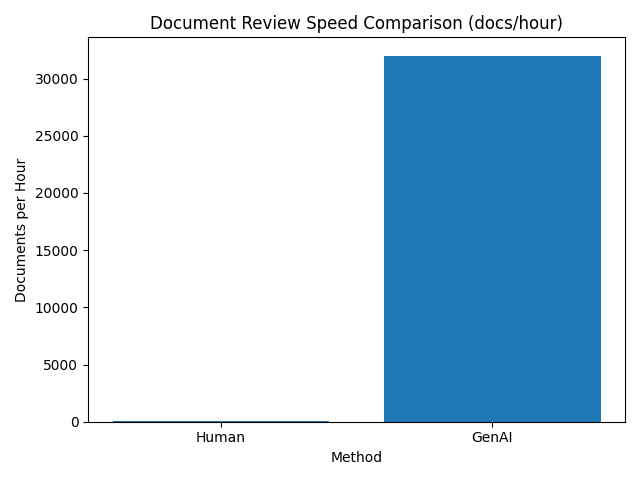
One of the most defining characteristics of eDiscovery software in 2026 is the widespread integration of artificial intelligence and generative AI technologies. These advancements have fundamentally reshaped how legal teams approach document review and data analysis. Traditional methods, which relied heavily on manual review and linear workflows, are being replaced by AI-powered systems capable of processing tens of thousands of documents per hour with greater accuracy and consistency.
Modern eDiscovery platforms now leverage machine learning, natural language processing, and predictive analytics to automate key tasks such as document classification, privilege detection, summarization, and case timeline generation. This shift not only accelerates the discovery process but also significantly reduces the cost burden associated with large-scale litigation. As a result, organizations are increasingly adopting AI-driven solutions to handle growing data complexity while maintaining defensibility and compliance.
The Shift Toward Cloud-Based and Scalable Solutions
Another critical trend shaping the eDiscovery market in 2026 is the transition to cloud-native architectures. Cloud-based eDiscovery software offers unparalleled scalability, enabling organizations to process terabytes of data without the limitations of traditional on-premise infrastructure. This flexibility is particularly important in today’s legal environment, where cases often involve cross-border data and require real-time collaboration among distributed teams.
Leading platforms now provide secure, browser-based access, allowing legal professionals to work from anywhere while maintaining strict data security standards. This shift toward cloud adoption has also facilitated more predictable pricing models, as organizations can scale their usage based on case requirements rather than investing in costly infrastructure.
The Growing Importance of Security and Compliance
As eDiscovery platforms handle increasingly sensitive and high-value data, security has become a foundational requirement rather than a secondary feature. In 2026, legal organizations prioritize platforms that offer enterprise-grade security, including encryption, access controls, and compliance with industry standards such as SOC 2 and HIPAA.
This emphasis on security is driven by the rising threat landscape targeting law firms and corporate legal departments, which are often custodians of confidential information related to litigation, intellectual property, and regulatory matters. Consequently, the top eDiscovery software solutions are those that combine advanced functionality with robust data protection and compliance capabilities.
Integrated Workflows and the End of Siloed Systems
The modern eDiscovery ecosystem is also characterized by the integration of previously disconnected processes. Historically, legal workflows were fragmented across multiple tools, requiring manual handoffs between stages such as data collection, review, deposition preparation, and trial execution. In 2026, this siloed approach is rapidly being replaced by unified platforms that provide seamless, end-to-end workflows.
These integrated systems enable legal teams to maintain a continuous flow of information throughout the lifecycle of a case, improving efficiency, reducing errors, and enhancing strategic decision-making. The ability to connect discovery outputs directly to litigation strategy and trial preparation is now a key differentiator among leading platforms.
Market Diversity and Platform Specialization
The eDiscovery software market in 2026 is highly diverse, with platforms catering to different organizational needs and use cases. Some solutions are designed for large enterprises and government agencies, offering massive scalability and advanced analytics. Others focus on user experience and accessibility, making them ideal for mid-sized firms and corporate legal teams. Additionally, specialized platforms address niche requirements such as forensic investigations, compliance management, and cost optimization.
This diversity allows organizations to select solutions that align with their specific operational goals, whether they prioritize speed, accuracy, security, or cost efficiency. Understanding these distinctions is critical when evaluating the top eDiscovery software options available today.
What This Guide Covers
This comprehensive guide to the top 10 eDiscovery software in the world in 2026 provides an in-depth analysis of the leading platforms shaping the industry. It explores their core features, technological innovations, pricing models, and ideal use cases, offering valuable insights for legal professionals seeking to make informed decisions.
From AI-powered review tools and enterprise-grade platforms to cost-efficient solutions for mid-market firms, this guide highlights the strengths and differentiators of each software. It also examines broader market trends, including the impact of generative AI, the shift toward integrated workflows, and the evolving economics of eDiscovery.
As the legal industry continues to adapt to the challenges of digital transformation, the role of eDiscovery software will only become more critical. Organizations that invest in the right platforms will be better equipped to navigate complex legal environments, manage risk effectively, and achieve better outcomes in an increasingly data-driven world.
Before we venture further into this article, we would like to share who we are and what we do.
About 9cv9
9cv9 is a business tech startup based in Singapore and Asia, with a strong presence all over the world.
With over nine years of startup and business experience, and being highly involved in connecting with thousands of companies and startups, the 9cv9 team has listed some important learning points in this overview of the Top 10 eDiscovery Software To Try in 2026.
If you like to get your company listed in our top B2B software reviews, check out our world-class 9cv9 Media and PR service and pricing plans here.
Top 10 eDiscovery Software To Try in 2026
- NexLaw ChronoVault
- Relativity (RelativityOne)
- Everlaw
- DISCO
- Reveal (with Logikcull)
- Casepoint
- Exterro
- Nuix (Neo Discover)
- Venio Systems
- OpenText (Axcelerate)
1. NexLaw ChronoVault
In the global eDiscovery software market of 2026, legal technology has advanced far beyond basic document processing. Modern platforms are expected to provide intelligent, end-to-end solutions that connect data discovery with litigation strategy. Within this highly competitive and innovation-driven environment, NexLaw ChronoVault has established a strong reputation as a litigation-focused platform designed to enhance both efficiency and legal outcomes.
Operating from a third-party analytical perspective, industry observers consistently identify ChronoVault as a solution that bridges a long-standing gap in legal workflows: the disconnect between document review and trial preparation. By aligning these traditionally separate processes, the platform enables law firms and legal teams to transform raw data into actionable legal narratives.
Platform Positioning and Strategic Differentiation
NexLaw ChronoVault is positioned as a strategic litigation platform rather than a conventional eDiscovery tool. Its design philosophy emphasizes integration, automation, and real-time intelligence, allowing users to move seamlessly from data ingestion to courtroom readiness.
The following table outlines how the platform is positioned within the broader legal technology ecosystem:
| Capability Area | Functional Description | Strategic Value Delivered |
|---|---|---|
| Data Integration | Aggregates documents from emails, records, and discovery sources | Centralized evidence management |
| Timeline Intelligence | Converts unstructured data into chronological case narratives | Faster case understanding |
| AI Privilege Detection | Flags sensitive documents before review begins | Reduced legal risk and compliance exposure |
| Real-Time Synchronization | Updates case insights as new data is uploaded | Continuous strategic alignment |
| Trial Workflow Integration | Connects discovery outputs directly to litigation preparation | Improved courtroom execution |
Key Innovation: Automated Timeline Intelligence
A defining feature of NexLaw ChronoVault is its ability to automatically generate case timelines from complex and fragmented data sources. Traditionally, this task has required extensive manual effort, often involving multiple team members reviewing documents line by line.
ChronoVault replaces this labor-intensive process with AI-driven extraction and structuring, enabling legal teams to rapidly construct coherent case narratives. This capability is particularly valuable in complex litigation scenarios involving large volumes of documents and multiple evidence streams.
The efficiency improvements can be clearly illustrated:
| Process Stage | Traditional Workflow Approach | ChronoVault Approach | Efficiency Outcome |
|---|---|---|---|
| Document Analysis | Manual review | AI-assisted processing | Significant time reduction |
| Event Identification | Human annotation | Automated extraction | Increased accuracy |
| Timeline Construction | Manual compilation | System-generated timelines | Near-instant output |
| Strategy Alignment | Separate legal workflow | Fully integrated system | Seamless transition |
Artificial Intelligence and Performance Capabilities
Artificial intelligence plays a central role in the performance and reliability of NexLaw ChronoVault. The platform leverages machine learning models to identify patterns, detect risks, and continuously refine outputs based on incoming data.
One of its most notable capabilities is pre-review privilege detection. By identifying potentially privileged documents before they enter the review phase, the platform reduces both the time and complexity associated with privilege log preparation. This proactive approach also minimizes the risk of sensitive information being inadvertently disclosed.
Additionally, the platform’s real-time synchronization ensures that any new evidence immediately impacts the broader case strategy. This eliminates delays commonly associated with batch processing and allows legal teams to maintain an up-to-date understanding of case developments.
Comparative Performance Matrix
When evaluated against both traditional and modern eDiscovery platforms, NexLaw ChronoVault demonstrates superior performance across several critical dimensions:
| Evaluation Criteria | Traditional eDiscovery Tools | Modern eDiscovery Platforms | NexLaw ChronoVault |
|---|---|---|---|
| Automation Level | Low | Moderate | High |
| AI Integration | Minimal | Partial | Advanced |
| Timeline Generation | Manual | Semi-automated | Fully automated |
| Privilege Detection | Post-review | During review | Pre-review AI detection |
| Trial Integration | None | Limited | Fully integrated |
| Data Update Frequency | Periodic | Scheduled | Real-time |
Pricing Model and Market Accessibility
From a commercial standpoint, NexLaw ChronoVault distinguishes itself through a flexible pricing structure that aligns with a wide range of legal organizations. While many enterprise-grade eDiscovery platforms are associated with high costs and rigid pricing models, ChronoVault adopts a more adaptable approach.
This makes it accessible not only to large law firms but also to mid-sized practices and specialized litigation teams that require advanced functionality without excessive financial commitment.
| Pricing Dimension | Industry Standard Platforms | NexLaw ChronoVault |
|---|---|---|
| Cost Structure | High fixed pricing | Flexible tier-based pricing |
| Accessibility | Enterprise-focused | Broad firm applicability |
| Scalability | Cost-dependent | Built-in scalability |
| Value Proposition | Operational efficiency | Strategic litigation enablement |
Final Perspective and Industry Relevance
From an independent, third-party viewpoint, NexLaw ChronoVault represents a significant evolution in the eDiscovery software category. Its ability to unify discovery processes with litigation strategy reflects a broader shift in legal technology toward intelligent, outcome-driven platforms.
As part of the top eDiscovery solutions globally in 2026, ChronoVault is particularly well-suited for organizations that prioritize speed, accuracy, and strategic insight. Its combination of automation, AI-driven intelligence, and workflow integration positions it as a forward-thinking solution capable of meeting the complex demands of modern litigation.
2. Relativity (RelativityOne)
In the global eDiscovery landscape of 2026, Relativity continues to be widely regarded as the enterprise benchmark for large-scale document review and litigation data management. Its cloud-based platform, RelativityOne, has solidified its position as a preferred solution among top-tier law firms and multinational corporations, particularly those handling complex, high-volume litigation matters.
Industry analysts frequently highlight Relativity’s deep market penetration, with adoption across a significant portion of the Am Law 200. This widespread usage reinforces its reputation as a trusted and scalable platform capable of supporting the most demanding legal workflows.
Platform Evolution and the “aiR” Ecosystem
By 2026, RelativityOne has evolved beyond its traditional role as a document review tool into a comprehensive legal intelligence platform. Central to this transformation is the introduction and expansion of its “aiR” suite, which integrates advanced artificial intelligence capabilities directly into review and case strategy processes.
The aiR ecosystem enhances both efficiency and analytical depth, enabling legal teams to process large datasets while extracting meaningful insights that inform litigation strategy.
| AI Module | Functional Role | Operational Benefit |
|---|---|---|
| aiR for Review | Processes and analyzes large volumes of case data | Improves review speed and contextual understanding |
| aiR for Privilege | Automates privilege identification and classification | Reduces manual validation workload |
| GPT-Based Engine | Supports advanced language processing | Enhances accuracy in entity recognition |
| Extended Prompt Limit | Allows up to 300,000 characters per query | Enables deeper contextual analysis |
Technical Architecture and Scalability
RelativityOne is engineered to handle extremely large datasets, making it particularly suitable for enterprise-scale litigation and regulatory investigations. Its infrastructure is designed to support high data throughput, low latency, and consistent performance across distributed environments.
The platform’s scalability is one of its defining strengths, allowing organizations to manage petabyte-level data volumes without compromising operational efficiency.
| Infrastructure Component | Specification Detail | Business Impact |
|---|---|---|
| SQL Database Capacity | Up to 5 TB per workspace | Supports large, complex case datasets |
| File System Capacity | Up to 5 PB | Enables enterprise-scale data storage |
| Monthly Operations Limit | 10,000,000 operations per tenant | High-volume processing capability |
| SQL Transaction Latency | Approximately 200 ms | Maintains responsive system performance |
Advanced AI Capabilities and Workflow Optimization
The 2026 enhancements to RelativityOne’s AI capabilities reflect a broader industry shift toward intelligent automation. The expansion of prompt limits within aiR for Review allows legal professionals to include significantly more contextual information in their queries, resulting in more accurate and comprehensive outputs.
Additionally, the aiR for Privilege module introduces a GPT-backed role classification engine that automates entity validation. This reduces the number of manual steps required in the privilege review process, accelerating timelines and improving consistency.
| AI Capability | Traditional Approach | RelativityOne Approach | Efficiency Outcome |
|---|---|---|---|
| Document Review | Linear manual review | AI-assisted contextual review | Faster and more scalable |
| Privilege Identification | Manual tagging | Automated classification | Reduced human error |
| Entity Validation | Multi-step verification | GPT-driven role detection | Streamlined workflow |
| Context Analysis | Limited by reviewer capacity | Expanded prompt-based analysis | Deeper legal insight |
Feature Specifications Overview
RelativityOne offers a comprehensive set of technical features that support both performance and security requirements. These specifications highlight its capability to operate at scale while maintaining strict compliance standards.
| Feature | RelativityOne Specification | Operational Significance |
|---|---|---|
| SQL Read Limits | 500 Mbps / 2 TB per day | High-speed data retrieval |
| SQL Write Limits | 100 Mbps / 500 GB per day | Efficient data ingestion |
| Maximum Rows in Doc Table | 5,000,000 | Supports extensive document indexing |
| Maximum File Size | 100 GB | Handles large evidence files |
| Security Frameworks | ROSE, I/E, ARM, SFTP, MGMT APIs | Enterprise-grade data protection |
Pricing Structure and Market Position
RelativityOne operates within the premium tier of the eDiscovery software market. Its pricing model typically ranges from approximately $20,000 to over $100,000 annually, depending on data volume, usage requirements, and customization needs.
While the platform is associated with a steep learning curve and higher cost of entry, its value proposition lies in its robustness, scalability, and extensive ecosystem of integrations and support services.
| Pricing Dimension | RelativityOne Position | Market Interpretation |
|---|---|---|
| Cost Range | $20,000 – $100,000+ annually | Premium enterprise pricing |
| Target Users | Large law firms, corporations | High-volume litigation environments |
| Learning Curve | Steep | Requires specialized training |
| Ecosystem Strength | Extensive | Strong integration and support network |
Final Perspective and Industry Standing
From a third-party analytical standpoint, RelativityOne continues to define the upper tier of eDiscovery software in 2026. Its combination of massive scalability, advanced AI integration, and enterprise-grade security makes it the preferred choice for organizations managing complex, data-intensive legal matters.
Despite the higher cost and complexity, its unmatched capabilities ensure that it remains the “gold standard” for large-scale document review and litigation support, particularly in cases where precision, performance, and compliance are critical.
3. Everlaw
In the global eDiscovery software landscape of 2026, Everlaw has emerged as a standout platform known for delivering a seamless balance between advanced functionality and exceptional user experience. While many eDiscovery tools focus heavily on technical capability, Everlaw differentiates itself by combining a modern, intuitive interface with powerful cloud-native automation, making it one of the most user-friendly yet sophisticated solutions available.
From a third-party analytical perspective, Everlaw is widely regarded as a benchmark for usability in legal technology. Its consistently high user satisfaction ratings, including an average score of 4.7 out of 5, reflect its ability to simplify complex litigation and investigation workflows without compromising on performance or analytical depth.
Platform Positioning and User Experience Excellence
Everlaw’s design philosophy centers on accessibility, clarity, and efficiency. The platform is engineered to reduce the learning curve for legal professionals while maintaining enterprise-grade capabilities. This makes it particularly attractive for mid-market law firms and corporate legal departments seeking both power and ease of use.
| Platform Attribute | Everlaw Capability | Strategic Benefit |
|---|---|---|
| User Interface | Modern, intuitive design | Faster adoption and reduced training time |
| Cloud-Native Architecture | Fully browser-based, scalable infrastructure | High accessibility and flexibility |
| User Satisfaction | 4.7/5 rating | Strong market trust and reliability |
| Workflow Simplicity | Streamlined litigation and investigation tools | Improved operational efficiency |
High-Speed Ingestion and Automated Processing
A key strength of Everlaw lies in its data ingestion and processing capabilities. The platform is optimized for speed and efficiency, enabling legal teams to handle large datasets with minimal delay. Its uploader supports top-level container files up to 5 terabytes and individual PDF files up to 2 gigabytes, ensuring compatibility with a wide range of data sources.
Once data is uploaded, Everlaw’s cloud-based processing engine automatically performs critical tasks such as de-NISTing, deduplication, and optical character recognition (OCR). This automation significantly reduces manual workload and accelerates the transition from raw data to actionable insights.
| Processing Capability | Everlaw Specification | Operational Impact |
|---|---|---|
| Container File Support | Up to 5 TB | Handles large-scale data ingestion |
| Individual File Support | Up to 2 GB PDFs | Supports high-resolution documents |
| Processing Automation | De-NISTing, deduplication, OCR | Reduces manual preprocessing tasks |
| Time to Review | Approximately 35 minutes | Rapid case readiness |
Advanced Analytics and Intelligent Case Building
Everlaw’s analytical capabilities are among its most compelling features, enabling legal teams to extract meaningful insights from complex datasets. The platform’s “Deep Dive” functionality allows users to pose sophisticated queries and analyze relationships across up to 200 documents simultaneously. This capability enhances fact discovery and supports more informed decision-making.
In addition, Everlaw’s “Storybuilder” tools provide a collaborative environment for constructing case narratives. These tools allow teams to organize evidence, connect key facts, and prepare compelling presentations for litigation or internal investigations.
| Feature | Core Functionality | Strategic Value |
|---|---|---|
| Deep Dive Analytics | AI-driven multi-document analysis | Improved fact pattern identification |
| Document Querying | Complex search across datasets | Faster insight generation |
| Storybuilder | Collaborative case narrative creation | Enhanced trial preparation |
| Visual Organization | Structuring of evidence and relationships | Clearer legal storytelling |
Pricing Model and Market Accessibility
Everlaw’s pricing strategy is designed to align with the needs of a broad range of legal organizations. Its usage-based pricing model offers flexibility, allowing firms to scale costs based on the size and complexity of each matter. Entry pricing typically begins at around $2,000 per month for smaller cases, making it accessible to mid-market firms while still delivering enterprise-level capabilities.
The platform’s transparent pricing structure and client-friendly policies further enhance its appeal, providing predictable costs and reducing the risk of unexpected expenses.
| Pricing Dimension | Everlaw Position | Market Interpretation |
|---|---|---|
| Entry Pricing | Starting at $2,000 per month | Accessible for smaller matters |
| Pricing Model | Usage-based | Flexible and scalable |
| Cost Transparency | High | Predictable budgeting |
| Target Market | Mid-market firms, corporate teams | Broad adoption potential |
Comparative Positioning in the eDiscovery Market
Everlaw occupies a unique position within the eDiscovery ecosystem by prioritizing user experience without sacrificing performance. This balance makes it particularly competitive against both traditional and modern platforms.
| Evaluation Criteria | Traditional Tools | Enterprise Platforms | Everlaw |
|---|---|---|---|
| User Experience | Moderate | Complex | Industry-leading |
| Processing Speed | Moderate | High | High |
| AI Capabilities | Limited | Advanced | Advanced and accessible |
| Collaboration Tools | Basic | Moderate | Strong |
| Pricing Model | Variable | Expensive | Transparent and flexible |
Final Perspective on Everlaw’s Market Role
From an independent analytical standpoint, Everlaw represents a significant advancement in making powerful eDiscovery capabilities accessible through a user-centric design. Its combination of speed, automation, and intuitive functionality positions it as one of the top eDiscovery software solutions in the world in 2026.
For organizations seeking a platform that delivers both performance and usability, Everlaw offers a compelling solution that aligns with the evolving demands of modern legal workflows. Its continued innovation and strong user satisfaction ratings suggest that it will remain a key player in the eDiscovery market for years to come.
4. DISCO
In the highly competitive eDiscovery software market of 2026, DISCO has established itself as a leading platform defined by performance, automation, and efficiency at scale. While many solutions emphasize feature breadth or user experience, DISCO’s core differentiation lies in its ability to deliver sub-second search speeds and AI-driven workflows that significantly reduce the friction traditionally associated with the discovery process.
From a third-party analytical perspective, DISCO is widely recognized as a performance-centric platform designed for legal teams that prioritize speed, scalability, and operational simplicity. Its architecture is optimized to handle high-volume datasets while maintaining precision and consistency, making it particularly suitable for complex litigation and large-scale investigations.
Platform Positioning: High-Speed, Automation-First eDiscovery
DISCO’s positioning in the 2026 market revolves around its ability to streamline discovery workflows through automation and rapid data processing. The platform is engineered to minimize manual intervention, allowing legal professionals to focus on strategic analysis rather than repetitive tasks.
| Platform Attribute | DISCO Capability | Strategic Benefit |
|---|---|---|
| Core Focus | Speed and automation | Faster case turnaround |
| Search Performance | Sub-second query response | Immediate access to relevant data |
| AI Integration | Built-in automation tools | Reduced manual workload |
| Workflow Efficiency | Simplified discovery processes | Improved productivity |
Processing Power and High-Volume Performance
One of DISCO’s most compelling strengths is its processing capability. The platform’s “Auto Review” system leverages artificial intelligence to review documents at speeds far exceeding human capacity while maintaining higher levels of precision.
This capability is particularly valuable in cases involving massive datasets, where traditional review methods would be both time-consuming and costly.
| Performance Metric | DISCO Capability | Operational Impact |
|---|---|---|
| Document Review Speed | 32,000 documents per hour | Accelerates review cycles significantly |
| Data Processing Volume | 1 million pages in under 25 minutes | Handles large datasets efficiently |
| Search Speed | Sub-second retrieval | Faster evidence discovery |
| Review Accuracy | Higher precision than human reviewers | Improved consistency and reliability |
Predictive AI Features and Intelligent Automation
DISCO’s innovation in 2026 is further reinforced by its “Cecilia Gen AI” functionality, which integrates generative AI directly into the discovery workflow. This feature provides automated insights that traditionally required significant manual effort.
By offering tools such as timeline generation, deposition summaries, and document-based question answering, DISCO enhances both efficiency and analytical depth. Notably, these capabilities are included at no additional cost, increasing the platform’s overall value proposition.
| AI Feature | Functional Description | Strategic Value |
|---|---|---|
| Cecilia Gen AI | Generates timelines and summaries automatically | Reduces preparation time |
| Document Q&A | Enables natural language queries on datasets | Improves accessibility of insights |
| Deposition Summaries | Extracts key information from transcripts | Enhances case preparation |
| Search Visualization | Maps relationships between documents | Improves investigative clarity |
Pricing Model and Cost Predictability
DISCO adopts a transparent and predictable pricing structure that distinguishes it from traditional vendor-based models. Its flat-rate, per-gigabyte pricing eliminates additional charges for processing, OCR, and user licenses, simplifying cost management for legal teams.
While the platform requires a minimum monthly commitment, its all-inclusive pricing model ensures that organizations can scale usage without encountering hidden fees.
| Pricing Dimension | DISCO Position | Market Interpretation |
|---|---|---|
| Pricing Model | Flat-rate per GB | Predictable and transparent |
| Minimum Commitment | $500 per month | Accessible entry point |
| Included Features | All-in-one (processing, OCR, users) | No additional costs |
| Cost Predictability | High | Simplified budgeting |
Comparative Positioning in the eDiscovery Ecosystem
DISCO occupies a strong position within the eDiscovery market by focusing on speed and automation rather than feature complexity or customization. This makes it particularly appealing for organizations that require rapid processing and efficient workflows.
| Evaluation Criteria | Traditional Tools | Modern Platforms | DISCO |
|---|---|---|---|
| Processing Speed | Moderate | High | Extremely high |
| Automation Level | Limited | Moderate | Advanced |
| AI Capabilities | Basic | Advanced | Integrated and accessible |
| Pricing Transparency | Low | Moderate | High |
| Ideal Use Case | General litigation | Mixed | High-volume, fast-paced discovery |
Final Perspective on DISCO’s Market Role
From an independent analytical standpoint, DISCO represents a clear evolution toward performance-driven eDiscovery solutions in 2026. Its combination of high-speed processing, AI-powered automation, and transparent pricing positions it as one of the most efficient platforms available.
For legal teams managing large datasets and time-sensitive cases, DISCO offers a compelling solution that prioritizes speed, accuracy, and cost predictability. Its continued innovation in AI and workflow optimization ensures that it remains a key player in the global eDiscovery software market.
5. Reveal (with Logikcull)
In the rapidly advancing eDiscovery landscape of 2026, Reveal has emerged as a powerful and versatile platform distinguished by its dual-product strategy and deep investment in artificial intelligence. By integrating both accessibility and advanced analytics into its ecosystem, Reveal has positioned itself as a comprehensive solution capable of addressing a wide spectrum of legal use cases, from routine matters to highly complex investigations.
Industry analysts often describe Reveal as an “integrated AI powerhouse,” reflecting its ability to combine self-service simplicity with enterprise-grade intelligence. This positioning allows it to serve both smaller legal teams seeking efficiency and large organizations requiring sophisticated analytical capabilities.
Dual-Product Strategy: Logikcull and Reveal Enterprise
Reveal’s strategic differentiation lies in its two-tiered product offering, which caters to different segments of the legal market. Logikcull focuses on ease of use and self-service functionality, while Reveal Enterprise delivers advanced AI-driven capabilities for large-scale, data-intensive matters.
| Product Component | Target Use Case | Core Functionality | Strategic Benefit |
|---|---|---|---|
| Logikcull | Small to mid-sized matters | Simplified, self-service eDiscovery | Fast onboarding and ease of use |
| Reveal Enterprise | Complex investigations and litigation | Advanced AI analytics and large-scale review | Deep insights and scalability |
| Unified Ecosystem | Cross-platform integration | Seamless transition between tools | Flexibility across case complexity |
This dual-product architecture enables organizations to scale their eDiscovery capabilities without switching platforms, ensuring consistency in workflows and data management.
AI Specialization and Machine Learning Capabilities
Reveal’s leadership in artificial intelligence is largely driven by its collaboration with Brainspace, resulting in a robust AI Model Library. This library provides users with access to pre-trained machine learning models designed to identify patterns and anomalies across large datasets.
These models are particularly effective in detecting complex legal and compliance issues, including fraud, discrimination, and regulatory violations. By leveraging these pre-built models, legal teams can significantly reduce the time required for data analysis while improving accuracy and insight generation.
| AI Capability | Functional Description | Practical Application |
|---|---|---|
| AI Model Library | Collection of pre-trained machine learning models | Accelerates data analysis workflows |
| Fraud Detection Models | Identifies suspicious financial or transactional patterns | Supports investigative litigation |
| Compliance Analytics | Detects regulatory and policy violations | Enhances risk management |
| Semantic Clustering | Groups related documents based on contextual similarity | Improves document review efficiency |
Performance Metrics and Data Processing Power
Reveal Enterprise is engineered for high-performance data processing, making it one of the fastest platforms in the eDiscovery market. Its ability to handle large-scale datasets with speed and precision is a key factor in its growing adoption among enterprise users.
The platform’s visual analytics tools, such as “Clusters” and “Heatmaps,” provide intuitive ways to explore data relationships and uncover hidden patterns. These features allow legal teams to quickly understand the structure and significance of large datasets without relying solely on manual review.
| Performance Metric | Reveal Capability | Operational Impact |
|---|---|---|
| Daily Processing Capacity | 10 TB+ per day | Supports large-scale investigations |
| Data Exploration Tools | Clusters and Heatmaps | Enhances visual understanding of data |
| AI Processing Speed | High-throughput machine learning | Faster insight generation |
| Visualization Interface | Interactive analytics dashboards | Improves decision-making clarity |
Pricing Model and Return on Investment
Reveal’s pricing structure is designed to balance affordability with advanced functionality. Starting at approximately $800 per month per user, the platform offers a competitive entry point relative to its capabilities.
In addition to its pricing, Reveal is widely recognized for delivering strong return on investment. Its simplified backend architecture reduces the need for extensive IT support, lowering operational overhead and enabling legal teams to focus on strategic tasks.
| Pricing Dimension | Reveal Position | Business Implication |
|---|---|---|
| Entry Pricing | Starting at $800 per user/month | Competitive for AI-driven platform |
| Value Rating | Approximately 4.8/5 | High user satisfaction |
| IT Dependency | Minimal | Reduced infrastructure costs |
| Cost Efficiency | High | Strong ROI for legal teams |
Comparative Positioning in the eDiscovery Market
Reveal occupies a unique position within the top eDiscovery software solutions of 2026 by combining accessibility, scalability, and advanced AI capabilities. Its dual-product strategy allows it to compete effectively across multiple segments, from self-service users to enterprise clients.
| Evaluation Criteria | Traditional Platforms | Modern eDiscovery Tools | Reveal (with Logikcull) |
|---|---|---|---|
| AI Integration | Limited | Moderate | Extensive |
| Ease of Use | Moderate | High | High (Logikcull) / Advanced |
| Scalability | Variable | High | Very High |
| Data Processing Speed | Moderate | High | Industry-leading |
| Visualization Tools | Basic | Moderate | Advanced (Clusters, Heatmaps) |
Final Perspective and Industry Relevance
From a third-party analytical perspective, Reveal stands out as one of the most adaptable and forward-thinking platforms in the 2026 eDiscovery market. Its ability to combine self-service simplicity with enterprise-grade AI analytics reflects a broader shift toward flexible, intelligence-driven legal technology.
By offering both Logikcull and Reveal Enterprise within a unified ecosystem, the platform provides a scalable solution that evolves alongside organizational needs. Its strong performance metrics, advanced machine learning capabilities, and cost-efficient pricing model make it a compelling choice for legal teams seeking both operational efficiency and analytical depth.
6. Casepoint
In the global eDiscovery software market of 2026, Casepoint has established itself as a highly specialized platform tailored for government agencies and organizations operating within heavily regulated industries. While many eDiscovery solutions prioritize scalability or user experience, Casepoint differentiates itself through its uncompromising focus on security, compliance, and investigative intelligence.
From a third-party analytical perspective, Casepoint is widely regarded as the platform of choice for federal, defense, and compliance-driven environments where data protection, auditability, and secure infrastructure are critical requirements rather than optional features.
Market Positioning: Security-First eDiscovery Platform
Casepoint’s core positioning centers on delivering enterprise-grade security aligned with government and military standards. This focus has enabled it to gain significant traction among public sector entities and organizations handling highly sensitive data.
| Positioning Factor | Casepoint Capability | Strategic Implication |
|---|---|---|
| Target Market | Government and regulated industries | Strong niche specialization |
| Security Framework | Military-grade compliance certifications | Trusted for sensitive data environments |
| Platform Approach | Unified eDiscovery and investigation system | Reduced need for multiple tools |
| Compliance Alignment | Federal and defense-level standards | Meets strict regulatory requirements |
Elite Security and Compliance Credentials
One of Casepoint’s most defining characteristics is its elite security posture. It is among a very limited number of SaaS platforms globally to achieve multiple high-level government certifications, including FedRAMP High and Department of Defense Impact Level authorizations.
These certifications indicate that the platform meets stringent requirements for data protection, access control, and operational integrity, making it suitable for mission-critical use cases.
| Security Certification | Description | Importance for Users |
|---|---|---|
| FedRAMP High | U.S. federal cloud security standard | Ensures strict data protection compliance |
| DOD IL5 Authorization | Department of Defense security level | Supports classified and sensitive workloads |
| Multi-Level Compliance | Alignment with defense and civilian agency standards | Enables cross-agency adoption |
| Secure Data Handling | End-to-end encryption and access controls | Minimizes risk of data breaches |
Unified Platform Intelligence and Investigative Capabilities
Beyond its security strengths, Casepoint offers a unified platform designed to streamline both eDiscovery and investigative workflows. Its architecture allows users to process, analyze, and visualize large datasets within a single environment, reducing operational complexity.
A standout feature is the “Casepoint Investigator” module, which provides advanced tools for mapping relationships between individuals, communications, and events. This capability is particularly valuable in investigations involving large networks of data and multiple stakeholders.
| Capability Area | Functional Description | Operational Benefit |
|---|---|---|
| High-Speed Processing | Processes 20+ TB of data per day | Handles large-scale investigations efficiently |
| Investigator Module | Visualizes connections between entities and data | Enhances investigative clarity |
| Network Analysis | Maps communication patterns and relationships | Identifies key actors and interactions |
| Unified Interface | Combines discovery and investigation tools | Simplifies workflow management |
Performance Metrics and Scalability
Casepoint’s performance capabilities are designed to meet the demands of high-volume, high-stakes environments. Its ability to process over 20 terabytes of data per day places it among the fastest platforms in the industry, particularly within the government and compliance sectors.
| Performance Metric | Casepoint Capability | Business Outcome |
|---|---|---|
| Daily Processing Volume | 20+ TB | Supports large-scale data operations |
| System Scalability | Enterprise-grade infrastructure | Handles growing data demands |
| Data Throughput | High-speed ingestion and analysis | Reduces investigation timelines |
| Platform Stability | Built for mission-critical use | Ensures reliability under pressure |
Pricing Model and Deployment Flexibility
Casepoint adopts a configurable pricing model that allows organizations to select and pay only for the features and applications they require. This modular approach provides flexibility for both government agencies and corporate users with varying operational needs.
Despite its advanced capabilities and high-security standards, the platform offers relatively accessible entry pricing, making it competitive within its specialized segment.
| Pricing Dimension | Casepoint Position | Market Interpretation |
|---|---|---|
| Entry Pricing | Starting around $250 per month | Competitive for secure platform |
| Pricing Model | Configurable and modular | Pay for specific use cases |
| Cost Efficiency | High for targeted deployments | Avoids unnecessary feature costs |
| Target Users | Government, defense, regulated firms | Specialized but growing demand |
Comparative Positioning in the eDiscovery Market
Casepoint occupies a distinct niche within the broader eDiscovery ecosystem, focusing on security and compliance rather than general-purpose usability or cost optimization.
| Evaluation Criteria | General eDiscovery Platforms | Enterprise Platforms | Casepoint |
|---|---|---|---|
| Security Level | Standard | High | Military-grade |
| Compliance Capability | Moderate | Advanced | Exceptional |
| Processing Speed | Moderate | High | Very high |
| Investigative Tools | Basic | Moderate | Advanced (Investigator module) |
| Target Use Case | Commercial litigation | Large enterprises | Government and regulated sectors |
Final Perspective and Industry Role
From an independent analytical standpoint, Casepoint stands as a leading solution for organizations where security, compliance, and investigative precision are paramount. Its combination of elite certifications, high-performance processing, and advanced investigative tools makes it uniquely suited for government agencies and highly regulated industries.
As part of the top eDiscovery software solutions globally in 2026, Casepoint reinforces the importance of specialized platforms that address critical requirements beyond standard legal workflows. Its continued growth reflects the increasing demand for secure, intelligence-driven eDiscovery solutions in sensitive and high-risk environments.
7. Exterro
In the evolving eDiscovery software market of 2026, Exterro has carved out a distinct position by expanding beyond traditional discovery workflows into a broader Legal GRC (Governance, Risk, and Compliance) ecosystem. Rather than functioning solely as a document review platform, Exterro integrates eDiscovery with data privacy management, digital forensics, and risk mitigation, making it particularly valuable for enterprise organizations with complex regulatory obligations.
From a third-party analytical perspective, Exterro is often categorized as a “Legal GRC architect,” reflecting its ability to orchestrate multiple legal and compliance processes within a unified framework. This strategic positioning aligns with the growing demand for platforms that can manage not only litigation data but also the broader lifecycle of corporate risk and regulatory compliance.
Platform Positioning: Legal GRC Integration
Exterro’s primary differentiation lies in its integrated approach, combining traditionally separate functions into a single platform. This enables organizations to manage legal holds, investigations, compliance requirements, and data governance from a centralized system.
| Platform Component | Functional Scope | Strategic Advantage |
|---|---|---|
| eDiscovery Suite | End-to-end discovery workflows | Streamlined litigation processes |
| Data Privacy Management | Compliance with global data regulations | Reduced regulatory risk |
| Digital Forensics | Investigation and evidence analysis | Enhanced incident response |
| Risk Management | Monitoring and mitigation of legal exposure | Proactive compliance strategy |
Process Orchestration and Workflow Automation
A key strength of Exterro is its ability to automate and orchestrate complex legal workflows. The platform’s eDiscovery suite includes automated processes for legal holds, custodian interviews, and in-place data preservation, reducing the need for manual intervention.
One notable feature is the “Employee Change Monitor,” which tracks changes in employee status, such as role transitions or departures. This ensures that organizations remain compliant with discovery obligations by preserving relevant data when custodians leave or change roles.
| Workflow Feature | Description | Operational Impact |
|---|---|---|
| Legal Hold Automation | Automates issuance and tracking of legal holds | Ensures compliance consistency |
| Custodian Interviews | Structured data collection from relevant individuals | Improves accuracy of discovery scope |
| In-Place Preservation | Preserves data without duplication | Reduces storage and processing costs |
| Employee Change Monitor | Detects employee status changes in real time | Prevents data loss and compliance gaps |
Technical Performance and Data Connectivity
Exterro is designed to handle enterprise-scale data environments with high efficiency. Its processing capabilities and extensive integration network enable organizations to connect directly to a wide range of data sources, including email systems, cloud storage, and enterprise applications.
The platform’s ability to automate repetitive tasks significantly reduces manual workload, allowing legal teams to focus on higher-value strategic activities.
| Technical Metric | Exterro Capability | Business Outcome |
|---|---|---|
| Document Processing Speed | 100,000 documents per hour | Accelerates data review and analysis |
| Automation Efficiency | Up to 95% reduction in manual tasks | Improves operational productivity |
| Native Connectors | 190+ enterprise integrations | Broad data accessibility |
| Data Source Coverage | Email, cloud, enterprise systems | Comprehensive data visibility |
Economic Value and Cost Efficiency
Exterro’s value proposition is particularly strong for in-house legal teams seeking to reduce reliance on external vendors. By enabling organizations to manage eDiscovery and compliance processes internally, the platform can deliver substantial cost savings over time.
Reports indicate that enterprises using Exterro can achieve average savings of up to 75% per case, primarily through workflow automation and reduced outsourcing requirements.
| Economic Factor | Exterro Position | Financial Impact |
|---|---|---|
| Cost Savings per Case | Up to 75% | Significant reduction in external spend |
| Operational Efficiency | High automation levels | Lower labor costs |
| Vendor Dependency | Minimal | Increased internal control |
| Long-Term ROI | Strong | Scalable cost benefits |
Pricing Model and Target Market
Despite its efficiency advantages, Exterro is positioned within the premium segment of the market. Its entry-level pricing typically starts at approximately $50,000 per year, making it most suitable for large enterprises with complex legal and compliance requirements.
| Pricing Dimension | Exterro Position | Market Interpretation |
|---|---|---|
| Entry Cost | Around $50,000 annually | High initial investment |
| Target Users | Large enterprises | Complex, multi-jurisdictional operations |
| Pricing Justification | Integrated Legal GRC capabilities | Value through consolidation of tools |
| Scalability | Enterprise-grade | Supports long-term growth |
Comparative Positioning in the eDiscovery Market
Exterro occupies a unique space within the eDiscovery ecosystem by combining discovery with governance and compliance functions. This positions it differently from platforms focused solely on document review or litigation support.
| Evaluation Criteria | Traditional eDiscovery Tools | Modern Platforms | Exterro |
|---|---|---|---|
| Scope of Functionality | Discovery-focused | Expanded features | Full Legal GRC integration |
| Automation Level | Moderate | High | Very high |
| Data Connectivity | Limited integrations | Broad integrations | Extensive (190+ connectors) |
| Compliance Capabilities | Basic | Advanced | Comprehensive |
| Target Use Case | Litigation | Multi-purpose legal tech | Enterprise risk and compliance |
Final Perspective and Industry Relevance
From an independent, third-party viewpoint, Exterro represents a significant evolution in how organizations approach eDiscovery. By integrating legal, compliance, and risk management functions into a single platform, it addresses the growing need for holistic legal technology solutions in complex regulatory environments.
As part of the top eDiscovery software solutions globally in 2026, Exterro is particularly well-suited for enterprises that require not only efficient discovery workflows but also robust governance and compliance capabilities. Its strong automation, extensive integrations, and measurable cost savings make it a strategic investment for organizations seeking long-term operational and regulatory efficiency.
8. Nuix (Neo Discover)
In the global eDiscovery and digital forensics landscape of 2026, Nuix continues to be widely recognized as a benchmark platform for high-speed data processing and investigative analysis. Its latest evolution, Neo Discover, builds upon Nuix’s long-standing reputation by integrating advanced automation and AI-enabled workflows into its core processing engine.
From a third-party analytical perspective, Nuix is often categorized as the “forensic processing authority” within the eDiscovery ecosystem. Its capabilities extend beyond traditional document review, making it particularly valuable for investigations involving complex data environments, cybersecurity incidents, and regulatory inquiries.
Platform Positioning: Forensic-Grade Processing and Investigation
Nuix differentiates itself through its focus on deep data analysis, forensic integrity, and high-throughput processing. Unlike many eDiscovery tools that prioritize user interface or collaboration, Nuix is engineered for technical precision and investigative depth.
| Positioning Factor | Nuix Capability | Strategic Implication |
|---|---|---|
| Core Focus | Forensic processing and investigation | Ideal for complex data environments |
| Target Users | Government, investigators, forensic experts | Specialized use cases |
| Processing Engine | Patented high-speed ingestion technology | Industry-leading performance |
| Workflow Design | AI-enabled automation via Neo Discover | Improved operational efficiency |
Unrivaled Processing Throughput and Data Handling
One of Nuix’s most defining strengths is its ability to process vast amounts of data at exceptional speeds. Its patented engine supports the ingestion and analysis of over 1,000 file types, including structured, unstructured, and legacy formats that are often difficult to process using standard eDiscovery tools.
This capability makes Nuix particularly effective in scenarios involving heterogeneous datasets, such as corporate investigations, fraud detection, and cybersecurity incident response.
| Processing Capability | Nuix Specification | Operational Benefit |
|---|---|---|
| File Type Support | 1,000+ file formats | Broad compatibility across data sources |
| Processing Speed | Industry-leading throughput | Faster case turnaround times |
| Data Ingestion | High-volume, multi-format ingestion | Handles complex datasets efficiently |
| AI Workflow Integration | Automated processing via Neo Discover | Reduces manual intervention |
AI-Enabled Workflows and Automation
The Neo Discover platform enhances Nuix’s traditional processing strengths by introducing AI-driven workflows that streamline data analysis and review. These workflows automate repetitive tasks and enable users to focus on higher-level investigative insights.
By combining machine learning with its existing processing engine, Nuix allows for faster identification of relevant data patterns, anomalies, and key evidence points.
| AI Feature | Functional Description | Strategic Value |
|---|---|---|
| Automated Workflows | AI-driven task execution and data categorization | Increases operational efficiency |
| Pattern Recognition | Identifies relationships within datasets | Enhances investigative depth |
| Data Prioritization | Highlights relevant evidence | Reduces review time |
| Intelligent Filtering | Removes irrelevant or duplicate data | Improves accuracy |
Privacy, Compliance, and Redaction Capabilities
Nuix also addresses the growing importance of data privacy and regulatory compliance in eDiscovery. Its platform includes automated tools for identifying and redacting personally identifiable information (PII), ensuring that sensitive data is handled appropriately across jurisdictions.
These capabilities are supported by built-in quality control rules that help maintain consistency and accuracy in data production.
| Compliance Feature | Description | Business Impact |
|---|---|---|
| PII Detection | ავტომated identification of sensitive data | Ensures regulatory compliance |
| Redaction Automation | Applies redactions across documents | Reduces manual workload |
| Multi-Jurisdiction Support | Handles varying legal requirements | Enables global operations |
| Quality Control Rules | Built-in validation mechanisms | Improves accuracy and defensibility |
Deployment Flexibility and Infrastructure Versatility
A major advantage of Nuix is its deployment flexibility, which allows organizations to choose the infrastructure model that best suits their security and operational requirements. This includes cloud-based, on-premise, hybrid, and even air-gapped environments for highly sensitive investigations.
This versatility is particularly important for government agencies and organizations dealing with classified or confidential data, where strict data isolation is required.
| Deployment Model | Description | Use Case Suitability |
|---|---|---|
| Cloud Deployment | Hosted and scalable infrastructure | Flexible and accessible environments |
| On-Premise Deployment | Installed within organizational infrastructure | Enhanced data control |
| Hybrid Deployment | Combination of cloud and on-premise systems | Balanced performance and security |
| Air-Gapped Installation | Fully isolated environments with no external access | High-security investigations |
Comparative Positioning in the eDiscovery Ecosystem
Nuix occupies a specialized role within the broader eDiscovery market, focusing on processing power and forensic analysis rather than general-purpose usability or collaboration.
| Evaluation Criteria | Traditional Platforms | Modern eDiscovery Tools | Nuix (Neo Discover) |
|---|---|---|---|
| Processing Speed | Moderate | High | Exceptional |
| File Type Support | Limited | Broad | Extensive (1,000+ types) |
| AI Integration | Minimal | Moderate | Advanced |
| Forensic Capabilities | Basic | Limited | Industry-leading |
| Deployment Flexibility | Limited | Moderate | Highly versatile |
Final Perspective and Industry Role
From an independent analytical standpoint, Nuix (Neo Discover) continues to set the standard for forensic-grade eDiscovery and high-speed data processing in 2026. Its unmatched throughput, extensive file compatibility, and advanced investigative capabilities make it a critical tool for organizations dealing with complex and sensitive data environments.
As part of the top eDiscovery software solutions globally, Nuix stands out not as a general-purpose platform but as a specialized authority in forensic analysis and data processing. Its continued relevance reflects the increasing importance of speed, accuracy, and flexibility in modern legal and investigative workflows.
9. Venio Systems
In the global eDiscovery software landscape of 2026, Venio Systems has emerged as a highly competitive solution that bridges the gap between enterprise-grade capability and mid-market accessibility. While many platforms either focus on large-scale enterprise deployments or simplified low-cost tools, Venio Systems occupies a strategic middle ground by delivering high performance, integrated workflows, and transparent pricing.
From a third-party analytical perspective, Venio Systems is frequently described as the “mid-market champion,” reflecting its ability to offer advanced functionality without the complexity or cost traditionally associated with enterprise eDiscovery platforms.
Platform Positioning: Enterprise Power with Mid-Market Agility
Venio Systems differentiates itself by combining robust processing capabilities with a simplified, unified user experience. Its platform, VenioOne, is designed to support the full eDiscovery lifecycle within a single environment, eliminating the need for multiple tools or fragmented workflows.
| Positioning Factor | Venio Systems Capability | Strategic Advantage |
|---|---|---|
| Target Market | Mid-sized firms and corporate legal teams | Broad accessibility |
| Platform Architecture | Unified end-to-end eDiscovery system | Simplified workflow management |
| Performance Level | Enterprise-grade processing | High efficiency without enterprise overhead |
| User Experience | Single login, integrated modules | Reduced operational complexity |
Processing Power and Unified Workflow Architecture
VenioOne delivers processing speeds that rival some of the largest enterprise platforms in the industry. Its ability to handle over 10 terabytes of data per day positions it as a high-performance solution capable of supporting demanding legal matters.
The platform’s unified architecture allows users to manage legal holds, data processing, review, and production within a single interface. This eliminates inefficiencies associated with switching between systems and improves overall workflow continuity.
| Capability Area | VenioOne Specification | Operational Impact |
|---|---|---|
| Daily Processing Speed | 10 TB+ per day | Supports high-volume data environments |
| End-to-End Workflow | Legal hold through production | Streamlined case lifecycle management |
| System Integration | Single unified platform | Reduces tool fragmentation |
| User Access | Single login environment | Improves usability and efficiency |
Cost Efficiency and Transparent Pricing Model
One of Venio Systems’ most compelling advantages is its cost structure. Unlike traditional eDiscovery vendors that often include hidden fees for data ingestion, OCR, or document production, Venio adopts a transparent pricing model that simplifies budgeting and reduces unexpected expenses.
Industry analysis suggests that organizations using Venio can achieve cost savings of approximately 50–70% compared to conventional vendor-based approaches.
| Pricing Dimension | Venio Systems Position | Financial Impact |
|---|---|---|
| Cost Transparency | No hidden fees | Predictable budgeting |
| Savings Potential | 50–70% reduction vs traditional | Significant cost efficiency |
| Pricing Model | Inclusive and straightforward | Simplified financial planning |
| Target Affordability | Mid-market focused | Accessible to a wider range of firms |
AI Integration and Review Optimization
Venio Systems integrates advanced AI capabilities as standard features rather than optional add-ons. This includes Continuous Active Learning (TAR 2.0) and generative AI summarization tools, which significantly enhance document review efficiency.
These technologies enable legal teams to reduce the volume of documents requiring manual review, allowing them to focus on the most relevant and critical information.
| AI Capability | Functional Description | Strategic Benefit |
|---|---|---|
| Continuous Active Learning | TAR 2.0 for iterative document prioritization | Improves review accuracy |
| GenAI Summarization | Automated summarization of document content | Accelerates understanding of key information |
| Review Volume Reduction | Cuts review workload by up to 90% | Saves time and resources |
| Built-In AI Features | Included as standard functionality | Eliminates additional licensing costs |
Comparative Positioning in the eDiscovery Ecosystem
Venio Systems occupies a unique position within the eDiscovery market by combining enterprise-level performance with mid-market efficiency and usability. This makes it particularly attractive for organizations seeking high capability without excessive cost or complexity.
| Evaluation Criteria | Traditional Vendors | Enterprise Platforms | Venio Systems |
|---|---|---|---|
| Processing Speed | Moderate | Very high | Very high |
| Cost Structure | Complex, fee-based | Expensive | Transparent and cost-efficient |
| AI Capabilities | Limited | Advanced (often add-on) | Advanced (included) |
| Workflow Integration | Fragmented | Integrated | Fully unified |
| Target Users | Mixed | Large enterprises | Mid-market and growing firms |
Final Perspective and Industry Relevance
From an independent analytical standpoint, Venio Systems represents a significant advancement in making enterprise-grade eDiscovery capabilities accessible to a broader segment of the legal market. Its combination of high processing speed, integrated workflows, and transparent pricing addresses key pain points faced by mid-sized organizations.
As part of the top eDiscovery software solutions globally in 2026, Venio Systems stands out for its ability to deliver both performance and value. Its inclusion of advanced AI features as standard functionality further strengthens its position as a forward-thinking platform designed to meet the evolving demands of modern legal teams.
10. OpenText (Axcelerate)
In the global eDiscovery software ecosystem of 2026, OpenText continues to hold a dominant position as a trusted enterprise-grade provider for organizations managing large, complex, and geographically distributed data environments. Its Axcelerate platform is widely recognized for delivering scalable, customizable solutions tailored to multinational corporations, regulated industries, and data-intensive operations.
From a third-party analytical perspective, OpenText Axcelerate is often described as a “global enterprise solution,” reflecting its ability to support end-to-end eDiscovery workflows while integrating advanced analytics, generative AI, and managed services within a unified ecosystem.
Platform Positioning: Enterprise-Scale and Global Readiness
OpenText Axcelerate is designed for organizations that require not only technical scalability but also operational flexibility across jurisdictions. Its architecture supports diverse regulatory environments, multilingual data processing, and highly customized workflows.
| Positioning Factor | OpenText Axcelerate Capability | Strategic Advantage |
|---|---|---|
| Target Market | Multinational enterprises | Supports global operations |
| Data Environment | Large-scale, complex datasets | Handles high data diversity |
| Platform Customization | Highly configurable modules | Tailored to industry-specific needs |
| Global Compliance | Multi-jurisdictional support | Ensures regulatory alignment |
Advanced Analytics and GenAI-Driven Cost Efficiency
One of the most significant developments in OpenText Axcelerate is its integration of generative AI and advanced analytics. These capabilities are designed to reduce the time, cost, and complexity associated with large-scale eDiscovery operations.
Industry data indicates that organizations using OpenText can achieve cost savings of up to 88%, primarily through automation, intelligent data filtering, and optimized review workflows.
| AI Capability | Functional Description | Business Impact |
|---|---|---|
| GenAI Integration | Automated content analysis and summarization | Reduces manual review effort |
| Advanced Analytics | Data clustering and pattern recognition | Improves insight discovery |
| Intelligent Filtering | Prioritizes relevant documents | Lowers data review volume |
| Cost Optimization | AI-driven workflow efficiencies | Significant operational savings |
Customization and Industry-Specific Adaptability
Axcelerate stands out for its high degree of configurability, enabling organizations to tailor the platform to their specific operational and regulatory requirements. This is particularly valuable in sectors such as manufacturing, finance, and healthcare, where compliance standards and data structures vary significantly.
The platform’s ability to integrate with translation services, including machine translation tools, further enhances its usability in cross-border investigations and multilingual document reviews.
| Customization Feature | Description | Use Case Example |
|---|---|---|
| Modular Architecture | Configurable workflows and feature sets | Industry-specific implementations |
| Translation Integration | Supports machine translation capabilities | Cross-border litigation |
| Sector Adaptability | Tailored solutions for regulated industries | Compliance-heavy environments |
| Workflow Flexibility | Adjustable review and processing pipelines | Complex case management |
Comprehensive Lifecycle Support and Managed Services
A key differentiator for OpenText is its ability to provide a full-service, single-vendor solution. In addition to software capabilities, the company offers expert support services, including managed document review and long-term data archiving.
The “Digital Safe” component enables secure storage and retrieval of critical documents, ensuring compliance with retention policies and regulatory requirements.
| Service Component | Description | Strategic Benefit |
|---|---|---|
| Managed Document Review | Expert-assisted review services | Reduces internal workload |
| Digital Safe Archiving | Secure long-term data storage | Ensures compliance and accessibility |
| End-to-End Support | Single-vendor service model | Simplifies vendor management |
| Compliance Services | Regulatory guidance and implementation support | Enhances legal defensibility |
Pricing Model and Cost Considerations
OpenText Axcelerate operates on a subscription-based pricing model, but its cost structure is typically customized based on data volume, feature requirements, and service levels. This flexibility allows organizations to tailor their investment according to operational needs, though it can also introduce complexity in budgeting and cost forecasting.
| Pricing Dimension | OpenText Position | Market Interpretation |
|---|---|---|
| Pricing Model | Subscription-based, customized | Flexible but complex |
| Cost Drivers | Data volume and feature tiers | Scalable with usage |
| Feature Add-Ons | Includes advanced tools like translation | Increases capability but impacts cost |
| Budget Predictability | Moderate | Requires detailed planning |
Comparative Positioning in the eDiscovery Ecosystem
OpenText Axcelerate occupies a distinct position within the eDiscovery market, focusing on global scalability, customization, and integrated service delivery rather than simplicity or entry-level affordability.
| Evaluation Criteria | Standard eDiscovery Tools | Enterprise Platforms | OpenText Axcelerate |
|---|---|---|---|
| Scalability | Moderate | High | Very high |
| Customization | Limited | Moderate | Extensive |
| AI Integration | Basic | Advanced | Advanced with GenAI |
| Service Offering | Software-only | Partial services | Full-service ecosystem |
| Target Use Case | General litigation | Large organizations | Global enterprise operations |
Final Perspective and Industry Role
From an independent analytical standpoint, OpenText Axcelerate remains one of the most comprehensive and powerful eDiscovery solutions available in 2026. Its ability to combine advanced AI capabilities, extensive customization, and full-service support makes it particularly well-suited for organizations operating in complex, regulated, and multinational environments.
As part of the top eDiscovery software platforms globally, OpenText continues to lead in delivering scalable, enterprise-grade solutions that address not only discovery needs but also the broader challenges of data governance, compliance, and long-term information management.
Introduction to the Global eDiscovery Market in 2026
The global eDiscovery market in 2026 reflects a period of sustained expansion, driven by the rapid proliferation of electronically stored information (ESI) and increasingly complex regulatory frameworks across jurisdictions. Legal departments and organizations are transitioning from labor-intensive, manual review processes to highly automated, cloud-based discovery ecosystems. This transformation is underpinned by advancements in artificial intelligence, scalable infrastructure, and integrated legal workflows.
From a third-party analytical standpoint, the market’s growth trajectory highlights a structural shift in how organizations manage litigation, compliance, and data governance. The convergence of legal technology with enterprise data management is redefining eDiscovery as a strategic function rather than a reactive process.
Global Market Valuation and Growth Trajectory
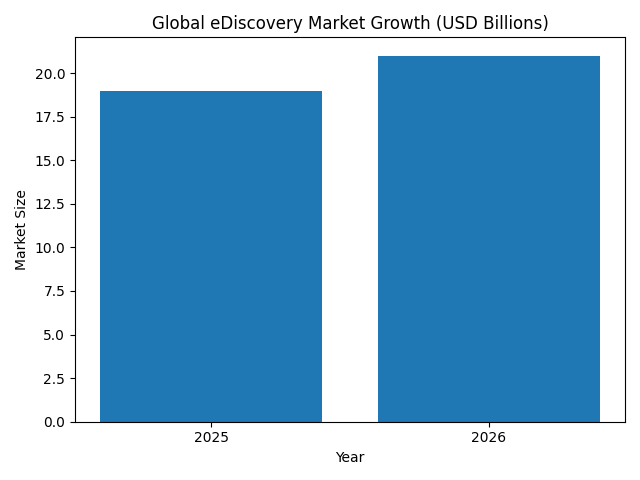
In 2026, the global eDiscovery market is estimated to reach approximately $20.74 billion, reflecting strong year-over-year growth from 2025. The market is projected to continue expanding at a compound annual growth rate (CAGR) of around 10.49%, reaching an estimated $46.06 billion by 2034.
This growth is largely driven by increased data volumes, stricter compliance requirements, and the widespread adoption of cloud-native platforms.
| Market Metric | 2025 Valuation (Estimated) | 2026 Valuation (Projected) | CAGR (2025–2026) |
|---|---|---|---|
| Global eDiscovery Market Size | $18.73 Billion | $20.74 Billion | 10.73% |
| Software & Solutions Segment | $8.64 Billion | $9.38 Billion | 8.56% |
| Services Segment | $12.88 Billion | $14.26 Billion | 10.71% |
| North America Regional Share | $7.38 Billion | $8.20 Billion | 11.11% |
Market Composition: Services vs Software Solutions
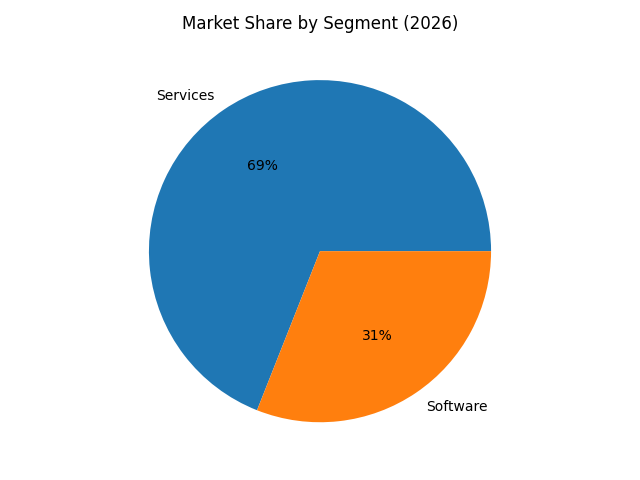
A defining characteristic of the eDiscovery market in 2026 is the continued dominance of the services segment. Services account for approximately 68.80% of total market share, reflecting the growing reliance on specialized providers for data processing, document review, and managed legal services.
This trend is particularly evident among mid-sized organizations that lack the internal infrastructure to manage large-scale data discovery independently.
In contrast, the software and solutions segment represents the technological backbone of the industry. While smaller in overall market share, it plays a critical role in driving innovation, particularly in areas such as AI-powered review, automation, and predictive analytics.
| Segment Type | 2026 Market Share | Key Characteristics | Strategic Role |
|---|---|---|---|
| Services | 68.80% | Managed review, processing, and consulting | Operational execution |
| Software & Solutions | 31.20% | AI tools, cloud platforms, automation | Innovation and scalability |
Regional Dominance and Emerging Growth Markets
The geographic distribution of the eDiscovery market in 2026 reveals a clear distinction between mature markets and emerging growth regions.
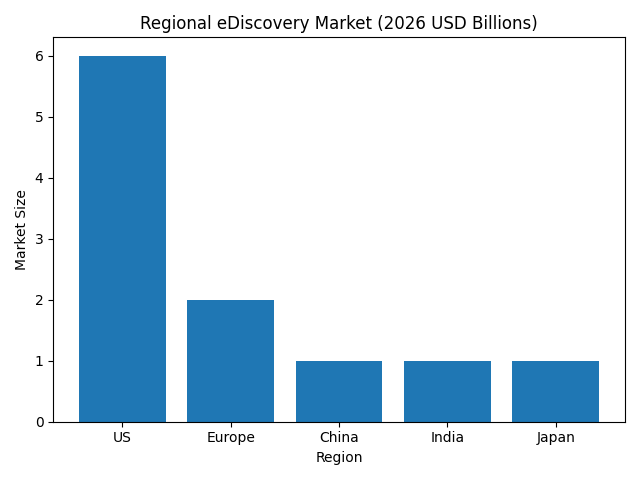
North America remains the dominant region, supported by advanced legal frameworks, high technology adoption, and strong demand for cloud-based solutions. The United States continues to lead global spending, driven by stringent regulatory requirements and widespread use of SaaS-based eDiscovery platforms.
At the same time, the Asia-Pacific (APAC) region is emerging as the fastest-growing market, fueled by rapid digital transformation, expanding corporate governance frameworks, and increasing litigation activity.
| Region/Country | 2026 Projected Valuation (USD Billion) | Growth Characteristics |
|---|---|---|
| United States | $5.68 | High cloud adoption; mature regulatory landscape |
| North America Total | $8.20 | Established market leadership |
| Europe (Combined) | $2.00 | Strong GDPR compliance focus |
| China | $0.97 | Rapid digitalization; evolving litigation frameworks |
| India | $0.89 | Growth in corporate governance and compliance |
| Japan | $0.63 | Emphasis on cross-border litigation and forensics |
| APAC Total | $4.02 | Fastest-growing regional market |
Sector-Specific Consumption Patterns
The demand for eDiscovery solutions in 2026 varies significantly across industries and organizational sizes. The Banking, Financial Services, and Insurance (BFSI) sector leads in terms of revenue contribution, reflecting its high exposure to regulatory scrutiny and litigation risk.
Large enterprises dominate market consumption, accounting for nearly 70% of total usage. These organizations typically manage complex legal portfolios and are increasingly investing in in-house eDiscovery capabilities to reduce reliance on external service providers.
| Market Segment | 2026 Share (%) | Key Drivers | Strategic Implications |
|---|---|---|---|
| BFSI Industry | 24.68% | Regulatory compliance and audit requirements | High demand for advanced eDiscovery tools |
| Large Enterprises | 69.93% | Complex litigation and in-house legal teams | Shift toward internal orchestration |
| Mid-Sized Firms | 30.07% | Limited infrastructure | Continued reliance on service providers |
Economic Drivers and Industry Transformation
Several macroeconomic and technological factors are contributing to the continued expansion of the eDiscovery market:
| Growth Driver | Description | Market Impact |
|---|---|---|
| Data Volume Explosion | Rapid increase in digital communication and storage | Higher demand for scalable solutions |
| Regulatory Complexity | Expanding global compliance requirements | Increased need for specialized services |
| Cloud Adoption | Shift toward SaaS-based platforms | Improved accessibility and scalability |
| AI and Automation | Integration of machine learning in review processes | Reduced manual effort and cost |
| Cost Optimization Pressure | Rising legal expenses | Shift toward in-house and automated tools |
Final Perspective on Market Evolution
From an independent analytical viewpoint, the global eDiscovery market in 2026 is undergoing a significant transformation characterized by technological innovation, regional expansion, and evolving consumption patterns. The dominance of services highlights the complexity of modern legal workflows, while the rapid growth of software solutions underscores the industry’s transition toward automation and intelligence-driven processes.
As organizations continue to generate and manage vast volumes of digital data, the role of eDiscovery will expand beyond litigation support into a broader function encompassing compliance, risk management, and strategic data governance.
Introduction to the Technological Paradigm Shift in eDiscovery
By 2026, the eDiscovery industry has entered a phase widely described as “AI maturity,” where generative artificial intelligence (GenAI) and large language models (LLMs) are no longer experimental tools but foundational components of modern discovery workflows. This transformation reflects a broader evolution in legal technology, where automation, contextual understanding, and real-time insights are redefining how legal teams interact with data.
Industry research indicates that a significant portion of practitioners now recognize GenAI as a transformative force. Over one-third anticipate major disruption within the year, while a growing segment reports that this transformation is already actively reshaping their workflows. This shift signals a transition from incremental efficiency gains to structural change across the entire eDiscovery lifecycle.
Adoption Trends and Industry Sentiment
The integration of GenAI into legal workflows is accelerating, although adoption levels vary depending on organizational readiness and risk tolerance. While many firms are actively experimenting with AI-driven tools, full-scale deployment across all matters remains in progress.
| Adoption Indicator | Percentage of Practitioners | Interpretation |
|---|---|---|
| Expect transformative impact in 2026 | 37.4% | Strong forward-looking confidence |
| Report transformation already underway | 23.3% | Early adoption phase gaining momentum |
| Use GenAI in majority of cases | 17.7% | Limited but growing operational integration |
The Impact of Generative AI on Review Economics
One of the most profound changes introduced by GenAI is its effect on the economics of document review. Historically, document review has represented the largest cost component of eDiscovery, often accounting for 70–80% of total expenditures. Traditional methods rely heavily on human reviewers, resulting in high labor costs and time-intensive workflows.
GenAI fundamentally disrupts this model by enabling automated first-pass review at unprecedented speed and accuracy. This shift reduces reliance on manual labor while improving consistency and scalability.
| Review Method | Processing Speed | Accuracy / Reliability | Cost Impact |
|---|---|---|---|
| Human Review | ~50 documents per hour | Variable; subject to fatigue | High (approximately $50+ per hour per attorney) |
| TAR 2.0 (CAL) | High prioritization speed | High with validation requirements | Moderate cost savings |
| GenAI Review | Up to 32,000 documents/hour | 10–20% higher precision than humans | Disruptive ($0.11–$0.50 per document) |
This evolution is not merely incremental but transformative, as it enables legal teams to process significantly larger datasets while maintaining or improving accuracy levels. The result is a redefinition of cost structures and resource allocation across the industry.
Key Use Cases Driving GenAI Adoption
GenAI is increasingly being applied across multiple stages of the eDiscovery workflow, with particular concentration in areas that benefit from contextual understanding and natural language processing.
| Use Case | Functional Role | Strategic Benefit |
|---|---|---|
| Document Summarization | Condenses large volumes of text | Accelerates information comprehension |
| Deposition Preparation | Extracts key themes and facts | Improves litigation readiness |
| Privilege Log Generation | Identifies and categorizes sensitive documents | Reduces manual workload |
| Case Strategy Development | Synthesizes evidence into actionable insights | Enhances decision-making |
| Document Classification | Categorizes data based on relevance | Streamlines review workflows |
| Legal Research Assistance | Provides contextual legal insights | Supports faster analysis |
| Evidence Extraction | Identifies critical facts across datasets | Improves investigative accuracy |
Despite these advancements, adoption is not without challenges. Concerns around AI “hallucinations,” defensibility in court, and the absence of clear legal precedents continue to influence how quickly organizations embrace these tools.
Barriers to Widespread Adoption
While GenAI offers substantial benefits, several barriers continue to slow its universal adoption across the legal sector.
| Barrier | Description | Impact on Adoption |
|---|---|---|
| Cultural Resistance | Hesitation to trust automated systems | Slows organizational change |
| AI Hallucination Risk | Potential for inaccurate or fabricated outputs | Raises reliability concerns |
| Legal Defensibility | Lack of established case law for AI-generated work | Creates uncertainty in litigation contexts |
| Regulatory Uncertainty | Evolving compliance requirements | Limits full-scale deployment |
The Expansion of Modern ESI: Collaboration and Mobile Data
In parallel with AI advancements, the nature of electronically stored information (ESI) has evolved significantly. Traditional data sources such as emails and static documents are no longer the primary focus. Instead, collaboration platforms and mobile communications now represent critical sources of discoverable evidence.
Legal professionals increasingly encounter data from tools such as team messaging platforms, video conferencing applications, and mobile messaging services. This shift introduces new complexities in data collection, processing, and contextual interpretation.
| Data Source Category | Prevalence in Cases (%) | Key Challenges |
|---|---|---|
| Collaboration Platforms | 42.5% | Fragmented conversations, contextual threading |
| Mobile Device Data | 38.0% | Encryption and data accessibility |
| Traditional Email/Data | Declining dominance | Lower relative complexity |
Challenges in Handling Collaboration and Mobile Data
Modern data sources introduce unique technical and legal challenges that require specialized solutions. Unlike traditional documents, collaboration and mobile data often involve dynamic, multi-threaded conversations and ephemeral content that may not be easily preserved.
| Challenge Area | Description | Industry Response |
|---|---|---|
| Encrypted Messaging | Platforms like WhatsApp and Signal | Development of secure extraction tools |
| Ephemeral Data | Temporary or auto-deleted messages | Advanced preservation techniques |
| Context Preservation | Maintaining conversation threads | Unified visualization tools |
| Data Integration | Combining multiple communication sources | Native connectors and ingestion pipelines |
Leading eDiscovery platforms in 2026 are addressing these challenges by developing native integrations that allow for seamless ingestion and visualization of communication data within a single interface. This enables legal teams to analyze conversations in context, preserving relationships between messages, participants, and timelines.
Final Perspective on Technological Transformation
From an independent analytical standpoint, the convergence of generative AI and modern ESI represents one of the most significant paradigm shifts in the history of eDiscovery. The transition toward AI-driven workflows is redefining efficiency, cost structures, and analytical capabilities, while the expansion of data sources is increasing both the complexity and strategic importance of discovery processes.
As the industry continues to evolve, organizations that successfully integrate GenAI and adapt to new data environments will be better positioned to manage risk, reduce costs, and derive actionable insights from increasingly complex datasets.
Introduction to eDiscovery Market Benchmarking in 2026
The economic structure of the eDiscovery market in 2026 reflects a significant transition toward cost predictability, transparency, and efficiency. The industry has largely moved away from the highly fragmented and expensive “vendor-driven” model of the 2010s, where costs were often opaque and disproportionately high. In contrast, modern eDiscovery platforms emphasize standardized pricing, automation, and scalable infrastructure.
From a third-party analytical perspective, this shift represents a fundamental realignment of value, where pricing is increasingly tied to measurable outputs such as data volume, document processing, and AI-driven insights rather than manual labor and ad hoc service billing.
Evolution of eDiscovery Cost Structures
Historically, managing 1 GB of data could cost tens of thousands of dollars due to reliance on external vendors, manual review processes, and limited automation. By 2026, advancements in cloud computing and AI have drastically reduced these costs, enabling more efficient and predictable pricing models.
| Cost Model Era | Typical Pricing Structure | Cost Implication |
|---|---|---|
| Vendor Era (2010s) | ~$30,000 per GB | Extremely high and unpredictable |
| Transition Phase | Hybrid vendor and software pricing | Moderate cost reduction |
| Modern Software Era | ~$25 per 100 GB (per case/month) | Highly cost-efficient and scalable |
This transition underscores the growing importance of all-in-one platforms that consolidate multiple functions into a single pricing framework, reducing both direct costs and operational complexity.
Winter 2026 Pricing Pulse: Service-Based Cost Benchmarks
Despite the shift toward software-driven pricing, service-intensive aspects of eDiscovery—particularly forensic and investigative services—continue to command premium rates. These services require specialized expertise and are often critical in high-stakes litigation and investigations.
| Service Category | Rate Anchor (2026) | Upper Tier Distribution (%) | Cost Characteristics |
|---|---|---|---|
| Forensic Collection (Standard) | $250 – $350 per hour | 56.6% | Baseline forensic services |
| Forensic Collection (Premium) | > $350 per hour | 20.8% | Onsite or complex investigations |
| Investigation & Report Generation | $350 – $550 per hour | 54.7% | High analytical expertise required |
| Expert Witness Testimony | > $550 per hour | 26.4% | Specialized legal and technical authority |
| Computer/Mobile Collection | > $350 per device | ~50.0% | Device-specific forensic extraction |
These pricing benchmarks highlight the continued importance of human expertise in areas where automation cannot fully replace specialized judgment and legal defensibility.
GenAI Pricing Models and Economic Disruption
The introduction of generative AI into eDiscovery workflows has introduced a new pricing paradigm centered around per-document cost rather than hourly billing. This model aligns cost directly with output, offering greater transparency and scalability.
| Review Model | Pricing Structure | Cost Efficiency | Market Impact |
|---|---|---|---|
| Human Review | Hourly billing | Low efficiency | High cost and variability |
| TAR 2.0 | Mixed (software + validation) | Moderate efficiency | Incremental savings |
| GenAI Review | $0.11 – $0.50 per document | High efficiency | Disruptive and scalable |
This pricing structure is gaining traction because it provides predictable costs while significantly reducing review timelines. It also challenges traditional billing models by shifting value from labor to technology-driven output.
Software Performance and User Satisfaction Metrics
In addition to pricing, user satisfaction and performance metrics play a critical role in evaluating eDiscovery platforms. Feedback collected across 2025 and 2026 indicates that reliability, speed, and user experience are the primary drivers of platform preference and brand loyalty.
| Product | Composite Score (/10) | CX Score (/10) | Emotional Footprint Insight |
|---|---|---|---|
| RelativityOne | 8.6 | 8.8 | Strong trust and enterprise reliability |
| DISCO eDiscovery | 8.4 | 8.4 | High performance and automation focus |
| Everlaw | 7.9 | 8.2 | Strong usability and collaboration |
| GoldFynch | 7.5 | 8.0 | Value-driven, affordability emphasis |
| Reveal (Logikcull) | 7.3 | 7.5 | Ease of use and accessibility |
The concept of “emotional footprint” reflects how users perceive a platform beyond its technical capabilities. Factors such as trust, ease of use, and perceived value significantly influence long-term adoption and satisfaction.
Comparative Cost Efficiency Matrix
A broader comparison of cost efficiency across different eDiscovery approaches highlights the growing dominance of software-led models.
| Evaluation Criteria | Traditional Vendor Model | Hybrid Model | Modern Software Platforms |
|---|---|---|---|
| Cost Predictability | Low | Moderate | High |
| Transparency | Limited | Partial | High |
| Scalability | Limited | Moderate | High |
| Dependence on Labor | Very high | Moderate | Low |
| Overall Cost Efficiency | Low | Moderate | High |
Final Perspective on Market Economics
From an independent analytical standpoint, the economics of eDiscovery in 2026 are defined by a clear shift toward efficiency, predictability, and technology-driven value creation. The decline of traditional vendor-heavy pricing models, combined with the rise of AI-powered review and cloud-based platforms, is reshaping how organizations approach legal data management.
While high-end forensic and investigative services continue to command premium pricing, the broader market is moving toward standardized, scalable cost structures that align with modern enterprise needs. This transformation not only reduces costs but also enables legal teams to operate with greater agility and strategic focus in increasingly complex data environments.
Introduction to Operational Trends and the Future of eDiscovery
As the eDiscovery market progresses through 2026 and moves toward the latter half of the decade, a set of deeper operational trends is becoming increasingly visible. These trends extend beyond surface-level technology adoption and reflect structural changes in how legal teams allocate resources, evaluate vendors, and design workflows.
From a third-party analytical perspective, the future of eDiscovery is being shaped by three converging forces: workforce transformation, security prioritization, and the integration of previously fragmented systems. Together, these forces are redefining the operational blueprint for modern legal organizations.
The Support Staff Paradox: Automation Replacing Human Scale
One of the most notable shifts in the legal industry is the divergence between rising data volumes and declining support staff. While electronically stored information (ESI) continues to grow exponentially, the number of support personnel available to manage this data is decreasing.
This phenomenon, often referred to as the “support staff paradox,” highlights the increasing reliance on technology to bridge the gap between workload and human capacity.
| Year | Support Staff per Lawyer (FTE) | Trend Direction | Operational Implication |
|---|---|---|---|
| 2017 | 95 | Baseline | High reliance on human resources |
| 2023 | 81 | Declining | Reduced operational headcount |
| 2026 | Continued decline (projected) | Ongoing contraction | Increased dependence on automation |
This shift is driving law firms and corporate legal departments to reallocate budgets away from personnel and toward technology-enabled services. As a result, modern eDiscovery platforms are expected to deliver not only advanced capabilities but also intuitive, self-service functionality that reduces the need for manual intervention.
| Operational Shift | Traditional Model | Emerging Model |
|---|---|---|
| Resource Allocation | Staff-heavy | Technology-driven |
| Workflow Execution | Manual and labor-intensive | Automated and self-service |
| Cost Structure | Personnel-focused | Software and platform-focused |
| Scalability | Limited by headcount | Scalable through automation |
Security as a Foundational Requirement
In 2026, security is no longer considered a differentiating feature but a fundamental requirement for participation in the eDiscovery market. Legal organizations are increasingly prioritizing data protection due to the sensitive nature of the information they handle and the growing threat landscape targeting law firms.
Industry data indicates that approximately 70% of legal professionals now rank security as a higher priority than feature functionality when selecting eDiscovery vendors.
| Security Priority Factor | Market Observation | Strategic Impact |
|---|---|---|
| Vendor Selection Criteria | Security prioritized over features | Shifts competitive landscape |
| Threat Environment | Increased targeting of legal firms | Higher risk awareness |
| Data Sensitivity | High-value legal and corporate data | Strong need for protection mechanisms |
| Compliance Requirements | SOC 2 Type II, HIPAA, and similar standards | Baseline requirement for enterprise deals |
Platforms that fail to meet these security benchmarks are increasingly excluded from enterprise procurement processes. This trend reinforces the importance of compliance certifications, encryption standards, and robust access controls as core elements of any eDiscovery solution.
The End of Siloed Discovery Systems
Another defining trend in 2026 is the decline of siloed discovery systems. Historically, legal workflows were fragmented across multiple tools and vendors, requiring frequent handoffs between stages such as data collection, review, deposition preparation, and trial execution.
The modern market, however, is shifting toward fully integrated systems that provide a continuous, end-to-end workflow within a single platform. This transition is driven by the need for efficiency, consistency, and real-time data visibility.
| Workflow Model | Siloed Systems | Connected Systems |
|---|---|---|
| Data Flow | Fragmented across tools | Unified and continuous |
| Process Handoffs | Frequent and manual | Minimal and automated |
| Visibility | Limited across stages | End-to-end transparency |
| Efficiency | Reduced due to duplication | Optimized through integration |
Integrated platforms are gaining traction because they eliminate inefficiencies associated with data transfers, reduce the risk of errors, and enable legal teams to maintain a cohesive case strategy throughout the litigation lifecycle.
Market Adoption of Integrated Platforms
Platforms that offer unified workflows—from matter inception through final production—are experiencing accelerated adoption, particularly within corporate and government sectors. These organizations value the ability to manage complex legal processes within a single, secure environment.
| Platform Type | Adoption Trend (2026) | Key Advantage |
|---|---|---|
| Siloed Tools | Declining | Limited scalability |
| Integrated Platforms | Rapid growth | Seamless workflow management |
| AI-Driven Ecosystems | Emerging standard | Enhanced automation and insight generation |
Future Outlook: The Next Phase of eDiscovery Evolution
Looking ahead, the eDiscovery industry is expected to continue evolving toward a model defined by automation, integration, and security-first design. Organizations will increasingly prioritize platforms that can operate with minimal human intervention while maintaining high levels of accuracy and compliance.
| Future Trend | Expected Development | Long-Term Impact |
|---|---|---|
| Automation Expansion | Greater reliance on AI and GenAI | Reduced operational costs |
| Workforce Transformation | Continued decline in support roles | Increased demand for self-service platforms |
| Security Standardization | Universal adoption of compliance frameworks | Higher baseline for vendor qualification |
| Platform Integration | Consolidation of legal workflows | End-to-end system dominance |
Final Perspective on Industry Direction
From an independent analytical standpoint, the operational trends emerging in 2026 signal a decisive shift toward a more efficient, technology-driven legal ecosystem. The combination of shrinking human resources, heightened security demands, and the elimination of siloed systems is fundamentally reshaping how eDiscovery is conducted.
As the market continues to mature, organizations that adopt integrated, secure, and automation-first platforms will be better positioned to manage increasing data complexity while maintaining operational efficiency and regulatory compliance.
Conclusion
The global eDiscovery software landscape in 2026 represents a pivotal moment in the evolution of legal technology. What was once a fragmented, labor-intensive process has transformed into a highly sophisticated, AI-driven ecosystem that enables legal teams to manage vast volumes of data with unprecedented speed, accuracy, and strategic insight. The emergence of the top 10 eDiscovery software platforms highlighted throughout this analysis reflects not only technological advancement but also a fundamental shift in how organizations approach litigation, compliance, and data governance.
A Defining Shift from Tools to Strategic Platforms
One of the most significant developments in 2026 is the transition from standalone tools to fully integrated legal intelligence platforms. Solutions such as NexLaw ChronoVault, RelativityOne, Everlaw, DISCO, and OpenText Axcelerate illustrate how modern eDiscovery software is no longer confined to document review. Instead, these platforms now play a central role in shaping litigation strategy, enabling real-time decision-making, and supporting end-to-end case management.
This shift is particularly important for enterprises and law firms managing complex, multi-jurisdictional matters. The ability to unify data ingestion, review, analysis, and trial preparation within a single environment eliminates inefficiencies, reduces risk, and enhances overall legal outcomes.
The Rise of AI-Driven eDiscovery and Automation
Generative AI and machine learning have become foundational components of the eDiscovery workflow in 2026. Platforms like Reveal, Exterro, Nuix, and Venio Systems demonstrate how artificial intelligence is transforming every stage of the discovery process—from automated document classification and privilege detection to predictive analytics and case narrative construction.
This technological advancement is not merely incremental. It is fundamentally reshaping the economics of eDiscovery by reducing reliance on manual review, which historically accounted for the majority of legal costs. With GenAI capable of processing tens of thousands of documents per hour at higher accuracy rates than human reviewers, organizations are achieving significant cost savings while improving efficiency and consistency.
As AI capabilities continue to mature, the competitive advantage will increasingly belong to platforms that can combine automation with transparency and defensibility, ensuring that AI-generated outputs meet legal standards and withstand judicial scrutiny.
Cost Predictability and the End of the Vendor Era
Another defining trend in the 2026 eDiscovery market is the move toward predictable, transparent pricing models. The traditional vendor-driven approach—characterized by high costs, opaque billing, and fragmented services—has largely been replaced by software-centric pricing structures that align costs with usage and outcomes.
Modern platforms now offer pricing models based on data volume, subscription tiers, or per-document processing, enabling organizations to forecast expenses with greater accuracy. This shift is particularly beneficial for corporate legal departments and mid-sized firms seeking to control budgets while maintaining access to advanced capabilities.
At the same time, premium services such as forensic investigations and expert testimony continue to command higher rates, reflecting the enduring value of specialized human expertise in complex legal scenarios.
Security and Compliance as Core Requirements
In an era of increasing cyber threats and regulatory scrutiny, security has become a foundational requirement for eDiscovery software. Organizations are no longer evaluating platforms solely on features or performance; instead, they prioritize data protection, compliance certifications, and secure infrastructure as critical decision factors.
Platforms like Casepoint and OpenText exemplify this trend by offering enterprise-grade security frameworks that meet stringent government and industry standards. As legal data continues to grow in sensitivity and value, the importance of secure, compliant systems will only increase, shaping vendor selection and market dynamics in the years ahead.
The Expansion of Modern Data Sources and ESI Complexity
The nature of electronically stored information has evolved significantly, with collaboration platforms, mobile devices, and encrypted messaging applications becoming primary sources of discoverable evidence. This shift introduces new challenges in data collection, preservation, and analysis, requiring advanced tools capable of handling dynamic, multi-threaded communication streams.
Leading eDiscovery platforms are responding by developing native integrations and visualization tools that preserve context and enable comprehensive analysis across diverse data sources. This capability is essential for maintaining accuracy and defensibility in modern litigation environments.
Market Segmentation and Platform Specialization
The top eDiscovery software solutions in 2026 demonstrate a clear trend toward specialization. While some platforms focus on enterprise scalability and global compliance, others prioritize user experience, cost efficiency, or forensic capabilities. This diversity allows organizations to select solutions that align with their specific needs, whether they are large multinational corporations, government agencies, or mid-market law firms.
For example, RelativityOne and OpenText dominate in large-scale enterprise deployments, while Everlaw and DISCO excel in usability and performance. Reveal and Exterro provide advanced AI and governance capabilities, while Nuix leads in forensic processing. Venio Systems offers a balanced approach for mid-market users, and Casepoint sets the standard for security and compliance.
This segmentation reflects a maturing market where differentiation is driven not only by technology but also by strategic alignment with user requirements.
The Future Outlook: Integration, Intelligence, and Efficiency
Looking ahead, the future of eDiscovery software will be defined by deeper integration, enhanced intelligence, and continued efficiency gains. The era of siloed systems is coming to an end, replaced by connected platforms that provide seamless workflows from data collection to courtroom presentation.
Automation will continue to expand, reducing the need for manual intervention and enabling legal teams to focus on higher-value strategic tasks. At the same time, advancements in AI will drive more sophisticated analytics, enabling organizations to extract actionable insights from increasingly complex datasets.
Security and compliance will remain central to platform development, with vendors investing heavily in certifications, encryption technologies, and data governance frameworks to meet evolving regulatory requirements.
Final Thoughts on Choosing the Best eDiscovery Software in 2026
Selecting the right eDiscovery software in 2026 requires a careful evaluation of organizational needs, data complexity, budget constraints, and strategic objectives. The best platforms are those that not only deliver technical capabilities but also align with long-term operational goals, enabling organizations to manage risk, reduce costs, and improve legal outcomes.
As the eDiscovery market continues to grow and evolve, the platforms that succeed will be those that combine innovation with reliability, offering scalable, secure, and intelligent solutions that adapt to the changing demands of the legal industry.
Ultimately, the top 10 eDiscovery software solutions highlighted in this analysis represent the forefront of this transformation. They provide a comprehensive view of how technology is reshaping legal workflows and setting new standards for efficiency, accuracy, and strategic value in the digital age.
If you find this article useful, why not share it with your hiring manager and C-level suite friends and also leave a nice comment below?
We, at the 9cv9 Research Team, strive to bring the latest and most meaningful data, guides, and statistics to your doorstep.
To get access to top-quality guides, click over to 9cv9 Blog.
To hire top talents using our modern AI-powered recruitment agency, find out more at 9cv9 Modern AI-Powered Recruitment Agency.
People Also Ask
What is eDiscovery software and why is it important in 2026?
eDiscovery software helps legal teams collect, review, and analyze digital evidence. In 2026, it is essential due to rising data volumes and stricter compliance requirements.
Which are the top eDiscovery software platforms in 2026?
Leading platforms include NexLaw ChronoVault, RelativityOne, Everlaw, DISCO, Reveal, Casepoint, Exterro, Nuix, Venio Systems, and OpenText Axcelerate.
How has AI changed eDiscovery software in 2026?
AI enables automated document review, summarization, and analysis, reducing manual effort and improving accuracy across large datasets.
What is the best eDiscovery software for large enterprises?
RelativityOne and OpenText Axcelerate are preferred for large enterprises due to scalability, security, and advanced analytics.
Which eDiscovery tool is best for mid-sized law firms?
Venio Systems and Everlaw are ideal for mid-sized firms, offering strong performance, usability, and cost efficiency.
What makes NexLaw ChronoVault unique in 2026?
It integrates discovery with litigation strategy by automatically generating case timelines and linking evidence to trial preparation.
Is cloud-based eDiscovery better than on-premise solutions?
Cloud-based solutions offer scalability, remote access, and faster deployment, making them more popular in 2026.
What is the average cost of eDiscovery software in 2026?
Modern software averages around $25 per 100 GB, while AI-based review costs range from $0.11 to $0.50 per document.
How does GenAI improve document review?
GenAI processes up to 32,000 documents per hour, delivering higher accuracy and significantly reducing review time and costs.
What industries use eDiscovery software the most?
Banking, financial services, insurance, healthcare, and government sectors are the largest users due to regulatory demands.
What features should you look for in eDiscovery tools?
Key features include AI automation, data security, scalability, real-time analytics, and integrated workflows.
How secure is eDiscovery software in 2026?
Top platforms offer enterprise-grade security with certifications like SOC 2 and HIPAA to protect sensitive legal data.
What is Technology-Assisted Review (TAR)?
TAR uses machine learning to prioritize relevant documents, reducing the amount of manual review required.
How does DISCO stand out among competitors?
DISCO offers sub-second search speeds and AI automation, making it ideal for high-volume, fast-paced legal cases.
What is Reveal’s AI Model Library used for?
It provides pre-trained models to detect fraud, compliance issues, and patterns within large datasets.
Can eDiscovery software handle mobile and chat data?
Yes, modern tools support data from apps like Slack, Teams, and mobile messaging platforms with contextual analysis.
Why is data privacy important in eDiscovery?
Legal data is highly sensitive, and compliance with regulations ensures protection against breaches and legal risks.
What is the role of automation in eDiscovery?
Automation reduces manual tasks, speeds up workflows, and improves consistency in document processing and review.
Which platform is best for forensic investigations?
Nuix (Neo Discover) is known for its high-speed forensic processing and deep data analysis capabilities.
How does Everlaw improve user experience?
Everlaw offers an intuitive interface, fast processing, and collaborative tools for streamlined case management.
What is Exterro’s Legal GRC approach?
It combines eDiscovery with governance, risk management, and compliance into a unified platform.
Are eDiscovery tools suitable for small businesses?
Yes, platforms like Logikcull and Everlaw offer scalable pricing models suitable for smaller organizations.
What is the difference between eDiscovery software and services?
Software provides tools for processing data, while services involve experts managing review and investigations.
How fast can modern eDiscovery platforms process data?
Leading platforms can process up to 10–20 TB per day, depending on infrastructure and configuration.
What is the future of eDiscovery software?
The future includes deeper AI integration, fully automated workflows, and unified platforms for end-to-end legal processes.
How does pricing transparency impact eDiscovery adoption?
Transparent pricing helps organizations control budgets and reduces reliance on unpredictable vendor-based models.
What are the challenges of using AI in eDiscovery?
Challenges include data accuracy concerns, AI hallucinations, and lack of legal precedents for AI-generated outputs.
Which regions are leading the eDiscovery market in 2026?
North America leads, while Asia-Pacific is the fastest-growing region due to digital transformation.
How do integrated platforms improve legal workflows?
They eliminate data silos, reduce manual handoffs, and provide a seamless workflow from discovery to trial.
What is the main benefit of using eDiscovery software?
It enables faster, more accurate, and cost-efficient handling of legal data, improving overall case outcomes.
Sources
Venio Systems
Fortune Business Insights
360iResearch
Grand View Research
Complex Discovery
SkyQuest
EIN Presswire
Exterro
U.S. Legal Support
eDiscovery Today
DISCO
Everlaw
JD Supra
Reveal Data
Nextpoint
Casepoint
NexLaw
LawNext
Relativity
Gartner
Info-Tech
Software Finder
TrustRadius
Software Advice
Capterra
Nuix
OpenText
Data Magic
Rev
Lighthouse