
Key Takeaways
- The Top 10 Direct Deposit Payroll Software in 2026 are defined by global compliance automation, AI-driven payroll processing, and real-time payment capabilities.
- Enterprise, mid-market, global EOR, and SMB segments each require specialized payroll platforms aligned with geographic reach and industry complexity.
- The future of direct deposit payroll software centers on real-time settlements, earned wage access, fintech integration, and scalable cloud-based infrastructure.
The global payroll landscape in 2026 is no longer defined by simple wage processing. It is defined by automation, compliance intelligence, cross-border workforce mobility, real-time payments, and financial infrastructure scale. As organizations expand across jurisdictions and operate in increasingly complex regulatory environments, selecting the right direct deposit payroll software has become a strategic business decision rather than an administrative one.


The Top 10 Direct Deposit Payroll Software in the world in 2026 represent the most advanced platforms shaping the future of wage distribution and workforce management. These systems do far more than transfer salaries into employee bank accounts. They calculate gross-to-net pay in real time, interpret multi-state and multi-country tax regulations, integrate with ERP and financial systems, manage compliance risks, support earned wage access, and in many cases, operate as liquidity intermediaries handling billions or even trillions of dollars annually.

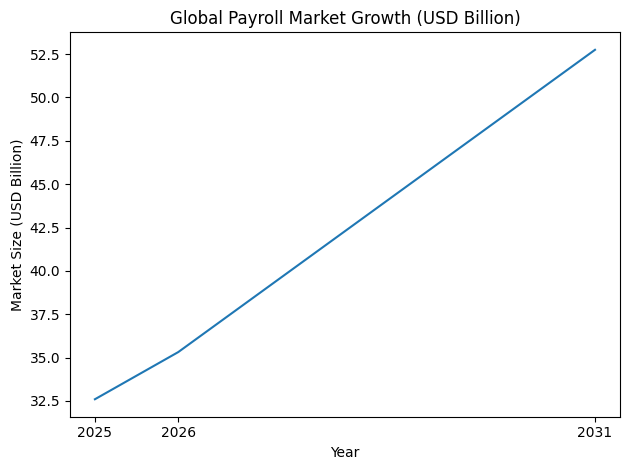
Direct deposit has evolved into the global standard for payroll disbursement. In developed economies, over 90 percent of employees now receive wages electronically. In emerging markets, digital payroll adoption is accelerating rapidly due to fintech integration and regulatory modernization. In this environment, businesses demand payroll platforms that offer speed, security, transparency, and global reach.
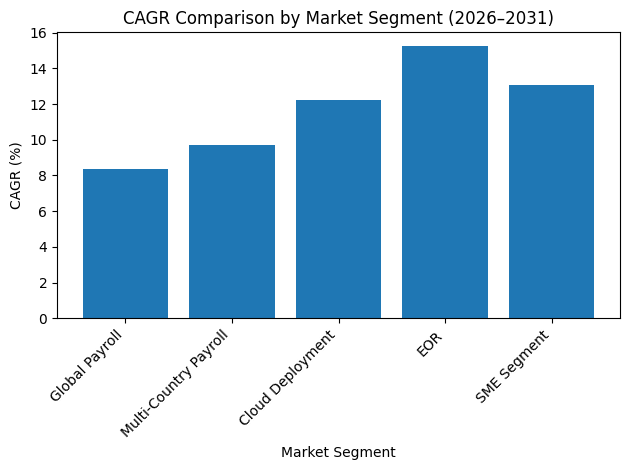
The 2026 market is characterized by several defining forces:
• The dominance of cloud-based payroll systems
• AI-driven compliance automation
• Multi-currency and cross-border payment infrastructure
• Earned wage access and digital wallet integration
• Real-time and same-day settlement expectations
• Increasing data sovereignty and cybersecurity regulations
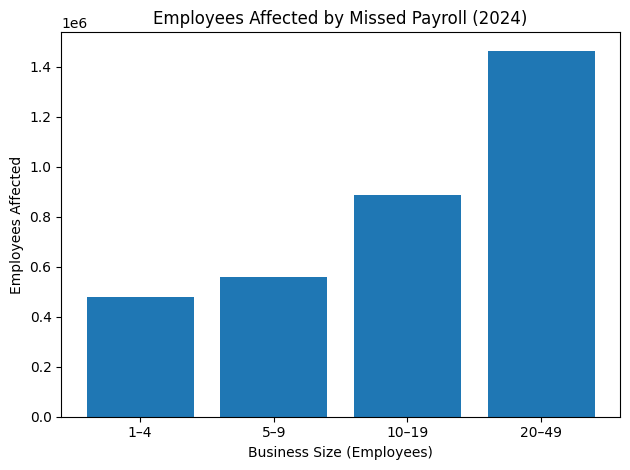
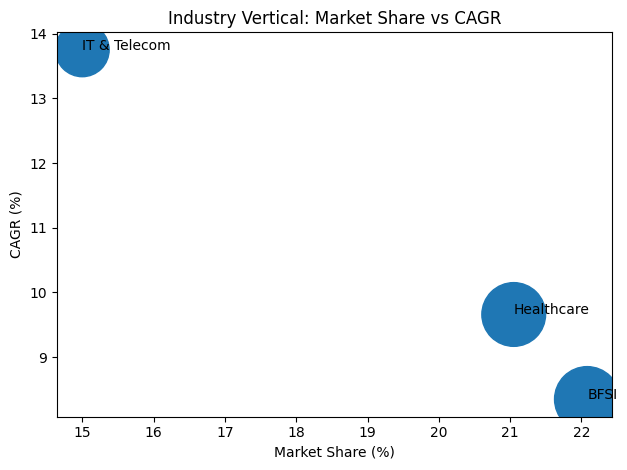
Large enterprises with more than 1,000 employees continue to account for the majority of global payroll spending, but the fastest growth is occurring among small and mid-sized businesses seeking automation to reduce administrative costs and compliance exposure. At the same time, remote-first companies and international startups are driving demand for multi-country payroll and Employer of Record solutions that simplify global hiring without entity formation.

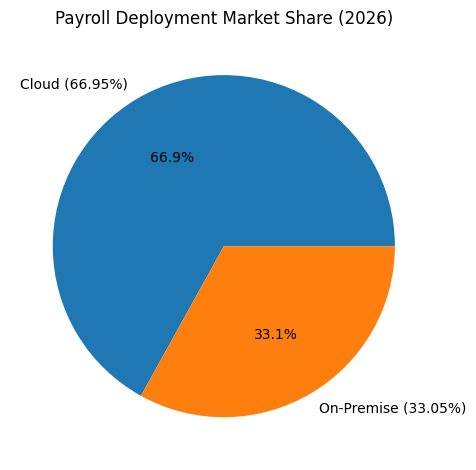
Choosing the best direct deposit payroll software in 2026 depends heavily on organizational context. A multinational corporation managing tens of thousands of employees across multiple tax jurisdictions requires a fundamentally different system than a startup hiring remote engineers in five countries or a small domestic business running payroll for 20 employees.
Enterprise organizations prioritize deep ERP integration, multi-entity accounting, continuous compliance monitoring, and treasury-scale liquidity management. Mid-market firms seek efficiency and system unification, eliminating data silos between HR, payroll, IT, and finance. Global startups need cross-border payment orchestration and regulatory clarity. Small businesses focus on transparent pricing, ease of use, and automated tax filing.

The competitive landscape reflects this segmentation. Some providers dominate enterprise global payroll with unmatched scale and compliance infrastructure. Others lead in mid-market automation and workflow integration. Specialized platforms focus exclusively on global expansion and Employer of Record services. Budget-conscious payroll tools continue to serve the domestic small business segment with streamlined pricing models.
In addition to functional capability, financial mechanics play an increasingly important role in evaluating payroll platforms. Direct deposit systems operate through Automated Clearing House networks and, in some cases, real-time payment rails. Providers manage substantial liquidity during settlement windows, generating interest income known as float. As interest rates fluctuate, this dynamic directly affects profitability and competitive pricing strategies.
Moreover, payroll is converging with financial technology. Earned wage access programs, digital wallets, and mobile-first payroll dashboards are transforming how employees interact with their compensation. Instead of waiting for static pay stubs, workers now access interactive financial summaries, predictive compensation insights, and early wage withdrawal options. Payroll software is becoming a central touchpoint in employee financial wellness.
Security and compliance have also reached new levels of scrutiny. Data protection regulations, cross-border data transfer restrictions, and cybersecurity threats demand that payroll providers maintain advanced certifications and role-based security frameworks. Global businesses must carefully evaluate infrastructure models, including native entity ownership versus third-party partner networks.
The Top 10 Direct Deposit Payroll Software in the world in 2026 are those that successfully combine:
• Global compliance depth
• Scalable cloud architecture
• AI-driven automation
• Secure and reliable direct deposit infrastructure
• Industry-specific vertical intelligence
• Financial ecosystem integration
This comprehensive guide examines the leading payroll platforms shaping the global market in 2026. It provides comparative insights into pricing structures, geographic coverage, industry specialization, technical capabilities, user satisfaction metrics, and strategic positioning.
For HR leaders, CFOs, payroll managers, startup founders, and technology decision-makers, understanding the strengths and trade-offs of each provider is essential. The right payroll system can reduce compliance risk, improve operational efficiency, strengthen employee experience, and support global growth.
As the world moves toward real-time payments and 24/7 earned wage access, direct deposit payroll software is becoming one of the most important operational infrastructures within modern organizations. The platforms highlighted in this analysis represent the forefront of that transformation.
Top 10 Direct Deposit Payroll Software in 2026
1. ADP
Among all global providers, ADP remains the benchmark for scale, reliability, and compliance in 2026. As the largest Human Capital Management organization in the world, ADP’s infrastructure underpins payroll operations for a significant share of global enterprises and small businesses alike.
The company services more than 1.1 million clients globally, including over 80% of Fortune 500 organizations. Its payroll and direct deposit systems handle extraordinary financial volumes and tax reporting complexity annually.
Operational Scale and Financial Magnitude
ADP’s processing capacity reflects unmatched operational scale within the payroll sector.
ADP Key Metrics – FY25/26
| Data Category | Value |
|---|---|
| Annual Revenue (FY25) | $21 Billion |
| Total Employees Paid Globally | 42 Million+ |
| U.S. Private Sector Employees Tracked | 26 Million+ |
| Monthly Active App Users | 14 Million+ |
| Client Fund Movement (U.S. Annually) | $3.3 Trillion |
| Employee Tax Statements Processed | 78 Million |
| Professional Employer Organization Revenue | $6.2 Billion |
The movement of $3.3 trillion in client funds annually within the United States alone illustrates ADP’s treasury and direct deposit infrastructure dominance. Few competitors approach this scale of capital processing.
Product Segmentation Strategy
ADP’s platform architecture is segmented to address business size and operational complexity.
ADP Product Portfolio Matrix
| Platform Name | Target Segment | Core Strengths |
|---|---|---|
| RUN Powered by ADP | Small Businesses | Automated tax filing, next-day direct deposit |
| ADP Workforce Now | Mid-to-Large Organizations | Integrated HCM suite, analytics, compliance |
| ADP GlobalView | Multinational Enterprises | Unified global payroll in 140+ countries |
| ADP Celergo | Global Mid-Market | Streamlined international payroll management |
This tiered structure allows ADP to scale with clients as they grow, maintaining continuity across payroll, compliance, benefits administration, and workforce analytics.
Direct Deposit Capabilities and Innovation
In 2026, ADP’s direct deposit infrastructure is reinforced by AI-powered enhancements. The introduction of ADP Assist, a generative AI layer, enables:
• Automated payroll discrepancy identification
• Predictive anomaly detection
• Intelligent compliance alerts
• Conversational payroll task execution
A significant competitive advantage lies in ADP’s ability to process payroll for employees working in multiple jurisdictions within the same pay cycle without reliance on third-party providers. This multi-state and multi-country payroll capability is critical for hybrid and distributed workforce models.
Direct Deposit Feature Comparison
| Feature | ADP | QuickBooks Payroll | Typical SMB Provider |
|---|---|---|---|
| Next-Day Direct Deposit | Yes | Yes | Often |
| Same-Day Option | Available | Limited | Rare |
| Multi-State Payroll Within Same Pay Period | Native | Limited | Rare |
| Automated Federal & State Tax Filing | Yes | Yes | Often |
| AI-Based Anomaly Detection | Advanced | Basic | Minimal |
| 50-State Compliance Coverage | Full | Full | Partial |
User Satisfaction and Performance Reliability
Enterprise clients consistently rate ADP highly in system reliability and support quality.
Customer Performance Benchmark – 2026
| Evaluation Category | ADP Rating | QuickBooks Rating |
|---|---|---|
| Performance & Reliability | 93% | 87% |
| Quality of Support | 90% | 78% |
| Compliance Confidence | High | Moderate |
| Enterprise Scalability | Very High | Low to Moderate |
These satisfaction metrics reflect the importance of uptime stability, audit readiness, and compliance confidence among enterprise organizations. Payroll errors at scale can create legal, financial, and reputational risk, making reliability a critical differentiator.
Cost Structure and Accessibility
For small businesses, RUN Powered by ADP begins at approximately $79 per month plus $4 per employee. Standard features include:
• Automated tax calculation and filing
• Next-day direct deposit
• Employee self-service portals
• Compliance updates
• Basic reporting
While premium tiers increase cost, the system’s scalability allows organizations to transition seamlessly into Workforce Now or global payroll solutions as workforce complexity grows.
Strategic Positioning in 2026
ADP’s competitive advantage rests on five structural pillars:
• Massive processing scale
• Compliance infrastructure across all U.S. states and 140+ countries
• Integrated treasury management
• AI-enhanced payroll intelligence
• Deep enterprise trust and brand reputation
In a payroll landscape increasingly defined by automation and cross-border workforce management, ADP remains the enterprise standard against which other direct deposit payroll providers are measured.
Conclusion
The Top 10 Direct Deposit Payroll Software platforms in 2026 reflect a market that has matured beyond simple wage distribution. Direct deposit systems are now integrated financial operations engines, powered by artificial intelligence and global compliance intelligence.
Among them, ADP continues to occupy the highest tier of operational capability and enterprise adoption. Its scale, reliability, AI integration, and compliance infrastructure position it as the dominant benchmark in global payroll technology.
As payroll complexity continues to increase in the coming years, providers that combine automation, multi-jurisdiction intelligence, and secure financial processing at scale will define the next era of workforce payment systems.
2. Paychex
In 2026, Paychex stands as one of the most strategically repositioned payroll technology providers in the global market. Its evolution from a strong small-business payroll vendor into a dominant mid-market consolidation leader has been significantly accelerated by the acquisition of Paycor in early 2025. This transaction expanded Paychex’s technology capabilities, strengthened its analytics infrastructure, and deepened its presence among mid-sized enterprises.
Serving approximately 800,000 clients, Paychex leverages scale as both a financial and operational advantage. The integration of Paycor’s human capital management technology into the Paychex ecosystem has enabled enhanced AI-driven reporting, predictive workforce analytics, and industry benchmarking capabilities tailored for mid-market organizations.
In the competitive hierarchy of the Top 10 Direct Deposit Payroll Software Platforms in 2026, Paychex occupies a critical middle ground between small-business-focused providers and enterprise-scale global payroll operators.
Market Role Matrix – 2026 Payroll Landscape
| Segment Category | Typical Client Size | Leading Providers in 2026 |
|---|---|---|
| Small Business | 1–50 employees | Gusto, QuickBooks Payroll |
| Mid-Market | 50–1,500 employees | Paychex, UKG, Rippling |
| Enterprise | 1,500+ employees | ADP, Workday, SAP SuccessFactors |
| Global Distributed Teams | Multi-country workforce | Deel, Papaya Global, ADP |
Within this segmentation, Paychex has consolidated its leadership in the mid-market category, particularly among U.S.-based organizations seeking both automation and dedicated service support.
Financial Performance and Growth Trajectory
Paychex’s fiscal 2026 performance reflects the tangible impact of strategic acquisition and product modernization. In the second quarter of fiscal year 2026, the company reported total revenue of $1.56 billion, representing an 18% year-over-year increase. A substantial portion of this growth was directly attributed to the Paycor acquisition, which contributed approximately 17% of Q2 revenue expansion.
Financial Performance Snapshot – Fiscal 2026 Q2
| Financial Metric | Value (USD) |
|---|---|
| Total Revenue | $1.56 Billion |
| Management Solutions Revenue | $1.17 Billion |
| PEO and Insurance Solutions Revenue | $336.9 Million |
| Adjusted Operating Income | $649 Million |
| Adjusted Diluted EPS | $1.26 |
| Interest on Funds Held for Clients | $54.3 Million |
The Management Solutions segment remains the primary growth engine, accounting for the majority of quarterly revenue. This segment includes payroll processing, direct deposit services, HR tools, workforce analytics, and compliance automation.
Paychex also maintains strong capital allocation discipline. In 2026, the company reported a dividend coverage ratio of 1.3x and returned over $1.06 billion to shareholders through dividends and share repurchases year-to-date. This financial stability supports continued investment in product innovation, AI integration, and platform modernization under its “digital leader” strategic framework.
Revenue Composition Breakdown
| Segment | Percentage of Q2 Revenue |
|---|---|
| Management Solutions | 75% |
| PEO & Insurance Solutions | 22% |
| Other | 3% |
This diversified structure provides both recurring revenue stability and scalability across service lines.
Technology Stack and Digital Leader Strategy
Paychex’s 2026 platform strategy centers on embedding artificial intelligence across reporting, compliance validation, and operational efficiency tools. Through the integration of Paycor’s advanced analytics framework, Paychex now delivers:
• AI-driven workforce trend analysis
• Predictive compliance alerts
• Industry benchmarking dashboards
• Automated payroll validation workflows
• Enhanced mobile self-service functionality
The company positions itself as a hybrid service-and-technology provider, distinguishing its model from software-only payroll platforms. For mid-sized businesses that require guidance in compliance and HR management, this hybrid approach remains highly attractive.
Direct Deposit Infrastructure and Compliance Capabilities
Paychex Flex, the company’s flagship payroll and HR platform, anchors its direct deposit services. Designed for organizations requiring automation combined with human advisory support, Paychex Flex delivers:
• Automated federal, state, and local tax filings
• Penalty protection and accuracy guarantees
• Multi-state payroll support
• Employee self-service portals
• Dedicated payroll specialists
Direct Deposit Feature Comparison – Mid-Market Providers
| Feature | Paychex Flex | Typical SMB Platform | Enterprise Platform |
|---|---|---|---|
| Next-Day Direct Deposit | Yes | Yes | Yes |
| Same-Day Option | Limited | Rare | Available |
| Federal/State/Local Tax Filing | Automated | Automated | Automated |
| Penalty Protection Guarantee | Yes | Limited | Yes |
| Dedicated Payroll Specialist | Yes | Rare | Yes |
| Industry Benchmarking Reports | Advanced | Minimal | Advanced |
One of Paychex’s distinguishing features in 2026 is its personalized onboarding and dedicated service model. Unlike purely SaaS competitors, Paychex assigns support representatives to clients, providing consultation for payroll configuration, compliance questions, and HR optimization.
Direct Deposit Cost Structure
For organizations using Paychex, direct deposit pricing typically includes:
• A per-pay-cycle service fee
• A transaction fee per direct deposit payment, generally ranging between $1.25 and $1.50
Direct Deposit Cost Structure Overview
| Cost Component | Typical Range (USD) |
|---|---|
| Per Pay Cycle Base Fee | Variable by plan |
| Per Direct Deposit Transaction | $1.25 – $1.50 |
| Add-On Compliance Services | Plan Dependent |
| PEO Integration Costs | Custom Pricing |
While this pricing model may exceed that of some software-only competitors, it reflects the inclusion of service-backed compliance assurance and penalty protection guarantees.
Competitive Positioning Against Major Rivals
In 2026, Paychex competes primarily with:
• ADP in the mid-market segment
• UKG in workforce management integration
• Rippling in technology-forward automation
• Gusto in upper-tier small business payroll
Competitive Differentiation Matrix
| Differentiation Factor | Paychex Strength Level | Commentary |
|---|---|---|
| Mid-Market Specialization | High | Core focus segment |
| Service + Software Hybrid | Very High | Dedicated reps and advisory support |
| AI-Driven Reporting | High | Post-Paycor integration |
| Global Payroll Reach | Moderate | Primarily U.S.-centric |
| Enterprise Global Scale | Limited | Not positioned as multinational leader |
| Compliance Protection | Very High | Accuracy guarantee and penalty coverage |
Unlike global payroll operators that dominate multi-country enterprise processing, Paychex concentrates on domestic regulatory complexity, high-touch service delivery, and operational efficiency for mid-sized employers.
Strategic Outlook for 2026 and Beyond
Paychex’s transformation in 2026 reflects a broader industry shift toward consolidation, platform integration, and AI-driven payroll intelligence. Its acquisition-led growth model has strengthened its competitive position without compromising financial stability.
The company’s emphasis on:
• Compliance assurance
• AI-enhanced analytics
• Dedicated service representatives
• Strong capital discipline
• Dividend-backed investor confidence
positions it as the leading mid-market consolidation platform within the global direct deposit payroll ecosystem.
As payroll compliance grows more complex and businesses demand both automation and advisory support, Paychex’s hybrid delivery model continues to differentiate it from purely SaaS-driven payroll software competitors in the evolving 2026 marketplace.
3. Gusto
In 2026, Gusto has solidified its position as the leading direct deposit payroll software platform for small-to-medium businesses (SMBs) in the United States. With a customer base exceeding 400,000 businesses, Gusto’s growth has been fueled by its focus on user-centric design, transparent pricing, and automation tailored specifically for smaller employers.
Unlike enterprise payroll systems built for global compliance complexity, Gusto’s platform is optimized for simplicity, accessibility, and rapid onboarding. Its strength lies not only in payroll processing, but also in the strategic value of the anonymized workforce data it aggregates. This data has transformed Gusto into an influential economic signal provider for the U.S. small business sector.
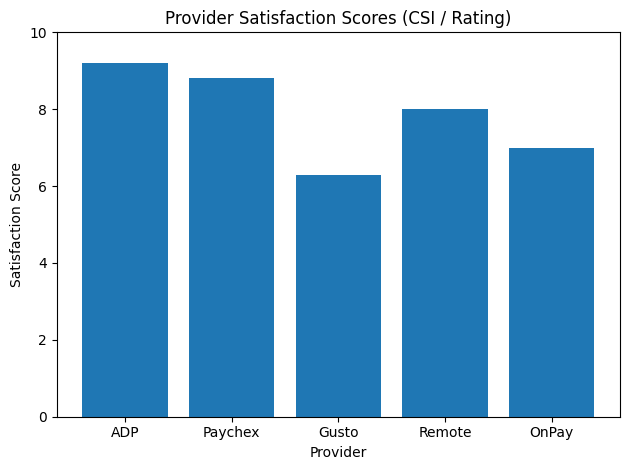
While its Consumer Sentiment Index (CSI) rating of 6.3 is categorized as “Fair,” the platform consistently earns top marks across review platforms for user interface design, onboarding clarity, and customer experience.
SMB Payroll Market Segmentation – 2026
| Business Size Segment | Payroll Needs Complexity | Leading Platform Preference |
|---|---|---|
| 1–9 Employees | Low to Moderate | Gusto, QuickBooks Payroll |
| 10–49 Employees | Moderate | Gusto, Paychex |
| 50–250 Employees | Moderate to High | Paychex, Rippling |
| 250+ Employees | High | ADP, Workday |
Gusto’s dominance is strongest within the 1–49 employee range, where ease of use and cost transparency are decisive purchasing factors.
Quantitative Impact on the U.S. SMB Labor Market
Beyond payroll processing, Gusto operates as a real-time economic intelligence engine. The company’s anonymized payroll dataset provides insight into hiring trends, wage growth, and sectoral shifts within small businesses.
In January 2026, Gusto reported that small businesses added 37,100 net jobs nationwide. This marked a stabilization period following earlier labor market volatility.
January 2026 SMB Hiring Breakdown
| Business Size Category | Net Hires |
|---|---|
| 1–4 Employees | -32,650 |
| 5–9 Employees | +8,734 |
| 10–19 Employees | +8,116 |
| 20–49 Employees | +52,902 |
| Total Net SMB Hires | +37,100 |
This data illustrates a clear bifurcation in the SMB landscape:
• Micro-businesses (1–4 employees) faced contraction, largely due to cash flow pressure and labor cost constraints.
• Growing firms (20–49 employees) expanded aggressively, adding over 52,000 net jobs.
Sectoral Drivers – January 2026
| Industry Sector | Net Jobs Added |
|---|---|
| Healthcare | +17,100 |
| Accommodation & Food | +16,200 |
| Other Services | Mixed |
Healthcare and accommodation services emerged as leading drivers of small-business employment expansion, reflecting broader economic recovery patterns and service sector resilience.
By aggregating and publishing anonymized payroll data, Gusto influences economic forecasting discussions and policymaker analysis. This positions the company as more than a payroll software provider; it serves as a data intelligence hub for SMB economic activity.
Product Architecture and User Experience Focus
Gusto’s competitive advantage lies in its design philosophy. The platform is engineered for clarity and automation, minimizing payroll errors through guided workflows and automated compliance alerts.
Core Platform Capabilities
• Full-service payroll automation
• Automated tax calculations and filings
• W-2 and 1099 generation
• Benefits administration integration
• Employee onboarding workflows
• Contractor payments in 120 countries
The system is particularly valued for reducing administrative burden during tax season, as it automatically generates required federal tax forms and maintains organized digital records.
Tiered Pricing Structure and Transparency
One of Gusto’s strongest differentiators in 2026 is transparent, published pricing. This clarity contributes to its 82% recommendation rate on Capterra and high user satisfaction scores.
Gusto Pricing Matrix – 2026
| Plan Tier | Base Monthly Price | Per Employee Fee | Core Features Included |
|---|---|---|---|
| Simple | $49 | $6 | Full-service payroll, basic onboarding |
| Plus | $80 | $12 | Multi-state tax support, next-day direct deposit |
| Premium | $180 | $22 | Certified HR experts, compliance alerts, advanced support |
| Contractor-Only | $35 | $6 | Unlimited contractor payments in 120 countries |
This pricing model provides predictable budgeting for SMBs, a critical factor for early-stage and growth-stage businesses managing tight cash flow.
Direct Deposit Capabilities and Reliability
Gusto’s direct deposit functionality receives a 4.5 out of 5 user rating, reflecting consistent payment timing and ease of setup.
Direct Deposit Feature Overview
| Feature | Availability in Gusto |
|---|---|
| Next-Day Direct Deposit | Available (Plus tier and above) |
| Automated Tax Filing | Yes |
| W-2 and 1099 Automation | Yes |
| International Contractor Payments | Up to 120 countries |
| Employee Self-Service Portal | Yes |
| Payment Timing Reliability Rating | High |
Users consistently cite the following advantages:
• Predictable and reliable payment timing
• Simplified bank account setup
• Automated contractor payment workflows
• Reduced manual tax paperwork
While Gusto does not offer the global payroll depth of enterprise providers, its international contractor payment capabilities provide flexibility for SMBs operating with distributed freelancers.
Competitive Differentiation in the SMB Segment
Gusto competes primarily with:
• QuickBooks Payroll in micro-business segments
• Paychex in growing SMB tiers
• Rippling in tech-forward SMB operations
SMB Competitive Comparison – 2026
| Differentiation Factor | Gusto Strength Level | Commentary |
|---|---|---|
| User Interface Design | Very High | Industry-leading ease of use |
| Pricing Transparency | Very High | Clear published tiers |
| Enterprise Scalability | Limited | Not designed for multinational complexity |
| Data Intelligence Publishing | High | Influential SMB labor market reporting |
| Dedicated Advisory Support | Moderate | Available in premium tiers |
| Global Payroll Infrastructure | Limited | Primarily U.S.-centric |
Gusto’s primary strength remains its ability to simplify payroll and HR for small businesses without overwhelming them with enterprise-level complexity.
Strategic Outlook for 2026
As economic volatility continues to affect small businesses, payroll platforms that reduce administrative overhead and provide predictable pricing will remain attractive. Gusto’s emphasis on intuitive design, automated compliance, and transparent pricing positions it as the dominant SMB payroll experience platform in 2026.
Its dual identity as both a payroll software provider and a labor market data engine strengthens its long-term strategic relevance. By combining automation, affordability, and economic intelligence, Gusto continues to shape the small business payroll ecosystem within the broader global direct deposit payroll software market.
4. Rippling
In 2026, Rippling represents one of the most structurally disruptive models in the global payroll and direct deposit software market. Rather than operating solely as a payroll or human capital management platform, Rippling positions itself as a unified operations infrastructure layer connecting HR, IT, and Finance into a single data environment.
With a valuation of $16.8 billion as of May 2025 and annualized revenue reaching approximately $570 million, Rippling is widely recognized as the fastest-growing platform within the mid-market segment. Its expansion reflects demand from scaling organizations seeking to eliminate data silos across internal systems.
Unlike traditional payroll systems that function independently from device management, expense reimbursement, and financial reporting, Rippling integrates these workflows through a centralized employee data architecture.
Market Role in the 2026 Payroll Ecosystem
Mid-Market Payroll Technology Landscape
| Provider Category | Primary Differentiator | Representative Platforms |
|---|---|---|
| Service-Driven Payroll | Advisory + Compliance | Paychex |
| Enterprise Global Payroll | Scale + Multinational Coverage | ADP, Workday |
| SMB Experience Platform | Simplicity + Pricing Transparency | Gusto |
| Unified Operations Platform | HR + IT + Finance Integration | Rippling |
Rippling’s differentiation lies in its cross-functional integration model, making it particularly attractive to technology-driven mid-market firms.
The Efficiency of Unification: Middleware Architecture
Rippling’s core strategic innovation is its middleware layer for employee data. This architecture ensures that changes made in one module automatically propagate across all related systems.
For example:
• When an employee updates their bank account for direct deposit within the HR module, the change is immediately reflected in payroll processing.
• The same update can flow into finance modules, such as expense reimbursement systems.
• IT access permissions and provisioning can also update automatically if role changes occur.
This unified data model reduces manual reconciliation, eliminates duplicate entries, and decreases the probability of payroll errors.
Operational Impact Matrix
| Process Event | Traditional Payroll Model | Rippling Unified Model |
|---|---|---|
| Bank Account Update | Manual sync required | Automatic sync |
| Role Change | Separate HR & IT updates | Instant cross-system update |
| Expense Reimbursement Integration | External integration | Native module sync |
| Device Provisioning | Separate IT tool | Embedded workflow |
| Payroll & Finance Data Reconciliation | Manual or export-based | Automated real-time linkage |
This architecture contributes to Rippling’s 95% user recommendation rate, one of the highest in the mid-market payroll category.
Business Performance and Growth Metrics
Rippling’s financial profile demonstrates its aggressive expansion strategy and technology-first orientation.
Rippling Business Metrics (2025/26)
| Data Category | Value |
|---|---|
| Valuation | $16.8 Billion |
| Annualized Revenue | $570 Million |
| Revenue Multiple | 23.96x |
| R&D Spend (as % of Revenue) | 46% – 80% |
| Global Employee Count | 5,000 |
| Customer Base | 20,000+ Organizations |
The company’s research and development expenditure significantly exceeds the industry median of approximately 17% of revenue. This elevated R&D investment supports its ambition to become a “last mover” platform—offering a more efficient, consolidated version of multiple standalone solutions.
High Revenue Multiple Interpretation
| Metric | Industry Median | Rippling |
|---|---|---|
| Revenue Multiple | 8x – 12x | 23.96x |
| R&D Spend Ratio | ~17% | 46–80% |
| Growth Rate Category | Moderate | Hypergrowth |
The premium valuation multiple reflects investor confidence in Rippling’s modular expansion model and cross-department integration capabilities.
Direct Deposit Infrastructure and Global Payroll Capabilities
Rippling’s direct deposit system integrates natively into its broader operations ecosystem. The platform supports multi-country payroll with localized compliance requirements, enabling U.S.-based teams to expand internationally without deploying separate payroll systems.
Direct Deposit and Payroll Capabilities Overview
| Feature | Availability in Rippling |
|---|---|
| Next-Day Direct Deposit (U.S.) | Yes |
| Multi-Country Payroll | Supported |
| Localized Compliance Automation | Yes |
| 100% Error-Free Payroll Guarantee | Yes |
| Automated Tax Filing | Yes |
| IT & Payroll Data Integration | Native |
Rippling markets a “100% error-free guarantee,” reinforcing its emphasis on system automation and data synchronization.
For U.S.-first companies building global teams, the platform automates compliance workflows across jurisdictions, reducing the need for third-party providers.
Pricing Model and Modular Expansion
Rippling’s pricing begins at approximately $35 per month plus $8 per employee. However, its modular structure means total costs can increase significantly as organizations add:
• IT device management
• App provisioning
• Finance modules
• Global payroll features
• Expense management
• Benefits administration
Rippling Pricing Structure Matrix
| Cost Component | Approximate Starting Price |
|---|---|
| Base Platform | $35 per month |
| Per Employee Fee | $8 per employee |
| Global Payroll Add-Ons | Variable |
| IT Management Modules | Modular Pricing |
| Finance and Expense Modules | Modular Pricing |
This modular architecture allows clients to scale functionality incrementally but may lead to higher total cost of ownership compared to simpler payroll-only solutions.
Competitive Differentiation in 2026
Rippling competes primarily with:
• Paychex in the mid-market segment
• Gusto in growing SMB tiers
• ADP Workforce Now in upper mid-market
• Deel and Papaya Global for international payroll
Competitive Strength Matrix
| Differentiation Factor | Rippling Strength Level | Commentary |
|---|---|---|
| Unified HR + IT + Finance | Very High | Core architectural advantage |
| Global Payroll Capability | High | Strong for U.S.-centric expanding teams |
| Dedicated Advisory Support | Moderate | More tech-centric than service-centric |
| AI and Automation | Very High | Heavy R&D investment |
| Pricing Predictability | Moderate | Modular expansion increases complexity |
| Enterprise Global Scale | Moderate | Not yet at ADP enterprise volume |
Rippling’s model appeals strongly to high-growth, technology-forward organizations seeking operational efficiency rather than traditional service-heavy payroll management.
Strategic Outlook
As organizations continue consolidating software stacks in pursuit of operational efficiency, unified operations platforms are gaining traction. Rippling’s middleware architecture addresses a persistent problem in scaling companies: disconnected systems across HR, payroll, IT, and finance.
Its substantial R&D investment and high revenue multiple suggest continued product innovation and global expansion. However, its success will depend on maintaining integration simplicity while scaling internationally.
Within the broader Top 10 Direct Deposit Payroll Software ecosystem in 2026, Rippling represents the operations-integration paradigm shift—where payroll is no longer a standalone function, but a core data node in an interconnected enterprise infrastructure.
5. Deel
By 2026, the demand for cross-border payroll and Employer of Record services has accelerated significantly as remote-first workforces become normalized. Organizations are increasingly hiring talent across continents without establishing local legal entities. This structural shift has elevated global payroll platforms from administrative tools to strategic expansion enablers.
Within this environment, Deel has emerged as one of the most influential platforms dedicated to international workforce scaling. Unlike legacy payroll providers that expanded globally from domestic roots, Deel was architected specifically for a borderless employment model.
Global Workforce Technology Segmentation – 2026
| Platform Category | Core Focus Area | Representative Providers |
|---|---|---|
| Domestic Payroll | In-country compliance and tax filing | Gusto, Paychex |
| Enterprise Global Payroll | Multinational enterprise consolidation | ADP, SAP SuccessFactors |
| Unified Operations Platforms | HR + IT + Finance integration | Rippling |
| Global EOR & Contractor Platforms | Cross-border hiring and compliance | Deel, Papaya Global |
Deel firmly occupies the global EOR and contractor management segment, positioning itself as a foundational layer for international expansion.
Global Infrastructure and Coverage
In 2026, Deel supports:
• Payroll operations in 130+ countries
• Employer of Record services in 150+ countries
• Contractor payments across an even broader network
This global reach allows companies to hire full-time employees or independent contractors without establishing local subsidiaries. The platform assumes responsibility for employment contracts, compliance, tax withholding, and statutory benefits in jurisdictions where it provides EOR services.
A defining feature of Deel’s infrastructure is its Single Native Payroll Calculation Engine. This proprietary system enables real-time gross-to-net payroll calculations in more than 50 countries.
Infrastructure Comparison Matrix
| Feature | Deel | Traditional Aggregator Model |
|---|---|---|
| Native Payroll Calculation Engine | Yes | Often No |
| Real-Time Gross-to-Net Calculations | 50+ Countries | Limited |
| Third-Party Aggregator Dependency | Reduced | High |
| Data Security Control | Higher | Variable |
| Payment Processing Speed | Accelerated | Slower due to intermediaries |
By owning core payroll engines in multiple jurisdictions, Deel reduces reliance on third-party processors. This approach improves data security, minimizes latency, and enhances compliance transparency.
Market Performance and Financial Position
Deel’s rapid growth trajectory reflects strong demand for global employment infrastructure.
Deel Market Position (2025/26)
| Performance Indicator | Value / Rating |
|---|---|
| Annual Recurring Revenue (ARR) | $500 Million |
| Valuation | $12.1 Billion |
| Employee Count | 7,500 |
| G2 Ranking – EOR Software | #1 |
| G2 Ranking – Contractor Management | #1 |
The company’s leadership rankings in both Employer of Record and Contractor Management categories demonstrate high market penetration and strong user satisfaction in core service areas.
However, its Consumer Sentiment Index (CSI) rating of 7.6 suggests mixed user feedback. While customers frequently highlight ease of onboarding and efficient international payments, some dissatisfaction persists regarding withdrawal fees and occasional delays on specific payment rails.
User Sentiment Drivers – 2026
| Positive Feedback Themes | Areas of Concern |
|---|---|
| Easy global onboarding | Withdrawal fees |
| Rapid contractor payment setup | Payment rail delays in some regions |
| Centralized global dashboard | Currency conversion costs |
| Strong compliance documentation | Fee transparency variability |
Employer of Record Capabilities
Deel’s EOR services allow companies to:
• Hire full-time employees legally in foreign countries
• Manage statutory benefits and local tax compliance
• Issue compliant employment contracts
• Handle terminations according to local labor laws
• Avoid establishing local entities
This functionality is particularly valuable for startups and scale-ups expanding into emerging markets where legal infrastructure complexity can be prohibitive.
Pricing Structure and Competitive Positioning
Deel’s pricing model is designed to remain accessible to startups and mid-sized organizations expanding internationally.
Pricing and Coverage Comparison – 2026
| Comparison Point | Deel | Papaya Global |
|---|---|---|
| Contractor Management Start | $49 per month | $30 per month |
| EOR Starting Price | $599 per month | $599 per month |
| Countries Covered | 150+ | 160+ |
| Primary Regional Strength | North & Latin America | Europe & Middle East |
Deel is generally considered more cost-effective than certain enterprise-focused competitors that charge higher flat rates without flexible commitments. For example, some global EOR providers may charge $699 per month without annual agreements.
While Papaya Global covers a slightly higher number of countries, Deel’s hybrid infrastructure—comprising owned entities, strategic partnerships, and acquired payroll engines—allows faster deployment in emerging markets.
Strategic Utility for Scaling Organizations
Deel’s platform is particularly valuable for:
• Technology startups expanding globally
• Venture-backed scale-ups
• Remote-first companies
• Organizations entering emerging markets
• Companies managing large international contractor pools
Strategic Use Case Matrix
| Company Type | Deel Utility Level | Primary Benefit |
|---|---|---|
| Early-Stage Startup | Very High | Rapid market entry without legal entity setup |
| Mid-Market Growth Company | High | Consolidated global contractor management |
| Enterprise Multinational | Moderate | Supplement to internal payroll systems |
| Remote-First Organization | Very High | Cross-border payroll simplification |
Hybrid Infrastructure Advantage
Deel’s global network consists of:
• Owned legal entities in key markets
• Strategic regional partnerships
• Acquired payroll processing engines
• Centralized compliance oversight
This hybrid approach balances speed of expansion with regulatory control. In emerging markets, this structure often enables faster onboarding compared to traditional payroll firms that rely heavily on external intermediaries.
Competitive Differentiation in the 2026 Global Payroll Market
| Differentiation Factor | Deel Strength Level | Commentary |
|---|---|---|
| Employer of Record Coverage | Very High | 150+ countries |
| Contractor Management | Very High | Market leader ranking |
| Native Payroll Infrastructure | High | Reduces aggregator reliance |
| Enterprise Domestic Payroll | Limited | Not core focus |
| Pricing Accessibility | Competitive | Startup-friendly compared to enterprise models |
| Emerging Market Reach | Strong | Hybrid infrastructure advantage |
Conclusion
In 2026, Deel stands as one of the most strategically important platforms for organizations pursuing international expansion. Its focus on borderless hiring, native payroll infrastructure, and Employer of Record services differentiates it from domestic payroll providers and enterprise-focused legacy systems.
While fee structures and payment rail variability present occasional friction, Deel’s geographic coverage, rapid onboarding capabilities, and strong market reputation position it as a dominant force within the global expansion segment of the Top 10 Direct Deposit Payroll Software platforms worldwide.
As workforce globalization accelerates, platforms built specifically for cross-border compliance and payroll orchestration are likely to remain central to the future of distributed employment.
6. Dayforce
In 2026, enterprise payroll systems are evaluated not only by processing power and compliance coverage, but by their ability to operate in real time. Large organizations managing complex hourly workforces require payroll engines that continuously reconcile time, attendance, tax calculations, and regulatory rules without waiting for static pay cycle cutoffs.
Dayforce remains one of the most established enterprise Human Capital Management platforms serving this need. Its differentiation lies in a continuous calculation payroll engine, designed to update earnings, deductions, and compliance data in real time as work hours are recorded.
Within the Top 10 Direct Deposit Payroll Software platforms globally, Dayforce is positioned as a mission-critical solution for industries with high workforce variability, such as healthcare, retail, manufacturing, hospitality, and public services.
Enterprise Payroll Segmentation – 2026
| Workforce Complexity Level | Typical Organization Type | Preferred Platform Type |
|---|---|---|
| Low Complexity | Small salaried teams | SMB Payroll Systems |
| Moderate Complexity | Mid-market hybrid workforce | Mid-market HCM Platforms |
| High Hourly Workforce Complexity | Retail, Healthcare, Hospitality | Dayforce, ADP Enterprise |
| Multinational Enterprise | Global corporations | ADP Global, SAP, Workday |
Dayforce’s strength is most visible in high-volume, shift-based workforce environments.
Continuous Calculation Engine: Real-Time Payroll Infrastructure
Traditional payroll systems aggregate time and earnings data at the end of a pay period before calculating gross-to-net wages. Dayforce’s architecture eliminates this delay through continuous payroll calculation.
Key Functional Characteristics
• Real-time updates as hours are entered
• Instant recalculation of overtime, premiums, and shift differentials
• Live compliance validation
• Continuous gross-to-net visibility
• Reduced end-of-cycle payroll errors
Continuous Payroll vs Traditional Model
| Feature | Traditional Payroll Model | Dayforce Continuous Model |
|---|---|---|
| Calculation Timing | End of pay period | Real-time updates |
| Overtime Recalculation | Batch processed | Immediate recalculation |
| Compliance Validation | Post-cycle review | Ongoing validation |
| Payroll Error Detection | After aggregation | During data entry |
| Visibility for Finance Teams | Limited until cycle close | Live payroll liability view |
This architecture significantly reduces reconciliation workload and enables financial forecasting accuracy for enterprise finance departments.
Security and Regulatory Certifications
For enterprise organizations operating across multiple jurisdictions, security and compliance credentials are non-negotiable. Dayforce maintains rigorous certifications that allow it to manage payroll in regulated industries and high-risk sectors.
Dayforce Security and Compliance Certifications
| Certification Standard | Purpose and Coverage |
|---|---|
| SOC 1 | Internal controls over financial reporting |
| SOC 2 | Security, availability, processing integrity |
| NIST 800-171 | Protection of controlled unclassified information |
| ISO 27001 | International information security management |
These certifications enable Dayforce to support payroll operations across thousands of jurisdictions while meeting industry-specific compliance demands, particularly in healthcare, retail, and government-adjacent environments.
Service Tiers and Deployment Structure
Dayforce provides multiple service tiers to accommodate varying levels of payroll outsourcing and operational control.
Dayforce Service Tier Overview
| Service Tier | Core Features Included |
|---|---|
| Standard / Select | Collaborative payroll processing, tax filing, reporting |
| Signature | Fully outsourced payroll and compliance management |
| Dayforce Wallet | Earned Wage Access (EWA) functionality |
| Implementation Timeline | Typically 3 to 5 weeks |
The Standard and Select tiers support organizations that maintain internal payroll teams while leveraging automation. The Signature tier is designed for enterprises seeking complete payroll outsourcing.
Earned Wage Access and Dayforce Wallet
One of the most significant innovations in 2026 is Dayforce Wallet, a mobile-enabled Earned Wage Access (EWA) solution.
Traditional payroll systems operate on biweekly or semi-monthly cycles. Dayforce Wallet allows employees to access earned wages daily as they accumulate, rather than waiting for the official pay date.
Dayforce Wallet Functional Impact
| Feature | Employee Benefit | Employer Benefit |
|---|---|---|
| Daily Earned Wage Access | Reduced financial stress | Improved retention and engagement |
| Mobile Application Interface | Easy wage visibility | Reduced HR inquiries |
| Real-Time Wage Calculation | Transparent earnings tracking | Lower payroll dispute rates |
| Direct Deposit Integration | Seamless transfer to employee accounts | Automated fund reconciliation |
By enabling controlled access to earned wages, Dayforce addresses financial wellness concerns, particularly among hourly workers who may otherwise rely on short-term credit products.
Global and Local Payroll Capabilities
Dayforce supports payroll processing in over 200 countries and territories. This expansive coverage enables multinational enterprises to centralize payroll while adhering to localized tax laws and employment regulations.
Global Capability Overview
| Capability Area | Coverage Level |
|---|---|
| Countries and Territories Supported | 200+ |
| Multi-Jurisdiction Compliance | Extensive |
| Industry-Specific Rule Engines | Healthcare, Retail, Manufacturing |
| Role-Based Access Security | Advanced |
| Direct Deposit Management Controls | Granular permissions |
A key feature of Dayforce’s direct deposit system is its role-based security architecture. Access to bank account data is restricted to authorized HR or payroll professionals, minimizing fraud risk and internal control vulnerabilities.
Role-Based Security Model
| User Role | Access to Bank Details | Ability to Edit Direct Deposit |
|---|---|---|
| Payroll Administrator | Full | Yes |
| HR Manager | Limited View | Conditional |
| Finance Analyst | Reporting Only | No |
| General Employee | Self-Service Access | Own account only |
This structured permission model enhances internal governance and audit readiness.
Competitive Positioning in 2026
Dayforce competes primarily in the enterprise segment alongside:
• ADP Enterprise Solutions
• Workday Human Capital Management
• SAP SuccessFactors
Enterprise Differentiation Matrix
| Differentiation Factor | Dayforce Strength Level | Commentary |
|---|---|---|
| Continuous Payroll Engine | Very High | Core technological differentiator |
| Hourly Workforce Optimization | Very High | Strong retail and healthcare focus |
| Earned Wage Access Integration | High | Dayforce Wallet advantage |
| Global Coverage Breadth | Very High | 200+ countries and territories |
| Service Outsourcing Options | High | Signature tier for full outsourcing |
| SMB Market Focus | Limited | Primarily enterprise-focused |
Strategic Outlook
In the evolving direct deposit payroll ecosystem of 2026, enterprise organizations increasingly require real-time visibility, regulatory rigor, and workforce financial flexibility. Dayforce’s continuous calculation architecture and Earned Wage Access capabilities position it as a pioneer in next-generation payroll infrastructure.
Its combination of compliance certifications, industry-specific rule engines, global reach, and mobile wage access functionality makes it particularly suited for large enterprises managing complex hourly workforces.
As payroll systems continue to shift from batch processing models to continuous, real-time financial engines, Dayforce remains a foundational player in shaping the future of enterprise direct deposit payroll operations.
7. UKG (Ultimate Kronos Group)
In 2026, enterprise payroll and workforce management platforms are increasingly evaluated on their ability to balance compliance rigor with employee experience. Organizations with more than 1,000 employees face complex labor regulations, union agreements, multi-state tax obligations, and global payroll requirements. At the same time, workforce retention and engagement remain strategic priorities.
UKG (Ultimate Kronos Group) continues to hold a Leader position in the Gartner Magic Quadrant for Cloud HCM Suites for three consecutive years through 2026. The platform is designed specifically for large organizations that prioritize people-first artificial intelligence, advanced workforce management, and deep compliance automation.
Within the Top 10 Direct Deposit Payroll Software platforms globally, UKG occupies a strong position in the upper mid-market and enterprise segment, particularly among companies with distributed hourly and salaried workforces.
Enterprise Segment Positioning – 2026
| Organization Size | Primary Needs | Leading Platform Types |
|---|---|---|
| 250–1,000 Employees | Workforce management + payroll | UKG, Paychex, Rippling |
| 1,000–10,000 Employees | Compliance + AI scheduling | UKG, Dayforce |
| 10,000+ Employees | Global HCM consolidation | ADP, SAP, Workday, UKG |
UKG’s strength lies in organizations that require advanced time tracking, scheduling optimization, and payroll accuracy across complex employment structures.
UKG Pro and the Quantitative Efficiency of AI
At the core of UKG’s enterprise offering is UKG Pro, a comprehensive cloud HCM suite. Its artificial intelligence layer, branded as UKG Bryte, enhances workforce planning, payroll accuracy, and compliance monitoring.
Key AI-Driven Capabilities
• Intelligent shift recommendations for hard-to-fill roles
• Predictive workforce analytics dashboards
• Real-time operational metrics for HR and finance leaders
• Automated anomaly detection in payroll processing
A particularly notable differentiator is the Smart Tax Search tool. This feature automatically determines the correct tax jurisdictions based on:
• Employee residence location
• Primary worksite
• Remote or hybrid work patterns
• Multi-state employment status
Smart Tax Search reduces the risk of payroll tax errors in multi-jurisdiction environments, where incorrect filings can result in penalties or audits.
AI Efficiency Impact Matrix
| Operational Function | Traditional Approach | UKG Bryte AI Approach |
|---|---|---|
| Shift Assignment | Manual scheduling | AI-driven recommendation |
| Tax Jurisdiction Selection | Manual validation | Automated identification |
| Payroll Metrics Visibility | Static reports | Real-time dashboards |
| Compliance Alerts | Periodic audits | Continuous monitoring |
By embedding AI into operational workflows rather than isolating it as a reporting layer, UKG enhances both efficiency and compliance accuracy.
Feature Satisfaction and User Ratings
User satisfaction data reflects strong performance in payroll-related features. Across major review platforms such as G2 and GetApp, UKG maintains consistently high ratings.
UKG Feature Satisfaction Ratings
| Feature Category | Rating (Out of 5.0) |
|---|---|
| Direct Deposit | 4.7 |
| Payroll Management | 4.5 |
| Time Tracking | 4.7 |
| Clock In/Out | 4.6 |
These ratings indicate particular strength in time and attendance integration, a critical component for industries with variable shifts and hourly employees.
Early Direct Deposit as a Retention Lever
Employees using UKG Pro benefit from 2-day early direct deposit. This feature allows employees to access wages up to two days before the scheduled pay date, depending on banking institutions.
In industries such as retail, manufacturing, and logistics, early wage access functions as a competitive retention tool. It improves financial flexibility for employees while reinforcing employer value propositions.
Early Direct Deposit Benefits
| Stakeholder | Benefit Description |
|---|---|
| Employees | Faster access to earned wages |
| Employers | Enhanced retention and recruitment appeal |
| HR Teams | Reduced financial hardship inquiries |
| Finance Teams | Predictable disbursement cycles |
Unlike full Earned Wage Access models that allow daily withdrawals, UKG’s 2-day early deposit maintains structured pay cycles while offering incremental flexibility.
Global Reach and Multi-Jurisdiction Compliance
UKG supports payroll operations in environments requiring:
• 120+ supported currencies
• Multi-country compliance localization
• Multiple Employer Identification Numbers (EINs)
• Complex pay group segmentation
Global and Compliance Capability Overview
| Capability Area | Coverage Level |
|---|---|
| Supported Currencies | 120+ |
| Multi-Country Payroll Support | Extensive |
| Multi-EIN Payroll Processing | Yes |
| Role-Based Security Controls | Advanced |
| Live Gross-to-Net Calculations | Yes |
The system’s live gross-to-net calculation engine ensures payroll accuracy across multiple pay groups and EINs. This capability is particularly important for conglomerates operating separate business units under a single enterprise umbrella.
Hybrid Deployment and ERP Integration
UKG’s hybrid deployment model allows integration with enterprise ERP and finance systems. This ensures that payroll liabilities, tax obligations, and workforce expenses synchronize with broader financial reporting structures.
Integration Matrix
| Integration Area | Compatibility Level |
|---|---|
| ERP Systems | High |
| Finance Platforms | High |
| Benefits Administration | Native Integration |
| Time & Attendance Systems | Fully Embedded |
| HR Analytics Tools | Advanced Dashboards |
By maintaining strong integration flexibility, UKG supports organizations transitioning from legacy on-premise systems to cloud-based HCM environments.
Competitive Positioning in 2026
UKG competes primarily with:
• Dayforce in workforce-intensive industries
• ADP Workforce Now in enterprise payroll
• Workday HCM in global enterprise consolidation
Enterprise Differentiation Matrix
| Differentiation Factor | UKG Strength Level | Commentary |
|---|---|---|
| Workforce Scheduling AI | Very High | UKG Bryte optimization |
| Direct Deposit Satisfaction | Very High | 4.7 user rating |
| Multi-Jurisdiction Compliance | High | Smart Tax Search automation |
| Global Currency Support | Strong | 120+ currencies |
| Early Direct Deposit Feature | High | Competitive retention advantage |
| SMB Market Focus | Limited | Primarily designed for 1,000+ employees |
Strategic Outlook
As enterprise organizations continue balancing compliance, culture, and operational efficiency, platforms that integrate workforce intelligence with payroll automation are gaining prominence.
UKG’s positioning at the intersection of culture and compliance reflects a broader shift in enterprise payroll software: payroll is no longer viewed solely as a back-office function, but as a strategic lever for employee experience and operational optimization.
With strong AI capabilities, high user satisfaction ratings, early direct deposit functionality, and deep compliance automation, UKG remains one of the most competitive enterprise payroll platforms within the 2026 global direct deposit payroll software landscape.
8. Workday
In 2026, large organizations increasingly prioritize unified systems that eliminate fragmentation between human resources and finance. As global compliance complexity and financial reporting requirements intensify, platforms that provide a single source of truth for workforce and financial data are gaining strategic importance.
Workday has long positioned itself as a cloud-native enterprise platform built specifically to unify Human Capital Management and Financial Management within one architecture. Founded by former PeopleSoft executives, Workday was engineered from inception for the cloud rather than assembled through mergers or legacy system integrations. This architectural purity has allowed it to avoid the structural complexity often found in stitched-together enterprise suites.
Within the Top 10 Direct Deposit Payroll Software platforms globally, Workday is widely regarded as the benchmark for unified finance and HCM environments.
Enterprise Segment Positioning – 2026
| Organization Size Range | Typical Platform Fit | Workday Positioning |
|---|---|---|
| 250–1,000 Employees | Emerging enterprise | Selective adoption |
| 1,000–5,000 Employees | Core enterprise segment | Strongest adoption range |
| 5,000–20,000 Employees | Large enterprise | Highly competitive |
| 20,000+ Employees | Global conglomerate | Scalable with complexity |
Although Workday is often considered the gold standard for organizations with 1,000 to 5,000 employees, its scalability allows deployment in some of the largest multinational corporations globally.
Quantitative Financial Performance
Workday’s financial performance in 2026 reinforces its market strength. The company reported total annual revenues of $9.55 billion, representing a 13.1% year-over-year increase.
Workday Financial Performance Snapshot – 2026
| Financial Metric | Value |
|---|---|
| Total Annual Revenue | $9.55 Billion |
| Year-over-Year Growth | 13.1% |
| Primary Revenue Source | Subscription Services |
| Target Market | Mid-to-Large Enterprise |
The steady revenue growth reflects ongoing enterprise migration to cloud-based HCM and financial management systems.
Capability Ratings and Enterprise Strength
Industry analysts consistently rate Workday highly across multiple enterprise capability dimensions.
Workday Capability Ratings (Gartner)
| Capability Area | Rating (Out of 5.0) |
|---|---|
| Financial Management | 4.5 |
| Worker Management | 4.4 |
| Scalability | 4.4 |
| Complex Corporate Requirements | 4.5 |
| Integration | 4.1 |
These ratings highlight Workday’s strength in handling intricate corporate requirements, including:
• Multi-entity financial consolidation
• Multi-currency accounting
• Advanced reporting and forecasting
• Global compliance controls
Single-Codebase Architecture: Strength and Constraint
Workday operates on a single-codebase architecture, meaning all customers operate on the same foundational platform version. This approach delivers several benefits:
• Uniform feature updates
• Simplified system upgrades
• Lower maintenance fragmentation
• Consistent performance across environments
However, this model can impose limitations for organizations requiring highly customized workflows that diverge significantly from standard enterprise practices.
Architecture Comparison Matrix
| Feature | Single-Codebase Model (Workday) | Highly Customizable Legacy Model |
|---|---|---|
| Upgrade Simplicity | High | Moderate to Low |
| Customization Depth | Structured and bounded | Highly flexible |
| Long-Term Maintenance Burden | Lower | Higher |
| Feature Consistency | Uniform | Variable |
For most enterprises, the benefits of standardization outweigh the constraints. However, highly unique operational environments may encounter configuration boundaries.
Unified Finance and Payroll Data Flow
Workday’s direct deposit functionality is deeply integrated with its financial management suite. Unlike standalone payroll systems that require external reconciliation with accounting platforms, Workday ensures that payroll expenses automatically flow into financial ledgers and budgeting frameworks.
Direct Deposit and Financial Integration Workflow
| Process Step | Workday Integration Approach |
|---|---|
| Payroll Calculation | Native within HCM module |
| Direct Deposit Execution | Integrated payroll processing |
| Expense Recognition | Automatic financial ledger update |
| Budget Impact Reporting | Real-time financial dashboard update |
| Multi-Entity Allocation | Built-in consolidation capabilities |
This seamless integration eliminates manual journal entries and reduces reconciliation delays between HR and finance departments.
Employee Self-Service and User Experience
Workday consistently receives high praise for its modern and intuitive interface. Employees can:
• Update direct deposit bank details
• Access pay statements on desktop or mobile devices
• Review tax documents
• Track benefits and deductions
• View compensation history
Employee Self-Service Features
| Feature Category | Availability in Workday |
|---|---|
| Bank Account Management | Yes |
| Mobile Pay Statement Access | Yes |
| Tax Form Access | Yes |
| Benefits Overview | Yes |
| Multi-Device Compatibility | Full |
This self-service functionality reduces administrative workload for HR teams and increases data accuracy by empowering employees to manage their own payroll details.
Competitive Positioning in 2026
Workday competes directly with:
• SAP SuccessFactors for enterprise global HCM
• ADP for enterprise payroll scale
• UKG and Dayforce for workforce-intensive industries
Enterprise Differentiation Matrix
| Differentiation Factor | Workday Strength Level | Commentary |
|---|---|---|
| Unified Finance + HCM | Very High | Core architectural advantage |
| Scalability | High | Suitable for global enterprises |
| UI and User Experience | Very High | Modern, cloud-native interface |
| Customization Flexibility | Moderate | Structured within single-codebase limitations |
| Direct Deposit Integration | High | Native financial reconciliation |
| Industry-Specific Rule Depth | Moderate | Strong but less specialized than some vertical platforms |
Strategic Outlook
As enterprises seek greater alignment between financial reporting and workforce management, platforms that unify these domains are gaining strategic preference. Workday’s cloud-native foundation, financial management depth, and seamless payroll integration position it as one of the most influential enterprise payroll systems globally in 2026.
While customization boundaries may challenge highly unique organizations, its standardized architecture ensures consistency, security, and upgrade efficiency at scale.
Within the broader global direct deposit payroll software ecosystem, Workday remains the benchmark for organizations seeking a single source of truth across HR, payroll, and finance in a modern cloud environment.
9. Remote
As international hiring accelerates in 2026, companies are increasingly scrutinizing the legal infrastructure behind Employer of Record and global payroll providers. Many platforms rely heavily on third-party partners to deliver services in foreign jurisdictions. This partner-based model can introduce compliance ambiguity, inconsistent service standards, and operational delays.
Remote differentiates itself through a native entity ownership model. By directly owning and controlling legal entities in more than 70 countries, the company reduces dependence on intermediary networks. This approach enhances payroll accuracy, compliance transparency, and accountability across jurisdictions.
Within the Top 10 Direct Deposit Payroll Software platforms globally, Remote is recognized as the native entity leader in the Employer of Record segment.
Global EOR Infrastructure Models – 2026
| Infrastructure Model | Operational Control Level | Risk Profile | Representative Providers |
|---|---|---|---|
| Partner-Based EOR Network | Distributed | Moderate to High | Some aggregator platforms |
| Hybrid Entity + Partner Model | Partial Ownership | Moderate | Deel (mixed model) |
| Fully Native Entity Ownership | Direct Control | Lower Ambiguity | Remote |
Remote’s model emphasizes legal control and centralized compliance governance.
Geographic Footprint and Operational Coverage
Remote’s coverage extends broadly across employment categories.
Remote Geographic Footprint – 2026
| Coverage Category | Number of Countries |
|---|---|
| In-House Payroll Operations | 70+ |
| Employer of Record (EOR) Support | 180+ |
| Contractor Payment Capabilities | 200+ |
The distinction between in-house payroll operations and EOR support is significant. In countries where Remote owns entities, it directly administers payroll and benefits. In additional territories, it extends services through structured compliance frameworks, ensuring broad global reach.
The unified native coverage model enables faster issue resolution. When payroll corrections are required after a pay run has begun, internal legal and payroll teams can intervene without waiting for external partner coordination.
Strategic Advantage and User Sentiment
Remote maintains one of the highest Consumer Sentiment Index scores in the global payroll industry, at 8.0 out of 10. User feedback frequently highlights:
• Professional and responsive customer support
• Clear compliance guidance
• Reliable international direct deposit processing
• Transparent pricing structure
User Sentiment Drivers – 2026
| Positive Feedback Themes | Operational Strength Linked |
|---|---|
| Professional customer support | In-house experts |
| Clear communication | Centralized compliance teams |
| Reliable payroll accuracy | Native entity model |
| Faster issue resolution | Direct operational control |
The platform’s reliance on in-house experts rather than outsourced payroll bureaus contributes to service consistency across jurisdictions.
Direct Deposit and Payroll Infrastructure
Remote’s direct deposit functionality is integrated with its global tax and wage calculation engines. This ensures:
• Accurate gross-to-net computation
• Localized statutory deduction management
• Multi-currency payroll execution
• Automated compliance validation
Direct Deposit Capability Matrix
| Feature | Remote Capability |
|---|---|
| Multi-Country Direct Deposit | Yes |
| Integrated Tax Calculation | Yes |
| Currency Localization | Extensive |
| Post-Payroll Correction Handling | Accelerated via native model |
| Role-Based Access Controls | Yes |
By embedding tax and wage logic directly into payroll workflows, Remote reduces reconciliation errors and enhances compliance confidence.
Pricing Structure and Transparency
Remote’s pricing model is designed to be transparent and predictable, particularly for technology companies and remote-first organizations.
Remote Pricing Overview – 2026
| Service Type | Starting Price |
|---|---|
| Direct Payroll (Own Entity) | $50 per employee per month |
| Employer of Record (EOR) Services | $699 per employee per month |
| Contractor Payments | Starting at $29 per month |
For companies that already maintain local legal entities, Remote offers direct payroll processing at a competitive per-employee rate. For businesses seeking full EOR coverage, the flat $699 monthly fee per employee provides predictable budgeting without annual commitment requirements.
Feature Overview for Remote Teams
| Feature Category | Capability Level |
|---|---|
| Contractor Management | Global coverage |
| Direct Deposit | Fully integrated with compliance logic |
| Ease of Use Rating | Ranked #1 for Ease of Use (Forbes) |
| Mobile Application | Comprehensive lifecycle management |
| In-House Legal Experts | Available in native entity countries |
The platform’s mobile application supports the full employee lifecycle, including onboarding documentation, payroll visibility, benefits enrollment, and direct deposit management.
Competitive Positioning in 2026
Remote competes primarily with:
• Deel in the global EOR segment
• Papaya Global in multinational payroll
• Enterprise payroll platforms for global expansion projects
Global EOR Competitive Differentiation Matrix
| Differentiation Factor | Remote Strength Level | Commentary |
|---|---|---|
| Native Entity Ownership | Very High | Direct control in 70+ countries |
| Consumer Sentiment Score | High (8.0/10) | Strong support reputation |
| Global EOR Coverage | Extensive | 180+ countries |
| Contractor Payment Network | Very High | 200+ countries |
| Enterprise Domestic Payroll | Moderate | Focused on global workforce |
| Pricing Transparency | High | Flat-rate EOR model |
Strategic Outlook
As regulatory scrutiny intensifies in cross-border employment, the legal foundation of payroll providers is becoming increasingly important. Organizations expanding internationally must mitigate compliance risk while maintaining operational speed.
Remote’s native entity strategy offers greater control, clearer accountability, and faster issue resolution compared to heavily partner-dependent models. Its strong user sentiment score and emphasis on professional support further reinforce its market credibility.
Within the 2026 global direct deposit payroll software landscape, Remote stands out as the leading native entity Employer of Record platform, particularly suited for technology companies, remote-first organizations, and businesses prioritizing compliance confidence alongside global scalability.
10. OnPay
In 2026, small businesses are navigating rising labor costs, regulatory complexity, and persistent inflationary pressure. Within this environment, payroll software purchasing decisions are increasingly driven by cost predictability and functional completeness rather than advanced enterprise customization.
OnPay has positioned itself as a high-value payroll solution for budget-conscious small businesses seeking a simplified yet comprehensive payroll engine. Unlike modular systems that increase costs as features are added, OnPay includes multi-state payroll and automated tax filing within its base subscription. This bundled approach differentiates it from competitors that layer additional fees for expanded compliance capabilities.
Within the Top 10 Direct Deposit Payroll Software platforms globally, OnPay occupies a focused niche in the small business segment prioritizing pricing efficiency and operational simplicity.
SMB Payroll Pricing Landscape – 2026
| Provider Type | Pricing Structure | Multi-State Fees |
|---|---|---|
| Modular SMB Payroll | Low base + add-on features | Often charged |
| Enterprise Payroll | Custom pricing | Included |
| Flat-Rate SMB Payroll (OnPay) | Transparent base + per employee | Included |
OnPay’s structure appeals particularly to companies operating in multiple states that wish to avoid incremental compliance fees.
Pricing Efficiency and Stability
In early 2026, OnPay maintains a base price of $40 per month plus $6 per employee. Notably, this pricing has remained stable while many competitors have introduced inflation-related increases.
OnPay Pricing Structure – 2026
| Cost Component | Price |
|---|---|
| Base Monthly Fee | $40 |
| Per Employee Fee | $6 |
| Multi-State Payroll | Included |
| Federal & State Tax Filing | Included |
| Setup Fees | Typically None |
The transparent pricing model contributes significantly to its Consumer Sentiment Index score of 7.0 (Good). Customers frequently cite predictability and absence of hidden fees as primary decision factors.
Performance Metrics and User Satisfaction
OnPay performs strongly across independent review platforms, particularly in ease of integration and small business usability.
OnPay Performance Metrics – 2026
| Evaluation Category | Rating / Value |
|---|---|
| Business.com Rating | 9.3 / 10 |
| Consumer Sentiment Index | 7.0 / 10 |
| Ease of Integration | 9.1 / 10 |
| Core Payroll Features Rank | #9 |
The platform receives high marks for seamless integration with accounting software platforms such as QuickBooks and Xero. This integration reduces manual reconciliation and improves bookkeeping efficiency for small businesses.
Core Payroll Features and Automation
OnPay automates the full gross-to-net payroll process, ensuring accurate calculation of wages, deductions, and employer liabilities.
Key Automated Payroll Capabilities
• Federal, state, and local tax calculations
• Wage garnishment processing
• Multiple pay rate handling
• Overtime calculations
• Direct deposit management
• Year-end W-2 and 1099 generation
These capabilities are particularly relevant for industries such as healthcare and construction, where employees may receive varied pay rates or be subject to complex deductions.
Multi-State Payroll Support
A key differentiator in 2026 is OnPay’s multi-state payroll support at no additional cost. Many SMB-focused competitors charge per-state fees, which can significantly increase monthly expenses for businesses operating across state lines.
Multi-State Comparison Matrix
| Feature | OnPay | Typical SMB Competitor |
|---|---|---|
| Multi-State Payroll | Included | Additional Fees Often |
| Automated State Tax Filing | Yes | Yes |
| Per-State Add-On Charges | No | Common |
| Compliance Guarantee | Yes | Varies |
This structure makes OnPay particularly attractive to small companies expanding regionally.
Direct Deposit and Employee Self-Service
OnPay includes direct deposit functionality as a standard feature. Employees are provided with a secure self-service portal where they can:
• Update direct deposit bank details
• Access digital pay stubs
• Download year-end tax forms
• View earnings history
Direct Deposit and Self-Service Capabilities
| Feature Category | Availability in OnPay |
|---|---|
| Direct Deposit Setup | Included |
| Employee Bank Detail Management | Self-Service Enabled |
| Pay Stub Access | Digital Portal |
| W-2 and 1099 Access | Automated Distribution |
| Role-Based Admin Controls | Yes |
This employee-level autonomy reduces administrative overhead for small HR teams.
CPA Access Model and Accountant Collaboration
One of OnPay’s most praised features is its CPA Access model. This functionality allows external accountants to directly access payroll data without requiring file transfers or manual exports.
CPA Access Benefits
| Stakeholder | Operational Advantage |
|---|---|
| Small Business Owner | Simplified tax season preparation |
| External Accountant | Real-time payroll data synchronization |
| Bookkeeping Teams | Reduced reconciliation errors |
| Compliance Teams | Streamlined reporting workflows |
By facilitating direct accountant access, OnPay enhances financial transparency and reduces friction during tax preparation cycles.
Competitive Positioning in 2026
OnPay competes primarily with:
• Gusto in the SMB experience segment
• QuickBooks Payroll among accounting-integrated solutions
• Paychex in upper-tier small business environments
SMB Competitive Differentiation Matrix
| Differentiation Factor | OnPay Strength Level | Commentary |
|---|---|---|
| Pricing Transparency | Very High | Flat-rate clarity |
| Multi-State Inclusion | High | No additional state fees |
| Advanced Enterprise Features | Limited | Focused on SMB simplicity |
| Ease of Integration | Very High | Strong accounting software sync |
| Global Payroll Capabilities | Limited | Primarily U.S.-centric |
| CPA Collaboration | High | Distinctive accountant access model |
Strategic Outlook
As small businesses continue seeking predictable operational costs in 2026, payroll platforms offering flat-rate pricing and built-in compliance are well positioned for sustained adoption.
OnPay’s value proposition is rooted in:
• Stable and transparent pricing
• Comprehensive payroll features included by default
• Multi-state support without additional fees
• Strong accounting integrations
• CPA-friendly collaboration tools
While it does not compete directly with enterprise or global payroll platforms, OnPay remains a strong specialist within the small business payroll ecosystem.
Within the broader global direct deposit payroll software landscape, OnPay represents the budget-conscious SMB solution that prioritizes cost stability, compliance simplicity, and accountant-friendly integration.
The 2026 Global Direct Deposit Payroll Software Industry: Strategic Analysis and Market Benchmarking
Global Market Overview and Structural Transformation
In 2026, the global direct deposit payroll software industry stands at the intersection of financial technology, regulatory automation, and human capital management. The market is valued at approximately 35.32 billion USD, reflecting a decisive shift from traditional batch-based payroll processing to real-time, cloud-native architectures capable of supporting an increasingly fragmented and globally distributed workforce.
With a compound annual growth rate of 8.35%, the market is projected to expand to approximately 52.75 billion USD by 2031. This growth is driven by several structural forces:
• Workforce digitization and remote employment expansion
• Increasing wage inflation and labor market competition
• Multi-jurisdictional tax complexity
• Compliance automation requirements
• Real-time payment infrastructure expectations
Direct deposit, once considered merely a digital alternative to paper checks, has evolved into a liquidity management mechanism. Features such as earned wage access (EWA), same-day ACH transfers, and multi-currency cross-border payment rails have reshaped employee expectations globally.
Enterprise organizations with more than 1,000 employees remain the largest revenue contributors, accounting for approximately 55.55% of total market share in late 2025. However, the small and medium-sized business segment is expanding more aggressively, growing at a 13.05% CAGR through 2031. For smaller organizations, payroll outsourcing and automation help offset administrative overhead that can consume nearly 20% of total operating expenditure.
Market Infrastructure and Quantitative Economic Indicators
The defining structural trend in 2026 is the dominance of cloud deployment models. Cloud-based payroll systems now account for 66.95% of the global market and are growing at approximately 12.2% annually. This growth is directly linked to the hybrid workplace model, which demands browser-based accessibility, automated compliance updates, and scalable integrations.
In the United States alone, the payroll services market is projected to reach 8.91 billion USD in 2026, increasing from 8.44 billion USD in 2025 at a 5.47% CAGR.
Global Payroll Market Segmentation and Projections
The following table outlines market segmentation across service categories and deployment types.
Global Payroll Market Forecast (2025–2031)
| Market Segment | 2025 Value (USD Bn) | 2026 Estimated (USD Bn) | 2031 Projected (USD Bn) | CAGR (2026–2031) |
|---|---|---|---|---|
| Global Payroll Services Total | 32.60 | 35.32 | 52.75 | 8.35% |
| U.S. Payroll Services Market | 8.44 | 8.91 | 11.61 | 5.47% |
| Multi-Country Payroll Software | 6.70 | 7.35 | 11.68 | 9.70% |
| Cloud Deployment Share | 21.82 (66.95%) | 24.48 (69.3%) | 42.10 (79.8%) | 12.20% |
| Employer-of-Record (EoR) Segment | 5.26 (16.15%) | 6.06 (17.1%) | 12.20 (23.1%) | 15.25% |
| Small Business (SME) Segment | 15.37 (47.15%) | 17.06 (48.3%) | 31.40 (59.5%) | 13.05% |
The Employer-of-Record segment is expanding at 15.25%, more than double the growth rate of traditional payroll processing. This reflects rising cross-border hiring without local entity formation. EoR platforms now integrate payroll, benefits, compliance, and statutory reporting into unified subscription models.
Deployment Model Evolution
Deployment Type Market Share – 2026
| Deployment Model | Market Share | Growth Rate |
|---|---|---|
| Cloud-Based | 66.95% | 12.2% |
| On-Premise | 33.05% | Declining |
Cloud adoption is accelerated by regulatory update automation, integration flexibility, and lower infrastructure maintenance costs.
Macroeconomic Drivers and Float Revenue Dynamics
By early 2026, U.S. wage growth has stabilized at approximately 4.4% to 4.5% year-over-year. This stability creates predictable payroll processing volumes. However, an increasingly important revenue stream for payroll providers is interest income on client funds, often referred to as float revenue.
In an environment where the Federal Funds Rate remains around 3.64%, payroll providers generate substantial interest on funds held between employer debit and employee credit cycles.
Float Revenue Impact Example
| Metric | Observed Indicator (2026) |
|---|---|
| Federal Funds Rate | ~3.64% |
| Quarterly Interest Revenue Example | 54.3 Million USD |
| YoY Interest Revenue Increase | 51% |
Interest on funds held for clients has become a material contributor to provider profitability, particularly among large-scale payroll operators.
Labor Market Fluidity and Internal Mobility
Despite a slowdown in net hiring, payroll data suggests increasing labor market complexity. Private employers added approximately 398,000 jobs in 2025, down from 771,000 in 2024. However, compensation dynamics remain highly active.
Major payroll analytics platforms track over 15 million individual pay change observations monthly, reflecting:
• Internal promotions
• Retention bonuses
• Wage adjustments
• Shift differential changes
• Performance-based compensation
Labor Market Activity Comparison
| Metric | 2024 | 2025 |
|---|---|---|
| Private Employer Job Additions | 771,000 | 398,000 |
| Monthly Pay Change Observations | 15M+ | 15M+ |
| Wage Growth (YoY) | ~4.5% | ~4.4–4.5% |
This data indicates a shift from aggressive hiring to retention-driven compensation strategies. Payroll systems must therefore accommodate complex pay structures, bonuses, variable compensation, and multi-rate calculations.
Strategic Industry Forces Shaping 2026
Key industry drivers influencing the global payroll ecosystem include:
Regulatory Complexity
Multi-state, multi-country, and sector-specific compliance frameworks are increasing in complexity. Automation tools for tax jurisdiction detection and statutory reporting are becoming mandatory.
Real-Time Payment Expectations
Employees increasingly expect faster access to wages through early direct deposit and Earned Wage Access functionality.
Cross-Border Workforce Expansion
Remote hiring is expanding beyond traditional geographic hubs, driving demand for global payroll and EoR services.
Integration with Financial Systems
Payroll is increasingly integrated directly with enterprise financial management systems, eliminating reconciliation gaps.
Industry Growth Drivers Matrix
| Growth Driver | Impact Level | Description |
|---|---|---|
| Cloud Migration | Very High | Enables real-time access and automatic compliance updates |
| Global Hiring | High | Expands EoR and multi-country payroll demand |
| Wage Inflation | Moderate | Increases payroll volume and compliance scrutiny |
| Float Revenue Expansion | High | Enhances profitability for major providers |
| AI-Driven Automation | High | Reduces errors and increases efficiency |
Conclusion
The 2026 global direct deposit payroll software industry represents a mature yet rapidly evolving sector anchored by cloud dominance, regulatory automation, and global workforce expansion. While enterprise organizations continue to account for the majority of revenue, the small business and Employer-of-Record segments are the fastest-growing components of the market.
Interest income from client funds, stable wage growth, and increasing labor mobility further contribute to industry complexity and profitability. As payroll systems evolve into integrated financial and compliance platforms, providers that combine real-time processing, global infrastructure, AI automation, and liquidity flexibility will define the next phase of industry leadership.
Financial Mechanics of Direct Deposit and the Float Economy in 2026
Strategic Importance of Payment Infrastructure
Understanding the competitive positioning of the top payroll software providers in 2026 requires a clear examination of the financial mechanics behind direct deposit. While payroll platforms are often evaluated based on compliance automation, user experience, and AI capabilities, their profitability is deeply influenced by payment timing structures and liquidity management.
Direct deposit transactions in the United States are processed primarily through the Automated Clearing House network. Although fully electronic, ACH settlements typically require one to two business days between the time funds are debited from an employer’s account and credited to employee bank accounts. This processing window creates a temporary holding period for substantial capital flows.
The Transactional Cost Structure of Payroll Processing
Payroll providers typically monetize direct deposit services through two primary fee components:
• A Per-Pay-Cycle Base Fee
• A Per-Deposit Transaction Fee
For a small organization with 20 employees, a representative monthly direct deposit cost structure using industry averages may be calculated as follows:
Total Fees = Base Cycle Fee + (Deposit Fee × Number of Employees)
Example Calculation
| Cost Component | Value (USD) |
|---|---|
| Base Cycle Fee | 1.50 |
| Deposit Fee per Employee | 1.25 |
| Number of Employees | 20 |
| Total Monthly Direct Deposit Fees | 26.50 |
Calculation Breakdown
Total Fees = 1.50 + (1.25 × 20)
Total Fees = 1.50 + 25.00
Total Fees = 26.50 USD
While 26.50 USD per payroll cycle appears modest at the micro level, the aggregate scale across millions of payroll runs is substantial. When extrapolated across enterprise providers processing tens of millions of paychecks, transaction-based revenue becomes material.
Liquidity Scale of Major Providers
The magnitude of capital flowing through payroll systems is extraordinary. For example, one leading provider moves approximately 3.3 trillion USD in U.S. client funds annually. This figure underscores the scale of liquidity managed by payroll software platforms.
Aggregate Liquidity Management Illustration
| Provider Scale Indicator | Annual Volume (USD) |
|---|---|
| Example Large Provider Fund Movement | 3.3 Trillion |
| Estimated U.S. Payroll Market Volume | Multi-Trillion |
| Global Payroll Market Value (2026) | 35.32 Billion |
Such liquidity volumes transform payroll platforms into significant financial intermediaries, even though their primary function is administrative processing.
The Float Economy: An Invisible Revenue Engine
The float refers to the interest income earned on funds temporarily held between employer debit and employee credit settlement. During the ACH clearing window, payroll providers may place these funds into low-risk, short-duration investment vehicles such as money market instruments or government-backed securities.
In the 2026 interest rate environment, with the Federal Funds Rate near 3.64%, float income has become a critical revenue driver.
Float Revenue Performance Indicators – 2026
| Provider Category | Interest Revenue Indicator | Year-over-Year Growth |
|---|---|---|
| Mid-Market Payroll Leader | 54.3 Million USD (Quarterly) | +51% |
| Enterprise Payroll Leader | Significant contributor to 21 Billion USD Revenue | Not disclosed |
| Unified Operations Platform | Currency and transactional revenue streams | Growing |
Interest income on client funds can scale dramatically in rising-rate environments. Even small basis-point changes applied to large capital pools produce meaningful revenue increases.
Float Revenue Sensitivity Model
| Variable | Impact on Revenue |
|---|---|
| Higher Federal Funds Rate | Increased interest earnings |
| Higher Payroll Volume | Larger capital base for float |
| Faster Settlement Rails | Reduced float duration |
| Stable Wage Growth | Predictable fund flow volumes |
The trade-off for providers is balancing liquidity safety with yield optimization. Funds must remain secure, accessible, and compliant with fiduciary obligations.
Wage Growth Stability and Cash Flow Predictability
In early 2026, wage growth in the United States stabilized at approximately 4.4% to 4.5% year-over-year. This predictable wage expansion contributes to consistent payroll volume growth.
Macroeconomic Payroll Stability Indicators
| Economic Indicator | 2026 Level |
|---|---|
| U.S. Wage Growth (YoY) | 4.4–4.5% |
| Federal Funds Rate | ~3.64% |
| Employer Hiring Slowdown | Moderate |
| Internal Pay Adjustments | Elevated |
Even as net hiring slows, internal compensation adjustments—bonuses, raises, retention incentives—maintain high payroll liquidity throughput.
Strategic Implications for Top Providers
The financial mechanics of direct deposit create three distinct revenue pillars for payroll providers:
Primary Revenue Streams
| Revenue Source | Description |
|---|---|
| Subscription and Service Fees | Per-employee and per-cycle processing charges |
| Transactional Direct Deposit Fees | Per-deposit cost structure |
| Float Interest Income | Earnings on temporarily held payroll funds |
In higher interest rate environments, float income can rival or even exceed transaction-based revenue growth rates. However, as real-time payment systems and same-day ACH adoption increase, the float window may compress.
Real-Time Payments and Float Compression
| Payment Rail Type | Settlement Time | Float Duration Impact |
|---|---|---|
| Standard ACH | 1–2 Business Days | Longer Float Window |
| Same-Day ACH | Same Business Day | Reduced Float |
| Real-Time Payment Rails | Minutes | Minimal Float |
As earned wage access and real-time payment expectations expand, providers must balance customer demand for faster payments with the economic benefits of float duration.
Conclusion
The 2026 direct deposit payroll industry is not solely a software market; it is a liquidity management ecosystem operating at multi-trillion-dollar scale. While transaction fees generate steady recurring income, the float economy has emerged as a powerful, often underappreciated profitability engine.
Stable wage growth, high interest rates, and predictable payroll cycles create an environment where interest on client funds can significantly enhance margins. However, as real-time payment technologies evolve, the sustainability of float-driven revenue will depend on providers’ ability to innovate while preserving financial efficiency.
The financial mechanics behind direct deposit therefore represent a foundational layer in understanding competitive advantage among the top payroll software providers in 2026.
Industry Verticalization in 2026: Tailoring Payroll Software for Operational Complexity
The Shift from Horizontal to Vertical Payroll Architecture
By 2026, the global direct deposit payroll software market has decisively moved away from generic, one-size-fits-all systems. Regulatory fragmentation, industry-specific labor rules, and sector-based compensation structures have forced vendors to design deeply verticalized solutions.
Payroll software is no longer evaluated purely on processing speed or compliance coverage. Instead, industry alignment has become a primary differentiator. Vendors now tailor rule engines, reporting templates, compliance modules, and integration frameworks to specific vertical requirements.
Industry-Specific Payroll Complexity Drivers
| Complexity Driver | Healthcare | Manufacturing | IT & Telecom | Retail & Restaurant | BFSI |
|---|---|---|---|---|---|
| Shift Differentials | High | High | Low | High | Low |
| Union Agreements | High | Moderate | Low | Moderate | Low |
| Multi-Jurisdiction Tax Rules | Moderate | Moderate | Very High | Moderate | High |
| Stock-Based Compensation | Low | Low | Very High | Low | High |
| Overtime Rule Complexity | Very High | High | Low | High | Low |
| Cross-Border Payments | Moderate | Low | Very High | Low | Moderate |
Healthcare and Manufacturing: Rule-Based Payroll Precision
Healthcare remains the single largest industry vertical for payroll services, accounting for 21.05% of the U.S. payroll market in 2025. The sector is projected to grow at a 9.66% CAGR through 2031.
The operational complexity of healthcare payroll stems from:
• Shift differentials for nights and weekends
• Hazard pay adjustments
• Union contracts
• Overtime calculations exceeding 40-hour weekly thresholds
• Multiple pay rates within a single pay cycle
With average hourly earnings around 36 USD in late 2025, even small calculation errors can generate significant financial exposure.
Healthcare Payroll Risk Exposure Model
| Variable | Operational Impact |
|---|---|
| 1 USD miscalculation per hour | 40 USD per employee per week |
| 1,000 employee hospital system | 40,000 USD weekly risk |
| Annualized Exposure | 2.08 Million USD |
Such exposure explains why healthcare organizations prioritize platforms with continuous calculation engines and advanced compliance validation systems. Providers with strong presence in this vertical include Dayforce, UKG, and ADP, due to their robust overtime rule engines and role-based compliance controls.
Manufacturing environments share similar payroll complexities, particularly in:
• Rotational shift scheduling
• Overtime multipliers
• Hazard compensation
• Multi-plant tax reporting
IT, Telecom, and the Remote Economy
The IT and telecommunications sector is the fastest-growing payroll vertical, advancing at a 10.49% CAGR. Growth is driven by:
• Fully remote workforce structures
• Multi-country hiring
• Equity-based compensation
• Contractor-heavy labor models
Stock options and restricted stock units introduce tax withholding requirements that vary by country, vesting schedule, and residency status.
IT Payroll Complexity Factors
| Compensation Element | Payroll Complexity Level |
|---|---|
| Base Salary | Moderate |
| Equity Compensation | Very High |
| Multi-Currency Payments | Very High |
| Cross-Border Tax Withholding | Very High |
| Contractor Classification | High |
Providers such as Deel, Remote, and Rippling dominate this segment due to their ability to process:
• Multi-currency payroll
• International tax compliance
• Employer-of-Record services
• Real-time contractor payments
The global remote economy has also accelerated demand for same-day or multi-rail payment capabilities.
Banking, Financial Services, and Insurance (BFSI)
The BFSI vertical holds approximately 22.08% of market share in 2025 and is projected to grow at 8.35% CAGR.
This sector emphasizes:
• Regulatory reporting compliance
• Bonus-heavy compensation structures
• Performance-based pay
• Multi-entity accounting integration
Payroll systems serving BFSI must integrate directly with financial management platforms, making Workday, Oracle, and Paychex prominent providers in this segment.
Retail and Restaurant Sector
Retail and hospitality remain highly shift-driven industries with:
• High employee turnover
• Variable hours
• Tip-based income reporting
• Local labor law variations
Specialized payroll providers such as Homebase, Square, and Gusto focus on:
• Time tracking integration
• Tip pooling automation
• Simplified onboarding
• Affordable per-employee pricing
Vertical Market Share and Growth Projections
Industry Vertical Payroll Segmentation
| Vertical | 2025 Market Share | 2026–2031 CAGR | Dominant Providers |
|---|---|---|---|
| Healthcare | 21.05% | 9.66% | Dayforce, UKG, ADP |
| BFSI | 22.08% | 8.35% | Workday, Oracle, Paychex |
| IT & Telecom | Variable | 13.75% | Deel, Remote, Rippling |
| Retail & Restaurant | Variable | Moderate | Homebase, Square, Gusto |
The IT and Telecom vertical exhibits the highest projected growth rate due to globalization and digital workforce expansion.
Strategic Implications of Verticalization
Industry verticalization produces several competitive consequences:
• Higher switching costs due to tailored compliance rules
• Specialized reporting templates
• Embedded industry benchmarks
• Enhanced AI models trained on sector-specific data
• Deeper integration with industry software ecosystems
Vertical Strategy Impact Matrix
| Strategic Benefit | Impact on Provider Advantage |
|---|---|
| Industry-Specific Rule Engine | Increased accuracy |
| Compliance Depth | Reduced regulatory exposure |
| Integration with Sector Tools | Improved workflow efficiency |
| AI-Based Predictive Scheduling | Workforce optimization |
| Retention Through Customization | Higher customer loyalty |
Conclusion
By 2026, vertical specialization has become a structural necessity rather than a competitive bonus. Healthcare demands precision in overtime and union rules. IT and telecom require cross-border tax automation and equity compensation handling. BFSI prioritizes financial integration and compliance rigor. Retail emphasizes affordability and time tracking simplicity.
Payroll providers that invest in vertical intelligence—through tailored compliance engines, sector-specific analytics, and integration ecosystems—are positioned to outperform horizontal platforms that lack depth.
The evolution toward industry verticalization reflects the broader transformation of payroll software from transactional processing systems into sector-specific financial compliance infrastructures.
Risk and Fragility in the 2026 Payroll Ecosystem
Structural Vulnerabilities Beneath Technological Progress
Although the 2026 payroll ecosystem is defined by cloud-native infrastructure, AI-driven compliance engines, and real-time direct deposit capabilities, systemic risks remain embedded within the broader economic environment. Payroll software can automate execution, but it cannot insulate businesses from liquidity constraints, macroeconomic shocks, or regulatory tightening.
Two dominant fragility themes are shaping the industry in 2026:
• Rising missed payrolls due to insufficient employer funds
• Escalating data sovereignty and compliance risk
The Problem of Insufficient Funds and Missed Payrolls
A growing concern within the small business segment is the increase in missed payroll events triggered by temporary cash flow shortages. An analysis of anonymized payroll transaction data from 2019 through 2025 indicates that the share of small businesses missing payroll due to insufficient funds has increased by 54%.
This trend is particularly visible in sectors exposed to volatile input costs and inflationary swings, including:
• Wholesale trade
• Construction
• Hospitality
Missed Payroll Incidents by Business Size (2024)
| Business Size | Businesses Missing Payroll | Employees Affected |
|---|---|---|
| 1–4 Employees | 593,422 | 478,495 |
| 5–9 Employees | 106,424 | 559,395 |
| 10–19 Employees | 48,402 | 886,105 |
| 20–49 Employees | 26,365 | 1,464,000 |
| Total (<50 Employees) | 774,613 | 3,387,994 |
Nearly 3.4 million workers were affected by missed payrolls among firms with fewer than 50 employees in 2024 alone. This reveals a structural disconnect: payroll software can guarantee calculation accuracy, but it cannot guarantee employer liquidity.
Sector Sensitivity to Liquidity Shocks
| Industry Sector | Exposure to Input-Cost Swings | Payroll Miss Risk Level |
|---|---|---|
| Construction | Very High | High |
| Hospitality | High | High |
| Wholesale Trade | High | Moderate to High |
| Professional Services | Moderate | Lower |
| Technology | Lower | Lower |
Industries operating on tight margins or project-based billing cycles face greater risk of short-term cash flow gaps.
Software Response: Embedded Liquidity Solutions
Payroll providers are increasingly integrating financial bridge mechanisms directly into their platforms to mitigate missed payroll risk. These solutions include:
• Short-term payroll credit lines
• Automated overdraft protection
• Payroll insurance products
• Embedded working capital financing
Embedded Liquidity Model Overview
| Solution Type | Purpose | Risk Mitigation Impact |
|---|---|---|
| Payroll Credit Line | Cover temporary cash shortfalls | High |
| Payroll Insurance | Guarantee wage payments | Moderate to High |
| Embedded Lending | Short-term liquidity injection | Moderate |
| Early Funding Advances | Accelerate receivables-to-payroll flow | Moderate |
These integrations represent a convergence between payroll software and fintech lending infrastructure. However, they also introduce underwriting risk and potential credit exposure to providers.
Float Economy vs Liquidity Crisis Paradox
There is a notable paradox within the 2026 payroll ecosystem. On one side, providers generate significant interest income from funds held during ACH settlement windows. On the other, small businesses are increasingly unable to meet payroll obligations due to liquidity stress.
Liquidity Stress vs Provider Revenue Model
| Variable | Employer Impact | Provider Impact |
|---|---|---|
| Rising Interest Rates | Higher borrowing costs | Increased float income |
| Wage Growth Stability | Predictable payroll size | Stable processing volume |
| Input Cost Volatility | Margin compression | Increased payroll risk |
| Delayed Client Payments | Cash flow disruption | Potential missed payroll |
The divergence between employer fragility and provider profitability is a defining tension in 2026.
Security and Compliance Risks
Beyond liquidity risk, global payroll providers face escalating regulatory complexity related to data sovereignty and cross-border data transfers.
Recent regulatory frameworks, including strengthened U.S. Department of Justice data directives and India’s Digital Personal Data Protection (DPDP) Act, have imposed stricter requirements on:
• Data localization
• Cross-border data transfers
• Vendor risk oversight
• Encryption and access control
Data Sovereignty Risk Matrix
| Risk Factor | Impact on Payroll Providers |
|---|---|
| Cross-Border Data Transfer Limits | Increased compliance burden |
| Third-Party Vendor Exposure | Elevated breach risk |
| Localization Mandates | Infrastructure investment |
| Regulatory Penalties | Financial and reputational |
Providers relying heavily on third-party payroll partners in foreign jurisdictions face increased exposure to data breaches and compliance failures.
The Rise of the Native Entity Model
The native entity model has gained traction as a structural response to these risks. Under this model, providers own and directly control legal entities in the countries where they process payroll. This reduces:
• Third-party data handling
• Indirect compliance chains
• Jurisdictional ambiguity
• Breach exposure through subcontractors
Native vs Partner-Based Infrastructure
| Infrastructure Model | Data Control Level | Compliance Risk |
|---|---|---|
| Partner-Based Network | Distributed | Higher |
| Hybrid Entity + Partner | Partial | Moderate |
| Fully Native Entity Ownership | Centralized | Lower |
Centralized operational control enables faster issue resolution and clearer accountability in regulated environments.
Systemic Risk Outlook
The 2026 payroll ecosystem demonstrates both resilience and fragility:
Resilience Drivers
• Cloud-based redundancy
• AI-driven compliance automation
• Real-time payment tracking
• Embedded liquidity solutions
Fragility Drivers
• Small business cash flow volatility
• Rising interest burdens on employers
• Data sovereignty fragmentation
• Increased cyberattack sophistication
Payroll Risk Landscape Summary
| Risk Category | Severity Level | Primary Impact Area |
|---|---|---|
| Missed Payroll Events | High | SMB Workforce Stability |
| Liquidity Shortfalls | High | Construction, Hospitality |
| Data Sovereignty Laws | Moderate | Global Providers |
| Third-Party Vendor Risk | Moderate | EOR Platforms |
| Cybersecurity Threats | High | All Market Segments |
Conclusion
Despite significant technological advancements, the 2026 payroll ecosystem is not immune to structural risk. The rise in missed payrolls among small businesses underscores the limitations of automation in solving underlying liquidity challenges.
Simultaneously, tightening data sovereignty laws and cross-border compliance requirements are reshaping infrastructure strategies, favoring providers that minimize third-party exposure.
The industry’s future stability will depend on:
• Integrated liquidity safeguards
• Strong data governance frameworks
• Secure native infrastructure models
• Balanced float revenue strategies
Payroll software in 2026 is both a compliance engine and a financial intermediary. Its resilience will ultimately hinge on how effectively providers manage the intersection of automation, liquidity, and regulatory complexity.
Comparison of Top Providers for Direct Deposit in 2026
Strategic Evaluation Framework
In 2026, evaluating direct deposit payroll platforms requires analysis across multiple quantitative and qualitative dimensions. Professional buyers typically assess:
• Geographic coverage and compliance infrastructure
• Pricing transparency and cost scalability
• User satisfaction metrics
• Core market specialization
• Direct deposit speed and payment rail sophistication
The following consolidated benchmarking table synthesizes the most relevant indicators across the ten leading providers.
Top Direct Deposit Payroll Providers – 2026 Benchmark Table
| Provider | Global Reach (Countries) | Starting Base Cost | Satisfaction (CSI / Rating) | Core Market Segment |
|---|---|---|---|---|
| ADP | 140+ | $79 per month + $4 per employee per month | 9.2 / 10 | All segments (Enterprise Leader) |
| Paychex | 140+ | $39 per month + $5 per employee per month | 8.8 / 10 | Small to Mid-Market |
| Gusto | 120 (Contractors) | $49 per month + $6 per employee per month | 6.3 (CSI) / 4.6 (G2) | Small Business / Startup |
| Rippling | Global | $35 per month + $8 per employee per month | 95% Recommendation Rate | Tech-Savvy Mid-Market |
| Deel | 150+ | Custom (from $29 per employee per month) | 7.6 (CSI) / 4.8 (G2) | Global Teams / EOR |
| Dayforce | 200+ | Custom (Tailored Pricing) | 4.3 (Capterra) | Hourly / Complex Enterprise |
| UKG | Global | Custom (Tailored Pricing) | 4.2 (Capterra) | Enterprise (1,000+ Employees) |
| Workday | Global | Custom (Tailored Pricing) | 4.3 (Gartner) | Global Enterprise / ERP-Integrated |
| Remote | 180+ | $50 per month + per employee pricing | 8.0 (CSI) / 4.4 (G2) | Remote-First Tech / Global EOR |
| OnPay | Domestic (U.S.) | $40 per month + $6 per employee per month | 7.0 (CSI) / 4.7 (G2) | Budget-Conscious SMB |
Note: “pepm” refers to per employee per month pricing.
Segment Leadership Analysis
Enterprise Segment Leaders
| Provider | Strength Profile |
|---|---|
| ADP | Global compliance scale, treasury management |
| Dayforce | Continuous payroll, hourly workforce complexity |
| UKG | Workforce AI and scheduling optimization |
| Workday | Unified finance and HCM architecture |
Mid-Market Growth Platforms
| Provider | Strength Profile |
|---|---|
| Paychex | Service-backed compliance, domestic mid-market |
| Rippling | Unified HR, IT, and payroll middleware |
Global Expansion Specialists
| Provider | Strength Profile |
|---|---|
| Deel | Multi-country payroll and EOR infrastructure |
| Remote | Native entity global employment model |
SMB-Focused Solutions
| Provider | Strength Profile |
|---|---|
| Gusto | User experience and transparent pricing |
| OnPay | Flat-rate pricing and multi-state inclusion |
Direct Deposit Speed and Technical Differentiation
Payment speed has become a primary competitive differentiator in 2026. While next-day ACH is now considered standard, premium tiers emphasize same-day processing, earned wage access, or real-time payment rails.
Direct Deposit Speed Comparison
| Provider Group | Baseline Speed | Premium Capability |
|---|---|---|
| ADP & Paychex | Next-Day ACH | Same-Day ACH (qualified clients) |
| Dayforce & UKG | Next-Day Payroll | Integrated Wallets / Earned Wage Access |
| Gusto | Next-Day (Plus tier) | Flexible contractor payouts |
| Rippling | Instant Transfers | Real-time currency exchange for global teams |
| Deel & Remote | Multi-Country ACH | Cross-border and multi-currency optimization |
| OnPay | Next-Day ACH | Standardized domestic processing |
Provider-Specific Direct Deposit Capabilities
ADP and Paychex
These providers leverage extensive banking relationships and treasury infrastructure. Established clients with strong credit profiles may access same-day processing. Their scale allows optimized settlement routing and predictable liquidity management.
Dayforce and UKG
These platforms differentiate through earned wage access and integrated digital wallets. Instead of compressing the ACH window, they allow employees to access accrued earnings daily, effectively redefining the traditional pay cycle.
Gusto
Targets growing small businesses with next-day direct deposit on higher-tier plans. Its focus remains simplicity and predictable payment execution.
Rippling
Utilizes its unified operational architecture to enable instant wage transfers, currency conversions, and synchronization with finance modules. Particularly attractive to tech-forward mid-market organizations.
Deel and Remote
Prioritize global direct deposit infrastructure. Their competitive advantage lies in multi-currency compliance, international tax withholding, and cross-border payroll orchestration.
OnPay
Maintains standardized next-day ACH capabilities within a domestic U.S. focus. Emphasizes cost transparency rather than premium speed tiers.
Competitive Differentiation Matrix – Direct Deposit Focus
| Evaluation Factor | Enterprise Leaders | Global EOR Leaders | SMB Leaders | Unified Platform |
|---|---|---|---|---|
| Multi-Country Coverage | High | Very High | Low | Moderate |
| Same-Day ACH | Available | Limited | Limited | Available |
| Earned Wage Access | Yes (Select) | Limited | Limited | Emerging |
| Treasury Scale | Very High | Moderate | Low | Moderate |
| Cost Transparency | Moderate | Moderate | High | Moderate |
Conclusion
The 2026 direct deposit payroll landscape is defined by segmentation rather than uniform competition. No single provider dominates every dimension.
• ADP remains the enterprise benchmark for scale and treasury strength.
• Paychex anchors the domestic mid-market.
• Gusto and OnPay lead in transparent SMB pricing.
• Rippling pioneers unified operational middleware.
• Deel and Remote dominate cross-border workforce infrastructure.
• Dayforce and UKG specialize in workforce-intensive enterprise environments.
• Workday integrates payroll into a unified financial ecosystem.
For professional evaluators, platform selection depends less on absolute ranking and more on alignment with workforce complexity, geographic scope, liquidity needs, and compliance risk tolerance.
The Future of Direct Deposit in 2026: Real-Time, Interactive, and Personal
From Static Payroll to Intelligent Financial Interface
By 2026, the traditional payslip has undergone a structural transformation. What was once a static PDF document has evolved into an interactive financial dashboard. Employees now receive dynamic, data-rich communications that provide contextual explanations of earnings, deductions, and tax withholdings in real time.
Modern payroll platforms deliver:
• Interactive pay breakdowns with expandable components
• Real-time explanations of overtime, bonuses, and deductions
• Simulations of tax or benefit changes before submission
• Personalized financial insights based on compensation trends
Interactive Payslip Capabilities – 2026
| Feature Category | Traditional Payslip | 2026 Interactive Payslip |
|---|---|---|
| Static PDF Format | Yes | No |
| Real-Time Earnings Breakdown | No | Yes |
| Tax Change Simulation | No | Yes |
| AI-Based Financial Guidance | No | Yes |
| Mobile-Optimized Dashboard | Limited | Fully Integrated |
The shift reflects a broader transformation: payroll is no longer simply a compliance obligation. It is becoming a primary touchpoint in employee financial well-being.
The Expanding Role of Artificial Intelligence
Artificial intelligence has moved beyond backend anomaly detection. In 2026, AI functions as a regulatory interpreter, operational forecaster, and compliance safeguard.
AI Applications in Modern Payroll Systems
Regulation Interpretation
AI engines continuously scan regulatory updates across federal, state, and international jurisdictions. Instead of relying on periodic manual updates, systems automatically:
• Parse changes in labor codes
• Adjust tax withholding parameters
• Update overtime rule logic
• Apply statutory benefit modifications
This reduces regulatory lag and mitigates compliance risk.
Predictive Staffing and Wage Forecasting
In workforce-intensive industries such as healthcare and retail, AI-driven platforms forecast staffing needs while calculating associated payroll liabilities.
Predictive Payroll Intelligence Model
| AI Function | Operational Outcome |
|---|---|
| Demand Forecasting | Predict shift shortages |
| Wage Liability Modeling | Estimate future payroll expenses |
| Overtime Risk Detection | Alert managers before thresholds are crossed |
| Labor Cost Optimization | Align staffing with budget constraints |
By linking staffing projections to payroll calculations, organizations gain forward-looking visibility into financial exposure.
Continuous Audit Readiness
Continuous calculation engines ensure payroll data is perpetually reconciled. Rather than conducting manual quarterly reviews, enterprises now maintain always-clean payroll ledgers.
Audit Readiness Transformation
| Traditional Audit Model | Continuous AI-Driven Model |
|---|---|
| Periodic reconciliation | Ongoing validation |
| Manual discrepancy review | Automated anomaly detection |
| Post-cycle error correction | Real-time correction |
| High audit preparation cost | Reduced compliance overhead |
This evolution significantly lowers compliance risk, particularly in regulated sectors.
The Convergence of Payroll and Financial Technology
In 2026, direct deposit is increasingly integrated with financial technology tools. Payroll providers are embedding banking-like features directly into their platforms, blurring the distinction between payroll processor and financial institution.
Earned Wage Access as Structural Innovation
Earned Wage Access allows employees to access accrued wages before the traditional pay date. This feature has expanded rapidly in response to:
• Rising cost-of-living pressures
• Employee demand for liquidity flexibility
• Financial inclusion initiatives
Payroll and Fintech Convergence Model
| Feature Category | Payroll Function | Fintech Function |
|---|---|---|
| Earned Wage Access | Wage disbursement | Liquidity bridge |
| Digital Wallet Integration | Payroll deposit storage | Spending account |
| Early Direct Deposit | Accelerated settlement | Cash flow management |
| Financial Wellness Tools | Compensation visibility | Budgeting and guidance |
Integrated digital wallets now allow employees to:
• Access earned wages daily
• Store funds in app-based accounts
• Transfer wages instantly
• Track spending patterns
Financial Inclusion and Unbanked Workers
Approximately 4.5% of U.S. households remain unbanked. Traditional direct deposit mechanisms may exclude these workers from secure wage receipt.
By embedding digital wallet infrastructure into payroll systems, providers are addressing this gap. These platforms:
• Provide secure electronic wage storage
• Eliminate dependency on traditional banking relationships
• Reduce reliance on check-cashing services
• Lower transaction fees for low-income workers
Financial Inclusion Impact Model
| Challenge | Traditional Model | 2026 Payroll-Fintech Model |
|---|---|---|
| No Bank Account | Paper Check | Digital Wallet Deposit |
| Check-Cashing Fees | High | Minimal or None |
| Payment Delays | Possible | Instant or Next-Day |
| Financial Tracking Tools | Limited | Integrated Dashboard |
Strategic Implications for Payroll Providers
The evolution toward real-time, personalized payroll creates several strategic imperatives:
• Investment in AI-driven compliance engines
• Expansion of embedded financial services
• Strengthening of cybersecurity frameworks
• Development of user-centric financial interfaces
The payroll provider of the future is no longer solely a processor of wages. It is a financial infrastructure platform that:
• Manages liquidity
• Interprets regulations
• Forecasts labor cost exposure
• Supports employee financial wellness
Conclusion
The direct deposit system of 2026 is increasingly real-time, intelligent, and personal. Interactive payslips, AI-powered compliance automation, predictive labor modeling, and embedded financial tools have transformed payroll from a transactional function into a strategic financial ecosystem.
As payroll software converges with fintech, providers are positioning themselves as primary financial gateways for millions of workers. The future trajectory suggests further compression of payment settlement times, deeper AI personalization, and expanded financial inclusion initiatives.
Direct deposit has evolved beyond electronic wage delivery. It now represents a dynamic financial platform operating at the core of the modern workforce economy.
Strategic Outlook for the 2026 Direct Deposit Payroll Software Market
A Flight to Quality and Automation
By 2026, the global direct deposit payroll software market is characterized by consolidation, scale advantages, and an intensified demand for automation. Buyers are no longer selecting vendors based solely on basic payroll functionality. Instead, professional evaluators prioritize:
• Geographic coverage and regulatory depth
• Industry-specific rule engines
• ERP and financial system integration
• Automation maturity and AI capabilities
• Direct deposit speed and liquidity management
The dominant theme is a clear flight to quality. Organizations are increasingly unwilling to tolerate payroll errors, reconciliation delays, or compliance uncertainty. Automation is no longer optional; it is a structural requirement.
Provider Selection by Organizational Profile
Enterprise Organizations: Global Reach and ERP Depth
Large enterprises operating across multiple jurisdictions require unified financial and workforce systems capable of handling complex tax, regulatory, and reporting environments.
Enterprise Benchmark Considerations
| Requirement Category | Strategic Priority |
|---|---|
| Multi-Country Payroll | Critical |
| ERP Integration | Critical |
| Continuous Compliance | High |
| Treasury Scale | High |
| Custom Implementation | Expected |
For enterprises prioritizing global scale and deep ERP integration, Workday and ADP represent the most robust options. These platforms offer:
• Unified financial and HCM data architecture
• Multi-entity and multi-currency processing
• Extensive compliance automation
• High-liquidity treasury infrastructure
However, these advantages come with higher implementation costs and longer deployment cycles. Complexity increases with organizational scale.
Mid-Market Organizations: Operational Efficiency and Data Unification
Mid-market firms typically face a different challenge: eliminating operational silos while maintaining compliance and cost discipline.
Mid-Market Evaluation Drivers
| Operational Objective | Priority Level |
|---|---|
| HR and Payroll Unification | High |
| Automation of Manual Workflows | High |
| Moderate Geographic Scope | Moderate |
| Service Support | Important |
Rippling and Paychex emerge as strong candidates in this segment. Rippling’s unified HR, IT, and finance middleware architecture reduces cross-system friction. Paychex, strengthened by the Paycor integration, enhances analytics and reporting capabilities while maintaining service-backed compliance support.
International Startups and Remote-First Teams
Organizations building distributed workforces require platforms optimized for cross-border hiring without entity formation.
Global Startup Evaluation Factors
| Requirement | Strategic Importance |
|---|---|
| Employer of Record (EOR) | Critical |
| Multi-Currency Payroll | Critical |
| Local Compliance Management | Critical |
| Rapid Onboarding | High |
Deel and Remote are particularly well positioned for this segment. Their native entity models reduce reliance on third-party payroll intermediaries and provide:
• Direct legal entity control
• Enhanced compliance transparency
• Faster issue resolution
• Cross-border wage disbursement
For borderless workforces, infrastructure ownership has become a competitive differentiator.
Small Businesses with Domestic Focus
For organizations with straightforward domestic payroll needs, simplicity and pricing transparency remain primary decision drivers.
SMB Evaluation Priorities
| Evaluation Factor | Importance |
|---|---|
| Transparent Pricing | High |
| Ease of Use | High |
| Automated Tax Filing | High |
| Multi-State Coverage | Moderate |
Gusto and OnPay provide strong value propositions for this segment. Their flat-rate pricing models, intuitive interfaces, and built-in tax automation minimize operational risk and administrative burden.
Market Consolidation and Scale Dynamics
The payroll industry in 2026 continues to consolidate. Strategic acquisitions, such as Paychex’s acquisition of Paycor and Acrisure’s acquisition of Heartland, demonstrate that scale is increasingly essential.
Consolidation Drivers
| Strategic Driver | Impact on Market Structure |
|---|---|
| Technology Investment Costs | Favors larger providers |
| Compliance Complexity | Requires scale resources |
| Treasury and Float Revenue | Enhanced by liquidity size |
| AI Development Expenditure | High capital requirement |
Scale enables providers to:
• Invest heavily in AI and compliance automation
• Optimize treasury and interest income strategies
• Expand geographic coverage
• Negotiate favorable banking relationships
Float Revenue and Competitive Pressure
Interest on client funds remains a high-margin revenue stream. As long as interest rates remain elevated, float income enhances profitability for large-scale providers.
Float-Driven Competitive Incentives
| Competitive Lever | Strategic Outcome |
|---|---|
| Faster Settlement Options | Client attraction and retention |
| Real-Time Payment Infrastructure | Market differentiation |
| Earned Wage Access Expansion | Employee retention tool |
| Liquidity Optimization | Margin enhancement |
Providers will continue competing on the speed, reliability, and flexibility of direct deposit mechanisms.
The Path Toward Real-Time Payroll
The trajectory of the market points toward:
• Real-time settlement rails
• Continuous payroll calculation
• Embedded financial services
• 24/7 earned wage access
As payment cycles compress, payroll systems are gradually transitioning from periodic batch events to continuous financial platforms.
Conclusion
The 2026 direct deposit payroll software market is shaped by automation intensity, infrastructure scale, and sector-specific specialization. Selecting a Top 10 provider requires alignment between organizational complexity and platform strengths.
• Global enterprises benefit from platforms with deep ERP integration and compliance breadth.
• Mid-market firms prioritize operational unification and automation efficiency.
• Remote-first organizations require native global infrastructure.
• Small businesses seek transparent, low-friction solutions.
As consolidation accelerates and float revenue remains a strategic asset, scale will continue driving innovation. The long-term direction of the industry is clear: a global economy increasingly supported by real-time, always-on payroll systems that function as both compliance engines and financial liquidity platforms.
Conclusion
The global direct deposit payroll software market in 2026 stands at a transformative crossroads where financial technology, regulatory automation, artificial intelligence, and workforce globalization converge. What was once a back-office administrative function has evolved into a mission-critical financial infrastructure layer supporting billions of wage transactions and trillions of dollars in liquidity flows annually.
The Top 10 Direct Deposit Payroll Software providers in the world in 2026 represent far more than payroll processors. They are compliance engines, treasury managers, AI-driven analytics platforms, and increasingly, embedded financial service ecosystems. For professional decision-makers evaluating payroll systems, the selection process now demands strategic alignment with geographic scope, industry complexity, organizational scale, and long-term digital transformation goals.
The Evolution of Direct Deposit in 2026
Direct deposit has moved beyond simple ACH transfers. Today’s leading payroll software platforms offer:
• Next-day and same-day ACH processing
• Real-time payment rails
• Earned Wage Access functionality
• Multi-currency cross-border payroll
• Continuous gross-to-net calculation engines
• AI-driven compliance monitoring
Employees now expect real-time transparency, early wage access, and interactive digital payslips. Employers require audit-ready systems, predictive labor cost modeling, and seamless ERP integration. The platforms that dominate in 2026 are those capable of delivering speed, reliability, automation, and global compliance at scale.
Segmented Leadership in the Global Payroll Ecosystem
There is no universal “best” payroll provider in 2026. Instead, the market is clearly segmented by use case and complexity.
Enterprise-Scale Global Leaders
Large multinational organizations with 1,000+ employees require robust ERP integration, multi-entity payroll support, and deep regulatory automation. Providers such as ADP and Workday dominate this segment due to their global reach, treasury infrastructure, and unified financial management capabilities.
Mid-Market Efficiency Platforms
For organizations seeking operational unification and elimination of data silos, platforms like Rippling and Paychex offer strong value. The integration of payroll with HR, IT, and finance workflows has become a defining differentiator for fast-growing mid-market companies.
Global Expansion and Employer of Record Specialists
In a borderless workforce economy, Deel and Remote provide specialized infrastructure for international hiring and Employer of Record services. Their ability to manage payroll and compliance across 150+ countries positions them as essential partners for remote-first and venture-backed global teams.
SMB-Focused Payroll Solutions
Small businesses with straightforward domestic payroll requirements prioritize transparent pricing, ease of use, and automated tax filing. Platforms such as Gusto and OnPay continue to lead in this segment by minimizing complexity and administrative burden.
Industry Verticalization and Specialization
One of the most important trends shaping the Top 10 Direct Deposit Payroll Software platforms in 2026 is industry verticalization. Healthcare, manufacturing, retail, and technology sectors each require specialized payroll rule engines.
Healthcare systems demand continuous calculation models capable of handling shift differentials, union agreements, and overtime complexity. Technology firms require multi-jurisdiction tax handling for equity compensation. Retail environments rely on real-time scheduling integration and high-turnover onboarding automation.
Payroll providers that invest in vertical intelligence—through sector-specific compliance automation and AI-driven forecasting—are positioned to outperform generalized solutions.
Financial Infrastructure and the Float Economy
Behind the scenes, payroll software providers manage extraordinary volumes of liquidity. Interest on client funds, often referred to as float revenue, has become a significant profit center in higher interest rate environments.
While direct deposit transaction fees generate recurring revenue, treasury optimization strategies and fund settlement timing contribute materially to overall margins. As same-day ACH and real-time payment systems expand, providers will face strategic trade-offs between float duration and payment speed.
The convergence of payroll and fintech is reshaping the competitive landscape. Digital wallets, earned wage access programs, and embedded financial services are transforming payroll platforms into primary financial gateways for millions of workers.
Risk, Compliance, and Security in 2026
Despite technological advancements, the payroll ecosystem remains exposed to liquidity risk, regulatory fragmentation, and data sovereignty requirements. Small businesses face rising payroll fragility due to cash flow volatility, while global providers must navigate increasingly complex cross-border data regulations.
The rise of native entity infrastructure models reflects the market’s demand for stronger compliance control and reduced third-party dependency. Security certifications, encryption standards, and role-based access controls are no longer differentiators—they are baseline expectations.
The Strategic Importance of Automation
Extreme automation defines the 2026 payroll software landscape. AI is now embedded throughout the payroll lifecycle:
• Automatic interpretation of tax and labor regulations
• Real-time anomaly detection
• Predictive staffing and wage liability modeling
• Continuous audit readiness
Automation reduces human error, mitigates compliance risk, and enhances operational scalability. Organizations evaluating payroll software must consider not only current functionality but also the provider’s AI maturity and innovation roadmap.
Market Consolidation and the Role of Scale
The ongoing consolidation of payroll software companies indicates that scale remains the primary driver of innovation. Larger providers benefit from:
• Greater investment in AI research and development
• Stronger banking relationships
• More robust treasury optimization
• Expanded global coverage
As acquisitions continue to reshape the competitive landscape, enterprise buyers should monitor vendor financial stability and long-term strategic positioning.
Choosing the Right Direct Deposit Payroll Software in 2026
Selecting from the Top 10 Direct Deposit Payroll Software providers requires a structured evaluation framework. Key decision criteria include:
• Geographic footprint and compliance coverage
• Industry-specific payroll complexity
• Integration with financial and ERP systems
• Direct deposit speed and payment flexibility
• Cost transparency and scalability
• Security certifications and data governance policies
• Customer satisfaction metrics and service model
For enterprises, depth and scale outweigh simplicity. For startups, global flexibility and rapid onboarding are paramount. For SMBs, pricing transparency and ease of use drive value.
The Future Trajectory of Direct Deposit Payroll Software
Looking ahead, the payroll industry is moving toward:
• Real-time settlement as the global standard
• 24/7 earned wage access ecosystems
• AI-driven personalization of compensation insights
• Deeper convergence with digital banking infrastructure
• Fully automated cross-border compliance orchestration
Direct deposit is no longer a transactional utility. It is becoming a continuous financial service embedded within workforce management platforms.
Final Perspective
The Top 10 Direct Deposit Payroll Software in the world in 2026 reflect a market defined by automation, globalization, and financial innovation. Each platform serves a distinct segment of the workforce economy, from multinational enterprises to emerging startups and local small businesses.
For professional peers evaluating payroll systems, the decision must extend beyond feature comparison. It requires strategic alignment with organizational growth plans, workforce distribution, regulatory exposure, and digital transformation objectives.
As real-time payment infrastructure expands and payroll platforms integrate financial services, the role of direct deposit software will continue to evolve. What remains constant is the need for reliability, compliance precision, and scalable automation.
In 2026 and beyond, the most successful payroll providers will be those that combine global reach, intelligent automation, financial infrastructure strength, and user-centric design—ultimately redefining how wages move through the global economy.
If you find this article useful, why not share it with your hiring manager and C-level suite friends and also leave a nice comment below?
We, at the 9cv9 Research Team, strive to bring the latest and most meaningful data, guides, and statistics to your doorstep.
To get access to top-quality guides, click over to 9cv9 Blog.
To hire top talents using our modern AI-powered recruitment agency, find out more at 9cv9 Modern AI-Powered Recruitment Agency.
People Also Ask
What is direct deposit payroll software in 2026?
Direct deposit payroll software automates employee wage payments via electronic bank transfers, managing tax calculations, compliance, reporting, and real-time processing across domestic and global workforces.
Which is the best direct deposit payroll software in 2026?
The best payroll software depends on business size and global needs. Enterprise firms favor scalable platforms, while small businesses prioritize affordability and ease of use.
How does direct deposit payroll work?
Employers submit payroll data to software, which calculates gross-to-net pay, withholds taxes, and transfers wages electronically through ACH or real-time payment networks.
What features should I look for in payroll software in 2026?
Key features include multi-state compliance, global payroll support, AI automation, next-day or real-time direct deposit, reporting dashboards, and ERP integration.
Is cloud-based payroll software better than on-premise systems?
Cloud payroll software offers automatic updates, remote access, enhanced security, and scalability, making it the dominant deployment model in 2026.
What is multi-country payroll software?
Multi-country payroll software manages employee payments, taxes, and compliance across different countries, supporting multiple currencies and local labor laws.
How much does direct deposit payroll software cost in 2026?
Pricing typically includes a base monthly fee plus a per-employee fee. Costs vary by features, global coverage, and enterprise integration complexity.
What is Employer of Record (EOR) payroll software?
EOR payroll software allows companies to hire internationally without forming local entities, handling compliance, tax filings, and employee benefits.
Can payroll software handle multi-state tax compliance?
Yes, modern payroll platforms automatically calculate and file federal, state, and local taxes across multiple jurisdictions.
What is earned wage access in payroll systems?
Earned wage access allows employees to access a portion of earned wages before payday, improving financial flexibility and retention.
How secure is direct deposit payroll software?
Top providers use encryption, role-based access controls, SOC certifications, and data localization compliance to protect sensitive payroll data.
What industries benefit most from advanced payroll software?
Healthcare, manufacturing, IT, retail, and financial services benefit from automated overtime rules, compliance tracking, and multi-rate pay calculations.
Is AI used in payroll software in 2026?
Yes, AI automates compliance updates, detects payroll anomalies, forecasts labor costs, and ensures continuous audit readiness.
What is real-time payroll processing?
Real-time payroll updates earnings and tax calculations instantly as hours are recorded, reducing errors and improving financial visibility.
Can payroll software integrate with ERP systems?
Leading platforms integrate directly with ERP and accounting systems, ensuring payroll expenses flow automatically into financial ledgers.
How fast is direct deposit in 2026?
Next-day ACH is standard, while same-day and real-time transfers are available through premium payroll providers.
What is the float economy in payroll services?
The float refers to interest earned on payroll funds held temporarily between employer debit and employee credit settlement.
Are payroll platforms suitable for startups?
Yes, many payroll systems offer startup-friendly pricing, contractor payments, and global hiring support.
How do payroll systems support remote teams?
They manage multi-currency payments, international compliance, contractor onboarding, and cross-border tax withholding.
What is verticalized payroll software?
Verticalized payroll software is tailored to specific industries, such as healthcare or retail, with customized compliance and scheduling features.
Can small businesses afford enterprise payroll software?
Enterprise systems may be costly for small firms, but SMB-focused platforms provide affordable, flat-rate pricing models.
How does payroll software reduce compliance risk?
It automates tax calculations, applies updated labor laws, files reports electronically, and maintains audit-ready records.
What is continuous payroll calculation?
Continuous calculation updates payroll data in real time, ensuring gross-to-net pay remains accurate throughout the pay cycle.
Do payroll platforms offer mobile access?
Yes, modern systems provide mobile apps where employees can view pay slips, update bank details, and access wage information.
How important is global reach in payroll software?
For multinational companies, global reach ensures compliance, multi-currency payments, and unified workforce reporting.
What makes payroll software scalable?
Scalability depends on cloud infrastructure, automation, multi-entity support, and integration capabilities that grow with workforce size.
Can payroll software manage contractor payments?
Yes, many systems handle contractor invoicing, tax documentation, and international payment distribution.
What certifications should payroll software have?
Look for SOC 1, SOC 2, ISO 27001, and regional data protection compliance certifications for security assurance.
Why is automation important in payroll systems?
Automation reduces manual errors, improves compliance accuracy, accelerates processing, and lowers administrative costs.
What trends are shaping payroll software in 2026?
Real-time payments, AI-driven compliance, global EOR services, fintech integration, and interactive digital payslips define the future of payroll.
Sources
ADP
- Workday
- Paychex
- Intuit
- QuickBooks
- Mordor Intelligence
- The Business Research Company
- SkyQuest Technology
- Data Insights Market
- ADP Research Institute
- Gusto Insights
- Gartner Magic Quadrant for Cloud HCM Suites
- Josh Bersin
- NelsonHall
- Sacra
- PM Insights
- SiliconAngle
- DexterAgent
- Deel
- Remote
- Dayforce
- Forbes Advisor
- Business.com
- Capterra
- G2
- UKG