



























Key Takeaways
- The top 10 digital forensics software in 2026 combine AI-driven analysis, cloud-native acquisition, and advanced mobile extraction to meet modern cybercrime and compliance demands.
- Enterprise-grade forensic tools now support big data processing, remote endpoint collection, and deepfake detection for scalable, cross-platform investigations.
- Choosing the right digital forensics software depends on use case, infrastructure, legal defensibility requirements, and integration with cybersecurity workflows.
In 2026, digital evidence is no longer confined to hard drives and desktop computers. It lives in encrypted smartphones, multi-cloud SaaS environments, IoT ecosystems, collaboration platforms, blockchain transactions, and volatile memory streams generated every second across global networks. As cybercrime becomes more sophisticated and enterprises become more digitally interconnected, digital forensics software has evolved into one of the most critical pillars of modern cybersecurity, corporate governance, and national security infrastructure.

The demand for advanced digital forensics tools in 2026 is driven by a convergence of factors: escalating ransomware attacks, AI-generated deepfake fraud, insider threats, regulatory compliance mandates, and cross-border cyber investigations. Organizations now require forensic platforms that go far beyond traditional disk imaging. Today’s leading digital forensics software solutions integrate artificial intelligence, cloud-native acquisition capabilities, mobile device extraction, volatile memory analysis, big data indexing, and real-time incident response workflows.
This comprehensive guide to the top 10 digital forensics software in the world in 2026 explores the most powerful and widely adopted platforms shaping the global investigative landscape. Whether used by law enforcement agencies, federal investigators, cybersecurity teams, digital forensic labs, financial institutions, or corporate legal departments, these tools define the technological benchmark for evidence recovery and digital intelligence.
The Evolution of Digital Forensics Software
Historically, digital forensics revolved around full disk imaging and post-incident artifact recovery. Investigators would seize a device, create a bit-by-bit forensic image, and manually analyze file systems to reconstruct user activity. In 2026, that model is only a fraction of the broader forensic lifecycle.
Modern digital forensics software must address:
• Full disk imaging and targeted collection
• Advanced mobile device extraction from encrypted systems
• Cloud and SaaS data acquisition via API integration
• AI-driven artifact prioritization and deepfake detection
• Big data processing across millions of emails and documents
• Remote endpoint collection in distributed enterprise networks
• Incident response and threat hunting integration
The top digital forensics tools in 2026 are built for scale, speed, and automation. They are designed not only to uncover evidence but to integrate seamlessly into security orchestration, automation, and response ecosystems.
Why Digital Forensics Software Matters More Than Ever
Cybercrime damages global economies at unprecedented levels. Organizations face daily threats ranging from phishing and financial fraud to state-sponsored cyber espionage and ransomware operations. Meanwhile, regulatory frameworks such as data privacy laws and compliance standards require businesses to maintain defensible evidence handling procedures.
Digital forensics software plays a critical role in:
• Identifying breach scope during cyber incidents
• Recovering deleted or encrypted digital evidence
• Preserving chain-of-custody for courtroom admissibility
• Detecting manipulated media and AI-generated content
• Supporting internal corporate investigations
• Enabling cross-border digital evidence collaboration
As cloud adoption accelerates and remote work remains widespread, forensic tools must now extract and analyze evidence from decentralized infrastructures without disrupting business operations.
Key Trends Defining Digital Forensics in 2026
Several technological trends define the landscape of the best digital forensics software in 2026.
Artificial Intelligence Integration
AI is embedded directly into forensic engines to automate content categorization, detect synthetic media, analyze behavioral anomalies, and reduce manual review time.
Cloud-Native Evidence Acquisition
Forensic platforms now connect directly to major cloud providers to extract evidence from virtual environments, containers, and SaaS platforms.
Mobile Encryption Challenges
With encryption-by-default on iOS and Android devices, mobile forensic tools have become more specialized and technically advanced.
Big Data Normalization
Enterprise-grade solutions can ingest and index terabytes of unstructured data, enabling investigators to find relevant evidence in massive datasets.
SaaS-Based Delivery Models
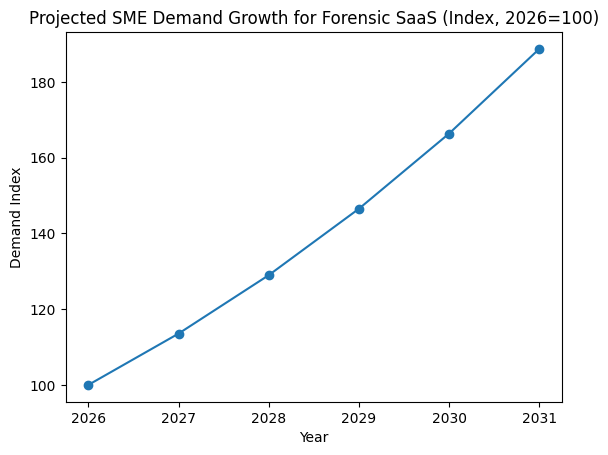
Subscription-based forensic platforms lower the barrier to entry for small and medium enterprises, democratizing access to high-end investigative capabilities.
Choosing the Right Digital Forensics Software in 2026
There is no universal solution that fits every investigative need. Some tools excel in mobile extraction and deep chipset-level analysis. Others dominate in enterprise litigation, cloud-native forensics, or rapid incident response triage. Open-source platforms remain valuable for academic, training, and budget-constrained environments.
Selecting the right digital forensics software depends on:
• Investigation scope and industry requirements
• Infrastructure capacity and hardware resources
• Cloud and mobile ecosystem complexity
• Budget and licensing model preferences
• Legal defensibility standards
• Integration with existing cybersecurity tools
This blog examines the top 10 digital forensics software tools in the world in 2026, analyzing their strengths, use cases, deployment models, AI capabilities, scalability, and market positioning. By understanding how each platform aligns with specific investigative scenarios, organizations can make informed decisions that support both operational efficiency and legal compliance.
As digital ecosystems continue to expand and adversarial threats evolve, digital forensics software stands at the forefront of digital trust. The platforms highlighted in this guide represent the most advanced and influential solutions shaping the global forensic landscape in 2026.
Before we venture further into this article, we would like to share who we are and what we do.
About 9cv9
9cv9 is a business tech startup based in Singapore and Asia, with a strong presence all over the world.
With over nine years of startup and business experience, and being highly involved in connecting with thousands of companies and startups, the 9cv9 team has listed some important learning points in this overview of the Top 10 Digital Forensics Software To Try in 2026.
If you like to get your company listed in our top B2B software reviews, check out our world-class 9cv9 Media and PR service and pricing plans here.
Top 10 Digital Forensics Software To Try in 2026
- Magnet Axiom and Axiom Cyber
- Cellebrite UFED and Physical Analyzer
- OpenText EnCase Forensic
- Exterro Forensic Toolkit (FTK)
- Belkasoft X
- Oxygen Forensic Detective
- X-Ways Forensics
- Autopsy (Digital Forensics Platform)
- Nuix Workstation
- Cyber Triage
1. Magnet Axiom and Axiom Cyber
In 2026, digital forensics software plays a mission-critical role in cybercrime investigations, corporate incident response, regulatory compliance audits, and national security operations. As digital ecosystems expand across cloud infrastructures, hybrid workforces, encrypted messaging platforms, and connected vehicles, investigative tools must provide cross-platform visibility, automation, scalability, and forensic integrity.
Among the most widely adopted platforms globally is Magnet Axiom, developed by Magnet Forensics, along with its enterprise-focused extension, Axiom Cyber. Together, they are regarded as one of the most comprehensive digital investigation ecosystems available in the modern forensic technology landscape.
Digital Forensics Market Context in 2026
The global digital forensics software industry in 2026 is characterized by:
• Multi-source evidence acquisition requirements
• Cloud-native investigation workflows
• AI-assisted artifact prioritization
• Remote endpoint collection capabilities
• Court-admissible forensic container standards
Organizations require solutions that unify endpoint, mobile, and cloud investigations within a single analytical environment. Magnet Axiom addresses this demand through its artifacts-first methodology, prioritizing parsed evidence rather than relying solely on raw disk-level analysis.
Core Investigation Philosophy: Artifacts-First Methodology
The artifacts-first model focuses on extracting and organizing relevant evidence such as chat messages, browser history, application data, geolocation records, and multimedia artifacts. This approach reduces investigative time while improving clarity during case review and reporting.
Unlike low-level forensic tools that require deep manual carving and reconstruction, Axiom emphasizes structured workflows and indexed evidence, making it suitable for both expert forensic analysts and enterprise security teams.
Platform Capability Overview
| Capability Area | Technical Scope (2026) | Operational Impact |
|---|---|---|
| Multi-OS Parsing | Windows, macOS, Linux, iOS, Android | Unified cross-device investigation |
| Artifact Prioritization | AI-powered analysis via Magnet Copilot | Faster evidence identification |
| Remote Endpoint Collection | Off-network acquisition (Axiom Cyber) | Enterprise-wide incident response capability |
| Cloud Deployment | AWS and Azure hosting | Scalable, distributed investigation workflows |
| Evidence Packaging | AFF4-L forensic containers | Court-admissible, forensically sound data preservation |
Operating System and Device Ecosystem Support
Magnet Axiom provides extensive support across modern digital environments, ensuring compatibility with enterprise infrastructure and consumer devices.
| Platform Category | Supported Systems | Forensic Coverage Scope |
|---|---|---|
| Desktop Systems | Windows | Registry, system logs, file system artifacts |
| Desktop Systems | macOS | APFS analysis, application artifacts |
| Enterprise Servers | Linux | Log files, system metadata, enterprise storage |
| Mobile Devices | iOS | App data, chat messages, backups, multimedia |
| Mobile Devices | Android | Databases, communications, geolocation |
| Cloud Sources | SaaS platforms | Email, storage, collaboration artifacts |
| Emerging Sources | Vehicle systems | Telematics and embedded system data |
Artificial Intelligence Integration: Magnet Copilot
In 2026, AI-enhanced digital forensics has become a defining competitive factor. Magnet Copilot integrates artificial intelligence to assist investigators with intelligent filtering and contextual analysis.
| AI Functionality | Analytical Benefit | Investigation Outcome |
|---|---|---|
| Artifact Ranking | Prioritizes high-relevance evidence | Reduced review time |
| Content Summarization | Condenses large chat or document datasets | Improved clarity in case analysis |
| Sensitive Data Detection | Identifies confidential or regulated information | Compliance and insider threat detection |
| Image Classification | Flags explicit or suspicious visual content | Faster multimedia review |
Enterprise Remote Forensics: Axiom Cyber
Axiom Cyber extends traditional forensic workflows into distributed enterprise environments. Remote acquisition capabilities allow investigators to collect targeted evidence from systems that may not be physically accessible.
| Remote Investigation Feature | Technical Description | Strategic Advantage |
|---|---|---|
| Off-Network Collection | Secure remote endpoint acquisition | Supports remote workforce investigations |
| Targeted Data Capture | Selective artifact collection | Reduces unnecessary data processing |
| AFF4-L Containerization | Forensically sound evidence storage | Maintains legal admissibility |
| Cloud-Based Deployment | Hosted on AWS or Azure | Scalable global investigative operations |
Performance Considerations in Large-Scale Investigations
While Magnet Axiom is praised for comprehensive artifact parsing and workflow efficiency, performance trade-offs can occur when processing extremely large datasets compared to lower-level forensic utilities.
| Performance Area | Strength Level | Notes |
|---|---|---|
| Artifact Parsing Depth | Very High | Extensive parser library |
| User Interface Design | High | Streamlined workflows and intuitive navigation |
| AI Automation | Advanced | Reduces manual review workload |
| Massive Dataset Processing | Moderate | May process slower than raw-level forensic tools |
Pricing and Certification Investment
Enterprise-grade forensic platforms represent a strategic investment for law enforcement agencies and corporate security teams.
| Component | Estimated Cost (USD, 2026) | Purpose |
|---|---|---|
| Magnet Axiom Cyber License | 12,000 per license | Enterprise digital investigation platform |
| Magnet Certified Forensics Examiner (MCFE) | 6,999 annually | Professional certification and training |
Training and certification programs ensure investigators are equipped to maximize platform capabilities and maintain evidentiary standards during legal proceedings.
User Experience and Industry Perception
Independent practitioner feedback consistently highlights the platform’s accessibility and structured workflows. Users frequently emphasize the ease of analyzing, preserving, and presenting forensic data from physical devices, network environments, and cloud ecosystems within a unified case interface. The breadth of parsers and logical navigation design make the platform approachable even for professionals without deep low-level forensic expertise.
Strategic Position Among Top Digital Forensics Software in 2026
Within the competitive global digital forensics software market, Magnet Axiom and Axiom Cyber are recognized for balancing automation, enterprise scalability, and evidentiary rigor.
| Evaluation Criteria | Market Position in 2026 | Competitive Strength |
|---|---|---|
| Cross-Platform Coverage | Industry-leading | Broad device and cloud compatibility |
| AI Integration | Advanced | Built-in investigative intelligence |
| Remote Enterprise Collection | Fully Integrated | Distributed workforce support |
| Cloud Scalability | Enterprise-ready | AWS and Azure deployment |
| Certification Ecosystem | Established and recognized | Global professional adoption |
Conclusion
In 2026, digital investigations require comprehensive visibility across mobile devices, cloud systems, enterprise servers, and emerging digital environments. Magnet Axiom and Axiom Cyber continue to serve as foundational tools for organizations seeking structured, AI-enhanced, and legally defensible digital forensics capabilities.
Their artifacts-first methodology, remote acquisition capabilities, and enterprise cloud integration position them among the top digital forensics software solutions globally, particularly for agencies and enterprises managing complex, multi-source investigations at scale.
2. Cellebrite UFED and Physical Analyzer
In 2026, mobile devices remain the single most critical source of digital evidence in criminal investigations, corporate litigation, counterintelligence operations, and cybersecurity incident response. Smartphones now store encrypted communications, biometric authentication records, cloud synchronization logs, and application metadata that often define the outcome of legal proceedings.
Within this high-stakes environment, Cellebrite continues to be widely recognized as the global leader in mobile forensics technology. Its flagship solutions, Universal Forensic Extraction Device (UFED) and Physical Analyzer, have become industry standards for lawful access, device unlocking, and deep forensic reconstruction across iOS and Android ecosystems.
Mobile Forensics Market Context in 2026
The digital investigation landscape has grown increasingly complex due to:
• Stronger encryption protocols in modern chipsets
• Frequent operating system security updates
• Expansion of mobile-first communication platforms
• Multi-layered authentication mechanisms
• Increased reliance on cloud-synced mobile environments
As a result, forensic tools must offer both advanced access capabilities and sophisticated decoding engines to remain effective.
Cellebrite’s ecosystem addresses these challenges through a combination of hardware extraction tools, advanced decryption methodologies, and automated decoding platforms.
Core Platform Overview
| Solution Component | Primary Function in 2026 | Operational Role |
|---|---|---|
| UFED | Device acquisition and extraction | Lawful access and physical data retrieval |
| Physical Analyzer | Deep forensic analysis and reconstruction | Evidence decoding and artifact interpretation |
| Cellebrite Inseyets | Automated decoding and case efficiency platform | Accelerated investigative workflows |
Access and Extraction Capabilities
One of the defining strengths of Cellebrite UFED is its ability to support advanced access methods for locked and encrypted devices. As mobile security continues to evolve, investigators require tools capable of working with the latest iOS and Android chipsets under lawful authority.
| Access Capability | Technical Scope (2026) | Investigative Advantage |
|---|---|---|
| Lock Bypass Support | Latest iOS and Android chipsets | Enables access to protected devices |
| Physical Extraction | Full file system and memory-level acquisition | Deep-level forensic recovery |
| Logical Extraction | Application-layer data capture | Faster targeted acquisition |
| Advanced Decryption | Encrypted database decoding | Access to protected communications and app data |
Device Ecosystem Support
Cellebrite UFED is designed to support a wide range of digital devices beyond smartphones, reflecting the expansion of connected ecosystems in 2026.
| Device Category | Supported Equipment Types | Forensic Application Scope |
|---|---|---|
| Smartphones | iOS and Android devices | Chats, app data, system logs, multimedia |
| Feature Phones | Legacy communication devices | SMS, call logs, SIM data |
| SIM Cards | Subscriber identity modules | Contact lists, SMS storage |
| GPS Devices | Navigation hardware | Location tracking data |
| Drones | Consumer and commercial UAVs | Flight logs, embedded storage artifacts |
Physical Analyzer: Deep-Dive Forensic Reconstruction
Physical Analyzer serves as the advanced analysis engine within the Cellebrite ecosystem. It allows investigators to go beyond surface-level artifact extraction and perform detailed forensic reconstruction.
| Analysis Capability | Technical Function | Evidence Recovery Impact |
|---|---|---|
| Deleted Data Recovery | Reconstruction of erased messages and files | Restores critical evidence |
| Database Reconstruction | Rebuilding corrupted or encrypted app databases | Access to chat histories and transaction logs |
| System Log Analysis | Parsing OS-level activity records | Timeline reconstruction |
| Timeline Visualization | Event correlation and sequencing | Clear investigative narrative building |
Cellebrite Inseyets: Automation and Efficiency in 2026
Cellebrite Inseyets represents the company’s strategic move toward enhanced automation and intelligent decoding. In 2026, efficiency is increasingly important due to the sheer volume of mobile data generated daily.
| Automation Feature | Operational Benefit | Productivity Outcome |
|---|---|---|
| Enhanced Automated Decoding | Faster parsing of encrypted and structured data | Reduced manual review time |
| Smart Evidence Categorization | Automatic grouping of relevant artifacts | Improved case organization |
| Workflow Optimization | Guided investigative processes | Standardized reporting and documentation |
Pricing Structure and Certification Pathways
Cellebrite solutions are typically provided via custom government or enterprise-level contracts rather than standardized retail pricing. This pricing model reflects the sensitive nature of lawful access technologies and the compliance frameworks under which they operate.
Professional certification remains a critical component of operational readiness.
| Certification Program | Duration | Estimated Cost (USD) | Professional Objective |
|---|---|---|---|
| Cellebrite Certified Physical Analyst | 3 days | 2,495 | Advanced mobile forensic analysis skills |
The Cellebrite Certified Physical Analyst (CCPA) program focuses on device extraction techniques, artifact interpretation, and court-admissible reporting standards.
Industry Reputation and Practitioner Feedback
Across global law enforcement agencies and forensic laboratories, Cellebrite is frequently cited as a reliable and highly effective solution for handling complex mobile investigations. Investigators consistently note its ability to streamline evidence review and organization, particularly in cases involving encrypted smartphones and large volumes of application data.
Its reliability, broad device support, and advanced reconstruction capabilities have solidified its position as the benchmark for mobile digital forensics in 2026.
Strategic Position Among Top Digital Forensics Software in 2026
While many digital forensics platforms aim to offer multi-device and cloud analysis, Cellebrite maintains a distinct leadership position in the mobile forensics segment.
| Evaluation Criteria | Market Position in 2026 | Competitive Strength |
|---|---|---|
| Mobile Device Support | Industry-leading | Extensive compatibility across chipsets |
| Lock Bypass Capability | Advanced | Strong lawful access methodologies |
| Deleted Data Reconstruction | High | Deep database and system-level parsing |
| Enterprise Adoption | Global | Widely used by law enforcement agencies |
| Training and Certification | Established | Recognized professional accreditation |
Conclusion
As mobile devices continue to serve as primary repositories of personal and operational data in 2026, the need for advanced mobile forensic extraction and analysis tools remains critical. Cellebrite UFED and Physical Analyzer continue to define the industry standard for lawful access, deep artifact reconstruction, and investigative efficiency.
Through its strong chipset compatibility, automated decoding enhancements, and structured certification programs, Cellebrite remains a central pillar in the global digital forensics software ecosystem.
3. OpenText EnCase Forensic
In 2026, digital investigations within corporate legal departments, federal law enforcement agencies, and regulatory bodies demand absolute evidentiary integrity, repeatability, and defensibility. Among the most historically recognized platforms in this space is OpenText EnCase Forensic. Often described as the gold standard for digital evidence recovery, EnCase has built its reputation on rigorous forensic methodology, standardized evidence formats, and deep-level system visibility.
Within enterprise and government environments where courtroom scrutiny is intense and procedural compliance is non-negotiable, EnCase continues to hold a prominent position.
Digital Evidence Standards and Legal Context in 2026
As cybercrime investigations, internal corporate audits, and eDiscovery matters become more complex, forensic tools must satisfy strict legal standards. Key requirements include:
• Verifiable chain of custody
• Forensically sound acquisition methods
• Repeatable examination workflows
• Recognized evidence container formats
• Expert-level documentation and reporting
EnCase Forensic is designed specifically to meet these demands, making it particularly suitable for large-scale enterprise and federal investigations.
Core Platform Overview
| Core Component | Primary Function in 2026 | Legal and Operational Significance |
|---|---|---|
| EnCase Forensic | Digital evidence acquisition and analysis | Court-defensible forensic processing |
| EnScripts Engine | Advanced automation and customization | Expert-level artifact development |
| Endpoint Investigator | Remote enterprise investigation | Distributed corporate network analysis |
Comprehensive System Visibility
EnCase provides extensive collection capabilities across desktops, laptops, and enterprise servers. It is engineered for in-depth system examination, enabling investigators to analyze file systems, operating system artifacts, and encrypted storage environments.
| System Coverage Area | Technical Scope (2026) | Investigation Benefit |
|---|---|---|
| Desktop Systems | Windows and macOS environments | Full disk and file system analysis |
| Enterprise Servers | Corporate server infrastructures | Large-scale internal investigations |
| Encrypted Drives | Modern encryption technologies | Access to protected storage volumes |
| File System Parsing | NTFS, exFAT, APFS, and other major file systems | Comprehensive artifact extraction |
One of EnCase’s strengths is its ability to handle encrypted drives within legally authorized frameworks, providing investigators with deeper access to protected environments.
EnScripts: Advanced Customization and Automation
A defining feature of EnCase is EnScripts, its proprietary scripting language. EnScripts allows forensic experts to automate complex parsing tasks, create custom artifact definitions, and tailor investigative workflows to specific case requirements.
| EnScripts Capability | Operational Function | Expert Advantage |
|---|---|---|
| Custom Artifact Creation | Build new parsing modules | Adaptability to emerging technologies |
| Automated Parsing Workflows | Script repetitive investigative tasks | Increased efficiency and consistency |
| Data Filtering | Targeted evidence extraction | Reduced manual review time |
| Case-Specific Automation | Customizable investigative logic | Tailored legal compliance workflows |
This scripting flexibility makes EnCase particularly attractive to highly experienced forensic analysts and specialized federal laboratories.
Evidence Integrity and Forensic Container Standards
EnCase is widely recognized for its adherence to established forensic evidence formats. It writes acquired data to the .E01 and .Lx01 container formats, both of which are broadly accepted within courts and investigative agencies worldwide.
| Evidence Format | Description | Legal Significance |
|---|---|---|
| E01 | Industry-standard forensic image format | Broad judicial recognition |
| Lx01 | Logical evidence container format | Efficient structured data preservation |
The platform is often cited for achieving a 10 out of 10 rating in court-ready forensic preservation due to its strong chain-of-custody controls, hashing validation, and documentation features.
Cloud Discovery and Enterprise Integration
As enterprise environments shift toward hybrid infrastructure models in 2026, EnCase integrates with EnCase Endpoint Investigator to enable remote investigations across corporate networks.
| Cloud and Enterprise Feature | Technical Description | Enterprise Application |
|---|---|---|
| Endpoint Integration | Remote endpoint collection | Internal investigations across distributed offices |
| Network Visibility | Enterprise-wide artifact collection | Insider threat and compliance monitoring |
| Scalable Deployment | Designed for large corporate infrastructures | High-volume case management |
This integration ensures that organizations can conduct forensic investigations without requiring physical access to every device.
Performance and Resource Considerations
EnCase Forensic is known for its depth and precision but also for its demanding resource requirements. The platform is best suited for environments with dedicated forensic teams and high-performance hardware infrastructure.
| Performance Factor | Assessment Level | Operational Implication |
|---|---|---|
| Forensic Depth | Very High | Extensive artifact and file system visibility |
| Automation Flexibility | High | Strong customization via EnScripts |
| Learning Curve | Steep | Requires specialized training |
| Hardware Requirements | High | Enterprise-grade system resources recommended |
Target Market Position in 2026
EnCase Forensic primarily serves enterprise-level customers, government agencies, and federal investigative bodies. Its architecture is designed for:
• Large-scale internal corporate investigations
• Federal cybercrime enforcement
• eDiscovery and regulatory compliance cases
• High-scrutiny courtroom proceedings
Comparative Market Position
| Evaluation Criteria | Market Position in 2026 | Competitive Strength |
|---|---|---|
| Courtroom Defensibility | Industry Benchmark | Strong evidence integrity standards |
| Enterprise Scalability | High | Designed for large corporate infrastructures |
| Customization via Scripting | Advanced | EnScripts flexibility |
| Ease of Use | Moderate to Complex | Requires expert-level training |
| Target User Base | Federal and Enterprise | Specialized investigative teams |
Industry Perception and Practitioner Feedback
While EnCase is frequently recognized for its forensic rigor and legal defensibility, some modern examiners transitioning to newer investigation suites report that contemporary platforms may offer simpler workflows and more intuitive interfaces. However, EnCase continues to be respected for its analytical depth and evidentiary reliability.
Conclusion
In the global digital forensics software ecosystem of 2026, OpenText EnCase Forensic remains a cornerstone platform for enterprise and federal investigations requiring the highest standards of repeatability and courtroom defensibility. Its comprehensive system visibility, powerful EnScripts automation engine, and adherence to recognized forensic container formats ensure that it continues to serve as a benchmark solution in high-stakes digital evidence recovery scenarios.
Although it presents a steep learning curve and significant resource requirements, EnCase’s precision and legal robustness solidify its enduring position among the top digital forensics software solutions worldwide.
4. Exterro Forensic Toolkit (FTK)
In 2026, digital forensic laboratories face unprecedented data volumes driven by cloud storage expansion, enterprise endpoint proliferation, encrypted mobile ecosystems, and large-scale cybercrime investigations. Processing terabytes of evidence within tight investigative timelines requires high-performance indexing engines, distributed computing architectures, and AI-assisted analytics.
Within this performance-driven segment of the market, Exterro Forensic Toolkit (FTK) has established itself as a leading solution engineered specifically for speed, scalability, and lab-grade throughput. Designed to handle extreme data volumes, FTK is widely adopted in federal laboratories, enterprise digital investigation teams, and service providers managing high-case backlogs.
Digital Forensics Performance Landscape in 2026
Modern digital forensic platforms are evaluated on:
• Evidence processing speed
• Scalability across distributed systems
• Integration with mobile extraction tools
• Artificial intelligence–driven analytics
• Enterprise remote collection capabilities
FTK differentiates itself through a processing engine optimized for parallelization and high-speed indexing.
Core Platform Overview
| Solution Component | Primary Function in 2026 | Operational Advantage |
|---|---|---|
| FTK Processing Engine | High-speed evidence indexing and analysis | Accelerated case turnaround |
| Distributed Processing Engine | Multi-server data indexing architecture | Massive scalability across lab environments |
| Exterro Intelligence | AI-powered data relationship analysis | Deep investigative insight |
| FTK Enterprise | Remote endpoint collection and Mac acquisition | Expanded enterprise coverage |
Imaging and Processing Performance
FTK is frequently cited for its rapid indexing and analysis capabilities. According to practitioner feedback from experienced federal examiners, the FTK engine uncovers evidence at significantly higher speeds compared to many competing platforms.
| Performance Metric | Reported Capability (2026) | Investigative Impact |
|---|---|---|
| Desktop Evidence Processing Speed | Up to 2x faster than certain competitors | Reduced backlog in high-volume labs |
| Mobile Parsing Speed | Up to 15x faster in specific workflows | Rapid mobile evidence integration |
| Native UFD Ingestion | Direct parsing of Cellebrite and GrayKey data | Seamless cross-tool interoperability |
One of FTK’s key advantages is its ability to ingest and parse native .UFD mobile extraction files generated by tools such as Cellebrite and GrayKey. This interoperability reduces workflow friction and allows forensic teams to consolidate analysis within a single environment.
Distributed Processing Engine (DPE)
The Distributed Processing Engine is a defining architectural component of FTK. In 2026, forensic labs commonly deploy clustered server infrastructures to manage high data loads.
| DPE Feature | Technical Description | Enterprise Benefit |
|---|---|---|
| Multi-Server Indexing | Parallel processing across multiple servers | Accelerated terabyte-scale analysis |
| Load Balancing | Dynamic task distribution | Optimized hardware utilization |
| Centralized Case Management | Unified case access across distributed systems | Efficient lab coordination |
| Scalable Architecture | Expandable node-based infrastructure | Future-proofed forensic capacity |
This architecture allows laboratories to process large datasets simultaneously, dramatically improving throughput in high-demand environments.
Exterro Intelligence: AI-Driven Investigation Support
As artificial intelligence becomes increasingly embedded in forensic workflows, Exterro Intelligence introduces domain-specific AI agents designed to analyze complex datasets.
| AI Capability | Analytical Function | Investigative Outcome |
|---|---|---|
| Relationship Graph Analysis | Mapping communication and interaction networks | Clearer identification of key actors |
| Data Risk Identification | Automated detection of high-risk content | Faster prioritization of critical evidence |
| Contextual Pattern Recognition | Cross-artifact behavioral insights | Enhanced investigative narrative development |
| Automated Categorization | Intelligent data grouping | Reduced manual sorting |
These AI-driven capabilities are particularly valuable in fraud investigations, insider threat cases, and cybercrime operations involving large communication networks.
Device and Platform Support
FTK provides comprehensive support across desktop environments, with expanded capabilities available through FTK Enterprise.
| Product Version | Supported Platforms | Collection Scope |
|---|---|---|
| Standalone FTK | Windows, Linux | Disk imaging and artifact analysis |
| FTK Enterprise | Windows, Linux, Remote Mac | Remote collection and enterprise investigation |
FTK Enterprise adds remote collection functionality for Mac systems, making it more suitable for mixed enterprise environments.
Scalability and Lab Suitability
FTK is engineered specifically for digital forensic laboratories handling large case volumes and complex multi-device investigations.
| Lab Requirement | FTK Capability Level | Operational Impact |
|---|---|---|
| High Data Volume Processing | Very High | Handles terabyte-scale investigations |
| Multi-Examiner Collaboration | Supported | Centralized case management |
| Integration with Mobile Tools | Strong | Efficient cross-platform workflows |
| Enterprise Remote Collection | Available via Enterprise | Broader organizational coverage |
Rating and Market Feedback
FTK holds an average rating between 3.8 and 4.4 out of 5, reflecting strong technical flexibility and scalability. Users frequently emphasize the speed of its processing engine and the operational benefit of native mobile extraction ingestion.
Availability and Licensing
FTK offers flexible acquisition models, including:
• Free trial options for evaluation
• Direct purchase licensing
• Custom enterprise pricing structures
This flexibility allows organizations to assess performance within their own lab environments before committing to full deployment.
Comparative Position Among Top Digital Forensics Software in 2026
Within the broader digital forensics ecosystem, FTK is positioned as a performance-centric solution optimized for high-throughput environments.
| Evaluation Criteria | Market Position in 2026 | Competitive Strength |
|---|---|---|
| Processing Speed | Industry-leading | High-performance indexing engine |
| Scalability | Advanced | Distributed Processing Engine |
| AI Integration | Growing | Exterro Intelligence agents |
| Mobile Tool Interoperability | Strong | Native UFD file parsing |
| Ease of Use | Moderate | Designed for trained forensic professionals |
| Lab Environment Suitability | Very High | Ideal for high-volume digital forensic labs |
Conclusion
In 2026, as digital evidence volumes continue to grow exponentially, forensic laboratories require tools capable of delivering both speed and scale. Exterro Forensic Toolkit (FTK) distinguishes itself through its high-performance processing engine, distributed architecture, and integration with mobile extraction ecosystems.
For large-scale investigative teams seeking rapid indexing, terabyte-level scalability, and AI-enhanced relationship analysis, FTK remains one of the most performance-focused digital forensics software solutions in the global market.
5. Belkasoft X
In 2026, digital forensics and incident response (DFIR) operations require unified platforms capable of handling endpoints, mobile devices, cloud environments, memory artifacts, and emerging IoT ecosystems. Investigators increasingly favor solutions that combine low-level forensic control with modern AI-driven analytics and streamlined workflows.
Belkasoft X has positioned itself as a comprehensive, all-in-one DFIR platform designed to support computer forensics, mobile investigations, cloud evidence analysis, IoT artifact parsing, and live incident response activities within a single environment. Its architecture reflects the industry shift toward consolidation, usability, and cost-efficient licensing models.
DFIR Market Context in 2026
The digital investigation landscape now demands:
• Cross-platform artifact parsing
• Low-level evidence inspection tools
• Automated relationship visualization
• Memory forensics and volatile data capture
• Integrated incident response workflows
• Budget-conscious licensing models
Belkasoft X addresses these requirements by combining traditional forensic precision with modern investigative automation.
Core Platform Overview
| Platform Capability | Technical Scope in 2026 | Operational Value |
|---|---|---|
| Multi-Source Forensics | Computer, mobile, cloud, IoT | Unified case management |
| Low-Level Analysis Tools | Hex viewer and artifact-specific viewers | Deep forensic inspection |
| AI-Based Visualization | Automated connection graphs | Rapid relationship discovery |
| Mobile Extraction Support | Agent-based and passcode brute-force options | Enhanced device access capability |
| Incident Response | RAM capture and volatile data analysis | Real-time threat investigation |
Low-Level Forensic Tools and Deep Artifact Access
Belkasoft X integrates built-in technical utilities that enable investigators to perform granular evidence inspection without relying on external tools.
| Built-In Tool | Technical Function | Investigative Advantage |
|---|---|---|
| Hex Viewer | Raw binary-level data inspection | Verification of file structures and hidden artifacts |
| Type Converter | Data encoding and format conversion | Flexible artifact interpretation |
| SQLite Viewer | Database structure and record analysis | Deep mobile and app data examination |
| Plist Viewer | Apple property list analysis | iOS artifact interpretation |
| Registry Viewer | Windows Registry key inspection | System activity reconstruction |
These tools allow examiners to validate parsed artifacts, manually inspect anomalies, and extract hidden metadata beyond automated indexing results.
AI-Driven Connection Graph Visualization
One of the defining features of Belkasoft X in 2026 is its AI-powered Connection Graph. This feature automatically maps relationships between individuals, devices, accounts, and artifacts within a case.
| Visualization Feature | Analytical Function | Investigative Outcome |
|---|---|---|
| Automated Link Mapping | Identifies connections across artifacts | Faster suspect network identification |
| Timeline Correlation | Event sequencing across devices | Clear chronological reconstruction |
| Cross-Source Linking | Integrates mobile, computer, and cloud data | Holistic case visualization |
| Interactive Graph Interface | Clickable relationship exploration | Enhanced case presentation clarity |
This AI-assisted visualization is particularly valuable in fraud investigations, organized crime cases, insider threat detection, and cyber intrusion analysis.
Mobile Forensics and Device Access
Belkasoft X includes mobile forensic capabilities that extend to various iOS and Android models. It supports agent-based extraction techniques and, in certain supported scenarios, passcode brute-forcing mechanisms under lawful authority.
| Mobile Capability | Technical Description | Investigation Benefit |
|---|---|---|
| Agent-Based Extraction | Temporary deployment for data acquisition | Efficient logical data collection |
| Passcode Brute-Force Support | Access to supported device models | Expanded evidence recovery potential |
| App Artifact Parsing | Messaging and application database analysis | Recovery of chats and user activity |
| Cloud-Linked Data Recovery | Associated account data extraction | Broader ecosystem visibility |
These features position Belkasoft X as a versatile mobile investigation solution integrated into a broader DFIR platform.
Incident Response and Volatile Data Capture
As ransomware attacks and advanced persistent threats continue to evolve, live system analysis and memory forensics are essential in 2026. Belkasoft X integrates incident response functionality directly into its core architecture.
| Incident Response Feature | Technical Scope | Operational Impact |
|---|---|---|
| RAM Analysis | Volatile memory artifact parsing | Detection of in-memory malware |
| Live Data Capture | Collection of active processes and network sessions | Real-time threat assessment |
| System State Preservation | Forensically sound snapshot creation | Incident containment documentation |
| Integrated DFIR Workflow | Combined forensic and IR environment | Reduced tool-switching during investigations |
This integration enables security teams to transition from live response to full forensic analysis without migrating data between multiple platforms.
Licensing Model and Cost Efficiency
One of Belkasoft X’s notable differentiators in 2026 is its perpetual licensing model. As many forensic vendors move toward subscription-based pricing, perpetual licensing offers long-term cost predictability, particularly appealing to government agencies and budget-sensitive organizations.
| Licensing Model | Availability in 2026 | Financial Advantage |
|---|---|---|
| Perpetual License | Available | One-time investment with long-term usability |
| Subscription Options | Optional in some tiers | Flexible procurement strategies |
| Enterprise Deployment | Supported | Scalable government and corporate integration |
This pricing structure enhances its attractiveness for public sector procurement frameworks.
User Experience and Market Satisfaction
Belkasoft X holds an average satisfaction rating of 4.7 out of 5, reflecting strong market approval. Users frequently highlight:
• Intuitive graphical user interface
• Comprehensive training modules
• Responsive customer support
• Smooth onboarding for new investigators
Both beginner and experienced professionals report positive experiences navigating the platform, making it suitable for mixed-skill forensic teams.
Comparative Market Position Among Top Digital Forensics Software in 2026
Within the broader digital forensics ecosystem, Belkasoft X is positioned as a balanced solution combining accessibility, technical depth, and licensing flexibility.
| Evaluation Criteria | Market Position in 2026 | Competitive Strength |
|---|---|---|
| All-in-One DFIR Coverage | Strong | Computer, mobile, cloud, and IoT support |
| Low-Level Forensic Tools | Advanced | Built-in hex and database viewers |
| AI Visualization | Integrated | Automated connection graph |
| Incident Response Integration | High | RAM and volatile data capture |
| Licensing Flexibility | Differentiated | Perpetual licensing availability |
| Ease of Use | High | Intuitive interface and structured workflows |
Conclusion
In 2026, digital investigations demand platforms that unify forensic analysis and incident response while maintaining usability and cost efficiency. Belkasoft X delivers a comprehensive DFIR solution that integrates low-level forensic precision, AI-powered visualization, mobile extraction support, and volatile data analysis within a single platform.
Its perpetual licensing model, strong user satisfaction ratings, and integrated investigation environment position it as one of the most versatile digital forensics software solutions in the global market.
6. Oxygen Forensic Detective
In 2026, digital investigations increasingly involve fragmented data ecosystems spanning mobile devices, encrypted messaging platforms, cloud services, IoT hardware, and multilingual communications. Investigators require forensic platforms capable of importing, consolidating, decoding, and analyzing diverse data sources within a unified investigative workflow.
Oxygen Forensic Detective has established itself as a specialized solution designed for deep mobile analysis, cloud acquisition, IoT data consolidation, and advanced multimedia analytics. Its architecture reflects a strong emphasis on high-performance processing, application coverage breadth, and AI-enhanced evidence interpretation.
Digital Forensics Environment in 2026
The global DFIR landscape now demands:
• Cross-platform data aggregation
• Direct cloud acquisition capability
• App-specific artifact parsing
• Multimedia decoding and translation
• High-performance hardware optimization
• Multi-user enterprise deployment
Oxygen Forensic Detective is engineered specifically to address these operational challenges.
Core Platform Overview
| Platform Component | Primary Function in 2026 | Operational Advantage |
|---|---|---|
| Oxygen Forensic Detective | Mobile and cloud forensic analysis | Multi-source case consolidation |
| Android Agent | App-level extraction from Android devices | Enhanced access to encrypted messaging apps |
| Advanced Analytics Engine | AI-driven multimedia and language processing | Accelerated evidence interpretation |
| Enterprise Server Version | Multi-user centralized deployment | Scalable lab collaboration |
High-Performance System Requirements
Oxygen Forensic Detective is optimized for performance-intensive workflows, particularly when decoding encrypted applications and processing multimedia evidence.
| Hardware Requirement | Recommended Specification (2026) | Operational Impact |
|---|---|---|
| Processor | Intel Core i7 or higher | Faster indexing and decoding |
| Memory (RAM) | 32 GB or more | Efficient large dataset processing |
| Graphics Processing Unit | Dedicated Nvidia GPU | Accelerated decryption and AI analytics |
| Storage | High-speed SSD | Reduced case load and export times |
The integration of GPU acceleration enhances decoding speeds and multimedia processing performance.
Cloud Acquisition and App-Level Extraction
Oxygen Forensic Detective distinguishes itself through its ability to directly acquire data from widely used cloud services and application ecosystems. This capability is critical as many communications are no longer stored solely on physical devices.
| Acquisition Capability | Technical Scope | Investigative Benefit |
|---|---|---|
| Direct Cloud Acquisition | Major cloud platforms | Broader evidence coverage |
| Android Agent Extraction | App-level data capture from Android devices | Access to encrypted messaging applications |
| Signal and Telegram Support | Specialized artifact extraction | Recovery of communication metadata |
| IoT Device Parsing | Connected device data analysis | Expanded ecosystem visibility |
These features allow investigators to consolidate evidence from both physical devices and remote data sources into a unified case file.
Extensive Application Coverage
In 2026, mobile investigations frequently revolve around third-party applications rather than native operating system artifacts. Oxygen supports parsing for nearly 1,000 different mobile applications, providing extensive compatibility.
| App Coverage Scope | Supported Application Types | Investigative Outcome |
|---|---|---|
| Messaging Apps | Encrypted chat platforms | Communication timeline reconstruction |
| Social Media Platforms | Multimedia and interaction data | Network relationship mapping |
| Financial Applications | Transaction and account records | Fraud and financial crime analysis |
| Cloud Storage Services | Synced files and metadata | Cross-device artifact correlation |
This broad app compatibility strengthens Oxygen’s relevance in modern mobile-centric investigations.
Advanced Analytics and AI Capabilities
Oxygen Forensic Detective integrates advanced analytics tools that enhance multimedia and multilingual evidence processing.
| Analytics Feature | Technical Function | Investigative Advantage |
|---|---|---|
| Speech-to-Text Conversion | Transcribes audio recordings | Faster review of voice communications |
| Facial Recognition | Identifies individuals in images and videos | Visual evidence classification |
| Multilingual Translation | Supports over 50 languages | Cross-border investigation support |
| Timeline Analysis | Chronological event mapping | Structured case narrative development |
These AI-enhanced tools significantly reduce manual workload, particularly in cases involving multimedia evidence and international communication networks.
Enterprise Deployment and Collaboration
Oxygen Forensic Detective is available in a server-based Enterprise edition that allows concurrent access from multiple workstations. This configuration supports collaborative forensic lab environments.
| Deployment Model | Technical Description | Operational Benefit |
|---|---|---|
| Standalone Version | Single workstation deployment | Individual investigator use |
| Enterprise Server Version | Centralized server with multi-user access | Collaborative forensic workflows |
| Concurrent Connections | Multiple analyst access points | Increased lab efficiency |
| Centralized Case Storage | Shared repository management | Streamlined evidence control |
This deployment flexibility makes Oxygen suitable for both independent forensic examiners and larger investigative agencies.
Pricing Structure and Market Position
Oxygen Forensic Detective is positioned as a premium digital forensics solution with structured licensing tiers.
| License Type | Approximate Cost (USD, 2026) | Intended User Profile |
|---|---|---|
| Standard License | 9,495 | Professional forensic analysts |
| Network Version | Starting at 3,966 | Distributed team environments |
The availability of a Network version allows organizations to scale access while managing costs efficiently.
User Feedback and Industry Perception
Oxygen Forensic Detective holds a strong reputation among practitioners, particularly for Android forensics and graphical user interface design. Users frequently emphasize:
• User-friendly interface
• Efficient report generation
• Streamlined analysis workflow
• Strong Android artifact decoding
The intuitive GUI design is often highlighted as reducing training time while maintaining professional-grade functionality.
Comparative Position Among Top Digital Forensics Software in 2026
Within the broader digital forensics market, Oxygen is recognized for its mobile application coverage and multimedia analytics strengths.
| Evaluation Criteria | Market Position in 2026 | Competitive Strength |
|---|---|---|
| Mobile App Coverage | Extensive | Nearly 1,000 supported applications |
| Cloud Acquisition Capability | Strong | Direct cloud extraction |
| Multimedia Analytics | Advanced | Speech, facial recognition, translation |
| Enterprise Deployment | Scalable | Server-based collaboration |
| Hardware Optimization | High-performance oriented | GPU-accelerated decoding |
| Ease of Use | High | Intuitive graphical interface |
Conclusion
As digital investigations become increasingly dependent on cloud services, encrypted messaging platforms, and multimedia evidence, Oxygen Forensic Detective provides a high-performance, AI-enhanced solution tailored for modern investigative demands.
Its combination of extensive application coverage, advanced analytics tools, GPU-accelerated processing, and enterprise deployment options solidifies its standing as one of the top digital forensics software platforms globally in 2026.
7. X-Ways Forensics
In 2026, the global digital forensics software market includes powerful enterprise platforms with heavy infrastructure requirements, distributed databases, and AI-assisted automation layers. However, a significant segment of forensic professionals continues to prioritize speed, efficiency, portability, and deep file system control over feature-heavy architectures.
X-Ways Forensics, developed in Germany, has built its reputation as a highly efficient, resource-light forensic tool frequently described as the Swiss Army knife of digital investigations. Its architecture focuses on performance optimization, deep technical control, and minimal system overhead, making it particularly attractive to independent forensic consultants, specialized law enforcement units, and technical examiners who value granular forensic precision.
Digital Forensics Efficiency Trends in 2026
As forensic datasets grow in size, investigators increasingly evaluate tools based on:
• Processing efficiency
• Low hardware dependency
• Native file system compatibility
• Portability across investigation environments
• Cost-effectiveness for smaller agencies
X-Ways Forensics is specifically engineered to address these efficiency-driven requirements.
Core Platform Overview
| Platform Attribute | Technical Scope in 2026 | Operational Advantage |
|---|---|---|
| Lightweight Architecture | Minimal resource consumption | Faster execution on modest hardware |
| Portable Deployment | Runs directly from USB | On-site forensic flexibility |
| Deep File System Support | Extensive native file system compatibility | Broad evidence accessibility |
| AI Photo Analysis Integration | Excire Forensics module | Automated visual content detection |
| FuzZyDoc Hashing | Advanced textual similarity detection | Edited document identification |
Portability and Deployment Flexibility
One of the most distinctive characteristics of X-Ways Forensics is its full portability. The software can be executed directly from a USB device without requiring complex installation or database configuration.
| Portability Feature | Technical Description | Investigative Benefit |
|---|---|---|
| USB Execution | Runs without formal installation | Rapid deployment in field investigations |
| Windows Compatibility | Supports Windows 7 through Server 2025 | Broad system compatibility |
| No Database Dependency | Operates without heavy backend database engines | Reduced system overhead |
| Minimal Hardware Requirements | Efficient operation on standard workstations | Cost-effective infrastructure usage |
This portability is particularly valuable in situations requiring rapid forensic triage or on-site acquisition within controlled environments.
Deep File System Support
X-Ways Forensics is widely respected for its native support of an extensive range of file systems, allowing examiners to analyze diverse storage media without relying on third-party conversion layers.
| File System Supported | Typical Investigation Context | Analytical Strength |
|---|---|---|
| NTFS | Windows desktop and server systems | Comprehensive artifact recovery |
| APFS | Modern macOS devices | Native Apple storage analysis |
| Ext2 / Ext3 / Ext4 | Linux-based environments | Server and embedded system investigations |
| HFS+ | Legacy macOS systems | Historical Apple device examination |
| Additional File Systems | Various removable and specialty storage formats | Cross-platform forensic flexibility |
This breadth of support enhances its applicability in mixed-environment investigations and cross-border forensic operations.
Excire Forensics Integration: AI for Image Analysis
In 2026, image-heavy investigations such as child exploitation cases, fraud schemes, and corporate misconduct require automated multimedia classification. X-Ways integrates with Excire Forensics to introduce AI-powered photo analysis.
| AI Image Analysis Feature | Technical Function | Investigative Outcome |
|---|---|---|
| Automatic Content Detection | Categorizes image subjects | Faster evidence filtering |
| Face Identification | Recognizes repeated individuals across datasets | Identity correlation |
| Visual Similarity Clustering | Groups related images | Streamlined multimedia review |
This integration allows examiners to maintain X-Ways’ lightweight efficiency while benefiting from modern AI-assisted analysis.
FuzZyDoc Hashing Technology
A unique differentiator of X-Ways Forensics is its FuzZyDoc hashing capability. Unlike traditional hash matching that detects identical files, FuzZyDoc identifies known textual content even if documents have been edited, reformatted, or partially altered.
| Hashing Capability | Technical Scope | Investigative Advantage |
|---|---|---|
| Traditional Hash Matching | Identical file comparison | Known file identification |
| FuzZyDoc Hashing | Edited or reformatted textual similarity detection | Detection of modified documents |
| Textual Content Analysis | Pattern-based content matching | Fraud and plagiarism investigations |
This feature is particularly valuable in intellectual property theft cases, document tampering investigations, and compliance audits.
Cost Efficiency and Licensing Model
X-Ways Forensics is marketed at a fraction of the cost of many enterprise competitors, positioning it as a highly accessible solution for smaller agencies and independent practitioners.
| Product Version | Pricing Position in 2026 | Target User Segment |
|---|---|---|
| X-Ways Forensics | Lower-cost full suite | Professional forensic examiners |
| X-Ways Investigator | Approximately half the full price | Budget-conscious investigators |
Its affordability combined with strong technical performance makes it attractive to organizations operating under constrained budgets.
Performance and Resource Efficiency
Unlike platforms dependent on heavy indexing databases and large memory allocations, X-Ways operates with extremely low hardware requirements.
| Performance Factor | Efficiency Level | Operational Implication |
|---|---|---|
| Hardware Dependency | Very Low | Operates on standard systems |
| Database Requirement | None | Simplified deployment |
| Processing Speed | High | Rapid artifact examination |
| System Stability | Strong | Reliable operation without major software bloat |
This lean architecture enhances reliability and predictability during complex investigations.
User Feedback and Industry Perception
Practitioners consistently highlight X-Ways Forensics for:
• Reasonable pricing
• Clean and well-organized interface
• Stability and minimal software bugs
• High confidence in evidence accuracy
• Efficient case completion
Many forensic professionals report completing investigations faster using X-Ways compared to heavier, resource-intensive platforms.
Comparative Position Among Top Digital Forensics Software in 2026
Within the competitive digital forensics ecosystem, X-Ways occupies a distinct niche focused on efficiency, portability, and technical depth.
| Evaluation Criteria | Market Position in 2026 | Competitive Strength |
|---|---|---|
| Resource Efficiency | Industry-leading | Minimal hardware requirements |
| Portability | Fully Portable | USB-based deployment |
| File System Coverage | Extensive | Native multi-platform support |
| AI Multimedia Integration | Selective but Effective | Excire Forensics integration |
| Cost Competitiveness | Strong | Fraction of enterprise suite pricing |
| Ease of Deployment | High | No complex backend infrastructure |
Conclusion
In 2026, as digital forensic environments diversify and budgets tighten, tools that combine deep technical capability with lean operational design remain highly relevant. X-Ways Forensics continues to stand out as a high-performance, portable, and cost-efficient solution engineered for examiners who prioritize speed, precision, and control.
Its combination of extensive file system support, advanced FuzZyDoc hashing, AI-assisted image analysis integration, and minimal resource requirements solidifies its role as one of the most technically efficient digital forensics software platforms in the global market.
8. Autopsy (Digital Forensics Platform)
In 2026, as digital investigations expand across corporate, academic, and law enforcement sectors, open-source forensic tools continue to play a vital role in accessibility, transparency, and collaborative innovation. Among these solutions, Autopsy remains the most widely adopted open-source digital forensics platform globally.
Built as a graphical interface for The Sleuth Kit (TSK), Autopsy provides investigators with a user-friendly environment for disk analysis, timeline reconstruction, keyword searching, and artifact parsing. Its modular architecture and active community ecosystem make it a preferred solution for educational institutions, independent analysts, and organizations seeking cost-effective digital forensics capabilities.
Open-Source Digital Forensics Landscape in 2026
The demand for open-source forensic software is driven by:
• Budget constraints in public sector agencies
• Academic research requirements
• Transparency in forensic methodologies
• Community-driven innovation
• Customizable modular extensions
Autopsy addresses these needs by combining open-source flexibility with professional-grade analytical tools.
Core Platform Overview
| Platform Attribute | Technical Scope in 2026 | Operational Benefit |
|---|---|---|
| Open-Source Architecture | Community-driven development | Transparent and extensible forensic workflows |
| GUI for The Sleuth Kit | Graphical analysis of disk images | Simplified access to low-level forensic functions |
| Modular Design | Java and Python add-on modules | Customizable investigative capabilities |
| Timeline Analysis Tools | Event reconstruction interface | Clear user activity visualization |
| Real-Time Keyword Search | Indexed file and folder search | Rapid artifact discovery |
Architecture and Modular Design
Autopsy’s modular framework allows developers and forensic professionals to create, deploy, and share additional functionality through add-on modules. This flexibility ensures that the platform evolves continuously alongside emerging digital evidence types.
| Architectural Feature | Technical Description | Investigative Advantage |
|---|---|---|
| Java Module Support | Custom plugin development | Enterprise and academic extensions |
| Python Scripting Support | Rapid prototyping of forensic functions | Flexible investigative automation |
| Community Module Library | Shared open-source extensions | Collaborative innovation |
| Expandable Parsing Engine | Additional artifact support via modules | Adaptability to new technologies |
This extensibility makes Autopsy particularly valuable in research environments and organizations that require tailored forensic workflows.
Timeline Analysis and Event Reconstruction
One of Autopsy’s most widely praised capabilities is its graphical timeline analysis interface. Investigators can reconstruct user behavior across multiple data sources in a structured, chronological format.
| Timeline Feature | Technical Function | Investigation Outcome |
|---|---|---|
| Graphical Timeline View | Chronological visualization of artifacts | Clear event sequencing |
| Cross-Artifact Correlation | Integration of file, system, and application data | Holistic user activity reconstruction |
| Filtering and Sorting | Event prioritization | Faster investigative focus |
| Interactive Drill-Down | Direct artifact access from timeline view | Streamlined analysis workflow |
This functionality enhances case clarity, particularly in internal investigations and criminal cases requiring precise behavioral reconstruction.
Keyword Search and Indexing Capabilities
Efficient search functionality is essential when analyzing large disk images. Autopsy includes real-time indexing and powerful keyword search tools that enable investigators to quickly locate relevant evidence.
| Search Capability | Technical Scope | Operational Benefit |
|---|---|---|
| Indexed File Search | Real-time search across files and directories | Rapid artifact discovery |
| Keyword Matching | Text-based search across multiple formats | Efficient evidence filtering |
| File Type Filtering | Sorting by extension and metadata | Targeted investigative focus |
| Saved Search Queries | Reusable search configurations | Consistent workflow replication |
These search tools reduce manual review time and improve case efficiency.
Platform and File System Support
Autopsy is primarily deployed on Windows systems, although it can analyze disk images from multiple operating systems. Its compatibility with major file systems ensures broad investigative applicability.
| File System Supported | Typical Environment | Analytical Scope |
|---|---|---|
| NTFS | Windows desktops and servers | File system artifact recovery |
| FAT | Removable storage and legacy systems | Basic file analysis |
| HFS+ | macOS legacy systems | Apple device examination |
| UFS | Unix-based systems | Server and specialized system analysis |
This compatibility enables Autopsy to function as a versatile disk forensics solution across diverse environments.
Cost Structure and Accessibility
One of Autopsy’s strongest differentiators is its cost structure.
| Cost Category | Availability in 2026 | Financial Advantage |
|---|---|---|
| Licensing | Free and Open-Source | No acquisition cost |
| Community Support | Active global user base | Shared troubleshooting and module development |
| Educational Use | Widely adopted | Ideal for forensic training programs |
Its zero-cost licensing model significantly lowers the barrier to entry for digital forensics adoption.
User Satisfaction and Community Reputation
Autopsy holds an average rating of 9.2 out of 10 for usability and community collaboration. Users frequently highlight:
• Easy installation and deployment
• Intuitive graphical user interface
• Strong file and memory analysis capability
• Efficient disk examination workflows
• Active developer and community support
The platform is commonly described as accessible for beginners while still providing robust analytical depth for experienced professionals.
Comparative Position Among Top Digital Forensics Software in 2026
Within the broader digital forensics ecosystem, Autopsy occupies a unique position as the leading open-source alternative to commercial enterprise suites.
| Evaluation Criteria | Market Position in 2026 | Competitive Strength |
|---|---|---|
| Cost Accessibility | Industry-leading | Completely free and open-source |
| Modular Flexibility | High | Java and Python extensions |
| Timeline Analysis | Strong | Graphical event reconstruction |
| Enterprise Scalability | Moderate | Suitable for small to mid-scale deployments |
| Community Support | Extensive | Active global contributor network |
| Ease of Use | High | User-friendly GUI |
Conclusion
In 2026, Autopsy continues to serve as the most popular open-source digital forensics platform worldwide. Its graphical interface for The Sleuth Kit, modular architecture, strong timeline analysis capabilities, and real-time search functionality make it a highly practical solution for disk and mobile evidence analysis.
For organizations seeking a cost-effective, customizable, and community-driven forensic platform, Autopsy remains a foundational tool within the global digital forensics software landscape.
9. Nuix Workstation
In 2026, digital investigations in corporate litigation, financial fraud, cross-border regulatory compliance, and internal misconduct cases routinely involve petabytes of structured and unstructured data. Traditional forensic tools often struggle when faced with massive email archives, document repositories, collaboration platforms, and chat ecosystems.
Nuix Workstation has established itself as a premier solution for truly large-scale digital investigations. Recognized globally for its ability to process and index enormous volumes of data, it is frequently deployed in corporate legal departments, multinational enterprises, regulatory agencies, and specialized forensic consulting firms.
Big Data Digital Forensics Landscape in 2026
Modern enterprise investigations require platforms capable of:
• Handling terabyte-to-petabyte-scale datasets
• Parsing structured and unstructured content simultaneously
• Indexing millions of emails and documents in parallel
• Performing rapid filtering across distributed repositories
• Supporting litigation-ready reporting and export
Nuix Workstation is specifically engineered for these big data investigative environments.
Core Platform Overview
| Platform Attribute | Technical Scope in 2026 | Operational Advantage |
|---|---|---|
| Massive Data Scalability | Designed for terabyte and multi-terabyte workloads | Stable processing under extreme data volumes |
| Unstructured Data Indexing | Emails, chats, documents, archives | Rapid evidence normalization |
| Advanced Search Engine | High-performance filtering across indexed data | Precision evidence discovery |
| Multi-Format Parsing | Broad data format compatibility | Cross-source investigative consistency |
Scalability and High-Volume Processing
Nuix Workstation is purpose-built to handle data volumes that would overwhelm standard forensic applications. Its processing engine is optimized for large-scale indexing and parallel computation.
| Scalability Feature | Technical Function | Investigation Benefit |
|---|---|---|
| High-Volume Indexing | Simultaneous processing of millions of files | Reduced investigation time |
| Parallel Processing Engine | Multi-threaded architecture | Efficient large-case performance |
| Data Deduplication | Identifies redundant files | Storage and review efficiency |
| Stable Large Dataset Handling | Designed to avoid crashes under heavy loads | Reliable enterprise operations |
This architecture makes Nuix particularly suitable for multinational corporate investigations involving archived communications spanning years.
Unstructured Data Analysis Excellence
In 2026, a significant portion of enterprise evidence exists in unstructured formats such as emails, chat logs, PDFs, spreadsheets, and collaborative platform exports. Nuix is recognized for its ability to parse and normalize these data types at scale.
| Data Type Analyzed | Parsing Capability | Investigative Application |
|---|---|---|
| Email Archives | Bulk ingestion and metadata indexing | Fraud and insider threat investigations |
| Chat Platforms | Conversation threading and participant mapping | Communication pattern analysis |
| Corporate Documents | Text extraction and metadata correlation | Regulatory compliance audits |
| Archived Containers | Extraction from compressed and legacy formats | Historical case review |
This strength in unstructured data processing distinguishes Nuix from traditional disk-centric forensic tools.
Advanced Search and Filtering Capabilities
Nuix Workstation provides advanced search and filtering tools designed to help investigators isolate relevant evidence from massive datasets.
| Search Capability | Technical Scope | Operational Outcome |
|---|---|---|
| Boolean Search | Complex keyword and operator queries | Precise evidence targeting |
| Metadata Filtering | Sort by date, author, file type, size | Focused investigative narrowing |
| Conceptual Search | Context-aware content discovery | Identification of related materials |
| Saved Search Profiles | Reusable filtering configurations | Consistent case review standards |
These features allow investigators to efficiently locate critical evidence within terabytes of indexed material.
Resource Requirements and Infrastructure Considerations
Nuix Workstation is known for its resource-intensive nature. To achieve optimal performance, organizations typically deploy it on server-grade hardware environments.
| Infrastructure Requirement | Recommended Configuration (2026) | Operational Implication |
|---|---|---|
| Processing Power | Multi-core server CPUs | Efficient parallel indexing |
| Memory (RAM) | High-capacity enterprise RAM | Large dataset handling |
| Storage | High-speed SSD arrays | Reduced indexing and search latency |
| Dedicated Forensic Servers | Recommended | Stable large-scale deployment |
While resource demands are high, the platform’s scalability justifies the infrastructure investment for organizations managing large litigation matters.
Learning Curve and Professional Training
Nuix Workstation offers extensive analytical power but requires significant training to master its advanced capabilities.
| Skill Requirement | Complexity Level | Professional Consideration |
|---|---|---|
| Basic Case Processing | Moderate | Initial onboarding training required |
| Advanced Filtering | High | Expertise in search logic recommended |
| Large-Scale Data Management | Advanced | Enterprise-level investigation teams |
| Reporting and Export | Structured but complex | Litigation-ready documentation processes |
Its steep learning curve is often offset by its unmatched performance in complex investigations.
Industry Feedback and Market Perception
Practitioners frequently describe Nuix Workstation as the leading solution for big data investigations. It is widely recognized for handling large datasets across numerous formats and sources, making it particularly valuable in corporate litigation and regulatory inquiries.
However, users also acknowledge that it is resource-intensive and positioned at a premium price point, reflecting its enterprise focus.
Comparative Position Among Top Digital Forensics Software in 2026
Within the global digital forensics software ecosystem, Nuix occupies a specialized niche centered on high-volume data processing.
| Evaluation Criteria | Market Position in 2026 | Competitive Strength |
|---|---|---|
| Big Data Scalability | Industry-leading | Stable under extreme data volumes |
| Unstructured Data Parsing | Exceptional | Email and document normalization at scale |
| Advanced Search Engine | Highly Sophisticated | Precision filtering across terabytes |
| Resource Efficiency | Low | Requires server-grade hardware |
| Learning Curve | Steep | Advanced user expertise required |
| Enterprise Litigation Use | Very High | Ideal for corporate and regulatory investigations |
Conclusion
In 2026, as corporate investigations increasingly involve massive and diverse datasets, Nuix Workstation remains a dominant force in the enterprise digital forensics market. Its ability to process and index vast quantities of unstructured data, combined with powerful search and filtering capabilities, makes it a preferred solution for large-scale litigation and regulatory inquiries.
Although it demands substantial hardware resources and specialized training, Nuix Workstation continues to stand out as one of the most powerful big data digital forensics platforms available globally.
10. Cyber Triage
In 2026, cybersecurity operations centers and incident response teams operate in an environment where ransomware attacks, insider threats, and advanced persistent threats can spread across enterprise networks within minutes. Traditional forensic analysis tools, while comprehensive, are often too time-intensive for immediate breach containment.
Cyber Triage is positioned as a specialized incident response platform engineered specifically for rapid endpoint triage during active cyber incidents. Rather than focusing on full forensic case reconstruction, the platform prioritizes speed, automated analysis, and actionable intelligence for frontline responders and SOC analysts.
Incident Response Landscape in 2026
Modern cyber incident response workflows demand:
• Immediate identification of compromised systems
• Rapid assessment of attacker persistence mechanisms
• Automated artifact collection
• Integration with existing EDR ecosystems
• Minimal forensic expertise requirements
Cyber Triage addresses these requirements through automated evidence scoring and streamlined response workflows.
Core Platform Overview
| Platform Attribute | Technical Scope in 2026 | Operational Advantage |
|---|---|---|
| Rapid Endpoint Triage | Automated local artifact collection | Immediate breach visibility |
| Threat Scoring Engine | Heuristic and threat intelligence analysis | Prioritized investigation focus |
| Volatile Data Capture | Memory and live system artifact analysis | Detection of active threats |
| EDR Integration | Automated data ingestion from security alerts | Seamless SOC workflow integration |
Automated Analysis and Threat Scoring
A defining feature of Cyber Triage is its automated artifact analysis engine. The system collects both volatile and non-volatile artifacts and assigns risk scores using integrated threat intelligence feeds and heuristic models.
| Automated Capability | Technical Function | Investigation Benefit |
|---|---|---|
| Volatile Artifact Collection | Captures running processes and memory data | Identifies active malware |
| Non-Volatile Artifact Parsing | Examines file system and registry artifacts | Detects persistence mechanisms |
| Threat Intelligence Scoring | Compares artifacts against known threat indicators | Faster malicious activity identification |
| Heuristic Analysis | Behavioral anomaly detection | Flags suspicious system activity |
This automation reduces reliance on deep forensic expertise during the early stages of an incident.
Incident Response Workflow Optimization
Cyber Triage is designed for the rapid response phase of cyber incidents. Its objective is to quickly determine:
• Which systems are compromised
• How the attacker gained access
• Whether lateral movement has occurred
• What containment steps are necessary
| Workflow Phase | Cyber Triage Function | Operational Impact |
|---|---|---|
| Alert Intake | Integrates with detection alerts | Immediate case initiation |
| Endpoint Assessment | Automated artifact collection | Fast compromise verification |
| Threat Prioritization | Risk scoring dashboard | Focused response allocation |
| Containment Support | Actionable findings | Accelerated remediation decisions |
This structured approach enhances speed during high-pressure breach scenarios.
EDR Integration and SOC Compatibility
In 2026, enterprises rely heavily on Endpoint Detection and Response platforms for alerting and monitoring. Cyber Triage integrates directly with EDR systems to automate evidence retrieval after a security alert is triggered.
| Integration Feature | Technical Description | Operational Advantage |
|---|---|---|
| EDR Data Pull | Automated endpoint artifact collection | Reduced manual response steps |
| Alert Correlation | Aligns forensic findings with EDR detections | Contextualized incident analysis |
| Centralized Dashboard | Unified case review interface | Improved SOC collaboration |
| Remote Endpoint Analysis | Triage without physical device access | Rapid distributed workforce coverage |
This integration streamlines workflows for security operations centers managing multiple simultaneous alerts.
Cost Structure and Accessibility
Cyber Triage follows a subscription-based licensing model tailored for incident response teams and mid-sized organizations.
| Licensing Tier | Estimated Annual Cost (USD, 2026) | Target User Profile |
|---|---|---|
| Standard Subscription | 2,500 – 3,500 | SOC analysts and small to mid-sized teams |
| Enterprise Deployment | Custom pricing | Large-scale security operations centers |
Compared to full forensic suites, its pricing structure makes it accessible to organizations seeking focused incident response capability.
User Ratings and Market Reception
Cyber Triage holds an average rating of 8.0 out of 10, particularly praised for its efficiency when used by non-forensic experts such as SOC analysts and security engineers.
Users frequently highlight:
• Quick threat identification
• Automated artifact scoring
• Reduced investigative overhead
• Clear and actionable dashboards
• Strong performance during active breaches
The platform is often described as a purpose-built rapid response tool for time-sensitive cyber incidents.
Comparative Position Among Top Digital Forensics Software in 2026
Within the broader digital forensics and incident response ecosystem, Cyber Triage occupies a focused niche centered on speed and automation.
| Evaluation Criteria | Market Position in 2026 | Competitive Strength |
|---|---|---|
| Rapid Endpoint Triage | Specialized Leader | Fast breach scoping |
| Automated Threat Scoring | Strong | Integrated intelligence and heuristics |
| EDR Integration | Highly Compatible | SOC-friendly workflow |
| Full Forensic Depth | Moderate | Designed for triage, not full case reconstruction |
| Cost Accessibility | Competitive | Subscription-based model |
| Ease of Use | High | Suitable for non-forensic specialists |
Conclusion
In 2026, as cyber threats accelerate and organizations demand immediate incident containment, Cyber Triage provides a streamlined solution focused on rapid endpoint analysis and automated threat prioritization. Its integration with EDR platforms, heuristic scoring engine, and user-friendly dashboard make it particularly effective for SOC teams and frontline responders.
While it does not aim to replace comprehensive forensic suites, Cyber Triage stands out as one of the most efficient rapid-response digital investigation tools in the global cybersecurity market.
Comprehensive Global Analysis of Digital Forensics Software Paradigms: 2026 Industry Report
In 2026, digital forensics software has transitioned from a niche investigative capability into a foundational pillar of global cybersecurity strategy, corporate risk governance, regulatory compliance, and national security operations. The proliferation of cloud-native architectures, encrypted communication platforms, IoT ecosystems, and AI-driven cyber threats has forced investigative technologies to evolve at an unprecedented pace.
Modern digital forensics platforms no longer operate solely as disk imaging or artifact parsing tools. Instead, they function as intelligent, AI-augmented evidence ecosystems capable of cross-domain correlation, remote endpoint acquisition, volatile memory analysis, and deep-cloud extraction. The 2026 market reflects this transformation, with organizations across both public and private sectors integrating forensic software into proactive cybersecurity frameworks rather than deploying it exclusively after incidents occur.
Economic Foundations and Market Dynamics of the 2026 Forensic Ecosystem
The economic trajectory of the global digital forensics industry demonstrates strong and sustained growth. By 2026, the global market valuation is estimated between USD 15.7 billion and USD 17.22 billion. Forward-looking projections anticipate expansion toward approximately USD 46.1 billion to USD 47.87 billion by 2035 or 2036.
This growth corresponds to a compound annual growth rate ranging from 11.4% to 15.9%, depending on geographic focus and sector-specific modeling. Several macroeconomic and technological drivers underpin this expansion:
• Escalation of cybercrime and ransomware attacks
• Increased reliance on mobile and IoT ecosystems
• Rapid digitization of government services
• Cloud-native enterprise transformation
• Regulatory mandates requiring digital evidence preservation
Quantitative Market Segmentation and Value Distribution
By 2026, the digital forensics market has matured into clearly defined segments. Software solutions dominate overall revenue generation, reflecting the industry’s shift toward automation, AI integration, and remote investigation capabilities.
| Market Metric | 2026 Estimate (USD) | 2035/2036 Projection (USD) | CAGR / Share |
|---|---|---|---|
| Global Market Size | 15.7B – 17.22B | 46.1B – 47.87B | 11.4% – 15.9% |
| Software Segment | 7.06B – 8.5B | 22.7B | ~14.1% CAGR |
| Computer Forensics | 5.2B | 15.3B | 33.2% Market Share |
| Cloud Forensics | 2.1B | 6.2B | 12.96% CAGR |
Software accounts for approximately 45% to 49.4% of total market share in 2026. This dominance reflects the industry’s pivot toward scalable SaaS models, distributed investigation frameworks, and AI-enhanced automation engines.
End-User Vertical Distribution
Government and Law Enforcement agencies remain the largest consumers of digital forensics technology. Their dominance is driven by national security imperatives, counter-terrorism mandates, investigations into child exploitation, and the mitigation of state-sponsored cyber operations.
| End-User Vertical | Market Share (2026) | Growth Driver |
|---|---|---|
| Government & Law Enforcement | 37.45% – 38.3% | National security, cybercrime investigations |
| BFSI (Banking, Financial Services) | Rapid growth | 13.74% CAGR; fraud detection and transaction forensics |
| Corporate Enterprises | Expanding | Insider threat and regulatory compliance |
| Healthcare & Critical Infrastructure | Emerging | Data breach response and ransomware resilience |
The BFSI sector is among the fastest-growing verticals due to the integration of forensic provenance frameworks into transaction monitoring systems and digital fraud prevention pipelines.
Regional Leadership and Hyper-Growth Corridors
North America maintains its leadership position in 2026 and beyond, accounting for approximately 34.65% to 42.5% of global demand by 2035. The region benefits from advanced technological infrastructure, early federal adoption of forensic innovation, and high exposure to advanced persistent threats.
| Region | 2035 Market Share Estimate | Structural Advantage |
|---|---|---|
| North America | 34.65% – 42.5% | Mature cybersecurity ecosystem, federal investment |
| Europe | Strong compliance market | GDPR enforcement and digital sovereignty initiatives |
| Asia-Pacific | Fastest growing corridor | Massive digital expansion and IoT penetration |
The Asia-Pacific region represents the fastest-growing corridor, particularly India and China.
| Country/Region | Projected CAGR (2026–2036) | Economic Driver |
|---|---|---|
| India | 12.2% | Digital India initiative, mobile fraud growth |
| China | 11.6% | Data residency mandates, large-scale IoT ecosystems |
| United Kingdom | 9.9% | Legal technology adoption and BFSI digitization |
| United States | 9.5% | APT countermeasures and federal cybersecurity modernization |
| Germany | 8.4% | Strict data privacy enforcement and compliance-driven investigations |
India’s growth is propelled by aggressive digital governance reforms and mobile-first financial ecosystems. China’s expansion is closely linked to data localization compliance and its massive IoT deployment footprint. European growth remains compliance-centric, driven by privacy regulation enforcement and digital sovereignty initiatives.
Technological Paradigm Shifts in 2026
Digital forensics software in 2026 reflects several transformative paradigms:
AI-Augmented Investigations
Modern platforms incorporate machine learning to automate artifact prioritization, anomaly detection, multimedia classification, and relationship mapping across datasets.
Cloud-Native Evidence Acquisition
Tools now perform direct cloud-to-cloud extraction, enabling investigators to access SaaS and remote storage environments without relying solely on physical device imaging.
Volatile and Memory Forensics Integration
Incident response and forensic workflows increasingly converge, allowing investigators to capture live memory artifacts and detect in-memory malware.
Distributed and Remote Endpoint Collection
Enterprise-scale tools enable secure remote acquisition from off-network endpoints, supporting hybrid and globally distributed workforces.
Big Data Normalization Engines
Platforms designed for litigation and regulatory matters can ingest millions of emails, documents, and chat messages simultaneously, enabling conceptual and metadata-driven search at scale.
Strategic Industry Outlook
The global digital forensics ecosystem in 2026 is characterized by consolidation, AI integration, and vertical specialization. Vendors increasingly differentiate themselves based on:
• AI automation depth
• Cloud-native capability
• Mobile chipset compatibility
• Big data scalability
• Cost structure and licensing flexibility
Government demand will remain stable and significant, while private-sector adoption will accelerate as organizations embed forensic readiness into proactive cybersecurity strategy.
Conclusion
The digital forensics software industry in 2026 stands at the intersection of cybersecurity defense, regulatory governance, and geopolitical digital resilience. With a global valuation exceeding USD 15 billion and a trajectory toward nearly USD 47 billion by the mid-2030s, the sector reflects both technological sophistication and strategic necessity.
As digital ecosystems become more complex and adversarial, forensic software paradigms will continue evolving toward AI-augmented, cloud-native, and massively scalable intelligence platforms capable of operating across jurisdictions and infrastructures. The industry’s future growth will be shaped by automation, compliance enforcement, cross-border cyber conflict, and the continued expansion of connected digital environments.
Technological Evolution: AI, Cloud, and the Decryption Challenge in the 2026 Digital Forensics Ecosystem
By 2026, digital forensics software has entered a transformative era shaped by structural shifts in cloud computing, artificial intelligence, encryption policy, and evidentiary governance frameworks. The forensic lifecycle—once centered on static disk imaging and post-incident artifact parsing—now operates within distributed, volatile, and adversarial digital infrastructures.
Four primary technological drivers define this paradigm shift:
• Proliferation of cloud-native SaaS ecosystems
• Rise of deepfake-enabled fraud and AI-generated deception
• Emergence of blockchain-based chain-of-custody verification
• Escalating friction from encryption-by-default architectures
These forces collectively reshape acquisition strategies, analysis workflows, and evidentiary admissibility standards.
Cloud-Native Investigations and the Rise of Volatile Data
The migration of enterprise workloads to multi-cloud and hybrid infrastructures has fundamentally altered evidence acquisition strategies. Traditional forensic imaging of physical storage media is increasingly insufficient in environments where business-critical data resides in distributed, virtualized, and containerized ecosystems.
Cloud forensics is projected to grow at approximately 12.96% CAGR, reflecting the accelerating shift from physical endpoints to virtualized and SaaS-managed assets.
Key operational changes in 2026 include:
• Direct API-based acquisition from hyperscalers
• Live memory capture in virtualized instances
• Tenant-isolated evidence extraction
• Multi-region data sovereignty compliance
| Cloud Forensics Dimension | 2026 Operational Requirement | Investigative Implication |
|---|---|---|
| Multi-Cloud Environments | AWS, Azure, Google Cloud integration | Cross-provider evidence normalization |
| Volatile Data Capture | Live memory and container state acquisition | Detection of in-memory threats |
| API-Based Evidence Extraction | Direct hyperscaler interface | Reduced operational disruption |
| Admissibility Standards | ISO/IEC 27035-4:2024 compliance | Court-ready cloud evidence preservation |
Investigators must now extract ephemeral artifacts such as container logs, identity tokens, and transient memory states without disrupting mission-critical services. This requires precision tooling capable of interfacing directly with hyperscaler APIs while preserving evidentiary integrity.
The Artificial Intelligence Frontier in Digital Forensics
Artificial Intelligence (AI) and Machine Learning (ML) have transitioned from supplementary capabilities to core forensic engines. In 2026, AI is deployed across acquisition, triage, and analytical phases of the investigative lifecycle.
One of the most pressing AI-driven threats is deepfake-enabled fraud. Synthetic media manipulation now targets financial institutions, political systems, and enterprise communication channels. Neural detection algorithms are achieving approximately 91.82% accuracy in identifying AI-generated audio and video, even under low-resolution conditions.
| AI Application Area | Technical Function | Investigative Impact |
|---|---|---|
| Deepfake Detection | Neural authenticity verification | Fraud prevention and evidentiary validation |
| Image/Video Categorization | Automated illegal content identification | Rapid CSAM and illicit material triage |
| Behavioral Heuristics | Process telemetry anomaly detection | Early malware and insider threat detection |
| Natural Language Processing | Translation and sentiment analysis across languages | Cross-border investigation efficiency |
| Relationship Graphing | Entity correlation across datasets | Network mapping and actor identification |
AI-powered tools now assist investigators by:
• Automatically categorizing multimedia evidence
• Flagging suspicious process behaviors
• Translating multilingual communications
• Performing sentiment analysis on large chat datasets
• Prioritizing high-risk artifacts within terabyte-scale cases
This automation significantly reduces manual review time while increasing analytical precision.
Blockchain-Based Chain-of-Custody Verification
As digital evidence increasingly traverses cloud environments and cross-jurisdictional infrastructures, maintaining integrity becomes more complex. In response, blockchain-backed evidentiary logging systems are emerging as a complementary verification layer.
These systems provide:
• Immutable timestamping of evidence acquisition
• Tamper-resistant chain-of-custody tracking
• Distributed audit verification
• Cryptographic validation of artifact integrity
| Chain-of-Custody Evolution | Traditional Model | 2026 Enhanced Model |
|---|---|---|
| Evidence Logging | Centralized audit records | Distributed blockchain-based verification |
| Tamper Detection | Hash validation | Cryptographically anchored transaction records |
| Cross-Jurisdiction Collaboration | Manual documentation exchange | Shared ledger-based integrity confirmation |
Although not universally adopted, blockchain-backed verification is gaining traction in multinational regulatory investigations and cross-border cybercrime cases.
Encryption as a Structural Restraint
Despite rapid innovation in AI and cloud-native acquisition, encryption-by-default remains the most significant structural constraint in 2026. Modern iOS and Android devices deploy hardware-level encryption, secure enclaves, and biometric authentication layers that complicate lawful access.
Encryption’s impact extends beyond technical difficulty; it influences market growth dynamics. Analysts estimate a negative 1.80% drag on global CAGR for acquisition-centric forensic tools due to increased cost, time, and legal complexity associated with data recovery.
| Encryption Impact Factor | Operational Consequence | Market Effect |
|---|---|---|
| Default Full-Disk Encryption | Extended data recovery timelines | Increased investigation cost |
| Secure Enclave Architectures | Hardware-level protection barriers | Specialized bypass toolkit demand |
| End-to-End Encrypted Messaging | Limited server-side artifact access | Greater reliance on device-level extraction |
| Legal Access Restrictions | Jurisdictional access limitations | Cross-border investigative friction |
Forensic vendors respond by developing:
• Specialized chipset exploitation toolkits
• Hardware-agnostic agent-based extraction modules
• Advanced memory-based acquisition strategies
• Targeted logical extraction methodologies
However, the tension between privacy-preserving encryption and lawful access remains a defining policy debate of 2026.
Convergence of AI, Cloud, and Encryption Dynamics
The digital forensics ecosystem in 2026 is characterized by simultaneous expansion and constraint. Cloud-native environments expand investigative surfaces. AI enhances detection and prioritization. Blockchain strengthens evidentiary integrity. Encryption increases investigative friction.
| Technological Driver | Industry Effect | Strategic Outcome |
|---|---|---|
| Cloud Proliferation | Distributed evidence sources | API-driven acquisition models |
| AI Integration | Automated analysis acceleration | Reduced manual workload |
| Blockchain Verification | Enhanced chain-of-custody integrity | Greater cross-border admissibility confidence |
| Encryption-by-Default | Increased data access complexity | Heightened R&D investment in lawful access solutions |
Conclusion
The year 2026 represents a structural inflection point in digital forensics software evolution. Investigations now unfold across cloud-native infrastructures, volatile memory environments, AI-generated deception landscapes, and heavily encrypted ecosystems.
While AI and cloud integration expand investigative capability, encryption continues to challenge acquisition workflows and policy frameworks. The equilibrium between privacy protection, lawful access, and technological advancement will define the trajectory of digital forensics innovation in the decade ahead.
Comparative Analysis of Software Efficacy and Performance in 2026
By 2026, digital forensics software performance is evaluated across multidimensional criteria that extend beyond artifact parsing accuracy. Modern investigative environments require seamless interoperability with Security Orchestration, Automation, and Response (SOAR) platforms, Endpoint Detection and Response (EDR) systems, and cloud-native monitoring architectures.
Performance benchmarks now emphasize:
• Integration into automated security pipelines
• Scalability across distributed infrastructures
• AI-driven prioritization and anomaly detection
• Cross-source evidence normalization
• Resource efficiency and deployment flexibility
Software efficacy is therefore measured not only by extraction depth, but by operational adaptability within broader cybersecurity ecosystems.
Feature Matrix and Technical Benchmarks
The following comparative matrix provides a technical baseline for evaluating leading digital forensics platforms in 2026.
| Software Tool | Acquisition Types | Key AI Capability | Deployment Model | Ideal Use Case |
|---|---|---|---|---|
| Magnet Axiom | FDI, TC | Magnet Copilot (Artifact Prioritization) | On-Prem / Cloud | General criminal and corporate investigations |
| Cellebrite | Physical, FFS | Neural deepfake detection & decoding | Tablet / PC | Law enforcement mobile extraction |
| EnCase | FDI, Remote | Media Analyzer (Content Reduction) | Enterprise / Server | Corporate litigation & federal law enforcement |
| Exterro FTK | FDI, TC | Domain-specific AI agents | Distributed / Lab | Large-scale data lab processing |
| Belkasoft X | FDI, RAM, Cloud | Connection Graph (Visual Link Analysis) | Perpetual / Local | Comprehensive DFIR for government environments |
| Oxygen Detective | Cloud, Mobile | Facial recognition & speech-to-text | Dongle / Server | Multi-source intelligence gathering |
| X-Ways Forensics | FDI, Logical | Excire AI (Image Detection Integration) | Portable USB | Fast field triage & deep file carving |
| Autopsy | FDI, Logical | Community-developed plugins | Free / Open-Source | Training, triage, academic use |
| Nuix | Unstructured Data Ingest | Advanced pattern matching & indexing | Server / Cluster | Big data litigation & regulatory discovery |
| Cyber Triage | TC, EDR Integration | Automated scoring & heuristic analysis | Rapid Agent Deployment | Incident response & threat hunting |
Note:
FDI = Full Disk Imaging
TC = Targeted Collection
FFS = Full File System
Performance Paradigm Shifts in 2026
Acquisition Efficiency
Acquisition strategies now prioritize targeted collection and remote API-based extraction over traditional full disk imaging, particularly in cloud-native environments.
| Acquisition Model | Strength in 2026 | Best-Fit Scenario |
|---|---|---|
| Full Disk Imaging | Comprehensive but time-intensive | Traditional endpoint investigations |
| Targeted Collection | Faster, lower data footprint | Enterprise incident response |
| Full File System | Deep mobile recovery | Law enforcement mobile investigations |
| Cloud API Extraction | Scalable and distributed | SaaS and multi-cloud investigations |
AI Integration Depth
AI is no longer a peripheral enhancement. Its maturity level varies across platforms.
| AI Function Type | High Integration Tools | Primary Benefit |
|---|---|---|
| Artifact Prioritization | Magnet Axiom | Reduced manual review workload |
| Deepfake Detection | Cellebrite | Authenticity verification |
| Visual Link Analysis | Belkasoft X | Relationship mapping |
| Multimedia Recognition | Oxygen Detective, X-Ways (Excire) | Rapid illegal content filtering |
| Behavioral Heuristics | Cyber Triage | Real-time threat identification |
| Big Data Pattern Matching | Nuix | Conceptual discovery in massive datasets |
Deployment and Infrastructure Scalability
Scalability and infrastructure flexibility significantly influence tool selection.
| Deployment Model | Infrastructure Requirement | Organizational Fit |
|---|---|---|
| Portable USB | Minimal hardware dependency | Field investigations |
| Workstation-Based | Moderate hardware requirements | Mid-sized forensic teams |
| Server / Cluster | Enterprise-grade infrastructure | Large litigation and regulatory inquiries |
| Distributed Lab Engine | Multi-node processing architecture | High-volume forensic laboratories |
| Cloud-Compatible | Hybrid or SaaS integration | Modern enterprise environments |
Integration with SOAR and EDR Ecosystems
Modern performance benchmarks include integration capability with broader cybersecurity workflows.
| Integration Level | Tools with Strong Compatibility | Operational Advantage |
|---|---|---|
| EDR Pull Integration | Cyber Triage | Immediate triage after alert generation |
| Enterprise Remote Agent | Belkasoft X, FTK Enterprise | Distributed workforce investigations |
| Cloud API Integration | Magnet Axiom, Oxygen Detective | SaaS-native evidence extraction |
| Litigation Discovery | Nuix | Legal technology ecosystem alignment |
Comparative Efficacy Summary
In 2026, no single platform dominates across all dimensions. Instead, performance efficacy is contextual:
• Magnet Axiom balances cross-source coverage with AI-driven prioritization.
• Cellebrite remains unmatched in mobile physical extraction.
• EnCase continues to lead in courtroom defensibility.
• Exterro FTK excels in high-speed lab processing.
• Belkasoft X offers integrated DFIR capabilities with visual intelligence mapping.
• Oxygen Detective stands out in multilingual and multimedia analytics.
• X-Ways Forensics provides lean efficiency and portability.
• Autopsy dominates the open-source training and academic segment.
• Nuix leads in big data litigation and unstructured document discovery.
• Cyber Triage specializes in rapid breach scoping and automated threat scoring.
Conclusion
Digital forensics software performance in 2026 is defined by interoperability, AI augmentation, cloud-native compatibility, and operational scalability. Organizations must align tool selection with investigative scope, infrastructure maturity, regulatory requirements, and response speed expectations.
Rather than seeking a universal solution, high-performing investigative environments increasingly deploy layered tool ecosystems that combine deep extraction capability, AI-enhanced analytics, and automated response integration to meet evolving digital threat landscapes.
The Human Factor: Skills Shortage and Certification Standards in the 2026 Digital Forensics Industry
While digital forensics software has achieved remarkable technological sophistication by 2026, the industry faces a structural constraint that technology alone cannot resolve: the widening gap between tool capability and human expertise. As forensic platforms incorporate artificial intelligence, cloud-native acquisition, distributed processing, and encrypted device bypass techniques, the demand for highly trained examiners has surged.
A persistent shortage of court-certified forensic professionals is now exerting measurable economic impact. Analysts estimate a negative 1.20% drag on global market CAGR attributable to workforce limitations. This shortfall constrains investigative throughput, delays legal proceedings, and increases operational costs for both public and private sector organizations.
Market Impact of the Skills Shortage
The shortage of qualified digital forensic examiners has created several structural consequences:
• Increased backlog in law enforcement laboratories
• Extended timelines for litigation support
• Higher consulting costs for private enterprises
• Greater reliance on outsourced forensic services
As a result, professional forensic services are expanding at an estimated 14.43% CAGR, significantly outpacing the growth rate of standalone software licensing. Organizations increasingly outsource complex investigations to managed security service providers (MSSPs) and specialized forensic consultancies.
| Market Indicator | 2026 Trend | Economic Effect |
|---|---|---|
| Certified Examiner Shortage | Widespread across regions | -1.20% impact on global CAGR |
| Professional Forensic Services Growth | 14.43% CAGR | Increased outsourcing demand |
| Court-Admissibility Requirements | Rising evidentiary standards | Higher certification necessity |
| Enterprise Internal Capability Gaps | Expanding | Shift toward managed investigation providers |
This divergence between advanced tool capability and limited human capital defines one of the most pressing structural challenges in the 2026 forensic ecosystem.
Certification as an Industry Gatekeeper
To mitigate this expertise gap, software vendors and professional bodies have significantly expanded certification programs. In 2026, certification is frequently a prerequisite for providing expert testimony in court or serving as a lead forensic examiner within regulated industries.
Certification programs serve multiple purposes:
• Validation of technical competency
• Standardization of investigative methodology
• Assurance of evidentiary handling compliance
• Professional credibility in judicial proceedings
Vendor-Specific Certification Pathways
Major digital forensics vendors have developed structured certification tracks aligned with their platforms.
| Certification Program | Primary Focus Area | Target Audience |
|---|---|---|
| Magnet Certified Forensics Examiner (MCFE) | Cross-platform artifact recovery using Axiom | Corporate and law enforcement investigators |
| Cellebrite Certified Physical Analyst (CCPA) | Advanced mobile device extraction and analysis | Mobile forensic specialists |
| Belkasoft Certification Training | Comprehensive DFIR using Belkasoft X suite | Government and enterprise investigators |
Magnet Certified Forensics Examiner (MCFE)
The MCFE credential validates mastery of artifact parsing, cloud integration, and remote collection within the Axiom ecosystem. Examiners demonstrate proficiency in handling Windows, macOS, Linux, iOS, and Android datasets within a unified investigative framework.
Cellebrite Certified Physical Analyst (CCPA)
The CCPA remains a benchmark certification for advanced mobile forensics. It emphasizes lawful device handling, full file system extraction, deleted artifact reconstruction, and court-ready reporting standards. Given the dominance of mobile evidence in modern investigations, this credential carries significant weight in law enforcement environments.
Belkasoft Certification Training
Belkasoft offers multi-day structured training programs centered on the Belkasoft X platform. These programs are particularly prominent within government procurement frameworks, where structured vendor-backed training supports operational deployment.
Vendor-Agnostic Certifications and Core Forensic Principles
Beyond vendor-specific programs, vendor-neutral certifications continue to hold strong value, particularly in courtroom contexts where methodological rigor outweighs tool familiarity.
| Vendor-Agnostic Credential | Core Emphasis | Industry Perception |
|---|---|---|
| Certified Forensic Computer Examiner (CFCE) | Foundational forensic methodology and integrity | Highly respected across jurisdictions |
| Other Regional Court-Recognized Credentials | Evidence handling and documentation standards | Required for expert witness testimony |
The CFCE remains highly regarded for its focus on core forensic principles, including:
• Proper acquisition procedures
• Hash verification and chain-of-custody protocols
• Documentation standards
• Legal defensibility and testimony preparation
These credentials reinforce the importance of procedural integrity over mere software familiarity.
The Automation Paradox
Ironically, as digital forensic tools become increasingly AI-augmented and automated, the demand for human expertise does not diminish. Instead, it evolves. In 2026, examiners must possess hybrid skill sets that include:
• Technical forensic proficiency
• Cloud infrastructure literacy
• AI model interpretation capability
• Legal and evidentiary knowledge
• Cyber threat intelligence awareness
| Skill Domain | Importance in 2026 | Rationale |
|---|---|---|
| Artifact Analysis | Critical | Core evidentiary recovery |
| Cloud Forensics | High | SaaS and distributed infrastructure investigations |
| AI Interpretation | Emerging Essential | Understanding model outputs and false positives |
| Legal Testimony Skills | Mandatory | Court admissibility requirements |
| Incident Response Integration | High | Convergence of DFIR and SOC workflows |
Automation accelerates workflow efficiency but cannot replace expert interpretation, evidentiary validation, or courtroom articulation.
Strategic Outlook: Bridging the Gap
Addressing the skills shortage will require:
• Expanded academic digital forensics programs
• Government-sponsored training initiatives
• Vendor-subsidized certification pathways
• Standardized global accreditation frameworks
• Greater cross-training between SOC analysts and forensic examiners
Organizations are increasingly adopting a layered approach:
• AI-assisted triage for frontline analysts
• Certified examiners for deep investigation
• External consulting for high-complexity cases
Conclusion
In 2026, the digital forensics industry stands at a crossroads where technological capability far outpaces available human expertise. The -1.20% negative CAGR impact attributed to the skills shortage highlights the systemic importance of certified professionals in sustaining industry growth.
Certification standards, vendor-backed training programs, and vendor-agnostic credentials such as the CFCE remain essential pillars of professional legitimacy. As forensic tools grow more sophisticated, the human factor—expert judgment, procedural rigor, and courtroom credibility—continues to be the decisive element that transforms digital evidence into legally defensible intelligence.
Strategic Implications and Future Forecasts (2026–2030)
As the digital forensics industry moves beyond 2026, structural and technological shifts are expected to reshape not only investigative workflows but also business models, compliance standards, and inter-industry integration. The next four years will be defined by convergence, authenticity validation, and democratization of advanced forensic capabilities.
The Convergent Forensic Lifecycle
One of the most significant second-order effects emerging in 2026 is the convergence of cybersecurity operations and digital forensics. Historically, cybersecurity focused on threat prevention and detection, while digital forensics was deployed post-incident for evidence recovery and attribution. That distinction is rapidly dissolving.
Automation-driven forensic engines are increasingly embedded directly into Extended Detection and Response (XDR) ecosystems. Instead of triggering forensic analysis after a breach is confirmed, modern platforms preserve and analyze evidence continuously as system events occur.
This evolution has given rise to what analysts describe as “continuous forensics.”
| Convergence Dimension | Traditional Model (Pre-2026) | Emerging Model (2026–2030) |
|---|---|---|
| Incident Response Trigger | Post-breach | Real-time event correlation |
| Evidence Collection | Manual, case-based | Automated and continuous |
| SOC Integration | Limited | Embedded within XDR pipelines |
| Attribution Timeline | Days to weeks | Minutes to hours |
| Data Preservation | After detection | At creation point |
By 2030, continuous forensic logging may become standard within enterprise security architectures. This reduces attribution latency, enhances legal defensibility, and supports regulatory compliance in near real-time.
Deepfake Countermeasures and the Authenticity Crisis
The rapid proliferation of generative AI has introduced a new layer of investigative complexity: synthetic media manipulation. Deepfake-enabled fraud now targets financial transactions, executive impersonation, political disinformation, and legal evidence tampering.
Legacy authentication models based on metadata inspection or simple hash verification are insufficient against AI-generated synthetic media. As a result, forensic platforms are integrating neural detection algorithms capable of identifying subtle anomalies in waveform patterns, pixel structures, and compression artifacts.
Looking toward 2030, a major shift is expected: the integration of blockchain-backed media verification frameworks into mainstream forensic platforms.
| Authenticity Control Layer | 2026 Capability | 2030 Projection |
|---|---|---|
| Neural Deepfake Detection | High-accuracy AI-based validation | Real-time verification engines |
| Metadata Integrity Checks | Standard practice | Augmented by provenance scoring |
| Blockchain Timestamping | Emerging use cases | Integrated media provenance registries |
| Media Provenance Score | Experimental concept | Standard evidentiary authenticity metric |
By 2030, digital forensic software may assign a “provenance score” to media files encountered during investigations. This score would quantify authenticity confidence based on cryptographic validation, neural analysis, and origin traceability.
Such developments aim to restore trust in digital evidence in an era of AI-driven deception.
Sustainability of the SaaS Delivery Model
Another defining strategic shift is the rapid adoption of Software-as-a-Service (SaaS) delivery models within digital forensics. Traditionally, high-end forensic tools required substantial capital expenditure, dedicated hardware, and specialized on-premise infrastructure.
The SaaS transformation has significantly lowered barriers to entry. Small and medium enterprises (SMEs), which historically lacked the budget and personnel for advanced forensic capability, can now access cloud-hosted decryption engines, AI-driven analytics, and scalable processing frameworks through subscription models.
SME demand is projected to grow at approximately 13.55% CAGR through 2031.
| SaaS Impact Factor | Traditional Model | SaaS-Driven Model (2026–2030) |
|---|---|---|
| Capital Expenditure | High upfront investment | Subscription-based access |
| Infrastructure Management | Internal IT burden | Vendor-managed cloud environment |
| Tool Updates | Manual upgrades | Continuous cloud-based updates |
| SME Accessibility | Limited | Rapid expansion |
| Scalability | Hardware constrained | Elastic cloud scaling |
The SaaS model ensures that even resource-constrained organizations can deploy advanced forensic tools capable of handling encrypted devices, cloud-native investigations, and AI-driven artifact analysis.
Second-Order Industry Effects (2026–2030)
Several broader systemic implications are expected to emerge:
Standardization Pressure
Regulators may mandate standardized digital evidence preservation mechanisms, especially for cloud-hosted environments.
AI Governance Oversight
As AI-driven forensic tools influence legal proceedings, explainability and auditability of algorithms will become central to admissibility debates.
Forensic-by-Design Architectures
Organizations may begin designing systems with built-in evidentiary logging frameworks to reduce investigative friction.
Cross-Border Data Harmonization
Geopolitical pressure surrounding data residency and encryption access will likely drive multinational regulatory negotiations.
| Strategic Driver | 2026 Status | 2030 Forecast |
|---|---|---|
| Continuous Forensics | Emerging adoption | Standard enterprise security feature |
| Deepfake Countermeasures | Neural detection focus | Blockchain-anchored provenance systems |
| SaaS Democratization | Rapid SME uptake | Majority delivery model in private sector |
| Regulatory Harmonization | Fragmented | Gradual global coordination |
Conclusion
Between 2026 and 2030, the digital forensics industry is expected to evolve from reactive investigative tooling into an integrated, continuous intelligence ecosystem. The convergence of cybersecurity and forensics will shorten attribution timelines, while deepfake countermeasures and blockchain-backed verification systems aim to restore trust in digital authenticity.
Simultaneously, SaaS-based delivery models will democratize access to advanced forensic capabilities, enabling SMEs to participate in high-level digital investigations without prohibitive capital investment.
The coming years will not merely refine existing tools; they will redefine the structural role of digital forensics within global digital infrastructure, transforming it from a post-incident function into a continuous, embedded pillar of digital trust.
Conclusion
The global digital forensics software landscape in 2026 stands at a pivotal intersection of cybersecurity, artificial intelligence, cloud computing, encryption policy, and regulatory enforcement. As organizations confront increasingly complex digital threats, the demand for advanced, scalable, and legally defensible forensic tools has never been greater. The top 10 digital forensics software platforms in the world in 2026 collectively reflect not only technological maturity but also the strategic evolution of modern investigations.
From enterprise-grade litigation engines capable of processing petabytes of unstructured data to lightweight portable forensic tools designed for rapid field triage, today’s market offers highly specialized solutions tailored to diverse investigative requirements. The industry has moved far beyond traditional disk imaging utilities. Modern digital forensics platforms integrate artificial intelligence, cloud-native acquisition, volatile memory analysis, remote endpoint collection, deepfake detection, and advanced encryption bypass techniques into unified investigative ecosystems.
The Expanding Role of Digital Forensics in 2026
Digital forensics software is no longer limited to criminal investigations or post-incident analysis. In 2026, it plays a central role in:
• National security and counterintelligence operations
• Corporate litigation and regulatory compliance
• Ransomware and insider threat investigations
• Financial fraud detection in the BFSI sector
• Cloud-native enterprise risk management
• Incident response and threat hunting within SOC environments
As cyber threats grow more sophisticated and AI-generated deception becomes more prevalent, digital forensic tools must operate at both scale and speed. The top digital forensics software platforms in 2026 reflect this shift by embedding automation, AI-assisted artifact prioritization, and big data analytics directly into investigative workflows.
AI, Cloud, and Big Data as Defining Forces
Artificial intelligence is now a core investigative engine rather than a supplementary feature. Leading forensic software solutions use machine learning to:
• Detect deepfake audio and video manipulation
• Automate illegal content identification
• Prioritize high-risk artifacts
• Translate multilingual datasets
• Map complex communication networks
Cloud-native investigation capabilities have similarly redefined the forensic lifecycle. With enterprises operating across AWS, Azure, and Google Cloud environments, forensic tools must interface directly with hyperscaler APIs to extract live evidence without operational disruption. This transition has significantly accelerated cloud forensics growth and reshaped acquisition strategies away from purely physical disk imaging.
Big data normalization and distributed processing engines further enable organizations to analyze terabytes of emails, chat logs, documents, and collaboration platform exports in parallel. This capability is especially critical for corporate litigation, financial investigations, and cross-border regulatory inquiries.
Encryption, Compliance, and Legal Defensibility
Despite these advancements, encryption-by-default remains one of the most significant structural challenges facing digital forensic investigations. Modern iOS and Android architectures incorporate hardware-level protections that complicate lawful access and extend investigative timelines.
In response, vendors continue investing in:
• Specialized mobile extraction frameworks
• Hardware-agnostic agent-based acquisition
• Targeted logical extraction methodologies
• Advanced memory analysis techniques
At the same time, legal defensibility remains paramount. Court-admissible evidence preservation, chain-of-custody validation, standardized forensic container formats, and repeatable workflows remain non-negotiable requirements for both public and private sector investigations.
No One-Size-Fits-All Solution
A defining characteristic of the top 10 digital forensics software platforms in 2026 is specialization. Each tool excels within specific investigative contexts:
• Enterprise litigation and unstructured data discovery
• Mobile device extraction and deep artifact reconstruction
• Cloud-native SaaS evidence acquisition
• Open-source academic and training environments
• High-speed lab processing at scale
• Rapid endpoint triage during active cyber incidents
Organizations increasingly adopt layered forensic ecosystems rather than relying on a single tool. Law enforcement agencies may combine advanced mobile extraction platforms with cross-platform artifact analysis suites. Corporate legal teams may integrate big data indexing engines alongside cloud-native investigation modules. Security operations centers deploy rapid triage tools embedded within XDR pipelines for continuous forensic readiness.
The Human Expertise Imperative
While digital forensics software continues to evolve technologically, human expertise remains the decisive factor in transforming raw data into legally defensible intelligence. Certification standards, vendor-backed training programs, and vendor-agnostic credentials remain critical to ensuring evidentiary integrity and courtroom credibility.
The skills shortage in the forensic industry underscores a broader truth: even the most advanced AI-driven forensic tools require expert interpretation, validation, and contextual judgment. As investigations grow more complex, the intersection of technical skill, legal knowledge, and analytical reasoning becomes increasingly vital.
Market Growth and Strategic Outlook
The digital forensics software market in 2026 reflects strong global demand, driven by escalating cybercrime, regulatory mandates, and digital transformation initiatives. Software continues to capture the largest share of revenue as organizations prioritize automation, scalability, and remote investigation capabilities.
Looking ahead to 2030 and beyond, several trends will likely shape the industry:
• Convergence of cybersecurity and continuous forensic monitoring
• Real-time authenticity scoring for media files
• Greater SaaS adoption among small and medium enterprises
• Blockchain-based chain-of-custody verification systems
• Increasing integration of forensic tools into enterprise compliance frameworks
These trends indicate that digital forensics will transition from a reactive investigative function to a continuous digital trust infrastructure embedded across organizations.
Final Perspective
The top 10 digital forensics software tools in the world in 2026 collectively represent the technological backbone of modern digital investigations. They empower governments, corporations, law enforcement agencies, cybersecurity teams, and forensic consultants to uncover truth within increasingly complex digital ecosystems.
As digital evidence expands across cloud environments, encrypted devices, AI-generated content, and distributed infrastructures, the importance of selecting the right forensic platform becomes a strategic decision rather than a technical purchase. Organizations must align software capabilities with investigative scope, infrastructure maturity, regulatory obligations, and long-term security strategy.
In an era defined by hyper-connectivity and adversarial digital behavior, digital forensics software stands as a cornerstone of accountability, compliance, and digital resilience. The platforms leading the market in 2026 are not merely tools; they are critical enablers of trust in a world where every byte of data may hold evidentiary significance.
If you find this article useful, why not share it with your hiring manager and C-level suite friends and also leave a nice comment below?
We, at the 9cv9 Research Team, strive to bring the latest and most meaningful data, guides, and statistics to your doorstep.
To get access to top-quality guides, click over to 9cv9 Blog.
To hire top talents using our modern AI-powered recruitment agency, find out more at 9cv9 Modern AI-Powered Recruitment Agency.
People Also Ask
What is digital forensics software and how does it work in 2026?
Digital forensics software collects, preserves, analyzes, and reports digital evidence from devices, cloud platforms, and networks using AI, automation, and advanced parsing engines.
Which is the best digital forensics software in 2026?
The best tool depends on your needs, such as mobile extraction, cloud forensics, big data litigation, or rapid incident response.
What are the top 10 digital forensics software tools in 2026?
Leading tools include Magnet Axiom, Cellebrite, EnCase, FTK, Belkasoft X, Oxygen, X-Ways, Autopsy, Nuix, and Cyber Triage.
Why is AI important in digital forensics software in 2026?
AI helps prioritize artifacts, detect deepfakes, classify media, and analyze massive datasets faster than manual review.
What is the difference between computer forensics and mobile forensics software?
Computer forensics focuses on desktops and servers, while mobile forensics specializes in extracting and analyzing smartphone data.
How does cloud forensics software work?
Cloud forensics tools connect directly to SaaS and cloud provider APIs to extract and analyze virtualized and remote data securely.
What features should I look for in digital forensics software?
Key features include AI automation, cloud acquisition, encryption handling, reporting tools, scalability, and legal defensibility.
Is digital forensics software used by law enforcement?
Yes, law enforcement agencies rely on forensic software for criminal investigations, mobile data extraction, and courtroom evidence.
Can digital forensics software handle encrypted devices?
Many advanced tools include decryption support, agent-based extraction, or specialized techniques to access encrypted devices lawfully.
What is full disk imaging in digital forensics?
Full disk imaging creates a bit-by-bit copy of a storage device to preserve evidence without altering original data.
What is targeted collection in digital forensics?
Targeted collection extracts specific artifacts or files, reducing processing time and focusing on relevant evidence.
How is digital forensics software used in incident response?
It helps collect volatile data, analyze threats, and determine breach scope during active cyber incidents.
What is the role of big data analysis in forensic software?
Big data engines process millions of emails, chats, and documents to uncover hidden patterns and relationships.
Are there open-source digital forensics tools in 2026?
Yes, tools like Autopsy provide free, open-source forensic capabilities for training and small-scale investigations.
How much does digital forensics software cost in 2026?
Costs vary widely, from free open-source tools to enterprise platforms costing thousands of dollars annually.
Is digital forensics software available as SaaS?
Many vendors now offer cloud-based subscription models, allowing scalable access without heavy infrastructure investment.
What industries use digital forensics software?
Government, law enforcement, BFSI, healthcare, corporate legal teams, and cybersecurity firms commonly use forensic tools.
What certifications are required for digital forensic examiners?
Certifications like MCFE, CCPA, and CFCE validate expertise and are often required for court testimony.
How does digital forensics software detect deepfakes?
Neural detection algorithms analyze visual and audio anomalies to identify synthetic media manipulation.
What is volatile memory analysis in digital forensics?
It examines live system memory to detect running malware, active processes, and hidden threats.
Can digital forensics tools analyze IoT devices?
Yes, advanced platforms support IoT artifact parsing, including data from smart devices and connected systems.
How important is chain-of-custody in digital forensics?
Maintaining chain-of-custody ensures evidence integrity and legal admissibility in court proceedings.
What is DFIR software?
DFIR stands for Digital Forensics and Incident Response, combining investigation and breach response tools.
How does AI improve forensic investigation speed?
AI automates artifact categorization, threat scoring, and pattern recognition, significantly reducing manual workload.
What hardware is needed for digital forensics software?
Enterprise tools often require high-performance CPUs, large RAM, SSD storage, and sometimes GPU acceleration.
Can digital forensics software integrate with EDR tools?
Yes, many platforms integrate with EDR systems to automatically pull data after security alerts.
Is digital forensics software suitable for SMEs?
Yes, SaaS-based and subscription models make advanced forensic capabilities accessible to small and medium enterprises.
How does digital forensics support regulatory compliance?
It preserves digital evidence, supports audits, and documents investigations to meet legal and regulatory requirements.
What is the future of digital forensics software beyond 2026?
Expect greater AI automation, blockchain-based evidence validation, continuous forensics, and deeper cloud integration.
How do I choose the right digital forensics software?
Select based on investigation type, infrastructure scale, budget, integration needs, and legal defensibility standards.
Sources
Future Market Insights
The Business Research Company
Global Market Insights
Research Nester
Mordor Intelligence
GII Research
OpenPR
G2
Cyber Triage
The Knowledge Academy
ECCU
Scribd
Oxygen Forensics
Magnet Forensics
Cellebrite
AboutDFIR
Forensics Colleges
Exterro
TrustRadius
Software Advice
Belkasoft
Trinexia
SUMURI
Rev