



























Key Takeaways
- Discover how the top 10 DSP software in 2026 empower marketers with AI-driven automation, real-time bidding, and cross-channel ad delivery.
- Learn which platforms offer the best performance for retail media, native ads, and omnichannel programmatic strategies.
- Understand the importance of first-party data, curated supply paths, and advanced targeting in selecting the right DSP for maximum ROI.
In 2026, the global digital advertising industry has reached a transformative milestone, with programmatic ad spending projected to surpass the US$1 trillion mark for the first time. At the heart of this rapid expansion lies the growing dominance of Demand Side Platform (DSP) software—powerful tools that empower advertisers to purchase digital ad inventory across multiple channels in real-time through automated bidding and data-driven targeting. These platforms have evolved into essential engines of performance marketing, helping brands reach the right audience at the right time, with the right message, all while optimizing return on ad spend (ROAS).

As businesses continue to navigate an increasingly fragmented and competitive digital ecosystem, DSP software solutions have become more advanced, incorporating AI-powered algorithms, real-time analytics, multi-channel integrations, and cookieless tracking capabilities. From retail media networks and video advertising to connected TV (CTV), mobile, and native ads, today’s top DSPs offer end-to-end campaign automation while also ensuring brand safety, fraud prevention, and measurable outcomes.
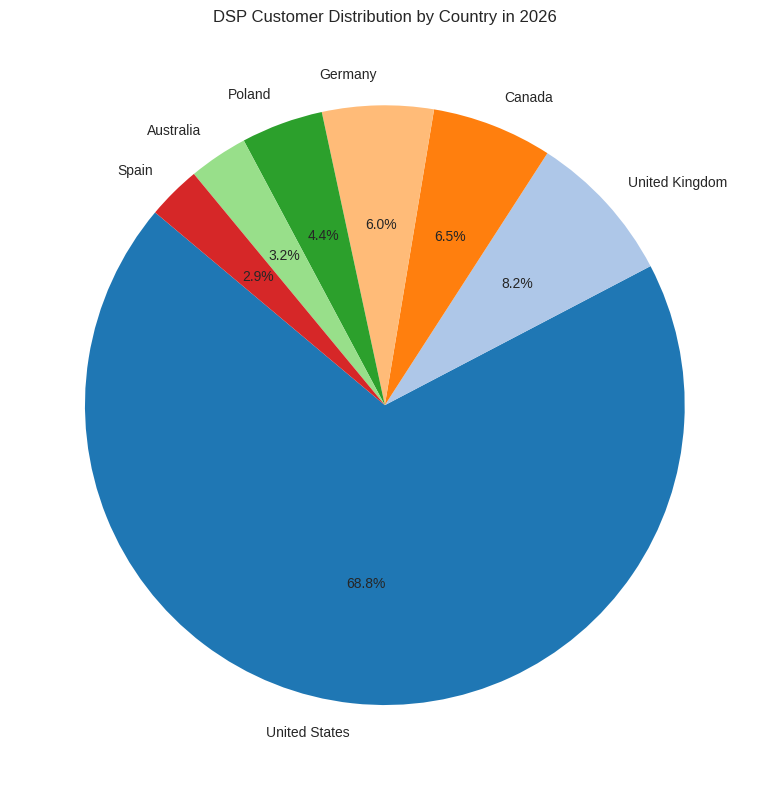
The rising demand for personalization and precision in digital advertising has driven innovation in DSP platforms, making them indispensable for agencies, in-house marketing teams, and enterprises looking to scale their advertising efforts efficiently. This demand is especially evident in regions like North America, where the United States alone accounts for over 60% of all DSP users. Meanwhile, markets in Asia-Pacific—including India and China—are experiencing accelerated growth due to increased digital penetration and mobile-first consumer behaviors.
The modern DSP is no longer a one-size-fits-all solution. Instead, brands are strategically choosing between generalist platforms with massive reach and specialist platforms optimized for niche channels such as native ads, e-commerce environments, or data-enriched targeting. For advertisers in 2026, selecting the right DSP software requires a careful evaluation of features like AI bidding capabilities, transparency in supply chains, integration with first-party data systems, and flexibility in campaign budgeting.
This comprehensive guide explores the top 10 Demand Side Platform (DSP) software solutions in the world in 2026. It highlights how each platform stands out in terms of technology, scalability, pricing models, and use-case specialization. Whether you’re a performance marketer seeking better ROAS, a brand focused on safe and scalable omnichannel campaigns, or an agency aiming to deliver measurable outcomes for clients, understanding the competitive DSP landscape is critical to success.
By examining key market trends, customer distribution, pricing structures, and technological innovation across platforms like The Trade Desk, StackAdapt, Amazon DSP, Google DV360, and others, this blog provides marketers and decision-makers with the insights needed to make informed choices in an increasingly automated and data-driven media buying environment.
Before we venture further into this article, we would like to share who we are and what we do.
About 9cv9
9cv9 is a business tech startup based in Singapore and Asia, with a strong presence all over the world.
With over nine years of startup and business experience, and being highly involved in connecting with thousands of companies and startups, the 9cv9 team has listed some important learning points in this overview of the Top 10 Decision Support Software in 2026.
If you like to get your company listed in our top B2B software reviews, check out our world-class 9cv9 Media and PR service and pricing plans here.
Top 10 Demand Side Platform (DSP) Software in 2026
- StackAdapt
- Adform (Adform FLOW)
- The Trade Desk
- Basis Technologies (Basis DSP)
- Google Display & Video 360 (DV360)
- Amazon DSP
- Adobe Advertising Cloud
- Viant (Adelphic DSP)
- Criteo (Commerce Max)
- Taboola
1. StackAdapt
As digital advertising continues to grow in complexity and scale, the importance of reliable Demand Side Platform (DSP) software has increased significantly. Among the key players in 2026, StackAdapt stands out as a front-runner with a strong market presence, advanced technological foundation, and a reputation for user-friendly operations. Below is a deep dive into StackAdapt’s standing and performance in the DSP industry landscape for 2026.
Market Leadership and Reach
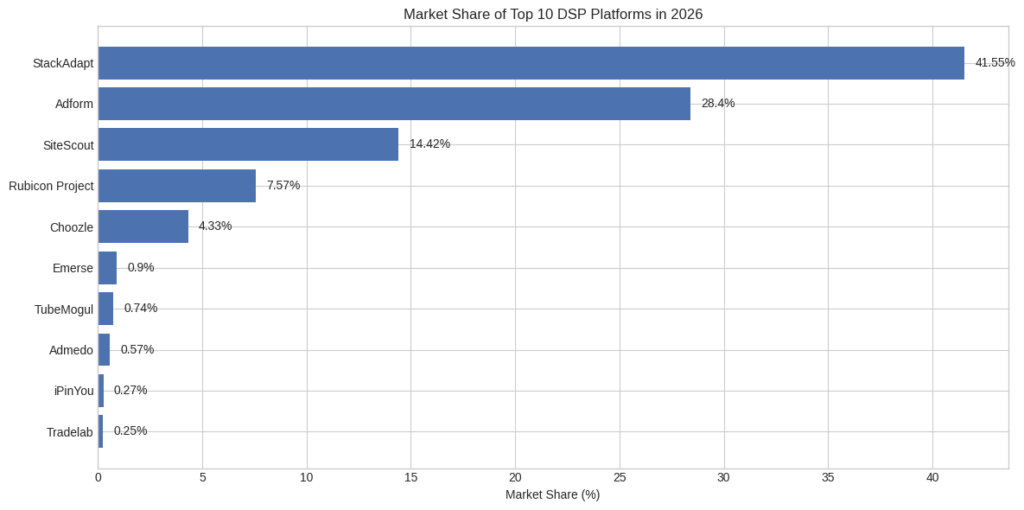
StackAdapt commands a substantial share of the global DSP market, reflecting its widespread adoption and client trust. With a market share of 41.55%, it serves over 16,900 customers worldwide. Originating from Toronto, the platform has strategically scaled across North America and expanded into global markets, making it an attractive choice for advertisers targeting diverse audiences.
Technical and Operational Capabilities
StackAdapt’s infrastructure is built for high-frequency data processing, with the ability to execute approximately 465 billion automated optimizations per second. This level of performance positions the software among the most sophisticated DSP technologies available in 2026.
Its multi-channel support includes:
- Programmatic native advertising
- Display banners
- Video ads
- Formats for desktop, tablet, and mobile platforms
Inventory and Media Access
One of StackAdapt’s most distinctive strengths is its access to high-quality, broad-spectrum inventory across major publishers. This includes programmatic ad placements for:
- Native content
- Display ads
- Video campaigns
This inventory scale enables advertisers to execute large-scale campaigns while maintaining control over targeting precision and performance metrics.
Pricing and Budget Considerations
Although StackAdapt operates primarily on a pricing-on-request model, it is widely known for following a cost-per-mille (CPM) structure. On average, advertisers are expected to allocate a minimum monthly budget of approximately $3,000. This positions the platform for mid-sized to large advertising budgets.
Integrations with Business Systems
To streamline workflow and enhance campaign tracking, StackAdapt integrates seamlessly with leading CRM and automation tools, including:
- HubSpot
- Salesforce
- AgencyAnalytics
These integrations ensure end-to-end visibility, data syncing, and campaign performance analysis within existing marketing ecosystems.
User Feedback and Industry Recognition
StackAdapt consistently earns high marks from digital marketing professionals. In 2026, it is ranked as the leading platform in the “Easiest to Use” and overall “Leader” category among DSP software tools. Based on verified user feedback, the platform holds a 9.8/10 satisfaction score, reflecting its usability and collaborative support.
A highlight among user-praised features includes:
- The “Creative Studio,” which allows marketers to prototype and test advertising content before launch, reducing risks and improving conversion rates.
Despite its high ratings, feedback suggests that 26% of users experience challenges with budget-related reporting and in-depth performance metrics. Nonetheless, the software maintains an impressive 9.4/10 rating for its cross-channel advertising capabilities.
Document-Style Comparative Table: StackAdapt DSP Overview (2026)
| Feature Category | Details |
|---|---|
| Market Share | 41.55% |
| Number of Customers | 16,983 |
| Headquarters | Toronto, Canada |
| Optimization Rate | 465 Billion optimizations/second |
| Supported Channels | Native, Display, Video, Desktop, Tablet, Mobile |
| Inventory Access | Major global publishers |
| Pricing Model | CPM-based (Pricing upon request) |
| Minimum Ad Spend | Approx. $3,000/month |
| CRM & Tool Integrations | HubSpot, Salesforce, AgencyAnalytics |
| User Satisfaction Score | 9.8/10 |
| Top Feature Highlight | Creative Studio (Campaign prototyping & testing) |
| Known Limitations | Budget reporting & detailed performance metrics (affects ~26% of users) |
| Cross-Channel Score | 9.4/10 |
Strategic Insights for 2026
In 2026, StackAdapt’s dominance is largely attributed to its forward-thinking use of AI, responsive customer support, and extensive ad format coverage. Its commitment to platform usability and creative support has attracted not only agencies but also in-house marketing teams seeking intuitive and high-performance solutions.
For companies looking to invest in a DSP platform with a proven track record, StackAdapt is a top-tier contender that balances innovation with execution quality. However, marketers managing complex reporting needs may need to supplement it with external analytics tools or custom dashboards for full operational visibility.
2. Adform (Adform FLOW)

In the dynamic world of programmatic advertising, Adform has secured its place as one of the most trusted and independent Demand Side Platform (DSP) software providers in 2026. With its flagship solution, Adform FLOW, the company ranks second in global market share, accounting for 28.40% of the total DSP market. Headquartered in Copenhagen, Adform continues to gain attention for its focus on transparency, data control, and seamless integration.
Market Position and Global Reach
Adform has established a strong foothold, especially within the EMEA region, while also expanding its presence in international markets. Its independent structure and modular platform make it a preferred choice for enterprises seeking full ownership and control over their advertising data and tech stack.
Platform Capabilities and System Architecture
Adform FLOW is engineered as a cloud-based Software-as-a-Service (SaaS) platform. It features an open and scalable architecture that supports:
- High-performance bid processing for real-time auctions
- Customizable campaign management tools
- Compatibility with multiple components like DSP, SSP, and ad server functionalities
The platform’s modular design enables businesses to unify and manage their complete advertising operations from a single environment, which is particularly valuable for organizations with complex needs.
Core Strengths of Adform FLOW
Adform FLOW differentiates itself in the following areas:
- High-quality and transparent traffic sources
- Seamless integration with custom tech stacks
- Full data ownership and client-side control
- Modular system flexibility for tailored implementations
Pricing and Commercial Structure
The platform follows a quotation-based pricing model. Instead of offering fixed packages, Adform provides tailored pricing to suit enterprise-level demands. This allows businesses to scale and adapt their usage based on evolving requirements without being locked into rigid pricing tiers.
Deployment and Usability Focus
Adform FLOW operates on a SaaS deployment model. Its primary market concentration is within the EMEA region, but it also supports global operations for multinational enterprises. Its flexible deployment infrastructure allows clients to manage and optimize campaigns at scale, with localized and cross-regional targeting capabilities.
User Experience and Industry Reviews
According to data from professional review platforms like TrustRadius, Adform FLOW has received a strong user satisfaction score of 8.1 out of 10. Users frequently highlight:
- An intuitive interface that improves workflow efficiency
- Superior transparency compared to many other DSP solutions
- A robust user experience for managing cross-platform campaigns
While many value its integrated design, some users have indicated that the complexity of managing the modular architecture may require more experienced teams to fully utilize its capabilities.
Document-Style Overview Table: Adform FLOW DSP Analysis (2026)
| Feature Category | Description |
|---|---|
| Global Market Share | 28.40% |
| Headquarters | Copenhagen, Denmark |
| Deployment Model | SaaS (Software-as-a-Service) |
| Platform Type | Modular and Open Architecture |
| Primary Regions Served | EMEA, with global expansion |
| Supported Components | DSP, SSP, Ad Server |
| Key Technical Feature | High-performance real-time bid processing |
| Data Ownership | Full ownership remains with clients |
| Pricing Model | Customized quote-based enterprise pricing |
| Notable Strengths | Transparency, high-quality traffic, integration with client tech stacks |
| User Satisfaction Rating | 8.1/10 |
| Most Praised Feature | Modular architecture and transparent ecosystem |
| Reported Limitations | Complex system may require experienced ad tech specialists |
Matrix: Adform FLOW Performance Attributes (2026)
| Evaluation Criteria | Rating (1-10) | Comments |
|---|---|---|
| Transparency | 9.3 | Recognized as one of the most transparent platforms |
| System Integration Flexibility | 9.0 | Easily integrates DSP, SSP, and ad server components |
| Ease of Use | 7.8 | Requires experienced users to manage complex features |
| User Interface Experience | 8.5 | Clean and intuitive for daily campaign operations |
| Reporting & Analytics | 8.2 | Offers insightful reports but may need customization |
| Global Reach | 7.9 | Strong in EMEA, growing in other regions |
Strategic Value of Adform in 2026
Adform FLOW has become a go-to solution for organizations seeking independence from walled garden platforms. Its emphasis on transparency, modular design, and client-centric data control aligns well with modern expectations for privacy, flexibility, and accountability in programmatic advertising.
By offering a unified advertising experience that integrates all necessary components within one platform, Adform provides businesses with the tools to scale efficiently while maintaining complete visibility and governance over their data. For marketing teams with experienced technical talent, Adform FLOW remains a highly strategic investment in 2026.
3. The Trade Desk
In the rapidly evolving digital advertising ecosystem of 2026, The Trade Desk stands as one of the most recognized and widely adopted Demand Side Platform (DSP) software solutions. Known for its strong focus on the open internet and transparent advertising environments, The Trade Desk has gained significant traction among large-scale enterprises and global brands looking to manage programmatic advertising across all channels with precision and control.
Global Market Presence and Position
The Trade Desk has earned its reputation as a preferred platform for businesses managing complex, multi-regional campaigns. Its open and unbiased marketplace allows advertisers to access premium inventory without being locked into proprietary media ecosystems. This openness supports flexibility, data-driven decision-making, and scale for global advertisers across digital touchpoints.
Platform Infrastructure and Technical Capabilities
The Trade Desk is built for speed and customization, operating with market-leading queries per second (QPS) and robust enterprise-grade APIs. This allows advertisers and agencies to tailor bidding logic, analytics, and creative deployment to their unique needs.
Notable system features include:
- Real-time bidding performance at scale
- Custom development through open APIs
- Seamless data activation from first-party and third-party sources
Diverse Inventory Access and Omnichannel Capabilities
One of the strongest aspects of The Trade Desk is its access to nearly every major advertising channel worldwide. This includes:
- Connected TV (CTV)
- Digital Out-of-Home (DOOH)
- Streaming audio platforms
- Mobile and desktop display
- Native and in-app advertising
This extensive inventory ensures that advertisers can run campaigns across screens and formats with full transparency.
Pricing Model and Budget Requirements
The Trade Desk operates on a fee-based model, generally taking 15% to 20% of total advertising spend as its platform cost. Due to its enterprise focus, most clients start with a minimum monthly media budget of approximately $10,000. The pricing structure reflects the platform’s high performance, cross-device reach, and premium inventory access.
Advanced Targeting and Data Activation
The Trade Desk offers highly sophisticated targeting tools that empower advertisers to personalize and optimize ad delivery. Unique features include:
- Real-time geo-targeting influenced by environmental signals like weather
- Audience segmentation using first-party data sets
- Cross-device ID graph technology for unified consumer views
These features enhance targeting accuracy and return on ad spend, especially for advertisers operating in multiple regions or markets.
Industry Reviews and Enterprise Feedback
On platforms like Gartner Peer Insights, The Trade Desk has consistently received high praise. With a current rating of 4.6 out of 5 based on over 300 verified reviews, it is ranked among the top DSPs for both performance and customer satisfaction.
Users highlight:
- Superior transparency in media buying
- Strong visual analytics tools, including campaign planning dashboards
- Wide support among enterprise companies with revenues between $50 million and $1 billion
Although the platform fees are perceived as high by some, most reviewers agree that the trade-off is well worth it due to the platform’s cross-channel effectiveness and trustworthy media environment.
Detailed Overview Table: The Trade Desk DSP Profile (2026)
| Feature Category | Details |
|---|---|
| Platform Type | Hybrid DSP & DMP |
| Primary Focus | Open Internet, Transparent Advertising |
| Global Inventory Access | CTV, DOOH, Audio, Mobile, Desktop, Native |
| QPS Capability | Market-leading QPS |
| Enterprise API Support | Yes |
| Targeting Tools | Geo-targeting, Environmental Triggers, First-Party Data Activation |
| Pricing Model | Fee-based (15–20% of ad spend) |
| Minimum Monthly Budget | Starts at approx. $10,000 |
| Transparency Score | Rated Very High |
| Cross-Device Performance | Rated 9/10 by users |
| Gartner Peer Insights Rating | 4.6/5 (based on 300 reviews) |
| Notable Strengths | Visual Planning Tools, Neutral Marketplace, Multi-Channel Access |
Matrix: Key Evaluation Areas for The Trade Desk (2026)
| Evaluation Criteria | Score (1–10) | Comments |
|---|---|---|
| Transparency and Neutrality | 9.5 | Highly rated for open marketplace access |
| Enterprise Compatibility | 9.2 | Designed for complex, high-budget campaigns |
| Ease of Integration | 8.7 | Supports API-based customization and system integration |
| Cross-Device Reach | 9.0 | Strong ID graph ensures seamless multi-device tracking |
| Visual Analytics and Reporting | 8.8 | Intuitive tools like Magic Quadrant enhance decision-making |
| Budget Flexibility | 6.5 | High minimum budget requirement may not suit smaller businesses |
Strategic Insight and Use Case
The Trade Desk continues to be the platform of choice for brands seeking precision, transparency, and flexibility in their programmatic advertising efforts. Its neutral marketplace and comprehensive targeting tools make it ideal for enterprises running multi-market, cross-device campaigns. While the platform is best suited for medium to large companies with substantial advertising budgets, its return on investment and scalability justify the higher spend for most global marketers.
As the digital advertising landscape continues to shift towards privacy-first strategies and omnichannel engagement, The Trade Desk remains a powerful asset for any business aiming to drive measurable results through programmatic channels.
4. Basis Technologies (Basis DSP)
As businesses increasingly seek simplified solutions for managing complex digital campaigns, Basis Technologies (formerly known as Centro) has gained significant recognition in 2026 as one of the top-performing Demand Side Platform (DSP) software providers. Designed to streamline the buying, execution, and analysis of digital media campaigns, Basis offers a unified SaaS solution with a strong emphasis on automation, transparency, and cross-channel coordination.
Position in the Global DSP Landscape
Basis Technologies has become one of the fastest-growing players in the global DSP sector. Industry data ranks it as the second-fastest-growing DSP and the fifth most popular overall, based on customer adoption and platform usage. This reflects its growing popularity among agencies, media buyers, and in-house marketing teams across diverse sectors.
Platform Infrastructure and Technical Foundations
Basis DSP integrates technology originally developed by SiteScout AdServer, creating a powerful backbone for real-time programmatic bidding, audience targeting, and omnichannel media planning.
The platform supports:
- Unified campaign execution across programmatic, direct, and search advertising
- Workflow automation that centralizes tasks like campaign setup, optimization, and billing
- Customizable dashboards with built-in business intelligence tools
Key Strengths and Functional Capabilities
The core advantage of Basis lies in its ability to reduce operational complexity through automation and data centralization. Its most notable features include:
- Automated campaign performance tracking and measurement
- Built-in billing and financial reconciliation systems
- Brand safety controls and access to private marketplaces (PMPs)
- Seamless collaboration tools for internal teams and external clients
These features allow marketing departments to reduce manual workloads while improving the accuracy and profitability of advertising operations.
Pricing Structure and Accessibility
Basis operates on a quote-based pricing model. While final costs depend on the specific use case and service level, most managed service engagements begin with a minimum spend requirement of around $10,000 per month. The platform also offers self-service options for teams with in-house campaign management capabilities.
Regional Focus and Use Case Suitability
Basis is widely adopted across North America and is gaining traction globally due to its suitability for industries such as media, publishing, e-commerce, and education. The system is especially valued by digital marketing managers in sectors like newspaper publishing, where the need for integrated planning, buying, and reporting is paramount.
User Sentiment and Industry Recognition
According to TrustRadius, Basis DSP holds a high rating of 9 out of 10. Users highlight the platform’s strong automation capabilities, collaborative workflow tools, and time-saving efficiencies as key advantages. Reviews from advertising professionals frequently mention that the software significantly boosts operational profitability by reducing manual input.
However, some power users have noted areas for improvement, such as:
- Delayed report generation in high-volume accounts
- Navigation and interface design that may not be intuitive for new or advanced users
Overview Table: Basis Technologies DSP Profile (2026)
| Feature Category | Details |
|---|---|
| Platform Name | Basis Technologies (Basis DSP) |
| Previous Brand Name | Centro |
| Global Ranking | #2 Fastest-Growing, #5 Most Popular DSP |
| Core Technology Foundation | SiteScout AdServer Integration |
| Deployment Type | SaaS (Unified Platform) |
| Supported Channels | Programmatic, Search, Direct, Social |
| Pricing Model | Custom Quotation-Based |
| Typical Entry-Level Budget | Starts at ~$10,000/month (for managed services) |
| Workflow Automation | Yes – Includes planning, performance tracking, billing automation |
| Collaboration Features | Centralized dashboard with team access controls |
| Brand Safety Measures | Built-in controls with PMP access |
| Target Industries | Media, Publishing, E-commerce, Advertising |
| TrustRadius Score | 9/10 |
| Notable Strengths | Automation, team collaboration, operational efficiency |
| Known Limitations | Slower reporting generation, interface could improve |
Performance Matrix: Basis DSP Evaluation Areas (2026)
| Evaluation Criteria | Rating (1–10) | Commentary |
|---|---|---|
| Workflow Automation | 9.4 | Strong automation features reduce manual workloads |
| Ease of Collaboration | 9.1 | Ideal for teams managing multiple campaigns |
| Campaign Reporting | 7.8 | Reporting accuracy is good, but speed can be improved |
| Navigation & UX | 7.5 | Functional, but may require training for new users |
| Cross-Channel Reach | 8.6 | Supports programmatic, direct, and search channels |
| Pricing Flexibility | 7.9 | Requires budget commitment; not ideal for small advertisers |
| Brand Safety & PMP Access | 8.8 | Comprehensive protection with access to premium inventory |
Strategic Perspective on Basis DSP
Basis Technologies has positioned itself as an essential platform for marketers seeking control, speed, and simplification in digital media operations. Its ability to handle everything from planning to billing in one environment makes it particularly suitable for medium to large organizations handling high campaign volumes.
In 2026, Basis continues to appeal to brands that want to drive performance while minimizing operational burden. Despite minor setbacks in interface fluidity, its automation-first design and strong market reputation make it one of the most effective DSP software choices available globally.
5. Google Display & Video 360 (DV360)

In 2026, Google Display & Video 360 (DV360) continues to stand out as one of the most powerful and sophisticated Demand Side Platform (DSP) software options globally. Integrated within the broader Google Marketing Platform, DV360 is purpose-built for large-scale advertisers and enterprises that demand access to advanced targeting tools, seamless data integration, and exclusive media inventory—particularly across Google’s own ecosystem.
Platform Overview and Strategic Role
DV360 is designed to help brands manage their entire digital media buying operations from a single platform. It offers access to Google-owned channels like YouTube and Connected TV (CTV), while also enabling advertisers to reach users across more than 90 additional global ad exchanges.
The software’s enterprise-level infrastructure allows businesses to precisely target, analyze, and optimize campaigns using Google’s unique data ecosystem, including real-time search intent and behavioral insights. Its deep integration with other tools in the Google suite, such as GA4 (Google Analytics 4), further strengthens its capabilities for marketers seeking performance-based outcomes.
Technical Infrastructure and System Capabilities
Google DV360 is backed by Google’s cross-device identity graph, which allows for accurate user tracking and measurement across smartphones, tablets, desktops, and CTV environments. This system helps advertisers build a consistent view of the customer journey, leading to more effective campaign targeting and ROI measurement.
DV360 supports:
- Advanced audience segmentation powered by Google’s first-party data
- Dynamic ad formats for display, video, native, and mobile
- Cross-channel campaign execution and real-time bidding
- Programmatic guaranteed deals, private marketplaces, and open auction support
Pricing Model and Investment Threshold
As an enterprise-grade DSP, DV360 typically requires a substantial minimum investment. Reports from agencies and platform users indicate that monthly starting costs generally begin around $12,500. The pricing structure reflects the advanced targeting capabilities, exclusive inventory access, and premium integrations offered by the platform.
Platform Performance and Measurable Impact
When integrated with Google Analytics 4 (GA4), DV360 can deliver a 15% to 25% improvement in cost-per-acquisition (CPA) performance within a 60 to 90-day period. This improvement is due to the maturing of bidding signals and enhanced campaign intelligence over time, especially when campaigns are optimized using Google’s automated bidding strategies.
Industry Feedback and User Experience
DV360 is highly rated by industry professionals, earning an average score of 4.5 out of 5 across peer-reviewed platforms. Users consistently highlight the platform’s depth in reporting, real-time data integration, and robust targeting capabilities.
Key praises include:
- Superior control over campaign setup and audience filters
- Comprehensive analytics and attribution modeling
- Access to exclusive Google inventory, including YouTube and CTV
However, the platform is not without its limitations. Several users have reported that DV360 has a:
- Steep learning curve, especially for new users
- Less intuitive interface compared to some competitors
- Higher operational cost, making it less suitable for smaller marketing teams or limited budgets
Professional Table: Google DV360 DSP Profile (2026)
| Feature Category | Details |
|---|---|
| Platform Name | Google Display & Video 360 (DV360) |
| Parent Suite | Google Marketing Platform |
| Main Audience | Enterprise-level advertisers |
| Minimum Monthly Investment | Starts at ~$12,500 |
| Inventory Reach | 90+ global ad exchanges plus exclusive Google inventory |
| Cross-Device Identity Tracking | Yes – via Google’s proprietary identity graph |
| GA4 Integration Benefit | 15–25% CPA improvement within 60–90 days |
| Key Supported Channels | YouTube, CTV, Display, Native, Mobile |
| Ad Buying Formats | Open Auction, Private Marketplace, Programmatic Guaranteed |
| Targeting Capabilities | Advanced audience segmentation and real-time behavioral signals |
| User Review Rating | 4.5/5 |
| Common Praises | Reporting depth, targeting flexibility, access to premium inventory |
| Common Criticisms | Complex user interface, high learning curve, high cost for smaller teams |
Evaluation Matrix: Google DV360 Capabilities and User Experience (2026)
| Evaluation Area | Score (1–10) | Description |
|---|---|---|
| Audience Targeting Precision | 9.6 | Excellent segmentation powered by Google search and intent data |
| Cross-Device Integration | 9.4 | Seamless experience across desktop, mobile, tablet, and CTV |
| Reporting and Analytics Tools | 9.2 | Advanced measurement tools with attribution modeling |
| Ease of Use | 6.8 | Non-intuitive interface; best for experienced teams |
| Setup and Onboarding Time | 7.1 | Requires significant training to unlock full capabilities |
| Pricing Accessibility | 6.5 | High cost limits access for smaller teams or mid-sized businesses |
| Campaign Performance Potential | 9.0 | Strong ROI, especially when combined with GA4 and smart bidding |
Strategic Takeaway for Advertisers in 2026
Google DV360 continues to be a powerful solution for advertisers aiming to scale campaigns across the open web and Google’s owned media properties. With robust integrations, unmatched data insights, and access to high-quality inventory, DV360 is ideal for enterprises that require complete visibility and granular control over their advertising ecosystem.
While it may not be the easiest platform for entry-level marketers, its value to seasoned digital professionals lies in its ability to deliver high-performance outcomes and optimized cost-efficiency over time. For brands seeking to unify data, media, and measurement into one enterprise-grade solution, DV360 remains a top contender in the global DSP landscape of 2026.
6. Amazon DSP
In 2026, Amazon DSP remains one of the most powerful programmatic advertising platforms for brands looking to reach purchase-ready audiences at scale. Built upon Amazon’s massive first-party retail data, the platform provides unmatched access to consumer behavior insights, allowing advertisers to drive highly targeted campaigns both within Amazon’s digital ecosystem and across third-party inventory.
Whether a brand sells products on Amazon or not, the platform offers unique advantages through its integration of real-time bidding (RTB) and shopping signal-based targeting. As a result, Amazon DSP has become a preferred option for performance-driven marketers looking to optimize return on ad spend (ROAS) across the full marketing funnel.
Platform Scope and Advertising Reach
Amazon DSP gives advertisers direct access to highly engaged audiences, not only within Amazon-owned properties but also across a wide network of premium third-party publishers. This includes placements on:
- Amazon.com and Amazon mobile apps
- Prime Video and Twitch
- Freevee (formerly IMDb TV)
- External websites and apps through programmatic ad exchanges
The combination of retail intent data and premium media inventory makes the platform highly effective for reaching both new customers and retargeting previous buyers.
Technical Capabilities and Data Infrastructure
At the core of Amazon DSP is its use of real-time bidding technology enhanced by Amazon’s proprietary data segments. This enables advertisers to:
- Precisely target consumers based on recent shopping activity
- Run display, video, and audio ads across a wide variety of channels
- Create granular audience segments using first-party purchase data
- Track performance across every stage of the buyer’s journey
These capabilities allow advertisers to reach high-converting audiences with remarkable accuracy, especially in e-commerce and direct-to-consumer sectors.
Pricing Model and Service Options
Amazon DSP follows a cost-per-impression (CPM) pricing model. It offers both managed and self-service versions:
- Managed Service: Typically requires a minimum campaign spend of $50,000, making it more suitable for established brands or large-scale advertisers
- Self-Service Platform: Provides more flexibility for experienced in-house marketing teams or performance agencies with smaller budgets
This tiered access allows advertisers to select the level of support that best fits their budget and operational needs.
Platform Strengths and Strategic Benefits
One of the most valuable aspects of Amazon DSP is its exclusive access to Amazon Audience data—considered among the most purchase-intent-rich datasets in the industry. This includes insights such as:
- In-market shoppers actively browsing specific product categories
- Customers with recent purchases in related verticals
- Historical behavior and predictive intent modeling
These data points help advertisers craft messages that resonate with users at every stage of the conversion funnel.
User Feedback and Operational Considerations
Professionals in the advertising industry often describe Amazon DSP as the “VIP lounge of programmatic platforms” because of its reach and high-intent targeting. A marketing manager from a 2025 review praised its ability to “hit every part of the funnel,” emphasizing its effectiveness from awareness through to conversion.
However, there are also limitations noted by users:
- The platform’s interface and workflow are often considered less intuitive than competitors
- Inventory availability is still heavily influenced by Amazon’s ecosystem, which can be restrictive for brands focused on broader media buying
Detailed Table: Amazon DSP Feature Overview (2026)
| Feature Category | Description |
|---|---|
| Platform Name | Amazon DSP |
| Main Strength | Access to Amazon’s high-intent shopper data |
| Ad Formats Supported | Display, Video, Audio |
| Inventory Access | Amazon.com, Prime Video, Twitch, Freevee, Third-Party Sites |
| Targeting Engine | Based on Amazon’s first-party shopping signals |
| Bidding Type | Real-Time Bidding (RTB) |
| Pricing Model | Cost-per-impression (CPM) |
| Minimum Spend (Managed) | ~$50,000 |
| Self-Service Availability | Yes – suitable for experienced advertisers |
| Primary Use Cases | Full-funnel advertising, retargeting, product promotion |
| Common Praises | Audience precision, reach, campaign impact |
| Known Challenges | Usability limitations, reliance on Amazon-centric inventory |
| User Rating Summary | Strong performance, best suited for e-commerce-focused advertisers |
Matrix: Amazon DSP Evaluation Scores (2026)
| Evaluation Criteria | Rating (1–10) | Notes |
|---|---|---|
| Audience Targeting Precision | 9.6 | Based on actual purchase intent data |
| Multi-Channel Reach | 8.8 | Strong within Amazon ecosystem, moderate outside it |
| Ad Format Variety | 8.7 | Supports video, audio, and display formats |
| Ease of Use | 6.9 | Less intuitive platform; learning curve reported by several users |
| Cost Accessibility | 6.5 | High entry point for managed services |
| Funnel Coverage | 9.2 | Effective across awareness, consideration, and conversion stages |
Strategic Takeaway for Advertisers in 2026
Amazon DSP offers a powerful blend of data-driven precision and expansive media access, making it a standout option in the global DSP ecosystem. With exclusive insights into shopper behavior and integration across Amazon-owned channels, it is particularly valuable for brands focused on performance marketing, e-commerce, and full-funnel strategies.
Despite some platform usability concerns and high costs for managed campaigns, Amazon DSP remains an essential solution for businesses aiming to leverage high-intent data and connect meaningfully with potential customers at scale. Its role among the top 10 DSP software in the world in 2026 is both prominent and well-earned.
7. Adobe Advertising Cloud
In the competitive global programmatic advertising market of 2026, Adobe Advertising Cloud stands as one of the top-performing Demand Side Platform (DSP) software solutions. Originally launched as TubeMogul and later rebranded under the Adobe Experience Cloud umbrella, this platform offers a robust and unified environment for executing complex, multi-channel advertising campaigns, with a strong emphasis on connected TV (CTV), digital video, display, and search.
Designed for large enterprises managing expansive advertising ecosystems, Adobe Advertising Cloud is well-regarded for its tight integration with Adobe Analytics and Adobe Experience Manager. These integrations allow advertisers to gain deeper insights into consumer behavior and connect media performance to broader business outcomes.
Platform Capabilities and Ecosystem Strength
Adobe Advertising Cloud is built for marketers who require end-to-end visibility across multiple advertising channels. The platform offers a centralized workflow for planning, buying, managing, and optimizing media with advanced automation features.
Core capabilities include:
- Rule-based bidding automation for programmatic search and display advertising
- Advanced integration with Adobe’s data management and analytics tools
- Access to a broad network of over 50 TV broadcasters for automated TV ad placements
- Unified media buying across display, video, CTV, and digital out-of-home (DOOH)
Its ability to support complex campaigns from a single system helps large organizations streamline processes, ensure message consistency, and manage budgets more effectively.
Security, Fraud Prevention, and Trust Mechanisms
Security and fraud protection are major priorities for Adobe Advertising Cloud. It includes a Non-Human Traffic (NHT) Credit Program that identifies and refunds costs for fraudulent impressions. This is made possible through Adobe’s integration with White Ops, a leading digital fraud protection company.
Such systems give enterprise advertisers greater confidence in their media investments, especially when running large-scale campaigns involving high-value video and CTV inventory.
Enterprise Pricing Model and Budget Requirements
Adobe Advertising Cloud follows a quote-based pricing model tailored for enterprise clients. The platform is generally used for high-budget campaigns, with typical minimum commitments starting from $50,000 per month. This pricing reflects the advanced features, analytics integration, and cross-platform reach that Adobe provides.
The investment is justified for organizations aiming to align their advertising efforts with digital transformation strategies or execute tightly managed, multi-region campaigns.
User Experience and Industry Feedback
Rated at 8.8 out of 10 by professional users, Adobe Advertising Cloud is often described as a powerful platform with a steep learning curve. Key positive feedback includes:
- Highly customizable rule-based bidding engine
- Deep integration with Adobe’s broader marketing suite
- Industry-leading fraud prevention mechanisms
However, some users also highlight that the platform requires a technically mature team to manage and operate it effectively. Implementation can be complex, particularly for teams not already using Adobe Experience Cloud tools.
Detailed Table: Adobe Advertising Cloud Platform Profile (2026)
| Feature Category | Details |
|---|---|
| Platform Name | Adobe Advertising Cloud |
| Previous Name | TubeMogul |
| Parent Suite | Adobe Experience Cloud |
| Deployment Type | SaaS-based for large-scale campaign execution |
| Key Focus Areas | Programmatic TV, Display, Video, DOOH, Search |
| Target Audience | Enterprise-level advertisers |
| Minimum Budget Requirement | ~$50,000/month |
| Security System | Non-Human Traffic Credit Program (via White Ops) |
| Core Technology Engine | Rule-Based Bidding System |
| Channel Access | 50+ Programmatic TV broadcasters, plus digital and search channels |
| Analytics Integration | Seamless with Adobe Analytics and Experience Manager |
| Peer Rating Score | 8.8/10 |
| Strengths Highlighted | Fraud protection, integration, automation capabilities |
| Limitations Identified | Complex setup, high technical expertise required |
Matrix: Adobe Advertising Cloud Evaluation Summary (2026)
| Evaluation Area | Rating (1–10) | Observations |
|---|---|---|
| Multi-Channel Campaign Support | 9.2 | Strong cross-platform execution across TV, digital, and search |
| Fraud Prevention Capabilities | 9.5 | Best-in-class protection with NHT refund program |
| Automation Flexibility | 8.7 | Rule-based bidding engine drives efficiency and ROI |
| Integration with Adobe Suite | 9.4 | Excellent synergy with Adobe Analytics and Adobe Experience tools |
| Ease of Use | 6.9 | Technical complexity makes it challenging for small or mid-tier teams |
| Setup Time and Scalability | 7.5 | Requires implementation expertise for scalable use |
Strategic Summary for 2026 Advertisers
Adobe Advertising Cloud is ideal for organizations that operate at an enterprise scale and need full visibility into advertising spend, performance, and attribution. With its focus on automation, data protection, and audience targeting across premium TV and digital environments, it supports advanced advertising strategies that align tightly with corporate digital transformation initiatives.
For large enterprises with the technical maturity and internal resources to manage a sophisticated advertising stack, Adobe Advertising Cloud offers a secure, comprehensive, and high-performing DSP solution in 2026. Its place among the top 10 global DSP platforms is backed by its powerful analytics foundation and forward-thinking features built for complex media ecosystems.
8. Viant (Adelphic DSP)
Viant’s Adelphic DSP has emerged in 2026 as a trusted and forward-thinking Demand Side Platform (DSP), especially for advertisers preparing for the post-cookie era. Unlike traditional DSPs that rely heavily on third-party cookies, Adelphic stands out by using a proprietary identity solution called “Household ID.” This enables advertisers to run large-scale programmatic campaigns while preserving user privacy and maintaining high targeting accuracy.
Positioned as a people-based DSP, Viant Adelphic is engineered to help marketers reach real households deterministically across all major channels, including Connected TV (CTV), mobile, desktop, and audio.
Platform Reach and Identity Infrastructure
One of Adelphic’s most unique strengths is its ability to connect with more than 125 million U.S.-based households through its identifier-agnostic bid stream. This bid stream is designed to function seamlessly in environments where third-party cookies are restricted or unavailable.
The system is active in more than 80% of real-time bidding (RTB) opportunities across major supply platforms and exchanges. This wide access, coupled with a strong identity graph, enables advertisers to achieve:
- High-precision targeting without relying on anonymous cookies
- Accurate frequency capping and reach measurement
- Persistent cross-device identity resolution at the household level
Technical Architecture and Capabilities
Adelphic’s platform allows advertisers to control and optimize their campaigns through a centralized dashboard that supports:
- Household-level targeting and attribution
- Identifier-independent bidding and delivery
- Access to transparent, log-level data for performance analysis
- Seamless integration with data management platforms (DMPs) and customer data platforms (CDPs)
The system is particularly effective for sectors like healthcare, finance, and CPG, where privacy and compliance are critical yet precise audience engagement is still necessary.
Performance Results in Cookieless Environments
Viant has been at the forefront of cookieless advertising innovation. Tests and case studies have shown that its Household ID solution can deliver:
- Up to 100% scale compared to traditional cookie-based DSPs
- Approximately 93% unique reach, even in privacy-restricted environments such as Safari and Chrome
This capability makes it a valuable asset for advertisers looking to future-proof their digital strategy.
Pricing and Accessibility
Adelphic offers a more accessible starting point than many other enterprise DSPs. With a baseline investment of approximately $3,000 per month, the platform is well-suited not only for enterprise users but also for mid-market agencies and brands seeking affordable, future-ready programmatic solutions.
User Experience and Industry Reputation
Adelphic receives consistently positive feedback from professionals for its transparency and access to raw data. Users praise the availability of log-level information, which allows in-depth analysis of campaign performance and optimization tactics.
A 2024 pharma client case study noted the platform’s ability to execute a full-funnel campaign—audience onboarding to attribution—without using cookies. However, some users report that the dashboard performs best when paired with external tools, particularly for advanced data modeling or real-time adjustments.
Table: Viant Adelphic DSP Platform Overview (2026)
| Feature Category | Description |
|---|---|
| Platform Name | Viant Adelphic DSP |
| Identity Solution | Household ID (People-Based, Cookieless Technology) |
| Audience Reach | 125 Million+ U.S. Households |
| Cookie Independence | Yes – Fully Functional in Safari, Chrome, and Cookieless Environments |
| Inventory Access | Premium Supply Across CTV, Mobile, Audio, and Display |
| RTB Participation | Active in 80%+ of Current Bid Streams |
| Minimum Monthly Investment | ~$3,000 |
| Reporting and Analytics | Full Log-Level Data Access |
| Performance Metrics (Cookieless) | 100% Scale, 93% Unique Reach |
| Platform Strengths | Deterministic Targeting, Transparent Reporting, Identifier-Agnostic System |
| Known Limitations | Works best with external DMP/CDP integrations |
Matrix: Viant Adelphic DSP Capability Ratings (2026)
| Evaluation Criteria | Rating (1–10) | Commentary |
|---|---|---|
| Cookieless Readiness | 9.8 | Industry-leading identity framework that performs without third-party cookies |
| Data Transparency | 9.4 | Offers raw log-level data for campaign analysis |
| Targeting Accuracy | 9.1 | Household-level resolution ensures precise audience engagement |
| Ease of Use | 7.9 | User-friendly, though optimal with external data platforms |
| Budget Flexibility | 8.7 | Accessible entry point at ~$3,000 per month |
| Channel Access | 8.6 | Strong coverage across CTV, audio, and mobile |
Strategic Insights for 2026 Advertisers
As privacy regulations tighten and cookies phase out, Viant Adelphic DSP positions itself as a smart, scalable, and affordable solution for modern advertisers. Its people-based approach provides a reliable alternative to cookie-based tracking while offering deep transparency and actionable campaign data.
Ideal for performance marketers and privacy-focused industries, Adelphic balances innovation with usability. For organizations seeking to adopt a future-proof DSP that aligns with evolving identity standards and offers dependable reach, Viant’s Adelphic platform is a top contender among the best DSP software in 2026.
9. Criteo (Commerce Max)
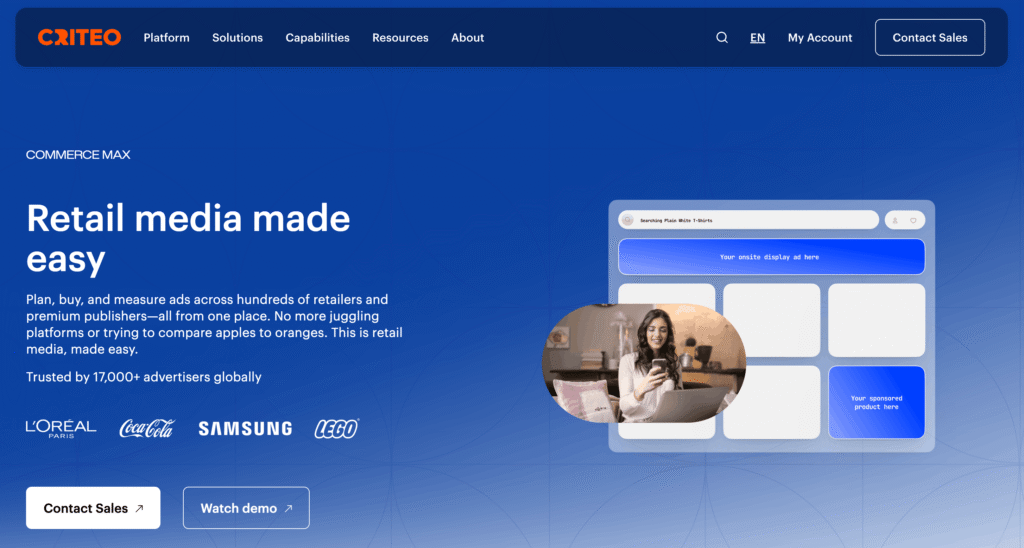
Criteo, through its Commerce Max platform, has secured its place as one of the most effective Demand Side Platforms (DSPs) in 2026, especially for retail-focused and performance-driven advertisers. Known for pioneering dynamic retargeting and retail media strategies, Criteo excels in identifying high-intent consumers and serving them product ads tailored to their browsing behavior. Its strength lies in a powerful AI engine and vast commerce data network that enable hyper-relevant advertising across premium retail environments.
For brands that prioritize return on ad spend (ROAS), particularly in direct-to-consumer (D2C) campaigns, Criteo remains a go-to choice due to its accessible pricing, performance-focused features, and robust analytics.
Platform Capabilities and Commerce Data Infrastructure
Criteo stands out for its ability to harness massive amounts of commerce data from thousands of retail partners worldwide. Its proprietary AI engine continuously analyzes shopper signals such as:
- Search behavior across e-commerce sites
- Product page views
- Cart abandonment and previous purchase activity
Using this behavioral data, the platform delivers highly personalized product recommendations through automated ad placements, making it ideal for re-engaging potential buyers and shortening the purchase cycle.
Reach and Retail Inventory Access
The Commerce Max platform connects advertisers to more than 200 high-quality global retail media networks. This includes on-site placements on retailer websites, as well as off-site media inventory for expanded visibility.
Campaigns can be activated across:
- Display ads on retail and publisher websites
- Native ads within commerce environments
- In-app and mobile web targeting
- Retail media networks with built-in conversion intent
This inventory access allows advertisers to place their products directly in the digital paths of consumers already primed to purchase.
Pricing and Accessibility for Performance Advertisers
Criteo is one of the most budget-friendly DSP solutions on the market. It operates on a cost-per-click (CPC) model, with pricing beginning at approximately $1 per click. This makes it an attractive option for startups, D2C brands, and mid-sized businesses focused on measurable performance and incremental sales.
Its self-service capabilities and automation features further simplify campaign setup, making it usable even for teams with limited in-house programmatic experience.
User Experience and Feedback
Criteo holds a 6.7 out of 10 rating on TrustRadius, reflecting a mixed but overall positive perception. Key strengths highlighted by users include:
- Clear and detailed campaign performance reports
- Simple and user-friendly interface
- Strong conversion performance for product retargeting campaigns
However, reviews also cite occasional limitations such as:
- Fluctuations in campaign performance depending on vertical or seasonality
- Delays or challenges with customer support responsiveness
Despite these drawbacks, marketers continue to view Criteo as a category leader in dynamic retargeting, particularly due to its ability to match consumers with the right products at the right time.
Professional Overview Table: Criteo Commerce Max DSP (2026)
| Feature Category | Description |
|---|---|
| Platform Name | Criteo Commerce Max |
| Specialization | Dynamic Retargeting, Retail Media Advertising |
| Core Technology Engine | AI-Powered Commerce Data Engine |
| Data Sources | Thousands of Global Retail Partners |
| Inventory Access | Over 200 Retail Media Networks |
| Ad Formats | Display, Native, In-App, On-site/Off-site Retail Placements |
| Pricing Model | Cost-Per-Click (Starts at ~$1 per click) |
| Ideal Users | D2C Brands, Mid-Sized Businesses, Performance Marketers |
| Campaign Focus | Product Retargeting, Incremental Conversions |
| Reporting Tools | Real-Time Performance Dashboard |
| TrustRadius User Score | 6.7/10 |
| Strengths | Easy to use, detailed reports, high ROAS |
| Weaknesses | Variable performance, limited customer support |
Matrix: Criteo Commerce Max Evaluation Areas (2026)
| Evaluation Criteria | Score (1–10) | Commentary |
|---|---|---|
| Dynamic Retargeting Precision | 9.5 | Highly effective in re-engaging warm leads with personalized product ads |
| Data Intelligence | 9.0 | Commerce AI engine powered by vast retail signal data |
| Pricing Accessibility | 9.2 | Affordable entry point with flexible CPC-based model |
| Ease of Use | 8.6 | Intuitive dashboard and quick campaign setup |
| Retail Inventory Reach | 8.8 | Access to leading global retailers and e-commerce media networks |
| Support and Scalability | 6.8 | Some concerns over customer support and performance consistency |
Strategic Summary for 2026 Advertisers
Criteo Commerce Max continues to set benchmarks for performance advertising within retail and commerce-driven sectors. Its ability to pair shoppers with relevant product ads in real time—across multiple digital touchpoints—makes it highly valuable for marketers focused on sales outcomes.
With accessible pricing, strong retargeting precision, and scalable campaign tools, Criteo is an essential DSP for performance marketers looking to maximize returns in a competitive digital landscape. For organizations aiming to combine affordability with deep commerce intelligence, Criteo remains a critical player among the top 10 DSP platforms worldwide in 2026.
10. Taboola
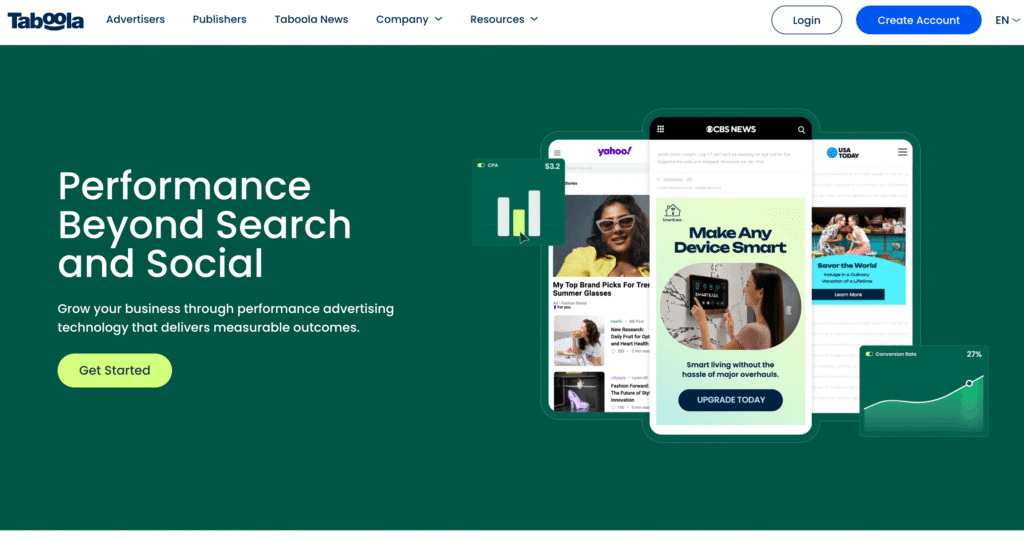
Taboola has earned its reputation in 2026 as one of the top Demand Side Platform (DSP) software solutions in the native advertising space. Its primary strength lies in helping brands drive awareness and engagement through content-based placements on premium editorial websites. Known for its predictive content technology and massive reach across digital publishers, Taboola is particularly effective for both B2B and B2C companies aiming to promote articles, product pages, videos, and blog content in a non-disruptive, contextually relevant format.
What makes Taboola distinct among the top 10 global DSP platforms is its ability to place content in front of the right users at the right time—through a highly accessible pricing model that supports advertisers of all sizes.
Platform Capabilities and Content Matching Technology
Taboola’s native advertising engine is built on advanced predictive algorithms that analyze audience behaviors, browsing history, and content consumption patterns in real-time. This enables the platform to:
- Deliver high-relevance content recommendations
- Match brand messages with audiences based on interests and context
- Dynamically optimize ad placements across thousands of publisher websites
Taboola allows advertisers to promote content in a way that feels organic, boosting reader engagement and time spent on the advertiser’s landing pages.
Audience Reach and Publisher Access
Taboola’s global reach extends across thousands of high-traffic news, media, and lifestyle sites. These include premium editorial partners in North America, Europe, Asia, and Latin America, making the platform suitable for international campaigns targeting:
- Direct-to-consumer brands seeking to drive eCommerce traffic
- B2B companies looking to distribute thought leadership articles
- Content-heavy brands promoting blogs, reviews, or explainer videos
The system supports granular audience segmentation, ensuring content is served only to the most relevant users across devices.
Pricing Flexibility and Advertiser Accessibility
Taboola’s pricing structure is among the most flexible in the DSP ecosystem. Campaigns can start from as little as $10 per day, making it ideal for businesses testing new content formats, smaller startups with limited budgets, or marketers who want to experiment before scaling.
The cost-per-click (CPC) model ensures that advertisers only pay for real engagement, rather than impressions, which aligns well with performance-focused KPIs.
Core Features and Operational Advantages
Taboola provides users with a centralized dashboard for managing content promotion campaigns. Key tools and features include:
- Real-time performance analytics for every piece of content
- A/B testing functionality to optimize headlines, images, and targeting
- Social sharing and amplification options to extend reach beyond publisher networks
These capabilities empower marketers to continuously refine their strategies and increase the efficiency of their content spend.
User Experience and Market Perception
While Taboola is highly rated for ease of setup and responsive customer support, it holds a moderate average rating of 3.3 out of 5 across review platforms. Users highlight the following strengths:
- Simplified campaign setup, even for first-time users
- Helpful onboarding support and dedicated account managers
- Effective brand exposure and awareness campaigns
However, common critiques include:
- A bulky and outdated user interface
- Delays or friction in the creative approval process, especially for high-volume advertisers
- Limited flexibility in campaign rules compared to some other DSPs
Detailed Table: Taboola DSP Overview (2026)
| Feature Category | Description |
|---|---|
| Platform Name | Taboola |
| Specialization | Native Advertising, Content Discovery |
| Core Technology | Predictive Audience-Matching Algorithms |
| Content Types Supported | Blog Posts, Articles, Product Pages, Videos |
| Global Publisher Reach | Thousands of Premium Editorial Sites Across Regions |
| Audience Types | B2C, B2B, International and Localized Campaigns |
| Pricing Model | Cost-Per-Click (Starting at $10/day) |
| Campaign Tools | A/B Testing, Social Sharing, Real-Time Analytics |
| Minimum Budget Flexibility | High – suitable for testing and scaling |
| User Review Score | 3.3/5 |
| Strengths | Low entry cost, intuitive campaign setup, solid customer support |
| Challenges | Clunky interface, slow ad approval, limited creative customization |
Matrix: Taboola DSP Performance Ratings (2026)
| Evaluation Criteria | Rating (1–10) | Commentary |
|---|---|---|
| Content Targeting Accuracy | 8.9 | Predictive engine performs well for both B2C and B2B campaigns |
| Pricing Accessibility | 9.3 | One of the most affordable platforms for native content promotion |
| Campaign Setup and Usability | 8.1 | Simple for beginners, ideal for rapid experimentation |
| Reporting and Analytics | 7.9 | Offers real-time content metrics and insights |
| UI/UX Design | 6.5 | Interface considered outdated by some users |
| Support and Responsiveness | 7.8 | Account teams are helpful; creative approval delays remain a concern |
Strategic Insights for Native Advertisers in 2026
Taboola offers a strong value proposition for advertisers seeking to blend content with user experiences across editorial environments. Its AI-driven content recommendation engine and massive publisher access provide the scalability required for global campaigns—while the platform’s low daily budget requirement makes it approachable for marketers at all levels.
Despite a few operational challenges, Taboola remains one of the best-performing native advertising DSPs in 2026. For brands prioritizing engagement, storytelling, and brand recall through content discovery, Taboola stands as a cost-effective and results-driven solution in the modern programmatic advertising landscape.
Global Programmatic Advertising Landscape and Forecast for 2026
The global programmatic advertising industry is undergoing a transformative phase in 2026, moving beyond early automation strategies into more structured, AI-enhanced infrastructure. What was once a space dominated by simple bidding algorithms is now defined by real-time decision engines, AI-augmented campaign optimization, and increasing demand for omnichannel experiences. A key trend shaping this evolution is the explosive growth of Connected TV (CTV), which has become the leading space for innovation in formats, measurement, and audience engagement.
As digital consumption habits shift rapidly, brands, agencies, and DSP platforms are aligning their strategies with new benchmarks in scalability, cross-device reach, and audience intelligence. This convergence of performance marketing and machine learning is expected to shape the next generation of programmatic execution across global markets.
Market Valuation, Growth Trends, and Format Expansion
In 2026, the global programmatic advertising market is expected to reach a valuation of USD 273.7 billion, highlighting the rapid acceleration in digital ad buying driven by automation, data, and audience precision. Projections from multiple industry analysts estimate a Compound Annual Growth Rate (CAGR) of 19.9% from 2026 to 2033, potentially pushing the overall market toward the USD 1 trillion mark within the next decade.
While this growth is promising, it is also unevenly distributed across ad formats and media environments. Display advertising continues to account for a significant 32% share of the total programmatic spend, with video advertising formats—especially short-form mobile video and ad-supported CTV—growing at a faster pace due to evolving viewer preferences.
Key Market Insights and Performance Benchmarks
| Market Dimension | 2026 Value / Trend |
|---|---|
| Global Market Valuation | USD 273.7 Billion |
| CAGR (2026–2033) | 19.9% |
| Projected 2033 Market Size | ~USD 1 Trillion |
| Dominant Format by Spend | Display Ads (32% Market Share) |
| Fastest-Growing Format | Short-Form Video and Connected TV |
| Innovation Focus Areas | AI Automation, Cross-Device Targeting, Cookieless Tracking, CTV Formats |
| Emerging Technologies | Predictive Bidding, First-Party Data Activation, Identity Resolution |
Strategic Implications for DSP Platforms in 2026
Top-tier DSP platforms are now adapting to this growth trajectory by upgrading their AI layers, integrating with major data ecosystems, and offering robust solutions for cookieless targeting. They are investing in:
- Real-time performance optimization using machine learning
- Identity-based targeting frameworks in privacy-restricted environments
- Multi-format inventory across CTV, digital out-of-home (DOOH), audio, and native channels
- Seamless integrations with CRM systems and analytics platforms
Market Readiness and Innovation Trends Matrix
| Innovation Factor | Adoption Level (2026) | Remarks |
|---|---|---|
| AI-Based Bidding Optimization | Very High | Embedded in most Tier 1 DSPs |
| CTV Programmatic Penetration | High | Rapid shift of brand and performance budgets to CTV formats |
| Identity Resolution Technologies | Moderate | Still maturing, crucial post-cookie infrastructure |
| Short-Form Video Growth | Very High | Drives engagement across mobile and OTT ecosystems |
| Cross-Platform Attribution | Moderate to High | In progress; complex but essential for long-term media planning |
Conclusion
The global programmatic advertising ecosystem in 2026 is shaped by an era of AI-led automation, identity-aware targeting, and a surge in video-first consumer behavior. With display and video continuing to dominate ad spend, and CTV rising as the epicenter of creative experimentation and performance testing, DSP platforms are being challenged to innovate faster, operate more transparently, and deliver measurable outcomes.
For enterprises, marketers, and tech vendors, aligning with the right DSP solutions will be key to navigating the expanding opportunities within this USD 273.7 billion market. As the industry progresses toward the trillion-dollar milestone by 2033, the platforms that can combine scale, data precision, and real-time adaptability will emerge as the dominant forces shaping digital advertising’s future.
Global Programmatic Advertising Outlook and Key Economic Indicators for 2026
In 2026, the global programmatic advertising market continues to expand at a fast and strategic pace, driven by advancements in AI, automation, and cross-platform media consumption. With marketers increasingly focused on measurable outcomes and precision targeting, Demand Side Platform (DSP) technologies have become the backbone of digital advertising strategy. The global landscape is marked by significant economic benchmarks, rapid innovation in key sectors, and growing regional diversity in adoption and spend allocation.
Current Market Size and Forecasts
The global programmatic market has reached an estimated value of USD 273.7 billion in 2026. This growth reflects sustained investment from advertisers across retail, e-commerce, and technology sectors. The United States alone contributes over USD 203 billion in programmatic display advertising, representing the largest share of global spend.
Looking ahead, the market is projected to grow at a compound annual growth rate (CAGR) of 19.9%, reaching nearly USD 975.1 billion by 2033. This trajectory is reinforced by shifting media strategies, adoption of AI-led DSP systems, and broader integration of retail media into core ad portfolios.
Global Programmatic Market Indicators and Benchmarks (2026)
| Economic Indicator | Value / Projection | Description |
|---|---|---|
| Global Programmatic Market Size | USD 273.7 Billion | Total worldwide value in 2026 |
| US Programmatic Display Ad Spend | USD 203 Billion+ | Largest national contribution to global DSP activity |
| Global Ad Spend Growth Rate | 5.1% | Year-over-year growth for total digital ad spend |
| Share of Digital in Global Ad Spend | 68.7% | Share of overall advertising budget devoted to digital channels |
| Retail Media Growth Rate | 14.1% | Expansion rate for retail media advertising |
| Technology Sector Ad Spend Growth | 10.3% | Fueled by AI product launches and innovation |
| Projected Global Value by 2033 | USD 975.1 Billion | Estimated market size within seven years |
Industry Trends and Sectoral Drivers
Among all verticals, retail and e-commerce represent the largest contributors to programmatic adoption, accounting for 24% of the global programmatic market. This growth is supported by rising demand for retail media networks, which enable brands to target consumers at the point of purchase with higher intent and better attribution modeling.
The technology sector follows closely, with a 10.3% growth rate, primarily fueled by AI-powered solutions, connected device ecosystems, and digital transformation initiatives in enterprise and mid-market segments.
Sector-Wise Contribution to Programmatic Growth (2026)
| Sector | Share of Programmatic Market | Key Drivers |
|---|---|---|
| Retail & E-commerce | 24% | High buyer intent, retail media, data-rich targeting |
| Technology | 10.3% Growth Rate | AI-based innovation, smart devices, SaaS and platform advertising |
| Media & Entertainment | Growing | Video content, OTT platforms, and connected TV format expansion |
| Financial Services | Stable | Increasing programmatic use in fintech, insurance, and investment segments |
Regional Growth Patterns and Geographic Expansion
From a geographic standpoint, North America continues to dominate the global programmatic advertising market. The Americas region is projected to grow by 5.2%, reaching a total market size of USD 460.5 billion. The United States remains the undisputed leader, accounting for over 64% of all companies that actively use DSP software.
At the same time, the Asia-Pacific (APAC) region has emerged as the most dynamic growth engine for programmatic adoption. Countries like India (+8.6%) and China (+6.1%) are witnessing accelerated growth due to increased digital penetration, mobile-first consumer behavior, and a surge in advertising tied to global sports events and e-commerce festivals.
Geographic Market Overview: Programmatic Growth by Region (2026)
| Region | Growth Rate (YoY) | Market Highlights |
|---|---|---|
| North America | 5.2% | Largest regional market, led by the U.S. with deep DSP penetration |
| Latin America | Moderate | Rising adoption in Brazil, Mexico, and Colombia |
| Asia-Pacific (APAC) | High | Led by India (8.6%) and China (6.1%) with strong mobile and e-commerce trends |
| Europe | Steady | Continued investment in programmatic TV and GDPR-compliant data platforms |
| Middle East & Africa | Emerging | New investments in mobile-first campaigns and localized DSP solutions |
Strategic Observations for 2026 Advertisers
In 2026, the global programmatic economy is not just growing—it is diversifying. Innovation is being led by sectors like retail and tech, while geographic expansion is being powered by digitally transforming regions like APAC. Marketers and enterprises using DSP software are increasingly focused on:
- Leveraging first-party data to maintain precision post-cookies
- Scaling campaigns through CTV, retail media, and short-form video
- Investing in AI-powered optimization engines within DSP ecosystems
- Activating audiences across international DSP platforms with local adaptation
Conclusion
As global advertising strategies continue to evolve, programmatic technologies remain at the center of this transformation. With the market now valued at USD 273.7 billion and poised to approach USD 1 trillion by 2033, the ability of DSPs to deliver performance, scale, and measurable impact is more important than ever.
For brands, agencies, and marketers worldwide, selecting the right DSP software in 2026 means aligning with platforms that can address growing complexity, ensure compliance, and capitalize on the accelerating momentum of programmatic advertising across every region and device.
DSP Customer Distribution by Country and Organizational Segments in 2026
The global distribution of Demand Side Platform (DSP) users in 2026 reveals strong geographic concentration and a widening adoption across organizational sizes. The majority of DSP users are still based in North America and Western Europe, with the United States holding a significant share of global market activity. This reflects the maturity of digital advertising infrastructure, investment capacity, and programmatic expertise in these regions.
At the same time, the data also shows a strong uptake among small to mid-sized businesses, signaling that programmatic advertising has become more accessible and affordable across company types and industries.
Global DSP Customer Distribution by Country (2026)
| Country | Customer Count | Percentage of Global DSP Market |
|---|---|---|
| United States | 21,241 | 64.14% |
| United Kingdom | 2,534 | 7.65% |
| Canada | 2,005 | 6.05% |
| Germany | 1,853 | 5.59% |
| Poland | 1,365 | 4.12% |
| Australia | 986 | 2.97% |
| Spain | 896 | 2.70% |
This table highlights that over 64% of all DSP software customers are located in the United States, underscoring its leadership in digital advertising infrastructure, real-time bidding maturity, and availability of in-market DSP vendors. The United Kingdom and Canada follow as strong secondary markets, while countries like Germany and Poland continue to show stable growth in programmatic investments within the European Union.
Organizational Trends and User Segmentation
In addition to geography, DSP software adoption in 2026 is largely shaped by company size. Data shows that small to mid-sized organizations (0–49 employees) represent a growing share of DSP users. This trend is a clear indicator of the increasing democratization of programmatic technologies, where powerful tools once exclusive to large enterprises are now available to lean teams through user-friendly platforms and self-service models.
Larger enterprises, meanwhile, are evolving toward hybrid operational models. These models combine:
- Internal in-house teams with digital media expertise
- External DSP platforms that offer inventory access, data integrations, and advanced automation
- Managed service partnerships for strategic planning, creative support, and optimization
This hybrid approach enables enterprise advertisers to retain control over their data while benefiting from platform scalability and third-party innovation.
Matrix: DSP Adoption by Organizational Size (2026)
| Company Size | Adoption Trend | Key Characteristics |
|---|---|---|
| 0–49 Employees | Rapid Growth | Embracing self-serve DSPs, budget-friendly platforms, niche targeting |
| 50–249 Employees | Steady Expansion | Growing use of managed DSP accounts, more sophisticated campaigns |
| 250–999 Employees | Mature Usage | Balancing internal teams with external DSP consultants |
| 1,000+ Employees | Hybrid Integration | In-house ad ops blended with enterprise-grade DSP infrastructure |
Strategic Implications for DSP Vendors in 2026
The DSP customer base in 2026 reflects a dual-market opportunity:
- Scale and innovation for large enterprises, where hybrid solutions, custom bidding algorithms, and integrations with CDPs and CRMs are essential.
- Accessibility and simplicity for SMBs, where ease of use, lower budgets, and native integration with eCommerce and analytics tools are crucial.
DSP providers that tailor their product offerings and support systems to meet the needs of these two distinct user segments will be well-positioned to expand their footprint globally.
Conclusion
The current DSP customer distribution highlights not only geographic leadership from mature markets like the United States and the UK, but also the broader adoption of programmatic technologies by organizations of all sizes. With the rise of small business participation and hybrid enterprise strategies, the DSP software market in 2026 is more inclusive, adaptable, and strategically segmented than ever before—reflecting the next phase of digital advertising transformation across industries and borders.
Advanced Technological Foundations of DSP Software in 2026: The Algorithmic Infrastructure Driving Top Demand Side Platforms
In 2026, the technological core of the world’s leading Demand Side Platform (DSP) software is no longer built on traditional digital infrastructure alone. Instead, it is driven by a more sophisticated and intelligent architecture that reflects the evolution of programmatic advertising into a high-performance, AI-powered ecosystem. The new generation of DSPs are operating at the convergence of scalable infrastructure, autonomous intelligence, and real-time responsiveness. These platforms are capable of executing complex bidding strategies, sentiment analysis, and predictive audience targeting at unprecedented speeds.
This section explores the foundational innovations that define the most advanced DSP software tools in 2026—technologies that support the operations of the top 10 global DSP platforms, and that are redefining digital advertising economics at scale.
Core Technological Themes Defining DSP Infrastructure in 2026
The foundation of DSP systems in 2026 is anchored in three critical themes:
- Architectural Resilience: Infrastructure that remains stable under massive data and processing loads, powered by AI supercomputing frameworks.
- Intelligent Synthesis: Systems capable of integrating behavioral, contextual, and external signals to create predictive decision engines.
- Vanguard Security: Embedded security layers and fraud detection protocols that protect data, optimize spend, and ensure compliance.
System Design Architecture of Modern DSPs
| Infrastructure Layer | Description |
|---|---|
| AI Supercomputing Platform | High-performance systems using CPUs, GPUs, and AI ASICs for real-time processing |
| Multiagent Systems (MAS) | Distributed AI agents autonomously optimizing for specific performance goals |
| Signal Aggregation Layer | Ingests millions of data points from behavior, content, environment, and time |
| Real-Time Decision Engine | Predictive algorithms that respond to auctions and audience signals instantly |
| Creative Adaptation Layer | Dynamically alters ad creative, frequency, or channel based on live engagement |
| Secure Identity Framework | Privacy-compliant ID matching using deterministic and probabilistic methods |
These components work together to allow DSP platforms to interpret consumer behavior and ad context with advanced precision, while maintaining transparency and security.
AI Supercomputing and Multiagent Intelligence in DSP Operations
The shift from basic automation to AI supercomputing clusters has significantly expanded the performance capabilities of top-tier DSPs. These clusters combine CPUs, GPUs, and purpose-built AI chips (ASICs) to handle the massive volume of real-time data signals flowing into the system every hour. Signals include:
- User activity across websites and devices
- Contextual cues from page content, tone, and theme
- Environmental triggers such as current weather, location, or live events
By deploying Multiagent Systems (MAS), DSPs now allow intelligent agents to independently execute different tasks—such as budget allocation, frequency capping, or bid optimization—while working together to meet shared goals like media efficiency and conversion maximization.
Impact of AI-Driven Optimization on Advertising Efficiency
According to operational models shared by leading DSP providers like Google, the impact of AI on cost efficiency is substantial. AI-powered bidding and optimization strategies are capable of reducing cost-per-acquisition (CPA) by up to 30%, compared to traditional manual campaign management. This gain in efficiency can be represented through economic modeling:
Efficiency Gain Model
| Metric | Description |
|---|---|
| Cmanual | Cost per acquisition using manual campaign setup |
| CAI | Cost per acquisition using AI-optimized bidding |
| Egain | CmanualCmanual−CAI – Efficiency gain from AI use |
In addition, sentiment-aware creative adjustments reduce ad fatigue by 27%, through real-time personalization of message tone, ad frequency, and format distribution based on user interaction patterns.
Rise of Domain-Specific Language Models (DSLMs) in Advertising
Another major transformation shaping DSP functionality is the emergence of Domain-Specific Language Models (DSLMs). These advanced AI systems are fine-tuned on proprietary marketing and advertising data, surpassing the effectiveness of general-purpose large language models (LLMs) in performance marketing use cases.
Unlike LLMs that provide broad capabilities across industries, DSLMs deliver:
- Higher contextual accuracy in understanding audience intent and content relevance
- Improved campaign compliance, especially in regulated industries such as finance and healthcare
- Tailored creative generation, with ad copy optimized for industry-specific terminology and emotional drivers
As of 2026, DSLMs are already widely adopted across top DSP platforms. Forecasts indicate that by 2028, more than 50% of enterprise-level generative AI models will be domain-specific, further reinforcing the importance of verticalized intelligence in advertising outcomes.
DSP Performance Enhancement Matrix: Algorithmic Technology Capabilities (2026)
| Technology Stack Component | Functionality Description | Advertiser Impact |
|---|---|---|
| AI Supercomputing Layer | Processes massive signal volumes for real-time optimization | Faster decisions, lower CPA, better scale |
| Multiagent Optimization | Specialized AI agents manage different parts of the campaign lifecycle | Autonomous bidding, budget control, fraud mitigation |
| Real-Time Sentiment Analysis | Interprets emotional tone and engagement for ad targeting | Reduces fatigue, increases emotional alignment with creatives |
| DSLMs | Context-aware AI trained on marketing data | Generates more relevant copy, higher click-through rates |
| Creative Adaptation Engine | Adjusts format, timing, and messaging on-the-fly | Delivers better user experiences and higher conversion probabilities |
Conclusion
In 2026, the technological evolution of Demand Side Platform software has become a defining competitive advantage in digital advertising. The combination of AI supercomputing, autonomous agents, and domain-trained language models is powering a new era of high-precision, scalable, and efficient programmatic execution.
The top DSP platforms in the world are no longer just ad delivery tools—they are full-scale decision engines capable of optimizing every layer of the media buying process in real time. For advertisers, the integration of these technologies offers not just performance gains, but strategic flexibility, data sovereignty, and long-term competitive leverage in a complex digital ecosystem.
Comparative Market Share, Technical Benchmarks, and Pricing Accessibility of Leading DSP Software Platforms in 2026
The global Demand Side Platform (DSP) software market in 2026 presents a diverse and segmented ecosystem, characterized by two dominant categories: generalist platforms that offer comprehensive, multi-channel scale across global markets, and specialist DSPs that focus on niche segments such as native advertising, retail media, or privacy-first targeting. This segmentation is reflected not only in technology capabilities but also in customer distribution, market dominance, and financial accessibility.
This section provides a detailed analysis of the top 10 DSP platforms in 2026 by market share, customer volume, and pricing structure, offering readers a comparative lens to evaluate which DSPs are leading, growing, or emerging.
Market Share and Customer Ranking of Top DSP Platforms (2026)
| Rank | Platform Name | Estimated Customer Count | Market Share (%) | Classification |
|---|---|---|---|---|
| 1 | StackAdapt | 16,983 | 41.55% | Generalist (AI Native) |
| 2 | Adform | 11,608 | 28.40% | Generalist (Modular) |
| 3 | SiteScout | 5,892 | 14.42% | Performance-Focused |
| 4 | Rubicon Project | 3,092 | 7.57% | Specialist (Supply-Side Bridge) |
| 5 | Choozle | 1,768 | 4.33% | Self-Serve (SMBs) |
| 6 | Emerse | 369 | 0.90% | Specialist (Real-Time Bidding) |
| 7 | TubeMogul | 303 | 0.74% | Enterprise TV Focused |
| 8 | Admedo | 233 | 0.57% | White-Label DSP |
| 9 | iPinYou | 111 | 0.27% | Regional (Asia-Pacific) |
| 10 | Tradelab | 103 | 0.25% | Specialist (French Market) |
This data highlights a strong market consolidation, with StackAdapt alone commanding over 41% of the global DSP customer base, followed by Adform with 28.4%, signaling a preference for platforms offering robust AI-driven automation, ease of use, and wide-ranging inventory access. The remaining platforms, while smaller in scale, cater to unique market segments and specialized campaign needs, such as localized media, connected TV, or B2B targeting.
Technology Differentiation: Generalist vs. Specialist DSPs (2026)
| Category | Feature Focus | Key Platforms | Example Use Cases |
|---|---|---|---|
| Generalist DSPs | Cross-channel reach, AI automation, broad inventory | StackAdapt, Adform, SiteScout | Enterprise campaigns, multi-region product launches |
| Specialist DSPs | Native, CTV, Retail, Privacy-first, Regional Ads | Taboola, TubeMogul, iPinYou | Niche targeting, publisher-aligned media, regulated industries |
Generalist DSPs dominate larger market shares due to their all-in-one campaign orchestration capabilities, while specialist platforms continue to grow steadily within their focused verticals, often preferred for deeper control, vertical optimization, or unique data environments.
Pricing Tiers and Financial Accessibility of DSP Platforms (2026)
| Platform Name | Pricing Structure | Entry-Level Budget (Approx.) | Ideal User Segment |
|---|---|---|---|
| StackAdapt | CPM + Monthly Spend | $3,000+ | Mid-market and enterprise |
| Adform | Custom Quotation | $5,000–$10,000+ | Agencies and enterprise |
| Google DV360 | Percentage of Ad Spend | $12,500+ | Large brands, global media |
| Amazon DSP | CPM + Minimum Commitments | $50,000+ (managed services) | Enterprise and retail brands |
| Choozle | Self-Serve + CPC/CPM | $100 minimum | SMBs, agencies |
| Taboola | Native CPC Model | $10/day | Content marketers, startups |
| Viant (Adelphic) | SaaS Subscription + CPM | $3,000+ | Mid-market, privacy-first |
| TubeMogul (Adobe) | Quotation Only | $50,000+ | Enterprise TV advertisers |
| Admedo | White-label Licensing | Based on contract | Media networks, tech firms |
| Tradelab | Regional Licensing | Local pricing structures | EMEA campaigns |
The range of entry-level pricing illustrates a key strategic distinction in the DSP market:
- Platforms like Choozle and Taboola offer low-cost entry, making them attractive to smaller advertisers and agencies looking for fast deployment and budget flexibility.
- In contrast, Google DV360, Amazon DSP, and Adobe (TubeMogul) require high upfront budgets and complex onboarding, suitable for large-scale advertisers with advanced internal capabilities.
Matrix: DSP Platform Segmentation by Cost, Complexity, and Market Focus
| DSP Platform | Cost Level | Complexity | Market Orientation |
|---|---|---|---|
| StackAdapt | Medium-High | Moderate | Mid-market to Enterprise |
| Adform | High | High | Enterprise / Agency |
| Google DV360 | High | High | Global Brands |
| Amazon DSP | Very High | High | Retail-Focused Enterprise |
| Choozle | Low | Low | Small to Mid Advertisers |
| Taboola | Very Low | Low | Content and Native Focus |
| TubeMogul (Adobe) | Very High | High | CTV, Multi-channel Media |
Strategic Summary for Advertisers Choosing a DSP in 2026
The global DSP ecosystem in 2026 presents a highly segmented market, where advertisers must align platform selection with both their campaign goals and internal maturity. For organizations seeking automation, cross-channel reach, and rapid scalability, generalist DSPs such as StackAdapt and Adform offer powerful full-stack solutions. Meanwhile, brands focused on performance marketing, native content distribution, or CTV advertising may find greater ROI from specialist platforms tailored to their specific media and audience strategies.
Understanding these distinctions in market share, pricing tiers, and operational complexity is essential for making informed decisions about which DSP platform best supports business objectives in an increasingly dynamic programmatic advertising environment.
DSP Software Pricing and Implementation Structures in 2026: A Comparative Review of the Top Platforms
As programmatic advertising continues to evolve in 2026, the pricing models of the top Demand Side Platform (DSP) software reflect a broader shift toward performance-driven and outcome-based strategies. Advertisers are no longer selecting DSP platforms based solely on cost or access to inventory—they are evaluating total return on ad spend (ROAS), automation capabilities, cross-channel planning, and the AI intelligence embedded within each platform.
Whether targeting enterprise advertisers managing complex omnichannel campaigns or small businesses looking for affordable native ad solutions, DSP pricing today varies significantly in terms of platform access, minimum media spend, and implementation model. The following section outlines a side-by-side comparison of leading DSP solutions and their financial structures.
DSP Software Pricing and Monthly Budget Requirements (2026)
| DSP Platform | Best Suited For | Starting Price / Licensing Model | Minimum Monthly Media Budget | Billing Basis |
|---|---|---|---|---|
| Google DV360 | Data-Driven Analytics | Starts at $12,500/month | $12,500 | % of Spend (15–20%) |
| Amazon DSP | Retail Media and E-commerce | $1,000 (Self-Service) / $50,000 (Managed) | $50,000 (Managed Service) | CPM-Based |
| StackAdapt | Strategic Campaign Planning | CPM-Based Pricing | $3,000 | CPM-Based |
| Criteo | Dynamic Retargeting | Starts at $1 per click | $2,000 | CPC-Based |
| Taboola | Native Content Discovery | $10/day | $1,000 | CPC-Based |
| The Trade Desk | Full-Funnel Omnichannel | 15–20% of Total Media Spend | $10,000 | % of Spend (Usage-Based) |
| Choozle | Small Business and Agencies | $99/month Platform Fee | $100 | Monthly + Media Spend |
This comparison demonstrates how budget accessibility and platform functionality vary widely depending on the advertiser’s goals, vertical, and team structure.
DSP Pricing Tier and Access Matrix (2026)
| Platform Name | Cost Tier | Setup Complexity | Managed Services Available | Self-Service Available | AI-Driven Optimization | Suitable Business Size |
|---|---|---|---|---|---|---|
| Google DV360 | Premium | High | Yes | Yes | Advanced | Large Enterprise |
| Amazon DSP | Premium | High | Yes | Yes | Advanced | Enterprise / Retail Brands |
| StackAdapt | Mid-Tier | Moderate | Yes | Yes | Advanced | Mid-Market / Agencies |
| Criteo | Entry-Level CPC | Low | Yes | Yes | Moderate | D2C / E-commerce Advertisers |
| Taboola | Entry-Level CPC | Low | Yes | Yes | Moderate | Startups / Content Marketers |
| The Trade Desk | High-Tier Usage | High | Yes | Yes | Advanced | Enterprise / Global Brands |
| Choozle | Low-Cost Monthly | Very Low | No | Yes | Basic to Moderate | SMBs / Independent Agencies |
This matrix shows how platform choice is often influenced not just by pricing, but also by technical requirements, AI sophistication, and availability of managed services. Some platforms, like Choozle or Taboola, appeal to smaller businesses due to their low barrier to entry, while platforms like Google DV360, Amazon DSP, and The Trade Desk are tailored for enterprise-scale media buyers requiring real-time bidding across global inventory.
Strategic Pricing Observations for 2026
- Performance-Based Models Dominate: Most platforms have moved toward usage-based pricing, where advertisers pay based on impressions, clicks, or percentage of spend, aligning platform fees directly with campaign results.
- AI Capabilities Influence Cost Structure: The more advanced the platform’s AI bidding and optimization engine, the more likely it is to command a higher base fee or spend requirement due to the lift in performance and efficiency it offers.
- Flexible Entry for SMBs: Tools like Choozle and Taboola continue to drive democratization of DSP access, with low setup fees, easy onboarding, and minimal media spend requirements.
- Enterprise Models Remain Resource-Heavy: Platforms such as Amazon DSP (Managed) and Google DV360 require significant budget commitments and technical expertise, but deliver robust infrastructure, exclusive inventory, and enterprise-grade targeting.
Conclusion
The pricing and implementation frameworks of the top DSP software platforms in 2026 are designed to reflect the needs of a diverse advertising landscape. From SMBs testing performance campaigns on small budgets to global brands managing millions in media spend, the right DSP is one that balances pricing flexibility, usability, and intelligent automation. As programmatic ecosystems mature, advertisers are increasingly weighing not just cost of entry, but total cost-efficiency and ROI driven by the DSP’s AI infrastructure and targeting accuracy. Choosing the right pricing model is therefore central to unlocking long-term performance gains across digital media strategies.
Programmatic Advertising Safety and Fraud Prevention in DSP Platforms (2026 Overview)
In 2026, digital advertisers are placing greater emphasis on brand safety, fraud prevention, and media quality as part of their demand-side platform (DSP) selection criteria. As the volume of AI-generated content continues to grow rapidly, concerns around low-quality inventory—referred to by many in the industry as “AI slop”—have intensified. These developments are reshaping DSP priorities across fraud detection, quality control, and transparency.
Recent research indicates that 54% of advertisers now believe generative AI has contributed to a decline in media quality, which makes choosing DSPs with advanced security and content filtering systems more important than ever.
Advanced Fraud Mitigation Tools in Leading DSP Platforms
To combat evolving digital ad fraud techniques, modern DSPs have built robust anti-fraud frameworks that include:
- Pre-bid protection mechanisms, such as bot filtering using IAB/ABC lists.
- Post-bid verification using site-level quality scoring to detect suspicious traffic.
- Curated supply paths, which help filter out low-value inventory by enabling direct, verified exchanges between buyers and premium publishers.
An example is Basis Technologies, which incorporates both pre- and post-bid validation techniques. These systems ensure advertisers can run campaigns without exposing their brand to bots, click farms, or MFA (Made-for-Advertising) sites.
Growing Role of Privacy-First Technologies
As governments and industry bodies demand more robust data governance, DSPs are also adopting privacy-first infrastructure. One standout innovation is Confidencial, a platform originally incubated at SRI International. This solution uses AI to detect and encrypt sensitive data, helping DSPs maintain compliance with global standards such as HIPAA and SOC. These frameworks are increasingly relevant as programmatic advertising intersects with sectors like healthcare, finance, and identity-sensitive commerce.
Programmatic Safety and Quality Standards in 2026
| Metric / Standard | Performance Benchmark (2026) | Description |
|---|---|---|
| AI-Powered Bidding Efficiency | +22% Conversion Rate Increase | AI algorithms optimize bids to reduce cost-per-conversion and drive results |
| Sentiment-Based Ad Fatigue Reduction | -27% Fatigue Rate | AI sentiment detection adjusts ad frequency to prevent overexposure |
| Viewability Standards (Cookieless) | 70%+ Viewability | Privacy-compliant ads maintaining high on-screen visibility |
| MFA Impression Growth | +19% Year-over-Year | Volume of AI-generated content requiring real-time filtering |
| Curated Deal ROI Uplift | Used by 41% of Marketers | Targeted access to premium inventory results in higher return on spend |
This data emphasizes that fraud prevention is no longer an optional feature—it is an integrated function that directly influences campaign ROI and long-term brand equity. As made-for-advertising websites proliferate, DSPs must employ real-time AI filtering, curated media marketplaces, and privacy-resilient systems to ensure that budgets are allocated effectively.
Comparative Overview of Brand Safety Capabilities Across Top DSPs
| DSP Name | Pre-Bid Fraud Filters | Post-Bid Analysis | Sentiment AI | Privacy Compliance Tools | Curated Supply Integration | MFA Filtering |
|---|---|---|---|---|---|---|
| StackAdapt | Yes | Yes | Yes | Moderate | Yes | Yes |
| Adform | Yes | Yes | Yes | Yes | Yes | Yes |
| The Trade Desk | Yes | Yes | Yes | Yes | Yes | Yes |
| Basis Technologies | Yes | Yes | Yes | Yes | Yes | Yes |
| Google DV360 | Yes | Yes | Yes | Yes | Yes | Yes |
| Amazon DSP | Yes | Yes | Yes | Yes | Limited | Yes |
| Criteo | Yes | Partial | Moderate | Yes | Limited | Moderate |
| Viant (Adelphic) | Yes | Yes | Moderate | Yes | Yes | Yes |
| Taboola | Partial | Moderate | No | Moderate | No | Moderate |
| Adobe Advertising Cloud | Yes | Yes | Yes | Yes | Yes | Yes |
This matrix reveals a clear divide between platforms that have fully embedded multi-layered brand protection features and those still evolving toward deeper safety integration. In particular, platforms like Basis, Adform, The Trade Desk, and Google DV360 stand out for offering end-to-end control—from fraud blocking to privacy governance.
Conclusion
In 2026, the effectiveness of a DSP is increasingly judged not just on its bidding algorithm or user interface, but also on its ability to preserve media quality, ensure audience authenticity, and protect brand reputation. As programmatic ecosystems mature and AI-generated content expands, successful advertisers are those who choose DSP partners with proven security frameworks, privacy-respecting infrastructure, and dynamic media curation. These attributes are now essential—not optional—for advertisers aiming to achieve both scale and trust in their digital media investments.
Xandr Invest Sunsetting and Microsoft’s Strategic DSP Transformation in 2026
In 2026, a major shift is occurring in the global programmatic advertising space as Microsoft begins phasing out its demand-side platform, Xandr Invest. This decision marks a strategic transition from a third-party-centric ad buying solution toward a fully integrated, AI-driven ecosystem housed under Microsoft Advertising. The move not only reflects Microsoft’s broader shift toward AI dominance but also signals a new wave of in-house DSP development focused on privacy, quality, and intelligent automation.
Sunsetting of Xandr Invest and Strategic Reallocation
Microsoft has officially confirmed that Xandr Invest will be sunsetted by February 2026, ending its legacy as one of the top-tier programmatic DSPs. Historically, Xandr was favored for its premium ad inventory access, offering higher-than-average CPM rates and advanced targeting capabilities.
| Platform | CPM (Display) | Industry Benchmark | Premium Status |
|---|---|---|---|
| Xandr Invest | $1.50 | $1.10 | Yes – High-Quality DSP |
| Average Market Rate | $1.10 | — | General Benchmark |
As the chart indicates, Xandr was priced above market average due to its access to high-quality publishers and robust inventory management. Its performance in B2B and enterprise-grade display advertising set it apart for advertisers seeking reach and reliability.
AI Infrastructure Investment and Technical Rebuild
With the phase-out of Xandr Invest, Microsoft is channeling significant financial and technological resources into its next-generation advertising stack. For Fiscal Year 2026, Microsoft has already committed to an 80% increase in AI infrastructure capacity. This investment includes:
- Expansion of AI Supercomputing clusters
- Enhanced model training for ad relevance and bidding optimization
- Development of proprietary DSP algorithms
These upgrades are expected to support real-time data processing at scale, reinforcing Microsoft’s aim to compete with vertically integrated giants like Google and Amazon in the automated media buying ecosystem.
Content and Inventory Integrity Measures
To maintain advertising quality during the transition, Microsoft has implemented a robust domain verification and audit process within its newly developed DSP platform. This system includes:
- A dedicated human audit team responsible for manually reviewing the top 3,000 domains by traffic and ad volume.
- Integration of brand safety protocols to block low-value or AI-generated inventory (e.g., MFA websites).
- Centralized AI-driven content monitoring to ensure compliance with advertiser brand standards.
| Microsoft DSP Infrastructure Strategy (2026) | Key Action |
|---|---|
| Decommissioning Xandr Invest | February 2026 Final Sunset Date |
| Capital Expenditure Growth | 80% increase in AI infrastructure investments |
| AI Technology Focus | Real-time optimization, predictive targeting, media quality |
| Human Audit Scope | Top 3,000 domains reviewed for inventory integrity |
| Quality Assurance Outcome | Alignment with premium brand environments |
This dual approach of human validation and machine intelligence illustrates Microsoft’s hybrid model of media governance—a method that enhances transparency while preparing the system for full automation in the near future.
Conclusion
Microsoft’s withdrawal from the Xandr Invest framework marks a pivotal turning point in the DSP industry in 2026. Instead of relying on external or legacy systems, the tech giant is now repositioning itself with an AI-first, in-house demand-side platform that blends robust computing power with careful content curation. For advertisers, this change represents a new opportunity to leverage trusted Microsoft ecosystems, particularly in privacy-sensitive verticals, while benefiting from streamlined access to enterprise-grade inventory, brand-safe environments, and AI-enhanced ad placements.
This evolution underscores a broader industry trend: the convergence of AI, infrastructure scale, and media ethics is now the core foundation of successful programmatic advertising platforms. Microsoft’s model may well become the blueprint for future DSP development across global markets.
Strategic Roadmap for Maximising DSP Software Value in 2026 and Beyond
In 2026, the global demand-side platform (DSP) ecosystem is shaped by a growing divide between large-scale automation and quality-driven execution. As digital ad spending heads toward the trillion-dollar threshold, winning strategies will require marketers to align precision targeting with transparent media buying. Leading brands are no longer focused solely on scale—they are concentrating on intelligence, identity, and integrity. Understanding these priorities is essential for businesses seeking to choose the right DSP software and optimize performance across multiple advertising channels.
Core Strategic Insights for Advertisers Using DSP Software
Organizations seeking long-term success in the programmatic advertising space must consider a set of strategic pillars to navigate this evolving environment. These include refining inventory curation, enhancing first-party data strategies, selecting the right mix of platforms, and investing in intelligent AI infrastructure.
DSP Strategic Recommendations Matrix (2026)
| Strategic Focus Area | Recommended Action | Key DSP Examples |
|---|---|---|
| Inventory Curation | Prefer curated supply paths over open exchanges for transparency and control | StackAdapt, Basis, The Trade Desk |
| First-Party Data Activation | Build unified identity graphs using clean internal data sources | Viant, The Trade Desk, Adobe Advertising Cloud |
| Platform Diversification | Use multiple DSPs to address varied campaign goals and ad formats | Amazon DSP, Google DV360, Taboola |
| Advanced AI Integration | Choose platforms using Domain-Specific Language Models (DSLMs) and Multiagent AI | Adform FLOW, StackAdapt, DV360 |
| Brand Safety Alignment | Ensure selected DSP includes built-in fraud protection and contextual targeting | Basis Technologies, Criteo, Viant |
Why Curation Matters More Than Ever
The widespread use of AI-generated content in programmatic environments has made volume-based campaigns more vulnerable to fraud and inefficiencies. Therefore, advertisers are now focusing on curated supply paths—carefully selected and trusted sources of ad inventory—to enhance transparency, reduce wasted impressions, and improve ROI. This is especially critical for brands that need to uphold strong reputational standards in competitive markets.
First-Party Data as the Core Driver of DSP Performance
The retirement of third-party cookies is forcing advertisers to shift toward clean and structured first-party data as the foundational asset for targeting and personalization. DSPs that offer strong identity resolution and support for hashed email matching or CRM onboarding are now considered essential. Viant and The Trade Desk, for example, provide deep integration with identity graphs, enabling advertisers to reach known audiences with higher accuracy.
Adopting a Multi-DSP Ecosystem for Channel Diversity
It is increasingly evident in advertiser reviews and performance reports that no single DSP is sufficient to meet all campaign needs. Different platforms offer unique strengths—Amazon DSP excels in retail media and purchase-intent targeting, StackAdapt performs well in native ad discovery, and Google DV360 delivers large-scale omnichannel capabilities. Leveraging multiple DSPs enables organizations to balance reach, relevance, and return.
Technical Differentiation Through Domain-Specific AI
To stay competitive, modern DSPs are embedding more specialized AI models and multiagent systems. These innovations allow platforms to automate complex workflows such as real-time bidding, message sequencing, and creative fatigue management. Advertisers benefit from reduced manual oversight and more adaptive, data-driven outcomes. Platforms investing in such intelligence—like Adform FLOW, Google DV360, and StackAdapt—are positioned to lead in future-proof programmatic execution.
Strategic Maturity Model for DSP Selection and Use
| Level | Characteristics |
|---|---|
| Basic | Single DSP usage, minimal AI involvement, limited audience segmentation |
| Intermediate | Use of 2–3 DSPs, basic AI targeting, early adoption of first-party data practices |
| Advanced | Multi-DSP integration, DSLM-driven automation, full identity resolution engine |
| Enterprise-Grade | Custom models, AI agents, curated inventory partnerships, full brand governance |
Conclusion: Rethinking DSPs as Strategic Brand Gateways
To achieve success in 2026 and beyond, businesses must stop viewing DSPs simply as transactional ad-buying tools. Instead, they should be recognized as critical gateways to brand value systems, trust, and customer experience. As the industry continues moving toward full automation by 2030, human oversight and strategic intent will play a greater role than ever. Advertisers that combine smart automation with a deliberate, values-based approach to programmatic planning will lead the next era of performance marketing.
Choosing the right DSP software today—aligned with a clear strategy—will define tomorrow’s competitive advantage.
Conclusion
As the global advertising landscape evolves rapidly in 2026, Demand Side Platform (DSP) software has emerged as the backbone of modern programmatic marketing strategies. With the digital advertising ecosystem becoming increasingly complex—driven by AI integration, cookieless targeting environments, and rising consumer expectations—selecting the right DSP software has never been more crucial for businesses aiming to remain competitive and relevant.
This year, the top 10 DSP platforms are not just technological tools; they are strategic enablers that help brands navigate an increasingly fragmented media environment. From omnichannel media buying and real-time bidding to advanced AI decision-making and identity resolution, these DSPs offer far more than simple ad placements. They empower marketers to achieve meaningful results through data-driven insights, personalized targeting, and performance-oriented campaign optimization.
StackAdapt, Adform, The Trade Desk, Google DV360, Amazon DSP, Adobe Advertising Cloud, Basis Technologies, Viant, Criteo, and Taboola have each carved a distinct niche by offering specialized capabilities, scalable infrastructures, and AI-enhanced functionalities. Whether it’s StackAdapt’s strength in native advertising, Amazon DSP’s dominance in retail media, or The Trade Desk’s omnichannel precision, each software provides advertisers with tailored solutions to meet diverse campaign objectives.
These platforms are not merely responding to digital transformation—they are leading it. As advertisers move from manual ad buys to AI-powered automation, the top DSPs are setting the benchmark by incorporating features like multiagent AI systems, domain-specific language models, predictive analytics, and curated supply paths. This new generation of DSP technology is designed to maximize ROI, reduce inefficiencies, and uphold media quality through fraud prevention and brand safety protocols.
Furthermore, the shift from third-party cookies to first-party data has redefined how audiences are targeted, engaged, and converted. DSPs that offer seamless integration with CRM platforms, ID graphs, and hashed audience identifiers are gaining prominence. Platforms like Viant and Adobe Advertising Cloud exemplify this future-ready architecture, helping marketers transition to privacy-compliant, data-rich environments that support personalized experiences at scale.
In addition, pricing flexibility and accessibility are becoming key differentiators. While high-end enterprise platforms offer deep analytics and integration features, self-serve DSPs such as Choozle and Taboola have democratized access for small and mid-sized businesses. This inclusive growth model has broadened the adoption of DSPs globally, evidenced by the rapid expansion across North America, Europe, and Asia-Pacific.
From media agencies and eCommerce brands to in-house digital marketing teams, the ability to select and manage the right DSP is directly tied to success in 2026 and beyond. Advertisers must now think beyond platform functionality and consider strategic alignment—choosing DSPs that reflect their brand values, audience goals, and operational maturity.
Ultimately, the future of programmatic advertising is being shaped by those who harness the full potential of these advanced DSP solutions. As media channels multiply and user behavior becomes more dynamic, leveraging the strengths of the world’s top DSP platforms will not only drive performance—it will define leadership in the digital economy.
Businesses that act today by investing in the right DSP partners, developing a clear data strategy, and prioritizing transparency in their media supply chains will position themselves as frontrunners in the next chapter of digital marketing excellence. The top 10 DSP software tools in 2026 represent more than a trend—they are the foundation of sustainable, scalable, and intelligent advertising success.
If you find this article useful, why not share it with your hiring manager and C-level suite friends and also leave a nice comment below?
We, at the 9cv9 Research Team, strive to bring the latest and most meaningful data, guides, and statistics to your doorstep.
To get access to top-quality guides, click over to 9cv9 Blog.
To hire top talents using our modern AI-powered recruitment agency, find out more at 9cv9 Modern AI-Powered Recruitment Agency.
People Also Ask
What is a Demand Side Platform (DSP) in advertising?
A DSP is a software platform that enables advertisers to buy digital ad inventory through automated, real-time bidding across multiple channels.
Why are DSPs important for digital marketers in 2026?
DSPs help advertisers optimize campaigns using AI, automate bidding, and reach targeted audiences more efficiently across devices and platforms.
Which is the best DSP software in 2026?
The best DSP in 2026 depends on your goals. StackAdapt, The Trade Desk, and Google DV360 are among the top for performance and targeting.
How does a DSP improve advertising ROI?
DSPs use data, automation, and machine learning to deliver ads to the right users at the right time, reducing waste and improving conversions.
What features should I look for in a DSP platform?
Key features include AI bidding, omnichannel reach, audience targeting, reporting dashboards, fraud protection, and easy integration.
Are DSPs suitable for small businesses?
Yes, many DSPs like Choozle and Taboola offer self-serve options and low-budget plans ideal for startups and small marketing teams.
What is the difference between a DSP and SSP?
A DSP is used by advertisers to buy ad space, while an SSP (Supply Side Platform) is used by publishers to sell their ad inventory.
How does AI influence DSP software in 2026?
AI powers real-time bidding, predictive targeting, creative optimization, and fraud detection, making DSPs more efficient and accurate.
What is real-time bidding in DSPs?
Real-time bidding (RTB) is an automated auction where ad impressions are bought and sold in milliseconds based on user data and bidding rules.
Which DSP is best for retail media in 2026?
Amazon DSP leads in retail media, offering access to valuable shopper data and high-converting audiences across its ecosystem.
Do DSPs support connected TV advertising?
Yes, many top DSPs now support CTV and OTT formats, allowing advertisers to run video campaigns across smart TVs and streaming platforms.
What are the pricing models for DSP platforms?
DSP pricing can vary from flat monthly fees to percentage of ad spend or cost-per-thousand impressions (CPM) based models.
Is first-party data important when using a DSP?
Yes, with the decline of third-party cookies, first-party data is crucial for effective targeting, personalization, and campaign success.
How do I choose the right DSP for my business?
Evaluate your goals, budget, preferred channels, data needs, and feature requirements before selecting a DSP that fits your strategy.
Which DSPs are best for native advertising?
Taboola and StackAdapt are top choices for native ads, offering tools to deliver content in a seamless, user-friendly format.
Can I run global ad campaigns with a DSP?
Yes, most DSPs offer global reach, supporting multiple languages, regions, and targeting filters to scale campaigns internationally.
What role does data analytics play in DSPs?
DSPs use analytics to provide insights on audience behavior, ad performance, ROI, and allow advertisers to make data-driven decisions.
What is the role of identity resolution in DSPs?
Identity resolution helps match users across devices and platforms, enabling precise targeting and attribution throughout the customer journey.
Are DSPs replacing traditional ad buying methods?
Yes, DSPs offer faster, more efficient, and data-driven alternatives to manual media buying, making them essential in modern ad strategies.
What is the future of DSP technology beyond 2026?
DSPs will continue to evolve with AI, privacy-first tools, domain-specific language models, and greater automation in media buying.
Which DSP offers the best AI-driven bidding tools?
The Trade Desk and Google DV360 are known for their strong AI-powered bidding systems that optimize ad spend and performance.
Is Microsoft still offering a DSP in 2026?
Microsoft is transitioning from Xandr Invest to an in-house AI-driven DSP solution under the Microsoft Advertising brand.
How do DSPs ensure brand safety?
Top DSPs use curated supply paths, pre-bid filters, post-bid audits, and third-party verification to block fraud and protect brand reputation.
What are curated supply paths in programmatic advertising?
Curated supply paths are pre-selected, trusted ad inventory routes that improve media quality and reduce ad fraud risk.
How do DSPs help reduce ad fraud?
DSPs integrate fraud detection tools, bot filtering, and encrypted data systems to protect ad budgets and ensure real user engagement.
What is the minimum budget to start using a DSP?
Some DSPs like Choozle start as low as $100 monthly, while enterprise-level platforms like DV360 require $10,000 or more.
Which DSP offers the best omnichannel capabilities?
The Trade Desk is highly rated for supporting campaigns across display, video, CTV, mobile, and native formats in one platform.
Do DSPs integrate with CRM and data platforms?
Yes, many DSPs connect with CRM tools and CDPs to leverage first-party data for personalized and effective ad targeting.
Can DSPs run campaigns without cookies?
Yes, many leading DSPs have adapted to a cookieless future using AI, contextual targeting, and user ID alternatives for privacy-compliant advertising.
What is the role of sentiment analysis in DSP performance?
Sentiment analysis helps optimize ad frequency and creative delivery by understanding how audiences emotionally respond to ads in real-time.
Sources
Dentsu
Basis
The Business Research Company
Persistence Market Research
6sense
Magazine Manager
Gartner
SaaSworthy
Improvado
TrustRadius
G2
The Retail Exec
Madgicx
Directive Consulting
PropellerAds
Adobe
Accenture
Viant
Databeat
Seeking Alpha
Microsoft Learn







 software in 2026 that are transforming programmatic advertising worldwide.)