





















Key Takeaways
- The top 10 desk booking software in 2026 leverage AI, predictive analytics, and real-time occupancy data to optimize hybrid work and reduce real estate costs.
- Leading workplace management platforms integrate ESG tracking, energy automation, and enterprise systems to deliver measurable ROI and sustainability gains.
- Modern desk booking solutions enhance employee experience through seamless mobile booking, team-day coordination, and data-driven workplace optimization.
The global workplace has undergone one of the most significant transformations in modern business history. By 2026, hybrid work is no longer an experiment or temporary adjustment. It is a standardized operating model adopted by the majority of enterprises worldwide. As organizations balance flexibility, collaboration, sustainability, and cost control, desk booking software has emerged as a critical pillar of modern workplace strategy.
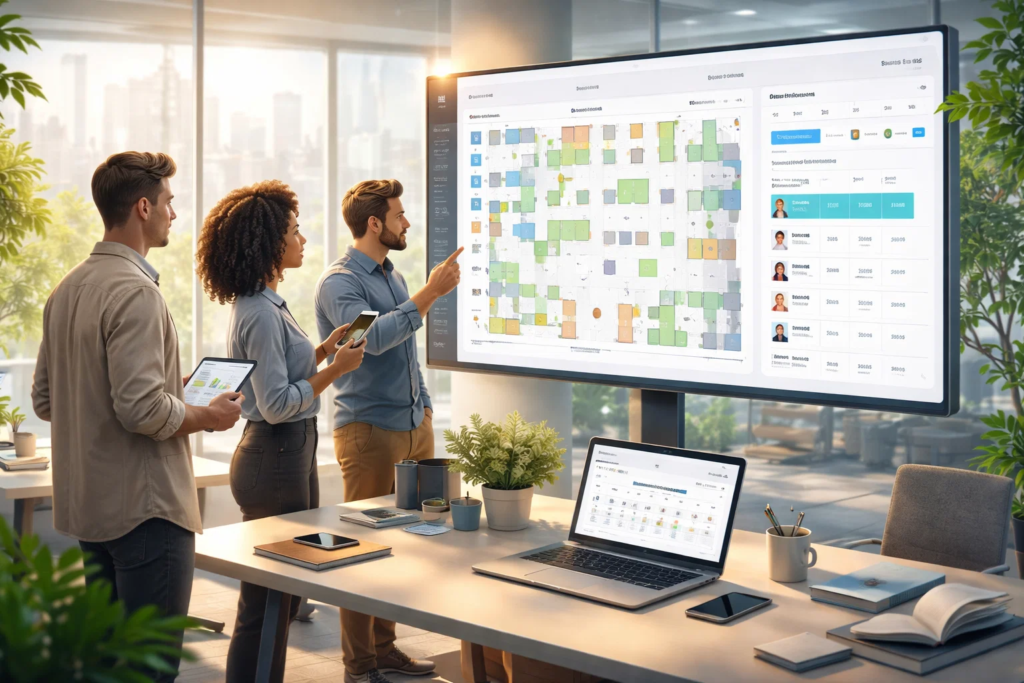
The concept of reserving a desk may seem simple on the surface. However, in 2026, desk booking software represents far more than a scheduling tool. It has evolved into an intelligent workplace management system that connects employees, facilities, real estate portfolios, and smart building infrastructure into a unified digital ecosystem. For many organizations, selecting the right desk booking platform is now a strategic decision that directly impacts operational efficiency, employee experience, and long-term financial performance.
Why Desk Booking Software Matters in 2026
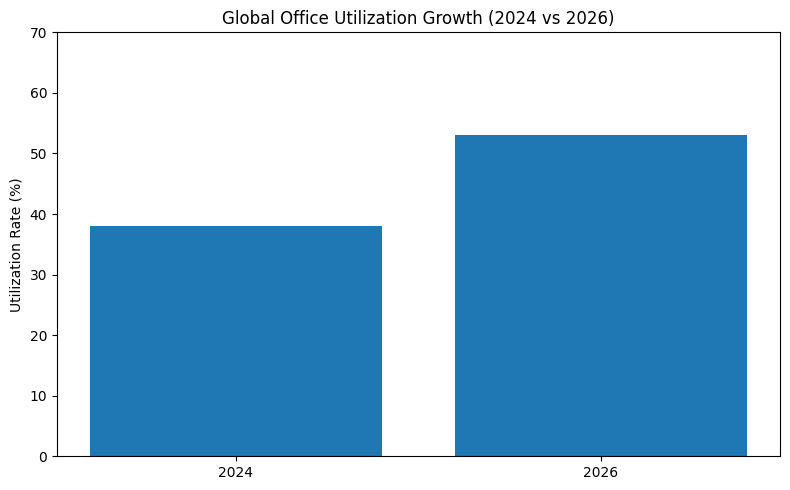
The traditional 1:1 employee-to-desk model has largely disappeared. Most organizations now operate with flexible seating arrangements, shared workstations, and rotating attendance schedules. Peak collaboration days often fall between Tuesday and Thursday, creating midweek demand surges while leaving other days underutilized. Without structured coordination tools, this imbalance leads to overcrowding, wasted space, and employee frustration.
Desk booking software addresses these challenges by enabling:
• Real-time desk and room reservations
• Visibility into who will be in the office on specific days
• Data-driven space utilization analytics
• Automated release of unused bookings
• Integration with communication platforms like Microsoft Teams and Slack
• ESG-driven energy optimization through occupancy tracking
In a business climate where real estate costs remain high and sustainability reporting requirements are increasing, these capabilities are no longer optional. They are essential.
The Evolution from Booking Tool to Workplace Operating System
Early desk reservation systems focused primarily on avoiding double bookings. In 2026, leading platforms incorporate artificial intelligence, predictive analytics, IoT sensor integration, and hybrid workforce coordination features. Many solutions now function as full-scale workplace operating systems capable of managing desks, meeting rooms, visitors, parking, access control, and even HVAC optimization.
This technological evolution reflects broader shifts in corporate priorities:
| Strategic Priority | Role of Desk Booking Software in 2026 |
|---|---|
| Real Estate Optimization | Identifies underutilized space for consolidation |
| Cost Reduction | Reduces unnecessary square footage and energy use |
| Employee Experience | Enables coordinated, frictionless collaboration |
| Sustainability and ESG Compliance | Tracks occupancy-based carbon impact |
| Operational Efficiency | Automates facility and maintenance workflows |
For Chief Financial Officers, desk booking analytics provide confidence in lease negotiations and capital allocation decisions. For Chief Human Resources Officers, these platforms enhance collaboration and reduce the friction that discourages employees from commuting.
Market Growth and Competitive Landscape
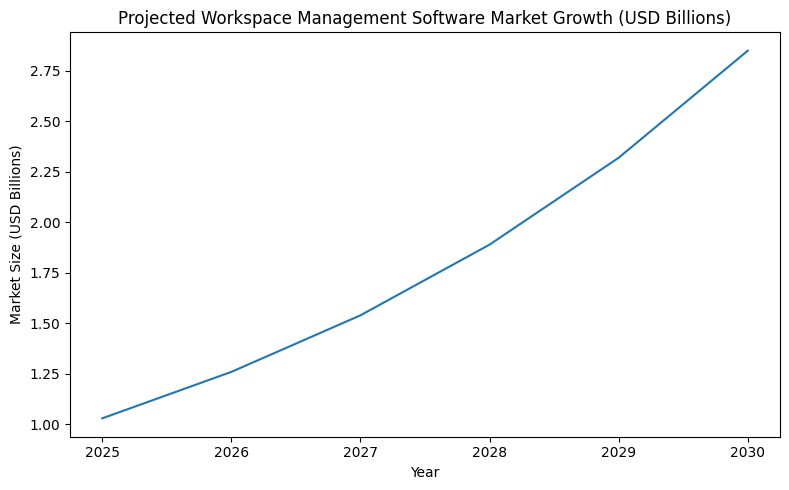
The desk booking software market in 2026 is experiencing sustained double-digit growth. This expansion is driven by hybrid workforce adoption, smart office infrastructure investments, and increasing demand for data-driven workplace decisions. Enterprises now require platforms that integrate seamlessly with HR systems, ERP software, calendar tools, and building management systems.
The competitive landscape includes enterprise-grade AI operating systems, ESG-focused workplace suites, rule-based governance platforms, and communication-native booking apps. Each of the top 10 desk booking software providers in 2026 differentiates itself through specialized strengths such as predictive space modeling, advanced rule engines, collaboration feeds, sustainability dashboards, or modular scalability.
As the category matures, the distinction between desk booking and broader workplace experience platforms continues to blur. Organizations are no longer searching for a simple desk scheduler. They are seeking connected intelligence systems capable of orchestrating how people interact with space.
What This Guide Covers
This comprehensive guide to the Top 10 Desk Booking Software in 2026 explores the most influential platforms shaping the future of hybrid work. It examines their core capabilities, pricing models, integration ecosystems, ROI potential, and strategic positioning within the global workplace technology market.
Readers will gain insights into:
• Which platforms lead in AI-driven automation
• Which solutions prioritize ESG and carbon tracking
• Which tools offer the strongest enterprise integrations
• How pricing models differ between user-based and resource-based systems
• What measurable returns organizations are achieving
Whether you are a facilities manager seeking utilization clarity, an HR leader focused on employee engagement, or a finance executive evaluating portfolio consolidation, understanding the leading desk booking platforms in 2026 is critical.
The Office as a Competitive Advantage
In 2026, the office is no longer simply a location for routine work. It is a destination designed for intentional collaboration and strategic engagement. Organizations that leverage advanced desk booking software transform their workplaces into responsive, data-driven environments. These companies reduce waste, improve sustainability, strengthen team alignment, and protect their real estate investments.
The top 10 desk booking software platforms in the world today represent the technological backbone of this transformation. They define how modern enterprises manage space, coordinate hybrid teams, and future-proof their workplace strategies in an increasingly intelligent and connected business landscape.
Before we venture further into this article, we would like to share who we are and what we do.
About 9cv9
9cv9 is a business tech startup based in Singapore and Asia, with a strong presence all over the world.
With over nine years of startup and business experience, and being highly involved in connecting with thousands of companies and startups, the 9cv9 team has listed some important learning points in this overview of the Top 10 Best Demo Software To Try in 2026.
If you like to get your company listed in our top B2B software reviews, check out our world-class 9cv9 Media and PR service and pricing plans here.
Top 10 Best Desk Booking Software in 2026
1. Archie
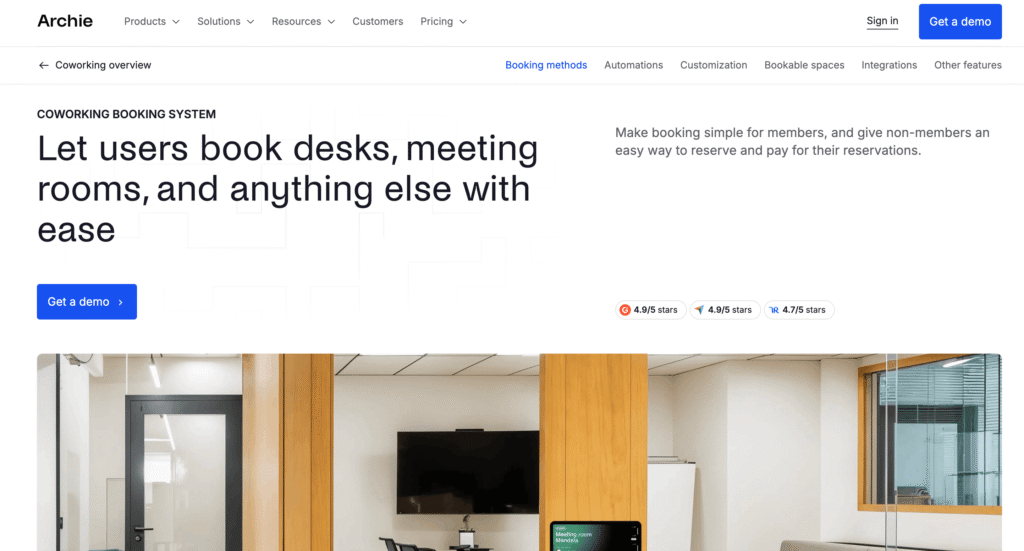
Within this competitive landscape, Archie stands out as one of the most comprehensive and strategically positioned desk booking platforms in 2026. The platform is widely adopted by mid-sized to enterprise organizations operating complex, multi-location environments where space optimization, security compliance, and operational visibility are critical.
Strategic Vision and Market Role
Archie positions itself not merely as a booking tool but as a digital infrastructure layer for the built environment. Its mission centers on replacing fragmented spreadsheets, manual processes, and disconnected point solutions with a unified workplace operating system.
The platform serves a broad spectrum of industries including:
| Industry Sector | Typical Use Case |
|---|---|
| Technology Firms | Hybrid team rotations and global office coordination |
| Financial Services | Compliance-driven seat allocation and utilization analytics |
| Healthcare Facilities | Controlled access and visitor pre-screening |
| Government Agencies | Secure access management and occupancy tracking |
| Coworking Operators | Resource billing and automated membership management |
Archie maintains one of the highest customer satisfaction ratings among workplace platforms in 2026, frequently cited for its usability, configurability, and responsive customer support.
Core Capabilities and Technical Specifications in 2026
Archie integrates advanced booking functionality with spatial intelligence and operational automation.
Key Product Capabilities
| Capability | Description |
|---|---|
| High-Resolution 2D Floor Plans | Interactive maps enabling real-time desk and room visualization |
| Automated Seat Assignment | Smart allocation for rotating hybrid schedules |
| Visitor Management Module | Pre-registration workflows with QR-code check-in |
| Utilization Analytics | Peak occupancy tracking and trend forecasting |
| Automated Billing | Resource-based billing for coworking and shared spaces |
| Multi-Location Management | Centralized dashboard across global offices |
Technical Architecture and Compliance Standards
| Specification Category | Details |
|---|---|
| Security Standards | SOC 2 Type II, GDPR compliance, ISO 27001 |
| Pricing Model | Resource-Based (per desk, per room) |
| Integration Ecosystem | 30+ native integrations |
| Collaboration Integrations | Slack, Microsoft Teams, Google Workspace |
| Access Control Integration | Native support for Kisi |
| Accounting Integration | QuickBooks, Xero |
| Support Model | 24/7 live representative support |
| Average Deployment Time | Under 30 days for standard implementations |
Its resource-based pricing model differentiates it from many competitors. Rather than charging per employee, pricing scales according to the number of physical assets managed, making it particularly attractive to organizations optimizing large real estate portfolios.
Operational Impact and ROI Analysis
Desk booking software in 2026 is increasingly evaluated based on measurable financial outcomes rather than feature lists alone. Archie demonstrates this shift through data-driven workplace optimization.
Example ROI Snapshot
| Metric Category | Before Implementation | After Implementation | Business Impact |
|---|---|---|---|
| Peak Seat Utilization | Unknown | 38% Identified | Data-driven consolidation |
| Administrative Time Spent | 20+ hrs/week | 5 hrs/week | 15+ hrs saved weekly |
| Floor Space Allocation | Static | Optimized | One floor eliminated |
| Annual Cost Savings | N/A | GBP 300,000+ | Direct real estate savings |
In one financial services deployment, occupancy analytics revealed that even at peak usage, less than half of available desks were utilized. This insight supported the consolidation of office space, generating substantial annual savings while maintaining workforce flexibility.
Additionally, automated billing and resource management reduced administrative overhead significantly, enabling operations teams to reallocate time toward strategic initiatives rather than manual tracking.
User Experience and Implementation Considerations
User feedback in 2026 frequently highlights the importance of intuitive interfaces and guided onboarding. Archie is consistently recognized for its practical feature set and operational reliability.
Representative Customer Feedback Summary
| Review Aspect | Common Sentiment |
|---|---|
| Interface Usability | Clean, intuitive, accessible for daily use |
| Feature Practicality | Relevant tools aligned with operational needs |
| Customer Support | Responsive and dependable |
| Initial Setup | Configuration-intensive but flexible |
| Onboarding Experience | Could benefit from more guided workflows |
While initial setup may require thoughtful configuration due to the platform’s depth and flexibility, organizations report that once deployed, the system operates reliably and scales effectively across multiple sites.
Why Desk Booking Software Matters in 2026
The global office environment in 2026 demands transparency, adaptability, and data-backed decision-making. Companies face rising real estate costs, regulatory complexity, and evolving employee expectations. Leading desk booking software platforms address these pressures by delivering:
| Operational Outcome | How Top Platforms Enable It |
|---|---|
| Cost Optimization | Real-time utilization analytics |
| Compliance Assurance | Security certifications and access control integrations |
| Hybrid Workforce Alignment | Automated seat assignments and team scheduling |
| Improved Employee Experience | Mobile booking and interactive floor plans |
| Administrative Efficiency | Automated billing and reporting |
In this context, platforms like Archie represent more than booking systems; they function as digital control centers for modern workplaces. As hybrid and distributed work structures continue to mature globally, demand for enterprise-grade desk booking solutions is expected to grow, further solidifying the role of workplace operating systems as critical business infrastructure.
2. Skedda
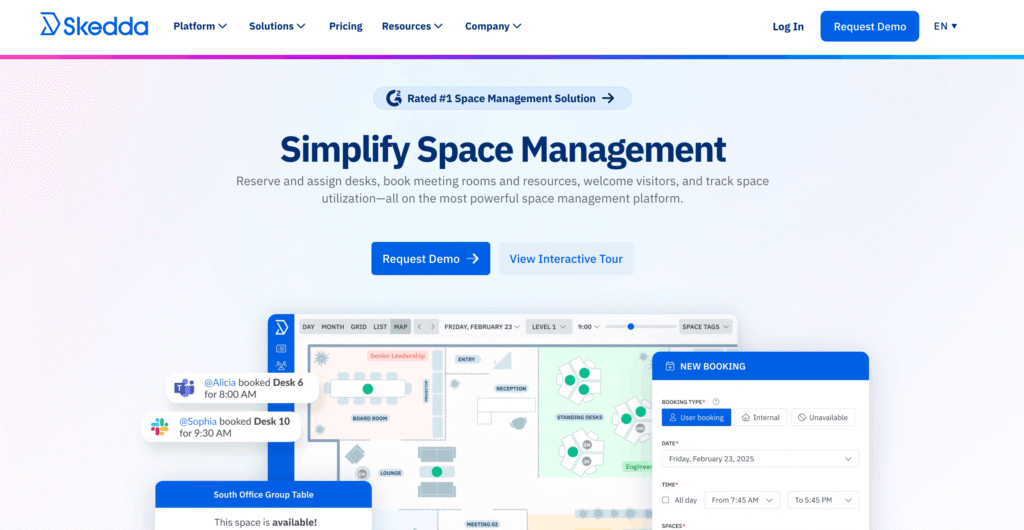
Skedda has established itself as the preferred platform for organizations with complex access requirements, shared resource constraints, and fluctuating occupancy patterns. With nearly two million users worldwide and deployments across higher education, research institutes, non-profits, and global enterprises, the platform is often referred to as the market’s policy specialist.
Notable institutions using Skedda include Harvard University and Siemens, illustrating the platform’s ability to operate at both academic and enterprise scale.
Market Positioning in 2026
| Category Dimension | Skedda’s Position |
|---|---|
| Primary Differentiator | Advanced rule-based booking controls |
| Core Target Audience | Policy-driven organizations |
| User Scale | Nearly 2 million global users |
| Deployment Model | Cloud-based, multi-site ready |
| Strategic Reputation | Governance-focused scheduling leader |
Core Capabilities and 2026 Product Vision
Skedda’s defining capability lies in its powerful and flexible rules engine. Unlike many desk booking tools that prioritize visual layouts or social coordination features, Skedda emphasizes structured governance and conditional logic.
Its rules engine enables administrators to configure highly granular booking conditions, including:
| Rule Configuration Type | Practical Example |
|---|---|
| Department Quotas | Limit Engineering to 10 desk bookings per week |
| Buffer Times | Enforce 30-minute cleaning gap between bookings |
| Access Restrictions | Allow only certified staff to book lab rooms |
| Time-Based Access Windows | Restrict booking to business hours |
| Role-Based Permissions | Executives receive priority access to boardrooms |
| Approval Workflows | Manager sign-off required for premium spaces |
This structured approach makes Skedda particularly valuable in research facilities, government offices, laboratories, shared campuses, and regulated industries.
In 2026, Skedda has articulated a forward-looking vision described internally as “The Year of the FM Analyst.” The company’s strategic direction focuses on elevating facilities managers from operational gatekeepers to strategic data storytellers. The platform’s analytics suite increasingly supports narrative-driven insights, enabling facilities leaders to present utilization data, capacity planning models, and budget justifications to executive stakeholders.
Pricing Structure and Commercial Model
A key differentiator in Skedda’s commercial model is its pricing structure based on bookable spaces rather than user count. All pricing tiers include unlimited users, making it particularly attractive for large organizations with high headcounts but moderate physical footprints.
This model contrasts with user-based pricing platforms that can become costly in enterprise environments with thousands of employees.
Skedda Pricing Overview (Billed Annually)
| Plan Tier | Monthly Price (USD) | Included Bookable Spaces | Key Inclusions |
|---|---|---|---|
| Starter | 99 | 15 | Basic rules engine, interactive floor plans |
| Plus | 149 | 20 | Full insights dashboard, branding customization |
| Premier | 199 | 25 | Complete rules engine, custom fields, advanced permissions |
| Enterprise | Custom | Tailored | Scalable spaces, white-glove implementation, custom SLAs |
Comparative Pricing Model Matrix (2026)
Platform Pricing Model Comparison
| Platform | Pricing Basis | Unlimited Users | Best For |
|---|---|---|---|
| Skedda | Per Bookable Space | Yes | High headcount, limited desk inventory |
| User-Based SaaS | Per Employee | No | Small teams with predictable usage |
| Resource-Based | Per Desk/Room Asset | Sometimes | Real estate portfolio optimization |
This structure makes Skedda financially efficient for universities, global non-profits, and multinational corporations that need to grant booking access to large employee populations without incurring escalating license costs.
Analytics and Measurable Outcomes
In 2026, desk booking software is evaluated by its ability to deliver measurable operational improvements. Skedda’s analytics and reporting tools provide facilities teams with clear utilization metrics, trend forecasting, and resource performance insights.
Case Study: Woolcock Institute
The Woolcock Institute implemented Skedda to monitor utilization of shared research computers, which were high-cost, limited-availability assets. Utilization reports revealed a 98 percent occupancy rate, providing compelling evidence to secure additional funding for expansion of research equipment.
| Impact Category | Pre-Implementation | Post-Implementation Insight | Outcome |
|---|---|---|---|
| Equipment Utilization | Untracked | 98 percent confirmed | Funding approval secured |
| Booking Transparency | Limited | Full visibility | Improved scheduling fairness |
| Capital Justification | Anecdotal | Data-backed | Budget expansion approved |
For standard office environments, Skedda commonly enables a transition from a traditional 1:1 desk-to-employee ratio toward a more efficient 0.6–0.8 ratio, depending on hybrid attendance patterns. This shift allows organizations to reduce excess real estate, lower overhead costs, and improve space allocation efficiency.
Operational Efficiency Metrics
| Performance Indicator | Typical Improvement with Skedda |
|---|---|
| Seat Ratio Optimization | 1.0 reduced to 0.6–0.8 |
| Administrative Overhead | Reduced through automated rules |
| Policy Compliance | Standardized and enforced digitally |
| Booking Conflicts | Minimized through automated restrictions |
| Data Transparency | Executive-ready reporting dashboards |
Integration Ecosystem and User Experience
While Skedda is known primarily for governance and rule controls, it also integrates with widely used collaboration platforms to ensure adoption remains seamless for employees.
| Integration Category | Supported Platforms |
|---|---|
| Calendar Integration | Outlook |
| Collaboration Tools | Microsoft Teams |
| Interactive Floor Plans | Visual booking maps for all locations |
| API Access | Custom integrations available |
User feedback frequently highlights ease of adoption and practical functionality. Organizations report improvements in reliability and feature expansion throughout recent product updates.
Customer Sentiment Summary
| Feedback Category | Representative Themes |
|---|---|
| Ease of Use | Straightforward for end users |
| Integration Strength | Strong Outlook and Teams connectivity |
| Feature Depth | Powerful booking logic capabilities |
| Recent Improvements | Notable upgrades addressing earlier gaps |
| Value Proposition | Competitive alternative to higher-cost tools |
Several organizations have migrated from other visitor or booking platforms due to cost concerns or missing governance features, citing Skedda’s structured rule system as a key decision factor.
Skedda’s Role Among the Top Desk Booking Software Platforms in 2026
Within the broader ecosystem of leading desk booking software platforms, Skedda occupies a distinct niche. While some competitors emphasize social workplace coordination or aesthetic user interfaces, Skedda focuses on precision, compliance, and enforceable policy frameworks.
In a market increasingly driven by hybrid work complexity, regulatory demands, and capital efficiency, rule-based systems provide a crucial layer of operational discipline. Skedda’s positioning as a governance-centric platform ensures it remains a central player among the world’s top desk booking software solutions in 2026.
As organizations continue to optimize physical workspaces while balancing flexibility and fairness, structured booking logic, utilization analytics, and scalable pricing models will remain essential components of modern workplace management systems. Skedda’s strategic direction indicates that facilities management in 2026 is no longer reactive administration, but a data-informed, board-level function supported by intelligent space management technology.
3. YAROOMS
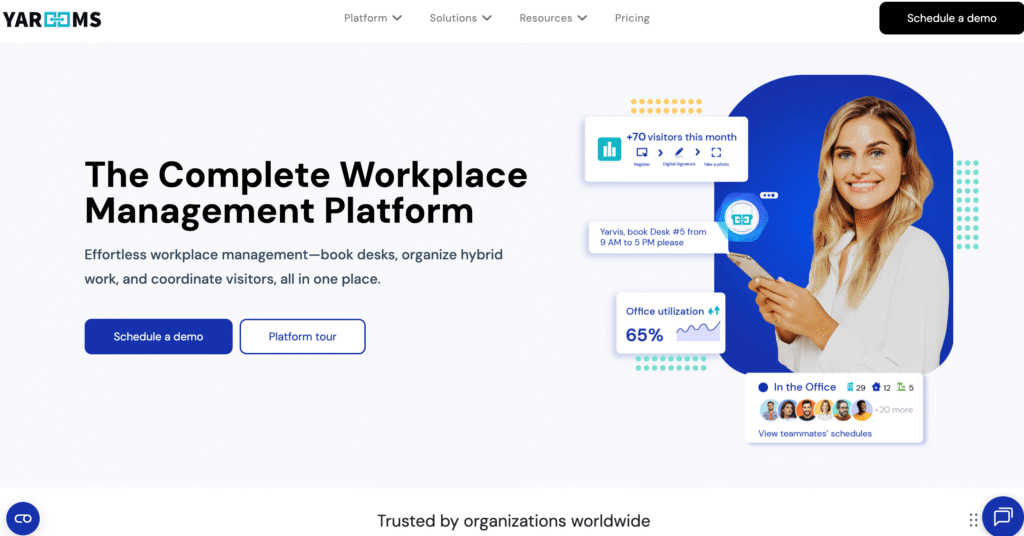
Among the top desk booking software platforms globally in 2026, YAROOMS is widely recognized for integrating ESG reporting with workplace logistics. The platform has positioned itself as a strategic workplace planning suite designed for organizations that prioritize sustainability alongside operational efficiency.
YAROOMS: The Strategic ESG and Workplace Planning Suite
YAROOMS has established itself as a market leader for companies seeking to align hybrid workplace management with environmental reporting objectives. Rather than operating solely as a desk reservation tool, the platform functions as a centralized system covering seat hoteling, meeting room scheduling, visitor flows, hybrid attendance analytics, and carbon impact measurement.
This broader positioning differentiates YAROOMS within a crowded desk booking software market that often focuses primarily on scheduling mechanics rather than sustainability performance.
Strategic Market Position in 2026
| Category Dimension | YAROOMS Positioning |
|---|---|
| Primary Differentiator | ESG-integrated workplace management |
| Core Target Audience | Sustainability-driven enterprises |
| Deployment Model | Cloud-based, Microsoft-optimized |
| Competitive Identity | Carbon-aware workplace planning suite |
| Adoption Focus | Hybrid enterprises with ESG mandates |
Unique Market Value and ESG Capabilities
YAROOMS extends beyond standard desk booking by embedding sustainability metrics directly into workplace decision-making. One of its defining features in 2026 is the Carbon Dashboard, which provides organizations with visibility into the environmental impact of office attendance patterns.
Carbon and ESG Feature Matrix
| ESG Capability | Business Application |
|---|---|
| Carbon Dashboard | Tracks CO2 impact of office attendance |
| Occupancy-Based Emissions Estimation | Calculates energy impact per utilized space |
| Portfolio Optimization Insights | Identifies underused floors or buildings |
| Attendance Pattern Analytics | Links hybrid policies with sustainability targets |
| Executive Reporting Tools | Board-ready ESG performance summaries |
By quantifying how often employees commute and how intensively physical space is used, facilities and sustainability teams can align real estate strategy with broader carbon reduction initiatives.
Artificial Intelligence and Adoption
In 2026, user adoption remains a central challenge for workplace software platforms. YAROOMS addresses this through Yarvis, its AI-powered natural language assistant.
AI Capability Overview
| AI Component | Description |
|---|---|
| Yarvis AI Assistant | Natural-language scheduling and booking requests |
| Chat-Based Booking | Reserve desks or rooms directly in collaboration tools |
| Contextual Suggestions | Intelligent space recommendations |
| Automation Support | Streamlined booking confirmations and reminders |
Yarvis integrates directly within Microsoft Teams and Slack, allowing employees to book workspaces conversationally without navigating a standalone application. This embedded approach improves adoption among technical, creative, and distributed teams accustomed to chat-based workflows.
Technical Architecture and Ecosystem Integration
YAROOMS is particularly optimized for organizations operating within the Microsoft ecosystem. Deep synchronization capabilities with Exchange room mailboxes and Outlook calendars ensure seamless interoperability with enterprise IT environments.
Technical Specification Overview
| Specification Category | Details |
|---|---|
| Security Standards | ISO 27001 compliant, GDPR aligned |
| Hosting Environment | Azure-based infrastructure |
| Core Sustainability Feature | Carbon Dashboard with CO2 tracking |
| AI Integration | Yarvis natural-language assistant |
| Calendar Synchronization | Exchange and Outlook native sync |
| Collaboration Integration | Microsoft Teams and Slack |
| Hardware Support | Digital signage for desks and meeting rooms |
Hardware-integrated digital signage capabilities further extend the platform’s functionality into physical spaces, allowing real-time booking visibility on room panels and desk displays.
Pricing Structure and Tiering
YAROOMS offers tiered pricing designed to accommodate both growing teams and large enterprises seeking ESG-integrated workplace planning tools.
Pricing Overview (2026)
| Plan Category | Monthly Price (USD) | User Range | Core Inclusions |
|---|---|---|---|
| Starter | 99 | 10–20 users | Desk booking, hybrid planning, ESG dashboard access |
| Enterprise | 899 | 300+ users | Advanced ESG analytics, AI assistant, enterprise support |
Pricing is structured to scale according to organizational size, making the platform accessible to both mid-sized businesses and large multinational enterprises pursuing sustainability-linked real estate strategies.
Operational Outcomes and Success Metrics
In 2026, desk booking software is evaluated not only by feature depth but by measurable operational impact. Organizations implementing YAROOMS frequently report tangible improvements in both cost efficiency and sustainability alignment.
Performance Impact Matrix
| Performance Area | Reported Improvement |
|---|---|
| Real Estate Optimization | Up to 30% portfolio reduction |
| Meeting Capacity Recovery | 10–25% regained via no-show release automation |
| Carbon Visibility | Clear CO2 impact reporting by attendance pattern |
| Administrative Efficiency | Automated desk release and booking logic |
| Hybrid Policy Alignment | Data-informed attendance planning |
The platform’s automated no-show desk release functionality addresses a common inefficiency in hybrid environments known as phantom availability, where desks or rooms remain booked but unused. By automatically freeing these resources after a defined grace period, organizations recover valuable capacity and improve utilization accuracy.
Sustainability and Real Estate Savings
Organizations leveraging YAROOMS analytics have identified underutilized floors and buildings, enabling downsizing decisions that reduce overhead while supporting ESG commitments. In several reported deployments, real estate savings reached up to 30 percent by consolidating office portfolios based on utilization data.
This dual impact—cost optimization combined with measurable environmental reporting—reinforces the platform’s strategic relevance in 2026.
User Experience and Customer Feedback Themes
User feedback highlights both strengths and areas for continued enhancement.
Customer Sentiment Summary
| Feedback Category | Common Observations |
|---|---|
| Ease of Scheduling | Simplifies shared space coordination |
| Reliability | Consistent and dependable system performance |
| Collaboration Integration | Strong alignment with Teams and Outlook |
| Mobile Experience | Map view could be smoother |
| Overall Satisfaction | Positive sentiment regarding functionality |
Users frequently emphasize the platform’s reliability and effectiveness in managing shared environments, particularly in organizations where hybrid attendance patterns fluctuate weekly. Suggestions for refinement often focus on enhancing mobile interface fluidity, especially within map-based views for on-the-go employees.
YAROOMS Within the Global Desk Booking Software Market
In the broader context of the top desk booking software platforms in the world in 2026, YAROOMS occupies a distinct strategic niche. While many platforms concentrate on scheduling logistics or utilization analytics alone, YAROOMS integrates environmental accountability directly into workplace planning.
Competitive Differentiation Matrix (2026)
| Platform Focus Area | Standard Booking Tools | YAROOMS Approach |
|---|---|---|
| Desk Reservation | Core feature | Fully integrated |
| Hybrid Attendance Analytics | Moderate | Advanced and ESG-linked |
| Carbon Tracking | Rare | Native Carbon Dashboard |
| AI Chat-Based Scheduling | Limited | Yarvis embedded assistant |
| Microsoft Ecosystem Alignment | Variable | Deep synchronization |
As ESG reporting continues to influence corporate decision-making and investor expectations, the demand for workplace platforms that combine operational efficiency with environmental transparency is expected to grow.
YAROOMS reflects a broader market evolution in which desk booking software transitions from a facility convenience tool into a strategic enterprise system supporting sustainability, cost control, and data-driven real estate transformation in 2026.
4. Envoy Workplace
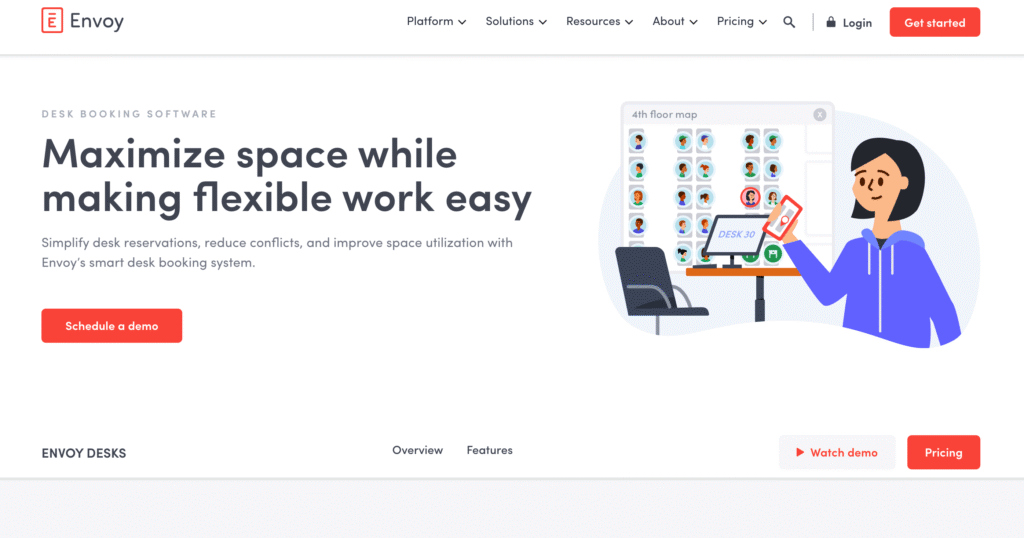
Among the top desk booking software platforms in the world in 2026, Envoy Workplace has emerged as a security-first integration powerhouse. Originally known as a market leader in visitor management, Envoy has successfully expanded its capabilities to become a comprehensive workplace management solution.
Envoy Workplace: The Security-First Integration Powerhouse
Envoy built its early reputation around digital visitor sign-in systems and front-desk automation. By leveraging this dominant position at corporate entry points, the company strategically expanded into desk booking, hybrid scheduling, delivery management, and occupancy analytics.
This evolution has positioned Envoy as a preferred solution for corporate headquarters, multinational enterprises, and highly regulated industries that require robust security oversight alongside flexible workspace management.
Strategic Market Position in 2026
| Category Dimension | Envoy Workplace Positioning |
|---|---|
| Primary Differentiator | Security-led workplace integration |
| Core Strength | Visitor management and access compliance |
| Target Industries | Finance, healthcare, technology, defense |
| Deployment Model | Cloud-based, enterprise scalable |
| Global Footprint | Multi-location enterprise deployments |
Mission and Enterprise Scalability
Envoy’s 2026 strategic direction centers on unifying space utilization, compliance controls, and employee experience within a single administrative dashboard. Rather than separating desk booking from visitor workflows or emergency response systems, the platform integrates these elements into a cohesive operational environment.
This unified model supports:
| Operational Objective | How Envoy Delivers |
|---|---|
| Space Utilization Visibility | Real-time occupancy dashboards |
| Security Compliance | Integrated visitor screening and badge management |
| Employee Attendance Oversight | Hybrid scheduling with remote status tracking |
| Regulatory Documentation | Automated NDA collection and visitor logs |
| Emergency Preparedness | Mass notification and evacuation accounting |
Such capabilities are particularly critical in regulated environments where standards similar to ITAR and HIPAA require strict control of physical access and visitor tracking.
Core Features and Integration Depth
Envoy Workplace distinguishes itself in 2026 through extensive integration capabilities and operational automation.
Feature Overview
| Feature Category | Description |
|---|---|
| Real-Time Occupancy Heatmaps | Visual tracking of active desks and meeting rooms |
| Hybrid Desk Booking | Flexible workspace reservation system |
| Mailroom Delivery Management | OCR-powered package scanning and recipient notification |
| Virtual Front Desk | Remote check-in for unstaffed entrances |
| Emergency Notifications | Real-time alerts and evacuation accountability |
| Compliance Documentation | NDA signing, badge printing, visitor record retention |
The Virtual Front Desk capability allows organizations to manage visitor check-ins even in offices without dedicated reception staff. Combined with digital badge printing and identity verification workflows, this reduces reliance on manual processes while maintaining security standards.
Integration Ecosystem Strength
One of Envoy’s defining advantages in 2026 is its integration ecosystem, with more than 100 native connectors spanning collaboration tools, HR systems, and physical security providers.
Security and Platform Integration Matrix
| Integration Category | Examples of Native Integrations |
|---|---|
| Access Control Systems | Kisi, Openpath, Genetec |
| Collaboration Platforms | Slack, Microsoft Teams |
| Calendar Systems | Google Workspace, Outlook |
| HR Systems | Workforce directories and SSO providers |
| Building Security Platforms | Enterprise-grade access management solutions |
Deep integration with access control providers ensures that visitor approvals, badge issuance, and entry permissions are synchronized with physical security infrastructure in real time.
Pricing Structure and Tier Comparison
Envoy Workplace operates on a per-active-user pricing model, supplemented by location-based pricing for visitor management add-ons.
Pricing Overview (Billed Annually)
| Plan Tier | Cost (USD) | Key Features |
|---|---|---|
| Standard | 3 per active user/mo | Desk booking, hybrid scheduling, deliveries |
| Premium | 5 per active user/mo | Advanced analytics, emergency alerts, utilization tracking |
| Premium Plus | 7 per active user/mo | Full-suite workplace and compliance features |
| Visitors Add-On | 4,345 per location/year | Security screening, NDA collection, badge printing |
This tiered structure allows organizations to adopt core desk booking functionality while layering advanced compliance and visitor management capabilities as needed.
Comparative Commercial Model Matrix
Pricing Basis Comparison
| Platform Model Type | Envoy Structure |
|---|---|
| User-Based Pricing | Active-user subscription tiers |
| Location-Based Add-On | Visitor module per site pricing |
| Enterprise Scalability | Multi-site support with centralized dashboard |
| Security Feature Bundling | Integrated in higher-tier plans |
Return on Investment and Measurable Outcomes
In 2026, organizations assess desk booking software not only on usability but also on operational impact and compliance assurance.
Envoy’s automation of visitor flows and access management typically results in measurable reductions in front-desk administrative workload.
ROI Impact Metrics
| Performance Area | Typical Impact |
|---|---|
| Front-Desk Administrative Load | Reduced by 30–50 percent |
| Visitor Processing Time | Significantly shortened through automation |
| Occupancy Transparency | Real-time visibility across locations |
| Emergency Accountability | 100 percent staff and visitor tracking during evacuations |
| Compliance Documentation | Digitally archived and audit-ready |
The Emergency Notifications system is particularly valued in regulated environments. By integrating employee attendance data and visitor check-ins, organizations can account for all individuals present during evacuations or critical incidents.
Operational Efficiency Matrix
| Efficiency Driver | Business Benefit |
|---|---|
| Digital Badge Issuance | Reduced manual credential handling |
| OCR Mailroom Automation | Faster package processing and notification |
| Virtual Reception | Lower staffing requirements at entrances |
| Hybrid Attendance Dashboard | Clear view of in-office versus remote staff |
| Security Integration | Reduced risk of unauthorized access |
User Experience and Customer Feedback Themes
User feedback in 2026 frequently emphasizes ease of use, speed of check-in, and centralized attendance visibility.
Customer Sentiment Summary
| Feedback Category | Observed Themes |
|---|---|
| Ease of Check-In | Fast and intuitive for employees and visitors |
| Attendance Visibility | Clear overview of office presence |
| Hybrid Coordination | Effective for booking flexible desks and rooms |
| Hardware Experience | iPad-based visitor sign-in considered user-friendly |
| Overall Reliability | Stable and dependable daily performance |
Many users highlight the platform’s simplicity at the reception level, particularly its digital sign-in interface and visitor iPad experience. Simultaneously, administrators value the ability to track who is on-site, working remotely, or off-duty through a unified dashboard.
Envoy’s Role Among the Top Desk Booking Software Platforms in 2026
Within the broader ecosystem of the top desk booking software solutions globally in 2026, Envoy occupies a security-centric leadership position. While other platforms may emphasize ESG reporting, advanced rule engines, or hybrid social coordination, Envoy integrates these capabilities through a lens of compliance and physical security.
Competitive Positioning Matrix
| Market Focus Area | Standard Desk Tools | Envoy Workplace |
|---|---|---|
| Visitor Management | Limited | Market-leading heritage |
| Access Control Integration | Moderate | Deep native integrations |
| Emergency Accountability | Basic | Advanced mass notification system |
| Mailroom Automation | Rare | OCR-enabled workflow |
| Hybrid Desk Booking | Core feature | Integrated with security layer |
As enterprises continue to consolidate workplace management tools, platforms capable of merging desk booking, visitor compliance, and physical security into a single operational system are gaining strategic importance.
Envoy Workplace reflects this market evolution by transforming from a visitor management specialist into a unified workplace security and space management platform, reinforcing its status as one of the most influential desk booking software providers in the world in 2026.
5. Robin
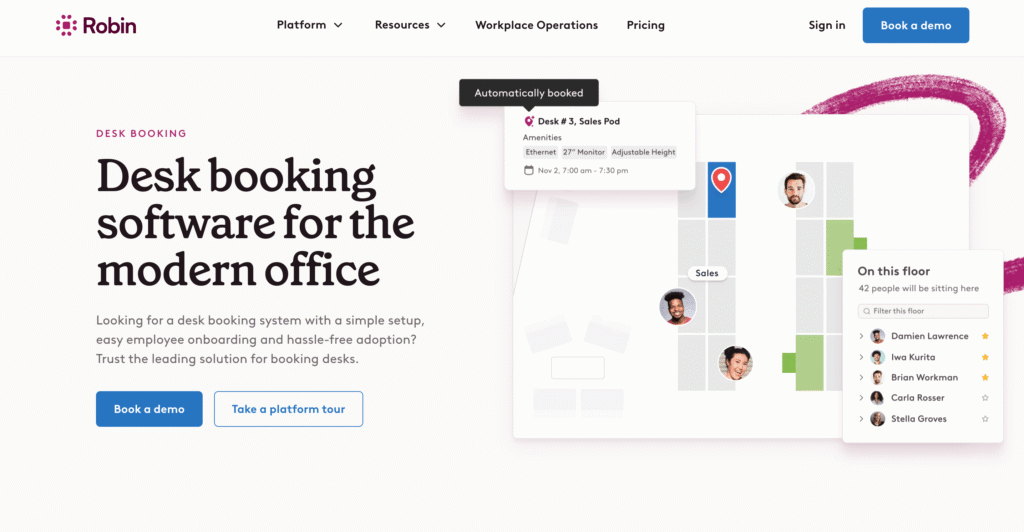
Among the top desk booking software platforms in the world in 2026, Robin has positioned itself as the enterprise experience and survey specialist. Originally known for meeting room booking, the platform has evolved into a comprehensive workplace analytics and feedback system tailored for high-scale hybrid organizations.
Robin: The Enterprise Experience and Survey Specialist
Robin’s core differentiation lies in its ability to connect physical space usage with employee satisfaction. Rather than focusing solely on desk reservations or compliance controls, the platform emphasizes continuous feedback loops and workplace experimentation.
This strategic positioning makes Robin particularly attractive to enterprises with more than 500 employees seeking to optimize global office portfolios while maintaining employee engagement.
Strategic Market Position in 2026
| Category Dimension | Robin Positioning |
|---|---|
| Primary Differentiator | Built-in employee sentiment analysis |
| Core Audience | Enterprises with 500+ hybrid employees |
| Operational Focus | Strategic space experimentation |
| Deployment Complexity | High-scale global rollout capability |
| Competitive Identity | Experience-driven workplace platform |
Key Differentiators in 2026
Robin’s most distinctive feature is its automated feedback system. After employees book and attend office sessions, the platform prompts them to complete satisfaction surveys. This structured approach enables facilities leaders and workplace strategists to correlate space utilization data with real-time employee sentiment.
Experience and Feedback Matrix
| Capability | Business Application |
|---|---|
| Post-Visit Surveys | Measures satisfaction after each office visit |
| Utilization-Sentiment Correlation | Links occupancy data to employee feedback |
| Layout Experimentation Tracking | Tests seating changes against sentiment shifts |
| Department-Level Reporting | Identifies team-specific satisfaction patterns |
| Executive Dashboard Analytics | Board-ready workplace performance insights |
By combining quantitative usage data with qualitative survey responses, Robin enables organizations to make informed decisions about layout redesign, collaboration zones, and hybrid attendance policies.
Technical Ecosystem and Administrative Flexibility
Robin provides enterprise-grade configurability designed for global organizations managing multiple campuses or headquarters locations.
One of its most notable administrative features is a WYSIWYG map editor, which allows non-technical administrators to reorganize floor plans without requiring engineering or IT assistance.
Administrative and Technical Feature Overview
| Feature Category | Description |
|---|---|
| WYSIWYG Map Editor | Drag-and-drop layout reconfiguration |
| Abandoned Meeting Protection | Auto-releases unclaimed meeting rooms |
| Hybrid Scheduling Tools | Desk and room booking for distributed teams |
| Enterprise Analytics Suite | Multi-location occupancy dashboards |
| Kiosk Application | On-site room and desk status visibility |
The abandoned meeting protection feature addresses a widespread inefficiency in enterprise environments where meeting rooms are booked but never used. If users fail to check in within a designated timeframe, the room is automatically released for others to reserve.
Enterprise Deployment Metrics
Robin is intentionally built for large-scale deployments. However, its enterprise focus is reflected in longer implementation timelines and higher upfront investment compared to mid-market platforms.
Enterprise Performance Metrics (2026 Averages)
| Metric Category | Enterprise Average (Robin) | Business Implication |
|---|---|---|
| Implementation Time | 2 months | Reflects complexity of global rollout |
| Return on Investment | 20 months | Longer-term payback due to initial setup cost |
| Average Discount | 15 percent | Standard in multi-year enterprise agreements |
| Typical User Base | 500+ hybrid employees | Designed for large-scale organizations |
The extended implementation timeline often stems from multi-location configuration, change management processes, and enterprise IT integration requirements.
Return on Investment and Capacity Recovery
Robin’s ROI is typically realized through improved space utilization, reduced meeting room waste, and optimized hybrid scheduling policies.
ROI Impact Matrix
| Performance Area | Observed Outcome |
|---|---|
| Meeting Room Utilization | Significant improvement after check-in enforcement |
| Abandoned Room Reduction | Immediate release of unused bookings |
| Space Experimentation Efficiency | Data-backed layout changes |
| Hybrid Policy Optimization | Improved alignment between attendance and capacity |
| Real Estate Stability | Avoidance of unnecessary expansion |
Case Snapshot: Lola.com
A notable example involves Lola.com, which discovered that approximately 40 percent of meeting rooms were booked but remained empty. After implementing Robin’s strict check-in policy and automated room release system, nearly half of that underutilized capacity was recovered without increasing physical office space.
Before and After Utilization Impact
| Metric Category | Before Implementation | After Policy Enforcement |
|---|---|---|
| Booked but Empty Rooms | 40 percent | Significantly reduced |
| Available Meeting Capacity | Constrained | Nearly 50 percent recovered |
| Real Estate Expansion Need | Considered | Deferred |
This case illustrates how behavioral enforcement mechanisms, combined with analytics, can unlock substantial efficiency gains without capital expenditure.
User Experience and Adoption Feedback
User reviews often highlight the platform’s efficiency in booking rooms and viewing space status, particularly in enterprise environments where visibility is critical.
Customer Sentiment Summary
| Feedback Category | Observed Themes |
|---|---|
| Booking Efficiency | Simple and effective room reservation |
| Status Visibility | Clear overview of room and station availability |
| Mobile Application | Navigation could be refined |
| Kiosk Design | Functional but less polished in design perception |
| Scalability | Effective for large team deployments |
While employees generally find the system efficient, some feedback points to opportunities for refinement in mobile navigation and kiosk interface aesthetics, particularly for less tech-savvy users.
Robin’s Position Among the Top Desk Booking Software Platforms in 2026
Within the broader ecosystem of the top desk booking software platforms globally in 2026, Robin occupies a distinct niche focused on employee experience intelligence and strategic workplace experimentation.
Competitive Positioning Matrix
| Market Focus Area | Standard Desk Tools | Robin Approach |
|---|---|---|
| Employee Sentiment Tracking | Rare | Native feedback integration |
| Layout Experimentation | Limited | Continuous testing framework |
| Meeting Auto-Release | Basic | Strict check-in enforcement |
| Enterprise Scale | Moderate | High-scale global deployments |
| Analytics Depth | Utilization-focused | Utilization plus sentiment correlation |
As organizations increasingly view office environments as dynamic ecosystems rather than static real estate assets, platforms that combine behavioral data with employee feedback gain strategic importance.
Robin reflects this evolution by positioning itself not simply as a booking system, but as an enterprise-grade workplace experimentation platform designed to optimize both space performance and employee satisfaction in 2026.
6. Deskbird
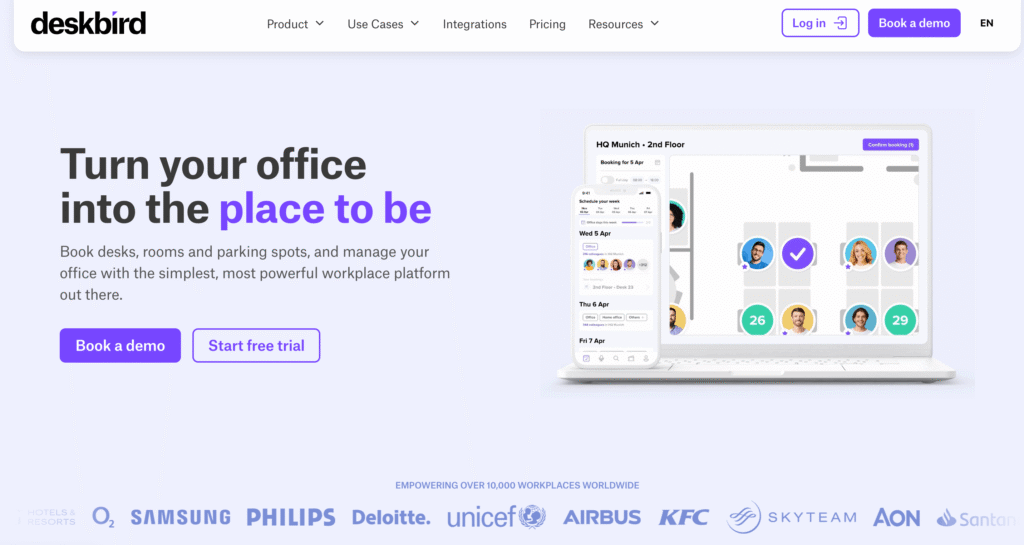
Among the top desk booking software platforms in the world in 2026, Deskbird stands out as the people-first adoption leader. Rather than positioning itself as a monitoring or enforcement tool, the platform presents itself as a digital companion for hybrid employees.
Deskbird: The People-First Adoption Leader
Deskbird has emerged as Europe’s fastest-growing workplace management platform in 2026. Built with a mobile-first philosophy and designed for intuitive daily use, the platform focuses on empowering employees to coordinate their office days rather than simply reserving desks.
Its rapid growth has been supported by USD 23 million in Series B funding, enabling continued expansion of artificial intelligence capabilities and product innovation.
Strategic Market Position in 2026
| Category Dimension | Deskbird Positioning |
|---|---|
| Primary Differentiator | Employee-centric hybrid coordination |
| Core Geographic Strength | Europe, expanding globally |
| Target Segment | SMBs and mid-market organizations |
| Growth Stage | High-growth, Series B funded |
| Brand Identity | Hybrid work companion platform |
Market Focus and Expansion
Deskbird’s strategic direction in 2026 reflects a broader industry movement toward predictive workplace management. The platform is transitioning from descriptive dashboards, which merely report historical occupancy data, to predictive AI-driven recommendations that automate scheduling and suggest optimal collaboration days.
This evolution supports organizations seeking proactive insights rather than reactive reporting.
Predictive AI Roadmap Overview
| AI Capability Stage | Description |
|---|---|
| Descriptive Analytics | Real-time utilization dashboards |
| Diagnostic Insights | Identification of attendance patterns |
| Predictive Recommendations | AI-suggested optimal office days |
| Automated Decision Support | Smart nudges for collaboration alignment |
Trusted by multinational organizations such as Samsung, Deloitte, and Airbus, Deskbird has demonstrated its ability to scale across large distributed teams while maintaining high employee adoption rates.
Product Features and User Experience
Deskbird differentiates itself through a highly intuitive interface and socially oriented workplace coordination tools.
Feature Overview
| Feature Category | Description |
|---|---|
| Social Office Feed | Allows employees to follow teammates’ office days |
| Five-Second Booking | Rapid desk and room reservations via mobile |
| Hybrid Attendance Calendar | Visual overview of team presence |
| Real-Time Utilization Analytics | Data for rightsizing desk inventory |
| Collaboration Visibility | See who will be in the office before commuting |
The Social Office Feed is one of the platform’s most distinctive features. Employees can follow colleagues and coordinate in-office days to maximize collaboration opportunities. This reduces the likelihood of commuting to an empty office and enhances team alignment.
Technical Specifications and Ecosystem
Deskbird offers extensive integration capabilities and maintains a strong European hosting footprint, making it particularly attractive to organizations with strict data protection requirements.
Technical Specification Overview
| Specification Category | Details |
|---|---|
| Integrations | 200+ integrations including MS Teams, Slack, Outlook |
| UI/UX Score | 9.2 / 10 (G2 Average) |
| Pricing (Business Plan) | USD 3.75 per user per month (billed annually) |
| Hosting Infrastructure | Built and hosted in Europe |
| Data Protection | GDPR-ready compliance framework |
| Core Benefit Claim | Productivity gains of up to one day per week |
Its broad integration ecosystem ensures compatibility with major collaboration and calendar systems, enabling seamless workflow integration.
Pricing Model and Commercial Structure
Deskbird adopts a transparent per-user pricing model, which appeals to small and mid-sized organizations seeking predictable subscription costs.
Pricing Comparison Matrix
| Pricing Model Type | Deskbird Approach |
|---|---|
| Billing Structure | Per active user |
| Annual Business Tier | USD 3.75 per user per month |
| Target Segment | SMB and mid-market firms |
| Scalability | Flexible for growing teams |
| Cost Transparency | Clear, straightforward subscription pricing |
This simplicity contrasts with resource-based or complex enterprise pricing models, making Deskbird accessible to budget-conscious organizations.
Operational Impact and ROI Metrics
Organizations implementing Deskbird frequently report measurable financial and productivity improvements driven by better attendance planning and desk optimization.
ROI Impact Matrix
| Performance Area | Reported Outcome |
|---|---|
| Office Expense Reduction | Up to 30 percent through desk rightsizing |
| Booking Speed | Under five seconds per reservation |
| Adoption Rate | High due to mobile-first design |
| Collaboration Alignment | Increased visibility of teammate presence |
| Administrative Overhead | Reduced through automation and integrations |
Real-time utilization analytics allow companies to adjust desk inventory based on actual attendance patterns, reducing excess capacity and lowering real estate costs.
Mobile-First Design and Adoption
A defining strength of Deskbird is its mobile-first experience. In hybrid environments, employees often coordinate office attendance on the move. The ability to book desks and rooms within seconds increases consistent usage and reduces friction.
Adoption Driver Comparison
| Adoption Factor | Deskbird Performance |
|---|---|
| Ease of Use | Quick and intuitive |
| Mobile Responsiveness | High-performance interface |
| Social Coordination | Built-in team visibility |
| Software Consolidation | Direct communication features |
| Update Frequency | Frequent feature improvements |
User feedback commonly highlights ease of use and efficient coordination, particularly in education, consulting, and distributed team environments. However, some organizations with limited budgets perceive pricing as higher compared to basic booking tools, particularly for long-term deployment in cost-sensitive sectors.
Customer Sentiment Summary
| Feedback Category | Observed Themes |
|---|---|
| Ease of Use | Quick and straightforward |
| Team Coordination | Simplifies hybrid scheduling |
| Mobile Navigation | Highly responsive and efficient |
| Pricing Perception | Considered expensive for low budgets |
| Product Updates | Frequent improvements and enhancements |
Deskbird’s Position Among the Top Desk Booking Software Platforms in 2026
Within the broader ecosystem of the top desk booking software solutions globally in 2026, Deskbird occupies a distinct position centered on user adoption and hybrid collaboration visibility.
Competitive Positioning Matrix
| Market Focus Area | Traditional Desk Tools | Deskbird Approach |
|---|---|---|
| Policy Enforcement | Moderate | Secondary to experience |
| Employee Experience | Limited | Core strategic focus |
| Predictive AI | Emerging | Actively expanding capabilities |
| Social Coordination | Rare | Native Social Office Feed |
| Mobile-First Design | Variable | Primary design philosophy |
As hybrid work continues to redefine how and why employees attend physical offices, platforms that prioritize usability, collaboration transparency, and predictive insights are gaining traction.
Deskbird reflects this shift by positioning itself not as a compliance tool or administrative system, but as a digital companion designed to enhance productivity, increase office utilization efficiency, and strengthen team coordination in 2026.
7. Officely
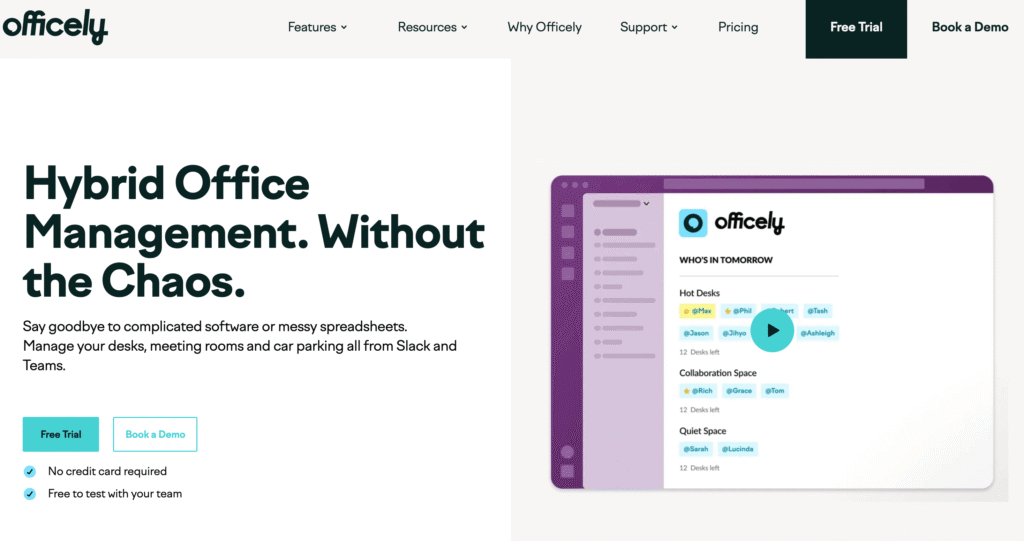
By 2026, the global desk booking software landscape has diversified into highly specialized categories. While some platforms emphasize enterprise analytics or ESG reporting, a growing segment of the market prioritizes seamless collaboration within existing communication ecosystems. Organizations increasingly recognize that adoption is the single most important factor in workplace software success. If employees do not actively use a system, even the most advanced features become irrelevant.
Among the top desk booking software platforms in the world in 2026, Officely has carved out a distinct niche as the collaboration-centric solution built entirely within Slack and Microsoft Teams.
Officely: The Collaboration-Centric App for Slack and Teams
Officely differentiates itself by eliminating the need for a standalone application. Instead of requiring employees to log into a separate workplace management portal, Officely operates directly inside the communication platforms that teams already use daily.
This embedded approach reduces friction, shortens onboarding time, and maximizes adoption rates across distributed and hybrid teams.
Strategic Market Position in 2026
| Category Dimension | Officely Positioning |
|---|---|
| Primary Differentiator | Native Slack and Teams integration |
| Core Target Audience | SMBs and collaboration-driven teams |
| Adoption Strategy | Zero-friction implementation |
| Deployment Complexity | Minimal setup within communication tools |
| Competitive Identity | Communication-native hybrid management |
Mechanism and Operational Advantage
Officely functions entirely within Slack and Microsoft Teams environments. Employees update their work status—such as In Office, Remote, or Out of Office—directly within the same threads where they communicate with colleagues.
This eliminates the need to switch between tools, which is one of the most common barriers to adoption in workplace management software.
Workflow Integration Overview
| Workflow Component | How Officely Delivers |
|---|---|
| Work Status Updates | Managed inside Slack or Teams channels |
| Desk Booking | Reserved within chat threads |
| Capacity Visibility | Real-time updates inside communication app |
| Hybrid Coordination | See who plans to be in-office before commuting |
| Administrative Controls | Managed without separate dashboards |
By leveraging established communication habits, Officely aligns workplace coordination with natural daily behavior rather than introducing new processes.
Pricing Structure and Feature Tiers
A notable differentiator in 2026 is Officely’s genuinely free plan for small teams. In a market where most providers limit features heavily on entry tiers, Officely includes essential booking and analytics tools even at no cost for small deployments.
Pricing Overview (Annual Billing)
| Plan Tier | Price (USD) | Included Functionality |
|---|---|---|
| Free | 0 | Desk booking, interactive plans, analytics (up to 5 users) |
| Basic | 2.50 per user per month | Unlimited users, capacity management |
| Premium | 3.50 per user per month | Meeting rooms, parking management, advanced data |
Pricing Model Comparison Matrix
| Pricing Element | Officely Model |
|---|---|
| Billing Basis | Per user |
| Free Tier Availability | Yes, up to 5 users |
| SMB Accessibility | High |
| Enterprise Complexity | Lower than enterprise-focused competitors |
| Feature Transparency | Clearly structured tiers |
This structure makes Officely particularly attractive for startups, small businesses, and mid-sized teams that want to manage hybrid schedules without committing to enterprise-level contracts.
Strategic Value and Adoption Impact
In 2026, adoption metrics are central to evaluating desk booking software effectiveness. Research and deployment data suggest that teams using Officely often achieve near-total adoption because employees are not required to learn or navigate a new system.
Adoption and Efficiency Matrix
| Performance Area | Observed Outcome |
|---|---|
| Adoption Rate | Reported near 100 percent |
| Training Requirements | Minimal due to familiar interface |
| Hybrid Coordination Accuracy | Reduced mismatch between team members |
| Office Attendance Alignment | Improved planning of in-office days |
| Administrative Overhead | Lowered due to simplified management |
One of the most common challenges in hybrid environments is the mismatch problem, where employees commute to the office expecting collaboration, only to discover that key teammates or managers are working remotely. By surfacing attendance status within communication threads, Officely reduces this coordination gap.
Operational Benefits in Hybrid Work
| Benefit Category | Business Impact |
|---|---|
| Real-Time Visibility | Instant clarity on who is in-office |
| Meeting Room Coordination | Managed within Slack or Teams |
| Parking Allocation | Controlled without external tools |
| Capacity Enforcement | Maintains occupancy thresholds |
| Tool Consolidation | Reduces software sprawl |
The ability to manage desk reservations, room bookings, and attendance visibility without expanding the software stack is a major advantage for lean organizations.
User Experience and Customer Feedback Themes
User feedback consistently emphasizes ease of setup, simplicity, and strong customer support responsiveness.
Customer Sentiment Summary
| Feedback Category | Observed Themes |
|---|---|
| Initial Setup | Fast and straightforward |
| Integration Quality | Seamless within Slack accounts |
| Customer Support | Responsive and proactive |
| Meeting Room Management | Particularly beneficial feature |
| Navigation | Occasionally requires extra steps to locate features |
While most feedback is positive regarding usability and integration, some users note that navigating to specific functions within the communication interface can occasionally require additional clicks.
Officely’s Position Among the Top Desk Booking Software Platforms in 2026
Within the broader global desk booking software market in 2026, Officely occupies a unique category defined by communication-native workplace management.
Competitive Positioning Matrix
| Market Focus Area | Traditional Desk Tools | Officely Approach |
|---|---|---|
| Standalone Application | Required | Not required |
| Adoption Strategy | Training-dependent | Behavior-based integration |
| Enterprise Analytics Depth | Advanced | Moderate |
| Collaboration Alignment | External visibility | Embedded in communication threads |
| Free Tier Availability | Rare | Included for small teams |
As hybrid work models continue to emphasize flexibility and asynchronous coordination, platforms that integrate directly into daily communication workflows are gaining momentum.
Officely reflects this evolution by redefining desk booking software not as a separate administrative system, but as a natural extension of team communication. Its frictionless implementation model and transparent pricing structure position it as one of the most accessible and adoption-driven workplace management platforms in 2026.
8. Kadence
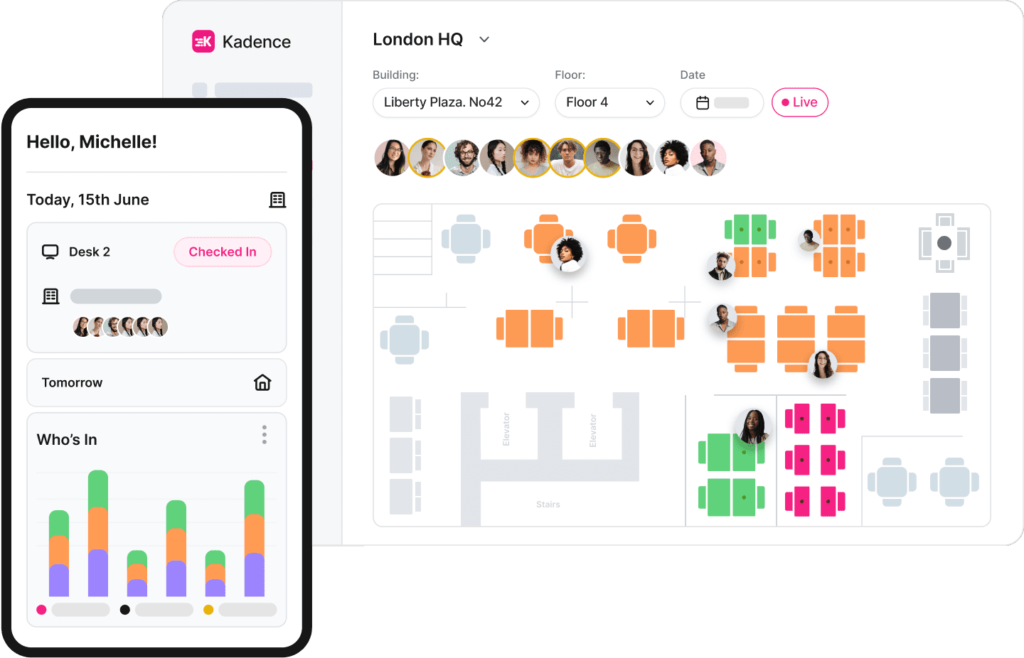
In 2026, desk booking software has progressed beyond simple reservation systems and analytics dashboards. The most advanced platforms now focus on intelligent coordination, blending artificial intelligence with behavioral insights to align teams, optimize collaboration, and reduce workplace friction. As hybrid work becomes structurally embedded in enterprise operations, organizations increasingly seek solutions that understand not just where employees sit, but who they work with and how they collaborate.
Among the top desk booking software platforms in the world in 2026, Kadence has established itself as the AI-driven cultural coordination platform. Its core philosophy centers on “Connected Intelligence,” prioritizing human alignment alongside spatial logistics.
Kadence: The AI-Driven Cultural Coordination Platform
Kadence positions itself as a system that optimizes the social architecture of the workplace. While traditional booking tools focus on allocating desks or rooms, Kadence emphasizes the relationship between team members, project synchronization, and attendance patterns.
This distinction reflects a broader industry shift from static space management toward predictive and adaptive coordination systems.
Strategic Market Position in 2026
| Category Dimension | Kadence Positioning |
|---|---|
| Primary Differentiator | AI-powered team synchronization |
| Core Philosophy | Emphasizes “who” and “where” equally |
| Target Audience | Enterprise hybrid organizations |
| Deployment Scale | 300,000+ global users |
| Competitive Identity | Cultural and behavioral coordination leader |
AI Innovations and Intelligent Automation
Kadence AI functions as a natural-language assistant embedded within Microsoft Teams and Slack. Employees can book desks, schedule collaboration days, or invite visitors by simply asking conversational questions inside their communication tools.
Unlike static scheduling systems, the AI engine continuously analyzes behavioral patterns to generate predictive recommendations.
AI Capability Matrix
| AI Function | Business Application |
|---|---|
| Natural-Language Booking | Reserve desks or rooms through chat commands |
| Visitor Invitation Automation | Schedule guest access via conversational prompts |
| Team Day Recommendations | Suggest synchronized in-office days |
| Pattern Learning | Identifies recurring collaboration cycles |
| Predictive Coordination | Aligns project timelines with attendance patterns |
By analyzing attendance frequency, department overlap, and collaboration history, Kadence AI recommends optimal “team days” designed to maximize synchronous work while minimizing overcrowding.
This predictive coordination model aims to reduce unnecessary workplace noise, avoid seating conflicts, and improve collaborative outcomes.
Software Architecture and Modular Flexibility
Kadence is built as a modular platform, allowing organizations to begin with desk booking and expand functionality over time. This scalable approach supports enterprises at different stages of hybrid maturity.
Modular Capability Overview
| Module Type | Description |
|---|---|
| Desk Booking Core | Hybrid workspace reservations |
| Visitor Management Add-On | Integrated guest coordination |
| On-Demand Space Access | Integration with LiquidSpace |
| Analytics Dashboard | Planned vs. actual usage insights |
| Enterprise Administration | Multi-location management controls |
Through its integration with LiquidSpace, Kadence enables organizations to provide employees with access to flexible coworking locations on demand, further extending hybrid flexibility.
Technical Specifications and Performance
Kadence is designed for enterprise-grade reliability and global scalability.
Technical Specification Overview
| Specification Category | Details |
|---|---|
| Initial Setup Cost | USD 250 per floor for plan upload |
| Standard Pricing | Approximately USD 4.00 per active user per month |
| Typical Deployment Scale | 300,000+ global users (e.g., Intel) |
| Enterprise Uptime SLA | 99.9 percent availability |
| Core Operational Benefit | Near-zero seating conflict and reduced coordination noise |
The initial setup fee per floor typically covers digital plan configuration and mapping, enabling precise desk and space allocation.
Pricing Model Comparison
| Pricing Element | Kadence Structure |
|---|---|
| Billing Basis | Per active user |
| Setup Investment | One-time floor upload cost |
| Enterprise Reliability | 99.9 percent SLA |
| Scalability | Suitable for global enterprises |
| Modular Expansion | Add features as organizational needs evolve |
Operational Impact and ROI Metrics
In 2026, measurable outcomes remain the primary benchmark for workplace software evaluation. Kadence delivers ROI through synchronization efficiency, conflict reduction, and data-driven coordination.
ROI and Performance Matrix
| Performance Area | Observed Impact |
|---|---|
| Planned vs. Actual Usage Insights | Identifies attendance discrepancies |
| Team Synchronization | Improved collaboration alignment |
| Project Completion Time | Reported 15 percent reduction |
| Seating Conflict Frequency | Reduced to near-zero |
| Workplace Noise Reduction | Clearer coordination signals |
One of Kadence’s strongest analytical features involves highlighting discrepancies between planned attendance and actual office usage. Managers can identify patterns such as frequent no-shows or underutilized zones, enabling data-backed adjustments to team scheduling strategies.
Organizations leveraging these insights report improvements in project execution timelines. By synchronizing team presence more effectively, some enterprises observe up to a 15 percent reduction in project completion times.
User Experience and Administrative Feedback
User feedback in 2026 frequently highlights the platform’s seamless integration and responsive support services.
Customer Sentiment Summary
| Feedback Category | Observed Themes |
|---|---|
| Integration Experience | Smooth deployment within existing systems |
| Administrative Interface | Clear and accessible admin screens |
| Customer Support | Responsive and patient implementation support |
| Reporting Depth | Good baseline analytics, potential for expansion |
| Strategic Roadmap | Considered forward-looking among competitors |
Administrators often note that the configuration process aligns well with enterprise needs and that the roadmap demonstrates long-term innovation planning.
Kadence’s Position Among the Top Desk Booking Software Platforms in 2026
Within the broader global desk booking software ecosystem in 2026, Kadence occupies a distinct space centered on predictive cultural alignment.
Competitive Positioning Matrix
| Market Focus Area | Traditional Booking Tools | Kadence Approach |
|---|---|---|
| Static Desk Allocation | Core function | Foundational layer |
| Behavioral Pattern Learning | Limited | Core intelligence driver |
| AI Team-Day Optimization | Rare | Embedded predictive feature |
| Modular Scalability | Moderate | Designed for phased adoption |
| Collaboration-Centric Analytics | Emerging | Central to value proposition |
As hybrid work environments continue to evolve, organizations increasingly require systems that anticipate coordination needs rather than merely respond to booking requests.
Kadence reflects this transformation by redefining desk booking software as a predictive cultural intelligence platform. Its AI-driven synchronization model positions it among the most strategically advanced workplace management solutions in 2026, where human alignment and spatial optimization converge to enhance productivity and reduce operational friction.
9. Tactic
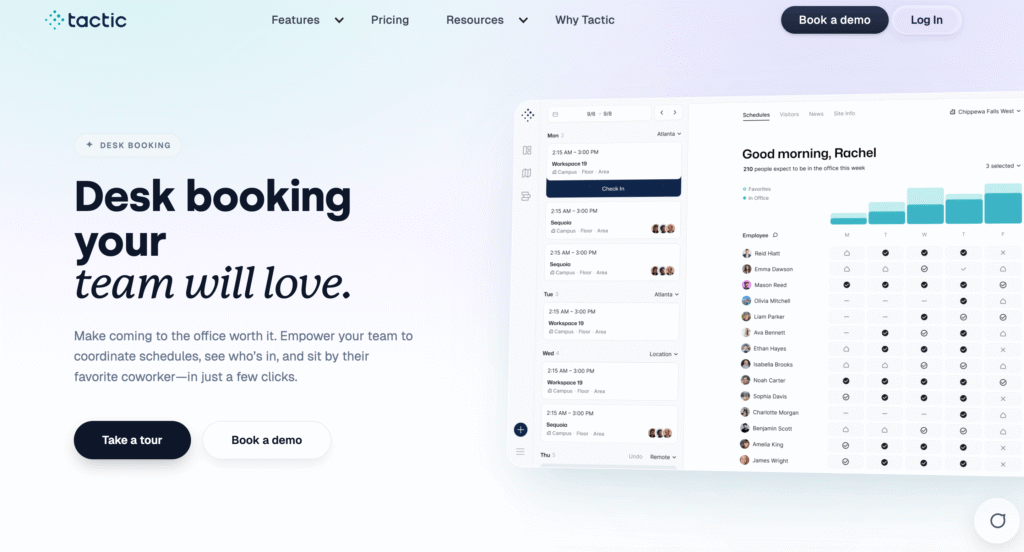
In 2026, organizations increasingly demand workplace management platforms that reduce tool fragmentation. Rather than maintaining separate systems for desks, meeting rooms, visitor check-ins, parking, and internal requests, lean HR and office management teams prefer unified, plug-and-play solutions that simplify administration without sacrificing scalability.
Within the top desk booking software platforms globally in 2026, Tactic has emerged as a modular all-in-one solution favored by HR teams and office managers seeking simplicity, flexibility, and measurable operational gains.
Tactic: The Modular All-in-One for HR and Office Managers
Tactic positions itself as a comprehensive yet lightweight workplace management platform. It is designed specifically for organizations that require streamlined oversight of desks, rooms, visitors, and parking without the complexity typically associated with enterprise-scale systems.
Its modular architecture allows companies to begin with essential features and expand functionality over time, making it particularly attractive to growing organizations.
Strategic Market Position in 2026
| Category Dimension | Tactic Positioning |
|---|---|
| Primary Differentiator | Modular all-in-one workplace platform |
| Core Target Audience | Lean HR and office management teams |
| Adoption Model | Plug-and-play implementation |
| Scalability Approach | Resource-based expansion |
| Competitive Identity | Unified workplace operations tool |
Key Features and 2026 Enhancements
Tactic’s feature set is designed to consolidate core workplace functions into a single interface. In 2026, one of its most notable updates is the introduction of Tessa AI, a global search and map-based booking assistant.
Feature Overview
| Feature Category | Description |
|---|---|
| Desk Booking | Flexible hybrid seat reservations |
| Meeting Room Scheduling | Centralized room management |
| Visitor Management | Guest coordination within the same system |
| Parking Allocation | Integrated parking spot booking |
| Office Health Questionnaires | Compliance and wellness tracking |
| 2D Interactive Maps | Clean visual layouts for resource selection |
| Tessa AI | Global search and intelligent resource discovery |
Tessa AI simplifies the process of locating desks, meeting rooms, or other resources across multiple offices. Employees can quickly search and book available spaces using map-based visualization, reducing administrative overhead and booking friction.
Modular Architecture and Expansion
Tactic follows a modular design philosophy. Organizations can begin with desk and room booking and gradually add advanced capabilities such as workplace request tracking or expanded visitor workflows.
Modular Capability Matrix
| Module Type | Business Application |
|---|---|
| Core Workspace Booking | Desk and room reservations |
| Visitor Management | Guest tracking and compliance workflows |
| Workplace Requests | Maintenance and service submissions |
| Advanced Rules Engine | Conditional booking logic |
| Enterprise Support Layer | Custom integrations and SLAs |
This flexibility allows organizations to control initial costs while retaining the ability to scale as operational complexity increases.
Pricing Model and Tier Structure
Tactic employs a resource-based pricing model, meaning costs scale according to the number of workspaces rather than total employees. This model benefits organizations with high headcounts but moderate physical footprints.
Pricing Overview (Per Workspace / Month)
| Tier | Price (USD) | Feature Highlights |
|---|---|---|
| Core | 3.00 | Desk booking, room scheduling, mobile application |
| Pro | 4.00 | Visitor management, Tessa AI, advanced booking rules |
| Enterprise | Custom | Priority support, custom integrations, SLAs |
Pricing Model Comparison
| Pricing Element | Tactic Structure |
|---|---|
| Billing Basis | Per workspace |
| Initial Cost Barrier | Low entry via Core tier |
| Scalability | Modular feature additions |
| Enterprise Customization | Available at top tier |
| Cost Predictability | Increases with workspace expansion |
This approach enables organizations to deploy the platform in a phased manner without committing to extensive upfront licensing.
Operational Impact and ROI
In 2026, desk booking software is evaluated by quantifiable business outcomes. Tactic’s case studies highlight measurable efficiency gains and cost reductions driven by data-informed workplace management.
ROI and Efficiency Metrics
| Performance Area | Observed Outcome |
|---|---|
| Operational Efficiency | 2.1x ROI reported in case study |
| Neighborhood-Level Occupancy Data | Improved demand forecasting |
| Food Service Optimization | Reduced overproduction and waste |
| Janitorial Cost Reduction | Lower cleaning expenditure via usage tracking |
| Administrative Coordination | Streamlined task tracking |
One documented deployment demonstrated how planners used Tactic’s neighborhood-level occupancy data to anticipate reduced attendance in specific zones. This insight allowed organizations to adjust food service participation rates and minimize unnecessary janitorial coverage, generating cost savings while maintaining service quality.
Data-Driven Planning Matrix
| Insight Type | Operational Benefit |
|---|---|
| Real-Time Utilization | Accurate workspace demand tracking |
| Attendance Trend Analysis | Predictive capacity planning |
| Zone-Level Visibility | Optimized support service allocation |
| Resource Request Tracking | Faster issue resolution |
By combining booking data with operational analytics, Tactic helps HR and office managers make proactive adjustments rather than reactive corrections.
User Experience and Administrative Feedback
User feedback frequently emphasizes ease of coordination and task management within a unified system.
Customer Sentiment Summary
| Feedback Category | Observed Themes |
|---|---|
| Task Coordination | Simplifies collaboration and tracking |
| Progress Visibility | Clear overview of workplace activities |
| Daily Usage | Employee record checking becomes routine |
| Usability | Minor quirks but strong core functionality |
| Decision-Making Support | Timely access to schedule data |
Users highlight the platform’s practical utility for day-to-day oversight. While occasional interface inconsistencies are noted, the overall experience is described as supportive of smooth execution and timely operational decisions.
Tactic’s Position Among the Top Desk Booking Software Platforms in 2026
Within the global desk booking software ecosystem in 2026, Tactic occupies a distinct position as a unified and modular workplace operations platform.
Competitive Positioning Matrix
| Market Focus Area | Traditional Desk Tools | Tactic Approach |
|---|---|---|
| Single-App Consolidation | Limited | Core value proposition |
| Modular Feature Expansion | Moderate | Designed for phased growth |
| Resource-Based Pricing | Variable | Primary billing model |
| AI Search Capability | Emerging | Tessa AI integrated |
| Operational Cost Optimization | Indirect | Directly supported via analytics |
As organizations continue to streamline software stacks and demand greater operational transparency, platforms that combine flexibility, modular growth, and actionable analytics are gaining strategic relevance.
Tactic reflects this trend by delivering an all-in-one workplace management solution tailored for HR and office managers seeking clarity, efficiency, and measurable return on investment in 2026.
10. OfficeSpace
By 2026, the global desk booking software market has evolved into a sophisticated enterprise category where artificial intelligence, portfolio analytics, and asset lifecycle management converge. Large corporate campuses and multinational enterprises require more than desk reservations; they demand intelligent systems capable of modeling future growth, reallocating departments, and optimizing capital investments.
Among the top desk booking software platforms in the world in 2026, OfficeSpace has positioned itself as the leading AI operating system for the built environment. Its focus extends beyond hybrid scheduling to encompass strategic planning, move management, and asset governance at scale.
OfficeSpace: The Enterprise AI Operating System
OfficeSpace defines its mission as unifying space planning, hybrid work, asset management, and analytics within a single intelligent framework. Designed primarily for large enterprises and corporate campuses, the platform is widely adopted by organizations managing complex real estate portfolios across multiple regions.
With more than 1,800 organizations worldwide using the platform, OfficeSpace has become a standard solution for enterprise-level facilities management.
Strategic Market Position in 2026
| Category Dimension | OfficeSpace Positioning |
|---|---|
| Primary Differentiator | AI-driven enterprise operating system |
| Core Audience | Large corporate campuses and global enterprises |
| Deployment Scope | Multi-building and multi-country portfolios |
| Competitive Identity | Strategic planning and asset lifecycle leader |
| Customer Base | 1,800+ organizations worldwide |
Enterprise Mission and Platform Vision
OfficeSpace aims to eliminate fragmented workplace tools by integrating core operational functions into a single system.
Unified Capability Framework
| Operational Domain | Platform Function |
|---|---|
| Space Planning | Departmental allocation modeling |
| Hybrid Work Management | Desk and room scheduling analytics |
| Asset Lifecycle Tracking | Equipment and infrastructure oversight |
| Move Coordination | Large-scale employee relocation management |
| Facilities Analytics | Portfolio-level utilization insights |
This unified structure enables facilities leaders to align real estate strategy with workforce trends and capital planning decisions.
Key Technical Capabilities and AI Innovation
One of the platform’s most distinctive innovations in 2026 is AI Canvas, a drag-and-drop scenario planning environment that allows facilities teams to digitally remodel entire buildings within minutes.
AI-Driven Planning Features
| Feature Name | Strategic Capability |
|---|---|
| AI Canvas | Visual scenario modeling for layout experimentation |
| Block and Stack | Departmental allocation and space balancing |
| Move Management | Coordinated relocation of hundreds of employees |
| Request Manager | Automated facilities ticketing and workflow tracking |
| Portfolio Analytics | Multi-site utilization dashboards |
AI Canvas enables administrators to test new seating layouts, reassign departments, and simulate occupancy changes before committing to physical modifications. This predictive modeling reduces planning risk and accelerates decision-making.
Enterprise Integration Ecosystem
OfficeSpace integrates directly with major enterprise systems, ensuring compatibility with HR, finance, and collaboration platforms.
Integration Matrix
| Integration Category | Enterprise Systems Supported |
|---|---|
| HR Systems | Workday |
| ERP Platforms | SAP, Oracle |
| Collaboration Tools | Zoom |
| Enterprise Identity Systems | SSO and directory integrations |
| Financial Reporting | ERP-linked asset tracking |
These integrations enable synchronized data flows between workforce headcount changes, asset inventories, and physical space allocation.
Implementation Speed and Scalability
Despite its enterprise complexity, OfficeSpace reports an average implementation time of approximately 35 days, which is considered industry-leading for large-scale deployments.
Enterprise Performance Metrics
| Metric Category | Performance Benchmark |
|---|---|
| Average Implementation Time | 35 days |
| Measured ROI Range | 2.5X to 5.6X for large campuses |
| Typical Deployment Scale | Multi-building global portfolios |
| System Reliability | Enterprise-grade architecture |
Return on Investment and Strategic Impact
OfficeSpace delivers ROI primarily through capital expenditure avoidance, optimized move planning, and reduced operational waste.
ROI Impact Matrix
| Performance Area | Observed Outcome |
|---|---|
| Construction Cost Avoidance | Prevented unnecessary capital projects |
| Planning Efficiency | Hundreds of hours saved annually |
| Portfolio Optimization | Data-backed consolidation decisions |
| Asset Visibility | Reduced redundant equipment purchases |
| Move Coordination | Streamlined relocation of large employee groups |
High-Impact Case Study: Quantum Health
Quantum Health utilized OfficeSpace analytics to assess actual building utilization across its campus. The analysis revealed that occupancy assumptions supporting a proposed USD 13.5 million construction expansion were inaccurate.
By leveraging accurate utilization data, the organization avoided the construction project entirely. Additionally, during an annual move involving 500 employees, the platform saved more than 200 planning hours through digital scenario modeling and automated coordination.
Before and After Strategic Impact
| Metric Category | Without Data Modeling | With OfficeSpace |
|---|---|---|
| Construction Decision | Proceed with expansion | Prevented USD 13.5M project |
| Move Planning Time | Manual coordination | 200+ hours saved |
| Occupancy Visibility | Limited | Real-time dashboards |
These outcomes demonstrate how enterprise-level AI modeling can materially influence capital allocation and operational strategy.
User Experience and Administrative Feedback
Despite its enterprise orientation, OfficeSpace receives positive feedback for its usability and reporting clarity.
Customer Sentiment Summary
| Feedback Category | Observed Themes |
|---|---|
| Hybrid Work Management | Simplifies desk and room coordination |
| Administrative Navigation | Intuitive for advanced tasks |
| Occupancy Reporting | Clear and actionable insights |
| Visibility Improvement | Addresses limited usage transparency |
| Collaboration Support | Facilitates cross-team alignment |
Administrators highlight the platform’s ability to generate occupancy reports and adjust bookings efficiently, particularly in hybrid work environments where real-time visibility is critical.
OfficeSpace’s Position Among the Top Desk Booking Software Platforms in 2026
Within the global desk booking software market in 2026, OfficeSpace occupies a strategic tier focused on AI-powered enterprise planning.
Competitive Positioning Matrix
| Market Focus Area | Standard Desk Tools | OfficeSpace Approach |
|---|---|---|
| Basic Desk Booking | Core feature | Integrated within broader system |
| Portfolio-Level Planning | Limited | Advanced AI scenario modeling |
| Capital Expenditure Optimization | Rare | Data-backed decision support |
| Move Management | Basic tracking | Enterprise-scale coordination |
| Asset Lifecycle Management | Separate systems | Unified platform integration |
As corporate real estate costs continue to rise and hybrid attendance patterns fluctuate, organizations require intelligent systems capable of modeling long-term outcomes rather than simply recording bookings.
OfficeSpace reflects the evolution of desk booking software into a full-scale AI operating system for the built environment. In 2026, its ability to unify planning, analytics, and asset management places it among the most strategically advanced workplace management platforms serving large enterprise campuses worldwide.
Global Desk Booking Technology Landscape 2026: Market Evolution, Strategic Utilization, and Deep Analysis of the Top 10 Platforms
The global workplace environment in 2026 has fundamentally transformed from a static physical location into a dynamic ecosystem designed for intentional collaboration. The modern office is no longer evaluated by the number of desks installed, but by how effectively it enables connection, innovation, and measurable productivity. This shift has repositioned desk booking software from a tactical scheduling utility into a strategic operating layer for corporate real estate, facilities management, finance, and human resources leadership.
Organizations have now moved beyond the experimental hybrid models that emerged in the early 2020s. In 2026, hybrid work is operationalized through data-driven systems that synchronize employee behavior, physical infrastructure, energy consumption, and compliance requirements. Artificial intelligence, predictive analytics, and real-time occupancy data streams have become standard components of enterprise workplace strategy.
Within this context, the top 10 desk booking software platforms globally serve as intelligent coordination engines. They enable Chief Financial Officers to validate real estate investments with empirical data while empowering Chief Human Resources Officers to enhance employee experience and cultural alignment.
The Strategic Role of Desk Booking Software in 2026
By 2026, desk booking platforms perform far more than reservation management. They provide granular utilization insights, automate resource allocation, integrate with security and HR systems, and increasingly support ESG reporting mandates.
Strategic Function Matrix of Modern Desk Booking Platforms
| Strategic Function | Business Outcome |
|---|---|
| Real-Time Utilization Tracking | Data-backed portfolio optimization |
| Hybrid Workforce Coordination | Improved team synchronization |
| Visitor and Access Compliance | Enhanced security governance |
| Energy and Carbon Monitoring | ESG reporting alignment |
| Predictive Space Planning | Reduced capital expenditure risk |
| Automated Resource Release | Increased capacity efficiency |
This convergence of operational precision and behavioral intelligence has accelerated market maturity and investment across regions.
Market Valuation and Economic Projections for 2026
The workspace management software sector is experiencing a sustained growth cycle driven by sustainability mandates, real estate cost pressures, and cloud-native technology adoption.
Global Market Size and Growth Dynamics
Recent market analysis values incremental growth in workspace management software at USD 5.32 billion between 2025 and 2030. The compound annual growth rate stands at approximately 22.6 percent, reflecting rapid enterprise adoption.
Segment-Level Market Breakdown
| Market Segment | 2026 Valuation Estimate | Forecasted CAGR | Primary Growth Driver |
|---|---|---|---|
| Workspace Management Software | USD 1.03 Billion (Base) | 22.6 percent | Sustainability and optimization |
| Shared Desk Market | USD 64.86 Billion | 18.6 percent | Real estate portfolio rightsizing |
| Smart Office Ecosystem | USD 55.00 Billion | 10.8 percent | IoT and automation integration |
| Coworking Management Software | USD 2.21 Billion | 13.9 percent | SME and corporate flex adoption |
| Appointment and Resource Scheduling | USD 635.6 Million | 14.7 percent | Service digitization |
Software platforms account for roughly 72 percent of total revenue within the workspace technology ecosystem. However, the services segment is expanding rapidly due to integration complexity. Enterprises increasingly require specialized support to connect building management systems, IoT sensors, ERP software, and HRIS platforms with cloud-based workplace tools.
Regional Distribution and Growth Trends
Regional adoption patterns in 2026 highlight varied drivers of growth across global markets.
Regional Contribution to Global Growth
| Region | Share of 2026 Growth | Key Characteristics |
|---|---|---|
| North America | 39.3 percent | Mature enterprise ecosystem and cloud-first strategies |
| Asia-Pacific | Fastest growth (16.17 percent CAGR) | Rapid urbanization and mobile-first infrastructure |
| Europe | Strong adoption | ESG-driven reporting mandates and carbon accountability |
North America remains the largest contributor, supported by established enterprise infrastructures and early hybrid adoption. Asia-Pacific demonstrates accelerated growth due to emerging markets implementing modern systems without legacy constraints. European markets emphasize environmental accountability, with organizations leveraging desk booking data to calculate emissions per desk and automate HVAC or lighting systems based on actual occupancy.
Market Evolution: From Occupancy Tracking to Intelligence Systems
The defining characteristic of the 2026 desk booking landscape is precision. Organizations demand granular occupancy data capable of justifying real estate footprints and capital planning decisions. Generic utilization estimates are no longer acceptable.
Evolution of Workplace Technology Capabilities
| Technology Phase | Functional Focus |
|---|---|
| Basic Booking Era | Desk and room reservation |
| Analytics Expansion | Occupancy reporting and trend analysis |
| Hybrid Synchronization | Team attendance coordination |
| AI Optimization | Predictive modeling and behavioral alignment |
| ESG Integration | Carbon tracking and energy optimization |
Modern platforms increasingly serve dual strategic audiences: financial executives seeking cost control and human capital leaders aiming to optimize employee experience.
Core Economic Catalysts Driving Growth
Several macroeconomic and organizational factors are accelerating demand for advanced desk booking software.
Primary Market Catalysts
| Catalyst Category | Impact on Adoption |
|---|---|
| Real Estate Cost Inflation | Necessitates portfolio optimization |
| Hybrid Workforce Standardization | Requires digital coordination tools |
| ESG Compliance Regulations | Demands emissions tracking and reporting |
| IoT and Smart Building Expansion | Enables sensor-based automation |
| Cloud Infrastructure Maturity | Reduces implementation barriers |
The convergence of these forces has elevated desk booking software into a foundational component of digital workplace strategy.
Strategic Implications for Enterprises in 2026
The workplace in 2026 is measured by performance, sustainability alignment, and adaptability. Platforms that combine AI-driven forecasting, compliance automation, modular scalability, and intuitive employee interfaces are leading the market.
Enterprise Evaluation Matrix for Top Desk Booking Platforms
| Evaluation Criteria | Importance Level in 2026 |
|---|---|
| AI and Predictive Modeling | Critical for portfolio planning |
| Integration Depth | Essential for enterprise ecosystems |
| Security and Compliance Features | Mandatory in regulated industries |
| User Adoption and UX Design | Key for sustained utilization |
| ESG and Carbon Reporting | Increasingly strategic |
| Scalability Across Regions | Required for multinational operations |
Conclusion: The Desk Booking Supercycle
The year 2026 represents a maturation point for the global desk booking software industry. The office is no longer a static asset but a responsive environment powered by data intelligence. The top 10 desk booking software platforms globally function not merely as scheduling systems but as digital operating layers connecting finance, facilities, HR, and sustainability teams.
As hybrid models continue to evolve and sustainability mandates intensify, the demand for integrated, AI-enabled workplace management systems is expected to sustain double-digit growth through the remainder of the decade. In this landscape, desk booking software stands at the intersection of operational efficiency, employee experience, and environmental accountability, defining the next era of intelligent workplace infrastructure.
Hybrid Work Dynamics in 2026: The Office as a Strategic Destination
By 2026, the global hybrid work conversation has stabilized into a structured operating model rather than an experimental policy debate. Organizations across industries have largely accepted that neither fully remote nor fully on-site work represents the future. Instead, a blended model has emerged, with approximately 75 percent of global companies operating under hybrid frameworks.
The office is no longer perceived as a mandatory daily location. It is increasingly positioned as a destination for intentional collaboration, structured team engagement, and cultural reinforcement. Data indicates that the “collaborative core” of the workweek typically occurs between Tuesday and Thursday, creating concentrated demand for desks, meeting rooms, and shared resources during peak midweek windows.
Hybrid Work Adoption and Weekly Patterns
| Hybrid Work Indicator | 2026 Observation | Strategic Implication |
|---|---|---|
| Companies Operating Hybrid Models | Approximately 75 percent | Hybrid is now mainstream |
| Primary In-Office Days | Tuesday–Thursday | High midweek coordination demand |
| Purpose of Office Attendance | Collaboration-driven | Shift from presence to productivity |
This predictable midweek clustering has created both opportunity and complexity. Organizations must now manage fluctuating occupancy patterns with precision to avoid congestion during peak days and underutilization during off-peak periods.
Occupancy Versus Utilization: A Structural Imbalance
A defining characteristic of 2026 workplace strategy is the distinction between occupancy and effective utilization. While overall building utilization has risen significantly compared to prior years, inefficiencies remain embedded in how space is allocated and managed.
Global Occupancy Benchmarks
| Occupancy Benchmark | 2024 Value | 2026 Value | Strategic Implication |
|---|---|---|---|
| Global Utilization Rate | 38 percent | 53 percent | Strong rebound in attendance |
| Global Occupancy Allocation | 101 percent | 111 percent | Over-allocation of employees to seats |
| Desk Sharing Ratio | 21 percent | 48 percent | Standardized desk sharing models |
| US Office Vacancy Rate | -18.8 percent | Ongoing contraction | Continued portfolio downsizing |
| Peak Midweek Attendance | 41 percent | Over 65 percent | “Anchor day” congestion pressure |
The “111 percent occupancy” phenomenon reflects a structural shift in how offices are provisioned. Many organizations now assign more employees to a building than there are physical seats, intentionally relying on rotational attendance patterns. Without advanced desk booking software and real-time coordination systems, this approach would result in chronic overcrowding and dissatisfaction.
The Desk Sharing Ratio Trend
Desk sharing has become normalized in 2026, with many companies adopting ratios between 1.01 and 1.49 employees per seat. This model supports portfolio contraction but requires sophisticated scheduling systems to function smoothly.
Desk Allocation Models
| Allocation Model | Description | Operational Risk Without Software |
|---|---|---|
| 1:1 Assigned Seating | One employee per desk | High real estate cost |
| 1.2:1 Hybrid Allocation | Controlled rotation | Moderate conflict risk |
| 1.4:1 High-Density Allocation | Aggressive optimization | High risk of seat shortages |
| Dynamic AI Allocation | Predictive desk assignment | Minimal friction when managed properly |
Organizations without structured booking platforms face elevated risk of overcrowding during peak collaboration days.
Portfolio Contraction and Cost Optimization
The trend toward portfolio right-sizing continues to accelerate. Approximately 57 percent of organizations expect to reduce their total square footage over the next three years. Historical data indicates that even during peak office eras, 30 to 40 percent of space often remained unused, representing significant capital inefficiency.
Real Estate Strategy Forecast
| Strategic Indicator | 2026 Outlook | Implication |
|---|---|---|
| Organizations Planning Footprint Reduction | 57 percent | Continued consolidation |
| Historical Unused Space | 30–40 percent | Billions in wasted capital |
| Primary Cost Driver | Underutilized square footage | Data-driven downsizing |
Advanced desk booking and occupancy analytics platforms now serve as financial validation tools for Chief Financial Officers. Real-time usage data enables organizations to defend consolidation decisions and avoid unnecessary capital expenditure.
Employee Experience and the Collaboration Dividend
The motivation for office attendance has shifted from obligation to intentional collaboration. Surveys indicate that approximately 68 percent of employees cite collaboration as the primary reason for commuting.
Employee Motivation and Sentiment Metrics
| Employee Indicator | Percentage | Interpretation |
|---|---|---|
| Employees Motivated by Collaboration | 68 percent | Collaboration is primary driver |
| Remote Workers Reporting Higher Happiness | 82 percent | Remote flexibility remains valued |
| Employees Feeling More Connected In Person | 73 percent | Structured in-person time enhances belonging |
| Employees Requiring Incentives to Commute | Over 50 percent | Office experience must justify travel |
The data highlights a dual reality. While remote work correlates with higher happiness levels, structured in-person engagement strengthens connection and team cohesion. This balance places significant pressure on organizations to elevate the office experience.
The Cost of Friction in Hybrid Coordination
Employees report losing approximately 20 minutes per visit searching for available equipment, locating seats near teammates, or resolving booking conflicts. In a competitive talent market, this inefficiency directly impacts satisfaction and retention.
Friction Reduction Impact Matrix
| Workplace Friction Factor | Business Impact |
|---|---|
| Seat Searching Delays | Reduced productivity |
| Equipment Unavailability | Frustration and inefficiency |
| Manager-Employee Mismatch | Wasted commute days |
| Overcrowded Anchor Days | Diminished collaboration quality |
Desk booking software in 2026 must meet two core requirements simultaneously. It must be intuitive enough to ensure consistent adoption while being powerful enough to manage complex rotational logistics.
The High Bar for Desk Booking Platforms in 2026
Hybrid coordination now requires platforms capable of handling fluctuating attendance, automated desk release, AI-driven team-day recommendations, and real-time occupancy visibility.
Platform Capability Requirements
| Capability Category | Importance Level in 2026 |
|---|---|
| Real-Time Availability Maps | Essential |
| Team-Based Coordination Tools | Critical |
| Automated No-Show Release | Highly valuable |
| Predictive Attendance Modeling | Increasingly strategic |
| Mobile-First Experience | Mandatory for adoption |
The resurgence of the office as a destination does not represent a return to pre-2020 norms. Instead, it reflects a more selective and data-driven model of attendance. Organizations are optimizing square footage while simultaneously investing in tools that enhance collaboration quality and reduce friction.
In 2026, hybrid work dynamics have matured into a structured ecosystem where desk booking software functions as the operational backbone. It balances real estate efficiency, employee satisfaction, and peak-day coordination, ensuring that the office delivers measurable value rather than simply occupying space on a balance sheet.
Agentic AI and the Technological Frontier of Desk Booking in 2026
By 2026, desk booking software has transitioned from basic reservation portals into AI-native operating systems that actively manage workplace environments. The market is no longer defined solely by dashboards and historical reporting. Instead, it is characterized by predictive intelligence, autonomous facility management, and sensor-verified utilization data.
The evolution from descriptive analytics to predictive and agentic systems represents a structural turning point in workplace technology. Organizations are increasingly relying on software platforms not just to observe occupancy patterns, but to act on them in real time.
From Descriptive Dashboards to Autonomous Operations
Earlier generations of desk booking platforms focused primarily on descriptive analytics, reporting what had already occurred. In 2026, advanced platforms integrate predictive modeling and automated execution capabilities.
Evolution of AI Capabilities in Workplace Platforms
| Technology Phase | Core Functionality | Operational Impact |
|---|---|---|
| Descriptive Analytics | Historical occupancy reporting | Visibility into past usage |
| Predictive Forecasting | Anticipated demand modeling | Improved planning accuracy |
| Prescriptive Automation | Suggested adjustments | Optimized allocation strategies |
| Agentic AI Operations | Autonomous execution of decisions | Reduced manual intervention |
Agentic AI systems now operate as active decision-makers within the built environment, capable of identifying patterns and triggering operational adjustments without human initiation.
The Operational Impact of Agentic AI
Agentic AI systems in 2026 extend beyond forecasting and into direct facility management. When a system detects a “low-occupancy signal” on a specific floor or zone, it can autonomously initiate multiple coordinated responses.
Autonomous Response Workflow Example
| Trigger Event | Automated Action |
|---|---|
| Low Occupancy Detected | Consolidate bookings into adjacent zones |
| Reduced Density Signal | Adjust cleaning schedules and routes |
| Sparse Floor Utilization | Power down HVAC and lighting in unused areas |
| Excess Capacity Alert | Notify employees to relocate to optimized neighborhoods |
This level of orchestration allows organizations to actively manage energy usage, labor deployment, and space allocation in real time.
Measured Operational Impact
| Performance Metric | Demonstrated Improvement |
|---|---|
| Energy Waste Reduction | Up to 25 percent |
| Facility Labor Cost Reduction | Approximately 10 percent |
| HVAC Optimization | Automated zone-level adjustments |
| Cleaning Efficiency | Route-based task prioritization |
By shifting from static scheduling to responsive automation, enterprises reduce both operational expenses and environmental impact.
The “Truth Gap” in Booking Data
A major realization in 2026 is that booking data alone does not accurately reflect true utilization. High no-show rates, often ranging between 10 and 25 percent, distort occupancy metrics and lead to flawed strategic decisions.
Without validation mechanisms, organizations risk overestimating attendance and underestimating excess capacity.
Booking Data Accuracy Challenge
| Data Source | Limitation |
|---|---|
| Manual Desk Bookings | Subject to no-shows |
| Calendar Reservations | May not reflect actual presence |
| Badge Entry Logs | Do not confirm zone usage |
| Self-Reported Attendance | Often inconsistent |
To address this discrepancy, organizations increasingly deploy sensor fusion strategies.
Sensor Fusion and Presence Verification
Sensor fusion refers to the integration of software booking data with real-time signals from Internet of Things devices. This multi-layered validation approach closes the gap between planned attendance and actual physical presence.
Sensor Technology Integration Matrix
| Sensor Technology | Primary Function | Integration Benefit |
|---|---|---|
| PIR Sensors | Body heat and motion detection | Instant auto-release of unused bookings |
| Optical Edge AI Sensors | Anonymous headcount counting | High-accuracy zone-level utilization |
| Wi-Fi and BLE Triangulation | Device location tracking | Seamless auto-check-in upon entry |
| Smart Badges | Gate entry validation | Establishes verified daily attendance baseline |
| CO2 Sensors | Air quality and density detection | Dynamic ventilation adjustments |
When these technologies are integrated with desk booking platforms, organizations gain “presence-verified” utilization insights.
Strategic Value of Presence-Verified Data
Validated occupancy data enables facilities managers to identify persistent inefficiencies, such as areas that appear fully booked but remain physically empty.
| Data Insight Category | Strategic Application |
|---|---|
| Dead Zone Identification | Redesign or repurpose underused areas |
| Peak Density Mapping | Adjust collaboration zones |
| Energy Demand Correlation | Optimize HVAC schedules |
| Behavioral Attendance Patterns | Improve hybrid policy design |
Presence-verified data supports both operational optimization and long-term portfolio strategy.
Integration Between Software and Hardware Ecosystems
In 2026, leading desk booking platforms increasingly integrate with sensor hardware providers to create closed-loop intelligence systems. These integrations allow booking engines to respond automatically to real-time environmental signals.
Closed-Loop Intelligence Workflow
| Step in Process | System Action |
|---|---|
| Booking Recorded | Desk marked as reserved |
| No Motion Detected After Grace Period | Booking auto-released |
| High Density Detected | Notify facilities and adjust airflow |
| Persistent Low Use Zone | Flag for strategic redesign review |
This closed-loop architecture transforms desk booking software into an active infrastructure management layer rather than a passive scheduling tool.
Sustainability and ESG Implications
The integration of agentic AI and sensor fusion significantly advances sustainability objectives. Energy consumption can now be dynamically adjusted according to actual density rather than static schedules.
Sustainability Impact Matrix
| ESG Objective | AI-Driven Contribution |
|---|---|
| Energy Efficiency | Automated zone shutdown during low use |
| Carbon Emissions Reduction | HVAC optimization based on occupancy |
| Waste Minimization | Targeted cleaning deployment |
| Regulatory Reporting | Verified emissions per occupied desk |
In European and North American markets particularly, such capabilities are becoming essential for meeting environmental compliance requirements.
The Technological Frontier of 2026
Desk booking platforms in 2026 no longer operate as isolated tools. They function as interconnected intelligence systems capable of autonomous action, behavioral modeling, and resource optimization.
Core Technological Pillars
| Technological Pillar | Strategic Outcome |
|---|---|
| Agentic Artificial Intelligence | Autonomous facility orchestration |
| Sensor Fusion Architecture | Accurate, verified utilization data |
| Predictive Behavioral Modeling | Optimized team-day coordination |
| Closed-Loop Automation | Real-time operational adjustments |
| ESG Integration | Data-backed sustainability performance |
As hybrid work stabilizes and real estate costs remain under scrutiny, organizations demand systems that convert attendance signals into actionable decisions.
In 2026, the technological frontier of desk booking software is defined not by how efficiently a desk can be reserved, but by how intelligently the entire workplace ecosystem responds to human behavior. Agentic AI and sensor fusion are reshaping facility operations into adaptive, data-driven environments where efficiency, sustainability, and collaboration coexist within a unified digital infrastructure.
Strategic Insights in 2026: The “Negative Cost” Economics of Workplace Technology
By 2026, the financial narrative surrounding desk booking software has fundamentally shifted. Organizations no longer evaluate workplace technology solely on direct revenue generation or administrative efficiency gains. Instead, return on investment is increasingly measured by what companies avoid spending. This “negative cost” framework has repositioned desk booking platforms from optional productivity tools to core financial control systems.
The emphasis has moved toward cost avoidance, capital preservation, and energy optimization. In this environment, workplace technology serves as a hedge against unnecessary expenditure rather than a discretionary line item.
The Financial Logic of Negative Cost
Traditional ROI models calculate gains from increased productivity or labor savings. In 2026, CFOs increasingly focus on avoided expenses such as excess square footage, energy waste, and unnecessary capital projects.
Negative Cost Impact Framework
| Cost Category Avoided | Mechanism Enabled by Workplace Technology | Financial Outcome |
|---|---|---|
| Excess Real Estate Leasing | Utilization analytics and consolidation | Reduced long-term lease commitments |
| Energy Overconsumption | AI-driven floor shutdowns | Lower utility bills |
| Capital Construction Projects | Predictive space modeling | Deferred or eliminated expansion |
| Operational Waste | Automated facility routing | Reduced labor and service costs |
| Underutilized Infrastructure | Digital occupancy validation | Portfolio optimization |
This shift reframes workplace technology as a defensive financial instrument, capable of preventing unnecessary expenditure at scale.
The “Green Premium” and Energy Efficiency Gains
Sustainability mandates have become a primary catalyst for software adoption in 2026. Environmental accountability is no longer reputational alone; it directly influences regulatory compliance and investor expectations.
Organizations integrating desk booking platforms with smart building systems report measurable reductions in energy consumption. When occupancy data is linked to HVAC, lighting, and ventilation systems, operational adjustments occur dynamically rather than according to fixed schedules.
Energy Optimization Scenario
| Occupancy Threshold Detected | Automated System Response |
|---|---|
| Below 20 percent on Friday | Shutdown of specific floors or zones |
| Low-density neighborhood usage | Reduced HVAC output and lighting levels |
| Sparse building entry signals | Consolidation recommendations to staff |
| High-density detection | Ventilation increase in active areas |
Measured Sustainability Impact
| Energy Optimization Metric | Reported Improvement Range |
|---|---|
| Utility Bill Reduction | 15 to 25 percent |
| Carbon Emissions Reduction | Proportional to HVAC optimization |
| Lighting Efficiency | Automated demand-based activation |
| Operational Self-Funding Effect | Software costs offset by energy savings |
By consolidating employees into active neighborhoods during low-traffic periods, organizations reduce energy consumption significantly. In many cases, these savings effectively subsidize the cost of the workplace software itself.
The Real Estate Confidence Problem
In 2026, CFOs face heightened uncertainty when making long-term real estate commitments. Traditional attendance snapshots provide insufficient evidence for multi-million-dollar lease renewals or expansion decisions.
Static quarterly reports fail to capture dynamic hybrid patterns, leading to overestimation or underestimation of space needs. This has created what many executives describe as a “confidence problem” in corporate real estate strategy.
Data Requirements for Lease Decision-Making
| Decision Factor | Traditional Method | 2026 Analytics Approach |
|---|---|---|
| Attendance Measurement | Badge swipe counts | Multi-year utilization trends |
| Peak Usage Assessment | Monthly averages | Predictive occupancy modeling |
| Lease Renewal Justification | Historical norms | AI-driven scenario simulations |
| Space Consolidation Decisions | Anecdotal feedback | Verified occupancy heatmaps |
Desk booking platforms that provide longitudinal trend analysis and predictive modeling capabilities have become essential decision-support tools. Organizations using these analytics for consolidation in North America report real estate savings exceeding 20 percent through footprint reduction and optimized lease renegotiation.
Rightsizing as a Continuous Process
The research indicates that the office in 2026 is no longer treated as a fixed asset. Instead, it operates as a dynamic, adaptive system requiring regular recalibration.
Continuous Optimization Indicators
| Organizational Behavior Metric | 2026 Observation |
|---|---|
| Furniture or Layout Adjustments | Every two weeks on average |
| Use of Digital Twins | Increasing adoption for scenario testing |
| Heatmap Monitoring Frequency | Real-time or weekly review |
| Seat Ratio Adjustments | Ongoing refinement |
Digital Twins, virtual representations of physical office environments, allow facilities teams to simulate layout changes before implementation. This continuous experimentation ensures that spatial supply aligns with real-time demand.
From Static Allocation to Living System
| Workplace Model | Pre-2020 Structure | 2026 Hybrid Model |
|---|---|---|
| Seat Assignment | 1:1 fixed ratio | Dynamic allocation ratios |
| Layout Adjustments | Annual redesign | Bi-weekly micro-adjustments |
| Utilization Visibility | Limited | Real-time dashboards |
| Capital Allocation Decisions | Reactive | Predictive and data-backed |
By eliminating the rigid 1:1 employee-to-seat model, organizations reduce idle capacity and avoid the capital inefficiencies that previously characterized corporate offices.
Strategic Implications for Financial Leadership
For finance and operations leaders, desk booking software in 2026 is evaluated not as an incremental improvement but as an operational safeguard.
Financial Imperative Matrix
| Executive Priority | Role of Workplace Technology |
|---|---|
| Lease Risk Mitigation | Predictive occupancy forecasting |
| Energy Budget Control | Automated consumption reduction |
| Capital Preservation | Avoided expansion projects |
| Operational Efficiency | Reduced service deployment waste |
| Sustainability Reporting | Data-backed carbon metrics |
The “negative cost” model demonstrates that workplace platforms increasingly pay for themselves by preventing waste rather than merely enhancing convenience.
Conclusion: Technology as a Cost-Avoidance Engine
In 2026, desk booking software is no longer categorized as discretionary IT spending. It functions as a financial stabilizer within volatile real estate markets and evolving hybrid work structures.
Energy optimization, predictive lease modeling, and continuous rightsizing have transformed the office into a responsive ecosystem rather than a static asset. The organizations that succeed are those that treat workplace technology not as a booking interface, but as an intelligence engine that continuously aligns physical space with human behavior and financial discipline.
The result is a measurable shift: value is derived not from what is added, but from what is eliminated—wasted square footage, excess energy consumption, redundant labor routes, and unnecessary capital expenditures. In this framework, the true ROI of workplace technology is found in the cost that never occurs.
Future Outlook in 2026: The Era of Connected Intelligence
As the decade progresses toward the late 2020s, the traditional concept of desk booking software is steadily dissolving into a broader and more strategic category commonly referred to as Workplace Experience, or WEX. What began as a scheduling utility has evolved into an integrated intelligence layer that connects people, property, and digital systems.
Industry forecasts suggest that by 2028, more than 40 percent of leading enterprises will adopt hybrid computing architectures that treat the physical office as a seamless extension of the digital employee experience. In this emerging model, the office is not separate from the technology ecosystem; it is embedded within it.
The Convergence of Desk Booking and Workplace Experience
By 2026, the distinction between desk reservation systems and comprehensive workplace platforms has already begun to blur. Leading enterprises are investing in unified systems that combine occupancy intelligence, collaboration tools, environmental controls, and behavioral analytics into a single architecture.
Category Evolution Matrix
| Technology Phase | Core Focus | Strategic Outcome |
|---|---|---|
| Desk Reservation Era | Space scheduling | Operational coordination |
| Hybrid Enablement Phase | Attendance visibility | Collaboration alignment |
| AI Optimization Phase | Predictive modeling | Cost and energy efficiency |
| Workplace Experience Integration | Connected intelligence ecosystem | Holistic employee experience |
As these systems converge, the term “desk booking” increasingly understates the breadth of functionality. The category now encompasses predictive analytics, digital twins, ESG tracking, access control integration, and AI-driven automation.
From Mandates to Managed Returns
Organizations that perform best in 2026 are not those enforcing strict attendance mandates. Instead, high-performing enterprises focus on what many analysts describe as “managed returns.” They measure the value of in-office time and invest in technologies that ensure each commute delivers measurable collaborative benefit.
Workplace Value Framework
| Strategic Dimension | 2026 Leading Practice |
|---|---|
| Collaboration Quality | Coordinated team-day scheduling |
| Predictability of Attendance | AI-assisted planning |
| Resource Availability | Real-time booking visibility |
| Energy Efficiency | Demand-based automation |
| Experience Design | Frictionless, mobile-first access |
Rather than compelling presence for its own sake, organizations use software to orchestrate coordinated, predictable, and purposeful office experiences. The emphasis shifts from counting heads to optimizing outcomes.
Agentic AI as the Invisible Worker
One of the defining characteristics of the late 2020s workplace is the emergence of agentic AI as an “invisible worker.” These systems manage the transactional logistics of the office without direct human intervention.
Agentic AI Operational Domains
| Operational Domain | Autonomous Capability |
|---|---|
| Desk Allocation | Predictive seat assignments |
| Floor Consolidation | Automated space rebalancing |
| Energy Management | HVAC and lighting optimization |
| Visitor Processing | Digital screening and badge issuance |
| Maintenance Routing | Task prioritization based on density |
By automating these logistical tasks, organizations free facilities teams and employees from routine coordination burdens. Human attention can then be redirected toward strategic planning and high-value collaboration.
This invisible infrastructure ensures that physical proximity is used for activities that truly benefit from co-location, such as innovation workshops, strategic planning sessions, and culture-building engagements.
The Office as a Competitive Advantage
In 2026, forward-looking enterprises treat their workplace as a competitive asset rather than a fixed cost. Intelligent coordination systems enhance employee satisfaction, reduce environmental impact, and protect capital investment.
Competitive Advantage Matrix
| Competitive Lever | Role of Workplace Intelligence |
|---|---|
| Talent Attraction and Retention | Seamless and purposeful in-office experience |
| Real Estate Optimization | Data-backed consolidation |
| Sustainability Leadership | Verified emissions tracking |
| Operational Efficiency | Automated logistics management |
| Collaboration Acceleration | AI-driven team synchronization |
Organizations that align technology with workplace strategy gain a measurable advantage in both financial performance and employee engagement.
The Expanding Definition of Workplace Intelligence
By the late 2020s, hybrid computing architectures will treat buildings as dynamic nodes within broader digital ecosystems. Sensors, AI agents, occupancy analytics, and employee communication tools will operate within unified data environments.
Connected Intelligence Architecture
| System Component | Integrated Function |
|---|---|
| Desk Booking Platform | Space allocation intelligence |
| Building Management System | Energy and climate control |
| HR and Workforce Systems | Attendance and headcount data |
| IoT Sensors | Presence validation |
| AI Decision Engines | Predictive and autonomous optimization |
This integration ensures that decisions about space, staffing, energy, and collaboration are informed by a single, continuous intelligence stream.
Conclusion: The Transformation of Desk Booking Platforms
The top 10 desk booking platforms of 2026 have evolved far beyond calendar-based scheduling tools. They now function as AI-powered operating systems that orchestrate how people connect with space, how buildings respond to human activity, and how organizations safeguard their most valuable assets.
These platforms influence three critical domains:
| Strategic Domain | Impact in 2026 |
|---|---|
| Human Capital | Improved collaboration and engagement |
| Real Estate Capital | Optimized portfolio allocation |
| Environmental Capital | Reduced energy consumption and emissions |
As agentic AI continues to mature and hybrid computing architectures become mainstream, the workplace itself becomes an intelligent participant in business strategy. The future of desk booking lies not in reserving seats, but in enabling connected intelligence that integrates human behavior, spatial design, and digital infrastructure into a cohesive operational advantage.
In this emerging era, the office is no longer simply a location. It is an adaptive, data-driven environment that enhances collaboration, protects capital, and delivers measurable returns on both financial and human investment.
Conclusion
The global workplace has entered a decisive new phase in 2026. What was once considered a simple desk reservation tool has evolved into a mission-critical layer of enterprise infrastructure. The top 10 desk booking software platforms in the world in 2026 are no longer standalone scheduling systems. They are intelligent workplace operating systems that unify hybrid workforce coordination, real estate optimization, sustainability reporting, AI-driven automation, and employee experience management into a single strategic framework.
For organizations navigating hybrid work at scale, the selection of a desk booking platform is no longer an IT procurement decision alone. It is a board-level strategic choice that directly impacts capital allocation, talent retention, operational efficiency, and environmental performance.
The Strategic Evolution of Desk Booking Software
In earlier years, desk booking software focused on solving immediate logistical problems: preventing double bookings, managing meeting rooms, and allocating shared desks. By 2026, the scope has expanded dramatically. Modern workplace management platforms now provide:
| Strategic Capability | Enterprise Impact in 2026 |
|---|---|
| Real-Time Occupancy Intelligence | Data-driven portfolio consolidation |
| AI-Powered Space Forecasting | Reduced capital expenditure risk |
| Sensor-Verified Utilization | Accurate decision-making confidence |
| Energy Optimization Integration | 15–25 percent utility savings |
| Hybrid Team-Day Coordination | Improved collaboration quality |
| Visitor and Access Compliance | Reduced regulatory exposure |
| Predictive Layout Experimentation | Continuous workplace improvement |
This evolution reflects a fundamental shift in how organizations treat physical space. The office is no longer a static cost center. It is a dynamic, responsive ecosystem governed by data.
Why the Top 10 Desk Booking Software Platforms Matter in 2026
The leading desk booking software platforms globally distinguish themselves not only through feature depth, but through their ability to deliver measurable return on investment. The concept of “negative cost” has become central to workplace technology evaluation. Companies increasingly measure ROI by what they avoid spending.
| Financial Outcome Area | Average Impact Observed |
|---|---|
| Real Estate Portfolio Reduction | Over 20 percent savings in consolidation |
| Energy Consumption Reduction | Up to 25 percent through automation |
| Facility Labor Optimization | Approximately 10 percent cost reduction |
| Meeting Capacity Recovery | 10–50 percent via auto-release policies |
| Capital Project Avoidance | Multi-million dollar expansions prevented |
For Chief Financial Officers, desk booking analytics now provide the confidence required to renegotiate leases, reduce square footage, and prevent unnecessary expansion. For Chief Human Resources Officers, these platforms enable coordinated collaboration days and frictionless hybrid experiences that directly influence employee satisfaction and retention.
Hybrid Work Standardization and the Future of Coordination
By 2026, approximately 75 percent of global enterprises operate under hybrid work models. Peak collaboration typically occurs midweek, creating concentrated occupancy demand. Without intelligent scheduling platforms, organizations risk overcrowding during anchor days and underutilization on low-traffic days.
Hybrid Workforce Coordination Challenges
| Challenge | Solution Provided by Leading Platforms |
|---|---|
| Peak-Day Congestion | AI-driven team-day optimization |
| No-Show Booking Distortion | Sensor fusion and auto-release systems |
| Seat Allocation Imbalance | Predictive desk sharing ratios |
| Manager-Employee Mismatch | Social scheduling feeds and visibility |
| Space Utilization Uncertainty | Long-term occupancy trend analytics |
The top 10 desk booking software providers in 2026 address these complexities through automation, predictive intelligence, and real-time validation technologies.
Sustainability and ESG as Growth Catalysts
Environmental accountability has become one of the strongest drivers of adoption. Organizations are increasingly required to quantify emissions per desk, align energy usage with occupancy density, and automate HVAC and lighting adjustments.
Sustainability Performance Drivers
| ESG Objective | Workplace Technology Contribution |
|---|---|
| Carbon Footprint Reduction | Density-based energy modulation |
| Utility Cost Management | Automated zone shutdowns |
| Waste Minimization | Targeted cleaning and service routing |
| Regulatory Reporting | Verified occupancy-based emissions data |
In many cases, energy savings alone offset the cost of the software investment. This self-funding model reinforces the financial imperative behind workplace technology adoption.
The Convergence with Workplace Experience Platforms
Looking beyond 2026, the desk booking category is rapidly merging into the broader Workplace Experience ecosystem. Industry projections suggest that by 2028, over 40 percent of leading enterprises will deploy hybrid computing architectures that treat the office as an extension of the digital employee experience.
The most successful organizations are those that treat the workplace as a competitive differentiator rather than a compliance requirement. They focus on delivering coordinated, predictable, and high-value in-office experiences.
Workplace Experience Differentiators
| Experience Factor | Impact on Talent and Performance |
|---|---|
| Predictable Team Attendance | Stronger collaboration outcomes |
| Frictionless Booking | Reduced commute dissatisfaction |
| Smart Resource Allocation | Time savings and productivity gains |
| AI-Managed Logistics | Less administrative overhead |
| Continuous Layout Optimization | Adaptive, employee-centric spaces |
As agentic AI becomes embedded into workplace systems, transactional logistics such as seat allocation, cleaning routes, visitor screening, and energy management are increasingly handled autonomously. This “invisible worker” effect allows human teams to focus on strategic planning and innovation.
Choosing the Right Desk Booking Software in 2026
Selecting among the top 10 desk booking software platforms in the world requires careful evaluation across multiple dimensions.
Enterprise Evaluation Criteria
| Selection Criteria | Why It Matters |
|---|---|
| Integration Ecosystem | Ensures compatibility with HR, ERP, and BMS systems |
| AI and Predictive Modeling | Supports long-term space planning |
| Sensor and Hardware Compatibility | Closes the utilization “truth gap” |
| Security and Compliance Standards | Protects regulated industries |
| Scalability Across Locations | Supports global portfolios |
| Pricing Structure | Aligns with headcount or resource model |
| User Experience and Adoption | Determines long-term ROI realization |
The best solution depends on organizational size, regulatory environment, sustainability commitments, and growth trajectory.
Final Perspective: Redefining the Role of Desk Booking Software
In 2026, desk booking software is no longer about reserving seats. It is about orchestrating connected intelligence across people, property, and digital infrastructure. The top 10 desk booking software platforms in the world have transformed into AI-powered workplace operating systems that influence financial planning, employee engagement, environmental sustainability, and operational efficiency.
The office itself has become a living system. It responds to attendance signals, adjusts energy consumption dynamically, consolidates space based on predictive demand, and delivers coordinated collaboration experiences.
Organizations that leverage advanced desk booking software gain measurable advantages in three critical domains:
| Strategic Domain | Long-Term Benefit |
|---|---|
| Human Capital | Improved retention and collaboration |
| Real Estate Capital | Optimized footprint and avoided costs |
| Environmental Capital | Reduced emissions and energy waste |
As hybrid work continues to mature and global economic pressures intensify, workplace intelligence platforms will remain central to corporate strategy. The leading desk booking software solutions in 2026 are not merely tools for managing desks. They are foundational systems that define how modern enterprises operate, adapt, and compete in an increasingly data-driven world.
If you find this article useful, why not share it with your hiring manager and C-level suite friends and also leave a nice comment below?
We, at the 9cv9 Research Team, strive to bring the latest and most meaningful data, guides, and statistics to your doorstep.
To get access to top-quality guides, click over to 9cv9 Blog.
To hire top talents using our modern AI-powered recruitment agency, find out more at 9cv9 Modern AI-Powered Recruitment Agency.
People Also Ask
What is desk booking software in 2026?
Desk booking software in 2026 is an AI-powered workplace management system that enables employees to reserve desks, rooms, and resources while providing real-time occupancy analytics and hybrid work coordination tools.
Why is desk booking software important for hybrid work?
It helps organizations manage rotating schedules, prevent overcrowding, and coordinate team collaboration days, ensuring efficient space utilization and better employee experience in hybrid environments.
What are the benefits of using desk booking software?
Key benefits include reduced real estate costs, improved space utilization, energy savings, better collaboration planning, enhanced compliance tracking, and data-driven decision-making for office strategy.
How does AI improve desk booking platforms in 2026?
AI enables predictive seat allocation, automated no-show releases, team-day recommendations, and energy optimization based on occupancy trends, increasing efficiency and reducing operational waste.
What features should I look for in the best desk booking software?
Look for real-time floor plans, mobile booking, analytics dashboards, AI automation, integration with HR and calendar tools, visitor management, and ESG tracking capabilities.
How does desk booking software reduce real estate costs?
By analyzing utilization data, organizations can consolidate underused spaces, reduce square footage, renegotiate leases, and optimize desk sharing ratios to lower overhead expenses.
Can desk booking software integrate with Microsoft Teams and Slack?
Yes, most leading platforms in 2026 integrate with Microsoft Teams and Slack, allowing users to book desks and update work status directly within communication tools.
What is the average ROI of desk booking software in 2026?
Organizations report ROI through 15–25% energy savings, over 20% real estate reduction, and improved operational efficiency, often offsetting software costs within 12–24 months.
How does desk sharing work with booking systems?
Desk sharing allows multiple employees to use the same desk on different days, managed through software that prevents conflicts and ensures availability during peak periods.
What is occupancy analytics in workplace software?
Occupancy analytics tracks how often desks and rooms are used, helping companies identify trends, reduce waste, and optimize space allocation for hybrid teams.
How does desk booking software support ESG goals?
It links occupancy data with energy systems to reduce HVAC and lighting usage, track emissions per desk, and support sustainability reporting and carbon reduction initiatives.
Is desk booking software suitable for small businesses?
Yes, many platforms offer scalable pricing models and free plans, making them accessible to startups, SMBs, and growing organizations managing flexible workspaces.
What is the difference between desk booking and workplace experience platforms?
Desk booking focuses on reservations, while workplace experience platforms integrate booking, analytics, AI, visitor management, and sustainability into a unified system.
How does sensor integration improve accuracy?
Sensors validate real-time presence, detect no-shows, and ensure accurate utilization data, eliminating discrepancies between booked and actual occupancy.
Can desk booking software manage meeting rooms and parking?
Yes, leading solutions in 2026 manage desks, meeting rooms, visitor check-ins, parking spaces, and shared resources within one centralized system.
What industries benefit most from desk booking platforms?
Finance, healthcare, technology, government, education, and corporate enterprises benefit from improved compliance, coordination, and space optimization.
How secure is desk booking software in 2026?
Top platforms comply with standards like ISO 27001, SOC 2, and GDPR, ensuring data protection, secure integrations, and enterprise-grade reliability.
What is predictive space planning?
Predictive space planning uses AI to forecast attendance trends and simulate layout changes, helping organizations avoid unnecessary expansions or overcrowding.
How long does it take to implement desk booking software?
Implementation timelines range from a few weeks for SMBs to two months for global enterprises, depending on integrations and scale.
Does desk booking software improve employee satisfaction?
Yes, it reduces friction, ensures desk availability near teammates, and creates predictable collaboration days, improving workplace satisfaction.
What is a digital twin in workplace management?
A digital twin is a virtual model of an office layout that allows planners to test design changes and simulate occupancy scenarios before physical adjustments.
How does auto-release functionality work?
If a user fails to check in within a set timeframe, the system automatically releases the desk or room, freeing capacity for others.
Can desk booking software handle multiple office locations?
Yes, enterprise-grade platforms support multi-site management, centralized dashboards, and global portfolio analytics.
What pricing models are common in 2026?
Pricing may be per user, per workspace, or resource-based, with modular add-ons for visitor management, analytics, and advanced AI features.
How does desk booking software support facility managers?
It provides utilization insights, automates cleaning schedules, reduces energy waste, and streamlines maintenance requests through integrated ticketing systems.
What role does AI play in hybrid team coordination?
AI suggests optimal in-office days based on team patterns, ensuring synchronized collaboration and reducing mismatched attendance.
Can desk booking platforms integrate with building management systems?
Yes, advanced solutions integrate with HVAC, lighting, and access control systems to automate energy use and improve sustainability.
What is the future of desk booking software beyond 2026?
The category is merging into workplace experience platforms powered by connected intelligence, combining AI, IoT, and predictive analytics.
How does desk booking software prevent overcrowding?
It enforces capacity limits, tracks real-time occupancy, and redistributes bookings to avoid congestion during peak collaboration days.
Why are enterprises investing in workplace management software in 2026?
Enterprises invest to reduce real estate costs, improve collaboration, meet ESG targets, and create data-driven hybrid workplace strategies.
Sources
UC Today
- CBRE
- NordLayer
- Skedda
- Technavio
- Kadence
- GII Research
- DropDesk
- Allwork Space
- Business Research Insights
- Research and Markets
- Coherent Market Insights
- The Business Research Company
- Fortune Business Insights
- Strategic Market Research
- Mordor Intelligence
- Data Insights Market
- Elia
- Archie
- OfficeSpace Software
- Remotive
- Gable
- Robin
- Breeze
- Fanruan
- Envoy
- Gartner
- VergeSense
- SoftwareSuggest
- G2
- GetApp
- Capterra
- Software Advice
- AgilityPortal
- Linktly
- Spendflo
- Future Market Insights
- AVP
- Proptech Connect
- Officely
- Desking
- Microsoft Marketplace
- Crozdesk
- Floor Plan Mapper
- People Managing People
- Tactic
- Occuspace
- Slashdot
- HubStar
- Joan Workplace
- Ricoh Europe
- Forrester
- Zylo