




























Key Takeaways
- The top 10 dermatology software platforms in 2026 lead with AI-powered EHR automation, 3D lesion tracking, and advanced imaging precision.
- Revenue cycle optimization, clean-claim rates, and built-in MIPS compliance tools are critical differentiators among leading dermatology EHR systems.
- Choosing the best dermatology software requires aligning clinical workflow, aesthetic imaging needs, interoperability, and total cost of ownership.
The global dermatology software market in 2026 stands at the intersection of artificial intelligence, precision imaging, regulatory evolution, and revenue cycle optimization. What was once a simple digital record-keeping tool has transformed into a sophisticated, specialty-driven ecosystem designed to enhance diagnostic accuracy, streamline clinical workflows, and protect financial performance. As dermatology practices face growing administrative demands, heightened compliance requirements, and increasing patient expectations, the need for advanced, intelligent dermatology software has never been greater.
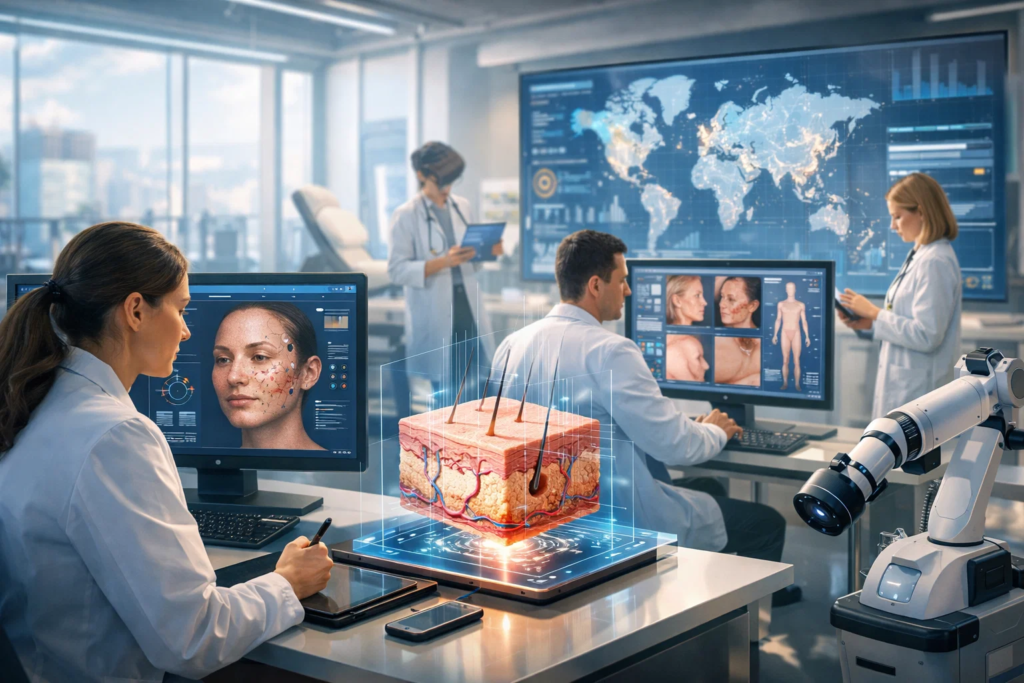
The top 10 dermatology software platforms in the world in 2026 represent the highest standard in specialty health IT innovation. These systems are no longer evaluated solely on their ability to store patient charts. Instead, they are assessed based on AI-powered documentation, 3D anatomical mapping, lesion tracking precision, teledermatology integration, automated billing validation, interoperability capabilities, and long-term scalability. In an industry where visual data and longitudinal monitoring are central to patient outcomes, dermatology-specific software must treat clinical images as structured diagnostic assets rather than static attachments.
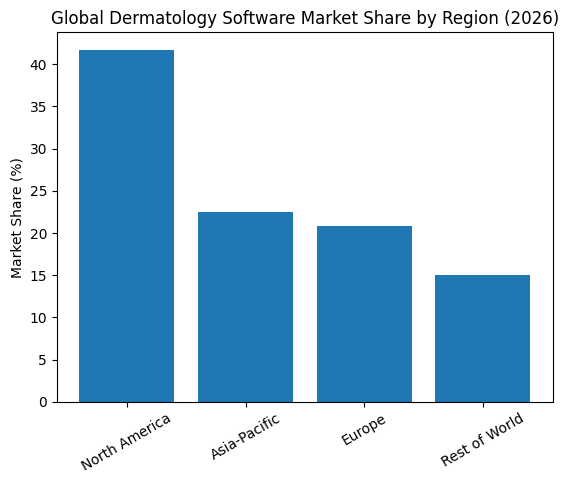
In 2026, dermatology practices operate in a highly competitive environment shaped by regulatory mandates such as interoperability standards and evolving quality reporting frameworks. Physicians are under increasing pressure to document thoroughly, code accurately, and report quality metrics while maintaining efficiency and reducing burnout. Ambient AI scribing, automated CPT and ICD-10 validation, and integrated MIPS-ready dashboards have shifted from optional enhancements to essential infrastructure. The best dermatology EHR systems now function as digital clinical partners, actively supporting providers through intelligent automation rather than simply recording information.
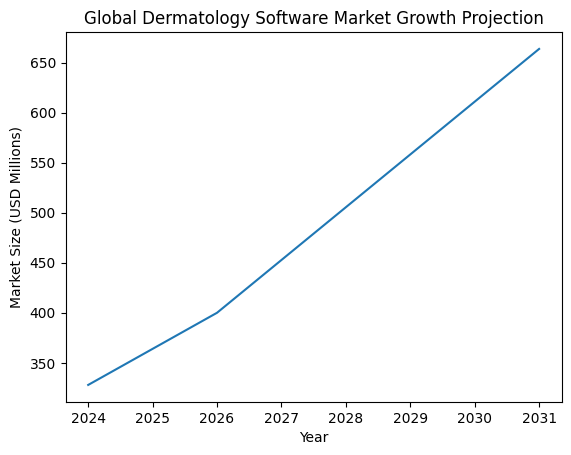
At the same time, the aesthetic and cosmetic dermatology sector has expanded significantly, driving demand for platforms that integrate high-definition photography, image ghosting, treatment tracking, and point-of-sale inventory management. Medical and surgical dermatology practices, conversely, require advanced 3D lesion mapping and AI-powered mole detection to support early melanoma diagnosis and defensible documentation during payer audits. The leading dermatology software solutions in 2026 address these divergent needs through specialization, modular architecture, and scalable cloud-based deployment.
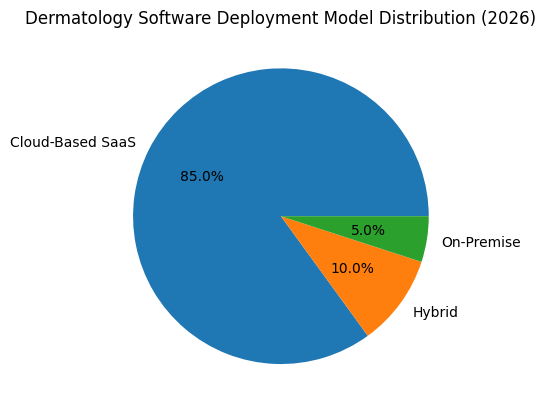
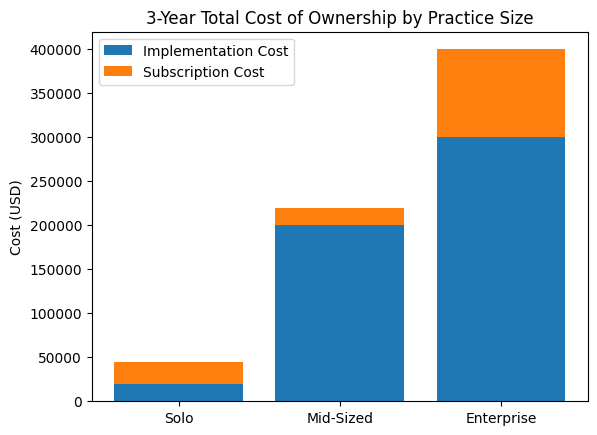
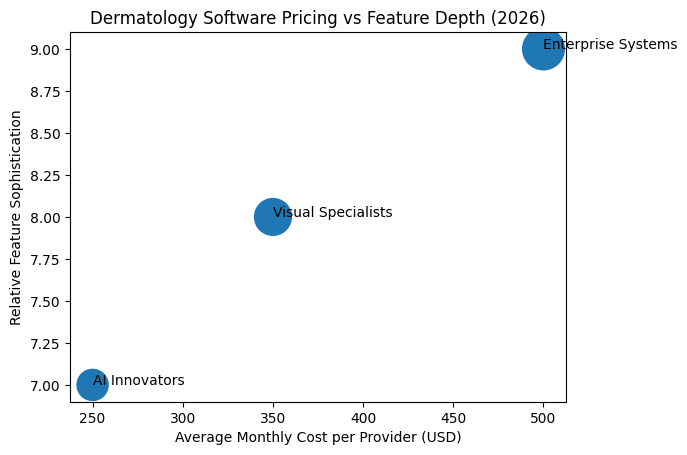
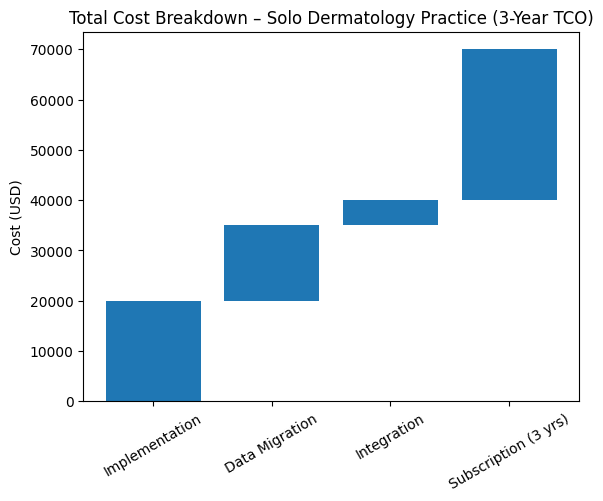
Financial sustainability also plays a critical role in software selection. Subscription-based pricing models dominate the market, with costs varying based on practice size, feature depth, and revenue cycle integration. Total cost of ownership now extends beyond monthly fees to include implementation, data migration, API integration, and long-term workflow optimization. Practices must evaluate dermatology software not just as a technical purchase but as a strategic investment in operational efficiency, reimbursement performance, and patient satisfaction.
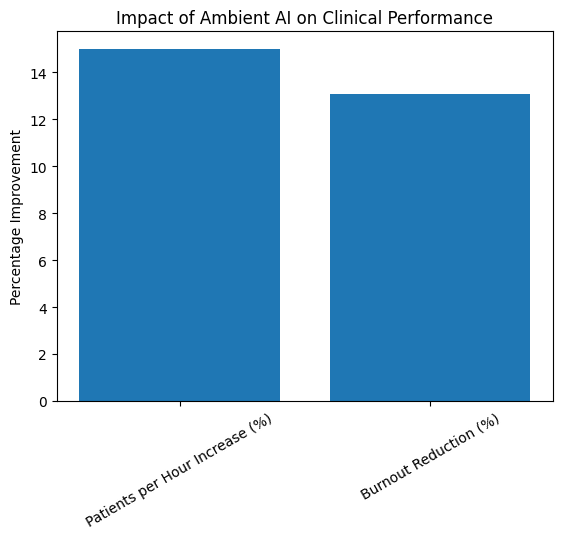
Furthermore, the rise of agentic artificial intelligence signals a new era in dermatology technology. These advanced systems go beyond passive documentation, proactively identifying clinical patterns, suggesting follow-up care, validating coding decisions, and optimizing scheduling workflows. As the industry moves toward 2027, the most successful dermatology practices will be those that leverage intelligent software as a core component of care delivery rather than an administrative afterthought.
This comprehensive guide to the top 10 dermatology software platforms in the world in 2026 explores the leading solutions shaping the future of medical, surgical, and aesthetic dermatology. By examining features, pricing structures, AI capabilities, imaging precision, interoperability readiness, and total cost of ownership, this analysis provides a detailed framework for selecting the best dermatology EHR and practice management system for modern clinical environments.
In an era defined by digital transformation, selecting the right dermatology software is no longer optional. It is a foundational decision that directly impacts diagnostic outcomes, regulatory compliance, financial performance, and provider well-being. The following insights will help practices navigate this rapidly evolving landscape and identify the technology solutions that define excellence in dermatology care in 2026.
Before we venture further into this article, we would like to share who we are and what we do.
About 9cv9
9cv9 is a business tech startup based in Singapore and Asia, with a strong presence all over the world.
With over nine years of startup and business experience, and being highly involved in connecting with thousands of companies and startups, the 9cv9 team has listed some important learning points in this overview of the Top 10 Best Dermatology Software in 2026.
If you like to get your company listed in our top B2B software reviews, check out our world-class 9cv9 Media and PR service and pricing plans here.
Top 10 Best Dermatology Software in 2026
- ModMed (EMA Dermatology)
- Nextech (Nextech EHR & PM)
- EZDERM
- PatientNow (with RxPhoto)
- DermEngine (MetaOptima)
- NextGen Healthcare (Enterprise & Office / NextGen Office)
- athenaOne (athenahealth)
- DrChrono
- eClinicalWorks (eCW)
- Praxis EMR
1. ModMed (EMA Dermatology)
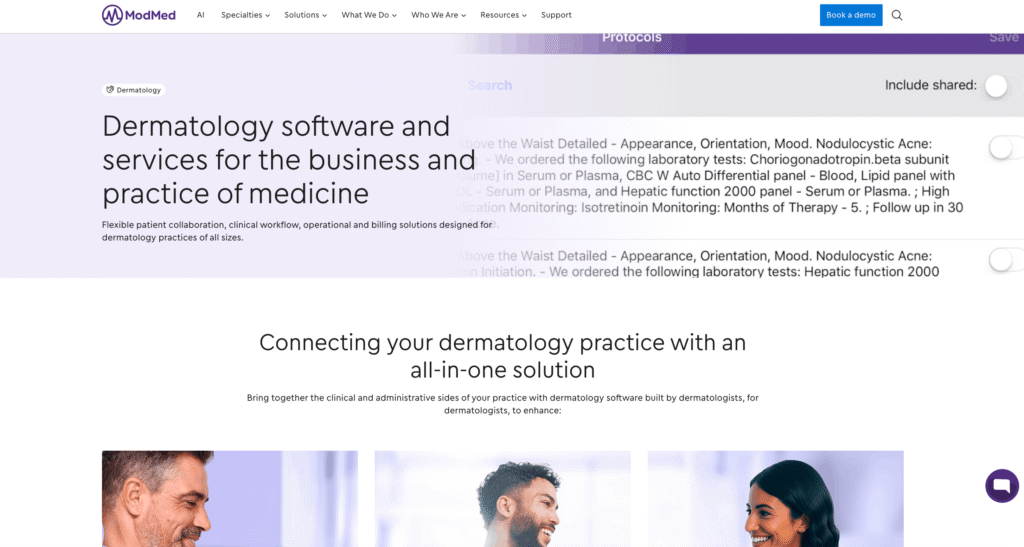
In 2026, Modernizing Medicine’s EMA platform continues to dominate the dermatology electronic health record landscape. The system’s sustained leadership is largely attributed to its adaptive learning architecture and specialty-driven design philosophy. Unlike generalized electronic medical record systems, EMA was developed in collaboration with practicing dermatologists, ensuring that its clinical workflows, documentation structures, and diagnostic pathways align directly with real-world dermatology practice patterns.
EMA distinguishes itself by continuously learning from individual provider behaviors. Over time, the platform analyzes recurring documentation habits, frequently selected diagnoses, and treatment plans within a specific practice. It then proactively suggests clinical pathways, helping providers reduce documentation time while maintaining accuracy and consistency. This personalized automation enhances efficiency without compromising clinical quality.
The Evolution Toward an AI-Powered Practice Model
Between late 2025 and early 2026, ModMed introduced a major strategic upgrade branded as the AI-Powered Practice initiative. This transformation expanded EMA beyond a documentation tool into a comprehensive operational ecosystem. The new framework integrates artificial intelligence across clinical documentation, billing operations, front-office management, and patient communication.
One of the most prominent components of this upgrade is ModMed Scribe 2.0. Trained on de-identified data derived from more than 750 million patient encounters, this AI engine converts natural provider-patient conversations into structured clinical documentation. It generates coherent visit notes, suggests appropriate lab orders, and produces patient education materials automatically. As a result, physicians are able to maintain greater focus during patient interactions rather than dividing attention between clinical care and screen-based documentation.
Core Functional Capabilities of ModMed EMA
The platform’s strength lies in its tightly integrated feature set designed specifically for dermatology practices. Each component is optimized to streamline both clinical and administrative workflows.
Table: Key Features and Functional Specifications
| Feature Category | Specification Details | Primary Benefit to Practice |
|---|---|---|
| Mobile Access | Fully optimized for iPad and compatible with Apple Watch for real-time documentation | Enables point-of-care charting and flexible clinical mobility |
| Diagnostic Support | Embedded dermatology ICD-10 codes with adaptive treatment recommendations | Reduces coding errors and accelerates diagnosis selection |
| Regulatory Compliance | Integrated MIPS and MACRA tracking with specialty-focused compliance tools | Simplifies regulatory reporting and improves reimbursement outcomes |
| Pathology Integration | Direct in-house laboratory documentation and billing workflow integration | Streamlines lab coordination and reduces administrative duplication |
| AI Documentation Engine | Natural language processing trained on 750M+ encounters | Automates note generation and enhances physician-patient engagement |
| Revenue Cycle Optimization | Embedded billing assistants and claim optimization tools | Improves cash flow and reduces claim denials |
Adaptive Learning Versus Traditional EHR Architecture
EMA’s competitive edge becomes more apparent when compared to conventional EHR systems that rely on static templates and generic workflows. The adaptive model provides dynamic personalization, which significantly reduces repetitive actions and enhances provider satisfaction.
Comparative Matrix: EMA vs. Generic EHR Systems
| Evaluation Criteria | ModMed EMA Adaptive Model | Traditional Generic EHR Model |
|---|---|---|
| Specialty Customization | Built specifically for dermatology | Broad multi-specialty templates |
| Learning Capability | Learns individual provider habits over time | Static templates with minimal personalization |
| Documentation Workflow | Conversation-driven and AI-assisted | Manual entry and click-intensive navigation |
| Diagnostic Suggestions | Pattern-based adaptive recommendations | Manual code search |
| Lab and Pathology Integration | Direct dermatology-focused lab workflow | External integration often required |
| Regulatory Reporting | Pre-configured specialty compliance modules | Generalized reporting tools |
Clinical Workflow and Operational Efficiency
The user experience within mid-sized practices reflects the platform’s practical orientation. According to a clinical reviewer from Path Family Medicine, a medical practice employing between 11 and 50 staff members, EMA offers a balance between usability and functionality. The scheduling module and charting interface are described as intuitive, minimizing repetitive clicks that are commonly reported in other EHR systems.
The onboarding process is reported to be efficient, with staff becoming proficient within the first week of implementation. This rapid adoption curve minimizes patient volume disruption during system transitions, a critical factor for revenue stability in private practices.
However, operational limitations do exist. Some users report intermittent system slowdowns during peak usage hours. Additionally, customer support responsiveness has shifted toward email-based ticket systems, which can occasionally delay real-time troubleshooting assistance.
User Experience Assessment Matrix
| Performance Category | Observed Strengths | Reported Limitations |
|---|---|---|
| Ease of Use | Intuitive scheduling and charting interface | Occasional learning curve for advanced features |
| Staff Adoption | Rapid onboarding within one week | Requires structured initial training |
| System Performance | Generally stable under normal usage | Lag or freezing during peak operational hours |
| Customer Support | Organized ticket-based system | Limited direct phone access during urgent situations |
| Workflow Efficiency | Reduced repetitive clicking and improved navigation | Dependent on stable internet and server performance |
Strategic Value for Dermatology Practices
From a strategic perspective, ModMed EMA represents more than an electronic medical record system; it functions as an integrated dermatology practice management platform. Its alignment with specialty workflows, combined with artificial intelligence enhancements, positions it as a leading solution for practices seeking automation, compliance integration, and revenue cycle optimization.
In an increasingly competitive healthcare technology market, platforms that combine adaptive intelligence with specialty specificity are shaping the future of digital dermatology practice management. EMA’s continued development in AI-assisted documentation, regulatory integration, and operational workflow automation solidifies its reputation as a dominant dermatology EHR solution in 2026.
2. Nextech (Nextech EHR & PM)
Nextech has established itself as a leading electronic health record and practice management solution for hybrid dermatology practices that combine medical dermatology with a substantial volume of aesthetic and cosmetic procedures. In 2026, its reputation is reinforced by both industry recognition and measurable operational outcomes.
The platform is the only dermatology-focused EHR to receive the American Academy of Dermatology’s DataDerm Gold Recognition, reflecting its commitment to clinical data integrity and dermatology-specific reporting standards. Additionally, Nextech earned the 2024 Best in KLAS award for Ambulatory Specialty EHR, signaling high customer satisfaction and performance across specialty medical practices.
These recognitions position Nextech as a technology partner particularly suited to dermatology groups seeking both clinical precision and aesthetic business growth.
Industry Recognition and Accreditation Profile
Table: Nextech Industry Recognition and Awards
| Recognition Category | Awarding Organization | Significance for Practices |
|---|---|---|
| DataDerm Gold Recognition | American Academy of Dermatology | Validates dermatology-specific data quality and registry participation |
| Best in KLAS 2024 – Ambulatory Specialty | KLAS Research | Reflects high provider satisfaction and performance benchmarking |
| Dermatology-Aesthetic Hybrid Focus | Specialty Market Distinction | Designed specifically for practices blending medical and cosmetic care |
Clinical and Aesthetic Workflow Integration
Nextech’s primary competitive advantage lies in its seamless integration of medical dermatology workflows with aesthetic revenue operations. The system was built with an iPad-first architecture, enabling mobile-first clinical engagement and real-time documentation at the point of care.
A standout feature is its 3D smart stamping capability. This functionality allows providers to visually map procedures on anatomical models, whether documenting medical biopsies or cosmetic injectables. For medical dermatology, this ensures accurate lesion tracking and biopsy documentation. For aesthetic services, it supports precise recording of injection sites and treatment patterns, improving both clinical safety and visual consistency.
Beyond clinical documentation, Nextech’s practice management framework is engineered to drive aesthetic business growth. The system incorporates automated quoting tools, integrated membership management programs, and inventory tracking that monitors batch and lot numbers. This functionality enhances both patient safety compliance and profitability oversight.
Clinical and Aesthetic Capability Matrix
| Operational Domain | Nextech Capability Description | Business or Clinical Impact |
|---|---|---|
| Mobile Clinical Charting | iPad-first documentation model | Improves provider mobility and real-time documentation accuracy |
| 3D Smart Stamping | Visual anatomical mapping for biopsies and injectables | Enhances documentation precision and aesthetic treatment tracking |
| Integrated Memberships | Built-in subscription and loyalty program management | Drives recurring revenue and patient retention |
| Automated Quoting | Real-time pricing generation for cosmetic services | Accelerates treatment plan approvals and conversion rates |
| Inventory Management | Batch and lot number tracking | Strengthens compliance, safety monitoring, and cost control |
| Lab Integration | Direct lab connectivity within EHR | Eliminates manual fax workflows and improves turnaround times |
Performance Metrics and Quantitative Outcomes
Nextech’s performance data further supports its positioning as a high-impact EHR and PM system for dermatology practices. Reported metrics demonstrate both regulatory and financial benefits.
Table: Quantitative Performance Indicators
| Performance Metric | Reported Outcome | Operational Significance |
|---|---|---|
| MIPS Success Rate | Average customer score of 97 percent | Supports quality reporting and value-based reimbursement |
| Medicare Reimbursement | Average positive adjustment exceeding 1.3 percent | Enhances revenue through performance-based payment models |
| Patient Check-In Efficiency | 97 percent reduction in check-in time | Reduces front-desk congestion and improves patient experience |
| Software Deployment Model | True SaaS, fully vendor-managed updates | Eliminates local server maintenance and ensures continuous upgrades |
The true SaaS cloud infrastructure ensures that all updates are vendor-managed. This reduces internal IT burdens and ensures regulatory and feature updates are deployed automatically without disrupting clinical operations.
Operational Strengths and User Experience Feedback
A reviewer from Gulf Coast Vein and Laser Center, a small medical practice employing between one and ten staff members, describes Nextech as a comprehensive and dependable software ecosystem. The billing worklist is noted as particularly intuitive and user-friendly, streamlining revenue cycle workflows and improving claim management efficiency.
The direct lab integration is highlighted as a significant operational improvement. By connecting laboratory partners directly to the EHR, the practice receives results in real time, eliminating the inefficiencies associated with fax-based workflows and reducing administrative follow-up.
The primary limitation cited relates to the scheduling module. During initial implementation, the scheduling workflow required additional adjustment and training. However, support services were described as responsive and effective in facilitating the transition.
User Experience Evaluation Matrix
| Evaluation Category | Strengths Observed | Challenges Identified |
|---|---|---|
| Billing Worklist | Highly intuitive and efficient claim processing | None reported |
| Lab Integration | Immediate result receipt within EHR | Dependent on lab connectivity setup |
| Scheduling Module | Comprehensive functionality | Initial learning curve perceived as complex |
| Customer Support | Responsive and helpful transition assistance | Requires structured onboarding during implementation |
| Overall Value Proposition | Strong balance of clinical and aesthetic management capabilities | Adjustment period for advanced scheduling features |
Strategic Value for Hybrid Dermatology and Aesthetic Practices
Nextech’s architecture is particularly advantageous for practices that rely heavily on both insurance-based dermatology services and cash-pay aesthetic procedures. By unifying clinical documentation, aesthetic treatment tracking, revenue optimization, and regulatory compliance into a single system, Nextech reduces the need for multiple disconnected software platforms.
For dermatology groups seeking a scalable, cloud-based EHR with strong aesthetic revenue tools and proven regulatory performance, Nextech represents a comprehensive solution tailored to the evolving hybrid practice model in 2026.
3. EZDERM
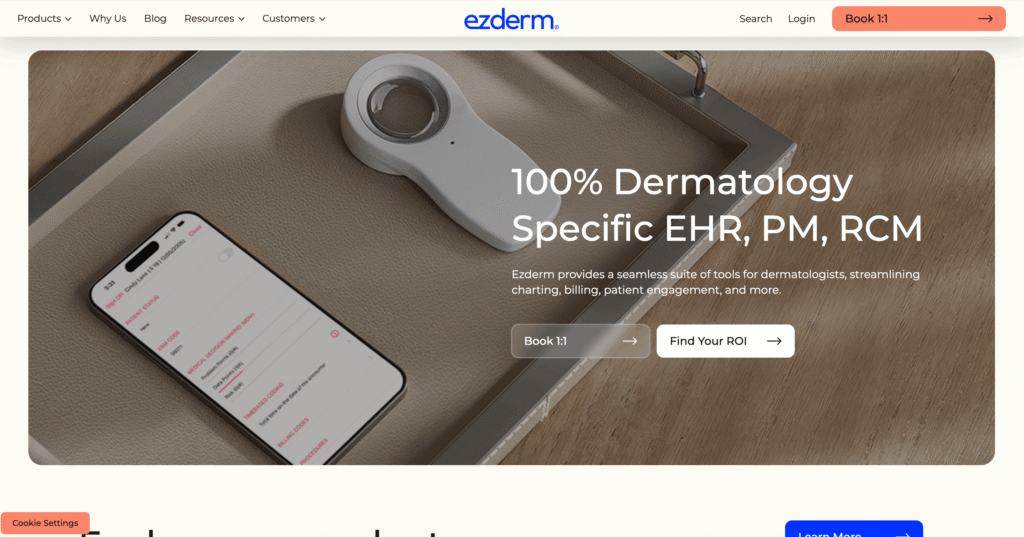
EZDERM stands out within the global top ten for its uniquely visual documentation philosophy. Unlike traditional text-heavy EHR systems, EZDERM is engineered around a proprietary 3D Anatomical Body Map that transforms how clinicians record findings and procedures.
The platform is fully cloud-based, ensuring secure remote access and automatic updates without on-site server maintenance. Its intuitive interface has positioned it as one of the most user-friendly dermatology systems in the industry.
Precision Documentation Through 3D Anatomical Mapping
The defining feature of EZDERM is its 3D Body Map, which includes more than 3,000 precise anatomical reference points. Providers can rotate, zoom, and isolate specific areas of the body, including challenging regions such as interdigital spaces or retroauricular areas.
This visual precision supports longitudinal lesion tracking, which is especially critical for early melanoma detection and follow-up care. By maintaining detailed visual records over time, dermatologists can identify subtle changes that might otherwise be overlooked in text-based documentation.
Table: EZDERM 3D Body Map Capabilities
| Feature Component | Functional Description | Clinical Impact |
|---|---|---|
| 3D Anatomical Coverage | Over 3,000 distinct anatomical reference points | Enhances diagnostic accuracy |
| Rotational Zoom Capability | Full 360-degree body mapping with magnification | Improves visibility of hard-to-reach areas |
| Longitudinal Tracking | Historical lesion comparison across visits | Supports early melanoma detection |
| Visual Treatment Marking | Direct mapping of procedures on body diagram | Reduces ambiguity in documentation |
| Location-Based Code Trigger | Automatic ICD-10 and CPT generation based on map location | Minimizes billing errors |
Automated Coding and Billing Accuracy
A significant operational advantage of EZDERM lies in its coding automation. When a clinician marks a diagnosis or treatment area on the 3D body map, the system automatically generates corresponding location-specific ICD-10 and CPT codes. This reduces manual coding entry and minimizes billing inaccuracies.
For dermatology practices, where lesion location directly affects coding specificity, this automation improves reimbursement accuracy and decreases claim rejections.
Performance Ratings and User Satisfaction
EZDERM consistently earns high marks across key satisfaction categories.
Table: EZDERM Performance Ratings
| Rating Category | Score (Out of 5) |
|---|---|
| Overall User Rating | 4.3 – 5.0 |
| Customer Service | 5.0 |
| Ease of Use | 5.0 |
| Feature Set | 5.0 |
These ratings reflect strong provider satisfaction, particularly among small to mid-sized dermatology practices.
Provider Experience and Operational Feedback
A practice owner at Park Avenue Dermatology reported long-term adoption of EZDERM from the first day of opening the practice. After using multiple systems throughout a professional career, including enterprise-level platforms, the reviewer described EZDERM as exceptionally functional and intuitive.
One of the most frequently praised aspects is the company’s responsiveness to provider feedback. The platform’s leadership, which includes a practicing dermatologist, contributes to workflow decisions that mirror real-world clinical needs. This clinician-led development model enhances relevance, practicality, and continuous innovation.
User Experience Evaluation Matrix
| Evaluation Dimension | Observed Strengths | Considerations |
|---|---|---|
| Workflow Design | Visual-first documentation aligned with dermatology practice | May require adaptation for text-focused users |
| Coding Automation | Automatic ICD-10 and CPT generation | Dependent on accurate map selection |
| Innovation Responsiveness | Active provider feedback incorporation | Feature updates tied to development cycles |
| Clinical Precision | High anatomical specificity | Learning curve for new 3D users |
| Practice Versatility | Suitable for cosmetic, procedural, and medical dermatology | Optimized primarily for dermatology specialty |
Strategic Position of EZDERM Among Global Leaders
Within the top ten dermatology software platforms worldwide in 2026, EZDERM occupies a distinctive position as the premier visual documentation system. While other platforms emphasize AI automation, enterprise scalability, or aesthetic business integration, EZDERM’s strength lies in anatomical precision and intuitive mapping.
For dermatology practices prioritizing melanoma tracking, biopsy documentation, coding accuracy, and a visual-centric workflow, EZDERM represents one of the most specialized and highly rated solutions available in the global market.
As dermatology software continues to evolve, systems that combine cloud infrastructure, automation, specialty specificity, and clinician-driven innovation are shaping the future of digital dermatology practice management. EZDERM remains firmly positioned among the top global dermatology software platforms in 2026 due to its precision-driven architecture and provider-focused development philosophy.
4. PatientNow (with RxPhoto)
PatientNow has emerged in 2026 as one of the most influential all-in-one practice growth and electronic medical record platforms serving medical aesthetics, med-spa, and plastic surgery practices worldwide. Unlike traditional EMR systems that focus primarily on documentation, PatientNow positions itself as a revenue acceleration ecosystem, integrating clinical workflows, patient engagement, marketing automation, and financial management into a unified cloud-based infrastructure.
The integration of the RxPhoto application has further strengthened its market leadership. Together, PatientNow and RxPhoto deliver a seamless image-to-billing workflow that connects visual documentation directly to inventory tracking and point-of-sale processing. This closed-loop architecture significantly enhances operational transparency, compliance, and profitability.
Global Market Presence and Practice Adoption
In 2026, PatientNow supports more than 4,795 active locations worldwide. Its adoption is particularly strong among aesthetic clinics, plastic surgery centers, and wellness-focused med-spas seeking scalable patient acquisition tools combined with compliant clinical documentation.
Table: PatientNow Market Position Indicators
| Market Indicator | Performance Data | Strategic Significance |
|---|---|---|
| Active Locations Worldwide | 4,795+ | Demonstrates global scalability and platform reliability |
| Primary Practice Types | Medical Aesthetics, Plastic Surgery | Specialized alignment with cash-pay environments |
| Deployment Model | Cloud-Based SaaS | Enables remote access and vendor-managed updates |
| Growth Focus | Consultation-to-Treatment Conversion | Revenue-driven system architecture |
Image-to-Billing Workflow Integration with RxPhoto
A defining differentiator of PatientNow is its integration with RxPhoto, which transforms photo documentation into an operational asset rather than a static record. The RxPhoto system standardizes before-and-after photography and incorporates “ghosting” technology that overlays prior images for precise visual alignment during follow-up visits.
This visual documentation is directly connected to treatment documentation and billing. When a procedure is recorded, associated products and inventory items are automatically deducted from stock. This reduces manual reconciliation and ensures accurate financial reporting.
Table: RxPhoto Functional Capabilities
| Feature Component | Functional Description | Operational Benefit |
|---|---|---|
| Standardized Photo Capture | Consistent imaging protocols across visits | Improves treatment comparison and documentation accuracy |
| Ghosting Technology | Overlay of previous images for alignment | Enhances visual tracking of patient progress |
| Image-to-Billing Linkage | Automatic inventory deduction after procedure logging | Reduces inventory discrepancies |
| Integrated Procedure Mapping | Direct association between images and treatment records | Strengthens compliance and audit readiness |
Growth-Focused Infrastructure and AI Automation
In 2026, PatientNow significantly expanded its artificial intelligence capabilities following its strategic integration with Recura. This expansion targeted wellness clinics and med-spa operators seeking advanced marketing automation and patient lifecycle management tools.
The platform now offers AI-powered SMS and email campaigns designed to convert consultations into booked treatments. Automated follow-up reminders, retargeting messages, and membership renewal notifications help increase patient retention and lifetime value.
Additionally, PatientNow supports 24/7 online booking, allowing practices to capture leads outside standard business hours. This feature is particularly valuable in competitive aesthetic markets where patient responsiveness directly affects revenue capture.
Growth and Marketing Capability Matrix
| Growth Component | Core Functionality | Revenue Impact |
|---|---|---|
| AI Lead Management | Automated SMS and email marketing workflows | Increases patient acquisition rates |
| Consultation Tracking | Conversion analytics from inquiry to treatment | Identifies revenue bottlenecks |
| Membership Billing | Recurring payment processing with automated renewals | Stabilizes recurring revenue streams |
| 24/7 Online Booking | Real-time appointment scheduling via digital channels | Expands accessibility and improves booking rates |
| Treatment Pathways | Automated re-treatment and follow-up reminders | Boosts retention and repeat procedure volume |
Comprehensive Financial and Compliance Architecture
PatientNow incorporates secure, integrated payment processing to streamline financial operations. The system supports membership billing, installment plans, and point-of-sale transactions within the same interface used for clinical documentation.
From a compliance standpoint, the platform operates within a HIPAA-compliant cloud environment. Role-based access controls ensure that team members only access information relevant to their responsibilities, reducing security risks and maintaining regulatory alignment.
Table: Financial and Compliance Infrastructure
| Component | Functionality Description | Compliance and Business Benefit |
|---|---|---|
| Integrated Payment Processing | Secure in-platform payment acceptance | Simplifies financial reconciliation |
| Membership Management | Automated recurring billing and subscription tracking | Encourages predictable revenue |
| Role-Based Access Control | User-level permission settings | Protects sensitive patient data |
| HIPAA-Compliant Storage | Secure encrypted cloud hosting | Ensures regulatory compliance |
Clinical Workflow and Documentation Efficiency
From a clinical standpoint, PatientNow provides structured documentation tools tailored to aesthetic procedures. The injectables documentation tab is widely used for recording filler placements, neuromodulator treatments, and procedural details.
Providers can quickly pull patient-specific data points such as allergies and medical history directly into SOAP notes. This automation reduces repetitive data entry and ensures comprehensive documentation consistency.
The treatment pathways feature is frequently cited as a transformative tool for med-spas. By prompting staff to conduct timely follow-up and re-treatment calls, the system directly contributes to improved patient retention and recurring treatment cycles.
User Experience and Operational Feedback
A reviewer from a mid-sized medical practice employing between 11 and 50 staff members describes PatientNow as highly valuable and remarkably easy to use once fully implemented. The onboarding team is noted for reducing setup stress and facilitating a smooth transition.
The treatment pathways functionality is highlighted as a key driver of retention improvement. Daily use of the injectables documentation tab demonstrates the platform’s integration into routine clinical operations.
However, due to the breadth of features available, new users may experience an initial learning curve. This complexity stems from the system’s comprehensive functionality rather than usability deficiencies.
User Experience Evaluation Matrix
| Evaluation Dimension | Reported Strengths | Considerations |
|---|---|---|
| Ease of Use | Intuitive interface post-training | Initial learning curve due to feature depth |
| Treatment Pathways | Automated follow-up reminders | Requires structured workflow configuration |
| Injectables Documentation | Efficient procedure logging with data integration | Best utilized with staff training |
| Implementation Support | Responsive onboarding team | Training phase required for full optimization |
| Revenue Impact | Increased patient retention and conversion rates | Dependent on active marketing automation utilization |
Strategic Position in the 2026 Aesthetic Software Market
PatientNow occupies a unique position among medical aesthetics software platforms in 2026. While many systems focus primarily on either clinical documentation or practice management, PatientNow integrates marketing automation, financial processing, clinical records, and image management into a unified revenue-centric ecosystem.
For med-spas, plastic surgery centers, and aesthetic dermatology practices seeking scalable growth infrastructure, automated patient lifecycle management, and seamless image-to-billing integration, PatientNow represents one of the most comprehensive and strategically aligned solutions available in the global market.
5. DermEngine (MetaOptima)
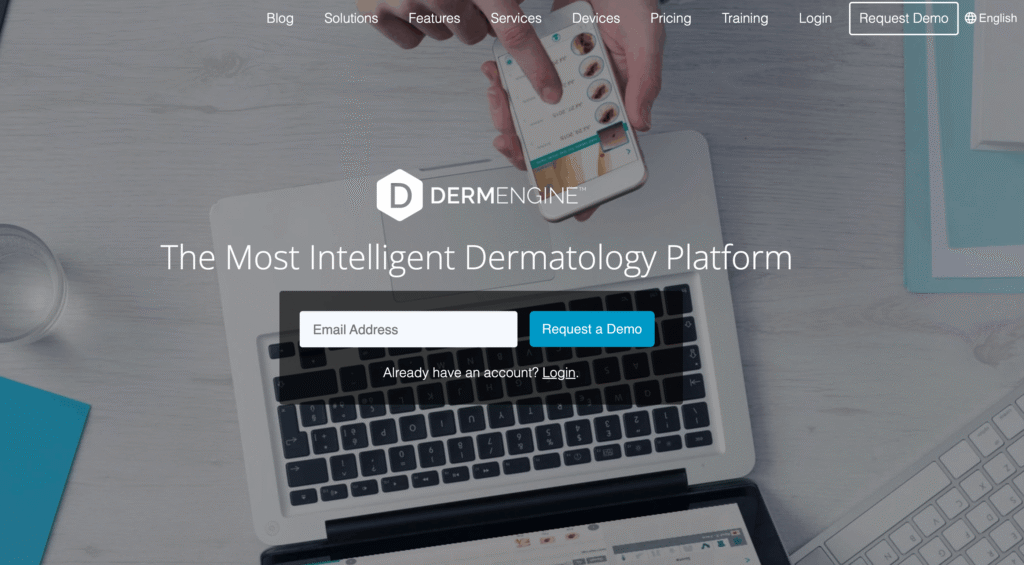
DermEngine, developed by MetaOptima, has established itself in 2026 as one of the most advanced artificial intelligence-driven dermatology imaging platforms globally. Unlike traditional electronic medical record systems, DermEngine is purpose-built for high-resolution imaging, lesion tracking, and skin cancer detection. It is frequently deployed either as a standalone dermatology imaging solution or as an intelligent imaging layer integrated into enterprise hospital EMRs such as Epic and Cerner.
The platform is particularly prominent in academic centers, melanoma institutes, oncology-focused dermatology practices, and hospitals that require scalable imaging precision combined with AI-assisted diagnostics.
Clinical Positioning and Market Adoption
DermEngine is recognized for its specialized focus on skin cancer surveillance and longitudinal lesion monitoring. Its architecture is designed to complement large hospital systems by adding advanced dermatologic imaging capabilities without disrupting core EMR workflows.
Table: DermEngine Global Adoption Metrics in 2026
| System Capacity Indicator | Performance Specification | Strategic Implication |
|---|---|---|
| Healthcare Organizations Served | 1,000+ | Broad institutional trust and international adoption |
| Global Patient Coverage | Over 1 million patients | Scalable enterprise-ready imaging infrastructure |
| Primary Clinical Focus | Skin cancer detection and lesion monitoring | High-value oncology and dermatology alignment |
| Deployment Model | Cloud-integrated with EMR compatibility | Flexible integration across hospital ecosystems |
AI-Powered Diagnostics and Imaging Innovation
At the core of DermEngine’s innovation is the OptimaScan 3D Total Body Photography system. This hardware enables clinicians to capture standardized, full-body dermatologic images within minutes. The uniform imaging process ensures consistent lighting, positioning, and angle replication across follow-up visits.
Once captured, images are processed through proprietary AI-driven tools known as Evolution Trackers and MoleMatch algorithms. These algorithms analyze lesion morphology, detect new growths, and identify subtle changes in existing moles over time.
The system provides real-time feedback on lesion assessment, assisting clinicians in prioritizing suspicious areas for further dermoscopic evaluation or biopsy.
Table: AI Diagnostic Components and Clinical Functionality
| Component Name | Functional Description | Clinical Benefit |
|---|---|---|
| OptimaScan 3D Imaging | Standardized full-body photography capture | Ensures reproducible imaging for longitudinal comparison |
| Evolution Trackers | AI-driven lesion change detection over time | Identifies evolving moles early |
| MoleMatch Algorithm | Pattern recognition for mole similarity and irregularities | Supports early melanoma detection |
| Real-Time AI Feedback | Immediate lesion assessment indicators | Improves diagnostic confidence and workflow speed |
| 3D Visualization Tools | Advanced lesion mapping and comparison modes | Enhances visual accuracy and monitoring precision |
Mobile Dermoscopy and Device Integration
DermEngine integrates seamlessly with the MoleScope II mobile dermoscopy device, enabling high-resolution dermoscopic image capture through smartphone connectivity. This integration supports clinicians in both clinic and outreach settings, expanding diagnostic accessibility.
The system supports Wi-Fi auto-sync functionality across multiple operating systems and devices, including iOS, Android, macOS, and Apple TV. This cross-platform synchronization ensures rapid image transfer and centralized storage without manual file handling.
Connectivity and Technology Matrix
| Technology Feature | Specification Details | Operational Advantage |
|---|---|---|
| Mobile Dermoscopy Support | Integration with MoleScope II | Portable high-resolution lesion imaging |
| Wi-Fi Auto-Sync | Automatic cross-device synchronization | Eliminates manual upload delays |
| Multi-Platform Access | Compatible with iOS, Android, macOS, Apple TV | Enables collaborative review in clinical settings |
| Cloud Storage Architecture | Secure centralized image repository | Facilitates audit readiness and data security |
Advanced Visualization and Lesion Tracking
One of the platform’s most praised features is its 3D visualization system, particularly the Flicker mode. This feature allows clinicians to toggle rapidly between previous and current images of the same anatomical region, making subtle changes more apparent.
This dynamic visualization capability is especially valuable in high-risk melanoma clinics, where early detection depends on identifying minimal morphological variations.
Table: Visualization and Monitoring Capabilities
| Visualization Feature | Description | Clinical Outcome |
|---|---|---|
| 3D Body Mapping | Rotational and zoom-enabled lesion localization | Increases anatomical tracking precision |
| Flicker Mode | Rapid alternating comparison of past and present images | Enhances detection of subtle lesion evolution |
| High-Resolution Archiving | Organized storage of quality images | Streamlines documentation and follow-up assessments |
| Image Organization Tools | Categorized lesion labeling and tagging | Simplifies patient record navigation |
User Experience and Clinical Feedback
A medical photography manager from the Melanoma Institute Australia reports that DermEngine significantly enhanced clinical imaging workflows. The system’s interface is described as straightforward, allowing staff to store and organize high-quality images efficiently with minimal clicks.
The smartphone application is frequently cited as indispensable, enabling immediate capture and transfer of images directly into the centralized platform. The real-time synchronization eliminates workflow delays and reduces administrative burden.
The support team is also highlighted as exceptionally responsive, contributing to smooth implementation and ongoing system optimization.
User Experience Evaluation Matrix
| Evaluation Category | Reported Strengths | Observations |
|---|---|---|
| Ease of Use | Intuitive interface with minimal navigation complexity | Requires initial imaging protocol training |
| Image Management | Rapid organization and categorization | Highly effective for high-volume melanoma clinics |
| AI Diagnostic Assistance | Real-time lesion assessment feedback | Intended to augment, not replace, clinical judgment |
| Mobile Functionality | Fast image transfer via smartphone application | Dependent on secure Wi-Fi infrastructure |
| Customer Support | Highly responsive technical assistance | Positive institutional feedback |
Strategic Role in the Global Dermatology Technology Landscape
In 2026, DermEngine occupies a specialized but critical niche within the dermatology software ecosystem. While many EHR systems focus primarily on billing, documentation, or practice management, DermEngine is dedicated to high-precision imaging and AI-assisted lesion surveillance.
For melanoma institutes, oncology departments, dermatology clinics, and hospitals requiring scalable total body photography and intelligent lesion analysis, DermEngine functions as an essential diagnostic technology layer. Its combination of 3D imaging hardware, AI evolution tracking, mobile dermoscopy integration, and enterprise EMR compatibility positions it as one of the most advanced skin cancer detection platforms globally.
As dermatology increasingly integrates artificial intelligence and standardized imaging into clinical protocols, DermEngine continues to represent a leading solution for early detection, accurate monitoring, and comprehensive skin cancer documentation in 2026.
6. NextGen Healthcare (Enterprise & Office / NextGen Office)
NextGen Healthcare continues to maintain a dominant presence in the ambulatory care technology market in 2026, particularly among small and mid-sized physician practices. Recognized as the number one electronic health record and practice management solution for small practices by Black Book Research in both 2024 and 2026, NextGen has solidified its position as a trusted enterprise-grade platform tailored to independent clinics and specialty providers.
The NextGen Office cloud ecosystem is specifically engineered for practices with fewer than ten providers. Its architecture delivers a fully integrated closed-loop patient experience, covering appointment scheduling, clinical documentation, billing, reporting, and patient engagement within a unified cloud-based infrastructure.
Market Recognition and Benchmarking Leadership
NextGen Healthcare’s industry reputation is reinforced by large-scale benchmarking surveys. In 2026, the platform achieved the top ranking in Physician Practice Management Software based on responses from 24,500 validated healthcare users. This broad survey base highlights consistent performance across usability, compliance, and financial outcomes.
Table: Industry Recognition and Market Rankings
| Recognition Category | Awarding Body | Year(s) Recognized | Strategic Significance |
|---|---|---|---|
| #1 EHR and PM for Small Practices | Black Book Research | 2024, 2026 | Validates leadership among independent clinics |
| #1 Physician Practice Management Software | Black Book Research | 2026 | Reflects strong operational and revenue performance |
| Small Practice Cloud Ecosystem Leader | Industry Benchmarking | Ongoing | Specialization for practices under 10 providers |
Closed-Loop Patient Journey Architecture
NextGen Office is structured around a closed-loop model, ensuring continuity across the entire patient lifecycle. From appointment scheduling and check-in to clinical documentation, billing, and follow-up communications, every stage of care is connected within a centralized environment.
This architecture minimizes fragmented workflows and reduces reliance on multiple disconnected software systems, which can create inefficiencies and data inconsistencies.
Workflow Automation and Ambient Assist AI
A defining differentiator in 2026 is the platform’s Ambient Assist artificial intelligence. This AI-driven documentation system securely captures natural patient-provider conversations and instantly converts them into structured SOAP notes.
Providers activate the system during consultations, allowing the AI to generate clinical documentation in real time. This automation reduces administrative burden and allows clinicians to maintain full engagement with patients during visits.
Beyond documentation, NextGen incorporates smart assistive technology that accelerates order entry, prescription management, and clinical workflows.
Table: Workflow Automation Performance Metrics
| Performance Metric | Measured Achievement | Operational Impact |
|---|---|---|
| Physician Time Savings | 2.5 hours saved per provider per day | Reduces burnout and increases patient-facing time |
| Order Entry Speed | 40 percent faster through smart assistive tools | Improves workflow efficiency and throughput |
| Billing Denial Reduction | 30 percent reduction in billing errors and denials | Enhances revenue cycle performance |
| Specialty Benchmark Ranking | #1 overall in 2026 benchmarking | Demonstrates cross-specialty operational excellence |
These quantifiable outcomes highlight the system’s emphasis on measurable productivity gains and financial optimization.
Comprehensive Practice Management Capabilities
NextGen’s practice management suite integrates front-office, clinical, and billing operations into a cohesive system. Scheduling workflows are designed to be intuitive for small teams, and co-pay collection processes are streamlined within the same interface used for patient check-in.
The platform is fully cloud-based, enabling device-agnostic access. Clinics can operate across desktops, tablets, and mobile devices without local server dependencies.
Practice Management Capability Matrix
| Operational Component | Functional Description | Business Benefit |
|---|---|---|
| Appointment Scheduling | Simplified calendar management with automated reminders | Reduces no-shows and improves patient flow |
| Co-Pay Collection | Integrated payment processing at check-in | Enhances cash flow and reduces manual reconciliation |
| Revenue Cycle Management | Automated claim scrubbing and error detection | Minimizes denials and accelerates reimbursements |
| Reporting and Analytics | Real-time performance dashboards | Supports data-driven decision-making |
| Cloud Accessibility | Device-independent access | Enables flexible clinic operations |
User Experience and Operational Feedback
A reviewer from a small health and wellness clinic employing between 11 and 50 staff members describes NextGen Office as a highly efficient all-in-one system tailored for small practice needs. The Ambient Assist AI is particularly praised for its ability to generate documentation effortlessly during consultations.
The scheduling interface and co-pay workflows were reported as easy for front-office staff to learn, reducing onboarding friction. The system’s speed and cloud accessibility contribute to organized and streamlined operations.
However, certain limitations were noted. The absence of a fully open API restricts integration with some third-party applications, which may impact practices seeking extensive customization. Additionally, fax processing speeds may occasionally lag, which can affect communication workflows in environments still reliant on fax-based document exchange.
User Experience Evaluation Matrix
| Evaluation Category | Reported Strengths | Considerations |
|---|---|---|
| AI Documentation | Real-time SOAP note generation | Requires microphone-enabled consultation setup |
| Ease of Scheduling | Intuitive for small front-office teams | May require workflow customization |
| Cloud Performance | Fast and device-flexible | Dependent on stable internet connectivity |
| Third-Party Integration | Core integrations supported | Limited open API restricts some external app connections |
| Fax Processing | Integrated document handling | Occasional delays in processing |
Strategic Role in the 2026 Small Practice EHR Market
In 2026, NextGen Healthcare occupies a strong leadership position within the small practice EHR and practice management segment. Its combination of industry recognition, AI-powered documentation, measurable productivity gains, and closed-loop workflow integration makes it particularly attractive to independent clinics and specialty providers operating with lean teams.
For practices seeking an enterprise-grade solution scaled specifically for fewer than ten providers, NextGen Office represents a comprehensive and performance-driven platform. Its measurable time savings, denial reduction outcomes, and integrated patient journey management continue to distinguish it as a top-tier EHR and practice management solution in the global healthcare technology landscape.
7. athenaOne (athenahealth)
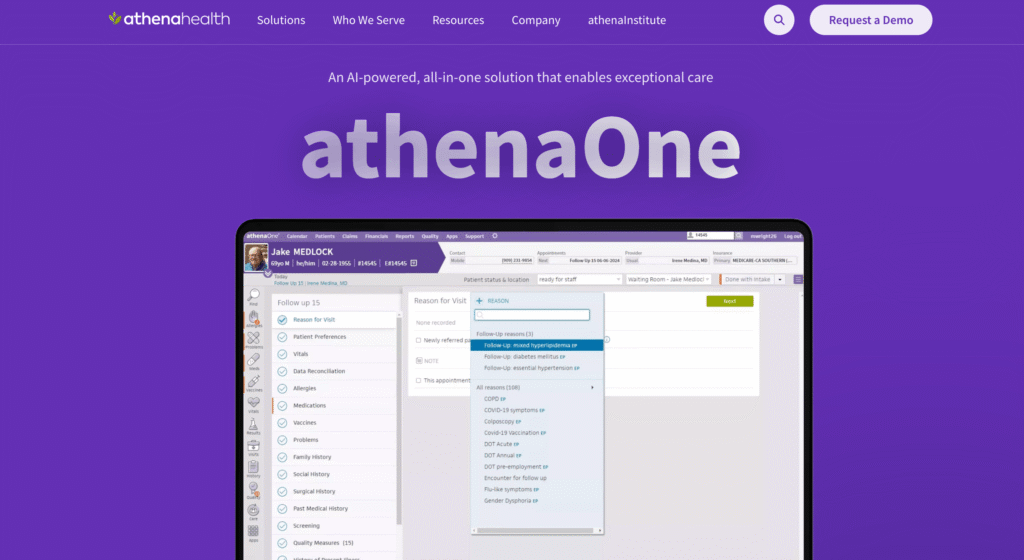
athenaOne, developed by athenahealth, stands in 2026 as one of the most expansive cloud-based healthcare technology ecosystems globally. Designed for enterprise-level organizations, multi-specialty groups, and high-volume medical networks, the platform integrates electronic health records, medical billing, practice management, and patient engagement into a single, unified environment.
Its scale and network-driven intelligence distinguish it from smaller specialty platforms. With a client base exceeding 170,000 providers, athenaOne leverages aggregated clinical and financial data to continuously refine its artificial intelligence models and revenue cycle optimization algorithms.
Enterprise Positioning and Market Scope
athenaOne is particularly favored by larger healthcare organizations that require sophisticated revenue cycle management infrastructure, centralized data governance, and enterprise analytics capabilities.
Table: athenaOne Enterprise Profile in 2026
| Enterprise Indicator | Performance Scale | Strategic Implication |
|---|---|---|
| Providers on Network | 170,000+ | Large-scale AI data training advantage |
| Annual Collections Managed | USD 45 Billion | High-volume revenue cycle optimization |
| Target Market | Multi-specialty groups and enterprise systems | Designed for organizational scalability |
| Deployment Model | Fully cloud-based SaaS | Vendor-managed updates and centralized infrastructure |
Revenue Cycle Management and AI-Driven Financial Performance
One of athenaOne’s defining strengths is its revenue cycle management engine. The platform processes and manages more than USD 45 billion in annual collections, using this data to train AI models that improve claim accuracy and denial management.
The system reports a 98.4 percent clean-claim submission rate, a benchmark that reflects its ability to identify coding and billing discrepancies before claims are submitted to payers. Additionally, practices utilizing its Coding Advice AI have experienced a 26.4 percent improvement in payment recoveries for coding-related denials.
Table: Revenue Cycle Performance Metrics
| RCM Efficiency Metric | Statistical Achievement | Operational Impact |
|---|---|---|
| Clean-Claim Submission Rate | 98.4 percent | Reduces claim rework and accelerates reimbursement |
| Payment Recovery Improvement | 26.4 percent increase for coding denials | Enhances revenue retention and reduces lost revenue |
| AI Data Training Base | USD 45 billion in annual collections | Improves predictive billing and denial prevention accuracy |
| Network Intelligence | 170,000+ provider dataset | Continuously refines claim optimization algorithms |
The integration of Coding Advice AI provides real-time prompts and recommendations during documentation and claim preparation, helping practices correct potential coding issues before submission.
Clinician Workflow and Operational Efficiency
Beyond revenue cycle performance, athenaOne focuses on clinician workflow optimization. According to reported statistics, 60 percent of clinicians using the system close patient encounters within one day. This efficiency is attributed to predefined charting templates, structured documentation fields, and automated task routing.
The scheduling module is designed for flexibility and real-time coordination. Providers can schedule follow-up appointments directly from the patient’s chart while still in the examination room. This feature reduces patient handoff friction and improves clinic throughput by minimizing front-desk congestion.
Workflow Efficiency Matrix
| Workflow Component | Functional Description | Efficiency Outcome |
|---|---|---|
| In-Exam Room Scheduling | Appointment booking directly from patient chart | Improves patient flow and reduces administrative bottlenecks |
| Predefined Charting Templates | Structured text boxes for common visit types | Saves documentation time |
| Encounter Closure Monitoring | Real-time status tracking of open encounters | Encourages same-day documentation completion |
| AI Coding Assistance | Real-time coding guidance | Reduces billing corrections and claim resubmissions |
Data Advantage and AI Refinement
athenaOne’s large network footprint creates a substantial data advantage. AI models are refined continuously using aggregated clinical and financial patterns derived from billions of dollars in claims activity. This network effect strengthens predictive analytics, denial prevention, and reimbursement forecasting.
The system’s architecture allows enterprise leaders to analyze operational performance across multiple locations, enabling centralized oversight of financial and clinical metrics.
User Experience and Clinical Feedback
A physician reviewer notes that appointment scheduling within athenaOne is intuitive and improves patient flow by allowing providers to schedule follow-up visits directly from the exam room. The structured charting templates are described as time-saving and helpful for routine documentation.
However, limitations are observed when documentation falls outside predefined text fields. For highly specialized dermatology cases, providers may need to rely on free-text entries, which can disrupt workflow efficiency. Additionally, certain tasks require multiple clicks, reflecting the system’s depth and complexity.
User Experience Evaluation Matrix
| Evaluation Dimension | Reported Strengths | Considerations |
|---|---|---|
| Scheduling Workflow | Easy in-room appointment booking | May require navigation training for advanced features |
| Charting Efficiency | Predefined structured text fields | Specialized documentation may require free-text input |
| Revenue Cycle Optimization | High clean-claim rate and strong denial recovery | Best suited for organizations with high claim volumes |
| System Depth | Comprehensive enterprise capabilities | Multiple clicks required for certain complex tasks |
| Data-Driven AI | Large-scale AI refinement using network data | Designed primarily for enterprise-level operations |
Strategic Role in the 2026 Enterprise Healthcare Technology Market
In 2026, athenaOne occupies a prominent position within the enterprise EHR and revenue cycle management sector. Its strength lies not only in its comprehensive feature set but also in its network intelligence, which leverages aggregated provider data to enhance AI-driven billing accuracy and reimbursement optimization.
For multi-specialty groups, hospital-affiliated practices, and large dermatology networks requiring enterprise-grade financial performance and centralized oversight, athenaOne represents a powerful and data-rich solution. While its scale and complexity may introduce additional clicks and structured documentation constraints, its revenue cycle performance metrics and AI-backed claim optimization continue to distinguish it as a leading enterprise cloud platform in the global healthcare technology landscape.
8. DrChrono
DrChrono has firmly established itself in 2026 as the leading mobile-first electronic health record platform for dermatology practices that rely heavily on Apple iPads and iPhones for daily clinical operations. Designed with mobility and flexibility at its core, DrChrono delivers a fully integrated system combining EMR, practice management, medical billing, telehealth, and patient engagement within a single customizable cloud-based ecosystem.
The platform is particularly well suited for solo dermatologists, boutique cosmetic practices, free clinics, and providers offering concierge or mobile dermatology services. Its architecture prioritizes on-device efficiency, intuitive workflows, and seamless integration within the Apple ecosystem.
Market Position and Core Value Proposition
DrChrono’s differentiation lies in its deep optimization for Apple hardware and mobile-first workflows. Unlike traditional desktop-centric EHR systems, DrChrono was engineered from inception to function fluidly on tablets and smartphones.
Table: DrChrono Platform Overview in 2026
| Platform Indicator | Performance Detail | Strategic Relevance |
|---|---|---|
| Primary Market Focus | Mobile-first dermatology practices | Ideal for solo and small-group providers |
| Deployment Model | Cloud-based SaaS | Enables remote and device-flexible access |
| Apple Device Optimization | Native iPad and iPhone functionality | Seamless integration within Apple ecosystem |
| Pricing Structure | Approximately $199–$299 per provider monthly | Accessible for small practices and startups |
| Lab Connectivity | Integrates with 40,000+ laboratories | Broad diagnostic interoperability |
| Patient Portal | OnPatient portal for intake and refills | Enhances patient self-service and engagement |
Apple Ecosystem Optimization and On-Device Security
DrChrono’s strongest advantage in 2026 is its Apple-native infrastructure. Dermatologists using iPads can conduct complete patient encounters without returning to a desktop workstation. Charting, scheduling, image capture, e-prescribing, and billing can all be performed directly from the tablet interface.
A particularly important feature for dermatology practices is secure on-device charting. Clinical photographs taken with the iPad are stored directly within the EHR environment rather than the device’s local camera roll. This architecture supports HIPAA compliance by preventing protected health information from residing in unsecured personal storage locations.
The system also incorporates built-in telehealth functionality and medical speech-to-text capabilities, enabling providers to dictate notes in real time and conduct remote consultations seamlessly.
Mobile Functionality and Security Matrix
| Feature Component | Functional Description | Operational Benefit |
|---|---|---|
| Native iPad Charting | Full clinical workflow executed directly on tablet | Improves mobility and exam-room efficiency |
| Secure Photo Storage | Images saved directly into EHR, not local device storage | Enhances HIPAA compliance and data security |
| Built-In Telehealth | Integrated video consultation capability | Expands access to remote dermatology care |
| Medical Speech-to-Text | Real-time voice documentation | Reduces typing burden and accelerates chart completion |
| Mobile Billing Access | Claims and charges managed from tablet interface | Streamlines revenue cycle tasks |
Customization and Workflow Flexibility
DrChrono is known for its highly customizable templates and appointment filters. Dermatology practices can tailor charting templates to reflect procedural dermatology, cosmetic injectables, skin examinations, or lesion tracking. This customization supports both medical and aesthetic service lines.
The appointment filter functionality enables administrative teams to segment visits by provider, service type, or appointment category, improving front-office efficiency and patient flow management.
Workflow Customization Overview
| Workflow Area | Customization Capability | Practice Impact |
|---|---|---|
| Chart Templates | Specialty-specific configurable templates | Aligns documentation with dermatology workflows |
| Appointment Filters | Customizable scheduling categories | Enhances calendar organization |
| Intake Forms | Digital patient intake through portal | Reduces manual paperwork |
| E-Prescribing | Integrated medication management | Simplifies prescription workflow |
| Billing Configuration | Adjustable billing rules and coding preferences | Supports accurate reimbursement |
Performance, Sentiment, and Adoption Indicators
Market sentiment data indicates that approximately 70 percent of user feedback regarding mobile integration is positive. This reflects strong satisfaction among practices prioritizing tablet-based workflows.
DrChrono’s lab connectivity with more than 40,000 laboratories ensures wide-ranging interoperability for dermatopathology and diagnostic testing. The OnPatient portal further strengthens patient engagement by enabling online intake submissions, refill requests, and secure communication.
User Experience and Operational Feedback
A reviewer from Arlington Free Clinic describes DrChrono as easy to use, particularly praising its customizable appointment filters and straightforward documentation workflows. The secure photo storage system is highlighted as a major compliance advantage, especially for dermatology practices that frequently capture clinical images.
The template customization capabilities are noted as a standout feature, allowing the clinic to tailor workflows to its specific patient population and service offerings.
However, occasional synchronization lag between the EHR application and the check-in module has been observed. While this delay is not constant, it can momentarily disrupt workflow during high-volume periods.
User Experience Evaluation Matrix
| Evaluation Category | Reported Strengths | Considerations |
|---|---|---|
| Mobile Integration | Strong Apple-native performance | Dependent on device compatibility and connectivity |
| Ease of Use | Intuitive charting and appointment management | Initial setup customization required |
| Photo Documentation | Direct EHR storage ensures compliance | Requires consistent Wi-Fi for syncing |
| Telehealth Capability | Built-in virtual visit functionality | May require workflow training for new users |
| App Synchronization | Generally reliable | Occasional lag between EHR and check-in modules |
Strategic Position in the 2026 Dermatology Technology Landscape
In 2026, DrChrono occupies a unique and clearly defined niche within the dermatology software market. While enterprise platforms focus on large-scale revenue cycle management and hospital integration, DrChrono prioritizes mobility, customization, and tablet-driven workflows.
For dermatologists who prefer iPad-based charting, operate solo practices, deliver concierge or mobile services, or require flexible documentation templates, DrChrono represents one of the most optimized mobile-first EHR solutions available. Its combination of Apple ecosystem integration, secure photo handling, telehealth capabilities, and affordable pricing continues to reinforce its leadership position among small and mobile dermatology practices worldwide.
9. eClinicalWorks (eCW)
eClinicalWorks, commonly referred to as eCW, remains one of the most widely adopted electronic health record and practice management systems among small to mid-sized dermatology practices in 2026. The platform is recognized for delivering broad functionality at a competitive price point, making it an attractive option for practices seeking enterprise-level tools without enterprise-level pricing.
Its dermatology-specific enhancements, including 3D hot-spotted body mapping and integrated teledermatology capabilities, position it as a versatile solution for clinics balancing in-person and remote dermatologic care.
Market Position and Value Proposition
eClinicalWorks is particularly popular among independent dermatology groups and hospital-affiliated outpatient clinics that require a balance of affordability, specialty customization, and billing optimization tools.
Table: eClinicalWorks Market Overview in 2026
| Platform Attribute | Specification Detail | Strategic Relevance |
|---|---|---|
| Target Practice Size | Small to mid-sized dermatology practices | Scalable for growing clinics |
| Pricing Structure | Approximately $449 per provider per month | Competitive mid-market pricing |
| Deployment Model | Cloud-based with hybrid options | Flexible infrastructure for varied practice environments |
| Specialty Tools | Dermatology-focused body mapping and logs | Enhances clinical specificity |
| Interoperability | Bidirectional lab interfaces and EPCS | Strengthens diagnostic and prescription connectivity |
Specialty-Specific Clinical Tools for Dermatology
A defining feature of eClinicalWorks in dermatology is its 3D hot-spotted body mapping system. This functionality allows providers to mark lesions, biopsies, and treatment areas directly on a digital body diagram, improving documentation clarity and longitudinal tracking.
The platform also includes a dedicated biopsy log, enabling dermatologists to track specimen collection, pathology results, and follow-up actions efficiently. Automated task boxes help coordinate care by assigning and tracking responsibilities across clinical and administrative teams.
Color-coded scheduling further enhances workflow management. By visually differentiating appointment types, priorities, and statuses, clinicians can scan their daily calendars quickly and identify high-priority visits.
Table: Dermatology Clinical Feature Matrix
| Clinical Feature | Functional Description | Practice Benefit |
|---|---|---|
| 3D Hot-Spotted Body Mapping | Digital lesion and treatment site marking | Improves visual documentation accuracy |
| Biopsy Log | Centralized biopsy tracking and pathology follow-up | Reduces missed follow-ups and improves care continuity |
| Automated Task Boxes | Delegated task assignment and tracking | Enhances team coordination |
| Color-Coded Scheduling | Visual categorization of appointment types | Speeds up schedule prioritization |
| Teledermatology Integration | Built-in remote consultation capabilities | Expands patient access and service flexibility |
Revenue Cycle and Billing Optimization
eClinicalWorks incorporates automated payer-rule validation tools designed to improve billing accuracy. These validations check claims against payer-specific requirements before submission, reducing the likelihood of denials.
Real-time eligibility verification allows front-office staff to confirm coverage details during patient check-in, minimizing billing surprises and improving collection rates.
Table: Revenue Cycle Performance Components
| Revenue Feature | Functionality Description | Financial Impact |
|---|---|---|
| Automated Payer Rule Validation | Pre-submission claim checks | Reduces claim denials and resubmissions |
| Real-Time Eligibility Verification | Instant insurance coverage confirmation | Improves upfront collections |
| Clean-Claim Capability | Validation-driven submission processes | Supports higher first-pass acceptance rates |
| E-Prescribing with EPCS | Electronic prescribing of controlled substances | Enhances compliance and medication accuracy |
Population Health and Data Management
The platform also includes population health management tools, enabling practices to track preventive care metrics, monitor chronic conditions, and identify patient cohorts requiring follow-up. This functionality is increasingly valuable as reimbursement models emphasize value-based care and quality reporting.
Bidirectional lab interfaces ensure seamless communication between diagnostic laboratories and the EHR, allowing results to flow directly into patient records without manual data entry.
Operational Metrics and System Performance
While eClinicalWorks offers extensive features, implementation can present a learning curve, particularly for users unfamiliar with robust EHR systems. Practices transitioning from simpler platforms may require structured training to maximize system capabilities.
Table: Operational Performance Summary
| Operational Metric | Reported Status | Considerations |
|---|---|---|
| Clean-Claim Validation | Supported through automated payer-rule checks | Dependent on accurate configuration |
| Pricing Model | Approximately $449 per provider monthly | Competitive for comprehensive functionality |
| Implementation Complexity | Moderate to high learning curve | Requires structured onboarding and staff training |
| Interoperability | Strong lab and pharmacy connectivity | Supports integrated care workflows |
User Experience and Practical Feedback
A reviewer from a hospital and healthcare organization employing between 11 and 50 staff members describes the interface as easy to learn and supportive of daily charting tasks. The color-coding system is praised for its practical utility in prioritizing appointments and scanning schedules efficiently.
The centralization of patient records and scheduling within a single system is highlighted as a significant operational advantage. However, the interface is described as click-intensive. Tasks such as changing a pharmacy may require multiple navigation steps, which can slow workflow during high-volume periods.
Occasional performance slowdowns have been reported when handling large datasets. Despite these challenges, the reviewer emphasizes that the breadth of features available at its price point offers strong overall value compared to higher-cost competitors.
User Experience Evaluation Matrix
| Evaluation Category | Reported Strengths | Identified Challenges |
|---|---|---|
| Interface Usability | Easy to learn and navigate | Multi-click processes for certain simple tasks |
| Visual Workflow Tools | Effective color-coding for scheduling | Requires user familiarity to maximize efficiency |
| Documentation Efficiency | Simplifies daily charting | Can become click-intensive for advanced functions |
| System Performance | Generally stable | Occasional slowdowns with large data loads |
| Value for Cost | Broad capabilities at competitive pricing | Higher complexity compared to simpler EHR systems |
Strategic Position in the 2026 Dermatology EHR Market
In 2026, eClinicalWorks occupies a strong position among dermatology practices seeking comprehensive functionality without enterprise-level pricing. Its combination of specialty-specific tools, revenue cycle safeguards, teledermatology integration, and population health features makes it a versatile mid-market solution.
While its interface may require multiple clicks and a structured onboarding process, the system’s robust feature set and competitive cost structure continue to make it an attractive option for dermatology practices balancing operational efficiency with financial sustainability.
10. Praxis EMR

Praxis EMR has emerged in 2026 as one of the most distinctive electronic health record systems in the dermatology technology landscape. Unlike traditional template-based platforms that rely heavily on structured checkboxes and prebuilt forms, Praxis offers a fundamentally different philosophy centered on individualized clinical intelligence. It is particularly favored by dermatologists who prefer flexible documentation aligned with their personal clinical reasoning rather than standardized templates.
The platform’s defining innovation is its proprietary AI-powered Concept Processor, which learns directly from the provider’s documentation habits and clinical language. This adaptive design positions Praxis as a leading alternative for solo practitioners and mid-sized specialty practices seeking deep customization.
Market Position and Core Philosophy
Praxis EMR is widely recognized for challenging the conventional “one-size-fits-all” approach common in many EHR systems. Rather than forcing clinicians into rigid workflows, Praxis adapts to the way each provider evaluates, diagnoses, and treats patients.
Table: Praxis EMR Market Overview in 2026
| Platform Attribute | Specification Detail | Strategic Relevance |
|---|---|---|
| Overall User Rating | 4.9 out of 5 stars | Reflects high provider satisfaction |
| Pricing Structure | $219 per month (60-month term) or $259 (48-month) | Competitive for AI-driven customization |
| Target Practice Size | Solo to mid-sized specialty practices | Ideal for independent dermatologists |
| Core Differentiator | Template-free AI Concept Processor | Personalized documentation workflow |
| Deployment Model | Cloud-based | Secure, remote accessibility |
AI-Powered Concept Processor and Personalization
At the core of Praxis EMR is its Concept Processor, an artificial intelligence engine that learns the provider’s clinical logic over time. Instead of selecting predefined templates or clicking through multiple checkboxes, the clinician effectively “teaches” the system how specific dermatologic conditions are evaluated and managed.
When a provider documents how they treat acne, melanoma surveillance, psoriasis, or cosmetic procedures, Praxis records those patterns. During future encounters, the system recalls the clinician’s established approach and automatically suggests structured documentation consistent with that provider’s prior decisions.
This model transforms documentation from a static form-filling exercise into a dynamic, evolving knowledge base.
Table: Concept Processor Functional Framework
| Feature Component | Functional Description | Clinical Efficiency Impact |
|---|---|---|
| Template-Free Documentation | Eliminates rigid prebuilt templates | Enhances documentation flexibility |
| Adaptive Learning | Learns provider-specific clinical language | Reduces repetitive data entry |
| Pattern Recall Engine | Reuses prior treatment logic for similar conditions | Accelerates encounter completion |
| Provider-Centric Workflow | Adapts to clinician thought process | Improves user satisfaction |
| Continuous Learning Analytics | Refines suggestions based on historical usage | Strengthens long-term efficiency |
Patient-Specific Alerts and Intelligent Analytics
Praxis also incorporates patient-specific alerts that identify risk factors based on historical data patterns. For dermatologists managing chronic conditions or skin cancer surveillance, this functionality enhances clinical vigilance without overwhelming the provider with generic reminders.
The analytics engine studies user behavior and patient outcomes, allowing the platform to refine its predictive documentation suggestions continuously. Over time, the system becomes more aligned with the provider’s individual style, creating a uniquely personalized EHR environment.
Clinical Intelligence Matrix
| Intelligence Component | Operational Functionality | Strategic Value |
|---|---|---|
| Risk Factor Alerts | Identifies patient-specific clinical risks | Enhances preventive care and safety |
| Historical Pattern Analysis | Learns from prior encounters | Improves documentation speed |
| Custom Order Suggestions | Recalls preferred lab and treatment patterns | Reduces ordering errors |
| Workflow Adaptation | Evolves based on user interaction | Minimizes friction in daily operations |
User Experience and Provider Feedback
A verified specialty practice user reports that Praxis is the only EHR system that does not feel restrictive. The platform’s ability to mirror the clinician’s thought process is cited as its greatest advantage. Providers transitioning from template-heavy systems often find the customization liberating, particularly in dermatology practices that blend medical and aesthetic services.
While the long-term return on investment is described as substantial, the initial implementation phase may require extensive training. Because Praxis does not rely on prebuilt templates, providers must invest time in teaching the system their preferred documentation style. This setup complexity can present a short-term challenge but yields significant time savings during routine clinical operations once fully configured.
User Experience Evaluation Matrix
| Evaluation Category | Reported Strengths | Identified Considerations |
|---|---|---|
| Customization Depth | Highly individualized documentation workflow | Requires initial training commitment |
| AI Adaptability | Learns and mirrors provider logic | Benefits increase over time with consistent use |
| Charting Efficiency | Significant reduction in repetitive documentation | Early-stage configuration may feel complex |
| Provider Satisfaction | High autonomy and flexibility | Less suited for providers preferring rigid structure |
| Return on Investment | Substantial time savings after full implementation | Requires upfront effort to realize long-term gains |
Strategic Role in the 2026 Dermatology EHR Market
In 2026, Praxis EMR occupies a specialized but influential segment of the dermatology software market. While enterprise systems emphasize network intelligence and template standardization, Praxis prioritizes provider autonomy and artificial intelligence personalization.
For dermatologists who value clinical individuality, dislike rigid checklists, and seek a system that adapts to their evolving treatment philosophy, Praxis offers a compelling alternative. Its high user rating, AI-driven Concept Processor, and patient-specific intelligence tools position it as one of the most innovative and customizable EHR platforms available to solo and mid-sized dermatology practices worldwide.
The Global Dermatology Software Market in 2026
The global dermatology software market in 2026 has evolved into a highly specialized segment of the broader digital health ecosystem. What was once dominated by basic electronic medical record systems has transformed into a sophisticated industry powered by agentic artificial intelligence, high-definition imaging, longitudinal lesion tracking, and revenue cycle automation.
A major inflection point occurred in May 2025, when the 78th World Health Assembly formally recognized skin diseases as a global public health priority. This policy shift accelerated institutional investment in dermatology technology, prompting healthcare systems and private practices to modernize digital infrastructure. The urgency stems from longstanding administrative inefficiencies, where clinicians historically spent more than 82 percent of their non-patient-facing time on documentation, billing, and compliance tasks.
By 2026, dermatology software is no longer a generic EHR category. It is a fragmented but high-value industry where competitive differentiation is driven by diagnostic precision, visual data analytics, workflow automation, teledermatology integration, and advanced revenue cycle management.
Market Valuation and Financial Growth Projections
The economic trajectory of dermatology software reflects sustained digital acceleration over the past decade. The market has reached a structural growth phase, supported by policy reform, AI innovation, and increasing demand for specialty-specific clinical systems.
Table: Global Dermatology Software Market Valuation and Projections
| Market Segment | 2024 Valuation (USD) | 2026 Valuation (USD) | Projected Valuation | CAGR |
|---|---|---|---|---|
| Global Dermatology Software Market | 327.88 Million | Growth Inflection | 663.74 Million (2031) | 10.6% |
| Dermatology EMR Software Subsegment | — | 249 Million | 440 Million (2035) | 6.4% |
| Broader Dermatology Ecosystem | — | 59.52 Billion | — | — |
| Dermocosmetics Segment | — | 81.01 Billion | — | 10.3% |
The projected growth to USD 663.74 million by 2031 represents a compound annual growth rate of 10.6 percent, significantly outperforming many other specialty health IT verticals. The dermatology EMR subset, valued at USD 249 million in 2026, reflects steady long-term expansion with a 6.4 percent CAGR through 2035.
Beyond software, the broader dermatology ecosystem encompasses pharmaceuticals, biologics, diagnostic imaging hardware, aesthetic technology, and professional services. Notably, dermocosmetics has experienced substantial expansion, driven by consumer demand for clinically validated skincare products supported by digital monitoring platforms and teleconsultation systems.
Key Drivers of Market Expansion
Several structural forces are shaping the dermatology software market in 2026:
Table: Primary Growth Catalysts in Dermatology Software
| Growth Driver | Description | Market Impact |
|---|---|---|
| Global Policy Recognition | Skin diseases classified as public health priority | Increased funding and digital adoption |
| Administrative Burden Reduction | AI documentation and automation reduce clinician workload | Improved provider efficiency |
| AI-Powered Diagnostics | Real-time lesion detection and predictive analytics | Enhanced clinical precision |
| Cloud-Based SaaS Dominance | Mobility and remote access across multi-site practices | Accelerated digital transformation |
| Teledermatology Expansion | Remote consultation capabilities | Expanded patient access |
| Revenue Cycle Optimization | Automated payer validation and denial reduction tools | Increased reimbursement performance |
These drivers collectively reflect a shift toward intelligent, interoperable, and revenue-conscious dermatology platforms.
Regional Market Dynamics in 2026
Geographic distribution of market share highlights distinct regional drivers and strategic priorities.
Table: Regional Dermatology Software Market Share and Growth Drivers (2026)
| Geographical Region | Market Share (2026) | Primary Growth Driver | Representative Market Leaders or Models |
|---|---|---|---|
| North America | 41.7% | AI-powered personalized care and teledermatology | Enterprise SaaS and specialty EHR providers |
| Asia-Pacific | 22.5% | Healthcare infrastructure investment and digital adoption | AI imaging platforms and regional startups |
| Europe | 20.8% | Biologics performance and specialty dermatology services | Partnership-driven enterprise solutions |
| Rest of World | 15.0% | Expanding middle-class skin health awareness | Global cloud deployment providers |
North America continues to dominate the global dermatology software market, contributing approximately 41.7 percent of global revenue in early 2026. This leadership is supported by strong digital infrastructure, regulatory incentives, and high penetration of AI-enabled specialty EHR systems.
Asia-Pacific represents the fastest-growing region. Rapid urbanization, rising disposable income, and increased skin health awareness in countries such as India and China have fueled adoption. In India, market dynamics are uniquely shaped by the integration of traditional Ayurvedic knowledge with modern AI-driven diagnostic tools, encouraging development of hybrid care platforms.
Europe maintains stable growth, driven by specialty dermatology practices and biologic therapies that require sophisticated monitoring tools and integrated reporting systems.
Cloud Deployment and SaaS Dominance
The migration from on-premise systems to cloud-based Software-as-a-Service models is effectively complete for new implementations in 2026. Cloud deployment now represents approximately 85 percent of the dermatology software market.
Table: Deployment Model Distribution in 2026
| Deployment Model | Market Share | Strategic Advantage |
|---|---|---|
| Cloud-Based SaaS | 85% | Multi-site access, automatic updates, regulatory compliance |
| Hybrid Solutions | 10% | Transitional systems for established institutions |
| On-Premise Installations | 5% | Legacy environments with limited scalability |
Cloud-based systems offer mobility, centralized updates, enhanced cybersecurity protocols, and compliance with evolving regulatory mandates, including HIPAA and interoperability standards under the 21st Century Cures Act.
Industry Transformation and Competitive Landscape
The dermatology software market in 2026 is characterized by specialization rather than consolidation into generic EHR platforms. Competitive advantage is defined by several core capabilities:
Market Differentiation Matrix
| Competitive Dimension | Definition of Leadership in 2026 |
|---|---|
| Diagnostic Precision | AI-assisted lesion detection and structured image analysis |
| Longitudinal Visual Tracking | 3D body mapping and total body photography integration |
| Workflow Optimization | Ambient AI documentation and smart task automation |
| Revenue Cycle Integration | High clean-claim rates and denial recovery automation |
| Patient Engagement | Teledermatology, digital intake, and secure communication |
| Data Intelligence | Large-scale analytics refined by clinical and billing datasets |
The industry’s future trajectory points toward agentic AI systems capable of proactive clinical support, predictive analytics, and semi-autonomous administrative management.
Conclusion: Strategic Outlook for 2026 and Beyond
The global dermatology software market in 2026 reflects a sector that has matured from digitization to intelligent optimization. Fueled by policy recognition, AI innovation, and patient demand for precision skin care, the industry is expanding at a rate that outpaces many other health IT verticals.
With cloud adoption nearing saturation, competitive focus is shifting toward advanced diagnostics, integrated imaging, real-time analytics, and seamless revenue cycle management. Regional growth disparities will continue to shape vendor strategies, particularly in rapidly expanding Asia-Pacific markets.
As the market approaches its projected USD 663.74 million valuation by 2031, dermatology software stands as a model for how specialty medicine can leverage artificial intelligence, visual data science, and cloud infrastructure to transform clinical workflow and financial performance simultaneously.
The Technological Frontier in Dermatology Software
In 2026, the defining technological characteristic of high-performing dermatology software platforms is the integration of agentic artificial intelligence. Unlike earlier generations of electronic medical records that primarily functioned as passive documentation repositories, modern dermatology systems deploy AI that actively participates in clinical reasoning, administrative automation, and revenue cycle optimization.
General-purpose EMRs are increasingly perceived as inadequate for dermatology. They treat photographs as static file attachments rather than structured diagnostic data. As a result, there has been a strong migration toward specialty-native platforms designed specifically for image-intensive, lesion-driven workflows.
Agentic AI transforms dermatology software from a documentation system into a clinical co-pilot capable of identifying anomalies, suggesting treatment pathways, auto-generating structured notes, and reducing billing errors in real time.
Understanding Agentic AI in Dermatology
Agentic AI refers to artificial intelligence that performs autonomous, goal-oriented actions within defined clinical parameters. Rather than merely storing patient data, these systems interpret, analyze, and respond to patterns.
Table: Evolution from Traditional EMR to Agentic AI Systems
| System Type | Core Functionality | Limitations or Advantages in Dermatology |
|---|---|---|
| Traditional EMR | Data storage and template-based documentation | Limited image intelligence and automation |
| Specialty Template EMR | Dermatology-specific forms and body diagrams | Improved workflow but still largely manual |
| Agentic AI Dermatology EMR | Proactive clinical, imaging, and billing automation | Enhances diagnostic precision and operational efficiency |
Agentic AI platforms can flag suspicious lesions, suggest biopsy codes based on anatomical location, trigger follow-up alerts, and automate structured SOAP note generation during patient encounters.
High-Definition Image Management and 3D Anatomical Mapping
Dermatology is inherently a visual discipline. Accurate diagnosis often depends on subtle morphological changes in size, pigmentation, asymmetry, or border irregularity. As a result, modern dermatology software has evolved beyond flat 2D diagrams toward interactive 3D anatomical body maps containing more than 3,000 precise anatomical reference points.
These systems enable clinicians to rotate, zoom, and isolate specific body regions, including difficult-to-document areas such as interdigital spaces or retroauricular folds. Longitudinal lesion tracking allows the platform to compare images across months or years.
One of the most impactful innovations is flicker comparison technology. This feature rapidly alternates between historical and current images of the same anatomical location, highlighting subtle changes that may be imperceptible through static review.
Table: Advanced Imaging and Mapping Technologies in 2026
| Technical Feature | Mechanism of Action | Clinical Outcome |
|---|---|---|
| Image Ghosting | Overlays prior image transparently for alignment of follow-up photos | Ensures reproducible documentation for surgical and aesthetic outcomes |
| 3D Anatomical Body Mapping | Interactive 3D models with 3,000+ reference points | Enhances lesion localization and tracking precision |
| Flicker Mode Comparison | Rapid alternating display of historical and current images | Detects subtle morphological evolution |
| 3D Smart Stamping | Connects anatomical selection directly to CPT and ICD-10 engines | Reduces coding errors and procedural documentation time |
| Automated Mole-Matching | AI scans full-body images to identify new or evolving lesions | Supports early malignancy detection |
Automated Mole-Matching and Predictive Surveillance
AI-powered mole-matching algorithms scan full-body photography datasets to detect new lesions or monitor changes in existing ones. These systems use pattern recognition and deep learning to identify asymmetry, border irregularities, color variation, and diameter progression.
For high-risk patients undergoing total body photography surveillance, automated mole-matching significantly reduces the risk of delayed melanoma diagnosis. The system highlights suspicious changes for provider review, functioning as a diagnostic augmentation tool rather than a replacement for clinical judgment.
Ambient Scribing and Natural Language Processing
In parallel with imaging innovation, natural language processing has revolutionized documentation workflows. Ambient AI systems listen to patient-provider conversations and convert speech into structured SOAP notes in real time.
Table: Ambient AI Documentation Capabilities
| AI Function | Technical Mechanism | Operational Benefit |
|---|---|---|
| Ambient Scribing | NLP converts conversation into structured clinical notes | Saves 2–3 hours per provider per day |
| Automated Order Suggestions | Context-aware prompts based on clinical dialogue | Reduces missed orders and improves accuracy |
| Risk Factor Alerts | AI analyzes patient history during documentation | Enhances preventive care awareness |
| Coding Intelligence | Real-time CPT and ICD-10 validation | Decreases claim denials |
By 2026, AI medical scribes have scaled to enterprise-level deployment. Large healthcare systems report measurable productivity improvements and clinician well-being gains.
Impact of AI on Clinical Productivity and Burnout
Data from enterprise implementations indicate that physicians using integrated ambient intelligence systems experience substantial workflow gains. Clinicians report seeing approximately 15 percent more patients per hour while maintaining documentation accuracy.
Burnout metrics have also improved significantly. Within 30 days of implementing ambient AI tools, burnout rates in certain systems declined from 51.9 percent to 38.8 percent. These improvements are attributed to reduced after-hours charting and decreased administrative strain.
Performance Impact Matrix
| Clinical Performance Indicator | Pre-AI Baseline | Post-AI Implementation | Measured Improvement |
|---|---|---|---|
| Patients Seen per Hour | Baseline | +15% increase | Higher throughput |
| Documentation Time | High | Reduced by 2–3 hours/day | Improved work-life balance |
| Burnout Rate | 51.9% | 38.8% | Significant morale recovery |
| Coding Accuracy | Variable | Improved through AI validation | Fewer billing denials |
Training Data and Dermatology-Specific Intelligence
Modern ambient AI platforms are trained on hundreds of millions of de-identified real-world patient encounters. This scale of data exposure allows systems to recognize terminology specific to medical dermatology, surgical dermatology, and cosmetic procedures.
For example, the AI can differentiate between documentation for a shave biopsy, excisional procedure, or injectable treatment based on contextual conversation cues. This contextual awareness enhances both documentation integrity and revenue cycle accuracy.
Strategic Implications for the Dermatology Market
The technological frontier in 2026 demonstrates a decisive shift from passive record-keeping to proactive, intelligent clinical support systems. Agentic AI and 3D anatomical precision are no longer optional enhancements; they are competitive necessities.
Key Competitive Differentiators in 2026
| Innovation Category | Competitive Advantage |
|---|---|
| Agentic AI Automation | Proactive clinical and administrative task execution |
| Structured Imaging Intelligence | Converts photographs into analyzable diagnostic data |
| Longitudinal Lesion Tracking | Early malignancy detection and risk mitigation |
| Revenue Cycle Integration | Real-time coding validation and denial reduction |
| Ambient Clinical Documentation | Increased patient volume and reduced provider burnout |
Conclusion: Dermatology’s AI-Driven Transformation
In 2026, dermatology software stands at the intersection of artificial intelligence, visual data science, and workflow automation. Agentic AI systems no longer merely document care; they actively participate in it. High-definition 3D mapping and intelligent lesion tracking elevate diagnostic precision, while ambient documentation technologies restore valuable clinical time to providers.
As regulatory demands increase and patient expectations for precision medicine grow, the integration of agentic AI and advanced imaging technologies will continue to define market leadership in dermatology software for the remainder of the decade.
Economic Modeling in Dermatology Software
In 2026, the economic framework of dermatology software has transitioned decisively toward recurring subscription-based models. While capital-intensive, server-based deployments have largely declined, modern cloud-based systems now dominate new implementations. However, despite the shift to Software-as-a-Service pricing, the total cost of ownership remains a complex calculation that extends beyond monthly subscription fees.
Practices must evaluate not only recurring licensing costs but also implementation expenses, data migration, integration requirements, workflow customization, staff training, and long-term scalability planning.
Subscription Models and Revenue-Aligned Pricing
Most dermatology software vendors in 2026 offer cloud-based subscriptions ranging from USD 70 to USD 500 per provider per month. Pricing varies based on feature depth, AI capabilities, revenue cycle management services, teledermatology modules, and analytics integration.
In enterprise environments, many vendors have shifted to a percentage-of-collections pricing model, typically ranging between 3 percent and 7 percent of practice revenue. This structure aligns vendor compensation with financial performance, particularly when bundled with revenue cycle management services.
Table: Dermatology Software Pricing Models in 2026
| Pricing Model Type | Cost Range or Percentage | Ideal Practice Profile |
|---|---|---|
| Flat Monthly Subscription | USD 70 – USD 500 per provider | Solo and small specialty practices |
| Tiered Feature Subscription | Scaled pricing based on functionality | Growing mid-sized groups |
| Percentage of Collections Model | 3% – 7% of total revenue | Enterprise and RCM-integrated organizations |
| Hybrid Model | Base fee + revenue share | Multi-site or rapidly scaling dermatology groups |
Budgeting Differences by Practice Scale
Industry data in 2026 reveals a clear economy of scale in dermatology software expenditures. Smaller practices face higher per-provider costs due to limited negotiating leverage and the absence of volume discounts. Larger organizations benefit from license consolidation but incur greater expenses related to data migration, enterprise integrations, and API customization.
Table: Dermatology Software Total Cost of Ownership by Practice Size (2026)
| Practice Scale | Typical Implementation Cost | Ongoing Annual Subscription (Per Provider) | Estimated 3-Year Total Cost of Ownership (TCO) |
|---|---|---|---|
| Solo / Small (1–2 Providers) | USD 12,000 – USD 20,000 | USD 2,400 – USD 6,000 | USD 24,000 – USD 45,000 |
| Mid-Sized (5 Providers) | USD 65,000 – USD 200,000 | USD 3,600 – USD 7,200 | USD 71,000 – USD 220,000 |
| Enterprise (15+ Providers) | USD 200,000+ | USD 4,800 – USD 10,000+ | USD 239,000 – USD 500,000+ |
The 3-year TCO reflects implementation, recurring subscription costs, and estimated operational expenditures. Enterprise-level practices often face higher upfront investments but may realize greater long-term ROI through operational efficiencies and denial reduction improvements.
Hidden Costs and Integration Expenses
Beyond visible subscription and implementation fees, dermatology practices must account for hidden or secondary expenses that significantly influence total cost of ownership.
Data migration from legacy systems is one of the largest variable expenses. Complex historical datasets, including image archives, pathology reports, and billing records, may cost between USD 20,000 and USD 50,000 to migrate accurately.
Additionally, integration fees for diagnostic hardware and third-party systems add incremental cost. Dermatology practices frequently require connections to pathology laboratories, dermatoscopes, total body photography systems, e-prescribing networks, and patient engagement platforms.
Table: Common Hidden Cost Categories in Dermatology Software Deployment
| Cost Category | Estimated Cost Range | Operational Consideration |
|---|---|---|
| Data Migration (Complex Datasets) | USD 20,000 – USD 50,000 | Historical imaging and billing data increase cost complexity |
| Lab Interface Integration | USD 1,000 – USD 5,000 per connection | Required for pathology and diagnostic connectivity |
| Dermatoscope Integration | USD 1,000 – USD 5,000 per device | Enables high-resolution image transfer |
| API Customization | Variable based on complexity | Necessary for enterprise interoperability |
| Staff Training and Onboarding | Variable | Impacts time-to-productivity |
These hidden expenses are often underestimated during vendor selection but can materially impact budget planning.
Economies of Scale and Negotiation Leverage
Large hospital systems and multi-site dermatology groups typically negotiate lower per-provider subscription rates. However, they allocate higher capital toward customization, enterprise security infrastructure, and advanced analytics modules.
Conversely, solo practitioners experience higher per-user licensing costs but often benefit from simplified implementation and fewer integration requirements.
Economy of Scale Comparison Matrix
| Financial Dimension | Solo Practice | Mid-Sized Practice | Enterprise Organization |
|---|---|---|---|
| Per-Provider License Cost | Higher | Moderate | Lower through volume discounts |
| Implementation Complexity | Lower | Moderate | High |
| Integration Requirements | Limited | Expanded | Extensive |
| Negotiation Leverage | Minimal | Moderate | Significant |
| Custom Development Investment | Low | Selective | High |
Strategic ROI Considerations
While upfront costs may appear substantial, practices must evaluate return on investment through measurable operational gains. AI-driven documentation systems can reduce provider administrative time by 2 to 3 hours daily, enabling increased patient throughput. Revenue cycle optimization tools can reduce denials by up to 30 percent in certain implementations, directly improving collections.
Return on Investment Drivers
| ROI Factor | Financial or Operational Impact |
|---|---|
| Reduced Documentation Time | Increased patient visit capacity |
| Improved Clean-Claim Rate | Faster reimbursement cycles |
| Denial Reduction | Higher revenue retention |
| Automated Eligibility Verification | Improved upfront collections |
| Cloud-Based IT Savings | Eliminates server maintenance and hardware costs |
Conclusion: Financial Strategy in the 2026 Dermatology Software Market
In 2026, the total cost of ownership for dermatology software extends far beyond subscription pricing. A comprehensive economic model must account for implementation, integration, data migration, training, and long-term operational efficiencies.
Small practices face proportionally higher per-user costs but benefit from simpler infrastructures. Enterprise organizations leverage scale to reduce licensing costs while investing heavily in customization and interoperability.
Ultimately, successful financial planning in dermatology software acquisition depends on balancing upfront investment against measurable improvements in productivity, revenue cycle performance, compliance security, and clinician well-being.
Strategic Trends and Regulatory Compliance in Dermatology Software in 2026
In 2026, dermatology software vendors and provider organizations operate in a compliance climate defined by tighter expectations for interoperability, patient access, and trustworthy information exchange. Federal policy rooted in the 21st Century Cures Act continues to push the industry toward more open, standards-based data sharing, accelerating the shift away from closed, siloed systems.
A related policy force is the growing expectation that patients can access and use their electronic health information through standards-based mechanisms such as FHIR-based APIs, which has influenced how healthcare software ecosystems are designed and purchased.
Table: Core Regulatory Themes Shaping Dermatology Software in 2026
| Regulatory Theme | What It Means Operationally | Practical Implication for Dermatology Practices |
|---|---|---|
| Interoperability expectations | Standardized exchange of electronic health information across systems | Easier integration with imaging, pathology, and procedure devices |
| Patient access and data availability | Greater ability for patients to retrieve data using modern, standards-based APIs | Higher demand for compliant patient portals and data-export capabilities |
| Information sharing and transparency | Certified health IT requirements continue evolving | Increased vendor pressure to maintain up-to-date certification readiness |
API Strategy and Bi-Directional Data Flow
A clear strategic trend in 2026 is the commercialization of interoperability. Dermatology software providers increasingly compete on the breadth and reliability of their API ecosystems, not only to support core EMR exchange, but also to connect high-value “edge” tools that are central to dermatology care delivery.
The most operationally important interoperability pattern is bi-directional data flow. In practical terms, this means diagnostic tools and procedure systems can both send data into the dermatology record and receive relevant clinical context back from the record, reducing duplicate data entry and minimizing documentation gaps.
Table: High-Value Bi-Directional Integrations for Dermatology Workflows
| Peripheral Tool Category | Examples of Data Flow Into the Record | Examples of Data Flow Out of the Record | Why It Matters in 2026 |
|---|---|---|---|
| Dermatoscopes and dermoscopy imaging | Dermoscopic images, lesion annotations, timestamps | Patient identifiers, lesion maps, prior imaging references | Reduces manual uploads and improves longitudinal tracking |
| Pathology lab interfaces | Pathology results, specimen status updates | Biopsy orders, clinical history, lesion location descriptors | Speeds results turnaround and strengthens audit-ready documentation |
| Surgical and aesthetic laser systems | Treatment parameters, session logs, treatment areas | Treatment plans, contraindications, consent references | Improves safety, compliance, and repeatability of procedural documentation |
| Total body photography systems | Standardized full-body image sets and change flags | Patient context and prior imaging baselines | Enables earlier detection workflows and structured surveillance |
Interoperability remains closely tied to certification and compliance trajectories under federal health IT programs, including ongoing updates associated with the Health Data, Technology, and Interoperability (HTI-1) rule and related certification expectations.
MIPS and MACRA Evolution in 2026
Quality reporting continues to be a measurable administrative burden for specialty practices. In 2026, the leading strategic response from dermatology software vendors is to embed quality reporting into clinical workflow so that performance capture occurs as a side-effect of documentation rather than as a separate reporting project.
This approach commonly appears as specialist-friendly dashboards that track measures, highlight gaps, and support reporting through registries or specialty pathways. Dermatology-specific measure availability and reporting guidance continues to be emphasized by professional bodies and quality reporting ecosystems.
A major market signal in 2026 is the growing operational importance of MIPS reporting structures and pathways, including MIPS Value Pathways (MVPs) as a strategic direction for program participation.
Table: What “MIPS-Ready” Means in Dermatology Software in 2026
| Capability Area | Typical Platform Implementation | Operational Benefit to Practices |
|---|---|---|
| Real-time quality dashboards | Live scorecards, measure progress tracking, gap identification | Reduces last-minute reporting and improves predictability |
| Workflow-embedded measure capture | Structured fields that map directly to quality measure requirements | Limits duplicate documentation and improves data completeness |
| Specialty measure alignment | Dermatology-relevant measure sets and registry submission support | Improves relevance and reduces “forced-fit” reporting |
| Promoting Interoperability alignment | Configurations that support required interoperability-related reporting | Supports compliance and reduces penalties risk |
| Registry and submission tooling | Exports and submission workflows aligned to reporting formats | Decreases administrative labor and outsourcing costs |
Coding and Reimbursement Shifts Affecting Dermatology in 2026
Coding precision has become a frontline financial and risk-management issue, particularly for procedure-heavy practices. In 2026, reimbursement dynamics have increased the value of systems that can generate defensible documentation for location-specific services, surgical margins, and treatment areas. This is one reason why 3D body mapping and procedural “smart stamping” features are increasingly positioned as reimbursement protection tools rather than mere documentation conveniences.
Superficial Radiation Therapy Coding Updates and Documentation Expectations
2026 has also brought notable coding focus on superficial radiation therapy (SRT). Industry education materials and payer policy documents reflect active attention to SRT coding structures and documentation expectations, which influences how dermatology practices configure procedure workflows and billing checks.
Table: Why SRT Coding Changes Increase the Value of Precision Documentation
| Documentation Element | Why It Matters for Payers and Audits | How Specialty Dermatology Software Typically Helps |
|---|---|---|
| Exact anatomical location | Supports medical necessity and reduces ambiguity in audits | 3D mapping and location-specific documentation prompts |
| Treatment field and margin clarity | Establishes defensible procedural records and reduces liability | Visual stamping, structured fields, and photo-linking |
| Consistent imaging and longitudinal records | Demonstrates progression, response, and rationale for continued care | Image capture workflows, comparative views, and standardized templates |
| Coding validation against rules | Prevents denials and reduces rework | Automated checks, coding guidance, and eligibility validation |
Table: Strategic Compliance Priorities for Dermatology Software Buyers in 2026
| Priority Area | What Buyers Commonly Require in 2026 | Evaluation Signal During Vendor Selection |
|---|---|---|
| Interoperability readiness | Standards-based exchange plus practical device and lab connectivity | Demonstrated bi-directional integrations and clear API capabilities |
| MIPS and quality reporting simplification | Specialty-relevant dashboards and workflow-embedded measure capture | Reduced reporting workload and clear submission support |
| Coding defensibility for procedures | Documentation that can withstand payer scrutiny | 3D mapping, structured procedure notes, and coding validation |
| Patient access and data transparency | Patient-friendly access pathways and reliable data export functionality | Mature patient engagement tools and compliant data sharing pathways |
Market Implications for 2026 Dermatology Software Leadership
In 2026, market leadership in dermatology software is increasingly defined by the ability to operationalize compliance. Vendors that translate interoperability rules, quality reporting requirements, and coding changes into low-friction workflows gain a measurable advantage. The strongest platforms are those that treat regulatory compliance as an embedded system behavior, not an extra administrative task layered onto clinical work.
Navigating the 2026 Dermatology Software Selection Matrix
In 2026, selecting dermatology software is no longer a tactical IT purchase. It is a strategic decision that directly influences diagnostic accuracy, workflow efficiency, compliance posture, patient satisfaction, and long-term financial sustainability. Practices must evaluate systems not as digital filing cabinets, but as operational infrastructure that shapes clinical and business outcomes.
The market has matured into three clearly differentiated segments: enterprise-scale platforms built for multi-site performance and revenue optimization, visual-first systems engineered for imaging precision, and AI-driven innovators redefining documentation and clinical intelligence.
Understanding this segmentation is essential for aligning software investment with practice objectives.
Market Segmentation: Three Strategic Categories
Table: Dermatology Software Strategic Categories in 2026
| Category Type | Core Strength | Ideal Practice Profile | Representative Platforms |
|---|---|---|---|
| Enterprise Powerhouses | Revenue cycle scale, interoperability, compliance depth | Large groups, multi-site organizations | athenaOne, ModMed |
| Visual Specialists | High-definition imaging and anatomical mapping precision | Dermatology and aesthetic-focused practices | EZDERM, Nextech |
| Innovative Disruptors | AI-driven personalization and diagnostic augmentation | Forward-thinking solo to mid-sized specialty practices | Praxis, DermEngine |
Enterprise platforms typically emphasize financial performance metrics, network intelligence, and interoperability infrastructure. Visual specialists differentiate through 3D anatomical mapping, ghosting overlays, and lesion comparison tools. AI disruptors focus on adaptive learning systems and advanced imaging analytics.
Aligning Software Strategy with Practice Focus
Aesthetic Dermatology and Cosmetic Practices
Practices that derive significant revenue from injectables, laser treatments, and cosmetic procedures must prioritize image reproducibility and treatment tracking. Before-and-after visual alignment is not merely cosmetic; it is central to patient satisfaction, liability mitigation, and marketing performance.
Key selection criteria for aesthetic practices include:
Table: Critical Requirements for Aesthetic-Focused Practices
| Operational Requirement | Why It Matters | Platform Capability to Prioritize |
|---|---|---|
| High-Definition Image Management | Ensures accurate visual documentation | Standardized photo capture protocols |
| Image Ghosting | Aligns follow-up images precisely | Transparent overlay comparison tools |
| Integrated Point-of-Sale | Connects treatment to inventory and billing | Image-to-billing workflows |
| Membership and Retention Tracking | Drives recurring revenue | Automated follow-up and treatment pathways |
Platforms such as Nextech and PatientNow exemplify this alignment by integrating ghosting features and inventory-linked billing systems.
Medical and Surgical Dermatology Practices
Medical and surgical dermatology requires meticulous lesion tracking, biopsy logging, and longitudinal monitoring. Precision in anatomical localization and change detection is essential for early melanoma detection and defensible documentation.
Key selection criteria for medical and surgical practices include:
Table: Critical Requirements for Medical and Surgical Practices
| Operational Requirement | Why It Matters | Platform Capability to Prioritize |
|---|---|---|
| 3D Anatomical Mapping | Enables exact lesion localization | 3D body maps with extensive reference points |
| Longitudinal Lesion Tracking | Detects subtle morphological changes over time | Flicker mode and AI comparison tools |
| Biopsy Log Integration | Tracks specimen workflow and pathology coordination | Structured biopsy tracking modules |
| Coding Precision | Reduces payer denials and audit risk | Smart stamping tied to ICD-10 and CPT engines |
Platforms such as EZDERM and DermEngine are structured around imaging precision and AI-supported lesion evolution analysis.
Ambient AI Scribing as the 2026 Baseline Standard
Regardless of specialty orientation, one feature has shifted from competitive advantage to baseline expectation: ambient AI documentation. Practices that fail to adopt AI-powered scribing systems risk falling behind in productivity and provider retention.
Ambient AI tools convert natural patient-provider conversations into structured SOAP notes in real time. This capability reduces administrative workload by approximately two to three hours per provider per day in many implementations.
Table: Impact of Ambient AI on Practice Competitiveness
| Operational Metric | Without Ambient AI | With Ambient AI | Strategic Implication |
|---|---|---|---|
| Documentation Time | High, after-hours charting common | Reduced significantly | Lower burnout and higher job satisfaction |
| Patient Throughput | Limited by manual documentation | Increased visit capacity | Revenue growth potential |
| Coding Accuracy | Manual review required | AI-supported validation | Fewer billing errors |
| Provider Burnout Risk | Elevated | Reduced | Improved retention |
Ambient intelligence is now viewed as essential infrastructure rather than optional innovation.
Evaluating Competitive Readiness for 2027
As the industry approaches 2027, the concept of Agentic AI is reshaping how practices define technology leadership. Agentic systems do not merely assist with documentation; they proactively flag clinical risks, optimize billing logic, and suggest care pathways based on historical data patterns.
Strategic Selection Framework for 2026
Table: Dermatology Software Decision Matrix
| Strategic Priority | High Weight for Aesthetic | High Weight for Medical/Surgical | High Weight for Enterprise Groups |
|---|---|---|---|
| Imaging Precision | High | High | Moderate |
| Revenue Cycle Automation | High | Moderate | Very High |
| 3D Lesion Tracking | Moderate | Very High | High |
| Ambient AI Documentation | Essential | Essential | Essential |
| Interoperability and API Depth | Moderate | High | Very High |
| Customization and Personalization | Moderate | Moderate | High |
Practices that view software as a passive administrative tool will struggle to remain competitive. Those that treat it as a strategic digital partner—capable of enhancing diagnostic accuracy, accelerating workflow, protecting reimbursement, and supporting provider well-being—will define the next phase of dermatologic care delivery.
Conclusion: From Tool to Digital Partner
In 2026, dermatology software selection requires executive-level thinking. The correct platform must align with the practice’s procedural mix, revenue model, compliance exposure, and long-term growth ambitions.
The most successful practices moving into 2027 will not simply adopt advanced systems; they will integrate them as active collaborators in care delivery. Agentic AI, high-definition imaging precision, and workflow automation signal a future where software operates as a clinical and financial co-pilot—transforming dermatology from documentation-heavy medicine into intelligence-augmented care.
Conclusion
The global dermatology software market in 2026 has reached a defining moment. What was once a niche extension of general electronic medical record systems has evolved into a highly specialized, innovation-driven ecosystem powered by artificial intelligence, 3D anatomical imaging, automated revenue cycle intelligence, and enterprise-grade interoperability. The top 10 dermatology software platforms in the world in 2026 are no longer competing solely on basic charting functionality. They are competing on precision diagnostics, workflow automation, regulatory readiness, financial performance, and clinician experience.
For dermatology practices evaluating the best dermatology software solutions in 2026, the decision carries long-term strategic consequences. The right system does not simply store patient data; it actively enhances diagnostic accuracy, improves reimbursement performance, reduces administrative burden, and strengthens patient engagement. The wrong system can lead to inefficiencies, coding denials, burnout, and lost competitive advantage in an increasingly digital healthcare environment.
Why the Top Dermatology Software Platforms Stand Apart in 2026
The leading dermatology EHR and practice management systems distinguish themselves across five critical domains:
First, visual intelligence and 3D anatomical mapping. Dermatology is inherently image-driven, and the best software platforms treat photographs as structured clinical data rather than passive attachments. High-definition image management, lesion tracking, ghosting overlays, and longitudinal comparison tools have become baseline expectations for modern practices.
Second, agentic AI and ambient documentation. Artificial intelligence has shifted from optional enhancement to operational necessity. AI-powered medical scribes, smart coding engines, automated mole-matching, and predictive risk alerts now define market leadership. Practices using AI-assisted documentation report measurable improvements in patient throughput and reduced provider burnout, making ambient intelligence a competitive requirement rather than a luxury feature.
Third, revenue cycle optimization and billing precision. Clean-claim rates, automated payer-rule validation, real-time eligibility checks, and denial management support are essential differentiators. In 2026, dermatology software must do more than document procedures; it must protect revenue and withstand payer audits through location-specific coding and structured procedural documentation.
Fourth, interoperability and regulatory compliance. With ongoing regulatory emphasis on data exchange and patient access standards, top-tier dermatology platforms have invested heavily in API infrastructure, bidirectional lab interfaces, and cloud-based security compliance. Software that cannot seamlessly connect with pathology labs, imaging devices, telehealth tools, and billing systems risks obsolescence.
Fifth, scalability and strategic alignment. The best dermatology software platforms are designed to grow alongside the practice. Whether serving solo dermatologists, mid-sized specialty groups, aesthetic med-spas, or multi-site enterprise organizations, leading systems provide scalable licensing, cloud deployment, and configurable workflows that adapt to evolving care models.
Enterprise Leaders, Visual Specialists, and AI Innovators
The top 10 dermatology software solutions in the world in 2026 fall into distinct strategic categories.
Enterprise powerhouses offer robust revenue cycle management, network-level analytics, and multi-location scalability. These platforms are ideal for large organizations prioritizing financial optimization and compliance oversight.
Visual specialists focus on high-definition imaging, 3D anatomical precision, and longitudinal lesion tracking. These systems excel in medical, surgical, and cosmetic dermatology environments where diagnostic clarity and visual documentation are paramount.
AI-driven innovators prioritize personalization and intelligent automation. These platforms learn provider documentation styles, automate structured note generation, and integrate advanced lesion detection algorithms to augment clinical decision-making.
Understanding where a practice fits within this matrix is essential when selecting the best dermatology software in 2026.
The Economic Perspective: Total Cost of Ownership and ROI
From a financial standpoint, dermatology software selection must be evaluated through total cost of ownership rather than headline subscription pricing. Implementation costs, data migration, integration fees, training requirements, and customization investments all contribute to the true three-year TCO.
However, leading platforms increasingly demonstrate measurable return on investment through:
Reduced documentation time per provider
Higher clean-claim submission rates
Lower billing denial percentages
Improved patient retention through automation
Enhanced scheduling efficiency and front-office performance
Practices that invest strategically in advanced dermatology software often recover costs through operational efficiency and revenue optimization within the first few years of deployment.
Preparing for 2027 and Beyond: The Rise of Agentic AI
As the dermatology software market transitions toward 2027, the emergence of agentic AI signals the next frontier. The most advanced systems are moving beyond reactive documentation toward proactive clinical partnership. These platforms can identify suspicious lesions, recommend follow-up intervals, validate coding logic in real time, and support regulatory reporting as an integrated byproduct of clinical care.
In this evolving landscape, dermatology software is becoming a digital collaborator rather than a passive administrative tool. Practices that embrace this shift will gain measurable advantages in accuracy, efficiency, and competitive positioning.
Final Thoughts on Choosing the Best Dermatology Software in 2026
The top 10 dermatology software platforms in the world in 2026 represent the highest standard in specialty health IT innovation. Each offers distinct strengths aligned to different practice models, whether enterprise-scale organizations, image-intensive surgical clinics, AI-forward specialty practices, or aesthetic-focused med-spas.
Selecting the right dermatology EHR and practice management solution requires careful evaluation of:
Clinical workflow compatibility
Imaging and lesion tracking precision
Revenue cycle automation depth
AI documentation capabilities
Regulatory compliance readiness
Scalability for future growth
In 2026, dermatology practices cannot afford to treat software selection as a secondary administrative decision. It is a strategic investment that influences diagnostic outcomes, financial performance, regulatory resilience, and provider satisfaction.
As digital health continues to advance, the practices that thrive will be those that align themselves with intelligent, interoperable, and AI-powered dermatology software platforms designed not just for documentation, but for transformation.
If you find this article useful, why not share it with your hiring manager and C-level suite friends and also leave a nice comment below?
We, at the 9cv9 Research Team, strive to bring the latest and most meaningful data, guides, and statistics to your doorstep.
To get access to top-quality guides, click over to 9cv9 Blog.
To hire top talents using our modern AI-powered recruitment agency, find out more at 9cv9 Modern AI-Powered Recruitment Agency.
People Also Ask
What is the best dermatology software in 2026?
The best dermatology software in 2026 combines AI-powered documentation, 3D lesion tracking, high clean-claim rates, and seamless interoperability. Leading platforms stand out for imaging precision, revenue cycle optimization, and ambient AI scribing.
Which dermatology EHR is best for small practices?
Small practices benefit from cloud-based dermatology EHR systems with affordable monthly pricing, easy setup, customizable templates, and integrated billing to reduce administrative burden.
What features should top dermatology software include in 2026?
Essential features include 3D anatomical mapping, AI documentation, automated coding validation, teledermatology, secure image storage, and strong revenue cycle management tools.
Is AI important in dermatology software?
Yes, AI is critical in 2026. It powers ambient scribing, mole detection, coding assistance, and workflow automation, helping reduce burnout and improve clinical efficiency.
What is 3D lesion tracking in dermatology software?
3D lesion tracking allows clinicians to map and monitor skin conditions using detailed anatomical models, improving longitudinal monitoring and early melanoma detection.
How much does dermatology software cost in 2026?
Subscription fees typically range from $70 to $500 per provider monthly, with some enterprise systems charging 3–7% of collections. Implementation and integration costs vary.
What is the total cost of ownership for dermatology EHR?
Three-year TCO includes subscription fees, implementation, data migration, training, and integrations. Costs can range from $24,000 for small practices to over $500,000 for enterprises.
Which dermatology software is best for aesthetic practices?
Aesthetic-focused practices should prioritize high-definition image management, ghosting overlays, and integrated POS systems for injectables and cosmetic procedures.
What is ambient AI scribing in dermatology?
Ambient AI scribing converts natural patient-provider conversations into structured SOAP notes in real time, reducing documentation time by up to 2–3 hours daily.
How does dermatology software improve billing accuracy?
Leading systems use automated payer-rule validation, ICD-10/CPT coding engines, and real-time eligibility checks to reduce denials and improve clean-claim rates.
Are cloud-based dermatology EHR systems secure?
Modern cloud-based dermatology software uses encrypted storage, role-based access controls, and compliance safeguards to meet regulatory data security standards.
Which dermatology software supports teledermatology?
Top dermatology platforms integrate built-in telehealth features, enabling secure virtual consultations, remote image uploads, and online patient engagement.
What is agentic AI in dermatology software?
Agentic AI proactively assists with documentation, coding, lesion monitoring, and workflow automation rather than simply storing patient information.
How does dermatology software reduce physician burnout?
AI documentation, automated workflows, and streamlined billing reduce after-hours charting, helping providers reclaim clinical time and lower stress levels.
Can dermatology software integrate with labs?
Yes, leading platforms offer bidirectional lab interfaces that send biopsy orders and receive pathology results directly within the EHR.
What is clean-claim rate in dermatology billing?
Clean-claim rate measures how many claims are accepted on first submission. Top systems report rates above 95%, improving revenue cycle efficiency.
What is the difference between dermatology EMR and practice management software?
EMR handles clinical documentation and patient records, while practice management software oversees scheduling, billing, collections, and administrative workflows.
Which dermatology EHR is best for multi-location practices?
Enterprise-grade cloud platforms with advanced analytics, centralized dashboards, and scalable licensing models are ideal for multi-site dermatology groups.
How important is interoperability in dermatology software?
Interoperability ensures seamless data exchange between EMRs, dermatoscopes, pathology labs, and billing systems, reducing duplication and improving compliance.
Does dermatology software support cosmetic inventory tracking?
Yes, many aesthetic-focused platforms integrate inventory management to track injectables, lot numbers, and product usage automatically.
What role does imaging play in dermatology software?
Imaging is central to dermatology. Leading systems treat photos as structured data, enabling longitudinal comparison, ghosting overlays, and AI-driven analysis.
How long does it take to implement dermatology software?
Implementation timelines vary from a few weeks for small practices to several months for enterprise deployments with complex data migration.
Can dermatology EHR systems support MIPS reporting?
Yes, top systems include MIPS-ready dashboards that track performance metrics automatically during documentation to simplify quality reporting.
What is 3D smart stamping in dermatology EHR?
3D smart stamping links anatomical mapping directly to CPT and ICD-10 coding engines, reducing procedural documentation time and billing errors.
Which dermatology software offers the best value for money?
Value depends on practice size and needs. The best platforms balance pricing, AI automation, billing performance, and imaging capabilities.
Is dermatology software suitable for solo providers?
Yes, many cloud-based systems are designed for solo dermatologists with simplified pricing, mobile access, and customizable workflows.
What are the biggest trends in dermatology software in 2026?
Key trends include agentic AI, ambient documentation, cloud dominance, 3D anatomical mapping, and integrated revenue cycle optimization.
How does dermatology software help with audits?
Precise anatomical documentation, structured coding validation, and image-linked procedures provide defensible records for payer audits.
Can dermatology software improve patient retention?
Yes, automated follow-ups, treatment reminders, telehealth access, and patient portals enhance engagement and long-term retention.
Why is choosing the right dermatology software important in 2026?
The right platform impacts clinical accuracy, financial performance, regulatory compliance, and provider satisfaction, making it a critical strategic investment.
Sources
Business Research Insights
ReAnIn
EMR Guides
Research and Markets
Research Nester
Towards Healthcare
ModMed
EZDERM
Consentz
Software Finder
Capterra
DermEngine
SOAPNoteAI
EMRFinder
RXNT
Nextech
Software Advice
PatientNow
ShapeScale for Business
GetApp
G2
NextGen Healthcare
Athenahealth
A2Z Billings
FindEMR
TrustRadius
AMN Healthcare