

























Key Takeaways
- Data privacy software in 2026 focuses on integrated platforms that combine consent management, data discovery, DSAR automation, and risk reduction in one solution.
- Automation and AI-driven capabilities are essential for scaling compliance, reducing manual effort, and managing complex global privacy regulations.
- Investing in the right data privacy software improves regulatory compliance, strengthens customer trust, and delivers measurable long-term business value.
Data privacy has become one of the most critical challenges facing organizations in 2026. As businesses collect, process, and analyze larger volumes of personal and sensitive data than ever before, the expectations placed on how that data is protected have risen sharply. Governments, regulators, customers, and partners now demand stronger safeguards, greater transparency, and faster accountability when it comes to data usage. In this environment, data privacy software is no longer a supporting tool for compliance teams. It has become a foundational layer of modern digital operations.

The rapid expansion of global privacy regulations continues to reshape how organizations operate. Laws governing personal data now span most regions of the world, covering a majority of the global population. These regulations place strict requirements on how data is collected, stored, shared, and retained, while granting individuals stronger rights over their personal information. Failing to meet these requirements can result in severe financial penalties, legal exposure, and long-lasting reputational damage. As a result, organizations are increasingly turning to specialized data privacy software to manage compliance in a consistent, scalable, and defensible way.
At the same time, consumer awareness around data privacy has reached unprecedented levels. Individuals are more informed about their rights and more willing to exercise them. Requests to access, delete, or restrict personal data are becoming common, and customers are paying close attention to how brands handle consent and transparency. Trust has become a competitive differentiator. Companies that demonstrate responsible data practices are more likely to earn loyalty, while those that fail to do so risk losing customers and market share. Data privacy software plays a central role in enabling organizations to meet these expectations without slowing down business operations.
The growing use of cloud platforms, software-as-a-service tools, and remote work environments has added another layer of complexity. Data is no longer confined to a single system or location. It flows across multiple applications, vendors, and regions, often without clear visibility. This makes manual privacy management nearly impossible. Modern data privacy software addresses this challenge by providing centralized visibility into where data lives, how it is used, and who has access to it. This visibility is essential for reducing risk and maintaining control in highly distributed digital ecosystems.
Artificial intelligence has further accelerated the need for advanced privacy tools. While AI enables powerful new capabilities in analytics, automation, and personalization, it also introduces new privacy risks. Sensitive data can be unintentionally exposed, misused, or retained in ways that violate regulations. In response, leading data privacy software platforms now incorporate AI-driven features to identify sensitive data, monitor unusual activity, and support privacy-by-design principles. These capabilities allow organizations to innovate responsibly while maintaining compliance and ethical standards.
Another defining trend shaping the data privacy landscape in 2026 is the move toward integrated platforms. In the past, organizations relied on separate tools for consent management, data discovery, security monitoring, and regulatory reporting. This fragmented approach often led to inefficiencies, inconsistent policies, and blind spots. Today’s leading data privacy software solutions are increasingly unified, combining multiple functions into a single platform. This integration reduces complexity, improves accuracy, and enables teams across legal, security, IT, and compliance to work from a shared source of truth.
The financial impact of investing in data privacy software is also becoming clearer. Organizations consistently report measurable returns, including lower compliance costs, reduced risk of breaches, faster audits, and improved operational efficiency. Privacy initiatives are no longer seen as cost centers but as value-generating investments that support long-term resilience and growth. As budgets face greater scrutiny, this clear return on investment makes data privacy software one of the most strategic technology decisions organizations can make.
Against this backdrop, identifying the best data privacy solutions is more important than ever. The Top 10 Best Data Privacy Software in 2026 represent platforms that stand out for their ability to adapt to evolving regulations, scale across complex environments, and deliver meaningful business value. These solutions go beyond basic compliance, offering automation, intelligence, and integration that help organizations protect data, build trust, and operate with confidence in a data-driven world.
This guide explores the leading data privacy software solutions shaping the market in 2026. It is designed to help decision-makers understand what sets top platforms apart, how they address modern privacy challenges, and which capabilities matter most when selecting a solution. Whether an organization is just beginning to formalize its privacy program or looking to upgrade an existing one, understanding the strengths of the best data privacy software is essential for success in 2026 and beyond.
Before we venture further into this article, we would like to share who we are and what we do.
About 9cv9
9cv9 is a business tech startup based in Singapore and Asia, with a strong presence all over the world.
With over nine years of startup and business experience, and being highly involved in connecting with thousands of companies and startups, the 9cv9 team has listed some important learning points in this overview of the Top 10 Best Data Privacy Software in 2026.
If you like to get your company listed in our top B2B software reviews, check out our world-class 9cv9 Media and PR service and pricing plans here.
Top 10 Best Data Privacy Software in 2026
- Varonis Data Security Platform
- OneTrust
- Securiti.ai
- TrustArc
- BigID
- Osano
- Didomi
- Usercentrics
- Transcend
- DataGrail
1. Varonis Data Security Platform
Platform Overview and Data-Centric Security Approach
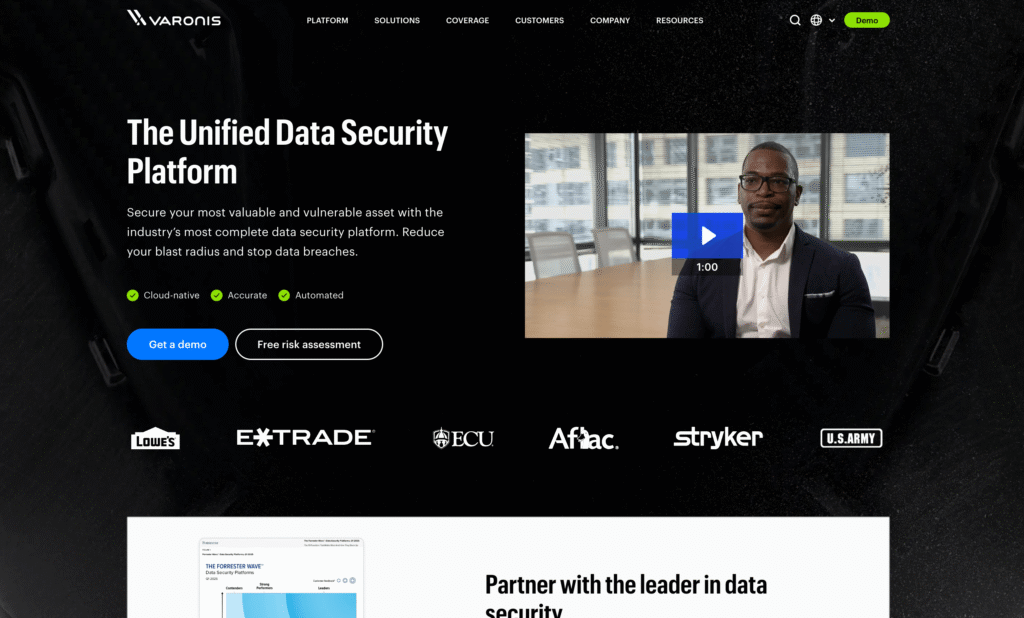
The Varonis Data Security Platform is widely recognized as a leading solution for protecting sensitive enterprise data in complex digital environments. Its core strength lies in a data-first security model that focuses directly on where critical information lives, how it is accessed, and how it is used. Instead of relying only on perimeter defenses, the platform continuously monitors data activity to protect financial records, personal data, trade secrets, and intellectual property.
By analyzing user behavior, account activity, and data movement in real time, the platform helps organizations detect threats early and prevent data misuse before serious damage occurs. Built-in automation further strengthens security by locking down outdated, exposed, or unnecessary data, making it especially valuable in large organizations with sprawling data environments.
Comprehensive Coverage Across Privacy, Security, and Compliance
Varonis delivers an all-in-one data protection ecosystem that combines several critical capabilities into a single platform. These include data protection, data governance, data privacy, compliance management, Zero Trust enforcement, and advanced threat detection and response.
From a functional perspective, the platform operates as a Data Security Posture Management solution that unifies data detection and response, data loss prevention, and file access intelligence. This integrated design allows security teams to see the full picture of data risk, rather than managing disconnected tools.
Automated Data Discovery and Classification
One of the platform’s strongest advantages is its ability to automatically discover and classify sensitive data across both cloud and on-premises systems.
Key benefits include
- Continuous scanning of file systems, databases, and cloud storage
- Automatic identification of sensitive data such as personal identifiers, payment data, and confidential business information
- Consistent labeling and categorization that supports privacy policies and regulatory requirements
This capability ensures that organizations always know where their most sensitive data is stored, which is essential for modern data privacy strategies.
Data Access Governance and Permission Control
The platform excels at analyzing who has access to what data and whether that access is appropriate. It identifies excessive, risky, or unused permissions and provides clear recommendations to reduce exposure.
Practical outcomes include
- Discovery of open or public file shares
- Identification of users with unnecessary access rights
- Guided remediation to enforce least-privilege access
By reducing over-permissioned data, organizations significantly lower the potential impact of insider threats and external attacks.
Threat Detection and Response Capabilities
Varonis continuously monitors user and device behavior to detect suspicious or malicious activity. Using behavioral analytics and automated response workflows, the platform can stop threats before data is exfiltrated or compromised.
Notable strengths include
- Detection of abnormal access patterns and unusual data usage
- Automated alerts and containment actions
- Built-in incident response support included with SaaS subscriptions
This proactive approach makes the platform highly effective against ransomware, insider threats, and account compromise.
Exposure Management and Attack Surface Reduction
Another key reason the platform stands out in 2026 is its focus on actively reducing data exposure. It identifies risky configurations, unsecured data stores, and mismanaged cloud applications, then helps close those gaps automatically.
This reduces the overall attack surface and ensures that sensitive data is not unnecessarily accessible, especially in hybrid and multi-cloud environments.
Extensive Integration Ecosystem
The platform integrates with a wide range of enterprise technologies, allowing it to fit seamlessly into existing IT and security stacks.
Integration coverage includes
- Cloud platforms such as AWS, Azure, and Google Cloud
- SaaS applications like Microsoft 365, Salesforce, and collaboration tools
- Security systems including SIEM platforms and endpoint protection tools
- Databases and enterprise storage solutions
This broad compatibility makes the platform suitable for complex, enterprise-scale environments.
User Satisfaction and Market Recognition
Independent review platforms consistently rank Varonis highly for both performance and customer satisfaction.
Summary of user ratings
Review Platform | Overall Rating | Key Highlight
Gartner Peer Insights | 4.8 out of 5 | Customers’ Choice recognition
G2 | 4.5 out of 5 | Strong majority of top-tier reviews
TrustRadius | 9.1 out of 10 | Exceptional support rating
Users frequently highlight the platform’s ability to quickly surface meaningful insights from massive data volumes and clearly explain an organization’s data security posture.
Pricing, Implementation, and Return on Value
The platform is positioned as a premium enterprise solution, reflecting its depth of features and automation.
Key commercial insights
- Subscription-based pricing perceived as high-end
- No upfront setup fee
- Average discounts reported around single-digit percentages
- Typical implementation timeline of several months
- Return on investment commonly achieved in under two years
For large organizations managing sensitive data at scale, the long-term value often outweighs the initial cost.
Regulatory Compliance and Privacy Enablement
Varonis provides strong support for modern data privacy regulations by helping organizations locate, classify, and report on personal data.
Compliance advantages include
- Built-in support for major privacy regulations
- Accurate identification of personal and sensitive data locations
- Simplified reporting for audits and regulatory reviews
These features make the platform especially valuable for organizations operating in heavily regulated industries.
Ideal Organizations and Use Cases
The platform is most commonly adopted by mid-market and enterprise organizations that require continuous monitoring of data access and strong compliance controls.
Industries that benefit most include
- Financial services and insurance
- Manufacturing and supply chain organizations
- Retail and consumer goods
- Data-intensive enterprises with complex access requirements
It is particularly well-suited for environments where detailed visibility into data usage is critical.
Key Strengths That Set It Apart
- Highly accurate data discovery and classification
- Strong logging, alerting, and reporting on identity and access activity
- Extensive automation that speeds up remediation
- Responsive and knowledgeable support teams
- A unified, data-centric security model covering multiple risk areas
Considerations for Buyers
- Reporting interfaces may feel less modern to some users
- Deployment can require significant infrastructure resources
- Certain on-premises operations may experience slower performance
- Occasional challenges reported in scanning and resource detection for some cloud services
Overall Assessment for 2026
The Varonis Data Security Platform earns its place among the Top 10 Best Data Privacy Software in 2026 by delivering deep visibility into data risk, strong automation, and enterprise-grade protection across privacy, security, and compliance. For organizations that treat data as their most critical asset, it remains one of the most comprehensive and trusted solutions available.
2. OneTrust
Platform Overview and Strategic Role in Data Privacy
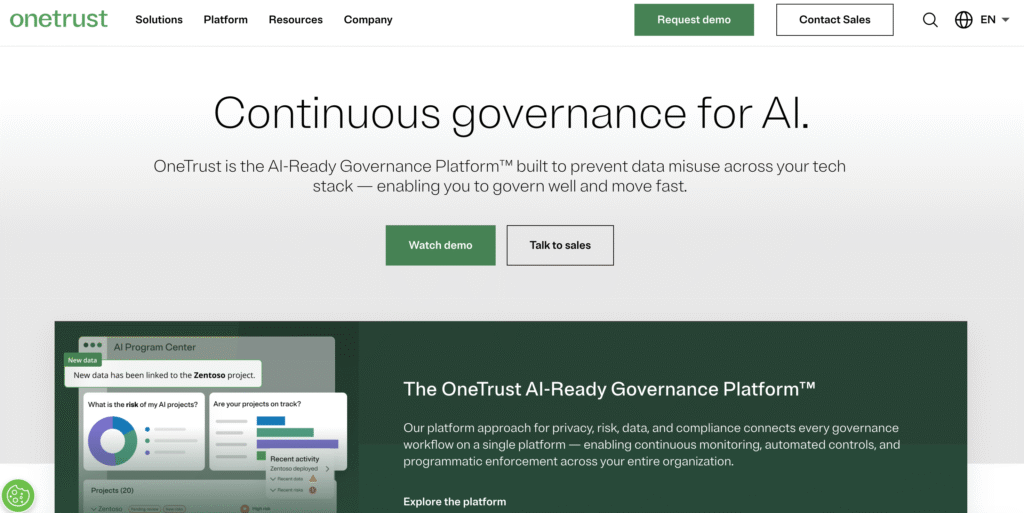
OneTrust is widely regarded as one of the most established and trusted platforms in the data privacy, governance, risk, and compliance landscape. Its primary purpose is to help organizations collect, manage, and use data responsibly while meeting complex regulatory and ethical requirements. The platform is designed to simplify consent and preference management, automate data governance, and reduce privacy and compliance risks across the entire data lifecycle.
Rather than focusing on a single privacy function, OneTrust acts as a central system that connects privacy, security, IT, third-party risk, and emerging AI risks into one unified framework. This broad scope is a key reason it continues to rank among the top data privacy platforms going into 2026.
Privacy Automation and Operational Efficiency
OneTrust is best known for its strong automation capabilities, which significantly reduce the manual effort required to maintain compliance.
Key automation benefits include
- Automation of repetitive privacy and compliance tasks
- Significant reduction in manual workload for privacy teams
- Faster rollout of privacy programs across global operations
Organizations using the platform often report major productivity improvements and much quicker time-to-value, making it especially attractive for enterprises managing large volumes of personal data.
Data Subject Request Management at Scale
Handling data subject requests is a major challenge for modern organizations, and OneTrust addresses this with intelligent, workflow-driven automation.
Core strengths in this area
- Automated workflows that adapt to request type and applicable regulation
- Faster data retrieval, correction, and deletion processes
- Reduced need for full data estate scans
This approach allows organizations to respond accurately and on time to privacy requests, even in highly complex data environments.
Data and Activity Mapping for Continuous Compliance
OneTrust enables organizations to maintain a continuously updated view of how data flows across systems, teams, and processes.
Key capabilities include
- Centralized mapping of data, business activities, and regulatory context
- AI-assisted discovery and classification of data
- A living data map that supports policy enforcement and risk management
This “always up to date” view of data usage is essential for long-term privacy compliance and audit readiness.
Privacy Risk Assessments and Mitigation
The platform transforms privacy risk assessments from static checklists into ongoing, operational workflows.
Notable features
- AI-assisted questionnaires that reduce manual input
- Automated population of assessment data using document scanning
- Built-in workflows for tracking and mitigating identified risks
This makes privacy risk management more consistent, repeatable, and scalable across large organizations.
Privacy Incident Detection and Response
OneTrust also supports organizations in managing privacy incidents involving personal data.
Incident management capabilities
- Identification and logging of privacy-related incidents
- Structured data capture to assess impact and root cause
- Automated guidance on regulatory notification obligations
These features help organizations respond quickly and confidently when incidents occur, reducing both regulatory and reputational risk.
Enterprise Policy and Governance Management
Policy management is another area where OneTrust provides strong value, particularly for regulated and global organizations.
Governance strengths
- Centralized creation and management of privacy and compliance policies
- Version tracking and change history for accountability
- Integration with key business systems and assets
- Distribution of policies across the organization with defined controls
This ensures that privacy rules are not only documented but actively enforced.
Integrated GRC Capabilities
Beyond privacy, OneTrust offers a full governance, risk, and compliance capability that extends platform value.
GRC advantages
- Central policy libraries aligned with standards and frameworks
- Configurable controls mapped across multiple policies
- Consistent governance across privacy, security, and technology risks
This unified approach reduces tool sprawl and simplifies oversight for compliance leaders.
User Satisfaction and Independent Ratings
OneTrust consistently receives strong feedback across multiple review platforms, particularly for usability, flexibility, and depth of functionality.
User ratings snapshot
Review Area | Average Rating | Key Insight
Privacy Automation | High 4-star range | Strong automation and usability
Tech Risk and Compliance | Low to mid 4-star range | Excellent product capabilities
Service and Support | High ratings | Reliable customer assistance
Users frequently describe the platform as easy to use, highly customizable, and one of the strongest solutions available for privacy rights management and regulatory record keeping.
Pricing and Commercial Considerations
While exact pricing is not publicly detailed, user feedback provides insight into how the platform is positioned.
Common pricing observations
- Entry setup is generally straightforward
- Core features are accessible early
- Additional modules and add-ons can increase total cost
This modular approach allows organizations to start small and expand functionality as privacy needs grow.
Regulatory Coverage and Future-Ready Compliance
OneTrust offers strong support for major global privacy regulations and prepares organizations for future compliance challenges.
Compliance strengths include
- Comprehensive support for GDPR and related privacy frameworks
- Strong capabilities for cookie and consent compliance
- Direct support for CCPA requirements
- Solid foundation for advanced use cases such as AI governance and third-party risk management
This forward-looking design helps organizations stay ahead of regulatory change.
Ideal Organizations and Use Cases
OneTrust is particularly well suited for organizations with complex, global privacy obligations.
Best-fit profiles
- Large enterprises with distributed data environments
- Organizations operating across multiple jurisdictions
- Companies with advanced privacy, compliance, and governance needs
It is widely trusted by major global enterprises across industries such as finance, technology, manufacturing, media, consumer goods, and professional services.
Key Strengths That Drive Its Top 10 Ranking
- Broad, all-in-one privacy and governance platform
- Strong automation powered by AI-assisted workflows
- Deep customization to match internal policies and processes
- Robust integrations with enterprise systems
- Reliable support during setup and long-term use
Important Considerations Before Adoption
- The platform’s breadth may be excessive for smaller organizations
- Implementation can be complex and require dedicated expertise
- Cookie consent features may require additional tuning
- Advanced customization often needs strong IT involvement
- Effective use depends on a solid understanding of the platform’s configuration model
Overall Evaluation for 2026
OneTrust earns its position among the Top 10 Best Data Privacy Software in 2026 by offering unmatched breadth, strong automation, and enterprise-grade governance capabilities. For organizations that need a scalable, future-ready privacy platform capable of handling regulatory complexity, operational risk, and responsible data use, OneTrust remains one of the most trusted solutions in the market.
3. Securiti.ai
Platform Positioning and Enterprise Focus
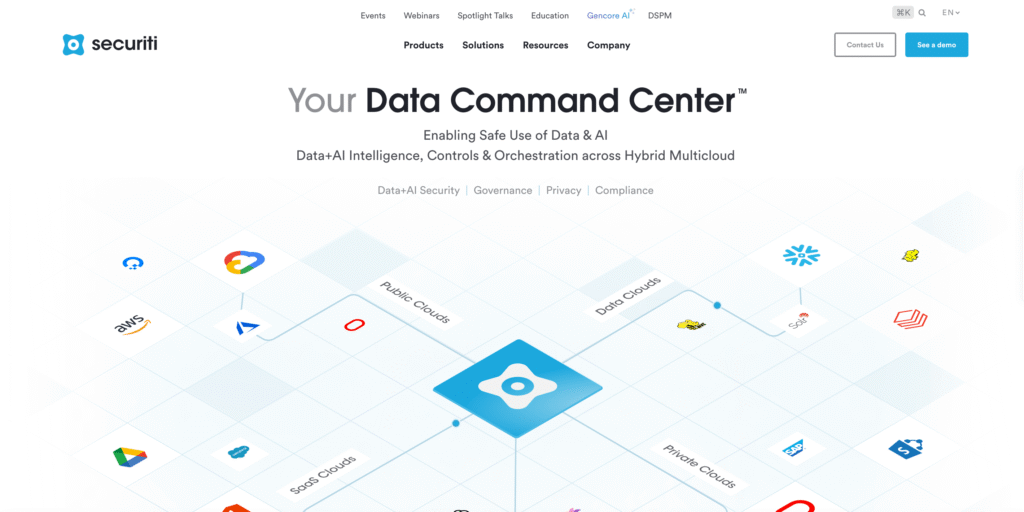
Securiti.ai is widely viewed as an advanced, AI-driven data privacy and data security platform built specifically for large, globally operating enterprises. Its core strength lies in unifying data privacy, data security, data governance, and regulatory compliance into a single, coordinated system. Rather than treating privacy as a standalone function, the platform enables organizations to manage data responsibly across its entire lifecycle.
The platform is especially designed for organizations handling massive data volumes across multiple regions, clouds, and regulatory frameworks. This enterprise-grade focus is a key reason it is consistently ranked among the leading data privacy platforms heading into 2026.
Compliance Enablement and Regulatory Coverage
Securiti.ai places strong emphasis on helping organizations meet global privacy and data protection regulations through automation and intelligence.
Core compliance capabilities include
- Automated discovery of sensitive and regulated data across systems
- Built-in intelligence to identify personal and regulated data types
- Ongoing compliance support for major regulations such as GDPR and CCPA
- Centralized controls that align privacy, security, and governance policies
By continuously monitoring data assets, the platform helps organizations remain compliant even as data environments change.
Advanced Automation for Data Privacy Operations
Automation is one of the most important reasons Securiti.ai stands out in the data privacy market.
Key automation strengths
- Highly automated handling of data subject access and rights requests
- Reduced manual effort and lower operational risk for privacy teams
- Faster response times for regulatory and internal data requests
These capabilities allow large organizations to scale privacy operations without increasing headcount or complexity.
Multicloud and Hybrid Data Intelligence
Modern enterprises rarely operate in a single environment, and Securiti.ai is designed to handle this reality.
Platform advantages in complex environments
- Centralized visibility across multicloud and hybrid infrastructures
- Unified data intelligence regardless of where data is stored
- Consistent policy enforcement across cloud and on-premises systems
This makes the platform particularly valuable for organizations with distributed and highly dynamic data estates.
Advanced Data Protection Capabilities
Beyond privacy compliance, Securiti.ai delivers strong technical safeguards to protect sensitive information.
Notable protection features
- Polymorphic encryption that adapts to different data contexts
- Secure data vaults for protecting high-risk information
- Strong controls that reduce exposure and unauthorized access
These advanced security features help organizations protect data even in high-risk threat environments.
AI-Driven Innovation and Market Recognition
Securiti.ai is frequently recognized by industry analysts as a leader in AI-powered data privacy and security.
Market recognition highlights
- Strong analyst positioning in AI-based privacy platforms
- Continuous innovation driven by artificial intelligence
- Rapid feature evolution aligned with emerging regulations and risks
This innovation focus keeps the platform relevant as privacy and security demands continue to evolve.
Target Organizations and Ideal Use Cases
The platform is clearly positioned for very large enterprises with complex data operations.
Ideal customer profile
- Global enterprises with large-scale data environments
- Organizations operating across multiple jurisdictions
- Companies with annual revenues exceeding multi-billion-dollar levels
- Enterprises seeking centralized control over privacy, security, and governance
Reviewer data shows that current users overwhelmingly come from the largest enterprise segment, reinforcing its enterprise-first design.
Strengths That Support Its Top 10 Ranking
- Exceptional automation for data discovery and rights request handling
- Strong multicloud and hybrid environment support
- Advanced, enterprise-grade data protection mechanisms
- Highly responsive product team that incorporates customer feedback quickly
- Clear leadership position in AI-powered data privacy technology
Cost Positioning and Investment Range
Securiti.ai is positioned as a premium enterprise solution, reflecting its advanced capabilities and target market.
Typical cost characteristics
Pricing Aspect | Observed Range
Annual investment range | High enterprise tier
Cost positioning | Premium
Target buyer | Large global enterprises
This pricing structure aligns with organizations that prioritize scalability, automation, and advanced security over basic compliance tooling.
Considerations for Potential Buyers
While the platform is powerful, there are important factors organizations should consider before adoption.
Key considerations
- Workflow configuration is highly technical and often requires coding expertise
- Non-technical workflow design interfaces are still under development
- Some reporting capabilities, particularly for rights request management, may require API-based data extraction
- Limited audit logging can make it harder to track configuration and workflow changes
These factors mean the platform is best suited for organizations with strong technical resources.
Overall Assessment for 2026
Securiti.ai earns its place among the Top 10 Best Data Privacy Software in 2026 by delivering deep automation, advanced AI-driven data intelligence, and enterprise-grade protection across privacy, security, and governance. For large global organizations seeking a future-ready platform that can handle complex data environments at scale, Securiti.ai remains one of the most capable and forward-looking solutions available.
4. TrustArc

Platform Overview and Privacy-First Mission
TrustArc is widely regarded as a mature and trusted data privacy management platform that helps organizations meet complex privacy regulations while building long-term trust with users, regulators, and partners. Its core objective is to simplify privacy operations through automation, reduce compliance risk, and support responsible data and AI use across the entire organization.
The platform brings together consent management, data subject rights handling, data mapping, risk assessments, and regulatory intelligence into one unified privacy ecosystem. This broad and integrated approach is a key reason TrustArc continues to rank among the leading data privacy solutions going into 2026.
End-to-End Privacy Operations Coverage
TrustArc is designed to manage privacy from initial data collection to regulatory reporting and ongoing risk monitoring.
Key operational coverage includes
- Consent and preference management across digital channels
- Automated handling of individual data rights requests
- Centralized privacy governance and task management
- Ongoing regulatory intelligence and compliance alignment
This end-to-end scope allows organizations to replace fragmented privacy tools with a single, structured platform.
Consent and Data Subject Rights Automation
One of TrustArc’s strongest capabilities is automating consent compliance and individual rights management at scale.
Core benefits include
- Cookie and consent management aligned with global regulations
- Automated workflows for access, deletion, and correction requests
- Reduced manual effort for privacy and legal teams
- A centralized trust center for publishing policies and disclosures
These capabilities help organizations respond faster to regulatory obligations while improving transparency for users.
Centralized Governance and Risk Management
TrustArc enables organizations to stay ahead of changing regulations by centralizing governance and risk activities.
Governance strengths include
- A unified workspace for privacy tasks and documentation
- Continuous visibility into data flows and processing activities
- Risk identification and mitigation across business operations
- Alignment with emerging AI and technology risks
This centralized model improves accountability and consistency across global privacy programs.
Automated Assessments and Regulatory Alignment
The platform transforms privacy assessments into efficient, repeatable processes.
Assessment advantages
- Automated workflows with conditional logic and task triggers
- Ready-to-use assessment templates for privacy, data protection, and AI risks
- Continuous updates to templates as regulations evolve
- Structured outputs for DPIAs, PIAs, and compliance reporting
These features significantly reduce the time and effort required to demonstrate compliance.
AI-Driven Capabilities and Future Readiness
TrustArc places strong emphasis on AI governance and AI risk management, which is increasingly critical for modern organizations.
AI-related strengths
- Advanced AI-driven insights for privacy and risk analysis
- Support for AI-related regulatory frameworks
- Tools designed to help organizations deploy AI responsibly
This forward-looking focus positions TrustArc well for future regulatory and technological changes.
User Satisfaction and Market Feedback
TrustArc consistently receives positive feedback for usability, support quality, and platform reliability.
User rating snapshot
Category | User Feedback Summary
Ease of use | Frequently praised as intuitive and accessible
Customer support | Highlighted as responsive and dependable
AI capabilities | Viewed as advanced and industry-leading
Overall satisfaction | Strong positive sentiment across reviews
Many users report switching to TrustArc from other vendors due to better support and smoother day-to-day operations.
Return on Investment and Business Impact
TrustArc emphasizes measurable business value alongside compliance.
Reported outcomes include
- Lower overall cost of demonstrating compliance
- Faster time to regulatory readiness
- Significant reduction in privacy incidents
- Improved efficiency across privacy operations
These results make the platform appealing to organizations seeking both risk reduction and operational savings.
Regulatory Coverage and Standards Support
TrustArc supports a broad range of global privacy and data protection regulations.
Key compliance areas include
- European and US privacy regulations
- State-level and sector-specific privacy laws
- International privacy frameworks and standards
- AI governance and emerging technology regulations
This wide coverage allows organizations to manage multi-jurisdictional compliance from a single platform.
Ideal Organizations and Use Cases
TrustArc is designed to support organizations of varying sizes and industries.
Best-fit profiles
- Companies operating in multiple regulatory regions
- Organizations seeking privacy automation without excessive complexity
- Businesses aiming to build customer trust through transparency
- Teams that need structured privacy governance without heavy technical overhead
With a global customer base spanning many industries, the platform adapts well to diverse privacy maturity levels.
Key Strengths That Support Its Top 10 Ranking
- Comprehensive privacy management across consent, rights, risk, and governance
- Strong automation that reduces manual compliance work
- Clear focus on AI governance and future privacy challenges
- High customer satisfaction driven by usability and support
- Proven, measurable return on privacy investment
Considerations for Prospective Buyers
- Detailed pricing information requires direct vendor engagement
- Integration capabilities are described as seamless, but specific system coverage may need validation during evaluation
Overall Assessment for 2026
TrustArc earns its position among the Top 10 Best Data Privacy Software in 2026 by combining broad regulatory coverage, strong automation, AI-forward capabilities, and high user satisfaction. For organizations seeking a balanced privacy platform that delivers both compliance confidence and operational efficiency, TrustArc remains a reliable and future-ready choice.
5. BigID

Platform Overview and Data Intelligence Foundation
BigID is widely recognized as a powerful data intelligence platform that helps organizations fully understand, manage, and protect their data. Its primary value lies in delivering deep visibility into both structured and unstructured data across cloud, on-premises, and hybrid environments. By enabling organizations to clearly see where sensitive data lives and how it is used, BigID plays a critical role in strengthening data privacy, security, compliance, and governance programs.
The platform is built for scale and complexity, making it especially suitable for enterprises dealing with massive data volumes, diverse data sources, and strict regulatory requirements. This strong enterprise focus is a major reason BigID continues to be ranked among the top data privacy platforms heading into 2026.
Unified Data Security and Privacy Capabilities
BigID operates as a data security posture management solution that brings together multiple critical functions into a single platform.
Core capabilities include
- Data discovery and classification
- Data detection and response
- Data loss prevention intelligence
- File access and permission analysis
This unified approach allows organizations to move away from fragmented tools and manage data risk from a single control layer.
Advanced Data Discovery and Classification at Scale
One of BigID’s strongest differentiators is its ability to scan and classify extremely large data environments.
Key strengths in this area
- High-performance scanning of structured and unstructured data
- Machine learning-driven clustering to group similar data types
- Accurate identification of sensitive, regulated, and business-critical data
This capability enables organizations to quickly gain insight into complex data estates that would otherwise be difficult to manage manually.
Shadow Data Identification and Reduction
BigID goes beyond traditional discovery by identifying shadow data, which refers to data that exists but is no longer actively used or monitored.
Shadow data insights include
- Detection of unused, forgotten, or abandoned data
- Analysis across dozens of connected services and repositories
- Support for data minimization and risk reduction initiatives
By uncovering hidden data, organizations can reduce unnecessary exposure and storage risk.
Access Intelligence and Permission Risk Visibility
Understanding who can access sensitive data is essential for privacy and security, and BigID provides clear visibility into access risks.
Access intelligence benefits
- Identification of over-exposed and over-permissioned data
- Central dashboards highlighting access risks
- Support for enforcing least-privilege access models
These insights help organizations reduce insider threats and accidental data exposure.
Automated Labeling, Policy Enforcement, and Remediation
BigID helps organizations move from insight to action through automation.
Automation capabilities include
- Automated data labeling based on sensitivity
- Policy-driven enforcement actions
- Support for encryption and protection of high-risk data
This reduces reliance on manual processes and minimizes human error.
Data Privacy Management and Rights Fulfillment
The platform includes a dedicated data privacy management suite to support regulatory compliance.
Privacy-focused features
- Support for handling data subject rights requests
- Lifecycle management for personal and sensitive data
- Coverage for both structured and unstructured information
These capabilities make BigID a strong choice for organizations managing privacy obligations across multiple jurisdictions.
Data Detection and Response for Active Threats
BigID continuously monitors data activity to identify unusual or risky behavior.
Threat detection strengths
- Detection of anomalous access patterns
- Identification of access from unusual locations or external actors
- Coverage across cloud platforms, SaaS tools, and data warehouses
This allows organizations to respond quickly to data-related threats before damage occurs.
User Satisfaction and Independent Validation
BigID consistently receives strong feedback for performance, scalability, and support.
User rating overview
Evaluation Area | User Sentiment
Product capabilities | Strong and reliable
Service and support | Highly rated and responsive
Integration and deployment | Positive enterprise feedback
Recommendation rate | Universally recommended by reviewers
Users frequently describe BigID as a powerful platform that delivers real value for privacy and security initiatives.
Pricing Structure and Investment Flexibility
BigID offers enterprise-grade pricing that scales with organizational needs.
Pricing characteristics
Pricing Factor | Impact on Cost
Number of data sources | Moderate to high
Deployment model | Influences total spend
Support level | Affects final pricing
Use case bundles | Tailored pricing options
This flexible structure allows enterprises to align investment with specific data risk priorities.
Regulatory and Framework Support
BigID supports a wide range of global regulations and industry frameworks.
Compliance coverage includes
- Major global privacy regulations
- Financial and operational data standards
- Security and governance control frameworks
This makes the platform suitable for organizations operating in regulated industries and across multiple regions.
Ideal Organizations and Use Cases
BigID is best suited for organizations with complex data environments and advanced privacy requirements.
Typical adopters include
- Large enterprises with hybrid and on-premises data needs
- Organizations requiring strong API integrations
- Businesses managing high volumes of sensitive and regulated data
- Enterprises seeking scalable, automated data intelligence
Its strong on-premises support is a key differentiator in a market increasingly focused on cloud-only solutions.
Key Strengths Supporting Its Top 10 Position
- Scalable and accurate data discovery across all data types
- Highly customizable classifiers and APIs
- Strong automation that reduces operational risk
- Enterprise-grade on-premises and hybrid support
- Excellent professional services and customer support
Considerations for Potential Users
- Metadata review interfaces may feel less intuitive
- Large scans can sometimes be slow or produce excess noise
- Visibility gaps may occur in certain unstructured repositories
- Exporting very large datasets may require additional effort
- Some scans may need manual intervention if interrupted
Overall Assessment for 2026
BigID earns its place among the Top 10 Best Data Privacy Software in 2026 by delivering deep data visibility, strong automation, and enterprise-ready privacy and security intelligence. For organizations that need to discover, classify, and control sensitive data at scale while meeting global compliance demands, BigID remains one of the most capable and trusted platforms available.
6. Osano

Platform Overview and Compliance-First Vision
Osano is widely recognized as an accessible and practical data privacy platform built to help organizations comply with global data protection laws without unnecessary complexity. Its core mission is to make privacy compliance achievable for businesses of all sizes, from startups to large enterprises, while helping them build trust with users through transparent and respectful data practices.
The platform focuses on simplifying consent management, data subject rights handling, and vendor risk oversight. By lowering technical and cost barriers, Osano plays an important role in making privacy compliance more inclusive, which is a key reason it earns a place among the top data privacy software solutions for 2026.
Consent Management and User Transparency
Osano is especially well known for its strong and easy-to-use consent management capabilities.
Key consent-related benefits
- Customizable cookie consent banners that integrate smoothly into websites
- Centralized tracking of user consent preferences
- Support for region-specific consent requirements
- Clear visibility into consent status across domains
These features help organizations maintain transparency while meeting regulatory expectations with minimal effort.
Data Discovery and Classification Capabilities
To support compliance, Osano provides tools that help organizations understand where sensitive data exists.
Core discovery functions
- Identification of personal and sensitive data
- Data mapping across systems and workflows
- Categorization of data types for compliance reporting
This visibility forms the foundation for responsible data handling and regulatory alignment.
Data Subject Request Management
Osano simplifies how organizations respond to individual data rights requests.
DSAR management advantages
- Centralized request intake and tracking
- Structured workflows for handling access, deletion, and correction requests
- Reduced manual coordination across teams
These tools help organizations respond accurately and on time to privacy requests.
Vendor Risk and Third-Party Oversight
Third-party vendors can introduce significant privacy risk, and Osano includes features to manage this area effectively.
Vendor risk capabilities
- Centralized tracking of vendor privacy risks
- Assessment tools for third-party data handling practices
- Improved visibility into external compliance exposure
This makes Osano particularly useful for organizations relying on multiple vendors or marketing tools.
Compliance Tracking and Incident Management
Osano supports ongoing compliance through monitoring and documentation features.
Compliance management strengths
- Tools to track regulatory obligations
- Audit and compliance record management
- Incident tracking and response support
These capabilities help organizations stay organized and prepared for audits or regulatory inquiries.
Workflow Automation and Integrations
The platform includes workflow tools and integration options to reduce operational friction.
Automation and integration highlights
- Streamlined privacy-related workflows
- API access for custom integrations
- Reduced manual effort for recurring compliance tasks
This flexibility allows Osano to fit into a wide range of operational setups.
User Satisfaction and Ease of Use
Osano is frequently praised for being easy to use and approachable, especially for teams without dedicated privacy specialists.
User feedback themes
Feedback Area | Common User Sentiment
Ease of use | Simple and intuitive
Setup experience | Fast and low friction
Accessibility | Suitable for non-technical users
Overall value | Strong for cost-conscious teams
This strong usability focus makes Osano appealing to smaller teams and growing businesses.
Pricing Accessibility and Flexibility
One of Osano’s key differentiators is its affordable and transparent pricing structure.
Pricing overview
Plan Type | Key Characteristics
Free plan | Entry-level compliance for small websites
Paid tiers | Scalable pricing for growing needs
Enterprise plans | Advanced privacy operations and governance
Setup fees | None
The availability of a free plan and low-cost entry tiers makes Osano one of the most accessible privacy platforms on the market.
Regulatory Coverage and Compliance Scope
Osano is built specifically to support major global data protection regulations.
Compliance strengths include
- Support for GDPR requirements
- Alignment with CCPA obligations
- Tools designed to adapt to evolving privacy laws
This focus allows organizations to manage compliance across multiple regions from a single platform.
Ideal Users and Practical Use Cases
Osano is designed to support a wide range of users and organizational sizes.
Best-fit use cases
- Website owners managing cookie consent
- Marketing teams handling user data responsibly
- Startups and small businesses seeking affordable compliance tools
- Mid-sized organizations scaling privacy operations
- Non-profits and personal projects needing basic compliance
Its flexibility makes it suitable for both simple and moderately complex privacy programs.
Key Strengths Supporting Its Top 10 Ranking
- Highly user-friendly interface and workflows
- Affordable pricing with a free entry option
- Strong consent and DSAR management capabilities
- Vendor risk oversight in a single platform
- Clear focus on democratizing privacy compliance
Considerations for Potential Users
- Advanced enterprise features may be limited for highly complex environments
- Free plan has limited support options compared to paid tiers
Overall Assessment for 2026
Osano earns its position among the Top 10 Best Data Privacy Software in 2026 by delivering a balanced mix of usability, affordability, and essential compliance features. For organizations seeking a practical, accessible, and trustworthy privacy platform that scales with growth, Osano remains a strong and future-ready choice.
7. Didomi
Platform Overview and Privacy-as-a-Growth Strategy
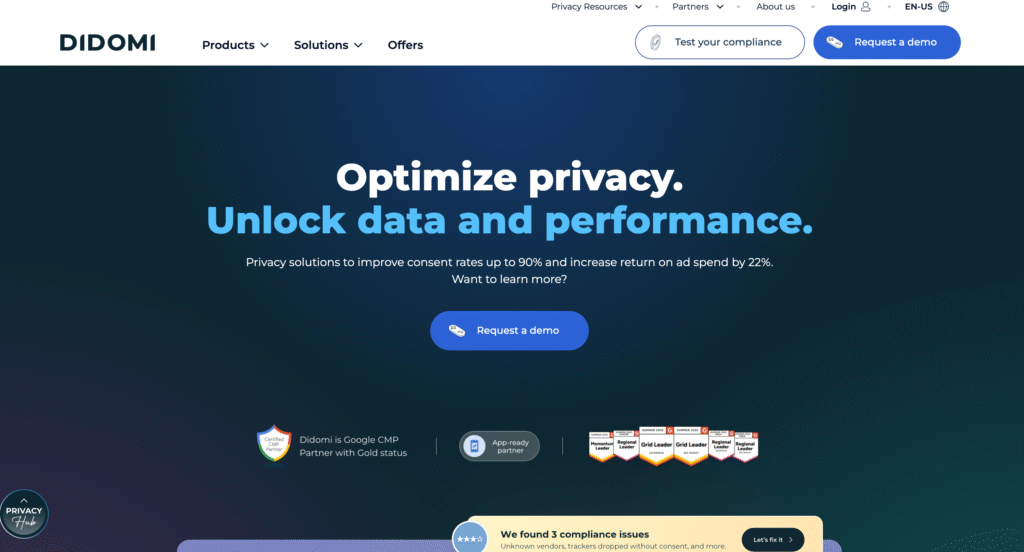
Didomi is widely recognized as a leading consent and preference management platform that helps organizations meet global data privacy regulations while improving customer trust and data quality. Rather than treating compliance as a legal burden, the platform positions privacy as a strategic business advantage by enabling companies to respect user choices and build stronger, more transparent relationships with their audiences.
Designed for modern, data-driven organizations, Didomi focuses on giving users clear control over how their data is collected and used, while helping businesses remain compliant across multiple regions, platforms, and regulatory frameworks.
Global Consent Management Across Digital Channels
Didomi excels in managing consent at scale across diverse digital environments.
Core consent capabilities include
- Consistent and compliant consent experiences across web, mobile apps, and connected TV
- Support for multiple regional privacy regulations from a single platform
- Flexible consent flows tailored to different jurisdictions and use cases
- Centralized control over consent logic and display rules
This global reach makes Didomi especially valuable for organizations operating across borders.
Preference Management and First-Party Data Enablement
A major strength of Didomi is its focus on preference management as a way to reduce dependency on third-party data.
Key benefits of preference management
- Direct collection of user preferences in a compliant way
- Better-quality first-party data for marketing and analytics
- Increased user trust through transparent data usage
- Customizable preference centers aligned with brand identity
By enabling direct preference collection, Didomi helps organizations prepare for a privacy-first digital future.
Data Privacy Request Automation
Didomi includes tools to manage individual data privacy requests efficiently.
DSAR-related advantages
- Centralized intake of user privacy requests
- Automated workflows to reduce manual handling
- Faster response times and improved compliance accuracy
These features help privacy teams manage growing request volumes without increasing operational overhead.
Compliance Monitoring and Vendor Visibility
Understanding what third-party tools are doing on digital properties is essential for compliance, and Didomi provides visibility into this area.
Monitoring capabilities include
- Discovery of vendors and trackers active on websites
- Ongoing compliance checks against regulatory requirements
- Early detection of potential compliance risks
This visibility supports proactive privacy management rather than reactive fixes.
Server-Side Tagging for Performance and Control
Didomi offers server-side tagging as a modern approach to consent and data collection.
Advantages of server-side tagging
- Improved website and app performance
- Greater control over data flows
- Enhanced security and reduced client-side exposure
- No compromise to user privacy or experience
This feature is particularly valuable for high-traffic digital platforms.
Scalability and Customization for Global Brands
Didomi is built to scale with organizational growth and regulatory complexity.
Scalability strengths
- Support for multiple brands, domains, and regions
- Customizable user interfaces and consent experiences
- Alignment with legal interpretations and brand guidelines
This flexibility allows organizations to maintain consistency while adapting to local requirements.
User Satisfaction and Market Recognition
Didomi has earned strong recognition across independent review platforms.
User rating overview
Evaluation Area | User Sentiment
Overall satisfaction | Strong and positive
Ease of integration | Frequently praised
UI customization | Flexible and brand-friendly
Regulatory coverage | Broad and reliable
Users often describe the platform as easy to integrate and effective for managing compliance at scale.
Industry Recognition and Rankings
Didomi’s strong performance is reflected in its industry rankings.
Recognition Area | Outcome
Data privacy software rankings | Top-tier placement
Customer recommendation rate | Universally positive
Enterprise adoption | Growing among global brands
These recognitions highlight the platform’s reliability and market trust.
Regulatory and Framework Coverage
Didomi is designed to support a wide range of global regulations and industry standards.
Compliance strengths include
- European and North American privacy laws
- Regional privacy regulations in emerging markets
- Alignment with major industry consent and transparency frameworks
- Compatibility with advertising and analytics consent modes
This broad coverage reduces compliance fragmentation for international organizations.
Ideal Organizations and Use Cases
Didomi is particularly well suited for organizations with complex digital ecosystems.
Best-fit profiles
- Global brands with multi-region digital properties
- Publishers and media companies managing large audiences
- E-commerce platforms handling consent-driven personalization
- Enterprises with strict legal and compliance requirements
- Organizations prioritizing first-party data strategies
Its focus on scalability and compliance makes it a strong choice for privacy leaders.
Key Strengths Supporting Its Top 10 Ranking
- Strong global consent and preference management capabilities
- Excellent support for multiple regulations and frameworks
- Easy integration with flexible UI customization
- Server-side tagging for performance and security
- Clear focus on turning privacy compliance into business value
Considerations for Prospective Users
- Dashboard navigation may require some adjustment for new users
- Public review volume is lower compared to some long-established competitors
Overall Assessment for 2026
Didomi earns its place among the Top 10 Best Data Privacy Software in 2026 by combining strong regulatory coverage, scalable consent management, and a forward-looking approach to first-party data and privacy-driven growth. For organizations seeking a reliable, flexible, and future-ready consent platform, Didomi remains a highly competitive and trusted solution.
8. Usercentrics

- E-commerce businesses managing customer data
- Digital marketing teams optimizing consented analytics
- Software and SaaS companies operating globally
- Startups scaling into regulated markets
- Enterprises managing multiple domains and regions
Its flexibility makes it suitable for both simple and advanced consent needs.
Key Strengths Supporting Its Top 10 Ranking
- Highly customizable consent banners and settings
- Broad global regulatory and framework support
- Strong analytics and testing capabilities
- Seamless integrations with popular tools
- Free plan and trial for easy evaluation
Considerations for Potential Users
- Advanced features may require time to fully understand
- Pricing may be high for very small businesses with limited needs
- Lack of a public API may limit highly custom integrations
- Limited visibility into advanced consent performance analytics
Overall Assessment for 2026
Usercentrics earns its place among the Top 10 Best Data Privacy Software in 2026 by combining strong regulatory coverage, excellent customization, and a user-friendly experience. For organizations seeking a reliable consent management platform that supports growth, transparency, and data-driven marketing in a privacy-first world, Usercentrics remains a highly trusted and future-ready solution.
9. Transcend

Platform Overview and Privacy Operations Focus
Transcend is widely recognized as an enterprise-grade data privacy platform built to help organizations manage personal data responsibly and meet strict global privacy regulations. Its primary goal is to simplify privacy compliance by automatically connecting to an organization’s systems, locating personal data, and fulfilling user requests with minimal manual effort. By embedding privacy controls directly into the technology stack, Transcend enables companies to reduce risk, improve resilience, and scale compliance efficiently.
The platform is especially valued by large and fast-growing organizations that handle complex data ecosystems and need to meet regulations such as GDPR and CCPA without expanding legal or compliance teams.
Automated Data Inventory and Visibility
Transcend provides organizations with a clear and continuously updated understanding of where sensitive data exists.
Key data inventory capabilities include
- Automatic identification of personal and sensitive data across systems
- Categorization of data types for easier governance and protection
- Centralized visibility into data locations across the organization
This foundation allows privacy teams to make informed decisions and maintain control over data at scale.
Data Lineage and Transparency
Understanding how data moves is essential for compliance and risk reduction, and Transcend delivers strong data lineage capabilities.
Data flow tracking benefits
- Visibility into how data travels from collection to storage and usage
- Improved transparency for audits and regulatory reviews
- Faster identification of risk points in data processing
This level of insight supports both operational security and legal accountability.
Silo Discovery and Hidden Data Reduction
Transcend identifies isolated or forgotten data sources that often create compliance blind spots.
Silo discovery advantages
- Detection of data stored in disconnected systems
- Inclusion of overlooked repositories in privacy programs
- Reduced risk from unmanaged or outdated data
By eliminating hidden data silos, organizations strengthen their overall privacy posture.
Automation of Data Subject Requests
One of Transcend’s strongest differentiators is its deep automation of data subject requests.
DSR automation strengths
- Automatic handling of access, deletion, and correction requests
- Reduced manual workload for legal and compliance teams
- Faster and more accurate responses to user requests
This enables organizations to meet regulatory deadlines even with small internal teams.
Consent Management and Record Keeping
Transcend supports consent tracking as part of a broader privacy operations strategy.
Consent management benefits
- Centralized records of user consent
- Alignment between consent status and data processing actions
- Improved compliance consistency across systems
These capabilities help organizations maintain defensible consent records over time.
AI-Driven Data Classification
The platform uses AI and machine learning to classify both structured and unstructured data.
AI-powered advantages
- Automated identification of sensitive data types
- Reduced reliance on manual tagging
- Improved accuracy across large data environments
This automation is critical for organizations managing massive and diverse datasets.
Enterprise-Grade Security Controls
Security is a core pillar of Transcend’s design, supporting high-risk and regulated environments.
Security features include
- Self-hosted security gateway for greater control
- Strong encryption standards to protect sensitive data
- Architecture designed for enterprise-scale risk management
These controls ensure privacy operations do not compromise security.
User Experience and Customer Feedback
Transcend consistently receives positive feedback for usability and support quality.
User feedback summary
Feedback Area | Common User Observations
Ease of use | Clean and intuitive interface
Implementation | Smooth and well-supported
Automation value | Significant reduction in manual work
Customer support | Fast, knowledgeable, and responsive
Users frequently highlight how the platform transforms privacy operations into a scalable, repeatable process.
Pricing Structure and Investment Considerations
Transcend is positioned as a premium enterprise solution.
Pricing overview
Pricing Aspect | General Characteristics
Entry-level pricing | Enterprise-focused annual contracts
Contract structure | Fixed-term agreements
Usage-based charges | Additional costs for overages
Cost variability | Depends on size and complexity
This pricing model reflects its focus on large organizations with advanced privacy needs.
Regulatory Compliance Coverage
Transcend is built to support current and future privacy regulations.
Compliance strengths include
- Simplified adherence to GDPR and CCPA
- Encoded privacy controls across the technology stack
- Adaptability to evolving regulatory requirements
This future-ready approach helps organizations stay compliant as laws change.
Ideal Organizations and Use Cases
Transcend is best suited for organizations with complex and large-scale data environments.
Best-fit profiles
- Global enterprises with extensive data systems
- Companies operating in regulated industries
- Organizations seeking scalable compliance with small teams
- Businesses prioritizing automation and operational efficiency
Industries such as healthcare, fintech, media, AI-driven businesses, and large B2B organizations commonly benefit from the platform.
Key Strengths Supporting Its Top 10 Ranking
- Deep automation across data inventory, lineage, and requests
- Strong AI-driven data classification
- Enterprise-grade security architecture
- Excellent customer support and onboarding experience
- Scalable privacy operations for complex environments
Considerations for Prospective Buyers
- Advanced integrations may take longer in complex environments
- Documentation may require improvement for deep customization
- Pricing can be high for organizations with extensive needs
- Occasional bugs reported during advanced configuration tasks
Overall Assessment for 2026
Transcend earns its place among the Top 10 Best Data Privacy Software in 2026 by delivering powerful automation, deep data visibility, and enterprise-grade security for privacy operations at scale. For large organizations seeking to govern data responsibly, reduce compliance risk, and scale privacy programs without expanding headcount, Transcend remains a highly capable and future-ready solution.
10. DataGrail

Platform Overview and Privacy Operations Focus
DataGrail is widely regarded as a modern data privacy platform built to simplify how organizations manage privacy operations at scale. Its primary focus is on automating data subject requests and managing consent, while giving privacy teams continuous visibility into where personal data lives and how it flows across digital systems. By combining automation, discovery, and monitoring, DataGrail helps organizations reduce compliance risk and maintain control over growing data ecosystems.
The platform is positioned as a practical and efficient alternative to heavier, all-encompassing privacy suites, making it especially attractive for teams that want strong privacy execution without unnecessary complexity.
Live Data Mapping and Risk Visibility
One of DataGrail’s defining features is its Live Data Map, which provides continuous insight into data usage across an organization.
Key capabilities include
- Automatic detection of systems that process personal data
- Ongoing identification of new data categories and applications
- Weekly notifications highlighting newly discovered risks or tools
- Central visibility into privacy exposure across the digital ecosystem
This real-time awareness allows organizations to proactively manage privacy risks rather than react to audits or incidents.
Consent Management with Deployment Flexibility
DataGrail offers flexible consent management designed to fit into existing digital workflows.
Consent management advantages
- Seamless deployment through tag management systems
- Option for direct website embedding
- Control over how consent experiences are presented to users
- Alignment with regulatory requirements for transparency and choice
This flexibility helps organizations maintain compliant data collection while preserving user experience.
Automation of Data Subject Requests
DataGrail is especially strong in automating the end-to-end handling of data subject requests.
DSAR automation strengths
- Structured workflows that guide request fulfillment
- Support for identity verification through multiple methods
- Reduced manual effort for privacy and legal teams
- Clear tracking and evidence of compliance
These features significantly shorten response times and reduce operational strain.
Risk Assessments and Internal Privacy Workflows
The platform supports internal privacy risk assessments that are easy to initiate and manage.
Risk assessment benefits
- Self-service assessment links accessible across the organization
- Secure access through identity verification systems
- Centralized review and tracking of assessment outcomes
This approach encourages broader participation in privacy governance while maintaining control.
Workflow Automation and Operational Efficiency
Automation is a core theme across DataGrail’s platform.
Operational efficiencies include
- Automated task execution for recurring privacy processes
- Reduced reliance on manual tracking and follow-ups
- Streamlined coordination between legal, security, and IT teams
These efficiencies help organizations run effective privacy programs with lean teams.
Integration Network and Ecosystem Coverage
DataGrail connects to a large number of commonly used business systems.
Integration strengths
- Thousands of pre-built integrations across SaaS, identity, commerce, and support platforms
- Faster onboarding without heavy engineering effort
- Consistent data discovery across connected tools
This extensive integration network is critical for maintaining accurate and up-to-date privacy records.
Customer Experience and User Feedback
DataGrail consistently receives positive feedback for usability and customer support.
User experience highlights
Feedback Area | Common User Sentiment
Ease of use | Straightforward and intuitive
DSAR workflows | Reliable and well-structured
Customer support | Highly responsive and proactive
Onboarding | Smooth with dedicated guidance
Many users emphasize the platform’s ability to bring order and clarity to privacy request management.
Business Impact and Reported Outcomes
DataGrail emphasizes measurable results from privacy investments.
Reported outcomes include
- Significant reduction in overall privacy risk
- Increased detection of shadow IT and unknown data systems
- Strong customer advocacy and satisfaction scores
- Clear return on investment for privacy automation
These outcomes demonstrate the platform’s practical value beyond compliance checklists.
Regulatory Coverage and Compliance Enablement
DataGrail is designed to support key global and regional privacy regulations.
Compliance support includes
- European data protection requirements
- US state-level privacy laws
- Consent and “Do Not Sell or Share” obligations
By focusing on core compliance drivers, the platform helps organizations meet regulatory expectations with confidence.
Ideal Users and Practical Use Cases
DataGrail is best suited for teams that prioritize execution and automation in privacy operations.
Typical use cases include
- Legal and privacy teams managing high DSAR volumes
- Security teams seeking visibility into data exposure
- Retail and digital businesses handling consent-driven data
- Organizations preparing for AI governance and responsible data use
Its focus on discovery and automation makes it especially effective for fast-moving companies.
Key Strengths Supporting Its Top 10 Ranking
- Strong specialization in DSAR automation and consent management
- Real-time data mapping and risk monitoring
- Extensive integration ecosystem
- Excellent customer support and onboarding experience
- Demonstrated risk reduction and ROI
Considerations for Prospective Buyers
- Pricing details require direct vendor engagement
- Public rating data is less extensive than for some long-established platforms
- Feature set may be narrower for organizations seeking broad GRC or governance coverage
Overall Assessment for 2026
DataGrail earns its place among the Top 10 Best Data Privacy Software in 2026 by delivering focused, automation-driven privacy operations supported by real-time data visibility and strong integrations. For organizations seeking a practical, efficient, and results-oriented privacy platform, DataGrail remains a compelling and future-ready choice.
Executive Summary
Global Market Outlook and Growth Momentum
The global data privacy software market is entering a period of rapid and sustained growth, driven by regulatory expansion, rising consumer awareness, and increasing digital and AI adoption. Data privacy is no longer a niche compliance requirement but a core business priority across industries.
Key market growth indicators
- The global data privacy software market is projected to grow from USD 5.37 billion in 2025 to USD 45.13 billion by 2032
- This represents a strong compound annual growth rate of approximately 35.5 percent
- Growth is fueled by rising enforcement actions, higher compliance costs, and increasing data breach risks
This expansion reflects how privacy software has become essential infrastructure rather than an optional investment.
Regulatory Expansion and Global Coverage
Governments worldwide continue to strengthen privacy laws, expanding both geographic reach and enforcement intensity.
Regulatory landscape highlights
- By early 2025, 144 countries have enacted formal data privacy regulations
- These laws now cover approximately 75 percent of the global population
- Regulations increasingly include strict requirements for consent, data minimization, breach notification, and AI governance
As regulatory complexity grows, organizations increasingly rely on privacy software to maintain consistent compliance across regions.
Consumer Expectations and Trust Economics
Consumer attitudes toward personal data usage are reshaping how organizations approach privacy and transparency.
Key consumer-driven trends
- A large majority of individuals oppose the sale or sharing of personal data without explicit consent
- Users increasingly expect clear consent controls and transparency
- Trust has become a competitive differentiator for brands operating in digital markets
Privacy software plays a central role in helping organizations meet these expectations while maintaining operational efficiency.
AI, Risk Exposure, and Privacy Innovation
Artificial Intelligence is creating both new privacy risks and new technical solutions.
AI-driven privacy dynamics
- AI-related privacy incidents increased by more than 50 percent in 2024
- Automated data processing and large-scale data training have introduced new compliance challenges
- At the same time, AI is enabling smarter privacy solutions, including automation, anomaly detection, and classification
By the end of 2025, more than 60 percent of large organizations are expected to adopt Privacy-Enhancing Technologies to mitigate AI-related risks.
Shift Toward Integrated Privacy Platforms
The market is moving away from fragmented tools toward unified and integrated privacy platforms.
Platform evolution trends
- Consolidation of consent management, data discovery, and compliance workflows
- Integration of data security posture management, data loss prevention, and access intelligence
- Increased focus on automation and real-time risk visibility
This shift reduces operational overhead and improves consistency across privacy programs.
Core Capabilities Defining Top Privacy Software in 2026
Leading privacy platforms increasingly share a common set of advanced capabilities.
Key functional categories
- Data Security Posture Management for identifying and reducing data exposure
- Consent and preference management for user transparency
- Data subject request automation for regulatory responsiveness
- Data discovery, classification, and mapping across cloud and on-premises systems
- Incident detection, response, and audit readiness
These capabilities form the foundation of modern privacy operations.
Leading Software Categories and Market Coverage
The Top 10 Best Data Privacy Software in 2026 span multiple technical specializations.
Capability comparison overview
Core Focus Area | Example Capabilities
Data security and risk | DSPM, DLP, access intelligence
Consent and preferences | CMP, preference centers
Privacy operations | DSAR automation, workflows
Governance and compliance | GRC, reporting, audits
AI and advanced analytics | AI governance, PETs
Together, these platforms provide end-to-end privacy coverage for modern enterprises.
Enterprise Value and Return on Investment
Privacy investments are increasingly delivering measurable business value.
ROI and business impact insights
- Organizations receive an average of USD 2.70 in benefits for every dollar invested in privacy
- Benefits include reduced breach risk, faster compliance cycles, and improved customer trust
- Automation significantly lowers legal and operational costs
Privacy software is now viewed as a value-generating investment rather than a cost center.
Strategic Implications for Organizations
Organizations navigating the data privacy landscape in 2026 must adopt a strategic and forward-looking approach.
Key strategic priorities
- Invest in scalable and adaptable privacy platforms
- Prioritize usability, automation, and integration capabilities
- Align privacy technology with ethical AI governance
- Embed privacy into organizational culture and decision-making
A proactive privacy strategy reduces long-term risk and strengthens brand credibility.
Forward-Looking Perspective
As data volumes, AI usage, and regulatory scrutiny continue to grow, data privacy software will remain a critical pillar of digital operations. The Top 10 Best Data Privacy Software in 2026 represent not only compliance tools, but strategic platforms that help organizations protect data, earn trust, and operate responsibly in an increasingly data-driven world.
A holistic approach that combines advanced technology, automation, governance, and ethical responsibility will define successful privacy programs well beyond 2026.
The Evolving Landscape of Data Privacy
Global Regulatory Pressure and Rising Consumer Expectations
The global data privacy environment is becoming more complex and demanding at a rapid pace. Governments, regulators, and consumers are collectively reshaping how organizations must handle personal data.
Key regulatory and policy developments
- By early 2025, 144 countries have implemented formal data and consumer privacy laws
- These regulations are expected to protect approximately 75 percent of the global population by the end of 2025
- In the United States, over 40 percent of states have enacted their own privacy laws, creating a fragmented regulatory environment
- The European Union continues to expand its leadership in privacy regulation with multiple active and upcoming digital privacy laws
- Financial penalties for non-compliance remain severe, with fines potentially reaching a significant percentage of global annual revenue
This growing web of regulations creates operational complexity for global businesses, increasing reliance on advanced privacy software that can adapt to multiple jurisdictions at once.
Consumer Empowerment and Trust-Driven Behavior
Beyond regulations, consumer attitudes toward data privacy are becoming a dominant force in shaping business behavior.
Key consumer-driven trends
- A strong majority of consumers oppose the sale or sharing of personal data without clear consent
- Most individuals support minimizing unnecessary data collection
- A growing percentage of consumers actively exercise their data access and deletion rights
- Many users actively choose brands that demonstrate transparency and strong data protection practices
Privacy is no longer viewed only as a legal requirement. It is increasingly a trust signal that directly affects brand loyalty, customer retention, and long-term competitiveness.
Privacy as a Competitive Advantage
Data privacy has shifted from being a cost-focused compliance obligation to a strategic business asset.
Strategic implications for organizations
- Transparent data practices improve customer trust and loyalty
- Strong privacy programs reduce reputational risk and regulatory exposure
- Companies that invest early in privacy infrastructure often gain market differentiation
- Privacy software now supports growth, not just risk avoidance
This shift explains why leading organizations invest in robust, user-friendly privacy platforms rather than minimal compliance tools.
Privacy by Design and Data Sovereignty
Privacy by Design has moved from a conceptual best practice to a standard business requirement.
Key structural trends
- Privacy considerations are embedded into products, systems, and workflows from the start
- Data residency and sovereignty requirements are increasing, especially for global organizations
- Businesses must manage where data is stored, processed, and accessed across regions
These trends demand software platforms with strong data mapping, classification, and localization capabilities.
Market Size, Growth, and Investment Momentum
The data privacy software market is experiencing exceptional growth, reflecting its increasing importance.
Market growth overview
Metric | 2025 Value | 2032 Projection
Global market size | USD 5.37 billion | USD 45.13 billion
Compound annual growth rate | 35.5 percent | Sustained high growth
US market size | Not specified | USD 17.19 billion
This growth is driven by regulatory enforcement, rising breach costs, and the need for automation.
Return on Investment and Business Value
Privacy investments are delivering measurable financial and operational returns.
Observed ROI trends
- Organizations receive an average of USD 2.70 in benefits for every dollar invested in privacy
- Over 40 percent of companies report returns that are at least double their privacy spending
- Benefits include reduced breach risk, faster audits, and lower legal costs
These outcomes reinforce privacy software as a value-generating investment rather than a defensive expense.
Deployment Models and Industry Adoption
Adoption patterns reveal how privacy software is becoming more accessible.
Key adoption insights
- Cloud-based platforms dominate due to scalability and lower upfront costs
- Compliance-focused tools represent the largest share of the market
- Healthcare, finance, retail, and technology sectors show the highest adoption rates
- Small and medium-sized businesses are increasingly adopting consent and privacy platforms
Cloud-native solutions are enabling organizations of all sizes to implement enterprise-grade privacy programs.
Artificial Intelligence as a Privacy Risk Factor
Artificial Intelligence is introducing new and complex privacy challenges.
AI-related privacy risks
- AI-related incidents increased by more than 50 percent in a single year
- Sensitive business data, source code, and personal data are frequently exposed through AI tools
- Many organizations have restricted or controlled AI tool usage to reduce privacy risk
- New AI-focused privacy regulations are expected to expand globally
These risks highlight the need for privacy platforms that can govern AI data usage effectively.
Artificial Intelligence as a Privacy Enabler
At the same time, AI is becoming a critical tool for strengthening privacy controls.
AI-driven privacy advancements
- Automated discovery and classification of sensitive data
- Predictive threat detection and anomaly monitoring
- Automated incident response and compliance workflows
- Advanced encryption and privacy-preserving computation techniques
AI is increasingly embedded into leading privacy software to enhance speed, accuracy, and scalability.
Rise of Privacy-Enhancing Technologies
Privacy-Enhancing Technologies are becoming essential to balancing innovation with protection.
Key PET adoption trends
- Use of synthetic data to reduce exposure of real personal data
- Federated learning to enable AI training without sharing raw data
- Encryption techniques that allow secure data processing
- Widespread adoption expected among large enterprises by the end of 2025
These technologies are shaping the next generation of privacy platforms.
Implications for the Top 10 Best Data Privacy Software in 2026
The platforms leading the market in 2026 share common strategic characteristics.
Defining characteristics of top solutions
Capability Area | Strategic Importance
Regulatory adaptability | Manage multiple laws globally
Automation | Reduce manual compliance workload
AI integration | Detect and mitigate privacy risks
User transparency | Build trust and consent clarity
Scalability | Support global and growing organizations
Leading privacy software is no longer just about compliance. It is about enabling responsible data use, supporting AI governance, and strengthening long-term business resilience.
Forward Outlook
As data volumes grow, regulations tighten, and AI adoption accelerates, data privacy software will remain a foundational component of digital operations. The Top 10 Best Data Privacy Software in 2026 reflect this evolution, offering integrated, intelligent, and scalable solutions that help organizations protect data, earn trust, and compete responsibly in a data-driven world.
Core Categories of Data Privacy Software
Overview of the Data Privacy Software Ecosystem
The data privacy software market is made up of several closely connected categories that address different aspects of data protection, compliance, and governance. While these categories were once served by separate tools, leading vendors are increasingly combining multiple capabilities into unified platforms. Understanding these core categories helps organizations evaluate why certain solutions are consistently ranked among the Top 10 Best Data Privacy Software in 2026.
Data Security Posture Management Capabilities
Data Security Posture Management solutions focus on giving organizations deep visibility into where sensitive data exists and how it is being accessed.
Core functions and value
- Identification of sensitive and regulated data across cloud and hybrid environments
- Continuous monitoring of who can access data and how it is used
- Detection of misconfigurations, exposed data stores, and risky permissions
- Automated remediation to reduce data exposure and enforce security policies
These solutions increasingly rely on automation and advanced analytics to reduce human error and scale protection across large data environments.
Consent and Preference Management Capabilities
Consent and preference management tools play a central role in helping organizations comply with modern privacy laws that require explicit user consent.
Primary capabilities
- Collection and storage of user consent decisions
- Customizable consent interfaces aligned with brand and legal requirements
- Centralized preference management for users
- Detailed consent logs for audits and regulatory reporting
- Integration with websites, mobile apps, and digital platforms
These tools help organizations maintain transparency while giving users meaningful control over their data.
Data Subject Request Automation Capabilities
Data subject request automation solutions simplify one of the most operationally challenging aspects of privacy compliance.
Key functional areas
- Automated handling of access, deletion, and correction requests
- Secure communication with individuals submitting requests
- Workflow tracking to meet regulatory deadlines
- Integration with internal systems to ensure complete data retrieval
Automation in this category significantly reduces manual workload and compliance risk.
Data Loss Prevention and Access Governance Capabilities
Data loss prevention and access governance solutions focus on preventing unauthorized data exposure and misuse.
Core protection mechanisms
- Inspection of data to identify sensitive content
- Real-time enforcement of policies to block unauthorized transfers
- Monitoring of data movement across networks and applications
- Analysis of user behavior to detect unusual or risky activity
- Automated correction of excessive access rights
These capabilities are critical for reducing insider threats and accidental data leaks.
Comprehensive Privacy Management Platforms
Comprehensive privacy platforms combine multiple privacy and security functions into a single system.
Integrated capabilities typically include
- Data discovery, classification, and mapping
- Privacy impact and risk assessments
- Consent and preference management
- Data subject request automation
- Vendor and third-party risk management
- Privacy incident response and reporting
- Policy creation, enforcement, and governance
These platforms allow organizations to manage their entire privacy program from one centralized environment.
Comparison of Core Data Privacy Software Categories
Software Category | Primary Purpose | Key Business Benefit
Data security posture management | Identify and reduce data exposure | Lower breach and compliance risk
Consent and preference management | Manage user consent and choices | Regulatory compliance and trust
DSAR automation | Fulfill privacy rights requests | Operational efficiency
Data loss prevention and access governance | Prevent data misuse | Reduced insider and external threats
Comprehensive privacy platforms | Unified privacy management | Simplified operations and oversight
Market Shift Toward Integrated Platforms
A clear trend in the data privacy software market is the move away from isolated point solutions toward unified platforms that cover multiple categories.
Key drivers behind this shift
- Reduced vendor sprawl and tool complexity
- Centralized visibility across privacy, security, and compliance
- Improved data correlation between consent, access, and risk
- Lower operational overhead for IT, legal, and privacy teams
For senior decision-makers, integrated platforms provide a single, consistent view of the organization’s privacy posture.
Strategic Value for Modern Organizations
Organizations selecting privacy software in 2026 increasingly prioritize platforms that combine multiple categories into one solution.
Strategic advantages include
- Faster response to regulatory changes
- Stronger alignment between privacy, security, and governance teams
- Improved audit readiness and reporting
- Better scalability as data volumes and regulations grow
This evolution explains why many of the Top 10 Best Data Privacy Software solutions are comprehensive platforms rather than narrow tools.
Future Direction of the Data Privacy Software Market
As regulations expand, AI usage increases, and data ecosystems become more complex, the demand for integrated privacy platforms will continue to rise. Vendors that successfully unify data security, consent management, request automation, and governance will remain best positioned to lead the market in 2026 and beyond.
Understanding these core categories provides essential context for evaluating why certain platforms consistently stand out as leaders in the global data privacy software landscape.
Rapid Market Growth and Strategic Importance
The data privacy software market in 2025 is experiencing strong and sustained growth, driven by increasing regulatory enforcement, rising data risks, and greater executive awareness of privacy as a business priority. Data privacy is no longer treated as a narrow compliance requirement but as a core operational and strategic function across industries.
Key market drivers
- A rapidly expanding global regulatory environment with privacy laws enacted in 144 countries
- Modern privacy regulations now protecting approximately 75 percent of the global population
- Increasing financial and reputational consequences for non-compliance
- Growing demand for scalable and automated privacy management
These factors make privacy software a critical investment for organizations of all sizes.
Privacy as a Business Value Generator
The financial impact of privacy investments is reshaping how organizations approach data protection.
Return on investment insights
- Organizations receive an average of USD 2.70 in benefits for every dollar invested in privacy
- Benefits include reduced breach costs, faster compliance cycles, and operational efficiencies
- Strong privacy practices contribute to higher customer trust and retention
This proven ROI transforms data privacy from a perceived cost center into a measurable growth enabler.
Artificial Intelligence as a Risk and Opportunity
Artificial Intelligence plays a central role in shaping modern data privacy strategies.
AI-driven risk factors
- A significant increase in AI-related privacy incidents during 2024
- Higher exposure of sensitive personal and business data through AI tools
- Growing regulatory focus on AI usage and data protection
At the same time, AI is enabling more advanced privacy solutions.
AI-driven privacy advancements
- Automation of data discovery and classification
- Real-time monitoring of privacy risks
- Predictive threat detection and anomaly analysis
- Adoption of Privacy-Enhancing Technologies by a majority of large enterprises
This dual role of AI requires organizations to adopt strong governance frameworks that embed privacy-by-design principles.
Shift Toward Integrated Privacy Platforms
The data privacy software market is clearly moving toward platform consolidation.
Platform consolidation trends
- Organizations prefer unified solutions over disconnected point tools
- Integration of data security posture management, consent management, and request automation
- Centralized visibility across privacy, security, and governance functions
- Reduced vendor complexity and operational overhead
This shift is reflected in the structure of the leading privacy platforms in the market.
Capabilities Shared by Leading Privacy Software
The Top 10 Best Data Privacy Software in 2026 share a common set of advanced capabilities.
Core capability areas
Capability Area | Strategic Value
Data discovery and classification | Visibility and risk reduction
Consent and preference management | Regulatory compliance and trust
DSAR automation | Operational efficiency
Data loss prevention | Protection against misuse
AI-powered analytics | Scalable risk detection
These capabilities allow organizations to manage privacy holistically rather than reactively.
Cloud Adoption and Market Accessibility
Cloud-based privacy platforms are expanding access to advanced privacy tools.
Adoption insights
- Cloud solutions offer lower upfront costs and faster deployment
- Small and medium-sized businesses increasingly adopt consent and privacy platforms
- Scalability supports global operations and regulatory expansion
This accessibility is a major contributor to overall market growth.
Strategic Implications for Organizations
Organizations operating in this environment must take a forward-looking approach.
Strategic priorities
- Choose platforms with broad, integrated functionality
- Prioritize automation to reduce manual workload
- Ensure strong integration with existing systems
- Evaluate vendor commitment to support, usability, and innovation
The right privacy software enables faster adaptation to regulatory change and technological disruption.
Long-Term Business Impact
Effective data privacy management now directly supports long-term business resilience.
Business outcomes of strong privacy programs
- Improved customer confidence and brand loyalty
- Reduced legal and regulatory exposure
- Better readiness for AI and data-driven innovation
- Stronger internal governance and accountability
Conclusion and Forward Perspective
The data privacy software market in 2025 clearly demonstrates a shift toward intelligent, integrated, and automation-driven platforms. The Top 10 Best Data Privacy Software in 2026 reflect this evolution, offering comprehensive capabilities that support compliance, risk reduction, and trust-building at scale.
Organizations that invest strategically in these platforms position themselves not only to meet regulatory demands but to thrive in an increasingly data-conscious and AI-driven global economy.
Conclusion
As organizations enter 2026, data privacy has firmly established itself as a core business function rather than a narrow legal or IT concern. The growing volume of personal data, the rapid adoption of artificial intelligence, and the steady expansion of global privacy regulations have fundamentally changed how companies must think about data protection. In this environment, selecting the right data privacy software is no longer optional. It is a strategic decision that directly affects compliance, brand trust, operational efficiency, and long-term business resilience.
The Top 10 Best Data Privacy Software in 2026 reflect a clear shift in market expectations. Modern privacy platforms are no longer limited to managing consent or responding to regulatory audits. They now provide end-to-end visibility into data ecosystems, automate complex compliance workflows, reduce security and privacy risks, and support responsible data and AI usage at scale. Organizations are increasingly moving away from fragmented point solutions toward integrated platforms that unify data discovery, consent management, data subject request automation, risk assessments, and data security controls under one operational framework.
One of the most important takeaways for 2026 is the growing importance of automation. Manual privacy processes are no longer sustainable in a world where regulations span dozens of jurisdictions and data flows across cloud platforms, SaaS tools, and internal systems. Leading data privacy software solutions differentiate themselves through advanced automation, enabling organizations to respond to data subject requests faster, detect risks earlier, and maintain continuous compliance with far fewer internal resources. This automation not only reduces operational costs but also significantly lowers the risk of human error, which remains a major cause of compliance failures.
Artificial intelligence plays a dual role in shaping the future of data privacy. On one hand, AI introduces new risks related to data exposure, model training, and unintended data leakage. On the other hand, it is also a powerful enabler of modern privacy platforms. The best data privacy software in 2026 increasingly uses AI to classify sensitive data, monitor abnormal access patterns, identify privacy risks in real time, and support advanced privacy-enhancing technologies. Organizations that adopt platforms with built-in AI governance and privacy-by-design principles are better positioned to innovate responsibly while maintaining regulatory and ethical standards.
Another defining trend is the rise of privacy as a competitive advantage. Consumers are more aware of their data rights than ever before and increasingly choose to engage with brands that demonstrate transparency, accountability, and respect for personal data. Strong privacy practices supported by reliable software tools help organizations build trust, improve customer loyalty, and protect brand reputation. In this sense, investing in data privacy software is not just about avoiding fines or meeting legal requirements. It is about creating a foundation of trust that supports sustainable growth in a data-driven economy.
Return on investment is also a critical factor driving adoption. Organizations consistently report measurable financial benefits from privacy investments, including reduced breach costs, faster audits, improved operational efficiency, and lower legal exposure. On average, privacy programs deliver returns that significantly exceed their initial cost, reinforcing the view that data privacy software is a value-generating asset rather than a cost center. As budgets tighten and accountability increases, this clear ROI makes privacy technology one of the most defensible enterprise investments in 2026.
When evaluating the Top 10 Best Data Privacy Software in 2026, organizations should look beyond feature checklists and focus on strategic alignment. The right solution should match the organization’s size, industry, data complexity, and regulatory footprint. Key evaluation criteria include scalability, integration with existing systems, depth of automation, ease of use, quality of vendor support, and the platform’s ability to adapt to future regulatory and technological changes. For some organizations, a comprehensive enterprise platform may be the best fit, while others may prioritize flexibility, affordability, or ease of deployment.
Looking ahead, the data privacy landscape will only become more complex. New regulations, stricter enforcement, and evolving AI use cases will continue to raise the bar for compliance and governance. The data privacy software solutions that lead in 2026 are those that anticipate these changes rather than react to them. They offer not only compliance tools but also strategic capabilities that help organizations govern data responsibly, protect sensitive information, and operate with confidence in a rapidly changing digital environment.
In conclusion, the Top 10 Best Data Privacy Software in 2026 represent the future of privacy management. They combine automation, intelligence, security, and governance into cohesive platforms that support both compliance and innovation. Organizations that invest in the right data privacy software today are not just preparing for regulatory requirements. They are building a stronger, more trustworthy, and more resilient business for the years ahead.
If you find this article useful, why not share it with your hiring manager and C-level suite friends and also leave a nice comment below?
We, at the 9cv9 Research Team, strive to bring the latest and most meaningful data, guides, and statistics to your doorstep.
To get access to top-quality guides, click over to 9cv9 Blog.
To hire top talents using our modern AI-powered recruitment agency, find out more at 9cv9 Modern AI-Powered Recruitment Agency.
People Also Ask
What is data privacy software and why is it important in 2026?
Data privacy software helps organizations protect personal data, manage consent, automate compliance tasks, and reduce privacy risks as regulations and data volumes continue to grow.
How does data privacy software help with regulatory compliance?
It automates consent tracking, data subject requests, risk assessments, and reporting to meet laws like GDPR, CCPA, and other global privacy regulations.
What features should the best data privacy software include in 2026?
Key features include data discovery, consent management, DSAR automation, risk monitoring, integration support, and AI-powered analytics.
Is data privacy software only for large enterprises?
No, many platforms offer scalable and cloud-based solutions suitable for startups, small businesses, and large enterprises alike.
What is DSAR automation and why does it matter?
DSAR automation streamlines requests to access or delete personal data, reducing manual effort and helping organizations meet regulatory deadlines.
How does consent management software work?
It collects, stores, and manages user consent preferences across websites and apps, ensuring transparency and regulatory compliance.
What is data security posture management in privacy tools?
DSPM provides visibility into where sensitive data is stored, who can access it, and identifies exposures or misconfigurations.
Can data privacy software reduce data breach risks?
Yes, by identifying sensitive data, limiting access, monitoring activity, and enforcing policies, privacy software reduces exposure and breach risks.
How does AI improve data privacy software?
AI helps automate data classification, detect anomalies, predict risks, and scale privacy operations across complex data environments.
What industries benefit most from data privacy software?
Industries handling sensitive data such as healthcare, finance, retail, technology, media, and SaaS benefit significantly from privacy software.
Is cloud-based data privacy software secure?
Reputable cloud-based platforms use strong encryption, access controls, and certifications to meet enterprise-grade security standards.
What is consent preference management?
It allows users to control how their data is used, shared, or processed, improving transparency and trust.
How does privacy software support global operations?
It adapts workflows and policies to different regional laws, helping organizations manage compliance across multiple countries.
What is the difference between privacy software and security software?
Privacy software focuses on lawful data use, consent, and compliance, while security software focuses on preventing unauthorized access and attacks.
Can privacy software integrate with existing business tools?
Most leading platforms integrate with CRM, cloud services, SaaS apps, identity tools, and analytics platforms.
How long does it take to implement data privacy software?
Implementation time varies from days to months depending on platform complexity, integrations, and organizational size.
Does data privacy software help with audits?
Yes, it maintains logs, reports, and evidence that simplify audits and regulatory inspections.
What is privacy by design in software platforms?
Privacy by design means embedding privacy controls into systems and processes from the start rather than adding them later.
How does privacy software handle third-party vendor risk?
It tracks vendors, assesses data sharing risks, and helps manage compliance with third-party data processors.
What is data mapping and why is it important?
Data mapping shows where personal data is stored and how it flows, which is essential for compliance and risk management.
Are free or low-cost privacy tools effective?
They can help with basic compliance, but larger or regulated organizations often need advanced platforms for scalability and automation.
How does privacy software improve customer trust?
Transparent consent management and responsible data handling increase confidence and brand loyalty.
What regulations do top privacy platforms support?
Most support GDPR, CCPA, CPRA, and other global or regional privacy laws.
Can privacy software support AI governance?
Yes, many platforms now include controls for managing AI data usage and privacy risks.
What is the ROI of investing in data privacy software?
Organizations often see reduced compliance costs, fewer incidents, faster audits, and stronger customer trust.
Is data privacy software required by law?
While software itself is not mandatory, using it helps meet legal obligations efficiently and accurately.
How often should privacy software be updated?
It should be updated regularly to reflect new regulations, integrations, and security enhancements.
What role does automation play in modern privacy tools?
Automation reduces manual workload, improves accuracy, and enables scalable compliance across systems.
How do organizations choose the best data privacy software?
They should evaluate features, scalability, integrations, support quality, and alignment with business needs.
Why is data privacy software critical for 2026 and beyond?
Rising regulations, AI adoption, and data risks make advanced privacy platforms essential for compliance, trust, and long-term resilience.
Sources
Usercentrics
Sanguine SA
Kiteworks
DataGrail
Alation
Coherent Market Insights
Schneider Downs
CyberProof
Information and Privacy Commissioner of Ontario
Gartner Peer Insights
Forcepoint
Google Cloud
G2
AIMultiple
Tekpon
Captain Compliance
OneTrust
TrustArc
Software Finder
Vendr
Microsoft Security Blog
TrustRadius
Zluri
Didomi
AWS Marketplace