

























Key Takeaways
- Discover the most advanced AI tools for managing and optimizing local SEO and Google Business Profiles in 2026.
- Learn how AI-driven platforms enhance visibility, automate listings, and improve customer engagement across search ecosystems.
- Understand which tools help businesses rank in AI-generated summaries and drive real-world traffic through zero-click search.
In 2026, the competition to dominate local search results has intensified, and the role of artificial intelligence in local SEO and Google Business Profile (GBP) optimization has become absolutely essential. Businesses across the globe are increasingly relying on powerful AI tools to improve their visibility in local search, manage online reputation, and ensure consistent data across all digital platforms. These tools are not just helpful—they are now the strategic backbone of modern location-based digital marketing.
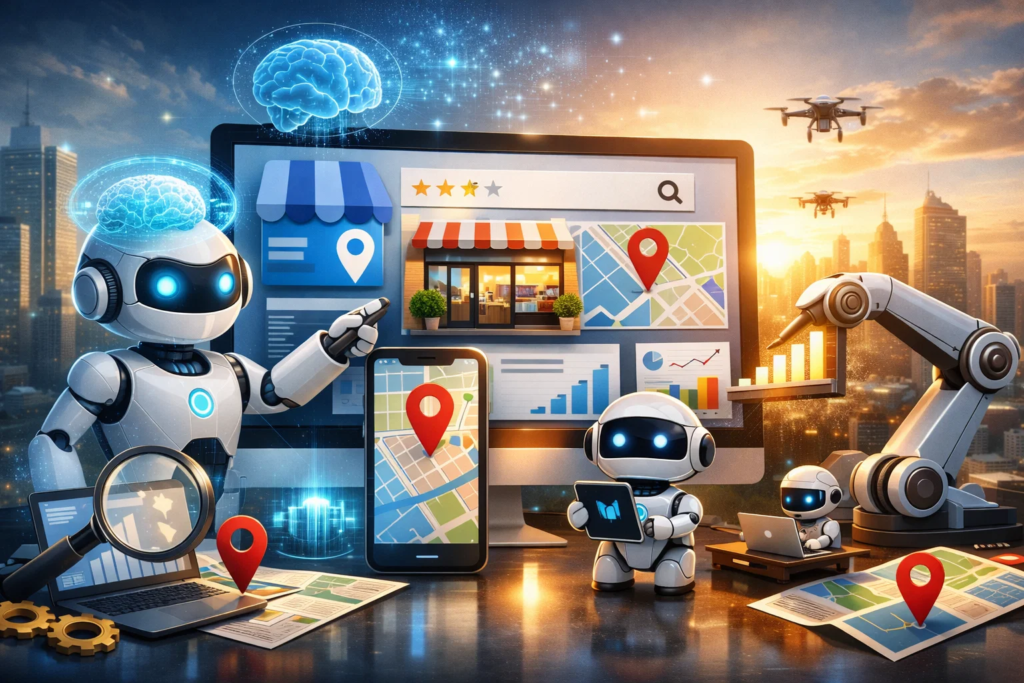
With AI-driven platforms, companies can automate the management of business listings, respond intelligently to customer reviews, track keyword performance specific to local audiences, and even gain insights into how they appear across Google Search, Maps, and other search ecosystems. Whether it’s a multi-location franchise or a single local shop, the stakes are higher in 2026 as consumers demand fast, accurate, and trust-driven search experiences powered by AI recommendations.
One of the biggest shifts in the current landscape is how search engines and AI assistants prioritize businesses. No longer is it simply about keyword stuffing or traditional SEO backlinks. Today’s search systems use AI models that evaluate real-time engagement signals such as review frequency, question-and-answer activity, and structured data accuracy across platforms. This makes the need for robust AI SEO tools not just beneficial—but critical for maintaining relevance in an AI-first search ecosystem.
Google Business Profile optimization has taken on a new dimension. It’s now considered a foundational dataset for generative search engines and digital assistants. AI tools help businesses ensure that their GBP listings are updated daily, compliant with the latest formatting standards, and visible across emerging platforms like Apple Business Connect, ChatGPT plugins, and voice search environments.
Moreover, features like “zero-click search”, voice-assisted discovery, and personalized AI recommendations have fundamentally altered how users interact with local businesses. In this new environment, tools that can measure “Prompt Impact”, analyze AI search citations, and track local keyword visibility have emerged as game-changers. These solutions offer more than rankings—they offer strategic control over how and where a brand appears when consumers make purchase decisions.
This blog explores the top 10 AI tools for local SEO and Google Business Profile optimization in 2026. It highlights how each software solution uniquely addresses modern challenges such as review automation, local keyword tracking, multi-location data management, AI presence optimization, and seamless integration with major digital platforms. By comparing features, benefits, and innovation across the leading tools in the market, this guide helps businesses of all sizes make informed decisions and stay ahead in a dynamic digital landscape.
For marketing professionals, SEO strategists, and business owners, understanding and adopting the right AI tools can determine whether their business is merely listed—or actively recommended—by search engines and digital assistants in 2026.
Before we venture further into this article, we would like to share who we are and what we do.
About 9cv9
9cv9 is a business tech startup based in Singapore and Asia, with a strong presence all over the world.
With over nine years of startup and business experience, and being highly involved in connecting with thousands of companies and startups, the 9cv9 team has listed some important learning points in this overview of the Top 10 AI Tools For Local SEO & Google Business Profile Optimization in 2026.
If you like to get your company listed in our top B2B software reviews, check out our world-class 9cv9 Media and PR service and pricing plans here.
Top 10 AI Tools For Local SEO & Google Business Profile Optimization in 2026
- Local Dominator
- BrightLocal
- Semrush Local
- Whitespark
- Local Falcon
- Birdeye
- Yext
- SOCi
- Uberall
- Chatmeter
1. Local Dominator
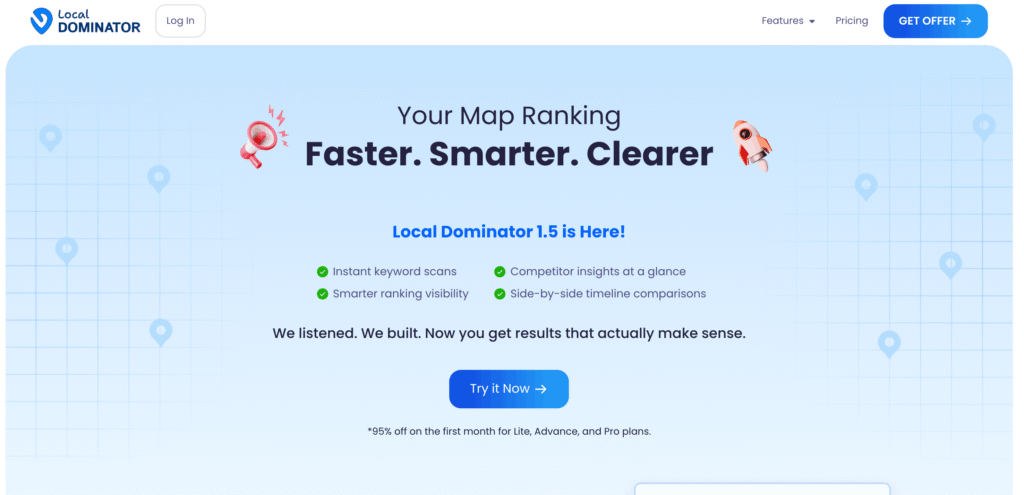
Businesses aiming to dominate local search in 2026 are increasingly turning to powerful AI-driven platforms designed for managing visibility across Google Business Profiles, AI search tools, and hyperlocal SERPs. One of the most advanced among these is Local Dominator, a cutting-edge software platform that consolidates multiple local SEO functions into a single, AI-enhanced ecosystem. It is engineered specifically to meet the evolving demands of modern local search—especially within AI-driven environments like ChatGPT, Gemini, and Google AI Overviews.
Comprehensive AI Features for Modern Local Search
Local Dominator stands out by offering a consolidated solution that replaces fragmented SEO workflows. Unlike older tools that treat AI tracking, citation management, and SERP monitoring as separate features, this platform brings them together into one unified system. This makes it easier for agencies and businesses to track local search performance across every digital surface where customers are searching.
Key technologies embedded in Local Dominator include:
- AI Share of Voice Monitoring
Tracks how often a brand appears in AI-driven search results across platforms like ChatGPT, Gemini, and Google AI Overviews. - AI Hallucination Detection
Identifies incorrect information that AI platforms may generate about a business, such as wrong business hours or services. This helps companies correct misinformation using structured data enhancements. - GeoGrid Predictive Analysis
Goes beyond standard rank tracking by using predictive models to identify gaps in hyperlocal visibility, such as neighborhoods with weak proximity content signals.
Feature and Technology Matrix
Below is a matrix summarizing the core components of Local Dominator compared to typical legacy SEO platforms:
| Feature Category | Local Dominator | Traditional Tools |
|---|---|---|
| AI Share of Voice Tracking | Included | Not Available |
| ChatGPT & Gemini Monitoring | Built-In | Manual Monitoring |
| GeoGrid Rank Heat Mapping | Predictive AI Engine | Static Heatmaps Only |
| Citation Consistency Automation | Apple, Bing, Directories | Limited or Manual |
| Structured Data Optimization | AI-Driven Suggestions | Requires Manual Edits |
Flexible Credit-Based Pricing for Agencies
Local Dominator has introduced a new credit-based pricing structure that moves away from traditional flat-fee per-location models. Instead of wasting budget during off-peak periods, agencies can now accumulate unused credits and use them during peak activity months or while onboarding new clients.
Pricing Plan Overview
| Plan Type | Monthly Cost | Included Credits | Ideal For |
|---|---|---|---|
| Beginner | $397 | 500 Credits | Small Business Owners |
| Professional | $993 | 1,250 Credits | Growing Local SEO Agencies |
| Enterprise | $3,991 | 50,000+ Credits | Franchises or Multi-Location Brands |
Strategic Value for Agencies and Multi-Location Brands
From a qualitative standpoint, Local Dominator is not just a technical platform—it’s a growth-enabling revenue driver. Agencies managing dozens or hundreds of client locations benefit from:
- Citation Verification Automation: Ensures accurate business details across multiple platforms including Apple Maps, Bing Places, and niche industry directories.
- Prominence Signal Optimization: Helps improve the business’s prominence factor in Google’s local search algorithm by maintaining consistent citations and up-to-date structured data.
- Localized Strategy Execution: AI-driven suggestions allow agencies to identify which neighborhoods or geographies lack optimized content, making campaigns more precise and effective.
Strategic Capabilities Matrix for Agencies
| Capability | Benefit Delivered |
|---|---|
| Citation Monitoring AI | Automates directory checks and reduces manual work |
| AI Accuracy Checks | Improves customer trust by eliminating misinformation |
| GeoGrid Opportunity Mapping | Targets neighborhoods lacking localized presence |
| Structured Data Deployment | Fixes visibility issues on AI platforms like ChatGPT |
| Cross-Platform Coverage | Centralizes visibility from Maps, AI, and web search |
Conclusion
In 2026, managing a Google Business Profile and dominating local SEO requires more than just listing updates and keyword stuffing. With AI reshaping how search engines and virtual assistants deliver local information, platforms like Local Dominator are becoming indispensable. The software’s smart tracking, predictive capabilities, and automation make it one of the most powerful tools for agencies and businesses seeking to stand out in a crowded local marketplace. It not only ensures accurate digital presence but also boosts the discoverability and credibility of businesses in both conventional and AI-driven search landscapes.
2. BrightLocal
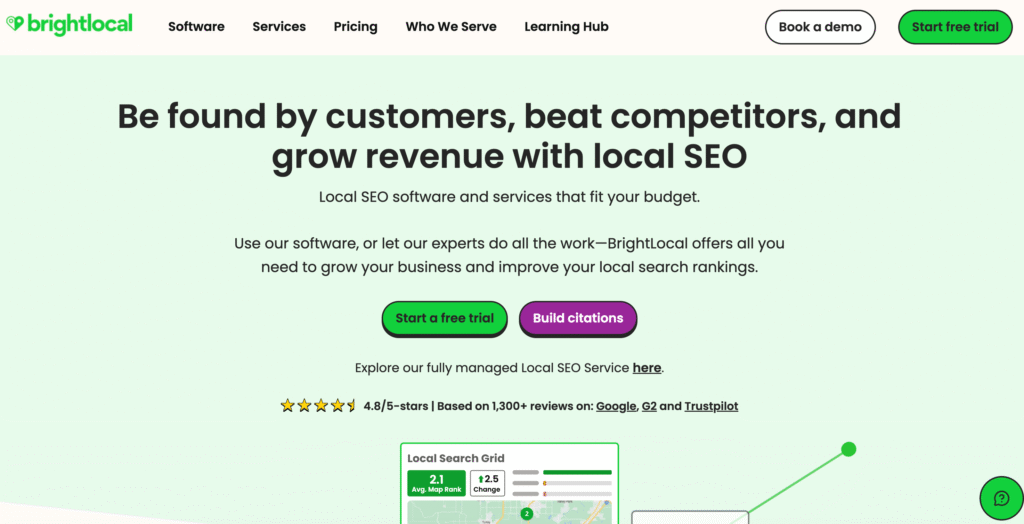
In the evolving landscape of local SEO and digital visibility, BrightLocal remains a cornerstone platform in 2026 for agencies and businesses aiming to improve their presence on Google Business Profiles and across local directories. Known for its reliability and depth of data, BrightLocal continues to help users manage online listings, monitor performance, and benchmark local search visibility against nearby competitors.
Key Capabilities and Automation Features
BrightLocal has significantly evolved with AI-driven functionalities, offering a more powerful and automated experience for both small businesses and large agencies. One of its standout strengths lies in its real-time “Listing Management” system that actively scans over 100 platforms, instantly alerting users to inconsistencies in business information such as name, address, and phone number (NAP). This automation helps prevent common visibility issues in search rankings caused by inconsistent data.
The platform’s “Local Search Audit” feature continues to be widely used for lead generation. It scores local SEO health by evaluating factors such as on-page optimization, citation volume, backlink strength, and online reviews. With added AI, the audit now prioritizes technical fixes, helping businesses address the most impactful issues first.
AI-Driven Review Sentiment Analysis
BrightLocal also empowers brands with smarter reputation insights. Through AI-powered “Sentiment Analysis,” the platform breaks down customer reviews into categorized themes such as pricing, service quality, and accessibility. This helps businesses pinpoint patterns in customer feedback, allowing for more strategic improvements in operations and customer service. These insights are now increasingly being referenced by AI systems like ChatGPT and Google’s AI Overviews, making it critical to maintain positive sentiment across review platforms.
Feature and Pricing Table
| Feature Name | Description | Pricing Model |
|---|---|---|
| Citation Tracker | Identifies and corrects NAP inconsistencies across directories | Included in base subscription |
| Listing Management | Real-time scans across 100+ local listings platforms | Included in base subscription |
| Active Sync | Automatically updates GBP, Apple Maps, and Bing Places | Optional Add-On ($15/month) |
| Reputation Manager | Review collection via SMS and email campaigns | From $8 per location |
| Sentiment Analysis | AI categorization of reviews by tone and topic | Included in base subscription |
| Local Search Audit | SEO scoring for website, citations, and reviews | Included in base subscription |
| Entry-Level Plan | Access to all base features, suitable for SMBs | $35 per month |
Comparative Impact on Local Visibility
Recent market studies from 2025 show that businesses using BrightLocal’s automated synchronization features experience significantly better performance across Google Business Profile views. Specifically, brands that use BrightLocal’s syncing tools gain an average of 42% more GBP impressions than those managing listings manually. This impact is attributed to BrightLocal’s ability to maintain clear and accurate business data—what experts refer to as “Entity Clarity”—across the fragmented web.
Effectiveness Matrix: Manual vs. BrightLocal Usage
Performance Metric | Manual Management | BrightLocal Automation
————————————|——————————|——————————-
Google Business Profile Views | Baseline | +42% Increase
Citation Consistency | Moderate Risk of Errors | High Accuracy Across Sites
Review Monitoring | Manual Sorting Required | Automated Sentiment Grouping
Audit and Lead Generation | Requires External Tools | Built-In Lead Audit System
Scalability for Agencies and Enterprises
BrightLocal is built not only for local businesses but also for agencies managing multiple clients or locations. Its platform supports scalable use, with credit-based add-ons and integration options that align with more complex workflows. By consolidating key services—like directory updates, audit reporting, and review tracking—under one system, BrightLocal reduces administrative burden and enhances operational efficiency for digital marketing teams.
Summary
BrightLocal’s longevity and widespread adoption are the result of constant evolution and adaptation. With the integration of AI in 2026, it now provides more intelligent insights, faster error detection, and greater automation—making it a preferred solution for any business aiming to excel in local SEO and Google Business Profile optimization. Its combination of affordability, performance, and innovation secures its position as one of the top AI tools in the global local SEO landscape.
3. Semrush Local

In 2026, Semrush Local has evolved from being a small part of the Semrush ecosystem into a major force in local SEO. It is now one of the most trusted AI-powered platforms for businesses aiming to optimise their presence on both local search and Google Business Profiles. Designed to support both local and broader regional or national campaigns, Semrush Local bridges the gap between intent-driven strategy and practical execution for local discoverability.
Advanced AI Copilot and Content Enhancement Features
One of the most notable upgrades in Semrush Local is the integration of its AI Copilot, which plays a central role in day-to-day optimisation. This smart assistant continuously analyses historic ranking patterns and real-time SERP changes to deliver actionable insights for local campaign adjustments. It prioritises optimisations based on volatility trends in search engine results and user intent patterns.
The platform also includes the enhanced SEO Writing Assistant, specifically updated for local SEO in 2026. It helps businesses write and optimise landing page content that resonates with natural language queries. This ensures alignment with how users speak and search when using voice assistants, AI tools, and mobile search, making businesses more discoverable through conversational AI platforms.
AI-Driven Optimization Table
| Tool/Feature Name | Core Functionality | Value to Local SEO |
|---|---|---|
| AI Copilot | Recommends daily content and ranking optimizations based on SERP data | Helps react fast to ranking shifts |
| SEO Writing Assistant | Improves content for local landing pages using natural query tones | Matches AI and voice-based queries |
| Internal Link Finder | Detects missed linking opportunities to boost topical authority | Enhances internal SEO strength |
| Keyword Clustering & Intent AI | Groups and maps search terms to business goals and user needs | Drives better content targeting |
Performance and ROI Insights from Semrush Users
A large portion of Semrush Local users have reported tangible improvements in their SEO results. In particular, the use of intent modeling and automated keyword clustering has delivered impressive campaign returns. Reports indicate that around 70% of users observed a better return on investment after deploying Semrush Local’s AI tools. This gain is often attributed to more refined keyword mapping, improved internal link structures, and stronger alignment with user search behavior.
Performance Metrics Overview
| Metric | Value Observed | Business Impact |
|---|---|---|
| ROI Improvement with AI Tools | +70% (Average Reported) | Better targeting and reduced wasted spend |
| Internal Link Discovery Rate | High – Beyond Manual Auditing | Strengthens SEO for local service pages |
| SERP Volatility Response Speed | Instant with Copilot Recommendations | Faster reaction to ranking drops |
| Natural Query Optimization Success | High – Used across voice and AI search | Increases discovery via AI search tools |
Map Rank Tracker and Platform Sync
Another core strength of Semrush Local is its built-in Map Rank Tracker, a tool that creates detailed heatmaps of local keyword rankings. This gives businesses a clear view of how they perform across different parts of their service areas. Unlike traditional GeoGrid tools, this feature is tightly integrated with Semrush’s broader suite, providing a consistent and consolidated interface for analysis.
The platform also syncs across 100+ local directories and platforms, ensuring listing accuracy across the digital ecosystem. This ensures that business name, address, phone number, and other key information remain correct and consistent—a vital factor for improving visibility in Google’s local pack.
Platform Reach and Pricing Table
| Feature Category | Description | Plan or Value Provided |
|---|---|---|
| Starting Price | Entry-level plan for small businesses | $29.95 per month |
| Directory Sync Coverage | Automated updates to over 100 platforms | Included in base plan |
| Market Share of Semrush Suite | Overall Semrush user base using local tools | Over 90% penetration |
| SERP and Intent Analysis Power | AI-based modeling for keyword strategy | Built into Copilot and Writing Tools |
Strategic Value for Multi-Level Businesses and Agencies
Semrush Local is not only suitable for small businesses but also scalable for agencies and enterprises managing campaigns across multiple cities or regions. By combining intent modeling, AI-generated optimisation tips, local content refinement, and map tracking in one solution, it allows digital teams to streamline workflows while improving precision.
Its AI-powered features help users anticipate changes in customer search behavior, generate content that connects better with target audiences, and maintain consistent online presence across platforms. The platform’s ability to align content and listings with user intent has positioned it as a top-tier solution in the global local SEO and GBP optimization category in 2026.
Conclusion
With a full suite of intelligent tools tailored to local discoverability, Semrush Local remains one of the most trusted and performance-oriented platforms available. Its deep integration of AI across content, ranking, and listing functions ensures businesses can adapt quickly to changes in local search dynamics—securing its position as a leading AI solution in 2026 for Google Business Profile and local SEO optimisation.
4. Whitespark
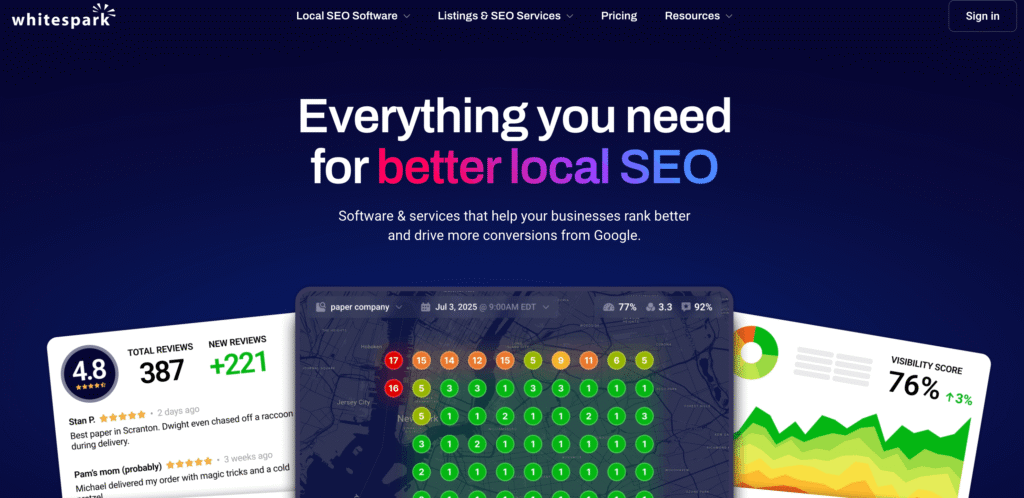
In 2026, Whitespark continues to be one of the most respected platforms in the local SEO industry. It is widely chosen by agencies and businesses that focus on mastering the core ranking factors of proximity, prominence, and relevance. Known for its research-backed insights and practical tools, Whitespark combines software automation with expert-managed services to help brands improve their visibility in Google Business Profile results and local search packs.
The platform is especially popular among agencies that prefer a structured and data-first approach to local SEO. Its strategies are based on continuous ranking factor studies and real-world analysis of what truly drives local search performance.
Local Ranking Trends and Behavioral Signal Focus in 2026
Whitespark’s 2026 local ranking research highlights a major shift in Google’s local algorithm. Behavioral signals are now among the fastest-growing ranking factors. These signals include:
- Click-through rates from local search results
- Calls made directly from Google Business Profiles
- Direction requests from map listings
- User engagement with photos and posts
This means that local SEO is no longer just about citations and keywords. It is increasingly about real user interaction. Google and AI-driven assistants now measure how customers engage with a business profile to determine its trustworthiness and popularity.
Whitespark has adapted to this change by enhancing its tools to focus on increasing real customer actions, not just rankings.
Reputation Builder and Smart Review Automation
One of Whitespark’s most effective tools in 2026 is the Reputation Builder. This system automates review generation through intelligent survey workflows. Instead of sending every customer directly to a review platform, the system first gathers feedback. Customers who provide positive sentiment responses are then guided to platforms such as Google or Yelp to leave public reviews.
This approach helps businesses:
- Increase positive review volume
- Improve average star ratings
- Strengthen trust signals for AI-driven summaries
- Reduce the risk of negative public feedback
Review sentiment now plays a major role in how AI assistants summarize and recommend businesses. Therefore, consistent and positive reviews directly influence local visibility.
Core Tools and Service Options
Whitespark stands out because it offers both software-based solutions and managed services. Many local SEO platforms rely fully on automation, but Whitespark provides manual cleanup and expert intervention for complex citation issues that automated systems often fail to fix.
Whitespark Tools and Services Overview
| Tool or Service Name | Cost Structure | Primary Use Case |
|---|---|---|
| Reputation Builder | Starts at $20 per month | Review growth and sentiment improvement |
| Local Citation Finder | One-time or monthly pricing | Competitor citation research and gap analysis |
| Managed Citations Service | $20 to $100+ per campaign | Enterprise-level citation cleanup |
| Local Ranking Report | Included in subscription plans | Ongoing performance tracking and reporting |
This hybrid model makes Whitespark suitable for both small businesses and large enterprises that require hands-on support.
Behavioral Optimization Matrix for 2026
| Local Ranking Factor | Importance Level in 2026 | How Whitespark Addresses It |
|---|---|---|
| Behavioral Signals | Very High | Automated review workflows and engagement tracking |
| Review Sentiment | Very High | Sentiment filtering and structured survey routing |
| Citation Accuracy | High | Manual and automated citation cleanup |
| Profile Freshness | High | Guidance on updates, photos, and responses |
| Competitor Benchmarking | Medium to High | Citation Finder and ranking comparisons |
Operational Freshness and “Looking Alive” Strategy
A key focus area for Whitespark in 2026 is what it refers to as “looking alive.” Search engines and AI assistants increasingly reward businesses that show signs of active operations. This includes:
- Regularly updated photos
- Consistent review responses
- Updated business hours
- Fresh posts and announcements
- Ongoing customer interaction
Businesses that frequently update their Google Business Profiles send strong signals of operational freshness. This increases trust in both traditional search and AI-generated summaries.
Why Whitespark Remains a Top AI Tool for Local SEO in 2026
Whitespark remains a leading solution because it does not chase trends blindly. Instead, it focuses on understanding how Google’s local algorithm evolves and then builds tools that address those ranking factors directly.
Its combination of:
- Research-based ranking insights
- Automated review generation
- Manual citation cleanup services
- Behavioral signal optimization
- Clear performance reporting
makes it one of the most dependable AI-assisted local SEO tools in the world in 2026.
For businesses serious about improving Google Business Profile performance and strengthening their position in local search results, Whitespark continues to be a foundational and highly strategic choice.
5. Local Falcon
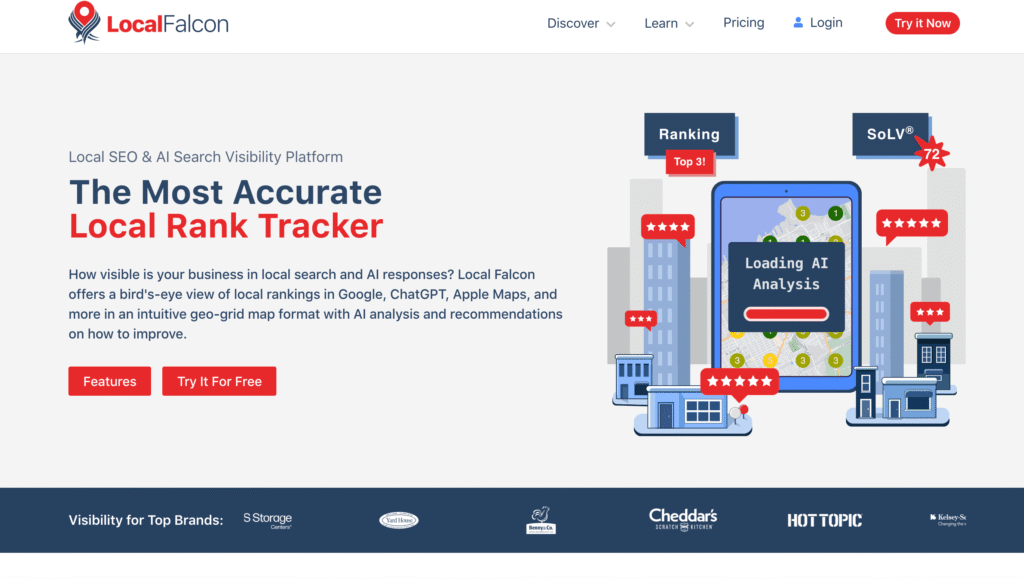
In 2026, Local Falcon has positioned itself as one of the most innovative AI tools for businesses aiming to improve their local SEO rankings and optimize Google Business Profile visibility. Known for its advanced geo-grid visualizations, Local Falcon offers businesses a precise way to see how their listings rank block by block, rather than relying solely on traditional broad-based rankings. It is especially valuable for service-based businesses, multi-location franchises, and agencies that require localized performance insights.
Introducing SAIV: AI Visibility Metrics for Local Intelligence
A standout upgrade in 2026 is the introduction of SAIV (Search AI Visibility) metrics. This feature monitors business appearances not only in traditional search results but also within AI-generated summaries such as Google AI Overviews and Grok outputs. By overlaying these AI mentions onto the geo-grid map, Local Falcon enables a deeper understanding of a business’s total local presence, both in classic SERPs and emerging AI platforms.
This dual visibility—across local packs and AI responses—helps businesses:
- Understand how AI platforms are referencing their brand
- Identify weak zones in both map-based rankings and AI visibility
- Take corrective actions with targeted optimization in low-performance zones
AI Insights and Optimization Powered by Falcon AI
The platform includes a built-in AI engine called Falcon AI, which offers optimization suggestions after every scan. Each recommendation is tailored to improve visibility across weak-performing grid points. For example, if a certain area in the grid lacks reviews or contains outdated business information, Falcon AI highlights these issues and provides specific actions such as adding localized content, updating photos, or acquiring reviews from those locations.
Geo-Rank and AI Influence Feature Table
| Feature Name | Description | Local SEO Impact |
|---|---|---|
| Geo-Grid Rank Tracking | Visualizes local rankings across specific geographic grid points | Enables hyper-local strategy targeting |
| SAIV Metrics | Monitors mentions in Google AI Overviews and Grok | Tracks brand visibility within AI platforms |
| Falcon AI | Offers smart recommendations based on scan data | Improves ranking in low-performing areas |
| Falcon Agent | Automates recurring scans and reports | Streamlines monitoring and optimization |
Credit-Based Pricing and Grid Scan System
Local Falcon’s pricing operates on a credit-based architecture, where each pin in a geo-grid scan consumes one credit. For example, scanning a 7×7 area requires 49 credits. This system offers users flexibility based on the scale of their monitoring needs.
The platform offers multiple tiers, including monthly and annual plans that provide thousands of credits suitable for small businesses and large enterprise agencies alike. Importantly, the Falcon Agent, which automates recurring scans and report generation, is included free with all annual and enterprise plans—providing added value for businesses managing multiple locations or clients.
Pricing and Credits Matrix
| Plan Tier | Monthly Price | Annual Price | Monthly Credits | Annual Credits |
|---|---|---|---|---|
| Starter | $24.99 | $299.88 | 7,500 | 90,000 |
| Basic | $49.99 | $599.88 | 15,150 | 183,000 |
| Pro | $99.99 | $1,199.88 | 31,250 | 383,000 |
| Enterprise | From $499 | From $5,988 | 157,000+ | 1.8 million+ |
Strategic Grid Optimization for Agencies
Local Falcon is widely used by digital marketing agencies to prove ROI to their clients. A key feature is the ability to demonstrate Green Zone Expansion—areas on the geo-grid where the business ranks in the top 3 search positions. Over time, agencies can track how optimization efforts are expanding these high-visibility zones.
This visual proof of ranking improvement is valuable for:
- Reporting to clients
- Planning location-based ad campaigns
- Deciding where to focus local content or review acquisition
Optimization Impact Matrix
| Optimization Area | Problem Addressed | Falcon AI Recommendation Type |
|---|---|---|
| Poor Grid Rankings | Weak visibility in certain map areas | Add localized content or update GBP info |
| AI Mentions Missing | Brand not shown in AI summaries | Strengthen NAP consistency or add structured data |
| Review Gaps by Area | Certain zones lack recent reviews | Encourage review generation from those ZIP codes |
| Inconsistent Business Info | Discrepancies across platforms | Sync GBP, Apple, Bing listings across directories |
Conclusion
Local Falcon has gone beyond being a basic geo-grid tracking tool. Its smart features like SAIV, Falcon AI, and Falcon Agent transform it into a full-scale AI-powered local SEO solution. With its ability to analyze both geographic ranking and AI-driven visibility, Local Falcon helps businesses adapt to the future of local search in 2026.
Whether used by single-location shops or national franchises, this platform delivers unmatched insights and control over local SEO strategy. As AI continues to shape the way users find local businesses, tools like Local Falcon ensure brands stay visible, accurate, and optimized across every digital surface.
6. Birdeye
In the landscape of local SEO and customer experience optimization in 2026, Birdeye stands out as a top-tier enterprise platform trusted by multi-location businesses and service providers worldwide. Designed specifically for businesses that rely heavily on positive customer interactions and consistent online visibility, Birdeye offers a powerful combination of AI automation, real-time reputation management, and competitive benchmarking features. Its robust capabilities are especially beneficial for service-based industries like healthcare, legal, and home services, where high review volume and quality directly influence growth.
AI-Powered Review Lifecycle with BirdAI
A key feature of Birdeye is its AI engine known as BirdAI, which powers a full suite of automated agents designed to manage and optimize the review ecosystem. These agents handle three core areas: review monitoring, generation, and response—across more than 200 digital platforms.
Each BirdAI agent is uniquely trained on the brand’s specific tone and communication style. This ensures that responses to customer reviews are not only prompt but also consistent with the business’s voice. Whether it’s a five-star compliment or a critical review, BirdAI creates tailored, human-like replies that preserve the integrity of the brand.
For local SEO, Birdeye’s Search AI plays a critical role. It optimizes business listings with structured data and keyword tuning, increasing the likelihood of appearing in AI-powered “Near Me” queries—a growing trend in how users search through platforms like Google AI Overviews, voice assistants, and mobile search apps.
AI Agent Functionality Overview
| BirdAI Agent Function | Description | SEO Benefit |
|---|---|---|
| Review Monitoring | Tracks mentions and reviews across 200+ platforms in real-time | Ensures timely engagement and reputation control |
| Review Generation | Automates outreach via SMS and email for satisfied customers | Boosts review volume and rating scores |
| Smart Response Automation | Replies to reviews using AI trained on brand tone | Maintains consistent communication quality |
| Search AI for Listings | Enhances business data to match AI query intent | Improves local discoverability in AI search results |
User Adoption, Market Reach, and Satisfaction
Birdeye has become a widely adopted platform with over 200,000 businesses actively using its services. Its strong market reputation is reflected in its Net Promoter Score (NPS) of 56, far surpassing key competitors like Yext (36), Reputation (39), and Podium (28). In independent reviews on software comparison platforms like G2, Birdeye also holds one of the highest customer ratings.
Performance Benchmark Comparison Matrix
| Platform | G2 User Rating | NPS Score | Review Monitoring Reach | Core Strength |
|---|---|---|---|---|
| Birdeye | 4.7 / 5 | 56 | 200+ Platforms | Reputation + Listings Optimization |
| Yext | 4.4 / 5 | 36 | 100+ Platforms | Listing & Knowledge Graph Management |
| Reputation | 4.3 / 5 | 39 | 150+ Platforms | Review Monitoring and Analytics |
| Podium | 4.2 / 5 | 28 | 75+ Platforms | Messaging and SMS Engagement |
Service-Based Businesses: Key Beneficiaries of Birdeye’s AI
Birdeye has emerged as a preferred tool for service-oriented businesses that rely on customer satisfaction and word-of-mouth. Businesses in sectors such as dental, medical, legal, fitness, and real estate benefit from the platform’s ability to generate consistent, high-quality reviews and respond to them in real time.
These industries often depend on strong online reputations and visibility in “Near Me” searches to drive local traffic. Birdeye’s tools help improve that presence by automating both reputation and listing optimization—saving teams hours of manual work while boosting ROI.
Strategic Benefits Matrix for Service-Based Businesses
| Business Segment | Challenge Addressed | Birdeye’s AI-Driven Solution |
|---|---|---|
| Dental & Medical Clinics | Need for consistent 5-star reviews | AI review generation + auto-response agents |
| Legal Services | Managing trust in competitive markets | AI sentiment tracking + brand voice-aligned replies |
| Home Services & Real Estate | Geographic listing optimization needs | AI-powered Search AI for multi-location accuracy |
| Fitness & Wellness Studios | Driving local foot traffic through search | Enhanced GBP visibility and AI “Near Me” citations |
Conclusion
In 2026, Birdeye continues to redefine enterprise reputation management with its AI-powered, full-cycle solution tailored for local SEO. Its combination of real-time monitoring, smart response automation, and intelligent listing enhancements helps businesses not only protect but also grow their visibility and trust online.
With its industry-leading Net Promoter Score, powerful BirdAI engine, and proven success among service-based sectors, Birdeye stands as one of the most comprehensive and high-performing platforms for Google Business Profile optimization and local SEO strategy in today’s AI-driven search landscape.
7. Yext
In 2026, Yext has become one of the most advanced platforms for managing and optimizing structured business information across the web. Originally known for distributing listings to local directories, Yext has transformed into a powerful Digital Knowledge Management system. It is now widely adopted by large enterprises that want to ensure their brand data is consistent, up-to-date, and optimized for AI-driven platforms like Google, Apple Maps, ChatGPT, Amazon Alexa, and emerging generative search engines.
Built around the concept of a Knowledge Graph, Yext allows businesses to structure their data in a way that machines and AI agents can understand and trust. This ensures better visibility in local searches, voice assistants, and AI-generated summaries, making it a critical solution for brands with large footprints.
AI Readiness Through Ontological SEO and Knowledge Graph Integration
At the heart of Yext’s 2026 platform is its Knowledge Graph, which stores a brand’s most important public-facing facts—such as business hours, services, product availability, reviews, and more—in a structured and machine-readable format. This approach goes beyond traditional SEO by adopting Ontological SEO practices, which ensure that every data point is linked logically, contextually, and semantically.
This format prepares a business to be “Agent-Ready,” meaning AI systems can easily extract, interpret, and cite brand information with confidence. As more users interact with AI-driven platforms instead of typing traditional queries, being Agent-Ready has become a critical SEO advantage.
Yext’s AI-focused tools, such as Scout, give businesses access to competitive intelligence. Scout tracks how businesses are appearing in AI responses across different geographic regions and monitors sentiment themes associated with those appearances.
AI and Structured Data Feature Overview
| Feature Name | Description | Local SEO and AI Benefit |
|---|---|---|
| Knowledge Graph | Structured system organizing public business facts for AI access | Ensures data consistency across all platforms |
| Scout AI Tracker | Tracks sentiment and AI-based search visibility by location | Helps brands measure influence in AI-generated content |
| Yext Pages | SEO-optimized landing pages using rich schema markup | Boosts ranking in local and branded keyword searches |
| Branded Search | On-site AI-powered search engine for websites | Increases on-page engagement and supports local discovery |
Enterprise-Grade Capabilities and Pricing Structure
Yext is positioned for large businesses and multi-location enterprises. It offers deep integration capabilities and automation features designed to reduce the need for manual listing updates across platforms. The “Fix Once, Correct Everywhere” functionality automatically distributes changes made in the Knowledge Graph across hundreds of directories, apps, maps, and search engines.
This structure is particularly valuable for companies with hundreds or thousands of locations, helping them maintain consistent data across all customer touchpoints while saving significant internal resources.
Pricing and Feature Matrix
| Plan Tier | Starting Price | Core Inclusions |
|---|---|---|
| Emerging Plan | $199/year | Basic listing sync and Knowledge Graph access |
| Growth Business | From $499/year | Expanded schema, branded pages, and AI visibility reports |
| Enterprise Solutions | Custom Quote | Full integration, advanced APIs, and national-scale deployment |
Publisher and Listing Integration Matrix
| Feature Category | Yext Coverage | Competitive Advantage |
|---|---|---|
| Publisher Network Reach | 200+ direct integrations | Greater listing consistency and update speed |
| Structured Data Delivery | JSON-LD, RDFa, Microdata | AI-readiness through rich structured markup |
| AI Assistant Compatibility | Google, ChatGPT, Alexa, Siri | Higher visibility in generative AI responses |
| Multi-location Synchronization | Scalable for 500+ stores | Reduces manual update workload by up to 90% |
Competitive Differentiators in the Enterprise Segment
Yext continues to outperform many of its competitors by focusing on automation, scalability, and AI-readiness. The platform’s focus on structured data, sentiment tracking, and real-time brand presence across both search engines and AI systems makes it a go-to solution for national and global businesses.
Its high cost is often justified by its operational efficiencies, strategic AI integration, and ability to reduce brand inconsistencies at scale.
Strategic Benefits for Enterprises and Franchises
| Use Case | Business Challenge | Yext’s AI-Enabled Solution |
|---|---|---|
| Multi-location Brand Control | Ensuring consistent listings for 500+ stores | One-click data update through Knowledge Graph |
| AI Visibility Optimization | Visibility in generative search platforms | Scout sentiment + schema-rich Yext Pages |
| Operational Efficiency | Manual updates are time-consuming and error-prone | Automation cuts effort by over 90% for data changes |
| Branded Web Experience | Users can’t find info quickly on brand sites | Branded Search and on-site AI search interface |
Conclusion
Yext has become more than just a local listings platform—it is now an enterprise-level, AI-ready digital infrastructure for local SEO and Google Business Profile optimization. With its structured Knowledge Graph, advanced Scout tool, and deep integration into major AI and mapping ecosystems, Yext helps businesses stay consistent, visible, and competitive in the evolving digital search environment of 2026.
For enterprises aiming to prepare their brand for the future of search and AI visibility, Yext is a proven, powerful, and future-forward solution.
8. SOCi
SOCi has emerged as a leading platform for local SEO and Google Business Profile optimization in 2026, especially for enterprises managing complex multi-location structures such as franchises and corporate chains. Designed to balance centralized brand control with local relevance, SOCi helps businesses build a scalable, consistent, and high-impact local marketing strategy.
Built with the needs of industries like retail, healthcare, hospitality, education, and property management in mind, SOCi simplifies how companies maintain their local reputation, respond to customer reviews, and run geographically targeted campaigns.
Genius AI: Smart Automation for Reputation and Engagement
At the center of SOCi’s 2026 platform is Genius AI, an advanced automation engine built to streamline content creation, social media engagement, and review management across hundreds or even thousands of locations.
This AI-powered system can:
- Auto-generate personalized review responses at scale
- Produce localized social media content tailored to each location
- Identify high-performing posts and automatically boost them with Local Paid Ads
- Align paid and organic strategies to maximize return on ad spend (ROAS)
By automating repetitive tasks and empowering franchisees with locally relevant tools, Genius AI not only reduces marketing workload but also improves engagement and foot traffic.
AI and Marketing Automation Feature Matrix
| Feature Name | Description | Business Impact |
|---|---|---|
| Genius Reviews | Auto-generates brand-aligned replies to customer reviews | Enhances reputation and response rate |
| Genius Social | Localized social content creation for each store location | Increases organic reach and franchise engagement |
| Local Paid Ads Integration | Boosts high-performing posts in targeted geographies | Drives physical visits and local conversions |
| Multi-Location Command Center | Centralized dashboard with local-level access options | Balances brand consistency with franchise flexibility |
Real-World Performance Outcomes and Case Study Highlights
SOCi’s effectiveness in real business settings is demonstrated by several high-impact case studies from 2026. One of the most notable examples is Sport Clips, a national franchise, which leveraged SOCi’s automated review and engagement tools and achieved a measurable boost in store performance.
Key improvements included:
- 18% increase in sales within four months
- Social engagement doubled, rising from 29% to 57%
- One operator managing 100 locations, showcasing labor scalability
Franchise Performance Metrics Table
| Metric Category | Before Using SOCi | After Using SOCi | Result Summary |
|---|---|---|---|
| Franchise Revenue Growth | Baseline Sales | +18% Sales Increase | Significant ROI via AI-powered feedback loops |
| Social Engagement Rate | 29% | 57% | Stronger local content resonance |
| Operational Efficiency | Manual Ops, Limited Scale | 1 Operator / 100 Locations | High scalability for corporate teams |
Use Case Alignment Across Industries
SOCi is most effective for organizations where location-level performance is tightly tied to digital reputation. This includes verticals like:
- Retail chains, where store reviews influence shopper behavior
- Healthcare providers, where trust and response times are critical
- Property management groups, where tenant feedback affects leasing decisions
- Restaurant franchises, where online ratings directly impact customer footfall
Industry-Specific Value Matrix
| Industry Segment | Key Challenges | SOCi’s Solution |
|---|---|---|
| Retail and Franchise Chains | Need for local content, central control | Genius AI for brand-aligned, localized campaigns |
| Healthcare Clinics and Groups | High review volume, strict response needs | Automated, reputation-safe review handling |
| Property and Rental Firms | Managing tenant reviews across locations | Dashboard-level insights + sentiment classification |
| Food & Beverage Franchises | Visibility in “Near Me” searches | Paid + organic optimization to drive traffic |
Conclusion
SOCi has become a critical AI tool for businesses that operate at scale but require a strong local presence. With its Genius AI engine, SOCi delivers a smart blend of automation, local engagement, and centralized control—helping franchises and multi-location brands succeed in local SEO and Google Business Profile management.
Its track record in improving real-world results, simplifying large-scale operations, and boosting both sales and engagement makes SOCi one of the most effective and scalable local SEO tools in 2026. For businesses aiming to unify brand voice while empowering each location with AI-driven tools, SOCi is an ideal platform to adopt.
9. Uberall
Uberall has firmly established itself as one of the top AI-driven platforms for local SEO and Google Business Profile optimization in 2026. Built to support global brands with multiple physical locations, Uberall offers a seamless way to connect online discovery to offline conversions. It is especially effective for international retail chains, service businesses, and multi-location enterprises operating across European, Asian, and North American markets.
What sets Uberall apart is its focus on delivering a Hybrid Customer Experience—bridging digital interactions with in-person visits. Its advanced AI systems, location analytics, and massive publisher integrations make it a vital solution for organizations seeking full visibility in location-based search.
UB-I and Spatial Analytics for Hyperlocal Precision
One of the most advanced components of Uberall’s technology stack is UB-I (Uberall Intelligence), an AI agent designed to optimize visibility based on spatial behavior—real-world data showing where users are physically located when they conduct searches. This functionality gives businesses a competitive advantage by allowing them to align service areas, content strategies, and listings with actual search demand.
UB-I analyses data such as:
- Device location at time of search
- Click-through behavior based on proximity
- Missed visibility opportunities in specific micro-locations
- Gaps in Google Business Profile coverage across service zones
Using this intelligence, brands can adjust their digital footprints to better match real-world audience behavior—ensuring they are more visible where their customers actually are.
AI and Location Optimization Feature Overview
| Feature Name | Description | Business Impact |
|---|---|---|
| UB-I (Uberall Intelligence) | Identifies spatial behavior trends and optimization gaps | Helps brands match digital coverage with local demand |
| Spatial Search Analytics | Maps physical user proximity to search outcomes | Improves targeting of listings and local content |
| Directory Sync Integration | Syncs business data across 125+ platforms including global directories | Ensures accuracy and completeness of business data |
| Customizable Local Pages | Provides branded, SEO-rich landing pages for each store location | Increases local discoverability and site engagement |
| Engagement Hub | Centralized inbox for social media, reviews, and local interactions | Streamlines communication and reputation management |
Global Infrastructure and Localization Strategy
Uberall supports brands operating across different languages, currencies, and customer behavior patterns. Its platform integrates deeply with over 125 digital directories, including local niche sites commonly used by large language models and AI assistants to verify business information.
This depth of integration allows Uberall clients to:
- Appear in AI-generated “Near Me” results across multiple regions
- Ensure brand consistency across all digital touchpoints
- Maintain high local relevance without sacrificing corporate control
Localization Capabilities Matrix
| Functionality | Coverage Area | Strategic Benefit |
|---|---|---|
| Directory Sync Reach | 125+ Platforms Globally | Guarantees data consistency and faster updates across platforms |
| Custom Landing Pages | Region-specific Templates | Increases performance in location-based keyword searches |
| Language and Region Support | Europe, Asia, North America | Enables smooth adaptation to diverse customer needs |
| AI-Powered Localization | Service Area Adjustments | Matches business presence to actual local search intent |
Enterprise Use Cases and Industry Fit
Uberall is ideal for global retail brands, hotel chains, automotive service providers, food and beverage franchises, and healthcare systems that operate across several countries or regions. It helps these businesses unify their online reputation, improve discoverability in local and AI search, and drive foot traffic to offline locations.
Industry Use Case Matrix
| Industry | Challenge Faced | Uberall’s AI-Driven Solution |
|---|---|---|
| Retail & Fashion Chains | Varying customer demand by location | Spatial insights optimize local campaigns |
| Hospitality Groups | Inconsistent listings across countries | Directory sync + branded pages for each property |
| Healthcare Clinics | Managing patient trust in multiple cities | Centralized review inbox + service area adjustment |
| Food & Beverage Franchises | Local visibility for each store | Custom pages and AI citation management by region |
Real Business Impact and Executive Recognition
Uberall’s data insights have become highly regarded among Chief Marketing Officers and digital leads. Reports from the platform are widely cited as being among the most “actionable” in the industry. These reports directly link local SEO performance with foot traffic and revenue trends, enabling smarter decision-making at the C-suite level.
Executives have come to rely on Uberall’s ability to:
- Demonstrate ROI through visibility-to-visit correlations
- Identify underperforming locations with AI-powered benchmarks
- Deliver region-specific performance breakdowns for optimization planning
Performance and Integration Table
| Platform Element | Detail Description | Business-Level Advantage |
|---|---|---|
| Data Reporting & Insights | Correlates listing engagement with foot traffic | Offers measurable proof of local SEO impact |
| AI-Driven Optimization | Geo-data-led adjustment to GBP profiles | Enables real-time updates to fit user proximity behavior |
| Franchise & Brand Scalability | Custom permissions for local vs corporate use | Empowers both corporate oversight and local autonomy |
Conclusion
Uberall is a comprehensive, AI-enhanced platform designed to bridge the gap between digital engagement and in-store revenue. With capabilities such as UB-I, spatial behavior analytics, and deep global integration, Uberall supports brands in achieving full local visibility at scale. Its emphasis on hybrid customer journeys—connecting what people do online with where they go offline—makes it one of the most impactful AI tools for local SEO and Google Business Profile optimization in 2026. For enterprises seeking smart, regionally tailored local strategies backed by AI, Uberall is a clear market leader.
10. Chatmeter
Chatmeter has become a recognized leader among AI tools focused on improving local SEO and Google Business Profile optimization in 2026. Its advanced features are tailored to help enterprise businesses—particularly in retail, healthcare, financial services, and multi-location hospitality—track brand performance, manage reviews, and benchmark against local and national competitors.
By leveraging large-scale review data, AI-based analysis, and compliance-ready infrastructure, Chatmeter enables businesses to turn customer feedback into strategic actions that improve visibility, customer satisfaction, and search rankings across multiple locations.
Pulse AI and Visibility Score: Real-Time Brand Performance Monitoring
One of the core strengths of Chatmeter is its proprietary AI engine called Pulse, which specializes in extracting meaning from customer review text. Pulse scans millions of reviews to uncover trends, repeated complaints, and specific operational feedback—such as comments about wait times, staff behavior, pricing concerns, or facility cleanliness at individual store locations.
Alongside Pulse, Chatmeter provides a unique metric known as the Visibility Score. This score blends key performance indicators like:
- Business listing accuracy
- Review ratings and volume
- Customer engagement across social platforms
Together, these indicators give businesses a single view of their brand’s overall digital health and how it compares to competitors in the same geographic markets.
AI Sentiment Analysis and Brand Visibility Matrix
| Feature | Description | Benefit to Local SEO and Brand Management |
|---|---|---|
| Pulse AI Engine | Analyzes sentiment patterns from large volumes of customer reviews | Detects recurring operational issues at a granular location level |
| Visibility Score | Combines listings, reviews, and social data into a single KPI | Offers benchmarking insights and improvement opportunities |
| Competitor Benchmarking | Compares performance against national and local competitors | Helps brands understand where they stand across markets |
| Location-Based Alerts | Sends notifications for low ratings, review spikes, or keyword trends | Enables fast responses to local service quality concerns |
Compliance and Enterprise Control Framework
Chatmeter is built to support enterprise organizations with complex data protection needs. It is fully compliant with HIPAA and SOC 2 Type II, making it a trusted platform for businesses that operate in highly regulated industries such as healthcare and finance.
In addition to compliance, the platform provides a review response governance system. This allows corporate teams to set approved messaging guidelines, while giving local managers the freedom to respond quickly and appropriately to reviews within those brand-aligned guardrails.
Compliance and Access Control Table
| Compliance/Support | Chatmeter Feature | Organizational Benefit |
|---|---|---|
| HIPAA & SOC 2 Certified | Protects sensitive customer and patient information | Enables adoption by hospitals, clinics, and financial institutions |
| Brand Guardrails for Reviews | Corporate sets rules, local teams respond within limits | Maintains brand consistency while ensuring timely engagement |
| Multi-Location Control Center | Admin-level oversight with local user access controls | Scalable across hundreds or thousands of locations |
| Enterprise Reporting Tiers | Role-based dashboards with export options | Supports executive and regional decision-making with clarity |
Platform Coverage and Scalable Reach
Chatmeter monitors over 150 review platforms, including global and regional sources like Google, Facebook, Yelp, Healthgrades, TripAdvisor, and Zillow. This extensive reach allows businesses to track customer sentiment across all digital touchpoints where potential buyers, patients, or renters leave feedback.
Its AI-powered analysis isn’t limited to just high-level insights—it drills down to specific issues by location, time period, and service type, making it easier for marketing and operations teams to respond with targeted improvements.
Coverage and Pricing Overview
| Platform Attribute | Details | Strategic Business Advantage |
|---|---|---|
| Review Site Monitoring | 150+ platforms tracked in real-time | Captures full spectrum of customer sentiment |
| Location-Level Drilldown | Analysis per store, clinic, or office location | Enables hyperlocal operational adjustments |
| Pricing Flexibility | Tiered for SMBs to large-scale enterprises | Suitable for regional businesses and nationwide chains |
| Annual Enterprise Packages | Includes training, compliance, and automation tools | Delivers long-term value and cost efficiency |
Conclusion
Chatmeter has become a critical platform for businesses aiming to enhance local SEO while closely managing their online reputation. With AI-driven sentiment analysis, structured visibility reporting, and full compliance support, it allows organizations to gain clear visibility into customer feedback, performance gaps, and local market positioning.
Its enterprise-grade scalability and location-focused insights make it one of the most comprehensive tools for multi-location SEO strategy, brand reputation management, and Google Business Profile optimization in 2026. For businesses looking to strengthen local performance through intelligent review analysis and brand intelligence, Chatmeter stands as a highly recommended solution.
Macro-Environmental Changes in 2026: Quantitative Trends Driving Local SEO and Google Business Profile Optimization
The landscape of local SEO in 2026 has undergone a major transformation, primarily driven by mobile-first behavior, the integration of AI-generated search responses, and shifting user engagement models. The rise of AI Overviews (AIO), generative interfaces, and zero-click outcomes is now reshaping how brands must approach local discovery, visibility, and conversion.
Businesses that fail to adapt to these trends risk becoming invisible to customers—even if they rank high in traditional listings. On the other hand, those optimizing their presence for AI-driven results and localized mobile behavior are achieving better engagement, higher visibility, and faster conversions.
The Shift to High-Intent Local Mobile Search Behavior
Local search continues to dominate mobile user behavior, with a significant percentage of consumers demonstrating clear purchase intent. Google’s own research data shows that 46% of all searches have a local intent, and 76% of those who perform a local search on their smartphone will visit a nearby business within 24 hours. Additionally, 28% of local searches result in an immediate transaction, illustrating the compressed conversion journey that defines modern local discovery.
AI Overviews and Zero-Click Search Transformation
While traditional search behaviors remain critical, they are now supplemented—and in many cases, overtaken—by AI-generated responses. These AI Overviews (AIOs) deliver detailed, structured information directly in the search interface, removing the need for users to click into a website. As of early 2026:
- 60% of all searches now conclude without a website visit.
- In AI-specific environments like “AI Mode,” this zero-click rate rises to 93%.
- However, businesses cited within AI Overviews enjoy a 35% higher click-through rate (CTR) compared to those listed below the summary.
This data highlights a critical strategic priority: getting cited as a trusted source in AI-generated summaries has become more important than ranking on the first page of traditional search.
Key Quantitative SEO and Local Discovery Metrics (2024 vs 2026)
| Metric Category | 2024 Baseline | 2026 Projected/Current | Observational Insight |
|---|---|---|---|
| Traditional Search Volume | 100% of base volume | 75% retention | Generative AI reduces reliance on static links |
| AI Technology Adoption (SEO Teams) | 14% of agencies use AI | 29.2% adoption | Growth driven by AI search and summary optimization |
| Local Mobile Search Growth | Used as baseline | +50% vs general search rate | Mobile behavior intensifies local search impact |
| Voice Assistant Usage | 4.2 billion users | 8.4 billion users | Voice search doubling globally by 2026 |
| Zero-Click Search Rate (General) | 43% of searches | 60% across standard AIO | Users find answers without clicking on websites |
| Zero-Click Search Rate (AI Mode) | N/A baseline | 93% clickless engagement | AI Mode leads to extreme zero-click environments |
| LLM Conversion Rate (Organic) | 1.76% average CTR | 15.9% via ChatGPT traffic | Cited brands gain strong traction in generative interfaces |
Strategic Imperative: AI Summary Citations Over Traditional Ranking
With organic CTR dropping by 61% when an AI Overview is displayed, the focus has clearly shifted from merely “ranking high” to being cited directly within AI-generated search answers. Businesses that appear as referenced sources in generative summaries are capturing more traffic and engagement—despite the zero-click nature of the interface.
AI Search and Local SEO Influence Table
| Search Interface | Typical User Behavior | Business Impact When Cited |
|---|---|---|
| Traditional Google SERPs | Multiple results, link-driven | Click-through competition based on ranking position |
| AI Overview Panel (Google, Bing) | 1–2 citations, summary-focused | Top citation receives 35% higher CTR than links below |
| AI Mode Search (ChatGPT, Gemini) | Single summary, no clickable links | Cited entities dominate user attention and traffic flow |
Conclusion
In 2026, the dynamics of local discovery have fundamentally changed. Businesses must now prioritize structured data optimization, AI visibility strategies, and real-time mobile presence to remain competitive. With AI Overviews, voice assistants, and zero-click search becoming standard, the race is no longer about being on page one—it’s about being in the AI-generated answer box.
For companies investing in local SEO and Google Business Profile optimization, the path to visibility now lies in aligning digital assets with AI readability, geo-relevance, and semantic clarity. This new era rewards brands that are prepared for the AI-first customer journey.
The Three-Layer Authority Model: A Strategic Framework for Local SEO and Google Business Profile Optimization in 2026
In 2026, the competitive landscape of local SEO has evolved into a multi-dimensional ecosystem powered by AI-driven search, structured data, and real-time user engagement signals. To achieve sustainable visibility and trust across platforms like Google Search, Google Maps, ChatGPT, and Apple Maps, businesses are increasingly adopting what is now referred to as the Three-Layer Authority Model.
This model offers a structured approach for improving how local businesses are discovered, validated, and trusted—both by search engines and AI systems. It emphasizes the importance of maintaining not just technical accuracy, but also widespread credibility and dynamic engagement across digital surfaces.
Layer 1: The Base Layer – Foundational Accuracy of Google Business Profile
At the core of local visibility lies the accurate management of the Google Business Profile (GBP). This foundational layer ensures that all critical business information—such as Name, Address, Phone Number (NAP), hours, and categories—is correct and synchronized daily. This routine synchronization helps eliminate data conflicts across the web and supports consistent search engine trust.
Maintaining this base layer includes:
- Daily data validation and update routines
- Proper business category tagging
- Integration of structured data (Schema.org formats)
- Ensuring identical data across Google, Bing, and Apple Business Connect
Layer 2: The Verification Layer – Multi-Platform Citations and Authority Signals
The second layer reinforces legitimacy through the consistent presence of business data across a wide range of high-authority digital platforms. In 2026, AI systems actively reference and cross-verify local business listings across at least 10 or more trusted directories and databases.
Common platforms include:
- Yelp
- Apple Maps
- Bing Places
- YellowPages
- TripAdvisor
- Foursquare
- Trustpilot
- Local directories by region (e.g., Hotfrog, Scoot)
- Niche industry directories (e.g., Zocdoc, Avvo)
Consistency across these platforms enhances the business’s Knowledge Graph score, giving AI search engines the confidence to include these businesses in AI-generated summaries.
Cross-Platform Citation Matrix
| Platform Name | Type of Directory | AI Trust Signal |
|---|---|---|
| Google Business Profile | Core Search Engine Platform | Anchor source for entity accuracy |
| Apple Maps | Mobile Maps Integration | iOS device trust signal for proximity-based search |
| Facebook Business | Social Platform | Public profile authority & user reviews |
| Yelp / TripAdvisor / Trustpilot | Review Aggregators | Sentiment-rich credibility indicators |
| Bing / Yahoo / Local.com | Legacy Web Directories | Broader Knowledge Graph reinforcement |
Layer 3: The Trust Layer – Review Activity and Engagement
The top layer in this model focuses on the dynamic and behavioral indicators that influence AI and search engine algorithms. Search engines and LLMs increasingly look for signs that a business is “active and trusted” through real-time user engagement. Two primary metrics here are:
- Review Velocity: How frequently the business receives new reviews
- Q&A Engagement: Responsiveness to Google Q&A, user comments, and messaging
These engagement patterns suggest operational authenticity and help AI systems filter out outdated or inactive listings. A well-maintained Trust Layer builds authority that cannot be replicated by static SEO practices alone.
Trust Metrics and Engagement Table
| Signal Type | Description | Local SEO Benefit |
|---|---|---|
| Review Velocity | Number and freshness of reviews over time | Signals active customer interaction and relevancy |
| Average Review Response Time | Time it takes to respond to feedback | Enhances local prominence and customer satisfaction |
| Q&A Responsiveness | Answering public questions on Google and Maps | Increases profile trust signals and click-through potential |
| Engagement Diversity | Interactions via reviews, posts, photos, and messaging | Boosts AI summarization quality and visibility ranking |
Visibility Equation for 2026: Authority as a Visibility Multiplier
In modern local SEO, authority has become the multiplying factor for visibility. This can be mathematically represented as:
Visibility Score = (Relevance × Distance × Prominence) × Authority Coefficient (α)
Where:
- Relevance: Match between the search query and business type/content
- Distance: Proximity of the business to the searcher’s device or set location
- Prominence: Brand recognition, backlinks, social proof
- α (Alpha – Authority Coefficient): Represents trustworthiness and consistency of structured data across platforms, driven by the Three-Layer Authority Model
Visibility Component Breakdown Matrix
| Component Name | Role in Local SEO Calculation | Influenced By |
|---|---|---|
| Relevance | Measures how closely the business matches search intent | Keywords, categories, landing page optimization |
| Distance | Measures how close the searcher is to the business location | Physical address, service area setup, mobile geodata |
| Prominence | Evaluates brand presence and user engagement | Link authority, brand mentions, domain reputation |
| Authority Coefficient (α) | Multiplies base visibility depending on data trust level | Citation accuracy, review activity, multi-platform presence |
Conclusion
The Three-Layer Authority Model serves as an essential framework for businesses that want to succeed in the AI-driven world of local SEO in 2026. This approach ensures foundational accuracy, cross-platform legitimacy, and active trust-building—all of which combine to boost visibility in both traditional and AI-generated search experiences.
For brands that want to appear in AI summaries, rank in local packs, and earn customer trust, adopting this layered model is no longer optional—it is the new baseline for success in a zero-click, generative-first search ecosystem.
Second-Order Insights in 2026: The New Metrics and Signals Driving Local SEO and Google Business Profile Optimization
The year 2026 marks a turning point in local SEO where traditional ranking factors are no longer sufficient on their own. The rise of AI-powered search interfaces, zero-click behavior, and conversational discovery has shifted focus toward a new category of ranking signals—previously considered secondary—now known as Support Signals. These signals play a crucial role in determining whether a business is eligible for inclusion in AI Recommendations, which are now among the most valuable visibility positions in local search.
To adapt, local businesses and SEO professionals are investing in deeper AI integration, data completeness, and user-centric signals that influence whether or not a business is recommended by virtual assistants and AI search summaries.
The 10-Review Threshold and Business “Openness” Signal
Recent findings—most notably from Whitespark’s 2026 studies—highlight the importance of crossing what is now termed the 10-Review Threshold. This milestone acts as a trust validation point for AI systems. Businesses with fewer than 10 reviews are often excluded from AI citations due to perceived lack of credibility. Moving from 9 to 10 reviews provides a sharp lift in visibility, more than the increase seen when scaling from 10 to 20.
Another emerging factor is the Openness Signal, now ranked as the fifth most important local ranking factor. This metric captures whether a business is open at the exact time of search and has become crucial for AI assistants like Google Assistant and Siri, which prioritize real-time availability for immediate intent queries.
AI Visibility Activation Metrics Table
| Support Signal | Description | Impact on AI Recommendations |
|---|---|---|
| 10-Review Threshold | Visibility boost when business reaches 10 reviews | Triggers trust status in AI summarization engines |
| Business Openness at Time of Search | Real-time status of being open or closed | Affects eligibility for fulfillment-based search prompts |
| Structured Data Consistency | Matching NAP info across directories and knowledge graphs | Supports inclusion in voice and zero-click search results |
| Review Freshness Velocity | Rate of receiving recent reviews over time | Boosts active signal strength in AI ranking models |
| Hours and Location Accuracy | Accurate geolocation and hours posted across platforms | Enhances conversion from voice and proximity-based queries |
Apple Business Connect: The Rising Contender in Local Discovery
While Google Business Profile continues to be the dominant listing platform, Apple Business Connect (ABC) has emerged as a serious challenger in 2026. With over 1.5 billion Apple devices using it as a default local discovery layer, ABC is gaining rapid traction in local SEO strategies—especially among businesses aiming to expand visibility through iOS-specific environments.
Apple’s integration spans across Apple Maps, Siri, CarPlay, Wallet, Mail, and native call screens. This omnichannel presence enables Apple Business Connect to control more touchpoints during the customer discovery journey.
One of the standout features is Business Caller ID, which displays a verified business name and logo when outbound calls are made to customers—building trust before any verbal interaction begins.
Google vs. Apple Business Infrastructure Matrix
| Platform Attribute | Google Business Profile | Apple Business Connect |
|---|---|---|
| Search Ecosystem Reach | Search, Maps, Assistant | Maps, Siri, Wallet, Mail, iOS Interfaces |
| Business Adoption Rate | ~80% Active Listings | ~16% and growing rapidly |
| Interactive Feature Set | Posts, Q&A, Messaging | Showcase Cards, Caller ID Integration |
| System Integration | Android, Google Web Services | Apple CarPlay, iOS, Siri, Spotlight Search |
| API Management Platforms | BrightLocal, Yext, Uberall | BrightLocal, PinMeTo, SOCi (ABC APIs) |
The Zero-Click Reality and the New KPIs: Prompt Impact and Conversational Presence
In the era of zero-click searches—where 93% of AI Mode queries do not lead to a website click—visibility is redefined by what experts now call Prompt Impact. This refers to how well a business appears in response to natural language prompts entered into AI tools, such as “best coffee shop open near me now” or “urgent pediatrician nearby.”
Instead of measuring success by traditional page rankings, marketers now assess how often their brand is featured in AI-generated answers, chat summaries, and voice assistant responses. The goal has shifted from driving traffic to earning mentions, citations, and placements in AI Answer Boxes.
AI Visibility KPI Matrix for 2026
| Metric Name | Description | Strategic Insight for Local SEO Success |
|---|---|---|
| Prompt Impact | How well a business answers AI-driven queries | Directly tied to long-tail natural language optimization |
| Response-to-Conversion Velocity | Time between AI-generated visibility and actual conversion | Measures efficiency of AI traffic in driving purchases |
| Citation Authority | Consistency of brand being used as a factual source | Builds AI confidence and summary placement likelihood |
| Chat AI Mentions | Frequency of brand appearing in AI chat threads | Reflects conversational relevance and entity presence |
| AI Answer Box Appearance Rate | Share of AI queries where brand is mentioned as a top answer | Replaces traditional CTR as a visibility benchmark |
Conclusion
The shift to AI-powered discovery in 2026 has redefined how businesses must think about local SEO. No longer is it enough to rely on NAP consistency and keywords. Today’s visibility strategies must consider Support Signals, AI-optimized review patterns, and cross-platform trust integrations—including emerging ecosystems like Apple Business Connect.
To succeed, businesses must focus on earning authority through real-time engagement, meeting review thresholds, optimizing prompt impact, and aligning with how AI assistants interpret trust, availability, and expertise. Those that do will lead the new era of location-based discovery—driven not by rank, but by relevance in AI-generated responses.
Expert Reviews and Known Limitations of AI Tools for Local SEO and Google Business Profile Optimization in 2026
As AI tools for local SEO continue to grow in popularity and sophistication, many digital marketers and enterprise decision-makers are taking a more critical look at their true value and performance. While these tools are effective at automating tasks like listing management, review responses, and local ranking reports, several key limitations have emerged in 2026—raising important concerns for businesses investing heavily in AI-based SEO platforms.
From rising subscription costs to ineffective multilingual capabilities, professionals are highlighting the performance gaps that remain unresolved across even the top-tier solutions in this category.
Cosmetic Automation vs. True Contextual Intelligence
One of the most common critiques from industry experts is the rise of Cosmetic Automation—where tools automate basic outputs like keyword insertions, generic replies, or checklist items without deeper contextual understanding. These tools often fail to personalize content around a business’s unique brand voice, service model, and target market. As a result, AI-generated content may appear bland or interchangeable, which prevents it from being cited by AI assistants in high-value answer boxes.
This lack of contextual relevance directly impacts a business’s AI visibility score and its likelihood of appearing in AI-generated summaries, especially for competitive long-tail search prompts.
Automation Type Comparison Table
| Automation Category | Description | Business-Level Limitation |
|---|---|---|
| Cosmetic Automation | Performs templated tasks (e.g., review replies, posting cadence) | Content lacks originality, often flagged as generic by AI systems |
| Contextual AI Optimization | AI adjusts based on real business data, personas, or services | Requires deep integration and brand-specific training |
| Structured Prompt Logic | Uses targeted prompt libraries for different industries | Still underdeveloped for niche verticals and non-English markets |
Multilingual Performance and Data Limitations
Despite being marketed as global-ready, most AI SEO tools in 2026 remain predominantly English-language optimized. Brands operating in non-English regions—such as Latin America, Southeast Asia, or Europe—report reduced accuracy in keyword clustering, sentiment detection, and AI content scoring. This Language and Database Gap continues to hinder performance for global enterprises that require precision across regional markets.
Multilingual SEO professionals have noted problems such as:
- AI-generated content failing to meet local grammatical or cultural norms
- Poor SERP rank tracking accuracy in non-English locales
- Limited support for local directories outside major English-speaking countries
International SEO Capability Matrix
| Functionality | English Markets | Non-English Markets | Global Impact |
|---|---|---|---|
| Keyword Clustering & SERP Tracking | High Accuracy | Low to Moderate Accuracy | Limits data reliability for non-English teams |
| Review Sentiment Analysis | Fully Optimized | Inconsistent or Biased Outputs | Inhibits local insights for brand teams |
| Content Generation Quality | Natural and SEO-Friendly | Stilted or Culturally Off-Key | Risks disengagement in localized campaigns |
Attribution Gap and the Disconnect with Business Impact
Perhaps the most important limitation in 2026 is the Attribution Failure found across nearly all AI SEO tools. While platforms provide data-rich dashboards filled with visibility scores, mentions, and AI summary appearances, they rarely connect these performance metrics to actual business outcomes like sales, booked appointments, or marketing-qualified leads (MQLs).
C-suite leaders and marketing directors are increasingly demanding proof of ROI, yet many tools are still stuck reporting on vanity KPIs—numbers that look good on paper but don’t translate to revenue or customer acquisition.
Visibility vs. Conversion Attribution Matrix
| KPI Category | AI Tool Capability (2026) | Limitation to Business Measurement |
|---|---|---|
| AI Visibility Score | Tracked across keywords, locations | No linkage to closed sales or customer retention |
| Prompt Appearance Tracking | Shows brand presence in AI results | Does not measure prompt-to-lead conversion velocity |
| Citation Count / AI Mentions | Measures frequency in answer boxes | Fails to indicate how this visibility drives revenue |
Conclusion
In 2026, while AI tools for local SEO are more powerful than ever, they are still far from perfect. Many businesses face challenges due to over-reliance on cosmetic automation, weak multilingual support, and a persistent disconnect between SEO metrics and real-world business results.
To get the most out of these platforms, organizations must invest in custom training data, multilingual strategy layering, and integrations that connect AI search visibility directly to CRM systems or sales pipelines. Until AI SEO tools evolve beyond surface-level metrics and offer full-funnel attribution, their strategic value will remain under scrutiny—particularly among enterprise-level users seeking measurable outcomes from their local SEO investments.
Synthesis and Future Outlook: How AI Tools Are Shaping Local SEO and Google Business Profile Optimization in 2026
The local search landscape in 2026 has entered a new phase—one that emphasizes quality, trustworthiness, and structured visibility across AI-driven environments. As search engines continue to evolve into sophisticated Answer Engines, the role of platforms like Google Business Profile, Apple Business Connect, and ChatGPT-integrated listings is no longer limited to serving as digital signposts. Instead, they have become dynamic data hubs that fuel AI-generated responses, recommendations, and trust rankings.
In this new ecosystem, businesses that lead in local search are those that approach SEO as a continuous Signal Generation Strategy, not as an isolated optimization task. The successful integration of automation tools, data governance systems, and review-driven trust signals is what now defines local visibility and digital credibility.
From Static Listings to Structured Data Sources
In previous years, local listings were treated like online business cards. However, in 2026, they serve as machine-readable data sources used by AI systems to populate real-time answers and recommendations. Maintaining accurate, structured, and context-rich business data is now mandatory for any brand hoping to appear in high-value zero-click search environments.
Modern SEO requires constant updates, synchronization across platforms, and AI-compatible formatting. Every update—whether it’s a photo, a Q&A reply, or a change in business hours—is now a signal that helps a business earn citations in AI answer boxes and conversational summaries.
Evolution of Local Profile Utility Table
| Functionality Role | 2020–2022 (Traditional Use) | 2026 (AI-Driven Use Case) |
|---|---|---|
| Google Business Profile | Directory Listing | Structured Data Node for Generative Search Engines |
| Apple Business Connect | Apple Maps Sync Only | Trusted Entity Layer for iOS, Siri, CarPlay, and Wallet |
| Facebook Business Page | Social Engagement Platform | Contextual Signal Source for Brand Credibility |
| Local Review Platforms (e.g., Yelp) | Customer Sentiment Repository | Sentiment Training Feed for AI Summaries and Trust Scores |
Continuous Signal Generation Strategy
The winning approach in 2026 involves continuously broadcasting verified, accurate, and meaningful data across every consumer-facing channel. This includes:
- Consistent listings and structured schema across 100+ directories
- Real-time review generation and response
- AI-enhanced content for location-specific SEO
- Integration with voice platforms and AI search environments
Brands that leverage tools like Local Dominator for tracking their AI footprint, Birdeye for review management and automated replies, and Yext for centralized data orchestration have gained a significant edge. These platforms do more than automate—they ensure businesses remain part of the ongoing digital conversation that powers modern search and recommendations.
AI Tool Contribution Matrix for 2026 SEO
| AI Tool | Core Focus Area | Strategic Role in Local Discovery Ecosystem |
|---|---|---|
| Local Dominator | AI Visibility and Geo-Ranking Intelligence | Tracks presence across AI-generated responses and heat maps |
| Birdeye | Review Generation and Sentiment Automation | Manages trust-building and review velocity at scale |
| Yext | Knowledge Graph and Structured Entity Sync | Distributes consistent business data across AI verification layers |
From “Ranking First” to “Being Recommended”
The mindset shift that defines 2026 is moving away from traditional search rank obsession toward achieving Trusted Recommendation Status. In the age of zero-click AI results, success no longer depends on appearing at the top of a results page—it depends on being cited, featured, or recommended in a summary generated by AI.
This evolution demands that businesses align their SEO strategies with how AI interprets entity trust, credibility, and context. That means focusing not just on keywords, but on maintaining high-quality data, delivering customer satisfaction through active review engagement, and participating in the broader structured web.
SEO Mindset Transformation Matrix
| Old Strategy Focus | New Strategy Requirement (2026) | Business Impact |
|---|---|---|
| Ranking Position | Citation in AI Overviews and Voice Prompts | Higher visibility in zero-click and AI summary search results |
| Periodic Optimization | Ongoing, AI-Informed Signal Updates | Sustained trust and authority across generative platforms |
| Click-Through Rate (CTR) Focus | Prompt Impact and Response Accuracy | Better engagement across voice, chat, and AI modes |
Conclusion
In the future-facing world of 2026, local SEO is no longer just about showing up in search—it’s about being recognized as a reliable source by AI systems that influence buyer decisions. Brands that build AI-ready profiles, engage continuously through verified signals, and use advanced local SEO tools as part of a strategic infrastructure will continue to lead in the discovery journey.
The goal is not simply to be seen, but to be recommended. That distinction now defines success in the next generation of local SEO.
Conclusion
As we step deeper into 2026, it is increasingly evident that Generative Engine Optimization (GEO) has become one of the most vital pillars in digital marketing and online visibility. The shift from traditional search engine algorithms to generative search experiences—driven by large language models (LLMs), AI summaries, conversational interfaces, and zero-click search behaviors—has fundamentally changed the way brands are discovered and engaged with across digital platforms.
This transformation requires businesses to move beyond conventional SEO tactics and embrace AI-powered tools designed specifically for GEO. The tools featured in this list of the Top 10 AI Tools for GEO in the World in 2026 serve as foundational systems that help companies remain visible, verifiable, and valuable in an ecosystem increasingly defined by machine-generated content and automated responses.
Whether it’s building structured data that feeds into AI search summaries, tracking brand citations within generative answer boxes, optimizing entity profiles across knowledge graphs, or enhancing prompt relevance for conversational AI queries, each tool in this ranking addresses a critical component of modern visibility strategy. From platforms like Yext, Local Dominator, and Birdeye, to emerging solutions with advanced AI-tracking, content scoring, and knowledge embedding capabilities, the GEO ecosystem in 2026 is both sophisticated and fast-evolving.
What sets these top-performing tools apart is their ability to adapt to:
- The rising dominance of AI assistants like ChatGPT, Gemini, Alexa, and Siri
- The emergence of “answer-first” browsing behavior in zero-click environments
- The growing importance of structured entity optimization and trust signals
- The integration of local, semantic, and behavioral relevance into prompt results
- The demand for full-funnel attribution and measurable impact on visibility and conversions
As Google, OpenAI, Microsoft, and Apple continue to refine their generative engines, the surface area where users interact with branded content is expanding—without the traditional reliance on blue links. GEO tools are now expected to do more than monitor rankings; they must empower brands to engineer their inclusion in AI-generated narratives, prepare their data for instant summarization, and compete for influence within prompt-based digital ecosystems.
For enterprises, multi-location businesses, and fast-scaling digital brands, this shift is no longer optional. Investing in the right GEO AI tools is not just a way to stay competitive—it is a strategic necessity. Tools that can optimize entity understanding, manage reviews and citations, enhance semantic clarity, and provide real-time feedback loops across generative platforms will drive visibility, trust, and engagement in this new era of search.
In conclusion, success in 2026 and beyond will belong to businesses that understand that visibility is no longer earned by keywords alone, but by structured presence, conversational relevance, and AI-readiness. By choosing the right AI tools for GEO, companies can secure their place not only in search results but in the very language of modern discovery.
The future of digital marketing is generative—and the time to act is now.
If you find this article useful, why not share it with your hiring manager and C-level suite friends and also leave a nice comment below?
We, at the 9cv9 Research Team, strive to bring the latest and most meaningful data, guides, and statistics to your doorstep.
To get access to top-quality guides, click over to 9cv9 Blog.
To hire top talents using our modern AI-powered recruitment agency, find out more at 9cv9 Modern AI-Powered Recruitment Agency.
People Also Ask
What are the best AI tools for Local SEO in 2026?
The best AI tools for Local SEO in 2026 include Local Dominator, BrightLocal, Semrush Local, Whitespark, and Yext, among others.
How do AI tools improve Google Business Profile optimization?
AI tools enhance GBP by ensuring accurate data sync, managing reviews, generating content, and improving local ranking through automation.
Why is Local SEO important for businesses in 2026?
Local SEO helps businesses appear in nearby searches, voice queries, and AI summaries, increasing visibility and foot traffic.
Which AI tool is best for review management in 2026?
Birdeye is considered a top tool for review automation, sentiment analysis, and improving trust signals across platforms.
Can AI tools help manage multiple business locations?
Yes, platforms like SOCi and Chatmeter support centralized management for hundreds of locations with localized control.
What features should I look for in a local SEO AI tool?
Look for features like review automation, GBP syncing, listing management, geo-rank tracking, and AI-generated content suggestions.
Are AI SEO tools suitable for small businesses?
Yes, many tools offer affordable plans and automation that save time for small businesses looking to compete locally.
How do AI tools affect zero-click search visibility?
AI tools help optimize your business data to appear in AI-generated summaries, increasing exposure in zero-click results.
What is generative engine optimization (GEO)?
GEO is the process of optimizing content and data to appear in AI-generated search responses, voice assistants, and chat summaries.
Do AI tools help with citation management?
Yes, platforms like Whitespark and Yext help manage and automate citation consistency across hundreds of directories.
What’s the role of structured data in local SEO tools?
Structured data helps AI systems understand business information, boosting visibility in AI overviews and local packs.
How do AI tools support voice search optimization?
AI tools optimize listings and content with conversational keywords that align with voice search intent and natural language.
Is Google Business Profile still relevant in 2026?
Absolutely, GBP remains a core local SEO asset, and AI tools help maintain its accuracy and visibility in search results.
Which AI tool provides geo-grid visibility tracking?
Local Falcon is a top choice for geo-grid tracking, visualizing local rankings across maps and service areas.
Do these tools integrate with Apple Business Connect?
Yes, tools like BrightLocal and PinMeTo now offer integration with Apple Business Connect for iOS visibility.
How does AI impact local search rankings?
AI interprets trust signals, listing accuracy, reviews, and behavioral data to determine a business’s local relevance.
Are there AI tools that optimize for AI answer boxes?
Yes, tools like Local Dominator and Yext optimize business data to increase citations in AI-generated answer summaries.
What is review velocity and why does it matter?
Review velocity is the rate at which new reviews are received. A steady flow indicates activity and improves trust in AI rankings.
Can I automate social media posting with local SEO tools?
Yes, platforms like SOCi offer local social media scheduling and content generation to drive engagement.
Which tool is best for AI ranking analysis?
Chatmeter’s Visibility Score and Local Dominator’s AI Tracker provide real-time performance analysis across AI search layers.
How do AI tools help with business hours accuracy?
These tools automatically sync hours across platforms, helping users and AI assistants display correct operational times.
Is AI-driven local SEO better than traditional methods?
AI-driven SEO offers real-time insights, automation, and smarter decision-making, outperforming traditional manual methods.
What are the pricing models for these tools?
Most tools offer monthly or annual subscriptions, with tiered pricing based on features and number of business locations.
Do these tools offer analytics and reporting?
Yes, all top AI tools include dashboards, location-level reporting, and visibility performance analytics.
Can these tools track competitor performance?
Yes, platforms like Semrush Local and Chatmeter offer competitor benchmarking and sentiment tracking across markets.
What is the 10-review threshold in local SEO?
It’s the point where AI models consider a business credible. Moving from 9 to 10 reviews significantly boosts visibility.
Which platforms support multilingual SEO tracking?
Currently, support is limited, but some tools like Yext and Birdeye are expanding to serve global, multilingual markets.
How does AI content differ from human-written content?
AI content is scalable but may lack brand tone unless trained. Tools with brand-specific settings help bridge this gap.
Are these AI tools secure and compliant for regulated industries?
Yes, tools like Chatmeter and Birdeye offer HIPAA and SOC 2 compliance for industries like healthcare and finance.
How do I choose the right AI tool for my business?
Consider your business size, number of locations, feature needs, and desired integrations before selecting a GEO tool.
Sources
Local Dominator
Accountability Now
Local Falcon
Rio SEO
Thistle Media
Webolutions Marketing Agency
AIOSEO
SeoProfy
Position Digital
Reputation
Sprout Social
GetApp
Software Advice
EmbedSocial
GoMage
Rankability
Semrush
OAK Interactive
Kinex Media
Diib
SOCi
Whitespark
01 Webmasters
Faith Amaole
The CMO
Comparably
Birdeye
G2
Search Atlas
Chatmeter
Yext
SEO Design Chicago
Planable
PinMeTo
Apple Support
Syntactics Inc
Search Engine Land