
Key Takeaways
- The most profitable AI tools in 2026 combine reasoning, content generation, automation, and analytics to create scalable income streams beyond traditional freelancing.
- Businesses and entrepreneurs gain the highest ROI by building integrated AI systems that reduce costs, increase productivity, and operate with minimal human intervention.
- Success in the agentic economy depends on specialized skills, measurable outcomes, and the strategic use of AI platforms for marketing, research, trading, and operations.
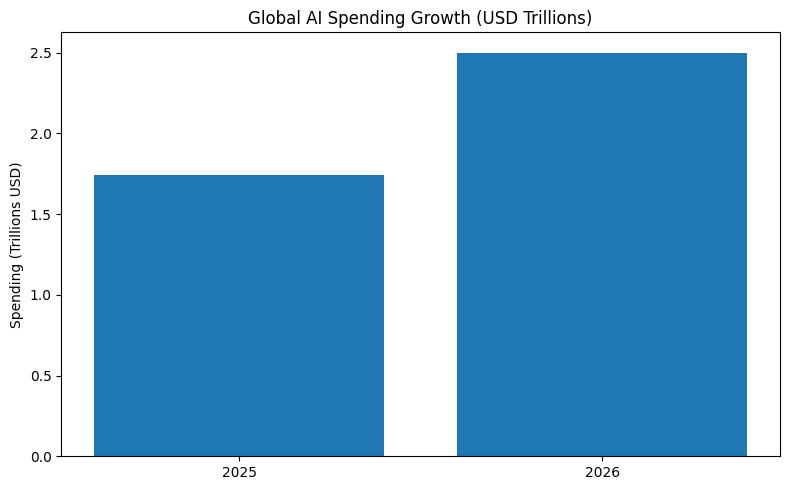
The year 2026 marks a decisive turning point in the evolution of the digital economy, as artificial intelligence transitions from a productivity enhancer into a primary engine of income generation. Across industries, AI is no longer viewed as an experimental technology reserved for large corporations; it has become a practical toolkit enabling individuals, startups, and enterprises to build scalable, high-margin businesses. With global spending on artificial intelligence surging into the trillions and adoption accelerating across nearly every sector, the question is no longer whether AI will transform work, but how quickly individuals can leverage it to create sustainable revenue streams.


At the center of this transformation is the emergence of powerful AI platforms capable of reasoning, creating, automating, analyzing, and executing complex tasks with minimal human intervention. These systems dramatically reduce the cost of producing digital goods and services, allowing a single entrepreneur to achieve output levels that previously required entire teams. As a result, the barriers to entry for online businesses have collapsed, enabling a new generation of creators, consultants, and digital operators to compete on a global scale.

Why AI Tools Have Become the Fastest Path to Online Income
Traditional methods of earning money online often relied on time-intensive activities such as freelancing, manual content production, or physical product fulfillment. In contrast, modern AI tools enable automated production pipelines that operate continuously. Content can be generated in minutes rather than days, software can be built with minimal coding expertise, marketing campaigns can be optimized in real time, and data analysis that once required specialized teams can now be performed instantly.

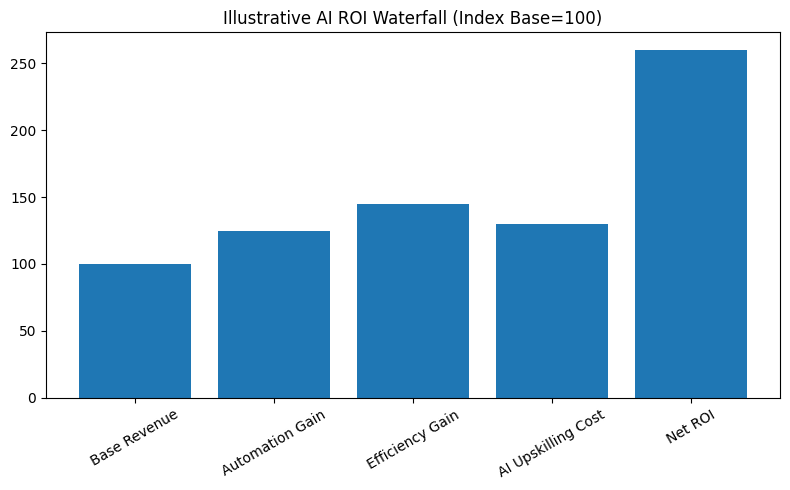
This shift has fundamentally altered the economics of digital entrepreneurship. Revenue is no longer strictly tied to hours worked; instead, it depends on the effectiveness of systems deployed. Individuals who master AI workflows can launch businesses faster, serve more customers simultaneously, and scale operations without proportional increases in cost or labor.

The Rise of the Agentic Economy
One of the most important trends shaping 2026 is the emergence of agentic AI—systems capable of executing multi-step objectives autonomously. Rather than performing isolated tasks, these tools can plan actions, coordinate processes, and deliver outcomes aligned with specific goals. For example, an AI system can research a market, design a product concept, generate marketing materials, automate distribution, and analyze performance data, all within a unified workflow.
This capability has given rise to what analysts describe as the “agentic economy,” where value is created by orchestrating intelligent systems rather than performing manual work. Entrepreneurs increasingly act as strategists and system designers, guiding autonomous processes that generate income around the clock.

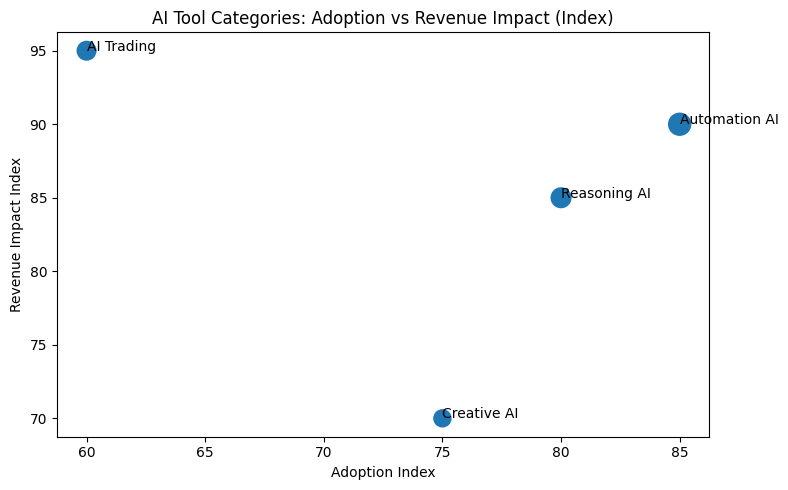
Categories of AI Tools That Generate Real Revenue
The most profitable AI tools in 2026 fall into several functional categories, each contributing to different aspects of business operations and wealth creation:
Reasoning and decision support tools help users plan strategies, analyze markets, and produce high-value professional outputs.
Creative generation platforms produce text, images, audio, and video content for marketing, entertainment, and digital products.
Automation and integration systems connect applications and execute workflows without manual intervention.
Research and intelligence engines provide real-time insights, competitive analysis, and fact-checked information.
Financial optimization tools support algorithmic trading, portfolio management, and investment decision-making.
Productivity and knowledge platforms enhance organizational efficiency and enable teams to operate at scale.
When combined, these capabilities allow individuals to construct end-to-end business systems that can operate with minimal oversight while continuously improving through data feedback.
Global Adoption Across Industries
AI-driven monetization is not limited to technology companies. Retailers use AI to generate product visuals and descriptions, educators create automated learning platforms, consultants deliver rapid insights to clients, media creators produce high-volume content, and financial professionals deploy algorithmic strategies to capture market opportunities. Even traditionally conservative sectors such as healthcare administration and legal services increasingly rely on AI to streamline documentation, compliance, and communication.
This cross-industry adoption has fueled an explosion of demand for tools that can translate artificial intelligence capabilities into tangible financial outcomes. As a result, a competitive ecosystem has emerged, with platforms racing to offer more powerful models, broader integrations, and user-friendly interfaces that democratize access to advanced technology.
Opportunities for Entrepreneurs, Freelancers, and Businesses
For individual earners, AI offers multiple pathways to profitability. Some focus on service-based models such as automation consulting, content production, or research support. Others build digital assets—software tools, online courses, subscription platforms, or design marketplaces—that generate recurring revenue. Large organizations, meanwhile, deploy AI to reduce operating costs, accelerate innovation, and capture new market segments.
The most successful participants share a common approach: they treat AI as infrastructure rather than a novelty. Instead of experimenting sporadically, they integrate these tools into core workflows, continuously refine performance, and measure outcomes rigorously.
Why 2026 Is a Critical Year
Several factors make 2026 particularly significant. Technological capabilities have matured to the point where AI outputs can rival or exceed human performance in many domains. Cloud infrastructure and software ecosystems make deployment accessible worldwide. Regulatory frameworks are clarifying acceptable use, reducing uncertainty for businesses. At the same time, competitive pressure is intensifying, as organizations that fail to adopt AI risk falling behind more efficient rivals.
In this environment, understanding which platforms deliver real financial value is essential. Not all AI tools are equally effective for monetization; some excel at creativity, others at analysis, and others at operational efficiency. Identifying the most impactful solutions can dramatically shorten the path from experimentation to income generation.
Setting the Stage for the Top 10 AI Tools
This guide examines the leading AI tools that are shaping the global money-making landscape in 2026. These platforms represent the cutting edge of what is possible with intelligent automation, from building digital products and managing marketing campaigns to conducting deep research and executing complex business processes. Each tool offers unique strengths, but all share a common characteristic: they enable users to produce more value with fewer resources.
For anyone seeking to build a future-proof income stream—whether as an entrepreneur, freelancer, investor, or corporate leader—understanding these tools is no longer optional. They are rapidly becoming the foundational components of modern economic participation, redefining how wealth is created in an increasingly automated world.
As artificial intelligence continues to advance, those who learn to harness its capabilities effectively will be positioned to thrive, while those who ignore it risk being left behind. The following exploration of the top AI tools for earning money in 2026 provides a comprehensive roadmap for navigating this transformative landscape and unlocking the unprecedented opportunities it offers.
Before we venture further into this article, we would like to share who we are and what we do.
About 9cv9
9cv9 is a business tech startup based in Singapore and Asia, with a strong presence all over the world.
With over nine years of startup and business experience, and being highly involved in connecting with thousands of companies and startups, the 9cv9 team has listed some important learning points in this overview of the Top 10 AI Tools For Earning Money in 2026.
If you like to get your company listed in our top B2B software reviews, check out our world-class 9cv9 Media and PR service and pricing plans here.
Top 10 AI Tools For Earning Money in 2026
- OpenAI ChatGPT
- GitHub Copilot and Cursor
- Midjourney
- Synthesia
- ElevenLabs
- Perplexity AI
- Zapier
- Tickeron and Trade Ideas
- Anthropic Claude
- Notion AI
1. OpenAI ChatGPT
By 2026, artificial intelligence platforms have become core economic infrastructure rather than optional productivity tools. Across industries, organizations and independent professionals rely on advanced AI systems to execute tasks that once required large teams, specialized expertise, or significant capital investment. The top AI tools for earning money now function as end-to-end business accelerators, enabling users to generate revenue through automation, advisory services, digital product creation, and scalable content production. Among these tools, OpenAI’s ChatGPT occupies a central position due to its breadth of capabilities and global adoption.
OpenAI ChatGPT: The Universal Intelligence Interface
ChatGPT has evolved into a comprehensive operational layer for digital work. Rather than acting solely as a conversational assistant, it now orchestrates complex workflows that combine reasoning, analysis, creative production, and decision support. The release of the GPT-5 model in late 2025 introduced major improvements in multimodal understanding, enabling seamless interaction across text, data, images, and structured business inputs. This capability allows individuals to manage entire projects—from ideation to execution—within a single interface.
Global Engagement and Market Presence
The platform’s adoption reflects unprecedented scale, making it one of the most widely used AI systems in the world. Hundreds of millions of weekly users interact with it for professional, educational, and commercial purposes, reinforcing its position as a dominant conversational AI interface.
ChatGPT Engagement Metrics (Early 2026)
| Metric | Estimated Value |
|---|---|
| Worldwide Market Share | 80.49% |
| North America Market Share | 76.59% |
| Total Monthly Website Visits | 5.723 Billion |
| Daily Prompts Worldwide | 2.5 Billion |
| Weekly Active Users | 800 Million+ |
| U.S. Daily Prompts | 330 Million |
This volume of interaction produces continuous performance refinement, allowing the system to align closely with human expectations and professional standards.
Financial Expansion and Revenue Indicators
ChatGPT’s commercial success mirrors its usage growth. Subscription upgrades, enterprise deployment, and mobile adoption have contributed to rapid revenue expansion, demonstrating the viability of AI as a mainstream productivity service.
Mobile App Revenue Growth
| Year | Estimated Revenue |
|---|---|
| 2024 | $174 Million |
| 2025 | $1.35 Billion |
The dramatic increase reflects a maturing conversion funnel in which users transition from free access to premium features that unlock advanced reasoning, customization, and automation capabilities.
Primary Monetization Pathways Using ChatGPT
In 2026, income generation through ChatGPT revolves around leveraging AI as a force multiplier rather than a replacement for human expertise. Professionals combine domain knowledge with AI capabilities to deliver services faster, at greater scale, and with higher consistency.
Key Revenue Models
| Income Category | Description |
|---|---|
| AI Implementation Consulting | Advising businesses on AI adoption |
| Automated Content Production | Scalable marketing and publishing |
| Professional Document Services | Career and business writing solutions |
| Workflow Automation Development | Building AI-driven operational systems |
| Research and Data Analysis | Market insights and strategic reporting |
| Education and Training Products | Courses, workshops, and coaching programs |
AI Implementation Consulting
Organizations increasingly seek guidance on integrating AI into daily operations. Consultants configure custom workflows, train staff, and establish governance practices to ensure effective deployment.
Typical Consulting Structure
| Service Component | Typical Pricing Range |
|---|---|
| Initial Assessment | $500 – $1,500 |
| Full Integration Package | $1,500 – $5,000 |
| Custom Configuration | Variable |
| Ongoing Management | Monthly Retainer Model |
Automated Content Marketing at Scale
Entrepreneurs use AI to produce high volumes of marketing assets with minimal manual effort. This approach supports affiliate businesses, e-commerce operations, and digital media ventures that depend on consistent content output.
Common Automated Outputs
| Content Type | Business Application |
|---|---|
| Social Media Advertising | Customer acquisition campaigns |
| Affiliate Blog Articles | Passive income websites |
| Email Sequences | Sales funnels and retention |
| Product Descriptions | E-commerce catalog expansion |
| Video Scripts | Creator economy production |
Specialized Professional Services
AI-assisted document preparation has become a high-demand niche. Services now deliver tailored resumes, cover letters, and professional profiles aligned with industry expectations and automated screening systems.
Career Document Services Market
| Service Type | Value Proposition |
|---|---|
| Resume Optimization | ATS-compatible formatting |
| Cover Letter Personalization | Role-specific targeting |
| Profile Enhancement | Professional branding improvement |
| Career Transition Packages | Comprehensive document bundles |
Productivity Multipliers and Economic Impact
A defining feature of AI-enabled work is the dramatic reduction in time required to complete complex tasks. This efficiency allows professionals to handle more clients, produce more output, and expand revenue without proportionally increasing workload.
Traditional vs AI-Assisted Productivity
| Work Category | Traditional Time | AI-Assisted Time |
|---|---|---|
| Long-Form Content | 8–12 Hours | 1–2 Hours |
| Market Research Reports | 2–3 Days | Few Hours |
| Campaign Planning | 1–2 Days | Same Day |
| Business Proposals | 6–10 Hours | 1–3 Hours |
Conclusion: ChatGPT as a Core Economic Tool
Within the global landscape of AI tools for earning money in 2026, ChatGPT serves as a foundational platform that connects human expertise with automated execution. Its scale, versatility, and continuous improvement have enabled new forms of entrepreneurship, consulting, and digital production. As AI adoption deepens across sectors, tools that combine reasoning, creativity, and operational control are expected to remain central to the future of work and income generation worldwide.
2. GitHub Copilot and Cursor
By 2026, artificial intelligence has fundamentally transformed the software development industry, shifting it from manual code production toward AI-assisted system design. Modern development workflows prioritize speed, scalability, and architectural thinking over traditional syntax-heavy programming. Among the most influential tools driving this transition are GitHub Copilot and Cursor, which together exemplify the industrialization of software creation. These platforms enable developers, startups, and even non-technical entrepreneurs to produce production-grade applications at unprecedented speed, fundamentally altering how digital products are built and monetized.
GitHub Copilot and Cursor: From Coding Assistants to Development Engines
Originally introduced as code completion tools, AI coding platforms have evolved into full-scale development partners capable of generating entire modules, debugging systems, writing tests, and suggesting architectural patterns. The integration of advanced language models into development environments allows programmers to operate at a higher abstraction level, focusing on system design, user requirements, and security considerations rather than line-by-line implementation.
GitHub Copilot, enhanced by large-context AI models, provides real-time suggestions across languages and frameworks, while Cursor emphasizes conversational coding workflows, enabling users to describe features in natural language and receive functional implementations. Together, these tools represent a shift from “writing code” to “directing code generation.”
Market Expansion and Adoption Trends
The AI coding tools sector has experienced explosive growth, reflecting the demand for faster software delivery and reduced development costs. Millions of developers worldwide now rely on AI assistance as a standard component of their workflow.
AI Coding Tools Market Overview (2025–2030)
| Indicator | Value |
|---|---|
| GitHub Copilot All-Time Users | 20 Million+ |
| User Growth (Year-over-Year) | Approximately 4× increase |
| Market Size (2025) | $7.37 Billion |
| Projected Market Size (2030) | $23.97 Billion |
| Compound Annual Growth Rate | 26.60% |
This rapid expansion underscores the role of AI as a foundational technology for digital infrastructure development.
Productivity and Performance Benchmarks
Empirical data from enterprise and startup environments indicates substantial productivity gains when AI coding tools are integrated into development pipelines. Developers can complete tasks significantly faster while maintaining or improving code quality through automated suggestions and context-aware generation.
Performance Comparison of Leading AI Coding Tools
| Tool | Key Metric | Performance Impact |
|---|---|---|
| GitHub Copilot | 20M+ users; large context capability | 51–55% faster coding speed |
| Cursor | 61% of chats focused on implementation tasks | 39% increase in merged pull requests |
| Windsurf | Agentic engine “Cascade” | Generates 57 million lines of code daily |
These metrics demonstrate how AI assistance accelerates development cycles while enabling teams to handle larger and more complex projects.
Shift in Developer Roles and Skill Requirements
The widespread adoption of AI coding systems has redefined the core competencies of software professionals. Instead of memorizing syntax or manually implementing standard patterns, developers increasingly act as system architects, reviewers, and decision-makers. Critical skills now include problem decomposition, security awareness, performance optimization, and the ability to guide AI outputs effectively.
Traditional vs AI-Augmented Developer Focus
| Development Aspect | Traditional Approach | AI-Augmented Approach |
|---|---|---|
| Code Production | Manual implementation | AI-assisted generation |
| Debugging | Line-by-line troubleshooting | AI-guided analysis and fixes |
| System Design | Secondary consideration | Primary responsibility |
| Knowledge Requirements | Language syntax mastery | Architectural reasoning |
| Quality Assurance | Human-only testing | Human review plus AI validation |
Advanced Monetization Opportunities for Developers
In 2026, the most lucrative income streams for developers arise from leveraging AI to deliver complex solutions rapidly rather than selling time-based coding labor. Professionals who combine domain expertise with AI capabilities can produce high-value outputs with relatively small teams.
Micro-SaaS and Rapid Product Development
AI-powered development environments allow individuals to build functional software products in days instead of months. Using agent-based modes, developers can generate backend logic, user interfaces, and deployment scripts with minimal manual coding. This has fueled the rise of micro-SaaS businesses—small, specialized software services targeting niche markets.
Micro-SaaS Development Advantages
| Factor | Traditional Development | AI-Assisted Development |
|---|---|---|
| Time to Minimum Product | Months | Days to Weeks |
| Team Size | Multiple specialists | Solo founder possible |
| Development Cost | High | Significantly reduced |
| Iteration Speed | Slow | Rapid |
Custom Enterprise Automation Services
Businesses increasingly outsource workflow automation to specialists who use AI coding tools to build integrations across software systems. These automations streamline operations, reduce manual labor, and improve data consistency.
Enterprise Automation Consulting Pricing
| Service Type | Typical Fee Range |
|---|---|
| Single Workflow Automation | $500 – $2,500 |
| Multi-System Integration | Higher project pricing |
| Maintenance and Updates | Recurring fees |
| Performance Optimization | Premium consulting rates |
Audit, Security, and Code Governance Services
As AI-generated code volume increases, so does the need for rigorous review. Organizations require experts who can validate correctness, identify vulnerabilities, and ensure compliance with security standards. Specialists in AI code auditing command premium compensation due to the high stakes associated with software reliability and data protection.
AI Code Review and Security Services
| Service Category | Business Value |
|---|---|
| Security Hardening | Protection against vulnerabilities |
| Code Quality Assessment | Maintainability and performance |
| Compliance Verification | Regulatory adherence |
| Architecture Review | Long-term scalability |
Conclusion: The Industrialization of Software Creation
GitHub Copilot and Cursor exemplify how artificial intelligence has transformed software development into a highly scalable industrial process. By automating routine coding tasks and augmenting human decision-making, these tools enable individuals and organizations to produce sophisticated digital systems at unprecedented speed. The economic implications are substantial: smaller teams can compete with large enterprises, development costs decline, and new business models emerge around rapid innovation.
In the broader context of AI tools for earning money in 2026, AI coding platforms represent one of the most powerful engines for wealth creation. They empower developers not merely to write software but to design, launch, and scale entire digital businesses with efficiency that was previously unattainable.
3. Midjourney
By 2026, the global visual economy has been reshaped by generative AI platforms capable of producing commercial-grade images on demand. Businesses, creators, and marketing agencies increasingly rely on these tools to replace or augment traditional photography, illustration, and design workflows. Among the leading platforms, Midjourney has established itself as a premium solution for high-fidelity artistic output, particularly in branding, advertising, and digital product creation. Its ability to generate visually compelling assets quickly and at low cost has made it one of the most profitable AI tools for monetizing creativity in the modern digital marketplace.
Midjourney: A Premium Platform for High-Fidelity Visual Production
Midjourney is widely recognized for producing stylistically rich, aesthetically refined images that often rival professional artwork. Unlike general-purpose image generators, it focuses heavily on artistic quality, lighting realism, composition, and visual storytelling. By early 2026, the platform operates primarily through a community-driven interface, enabling millions of users to create and refine visuals collaboratively.
Despite limited external funding compared to large technology companies, Midjourney achieved remarkable commercial success. The platform generated an estimated $500 million in revenue in 2025, demonstrating strong demand for premium visual generation services across industries such as e-commerce, entertainment, publishing, and advertising.
User Base and Engagement Scale
Midjourney’s growth has been driven by digital-native creators, designers, entrepreneurs, and hobbyists who require rapid visual production. Its active community contributes to continuous experimentation and trend formation, making it both a tool and a cultural hub for AI-assisted art.
Midjourney Platform Metrics (Early 2026)
| Indicator | Estimated Value |
|---|---|
| Registered Users | ~19.83 Million |
| Daily Active Users | 1.2 – 2.5 Million |
| Estimated Revenue (2025) | $500 Million |
| Platform Access Model | Community-based interface |
Market Leadership in Generative Image Platforms
Within the competitive landscape of AI image generation, Midjourney holds a leading position due to its output quality and stylistic versatility. It maintains a significant share of the market, slightly ahead of other major platforms focused on commercial visuals.
Generative Image Platform Market Share (2026)
| Platform | Market Share | Core Strength |
|---|---|---|
| Midjourney | 25%+ | High-fidelity artistic imagery |
| DALL·E 3 | 24.4% | Integrated multimodal generation |
| NightCafe | 23.2% | Community-driven creative workflows |
User Demographics and Audience Profile
The platform’s audience skews toward younger professionals and creators who are comfortable with digital tools and online marketplaces. This demographic composition aligns closely with sectors such as content creation, online retail, gaming, and digital media production.
Midjourney User Demographics
| User Segment | Percentage |
|---|---|
| Age 25–34 | 36.99% |
| Age 18–24 | 22.98% |
| Male Users | 59.92% |
| Female Users | 40.08% |
| United States Traffic | 17.24% |
Commercial Monetization Pathways
The primary economic value of Midjourney lies in its ability to eliminate the costs associated with traditional visual production. Professional photography, studio rental, equipment, and illustration services can be replaced with AI-generated assets produced in minutes. This cost advantage enables both individuals and businesses to create high-quality visuals at scale.
E-Commerce and Product Visualization
Online retailers and digital marketers use Midjourney to produce realistic product imagery, lifestyle scenes, and advertising creatives without physical photoshoots. Designers offering subscription-based visual services can generate consistent monthly income by delivering fresh assets to brands.
E-Commerce Visual Production Services
| Service Type | Typical Monthly Fee Range |
|---|---|
| Product Mockups | $300 – $1,000 |
| Advertising Creative Packages | $500 – $2,000 |
| Full Visual Content Retainer | $1,000 – $3,000 |
Print-on-Demand and Digital Merchandise
Creators combine AI-generated artwork with fulfillment services to sell physical products such as apparel, posters, phone cases, and home décor. Success in this model depends heavily on niche targeting and brand identity rather than generic designs.
Print-on-Demand Business Model Factors
| Component | Strategic Importance |
|---|---|
| Niche Selection | High conversion potential |
| Design Uniqueness | Differentiation in crowded markets |
| Branding | Long-term customer loyalty |
| Fulfillment Integration | Operational efficiency |
Agency Prototyping and Campaign Development
Marketing agencies leverage Midjourney to dramatically accelerate concept development. Instead of commissioning expensive preliminary artwork, teams can generate dozens of visual directions within hours, enabling rapid testing and refinement before final production.
Agency Workflow Efficiency Gains
| Campaign Stage | Traditional Method | AI-Assisted Method |
|---|---|---|
| Concept Visualization | Days to Weeks | Hours |
| Client Review Cycles | Multiple Iterations | Rapid Parallel Testing |
| Time-to-Visual Delivery | Standard Baseline | ~40% Faster |
Strategic Advantages in the Visual Economy
Midjourney’s success reflects broader trends in digital commerce, where visual content directly influences engagement, conversion rates, and brand perception. High-quality imagery is no longer optional; it is a core competitive factor. AI generation allows businesses of all sizes to compete visually with large corporations that previously dominated due to superior production budgets.
Traditional vs AI-Generated Visual Production
| Factor | Traditional Production | AI-Generated Production |
|---|---|---|
| Cost per Image | High | Low |
| Production Time | Days or Weeks | Minutes |
| Scalability | Limited | Virtually Unlimited |
| Creative Experimentation | Expensive | Low-Risk |
Conclusion: Midjourney as a Commercial Visual Powerhouse
In the landscape of AI tools for earning money in 2026, Midjourney stands out as a gold standard for monetizing visual creativity. Its combination of artistic quality, speed, and cost efficiency has democratized access to professional-grade imagery, enabling individuals, small businesses, and agencies to produce compelling visuals at scale. As digital commerce, social media, and online branding continue to prioritize visual impact, platforms capable of generating high-fidelity assets will remain central to the global creative economy.
Midjourney’s trajectory illustrates how generative AI is not merely assisting artists but redefining the economics of visual production, transforming creativity into a scalable and highly profitable digital resource.
4. Synthesia
By 2026, video has become the dominant medium for corporate communication, education, and marketing worldwide. However, traditional video production remains costly, time-consuming, and logistically complex. Artificial intelligence platforms have addressed these limitations by enabling organizations to generate professional-quality videos directly from text inputs. Among these platforms, Synthesia has emerged as a foundational infrastructure provider for enterprise-scale video creation, particularly in training, internal communications, and multilingual marketing.
Operating within the rapidly expanding AI sector in the United Kingdom, Synthesia focuses on digital human avatars—often described as “digital twins”—that can deliver scripted content with natural speech and visual realism. This approach allows companies to produce consistent, localized video content without cameras, studios, or on-screen presenters.
Synthesia: AI Avatars for Professional Communication
Synthesia specializes in text-to-video generation using lifelike AI presenters capable of speaking dozens of languages and dialects. Its technology is widely adopted by corporations seeking standardized training materials, executive messaging, and scalable customer communication assets. By early 2026, the platform supports more than 140 languages and a vast library of culturally localized avatars, making it particularly valuable for multinational organizations.
This capability transforms video production from a project-based activity into a repeatable operational process. Instead of coordinating filming schedules and post-production teams, organizations can generate new videos within minutes, ensuring consistent messaging across departments and regions.
Enterprise-Scale Adoption and Market Role
Synthesia’s position as a leading enterprise video AI provider stems from its reliability, scalability, and compliance features. Large organizations favor the platform because it enables centralized control over messaging while reducing production costs and turnaround times.
Corporate Use Cases for AI Video Avatars
| Application Area | Business Purpose |
|---|---|
| Employee Training | Standardized onboarding and compliance |
| Internal Communications | Executive announcements and updates |
| Customer Support Content | Instructional and help materials |
| Marketing Localization | Region-specific promotional videos |
| Knowledge Management | Converting documentation into video |
Enterprise ROI: Cost Reduction and Efficiency Gains
The economic value of Synthesia lies in its ability to replace traditional video production infrastructure. Companies can avoid expenses associated with actors, filming crews, studio rental, travel, lighting equipment, and editing services. Additionally, updates to training materials or policies no longer require reshooting; organizations can simply edit the script and regenerate the video.
Traditional vs AI-Generated Corporate Video Production
| Factor | Traditional Production | AI Video Production |
|---|---|---|
| Production Time | Days to Weeks | Minutes to Hours |
| Cost per Video | High | Significantly Reduced |
| Scalability | Limited | Enterprise-Scale |
| Update Flexibility | Requires Reshooting | Script-Based Regeneration |
| Geographic Localization | Complex | Instant |
Pricing Structure and Subscription Models
Synthesia offers tiered pricing designed to accommodate individual creators, small teams, and large enterprises. Plans vary primarily by the number of avatars available, editing capabilities, and monthly video output limits.
Synthesia Pricing Plans (Annual Billing)
| Plan | Monthly Cost | Key Features |
|---|---|---|
| Basic | $0 | 1 editor, 9 AI avatars, 10 minutes per month |
| Starter | $18 | 1 editor, 125+ avatars, AI Video Assistant |
| Creator | $64 | 1 editor, 180+ avatars, dialogue capability |
| Enterprise | Custom | Full avatar library (240+), unlimited digital twins |
The Enterprise tier is particularly significant, allowing organizations to create custom avatars modeled after real individuals, such as executives or brand representatives.
Synthetic Media Revenue Opportunities
Beyond internal use, Synthesia has opened new avenues for monetization by enabling individuals and agencies to offer video production services without traditional filming expertise.
Localized Global Marketing
International brands can produce region-specific advertising by translating a single script into multiple languages and assigning culturally appropriate avatars. This capability dramatically reduces the time and cost required to launch global campaigns.
Global Marketing Workflow Using AI Video
| Stage | Traditional Method | AI-Enabled Method |
|---|---|---|
| Script Translation | Manual localization | Automated multilingual |
| Presenter Selection | Regional casting | Avatar library selection |
| Filming | Multiple shoots | None required |
| Campaign Deployment | Sequential | Simultaneous worldwide |
Faceless Content Creation and Media Channels
Independent creators use Synthesia to operate video channels without appearing on camera. Educational, informational, and news-style content can be produced consistently using AI presenters, allowing creators to maintain anonymity while scaling output.
Faceless Video Channel Monetization
| Revenue Source | Description |
|---|---|
| Advertising Revenue | Platform-based monetization |
| Affiliate Marketing | Product recommendations |
| Sponsorship Deals | Brand partnerships |
| Digital Product Sales | Courses and informational products |
Corporate Training as a Service
Freelancers and agencies increasingly offer turnkey training video packages to small and medium-sized enterprises. These services convert static documents—such as standard operating procedures, compliance manuals, and onboarding materials—into engaging visual content.
Training Video Service Packages
| Service Component | Value to Clients |
|---|---|
| Script Development | Simplifies complex information |
| Video Production | Professional presentation quality |
| Localization | Multilingual workforce support |
| Ongoing Updates | Adaptation to policy changes |
Strategic Importance in the Digital Workplace
As organizations continue shifting toward remote and hybrid work models, video communication has become essential for maintaining alignment and engagement. AI-generated video enables consistent delivery of information regardless of location, time zone, or language barriers.
Communication Challenges Addressed by AI Video
| Organizational Challenge | AI Video Solution |
|---|---|
| Distributed Workforce | Accessible on-demand training |
| Language Diversity | Instant multilingual delivery |
| Knowledge Retention | Visual learning reinforcement |
| Production Bottlenecks | Automated content generation |
Conclusion: Synthesia as the Backbone of Corporate Video Production
Within the ecosystem of AI tools for earning money in 2026, Synthesia represents a powerful platform at the intersection of communication, training, and marketing. Its ability to generate professional video content at scale has transformed video from a costly production process into a routine operational capability.
For enterprises, the platform delivers measurable cost savings and efficiency gains. For entrepreneurs and service providers, it unlocks new revenue streams centered on synthetic media production. As organizations increasingly prioritize scalable communication and global reach, AI avatar platforms like Synthesia are poised to remain central to the future of corporate media and digital business operations.
5. ElevenLabs
By 2026, audio has become a critical pillar of the creator economy, digital marketing, and interactive media. Advances in artificial intelligence have transformed voice from a purely human performance into a programmable asset that can be generated, cloned, localized, and scaled globally. Among the platforms driving this transformation, ElevenLabs has established itself as a leading provider of realistic AI speech technology, enabling individuals and organizations to monetize audio content, narration, and vocal identity with unprecedented efficiency.
ElevenLabs: Realistic Voice Generation at Human Parity
ElevenLabs specializes in high-fidelity text-to-speech and voice cloning technologies capable of reproducing natural intonation, pacing, and emotional nuance. By early 2026, its speech synthesis models achieve what experts describe as “emotional coherence,” meaning the generated audio conveys tone and intent in a manner comparable to human recordings. This capability has positioned the platform as a preferred solution for industries where voice authenticity is essential, including publishing, entertainment, education, and customer engagement.
The system can produce narration in numerous languages while preserving the speaker’s vocal characteristics, allowing content creators to reach global audiences without re-recording material.
Technical Capabilities and Performance Benchmarks
ElevenLabs’ technology supports both synthetic voices and personalized voice clones, enabling users to create unique audio identities. Its tools also allow long-form narration and document summarization in spoken format, expanding the range of applications beyond simple voiceovers.
Audio Technology Benchmark (2026)
| Capability | Performance / Usage Description |
|---|---|
| Voice Cloning | High fidelity, including personal voice replicas |
| Language Support | 160+ languages and narration styles |
| Emotional Expression | Human-like tone and nuance |
| Long-Form Task Accuracy | ~50% success on 5-hour narration tasks |
| Audio Overview Feature | Converts documents into podcast-style summaries |
Applications Across Media Industries
The platform is widely used for producing audiobooks, podcasts, video game dialogue, virtual assistants, and educational materials. Game developers rely on AI voices for character prototyping and dynamic storytelling, while publishers use them to expand catalogs without the expense of human narration.
Primary Media Use Cases
| Industry Sector | Application |
|---|---|
| Publishing | Audiobook narration |
| Broadcasting | Podcast production |
| Gaming | Character voice creation |
| Education | Spoken learning materials |
| Customer Experience | Interactive voice systems |
Voice Dubbing and Global Localization
A distinguishing feature of ElevenLabs is its ability to localize spoken content while maintaining the original speaker’s vocal identity. This allows creators to distribute content internationally without losing brand consistency or personal authenticity.
Traditional vs AI-Enabled Dubbing
| Factor | Traditional Dubbing | AI Voice Dubbing |
|---|---|---|
| Casting Requirements | Multiple voice actors | None required |
| Recording Time | Lengthy studio sessions | Automated generation |
| Voice Consistency | Varies by actor | Maintained across languages |
| Cost | High | Significantly reduced |
| Scalability | Limited | Global at scale |
Audio Monetization Pathways
ElevenLabs enables a wide range of income opportunities by lowering the barriers to producing professional audio. Individuals can enter markets previously dominated by studios and trained voice actors.
Audiobook and Podcast Production
Creators use AI narration to convert written works into audio formats suitable for distribution on major listening platforms. This dramatically reduces production expenses, making long-form audio publishing accessible to independent authors and small publishers.
Audiobook Production Economics
| Production Element | Traditional Method | AI-Assisted Method |
|---|---|---|
| Narrator Fees | High | Minimal |
| Studio Costs | Required | None |
| Production Time | Weeks | Hours to Days |
| Catalog Scalability | Limited | High |
Freelance Voiceover Services
Independent professionals offer rapid voiceover delivery for advertisements, corporate presentations, explainer videos, and automated phone systems. AI allows providers to serve multiple clients simultaneously without scheduling constraints.
Freelance Voiceover Market Opportunities
| Service Type | Typical Use Case |
|---|---|
| Commercial Ads | Marketing campaigns |
| Explainer Videos | Product demonstrations |
| IVR Phone Systems | Customer service automation |
| E-Learning Narration | Online courses |
Content Repurposing and Multi-Format Distribution
Agencies increasingly specialize in transforming written content into audio and multimedia formats. By combining AI voice generation with video editing tools, they produce podcasts, short-form videos, and social media content from existing materials.
Content Repurposing Workflow
| Input Content | AI-Generated Output |
|---|---|
| Blog Articles | Podcast episodes |
| Newsletters | Audio briefings |
| Research Reports | Educational videos |
| Corporate Communications | Internal audio updates |
Strategic Value of Voice as Identity
In the digital economy, voice increasingly functions as a personal or brand asset. Public figures, educators, and organizations can maintain a consistent auditory presence across platforms without continuous recording sessions. This opens possibilities for licensing voice models, creating virtual presenters, and delivering personalized content at scale.
Voice as a Digital Asset
| Asset Dimension | Strategic Benefit |
|---|---|
| Brand Recognition | Distinctive auditory identity |
| Content Scalability | Unlimited production capacity |
| Accessibility | Supports audio-first consumption |
| Global Reach | Multilingual communication |
Conclusion: ElevenLabs as the Backbone of the AI Audio Economy
Within the ecosystem of AI tools for earning money in 2026, ElevenLabs stands out as a transformative platform for monetizing sound and vocal identity. Its ability to generate natural, emotionally resonant speech has redefined how audio content is produced, distributed, and consumed. By removing the traditional constraints of recording studios, actor availability, and language barriers, the platform enables both individuals and enterprises to participate in the global audio marketplace.
As voice interfaces, podcasts, audiobooks, and interactive media continue to expand, realistic AI speech technologies are poised to become foundational infrastructure for digital communication. ElevenLabs exemplifies this shift, turning voice into a scalable, programmable resource that supports new business models across publishing, entertainment, education, and marketing.
6. Perplexity AI
By 2026, the traditional search engine paradigm—lists of links ranked by relevance—has been fundamentally challenged by AI systems capable of delivering direct, synthesized answers. Instead of navigating multiple websites, users increasingly rely on intelligence-led platforms that interpret queries, gather evidence, and present structured conclusions with citations. Among these platforms, Perplexity AI has emerged as a major disruptor, redefining search as a real-time research assistant rather than a navigation tool.
This shift has significant economic implications. Professionals across consulting, finance, media, and academia now use AI search engines to accelerate analysis, reduce research costs, and deliver higher-value insights to clients.
Perplexity AI: From Search Engine to Research Companion
Perplexity AI distinguishes itself through answer-first results supported by source citations, enabling users to verify information while saving time. Its “Deep Research” functionality allows complex, multi-step investigations that resemble the workflow of a human analyst. By synthesizing information from numerous sources, the platform produces concise yet comprehensive responses suitable for professional decision-making.
In 2026, this approach positions Perplexity not merely as a search tool but as an intelligence interface capable of augmenting human reasoning across knowledge-intensive tasks.
Market Penetration and Growth Indicators
The platform’s adoption reflects growing demand for faster, more reliable information retrieval. Millions of users perform research, fact-checking, and analysis tasks on the system each month, contributing to rapid revenue expansion and increasing competitive pressure on conventional search providers.
Perplexity AI Key Metrics (2025–2026)
| Metric | Value |
|---|---|
| Monthly Search Queries | 435 Million |
| AI Chatbot Market Share | 7.89% |
| Accuracy (SimpleQA Benchmark) | 93.9% |
| Native App Downloads | 13.9 Million |
| Revenue Run Rate | $3 Billion |
These figures highlight both strong user engagement and substantial monetization potential within the emerging AI search sector.
Advanced Reasoning and Benchmark Performance
One of Perplexity’s defining features is its emphasis on deep analytical capability. The platform’s research mode performs multi-hop reasoning—connecting disparate pieces of information to form coherent conclusions. This capability is evaluated using rigorous benchmarks designed to test complex reasoning skills.
Research Capability Benchmark
| Evaluation Metric | Performance Indicator |
|---|---|
| Deep Research Accuracy | 21.1% on advanced reasoning benchmark |
| Simple Question Accuracy | 93.9% |
| Multi-Source Synthesis | High |
| Citation Transparency | Built-in |
While no AI system achieves perfect accuracy on advanced academic tasks, these results demonstrate substantial progress toward expert-level reasoning assistance.
Disruption of Traditional Search Workflows
Perplexity AI changes how users interact with information. Instead of performing multiple searches and manually compiling findings, professionals can obtain structured insights in a single query. This dramatically reduces research time while improving the breadth of coverage.
Traditional vs AI-Native Research Process
| Research Stage | Traditional Method | AI-Assisted Method |
|---|---|---|
| Query Execution | Multiple keyword searches | Single conversational query |
| Source Review | Manual reading | Automated synthesis |
| Fact Verification | Cross-checking sources | Citation-supported answers |
| Report Preparation | Manual compilation | AI-assisted drafting |
Intelligence Monetization Opportunities
Perplexity AI enables professionals to monetize faster information retrieval and analytical capability. Rather than selling raw data, service providers deliver curated insights, forecasts, and verified intelligence tailored to specific business needs.
Market Research and Competitive Analysis
Consultants use AI search to scan industries, monitor competitors, and identify pricing trends in real time. These insights are packaged into structured reports for corporate clients.
Market Intelligence Report Services
| Service Component | Client Value |
|---|---|
| Industry Trend Analysis | Strategic planning support |
| Competitor Benchmarking | Performance comparison |
| Pricing Audits | Revenue optimization |
| Opportunity Identification | Market expansion guidance |
Typical pricing for such reports ranges from several hundred to several thousand dollars, depending on depth and complexity.
Specialized Fact-Checking and Verification
As misinformation risks increase, organizations require reliable validation of public communications, legal documents, and marketing materials. Agencies now offer verification services that leverage AI search tools to cross-reference claims with credible sources.
Verification Services Market
| Verification Type | Application Area |
|---|---|
| Corporate Communications | Press releases and announcements |
| Academic Content | Research publications |
| Media Production | Documentary and journalism |
| Legal Documentation | Compliance support |
Content creators also rely heavily on AI search for accuracy, with a substantial portion of research and fact-checking tasks conducted through such platforms.
Investment and Financial Analysis
Financial professionals use AI search tools to synthesize market news, economic indicators, and sentiment signals rapidly. This enables quicker identification of emerging trends and potential investment opportunities.
AI-Assisted Investment Research
| Analytical Task | AI Contribution |
|---|---|
| Market Trend Monitoring | Real-time summarization |
| Sentiment Analysis | Aggregated public opinion insights |
| Sector Screening | Opportunity discovery |
| Risk Identification | Rapid information scanning |
Speed in accessing actionable information—often referred to as informational “alpha”—can provide a competitive advantage in dynamic markets.
Strategic Importance in the Knowledge Economy
As information volume continues to grow exponentially, the ability to extract meaningful insights quickly becomes a decisive advantage. AI-native search platforms serve as cognitive amplifiers, enabling individuals and organizations to operate with greater awareness and responsiveness.
Challenges Addressed by AI Search
| Knowledge Challenge | AI Search Solution |
|---|---|
| Information Overload | Automated synthesis |
| Source Credibility Issues | Citation transparency |
| Time Constraints | Rapid response generation |
| Complexity of Topics | Multi-step reasoning |
Conclusion: Perplexity AI as an Intelligence Multiplier
Within the ecosystem of AI tools for earning money in 2026, Perplexity AI represents a powerful shift from information retrieval to intelligence generation. By delivering direct, cited answers and advanced research capabilities, it enables professionals to transform raw data into actionable insights efficiently.
For consultants, analysts, content creators, and decision-makers, the platform functions as a force multiplier—reducing research time while increasing the depth and reliability of conclusions. As knowledge-intensive industries continue to prioritize speed, accuracy, and evidence-based decision-making, AI-native search systems like Perplexity are poised to become indispensable components of the global information economy.
7. Zapier
By 2026, automation has become a foundational requirement for organizations seeking efficiency, scalability, and cost control. As businesses increasingly adopt artificial intelligence tools, the need to connect disparate applications, data sources, and workflows has intensified. Zapier has emerged as one of the most critical platforms in this environment, functioning as the connective tissue of the digital economy. Rather than serving solely as an integration service, it now operates as a comprehensive orchestration layer that enables AI systems, software applications, and business processes to function as a unified ecosystem.
Zapier: From Integration Tool to AI Orchestration Platform
Zapier connects thousands of cloud applications, allowing users to automate repetitive tasks without writing code. By 2026, the platform supports over 6,000 applications and has expanded into managing complex AI-driven workflows involving chatbots, autonomous agents, and data pipelines. This evolution positions Zapier as infrastructure rather than optional software—an invisible backbone that powers operations across marketing, sales, customer service, finance, and internal administration.
Organizations use Zapier to eliminate manual data entry, synchronize information across platforms, trigger automated actions, and maintain process consistency at scale.
Adoption Scale and Ecosystem Reach
Zapier’s widespread adoption spans startups, small businesses, large enterprises, and government organizations. Its ability to operate across diverse software environments makes it particularly valuable in modern workplaces where dozens of specialized tools coexist.
Zapier Platform Milestones (2026)
| Metric | Value |
|---|---|
| Organizations Using Zapier | 750,000+ |
| Monthly Automated Tasks | 1.5 Billion |
| Total Tasks Automated (All-Time) | 81 Billion+ |
| Workflow Sharing Among Users | 65% of paid accounts |
| Fortune 1000 Penetration | 69% |
| Projected Valuation | $5 Billion |
These figures demonstrate the platform’s role as a mission-critical component of digital operations across industries.
Financial Performance and Efficiency Indicators
Zapier’s business model emphasizes high efficiency and lean operations. Revenue per employee is notably strong compared to traditional software companies, reflecting the scalability of automation services.
Financial and Operational Indicators
| Indicator | Estimated Value |
|---|---|
| Revenue per Employee | $228,800 |
| Projected Annual Revenue | $300 Million+ |
| Growth Since 2023 | Nearly Doubled |
| Business Model | Subscription-based SaaS |
Automation Impact on Organizational Productivity
The primary value of Zapier lies in its ability to replace repetitive manual tasks with automated workflows. This not only reduces labor costs but also minimizes errors and accelerates business processes.
Manual vs Automated Workflow Efficiency
| Operational Factor | Manual Process | Automated Process |
|---|---|---|
| Task Execution Speed | Slow | Near-instant |
| Human Error Rate | Higher | Reduced |
| Scalability | Limited | High |
| Staff Workload | Heavy | Significantly Lower |
| Process Consistency | Variable | Standardized |
High-Value Monetization Opportunities
Zapier enables numerous revenue streams centered on automation expertise. Professionals who understand business processes and software ecosystems can build profitable services without developing custom code.
Automation Agencies (Integration Platform as a Service)
Specialized agencies design and implement custom automation workflows—known as “Zaps”—tailored to client operations. These workflows handle tasks such as lead distribution, customer onboarding, marketing execution, and database synchronization.
Automation Agency Services
| Service Category | Business Function |
|---|---|
| Lead Routing | Sales pipeline optimization |
| Content Publishing | Automated marketing distribution |
| CRM Synchronization | Customer data consistency |
| Notification Systems | Real-time operational alerts |
Because automation directly reduces labor costs, clients often view these services as investments rather than expenses.
Done-for-You Industry Solutions
Consultants increasingly package pre-built automation systems for specific industries, delivering turnkey solutions that can be deployed quickly. These packages function as “business-in-a-box” offerings, particularly attractive to small and medium-sized enterprises lacking technical expertise.
Industry Automation Packages
| Industry Sector | Automation Focus Area |
|---|---|
| Real Estate | Lead management and follow-up |
| E-commerce | Order processing and inventory updates |
| Professional Services | Client onboarding workflows |
| Healthcare Admin | Appointment and documentation handling |
Productivity and Workflow Consulting
Another growing opportunity involves advising organizations on how to reduce operational friction through automation. Consultants analyze existing processes, identify bottlenecks, and implement systems that free employees from repetitive administrative work.
Productivity Consulting Outcomes
| Improvement Area | Organizational Benefit |
|---|---|
| Time Savings | Increased output capacity |
| Cost Reduction | Lower staffing requirements |
| Employee Satisfaction | Reduced routine workload |
| Process Transparency | Clear operational visibility |
In documented cases, large-scale automation initiatives have saved hundreds of labor hours per month and eliminated the need for substantial hiring, resulting in significant financial savings.
Strategic Role in the AI Economy
As AI systems proliferate, the need for coordination between tools becomes increasingly critical. Chatbots, analytics platforms, marketing software, and databases must exchange information seamlessly to produce meaningful outcomes. Zapier acts as the intermediary that enables these systems to collaborate, transforming isolated AI capabilities into integrated operational intelligence.
AI Workflow Orchestration Functions
| Function | Organizational Impact |
|---|---|
| Data Flow Management | Ensures consistency across systems |
| Event Trigger Automation | Real-time responsiveness |
| Cross-Platform Coordination | Unified operations |
| Agent Integration | Enables autonomous workflows |
Conclusion: Zapier as the Backbone of Automated Business Operations
Within the landscape of AI tools for earning money in 2026, Zapier stands out as essential infrastructure rather than a niche application. Its ability to connect thousands of services and automate complex workflows makes it indispensable for organizations seeking efficiency and scalability. For entrepreneurs, consultants, and agencies, the platform provides a powerful foundation for building high-value automation services that deliver measurable cost savings to clients.
As digital ecosystems grow more complex, tools that enable seamless coordination will play a decisive role in economic productivity. Zapier exemplifies this trend, functioning as the operational backbone of the AI-driven economy and enabling businesses to transform manual processes into intelligent, self-sustaining systems.
8. Tickeron and Trade Ideas
By 2026, financial markets have become one of the most fertile environments for artificial intelligence deployment. Unlike other industries where AI improves productivity indirectly, trading platforms allow algorithms to generate revenue directly through market participation. Advanced AI systems can process massive datasets, detect micro-patterns, and execute trades in milliseconds—capabilities that far exceed human cognitive limits. As a result, automated trading tools have gained widespread adoption among retail investors, professional traders, and institutional funds seeking consistent performance in increasingly volatile markets.
Among the leading platforms enabling AI-assisted trading, Tickeron and Trade Ideas have emerged as prominent solutions for algorithmic decision support and automated execution.
Tickeron and Trade Ideas: AI as a Market Edge
Tickeron and Trade Ideas provide AI-driven analytics, pattern recognition, and automated trading assistance designed to identify high-probability opportunities. These platforms function as an additional “intelligence layer” on top of traditional brokerage services, helping users navigate complex market conditions.
Tickeron emphasizes AI agents and predictive analytics suitable for swing trading and medium-term strategies, while Trade Ideas focuses on real-time scanning and intraday opportunities. Both platforms leverage machine learning to analyze historical price movements, market sentiment, and technical indicators at scale.
Performance Advantages Over Manual Trading
AI trading systems excel during periods of high volatility, when rapid price movements create opportunities that are difficult for humans to exploit consistently. Studies and platform data indicate that algorithmic systems can outperform discretionary traders by significant margins under such conditions.
AI vs Human Trading Capabilities
| Trading Dimension | Human Traders | AI Trading Systems |
|---|---|---|
| Reaction Speed | Seconds to Minutes | Milliseconds |
| Data Processing Capacity | Limited | Massive |
| Emotional Bias | Present | None |
| Consistency | Variable | High |
| Performance in Volatility | Often Reduced | Frequently Enhanced |
Quantitative Performance Benchmarks
Some AI trading agents report performance metrics that rival or exceed traditional investment strategies, though outcomes vary based on market conditions and risk management.
Platform Performance Comparison (2026)
| Platform | Primary Use Case | Typical Performance Metric |
|---|---|---|
| Tickeron | Swing trading, AI bots | Up to 73% annualized returns; ~82% win rate |
| Trade Ideas | Day trading, real-time scans | Millions of simulations overnight |
| DanelFinAI | Long-term price targeting | 263% cumulative return since 2017 |
| Zen Ratings | Quantitative stock scoring | ~32.52% returns on top-rated stocks |
Trade Ideas’ “Holly” engine exemplifies AI-driven research automation by running millions of simulated trades overnight, generating statistically validated trade setups for the next market session.
AI-Powered Portfolio Management
Modern AI trading platforms allow users to deploy automated strategies that adjust to changing market conditions. This includes defensive mechanisms such as short-selling strategies or exposure to inverse exchange-traded funds during downturns.
Automated Portfolio Strategies
| Strategy Type | Market Condition Addressed |
|---|---|
| Long Bias Bots | Bull markets |
| Short Bias Bots | Bear markets |
| Market-Neutral Systems | Sideways conditions |
| Volatility Strategies | Rapid price fluctuations |
These capabilities were historically limited to institutional trading desks but are now accessible to individual investors through AI platforms.
Trading Bot Marketplaces and Passive Income
Some platforms host marketplaces where users can deploy or license algorithmic strategies developed by experienced traders. This creates a secondary revenue model in which strategy creators earn income based on usage or performance.
Algorithm Marketplace Ecosystem
| Participant Role | Revenue Mechanism |
|---|---|
| Strategy Developers | Licensing or subscription fees |
| Retail Traders | Performance gains from deployment |
| Platform Providers | Transaction or access fees |
This model transforms trading expertise into a scalable digital product rather than a time-bound activity.
Crypto Arbitrage and High-Frequency Opportunities
Cryptocurrency markets operate continuously, creating conditions where automated systems can exploit price discrepancies across exchanges. Specialized bots execute arbitrage, scalping, and trend-following strategies without the need for constant human supervision.
Crypto Trading Bot Performance
| Strategy Type | Operational Focus | Typical Annualized Returns |
|---|---|---|
| Arbitrage | Cross-exchange price differences | Moderate to High |
| Scalping | Small, frequent gains | 25% – 48% |
| Trend Following | Capturing sustained price moves | Variable |
| Market Making | Providing liquidity | Stable but lower margins |
Risk Considerations and Market Realities
While AI trading offers significant upside, it also involves substantial risk. Market conditions can change rapidly, models can degrade, and unexpected events can invalidate historical patterns. Effective risk management remains essential.
Key Risk Factors in AI Trading
| Risk Category | Description |
|---|---|
| Model Overfitting | Poor performance outside training data |
| Market Shocks | Sudden unpredictable events |
| Liquidity Constraints | Difficulty executing large trades |
| Regulatory Changes | Compliance requirements |
Successful traders typically combine automated systems with oversight, diversification, and capital management strategies.
Strategic Importance in the Financial Technology Landscape
AI trading platforms represent a convergence of data science, behavioral finance, and high-speed computing. As markets become increasingly algorithmic, the competitive advantage shifts toward those who can access superior analytics and execution capabilities.
Traditional vs AI-Augmented Trading Approach
| Investment Approach | Traditional Method | AI-Augmented Method |
|---|---|---|
| Opportunity Discovery | Manual research | Automated scanning |
| Trade Execution | Human decision-making | Algorithmic execution |
| Portfolio Adjustment | Periodic review | Continuous optimization |
| Market Coverage | Limited | Broad, multi-asset |
Conclusion: AI Trading Platforms as a High-Alpha Wealth Engine
Within the broader ecosystem of AI tools for earning money in 2026, Tickeron and Trade Ideas exemplify the direct monetization potential of intelligent automation. By transforming data into actionable trading decisions at scale, these platforms enable users to participate in financial markets with enhanced speed, precision, and analytical depth.
For investors seeking performance-driven outcomes, AI trading tools offer one of the most immediate pathways to capital growth—provided that risks are understood and managed appropriately. As algorithmic participation continues to dominate global markets, the integration of AI into trading strategies is likely to become not merely advantageous but essential for maintaining competitive returns in the evolving financial landscape.
9. Anthropic Claude
By 2026, artificial intelligence has evolved beyond content generation into a powerful tool for structured reasoning, legal interpretation, and policy analysis. Organizations increasingly rely on AI systems not only to produce text but to understand complex documents, evaluate implications, and communicate findings with precision. Within this high-value segment of the AI market, Anthropic’s Claude has emerged as a leading platform for deep analytical work, particularly in professional environments where accuracy, nuance, and tone are critical.
While general-purpose AI tools dominate everyday usage, Claude is widely recognized for its ability to process extensive materials and produce carefully reasoned outputs suitable for executive decision-making and client-facing communication.
Anthropic Claude: Designed for Long-Form Thinking
Claude’s architecture prioritizes sustained reasoning across large bodies of text. This makes it especially valuable for industries that handle dense documentation, such as law, finance, government, healthcare, and scientific research. Users can upload or reference hundreds of pages of material and continue asking follow-up questions without losing contextual coherence.
The platform’s communication style is intentionally measured and cautious, reducing the risk of overconfident or speculative statements—an important feature when producing documents that may carry legal or reputational consequences.
Performance in Complex Cognitive Tasks
Claude’s flagship models demonstrate strong capabilities in tasks that require multi-step reasoning and synthesis. Independent evaluations indicate that it can successfully complete a significant portion of work that would otherwise require hours of concentrated human effort.
Claude Opus Performance Indicators (2026)
| Capability | Performance Description |
|---|---|
| Long-Form Task Completion | ~50% success on tasks requiring ~5 human hours |
| Context Retention | Maintains coherence across very large documents |
| Analytical Depth | Multi-step reasoning capability |
| Tone Stability | Consistent professional communication |
These characteristics make the system particularly suitable for advisory roles rather than routine automation.
Core Features and Productivity Implications
Claude’s technical strengths translate directly into economic value for professionals who bill for analysis, drafting, and strategic advice.
Feature-to-Value Mapping
| Feature | Revenue / Productivity Implication |
|---|---|
| Large Context Window | Enables analysis of extensive document collections |
| Advanced Reasoning | Supports complex consulting tasks |
| Controlled Tone | Suitable for client-facing communication |
| Follow-Up Continuity | Facilitates iterative analysis workflows |
B2B Outreach and Lead Enrichment
High-ticket consultants and sales professionals use Claude to craft highly personalized outreach messages tailored to specific decision-makers. By analyzing company data, public statements, and industry context, the system can generate communications that resonate more effectively than generic templates.
Personalized Outreach Workflow
| Stage | AI Contribution |
|---|---|
| Prospect Research | Synthesizes publicly available information |
| Message Personalization | Tailors language to recipient profile |
| Value Proposition Framing | Aligns offering with organizational needs |
| Follow-Up Drafting | Maintains consistency across interactions |
Such precision often leads to improved response rates, particularly in enterprise sales where relationships and relevance are paramount.
Regulatory and Compliance Consulting
Organizations navigating complex regulatory environments use Claude to interpret lengthy legal texts and assess potential business impacts. This capability is especially valuable in regions with rapidly evolving compliance requirements.
Regulatory Analysis Applications
| Use Case | Organizational Benefit |
|---|---|
| Policy Summarization | Rapid understanding of new regulations |
| Impact Assessment | Identification of operational risks |
| Compliance Planning | Development of mitigation strategies |
| Documentation Support | Preparation of formal reports |
For example, consultants analyzing large legislative frameworks can use AI to identify relevant provisions and produce actionable summaries in a fraction of the time required for manual review.
Scientific and Technical Knowledge Synthesis
Research-intensive sectors benefit from Claude’s ability to consolidate information from multiple sources into coherent business insights. This is particularly valuable for research and development departments, venture capital firms, and specialized consultancies.
Technical Synthesis Services
| Input Material | AI-Generated Output |
|---|---|
| Academic Papers | Executive summaries |
| Technical Reports | Strategic recommendations |
| Experimental Data | Interpretive narratives |
| Industry Studies | Market-relevant insights |
These outputs enable non-specialist stakeholders to understand complex technical developments without extensive background knowledge.
Comparison with Traditional Analytical Workflows
Claude’s capabilities reduce the time and cost associated with manual research and drafting while maintaining high standards of clarity and coherence.
Traditional vs AI-Assisted Analysis
| Task Category | Traditional Approach | AI-Assisted Approach |
|---|---|---|
| Document Review | Manual reading | Automated synthesis |
| Report Writing | Time-intensive drafting | AI-assisted composition |
| Iterative Analysis | Slow revisions | Rapid refinement cycles |
| Knowledge Integration | Fragmented sources | Unified interpretation |
Strategic Importance for Professional Services
As knowledge-based industries become more competitive, the ability to deliver accurate insights quickly becomes a key differentiator. AI reasoning systems enable consultants, lawyers, analysts, and executives to operate with greater efficiency while maintaining quality.
Professional Advantages Enabled by AI Reasoning
| Advantage | Business Impact |
|---|---|
| Faster Decision Support | Improved responsiveness |
| Reduced Research Costs | Higher profit margins |
| Enhanced Accuracy | Lower risk of oversight |
| Scalable Expertise | Ability to serve more clients |
Conclusion: Claude as a Premium Reasoning Engine in 2026
Within the ecosystem of AI tools for earning money in 2026, Anthropic’s Claude occupies a distinct niche centered on deep reasoning and document intelligence. Its capacity to analyze large volumes of information, maintain contextual awareness, and communicate with a careful professional tone makes it especially valuable for high-stakes applications.
For consultants, legal professionals, researchers, and enterprise strategists, the platform functions as a cognitive multiplier—reducing the time required to transform complex information into actionable insight. As organizations increasingly prioritize informed decision-making in uncertain environments, advanced reasoning systems like Claude are poised to become indispensable assets in the global knowledge economy.
10. Notion AI
By 2026, the ability to manage information effectively has become as important as generating it. Modern organizations produce vast amounts of data through meetings, documents, communications, and project activities. Without structured systems to capture and connect this knowledge, valuable insights are easily lost. AI-enhanced productivity platforms now address this challenge by transforming scattered information into coherent organizational memory. Notion AI stands at the forefront of this shift, functioning as a comprehensive “second brain” that supports planning, collaboration, and decision-making at scale.
Notion AI: From Note-Taking Tool to Cognitive Workspace
Originally designed as a flexible note-taking application, Notion has evolved into an integrated workspace combining project management, databases, documentation, and AI assistance. By 2026, its AI capabilities enable teams to organize information automatically, generate summaries, propose action items, and surface relevant knowledge across projects.
This transformation allows organizations to move from reactive information management to proactive intelligence—where insights emerge naturally from accumulated data rather than requiring manual synthesis.
Core Functions of an AI-Powered Knowledge System
Notion AI consolidates multiple operational functions into a single platform, reducing fragmentation across tools and improving coordination among teams.
Organizational Applications of Notion AI
| Function Area | Operational Benefit |
|---|---|
| Project Management | Centralized task tracking |
| Knowledge Base Creation | Persistent organizational memory |
| Meeting Documentation | Automated summaries and action lists |
| Research Storage | Structured information retrieval |
| Cross-Team Collaboration | Unified communication framework |
Automation of Administrative Workflows
One of the platform’s most significant contributions is the automation of routine documentation tasks. Meeting recordings can be converted into structured notes, decisions, and follow-up actions without manual intervention. This reduces time spent on administrative activities and allows teams to focus on execution.
Administrative Efficiency Gains
| Process Stage | Traditional Method | AI-Assisted Method |
|---|---|---|
| Meeting Note Taking | Manual transcription | Automated capture |
| Summary Creation | Time-consuming writing | Instant generation |
| Action Item Extraction | Manual identification | Automated tagging |
| Knowledge Archiving | Fragmented storage | Structured database |
Productivity Metrics and Organizational Impact
Research indicates growing adoption of generative AI tools within marketing and technology sectors for research, innovation, and feature planning. By reducing cognitive load and streamlining information flow, AI-enabled systems can significantly accelerate operational cycles.
Productivity Factors Influenced by Notion AI
| Productivity Dimension | AI Impact |
|---|---|
| Meeting-to-Action Time | Reduced by approximately 70% |
| Knowledge Accessibility | Rapid retrieval across interconnected data |
| Decision Support | Contextual insights surfaced automatically |
| Team Coordination | Improved alignment and transparency |
Passive Income Through Template Creation
Beyond internal use, Notion AI has enabled a thriving marketplace for digital productivity assets. Experts in organization, workflow design, and industry-specific processes create templates that can be sold repeatedly with minimal maintenance.
Notion Template Business Model
| Template Category | Target Audience |
|---|---|
| Project Tracking Systems | Agencies and startups |
| Personal Productivity | Individual professionals |
| Industry-Specific Workflows | Healthcare, architecture, finance, etc. |
| Educational Planning | Students and academic institutions |
Successful creators can generate steady monthly income by distributing specialized templates that solve common operational problems.
Consulting Services for Knowledge Management
Organizations often require customized systems tailored to their structure and workflows. Consultants analyze existing documentation practices, redesign information architecture, and implement AI-assisted categorization to ensure long-term usability.
Knowledge Management Consulting Outcomes
| Consulting Activity | Business Benefit |
|---|---|
| System Architecture Design | Clear information hierarchy |
| Data Migration | Consolidation of legacy records |
| Automated Tagging | Improved searchability |
| Governance Framework | Sustainable knowledge maintenance |
These services are particularly valuable for companies undergoing digital transformation or rapid growth.
Strategic Planning and Business Blueprinting
Entrepreneurs use AI-enhanced workspaces to convert abstract ideas into structured business plans, product roadmaps, and operational strategies. Integrated tools can generate outlines, financial assumptions, and presentation materials within a single environment.
AI-Assisted Strategic Development
| Planning Component | AI Contribution |
|---|---|
| Business Model Design | Structured concept generation |
| Market Analysis | Organized research synthesis |
| Product Roadmapping | Milestone planning |
| Pitch Preparation | Presentation-ready content |
This capability accelerates the transition from concept to execution, enabling founders to validate ideas quickly.
Comparison with Traditional Information Management
Traditional approaches rely on multiple disconnected tools—email, spreadsheets, document repositories, and messaging platforms—leading to information silos. AI-integrated systems unify these elements into a coherent knowledge architecture.
Traditional vs AI-Centric Knowledge Systems
| Aspect | Traditional Approach | AI-Integrated Approach |
|---|---|---|
| Information Storage | Dispersed across tools | Centralized database |
| Retrieval Speed | Slow | Rapid |
| Context Awareness | Limited | High |
| Scalability | Difficult | Designed for growth |
Strategic Importance in the Digital Economy
As organizations increasingly depend on knowledge work, the ability to manage intellectual assets effectively becomes a decisive competitive factor. AI-powered workspaces transform information from a passive archive into an active resource that informs daily operations.
Organizational Challenges Addressed
| Challenge | AI-Enabled Solution |
|---|---|
| Information Overload | Structured categorization |
| Lost Institutional Memory | Persistent knowledge storage |
| Inefficient Collaboration | Unified workspace |
| Slow Decision Cycles | Context-aware insights |
Conclusion: Notion AI as the Brain of Modern Organizations
Within the landscape of AI tools for earning money in 2026, Notion AI represents a powerful platform for monetizing organizational expertise and productivity. By transforming scattered information into structured intelligence, it enables teams to operate more efficiently while preserving valuable knowledge.
For entrepreneurs, consultants, and creators, the platform opens multiple revenue pathways—from template sales to enterprise consulting and strategic planning services. As businesses increasingly recognize that effective thinking depends on effective information management, AI-powered knowledge systems like Notion are poised to become indispensable foundations of the modern workplace and the broader knowledge economy.
Introduction: The Agentic Inflection Point of the Global AI Economy
The year 2026 marks a decisive turning point in the commercial evolution of artificial intelligence. What was once characterized by pilot projects and speculative investments has matured into large-scale deployment with measurable financial returns. Organizations across sectors now treat AI not as an experimental technology but as core operational infrastructure. Global expenditures on artificial intelligence are projected to reach approximately $2.52 trillion by the end of 2026, reflecting a substantial year-over-year increase of roughly 44 percent compared with 2025. This surge represents a structural transformation of productivity itself, driven by the rise of “superagency,” a paradigm in which human capabilities are amplified by autonomous systems capable of planning, reasoning, and executing complex objectives with minimal supervision.
Rather than replacing human labor outright, these systems augment decision-making, accelerate execution, and unlock new forms of economic output. As a result, businesses are increasingly judged not by whether they adopt AI, but by how effectively they integrate it into revenue-generating workflows.
Macroeconomic Forces Driving AI Expansion
The expansion of artificial intelligence in 2026 is closely tied to broader digital transformation initiatives. Global spending on digital transformation is expected to exceed $3.4 trillion, with AI serving as the central enabling technology. Within this landscape, infrastructure investments dominate, forming the backbone upon which advanced software tools, analytics systems, and autonomous agents operate.
AI infrastructure alone accounts for more than half of total AI spending, highlighting the capital-intensive nature of large-scale deployment. The procurement of specialized hardware—particularly AI-optimized servers—continues to accelerate as organizations build the computational capacity required to train and operate advanced models.
AI Market Spending by Segment (2025 vs 2026 Forecast)
| Market Segment | 2025 Spending (USD Millions) | 2026 Forecast (USD Millions) | Year-over-Year Growth |
|---|---|---|---|
| AI Services | 439,438 | 588,645 | 33.9% |
| AI Software | 283,136 | 452,458 | 59.8% |
| AI Cybersecurity | 25,920 | 51,347 | 98.1% |
| AI Models | 14,416 | 26,380 | 83.0% |
| Data Science / ML Platforms | 21,868 | 31,120 | 42.3% |
| AI Infrastructure | 964,960 | 1,366,360 | 41.6% |
Infrastructure as the Center of Gravity
The dominance of infrastructure spending underscores a critical reality: advanced AI applications cannot function without massive computational resources, data pipelines, and networking capabilities. Investments in AI-optimized servers alone are projected to grow by nearly half in 2026, accounting for approximately 17 percent of total AI expenditures.
This hardware layer enables the operation of high-performance models, real-time analytics, and autonomous systems at enterprise scale. It also lowers barriers for downstream innovators—startups, consultants, and independent creators—who can build profitable services on top of cloud-based AI platforms without owning physical infrastructure.
The Emergence of the Agentic Economy
The most transformative development of 2026 is the rise of agentic AI: autonomous systems capable of executing multi-step tasks, making decisions, and coordinating workflows with limited human intervention. Unlike earlier automation tools that performed narrowly defined functions, agentic systems can interpret goals, plan actions, adapt to changing conditions, and deliver outcomes.
Executive sentiment reflects strong confidence in these technologies. Surveys indicate that roughly 90 percent of chief executives expect AI agents to deliver measurable returns on investment within the current fiscal year. Consequently, organizations are reallocating substantial portions of their technology budgets toward agent-based systems.
Corporate Investment in Agentic AI
| Organizational Profile | Share of AI Budget Allocated to Agents |
|---|---|
| Average Enterprises | Over 30% |
| High-Maturity “Trailblazers” | Up to 60% |
| CEO Confidence in ROI | Approximately 90% |
From Experimentation to Measurable ROI
The industry’s movement through the so-called “Trough of Disillusionment” has shifted priorities from hype-driven adoption to outcome-driven deployment. Organizations now demand predictable financial returns, operational efficiency gains, and measurable productivity improvements before committing large-scale investments.
Agentic AI satisfies these requirements by automating complex workflows that previously required teams of specialists. Applications include supply chain optimization, customer service orchestration, software development, marketing execution, financial analysis, and research synthesis.
Labor Market Transformation and “Superagency”
The integration of autonomous systems is reshaping the global labor market. Rather than eliminating human roles wholesale, AI is redefining them. Workers increasingly function as supervisors, strategists, and decision-makers who guide intelligent systems rather than performing routine tasks directly.
Productivity gains arise from the combination of human judgment and machine execution. This hybrid model allows individuals and small teams to achieve output levels previously attainable only by large organizations.
Human Work vs AI-Augmented Work
| Work Dimension | Traditional Model | Agentic Model |
|---|---|---|
| Task Execution | Human-driven | AI-executed with oversight |
| Decision Support | Manual analysis | AI-assisted insights |
| Scalability | Limited by workforce size | Highly scalable |
| Speed of Operations | Moderate | Accelerated |
| Innovation Capacity | Constrained by resources | Expanded through automation |
Implications for Digital Entrepreneurs and Corporations
The infrastructure and agentic layers together create fertile ground for new business models. Entrepreneurs can build revenue-generating services on top of existing AI ecosystems, while established corporations leverage automation to reduce costs and capture market share through superior efficiency.
Organizations that successfully integrate AI across operations gain advantages in speed, responsiveness, personalization, and decision quality. Conversely, those that fail to adapt risk declining competitiveness in an increasingly automated global marketplace.
Conclusion: A Structural Shift in Economic Production
The global AI monetization landscape of 2026 represents more than technological progress; it signals a structural transformation in how value is created. Massive capital investment, infrastructure expansion, and the emergence of autonomous agents have combined to form a new economic paradigm centered on intelligent automation.
As the agentic economy matures, the defining competitive factor will be not access to AI itself—now widely available—but the ability to deploy it strategically for measurable outcomes. Enterprises and individuals that master this integration are positioned to benefit from unprecedented productivity gains and revenue opportunities, marking 2026 as a foundational year in the transition toward an AI-driven global economy.
Sustainability and Compliance as Core Business Constraints
By 2026, the rapid expansion of artificial intelligence has introduced new operational realities that extend beyond technological performance. Regulatory compliance and environmental sustainability have emerged as decisive factors influencing long-term viability, corporate reputation, and return on investment. Organizations can no longer evaluate AI purely on productivity gains; they must also address legal accountability, ethical risks, energy consumption, and resource management. These transversal concerns cut across industries and geographies, shaping how AI systems are designed, deployed, and governed.
The Regulatory Landscape: From Innovation to Accountability
Governments worldwide have begun implementing comprehensive frameworks to regulate artificial intelligence, particularly in applications that affect employment, education, finance, healthcare, and public services. The European Union’s AI Act and state-level regulations such as the Colorado AI Act represent some of the most influential policy developments, introducing enforceable standards for transparency, fairness, and risk management.
Companies deploying automated decision-making technologies must demonstrate “reasonable care” to prevent discriminatory outcomes and must inform users when such systems influence decisions affecting them. This requirement transforms compliance from a legal formality into an operational discipline embedded throughout the AI lifecycle.
Key Regulatory Requirements for AI Systems
| Regulatory Area | Compliance Obligation |
|---|---|
| Algorithmic Fairness | Prevent discriminatory outcomes |
| Transparency | Provide pre-use disclosure of automated decisions |
| Risk Classification | Identify high-risk applications |
| Documentation | Maintain auditable records of system behavior |
| Human Oversight | Ensure mechanisms for intervention |
Mandatory Bias Audits and Public Accountability
High-risk AI systems—particularly those used in hiring, admissions, lending, and insurance—are subject to rigorous evaluation. Organizations must conduct periodic bias audits to detect disparate impacts across demographic groups and publish results to ensure transparency.
Bias Audit Requirements for High-Risk Systems
| Audit Component | Purpose |
|---|---|
| Statistical Fairness Testing | Identify unequal outcomes |
| Data Quality Assessment | Evaluate representativeness of training data |
| Model Performance Analysis | Detect systematic errors |
| Public Disclosure | Build trust and accountability |
The need to perform these audits has created a rapidly growing market for AI governance platforms and compliance consulting services.
Cybersecurity Scrutiny and Data Integrity
Regulators and financial authorities increasingly recognize AI systems as potential vectors for cybersecurity risks. Manipulated data inputs, adversarial attacks, or compromised models can lead to incorrect decisions at scale. Consequently, oversight bodies have identified AI-related vulnerabilities as a priority area for examination.
Projected Spending on AI-Specific Cybersecurity
| Security Domain | Strategic Objective |
|---|---|
| Data Integrity Protection | Prevent tampering and corruption |
| Model Security | Safeguard training and inference processes |
| Access Control | Restrict unauthorized system interaction |
| Incident Response | Rapid mitigation of AI-related breaches |
Global spending on AI-focused cybersecurity is projected to exceed $51 billion, reflecting the perceived importance of protecting automated systems that underpin critical operations.
Environmental Sustainability: Energy as a Strategic Constraint
Alongside regulatory pressures, environmental considerations are reshaping the economics of artificial intelligence. Data centers powering AI workloads consume substantial amounts of electricity, and demand is expected to increase dramatically as model complexity grows. Estimates suggest that global data center energy consumption could double by 2030, raising concerns about grid capacity, emissions, and operational costs.
Energy Impact of AI Infrastructure
| Factor | Sustainability Challenge |
|---|---|
| High Compute Requirements | Elevated electricity consumption |
| Cooling Needs | Additional energy demand |
| Geographic Concentration | Strain on local infrastructure |
| Carbon Footprint | Increased emissions without mitigation |
Water Stewardship and Resource Consumption
Beyond electricity, large-scale AI training requires significant water resources for cooling systems. Historical estimates indicate that training a single large model can result in the evaporation of hundreds of thousands of liters of freshwater. As water scarcity becomes a global concern, organizations are under pressure to demonstrate responsible resource usage.
Water Use in AI Operations
| Resource Aspect | Environmental Implication |
|---|---|
| Cooling Systems | High water consumption |
| Regional Availability | Potential stress on local supplies |
| Reporting Requirements | Increased transparency expectations |
These factors have prompted interest in “sovereign AI,” an approach in which nations or organizations maintain control over their computing infrastructure to align energy usage with strategic and environmental goals.
Carbon-Aware Scheduling and Operational Optimization
Forward-looking organizations are adopting techniques to minimize the environmental impact of AI workloads without sacrificing performance. Carbon-aware scheduling involves running compute-intensive tasks when renewable energy availability is highest or grid emissions are lowest.
Operational Benefits of Carbon-Aware Strategies
| Optimization Strategy | Business Advantage |
|---|---|
| Renewable-Aligned Scheduling | Reduced carbon footprint |
| Load Balancing Across Regions | Improved energy efficiency |
| Real-Time Emissions Data | Informed operational decisions |
| Cost Optimization | Lower energy expenses |
Companies that treat sustainability metrics as core operational intelligence often achieve both environmental and financial gains, demonstrating that responsible practices can enhance ROI rather than diminish it.
The Rebound Effect: Efficiency vs Consumption
An important paradox in AI sustainability is the rebound effect: efficiency improvements can lead to increased overall usage, potentially offsetting environmental benefits. As AI becomes cheaper and more accessible, demand for compute resources may grow faster than efficiency gains can compensate.
Efficiency Gains vs Total Consumption
| Efficiency Improvement | Potential Outcome |
|---|---|
| Lower Cost per Computation | Increased adoption |
| Faster Processing | More frequent usage |
| Automation Expansion | Higher aggregate energy demand |
Addressing this dynamic requires coordinated policy measures, technological innovation, and responsible deployment strategies.
Conclusion: Balancing Innovation with Responsibility
In the mature AI economy of 2026, regulatory compliance and environmental stewardship are no longer peripheral concerns—they are central determinants of sustainable growth. Organizations must navigate complex legal frameworks while managing the resource demands of large-scale computation. Those that integrate governance, security, and sustainability into their AI strategies are better positioned to achieve durable returns on investment and maintain public trust.
The future of artificial intelligence will be shaped not only by technical breakthroughs but also by the ability to deploy these technologies responsibly within social, legal, and ecological constraints. As the agentic economy continues to expand, success will increasingly depend on balancing innovation with accountability and environmental awareness.
Wealth Creation in the Agentic Economy
By 2026, artificial intelligence has transitioned from a productivity enhancer to a primary engine of wealth creation. The most successful organizations and individuals are no longer simply adopting AI tools; they are building integrated systems that generate measurable business outcomes with minimal ongoing intervention. Research across industries indicates that scalable income in the AI era depends on a convergence of technical capability, operational design, and financial discipline. This environment rewards those who can convert technological potential into repeatable revenue mechanisms rather than one-off gains.
Core Requirements for Profitable AI Deployment
Analysis of market trends reveals three foundational prerequisites for earning substantial income with artificial intelligence in 2026: specialized expertise, a resilient automation architecture, and rigorous focus on return on investment. These elements function together as a reinforcing system; weakness in any one area significantly reduces long-term profitability.
Key Requirements for AI-Driven Income
| Requirement | Strategic Importance |
|---|---|
| Specialized Technical Skills | Enables development and customization of solutions |
| Automation Architecture | Supports scalability and operational efficiency |
| Measurable ROI Orientation | Ensures sustainable revenue generation |
Specialized knowledge includes not only technical proficiency but also domain expertise, allowing practitioners to apply AI to real business problems rather than abstract use cases.
The Expanding AI Consulting Market
As enterprises accelerate adoption, demand for expert guidance has surged. Organizations require assistance with strategy, implementation, governance, and performance measurement. Consequently, the AI consulting sector has grown into a multi-billion-dollar market, reflecting the complexity of deploying advanced systems at scale.
Corporate leaders increasingly invest personal time in developing AI literacy, recognizing that strategic understanding is essential for competitive advantage. Some executives reportedly dedicate substantial weekly hours to learning about emerging tools, workflows, and risks.
Drivers of AI Consulting Demand
| Demand Driver | Organizational Need |
|---|---|
| Technology Complexity | Expert guidance for deployment |
| Integration Challenges | Alignment with existing systems |
| Regulatory Compliance | Risk mitigation |
| Performance Optimization | Maximizing financial returns |
The Agentic Stack: A Blueprint for Individual Entrepreneurs
For independent operators and small teams, the most profitable approach involves assembling a layered system of complementary tools—often referred to as an “agentic stack.” This stack integrates reasoning engines, creative generators, and automation frameworks to produce end-to-end workflows capable of operating with limited human oversight.
Typical Components of the Agentic Stack
| Functional Layer | Representative Tools | Role in Workflow |
|---|---|---|
| Logic and Reasoning | ChatGPT, Claude | Planning, analysis, decision support |
| Creative Production | Midjourney, Synthesia | Visual and audiovisual content generation |
| Automation and Integration | Zapier | Workflow orchestration |
By combining these layers, entrepreneurs can design systems that handle tasks such as marketing campaigns, product development, customer engagement, and reporting without continuous manual input.
From Tool Usage to System Construction
A critical insight of the 2026 landscape is that competitive advantage no longer derives from access to AI tools alone, since such access is widely available. Instead, value emerges from the ability to connect tools into coherent, goal-oriented systems that produce consistent outcomes.
Individual Tool Use vs Integrated Systems
| Approach | Characteristics | Long-Term Profit Potential |
|---|---|---|
| Isolated Tool Usage | Ad hoc tasks, manual coordination | Limited |
| Semi-Automated Workflows | Partial integration | Moderate |
| Autonomous Systems | End-to-end execution with oversight | High |
Autonomous systems reduce dependency on labor hours, allowing revenue to scale independently of time investment.
ROI as the Primary Decision Criterion
Investors and operators in 2026 evaluate AI initiatives primarily through measurable financial impact. Metrics such as cost reduction, revenue growth, customer acquisition efficiency, and time savings determine whether projects receive continued funding.
ROI Measurement Dimensions
| Metric Category | Business Impact |
|---|---|
| Operational Cost Savings | Improved margins |
| Revenue Expansion | New products and markets |
| Productivity Gains | Higher output per employee |
| Risk Reduction | Fewer errors and compliance issues |
Organizations that cannot demonstrate quantifiable benefits increasingly struggle to justify AI expenditures despite technological sophistication.
Scaling Wealth Through Autonomous Execution
As global AI spending approaches approximately $2.5 trillion, the economic landscape favors builders of autonomous solutions rather than passive users. Systems capable of operating continuously—generating leads, producing content, managing transactions, or analyzing data—create compounding value over time.
Characteristics of High-Earning AI Ventures
| Success Factor | Description |
|---|---|
| Repeatable Processes | Consistent output without reinvention |
| Minimal Marginal Costs | Low expense for additional scale |
| Data Feedback Loops | Continuous improvement |
| Strategic Differentiation | Unique capabilities or insights |
Conclusion: From Adoption to Autonomy
The pathway to scalable wealth in 2026 lies in transitioning from AI consumption to AI construction. Individuals and organizations that cultivate technical expertise, design robust automation frameworks, and maintain strict ROI discipline are positioned to thrive in the emerging agentic economy. Rather than competing on effort alone, they leverage autonomous systems to multiply impact, enabling sustained growth even as markets become more competitive.
In this environment, success depends not on who uses artificial intelligence, but on who can transform it into self-reinforcing engines of value creation that bridge the gap between theoretical capability and real-world business performance.
Conclusion
The global landscape of artificial intelligence in 2026 demonstrates a decisive shift from novelty to necessity. AI is no longer a supplementary productivity aid; it has become the core infrastructure of modern wealth creation. Across industries, the highest earners are those who leverage intelligent systems not merely to accelerate tasks but to design scalable revenue engines that operate continuously, adapt dynamically, and compound value over time. The top AI tools for earning money in 2026 collectively illustrate this transformation, spanning reasoning engines, creative generators, automation frameworks, research platforms, financial systems, and organizational intelligence software.
A Convergence of Capabilities Rather Than Isolated Tools
One of the most important insights emerging from this analysis is that no single platform guarantees financial success. Instead, profitability arises from combining complementary capabilities into cohesive workflows. Reasoning models enable strategic thinking and complex decision-making, generative systems produce marketable content, automation platforms coordinate execution, and analytics tools refine outcomes. When integrated effectively, these components form autonomous pipelines capable of generating income with minimal manual intervention.
AI Capability Layers in Profitable Digital Systems
| Capability Layer | Primary Function | Economic Value Generated |
|---|---|---|
| Reasoning and Planning | Strategy, analysis, decision support | High-value consulting and advisory |
| Content Creation | Visual, textual, audio production | Marketing, media, digital products |
| Automation and Integration | Workflow orchestration | Cost reduction and scalability |
| Research and Intelligence | Market insights and verification | Competitive advantage |
| Financial Optimization | Trading and portfolio management | Direct capital growth |
| Knowledge Management | Organizational efficiency | Productivity gains and innovation |
This layered approach reflects the emergence of the “agentic economy,” in which AI systems execute multi-step processes toward defined objectives.
From Freelancing to Autonomous Income Streams
Traditional online income models often depended on trading time for money through freelancing or service provision. In contrast, AI-enabled ventures increasingly rely on asset creation and automated delivery. Examples include subscription-based software services, digital content ecosystems, algorithmic trading strategies, automated marketing funnels, and template marketplaces. These models can generate recurring revenue independent of continuous labor, enabling individuals to scale earnings far beyond conventional limits.
Time-Based Income vs AI-Driven Income Models
| Income Model | Characteristics | Scalability Potential |
|---|---|---|
| Freelance Services | Linear relationship between time and pay | Limited |
| Agency Operations | Team-dependent growth | Moderate |
| Digital Products | Low marginal cost per unit | High |
| Automated Systems | Continuous operation | Very High |
The tools highlighted in this guide empower users to transition toward the latter categories.
Industry-Wide Adoption and Market Momentum
The rapid expansion of AI spending—reaching trillions of dollars globally—confirms that artificial intelligence is not a temporary trend but a structural shift in economic production. Enterprises are investing heavily in automation, data infrastructure, and agentic systems to remain competitive. This environment creates substantial opportunities for independent professionals who can deliver specialized solutions, consulting expertise, or innovative products built on top of these platforms.
Moreover, the democratization of advanced capabilities means that individuals now possess tools previously available only to large corporations. High-quality video production, sophisticated research, enterprise-grade automation, and global marketing campaigns can be executed by small teams or even solo operators.
Key Drivers of AI-Based Wealth Creation in 2026
| Driver | Impact on Earning Potential |
|---|---|
| Lower Barriers to Entry | Wider participation in high-value markets |
| Automation of Routine Work | Increased productivity per individual |
| Global Digital Distribution | Access to international customers |
| Data-Driven Decision Making | Reduced uncertainty |
The Critical Role of Measurable Return on Investment
As AI adoption matures, success increasingly depends on demonstrable outcomes rather than technological sophistication alone. Businesses prioritize solutions that reduce costs, increase revenue, improve customer experience, or mitigate risk. Entrepreneurs who align their offerings with these tangible benefits are far more likely to achieve sustainable profitability.
Common ROI Metrics for AI Projects
| Metric Type | Business Outcome |
|---|---|
| Operational Efficiency | Reduced expenses |
| Revenue Growth | Expanded market reach |
| Customer Acquisition | Higher conversion rates |
| Time Savings | Faster execution cycles |
Understanding and communicating these metrics is essential for securing clients, investment, and long-term partnerships.
Challenges and Responsibilities in the AI Economy
Despite its immense potential, AI-driven wealth creation also introduces new challenges. Regulatory compliance, cybersecurity risks, ethical considerations, and environmental sustainability increasingly influence adoption decisions. Successful practitioners must navigate these constraints while maintaining trust and accountability.
Organizations and individuals who proactively address governance, data protection, and responsible use are better positioned to build durable businesses that withstand regulatory scrutiny and public expectations.
Future Outlook: From Tools to Autonomous Enterprises
Looking beyond 2026, the trajectory of artificial intelligence suggests a progression toward fully autonomous enterprises—businesses where core operations are largely executed by intelligent systems under human supervision. Early adopters of integrated AI stacks are already demonstrating the feasibility of this model, operating lean organizations with global reach and rapid responsiveness.
Future Evolution of AI-Driven Business Models
| Stage | Description |
|---|---|
| Tool Adoption | Individual productivity improvements |
| Workflow Automation | Integrated processes |
| Agentic Systems | Goal-oriented autonomous execution |
| Autonomous Enterprises | AI-managed operations with human oversight |
Those who develop expertise in building and managing such systems today will likely hold significant advantages in the coming decade.
Final Perspective: Opportunity for Those Who Build, Not Just Use
The most profound lesson from the top AI tools for earning money in 2026 is that financial success depends on active creation rather than passive consumption. Access to advanced technology is widespread; differentiation arises from how creatively and strategically it is applied. Individuals who invest in learning, experimentation, and system design can transform these tools into powerful engines of income, innovation, and competitive advantage.
In an increasingly automated world, wealth accrues to those who orchestrate intelligence rather than merely interact with it. The convergence of reasoning, creativity, automation, and analytics has opened pathways to economic participation on a global scale, enabling entrepreneurs, professionals, and organizations to redefine what is possible in digital commerce. As artificial intelligence continues to evolve, the ability to harness it effectively will remain one of the most decisive factors shaping prosperity in the years ahead.
If you find this article useful, why not share it with your hiring manager and C-level suite friends and also leave a nice comment below?
We, at the 9cv9 Research Team, strive to bring the latest and most meaningful data, guides, and statistics to your doorstep.
To get access to top-quality guides, click over to 9cv9 Blog.
To hire top talents using our modern AI-powered recruitment agency, find out more at 9cv9 Modern AI-Powered Recruitment Agency.