



























Key Takeaways
- Discover how top AI tools like HubSpot Breeze, Jasper, and Smartly.io automate digital marketing workflows and boost operational efficiency.
- Learn why precision targeting, predictive intelligence, and brand governance are key to AI-driven marketing success in 2026.
- Explore which AI platforms offer the best ROI, content scalability, and cross-platform integrations for global marketing teams.
The year 2026 marks a transformative era for global digital marketing teams, as artificial intelligence (AI) shifts from an emerging trend to a foundational element driving marketing strategy, execution, and measurable growth. Across industries and regions, businesses of all sizes are now leveraging AI tools not simply to automate repetitive tasks but to redefine how content is created, campaigns are optimized, and customer experiences are delivered. The fusion of machine intelligence and human creativity has become a powerful catalyst for competitive differentiation in a highly saturated digital landscape.

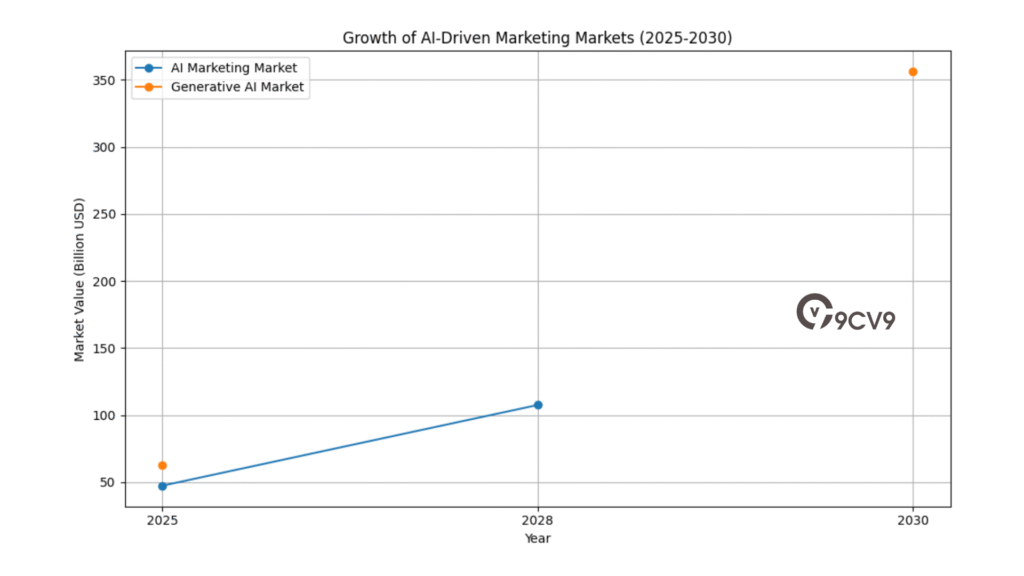
Recent global forecasts show that the AI marketing technology market is experiencing rapid acceleration. With an estimated market size of over $47 billion in 2025 and projections pointing toward a valuation exceeding $107 billion by 2028, the demand for intelligent tools that can deliver real-time insights, optimize ad spend, and personalize user journeys is higher than ever. As the stakes rise, marketing teams are under growing pressure to not just adopt AI tools, but to integrate them intelligently into their workflows to achieve scalable performance outcomes.
In 2026, the most successful digital marketing teams are those that use AI platforms to create seamless, data-driven ecosystems across functions like content development, email marketing, social media management, SEO, advertising, and customer relationship management. These tools are no longer siloed applications—they now act as interconnected nodes within a broader marketing technology stack, capable of sharing insights, automating cross-platform execution, and continuously learning from audience behavior to improve precision targeting and engagement.
This shift has also changed the nature of marketing roles. Rather than focusing on manual production or surface-level analytics, today’s professionals are spending more time on strategic oversight, brand governance, and orchestration of automated systems. AI empowers teams to scale their impact without increasing headcount, enabling faster campaign launches, deeper personalization, and better ROI tracking across the full marketing funnel.
Choosing the right AI tools has become critical for maintaining competitive advantage. From intelligent ad generation to predictive analytics, from dynamic content writing to autonomous campaign management—AI is powering the entire digital marketing lifecycle. This blog explores the top 10 AI tools that are setting the global standard in 2026. Each platform has been carefully selected based on its practical utility, level of integration, impact on performance, and overall value for marketing teams operating in fast-paced environments.
Whether you’re part of a small startup or a large global enterprise, understanding which tools lead the AI-driven marketing revolution is essential. This guide offers a detailed overview of the leading platforms, examining how each one enhances productivity, scales personalization, and supports a future-ready marketing operation. Dive into the full list to see which AI solutions are helping teams work smarter, achieve better outcomes, and lead the next generation of digital engagement.
Before we venture further into this article, we would like to share who we are and what we do.
About 9cv9
9cv9 is a business tech startup based in Singapore and Asia, with a strong presence all over the world.
With over nine years of startup and business experience, and being highly involved in connecting with thousands of companies and startups, the 9cv9 team has listed some important learning points in this overview of the Top 10 AI Tools For Digital Marketing Teams in 2026.
If you like to get your company listed in our top B2B software reviews, check out our world-class 9cv9 Media and PR service and pricing plans here.
Top 10 AI Tools For Digital Marketing Teams in 2026
- HubSpot Breeze
- Jasper
- Copy.ai
- Canva Magic Studio
- Synthesia
- 6sense Revenue AI
- Smartly.io
- Surfer SEO
- Sprout Social
- AdCreative.ai
1. HubSpot Breeze

In the fast-paced digital marketing environment of 2026, HubSpot has significantly reshaped its position in the market through the introduction of Breeze—an advanced AI-native platform built to empower modern marketing teams. What once was a suite of tools augmented by AI capabilities has now transformed into a fully autonomous ecosystem, seamlessly blending CRM, data intelligence, and marketing automation.
Overview of HubSpot Breeze’s AI Capabilities
HubSpot Breeze is designed to address one of the most critical challenges for digital marketing teams: fragmented data. The system solves this by offering a unified AI-powered platform where all customer insights, intent signals, and marketing actions are interconnected. At the heart of Breeze lies an intelligent engine fueled by Clearbit’s enriched data, enabling precise lead identification and targeting.
The platform’s operational core revolves around intelligent “agents” that act independently to run full-scale marketing processes. These agents include:
- Prospecting Agent: Identifies high-value leads and crafts personalized outreach strategies.
- Social Media Agent: Manages publishing schedules, engagement, and content optimization across platforms.
- Content Agent: Generates data-backed blog articles, emails, and landing pages tailored to audience behavior.
Operational Efficiency with Cost Transparency
One of Breeze’s standout features is its granular AI credit system. Unlike traditional fixed-cost software models, HubSpot Breeze operates on a consumption-based billing model. This approach allows marketing teams to align their budgets with usage, ensuring better cost predictability and ROI measurement.
The following table illustrates the pricing structure:
HubSpot Breeze Pricing Structure
| Subscription Plan | Base Monthly Fee | AI Credit Package | Implementation Fee |
|---|---|---|---|
| Marketing Hub Starter | $15 per user | $45 for 5,000 credits | Not Applicable |
| Marketing Hub Professional | $800 | $270 for 30,000 credits | $3,000 |
| Marketing Hub Enterprise | $3,600 | $900 for 100,000 credits | $7,000 |
| Service Hub Professional | $100 per seat | Custom / Usage-Based | Varies |
| Service Hub Enterprise | $150 per seat | Custom / Usage-Based | Varies |
Each AI interaction—such as resolving a customer ticket or generating personalized content—consumes credits. For instance, resolving a customer query using an AI agent costs 100 credits (equivalent to $1.00), which is significantly more economical than the average human support cost of $15 to $20 per resolution.
HubSpot Breeze: Performance and Adoption Metrics
Internal data from HubSpot highlights the impressive performance gains and cost efficiencies brought by Breeze. As of early 2026:
- 35% of customer support tickets are managed by AI agents, with an upward trajectory toward 50% by year-end.
- Marketing personalization speed has increased by 60%, due to the rapid deployment of contextual content.
- Conversion rates on AI-personalized campaigns have seen a 23% uplift compared to traditional marketing flows.
Breeze Business Impact Matrix
| Performance Area | Pre-Breeze Average | Post-Breeze Performance (2026) | Improvement Rate |
|---|---|---|---|
| Support Ticket Resolution Cost | $18.00 | $1.00 (via AI Agent) | 94.4% Reduction |
| Lead Conversion Rate | 2.8% | 3.45% | 23% Increase |
| Content Creation Time | 4–5 hours | 15–30 minutes (AI-generated) | 80% Faster |
| Marketing ROI | 4.1x | 6.8x | 65.8% Higher |
Key Strategic Advantage
HubSpot Breeze distinguishes itself with its agent-driven architecture, which allows teams to automate complex marketing workflows without sacrificing personalization. These AI agents do not merely assist—they autonomously manage tasks based on real-time CRM inputs, ensuring that every action is data-informed and aligned with the customer journey.
The platform’s transition to AI-native functionality also plays a key role in resolving the long-standing issue of disconnected tools and siloed marketing data. With Breeze, digital marketing teams now operate on a centralized intelligence layer that connects every interaction, campaign, and sales opportunity.
Revenue and Financial Performance
This innovation-driven transformation has also fueled HubSpot’s financial success. During the fiscal year 2024–2025:
- Revenue reached $2.63 billion
- Non-GAAP operating margin stood at 17.5%, highlighting both growth and operational efficiency
These figures underscore the enterprise adoption and trust that HubSpot Breeze has built across industries.
Conclusion
HubSpot Breeze has redefined the standards for AI tools in digital marketing. Its autonomous agents, transparent pricing, and real-time data integration make it a preferred solution for marketing teams aiming to scale personalization and performance without expanding operational costs. As digital marketing evolves, Breeze represents a new era of intelligent, agile, and highly efficient marketing automation.
This innovation marks HubSpot as one of the top AI tools for marketing teams in 2026 and sets the benchmark for competitors in the AI-driven CRM and marketing automation landscape.
2. Jasper
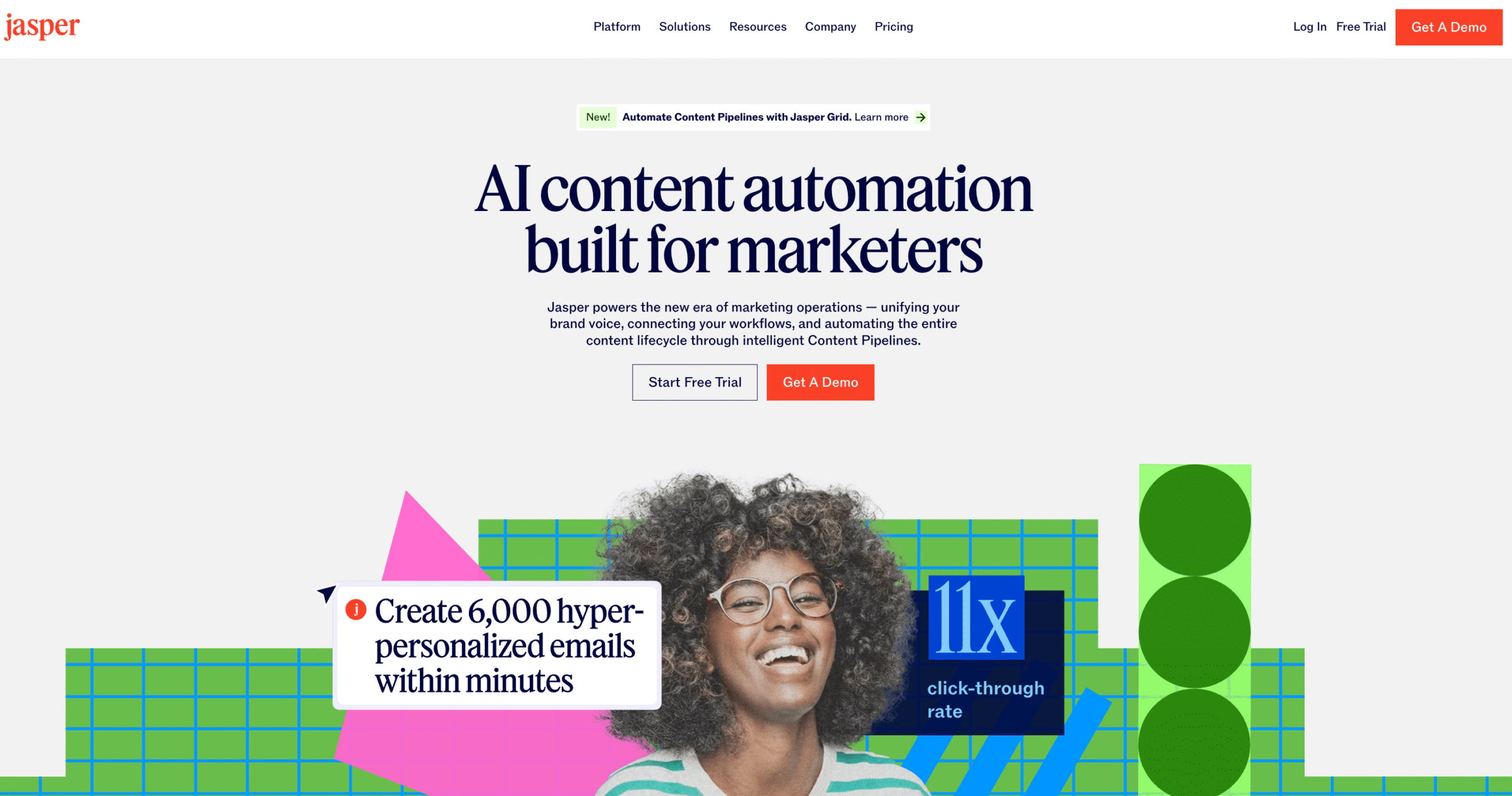
As digital marketing continues to evolve rapidly in 2026, Jasper has emerged as one of the top AI-powered content tools built specifically for marketing teams aiming to streamline their operations and maintain strong brand identity across all channels. Jasper’s transformation from a basic generative writing assistant into an enterprise-grade AI content automation platform demonstrates its strategic vision to serve the growing needs of global marketing departments.
Jasper’s Transition into an Enterprise AI Content Platform
Jasper has taken a major leap forward by introducing Jasper Grid—a smart interface built for managing content workflows at scale. Instead of merely generating isolated pieces of content, Jasper now enables marketing teams to build entire AI-powered content pipelines. This is done through an integrated system that aligns with corporate guidelines, ensuring consistent brand messaging across every campaign.
The most significant innovation in Jasper’s suite is the Brand Memory feature. This acts as a centralized repository where marketing teams can store their brand voice, tone, writing style, product descriptions, and other guidelines. The system uses this data to guide every piece of content produced by the AI, making sure all outputs remain aligned with the brand’s identity.
Enterprise Adoption and Client Reach
Jasper has gained strong traction among enterprise users, particularly among Fortune 500 companies. In 2026, it is estimated that nearly 20% of Fortune 500 firms use Jasper in their marketing departments. Companies like HubSpot, SentinelOne, and Amplitude have integrated Jasper into their daily operations to enhance campaign consistency across multiple channels and markets.
This widespread adoption is a clear indication that businesses now view AI tools not just as assistants but as essential systems for governance, automation, and brand protection.
Jasper’s Financial and Operational Performance
Despite market challenges and a temporary valuation adjustment to $1.5 billion in 2023, Jasper has demonstrated remarkable resilience. With the expansion of its product capabilities—including multimodal content generation and direct integrations with platforms like Salesforce—the company saw its projected revenue reach $88 million in 2025.
The following table summarizes Jasper’s performance metrics and highlights:
Jasper Performance Metrics and Strategic Highlights
| Performance Metric | Value / Statistic | Significance |
|---|---|---|
| Time-to-Publish Reduction | 80% | Major driver for faster campaign execution |
| Campaign ROI Boost | Up to 20% | Linked to improved brand alignment and message consistency |
| Estimated Paying Users (2026) | 250,000+ | Growth fueled by mid-market and enterprise-level customers |
| Total Funding Raised | $143 Million | Backing continued innovation in AI product development |
| Average Revenue Multiple | 60.36x | Indicates high investor demand in the secondary market |
Key Technology Feature: Jasper IQ
One of Jasper’s most transformative technologies is Jasper IQ. This feature introduces a feedback loop where the platform continuously analyzes a company’s most successful content. Based on real-time performance, Jasper adjusts its future outputs to better align with what delivers results. This system not only automates content creation but also optimizes it over time.
Jasper IQ creates a unique advantage by solving a major problem faced by many AI users in 2026: the issue of generic, repetitive content—commonly referred to as “AI sameness.” By training its outputs on an organization’s proprietary data and high-performing assets, Jasper ensures each brand retains a distinct voice and messaging framework.
Competitive Strength and Brand Impact Matrix
| Strategic Element | Jasper’s Approach | Business Benefit |
|---|---|---|
| Brand Governance | Brand Memory and Content Guidelines | Ensures consistency across all content and campaigns |
| Enterprise Scalability | Jasper Grid + Salesforce Integration | Allows complex, multi-team usage |
| Performance Optimization | Jasper IQ Feedback Loop | Continuously improves content quality and effectiveness |
| AI Differentiation | Trained on Unique Brand Data | Maintains distinctive tone; avoids generic outputs |
Conclusion
Jasper stands out as a top-tier AI tool for digital marketing teams in 2026 due to its deep focus on enterprise needs, strategic content governance, and performance optimization. With tools that ensure brand consistency, reduce manual effort, and deliver measurable improvements in campaign performance, Jasper is more than just a writing tool—it is a comprehensive AI content management system built for the future of marketing.
By combining innovation with practicality, Jasper continues to drive value for businesses looking to scale content production without sacrificing quality or brand identity. Its strategic evolution positions it as one of the most reliable and advanced AI platforms for content-focused marketing teams around the world.
3. Copy.ai
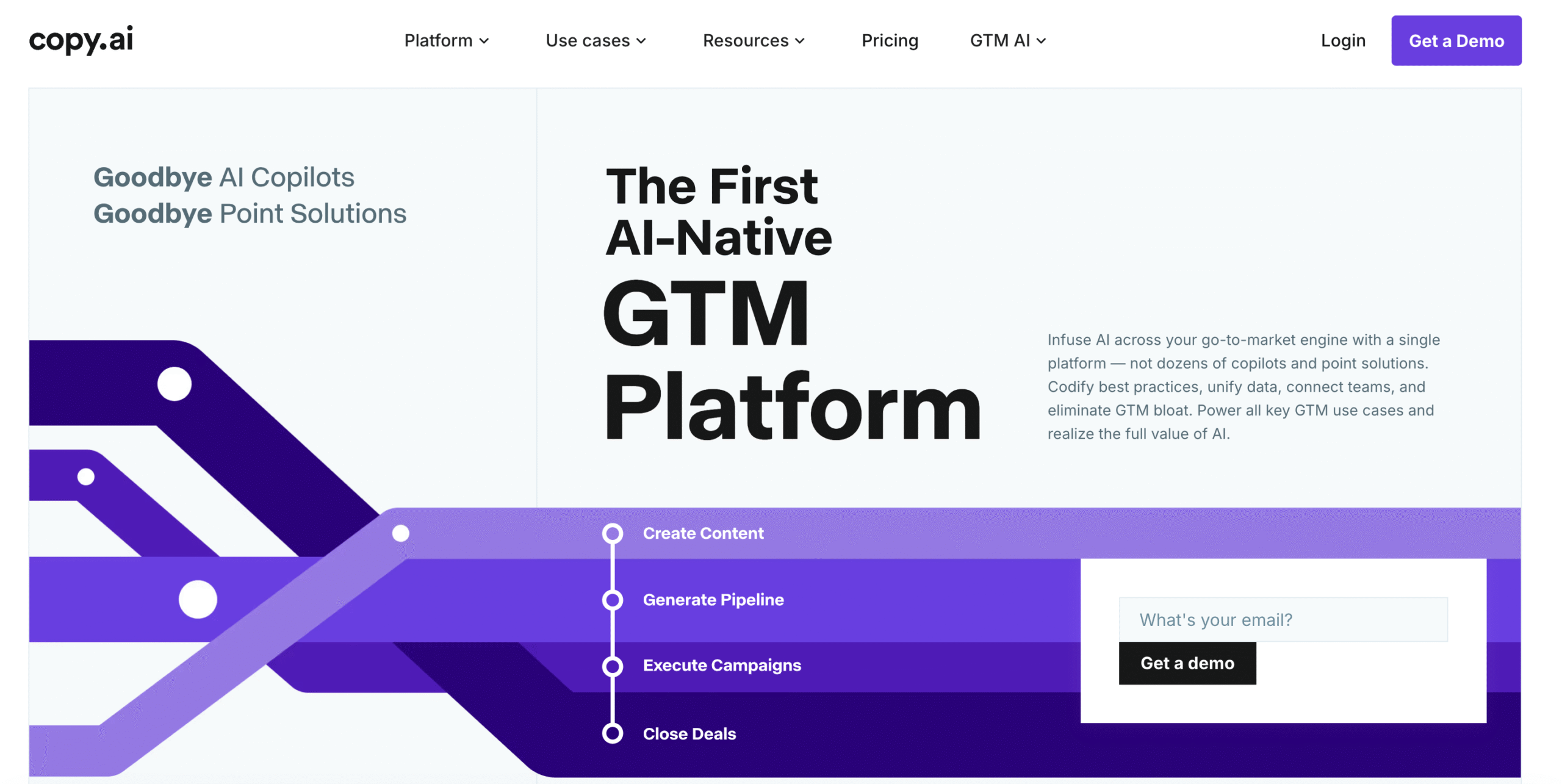
In 2026, Copy.ai has significantly evolved from a basic AI writing assistant into a powerful Go-to-Market (GTM) automation platform. Through this transformation, Copy.ai now plays a critical role in helping digital marketing and sales teams automate end-to-end processes that link content creation, lead management, and sales outreach in one connected ecosystem. This evolution positions Copy.ai among the most impactful AI tools for digital marketing professionals worldwide.
The Rise of Copy.ai as a GTM AI Platform
Copy.ai introduced a new engine known as Workflows 2.0, designed specifically to streamline and automate go-to-market strategies. This system allows teams to create complex workflows that combine AI-generated content with real-time sales and marketing actions. For example, users can design an automated sequence where the AI writes outreach emails, enriches lead data, and pushes it to sales enablement tools, all without manual intervention.
By 2026, Copy.ai is no longer just a browser-based tool—it has become an essential part of enterprise marketing stacks. It now integrates with over 2,000 applications, thanks to deep native API support and a robust connection with Zapier. This allows Copy.ai to automate tasks across platforms like CRMs, ad managers, email tools, and prospecting software.
Enterprise-Driven Pricing and Tiered Workflow Credits
Copy.ai’s pricing structure has been built to accommodate various business sizes—from solo marketers to large enterprise teams. A major differentiator is its unlimited word generation on the Pro and Team plans, which appeals to agencies and brands with high-volume content demands.
However, in 2026, the pricing emphasis has shifted from word count to workflow credits—a metric that reflects the number of automated tasks executed within a GTM strategy. This shift aligns with the needs of scaling organizations that prioritize process automation over raw content volume.
Copy.ai Pricing and Workflow Credit Breakdown
| Plan Name | Monthly Cost (Billed Annually) | Workflow Credits per Month | Target Users |
|---|---|---|---|
| Free Plan | $0 | 200 | Individual users testing the platform |
| Pro Plan | $36 | 500 | Freelancers and startup marketers |
| Team Plan | $186 | 3,000 | Mid-sized marketing departments |
| Growth Plan | $1,000 | 20,000 | B2B teams scaling outbound prospecting |
| Expansion Plan | $2,000 | 75,000 | Large marketing and sales organizations |
| Scale Plan | $3,000 | Custom | Enterprises with full GTM automation needs |
Automating B2B Sales and Content Operations
One of the strongest features of Copy.ai’s Workflows 2.0 is its ability to automate outbound sales processes, particularly for B2B operations. The AI can research a lead’s LinkedIn profile, detect their role and organizational pain points, and then craft a customized email sequence—all without human involvement.
This approach has resulted in the following benefits for teams using the platform:
Operational Efficiency Gains Through Copy.ai
| Task Area | Manual Effort (Before) | AI-Driven Automation (After) | Time or Cost Saved |
|---|---|---|---|
| B2B Prospect Outreach | 4–6 hours per sequence | 15–30 minutes using Workflows | Over 60% labor reduction |
| Social Media Campaign Creation | 2–3 hours per campaign | 30–45 minutes using automation | Up to 40% time reduction |
| Lead Data Enrichment | Manual research required | Auto-populated from integrations | Fully automated |
| Email Personalization | Template-based | Dynamic based on real-time data | Improved open and conversion rates |
Strategic Value for Agencies and GTM Teams
Digital marketing agencies and GTM teams managing multiple clients benefit greatly from Copy.ai’s automation capabilities. With fewer people required to execute large-scale content and sales workflows, businesses are able to scale operations without increasing team size.
For instance, agencies can handle more social media clients with less turnaround time, while sales teams can target more leads with highly tailored messaging. The system also promotes consistent messaging across channels—ensuring stronger brand positioning and better lead engagement.
Copy.ai Impact Matrix for 2026
| Strategic Function | AI Feature Enabled by Copy.ai | Business Outcome |
|---|---|---|
| Lead Generation | Automated LinkedIn-based workflows | Faster pipeline growth and better lead quality |
| Content Personalization | Workflow-driven email creation | Higher open and click-through rates |
| Cross-Platform Integration | 2,000+ connected apps | Unified GTM execution across tools |
| High-Volume Campaign Scaling | Unlimited word generation | Suitable for agencies with multi-client workflows |
Conclusion
Copy.ai has successfully redefined what AI can offer to marketing and sales teams by shifting from content support to complete GTM systemization. In 2026, it stands as one of the top AI tools in the digital marketing landscape, offering unmatched automation, deep integrations, and scalable pricing models.
Its ability to reduce manual sales tasks by over 60% and decrease content creation time by up to 40% makes it a valuable partner for agencies, B2B sales teams, and large-scale marketing operations. As demand for intelligent automation continues to rise, Copy.ai’s strategic capabilities make it a core component of the modern go-to-market technology stack.
4. Canva Magic Studio
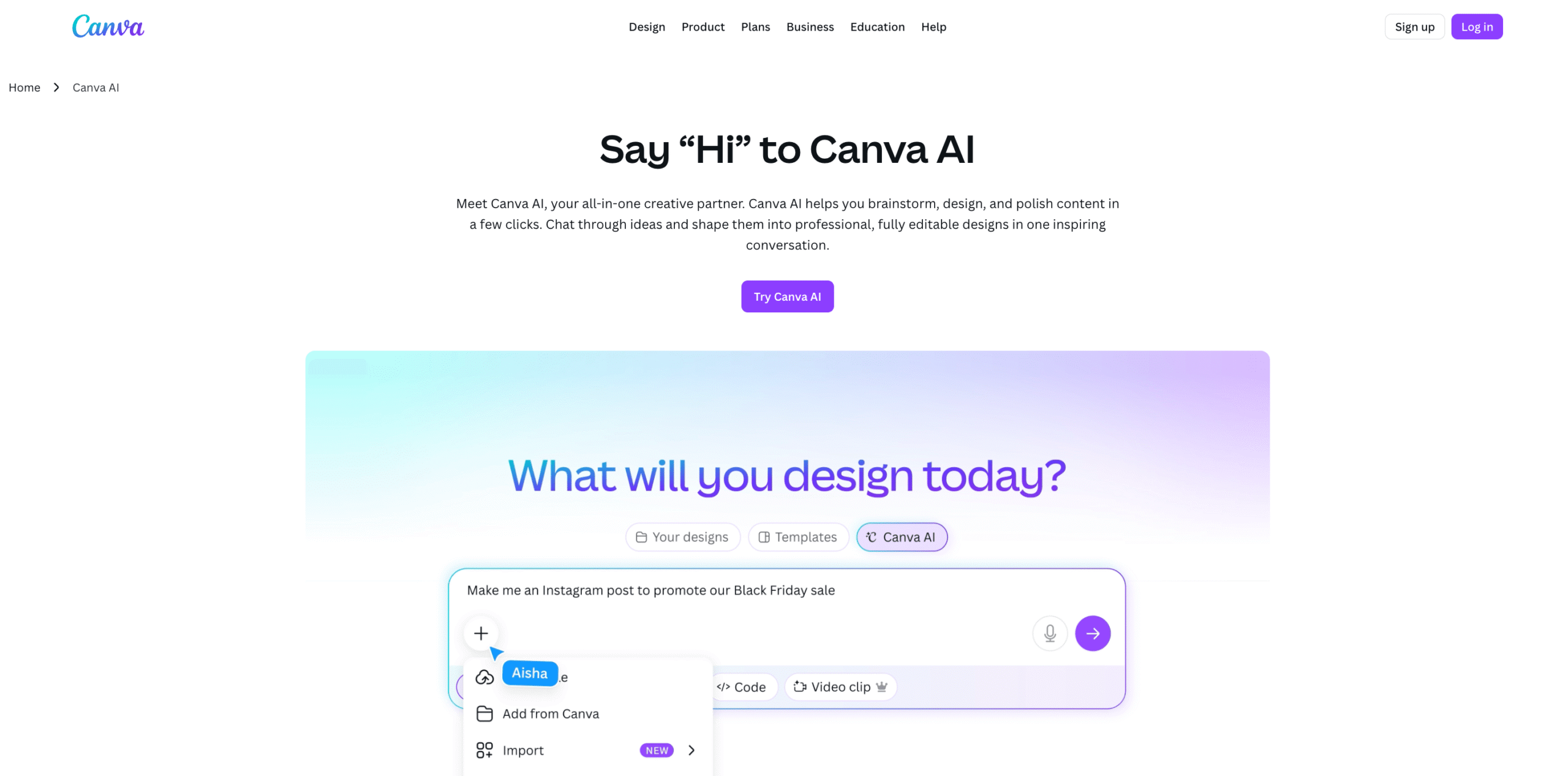
By 2026, Canva has solidified its position as one of the most powerful visual design tools for marketing teams worldwide. With the launch of its AI-driven Magic Studio and the broader evolution into a full-scale Creative Operating System, Canva has expanded beyond its reputation as a tool for beginners. Today, it is a mission-critical platform used by some of the world’s largest enterprises, including over 85% of Fortune 500 companies.
Canva’s success is driven by its ability to combine ease of use with powerful automation. Marketing teams now rely on Canva not just for visual asset creation, but for systemizing brand design at scale with speed, accuracy, and brand consistency.
Rise of Canva as a Visual Content Infrastructure
Canva’s growth reflects a shift in how organizations approach content creation. With the rapid increase in digital campaigns across platforms, marketing teams are under pressure to produce high-quality visual content at scale. Canva Magic Studio addresses this challenge through AI-powered tools that handle tasks such as:
- Text-to-Video Generation
- AI-Powered Presentation Creation
- Magic Resize for Multi-Channel Formatting
- Automated Brand Kits and Compliance Guardrails
These tools allow users to create once and repurpose assets across multiple formats instantly—resolving the content overload issue that many modern marketers face.
Performance Growth and Global Reach
Canva’s expansion has been both rapid and strategic. Between 2020 and 2026, it saw exponential growth in user base, revenue, and valuation, cementing its place as a global design leader for enterprises, educators, and creative teams.
Canva Growth and Valuation Overview
| Metric | Value in 2025/2026 | Historical Context |
|---|---|---|
| Monthly Active Users | 260 Million | Up from 30 Million in 2020 |
| Annual Revenue | $3.5 Billion | Up from $1 Billion in 2021 |
| Company Valuation | $42 Billion | $32 Billion in 2024 |
| Paid User Base | 27 Million | 21 Million in 2024 |
| Total Designs Produced | 30 Billion | Milestone reached in 2025 |
| Education Users | 100 Million | Massive adoption in global education |
Canva’s dominance is particularly clear in the presentation market, where it commands over 54% market share—outpacing traditional tools like PowerPoint and Keynote.
User Retention and Platform Stickiness
One of Canva’s defining strengths is its exceptional user retention. With over 80% of users returning monthly, the platform demonstrates consistent engagement among its user base—especially marketing departments in need of high-volume, collaborative visual production.
Enterprise-Focused Product Evolution: Canva Business
In response to the growing needs of mid-size and large enterprises, Canva launched Canva Business in 2025. This plan sits between the Pro and Enterprise tiers and is tailored for teams that need:
- Advanced AI content insights
- Real-time collaboration tools
- Enterprise-grade brand controls
- Cross-team asset management
This development has helped Canva capture a critical segment of businesses that were previously underserved.
AI Usage and Automation Impact
Magic Studio, Canva’s AI suite, has now surpassed 5 billion uses globally. Its tools help marketing teams produce, adapt, and publish creative assets at unprecedented scale. Notable features include:
- Magic Resize: Instantly adapts a single design to over 50 formats
- Brand Kit Automation: Enforces consistent fonts, colors, and logos
- One-Click Campaign Creation: Allows for rapid assembly of design templates across channels
- Content Variation Generator: Produces multiple creative versions from a single concept
Canva Magic Studio AI Feature Impact Table
| AI Feature | Functionality Description | Marketing Team Benefit |
|---|---|---|
| Magic Resize | Auto-adjusts designs for multiple platforms | Saves time and ensures format accuracy |
| Text-to-Video Tool | Converts text into video assets with animations | Expands creative content without video editors |
| Brand Kit & Guardrails | Auto-applies brand rules to all assets | Maintains 100% brand compliance |
| Smart Presentation Builder | Creates entire decks using prompts and brand themes | Speeds up client pitch and campaign proposals |
| Multi-User Collaboration | Enables real-time team editing with role permissions | Enhances team efficiency and accountability |
Strategic Position in 2026
Canva is no longer just a design platform; it is now an essential part of the digital marketing infrastructure for modern organizations. Its ability to automate and standardize visual creation has made it especially valuable for:
- Social media teams
- Brand managers
- Content marketers
- Creative directors
- Enterprise design operations
With its wide range of AI tools, seamless integrations, and global scale, Canva Magic Studio helps marketing teams reduce production time, maintain brand integrity, and increase creative output across every digital touchpoint.
Conclusion
In 2026, Canva Magic Studio stands as one of the top AI platforms for digital marketing professionals. Its intelligent features, vast user base, and enterprise-ready capabilities make it a go-to solution for visual content creation at scale. As businesses continue to seek faster and more efficient ways to generate visual assets, Canva’s AI-powered Creative Operating System proves to be an indispensable ally in the modern marketing workflow.
5. Synthesia

In 2026, Synthesia has risen to become one of the top AI tools supporting digital marketing teams across industries. It has redefined video content creation by replacing traditional, high-cost production methods with intelligent, interactive AI video agents. Following its $200 million Series E funding round led by Google Ventures, the platform reached a $4 billion valuation, confirming its dominance in the enterprise video technology space.
Synthesia’s success is not built on consumer trends, but on solving real business problems—especially within high-security environments. More than 90% of Fortune 100 companies now rely on Synthesia for internal communication, training, and sales enablement.
The Evolution of Synthesia’s AI Video Capabilities
Synthesia’s breakthrough in 2026 was the introduction of Video Agents. These are not just AI avatars reading scripted content—they are dynamic, real-time conversational systems that:
- Simulate live dialogue and respond to viewer questions
- Guide users through sales training modules
- Adapt content based on the viewer’s interactions or learning stage
This advancement has shifted Synthesia’s role from being a passive video creation tool to an interactive video experience platform. These intelligent video agents are widely used in customer onboarding, employee training, and lead nurturing sequences.
Synthesia Enterprise Performance Overview
Synthesia has delivered strong financial performance and adoption metrics, especially in the enterprise sector. The table below summarizes the key indicators that showcase its market leadership in AI-powered video:
Synthesia Key Enterprise Metrics (2025–2026)
| Metric | Value / Insight | Relevance for Digital Marketing Teams |
|---|---|---|
| Company Valuation | $4 Billion (2026) | Strong institutional trust in long-term strategy |
| ARR Run Rate | $200 Million | Growing revenue from enterprise SaaS subscriptions |
| Fortune 100 Penetration | Over 90% | Trusted by global industry leaders |
| Video Production Cost Saving | 80% reduction | From $1,200/min to under $200/min |
| Large Enterprise Contracts | 4x growth in $100K+ deals | Shows wide adoption across departments |
AI-Driven Video Personalization and Scale
Synthesia’s platform supports over 150 ultra-realistic avatars and provides automatic translation and localization in 140 languages. This has become especially valuable for international brands such as SAP, Heineken, and Merck, who now use Synthesia to quickly create localized versions of video content without traditional studios or production crews.
Marketing teams are using Synthesia to:
- Personalize outreach videos for leads
- Deliver interactive product demos
- Automate FAQ videos powered by internal knowledge bases
- Reduce time-to-market for global video campaigns
AI Features and Business Impact Matrix
| Feature Name | Functionality | Marketing Benefit |
|---|---|---|
| Video Agents | Interactive AI avatars that simulate conversations | Enhances user engagement and personalization |
| Text-to-Video Creation | Converts scripts into videos using avatars | No need for cameras, actors, or editors |
| Multi-language Support | 140+ language capabilities | Scales international campaigns instantly |
| Custom Avatars | Branded AI characters for companies | Strengthens brand identity in video communications |
| Scenario-Based Training | Roleplay simulations for onboarding or sales | Increases training efficiency and impact |
Enterprise Use Case Matrix for Synthesia in 2026
| Use Case | Department / Role | Key Benefit |
|---|---|---|
| Sales Enablement Videos | B2B Sales Teams | Personalized video introductions and demos |
| Employee Training Modules | L&D and HR Departments | Consistent and scalable onboarding |
| Product Explainers | Marketing and Product Teams | Shorten buyer journey with visual content |
| Internal Communication Updates | Executive Teams | Increase clarity and engagement across teams |
| Global Campaign Localization | Regional Marketing Units | Fast adaptation of videos in multiple languages |
Market Recognition and User Satisfaction
Synthesia continues to receive strong positive reviews from users. Ratings on platforms like G2 and Gartner average 4.7 out of 5. Customers frequently highlight the platform’s ease of use, the realism of the AI avatars, and the cost savings from not needing traditional production.
This satisfaction is further driven by the platform’s ability to handle everything from initial script input to final video output within a single interface—streamlining workflows for marketing and internal communication teams.
Conclusion
Synthesia has become an essential tool in the 2026 digital marketing tech stack. It offers a unique combination of scalability, localization, cost-efficiency, and AI-driven interactivity. With its advanced video agents, multilingual capabilities, and deep enterprise adoption, Synthesia empowers organizations to create highly engaging, professional-grade videos without traditional bottlenecks.
As marketing teams face increasing demand for personalized, video-rich content across regions and channels, Synthesia stands out as a future-ready solution that redefines how modern businesses connect with audiences through intelligent video automation.
6. 6sense Revenue AI

6sense Revenue AI has become a powerful solution for B2B marketing and sales teams in 2026, particularly those focused on account-based marketing (ABM) strategies. It provides an intelligent orchestration engine that connects intent data with real-time engagement workflows. Instead of relying on outdated lead scoring models, 6sense empowers marketing and sales teams to identify potential buyers much earlier in their decision-making journey—even before they fill out a form or request a demo.
Using advanced predictive models and access to over $500 billion intent signals, the platform uncovers which companies are actively researching solutions, what stage they are in, and how to prioritize them. This AI-powered intelligence allows B2B teams to execute smarter and faster go-to-market strategies.
Intent-Driven Marketing and Predictive Targeting with 6sense
At the core of 6sense is the Context Graph technology, which aggregates anonymous digital signals across web behavior, search queries, third-party sources, and internal CRM data. These signals are then matched to buying groups within target accounts. As a result, marketing teams can move from broad outreach to precise targeting of accounts that are actively “in-market.”
This shift enables faster, more personalized engagement that drives measurable revenue outcomes.
Business Impact and Performance Improvements from 6sense
Many organizations using 6sense in 2026 report substantial improvements in sales and marketing effectiveness. The platform’s AI algorithms enable teams to not only find the right accounts but also prioritize them based on buying readiness, engagement level, and revenue potential.
6sense Performance Impact Matrix
| Performance Area | Before 6sense (Industry Avg) | After 6sense Implementation | Strategic Benefit |
|---|---|---|---|
| Lead Conversion Rate | 1.2% | 4.8% | 4x higher conversions |
| Sales Cycle Duration | 93 Days | 68 Days | 27% faster time to close |
| Average Deal Size | $46,000 | $67,160 | 46% increase in deal value |
| Outbound Efficiency | Low Signal Lead Lists | AI-Prioritized Buying Groups | Higher targeting accuracy |
Enterprise-Level Pricing and Investment Considerations
6sense is designed for large and mid-sized enterprises, offering robust capabilities at a premium price point. While the company provides a limited free plan for individuals, its core offerings are geared toward revenue teams that require deep data integration, enriched lead intelligence, and enterprise-wide deployment.
6sense Pricing and ROI Framework
| Plan Tier | Annual Cost Estimate | Best Suited For |
|---|---|---|
| Free Plan | $0 (50 credits/month) | Individual users for basic prospecting |
| Growth / Entry Plans | $60,000 – $120,000 | SMBs and mid-market B2B teams |
| Enterprise Plans | $200,000+ | Global enterprises and complex GTM teams |
| Time to Implement | 3 Months | Full technical and CRM integration setup |
| Median ROI Payback Period | 13 Months | Due to increased deal size and speed |
The overall cost includes not only licensing fees but also add-ons such as data enrichment credits, onboarding services, and system customization.
Sales and Marketing Alignment via AI: The Sales Copilot
A major innovation from 6sense in 2026 is the Sales Copilot—an AI assistant that bridges the traditional divide between marketing and sales. This feature works within the CRM environment and performs tasks such as:
- Identifying in-market accounts with active buying intent
- Recommending personalized messages for sellers
- Automating outreach and email drafting
- Suggesting next-best actions based on behavioral signals
This reduces manual research time for sellers and ensures that outreach is timely, relevant, and aligned with marketing intelligence.
AI Capability and GTM Execution Matrix
| AI Feature | Functionality Description | Revenue Team Impact |
|---|---|---|
| Context Graph | Predicts buyer behavior using real-time signals | Improved account targeting and prioritization |
| Sales Copilot | AI assistant within CRM for sales reps | Enhances productivity and personalization |
| Intent-Based Segmentation | Organizes prospects based on buying stage | Tailored messaging and lead nurturing |
| Forecasting Models | Predictive pipeline analytics | More accurate revenue forecasting |
Adoption by Market-Leading Enterprises
Many global corporations have adopted 6sense to upgrade their go-to-market (GTM) strategies. Its AI-driven revenue platform is particularly attractive to teams needing to scale ABM while preserving personalization. The platform enables marketing and sales functions to operate with shared data, unified goals, and intelligent automation.
Conclusion
6sense Revenue AI has redefined the standards for B2B marketing and sales execution in 2026. With its powerful AI models, deep intent signal analysis, and seamless CRM integration, the platform enables companies to move from guessing who to contact to knowing exactly which accounts to engage—and how.
Its ability to drive faster sales cycles, larger deal sizes, and better conversion rates makes it one of the most impactful AI tools in the digital marketing landscape today. For B2B organizations seeking precision, scale, and predictability in their go-to-market strategies, 6sense has become an indispensable ally in the modern revenue tech stack.
7. Smartly.io

Smartly.io has become a core digital advertising platform for global brands in 2026, managing more than $6 billion in annual ad spend. Positioned as an advanced media buying and ad automation solution, Smartly.io enables marketing teams to bridge the gap between creative development and paid media execution across all major digital channels. From social media to Connected TV (CTV), the platform uses artificial intelligence to optimize ad performance while minimizing wasted spend.
Enterprises like Walmart and Disney rely on Smartly.io to streamline campaign workflows and increase return on ad investment. The platform is particularly valuable in today’s content-saturated digital ecosystem, where personalized, timely, and visually rich advertising plays a crucial role in reaching customers effectively.
Smartly.io and the Power of Precision-First Marketing
Smartly.io’s strength lies in its Precision-First Marketing approach. The platform seamlessly merges media buying and creative intelligence into a single interface. This unified system allows marketers to manage thousands of ad variations, monitor performance metrics in real-time, and automatically adjust budget allocations based on predictive signals.
By combining multivariate creative testing, real-time performance feedback, and predictive modeling, Smartly.io helps teams ensure every dollar spent contributes to actual engagement and conversions—eliminating inefficient budget usage often caused by fragmented tools or delayed insights.
Campaign and Budget Efficiency Through AI Optimization
With the rise of AI in marketing workflows, Smartly.io has proven that automation can drastically reduce manual labor while improving results. Marketing teams using the platform report:
- Faster campaign launch timelines
- Lower ad waste percentages
- Higher overall campaign efficiency
Smartly.io Strategic Performance Metrics
| Strategic Metric | Value or Range | Business Impact |
|---|---|---|
| Validated Return on Ad Spend | 5.5x (PwC-verified) | Delivers best-in-class advertising ROI |
| Annual Ad Spend Managed | $6 Billion+ | Provides a massive training base for AI optimization |
| Average Time Saved | 42 minutes per working hour | Boosts team productivity and creative iteration speed |
| Starting Monthly Price | $2,500 – $4,000 | Tailored for mid-market to large enterprises |
| Campaign Performance Lift | Up to 37% | Driven by automation and intelligent testing |
Ad Waste Reduction and Budget Control
Ad waste—spending budget on underperforming placements or irrelevant audiences—remains a challenge across the industry. In 2026, many digital marketers still estimate losing about 20% of their budgets to ad waste. However, Smartly.io users benefit from advanced AI monitoring systems that flag inefficiencies before they impact performance.
Smartly.io Budget Efficiency Matrix
| Category | Industry Average (2026) | Smartly.io User Outcomes | Key Differentiator |
|---|---|---|---|
| Estimated Ad Waste | 20% of annual ad budget | Under 10% for 27% more users | AI-led predictive waste control |
| Campaign Launch Time | 3–4 Weeks | Under 7 Days | Automated duplication and alerts |
| Media Optimization Frequency | Weekly | Real-Time | Instant signal-based adjustments |
| Ad Variation Testing | Manual A/B setups | Automated multivariate testing | Hundreds of localized versions at once |
AI Capabilities That Power Speed and Personalization
Smartly.io is particularly strong in enabling fast, localized, and scalable campaign execution. Its Ad Inventory Management and Multivariate Testing features allow teams to experiment with multiple creative and copy combinations for different audiences, platforms, and regions—all within minutes.
These capabilities are crucial in 2026, where consumer attention spans are short and market dynamics change rapidly. Marketing teams that rely on outdated or slow workflows struggle to keep up, while Smartly.io users benefit from:
- Real-time creative performance feedback
- Dynamic audience segmentation
- Auto-optimization of bid and budget allocation
- Seamless deployment across Meta, TikTok, YouTube, CTV, and other platforms
Campaign Execution and Creative Scaling Matrix
| Functionality | Description | Benefit for Marketing Teams |
|---|---|---|
| Ad Inventory Management | Organizes and updates active ad placements | Reduces manual tracking workload |
| Multivariate Creative Testing | Tests hundreds of ad combinations automatically | Improves targeting and conversion results |
| AI Budget Reallocation | Shifts spend based on live performance signals | Prevents budget waste on low-performing ads |
| Instant Creative Duplication | Scales content into multiple formats in minutes | Speeds up campaign rollout across all channels |
| Performance Alerts | Flags declining campaigns in real time | Enables proactive adjustments and budget recovery |
Conclusion
Smartly.io has established itself as one of the top AI tools for digital marketing teams in 2026 by delivering speed, precision, and intelligence in ad execution. The platform’s AI-first approach empowers teams to launch campaigns faster, reduce budget waste, and achieve higher returns on their advertising spend.
Its cross-channel compatibility, predictive modeling, and creative automation make it an essential asset for marketing departments navigating increasingly complex digital landscapes. In an era where data-driven decisions and campaign agility determine success, Smartly.io gives digital marketers a clear advantage in managing and scaling paid media with confidence.
8. Surfer SEO

In 2026, Surfer SEO has successfully transformed from a simple SEO content editor into a fully integrated AI-powered platform built to support both traditional Search Engine Optimization (SEO) and the fast-rising trend of Answer Engine Optimization (AEO). With search engines increasingly displaying AI-generated summaries—like Google’s AI Overviews—for most queries, Surfer SEO now plays a key role in helping marketers build content that is structured, readable, and favored by both human users and AI systems.
As the digital search landscape evolves, where up to 60% of queries end without a click, Surfer empowers marketing teams to win visibility within these AI-powered search experiences. It enables them to adapt, monitor, and optimize content in real time using intelligent automation and natural language processing (NLP).
From Content Optimization to Answer Engine Readiness
Surfer SEO is designed for marketing teams aiming to protect and grow their organic presence across an increasingly complex and AI-driven search environment. One of its core advantages is its ability to transform raw text into structured, optimized content ready for search engines and AI crawlers.
With the 2026 update, Surfer introduced features like the Automated Content Audit that connects directly to Google Search Console. It continuously monitors traffic and rankings, alerting users to potential drops and offering precise, actionable suggestions—such as keyword variations, NLP enhancements, and even image density fixes—to regain lost visibility.
Surfer SEO Product and Feature Overview
| Plan / Feature | Monthly / Annual Cost | Key Functionality | Best For |
|---|---|---|---|
| Essential Plan | $79 (Annual) | Data-backed on-page optimization | Freelancers and small SEO teams |
| Scale Plan | $99+ (Monthly) | Live SERP data and AI-driven audits | Agencies and large-scale content operations |
| AI Writing Add-on | Usage-Based Pricing | AI auto-adjusts tone, keyword density, and structure | High-volume content marketers |
| Content Audit Tool | Included in Scale Plan | 24/7 traffic + rank monitoring via GSC | Brands managing large content libraries |
AI-Driven Content Structuring and Performance Monitoring
Surfer SEO’s technology goes beyond simple keyword matching. It analyzes over 500 signals from the top-performing pages in each vertical to provide real-time guidance on how to structure content. This includes improvements to:
- Internal linking structure
- Keyword and phrase diversity
- Paragraph formatting and headings
- Image-to-text ratio
- NLP-optimized suggestions aligned with intent
This deep-level analysis is encapsulated in the platform’s Content Score—a widely recognized industry metric in 2026 that helps content writers understand how close their pages are to ranking success.
SEO Performance Enhancement Matrix Using Surfer
| Content Improvement Area | Before Surfer SEO | After Surfer SEO Optimization | Measurable Outcome |
|---|---|---|---|
| Keyword Usage Strategy | Manual research | NLP-powered keyword mapping | More accurate topic coverage |
| Internal Linking | Inconsistent or sparse | Smart anchor text recommendations | Higher crawlability and engagement |
| SERP Monitoring | Periodic manual checks | Real-time traffic and rank alerts | Faster recovery from drops |
| Content Formatting | No standardization | Guided structural layout suggestions | AI and crawler-friendly formatting |
| Content Performance Score | Not defined | Unified “Content Score” benchmark | Predictable quality tracking across articles |
Strategic SEO Alignment in the Age of AI Search
Surfer SEO’s evolution into an Answer Engine Optimization platform is timely and crucial. As AI engines increasingly serve direct answers and summaries at the top of search results, the ability to have content featured in these overviews becomes a competitive advantage. Surfer enables this by focusing on:
- Semantic keyword enrichment
- Section-level optimization
- Advanced formatting guidance
- Integration with content management systems and Google Search Console
These capabilities ensure that marketing teams don’t just produce content—they produce content that is found, featured, and favored by AI-driven algorithms.
Content Operations and Workflow Optimization Matrix
| Feature Category | Surfer SEO Functionality | Workflow Benefit |
|---|---|---|
| AI Content Structuring | Suggests optimized headings and sections | Reduces writer guesswork |
| Competitive SERP Analysis | Evaluates competitors’ top-ranking pages | Offers data-backed insights for outperforming rivals |
| Automated Audit Alerts | Sends real-time ranking drop notices | Enables fast content recovery |
| Tone and Readability Adjustments | Adjusts content to match search intent tone | Improves user engagement and lowers bounce rate |
Conclusion
In the rapidly changing SEO landscape of 2026, Surfer SEO stands out as a top-tier AI tool for digital marketing teams aiming to maintain visibility and relevance in both classic organic search and the emerging world of AI-generated answer engines.
With its combination of live SEO audits, predictive content scoring, and real-time optimization suggestions, Surfer enables teams to stay ahead of algorithm updates and user behavior shifts. Its structured approach to content optimization ensures that marketers don’t just produce good content—they produce content that ranks, gets featured, and drives meaningful traffic in an increasingly zero-click search environment.
9. Sprout Social

In 2026, Sprout Social has firmly established itself as one of the top AI tools for digital marketing teams across the globe. With over 30,000 brand partnerships, it has become the trusted platform for transforming unstructured social media data into actionable marketing insights. Its robust suite of tools empowers marketing teams not only to monitor and manage social channels but to turn conversations, mentions, and trends into strategic business intelligence.
At the heart of its innovation lies Trellis, Sprout’s proprietary AI engine that continuously processes massive volumes of social data and delivers predictive insights tailored for real-time decision-making. This approach helps bridge the often-wide communication gap between social media teams and senior executives by translating online engagement into measurable business outcomes.
From Scheduling Tool to Enterprise Intelligence Platform
Sprout Social has evolved beyond being a content calendar or publishing platform. It now serves as an enterprise-grade intelligence engine, equipping marketing teams with the tools needed to:
- Analyze customer sentiment at scale
- Track brand health across multiple channels
- Identify upcoming trends and competitor activity
- Respond quickly to shifting consumer behavior
Through Trellis, Sprout is redefining what social listening means—moving away from passive monitoring toward active strategy generation powered by real-time data and predictive algorithms.
Sprout Social Performance Metrics and Business Value
Marketing teams that adopt Sprout Social report significant operational improvements, especially in content scheduling, reporting automation, and engagement analysis. These measurable results reinforce the platform’s value as a strategic tool rather than a tactical utility.
Sprout Social Key Performance Matrix
| Value Indicator | Metric or Insight | Business Impact |
|---|---|---|
| Total Brand Partnerships | 30,000+ | Wide adoption across industries |
| Monthly Time Savings | 20 Hours | Increased efficiency in scheduling and reporting |
| Engagement Rate Improvement | Up to 2800% in Year 1 | Strong audience connection and response |
| G2 Leader Badges Earned | 177 | Top-rated in Social Listening and Analytics |
| 1st Month Visibility Increase | 16 Million Impressions | Rapid content amplification |
| Increase in Customer Action Rate | 381% | Enhanced customer response via social channels |
Flexible Pricing and Scalable Functionality
Sprout Social offers pricing plans that are scalable for both mid-size businesses and global enterprises. While basic plans include essential publishing and monitoring tools, the higher tiers offer enhanced collaboration, social commerce support, and influencer campaign tracking.
Sprout Social Pricing Breakdown
| Plan Tier | Monthly Cost (Per Seat) | Core Features Included | Suitable For |
|---|---|---|---|
| Standard | $199 | Publishing, reporting, basic listening | SMBs and growing teams |
| Professional | $299 | Advanced analytics, automation tools | Mid-size marketing departments |
| Advanced | $399 | Team workflows, influencer marketing, full social intelligence | Enterprises and agencies |
Real-Time Listening and Strategic Adjustment Capabilities
Sprout’s Social Listening suite plays a critical role in brand monitoring and audience understanding. With the ability to analyze over 600 million messages every day, the platform functions as a real-time trend radar for marketing leaders. This allows teams to:
- Detect PR threats before they escalate
- Uncover emerging consumer trends early
- Monitor brand sentiment across regions and demographics
- Compare social visibility and share-of-voice against competitors
AI Feature and Intelligence Functionality Matrix
| Feature Category | AI-Powered Functionality | Strategic Marketing Benefit |
|---|---|---|
| Predictive Social Listening | Early detection of shifts in public sentiment | Helps prevent brand reputation crises |
| Influencer Analytics | Performance tracking and ROI modeling | Maximizes impact from influencer partnerships |
| Content Tagging Automation | AI-generated classification of posts and themes | Organizes content libraries for better insights |
| Cross-Functional Collaboration | Unified dashboard for marketing, PR, and sales | Encourages real-time, multi-team strategic alignment |
| Trend Spotting Engine | Forecasts upcoming topics in social chatter | Enables proactive content and product messaging |
Sprout’s Role in Future-Proofing Brand Strategy
In a digital landscape where consumer expectations change rapidly and public sentiment can shift overnight, Sprout Social has become a strategic tool for safeguarding brand integrity. Its intelligent systems provide marketers with the clarity they need to act fast, communicate effectively, and guide company leadership with data-backed recommendations.
The integration of Trellis AI across all major features ensures that every insight is rooted in live, accurate, and relevant information. Marketing teams no longer have to guess what matters—they can see it unfold in real time.
Conclusion
Sprout Social is recognized as one of the most advanced and valuable AI tools for digital marketing teams in 2026. With its powerful AI engine, vast listening capabilities, and actionable insights, the platform empowers brands to be more responsive, more strategic, and more aligned with their audiences.
By turning social media from a reactive channel into a proactive intelligence asset, Sprout Social allows organizations to make smarter decisions, create more meaningful connections, and maintain a competitive edge in today’s fast-moving digital environment.
10. AdCreative.ai

AdCreative.ai has emerged as the leading AI platform for performance advertising in 2026, helping digital marketing teams create high-converting ad creatives at scale. With the growing demand for rapid ad production and testing, especially in performance-driven campaigns, the platform addresses one of the most critical issues in paid media—creative fatigue.
By leveraging AI trained on vast datasets of high-performing campaigns, AdCreative.ai allows marketers to generate hundreds of ad variations in seconds. Each creative asset is scored with a Conversion Score, which helps teams identify which ads are most likely to succeed before they even launch. This predictive scoring system significantly improves efficiency, lowers campaign costs, and enables continuous testing for better results.
AI-Powered Creative Automation for Digital Ad Campaigns
The platform has expanded its capabilities in 2026 with new tools such as AI Product Photoshoots and AI Video Shoots. These tools are designed to help e-commerce marketers and small businesses produce professional-quality visuals without relying on traditional studio production or design agencies.
With just a single product image, users can create studio-grade advertising visuals and videos with multiple backgrounds, lighting options, and scene variations. This levels the playing field, giving smaller businesses the same visual impact that large brands typically achieve with bigger budgets.
AdCreative.ai Platform Capabilities and Value Proposition
| Feature or Metric | 2026 Value or Insight | Business Impact |
|---|---|---|
| Ad Creative Volume | Hundreds of creatives per second | Enables large-scale A/B testing and personalization |
| Conversion Score | AI ranks creatives by performance | Launch high-potential ads first |
| Cost-Per-Click Reduction | Up to 56% | Cuts paid media spending significantly |
| CTR Improvement | Up to 47% | Drives higher audience engagement with relevant visuals |
| Design Cost Savings | Up to 90% | Replaces external design or agency fees |
| Entry-Level Price | $20 – $39 per month | Affordable for individuals and startups |
| Stock Asset Library | Over 100 million assets | Vast resources for creating varied and engaging content |
| Text Generator AI | Built-in headline copy suggestions | Speeds up creative writing for ad headlines and calls to action |
AI Features Supporting Performance Advertising Goals
AdCreative.ai is specifically tailored for teams focused on measurable advertising outcomes such as cost-per-click, conversion rate, and return on ad spend (ROAS). The platform not only assists in visual design but also enhances performance through predictive analysis and direct platform integration.
AdCreative.ai Functional Capability Matrix
| Functionality Area | Description | Key Benefit for Marketers |
|---|---|---|
| Conversion Score System | AI ranks creatives by likelihood of high performance | Prioritizes budget allocation toward top-converting ads |
| AI Product Photoshoots | Generate images from a single product photo | Eliminates need for professional photography |
| AI Video Shoots | Short ad videos with varied backgrounds and lighting | Enables low-cost motion ads for social campaigns |
| Direct Ad Platform Integration | Syncs with Google, Facebook, Instagram, LinkedIn | Provides live feedback and campaign performance tracking |
| Text Generator AI | Creates high-converting ad copy and headlines | Saves time and improves creative messaging |
Marketing Use Cases Across Business Sizes
AdCreative.ai supports both high-volume enterprise campaigns and agile start-up environments. Its affordability, ease of use, and automation capabilities make it ideal for:
- E-commerce brands running daily ad cycles
- Marketing agencies managing multiple client accounts
- Growth teams optimizing performance-based campaigns
- Small businesses needing fast, professional ad creative
User ROI and Efficiency Matrix
| Use Case | Time/Cost Without AdCreative.ai | With AdCreative.ai | Outcome |
|---|---|---|---|
| Design and Production Costs | $500–$2,000 per campaign | $20–$39 monthly | 90%+ cost savings |
| A/B Testing Cycle Time | 2–5 days | Real-time | Faster insights and iteration |
| Conversion Rate Improvements | Standard or inconsistent results | Up to 47% lift | Better ad relevance and audience targeting |
| Campaign Launch Speed | 2–3 days post-design | Within hours | Improved campaign responsiveness |
Conclusion
AdCreative.ai stands as one of the most advanced and accessible AI tools for digital marketing teams in 2026. Its ability to instantly generate high-performance ad creatives, optimize them based on predictive scoring, and integrate directly with ad platforms makes it an essential tool for growth-focused teams.
With innovations like AI-powered video production and product photography, AdCreative.ai enables businesses—regardless of size—to deliver studio-quality ads at a fraction of the time and cost. It transforms creative production from a bottleneck into a competitive advantage, helping performance marketers scale their efforts without sacrificing quality or budget control.
AI-Powered Digital Marketing in 2026: The Shift Toward Autonomous, Outcome-Driven Systems
In 2026, digital marketing has reached a turning point. What began as basic experimentation with generative AI in the early 2020s has now become the foundation of enterprise marketing operations. Artificial intelligence is no longer viewed as a complementary tool but as the central engine behind global marketing growth and digital transformation. Across industries, AI has matured into fully integrated systems capable of driving campaign execution, customer engagement, and performance optimization—largely independent of human intervention.
This evolution is happening on the back of massive investment and enterprise adoption. Market forecasts show that the global AI marketing sector, valued at $47.32 billion in 2025, is projected to grow to $107.5 billion by 2028. This surge is powered by a compound annual growth rate (CAGR) of 36.6%, reflecting both technological advancement and growing enterprise confidence.
Global Market Forecast and Strategic Trends
The macroeconomic indicators show a steady and accelerated movement toward full AI integration in marketing. Organizations are no longer investing in AI tools simply for content generation; instead, they are adopting AI systems that support end-to-end orchestration—from campaign planning and execution to optimization and attribution. A growing number of companies are entering what is now referred to as the “integration phase,” where AI is embedded into every layer of the marketing operation.
AI Marketing Industry Growth Outlook
| Indicator | Value (2025/2026) | Projected Value (2028/2030) | Insight |
|---|---|---|---|
| Global AI Marketing Market Worth | $47.32 Billion | $107.5 Billion (2028) | Demonstrates robust industry-wide AI adoption |
| Global Generative AI Market Value | $62.75 Billion | $356.05 Billion (2030) | Expanding far beyond text into multi-modal capabilities |
| Industry CAGR (2024–2030) | 36.6% | 36.6% (Steady) | Sustained momentum across global markets |
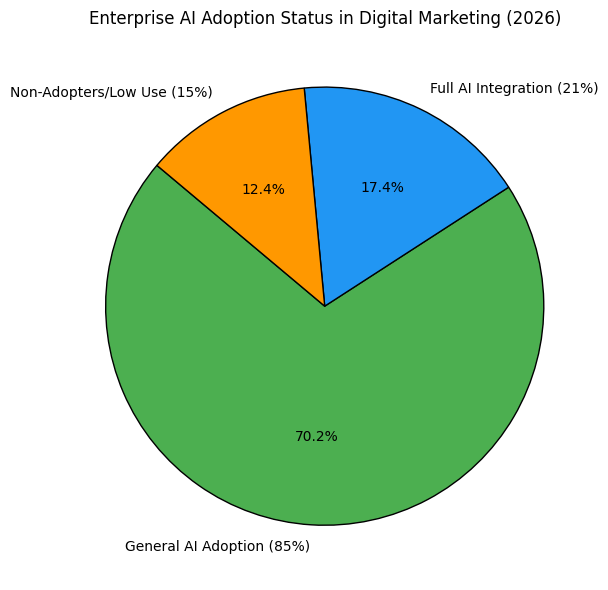
| Enterprise AI Adoption Rate | 85% of firms | N/A | High-level penetration, especially in large enterprises |
| Integration-Phase Organizations | 21% of enterprises | N/A | Represents competitive edge via full AI embedding |
| Content Production Speed Gain | 93% of marketers report faster output | N/A | Efficiency is now measured in minutes, not hours |
| ROI Recovery Rate for GenAI Tools | Only 1% fully optimize ROI | N/A | Highlights growing but still early maturity levels |
| IT Spending Driven by AI | $6 Trillion environment | Increasing | Enterprise budgets prioritize AI infrastructure |
Agentic Systems and Workflow Automation
A key trend defining AI marketing in 2026 is the rise of agentic AI systems. These are autonomous digital agents capable of completing complex, multi-step tasks without constant human input. Rather than producing isolated content pieces, these agents drive entire marketing workflows—from identifying audience segments and generating assets to testing, optimizing, and reporting on performance in real time.
Marketing departments that once dedicated the majority of their hours to repetitive content creation are now operating in a completely different structure. As of 2026, over 75% of marketing labor hours have been reallocated to high-level strategic work, campaign governance, brand management, and experimentation. AI handles execution; humans drive creativity, oversight, and innovation.
Labor Shift and Strategic Workforce Reallocation
| Workflow Function | Human-Controlled (2022) | AI-Controlled (2026) | Workforce Transformation |
|---|---|---|---|
| Routine Content Production | 85% | 20% | Majority shifted to AI agents |
| Campaign Optimization & Reporting | 70% | 15% | Real-time performance monitoring via AI dashboards |
| Creative Strategy and Branding | 15% | 80% (Human-led) | Strategic human focus on storytelling and direction |
| Workflow Orchestration | Manual setup | Fully AI-automated pipelines | End-to-end automation from audience to attribution |
| ROI and KPI Decisioning | Manual analysis | Predictive AI modeling | Faster, more accurate performance decisions |
Marketing Evolution: From Text Generation to Intelligent Orchestration
In the earlier stages of AI adoption, much of the focus was on generative content tools—producing blog posts, social media captions, or email templates with speed and volume. While these tools remain valuable, the competitive advantage in 2026 now lies in platforms that orchestrate entire outcomes. These advanced systems operate across:
- Ad performance optimization
- Personalized messaging at scale
- Predictive segmentation and targeting
- Creative testing and content scoring
- Budget and channel allocation
In short, the modern AI marketing stack goes beyond writing content—it executes strategy, analyzes results, and adapts in real-time.
Conclusion
The digital marketing ecosystem in 2026 is defined by rapid automation, intelligent orchestration, and measurable ROI impact through AI-driven systems. The shift toward agentic infrastructure marks a new chapter, where businesses are no longer experimenting with AI but depending on it to run core marketing functions.
Organizations that have fully embraced AI at the integration level are beginning to outpace competitors in speed, efficiency, scalability, and strategic execution. The following list of top 10 AI marketing tools represents the current pinnacle of this transformation—each one playing a unique role in reshaping how modern marketing is planned, delivered, and optimized in 2026.
Strategic Marketing in 2026: The Rise of Agentic Systems and Intelligent Orchestration
The advancement of AI in digital marketing has gone far beyond automating repetitive tasks. In 2026, a clear convergence has taken shape across the top 10 AI tools used by marketing teams worldwide. These tools represent more than just innovative software—they signal a transformation in how marketing is planned, executed, and optimized. The shift is no longer about generating large volumes of content, but about orchestrating those assets with strategic clarity and brand alignment.
The current challenge for modern enterprises lies in how to manage identity and performance at scale in a world where up to 30% of outbound marketing messages in large organizations are now created by autonomous systems. The marketing “operating system” has changed, and with it, the marketer’s role must evolve—from producer to orchestrator, from executor to strategist.
From Content Volume to Strategic Orchestration
With AI tools making content creation fast, cheap, and virtually limitless, the question in 2026 is no longer how much content can be produced, but how well it is aligned with brand values, user intent, and measurable outcomes. Marketers must now focus on defining the brand’s logic and narrative architecture, so that AI agents can follow these principles across every campaign.
Marketing System Transition Matrix (2022 vs 2026)
| Marketing Function | 2022 Focus | 2026 Evolution | Strategic Shift |
|---|---|---|---|
| Content Production | High-volume manual generation | Instant multi-format AI creation | From writing to training brand logic for AI agents |
| Campaign Launch | Human-managed execution | Autonomous orchestration with real-time input | From planning to outcome-based workflow design |
| Brand Messaging | Manual consistency enforcement | AI trained on brand tone and structure | From supervision to systems-based identity control |
| Performance Measurement | Post-launch ROI tracking | Pre-launch simulation using synthetic audiences | From reactive measurement to predictive accountability |
The Rise of Predictive Accountability
One of the most important insights from 2026 is the emerging concept of Predictive Accountability. As AI takes over the tactical side of marketing, teams are beginning to demand tools that do more than just automate—they need to predict results before campaigns go live. Solutions like Smartly.io, 6sense, and AdCreative.ai are leading this trend by offering simulation environments and AI-trained synthetic audiences that help validate creative effectiveness, targeting accuracy, and potential ROI before any budget is committed.
AI Tools Offering Pre-Launch Testing Capabilities
| Tool Name | Pre-Launch Intelligence Feature | Strategic Advantage |
|---|---|---|
| Smartly.io | Predictive asset testing + performance alerts | Reduces wasted ad spend on underperforming creatives |
| 6sense | Buying group intent scoring + Sales Copilot | Aligns campaigns with verified in-market accounts |
| AdCreative.ai | Conversion scoring and synthetic A/B testing | Prioritizes high-performing creatives at scale |
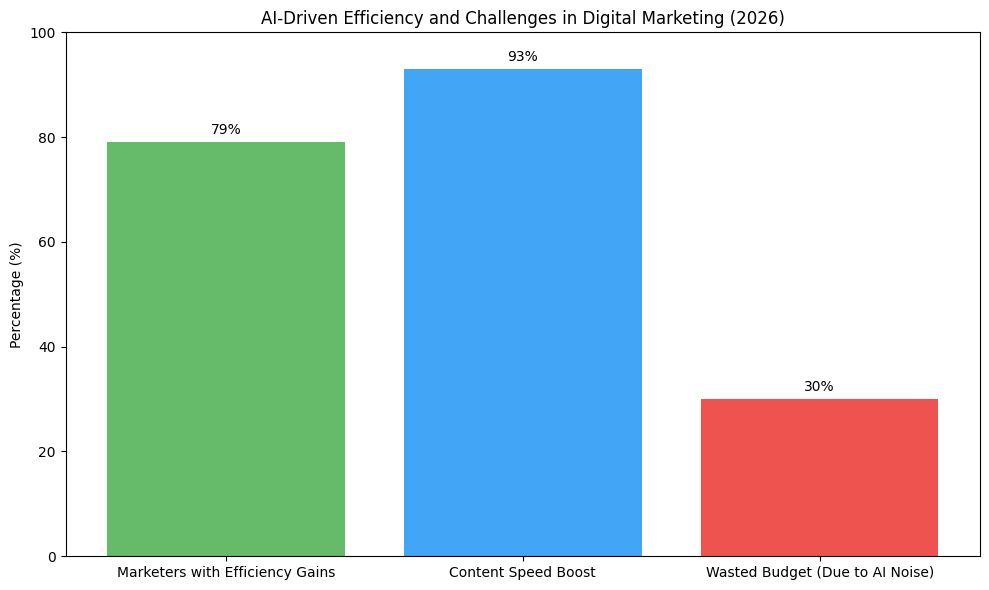
This approach is vital in a landscape where, despite AI’s promises, nearly 30% of digital marketing budgets are still lost to poor targeting, bot activity, and ineffective asset selection. Pre-launch intelligence reduces that waste, creates accountability, and ensures budgets are tied to strategic outcomes, not just tactical execution.
AI Marketing Efficiency vs Budget Waste Matrix
| Efficiency Metric | Industry Average (2026) | Marketing Risk Without Pre-Launch Intelligence |
|---|---|---|
| Time Saved via AI | 79% of marketers report gains | Reduced manual labor but increased creative noise |
| Estimated Budget Waste | 30% of total marketing spend | Due to poor targeting, fake engagement, low CTR |
| Tools with ROI Intelligence | Smartly, 6sense, AdCreative.ai | Offer campaign-level forecasting and filtering |
Search Behavior Shift: From Clicks to Answers
Another key transformation is the emergence of Answer Engine Optimization (AEO). Search engines in 2026 are no longer simply delivering blue links—they are providing direct, AI-summarized answers. This means that instead of optimizing for traditional human-driven search results, marketers must now optimize for how AI agents interpret and relay information.
Digital marketers are now building content for machine readers, not just human readers. To gain visibility in answer engines like Google’s AI Overviews, content must be structured with clarity, authority, and data precision.
AEO Optimization Strategy Table
| Optimization Focus | Traditional SEO (Pre-2024) | AEO Strategy (2026) | Purpose for AI Indexing |
|---|---|---|---|
| Keywords | Density and volume-driven | Contextual relevance and intent matching | Enables accurate AI response generation |
| Formatting | Loose paragraphs and meta tags | Structured data, clear headers, quick facts | AI-friendly parsing for instant summarization |
| Content Authority | Backlink volume | Verified brand signals and expert data | Improves trustworthiness in agentic summaries |
| Target Audience | Human search behavior | AI interpreters + synthetic audiences | Expands visibility in AI-curated answers |
Conclusion
The AI-driven marketing landscape in 2026 is no longer defined by speed or automation alone. It is now about strategic alignment, brand control, and intelligent orchestration across every campaign touchpoint. As AI systems take over execution, the marketer’s role becomes more valuable than ever—defining the systems, rules, and creative architecture that these technologies follow.
The real competitive edge in 2026 lies in leveraging tools that go beyond automation to offer predictive foresight, simulation environments, and real-time orchestration. The next generation of marketing is agentic, data-conscious, and deeply aligned with outcomes—not outputs. The top AI tools leading this space are not just platforms—they are intelligent collaborators in reshaping how brands communicate, engage, and grow.
The Power of Interoperability in AI Marketing Stacks: API-Driven Integration and Efficiency in 2026
In 2026, the effectiveness of any digital marketing tool is no longer determined by its standalone features, but by how well it integrates into the broader marketing ecosystem. Technical interoperability—the ability for different tools to communicate, trigger actions, and share data in real-time—has become the most valuable feature across the AI-powered marketing landscape.
This seamless connectivity between platforms ensures that workflows are intelligent, dynamic, and adaptive. AI tools such as Copy.ai, HubSpot, Jasper, Surfer SEO, AdCreative.ai, Smartly.io, and Canva are now linked through powerful APIs and automation platforms like Zapier AI. These connections create what experts call Closed-Loop Intelligence—a system where insights generated in one tool instantly inform actions in another without human intervention.
Connected AI Tools and Real-Time Automation
By 2026, leading marketing teams are no longer using AI tools in isolation. Instead, they are building fully integrated stacks where one tool’s output becomes another tool’s input. For example, a customer complaint logged in HubSpot’s CRM can automatically initiate a content update in Surfer SEO and trigger the creation of a new ad asset in AdCreative.ai, ensuring marketing messages remain aligned with emerging customer concerns in real time.
API-Driven Integration Impact Table
| Integration Node | Supporting Technology Used | Strategic Workflow Enhancement |
|---|---|---|
| Workflow Orchestration | Zapier AI, Copy.ai Workflows | Automates multi-app task sequences across marketing stack |
| CRM Synchronization | HubSpot + Salesforce API Sync | Combines sales, support, and marketing data pipelines |
| Content Governance | Writer + Jasper Grid | Enforces consistent tone, structure, and voice across teams |
| Creative Deployment | Smartly.io + Canva via Open API | Enables rapid ad asset publishing across platforms |
Closed-Loop Intelligence: Automation Without Silos
Closed-loop intelligence refers to the real-time feedback loop between customer engagement data and marketing actions. In this setup, every customer touchpoint—be it a service request, product review, or social comment—feeds back into content planning, creative design, and campaign optimization through automated triggers and API workflows.
This enables marketing teams to:
- Detect changes in customer behavior instantly
- Launch updated content or ads within minutes
- Avoid campaign delays caused by data silos
- Maintain a consistent and relevant customer experience
Efficiency Gains Through Integrated AI Stacks
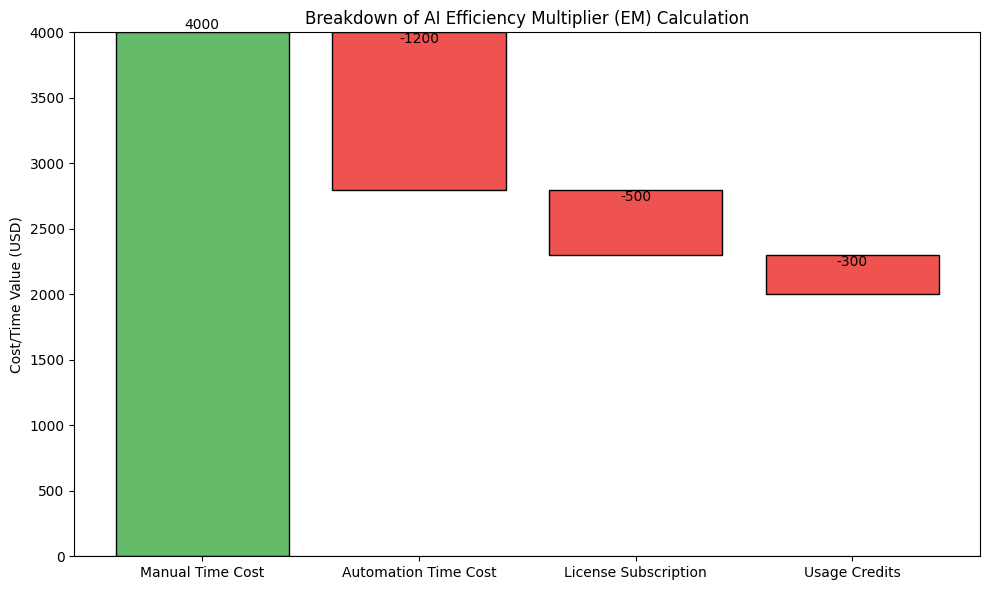
To quantify the impact of interoperability in marketing workflows, 2026 industry analysts use the Efficiency Multiplier (EM)—a formula that compares time and cost savings between manual vs automated tasks across the marketing stack.
Efficiency Multiplier (EM) Framework
EM = (∑ (T_manual × W)) ÷ (∑ (T_automated × W) + (S_license + C_usage))
Where:
T = Time saved per task
W = Hourly wage
S = Subscription cost
C = Usage-based credit cost
Efficiency Impact Table of API Integration in 2026
| Metric | Without API Integration | With Full API-Connected Stack | Business Outcome |
|---|---|---|---|
| Average Campaign Deployment Time | 4–5 Days | Less than 1 Day | Speeds up GTM timeframes |
| Cross-Platform Consistency | Manual asset duplication | Synchronized through Canva + Smartly.io | Ensures unified branding and messaging |
| Brand Voice Compliance | Inconsistent tone across tools | Automated via Jasper + Writer | Increases trust and clarity across campaigns |
| Workflow Output Volume | Baseline | 2.5x to 4.0x increase | Same team, more campaigns delivered |
Strategic Impact for Marketing Teams
Integrated stacks are helping teams achieve 250–400% more output without increasing headcount or operating budgets. By combining real-time CRM updates, dynamic content optimization, and automated asset deployment, marketers can stay agile and adapt instantly to changes in audience behavior.
This interconnected ecosystem empowers teams to make faster decisions, reduce operational complexity, and maximize the return on their AI investments. In a competitive environment where speed, precision, and personalization are essential, interoperability has become the foundation of modern marketing infrastructure.
Conclusion
The future of marketing in 2026 is not defined by isolated tools, but by integrated systems. APIs are now the central nervous system of AI-powered marketing workflows—linking creative, CRM, analytics, and content platforms into a unified machine capable of learning, adapting, and executing at scale.
Organizations that invest in building interconnected stacks are seeing the highest ROI, fastest campaign turnaround times, and the clearest visibility across their operations. In this era of smart automation, the ability to connect tools efficiently is no longer optional—it’s the key to sustained competitive advantage.
Strategic Recommendations for CMOs: How to Lead in the AI-Driven Marketing Era of 2026
The transformation of digital marketing in 2026 demands a new kind of leadership from Chief Marketing Officers. The rapid growth of AI technologies has redefined every stage of the marketing funnel—from campaign planning and content creation to customer engagement and performance analysis. As this shift intensifies, three critical strategic imperatives now shape the success of modern marketing organizations.
CMOs who align their teams with these core strategies and integrate the right AI platforms into their operations will gain a measurable advantage in precision, efficiency, and brand consistency. The following insights provide clear direction on how today’s marketing executives can respond effectively to the new demands of AI-powered marketing.
Embrace Agentic Automation Across Workflows
The era of basic generative AI tools has passed. The current standard in 2026 requires agentic systems—AI platforms that function autonomously, completing entire multi-step marketing workflows with minimal human input. These systems operate as digital team members, capable of carrying out repeatable tasks such as campaign sequencing, content personalization, and customer follow-up with real-time adaptability.
Leading tools such as HubSpot Breeze, Synthesia Video Agents, and Copy.ai Workflows exemplify this new standard. They are designed not just to assist marketers, but to independently handle complex actions across CRM, content, and advertising environments.
Agentic AI Tools and Automation Matrix
| Tool Name | Agentic Functionality | Key Strategic Outcome |
|---|---|---|
| HubSpot Breeze | AI agents for CRM, outreach, and customer workflows | Fully automated prospecting and resolution loops |
| Synthesia Video Agents | Real-time conversational avatars for training/sales | Autonomous video-based communication workflows |
| Copy.ai Workflows | Multi-step email and content sequences via AI | Reduces manual execution across GTM cycles |
Shift from Content Volume to Precision Targeting
In the past, success was measured by how much content a team could produce. In 2026, the true differentiator is precision. With content generation becoming faster and cheaper, the real challenge is ensuring that the right message reaches the right audience—at the right moment.
This requires access to deep audience intent signals, predictive modeling, and pre-launch ad testing. Platforms like 6sense, Smartly.io, and AdCreative.ai are built to serve this purpose. They provide synthetic audiences, conversion scoring, and intent-based segmentation that allow marketing teams to refine their campaigns before they go live.
Precision-Driven Intelligence Tools Comparison Table
| Tool Name | Precision Feature | Strategic Advantage |
|---|---|---|
| 6sense | Intent data and buying group analysis | Enables hyper-targeted B2B campaigns |
| Smartly.io | Predictive ad performance modeling | Increases ROI while reducing media waste |
| AdCreative.ai | Conversion scoring + creative A/B testing | Prioritizes high-converting visuals pre-launch |
Protect Brand Integrity with AI Identity Governance
As AI becomes responsible for a growing percentage of customer-facing content, protecting the brand’s identity and voice becomes more important than ever. Without a clear framework for brand consistency, organizations risk flooding digital channels with on-brand but off-message content.
Tools like Jasper and Canva have developed advanced systems for identity governance, including brand memory, tone of voice models, and design enforcement. These features ensure that AI-generated content not only follows marketing guidelines but also reflects the values and personality of the organization.
AI Identity and Brand Consistency Matrix
| Platform | Governance Capability | Brand Control Outcome |
|---|---|---|
| Jasper | Brand Memory, tone training, structural templates | Consistent brand storytelling at scale |
| Canva Magic Studio | Automated brand kits + content guardrails | Visual consistency across teams and channels |
Summary Recommendations for the 2026 CMO
To lead effectively in this AI-first marketing environment, CMOs must focus on three pillars of strategic execution:
- Deploy Autonomous Agents
Invest in agentic platforms like HubSpot Breeze, Copy.ai, and Synthesia to automate entire workflows and free up teams for strategic tasks. - Prioritize Precision Over Production
Adopt tools like 6sense, Smartly.io, and AdCreative.ai that deliver intelligence before campaigns launch—ensuring time and budget are spent on high-impact actions. - Govern Brand Identity at Scale
Use platforms such as Jasper and Canva that provide structured brand memory and design controls to maintain a unified voice across all automated output.
Strategic Framework for Leading AI Marketing Teams in 2026
| Strategic Priority | Key Tools Involved | Leadership Focus |
|---|---|---|
| Agentic Workflow Execution | HubSpot Breeze, Copy.ai, Synthesia | Redesign team roles around AI-assisted execution |
| Pre-Launch Predictive Insight | 6sense, Smartly.io, AdCreative.ai | Allocate resources to intelligence over intuition |
| Brand Identity Governance | Jasper, Canva Magic Studio | Build trust through scalable voice and design logic |
Conclusion
CMOs in 2026 must move beyond managing campaigns and start orchestrating intelligent systems. The content explosion has made visibility more competitive, and only those who integrate agentic tools, precision frameworks, and identity governance will rise above the noise. Mastering these ten AI platforms will not just improve efficiency—it will define the next generation of market leadership.
Conclusion
As we move deeper into a new era of digital marketing, the year 2026 marks a decisive turning point where artificial intelligence has become central to how global marketing teams operate, grow, and compete. The rise of AI-powered platforms has shifted marketing from manual execution and isolated content creation to fully orchestrated, data-driven systems that prioritize speed, accuracy, and strategic impact.
The ten AI tools featured in this guide—HubSpot Breeze, Jasper, Copy.ai, Canva Magic Studio, Synthesia, 6sense, Smartly.io, Surfer SEO, Sprout Social, and AdCreative.ai—represent more than just software. They are foundational components of a modern marketing infrastructure, each delivering highly specialized capabilities across automation, personalization, predictive analytics, creative generation, and campaign optimization. Together, these tools enable marketing organizations to move faster, create smarter, and operate with greater precision than ever before.
What sets these platforms apart in 2026 is their alignment with the three core strategic imperatives shaping marketing success:
- Agentic Workflow Automation
Tools like HubSpot Breeze, Synthesia, and Copy.ai now act as autonomous agents—capable of executing multi-step processes with minimal human oversight. These systems handle everything from lead nurturing and training to campaign rollout, allowing human teams to focus on creativity and strategic decision-making. - Precision-First Marketing Execution
In a landscape flooded with digital content, tools like 6sense, Smartly.io, and AdCreative.ai deliver a decisive edge by helping marketers target with intent, test before launch, and eliminate wasted spend. Their data-rich insights and pre-launch simulation capabilities are vital in a market where precision now outperforms volume. - Identity and Brand Governance at Scale
Platforms like Jasper and Canva Magic Studio ensure brand consistency across every touchpoint—regardless of how many pieces of content are generated. In an AI-dominated environment, preserving voice, tone, and visual identity is critical to building trust and maintaining brand equity.
In addition to their core features, what makes these tools truly transformational is their ability to integrate seamlessly into larger tech ecosystems. With powerful APIs, real-time data sharing, and automation bridges like Zapier AI, marketing stacks built on these platforms function as interconnected ecosystems. This technical interoperability enables closed-loop intelligence—where campaign insights, customer feedback, and performance data automatically inform future actions.
Integrated AI Tool Stack Impact Matrix (2026)
| Strategic Function | Leading Tools | Core Business Benefit |
|---|---|---|
| Workflow Automation | HubSpot Breeze, Copy.ai, Synthesia | Reduced manual effort, faster GTM speed |
| Precision Campaign Targeting | 6sense, Smartly.io, AdCreative.ai | Improved ROAS, lower cost-per-action |
| Creative & Brand Consistency | Jasper, Canva Magic Studio | AI-generated content aligned with brand voice & design |
| Social & Search Intelligence | Sprout Social, Surfer SEO | Real-time visibility into market sentiment and trends |
For Chief Marketing Officers, strategists, and growth leaders, the priority in 2026 is no longer about choosing individual tools but about orchestrating them as a unified, intelligent system. The organizations that invest in building integrated AI stacks with tools like these are achieving faster campaign cycles, smarter targeting, stronger brand impact, and higher returns on every dollar spent.
Ultimately, success in today’s AI-first marketing environment depends on three things: adopting agentic platforms that execute at scale, deploying intelligence-driven systems that optimize before you spend, and enforcing brand governance to preserve identity amidst automation. Those who master these pillars using the top AI tools in 2026 will not just adapt to the future—they will define it.
If you find this article useful, why not share it with your hiring manager and C-level suite friends and also leave a nice comment below?
We, at the 9cv9 Research Team, strive to bring the latest and most meaningful data, guides, and statistics to your doorstep.
To get access to top-quality guides, click over to 9cv9 Blog.
To hire top talents using our modern AI-powered recruitment agency, find out more at 9cv9 Modern AI-Powered Recruitment Agency.
People Also Ask
What are the best AI tools for digital marketing teams in 2026?
Top AI tools in 2026 include HubSpot Breeze, Jasper, Copy.ai, Canva Magic Studio, Synthesia, 6sense, Smartly.io, Surfer SEO, Sprout Social, and AdCreative.ai.
How does HubSpot Breeze support AI-powered marketing automation?
HubSpot Breeze uses autonomous agents to manage CRM tasks, prospecting, customer support, and outreach, improving workflow efficiency.
What makes Jasper one of the top AI tools for content marketing in 2026?
Jasper helps marketing teams maintain brand voice through its Brand Memory feature and generate SEO-optimized content using AI.
How does Copy.ai help in automating digital campaigns?
Copy.ai enables marketing teams to automate multi-step content workflows and email sequences, improving speed and personalization.
Why is Canva Magic Studio popular among marketers in 2026?
Canva Magic Studio automates visual design, offering AI-powered tools for brand consistency, instant resizing, and creative scalability.
What is Synthesia used for in digital marketing?
Synthesia creates AI-powered video agents that deliver interactive video content for sales, training, and personalized communication.
How does 6sense enhance targeting in B2B marketing?
6sense uses intent data and AI to identify high-value prospects and buying groups, enabling precise account-based marketing.
Why is Smartly.io recommended for ad campaign optimization?
Smartly.io uses AI to test, scale, and optimize ad creatives in real time, reducing ad spend waste and increasing return on investment.
What does Surfer SEO offer for search optimization?
Surfer SEO provides AI-driven content audits, keyword suggestions, and structured optimization to improve visibility in AI-powered search.
How does Sprout Social support AI-driven social listening?
Sprout Social uses AI to analyze social sentiment, uncover trends, and automate engagement insights for stronger brand strategy.
Which AI tools offer pre-launch ad testing in 2026?
Smartly.io, AdCreative.ai, and 6sense provide predictive intelligence and synthetic audience testing before spending on campaigns.
Can AdCreative.ai generate high-converting ads using AI?
Yes, AdCreative.ai uses AI to create ad variations, assign conversion scores, and auto-select top-performing creatives.
What is the role of AI in creative asset generation in 2026?
AI tools generate images, videos, headlines, and layouts quickly, helping teams scale creative output while maintaining brand integrity.
Why is brand governance important when using AI in marketing?
Brand governance ensures AI-generated content aligns with voice, tone, and visual guidelines, preserving consistency and trust.
How are AI agents transforming digital marketing workflows?
AI agents automate tasks like lead nurturing, content creation, and analytics, freeing marketers to focus on strategy and innovation.
Are AI tools cost-effective for marketing teams?
Yes, many AI platforms reduce labor hours, improve ROI, and lower production costs, making them a smart investment for scalability.
Which AI tools offer integration with ad platforms and CRMs?
Tools like HubSpot, Smartly.io, Copy.ai, and AdCreative.ai integrate with platforms like Google Ads, Meta, LinkedIn, and Salesforce.
How can marketers use AI to improve content engagement?
AI tools analyze performance data and optimize headlines, images, and copy to better match audience preferences and boost engagement.
Is AI replacing marketers in 2026?
No, AI is not replacing marketers but enhancing their capabilities by handling repetitive tasks and offering data-driven recommendations.
What is Answer Engine Optimization (AEO) in 2026?
AEO focuses on optimizing content for AI agents and answer engines, structuring data for better visibility in zero-click search results.
How does Jasper support SEO-focused content creation?
Jasper helps marketers craft content with SEO best practices, using AI to recommend keywords, structure, and tone in real time.
Can small businesses benefit from using AI marketing tools?
Yes, many AI tools like AdCreative.ai and Copy.ai offer affordable plans, allowing small businesses to compete with larger brands.
What role does Surfer SEO play in AI-driven content strategy?
Surfer SEO analyzes top-ranking content and offers data-backed suggestions to align new content with search engine algorithms.
How does Canva Magic Studio help with visual branding?
Canva’s AI tools allow marketers to auto-generate branded assets, ensuring consistent visuals across all digital platforms.
What KPIs improve with AI-driven marketing tools?
Key improvements include faster time-to-market, higher engagement, better targeting accuracy, and increased return on ad spend.
How does Sprout Social assist with crisis monitoring?
Sprout Social detects shifts in sentiment and flags emerging issues in real time, allowing marketers to act quickly during crises.
Do AI tools offer support for multilingual campaigns?
Yes, tools like Synthesia and Jasper support multiple languages, enabling global campaign execution with localized content.
Why is precision more important than volume in 2026?
With content saturation at its peak, success depends on delivering the right message to the right audience—not just more content.
What AI tools support video marketing in 2026?
Synthesia and Canva offer AI-powered video creation tools, making it easy to produce professional videos with minimal resources.
How can CMOs lead AI adoption in their teams?
CMOs should focus on selecting integrated, agentic platforms, training teams on strategic orchestration, and enforcing brand standards.
Sources
Medium
SEO
Digital Marketing Institute
KEO Marketing
Contrary Research
Credofy
Warmly AI
Eesel AI
MyAskAI
Whitehat SEO
PM Insights
ClickForest
Oreate AI Blog
SQ Magazine
Dimmo
PitchBook
Smartly
Averi AI
Copy AI
Koanthic
Canva
Backlinko
Pushwoosh
Canto
Unite AI
Observer
eWeek
Investing
IndexBox
Nasdaq
HeyGen
Vertu
Gartner
Clustox
G2
BookYourData
Dynamic Product Ads
SelectHub
SoftwareSuggest
Delve AI
Sprout Social
Sintra AI
Madgicx
AdCreative AI
Sopro
StackAdapt
WASK Blog
CoSchedule
Meeting Notes
NGS Solution