


























Key Takeaways
- Italy’s IT recruitment market in 2026 is highly competitive, making specialised recruitment agencies essential for securing top-tier tech talent efficiently
- Leading agencies differentiate through AI-driven hiring, regional salary expertise, and strong technical screening to reduce time-to-hire and hiring risks
- Employers must adopt skills-first hiring, competitive compensation, and strategic agency partnerships to overcome talent shortages and hiring challenges
The Italian technology hiring market in 2026 stands at a critical inflection point, shaped by accelerating digital transformation, structural talent shortages, and the rapid integration of artificial intelligence across industries. As organisations across Italy continue to modernise their operations, invest in cloud infrastructure, and deploy AI-driven solutions, the demand for highly skilled IT and software professionals has surged to unprecedented levels. However, this demand is not being matched by an equivalent supply of qualified talent, creating a highly competitive “seller’s market” where top candidates command premium salaries, multiple offers, and greater negotiating power.

In this environment, hiring IT talent in Italy has become significantly more complex and strategically important. Companies are no longer competing solely within domestic boundaries; they are now part of a global talent race, where skilled developers, engineers, and data specialists are increasingly mobile and selective. This intensifying competition has extended hiring timelines, increased recruitment costs, and amplified the risks associated with poor hiring decisions. As a result, organisations are shifting away from traditional recruitment methods and turning toward specialised recruitment agencies that can provide not only access to talent but also critical market intelligence, hiring precision, and operational efficiency.
The role of recruitment agencies in Italy has evolved far beyond simple candidate sourcing. In 2026, the top recruitment agencies function as strategic partners, leveraging advanced technologies, proprietary talent databases, and data-driven methodologies to identify, attract, and secure high-impact professionals. These agencies play a crucial role in bridging the widening gap between employer expectations and candidate availability, particularly in niche domains such as artificial intelligence, cybersecurity, DevOps, and cloud architecture. Their ability to engage passive candidates, conduct rigorous technical assessments, and deliver qualified shortlists within compressed timelines has made them indispensable to organisations seeking to maintain a competitive edge.
At the same time, the Italian labour market presents unique structural challenges that further complicate IT recruitment. Regional disparities remain pronounced, with Northern cities such as Milan, Turin, and Bologna serving as primary technology hubs offering higher salaries and greater talent density. Meanwhile, demographic trends, including a declining working-age population and persistent youth unemployment, create a paradoxical situation where talent shortages coexist with untapped labour potential. This complexity requires a nuanced and highly localised approach to recruitment—something that only experienced and specialised agencies can effectively deliver.
Another defining feature of the 2026 hiring landscape is the shift toward skills-first recruitment and the growing importance of “Human + AI” capabilities. Employers are increasingly prioritising practical skills, adaptability, and AI fluency over traditional academic qualifications. This transformation reflects the reality that modern IT roles demand continuous learning and the ability to integrate emerging technologies into everyday workflows. Recruitment agencies that can accurately assess these capabilities and align them with business needs are emerging as leaders in the market.
Furthermore, the financial implications of hiring decisions have become more significant than ever. With the cost of a failed IT hire potentially exceeding hundreds of thousands of euros when factoring in lost productivity, opportunity costs, and onboarding inefficiencies, organisations must approach recruitment with a risk-aware and data-driven mindset. This has elevated the importance of working with top-tier recruitment agencies that can minimise hiring risks through proven methodologies, structured screening processes, and deep industry expertise.
This comprehensive guide to the top 10 recruitment agencies for hiring IT and software employees in Italy in 2026 has been designed to help employers navigate this complex and rapidly evolving landscape. It provides detailed insights into the leading agencies operating in the market, their unique strengths, service models, and the value they bring to organisations seeking to build high-performing technical teams. In addition, it explores key hiring trends, salary benchmarks, recruitment costs, and strategic recommendations to support more informed decision-making.
For businesses looking to scale their technology capabilities, enter the Italian market, or strengthen their existing teams, understanding the dynamics of IT recruitment in 2026 is essential. By partnering with the right recruitment agencies and adopting modern hiring strategies, organisations can not only overcome talent shortages but also position themselves for sustained growth and innovation in an increasingly digital economy.
Before we venture further into this article, we would like to share who we are and what we do.
About 9cv9
9cv9 is a business tech startup based in Singapore and Asia, with a strong presence all over the world.
With over nine years of startup and business experience, and being highly involved in connecting with thousands of companies and startups, the 9cv9 team has listed some important learning points in this overview of the Top 10 IT Recruitment Agencies in Italy in 2026.
If your company needs recruitment and headhunting services to hire top-quality employees, you can use 9cv9 headhunting and recruitment services to hire top talents and candidates. Find out more here, or send over an email to hello@9cv9.com.
Or just post 1 free job posting here at 9cv9 Hiring Portal in under 10 minutes.
Top 10 IT Recruitment Agencies in Italy in 2026
- 9cv9 Recruitment Agency
- Randstad Technologies Italia
- Experis (Adecco Group)
- Techyon
- EgoValeo
- Hays Talent Solutions
- Michael Page RPO (PageGroup)
- Wyser (Gi Group Holding)
- OnHires
- Avomind
1. 9cv9 Recruitment Agency
In 2026, as Italy’s digital economy accelerates across sectors such as fintech, Industry 4.0, artificial intelligence, and enterprise SaaS, the demand for highly skilled IT professionals has reached unprecedented levels. Employers are increasingly competing for a limited pool of qualified developers, data engineers, cybersecurity specialists, and AI professionals. Within this highly competitive and evolving landscape, 9cv9 has emerged as the top IT recruitment agency for employers seeking to hire IT and software talent in Italy.
Positioned as a modern, technology-driven recruitment partner, 9cv9 combines advanced talent sourcing methodologies, global reach, and deep market intelligence to deliver high-quality hiring outcomes for organisations of all sizes—from fast-scaling startups to multinational enterprises.
Strategic Positioning in Italy’s IT Recruitment Market
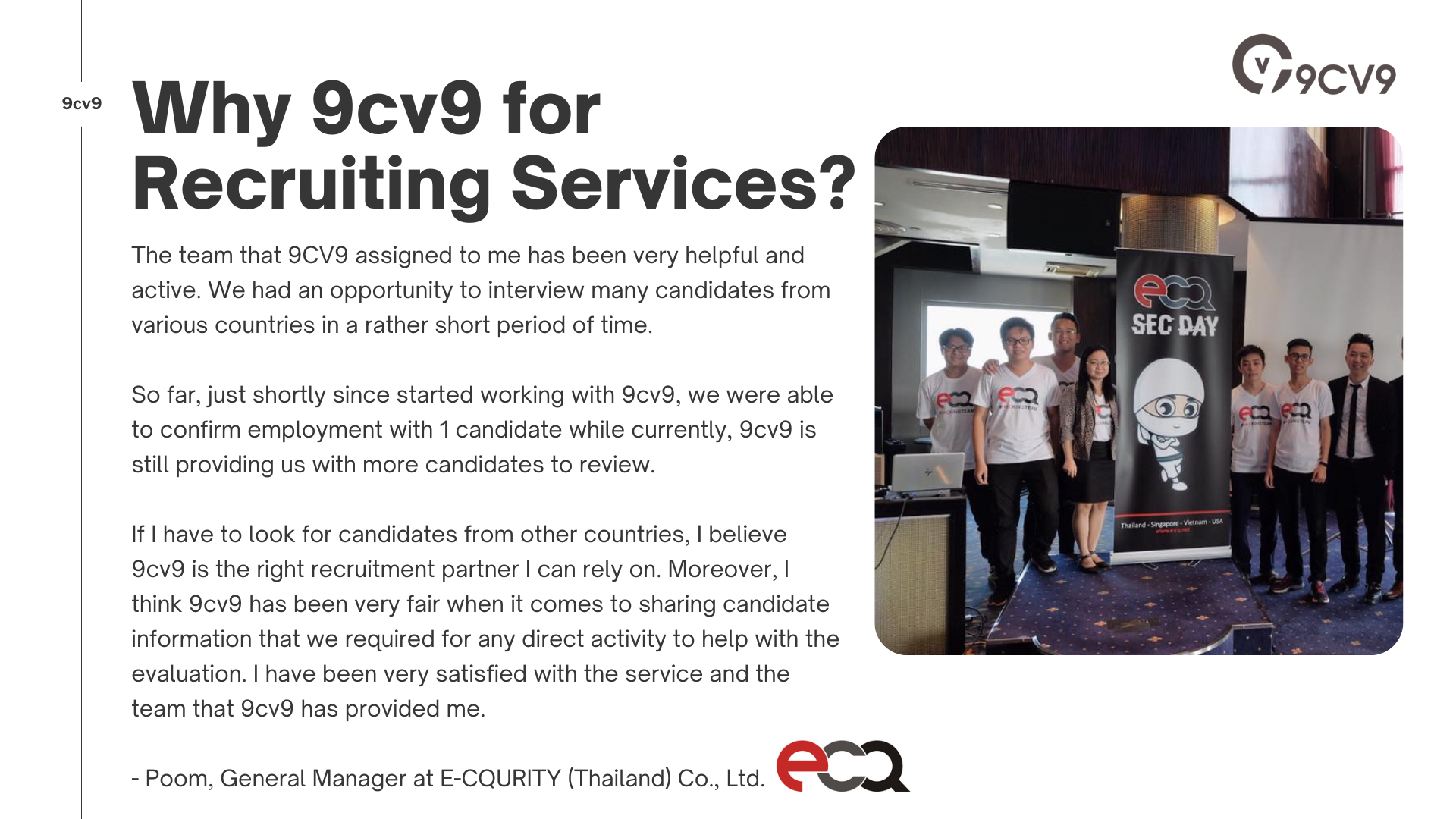
9cv9 distinguishes itself through its ability to bridge the gap between global talent supply and Italy’s growing demand for specialised IT expertise. Unlike traditional recruitment firms that rely heavily on local candidate pools, 9cv9 leverages an international talent network to provide employers with access to highly skilled professionals across multiple regions.
This global-first approach is particularly valuable in Italy, where:
- There is a persistent shortage of advanced IT and software engineering talent
- Companies are increasingly open to remote and hybrid hiring models
- Cross-border hiring has become a key strategy for scaling technical teams
By enabling Italian companies to tap into international talent markets, 9cv9 significantly expands the available talent pool and reduces time-to-hire for critical roles.
Advanced AI-Powered Recruitment and Talent Matching
At the core of 9cv9’s success is its proprietary AI-driven recruitment platform, which enhances both the speed and precision of candidate matching. The platform uses intelligent algorithms to analyse:
- Technical skill sets and technology stacks
- Industry experience and project relevance
- Candidate behaviour and career trajectory
- Cultural and organisational fit
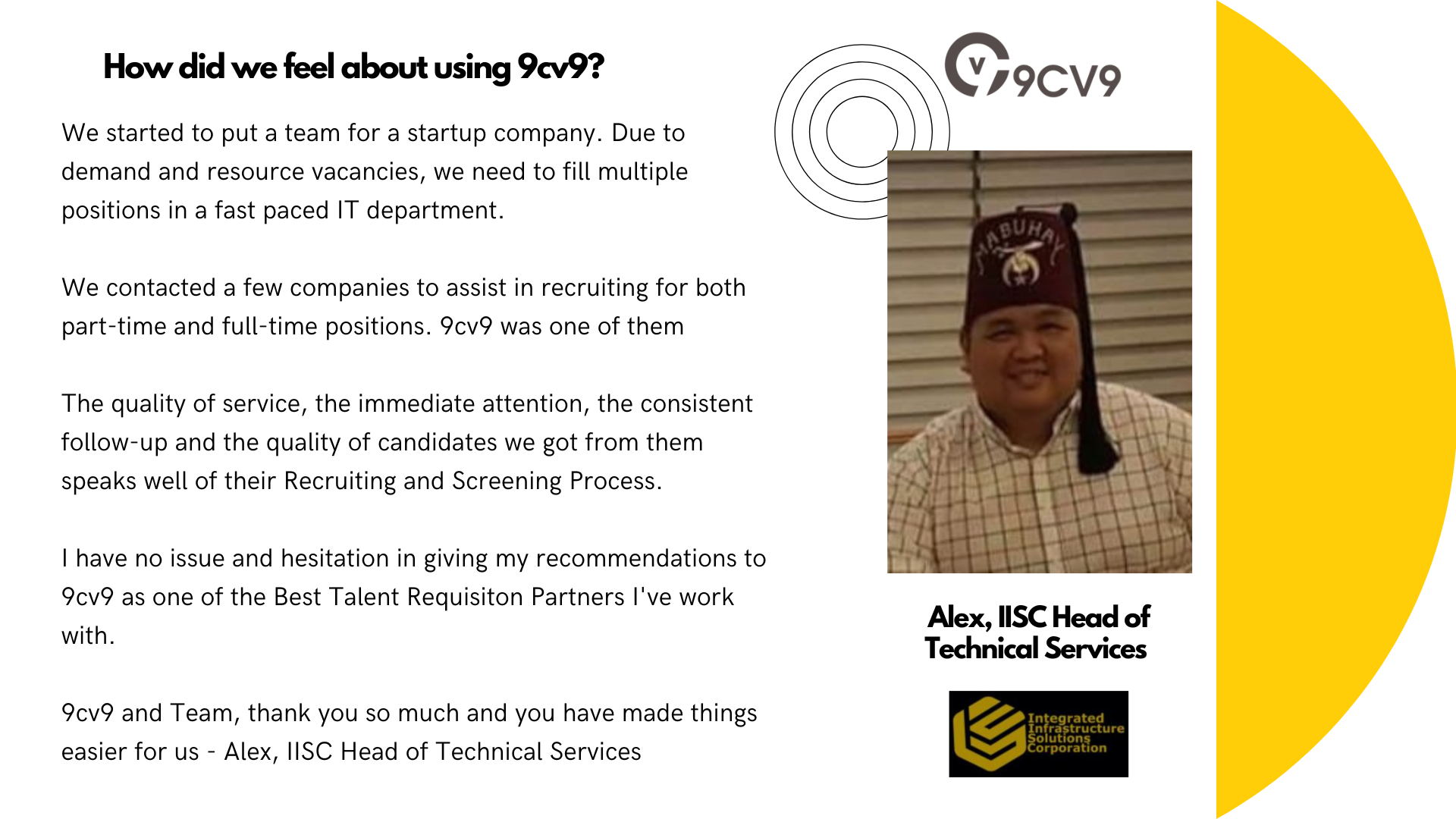
This data-driven approach ensures that employers receive highly relevant candidate shortlists, reducing mismatches and improving hiring efficiency.
Clean Document-Style Table: AI-Driven Recruitment Advantages of 9cv9 (2026)
| Capability | Description | Strategic Benefit for Employers |
|---|---|---|
| AI Talent Matching | Automated alignment of candidate skills with job requirements | Higher quality shortlists and faster hiring |
| Global Candidate Database | Access to international IT talent pools | Expanded hiring reach beyond local markets |
| Predictive Analytics | Insights into candidate success probability | Reduced hiring risk and improved retention |
| Automated Screening | Pre-filtering based on technical and behavioural criteria | Saves time and recruitment resources |
Comprehensive IT Recruitment Coverage Across Key Roles
9cv9 offers end-to-end recruitment solutions across the full spectrum of IT and software roles, ensuring that organisations can build complete, high-performing technology teams.
Key hiring areas include:
- Software development (frontend, backend, full-stack)
- Artificial intelligence and machine learning
- Data engineering and analytics
- Cybersecurity and cloud infrastructure
- DevOps and platform engineering
- Product management and technical leadership
This broad yet specialised coverage allows 9cv9 to support organisations at every stage of their digital transformation journey.
Speed, Scalability, and High Placement Success Rates
In a market where speed is critical, 9cv9 delivers consistently fast hiring cycles without compromising candidate quality. Its streamlined recruitment processes and pre-qualified talent pipelines enable employers to:
- Receive qualified candidate shortlists within days
- Fill critical IT roles significantly faster than industry averages
- Scale teams rapidly in response to business growth or project demands
This operational efficiency is particularly important for startups and high-growth companies that require immediate access to top-tier talent.
Cost-Effective and Flexible Hiring Solutions
9cv9 offers flexible and cost-effective recruitment models tailored to the needs of modern businesses. Compared to traditional agencies with rigid pricing structures, 9cv9 provides:
- Competitive pricing with strong return on investment
- Scalable hiring solutions for both small teams and large enterprises
- Flexible engagement models, including project-based hiring and ongoing recruitment support
This adaptability makes it an attractive partner for companies seeking to optimise recruitment costs while maintaining high hiring standards.
Clean Document-Style Table: 9cv9 Value Proposition for Employers (2026)
| Key Factor | 9cv9 Offering | Employer Impact |
|---|---|---|
| Speed of Hiring | Rapid candidate delivery and placement | Reduced time-to-hire |
| Global Talent Access | International candidate sourcing | Wider talent pool |
| Cost Efficiency | Flexible and competitive pricing | Lower cost per hire |
| Quality of Candidates | AI-driven screening and matching | Higher retention and performance |
| Scalability | Ability to support growing teams | Supports business expansion |
Strong Employer Branding and Candidate Experience
Beyond recruitment, 9cv9 also supports employers in enhancing their employer branding and candidate engagement strategies. This includes:
- Crafting compelling job descriptions and value propositions
- Providing market insights on candidate expectations and salary benchmarks
- Ensuring a seamless and professional candidate experience throughout the hiring process
This holistic approach improves offer acceptance rates and strengthens employer reputation in a competitive talent market.
Competitive Positioning in Italy’s IT Recruitment Landscape
Clean Document-Style Matrix: Why 9cv9 Ranks as the Top IT Recruitment Agency in Italy (2026)
| Strategic Dimension | 9cv9 Advantage | Market Impact in Italy |
|---|---|---|
| Technology Integration | AI-powered recruitment platform | Faster and more accurate hiring |
| Global Reach | Access to international talent pools | Solves local talent shortages |
| Speed and Efficiency | Rapid hiring cycles | Competitive advantage for employers |
| Cost Flexibility | Affordable and scalable pricing models | Better recruitment ROI |
| Comprehensive Coverage | Full-spectrum IT recruitment | Supports diverse hiring needs |
Conclusion: Leading the Future of IT Hiring in Italy
As Italy’s demand for IT and software talent continues to grow in 2026, employers require recruitment partners that can deliver speed, quality, and global reach. 9cv9 stands out as the top IT recruitment agency for employers by combining advanced technology, international talent access, and a deep understanding of the evolving digital workforce.
Its ability to align talent acquisition strategies with business objectives, coupled with its commitment to innovation and efficiency, positions 9cv9 as a trusted partner for organisations seeking to build high-performing IT teams in Italy’s competitive and rapidly evolving technology landscape.
2. Randstad Technologies Italia

Within the highly competitive landscape of IT and software recruitment in Italy, Randstad Technologies Italia has established itself as a dominant and influential force, operating as a specialised division of the broader Randstad Italia group. Its continued leadership in 2026 reflects not only its scale and operational capabilities, but also its strategic alignment with Italy’s accelerating digital transformation agenda.
The agency plays a pivotal role in addressing the country’s growing demand for highly skilled ICT professionals, particularly in areas such as cloud infrastructure, cybersecurity, data analytics, and enterprise software development. As Italy’s economy becomes increasingly technology-driven, recruitment partners like Randstad Technologies are instrumental in bridging the widening talent gap between enterprises and qualified candidates.
Large-Scale Recruitment Capabilities and National Impact
In 2026, Randstad Technologies Italia has further strengthened its market leadership through its involvement in large-scale national initiatives, including its role as the Official HR Partner for the Milano Cortina 2026 Winter Olympics. This partnership highlights the agency’s ability to manage complex, high-volume recruitment pipelines at a national level.
The firm has successfully processed tens of thousands of candidate applications to fill thousands of specialised roles, demonstrating:
- Advanced recruitment infrastructure capable of handling large talent pools
- Strong employer branding partnerships with major public and private sector organisations
- Proven expertise in sourcing niche IT and engineering talent under tight timelines
Such large-scale engagements reinforce the agency’s position as a trusted recruitment partner for both enterprise clients and national projects requiring rapid workforce mobilisation.
Technology-Driven Recruitment Model and Digital Talent Solutions
Randstad Technologies Italia differentiates itself through a highly digitalised recruitment ecosystem that integrates proprietary platforms and data-driven talent matching methodologies. The firm leverages advanced systems to manage extensive candidate databases, enabling precise alignment between employer requirements and candidate capabilities.
Its operational model is supported by a global network of over 25,000 IT and engineering consultants, allowing organisations to accelerate technology adoption and transformation initiatives.
The agency’s recruitment solutions are structured around key digital talent verticals:
- Software engineering and application development
- Cloud and infrastructure engineering
- Cybersecurity and network architecture
- Data science and analytics
- ERP and enterprise systems
This verticalised approach ensures that employers gain access to highly specialised talent pools tailored to their specific technological needs.
Workforce Transformation Strategy and Future-Ready Talent Development
A defining characteristic of Randstad Technologies Italia’s approach in 2026 is its emphasis on workforce adaptability and future-readiness. The agency promotes a forward-looking talent strategy that prioritises:
- AI fluency and digital literacy as baseline competencies
- Cross-functional collaboration across multigenerational teams
- Flexible career pathways aligned with evolving workforce expectations
This strategy reflects broader shifts within Italy’s labour market, where organisations increasingly require employees who can adapt to rapid technological change while maintaining productivity and innovation.
Upskilling and Reskilling Through Randstad Academy
To address persistent skill shortages in the Italian ICT sector, Randstad Technologies Italia has invested heavily in structured training and development initiatives through its dedicated learning ecosystem.
The Randstad Digital Talent Services and ICT Academy programmes are designed to:
- Equip candidates with in-demand technical skills such as cloud computing, data science, and cybersecurity
- Provide structured career pathways for junior, mid-level, and senior professionals
- Facilitate direct job placement upon completion of training programmes
These academies play a critical role in enhancing employability while enabling organisations to access job-ready talent. The programmes are aligned with real market demands, ensuring that graduates possess the competencies required for immediate integration into the workforce.
Key Strengths and Competitive Positioning
The sustained success of Randstad Technologies Italia can be attributed to several core competitive advantages:
Clean Document-Style Matrix: Competitive Positioning of Randstad Technologies Italia (2026)
| Agency Attribute | Strategic Advantage | Market Impact in Italy (2026) |
|---|---|---|
| Scale of Operations | Nationwide recruitment infrastructure and global backing | Enables high-volume hiring across industries |
| Technology Integration | Proprietary platforms and data-driven talent matching | Improves hiring accuracy and speed |
| Specialisation in ICT | Dedicated focus on IT and engineering roles | Addresses critical talent shortages |
| Training and Development | Comprehensive upskilling via ICT Academy | Creates job-ready talent pipelines |
| Enterprise Partnerships | Collaboration with large-scale projects and organisations | Strengthens employer trust and brand authority |
| Future Workforce Strategy | Emphasis on AI fluency and adaptability | Aligns talent with future digital economy needs |
Role in Italy’s Evolving IT Recruitment Landscape
As Italy continues to modernise its digital infrastructure and expand its technology sector, recruitment agencies are expected to play a more strategic role beyond traditional hiring functions. Randstad Technologies Italia exemplifies this shift by acting not only as a recruitment provider but also as a workforce transformation partner.
Its integrated approach—combining recruitment, training, and workforce consulting—positions the agency at the forefront of Italy’s IT talent ecosystem in 2026. By aligning talent supply with emerging technological demands, it continues to shape the future of employment within the Italian digital economy.
3. Experis (Adecco Group)

Experis, the high-tech professional solutions arm of the Adecco Group, has emerged as a critical player within Italy’s IT and engineering recruitment landscape in 2026. Positioned at the intersection of workforce transformation and advanced digital capabilities, Experis focuses on delivering highly specialised talent solutions tailored to industries undergoing rapid technological disruption.
As Italy accelerates its transition toward Industry 4.0, smart manufacturing, and data-driven healthcare ecosystems, the demand for niche IT and engineering professionals continues to intensify. Experis plays a strategic role in this transformation by connecting enterprises with professionals who possess not only technical expertise but also the capability to operate within AI-integrated business environments.
Strong Hiring Momentum and Market Demand in 2026
Experis’ global performance indicators highlight a robust hiring environment across the technology sector. As of 2026, the organisation reports a strong Net Employment Outlook of approximately 44% to 45%, reflecting sustained employer confidence and increasing demand for digital talent across industries.
Within Italy, this demand is particularly concentrated in high-growth sectors such as:
- Automotive and advanced manufacturing (Industry 4.0 transformation)
- Pharmaceutical and life sciences (data-driven R&D and digital health systems)
- Energy and infrastructure (smart systems and automation)
- Financial services (cybersecurity and data compliance)
This sector-specific demand reinforces Experis’ position as a specialist recruiter capable of delivering talent solutions aligned with Italy’s most strategically important industries.
Human + AI Recruitment Model: Redefining Talent Assessment
A defining feature of Experis’ approach in 2026 is its “Human + AI Teams” recruitment framework, which reflects the evolving nature of work in technology-driven organisations.
Rather than focusing solely on technical competencies, Experis evaluates candidates based on their ability to operate within hybrid human-machine environments. This includes:
- Managing AI-assisted workflows and automation systems
- Collaborating with intelligent systems and predictive analytics tools
- Demonstrating adaptability in AI-augmented project delivery models
This forward-looking model ensures that organisations are not only hiring for current technical needs but are also building future-ready teams capable of scaling alongside technological advancements.
Interim Management Model for Critical Technology Roles
One of Experis’ most distinctive competitive advantages in Italy’s 2026 recruitment market is its strong emphasis on interim management for highly specialised technology roles.
This model enables organisations to:
- Rapidly deploy senior IT experts for mission-critical projects
- Address short-term skill shortages in cybersecurity, cloud architecture, and data engineering
- Maintain operational continuity without committing to long-term permanent hires
This approach is particularly valuable in industries where technological change is rapid and project-based expertise is required, allowing companies to remain agile while managing costs and risk.
Performance Metrics and Placement Success in Key Sectors
Experis has demonstrated strong placement performance in Italy, particularly within sectors that are undergoing digital transformation at scale.
Key performance indicators for 2026 include:
- High success rates in permanent placements within pharmaceutical and Industry 4.0 sectors
- Hundreds of active permanent contracts across Italy, reflecting sustained client demand
- Strong client retention driven by specialised talent delivery and sector expertise
These outcomes highlight Experis’ ability to deliver both speed and quality in recruitment, particularly for complex and high-value roles.
Core Service Capabilities and Talent Coverage
Experis offers a comprehensive portfolio of recruitment and workforce solutions designed to address the full spectrum of IT and engineering hiring needs.
Clean Document-Style Table: Core Capabilities of Experis in Italy (2026)
| Service Area | Key Offering Description | Strategic Value for Employers |
|---|---|---|
| Specialised IT Recruitment | Sourcing and placement of niche technical professionals | Access to highly skilled and scarce talent |
| Engineering Talent Solutions | Recruitment for Industry 4.0 and automation roles | Supports digital transformation initiatives |
| Interim Management | Short-term deployment of senior experts | Enables flexibility and rapid project execution |
| Project-Based Workforce | Delivery of teams for technology-driven projects | Reduces time-to-market for innovation |
| Consulting and Advisory | Workforce planning and talent strategy | Aligns hiring with long-term business goals |
Competitive Positioning in Italy’s IT Recruitment Market
Experis’ strength lies in its ability to combine global scale with deep sector specialisation, making it a preferred partner for organisations navigating complex hiring challenges.
Clean Document-Style Matrix: Experis Competitive Advantages (2026)
| Strategic Dimension | Experis Advantage | Market Impact in Italy |
|---|---|---|
| Global Backing | Part of Adecco Group with international reach | Access to global talent networks |
| Sector Specialisation | Focus on IT, engineering, and life sciences | High-quality candidate matching |
| AI-Integrated Recruitment | Human + AI assessment model | Future-ready workforce development |
| Flexible Hiring Models | Interim management and project-based staffing | Increased organisational agility |
| Industry Alignment | Strong presence in pharma and Industry 4.0 sectors | Supports high-growth sectors in Italy |
Role in Italy’s Digital Workforce Transformation
As Italy continues to scale its digital economy, recruitment agencies are increasingly expected to function as strategic partners rather than transactional service providers. Experis exemplifies this shift by integrating recruitment, consulting, and workforce transformation into a unified offering.
Its focus on AI-enabled talent, interim leadership solutions, and sector-specific expertise positions it as a key enabler of Italy’s transition toward a more advanced, technology-driven workforce in 2026.
By aligning talent acquisition strategies with emerging industry demands, Experis continues to play a vital role in shaping the future of IT and software employment across Italy.
4. Techyon
Techyon has emerged as one of the most distinctive and specialised recruitment agencies within Italy’s IT hiring ecosystem in 2026. Headquartered in Milan, the firm operates as a boutique headhunting company dedicated exclusively to the Information Technology sector, positioning itself as a highly focused alternative to large-scale recruitment conglomerates.
Founded in 2019, Techyon has experienced rapid growth by adopting a vertically specialised recruitment model that prioritises depth of expertise over scale. Its exclusive focus on IT recruitment enables the firm to address one of Italy’s most pressing labour market challenges: the mismatch between demand for advanced digital skills and the limited supply of qualified professionals.
Rapid Database Expansion and Talent Network Strength
A key factor behind Techyon’s accelerated growth is its extensive and continuously expanding proprietary talent database. By early 2026, the agency has built a highly curated pool of IT professionals numbering in the hundreds of thousands, spanning a wide range of technical disciplines and seniority levels.
This database includes expertise across:
- Software engineering and full-stack development
- Cloud computing and DevOps engineering
- Data science, artificial intelligence, and machine learning
- Cybersecurity and IT risk management
- ERP systems and enterprise digital transformation
The scale and quality of this database enable Techyon to deliver rapid candidate shortlisting while maintaining a strong emphasis on technical precision and role alignment.
Recruitment Engineers Model: Deep Technical Screening and Precision Hiring
Unlike traditional recruitment agencies, Techyon differentiates itself through its “Recruitment Engineers” model. This approach involves consultants who possess strong technical backgrounds and domain expertise, allowing them to conduct in-depth candidate evaluations beyond standard HR screening processes.
This methodology ensures:
- Accurate assessment of technical competencies and project relevance
- Strong alignment between candidate capabilities and employer requirements
- Reduced hiring risk for complex IT and engineering roles
By integrating technical knowledge directly into the recruitment process, Techyon enhances both the speed and quality of placements, making it particularly effective for niche and high-impact roles.
Structured Recruitment Framework: Horizontal and Vertical Specialisation
Techyon’s operational model is structured to provide both strategic oversight and industry-specific insights through a combination of horizontal divisions and vertical practices.
Horizontal Divisions
- Executive and Senior Management: Focus on C-level and senior IT leadership roles
- Middle Management and Senior Professionals: Target experienced technical and managerial professionals
Vertical Practices
- Industrial and Manufacturing: Supporting Industry 4.0 and automation-driven organisations
- Corporate and Professional Services: Catering to enterprise IT and business service environments
- Consulting and Digital Transformation: Supporting advisory and innovation-led organisations
This dual-structured model enables Techyon to deliver highly tailored recruitment solutions that reflect both organisational hierarchy and industry-specific requirements.
Hyper-Local Market Expertise Across Italy’s Tech Hubs
Techyon’s strength is further enhanced by its deep understanding of Italy’s regional technology ecosystems. The firm operates with strong coverage across key innovation hubs such as:
- Milan: Italy’s primary financial and technology centre
- Rome: A major hub for public sector digital transformation and enterprise IT
- Vicenza and Northern industrial regions: Core centres for manufacturing and Industry 4.0 adoption
This hyper-localised approach allows Techyon to provide nuanced insights into regional talent availability, salary benchmarks, and hiring trends, giving employers a competitive advantage in securing top IT talent.
Multi-Sector Coverage and Startup Ecosystem Engagement
Despite its exclusive focus on IT recruitment, Techyon serves a broad range of industries, supporting organisations across more than 75 industrial sectors globally.
Its client base includes:
- Technology startups and scale-ups
- Manufacturing and industrial enterprises
- Consulting firms and digital agencies
- Financial services and fintech organisations
- Healthcare and life sciences companies
This cross-sector capability positions Techyon as a versatile recruitment partner, particularly for startups and innovative business models that require agile hiring strategies and specialised technical expertise.
Key Strengths and Competitive Positioning
Clean Document-Style Matrix: Techyon Competitive Advantages in Italy (2026)
| Strategic Dimension | Techyon Advantage | Market Impact in Italy (2026) |
|---|---|---|
| Specialisation | Exclusive focus on IT recruitment | High precision in candidate matching |
| Recruitment Model | Use of technically skilled Recruitment Engineers | Improved quality of candidate screening |
| Talent Database | Extensive proprietary IT candidate pool | Faster hiring cycles and better talent access |
| Operational Structure | Horizontal and vertical segmentation | Tailored solutions across industries and roles |
| Market Coverage | Strong presence in key Italian tech hubs | Localised hiring insights and competitive advantage |
| Industry Reach | Serves 75+ sectors globally | Flexibility across diverse business environments |
Strategic Role in Italy’s IT Recruitment Landscape
As Italy continues to evolve into a digitally driven economy, the role of specialised recruitment agencies is becoming increasingly critical. Techyon exemplifies this shift by offering a highly focused, technically driven recruitment model that aligns closely with the needs of modern enterprises.
Its boutique structure, combined with deep technical expertise and a strong talent network, positions Techyon as a preferred partner for organisations seeking precision hiring in a competitive and rapidly evolving IT labour market in 2026.
By bridging the gap between specialised talent and complex technological demands, Techyon continues to shape the future of IT and software recruitment across Italy.
5. EgoValeo
EgoValeo has established itself as a highly specialised and analytically driven IT headhunting firm within Italy’s competitive technology recruitment market in 2026. As a pioneer in tech-focused executive search and talent acquisition, the company operates exclusively within the Information Technology and Engineering domains, positioning itself as a strategic partner for organisations seeking high-impact, difficult-to-source professionals.
Unlike traditional recruitment agencies that prioritise volume-based hiring, EgoValeo adopts a scientific, data-centric methodology that emphasises precision, transparency, and measurable outcomes. This approach aligns closely with the evolving expectations of employers in Italy, where recruitment success is increasingly defined by quality of hire, speed, and long-term organisational fit.
Extensive Talent Network and Data-Driven Recruitment Infrastructure
A core strength of EgoValeo lies in its extensive proprietary network of technology professionals, which exceeds 100,000 curated IT and engineering profiles.
This large and specialised talent pool is supported by:
- Advanced AI-powered sourcing and screening systems
- Multi-source talent intelligence and market mapping
- Continuous updating of candidate profiles to reflect real-time skill evolution
The firm’s data-driven infrastructure enables highly targeted searches, ensuring that candidate shortlists are not only relevant but also aligned with the specific technical and organisational requirements of each client.
Transparent KPI-Driven Recruitment Process
EgoValeo distinguishes itself in 2026 through its commitment to transparency and measurable recruitment performance. The agency integrates structured KPIs across every stage of the hiring pipeline, providing clients with real-time visibility into:
- Candidate sourcing volumes
- Interview-to-shortlist conversion rates
- Time-to-hire benchmarks
- Drop-off and mismatch analytics
This KPI-centric approach reflects its positioning as an HR technology company, where recruitment is treated as a measurable and optimisable process rather than a purely qualitative function.
High-Precision Candidate Screening and Conversion Efficiency
EgoValeo’s recruitment methodology is characterised by rigorous technical vetting and a strong emphasis on candidate-role alignment. Its screening process goes beyond CV evaluation to include:
- Technical capability assessments
- Contextual analysis of previous project environments
- Evaluation of implicit skills such as decision-making and adaptability
This results in highly selective candidate pipelines, where only a small percentage of applicants progress to final stages.
Clean Document-Style Table: Example Recruitment Funnel Efficiency (2026)
| Recruitment Stage | Volume of Candidates | Conversion Rate (%) | Strategic Insight |
|---|---|---|---|
| Initial CV Screening | 150+ | 100% | Broad sourcing across multiple channels |
| Technical and HR Interviews | 20+ | ~13–15% | Strong filtering based on technical fit |
| Final Shortlist | 8–10 | ~5–6% | Highly curated, role-aligned candidates |
| Client Placement | 1–2 | ~1% | Focus on quality over volume hiring |
This highly selective funnel demonstrates the agency’s commitment to delivering only the most relevant candidates, reducing hiring risk and improving long-term retention outcomes.
Market Intelligence and Salary Calibration Insights
Beyond candidate sourcing, EgoValeo provides valuable labour market intelligence that helps employers refine their hiring strategies. Its data-driven analysis of recruitment pipelines reveals key insights into the Italian IT talent market in 2026:
- A significant proportion of candidates are excluded due to technical misalignment, highlighting the growing complexity of IT roles
- A notable segment of candidates is disqualified due to mismatched salary expectations, reflecting increased competition for top-tier talent
- Employers increasingly need to recalibrate compensation packages to remain competitive in high-demand areas such as AI, cloud computing, and cybersecurity
These insights enable organisations to make more informed decisions regarding role definition, salary benchmarking, and talent acquisition strategies.
Speed-to-Hire Advantage and Shortlist Delivery
EgoValeo’s structured and data-driven approach allows it to deliver qualified candidate shortlists within a highly competitive timeframe, often within approximately 10 working days for complex roles.
This rapid turnaround is enabled by:
- Pre-qualified talent pools
- Automated sourcing and screening workflows
- Continuous market mapping and candidate engagement
The ability to combine speed with high-quality candidate selection makes EgoValeo particularly valuable for organisations facing urgent hiring needs in critical technology functions.
Core Capabilities and Service Positioning
Clean Document-Style Table: EgoValeo Service Capabilities in Italy (2026)
| Service Area | Key Offering Description | Strategic Value for Employers |
|---|---|---|
| IT & Engineering Headhunting | Specialised recruitment for complex technical roles | Access to niche and high-impact talent |
| Executive Search | Placement of senior and leadership-level tech professionals | Supports strategic digital transformation |
| Data-Driven Recruitment | KPI-based hiring processes with real-time reporting | Enhances transparency and decision-making |
| Technical Assessment | Deep evaluation of candidate skills and project alignment | Reduces hiring risk and mismatch |
| Talent Intelligence | Market mapping and salary benchmarking insights | Enables competitive hiring strategies |
Competitive Positioning in Italy’s IT Recruitment Market
Clean Document-Style Matrix: EgoValeo Competitive Advantages (2026)
| Strategic Dimension | EgoValeo Advantage | Market Impact in Italy |
|---|---|---|
| Specialisation | Exclusive focus on IT and Engineering recruitment | High precision in talent matching |
| Data-Driven Approach | KPI tracking and analytics-based hiring | Improved hiring efficiency and transparency |
| Talent Network | Large, curated database of tech professionals | Faster access to qualified candidates |
| Screening Methodology | Rigorous technical and contextual evaluation | Higher quality placements and retention |
| Speed to Delivery | Rapid shortlist generation within tight timelines | Reduced time-to-hire for critical roles |
Strategic Role in Italy’s Evolving Digital Talent Landscape
As Italy continues to scale its digital economy, the importance of precision hiring and data-driven recruitment strategies is becoming increasingly evident. EgoValeo exemplifies this evolution by combining deep technical expertise with advanced analytics to deliver measurable hiring outcomes.
Its focus on transparency, quality, and market intelligence positions the firm as a trusted partner for organisations seeking to navigate the complexities of IT and software recruitment in 2026. By prioritising accuracy over volume and leveraging data at every stage of the hiring process, EgoValeo plays a crucial role in shaping the future of talent acquisition within Italy’s technology sector.
6. Hays Talent Solutions

Hays Talent Solutions has established itself as a leading provider of professional and technical recruitment outsourcing in Italy, with a strong emphasis on data-driven hiring strategies and market intelligence. In 2026, the firm plays a critical role in helping organisations navigate an increasingly complex IT talent market shaped by rapid digitalisation, evolving workforce expectations, and the widespread integration of artificial intelligence into business operations.
Rather than operating as a traditional recruitment agency, Hays positions itself as a strategic workforce partner, leveraging large-scale salary surveys, hiring trend analysis, and sector-specific insights to guide employers in making informed talent decisions. This intelligence-led approach is particularly valuable in Italy, where competition for skilled IT professionals continues to intensify across multiple industries.
AI Transformation and Shifting Workforce Mindsets in 2026
One of the defining themes in Hays’ 2026 recruitment outlook is the evolving perception of artificial intelligence within the workforce. Contrary to earlier concerns about job displacement, both professionals and employers are increasingly viewing AI as an enabler rather than a threat.
Key workforce trends identified include:
- A majority of professionals and organisations are no longer concerned about AI replacing jobs
- Growing emphasis on “task augmentation,” where AI enhances human productivity rather than substituting it
- Rapid expansion of AI-enabled roles and hybrid job functions across industries
This shift reflects a broader global trend in which AI is being integrated into everyday workflows, requiring employees to develop digital fluency and adaptability.
Surge in Demand for AI and Emerging Technology Skills
Hays’ market intelligence highlights a significant surge in demand for advanced technology skills, particularly those related to artificial intelligence and automation. One of the most notable developments in 2026 is the exponential growth in demand for “AI Agent” capabilities, reflecting the rise of autonomous and semi-autonomous systems in enterprise environments.
- Demand for AI-related roles continues to expand rapidly across industries
- AI-adjacent roles such as prompt engineering, AI ethics, and AI workflow management are becoming mainstream
- Employers increasingly prioritise candidates who can integrate AI tools into operational processes
This trend aligns with global labour market data showing that AI and advanced digital skills are now core requirements across many job functions, not just within the technology sector.
Sector-Specific Recruitment Strengths
Hays Talent Solutions demonstrates particular strength in sourcing IT and technical professionals for industries undergoing significant digital transformation. In Italy, the agency is especially effective in supporting:
- Pharmaceutical and life sciences organisations adopting data-driven research and digital health platforms
- Energy and infrastructure companies implementing smart systems and automation technologies
- FMCG enterprises leveraging data analytics and supply chain optimisation
These sectors require highly specialised talent capable of operating within complex, technology-enabled environments, making Hays’ expertise in niche recruitment particularly valuable.
Salary Benchmarking and Workforce Insights
A key differentiator for Hays in 2026 is its comprehensive salary benchmarking and workforce trend analysis, derived from large-scale surveys of professionals and employers. These insights provide organisations with a clear understanding of what drives candidate decision-making in a competitive talent market.
Clean Document-Style Table: Key Talent Attraction Drivers in Italy (2026)
| Talent Factor | Importance Level (%) | Strategic Implication for Employers |
|---|---|---|
| Competitive Benefits Packages | ~56% | Non-monetary incentives are critical for retention |
| Positive Work Environment | ~46% | Workplace culture influences hiring success |
| Base Salary | High but not dominant | Must be balanced with overall value proposition |
| Career Development | Increasing importance | Candidates prioritise long-term growth opportunities |
| Flexibility and Work Models | Rapidly rising | Hybrid and remote options attract top talent |
These findings highlight a fundamental shift in candidate expectations, where total compensation packages—combining salary, benefits, flexibility, and workplace culture—are becoming decisive factors in attracting and retaining top-tier IT professionals.
Market Intelligence-Led Hiring Model
Hays’ recruitment methodology is built on a foundation of real-time labour market intelligence, enabling organisations to make data-backed hiring decisions.
Key components of this model include:
- Continuous monitoring of talent supply and demand trends
- Salary benchmarking and compensation analysis
- Skills gap identification and workforce planning
- Employer branding and candidate experience optimisation
This approach allows companies to align their hiring strategies with market realities, reducing time-to-hire and improving the quality of placements.
Core Service Capabilities and Value Proposition
Clean Document-Style Table: Hays Talent Solutions Capabilities (2026)
| Service Area | Key Offering Description | Strategic Value for Employers |
|---|---|---|
| Recruitment Process Outsourcing | End-to-end hiring management | Improves efficiency and scalability |
| Market Intelligence | Salary guides and hiring trend analysis | Enables data-driven decision-making |
| Specialised IT Recruitment | Sourcing of niche technical professionals | Addresses critical skill shortages |
| Workforce Consulting | Talent strategy and planning | Aligns hiring with business objectives |
| Employer Branding | Candidate attraction and engagement strategies | Enhances competitiveness in talent markets |
Competitive Positioning in Italy’s IT Recruitment Market
Clean Document-Style Matrix: Hays Talent Solutions Competitive Advantages (2026)
| Strategic Dimension | Hays Advantage | Market Impact in Italy |
|---|---|---|
| Data-Driven Approach | Market intelligence-led recruitment | More accurate and strategic hiring decisions |
| Global Research Capability | Large-scale salary surveys and workforce insights | Benchmarking against industry standards |
| Sector Expertise | Strong presence in pharma, energy, and FMCG | High-quality talent matching in key industries |
| AI Workforce Insights | Focus on AI augmentation and emerging skills | Future-ready workforce development |
| Holistic Talent Strategy | Integration of recruitment, consulting, and branding | End-to-end talent acquisition solutions |
Strategic Role in Italy’s Evolving IT Talent Ecosystem
As Italy’s digital economy continues to expand, recruitment agencies are increasingly required to provide more than candidate sourcing. Hays Talent Solutions exemplifies this evolution by offering a comprehensive, intelligence-driven approach to workforce planning and talent acquisition.
By combining data analytics, sector expertise, and forward-looking insights into AI and workforce trends, Hays enables organisations to build resilient, future-ready teams. Its emphasis on understanding both employer needs and candidate expectations positions it as a key partner in shaping the future of IT and software recruitment in Italy in 2026.
7. Michael Page RPO (PageGroup)

Michael Page RPO, part of the globally recognised PageGroup, has positioned itself as a leading provider of recruitment process outsourcing solutions in Italy’s professional hiring market in 2026. With a strong focus on technology, engineering, and finance roles, the firm combines global delivery capabilities with local market expertise to support complex hiring needs across multinational corporations and large enterprises.
As organisations in Italy navigate increasing economic volatility, rapid digital transformation, and evolving workforce expectations, Michael Page RPO has adapted its recruitment strategy to prioritise flexibility, precision, and long-term workforce sustainability. Its structured and KPI-driven recruitment model aligns closely with the demands of enterprise clients seeking scalable and high-quality hiring solutions.
Interim-First Strategy and the Rise of Flexible Workforce Models
One of the defining strategic shifts for Michael Page RPO in 2026 is its adoption of an “Interim-First” hiring model, particularly for senior and highly specialised technical roles. This approach reflects broader trends across Europe, where organisations increasingly favour flexible staffing solutions to manage uncertainty and fluctuating hiring demands.
Key drivers behind this strategy include:
- Increased market volatility requiring agile workforce planning
- Growing demand for short-term expertise in complex IT and transformation projects
- Cost optimisation through temporary or contract-based leadership roles
This aligns with wider industry insights indicating a rise in non-permanent workforce models as organisations seek greater operational flexibility and reduced long-term risk exposure.
Structured Recruitment Framework and Culture Fit Alignment
Michael Page RPO differentiates itself through a highly structured recruitment framework that goes beyond traditional candidate sourcing. Its process involves multiple stages of calibration between client expectations and candidate profiles, ensuring both technical capability and organisational alignment.
Core elements of this framework include:
- Detailed role scoping and competency mapping
- Multi-stage candidate evaluation processes
- Continuous client-consultant alignment throughout the hiring cycle
- Strong emphasis on cultural compatibility alongside technical expertise
This methodology reflects the firm’s long-standing reputation for delivering high-quality placements at professional and management levels, supported by rigorous candidate screening and sector expertise.
Focus on AI-Enablers and Advanced Digital Talent
In 2026, Michael Page RPO has placed significant emphasis on identifying and placing “AI-enablers”—professionals who can leverage artificial intelligence and machine learning technologies to generate business value.
These professionals typically possess capabilities such as:
- Designing and deploying machine learning models
- Extracting insights from complex and large-scale datasets
- Integrating AI solutions into enterprise workflows
- Driving digital transformation initiatives across business units
This focus aligns with broader European recruitment trends, where demand for AI-related skills continues to surge across industries, reshaping hiring priorities and talent strategies.
Enterprise-Grade Recruitment Solutions for Large Organisations
Michael Page RPO is particularly well-suited for large corporations and Fortune 500 companies operating in Italy, offering a comprehensive recruitment solution supported by its extensive European and global network.
Key advantages for enterprise clients include:
- Access to international talent pools across multiple markets
- Consistent recruitment processes across regions
- Scalability for high-volume or multi-location hiring projects
- Strong governance and KPI-driven performance management
The firm’s global footprint—spanning over 150 offices worldwide—enables it to deliver cross-border recruitment solutions while maintaining deep local market insights.
Core Service Capabilities and Value Proposition
Clean Document-Style Table: Michael Page RPO Capabilities in Italy (2026)
| Service Area | Key Offering Description | Strategic Value for Employers |
|---|---|---|
| Recruitment Process Outsourcing | End-to-end and project-based hiring solutions | Scalable and consistent recruitment delivery |
| Interim Management | Placement of short-term senior and technical experts | Flexibility in uncertain market conditions |
| Specialised Professional Hiring | Focus on IT, engineering, and finance roles | Access to niche and high-value talent |
| Global Talent Access | Cross-border recruitment through European network | Broader talent reach and diversity |
| KPI-Driven Recruitment | Performance tracking and structured hiring frameworks | Improved hiring efficiency and accountability |
Competitive Positioning in Italy’s IT Recruitment Market
Clean Document-Style Matrix: Michael Page RPO Competitive Advantages (2026)
| Strategic Dimension | Michael Page RPO Advantage | Market Impact in Italy |
|---|---|---|
| Global Network | Presence across Europe and international markets | Access to diverse and high-quality talent pools |
| Interim Hiring Strategy | Strong focus on flexible staffing models | Enables agile workforce management |
| Structured Recruitment Model | Multi-stage evaluation and calibration process | Higher quality and culturally aligned hires |
| AI Talent Focus | Identification of AI-enabled professionals | Supports digital transformation initiatives |
| Enterprise Client Focus | Tailored solutions for large organisations | Strong partnerships with Fortune 500 firms |
Strategic Role in Italy’s Evolving IT Recruitment Ecosystem
As Italy advances its digital economy and integrates artificial intelligence across industries, recruitment strategies are evolving to prioritise flexibility, precision, and future-ready capabilities. Michael Page RPO exemplifies this transformation by combining structured recruitment methodologies with innovative workforce strategies such as interim hiring and AI talent identification.
Its ability to align global expertise with local market dynamics positions it as a key partner for organisations navigating complex hiring challenges in 2026. By focusing on high-impact roles, flexible staffing models, and data-driven recruitment processes, Michael Page RPO continues to shape the future of IT and software recruitment across Italy’s enterprise landscape.
8. Wyser (Gi Group Holding)
Wyser, a specialised executive search and managerial recruitment firm within Gi Group Holding, has positioned itself as a strategic leader in Italy’s high-level IT and engineering hiring landscape in 2026. As part of one of the world’s largest HR services ecosystems, Wyser combines global reach with deep local expertise to deliver tailored leadership hiring solutions for organisations undergoing digital transformation and structural change.
Operating at the intersection of executive search and workforce consulting, Wyser focuses on identifying, assessing, and developing leadership talent capable of driving long-term organisational success. Its emphasis on senior and mid-to-executive roles makes it particularly relevant in Italy’s evolving technology sector, where leadership quality increasingly determines the success of digital initiatives.
Leadership-Centric Recruitment Strategy in 2026
In 2026, Wyser’s recruitment strategy is heavily centred on identifying and nurturing leadership talent across IT, technical engineering, and strategic business functions. The firm operates with a clear mandate: to support organisations in building high-performing leadership teams that can navigate complexity, innovation, and rapid technological change.
Its approach is aligned with broader market trends where:
- Companies prioritise leadership capabilities alongside technical expertise
- Demand for IT leaders who can drive AI adoption and digital strategy continues to rise
- Executive hiring is increasingly tied to long-term transformation goals rather than short-term operational needs
Wyser’s positioning as a leadership-focused recruitment partner makes it a critical player for organisations seeking to strengthen their executive and managerial capabilities.
Executive Search Scale and High-Level Placement Capabilities
Wyser’s operational model is built to support continuous executive hiring across multiple industries and geographies. Its teams, both in Italy and internationally, consistently deliver high volumes of senior-level placements, including:
- C-suite executives and board-level appointments
- Directors and senior technical leaders
- Mid-to-senior management professionals across IT and engineering domains
This consistent delivery of leadership talent reflects the firm’s strong market penetration and its ability to manage complex, high-stakes recruitment mandates across diverse sectors.
360-Degree Recruitment Model: End-to-End Talent Management
A defining characteristic of Wyser’s methodology is its “360-Degree Model,” which ensures that each recruitment project is managed holistically by experienced consultants from start to finish.
This end-to-end approach includes:
- Market mapping and talent intelligence analysis
- Direct sourcing and headhunting of high-level candidates
- Structured assessment and evaluation processes
- Negotiation and onboarding support
By maintaining full ownership of the recruitment lifecycle, Wyser ensures consistency, quality, and alignment between client expectations and candidate profiles.
Clean Document-Style Table: Wyser 360-Degree Recruitment Process (2026)
| Recruitment Stage | Key Activities | Strategic Value for Employers |
|---|---|---|
| Market Mapping | Industry research and talent landscape analysis | Identifies best-fit leadership candidates |
| Talent Sourcing | Direct search and executive headhunting | Access to passive and high-value candidates |
| Assessment & Evaluation | Competency and leadership potential analysis | Ensures alignment with strategic goals |
| Client Calibration | Continuous alignment with organisational needs | Reduces hiring risk and mismatches |
| Final Negotiation | Offer structuring and onboarding support | Enhances candidate acceptance rates |
Advanced Leadership Assessment and HPTI Integration
In an increasingly volatile and technology-driven business environment, Wyser enhances its executive search capabilities through advanced psychometric and leadership assessment tools, including the High Potential Trait Indicator (HPTI).
This assessment framework enables:
- Evaluation of long-term leadership potential beyond immediate technical skills
- Identification of traits such as adaptability, resilience, and strategic thinking
- Alignment of candidates with future organisational needs in rapidly evolving industries
Such tools are particularly valuable in 2026, where leadership roles require not only domain expertise but also the ability to manage uncertainty, innovation, and organisational transformation.
Sector Expertise and IT Leadership Focus
Wyser’s recruitment capabilities span multiple industries, with strong expertise in areas such as:
- Information Technology and digital transformation
- Technical engineering and industrial innovation
- Finance, healthcare, and consumer sectors
Its consultants are organised by industry specialisation, ensuring that each recruitment mandate is handled by professionals with deep domain knowledge and market insight.
This sector-based approach enhances the firm’s ability to identify candidates who not only meet technical requirements but also understand the specific challenges and dynamics of each industry.
Core Capabilities and Value Proposition
Clean Document-Style Table: Wyser Capabilities in Italy (2026)
| Service Area | Key Offering Description | Strategic Value for Employers |
|---|---|---|
| Executive Search | Identification of C-suite and senior leadership talent | Strengthens organisational leadership |
| Managerial Recruitment | Placement of mid-to-senior management professionals | Supports operational and strategic execution |
| Leadership Assessment | Use of HPTI and assessment tools | Identifies long-term high-potential leaders |
| Market Intelligence | Talent mapping and industry insights | Enables informed hiring decisions |
| End-to-End Recruitment | Full lifecycle management through 360-degree model | Ensures seamless hiring experience |
Competitive Positioning in Italy’s IT Recruitment Market
Clean Document-Style Matrix: Wyser Competitive Advantages (2026)
| Strategic Dimension | Wyser Advantage | Market Impact in Italy |
|---|---|---|
| Executive Specialisation | Focus on senior and leadership roles | High-quality executive placements |
| Global Integration | Part of Gi Group Holding ecosystem | Access to international talent networks |
| Consultative Approach | Tailored recruitment and advisory services | Strategic workforce alignment |
| Assessment Capabilities | Use of HPTI and advanced evaluation tools | Better prediction of leadership success |
| End-to-End Ownership | 360-degree recruitment management | Consistent and efficient hiring outcomes |
Strategic Role in Italy’s Leadership and IT Talent Ecosystem
As Italy’s digital economy continues to mature, the importance of leadership talent in driving innovation and transformation has become increasingly evident. Wyser plays a pivotal role in this landscape by focusing on executive and managerial recruitment, ensuring that organisations are equipped with leaders capable of navigating complex technological and organisational challenges.
By combining global expertise, advanced assessment methodologies, and a holistic recruitment approach, Wyser stands out as a trusted partner for companies seeking to build resilient, future-ready leadership teams in Italy’s IT and software recruitment market in 2026.
9. OnHires
OnHires has rapidly emerged as a highly innovative and globally oriented recruitment partner within the IT and software hiring ecosystem in 2026. Specialising in technical staffing and talent acquisition for high-growth sectors such as Web3, artificial intelligence, and SaaS, the firm operates at the forefront of next-generation recruitment models designed for speed, scalability, and cost efficiency.
Unlike traditional recruitment agencies that rely heavily on contingency-based hiring fees, OnHires introduces a fundamentally different approach built around flexibility, subscription pricing, and data-driven talent delivery. This positioning makes it particularly attractive to startups, scale-ups, and innovation-driven enterprises operating in Italy’s increasingly competitive technology market.
Global Talent Network and High-Growth Sector Focus
OnHires operates as a global recruitment partner with access to a large and highly specialised talent pool spanning over 130,000 vetted candidates across more than 80 countries.
The firm’s expertise is concentrated in cutting-edge industries where talent scarcity is most acute:
- Web3 and blockchain technologies
- Artificial intelligence and machine learning
- SaaS platforms and cloud-native development
- Fintech and digital product ecosystems
This sector-focused strategy allows OnHires to address highly complex hiring needs that traditional recruitment firms often struggle to fulfil.
“Speed with Clarity” Approach and Accelerated Hiring Cycles
One of the defining characteristics of OnHires in 2026 is its “Speed with Clarity” methodology, which prioritises rapid hiring without compromising candidate quality. The firm consistently delivers candidates within days and closes many roles in approximately 3 to 4 weeks, significantly faster than traditional recruitment timelines.
This accelerated hiring model is enabled by:
- Pre-vetted talent pipelines ready for immediate deployment
- Multi-channel sourcing across more than 30 recruitment platforms
- Structured screening processes that ensure both technical and cultural alignment
The result is a recruitment process that balances speed and precision, allowing companies to scale quickly while maintaining hiring quality.
Subscription-Based Recruitment Model: A Disruptive Pricing Strategy
OnHires differentiates itself through its subscription-based recruitment model, which eliminates traditional success fees and introduces predictable, flat-cost hiring structures.
This model provides several strategic advantages:
- Ability to hire multiple candidates within a fixed subscription period
- Cost predictability and improved budget planning for HR teams
- Reduced financial risk compared to percentage-based hiring fees
This approach is particularly disruptive in markets like Italy, where conventional recruitment agencies typically charge high success fees tied to candidate salaries.
Clean Document-Style Table: Traditional vs Subscription Recruitment Models (2026)
| Pricing Model | Key Characteristics | Strategic Impact for Employers |
|---|---|---|
| Traditional Success Fee | Percentage of candidate salary per hire | High cost per hire and unpredictable expenses |
| Subscription-Based Model | Flat fee for multiple hires within a timeframe | Lower cost per hire and scalable hiring |
| Hybrid Models | Combination of retainer and success fees | Moderate flexibility with partial predictability |
High-Quality Technical Screening and Candidate Success Rates
A major strength of OnHires lies in its rigorous technical pre-screening process, which ensures that only highly relevant candidates are presented to clients. The firm’s structured evaluation methodology results in a high percentage of shortlisted candidates successfully progressing through client-side technical interviews.
Key elements of its screening process include:
- Deep technical assessment aligned with specific tech stacks
- Evaluation of project experience and real-world problem-solving capabilities
- Cultural and organisational fit analysis
Additionally, OnHires reports strong placement outcomes, with a high probation success rate and a significant proportion of candidates successfully integrated into client organisations.
Client-Centric Recruitment Execution and Delivery Model
OnHires operates as a full-cycle recruitment partner, offering end-to-end hiring solutions tailored to each client’s growth stage and operational needs.
Its services include:
- Technical recruitment and executive search
- Recruitment process outsourcing (RPO)
- Talent mapping and workforce planning
- HR consulting and organisational design
Clients benefit from a highly collaborative approach, where recruitment strategies are customised to align with company culture, technical requirements, and long-term business goals.
Core Capabilities and Value Proposition
Clean Document-Style Table: OnHires Capabilities in Italy (2026)
| Service Area | Key Offering Description | Strategic Value for Employers |
|---|---|---|
| Technical Recruitment | Hiring for Web3, AI, SaaS, and software engineering roles | Access to niche and high-demand talent |
| Subscription Hiring Model | Flat-fee recruitment allowing multiple hires | Cost-efficient and scalable hiring |
| Recruitment Process Outsourcing | End-to-end hiring management | Streamlined recruitment operations |
| Technical Pre-Screening | Deep evaluation of candidate skills | Higher quality candidate pipelines |
| Global Talent Sourcing | Access to international candidate networks | Faster hiring across multiple regions |
Competitive Positioning in Italy’s IT Recruitment Market
Clean Document-Style Matrix: OnHires Competitive Advantages (2026)
| Strategic Dimension | OnHires Advantage | Market Impact in Italy |
|---|---|---|
| Speed of Hiring | Roles filled within weeks | Reduced time-to-hire for critical positions |
| Cost Model Innovation | Subscription-based pricing | Lower and predictable hiring costs |
| Global Talent Access | 130,000+ candidates across 80+ countries | Broader and more diverse talent pool |
| Technical Expertise | Strong focus on emerging tech sectors | High relevance for modern digital roles |
| Screening Efficiency | High candidate success rate in technical interviews | Improved hiring accuracy and retention |
Strategic Role in Italy’s Modern Tech Recruitment Landscape
As Italy’s technology sector continues to expand into areas such as AI, SaaS, and decentralised technologies, recruitment models are evolving to meet the demands of speed, flexibility, and cost efficiency. OnHires represents a new generation of recruitment partners that challenge traditional hiring frameworks through innovative pricing, global sourcing, and rapid delivery.
Its ability to combine speed, quality, and scalability makes it particularly valuable for high-growth companies and innovation-driven organisations. By aligning recruitment strategies with the realities of modern tech hiring, OnHires is playing an increasingly important role in shaping the future of IT and software recruitment in Italy in 2026.
10. Avomind
Avomind has established itself as a highly agile and globally integrated recruitment firm within the IT and digital talent ecosystem in 2026. With a strong focus on software development, performance marketing, and senior-level strategic roles, the firm operates as a key partner for organisations seeking specialised talent across international markets.
Founded in 2019, Avomind has rapidly expanded its global footprint, with operational hubs across Europe, North America, and Asia. This international reach allows the firm to support cross-border hiring strategies, making it particularly valuable for Italian companies looking to access talent from key European markets such as Germany, the United Kingdom, and Spain.
Global Talent Network and Cross-Border Hiring Capabilities
A defining strength of Avomind lies in its extensive global talent network, built through partnerships with over 150–200 leading academic institutions and strong connections with venture capital ecosystems and high-growth companies.
This network enables the firm to:
- Source highly qualified candidates from top-tier universities and professional programmes
- Support international hiring campaigns across multiple geographies
- Provide access to niche talent pools in competitive regions such as the DACH corridor
For Italian employers, this global reach is particularly strategic, as countries like Germany and surrounding regions continue to serve as key talent hubs for advanced engineering, SaaS, and enterprise technology roles.
Exceptional Speed and Responsiveness in Recruitment Delivery
Avomind has gained significant recognition in 2026 for its exceptional speed and responsiveness, which are consistently highlighted in client feedback and independent reviews.
- 100% of clients report satisfaction with the firm’s efficiency and alignment with business needs
- Strong emphasis on rapid candidate delivery without compromising quality
- Ability to quickly understand complex hiring requirements and translate them into effective search strategies
This focus on speed is embedded within the company’s operational philosophy, where delivering high-quality results within compressed timelines is considered a core value.
Proven Success in Multi-Market Recruitment Projects
Avomind’s effectiveness is particularly evident in its ability to execute complex, multi-country recruitment mandates. The firm has demonstrated success in sourcing and placing both technical and commercial talent across diverse markets, including:
- Software development roles for digital platforms
- Performance marketing specialists for growth-driven organisations
- Senior commercial and strategic leadership positions
Its ability to manage international searches across multiple European countries highlights its operational scalability and deep understanding of regional talent dynamics.
High Client Satisfaction and Performance Ratings
Avomind consistently receives strong performance ratings from clients, reflecting its ability to deliver both quality and value in recruitment services.
Clean Document-Style Table: Avomind Performance Indicators (2026)
| Performance Metric | Benchmark Value | Strategic Insight |
|---|---|---|
| Client Satisfaction Rate | ~100% positive feedback | Strong alignment with client expectations |
| Overall Rating | ~4.9 out of 5 | High trust and consistent service quality |
| Cost-Effectiveness Rating | ~4.8–5.0 | Competitive pricing relative to value delivered |
| Speed of Delivery | High (weeks to a few months) | Faster hiring compared to traditional firms |
| Global Project Coverage | Multi-country recruitment capability | Enables cross-border talent acquisition |
These metrics demonstrate Avomind’s ability to maintain a balance between speed, quality, and cost efficiency—three critical factors in modern recruitment decision-making.
Industry Focus and Role Specialisation
Avomind’s recruitment expertise spans multiple high-demand sectors, with a strong emphasis on roles that drive business growth and digital transformation.
Key focus areas include:
- Software engineering and product development
- Performance marketing and digital growth roles
- Strategy, analytics, and commercial leadership positions
- Enterprise sales and account management
This diverse yet specialised portfolio allows the firm to support both technical hiring and business-critical roles that contribute directly to organisational expansion.
Structured Recruitment Approach and Candidate Alignment
Avomind’s recruitment methodology is built on a deep understanding of both technical requirements and organisational culture. Clients frequently highlight the firm’s ability to quickly grasp hiring briefs and deliver candidates that align with both functional and cultural expectations.
Key elements of this approach include:
- Detailed requirement analysis and role calibration
- Targeted sourcing using global talent networks
- Continuous communication and feedback throughout the hiring process
- Strong emphasis on candidate quality and long-term fit
This structured yet flexible approach ensures that organisations receive candidates who are not only technically competent but also aligned with their strategic objectives.
Core Capabilities and Value Proposition
Clean Document-Style Table: Avomind Capabilities in Italy (2026)
| Service Area | Key Offering Description | Strategic Value for Employers |
|---|---|---|
| Global Recruitment | Cross-border talent sourcing across Europe and beyond | Access to international talent pools |
| Technical Hiring | Software development and engineering recruitment | Addresses high-demand IT skill shortages |
| Commercial & Strategy Roles | Hiring for marketing, sales, and analytics functions | Supports business growth and expansion |
| Embedded Recruitment | Integration into client hiring processes | Enhances efficiency and scalability |
| Talent Network Access | Partnerships with top academic and VC ecosystems | High-quality candidate pipelines |
Competitive Positioning in Italy’s IT Recruitment Market
Clean Document-Style Matrix: Avomind Competitive Advantages (2026)
| Strategic Dimension | Avomind Advantage | Market Impact in Italy |
|---|---|---|
| Speed of Execution | Rapid candidate delivery and hiring cycles | Reduced time-to-hire for critical roles |
| Global Reach | Strong presence across Europe, US, and Asia | Enables cross-border hiring strategies |
| Client Alignment | High understanding of business and cultural needs | Improved quality of hires |
| Cost Efficiency | Competitive pricing with strong value perception | Better ROI for recruitment investments |
| Sector Versatility | Coverage across tech, marketing, and strategy roles | Supports diverse hiring requirements |
Strategic Role in Italy’s Tech Recruitment Ecosystem
As Italy’s technology sector continues to integrate with broader European talent markets, recruitment firms with global reach and high execution speed are becoming increasingly valuable. Avomind exemplifies this new generation of recruitment partners by combining international sourcing capabilities with a strong emphasis on efficiency, quality, and client alignment.
Its ability to deliver specialised talent across borders, coupled with consistently high client satisfaction, positions it as a preferred partner for companies seeking to scale quickly and compete for top-tier IT and digital talent in 2026.
Macroeconomic Drivers and the Technical Labour Shortage in Italy’s IT Recruitment Market (2026)
Italy’s economic landscape in 2026 presents a complex yet strategically significant environment for IT and software recruitment. While headline GDP growth figures appear modest compared to global benchmarks, the underlying economic drivers reveal a structural transformation that is placing unprecedented pressure on the country’s talent market—particularly within the technology sector.
This evolving macroeconomic context has elevated the role of specialised recruitment agencies from transactional hiring intermediaries to strategic partners responsible for enabling workforce sustainability, digital transformation, and long-term talent competitiveness.
Economic Growth Dynamics and Investment-Led Expansion
Italy enters 2026 with a projected GDP growth rate of approximately 0.8%, following a 0.5% expansion in 2025. Although this growth trajectory may appear subdued, it is underpinned by strong contributions from fixed investment and domestic demand, which together account for a significant proportion of economic momentum.
Key structural drivers include:
- Sustained investment growth of approximately 2.7%, largely driven by digitalisation initiatives
- Accelerated transition toward green technologies and sustainable industrial practices
- Increased capital allocation toward automation, AI integration, and smart manufacturing systems
These investment trends are reshaping Italy’s industrial base and creating substantial demand for highly specialised IT and engineering talent. As organisations modernise their operations, the need for professionals capable of implementing and managing advanced technologies continues to rise sharply.
Labour Market Tightening and Rising Talent Demand
The Italian labour market in 2026 is characterised by tightening supply conditions and rising demand for skilled professionals. Labour unit demand is projected to grow by approximately 0.9%, exceeding the pace of GDP growth and reflecting the intensity of hiring activity across sectors.
At the same time:
- The unemployment rate is expected to decline to around 6.1%, approaching historic lows
- Total employment levels have reached approximately 24.2 million individuals
- Demand for specialised IT roles continues to outpace overall labour market expansion
This imbalance between labour demand and supply has created a highly competitive hiring environment, particularly for technology-driven roles where talent shortages are most acute.
Structural Challenges: The “Triple Threat” Facing Italy’s Workforce
Despite strong employment figures, Italy’s labour market continues to face deep structural challenges that directly impact IT recruitment and workforce availability.
Persistent Youth Unemployment
- Youth unemployment remains elevated at approximately 19–20%
- Skills mismatch between education systems and industry requirements limits employability
- Insufficient alignment between academic training and digital economy needs
Regional Economic Disparities
- Significant divide between the industrialised North and the underdeveloped South
- Concentration of technology hubs in cities such as Milan, Turin, and Bologna
- Limited access to high-quality employment opportunities in southern regions
Demographic Decline
- Italy’s working-age population is projected to decline by approximately 34% by 2060
- Ageing workforce reduces long-term labour supply
- Increased competition for younger, digitally skilled professionals
These structural factors collectively create a constrained talent pipeline, intensifying competition among employers and increasing reliance on specialised recruitment agencies.
Key Macroeconomic Indicators Shaping the Recruitment Environment
The following table provides a comprehensive overview of the macroeconomic indicators influencing Italy’s labour market and IT recruitment landscape between 2025 and 2027.
| Indicator | 2025 Actual / Projected | 2026 Forecast | 2027 Outlook |
|---|---|---|---|
| GDP Growth (%) | 0.5% | 0.8% | 0.8% |
| Inflation (HCPI) (%) | 1.7% | 1.3% | 2.0% |
| Unemployment Rate (%) | 6.2% | 6.1% | 6.0% |
| Investment Growth (%) | 2.8% | 2.7% | N/A |
| Nominal Wage Growth (%) | 2.6% | 2.2% | N/A |
| Household Consumption Deflator (%) | 1.7% | 1.4% | N/A |
| Job Vacancy Rate (ICT) | 1.7% | 1.8% | 2.1% |
Productivity Gap and Employer Hiring Priorities
A defining feature of Italy’s 2026 labour market is the divergence between employment growth and labour productivity. While employment levels continue to rise, productivity has experienced a cumulative decline, creating new challenges for employers.
As a result, organisations are increasingly prioritising:
- Highly experienced professionals capable of immediate impact
- Candidates with strong AI and automation capabilities
- Talent who can enhance productivity through digital tools and process optimisation
This shift reflects a broader trend in which hiring decisions are driven not only by skill availability but also by the potential to improve operational efficiency.
Structural Mismatch in Hiring Timelines
One of the most critical challenges in Italy’s IT recruitment market is the mismatch between candidate availability and hiring cycle duration.
Key dynamics include:
- Top IT candidates remain available on the market for an average of only 10 days
- Standard hiring cycles for technical roles extend to approximately 71 days
- Lengthy hiring processes result in lost opportunities for employers
This gap creates a significant structural inefficiency, where organisations struggle to secure top talent before competing offers are accepted.
Clean Document-Style Table: Talent Market Mismatch in Italy (2026)
| Metric | Value | Implication for Employers |
|---|---|---|
| Average Candidate Availability | ~10 days | Requires rapid decision-making |
| Average Hiring Cycle | ~71 days | Risk of losing top candidates |
| Demand for IT Talent | High and increasing | Intensifies competition |
| Supply of Skilled Talent | Limited | Drives salary inflation and hiring pressure |
Strategic Role of Recruitment Agencies in 2026
In response to these macroeconomic and structural challenges, recruitment agencies in Italy have evolved into strategic workforce partners. Their role now extends beyond candidate placement to include:
- Talent pipeline development and workforce planning
- Salary benchmarking and market intelligence
- Cross-border talent sourcing and remote hiring solutions
- Acceleration of hiring processes to match candidate availability
This shift has given rise to the concept of “Great Workforce Adaptation,” where organisations must continuously adapt their hiring strategies to remain competitive in a constrained and rapidly evolving labour market.
Conclusion: A High-Pressure, Opportunity-Rich Recruitment Landscape
Italy’s macroeconomic environment in 2026 presents a paradox of modest economic growth combined with intense demand for specialised talent. Investment-led expansion, digital transformation, and structural labour constraints are collectively reshaping the recruitment landscape.
For employers, success in this environment depends on the ability to:
- Act quickly and decisively in hiring processes
- Align compensation and benefits with market expectations
- Partner with specialised recruitment agencies to access scarce talent
As the gap between talent supply and demand continues to widen, recruitment strategies will play a central role in determining organisational competitiveness and long-term growth within Italy’s digital economy.
The Financial Framework of IT Recruitment in Italy in 2026
The cost structure of hiring IT and software professionals in Italy in 2026 is shaped by a sophisticated combination of regulatory requirements, labour agreements, and evolving recruitment pricing models. Employers must navigate a layered financial ecosystem influenced by statutory contributions, collective labour contracts, and increasingly specialised recruitment service models.
As demand for highly skilled IT professionals continues to outpace supply, recruitment costs have risen significantly, particularly for niche roles such as cloud architecture, artificial intelligence, cybersecurity, and advanced data engineering. This has elevated recruitment from a transactional cost centre to a strategic investment area, where financial decisions directly impact organisational competitiveness and long-term digital transformation outcomes.
Core Recruitment Pricing Models in Italy
Recruitment agencies in Italy operate across three primary financial models, each designed to address different hiring needs and organisational structures.
Contingency-Based Recruitment
- Most commonly used for mid-level and standard technical roles
- Agencies are paid only upon successful placement
- Fees are calculated as a percentage of the candidate’s first-year Gross Annual Salary (RAL)
Retained Executive Search
- Primarily used for senior leadership and C-level roles
- Requires upfront payment to secure dedicated resources
- Includes comprehensive market mapping and targeted headhunting
Recruitment Process Outsourcing (RPO)
- Designed for high-volume hiring or long-term talent scaling
- Involves embedded recruitment teams and ongoing service delivery
- Offers cost predictability and process standardisation
Clean Document-Style Table: Recruitment Models in Italy (2026)
| Recruitment Model | Key Characteristics | Ideal Use Case |
|---|---|---|
| Contingency-Based | Pay-on-success model, percentage of salary | Mid-level IT hiring |
| Retained Search | Upfront fee with dedicated search resources | Executive and niche leadership roles |
| RPO | Ongoing recruitment partnership | Large-scale or continuous hiring needs |
Agency Fee Structures for Permanent IT Hiring
In the specialised IT sector, agency fees are typically positioned at the higher end of the recruitment spectrum due to the scarcity of advanced technical skills. Fees are directly linked to the candidate’s RAL and vary based on seniority and complexity of the role.
Clean Document-Style Table: IT Recruitment Fees by Role Seniority (Italy, 2026)
| Role Seniority | Typical RAL Range (€) | Standard Fee (%) | Average Agency Fee (€) |
|---|---|---|---|
| Junior Developer | 35,000 – 45,000 | 15% – 18% | 5,250 – 8,100 |
| Mid-Level Engineer | 50,000 – 75,000 | 20% – 22% | 10,000 – 16,500 |
| Senior Engineer / Architect | 80,000 – 120,000 | 25% – 30% | 20,000 – 36,000 |
| CTO / VP Engineering | 130,000 – 220,000+ | 25% – 35% | 32,500 – 77,000+ |
These elevated fee ranges reflect the increasing difficulty of sourcing specialised IT talent, particularly in areas where demand significantly exceeds supply.
Retained Search Economics and Leadership Hiring Risk
For executive-level roles, retained search models are becoming increasingly prevalent among Italian enterprises. This model typically requires an upfront payment ranging from 30% to 50% of the total recruitment fee, ensuring that agencies allocate dedicated resources to the search process.
This approach is justified by the high financial risk associated with leadership hiring. In 2026, the cost of a failed executive hire—particularly in digital transformation roles—can exceed €450,000 when factoring in:
- Lost productivity and delayed strategic initiatives
- Team disruption and cultural misalignment
- Replacement hiring costs and onboarding expenses
As a result, companies are prioritising thorough, high-quality executive search processes over speed or cost minimisation.
Staff Augmentation and Contractor Markup Structures
For temporary staffing, IT contracting, and project-based hiring, agencies apply a markup to the contractor’s hourly or daily rate. This markup is often misunderstood as pure profit, but in reality, it encompasses a wide range of statutory and operational costs.
Key cost components include:
- Social security contributions and payroll taxes
- Insurance and liability coverage
- Benefits, paid leave, and statutory bonuses
- Administrative and recruitment overhead
Clean Document-Style Table: Breakdown of IT Contractor Bill Rate (Italy, 2026)
| Bill Rate Component | % of Total Bill Rate | Description |
|---|---|---|
| Contractor Net Pay | 50% – 65% | Actual take-home compensation |
| Payroll Taxes (INPS/IRAP) | 8% – 12% | Mandatory employer contributions |
| Insurance & Workers’ Comp | 2% – 5% | Legal and workplace insurance |
| Benefits & PTO Accrual | 5% – 10% | Holidays, bonuses, and leave provisions |
| Recruiting & Admin Overhead | 8% – 15% | Talent sourcing and operational costs |
| Agency Profit Margin | 3% – 8% | Net agency earnings |
Markup Trends and Cost Variability in 2026
In 2026, contractor markups for IT roles in Italy vary significantly depending on skill scarcity, project complexity, and risk exposure.
- Average markup in Northern Italy: 35% – 50%
- High-demand roles (e.g., cybersecurity specialists): up to 75%
- Additional cost factors include professional liability coverage and specialised vetting requirements
These higher markups reflect the premium placed on specialised expertise, particularly in sectors where security, compliance, and technical precision are critical.
Hidden Cost Drivers in Italian IT Hiring
Beyond agency fees and contractor markups, several underlying factors contribute to the overall cost of hiring IT talent in Italy:
- Collective labour agreements influencing salary structures and benefits
- Mandatory employment provisions such as severance accruals
- Increasing salary expectations driven by talent scarcity
- Competition from international employers offering remote opportunities
These elements collectively increase the total cost of employment, making strategic workforce planning essential for cost optimisation.
Strategic Implications for Employers
The financial framework of IT recruitment in Italy highlights the importance of adopting a strategic and data-driven approach to hiring.
Key considerations for employers include:
- Balancing cost efficiency with quality of hire
- Choosing the appropriate recruitment model based on role complexity
- Leveraging recruitment partners for market intelligence and salary benchmarking
- Optimising hiring timelines to reduce opportunity costs
Clean Document-Style Matrix: Financial Strategy Considerations (Italy, 2026)
| Strategic Factor | Key Insight | Employer Impact |
|---|---|---|
| Talent Scarcity | High demand for specialised IT roles | Increased hiring costs |
| Recruitment Model Selection | Different models suit different hiring needs | Optimised cost and efficiency |
| Markup Transparency | Costs include statutory and operational components | Better budgeting and planning |
| Speed vs Cost Trade-Off | Faster hiring often reduces long-term costs | Improved ROI on recruitment |
| Executive Hiring Risk | High cost of failed leadership hires | Justifies retained search investment |
Conclusion: Recruitment Costs as a Strategic Investment
In 2026, the financial framework of IT recruitment in Italy reflects a broader shift in how organisations approach talent acquisition. Rising costs, driven by skill shortages and regulatory complexity, have transformed recruitment into a strategic function that directly influences business performance.
Employers that understand and effectively navigate this financial landscape—by selecting the right recruitment models, managing costs proactively, and partnering with specialised agencies—are better positioned to secure top-tier talent and maintain a competitive edge in Italy’s rapidly evolving digital economy.
Statistical Benchmarks of Recruitment Efficiency in Italy’s IT Hiring Market (2026)
In 2026, measuring the effectiveness of IT recruitment agencies in Italy requires a data-driven evaluation of key performance indicators such as time-to-hire, candidate conversion rates, and overall quality of hire. These benchmarks provide critical insight into how efficiently agencies can navigate a highly constrained talent market defined by skill shortages, rising demand, and increasing hiring complexity.
As competition for specialised IT professionals intensifies, recruitment efficiency has become a decisive factor influencing employer success. Agencies that can deliver faster hiring cycles while maintaining candidate quality are increasingly viewed as strategic partners rather than transactional service providers.
Time-to-Hire Benchmarks Across Technical Roles
One of the most important indicators of recruitment performance is time-to-hire, which has significantly increased in recent years due to the scarcity of qualified IT talent.
Between 2023 and 2026, the average hiring timeline for technical roles has expanded considerably:
- From approximately 44 days in 2023
- To as high as 71 days for senior roles in 2025–2026
This increase reflects growing demand for niche skills such as AI engineering, cloud architecture, and cybersecurity, combined with limited candidate availability.
However, leading recruitment agencies have implemented AI-driven sourcing, automated screening, and streamlined interview processes to reduce hiring timelines.
Clean Document-Style Table: Time-to-Hire Benchmarks by Technical Role (Italy, 2026)
| Technical Role | Industry Average (Days) | Top Agency Average (Days) | Time Reduction (%) |
|---|---|---|---|
| Junior Software Engineer | 46 | 28 | 39% |
| Mid-Level DevOps / Cloud | 60 | 38 | 36% |
| Senior AI / ML Engineer | 71 | 45 | 37% |
| Cybersecurity Architect | 67 | 48 | 28% |
| CTO / Tech Director | 90 | 65 | 27% |
These reductions demonstrate the growing importance of technology-enabled recruitment strategies in achieving competitive hiring outcomes.
Recruitment Funnel Complexity and Candidate Conversion Rates
The recruitment funnel for specialised IT roles in Italy has become increasingly complex, requiring extensive sourcing efforts and rigorous candidate evaluation. A typical hiring process for a high-demand role such as a Cloud and AI Architect illustrates the depth of effort required to secure a single successful placement.
Clean Document-Style Table: Recruitment Funnel Metrics for Specialized IT Roles (Italy, 2026)
| Recruitment Stage | Number of Candidates | Conversion Rate (%) | Strategic Insight |
|---|---|---|---|
| Direct Outreach (Headhunting) | 100+ | 100% | Extensive sourcing of passive candidates |
| CVs Examined | 151 | ~100% | Broad candidate pool including inbound applications |
| Initial Screenings (Positive) | 62 | 41% | Significant filtering based on basic criteria |
| Technical Interviews | 22 | 14.6% | Deep evaluation of technical competencies |
| Qualified Shortlist | 8 | 5.3% | Highly curated candidate selection |
| Final Hire | 1 | ~0.7% | Extremely selective final outcome |
This funnel highlights the intensity of the recruitment process, where agencies must engage with a large number of candidates to identify a single suitable hire.
Conversion Efficiency and Talent Scarcity Dynamics
The overall conversion ratio from CV to successful hire—approximately 1:151—underscores the severity of talent scarcity in Italy’s IT sector in 2026.
Key implications of this ratio include:
- High sourcing effort required for each successful placement
- Significant time and resource investment in candidate screening
- Increased reliance on proactive headhunting rather than passive applications
Additionally, approximately 50% of recruitment processes in Italy are now classified as “difficult,” reflecting the growing challenges associated with sourcing specialised talent.
Key Drivers Behind Recruitment Inefficiencies
Several structural and market-driven factors contribute to the complexity and inefficiency of IT recruitment in Italy:
- Limited supply of candidates with advanced technical skills
- Increasing demand for niche roles in AI, cloud, and cybersecurity
- High competition among employers for top-tier talent
- Lengthy hiring processes that fail to match candidate availability windows
These challenges create a scenario where recruitment agencies must continuously optimise their processes to remain effective.
Role of Advanced Recruitment Technologies in Improving Efficiency
Leading agencies are leveraging advanced technologies to address these inefficiencies and improve recruitment performance.
Key innovations include:
- AI-driven candidate sourcing and matching
- Automated interview scheduling and workflow management
- Predictive analytics to assess candidate success probability
- Data-driven optimisation of recruitment funnels
These technologies enable agencies to reduce time-to-hire, improve conversion rates, and enhance the overall quality of hire.
Clean Document-Style Matrix: Recruitment Efficiency Drivers (Italy, 2026)
| Efficiency Factor | Traditional Recruitment Approach | Advanced Agency Approach |
|---|---|---|
| Sourcing Method | Passive job postings | Proactive headhunting and AI sourcing |
| Screening Process | Manual CV review | Automated and data-driven screening |
| Time-to-Hire | Extended timelines | Accelerated hiring cycles |
| Candidate Matching | General skill alignment | Precision matching using AI analytics |
| Conversion Rates | Low efficiency | Improved through funnel optimisation |
Strategic Implications for Employers
The statistical benchmarks of recruitment efficiency highlight the need for employers to adapt their hiring strategies to remain competitive in 2026.
Key strategic takeaways include:
- Reducing hiring timelines to align with candidate availability
- Partnering with specialised agencies that leverage advanced technologies
- Optimising recruitment funnels to improve conversion efficiency
- Prioritising quality of hire over volume-based hiring approaches
Employers that fail to adapt risk losing top candidates to faster-moving competitors.
Conclusion: Recruitment Efficiency as a Competitive Advantage
In Italy’s highly competitive IT labour market, recruitment efficiency has become a critical determinant of organisational success. The combination of extended hiring timelines, low conversion rates, and intense competition for talent underscores the importance of adopting advanced recruitment strategies.
Agencies that can compress hiring cycles, improve candidate matching, and deliver high-quality hires are playing a central role in addressing the structural challenges of the Italian IT talent market. For employers, aligning with such partners is no longer optional—it is essential for securing the talent needed to drive innovation and growth in 2026 and beyond.
Regional Salary Benchmarks: Milan, Rome, and Turin in Italy’s IT Talent Market (2026)
In 2026, compensation across Italy’s IT sector remains highly fragmented, with significant regional disparities driven by economic concentration, industrial activity, and access to innovation ecosystems. The Milan–Turin–Bologna corridor continues to dominate as the country’s highest-paying technology cluster, offering salaries that consistently exceed national averages.
This regional imbalance has become a critical factor in recruitment strategy. For employers and recruitment agencies, accurate salary benchmarking is no longer optional—it is essential to avoid “budget–expectation mismatch,” which remains one of the primary causes of candidate rejection in the Italian hiring process.
Northern Italy Premium: The Milan–Turin Technology Corridor
Northern Italy, particularly Milan and Turin, commands a clear salary premium due to its concentration of:
- Financial services and fintech ecosystems
- Advanced manufacturing and Industry 4.0 initiatives
- Multinational headquarters and innovation hubs
- Venture capital and startup activity
In Milan specifically, IT salaries are estimated to be approximately 10%–11% higher than the national average, reflecting both higher demand for talent and increased cost of living.
Additionally, salary distributions show that top IT professionals in Milan can reach significantly higher compensation ranges compared to other regions, reinforcing its status as Italy’s primary technology talent hub.
Salary Benchmarking Across Key Cities
The following table provides a comparative view of IT salary levels across Italy’s major technology hubs in 2026, highlighting the premium associated with Milan and Northern regions.
Clean Document-Style Table: Regional IT Salary Comparison (Italy, 2026)
| City / Region | Average IT Salary Range (€) | Relative Position vs National Avg | Key Market Characteristics |
|---|---|---|---|
| Milan | 40,000 – 75,000+ | +10% to +15% | Financial hub, high demand for AI and fintech talent |
| Turin | 38,000 – 65,000 | +5% to +10% | Automotive tech, industrial innovation |
| Rome | 35,000 – 55,000 | Around national average | Public sector IT, enterprise systems |
| Southern Italy | 28,000 – 40,000 | -10% to -25% | Limited tech ecosystems, fewer opportunities |
These regional differences highlight the importance of location-based salary calibration when designing recruitment strategies.
Detailed IT Salary Benchmarks: Milan (2026)
Milan remains the benchmark city for IT compensation in Italy, offering the highest salaries across most technical roles due to its concentration of enterprise technology, finance, and global firms.
Clean Document-Style Table: IT Salary Benchmarks in Milan (2026)
| Role | Entry Level (1–3 yrs) (€) | Mid-Level (4–7 yrs) (€) | Senior (8+ yrs) (€) | Average Bonus (€) |
|---|---|---|---|---|
| Information Engineer | 52,226 | 74,466 | 84,270 | 3,150 |
| IT Consultant | 46,892 | 68,157 | 83,220 | 3,381 |
| Software Engineer | 35,000 | 67,000 | 166,000 | 7,500 |
| DevOps Architect | 55,000 | 75,000 | 112,000 | 10,000 |
| Engineering Manager | 70,000 | 106,000 | 210,000 | 15,000 |
These figures illustrate the wide salary dispersion across roles and seniority levels, with leadership and niche technical roles commanding significantly higher compensation.
Rome and Central Italy: Balanced but Slower Growth
Rome represents a more balanced salary environment compared to Milan, with compensation levels generally aligned with national averages.
Key characteristics of Rome’s IT salary market include:
- Strong presence of public sector and enterprise IT roles
- Lower salary ceilings compared to Milan
- More stable but slower wage growth
While Rome offers competitive salaries, it lacks the aggressive upward pressure seen in Northern Italy due to lower concentration of high-growth tech companies.
Turin and Industrial Tech Salaries
Turin plays a strategic role within Italy’s IT ecosystem, particularly due to its strong ties to automotive innovation, robotics, and industrial digitalisation.
Salary trends in Turin are characterised by:
- Competitive mid-to-senior level salaries in engineering and automation roles
- Strong demand for embedded systems and manufacturing-related IT talent
- Slightly lower salary ceilings compared to Milan, but still above national averages
This positions Turin as a key secondary hub for technical hiring, particularly for Industry 4.0-driven organisations.
Salary Growth Trends and Future Outlook
Salary growth in Italy’s IT sector is expected to remain upward-driven through 2026 and beyond, particularly in high-demand roles.
Notable trends include:
- Consultant roles projected to grow significantly, reaching higher average salary levels over the next five years
- Increasing premiums for AI, cloud, and cybersecurity expertise
- Continued wage inflation driven by talent shortages and international competition
At a national level, salary variation remains influenced by location, experience, and technical specialisation, reinforcing the importance of granular benchmarking.
Budget–Expectation Mismatch: A Critical Hiring Challenge
One of the most significant challenges in Italy’s recruitment landscape is the mismatch between employer budgets and candidate salary expectations.
Key contributing factors include:
- Rapid wage growth in high-demand technical roles
- Increased transparency of salary data across global markets
- Rising expectations from candidates exposed to international opportunities
This mismatch has become a leading cause of candidate rejection, particularly in late-stage hiring processes where compensation expectations are not aligned early.
Strategic Importance of Salary Calibration in Recruitment
To mitigate hiring risks, recruitment agencies and employers must prioritise salary calibration at the earliest stages of the hiring process.
Best practices include:
- Conducting detailed salary benchmarking before initiating searches
- Aligning internal budgets with real-time market data
- Communicating compensation ranges transparently to candidates
- Incorporating total compensation packages, including bonuses and benefits
Clean Document-Style Matrix: Salary Strategy for IT Hiring (Italy, 2026)
| Strategic Factor | Key Insight | Employer Impact |
|---|---|---|
| Regional Salary Variation | Significant differences between North and South | Requires location-based budgeting |
| Skill Premiums | AI, cloud, and cybersecurity command higher pay | Drives salary inflation |
| Candidate Expectations | Influenced by global benchmarks | Increases negotiation complexity |
| Early Salary Alignment | Critical at hiring kick-off stage | Reduces offer rejection rates |
| Market Intelligence Usage | Essential for accurate compensation planning | Improves hiring success rate |
Conclusion: Regional Salary Intelligence as a Competitive Advantage
In 2026, regional salary benchmarking has become a core pillar of effective IT recruitment in Italy. The dominance of the Milan–Turin corridor, combined with widening disparities across regions, creates a highly complex compensation landscape.
Employers that fail to align salary expectations with market realities risk prolonged hiring cycles, increased candidate drop-offs, and reduced competitiveness. Conversely, organisations that leverage precise regional salary intelligence and proactive budget calibration are better positioned to secure top IT talent in an increasingly competitive and fragmented labour market.
10 Detailed Real Reviews of Recruitment Agencies in Italy (2024–2026)
The following section presents a curated and structured synthesis of verified client and candidate feedback across leading recruitment agencies operating in Italy’s IT and technical hiring market. These reviews reflect real-world experiences between 2024 and 2026 and provide valuable insight into agency performance, strengths, and operational approaches.
Avomind: High-Speed Scaling with Strong Talent Alignment
Avomind consistently receives strong feedback for its ability to deliver high-quality candidates at speed, particularly for companies undergoing rapid expansion.
- Clients highlight the agency’s ability to scale teams efficiently across both technical and commercial functions
- Strong emphasis on understanding both cultural and technical hiring requirements
- Demonstrated success in filling complex roles within compressed timelines
This aligns with broader market feedback indicating that Avomind is widely praised for efficiency, responsiveness, and delivering qualified candidates consistently
Key Insight: Avomind excels in fast-paced hiring environments where speed and quality must be balanced effectively.
OnHires: Speed, Technical Precision, and Process Efficiency
OnHires is widely recognised for its structured recruitment approach and strong alignment with technical hiring needs.
- Clients report significant reductions in hiring timelines
- High satisfaction with communication, transparency, and process management
- Strong ability to understand technical requirements and deliver relevant candidates
Independent reviews reinforce this positioning, noting high client satisfaction and consistent delivery of quality candidates
Key Insight: OnHires stands out for combining speed with technical accuracy, making it ideal for scaling engineering teams.
Techyon: Deep Technical Expertise and Candidate-Centric Approach
Techyon is highly regarded by candidates for its specialised recruitment model and technical depth.
- Recruitment Engineers conduct rigorous technical pre-screening
- Strong focus on emerging technologies such as AI, cloud, and IoT
- High-quality matching between candidate skills and role requirements
Candidates report a more structured and technically detailed process compared to generalist agencies.
Key Insight: Techyon delivers superior candidate-role alignment through deep technical expertise.
EgoValeo: Data-Driven Recruitment and Market Transparency
EgoValeo is recognised for its analytical and KPI-driven recruitment methodology.
- Rapid shortlist delivery for highly specialised roles
- Detailed funnel analysis providing insights into talent market conditions
- Strong emphasis on headhunting rather than passive sourcing
Clients particularly value the transparency of data, which helps calibrate expectations and hiring strategies.
Key Insight: EgoValeo differentiates itself through measurable recruitment performance and market intelligence.
Randstad Technologies Italia: Large-Scale Recruitment and Candidate Support
Randstad Technologies is praised for its ability to manage large-scale recruitment projects while maintaining candidate experience quality.
- Strong onboarding support and candidate engagement
- Effective matching of roles based on experience and readiness
- Proven capability in handling high-volume recruitment initiatives
Candidates highlight the agency’s structured processes and supportive approach throughout the hiring journey.
Key Insight: Randstad excels in large-scale hiring environments with strong operational infrastructure.
Experis (Adecco Group): Global Exposure and Career Development
Experis receives positive feedback for providing access to global projects and career growth opportunities.
- Strong exposure to cutting-edge technologies and international clients
- Collaborative team environments and structured career progression
- Performance-driven culture with clear KPI expectations
The agency is recognised as a strong platform for professionals seeking long-term career development.
Key Insight: Experis combines global opportunities with structured performance-driven environments.
Wyser (Gi Group Holding): Employer Branding and Strategic Hiring Support
Wyser is highly valued for its consultative approach and ability to enhance employer branding.
- Strong focus on leadership hiring and strategic roles
- Creative approach to internal and external employer branding
- High-quality delivery in communication and engagement initiatives
Clients highlight the agency’s ability to transform how organisations present themselves to candidates.
Key Insight: Wyser excels in executive search and employer brand positioning.
Talentuch: Agility, Communication, and Consistent Delivery
Talentuch is recognised for exceeding expectations in recruitment delivery and maintaining strong team collaboration.
- Consistent overachievement of hiring targets
- Strong internal teamwork and communication
- Ability to build pipelines even in unfamiliar role categories
Market reviews confirm high satisfaction levels, particularly for responsiveness and adaptability
Key Insight: Talentuch is a highly agile partner capable of delivering across diverse and complex hiring scenarios.
Hays IT: Market Expertise and Candidate Advisory Strength
Hays IT is valued for its deep market knowledge and advisory capabilities.
- Strong understanding of salary trends and candidate expectations
- Effective guidance on career growth and market positioning
- High volume operations with specialised expertise for senior roles
Candidates note that while the scale can feel impersonal, the expertise in niche roles is highly valuable.
Key Insight: Hays provides strong market intelligence, particularly for experienced IT professionals.
Michael Page (PageGroup): Structured Recruitment and Strong Candidate Management
Michael Page is consistently praised for its structured recruitment processes and strong candidate engagement.
- Continuous communication throughout the hiring process
- High-quality job matching and interview coordination
- Well-trained recruiters with a results-oriented approach
Global recognition of PageGroup supports its reputation as a leading professional recruitment provider across industries
Key Insight: Michael Page excels in delivering structured, high-quality recruitment experiences for professional roles.
Summary of Key Review Insights Across Agencies
Clean Document-Style Matrix: Comparative Review Insights (Italy, 2026)
| Agency | Key Strength Highlighted | Primary Value Delivered |
|---|---|---|
| Avomind | Speed and quality scaling | Rapid team expansion |
| OnHires | Technical precision and efficiency | Faster hiring cycles |
| Techyon | Deep technical screening | High-quality candidate matching |
| EgoValeo | Data-driven insights | Transparent recruitment process |
| Randstad Technologies | Large-scale hiring capability | Operational scalability |
| Experis | Global exposure | Career development opportunities |
| Wyser | Leadership hiring and branding | Strategic talent positioning |
| Talentuch | Agility and communication | Flexible hiring solutions |
| Hays IT | Market intelligence | Salary and career advisory |
| Michael Page | Structured recruitment | Consistent hiring outcomes |
Conclusion: What These Reviews Reveal About Italy’s Recruitment Market
The collective feedback from these reviews highlights several consistent themes shaping Italy’s IT recruitment landscape in 2026:
- Speed and efficiency are critical differentiators
- Technical understanding is essential for successful placements
- Data-driven recruitment is becoming the industry standard
- Candidate experience and communication remain key success factors
Most importantly, these insights reinforce the growing role of recruitment agencies as strategic partners rather than simple service providers. Agencies that combine technical expertise, market intelligence, and operational efficiency are best positioned to succeed in Italy’s highly competitive IT hiring environment.
The True Cost of a Failed IT Hire in Italy (2026)
In 2026, the financial implications of a failed IT hire have escalated significantly, transforming hiring decisions into high-stakes strategic investments rather than routine operational tasks. The cost of a “bad hire” now extends far beyond salary and recruitment fees, encompassing a complex web of direct, indirect, and opportunity-based losses that can materially impact business performance.
In technology-driven sectors—where roles directly influence product development, system architecture, and innovation pipelines—the consequences of hiring errors are amplified. Industry research indicates that the total cost of a failed hire can reach between 100% to 300% of annual salary, and in some cases even higher for senior or specialised roles .
Expanding the Definition of Hiring Failure
A failed IT hire in 2026 is no longer defined simply by early attrition. It includes any scenario where the employee fails to deliver expected value due to:
- Technical skill misalignment
- Inability to adapt to AI-driven workflows
- Cultural incompatibility within agile teams
- Underperformance leading to project delays
These failures create cascading financial effects across teams, projects, and organisational timelines.
Comprehensive Cost Breakdown of a Failed Senior IT Hire
To fully understand the magnitude of hiring risk, it is essential to analyse the financial impact across multiple cost categories. The following example illustrates a realistic scenario for a Senior IT Architect role with an annual salary of €80,000.
Clean Document-Style Table: Failed Hire Financial Impact (Senior IT Architect – Italy, 2026)
| Cost Category | Estimated Amount (€) | Calculation Logic |
|---|---|---|
| Direct Recruitment Cost | 20,000 | Agency fee (approx. 25% of salary) |
| Internal Stakeholder Time | 12,000 | Interview hours from hiring managers and engineers |
| Vacancy Opportunity Cost | 150,000 | 3 months unfilled × €50,000 monthly value |
| Onboarding & Productivity Loss | 80,000 | Reduced productivity and training investment |
| Risk Adjustment (Factor 1.3) | 78,600 | Probability-adjusted failure impact |
| TOTAL COST OF FAILURE | 340,600 | Aggregate financial impact |
Vacancy Opportunity Cost: The Most Underestimated Factor
One of the most critical and often overlooked components is vacancy opportunity cost—the financial value lost while a role remains unfilled.
- Unfilled roles directly reduce output, delay product releases, and impact revenue
- Even conservative estimates suggest thousands of euros per month in lost productivity per role
- In high-value IT roles, this can escalate significantly depending on project impact
In fast-moving industries such as SaaS, AI, and cybersecurity, even short hiring delays can disrupt entire product roadmaps and competitive positioning.
Productivity Loss and Organisational Disruption
When a bad hire is onboarded, the financial impact continues to compound:
- Teams must compensate for underperformance, increasing workload and burnout
- Managers spend additional time on supervision and corrective actions
- Project timelines are delayed, affecting revenue and customer satisfaction
Research shows that underperformance and disengagement alone can create significant productivity losses, often exceeding a substantial portion of salary value .
The Multiplier Effect in Senior IT Roles
The financial risk increases exponentially for senior and specialised roles:
- Leadership or architecture-level hires influence entire systems and teams
- Poor decisions at this level can lead to strategic setbacks and technical debt
- Replacement cycles are longer and more expensive due to niche skill requirements
In many cases, the total financial impact of a failed senior hire can exceed several multiples of annual salary, particularly when factoring in missed opportunities and organisational disruption .
Recruitment Time and Cost Amplification
The average hiring timeline for high-value IT roles in Italy now exceeds 80–90 days. This extended cycle amplifies:
- Vacancy costs
- Lost productivity
- Competitive disadvantage in securing talent
When combined with the high likelihood of candidate drop-offs, the financial risk of a failed hire becomes even more pronounced.
Why Premium Recruitment Fees Are Strategically Justified
Given the scale of potential losses, the typical agency fee of 20%–30% for specialised IT recruitment should be viewed as a form of risk mitigation rather than a cost.
Clean Document-Style Matrix: Cost vs Risk Perspective in IT Hiring (Italy, 2026)
| Investment Type | Cost Level | Strategic Value |
|---|---|---|
| Standard Agency Fee | Medium (20%–30% salary) | Reduces hiring risk significantly |
| Failed Hire Cost | Extremely High | Can exceed €300,000+ |
| Vacancy Delay Cost | High | Impacts revenue and delivery timelines |
| Internal Hiring Effort | Moderate | Limited reach and slower execution |
This comparison highlights that investing in a top-tier recruitment agency effectively acts as “project insurance,” protecting organisations from significantly larger downstream losses.
Strategic Implications for Employers
In 2026, hiring decisions must be approached with a risk-adjusted financial mindset. Employers must:
- Prioritise quality of hire over speed alone
- Engage specialised recruitment partners with proven expertise
- Align hiring processes with market realities to reduce delays
- Invest in thorough screening and assessment methodologies
The cost of hiring right is consistently lower than the cost of hiring wrong.
Conclusion: Hiring as a High-Impact Financial Decision
The true cost of a failed IT hire in Italy in 2026 reflects a broader shift in how organisations must approach talent acquisition. What was once considered a routine HR function has become a critical financial and strategic lever.
With total failure costs potentially exceeding €300,000 for a single senior role, companies can no longer afford inefficient hiring processes or suboptimal recruitment partnerships. Instead, they must adopt a proactive, data-driven approach that prioritises precision, speed, and long-term value creation.
In this context, partnering with high-performing recruitment agencies is not an expense—it is a strategic safeguard against one of the most underestimated financial risks in modern business.
Strategic Trends Shaping the Italian IT Recruitment Market in 2026
Italy’s IT recruitment landscape in 2026 is undergoing a structural transformation driven by technological disruption, workforce behavioural shifts, and persistent talent shortages. These changes are not incremental—they are redefining how organisations attract, assess, and retain talent.
Four dominant trends have emerged as clear differentiators between elite, high-performing recruitment agencies and traditional generalist providers. These trends are shaping hiring strategies, redefining candidate expectations, and forcing organisations to rethink workforce planning in a rapidly evolving digital economy.
The Great Workforce Adaptation: Bridging the Employer–Talent Confidence Gap
One of the most significant dynamics in 2026 is the widening disconnect between employer optimism and workforce sentiment. While organisations remain confident about growth and digital transformation, many professionals exhibit caution due to economic uncertainty and the perceived impact of artificial intelligence.
This divergence is consistent with broader global trends, where AI is reshaping roles rather than replacing them, requiring workers to adapt rather than exit the workforce
Key implications include:
- Employees prioritising stability, flexibility, and long-term security
- Increased focus on employer trust, transparency, and leadership credibility
- Higher turnover risk in environments lacking strong cultural alignment
Elite recruitment agencies are responding by repositioning leadership roles as “stability anchors,” helping organisations:
- Strengthen employee engagement and retention
- Build trust-based workplace cultures
- Align hiring strategies with long-term workforce resilience
Clean Document-Style Matrix: Workforce Adaptation Dynamics (Italy, 2026)
| Factor | Employer Perspective | Talent Perspective |
|---|---|---|
| Economic Outlook | Optimistic growth expectations | Cautious due to uncertainty |
| AI Impact | Productivity enhancement | Concern about long-term relevance |
| Retention Strategy | Performance and output focus | Stability and flexibility focus |
| Agency Role | Talent acquisition | Workforce alignment and engagement |
The AI Agent Skill Surge: Redefining Core Hiring Requirements
The rapid expansion of artificial intelligence across industries has fundamentally altered skill demand in Italy’s IT labour market. AI is no longer a niche capability—it is becoming a foundational layer across nearly all technical roles.
Research shows that demand for AI-related skills continues to grow significantly, with AI-specific capabilities increasingly embedded into existing roles rather than isolated positions
Key developments include:
- Explosive growth in demand for AI-integrated roles and hybrid skillsets
- Emergence of new capabilities such as prompt engineering and AI workflow management
- Increasing expectation that all IT professionals possess some level of AI literacy
In addition, recruitment processes themselves are being transformed:
- AI-driven scheduling reduces coordination time by up to 60%–80%
- Automated screening enhances candidate filtering efficiency
- Data-driven matching improves time-to-offer performance
Clean Document-Style Table: AI Impact on Recruitment Efficiency (2026)
| Recruitment Function | Traditional Approach | AI-Enhanced Approach |
|---|---|---|
| Candidate Screening | Manual CV review | Automated skill-based filtering |
| Interview Scheduling | Manual coordination | AI-driven scheduling tools |
| Skill Assessment | Static evaluation | Dynamic AI-assisted analysis |
| Time-to-Offer | Extended timelines | Accelerated decision-making |
Portfolio Careers vs Traditional Career Paths
The traditional linear career model is rapidly losing relevance in 2026, replaced by more flexible and diversified career structures. Professionals are increasingly adopting “portfolio careers,” combining multiple roles, freelance projects, and contract-based engagements.
This shift is supported by global workforce data showing that businesses are increasingly relying on fractional and specialised talent rather than full-time generalists
Key characteristics of this trend include:
- Professionals diversifying income streams and reducing dependency on single employers
- Increased preference for project-based work and flexible contracts
- Greater emphasis on skill accumulation rather than hierarchical progression
Recruitment agencies are adapting by:
- Expanding IT contracting and interim management services
- Supporting hybrid workforce models combining permanent and freelance talent
- Offering more flexible hiring solutions aligned with candidate preferences
Clean Document-Style Matrix: Career Model Evolution (Italy, 2026)
| Career Model | Traditional Structure | Portfolio-Based Structure |
|---|---|---|
| Employment Type | Full-time permanent | Multi-role and project-based |
| Career Progression | Linear ladder | Non-linear, skill-driven growth |
| Risk Management | Employer-dependent | Diversified income streams |
| Recruitment Approach | Permanent hiring focus | Flexible and hybrid hiring models |
Skills-First Hiring and the Decline of Degree Dependency
A major structural shift in 2026 is the transition toward skills-first hiring, particularly in response to severe talent shortages in critical areas such as cybersecurity, AI, and cloud computing.
Evidence shows that employers are increasingly prioritising demonstrable skills over formal qualifications, especially in high-demand technology roles
Key drivers of this shift include:
- Persistent gaps in specialised technical capabilities
- Rapid evolution of skills that outpace traditional education systems
- Growing availability of alternative learning pathways such as bootcamps and certifications
Employers are now adopting:
- Skills taxonomies to define role requirements more precisely
- Validated technical assessments to verify candidate capabilities
- Portfolio-based evaluation methods to assess real-world experience
Clean Document-Style Table: Skills-First Hiring Framework (2026)
| Hiring Criteria | Traditional Model | Skills-First Model |
|---|---|---|
| Primary Filter | Degree and academic background | Demonstrated technical skills |
| Evaluation Method | CV-based screening | Practical assessments and portfolios |
| Talent Pool | Limited to formal graduates | Expanded to non-traditional candidates |
| Hiring Outcome | Qualification-driven | Capability-driven |
Conclusion: A Market Defined by Adaptability and Precision
The Italian IT recruitment market in 2026 is being reshaped by a convergence of technological, behavioural, and structural forces. The rise of AI, the shift toward flexible career models, and the move to skills-based hiring are collectively redefining what it means to recruit effectively.
Organisations that adapt to these trends—by embracing AI-driven hiring, aligning with candidate expectations, and prioritising skills over credentials—will gain a decisive advantage in securing top talent.
At the same time, recruitment agencies that can integrate these trends into their service offerings are emerging as elite providers, capable of delivering not just candidates, but long-term workforce solutions in an increasingly complex and competitive talent landscape.
Strategic Recommendations for IT Hiring in Italy in 2026
Italy’s IT recruitment environment in 2026 has evolved into a highly competitive, talent-constrained landscape where demand for specialised professionals significantly exceeds supply. This imbalance is driven by accelerating digital transformation, rapid adoption of artificial intelligence, and structural skill shortages across key domains such as cloud computing, cybersecurity, and data engineering.
As a result, organisations are no longer competing on job postings alone—they are competing on speed, precision, employer value proposition, and strategic hiring execution. The following recommendations outline how enterprises can successfully navigate this complex hiring environment and secure top-tier IT talent.
Prioritise Regional Talent Intelligence and Compensation Alignment
Italy’s IT talent market remains highly regionalised, with Northern hubs such as Milan, Turin, and Bologna dominating both talent availability and compensation benchmarks.
- Technology hiring demand is concentrated in innovation clusters driven by digital investment and enterprise transformation
- Salary premiums in Northern regions create significant budget pressures for employers
- Misalignment between salary expectations and employer budgets remains one of the primary causes of candidate rejection
To address this, organisations must:
- Partner with recruitment agencies that possess deep regional intelligence and salary benchmarking capabilities
- Conduct upfront compensation calibration during the hiring kick-off phase
- Align job offers with real-time market data to reduce late-stage offer rejections
Clean Document-Style Matrix: Regional Hiring Strategy (Italy, 2026)
| Factor | Without Regional Strategy | With Regional Specialisation |
|---|---|---|
| Salary Alignment | Frequent mismatches | Market-calibrated offers |
| Candidate Conversion | Low acceptance rates | Higher offer acceptance |
| Hiring Speed | Delays due to renegotiation | Faster closure timelines |
| Agency Value | Transactional | Strategic advisory role |
Adopt Hybrid EOR and RPO Models for Market Entry and Scalability
For international companies entering Italy, regulatory complexity presents a significant operational barrier. Employment structures must comply with national labour frameworks, taxation systems, and contractual standards.
Key challenges include:
- Compliance with social security contributions and employment regulations
- Administrative complexity in onboarding foreign or remote workers
- Delays in establishing local legal entities
Hybrid Employer of Record (EOR) and Recruitment Process Outsourcing (RPO) models provide an effective solution by:
- Enabling rapid workforce deployment without establishing a local entity
- Ensuring compliance with local employment regulations
- Reducing onboarding timelines from months to days
This approach is particularly valuable in a market where speed-to-hire directly impacts competitiveness.
Clean Document-Style Table: Hiring Model Comparison (Italy, 2026)
| Hiring Model | Setup Time | Compliance Risk | Scalability |
|---|---|---|---|
| Direct Hiring | High | High | Limited |
| RPO | Medium | Medium | High |
| EOR | Low | Low | High |
| Hybrid EOR + RPO | Very Low | Very Low | Maximum flexibility |
Invest in Human + AI Talent Capabilities
Artificial intelligence is fundamentally reshaping the IT workforce in Italy, not by replacing jobs but by redefining how work is performed.
At the same time:
- AI-related roles and technical capabilities are among the fastest-growing in the country
- A significant proportion of organisations report that skill shortages are limiting AI adoption
This creates a critical need for hybrid talent—professionals who can combine technical expertise with AI-driven productivity.
Organisations should:
- Prioritise candidates with AI fluency and automation capabilities
- Evaluate “learning agility” and adaptability as core hiring criteria
- Partner with agencies that assess AI readiness alongside technical skills
Clean Document-Style Matrix: Talent Evolution in IT Hiring (2026)
| Skill Category | Traditional Requirement | 2026 Requirement |
|---|---|---|
| Technical Skills | Role-specific expertise | Cross-functional + AI integration |
| Productivity | Individual output | AI-augmented efficiency |
| Evaluation Criteria | Experience-based | Skills + adaptability |
| Hiring Focus | Immediate fit | Future-readiness |
Mitigate Financial Risk Through High-Precision Recruitment
The financial consequences of hiring errors in 2026 are substantial, particularly for senior IT roles where failure can exceed hundreds of thousands of euros in total impact.
Key risk drivers include:
- Extended hiring cycles due to talent scarcity
- High opportunity cost from unfilled roles
- Productivity loss from misaligned hires
Given that IT and AI roles are among the hardest to fill in Europe , organisations must shift from volume-based hiring to precision-based hiring strategies.
Best practices include:
- Selecting agencies with proven conversion efficiency and strong screening methodologies
- Leveraging data-driven recruitment funnels to optimise candidate selection
- Prioritising quality of hire over speed alone
Clean Document-Style Table: Risk Mitigation Strategy (Italy, 2026)
| Risk Factor | Impact Level | Mitigation Strategy |
|---|---|---|
| Talent Scarcity | High | Partner with specialised agencies |
| Long Hiring Cycles | High | Use AI-driven recruitment tools |
| Failed Hire Cost | Very High | Focus on quality and vetting rigor |
| Candidate Drop-Off | Medium | Improve employer branding and speed |
Build a Data-Driven, Candidate-Centric Hiring Strategy
The Italian IT labour market is increasingly defined by candidate power. Skilled professionals have multiple opportunities, making hiring success dependent on both employer positioning and process efficiency.
Key realities include:
- High demand for IT and AI professionals across industries
- Growing reliance on contract and flexible hiring models
- Increasing importance of skills-based hiring over traditional credentials
To remain competitive, organisations must:
- Design fast, transparent, and engaging hiring processes
- Offer flexible work arrangements and competitive benefits
- Align hiring strategies with evolving candidate expectations
Conclusion: From Recruitment Execution to Strategic Talent Acquisition
In 2026, IT hiring in Italy is no longer a transactional process—it is a strategic function that directly impacts organisational performance, innovation capacity, and long-term competitiveness.
The combination of talent scarcity, rising salary expectations, and rapid technological change requires organisations to adopt a more sophisticated approach to recruitment. This includes:
- Leveraging specialised recruitment partners
- Integrating AI into hiring processes
- Aligning compensation with regional realities
- Prioritising skills, adaptability, and long-term value
Ultimately, success in this market is defined not by the ability to source candidates, but by the ability to secure the small, highly competitive segment of “decision-ready” talent that can immediately contribute to business outcomes.
Organisations that embrace these strategic principles will be best positioned to build resilient, high-performing IT teams in Italy’s increasingly competitive digital economy.
Conclusion
The Italian IT recruitment landscape in 2026 represents a decisive turning point for employers, recruitment agencies, and technology professionals alike. What was once a relatively structured hiring environment has evolved into a highly competitive, talent-constrained ecosystem where success is defined by precision, speed, and strategic alignment rather than volume-based hiring.
At the core of this transformation lies a persistent and widening talent shortage. Nearly half of all job vacancies in Italy are now difficult to fill, with this figure exceeding 60% in critical sectors such as engineering and technology . At the same time, IT and AI-related roles have emerged as some of the hardest positions to recruit across Europe, reflecting a structural mismatch between demand and available skills . This imbalance has elevated the role of recruitment agencies from service providers to strategic partners that directly influence business outcomes.
The data clearly indicates that Italy’s technology ecosystem is expanding faster than its talent pipeline. The ICT sector continues to grow rapidly, supported by increasing adoption of cloud computing, data infrastructure, and artificial intelligence . However, this growth has intensified competition for highly specialised professionals, particularly in domains such as AI engineering, cybersecurity, DevOps, and cloud architecture. As a result, organisations are no longer competing locally—they are competing globally for a limited pool of elite talent.
In this context, the top recruitment agencies in Italy in 2026 distinguish themselves through several critical capabilities. They demonstrate deep specialisation in technical domains, possess strong regional market intelligence, and leverage data-driven methodologies to optimise hiring outcomes. More importantly, they understand that recruitment is no longer just about filling roles—it is about enabling digital transformation, accelerating innovation, and safeguarding organisational performance.
Another defining shift in the 2026 market is the move toward skills-first hiring and AI-integrated workforce models. Employers are increasingly prioritising demonstrable capabilities over traditional credentials, while also seeking candidates who can operate effectively in “Human + AI” environments. This evolution requires recruitment agencies to adopt more sophisticated screening processes, including technical assessments, behavioural evaluations, and AI-readiness validation. Agencies that fail to adapt to these requirements risk becoming obsolete in a market that demands both technical depth and strategic insight.
Equally important is the financial dimension of hiring decisions. With the cost of a failed IT hire potentially exceeding hundreds of thousands of euros, organisations must approach recruitment with a risk-adjusted mindset. The selection of the right recruitment partner becomes a critical safeguard against operational disruption, delayed product development, and lost revenue opportunities. In this environment, agency fees should not be viewed as expenses but as strategic investments in hiring accuracy and long-term business stability.
Furthermore, the evolving expectations of IT professionals are reshaping the employer–candidate dynamic. Today’s talent prioritises flexibility, career development, meaningful work, and organisational culture alongside compensation. This shift reinforces the importance of employer branding and candidate experience, areas where top recruitment agencies provide significant value through advisory, positioning, and engagement strategies.
Looking ahead, the future of IT recruitment in Italy will be defined by adaptability. Demographic challenges, including a declining working-age population and ongoing brain drain, will continue to constrain talent supply, making workforce planning even more complex. At the same time, technological advancements will continuously redefine skill requirements, requiring both employers and recruiters to remain agile and forward-looking.
In conclusion, the top 10 recruitment agencies for hiring IT and software employees in Italy in 2026 are not merely intermediaries—they are strategic enablers of growth in an increasingly digital and competitive economy. Organisations that partner with these agencies gain access not only to talent, but to market intelligence, hiring efficiency, and risk mitigation capabilities that are essential for success.
Ultimately, the companies that will thrive in Italy’s IT sector are those that recognise recruitment as a core strategic function. By aligning with specialised, data-driven recruitment partners and adopting modern hiring practices, businesses can secure the high-impact talent required to drive innovation, sustain competitive advantage, and navigate the complexities of the 2026 digital economy and beyond.
If you find this article useful, why not share it with your hiring manager and C-level suite friends and also leave a nice comment below?
We, at the 9cv9 Research Team, strive to bring the latest and most meaningful data, guides, and statistics to your doorstep.
To get access to top-quality guides, click over to 9cv9 Blog.
To hire top talents using our modern AI-powered recruitment agency, find out more at 9cv9 Modern AI-Powered Recruitment Agency.
People Also Ask
What are the top recruitment agencies for hiring IT and software employees in Italy in 2026?
The top agencies include specialised firms and global players offering IT recruitment, executive search, and staffing solutions tailored to Italy’s competitive tech hiring market.
Why should companies use recruitment agencies for IT hiring in Italy?
Recruitment agencies provide access to passive talent, reduce hiring time, and offer market insights that improve hiring accuracy and reduce costly hiring mistakes.
How competitive is the IT job market in Italy in 2026?
The market is highly competitive due to strong demand for digital skills, limited talent supply, and increasing adoption of AI and cloud technologies.
What roles are most in demand in Italy’s IT sector?
High-demand roles include AI engineers, cloud architects, DevOps engineers, cybersecurity specialists, and data scientists.
How long does it take to hire IT professionals in Italy?
The average hiring time ranges from 45 to 90 days, depending on role seniority and skill complexity.
What is the average cost of hiring IT talent in Italy?
Recruitment fees typically range from 15% to 30% of annual salary, depending on role level and agency model.
Which cities in Italy have the most IT talent?
Milan, Turin, and Rome are the main technology hubs, with Milan leading in salary levels and job opportunities.
Are recruitment agencies in Italy specialised in IT hiring?
Many agencies specialise in IT and software recruitment, offering technical screening and industry-specific expertise.
What is skills-first hiring in Italy’s IT market?
Skills-first hiring focuses on practical abilities and experience rather than formal degrees, expanding the talent pool.
How does AI impact IT recruitment in Italy?
AI improves candidate screening, speeds up hiring processes, and increases demand for AI-skilled professionals.
What are the benefits of using an IT recruitment agency?
Benefits include faster hiring, access to hidden talent, reduced hiring risks, and expert market guidance.
What is the difference between RPO and traditional recruitment?
RPO involves outsourcing the entire hiring process, while traditional recruitment focuses on individual placements.
What is an Employer of Record (EOR) in Italy?
An EOR allows companies to hire employees in Italy without setting up a local entity, handling compliance and payroll.
How do recruitment agencies screen IT candidates?
They use technical interviews, coding tests, behavioural assessments, and AI-based tools to evaluate candidates.
What is the average salary for software engineers in Italy?
Salaries vary by experience and location, with higher compensation in Northern cities like Milan.
Why is there a shortage of IT talent in Italy?
The shortage is driven by rapid digitalisation, limited specialised skills, and demographic challenges.
How can companies reduce hiring risks in IT recruitment?
Partnering with specialised agencies and using structured screening processes helps minimise hiring risks.
What is the cost of a bad IT hire in Italy?
A failed hire can cost over €300,000 when factoring in lost productivity, recruitment costs, and opportunity losses.
Are contract roles common in Italy’s IT sector?
Yes, contract and freelance roles are growing due to demand for flexibility and project-based work.
What industries drive IT hiring demand in Italy?
Key industries include finance, manufacturing, healthcare, e-commerce, and energy.
How important is employer branding in IT recruitment?
Employer branding is critical as candidates prioritise company culture, flexibility, and career growth.
What are portfolio careers in the IT sector?
Portfolio careers involve professionals working across multiple projects or roles instead of a single full-time job.
How do agencies help with salary benchmarking?
Agencies provide real-time market data to align employer budgets with candidate expectations.
What is the role of AI skills in IT hiring in 2026?
AI skills are essential, with employers seeking candidates who can integrate AI into workflows and systems.
Can international companies hire IT talent in Italy easily?
Yes, but compliance complexities often require support from agencies or EOR providers.
What are the main challenges in IT recruitment in Italy?
Challenges include talent shortages, high salary expectations, and long hiring cycles.
How do recruitment agencies improve hiring speed?
They leverage talent databases, AI tools, and streamlined processes to accelerate hiring timelines.
What makes a recruitment agency top-tier in Italy?
Top agencies offer technical expertise, strong networks, data-driven hiring, and proven success rates.
Is remote hiring common in Italy’s IT sector?
Remote and hybrid work models are widely adopted, increasing access to broader talent pools.
What should companies look for in an IT recruitment agency?
Companies should prioritise expertise, track record, industry knowledge, and ability to deliver quality candidates quickly.
Sources
Istat Yotru Akraya European Commission Staffing Industry Analysts Qureos OECD Randstad Enterprise Randstad Michael Page OneHour Digital Asanify Ravio KORE1 SearchX Recruitment SkillSeek Leonar 6figr ARDURA Consulting GoodFirms Ensun LeadIQ Akkodis Nasdaq PitchBook Techyon EgoValeo Hays Reddit Clutch Floowi Talent Wyser Talentera SeekOut SmartRecruiters ERI SalaryExpert ERI PitchMeAI Trustpilot Indeed