


Key Takeaways
- The global customer success software market is experiencing rapid double-digit growth, driven by AI adoption, cloud deployments, and increasing demand for customer retention, with forecasts projecting the industry to exceed US$13 billion by 2033.
- Artificial intelligence is transforming customer success through predictive churn analytics, automated workflows, customer health scoring, and personalised engagement, enabling organisations to improve retention, reduce operational costs, and increase customer lifetime value.
- High-performing organisations that invest in modern customer success software, structured onboarding, dedicated Customer Success Managers, and data-driven retention strategies consistently achieve higher Net Revenue Retention (NRR), lower churn rates, stronger customer loyalty, and greater long-term business growth.
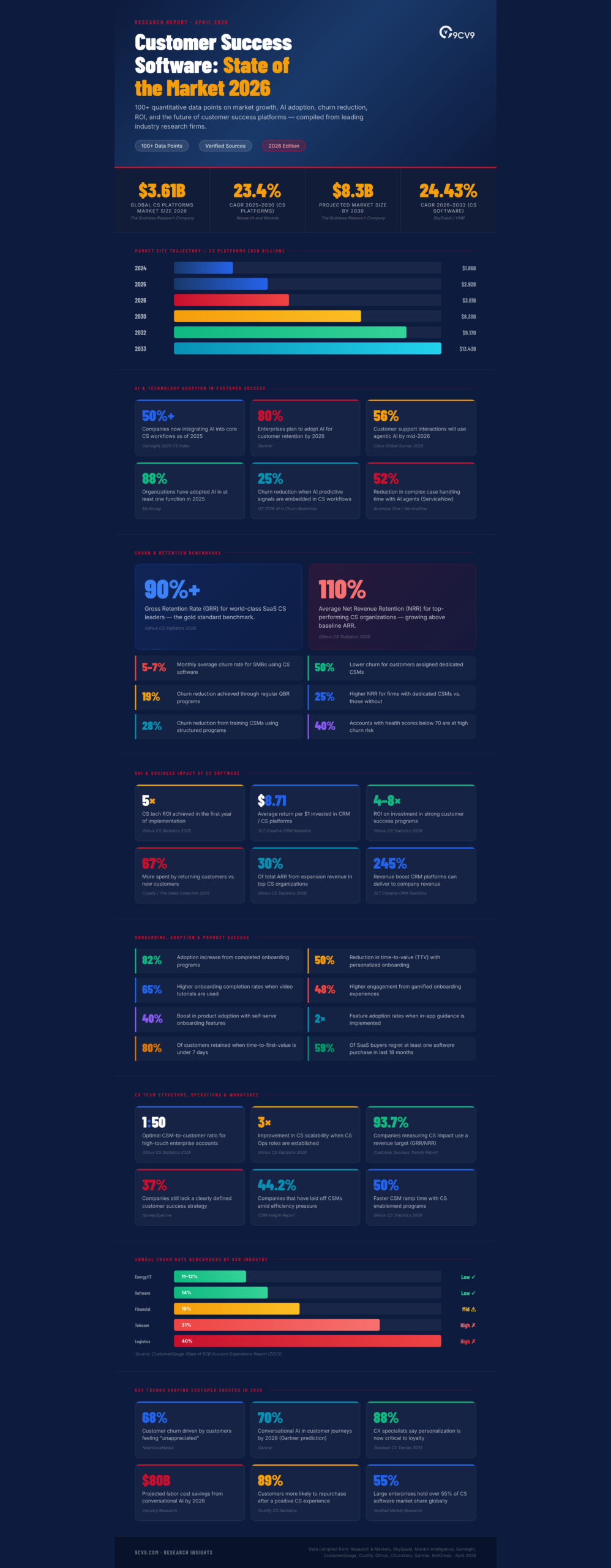
Customer success software helps businesses reduce customer churn, increase customer retention, and grow recurring revenue through AI-powered automation, customer health scoring, and proactive engagement. This collection of the top 107 customer success software statistics for 2026 highlights the latest market trends, adoption rates, ROI benchmarks, and data shaping the future of customer success.
Customer success has evolved from a post-sales support function into one of the most influential drivers of business growth, customer retention, and recurring revenue in the global digital economy. As subscription-based business models continue to dominate industries ranging from Software-as-a-Service (SaaS) and financial technology to healthcare, telecommunications, manufacturing, and professional services, organizations are placing unprecedented emphasis on proactive customer engagement rather than reactive customer support. In 2026, customer success is no longer viewed as an operational expense but as a strategic revenue engine capable of increasing customer lifetime value, reducing churn, accelerating product adoption, and driving sustainable long-term profitability.
Also, read our top guide on the Top 10 Best Customer Success Software.


The rapid transformation of customer success has been fueled by advances in artificial intelligence, predictive analytics, workflow automation, customer health scoring, real-time behavioural insights, and cloud-native software platforms. Modern customer success teams are expected to anticipate customer needs before problems arise, identify expansion opportunities through data-driven insights, automate repetitive tasks using intelligent agents, and deliver highly personalised experiences across every stage of the customer lifecycle. These evolving responsibilities have made customer success software one of the fastest-growing enterprise software categories worldwide.
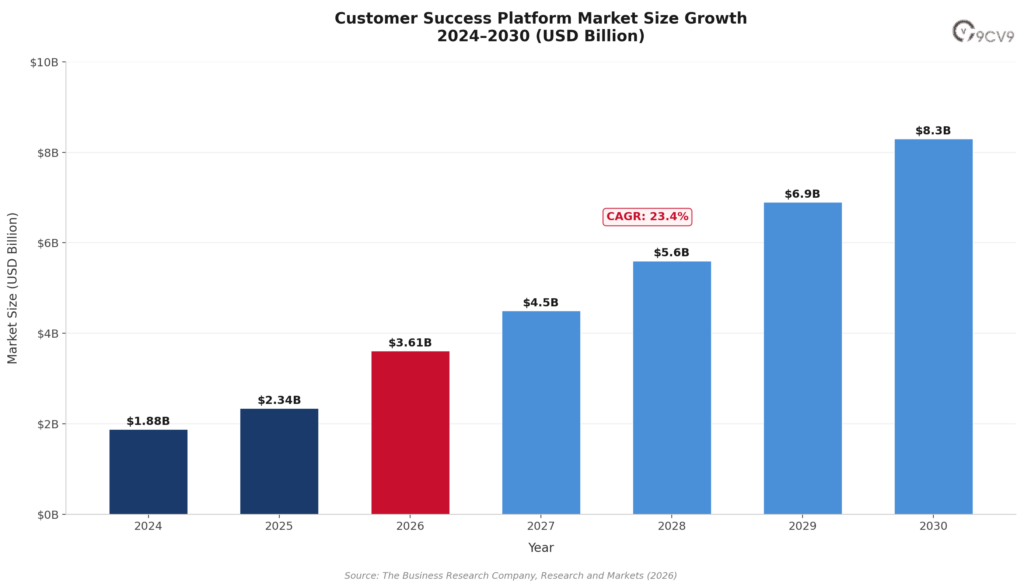
The market data illustrates just how significant this transformation has become. Industry forecasts estimate that the global Customer Success Platforms market will reach approximately US$3.61 billion in 2026 after expanding from US$2.92 billion in 2025, representing an impressive year-over-year growth rate of 23.4%. Longer-term projections paint an even more compelling picture, with market estimates ranging from US$8.3 billion by 2030 to more than US$13.4 billion by 2033, depending on the market segment being analysed. These sustained double-digit growth rates position customer success software among the fastest-expanding enterprise technology sectors, reflecting the increasing recognition that customer retention often delivers higher returns than customer acquisition.

At the same time, cloud computing continues to reshape software deployment strategies. Cloud-based customer success solutions already account for approximately 88% of the market, while large enterprises contribute more than half of total industry spending due to their increasingly complex customer ecosystems and demand for advanced integrations with CRM, ERP, support, and business intelligence platforms. Small and medium-sized businesses are also rapidly embracing cloud-based customer success tools as public cloud adoption continues to accelerate globally.

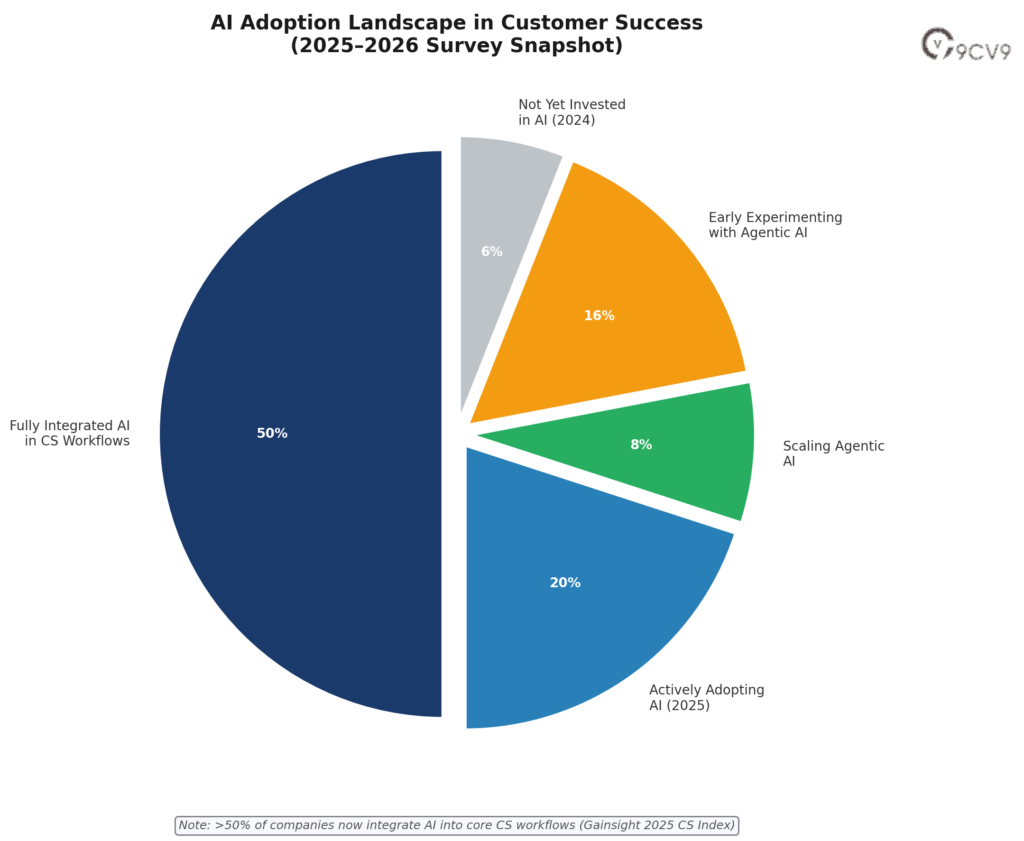
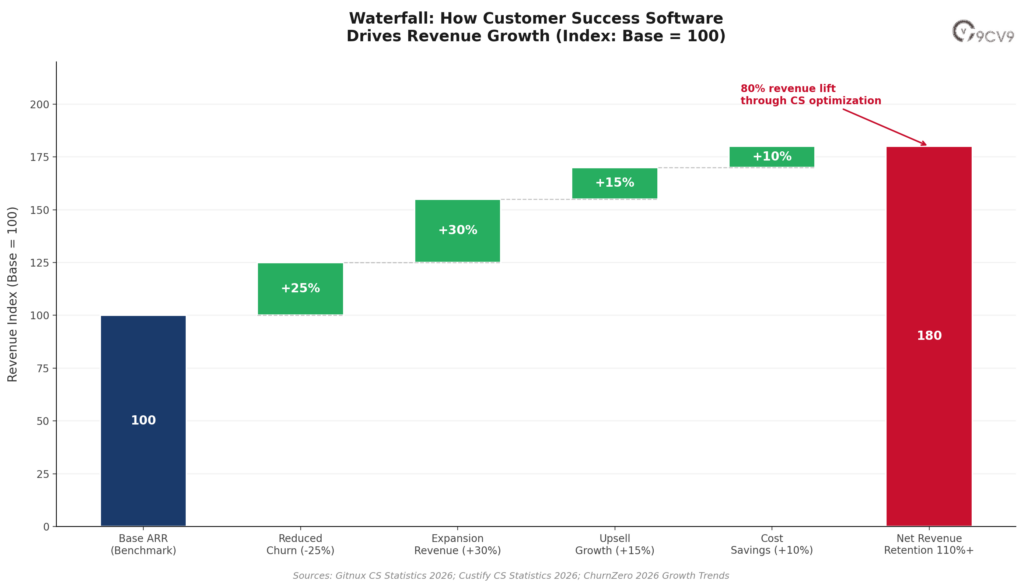
Artificial intelligence is emerging as perhaps the most disruptive force within the customer success ecosystem. More than half of organisations have already integrated AI into core customer success workflows, while Gartner reports that 80% of enterprises intend to adopt AI specifically for customer retention initiatives by 2026. Predictive AI models are enabling businesses to identify churn risks months before contract renewals, recommend proactive engagement strategies, automate customer communications, and uncover expansion opportunities through behavioural analytics. AI-powered customer success platforms have demonstrated measurable business outcomes, including churn reductions of up to 25%, customer satisfaction improvements of 15%, resolution time reductions approaching 87%, and significant operational cost savings through automation.

The evolution of generative AI and agentic AI is further transforming how customer success teams operate. Industry research indicates that autonomous AI agents are increasingly capable of handling routine customer interactions, analysing customer health signals, recommending next-best actions, generating executive business reviews, and automating renewal preparation. As organisations continue investing heavily in intelligent automation, customer success professionals are increasingly shifting their focus toward strategic advisory roles, relationship building, and commercial growth rather than repetitive administrative work.

Customer retention remains the central objective of every customer success initiative. Across subscription businesses, retaining existing customers consistently proves more cost-effective than acquiring new ones, while even modest improvements in retention can generate disproportionately large financial returns. Research suggests that reducing churn by just one percentage point may increase company valuations by more than 12%, highlighting why investors closely monitor metrics such as Gross Revenue Retention (GRR), Net Revenue Retention (NRR), customer health scores, expansion revenue, and renewal rates. World-class customer success organisations now target Gross Revenue Retention above 90% and Net Revenue Retention exceeding 110%, demonstrating their ability not only to retain customers but also to expand revenue within existing accounts.
Dedicated Customer Success Managers continue to play a critical role despite increasing automation. Studies indicate that organisations assigning dedicated Customer Success Managers experience churn rates approximately 50% lower than those without structured customer ownership. Regular Quarterly Business Reviews, proactive customer health monitoring, structured onboarding programmes, and continuous customer engagement further contribute to measurable improvements in customer loyalty, expansion revenue, and long-term account value.
Product adoption has also emerged as one of the strongest predictors of customer success. Organisations that successfully guide customers through structured onboarding programmes consistently achieve higher feature adoption rates, faster time-to-value, and stronger long-term retention. Personalised onboarding, in-app guidance, self-service learning resources, interactive walkthroughs, and continuous onboarding check-ins are becoming standard capabilities within modern customer success platforms. Research shows that customers achieving measurable value within their first week of product usage are dramatically more likely to remain long-term subscribers, underscoring the importance of early customer engagement.
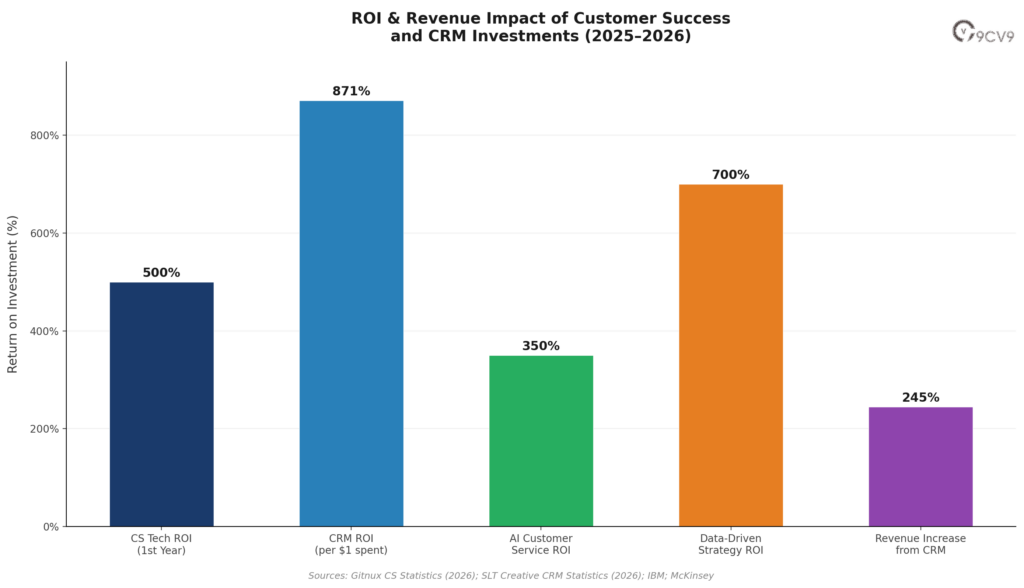
Beyond operational improvements, customer success software delivers significant financial returns for organisations of every size. Businesses implementing mature customer success programmes frequently report first-year returns on investment of five times or more, driven by higher retention, increased expansion revenue, stronger customer advocacy, and reduced acquisition costs. Returning customers spend considerably more than first-time buyers, while companies with structured customer success functions consistently outperform competitors across revenue growth, customer satisfaction, and profitability metrics.
Modern customer success is increasingly data-driven. Customer health scoring models, predictive analytics, customer segmentation, usage telemetry, Voice of Customer programmes, Net Promoter Score (NPS), Customer Satisfaction (CSAT), and Customer Effort Score (CES) have become indispensable management tools for identifying at-risk accounts, prioritising customer engagement, and measuring organisational performance. Companies leveraging these insights can intervene earlier, personalise customer experiences more effectively, and optimise resource allocation across their customer portfolios.
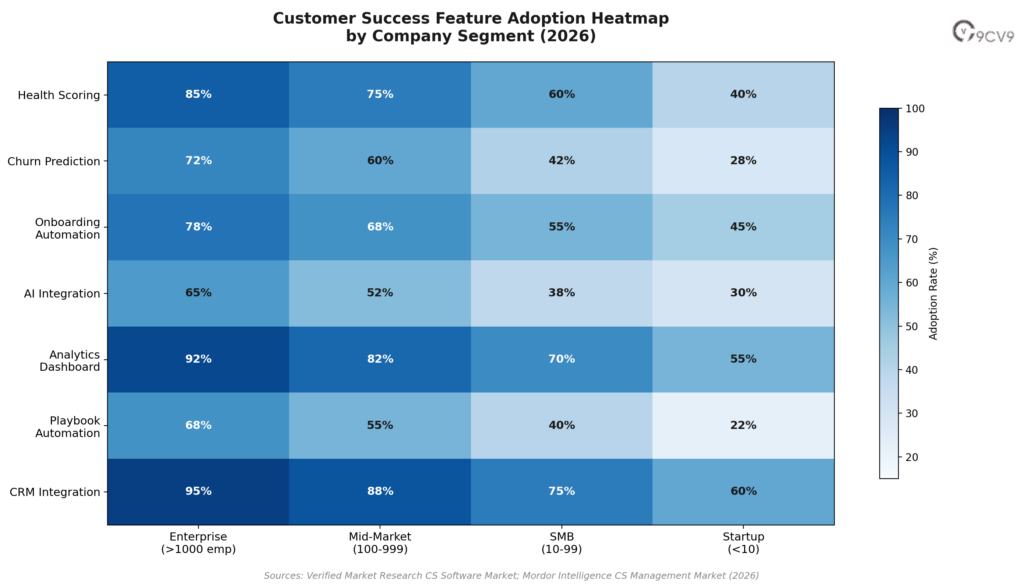
Workforce dynamics within customer success are also changing rapidly. Although many organisations have pursued efficiency initiatives and AI-driven automation, customer success continues to mature as a strategic business discipline. More than 90% of organisations now maintain dedicated customer success roles, with performance increasingly measured using commercial metrics such as retention, expansion revenue, and recurring revenue growth rather than traditional support metrics alone. Customer Success Operations teams, enablement programmes, advanced dashboards, and customer analytics specialists are becoming essential components of scalable customer success organisations.
Customer expectations continue to rise alongside technological innovation. Personalisation, proactive engagement, rapid issue resolution, and seamless omnichannel experiences have become standard expectations rather than competitive differentiators. Research consistently demonstrates that customers who receive exceptional service are significantly more likely to renew subscriptions, purchase additional products, recommend vendors to peers, and remain loyal over extended periods. Conversely, even a single poor customer experience can motivate many customers to evaluate competing solutions, making customer success a mission-critical function for long-term business sustainability.
Looking ahead, customer success software is expected to become even more intelligent, predictive, and autonomous. Advances in machine learning, conversational AI, customer journey orchestration, digital success programmes, real-time analytics, and integrated revenue intelligence will continue reshaping how organisations manage customer relationships. Businesses that successfully combine human expertise with AI-powered automation are likely to achieve stronger customer loyalty, higher operational efficiency, and superior financial performance in an increasingly competitive marketplace.
This comprehensive collection of the Top 107 Customer Success Software Statistics, Data & Trends in 2026 brings together the latest market research, industry benchmarks, technology adoption figures, retention metrics, AI developments, operational insights, customer experience indicators, workforce trends, and future forecasts shaping the customer success landscape. Whether you are a SaaS executive, customer success leader, sales professional, product manager, investor, technology strategist, or business decision-maker, these carefully curated statistics provide valuable insights into the technologies, strategies, and market forces defining the future of customer success in 2026 and beyond. From global market expansion and AI adoption to churn reduction, onboarding excellence, customer loyalty, and revenue optimisation, these data-driven insights offer a comprehensive understanding of one of the most strategically important software categories in today’s digital economy.
Before we venture further into this article, we would like to share who we are and what we do.
About 9cv9
9cv9 is a business tech startup based in Singapore and Asia, with a strong presence all over the world.
With over ten years of startup and business experience, and being highly involved in connecting with thousands of companies and startups, the 9cv9 team has listed some important and crucial software tools in this review.
If you like to get your company listed in our top B2B software reviews, check out our world-class 9cv9 Media and PR service and pricing plans here.
Top 107 Customer Success Software Statistics, Data & Trends in 2026
🌐 MARKET SIZE & GROWTH
1. $3.61 billion — The global Customer Success Platforms market is projected to reach $3.61 billion in 2026, up from $2.92 billion in 2025, reflecting a 23.4% year-over-year surge driven by rising demand for retention automation and AI tools.
2. 23.4% CAGR (2025–2030) — The customer success platforms market is growing at a 23.4% compound annual growth rate through 2030, making it one of the fastest-growing enterprise software segments globally.
3. $8.3 billion by 2030 — By the end of the decade, the customer success platforms market is forecasted to reach $8.3 billion, driven by cloud-native deployments, AI integration, and the expansion of subscription-based business models.
4. $13.43 billion by 2033 — The broader customer success software market is expected to balloon to $13.43 billion by 2033 at a 24.43% CAGR, underscoring the long-term structural shift toward proactive customer engagement.
5. $1.86 billion — The global Customer Success Platforms market was valued at $1.86 billion in 2024, establishing the foundation for what analysts project to be a nearly 7× market expansion over the following decade.
6. $9.17 billion by 2032 — Driven by AI adoption, analytics, and retention automation, the CS platforms market is forecast to reach $9.17 billion by 2032 at a 22.1% CAGR from 2025 to 2032.
7. 24.43% CAGR (2026–2033) — The customer success software market is set to grow at 24.43% annually from 2026 to 2033, among the highest sustained CAGRs in enterprise B2B software.
8. $4.58 billion in 2025 (CSM Software) — The Customer Success Management Software Market was valued at $4.58 billion in 2025 and is projected to grow to $5.09 billion in 2026 at a 13.67% CAGR, indicating a more mature adjacent segment.
9. $11.24 billion by 2032 (CSM Software) — The CSM Software segment is expected to nearly triple in value by 2032, reflecting enterprise demand for outcome-based subscription management and proactive lifecycle tools.
10. $2.67 billion in 2025 (CS Software, VMR) — One alternative market sizing from Value Market Research pegs the CS software market at $2.67 billion in 2025, with a trajectory to $11.62 billion by 2034 at a 17.74% CAGR.
11. $2.20 billion (Mordor Intelligence, 2025) — Mordor Intelligence estimates the CS Management Software market at $2.20 billion in 2025, forecasting it to reach $5.99 billion by 2030 at a 22.18% CAGR, with cloud deployments as the dominant growth catalyst.
12. 88% cloud market share — Cloud deployments held 88% of the Customer Success Management market share in 2024, with on-premise solutions capturing the remaining 12%, and cloud is projected to expand at a 22.32% CAGR to 2030.
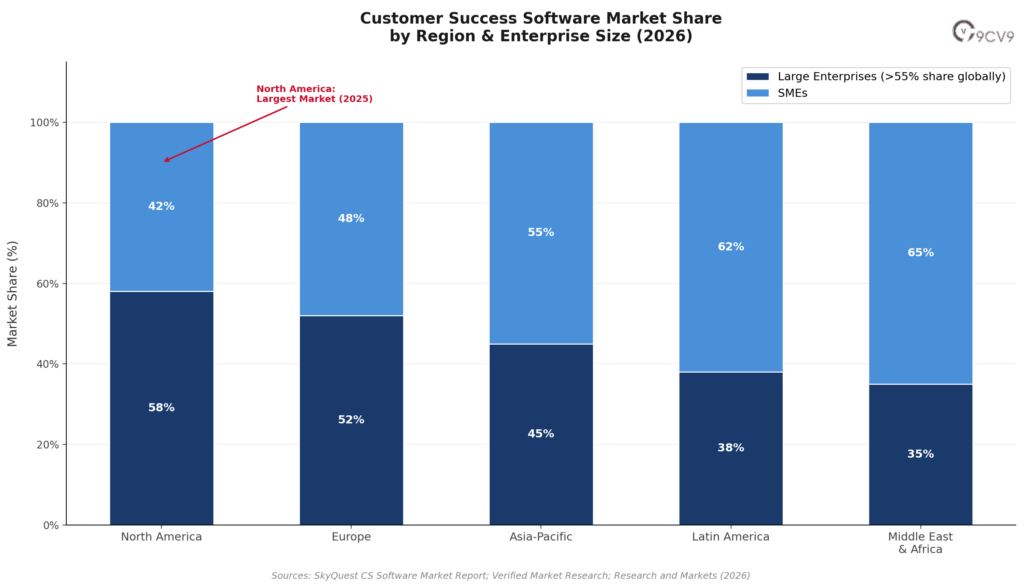
13. 55%+ market share for large enterprises — Large enterprises account for over 55% of the total customer success software market, driven by complex customer ecosystems, advanced analytics needs, and enterprise-grade CRM and ERP integration requirements.
14. North America dominates — North America was the largest regional market for customer success platforms in 2025, benefiting from early technology adoption, a mature SaaS ecosystem, and the concentration of key vendors like Salesforce, Gainsight, and HubSpot.
15. 63% SMB workloads in cloud (2025) — An estimated 63% of small and medium-sized business workloads were expected to be hosted in public clouds by 2025, accelerating SMB adoption of cloud-based customer success platforms.
🤖 AI & TECHNOLOGY ADOPTION
16. 50%+ integrating AI — More than 50% of companies are now integrating AI into core customer success workflows, according to Gainsight’s 2025 Customer Success Index, transforming CS from a support function into a strategic growth engine.
17. 80% plan AI for retention — Gartner reports that 80% of enterprises plan to adopt AI specifically for customer retention by 2026, signaling AI-driven churn management as a mainstream enterprise priority, not just an emerging trend.
18. 25% churn reduction via AI — AI-driven churn management platforms reported churn reductions of up to 25% when predictive signals were embedded directly into customer success workflows, according to G2’s 2026 AI in Churn Reduction analysis.
19. 56% agentic AI in support by mid-2026 — Cisco’s 2025 global survey found that over 56% of customer support interactions will use agentic AI by mid-2026, rising to 68% by 2028, as CS teams reorganize around autonomous multi-step AI agents.
20. 88% organizations adopted AI — McKinsey’s 2025 research found that 88% of organizations have adopted AI in at least one business function, up from 72% in early 2024, with CS, marketing, and sales leading adoption.
21. 52% faster case handling (ServiceNow) — ServiceNow’s AI agents reduced the time to handle complex customer service cases by 52%, demonstrating that AI is not merely augmenting but fundamentally restructuring how CS teams manage workload.
22. 60% had not invested in AI (2024) — TSIA’s benchmarking data showed that nearly 60% of organizations had not invested in AI for customer success as of 2024, representing a massive catch-up wave now underway in 2025–2026.
23. 23% scaling agentic AI — According to McKinsey, 23% of organizations are currently scaling agentic AI, with another 39% in early experimentation, revealing that the majority of CS teams are still in the early innings of agentic adoption.
24. 80% of routine tasks handled by bots — AI chatbots can manage up to 80% of routine customer inquiries and tasks, freeing human CS agents to focus on complex, high-value strategic interactions requiring empathy and judgment.
25. 95% of interactions AI-powered (projected) — AI is projected to power 95% of all customer interactions — both voice and text — according to projections from Servion Global Solutions, marking a near-complete transformation of the customer engagement stack.
26. $80 billion in labor savings — Conversational AI is projected to save businesses $80 billion in labor costs by 2026, a staggering figure that underscores the business case for investing in AI-powered customer success infrastructure.
27. 15–20% satisfaction lift from AI — IBM Institute for Business Value found that mature AI adopters reported 15% higher customer satisfaction scores, while McKinsey research links AI to 5–8% revenue lifts in customer-facing functions.
28. $3.50 AI CS ROI — Companies see an average return of $3.50 for every $1 invested in AI customer service, with leading organizations reporting up to 8× ROI and over $300,000 in annual cost savings from AI implementation.
29. 87% reduction in resolution time — Integrating AI tools has led to an 87% reduction in average customer service resolution times, with first response times dropping from over 6 hours to under 4 minutes across leading implementations.
30. 65% of businesses use CRM with AI features — 65% of businesses already use CRM systems with embedded AI features, and companies using AI are 83% more likely to exceed their sales goals compared to non-AI-powered competitors.
📉 CHURN BENCHMARKS & RETENTION
31. 90%+ GRR for CS leaders — Gross Retention Rate of 90%+ is the benchmark for world-class SaaS customer success leaders, representing the floor below which top-performing organizations refuse to operate.
32. 110% NRR average for top CS orgs — Net Revenue Retention of 110% is the average for top-performing CS organizations, meaning these companies generate more revenue from existing customers than they lose — a hallmark of elite CS execution.
33. 50% lower churn with CSMs — Customers assigned a dedicated Customer Success Manager experience 50% lower churn rates, making CSM headcount one of the highest-ROI investments in any SaaS company’s retention playbook.
34. 5–7% monthly SMB churn — Small and mid-sized businesses face an average monthly churn rate of 5–7%, highlighting the elevated retention challenge for companies serving smaller accounts with lower-touch CS models.
35. 19% churn reduction from QBRs — Regular Quarterly Business Reviews reduce churn by 19%, and firms that run QBRs consistently report 33% higher expansion revenue, proving that structured customer engagement drives tangible financial outcomes.
36. 28% churn cut via CSM training — Organizations that invest in structured CSM training programs see a 28% reduction in churn, demonstrating that human capability development remains a competitive differentiator in an increasingly automated CS landscape.
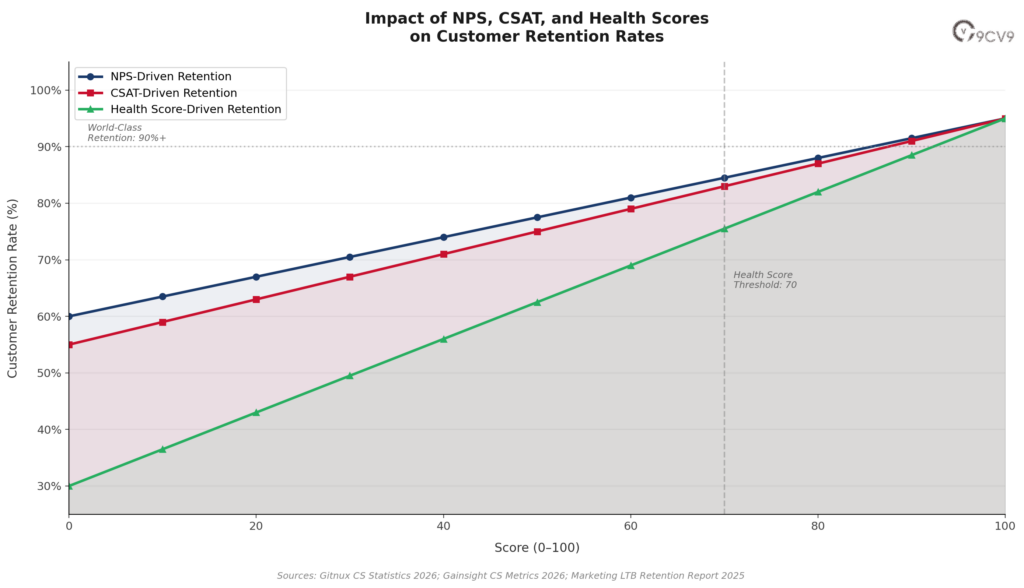
37. Customers with health scores below 70% churn 40% of the time — Accounts with health scores below the 70% threshold have a 40% churn rate, making customer health scoring one of the most predictive and actionable metrics in any CS tech stack.
38. 60% of SaaS churn is involuntary — Involuntary churn — driven by failed payments, billing issues, and technical disruptions — accounts for 60% of total SaaS churn, suggesting significant revenue recovery opportunity through automated billing interventions.
39. 16–28% churn reduction via health score interventions — Using customer health scores to trigger proactive interventions reduces churn by 16–28% in subscription models, validating the ROI of health scoring as a core CS operational practice.
40. 5–8% average annual SaaS churn — The average annual churn rate for SaaS companies is 5–8%, with high-performing companies keeping churn under 3% through rigorous health scoring, proactive outreach, and CSM-led retention strategies.
41. 25% higher NRR with dedicated CSMs — Firms with dedicated Customer Success Managers see up to 25% higher net revenue retention compared to those without, according to Benchmarkit’s retention benchmarking data.
42. 6–12 point NRR lift from health scoring — Companies using health scoring see an NRR lift of 6–12 points, especially in mid-market SaaS, making it one of the highest-leverage analytical tools available to CS operations teams.
43. $1.6 trillion lost to churn annually — Businesses lose $1.6 trillion per year globally due to customer churn, according to Accenture, making customer retention arguably the most consequential financial priority for subscription businesses.
44. Reducing churn by 1% lifts valuation 12%+ — For subscription businesses, reducing churn by just 1 percentage point can increase company valuation by 12% or more, as investor multiples are heavily tied to net revenue retention metrics.
45. 74% average B2B SaaS retention — B2B SaaS companies report an average annual retention rate of 74%, with top performers pushing NRR past 120%, while the gap between average and elite companies is primarily driven by expansion revenue.
💰 ROI & BUSINESS IMPACT
46. 5× CS tech ROI in year one — Customer success technology delivers an average 5× return on investment in the first year of implementation, making it one of the most capital-efficient software categories in the enterprise stack.
47. 4–8× ROI on CS programs — Companies with strong customer success programs see 4–8× ROI on their investments, driven by retained revenue, expansion bookings, and reduced customer acquisition costs from referrals.
48. $8.71 CRM ROI per $1 spent — CRM systems deliver an average ROI of $8.71 for every dollar invested, with some projections citing up to $30.48 per dollar when advanced AI and automation capabilities are activated.
49. 67% more spending by returning customers — Returning customers spend 67% more than new customers, making retention not only a defensive strategy but an aggressive revenue growth lever for businesses at any scale.
50. 30% of ARR from expansion revenue — Expansion revenue accounts for 30% of total annual recurring revenue in top customer success organizations, reflecting the strategic shift from new-logo-dependent growth to NRR-driven compounding.
51. 245% revenue boost from CRM — CRM platforms can boost company revenue by up to 245% when fully leveraged, with 45% of companies reporting increased sales revenue and 29% reporting a direct increase in sales volume post-adoption.
52. 8× ROI on data-driven CS strategies — Businesses that use data-driven customer success strategies generate five to eight times more ROI than those relying on intuition or manual processes, per industry research cited in The Sales Collective.
53. 5–12% NRR improvement from CS function — Net retention improvements of 5–12% are commonly reported after implementing a formal customer success function, validating the case for dedicated CS investment even at early-stage companies.
54. 33% higher expansion from QBRs — Firms that run regular Quarterly Business Reviews report 33% higher expansion revenue compared to those that do not, making QBRs a structured revenue-generation activity, not just a customer satisfaction ritual.
55. $1M+ saved annually by churn prediction models — Enterprise-grade churn prediction models save more than $1 million annually by enabling early intervention before customers enter advanced stages of disengagement or procurement review.
56. 3.7× repeat business from CSAT 90%+ — CSAT scores above 90% lead to 3.7× higher repeat business rates, linking operational service quality directly to compounding revenue from the existing customer base.
57. 27% retention improvement from CRM — CRM systems improve customer retention rates by up to 27%, with 47% of CRM users noting a significant positive impact on both retention and overall customer satisfaction.
🚀 ONBOARDING & PRODUCT ADOPTION
58. 82% adoption increase from completed onboarding — Companies that achieve high onboarding completion rates see an 82% increase in feature adoption, confirming that structured, completed onboarding is the single most powerful lever for long-term product engagement.
59. 50% faster time-to-value — Personalized onboarding reduces time-to-value (TTV) by 50%, dramatically shortening the window between customer acquisition and the moment they realize measurable ROI — the primary driver of early retention.
60. 65% higher completion with video tutorials — Video tutorials embedded in onboarding flows lift completion rates by 65%, as customers who successfully complete onboarding are significantly more likely to adopt core features and remain loyal over time.
61. 48% higher engagement via gamification — Gamified onboarding experiences increase user engagement by 48%, turning what is traditionally a passive documentation exercise into an active, motivating journey toward product proficiency.
62. 40% adoption boost with self-serve — Self-serve onboarding boosts product adoption by 40%, appealing to modern B2B buyers who prefer autonomous, on-demand learning experiences over scheduled training sessions.
63. 2× feature adoption with in-app guidance — Feature adoption rates double when in-app guidance — tooltips, walkthroughs, checklists — is implemented, making product-led onboarding tools like Pendo and Appcues indispensable in the CS tech stack.
64. 80% retention if first value within 7 days — Customers who achieve time-to-first-value within 7 days are retained at an 80% rate, establishing the first week as the single most critical window in the entire customer lifecycle.
65. 35% retention boost from onboarding check-ins — Regular check-ins during the onboarding phase boost retention by 35%, demonstrating that human touchpoints remain irreplaceable even as automation handles routine onboarding tasks.
66. 20% voluntary churn linked to poor onboarding — Recurly data shows that over 20% of voluntary churn is directly linked to poor onboarding experiences, making onboarding quality the #1 operational driver of SaaS churn reduction.
67. 52% of expectations set during sales cycle — TSIA research shows that 52% of onboarding expectations are set during the sales cycle, highlighting the critical need for tight sales-to-CS handoffs and expectation alignment before the first product interaction.
68. 40% of companies lack dedicated onboarding teams — Only 40% of companies have dedicated onboarding roles or teams, revealing a major structural gap given that onboarding is the most predictive phase for long-term customer health.
69. 59% of SaaS buyers regret purchases — According to Gartner’s 2025 Software Buying Trends report, 59% of SaaS buyers regret at least one software purchase their company made in the last 18 months, citing adoption challenges and productivity loss as top reasons.
👥 WORKFORCE & CS OPERATIONS
70. 1:50 optimal CSM ratio — The optimal CSM-to-customer ratio for high-touch enterprise customer success is 1:50, balancing relationship depth with operational scalability in mature CS organizations.
71. 93.7% measure CS with revenue targets — An overwhelming 93.7% of companies that measure the impact of customer success use a revenue target such as GRR or NRR — or both — signaling the maturation of CS as a revenue-generating, not just cost-managing, function.
72. 37% lack a defined CS strategy — Despite widespread CS investment, 37% of companies still lack a clearly defined customer success strategy, pointing to a significant execution gap between CS awareness and CS operational excellence.
73. 44.2% companies laid off CSMs — According to the CSM Insight Report, 44.2% of companies laid off Customer Success Managers amid efficiency pressures, reflecting the tension between CS investment and the demand for leaner, AI-augmented team structures.
74. 3× scalability from CS Ops roles — CS Operations roles improve customer success team scalability by 3×, enabling leaner teams to manage more accounts with greater precision through data-driven playbooks and automated workflows.
75. 50% faster CSM ramp via enablement — CS enablement programs cut CSM ramp time by 50%, dramatically accelerating time-to-productivity and reducing the cost of onboarding new customer success hires.
76. 22% performance lift from quarterly training — Quarterly training lifts overall CS team performance by 22%, validating ongoing skills development as a critical competitive investment rather than a discretionary cost.
77. 30% better decisions with CS dashboards — CS dashboards improve decision-making quality by 30%, as teams gain real-time visibility into customer health, adoption patterns, and churn risk signals across the entire account portfolio.
78. 40% faster response with CS segmentation — Customer segmentation in customer success cuts average response time by 40%, enabling CS teams to prioritize high-risk or high-value accounts and deploy the right level of attention efficiently.
79. 85% health accuracy from CS analyst roles — CS analyst roles enable 85% accuracy in predicting customer health outcomes, leveraging telemetry data, usage patterns, and behavioral signals to surface actionable intelligence at scale.
80. 10–15% of ARR is optimal CS budget — Industry benchmarks suggest that a CS budget of 10–15% of annual recurring revenue is optimal for companies seeking to maximize retention outcomes while maintaining operational efficiency.
📊 NPS, CSAT & SENTIMENT METRICS
81. NPS 50+ correlates with 20–30% higher retention — NPS scores above 50 correlate with 20–30% higher customer retention rates, making customer advocacy measurement one of the strongest leading indicators of future revenue health.
82. Promoters refer 3× more customers — NPS Promoters (scores 9–10) refer three times more customers than Passives or Detractors, turning loyalty measurement into a direct pipeline generation mechanism for sustainable growth.
83. CSAT 85%+ threshold for loyalty — An 85% or higher CSAT score is the threshold beyond which customer loyalty becomes reliably self-sustaining, creating a clear operational target for customer success and support teams.
84. CES under 4 signals 70% churn risk — A Customer Effort Score below 4 signals a 70% churn risk, revealing that the friction customers experience in getting help is one of the most powerful — and underutilized — churn predictors available.
85. Detractors cost 2× to retain — Detractors cost approximately 2× more to retain than Promoters, making early intervention with dissatisfied customers an economically superior strategy to allowing dissatisfaction to compound.
86. Voice of Customer programs boost NPS 20 points — Organizations with structured Voice of Customer programs boost their NPS by an average of 20 points, as systematic feedback loops enable rapid iteration on the experiences that matter most.
87. NPS leaders grow 2× industry average — Companies with leading Net Promoter Scores grow at twice the rate of their industry average, suggesting that customer advocacy is a durable and measurable competitive moat for high-growth businesses.
88. 88% CX specialists cite personalization as critical — Zendesk CX Trends 2025 found that 88% of CX specialists consider personalization critical to building customer loyalty, underscoring why AI-driven personalization has become a top investment priority.
📈 INDUSTRY CHURN BENCHMARKS
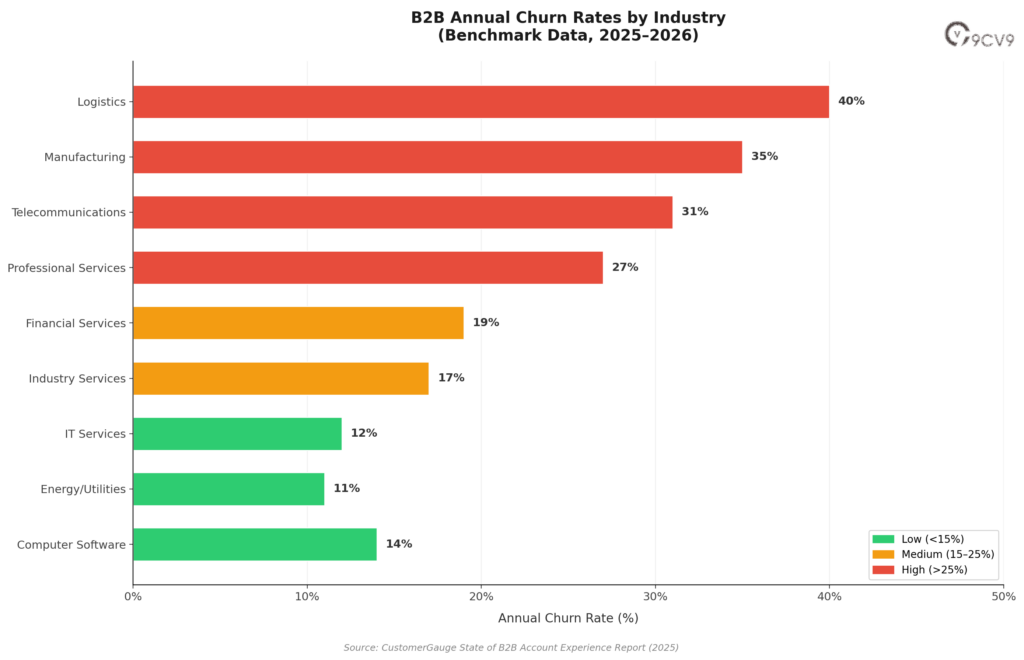
89. Computer Software: 14% annual churn — The computer software industry has a 14% annual B2B churn rate, one of the lower benchmarks across industries, reflecting the high switching costs and deep integration that enterprise software creates.
90. Energy/IT Services: 11–12% annual churn — Energy and IT services companies achieve the lowest B2B churn rates at 11–12% annually, benefiting from long-term contracts, infrastructure dependency, and high switching costs.
91. Financial Services: 19% annual churn — Financial services firms face a 19% annual churn rate, sitting in the medium-risk zone where proactive CS programs and relationship-driven renewal strategies can meaningfully shift outcomes.
92. Telecommunications: 31% annual churn — Telecom providers face a challenging 31% annual churn rate, among the highest in B2B markets, where AI-driven interventions have been shown to cut churn by up to 15% for early adopters.
93. Logistics: 40% annual churn — At 40% annual churn, logistics is the highest-churn B2B sector, reflecting high price sensitivity, commoditized offerings, and the absence of deep product adoption that creates stickiness in software businesses.
94. Healthcare SaaS: 7.5% monthly churn — Healthcare SaaS churn jumped 67% from 2024 to 2025, now running at 7.5% monthly, driven by regulatory uncertainty, budget pressures, and consolidation among healthcare providers.
95. Usage-based pricing cuts monthly churn by 46% — Usage-based pricing reduces monthly churn by 46% compared to flat-rate pricing (2.1% vs 3.9%), as customers who pay only for what they use have significantly lower financial motivation to cancel.
🔮 TRENDS & OUTLOOK 2026
96. 68% of churn from “feeling unappreciated” — According to NewVoiceMedia, 68% of customer churn is driven by customers feeling unappreciated or ignored, revealing that emotional experience management — not just product quality — is a primary retention driver.
97. 89% more likely to repurchase after positive CS — Customers who have a positive customer service experience are 89% more likely to make another purchase, directly linking CS investment to future revenue generation.
98. 70% conversational AI in CS by 2028 — Gartner predicts that by 2028, conversational AI will be embedded in at least 70% of customer service journeys, representing a fundamental shift in how CS teams deliver value at scale.
99. 73% use shared CRM for CS-sales alignment — Shared CRM tools are the top method for aligning sales and customer success to reduce churn, used by 73% of sales leaders, creating a single customer view that enables coordinated retention strategies.
100. 86% would pay more for better CS — American Express research found that 86% of customers are willing to pay a premium for a better customer service experience, establishing high-quality CS as a pricing and positioning lever, not merely a cost center.
101. 50%+ would switch after one poor experience — Zendesk’s 2025 benchmarks show that more than 50% of customers will switch to a competitor after a single poor experience, confirming that retention is won or lost at the level of individual interactions.
102. 33% QBR expansion revenue lift — Companies running regular QBRs report 33% higher expansion revenue, proving that structured executive engagement translates directly into upsell and cross-sell conversion at the highest commercial value accounts.
103. $74,500 average US CSM salary — The average salary for a Customer Success Manager in the United States is $74,500 per year (Glassdoor), with compensation consisting of approximately 83% base pay and 17% variable tied to renewals and expansion KPIs.
104. Gender pay gap narrowing in CS — The 2025 European CS Salary Benchmark shows the CS gender pay gap narrowing from 16% to approximately 11% (men ~€80K vs women ~€72K mean base salary), reflecting growing focus on pay equity in the profession.
105. 90% of organizations have a dedicated CS role — As of 2025, more than 90% of organizations report having a dedicated customer success role, a significant jump from 50–70% in prior years, confirming CS as a mission-critical business function.
106. 20–30% of service agents to be replaced by AI — Gartner predicts organizations will replace 20–30% of service agents with generative AI by 2026, though 50% of organizations that planned workforce reductions are expected to reconsider those plans.
107. $200M AI ARR for Zendesk (2025) — Zendesk projected $200 million in AI-related annual recurring revenue for 2025, reflecting the growing willingness of enterprises to pay premium prices for AI-enhanced customer success and support capabilities.
Conclusion
The customer success software landscape in 2026 reflects a fundamental shift in how organisations approach growth, customer relationships, and long-term profitability. Once considered a complementary business function focused primarily on customer support and renewals, customer success has evolved into a strategic discipline that directly influences revenue growth, competitive advantage, customer loyalty, product adoption, and enterprise valuation. The statistics presented throughout this report demonstrate that customer success is no longer optional for organisations operating in subscription-based, recurring revenue, or customer-centric business models—it has become an essential pillar of sustainable business success.
One of the clearest takeaways is the extraordinary pace at which the customer success software market is expanding. With market forecasts projecting multi-billion-pound growth over the coming decade and compound annual growth rates exceeding 20% across multiple research reports, customer success platforms remain among the fastest-growing segments within enterprise software. This sustained expansion reflects increasing recognition among executives that retaining and expanding existing customers consistently delivers stronger financial returns than relying solely on acquiring new ones.
Artificial intelligence is emerging as the defining technology behind the next generation of customer success platforms. AI-powered health scoring, predictive churn analytics, intelligent workflow automation, conversational AI, and autonomous customer engagement are rapidly transforming how organisations manage customer relationships at scale. Businesses adopting AI-enabled customer success capabilities are already reporting measurable improvements in retention, operational efficiency, customer satisfaction, and revenue expansion. As generative AI and agentic AI continue to mature throughout 2026 and beyond, customer success teams are expected to become even more proactive, data-driven, and strategically focused.
Equally important is the growing emphasis on predictive rather than reactive customer management. The data consistently shows that successful organisations identify customer risks early, monitor behavioural signals continuously, and intervene before dissatisfaction develops into churn. Customer health scores, product usage analytics, engagement metrics, and behavioural intelligence have become indispensable tools that enable businesses to anticipate customer needs instead of simply responding to support requests after problems occur.
Customer retention continues to stand out as one of the highest-value business initiatives across virtually every industry. Even relatively small improvements in churn rates can generate disproportionately large increases in recurring revenue, customer lifetime value, and company valuation. The benchmarks showing world-class Gross Revenue Retention above 90% and Net Revenue Retention exceeding 110% illustrate that elite customer success organisations are not merely preventing customer losses—they are consistently expanding revenue from their existing customer base through stronger relationships, greater product adoption, and ongoing business value creation.
Another recurring theme throughout these statistics is the increasing importance of structured onboarding and product adoption. Successful onboarding remains one of the strongest predictors of long-term customer success, with faster time-to-value leading directly to higher feature adoption, stronger engagement, and improved retention. Businesses investing in personalised onboarding journeys, interactive product guidance, educational resources, and continuous customer engagement are positioning themselves to maximise customer lifetime value from the earliest stages of the customer relationship.
The role of Customer Success Managers also continues to evolve despite advances in automation. While AI is increasingly capable of handling repetitive operational tasks, technology cannot fully replace strategic relationship management, business consulting, executive alignment, and customer advocacy. Instead, AI enables customer success professionals to spend more time delivering high-value advisory services while automation manages routine administrative processes. This partnership between human expertise and intelligent automation is becoming the defining operating model for modern customer success organisations.
The statistics also reinforce the growing maturity of customer success as a commercial function. More organisations are measuring customer success through revenue-focused metrics such as Gross Revenue Retention, Net Revenue Retention, expansion revenue, customer lifetime value, and renewal performance rather than relying solely on traditional support metrics. This evolution reflects a broader organisational understanding that customer success contributes directly to financial performance, shareholder value, and long-term business resilience.
Customer experience remains another critical competitive differentiator. Today’s customers expect personalised interactions, rapid problem resolution, proactive communication, and measurable business outcomes throughout their lifecycle. Organisations that consistently deliver these experiences are rewarded with stronger customer loyalty, increased referrals, higher renewal rates, and greater willingness among customers to purchase additional products and services. Conversely, businesses that fail to invest adequately in customer success risk losing customers in increasingly competitive markets where switching barriers continue to decline.
Looking forward, the future of customer success software will likely be characterised by even deeper integration between artificial intelligence, customer data platforms, CRM systems, revenue operations, product analytics, and business intelligence tools. Predictive insights will become more accurate, automation more intelligent, and customer engagement increasingly personalised across every touchpoint. Organisations that successfully integrate these technologies while maintaining strong human relationships will be best positioned to build durable competitive advantages.
The market also points toward increasing convergence between customer success, sales, marketing, product management, and customer support. Rather than operating as isolated departments, these functions are becoming interconnected through shared customer data, unified platforms, and common revenue objectives. This integrated approach enables organisations to deliver consistent customer experiences while maximising opportunities for retention, expansion, and advocacy.
For software vendors, SaaS providers, technology executives, investors, customer success leaders, product managers, and business decision-makers, the insights presented in these 107 statistics offer a comprehensive view of one of the fastest-evolving segments of the enterprise software industry. They highlight not only where the customer success market stands today but also where it is heading over the next several years as AI adoption accelerates, customer expectations continue to rise, and businesses increasingly compete on experience rather than price alone.
Ultimately, the Top 107 Customer Success Software Statistics, Data & Trends in 2026 demonstrate that customer success has become far more than a customer retention initiative. It is now a strategic growth engine that influences revenue, profitability, operational efficiency, innovation, customer advocacy, and enterprise value. Organisations that invest in modern customer success software, leverage artificial intelligence responsibly, develop highly skilled customer success teams, and place measurable customer outcomes at the centre of their business strategy will be significantly better positioned to thrive in an increasingly digital, subscription-driven, and customer-centric global economy. As technology continues to advance and customer expectations evolve, customer success will remain one of the most influential factors shaping business performance, competitive differentiation, and sustainable growth throughout 2026 and well beyond.
If you find this article useful, why not share it with your hiring manager and C-level suite friends and also leave a nice comment below?
We, at the 9cv9 Research Team, strive to bring the latest and most meaningful data, guides, and statistics to your doorstep.
To get access to top-quality guides, click over to 9cv9 Blog.
To hire top talents using our modern AI-powered recruitment agency, find out more at 9cv9 Modern AI-Powered Recruitment Agency.
People Also Ask
What is customer success software?
Customer success software helps businesses proactively manage customer relationships, improve product adoption, reduce churn, and increase customer lifetime value using automation, analytics, and AI-driven insights.
Why is customer success software important in 2026?
Customer success software is essential in 2026 because businesses increasingly rely on recurring revenue models, making customer retention, satisfaction, and expansion critical for sustainable growth.
How large is the customer success software market in 2026?
The global customer success software market is valued at billions of dollars in 2026, with strong double-digit annual growth driven by AI adoption, cloud computing, and rising customer experience investments.
What are the biggest customer success software trends in 2026?
Key trends include AI-powered automation, predictive churn analytics, customer health scoring, personalised onboarding, workflow automation, and deeper CRM and business intelligence integrations.
How is AI transforming customer success software?
AI enables predictive customer insights, automated workflows, personalised engagement, health score analysis, churn prediction, and intelligent recommendations that improve customer outcomes and operational efficiency.
What industries use customer success software the most?
Software-as-a-Service (SaaS), financial services, healthcare, telecommunications, e-commerce, education, manufacturing, and technology companies are among the largest adopters.
What is customer churn?
Customer churn measures the percentage of customers who stop using a company’s product or service during a specific period. Lower churn generally indicates stronger customer satisfaction and retention.
How does customer success software reduce churn?
It identifies at-risk customers using behavioural data, health scores, AI predictions, and engagement analytics, allowing teams to intervene before customers leave.
What is a customer health score?
A customer health score is a metric that combines product usage, engagement, support history, satisfaction, and other indicators to assess the likelihood of customer renewal or churn.
What is Net Revenue Retention (NRR)?
Net Revenue Retention measures recurring revenue retained from existing customers after accounting for upgrades, downgrades, and churn. Higher NRR indicates healthier long-term business growth.
What is Gross Revenue Retention (GRR)?
Gross Revenue Retention measures the percentage of recurring revenue retained from existing customers without including expansion revenue, making it a core retention performance metric.
Why is customer retention more important than customer acquisition?
Retaining customers typically costs less than acquiring new ones while increasing lifetime value, recurring revenue, referrals, and overall profitability.
What role do Customer Success Managers play?
Customer Success Managers help customers achieve measurable business outcomes through onboarding, training, strategic guidance, proactive engagement, and renewal management.
How does customer onboarding impact retention?
Effective onboarding accelerates product adoption, shortens time-to-value, increases customer satisfaction, and significantly improves long-term retention rates.
What features should businesses look for in customer success software?
Important features include customer health scoring, AI analytics, onboarding tools, workflow automation, CRM integration, reporting dashboards, customer segmentation, and renewal tracking.
Is customer success software only for SaaS companies?
No. Although widely used by SaaS companies, customer success software also benefits subscription businesses and organisations across healthcare, finance, education, manufacturing, and professional services.
What is predictive churn analytics?
Predictive churn analytics uses AI and machine learning to analyse customer behaviour and identify accounts most likely to cancel, enabling proactive intervention.
How does customer success software improve customer satisfaction?
It provides personalised engagement, faster issue resolution, proactive communication, and data-driven recommendations that enhance the overall customer experience.
What is customer lifetime value (CLV)?
Customer lifetime value estimates the total revenue a customer is expected to generate throughout their relationship with a business, helping guide retention and investment strategies.
Can small businesses benefit from customer success software?
Yes. Cloud-based customer success platforms are increasingly affordable and help small businesses improve retention, automate workflows, and scale customer engagement efficiently.
How does automation improve customer success operations?
Automation handles repetitive tasks such as onboarding emails, renewal reminders, customer segmentation, and workflow management, allowing teams to focus on strategic customer relationships.
What are the most common customer success metrics?
Common metrics include churn rate, customer retention rate, Net Revenue Retention, Gross Revenue Retention, customer health score, Customer Lifetime Value, CSAT, NPS, and product adoption.
What is product adoption in customer success?
Product adoption measures how effectively customers use a product’s features and capabilities. Higher adoption usually leads to greater satisfaction and lower churn.
How is customer success different from customer support?
Customer support resolves existing problems, while customer success proactively helps customers achieve desired outcomes and maximise long-term value from a product or service.
Why is cloud deployment dominating customer success software?
Cloud solutions offer scalability, lower infrastructure costs, remote accessibility, automatic updates, and easier integration with existing business systems.
What role does AI play in customer health scoring?
AI continuously analyses behavioural signals, usage trends, engagement data, and support interactions to generate more accurate customer health predictions.
What is the future of customer success software?
Future platforms will feature more autonomous AI agents, predictive analytics, personalised customer journeys, deeper integrations, and intelligent workflow automation.
How can businesses choose the right customer success software?
Businesses should evaluate scalability, AI capabilities, integrations, reporting features, ease of use, pricing, security, customer support, and industry-specific functionality.
Why should businesses monitor customer success statistics?
Customer success statistics help organisations benchmark performance, identify industry trends, optimise retention strategies, justify investments, and improve business decision-making.
What can readers learn from these 107 customer success software statistics?
Readers gain insights into market growth, AI adoption, customer retention, churn reduction, onboarding, customer satisfaction, ROI, industry benchmarks, and emerging customer success trends shaping 2026.
Sources
The Business Research Company GII Research Research and Markets SkyQuest Verified Market Research Mordor Intelligence 360iResearch Market Research Future Value Market Research Custify Gitnux ChurnZero Gainsight CustomerGauge TSIA Ringly Serpsculpt Marketing LTB The Sales Collective SLT Creative NextPhone Desk365 SearchUnify Litmos OnRamp


