


Key Takeaways
- Strong Market Growth: The global gym management software market is valued at an estimated USD 2.23 billion in 2026 and is projected to reach USD 4.02 billion by 2032, growing at a CAGR of 10.24%.
- AI and Cloud-Based Software Drive Digital Transformation: Cloud-based platforms account for 74% of US gym software usage, while artificial intelligence, wearable integrations, and mobile applications are reshaping fitness business management.
- Automation Improves Member Retention and Profitability: Automated billing systems can recover 60–85% of failed payments, while predictive analytics, personalised engagement, and digital scheduling help fitness businesses reduce membership churn and improve operational efficiency.
Gym management software streamlines fitness business operations through membership management, automated billing, class scheduling, artificial intelligence, and customer engagement. In 2026, the global market has an estimated value of USD 2.23 billion, with a projected value of USD 4.02 billion by 2032 and a compound annual growth rate of 10.24%.
The global fitness industry is undergoing a significant digital transformation in 2026, driven by the rapid adoption of gym management software, artificial intelligence (AI), cloud computing, automated billing systems, mobile applications, and data-driven member engagement solutions. As gyms, health clubs, fitness studios, personal training businesses, and wellness centres face increasing competition and evolving consumer expectations, gym management software has become an essential technology for improving operational efficiency, enhancing customer experiences, strengthening member retention, and achieving sustainable revenue growth.
Also, read our article on the Top 10 Best AI Gym Management Software To Know.


The global gym management software market is estimated to be worth USD 2.23 billion in 2026, increasing from USD 2.03 billion in 2025. Market projections indicate that the industry could reach USD 4.02 billion by 2032, expanding at a compound annual growth rate (CAGR) of 10.24%. Although market valuations vary considerably depending on research methodologies and software category definitions, the overall growth trajectory highlights the increasing importance of digital fitness management solutions worldwide.
This expansion is closely connected to the remarkable growth of the global fitness industry. With more than 210,000 health clubs and fitness facilities operating worldwide and over 200 million gym members globally, the demand for scalable, integrated, and intelligent gym management platforms continues to increase. Global gym memberships are projected to reach 230 million by 2030, creating substantial opportunities for fitness software developers, technology providers, investors, and fitness business operators.

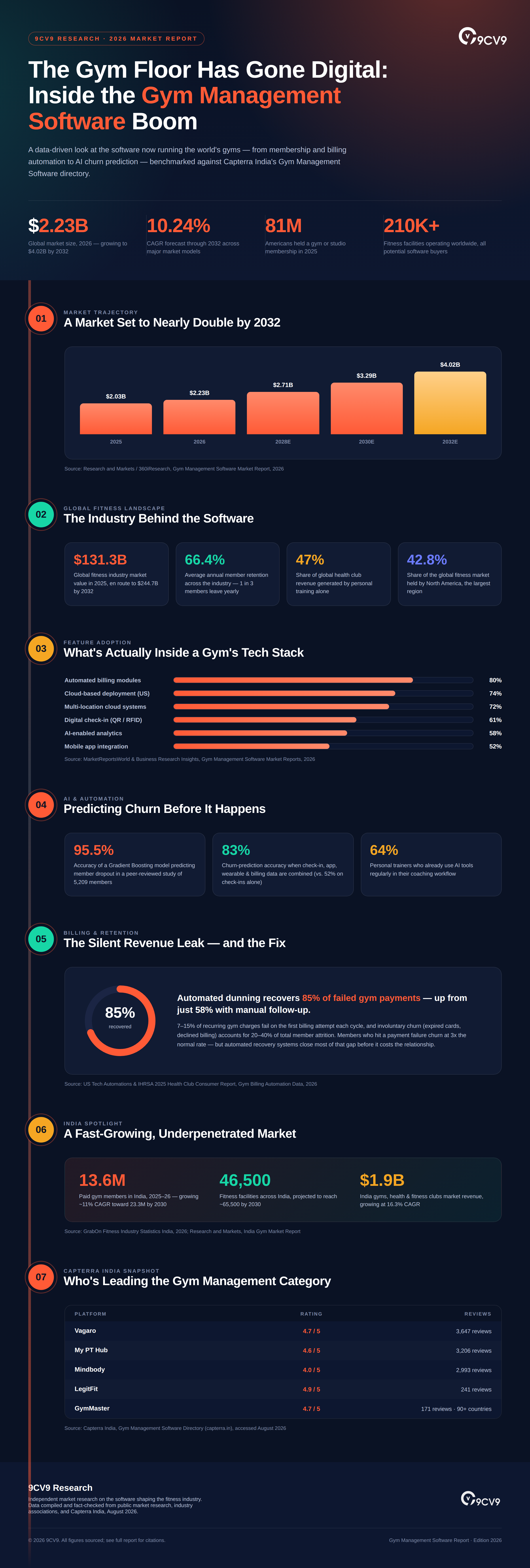
The United States remains a significant driver of fitness technology adoption, with gym membership increasing from 77 million Americans in 2024 to 81 million in 2025. Meanwhile, European fitness club membership reached 75.5 million in 2025, accompanied by a 9.1% year-over-year increase in industry revenues. Emerging fitness markets such as India are also experiencing considerable expansion, supported by growing health awareness, urbanisation, rising consumer demand, and international fitness franchise development.
One of the most influential gym management software trends in 2026 is the transition towards cloud-based platforms. Approximately 74% of US gym software usage is attributed to cloud-based deployment, reflecting the growing preference for flexible, accessible, and scalable fitness management systems. Furthermore, 68% of US gym operators use automated recurring billing systems, 61% deploy digital check-in technologies, and 52% integrate mobile applications to strengthen member engagement.
Modern gym management software has evolved far beyond traditional membership registration and administrative record-keeping. Today’s fitness management platforms increasingly incorporate a comprehensive range of functionalities, including:
- Membership management and subscription tracking
- Automated billing and recurring payment processing
- Fitness class booking and appointment scheduling
- Digital check-in and facility access control
- Artificial intelligence and predictive analytics
- Customer relationship management and marketing automation
- Mobile applications and personalised member engagement
- Wearable technology and fitness tracking integrations
- Revenue forecasting and business performance reporting
- Multi-location fitness facility management
- Automated member retention and reactivation campaigns
- Point-of-sale systems and inventory management
Artificial intelligence is also reshaping the future of gym management software. AI-powered platforms are increasingly being used to identify members at risk of cancellation, personalise workout recommendations, automate administrative tasks, optimise class schedules, and generate actionable business insights. A peer-reviewed study involving 5,209 fitness centre members demonstrated that a machine learning model achieved 95.5% accuracy in predicting member dropout, illustrating the potential of predictive analytics within the fitness industry.
The growing integration of wearable technology represents another important development. Approximately 68% of gym members want their fitness facilities to incorporate wearable data into personalised coaching and training programmes, while more than 70% of fitness app users connect a smartwatch or wearable device. These developments are encouraging gym management software providers to build more interconnected digital fitness ecosystems that support continuous engagement both inside and outside physical fitness facilities.
Member retention remains one of the most significant challenges facing gym owners and fitness business operators in 2026. With an industry-wide average annual member retention rate of approximately 66.4%, fitness businesses must continuously improve customer satisfaction, onboarding experiences, communication strategies, and membership engagement to maintain profitability. Research indicates that 87% of members who receive positive onboarding remain subscribed for at least six months, while members who participate in group fitness classes are 20% more likely to stay than those who exercise independently.
Gym management software also plays a critical role in addressing financial inefficiencies and revenue leakage. Failed payments affect approximately 9% of recurring revenue within subscription-based fitness businesses, while involuntary churn associated with payment failures and expired payment cards accounts for an estimated 20% to 40% of total member attrition. Automated payment recovery and card-updater systems can recover between 60% and 85% of failed payments, demonstrating the potential financial benefits of implementing advanced gym billing software.
Beyond membership management and payment automation, fitness businesses are increasingly leveraging digital scheduling tools to improve facility utilisation and reduce class no-shows. With gym class no-show rates typically ranging from 10% to 30%, automated booking reminders, real-time class availability, digital waitlists, and flexible scheduling functionalities are becoming increasingly valuable components of modern fitness management platforms.
The competitive gym management software landscape is also evolving rapidly. Established providers such as Vagaro, Mindbody, My PT Hub, GymMaster, Virtuagym, LegitFit, and Gymcatch compete across various market segments, offering specialised solutions for independent gyms, boutique fitness studios, personal trainers, health clubs, and multinational fitness chains. Increasing competition is encouraging software vendors to invest in artificial intelligence, automation, user experience, third-party integrations, and advanced business intelligence capabilities.
Understanding the latest gym management software statistics, market data, adoption rates, and emerging technology trends is therefore essential for gym owners, fitness entrepreneurs, software developers, technology investors, business consultants, and industry decision-makers. These insights can help organisations evaluate digital transformation opportunities, identify operational inefficiencies, benchmark business performance, improve software purchasing decisions, and develop more effective long-term growth strategies.
This comprehensive guide to the Top 105 Gym Management Software Statistics, Data & Trends in 2026 examines the most important developments shaping the global fitness technology ecosystem, including market size and growth forecasts, regional fitness industry expansion, cloud software adoption, artificial intelligence, wearable technology, membership retention, payment automation, class scheduling, and software vendor performance.
By exploring these 105 statistics and industry insights, fitness professionals and business leaders can gain a deeper understanding of how gym management software is transforming the fitness industry, identify emerging opportunities for innovation, and make more informed technology investment decisions. As digital transformation continues to accelerate throughout 2026 and beyond, intelligent, integrated, and data-driven gym management solutions are expected to become increasingly important foundations for operational excellence, customer loyalty, competitive differentiation, and sustainable fitness business growth.
Before we venture further into this article, we would like to share who we are and what we do.
About 9cv9
9cv9 is a business tech startup based in Singapore and Asia, with a strong presence all over the world.
With over ten years of startup and business experience, and being highly involved in connecting with thousands of companies and startups, the 9cv9 team has listed some of the top and best companies/tools in this review.
If you like to get your company listed in our top B2B software reviews, check out our world-class 9cv9 Media and PR service and pricing plans here.
Top 105 Gym Management Software Statistics, Data & Trends in 2026
Gym Management Software Market Size and Growth Statistics
1. The global gym management software market is valued at USD 2.23 billion in 2026, increasing from USD 2.03 billion in 2025, reflecting continued investment in digital fitness management technologies.
2. The global gym management software market is projected to reach USD 4.02 billion by 2032, growing at a compound annual growth rate (CAGR) of 10.24%, indicating sustained long-term demand.
3. An alternative market forecast values the global gym management software industry at USD 26.07 billion in 2026, with projections reaching USD 86.40 billion by 2035 at a CAGR of 14.24%. The substantial variation reflects differences in market definitions and research methodologies.
4. The broader fitness and gym management software market was valued at USD 1.2 billion in 2025 and is projected to reach USD 3.5 billion by 2033, growing at a CAGR of 12.3%.
5. The fitness club and gym management software system market was estimated at USD 2.2 billion in 2025, with projections reaching USD 4.36 billion by 2033 at a CAGR of 8.92%.
6. The gym management software market is forecast to increase by USD 201.5 million between 2024 and 2029, growing at a CAGR of 12.5%, supported by the increasing number of fitness centres worldwide.
7. A more conservative market estimate values the gym management software industry at USD 330 million in 2026, with projections reaching USD 710 million by 2035 at a CAGR of 8.4%.
8. The standalone fitness software market, a related but distinct software category, is valued at USD 470 million in 2026 and is projected to reach USD 1.01 billion by 2035, growing at a CAGR of 8.5%.
9. The five largest gym management software vendors collectively account for approximately 53% of the global market share, indicating considerable market concentration among established providers.
10. The ten largest gym management software vendors collectively control approximately 55% of the global market, while the remaining 45% is fragmented across more than 100 regional software-as-a-service (SaaS) providers.
Global Fitness Industry Statistics and Market Trends
11. A record 77 million Americans held a gym, fitness studio, or health club membership in 2024, representing approximately 24.9% of the US population aged six and older.
12. US gym membership increased to 81 million Americans in 2025, representing a 5.2% year-over-year increase and highlighting continued growth in fitness participation.
13. The total number of US fitness facility customers, including both members and non-members, approaches 96 million people, demonstrating the extensive reach of the fitness industry.
14. European fitness club membership reached 75.5 million in 2025, while industry revenues increased by 9.1% year-over-year.
15. More than 210,000 health clubs and fitness facilities operate worldwide, representing a substantial potential customer base for gym management software providers.
16. Global gym membership has surpassed 200 million members across various fitness facility categories during the most recent reporting period.
17. Worldwide gym memberships are projected to reach approximately 230 million by 2030, reflecting growing global interest in health, fitness, and wellness.
18. The global fitness industry was valued at USD 131.31 billion in 2025 and is projected to reach USD 244.70 billion by 2032, growing at a CAGR of 9.3%.
19. Longer-term market forecasts project that the global fitness industry could reach USD 298.16 billion by 2034.
20. North America accounts for approximately 42.8% of the global fitness market, representing the largest regional market share, primarily supported by the United States and Canada.
21. Fitness operators recorded median revenue growth of 9.9% in 2024, alongside a median EBITDA margin of 23.6%, indicating relatively strong financial performance across the surveyed businesses.
22. The European fitness industry recorded 27 mergers and acquisitions in 2025, involving 936 fitness clubs changing ownership and highlighting increasing market consolidation.
23. Approximately 91% of fitness operators expect revenue growth, while 83% anticipate improved profitability, reflecting positive business sentiment across the fitness industry.
24. Approximately 89% of consumers consider regular exercise one of the most effective ways to maintain their health, supporting continued demand for fitness services.
25. The fitness industry supports more than 778,000 jobs in the United States, while employment opportunities for fitness trainers and instructors are projected to increase by 14% through 2033.
India Gym Management Software and Fitness Market Statistics
26. India had approximately 13.6 million paid gym members in 2025–2026, with membership projected to grow at approximately 11% CAGR, primarily supported by demand in Tier-1 cities.
27. India’s gym membership population is projected to reach approximately 23.3 million by 2030, representing substantial growth from current membership levels.
28. India is home to approximately 46,500 fitness facilities, including gyms, fitness studios, and wellness centres across urban and semi-urban regions.
29. India’s fitness facility count is projected to reach approximately 65,500 by 2030, growing at an estimated CAGR of 6%.
30. A separate, more narrowly defined market estimate identifies more than 3,800 dedicated gyms and health clubs in India, with population penetration remaining below 0.12%, indicating significant potential for future expansion.
31. India’s gyms, health clubs, and fitness clubs market generated approximately USD 1.9 billion in revenue in 2022, following a CAGR of 16.3% between 2017 and 2022.
32. India accounted for approximately 14.7% of the Asia-Pacific gyms and fitness clubs market in 2022, representing one of the region’s largest individual country markets.
33. India’s gym equipment market reached USD 630 million in 2024 and is projected to reach USD 1.37 billion by 2033, growing at a CAGR of 8.10%.
34. India’s broader fitness equipment market was valued at USD 792.70 million in 2024 and is projected to reach USD 1.87 billion by 2033, expanding at a CAGR of 10%.
35. India’s Pilates and yoga studio market was valued at approximately USD 17.6 billion in 2025 and is forecast to reach USD 36.8 billion by 2034, with a reported CAGR of 7.39%.
36. Anytime Fitness opened its 150th gym in India in March 2025 and established a target of reaching 200 locations across the country by 2026, reflecting international fitness franchise expansion.
Gym Management Software Adoption, Features and Deployment Statistics
37. Cloud-based deployment accounts for approximately 74% of US gym management software usage, compared with 26% for on-premise deployment, highlighting the dominance of cloud-based fitness management solutions.
38. Approximately 68% of US gym operators use automated recurring billing systems, helping reduce administrative workloads and streamline membership payment processing.
39. Approximately 61% of US gyms use digital check-in systems, including QR code and radio-frequency identification (RFID) technologies.
40. Approximately 52% of US gym operators integrate mobile applications into their operations to facilitate direct member engagement and improve digital customer experiences.
41. Approximately 72% of fitness chains operating five or more locations use centralised cloud-based management systems, demonstrating strong adoption among multi-location fitness businesses.
42. Approximately 65% of mid-sized gyms with between 500 and 2,000 members have adopted digital membership management platforms.
43. More than 80% of gym operators reportedly use automated billing modules as a core component of their gym management software.
44. Approximately 58% of gym operators integrate facility access control systems directly into their gym management software dashboards.
45. A separate regional study found that more than 45% of North American gyms had adopted cloud-based software for membership management, scheduling, and billing.
46. Approximately 38% of European gyms offer integrated software solutions supporting personal training, virtual fitness classes, and automated billing.
47. Cloud-based fitness software accounts for approximately 60% to 63% of the fitness software market across facility types, supported by scalability, accessibility, and automatic software updates.
48. An alternative market estimate indicates that 57% of gym software usage is cloud-based, while on-premise systems account for 31% and hybrid deployment models represent 12%.
49. Mobile application integration increased by approximately 38% in new gym management software implementations over a three-year period, reflecting growing demand for mobile-enabled fitness services.
50. Membership tracking, automated billing, business reporting, data analytics, and access control integration are among the most frequently cited essential gym management software features.
Artificial Intelligence, Automation and Wearable Fitness Technology Statistics
51. Approximately 60% of gym management software providers added artificial intelligence features to their platforms in 2023, reflecting the rapid expansion of AI-powered fitness management capabilities.
52. AI-powered churn prediction models can identify at-risk gym members with up to 85% precision in boutique fitness settings, supporting proactive member retention strategies.
53. A peer-reviewed study involving 5,209 members at a Portuguese fitness centre found that a Gradient Boosting machine learning model achieved 95.5% accuracy in predicting member dropout within the studied population.
54. Non-attendance days accounted for approximately 35% to 54% of the predictive power in the studied gym membership churn prediction model, making attendance inactivity its strongest predictive signal.
55. Combining gym check-in information, mobile application activity, wearable technology data, and billing information reportedly increases churn prediction accuracy from 52% using check-in data alone to 83% using an integrated dataset.
56. Approximately 49% of surveyed consumers use AI-powered fitness and wellness applications daily, while 30% use them weekly.
57. Approximately 61% of active fitness consumers use AI-enabled fitness tracking applications as part of their regular health and exercise routines.
58. Approximately 64% of personal trainers regularly use artificial intelligence tools within their coaching workflows, according to a 2026 personal training industry report.
59. Approximately 64% of Generation Z and 59% of Millennial gym members have used AI-powered fitness or wellness applications, compared with only 17% of Baby Boomers.
60. The global AI-in-fitness-and-wellness market was valued at USD 10.68 billion in 2025 and is projected to reach USD 57.80 billion by 2035, growing at a CAGR of 19.3%.
61. Approximately 68% of gym members want their fitness facilities to integrate wearable technology data into personalised coaching and training programmes.
62. More than 70% of fitness application users connect a smartwatch or wearable fitness device, providing additional engagement and performance data for fitness software platforms.
63. Gym members who synchronise wearable technology data with their fitness applications reportedly demonstrate 47% higher retention rates than members who do not use these integrations.
64. Approximately 45% of boutique Pilates clients use AI-integrated wearable devices to monitor workout performance and track fitness progress.
65. Approximately 27% of fitness clubs have invested in AI-powered equipment maintenance sensors, supporting predictive maintenance and equipment performance monitoring.
66. Approximately 54% of boutique fitness brands reported plans to launch proprietary AI-integrated mobile applications by 2026, reflecting growing interest in intelligent digital fitness experiences.
Gym Member Retention, Engagement and Membership Churn Statistics
67. The fitness industry’s average annual gym member retention rate stands at approximately 66.4%, indicating that roughly one-third of members leave their fitness facilities each year.
68. An earlier fitness industry benchmark placed average annual gym member retention at 71.4%, illustrating differences between historical and more recent retention benchmarks.
69. Traditional gyms can experience annual membership losses of up to 50% in high-churn scenarios, highlighting the importance of effective customer retention strategies.
70. Approximately 87% of gym members who receive positive onboarding experiences remain subscribed for at least six months, demonstrating the importance of effective membership onboarding.
71. Gym members who participate in group fitness classes are approximately 20% more likely to retain their memberships than members who exercise independently.
72. Group fitness training members maintain an average membership duration of 22.6 months, compared with 16.2 months for members who exclusively use gym-floor facilities.
73. Generation Z gym members record a reported churn rate of 54.42%, while members aged 65 and older demonstrate a substantially lower churn rate of 26.48%.
74. Generation Z adults aged 18 to 24 recorded the highest gym membership penetration rate at 35.5% and accounted for nearly half of new gym memberships in 2025.
75. The reported inactive gym member rate has declined to 4.6%, indicating relatively strong participation among members included in the relevant industry benchmark.
76. A separate industry estimate suggests that approximately 67% of gym memberships go unused, highlighting potential opportunities for improved member engagement and reactivation campaigns. This figure may reflect a different definition of inactivity from other benchmarks.
77. Gym members acquired through referrals reportedly demonstrate 37% higher customer lifetime value and remain subscribed for an average of 15.6 months, compared with 10.8 months for members acquired through paid marketing channels.
78. In one documented case, a structured automated member reactivation campaign recovered approximately 23% of at-risk gym members, generating estimated annual savings of USD 156,000 for a fitness facility with 1,500 members.
79. Gyms using digital loyalty programmes, online booking systems, and integrated retail point-of-sale (POS) solutions reportedly achieve 2.1 times faster membership growth than gyms relying on manual, paper-based management processes.
80. Approximately 11% of general gym members purchase personal training services, compared with 29% of members participating in top-tier digital loyalty programmes.
Gym Payment Processing, Billing Automation and Revenue Leakage Statistics
81. Failed membership payments affect approximately 9% of recurring revenue within subscription-based fitness businesses, creating significant financial management challenges.
82. Approximately 7% to 15% of recurring gym membership payments fail during the initial billing attempt in each payment cycle.
83. A separate industry benchmark estimates that gym payment decline rates range from 10% to 16%, potentially exposing a fitness club processing USD 100,000 monthly to between USD 120,000 and USD 192,000 in annual declined payments before recovery.
84. Involuntary membership churn caused by expired payment cards, failed transactions, and other billing issues accounts for approximately 20% to 40% of total gym member attrition.
85. Gym members who experience payment failures demonstrate approximately three times higher subsequent membership churn rates than members who do not encounter billing problems.
86. Automated payment recovery systems, including dunning software and automatic card-updater technologies, reportedly recover approximately 60% to 85% of failed payments, compared with 30% to 50% recovered through manual processes.
87. Fitness facilities using fully automated billing recovery systems report payment recovery rates of up to 85% to 95%, compared with approximately 58% for manual-only payment recovery processes.
88. SMS-based payment reminders reportedly achieve open rates exceeding 90% in fitness settings, compared with approximately 25% to 35% for email-based payment reminders.
89. Retrying failed gym membership payments on a different day of the week from the original failed transaction reportedly increases payment recovery success by 22%.
90. Reactivating a cancelled gym member reportedly costs approximately five to 25 times more than retaining an existing member, reinforcing the potential financial benefits of proactive retention and automated payment recovery strategies.
Gym Class Booking, Scheduling and No-Show Statistics
91. Gym class no-show rates typically range from 10% to 30%, depending on factors such as class type, booking policies, membership models, and prepayment requirements.
92. Trial fitness class no-show rates typically range from 20% to 40%, reflecting comparatively lower commitment levels among prospective gym members and first-time participants.
93. Fitness studio classes reportedly remain empty approximately 70% of the time in facilities without effective scheduling optimisation, highlighting potential challenges associated with underutilised capacity.
94. Greater flexibility in fitness class booking and effective digital waitlist management are associated with improved facility utilisation and higher member satisfaction scores.
95. Fitness businesses have reported increased class bookings following the implementation of automated waitlist management functionality within their fitness scheduling software.
96. Fitness facilities offering real-time mobile class availability reportedly achieve stronger booking completion rates than businesses relying on static or manually updated fitness class schedules.
97. Personal training accounts for approximately 47% of global health club revenue, according to the compiled industry estimate, while the personal training segment is projected to grow at a CAGR of 10.01% through 2032.
Gym Management Software Vendor Statistics and Competitive Landscape
98. The Capterra India gym management software directory contains approximately eight pages of software listings, reflecting the extensive and competitive range of fitness management solutions available to Indian fitness businesses at the time of data collection.
99. Vagaro recorded a 4.7 out of 5 user rating across 3,647 reviews in the Capterra India gym management software directory, representing the highest review volume among the platforms identified in the compiled data.
100. My PT Hub, used by more than 200,000 fitness coaches worldwide, recorded a user rating of 4.6 out of 5 across 3,206 reviews on Capterra India.
101. Mindbody recorded a 4.0 out of 5 user rating across 2,993 reviews on Capterra India, positioning it among the most extensively reviewed gym management software platforms in the directory.
102. LegitFit and Gymcatch both achieved 4.9 out of 5 user ratings, based on 241 and 222 reviews respectively, demonstrating that smaller review volumes can coexist with high customer satisfaction ratings.
103. GymMaster, which has served fitness businesses for more than 30 years across over 90 countries, recorded a 4.7 out of 5 user rating across 171 reviews on Capterra India. Its core functionalities include membership management, automated billing, and Bluetooth-enabled facility access control.
104. Virtuagym, reportedly trusted by more than 9,000 health clubs and 45,000 personal trainers and serving over 30 million total users, recorded a 3.8 out of 5 user rating across 265 reviews on Capterra India at the time of data collection.
105. To qualify for Capterra’s gym management software pricing rankings, software products must have received at least 20 unique published customer reviews within a two-year period, establishing a minimum review threshold for inclusion.
Conclusion
The Top 105 Gym Management Software Statistics, Data & Trends in 2026 highlight a fundamental transformation in the global fitness industry, where digital technology, artificial intelligence, cloud computing, automation, and data-driven decision-making are becoming increasingly important to business success. Gym management software is no longer simply an administrative tool for tracking memberships and processing payments. Instead, it has evolved into a comprehensive business management solution that enables fitness organisations to improve operational efficiency, strengthen customer relationships, maximise revenue, and achieve sustainable long-term growth.
Strong Market Growth Reflects Increasing Demand for Gym Management Software
The global gym management software market demonstrates considerable growth potential, with one market estimate valuing the industry at USD 2.23 billion in 2026 and projecting it to reach USD 4.02 billion by 2032, at a CAGR of 10.24%. Other market forecasts also anticipate substantial expansion, although differences in market definitions, research methodologies, and software classifications contribute to significant variations in reported valuations.
The expansion of the broader fitness industry provides a strong foundation for continued software adoption. With more than 210,000 health clubs and fitness facilities worldwide, over 200 million gym members globally, and projected membership growth to 230 million by 2030, fitness businesses increasingly require sophisticated digital infrastructure to manage their expanding operations.
The global fitness industry itself is projected to grow from USD 131.31 billion in 2025 to USD 244.70 billion by 2032. This expansion presents considerable opportunities for gym management software providers, fitness technology developers, entrepreneurs, investors, and established fitness organisations seeking to capitalise on increasing consumer demand for health and wellness services.
Cloud-Based Gym Management Software Is Becoming the Industry Standard
One of the most significant gym management software trends in 2026 is the continued transition from traditional on-premise systems towards cloud-based fitness management platforms.
With cloud-based deployment accounting for approximately 74% of US gym software usage, fitness businesses are increasingly recognising the advantages of remote accessibility, scalability, centralised data management, automatic software updates, and integrated business operations.
The adoption of centralised cloud-based management systems among 72% of fitness chains operating five or more locations further demonstrates the importance of digital infrastructure for multi-location fitness businesses.
Cloud-based gym management software enables fitness operators to streamline membership administration, monitor financial performance, coordinate staff schedules, manage multiple facilities, and deliver more consistent customer experiences. These capabilities are particularly valuable for growing fitness chains, franchises, boutique fitness studios, and independent gyms seeking to expand without significantly increasing administrative overhead.
Artificial Intelligence Is Transforming Fitness Business Management
Artificial intelligence represents one of the most influential technological developments shaping the future of gym management software.
The reported adoption of AI features by 60% of gym software providers in 2023 illustrates the growing importance of intelligent automation and predictive analytics within the fitness technology ecosystem.
A peer-reviewed study involving 5,209 fitness centre members found that a machine learning model achieved 95.5% accuracy in predicting member dropout within the studied population. Although such results cannot be assumed to apply universally across all fitness facilities, they demonstrate the potential of AI-powered gym management software to identify behavioural patterns and support proactive retention strategies.
AI-powered fitness management platforms are increasingly positioned to help businesses:
- Predict membership cancellations and identify at-risk customers.
- Automate personalised member communication and engagement campaigns.
- Analyse attendance patterns and customer behaviour.
- Optimise fitness class scheduling and facility utilisation.
- Support personalised fitness recommendations and coaching programmes.
- Improve business forecasting and operational decision-making.
- Identify revenue growth and customer retention opportunities.
- Reduce repetitive administrative responsibilities.
- Integrate data from multiple fitness technology platforms.
- Support predictive equipment maintenance.
The broader AI-in-fitness-and-wellness market is projected to expand from USD 10.68 billion in 2025 to USD 57.80 billion by 2035, highlighting the considerable commercial potential of intelligent fitness technologies.
As artificial intelligence capabilities mature, gym management software providers that successfully integrate reliable predictive analytics, intelligent automation, and personalised customer engagement tools may gain significant competitive advantages.
Member Retention Remains a Critical Priority for Fitness Businesses
The statistics also reveal that member retention continues to represent one of the most significant operational and financial challenges facing fitness businesses worldwide.
With an industry-wide average annual member retention rate of approximately 66.4%, fitness operators face considerable pressure to improve customer satisfaction, strengthen engagement, and reduce membership cancellations.
However, the data also highlights several opportunities for improving retention through technology-enabled customer experiences.
Approximately 87% of members who receive positive onboarding remain subscribed for at least six months, while members who participate in group fitness classes are 20% more likely to stay than those who exercise independently. Furthermore, group training members maintain an average membership duration of 22.6 months, compared with 16.2 months for gym-floor-only members.
These findings demonstrate the importance of developing comprehensive member engagement strategies supported by modern gym management software.
Fitness businesses can use integrated customer relationship management systems, automated onboarding workflows, attendance monitoring, personalised communication, digital loyalty programmes, and member reactivation campaigns to identify engagement opportunities and encourage long-term customer relationships.
Rather than focusing exclusively on acquiring new members, successful fitness organisations should increasingly prioritise customer lifetime value, membership satisfaction, and sustainable retention strategies.
Automated Billing and Payment Recovery Are Essential for Revenue Protection
The financial statistics surrounding gym management software adoption reveal the substantial impact that payment inefficiencies can have on fitness business profitability.
Failed payments affect approximately 9% of recurring revenue within subscription-based fitness businesses, while between 7% and 15% of recurring gym charges reportedly fail during the first billing attempt of each payment cycle.
Furthermore, involuntary churn associated with expired payment cards, failed transactions, and other billing issues accounts for an estimated 20% to 40% of total member attrition.
These statistics highlight why automated gym billing software has become an increasingly important investment for fitness businesses operating subscription-based revenue models.
Automated payment recovery systems, recurring billing platforms, digital payment reminders, and automatic card-updater technologies can help fitness organisations recover outstanding payments while reducing unnecessary membership cancellations.
Reported recovery rates of between 60% and 85% for automated payment recovery systems, compared with approximately 30% to 50% for manual recovery processes, demonstrate the potential financial advantages of billing automation.
By implementing effective payment management solutions, fitness businesses can improve cash flow predictability, reduce administrative expenses, minimise revenue leakage, and protect recurring membership income.
Wearable Technology and Mobile Applications Are Reshaping Member Experiences
The growing integration of wearable technology and mobile fitness applications represents another major trend influencing gym management software development in 2026.
Approximately 68% of gym members want their fitness facilities to integrate wearable data into personalised coaching and training programmes, while more than 70% of fitness application users reportedly connect a smartwatch or wearable device.
The data also indicates that members who synchronise wearable information with fitness applications demonstrate 47% higher retention than those who do not, suggesting a potentially valuable relationship between connected fitness experiences and long-term member engagement.
Meanwhile, 52% of US gym operators integrate mobile applications for direct member engagement, reflecting the increasing importance of accessible digital fitness services.
Modern fitness consumers increasingly expect convenient access to workout schedules, membership information, fitness progress, personalised coaching, class reservations, and digital payment options through mobile platforms.
Gym management software providers that offer seamless mobile experiences and wearable technology integrations are therefore well-positioned to support evolving consumer expectations.
The convergence of physical fitness facilities and digital fitness ecosystems is expected to create additional opportunities for personalised services, hybrid fitness memberships, remote coaching, and continuous customer engagement.
Digital Scheduling and Class Management Can Improve Operational Efficiency
Class scheduling, appointment management, and facility utilisation remain important areas where gym management software can deliver measurable operational benefits.
With gym class no-show rates typically ranging from 10% to 30% and trial-class no-show rates reaching between 20% and 40%, fitness businesses face considerable challenges in maximising available resources and generating revenue from scheduled activities.
Automated booking systems, digital waitlists, real-time class availability, appointment reminders, and flexible scheduling capabilities can help fitness operators address these inefficiencies.
Integrated scheduling software can also support better coordination between fitness instructors, personal trainers, facility managers, and members.
As personal training accounts for approximately 47% of global health club revenue, according to the compiled industry data, effective scheduling and resource management can play an important role in supporting revenue generation across fitness businesses.
For boutique fitness studios, Pilates centres, yoga studios, personal training businesses, and group fitness facilities, advanced scheduling functionalities may be particularly valuable in improving capacity utilisation and customer satisfaction.
Emerging Fitness Markets Present Significant Growth Opportunities
The global gym management software industry is also benefiting from the expansion of fitness markets across different geographical regions.
The United States continues to demonstrate strong fitness industry growth, with membership increasing from 77 million Americans in 2024 to 81 million in 2025. European fitness club membership reached 75.5 million in 2025, accompanied by a 9.1% year-over-year increase in industry revenues.
India represents another promising growth opportunity, with approximately 13.6 million paid gym members in 2025–2026 and projected membership growth to around 23.3 million by 2030.
India’s fitness facility count is also expected to increase from approximately 46,500 to 65,500 by 2030, creating additional opportunities for gym management software vendors, fitness technology startups, payment processing providers, and digital wellness platforms.
As fitness participation expands across established and emerging markets, demand for affordable, scalable, and locally adaptable gym management software is likely to increase.
Software providers capable of supporting regional payment methods, diverse membership models, local business requirements, and different facility sizes may be better positioned to capture these emerging market opportunities.
Increasing Competition Is Driving Innovation Across the Gym Management Software Industry
The competitive gym management software landscape continues to evolve as established technology providers and specialised fitness software companies compete to deliver more comprehensive solutions.
Platforms such as Vagaro, Mindbody, My PT Hub, GymMaster, Virtuagym, LegitFit, and Gymcatch demonstrate the diversity of available fitness management solutions, catering to different business models, operational requirements, and customer segments.
The compiled market data suggests that the five largest gym management software vendors collectively control approximately 53% of the global market, while a substantial portion remains distributed among regional and specialised software providers.
This competitive environment creates opportunities for innovation in artificial intelligence, automation, payment processing, customer engagement, mobile applications, wearable integrations, business analytics, and multi-location management.
For fitness business owners, selecting the best gym management software in 2026 requires careful consideration of factors such as:
- Membership management capabilities and scalability.
- Automated billing and payment recovery functionalities.
- Artificial intelligence and predictive analytics features.
- Class booking and appointment scheduling capabilities.
- Mobile application accessibility and user experience.
- Wearable technology and third-party software integrations.
- Multi-location management and centralised reporting.
- Customer relationship management and marketing automation.
- Data security and privacy considerations.
- Software pricing and total cost of ownership.
- Customer support and implementation requirements.
- User satisfaction and software reliability.
The most suitable gym management software is not necessarily the platform with the largest market share, highest review volume, or most extensive feature portfolio. Instead, fitness organisations should prioritise solutions that align with their specific operational needs, customer expectations, financial objectives, and long-term expansion strategies.
The Future of Gym Management Software Beyond 2026
Looking beyond 2026, the gym management software industry is expected to become increasingly intelligent, interconnected, automated, and customer-centric.
The continued development of artificial intelligence, machine learning, predictive analytics, cloud infrastructure, wearable technology, and mobile fitness applications will likely expand the capabilities of fitness management platforms.
Future gym management software developments may increasingly focus on predictive member retention, personalised fitness recommendations, intelligent revenue optimisation, automated customer engagement, connected fitness ecosystems, and real-time operational intelligence.
Fitness organisations that successfully integrate these technologies into their business strategies may be better equipped to respond to changing consumer expectations, improve operational efficiency, reduce preventable revenue losses, and establish stronger competitive positions.
Nevertheless, businesses should recognise that technology adoption alone does not guarantee improved performance. Effective implementation, accurate data collection, employee training, customer experience management, and continuous performance monitoring remain essential for maximising the return on gym management software investments.
Market forecasts, adoption percentages, and performance benchmarks should also be interpreted within their respective research contexts. Differences in geographical coverage, sample populations, market definitions, and reporting methodologies mean that individual statistics may not be directly comparable or universally applicable.
Final Thoughts
The 105 gym management software statistics, data points, and trends in 2026 collectively demonstrate that digital transformation is becoming a central component of the modern fitness industry’s growth and competitiveness.
From cloud-based membership management and automated payment recovery to AI-powered churn prediction, wearable technology integration, digital scheduling, and personalised customer engagement, gym management software is transforming how fitness businesses operate, generate revenue, and build lasting relationships with their members.
For gym owners, fitness entrepreneurs, health club operators, personal trainers, software developers, investors, and industry decision-makers, understanding these emerging trends is essential for identifying commercial opportunities, evaluating technology investments, benchmarking operational performance, and developing sustainable business strategies.
As global fitness participation continues to expand and consumer expectations become increasingly digitally oriented, businesses that embrace intelligent automation, integrated fitness management platforms, and data-driven decision-making may be better positioned to improve profitability, strengthen member loyalty, and achieve scalable growth.
Ultimately, gym management software in 2026 represents far more than a technological convenience. It is becoming a strategic business asset that connects operational efficiency, financial performance, customer satisfaction, and long-term organisational development.
The future of the global fitness industry will increasingly be shaped by organisations that successfully combine high-quality physical fitness experiences with intelligent digital solutions, creating more efficient, personalised, accessible, and sustainable fitness ecosystems for members and businesses alike.
If you find this article useful, why not share it with your hiring manager and C-level suite friends and also leave a nice comment below?
We, at the 9cv9 Research Team, strive to bring the latest and most meaningful data, guides, and statistics to your doorstep.
To get access to top-quality guides, click over to 9cv9 Blog.
To hire top talents using our modern AI-powered recruitment agency, find out more at 9cv9 Modern AI-Powered Recruitment Agency.
People Also Ask
What is gym management software?
Gym management software is a digital platform that helps fitness businesses manage memberships, billing, class scheduling, attendance, staff, customer engagement, and business reporting through a centralised system.
What is the global gym management software market size in 2026?
The global gym management software market is estimated to reach USD 2.23 billion in 2026, up from USD 2.03 billion in 2025, reflecting increasing demand for digital fitness management solutions.
What is the projected growth rate of the gym management software market?
The global gym management software market is projected to grow at a CAGR of 10.24%, reaching approximately USD 4.02 billion by 2032, according to one market forecast.
What are the biggest gym management software trends in 2026?
Major trends include artificial intelligence, cloud-based deployment, automated billing, predictive churn analytics, wearable technology integration, mobile applications, and digital fitness class scheduling.
How many gyms and fitness facilities operate worldwide?
More than 210,000 health clubs and fitness facilities operate globally, creating substantial demand for gym management software, membership automation, and digital fitness technology.
How many gym members are there worldwide in 2026?
Global gym membership has surpassed 200 million people, with projections suggesting that worldwide fitness facility memberships could reach approximately 230 million by 2030.
What percentage of gyms use cloud-based management software?
Cloud-based platforms account for approximately 74% of US gym software usage. Other market estimates place cloud-based fitness software adoption at around 60–63% globally.
Why is cloud-based gym management software popular?
Cloud-based gym management software offers remote accessibility, scalability, centralised data management, automatic updates, reduced infrastructure requirements, and efficient multi-location management.
What percentage of gyms use automated billing software?
Approximately 68% of US gym operators use automated recurring billing systems, while another industry estimate indicates that more than 80% of gym operators use automated billing modules.
How is artificial intelligence transforming gym management software?
AI transforms gym management software through predictive member retention, personalised fitness recommendations, automated communication, intelligent scheduling, customer behaviour analysis, and operational forecasting.
Can AI-powered gym software predict membership cancellations?
Yes. A peer-reviewed study involving 5,209 fitness centre members achieved 95.5% dropout prediction accuracy using machine learning. However, prediction accuracy varies by dataset, facility, and implementation.
What percentage of personal trainers use artificial intelligence?
Approximately 64% of personal trainers regularly use AI tools in their coaching workflows, highlighting the growing adoption of intelligent fitness technology and personalised training solutions.
What is the average gym member retention rate?
The average annual gym member retention rate is approximately 66.4%, meaning roughly one-third of members leave each year. Retention varies depending on facility type, customer experience, and engagement strategies.
How does gym management software improve member retention?
Gym management software supports retention through automated onboarding, attendance monitoring, personalised communication, loyalty programmes, churn prediction, payment recovery, and member reactivation campaigns.
How does member onboarding affect gym retention?
Approximately 87% of gym members who receive positive onboarding remain subscribed for at least six months, highlighting the importance of structured onboarding and early customer engagement.
Do group fitness classes improve gym member retention?
Yes. Members participating in group fitness classes are reportedly 20% more likely to stay than those exercising independently. Group training members also average longer membership durations.
What percentage of gym payments fail?
Approximately 7–15% of recurring gym charges fail during the first billing attempt. Failed payments can create significant revenue leakage and increase involuntary membership cancellations.
How much revenue do fitness businesses lose through failed payments?
Failed payments affect approximately 9% of recurring revenue within subscription-based fitness businesses, highlighting the importance of automated payment recovery and effective billing management.
How effective is automated gym payment recovery software?
Automated payment recovery systems can recover approximately 60–85% of failed payments, compared with 30–50% through manual recovery processes, according to reported industry benchmarks.
What is involuntary churn in the fitness industry?
Involuntary churn occurs when memberships end because of failed payments, expired cards, or billing problems rather than intentional cancellations. It accounts for an estimated 20–40% of total member attrition.
What percentage of gyms use mobile applications?
Approximately 52% of US gym operators integrate mobile applications for member engagement, supporting digital bookings, membership management, communication, and personalised fitness experiences.
How important is wearable technology integration in gym software?
Approximately 68% of gym members want wearable data integration for personalised coaching, while more than 70% of fitness app users reportedly connect a smartwatch or wearable device.
Does wearable technology improve gym member retention?
Members who synchronise wearable data with fitness applications reportedly demonstrate 47% higher retention than those who do not, suggesting a positive association between connected fitness experiences and engagement.
What is the average gym class no-show rate?
Gym class no-show rates typically range from 10% to 30%, while trial-class no-show rates range from 20% to 40%, depending on booking policies, class types, and customer commitment.
How does gym scheduling software reduce class no-shows?
Gym scheduling software helps reduce no-shows through automated reminders, digital waitlists, flexible booking options, real-time availability, cancellation management, and convenient mobile reservations.
What are the most important features of gym management software?
Essential features include membership tracking, recurring billing, class scheduling, digital check-in, access control, customer relationship management, mobile applications, reporting, and business analytics.
What are the leading gym management software providers in 2026?
Popular gym management software providers include Mindbody, Vagaro, My PT Hub, GymMaster, Virtuagym, LegitFit, and Gymcatch, offering solutions for different fitness business models and operational requirements.
How large is the gym and fitness market in India?
India has approximately 13.6 million paid gym members and 46,500 fitness facilities. Membership is projected to reach around 23.3 million, with approximately 65,500 fitness facilities by 2030.
How large is the AI fitness and wellness market?
The global AI-in-fitness-and-wellness market was valued at approximately USD 10.68 billion in 2025 and is projected to reach USD 57.80 billion by 2035, growing at a CAGR of 19.3%.
What is the future of gym management software beyond 2026?
The future of gym management software is expected to feature advanced AI, predictive analytics, intelligent automation, connected fitness ecosystems, wearable integrations, personalised member experiences, and real-time business intelligence.
Sources
Available Upon Request


