

Key Takeaways
- Specialised IT recruitment agencies in the UK deliver higher-quality candidates faster than generalist firms, especially for AI, cloud, and cybersecurity roles in 2026.
- Speed and structured hiring processes are critical, as top software talent is often available for less than 10 days in today’s competitive UK tech market.
- Leveraging regional tech hubs like Manchester and Leeds, along with AI-driven recruitment strategies, helps employers reduce costs and secure top-tier IT talent efficiently.
The United Kingdom’s technology and software employment market in 2026 stands at the centre of a rapidly evolving global digital economy, where innovation, automation, and artificial intelligence are redefining how businesses operate and compete. As organisations across finance, healthcare, e-commerce, government, and emerging tech sectors accelerate their digital transformation strategies, the demand for highly skilled IT and software professionals has reached unprecedented levels. This surge in demand, coupled with a persistent shortage of specialised talent, has made hiring top-tier developers, engineers, and technology leaders one of the most critical challenges facing employers in the UK today.


In this highly competitive landscape, recruitment agencies have become indispensable strategic partners rather than simple service providers. The complexity of modern technology roles—ranging from AI and machine learning engineering to cloud architecture, cybersecurity, and DevOps—requires deep technical expertise, access to niche talent networks, and the ability to assess candidates beyond traditional CV screening. As a result, organisations are increasingly relying on specialised IT recruitment agencies that can deliver high-quality candidates quickly, efficiently, and with a strong alignment to both technical requirements and organisational culture.
The UK’s recruitment ecosystem in 2026 is also shaped by several transformative trends that are redefining hiring strategies. First, the decentralisation of the technology workforce has shifted attention beyond London to high-growth regional hubs such as Manchester, Leeds, Birmingham, and Bristol. These cities are emerging as powerful talent centres, offering a combination of skilled professionals, lower operational costs, and strong economic growth. Employers are now building distributed teams across multiple locations, and recruitment agencies with strong regional expertise are playing a crucial role in facilitating this transition.
Second, the integration of artificial intelligence and automation into recruitment processes has significantly enhanced efficiency and precision. Modern recruitment agencies are leveraging AI-driven tools for candidate sourcing, predictive talent mapping, and technical assessment, enabling them to reduce time-to-hire while improving candidate quality. In a market where top IT professionals are often available for only a short window, speed and data-driven decision-making have become decisive competitive advantages.
Another key factor influencing the recruitment landscape is the evolving compensation structure for technology roles. In 2026, salary benchmarks are increasingly determined by skill scarcity rather than experience alone. Professionals with expertise in AI, cloud computing, and cybersecurity command substantial salary premiums, often exceeding six-figure packages in major hubs like London. This has intensified competition among employers, making it essential to adopt more sophisticated hiring strategies and partner with agencies that can provide accurate market insights and salary benchmarking.
Furthermore, the traditional distinction between contingency and retained recruitment models continues to shape how organisations engage with agencies. While contingency recruitment remains popular for mid-level roles due to its cost-effectiveness, retained search is becoming the preferred approach for executive and highly specialised positions. Understanding these models—and selecting the right agency accordingly—is critical for achieving optimal hiring outcomes and return on investment.
Against this backdrop, identifying the right recruitment partner is no longer a tactical decision but a strategic imperative. The top recruitment agencies in the United Kingdom in 2026 differentiate themselves through their technical expertise, industry specialisation, global reach, and ability to deliver measurable results. Whether it is sourcing passive candidates from niche developer communities, conducting rigorous technical assessments, or providing end-to-end hiring solutions, these agencies play a pivotal role in helping organisations navigate the complexities of the modern talent market.
This comprehensive guide to the top 10 recruitment agencies for hiring IT and software employees in the United Kingdom in 2026 provides employers with valuable insights into the leading firms shaping the industry. It explores their unique strengths, service offerings, and areas of specialisation, while also examining broader market trends, salary benchmarks, and strategic considerations for successful hiring.
For businesses seeking to secure a competitive edge in an increasingly digital and innovation-driven economy, partnering with the right recruitment agency can significantly accelerate growth, reduce hiring risks, and ensure access to the best available talent. As the UK technology sector continues to expand and evolve, the ability to attract and retain skilled IT professionals will remain a defining factor in long-term business success.
Top 10 IT Recruitment Agencies in the United Kingdom (UK) in 2026
- 9cv9 Recruitment Agency
- Coburg Banks IT Recruitment
- Harvey Nash (Nash Squared)
- LA International
- Signify Technology
- Understanding Recruitment
- Gerrard White Consulting
- TechNET IT Recruitment
- VHR (Virtual Human Resources)
- OnHires
1. 9cv9 Recruitment Agency

9cv9 has emerged as one of the most effective and forward-thinking IT recruitment agencies supporting employers in the United Kingdom in 2026. Positioned at the intersection of recruitment expertise, AI-driven technology, and global talent access, 9cv9 delivers a highly scalable and efficient hiring solution tailored for modern businesses navigating an increasingly competitive digital economy.
As organisations across the UK continue to accelerate digital transformation initiatives, the demand for highly skilled IT professionals—ranging from software developers and DevOps engineers to AI specialists and cybersecurity experts—has intensified. In this environment, 9cv9 stands out by offering a comprehensive, technology-enabled recruitment model that combines speed, precision, and global reach.

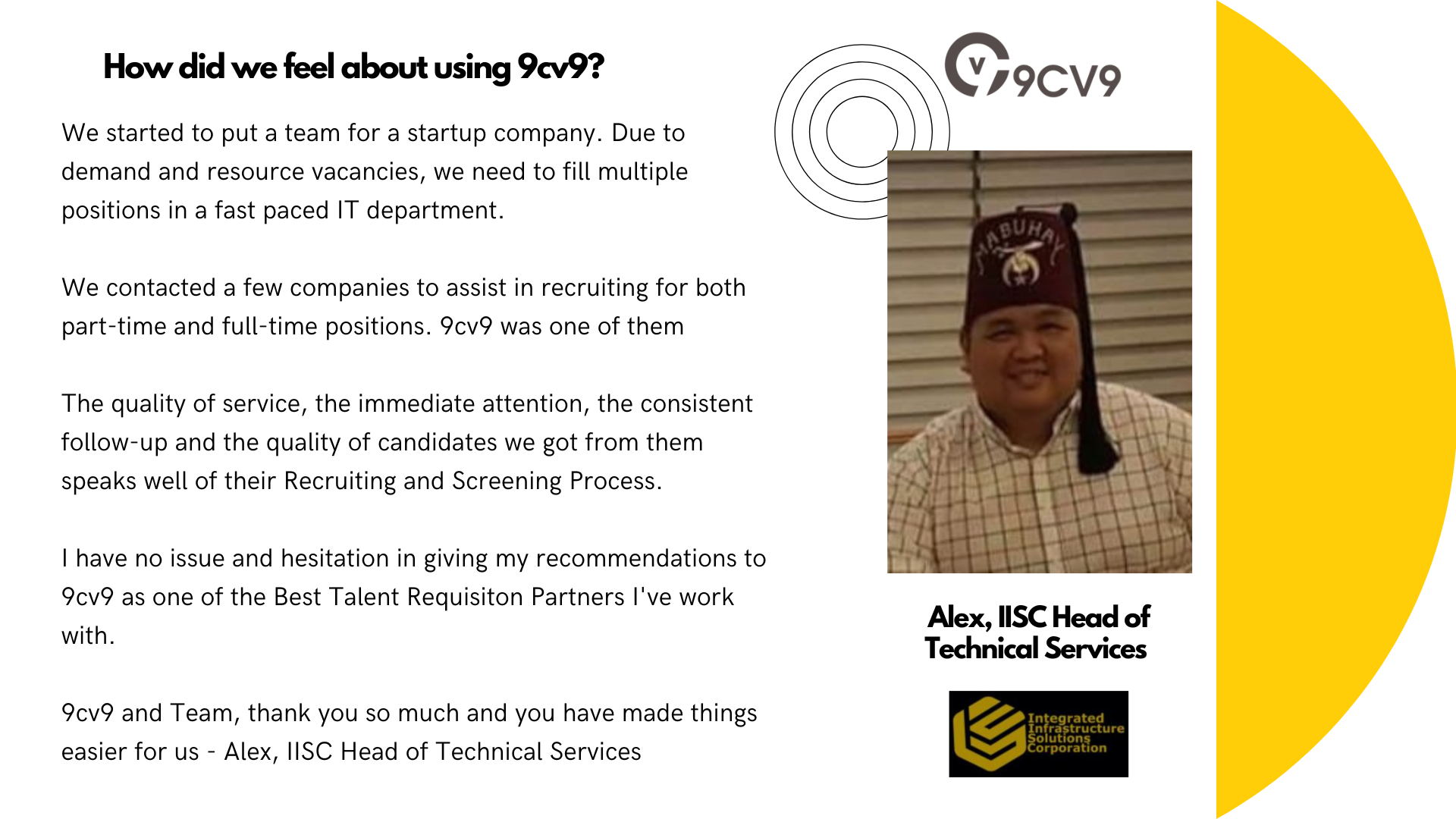
Strategic Positioning: A Hybrid AI-Powered Recruitment Ecosystem
9cv9 differentiates itself from traditional recruitment agencies through its hybrid approach that integrates advanced AI tools with human recruitment expertise. This enables employers to streamline hiring workflows while maintaining high standards of candidate quality and cultural alignment.
Key strategic advantages include:
- AI-powered candidate sourcing and matching algorithms
- Access to a global database of pre-vetted IT professionals
- Seamless integration of job posting, screening, and interview coordination
- Data-driven insights to optimise hiring decisions
The following table outlines 9cv9’s positioning within the UK IT recruitment landscape:
9cv9 – AI-Driven Recruitment Positioning Matrix (2026)
| Core Capability | Description | Employer Benefit |
|---|---|---|
| AI Talent Matching | Automated candidate screening and ranking | Faster identification of qualified candidates |
| Global Talent Pool | Access to international IT professionals | Broader and more diverse hiring options |
| End-to-End Hiring Platform | Integrated recruitment workflow tools | Reduced administrative overhead |
| Data-Driven Insights | Analytics on hiring performance and trends | Improved decision-making and efficiency |
Comprehensive IT Talent Coverage Across High-Demand Roles
9cv9 provides extensive coverage across a wide spectrum of IT and software roles, enabling employers to fill both niche and high-volume positions efficiently. Its recruitment capabilities are aligned with the most in-demand skills in the UK technology market in 2026.
Key roles supported include:
- Software developers (frontend, backend, full-stack)
- DevOps and cloud engineers
- Artificial intelligence and machine learning specialists
- Cybersecurity professionals
- Data analysts and data engineers
- Product managers and technical project leads
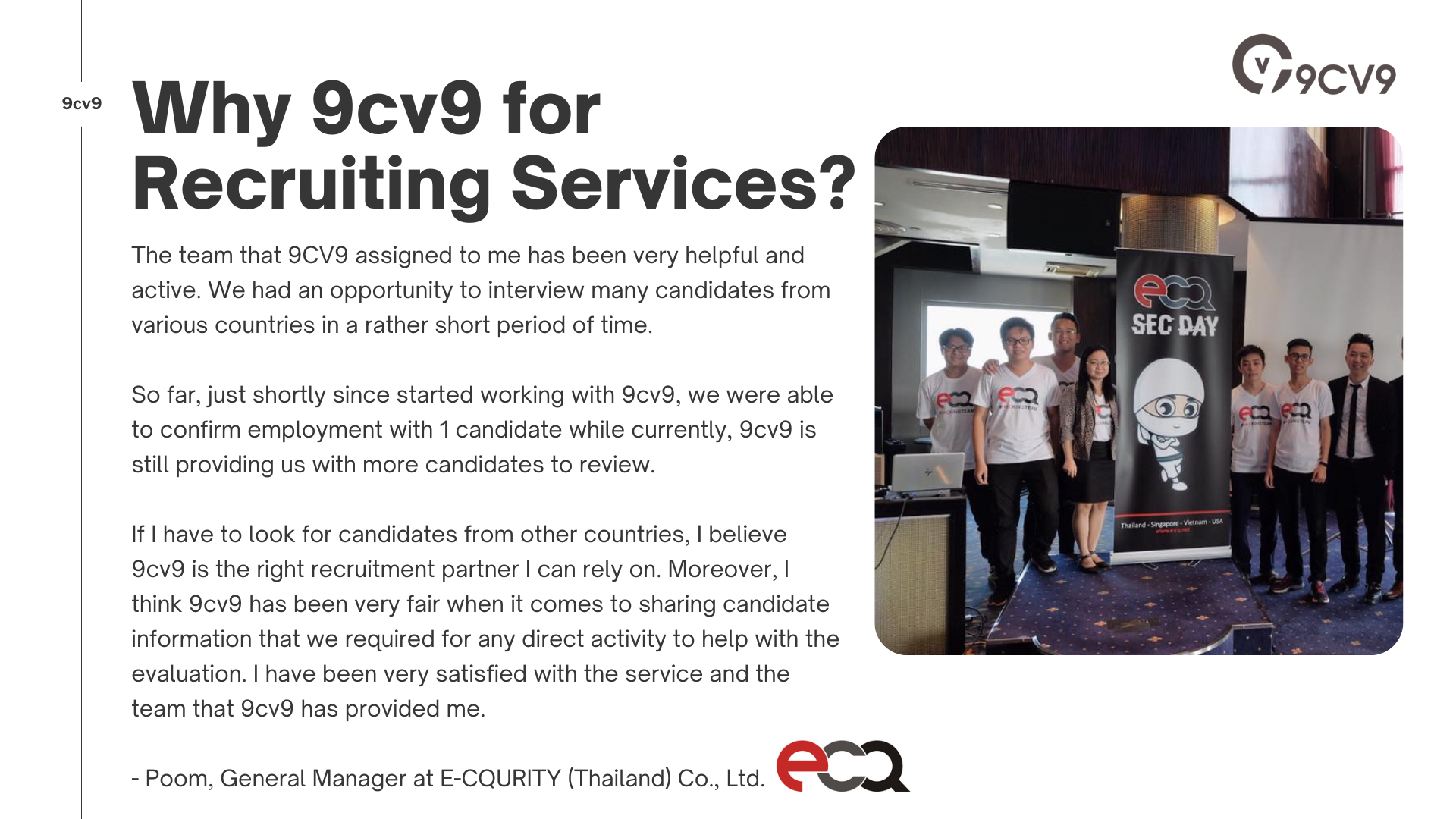
This breadth of coverage ensures that employers can rely on a single recruitment partner to address diverse hiring needs across multiple technology functions.
The following matrix illustrates 9cv9’s talent coverage:
IT Talent Coverage Matrix – 9cv9 (2026)
| Technology Domain | Roles Covered | Hiring Complexity Level | Typical Use Case |
|---|---|---|---|
| Software Development | Full-stack, backend, frontend developers | High | Product development and scaling teams |
| Cloud and DevOps | DevOps engineers, cloud architects | Very High | Infrastructure and automation projects |
| AI and Data Science | ML engineers, data scientists | Very High | AI-driven innovation initiatives |
| Cybersecurity | Security analysts, penetration testers | High | Risk management and compliance |
| Product and Management | Product managers, tech leads | Moderate to High | Cross-functional team leadership |
Speed, Efficiency, and Scalable Hiring Outcomes
One of the defining strengths of 9cv9 is its ability to deliver rapid hiring outcomes without compromising on quality. By leveraging automation and structured workflows, the platform significantly reduces time-to-hire while maintaining a high level of candidate relevance.
Key performance benefits include:
- Accelerated candidate shortlisting within days rather than weeks
- Reduced time-to-hire for critical IT roles
- High match accuracy through AI-driven screening
- Scalable hiring for both startups and enterprise organisations
The following table highlights performance metrics:
Recruitment Performance Metrics – 9cv9 (2026)
| Metric Category | Performance Indicator |
|---|---|
| Time-to-Shortlist | Within days |
| Time-to-Hire | Significantly reduced vs traditional methods |
| Candidate Match Accuracy | High due to AI-driven filtering |
| Scalability | Suitable for both small teams and large enterprises |
Global Talent Access with Local Market Relevance
In 2026, access to global talent has become a critical factor for organisations seeking to overcome local talent shortages. 9cv9 addresses this challenge by providing employers with access to a diverse, international talent pool while ensuring alignment with UK hiring standards and expectations.
Key advantages include:
- Cross-border recruitment capabilities
- Support for remote and distributed team hiring
- Access to cost-efficient talent markets without compromising quality
- Alignment with UK-specific role requirements and cultural expectations
This global-local hybrid model enables employers to build resilient and flexible technology teams.
Employer-Centric Approach and Seamless Hiring Experience
9cv9 is designed with employers in mind, offering a streamlined and user-friendly recruitment experience that reduces friction at every stage of the hiring process. Its platform-centric approach ensures that hiring managers can focus on strategic decision-making rather than administrative tasks.
Core features include:
- Intuitive dashboard for managing job postings and candidates
- Automated interview scheduling and communication tools
- Transparent tracking of recruitment progress
- Dedicated support for complex hiring requirements
The following matrix summarises the employer experience:
Employer Experience Framework – 9cv9 (2026)
| Feature Area | Functionality | Employer Benefit |
|---|---|---|
| Workflow Automation | Automated screening and scheduling | Saves time and reduces manual effort |
| User Interface | Centralised recruitment dashboard | Simplifies hiring management |
| Transparency | Real-time tracking of candidate progress | Improves visibility and control |
| Support Services | Assistance for complex hiring needs | Enhances overall recruitment success |
Competitive Benchmarking Within the UK IT Recruitment Market
When compared to traditional recruitment agencies and emerging staffing platforms, 9cv9 stands out for its technology-driven approach, global reach, and scalability.
UK IT Recruitment Competitive Benchmark – Digital Recruitment Platforms (2026)
| Agency Category | Technology Integration | Speed of Hiring | Global Reach | Ideal Client Profile |
|---|---|---|---|---|
| 9cv9 | Very High | Very High | Very High | Startups, SMEs, enterprises |
| Traditional Recruitment Firms | Low to Moderate | Moderate | Limited | Local hiring needs |
| Global Staffing Agencies | Moderate | Moderate | High | Enterprise organisations |
| Boutique Tech Recruiters | Moderate | Fast | Limited | Niche hiring requirements |
9cv9’s ability to combine AI-driven efficiency with global talent access positions it as a leading solution for modern IT recruitment challenges.
Why 9cv9 is the Top Choice for Employers Hiring IT Talent in the UK in 2026
In a rapidly evolving technology landscape, employers require recruitment partners that can deliver speed, accuracy, and scalability. 9cv9 meets these demands through a comprehensive, technology-enabled approach that simplifies and optimises the hiring process.
Key reasons why 9cv9 stands out include:
- Advanced AI-powered recruitment capabilities
- Access to a global network of high-quality IT professionals
- Fast and efficient hiring processes
- Scalable solutions for organisations of all sizes
- Strong alignment with modern hiring trends, including remote and distributed teams
As the competition for IT and software talent in the United Kingdom intensifies, 9cv9 provides employers with a strategic advantage, enabling them to build high-performing teams that drive innovation, growth, and long-term success in 2026 and beyond.
2. Coburg Banks IT Recruitment

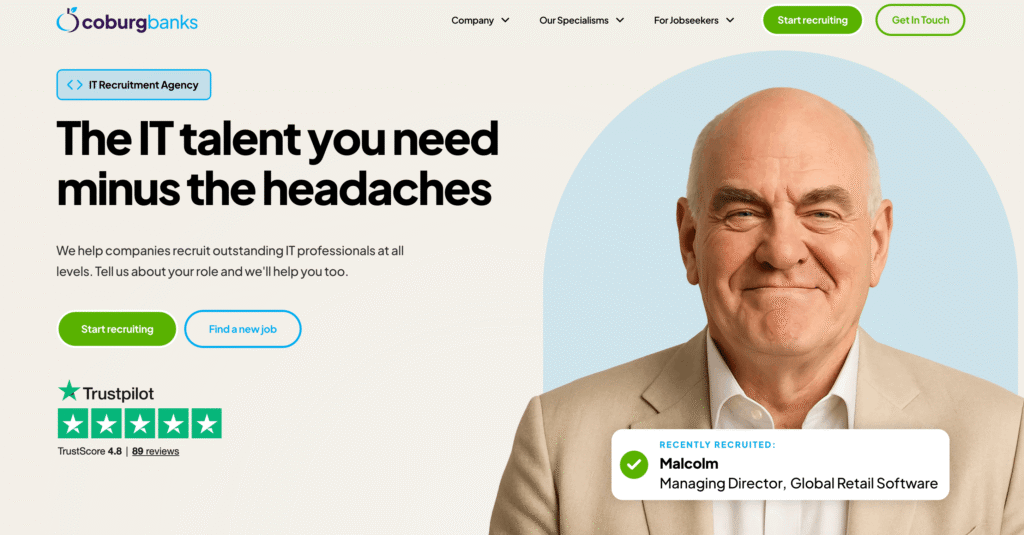
Coburg Banks IT Recruitment has positioned itself as a highly specialised and results-driven recruitment partner within the United Kingdom’s competitive technology hiring landscape in 2026. Established in 2002, the firm has built a strong reputation among small to medium-sized enterprises (SMEs) and mid-market organisations seeking reliable, high-quality IT and software talent.
Unlike many generalist recruitment agencies, Coburg Banks IT distinguishes itself through a deeply technical approach to recruitment. A significant proportion of its consultants possess prior experience in software engineering, IT infrastructure, or related technical domains. This embedded expertise enables the agency to accurately assess candidate capabilities, align talent with business requirements, and significantly reduce mismatches during the hiring process.
The agency operates on a contingency-based model, commonly referred to as a “no-placement, no-fee” structure. This model ensures that employers incur costs only upon successful placement, thereby lowering financial risk. Additionally, Coburg Banks IT provides a 12-week replacement guarantee, offering clients a safety net in the event that a placed candidate does not meet expectations or leaves prematurely. This dual-layered assurance framework makes the agency particularly attractive to organisations with limited internal recruitment resources.
Core Value Proposition and Market Positioning
Coburg Banks IT Recruitment has carved out a niche by focusing on efficiency, quality, and risk mitigation for growing businesses. Its approach is tailored to meet the needs of companies that require dependable hiring outcomes without the overhead of large-scale recruitment infrastructure.
Key strategic advantages include:
- Strong alignment with SME hiring cycles and budget constraints
- High consultant technical competency, improving candidate screening accuracy
- Risk-reduction mechanisms through guarantees and contingency pricing
- Faster turnaround times compared to traditional recruitment firms
The following table outlines the agency’s positioning within the UK IT recruitment ecosystem:
Coburg Banks IT Recruitment – Strategic Positioning Matrix (2026)
| Segment Focus | Target Clients | Recruitment Model | Key Differentiator | Risk Mitigation Features |
|---|---|---|---|---|
| SMEs and Mid-Market | Growing tech firms, startups, SMEs | Contingency (No Placement Fee) | Technically trained consultants | 12-week replacement guarantee |
| Permanent IT Hiring | Software developers, IT specialists | Permanent placements | Focus on long-term role fit and retention | Reduced hiring risk for employers |
| Passive Talent Acquisition | Mid-level experienced professionals | Community-driven sourcing | Engagement via GitHub and Stack Overflow | Higher candidate quality |
Advanced Talent Sourcing Strategy: Accessing the Passive Candidate Market
One of Coburg Banks IT Recruitment’s most defining strengths lies in its proactive sourcing strategy, particularly its focus on engaging passive candidates. Rather than relying solely on traditional job boards, the agency actively participates in niche technology communities such as GitHub and Stack Overflow.
This approach allows the firm to:
- Identify highly skilled professionals who are not actively seeking new roles
- Evaluate real-world coding ability and technical contributions
- Build long-term relationships with top-tier candidates
As a result, Coburg Banks IT consistently delivers high-quality shortlists for mid-level IT roles within a compressed timeframe of 1 to 2 weeks. The overall time-to-placement typically ranges between 4 to 8 weeks, which is considered highly efficient in the UK’s competitive tech hiring environment.
The following table illustrates their sourcing and delivery efficiency:
Talent Acquisition Performance Metrics – Coburg Banks IT (2026)
| Metric Category | Performance Benchmark |
|---|---|
| Shortlist Delivery Time | 1 to 2 weeks |
| Average Time-to-Placement | 4 to 8 weeks |
| Primary Talent Pool | Passive candidates |
| Sourcing Channels | GitHub, Stack Overflow, niche communities |
| Candidate Quality Level | Mid-level to senior professionals |
Service Delivery Model and Client Experience
Coburg Banks IT Recruitment emphasises a high-touch, consultative service model designed to enhance both client and candidate experiences. The agency prioritises transparency, communication, and ethical recruitment practices, which are increasingly critical factors in the modern hiring landscape.
From a client perspective, this translates into:
- Clear expectation setting and role alignment
- Continuous communication throughout the hiring process
- Reduced hiring friction through pre-qualified candidate pipelines
From a candidate perspective, the agency is recognised for its integrity and personalised support. One notable testimonial highlights how a recruiter went beyond standard responsibilities by reimbursing a candidate’s travel expenses after a client-side cancellation. This level of accountability reinforces trust and strengthens the agency’s reputation in the market.
Competitive Benchmarking Within the UK IT Recruitment Market
To better understand Coburg Banks IT Recruitment’s standing, it is useful to compare its capabilities against broader recruitment agency categories in the UK.
UK IT Recruitment Agency Comparison Matrix (2026)
| Agency Type | Technical Expertise Level | Speed of Delivery | Candidate Quality | Pricing Model | Ideal Client Segment |
|---|---|---|---|---|---|
| Coburg Banks IT | High | Fast | High | Contingency | SMEs, mid-market firms |
| Generalist Agencies | Moderate | متوسط | Moderate | Mixed | Broad industries |
| Large Global Firms | High | Moderate | High | Retained or hybrid | Enterprise clients |
| Freelance Recruiters | Variable | Fast | Variable | Flexible | Startups, small businesses |
Coburg Banks IT emerges as a strong contender for organisations that prioritise speed, cost-efficiency, and technical accuracy without engaging high-cost retained search firms.
Role in the UK’s IT Hiring Landscape in 2026
As the demand for software developers, DevOps engineers, cybersecurity specialists, and data professionals continues to surge across the United Kingdom, recruitment agencies like Coburg Banks IT play a critical role in bridging the talent gap.
Their focus on passive talent acquisition, combined with technical expertise and risk-reduction mechanisms, positions them as a valuable partner for businesses navigating:
- Talent shortages in niche technology domains
- Increasing competition for experienced IT professionals
- The need for faster, more reliable hiring outcomes
In an environment where hiring mistakes can be costly and disruptive, Coburg Banks IT Recruitment provides a structured, dependable, and performance-oriented solution tailored to the evolving needs of the UK technology sector.
3. Harvey Nash (Nash Squared)

Harvey Nash, operating under the broader Nash Squared group, has firmly established itself as one of the most influential global technology recruitment and advisory firms in the United Kingdom and beyond in 2026. With a legacy spanning more than three decades, the firm has evolved from a traditional recruitment agency into a strategic partner for enterprise organisations undergoing large-scale digital transformation.
With operations across 36 international locations, Harvey Nash delivers recruitment and advisory services at a scale that few competitors can match. Its extensive global footprint enables the firm to connect organisations with a vast network of over 500,000 digital leaders, including highly specialised professionals across emerging technology domains such as artificial intelligence, cloud computing, cybersecurity, and data engineering.
Enterprise-Focused Value Proposition and Strategic Advisory Capabilities
Harvey Nash differentiates itself through its dual capability as both a recruitment provider and a strategic advisory partner. Rather than focusing solely on talent acquisition, the firm actively supports organisations in aligning their workforce strategies with long-term digital transformation goals.
This integrated approach is particularly valuable for large enterprises that require:
- Holistic workforce planning across multiple IT disciplines
- Alignment between technical talent and organisational culture
- Scalable hiring solutions for complex, multi-phase digital initiatives
The agency has demonstrated its capabilities by supporting major organisations such as Ford and Lancaster University. In these engagements, Harvey Nash has played a pivotal role in helping clients navigate talent shortages in highly specialised areas while ensuring cultural compatibility and long-term retention.
The following table highlights the firm’s strategic positioning within the UK recruitment market:
Harvey Nash (Nash Squared) – Enterprise Recruitment and Advisory Matrix (2026)
| Service Category | Core Offering | Target Clients | Strategic Value Delivered |
|---|---|---|---|
| Executive Search | CIO, CTO, and senior digital leadership hiring | Large enterprises, public sector | Leadership alignment with digital transformation goals |
| Specialist Recruitment | AI, cloud, cybersecurity, data engineering talent | Enterprise IT departments | Access to niche and high-demand skill sets |
| Contract Staffing | High-volume hiring for project-based roles | Transformation-driven organisations | Rapid scalability for large digital initiatives |
| Strategic Advisory | Workforce planning and transformation consulting | Global corporations, universities | Integration of talent strategy with business objectives |
End-to-End Technology Talent Lifecycle Coverage
One of Harvey Nash’s most significant competitive advantages lies in its ability to support the entire technology talent lifecycle. From identifying and placing C-level executives to delivering large-scale contract staffing solutions, the firm provides a comprehensive suite of services designed to meet the diverse needs of enterprise clients.
This lifecycle approach includes:
- Executive search for senior leadership roles such as CIOs and CTOs
- Permanent recruitment for critical IT and software positions
- Contract and interim staffing for time-sensitive digital projects
- Advisory services focused on workforce transformation and organisational design
Such breadth of services allows Harvey Nash to act as a single strategic partner, reducing the need for multiple recruitment vendors and ensuring consistency in talent quality and delivery.
The following matrix illustrates the firm’s lifecycle coverage:
Technology Talent Lifecycle Coverage – Harvey Nash (2026)
| Lifecycle Stage | Recruitment Solution Type | Business Impact |
|---|---|---|
| Leadership Hiring | Executive Search | Drives strategic direction and innovation |
| Core Team Expansion | Permanent Recruitment | Builds stable, long-term technical capabilities |
| Project Execution | Contract Staffing | Enables agile and scalable workforce deployment |
| Transformation Strategy | Advisory Services | Aligns talent with organisational change goals |
Global Scale Combined with Local Expertise
Despite its global reach, Harvey Nash maintains a strong emphasis on local market expertise within the United Kingdom. This combination allows the firm to deliver both international talent mobility and deep understanding of regional hiring dynamics.
Key advantages of this model include:
- Access to global talent pools for hard-to-fill roles
- Localised insights into UK salary benchmarks and hiring trends
- Cross-border recruitment capabilities for multinational projects
This hybrid model is particularly beneficial for organisations operating across multiple geographies, as it ensures both consistency and contextual relevance in recruitment strategies.
Commitment to Sustainability and Corporate Responsibility
In addition to its commercial capabilities, Harvey Nash has positioned itself as a leader in corporate responsibility within the recruitment industry. The firm has made a significant commitment to sustainability by pledging to achieve Net Zero operations, including the transition to 100 percent renewable energy across its European offices by 2023.
This focus on environmental responsibility aligns with the growing expectations of enterprise clients, many of whom prioritise partnerships with organisations that demonstrate strong environmental, social, and governance (ESG) credentials.
The following table outlines key ESG initiatives:
Corporate Responsibility Framework – Harvey Nash (2026)
| ESG Dimension | Initiative | Strategic Impact |
|---|---|---|
| Environmental Sustainability | Net Zero commitment and renewable energy adoption | Reduces carbon footprint and supports ESG goals |
| Social Responsibility | Diversity and inclusion in hiring practices | Enhances workforce diversity and innovation |
| Governance | Ethical recruitment and compliance standards | Builds trust with clients and candidates |
Client Experience and Proven Impact in Complex Hiring Scenarios
Harvey Nash’s reputation is further reinforced by strong client testimonials that highlight its effectiveness in addressing complex hiring challenges. In one notable case, the firm supported Lancaster University during a critical phase of its strategic transformation.
Faced with significant difficulties in recruiting across multiple IT disciplines, including architecture and data integration, the organisation benefited from Harvey Nash’s collaborative and strategic approach. The agency successfully identified and secured candidates who not only possessed the required technical expertise but also aligned with the institution’s culture and long-term vision.
This example underscores the firm’s ability to:
- Solve high-complexity hiring challenges
- Deliver candidates with both technical and cultural fit
- Act as a true strategic partner rather than a transactional recruiter
Competitive Positioning in the UK IT Recruitment Landscape
When benchmarked against other recruitment providers, Harvey Nash stands out for its scale, advisory capabilities, and enterprise focus.
UK IT Recruitment Competitive Benchmark – 2026
| Agency Category | Scale of Operations | Advisory Capability | Talent Quality | Ideal Client Profile |
|---|---|---|---|---|
| Harvey Nash (Nash Squared) | Global | High | Very High | Large enterprises, public sector |
| Mid-Tier Specialist Firms | Regional | Moderate | High | SMEs and mid-market companies |
| Boutique Recruiters | Local | Low | Variable | Startups and niche hiring needs |
| Global Staffing Firms | Global | Moderate | High | Large-scale staffing requirements |
Harvey Nash’s ability to combine global reach with strategic insight positions it as a leading choice for organisations undertaking complex, high-stakes digital transformation initiatives.
Strategic Relevance in the United Kingdom’s Technology Hiring Market in 2026
As the United Kingdom continues to experience rapid digitalisation across industries, the demand for highly skilled IT and software professionals remains at an all-time high. Organisations are increasingly seeking recruitment partners that can deliver not only talent but also strategic guidance.
In this context, Harvey Nash (Nash Squared) plays a critical role by:
- Bridging the gap between talent supply and enterprise demand
- Enabling organisations to execute large-scale digital transformations
- Providing advisory services that align talent strategy with business objectives
Its comprehensive service offering, global network, and commitment to sustainability make it a standout recruitment partner for enterprises navigating the complexities of the modern technology landscape.
4. LA International


LA International has firmly established itself as a dominant force in the United Kingdom’s IT and software recruitment landscape in 2026, particularly within highly regulated and security-sensitive sectors. Recognised as the largest privately owned digital technology resourcing provider in the UK, the firm plays a critical role in supplying specialised talent to government bodies, defence organisations, and national infrastructure projects.
With over 40 years of operational experience, LA International has developed a reputation for delivering high-impact recruitment solutions at scale. Its global reach spans five continents and over 90 countries, enabling the organisation to support both domestic and international clients with complex workforce requirements.
A defining feature of LA International’s market leadership is its status as the number one supplier of Security Cleared (SC/DV) professionals to the UK government and defence sectors. This capability positions the firm at the centre of national digital transformation initiatives, where access to vetted and trusted talent is a non-negotiable requirement.
Strategic Positioning in Government, Defence, and National Infrastructure Projects
LA International’s core strength lies in its deep integration with the public sector and its ability to deliver mission-critical talent for high-security environments. The firm is a key supplier on major UK public sector procurement frameworks, including G-Cloud and Digital Outcomes and Specialists, which further reinforces its credibility and influence within government-led technology programmes.
Its strategic positioning is characterised by:
- Exclusive access to highly security-cleared IT professionals
- Strong relationships with government departments and defence contractors
- Proven ability to deliver talent for sensitive, large-scale national projects
The following table outlines LA International’s positioning within the UK IT recruitment ecosystem:
LA International – Public Sector and Defence Recruitment Matrix (2026)
| Core Segment | Target Clients | Talent Specialisation | Competitive Advantage | Framework Participation |
|---|---|---|---|---|
| Government and Defence | UK government agencies, defence contractors | SC/DV-cleared IT professionals | Market leader in security-cleared recruitment | G-Cloud, Digital Outcomes frameworks |
| National Infrastructure | Public sector digital programmes | Cybersecurity, DevOps, cloud engineering | Ability to deliver at scale for critical projects | Approved supplier |
| Global Technology Projects | Multinational organisations | Technical SMEs and project-based specialists | International delivery across 90+ countries | Cross-border recruitment capability |
Deep Sector Specialisation and Dedicated Delivery Divisions
Unlike generalist recruitment firms, LA International operates through a highly specialised divisional structure, enabling it to address the unique requirements of different industries with precision and expertise. This model ensures that clients receive candidates who are not only technically proficient but also deeply familiar with sector-specific challenges and compliance requirements.
Key divisions include:
- Defence and National Security
- Information and Communication Technology (ICT)
- Healthcare and Health Technology
- Cybersecurity and Digital Infrastructure
This structured approach allows LA International to deliver highly specialised talent, such as:
- DevOps engineers with experience in secure government environments
- Cybersecurity analysts capable of handling classified systems
- Technical subject matter experts (SMEs) for large-scale transformation programmes
The following matrix highlights the firm’s sector-specific capabilities:
Sector Specialisation and Talent Delivery Model – LA International (2026)
| Sector Focus | Typical Roles Delivered | Key Skills and Expertise | Business Impact |
|---|---|---|---|
| Defence and Security | Cybersecurity analysts, intelligence IT experts | SC/DV clearance, secure systems management | Supports national security and defence operations |
| ICT and Digital Services | Software engineers, cloud architects | DevOps, cloud platforms, system integration | Drives digital transformation across industries |
| Healthcare Technology | Health IT specialists, data integration experts | Health systems, interoperability, compliance | Enhances healthcare infrastructure and services |
| National Infrastructure | Technical SMEs, project consultants | Large-scale system deployment, risk management | Enables execution of critical public projects |
Scalable Delivery Model for Complex and High-Volume Hiring Needs
LA International’s operational model is designed to support both niche specialist placements and large-scale recruitment programmes. This scalability is particularly important for government and enterprise clients that require rapid deployment of skilled professionals across multiple projects simultaneously.
Key features of its delivery model include:
- Ability to mobilise large teams of contractors for national initiatives
- Strong pipeline of pre-vetted, security-cleared candidates
- Consistent delivery across long-term, multi-phase projects
The following table illustrates the firm’s delivery performance characteristics:
Recruitment Delivery Capabilities – LA International (2026)
| Capability Area | Delivery Strength |
|---|---|
| High-Volume Hiring | Rapid deployment of large contractor workforces |
| Specialist Talent Supply | Access to niche, security-cleared professionals |
| Global Reach | Operations across 90+ countries |
| Project Continuity | Long-term support for multi-phase programmes |
Industry Recognition and Global Credibility
LA International’s excellence in international trade and recruitment services has been recognised through prestigious industry accolades, including two Queen’s Awards for Enterprise in International Trade. These awards highlight the firm’s ability to deliver world-class services while maintaining strong global partnerships and operational standards.
Such recognition reinforces the agency’s reputation as a trusted partner for both public and private sector organisations, particularly in environments where reliability, compliance, and performance are critical.
Candidate Experience and Contractor Support Excellence
Beyond its client-facing capabilities, LA International is also known for delivering a high-quality candidate experience, particularly for professionals transitioning into contract roles. This is an important differentiator in a market where contractor satisfaction directly impacts talent retention and project success.
Feedback from candidates highlights several strengths:
- Structured and supportive onboarding processes
- Clear and consistent communication throughout project lifecycles
- Ongoing support for contractors adapting to new working models
In one notable case, a professional transitioning from a 30-year career in higher education IT support into contracting reported a seamless and highly professional onboarding experience. The individual emphasised the clarity of communication and the continuous support provided throughout the engagement, ultimately recommending the agency to peers within the industry.
Competitive Benchmarking Within the UK IT Recruitment Market
When compared to other recruitment providers in the United Kingdom, LA International stands out for its dominance in security-cleared recruitment and its ability to deliver at scale within the public sector.
UK IT Recruitment Competitive Positioning – 2026
| Agency Category | Security Clearance Expertise | Scale of Delivery | Sector Focus Strength | Ideal Client Segment |
|---|---|---|---|---|
| LA International | Very High | Very High | Public sector, defence | Government, defence, infrastructure |
| Global Recruitment Firms | Moderate | High | Broad industries | Enterprises and multinationals |
| Boutique IT Recruiters | Low | Low | Niche tech roles | Startups and SMEs |
| Mid-Tier Specialist Agencies | Moderate | Moderate | Selected industries | Mid-market organisations |
LA International’s unparalleled expertise in security-cleared recruitment, combined with its global reach and sector-specific focus, positions it as a critical enabler of the United Kingdom’s most sensitive and strategically important digital initiatives.
Strategic Importance in the UK Technology Hiring Landscape in 2026
As the United Kingdom continues to invest heavily in digital infrastructure, cybersecurity, and national resilience, the demand for highly specialised and security-cleared IT professionals is expected to grow significantly. In this context, LA International serves as a vital partner for organisations that require trusted, high-calibre talent to deliver mission-critical outcomes.
Its ability to combine scale, specialisation, and compliance-driven recruitment ensures that it remains at the forefront of the UK’s IT and software hiring ecosystem, particularly in sectors where precision, security, and reliability are paramount.
5. Signify Technology

Signify Technology has rapidly emerged as one of the most dynamic and forward-thinking recruitment agencies in the United Kingdom’s IT and software hiring landscape in 2026. Originally established as a niche recruitment firm focused on Scala developers, the agency has successfully evolved into a global leader in advanced technology hiring, with a strong emphasis on artificial intelligence, machine learning, and functional programming talent.
Operating across key innovation hubs including London, Los Angeles, and Austin, Signify Technology has built a transatlantic presence that enables it to support both high-growth startups and enterprise organisations. Its ability to scale internationally while maintaining a specialised focus has positioned the firm as a preferred partner for companies seeking cutting-edge engineering talent in highly competitive domains.
Strategic Positioning in AI, Machine Learning, and Emerging Technology Recruitment
Signify Technology differentiates itself through its deep expertise in next-generation technology domains, which are increasingly critical to digital transformation initiatives across industries. The firm’s recruitment focus extends beyond traditional software engineering roles to encompass highly specialised areas such as:
- Artificial intelligence and machine learning engineering
- Large language model (LLM) development and prompt engineering
- Adversarial machine learning and AI security
- Parametric design and CAD model generation
- Functional programming ecosystems, including Scala and related technologies
This advanced technical focus allows Signify to deliver talent that is not only highly skilled but also aligned with the future direction of the global technology landscape.
The following table highlights the agency’s positioning within the UK IT recruitment ecosystem:
Signify Technology – Advanced Technology Recruitment Matrix (2026)
| Core Focus Area | Target Clients | Talent Specialisation | Key Differentiator | Market Position |
|---|---|---|---|---|
| AI and Machine Learning | AI startups, enterprise innovation teams | ML engineers, data scientists, AI researchers | Deep expertise in emerging AI domains | Global specialist |
| Functional Programming | Tech-first organisations | Scala developers, functional engineers | Origin as a niche Scala recruitment firm | Niche leadership |
| Advanced Engineering Domains | High-tech and R&D-driven companies | LLM specialists, adversarial ML experts | Focus on cutting-edge, future-oriented skill sets | Innovation-driven recruitment |
| Global Talent Acquisition | Multinational organisations | Cross-border engineering talent | Offices in London, Los Angeles, Austin | Transatlantic reach |
Leadership in Diversity, Equity, and Inclusion (DEI) Recruitment Initiatives
In 2026, Diversity, Equity, and Inclusion (DEI) has become a central priority for organisations across the United Kingdom, particularly within the technology sector. Signify Technology has positioned itself as a leading recruitment partner in this space by actively supporting companies in achieving their DEI objectives.
As a minority-owned staffing agency, Signify integrates inclusive hiring practices into its core operations. The firm has also developed a strong community presence through its globally recognised event series, including:
- Scala in the City
- Women in the City
These initiatives serve as more than just networking platforms; they function as strategic talent pipelines that provide access to diverse, high-calibre engineering professionals. This community-driven approach enables Signify to build a proprietary network of candidates who are often inaccessible through traditional recruitment channels.
The following table outlines the agency’s DEI-driven recruitment strategy:
DEI and Community Engagement Framework – Signify Technology (2026)
| DEI Initiative | Strategic Purpose | Business Impact |
|---|---|---|
| Global Event Series | Build inclusive talent communities | Expands access to diverse candidate pools |
| Minority-Owned Leadership | Promote inclusive recruitment practices | Strengthens employer branding and compliance |
| Community Engagement | Foster long-term relationships with engineers | Creates proprietary talent pipelines |
| Inclusive Hiring Strategies | Support client DEI mandates | Enhances workforce diversity and innovation |
High-Performance Recruitment Culture and Consultant Development
Signify Technology is also recognised for its high-performance internal culture, which plays a significant role in its ability to deliver results in a fast-paced and competitive hiring environment. The agency invests heavily in training and development, enabling even junior consultants to rapidly acquire the skills needed to manage complex technical recruitment processes.
Key characteristics of this culture include:
- Intensive in-house training programmes focused on technical recruitment
- Performance-driven environment that rewards speed and quality
- Strong emphasis on collaboration and client partnership
As a result, consultants at Signify are often able to close complex engineering roles within a matter of weeks after completing their training, which is a notable achievement in the highly specialised AI and machine learning recruitment space.
The following matrix highlights the firm’s operational strengths:
Operational Excellence and Delivery Model – Signify Technology (2026)
| Capability Area | Delivery Strength | Strategic Advantage |
|---|---|---|
| Consultant Training | Intensive, technology-focused onboarding | Rapid ramp-up of recruitment capabilities |
| Speed of Placement | Fast turnaround for complex roles | Competitive advantage in high-demand markets |
| Talent Quality | High-calibre, niche engineering professionals | Strong alignment with advanced tech requirements |
| Client Collaboration | Partnership-driven recruitment approach | Improved hiring outcomes and retention |
Candidate Experience and Relationship-Driven Recruitment Approach
Signify Technology places a strong emphasis on delivering a personalised and supportive candidate experience, which is increasingly important in attracting and retaining top-tier engineering talent. The agency adopts a collaborative approach, positioning itself as a partner in the candidate’s career journey rather than a transactional intermediary.
Feedback from candidates highlights several key strengths:
- Clear, transparent, and responsive communication throughout the hiring process
- Ongoing support and guidance at every stage of the recruitment journey
- Strong alignment between candidate aspirations and job opportunities
In one notable case, a full-stack developer described the agency’s recruiter as a true partner who provided continuous support and acted as a companion throughout the process. This level of engagement not only enhances candidate satisfaction but also contributes to higher placement success rates and long-term retention.
Competitive Benchmarking Within the UK IT Recruitment Landscape
When compared to other recruitment agencies operating in the United Kingdom, Signify Technology stands out for its niche specialisation in advanced technologies and its strong alignment with DEI initiatives.
UK IT Recruitment Competitive Benchmark – Specialist Segment (2026)
| Agency Category | Technical Specialisation Level | DEI Focus | Speed of Delivery | Ideal Client Profile |
|---|---|---|---|---|
| Signify Technology | Very High (AI/ML focus) | High | Fast | AI startups, innovation-driven enterprises |
| Generalist IT Recruiters | Moderate | Moderate | Moderate | Broad industry clients |
| Large Global Recruitment Firms | High | Moderate | Moderate | Enterprise organisations |
| Boutique Tech Recruiters | High (niche focus) | Variable | Fast | Startups and specialised teams |
Signify Technology’s ability to combine deep technical expertise, global reach, and a strong commitment to diversity positions it as a leading recruitment partner for organisations operating at the forefront of technological innovation.
Strategic Role in the United Kingdom’s Technology Hiring Ecosystem in 2026
As the demand for AI, machine learning, and advanced engineering talent continues to accelerate across the United Kingdom, recruitment agencies that can deliver specialised expertise and access to niche talent pools are becoming increasingly valuable.
In this context, Signify Technology plays a critical role by:
- Enabling organisations to access highly specialised and future-ready talent
- Supporting DEI initiatives through inclusive hiring strategies
- Bridging the gap between emerging technology skills and market demand
Its evolution from a niche Scala recruiter to a global leader in advanced technology hiring reflects both its adaptability and its strategic vision, making it a standout agency in the UK’s IT and software recruitment landscape in 2026.
6. Understanding Recruitment

Understanding Recruitment has established itself as a highly respected and specialised technology recruitment consultancy within the United Kingdom’s IT and software hiring ecosystem in 2026. Headquartered in St Albans and supported by a team of more than 90 recruitment professionals, the firm is widely recognised for its ability to scale engineering teams for innovative, high-growth technology companies.
With a strong focus on technical excellence and delivery consistency, Understanding Recruitment has successfully placed over 713 technology professionals across both permanent and contract roles. Its industry recognition, including being named “Recruitment Company of the Year” by APSCo, further reinforces its reputation as a trusted partner for organisations navigating complex hiring challenges in competitive technical domains.
Strategic Positioning in High-Demand Technology Recruitment
Understanding Recruitment has carved out a clear niche by focusing on high-demand and future-critical technology skill sets. The agency demonstrates particular depth in areas that are central to modern digital transformation initiatives, including:
- Java software engineering
- Artificial intelligence and machine learning
- DevOps and cloud infrastructure
- Full-stack development and scalable architecture
This targeted expertise enables the firm to deliver candidates who are not only technically proficient but also capable of contributing to long-term product innovation and organisational growth.
The following table outlines the agency’s positioning within the UK IT recruitment landscape:
Understanding Recruitment – Technology Talent Positioning Matrix (2026)
| Core Focus Area | Target Clients | Talent Specialisation | Key Differentiator | Market Position |
|---|---|---|---|---|
| High-Growth Tech Firms | Startups, scale-ups, innovation-driven SMEs | Java engineers, AI/ML specialists, DevOps | Proven ability to scale engineering teams | Specialist consultancy |
| Permanent and Contract Hiring | Technology companies across sectors | Full-stack developers, cloud engineers | Balanced delivery across permanent and contract roles | Flexible hiring partner |
| Advanced Engineering Roles | Product-led organisations | AI, machine learning, backend architecture | Deep technical focus in emerging domains | Innovation-focused recruiter |
Employee-Owned Model: Driving Accountability and Long-Term Client Success
One of the defining characteristics of Understanding Recruitment is its employee-owned business model. This structure is designed to align the interests of consultants with the long-term success of both clients and candidates, fostering a culture of accountability, ownership, and sustained performance.
Key advantages of this model include:
- Greater consultant commitment to delivering high-quality outcomes
- Stronger alignment with client objectives and long-term partnerships
- Enhanced internal collaboration and knowledge sharing
By embedding ownership at every level of the organisation, Understanding Recruitment ensures that its consultants are not only incentivised to deliver results but also to maintain long-term relationships with clients.
The following table highlights the impact of this model:
Employee-Owned Recruitment Model – Strategic Impact (2026)
| Business Model Element | Operational Impact | Client Benefit |
|---|---|---|
| Employee Ownership | Increased accountability and engagement | Higher quality service delivery |
| Long-Term Incentives | Focus on sustainable client relationships | Improved retention and partnership continuity |
| Collaborative Culture | Knowledge sharing across teams | Better candidate matching and faster delivery |
Hybrid Service Offering: Bridging Recruitment and Technology Consultancy
Understanding Recruitment has further strengthened its market position through its “Understanding Solutions” brand, which offers a hybrid service model combining recruitment with elements of technology consultancy. This innovative approach addresses a growing demand among organisations for more flexible and integrated talent solutions.
The “Understanding Solutions” offering includes:
- Interim and contract resource deployment for project-based needs
- Advisory support for scaling engineering teams
- Strategic input on workforce planning and technical capability development
This hybrid model effectively bridges the gap between traditional staffing services and high-level consulting, enabling clients to access both talent and expertise through a single partner.
The following matrix illustrates this dual capability:
Hybrid Recruitment and Consultancy Model – Understanding Solutions (2026)
| Service Type | Description | Business Value Delivered |
|---|---|---|
| Traditional Recruitment | Permanent and contract placements | Builds core engineering teams |
| Interim Resource Delivery | Project-based staffing solutions | Supports short-term and high-impact initiatives |
| Strategic Advisory | Workforce and team scaling guidance | Aligns talent strategy with business growth |
| Integrated Solutions | Combined recruitment and consultancy services | Reduces reliance on multiple vendors |
Proven Delivery Excellence in Scaling Engineering Teams
Understanding Recruitment has developed a strong reputation for its ability to deliver results in challenging hiring environments, particularly when organisations need to rapidly expand their engineering capabilities.
Its delivery strengths include:
- Consistent pipeline of high-quality candidates in niche technical areas
- Ability to navigate competitive talent markets effectively
- Strong focus on matching both technical skills and organisational culture
Client feedback highlights the firm’s persistence, professionalism, and ability to deliver high-calibre candidates even during difficult hiring periods. In one instance, a Head of HR from a leading technology company emphasised the agency’s tireless efforts in filling critical software engineering roles, noting that the quality of candidates significantly enhanced the organisation’s engineering capacity.
The following table summarises key performance indicators:
Recruitment Performance Metrics – Understanding Recruitment (2026)
| Metric Category | Performance Indicator |
|---|---|
| Team Size | 90+ specialised recruiters |
| Total Placements | 713+ technology professionals |
| Core Delivery Strength | Engineering team scaling |
| Client Satisfaction Drivers | Candidate quality, persistence, professionalism |
Competitive Benchmarking Within the UK IT Recruitment Market
When compared to other recruitment providers in the United Kingdom, Understanding Recruitment stands out for its specialist focus, hybrid service model, and strong internal culture.
UK IT Recruitment Competitive Benchmark – Specialist Consultancy Segment (2026)
| Agency Category | Technical Specialisation | Service Model | Delivery Flexibility | Ideal Client Profile |
|---|---|---|---|---|
| Understanding Recruitment | High | Recruitment + Consultancy | High | Tech startups, scale-ups, SMEs |
| Generalist Recruitment Firms | Moderate | Recruitment only | Moderate | Broad industry clients |
| Global Recruitment Agencies | High | Recruitment + advisory | Moderate | Enterprise organisations |
| Boutique Tech Recruiters | High | Recruitment only | High | Niche hiring needs |
Understanding Recruitment’s ability to combine deep technical expertise with a flexible, consultancy-driven approach positions it as a strong partner for organisations seeking scalable and sustainable hiring solutions.
Strategic Role in the United Kingdom’s Technology Hiring Ecosystem in 2026
As the demand for skilled software engineers, AI specialists, and DevOps professionals continues to intensify across the United Kingdom, organisations are increasingly seeking recruitment partners that can deliver both talent and strategic insight.
In this evolving landscape, Understanding Recruitment plays a critical role by:
- Enabling rapid scaling of engineering teams for high-growth companies
- Providing flexible, hybrid solutions that combine recruitment and consultancy
- Delivering high-quality candidates aligned with both technical and cultural requirements
Its employee-owned structure, combined with its proven delivery track record and innovative service model, ensures that it remains a key contributor to the success of the UK’s technology sector in 2026.
7. Gerrard White Consulting

Gerrard White Consulting has earned a strong reputation as a highly specialised recruitment partner within the United Kingdom’s technology and change management hiring landscape in 2026. Recognised as the “Best Specialist Recruitment Agency” at the UK Business Awards, the firm stands out for its deep domain expertise, particularly within highly regulated and complex sectors such as insurance, insurtech, banking, and financial services.
Headquartered in Tunbridge Wells with a significant presence in London, Gerrard White Consulting operates with a clear focus on quality over volume. Rather than pursuing high-frequency placements, the agency prioritises precision, long-term value, and reputational integrity, making it a preferred partner for organisations seeking strategic hires that directly impact business performance.
Strategic Positioning in Financial Services and Technology Recruitment
Gerrard White Consulting has carved out a niche by specialising in the intersection of technology and change management within financial services. This sector-specific focus enables the agency to deliver candidates who not only possess strong technical capabilities but also understand regulatory environments, operational complexities, and transformation challenges.
Key areas of expertise include:
- Insurance and insurtech technology recruitment
- Banking and financial services IT hiring
- Change management and transformation roles
- Legal and compliance roles within tech-driven environments
This targeted positioning allows the agency to provide highly relevant talent solutions tailored to industries where precision and domain knowledge are critical.
The following table outlines the agency’s positioning:
Gerrard White Consulting – Sector-Specific Recruitment Matrix (2026)
| Core Sector Focus | Target Clients | Talent Specialisation | Key Differentiator | Market Position |
|---|---|---|---|---|
| Insurance and Insurtech | Insurance firms, insurtech startups | IT professionals, digital transformation roles | Deep understanding of insurance technology landscape | Sector specialist |
| Banking and Financial Services | Banks, fintech companies | Software engineers, compliance and change roles | Strong alignment with regulatory and operational needs | Niche expert |
| Change Management | Enterprise transformation teams | Project managers, transformation specialists | Focus on business impact and organisational change | Strategic recruiter |
| Legal-Tech Integration | Tech-enabled legal firms | Legal professionals in tech environments | Cross-functional expertise in law and technology | Hybrid specialist |
Partnership-Led Recruitment Approach: Quality Over Volume
A defining feature of Gerrard White Consulting’s operational philosophy is its partnership-led approach to recruitment. Under the leadership of Managing Director Anthony Butler, the agency emphasises building long-term relationships with clients rather than focusing on transactional placements.
This approach is characterised by:
- Deep engagement with client requirements and organisational culture
- Focus on delivering candidates who create measurable business impact
- Commitment to protecting client reputation through high-quality hiring outcomes
The agency’s methodology goes beyond surface-level job descriptions. Instead, consultants aim to “get under the skin of the brief,” ensuring a comprehensive understanding of both technical requirements and organisational context.
The following table highlights the strategic advantages of this approach:
Partnership-Led Recruitment Model – Gerrard White Consulting (2026)
| Approach Element | Operational Execution | Client Benefit |
|---|---|---|
| Deep Role Analysis | Detailed understanding of technical and cultural needs | Higher accuracy in candidate matching |
| Quality-First Delivery | Focus on fewer, high-impact placements | Improved retention and long-term performance |
| Reputation Protection | Careful candidate selection and vetting | Reduced hiring risks and brand safeguarding |
| Relationship Management | Ongoing client engagement and support | Stronger long-term partnerships |
Precision-Driven Talent Matching and Shortlist Delivery
Gerrard White Consulting distinguishes itself through its ability to deliver highly curated candidate shortlists that prioritise fit and impact over volume. Rather than relying on automated keyword matching or generic sourcing methods, the agency employs a more analytical and consultative approach to candidate selection.
Key strengths in this area include:
- Rapid delivery of tailored shortlists aligned with business needs
- Emphasis on cultural compatibility alongside technical expertise
- Strong focus on long-term role success rather than immediate placement
This precision-driven model ensures that clients receive candidates who are not only capable of performing the role but also contributing to broader organisational objectives.
The following matrix illustrates this capability:
Candidate Matching and Delivery Framework – Gerrard White Consulting (2026)
| Evaluation Criteria | Focus Area | Outcome |
|---|---|---|
| Technical Competence | Role-specific skills and experience | High-performing candidates |
| Cultural Alignment | Fit with organisational values and environment | Improved retention and team cohesion |
| Business Impact | Ability to drive measurable outcomes | Enhanced organisational performance |
| Shortlist Efficiency | Speed and relevance of candidate delivery | Reduced time-to-hire |
Candidate Experience and Reputation for Transparency
In addition to its client-facing strengths, Gerrard White Consulting has built a strong reputation for delivering an exceptional candidate experience. The agency is highly rated for its transparency, communication, and respectful engagement with job seekers, which is increasingly important in a competitive talent market.
Candidate feedback highlights several key attributes:
- Personalised support throughout the recruitment process
- Regular communication and follow-ups after placement
- Genuine care for candidate career progression
In one instance, a candidate credited the agency with securing their first legal role within a technology-focused firm, noting the recruiter’s ongoing support and proactive communication. This level of engagement stands in contrast to more transactional approaches often associated with larger, generalist recruitment agencies.
Competitive Benchmarking Within the UK IT Recruitment Market
When compared to other recruitment firms operating in the United Kingdom, Gerrard White Consulting stands out for its niche expertise, partnership-driven model, and focus on quality.
UK IT Recruitment Competitive Benchmark – Specialist Financial Services Segment (2026)
| Agency Category | Sector Specialisation | Quality Focus | Delivery Approach | Ideal Client Profile |
|---|---|---|---|---|
| Gerrard White Consulting | Very High | Very High | Partnership-led | Financial services, insurtech firms |
| Generalist Recruitment Firms | Low | Moderate | Volume-driven | Broad industry clients |
| Large Global Agencies | Moderate | High | Structured, process-led | Enterprise organisations |
| Boutique Specialist Agencies | High | High | Niche-focused | Sector-specific organisations |
Gerrard White Consulting’s emphasis on precision, partnership, and sector expertise positions it as a leading choice for organisations seeking high-impact hires within complex and regulated industries.
Strategic Role in the United Kingdom’s Technology Hiring Landscape in 2026
As the United Kingdom’s financial services sector continues to undergo rapid digital transformation, the demand for technology professionals with both technical expertise and domain knowledge is increasing significantly. Organisations require recruitment partners that can navigate this complexity and deliver talent capable of driving meaningful change.
In this context, Gerrard White Consulting plays a vital role by:
- Providing specialised talent for technology and change management initiatives
- Supporting organisations in highly regulated and complex environments
- Delivering high-quality candidates aligned with both technical and strategic objectives
Its recognition as a leading specialist recruitment agency, combined with its partnership-driven philosophy and strong candidate experience, ensures that it remains a key contributor to the success of the UK’s technology and financial services sectors in 2026.
8. TechNET IT Recruitment
TechNET IT Recruitment has established itself as a highly effective and process-driven technology staffing firm within the United Kingdom’s IT and software recruitment landscape in 2026. Founded in 2001 and operating from key hubs in Milton Keynes and London, the agency has built a strong reputation for delivering structured, efficient, and high-quality recruitment solutions across a diverse range of technology sectors.
What sets TechNET apart is its emphasis on precision and methodology. The firm is widely recognised for achieving near 1:1 CV-to-interview ratios for certain high-growth clients, a metric that reflects both the quality of candidate screening and the depth of its role qualification process. This level of efficiency is particularly valuable in competitive hiring environments where speed and accuracy directly impact business outcomes.
Strategic Positioning in Multi-Vertical Technology Recruitment
TechNET IT Recruitment operates across a broad spectrum of technology verticals, enabling it to support organisations with diverse and evolving hiring needs. Its expertise spans both emerging and established domains, including:
- Financial technology (FinTech)
- Immersive and emerging technologies
- Startup and scale-up ecosystems
- Technical sales and commercial technology roles
This multi-vertical approach allows TechNET to serve a wide range of clients, from early-stage startups to established enterprises, while maintaining a high level of specialisation within each domain.
The following table outlines the agency’s strategic positioning:
TechNET IT Recruitment – Multi-Vertical Talent Positioning Matrix (2026)
| Core Focus Area | Target Clients | Talent Specialisation | Key Differentiator | Market Position |
|---|---|---|---|---|
| FinTech and Digital Services | FinTech firms, financial platforms | Software engineers, product specialists | Strong understanding of financial technology ecosystems | Sector specialist |
| Immersive Technology | AR/VR and emerging tech companies | Immersive tech engineers, developers | Focus on cutting-edge innovation domains | Emerging tech recruiter |
| Startup and Scale-Up Hiring | High-growth startups | Technical sales, engineering talent | Agile and fast-paced recruitment delivery | Growth-stage partner |
| Cross-Functional Roles | Tech-driven organisations | Sales, product, and engineering professionals | Integrated hiring across technical and commercial roles | Hybrid recruiter |
Structured Recruitment Methodology and High-Precision Delivery
A defining strength of TechNET IT Recruitment lies in its highly structured and methodical approach to the hiring process. The agency places significant emphasis on understanding a client’s delivery model, organisational structure, and technical requirements before initiating candidate sourcing.
Key components of this methodology include:
- In-depth role qualification and requirement validation
- Rigorous candidate screening and shortlisting processes
- Continuous communication and feedback loops throughout the hiring cycle
This structured approach enables TechNET to deliver highly relevant candidates, resulting in exceptional efficiency metrics such as near 1:1 CV-to-interview ratios.
The following table illustrates the firm’s delivery framework:
Structured Recruitment Delivery Model – TechNET IT (2026)
| Process Stage | Execution Approach | Business Outcome |
|---|---|---|
| Role Qualification | Deep analysis of client requirements | Accurate alignment with hiring needs |
| Candidate Screening | Rigorous evaluation of skills and experience | High-quality candidate shortlists |
| Shortlist Delivery | Precision-based candidate selection | Improved interview-to-offer conversion rates |
| Client Communication | Structured follow-up and feedback mechanisms | Enhanced transparency and collaboration |
Executive Search and Contract Staffing Capabilities
TechNET IT Recruitment offers specialised divisions that address both leadership hiring and project-based staffing needs, making it a versatile partner for organisations at different stages of growth.
The CxO Division focuses on identifying and placing senior technology leaders, including:
- Chief Technology Officers (CTOs)
- Chief Information Officers (CIOs)
- Senior engineering and product leaders
Meanwhile, the Contracts Division provides interim and project-based staffing solutions, supporting organisations with:
- International project delivery
- Short-term resource augmentation
- Rapid deployment of skilled contractors
This dual capability allows TechNET to support both strategic leadership hiring and operational execution.
The following matrix highlights these service offerings:
Executive and Contract Staffing Solutions – TechNET IT (2026)
| Service Division | Core Offering | Target Use Case |
|---|---|---|
| CxO Division | Executive search for senior technology leaders | Strategic leadership and transformation roles |
| Contracts Division | Interim and project-based staffing | Short-term projects and global deployments |
| Permanent Recruitment | Full-time technology hiring | Long-term team building |
Speed and Efficiency in High-Growth Hiring Environments
TechNET IT Recruitment is particularly valued for its ability to deliver results بسرعة and efficiently in fast-paced, high-growth environments. Clients consistently highlight the agency’s ability to reduce time-to-hire while maintaining high standards of candidate quality.
In one client engagement, TechNET successfully streamlined a traditionally time-intensive recruitment process, delivering validated candidates and progressing to offer stage in less than three weeks. This level of speed is achieved without compromising on due diligence, thanks to the agency’s structured approach and deep understanding of client requirements.
Key performance indicators include:
- Accelerated hiring timelines for critical roles
- High candidate relevance and conversion rates
- Consistent delivery across multiple engagements
The following table summarises performance strengths:
Recruitment Performance Metrics – TechNET IT (2026)
| Metric Category | Performance Indicator |
|---|---|
| CV-to-Interview Ratio | Near 1:1 for select clients |
| Time-to-Offer | Less than 3 weeks in some engagements |
| Core Strength | Speed and precision |
| Client Retention | Long-term partnerships across multiple firms |
Client Experience and Long-Term Partnership Approach
TechNET IT Recruitment has built a strong reputation for reliability and consistency, particularly among clients who engage the agency across multiple organisations and hiring cycles. Its partnership-driven approach ensures that clients receive not only high-quality candidates but also ongoing support throughout the recruitment process.
Client feedback highlights:
- Strong upfront validation of hiring needs
- Structured and transparent communication
- Consistent delivery of qualified candidates
Long-term clients frequently emphasise the agency’s dependability and effectiveness, noting that TechNET remains a trusted recruitment partner even as their organisations grow and evolve.
Competitive Benchmarking Within the UK IT Recruitment Market
When compared to other recruitment agencies in the United Kingdom, TechNET IT Recruitment stands out for its structured methodology, efficiency, and multi-vertical expertise.
UK IT Recruitment Competitive Benchmark – Structured Delivery Segment (2026)
| Agency Category | Delivery Precision | Speed of Hiring | Service Breadth | Ideal Client Profile |
|---|---|---|---|---|
| TechNET IT Recruitment | Very High | Very High | High | Startups, scale-ups, tech-driven firms |
| Generalist Recruitment Firms | Moderate | Moderate | Broad | Cross-industry clients |
| Large Global Agencies | High | Moderate | Very High | Enterprise organisations |
| Boutique Tech Recruiters | High | Fast | Moderate | Niche hiring needs |
TechNET’s ability to combine speed with precision positions it as a strong choice for organisations seeking efficient, high-quality hiring outcomes without sacrificing depth or accuracy.
Strategic Role in the United Kingdom’s Technology Hiring Ecosystem in 2026
As the demand for specialised IT and software talent continues to intensify across the United Kingdom, organisations are increasingly prioritising recruitment partners that can deliver both speed and accuracy.
In this context, TechNET IT Recruitment plays a critical role by:
- Streamlining complex hiring processes through structured methodologies
- Delivering high-quality candidates with minimal inefficiencies
- Supporting organisations across multiple technology verticals and growth stages
Its proven track record, combined with its commitment to precision and performance, ensures that TechNET IT Recruitment remains a key contributor to the success of technology hiring strategies in the UK in 2026.
9. VHR (Virtual Human Resources)
VHR (Virtual Human Resources) has established itself as a globally recognised and award-winning technical recruitment organisation, playing a pivotal role in the United Kingdom’s engineering and advanced technology hiring landscape in 2026. Founded in 2003, the agency specialises in sourcing and deploying highly skilled professionals across high-precision industries such as Formula 1, aerospace, and automotive engineering—sectors where accuracy, compliance, and performance are mission-critical.
With a strong international presence and a reputation for delivering complex workforce solutions, VHR has become a trusted partner for organisations requiring specialised talent across borders. Its recognition as the “International Recruitment Company of the Year” in 2025 reflects its continued success in building and managing global talent ecosystems.
Strategic Positioning in High-Precision Engineering and Technical Recruitment
VHR’s core strength lies in its deep specialisation within technically demanding industries that require highly skilled professionals with niche expertise. Unlike generalist recruitment agencies, VHR operates at the intersection of engineering excellence and workforce mobility, delivering talent that meets both technical and operational requirements.
Key sectors served include:
- Aerospace and aviation engineering
- Automotive and motorsport, including Formula 1
- Advanced manufacturing and industrial engineering
- High-performance technical environments
This sector-focused approach enables VHR to deliver candidates who are not only technically proficient but also capable of operating in highly regulated and performance-driven environments.
The following table outlines the agency’s positioning:
VHR – High-Precision Industry Recruitment Matrix (2026)
| Core Sector Focus | Target Clients | Talent Specialisation | Key Differentiator | Market Position |
|---|---|---|---|---|
| Aerospace and Aviation | Airlines, aerospace manufacturers | Aircraft engineers, maintenance specialists | Deep expertise in regulated aviation environments | Industry specialist |
| Automotive and Motorsport | Automotive OEMs, Formula 1 teams | Performance engineers, design specialists | Experience in high-performance engineering sectors | Niche leader |
| Advanced Manufacturing | Industrial and production firms | Mechanical engineers, technical operators | Focus on precision-driven technical roles | Technical recruitment expert |
| Global Engineering Projects | Multinational engineering organisations | International technical workforce | Cross-border talent deployment capabilities | Global workforce partner |
End-to-End Workforce Solutions and Global Talent Mobility
A defining feature of VHR’s service offering is its ability to provide comprehensive, end-to-end workforce solutions that extend far beyond traditional recruitment. The agency supports clients throughout the entire employment lifecycle, particularly in international and project-based contexts.
Key services include:
- Talent sourcing and placement for specialised technical roles
- Visa processing and work permit facilitation
- Logistics coordination for international workforce deployment
- In-work management and ongoing contractor support
This integrated approach ensures that clients can seamlessly scale their workforce across borders without facing administrative or operational bottlenecks.
The following matrix illustrates VHR’s service coverage:
Global Workforce Solutions Framework – VHR (2026)
| Service Component | Description | Business Value Delivered |
|---|---|---|
| Talent Acquisition | Recruitment of specialised engineering talent | Access to high-quality technical professionals |
| Global Mobility Support | Work permits, visas, and relocation logistics | Simplifies international workforce deployment |
| In-Work Management | Ongoing support for deployed contractors | Ensures productivity and workforce stability |
| Compliance and Regulation | Adherence to local and international standards | Reduces legal and operational risks |
Workforce Advisory Model: Acting as an Extension of HR Functions
VHR positions itself not merely as a recruitment vendor but as a strategic workforce advisor. During periods of rapid organisational growth or large-scale project execution, the agency integrates closely with client HR teams, effectively acting as an extension of their internal workforce planning capabilities.
This advisory model enables organisations to:
- Scale operations quickly without compromising on talent quality
- Maintain consistency in workforce management across multiple locations
- Align recruitment strategies with broader business objectives
By embedding itself within client operations, VHR delivers a level of partnership that goes beyond transactional hiring, supporting long-term organisational success.
The following table highlights the benefits of this approach:
Workforce Advisory and Partnership Model – VHR (2026)
| Advisory Function | Operational Execution | Client Benefit |
|---|---|---|
| HR Integration | Close collaboration with internal HR teams | Seamless workforce planning and execution |
| Strategic Workforce Planning | Support during rapid growth phases | Scalable and sustainable talent acquisition |
| Relationship Management | Regular engagement with client stakeholders | Stronger alignment and communication |
| Operational Support | End-to-end workforce lifecycle management | Reduced administrative burden |
Commitment to Ethical Recruitment and Global Talent Development
VHR has also distinguished itself through its strong commitment to ethical recruitment practices and global talent development. The agency actively promotes fair hiring standards, diversity, and inclusion across its operations, which has contributed to its recognition as a “World Class” employer.
Key elements of its ethical recruitment framework include:
- Transparent and compliant recruitment processes
- Fair treatment of international candidates
- Support for workforce diversity and inclusion initiatives
This focus on ethical practices is increasingly important in a globalised hiring environment, where organisations must ensure compliance with international labour standards while maintaining a positive employer brand.
Proven Impact in High-Growth and High-Pressure Environments
VHR’s effectiveness is particularly evident in high-growth scenarios where organisations must rapidly scale their workforce while maintaining operational quality and efficiency. In industries such as Formula 1 and automotive engineering, where performance timelines are critical, the ability to deliver skilled talent quickly can directly impact production outcomes.
Client feedback highlights several strengths:
- Ability to provide experienced and qualified staff at scale
- Strong relationship management across multiple levels of the organisation
- Consistent support throughout periods of rapid expansion
In one notable case, a client in the Formula 1 and automotive sector credited VHR with playing a crucial role in maintaining production pace and quality during a significant growth phase. The agency’s proactive engagement and partnership-driven approach were key factors in this success.
Competitive Benchmarking Within the UK Technical Recruitment Market
When compared to other recruitment providers in the United Kingdom, VHR stands out for its global reach, end-to-end service model, and deep expertise in high-precision industries.
UK Technical Recruitment Competitive Benchmark – Engineering and Global Workforce Segment (2026)
| Agency Category | Global Reach | Service Depth | Sector Specialisation | Ideal Client Profile |
|---|---|---|---|---|
| VHR (Virtual Human Resources) | Very High | Very High | High-precision industries | Aerospace, automotive, global engineering firms |
| Generalist Recruitment Firms | Low | Moderate | Broad industries | Cross-sector organisations |
| Engineering Boutiques | Moderate | Moderate | High (niche focus) | Specialist engineering firms |
| Global Staffing Firms | High | High | Moderate | Multinational enterprises |
VHR’s ability to combine global workforce solutions with deep technical expertise positions it as a leading recruitment partner for organisations operating in complex and high-performance environments.
Strategic Role in the United Kingdom’s Technology and Engineering Hiring Landscape in 2026
As industries such as aerospace, automotive, and advanced manufacturing continue to evolve, the demand for highly specialised engineering talent is expected to grow significantly. Organisations require recruitment partners that can deliver not only technical expertise but also global workforce solutions that support international operations.
In this context, VHR plays a critical role by:
- Enabling organisations to access global pools of specialised engineering talent
- Supporting cross-border workforce deployment and compliance
- Acting as a strategic advisor during periods of rapid growth and transformation
Its comprehensive service offering, combined with its commitment to ethical recruitment and global talent development, ensures that VHR remains a key contributor to the success of high-precision industries in the United Kingdom in 2026.
10. OnHires

OnHires has emerged as a highly agile and data-driven recruitment and staffing partner within the United Kingdom’s technology hiring ecosystem in 2026. With a strong global delivery model and headquarters in London, the agency specialises in supporting fast-scaling technology companies across some of the most disruptive and high-growth sectors, including artificial intelligence, Web3, and SaaS.
What distinguishes OnHires is its ability to combine deep market intelligence with a structured, analytics-led recruitment process. This enables the firm to deliver predictable and repeatable hiring outcomes, a critical advantage for organisations operating in competitive talent markets where speed, accuracy, and consistency are essential.
Strategic Positioning in Emerging Technology Recruitment
OnHires has positioned itself at the forefront of next-generation technology hiring by focusing on industries that are shaping the future of digital innovation. Its core areas of expertise include:
- Artificial intelligence and machine learning
- Web3, blockchain, and decentralised technologies
- Software-as-a-Service (SaaS) platforms
- Creative and technical hybrid roles within digital product teams
This specialised focus allows OnHires to deliver talent that is not only technically proficient but also aligned with rapidly evolving industry trends and business models.
The following table outlines the agency’s positioning within the UK recruitment landscape:
OnHires – Emerging Technology Recruitment Matrix (2026)
| Core Focus Area | Target Clients | Talent Specialisation | Key Differentiator | Market Position |
|---|---|---|---|---|
| AI and Machine Learning | AI startups, data-driven enterprises | ML engineers, AI specialists | Data-driven recruitment methodology | Innovation-focused recruiter |
| Web3 and Blockchain | Blockchain firms, decentralised platforms | Web3 developers, smart contract engineers | Expertise in niche, decentralised ecosystems | Emerging tech specialist |
| SaaS and Digital Products | SaaS companies, product-led startups | Full-stack developers, product engineers | Alignment with scalable business models | Growth-stage partner |
| Creative-Tech Integration | Design and product teams | UI/UX designers, creative technologists | Ability to match technical and creative skill sets | Hybrid recruitment specialist |
Data-Driven Recruitment Model and Predictable Hiring Outcomes
A defining strength of OnHires is its structured and data-driven recruitment process, which is designed to deliver consistent and measurable hiring success. The agency leverages market insights, performance metrics, and structured workflows to optimise each stage of the recruitment lifecycle.
Key elements of this model include:
- Data-backed candidate sourcing and evaluation
- Structured screening processes aligned with technical requirements
- Continuous tracking of hiring performance metrics
This approach enables OnHires to achieve high levels of efficiency and predictability, with many specialised technology searches being successfully completed within approximately four weeks.
The following table highlights the firm’s recruitment performance framework:
Data-Driven Recruitment Framework – OnHires (2026)
| Process Component | Execution Approach | Business Outcome |
|---|---|---|
| Talent Sourcing | Market intelligence and data-driven targeting | Access to high-quality, niche candidates |
| Candidate Evaluation | Structured technical and cultural assessment | Improved candidate fit and retention |
| Process Optimisation | Continuous monitoring of recruitment metrics | Predictable and repeatable hiring outcomes |
| Time-to-Hire Efficiency | Streamlined workflows | Faster placements (around 4 weeks) |
“Speed with Clarity” Approach: Balancing Efficiency and Precision
OnHires has built its reputation on a “speed with clarity” philosophy, which emphasises rapid delivery without compromising on candidate quality or process transparency. This approach is particularly valuable for high-growth technology companies that need to scale quickly while maintaining hiring standards.
Key advantages include:
- Accelerated hiring timelines for hard-to-fill technical roles
- Clear communication and transparency throughout the recruitment process
- Reduced administrative friction for both clients and candidates
By combining speed with structured clarity, OnHires ensures that clients receive not only fast results but also well-informed hiring decisions.
The following matrix illustrates this approach:
Speed with Clarity Delivery Model – OnHires (2026)
| Capability Area | Execution Focus | Strategic Advantage |
|---|---|---|
| Speed of Delivery | Rapid candidate sourcing and placement | Faster scaling for tech teams |
| Process Transparency | Clear communication and structured updates | Improved client confidence and decision-making |
| Candidate Quality | Focus on technical and cultural alignment | Higher retention and performance |
| Operational Efficiency | Streamlined workflows and reduced complexity | Lower administrative burden |
Global Delivery Model and Cross-Time-Zone Recruitment Capability
Operating with a global mindset, OnHires manages recruitment projects across multiple time zones, enabling it to support international clients and distributed teams. This capability is increasingly important in 2026, as remote work and global talent mobility continue to redefine hiring practices.
Key strengths of its global model include:
- Ability to source talent from diverse international markets
- Seamless coordination across different time zones
- Support for distributed and remote-first organisations
This global reach allows OnHires to provide clients with access to a broader and more diverse talent pool, particularly in niche technology domains.
Proven Results and High Retention Outcomes
OnHires has demonstrated strong performance in delivering high-quality hires with long-term retention. Clients frequently highlight the agency’s ability to consistently match candidates with both technical requirements and organisational culture.
Notable performance indicators include:
- High success rate in filling hard-to-source technical roles
- Strong candidate retention, with some clients reporting near 100 percent retention rates
- Consistent delivery of quality candidates without administrative inefficiencies
Client feedback reinforces these strengths, with one organisation noting that OnHires successfully delivered talent that had been difficult to source through other channels. The agency’s ability to understand both creative and technical requirements was highlighted as a key factor in achieving successful outcomes.
The following table summarises key performance metrics:
Recruitment Performance Metrics – OnHires (2026)
| Metric Category | Performance Indicator |
|---|---|
| Average Time-to-Hire | Approximately 4 weeks |
| Retention Rate | Up to 100% for certain client engagements |
| Core Strength | Speed with clarity and structured delivery |
| Global Reach | Multi-time-zone project management |
Competitive Benchmarking Within the UK IT Recruitment Market
When compared to other recruitment agencies in the United Kingdom, OnHires stands out for its data-driven methodology, focus on emerging technologies, and global delivery capabilities.
UK IT Recruitment Competitive Benchmark – Emerging Tech Segment (2026)
| Agency Category | Data-Driven Approach | Speed of Delivery | Specialisation Level | Ideal Client Profile |
|---|---|---|---|---|
| OnHires | Very High | Very High | High (AI, Web3, SaaS) | Startups, scale-ups, global tech firms |
| Traditional Recruitment Firms | Low | Moderate | Moderate | Broad industry clients |
| Global Staffing Agencies | Moderate | Moderate | High | Enterprise organisations |
| Boutique Tech Recruiters | High | Fast | High | Niche technology companies |
OnHires’ ability to integrate data-driven processes with deep domain expertise positions it as a leading recruitment partner for organisations operating at the forefront of technological innovation.
Strategic Role in the United Kingdom’s Technology Hiring Landscape in 2026
As the demand for specialised talent in AI, Web3, and SaaS continues to grow, organisations require recruitment partners that can deliver both speed and precision in increasingly complex hiring environments.
In this context, OnHires plays a critical role by:
- Enabling rapid scaling of high-performance technology teams
- Delivering predictable hiring outcomes through structured, data-driven processes
- Providing access to global talent pools across emerging technology sectors
Its combination of speed, clarity, and global reach ensures that OnHires remains a key contributor to the success of technology-driven organisations in the United Kingdom in 2026.
The Macro-Economic Landscape of UK Technology and Software Employment in 2026
The United Kingdom’s technology and software employment market in 2026 is undergoing a profound structural transformation, marked by the clear separation of specialist digital talent dynamics from broader labour market trends. While the overall UK economy has entered a phase of relative stabilisation following years of volatility, the digital sector continues to serve as the primary engine of economic growth. However, this growth is accompanied by a widening confidence gap between industry stakeholders and government policy execution.
Recent industry insights reveal a paradox at the heart of the UK’s digital economy. Approximately 85 percent of non-technology businesses now recognise the technology sector as the backbone of national economic recovery, underscoring its strategic importance across industries. Yet, in contrast, 84 percent of technology firms remain unconvinced that government-led growth initiatives are translating into meaningful operational support. This disconnect has introduced a growing sense of uncertainty within the sector, contributing to a “move or lose” mentality among businesses. Notably, around 45 percent of technology companies are actively considering relocating operations to more favourable markets across Europe or North America, where regulatory clarity, funding access, and innovation ecosystems may be perceived as stronger.
Structural Talent Shortages and the Rise of Skill-Based Compensation Models
The UK technology labour market in 2026 is defined by an acute and persistent shortage of highly specialised digital talent. Demand continues to significantly outpace supply in critical domains such as artificial intelligence, cloud architecture, cybersecurity, and data analytics. This imbalance has fundamentally reshaped compensation frameworks, shifting away from traditional cost-of-living adjustments toward skill-based premium models.
Employers are increasingly willing to offer substantial salary premiums to secure candidates with niche expertise. For example, a senior AI or machine learning engineer now commands an average salary premium of 15.5 percent compared to a senior software developer with similar years of experience. This premium reflects the growing urgency among organisations to build scalable, intelligent systems and maintain competitive advantage in an AI-driven economy.
In major technology hubs, compensation levels have reached unprecedented levels. Leadership roles in artificial intelligence and cloud architecture routinely exceed six-figure salaries, with top-tier positions in London ranging between £130,000 and £220,000 annually. This trend highlights the strategic value placed on advanced technical capabilities and the increasing competition for elite talent.
Regionalisation of the UK Technology Ecosystem
Regional diversification has become a defining feature of the UK technology landscape in 2026. While London continues to dominate as the country’s leading technology hub, the rise of regional innovation centres has significantly reshaped the distribution of talent and economic activity.
London remains the epicentre of the UK’s digital economy, hosting approximately 51,943 technology businesses and achieving an impressive 58 percent growth rate over the previous year. Its concentration of capital, talent, and global connectivity ensures its continued leadership position.
However, cities such as Manchester, Leeds, and Birmingham have reached critical mass, emerging as powerful secondary hubs that offer compelling alternatives to London. The Greater Manchester region, for instance, contributes over £28 billion in Gross Value Added (GVA) and is projected to sustain an annual economic growth rate of 2.5 percent through 2026. A key driver of this growth is the region’s strong talent retention capabilities, with approximately 51 percent of graduates choosing to remain in Manchester after completing their studies—one of the highest retention rates in the country.
This regionalisation trend is enabling organisations to access diverse talent pools, reduce operational costs, and build distributed teams while maintaining high levels of productivity and innovation.
UK Technology Salary Benchmarks and Sector Premiums in 2026
The following table presents a comprehensive overview of salary benchmarks across key IT and software roles in the United Kingdom in 2026. It highlights the significant premiums associated with specialised disciplines and leadership positions, as well as the varying growth rates across different roles.
UK Technology Salary Benchmarks and Sector Premiums (2026)
| Job Title | National Median Salary | Top Percentile (London/SaaS) | Annual Growth % |
|---|---|---|---|
| AI / Machine Learning Engineer | £105,500 | £130,000+ | +15.5% |
| Principal AI Architect | £155,000 | £220,000+ | +12.0% |
| Cloud Solutions Architect | £115,000 | £150,000 | +10.5% |
| DevOps Engineer (Senior) | £94,000 | £118,000 | +8.8% |
| Senior Software Developer | £100,000 | £125,000 | +7.2% |
| Cybersecurity Director | £125,000 | £160,000 | +11.2% |
| Senior Data Scientist | £88,500 | £130,000 | +9.5% |
| Data Architect | £90,000 | £110,000 | +6.5% |
| IT Programme Manager | £115,500 | £145,000 | +8.0% |
| IT Support Engineer | £33,000 | £40,000 | +4.2% |
Key Implications for Employers and Recruitment Strategy in 2026
The evolving macroeconomic and labour market conditions in the UK technology sector carry significant implications for employers and recruitment strategies.
Key strategic considerations include:
- Increasing reliance on specialist recruitment agencies to access niche talent pools
- Greater emphasis on employer branding and value propositions to attract high-demand candidates
- Adoption of flexible hiring models, including remote and international recruitment
- Investment in upskilling and internal talent development to mitigate external shortages
As the competition for skilled IT professionals intensifies, organisations must adopt more sophisticated and proactive hiring strategies to secure and retain top talent.
Conclusion: A High-Growth Sector Facing Structural Challenges
In 2026, the United Kingdom’s technology and software employment market presents a complex yet opportunity-rich landscape. While the sector continues to drive national economic growth and innovation, it is simultaneously challenged by talent shortages, policy uncertainty, and increasing global competition.
The combination of rising salary premiums, regional expansion, and evolving workforce expectations underscores the need for organisations to rethink traditional hiring approaches. Employers that successfully adapt to these dynamics—by leveraging specialist recruitment partners, embracing global talent strategies, and investing in advanced capabilities—will be best positioned to thrive in the rapidly evolving digital economy.
Regional Innovation Epicentres: The Decentralisation of UK Technology Talent in 2026
The United Kingdom’s technology recruitment landscape in 2026 is no longer defined solely by London’s dominance. Instead, it reflects a decentralised ecosystem where regional innovation hubs across the North and the Midlands are outperforming national benchmarks in key indicators such as productivity, economic output, and property value growth. These metrics increasingly serve as reliable proxies for talent concentration and long-term investment attractiveness.
This structural shift is reshaping how employers approach hiring strategies. Organisations are now actively expanding beyond London to tap into high-quality, cost-efficient, and highly specialised talent pools in cities such as Manchester, Leeds, and Birmingham. These regions are not only closing the gap with London but, in certain sectors, surpassing it in growth momentum and innovation output.
Manchester: The North-Shoring Magnet for Digital and SaaS Talent
Manchester has firmly established itself as the United Kingdom’s leading regional technology hub and is widely regarded as the “Second City” for digital innovation in 2026. Its growth trajectory is underpinned by significant infrastructure investments and the development of world-class innovation districts such as MediaCityUK and Bruntwood SciTech.
The city’s employment growth is projected at 1.8 percent annually between 2024 and 2026, outperforming the national average of 1.3 percent. This steady expansion is complemented by a highly attractive demographic profile, characterised by a young, skilled, and mobile workforce.
Key factors driving Manchester’s recruitment appeal include:
- A strong talent pipeline supported by leading universities
- High graduate retention, with 57 percent of students returning after studying elsewhere
- A rapidly expanding SaaS, creative, and digital ecosystem
- Competitive property prices relative to London, attracting both talent and employers
Property market dynamics further reinforce Manchester’s position as a talent magnet. Capital values are projected to lead the UK through 2026, particularly in central areas such as Piccadilly, reflecting strong demand for urban living among technology professionals.
Manchester Talent and Economic Profile (2026)
| Indicator | Performance Insight |
|---|---|
| Annual Employment Growth | 1.8% (above national average) |
| Graduate Retention | 57% return rate |
| Core Tech Specialisation | Creative tech, SaaS, digital platforms |
| Property Demand Indicator | Leading UK growth in capital values |
| Talent Profile | युवा, highly educated workforce |
Leeds: A High-Growth Hub for FinTech and HealthTech Innovation
Leeds has emerged as one of the fastest-growing technology hubs in the United Kingdom, with its tech sector expanding at a rate 125 percent faster than the national average. This rapid acceleration is largely driven by the city’s strong foundation in professional services, particularly finance and legal sectors, which together contribute approximately 40 percent of its Gross Value Added (GVA).
Leeds has successfully leveraged this foundation to build a highly specialised ecosystem focused on FinTech and HealthTech innovation. The presence of major institutions such as NHS Digital and a dense network of hospitals has enabled the city to become a national leader in healthcare technology development.
Recruitment demand in Leeds is notably sophisticated, with a strong emphasis on higher-skilled roles. Approximately 63 percent of job postings target management and professional occupations, significantly higher than the 54 percent average in surrounding regions.
Key advantages of Leeds include:
- Rapid sector growth driven by FinTech and HealthTech demand
- Strong integration between healthcare infrastructure and technology innovation
- High concentration of skilled professional roles
- Increasing attractiveness for employers seeking specialised talent
Leeds Talent and Economic Profile (2026)
| Indicator | Performance Insight |
|---|---|
| Tech Sector Growth Rate | 125% faster than UK average |
| GVA Contribution (Finance/Legal) | 40% of total |
| High-Skill Job Demand | 63% of roles in management/professional tiers |
| Core Tech Specialisation | FinTech, HealthTech |
| Innovation Drivers | NHS Digital, hospital clusters |
Birmingham: Infrastructure-Led Growth and Creative Technology Expansion
Birmingham is rapidly transforming into a major technology and innovation hub, driven by large-scale infrastructure projects and increasing investment from global institutions. Its designation as the “HS2 Capital” has catalysed urban regeneration, particularly in areas such as Digbeth, which is evolving into a vibrant creative and digital technology district.
The city’s appeal has been further validated by the entry of major financial institutions, including Goldman Sachs, signalling strong confidence in Birmingham’s economic resilience and growth potential.
Population growth in Birmingham is projected to exceed 5 percent through 2031, providing a substantial and sustainable pipeline of talent for employers. This demographic expansion, combined with lower operational costs compared to London, makes Birmingham an attractive destination for both businesses and professionals.
Key strengths of Birmingham include:
- Significant infrastructure investment driving economic activity
- Rapid urban regeneration and development of creative tech hubs
- Strong population growth supporting long-term talent supply
- Increasing presence of global financial and technology firms
Birmingham Talent and Economic Profile (2026)
| Indicator | Performance Insight |
|---|---|
| Population Growth (to 2031) | Over 5% |
| Key Development Area | Digbeth creative and tech hub |
| Core Specialisation | Creative tech, FinTech |
| Investment Drivers | HS2, institutional investors |
| Talent Pipeline Strength | Large and growing workforce |
Regional Growth and Economic Indicators Across Key UK Technology Hubs
The following table provides a comparative overview of key regional indicators across major UK technology hubs in 2026. It highlights the growing competitiveness of regional cities relative to London, particularly in terms of GVA growth, specialisation, and cost-of-living advantages.
Regional Growth and Economic Indicators (2026 Projections)
| Region | Projected GVA Growth | Tech Hub Specialisation | Graduate Retention | Entry-Level Property (2-Bed) |
|---|---|---|---|---|
| London | 2.1% | General tech, FinTech | 58% | £550,000 |
| Manchester | 2.5% | Creative, Digital, SaaS | 51% | £265,000 |
| Leeds | 2.3% | FinTech, HealthTech | 44% | £215,000 |
| Birmingham | 2.0% | Creative tech, FinTech | 41% | £240,000 |
| Glasgow | 1.9% | Data science, engineering | 46% | £190,000 |
| Bristol | 1.8% | Aerospace, GreenTech | 43% | Not specified |
Strategic Implications for Employers and IT Recruitment in 2026
The decentralisation of technology talent across the United Kingdom presents significant opportunities for employers seeking to optimise their recruitment strategies.
Key implications include:
- Access to high-quality talent pools outside London at lower cost
- Increased competition among regional hubs driving innovation and productivity
- Greater flexibility in building distributed and hybrid teams
- Opportunity to align hiring strategies with regional specialisations
Organisations that strategically leverage these regional ecosystems can gain a competitive advantage by reducing hiring costs, improving talent retention, and accessing specialised skill sets aligned with industry demands.
Conclusion: A Multi-Hub Future for UK Technology Recruitment
The rise of regional innovation epicentres marks a fundamental shift in the United Kingdom’s technology employment landscape in 2026. While London remains a global powerhouse, cities such as Manchester, Leeds, and Birmingham are redefining the geography of talent and innovation.
This decentralised model is creating a more balanced, resilient, and opportunity-rich ecosystem, where employers can tap into diverse talent pools across multiple regions. As the UK technology sector continues to evolve, the ability to navigate and leverage these regional dynamics will be a key determinant of recruitment success.
The Financial Architecture of IT Recruitment in the United Kingdom (2026): Fees, Markups, and ROI
Understanding the financial structure of IT recruitment in the United Kingdom in 2026 requires a detailed examination of both visible agency fees and the underlying cost components that shape profitability and return on investment. As hiring demand intensifies across software engineering, artificial intelligence, and cloud infrastructure roles, organisations are becoming increasingly sophisticated in evaluating recruitment spend, pricing models, and long-term cost efficiency.
The modern recruitment landscape is no longer defined solely by percentage-based fees. Instead, it reflects a complex interplay between pricing structures, statutory obligations, delivery models, and strategic hiring decisions.
Permanent Recruitment Fees: Benchmark Ranges and Cost Implications
For permanent IT and software placements, recruitment agencies in the UK typically charge between 15 percent and 30 percent of a candidate’s first-year annual salary. The exact percentage depends on factors such as role seniority, talent scarcity, and agency specialisation.
For mid-level roles, the cost structure is relatively standardised. For example:
- A software engineer hired at £60,000 with a 20 percent agency fee results in a recruitment cost of £12,000
- More specialised or niche roles often command higher fees within the upper range
These costs reflect not only candidate sourcing but also screening, market mapping, negotiation, and risk mitigation provided by the agency.
Permanent Recruitment Cost Structure (2026)
| Role Level | Typical Salary Range | Fee Percentage Range | Estimated Recruitment Cost |
|---|---|---|---|
| Mid-Level Engineer | £50,000 – £70,000 | 15% – 25% | £7,500 – £17,500 |
| Senior Specialist | £80,000 – £120,000 | 20% – 30% | £16,000 – £36,000 |
| Executive Leadership | £130,000 – £220,000 | 25% – 35% | £32,500 – £77,000 |
Contingency vs Retained Search Models: Strategic Cost Differences
Recruitment pricing in 2026 is heavily influenced by the engagement model chosen. The two dominant models—contingency and retained search—serve different hiring needs and organisational priorities.
Contingency Recruitment Model
This model is most commonly used for mid-level and high-volume hiring.
- Fees typically range from 15 percent to 25 percent
- Payment is only made upon successful placement
- Lower upfront financial risk for employers
- Often involves multiple agencies competing for the same role
Retained Search Model
This model is increasingly preferred for executive and mission-critical roles.
- Fees range from 25 percent to 35 percent of total first-year compensation
- Payment is structured in stages:
- Initial engagement fee at project kickoff
- Second installment upon shortlist delivery
- Final payment upon successful placement
- Provides exclusive access to dedicated search resources
- Higher quality and more targeted candidate pipelines
Recruitment Engagement Model Comparison (2026)
| Model Type | Fee Range | Payment Structure | Ideal Use Case | Key Advantage |
|---|---|---|---|---|
| Contingency | 15% – 25% | Pay on successful placement | Mid-level and volume hiring | Lower financial risk |
| Retained Search | 25% – 35% | Staged payments | Executive and niche leadership roles | Higher quality and exclusivity |
Contract Recruitment Economics: Understanding the Bill Rate and Markup
Contract recruitment operates on a fundamentally different pricing structure, centred around the concept of the “bill rate.” This rate represents the total hourly or daily cost charged to the client, which includes both the contractor’s pay and the agency’s markup.
In 2026, typical agency markups for IT contract roles range from 35 percent to 50 percent, with highly specialised roles reaching up to 75 percent.
Example Scenario:
- Contractor hourly pay rate: $60
- Agency markup: 50 percent
- Client bill rate: $90 per hour
The $30 markup is not pure profit. It is distributed across several cost components:
Contract Recruitment Cost Breakdown (Illustrative)
| Cost Component | Description | Share of Markup |
|---|---|---|
| Statutory Costs | National Insurance, payroll taxes | Significant portion |
| Operational Overheads | Recruitment operations, compliance, systems | Moderate portion |
| Benefits and Insurance | Contractor protections and coverage | Moderate portion |
| Agency Profit Margin | Net profit retained by agency | 3% – 8% of bill rate |
In practical terms, the agency’s actual profit on such placements is relatively modest, typically amounting to $4 to $6 per hour. This highlights the importance of understanding the full cost structure rather than focusing solely on headline markup percentages.
Cost Per Hire (CPH) and the Shift Toward In-House Recruitment
Cost per hire has become a critical metric for organisations evaluating recruitment strategies in 2026. The average cost to fill a role in the UK is approximately:
- £6,125 for standard hires
- Up to £19,000 for managerial or specialist positions
As hiring volumes increase, many organisations are reassessing the long-term economics of relying on external agencies versus building internal recruitment capabilities.
In-House vs Agency Cost Comparison (2026)
| Hiring Scenario | Estimated Annual Cost |
|---|---|
| 3 Agency Hires (£15,000 each) | £45,000 |
| In-House Recruiter Salary | £40,000 – £55,000 |
| Break-Even Threshold | 3 to 4 hires annually |
For organisations hiring more than 8 to 10 software developers per year, the financial case for establishing an internal talent acquisition team becomes increasingly compelling. A dedicated technical recruiter can deliver significant cost savings while also improving hiring consistency and employer branding.
ROI Considerations: Balancing Cost, Speed, and Talent Quality
While cost is a critical factor, return on investment in recruitment must also account for speed, quality, and long-term impact. Agencies often provide value beyond simple candidate placement, including:
- Access to passive and hard-to-reach talent pools
- Reduced time-to-hire for critical roles
- Market intelligence and salary benchmarking
- Risk mitigation through guarantees and replacement policies
The true ROI of recruitment should therefore be evaluated across multiple dimensions:
Recruitment ROI Evaluation Framework (2026)
| ROI Factor | Agency Advantage | Business Impact |
|---|---|---|
| Speed of Hiring | Faster access to candidates | Reduced project delays |
| Talent Quality | Pre-vetted and specialised candidates | Improved performance and retention |
| Cost Efficiency | Higher upfront cost | Lower long-term hiring risk |
| Scalability | Ability to scale hiring quickly | Supports rapid business growth |
Conclusion: A Strategic Approach to Recruitment Investment
The financial architecture of IT recruitment in the United Kingdom in 2026 reflects a highly nuanced and evolving landscape. Organisations must navigate a range of pricing models, cost structures, and strategic trade-offs when designing their hiring strategies.
Key takeaways include:
- Recruitment fees are influenced by role complexity, hiring model, and market demand
- Contract recruitment markups are largely driven by statutory and operational costs
- In-house recruitment becomes cost-effective at higher hiring volumes
- ROI should be assessed holistically, considering speed, quality, and long-term impact
As competition for IT and software talent intensifies, organisations that adopt a strategic and data-driven approach to recruitment investment will be best positioned to optimise costs, secure top talent, and drive sustained business growth in 2026 and beyond.
The Strategic Role of AI and Automation in Recruitment Operations in the United Kingdom (2026)
As the recruitment industry progresses through 2026, artificial intelligence and automation are no longer supplementary tools but core operational drivers reshaping how recruitment agencies and employers approach talent acquisition. The transformation extends far beyond traditional applicant tracking systems, evolving into a fully integrated, AI-enabled ecosystem that optimises every stage of the recruitment lifecycle.
At the centre of this evolution is the emergence of “Agentic AI”—a new class of intelligent systems capable of autonomously managing complex workflows across compliance, payroll, candidate engagement, and real-time labour market analysis. This shift is fundamentally redefining the economics, scalability, and strategic value of recruitment operations.
From Automation to Agentic AI: A Paradigm Shift in Recruitment Technology
The transition from basic automation to Agentic AI represents a significant leap in recruitment capability. While earlier systems focused on streamlining administrative tasks, modern AI solutions are designed to make decisions, adapt to dynamic market conditions, and continuously optimise processes.
Key capabilities of Agentic AI in recruitment include:
- Automated compliance management for contract and international hiring
- Real-time payroll processing and contractor management
- Dynamic talent mapping based on market data and demand signals
- Intelligent candidate engagement and communication workflows
This evolution allows recruitment agencies to operate with greater efficiency, accuracy, and scalability, while reducing reliance on manual processes.
The following table illustrates this technological shift:
Evolution of Recruitment Technology (2026)
| Technology Stage | Core Functionality | Strategic Impact |
|---|---|---|
| Traditional ATS | Candidate tracking and database management | Basic workflow organisation |
| Automation Tools | Task automation (emails, scheduling) | Incremental efficiency gains |
| Agentic AI Systems | Autonomous workflow management and decision-making | End-to-end operational optimisation |
Innovation in Talent Acquisition Technology Platforms
The rapid advancement of recruitment technology is exemplified by a new generation of platforms that have gained industry recognition for their impact on operational efficiency and hiring outcomes. Several of these solutions have received prestigious TIARA awards in 2025 and 2026, highlighting their transformative role in the sector.
For example:
- meetDWIGHT leverages Agentic AI to automate complex back-office functions such as compliance and payroll, significantly reducing operational overhead for recruitment agencies
- Eli Onboarding combines data-driven insights with automated onboarding processes to improve candidate integration and reduce early-stage attrition
- SourceFlow and related platforms enable predictive talent mapping and commercial growth through intelligent data analysis
These innovations are not only improving efficiency but also enabling agencies to deliver higher-value services to clients.
Operational Impact of Talent Acquisition Technology
The integration of AI-driven platforms has produced measurable improvements across key recruitment performance metrics. These technologies are redefining operational benchmarks and setting new standards for efficiency, retention, and scalability.
Operational Impact of Talent Acquisition Technology (2026)
| Technology Category | Featured Platform | 2026 Impact Metric | Core Benefit |
|---|---|---|---|
| Onboarding Solution | Eli Onboarding | 18% reduction in early attrition | Reduced hiring cycles and improved retention |
| Back-Office AI | meetDWIGHT | 40% reduction in admin overhead | Enhanced operational efficiency |
| Contractor Management | Nétive VMS | 98% client retention rate | Compliance-driven workforce management |
| Candidate Experience | Popp | 40+ system integrations | Reduced bias and improved engagement |
| Talent Intelligence | SourceWhale | High commercial growth | Predictive talent mapping and pipeline building |
Changing Economics of Recruitment Agencies
The widespread adoption of AI and automation is fundamentally altering the cost structure and competitive dynamics of recruitment agencies. Historically, larger firms held a significant advantage due to their scale, resources, and infrastructure. However, in 2026, technology is levelling the playing field.
Smaller and specialist agencies can now:
- Leverage automation to significantly reduce administrative overhead
- Increase consultant productivity through AI-assisted workflows
- Compete with larger firms on speed, quality, and delivery consistency
This democratisation of capability has led to a shift away from traditional volume-based recruitment models toward more strategic, value-driven approaches.
The Rise of Value-Based Pricing and Consultative Partnerships
As AI-driven platforms commoditise transactional recruitment activities, agencies are increasingly repositioning themselves as strategic partners rather than service providers. This shift is reflected in the growing adoption of value-based pricing models, where fees are aligned with outcomes, impact, and long-term value rather than simple placement metrics.
Key characteristics of this shift include:
- Greater emphasis on advisory services and workforce strategy
- Focus on delivering measurable business outcomes rather than volume
- Stronger client-agency partnerships built on trust and collaboration
The following table highlights the evolution of recruitment business models:
Recruitment Business Model Transformation (2026)
| Model Type | Key Characteristics | Competitive Advantage |
|---|---|---|
| Transactional Recruitment | Volume-driven placements | Speed and scalability |
| Technology-Enabled Model | AI-driven automation and efficiency | Lower costs and higher productivity |
| Consultative Partnership | Strategic advisory and value-based pricing | Long-term client relationships and impact |
Enhancing Candidate Experience and Reducing Bias
AI and automation are also playing a critical role in improving the candidate experience and promoting fairer hiring practices. Advanced platforms are now capable of:
- Integrating with multiple systems to provide seamless candidate journeys
- Reducing unconscious bias through structured and data-driven screening
- Personalising communication and engagement at scale
These improvements not only enhance candidate satisfaction but also contribute to better hiring outcomes and stronger employer branding.
Strategic Implications for Employers and Recruitment Leaders
The growing influence of AI and automation in recruitment operations carries several important implications for employers and talent acquisition leaders in 2026:
- Increased expectation for faster, more efficient hiring processes
- Greater reliance on data-driven decision-making in recruitment
- Need to balance automation with human judgement and relationship-building
- Opportunity to optimise recruitment spend through technology adoption
Organisations that effectively integrate AI into their recruitment strategies will be better positioned to attract, engage, and retain top talent in a highly competitive market.
Conclusion: A Technology-Driven Future for Recruitment Operations
The strategic role of AI and automation in recruitment operations is reshaping the industry at an unprecedented pace in 2026. From Agentic AI systems managing complex workflows to advanced platforms delivering measurable performance improvements, technology is driving a fundamental transformation in how talent is sourced, evaluated, and retained.
As transactional processes become increasingly automated, the value of recruitment will shift toward strategic insight, human expertise, and long-term partnership. Agencies and employers that embrace this evolution will not only achieve greater operational efficiency but also gain a significant competitive advantage in securing the talent required to thrive in the digital economy.
Time-to-Hire and Process Durations in the United Kingdom (2026): Benchmarks and Strategic Insights
In 2026, the “time-to-hire” metric has evolved into one of the most critical performance indicators in IT and software recruitment. As competition for highly skilled technology professionals intensifies, the speed at which organisations identify, engage, and secure talent directly impacts hiring success and business outcomes.
A key challenge in the current landscape is the mismatch between candidate availability and hiring timelines. High-impact candidates—particularly in domains such as artificial intelligence, cloud engineering, and cybersecurity—remain active in the job market for an average of only 10 days. However, the average hiring process has become significantly longer due to increasingly rigorous technical assessments and multi-stage evaluation frameworks.
Rising Time-to-Hire: A Structural Shift in Recruitment Complexity
The average time-to-hire for technology roles in the United Kingdom has increased substantially, reaching approximately 68.5 days in mid-2025, compared to a range of 36 to 44 days in 2023. This increase reflects a broader shift toward more comprehensive hiring processes designed to reduce risk and ensure high-quality placements.
Key drivers of extended hiring timelines include:
- Multi-stage technical interviews and coding assessments
- Behavioural and cultural fit evaluations
- Verification of certifications and niche technical skills
- Increased stakeholder involvement in hiring decisions
While these measures improve hiring accuracy, they also introduce delays that can result in the loss of top candidates to faster-moving competitors.
The Granular Hiring Clock: Where Time is Spent
A detailed breakdown of the hiring process reveals where time is typically allocated across different stages. Understanding this distribution enables organisations to identify inefficiencies and optimise their recruitment workflows.
Granular Breakdown of the Hiring Process (2026)
| Hiring Stage | Typical Duration / Effort | Key Insight |
|---|---|---|
| Sourcing and Triage | Approximately 10 hours per vacancy | High effort required for quality candidate filtering |
| Initial Candidate Outreach | Within 3.6 days (best practice) | Faster response significantly improves success rates |
| Interview Process | Around 23 days | Multi-stage interviews are now standard |
| Verification and Background Checks | 8 to 15 days | Essential for technical and regulated roles |
Speed of engagement is particularly critical at the early stages. Organisations that initiate contact with candidates within 3.6 days of application significantly outperform those that delay outreach to 6.1 days, highlighting the importance of responsiveness in securing top talent.
Time-to-Hire by Role Seniority and Industry
Time-to-hire varies significantly depending on role seniority and industry sector. As roles become more senior and specialised, the hiring process becomes longer and more complex, increasing the risk of candidate drop-off.
Time-to-Hire by Role Level and Sector (2026)
| Role Level / Sector | Average Time-to-Hire (Days) | Risk of Candidate Drop-Off |
|---|---|---|
| Entry-Level / Junior | 15 – 25 Days | Low |
| Mid-Level / Professional | 30 – 45 Days | Medium |
| Senior / Staff Engineer | 60 – 90+ Days | High |
| Executive (CTO / VP) | 120+ Days | Very High |
| Public Sector / Government | 40.9 Days | Medium |
| Energy and Defence | 67 Days | High |
| Professional Services | 31.2 Days | Low |
Senior and executive-level roles present the greatest challenges, with extended timelines often exceeding three to four months. This significantly increases the likelihood of losing candidates to competing offers, particularly in high-demand sectors.
Candidate Drop-Off Risk and Competitive Hiring Dynamics
The extended duration of hiring processes in 2026 has introduced a heightened risk of candidate drop-off. As top candidates receive multiple offers within short timeframes, delays in decision-making can result in lost opportunities.
Key risk factors include:
- Lengthy interview cycles with multiple stakeholders
- Delays in feedback and decision-making
- Lack of clear communication with candidates
- Inefficient coordination between hiring teams
Organisations that fail to streamline these processes risk losing high-value candidates to competitors with faster and more decisive hiring strategies.
Process Optimisation Through Technology and Structured Hiring
To address these challenges, many organisations are adopting structured recruitment processes and leveraging technology to reduce time-to-hire. Tools that enable pre-screening, automated scheduling, and data-driven decision-making are becoming essential components of modern recruitment strategies.
For example, startups that implement structured hiring frameworks and utilise pre-screening platforms have successfully reduced their average hiring time by approximately 12 days. These improvements are achieved through:
- Standardised interview processes and evaluation criteria
- Automated candidate screening and shortlisting
- Faster coordination of interviews and feedback loops
Process Optimisation Strategies and Impact (2026)
| Optimisation Strategy | Implementation Approach | Impact on Time-to-Hire |
|---|---|---|
| Pre-Screening Tools | Automated candidate qualification | Reduces initial filtering time |
| Structured Interviews | Standardised evaluation frameworks | Improves decision speed |
| Automated Scheduling | AI-driven coordination of interviews | Minimises delays |
| Centralised Communication | Unified feedback and decision platforms | Enhances process efficiency |
Strategic Implications for Employers in 2026
The evolving time-to-hire landscape carries several important implications for employers:
- Speed has become a competitive advantage in securing top talent
- Structured and efficient processes are essential to reduce delays
- Early engagement with candidates significantly improves success rates
- Technology adoption is critical for optimising recruitment workflows
Organisations must strike a balance between thorough evaluation and process efficiency to remain competitive in a fast-moving talent market.
Conclusion: Speed, Precision, and Agility as Competitive Differentiators
In 2026, time-to-hire is no longer just an operational metric—it is a strategic determinant of recruitment success. As hiring processes become more complex and candidate availability windows shrink, organisations must prioritise speed, precision, and agility.
Employers that optimise their recruitment workflows, leverage technology, and adopt structured hiring practices will be best positioned to secure top-tier IT and software talent. In a market where the best candidates are available for only a matter of days, the ability to act quickly and decisively is the ultimate competitive advantage.
Strategic Recommendations for IT and Software Hiring in the United Kingdom (2026)
The UK technology recruitment landscape in 2026 has reached a level of maturity where hiring success is no longer determined by access to large candidate databases, but by the precision of recruitment processes and the depth of technical expertise applied throughout the hiring lifecycle. As talent shortages intensify across critical domains such as AI, cloud computing, and cybersecurity, organisations must adopt a more strategic, data-driven, and specialised approach to talent acquisition.
While large global agencies continue to dominate high-volume hiring, they are increasingly challenged by niche and specialist recruitment firms that offer superior technical vetting, tailored candidate experiences, and faster delivery cycles. In this evolving environment, employers must rethink traditional hiring models and align their strategies with the realities of a highly competitive and decentralised talent market.
Prioritise Specialisation Over Scale in Recruitment Partnerships
One of the most significant shifts in 2026 is the growing advantage of specialist recruitment agencies over generalist firms. Agencies with deep expertise in specific technology domains consistently outperform larger players in delivering high-quality candidates.
Key reasons include:
- Consultants with real technical understanding of roles and skill sets
- Ability to assess candidates beyond keyword matching
- Access to niche talent pools and passive candidates
- Higher accuracy in candidate-role alignment
The following comparison highlights the difference:
Specialist vs Generalist Recruitment Performance (2026)
| Recruitment Model | Technical Understanding | Candidate Quality | Speed of Delivery | Ideal Use Case |
|---|---|---|---|---|
| Specialist Agencies | Very High | Very High | Fast | Niche and high-skill roles |
| Generalist Agencies | Moderate | Moderate | Moderate | High-volume, generic hiring |
For organisations seeking top-tier IT talent, partnering with specialist agencies significantly increases the probability of successful placements and long-term retention.
Optimise the Interview-to-Offer Window to Secure Top Talent
Speed has become a decisive factor in recruitment success. In 2026, top technology candidates are often available for less than 10 days, while prolonged hiring processes significantly increase the risk of losing them to competing offers.
Critical insights include:
- Processes exceeding four weeks from first interview to offer see sharply increased drop-off rates
- Delays in feedback and decision-making are among the leading causes of candidate loss
- Streamlined interview structures improve both candidate experience and hiring outcomes
Interview Process Efficiency Benchmark (2026)
| Process Duration | Candidate Conversion Rate | Risk Level |
|---|---|---|
| Under 3 Weeks | High | Low |
| 3 to 4 Weeks | Moderate | Medium |
| Over 4 Weeks | Low | High |
Organisations must prioritise faster decision-making, reduce unnecessary interview stages, and ensure timely communication to remain competitive.
Leverage Regional Technology Hubs for Talent and Cost Efficiency
The decentralisation of the UK technology ecosystem presents a significant opportunity for employers to access high-quality talent outside London. Regional hubs such as Manchester, Leeds, and Birmingham are experiencing strong economic growth and talent concentration.
Strategic benefits of regional hiring include:
- Lower salary and operational costs compared to London
- Access to highly skilled and retained local talent pools
- Strong growth in sector-specific ecosystems such as FinTech and HealthTech
- Improved employee retention due to lower cost of living
Regional Hiring Advantage Matrix (2026)
| Region | Key Strength | Cost Advantage | Talent Availability | Strategic Value |
|---|---|---|---|---|
| London | Global tech hub | Low | Very High | Market leadership |
| Manchester | Digital and SaaS ecosystem | High | High | Scalable growth hub |
| Leeds | FinTech and HealthTech focus | High | High | Specialised talent access |
| Birmingham | Infrastructure and creative tech | Moderate | High | Long-term talent pipeline |
Building distributed teams across these regions allows organisations to optimise both cost and talent quality while reducing dependency on a single geographic market.
Invest in Technical Assessment Integrity and Skills Verification
As AI-assisted coding and automated tools become standard among developers, ensuring the authenticity of candidate skills has become increasingly critical. Traditional assessment methods are no longer sufficient to validate technical competence.
Best practices for 2026 include:
- Utilising advanced assessment platforms with proctoring capabilities
- Implementing real-world problem-solving tests rather than theoretical questions
- Combining automated assessments with live technical interviews
- Verifying certifications and practical experience
Technical Assessment Integrity Framework (2026)
| Assessment Method | Purpose | Key Benefit |
|---|---|---|
| AI-Proctored Testing | Detect external assistance | Ensures authenticity of candidate skills |
| Live Coding Interviews | Evaluate real-time problem-solving ability | Confirms practical competence |
| Project-Based Assessments | Simulate real-world scenarios | Aligns skills with job requirements |
| Certification Verification | Validate credentials | Reduces hiring risk |
Investing in robust assessment processes ensures that organisations hire candidates who can deliver real business value.
Audit the Cost of Vacancy and Optimise Recruitment ROI
One of the most overlooked aspects of recruitment strategy is the true cost of leaving a role unfilled. In 2026, the cost of vacancy can reach three to four times the annual salary of a senior employee when factoring in lost productivity, delayed projects, and opportunity costs.
Key considerations include:
- Prolonged hiring processes increase both direct and indirect costs
- Inefficient in-house searches can result in higher long-term expenditure
- Specialist agencies often deliver better ROI through faster and more accurate placements
Cost of Vacancy vs Recruitment Investment (2026)
| Cost Factor | Impact on Business |
|---|---|
| Lost Productivity | Delayed project delivery and reduced output |
| Opportunity Cost | Missed revenue and innovation opportunities |
| Recruitment Fees | Upfront cost for faster placement |
| Time-to-Hire Delays | Increased overall hiring expenditure |
Organisations should evaluate recruitment strategies not just based on upfront costs, but on total economic impact and long-term value.
Align Recruitment Strategy with Data-Driven and Technology-Enabled Practices
The increasing role of AI, automation, and analytics in recruitment requires organisations to adopt more data-driven approaches to hiring. This includes:
- Leveraging recruitment analytics to optimise hiring performance
- Using automation tools to streamline workflows and reduce delays
- Partnering with agencies that utilise advanced technology platforms
These practices enable organisations to make more informed decisions, improve efficiency, and enhance overall hiring outcomes.
Conclusion: Building a Competitive Hiring Strategy for 2026 and Beyond
The UK technology recruitment market in 2026 remains resilient, but it is also more demanding and competitive than ever before. Organisations that rely on outdated hiring models or prioritise scale over precision will struggle to secure top-tier talent.
To succeed in this environment, employers must:
- Partner with specialised recruitment agencies that offer deep technical expertise
- Optimise hiring processes to reduce time-to-hire and candidate drop-off
- Leverage regional talent hubs to access diverse and cost-efficient talent pools
- Invest in advanced assessment and verification tools
- Adopt a holistic, ROI-driven approach to recruitment strategy
By aligning with these strategic imperatives and embracing a more data-driven and specialised approach, organisations can effectively navigate talent scarcity, secure high-impact IT professionals, and build the technical leadership required for sustained growth in 2026 and beyond.
Conclusion
The United Kingdom’s technology and software recruitment landscape in 2026 represents one of the most dynamic, competitive, and strategically important talent ecosystems in the world. As digital transformation accelerates across every major industry—from finance and healthcare to manufacturing and public services—the demand for highly skilled IT professionals continues to outpace supply at an unprecedented rate. This imbalance has fundamentally reshaped how organisations approach hiring, elevating recruitment from a transactional function to a core strategic priority.
Against this backdrop, the role of recruitment agencies has evolved significantly. No longer limited to candidate sourcing, leading IT recruitment firms now operate as strategic advisors, workforce partners, and technology-enabled talent enablers. The agencies featured in this list represent the top-tier providers in the United Kingdom, each bringing unique strengths to the table—from global enterprise-scale delivery and security-cleared talent supply to niche specialisation in AI, machine learning, and emerging technologies.
A key takeaway from the 2026 market is that successful hiring is no longer driven by scale alone. Instead, it is defined by precision, speed, and deep technical understanding. Specialist agencies such as those focused on AI, cybersecurity, or cloud engineering consistently outperform generalist firms when it comes to delivering high-quality candidates who are aligned with both technical requirements and organisational culture. This shift underscores the importance of selecting recruitment partners that possess not only market reach but also domain-specific expertise.
Equally important is the growing need for efficiency in hiring processes. With top IT candidates remaining available for only a limited window of time, organisations must act quickly and decisively. Recruitment agencies that can deliver structured workflows, pre-qualified talent pipelines, and streamlined interview processes provide a critical competitive advantage. In many cases, the ability to reduce time-to-hire by even a few weeks can be the difference between securing a high-impact candidate and losing them to a competing offer.
The decentralisation of the UK technology ecosystem further adds complexity and opportunity to the recruitment landscape. While London remains a global technology hub, regional cities such as Manchester, Leeds, and Birmingham are emerging as powerful innovation centres with strong talent pipelines, lower operational costs, and high growth potential. Forward-thinking organisations are increasingly leveraging these regional ecosystems to build distributed teams that are both cost-efficient and highly productive. Recruitment agencies with strong regional expertise are therefore becoming invaluable partners in navigating this multi-hub talent environment.
Another defining trend in 2026 is the integration of artificial intelligence and automation into recruitment operations. Agencies that leverage advanced technologies—such as AI-driven candidate matching, predictive talent mapping, and automated compliance workflows—are able to deliver faster, more accurate, and more scalable hiring solutions. This technological evolution is also reshaping the economics of recruitment, enabling smaller, specialised firms to compete effectively with larger global players while offering more personalised and consultative services.
From a financial perspective, organisations must also adopt a more holistic view of recruitment investment. While agency fees may appear significant at first glance, the true cost of vacancy—measured in lost productivity, delayed projects, and missed opportunities—can far exceed the cost of engaging a high-quality recruitment partner. In this context, the return on investment is driven not just by cost savings, but by the ability to secure the right talent quickly and efficiently.
Ultimately, the agencies highlighted in this guide represent the best options available for employers seeking to hire IT and software professionals in the United Kingdom in 2026. Whether the requirement is for high-volume hiring, executive leadership search, niche technical expertise, or global talent deployment, these firms offer proven capabilities and strong track records in delivering results.
For organisations aiming to remain competitive in an increasingly digital and innovation-driven economy, the choice of recruitment partner is a critical decision. By aligning with the right agency—one that combines technical expertise, market insight, and operational efficiency—businesses can overcome talent shortages, accelerate growth, and build high-performing teams that drive long-term success.
In conclusion, the UK technology recruitment market in 2026 demands a strategic, data-driven, and forward-looking approach. Employers that prioritise quality over quantity, embrace technological advancements, and leverage the expertise of top-tier recruitment agencies will be best positioned to navigate the challenges of talent scarcity and secure the skilled professionals needed to thrive in the years ahead.
If you find this article useful, why not share it with your hiring manager and C-level suite friends and also leave a nice comment below?
We, at the 9cv9 Research Team, strive to bring the latest and most meaningful data, guides, and statistics to your doorstep.
To get access to top-quality guides, click over to 9cv9 Blog.
To hire top talents using our modern AI-powered recruitment agency, find out more at 9cv9 Modern AI-Powered Recruitment Agency.
People Also Ask
What are the best IT recruitment agencies in the UK in 2026?
Top agencies include specialist firms like Signify Technology, TechNET, and global players like Harvey Nash, offering expertise in AI, cloud, and software hiring.
Why should companies use IT recruitment agencies in the UK?
They provide access to niche talent, reduce time-to-hire, and improve candidate quality through expert screening and industry networks.
How much do IT recruitment agencies charge in the UK?
Fees typically range from 15% to 30% of the candidate’s annual salary, depending on role complexity and seniority.
What is the average time-to-hire for IT roles in the UK?
The average time-to-hire is around 60 to 70 days, though top candidates may be available for only 10 days.
Which UK cities are best for hiring IT talent in 2026?
London, Manchester, Leeds, and Birmingham are leading hubs with strong talent pools and growing tech ecosystems.
What roles are hardest to fill in UK tech hiring?
AI engineers, cloud architects, cybersecurity specialists, and data scientists are among the most in-demand roles.
Are specialist recruitment agencies better than generalist firms?
Yes, specialist agencies offer deeper technical knowledge and deliver more accurate candidate matches.
What is contingency recruitment in the UK?
It is a model where agencies are paid only when a candidate is successfully placed.
What is retained recruitment for IT roles?
Retained search involves upfront payments for executive roles and provides dedicated, high-quality candidate sourcing.
How can companies reduce time-to-hire in the UK tech market?
Streamlining interviews, using pre-screening tools, and working with specialist agencies can significantly speed up hiring.
What is the cost per hire for IT roles in the UK?
It averages around £6,000 for standard roles and up to £19,000 for managerial positions.
Is it better to build an in-house recruitment team?
For companies hiring frequently, in-house teams can be more cost-effective after several hires.
What are the benefits of using AI in recruitment?
AI improves candidate matching, reduces bias, speeds up hiring, and enhances overall efficiency.
Do UK recruitment agencies help with remote hiring?
Yes, many agencies now support global talent sourcing and remote workforce placement.
What industries rely most on IT recruitment agencies in the UK?
Finance, healthcare, SaaS, government, and technology sectors rely heavily on IT recruitment support.
How important is employer branding in tech hiring?
Strong employer branding helps attract top candidates and improves offer acceptance rates.
What is a CV-to-interview ratio in recruitment?
It measures how many CVs lead to interviews; a lower ratio indicates higher candidate quality.
How do recruitment agencies find passive candidates?
They use networks, tech communities, and platforms like GitHub and LinkedIn to source hidden talent.
What is contract recruitment in IT?
It involves hiring temporary professionals for projects, usually billed hourly with agency markups.
What is a recruitment markup in contract hiring?
It is the percentage added to a contractor’s pay rate to cover costs and agency margin.
Which sectors in the UK have the fastest tech job growth?
AI, FinTech, HealthTech, and cybersecurity sectors are experiencing rapid growth.
How can startups compete for IT talent in the UK?
They can offer flexible work, strong culture, and faster hiring processes.
What is candidate drop-off in recruitment?
It refers to candidates withdrawing from the process, often due to delays or poor communication.
How can companies improve candidate experience?
Clear communication, quick feedback, and streamlined interviews enhance candidate satisfaction.
What are the top skills in demand for UK tech jobs in 2026?
AI, cloud computing, DevOps, cybersecurity, and data analytics are highly sought-after skills.
Do recruitment agencies provide salary benchmarking?
Yes, most agencies offer market insights and salary data to help employers stay competitive.
What is the role of DEI in tech recruitment?
Diversity, equity, and inclusion initiatives help build stronger, more innovative teams.
How do agencies ensure candidate quality?
Through technical assessments, interviews, reference checks, and industry expertise.
Can recruitment agencies help with executive hiring?
Yes, many offer executive search services for roles like CTO and VP of Engineering.
What trends are shaping IT recruitment in the UK in 2026?
AI-driven hiring, regional talent growth, remote work, and specialist recruitment are key trends.
Sources
techUK Randstad Digital MyRecruiterJobs Instant Offices NatWest Group Select Property Revelation Recruitment Deloitte IST London Legal Crowdfund Insider Inspire Resourcing Leonar KORE1 New Millennia Yena HackerRank Graduates First Index.dev HackerEarth OneHour Digital Coburg Banks Harvey Nash LA International Trustpilot Recruiter Awards Signify Technology Ensun Understanding Recruitment Indeed Gerrard White TechNET IT FeaturedCustomers TIARA Talent Clutch GoodFirms Simplicity in Business Talmatic Pin Hays Robert Half WeCP