

Key Takeaways
- South Korea’s 2026 IT hiring market is highly competitive, making specialized recruitment agencies essential for securing skilled software engineers, AI experts, and tech leaders.
- The top recruitment agencies offer diverse solutions—from executive search and technical staffing to AI-driven platforms and RPO/EOR services for fast, compliant hiring.
- Employers that leverage the right agency gain access to passive talent, salary intelligence, and scalable hiring strategies needed to build high-performing tech teams in Korea.
South Korea has firmly established itself as one of the world’s most technologically advanced economies, and by 2026, its digital transformation journey has reached a pivotal stage. The nation is no longer defined solely by consumer electronics and semiconductor manufacturing; it has evolved into a powerhouse for artificial intelligence, cloud computing, fintech, gaming, robotics, and enterprise software innovation. This transformation has intensified the demand for highly skilled IT and software professionals, creating one of the most competitive technology labor markets in Asia.


For employers, securing top-tier developers, engineers, data scientists, and technical leaders in South Korea is increasingly complex. Talent shortages persist in critical areas such as artificial intelligence, cybersecurity, cloud architecture, and advanced software engineering. At the same time, compensation expectations, regulatory requirements, and cultural considerations add further layers of difficulty—especially for foreign companies entering the market for the first time. As a result, recruitment agencies have become indispensable strategic partners rather than optional intermediaries.
The year 2026 marks a clear shift in how organizations approach technology hiring in Korea. Traditional methods such as job postings and internal referrals are no longer sufficient to attract high-demand candidates, many of whom are passive job seekers already employed at leading firms. Instead, companies rely on specialized recruitment agencies that possess deep industry knowledge, extensive candidate networks, and the ability to engage talent proactively. These agencies provide far more than candidate sourcing; they deliver market intelligence, salary benchmarking, compliance guidance, and strategic workforce planning.
Another defining feature of the Korean IT recruitment landscape is its diversity of agency models. Executive search firms focus on placing senior leaders and specialized experts, particularly in multinational corporations and regulated industries. Technical staffing agencies emphasize rapid deployment of developers and engineers for product-driven companies and startups. HR-tech platforms leverage artificial intelligence to match employers with candidates at scale, while workforce deployment firms handle high-volume hiring for logistics-tech and industrial IT roles. Meanwhile, Recruitment Process Outsourcing and Employer-of-Record providers enable global companies to hire locally without establishing a legal entity, mitigating regulatory risks and accelerating market entry.
Geography also plays a crucial role in shaping hiring dynamics. The Seoul metropolitan area, particularly Pangyo Techno Valley, serves as the epicenter of Korea’s software and innovation ecosystem. Thousands of technology companies operate within a dense cluster, creating a highly fluid labor market where professionals frequently move between firms. This concentration fosters rapid knowledge exchange and innovation but also intensifies competition for talent. Recruitment agencies with strong local networks are therefore essential for identifying passive candidates and navigating the so-called “village effect” of talent mobility.
Economic and technological trends further amplify the urgency of effective recruitment strategies. Massive investments in AI infrastructure, semiconductor design, and digital services continue to drive demand for advanced technical skills. At the same time, generative AI tools are reshaping job requirements, shifting the focus from basic coding ability to higher-level competencies such as system integration, automation design, and strategic implementation of AI solutions. Employers increasingly seek professionals who can lead transformation initiatives rather than simply execute technical tasks.
Regulatory considerations add another dimension to hiring complexity. South Korea’s labor laws are comprehensive and strongly protective of employees, covering areas such as working hours, severance pay, social insurance contributions, and termination procedures. Companies that lack local expertise may face compliance risks or administrative burdens when hiring directly. Recruitment agencies with legal and operational capabilities help navigate these requirements, ensuring that employment practices align with national standards while allowing businesses to focus on growth.
Cultural factors also influence recruitment success. Korean workplaces emphasize teamwork, hierarchy, and long-term organizational commitment, which may differ from Western corporate norms. Bilingual professionals who can bridge cultural and linguistic gaps are particularly valuable for multinational organizations. Agencies specializing in cross-border placements play a crucial role in identifying candidates who can operate effectively in both local and global contexts.
Against this backdrop, identifying the top recruitment agencies for hiring IT and software employees in South Korea in 2026 is essential for any organization seeking to compete in this market. Each leading agency brings distinct strengths—whether in executive search, rapid technical staffing, AI-driven matching, large-scale workforce deployment, or international hiring support. Understanding these differences allows employers to select partners that align with their specific objectives, timelines, and organizational structures.
This comprehensive guide examines the top recruitment agencies shaping Korea’s technology hiring ecosystem in 2026. It provides insights into their specialties, operational models, and strategic value for employers ranging from startups and small businesses to multinational corporations and government-linked enterprises. By analyzing these agencies within the broader context of economic trends, talent shortages, and regulatory realities, the guide offers a practical roadmap for building high-performing technology teams in one of the world’s most dynamic digital economies.
In an era where access to the right talent determines competitive advantage, recruitment is no longer merely an HR function—it is a core business strategy. Organizations that partner with the most effective recruitment agencies will be better positioned to innovate, scale, and succeed in South Korea’s rapidly evolving technology landscape.
Before we venture further into this article, we would like to share who we are and what we do.
About 9cv9
9cv9 is a business tech startup based in Singapore and Asia, with a strong presence all over the world.
With over nine years of startup and business experience, and being highly involved in connecting with thousands of companies and startups, the 9cv9 team has listed some important learning points in this overview of Top 10 IT Recruitment Agencies in South Korea in 2026.
If your company needs recruitment and headhunting services to hire top-quality employees, you can use 9cv9 headhunting and recruitment services to hire top talents and candidates. Find out more here, or send over an email to hello@9cv9.com.
Or just post 1 free job posting here at 9cv9 Hiring Portal in under 10 minutes.
Top 10 IT Recruitment Agencies in South Korea in 2026
- 9cv9 Recruitment Agency
- Robert Walters Korea
- DevsData IT Recruitment Agency Seoul
- Asanify (EOR + RPO Model)
- Wanted Lab
- Manpower Korea
- Kelly Services Korea
- Adecco Korea
- Randstad Korea
- JAC Recruitment Korea
1. 9cv9 Recruitment Agency

In 2026, South Korea stands among Asia’s most advanced digital economies, driven by rapid growth in artificial intelligence, cloud computing, fintech, semiconductor innovation, and enterprise software development. Employers face a persistent shortage of highly skilled software engineers, data scientists, cybersecurity specialists, and product leaders, particularly those with international experience or bilingual capability.
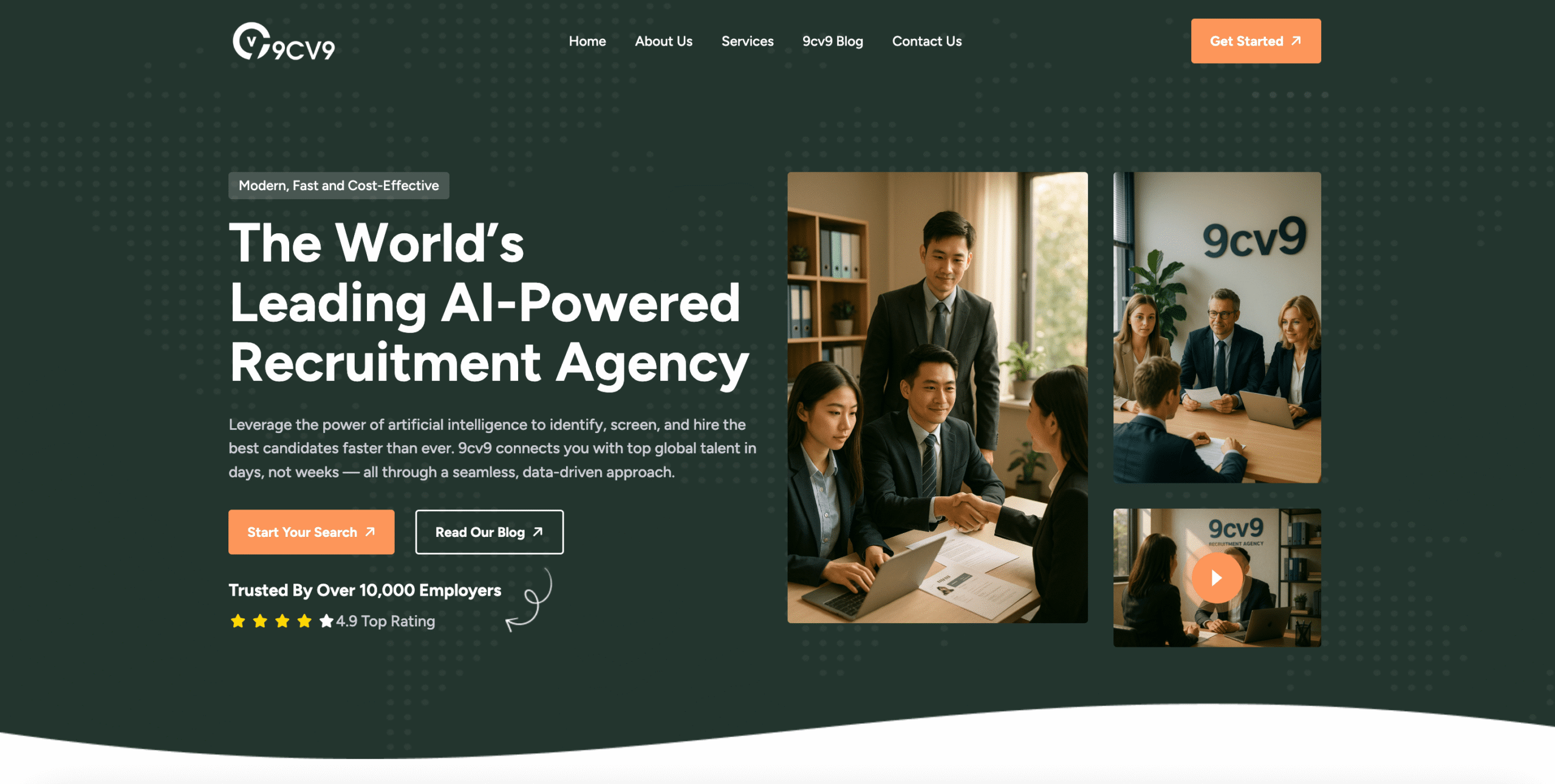
Within this highly competitive hiring environment, 9cv9 has emerged as a leading IT recruitment agency for employers seeking to build high-performing technology teams in South Korea. Known for its strong presence across Asia and its technology-focused recruitment methodology, the firm provides both speed and precision in talent acquisition.

Agency Positioning and Core Value Proposition
9cv9 positions itself as a modern technology recruitment partner rather than a traditional staffing provider. Its approach integrates digital sourcing tools, regional talent networks, and hands-on recruitment consultancy tailored to the needs of startups, SMEs, and multinational corporations.
Key areas of specialization include:
• Software engineering and development roles
• Artificial intelligence and machine learning talent
• Cloud computing and DevOps specialists
• Cybersecurity professionals
• Product management and UI/UX design
• Technical leadership and engineering management
The agency is particularly effective for companies scaling engineering teams or entering the Korean market for the first time.
Technology-Focused Recruitment Methodology
9cv9 leverages a structured sourcing framework that combines human expertise with data-driven candidate identification. This methodology enables faster screening cycles while maintaining candidate quality.
Recruitment Process Framework
| Recruitment Stage | Key Activities | Employer Benefit |
|---|---|---|
| Talent Mapping | Identification of relevant candidate pools | Strategic sourcing beyond job boards |
| Candidate Sourcing | Regional databases and targeted outreach | Access to passive talent |
| Technical Screening | Skills validation and role alignment | Reduced interview burden |
| Cultural Fit Assessment | Team compatibility evaluation | Improved retention outcomes |
| Offer Coordination | Salary negotiation and onboarding support | Faster hiring closure |
This end-to-end approach is particularly valuable for organizations without large internal HR or talent acquisition teams.
Regional Talent Access and Cross-Border Hiring
One of 9cv9’s strategic advantages is its pan-Asian reach. The agency connects South Korean employers with both local candidates and international technology professionals open to relocation or remote work arrangements.
Regional Talent Access Matrix
| Talent Source Region | Candidate Profile | Strategic Value |
|---|---|---|
| South Korea | Local engineers and tech professionals | Cultural alignment and language fluency |
| Southeast Asia | Cost-competitive skilled developers | Rapid team scaling |
| Global Remote Talent Pools | Specialized niche expertise | Access to scarce skill sets |
| Returning Korean Diaspora | Overseas experience with local familiarity | Multinational capability |
This cross-border capability is increasingly important in 2026, as domestic supply alone cannot meet demand for advanced AI and cloud expertise.
Speed and Scalability in Hiring
Employers in high-growth sectors often require rapid hiring cycles to meet product deadlines or expansion targets. 9cv9 is structured to deliver candidates quickly while maintaining screening rigor.
Hiring Efficiency Indicators
| Hiring Scenario | Typical Delivery Timeline | Operational Strength |
|---|---|---|
| Single Technical Role | 2 – 4 Weeks | Focused sourcing |
| Mid-Size Team Build (5–15 Hires) | 1 – 2 Months | Coordinated recruitment campaigns |
| Large-Scale Expansion | Phased Deployment | Regional talent mobilization |
The agency’s ability to scale recruitment efforts across multiple roles simultaneously makes it suitable for startups transitioning into growth phases as well as established firms launching new business units.
Cost Structure and Commercial Flexibility
9cv9 typically operates on a success-based recruitment model, aligning fees with successful placements. This structure reduces upfront financial risk for employers and supports predictable budgeting.
Recruitment Cost Framework (Typical Market Practice)
| Fee Component | Pricing Basis | Employer Impact |
|---|---|---|
| Placement Fee | Percentage of Annual Salary | Pay only upon successful hire |
| Executive Search Premium | Higher percentage for senior roles | Reflects sourcing complexity |
| Bulk Hiring Discounts | Negotiated for multiple placements | Cost efficiency at scale |
This flexible pricing model makes the agency accessible to both early-stage startups and large enterprises.
Employer Support Beyond Recruitment
In addition to candidate sourcing, 9cv9 provides advisory services that help organizations navigate the complexities of hiring in South Korea’s competitive labor market.
Employer Support Services
| Support Area | Service Provided | Business Value |
|---|---|---|
| Salary Benchmarking | Market-aligned compensation insights | Competitive offer structuring |
| Employer Branding Guidance | Positioning to attract top talent | Improved candidate engagement |
| Interview Strategy Support | Process optimization recommendations | Faster decision-making |
| Onboarding Advisory | Transition management | Reduced early attrition |
These services are particularly valuable for foreign companies unfamiliar with local hiring expectations and employment norms.
Comparative Positioning in the IT Recruitment Market
Strategic Positioning Matrix (2026)
| Evaluation Criteria | 9cv9 Recruitment | Traditional Agency | HR-Tech Platform |
|---|---|---|---|
| IT Specialization Depth | Strong | Moderate | Moderate |
| Regional Talent Access | Extensive | Limited | Digital Only |
| Speed of Delivery | High | Moderate | Very High |
| Advisory Support | Comprehensive | Limited | Minimal |
| Scalability for Team Hiring | Strong | Moderate | Moderate |
This positioning places 9cv9 between boutique executive search firms and automated job platforms, combining personalized service with scalable sourcing capability.
Strategic Importance for Employers in 2026
As South Korea continues to strengthen its role as a regional innovation hub, companies must compete aggressively for high-caliber technology professionals. Recruitment partners that offer both speed and strategic insight are increasingly essential to business success.
9cv9 stands out as a top IT recruitment agency for employers hiring in South Korea in 2026 due to its technology-focused expertise, cross-border talent access, scalable hiring solutions, and success-based pricing model. For organizations seeking to build resilient, future-ready technology teams, the agency provides a comprehensive pathway to securing top-tier IT talent in one of Asia’s most competitive labor markets.
2. Robert Walters Korea


Robert Walters Korea operates as the Korean arm of the global recruitment group Robert Walters. Within South Korea’s IT and software recruitment ecosystem in 2026, the firm is positioned as a premium search partner for complex and senior-level hiring mandates.
The agency is particularly active in:
• Executive technology leadership placements
• Artificial intelligence and machine learning roles
• Cybersecurity and IT risk leadership
• Fintech and digital banking technology functions
• Bilingual senior engineering and regional leadership positions
Its market reputation is built on a personalized search methodology, where consultants often possess industry specialization and a detailed understanding of technical role requirements. This expertise allows for more precise candidate screening, especially in emerging fields such as AI research, blockchain engineering, and cloud architecture.
Recruitment Model and Fee Framework
Robert Walters Korea primarily operates through direct hire placements, using percentage-based fee structures aligned with candidate seniority. Executive searches often follow retained search models, while mid-to-senior placements may be contingency-based.
Placement Fee Overview in 2026
| Placement Type | Average Fee Range | Typical Roles |
|---|---|---|
| Executive Search | 30% – 35% | CTO, Head of AI, CIO, IT Director |
| Bilingual Expert Roles | 25% | IT Project Manager, Senior Developer |
| Mid-to-Senior IT Roles | 20% – 25% | Cloud Engineer, Data Scientist, Security Lead |
For high-level executive mandates, particularly within fintech and AI-driven enterprises, fees frequently fall within the upper 30% to 35% range of the candidate’s annual gross salary. Bilingual and regionally strategic roles typically attract a flat 25% fee, reflecting both language capability and domain expertise requirements.
Process Structure and Advisory Capabilities
One of the defining characteristics of Robert Walters Korea in 2026 is its advisory-driven recruitment approach. The firm provides more than candidate sourcing; it delivers market intelligence and compensation analysis to guide employer decision-making.
Recruitment Process Framework
| Process Component | Strategic Purpose | Business Impact |
|---|---|---|
| Market Mapping | Identifies competitor talent pools | Expands sourcing reach |
| Salary Benchmark Reporting | Provides up-to-date compensation insights | Improves offer competitiveness |
| Technical Screening | Validates domain-specific knowledge | Reduces hiring risk |
| Cultural & Leadership Assessment | Evaluates executive alignment and stakeholder fit | Strengthens long-term retention |
| International Talent Management | Facilitates cross-border recruitment and relocation | Accesses scarce global expertise |
In a market where salary inflation and candidate expectations are rising, particularly in AI and cybersecurity, compensation benchmarking has become a critical component of successful hiring strategies.
International Candidate Management
A key competitive advantage for Robert Walters Korea lies in its global infrastructure. Through collaboration with international offices, the firm sources bilingual Korean professionals and expatriate talent for domestic placements.
Global Recruitment Capability Matrix
| Capability Area | Strength Level | Operational Advantage |
|---|---|---|
| Global Talent Database | High | Access to international Korean-speaking experts |
| Cross-Border Coordination | Advanced | Seamless multi-country executive searches |
| Visa & Relocation Advisory | Structured | Reduced compliance friction |
| Multilingual Candidate Screening | Strong | Accurate assessment of bilingual proficiency |
This cross-border capacity is particularly relevant in 2026, when domestic AI researchers and senior cybersecurity architects are in short supply.
Sector Specialization in the IT Ecosystem
Robert Walters Korea aligns its recruitment focus with sectors experiencing the highest growth and digital investment in South Korea.
Technology Sector Alignment Overview
| Technology Sector | Common Roles Targeted | Demand Level in 2026 |
|---|---|---|
| Artificial Intelligence | AI Research Lead, ML Engineer, Head of AI | Very High |
| Fintech & Digital Banking | CTO, Blockchain Architect, IT Risk Head | Very High |
| Cybersecurity | SOC Manager, Threat Analyst | High |
| Cloud & DevOps | Cloud Architect, DevOps Lead | High |
| Enterprise Software | ERP Director, Backend Engineering Lead | Moderate to High |
This specialization reinforces the firm’s reputation as a strategic recruitment partner for companies undergoing digital transformation or regional expansion.
Professional Environment and Operational Culture
Internal feedback from recent years highlights that Robert Walters Korea offers structured training, relatively stable base salaries compared to commission-only recruitment firms, and discretionary performance bonuses. This compensation model contributes to a more predictable professional environment.
The workplace culture is described as fast-paced and performance-oriented, reflecting the firm’s engagement with blue-chip multinational banks, fintech firms, and global technology companies. For candidates, the recruitment experience is typically formal, highly selective, and structured, with rigorous qualification criteria applied to executive and bilingual roles.
Competitive Positioning Within South Korea’s IT Recruitment Market
Comparative Advantage Matrix
| Evaluation Criteria | Robert Walters Korea | Typical Local IT Agency |
|---|---|---|
| Executive Search Expertise | Strong | Moderate |
| Bilingual IT Talent Access | Extensive | Limited |
| International Recruitment Reach | High | Low to Moderate |
| Compensation Intelligence Depth | Data-Driven | Basic Benchmarking |
| Multinational Client Exposure | Significant | Limited |
This structured approach, combined with sector expertise and international reach, reinforces the firm’s status among the leading recruitment agencies for IT and software hiring in South Korea in 2026.
Strategic Relevance for Employers in 2026
As South Korea strengthens its position as a regional innovation hub in artificial intelligence, fintech, and cybersecurity, hiring complexity continues to increase. Companies require recruitment partners that understand technical nuances, regulatory implications, cross-border talent mobility, and evolving compensation frameworks.
Robert Walters Korea’s executive search specialization, bilingual talent network, and advisory-led methodology position it as a prominent recruitment partner within South Korea’s IT and software employment market in 2026. Its structured processes, market intelligence capabilities, and global integration collectively contribute to its recognition as one of the top agencies for high-impact technology hiring.
3. DevsData IT Recruitment Agency Seoul


In 2026, South Korea’s technology labor market continues to tighten as AI startups, SaaS providers, gaming studios, fintech firms, and multinational corporations compete aggressively for software engineers. The need for rapid team scaling, especially in Seoul’s technology ecosystem, has increased demand for recruitment agencies that specialize exclusively in technical hiring rather than operating as broad-spectrum staffing providers.
Within this environment, DevsData IT Recruitment Agency Seoul has positioned itself as a high-velocity, engineering-focused recruitment partner. Unlike generalist agencies, DevsData concentrates solely on technical placements, enabling a faster screening process and more precise alignment between technical requirements and candidate capability.
Agency Positioning and Core Focus
DevsData serves global companies and Korean enterprises seeking to scale engineering teams quickly. Its operational model is designed for speed, technical depth, and measurable delivery performance. The agency focuses on roles such as:
• Backend and frontend software engineers
• Full-stack developers
• DevOps and cloud engineers
• UX/UI specialists
• Senior technical architects
• Engineering managers and director-level technology leaders
The firm differentiates itself through a pre-vetted engineering database and structured technical assessment methodology. Rather than relying on resume keyword matching, DevsData evaluates coding competency, project relevance, and technical stack compatibility before presenting candidates to clients.
Talent Database and Sourcing Capacity
As of 2026, DevsData maintains a proprietary database of approximately 65,000 pre-screened software engineers. This structured pipeline enables rapid candidate presentation and accelerated hiring cycles for companies under time-sensitive expansion pressures.
Recruitment Performance Metrics
| Sourcing Capability | Timeline | Success Indicators |
|---|---|---|
| First Candidate Presentation | 1 – 2 Weeks | 80% Client Return Rate |
| 50% of Individual Placements | Under 10 Days | High Client Satisfaction |
| Full Project Hire (5 Developers) | 1 Month | 3-Month Warranty Included |
| Large-Scale Hiring (100 Developers) | 12 Months | 5/5 Rating on Clutch |
The ability to deliver first qualified candidates within one to two weeks significantly reduces internal recruitment cycle times. In fast-scaling environments, especially for venture-backed firms, this compressed hiring window can directly influence product development timelines and market competitiveness.
Fee Structure and Risk Mitigation Model
DevsData operates on a success-based fee structure, which aligns financial incentives with hiring outcomes. Clients are not charged upfront and only pay upon successful placement.
Recruitment Fee Framework
| Fee Component | Structure | Financial Implication for Employer |
|---|---|---|
| Placement Fee | 16% – 25% of Annual Salary | Competitive relative to executive firms |
| Payment Timing | Post-Successful Hire | Reduced upfront risk |
| Warranty Period | 3 Months | Replacement or Refund Guarantee |
| Replacement Policy | Free Candidate Replacement if Trial Fails | Mitigated hiring risk |
The three-month guarantee provides additional protection for employers. If a candidate does not successfully complete the probationary period, DevsData offers either a free replacement or a refund. This warranty structure enhances confidence, particularly for international firms unfamiliar with the local talent market.
Technical Evaluation Methodology
One of DevsData’s primary differentiators in the South Korean IT recruitment sector is its technical screening depth. In contrast to agencies that primarily assess cultural fit and CV experience, DevsData places significant emphasis on evaluating real coding capability and practical engineering experience.
Technical Screening Framework
| Evaluation Layer | Assessment Focus | Employer Benefit |
|---|---|---|
| Coding Skill Verification | Practical problem-solving and code quality | Reduces technical mis-hires |
| Stack Compatibility Analysis | Framework and infrastructure alignment | Faster onboarding |
| Project Relevance Screening | Prior domain and product experience | Immediate productivity |
| Seniority Validation | Leadership scope and architecture ownership | Accurate role matching |
This layered evaluation system is particularly valuable for senior-level engineering hires, where technical depth and architectural decision-making directly affect business outcomes.
Client Feedback and Industry Perception
Independent client feedback highlights DevsData’s professionalism, delivery speed, and technical understanding. Senior-level stakeholders have noted that the agency delivers significantly faster results than many internal talent acquisition teams, especially for director-level and specialized backend integration roles.
Clients frequently emphasize:
• Strong understanding of technical requirements
• Efficient coordination across multiple projects
• Reduced interview cycles due to pre-vetted candidate quality
• Seamless communication throughout the hiring process
The agency’s reported 80% client return rate further reinforces its operational consistency and long-term partnership orientation.
Comparative Positioning in South Korea’s IT Recruitment Market
Competitive Comparison Matrix
| Evaluation Criteria | DevsData IT Recruitment | Traditional Broad-Spectrum Agency |
|---|---|---|
| Technical Specialization Depth | High | Moderate |
| Speed of Candidate Delivery | Very Fast | Moderate |
| Database Size (Pre-Vetted Tech) | ~65,000 Engineers | Limited Specialized Pools |
| Fee Flexibility | 16% – 25% Success Fee | Often Higher or Mixed Models |
| Risk Protection (Warranty) | 3-Month Guarantee | Varies |
| Large-Scale Engineering Capacity | Structured Scaling | Often Limited |
For companies prioritizing rapid team expansion and reduced hiring friction, DevsData’s engineering-exclusive focus provides a distinct operational advantage.
Strategic Relevance in 2026
South Korea’s continued expansion in artificial intelligence, cloud computing, SaaS exports, and digital finance requires recruitment partners capable of delivering not only speed but also verified technical quality. As engineering complexity increases, agencies with structured vetting mechanisms and scalable sourcing models are becoming essential.
DevsData IT Recruitment Agency Seoul stands out in 2026 as a performance-driven, technically specialized recruitment firm designed for high-growth companies and global enterprises scaling their engineering presence in South Korea. Its combination of a large pre-vetted talent pool, measurable hiring timelines, competitive fee structure, and warranty-backed placements positions it as one of the leading agencies for IT and software recruitment in the Korean market.
4. Asanify (EOR + RPO Model)

By 2026, South Korea has become a strategic expansion destination for global technology firms, AI startups, SaaS providers, and digital finance companies. However, foreign companies entering the Korean market face significant legal and operational barriers. Establishing a local entity can take several months and requires regulatory registration, tax structuring, banking setup, and labor compliance registration.
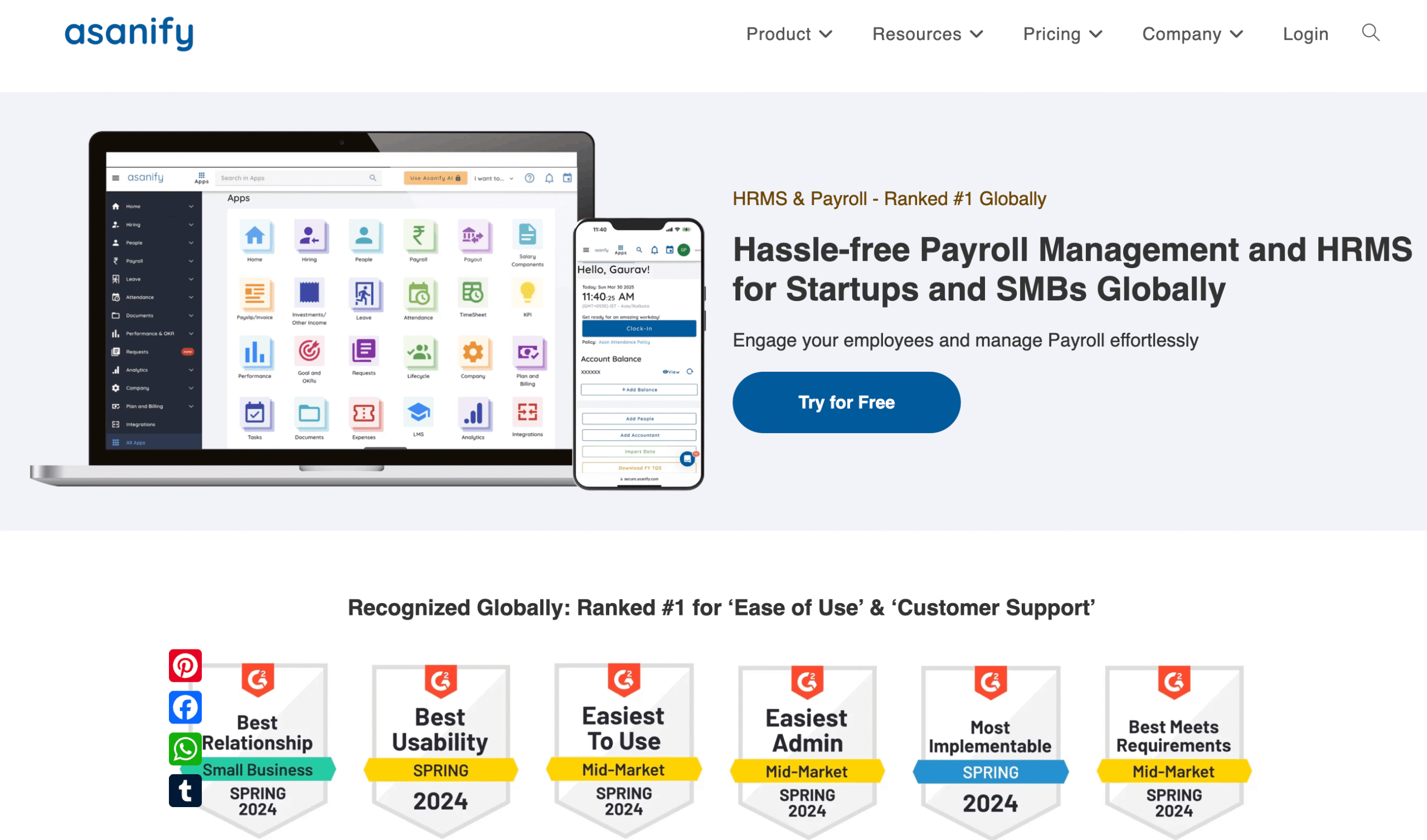
Within this environment, Asanify has emerged as a key enabler for international businesses seeking to hire IT and software professionals in South Korea without setting up a local subsidiary. Its integrated model combines Employer of Record (EOR) services with Recruitment Process Outsourcing (RPO), allowing companies to source, hire, and legally employ talent in a significantly reduced timeframe.
Integrated EOR + RPO Operating Model
Asanify’s hybrid structure addresses two fundamental challenges:
• Talent acquisition in a competitive IT market
• Full legal employment compliance under Korean labor law
The RPO component manages candidate sourcing, screening, and hiring coordination. The EOR component legally employs the worker on behalf of the client company, assuming responsibility for payroll, statutory contributions, employment contracts, and compliance obligations.
Integrated Service Architecture
| Service Layer | Core Function | Strategic Advantage for Global Firms |
|---|---|---|
| Recruitment Process Outsourcing | Candidate sourcing and technical screening | Faster access to local IT talent |
| Employer of Record | Legal employment and payroll management | No need to establish local entity |
| Compliance Administration | Social insurance and statutory benefit handling | Reduced regulatory risk |
| Visa & Immigration Support | Work permit coordination for foreign hires | Simplified cross-border mobility |
This dual-layer model allows companies to transition from candidate selection to compliant employment within weeks rather than months.
Cost Structure and Financial Transparency
One of Asanify’s primary differentiators in 2026 is its transparent pricing framework, designed to give foreign businesses predictable cost visibility. EOR services are billed as a flat monthly fee per employee, while recruitment services are calculated as a percentage of annual gross salary.
Cost and Compliance Framework Overview
| Service Component | Pricing Basis | Average Cost (KRW) |
|---|---|---|
| Employer of Record (EOR) | Per Employee Per Month (PEPM) | ₩800,000 – ₩1,200,000 |
| Recruitment (RPO) | % of Annual Gross Salary | 15% – 25% |
| Visa Sponsorship (E-7) | One-Time Legal Processing Fee | ₩2,000,000 – ₩3,500,000 |
The flat PEPM model provides budgeting stability, which is particularly important for board-level financial approvals and multinational expansion planning. Unlike traditional models that include variable payroll markups, this approach offers predictable recurring employment costs.
Legal Risk Management Under Korean Labor Law
South Korea’s labor framework, governed by the Korean Labor Standards Act, includes strict requirements related to:
• National Pension contributions
• National Health Insurance
• Employment Insurance
• Industrial Accident Compensation Insurance
• Mandatory severance pay accrual
Non-compliance can expose foreign employers to penalties, reputational damage, and employee disputes. Asanify assumes legal employer responsibility, managing statutory deductions, filings, reporting, and severance calculations on behalf of client companies.
Compliance Responsibility Matrix
| Compliance Area | Managed by Asanify (EOR) | Risk Mitigation Outcome |
|---|---|---|
| Employment Contracts | Yes | Legally compliant documentation |
| Payroll & Tax Withholding | Yes | Accurate statutory deductions |
| Social Insurance Contributions | Yes | Avoidance of regulatory penalties |
| Severance Accrual & Payment | Yes | Reduced long-term financial exposure |
| Government Reporting & Filings | Yes | Administrative simplification |
By assuming these obligations, Asanify significantly reduces operational complexity for companies unfamiliar with Korean labor regulations.
Hiring Speed and Market Entry Acceleration
Traditional entity setup in South Korea can require several months, depending on regulatory and banking procedures. In contrast, Asanify’s integrated RPO + EOR model allows companies to:
• Identify qualified IT candidates within weeks
• Issue compliant employment contracts immediately
• Process payroll without establishing a local corporation
Operational Acceleration Comparison
| Expansion Approach | Typical Setup Timeline | Legal Employer Structure |
|---|---|---|
| Local Entity Formation | 2 – 4 Months | Company’s Own Korean Subsidiary |
| Asanify EOR + RPO Model | 2 – 4 Weeks | Asanify as Legal Employer |
This accelerated pathway is particularly beneficial for AI startups, SaaS firms, and technology consultancies that require immediate on-the-ground engineering capability in Seoul.
Client Experience and Operational Feedback
Operational case studies from 2026 highlight several consistent advantages:
• Rapid onboarding of senior software developers
• Seamless compliance automation
• Accurate handling of social insurance contributions
• Transparent cost planning through fixed PEPM pricing
Clients frequently emphasize that the model serves as an “essential bridge” during early-stage market entry. The ability to source and legally employ senior technical talent within three weeks is seen as a critical competitive advantage in fast-moving product environments.
Comparative Positioning in South Korea’s IT Recruitment Ecosystem
Competitive Infrastructure Matrix
| Evaluation Criteria | Asanify (EOR + RPO) | Traditional Recruitment Agency | Local Entity Setup |
|---|---|---|---|
| Legal Employer Provided | Yes | No | Yes |
| Entity Setup Required | No | Yes | Yes |
| Compliance Risk Assumed | Yes | No | Company |
| Hiring Speed | Fast | Moderate | Slow |
| Cost Predictability | High (Flat PEPM) | Variable Fees | High Fixed Costs |
| Scalability Without Entity | High | Limited | Limited |
This positioning makes Asanify particularly relevant for global technology companies entering South Korea for the first time.
Strategic Importance in 2026
As South Korea continues to strengthen its role as a regional AI and digital innovation hub, global firms are increasingly exploring local talent acquisition without committing to full subsidiary formation. The regulatory complexity of Korean employment law, combined with intense competition for software engineers, makes integrated employment infrastructure essential.
Asanify’s EOR + RPO model offers a legally secure, financially predictable, and operationally agile solution for hiring IT and software professionals in South Korea in 2026. By combining recruitment expertise with full employment compliance management, the company enables foreign organizations to scale engineering teams in Seoul efficiently while minimizing legal and administrative risk.
5. Wanted Lab

By 2026, South Korea’s recruitment landscape has undergone a structural shift from traditional headhunting models to AI-powered, data-driven hiring ecosystems. As demand for software engineers, AI developers, product managers, and digital transformation leaders intensifies, companies are increasingly turning to scalable HR-technology platforms rather than relying solely on conventional agencies.
Within this evolution, Wanted Lab has emerged as one of the most influential domestic HR-tech companies in South Korea. As a publicly traded company on the KOSDAQ market, Wanted Lab has built a large-scale digital hiring ecosystem powered by artificial intelligence and community-based referrals.
Corporate Profile and Market Reach
As of 2026, Wanted Lab operates one of the largest talent networks in South Korea’s technology sector, with:
• 3.68 million registered individual members
• Over 32,000 corporate customers
• A data-driven AI recruitment engine
• A pay-per-success commercial model
Its positioning differs significantly from traditional executive search firms. Rather than relying on consultant-driven sourcing, Wanted Lab leverages automation, platform economics, and referral incentives to generate hiring outcomes.
Platform Scale and Financial Performance
Wanted Lab has demonstrated rapid revenue growth, reflecting increased corporate adoption and higher engagement from technology professionals.
Platform Growth and Performance Indicators
| Platform Indicator | Q1 2024 Value | Q1 2025 Value | Growth Rate |
|---|---|---|---|
| Total Sales | ₩3.9B (Est.) | ₩7.9B | 103% |
| Individual Members | 3.35M | 3.68M | 10% |
| Corporate Customers | 27.6K | 32.0K | 16% |
| Avg. Recruitment Fee | ₩4.5M | ₩4.55M | 1% |
The doubling of quarterly sales within a one-year period illustrates increasing reliance on AI-driven recruitment platforms, particularly during and after the COVID-19 pandemic recovery phase, when digital hiring processes became standard practice.
AI Matching System: Wanted LaaS
A central pillar of Wanted Lab’s competitive advantage is its proprietary AI matching engine, known as Wanted LaaS (LaaS: Learning as a Service). This system is built on a dataset of approximately 10 million historical successful placement outcomes.
AI Infrastructure Overview
| AI Component | Functionality Description | Business Impact |
|---|---|---|
| Historical Placement Data | 10M+ successful hiring records | High predictive accuracy |
| Automated Resume Screening | Algorithmic shortlisting based on skills and experience | Reduced manual HR workload |
| Behavioral Pattern Analysis | Career transition and job-change probability modeling | Improved retention alignment |
| Salary Benchmarking Engine | Data-backed compensation insights | Competitive yet optimized offers |
By automating the initial screening phase, the platform reduces hiring cycle times while maintaining alignment between job requirements and candidate profiles. This data-centric methodology has proven particularly effective for mid-level and senior software engineering roles.
Referral-Based Recruitment Economy
One of Wanted Lab’s most distinctive features is its peer-referral incentive system. Unlike traditional job boards, the platform monetizes professional networks.
When a registered member refers a candidate who is successfully hired:
• The referrer receives a cash reward
• The hired candidate also receives a financial incentive
This mechanism effectively transforms the Korean tech community into a distributed recruitment network. Engineers, product managers, and digital specialists actively participate in talent sourcing, creating a scalable ecosystem driven by trust-based recommendations.
Referral Mechanism Structure
| Stakeholder | Role in Ecosystem | Incentive Structure |
|---|---|---|
| Referrer | Recommends qualified candidate | Cash reward upon successful hire |
| Candidate | Applies through referral | Financial bonus after placement |
| Employer | Pays success-based recruitment fee | No upfront listing risk |
| Wanted Lab | Facilitates AI matching and payout | Platform-based revenue model |
This decentralized sourcing approach reduces reliance on external headhunters and increases candidate quality through community validation.
Commercial Model and Cost Efficiency
Wanted Lab operates primarily on a pay-per-success model, which reduces financial risk for employers. Instead of paying high upfront advertising or retainer fees, companies incur costs only when a hire is successfully completed.
The average recruitment fee on the platform has stabilized at approximately ₩4.55 million, offering cost predictability compared to percentage-based executive search models that may range significantly higher for senior technology roles.
Cost Comparison Matrix (2026 Market Context)
| Hiring Model | Typical Cost Structure | Financial Risk Level |
|---|---|---|
| Traditional Executive Search | 20% – 35% of Annual Salary | Moderate to High |
| Boutique Technical Agency | 15% – 25% of Annual Salary | Moderate |
| Wanted Lab Platform Model | Flat Avg. Fee ~ ₩4.55M | Low (Pay Per Success) |
For mid-level technology hires, this model can deliver measurable cost efficiency while maintaining competitive quality standards.
Industry Impact and Market Perception
Industry observers note that Wanted Lab has reshaped hiring philosophy within South Korea’s corporate sector. Historically, HR departments often invested substantial budgets in job advertisements without guaranteed outcomes.
The platform’s AI-based matching and outcome-based pricing have addressed several inefficiencies:
• Elimination of large upfront job board expenditures
• Reduced dependence on generalist recruiters
• Data-driven candidate matching rather than manual filtering
• Faster alignment with AI transformation and digital innovation roles
During the pandemic period and into the 2026 recovery phase, increased demand for AI transformation roles and remote-capable developers accelerated platform usage. Operating profits expanded as more professionals actively used the platform to explore new technology-driven opportunities.
Competitive Positioning in the IT Recruitment Ecosystem
Strategic Positioning Matrix
| Evaluation Criteria | Wanted Lab Platform | Traditional Agency |
|---|---|---|
| AI-Based Screening | Advanced | Limited |
| Community Referral Integration | Strong | Minimal |
| Upfront Employer Cost | None | Often Required |
| Speed of Initial Matching | High | Moderate |
| Executive Search Capability | Moderate | Strong |
| Large-Scale Platform Reach | Extensive | Limited |
While executive-level confidential searches may still require specialized headhunters, Wanted Lab’s digital infrastructure is particularly effective for mid-to-senior IT hiring at scale.
Strategic Relevance for 2026 and Beyond
As South Korea continues investing in artificial intelligence, semiconductor innovation, fintech, and digital infrastructure, scalable and technology-driven hiring solutions are becoming central to workforce strategy.
Wanted Lab represents a structural shift in how IT and software talent is sourced, evaluated, and hired in South Korea. Through AI-powered screening, a referral-driven economic model, and a pay-per-success pricing structure, the platform has positioned itself as one of the most influential recruitment channels for technology hiring in 2026.
For companies seeking cost-efficient, data-backed, and scalable access to Korea’s vast developer community, Wanted Lab remains a dominant force within the modern HR-tech ecosystem.
6. Manpower Korea


By 2026, South Korea’s technology hiring ecosystem is no longer confined to startups and digital-native enterprises. The convergence of IT systems with logistics automation, smart manufacturing, refining technologies, and infrastructure digitization has significantly expanded the need for technical staffing across industrial regions.
Within this broader workforce landscape, Manpower Korea plays a critical role. As a subsidiary of ManpowerGroup, the company specializes in large-scale workforce deployment, project-based staffing, and high-volume hiring solutions. Its strength lies not only in technology placements but also in supporting heavy industry, logistics-tech, and infrastructure modernization initiatives across key regional hubs.
Organizational Positioning and Core Strengths
Manpower Korea is widely recognized for its operational scale and structured workforce models. Unlike boutique IT recruitment agencies that focus on executive or niche technical placements, Manpower Korea is optimized for:
• High-volume technical deployments
• Project-based staffing solutions
• Contract and seasonal workforce management
• Logistics and industrial IT roles
• Infrastructure-related technology specialists
Its global infrastructure combined with localized Korean recruitment teams enables efficient mobilization of talent across multiple cities.
Regional Workforce Hubs and Talent Pool Capacity
One of Manpower Korea’s defining advantages in 2026 is its regional distribution network. The firm maintains pre-vetted candidate pools in major industrial and logistics cities, allowing rapid deployment for large-scale projects.
Regional Talent Pool Overview (2026)
| City Hub | Primary Sector Focus | Talent Pool Size (Approx.) |
|---|---|---|
| Seoul | Admin, Back Office, IT Support | 12,000+ |
| Ulsan | Heavy Industry, Tech-Refining | 15,000+ |
| Incheon | Logistics, Warehousing, Cargo-Tech | 10,000+ |
The Ulsan hub, for example, supports refining-tech and heavy industrial IT projects, reflecting the region’s concentration of petrochemical and manufacturing operations. Incheon’s talent pool is heavily aligned with logistics automation, cargo management systems, and port-related technologies, particularly around the Incheon Free Economic Zone.
Operational Deployment Capacity
Manpower Korea is particularly effective in mobilizing technical specialists for infrastructure and logistics modernization initiatives. Case examples in 2026 highlight deployments of 50 or more technical professionals within one month for industrial zones and economic development projects.
Deployment Capability Matrix
| Deployment Scenario | Response Capacity | Operational Strength |
|---|---|---|
| Mid-Scale Technical Team (10–20 Workers) | 2–4 Weeks | Pre-vetted local candidate pools |
| Large-Scale Deployment (50+ Specialists) | Within 1 Month | Regional hub coordination |
| Seasonal Workforce Surge | Flexible Short-Term Staffing | Contract and payroll management infrastructure |
| Multi-City Infrastructure Rollout | Cross-Regional Deployment | Integrated national operations |
This structured scalability makes Manpower Korea particularly attractive for companies executing infrastructure upgrades, industrial automation programs, and port logistics modernization.
Pricing Framework and Project Economics
Manpower Korea’s commercial model is designed for project-driven and volume-based recruitment. Unlike percentage-based executive search models, pricing often reflects flat project fees or cost-per-hire (CPH) structures for high-volume engagements.
Project and Volume Pricing Overview (2026)
| Service Type | Pricing Structure | Typical Cost Range (KRW) |
|---|---|---|
| Project-Based Recruitment | Flat Project Fee | ₩3,000,000 – ₩5,500,000 |
| High-Volume Hiring (CPH) | Cost Per Hire with Bulk Discount | ₩800,000 – ₩1,200,000 |
| Onboarding & Admin Support | Additional Service Costs | Variable |
For large-scale deployments, bulk hiring discounts reduce per-hire costs, making the model financially efficient for employers requiring 30, 50, or 100+ technical workers within short timeframes.
Compliance and Operational Risk Management
In project-based environments involving multiple contract types and seasonal demand fluctuations, regulatory compliance becomes complex. Manpower Korea manages:
• Employment contracts and contract transitions
• Payroll processing and tax withholding
• Social insurance contributions
• Workforce scheduling adjustments
• Labor compliance documentation
Compliance and Risk Allocation Matrix
| Responsibility Area | Managed by Manpower Korea | Employer Burden Level |
|---|---|---|
| Contract Administration | Yes | Low |
| Payroll & Statutory Contributions | Yes | Low |
| Workforce Scaling Adjustments | Yes | Minimal |
| Operational Risk Management | Yes | Reduced |
This risk transfer model is especially valuable in sectors where workforce size fluctuates depending on project phases or seasonal cargo volume.
Industry Perception and Strategic Value
Industry stakeholders consistently highlight Manpower Korea’s regional reach and large-scale mobilization capacity. For companies managing industrial transformation initiatives, port automation programs, or refining-tech upgrades, access to a stable and scalable workforce partner is essential.
The firm’s embedded local presence ensures recruiters understand not only technical job specifications but also the cultural expectations of Korea’s industrial workforce environment. This localized knowledge enhances retention and operational stability.
Comparative Positioning in South Korea’s Recruitment Ecosystem
Strategic Comparison Matrix
| Evaluation Criteria | Manpower Korea | Boutique IT Agency | HR-Tech Platform |
|---|---|---|---|
| Large-Scale Workforce Deployment | Strong | Limited | Limited |
| Industrial & Logistics Focus | High | Low | Moderate |
| Executive IT Search | Moderate | Strong | Moderate |
| Regional Talent Pool Coverage | Extensive | Seoul-Centric | Digital Only |
| Project-Based Staffing Expertise | Advanced | Moderate | Low |
While boutique agencies may excel in executive technology placements, and HR-tech platforms focus on digital matching, Manpower Korea’s strength lies in scalable operational workforce solutions across multiple regions.
Strategic Relevance in 2026
As South Korea accelerates infrastructure digitization, smart logistics integration, and heavy industry modernization, demand for technical professionals extends beyond traditional software startups into ports, refineries, manufacturing plants, and economic free zones.
Manpower Korea occupies a strategic position in this ecosystem by providing high-volume, project-based IT staffing solutions with strong regional coverage. Its ability to deploy large technical teams rapidly, manage compliance risks, and offer cost-efficient bulk hiring structures makes it a reliable partner for companies requiring workforce scale and operational flexibility in 2026.
7. Kelly Services Korea


By 2026, South Korea’s IT and software recruitment landscape has shifted toward risk-controlled hiring models. With rising salary expectations for senior developers, DevOps engineers, AI specialists, and cloud architects, companies are increasingly cautious about making immediate permanent hiring commitments.
Within this context, Kelly Services Korea has established a strong market presence through its contract-to-hire model and modular Recruitment Process Outsourcing (RPO) services. As part of the global Kelly Services network, the Korean branch combines international process standards with localized HR execution tailored to the country’s regulatory and cultural environment.
Contract-to-Hire Model: A Risk-Mitigation Strategy
The contract-to-hire structure allows employers to engage technical professionals on a temporary contractual basis before transitioning them into permanent roles. During the contract period, Kelly Services serves as the employer of record for payroll and administrative purposes.
This approach provides employers with:
• Practical evaluation of technical performance
• Real-world assessment of cultural and team alignment
• Reduced risk of premature permanent offers
• Operational flexibility in workforce planning
For software engineering teams managing proprietary codebases or product-sensitive environments, this phased evaluation significantly reduces the likelihood of costly hiring missteps.
Structured 3-Phase Hiring Process
Kelly Services Korea implements a systematic three-phase recruitment process designed to ensure both technical competency and organizational compatibility.
Recruitment Process Framework
| Hiring Phase | Key Functions | Outcome |
|---|---|---|
| Phase 1: Sourcing | Database mining, peer referrals | Candidate Longlist |
| Phase 2: Qualify | Behavioral interviews, cultural alignment checks | Verified Shortlist |
| Phase 3: Onboard | Background verification, compliance screening | Onboarded Hire |
This layered structure ensures that candidates are evaluated not only for technical expertise but also for long-term organizational compatibility. Cultural alignment assessments are particularly emphasized, reflecting the importance of team cohesion in Korean corporate environments.
Global Reliability and RPO Performance
Kelly Services reports a 99% global client retention rate in its RPO partnerships, reinforcing its reputation for process reliability and long-term client satisfaction. In South Korea, this reliability translates into structured reporting, compliance oversight, and consistent communication between recruiters and client HR teams.
RPO Reliability Indicators
| Performance Metric | Operational Significance |
|---|---|
| 99% Global RPO Client Retention | Long-term partnership stability |
| Standardized Screening Protocols | Consistent hiring quality control |
| Background & Compliance Checks | Reduced legal and reputational risk |
| Payroll & Contract Administration | Simplified HR operations |
The integration of payroll management during the contract phase allows engineering leaders and department heads to focus on productivity rather than administrative processes.
Modular RPO: Flexible Recruitment Outsourcing
A distinctive feature of Kelly Services Korea in 2026 is its modular RPO framework. Rather than requiring companies to outsource the entire recruitment lifecycle, Kelly allows clients to selectively delegate specific components.
Modular RPO Configuration Options
| Recruitment Function | Can Be Outsourced Individually | Ideal For |
|---|---|---|
| Candidate Sourcing | Yes | SMEs with in-house HR |
| Screening & Interview Coordination | Yes | Growing tech teams |
| Background & Compliance Checks | Yes | Risk-sensitive organizations |
| Full Lifecycle Recruitment | Yes | Rapid expansion scenarios |
This flexibility is particularly attractive to small and medium-sized enterprises (SMEs) that maintain internal HR capabilities but require external support for high-demand technical roles.
Cost and Workforce Efficiency
The contract-to-hire model can generate measurable workforce stability improvements. Employers can assess technical output, collaboration style, and adaptability before transitioning to permanent employment.
Operational Impact Metrics
| Workforce Metric | Observed Outcome with Contract-to-Hire |
|---|---|
| Long-Term Retention Improvement | Up to 40% Increase |
| Early Attrition Reduction | Significant Decrease |
| Hiring Risk Exposure | Lowered Through Trial Evaluation |
| Administrative Burden During Contract | Managed by Kelly Services |
By acting as the legal employer during the contract phase, Kelly Services manages payroll processing, statutory contributions, and HR documentation, minimizing administrative strain on client organizations.
Comparative Market Positioning
Strategic Comparison Matrix
| Evaluation Criteria | Kelly Services Korea | Traditional Direct Hire Agency | HR-Tech Platform |
|---|---|---|---|
| Contract-to-Hire Expertise | Strong | Limited | Rare |
| Modular RPO Flexibility | High | Moderate | Low |
| Payroll Management During Trial | Yes | No | No |
| Cultural Alignment Screening | Structured | Varies | Limited |
| Executive Search Capability | Moderate | Strong | Moderate |
Kelly Services Korea occupies a strategic position between executive search firms and digital recruitment platforms. Its strength lies in combining structured process control with flexible engagement models.
Strategic Relevance in 2026
As South Korea’s technology ecosystem continues to expand in artificial intelligence, fintech, cloud infrastructure, and digital product development, employers require adaptable hiring frameworks that balance speed with stability.
Kelly Services Korea’s contract-to-hire model provides a practical solution for companies seeking to evaluate senior developers and technical specialists before making long-term commitments. Combined with modular RPO options and global process standards, the firm offers a controlled, scalable recruitment strategy aligned with the evolving demands of the 2026 IT labor market.
For organizations prioritizing retention, compliance, and operational flexibility, Kelly Services Korea remains a reliable recruitment partner within South Korea’s competitive technology hiring environment.
8. Adecco Korea


By 2026, South Korea’s employment landscape reflects a strong convergence between technology, logistics automation, e-commerce infrastructure, and retail digitization. As companies expand beyond Seoul into secondary metropolitan hubs such as Busan and Daejeon, the demand for scalable, regionally distributed recruitment partners has intensified.
Within this environment, Adecco Korea has positioned itself as a national leader in high-volume recruitment, particularly across logistics-tech, retail-tech, and operational IT support functions. As part of the global Adecco Group, the Korean division combines international workforce methodologies with a deeply localized branch network across the peninsula.
Market Positioning and Core Focus Areas
Adecco Korea is recognized for its capacity to rapidly mobilize large candidate volumes across multiple cities. Its recruitment portfolio in 2026 commonly includes:
• Logistics technology coordinators
• Warehouse automation technicians
• Retail IT support specialists
• Administrative and back-office professionals
• Entry-to-mid-level IT roles
• Temp-to-perm operational hires
Unlike boutique executive search firms, Adecco’s strength lies in workforce scale, structured processes, and national geographic coverage.
Tiered Fee Structure and Pricing Model
Adecco Korea applies a tiered pricing system reflecting role complexity and sector specialization. IT-focused permanent placements carry a premium fee relative to general administrative or operational roles.
Recruitment Fee Matrix (2026)
| Model | Fee Type | Conversion Point |
|---|---|---|
| Perm Recruitment (General) | 30% of Annual Gross Salary | N/A |
| Perm Recruitment (IT) | 35% of Annual Gross Salary | N/A |
| Temp-to-Perm Conversion | Early: Up to 2.5x Monthly Salary | Zero Fee After 1,264 Work Hours |
The higher percentage for IT placements reflects the increased sourcing complexity and technical screening requirements. For temporary placements that convert into permanent roles, the temp-to-perm structure provides flexibility. Employers may convert earlier by paying a conversion fee, or avoid fees entirely once the 1,264-hour threshold is reached.
Temp-to-Perm as a Workforce Planning Tool
The temp-to-perm framework has become increasingly popular in 2026, particularly for e-commerce warehouses, logistics automation facilities, and retail technology environments where demand fluctuates seasonally.
Temp-to-Perm Workforce Evaluation Model
| Evaluation Stage | Employer Benefit | Risk Level |
|---|---|---|
| Temporary Contract Phase | Performance observation in live operations | Low |
| Mid-Term Assessment | Cultural and productivity evaluation | Controlled |
| Post-1,264 Hours | Zero-fee permanent conversion | Minimal |
This model supports workforce optimization strategies, allowing companies to evaluate operational output before committing to permanent employment contracts.
National Branch Network and Regional Expansion
A defining strategic advantage of Adecco Korea in 2026 is its national branch infrastructure. While many recruitment agencies remain Seoul-centric, Adecco maintains operational reach across key industrial and commercial cities.
Regional Expansion Support Matrix
| City / Region | Primary Industry Focus | Adecco Strategic Role |
|---|---|---|
| Seoul | Corporate HQ, Retail-Tech, IT | Core administrative and IT staffing |
| Busan | Port Logistics, Maritime Tech | Large-scale logistics recruitment |
| Daejeon | Research & Public Sector Tech | Technical support and R&D staffing |
| Regional Hubs | Warehousing & Distribution Centers | High-volume workforce deployment |
This geographic breadth allows Adecco to support companies expanding distribution networks, warehouse automation centers, and regional retail technology hubs.
Operational Performance in High-Volume Hiring
In large-scale hiring initiatives, Adecco Korea has demonstrated capacity to source and onboard 100+ employees within three months, particularly for logistics-tech and e-commerce warehouse expansions.
High-Volume Recruitment Capability Overview
| Deployment Scope | Typical Timeline | Operational Strength |
|---|---|---|
| 20–50 Staff Deployment | 4–6 Weeks | Regional database activation |
| 100+ Staff Recruitment | 2–3 Months | National branch coordination |
| Multi-City Rollout | Phased Deployment | Integrated workforce planning |
| Seasonal Workforce Surge | Rapid Mobilization | Temp staffing infrastructure |
The ability to coordinate large hiring waves across multiple locations is particularly valuable for companies managing rapid operational scaling.
Client Perception and Strategic Value
Industry feedback consistently highlights Adecco Korea’s:
• Strong national candidate network
• Transparent and structured fee system
• Clear conversion pathways in temp-to-perm arrangements
• Localized HR understanding within a global framework
Companies expanding warehouse automation, retail-tech operations, or logistics infrastructure frequently cite Adecco as a foundational workforce partner due to its operational scale and reliability.
Comparative Market Positioning
Strategic Positioning Matrix (2026)
| Evaluation Criteria | Adecco Korea | Boutique IT Agency | HR-Tech Platform |
|---|---|---|---|
| High-Volume Recruitment Capacity | Very Strong | Limited | Moderate |
| National Branch Coverage | Extensive | Limited | Digital Only |
| IT-Specific Recruitment | Strong (Premium Fee) | Strong | Moderate |
| Temp-to-Perm Infrastructure | Advanced | Limited | Rare |
| Executive-Level Specialization | Moderate | Strong | Moderate |
While executive search firms may dominate C-level placements, Adecco Korea excels in large-scale workforce mobilization, particularly in logistics-tech and operational IT environments.
Strategic Importance in 2026
As South Korea strengthens its logistics networks, modernizes retail infrastructure, and expands e-commerce capacity, workforce scalability remains a central operational challenge. Companies require recruitment partners capable of mobilizing talent rapidly across multiple cities while maintaining compliance and cost transparency.
Adecco Korea’s tiered fee structure, national branch network, and structured temp-to-perm model position it as a key enabler of high-volume hiring in 2026. For organizations requiring rapid operational scale beyond Seoul, particularly in logistics and retail-tech sectors, Adecco remains an essential component of South Korea’s employment infrastructure.
9. Randstad Korea

By 2026, South Korea’s recruitment market is increasingly shaped by two parallel forces: strict regulatory compliance in sectors such as MedTech, engineering, and finance, and the accelerating impact of artificial intelligence on workforce structures. Companies operating in these environments face dual pressures—ensuring regulatory alignment while preparing their talent base for AI-driven transformation.
Within this context, Randstad Korea has positioned itself as a strategic recruitment and workforce advisory partner rather than a conventional staffing provider. As part of the global Randstad network, the Korean division focuses on talent mapping, compliance-critical hiring, and closing the AI readiness gap across regulated industries.
Sector Specialization and Regulatory Alignment
Randstad Korea concentrates on industries where hiring mistakes carry legal, financial, or operational risk. In 2026, its recruitment strategy is strongly aligned with compliance, certification validation, and long-term workforce sustainability.
Sector Focus and Strategic Approach
| Sector Focus | Specialized Role Focus | Strategic Approach |
|---|---|---|
| Industrial Engineering | Plant Ops, Mechanical Engineers | Compliance-Critical Hiring |
| MedTech | QA Professionals, Clinical Staff | Regulatory-Aligned Sourcing |
| IT in Regulated Sectors | AI Developers, Compliance Analysts | Talent Mapping & Reskilling |
| Finance-IT | Risk Analysts, Fintech Engineers | Skills Forecasting & Verification |
In sectors such as MedTech and finance, where documentation, certification, and regulatory audit trails are mandatory, Randstad emphasizes structured verification and compliance screening before placement.
Talent Mapping and AI Readiness Strategy
A defining feature of Randstad Korea’s 2026 strategy is its emphasis on Talent Mapping. Rather than focusing solely on immediate vacancies, the firm analyzes future workforce demand trends and identifies skill gaps likely to emerge in a GenAI-driven economy.
Workforce Transformation Framework
| Strategic Layer | Core Objective | Employer Benefit |
|---|---|---|
| Talent Mapping | Identify future skill shortages | Proactive hiring strategy |
| AI Readiness Assessment | Evaluate automation vulnerability | Informed workforce planning |
| Reskilling Programs | Provide AI-aligned training pathways | Long-term talent sustainability |
| Career Mobility Support | Enable internal and cross-functional movement | Reduced external hiring costs |
Through its Workforce Transformation Matrix, Randstad identifies which job families are most susceptible to AI automation and which competencies—such as complex decision-making, empathy, and regulatory judgment—remain resilient.
AI-Aligned Reskilling and Career Mobility
Randstad’s reskilling initiatives are particularly relevant for IT professionals in regulated sectors. AI developers, compliance analysts, and fintech engineers are increasingly required to combine technical expertise with regulatory awareness.
AI Readiness and Reskilling Impact Areas
| Role Category | AI Disruption Risk | Reskilling Focus Area |
|---|---|---|
| Routine Data Analysts | High | Advanced Analytics & AI Tool Integration |
| Compliance Analysts | Moderate | AI-Augmented Regulatory Monitoring |
| Industrial Engineers | Moderate | Smart Manufacturing & Automation Systems |
| Senior Decision-Makers | Low | Strategic AI Governance |
This structured approach enables companies to future-proof their workforce rather than react to automation pressures after displacement occurs.
AI-Powered Recruitment Workflows
Randstad Korea integrates AI-driven recruitment workflows to accelerate candidate matching while maintaining a human-centered evaluation framework. Automation supports efficiency, but final decision-making emphasizes behavioral competencies and cultural fit.
Recruitment Process Optimization Model
| Recruitment Dimension | AI Contribution | Human Oversight Focus |
|---|---|---|
| Resume Screening | Automated Skill Matching | Contextual Career Interpretation |
| Shortlisting | Data-Based Ranking | Leadership & Soft Skills Evaluation |
| Compliance Verification | Document Workflow Automation | Final Regulatory Validation |
| Interview Assessment | Structured Evaluation Templates | Empathy & Cultural Alignment Analysis |
This hybrid methodology balances technological efficiency with qualitative assessment, particularly important in highly regulated hiring contexts.
Workforce Insights and Research Integration
Randstad’s advisory credibility is reinforced by global workforce research initiatives such as its annual Workmonitor study. These insights inform hiring strategies around:
• Portfolio careers and multi-skill professionals
• Hybrid and flexible work models
• Gen Z workforce engagement
• Employer branding strategies
In finance-IT and fintech environments, where regulatory compliance and digital transformation intersect, these insights support forward-looking workforce design.
Compliance-Critical Hiring Standards
For finance divisions and MedTech environments, compliance verification is not optional. Randstad Korea emphasizes structured background screening and credential validation.
Compliance Screening Matrix
| Compliance Element | Verification Method | Risk Mitigation Outcome |
|---|---|---|
| Professional Certifications | Credential Cross-Verification | Regulatory Audit Readiness |
| Employment History | Structured Background Checks | Fraud Prevention |
| Industry-Specific Training | Documentation & Skills Validation | Legal Compliance |
| Data Protection Awareness | Interview-Based Risk Assessment | Reduced Information Security Exposure |
This rigorous process ensures that candidates meet the legal and ethical standards required in finance, engineering, and healthcare technology sectors.
Comparative Positioning in the Korean Recruitment Market
Strategic Positioning Matrix (2026)
| Evaluation Criteria | Randstad Korea | Traditional Agency | HR-Tech Platform |
|---|---|---|---|
| Regulated Sector Expertise | Strong | Moderate | Limited |
| AI Readiness Advisory | Advanced | Limited | Moderate |
| Talent Mapping Capability | Structured | Reactive | Data-Driven Only |
| Reskilling Integration | Yes | Rare | No |
| Executive & Strategic Advisory | High | Moderate | Low |
Randstad Korea’s strength lies not merely in filling roles but in advising organizations on long-term workforce evolution.
Strategic Relevance in 2026
As South Korea deepens its commitment to AI transformation across finance, healthcare technology, and advanced manufacturing, workforce readiness becomes a strategic imperative. Companies must balance regulatory compliance, automation adoption, and generational workforce expectations.
Randstad Korea stands out in 2026 as a recruitment partner focused on strategic alignment rather than transactional hiring. Through talent mapping, AI readiness programs, reskilling pathways, and compliance-critical screening, the firm supports organizations navigating the intersection of regulation, digital transformation, and long-term workforce sustainability.
For enterprises operating in highly regulated or technically complex sectors, Randstad Korea represents a long-term workforce advisory partner aligned with the evolving demands of South Korea’s GenAI-driven economy.
10. JAC Recruitment Korea


By 2026, South Korea’s technology ecosystem is deeply integrated with global supply chains, multinational headquarters, and cross-border innovation networks. Japanese manufacturers, U.S.-based technology firms, and European life sciences companies continue to expand operations in Korea, increasing demand for bilingual IT leaders who can operate seamlessly across jurisdictions.
Within this specialized segment of the recruitment market, JAC Recruitment Korea has established itself as a premier executive search firm for Japanese and multinational companies seeking bilingual and cross-border technology talent. With over 45 years of experience across Asia and Europe, JAC’s legacy and regional integration provide it with a unique competitive advantage in high-level international placements.
Market Positioning and Core Specialization
JAC Recruitment Korea focuses heavily on:
• Bilingual executive search (Korean–Japanese, Korean–English)
• Cross-border leadership placements
• Senior engineering and IT management roles
• Multinational corporate expansions
• Regulated and manufacturing-linked technology roles
Unlike volume-driven recruitment agencies, JAC concentrates on high-value, senior-level appointments where language fluency, cultural fluency, and multinational coordination are equally important as technical expertise.
Bilingual and Cross-Border Hiring Expertise
JAC’s consultants are recognized for their deep understanding of international corporate structures. Many have prior industry backgrounds in sectors such as automotive manufacturing, technology services, and pharmaceuticals, enabling more technical vetting of senior candidates.
Cross-Border Recruitment Capability Matrix
| Capability Dimension | Operational Strength | Employer Advantage |
|---|---|---|
| Japanese-Korean Bilingual Hiring | Advanced | Smooth HQ–Korea communication alignment |
| U.S.–Korea Executive Mobility | Structured Coordination | Global leadership integration |
| Technical Leadership Vetting | Industry-Experienced Consultants | Reduced executive mis-hire risk |
| Multinational HQ Collaboration | Multi-Month Structured Approval Process | Cultural and strategic alignment |
For multinational employers, hiring often requires approval from overseas headquarters, which can extend recruitment cycles beyond six months. JAC’s familiarity with these extended processes ensures consistency and candidate engagement throughout prolonged decision timelines.
Executive Search Compensation Impact
JAC Recruitment’s placements frequently involve salary optimization aligned with multinational compensation standards. Through negotiation and market benchmarking, the firm supports upward salary adjustments for high-value bilingual executives.
Executive Placement Compensation Examples (2026)
| Placement Example | Pre-Salary (Approx.) | Post-Salary (Approx.) |
|---|---|---|
| Engineering Manager (Japanese Mfg) | ₩110M (Equivalent) | ₩135M (Equivalent) |
| Sales Director (IT Company) | ₩145M (Equivalent) | ₩165M (Equivalent) |
| Medical Director (Pharma) | ₩210M (Equivalent) | ₩255M (Equivalent) |
These salary adjustments reflect not only negotiation leverage but also the premium associated with bilingual fluency, overseas project experience, and multinational reporting structures.
Extended Recruitment Cycle and Precision Matching
In contrast to high-speed recruitment agencies, JAC Recruitment Korea emphasizes precision over speed. Senior roles frequently require:
• Multiple interview rounds across countries
• Technical and managerial evaluation
• Cultural compatibility assessments
• Headquarters-level approval
Executive Search Process Overview
| Process Stage | Key Focus Area | Duration Impact |
|---|---|---|
| Initial Market Mapping | Identification of bilingual talent pools | 4–8 Weeks |
| Multi-Round Interviews | Technical and leadership assessment | 2–3 Months |
| Global HQ Alignment | Strategic and cultural validation | 1–2 Months |
| Final Offer & Negotiation | Compensation and relocation coordination | Variable |
Although the cycle may exceed six months, this structured approach reduces executive turnover and strengthens long-term organizational alignment.
Industry-Specific Technical Vetting
JAC’s consultants often bring sector-specific backgrounds that enhance candidate evaluation. For example, a consultant with automotive manufacturing experience may more effectively assess engineering leadership roles within Japanese manufacturing subsidiaries in Korea.
Technical and Leadership Vetting Dimensions
| Evaluation Category | Screening Focus | Employer Benefit |
|---|---|---|
| Technical Expertise | Domain-specific system knowledge | Operational continuity |
| International Project Experience | Cross-border management capability | Seamless HQ collaboration |
| Managerial Philosophy | Leadership style and team governance | Cultural alignment |
| Language Fluency | Professional bilingual communication | Reduced communication friction |
This depth of evaluation ensures that candidates are not selected solely based on resume credentials but also on strategic leadership capacity.
Client Perception and Strategic Value
Corporate feedback consistently highlights:
• High-quality bilingual candidate referrals
• Superior technical vetting compared to generalist agencies
• Strong understanding of multinational corporate structures
• Thorough cultural fit assessment
Employers often acknowledge that while the selection process may take several months, the outcome justifies the timeline due to the critical nature of executive and cross-border leadership roles.
Comparative Market Positioning
Strategic Positioning Matrix (2026)
| Evaluation Criteria | JAC Recruitment Korea | Boutique IT Agency | HR-Tech Platform |
|---|---|---|---|
| Bilingual Executive Expertise | Very Strong | Moderate | Limited |
| Japanese Corporate Integration | Advanced | Limited | None |
| Cross-Border Recruitment | Structured | Moderate | Low |
| High-Speed Placement | Moderate | High | Very High |
| Executive Compensation Negotiation | Strong | Moderate | Minimal |
JAC’s specialization makes it particularly suited for Japanese manufacturers, multinational IT companies, and regulated sector enterprises requiring senior bilingual leadership.
Strategic Relevance in 2026
As globalization continues to shape South Korea’s technology and manufacturing sectors, bilingual and internationally experienced IT executives remain in short supply. The complexity of cross-border governance, compliance coordination, and multinational reporting structures demands recruitment partners with global insight and local execution capability.
JAC Recruitment Korea stands out in 2026 as a premier executive search firm for Japanese and multinational organizations seeking bilingual IT leadership. Through its structured, multi-stage recruitment processes, industry-informed vetting, and cross-border expertise, the firm delivers long-term strategic hires aligned with global corporate culture and technological advancement objectives.
COMPREHENSIVE ANALYSIS OF THE SOUTH KOREAN IT RECRUITMENT SECTOR: TOP AGENCIES AND STRATEGIC LABOR MARKET INSIGHTS FOR 2026
By 2026, South Korea’s information technology and software employment landscape has entered a phase of disciplined maturity following the disruptive surge of generative artificial intelligence adoption in the preceding years. Organizations are no longer experimenting with AI integration; instead, they are operationalizing it across core business functions. This shift has elevated the role of recruitment agencies from transactional talent brokers to strategic human capital advisors capable of guiding workforce planning, skill transformation, and long-term organizational resilience.
Companies now require recruitment partners that can interpret labor market data, forecast skill shortages, manage cross-border hiring, and ensure regulatory compliance. As a result, the leading IT recruitment agencies in South Korea operate at the intersection of talent acquisition, workforce consulting, and business strategy.
Macroeconomic Conditions Shaping the 2026 IT Labor Market
South Korea enters 2026 with a stabilizing labor environment supported by renewed domestic consumption and robust export performance, particularly in semiconductors and advanced manufacturing technologies. The nation’s role as a critical supplier in global AI infrastructure supply chains has attracted substantial investment from hyperscale technology firms.
Key Labor Market Indicators (2026 Outlook)
| Indicator | Estimated Impact on IT Hiring | Strategic Implication |
|---|---|---|
| Total Employment Growth (~150,000 Jobs) | Moderate expansion of workforce demand | Sustained hiring activity |
| Private Sector Contribution (~60,000) | Increased corporate recruitment | Strong demand for skilled professionals |
| Semiconductor Export Surge | Boost to tech-adjacent industries | Expansion of engineering roles |
| Hyperscaler Investment | AI infrastructure build-out | Demand for cloud and AI specialists |
Despite this growth, the labor market exhibits a bifurcated structure. While high-skill technical roles remain in short supply, entry-level candidates are demonstrating more cautious career expectations.
Shifting Candidate Behavior and Salary Expectations
A notable trend in early 2026 is the recalibration of salary expectations among new graduates. Following periods of startup volatility and economic uncertainty, candidates increasingly prioritize job stability over aggressive compensation packages.
Graduate Salary Expectation Trends
| Metric | 2025 Value | 2026 Value | Change |
|---|---|---|---|
| Avg. Expected Starting Salary | ₩47,000,000 | ₩43,000,000 | −8.5% |
| Preferred Employer Type | High-Growth Startups | Mid-Sized Enterprises | Shift Toward Stability |
This adjustment reflects a broader psychological shift toward long-term security, structured career progression, and stable corporate environments. Mid-sized technology firms and established enterprises are therefore benefiting from a larger pool of willing applicants compared to previous years.
Wage Growth and Income Stability
Overall wage growth remains modest despite increased employment levels, suggesting that productivity gains and automation are offsetting upward salary pressure.
Projected Wage Indicators
| Wage Metric | Q3 2025 Estimate | 2026 Projection | Change |
|---|---|---|---|
| Average Monthly Wage | ₩4,531,450 | ₩4,550,000 | +0.4% |
The marginal increase indicates a stable but cautious compensation environment, particularly outside highly specialized technical domains.
Minimum Wage Policy and Regulatory Framework
Government policy adjustments continue to influence hiring costs and workforce structure. Effective January 1, 2026, South Korea implemented a new statutory minimum wage.
Minimum Wage Adjustment
| Metric | 2025 Value | 2026 Value | Percentage Change |
|---|---|---|---|
| Minimum Wage (Hourly) | ₩10,030 | ₩10,320 | +2.9% |
| Minimum Wage (Monthly) | ₩2,096,270 | ₩2,156,880 | +2.9% |
The increase modestly raises baseline labor costs, particularly for entry-level roles, support staff, and contract workers in IT services and operations.
Proposed Reform of Employment Insurance Coverage
A significant policy development for 2026 is the proposed transition from an hours-based eligibility model for employment insurance to an income-based system. Currently, workers must typically exceed 15 hours per week to qualify for coverage.
Employment Insurance Reform Implications
| Current System | Proposed System | Expected Impact on IT Sector |
|---|---|---|
| Hours-Based Eligibility | Income-Based Eligibility | Broader coverage for freelancers |
| Limited Protection for Contractors | Inclusion of Project Workers | Greater workforce security |
| Coverage Gaps During Downtime | Continuous Income-Based Assessment | Reduced financial vulnerability |
This reform is particularly relevant for IT professionals engaged in project-based work, consulting, or freelance software development—segments that have grown significantly with the rise of platform-based employment.
Implications for Project-Based Technology Work
South Korea’s IT sector increasingly relies on flexible workforce arrangements, including short-term contracts, gig-based development, and specialized consulting engagements. These roles often involve periods of intensive work followed by intervals without active contracts.
Income-based insurance coverage would reduce systemic risk for such workers, potentially making contract roles more attractive and stabilizing talent supply for companies relying on flexible staffing models.
Strategic Outlook for Recruitment Agencies in 2026
Given these macroeconomic and regulatory conditions, recruitment agencies operating in the IT sector must provide capabilities beyond candidate sourcing. Key value-added services now include:
• Workforce planning aligned with AI transformation
• Compensation benchmarking and market intelligence
• Cross-border talent acquisition
• Compliance advisory
• Candidate reskilling guidance
• Employer branding support
Agencies that combine data-driven insights with localized expertise are best positioned to support organizations navigating this complex labor environment.
Conclusion: A Market Defined by Stability, Strategy, and Selective Growth
The South Korean IT labor market in 2026 is characterized by cautious optimism. Economic recovery, sustained export strength, and large-scale technology investments provide a stable foundation for employment growth. At the same time, moderated salary expectations, regulatory reforms, and evolving work patterns signal a shift toward long-term sustainability rather than speculative expansion.
Recruitment intermediaries now function as strategic partners in workforce transformation. Their ability to interpret labor trends, manage risk, and deliver high-quality talent efficiently will determine organizational competitiveness in an increasingly technology-driven economy.
This environment sets the stage for the continued prominence of top-tier recruitment agencies capable of delivering both operational execution and strategic insight across South Korea’s dynamic IT sector.
REGIONAL CONCENTRATION: THE SUPREMACY OF PANGYO TECHNO VALLEY IN SOUTH KOREA’S IT RECRUITMENT LANDSCAPE (2026)
Pangyo as the Epicenter of Korea’s Digital Economy
In 2026, the geographic center of South Korea’s technology employment market remains firmly anchored in Pangyo Techno Valley (PGTV), located in Gyeonggi Province just south of Seoul. Often referred to as the “Silicon Valley of Korea,” Pangyo has evolved into a dense innovation cluster housing major technology corporations, gaming companies, AI startups, semiconductor design firms, and venture-backed digital enterprises.
For recruitment agencies, this concentration creates a highly competitive micro-labor market where speed, insider networks, and real-time intelligence determine success in talent acquisition. Employers operating in Pangyo frequently compete for the same pool of engineers, data scientists, and product specialists, intensifying recruitment activity within a relatively small geographic radius.
Scale and Growth of the Pangyo Ecosystem
As of late 2025 and entering 2026, Pangyo Techno Valley hosts approximately 1,780 companies employing about 83,465 workers. Notably, employment has grown by roughly 6% year over year despite a slight decline in the number of tenant firms. This apparent contradiction is largely explained by early-stage companies maturing into larger organizations and relocating into nearby standalone headquarters while remaining within the Pangyo ecosystem.
Pangyo Techno Valley Core Metrics (2025–2026)
| Metric | Estimated Value | Strategic Interpretation |
|---|---|---|
| Number of Companies | ~1,780 | High corporate density |
| Total Workforce | ~83,465 Employees | Large concentrated talent pool |
| Employment Growth (YoY) | +6% | Continued expansion |
| Change in Company Count | −1% | Corporate scaling and relocation |
This concentration amplifies the importance of specialized recruitment partners capable of navigating a crowded and fast-moving talent marketplace.
Industry Composition and Sector Dominance
Information Technology overwhelmingly dominates Pangyo’s industrial profile, accounting for more than three-fifths of all activity. Biotechnology and cultural technology sectors also maintain a meaningful presence, reflecting Korea’s diversified innovation strategy.
Industry Distribution in Pangyo Techno Valley
| Industry Type | Percentage Share | Strategic Significance |
|---|---|---|
| Information Technology (IT) | 61.5% | Core economic driver |
| Biotechnology (BT) | 11.0% | Growing life sciences sector |
| Cultural Technology (CT) | 11.0% | Gaming, media, and content innovation |
| Other Industries | 16.5% | Support and emerging sectors |
The dominance of IT firms means that most recruitment activity in Pangyo is focused on software engineering, AI development, cloud infrastructure, cybersecurity, and product management roles.
Workforce Demographics and Talent Profile
Pangyo’s workforce exhibits characteristics typical of high-growth innovation clusters: relatively young employees, a strong concentration of research personnel, and increasing diversity.
Employee Demographics Overview
| Demographic Indicator | Value | Implication for Employers |
|---|---|---|
| Average Age | 37.9 Years | Experienced mid-career workforce |
| Workforce in 20s–30s | 60.0% | High energy and mobility |
| Research Personnel | 31.0% | Strong innovation capacity |
| Female Workforce Share | 29.0% | Gradual diversification |
The high proportion of workers in their twenties and thirties contributes to elevated job mobility, making retention as critical as recruitment for employers operating in the valley.
The “Village Effect” in Talent Mobility
One of the defining characteristics of Pangyo’s labor market is the so-called “village effect.” Because thousands of technology professionals work within close physical proximity, information about job openings, salary benchmarks, and company cultures circulates rapidly through informal networks.
Talent Movement Dynamics
| Mechanism of Movement | Description | Recruitment Impact |
|---|---|---|
| Talent Poaching | Direct targeting of employees from competitors | Rapid salary escalation |
| Informal Networking | Peer referrals and industry connections | Faster candidate discovery |
| High-Speed Scouting | Continuous monitoring of talent availability | Short recruitment cycles |
| Employer Branding Visibility | Reputation spreads quickly within cluster | Critical for attraction and retention |
Recruitment agencies operating in Pangyo must therefore act with exceptional speed and discretion. Delays in decision-making often result in candidates accepting competing offers within days.
Expansion Through the Third Pangyo Phase
The success of the first and second Pangyo Techno Valleys has prompted government plans for a third development phase. Once completed, the combined ecosystem is expected to exceed 2,000 high-tech companies and employ more than 100,000 professionals.
Projected Expansion Outlook
| Development Phase | Expected Outcome | Long-Term Impact |
|---|---|---|
| Existing Valleys (1st & 2nd) | Established innovation hub | Stable talent concentration |
| Third Valley Development | New corporate campuses and facilities | Increased employment capacity |
| Future Ecosystem Total | 2,000+ Companies, 100,000+ Employees | Mega-cluster status in Asia |
This expansion will further reinforce Pangyo’s dominance as the primary destination for technology investment and employment in South Korea.
Implications for Recruitment Agencies and Employers
For recruitment firms, Pangyo represents both opportunity and challenge. The dense concentration of employers simplifies sourcing but intensifies competition for top candidates. Agencies must maintain strong local networks, real-time salary intelligence, and rapid engagement capabilities.
Strategic Considerations for Hiring in Pangyo (2026)
| Strategic Factor | Employer Priority Level | Recommended Approach |
|---|---|---|
| Speed of Hiring | Very High | Streamlined interview processes |
| Competitive Compensation | High | Data-driven salary benchmarking |
| Retention Programs | Critical | Career development and benefits |
| Employer Branding | Essential | Strong market reputation |
Conclusion: Pangyo as Korea’s Ultimate Tech Talent Battlefield
Pangyo Techno Valley stands as the undisputed nucleus of South Korea’s IT recruitment activity in 2026. Its dense concentration of companies, youthful workforce, and continuous innovation pipeline create a dynamic environment where talent flows rapidly between organizations.
As the ecosystem expands toward a projected 100,000 employees, Pangyo will likely strengthen its position as one of Asia’s most influential technology clusters. For employers and recruitment agencies alike, success in this market depends on speed, strategic positioning, and the ability to compete effectively within a tightly interconnected community of highly sought-after professionals.
QUANTITATIVE SALARY BENCHMARKS IN SOUTH KOREA’S IT LABOR MARKET (2026)
Compensation as a Strategic Lever in Technology Hiring
In 2026, salary benchmarking has become a critical strategic tool for both employers and recruitment agencies operating in South Korea’s competitive IT sector. Compensation levels directly influence talent attraction, retention, and mobility, particularly within dense technology clusters such as Seoul and Pangyo Techno Valley.
The Korean technology workforce exhibits a wide pay dispersion based on experience, specialization, and emerging skill demand—especially in artificial intelligence, cloud computing, and advanced software engineering. Recruiters increasingly rely on granular salary data to structure offers that remain competitive without triggering unsustainable wage inflation.
Average Annual Salaries for Key IT Roles (2026)
The following figures represent estimated annual gross compensation levels for major technology occupations in Seoul as of 2026, including entry-level, mid-career averages, and senior-level benchmarks.
IT Salary Benchmarks by Role and Experience
| Job Title | Entry Level (1–3 yrs) | Average Salary (Seoul) | Senior Level (8+ yrs) | Bonus Potential |
|---|---|---|---|---|
| Software Developer | ₩59,778,910 | ₩85,092,760 | ₩97,543,946 | ~₩3.8M |
| Software Engineer | ₩62,417,645 | ₩90,723,322 | ₩110,773,176 | ~₩4.0M |
| Web Software Developer | ₩53,623,388 | ₩75,779,112 | ₩94,460,852 | ~₩3.1M |
| Mobile App Developer (Est.) | ₩60,500,000 | ₩88,200,000 | ₩105,000,000 | ~₩3.5M |
| AI Specialist (Est.) | ₩75,000,000 | ₩108,000,000 | ₩145,000,000 | ~₩12.0M |
AI specialists command significantly higher compensation due to severe supply shortages and the strategic importance of machine learning expertise across industries.
Role-Based Compensation Hierarchy
Salary differentials reflect not only experience but also market scarcity and revenue impact of each role category.
Compensation Drivers by Role Type
| Role Category | Primary Value Driver | Market Demand Level |
|---|---|---|
| AI Specialists | Strategic innovation capability | Very High |
| Software Engineers | System architecture and scalability | High |
| Mobile Developers | Consumer-facing product delivery | High |
| Web Developers | Frontend and service maintenance | Moderate |
The premium attached to AI roles is particularly notable, with senior specialists earning up to 45–60% more than conventional software developers.
Bonus Structures and Variable Compensation
In addition to base salary, performance bonuses remain a standard component of total compensation packages. These bonuses often depend on company profitability, individual performance metrics, or project outcomes.
Bonus Potential Overview
| Role Category | Typical Bonus Range | Compensation Strategy Purpose |
|---|---|---|
| Standard Software Roles | ~₩3M–₩4M | Performance incentives |
| Mobile & Web Roles | ~₩3M–₩3.5M | Retention and productivity rewards |
| AI Specialists | Up to ~₩12M | Scarcity premium and retention mechanism |
High bonus ceilings for AI professionals reflect aggressive competition among employers to secure scarce expertise.
Projected Salary Growth Toward 2031
Economic modeling suggests that salaries in Seoul’s IT sector are expected to grow at a steady but controlled pace. A projected five-year compound increase of approximately 16% indicates stable expansion rather than overheating wage inflation.
Projected Salary Growth Formula
S₍₂₀₃₁₎ = S₍₂₀₂₆₎ × 1.16
Applying this model to the 2026 average salary of a software developer:
Projected Software Developer Salary in 2031
| Metric | Value (KRW) |
|---|---|
| Average Salary 2026 | ₩90,534,604 |
| Growth Multiplier (5-Year) | × 1.16 |
| Projected Salary 2031 | ≈ ₩105,020,140 |
This trajectory suggests sustainable growth driven by productivity improvements and continued digital investment rather than speculative wage escalation.
Implications for Employers and Recruitment Agencies
Accurate salary benchmarking is essential for successful hiring in 2026. Underpaying risks losing candidates to competitors, while overpaying can destabilize internal pay structures and increase long-term costs.
Strategic Compensation Considerations
| Hiring Objective | Recommended Approach | Risk if Ignored |
|---|---|---|
| Attract Top Talent | Offer at or above market median | Candidate rejection |
| Maintain Internal Equity | Align new hires with existing pay bands | Employee dissatisfaction |
| Control Cost Inflation | Use data-driven benchmarking | Unsustainable payroll growth |
| Retain Scarce Specialists | Include bonuses and career incentives | High turnover |
Recruitment agencies increasingly function as compensation advisors, helping employers structure offers that balance competitiveness with financial discipline.
Conclusion: Stable Growth with Strategic Differentiation
The 2026 IT salary landscape in South Korea reflects a mature, resilient market characterized by moderate growth, high premiums for specialized skills, and structured bonus systems. While demand for technology talent remains strong, compensation trends indicate stability rather than volatility.
Organizations that combine competitive salaries with career development opportunities, flexible work arrangements, and strong organizational culture will be best positioned to attract and retain talent. For recruitment agencies, mastery of compensation data has become a decisive factor in delivering successful placements within one of Asia’s most sophisticated technology labor markets.
EMERGING RECRUITMENT PLATFORMS: THE RISE OF REMEMBER IN SOUTH KOREA’S IT TALENT MARKET (2026)
Transformation from Job Boards to Scouting Ecosystems
By 2026, South Korea’s recruitment landscape has expanded beyond traditional agencies and job portals into a sophisticated “scouting app” ecosystem. These platforms reverse the conventional hiring dynamic: instead of candidates actively applying for roles, employers initiate contact with pre-qualified professionals. This push-based recruitment model has proven particularly effective in the IT sector, where highly skilled individuals are often passive job seekers.
At the forefront of this transformation is Remember, operated by Drama & Company. Originally launched as a professional networking and digital business card platform, Remember has evolved into one of Korea’s most influential career scouting marketplaces.
Platform Scale and Market Penetration
Remember’s growth reflects widespread adoption among professionals across technology, finance, consulting, and corporate leadership roles. By 2026, the platform has achieved significant scale.
Key Platform Metrics
| Platform Metric | Achievement (2025–2026) | Market Implication |
|---|---|---|
| Total Registered Users | 5 Million | Large professional talent pool |
| Cumulative Scout Proposals | 8 Million | High employer engagement |
| Direct Hires via Scouting | ~400,000 (Approx. 2022 Baseline) | Proven hiring effectiveness |
| Peak Proposals per Individual | 1,117 | Extreme demand for niche expertise |
The platform’s scale positions it as a major digital intermediary between employers and professionals, particularly in white-collar and technology sectors.
Effectiveness of the Scouting Mechanism
The defining feature of Remember is its employer-initiated proposal system. Companies identify candidates based on career history, skills, and industry experience, then send direct recruitment invitations.
Scouting Performance Indicators
| Indicator | Observed Outcome | Interpretation |
|---|---|---|
| Average Proposals per Member | 13 | Active employer outreach |
| High-Demand Specialist Proposals | 1,100+ | Severe talent scarcity |
| Response-Driven Hiring | Candidate-initiated engagement | Higher conversion potential |
Highly sought-after professionals—particularly AI engineers, cybersecurity specialists, and senior software architects—can receive hundreds or even thousands of proposals. This level of competition underscores the imbalance between demand and supply for advanced technical skills.
Push vs. Pull Recruitment Models
The success of scouting platforms signals a structural shift in hiring strategy from pull-based advertising to push-based talent acquisition.
Recruitment Model Comparison
| Recruitment Model | Mechanism | Effectiveness for IT Hiring |
|---|---|---|
| Advertising (Pull) | Candidates apply to job postings | Moderate, declining effectiveness |
| Headhunting | Agency-driven outreach | High for executive roles |
| Scouting Apps (Push) | Employers contact candidates | Very High for passive talent |
Push-based systems are particularly effective in mature labor markets where top professionals are already employed and unlikely to browse job listings.
Impact on IT Talent Mobility
The availability of constant inbound opportunities has increased career fluidity among Korean technology professionals. Engineers can evaluate market demand in real time without actively searching for jobs.
Talent Behavior Implications
| Behavioral Shift | Description | Employer Impact |
|---|---|---|
| Passive Job Exploration | Professionals assess offers selectively | Increased retention challenges |
| Salary Benchmark Awareness | Candidates compare multiple proposals | Upward pressure on compensation |
| Reduced Job Search Effort | Opportunities delivered directly | Faster recruitment cycles |
| Selective Engagement | Candidates respond only to top offers | Need for strong employer branding |
This dynamic forces employers to present compelling value propositions beyond salary, including career growth, project impact, and organizational culture.
Strategic Role in the Recruitment Ecosystem
While traditional agencies remain essential for executive search and complex hiring mandates, scouting platforms like Remember serve as high-efficiency channels for mid-to-senior professionals.
Ecosystem Positioning Matrix
| Recruitment Channel | Strengths | Limitations |
|---|---|---|
| Traditional Agencies | Personalized vetting and negotiation | Slower, higher cost |
| HR-Tech Job Platforms | Broad reach | High competition for visibility |
| Scouting Apps (Remember) | Direct access to passive talent | Limited deep screening |
Many organizations adopt hybrid strategies, combining agency partnerships with scouting platforms to maximize reach and efficiency.
Strategic Importance for Employers in 2026
As South Korea’s digital economy matures, recruitment success increasingly depends on proactive talent engagement. Waiting for candidates to apply is no longer sufficient for highly specialized roles.
Recommended Employer Strategies
| Strategic Priority | Recommended Action |
|---|---|
| Attract Passive Talent | Active scouting and personalized outreach |
| Differentiate Job Offers | Highlight mission, technology stack, growth |
| Maintain Employer Visibility | Continuous presence on professional platforms |
| Monitor Market Demand | Track proposal volume trends |
Organizations that fail to engage in push-based recruitment risk losing access to the most capable professionals.
Conclusion: A Structural Shift Toward Candidate-Centric Hiring
The rise of Remember reflects a broader transformation in South Korea’s employment market toward candidate-centric recruitment. With millions of users and millions of employer-initiated proposals, the platform exemplifies how technology is reshaping talent acquisition.
In 2026, scouting platforms have become indispensable tools for hiring IT professionals, particularly those with advanced or scarce skills. By enabling direct, data-driven connections between employers and passive candidates, Remember has solidified its role as a dominant force within Korea’s evolving recruitment ecosystem.
STRATEGIC IMPLICATIONS FOR HIRING IN SOUTH KOREA’S IT SECTOR (2026)
A New Paradigm for Talent Acquisition
By 2026, hiring strategies in South Korea’s technology market are shaped less by raw headcount expansion and more by structural transformation. Organizations are prioritizing future-ready capabilities, regulatory compliance, and organizational resilience over short-term staffing gains. Recruitment agencies now operate as strategic partners guiding companies through technological disruption, cross-border expansion, and workforce redesign.
Three dominant forces define hiring strategy in 2026: the AI Transformation mandate, the rise of Employer-of-Record models for international expansion, and the growing importance of human-centric competencies that remain resistant to automation.
The AX (AI Transformation) Mandate
Shift from Coding Capacity to Transformation Capability
The widespread adoption of generative AI has fundamentally altered the definition of “technical talent.” Employers no longer seek only software developers who can build applications; they require professionals capable of integrating AI into legacy systems, business workflows, and decision-making processes.
Recruitment agencies such as AI-focused platforms and strategic consultancies increasingly prioritize candidates who can drive AI Transformation (AX) across entire organizations.
Emerging High-Demand Roles in AX
| Role Category | Core Function | Demand Trend (2026) |
|---|---|---|
| AI Transformation Lead | Organizational AI strategy implementation | Very High |
| AI Agent Builder | Development of autonomous workflow systems | Very High |
| Prompt Engineer | Optimization of human-AI interaction models | High |
| AI Integration Architect | Embedding AI into legacy infrastructure | High |
| Traditional Entry-Level Dev | Routine coding tasks | Moderate to Declining |
The surge in demand for AI agent builders and prompt engineers has partially offset reduced hiring for junior development roles, as AI-assisted coding tools increase productivity per engineer.
Organizational Challenges Driving AX Hiring
| Transformation Challenge | Talent Requirement | Business Objective |
|---|---|---|
| Legacy System Modernization | AI Integration Specialists | Operational efficiency |
| Workflow Automation | AI Agent Developers | Cost reduction |
| Data-Driven Decision Making | AI Analysts and Model Engineers | Strategic competitiveness |
| Change Management | Tech-savvy leaders with business insight | Cultural adoption |
Recruitment firms increasingly evaluate candidates not only on technical depth but also on their ability to implement change within complex corporate environments.
The EOR Transition for International Expansion
Managing Employment Risk in a Strict Regulatory Environment
South Korea’s labor framework is widely regarded as employee-protective, with stringent requirements related to working hours, termination procedures, severance obligations, and social insurance contributions. Foreign companies entering the market face substantial compliance risks if they hire directly without local expertise.
As a result, the Recruitment Process Outsourcing (RPO) combined with Employer-of-Record (EOR) model has gained significant traction in 2026. This approach allows companies to recruit local talent while delegating legal employment responsibilities to a third party.
Key Drivers of EOR Adoption
| Risk Factor | Impact on Foreign Employers | EOR Mitigation Benefit |
|---|---|---|
| Complex Labor Regulations | Legal exposure | Compliance management |
| Mandatory Severance Requirements | Long-term financial liability | Liability transfer |
| Working-Hour Restrictions | Operational constraints | Policy enforcement support |
| Labor Inspections | Regulatory scrutiny | Documentation readiness |
Under this model, agencies handle payroll, contracts, statutory benefits, and compliance reporting, enabling companies to focus on operational execution.
RPO + EOR Operational Workflow
| Hiring Stage | Managed by EOR/RPO Provider | Employer Responsibility |
|---|---|---|
| Candidate Sourcing | Yes | Role definition |
| Interview Coordination | Shared | Final selection |
| Legal Employment Contract | Yes | None |
| Payroll & Benefits | Yes | Funding only |
| Compliance & Reporting | Yes | Minimal oversight |
This structure allows international firms to hire employees within weeks rather than the months required to establish a local entity.
The Human Factor: Resilience in an AI-Driven Economy
Enduring Value of Soft Skills and Leadership
Despite rapid technological advancement, human-centric competencies remain critical differentiators in the labor market. Roles involving leadership, empathy, negotiation, and complex decision-making demonstrate strong resistance to automation.
Recruitment agencies in 2026 increasingly conduct sophisticated assessments of behavioral attributes alongside technical qualifications.
Automation-Resilient Competencies
| Competency Area | Why It Resists Automation | Hiring Priority Level |
|---|---|---|
| Leadership & Team Management | Requires contextual judgment | Very High |
| Emotional Intelligence | Human interaction complexity | High |
| Strategic Decision-Making | Multi-variable reasoning | High |
| Cross-Functional Communication | Coordination across stakeholders | High |
As AI tools democratize access to coding and technical knowledge, these human capabilities become the primary determinants of long-term career progression.
Evolving Recruitment Evaluation Criteria
| Evaluation Dimension | Traditional Focus | 2026 Focus |
|---|---|---|
| Technical Skills | Core competency | Necessary but insufficient |
| Years of Experience | Key indicator | Contextual relevance emphasized |
| Soft Skills | Secondary consideration | Critical hiring factor |
| Leadership Potential | Executive roles only | Evaluated across senior positions |
Employers increasingly seek professionals who can collaborate with AI systems rather than compete against them.
Integrated Strategic Outlook for 2026
Combined Impact on Hiring Decisions
The convergence of AI transformation, regulatory complexity, and human-centric skill demand is reshaping how organizations design their workforce strategies.
Strategic Hiring Priorities
| Strategic Objective | Recommended Talent Focus |
|---|---|
| Digital Transformation | AI integration specialists |
| Market Entry into Korea | EOR-supported hiring |
| Organizational Stability | Leadership-oriented professionals |
| Long-Term Competitiveness | Hybrid technical-human skill profiles |
Companies that align recruitment strategies with these priorities are better positioned to navigate technological disruption while maintaining operational resilience.
Conclusion: From Staffing to Strategic Workforce Design
The South Korean IT hiring environment in 2026 reflects a mature, transformation-driven economy. Success is no longer defined by the number of engineers hired but by the organization’s ability to deploy the right capabilities at the right time.
Recruitment agencies now serve as strategic intermediaries helping employers:
• Implement AI transformation initiatives
• Enter the Korean market safely and efficiently
• Identify resilient, high-impact talent
• Balance technological capability with human leadership
In this environment, hiring decisions directly shape organizational competitiveness. Companies that embrace integrated workforce strategies—combining advanced technical skills, regulatory awareness, and human-centric leadership—will be best equipped to thrive in South Korea’s rapidly evolving digital economy.
Conclusion
As 2026 unfolds, South Korea has firmly established itself as one of Asia’s most advanced digital economies and a critical node in the global technology supply chain. From artificial intelligence and semiconductor design to fintech innovation and cloud infrastructure, the country’s economic trajectory is inseparable from its ability to secure highly skilled IT and software professionals. Consequently, recruitment agencies are no longer peripheral service providers but central strategic partners in workforce development.
The top recruitment agencies operating in South Korea’s technology sector demonstrate diverse strengths, ranging from executive search and bilingual placements to large-scale staffing, AI-driven platforms, and cross-border employment solutions. Together, they form a multi-layered ecosystem capable of addressing the full spectrum of hiring needs—from startup team builds to multinational leadership appointments.
Diverse Agency Models Serving Distinct Hiring Objectives
One of the defining characteristics of the Korean recruitment market in 2026 is the coexistence of multiple agency models, each optimized for specific scenarios.
Executive search firms excel in placing senior leaders and specialized experts, particularly in multinational or regulated environments. Technical recruitment specialists focus on rapid delivery of software engineers and developers for product-driven companies. HR-tech platforms leverage artificial intelligence and network effects to match candidates efficiently at scale. Workforce deployment firms provide operational staffing for logistics and industrial technology projects. Meanwhile, integrated RPO and EOR providers enable foreign companies to hire locally without establishing a legal entity.
Agency Model Effectiveness by Hiring Scenario
| Hiring Requirement | Most Effective Agency Type | Strategic Outcome |
|---|---|---|
| C-Level and Executive IT Roles | Executive Search Firms | Long-term leadership alignment |
| Rapid Engineering Team Expansion | Technical Specialist Agencies | Speed and scalability |
| Mid-Level Professional Hiring | AI-Driven Platforms | Cost efficiency and reach |
| Large-Scale Operational Staffing | Workforce Deployment Firms | Volume hiring capability |
| International Market Entry | RPO + EOR Providers | Compliance and risk mitigation |
| Bilingual or Cross-Border Leadership | Multinational Executive Specialists | Cultural and operational integration |
Understanding these distinctions is essential for employers seeking optimal recruitment outcomes rather than adopting a one-size-fits-all approach.
Regional Concentration and Talent Dynamics
Geographic concentration continues to shape hiring strategies. Pangyo Techno Valley and the greater Seoul metropolitan area remain the epicenter of software development, AI research, and digital innovation. This clustering creates both advantages and challenges: employers gain access to a dense talent pool but face intense competition and high employee mobility.
The “village effect” within these hubs accelerates information flow about salaries, job openings, and company reputations, making employer branding and compensation strategy as important as technical requirements. Recruitment agencies with strong local networks are therefore uniquely positioned to identify passive candidates and facilitate rapid placements.
Salary Benchmarks and Compensation Strategy
Compensation remains a decisive factor in attracting and retaining top technology talent. In 2026, salary levels reflect a mature market characterized by steady growth rather than speculative inflation. AI specialists command the highest premiums due to scarcity and strategic importance, while traditional development roles maintain stable but competitive pay bands.
Employers increasingly rely on recruitment partners for real-time salary intelligence, ensuring offers align with market expectations without destabilizing internal pay structures. Bonus schemes, equity participation, and career development pathways also play a growing role in total compensation packages.
The Rise of AI Transformation as a Hiring Imperative
A central theme across all recruitment activity in 2026 is the shift from hiring for coding capacity to hiring for transformation capability. Organizations are seeking professionals who can implement AI across legacy systems, automate workflows, and drive digital reinvention rather than simply develop software components.
Emerging roles such as AI agent builders, prompt engineers, and integration architects illustrate this shift. Recruitment agencies that understand both technical complexity and organizational change management are best equipped to source candidates capable of delivering measurable business impact.
Globalization and Cross-Border Hiring Trends
South Korea’s integration into global markets has intensified demand for bilingual and internationally experienced professionals. Multinational corporations operating in Korea require leaders who can navigate multiple regulatory environments, cultural contexts, and reporting structures.
At the same time, foreign companies entering the Korean market increasingly adopt Employer-of-Record solutions to mitigate legal risk. Strict labor regulations, mandatory severance provisions, and comprehensive social insurance requirements make compliance a critical concern. Agencies offering both recruitment and legal employment services provide a seamless pathway for expansion.
Human-Centric Skills as the Ultimate Differentiator
Despite rapid advances in automation and generative AI, human competencies remain the most resilient drivers of long-term organizational success. Leadership ability, emotional intelligence, strategic judgment, and cross-functional communication cannot be easily replicated by technology.
Consequently, recruitment agencies now evaluate candidates holistically, assessing not only technical proficiency but also behavioral attributes and cultural fit. Companies that prioritize these qualities are better positioned to build cohesive teams capable of navigating uncertainty and innovation simultaneously.
Strategic Recommendations for Employers Hiring in 2026
Organizations seeking to hire IT and software employees in South Korea should adopt a multi-dimensional strategy that integrates speed, precision, and long-term workforce planning.
Key Success Factors for Technology Hiring
| Strategic Priority | Recommended Action | Expected Benefit |
|---|---|---|
| Define Transformation Goals | Align hiring with AI and digital strategy | Higher ROI on talent investment |
| Use Specialized Agencies | Match agency type to hiring needs | Improved placement quality |
| Maintain Competitive Compensation | Utilize market benchmarks | Stronger candidate attraction |
| Invest in Employer Branding | Enhance reputation in tech communities | Access to passive talent |
| Prioritize Cultural Fit | Assess leadership and soft skills | Increased retention |
| Plan for Regulatory Compliance | Engage experienced partners | Reduced legal risk |
A strategic approach ensures that hiring decisions contribute to sustainable growth rather than short-term staffing fixes.
Final Perspective: Recruitment as a Strategic Growth Engine
The top recruitment agencies in South Korea’s IT sector in 2026 collectively reflect a market that has evolved beyond traditional hiring practices. They function as advisors, data providers, compliance facilitators, and transformation partners. Their ability to interpret complex labor dynamics and deliver high-impact talent directly influences corporate competitiveness.
For employers, selecting the right recruitment partner is not merely an operational decision but a strategic investment in organizational capability. Whether building AI-driven products, expanding into new markets, or modernizing legacy systems, access to the right talent determines success.
As South Korea continues to strengthen its position as a global technology powerhouse, the role of specialized recruitment agencies will only grow in importance. Companies that leverage these partners effectively will be best positioned to secure the skilled professionals needed to thrive in an increasingly digital, interconnected, and innovation-driven economy.
If you find this article useful, why not share it with your hiring manager and C-level suite friends and also leave a nice comment below?
We, at the 9cv9 Research Team, strive to bring the latest and most meaningful data, guides, and statistics to your doorstep.
To get access to top-quality guides, click over to 9cv9 Blog.
To hire top talents using our modern AI-powered recruitment agency, find out more at 9cv9 Modern AI-Powered Recruitment Agency.
People Also Ask
What are the best recruitment agencies for hiring IT employees in South Korea in 2026?
Top agencies include executive search firms, technical staffing specialists, HR-tech platforms, and RPO/EOR providers that help companies source software engineers, AI experts, and tech leaders across Seoul and Pangyo.
Why should companies use IT recruitment agencies in South Korea?
Agencies provide access to passive candidates, salary benchmarks, faster hiring processes, and local market expertise, which are crucial in Korea’s highly competitive tech labor market.
How competitive is the IT hiring market in South Korea in 2026?
Demand for skilled developers, AI specialists, and cloud engineers remains very high, especially in Seoul and Pangyo, where companies compete aggressively for limited talent.
Which city in South Korea has the most IT talent?
Seoul and Pangyo Techno Valley host the largest concentration of software companies, startups, and R&D centers, making them the primary hubs for IT recruitment.
What types of IT roles are hardest to hire in South Korea?
AI engineers, machine learning specialists, cybersecurity experts, senior backend developers, and bilingual tech leaders are among the most difficult roles to fill.
Do recruitment agencies in Korea hire for foreign companies?
Yes, many agencies support multinational firms and startups entering Korea, often providing cross-border hiring, relocation support, or EOR services.
What is the average recruitment fee for IT hires in South Korea?
Fees typically range from 15% to 35% of annual salary for permanent roles, depending on seniority, specialization, and whether executive search services are required.
How long does it take to hire a software engineer in Korea?
Hiring timelines vary from 2 to 8 weeks for mid-level roles, while senior or executive positions can take several months due to multiple interview stages.
Are bilingual IT professionals in Korea in high demand?
Yes, candidates fluent in English, Japanese, or Chinese with technical expertise are highly sought after by multinational corporations and export-oriented firms.
Can agencies help with hiring remote developers in South Korea?
Some agencies source remote-ready professionals or hybrid workers, especially for global companies operating without a physical office in Korea.
What is an EOR service and why is it useful in Korea?
An Employer of Record legally employs staff on behalf of foreign companies, handling payroll, taxes, and compliance without requiring a local entity.
Do Korean recruitment agencies support startup hiring?
Yes, many agencies specialize in helping startups build engineering teams quickly, particularly in AI, fintech, gaming, and SaaS sectors.
What salary can software engineers expect in Korea in 2026?
Average salaries range from about ₩75M to over ₩110M annually depending on experience, with AI specialists earning significantly more.
Are contract-to-hire models common in Korean IT recruitment?
Yes, contract-to-hire arrangements allow employers to evaluate technical performance before offering permanent employment.
What industries hire the most IT talent in South Korea?
AI, fintech, semiconductor technology, gaming, e-commerce, cloud computing, and enterprise software sectors dominate tech hiring demand.
Do recruitment agencies conduct technical screening?
Most specialized agencies perform coding tests, technical interviews, and background checks to ensure candidates meet job requirements.
How do agencies find passive tech candidates?
They use professional networks, databases, referrals, and scouting platforms where employers approach candidates directly.
Is Pangyo Techno Valley important for IT recruitment?
Yes, it is Korea’s largest tech cluster, housing thousands of companies and a major portion of the country’s software workforce.
Can agencies help relocate international IT talent to Korea?
Some firms provide relocation support, visa coordination, and onboarding assistance for foreign professionals moving to Korea.
What skills are most in demand for Korean IT jobs in 2026?
Artificial intelligence, cloud architecture, cybersecurity, data engineering, DevOps, and full-stack development skills are highly valued.
Are AI specialists paid more than traditional developers?
Yes, AI professionals command significant salary premiums due to scarcity and their strategic importance in digital transformation projects.
Do recruitment platforms compete with traditional agencies?
Yes, AI-driven job platforms and scouting apps complement or compete with agencies by connecting employers directly with candidates.
What is RPO in IT recruitment?
Recruitment Process Outsourcing allows companies to delegate part or all of their hiring operations to an external provider.
How important is employer branding for hiring developers in Korea?
Very important, as top engineers often choose companies based on reputation, career growth, and technology stack rather than salary alone.
Are Korean developers open to changing jobs frequently?
Many mid-career professionals are receptive to new opportunities, especially when offered higher pay, leadership roles, or innovative projects.
What challenges do foreign employers face when hiring in Korea?
Language barriers, regulatory compliance, cultural differences, and competition for talent are the most common challenges.
Do agencies help negotiate salary and offers?
Yes, they often mediate negotiations, provide market insights, and ensure both employer and candidate expectations align.
Is remote work common for IT jobs in South Korea?
Hybrid work is widely accepted, though fully remote roles are less common compared to Western markets.
Can small companies benefit from recruitment agencies?
Absolutely, agencies help SMEs compete with large corporations by accessing broader talent pools and professional hiring expertise.
What should employers look for when choosing a recruitment agency?
Key factors include specialization in IT roles, track record, candidate network, speed of delivery, compliance knowledge, and pricing transparency.
Sources
World Economic Forum
- HR Asia
- European Chamber of Commerce Taiwan
- Ashmore Group
- Chosun Ilbo
- WageIndicator
- Ius Laboris
- Trading Economics
- Asiae
- Maeil Business Newspaper
- Invest Korea
- Asanify
- 9cv9 Career Blog
- Robert Walters
- Indeed
- DevsData
- The Korea Herald
- VentureSquare
- Hays
- MyCareersFuture Singapore
- JAC International
- JAC Recruitment Korea
- eBrain
- ZipRecruiter
- ERI Economic Research Institute
- SalaryExpert
- ChosunBiz
- KoreaTechDesk
- Ensun