
Key Takeaways
- Japan’s IT talent shortage in 2026 makes partnering with top recruitment agencies essential for hiring software engineers, AI specialists, and cybersecurity professionals.
- The best IT recruitment agencies in Japan offer specialized tech sourcing, salary benchmarking, RPO services, and cross-border hiring support to reduce time-to-hire and retention risk.
- Employers who use a hybrid recruitment strategy in Japan gain competitive advantage in securing high-demand software and digital transformation talent.
Japan’s technology sector is entering a defining phase in 2026. As digital transformation accelerates across finance, manufacturing, e-commerce, SaaS, artificial intelligence, and cybersecurity, the demand for highly skilled IT and software professionals continues to outpace supply. For employers, hiring top-tier tech talent is no longer just a human resources function—it is a strategic priority directly tied to innovation, competitiveness, and long-term business survival. This is why identifying the top 10 recruitment agencies for hiring IT and software employees in Japan in 2026 has become critical for companies seeking sustainable growth in one of Asia’s most advanced economies.


The Japanese IT labor market in 2026 is shaped by several powerful forces. First, the country faces a persistent shortage of qualified engineers, developers, and digital transformation leaders. Aging demographics and a shrinking workforce have intensified competition for mid-level and senior technical professionals. At the same time, rapid AI adoption, cloud migration, cybersecurity threats, and enterprise system modernization are driving urgent hiring needs across industries. Companies are no longer competing only with domestic firms; they are competing with global technology giants, venture-backed startups, and multinational corporations expanding into Japan.
In this environment, traditional hiring methods are proving insufficient. Posting roles on job boards or relying solely on internal HR teams often leads to extended time-to-hire, higher vacancy costs, and mismatched candidates. The most successful employers are turning to specialized IT recruitment agencies in Japan that possess deep technical screening capabilities, established candidate networks, and cross-border hiring expertise. These agencies not only source talent but also provide salary benchmarking, cultural fit assessments, market intelligence, and onboarding advisory support.
Another defining feature of the 2026 hiring landscape is the increasing complexity of candidate expectations. Software engineers and IT professionals prioritize more than salary alone. Hybrid work models, international exposure, meaningful projects, strong leadership, and psychological safety all play a major role in offer acceptance and retention. Recruitment agencies that understand these evolving motivations can significantly improve placement success rates and reduce costly first-year turnover.
Furthermore, the integration of foreign tech talent has become a strategic lever for many companies. With bilingual engineers and globally experienced developers in high demand, recruitment partners that offer visa guidance, relocation support, and Employer of Record solutions provide a competitive advantage. Employers seeking to tap into international talent pools must navigate compliance requirements, cultural integration challenges, and retention risks—areas where experienced agencies add measurable value.
The stakes are high. In a tight labor market, the cost of vacancy for critical IT roles can delay product launches, stall digital transformation initiatives, and weaken cybersecurity defenses. Every unfilled position represents lost productivity and missed revenue opportunities. Conversely, a successful hire can drive innovation, streamline operations, and deliver significant long-term ROI. This is why selecting the right recruitment partner is not merely a transactional decision; it is a strategic investment.
This comprehensive guide to the top 10 recruitment agencies for hiring IT and software employees in Japan in 2026 is designed to help employers make informed decisions. Whether you are a startup scaling your engineering team, a multinational corporation expanding operations in Tokyo or Osaka, or a mid-sized enterprise modernizing legacy systems, understanding which agencies excel in specific technical domains is essential. From AI and machine learning to cloud architecture, cybersecurity, DevOps, ERP systems, and executive IT leadership, each agency brings unique strengths to the table.
In the sections that follow, we will explore the leading recruitment firms shaping Japan’s tech hiring ecosystem in 2026. You will gain insight into their specialization areas, recruitment models, market reputation, and the strategic advantages they offer employers. By the end of this guide, you will have a clear roadmap for navigating Japan’s competitive IT talent market and selecting the right recruitment partner to secure the skilled professionals your organization needs to thrive in 2026 and beyond.
Before we venture further into this article, we would like to share who we are and what we do.
About 9cv9
9cv9 is a business tech startup based in Singapore and Asia, with a strong presence all over the world.
With over nine years of startup and business experience, and being highly involved in connecting with thousands of companies and startups, the 9cv9 team has listed some important learning points in this overview of the Top 10 IT Recruitment Agencies in Japan in 2026.
If your company needs recruitment and headhunting services to hire top-quality employees, you can use 9cv9 headhunting and recruitment services to hire top talents and candidates. Find out more here, or send over an email to hello@9cv9.com.
Or just post 1 free job posting here at 9cv9 Hiring Portal in under 10 minutes.
Top 10 IT Recruitment Agencies in Japan in 2026
- 9cv9 Recruitment Agency
- Recruit Holdings Co., Ltd. (Recruit Agent)
- Persol Holdings Co., Ltd.
- Adecco Group Japan (Akkodis & LHH)
- Randstad Japan
- Hays Japan
- Robert Walters Japan
- JAC Recruitment Japan
- Michael Page Japan
- Robert Half Japan
1. 9cv9 Recruitment Agency

As Japan’s technology sector accelerates in 2026, companies face increasing pressure to secure highly skilled software engineers, AI specialists, cloud architects, cybersecurity professionals, and digital transformation leaders. Amid persistent talent shortages and rising salary competition, employers require recruitment partners that combine regional expertise, cross-border sourcing, and data-driven hiring strategies.
Within this environment, 9cv9 has emerged as a top IT recruitment agency for employers hiring IT employees in Japan in 2026. The firm is recognized for its technology-focused recruitment model, strong international talent pipelines, and agile approach to supporting startups, SMEs, and enterprise-level organizations.
Positioning in Japan’s IT Recruitment Ecosystem
Unlike traditional staffing agencies that serve multiple verticals equally, 9cv9 concentrates heavily on technology and digital roles. This specialization enables the agency to maintain updated talent pools aligned with emerging fields such as artificial intelligence, machine learning, DevOps, blockchain development, and enterprise SaaS systems.

Organizational Positioning Snapshot
| Core Attribute | 9cv9 Position in Japan (2026) | Employer Advantage |
|---|---|---|
| Primary Focus | IT & Software Recruitment | Deep technology specialization |
| Talent Scope | Local + International IT Professionals | Expanded candidate access |
| Client Segment | Startups, SMEs, Enterprises | Scalable hiring solutions |
| Recruitment Model | Data-Driven & Agile | Faster turnaround time |
| Service Flexibility | Permanent & Contract Hiring | Workforce adaptability |
Comprehensive IT Role Coverage
9cv9 supports hiring across a wide spectrum of technical and digital positions, addressing the growing demand for specialized IT expertise in Japan’s evolving market.
Technology Role Coverage Matrix
| Role Category | Typical Hiring Use Case | Market Demand Level (2026) |
|---|---|---|
| Software Engineers | Web & Mobile Application Development | High |
| AI & Machine Learning Engineers | Automation & Predictive Analytics | Rapidly Growing |
| Cloud & DevOps Specialists | Infrastructure Modernization | Strong |
| Cybersecurity Experts | Risk & Compliance Management | Increasing |
| IT Project Managers | Digital Transformation Implementation | High |
| Data Analysts & Scientists | Business Intelligence & AI Insights | Growing |
This wide-ranging coverage allows employers to centralize technical hiring under a single recruitment partner.
Cross-Border Talent Acquisition Advantage
Japan’s domestic IT workforce gap has pushed employers to seek global talent. 9cv9 supports international sourcing strategies, enabling companies to hire bilingual engineers, remote-first developers, and relocation-ready professionals with global experience.
By leveraging cross-border recruitment channels, 9cv9 provides access to talent beyond traditional domestic job markets. This is particularly valuable for companies operating in AI, fintech, SaaS, gaming, and deep-tech sectors that require niche technical capabilities.
International Recruitment Capability
| Capability Area | Operational Approach | Employer Benefit |
|---|---|---|
| Global Talent Sourcing | International candidate pipelines | Access to scarce skills |
| Bilingual Candidate Screening | English-Japanese evaluation | Multinational project compatibility |
| Remote Workforce Placement | Distributed team recruitment | Expanded hiring flexibility |
| Relocation Support Coordination | Structured onboarding assistance | Reduced integration risk |
| Market Benchmark Advisory | Cross-border compensation guidance | Competitive offer structuring |
Data-Driven and Technology-Enabled Recruitment
9cv9 integrates technology tools into its recruitment workflow, allowing for efficient candidate screening, skills matching, and performance tracking. In a market where time-to-hire directly impacts project timelines, data-backed sourcing and filtering enhance speed without compromising quality.
Employers benefit from structured candidate shortlists, technical pre-screening insights, and market benchmarking guidance aligned with Japan’s 2026 salary environment.
Recruitment Process Framework
| Recruitment Phase | 9cv9 Methodology | Outcome for Employers |
|---|---|---|
| Talent Mapping | Skill-specific database filtering | Targeted candidate pool |
| Technical Pre-Screening | Competency validation & role alignment | Reduced hiring mismatch |
| Shortlist Presentation | Curated candidate profiles | Faster interview cycles |
| Offer Advisory | Market-based salary insights | Higher acceptance rates |
| Post-Placement Follow-Up | Retention monitoring & engagement | Long-term workforce stability |
Employer-Centric and Scalable Solutions
9cv9’s recruitment model is structured to support organizations at different growth stages. Startups benefit from rapid scaling assistance, while established enterprises leverage the agency’s structured hiring process for multi-role recruitment campaigns.
Scalability Framework
| Employer Type | Recruitment Challenge | 9cv9 Solution |
|---|---|---|
| Tech Startups | Rapid team expansion | Agile, fast-track recruitment |
| Mid-Sized Enterprises | Specialized IT hiring | Focused candidate targeting |
| Large Enterprises | Multi-role digital transformation hiring | Structured, volume-capable support |
| Foreign Firms Entering Japan | Local hiring & market understanding | Cross-border advisory expertise |
Competitive Advantages in 2026
In comparison with traditional agencies, 9cv9 distinguishes itself through digital agility, international reach, and technology-focused specialization. While some firms emphasize executive search or high-volume staffing, 9cv9 positions itself as a balanced partner capable of supporting both specialist technical hires and scalable workforce expansion.
Competitive Positioning Matrix
| Competitive Dimension | 9cv9 Position (2026) | Market Impact |
|---|---|---|
| IT Specialization Depth | High | Accurate technical matching |
| Cross-Border Reach | Strong | Access to global talent pools |
| Hiring Speed | Agile & Efficient | Reduced time-to-fill |
| Salary Advisory Capability | Market-aligned insights | Competitive offer structuring |
| Employer Flexibility | Permanent & Contract Models | Adaptable workforce solutions |
| Digital Recruitment Tools | Integrated | Data-backed hiring decisions |
Why Employers Choose 9cv9 in Japan
In 2026, companies seeking to hire IT employees in Japan require recruitment partners that understand both local labor dynamics and international talent flows. 9cv9’s specialization in IT recruitment, structured sourcing methodology, and cross-border capabilities make it a strong choice for employers navigating complex hiring needs.
From sourcing AI engineers and cloud specialists to building entire development teams, 9cv9 provides a comprehensive recruitment solution tailored to Japan’s competitive and rapidly evolving technology market. Its employer-centric model, combined with data-driven processes and international reach, solidifies its position as one of the top IT recruitment agencies for hiring IT employees in Japan in 2026.
2. Recruit Holdings Co., Ltd. (Recruit Agent)

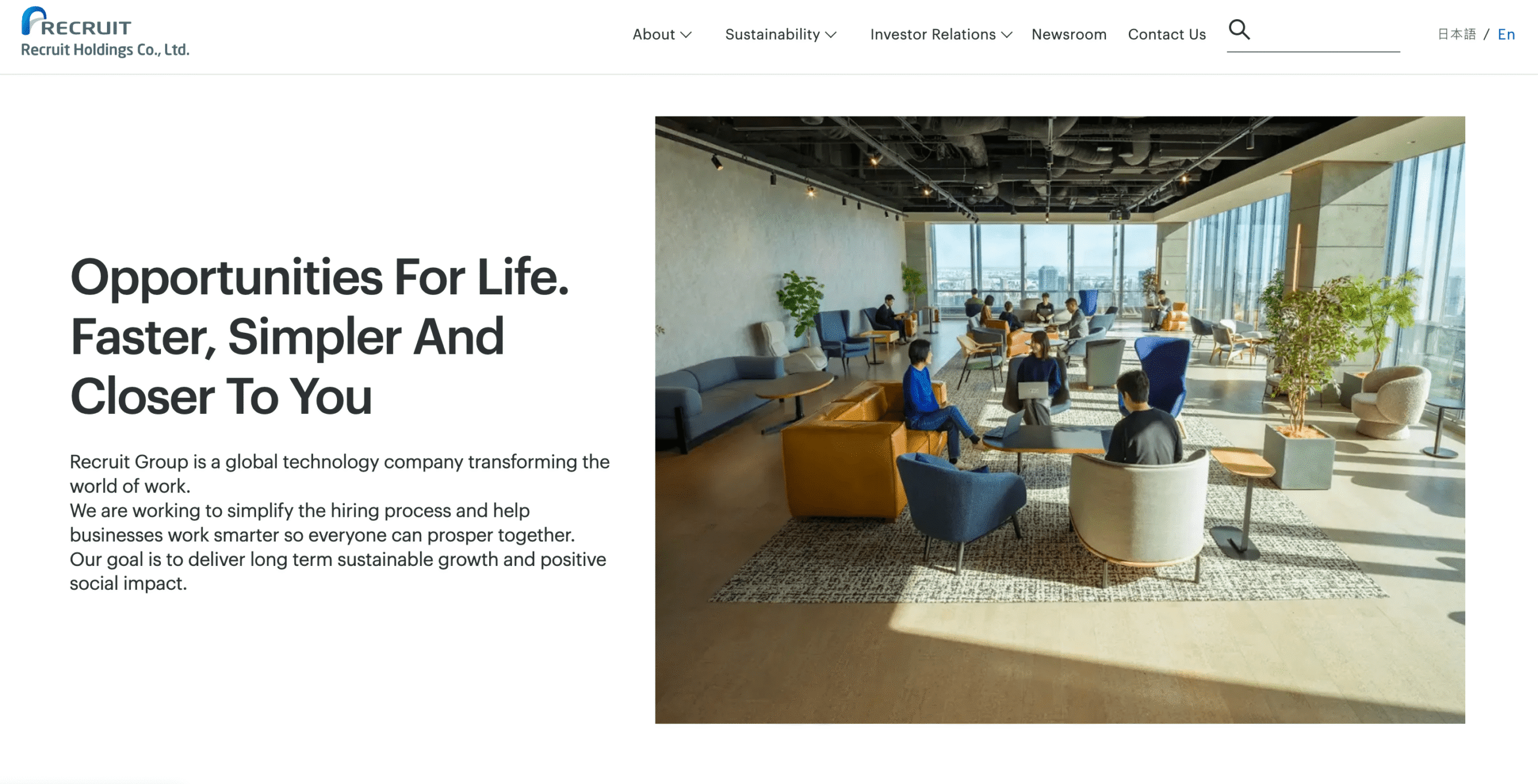
n 2026, Japan’s IT and software recruitment market continues to expand due to digital transformation across manufacturing, fintech, mobility, SaaS, AI, and robotics sectors. A persistent shortage of domestic engineering talent, combined with rising demand for bilingual and globally experienced professionals, has positioned major recruitment agencies as critical infrastructure partners to Japanese enterprises.
Within this competitive environment, Recruit Holdings Co., Ltd., operating through Recruit Agent, remains the undisputed market leader. With consolidated revenue reaching JPY 3.59 trillion, the company holds the largest share of the Japanese recruitment market and maintains the highest IT placement volume in the country.
Financial Performance and Strategic Investment Direction
Recruit’s financial strength allows it to invest heavily in proprietary HR technology rather than relying solely on traditional placement services. For the fiscal year ending March 2026, the company maintained an EBITDA+S margin of 22.7 percent, even as it shifted toward long-term platform development and AI-driven recruitment infrastructure.
| Financial Indicator | FY Ending March 2026 | Strategic Implication |
|---|---|---|
| Consolidated Revenue | JPY 3.59 Trillion | Market dominance and capital flexibility |
| EBITDA+S Margin | 22.7% | Operational efficiency despite tech investments |
| Core Business Model | HR Technology + Staffing | Hybrid platform and placement approach |
| IT Recruitment Volume | Highest in Japan | Leadership in technology hiring |
| Global Integration | Yes | Cross-border talent sourcing capability |
Proprietary Digital Ecosystem and AI Infrastructure
A defining characteristic of Recruit’s competitive advantage in 2026 is its proprietary digital infrastructure. The expansion of the Indeed Plus ecosystem centralizes recruitment distribution across multiple channels, allowing employers to maximize candidate visibility while leveraging AI-powered marketing optimization.
Artificial intelligence is embedded into job ad targeting, candidate screening, and predictive matching systems. These technologies improve hiring speed, increase candidate relevance, and reduce time-to-fill for critical IT roles such as software engineers, data scientists, cloud architects, and cybersecurity specialists.
| Technology Component | Functional Purpose | Impact on IT Recruitment |
|---|---|---|
| AI Matching Algorithms | Skill-based predictive filtering | Higher candidate-job alignment |
| Centralized Job Distribution | Multi-platform publishing system | Broader reach across talent pools |
| Data Analytics Dashboard | Recruitment performance tracking | Improved hiring ROI visibility |
| Marketing Automation Engine | Optimized job ad placement | Increased qualified applicant flow |
| Integrated Talent Database | Large-scale candidate management | Faster sourcing for urgent IT roles |
Target Market and IT Client Segmentation
Recruit Agent services a broad client spectrum. Although the company covers virtually every industry vertical, its IT and software division represents the largest recruitment volume in Japan.
Major domestic conglomerates including Sony, Toyota, and Rakuten rely on Recruit for large-scale digital transformation initiatives. At the same time, mid-sized enterprises and growth-stage startups depend on Recruit’s infrastructure to secure highly specialized technical professionals.
| Client Category | Typical IT Hiring Needs | Engagement Model |
|---|---|---|
| Large Conglomerates | Enterprise software, AI, cloud migration teams | High-volume structured hiring programs |
| Mid-Sized Enterprises | System modernization, DevOps, SaaS deployment | Targeted specialist placements |
| Technology Startups | Full-stack developers, product engineers | Agile recruitment and rapid scaling |
| Foreign Firms in Japan | Bilingual engineers, regional tech leaders | Cross-border and localized talent acquisition |
Competitive Positioning Within Japan’s IT Recruitment Sector
Among the top recruitment agencies specializing in IT and software hiring in Japan in 2026, Recruit Holdings sets the benchmark across several dimensions: scale, data capability, AI adoption, and enterprise trust.
| Competitive Factor | Recruit Holdings Position (2026) | Relative Market Standing |
|---|---|---|
| Revenue Scale | Highest in Japan | Industry Leader |
| Digital Recruitment Platform | Proprietary ecosystem (Indeed Plus) | Advanced |
| AI Integration Level | Fully embedded in sourcing & matching | Market Leading |
| IT Placement Volume | Largest nationwide | Dominant |
| Enterprise Client Portfolio | Diversified across major sectors | Highly Established |
| Financial Stability | Strong profitability and margin control | Resilient |
Strategic Outlook for 2026 and Beyond
Recruit Holdings continues to evolve from a traditional recruitment agency into a comprehensive HR technology powerhouse. Its long-term strategy prioritizes platform scalability, automation, and data intelligence while preserving the advisory function required for senior-level and specialized IT placements.
In the context of Japan’s rapidly digitizing economy, Recruit Agent remains the central reference point for enterprises seeking reliable, high-volume, and technologically sophisticated IT recruitment solutions.
3. Persol Holdings Co., Ltd.


In 2026, Japan’s IT and software hiring landscape continues to be shaped by severe talent shortages, regional workforce imbalances, and increasing demand for contract-based technical specialists. Within this environment, Persol Holdings Co., Ltd. stands as one of the largest and most operationally diversified recruitment groups in the country.
With reported fiscal year 2025 revenue of JPY 1.45 trillion, Persol maintains a strong position among Japan’s top recruitment agencies. Its scale is reinforced by a network of 149 group companies, allowing the organization to deliver both specialized IT recruitment and high-volume staffing solutions across the nation.
Key Corporate Indicators
| Corporate Metric | FY2025 Performance | Strategic Implication |
|---|---|---|
| Reported Revenue | JPY 1.45 Trillion | Large-scale national operations |
| Group Companies | 149 | Diversified service capability |
| Geographic Coverage | Nationwide | Strong regional staffing outside Tokyo |
| Service Portfolio | Staffing, BPO, HR Tech | End-to-end workforce solutions |
| IT Recruitment Focus | High-volume & contract roles | Flexible hiring support for technology teams |
Digital Ecosystem and HR Technology Integration
A central component of Persol’s competitive strength lies in its integrated HR technology infrastructure. The company leverages the SmartHR cloud suite to streamline HR administration, payroll processing, and employee data management. By integrating HR administration systems with AI-driven candidate matching tools, Persol reduces administrative burdens for client organizations while accelerating hiring timelines.
This digital integration is particularly valuable for IT employers managing distributed engineering teams, temporary development projects, and hybrid workforces. The ability to synchronize recruitment workflows with payroll and workforce administration enables clients to transition new hires into operational roles with minimal friction.
Technology and Process Integration Matrix
| Digital Component | Functional Role | Value for IT Employers |
|---|---|---|
| SmartHR Cloud Suite | Payroll and HR administration | Reduced compliance and onboarding friction |
| AI Candidate Matching | Skill and experience filtering | Faster identification of qualified IT professionals |
| Workforce Data Analytics | Performance and hiring metrics | Improved staffing cost control |
| Integrated Onboarding Systems | Automated documentation and compliance | Accelerated project deployment |
| Centralized Candidate Database | Large talent pool access | Efficient sourcing for regional tech roles |
Sector Breadth and Regional Recruitment Strength
Unlike agencies that concentrate heavily on Tokyo-based enterprise clients, Persol’s extensive nationwide network makes it particularly effective for regional recruitment. This capability is essential in 2026 as digital transformation initiatives expand into regional manufacturing hubs, local fintech operations, and technology-driven infrastructure projects.
Persol’s scale and local presence make it the primary choice for companies seeking high-volume staffing or technical hiring outside the Tokyo metropolitan area. Organizations in Osaka, Nagoya, Fukuoka, Sapporo, and other regional markets frequently rely on Persol’s localized recruitment infrastructure.
Regional Recruitment Coverage
| Region Focus Area | Typical IT Hiring Demand | Persol Competitive Advantage |
|---|---|---|
| Tokyo Metropolitan Area | Enterprise digital transformation | Large candidate database |
| Kansai (Osaka) | Manufacturing IT systems & automation | Local consultant network |
| Chubu (Nagoya) | Automotive software engineering | Industry-aligned staffing solutions |
| Kyushu (Fukuoka) | Startup and fintech expansion | Flexible contract staffing |
| Tohoku & Hokkaido | Infrastructure and regional modernization | Nationwide operational footprint |
Project-Based Support and BPO Capabilities
In addition to permanent placement services, Persol is widely recognized for its Business Process Outsourcing (BPO) and contract staffing capabilities. This flexibility is critical in Japan’s 2026 technology sector, where companies increasingly scale engineering teams based on project cycles, system upgrades, and short-term transformation initiatives.
Persol’s BPO services allow organizations to outsource entire operational functions, including IT helpdesk support, system migration projects, and back-office digital processes. Meanwhile, contract staffing solutions provide access to developers, system engineers, and technical support professionals for fixed-term engagements.
Operational Flexibility Framework
| Service Model | Primary Use Case | Strategic Benefit for Clients |
|---|---|---|
| Permanent Recruitment | Core software engineering hires | Long-term team building |
| Contract Staffing | Short-term development projects | Scalable workforce management |
| Business Process Outsourcing | IT operations & administrative functions | Cost efficiency and process optimization |
| Project-Based Workforce Teams | System migrations & digital transformation | Rapid deployment without long-term overhead |
| Hybrid Workforce Solutions | Mixed permanent and temporary IT teams | Balanced cost and flexibility |
Competitive Positioning in Japan’s IT Recruitment Market
Within the landscape of Japan’s top IT recruitment agencies in 2026, Persol Holdings differentiates itself through operational breadth and regional dominance rather than purely digital platform scale. While some competitors emphasize proprietary job distribution ecosystems, Persol’s advantage lies in execution capability, nationwide infrastructure, and workforce flexibility.
Comparative Positioning Overview
| Competitive Dimension | Persol Holdings Position (2026) | Market Characteristic |
|---|---|---|
| Revenue Scale | Among Top Tier in Japan | Large and diversified |
| Regional Coverage | Extensive nationwide | Strong outside Tokyo |
| HR Technology Integration | Integrated SmartHR ecosystem | Administrative efficiency focus |
| Contract Staffing Capability | Highly developed | Project-based IT support |
| BPO Infrastructure | Established and scalable | Enterprise outsourcing partner |
| IT Recruitment Specialization | High-volume and operational roles | Execution-driven |
Strategic Outlook
As Japan continues to confront structural talent shortages in software engineering, AI development, and digital infrastructure, Persol Holdings remains a critical partner for companies seeking scalable and flexible IT hiring solutions. Its integration of HR technology, nationwide operational reach, and strong contract staffing capabilities position it as one of the most structurally resilient recruitment groups in Japan’s 2026 technology employment market.
4. Adecco Group Japan (Akkodis & LHH)


In 2026, Japan’s technology labor market is shaped by digital acceleration, AI-driven automation, and corporate restructuring initiatives. Within this evolving environment, Adecco Group Japan operates as a comprehensive HR solutions provider, offering end-to-end workforce services that extend beyond traditional recruitment.
Through its specialized brands Akkodis and LHH, Adecco Group Japan delivers targeted IT talent acquisition, engineering workforce solutions, professional recruitment, and career transition support. This multi-brand structure enables the company to serve both high-growth technology projects and complex corporate workforce transitions.
Corporate Performance and Growth Indicators
Adecco Group Japan reported an 8 percent revenue increase in 2026, reflecting strong regional expansion and sustained demand for technology talent. A significant portion of this growth is attributed to its investment in upskilling initiatives, designed to prepare workers for AI-enabled automation and digital transformation.
| Performance Indicator | 2026 Outcome | Strategic Interpretation |
|---|---|---|
| Revenue Growth | 8% Increase | Strong market demand and regional expansion |
| Core Market Focus | IT, Engineering, Professional HR | Diversified talent solutions |
| Workforce Development Strategy | AI Upskilling Programs | Future-proofing talent pipelines |
| Brand Structure | Akkodis & LHH | Specialized multi-brand positioning |
| Service Scope | Recruitment + Career Transition | Full-spectrum HR solutions |
Akkodis: Dedicated IT and Engineering Expertise
Akkodis functions as Adecco’s specialized brand dedicated exclusively to IT and engineering recruitment. In Japan’s 2026 labor market, where domain-specific expertise is essential, Akkodis positions itself as a technical workforce partner rather than a general staffing provider.
The brand connects enterprises with software developers, system architects, embedded engineers, cybersecurity specialists, data scientists, and AI engineers. Its consultants typically possess industry-aligned knowledge, allowing them to evaluate both technical competency and project compatibility.
Akkodis Service Focus Matrix
| Talent Category | Typical Client Demand | Recruitment Value Proposition |
|---|---|---|
| Software Engineering | Application and SaaS development | Domain-specific candidate screening |
| Embedded Systems | Automotive and robotics technology | Engineering project alignment |
| Cybersecurity | Infrastructure protection and compliance | Risk-aware talent sourcing |
| Data Science & AI | Predictive analytics and automation | Advanced skill matching |
| Cloud & DevOps | Digital transformation initiatives | Agile and scalable workforce solutions |
By concentrating exclusively on technical fields, Akkodis strengthens Adecco’s ability to support companies undergoing large-scale system modernization or launching new digital platforms.
LHH: Professional Recruitment and Career Transition
LHH complements Akkodis by focusing on professional recruitment, leadership hiring, and career transition services. In 2026, as Japanese corporations restructure to remain competitive in AI-driven markets, workforce transitions have become increasingly common.
LHH assists organizations in maintaining employer brand credibility during downsizing, mergers, or digital restructuring efforts. This service is particularly important for technology companies managing internal reskilling programs or redeploying employees affected by automation.
LHH Operational Support Framework
| Service Area | Corporate Use Case | Strategic Benefit |
|---|---|---|
| Professional Recruitment | Mid-to-senior management hiring | Leadership continuity |
| Executive Search | Strategic IT and digital leadership roles | High-level talent acquisition |
| Career Transition Services | Workforce restructuring and redeployment | Employer brand protection |
| Outplacement Programs | Organizational downsizing | Risk mitigation and reputation management |
| Talent Advisory | Workforce strategy planning | Long-term HR optimization |
Regional Penetration and Upskilling Strategy
One of Adecco Group Japan’s most notable differentiators in 2026 is its regional expansion strategy. As digital transformation extends beyond Tokyo into regional technology hubs, Adecco has strengthened its presence in key markets across Japan.
In parallel, the company has placed significant emphasis on workforce upskilling programs. By investing in training initiatives aligned with AI, automation, and digital systems management, Adecco ensures a steady pipeline of adaptable IT professionals capable of meeting emerging technological requirements.
Regional and Workforce Strategy Overview
| Strategic Area | Implementation Focus | Impact on IT Recruitment |
|---|---|---|
| Regional Office Expansion | Coverage beyond metropolitan Tokyo | Broader access to local engineering talent |
| AI Upskilling Programs | Training in automation and data analytics | Future-ready candidate pool |
| Hybrid Workforce Models | Combination of permanent and contract roles | Flexible hiring solutions |
| Industry-Specific Partnerships | Collaboration with tech-driven enterprises | Domain-aligned talent acquisition |
| Digital Transformation Support | Project-based engineering deployment | Accelerated modernization efforts |
Competitive Positioning in Japan’s 2026 IT Recruitment Landscape
Among Japan’s leading IT recruitment agencies in 2026, Adecco Group Japan differentiates itself through specialization and structural flexibility. While some competitors dominate through proprietary digital platforms or large domestic networks, Adecco’s advantage lies in its brand segmentation and workforce development focus.
Comparative Positioning Matrix
| Competitive Dimension | Adecco Group Japan Position (2026) | Market Characteristic |
|---|---|---|
| Technical Specialization | Strong via Akkodis | Dedicated IT and engineering focus |
| Professional & Executive Hiring | Established via LHH | Integrated leadership recruitment |
| Revenue Growth Momentum | Positive (8% increase) | Expanding regional demand |
| Workforce Upskilling | Proactive and AI-oriented | Talent pipeline sustainability |
| Regional Penetration | Expanding | Broader geographic talent coverage |
| Service Integration | Multi-brand ecosystem | End-to-end HR solutions |
Strategic Outlook
As Japan’s technology sector becomes increasingly shaped by AI adoption, automation, and project-based engineering demands, Adecco Group Japan is positioned as a structurally adaptive recruitment partner. Through Akkodis’ technical specialization and LHH’s professional workforce management services, the organization offers both immediate hiring support and long-term workforce strategy solutions.
In the context of Japan’s top recruitment agencies for IT and software hiring in 2026, Adecco Group Japan stands out for its ability to combine specialized technical recruitment with comprehensive HR advisory and talent transition services, aligning closely with the evolving needs of technology-driven enterprises.
5. Randstad Japan

In 2026, Japan’s IT and software hiring ecosystem is increasingly influenced by enterprise-scale digital transformation, AI integration, and cross-border talent mobility. Within this environment, Randstad Japan operates as one of the most established international recruitment firms offering comprehensive Recruitment Process Outsourcing (RPO) and total talent management solutions.
As part of the global Randstad network, the Japan division leverages international best practices, advanced workforce analytics, and structured hiring methodologies to support complex recruitment operations. Rather than focusing solely on contingency placement, Randstad positions itself as a strategic workforce partner managing entire hiring lifecycles for large organizations.
Core Organizational Profile
| Corporate Attribute | Market Position in Japan (2026) | Strategic Advantage |
|---|---|---|
| Global Affiliation | International HR Group | Cross-border best practices |
| Core Service Model | Recruitment Process Outsourcing (RPO) | End-to-end hiring management |
| Technology Hiring Focus | AI, Digital Transformation, IT | Niche and enterprise-scale recruitment |
| Talent Management Scope | Total workforce solutions | Integrated hiring and retention strategies |
| Client Segment | Large enterprises & multinationals | Structured and scalable recruitment systems |
AI and Automation Alignment
One of the defining trends in Japan’s 2026 employment market is the explosive growth in AI-related job listings, which have increased by 1,587 percent over recent years. Randstad Japan has aligned its strategy directly with this demand shift, emphasizing AI, data science, automation engineering, and advanced analytics roles.
To address the scarcity of experienced AI professionals, Randstad provides customized candidate profiling and targeted upskilling initiatives. These programs enable companies to secure adaptable technical talent capable of supporting automation projects, machine learning deployments, and enterprise system optimization.
AI Recruitment Strategy Matrix
| Strategic Area | Implementation Focus | Impact on IT Hiring |
|---|---|---|
| AI Talent Sourcing | Specialized recruitment teams | Access to niche expertise |
| Candidate Profiling | Skills mapping and competency validation | Higher precision matching |
| Customized Training Pathways | Upskilling aligned to AI automation needs | Expanded qualified talent pool |
| Automation Project Support | Workforce planning for system transformation | Reduced project execution risk |
| Workforce Analytics | Predictive hiring metrics | Data-driven recruitment decisions |
Bilingual Talent Pipelines and Global Mobility
A distinctive strength of Randstad Japan lies in its bilingual and cross-border talent pipelines. As enterprise-level AI restructuring initiatives expand across Japanese corporations, demand for professionals capable of operating in both Japanese and English environments has increased significantly.
Randstad maintains strong dual-language candidate databases and international sourcing channels. This capability is particularly relevant for multinational corporations operating in Japan and domestic firms collaborating with overseas technology partners.
Bilingual Workforce Framework
| Talent Category | Common Corporate Requirement | Randstad Capability |
|---|---|---|
| AI Engineers | Global project collaboration | English-Japanese dual-language screening |
| Data Scientists | International reporting structures | Cross-border sourcing |
| Cloud Architects | Multi-region infrastructure deployment | Global candidate mobility |
| IT Project Managers | Multinational stakeholder coordination | Bilingual leadership pipeline |
| Automation Specialists | Enterprise-wide AI restructuring | Cultural and linguistic adaptability |
Recruitment Process Outsourcing and Full-Cycle Hiring
Randstad Japan is frequently engaged by large domestic enterprises and multinational corporations to manage full-cycle recruitment operations. Through its RPO model, the agency oversees sourcing, screening, onboarding coordination, and recruitment analytics.
This approach is particularly effective for corporations undergoing digital transformation programs requiring large-scale hiring across multiple IT disciplines. By embedding recruitment consultants within client organizations, Randstad provides continuity, standardized processes, and measurable performance benchmarks.
RPO Service Architecture
| RPO Component | Operational Function | Benefit for Enterprise Clients |
|---|---|---|
| Workforce Planning | Forecasting technical hiring needs | Proactive talent acquisition |
| Dedicated Onsite Recruiters | Embedded recruitment teams | Process consistency and speed |
| Talent Analytics Dashboard | Performance tracking and KPI reporting | Transparency and optimization |
| Employer Branding Support | Talent market positioning | Improved candidate attraction |
| Onboarding Coordination | Structured integration of new hires | Reduced time-to-productivity |
Competitive Positioning in Japan’s IT Recruitment Landscape
Among Japan’s leading IT recruitment agencies in 2026, Randstad Japan differentiates itself through structured process management and international integration rather than solely domestic scale. Its strengths are particularly evident in enterprise AI transformation initiatives and multinational hiring programs.
Competitive Positioning Matrix
| Competitive Dimension | Randstad Japan Position (2026) | Market Characteristic |
|---|---|---|
| Global Integration | Strong | International best practices |
| AI Recruitment Alignment | Highly Developed | Specialized automation talent focus |
| Bilingual Talent Access | Extensive | Enterprise-ready workforce |
| RPO Infrastructure | Mature and scalable | Full-cycle hiring management |
| Enterprise Client Portfolio | Large domestic & multinational | Structured workforce partnerships |
| Workforce Analytics Capability | Advanced | Data-driven recruitment optimization |
Strategic Outlook
As AI-driven automation reshapes Japan’s corporate structure in 2026, organizations require recruitment partners capable of managing complex hiring programs across language, technology, and compliance boundaries. Randstad Japan’s comprehensive RPO model, bilingual pipelines, and alignment with AI talent demand position it as a preferred partner for enterprise-scale IT workforce transformation.
Within the broader ranking of Japan’s top recruitment agencies for IT and software hiring, Randstad Japan stands out for its systematic talent management framework and ability to integrate global recruitment standards into the domestic technology employment market.
6. Hays Japan


In 2026, Japan’s IT and software employment market continues to evolve under the influence of AI automation, enterprise restructuring, and cross-border technology collaboration. Within this dynamic landscape, Hays Japan has established itself as a specialist recruitment firm focused on professional and technical hiring, particularly for bilingual and internationally aligned roles.
Hays Japan primarily supports multinational corporations, global technology firms, financial institutions, and engineering companies operating in Japan. Its core strength lies in bridging international hiring standards with deep local labor market intelligence.
Organizational Focus Overview
| Corporate Attribute | Position in Japan (2026) | Strategic Value |
|---|---|---|
| Recruitment Specialization | Professional & Technical Talent | High-skill, niche placements |
| Primary Client Base | Multinational firms & global enterprises | Cross-border workforce alignment |
| Talent Language Focus | Bilingual (Japanese-English) | International collaboration capability |
| Sector Coverage | Technology, Finance, Engineering | Industry-specific recruitment expertise |
| Service Model | Embedded & Project-Based RPO | Flexible enterprise integration |
Technical Demand Shifts and Labor Market Insights
Hays’ proprietary research reveals significant structural changes in Japan’s IT hiring patterns. In 2026, demand for traditional software development roles has declined by 59 percent, largely due to automation and AI-driven coding tools. Conversely, demand for “Projects and Change” roles has increased by 30 percent, reflecting the growing need for strategic oversight, transformation management, and system governance.
This shift highlights a broader transition from execution-focused technical hiring toward leadership-oriented and transformation-driven positions. Employers increasingly prioritize IT project managers, digital transformation leads, cybersecurity strategists, enterprise architects, and change management specialists.
IT Demand Evolution Matrix
| Role Category | Demand Trend (2026) | Underlying Market Driver |
|---|---|---|
| Standard Software Developers | 59% Decrease | AI-assisted coding automation |
| Projects & Change Specialists | 30% Increase | Digital transformation and system governance |
| Cybersecurity Strategists | Growth | Risk mitigation and compliance |
| Enterprise Architects | Growth | Complex infrastructure modernization |
| IT Transformation Leaders | Growth | AI integration and operational restructuring |
By identifying these demand shifts early, Hays Japan positions itself as a forward-looking advisory partner rather than simply a placement agency.
Global Talent Network and Data Intelligence
A key differentiator for Hays Japan is its data-driven talent network. Drawing from data collated in 2024 covering approximately 10 million professionals in Japan, Hays maintains one of the most structured professional databases in the market.
This large-scale data infrastructure enables the firm to map salary benchmarks, identify skill clusters, and pinpoint cost-effective sourcing regions for niche IT capabilities. For clients seeking rare expertise, such as AI governance specialists or cloud security architects, this intelligence significantly reduces search time and hiring uncertainty.
Talent Intelligence Framework
| Data Capability | Operational Function | Employer Advantage |
|---|---|---|
| Large Professional Database | 10 million profiles analyzed | Wide candidate reach |
| Salary Benchmarking Analytics | Compensation trend mapping | Competitive and cost-effective offers |
| Skill Cluster Mapping | Identification of niche technical expertise | Faster sourcing for rare roles |
| Regional Cost Analysis | Geographic talent cost comparison | Budget optimization |
| Market Forecast Reporting | Industry hiring projections | Strategic workforce planning |
Embedded and Project-Based RPO Services
Hays Japan delivers recruitment solutions through embedded and project-based Recruitment Process Outsourcing models. These services allow consultants to integrate directly within client organizations to manage specific hiring programs or transformation initiatives.
This approach aligns with global recruitment standards while incorporating localized insights into Japan’s regulatory environment, cultural expectations, and candidate behavior patterns. For multinational firms navigating Japan’s labor market, this hybrid expertise is particularly valuable.
Service Architecture Overview
| Service Component | Implementation Method | Enterprise Benefit |
|---|---|---|
| Embedded Recruitment Teams | Onsite or integrated hiring specialists | Process continuity and accountability |
| Project-Based RPO | Dedicated recruitment for transformation programs | Scalable hiring support |
| Executive Search | Senior IT and transformation leadership | Strategic leadership acquisition |
| Market Intelligence Advisory | Data-driven hiring consultation | Informed decision-making |
| Compliance & Local Guidance | Regulatory and cultural alignment | Reduced operational risk |
Competitive Positioning in Japan’s IT Recruitment Market
Within Japan’s 2026 IT recruitment ecosystem, Hays Japan distinguishes itself through specialization, data intelligence, and bilingual expertise. Unlike high-volume domestic staffing firms, Hays concentrates on mid-to-senior level placements and transformation-critical roles.
Competitive Positioning Matrix
| Competitive Dimension | Hays Japan Position (2026) | Market Characteristic |
|---|---|---|
| Bilingual Talent Focus | Strong | Multinational project alignment |
| Demand Trend Intelligence | Data-backed insights | Advisory-driven recruitment |
| Project & Change Specialization | High | Transformation-focused hiring |
| Database Scale | 10 million professionals analyzed | Structured talent mapping |
| RPO Capability | Embedded and scalable | Enterprise integration |
| Market Segment | Professional & Senior Roles | Niche and strategic placements |
Strategic Outlook
As AI automation reshapes technical job structures in Japan, demand increasingly concentrates on oversight, governance, and strategic transformation roles. Hays Japan’s research-backed insights, bilingual candidate networks, and embedded RPO capabilities position it as a preferred partner for multinational firms managing digital change initiatives.
Within the ranking of Japan’s top recruitment agencies for IT and software hiring in 2026, Hays Japan stands out for its analytical approach, specialization in transformation-focused talent, and ability to connect global enterprises with highly skilled bilingual professionals in an evolving technology landscape.
7. Robert Walters Japan


In 2026, Japan’s IT and software hiring environment is increasingly competitive, particularly at the mid-to-senior level where bilingual capability and leadership expertise are essential. Within this premium recruitment segment, Robert Walters Japan has positioned itself as a leading specialist consultancy focused on high-caliber professional placements.
The firm is widely recognized for targeting experienced professionals who operate at the intersection of technology, business strategy, and global communication. Its client base primarily includes multinational corporations, foreign-affiliated firms, and progressive Japanese enterprises seeking internationally aligned leadership talent.
Organizational Positioning Overview
| Corporate Attribute | Position in Japan (2026) | Strategic Value |
|---|---|---|
| Recruitment Focus | Mid-to-Senior Level Professionals | High-impact leadership hiring |
| Language Specialization | Bilingual (Japanese-English) | Cross-border operational capability |
| Sector Expertise | Technology and Transformation | Strategic IT modernization support |
| Client Profile | Multinationals & Globalized Japanese Firms | International hiring standards |
| Service Model | Consultative & Advisory-Based | Relationship-driven recruitment |
Consultative, Quality-First Methodology
Unlike volume-driven staffing firms, Robert Walters Japan emphasizes a quality-first recruitment philosophy. Its consultants adopt an advisory approach that prioritizes long-term alignment between employer strategy and candidate career trajectory.
Rather than focusing solely on rapid placement metrics, the firm engages deeply with client organizations to understand transformation roadmaps, digital maturity, and competitive positioning. This consultative model enhances candidate retention and ensures that strategic hires contribute meaningfully to enterprise objectives.
Consultative Recruitment Framework
| Recruitment Phase | Advisory Focus | Business Outcome |
|---|---|---|
| Organizational Assessment | Understanding digital transformation goals | Precise talent targeting |
| Role Structuring | Defining technical and leadership competencies | Reduced misalignment risk |
| Candidate Evaluation | Behavioral and cultural fit analysis | Higher retention probability |
| Offer Strategy | Compensation benchmarking guidance | Competitive and sustainable hiring |
| Post-Placement Follow-Up | Retention and engagement monitoring | Long-term workforce stability |
Technology and Transformation Expertise
Robert Walters Japan maintains dedicated teams specializing in Technology and Transformation recruitment. This division supports roles ranging from advanced engineering specialists to executive leadership positions overseeing enterprise-wide digital strategy.
In 2026, average compensation benchmarks reflect the high demand for experienced bilingual talent. Backend engineers command approximately JPY 10.5 million annually on average, while Chief Technology Officers (CTOs) average around JPY 18 million, depending on company size and industry.
Technology Compensation Snapshot
| Role Category | Average Annual Salary (JPY) | Market Demand Level (2026) |
|---|---|---|
| Backend Engineer | 10.5 Million | Strong |
| Cloud Solutions Architect | 12–14 Million | Growing |
| IT Transformation Manager | 14–16 Million | High |
| Cybersecurity Lead | 13–15 Million | Increasing |
| Chief Technology Officer (CTO) | 18 Million | Executive-Level Demand |
These compensation levels highlight the premium nature of Robert Walters’ candidate pool, particularly in bilingual and transformation-critical roles.
Market Intelligence and Salary Benchmarking Authority
A defining feature of Robert Walters Japan’s market influence is its annual Salary Survey. This publication is widely regarded as a benchmark reference across hundreds of professional roles, including IT, digital transformation, cybersecurity, and executive leadership positions.
In an environment characterized by persistent inflation and intense competition for technical talent, companies rely on this salary intelligence to design retention strategies, adjust compensation frameworks, and forecast hiring budgets.
Salary Intelligence Utility Matrix
| Salary Survey Application | Corporate Use Case | Strategic Advantage |
|---|---|---|
| Compensation Benchmarking | Competitive offer structuring | Improved hiring success rate |
| Retention Strategy Planning | Adjusting pay scales amid inflation | Reduced attrition |
| Budget Forecasting | Workforce cost projection | Financial planning accuracy |
| Talent Market Mapping | Identifying hot skill categories | Proactive hiring strategy |
| Executive Compensation Guidance | Senior leadership pay alignment | Governance and transparency |
Competitive Positioning in Japan’s IT Recruitment Market
Within Japan’s top recruitment agencies for IT and software hiring in 2026, Robert Walters Japan occupies a premium niche focused on quality, specialization, and bilingual executive-level talent. While larger domestic agencies may dominate high-volume hiring, Robert Walters excels in mid-to-senior strategic placements.
Competitive Positioning Matrix
| Competitive Dimension | Robert Walters Japan Position (2026) | Market Characteristic |
|---|---|---|
| Bilingual Talent Specialization | Strong | Multinational workforce alignment |
| Mid-to-Senior Recruitment Focus | Core Strength | Strategic hiring expertise |
| Consultative Service Model | Highly Developed | Advisory-driven placement |
| Salary Benchmark Authority | Industry Standard | Market intelligence leadership |
| Technology & Transformation Team | Dedicated Division | Specialized IT leadership recruitment |
| Market Segment | Premium Professional Hiring | Quality over volume |
Strategic Outlook
As Japan’s digital economy matures in 2026, enterprises increasingly prioritize leadership roles capable of guiding AI integration, cybersecurity governance, and enterprise transformation. Robert Walters Japan’s consultative methodology, compensation intelligence, and specialization in bilingual mid-to-senior talent position it as a trusted advisor for organizations seeking strategic technology leadership.
Within the broader ranking of Japan’s top recruitment agencies for IT and software hiring, Robert Walters Japan stands out for its premium positioning, data-backed advisory services, and consistent focus on transformation-driven professional recruitment.
8. JAC Recruitment Japan


In Japan’s 2026 technology recruitment landscape, demand for discreet executive hiring and highly specialized talent acquisition has intensified. As digital transformation initiatives accelerate and global firms expand operations in Japan, the need for strategic leadership and niche technical expertise continues to grow. Within this premium segment, JAC Recruitment Japan has established itself as a consultancy-driven firm recognized for its high-margin, advisory-led approach.
With an operating margin of 25.1 percent, JAC Recruitment demonstrates strong profitability, reflecting its focus on high-value executive search and specialist placements rather than high-volume staffing. The firm is widely regarded as a preferred partner for multinational corporations seeking mid-level and senior management professionals in technology and related sectors.
Corporate Performance Snapshot
| Corporate Indicator | 2026 Position | Strategic Implication |
|---|---|---|
| Operating Margin | 25.1% | High-value consultancy model |
| Core Specialization | Executive & Specialist Recruitment | Premium talent focus |
| Client Profile | Predominantly Foreign Enterprises | Cross-border hiring expertise |
| Service Model | Direct Recruiting & Advisory | Targeted and discreet talent acquisition |
| IT Recruitment Scope | Mid-to-Senior Leadership Roles | Transformation-focused placements |
Highly Segmented Consulting Structure
A defining feature of JAC Recruitment Japan is its specialized organizational design. The agency operates 190 dedicated consulting teams segmented by both industry and job function. This structure ensures that consultants possess deep technical knowledge, industry familiarity, and real-time market awareness.
For IT and software recruitment, this means consultants are not generalists. Instead, they specialize in areas such as digital transformation leadership, cybersecurity management, enterprise architecture, fintech systems, and advanced engineering functions. This segmentation enhances candidate evaluation accuracy and enables informed advisory support for complex hiring decisions.
Consulting Structure Matrix
| Segmentation Dimension | Operational Approach | Recruitment Advantage |
|---|---|---|
| Industry-Based Teams | Dedicated consultants per sector | Context-specific market intelligence |
| Functional Specialization | Role-focused expertise (e.g., CTO, IT Director) | Precise competency assessment |
| Regional Alignment | Consultants familiar with local labor trends | Improved candidate targeting |
| Cross-Team Collaboration | Integrated knowledge sharing | Broader talent mapping |
| Continuous Market Monitoring | Active industry intelligence updates | Proactive hiring recommendations |
Client Composition and International Focus
Approximately 90 percent of JAC Recruitment Japan’s clients are foreign companies operating within Japan. This client composition underscores the firm’s strength in supporting international organizations navigating the Japanese labor market.
Foreign enterprises often require bilingual executives capable of bridging corporate headquarters and local subsidiaries. JAC’s consultants understand global governance structures, cross-cultural management challenges, and compliance requirements unique to foreign-affiliated firms in Japan.
Client Composition Overview
| Client Category | Share of Client Base | Typical Hiring Focus |
|---|---|---|
| Foreign Multinational Firms | 90% | Senior IT management & strategic leadership |
| Global Technology Companies | Significant | Digital transformation & product expansion |
| Financial Institutions | Moderate | Risk, compliance & cybersecurity leadership |
| Japanese Enterprises (Globalized) | Selective | International expansion roles |
Direct Recruiting and Hidden Talent Acquisition
JAC Recruitment differentiates itself through a proactive direct recruiting model. Rather than relying primarily on public job boards or inbound applications, the firm actively approaches high-caliber professionals who may not be actively seeking new opportunities.
This “hidden talent” strategy is particularly valuable for executive IT roles, where experienced leaders are often employed and not visible through traditional channels. Consultants build long-term relationships with senior professionals, allowing them to present curated shortlists aligned with strategic hiring objectives.
Direct Recruiting Framework
| Recruitment Component | Implementation Method | Business Outcome |
|---|---|---|
| Proactive Talent Mapping | Identification of passive candidates | Access to elite professionals |
| Confidential Outreach | Discreet engagement strategies | Executive-level privacy protection |
| Relationship-Based Networking | Long-term candidate relationship management | Sustainable talent pipeline |
| Market Intelligence Advisory | Salary and competitor analysis | Informed decision-making |
| Shortlist Curation | Highly selective candidate presentation | Increased placement success rate |
Competitive Positioning in Japan’s IT Recruitment Market
Within the ranking of Japan’s top IT and software recruitment agencies in 2026, JAC Recruitment Japan occupies a distinct premium niche focused on executive search, specialist placements, and multinational client service. Its emphasis on consultancy, discretion, and direct sourcing differentiates it from volume-based staffing firms.
Competitive Positioning Matrix
| Competitive Dimension | JAC Recruitment Japan Position (2026) | Market Characteristic |
|---|---|---|
| Executive Search Strength | Highly Developed | Discreet senior-level recruitment |
| Foreign Client Concentration | Approximately 90% | International hiring specialization |
| Consulting Team Segmentation | 190 Specialized Teams | Deep technical and industry expertise |
| Direct Recruiting Model | Core Strategy | Hidden talent acquisition |
| Profitability Margin | 25.1% | Premium advisory model |
| IT Leadership Focus | Strong | Transformation-driven executive placements |
Strategic Outlook
As Japan’s technology sector continues to globalize in 2026, multinational corporations require recruitment partners capable of identifying strategic leaders with both technical acumen and cross-cultural fluency. JAC Recruitment Japan’s consultancy-based structure, high-margin executive focus, and proactive direct recruiting methodology position it as a trusted partner for international firms seeking elite IT leadership and specialist talent.
Within the broader ecosystem of Japan’s top recruitment agencies for IT and software hiring, JAC Recruitment Japan stands out for its discreet executive search capabilities, segmented consulting expertise, and sustained focus on high-impact, senior-level placements.
9. Michael Page Japan


In Japan’s increasingly competitive technology hiring environment in 2026, demand for senior-level digital leadership continues to outpace supply. Organizations undergoing AI transformation, cybersecurity reinforcement, and enterprise-wide system modernization require experienced executives capable of driving high-level strategic initiatives. Within this upper-tier recruitment segment, Michael Page Japan has established itself as a premium consultancy focused on upstream decision-making roles and executive-level placements.
The agency is particularly strong in recruiting Chief Technology Officers (CTOs), IT Directors, Transformation Leaders, and senior Project Managers. Rather than concentrating on volume-based placements, Michael Page Japan targets strategic roles that influence corporate direction, risk management, and long-term digital competitiveness.
Organizational Profile Overview
| Corporate Attribute | Market Position in Japan (2026) | Strategic Advantage |
|---|---|---|
| Core Recruitment Focus | Senior IT & Strategic Leadership | High-impact executive hiring |
| Target Salary Band | Above JPY 10 Million Annually | Premium professional segment |
| Global Network Reach | 141 International Offices | Cross-border executive sourcing |
| Primary Client Base | Multinationals & Large Enterprises | Complex transformation projects |
| Service Model | Consultant-Led Executive Search | High-touch advisory engagement |
Executive-Level and Upstream Recruitment Focus
Michael Page Japan’s recruitment model centers on upstream strategic roles. These are positions that define digital governance frameworks, oversee transformation budgets, and guide enterprise IT strategy rather than execute day-to-day development tasks.
By focusing on professionals earning more than JPY 10 million annually, the agency concentrates on high-value leadership talent capable of delivering measurable business outcomes. The firm leverages its global infrastructure of 141 offices to identify international executives who can relocate to Japan or manage cross-border technology operations.
Executive Recruitment Coverage Matrix
| Role Category | Typical Compensation Level | Strategic Responsibility |
|---|---|---|
| Chief Technology Officer (CTO) | JPY 15–20 Million+ | Enterprise technology strategy & governance |
| IT Director | JPY 12–18 Million | Departmental leadership & digital transformation execution |
| Senior Project Manager | JPY 10–15 Million | Complex system implementation oversight |
| Cybersecurity Director | JPY 13–17 Million | Risk mitigation & regulatory compliance leadership |
| Digital Transformation Lead | JPY 12–16 Million | AI and automation roadmap execution |
This specialization positions Michael Page Japan as a preferred partner for corporations navigating high-risk transformation initiatives.
Rapid Deployment for Leadership Restructuring
In sectors such as finance, cybersecurity, and enterprise technology infrastructure, leadership vacancies can expose organizations to operational and compliance risks. Michael Page Japan addresses this urgency through consultant-led executive search teams capable of fulfilling strategic roles within an approximate 60-day timeframe.
These teams typically consist of experienced recruitment consultants with sector-specific knowledge and pre-existing executive networks. By activating established talent pipelines rather than relying on open-market advertising, the firm accelerates shortlisting and interview coordination.
Leadership Fulfillment Framework
| Recruitment Stage | Operational Approach | Time-Sensitive Advantage |
|---|---|---|
| Strategic Briefing | Deep stakeholder consultation | Precise candidate targeting |
| Executive Talent Mapping | Activation of pre-qualified networks | Reduced search cycle |
| Confidential Candidate Outreach | Discreet engagement of senior professionals | Executive-level privacy |
| Shortlist Delivery | Curated leadership profiles | Faster decision-making |
| Offer & Negotiation Support | Compensation advisory and structuring | Improved acceptance rates |
Salary Guide and Retention Advisory
In addition to placement services, Michael Page Japan provides strategic advisory support through its 2026 Salary Guide consultations. This resource enables employers to benchmark compensation for niche IT leadership roles amid inflationary pressures and competitive talent markets.
Beyond salary benchmarking, the firm advises on total reward structuring, including bonus schemes, long-term incentives, hybrid work flexibility, and career progression pathways. This retention-focused approach is critical in securing and maintaining executive-level IT professionals.
Retention Strategy Matrix
| Advisory Component | Employer Application | Long-Term Benefit |
|---|---|---|
| Salary Benchmarking | Competitive offer alignment | Increased offer acceptance |
| Incentive Structure Design | Performance-based bonus frameworks | Executive motivation |
| Long-Term Equity Planning | Retention-focused compensation packages | Reduced turnover risk |
| Market Trend Analysis | Monitoring sector-specific salary inflation | Proactive budget planning |
| Counteroffer Strategy Guidance | Managing candidate negotiations | Higher placement stability |
Competitive Positioning in Japan’s IT Recruitment Market
Within the ranking of Japan’s top IT and software recruitment agencies in 2026, Michael Page Japan occupies a distinct executive-focused niche. While some firms dominate high-volume placements or mid-level roles, Michael Page concentrates on strategic leadership hiring with global sourcing capability.
Competitive Positioning Matrix
| Competitive Dimension | Michael Page Japan Position (2026) | Market Characteristic |
|---|---|---|
| Executive IT Recruitment | Core Strength | Upstream leadership focus |
| International Network | Extensive (141 Offices) | Cross-border sourcing |
| Salary Band Specialization | Above JPY 10M | Premium candidate segment |
| Fulfillment Speed | Approximately 60 Days for Key Roles | Rapid executive deployment |
| Retention Advisory Services | Integrated Salary Guide Consultations | Strategic compensation alignment |
| Market Segment | Strategic & High-Risk IT Roles | Advisory-driven executive search |
Strategic Outlook
As Japan’s technology sector faces intensified global competition and regulatory scrutiny in 2026, the importance of stable, experienced IT leadership continues to rise. Michael Page Japan’s premium positioning, rapid executive deployment capability, and compensation advisory expertise make it a strategic partner for enterprises undergoing complex digital restructuring.
Within the broader ecosystem of Japan’s top recruitment agencies for IT and software hiring, Michael Page Japan stands out for its focus on upstream strategic roles, global executive reach, and retention-centered advisory services designed to secure long-term organizational stability.
10. Robert Half Japan


In 2026, Japan’s IT recruitment landscape is increasingly shaped by digital transformation, hybrid work adoption, and strategic modernization initiatives across finance, manufacturing, and technology sectors. Within this environment, Robert Half Japan has positioned itself as a specialist recruitment firm focusing on technology, finance, and accounting professionals, serving both permanent and contract-based workforce needs.
The firm supports organizations requiring mid-to-senior level expertise in IT leadership, transformation governance, and financial technology integration. Its structured approach to talent placement combines compensation intelligence, advisory consultation, and a nuanced understanding of candidate motivations beyond salary considerations.
Organizational Overview
| Corporate Attribute | Position in Japan (2026) | Strategic Advantage |
|---|---|---|
| Core Specialization | Technology, Finance, Accounting | Cross-functional business expertise |
| Placement Types | Permanent & Contract | Workforce flexibility |
| Market Focus | Business Transformation & IT Leadership | Digital overhaul support |
| Advisory Services | Salary Guide & Workforce Planning | Data-backed hiring decisions |
| Candidate Engagement Strategy | Compensation + Non-Monetary Factors | Improved retention outcomes |
Data Accuracy and Salary Intelligence
A defining strength of Robert Half Japan lies in the credibility of its compensation insights. The firm’s 2026 Salary Guide is based on actual placement data collected from its nationwide operations, ensuring real-world accuracy rather than speculative survey responses.
This data-driven methodology allows employers to analyze compensation percentiles, identify competitive salary bands, and design retention strategies aligned with current market realities. In a period characterized by inflationary pressure and heightened talent mobility, such precision is critical for workforce planning.
Salary Intelligence Framework
| Data Component | Methodology Source | Employer Application |
|---|---|---|
| Real Placement Data | Nationwide Robert Half transactions | Accurate compensation benchmarking |
| Percentile Analysis | Market-based salary distribution mapping | Competitive offer structuring |
| Industry Segmentation | Sector-specific compensation tracking | Targeted budget allocation |
| Contract vs Permanent Trends | Workforce model comparison | Flexible hiring strategy development |
| Retention Risk Indicators | Offer acceptance & counteroffer trends | Proactive retention planning |
Specialization in Business Transformation and IT Leadership
Robert Half Japan places strong emphasis on “Business Transformation & IT Leadership,” reflecting the shift in corporate hiring priorities in 2026. As AI adoption, ERP modernization, and cybersecurity upgrades accelerate, organizations increasingly seek leaders capable of managing complex system transitions.
The firm recruits professionals responsible for aligning IT infrastructure with corporate strategy, overseeing digital integration projects, and managing stakeholder communication across departments.
Transformation-Focused Recruitment Coverage
| Role Category | Organizational Responsibility | Strategic Impact |
|---|---|---|
| IT Transformation Director | Enterprise-wide digital modernization | Operational efficiency & innovation |
| ERP Implementation Manager | System migration and process redesign | Business process optimization |
| Cybersecurity Program Lead | Risk governance & compliance oversight | Data protection & regulatory alignment |
| Digital Strategy Consultant | Technology roadmap planning | Long-term competitive positioning |
| Technology Finance Manager | Budget oversight for digital initiatives | Cost control & investment prioritization |
By concentrating on transformation-driven roles, Robert Half aligns closely with Japan’s 2026 enterprise modernization wave.
Candidate Value Proposition Beyond Compensation
A notable feature of Robert Half Japan’s approach is its emphasis on non-monetary factors that increasingly influence candidate decision-making. While salary remains important, professionals in 2026 place heightened value on hybrid work flexibility, international project exposure, career progression clarity, and organizational culture.
Robert Half integrates these factors into its advisory discussions with employers, encouraging holistic offer design rather than purely salary-based negotiations.
Candidate Preference Matrix
| Non-Monetary Factor | Candidate Motivation (2026) | Employer Retention Benefit |
|---|---|---|
| Hybrid Work Flexibility | Work-life balance & productivity | Broader talent attraction |
| International Exposure | Global career mobility | Increased engagement |
| Career Development Pathways | Skill advancement & leadership growth | Long-term workforce stability |
| Project Diversity | Technical learning opportunities | Enhanced job satisfaction |
| Organizational Culture | Alignment with corporate values | Reduced voluntary turnover |
Competitive Positioning in Japan’s IT Recruitment Market
Within the 2026 ranking of Japan’s top recruitment agencies for IT and software hiring, Robert Half Japan distinguishes itself through data-backed compensation intelligence and transformation-focused talent acquisition. Unlike volume-based staffing firms, it emphasizes precision placement, advisory engagement, and retention-oriented strategies.
Competitive Positioning Matrix
| Competitive Dimension | Robert Half Japan Position (2026) | Market Characteristic |
|---|---|---|
| Salary Data Accuracy | High (Real Placement Data) | Reliable compensation benchmarks |
| Transformation Role Expertise | Strong | Digital modernization alignment |
| Contract Staffing Capability | Established | Workforce flexibility |
| Advisory Depth | Compensation & Offer Structuring | Retention-focused recruitment |
| Candidate Value Integration | Holistic (Monetary + Non-Monetary) | Enhanced employer branding |
| Market Segment | Professional & Leadership Hiring | Strategic placement over volume |
Strategic Outlook
As Japanese corporations continue large-scale digital overhauls in 2026, recruitment partners must deliver both accurate market intelligence and strategic candidate alignment. Robert Half Japan’s integration of real compensation data, transformation leadership expertise, and holistic offer advisory services positions it as a valuable partner for organizations navigating complex modernization initiatives.
Within the broader landscape of Japan’s top recruitment agencies for IT and software hiring, Robert Half Japan stands out for its data precision, leadership specialization, and retention-oriented recruitment strategy designed to support sustainable workforce development.
Overview of Japan’s IT Labor Market in 2026
Japan’s information technology labor market in 2026 reflects a structural imbalance driven by demographic contraction and accelerated digital transformation initiatives across industries. The intersection of declining population trends and expanding enterprise technology adoption has created a sustained supply-demand gap, intensifying competition for qualified IT and software professionals.
According to data released by the Ministry of Health, Labour and Welfare of Japan, the national job-to-applicant ratio has stabilized between 1.18 and 1.19. This indicates that for every 100 job seekers, there are approximately 118 to 119 available positions. However, within highly specialized segments such as Artificial Intelligence and Cybersecurity, this ratio frequently exceeds 2.1, signaling extreme talent scarcity in advanced digital domains.
This environment has elevated the strategic importance of leading recruitment agencies operating in Japan, including Recruit Holdings Co., Ltd. (Recruit Agent), Persol Holdings Co., Ltd., Adecco Group Japan (Akkodis & LHH), Randstad Japan, Hays Japan, Robert Walters Japan, JAC Recruitment Japan, Michael Page Japan, Robert Half Japan, and 9cv9. These agencies play a central role in facilitating talent mobility, benchmarking compensation, and advising employers on workforce cost structures.
Macroeconomic Context and the Expanding IT Talent Gap
Japan is projected to face a shortage of approximately 220,000 IT professionals entering the mid-2020s. This deficit has emerged as a major constraint on domestic innovation and enterprise competitiveness. Simultaneously, the working-age population continues to decline by an estimated 500,000 to 600,000 individuals annually, intensifying structural labor shortages.
Despite demographic contraction, the technology sector remains a significant contributor to national economic output. The software industry alone represents an estimated JPY 15 trillion market, while data processing and information services add approximately JPY 7 trillion. This expansion in digital services continues to drive hiring demand across software engineering, AI development, automation systems, and enterprise IT modernization.
By late 2025, 87 percent of companies operating in Japan reported serious concerns regarding talent shortages. These concerns have carried forward into 2026 with limited signs of labor market normalization.
Wage Growth and Cost Escalation Dynamics
Labor scarcity has translated directly into wage inflation. During the 2025 spring wage negotiations, commonly known as Shunto, average wage increases reached 5.46 percent, the highest since the early 1990s. For 2026, wage growth is projected to remain elevated between 3.5 percent and 4.5 percent as employers compete to retain experienced engineers and attract new digital talent.
The presence of multinational technology firms and foreign-affiliated enterprises in Japan has further intensified salary competition, particularly for bilingual professionals and AI specialists.
IT Salary Escalation Overview
| Compensation Indicator | 2025 Outcome | 2026 Projection | Strategic Impact |
|---|---|---|---|
| Average Shunto Wage Increase | 5.46% | — | Highest growth since 1990–1991 |
| Projected Wage Growth (2026) | — | 3.5% – 4.5% | Sustained upward salary pressure |
| AI & Cybersecurity Premium | Elevated | Further Expansion | Increased compensation differentiation |
| Bilingual Talent Premium | Significant | Growing | Competitive advantage for global firms |
Regional Labor Market Disparities
Japan’s labor shortage is not evenly distributed. While Tokyo remains the central hub for IT startups, fintech, SaaS platforms, and multinational corporations, several regional prefectures exhibit even higher job-to-applicant ratios due to automation and manufacturing-driven digitalization.
Regional manufacturing centers require embedded software engineers, robotics specialists, and industrial systems developers. This demand has created extreme hiring pressure in certain prefectures.
Regional Job-to-Applicant Ratios and Labor Market Metrics (2025–2026)
| Region / Prefecture | Job-to-Applicant Ratio (Seasonally Adjusted) | Labor Market Pressure |
|---|---|---|
| All Japan | 1.19 | High |
| Tokyo | 1.09 | Moderate–High |
| Osaka | 0.99 | Moderate |
| Toyama | 1.65 | Extreme |
| Fukui | 1.80 | Extreme |
| Aichi (Nagoya) | 1.21 | High |
| Fukuoka | 1.22 | High |
The disparity between Tokyo (1.09) and prefectures such as Toyama (1.65) and Fukui (1.80) demonstrates a geographic mismatch between talent supply and industrial demand. While Tokyo concentrates software startups and global finance, regional automation initiatives are driving record-level hiring needs for engineering professionals.
Strategic Role of Top Recruitment Agencies in 2026
In this high-pressure hiring environment, leading recruitment agencies have become strategic workforce partners rather than transactional intermediaries. Their functions extend beyond candidate sourcing to include:
Compensation benchmarking and salary advisory
Cross-border talent acquisition
Executive search and transformation leadership hiring
Recruitment Process Outsourcing (RPO)
Contract and project-based workforce deployment
Agency Function Alignment in 2026
| Agency Category | Primary Strength Area | Market Function |
|---|---|---|
| Large Domestic Platforms | High-volume IT hiring | Nationwide recruitment scalability |
| International Executive Search Firms | Mid-to-senior bilingual placements | Strategic leadership acquisition |
| Global RPO Providers | Full-cycle hiring management | Enterprise workforce optimization |
| Specialist Transformation Consultancies | Digital & IT governance roles | High-impact modernization support |
| Agile Cross-Border Recruiters | Niche and international sourcing | Addressing structural talent shortages |
Cost Structure Implications for Employers
Hiring costs in Japan in 2026 extend beyond base salary. Employers must account for recruitment fees, onboarding costs, training investments, and retention incentives. Placement fees for mid-to-senior IT roles often range between 25 percent and 35 percent of annual salary, particularly in executive search engagements.
Additionally, companies increasingly invest in:
Relocation assistance for foreign engineers
Hybrid work infrastructure
Upskilling and AI retraining programs
Long-term incentive compensation packages
Strategic Workforce Cost Components
| Cost Component | Typical Range or Impact | Financial Consideration |
|---|---|---|
| Base Salary Growth | 3.5% – 4.5% annually | Budget forecasting pressure |
| Recruitment Agency Fees | 25% – 35% of annual salary | High upfront placement cost |
| Retention Incentives | Performance bonuses & equity structures | Long-term compensation planning |
| Training & Upskilling Investment | Variable by specialization | Workforce sustainability |
| International Relocation Support | Case-dependent | Talent acquisition expansion |
Conclusion: Structural Deficit as the Defining Market Condition
Japan’s IT labor market in 2026 is characterized by a sustained structural deficit driven by demographic contraction and aggressive digital transformation strategies. The widening talent gap, elevated wage growth, and regional disparities have reshaped recruitment into a strategic corporate function.
Top recruitment agencies now operate as workforce intelligence partners, advising on cost structures, talent mapping, cross-border hiring, and retention strategies. For employers navigating Japan’s competitive IT hiring environment, understanding both macroeconomic labor trends and the capabilities of leading recruitment agencies is essential for sustainable workforce planning in a high-pressure digital economy.
Quantitative Architecture of Hiring Costs in Japan (2026)
For employers planning IT recruitment in Japan in 2026, understanding the Total Employment Cost (TEC) is critical for accurate budgeting and long-term workforce strategy. In most cases, the fully loaded cost of hiring a technology professional ranges between 130% and 145% of base salary once statutory insurance, bonuses, and recruitment expenses are incorporated.
Total Employment Cost Framework
The comprehensive cost of employment can be expressed as:
TEC = S_base + Σ(I_stat) + B_annual + A_trans + F_rec
Where:
TEC = Total Employment Cost
S_base = Annual base salary
Σ(I_stat) = Total statutory employer insurance contributions (approx. 15%–18% of base salary)
B_annual = Annual bonuses (commonly equivalent to two months’ salary, ~16.7%)
A_trans = Transportation allowance (average JPY 20,000 per month in urban areas)
F_rec = Recruitment agency fee (typically 30%–35% of annual compensation for specialist roles)
Statutory Employer Contributions in Japan
Japan’s employer-side social insurance burden (Shakai Hoken) represents a substantial non-wage labor cost component. Contributions are calculated based on standardized monthly remuneration, subject to legal caps.
Health Insurance (Kenko Hoken)
Approximately 5% of salary, with slight regional variations depending on prefectural insurance associations.
Welfare Pension (Kosei Nenkin)
Total contribution rate is 18.3%, split evenly between employer and employee. The employer portion is 9.15%. In 2026, the upper monthly salary cap applies around the JPY 630,000 threshold.
Employment Insurance (Koyo Hoken)
Employer contribution for general business categories is approximately 0.9%, funding unemployment protection and workforce training.
Workers’ Accident Compensation Insurance
Ranges from 0.25% to 8.5% depending on industry risk. IT and software services typically fall at the lower end of the scale.
In aggregate, employer statutory obligations generally add between 15% and 18% to gross annual salary.
Comparative IT Salary Benchmarks in Japan (2026)
Below is a consolidated salary reference across major IT roles in Japan for 2026:
| Role Title | 25th Percentile (JPY) | 50th Percentile (JPY) | 75th Percentile (JPY) |
|---|---|---|---|
| Software Engineer (General) | 5,000,000 | 8,000,000 | 12,000,000 |
| Backend Engineer | 7,500,000 | 10,500,000 | 15,000,000 |
| AI / Machine Learning Specialist | 8,000,000 | 15,000,000 | 25,000,000 |
| Cybersecurity Engineer | 7,000,000 | 13,000,000 | 18,000,000 |
| Cloud Architect (AWS/Azure) | 7,500,000 | 10,500,000 | 15,000,000 |
| Data Scientist | 6,000,000 | 12,000,000 | 18,000,000 |
| CTO (Emerging Technology) | 15,000,000 | 18,000,000 | 25,000,000+ |
Roles in AI, cloud architecture, cybersecurity, and executive-level technology leadership command significant premiums due to structural shortages and multinational competition.
Total Onboarding Investment for a Foreign IT Professional (Tokyo Metro Area)
Hiring international IT talent introduces additional financial commitments beyond standard employment costs.
| Cost Component | Range (JPY) | Context / Notes |
|---|---|---|
| Recruitment Agency Fee | 1,000,000 – 2,500,000 | 30%–35% of first-year salary |
| Visa Application & Legal | 150,000 – 400,000 | Includes Highly Skilled Professional processing |
| Relocation Support | 300,000 – 800,000 | Flights, shipping, settling-in costs |
| Housing Allowance (Initial) | 1,200,000 – 2,400,000 | ¥100k–¥200k per month typical in Tokyo |
| Language Training | 300,000 – 800,000 | Professional Japanese instruction |
| Equipment & Setup | 200,000 – 500,000 | High-spec development hardware |
| Total Upfront Investment | 3,150,000 – 7,400,000 | Per single foreign hire |
This level of capital deployment underscores the financial exposure associated with cross-border hiring in Japan.
Turnover Risk and Replacement Cost
Early-stage attrition presents a significant financial risk. Replacement costs for a mid-level IT professional are typically estimated between JPY 4.1 million and JPY 8.0 million when factoring in:
- Repeated recruitment fees
- Onboarding costs
- Lost productivity
- Project disruption
- Managerial time allocation
Beyond quantifiable expenses, organizational disruption may extend for 6 to 12 months, particularly in project-based or AI transformation initiatives.
Strategic Financial Implications for Employers
In 2026, hiring IT professionals in Japan is no longer a simple salary calculation. It requires a multi-layered financial model incorporating:
- Statutory obligations
- Competitive wage inflation
- Recruitment fee structures
- Relocation and integration costs
- Retention investment
For companies expanding digital operations in Japan, especially within AI, cybersecurity, cloud infrastructure, and transformation leadership, accurate TEC forecasting is essential to mitigate financial risk and maintain workforce stability in an exceptionally tight labor market.
Analysis of the Recruitment Process and Statutory Timelines in Japan (2026)
Japan’s recruitment ecosystem in 2026 remains structured, methodical, and comparatively longer in duration than most Western hiring markets. For technical and software roles, the average time-to-hire ranges between 12 and 16 weeks, particularly for mid-level to senior IT professionals.
This extended hiring cycle reflects several structural factors:
- Multi-stage interview processes
- Strong emphasis on cultural alignment
- Internal consensus-based decision-making
- Formal resignation and transition expectations
Agencies such as Wahl+Case (Build+) and other specialist tech recruiters have adapted their workflows to navigate these systemic characteristics while managing both employer expectations and candidate anxiety.
The 5-Step Recruitment Model (Specialist Tech Agency Framework)
Specialized IT recruitment agencies in Japan follow a highly structured process to ensure both technical qualification and long-term retention alignment.
1. Online Registration
Candidates submit a technical CV outlining skills, stack specialization, and project history. They are assigned to a consultant based on domain focus (e.g., Mobile Development, UI/UX, Backend Engineering, Cloud, AI).
2. Screening Call
Consultants conduct in-depth interviews to assess:
- Technical capability
- Career trajectory
- Bilingual proficiency
- Compensation expectations
- Cultural adaptability
This stage also filters for long-term commitment, which is highly valued in the Japanese employment context.
3. Cross-Team Profile Sharing
Candidate profiles are distributed internally across sector-focused teams (e.g., Consumer Tech, FinTech, Enterprise SaaS, AI). This maximizes placement probability while maintaining centralized candidate representation.
4. Application & Multi-Round Interview
Agencies coordinate interview scheduling and provide preparation support. Large Japanese corporations commonly conduct 3–5 interview rounds over a 4–8 week period. Foreign multinationals may integrate technical assessments, global stakeholder interviews, and culture-fit evaluations.
5. Offer, Negotiation & Transition Support
Consultants manage:
- Compensation negotiation
- Bonus structure clarification
- Equity discussions (for startups)
- Visa coordination (if applicable)
- Resignation strategy guidance
In Japan, notice periods and professional exit etiquette are taken seriously. Recruiters often provide structured resignation coaching to minimize friction with the candidate’s current employer.
Hiring Timelines by Organization Type (2026)
The duration and structure of recruitment differ significantly depending on organizational category.
| Organization Type | Typical Timeline | Number of Rounds | Primary Evaluation Focus |
|---|---|---|---|
| Tech Startups | 2 – 4 Weeks | 2 – 3 | Speed, technical depth, equity alignment |
| Large Domestic Corporations | 4 – 8 Weeks | 3 – 5+ | Stability, long-term fit, cultural alignment |
| Foreign Multinational Corporations | 4 – 10 Weeks | 3 – 4 | Bilingual ability, global exposure |
| Government / Regulated Roles | 8 – 12+ Weeks | Multiple | Credentials, compliance, documentation |
Startups prioritize rapid deployment and hands-on technical ability, often compressing decision cycles. In contrast, traditional Japanese enterprises operate within consensus-driven frameworks that extend the timeline but reduce perceived hiring risk.
Structural Reasons for Extended Hiring Cycles
Several institutional characteristics define Japan’s recruitment tempo:
Consensus-Based Decision-Making
Large corporations frequently require multiple departmental approvals before issuing an offer.
Risk Mitigation Culture
Longer interview cycles are viewed as protective measures against costly turnover.
Notice Period Norms
Many professionals provide one to three months’ notice, delaying onboarding even after offer acceptance.
Compliance and Documentation
For regulated sectors or foreign hires, credential verification and visa processing extend timelines further.
Strategic Implications for Employers
In a tight labor market where IT professionals often hold multiple concurrent offers, prolonged hiring cycles create competitive vulnerability.
To remain competitive in 2026, employers increasingly:
- Pre-align internal stakeholders before posting roles
- Reduce unnecessary interview rounds
- Provide clear compensation bands early
- Offer flexible start dates
- Utilize recruitment agencies to maintain candidate engagement
Organizations that compress decision timelines without sacrificing evaluation quality demonstrate significantly higher offer acceptance rates.
Conclusion
Japan’s recruitment process in 2026 remains formal, multi-layered, and methodically structured. While this model reduces hiring risk, it can extend time-to-hire beyond 12 weeks for technical roles.
Specialized IT recruitment agencies play a critical role in navigating this landscape—streamlining communication, preparing candidates for culturally nuanced interviews, and managing negotiation complexity.
For employers operating in Japan’s highly competitive IT labor market, strategic process optimization is no longer optional—it is a decisive factor in securing top-tier digital talent before competitors do.
Quantitative Impact of “Quiet Quitting” and Hikikomori on Recruitment in Japan (2026)
Beyond structural labor shortages and wage inflation, Japan’s 2026 recruitment environment is increasingly shaped by psychological disengagement trends among the working-age population. These behavioral dynamics introduce measurable friction into hiring pipelines and long-term workforce stability.
Motivation Detachment (“Quiet Quitting”)
In 2026, an estimated 28% to 34% of workers in their 20s and 30s self-identify with reduced discretionary effort—commonly described as “quiet quitting” or motivation detachment.
This does not necessarily indicate resignation intent. Rather, it reflects:
- Minimal compliance with role expectations
- Reduced engagement in discretionary initiatives
- Limited emotional attachment to employers
From a recruitment standpoint, this translates into:
- Lower responsiveness during hiring processes
- Increased offer hesitancy
- Higher early-stage attrition risk
When scaled across Japan’s shrinking labor base, even a 30% partial disengagement rate significantly reduces the effective talent supply available to employers.
Visible Motivation Gaps in Organizations
More than 60% of companies report a noticeable engagement gap among younger employees.
For HR leaders and recruitment agencies, this manifests as:
- Slower internal referrals
- Declining long-term career commitment signals
- Reduced employer brand advocacy
In a high-cost hiring environment—where Total Employment Cost (TEC) often reaches 130%–145% of base salary—engagement risk directly impacts financial exposure.
Hikikomori and Workforce Contraction
A more structurally significant factor is the continued presence of Hikikomori (long-term social recluses). Expert consensus estimates 1.8 to 2.2 million individuals fall into this category in 2026.
A substantial proportion are in their late 20s to mid-30s—traditionally prime career development years.
Economic implications include:
- Permanent withdrawal of mid-career talent from the labor pool
- Shrinking lateral hiring availability
- Increased pressure on remaining active professionals
- Higher wage premiums for experienced candidates
This phenomenon compounds demographic decline and further narrows Japan’s accessible IT and technical workforce.
Recruitment Ghosting and Pipeline Instability
Recruiters across multiple sectors report “no-show” rates of 15% to 25% for:
- Scheduled interviews
- Final-round assessments
- First-day onboarding
Ghosting introduces measurable cost escalation:
- Lost consultant time
- Repeated sourcing expenditure
- Interview panel inefficiencies
- Delayed project deployment
For high-salary IT placements, even a single failed hire cycle can delay digital transformation initiatives by weeks or months.
Financial Modeling of Engagement Risk
Given that mid-level IT replacement costs in Japan range between JPY 4 million and JPY 8 million, psychological disengagement represents a non-trivial financial risk.
Companies implementing structured onboarding and integration programs report:
- 40% to 60% lower voluntary turnover
- Estimated JPY 5 million to JPY 20 million in savings per retained hire over five years
Savings are derived from:
- Reduced re-recruitment fees
- Preserved institutional knowledge
- Stable project continuity
- Lower productivity loss
In a market where recruitment agency fees alone can reach 30%–35% of annual compensation, retention strategy becomes a capital preservation mechanism.
Evolution of Agency Methodology
Traditional recruitment models focused primarily on:
- Technical qualification
- Compensation alignment
- Bilingual proficiency
In 2026, successful placements increasingly require expanded evaluation frameworks, including:
- Psychological resilience screening
- Cultural adaptability assessment
- Work-style expectation alignment
- “Psychological safety” audits between employer and candidate
Agencies now play a consultative role in:
- Advising employers on onboarding frameworks
- Structuring integration programs
- Managing expectation transparency
- Reducing post-offer disengagement risk
Strategic Implications for Employers
The combination of quiet quitting, Hikikomori workforce withdrawal, and rising ghosting rates effectively reduces the usable labor supply beyond what headline job-to-applicant ratios suggest.
In quantitative terms:
Structural labor shortage
- Engagement detachment (≈30%)
- Interview pipeline instability (15%–25% no-shows)
= Elevated cost-per-hire and extended time-to-productivity
Organizations that proactively invest in:
- Clear career path articulation
- Transparent compensation frameworks
- Hybrid work flexibility
- Structured mentorship programs
- Manager capability training
demonstrate materially stronger retention outcomes and reduced five-year employment costs.
Conclusion
In Japan’s 2026 labor market, recruitment challenges are no longer purely demographic or economic—they are behavioral and psychological.
The measurable impact of quiet quitting, Hikikomori population withdrawal, and ghosting behavior has reshaped hiring risk models. Employers and recruitment agencies must now integrate engagement diagnostics and structured integration programs into their hiring architecture.
In a market defined by structural scarcity and high employment costs, psychological alignment is emerging as a primary determinant of sustainable workforce ROI.
10 Detailed Real Reviews of Recruitment Agencies in Japan (2026)
1. 9cv9 Recruitment Agency (Software Engineer Review)
“9cv9 made my global job search so much easier. As a software engineer in the USA, I was looking to relocate to Canada/Japan for better opportunities in AI and data science. Their consultants not only optimized my CV but also connected me with employers who were a perfect fit for my skills. Within weeks, I had interviews lined up with top companies, and now I’m working in a role that matches my career goals. If you’re a professional seeking global job placement services, I highly recommend 9cv9.”
Key Takeaway: Strong cross-border placement capability, CV optimization support, and fast interview coordination for AI and data-focused roles.
2. Recruit Agent (Technical Candidate Review)
“I got my current job through Recruit. It’s the one with the highest number of ads and the recruiter was pretty helpful. Definitely recommended. You’ll get lots of ‘recommended’ jobs each day, which might not fit your criteria, but they do work with you really well and try to cooperate everything. The matching accuracy varies because they have such a high quantity of roles, so mixed precision is expected, but their access to the hidden job market is a strong advantage.”
Key Takeaway: Massive job volume, broad employer network, and strong access to non-public listings—though matching precision varies due to scale.
3. Akkodis / Adecco Group Japan (IT Project Manager Review)
“Akkodis is a good company with responsive team. The lawyers and managers respond well to emails and any queries. The immigration work is really good, timely and will be done as promised. They also give paid paternity leave, other benefits are decent too. I worked here for 6 weeks on a low voltage contract and had no problems getting paid. In fact we got paid weekly. The hiring process was simple with little interviewing required.”
Key Takeaway: Efficient contract management, strong immigration support, and reliable compensation processing for project-based roles.
4. Robert Half Japan (Senior Application Security Engineer Review)
“My two consultants’ personalized approach was incredibly valuable to me. They assisted in relationship-building and networking in key ways. They always kept my personal preferences and interests in mind. He also made an extra effort to negotiate my compensation package with the company. All those things wouldn’t have been possible if I didn’t have him on my side. He was the best recruiter I’ve ever seen.”
Key Takeaway: High-touch consultative recruitment, strong compensation negotiation, and relationship-driven placement support.
5. Robert Walters Japan (Specialized IT Candidate Review)
“RW often looks for executives or highly specialized positions. Fortunately, the RW recruiter who got a hold of me was very good. He did research on common questions, gave me advice, mock interviewed me and even though the process is complete and I’ve been handed off, he’s still keeping contact with me to ensure I make it there okay. They are reputable internationally, and the salary ranges are the actual ones given by the client.”
Key Takeaway: Executive-level specialization, structured interview preparation, and transparent compensation ranges.
6. Michael Page Japan (Contractor Review)
“Michael Page is great and I regularly contract through them. You even get the same benefits as their employees. However, they have a lot of big name clients that are picky with candidates. Michael Page introduced me to one that looks like it’s going to work out! They focus on high-class talent and positions with annual salaries exceeding 10 million yen, which was perfect for my management experience.”
Key Takeaway: Premium client base, strong contractor support, and focus on high-salary leadership and management roles.
7. JAC Recruitment Japan (Global Professional Review)
“I had success connecting to JAC on LinkedIn; they are really good at browsing profiles. I had a good experience with JAC—I got an offer but ultimately turned it down for my current company, but JAC took it in stride and was still willing to introduce other companies. My spouse is currently being recruited by JAC and so far it’s been a very good experience. They have significant support for ‘returnee’ candidates and multilingual talent.”
Key Takeaway: Strong LinkedIn sourcing, resilience in long-term candidate engagement, and deep expertise with returnees and multilingual professionals.
8. Computer Futures Japan (Head of Sales Review)
“We’re delighted with the progress from working with Computer Futures. They find the right people without compromising on the quality of candidates whilst helping us to build our business quickly. Consultants here are not only recruitment experts, but also thought leaders well-equipped with insights across emerging markets like Big Data Analytics and AI. They provided business strategy advice that went beyond just placement.”
Key Takeaway: Sector-specific market intelligence and advisory support extending beyond traditional recruitment.
9. Wahl+Case / Build+ (C# Engineer Review)
“I felt prepared for every interview I took due to the information Wahl+Case provided, and you were always quick to reply to any questions I had. The speed of hire was impressive—quality candidates within a short period of time. Working very closely with our Consultant meant that only candidates who are fully qualified for the role were shortlisted, reducing the time and in-house resources we needed to dedicate to recruitment.”
Key Takeaway: Highly specialized tech screening, fast turnaround, and reduced internal hiring burden for employers.
10. Randstad Japan (Portfolio Job Seeker Review)
“Randstad (the most transparent company I worked with) was great for me as a portfolio job seeker. Their role flexibility and income planning tools are excellent. I found that they are custom-aligned for the AI workforce transition, providing targeted training. For employers, their RPO and Total Talent Management solutions make them a trusted partner in scalable recruitment.”
Key Takeaway: Transparency, AI workforce transition alignment, and strong Recruitment Process Outsourcing (RPO) capabilities for enterprise clients.
Strategic Context: The Future of IT Hiring in Japan (2026)
The 2026 trajectory of Japan’s technology labor market indicates that recruitment models must evolve beyond transactional placement structures. The traditional “agency fee for candidate” approach is increasingly insufficient in a market defined by structural shortages, cultural complexity, and elevated retention risk.
A critical pressure point is foreign talent retention. First-year retention rates for international hires are 25% to 35% lower than those of local employees, with cultural friction cited in approximately 45% to 55% of early departures. This reality is reshaping agency mandates—from sourcing partners to long-term workforce integration advisors.
2026 Workforce Metrics: Japanese Tech Sector
| Trend Indicator | 2026 Data Point | Organizational Impact |
|---|---|---|
| Foreign Talent Retention (Year 1) | 25–35% lower than locals | Higher replacement and vacancy costs |
| AI Daily Usage (Employees) | 60.7% | Accelerated skill obsolescence |
| Hybrid Work Adoption (Tech) | ~85% | Baseline requirement for talent attraction |
| Nominal Wage Negotiated Increase | 5.3% – 5.46% | Margin compression and cost pressure |
| Hikikomori Working-Age Population | 1.8M – 2.2M | Structural contraction of talent pool |
These metrics collectively signal a workforce undergoing both technological acceleration and psychological strain.
The Cost of Vacancy in a Structural Deficit Market
Japan’s estimated shortage of approximately 220,000 IT professionals has shifted executive thinking from cost-per-hire optimization to cost-of-vacancy minimization.
The financial implications of delayed hiring include:
- Deferred product launches
- Slowed digital transformation initiatives
- Overextension of existing engineering teams
- Opportunity cost in AI and automation adoption
In many cases, the cost of not hiring exceeds the upfront costs of recruitment fees, relocation support, and onboarding investment.
Corporate response in 2026 reflects this urgency:
- 55% of companies are proactively planning salary increases
- 91% have already raised wages to manage inflation and talent scarcity
Wage inflation is no longer cyclical—it is strategic.
Hybrid Recruitment Architecture: A 2026 Standard
Successful global firms operating in Japan are increasingly deploying a hybrid recruitment strategy.
This commonly includes:
- High-volume domestic platforms such as Recruit Agent for broad market coverage
- Specialized technical partners such as 9cv9 and Akkodis for niche domains including AI, cybersecurity, and advanced cloud architecture
This blended approach balances scale with precision.
High-volume firms deliver reach.
Specialist agencies deliver depth and retention alignment.
Rise of the EOR Model
Another structural shift in 2026 is the normalization of Employer of Record (EOR) frameworks.
Establishing a legal entity in Japan can cost between JPY 10 million and JPY 19 million per employee annually when accounting for:
- Registration and compliance
- Administrative overhead
- Social insurance setup
- Payroll infrastructure
EOR solutions allow companies to:
- Hire Japanese talent without full entity establishment
- Reduce regulatory exposure
- Maintain operational agility
For foreign technology firms entering Japan, EOR adoption has transitioned from tactical option to mainstream strategy.
Retention as Capital Preservation
Given high onboarding investments—particularly for foreign hires—retention has become a financial control mechanism.
Agencies that provide:
- Cultural integration advisory
- Psychological alignment screening
- Onboarding framework consultation
- Long-term engagement monitoring
are increasingly viewed as strategic partners rather than intermediaries.
Retention performance now directly influences:
- Five-year ROI per hire
- Engineering team continuity
- Digital transformation velocity
Strategic Conclusion
Japan’s IT recruitment landscape in 2026 is defined less by applicant volume and more by the widening gap between technical requirements and workforce reality.
Demographic decline, hybrid work normalization, AI acceleration, wage inflation, and cultural retention risk have collectively elevated recruitment from an HR function to a board-level capital allocation decision.
For professional peers evaluating workforce strategy, the conclusion is clear:
Investment in specialized recruitment partners is not an operational expense—it is infrastructure for business continuity in one of the world’s most constrained and technically sophisticated labor markets.
Conclusion
The Japanese IT and software recruitment landscape in 2026 is defined by structural talent shortages, accelerating digital transformation, wage inflation, and rising workforce complexity. For employers seeking to hire IT engineers, software developers, AI specialists, cybersecurity professionals, cloud architects, and technology leaders, the decision to partner with the right recruitment agency is no longer optional. It is a strategic imperative tied directly to operational continuity and long-term competitiveness.
Japan’s technology sector continues to expand despite demographic contraction. With a projected shortfall of over 200,000 IT professionals and persistent wage growth exceeding historical averages, companies must compete aggressively for limited technical talent. In this environment, the traditional recruitment model based solely on resume matching is insufficient. The most effective hiring strategies in 2026 are built on data-driven talent mapping, cultural alignment assessment, compensation benchmarking, and retention-focused onboarding support.
The top 10 recruitment agencies for hiring IT and software employees in Japan in 2026 collectively represent a diverse spectrum of specialization and capability. Large-scale domestic platforms provide extensive market coverage and access to hidden job pools. International executive search firms deliver premium bilingual and senior-level placements. Technical specialist agencies focus on AI, machine learning, cybersecurity, and cloud infrastructure roles that require niche expertise. Global RPO providers offer full-cycle hiring process optimization for enterprises undergoing rapid digital transformation.
For employers, the strategic advantage lies in understanding how to align agency selection with hiring objectives. High-volume staffing expansion may benefit from agencies with nationwide reach and strong candidate databases. Leadership transformation initiatives require consultative firms with executive search expertise. AI and cybersecurity scaling demand agencies with deep technical screening processes and global sourcing capabilities. Foreign companies entering the Japanese market may require agencies with cross-border mobility expertise and Employer of Record solutions to minimize regulatory exposure.
Cost considerations further reinforce the need for careful agency selection. Total Employment Cost in Japan typically ranges from 130 percent to 145 percent of base salary when factoring in statutory insurance, bonuses, recruitment fees, and onboarding expenses. For foreign IT hires, upfront investment can exceed several million yen before productivity begins. In such a high-cost environment, reducing time-to-hire, improving offer acceptance rates, and minimizing early-stage attrition directly impact profitability.
Retention has emerged as a defining theme in 2026. Cultural integration challenges, psychological disengagement trends, and high competition for bilingual technical talent mean that recruitment agencies must act as long-term workforce advisors. Firms that provide structured onboarding consultation, compensation negotiation expertise, and transparent expectation management significantly improve first-year retention outcomes. Given that replacement costs for mid-level IT professionals can reach several million yen, retention strategy becomes a financial safeguard rather than an HR afterthought.
Another defining feature of Japan’s IT hiring ecosystem is process duration. Time-to-hire often ranges between 12 and 16 weeks, particularly within large domestic corporations. Agencies capable of streamlining multi-round interview coordination, pre-aligning stakeholders, and maintaining candidate engagement throughout lengthy decision cycles offer measurable competitive advantage. In a market where skilled engineers frequently hold multiple offers, speed and communication precision are decisive factors.
Hybrid work adoption and AI acceleration further reshape recruitment priorities. With the majority of tech employees using AI tools daily and hybrid models becoming standard expectations, employers must compete not only on salary but also on flexibility, career growth, and exposure to cutting-edge projects. Recruitment agencies that understand these workforce expectations are better positioned to source motivated, future-ready candidates.
For multinational organizations, the Japanese IT market presents both opportunity and complexity. Establishing a legal entity involves substantial financial commitment, while local compliance requirements demand expertise. Agencies that support Employer of Record models or provide guidance on visa processing and relocation logistics help reduce entry barriers. This capability has become particularly important as companies seek to tap into Japan’s highly skilled engineering talent pool without assuming excessive administrative risk.
Ultimately, the list of the top 10 recruitment agencies for hiring IT and software employees in Japan in 2026 illustrates a broader transformation in talent acquisition. Recruitment has evolved from transactional hiring to strategic workforce architecture. Agencies are no longer merely sourcing intermediaries; they are market intelligence providers, compensation advisors, cultural interpreters, and retention strategists.
For employers navigating Japan’s competitive digital economy, the question is not simply which agency is the largest or most well-known. The more important consideration is which recruitment partner aligns most effectively with the organization’s growth phase, technical specialization, geographic footprint, and long-term workforce objectives.
The Japanese IT labor market will remain tight, technologically dynamic, and culturally nuanced throughout 2026 and beyond. Companies that proactively invest in specialized recruitment partnerships, adopt hybrid sourcing strategies, and prioritize long-term retention over short-term cost minimization will position themselves to thrive despite demographic headwinds.
In conclusion, selecting from the top 10 recruitment agencies for hiring IT and software employees in Japan in 2026 is not just about filling open roles. It is about securing innovation capacity, safeguarding digital transformation initiatives, and building resilient technical teams capable of sustaining competitive advantage in one of the world’s most sophisticated technology markets.
If you find this article useful, why not share it with your hiring manager and C-level suite friends and also leave a nice comment below?
We, at the 9cv9 Research Team, strive to bring the latest and most meaningful data, guides, and statistics to your doorstep.
To get access to top-quality guides, click over to 9cv9 Blog.
To hire top talents using our modern AI-powered recruitment agency, find out more at 9cv9 Modern AI-Powered Recruitment Agency.
People Also Ask
What are the top recruitment agencies for hiring IT and software employees in Japan in 2026?
Leading agencies include 9cv9, Recruit Agent, Akkodis, Randstad Japan, Robert Walters, Michael Page, JAC Recruitment, Robert Half, Wahl+Case, and Computer Futures, all specializing in tech talent acquisition.
Why should companies use IT recruitment agencies in Japan in 2026?
Japan faces a major IT talent shortage, making agencies essential for sourcing qualified engineers, reducing hiring time, and improving retention outcomes.
How much do IT recruitment agencies charge in Japan?
Most agencies charge 25% to 35% of the candidate’s annual salary, depending on seniority and specialization.
What is the average time-to-hire for IT roles in Japan?
Hiring IT professionals typically takes 12 to 16 weeks, especially for mid-to-senior technical roles.
Which agency is best for hiring AI engineers in Japan?
Specialized firms like 9cv9 and Akkodis are known for sourcing AI and machine learning specialists with niche technical expertise.
Are there recruitment agencies in Japan that support foreign IT hires?
Yes, many agencies assist with visa processing, relocation, and Employer of Record solutions for foreign tech professionals.
What is the average salary for software engineers in Japan in 2026?
Software engineers typically earn between JPY 5 million and JPY 12 million annually, depending on experience and specialization.
How competitive is the IT job market in Japan?
Japan’s IT market is highly competitive, with job-to-applicant ratios often exceeding 2.0 in AI and cybersecurity fields.
Do Japanese recruitment agencies provide RPO services?
Yes, agencies like Randstad and Recruit offer Recruitment Process Outsourcing for companies seeking scalable hiring solutions.
Is hybrid work common in Japan’s tech industry?
Yes, around 85% of tech companies offer hybrid work models, making flexibility a key hiring factor.
What roles are most in demand in Japan’s IT sector?
AI engineers, cybersecurity specialists, cloud architects, backend developers, and CTO-level leaders are in high demand.
How can companies reduce IT hiring costs in Japan?
Employers can use hybrid recruitment strategies, negotiate agency fees, and implement strong retention programs to lower long-term costs.
Are bilingual IT professionals in high demand in Japan?
Yes, bilingual engineers are highly valued, especially by multinational corporations and global startups.
What is the total employment cost of hiring IT staff in Japan?
Total employment cost can reach 130% to 145% of base salary after insurance, bonuses, and recruitment fees.
Do agencies in Japan help with salary benchmarking?
Yes, many top agencies publish annual salary guides to help companies set competitive compensation packages.
How important is cultural fit when hiring IT employees in Japan?
Cultural alignment is critical, as poor integration can increase first-year turnover rates significantly.
What is the retention rate for foreign IT employees in Japan?
Foreign IT hires have a 25% to 35% lower first-year retention rate compared to local employees.
Can startups in Japan benefit from recruitment agencies?
Yes, startups use agencies to quickly secure skilled engineers and technical leaders during growth phases.
Are executive IT roles commonly filled through agencies?
Yes, senior roles such as CTO, IT Director, and Transformation Lead are often sourced via specialized executive search firms.
What industries are hiring the most IT talent in Japan?
Finance, manufacturing automation, SaaS, AI research, and cybersecurity sectors lead tech hiring in 2026.
How does Japan’s IT talent shortage affect salaries?
The shortage drives wage growth between 3.5% and 5.5% annually, increasing competition for skilled professionals.
Do recruitment agencies in Japan support contract IT staffing?
Yes, many agencies provide contract and project-based staffing for short-term or specialized tech needs.
What is Employer of Record in Japan?
Employer of Record services allow companies to hire employees in Japan without establishing a local legal entity.
Are cybersecurity professionals in demand in Japan?
Yes, cybersecurity engineers command premium salaries due to rising digital threats and regulatory requirements.
How can companies attract top IT talent in Japan?
Competitive salaries, hybrid work, clear career progression, and strong onboarding programs are key attraction factors.
Do Japanese agencies help with onboarding support?
Yes, leading agencies assist with offer negotiation, resignation guidance, and structured integration planning.
Is it expensive to relocate foreign IT talent to Japan?
Relocation costs can range from JPY 3 million to JPY 7 million, depending on benefits and housing support.
What makes a recruitment agency effective in Japan’s tech market?
Deep technical screening, market knowledge, cultural understanding, and strong employer networks define top agencies.
Are salary increases common in Japan’s IT sector in 2026?
Yes, most companies have raised wages to compete for limited IT talent and manage inflation pressures.
Why is 2026 a critical year for IT recruitment in Japan?
Demographic decline, rapid AI adoption, and digital transformation initiatives have intensified competition for skilled tech professionals.
Sources
Yotru
Trading Economics
Build+
Professional Japanese Interpretation Services
Computer Futures
Robert Walters
JILPT
AYP Group
EOS Global Expansion
Playroll
Robert Half
9cv9 Career Blog
GEM Corp Tech
Asanify
BloomTech Career
Hays
JAC Recruitment
Staffing Industry
Wahl+Case
9cv9 Recruitment Agency
Indeed
Japan Dev