



























Key Takeaways
- The top dock scheduling software in 2026 uses AI-driven scheduling, real-time shipment visibility, and automation to reduce truck wait times and improve warehouse efficiency.
- Leading platforms such as Manhattan, Blue Yonder, SAP, and FourKites integrate with WMS and TMS systems to optimize dock utilization and streamline carrier communication.
- Modern dock scheduling tools deliver high ROI by lowering detention fees, improving labor planning, and enabling smarter logistics operations for warehouses and 3PLs.
The global logistics and supply chain industry has entered a new era of digital coordination, automation, and predictive decision-making. In 2026, warehouses and distribution centers are no longer simple storage facilities; they function as highly synchronized logistics hubs where transportation, labor, and inventory must move in perfect alignment. At the center of this transformation lies one critical operational point that has historically caused inefficiencies across the supply chain: the loading dock.

For decades, dock operations were managed through manual processes such as spreadsheets, phone calls, emails, and paper-based appointment logs. These methods often resulted in congestion, inconsistent truck arrival patterns, inefficient labor utilization, and costly detention fees. As global supply chains expanded and shipment volumes increased, these inefficiencies became increasingly difficult to manage. What was once a minor operational inconvenience evolved into a major financial and logistical bottleneck for warehouses and transportation providers.
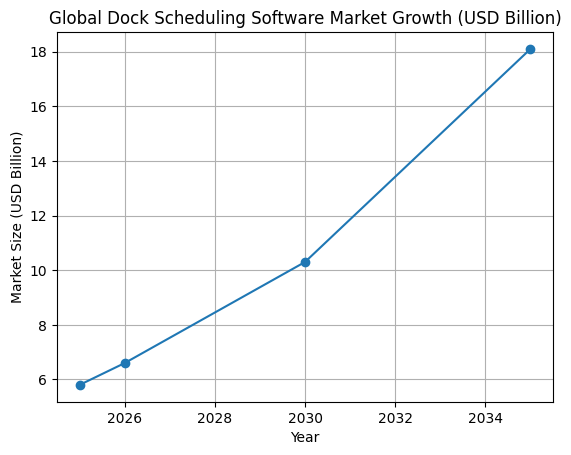
Dock scheduling software has emerged as one of the most impactful technological solutions addressing these challenges. By digitizing the process of managing truck arrivals, dock door assignments, and carrier communication, these platforms allow warehouses to coordinate transportation activities with far greater precision. Instead of reactive scheduling and last-minute adjustments, organizations can now manage dock operations through predictive planning, automated workflows, and real-time visibility.
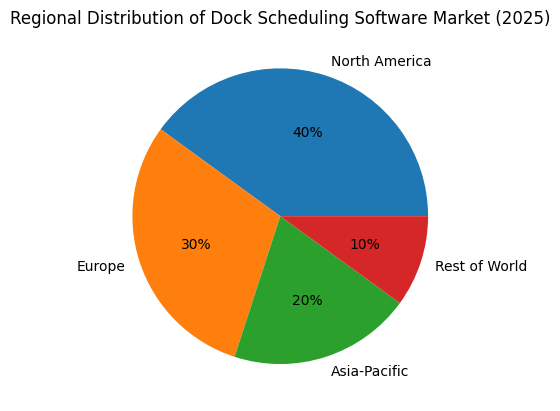
In 2026, the dock scheduling software market reflects the rapid digital transformation of global supply chains. Distribution centers now handle higher shipment volumes than ever before, driven by the explosive growth of e-commerce, omnichannel retail fulfillment, and globalized manufacturing networks. At the same time, logistics operators face significant challenges such as labor shortages, rising transportation costs, tighter delivery windows, and increased regulatory oversight. These pressures have made efficient dock management an essential component of warehouse productivity.
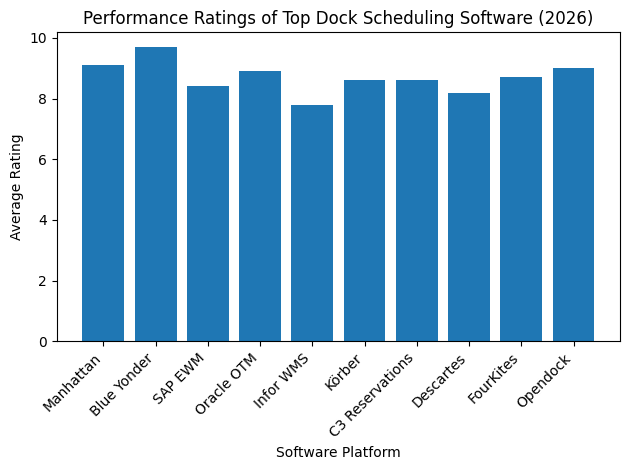
The top dock scheduling software platforms in the world today go far beyond simple calendar-based booking tools. Modern systems incorporate advanced capabilities such as artificial intelligence-driven scheduling optimization, real-time truck location tracking, automated carrier portals, yard management integration, and predictive analytics. These technologies enable organizations to manage the flow of trucks, goods, and warehouse labor with remarkable efficiency.
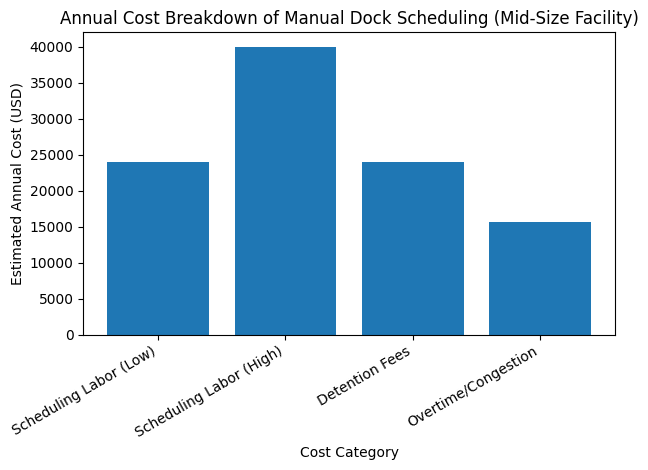
One of the most significant benefits of dock scheduling software is its ability to reduce truck dwell time at distribution centers. When trucks arrive without coordinated appointments, congestion quickly forms at warehouse gates and dock doors. Drivers may wait hours before unloading or loading begins, resulting in detention fees and lost productivity for both carriers and warehouse staff. Digital scheduling systems prevent these issues by assigning precise time slots for each vehicle, ensuring that docks, equipment, and labor resources are ready when trucks arrive.
Another major advantage of modern dock scheduling platforms is improved collaboration between warehouses and transportation partners. Carrier communication has historically been fragmented and inefficient, relying heavily on manual coordination. Today’s scheduling systems provide digital portals that allow carriers to book appointments directly, receive automated notifications, and adjust schedules when transportation conditions change. This collaborative environment reduces misunderstandings and improves operational transparency.
Artificial intelligence and real-time supply chain visibility are also reshaping the dock scheduling landscape in 2026. Leading platforms now analyze data from GPS tracking systems, telematics devices, and transportation management platforms to predict truck arrival times with remarkable accuracy. These predictive capabilities allow warehouses to adjust dock appointments dynamically, preventing bottlenecks and maintaining smooth operational flow.
In addition to improving operational efficiency, dock scheduling software also contributes to broader supply chain optimization. Efficient dock operations help warehouses process shipments faster, reduce transportation delays, and maintain stronger relationships with carriers. In many cases, implementing automated scheduling systems leads to significant financial benefits through reduced detention charges, lower administrative costs, and improved workforce productivity.
The growing importance of sustainability and environmental accountability is another factor driving the adoption of dock scheduling technology. Idle trucks waiting at warehouse facilities consume fuel and generate unnecessary carbon emissions. By optimizing arrival times and minimizing congestion in warehouse yards, digital scheduling systems help organizations reduce fuel consumption and support corporate sustainability initiatives.
As supply chains continue to become more complex, the need for intelligent dock coordination will only increase. Logistics networks now operate across multiple countries, involve numerous transportation partners, and require precise synchronization between warehouses, carriers, and customers. In this environment, manual scheduling methods are no longer capable of supporting modern distribution operations.
The purpose of this guide is to explore the Top 10 Dock Scheduling Software platforms in the world in 2026. These solutions represent the leading technologies currently used by global enterprises, third-party logistics providers, retailers, manufacturers, and distribution networks. Each platform offers unique capabilities designed to address specific logistics challenges, ranging from enterprise-level supply chain integration to lightweight scheduling solutions for mid-sized facilities.
By examining these platforms in detail, logistics professionals can gain a deeper understanding of the tools shaping modern warehouse operations. Whether an organization operates a single distribution center or a global logistics network, selecting the right dock scheduling software can significantly improve operational efficiency, reduce costs, and strengthen supply chain resilience.
In the following sections, we will analyze the leading dock scheduling software platforms of 2026, compare their features, evaluate their operational advantages, and examine how they are transforming the way warehouses manage inbound and outbound freight in the modern digital supply chain.
Before we venture further into this article, we would like to share who we are and what we do.
About 9cv9
9cv9 is a business tech startup based in Singapore and Asia, with a strong presence all over the world.
With over nine years of startup and business experience, and being highly involved in connecting with thousands of companies and startups, the 9cv9 team has listed some important learning points in this overview of the Top 10 Dock Scheduling Software in 2026.
If you like to get your company listed in our top B2B software reviews, check out our world-class 9cv9 Media and PR service and pricing plans here.
Top 10 Dock Scheduling Software in 2026
- Manhattan Active Supply Chain
- Blue Yonder Luminate Platform with GoRamp
- SAP Extended Warehouse Management (EWM)
- Oracle Transportation Management (OTM) Cloud
- Infor WMS
- Körber One Platform
- C3 Reservations
- Descartes MacroPoint
- FourKites Predictive Appointment Manager
- Opendock
1. Manhattan Active Supply Chain
Manhattan Associates has long been recognized as one of the most influential technology providers within the global supply chain software industry. By 2025, the company commanded more than 5 percent of the total market share in the dock scheduling and warehouse orchestration category, maintaining leadership among large enterprise logistics platforms.
Its flagship solution, Manhattan Active Supply Chain, represents a new generation of supply chain execution technology designed to operate on a cloud-native architecture. Rather than relying on traditional monolithic software models, the platform is built entirely on microservices architecture, allowing individual system components to update independently without requiring disruptive system-wide upgrades.
This architectural approach enables organizations to maintain continuous access to the most current features and security updates while minimizing operational disruptions. For enterprises operating large-scale distribution networks, this “always-current” model reduces IT overhead while supporting rapid scalability and ongoing innovation.
Core Architecture and Technology Framework of Manhattan Active Supply Chain
The Manhattan Active Supply Chain platform differentiates itself through its highly modular architecture and deep operational intelligence. The platform integrates multiple supply chain capabilities, including warehouse management, transportation planning, order fulfillment, inventory optimization, and dock scheduling.
The following table illustrates the primary architectural features of the Manhattan Active Supply Chain platform.
Table: Core Architectural Components of Manhattan Active Supply Chain
| Component | Description | Operational Benefit |
|---|---|---|
| Cloud-Native Microservices | Fully modular microservices architecture deployed on cloud infrastructure | Continuous innovation without major system upgrades |
| Unified Data Platform | Centralized operational data layer across supply chain functions | Improved decision-making and real-time visibility |
| API-Driven Integration | Extensive APIs for connecting with ERP, WMS, and TMS systems | Seamless interoperability with enterprise ecosystems |
| Embedded Intelligence | Machine learning and analytics embedded within operational workflows | Predictive planning and operational optimization |
| Real-Time Event Processing | Continuous monitoring of supply chain events | Faster response to operational disruptions |
This flexible architecture supports both large multinational organizations and high-volume distribution networks requiring constant operational responsiveness.
Warehouse-Aware Dock Scheduling: A Differentiating Capability
One of the defining characteristics of Manhattan’s dock scheduling functionality is its “warehouse-aware” design. Traditional dock scheduling systems often focus primarily on door availability, allowing carriers to book appointment slots based solely on open dock doors.
However, such simplified scheduling methods can create significant operational bottlenecks when the internal warehouse environment cannot accommodate incoming freight due to labor shortages, storage limitations, or equipment constraints.
Manhattan Active Supply Chain addresses this issue by synchronizing dock scheduling decisions with multiple internal warehouse variables.
These operational constraints include:
• Available warehouse labor and shift schedules
• Current storage capacity and slotting availability
• Material handling equipment utilization
• Real-time inventory movements
• Picking and packing workflow loads
By incorporating these variables into the dock appointment scheduling process, the system ensures that inbound and outbound freight flows align with the actual capabilities of the warehouse.
The following matrix illustrates the difference between traditional dock scheduling tools and Manhattan’s warehouse-aware approach.
Matrix: Traditional Dock Scheduling vs Warehouse-Aware Dock Scheduling
| Evaluation Factor | Traditional Dock Scheduling Systems | Manhattan Warehouse-Aware Scheduling |
|---|---|---|
| Dock Door Availability Tracking | Yes | Yes |
| Warehouse Labor Synchronization | No | Yes |
| Storage Capacity Monitoring | No | Yes |
| Equipment Resource Coordination | No | Yes |
| Real-Time Warehouse Data | Limited | Fully integrated |
| Bottleneck Prevention | Low | High |
| Operational Predictability | Moderate | Very High |
This deeper level of operational awareness significantly reduces congestion at distribution centers while maintaining smooth freight flows.
Operational Efficiency and Business Impact
Organizations implementing Manhattan Active Supply Chain frequently report measurable improvements in key operational metrics across warehouse and transportation processes. The system’s integrated planning capabilities allow distribution centers to coordinate inbound and outbound freight more efficiently, reducing dwell time and improving dock utilization rates.
Key operational benefits commonly reported include:
• Reduction in truck waiting times and detention charges
• Improved dock door utilization rates
• Enhanced labor productivity within distribution centers
• Greater visibility across inbound and outbound freight flows
• Reduced operational bottlenecks during peak shipping periods
The system also enables collaborative scheduling, allowing carriers, suppliers, and warehouse operators to coordinate appointments through shared scheduling interfaces.
Return on Investment and Financial Impact
Enterprise customers deploying Manhattan Active Supply Chain often experience a rapid return on investment due to operational efficiency gains and reduced logistics costs.
Industry studies and customer reports indicate that many organizations achieve full ROI within six to twelve months after system deployment. The financial impact typically stems from improvements in several operational areas.
Table: Typical Financial Impact Areas from Dock Scheduling Optimization
| Impact Area | Description | Estimated Improvement Range |
|---|---|---|
| Truck Detention Costs | Reduction in carrier waiting penalties | 20% – 40% |
| Dock Door Utilization | Improved scheduling and throughput | 15% – 30% |
| Labor Productivity | Better alignment of labor with inbound freight arrival | 10% – 25% |
| Warehouse Throughput | Increased daily processing capacity | 15% – 35% |
| Inventory Handling Efficiency | Improved coordination between inbound and storage operations | 10% – 20% |
These improvements make dock scheduling a high-impact optimization area within broader supply chain digital transformation initiatives.
Industry Sectors Where Manhattan Active Supply Chain Excels
While Manhattan Active Supply Chain is widely adopted across multiple industries, its dock scheduling capabilities are particularly valuable in sectors characterized by high shipment volumes, strict delivery windows, and complex inventory management requirements.
The following industries frequently adopt Manhattan’s platform:
Table: Key Industry Verticals Using Manhattan Dock Scheduling
| Industry Sector | Operational Characteristics | Why Dock Scheduling Matters |
|---|---|---|
| Grocery Retail | High-frequency shipments, temperature-controlled logistics | Prevent spoilage and reduce unloading delays |
| Retail Distribution | Seasonal volume spikes and large SKU assortments | Manage peak shipping periods efficiently |
| Pharmaceuticals | Strict compliance and temperature-sensitive storage | Maintain regulatory and safety standards |
| Consumer Packaged Goods | Large-scale inbound supplier shipments | Coordinate supplier deliveries efficiently |
| Third-Party Logistics | Multi-client warehouse environments | Allocate dock resources dynamically |
These industries rely heavily on synchronized inbound freight operations to maintain stable supply chain performance.
User Ratings and Enterprise Scalability
In industry benchmarking reports evaluating warehouse management and dock scheduling platforms, Manhattan Associates consistently receives strong user satisfaction scores. Independent enterprise software review platforms often report user ratings above 9.1 out of 10 for scalability, reliability, and operational depth.
These high ratings reflect the platform’s ability to support:
• Large multi-site distribution networks
• High transaction volume environments
• Complex multi-client logistics operations
• Global supply chain visibility requirements
The system’s scalability makes it particularly suitable for multinational enterprises operating dozens or even hundreds of distribution facilities worldwide.
Comparative Position Among Global Dock Scheduling Platforms
When analysts rank the Top 10 Dock Scheduling Software platforms globally in 2026, Manhattan Active Supply Chain frequently appears among the top-tier solutions due to its deep warehouse integration and enterprise-grade capabilities.
Table: Competitive Positioning in the Global Dock Scheduling Software Landscape
| Evaluation Criteria | Manhattan Active Supply Chain | Typical Standalone Dock Scheduling Tools |
|---|---|---|
| Warehouse Management Integration | Native | Limited |
| Enterprise Scalability | Very High | Moderate |
| Real-Time Operational Visibility | Extensive | Basic |
| Microservices Architecture | Yes | Rare |
| Continuous Updates | Yes | Periodic upgrades |
| Multi-Site Deployment Capability | Excellent | Moderate |
This combination of advanced architecture, warehouse awareness, and strong enterprise performance continues to position Manhattan Associates as a leading provider within the dock scheduling technology ecosystem.
Conclusion
As supply chain networks continue to expand in complexity throughout 2026, dock scheduling software has evolved from a simple appointment booking tool into a strategic operational platform that coordinates transportation, warehouse operations, and labor planning.
Manhattan Associates’ Manhattan Active Supply Chain platform exemplifies this transformation by delivering warehouse-aware dock scheduling capabilities that integrate deeply with real-world operational constraints. Through its cloud-native microservices architecture, real-time data integration, and enterprise scalability, the platform enables organizations to maintain efficient dock operations even in high-volume and highly regulated logistics environments.
For organizations seeking to modernize warehouse operations and improve supply chain synchronization, Manhattan Active Supply Chain remains one of the most advanced and widely adopted dock scheduling platforms available in the global logistics technology market.
2. Blue Yonder Luminate Platform with GoRamp
Blue Yonder has progressively modernized its legacy warehouse management and planning systems into a unified digital ecosystem known as the Luminate Platform. This platform integrates multiple supply chain functions including demand forecasting, warehouse management, transportation optimization, labor planning, and dock scheduling.
The transition toward the Luminate architecture reflects the company’s focus on building cognitive supply chain systems that continuously analyze operational data and generate predictive recommendations for logistics managers.
Table: Core Capabilities of the Blue Yonder Luminate Platform
| Platform Capability | Description | Strategic Value |
|---|---|---|
| Cognitive Supply Chain Planning | AI-driven forecasting and scenario modeling | Enables proactive supply chain decision-making |
| Unified Data Ecosystem | Centralized data integration across retail, warehouse, and transportation | Improves visibility across the entire supply chain |
| Machine Learning Optimization | Algorithms analyze historical and real-time operational patterns | Improves scheduling accuracy and resource utilization |
| Predictive Event Management | Automated alerts and recommendations for operational disruptions | Reduces supply chain risks and delays |
| Modular Cloud Architecture | Scalable cloud deployment with configurable modules | Supports enterprise-level logistics networks |
Within this ecosystem, dock scheduling becomes a critical operational component that synchronizes inbound and outbound transportation flows with warehouse processing capacity.
Integration with GoRamp: AI-Powered Dock Scheduling
One of the most significant advancements in Blue Yonder’s dock scheduling strategy is its deep integration with GoRamp, a specialized dock scheduling and yard management platform. This partnership enhances the Luminate Platform by adding sophisticated AI-driven appointment scheduling and dock management capabilities.
The combined solution enables distribution centers to coordinate shipments, dock doors, and yard operations through predictive algorithms that analyze historical shipment patterns, carrier performance, and facility constraints.
Key capabilities of the Blue Yonder and GoRamp dock scheduling integration include:
• AI-based appointment optimization
• Automated dock door assignment
• Predictive truck arrival forecasting
• Carrier self-service scheduling portals
• Real-time yard visibility and truck tracking
This integration significantly reduces dock congestion while increasing facility throughput and operational predictability.
Matrix: Operational Advantages of AI-Driven Dock Scheduling
| Operational Factor | Traditional Dock Scheduling | AI-Driven Scheduling with Blue Yonder and GoRamp |
|---|---|---|
| Appointment Scheduling | Manual or rule-based | Machine learning optimized |
| Carrier Coordination | Email or phone communication | Automated digital booking portals |
| Dock Utilization | Reactive planning | Predictive capacity optimization |
| Truck Waiting Time | High variability | Reduced through predictive scheduling |
| Yard Visibility | Limited | Real-time truck tracking and arrival forecasting |
| Operational Forecasting | Minimal | Data-driven predictive planning |
By automating dock appointment planning and incorporating predictive analytics, organizations can significantly improve resource allocation and freight flow.
Unified Commerce Strategy and Dock Operations
Blue Yonder’s broader strategic vision focuses on what the company refers to as “unified commerce.” This concept connects retail stores, distribution centers, fulfillment hubs, and transportation networks into a single operational ecosystem.
Within this framework, the warehouse dock is no longer treated as an isolated operational area but rather as an extension of the retail supply chain. Efficient dock operations directly impact store replenishment, e-commerce fulfillment, and omnichannel distribution strategies.
Table: Role of Dock Scheduling in Unified Commerce Operations
| Supply Chain Node | Operational Role | Dock Scheduling Impact |
|---|---|---|
| Distribution Centers | Central inventory storage and processing | Coordinates inbound supplier shipments |
| Retail Stores | Final delivery points for replenishment | Ensures timely shipment dispatch from distribution hubs |
| E-Commerce Fulfillment | High-volume order processing | Synchronizes outbound parcel and pallet shipments |
| Supplier Facilities | Source of inbound goods | Manages delivery windows and supplier coordination |
| Transportation Networks | Carrier and trucking operations | Optimizes vehicle arrival scheduling |
By aligning dock scheduling with retail inventory flows and fulfillment operations, Blue Yonder’s unified commerce model improves supply chain responsiveness and customer service performance.
Predictive Scheduling and Machine Learning Optimization
A distinguishing feature of Blue Yonder’s Luminate Platform is its extensive use of machine learning to transform operational data into predictive insights. Dock scheduling within this environment becomes an intelligent system capable of learning from historical operational patterns.
Machine learning algorithms analyze multiple variables, including:
• Carrier arrival reliability
• Seasonal shipment fluctuations
• Dock door utilization trends
• Warehouse labor availability
• Yard congestion patterns
Using these data inputs, the system generates optimized scheduling recommendations that balance operational capacity with incoming shipment demand.
Table: Data Inputs Used for Predictive Dock Scheduling
| Data Source | Example Data Points Analyzed | Operational Outcome |
|---|---|---|
| Carrier Performance Records | Historical arrival times, delay frequency | More accurate appointment scheduling |
| Warehouse Capacity Data | Dock door availability and storage utilization | Improved facility throughput |
| Labor Scheduling Systems | Worker shift patterns and staffing levels | Balanced workload distribution |
| Transportation Planning Systems | Shipment routing and estimated time of arrival | Better alignment with dock availability |
| Historical Shipment Trends | Seasonal demand and shipment spikes | Improved planning for peak logistics periods |
These predictive capabilities help organizations reduce operational uncertainty and respond more effectively to dynamic supply chain conditions.
Financial Impact and Return on Investment
Blue Yonder promotes a platform-based value proposition where dock scheduling is integrated into a broader supply chain optimization strategy. According to company estimates and customer case studies, organizations implementing the Luminate Platform ecosystem can achieve significant financial returns.
The company reports that end-to-end platform implementations can unlock up to twelve times return on investment when combining warehouse optimization, transportation planning, demand forecasting, and dock scheduling.
Table: Potential Financial Impact from Luminate Platform Adoption
| Financial Impact Category | Description | Estimated Performance Improvement |
|---|---|---|
| Dock Utilization Efficiency | Increased throughput per dock door | 15% – 30% |
| Carrier Detention Reduction | Lower waiting time penalties and carrier disputes | 20% – 40% |
| Labor Productivity | Improved alignment of workforce with shipment arrivals | 10% – 25% |
| Inventory Flow Acceleration | Faster movement of inbound goods into storage | 15% – 35% |
| Overall Supply Chain Optimization | Combined operational improvements across logistics functions | Up to 12x ROI potential |
While ROI outcomes vary by industry and operational scale, the integrated platform approach often delivers greater benefits compared to standalone dock scheduling tools.
Pricing Structure and Enterprise Licensing Model
Blue Yonder’s solutions are typically delivered through enterprise software agreements that scale according to the size of the organization, number of facilities, transaction volume, and system modules deployed.
For organizations adopting the Luminate Platform with dock scheduling capabilities, pricing often begins at approximately 100,000 US dollars annually, although large multinational deployments may exceed this baseline depending on customization and integration requirements.
Table: Typical Pricing Considerations for Blue Yonder Deployments
| Pricing Factor | Description |
|---|---|
| Number of Facilities | Warehouses and distribution centers included in the deployment |
| Transaction Volume | Shipment, order, and scheduling transaction scale |
| Platform Modules | Additional capabilities such as transportation or labor management |
| Integration Requirements | ERP, WMS, and third-party system integrations |
| Implementation Complexity | Customization and data migration needs |
Enterprise customers often negotiate multi-year contracts that include software licensing, implementation services, and ongoing support.
Global Adoption and Workforce Transformation
The adoption of AI-enabled supply chain technology also requires significant organizational transformation. Companies implementing Blue Yonder’s platform frequently undergo workforce realignment and skills development programs to ensure employees can effectively operate cognitive supply chain systems.
In one recent global rollout, organizations assessed more than 150 full-time equivalent employees to ensure competency alignment with the new AI-driven operational roles and sales processes associated with the platform.
These roles may include:
• AI-driven logistics planners
• predictive operations analysts
• digital supply chain coordinators
• warehouse automation specialists
• data-driven logistics strategists
This workforce evolution reflects a broader trend where supply chain professionals increasingly rely on data science and analytics capabilities alongside traditional operational expertise.
Conclusion: Blue Yonder’s Strategic Position in Dock Scheduling Innovation
Within the competitive landscape of the Top 10 Dock Scheduling Software platforms globally in 2026, Blue Yonder’s Luminate Platform stands out for its emphasis on artificial intelligence, predictive analytics, and unified commerce integration.
Through its partnership with GoRamp and its machine learning–driven scheduling capabilities, the platform enables organizations to optimize dock utilization, reduce truck waiting times, and improve coordination across transportation and warehouse operations.
By treating dock operations as a core component of an intelligent supply chain ecosystem rather than a standalone scheduling function, Blue Yonder continues to strengthen its position as a leading provider of cognitive logistics technology in the modern digital supply chain era.
3. SAP Extended Warehouse Management (EWM)
In the global logistics technology landscape of 2026, SAP continues to be one of the most influential providers of enterprise supply chain software. Its dock scheduling capabilities are primarily delivered through SAP Extended Warehouse Management (EWM), supported by the SAP Business Network for Logistics. Together, these technologies provide organizations with a deeply integrated dock appointment and yard management system embedded within a broader enterprise resource planning ecosystem.
Unlike many standalone dock scheduling solutions, SAP’s approach focuses on embedding dock operations directly within warehouse execution workflows. This integration allows logistics operations to synchronize transportation scheduling, inventory movements, and warehouse resource planning within a single operational framework.
For organizations already operating SAP ERP environments, particularly SAP S/4HANA, this approach provides a highly unified data architecture that connects inbound and outbound transportation planning with warehouse activities such as picking, staging, and loading.
Overview of SAP Extended Warehouse Management (EWM)
SAP Extended Warehouse Management is a comprehensive warehouse execution platform designed to support complex distribution networks, manufacturing supply chains, and high-volume logistics environments. The platform extends traditional warehouse management capabilities by incorporating yard management, dock scheduling, labor management, and advanced inventory tracking.
Dock scheduling within SAP EWM is closely tied to transportation and freight order management, enabling logistics planners to coordinate vehicle arrivals and departures in alignment with warehouse operational capacity.
Table: Core Capabilities of SAP Extended Warehouse Management
| Capability Area | Description | Operational Value |
|---|---|---|
| Dock Appointment Scheduling | Coordinated scheduling of inbound and outbound vehicle arrivals | Reduces congestion and improves warehouse throughput |
| Yard Management Integration | Tracks vehicles, trailers, and yard movements | Improves visibility across transportation operations |
| Inventory Locator Management | Dock doors and staging lanes modeled as warehouse locations | Enhances inventory control and material flow coordination |
| Labor and Resource Planning | Aligns workforce availability with shipment schedules | Improves productivity and workload distribution |
| Integration with SAP S/4HANA | Seamless ERP connectivity for freight orders and logistics planning | Eliminates data silos across enterprise systems |
These capabilities allow organizations to coordinate warehouse and transportation operations at scale across large logistics networks.
Self-Book Functionality for Carrier Appointment Scheduling
One of the key features distinguishing SAP’s dock scheduling functionality in 2026 is its Self-Book capability. This functionality allows carriers to independently schedule loading and unloading appointments through a web-based portal integrated with the SAP Business Network for Logistics.
Instead of relying on manual coordination through emails or phone calls, carriers can view available dock appointment windows based on confirmed freight orders and reserve a suitable time slot directly within the system.
This self-service model improves scheduling efficiency while reducing administrative workload for warehouse personnel.
Table: Operational Workflow of SAP Self-Book Dock Scheduling
| Step in Process | Description | Operational Outcome |
|---|---|---|
| Freight Order Confirmation | Transportation order confirmed within SAP S/4HANA | Shipment ready for scheduling |
| Appointment Window Visibility | Available dock time slots displayed to carriers via web portal | Improved transparency for logistics partners |
| Carrier Self-Booking | Carrier selects preferred dock appointment | Faster scheduling with reduced manual coordination |
| Dock Appointment Confirmation | System validates appointment against warehouse capacity | Prevents scheduling conflicts |
| Arrival and Check-In | Vehicle arrival recorded within yard management module | Real-time operational tracking |
By enabling carriers to manage their own appointment bookings, organizations can improve collaboration across transportation networks while maintaining operational control.
Integration with SAP S/4HANA and Enterprise Data Flow
A defining advantage of SAP’s dock scheduling functionality is its tight integration with SAP S/4HANA, the company’s flagship enterprise resource planning platform. This integration ensures that transportation planning, warehouse execution, and financial processes operate on a unified data model.
In SAP EWM, dock doors and staging areas are treated as physical warehouse locations known as inventory locators. This modeling approach allows warehouse activities to be directly linked with dock appointments.
For example, when outbound orders are released for picking, the system can automatically assign staging lanes based on the specific dock appointment associated with the shipment.
Matrix: Integration Between SAP S/4HANA and SAP EWM Dock Scheduling
| Functional Area | Role in the Process | Data Flow Integration Outcome |
|---|---|---|
| Freight Order Management | Defines shipment details and transportation schedules | Provides dock scheduling inputs |
| Warehouse Order Processing | Coordinates picking and packing operations | Aligns staging lanes with scheduled dock doors |
| Inventory Management | Tracks storage locations and material movements | Links dock doors with warehouse inventory flows |
| Financial and Billing Data | Captures logistics cost and shipment transactions | Ensures financial reconciliation of shipments |
| Logistics Visibility | Monitors shipment progress across supply chain nodes | Enables real-time operational oversight |
This architecture ensures that warehouse operations, transportation planning, and financial transactions remain synchronized throughout the supply chain.
Technical Framework: Yard Requests and Loading Points
SAP’s dock scheduling system includes detailed operational modeling that allows logistics teams to manage transportation flows with a high degree of precision. Two key technical elements within SAP EWM play a central role in managing vehicle arrivals and dock capacity.
The first concept is known as a Yard Request (YR). A Yard Request represents a formal request for a vehicle to enter the warehouse yard and perform specific activities such as unloading or loading freight. Yard Requests allow logistics teams to track incoming trucks and plan yard movements before vehicles arrive at the dock.
The second concept is the Loading Point, which represents a physical dock door or group of dock doors used for shipment handling. Loading Points allow warehouse managers to manage scheduling capacity at the individual door level.
Table: Technical Components in SAP Dock Scheduling Architecture
| Technical Component | Description | Operational Purpose |
|---|---|---|
| Yard Request (YR) | Request for vehicle entry and yard operations planning | Coordinates vehicle arrival and yard traffic |
| Loading Point | Represents a specific dock door or loading area | Manages dock capacity at granular levels |
| Staging Lane | Temporary storage area for outbound shipments | Aligns picked goods with scheduled truck departures |
| Dock Appointment | Scheduled time slot for loading or unloading activities | Synchronizes vehicle arrival with warehouse capacity |
| Freight Order | Transportation order associated with shipments | Provides scheduling inputs for dock planning |
This structured framework enables SAP EWM to manage complex distribution operations involving hundreds of daily truck movements.
Optimization of Outbound Logistics Flow
One of the most significant operational advantages of SAP’s integrated dock scheduling model is its ability to optimize outbound logistics workflows. By linking dock appointments with warehouse execution processes, the system ensures that shipments are prepared and staged according to scheduled departure times.
This coordination improves the efficiency of the pick-release process. Warehouse management systems can determine which staging lanes should be used based on the dock appointment associated with each shipment.
Table: Impact of Dock Scheduling on Outbound Warehouse Operations
| Operational Process | Without Integrated Dock Scheduling | With SAP EWM Dock Scheduling |
|---|---|---|
| Pick Release Timing | Manual coordination | Automatically aligned with dock slots |
| Staging Area Allocation | Static staging zones | Dynamic staging lane assignment |
| Truck Departure Accuracy | Variable departure timing | Scheduled and synchronized departures |
| Warehouse Congestion | High during peak periods | Balanced shipment flow |
| Labor Utilization | Reactive workforce planning | Predictable workload scheduling |
These improvements help organizations maintain consistent outbound shipment performance while reducing warehouse congestion.
Global Adoption and Industry Reach
SAP’s dock scheduling capabilities benefit significantly from the company’s extensive global ERP footprint. Many multinational manufacturing companies, retailers, and logistics providers operate SAP as their core enterprise system, making SAP EWM a natural extension for warehouse and transportation management.
This global reach is particularly strong in industries with complex supply chains and strict operational requirements.
Table: Key Industries Utilizing SAP EWM Dock Scheduling
| Industry Sector | Supply Chain Characteristics | Why SAP Dock Scheduling is Valuable |
|---|---|---|
| Automotive Manufacturing | Just-in-time production with precise delivery schedules | Ensures synchronized supplier deliveries |
| Industrial Manufacturing | High-volume inbound raw materials and outbound shipments | Coordinates production supply flows |
| Consumer Goods Distribution | Large-scale retail replenishment operations | Optimizes outbound distribution |
| Chemical and Process Industry | Strict safety and regulatory handling requirements | Controls dock and yard operations carefully |
| Global Logistics Providers | Multi-client distribution environments | Enables scalable dock scheduling across facilities |
In these sectors, the ability to integrate dock scheduling with enterprise planning systems significantly improves supply chain coordination.
Performance Ratings and Enterprise Value
Industry software benchmarking reports consistently rank SAP EWM as a highly capable enterprise warehouse management system with strong integration advantages for organizations already operating SAP environments.
User evaluations frequently highlight the system’s ability to provide strong global support infrastructure and deep operational functionality.
Table: Performance Ratings for SAP EWM Dock Scheduling Capabilities
| Evaluation Category | Average Industry Rating |
|---|---|
| Global Support Coverage | 8.4 / 10 |
| Integration with Enterprise ERP | 9.3 / 10 |
| Dock Scheduling Functionality | 8.7 / 10 |
| Value in SAP Environments | 9.2 / 10 |
| Operational Scalability | 9.0 / 10 |
Organizations operating SAP-centered IT architectures often find that the integrated value of EWM outweighs the need for separate dock scheduling software solutions.
Conclusion: SAP’s Strategic Advantage in Integrated Dock Scheduling
Within the global ranking of the Top 10 Dock Scheduling Software platforms in 2026, SAP Extended Warehouse Management stands out for its deeply integrated approach to warehouse and transportation coordination.
Rather than treating dock scheduling as an isolated logistics function, SAP embeds it directly within enterprise warehouse execution processes. Through features such as Self-Book carrier scheduling, detailed yard request management, and loading point capacity control, the platform provides comprehensive oversight of vehicle arrivals and shipment departures.
When combined with the data integration capabilities of SAP S/4HANA and the collaborative infrastructure of the SAP Business Network for Logistics, SAP EWM delivers a powerful and scalable dock scheduling solution for large enterprises operating complex global supply chains.
4. Oracle Transportation Management (OTM) Cloud
In the modern logistics environment of 2026, transportation orchestration and warehouse coordination are becoming increasingly interconnected. Organizations managing complex supply chains must synchronize truck arrivals, dock capacity, warehouse labor availability, and shipment flows to maintain operational efficiency. Oracle addresses these challenges through Oracle Transportation Management Cloud, commonly referred to as Oracle OTM Cloud.
Oracle OTM Cloud is widely recognized as a comprehensive Transportation Management System that integrates freight planning, carrier collaboration, shipment visibility, and dock appointment scheduling into a single cloud-based platform. Rather than positioning dock scheduling as a standalone application, Oracle embeds appointment management directly within the transportation execution workflow.
This integration enables organizations to coordinate inbound and outbound shipments with warehouse operations while maintaining visibility across the entire logistics network. The result is a unified operational framework that improves carrier communication, dock utilization, and transportation efficiency.
Overview of Oracle Transportation Management Cloud
Oracle Transportation Management Cloud is designed to support end-to-end transportation planning and execution for organizations operating regional, national, and global logistics networks. The platform includes capabilities for freight procurement, shipment planning, routing optimization, carrier management, and dock scheduling.
The dock scheduling functionality within OTM allows logistics managers to manage vehicle arrival times, allocate dock doors, and coordinate warehouse resources through an integrated scheduling interface.
Table: Core Capabilities of Oracle Transportation Management Cloud
| Capability Area | Description | Operational Benefit |
|---|---|---|
| Freight Planning and Optimization | Intelligent route planning and load consolidation | Reduces transportation costs and improves efficiency |
| Carrier Collaboration Portal | Digital platform for carriers to manage shipments and appointments | Enhances communication and scheduling transparency |
| Dock Appointment Scheduling | Integrated scheduling of inbound and outbound dock appointments | Improves dock door utilization and shipment coordination |
| Real-Time Transportation Visibility | Monitoring of shipment progress across transportation networks | Enables proactive disruption management |
| Advanced Analytics and Reporting | Data-driven insights for logistics performance management | Supports strategic decision-making |
These capabilities allow Oracle OTM Cloud to function as a central control system for transportation and dock operations within large logistics networks.
Embedded Dock Appointment Scheduling
Oracle’s dock scheduling capabilities are integrated directly into the transportation execution process. When shipments are planned and assigned to carriers, the system allows organizations to schedule dock appointments based on shipment requirements and warehouse availability.
This scheduling process can occur during several stages of transportation planning, including freight order confirmation, shipment consolidation, or final load dispatch. Once a shipment is ready for scheduling, carriers and warehouse operators can coordinate dock appointments using the platform’s collaborative scheduling tools.
The integrated scheduling workflow ensures that transportation plans and warehouse capacity remain synchronized throughout the logistics process.
Table: Dock Appointment Scheduling Workflow in Oracle OTM
| Workflow Step | Description | Operational Outcome |
|---|---|---|
| Shipment Creation | Transportation orders generated within OTM | Shipment ready for planning |
| Carrier Assignment | Carrier selected based on routing and cost optimization | Transportation partner confirmed |
| Appointment Scheduling | Dock appointment created within OTM system | Truck arrival coordinated with warehouse schedule |
| Carrier Notification | Carrier receives appointment details through collaboration portal | Improved communication and transparency |
| Arrival and Execution | Vehicle arrives and dock operations proceed according to schedule | Reduced delays and improved throughput |
This streamlined workflow eliminates manual coordination while maintaining accurate scheduling across transportation and warehouse operations.
Carrier Collaboration and Self-Scheduling Capabilities
A defining feature of Oracle OTM Cloud is its carrier collaboration infrastructure. The platform provides a centralized portal where transportation partners can interact directly with shipment schedules and dock appointments.
Through this portal, carriers can perform several functions independently, including viewing shipment assignments, selecting available dock appointment windows, confirming delivery times, and receiving real-time operational updates.
This self-service scheduling model reduces administrative workload for warehouse planners while allowing carriers greater flexibility in managing their logistics operations.
Table: Key Functions of the Oracle Carrier Collaboration Portal
| Functionality | Description | Benefit to Logistics Operations |
|---|---|---|
| Carrier Self-Scheduling | Carriers select available dock appointment slots | Reduces manual scheduling coordination |
| Real-Time Appointment Updates | Automatic notifications for schedule changes | Improves responsiveness and planning accuracy |
| Shipment Tracking Visibility | Carriers can monitor shipment progress | Enhances operational transparency |
| Document Management | Digital exchange of shipment documents | Reduces paperwork and administrative delays |
| Communication Platform | Direct messaging between carriers and warehouse operators | Facilitates faster issue resolution |
This collaborative environment helps logistics teams maintain efficient communication with external transportation partners.
Integration Between Oracle WMS and Oracle OTM
One of the most important technical advantages of Oracle’s dock scheduling functionality is the deep integration between Oracle Transportation Management Cloud and Oracle Warehouse Management System.
This integration ensures that dock appointments are validated against real warehouse conditions before being confirmed. The system synchronizes operational data between transportation and warehouse environments, including dock door configurations, warehouse working calendars, and operational capacity constraints.
By aligning these elements, Oracle prevents scheduling conflicts that might otherwise disrupt warehouse operations.
Matrix: Data Synchronization Between Oracle OTM and Oracle WMS
| Data Element | Source System | Operational Purpose |
|---|---|---|
| Dock Door Configuration | Oracle WMS | Defines available dock doors and loading points |
| Warehouse Operating Calendar | Oracle WMS | Determines facility operating hours and shift times |
| Shipment and Freight Orders | Oracle OTM | Provides scheduling input for dock appointments |
| Carrier Schedules | Oracle OTM | Aligns truck arrival times with transportation plans |
| Yard and Facility Capacity Data | Oracle WMS | Ensures warehouse can handle scheduled vehicle volume |
This synchronized data architecture helps organizations maintain operational consistency across transportation and warehouse functions.
Configuration Logic for Dock Appointment Validation
Oracle OTM uses a structured configuration logic to validate dock appointment requests before they are finalized. This validation process ensures that each appointment aligns with warehouse capacity constraints and operational schedules.
Appointments can only be created when two key conditions are satisfied:
• The selected time slot must be available within the warehouse operating calendar
• The specific dock door must not already be reserved by an existing organization-level appointment
This rule-based configuration helps organizations prevent overlapping bookings and dock congestion.
Table: Dock Appointment Validation Rules in Oracle OTM
| Validation Rule | Description | Operational Impact |
|---|---|---|
| Warehouse Calendar Availability | Appointment must fall within facility operating hours | Prevents scheduling outside working hours |
| Dock Door Availability | Selected dock door cannot be assigned to another appointment | Avoids door conflicts |
| Shipment Readiness Confirmation | Freight order must be confirmed before scheduling | Ensures operational readiness |
| Carrier Assignment Verification | Carrier must be assigned to shipment | Maintains scheduling accountability |
| Capacity Compliance | Facility must have sufficient operational capacity | Prevents warehouse overload |
This logic ensures that dock scheduling decisions align with real operational conditions.
Operational Benefits for Transportation and Warehouse Management
Organizations implementing Oracle OTM Cloud with integrated dock scheduling frequently report improvements in several logistics performance metrics. The system’s ability to coordinate transportation and warehouse schedules helps eliminate inefficiencies associated with disconnected planning processes.
Key operational benefits include:
• Reduced truck waiting times at distribution centers
• Improved dock door utilization rates
• Enhanced coordination between carriers and warehouse staff
• Greater visibility across inbound and outbound transportation flows
• Reduced manual scheduling and communication tasks
Table: Performance Improvements Enabled by Oracle Dock Scheduling
| Operational Metric | Typical Challenge Without Integrated Scheduling | Improvement with Oracle OTM Integration |
|---|---|---|
| Truck Waiting Time | High variability due to scheduling conflicts | Reduced through synchronized planning |
| Dock Door Utilization | Underutilized or congested dock areas | Balanced appointment allocation |
| Warehouse Congestion | Peak-time operational bottlenecks | Smoother inbound and outbound flow |
| Carrier Communication | Manual coordination through emails or calls | Automated portal-based collaboration |
| Shipment Visibility | Limited insight into delivery timing | Real-time operational visibility |
These improvements contribute to more predictable logistics operations and higher service levels.
Analytics and Performance Management Capabilities
Oracle OTM Cloud is also recognized for its advanced analytics capabilities. The platform provides extensive reporting tools that allow organizations to measure transportation performance, dock utilization, carrier reliability, and logistics cost efficiency.
These analytics tools support both operational monitoring and strategic decision-making. Logistics managers can track performance indicators such as on-time delivery rates, dock utilization percentages, carrier service performance, and shipment throughput.
Table: Key Performance Indicators Tracked in Oracle OTM Analytics
| KPI Category | Description |
|---|---|
| Dock Utilization Rate | Percentage of time dock doors are actively used |
| Carrier On-Time Performance | Reliability of transportation partners |
| Average Truck Turnaround Time | Time required for truck arrival, loading, and departure |
| Shipment Cycle Time | Duration from shipment creation to delivery completion |
| Transportation Cost Metrics | Freight cost performance across carriers and routes |
These analytics capabilities help organizations continuously optimize logistics performance and identify areas for improvement.
User Ratings and Industry Feedback
Industry reviews and enterprise software evaluation platforms consistently rate Oracle Transportation Management Cloud highly for its analytical capabilities and transportation performance management tools.
User feedback often highlights the platform’s strengths in areas such as scalability, system reliability, and comprehensive transportation planning functionality.
Table: Average User Ratings for Oracle OTM Cloud
| Evaluation Category | Average Rating |
|---|---|
| Analytics and Reporting Tools | 4.5 / 5 |
| Transportation Optimization | 4.4 / 5 |
| Carrier Collaboration Features | 4.4 / 5 |
| Dock Scheduling Functionality | 4.3 / 5 |
| Overall System Performance | 4.4 – 4.5 / 5 |
These ratings reflect strong satisfaction among enterprise logistics teams that require advanced transportation management capabilities.
Conclusion: Oracle’s Position in the Dock Scheduling Software Landscape
Within the competitive landscape of the Top 10 Dock Scheduling Software platforms in 2026, Oracle Transportation Management Cloud stands out for its strong integration between transportation planning and warehouse execution systems.
By embedding dock scheduling within the broader transportation management workflow and synchronizing operational data with Oracle Warehouse Management, the platform enables organizations to coordinate shipments, carriers, and warehouse operations with high levels of precision.
Its carrier collaboration portal, rule-based scheduling validation logic, and advanced analytics capabilities make Oracle OTM Cloud a powerful solution for enterprises seeking to modernize transportation operations while maintaining efficient dock management across large distribution networks.
5. Infor WMS
In 2026, the global logistics technology ecosystem continues to evolve rapidly as organizations seek more advanced tools to manage increasingly complex warehouse and distribution operations. Dock scheduling software is no longer limited to simple appointment booking systems; it now operates as an integrated component of broader warehouse management and supply chain execution platforms.
Infor has established itself as one of the major enterprise software providers in this domain through its Infor Warehouse Management System (Infor WMS), delivered as part of the broader Infor CloudSuite Supply Chain platform. The system integrates warehouse operations, dock scheduling, labor management, and supply chain analytics into a single operational environment.
Infor WMS is widely regarded as a tier-one warehouse management system capable of supporting large distribution networks and complex logistics environments. One of its most distinctive capabilities is its use of advanced visualization technology and integrated workforce management to optimize warehouse performance at a granular level.
Overview of Infor CloudSuite Supply Chain and Infor WMS
Infor CloudSuite Supply Chain is designed to support the end-to-end coordination of supply chain activities across procurement, inventory management, warehousing, transportation, and order fulfillment. Within this ecosystem, Infor WMS serves as the operational engine responsible for executing warehouse activities and coordinating inbound and outbound logistics flows.
Dock scheduling is integrated within the warehouse execution process, allowing logistics managers to coordinate vehicle arrivals, allocate dock doors, and align inbound freight processing with warehouse labor availability.
Table: Core Capabilities of Infor CloudSuite Supply Chain and Infor WMS
| Capability Area | Description | Operational Benefit |
|---|---|---|
| Warehouse Execution Management | Comprehensive control of inbound, storage, and outbound processes | Improves warehouse efficiency and inventory visibility |
| Dock Scheduling and Yard Coordination | Scheduling and tracking of vehicle arrivals and departures | Reduces dock congestion and improves throughput |
| Embedded Labor Management | Workforce productivity tracking integrated within warehouse workflows | Enhances operational accountability and efficiency |
| 3D Visual Warehouse Analytics | Real-time graphical visualization of warehouse activities and inventory | Improves operational decision-making |
| Value-Added Services (VAS) Management | Support for specialized processing activities such as labeling or kitting | Enables flexible fulfillment strategies |
These capabilities allow organizations to manage highly dynamic warehouse environments where inventory movement, labor allocation, and transportation schedules must be tightly coordinated.
3D Visual Warehouse: Real-Time Operational Visibility
One of the most distinctive features of Infor WMS in 2026 is the 3D Visual Warehouse functionality. This advanced visualization capability allows warehouse managers to monitor operational activity in real time through a graphical digital representation of the warehouse facility.
The system displays inventory locations, worker activities, dock door usage, and equipment movement across the warehouse environment. Managers can identify potential operational bottlenecks and take corrective action immediately.
The 3D visualization engine converts operational data into an interactive visual model that highlights areas requiring attention, including congestion at dock doors or delays in receiving processes.
Table: Capabilities of the 3D Visual Warehouse Interface
| Visualization Element | Description | Operational Advantage |
|---|---|---|
| Dock Door Activity Monitoring | Displays loading and unloading activities at each dock door | Improves visibility of inbound and outbound flows |
| Inventory Location Mapping | Shows real-time inventory distribution across storage zones | Enables faster inventory tracking |
| Workforce Activity Tracking | Visualizes employee movements and task completion | Improves labor productivity oversight |
| Bottleneck Identification | Highlights congested operational areas within the warehouse | Allows managers to intervene proactively |
| At-Risk Inventory Alerts | Identifies items experiencing delays or processing risks | Reduces inventory handling delays |
Through this visual environment, warehouse managers gain immediate insight into operational performance and can respond quickly to unexpected disruptions.
Dock-Level Operational Decision-Making
Infor’s 3D Visual Warehouse is particularly valuable for dock management operations. Inbound shipments arriving at receiving docks often trigger a series of downstream warehouse processes, including inspection, labeling, kitting, and storage allocation.
When disruptions occur at the dock, such as delays in unloading or temporary labor shortages, managers can observe these issues through the visual interface and redirect resources accordingly.
Matrix: Operational Response Enabled by Visual Warehouse Analytics
| Operational Situation | Visual System Alert | Recommended Manager Action |
|---|---|---|
| Dock congestion detected | Multiple trucks waiting at receiving doors | Reassign additional unloading staff |
| Inventory backlog at staging | Staging area approaching capacity | Redirect goods to alternate storage zones |
| Labor shortage at dock area | Reduced workforce activity detected | Deploy additional personnel from nearby zones |
| High-priority shipment delay | Shipment highlighted as time-sensitive | Prioritize unloading and processing |
This proactive operational oversight reduces delays and ensures that warehouse operations remain aligned with transportation schedules.
Management of Value-Added Services at Receiving Docks
Another area where Infor WMS excels is the management of value-added services (VAS) within receiving operations. Modern retail fulfillment and omnichannel distribution models frequently require additional processing tasks beyond basic unloading and storage.
These tasks may include product kitting, relabeling, quality inspection, repackaging, and promotional bundling. Infor WMS integrates these activities directly into dock and receiving workflows.
Table: Common Value-Added Services Managed in Infor WMS
| Value-Added Service Type | Description | Industry Use Case |
|---|---|---|
| Product Kitting | Assembly of multiple items into a bundled product package | Retail promotions and subscription products |
| Re-Labeling | Replacement or modification of product labels | Regional compliance and retail labeling standards |
| Custom Packaging | Repackaging items for specific retail or e-commerce requirements | Direct-to-consumer fulfillment |
| Quality Inspection | Verification of product quality before warehouse storage | Electronics and consumer goods distribution |
| Promotional Bundling | Creation of bundled promotional units | Seasonal retail campaigns |
By integrating VAS management with dock scheduling and receiving operations, Infor WMS enables organizations to perform complex processing tasks immediately after goods arrive at the facility.
Embedded Labor Management and Workforce Analytics
Infor WMS includes an embedded labor management system designed to measure and optimize employee productivity across warehouse operations. This system tracks worker performance at highly granular levels, including activity within specific warehouse zones, storage bins, and dock doors.
Managers can analyze productivity metrics, identify performance trends, and adjust workforce allocation based on operational demands.
Table: Labor Management Metrics in Infor WMS
| Productivity Metric | Description | Operational Insight |
|---|---|---|
| Tasks Completed per Hour | Measures worker output for assigned warehouse activities | Identifies high-performing employees |
| Dock Door Processing Time | Time required to unload or load shipments at specific doors | Highlights efficiency variations across docks |
| Bin-Level Productivity | Tracks worker efficiency at individual storage locations | Improves storage zone performance analysis |
| Labor Utilization Rate | Percentage of employee time spent on productive activities | Optimizes workforce deployment |
| Workforce Efficiency Trends | Historical analysis of labor performance across shifts | Supports long-term labor planning |
These analytics capabilities enable organizations to continuously improve workforce efficiency while maintaining consistent warehouse performance.
Pricing Structure and Accessibility for Different Business Sizes
Infor CloudSuite Supply Chain offers flexible pricing models designed to accommodate both large enterprises and smaller logistics operations. While full enterprise deployments are typically customized based on system complexity and operational scale, modular versions of the platform are available at lower entry points.
Some entry-level modules within the Infor WMS ecosystem can start at approximately 50 to 99 US dollars per month, making the platform accessible to smaller operations seeking cloud-based warehouse management functionality.
Table: Pricing Considerations for Infor WMS Deployments
| Pricing Factor | Description |
|---|---|
| Deployment Scale | Number of warehouses and distribution centers included |
| Functional Modules | Features such as labor management, yard management, and analytics |
| Transaction Volume | Number of inventory movements and shipment transactions |
| Custom Configuration | Level of system customization required for business processes |
| Integration Requirements | Connectivity with ERP, TMS, and third-party systems |
Large multinational deployments typically involve enterprise agreements that include implementation services, system customization, and long-term support.
Industry Adoption and Use Cases
Infor WMS is widely used across industries that require complex warehouse operations and flexible fulfillment processes. The system’s ability to manage value-added services and provide detailed operational visibility makes it particularly attractive to industries where product handling requirements are complex.
Table: Key Industries Using Infor WMS
| Industry Sector | Supply Chain Characteristics | Why Infor WMS Is Valuable |
|---|---|---|
| Retail Distribution | High SKU variety and omnichannel fulfillment requirements | Supports complex order processing workflows |
| Consumer Packaged Goods | High-volume inbound shipments from multiple suppliers | Manages receiving operations efficiently |
| Third-Party Logistics Providers | Multi-client warehouse environments | Enables flexible service offerings |
| Healthcare and Pharmaceuticals | Strict inventory tracking and compliance requirements | Improves inventory control and visibility |
| Industrial Manufacturing | Integration of warehouse and production supply flows | Coordinates material movements effectively |
These industries benefit from the platform’s ability to manage complex inventory processing and workforce coordination.
Conclusion: Infor’s Competitive Strength in Dock-Centric Warehouse Operations
Within the global rankings of the Top 10 Dock Scheduling Software platforms in 2026, Infor WMS stands out for its strong integration of dock operations with warehouse visualization, labor management, and value-added services processing.
The platform’s 3D Visual Warehouse capability provides logistics managers with real-time operational awareness that extends far beyond traditional warehouse dashboards. Combined with embedded labor analytics and flexible support for specialized fulfillment tasks, Infor WMS enables organizations to maintain efficient dock operations while managing complex warehouse workflows.
For organizations seeking a warehouse management system that integrates advanced visualization technology with dock scheduling and workforce productivity management, Infor CloudSuite Supply Chain represents a powerful and adaptable solution in the modern supply chain software landscape.
6. Körber One Platform
In 2026, the global logistics technology ecosystem continues to evolve toward greater automation, digital orchestration, and intelligent warehouse operations. As organizations invest heavily in high-throughput distribution centers and automated fulfillment networks, dock scheduling software has increasingly become an integral component of broader warehouse execution systems.
Körber Supply Chain has emerged as a significant player in this space through its Körber One Platform, a unified technology environment designed to integrate warehouse management, transportation coordination, robotics, and automation systems. Formerly operating under the HighJump brand, Körber has transformed into a comprehensive global technology group focused on enabling highly automated supply chain operations.
The company’s platform strategy emphasizes flexibility, scalability, and interoperability, allowing organizations to connect dock scheduling processes with warehouse automation technologies such as robotics, conveyor systems, and high-speed sortation infrastructure.
Overview of the Körber One Platform
The Körber One Platform represents the company’s integrated supply chain technology ecosystem. Rather than delivering isolated software applications, the platform connects multiple operational capabilities into a single architecture that supports warehouse execution, dock management, transportation coordination, and automation control.
Dock scheduling within the Körber ecosystem operates as part of a broader operational workflow that includes yard management, warehouse processing, and automated material handling systems.
Table: Core Components of the Körber One Platform
| Platform Component | Description | Operational Benefit |
|---|---|---|
| Warehouse Management System | Advanced control of inventory, picking, and storage operations | Improves warehouse throughput and accuracy |
| Dock and Yard Management | Scheduling and coordination of vehicle arrivals and dock assignments | Reduces congestion and improves freight flow |
| Robotics and Automation Control | Integration with automated storage, robotics, and conveyor systems | Enables high-speed automated fulfillment |
| Transportation Coordination | Synchronization of inbound and outbound logistics operations | Aligns transportation schedules with warehouse capacity |
| Analytics and Optimization Tools | Performance monitoring and operational intelligence dashboards | Supports continuous supply chain improvement |
By integrating these capabilities, the Körber One Platform enables organizations to manage highly complex distribution environments where transportation, warehouse processes, and automation technologies must operate in precise synchronization.
Evolution from HighJump to Körber Supply Chain
Körber’s transformation from HighJump into a broader supply chain technology group reflects a strategic effort to expand its capabilities beyond traditional warehouse management systems. Through acquisitions, partnerships, and platform development, the company has positioned itself as a provider of end-to-end supply chain orchestration solutions.
This transformation includes deeper integration with automation technologies and robotics, allowing the platform to support next-generation distribution centers designed for high-speed e-commerce fulfillment and large-scale logistics operations.
Matrix: Evolution of Körber’s Supply Chain Technology Portfolio
| Development Phase | Core Focus Area | Strategic Outcome |
|---|---|---|
| HighJump Era | Warehouse management software | Established strong WMS market presence |
| Early Körber Expansion | Integrated warehouse and logistics solutions | Expanded operational scope beyond WMS |
| Automation Integration Phase | Robotics, sortation, and material handling systems | Enabled automated distribution center operations |
| Platform Ecosystem Strategy | Unified Körber One Platform architecture | Delivered end-to-end supply chain orchestration |
This evolution allows the company to compete effectively in environments where logistics automation and software orchestration must function as a unified system.
Dock Scheduling in Highly Automated Warehouse Environments
One of the key differentiators of the Körber One Platform is its ability to integrate dock scheduling with highly automated warehouse systems. In automated distribution centers, the timing of inbound and outbound truck arrivals must be closely synchronized with automated material handling systems.
When trucks arrive at the dock, goods may immediately enter automated conveyor networks, robotic picking systems, or high-speed sorting infrastructure. Any delays or scheduling conflicts at the dock can disrupt these automated workflows.
Körber addresses this challenge by connecting dock appointment scheduling with warehouse automation systems and material flow control software.
Table: Role of Dock Scheduling in Automated Distribution Centers
| Operational Area | Traditional Warehouse Operations | Automated Warehouse Operations with Körber |
|---|---|---|
| Dock Appointment Scheduling | Manual coordination with limited automation | Fully synchronized with automated systems |
| Freight Processing | Human unloading and sorting | Automated conveyor and robotic processing |
| Inventory Flow | Sequential processing | Continuous high-speed processing |
| Operational Visibility | Basic scheduling dashboards | Real-time system-wide monitoring |
| Warehouse Throughput | Moderate processing capacity | Extremely high throughput capability |
By aligning dock scheduling with automation systems, the platform helps organizations maintain uninterrupted material flow within high-speed fulfillment environments.
Strategic Acquisition of Stellium and SAP Integration Capabilities
A major strategic development for Körber occurred during 2025 and 2026 when the company acquired a majority stake in Stellium, a consulting firm specializing in SAP Supply Chain implementation and integration services.
This acquisition significantly strengthened Körber’s ability to support organizations operating SAP-based enterprise systems while deploying Körber warehouse and automation technologies. The partnership enables deeper interoperability between SAP supply chain modules and the Körber One Platform.
The result is a hybrid integration environment where organizations can maintain their existing SAP ERP infrastructure while leveraging Körber’s advanced warehouse automation capabilities.
Table: Strategic Benefits of the Stellium Acquisition
| Strategic Capability | Description | Business Impact |
|---|---|---|
| SAP Supply Chain Consulting | Expertise in SAP logistics and warehouse integration | Supports large enterprise transformation projects |
| Hybrid Platform Integration | Connection between SAP ERP systems and Körber automation tools | Enables flexible system architecture |
| Implementation Services | Consulting and deployment support for supply chain platforms | Accelerates project deployment timelines |
| Enterprise System Compatibility | Integration with existing enterprise IT ecosystems | Reduces operational disruption |
This enhanced integration capability makes Körber particularly attractive for organizations operating complex hybrid technology environments.
Innovation in Dock and Parcel Processing: VarioDetect System
Körber has also introduced advanced automation innovations that directly impact dock operations. One of the most notable examples is the VarioDetect system, a high-speed anomaly detection solution used in parcel processing environments.
VarioDetect is designed to identify irregularities in parcel singulation processes, which occur when packages are separated and prepared for sorting. This system uses advanced sensors and machine vision technology to monitor parcel flows at extremely high speeds.
The technology is capable of detecting anomalies in parcel streams moving at rates of up to 12,000 units per hour. By identifying irregular package orientation, size inconsistencies, or potential jams early, the system helps prevent operational disruptions within high-volume logistics facilities.
Table: Key Capabilities of the VarioDetect System
| Feature | Description | Operational Benefit |
|---|---|---|
| High-Speed Parcel Monitoring | Monitors parcel flows during singulation and sorting | Prevents processing disruptions |
| Machine Vision Detection | Uses cameras and sensors to identify irregular parcel shapes | Improves accuracy of anomaly detection |
| Real-Time Alerting | Notifies operators of potential operational issues | Enables rapid corrective action |
| High Throughput Capability | Processes up to 12,000 units per hour | Supports large-scale e-commerce fulfillment |
| Integration with Automation | Connects with conveyor and sorting systems | Maintains continuous operational flow |
Although primarily used in parcel logistics operations, systems like VarioDetect influence dock operations by ensuring that inbound parcels entering automated sorting systems are properly aligned and processed.
Faster Deployment Compared to Traditional ERP Modules
One of the factors contributing to Körber’s rising adoption in 2026 is its ability to deploy faster than traditional enterprise ERP-based logistics modules. While ERP-integrated warehouse systems often require lengthy implementation projects, Körber’s modular platform architecture allows for more flexible deployment strategies.
Organizations can implement specific operational capabilities such as dock scheduling, warehouse management, or automation control without requiring a complete enterprise system overhaul.
Matrix: Körber Platform Deployment vs Traditional ERP Module Deployment
| Deployment Factor | Traditional ERP Warehouse Modules | Körber One Platform Approach |
|---|---|---|
| Implementation Timeline | Often lengthy and complex | Typically faster and modular |
| System Customization | Highly dependent on ERP structure | Flexible platform-based architecture |
| Automation Integration | Limited or external | Native automation connectivity |
| Scalability | Enterprise-wide deployments | Modular and scalable deployments |
| Operational Flexibility | Lower flexibility | Highly adaptable to changing needs |
This flexibility has made the platform particularly attractive for organizations seeking modern supply chain solutions without undergoing large-scale ERP transformations.
Market Position and Industry Adoption
Körber is increasingly recognized as a strong enterprise alternative for organizations that require advanced warehouse capabilities but want faster deployment and more flexible integration than traditional ERP-based systems can provide.
Industries with high automation requirements and complex distribution operations often adopt Körber technologies to manage large-scale fulfillment environments.
Table: Industries Adopting the Körber One Platform
| Industry Sector | Operational Characteristics | Why Körber Solutions Are Valuable |
|---|---|---|
| E-Commerce Fulfillment | High order volume and rapid order processing | Supports automated sorting and robotic picking |
| Parcel and Courier Logistics | Large-scale parcel processing operations | Integrates with high-speed sortation systems |
| Third-Party Logistics Providers | Multi-client distribution centers | Flexible platform for diverse logistics services |
| Consumer Goods Distribution | Large SKU assortments and frequent shipments | Improves dock coordination and warehouse flow |
| Retail Omnichannel Fulfillment | Integrated store and e-commerce distribution | Supports automated fulfillment strategies |
These industries benefit from the platform’s ability to coordinate transportation scheduling with automated warehouse workflows.
Conclusion: Körber’s Strategic Role in the Future of Automated Dock Operations
Within the global rankings of the Top 10 Dock Scheduling Software platforms in 2026, the Körber One Platform stands out for its deep integration with warehouse automation technologies and robotics systems.
By connecting dock scheduling with automated material handling infrastructure, real-time warehouse analytics, and enterprise system integrations, Körber enables organizations to manage high-speed logistics environments with precision and efficiency.
The acquisition of Stellium and the continued development of advanced automation technologies such as the VarioDetect system further strengthen Körber’s position as a key technology provider for next-generation distribution centers. For organizations seeking a flexible, automation-ready platform capable of supporting complex logistics networks, the Körber One Platform represents one of the most innovative solutions available in the modern supply chain technology market.
7. C3 Reservations
As supply chains become increasingly complex in 2026, organizations are adopting specialized software solutions to manage the growing operational demands at warehouse docks and distribution center yards. Dock scheduling has evolved into a strategic operational capability that ensures the efficient coordination of inbound shipments, outbound deliveries, and vehicle traffic across distribution facilities.
While many enterprise software providers integrate dock scheduling into broader warehouse management or transportation management systems, specialized providers have also emerged with focused solutions designed exclusively for dock and yard operations. One of the most recognized companies in this category is C3 Solutions, known for its dedicated dock scheduling and yard management platform called C3 Reservations.
C3 Solutions has positioned itself as a “best-of-breed” provider by focusing exclusively on optimizing vehicle flow, appointment scheduling, and dock resource utilization. Its platform is widely used by distribution centers seeking a highly configurable and quickly deployable solution that improves operational efficiency without requiring large-scale enterprise system deployments.
Overview of the C3 Reservations Platform
C3 Reservations is a web-based dock scheduling solution designed to streamline the coordination of vehicle arrivals and dock door assignments across distribution facilities. The platform provides logistics operators with tools to manage dock appointments, prioritize shipments, and reduce congestion at warehouse facilities.
The system enables both internal planners and external carriers to access scheduling capabilities through secure online portals. This collaborative approach improves communication between logistics partners and reduces the manual coordination traditionally required to manage truck appointments.
Table: Core Capabilities of C3 Reservations
| Capability Area | Description | Operational Benefit |
|---|---|---|
| Dock Appointment Scheduling | Centralized scheduling system for inbound and outbound truck appointments | Reduces dock congestion and improves facility throughput |
| Yard Traffic Management | Monitoring and coordination of vehicle movement within distribution yards | Improves yard safety and operational visibility |
| Carrier Self-Service Portal | Allows carriers to schedule and manage appointments independently | Reduces administrative workload |
| Business Rule Configuration | Enables prioritization of shipments based on operational criteria | Improves scheduling efficiency |
| Real-Time Operational Dashboards | Provides visibility into dock utilization and facility traffic | Supports proactive logistics management |
Through these capabilities, C3 Reservations enables organizations to improve dock coordination and maintain smooth traffic flow across high-volume distribution centers.
Business Rule-Based Scheduling Optimization
One of the defining features of the C3 Reservations platform is its use of configurable business rules to manage dock appointment prioritization. Rather than scheduling trucks purely on a first-come, first-served basis, the system allows organizations to define operational rules that determine how dock appointments should be allocated.
These rules may consider factors such as shipment priority, product type, carrier reliability, or operational urgency. The system automatically applies these rules when assigning appointment slots, ensuring that critical shipments receive priority access to dock resources.
Matrix: Business Rule-Based Scheduling in C3 Reservations
| Scheduling Factor | Traditional Scheduling Method | C3 Business Rule-Based Scheduling |
|---|---|---|
| Appointment Priority | First-come, first-served | Priority defined by configurable rules |
| Shipment Type Consideration | Limited differentiation | Rules for different cargo categories |
| Carrier Performance History | Rarely considered | Can influence scheduling eligibility |
| Operational Urgency | Manual adjustments required | Automated rule-based prioritization |
| Dock Door Allocation | Static scheduling | Dynamic rule-based assignment |
This rule-driven scheduling framework allows logistics operators to optimize dock utilization while maintaining operational control over shipment prioritization.
Agile Implementation Methodology
A major advantage of C3 Reservations is its agile implementation approach, which focuses on rapid deployment and minimal operational disruption. Unlike traditional enterprise logistics software that may require months of implementation and system integration, the C3 platform can often be deployed significantly faster.
The company’s implementation methodology is designed to configure scheduling rules, facility parameters, and carrier access quickly while enabling organizations to begin using the system within a short time frame.
In some cases, distribution centers have successfully implemented the system in as little as three weeks, depending on facility complexity and operational requirements.
Table: Implementation Timeline Comparison
| Implementation Factor | Traditional Enterprise Logistics Systems | C3 Reservations Deployment |
|---|---|---|
| Implementation Duration | Several months or longer | As little as three weeks |
| System Configuration Complexity | High | Moderate |
| Infrastructure Requirements | Often requires extensive IT integration | Cloud-based web deployment |
| Training Requirements | Extensive user training programs | Streamlined user onboarding |
| Operational Disruption | Possible during transition period | Minimal disruption |
This rapid deployment capability has made C3 Reservations particularly attractive to organizations seeking operational improvements without long implementation cycles.
Specialized Program for Grocery Industry Operations
C3 Solutions has also developed specialized functionality tailored for specific industries. One notable example is the F.O.O.D. program, designed specifically for the grocery and food distribution sector.
The grocery industry presents unique operational challenges at warehouse docks due to the need for temperature-controlled logistics, frequent deliveries, and high inventory turnover rates. Distribution centers must coordinate a constant flow of refrigerated trucks while maintaining strict compliance with food safety and product freshness standards.
The F.O.O.D. program addresses these requirements by providing scheduling tools designed to accommodate temperature-controlled shipments and high-frequency delivery schedules.
Table: Operational Challenges in Grocery Distribution Docks
| Operational Challenge | Description | C3 F.O.O.D. Program Solution |
|---|---|---|
| Temperature-Controlled Shipments | Refrigerated trucks requiring precise unloading timing | Priority scheduling for temperature-sensitive loads |
| High Delivery Frequency | Multiple daily shipments from suppliers | Flexible scheduling slots for rapid turnover |
| Product Freshness Requirements | Short shelf-life inventory | Faster dock processing and unloading |
| Supplier Coordination | Numerous vendors delivering to the same facility | Centralized scheduling portal |
| Compliance and Safety Standards | Strict food handling regulations | Improved scheduling oversight |
By addressing these industry-specific requirements, the platform enables grocery distribution centers to manage dock operations more effectively while preserving product quality.
Operational Efficiency and Communication Improvements
Organizations implementing C3 Reservations frequently report significant improvements in communication efficiency and operational productivity. Before implementing digital dock scheduling platforms, many warehouses rely heavily on manual coordination through phone calls, emails, and spreadsheets.
The C3 platform replaces these manual processes with a centralized digital scheduling system accessible to both warehouse staff and transportation partners.
Table: Operational Improvements Reported by C3 Reservations Users
| Performance Metric | Before Implementation | After Implementation |
|---|---|---|
| Phone Calls for Scheduling | High volume of manual calls | Reduced by approximately 90% |
| Email Coordination | Extensive back-and-forth emails | Significantly minimized |
| Scheduling Time per Appointment | Time-consuming manual scheduling | Reduced by approximately 50% |
| Dock Door Utilization | Often inconsistent or congested | Improved scheduling balance |
| Carrier Communication | Fragmented communication channels | Centralized collaboration portal |
These efficiency gains allow logistics teams to focus more on operational planning and less on administrative coordination.
Remote Implementation and Digital Deployment Capabilities
Another distinctive characteristic of the C3 Reservations platform is its ability to be deployed entirely through remote implementation processes. Because the system operates as a cloud-based web application, organizations can configure and launch the platform without requiring on-site installation teams.
This capability proved particularly valuable in large-scale logistics networks where distribution centers are geographically dispersed. Several major automotive distribution companies have successfully implemented the system remotely across multiple facilities.
Matrix: Advantages of Remote Dock Scheduling System Deployment
| Deployment Factor | Traditional On-Site Implementation | Remote Cloud-Based Implementation |
|---|---|---|
| Installation Requirements | On-site technical teams required | Fully remote deployment possible |
| Deployment Speed | Slower due to physical setup | Faster cloud-based rollout |
| Geographic Scalability | Limited by implementation teams | Easily scalable across locations |
| IT Infrastructure Requirements | On-premise server infrastructure | Cloud-hosted architecture |
| Operational Disruption | Higher during installation | Minimal operational interruption |
Remote deployment capabilities allow organizations to adopt modern dock scheduling technology quickly while minimizing implementation complexity.
Industry Adoption and Use Cases
C3 Reservations is widely adopted across industries where high volumes of truck traffic must be carefully coordinated to avoid operational congestion. Distribution centers managing frequent deliveries and tight scheduling windows benefit significantly from digital appointment scheduling systems.
Table: Industries Using C3 Reservations
| Industry Sector | Operational Characteristics | Dock Scheduling Importance |
|---|---|---|
| Grocery and Food Distribution | Temperature-controlled logistics and frequent deliveries | Ensures rapid unloading and product freshness |
| Automotive Parts Distribution | High-value inventory and complex supplier networks | Improves coordination of inbound shipments |
| Retail Distribution | Large supplier networks and seasonal shipping spikes | Maintains consistent warehouse throughput |
| Consumer Packaged Goods | High shipment volume and multi-vendor coordination | Reduces dock congestion |
| Third-Party Logistics Providers | Multi-client distribution center operations | Enables flexible scheduling for multiple customers |
These industries rely on precise coordination of inbound transportation to maintain efficient warehouse operations.
Conclusion: C3 Reservations as a Best-of-Breed Dock Scheduling Solution
Within the competitive landscape of the Top 10 Dock Scheduling Software platforms globally in 2026, C3 Reservations stands out as a specialized solution focused entirely on optimizing dock and yard operations.
Its rule-based scheduling framework, rapid deployment methodology, and industry-specific programs such as the F.O.O.D. initiative provide organizations with a flexible and efficient platform for managing complex logistics environments.
By replacing manual scheduling processes with a collaborative digital platform, C3 Solutions enables distribution centers to reduce administrative workload, improve dock utilization, and maintain smoother vehicle traffic flows across their facilities. For organizations seeking a dedicated dock scheduling system that can be deployed quickly and operated with minimal complexity, C3 Reservations represents one of the most effective specialized solutions available in the modern logistics technology market.
8. Descartes MacroPoint
In the global logistics landscape of 2026, real-time transportation visibility has become a critical capability for organizations seeking to optimize dock operations and maintain efficient freight movement across complex supply chain networks. As shipment volumes increase and delivery windows become tighter, traditional dock scheduling systems that rely solely on static appointment times are often insufficient.
Visibility-driven dock scheduling solutions have emerged as a new category of logistics technology designed to align appointment management with real-time transportation data. One of the most prominent platforms in this space is Descartes MacroPoint, a solution developed by Descartes Systems Group that focuses on shipment tracking, predictive arrival times, and dynamic dock scheduling optimization.
Descartes MacroPoint is widely used by shippers, third-party logistics providers, and transportation managers who require continuous visibility across large carrier networks. By integrating shipment tracking data directly into dock scheduling workflows, the platform enables organizations to respond dynamically to real-world transportation conditions.
Overview of Descartes MacroPoint and Its Visibility-Centric Architecture
Descartes MacroPoint operates as a real-time freight visibility platform designed to track shipments across road transportation networks. The platform collects location and status information from various data sources, including telematics devices, GPS tracking systems, electronic logging devices, and mobile carrier applications.
This data is continuously analyzed to generate accurate estimated times of arrival (ETAs) for trucks approaching distribution centers. The visibility data is then used to optimize dock scheduling decisions by automatically adjusting appointment priorities based on real-time transportation conditions.
Table: Core Capabilities of the Descartes MacroPoint Platform
| Capability Area | Description | Operational Benefit |
|---|---|---|
| Real-Time Shipment Visibility | Continuous tracking of truck locations and shipment progress | Improves logistics transparency |
| Predictive ETA Calculation | Machine learning algorithms estimate arrival times | Enhances scheduling accuracy |
| Visibility-Led Dock Scheduling | Appointment prioritization based on real-time vehicle proximity | Reduces dock congestion and idle time |
| Carrier Network Integration | Connectivity with thousands of carriers across transportation networks | Expands shipment tracking coverage |
| Advanced Analytics and Reporting | Data analysis tools for logistics performance monitoring | Supports operational optimization |
This architecture enables organizations to move beyond static scheduling systems toward more dynamic logistics coordination models.
Real-Time ETA and Dynamic Appointment Management
A central feature of the MacroPoint platform is its predictive ETA capability. By analyzing real-time transportation data, the system calculates estimated arrival times for vehicles approaching distribution facilities. These ETAs are continuously updated as trucks move along their routes.
The platform then uses these ETA updates to trigger scheduling alerts that inform warehouse managers when truck arrivals deviate from their originally scheduled appointment times.
For example, if a truck encounters traffic delays or arrives earlier than expected, the system automatically adjusts scheduling priorities and alerts warehouse personnel so that dock operations can adapt accordingly.
Table: Dynamic Dock Scheduling Workflow in Descartes MacroPoint
| Operational Step | Description | Operational Outcome |
|---|---|---|
| Shipment Dispatch | Carrier begins transportation journey | Shipment tracking initiated |
| Real-Time Location Tracking | GPS and telematics data transmitted to MacroPoint platform | Continuous shipment visibility |
| ETA Calculation | Predictive algorithms estimate truck arrival times | Accurate arrival forecasting |
| Scheduling Alert Generation | System detects deviation from scheduled appointment | Automated notification for dock planners |
| Dock Appointment Adjustment | Warehouse operators update dock schedules if necessary | Improved dock resource utilization |
This workflow ensures that dock scheduling decisions are based on real-world transportation conditions rather than static scheduling assumptions.
Visibility-Led Scheduling Alerts and Load Prioritization
One of the key innovations of the MacroPoint platform is the concept of visibility-led scheduling alerts. Instead of relying solely on planned appointment windows, the system prioritizes dock assignments based on a truck’s actual proximity to the facility.
If multiple trucks are scheduled to arrive within a similar timeframe, the system can dynamically adjust the priority of dock assignments based on which vehicle is physically closest to the facility.
Matrix: Traditional Dock Scheduling vs Visibility-Led Scheduling
| Scheduling Approach | Traditional Dock Scheduling | Visibility-Led Scheduling with MacroPoint |
|---|---|---|
| Appointment Planning | Fixed time slots assigned in advance | Dynamic prioritization based on real-time ETA |
| Traffic and Delay Consideration | Limited visibility into delays | Continuous monitoring of transportation conditions |
| Dock Utilization | Potential gaps due to late arrivals | Improved utilization through real-time adjustments |
| Carrier Communication | Manual updates via phone or email | Automated alerts and digital notifications |
| Operational Flexibility | Low flexibility once schedule is set | High adaptability to real-world conditions |
This dynamic approach significantly improves dock efficiency by ensuring that available dock doors are assigned to vehicles that are actually ready for unloading or loading.
Support for Large Carrier Networks
Descartes MacroPoint is particularly valuable for organizations managing large and complex carrier networks. The platform integrates with thousands of transportation providers, enabling organizations to track shipments across multiple carriers without requiring direct system integrations for each partner.
This network-based visibility is especially important for shippers and third-party logistics providers that coordinate freight across multiple transportation partners.
Table: Benefits of Carrier Network Visibility
| Operational Capability | Description | Logistics Benefit |
|---|---|---|
| Multi-Carrier Tracking | Monitoring shipments from numerous transportation providers | Simplifies logistics coordination |
| Centralized Shipment Monitoring | Single platform for viewing transportation activity | Improves operational visibility |
| Carrier Performance Analytics | Analysis of carrier reliability and on-time performance | Supports carrier selection decisions |
| Real-Time Alerting | Notifications for shipment delays or disruptions | Enables proactive operational adjustments |
| Dock Coordination Integration | Synchronization of transportation tracking with dock scheduling | Aligns arrival times with warehouse readiness |
This carrier network integration makes the platform particularly effective for organizations with geographically distributed logistics operations.
Pricing Structure and Cost Model
Descartes MacroPoint uses a transaction-based pricing model that scales according to shipment volume and operational usage. Pricing typically depends on the number of loads tracked annually and the complexity of the carrier network being monitored.
Organizations with high shipment volumes often benefit from lower per-load pricing due to economies of scale.
Table: Typical Pricing Structure for Descartes MacroPoint
| Volume Category | Annual Load Volume Estimate | Estimated Cost per Load (USD) |
|---|---|---|
| High Volume Operations | Greater than 1 million loads/year | 0.10 to 2.00 per load |
| Moderate Volume Operations | Approximately 100,000 loads/year | 0.25 to 3.00 per load |
| Low Volume Operations | Approximately 1,000 loads/year | 0.42 to 3.75 per load |
In addition to usage-based pricing, organizations typically incur implementation costs associated with system configuration, integration, and onboarding of carriers.
Implementation Cost and Deployment Considerations
The implementation cost for the MacroPoint platform varies depending on the number of carriers, integration complexity, and operational scale of the deployment.
Typical implementation projects range from approximately 3,000 to 20,000 US dollars. These costs usually include system configuration, integration setup, carrier onboarding, and user training.
Table: Implementation Cost Factors
| Implementation Factor | Description |
|---|---|
| Carrier Network Size | Number of carriers requiring system integration |
| System Integration Requirements | Connectivity with existing TMS, WMS, or ERP platforms |
| Operational Complexity | Number of facilities and distribution centers involved |
| Data Configuration | Setup of tracking rules, ETA models, and alert triggers |
| Training and Onboarding | Preparation of logistics teams and transportation partners |
Organizations with larger transportation networks typically require more extensive configuration and onboarding processes.
Analytics and Compliance Support
In addition to shipment tracking and scheduling capabilities, the MacroPoint platform offers advanced analytics tools designed to help organizations analyze logistics performance. These analytics dashboards provide insights into transportation reliability, carrier performance, and operational efficiency.
The platform also includes compliance monitoring capabilities that assist organizations in maintaining regulatory compliance within transportation operations.
Table: Key Analytics and Reporting Metrics in MacroPoint
| Analytics Category | Description |
|---|---|
| On-Time Arrival Performance | Measures the reliability of carrier delivery schedules |
| Average Transit Time | Tracks duration of shipment journeys across routes |
| Carrier Performance Rankings | Compares transportation providers based on service metrics |
| Dock Appointment Accuracy | Evaluates alignment between scheduled and actual arrival times |
| Freight Network Visibility | Provides system-wide monitoring of transportation flows |
These analytics tools allow logistics managers to make data-driven decisions that improve both operational efficiency and carrier collaboration.
Industry Feedback and Cost Considerations
While Descartes MacroPoint is widely recognized for its advanced visibility capabilities, industry feedback often highlights its pricing structure as being higher than some competing solutions.
The platform’s sophisticated analytics tools, large carrier network integration, and predictive visibility capabilities contribute to its premium positioning within the market.
Table: Market Perception of Descartes MacroPoint
| Evaluation Factor | Industry Assessment |
|---|---|
| Transportation Visibility | Highly rated |
| Dock Scheduling Integration | Strong dynamic scheduling capabilities |
| Carrier Network Coverage | Extensive integration across logistics networks |
| Analytics and Reporting Tools | Advanced and comprehensive |
| Pricing Competitiveness | Often considered higher than some alternatives |
Despite the higher cost perception, many organizations view the platform’s visibility capabilities as providing significant operational value.
Conclusion: Descartes MacroPoint’s Role in Visibility-Led Dock Scheduling
Within the global ranking of the Top 10 Dock Scheduling Software platforms in 2026, Descartes MacroPoint occupies a distinctive position by combining real-time transportation visibility with dock appointment management.
The platform’s ability to generate predictive ETAs and trigger automated scheduling alerts allows organizations to manage dock operations more dynamically than traditional appointment-based systems. By prioritizing dock assignments based on real-time truck proximity, MacroPoint helps reduce idle dock time and improve overall facility throughput.
For organizations managing large transportation networks or operating in environments where shipment visibility is critical, Descartes MacroPoint offers a powerful solution that integrates transportation intelligence directly into dock scheduling workflows.
9. FourKites Predictive Appointment Manager
In 2026, supply chain operations increasingly rely on predictive analytics and real-time data visibility to coordinate transportation and warehouse processes more effectively. Traditional dock scheduling methods based solely on fixed appointment windows often struggle to keep pace with modern logistics networks, where delays, congestion, and unexpected disruptions can occur at any point along a transportation route.
Predictive dock scheduling systems have emerged as a new generation of logistics technology designed to address these challenges. By combining shipment tracking, artificial intelligence, and predictive analytics, these platforms enable organizations to anticipate disruptions and dynamically adjust dock appointments before operational problems occur.
FourKites has established itself as one of the leading providers of supply chain visibility solutions globally. Through its Predictive Appointment Manager and AI-driven operational intelligence tools, the company extends real-time transportation visibility directly into dock scheduling and yard management workflows.
Overview of the FourKites Supply Chain Visibility Platform
FourKites operates one of the largest real-time supply chain visibility networks in the logistics industry. Its platform collects data from multiple sources, including carrier telematics systems, GPS devices, transportation management systems, and port tracking infrastructure.
This extensive data network allows the platform to track shipments across multiple transportation modes, including truckload freight, intermodal shipments, ocean containers, rail cargo, and air freight. By continuously analyzing shipment location data and transportation conditions, the system generates predictive insights that help logistics teams anticipate potential delays.
Table: Core Capabilities of the FourKites Visibility Platform
| Capability Area | Description | Operational Benefit |
|---|---|---|
| Real-Time Shipment Tracking | Continuous monitoring of transportation movements across multiple modes | Provides end-to-end logistics visibility |
| Predictive Arrival Forecasting | Machine learning models estimate future arrival times | Improves planning accuracy |
| Predictive Dock Appointment Management | Dynamic adjustment of dock appointments based on shipment data | Reduces dock congestion and idle time |
| Carrier Self-Scheduling Portal | Allows carriers to book or update appointment times independently | Improves collaboration with transportation partners |
| AI-Driven Operational Insights | Intelligent alerts and recommendations for logistics planners | Supports proactive disruption management |
By combining real-time tracking with predictive analytics, the platform helps organizations coordinate warehouse and transportation operations more effectively.
Predictive Appointment Manager: AI-Driven Dock Scheduling
The FourKites Appointment Manager serves as the platform’s dedicated dock scheduling module. Unlike traditional systems that rely on static appointment schedules, this solution integrates predictive arrival data directly into the scheduling process.
Carriers can schedule dock appointments through a digital portal, selecting available time windows based on warehouse capacity and shipment readiness. The system then monitors shipment progress continuously and identifies potential deviations from the planned schedule.
When delays or early arrivals are detected, the system automatically recommends updated appointment times to warehouse planners and transportation partners.
Table: Predictive Appointment Scheduling Workflow
| Process Stage | Description | Operational Outcome |
|---|---|---|
| Carrier Appointment Booking | Carrier selects dock appointment via scheduling portal | Efficient initial scheduling process |
| Real-Time Shipment Tracking | System tracks vehicle location and transportation conditions | Continuous visibility into shipment status |
| Predictive ETA Calculation | Machine learning models forecast arrival time changes | Early detection of potential delays |
| Appointment Adjustment Alerts | System recommends updated dock appointments if delays occur | Reduced scheduling conflicts |
| Dock Operations Coordination | Warehouse teams adjust dock resources based on updated schedules | Improved dock utilization and workflow alignment |
This predictive scheduling approach allows organizations to adapt their dock operations to real-world transportation conditions.
OpsForce AI: Intelligent Delay Detection and Scheduling Recommendations
One of the most advanced components of the FourKites platform is its artificial intelligence engine known as OpsForce AI. This technology analyzes large volumes of transportation data to identify patterns that may indicate potential shipment delays or disruptions.
OpsForce AI evaluates variables such as traffic conditions, weather patterns, port congestion, carrier performance history, and route characteristics. Using this data, the system predicts possible delays and generates proactive scheduling recommendations.
For example, if a truck is projected to arrive later than its scheduled dock appointment, OpsForce AI can recommend an alternative time slot before the vehicle reaches the facility. This proactive approach helps prevent yard congestion and dock scheduling conflicts.
Matrix: Traditional Scheduling vs Predictive Scheduling with OpsForce AI
| Scheduling Method | Traditional Dock Scheduling | Predictive Scheduling with FourKites |
|---|---|---|
| Arrival Time Estimation | Based on planned transportation schedule | Continuously updated predictive ETA |
| Delay Detection | Identified after truck arrival delay | Identified hours before arrival |
| Dock Appointment Adjustment | Manual rescheduling required | Automated recommendations generated |
| Operational Flexibility | Limited ability to adapt | High adaptability to transportation changes |
| Yard Congestion Prevention | Reactive response to delays | Proactive scheduling adjustments |
This predictive intelligence helps logistics teams maintain more stable and efficient dock operations.
Importance for High-Value and Temperature-Sensitive Shipments
FourKites is particularly valuable for organizations managing high-value, time-sensitive, or temperature-controlled shipments. Industries such as pharmaceuticals, fresh food distribution, and electronics logistics require precise coordination between transportation and warehouse operations to maintain product integrity and security.
For these shipments, real-time visibility is essential for monitoring transit conditions and ensuring that goods arrive within specified handling windows.
Table: Logistics Requirements for Sensitive Shipments
| Shipment Category | Operational Requirements | Role of Predictive Visibility |
|---|---|---|
| Temperature-Controlled Freight | Continuous monitoring of temperature and transit duration | Prevents spoilage and product degradation |
| Pharmaceutical Shipments | Strict regulatory compliance and controlled handling | Ensures traceability and shipment security |
| High-Value Electronics | Security monitoring and risk mitigation | Reduces risk of theft or shipment loss |
| Fresh Food Distribution | Rapid processing upon arrival | Maintains product freshness and quality |
| Ocean Container Imports | Coordination with port and inland transportation schedules | Reduces delays in cargo clearance and delivery |
By combining predictive scheduling with shipment visibility, FourKites helps organizations maintain strict operational control over these critical logistics flows.
Market Position in the Supply Chain Visibility Industry
FourKites has established a strong market position as one of the leading providers of real-time supply chain visibility technology. Its extensive carrier network and predictive analytics capabilities have made the platform widely adopted among large enterprises operating global logistics networks.
While the company originally focused on shipment tracking and visibility services, it has expanded into adjacent operational areas such as predictive dock scheduling and yard management.
Table: Competitive Position of FourKites in the Visibility Market
| Evaluation Category | Industry Assessment |
|---|---|
| Real-Time Transportation Visibility | Among the most comprehensive visibility networks |
| Predictive Analytics Capabilities | Strong AI-driven forecasting capabilities |
| Dock Scheduling Integration | Expanding presence through Appointment Manager |
| Carrier Network Connectivity | Extensive integration with global carriers |
| Enterprise Adoption | Widely used by large multinational organizations |
This strategic expansion into dock scheduling strengthens FourKites’ role as a supply chain orchestration platform.
Operational Benefits for Logistics Teams
Organizations adopting FourKites’ predictive scheduling capabilities often report improvements in communication efficiency, operational planning, and transportation reliability.
One notable advantage is the reduction of “where is my order” inquiries from customers and internal teams. Because shipment status information is continuously available through the visibility platform, logistics managers can quickly respond to inquiries without manually contacting carriers.
Table: Operational Improvements Reported by FourKites Users
| Performance Metric | Reported Improvement Range |
|---|---|
| Reduction in Shipment Inquiry Calls | 25% – 35% decrease in status requests |
| On-Time Delivery Performance | 15% – 20% improvement |
| Dock Scheduling Accuracy | Significant reduction in scheduling conflicts |
| Carrier Communication Efficiency | Faster information exchange |
| Supply Chain Visibility | Comprehensive real-time monitoring |
These improvements help logistics teams operate more efficiently while maintaining higher service levels for customers.
Conclusion: FourKites and the Future of Predictive Dock Scheduling
Within the global landscape of the Top 10 Dock Scheduling Software platforms in 2026, FourKites stands out for its strong integration between real-time shipment visibility and predictive dock scheduling capabilities.
Through tools such as the Predictive Appointment Manager and OpsForce AI, the platform enables organizations to anticipate transportation delays, adjust dock schedules dynamically, and maintain efficient coordination between carriers and warehouse operations.
For enterprises managing complex logistics networks, particularly those handling high-value or temperature-sensitive shipments, the ability to combine predictive analytics with real-time transportation visibility provides a powerful advantage. As supply chains continue to move toward more intelligent and data-driven operations, FourKites remains a key technology provider shaping the future of predictive dock scheduling.
10. Opendock
In 2026, logistics operations across distribution centers, fulfillment hubs, and transportation networks are increasingly dependent on efficient dock scheduling platforms to manage the high volume of truck arrivals and departures. With growing supply chain complexity, logistics organizations must coordinate communication between warehouse operators, carriers, brokers, and third-party logistics providers.
One of the emerging trends in dock scheduling technology is the adoption of universal scheduling portals that provide a standardized interface for all transportation partners. These platforms simplify communication and eliminate the need for manual coordination through emails, phone calls, and spreadsheets.
Opendock, developed by Loadsmart, has gained significant industry attention as a widely used universal dock scheduling portal. The platform focuses on simplicity, rapid deployment, and standardized communication across diverse carrier networks. It is particularly favored by high-throughput logistics facilities that require fast scheduling coordination with thousands of transportation partners.
Overview of the Opendock Platform
Opendock is a cloud-based dock scheduling system designed to streamline appointment scheduling and improve communication between distribution centers and their transportation partners. Unlike complex enterprise logistics platforms that require lengthy system integrations, Opendock focuses on ease of use and rapid deployment.
The platform enables carriers and brokers to schedule dock appointments through a simple online interface. Distribution centers maintain control over appointment availability while allowing external partners to manage bookings independently.
Table: Core Capabilities of the Opendock Platform
| Capability Area | Description | Operational Benefit |
|---|---|---|
| Dock Appointment Scheduling | Online portal allowing carriers to reserve dock time slots | Reduces manual scheduling coordination |
| Carrier Self-Service Access | Carriers and brokers manage appointments independently | Improves collaboration across logistics partners |
| Facility Calendar Management | Distribution centers configure available dock appointment windows | Ensures scheduling aligns with operational capacity |
| Time-Stamped Activity Records | Digital record of all scheduling actions and dock activity | Supports dispute resolution and operational tracking |
| Cloud-Based Platform Access | Web-based interface accessible across devices | Enables rapid deployment and scalability |
Through these features, Opendock provides a streamlined scheduling experience designed to minimize administrative overhead while maintaining operational control.
Universal Scheduling Portal for Carriers and Brokers
One of the key differentiators of the Opendock platform is its positioning as a universal portal for dock scheduling. Many distribution centers work with hundreds or even thousands of carriers and freight brokers. Coordinating dock appointments with such a diverse transportation ecosystem can become operationally complex.
Opendock addresses this challenge by providing a standardized scheduling interface that can be used by any transportation partner without requiring complex system integration.
Carriers and brokers can log into the platform, view available dock appointment windows, and reserve time slots based on their shipment schedules.
Matrix: Communication Methods in Dock Scheduling
| Communication Method | Traditional Scheduling Approach | Universal Portal Approach with Opendock |
|---|---|---|
| Appointment Requests | Phone calls and email exchanges | Online self-service booking |
| Carrier Coordination | Manual communication with warehouse staff | Standardized digital scheduling portal |
| Scheduling Transparency | Limited visibility into dock availability | Real-time appointment visibility |
| Administrative Workload | High due to manual coordination | Significantly reduced |
| Carrier Onboarding | Requires individual communication setup | Immediate access through platform portal |
This standardized communication framework allows logistics operators to manage larger transportation networks without increasing administrative complexity.
Rapid Implementation and Deployment Speed
One of the most notable characteristics of the Opendock platform is its extremely fast implementation process. Unlike traditional enterprise software that may require extensive integration and configuration, Opendock is designed for rapid onboarding.
In many cases, distribution centers can begin using the system within approximately sixty minutes of setup. This rapid deployment capability makes the platform particularly attractive for organizations that need immediate improvements in scheduling coordination.
Table: Implementation Timeline Comparison
| Implementation Factor | Traditional Dock Scheduling Systems | Opendock Deployment Model |
|---|---|---|
| System Installation Time | Weeks or months | Approximately 60 minutes |
| Integration Requirements | Often requires IT infrastructure integration | Minimal configuration required |
| Carrier Onboarding | Gradual onboarding process | Immediate carrier access |
| User Training | Often requires formal training sessions | Simple and intuitive interface |
| Operational Disruption | Possible during system rollout | Minimal disruption |
This deployment model allows organizations to improve dock scheduling operations quickly without major operational disruption.
Designed for High-Throughput Distribution Facilities
Opendock is particularly well suited for high-throughput logistics facilities that manage large volumes of inbound and outbound shipments. These environments often experience significant scheduling complexity due to the large number of daily truck arrivals.
Distribution centers handling hundreds of truck movements per day require a streamlined system that can process appointment requests efficiently while maintaining operational oversight.
Table: Operational Characteristics of High-Throughput Facilities
| Operational Characteristic | Description | Scheduling Requirement |
|---|---|---|
| High Truck Volume | Large number of daily inbound and outbound shipments | Efficient appointment scheduling system |
| Diverse Carrier Networks | Multiple transportation partners delivering freight | Standardized scheduling communication |
| Tight Delivery Windows | Strict operational schedules for loading and unloading | Precise appointment coordination |
| Continuous Warehouse Operations | Facilities operating across multiple shifts or 24 hours | Flexible scheduling calendar management |
| Rapid Turnaround Expectations | Trucks must be processed quickly to maintain throughput | Reduced waiting time at dock doors |
The Opendock platform supports these environments by providing a centralized scheduling system capable of handling high volumes of appointment transactions.
Protection Against Detention Charges
A unique benefit of the Opendock system is its ability to help logistics organizations defend against detention charges. Detention charges occur when trucks are delayed at distribution centers beyond the agreed loading or unloading time.
Disputes between carriers and shippers regarding detention charges are common within transportation operations. Opendock addresses this challenge by maintaining time-stamped digital records of scheduling activity and dock interactions.
These records provide objective documentation of when trucks arrived, when appointments were scheduled, and when dock access was granted.
Table: Role of Time-Stamped Records in Detention Dispute Resolution
| Data Record Type | Description | Operational Value |
|---|---|---|
| Appointment Scheduling Time | Timestamp of when dock appointment was created | Verifies scheduling agreement |
| Carrier Arrival Time | Recorded arrival of truck at facility | Confirms on-time arrival status |
| Dock Assignment Time | Timestamp when dock door was allocated | Tracks operational processing |
| Loading or Unloading Start Time | Time when cargo handling began | Demonstrates operational responsiveness |
| Departure Time | Time when truck leaves facility | Confirms total facility dwell time |
By maintaining these digital records, organizations gain stronger documentation for resolving detention disputes with carriers.
Pricing Structure and Cost Model
Opendock offers a relatively straightforward pricing structure compared with many enterprise dock scheduling platforms. Pricing typically depends on the number of facilities using the system rather than the number of shipments or transactions processed.
Enterprise versions of the platform are commonly priced at approximately 6,000 US dollars per year per facility. This predictable pricing model allows organizations to scale the system across multiple distribution centers without complex usage-based cost calculations.
Table: Pricing Characteristics of Opendock
| Pricing Component | Description |
|---|---|
| Annual Subscription Fee | Approximately 6,000 USD per facility per year |
| Deployment Model | Cloud-based software-as-a-service platform |
| Transaction Fees | Typically not required for standard scheduling usage |
| Implementation Costs | Minimal due to rapid deployment model |
| Carrier Access | Carriers typically use the portal without additional fees |
This pricing model makes the platform accessible for both large enterprises and mid-sized logistics operations.
Operational Efficiency and Labor Cost Reduction
Organizations implementing Opendock frequently report improvements in operational efficiency and reductions in administrative workload. Because the platform allows carriers to schedule appointments independently, warehouse staff no longer need to manually coordinate every scheduling request.
One example reported by industry users highlighted a significant reduction in labor costs associated with dock scheduling administration.
Table: Operational Efficiency Improvements with Opendock
| Operational Metric | Reported Improvement |
|---|---|
| Dock Scheduling Labor Costs | Approximately 30% reduction reported |
| Manual Communication Volume | Significant reduction in phone and email use |
| Carrier Scheduling Efficiency | Faster appointment booking process |
| Dock Utilization Visibility | Improved scheduling transparency |
| Administrative Workload | Reduced need for manual scheduling oversight |
These improvements allow logistics teams to allocate resources toward higher-value operational tasks rather than administrative scheduling coordination.
Industry Adoption and Use Cases
Opendock is widely used by organizations operating large distribution networks that require a standardized communication platform for coordinating dock appointments with transportation partners.
The platform is especially valuable for third-party logistics providers and high-volume distribution centers managing multiple carriers simultaneously.
Table: Industries and Organizations Using Opendock
| Industry Sector | Operational Characteristics | Why Opendock Is Valuable |
|---|---|---|
| Third-Party Logistics Providers | Multi-client distribution facilities | Simplifies coordination with numerous carriers |
| Retail Distribution Centers | High inbound shipment volumes from diverse suppliers | Enables efficient appointment scheduling |
| Consumer Packaged Goods | Large supplier networks delivering frequent shipments | Improves dock traffic management |
| E-Commerce Fulfillment | High shipment frequency and tight delivery schedules | Reduces dock congestion |
| Manufacturing Distribution | Continuous inbound raw material deliveries | Maintains stable production supply flows |
These industries benefit from the platform’s ability to streamline scheduling across complex logistics ecosystems.
Conclusion: Opendock’s Role as a Universal Dock Scheduling Portal
Within the competitive landscape of the Top 10 Dock Scheduling Software platforms in 2026, Opendock has established itself as a highly accessible and efficient scheduling solution focused on simplicity, speed, and carrier collaboration.
By offering a universal portal for dock scheduling, the platform enables organizations to coordinate appointments across large transportation networks without relying on manual communication processes. Its rapid deployment model, predictable pricing structure, and time-stamped operational records further strengthen its appeal for logistics operators seeking quick and effective scheduling improvements.
For high-throughput distribution centers and third-party logistics providers managing diverse carrier networks, Opendock represents a practical and scalable solution that streamlines dock scheduling operations while reducing administrative complexity.
Strategic Analysis of Global Dock Scheduling Software Systems: 2026 Market Leaders and Technological Paradigms
By 2026, the global logistics and supply chain ecosystem has undergone a structural transformation driven by automation, predictive analytics, and artificial intelligence. One of the most significant operational changes has occurred at the warehouse loading dock. Historically considered a logistical bottleneck characterized by congestion, delays, and manual coordination, the dock has evolved into a digitally orchestrated control point within the modern supply chain.
Dock scheduling software has become a central operational technology enabling this transformation. Through cloud-based scheduling systems, predictive analytics, and real-time transportation visibility, logistics organizations now treat the dock as a data-driven coordination hub that synchronizes inbound freight, outbound shipments, warehouse labor, and transportation networks.
In 2026, the global dock scheduling software market has reached a valuation of approximately USD 6.6 billion. This represents a strong expansion from the USD 5.8 billion market size recorded in 2025. Analysts attribute this growth to a compound annual growth rate of approximately 12.2 percent over the previous year.
The broader market trajectory indicates sustained growth through the next decade. Forecasts suggest that the market will reach approximately USD 18.1 billion by the year 2035. This expansion is fueled by three major operational pressures affecting global logistics networks:
• The need to reduce costly truck dwell times at distribution centers
• Persistent global labor shortages across logistics and transportation sectors
• Increasing regulatory and environmental compliance requirements
The evolution of dock scheduling technology reflects the broader shift from reactive logistics coordination toward autonomous supply chain orchestration.
Economic Impact of Dock Scheduling Inefficiencies
The financial implications of inefficient dock operations are substantial. Many warehouses still rely on fragmented scheduling methods involving manual spreadsheets, phone calls, and disconnected scheduling systems. These operational inefficiencies frequently result in congestion, extended truck wait times, and poor coordination between transportation providers and warehouse personnel.
Industry research indicates that manual dock coordination processes can inflate overall logistics expenditures by approximately 15 to 25 percent due to detention fees, labor inefficiencies, and shipment delays.
In contrast, organizations that implement advanced dock scheduling platforms report significant operational improvements. Key measurable benefits include:
• Up to 70 percent reduction in inbound truck waiting times
• More than 40 percent improvement in warehouse turnaround efficiency
• Significant reductions in detention and demurrage charges
• Improved coordination between warehouse labor and transportation schedules
These measurable operational gains explain why dock scheduling software is rapidly transitioning from a supplemental logistics tool to a core component of enterprise supply chain infrastructure.
Global Market Valuation and Structural Growth
The dock scheduling software market in 2026 reflects a rapidly maturing technology segment characterized by strong enterprise adoption and increasing integration with warehouse management, transportation management, and supply chain visibility systems.
Market expansion is driven largely by the adoption of cloud-native architectures and artificial intelligence-enabled scheduling systems. These platforms enable organizations to manage complex logistics networks with far greater operational visibility and coordination than legacy systems.
Table: Global Dock Scheduling Software Market Growth Forecast (2025–2035)
| Year | Market Valuation (USD Billion) | Key Growth Driver |
|---|---|---|
| 2025 | 5.8 | Post-pandemic logistics automation wave |
| 2026 | 6.6 | Rapid adoption of AI-powered scheduling systems |
| 2030 | 10.3 (Projected) | Widespread implementation of smart warehouse technologies |
| 2035 | 18.1 (Projected) | Expansion of autonomous yard vehicles and predictive logistics platforms |
The long-term growth rate between 2026 and 2035 reflects the continued integration of intelligent automation within logistics infrastructure.
Compound Annual Growth Rate Calculation
The projected growth rate for the dock scheduling software market over the nine-year period from 2026 to 2035 can be calculated using the standard compound annual growth rate formula.
CAGR = (18.1 ÷ 6.6)^(1/9) − 1 ≈ 11.9%
This sustained expansion demonstrates that dock scheduling platforms are becoming a foundational technology within modern supply chain architecture rather than optional operational tools.
Technology Paradigms Driving Market Growth
The next generation of dock scheduling platforms is defined by several major technological paradigms that differentiate modern systems from earlier logistics management tools.
Table: Key Technology Paradigms in Dock Scheduling Software (2026)
| Technology Paradigm | Description | Operational Advantage |
|---|---|---|
| Cloud-Native SaaS Architecture | Software delivered through cloud platforms rather than on-premise systems | Faster deployment and multi-site scalability |
| AI-Powered Scheduling Engines | Machine learning models optimize dock appointments and resource allocation | Predictive operational planning |
| Real-Time Transportation Visibility | Integration with GPS and telematics tracking systems | Improved coordination with inbound freight |
| IoT-Enabled Dock Monitoring | Sensors track dock activity, vehicle movements, and equipment utilization | Real-time operational intelligence |
| Autonomous Yard Integration | Coordination with automated yard tractors and robotic material handling systems | Reduced labor dependency |
These technological advancements allow organizations to manage dock operations with far greater precision and adaptability.
Cloud-Based Deployment Dominance
One of the most significant structural trends within the dock scheduling software market is the shift toward cloud-based deployment models. Software-as-a-service platforms have become the preferred architecture for modern logistics software because they provide real-time system updates, remote accessibility, and lower upfront capital costs.
As of 2025, cloud-based solutions accounted for approximately 67 percent of total dock scheduling software deployments globally. Analysts expect this segment to expand at an accelerated compound annual growth rate of approximately 12.5 percent through 2035.
Table: Deployment Model Distribution in Dock Scheduling Software
| Deployment Model | Market Share (2025) | Key Adoption Drivers |
|---|---|---|
| Cloud-Based SaaS | 67% | Lower implementation costs and global accessibility |
| Hybrid Cloud | 21% | Integration with legacy enterprise systems |
| On-Premises Systems | 12% | Legacy infrastructure in large enterprises |
The increasing complexity of global logistics networks has made cloud-based platforms particularly attractive because they enable centralized visibility across geographically dispersed distribution centers.
Regional Market Distribution and Economic Drivers
The global dock scheduling software market exhibits distinct regional adoption patterns driven by labor costs, regulatory requirements, and infrastructure investment.
North America remains the largest regional market for dock scheduling software. In 2025, the region generated approximately USD 2.16 billion in revenue within the dock scheduling technology segment. The United States market alone accounted for a significant portion of this revenue due to the widespread adoption of advanced warehouse automation systems.
When adjacent logistics technologies such as yard management platforms are included, the broader US dock management technology market reached approximately USD 4.76 billion.
Several factors contribute to North America’s market leadership:
• High labor costs in warehouse and logistics operations
• Strict transportation regulations under the Federal Motor Carrier Safety Administration
• Strong cross-border trade coordination requirements under the USMCA agreement
Table: Regional Distribution of Dock Scheduling Software Revenue (2025)
| Region | Revenue Share | Primary Market Drivers |
|---|---|---|
| North America | 40% | Labor shortages and strict logistics compliance requirements |
| Europe | 30% | Sustainability mandates and cross-border freight complexity |
| Asia-Pacific | 20% | Rapid expansion of e-commerce logistics infrastructure |
| Rest of World | 10% | Emerging trade corridors and logistics modernization |
Asia-Pacific represents the fastest-growing regional market. Analysts project a compound annual growth rate of approximately 12.04 percent across this region over the coming decade.
This expansion is largely driven by infrastructure investment in India, Vietnam, Indonesia, and other Southeast Asian economies, where manufacturing growth and e-commerce demand are accelerating warehouse construction and logistics automation.
Labor Shortages as a Primary Adoption Catalyst
One of the most powerful catalysts driving dock scheduling software adoption globally is the persistent shortage of logistics labor. In early 2025, the global trucking industry faced a shortage exceeding 80,000 drivers in North America alone.
This labor shortage has created immense pressure on warehouse operators to maximize efficiency within existing workforce constraints. Distribution centers must now operate with greater precision to avoid operational delays caused by late arrivals, dock congestion, or inefficient scheduling.
Major logistics service providers have responded by investing heavily in digital coordination technologies that enable better synchronization between available labor and inbound shipment volumes.
For example, large third-party logistics providers such as DHL and XPO Logistics have implemented artificial intelligence-driven labor planning tools that dynamically align warehouse staffing levels with forecasted shipment arrivals.
Table: Operational Drivers Behind Dock Scheduling Software Adoption
| Operational Challenge | Impact on Logistics Operations | Technology Solution |
|---|---|---|
| Driver Shortage | Limited transportation capacity | Optimized scheduling to reduce dwell time |
| Warehouse Labor Shortages | Difficulty handling peak shipment volumes | AI-based labor allocation tools |
| Detention Fee Escalation | Increased transportation costs | Automated appointment scheduling |
| Supply Chain Visibility Gaps | Poor coordination between carriers and warehouses | Real-time shipment tracking integration |
| Regulatory Compliance | Increased documentation requirements | Digital scheduling records and analytics |
These pressures are accelerating the adoption of advanced dock scheduling platforms across the global logistics industry.
Conclusion: Dock Scheduling as a Foundational Supply Chain Technology
The global dock scheduling software market in 2026 reflects a broader transformation in supply chain management philosophy. Logistics operations are transitioning from reactive coordination models toward predictive and autonomous orchestration systems.
The dock, once considered an operational bottleneck, now functions as a digital control point that synchronizes transportation networks, warehouse operations, and labor management systems.
With the market projected to expand from USD 6.6 billion in 2026 to approximately USD 18.1 billion by 2035, dock scheduling software has become a critical technology for organizations seeking to maintain operational efficiency in increasingly complex logistics environments.
As artificial intelligence, IoT sensors, and autonomous yard systems continue to mature, dock scheduling platforms will play an even greater role in enabling the intelligent, automated supply chains of the future.
Comparative Analysis of Software Performance
In 2026, selecting the appropriate dock scheduling software platform has become a strategic decision for supply chain organizations. The effectiveness of these platforms directly influences warehouse throughput, labor utilization, transportation coordination, and overall supply chain efficiency.
The choice of solution typically depends on several operational variables, including the size of the facility, the complexity of existing enterprise systems, the level of automation within the warehouse environment, and the industry sector served by the distribution center.
Large multinational enterprises often require deeply integrated solutions that connect dock scheduling with warehouse management systems (WMS), transportation management systems (TMS), and enterprise resource planning (ERP) platforms. In contrast, mid-sized distribution centers or third-party logistics providers may prioritize rapid deployment, ease of use, and strong carrier collaboration capabilities.
The following comparative analysis highlights the core advantages, typical use cases, and overall industry performance ratings of the leading dock scheduling software platforms in 2026.
Table: Comparative Performance Analysis of Leading Dock Scheduling Software (2026)
| Software Platform | Primary Advantage | Best Operational Fit | Typical Industry Rating |
|---|---|---|---|
| Manhattan Active Supply Chain | Deep integration with warehouse management and labor management systems | Enterprise retail distribution and grocery supply chains | 9.1 / 10 |
| Blue Yonder Luminate Platform | Advanced predictive analytics and AI-driven execution planning | Omnichannel retail and high-volume distribution environments | 9.7 / 10 |
| SAP Extended Warehouse Management (EWM) | Seamless compatibility with large ERP ecosystems | Global manufacturing and large third-party logistics networks | 8.4 / 10 |
| Oracle Transportation Management (OTM) Cloud | Extensive carrier collaboration and transportation visibility | Global distribution operations with large carrier networks | 8.9 / 10 |
| Infor WMS (CloudSuite Supply Chain) | 3D warehouse visualization and operational analytics | Facilities requiring complex value-added services processing | 7.8 / 10 |
| Körber One Platform | Integration with advanced robotics and automation systems | Cold chain logistics and pharmaceutical distribution centers | 8.6 / 10 |
| C3 Reservations | Rapid and agile system implementation | Grocery distribution and automotive parts logistics | 8.6 / 10 |
| Descartes MacroPoint | Real-time shipment visibility and network tracking | Large third-party logistics providers and freight brokers | 8.2 / 10 |
| FourKites Predictive Appointment Manager | Predictive scheduling based on AI-driven transportation visibility | High-value or temperature-sensitive logistics operations | 8.7 / 10 |
| Opendock | Simple user interface and broad carrier network adoption | High-throughput distribution centers and logistics hubs | 9.0 / 10 |
Key Observations from the Performance Comparison
The comparative evaluation reveals several major trends shaping the dock scheduling software landscape in 2026.
Enterprise Integration as a Competitive Advantage
Platforms such as Manhattan Active Supply Chain, SAP Extended Warehouse Management, and Oracle Transportation Management maintain strong positions in the market due to their ability to integrate seamlessly with enterprise logistics systems.
These solutions provide significant advantages for organizations that require coordination across multiple operational layers, including warehouse execution, transportation planning, and financial management systems.
Artificial Intelligence and Predictive Logistics
Artificial intelligence has emerged as a defining differentiator among top-tier dock scheduling platforms. Blue Yonder and FourKites have gained particular recognition for their predictive analytics capabilities, which allow organizations to anticipate transportation delays and dynamically adjust scheduling decisions.
These predictive systems help logistics managers avoid congestion at warehouse docks by responding proactively to real-time transportation conditions.
Automation and Robotics Integration
Automation is another key factor shaping software selection in highly advanced logistics environments. Platforms such as Körber One are particularly well suited for distribution centers equipped with robotics, conveyor systems, and automated sorting technologies.
By synchronizing dock scheduling with automated material handling infrastructure, these systems ensure continuous warehouse throughput.
Specialized Best-of-Breed Solutions
Not all organizations require fully integrated enterprise platforms. Specialized solutions such as C3 Reservations and Opendock offer highly focused dock scheduling functionality designed for rapid deployment and operational simplicity.
These systems are especially attractive to third-party logistics providers, mid-sized distribution centers, and facilities managing high volumes of truck appointments.
Visibility-Driven Logistics Platforms
Platforms such as Descartes MacroPoint and FourKites demonstrate the growing importance of transportation visibility in dock management. Real-time shipment tracking allows these platforms to align dock operations with actual vehicle arrival times rather than relying on static appointment schedules.
This capability significantly improves coordination between transportation networks and warehouse operations.
Matrix: Strategic Fit of Dock Scheduling Platforms by Operational Complexity
| Operational Environment | Recommended Platform Type | Example Solutions |
|---|---|---|
| Large Enterprise Distribution Networks | Fully integrated supply chain platforms | Manhattan Associates, SAP, Oracle |
| Omnichannel Retail Logistics | AI-driven predictive logistics platforms | Blue Yonder |
| Automated Fulfillment Centers | Robotics-integrated warehouse platforms | Körber |
| Mid-Sized Distribution Centers | Best-of-breed scheduling platforms | C3 Reservations, Opendock |
| Transportation-Centric Logistics Networks | Visibility-led scheduling platforms | Descartes MacroPoint, FourKites |
This strategic fit framework illustrates how different dock scheduling platforms align with specific operational needs across the logistics industry.
Conclusion: Strategic Positioning of Dock Scheduling Platforms
The competitive landscape of dock scheduling software in 2026 reflects the growing importance of operational intelligence within modern supply chains. While all leading platforms aim to reduce dock congestion and improve scheduling coordination, their core strengths vary significantly depending on architectural design and technological focus.
Enterprise platforms emphasize deep system integration and large-scale operational coordination. Predictive platforms leverage artificial intelligence and transportation visibility to anticipate disruptions. Best-of-breed scheduling tools prioritize rapid deployment and user simplicity for high-throughput environments.
As logistics networks continue to evolve toward automation and data-driven decision-making, dock scheduling software will remain a critical component of warehouse and transportation coordination strategies across the global supply chain.
The Economic Model of Dock Inefficiency
The widespread adoption of dock scheduling software in 2026 is not driven solely by technological advancement; it is fundamentally motivated by the economics of operational inefficiency. Warehouses and distribution centers that rely on manual coordination methods incur significant hidden costs associated with labor, transportation delays, congestion, and administrative overhead.
The loading dock represents one of the most operationally sensitive areas within a logistics facility. Even minor inefficiencies at the dock can propagate throughout the entire supply chain, leading to shipment delays, increased detention charges, inefficient labor utilization, and reduced warehouse throughput.
For many organizations, these inefficiencies remain underestimated because they are distributed across multiple operational categories. When analyzed collectively, however, the financial burden of manual dock coordination becomes substantial.
Operational Scenario: A Mid-Size Distribution Facility
To illustrate the economic impact of dock inefficiencies, consider a mid-sized warehouse facility processing approximately thirty truck arrivals and departures per day. Facilities of this scale are common across retail distribution networks, consumer goods logistics operations, and third-party logistics providers.
In environments where dock scheduling is managed manually through phone calls, spreadsheets, and email coordination, several categories of operational cost emerge:
• Administrative labor required to coordinate appointments
• Detention fees charged by carriers when trucks are delayed
• Overtime costs for warehouse employees managing congestion
• Inefficiencies caused by uneven dock utilization
These costs accumulate steadily over time, creating significant annual financial waste.
Annual Cost Structure of Manual Dock Scheduling
The following table provides an estimated breakdown of typical annual expenses associated with manual dock scheduling operations for a mid-sized facility processing approximately thirty trucks per day.
Table: Annual Cost Breakdown of Manual Dock Scheduling Operations
| Cost Category | Calculation Method | Estimated Annual Cost |
|---|---|---|
| Scheduling Labor | 15–25 hours per week at approximately USD 31 per hour | USD 24,000 – 40,000 |
| Detention Fees | Average carrier detention charges of approximately USD 2,000 per month | USD 24,000 |
| Overtime and Dock Congestion | Approximately USD 2 per truck per day due to operational inefficiencies | USD 15,600 |
| Total Operational Waste | Combined financial impact of all inefficiencies | USD 63,600 – 79,600 |
This cost structure demonstrates that manual scheduling processes can easily generate over sixty thousand dollars in avoidable annual expenses for a single mid-sized facility.
Labor Costs Associated with Manual Scheduling
Administrative labor represents one of the most visible costs associated with manual dock scheduling. Warehouse coordinators or logistics planners typically spend between fifteen and twenty-five hours per week coordinating appointment requests, updating spreadsheets, communicating with carriers, and resolving scheduling conflicts.
These tasks often involve repetitive administrative work such as:
• Answering scheduling phone calls from carriers
• Managing appointment requests via email
• Updating scheduling spreadsheets
• Communicating schedule changes to warehouse teams
• Resolving last-minute arrival conflicts
At an average hourly labor cost of approximately thirty-one dollars, these activities translate into annual expenses ranging from twenty-four thousand to forty thousand dollars.
Detention Fees and Carrier Penalties
Detention fees represent another major contributor to dock inefficiency costs. When trucks are forced to wait beyond a specified time window due to poor scheduling coordination, carriers typically impose detention charges to compensate for lost productivity.
These fees commonly range between fifty and one hundred dollars per hour depending on the contract terms between the carrier and the shipper.
For a mid-sized facility experiencing recurring scheduling delays, monthly detention charges can easily reach two thousand dollars or more.
Table: Typical Detention Fee Structure in Transportation Contracts
| Detention Scenario | Typical Cost Range | Operational Impact |
|---|---|---|
| First Hour Waiting Time | Often free or minimal charge | Minimal operational impact |
| Additional Waiting Time | USD 50 – 100 per hour | Increased transportation cost |
| Severe Dock Delays | USD 200+ per shipment | Major operational inefficiency |
Over the course of a year, these fees alone may exceed twenty-four thousand dollars for facilities lacking structured scheduling systems.
Congestion and Overtime Costs
Dock congestion also generates indirect labor costs through overtime payments and inefficient workforce allocation. When trucks arrive in unpredictable clusters due to poor scheduling coordination, warehouse workers may be required to work overtime shifts to process the backlog.
Conversely, periods of underutilization may occur when scheduled shipments fail to arrive on time. These fluctuations lead to uneven labor productivity and inefficient workforce deployment.
Assuming an average congestion-related cost of approximately two dollars per truck per day, a facility processing thirty trucks daily could incur annual inefficiencies exceeding fifteen thousand dollars.
Table: Operational Effects of Dock Congestion
| Operational Issue | Impact on Warehouse Operations | Financial Consequence |
|---|---|---|
| Truck Arrival Clusters | Multiple vehicles arrive simultaneously | Increased unloading delays |
| Labor Bottlenecks | Warehouse staff overloaded during peak arrivals | Overtime labor costs |
| Dock Door Underutilization | Empty dock doors during slow periods | Reduced facility efficiency |
| Shipment Processing Delays | Backlogs in receiving or shipping operations | Increased handling costs |
These inefficiencies reduce the overall productivity of warehouse operations and create unnecessary operational expenses.
Economic Impact of Dock Scheduling Software Implementation
Implementing dock scheduling software significantly reduces these inefficiencies by automating appointment coordination and providing real-time scheduling visibility. Even relatively inexpensive scheduling platforms can deliver substantial financial returns.
For example, lightweight scheduling solutions such as LoadingCalendar or Opendock require modest annual subscription fees compared with the costs associated with manual scheduling inefficiencies.
Table: Example Software Cost Comparison
| Software Platform | Estimated Annual Cost |
|---|---|
| LoadingCalendar | Approximately USD 1,188 per year |
| Opendock | Approximately USD 6,000 per year |
These costs represent only a small fraction of the annual financial losses generated by manual scheduling processes.
Return on Investment Analysis
The return on investment for dock scheduling software is typically calculated by comparing the operational savings generated by automation against the annual software subscription cost.
Using the conservative estimate of sixty-three thousand six hundred dollars in annual inefficiencies and the cost of a lightweight scheduling solution such as LoadingCalendar, the ROI calculation is as follows.
ROI Annual = (63,600 − 1,188) ÷ 1,188 × 100%
ROI Annual ≈ 5,253%
Table: ROI Comparison Between Manual Scheduling and Automated Scheduling
| Financial Metric | Manual Scheduling | Automated Scheduling |
|---|---|---|
| Annual Operational Waste | USD 63,600 – 79,600 | Significantly reduced |
| Software Investment | None | USD 1,188 – 6,000 |
| Administrative Labor Cost | High | Reduced through automation |
| Detention Charges | Frequent | Significantly reduced |
| Overall Operational Efficiency | Low | Substantially improved |
This extremely high return on investment explains why dock scheduling software adoption has accelerated rapidly across small and mid-sized logistics facilities.
Impact on Small and Medium-Sized Enterprises
Historically, small and medium-sized enterprises were slower to adopt advanced logistics software due to high implementation costs and complex deployment requirements. Earlier warehouse management systems often required significant upfront investment and specialized IT infrastructure.
However, the rise of cloud-based software-as-a-service platforms has dramatically lowered these barriers to entry. Modern dock scheduling tools can be deployed quickly and require minimal technical infrastructure.
This accessibility has allowed smaller logistics organizations to achieve operational improvements previously available only to large enterprises.
Table: Technology Adoption Drivers for SMEs
| Adoption Driver | Description |
|---|---|
| Low Subscription Costs | Affordable SaaS pricing models |
| Rapid Implementation | Deployment within hours or days |
| Minimal IT Requirements | Cloud-based infrastructure |
| Immediate Operational Benefits | Fast reduction of manual scheduling work |
| Measurable Financial ROI | Strong cost savings within first year |
These factors have accelerated adoption across mid-sized warehouses, regional distribution centers, and independent logistics operators.
Conclusion: Dock Scheduling as a Financial Optimization Tool
The economic model of dock inefficiency demonstrates that manual scheduling processes generate substantial hidden costs within warehouse operations. Administrative labor, detention charges, and congestion-related overtime collectively create significant financial waste for logistics facilities.
Dock scheduling software offers a straightforward and highly effective solution to these challenges. By automating appointment coordination, improving visibility into truck arrivals, and balancing dock utilization, these platforms dramatically reduce operational inefficiencies.
With return on investment figures often exceeding five thousand percent annually, dock scheduling software has become one of the most financially compelling technology investments available to modern logistics organizations.
Technological Paradigms of 2026
By 2026, dock scheduling software has undergone a profound technological transformation. Earlier generations of dock management systems were largely calendar-based tools used to reserve time slots for truck arrivals and departures. These systems provided basic visibility but lacked the ability to adapt dynamically to real-world operational changes.
The current generation of dock scheduling platforms has evolved into what industry analysts increasingly describe as intelligent yard orchestration systems. These platforms integrate artificial intelligence, real-time visibility networks, IoT infrastructure, and environmental monitoring tools to coordinate warehouse docks, yard movements, and transportation flows in a highly automated environment.
This technological evolution reflects broader shifts within the global logistics industry toward predictive automation, digital twins, and autonomous supply chain coordination. Several key technological paradigms now define the dock scheduling software market in 2026.
Agentic Artificial Intelligence and Autonomous Decision-Making
One of the most influential technological developments shaping the logistics industry is the emergence of agentic artificial intelligence systems. These systems use AI agents capable of performing autonomous operational decisions within defined parameters.
Industry research forecasts rapid adoption of these technologies. By the end of 2026, approximately 40 percent of enterprise software applications are expected to incorporate AI agents, compared with fewer than 5 percent in 2025. This represents one of the fastest technological adoption cycles in enterprise software history.
In logistics operations specifically, analysts project that autonomous AI systems will manage approximately 15 percent of daily operational decisions by 2028. Within dock scheduling platforms, AI agents perform several key operational functions.
Table: Role of AI Agents in Dock Scheduling Systems
| AI Agent Function | Description | Operational Impact |
|---|---|---|
| Real-Time Truck Monitoring | AI agents track inbound vehicles using GPS and telematics data | Improves scheduling accuracy |
| Predictive Appointment Adjustment | Agents dynamically adjust dock appointment times based on updated ETAs | Reduces dock congestion |
| Automated Conflict Resolution | AI systems negotiate scheduling conflicts between carriers and facilities | Minimizes operational disruptions |
| Labor Allocation Optimization | AI tools align warehouse staffing levels with inbound shipment forecasts | Prevents labor shortages during peak arrivals |
These capabilities allow logistics systems to move beyond static scheduling toward adaptive, self-optimizing dock coordination.
AI-Driven Dock Operations in Practice
In practical operational environments, agentic AI systems continuously monitor inbound transportation networks and warehouse conditions to maintain optimal dock utilization.
For example, if a truck is projected to arrive earlier than scheduled and a dock door becomes available, the system can proactively offer the carrier an earlier appointment window. Conversely, if warehouse processing delays occur, AI agents can negotiate rescheduling options with carrier scheduling systems.
Matrix: Traditional Dock Coordination vs AI-Driven Dock Coordination
| Operational Function | Traditional Dock Management | AI-Orchestrated Dock Management |
|---|---|---|
| Arrival Monitoring | Manual updates from carriers | Continuous GPS and telematics tracking |
| Appointment Adjustments | Manual rescheduling by staff | Autonomous appointment optimization |
| Conflict Resolution | Phone calls and email coordination | AI-driven negotiation between systems |
| Labor Allocation | Static staffing schedules | Dynamic workforce optimization |
| Operational Decision Speed | Reactive response to problems | Proactive decision-making |
These capabilities significantly reduce operational friction at the dock and improve overall warehouse throughput.
IoT, RFID, and Advanced Asset Visibility
Another major technological paradigm shaping dock scheduling systems in 2026 is the widespread deployment of Internet of Things (IoT) devices and RFID-based tracking infrastructure. These technologies provide real-time visibility into the movement of trailers, containers, yard vehicles, and cargo assets.
Digital yard management systems now integrate IoT sensors, RFID readers, and connected gate systems to track vehicle arrivals and coordinate yard traffic automatically.
The deployment of these technologies has produced measurable improvements in operational efficiency. Industry data indicates that digital yard visibility solutions have improved asset tracking accuracy by approximately 30 percent and reduced misplaced trailer incidents by nearly 40 percent.
Table: Operational Improvements from IoT and RFID Integration
| Technology | Operational Function | Performance Improvement |
|---|---|---|
| RFID Gate Readers | Automatic vehicle identification at facility entrances | Faster gate processing |
| IoT Yard Sensors | Monitoring of trailer locations and yard movements | Improved asset visibility |
| Telematics Tracking | Continuous location tracking of inbound trucks | Accurate arrival forecasting |
| Smart Dock Sensors | Detection of dock door usage and cargo handling activity | Real-time operational monitoring |
These technologies collectively provide logistics operators with an unprecedented level of situational awareness within warehouse yards.
Connected Gate Systems and Automated Check-In
Connected gate systems represent one of the most visible examples of IoT integration within modern logistics facilities. These systems use RFID readers, automated license plate recognition cameras, and digital access controls to process arriving vehicles quickly and efficiently.
Over 70 percent of smart warehouses now operate connected gate systems capable of processing vehicle check-ins in under 90 seconds. This represents a dramatic improvement compared with traditional manual check-in processes, which typically require four to five minutes per truck.
Table: Vehicle Check-In Process Comparison
| Check-In Method | Average Processing Time | Operational Characteristics |
|---|---|---|
| Manual Gate Processing | 4–5 minutes per truck | Paper documentation and manual verification |
| RFID-Based Gate Systems | Approximately 90 seconds | Automated identification and digital access |
| Fully Automated Gate Systems | Less than 60 seconds | AI-assisted security and vehicle verification |
The adoption of these technologies significantly reduces yard congestion during peak arrival periods.
Sustainability and Environmental Compliance
Sustainability considerations have become a major factor in logistics technology design. Governments, investors, and corporate stakeholders increasingly demand transparent reporting on carbon emissions and environmental impact across supply chains.
Dock scheduling software now plays an important role in helping organizations meet these sustainability objectives. By optimizing truck arrival times and reducing idle engine time in warehouse yards, intelligent scheduling systems contribute directly to reduced fuel consumption and emissions.
Industry research indicates that improved yard coordination and idle-time monitoring can reduce yard-related fuel consumption by approximately 12 to 15 percent.
Table: Environmental Benefits of Intelligent Dock Scheduling
| Environmental Metric | Operational Improvement | Sustainability Impact |
|---|---|---|
| Truck Idle Time | Reduced through precise appointment scheduling | Lower fuel consumption |
| Yard Congestion | Improved traffic coordination | Reduced emissions |
| Vehicle Routing Efficiency | Optimized arrival windows | Decreased transportation energy usage |
| Digital Documentation | Reduced paper-based processes | Lower administrative waste |
These improvements help logistics organizations align operational efficiency with environmental responsibility.
Emission Tracking and ESG Reporting
Many modern dock scheduling platforms now include built-in environmental monitoring dashboards that track carbon emissions associated with transportation activities. These tools allow logistics operators to measure environmental performance at a granular level.
European logistics companies have been particularly active in adopting emission-tracking features due to strict regulatory requirements and corporate sustainability commitments.
Table: Emission Tracking Capabilities in Dock Management Systems
| Monitoring Capability | Description | Compliance Benefit |
|---|---|---|
| Carbon Emissions per Shipment | Tracks emissions generated during transportation and yard operations | Supports ESG reporting |
| Fuel Consumption Monitoring | Measures idle fuel consumption during truck waiting periods | Enables fuel optimization |
| Sustainability Dashboards | Displays environmental metrics across logistics operations | Improves corporate transparency |
| Regulatory Reporting Tools | Generates compliance reports for environmental regulations | Facilitates government reporting requirements |
These sustainability features are increasingly important as supply chain transparency becomes a central focus of corporate governance.
Conclusion: The Emergence of Intelligent Dock Ecosystems
The technological paradigms shaping dock scheduling software in 2026 illustrate a broader transformation within global logistics infrastructure. Dock management systems are evolving from simple scheduling tools into intelligent ecosystems that integrate artificial intelligence, IoT devices, and environmental analytics.
Agentic AI systems enable autonomous decision-making that optimizes dock appointments, resolves operational conflicts, and dynamically allocates warehouse labor. IoT sensors and RFID technologies provide continuous visibility into yard operations, while connected gate systems accelerate vehicle processing and improve facility security.
At the same time, sustainability monitoring capabilities ensure that logistics operations align with increasingly stringent environmental standards.
Together, these innovations mark the transition toward intelligent yard orchestration, where dock operations function as an automated, data-driven component of the modern supply chain.
Implementation Strategies and Global Adoption Nuances
The successful implementation of dock scheduling software in 2026 requires more than simply deploying a new technology platform. Organizations must carefully balance two critical factors: technical integration with existing enterprise systems and effective human adoption across logistics teams, carriers, and warehouse operators.
Dock scheduling platforms interact with numerous operational systems, including warehouse management systems, transportation management systems, labor planning tools, and supply chain visibility networks. As a result, implementation strategies must account for system interoperability, operational workflows, and user training requirements.
Equally important is the cultural transformation required within logistics organizations. Warehouse staff, transportation coordinators, and carrier partners must adapt to new digital processes that replace traditional communication methods such as phone calls, spreadsheets, and manual appointment coordination.
Regional Adoption Trends in the Global Market
The adoption of dock scheduling software varies significantly across geographic regions due to differences in logistics infrastructure, labor costs, regulatory requirements, and e-commerce penetration.
North America continues to represent the largest market for dock scheduling technology. In 2025, the region accounted for approximately 36.18 percent of global market share. This dominance is largely driven by high labor costs, strict transportation regulations, and the maturity of the North American warehouse automation sector.
However, the Asia-Pacific region is experiencing the fastest growth in dock scheduling adoption. Rapid expansion of e-commerce logistics networks and large-scale infrastructure development projects are driving demand for advanced warehouse management technologies.
Many countries in Southeast Asia and South Asia are investing heavily in large logistics hubs known as mega-distribution parks. These facilities integrate automated warehousing, transportation networks, and advanced logistics software to support high-volume trade corridors.
Table: Regional Drivers of Dock Scheduling Software Adoption
| Region | Key Adoption Drivers | Operational Impact |
|---|---|---|
| North America | High labor costs and regulatory compliance requirements | Strong demand for automation and predictive scheduling |
| Europe | Environmental regulations and cross-border logistics complexity | Integration of sustainability tracking within dock systems |
| Asia-Pacific | Rapid e-commerce growth and infrastructure modernization | Deployment of advanced logistics parks and smart warehouses |
| Middle East | Expansion of last-mile delivery networks and smart cities | High demand for automated scheduling in micro-fulfillment hubs |
In the Middle East, particularly in Saudi Arabia and the United Arab Emirates, logistics innovation is being driven by aggressive retail delivery targets. Many retailers now promise delivery windows as short as one to two hours, particularly for urban grocery and e-commerce fulfillment.
These extremely narrow delivery windows make automated dock scheduling essential for dark stores and micro-fulfillment centers, where high shipment turnover and limited physical space can quickly lead to operational gridlock if truck arrivals are not precisely coordinated.
Operational Requirements of Large Enterprises
Large multinational enterprises represent the dominant segment of the dock scheduling software market, accounting for approximately 67 percent of global deployments. These organizations typically operate extensive logistics networks that include dozens or even hundreds of distribution facilities across multiple countries.
To maintain operational consistency across such networks, large enterprises require software platforms capable of integrating with their broader enterprise technology ecosystem.
Table: Core Requirements of Large Enterprise Dock Scheduling Deployments
| Requirement Category | Description | Strategic Importance |
|---|---|---|
| Multi-Site Visibility | Centralized monitoring of dock operations across multiple facilities | Enables network-wide operational optimization |
| AI-Based Scheduling Optimization | Machine learning models that predict arrival times and adjust schedules | Improves resource allocation |
| Enterprise System Integration | Connectivity with ERP, WMS, and TMS systems | Ensures consistent operational processes |
| Regulatory Compliance Monitoring | Automated documentation for regulatory and safety requirements | Reduces compliance risks |
| Global Carrier Coordination | Integration with international transportation partners | Improves supply chain collaboration |
Large enterprises often deploy sophisticated platforms such as SAP Extended Warehouse Management, Oracle Transportation Management, or Manhattan Active Supply Chain. These systems support highly standardized operational processes across national and international logistics networks.
Requirements of Small and Medium-Sized Enterprises
While large enterprises dominate overall market share, small and medium-sized enterprises represent the fastest-growing segment within the dock scheduling software market.
Historically, SMEs faced significant barriers to adopting advanced logistics software due to high implementation costs, complex system integration requirements, and the need for specialized IT expertise.
However, the emergence of cloud-based software-as-a-service platforms has dramatically lowered these barriers.
Matrix: Operational Differences Between Enterprise and SME Deployments
| Deployment Factor | Large Enterprise Organizations | Small and Medium Enterprises |
|---|---|---|
| System Complexity | Highly integrated enterprise systems | Lightweight cloud platforms |
| Implementation Timeline | Often several months | Often days or weeks |
| IT Infrastructure Requirements | Dedicated IT teams and integration projects | Minimal infrastructure needed |
| Cost Structure | Large enterprise licensing agreements | Subscription-based SaaS pricing |
| Operational Scope | Global logistics networks | Single-site or regional operations |
Modern plug-and-play dock scheduling tools allow mid-market facilities to implement automated appointment confirmations, real-time carrier communication, and digital dock calendars without significant capital investment.
This technological accessibility has significantly accelerated adoption among regional distribution centers and independent logistics providers.
Human Adoption and Workforce Adaptation
Even the most advanced dock scheduling technology cannot deliver its full operational value without successful workforce adoption. Warehouse staff and transportation partners must adapt to digital scheduling systems and abandon manual coordination practices.
Organizations implementing dock scheduling software often invest in structured training programs that focus on several key areas:
• Digital scheduling workflows for warehouse staff
• Carrier onboarding and portal access training
• Data-driven decision-making for logistics planners
• Integration of scheduling systems with warehouse operations
Table: Key Workforce Training Areas for Dock Scheduling Adoption
| Training Category | Target Audience | Operational Outcome |
|---|---|---|
| System Navigation | Warehouse coordinators and logistics planners | Efficient scheduling management |
| Carrier Portal Usage | Transportation partners and drivers | Self-service appointment booking |
| Operational Analytics | Supply chain managers | Data-driven performance optimization |
| Exception Management | Operations supervisors | Faster resolution of scheduling conflicts |
These training initiatives ensure that employees fully utilize the capabilities of new scheduling systems.
Global Implementation Timelines and Technical Considerations
Deployment timelines for dock scheduling software vary significantly depending on system complexity, enterprise integration requirements, and organizational scale.
Lightweight cloud-based platforms can be deployed extremely quickly, while enterprise-level systems may require extensive configuration and integration work.
Table: Global Implementation Characteristics of Major Dock Scheduling Platforms
| Software Platform | Typical Setup Time | Primary Supported Languages | Operational Focus |
|---|---|---|---|
| Opendock | Approximately 60 minutes | English | High-volume scheduling simplicity |
| C3 Reservations | Approximately three weeks using agile implementation | English, French | Industry-specific rule configuration |
| Manhattan Active Supply Chain | Continuous updates with always-current architecture | Multi-language support across 68 markets | Unified commerce and enterprise coordination |
| Infor WMS | Rapid cloud deployment timeline | English and multiple additional languages | Visual warehouse management |
| Oracle Transportation Management | Implementation-intensive enterprise deployment | Multi-language and multi-currency support | Global logistics orchestration |
These varying implementation models allow organizations to select solutions that align with their operational complexity and available resources.
Conclusion: Strategic Deployment in a Global Logistics Ecosystem
The successful implementation of dock scheduling software in 2026 requires a strategic approach that balances technological capability, operational requirements, and workforce adoption.
Regional differences in logistics infrastructure and market maturity influence adoption patterns across global markets. North America remains the largest market due to its advanced logistics infrastructure, while Asia-Pacific and the Middle East represent rapidly growing regions driven by infrastructure expansion and e-commerce growth.
Large enterprises prioritize deeply integrated, AI-enabled platforms that support global logistics networks, while small and medium-sized organizations increasingly adopt lightweight cloud solutions that provide rapid operational improvements with minimal implementation complexity.
As dock scheduling software continues to evolve into intelligent orchestration platforms, organizations that successfully integrate these technologies into their operational workflows will gain significant advantages in efficiency, visibility, and supply chain resilience.
Conclusion
The global logistics industry in 2026 stands at a pivotal technological turning point. Supply chains are no longer defined by simple transportation and warehousing activities but by highly coordinated digital ecosystems that integrate data, automation, and predictive intelligence. Within this evolving landscape, the loading dock has emerged as one of the most strategically important operational points in modern distribution networks.
Dock scheduling software has transitioned from a niche operational tool into a critical component of supply chain orchestration. The Top 10 Dock Scheduling Software platforms in the world in 2026 demonstrate how technological innovation, cloud computing, artificial intelligence, and real-time visibility systems have reshaped how warehouses coordinate inbound and outbound freight.
Organizations that previously relied on spreadsheets, emails, and phone calls to manage dock appointments now face mounting operational pressures that demand digital solutions. Rising transportation costs, persistent labor shortages, regulatory complexity, and the rapid growth of e-commerce have made efficient dock management an operational necessity rather than an optional productivity enhancement.
The Transformation of Dock Operations in Modern Supply Chains
The loading dock has historically been one of the most unpredictable areas of warehouse operations. Delays in truck arrivals, inconsistent communication between carriers and warehouse teams, and inefficient labor allocation often resulted in bottlenecks that affected the entire logistics network.
In 2026, dock scheduling software platforms address these challenges by transforming dock management into a highly coordinated digital process. These systems enable logistics organizations to synchronize transportation arrivals with warehouse processing capacity, labor availability, and yard operations.
Modern dock scheduling solutions incorporate a wide range of advanced capabilities, including:
• Automated carrier appointment booking portals
• Real-time truck location tracking and predictive arrival forecasting
• AI-powered scheduling optimization engines
• Integration with warehouse management and transportation management systems
• Digital yard management and gate automation tools
Through these capabilities, organizations gain unprecedented control over dock operations and eliminate many of the inefficiencies associated with manual scheduling processes.
The Role of the Top Dock Scheduling Platforms in 2026
The leading dock scheduling platforms analyzed in this report represent a diverse range of technological approaches and operational specializations. Each of the Top 10 Dock Scheduling Software solutions plays a unique role within the global logistics technology ecosystem.
Enterprise-grade platforms such as Manhattan Active Supply Chain, Blue Yonder Luminate Platform, SAP Extended Warehouse Management, and Oracle Transportation Management offer deeply integrated solutions designed for large multinational supply chains. These systems provide extensive capabilities that connect dock scheduling with warehouse execution, transportation planning, and enterprise resource management.
Warehouse-focused platforms such as Infor WMS and Körber One emphasize operational visibility, robotics integration, and advanced warehouse automation. These systems are particularly valuable for high-throughput distribution centers and automated fulfillment facilities.
Specialized dock scheduling platforms such as C3 Reservations and Opendock provide lightweight, rapidly deployable solutions that focus specifically on appointment management and carrier coordination. These platforms are especially attractive to mid-sized distribution centers and third-party logistics providers that require efficient scheduling without complex enterprise system integration.
Visibility-driven logistics platforms such as Descartes MacroPoint and FourKites represent a newer category of dock scheduling solutions that leverage real-time transportation tracking and predictive analytics. These platforms align dock operations with actual truck movements rather than relying solely on pre-scheduled appointment times.
Together, these technologies represent the diverse innovation occurring within the dock scheduling software market.
Operational Benefits of Modern Dock Scheduling Software
Organizations implementing dock scheduling software in 2026 report significant improvements in operational efficiency across multiple logistics functions. These improvements extend beyond the dock itself and influence broader supply chain performance.
One of the most immediate benefits is the reduction of truck dwell time at distribution facilities. Efficient scheduling ensures that trucks arrive at precisely coordinated time windows, minimizing congestion and reducing costly detention charges.
Dock scheduling platforms also improve warehouse labor management by aligning staffing levels with inbound shipment schedules. This synchronization helps distribution centers avoid both labor shortages during peak arrival periods and underutilization during slower operational windows.
Table: Operational Improvements Enabled by Dock Scheduling Software
| Operational Metric | Impact of Dock Scheduling Software |
|---|---|
| Truck Waiting Time | Significant reduction through optimized arrival coordination |
| Dock Door Utilization | Balanced use of dock doors throughout operational shifts |
| Labor Productivity | Improved alignment between workforce and shipment arrivals |
| Carrier Communication | Centralized scheduling portals replace manual communication |
| Warehouse Throughput | Faster processing of inbound and outbound shipments |
These operational improvements contribute directly to lower logistics costs and improved supply chain reliability.
Economic Value and Return on Investment
The financial case for implementing dock scheduling software has become increasingly compelling. Manual scheduling processes create significant hidden costs through administrative labor, transportation delays, and inefficient resource utilization.
Even mid-sized distribution facilities can experience tens of thousands of dollars in annual operational waste due to inefficient dock coordination. In contrast, modern scheduling platforms typically require relatively modest subscription fees compared with the savings they generate.
Many organizations report return on investment figures exceeding several thousand percent within the first year of deployment. These financial benefits are particularly important for small and medium-sized logistics operators seeking to compete with larger enterprises.
Market Growth and Future Industry Outlook
The global dock scheduling software market is expected to experience substantial expansion over the next decade. With a market valuation of approximately USD 6.6 billion in 2026 and projections reaching USD 18.1 billion by 2035, the sector is poised for sustained growth.
Several factors are expected to drive this expansion:
• Increasing automation within warehouses and distribution centers
• Continued growth of global e-commerce logistics networks
• Rising adoption of AI-powered supply chain orchestration tools
• Growing emphasis on sustainability and emissions monitoring
• Expansion of smart logistics infrastructure in emerging markets
As supply chains become more interconnected and data-driven, dock scheduling platforms will increasingly function as intelligent coordination hubs within global logistics networks.
The Emergence of Intelligent Dock Orchestration
The future of dock scheduling software lies in the continued evolution toward autonomous logistics orchestration. Artificial intelligence systems are already capable of analyzing transportation data, predicting shipment arrival times, and automatically adjusting dock schedules in response to operational changes.
In the coming years, dock scheduling systems will likely integrate more deeply with technologies such as:
• Autonomous yard tractors and robotic material handling systems
• Internet of Things sensors that monitor dock and yard activity
• Blockchain-based freight documentation systems
• Advanced predictive analytics for supply chain risk management
These innovations will further transform the loading dock into a digitally managed logistics command center.
Strategic Recommendations for Logistics Leaders
Organizations evaluating dock scheduling software in 2026 should approach the selection process strategically. The optimal platform depends on several factors, including the scale of operations, existing technology infrastructure, and industry-specific logistics requirements.
Large enterprises operating complex global supply chains may benefit most from integrated platforms that connect dock scheduling with enterprise resource planning and transportation management systems.
Mid-sized distribution centers and third-party logistics providers may prioritize ease of deployment, carrier collaboration features, and rapid operational improvements.
Logistics leaders should consider several key criteria when evaluating dock scheduling platforms:
• Integration capabilities with existing WMS and TMS systems
• Scalability across multiple distribution facilities
• AI-driven predictive scheduling capabilities
• Real-time transportation visibility features
• Carrier collaboration and self-service appointment booking tools
Selecting the right platform can significantly enhance operational performance and long-term supply chain resilience.
Final Perspective: Dock Scheduling as a Competitive Advantage
The Top 10 Dock Scheduling Software platforms in the world in 2026 illustrate how rapidly logistics technology is evolving. What was once a simple operational task has become a highly sophisticated digital process supported by advanced analytics, artificial intelligence, and cloud-based collaboration systems.
As global supply chains continue to expand and become more complex, organizations that prioritize intelligent dock orchestration will gain a substantial competitive advantage. Efficient dock management enables faster shipment processing, lower transportation costs, and stronger relationships with carriers and logistics partners.
In an increasingly volatile global trade environment, the ability to coordinate logistics operations with precision and adaptability will define the next generation of high-performing supply chains. Dock scheduling software is no longer merely a warehouse tool—it is a strategic technology that shapes the efficiency, reliability, and resilience of modern logistics networks.
If you find this article useful, why not share it with your hiring manager and C-level suite friends and also leave a nice comment below?
We, at the 9cv9 Research Team, strive to bring the latest and most meaningful data, guides, and statistics to your doorstep.
To get access to top-quality guides, click over to 9cv9 Blog.
To hire top talents using our modern AI-powered recruitment agency, find out more at 9cv9 Modern AI-Powered Recruitment Agency.
People Also Ask
What is dock scheduling software and how does it work?
Dock scheduling software allows warehouses and carriers to book loading and unloading appointments digitally. It manages dock door availability, coordinates truck arrivals, and reduces congestion through automated scheduling and real-time visibility.
Why is dock scheduling software important for warehouses in 2026?
In 2026, warehouses rely on dock scheduling tools to reduce truck wait times, improve labor planning, and coordinate inbound and outbound freight efficiently. It helps eliminate manual scheduling and ensures smooth warehouse operations.
What are the benefits of using dock scheduling software?
Dock scheduling software improves dock utilization, reduces detention fees, enhances carrier communication, and increases warehouse throughput. It also provides real-time visibility into shipment arrivals and helps manage peak logistics activity.
Which industries use dock scheduling software the most?
Industries such as retail, manufacturing, third-party logistics, food distribution, pharmaceuticals, and e-commerce fulfillment centers widely use dock scheduling software to manage high volumes of inbound and outbound shipments.
How does dock scheduling software reduce truck waiting time?
The software assigns specific appointment slots for each truck, balancing arrivals across dock doors. Real-time updates and automated alerts ensure trucks arrive when the dock is ready, reducing congestion and idle time.
What features should the best dock scheduling software include?
Key features include carrier self-service booking, AI-based scheduling, real-time shipment visibility, integration with WMS and TMS systems, automated alerts, yard management tools, and analytics dashboards.
What are the top dock scheduling software platforms in 2026?
Leading solutions include Manhattan Active Supply Chain, Blue Yonder Luminate, SAP EWM, Oracle OTM, Infor WMS, Körber One, C3 Reservations, Descartes MacroPoint, FourKites Appointment Manager, and Opendock.
How does AI improve dock scheduling software?
AI analyzes shipment data, predicts arrival times, and adjusts dock appointments automatically. It helps prevent congestion, optimize labor allocation, and dynamically manage dock door utilization.
Is dock scheduling software suitable for small warehouses?
Yes, many cloud-based tools are designed for small and mid-sized warehouses. These solutions offer affordable pricing, quick setup, and simplified scheduling features without requiring complex IT infrastructure.
What is the difference between dock scheduling and yard management software?
Dock scheduling focuses on booking truck appointments and managing dock doors, while yard management software tracks trailers, yard vehicles, and parking areas within the facility.
Can dock scheduling software integrate with warehouse management systems?
Most modern dock scheduling platforms integrate with warehouse management systems to align dock appointments with receiving, storage, and shipping operations for better workflow coordination.
How does dock scheduling software help carriers and drivers?
Carriers can book appointment slots online, receive updates on schedule changes, and avoid long wait times. This improves driver productivity and strengthens relationships between carriers and warehouses.
What is carrier self-service scheduling in dock management systems?
Carrier self-service scheduling allows transportation partners to book dock appointments directly through a digital portal. This reduces manual communication and streamlines appointment management.
How much does dock scheduling software cost?
Pricing varies depending on the platform, features, and facility size. Basic SaaS tools may cost under USD 100 per month, while enterprise systems can range from several thousand to over USD 100,000 annually.
What ROI can companies expect from dock scheduling software?
Many facilities experience strong returns through reduced detention fees, improved labor efficiency, and faster shipment processing. ROI often exceeds 2000 percent in mid-size warehouses.
Does dock scheduling software support real-time shipment tracking?
Some platforms integrate with transportation visibility systems to track trucks in real time and update arrival estimates automatically, improving dock planning accuracy.
How does dock scheduling improve warehouse productivity?
By scheduling arrivals in advance, the system balances workload across shifts and dock doors. This helps staff prepare for incoming shipments and reduces operational delays.
Is cloud-based dock scheduling software better than on-premise systems?
Cloud-based solutions are easier to deploy, more scalable, and provide real-time access across multiple facilities. They also require less maintenance compared with traditional on-premise systems.
How quickly can dock scheduling software be implemented?
Implementation time varies by platform. Some lightweight cloud tools can be deployed within hours, while enterprise systems integrated with ERP platforms may take several weeks or months.
What role does automation play in dock scheduling software?
Automation allows the system to assign appointment slots, send alerts, manage cancellations, and optimize dock door usage without manual intervention.
Can dock scheduling software reduce detention and demurrage costs?
Yes, by scheduling precise arrival times and reducing wait periods, dock scheduling systems significantly lower detention fees and minimize costly delays.
What are the advantages of AI-driven dock scheduling platforms?
AI-driven platforms predict arrival times, automate appointment changes, and optimize dock resources. This improves operational efficiency and helps prevent bottlenecks in busy distribution centers.
How does dock scheduling software support supply chain visibility?
The software provides centralized dashboards that display upcoming truck arrivals, dock utilization, shipment status, and carrier communication, improving decision-making.
Is dock scheduling software used in automated warehouses?
Yes, automated warehouses rely heavily on dock scheduling systems to coordinate truck arrivals with robotic picking systems, conveyor networks, and automated storage systems.
Can dock scheduling tools support multiple warehouse locations?
Many enterprise solutions allow centralized scheduling across multiple facilities, enabling companies to monitor and manage dock activity across their entire logistics network.
What role does IoT technology play in dock scheduling systems?
IoT sensors and RFID systems track truck movements, trailer locations, and dock activity. This data improves scheduling accuracy and enhances yard visibility.
How does dock scheduling software improve communication with carriers?
Digital portals, automated notifications, and real-time updates replace phone calls and emails, making it easier for carriers and warehouses to coordinate appointments.
What are the main challenges when implementing dock scheduling software?
Common challenges include integrating with existing systems, training employees, onboarding carriers, and adapting warehouse processes to automated scheduling workflows.
How does dock scheduling software support sustainability goals?
By reducing truck idle time and yard congestion, dock scheduling systems lower fuel consumption and carbon emissions, helping companies meet environmental targets.
What trends will shape dock scheduling software beyond 2026?
Future trends include AI-powered decision engines, autonomous yard vehicles, deeper supply chain visibility integration, and increased use of IoT-enabled smart warehouse infrastructure.
Sources
Global Market Insights
GII Research
Omniful
Straits Research
Data Insights Market
Congruence Market Insights
Manhattan Associates
Gitnux
Blue Yonder
SBI Growth Advisory
SAP Help Portal
Oracle Documentation
SAP Community
Gartner Peer Insights
Software Advice
SoftwareSuggest
Map Your Show
SourceForge
Körber
ERP Software Blog
C3 Solutions
Capterra
Descartes MacroPoint
G2
Slashdot
Opendock Blog
LoadingCalendar
Supply Chain Management Review
Proexcellency