


























Key Takeaways
- The top 10 delivery management software solutions in 2026 are transforming logistics with AI-driven route optimization and real-time tracking.
- Sustainability features like carbon tracking and EV optimization are becoming essential for compliance and competitive advantage.
- Businesses benefit from platforms that provide seamless orchestration, integrating internal fleets and third-party carriers for efficient operations.
In 2026, the landscape of delivery management software is undergoing a remarkable transformation, driven by the increasing demand for efficiency, transparency, and sustainability. As businesses across the globe continue to face the complexities of last-mile delivery, choosing the right delivery management platform has never been more critical. Whether you’re a small business navigating the challenges of scaling operations or an enterprise aiming to streamline a vast logistics network, the tools you choose to optimize your delivery processes will directly impact customer satisfaction, operational costs, and overall business growth.
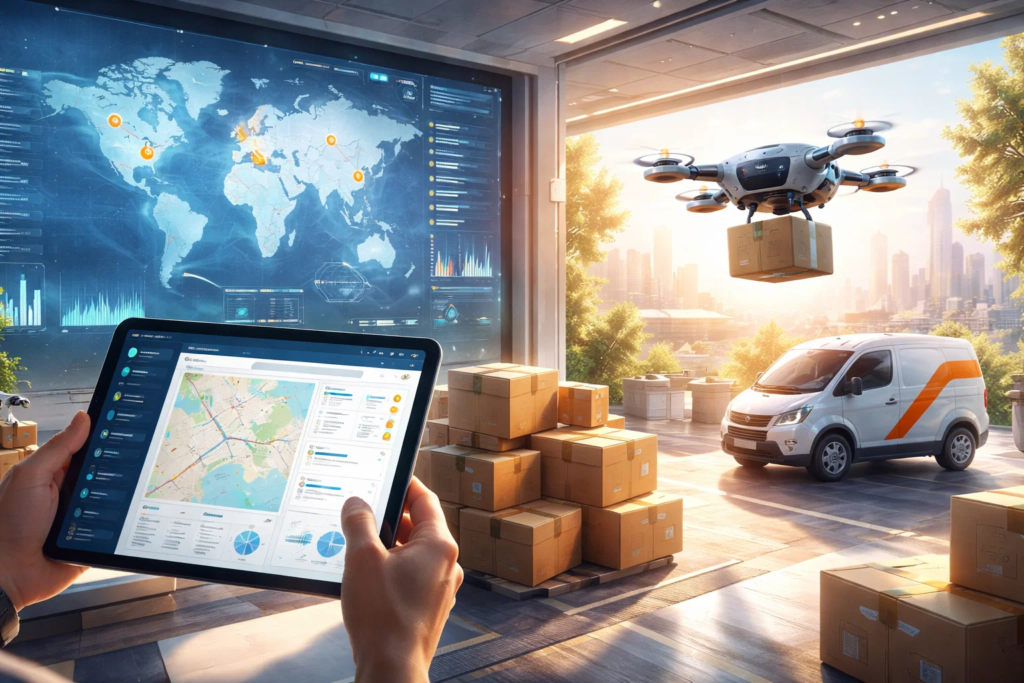
The rapid evolution of technology, particularly in artificial intelligence (AI), machine learning (ML), and real-time data analytics, is reshaping how deliveries are managed. From intelligent route optimization to autonomous fleets, these cutting-edge platforms are designed to reduce costs, enhance operational efficiency, and meet the growing consumer expectations for faster, more reliable deliveries. As a result, the global delivery management software market has expanded exponentially, with businesses increasingly turning to these advanced solutions to stay competitive in an ever-demanding market.
One of the most significant shifts in the industry is the transition from basic routing software to integrated delivery orchestration platforms. These solutions provide businesses with the ability to seamlessly coordinate and manage complex supply chains, handle multiple carriers, and ensure end-to-end visibility from the moment an order is placed to its final delivery. The incorporation of sustainability features, such as carbon footprint tracking and electric vehicle (EV) route optimization, has also become a key consideration, especially in regions with strict environmental regulations.
In this comprehensive guide, we explore the top 10 delivery management software platforms leading the charge in 2026. We delve into their unique features, pricing structures, and the industries they serve, helping businesses make informed decisions about which solution aligns best with their needs. From global giants like Onfleet and FarEye to emerging platforms such as SmartRoutes and Track-POD, each of these software solutions offers distinct advantages, empowering organizations to improve delivery efficiency, reduce operational costs, and elevate customer satisfaction.
With the continued growth of e-commerce and the rising expectations of consumers for fast, reliable, and transparent deliveries, the role of delivery management software will only become more critical. This blog will serve as your ultimate resource to navigate the complex landscape of delivery management software, providing insights into the tools that will shape the future of logistics and help businesses stay ahead of the curve in 2026 and beyond.
Before we venture further into this article, we would like to share who we are and what we do.
About 9cv9
9cv9 is a business tech startup based in Singapore and Asia, with a strong presence all over the world.
With over nine years of startup and business experience, and being highly involved in connecting with thousands of companies and startups, the 9cv9 team has listed some important learning points in this overview of the Top 10 Decision Support Software in 2026.
If you like to get your company listed in our top B2B software reviews, check out our world-class 9cv9 Media and PR service and pricing plans here.
Top 10 Delivery Management Software in 2026
1. Shipsy

Shipsy is leading the way in delivery management, offering an innovative, AI-powered platform that integrates global freight and local last-mile delivery operations. With a presence across key markets such as India, Dubai, Riyadh, and the Netherlands, the platform caters to over 230 international customers, managing upwards of 60 million parcels each month. This scalability and efficiency are what set Shipsy apart in the logistics industry.
AI-Driven Platform for Intelligent 3PL Management
At the heart of Shipsy’s platform is the concept of Intelligent Third-Party Logistics (3PL) Management. The system automates critical processes such as selecting the best carrier for a shipment. This is based on key factors like weight, cost, delivery location, and historical performance of the carrier. For enterprises handling multi-modal transportation networks, this automation proves to be indispensable, offering faster, more reliable delivery solutions while reducing errors and inefficiencies.
The platform’s ability to optimize delivery routes and carrier choices has a profound impact on both operational efficiency and cost savings. By reducing the complexity of manual intervention, Shipsy enhances delivery accuracy and ensures the best possible outcomes for every shipment.
Mobility Suite: Bridging Cross-Border Logistics with the Final Mile
One of the standout features of Shipsy is its mobility suite, which seamlessly connects international logistics with final-mile delivery. This feature is crucial in today’s fast-paced e-commerce landscape, where timely and accurate deliveries are essential for customer satisfaction. Through a unified tracking dashboard, users can manage and monitor shipments from origin to final destination, ensuring that every parcel reaches its destination on time.
An added benefit of Shipsy’s mobility suite is its role in reducing Return to Origin (RTO) rates. By providing real-time visibility into the delivery process and improving coordination with carriers, the software significantly minimizes the likelihood of returns and delays.
Key Features and Benefits
| Feature | Description | Impact |
|---|---|---|
| Geocoding Engine | Converts imprecise addresses into high-accuracy coordinates. | Increases first-attempt delivery rates, ensuring faster deliveries. |
| 3PL Management | Integrates with over 50 third-party logistics providers and 64 shipping lines to optimize carrier selection. | Streamlines logistics by selecting the best carriers, reducing costs. |
| BI & Analytics | Offers data-driven insights into supply chain movement and demand planning. | Helps businesses make better decisions by analyzing logistics trends. |
| Cost Efficiency | AI-driven carrier selection and route optimization lead to lower freight costs. | Users report a 10% reduction in overall freight expenses. |
Real-World Impact and ROI
Businesses utilizing Shipsy report significant improvements in both cost efficiency and operational performance. By implementing AI to automate and optimize logistics processes, companies experience an average 10% reduction in freight costs. Additionally, the platform’s implementation timeline is typically around three months, with a Return on Investment (ROI) realized within 17 months.
This AI-driven approach is especially beneficial for large-scale retail and manufacturing enterprises, which often require deep integration with Warehouse Management Systems (WMS) and Order Management Systems (OMS). Shipsy’s ability to work seamlessly with these systems makes it an ideal solution for complex supply chains and large-volume operations.
Conclusion
Shipsy’s platform is revolutionizing the delivery management landscape by harnessing the power of AI to optimize logistics operations. With its ability to integrate global freight and last-mile delivery, coupled with its data-driven insights and cost-saving features, it is fast becoming an essential tool for businesses looking to streamline their delivery processes and improve customer satisfaction. For organizations seeking to stay ahead of the curve in a rapidly evolving industry, Shipsy offers a powerful, scalable solution for all their delivery management needs.
2. Onfleet

Onfleet is one of the top delivery management platforms, renowned for its ability to optimize local deliveries while maintaining a seamless user experience. Operating from San Francisco, Onfleet has expanded its reach globally, supporting businesses across 90 countries. It is particularly popular among small to mid-sized businesses (SMBs) and mid-market enterprises that rely on top-tier delivery services as a crucial aspect of their brand’s reputation. The platform has been embraced by thousands of customers, who appreciate its ease of use, rapid deployment, and powerful optimization features.
Streamlined Operations with Easy Deployment
Onfleet is known for its quick and efficient setup, making it an attractive choice for businesses that need to get up and running fast. Many teams can reach full operational capacity within just a few days, allowing businesses to hit the ground running without the long wait times often associated with other delivery management systems. This rapid deployment process ensures that companies can start optimizing their local deliveries almost immediately.
Core Features of Onfleet
| Feature | Description | Benefits |
|---|---|---|
| AI-Powered Auto-Dispatch | Uses artificial intelligence to automatically assign deliveries to the best-suited drivers. | Optimizes delivery efficiency and ensures timely deliveries. |
| Real-Time Driver Tracking | Allows businesses and customers to track deliveries in real-time. | Improves transparency and keeps customers informed. |
| Automated Customer Notifications | Sends automatic updates to customers regarding the status of their deliveries. | Enhances customer satisfaction with timely notifications. |
| In-App Driver Chat | Enables communication between dispatchers and drivers without sharing personal contact details. | Ensures secure and efficient communication. |
User-Focused Features for Seamless Communication
A standout feature of Onfleet is its in-app driver chat. This tool allows dispatchers and drivers to communicate easily without exchanging personal phone numbers, ensuring both security and convenience. This feature is especially useful for businesses in sectors where timely deliveries are essential, such as meal kit services, grocery delivery, and pharmaceuticals. By enabling clear communication between drivers and dispatchers, Onfleet enhances the reliability of the entire delivery process.
Pricing Model for Flexibility and Transparency
Onfleet’s pricing model is designed to offer flexibility and transparency, making it appealing to a wide range of businesses. Unlike many competitors that use opaque, contract-based pricing, Onfleet provides a clear structure with different tiers suited to various business needs.
| Pricing Tier | Entry Cost (Monthly) | Included Features |
|---|---|---|
| Launch | USD 500.00 | 2,000 tasks, unlimited users, basic route optimization. |
| Scale | Custom | Barcode scanning, ID verification, advanced analytics. |
This transparent pricing structure helps businesses better plan and budget for their delivery operations, avoiding unexpected fees or hidden charges. The flexibility in choosing the right pricing tier allows companies to scale their use of the platform as their needs evolve.
Ideal for Industries Relying on Consistent Delivery
Onfleet is particularly well-suited for industries that require reliable, on-time delivery with minimal errors. It has gained significant popularity in sectors such as meal kit services, grocery delivery, and pharmaceuticals, where customer experience is a key driver of success. These industries rely heavily on dependable execution, and Onfleet’s platform ensures that deliveries are handled efficiently and accurately.
Conclusion
Onfleet’s comprehensive delivery management solution continues to be a top choice for SMBs and mid-market enterprises. With its AI-driven features, rapid deployment capabilities, and transparent pricing, it stands out as one of the best platforms for businesses that prioritize customer satisfaction and delivery performance. As the demand for reliable, local delivery solutions grows, Onfleet remains at the forefront, offering a powerful tool for companies across various industries to streamline their operations and deliver exceptional service.
3. FarEye

FarEye is a top-tier logistics orchestration platform designed to give retail and e-commerce companies a competitive edge, particularly when dealing with the complexities of last-mile delivery. The platform offers a unique blend of orchestration, real-time visibility, and customized customer experiences, all aimed at simplifying the journey from order to door. With a client base spanning over 150 businesses across 30 countries, FarEye is well-established in the logistics sector, especially in the gig economy, where flexible driver scheduling and route management are essential.
Centralized Control with Sarathi Dashboard
One of FarEye’s key features is the Sarathi dashboard, which serves as a centralized hub for fleet tracking and managing real-time alerts. This dashboard is crucial for businesses that need to maintain control over their operations, offering predictive analytics to foresee potential delays. Additionally, it enables dynamic vehicle re-routing based on real-time traffic patterns, ensuring that deliveries are as timely as possible. This capability is essential for businesses that rely on precise and efficient last-mile logistics to meet customer expectations.
Key Features and Capabilities
| Feature | Description | Impact |
|---|---|---|
| Predictive Analytics | Uses advanced algorithms to predict delays before they happen. | Helps businesses plan in advance and avoid delays. |
| Dynamic Re-Routing | Adjusts vehicle routes in real-time based on traffic analysis. | Reduces delivery times and improves route efficiency. |
| Real-Time Visibility | Provides up-to-the-minute tracking of deliveries across the supply chain. | Enhances customer satisfaction through transparency. |
| Driver Scheduling | Offers flexible scheduling options for drivers, particularly useful for gig economy operations. | Allows businesses to manage fluctuating demand with ease. |
Performance and Scalability
FarEye stands out for its scalability, particularly in handling large volumes of orders. This makes it a popular choice for industries like third-party logistics (3PL), retail, and transportation, where high order quantities and complex logistics are common. Its ability to manage bulk deliveries on a daily basis is a key strength for businesses in these sectors.
However, some users have pointed out that the platform can be resource-intensive. It requires substantial hardware capabilities to function optimally, and performance can sometimes suffer on older mobile devices or in areas with poor network infrastructure. As a result, companies need to ensure that they have the necessary technological infrastructure in place for the platform to perform at its best.
Pricing and Return on Investment
| Pricing Tier | Cost | Included Features |
|---|---|---|
| One-Time License | Starting at USD 100,000.00 | Full platform access with support for 3PL, retail, and transportation logistics. |
FarEye’s pricing structure is based on a one-time licensing fee starting at USD 100,000, making it more suited to large-scale enterprises that require enterprise-grade solutions. Businesses can expect to see a return on investment (ROI) in an average of 18 months, highlighting the long-term value that FarEye brings to the table.
Implementation Time and Industry Focus
FarEye is designed to integrate quickly into existing operations. The average implementation time is around five months, allowing companies to start optimizing their delivery systems in a relatively short time frame. FarEye primarily focuses on industries like 3PL, retail, and transportation, where delivery management and real-time visibility are critical for operational success.
Conclusion
FarEye is a powerful, enterprise-grade solution for managing last-mile logistics. Its comprehensive features, including predictive analytics, dynamic re-routing, and real-time visibility, make it an excellent choice for retail, e-commerce, and logistics companies that require efficient, scalable, and customizable delivery management solutions. Although the platform’s hardware requirements may limit its use in certain regions or on older devices, it remains a top choice for businesses seeking to optimize their delivery operations and enhance their customer experience.
4. Bringg

Bringg is a powerful delivery management platform widely used by large companies like Walmart and Coca-Cola. Designed for businesses that deal with high-volume, complex logistics, Bringg helps manage both internal fleets and a vast network of third-party carriers. The platform is tailored for companies that require advanced logistics capabilities, offering robust features for automating processes, optimizing deliveries, and creating innovative business models like ship-from-store and curbside pickup. This makes Bringg an essential tool for enterprises looking to streamline their operations and stay competitive in the fast-paced logistics industry.
Modular Technology for Custom Solutions
One of the standout features of Bringg is its modular technology platform. This allows businesses to customize the system according to their specific needs. Bringg’s flexibility enables companies to automate key processes, such as order delivery, and scale their operations efficiently. Retailers, for instance, can leverage Bringg to offer services like curbside pickup and ship-from-store, which are becoming increasingly popular in today’s e-commerce environment. This level of customization helps businesses optimize their logistics and meet the unique demands of their customers.
Seamless Integration Across Platforms
Bringg is designed to integrate with a wide range of platforms, including Shopify, Salesforce, Google Maps, and various Warehouse Management Systems (WMS) and Transportation Management Systems (TMS). This extensive integration capability enables a smooth flow of data from the point of sale to the customer’s doorstep, eliminating any gaps or inefficiencies in the process. For example, Bringg’s integration with Salesforce allows customer service teams to generate shipping and return labels directly from a customer’s case file, streamlining customer service operations and improving overall efficiency.
Key Features and Benefits
| Feature | Description | Impact |
|---|---|---|
| Hybrid Fleet Management | Manages internal assets alongside 250+ third-party carriers, including FedEx, UPS, and DHL. | Provides flexibility in choosing the most efficient carriers for each delivery. |
| Multi-Carrier Orchestration | Automatically selects the most cost-effective or fastest carrier for each order. | Ensures faster deliveries at lower costs by optimizing carrier selection. |
| Inventory Tracking | Utilizes barcode scanning to offer complete visibility from the warehouse to the final drop-off point. | Increases transparency and improves inventory control throughout the delivery process. |
| Cost Control | Helps businesses reduce delivery costs and overcome scalability challenges. | Enables businesses to scale their operations without incurring excessive costs. |
Operational and Strategic Advantages
Bringg offers significant operational advantages, especially for large enterprises with complex logistics needs. Its hybrid fleet management system allows businesses to manage both their own internal fleets and third-party carriers simultaneously. This provides businesses with the flexibility to select the best carrier for each delivery, ensuring cost-effective and timely deliveries. Additionally, the platform’s multi-carrier orchestration feature automatically selects the most suitable carrier based on factors like cost and delivery speed, further optimizing the delivery process.
The platform’s inventory tracking feature, powered by barcode scanning, ensures that businesses have full visibility over their products from the warehouse all the way to the final drop-off point. This level of visibility is crucial for businesses that need to manage large inventories and ensure that each product is delivered accurately and on time.
Pricing and Scalability for Large Enterprises
While Bringg’s pricing is typically contract-based with a minimum spend requirement, it offers substantial benefits for large enterprises. For smaller companies, the contract-based pricing may pose a barrier, but for large organizations, Bringg’s ability to eliminate corporate bottlenecks and provide real-time location tracking for millions of shipments makes it a valuable asset. The platform’s scalability allows businesses to manage a high volume of deliveries efficiently, making it a critical tool for companies aiming to grow and expand their logistics operations.
| Pricing Model | Description | Target Audience |
|---|---|---|
| Contract-Based | Pricing typically includes a mandated minimum spend, with costs based on the scale of usage. | Large enterprises with complex, high-volume delivery needs. |
Conclusion
Bringg is a leading delivery management platform that caters to the needs of large enterprises dealing with complex logistics. Its ability to manage both internal fleets and third-party carriers, along with its extensive integration capabilities, makes it an ideal solution for companies in industries like retail and e-commerce. While its pricing model may not be suitable for smaller companies, Bringg’s advanced features, scalability, and real-time tracking capabilities make it a powerful tool for businesses looking to optimize their delivery operations and support their growth. For companies that need a comprehensive, enterprise-grade solution, Bringg offers the flexibility, efficiency, and innovation needed to stay competitive in the logistics industry.
5. LogiNext Mile

LogiNext Mile is a leading delivery management platform focused on the digitalization and automation of transportation and business-to-business (B2B) distribution. Known for its ability to optimize routes and reduce travel distances and times by up to 10%, LogiNext is a key player in industries that rely on efficient logistics. This includes sectors such as Quick Service Restaurants (QSR), retail, and pharmaceuticals, with a global presence in over 50 countries. LogiNext provides businesses with a solution that boosts efficiency, reduces costs, and ensures timely deliveries.
Advanced Route Optimization for Cost and Time Savings
At the core of LogiNext’s platform is its advanced route optimization capabilities. The system intelligently clusters geo-locations to create the most efficient delivery routes, reducing both travel distance and time by up to 10%. This not only helps businesses save on transportation costs but also allows for quicker deliveries. By minimizing the time spent on the road, LogiNext helps reduce fuel consumption and improve overall fleet management efficiency. For businesses in industries like retail and QSR, this optimization is critical to maintaining cost-effective and timely operations.
Comprehensive Dashboard for Real-Time Tracking and Analysis
LogiNext’s user-friendly dashboard offers businesses a comprehensive overview of field activities. The dashboard includes trend lines, heat maps, and comparison reports, which help identify operational bottlenecks and areas for improvement. This real-time tracking and analysis provide valuable insights into fleet performance and delivery efficiency. For managers, this means more control over logistics operations and the ability to make data-driven decisions that can optimize the entire delivery process.
Real-Time ETA and Predictive Delay Alerts
Another notable feature of LogiNext Mile is its ability to provide real-time Estimated Time of Arrival (ETA) updates to customers. This feature improves customer satisfaction by keeping clients informed about the status of their deliveries. Additionally, LogiNext offers predictive delay alerts, which notify businesses and customers about potential delays before they happen. This proactive approach helps reduce frustration and enhances the overall delivery experience.
Key Features and Performance Metrics
| Feature | Description | Impact |
|---|---|---|
| Route Optimization | Uses intelligent geo-location clustering to reduce travel time and distance by up to 10%. | Helps businesses save on transportation costs and improves delivery speed. |
| Real-Time Tracking | Provides up-to-date visibility of field activities, helping managers track progress and performance. | Enhances operational transparency and allows for better decision-making. |
| Predictive Delay Alerts | Notifies businesses and customers of potential delays before they occur. | Improves customer satisfaction by managing expectations and reducing frustrations. |
| Dashboard Analytics | Offers trend lines, heat maps, and reports to identify operational bottlenecks. | Helps businesses pinpoint inefficiencies and make improvements. |
Pricing and Support
LogiNext Mile offers an affordable pricing model starting at USD 50 per user per month, making it accessible to businesses of various sizes. With 24/7 customer support and a high satisfaction rate of 89% for simplicity, LogiNext ensures that users can get the help they need whenever required. This level of support is crucial for businesses that rely on smooth logistics operations and require constant assistance to address any potential issues.
| Feature | Metric |
|---|---|
| Starting Price | USD 50 per user per month |
| Implementation Time | 4 months |
| Support | 24/7 support with 89% positive sentiment on simplicity |
Limitations and Considerations
While LogiNext Mile is a highly effective platform, there are some limitations to consider. One of the main drawbacks reported by users is its rigidity when human errors occur. The system can sometimes be difficult to modify once a trip has already begun, limiting flexibility when adjustments are needed. Additionally, LogiNext’s performance may suffer on older or low-resource mobile devices, which can affect users in the field, especially in areas with limited access to high-performance hardware.
Conclusion
LogiNext Mile is an advanced, feature-rich delivery management platform designed to streamline transportation and distribution operations for businesses in industries like QSR, retail, and pharmaceuticals. Its powerful route optimization, real-time tracking, and predictive alert features help businesses reduce costs, improve delivery times, and enhance customer satisfaction. While there are some limitations regarding flexibility and mobile performance, the platform’s affordability, scalability, and robust support make it a solid choice for companies looking to optimize their delivery management operations in 2026.
6. Track-POD

Track-POD is a cloud-based delivery management platform designed to help businesses of all sizes transition to digital logistics. Known for its versatility and user-friendly interface, Track-POD is particularly popular for its “Sign on Glass” technology and electronic Proof of Delivery (ePOD) features. The platform caters to a wide range of industries, including food and beverage, utilities, and healthcare, and operates in over 45 countries worldwide. It offers a robust set of tools to streamline the delivery process, making it an ideal solution for businesses looking to enhance their logistics operations.
Flexible Pricing Models to Suit Business Needs
Track-POD provides two main pricing models: per-driver and per-order. This flexibility ensures that businesses can choose a plan that aligns with their specific delivery volumes and needs. The per-driver plan starts at USD 35 per month, which is ideal for businesses with a fixed fleet of drivers. For businesses with variable delivery needs, the per-order plan is available starting at USD 285 for 1,500 tasks, with additional tasks costing as little as USD 0.19 each. This flexible pricing structure makes it a scalable solution for companies that experience fluctuations in their delivery requirements.
| Pricing Model | Cost | Included Features |
|---|---|---|
| Per-Driver Plan | Starting at USD 35/month | Route optimization, barcode scanning, ePOD, basic analytics |
| Per-Order Plan | Starting at USD 285 for 1,500 tasks | Route optimization, ePOD, delivery tracking, analytics |
Comprehensive Features for Streamlined Logistics
Track-POD offers a variety of features that help businesses streamline their delivery processes and improve efficiency. These features are available in the base plans, including:
| Feature | Description | Impact |
|---|---|---|
| Route Optimization | Helps plan the most efficient delivery routes based on time, distance, or cost. | Reduces delivery times and transportation costs. |
| Barcode Scanning | Enables drivers to scan barcodes for quick and accurate delivery verification. | Ensures accurate deliveries and inventory tracking. |
| COD Management | Manages cash on delivery payments for businesses offering this service. | Simplifies the process of handling payments during delivery. |
| Digital Vehicle Inspection | Drivers can generate digital reports to ensure compliance with safety regulations. | Improves safety and ensures that vehicles are in good condition. |
Real-Time Analytics and Historical Insights
Track-POD’s analytics capabilities provide businesses with real-time performance tracking and historical insights. The platform stores up to two years of historical performance data, enabling businesses to review past deliveries and identify areas for improvement. This data can be essential for optimizing future deliveries and refining business strategies.
| Analytics Feature | Description | Impact |
|---|---|---|
| Real-Time Analytics | Provides live data on delivery performance and route efficiency. | Helps businesses make immediate adjustments for better performance. |
| Historical Insights | Stores up to two years of performance data for review. | Enables long-term improvements and data-driven decisions. |
Fast ROI and Simple Implementation
Track-POD is designed to deliver a fast return on investment (ROI), with most businesses realizing their ROI within an average of 16 months. The platform is quick to implement, with a user-friendly interface that allows businesses to begin using it with minimal training. However, users have noted that setting up complex email and SMS notifications can be challenging, which may require additional time to configure properly.
User-Friendly Route Planner for Efficient Delivery Management
Track-POD’s “drag-and-drop” route planner is one of its standout features, allowing dispatchers to optimize routes by time, distance, or expense. This tool simplifies the planning process, especially for businesses with high delivery volumes, by allowing them to manage multiple deliveries simultaneously. Dispatchers can quickly assign and adjust delivery routes, ensuring that the process runs smoothly.
Performance and Scalability
Track-POD can handle up to 3,000 orders per month per driver or vehicle in its standard plans, making it suitable for businesses with high-volume delivery needs. The platform is also designed to scale as businesses grow, offering a flexible solution that can adapt to increasing delivery volumes.
| Performance Metric | Data |
|---|---|
| Order Limit (Standard) | 3,000 orders per month per driver/vehicle |
| ROI Timeline | Average ROI realized in 16 months |
Limitations to Consider
While Track-POD offers a robust set of features, there are some drawbacks to consider. Some users have reported that the dashboard interface can become cluttered with data, which may make it challenging to navigate, especially for new users. Additionally, setting up complex notifications, such as email and SMS alerts, can be tricky for businesses that require custom configurations.
Conclusion
Track-POD is a versatile, all-in-one delivery management platform that provides a comprehensive solution for businesses in various industries. Its flexibility in pricing, coupled with features like route optimization, barcode scanning, and digital vehicle inspections, makes it a great choice for companies looking to streamline their delivery operations. While it may have some minor limitations, such as a cluttered dashboard and complex notification setup, the platform’s ability to enhance efficiency and provide valuable insights makes it a top contender in the delivery management software market for 2026.
7. Locus

Locus Dispatch Management is a powerful logistics optimization platform that utilizes advanced algorithms to automate and enhance dispatch operations. Trusted by major global brands such as Unilever and Nestlé, Locus has executed successful deliveries across more than 30 countries. Its AI-driven system optimizes the entire supply chain, from pre-purchase fulfillment to post-delivery support, making it a critical tool for businesses looking to improve operational efficiency and reduce costs.
Deep Optimization for Complex Deliveries
Locus stands out for its ability to deeply optimize delivery processes, considering various real-world constraints such as traffic, weather conditions, vehicle type, and driver skill levels. This enables the platform to create the most efficient delivery routes possible, significantly reducing travel time and fuel consumption. For businesses dealing with high volumes of deliveries or operating in complex environments, Locus offers solutions that surpass the capabilities of traditional static routing tools.
| Feature | Description | Impact |
|---|---|---|
| Advanced Routing Algorithms | Considers factors like traffic, weather, and vehicle type to create the best routes. | Minimizes travel time and fuel costs, enhancing delivery efficiency. |
| Geocoding Engine | Provides accurate address-to-location mapping for precise deliveries. | Ensures deliveries are made to the correct locations, improving accuracy. |
| Dynamic Route Optimization | Continuously adjusts routes based on real-time conditions. | Reduces delays and ensures on-time deliveries even in changing conditions. |
Task-Level Insights and Root Cause Analysis
One of the unique features of Locus is its Task-Level Root Cause Analysis (RCA) interface. This tool helps managers gain in-depth insights into operational dynamics, providing a clear understanding of why certain Key Performance Indicators (KPIs) are not being met. With the ability to pinpoint specific issues, businesses can make data-driven decisions to improve efficiency and performance across their logistics operations.
| Feature | Description | Impact |
|---|---|---|
| Root Cause Analysis (RCA) | Offers detailed insights into performance issues at a task level. | Helps managers identify and address issues impacting KPIs. |
| Performance Tracking | Monitors various operational metrics to ensure optimal performance. | Allows for continuous improvement by tracking real-time data. |
Strategic Advantages for Large-Scale Operations
Locus’s platform is particularly suited for large-scale operations that require advanced optimization and real-time tracking. It’s often selected by teams that find traditional routing tools insufficient for managing the complexity of modern logistics. The system’s ability to provide detailed insights into routing efficiency and driver performance makes it a high-value asset for companies handling large volumes of deliveries.
System Performance and Reliability
Locus is recognized for its high stability and consistent performance, even during peak times. The platform ensures reliable location updates and real-time tracking, which is crucial for businesses that need to maintain accuracy and timeliness across multiple deliveries. This reliability is one of the key reasons Locus is trusted by large enterprises and continues to be a top choice in the logistics optimization space.
| Feature | Description | Impact |
|---|---|---|
| System Stability | Provides reliable performance even during high-demand periods. | Ensures continuous operation without disruptions. |
| Location Updates | Delivers accurate real-time location tracking for vehicles. | Improves fleet visibility and ensures timely deliveries. |
Implementation and Cost Efficiency
The platform typically requires about six months for implementation, which is longer than some of its competitors. However, businesses often find the extended implementation phase worthwhile, as Locus’s smart sorting and planning capabilities can lead to significant savings in both vehicle usage and distance traveled. This makes it a valuable partner for companies looking to optimize their delivery operations on a larger scale.
Locus also offers competitive pricing, with an average discount of 12% on enterprise contracts. This helps businesses manage costs while benefiting from the advanced features and high-level performance of the platform.
| Feature | Metric |
|---|---|
| Implementation Time | Approximately 6 months for full implementation. |
| Discount on Enterprise Contracts | Average discount of 12%. |
Driver Support and Navigation Features
Locus includes a driver app that offers street-level routing and turn-by-turn navigation. This feature ensures that drivers have clear, easy-to-follow directions, reducing errors and improving the overall efficiency of the delivery process. The app’s real-time updates also allow for dynamic re-routing based on changing conditions, ensuring that drivers are always on the most efficient path.
| Feature | Description | Impact |
|---|---|---|
| Driver App | Provides turn-by-turn navigation and real-time updates for drivers. | Increases driver efficiency and reduces the likelihood of delivery mistakes. |
Conclusion
Locus Dispatch Management is a powerful, AI-driven platform that offers extensive capabilities for optimizing delivery routes, managing large-scale operations, and providing detailed performance insights. With its advanced algorithms, geocoding engine, and real-time tracking features, Locus is a top choice for enterprises looking to streamline their logistics operations in 2026. While the platform may require a longer implementation time, its deep optimization features, reliable performance, and cost-saving benefits make it a high-value tool for businesses with complex logistics needs.
8. Route4Me

Route4Me is a leading route sequencing and optimization platform that has gained widespread adoption across multiple industries, with over 40,000 customers globally. The platform is trusted by businesses in various sectors, including field services, sales, merchandising, and traditional parcel delivery. By using Route4Me’s patented technology, companies can optimize more than 30 million routes annually, significantly improving operational efficiency and reducing delivery costs.
Flexible and Scalable Plans to Suit Different Needs
Route4Me offers a tiered pricing structure, allowing businesses to choose a plan that best suits their specific needs. The “Route Management” plan, which starts at USD 40 per user per month, provides basic functionality for route planning and management. However, businesses looking to unlock the platform’s full potential typically opt for the “Route Optimization” plan at USD 60 per user per month or the “Business Optimization” plan at USD 90 per user per month. These higher-tier plans provide more advanced features, such as optimization algorithms and deeper analytics, that are essential for large-scale and complex operations.
| Pricing Plan | Cost | Features |
|---|---|---|
| Route Management | USD 40/user/month | Basic route planning and management tools. |
| Route Optimization | USD 60/user/month | Advanced route optimization and performance tracking. |
| Business Optimization | USD 90/user/month | Full optimization suite, including analytics and fleet management. |
Key Features for Commercial Vehicle Routing
Route4Me excels in commercial vehicle routing, which is crucial for businesses that rely on trucks, vans, or other large vehicles for deliveries. The platform ensures that vehicles adhere to road regulations, avoiding restricted zones and optimizing routes based on vehicle-specific needs. This feature helps businesses improve compliance, reduce operational risks, and avoid penalties for unauthorized access to restricted roads or zones.
| Feature | Description | Impact |
|---|---|---|
| Commercial Vehicle Routing | Optimizes routes for trucks and vans based on vehicle type and regulations. | Ensures compliance with road restrictions and enhances delivery efficiency. |
Efficient Infrastructure and Cost Breakdown
Building a custom delivery management system can be costly, especially when considering the necessary infrastructure. Route4Me’s SaaS platform offers businesses a cost-effective alternative, providing access to cutting-edge technology without the need for significant in-house infrastructure. The estimated monthly cost for hosting a homegrown delivery system can reach up to USD 47,196, which includes expenses for application servers, database clusters, and geocoding services. In comparison, Route4Me offers businesses the ability to leverage this technology for a fraction of the cost, with monthly SaaS subscriptions starting at just USD 40 per user.
| Infrastructure Component | Estimated Monthly Cost for Homegrown Build | Impact |
|---|---|---|
| Application Server Cluster | USD 20,000 | Significant upfront costs for building custom infrastructure. |
| Database Server (2N+2) | USD 20,000 | Ongoing maintenance and scalability costs. |
| Geocoding Cluster | USD 8,000 | High costs for accurate location-based services. |
| Total Monthly Hosting | USD 47,196 | Total monthly cost for maintaining a custom-built system. |
By subscribing to Route4Me’s platform, businesses can save on these infrastructure costs while benefiting from the company’s significant investment in research and development. With an annual R&D budget of USD 6 million, Route4Me continually improves its platform, ensuring that businesses have access to the latest route optimization technologies.
Conclusion
Route4Me is a versatile and highly scalable route optimization platform that caters to a wide range of industries. Its tiered pricing structure ensures that businesses can choose the most appropriate plan based on their needs and scale. The platform’s advanced commercial vehicle routing capabilities, which optimize routes based on real-time data and vehicle-specific requirements, help businesses improve efficiency and compliance. Additionally, the significant cost savings provided by Route4Me compared to building a custom delivery system make it an attractive solution for businesses looking to enhance their logistics operations in 2026.
9. SmartRoutes

SmartRoutes is a practical and user-friendly route planning platform designed to meet the needs of last-mile delivery teams. It is particularly well-suited for businesses looking for an easy-to-use solution that doesn’t require extensive technical knowledge or long setup times. The platform allows businesses to quickly optimize their delivery routes, ensuring efficient operations without the need for complex systems or processes.
Affordable Pricing with Flexible Plans
SmartRoutes offers competitive pricing with three tiers to cater to businesses of different sizes and needs. The “Basic” plan, starting at EUR 29 per month, provides the essential tools for route management. The “Essentials” plan, priced at EUR 49 per month, adds valuable features such as live tracking and customer notifications. For businesses seeking more advanced functionality, the “Premium” plan at EUR 59 per month includes additional customization options and enhanced reporting features.
| Pricing Plan | Cost | Included Features |
|---|---|---|
| Basic | EUR 29/month | Basic route planning and optimization tools. |
| Essentials | EUR 49/month | Live tracking, customer notifications, and geo-location-based delivery zones. |
| Premium | EUR 59/month | Advanced reporting, custom route optimization, and enhanced features. |
Key Features for Efficient Last-Mile Delivery
SmartRoutes is built to simplify the delivery process, offering essential features that improve the efficiency of last-mile teams. These include multi-stop optimization, live driver tracking, and geo-location-based delivery zones, which help businesses manage and track their deliveries more effectively.
| Feature | Description | Impact |
|---|---|---|
| Multi-stop Optimization | Optimizes routes with multiple stops for greater efficiency. | Reduces travel time, saving fuel and resources. |
| Live Driver Tracking | Provides real-time visibility of drivers during delivery. | Improves transparency and enhances customer satisfaction. |
| Geo-location Delivery Zones | Automatically generates delivery zones based on geographical location. | Ensures accurate deliveries and prevents missed locations. |
Fuel and Time Savings
SmartRoutes is highly effective in reducing operational costs. Businesses using the platform report a 20-30% reduction in fuel costs due to optimized route planning. The platform’s time-saving features also allow businesses to reduce planning hours, transforming what used to be hours of route planning into minutes of efficient setup.
| Performance Metric | Data |
|---|---|
| Fuel Savings | 20-30% reduction in fuel costs. |
| Time Savings | Planning time reduced from hours to minutes. |
| Customer Satisfaction | Significant reduction in customer queries about order status. |
User Satisfaction and Flexibility
SmartRoutes is particularly beneficial for seasonal businesses or businesses that need flexibility in their software subscriptions. The platform’s pricing structure allows companies to scale up or down as needed, providing a solution that adapts to fluctuating delivery demands. Users have rated the platform highly, with a 4.8/5 user rating, citing its ease of use, cost-effectiveness, and the practical features it offers for last-mile delivery teams.
Conclusion
SmartRoutes is an excellent choice for small and mid-sized teams looking for an easy-to-use and cost-effective delivery planning solution. While it may not offer the deep enterprise-level features of some larger platforms, its focus on simplicity and practicality makes it an ideal tool for businesses that need efficient and flexible delivery management. The platform’s competitive pricing, fuel and time savings, and high user satisfaction make it a top contender in the delivery management software market for 2026.
10. Nash

Nash is an innovative logistics orchestration platform designed to streamline and optimize the entire delivery process, from checkout to the final drop-off. It stands out in the market by offering businesses the ability to manage deliveries across various fleet types, including internal fleets, local carriers, and third-party logistics partners, all within a unified system.
Recognized as a Representative Vendor in the 2025 Gartner Market Guide for Last-Mile Delivery Technology, Nash is paving the way for a shift from basic routing solutions to advanced, integrated orchestration systems. The platform’s comprehensive features make it an essential tool for businesses aiming to modernize and enhance their delivery operations in response to growing demands for flexibility and efficiency.
Seamless Integration with Multi-Carrier Dispatch
One of Nash’s core strengths lies in its multi-carrier dispatch capabilities. The platform is able to automatically dispatch each order to the most appropriate carrier based on various factors, including order type, delivery day, and time. This level of optimization ensures that businesses can consistently select the best delivery option, maximizing efficiency while reducing costs.
| Feature | Description | Impact |
|---|---|---|
| Multi-Carrier Dispatch | Automatically selects the most suitable carrier based on order and time. | Ensures optimal delivery routing and reduces delays. |
| Dynamic Dispatch Strategies | Adjusts dispatching decisions in real-time based on carrier performance and available capacity. | Maximizes delivery efficiency while adapting to changing conditions. |
Real-Time Dispatch Adjustments for Maximum Efficiency
Nash employs dynamic dispatch strategies, adjusting the dispatch process in real-time based on factors like available capacity and carrier performance. This means that, as conditions change—whether due to a surge in demand or a carrier’s delay—the platform can quickly adjust to maintain optimal delivery flow, ensuring timely deliveries even under pressure.
| Feature | Description | Impact |
|---|---|---|
| Dynamic Dispatch Adjustments | Modifies delivery dispatches based on current performance and capacity data. | Increases operational efficiency and ensures on-time deliveries. |
End-to-End Visibility for Complete Control
Nash offers real-time visibility across the entire delivery process, from store pickup to final delivery. This feature provides businesses and customers with complete transparency, helping to track the status of each order in real-time. The ability to monitor deliveries at every stage ensures that issues are identified and addressed promptly, reducing delays and improving overall customer satisfaction.
| Feature | Description | Impact |
|---|---|---|
| End-to-End Visibility | Provides tracking from the point of pickup to the final delivery. | Increases customer trust and reduces uncertainty in delivery. |
Empowering Retailers with Greater Control Over Delivery Experiences
Nash’s platform is particularly beneficial for retailers who need to modernize their delivery strategies. With the growing demand for flexible delivery options such as ship-from-store, curbside pickup, and easy returns, Nash provides retailers with the tools to manage and optimize these processes effectively. By enabling retailers to take back control of the customer delivery experience, Nash helps businesses enhance customer satisfaction and improve delivery performance.
| Feature | Description | Impact |
|---|---|---|
| Customer Control | Provides retailers with the ability to manage and customize their delivery processes. | Improves customer satisfaction by offering a more tailored delivery experience. |
Challenges and Onboarding New Delivery Providers
While Nash offers powerful features for orchestration and delivery management, the platform’s integration of new delivery service providers can be technically challenging. Onboarding third-party carriers or logistics partners requires a certain level of technical expertise, but the platform’s ability to manage these complexities is highly valued by enterprise users. Once fully integrated, the ability to scale operations and enhance service quality is a major benefit for large businesses.
Conclusion
Nash is an advanced logistics orchestration platform designed to handle the complexities of modern delivery management. By offering features like multi-carrier dispatch, dynamic dispatch strategies, real-time visibility, and greater control for retailers, Nash empowers businesses to deliver a seamless customer experience. Despite some technical challenges during the onboarding of new service providers, the platform’s ability to optimize delivery operations and improve order quality makes it an invaluable tool for businesses seeking to enhance their last-mile delivery strategies in 2026.
Market Growth and Strategic Revenue Projections for Delivery Management Software
The global market for delivery management and logistics software has seen exceptional growth in the mid-2020s. By the end of 2024, the market was valued at approximately USD 13.5 billion. Looking forward to 2026, projections show a continued period of rapid expansion, with expectations that the market will reach a value of USD 32.1 billion by 2032. This growth trajectory reflects a compound annual growth rate (CAGR) of 11.2% from 2025 to 2032. The logistics software sector, as a whole, is also experiencing robust growth, with projections for the broader logistics software market to hit USD 35.8 billion by 2033, driven by a CAGR of 9.18% starting from 2026.
| Market Segment | 2024/2025 Valuation | 2032/2033 Projection | CAGR (%) |
|---|---|---|---|
| Delivery Management Software | USD 13.5 Billion | USD 32.1 Billion | 11.2% |
| Logistics Automation Market | USD 44.0 Billion | USD 148.8 Billion | 16.8% |
| Logistics Software Market | USD 17.8 Billion | USD 35.8 Billion | 9.18% |
| AI Software Platforms (Logistics) | USD 26.7 Billion | USD 88.2 Billion (2034) | 14.22% |
Regional Growth and Dominance
North America currently holds the largest market share in the global delivery management software market, accounting for 38.5%, with the United States contributing 23.7% of the total market. Despite this, the Asia-Pacific (APAC) region is the fastest-growing segment. APAC’s market growth is fueled by rapid digitalization, particularly in countries such as China, India, and Southeast Asia. The increasing urbanization, along with the widespread adoption of smartphones, has created a significant demand for on-demand services like e-commerce and grocery delivery, driving the expansion of logistics solutions in the region.
End-User Industry Breakdown
The retail and e-commerce sectors dominate the delivery management software market, contributing to 44.3% of the total market revenue. These industries rely heavily on logistics software to handle the complexity of global and local deliveries, particularly as e-commerce continues to grow at an accelerated pace. Other significant sectors include food and beverage, healthcare, and industrial manufacturing, all of which are seeing increased adoption of logistics and delivery management software to optimize their supply chains.
| End-User Industry | Market Share (%) |
|---|---|
| Retail & E-commerce | 44.3% |
| Food & Beverage | Significant share |
| Healthcare | Significant share |
| Industrial Manufacturing | Significant share |
Cloud Deployment Growth
The transition to cloud-based solutions is a key trend within the delivery management software market. By 2024, cloud deployment accounted for 66% of the market share, a reflection of its numerous benefits, including scalability, real-time data synchronization, and reduced upfront capital expenditure. Cloud solutions are increasingly preferred over traditional on-premise systems, as they offer businesses the flexibility to scale and adapt to changing market demands without the need for large, upfront investments in infrastructure.
Conclusion
The delivery management software market is experiencing robust growth, driven by increased demand from retail, e-commerce, and other key sectors. With North America holding the largest market share, and the APAC region leading in growth, the industry is on track to achieve significant milestones by 2032. As businesses continue to shift toward cloud-based solutions, the market is expected to expand rapidly, offering new opportunities for innovation in logistics and delivery management.
The Technological Evolution: From Route Optimization to Intelligent Orchestration
In 2026, delivery management is undergoing a significant transformation, moving from traditional route optimization to more dynamic and intelligent orchestration. This shift is driven by AI agents, which go beyond simply suggesting the best routes. These agents now autonomously handle the entire delivery process, reacting in real-time to challenges like traffic disruptions, vehicle breakdowns, and changing customer availability. In fact, a growing number of logistics leaders, around 39%, now prioritize enhancing customer experience by offering services such as dynamic rescheduling and curbside pickups, which are becoming essential in today’s fast-paced delivery environment.
AI and Machine Learning in Modern Delivery Platforms
Artificial Intelligence (AI) and Machine Learning (ML) are the backbone of many modern delivery management systems. By 2025, 78% of logistics operators worldwide were using AI-driven analytics to improve supply chain visibility. This technology has already led to a 32% reduction in delivery errors. In 2026, the primary focus of AI is on dynamic route optimization. By analyzing factors such as historical traffic patterns, weather, driver behavior, and vehicle capacity, AI helps reduce delivery mileage by an average of 10% to 15%. This not only improves efficiency but also contributes to cost savings and environmental benefits by cutting fuel consumption.
| AI-Driven Feature | Description | Impact |
|---|---|---|
| Dynamic Route Optimization | Uses AI to analyze factors like traffic, weather, and vehicle behavior for route selection. | Reduces delivery mileage by 10%-15%, leading to fuel savings. |
Real-Time Transportation Visibility (RTTVP)
Real-time visibility has shifted from a post-purchase luxury to a critical operational necessity. Leading delivery management platforms now integrate with Real-Time Transportation Visibility Platforms (RTTVP), offering end-to-end transparency throughout the delivery process. By 2025, 70% of companies had adopted cloud-based, AI-powered software solutions that leveraged IoT technology to improve route optimization by 35% and reduce delivery times by 28%. One of the leading companies in this area, project44, manages over 1.5 billion shipments annually, providing predictive analytics to handle potential exceptions before they disrupt the final delivery. This increased visibility helps businesses manage their supply chains more effectively and ensure on-time deliveries.
| Feature | Description | Impact |
|---|---|---|
| Real-Time Visibility | Provides end-to-end tracking and predictive analytics for shipments. | Reduces delays by 28% and enhances customer satisfaction. |
Sustainability and Green Last-Mile Deliveries
As environmental concerns become increasingly important, many businesses are adopting software tools that promote sustainability in delivery operations. Features like carbon footprint tracking and Electric Vehicle (EV) route optimization are now common in many delivery management platforms. These features help businesses meet Environmental, Social, and Governance (ESG) requirements and comply with green initiatives in urban areas, such as “Green Zones” and congestion pricing. For example, Route4Me offers commercial routing tools that allow vehicles to avoid restricted zones, preventing fines and unnecessary idling, while simultaneously reducing emissions. The move towards more eco-friendly delivery solutions is a direct response to growing urban environmental policies and a rising demand from consumers for sustainable business practices.
| Sustainability Feature | Description | Impact |
|---|---|---|
| Carbon Footprint Tracking | Tracks the environmental impact of deliveries and optimizes for eco-friendly options. | Helps businesses meet ESG goals and reduce their environmental impact. |
| EV Route Optimization | Optimizes routes for electric vehicles to minimize energy consumption and emissions. | Supports compliance with green zones and reduces operating costs. |
Conclusion
As the delivery management software market evolves, key trends like AI-driven orchestration, real-time visibility, and sustainability are shaping the future of the industry. With these advancements, businesses can improve delivery efficiency, reduce operational costs, and enhance customer satisfaction. As environmental regulations tighten and consumer demand for sustainable practices increases, the delivery management software of 2026 will not only be focused on operational efficiency but also on supporting greener, more responsible delivery methods.
Quantitative Comparison of Top Delivery Management Software Solutions
To help businesses evaluate the leading delivery management platforms in 2026, the following table outlines key metrics for the top 10 solutions. These metrics include the target audience, entry price, user ratings, and expected return on investment (ROI) timeline.
| Platform | Target Audience | Entry Price (Est.) | Rating (G2/Gartner) | ROI Timeline |
|---|---|---|---|---|
| Shipsy | Large Enterprise | Custom | 4.8/5 | 17 Months |
| Onfleet | SMB / Mid-Market | USD 500/mo | 4.7/5 | 12-14 Months |
| FarEye | Global Retail | USD 100k+ | 4.6/5 | 18 Months |
| Bringg | Enterprise | Custom | 4.6/5 | 18-20 Months |
| LogiNext Mile | Transportation | USD 50/user/mo | 4.8/5 | 15-18 Months |
| Track-POD | SMB / Wholesale | USD 35/driver/mo | 4.7/5 | 16 Months |
| Locus | Complex Logistics | Custom | 4.5/5 | 15 Months |
| Route4Me | Field Service | USD 40/user/mo | 4.5/5 | 16 Months |
| SmartRoutes | Small Teams | EUR 29/mo | 4.8/5 | 6-9 Months |
| Nash | Retail Orchestration | Custom | 4.8/5 | 12-18 Months |
Key Insights:
- Target Audience: These platforms cater to a variety of business sizes and needs. Solutions like Onfleet and Track-POD are designed for small and mid-sized businesses (SMBs), while platforms like Shipsy, Bringg, and FarEye are targeted towards large enterprises and global retailers.
- Pricing: The entry prices vary significantly, with some platforms offering affordable options (e.g., SmartRoutes starting at EUR 29/mo), while others, such as FarEye and Shipsy, require custom pricing, reflecting their advanced capabilities for larger organizations.
- User Ratings: Overall, the platforms receive high user ratings, with Shipsy, LogiNext Mile, and SmartRoutes standing out at 4.8/5. These ratings reflect customer satisfaction in key areas such as ease of use, functionality, and performance.
- ROI Timeline: The time it takes to achieve a return on investment (ROI) varies across the solutions. Most platforms promise ROI within 12-20 months, with SmartRoutes offering the shortest timeline at 6-9 months, making it an attractive option for smaller teams looking for quick gains.
Conclusion:
Each of these top 10 delivery management platforms provides unique features and pricing structures tailored to different types of businesses. Companies should carefully evaluate these metrics based on their specific needs, such as company size, budget, and desired functionality, to select the solution that best aligns with their objectives for 2026.
Understanding the Financial Impact of Delivery Management Software
In 2026, understanding the financial aspects of last-mile delivery is crucial for businesses considering investing in delivery management software. The primary cost driver for last-mile delivery is labor, which makes up a significant portion of the total expenses. Other costs, such as fuel and fleet maintenance, are secondary but can be highly unpredictable. Fortunately, delivery management software can help reduce these costs and increase operational efficiency.
Key Cost Categories in Last-Mile Delivery
| Cost Category | Impact on Total Cost | Mitigation Strategy |
|---|---|---|
| Labor | 50% – 60% | Productivity improvements through automated route planning and sequencing. |
| Fuel & Maintenance | 10% – 15% | Optimization of routes and schedules to reduce mileage, resulting in significant fuel savings. |
| Reverse Logistics | 15% – 20% | Better management of non-delivery reports (NDR) and workflows, leading to fewer failed deliveries. |
| Technology | 2% – 5% | SaaS-based solutions reduce upfront costs and infrastructure investments. |
Labor Costs
Labor continues to be the largest cost driver in last-mile delivery, accounting for 50% to 60% of total costs. Delivery management software helps reduce this burden by improving driver productivity through automated route planning and sequencing. With optimized routes, drivers spend less time on the road, increasing the number of deliveries they can complete per shift.
Fuel and Maintenance Costs
Fuel and fleet maintenance contribute around 10% to 15% of the total delivery cost. Delivery software typically reduces the total mileage by 10%, leading to an average fuel saving of 10%. By optimizing delivery routes and minimizing unnecessary travel, businesses can cut down on fuel consumption and maintenance costs over time.
Reverse Logistics
Reverse logistics, which includes the management of failed deliveries and returns, accounts for 15% to 20% of the total last-mile cost. Delivery management platforms improve efficiency by automating non-delivery report (NDR) workflows, which helps reduce the number of failed deliveries. With better customer communication and proactive handling of exceptions, businesses can reduce failed deliveries by up to 30%.
Technology Costs
The cost of technology, including the implementation of delivery management software, generally makes up 2% to 5% of the total last-mile delivery cost. Software-as-a-Service (SaaS) models help businesses avoid large upfront capital investments in infrastructure. By offering cloud-based solutions, SaaS models provide the necessary scalability and flexibility, lowering the overall technology costs for businesses.
Return on Investment (ROI)
The average ROI for last-mile delivery software typically ranges from 12 to 18 months. Efficiency improvements—such as reduced mileage, more deliveries per driver shift, and fewer failed delivery attempts—directly contribute to this fast return. Businesses see gains in efficiency, including:
- Mileage Reduction: A 10% to 15% reduction in total mileage, saving on fuel and maintenance.
- Increased Driver Stops: A 20% to 30% increase in driver stops per shift, enhancing productivity.
- Reduction in Failed Deliveries: Up to a 35% decrease in failed delivery attempts, achieved through better communication and proactive exception management.
By leveraging delivery management software, companies can not only reduce costs but also enhance the overall efficiency of their last-mile operations, leading to significant long-term savings.
Strategic Recommendations for Delivery Management Software in 2026 and Beyond
As we approach 2027, the delivery management software market is set to experience continued transformation, with several key trends that will play a significant role in shaping the future of logistics operations. These trends include advancements in AI technology, a focus on sustainability, the integration of autonomous fleets, and the convergence of B2C and B2B last-mile delivery needs. Businesses that are looking to optimize their delivery operations must consider these trends and select platforms that align with the evolving logistics landscape.
Key Trends Shaping Delivery Management Software
- Agentic AI Maturity
AI technology is evolving from rule-based automation to fully autonomous AI agents that can handle complex tasks with minimal human intervention. By 2027, delivery management platforms will increasingly rely on these sophisticated AI agents to autonomously manage negotiations with carriers and customers, optimize delivery schedules, and make real-time adjustments without human oversight. This shift will lead to greater efficiency, reduce human error, and streamline operations.
- Sustainability Integration
With rising environmental concerns and increasing regulatory pressures, sustainability features like carbon tracking and electric vehicle (EV) optimization will transition from optional to mandatory, especially in Europe and major cities in the US. Businesses will need to ensure that their delivery management software supports carbon footprint monitoring and optimization for EV fleets to comply with new regulations. The integration of sustainability metrics will also provide a competitive advantage for businesses looking to improve their environmental impact.
- Autonomous Fleet Support
As technology progresses, the use of autonomous delivery methods such as drones, sidewalk robots, and autonomous delivery vans is expected to become more mainstream. Delivery management platforms in 2026 will need to support the coordination of these hybrid fleets, requiring complex orchestration of unmanned vehicles alongside traditional delivery methods. The ability to manage these assets efficiently will be critical for businesses looking to remain competitive in an increasingly automated logistics environment.
- B2B Last-Mile Convergence
In recent years, the line between B2C and B2B last-mile delivery has been blurring. Business customers are now expecting the same level of transparency, speed, and convenience that retail consumers have come to enjoy. As a result, delivery management platforms will need to cater to both B2C and B2B needs, providing seamless service for a wide range of delivery types. The demand for business-to-business last-mile services will increase, and companies that can offer high levels of service will set themselves apart from the competition.
Strategic Recommendations for Delivery Optimization
For organizations looking to optimize their delivery operations in 2026 and beyond, the primary recommendation is to select a platform that provides “orchestration” rather than just basic “routing.” Orchestration goes beyond traditional route planning by enabling businesses to manage both internal and external fleets, automate carrier selection, and offer real-time tracking for end-to-end visibility. This holistic approach ensures that businesses can respond quickly to disruptions, optimize delivery performance, and maintain a competitive edge.
In addition to orchestration capabilities, businesses should prioritize platforms with proven return on investment (ROI), quick implementation times, and robust integration with existing technology systems. A delivery management platform that can easily integrate with current warehouse management systems (WMS), order management systems (OMS), and other critical business software will help streamline operations and reduce setup time.
By focusing on these strategic areas, organizations can transform the last mile from a cost center into a key growth driver. The right platform will not only improve efficiency and reduce operational costs but also enhance customer satisfaction and increase revenue opportunities.
Conclusion
As we move into 2026, the landscape of delivery management software continues to evolve at a rapid pace. The growing demand for faster, more efficient delivery systems, along with increased consumer expectations for transparency, real-time tracking, and sustainability, has propelled the development of advanced delivery management platforms. These software solutions are now more than just tools for routing and scheduling; they are comprehensive orchestration systems that bring together fleets, drivers, logistics networks, and customers into a seamless, highly automated operation.
The top 10 delivery management software platforms discussed in this blog have demonstrated their capability to not only meet the current demands of logistics but also anticipate future needs. Each of these platforms excels in different areas—whether it’s automating route planning, enhancing customer experience, integrating sustainability features, or providing real-time analytics. Choosing the right platform for your business requires a deep understanding of your unique needs, the scale of your operations, and your long-term strategic goals.
In 2026, key trends will drive the direction of delivery management solutions. The transition from basic routing systems to sophisticated, agentic AI platforms will become a defining feature of the industry. AI-powered systems will increasingly take over complex tasks, from autonomous negotiations with carriers to real-time route adjustments based on unpredictable factors like traffic, weather, and customer availability. This leap towards intelligent orchestration ensures that businesses can optimize operations on-the-fly, improve delivery accuracy, and lower costs while keeping customers satisfied.
Another significant trend is the growing importance of sustainability in the logistics industry. As regulations tighten and consumers become more environmentally conscious, software platforms with integrated carbon tracking and electric vehicle (EV) optimization features will be crucial for compliance and competitive advantage. Businesses that invest in these technologies will not only benefit from operational cost savings but also align with the global shift toward greener, more sustainable practices. This is especially important as urban congestion and “green zones” in cities continue to proliferate, demanding efficient and eco-friendly solutions for last-mile delivery.
The integration of autonomous vehicles and hybrid fleets—ranging from drones to sidewalk robots—will also play a significant role in shaping the future of delivery management. As these technologies become more widespread, platforms that offer seamless coordination between human drivers and unmanned vehicles will be in high demand. This will help businesses expand their service offerings, reach more customers, and reduce the overall cost of delivery operations.
The convergence of B2C and B2B delivery demands will also be a defining factor in 2026. More businesses are demanding the same level of service transparency and convenience traditionally reserved for consumers. This trend is driving a shift in how delivery management software is designed and deployed, with platforms now catering to both business-to-consumer (B2C) and business-to-business (B2B) needs. Companies that can adapt to these shifting expectations will be better positioned to maintain and grow their customer base in an increasingly competitive marketplace.
For businesses looking to optimize their last-mile delivery operations, the key takeaway is that selecting a platform with “orchestration” capabilities, rather than just basic route optimization, is essential. The ability to manage both internal and external fleets, automate carrier selection, and provide end-to-end visibility is the foundation of a successful delivery strategy. Orchestration solutions not only improve efficiency but also help businesses stay agile in an ever-changing environment. By choosing platforms with rapid deployment times, proven return on investment (ROI), and seamless integration with existing technology stacks, organizations can ensure their logistics operations are future-proof.
In conclusion, the delivery management software market in 2026 will be defined by innovation, automation, and sustainability. The top 10 platforms covered in this blog offer businesses the tools they need to stay ahead of the curve and meet the evolving demands of modern logistics. Whether you’re a small business looking to scale or a large enterprise optimizing complex supply chains, investing in the right delivery management software will provide a significant competitive edge. By leveraging cutting-edge technologies, real-time data, and intelligent automation, businesses can streamline operations, reduce costs, and most importantly, deliver exceptional customer experiences that will drive growth and success in the years to come.
If you find this article useful, why not share it with your hiring manager and C-level suite friends and also leave a nice comment below?
We, at the 9cv9 Research Team, strive to bring the latest and most meaningful data, guides, and statistics to your doorstep.
To get access to top-quality guides, click over to 9cv9 Blog.
To hire top talents using our modern AI-powered recruitment agency, find out more at 9cv9 Modern AI-Powered Recruitment Agency.
People Also Ask
What is delivery management software?
Delivery management software helps businesses streamline and optimize their logistics operations, from routing and scheduling to tracking and customer communication, ensuring efficient last-mile delivery.
Why is delivery management software important in 2026?
In 2026, delivery management software is crucial for businesses to meet the growing demand for faster deliveries, enhanced customer experience, real-time tracking, and sustainability while reducing costs and inefficiencies.
What are the benefits of using delivery management software?
Delivery management software offers benefits like route optimization, reduced operational costs, real-time tracking, improved customer service, enhanced route planning, and better fleet management.
What features should I look for in delivery management software?
Key features to look for include AI-driven route optimization, real-time tracking, multi-carrier support, fleet management, customer notifications, sustainability features, and scalability to meet growing business needs.
What is the best delivery management software in 2026?
The best delivery management software in 2026 depends on your business needs, but platforms like Shipsy, Onfleet, and Locus offer comprehensive features, scalability, and real-time tracking, making them top choices for businesses worldwide.
How does AI impact delivery management software?
AI enhances delivery management software by optimizing routes, predicting delays, automating scheduling, and providing actionable insights, helping businesses improve delivery speed, reduce errors, and enhance customer satisfaction.
How does delivery management software reduce costs?
By optimizing routes, reducing mileage, automating processes, and improving delivery efficiency, delivery management software helps businesses save on fuel costs, vehicle maintenance, and labor expenses.
Can delivery management software improve customer satisfaction?
Yes, delivery management software enhances customer satisfaction by providing real-time tracking, accurate delivery windows, proactive updates, and better communication, resulting in a smoother delivery experience.
What is the role of sustainability in delivery management software?
Sustainability is increasingly important in delivery management software, with features like carbon tracking, electric vehicle (EV) optimization, and eco-friendly routing that help businesses reduce their environmental impact.
What industries benefit from delivery management software?
Industries like e-commerce, retail, healthcare, food & beverage, and manufacturing benefit from delivery management software by improving delivery efficiency, optimizing logistics, and enhancing customer experiences.
What are the top trends in delivery management software in 2026?
In 2026, the top trends include AI-driven orchestration, autonomous fleet integration, sustainability-focused features, real-time transportation visibility, and the convergence of B2C and B2B last-mile delivery.
How does real-time tracking work in delivery management software?
Real-time tracking in delivery management software allows businesses and customers to monitor the status of shipments, including location, estimated arrival times, and any delivery delays, providing transparency and better communication.
What are the key challenges addressed by delivery management software?
Delivery management software addresses challenges like inefficient routing, high operational costs, delivery delays, lack of visibility, poor customer communication, and fleet management issues, ensuring smoother logistics operations.
What is the ROI of using delivery management software?
The ROI of delivery management software typically includes reduced delivery costs, improved efficiency, better fleet management, and enhanced customer satisfaction. Businesses usually see a return on investment within 12 to 18 months.
How do I choose the right delivery management software for my business?
When selecting delivery management software, consider features like scalability, ease of integration, route optimization, multi-carrier support, customer experience tools, and sustainability features based on your business needs.
How does delivery management software help with fleet management?
Delivery management software helps with fleet management by optimizing routes, tracking vehicle locations, managing fuel usage, scheduling maintenance, and ensuring regulatory compliance, improving overall fleet efficiency.
What is the difference between delivery management and route optimization?
Delivery management covers the entire logistics process, including routing, scheduling, tracking, and customer communication, while route optimization focuses specifically on finding the most efficient routes for delivery drivers.
Can delivery management software be integrated with existing systems?
Yes, most delivery management software platforms are designed to integrate seamlessly with existing systems like ERP, CRM, WMS, and TMS, ensuring smooth data flow and improved operational efficiency.
What is the role of cloud-based delivery management software?
Cloud-based delivery management software enables businesses to access real-time data, collaborate seamlessly, and scale operations without heavy infrastructure costs, providing flexibility and cost-efficiency.
What is the impact of autonomous vehicles on delivery management?
Autonomous vehicles are transforming delivery management by reducing labor costs, improving route efficiency, and enabling faster, more flexible deliveries, making them a key part of future delivery strategies.
How does delivery management software help with last-mile delivery?
Delivery management software optimizes last-mile delivery by improving route planning, reducing delivery times, providing real-time tracking, and offering dynamic scheduling, making the final leg of delivery more efficient and cost-effective.
What are the most common delivery management software features?
Common features include route optimization, real-time tracking, fleet management, multi-carrier integration, customer notifications, analytics, reporting, and sustainability tools like carbon footprint tracking.
How do sustainability features in delivery management software work?
Sustainability features help businesses track and reduce their environmental impact through carbon footprint monitoring, electric vehicle (EV) routing, and optimizing routes to reduce fuel consumption and emissions.
What are the benefits of multi-carrier support in delivery management software?
Multi-carrier support allows businesses to choose the most cost-effective or fastest carrier for each delivery, optimizing delivery times, reducing costs, and ensuring a more reliable and flexible service.
How do I ensure my team adopts delivery management software successfully?
Successful adoption of delivery management software requires clear communication, proper training, user-friendly platforms, and ongoing support to ensure team members are comfortable with the system and can use it effectively.
What is the role of machine learning in delivery management software?
Machine learning helps delivery management software continuously improve its performance by analyzing data, learning from past deliveries, and predicting delays, optimizing routes, and providing better insights into logistics operations.
How do delivery management software solutions handle peak seasons?
Many delivery management software solutions are scalable, allowing businesses to adjust operations during peak seasons. Features like dynamic route planning, increased fleet management capabilities, and automation help businesses meet increased demand efficiently.
What is the future of delivery management software?
The future of delivery management software involves more AI-driven automation, integration with autonomous fleets, sustainability-focused solutions, and greater personalization of customer experiences, all aimed at improving delivery speed and reducing costs.
How does delivery management software improve delivery visibility?
Delivery management software improves visibility by offering real-time tracking, predictive analytics, and customer notifications, ensuring that both businesses and customers can track shipments throughout the entire delivery process.
How does delivery management software help with customer communication?
Delivery management software improves customer communication by sending automatic notifications, providing real-time updates on delivery status, and allowing customers to track their orders, reducing confusion and enhancing satisfaction.
How can delivery management software improve operational efficiency?
Delivery management software enhances operational efficiency by automating scheduling, optimizing routes, reducing manual tasks, and streamlining processes, which results in better time management, reduced costs, and improved resource utilization.
How do I calculate the cost of delivery management software?
The cost of delivery management software depends on factors like the platform’s features, the number of users, the size of your business, and the subscription model (e.g., per driver, per user, or per order). Many providers offer scalable pricing to fit various business sizes.
What are the key considerations for choosing delivery management software?
When choosing delivery management software, consider factors like the platform’s scalability, integration capabilities, ease of use, real-time tracking features, customer service support, sustainability features, and total cost of ownership.
Sources
futuremarketreport
nash
dispatchtrack
snsinsider
grandviewresearch
precedenceresearch
technavio
itential
agilebrandguide
g2
project44
getapp
gartner
onfleet
spoke
softwaresuggest
omr
upperinc
blog.locus
softwarefinder
softwareworld
trustradius
elogii
clickpost
eshipz