


























Key Takeaways
- Interactive demo software in 2026 is driving up to 7.9x higher conversion rates compared to traditional static methods.
- AI-powered features like voiceovers, smart tooltips, and lead qualification are now core components of leading demo platforms.
- Top demo tools support faster onboarding, shorter sales cycles, and consistent messaging across marketing, sales, and customer success teams.
In 2026, the global software landscape has entered a new phase of digital transformation, with demo automation software taking center stage in the sales, marketing, and product enablement strategies of modern enterprises. As businesses aim to deliver faster, smarter, and more engaging user experiences, the demand for high-performing interactive demo tools has reached an all-time high. These platforms are no longer viewed as optional sales assets—they have evolved into strategic pillars of go-to-market success, especially within product-led growth (PLG) and enterprise SaaS ecosystems.

Traditional methods of showcasing software, such as static slide decks or long-winded pre-recorded videos, are increasingly ineffective at capturing buyer attention or communicating product value in real time. Today’s decision-makers prefer hands-on, frictionless experiences that allow them to explore products independently before engaging with a sales team. This shift has accelerated the global adoption of demo software tools that offer interactive, clickable product simulations, guided walkthroughs, and embedded tours—tools that convert interest into action and leads into revenue at a significantly higher rate than legacy formats.
In fact, data from 2026 shows that companies leveraging demo software platforms experience a remarkable 7x increase in conversion rates compared to those relying on static content. The growing popularity of these tools is also driven by their ability to reduce sales cycles, improve lead qualification accuracy, and provide a consistent product story across marketing, sales, customer success, and support functions. This means prospects can self-educate, qualify themselves earlier in the funnel, and enter sales conversations better informed—freeing up valuable presales engineering resources for more strategic discussions.
Furthermore, the top demo software providers in 2026 have embraced advanced technologies such as generative AI, real-time analytics, HTML/CSS-based capture for pixel-perfect accuracy, and secure data overlays for safe live product demonstrations. Many platforms now include AI-generated tooltips, voiceovers, and automated narrative generation, allowing teams to create sophisticated, scalable demos in a matter of minutes instead of weeks. Some even support zero-code editing, version control, and team collaboration features, making them valuable across departments.
This blog explores the top 10 demo software tools making a global impact in 2026. From lightweight solutions for startups to robust enterprise-grade platforms designed for complex sales cycles, this curated list will help business leaders, marketers, and sales teams identify the best-fit demo platforms for their unique needs. Each tool is evaluated based on features, performance, scalability, cost-effectiveness, ease of use, and overall return on investment. Whether the goal is to generate more qualified leads, reduce demo production time, or deliver a seamless buyer journey from discovery to retention, these software solutions are setting the standard for what modern demo automation can achieve.
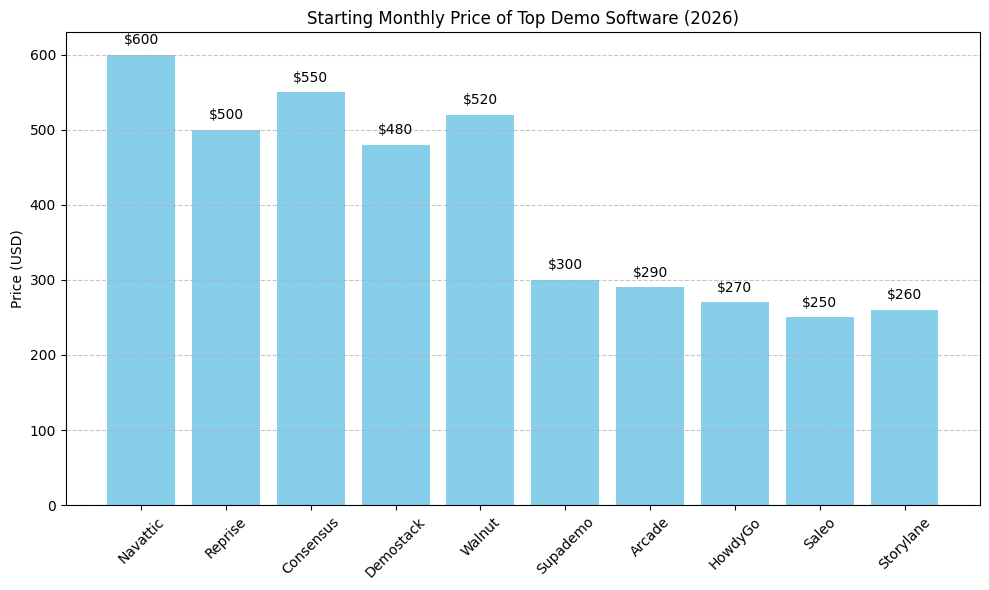
With the increasing pressure on companies to shorten the path to purchase and deliver more personalized product experiences, the right demo software is no longer a luxury—it is a strategic necessity. As we step deeper into the era of experience-driven buying and self-serve digital funnels, the ability to showcase products through dynamic, AI-enhanced, and secure demo platforms will be a key differentiator for business success. This guide aims to serve as a comprehensive resource for anyone looking to stay ahead in the highly competitive software sales and marketing landscape of 2026.
Before we venture further into this article, we would like to share who we are and what we do.
About 9cv9
9cv9 is a business tech startup based in Singapore and Asia, with a strong presence all over the world.
With over nine years of startup and business experience, and being highly involved in connecting with thousands of companies and startups, the 9cv9 team has listed some important learning points in this overview of the Top 10 Best Demo Software To Try in 2026.
If you like to get your company listed in our top B2B software reviews, check out our world-class 9cv9 Media and PR service and pricing plans here.
Top 10 Best Demo Software To Try in 2026
1. Storylane
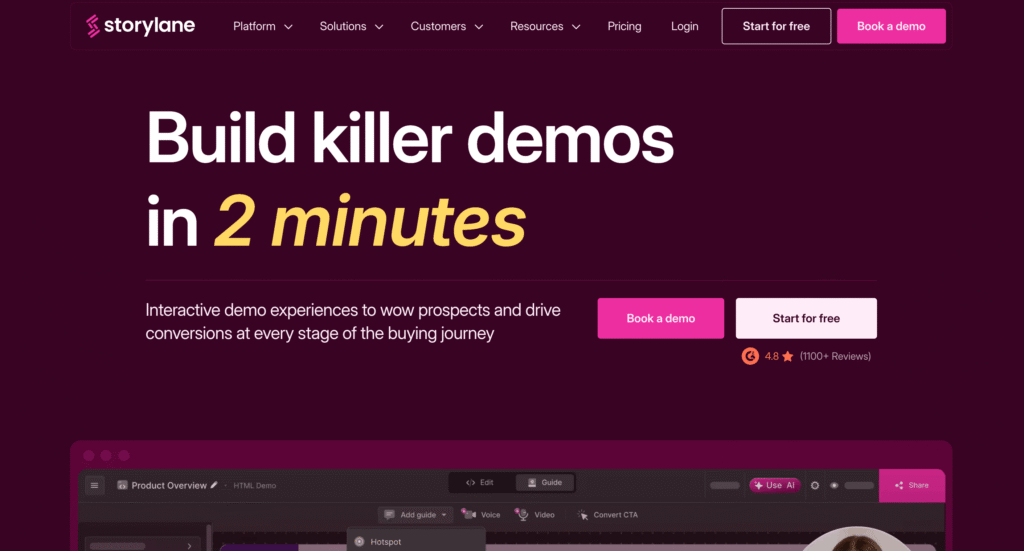
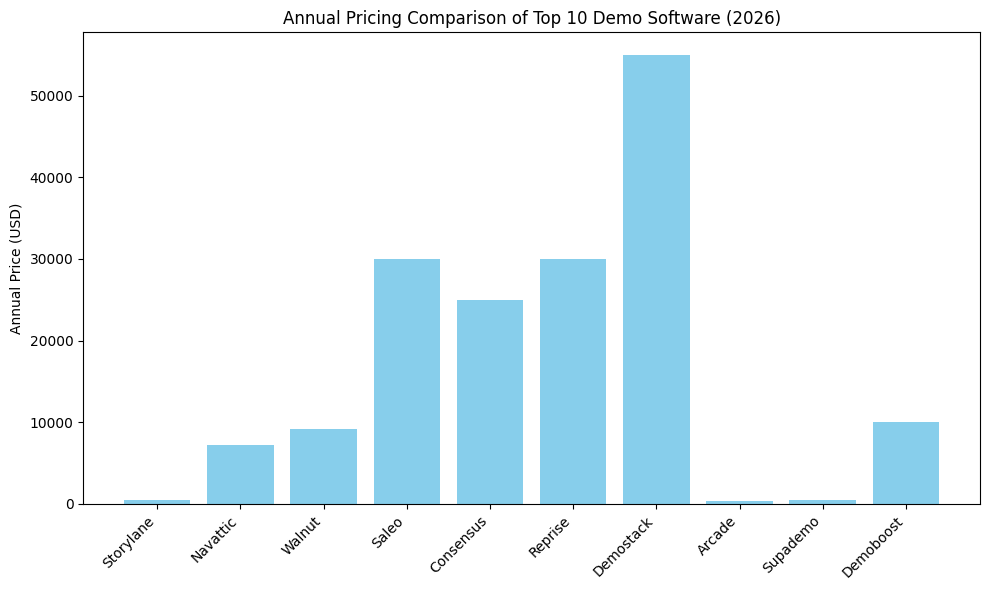
Storylane stands out as one of the most widely adopted demo software platforms in the global market as of 2026. Recognized for its user-friendly approach and broad applicability across sales, product, and marketing functions, Storylane is particularly popular among go-to-market teams that need a streamlined way to present their product’s capabilities. It has emerged as a top-tier choice for creating interactive, no-code product demonstrations that engage and convert users more effectively.
Core Functional Features of Storylane
Storylane is designed to simplify the demo creation process, enabling teams to create polished product walkthroughs without writing a single line of code. Below is a summary of the platform’s technical strengths and standout capabilities:
Key Functional Capabilities
| Feature Name | Description |
|---|---|
| Drag-and-Drop Editor | Simple interface that allows users to build demos without coding |
| HTML, Video, Screenshot Support | Offers multiple demo formats to cater to different content preferences |
| AI-Powered Localization | Automatically translates content into 65+ languages and adds voiceovers |
| Account Reveal Technology | Identifies anonymous website visitors to enhance lead capture |
| Collaboration Features | Allows cross-functional teams to co-build, edit, and manage demos easily |
These capabilities are critical for organizations that prioritize scalability, localization, and customer engagement through personalized product experiences.
Pricing Structure and Subscription Options
Storylane offers flexible pricing tiers that cater to businesses of different sizes and stages. From startups to enterprise-grade operations, the pricing is designed to support various usage needs.
Storylane Pricing and Tiers
| Plan Name | Monthly Cost | Key Features Included |
|---|---|---|
| Free | $0 | One published demo, access to basic editing tools |
| Starter | $40 | Access for individual users, advanced customization options |
| Growth | $500 | HTML editing, 5 user seats, expanded analytics, custom branding |
| Premium | $1,200 | Buyer Hub access, 10 user seats, advanced integrations, full feature suite |
This tiered system allows companies to start small and scale up as their demo needs become more sophisticated.
Integration Ecosystem
Storylane’s strength is further amplified by its seamless integration with widely used business platforms, making it a versatile part of any tech stack.
Top Supported Integrations
| Tool Name | Integration Purpose |
|---|---|
| Salesforce | Sync lead engagement and demo data to CRM |
| HubSpot | Enrich marketing workflows and campaigns with demo insights |
| Google Analytics | Track demo performance and visitor behavior |
| Slack | Enable internal demo collaboration and feedback sharing |
These integrations enhance cross-departmental alignment and allow for real-time performance tracking.
User Review Insights
Feedback from users has shed light on both the platform’s strengths and areas for future growth. While some users acknowledge that Storylane is still evolving, many praise its strong usability and value in simplifying demo creation.
Selected User Review Commentary
| User Feedback Highlights |
|---|
| “The platform is not yet fully mature but offers powerful no-code demo creation tools.” — G2 Review |
| “Storylane helped our teams create engaging product demos that clearly show the benefits without coding.” |
| “Its ease of use and AI-generated translations make it easy to scale for global teams.” |
These reviews reflect a growing appreciation for the platform’s focus on simplicity, automation, and multi-language support.
Conclusion
Storylane continues to be a benchmark for demo software in 2026, combining ease of use with advanced functionality. Its ability to serve marketing, sales, and product teams with intuitive tools, a flexible pricing model, and robust integrations makes it a highly valuable platform in the competitive demo software market. As businesses seek to enhance product engagement and storytelling, Storylane stands as a top-tier solution driving results without complexity.
2. Navattic
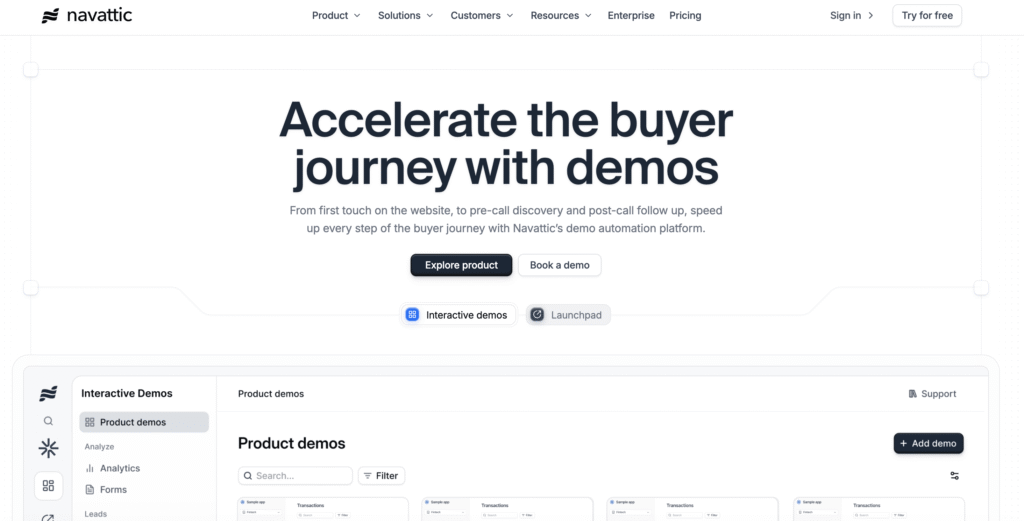
In 2026, Navattic continues to stand out as a top-performing demo software platform, especially for marketing and product teams that require visually accurate, interactive product tours. The platform’s core strength lies in its ability to present software in a way that looks nearly identical to the real thing. This makes it particularly valuable for technical SaaS products and developer-focused tools, where showcasing the exact user interface is essential for building trust with prospects.
Unlike general demo tools, Navattic made early investments in capturing HTML-based product visuals with extremely high fidelity. This commitment to detail allows companies to show potential customers exactly what they can expect from the actual software, improving both engagement and conversion.
Why Navattic Is Ranked Among the World’s Leading Demo Platforms in 2026
Navattic has become a preferred tool in the global interactive demo market because it offers a combination of professional-grade visuals, marketing-friendly features, and advanced analytics. It helps companies generate warmer leads by allowing potential buyers to explore the software themselves before speaking to a sales team.
This self-serve demo approach has become a key part of modern B2B go-to-market strategies, and Navattic is often used in account-based marketing (ABM) programs, lead nurturing, and digital product showcases.
Navattic’s Core Capabilities and Competitive Edge
Navattic is known for delivering a premium experience across demo creation, user engagement, and performance analysis. Its technology is trusted by teams that need demos to reflect the exact look of the product, especially when small visual details impact buying decisions.
Cleanly formatted technical comparison of Navattic’s features:
Navattic Feature Overview
| Feature Category | Description |
|---|---|
| HTML-Based UI Capture | Delivers highly accurate, pixel-perfect interactive product experiences |
| Multi-Branch Demo Paths | Allows complex user flows for various buyer personas or use cases |
| End-to-End Analytics | Provides detailed engagement insights and behavior tracking |
| AI-Assisted Demo Creation | Auto-generates demo drafts by tracking user clicks during setup |
| ABM Integration Support | Integrates deeply with CRMs and CDPs for targeted account-based workflows |
This high level of precision and functionality makes Navattic ideal for teams that want to build complex demos that feel as real as the actual product.
Flexible Pricing for Growing Teams
Navattic offers pricing plans that are structured for professional teams operating on monthly or annual commitments. It provides two main tiers, allowing small startups and large enterprises alike to access the features they need based on their scale and usage.
Navattic Pricing Table (2026)
| Plan Type | Price (Monthly) | Ideal Users |
|---|---|---|
| Base Plan | $600/month | Small marketing teams needing standard interactive demos |
| Growth Plan | $1,200/month | Mid-size to enterprise teams running advanced ABM programs |
Both plans include access to customer success support, with no separate fees, ensuring consistent guidance during demo setup and execution.
Seamless Integration with Marketing and Sales Tools
One of Navattic’s biggest strengths is its strong integration ecosystem. It connects easily with tools used by marketing, sales, and customer operations teams. This allows demo performance data to be shared across systems for improved lead tracking and personalized follow-up.
Navattic Integration Compatibility Matrix
| Tool Category | Supported Platforms | Value Delivered |
|---|---|---|
| CRM Systems | Salesforce | Syncs demo engagement to deals and accounts |
| Customer Data Platforms | Segment | Enables advanced behavioral tracking and personalization |
| Marketing Automation | HubSpot Marketing Hub | Automates lead nurturing and ABM workflows |
These integrations support a smooth buyer journey from the first website visit to deal closure by enabling marketing and sales teams to take action based on real-time demo interactions.
Real User Experience and Verified Feedback
Navattic receives high praise from users for its powerful analytics, rich feature set, and ability to create engaging product tours. It is commonly used daily by professionals who rely on it to support their pipeline and lead generation goals.
However, users have also pointed out some areas where the platform could be improved. As demo libraries grow, managing tours can become complex. Additionally, some users describe the editing process as slower compared to newer, lightweight alternatives.
Navattic User Review Summary Table
| Review Aspect | Positive Feedback Highlights | Areas for Improvement |
|---|---|---|
| Demo Quality | High accuracy; excellent for technical product showcases | Editing may feel clunky at times |
| Analytics & Tracking | Detailed user engagement tracking | Can be overwhelming for smaller teams |
| Customer Support | Included CSM support is highly valued | Users want faster tour management at scale |
| Conversion Impact | Great for generating warm leads earlier in the funnel | No major complaints in this area |
Ideal Use Cases for Navattic in 2026
Navattic is not a one-size-fits-all demo tool. It works best for companies that need to present technical software with high visual detail, and for teams that want strong analytics to measure demo engagement. It’s a top choice for modern, digitally mature organizations running structured go-to-market campaigns.
Navattic is best suited for:
- SaaS companies targeting technical buyers
- ABM-focused marketing teams
- Mid-size to enterprise businesses
- Product marketers building multi-step guided tours
- Revenue teams that value advanced reporting and lead qualification
Conclusion: Navattic’s Continued Leadership in the Demo Software Market
In 2026, Navattic remains one of the most advanced and reliable interactive demo platforms available to global businesses. Its investment in high-fidelity HTML capture, AI-powered demo creation, and seamless integration with marketing and sales stacks makes it an essential solution for teams that want to engage modern buyers effectively.
By allowing prospects to explore a near-real version of the product and capturing detailed interaction data, Navattic helps companies shorten sales cycles, improve lead quality, and scale their go-to-market strategy. Its premium pricing reflects its robust capabilities, making it a worthwhile choice for organizations seeking best-in-class demo solutions in 2026.
3. Walnut
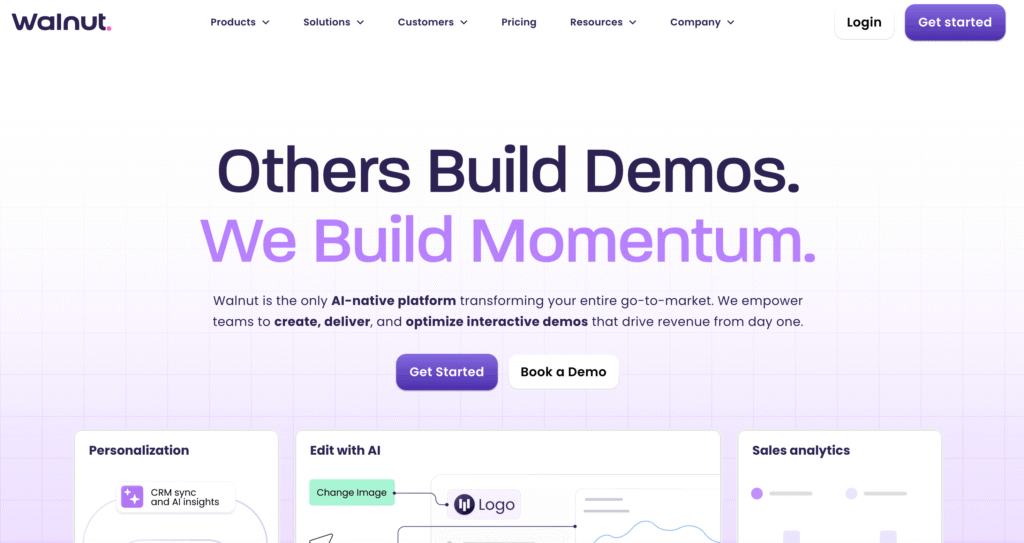
Walnut has gained strong recognition in 2026 as one of the best demo software tools tailored for sales-led organizations. Its platform is purpose-built to help sales teams personalize product demonstrations quickly and effectively, especially when working with large volumes of prospects. Walnut enables sales representatives to present customized product walkthroughs without relying heavily on design or technical support, saving valuable time while enhancing buyer engagement.
The platform’s standout ability lies in its automation features, such as dynamic personalization and enterprise-grade demo management. This makes Walnut a preferred choice for companies that need high-performing, scalable demo libraries that can be updated and personalized with ease.
Key Features and Unique Advantages of Walnut
Walnut’s software is designed to help sales teams deliver consistent, interactive demo experiences while keeping up with fast-changing product environments. Unlike generic tools, Walnut’s features prioritize personalization, real-time CRM data usage, and simplified demo maintenance.
Walnut Feature Capability Matrix
| Capability Name | Description | Strategic Benefit for Sales Teams |
|---|---|---|
| AI Mode™ | Automatically personalizes demos using sales data | Saves time and improves relevance for each prospect |
| EditsAI | Uses AI to suggest and apply updates to reflect product changes | Reduces the need for manual demo editing |
| Global Edits Function | Allows bulk updates across all demos in the library | Ensures consistency in branding and messaging |
| Real-Time CRM Data Personalization | Integrates with live CRM fields to customize demo content per lead or account | Boosts buyer engagement and lead-to-opportunity conversion |
| Sales-Focused Templates | Ready-to-use demo structures for different industries or use cases | Accelerates demo deployment across account types |
Walnut empowers account executives and sales engineers to focus more on closing deals rather than building demos from scratch every time. Its automation-first approach minimizes repetitive work while ensuring demos remain visually aligned with the evolving product interface.
Pricing Plans and Subscription Structure
Walnut targets mid to large-sized businesses with a premium pricing structure that reflects its advanced feature set and enterprise capabilities. It offers different tiers to accommodate varied levels of demo complexity and customization needs.
Walnut Pricing Table (2026)
| Plan Tier | Annual Price | Intended Users | Key Inclusions |
|---|---|---|---|
| Lite | $9,200/year | Small enterprise sales teams | Access to core personalization features and basic analytics |
| Pro | $20,000/year | Mid-sized teams scaling personalization | Full AI Mode™, advanced integrations, EditsAI, and analytics reporting |
| Enterprise | Custom Quote | Large-scale sales organizations | Custom integrations, API access, dedicated support, expanded seats |
The tiered pricing model ensures that companies can scale their demo creation strategy as they grow, with higher tiers offering more automation and integration capabilities.
Integration Ecosystem for Sales Enablement
Walnut connects deeply with leading sales tools to improve the overall performance and efficiency of sales cycles. By integrating into the broader sales tech stack, Walnut enables users to track demo performance and personalize demo content in real time.
Walnut Sales Tech Integrations
| Integration Platform | Integration Functionality | Business Value |
|---|---|---|
| Salesforce | Syncs demo views and interactions into CRM records | Helps track demo-influenced pipeline progression |
| Outreach | Aligns demo sharing with outbound sales workflows | Improves timing and delivery of demo experiences |
| Salesloft | Embeds personalized demos into cadence and sales engagement sequences | Enhances sales outreach conversion rates |
These integrations allow sales leaders to analyze demo performance data and use those insights to adjust their pitches, target high-interest leads, and improve team productivity.
User Review Summary and Practical Feedback
Walnut users have shared honest insights about their experiences with the platform. While some initial setup challenges were noted, especially in complex software environments, the overall impact of Walnut on demo conversion and buyer engagement has been overwhelmingly positive.
User Experience Feedback Table
| Review Element | User Feedback Summary | Insights for Potential Buyers |
|---|---|---|
| Setup Complexity | Difficult initial configuration for applications with modular UI components | Requires onboarding support for advanced use cases |
| Real-Time Personalization | Enabled use case-specific demos tailored to each prospect | Strong fit for ABM and solution-based selling |
| Conversion Metrics | 67% average demo completion rate and 32% increase in conversion over static demos | Demonstrates quantifiable sales impact |
| Editing and Updates | Global Edits and EditsAI simplify updates across large demo libraries | Ideal for scaling sales demo operations |
| Daily Usage | Used as a core sales tool for every pitch | High adoption across enterprise sales teams |
These reviews confirm that once the system is in place, Walnut becomes an essential part of the daily sales toolkit. Its personalization and automation features directly improve sales efficiency and close rates.
Why Walnut Is Recognized as One of the Best Demo Software Platforms in 2026
Walnut earns its place among the world’s top demo software tools in 2026 due to its specialization in sales-led personalization, automation, and ease of demo scaling. It is not just a tool to showcase product features—it’s a revenue-enablement solution that empowers sales professionals to close deals faster and more effectively.
Walnut is highly suitable for:
- Enterprise-level sales teams handling multiple account-based campaigns
- Companies seeking to maintain consistent messaging across large demo libraries
- Sales leaders wanting deeper insights into buyer engagement behavior
- Product teams aiming to keep demos aligned with frequent feature updates
By focusing on the challenges faced by sales-led organizations, Walnut offers an advanced, AI-supported demo platform that turns product walkthroughs into powerful sales assets.
4. Saleo
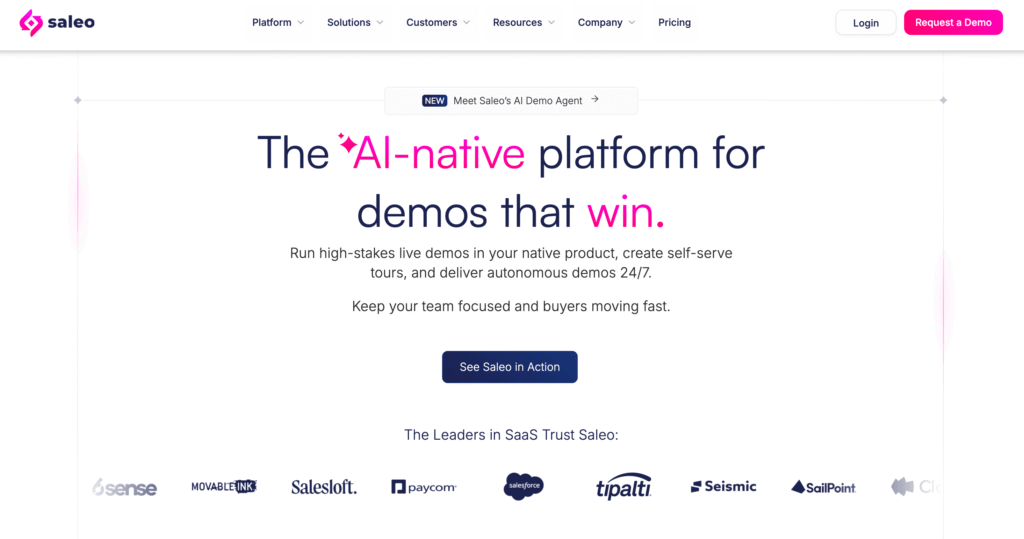
Saleo stands out in 2026 as one of the most innovative demo software platforms tailored specifically for high-stakes enterprise sales. Unlike other demo tools that rely on simulations or pre-recorded walkthroughs, Saleo delivers real-time overlays on live software environments. This unique approach enables sales teams to present the actual product with customized data—such as client-specific graphs, logos, and metrics—without compromising sensitive information or infrastructure stability.
Its real-time personalization capabilities are especially valuable in industries with stringent data privacy regulations or highly complex backends that cannot be replicated through static demos. Saleo has proven to be a premium solution for companies seeking to win enterprise accounts through authentic, personalized, and secure demonstrations.
Key Features and Advantages of Saleo’s Live Overlay Technology
Saleo offers a live demo experience that is deeply connected to the actual product environment. This means prospects are not seeing a pre-built replica but rather the real interface with personalized elements adapted to their business context. This significantly enhances product credibility during the sales cycle.
Saleo Feature and Capabilities Table
| Core Capability | Description | Value for Sales and Enterprise Teams |
|---|---|---|
| Real-Time Data Injection | Injects names, graphs, logos, and metrics directly into the live software | Demonstrates the product in a prospect-specific context |
| Chrome Extension (Capture Mode) | Enables overlays on existing UI without requiring demo rebuilds | Saves time and allows fast personalization during live calls |
| No Simulation Needed | Runs directly on production environments | Ensures full product authenticity and functionality |
| Multi-Stage Demo Modes | Creation, Live, and Capture modes support various use cases | Supports early prospecting to late-stage deal closures |
| Safe Display of Sensitive Products | Protects real client data while showing working software | Complies with privacy rules and secures enterprise trust |
These features make Saleo an ideal solution for companies that cannot afford to use dummy environments or face security challenges in replicating their platform outside production settings.
Enterprise Pricing Structure for Saleo in 2026
Saleo positions itself in the high-end enterprise market with a pricing model that reflects its advanced infrastructure integration and unique capabilities. The investment required makes it most suitable for companies with complex demo requirements or those selling high-value software products.
Saleo Pricing Breakdown
| Pricing Tier | Annual Cost Range | Use Case Fit | Key Inclusions |
|---|---|---|---|
| Starter Enterprise | $30,000 to $40,000/year | Mid-size teams requiring live overlays | Basic overlays, data injection, Chrome extension |
| Full Enterprise Suite | $100,000+/year | Large sales orgs with complex backend and live deal requirements | Full integration support, advanced API customization, multi-product demos |
This pricing reflects not only the platform access but also the technical implementation services required to connect Saleo with enterprise systems, data warehouses, and CRM platforms.
Integration Ecosystem and Compatibility with Enterprise Tools
Saleo integrates with a variety of platforms to allow seamless real-time demo experiences across different parts of the sales funnel. With deep support for Salesforce’s full ecosystem and other sales enablement platforms, it fits well into modern enterprise tech stacks.
Saleo Integration Matrix
| Integrated Platform | Integration Purpose | Strategic Advantage |
|---|---|---|
| Salesforce (All Clouds) | Connects sales, service, revenue, and commerce environments for live demos | Enables end-to-end personalization across client-facing platforms |
| Seismic | Syncs with content enablement for customized pitch materials | Aligns product story with sales assets and documentation |
| Custom API Connections | Supports bespoke internal system integration | Makes overlays usable across proprietary and legacy software systems |
These integrations are critical for enterprise teams that want to use live product interfaces in their demos while still maintaining control over the story being told to each prospect.
User Review Insights and Performance Feedback
Verified users have reported positive outcomes from using Saleo in their sales strategy. While some challenges were identified—particularly around setup times and manual configurations—the platform’s ability to deliver authentic product demos has proven to be a powerful differentiator in competitive deal cycles.
User Feedback Summary Table
| Review Category | User Experience Insights | Business Implications |
|---|---|---|
| Product Authenticity | Allows teams to show real products without dummy data | Enhances prospect trust and speeds up decision-making |
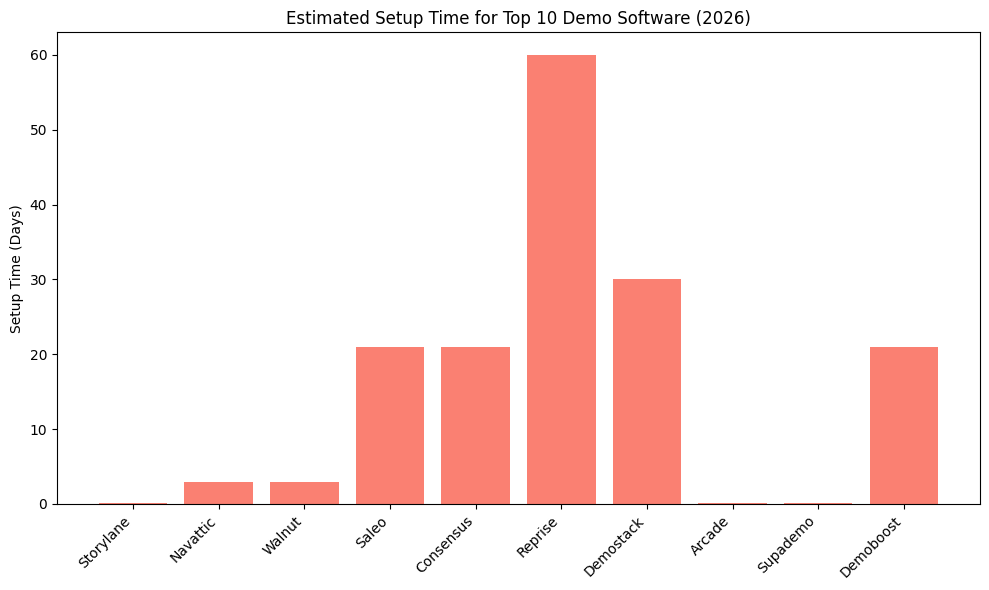
| Setup and Implementation | Complex to implement; can take up to 6+ months for full setup | Requires IT resources and strong planning for onboarding |
| Feature Enablement | Certain functions require manual activation by the Saleo team | Less suitable for teams needing high flexibility or quick self-service |
| Demo Engagement Quality | Excellent for live sales calls and high-touch proof-of-concept stages | Ideal for late-stage deals and enterprise-level buyer discussions |
| Customization Speed | Fast personalization during live meetings via Chrome extension | Enables dynamic storytelling on the fly |
Feedback emphasizes that while the tool is complex, its benefits are substantial for companies where each demo opportunity represents a high-value deal or must comply with strict data governance.
Why Saleo Is a Top 10 Demo Software Tool Globally in 2026
Saleo’s unique capability to enhance live software environments with custom overlays—without simulations—places it firmly among the top demo software solutions in 2026. Its specialized focus on live product environments, secure data handling, and advanced personalization tools gives enterprise sales teams a compelling edge in complex deal scenarios.
Saleo is most suitable for:
- Large B2B enterprises selling highly configurable or regulated software
- Companies operating in finance, health tech, or security-sensitive verticals
- Sales teams that prioritize live selling over pre-recorded demo presentations
- Organizations needing full control and realism in their product demonstration experience
By bridging the gap between product authenticity and real-time customization, Saleo represents a new category of high-trust, high-impact demo software for enterprise go-to-market success.
5. Consensus
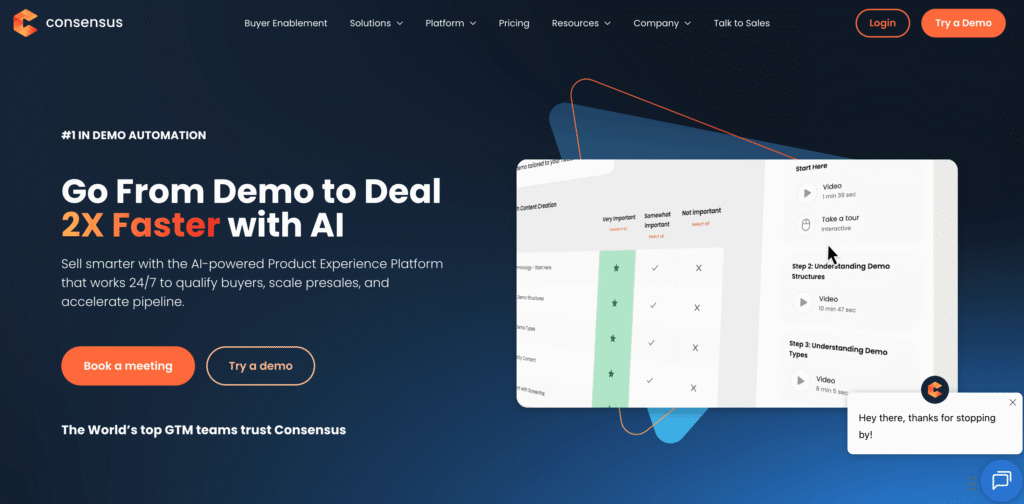
Consensus has become one of the most impactful demo software solutions globally in 2026, particularly for companies focused on automating the early stages of the sales funnel. It is recognized as a pioneer in demo automation, enabling prospects to explore personalized demos based on their unique interests—without requiring immediate involvement from a sales representative. This approach not only qualifies leads more efficiently but also educates buyers in a scalable and structured way.
Consensus is especially effective for businesses managing large volumes of prospects and looking to reduce manual demo delivery time. By transforming the demo experience into an interactive, self-guided journey, Consensus helps sales and marketing teams deliver more relevant experiences to a wider audience at the top of the funnel.
Key Features and Functional Capabilities of Consensus
The platform offers a powerful mix of automation, personalization, analytics, and alignment tools, all designed to improve how software vendors connect with multiple stakeholders in a deal. Its branching logic demo model and AI search features make it easier for prospects to explore product capabilities in their own time.
Consensus Feature Capability Table
| Feature Name | Description | Strategic Value for GTM Teams |
|---|---|---|
| Branching Video Demos | Prospects choose their roles/interests and receive a tailored demo experience | Increases demo relevance and engagement without live intervention |
| Demolytics® | Tracks who watched what, when, and how deeply | Helps map buyer intent and prioritize follow-up |
| BuyerBoard | Visual tool that highlights buyer committee involvement and alignment | Supports multi-stakeholder decision-making and internal championing |
| AI Searchable Demo Library | Prospects can search demo content to self-educate | Reduces dependency on live sales engagement early in the cycle |
| Automated Demo Distribution | Demos are sent and tracked automatically at scale | Frees up sales engineers and reduces time-to-first-conversation |
These capabilities make Consensus an ideal fit for companies selling complex software solutions where multiple stakeholders are involved in the buying decision.
Pricing Structure and Subscription Options
While Consensus does not publicly display its full pricing tiers, estimates from users and industry sources offer insights into its cost range. Its structure accommodates both small teams and large enterprise deployments, with tiered feature access.
Consensus Pricing Overview (Estimated 2026)
| Plan Tier | Estimated Monthly/Annual Price | Intended Team Size | Key Features Included |
|---|---|---|---|
| Starter | $600/month | Small teams or startup GTM teams | Basic demo automation and analytics |
| Pro | $1,250/month | Mid-size sales or pre-sales teams | Includes Demolytics®, integrations, and BuyerBoard |
| Enterprise | $25,000+/year | Large software enterprises | Custom onboarding, deeper integrations, advanced buyer insights |
This pricing allows growing organizations to scale their demo efforts in line with sales maturity and product complexity.
Integration Ecosystem and Technology Compatibility
Consensus integrates with a broad range of tools across the sales, enablement, and customer success landscape. This allows demo engagement data to be directly connected to revenue operations, enabling a smoother buyer journey and stronger internal collaboration.
Consensus Integration Compatibility Matrix
| Integration Platform | Integration Functionality | Business Impact |
|---|---|---|
| Highspot | Syncs demo assets with sales enablement platform | Helps ensure consistent messaging and content usage |
| Gong | Links demo data with conversation intelligence and sales coaching tools | Enables performance analysis and rep training |
| Gainsight | Connects demo insights with customer success systems | Supports post-sale engagement and success planning |
| Salesforce, HubSpot, others | CRMs that map demo views and stakeholder behavior into deal stages | Allows for precise forecasting and pipeline management |
With over 25 integrations, Consensus ensures that sales, marketing, and success teams can operate with shared visibility across the buyer journey.
User Review Insights and Real-World Impact
Customer feedback confirms that Consensus has significantly improved demo delivery efficiency and buyer engagement. It’s praised for reducing repetitive sales engineering work and increasing sales cycle velocity. However, there are also constructive comments regarding technical limitations in some of its newest modules.
Consensus User Feedback Table
| Review Area | User Insight Summary | Consideration for Buyers |
|---|---|---|
| Self-Education Experience | Buyers appreciate personalized, role-based demos | Supports product-led buying and informed decision-making |
| Sales Cycle Efficiency | Sales cycles shortened by up to 30% with automated top-of-funnel demos | Great fit for B2B SaaS and long-cycle enterprise deals |
| Stakeholder Visibility | BuyerBoard adds transparency into the buying group’s engagement | Ideal for multi-contact opportunities and ABM strategies |
| Implementation and Usability | Some AI-based features still developing; SCIM integration not yet available | Important to evaluate IT compatibility for enterprise-scale usage |
| Time Saved for Sales Engineers | Reduces manual demo efforts by hours per week | High ROI for companies with overloaded solution consultant teams |
These reviews reinforce Consensus’s role as a transformative platform in how organizations scale product storytelling to diverse buyers.
Why Consensus Is One of the Top Demo Software Tools in the World in 2026
Consensus has secured its position among the top demo software platforms by redefining how early-stage demos are delivered. Its approach—rooted in automation, personalization, and buyer intent analysis—aligns perfectly with the demands of modern B2B sales processes.
Consensus is most suitable for:
- B2B software companies targeting mid-market and enterprise buyers
- GTM teams looking to reduce manual demo delivery and scale lead qualification
- Marketing and pre-sales teams focused on top-of-funnel automation and buyer enablement
- Revenue organizations that require deep visibility into demo influence on sales pipeline
In a landscape where buyers prefer to self-educate and teams need to operate with greater efficiency, Consensus offers a compelling solution that brings both automation and buyer intelligence into one unified platform. Its measurable impact on conversion rates and sales velocity confirms its position as a must-have tool in any modern sales stack.
6. Reprise
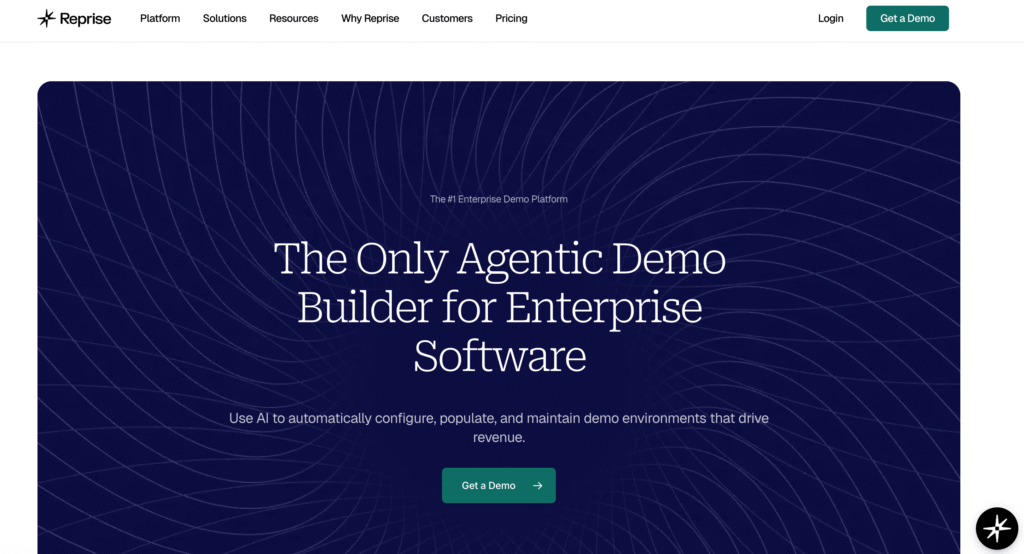
Reprise has established itself in 2026 as one of the most advanced and comprehensive demo software solutions for enterprise organizations. Designed to serve the needs of large pre-sales and solution engineering (SE) teams, Reprise offers a robust suite of tools that allows companies to create versatile and realistic product demonstrations with varying degrees of control, complexity, and customization.
What sets Reprise apart from many competitors in the demo software landscape is its three-part offering—Replay, Replicate, and Reveal. Together, these modules provide flexibility for screen capture-based demos, full application replicas, and live overlay experiences. This versatility makes Reprise an ideal solution for large businesses that require secure, scalable, and dynamic demo environments for both internal enablement and customer-facing engagements.
Breakdown of Reprise’s Three Core Products
Each product within Reprise serves a different need in the demo creation and delivery process, enabling companies to build demos for various use cases—from live selling and product marketing to onboarding and training.
Reprise Product Capability Matrix
| Product Name | Functionality Description | Use Case Scenarios |
|---|---|---|
| Replay | Captures screens to create lightweight video-style demos | Quick product overviews, sales enablement, marketing campaigns |
| Replicate | Creates a full working clone of the software product | Interactive sandbox for hands-on experience, POCs, training |
| Reveal | Adds personalized overlays to live production environments | Real-time personalization during live demos or client presentations |
The ability to use all three in combination or independently gives SE teams the power to deliver the right type of product story depending on audience, context, and sales stage.
Technical Strengths and Customization Capabilities
Reprise stands out in 2026 for its technical depth and customization potential. It is currently one of the few platforms that allow data injection into both production and self-contained demo environments—giving teams complete control over the demo journey. This is especially beneficial for enterprise-grade platforms that need to preserve security while showcasing advanced functionality in a risk-free setting.
Technical Features Overview
| Feature | Description | Enterprise Value |
|---|---|---|
| Data Injection Engine | Personalizes data fields across cloned or live environments | Enables dynamic and prospect-specific demo presentations |
| Multi-Mode Demo Creation | Supports both static capture and interactive cloning | Provides flexibility based on complexity and demo goals |
| Enterprise-Grade Security | Built with advanced encryption and compliance support | Suitable for regulated industries and large-scale enterprises |
| Customization via Code | Allows for deep customization using engineering resources | Highly adaptable to niche business processes and complex product flows |
Reprise is built for enterprise technical teams that need more than just drag-and-drop demos—it supports API connections, sandbox management, and backend-controlled demo experiences.
Pricing Structure and Enterprise Investment
Reprise’s pricing reflects its enterprise positioning, with a focus on scalability, control, and technical depth. The solution is considered a significant investment, especially when deployed across multiple business units or international teams.
Reprise Pricing Tiers and Cost Matrix
| Tier Type | Estimated Cost | Audience Fit | Key Inclusions |
|---|---|---|---|
| Starter Enterprise | $2,500/month or $30,000/year | Midsize sales teams | Access to one module (typically Replay), limited integrations |
| Custom Enterprise | $15,000–$50,000 for implementation | Large or global SE teams | Multi-module access, training, onboarding, custom dev support |
Due to its customization requirements and technical nature, most companies invest in professional services during onboarding, making it a tool best suited for businesses with available IT or SE capacity.
System Integrations and Platform Compatibility
Reprise integrates seamlessly with widely used CRM and marketing systems, ensuring smooth tracking, content delivery, and workflow synchronization across teams. These integrations help demo usage and performance data flow into existing revenue operations.
Reprise Integration Ecosystem Table
| Platform | Integration Functionality | Benefit for Enterprises |
|---|---|---|
| Salesforce | Syncs demo interactions and lead data with CRM records | Improves forecasting and lead conversion analysis |
| Marketing Automation | Works with major platforms like Marketo, Pardot, HubSpot | Enhances nurturing campaigns with demo-based engagement data |
| Custom API Support | Allows deep technical integrations for internal tools | Supports tailored deployment across complex enterprise systems |
These integrations strengthen the impact of Reprise demos across the entire customer lifecycle—from initial outreach to post-sale adoption.
User Feedback and Review Highlights
Reprise has received strong feedback from sales engineers and pre-sales professionals for its versatility, scalability, and role in improving buyer engagement. Some initial adoption challenges were noted—especially around the platform’s learning curve and mobile responsiveness—but the long-term impact has been largely positive.
User Experience Summary Table
| Review Focus Area | Key Takeaways from Users | Strategic Consideration |
|---|---|---|
| Enablement at Scale | More team members can confidently deliver product demonstrations | Drives consistent messaging at conferences and client meetings |
| Learning Curve | Steep for beginners, especially with technical setups and configurations | Requires admin-level onboarding and documentation |
| Demo Performance | Occasionally lags with larger environments or high complexity setups | Best used with performance monitoring and staged load testing |
| Mobile Optimization | Still improving on mobile device responsiveness | Desktop-first design suits most enterprise use cases |
| Sales Engagement Impact | Increased conversions and better customer conversations during sales events | Demonstrates strong ROI through product storytelling |
These insights suggest that Reprise is a powerful solution for teams that are willing to invest in training and customization to unlock the platform’s full potential.
Why Reprise Is Among the Best Demo Software Platforms in the World in 2026
Reprise remains one of the top demo platforms in the world in 2026 due to its unmatched ability to handle complex enterprise requirements. Its modular product structure, deep customization options, and robust security framework position it as a go-to choice for companies that want control, flexibility, and technical precision.
Reprise is most suitable for:
- Large-scale SaaS companies with global or regional sales engineering teams
- Enterprises needing both live and sandbox demos across product lines
- Businesses operating in regulated industries that demand strict data control
- GTM teams requiring demo variety, from marketing snapshots to deep technical walkthroughs
By combining flexibility with enterprise-level customization, Reprise empowers companies to create impactful demo experiences that resonate with buyers—regardless of industry, product complexity, or deal size.
7. Demostack
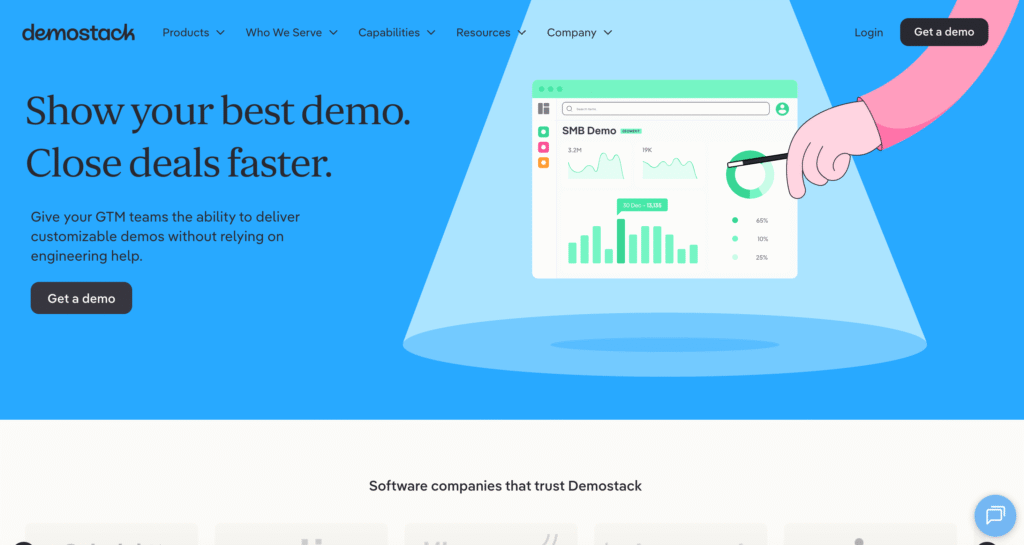
Demostack has established itself in 2026 as a strategic demo software solution built to support large-scale go-to-market (GTM) teams. Designed to operate as a centralized hub for managing product demos, Demostack empowers sales and marketing teams to share fully interactive replicas of their software with leads—especially after live meetings. It captures both the visual interface and product logic to give buyers a close-to-real product experience in a controlled environment.
This ability to create end-to-end demo environments helps GTM teams engage leads more effectively, especially during post-call follow-ups, discovery sessions, and trials. With the increasing complexity of SaaS sales cycles, Demostack offers a way to continue product storytelling even after the live sales meeting ends.
Core Platform Capabilities of Demostack
Demostack sets itself apart with its ability to duplicate not just the front-end visuals but also the back-end logic of a software product. This enables the creation of powerful “free-roam” sandboxes that simulate the real product experience without exposing actual infrastructure or sensitive data.
Demostack Feature Capability Matrix
| Feature Name | Functional Description | Strategic Value for GTM Teams |
|---|---|---|
| Front-End & Back-End Cloning | Duplicates both UI and functional logic of the product | Provides interactive demo experiences close to the actual product |
| AI Data Generator | Automatically fills demo environments with synthetic, role-specific data | Saves manual setup time and creates realistic scenarios |
| Free-Roam Sandboxes | Buyers can explore demos independently and without restriction | Enhances self-service product discovery |
| Real-Time Alerting | Sends alerts when buyers interact with demos after meetings | Enables timely follow-ups and personalized outreach |
| Post-Call Demo Sharing | Allows teams to share live demo links immediately after discovery sessions | Keeps engagement active throughout the sales journey |
This robust functionality positions Demostack as a high-impact tool for companies seeking to keep prospects engaged during the mid-to-late stages of the buying process.
Pricing Structure and Enterprise Investment Considerations
Demostack operates as a premium platform, with its pricing reflecting enterprise-level use cases and advanced cloning capabilities. The pricing model is designed for organizations that need multiple sandboxes, mobile support, and high scalability.
Demostack Pricing Overview (2026)
| Plan Category | Annual Price Estimate | Primary Use Case | Core Inclusions |
|---|---|---|---|
| Standard Plan | $55,000/year (for 10 users) | Core sandbox demo environment | Front-end/back-end cloning, AI data generation, sharing links |
| Sandbox Extension | $75,000/year | Larger teams and more advanced sandbox usage | Enhanced controls, data configuration, multiple demo versions |
| Mobile Demo Support Plan | $100,000/year | Organizations needing mobile-responsive demos | Mobile optimization, cross-device support, advanced analytics |
These investment levels highlight the platform’s focus on high-value accounts, longer sales cycles, and larger GTM teams that require flexibility and infrastructure to support high-volume demo delivery.
Integration Ecosystem and CRM Synchronization
Demostack integrates with a wide range of GTM and CRM platforms, allowing teams to track demo engagement within their existing systems. This creates a seamless workflow from demo generation to lead nurturing and forecasting.
Demostack Integration Table
| Integrated Tool | Integration Role | Business Benefit |
|---|---|---|
| Salesforce | Syncs demo interaction data with account and opportunity records | Improves forecasting, follow-ups, and deal progression visibility |
| HubSpot | Aligns demos with marketing automation workflows | Supports targeted follow-up campaigns and behavioral lead scoring |
| Outreach | Allows personalized demos to be shared within sales sequences | Enhances outbound sales performance and content relevance |
| Custom APIs | Enables advanced connectivity with internal systems | Supports tailored demo workflows and security compliance requirements |
With deep CRM synchronization, Demostack ensures that demo interactions are actionable and measurable across the buyer journey.
User Experience Insights and Performance Feedback
Demostack users have shared mixed but mostly positive reviews regarding its real-world impact. The platform is praised for its ability to maintain buyer engagement after sales calls, but some users point out challenges related to performance, maintenance, and offline support.
Demostack User Feedback Summary
| Review Category | Common User Insights | Implications for Teams |
|---|---|---|
| Buyer Engagement After Calls | Demos shared post-call drive high interaction and lead re-engagement | Ideal for mid-funnel acceleration and deeper education |
| Maintenance Complexity | Demo environments require full recreation when the core product updates | May require ongoing coordination with product teams |
| Performance at Scale | Larger or complex demos can experience slow load times | Teams may need performance monitoring and version control |
| Offline Limitations | Lacks strong offline functionality | Best suited for cloud-connected demo environments |
| Use Case Fit | Great for SDRs and AEs delivering high-level demos | Less ideal for deep technical or developer-level use cases |
This feedback illustrates that Demostack works best when used for guided exploration, mid-funnel engagement, and post-discovery personalization, rather than for deep testing or sandbox development environments.
Why Demostack Is a Top 10 Demo Software Solution Globally in 2026
Demostack earns its place among the top demo software platforms in the world in 2026 due to its unique ability to simulate the full product experience in a shareable, scalable, and interactive format. Its strength lies in keeping sales conversations active even after a meeting ends, enabling revenue teams to drive deeper engagement through high-quality sandboxes.
Demostack is best suited for:
- Mid-to-large SaaS companies with long sales cycles and detailed buyer journeys
- Revenue teams that want to maintain prospect engagement after live calls
- Product marketers and SDRs seeking to offer flexible and visual product experiences
- Sales organizations that require both customization and scalability in sandbox demos
Through its advanced cloning technology, smart data generation, and strong integration ecosystem, Demostack empowers teams to provide buyers with the freedom to explore the product on their own terms—while still tracking engagement and guiding the path to conversion.
8. Arcade
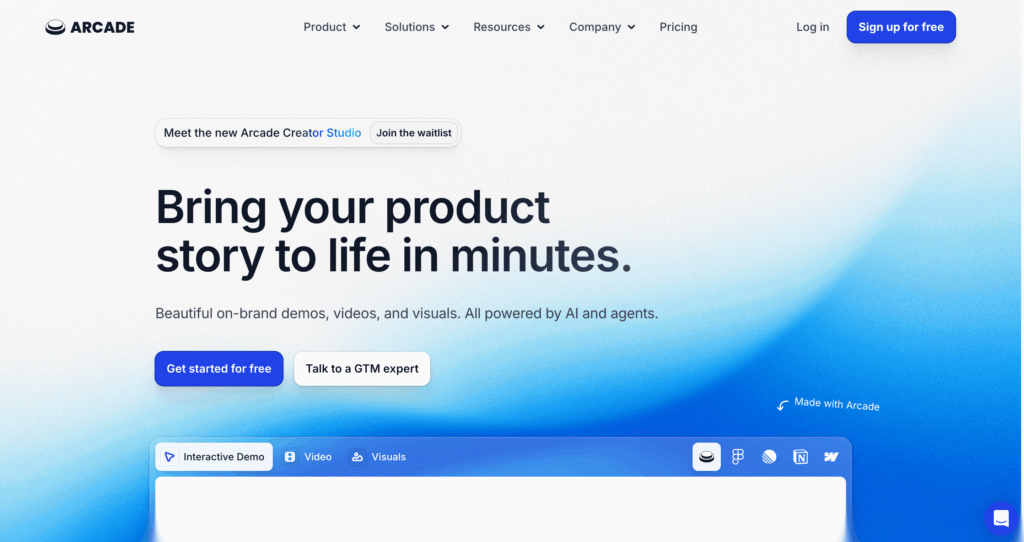
Arcade has become a widely adopted demo solution in 2026, especially for startups, product-led growth (PLG) businesses, and marketing teams seeking fast, simple, and engaging ways to showcase their products. It is best known for enabling the creation of microsite-style product demos that are highly interactive, easy to share across multiple platforms, and tailored for lightweight user engagement.
Unlike heavy enterprise demo platforms, Arcade is focused on speed, simplicity, and affordability. Its demos are ideal for social media distribution, landing pages, email campaigns, and digital advertising where short attention spans demand clear and interactive product overviews. This makes Arcade a go-to solution for companies with lean GTM budgets or early-stage products.
Key Features and Technical Capabilities of Arcade
Arcade offers a range of features designed to help teams create professional-looking product walkthroughs in minutes. Its AI-assisted demo builder removes the need for design or coding knowledge, allowing marketers and product managers to focus on storytelling and visual clarity.
Arcade Functional Capability Table
| Feature Name | Description | Strategic Advantage |
|---|---|---|
| AI-Assisted Authoring | Helps users build demos in under 15 minutes using intelligent step suggestions | Accelerates production speed and simplifies demo creation |
| Microsite-Based Demos | Creates shareable demos that behave like mini product websites | Improves social sharing and engagement rates |
| Export to GIF/Video | Allows users to convert demos into static or animated formats for distribution | Supports omnichannel demo marketing (LinkedIn, Twitter, Email, Ads) |
| No-Code Builder | Enables drag-and-drop demo creation without technical skills | Empowers marketers to own demo workflows |
| Linear Walkthroughs | Step-by-step experiences for product highlights | Simplifies user education and onboarding |
Arcade is particularly effective in use cases that don’t require heavy backend interaction or customization but still demand visual clarity and interactivity for lead generation or brand visibility.
Pricing Structure and Accessibility for Startups and SMBs
Arcade is positioned as one of the most budget-friendly demo software platforms in the market. It provides accessible plans for individuals and small teams while still offering enterprise-level features through custom pricing.
Arcade Pricing Breakdown (2026)
| Plan Name | Monthly Price | Best For | Key Inclusions |
|---|---|---|---|
| Free | $0 | Individual users or early-stage startups | Basic demo creation, limited branding, public sharing |
| Pro | $32/month | Solo marketers or freelancers | Enhanced branding, analytics, export options |
| Growth | $42.50/user/month | SMBs and PLG teams scaling demo creation | Custom domains, deeper analytics, CRM integrations |
| Enterprise | Custom Pricing | Mid-to-large enterprises needing HTML or API support | HTML capture, team permissions, premium integrations, support |
This pricing model makes Arcade an attractive option for companies needing quick turnaround demos without the overhead cost of traditional enterprise tools.
Integration Ecosystem and Workflow Compatibility
Arcade supports popular marketing and CRM platforms, allowing users to incorporate demos into their broader sales and outreach campaigns. While the tool integrates with key platforms, there are still some gaps noted by users, especially in marketing automation.
Arcade Integration Table
| Integrated Tool | Integration Role | Business Benefit |
|---|---|---|
| Amplitude | Tracks engagement analytics for demo interactions | Enhances data-driven product storytelling |
| HubSpot | Syncs demo views and lead data for marketing workflows | Supports lead scoring and email nurturing |
| Salesforce | Pushes engagement data into CRM for pipeline visibility | Improves sales handoff and demo performance tracking |
| Slack | Allows demo link sharing and team notifications | Encourages collaboration across GTM teams |
Despite some limitations—such as lack of integration with Marketo, Zapier, or HubSpot custom forms—Arcade provides enough flexibility for most lean marketing stacks.
User Experience and Review Highlights
Users consistently praise Arcade for its ease of use, clean UI, and ability to quickly turn static content into interactive experiences. However, there are a few trade-offs when dealing with more complex product flows or deeper CRM integration needs.
Arcade User Feedback Matrix
| Experience Area | Summary of User Insights | Relevance for Marketing and Sales Teams |
|---|---|---|
| Demo Creation Speed | Most demos can be built in 10–15 minutes | Great for time-sensitive campaigns and A/B testing |
| Visual Simplicity | Clean, modern design templates make demos feel polished and clickable | Enhances product perception and brand professionalism |
| Content Flexibility | Demos work well across email, social, landing pages, and paid channels | Increases demo reach and versatility |
| Learning Curve | Some users note a mild learning curve for formatting demos effectively | Important for first-time users or non-designers |
| Integration Gaps | Missing connections with some tools (e.g., Zapier, Marketo, HubSpot custom forms) | May limit adoption for automation-heavy marketing teams |
Overall, Arcade provides an excellent experience for marketing-led demo creation, especially when the focus is on speed, engagement, and reach.
Why Arcade Is One of the Best Demo Software Tools in the World in 2026
Arcade continues to be a top choice in 2026 for startups, growth-stage SaaS companies, and modern marketing teams that prioritize fast, social-friendly demo creation. Its AI-assisted workflow, affordable pricing, and ability to scale visually across campaigns make it an efficient solution for today’s digital-first go-to-market strategies.
Arcade is most suitable for:
- Product-led growth companies and marketing teams with tight timelines
- Startups that need affordable yet professional demo creation tools
- B2B brands promoting feature launches through paid or organic channels
- Marketing and sales professionals who want demos integrated into campaigns, emails, and social posts
With its light technical footprint, creative design output, and impressive shareability, Arcade empowers companies to present their products with clarity, speed, and style—making it one of the most agile demo platforms on the global stage in 2026.
9. Supademo
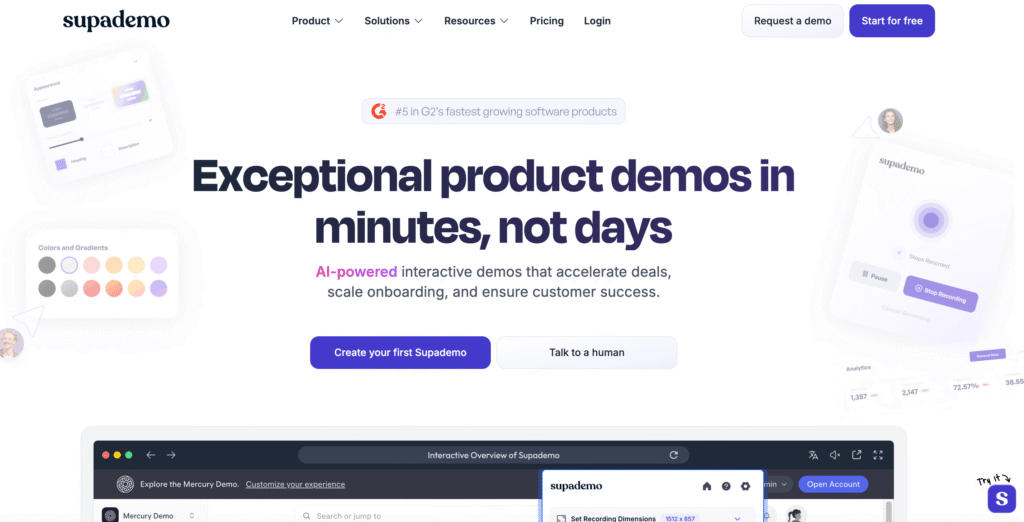
Supademo has emerged in 2026 as one of the most accessible and easy-to-use demo software platforms, particularly for customer success teams, product educators, small startups, and solo founders. It is designed to fill the gap between static written documentation and complex video walkthroughs by offering a clean, step-by-step demo experience that is interactive, multilingual, and visually clear.
The platform’s key strength lies in its ability to make demo creation incredibly simple and fast. With AI voiceover features, branching logic, and demo grouping functionality, Supademo is especially well-suited for onboarding new users, training teams, guiding customers through support issues, and helping lean businesses share knowledge without heavy production requirements.
Core Features and Capabilities That Make Supademo Stand Out
Supademo focuses on usability and rapid deployment of demos. It enables teams to replace outdated PDFs, text-based SOPs, or clunky video content with structured, interactive product guides.
Supademo Feature Capability Table
| Feature Name | Description | Strategic Value for Users |
|---|---|---|
| Conditional Branching | Allows viewers to select different paths within a single demo | Enhances user experience for products with multiple flows |
| AI Voiceovers | Generates voice narration in over 15 languages | Speeds up localization and voice production for international teams |
| Hotspot Auto-Text Generation | AI creates contextual tooltips and guidance on click areas | Saves manual effort in demo content creation |
| Multi-Demo Showcase Collections | Groups multiple demos into a navigable showcase on one page | Ideal for onboarding portals, product tours, and learning libraries |
| Click-Based Navigation | Simplified user interface using click cues instead of complex video timelines | Improves accessibility and comprehension for non-technical users |
These features help Supademo deliver clear, guided product experiences while minimizing the technical overhead for creators.
Pricing Tiers and Affordability for Lean Teams
Supademo is designed to be affordable, especially for small businesses and growing teams. Its pricing plans are transparent and provide entry-level access with scalable upgrades for teams that need advanced features like HTML capture or expanded customization.
Supademo Pricing Table (2026)
| Plan Name | Monthly Price | Target Users | Key Features Included |
|---|---|---|---|
| Pro | $36/creator/month | Solo founders, consultants, educators | Unlimited demos, branding, voiceovers, demo collections |
| Scale | $50/creator/month | SMBs and growing customer success teams | Advanced branching, analytics, language support |
| Growth | ~$350/month | Larger teams or enterprises needing HTML | HTML demo capture, multi-user admin tools, deeper customization options |
This pricing structure makes Supademo a strong fit for non-technical teams seeking value and ease of use without compromising demo quality.
Integration Ecosystem Supporting Cross-Functional Workflows
Supademo integrates with essential tools used by customer success, sales, and marketing teams. These integrations allow users to share, track, and embed demos across various platforms.
Supademo Integration Matrix
| Integrated Platform | Integration Purpose | Benefit to Teams |
|---|---|---|
| HubSpot | Syncs demo views with contact records and marketing workflows | Improves lead tracking and nurtures engagement from shared demos |
| Salesforce | Aligns demo performance data with CRM opportunities | Enhances sales team insights into buyer interactions |
| Slack | Enables internal demo sharing and quick review cycles | Supports collaboration within product and support teams |
| Helpjuice | Embeds demos into knowledge bases and support articles | Helps reduce support ticket volume and improves customer experience |
With these integrations, Supademo becomes more than just a demo tool—it serves as a functional asset in both customer engagement and internal enablement processes.
User Experience Feedback and Productivity Impact
User feedback indicates that Supademo offers a strong combination of simplicity, visual clarity, and AI-driven productivity tools. It allows teams to build interactive demos in just minutes. While some users point out the limitations in transition control and AI text variation, the general sentiment is that Supademo significantly reduces the effort required to deliver engaging walkthroughs.
Supademo User Feedback Summary
| Feedback Area | Key Insights from Users | Strategic Implications |
|---|---|---|
| Creation Speed | Demos can be created in under 10 minutes with AI assistance | Ideal for time-sensitive product updates or support documentation |
| Ease of Use | Requires no technical skills to get started | Accessible to teams with minimal training or content development support |
| Demo Structure Clarity | Step-by-step navigation ensures message consistency | Reduces confusion in product onboarding and self-education |
| Cost Increase Concerns | Jump to the Growth plan seen as steep for some smaller teams | Businesses should evaluate ROI based on HTML and admin needs |
| AI Content Quality | Some AI-generated text can feel repetitive | Manual edits recommended for tone and polish |
Overall, Supademo’s impact lies in its ability to quickly deliver high-clarity product education, especially for smaller teams that need to operate efficiently.
Why Supademo Ranks Among the Top Demo Software Tools Globally in 2026
Supademo continues to gain popularity in 2026 by serving a niche that many large platforms overlook—non-technical creators and customer-facing teams that need simplicity, multilingual support, and speed. With AI voiceovers, demo collections, and no-code design, Supademo offers one of the most practical solutions for fast-growing startups and lean businesses.
Supademo is best suited for:
- Customer success teams looking to replace static guides with interactive visual content
- Solo founders and consultants needing a quick way to demonstrate workflows or tools
- Marketing and onboarding teams creating multilingual product walkthroughs
- Organizations focused on improving support, education, and training with limited resources
Its ease of use, visual clarity, and AI-powered enhancements make Supademo a valuable asset for delivering modern, user-focused demo experiences at scale.
10. Demoboost
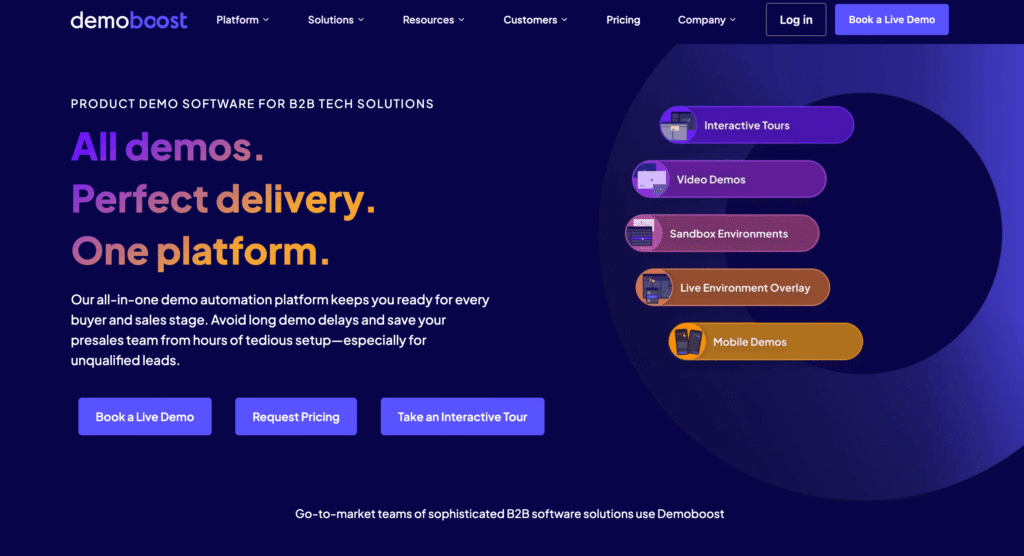
Demoboost has emerged in 2026 as one of the most effective demo platforms for pre-sales, sales engineering, and solution consulting teams. Unlike general-purpose demo tools, Demoboost is designed to support organizations that deal with technically complex products and require tailored, high-impact demonstrations. Its focus on structured storytelling, customized interactivity, and real-time lead engagement analytics makes it a powerful resource for teams working across the sales funnel.
Known for its white-glove onboarding services, Demoboost helps companies turn intricate product features into engaging buyer journeys. From advanced calculators to interactive maps and scenario-based guides, it offers the flexibility needed to serve enterprise buyers, even in industries like SaaS, cybersecurity, or telecom.
Key Features and Functional Strengths of Demoboost
Demoboost offers a suite of tools that help pre-sales teams create tailored demo experiences, align with buyer needs, and qualify leads through in-depth engagement tracking. Its blend of flexibility, customizability, and data analytics makes it ideal for enterprise-grade demo operations.
Demoboost Capability Overview Table
| Feature Name | Description | Business Value for Pre-Sales and SE Teams |
|---|---|---|
| Choose-Your-Own-Journey Menus | Enables interactive demo branching based on user interest or buyer persona | Improves engagement and message relevance |
| Custom Demo Engine | Supports advanced visual content like calculators, maps, and modular walkthroughs | Tailors product presentations to match technical buying needs |
| Deep Lead Analytics | Tracks which steps users interact with and how much time they spend | Helps qualify leads and prioritize follow-up strategies |
| Live Overlays and Narratives | Combines guided storytelling with real-time overlays on product interfaces | Balances automation with authentic product feel |
| White-Glove Onboarding Services | Provides hands-on support for initial setup, demo strategy, and implementation | Reduces time-to-launch for complex enterprise teams |
This set of features ensures that even the most complex B2B products can be effectively showcased, while keeping control over narrative flow and buyer interactions.
Pricing Model and Investment Expectations
Demoboost operates on a quote-based pricing structure, primarily targeting mid-size to enterprise organizations with dedicated sales engineering functions. While exact pricing varies by scope, most customers report annual costs ranging between $10,000 and $20,000.
Demoboost Pricing Summary
| Plan Type | Estimated Annual Cost | Target Audience | Key Inclusions |
|---|---|---|---|
| Custom Enterprise Plan | $10,000–$20,000/year | Pre-sales and solutions consulting teams | Choose-your-path demos, deep analytics, custom onboarding services |
This investment level is well-aligned with the returns it delivers—especially for companies selling complex or high-ticket solutions where high-quality demos are essential to closing deals.
Integrations That Support GTM and Analytics Workflows
Demoboost connects seamlessly with key marketing and analytics platforms to measure demo engagement and buyer behavior. While it lacks deeper integrations with CRMs or AI-based discovery tools, its compatibility with analytics platforms provides solid tracking capabilities.
Demoboost Integration Matrix
| Platform Name | Integration Role | Value Delivered |
|---|---|---|
| Google Analytics | Tracks demo engagement across web traffic and behavioral flows | Allows marketers and sales to measure conversion effectiveness |
| Mixpanel | Provides user-specific interaction insights | Supports detailed product-led and buyer-driven analytics |
| HubSpot | Integrates demo data with marketing automation | Helps align demo interaction with lead nurturing and scoring |
These integrations give teams the visibility needed to understand buyer intent and make data-backed decisions during follow-ups.
User Reviews and Real-World Performance Feedback
Customer feedback shows that Demoboost significantly reduces demo creation time, enhances the productivity of pre-sales professionals, and improves demo delivery across various buyer stages. However, areas like embedded editing features, AI automation, and setup complexity remain points of consideration.
Demoboost User Review Summary Table
| Experience Category | Key Observations from Verified Users | Strategic Implications |
|---|---|---|
| Time-to-Demo Efficiency | Demo creation reduced from weeks to days | Enables SE teams to support more deals and scale resources |
| Sales and CS Enablement | Equips teams with re-usable demo content across sales, support, and CS | Supports cross-functional product education |
| Marketing Applications | Helps showcase product directly on landing pages and websites | Boosts engagement and conversion without engineering involvement |
| Setup Complexity | Initial setup requires guided implementation | Best fit for companies open to onboarding or with technical bandwidth |
| Feature Limitations | Some gaps in embed controls and lack of AI-powered automation | May need manual demo discovery and navigation strategies |
Users appreciate its flexibility and speed, particularly when demos must be customized frequently or adjusted for different use cases and personas.
Why Demoboost Is Ranked Among the Top 10 Demo Software Platforms in 2026
Demoboost earns its place among the best demo software tools in the world in 2026 due to its strong alignment with technical pre-sales operations, narrative-driven demo structures, and ability to support advanced product walkthroughs. It is not just a tool for demo creation—it is a comprehensive platform for turning technical products into powerful sales stories.
Demoboost is best suited for:
- Enterprise and mid-size organizations with pre-sales and SE teams supporting technical buyers
- Companies needing customized, narrative-led demos for industry-specific solutions
- GTM teams seeking analytics to qualify leads based on demo behavior
- Organizations looking for hands-on onboarding support to ramp up fast
Through its guided storytelling capabilities and focus on sales engineering performance, Demoboost enables organizations to deliver high-quality demos that not only inform, but also convert. Its role in bridging the gap between product complexity and buyer understanding makes it a valuable asset in any modern enterprise tech stack.
The Global Rise of Demo Automation Software: Strategic and Economic Outlook for 2026
Demo automation is no longer a niche function—it has become a strategic necessity for SaaS companies and enterprise sales teams worldwide. As digital selling continues to replace traditional face-to-face engagements, the ability to deliver interactive, on-demand, and personalized product demonstrations is reshaping the economics of go-to-market operations. In 2026, demo automation tools play a vital role across marketing, sales, and customer success functions, driven by the combined momentum of Product-Led Growth (PLG) strategies and the maturing sophistication of Account-Based Marketing (ABM).
The Strategic Imperative of Demo Automation in 2026
Modern buyers expect to experience software before they buy it. Demo automation platforms deliver that experience in a structured and measurable way. Unlike static assets—such as PDFs or explainer videos—interactive demos offer real-time product simulations that adapt to user inputs, drive engagement, and influence buying decisions.
Key Strategic Benefits of Demo Automation
| Strategic Area | Impact of Demo Automation | Supporting Insight |
|---|---|---|
| Conversion Optimization | Interactive demos increase web conversion rates to 24.35% vs. 3.05% for static | A 7.9x increase in performance from interactive over traditional formats |
| Sales Cycle Acceleration | Organizations shorten sales cycles by up to 80% | Reduction achieved by eliminating unqualified top-of-funnel demo bookings |
| Resource Allocation Efficiency | SE resources focused on late-stage, high-potential deals | Up to 30% of presales time previously lost to low-quality demo requests eliminated |
| Lifecycle Coverage | Demos now support onboarding, retention, and upselling | Teams using demos for 4+ use cases see 44% stronger ROI |
| PLG and ABM Alignment | Enables both self-service discovery and role-based personalization | Strengthens early buyer engagement and mid-funnel alignment |
This evolution is transforming demos from one-off assets into reusable, scalable, and analytics-driven engines that power every phase of the customer journey.
Macroeconomic Trends and Market Valuation in Demo Automation
As of 2026, the United States remains the most advanced adopter of demo automation technologies, serving as the global hub for innovation and implementation. This surge is occurring in parallel with the expansion of the broader digital marketing technology sector.
US Digital Marketing Software Market Outlook
- Projected size by 2034: $152.6 billion
- Starting point in 2026: Strong growth baseline
- Compound Annual Growth Rate (CAGR): 17.02%
This growth environment positions demo automation software as a critical sub-sector, benefiting from increased investments in customer acquisition, personalization, and automation.
Global Demo Automation Market Forecast (2025–2030)
| Year | Projected Global Market Size (USD Millions) | Estimated CAGR (%) | Segment Maturity Level |
|---|---|---|---|
| 2025 | $500.0 | — | Moderate |
| 2026 | $625.0 | 25.0% | Moderate |
| 2027 | $781.3 | 25.0% | High |
| 2028 | $976.6 | 25.0% | High |
| 2029 | $1,221.0 | 25.0% | Consolidating |
| 2030 | $1,526.0 | 25.0% | Consolidating |
These projections reveal a compound acceleration in the institutional adoption of demo software. As organizations increasingly standardize these tools across global teams, vendors offering demo automation solutions are gaining deeper budget allocations and long-term procurement contracts.
Strategic and Economic Implications for SaaS Providers and Enterprises
The impact of demo automation reaches beyond software performance—it reshapes the unit economics of software sales. By delivering better-qualified leads, shortening deal timelines, and reducing pre-sales resource strain, demo tools directly contribute to pipeline efficiency and revenue growth. Companies deploying demos across onboarding, expansion, and renewals also gain a measurable advantage in customer lifetime value (CLTV) and retention.
Demo Automation Software as a Strategic Asset
| Business Objective | Role of Demo Software | Long-Term Benefit |
|---|---|---|
| Lead Generation | Converts inbound interest through interactive, self-guided experiences | Higher quality leads at a lower cost-per-acquisition (CPA) |
| Sales Enablement | Empowers AEs and SEs with modular, personalized walkthroughs | Faster deal progression and stronger conversion rates |
| Customer Success | Replaces manual onboarding and repeated walkthroughs with scalable guides | Reduces churn and increases time-to-value (TTV) |
| Retention and Expansion | Supports customer education on new features or modules | Strengthens product adoption and cross-sell potential |
In 2026, demo automation is not just a tool—it’s a revenue accelerator and strategic differentiator. Organizations that embrace it across the full customer lifecycle are already reporting measurable gains in engagement, efficiency, and overall return on their go-to-market investment. As more enterprise teams adopt these technologies, the competitive bar will continue to rise. Early movers will enjoy the compound benefits of reduced friction, greater buyer insight, and superior conversion economics.
Technical Foundations of the Best Demo Software in 2026: A Guide to the Three Core Architectural Models
In 2026, the demo software landscape has evolved into a sophisticated ecosystem powered by different technical architectures. Each approach offers specific advantages depending on the stage of the customer journey, the complexity of the product being demonstrated, and the level of interactivity required. Understanding these foundational technologies is critical for go-to-market teams evaluating top-tier demo software platforms.
Today, the industry has standardized around three main technical pillars: HTML/CSS capture, screenshot-based simulation, and live product overlays. Each method supports different goals—from high-fidelity product replicas to rapid content generation and real-time in-app personalization. These architectures form the backbone of leading platforms such as Storylane, Navattic, Saleo, Reprise, and others.
Technical Taxonomy of Demo Architecture in 2026
| Architecture Type | Description | Primary Use Case | Key Strengths | Common Limitations |
|---|---|---|---|---|
| HTML and CSS Capture | Captures the DOM, CSS, and UI elements of a product to create an interactive clone | Mid-to-late funnel demos and product tours | Pixel-perfect accuracy, dynamic interactivity, high realism | Requires setup expertise, impacted by major product UI changes |
| Screenshot and Video Integration | Combines static images and click paths into guided walkthroughs, often AI-enhanced | Onboarding, customer success, PLG content | Fast creation time, low cost, great for self-service use cases | Limited interactivity, must be re-recorded for UI updates |
| Live Application Overlays | Modifies the UI and data of a live product in real time without affecting production workflows | Sales engineering, late-stage POCs | Uses actual software, no demo environment bugs, real data context | High cost, implementation complexity, may require API integration |
Each method offers distinct benefits depending on your organization’s technical resources, time-to-value goals, and demo personalization requirements.
HTML and CSS Capture: Delivering Pixel-Perfect Demo Experiences
HTML and CSS capture platforms are built for companies that want to deliver high-fidelity, interactive demos that look and feel identical to the actual product. These tools utilize browser extensions to capture the Document Object Model (DOM) and styling, resulting in demos that include real hover states, animations, and responsive layouts. Because of this, they are most frequently used by top-performing GTM teams aiming to replicate the real product as closely as possible.
HTML-Based Demo Method Summary
| Attribute | Value Proposition |
|---|---|
| Interactivity | High (responsive, hover, transitions all preserved) |
| Setup Complexity | Medium to High |
| Buyer Confidence Impact | Very High – Reflects exact product UI/UX |
| Adoption in High-Performing Demos | 86% of top 1% converting demos use this method (2026 data) |
| Common Use Cases | Product marketing, ABM, interactive websites, and high-value deals |
Platforms like Navattic and Storylane are leaders in this space, offering tools that make HTML/CSS capture accessible to marketing, pre-sales, and growth teams without requiring full developer involvement.
Screenshot and Video Integration: Fastest Path to Demo Creation
When time and resources are limited, screenshot and video-based tools provide a simple and effective way to deliver quick product tours. These platforms enable users to upload static screens, add clickable areas, and simulate animations using AI-generated transitions. While these demos are visually appealing and easy to build, they can quickly become outdated if the product UI changes, resulting in maintenance overhead.
Screenshot-Based Demo Method Summary
| Attribute | Value Proposition |
|---|---|
| Creation Time | Low – Demos can be completed in under 15 minutes |
| Content Freshness Risk | High – Updates require complete recapture |
| Interactivity | Basic – Click-through paths with tooltips and pop-ups |
| Ideal Teams | Customer Success, Growth, Support, Enablement |
| Common Platforms | Arcade, Supademo, and early-stage versions of Demoboost |
This method is ideal for demo scenarios that don’t require full interaction but must be visually engaging, especially in social media campaigns, documentation, and onboarding tutorials.
Live Application Overlays: Real-Time Personalization Without Risk
Live application overlay platforms represent the most advanced form of demo delivery. Rather than replicating the product, these tools allow teams to showcase the actual product during live calls—injecting fake data, anonymizing sensitive information, and adjusting visuals in real time. These overlays make it possible to avoid staging environments, which are often buggy, outdated, or unavailable.
Live Overlay Demo Method Summary
| Attribute | Value Proposition |
|---|---|
| Demo Environment | The actual product—no clone needed |
| Personalization Level | Very High – Custom logos, metrics, dashboards updated live |
| Maintenance Effort | Low – No separate environments to update |
| Ideal Use Cases | Enterprise deals, late-stage demos, product POCs |
| Leading Platforms | Saleo, Reprise Reveal, select Demostack configurations |
This method is ideal for sales engineers and solutions consultants who want to present the full depth of the product while still controlling the narrative and minimizing risk.
Choosing the Right Demo Architecture Based on Business Goals
When selecting a demo platform, GTM leaders must align technical capabilities with strategic outcomes. For instance, early-stage companies focused on rapid growth may prioritize speed and affordability, making screenshot-based demos ideal. In contrast, enterprise SaaS providers closing million-dollar deals will likely invest in live overlays or pixel-perfect HTML clones to build trust.
Demo Platform Decision Matrix Based on GTM Stage
| GTM Use Case | Recommended Architecture | Justification |
|---|---|---|
| Lead Generation (PLG) | Screenshot / Microsite | Fast, scalable, low-maintenance demos for high-volume visitors |
| Mid-Funnel Sales Enablement | HTML/CSS Capture | Balanced fidelity and personalization to build credibility |
| Enterprise Sales & POCs | Live Overlays | Real-time customization for deep product exploration |
| Onboarding & Education | Screenshot or HTML/CSS | Quick setup or structured walkthroughs for new users |
| Customer Expansion & CS | HTML or Screenshot | Feature discovery and personalized upsell experiences |
By evaluating which architecture best aligns with product complexity, sales strategy, and team structure, organizations can select demo platforms that support long-term efficiency and revenue impact.
Conclusion
In 2026, selecting the right demo software goes beyond picking a popular tool—it requires understanding the underlying technical architecture and how it will scale with your product, team, and customer journey. Whether choosing HTML capture for pixel-perfect fidelity, screenshots for speed, or live overlays for personalized realism, each method offers unique benefits depending on the goal.
Top-performing companies are not just using demo software—they are strategically deploying the right architecture at the right funnel stage to maximize engagement, build trust, and accelerate growth. As the demo software market continues to expand, understanding these three pillars of demo architecture will be essential for staying competitive and operationally efficient.
The Generative AI Transformation of Demo Software in 2026: A New Standard for Scalable, Intelligent Product Experiences
In 2026, Generative AI is no longer an optional feature in demo software—it is the foundation that powers how interactive product experiences are created, delivered, and optimized. As the demand for faster, more personalized, and higher-converting demos has grown, AI technologies have become the core infrastructure across the world’s leading demo platforms.
Rather than relying on manual workflows, modern demo creation is now deeply automated. From script generation to voiceovers and in-demo conversations, AI is enabling sales and marketing teams to build polished, high-performing product experiences at scale with minimal human input.
How Generative AI is Reshaping Demo Creation and Engagement
Generative AI solves one of the oldest challenges in the demo creation process: content production. Traditionally, writing tooltips, onboarding scripts, and demo copy required hours of manual work from sales engineers, marketers, or product managers. Now, AI can instantly generate contextual guidance based on the product interface being captured—dramatically speeding up production while ensuring consistency across demos.
AI-Driven Features in Modern Demo Platforms (2026)
| AI Functionality | Description | Strategic Benefit |
|---|---|---|
| Automated Narrative Generation | AI scans the UI elements and generates clear, step-by-step tooltips | Saves time, ensures clarity, maintains consistency across demo variants |
| AI Voiceover Support | Generates synthetic narration in multiple languages | Enhances accessibility, global reach, and user engagement |
| Conversational AI Agents | In-demo bots answer questions, handle objections, and qualify leads | Acts as a 24/7 sales assistant, boosting conversion without live support |
| Real-Time Buyer Analysis | AI detects viewing patterns and stakeholder roles | Helps personalize follow-ups and prioritize qualified opportunities |
| Content Localization | AI auto-translates and adapts demo copy across 15+ languages | Enables faster international rollout and regional campaigns |
Leading platforms such as Storylane have introduced smart AI agents like Lily, which guide users through the demo, answer objections, and qualify prospects—all in real time. This turns the demo into a sales engine capable of operating continuously, capturing buyer intent even outside of working hours.
Performance Blueprint of Top-Performing AI-Driven Demos in 2026
With the integration of AI, demo quality has not only improved in terms of scalability and personalization—but also in performance. An analysis of over 40,000 interactive demo sessions reveals a standard pattern among the top 10% of demos globally. These “Hero Demos” follow a data-driven structure that optimizes user engagement and conversion.
Performance Benchmark Matrix: Hero Demos (2026)
| Performance Metric | Top 10% Benchmark | Strategic Insight |
|---|---|---|
| Completion Rate | 80%+ | Best achieved with 10–12 linear steps that maintain clarity and flow |
| Engagement Rate | 70.6% | Indicates strong onboarding and user motivation to explore beyond Step 1 |
| Click-Through Rate (CTA) | 28.4% | Demonstrates effective alignment of CTA (e.g., “Book Demo”) with user intent |
| Average Time Spent | 2.2 minutes | Ideal balance between depth of content and attention span |
| Copy Density | 25–30 words per step/dialog | Optimizes for clarity, comprehension, and reduced visual clutter |
These metrics provide a repeatable formula for teams looking to build high-performing demos at scale. Whether targeting top-of-funnel PLG traffic or late-stage enterprise buyers, following this blueprint can significantly increase conversion rates and buyer confidence.
AI’s Impact Across the Full Buyer Journey
Beyond demo creation, AI is playing a strategic role throughout the customer lifecycle. From qualification to onboarding and retention, intelligent demos now serve multiple functions previously split between teams and tools.
AI Demo Use Case Matrix by Funnel Stage
| Funnel Stage | AI Capabilities Enabled | Resulting Benefit |
|---|---|---|
| Lead Generation | AI voiceovers, instant CTA routing, dynamic branching | Higher demo completion and CTA conversions |
| Sales Qualification | Conversational agents analyze behavior and answer questions | Reduces time spent on unqualified calls |
| Onboarding & Enablement | AI-written guidance and multi-language walkthroughs | Accelerates time-to-value for new customers |
| Customer Success & Expansion | Adaptive demos based on product usage insights | Drives upsell readiness and feature discovery |
This lifecycle-wide AI adoption is helping organizations do more with less—automating repetitive tasks while enhancing the buyer experience.
Conclusion: AI-Powered Demo Software Is the New Standard in 2026
As demo software becomes smarter, faster, and more autonomous, organizations adopting AI-powered platforms are seeing stronger results in lead generation, sales velocity, and customer retention. Generative AI removes traditional bottlenecks like manual scripting and slow production cycles, while conversational AI agents elevate demos into interactive, self-qualifying buying experiences.
In 2026, the most successful SaaS companies are not just using AI to support demo creation—they are building fully automated product journeys that engage, educate, and convert leads without friction. This transformation sets a new global benchmark for what the best demo software platforms must deliver to remain competitive in a buyer-driven, AI-powered era.
Cost and ROI Efficiency of Demo Software Platforms in 2026: A Strategic Comparison for Buyers
As organizations continue to integrate demo automation tools into their sales and marketing workflows, the cost-efficiency of these platforms becomes a core factor in the decision-making process. In 2026, selecting the right demo software involves balancing short-term speed and ease of use with long-term maintenance and scalability. Businesses are not only evaluating price points and contract models—they’re also factoring in the hidden operational costs associated with upkeep, localization, and demo refresh cycles.
The top-performing demo software platforms offer a range of pricing models, setup timelines, and implementation demands. The goal for many organizations is to minimize Time to Value (TTV) while still ensuring their investment remains sustainable over time.
Implementation Speed and Pricing Matrix for Demo Software Tools (2026)
| Demo Platform | Average Setup Time | Starting Price (Approx.) | Billing Model | Implementation Fee | Ideal Buyer Profile |
|---|---|---|---|---|---|
| Storylane | Minutes | $40/month | Monthly | $0 | SMBs, fast-moving teams, early-stage PLG startups |
| Navattic | Days | $600/month | Annual | $0 | Marketing-led teams needing HTML capture fidelity |
| Walnut | Days | $9,200/year | Annual | Minimal | Mid-sized sales teams needing personalization |
| Saleo | Weeks | $30,000/year | Annual | Significant | Enterprise SE teams requiring live overlays |
| Consensus | Weeks | $25,000/year | Annual | Significant | Mid to large SaaS orgs focused on top-of-funnel |
| Reprise | Months | $30,000/year | Annual | High | Large SE teams needing deep cloning and control |
| Demostack | Weeks | $55,000/year | Annual | High | GTM teams needing product clones for follow-ups |
| Arcade | Minutes | $32/month | Monthly | $0 | Marketing and social teams focused on speed |
| Supademo | Minutes | $36/month | Monthly | $0 | CS, onboarding, solo founders, non-technical users |
| Demoboost | Weeks | $10,000/year | Annual | Included | Pre-sales teams needing branching logic demos |
This table highlights the diversity in setup complexity and pricing. Some platforms are designed for rapid onboarding and lower budgets, while others require deeper planning and upfront investment to support more complex demo environments.
The Hidden Cost of Maintenance and Demo Upkeep
In 2026, a growing concern for demo buyers is the operational maintenance burden that comes with scaling personalized or localized demos. As product interfaces evolve—often with weekly design updates—many organizations are discovering that demo maintenance can quietly erode ROI. Managing 50 to 100 localized demos, especially those tailored for ABM campaigns or international audiences, may require ongoing resources, which in some cases equals a full-time staff role.
Maintenance Burden Analysis: Key Considerations
| Cost Driver | Description | Impact on ROI |
|---|---|---|
| UI and Product Changes | Frequent front-end changes require recaptures and content updates | Leads to outdated demos and degraded buyer experience |
| Localization and Translation | Maintaining multilingual demo variants manually | Time-intensive and error-prone without AI automation |
| Personalization at Scale | Demos tailored for personas or verticals need regular refreshes | Reduces scalability unless centralized systems or templates are used |
| Manual Rebuilds vs. Automation | Tools without AI-based reusability require manual editing | Drives up long-term labor costs |
These hidden costs are prompting buyers to favor platforms that incorporate AI-powered maintenance features, such as smart auto-updating of UI elements, reusable component libraries, or dynamic content refresh tools.
AI-Powered Demo Maintenance Matrix (2026 Platforms)
| Platform | Auto-Maintenance Capabilities | Maintenance Efficiency Benefit |
|---|---|---|
| Storylane | AI step generator, auto voiceover updates | Fast updates for walkthroughs across multiple campaigns |
| Supademo | One-click hotspot and voiceover automation | Efficient for scaling customer success demos |
| Consensus | Automated branching demo flows and asset reuse | Maintains demo consistency without recreating logic |
| Demoboost | Centralized editing for grouped demos | Simplifies version control for multi-persona demos |
| Arcade | Quick recapture workflow and export functions | Best for lightweight social use cases |
| Reprise | HTML cloning with reusable UI assets | Flexible template-based reuse across large demo libraries |
Platforms lacking these features often require more manual oversight, reducing their cost-efficiency as organizations grow and evolve.
Conclusion: Balancing Setup Speed and Lifecycle ROI in 2026
In today’s fast-moving go-to-market environment, demo platforms are not just judged on their price tag—they’re evaluated on how well they balance initial ease of deployment with ongoing maintainability. For companies with dynamic UI updates, large demo libraries, and multi-segment outreach, automation in demo upkeep is becoming critical to maximizing ROI.
The smartest demo buyers in 2026 are not just comparing tools based on pricing—they are forecasting the total lifecycle cost of content creation, scaling, and refresh. The platforms offering AI-driven maintenance, reusable components, and centralized control systems are emerging as the most valuable investments—especially as personalized demo strategies become the new standard in B2B software sales.
Strategic Use of Interactive Demo Software Across Go-To-Market Teams in 2026
In 2026, interactive demo software is no longer treated as a marketing add-on or a website feature. Instead, it has become a core business tool that supports multiple teams across the entire go-to-market cycle. High-performing organizations now rely on interactive demos as a shared platform for product storytelling, ensuring that every customer-facing team communicates the same message with the same product visuals and the same feature positioning.
This shift is largely driven by how modern buyers learn and evaluate software. Buyers prefer to explore products independently, and they expect a consistent experience from the first website visit all the way through onboarding and customer support. For this reason, the best demo software platforms in 2026 are being deployed as a company-wide foundation, not a single-team tool.
Why Cross-Functional Demo Deployment Matters More Than Ever
Organizations that adopt demo automation across departments gain a clear advantage in speed, clarity, and conversion. Interactive demos help align internal teams around one consistent message while also making product education easier for external audiences.
Key benefits of cross-functional deployment include:
- Faster buyer education through guided, interactive product walkthroughs
- Better internal alignment between marketing, sales, and customer success
- Reduced dependency on manual presentations, long slide decks, or outdated collateral
- Higher consistency in how features, use cases, and positioning are communicated
- Stronger scalability when teams expand or launch products in new markets
This strategic approach supports a unified buyer experience and reduces friction throughout the customer journey.
Adoption of Interactive Demos by Business Function (2026)
Interactive demo usage has expanded rapidly across departments. While marketing still plays a central role, customer success and sales have become some of the biggest power users because demos reduce repetitive work and accelerate buyer readiness.
Interactive Demo Adoption by Business Unit (2026 Survey)
Business Unit Adoption Share (2026) Primary Use Cases
Customer Success 26% Onboarding, feature activation, product education
Sales 19% Leave-behind demos, discovery qualification, deal acceleration
Marketing 17% Website product tours, email nurture, lead generation campaigns
Product 14% Feature validation, internal enablement, release training
Support 8% Ticket deflection, guided troubleshooting, self-service help
This adoption trend shows that demos are increasingly being treated as core infrastructure for customer experience rather than optional content.
How Interactive Demos Support Each GTM Team in 2026
Each department benefits from interactive demos in different ways, depending on what they need to accomplish at their stage of the journey. The most effective companies use a single demo library, while customizing delivery methods based on goals and audiences.
Cross-Functional Use Case Matrix for Demo Software
Team Key Demo Objectives Business Value Created
Marketing Generate demand and improve website conversion Higher engagement, better lead qualification, stronger campaign performance
Sales Support faster product understanding during buying stages Shorter sales cycles, more qualified meetings, improved win rates
Customer Success Reduce onboarding friction and increase product adoption Faster time-to-value, improved retention, stronger renewal outcomes
Product Ensure consistent feature messaging and enable internal users Better rollout alignment, less confusion, improved internal training
Support Provide guided assistance and reduce repetitive questions Lower ticket volume, improved customer satisfaction, scalable help content
This structure ensures that demo software becomes a shared asset with measurable value for multiple teams, rather than being limited to one department.
The “One Shared Product Story” Model in Demo Automation
One of the biggest advantages of organization-wide demo adoption is the ability to prevent “messaging drift.” This is a common problem where each department builds its own version of product messaging over time. As a result, buyers receive mixed information depending on which team they speak with.
Messaging drift usually happens when:
- Sales uses older pitch decks or outdated demo scripts
- Product releases new features that are not reflected in training materials
- Marketing updates positioning but sales enablement assets stay unchanged
- Customer success explains workflows differently from what sales promised
The “One Shared Product Story” model solves this by making interactive demos the central source of truth. Instead of each team maintaining separate content, all departments rely on one demo library that stays updated.
Core Benefits of a Shared Demo Library
Operational Benefit What It Improves Outcome for Buyers and Customers
Consistent feature positioning Same messaging across marketing, sales, and customer success Higher trust and less confusion
Faster updates after product releases One update reflects across all teams More accurate product expectations
Improved onboarding continuity Demo flows can transition from sales to onboarding directly Smoother customer handover experience
Reduced duplicated effort Less time spent rebuilding the same content repeatedly Higher productivity and lower costs
Stronger brand and product accuracy One system controls tone, visuals, and feature explanations More professional and cohesive experience
As a result, the buyer journey feels more connected, more reliable, and more modern.
Conclusion: Demo Software Has Become a Company-Wide Growth Engine in 2026
Interactive demos in 2026 are no longer limited to marketing websites. They are now central to sales execution, customer onboarding, internal enablement, and support efficiency. The most competitive organizations treat demo software as a shared strategic asset that powers a consistent product story from the first click to long-term customer success.
By adopting the “One Shared Product Story” approach, companies reduce misalignment, improve buyer trust, and ensure every team delivers a unified and high-quality product experience. This is exactly why demo automation platforms are now viewed as a foundational layer in modern go-to-market operations.
Security and Privacy Standards in Demo Software: The Enterprise Benchmark for 2026
As the use of demo software becomes increasingly sophisticated and widespread across enterprise environments in 2026, data security, regulatory compliance, and user privacy have emerged as critical differentiators. Enterprise buyers are no longer simply evaluating platforms based on usability or visual interactivity — they now prioritize tools that safeguard sensitive product interfaces while ensuring compliance with strict data governance frameworks. This shift in priorities reflects broader trends in SaaS procurement, where secure infrastructure and responsible data practices are essential for building buyer confidence and passing procurement audits.
Compliance as the New Standard in Demo Automation
In today’s enterprise landscape, compliance is no longer optional. Leading demo software platforms must meet rigorous security standards, with SOC 2 Type II certification now seen as a baseline requirement for enterprise-level use. Platforms that go further — offering certifications aligned with HIPAA for healthcare, GDPR for European data privacy, and ISO standards for global operations — are rapidly gaining preference.
Organizations that handle demos in regulated industries such as healthcare, finance, and legal services face strict oversight. Any demonstration that unintentionally exposes production-level UI elements or backend data structures could lead to compliance violations or legal liability. As a result, procurement teams now demand full transparency regarding how demo platforms store, display, and transmit data.
Security and Compliance Features Across Leading Demo Platforms (2026)
| Platform Name | SOC 2 Type II | HIPAA Compliant | GDPR-Compliant | Isolated Demo Environment | Opt-in Lead Capture | Account Deanonymization Support |
|---|---|---|---|---|---|---|
| Storylane | Yes | No | Yes | Yes | Yes | Yes |
| Supademo | Yes | No | Yes | Yes | Yes | Partial |
| Reprise | Yes | Yes | Yes | Yes | Yes | Yes |
| Demostack | Yes | Yes | Yes | Yes | Yes | Yes |
| Walnut | Yes | No | Yes | Yes | Yes | Partial |
| Saleo | Yes | Yes | Yes | Yes | Yes | Yes |
| Consensus | Yes | No | Yes | Yes | Yes | Yes |
| Arcade | No | No | Partial | No | Yes | No |
| Navattic | Yes | No | Yes | Yes | Yes | Yes |
| Demoboost | Yes | No | Yes | Yes | Yes | Partial |
Note: The matrix reflects publicly disclosed features and certifications as of 2026.
How Isolated Demo Environments Strengthen Security Posture
Isolated Demo Environments have become a key innovation for organizations that need to deliver realistic, high-fidelity product experiences without risking exposure of production systems. These secure environments replicate the core interface of the software while completely detaching from the live database or core application logic.
Key benefits include:
- No exposure of sensitive client or backend data
- Elimination of demo failures caused by backend latency or bugs
- Easier compliance auditing due to sandboxed execution
- Greater buyer confidence during early-stage demo exploration
For industries such as healthcare or fintech, this isolated architecture enables vendors to conduct demos of complex workflows and integrations while remaining fully within regulatory boundaries.
Privacy-First Lead Capture and Account Visibility
While security protects the integrity of the demo infrastructure, lead capture strategies must now be designed to balance marketing objectives with evolving global privacy regulations. In response, leading demo platforms are offering opt-in lead capture directly embedded into the demo flow. This enables prospects to provide contact information voluntarily after viewing key product experiences — without aggressive gating.
Account deanonymization, once a grey area, is now being re-evaluated under stricter data transparency laws. Instead of relying on IP scraping or hidden session tracking, compliant platforms provide clear user disclosures and consent mechanisms before attributing demo views to identifiable accounts. This preserves buyer trust while still allowing GTM teams to gather strategic insights.
Modern Lead Capture and Privacy Control Features
| Feature | Business Value | Compliance Benefit |
|---|---|---|
| Embedded Opt-In Forms | Captures leads within the demo experience flow | Ensures user consent and reduces friction |
| Consent-Driven Account Matching | Connects viewer behavior to known accounts with prior approval | Aligns with GDPR and CCPA frameworks |
| Customizable Data Retention Rules | Allows admins to define how long viewer data is stored | Enables audit-readiness and trust |
| Session Anonymization Toggle | Enables anonymous demo views when required | Meets privacy requests from prospects |
Conclusion: Security is the Core Differentiator for Demo Platforms in 2026
As demo platforms evolve into critical sales and marketing infrastructure, security has taken center stage in platform evaluation. Enterprise organizations now expect every vendor to be certified, isolated, privacy-aware, and transparent. The platforms that lead in this area — particularly those that combine security with ease of deployment and AI automation — are positioned to dominate the competitive landscape.
In 2026, security is no longer just a checkbox. It is the foundation for trust, compliance, and long-term scalability in the demo software ecosystem.
Future Outlook for Demo Software: Immersive and Interactive Experiences in 2026 and Beyond
The demo software landscape is entering a new phase of innovation, where immersive experiences and real-time engagement are transforming how businesses showcase products. In 2026, the top demo platforms are not just focusing on improving interactivity and automation—they are setting the stage for the next frontier of spatial and 3D product demonstrations. These advancements are expected to redefine the software buying experience across industries, particularly in complex sectors such as manufacturing, infrastructure, and enterprise SaaS.
Immersive and Spatial UX: A New Dimension in Software Demonstrations
One of the most significant developments forecasted for the demo software market is the rise of spatial user experiences (Spatial UX). By the end of 2026, enterprise-level SaaS companies are expected to begin experimenting with virtual environments where prospects can walk through 3D interfaces. This gamified approach is designed to simulate the real-world use of software in a spatial, hands-on format. Unlike traditional 2D screen walkthroughs, spatial demos will allow buyers to “navigate” and interact with layered software systems in a three-dimensional space—mimicking complex workflows and operational use cases.
This trend will likely become a key differentiator for industries where user experience is deeply tied to visualization, such as architecture, industrial automation, logistics, and simulation-based training platforms.
Evolving Buyer Journeys: From Static Pages to Real-Time Interactive Entry Points
In 2026, the traditional marketing funnel continues to evolve. The homepage—once a static collection of images, brand messages, and forms—is being replaced by dynamic, self-guided product tours. Buyers are now entering the sales funnel directly through interactive demos, bypassing the older “Request a Demo” model.
The shift is driven by a growing preference among buyers for self-discovery. Instead of scheduling calls or waiting for sales representatives, users are engaging with products immediately through embedded walkthroughs. Once a prospect completes a tour, sales teams are alerted instantly and equipped with behavioral insights, such as completion percentage and feature interest, making lead qualification faster and more accurate.
From Demo to Deal: The Strategic Role of Hero Demos
Organizations that excel in demo automation are creating what the industry now refers to as “Hero Demos.” These are high-performance, AI-augmented, pixel-perfect product experiences designed to maximize user engagement and conversion rates.
Key characteristics of Hero Demos in 2026 include:
- Seamless HTML/CSS rendering for a lifelike user interface
- AI-generated tooltips and voice guidance for automated walkthroughs
- Real-time behavioral data for lead scoring and intent mapping
- Integration with CRM and sales platforms for instant follow-up
Companies that combine all these elements report up to 7.9x higher conversion rates compared to traditional demo methods.
Projected Evolution of Demo Experiences by 2026
| Innovation Category | Description | Expected Impact Area | Adoption Timeline |
|---|---|---|---|
| 3D Spatial UX | Buyers explore software through 3D environments | Industrial SaaS, Infrastructure, Simulation | Late 2026 |
| Gamified Demo Interfaces | Interactive demos that mimic game-like environments | Training software, complex product onboarding | Early Adoption |
| Real-Time Sales Alerts | Sales teams notified instantly post-demo completion | Lead Qualification, Revenue Operations | Already in use |
| Demo-First Homepage Strategy | Homepage starts with a product demo instead of static branding | Marketing Websites, SaaS Product Landing Pages | Growing Trend |
| Full AI-Driven Demo Journeys | End-to-end demos powered by AI-generated narration and tooltips | SMB and Enterprise SaaS | Mid to Late 2026 |
| Adaptive Content Personalization | Demos adjust based on user behavior, location, or industry | Enterprise Sales Enablement | Scaling Rapidly |
Conclusion: The Demo Software Future Is Immersive, Smart, and Central to Growth
The future of demo software lies in its ability to blend visual precision, automation, and interactivity into a single experience. In 2026, the most successful organizations will be those that treat demos not as a sales add-on, but as the central layer of their go-to-market strategy. By embracing immersive technologies, AI personalization, and real-time analytics, businesses can create scalable, high-performing demo systems that meet modern buyer expectations.
Ultimately, demo software is no longer just a tool—it is becoming the digital front door for customer acquisition, education, and retention in the modern SaaS landscape. Those that lead in this transformation will own the buyer journey from the very first click.
Conclusion
As the global software landscape continues to evolve in 2026, demo software has emerged as one of the most transformative tools driving product adoption, lead generation, and sales acceleration. What began as a niche function to enhance pre-sales presentations has now become a mission-critical component of the entire go-to-market (GTM) ecosystem. The top 10 demo software solutions in 2026 have proven that delivering immersive, data-rich, and personalized product experiences is no longer optional—it is essential for staying competitive in a buyer-led digital economy.
These platforms—ranging from agile, fast-deploying tools like Storylane and Supademo to enterprise-grade, full-stack demo systems like Reprise, Consensus, and Demostack—demonstrate the versatility and scalability needed to serve a variety of business sizes, industries, and use cases. Whether a company aims to onboard users quickly, qualify leads effectively, or align cross-functional teams around a consistent product narrative, demo software offers a structured, impactful solution.
One of the key reasons demo software adoption is accelerating across industries is its proven impact on performance metrics. Businesses that integrate interactive demos into their marketing and sales funnels report significantly higher engagement rates, faster sales cycles, and more qualified pipeline opportunities. Interactive product walkthroughs, powered by AI and automation, have delivered up to a 7.9x increase in conversion rates when compared to static content formats like PDFs or linear videos. This change reflects a broader shift in buyer behavior—one that favors self-service, interactivity, and instant access to product experiences without friction.
Moreover, the top demo software tools in 2026 are not just feature-rich—they are strategically aligned with the priorities of modern enterprises. From advanced HTML/CSS capture for pixel-perfect fidelity to dynamic overlays for live product demos, these tools offer solutions that accommodate a wide spectrum of technical needs and user expectations. The integration of generative AI has also transformed how demos are created, maintained, and personalized, reducing the manual effort while enhancing the overall quality and scalability of the experiences delivered.
Security and compliance have also become central to demo software strategy, particularly for enterprise-grade solutions. Platforms that offer SOC 2 Type II, GDPR, and HIPAA-ready environments—along with features like isolated demo sandboxes and opt-in lead capture—are increasingly preferred by businesses operating in sensitive or highly regulated sectors.
Another emerging trend in 2026 is the strategic use of demo software across multiple departments—not just sales and marketing, but also customer success, product development, and support. This cross-functional alignment enables businesses to deliver a single, consistent product story across the entire customer lifecycle, minimizing “messaging drift” and improving overall customer experience.
Looking ahead, the demo software market is poised for even greater disruption and innovation. The early adoption of spatial UX, immersive 3D product environments, and AI-powered virtual sales agents is setting the stage for a new era of experiential selling. As the technology continues to mature, buyers will increasingly expect real-time, guided product exploration that feels tailored, intuitive, and instantly rewarding.
In summary, the top 10 demo software solutions of 2026 reflect the convergence of design, technology, and buyer-centric strategy. They empower businesses to not only tell their product stories more effectively but to show them in a way that drives measurable impact. As the demand for self-guided, AI-enhanced, and highly interactive experiences continues to grow, these platforms are positioned at the forefront of a digital revolution that is reshaping how companies engage, convert, and retain customers in every part of the world. For organizations looking to scale with efficiency, improve conversion rates, and build long-term product engagement, adopting the right demo software in 2026 is no longer a nice-to-have—it is a strategic imperative.
If you find this article useful, why not share it with your hiring manager and C-level suite friends and also leave a nice comment below?
We, at the 9cv9 Research Team, strive to bring the latest and most meaningful data, guides, and statistics to your doorstep.
To get access to top-quality guides, click over to 9cv9 Blog.
To hire top talents using our modern AI-powered recruitment agency, find out more at 9cv9 Modern AI-Powered Recruitment Agency.
People Also Ask
What is demo software used for in 2026?
Demo software is used to create interactive product experiences that showcase software features to potential customers, helping drive sales and user adoption.
Which are the best demo software tools in 2026?
Top demo software tools in 2026 include Supademo, Demoboost, Storylane, Walnut, Navattic, Reprise, Consensus, Arcade, Demostack, and Saleo.
How does AI enhance demo software in 2026?
AI improves demo software by auto-generating tooltips, voiceovers, and buyer journeys, making the experience faster, more engaging, and highly personalized.
Why is demo software important for SaaS companies?
SaaS companies use demo software to shorten sales cycles, increase lead conversion rates, and provide self-guided product tours for prospects.
What is the average cost of demo software in 2026?
Demo software pricing varies from $32 per month for entry-level tools to over $50,000 per year for enterprise-grade platforms with advanced features.
How does interactive demo software improve conversion rates?
Interactive demos boost conversion rates by offering hands-on product experiences that are proven to be more engaging than static content or videos.
Which demo platform offers the fastest setup time?
Supademo, Storylane, and Arcade offer instant setup and allow users to create interactive demos in minutes without needing technical skills.
Can demo software be used for customer onboarding?
Yes, demo software is widely used by customer success teams to onboard new users with step-by-step walkthroughs and product education.
Is demo software secure for enterprise use?
Top platforms offer enterprise-grade security, including SOC-2 compliance, GDPR support, and isolated environments to protect sensitive information.
What makes HTML capture important in demo creation?
HTML capture creates pixel-perfect demos that replicate real product experiences, preserving UI elements like animations and responsive designs.
Do demo platforms integrate with CRM tools?
Most demo tools integrate with CRMs like HubSpot and Salesforce, enabling better lead tracking and marketing automation.
How long does it take to build a demo using AI tools?
With AI-powered demo builders, teams can create and publish demos in under 15 minutes using automated narration and tooltips.
Can I track viewer analytics with demo software?
Yes, leading platforms provide in-depth analytics on demo views, engagement rates, completion metrics, and CTA clicks.
What is a guided product tour?
A guided product tour is an interactive walkthrough that leads users through a software interface, showing features and functions step-by-step.
Is there demo software for mobile apps?
Some demo platforms support mobile-friendly demos or offer responsive versions that simulate mobile UI for app-based products.
How do demo tools help in product-led growth strategies?
Demo tools enable self-serve product discovery, empowering users to explore features independently, a key aspect of product-led growth.
What’s the difference between static and interactive demos?
Static demos use images or videos, while interactive demos let users click through software interfaces for a hands-on experience.
Which industries benefit most from demo software?
Industries like SaaS, fintech, edtech, and enterprise software gain the most from using interactive demos to explain complex tools.
Can demo software reduce sales team workload?
Yes, self-guided demos qualify leads automatically, allowing sales teams to focus on high-intent buyers and strategic conversations.
What is a hero demo in 2026?
A hero demo is a high-performing, optimized demo that combines AI, HTML capture, and analytics to maximize conversions and engagement.
Are there monthly demo software plans available?
Yes, platforms like Storylane, Arcade, and Supademo offer flexible monthly pricing without long-term contracts.
How can demos be used in email marketing?
Interactive demos can be embedded or linked in email campaigns, increasing click-through and engagement rates significantly.
Do demo tools support multi-language narration?
Many AI-powered platforms support voiceovers in multiple languages to reach global audiences effectively.
What is the average completion rate for top demos?
Top-performing demos in 2026 see completion rates above 80%, especially when they follow a clear, linear flow with 10–12 steps.
What features are included in enterprise demo tools?
Enterprise demo software includes features like data masking, role-based access, live overlays, and AI personalization.
Can demos be embedded on websites?
Yes, most platforms allow embedding demos directly onto websites for lead capture and product discovery.
Are demo updates required when UI changes?
Yes, unless the platform has AI-powered auto-maintenance, UI changes may require recapturing or updating the demo content.
How does demo software impact onboarding time?
Interactive onboarding demos reduce training time, helping new users learn the product faster and more efficiently.
What’s the future of demo software after 2026?
Demo tools are expected to adopt spatial UX, VR walkthroughs, and fully gamified environments for even more immersive experiences.
Can demo platforms identify anonymous visitors?
Some platforms offer lead deanonymization features with opt-in consent to convert anonymous demo viewers into qualified leads.
Sources
Data Insights Market
GoConsensus
IMARC Group
Contrast
Reprise
Supademo
HowdyGo
Navattic
Walnut
Storylane
Gartner Peer Insights
Demostack
G2
Demoboost
Arcade Software
Hexus