Key Takeaways
- AI text-to-video tools in 2026 enable faster, scalable, and cost-effective video production across industries like marketing, education, and HR.
- Leading platforms such as HeyGen, Synthesia, and Pika Labs offer advanced features like avatar cloning, 4K rendering, and cinematic style transfer.
- These tools are transforming global content strategies by supporting multi-language localization, real-time interaction, and enterprise-grade automation.
The global AI revolution has reached a significant inflection point in 2026, with text-to-video technology emerging as one of the most transformative applications in content creation, marketing, and enterprise communication. Once a futuristic concept reserved for high-budget studios and R&D labs, AI-driven text-to-video generators have now become accessible, efficient, and scalable solutions for businesses, educators, creators, and digital marketers across the globe. These tools can convert plain text into dynamic, high-resolution videos within minutes—eliminating the traditional need for costly video shoots, editing suites, voice actors, and post-production timelines.


Fueled by advancements in transformer-based architectures, multimodal training data, and real-time rendering engines, today’s leading text-to-video platforms can generate cinematic quality visuals, synchronized voiceovers, background music, and even intelligent scene transitions—entirely from a written prompt. Whether it’s a product demo, explainer video, e-learning module, or social media reel, AI tools are now capable of producing engaging, personalized, and brand-aligned content at scale.
According to market forecasts, the AI video generation market is projected to surpass $4.5 billion in global revenue by the end of 2026, with adoption soaring across industries such as e-commerce, HR tech, SaaS, healthcare, finance, and media. This explosive growth is being driven not only by cost and speed advantages, but also by the increasing demand for localized, accessible, and multilingual video content in a mobile-first, video-first digital landscape. From enterprise-grade platforms used by Fortune 500 firms to nimble tools empowering small businesses and individual creators, the ecosystem of text-to-video tools is rapidly expanding.
In 2026, the best AI video tools go far beyond basic animation or slide transitions. They are powered by generative AI models trained on massive datasets of motion, dialogue, and visual semantics, allowing them to simulate human-like expressions, natural movements, and realistic environments. Some tools even offer AI avatars with real-time lip-syncing, synthetic voices that match regional accents, and the ability to edit scenes via drag-and-drop interfaces or natural language commands.
This blog explores the top 10 AI tools for text-to-video generation in 2026, offering a comprehensive breakdown of each platform’s capabilities, unique features, pricing, and ideal use cases. Whether you’re a digital marketer looking to repurpose blog posts into social videos, a trainer building multilingual corporate tutorials, or a startup founder crafting investor pitches without a production team—this guide will help you choose the right tool that meets your creative goals and business needs.
As the boundaries between written content and visual storytelling continue to blur, mastering these tools is no longer optional—it’s a competitive advantage. Read on to discover which AI-powered video generators are leading the charge in 2026 and how they’re reshaping the future of content creation, one frame at a time.
Before we venture further into this article, we would like to share who we are and what we do.
About 9cv9
9cv9 is a business tech startup based in Singapore and Asia, with a strong presence all over the world.
With over nine years of startup and business experience, and being highly involved in connecting with thousands of companies and startups, the 9cv9 team has listed some important learning points in this overview of the Top 10 Best AI Tools For Dictation in 2026.
If you like to get your company listed in our top B2B software reviews, check out our world-class 9cv9 Media and PR service and pricing plans here.
Top 10 Best AI Tools For Text to Video in 2026
- OpenAI Sora 2
- Runway Gen-4
- Google Veo 3
- Kling AI
- Luma Dream Machine
- HeyGen
- Synthesia
- MiniMax Hailuo AI
- Pika Labs
- Mootion
1. OpenAI Sora 2

In 2026, OpenAI’s Sora 2 stands out as the world’s most advanced and reliable AI tool for converting text into high-quality videos. Positioned at the forefront of generative video technology, Sora 2 has set new industry benchmarks by offering extended scene lengths, enhanced cinematic coherence, and deeply immersive storytelling capabilities. This evolution in video AI addresses the increasing demand from content creators, digital marketers, and educators who require fast, efficient, and scalable visual storytelling solutions.
Advanced Narrative Engine and Long-Form Video Generation
Sora 2 has significantly pushed the boundaries of what AI-generated video can achieve. With its ability to produce videos up to 120 seconds in a single generation, it has doubled the standard maximum video duration available in the market just a year prior. What sets Sora 2 apart is its ability to maintain subject consistency and narrative flow across an entire sequence, a challenge that many other tools continue to struggle with.
The introduction of the proprietary “Storyboard” feature, available exclusively to Pro users, enables creators to string multiple AI-generated scenes together. These scenes not only preserve character appearances and background environments but also support plot continuity—ideal for digital storytelling, e-learning, promotional campaigns, or even mini-documentaries.
Cinematic Audio Synchronization and Realism
One of Sora 2’s standout innovations in 2026 is its context-aware audio generation engine. This feature allows for automatic sound design where background music, character dialogue, and ambient sound effects are synchronized precisely with the visual elements in the frame. The result is a deeply realistic audiovisual experience that requires little post-production editing.
Whether it’s footsteps matching the movement of animated characters or wind effects aligning with motion in the scenery, Sora 2 ensures that each audio layer aligns seamlessly with the visual timeline. This reduces the need for external sound engineering tools and accelerates production timelines for creators.
Strict Ethical Framework and Smart Filtering
While pushing creative boundaries, OpenAI has implemented a strong ethical filter system in Sora 2. The model does not allow the creation of hyper-realistic depictions of public figures or any form of violent content. These safeguards help prevent misuse in misinformation or inappropriate storytelling. However, this also led to the rise of a workaround community where creators use generalized descriptive prompts—known as “re-prompting techniques”—to navigate around these filters while preserving creative expression.
Comprehensive Pricing and Capability Structure
Below is a comparison of Sora 2’s pricing plans and video generation capabilities across different tiers:
| Plan | Monthly Cost | Max Resolution | Max Duration | Concurrent Generations | Audio Sync Support | Access to Storyboard |
|---|---|---|---|---|---|---|
| ChatGPT Plus | $20 | 720p | 10 seconds | 1 | No | No |
| Sora Pro | $200 | 1080p / 2K | 20 seconds | 5 | Yes | Yes |
| Enterprise | Custom | 4K / UHD | 120 seconds | Unlimited | Yes (Advanced) | Yes (Extended Scenes) |
This structure offers scalable entry points for hobbyists, professionals, and enterprise teams. Businesses with large-scale video needs or those developing serialized visual content particularly benefit from the Enterprise package, which offers unlimited concurrent generations and ultra-HD rendering.
Sora 2’s Position in the 2026 Text-to-Video Ecosystem
Sora 2 has positioned itself as not just a tool but a storytelling partner for businesses, educators, marketers, and creators. In a competitive field that includes generative platforms like Runway, Pika, and Synthesia, Sora 2 distinguishes itself through its attention to detail, ethical implementation, and a robust Pro ecosystem. Its strength lies in offering Hollywood-level video output using nothing more than a written prompt and a creative vision.
Feature Comparison Matrix: Sora 2 vs. Other Leading Text-to-Video Tools in 2026
| Feature | Sora 2 | Runway Gen-3 | Pika AI | Synthesia |
|---|---|---|---|---|
| Max Video Duration | 120 seconds | 20 seconds | 15 seconds | 60 seconds |
| Resolution | Up to 4K | 1080p | 1080p | 1080p |
| Audio Generation | Yes (context-aware) | No | No | Yes (limited) |
| Storyboarding/Scene Linking | Yes | No | No | Partial (Slides) |
| Character Consistency | High | Medium | Low | High |
| Public Likeness Filters | Active | Limited | None | Active |
| Best Use Case | Cinematic storytelling | Creative ads | Short videos | Corporate training |
| Enterprise Tier | Available | Limited | Not offered | Available |
Conclusion
In a rapidly evolving AI content generation space, OpenAI Sora 2 has emerged as a cinematic powerhouse for long-form video creation. With its combination of advanced scene continuity, intelligent sound design, ethical filtering, and customizable pricing, it remains the top choice for text-to-video transformation in 2026. As demand for visual content creation continues to rise globally, Sora 2 sets the standard for what creative professionals and businesses should expect from AI-driven storytelling platforms.
2. Runway Gen-4

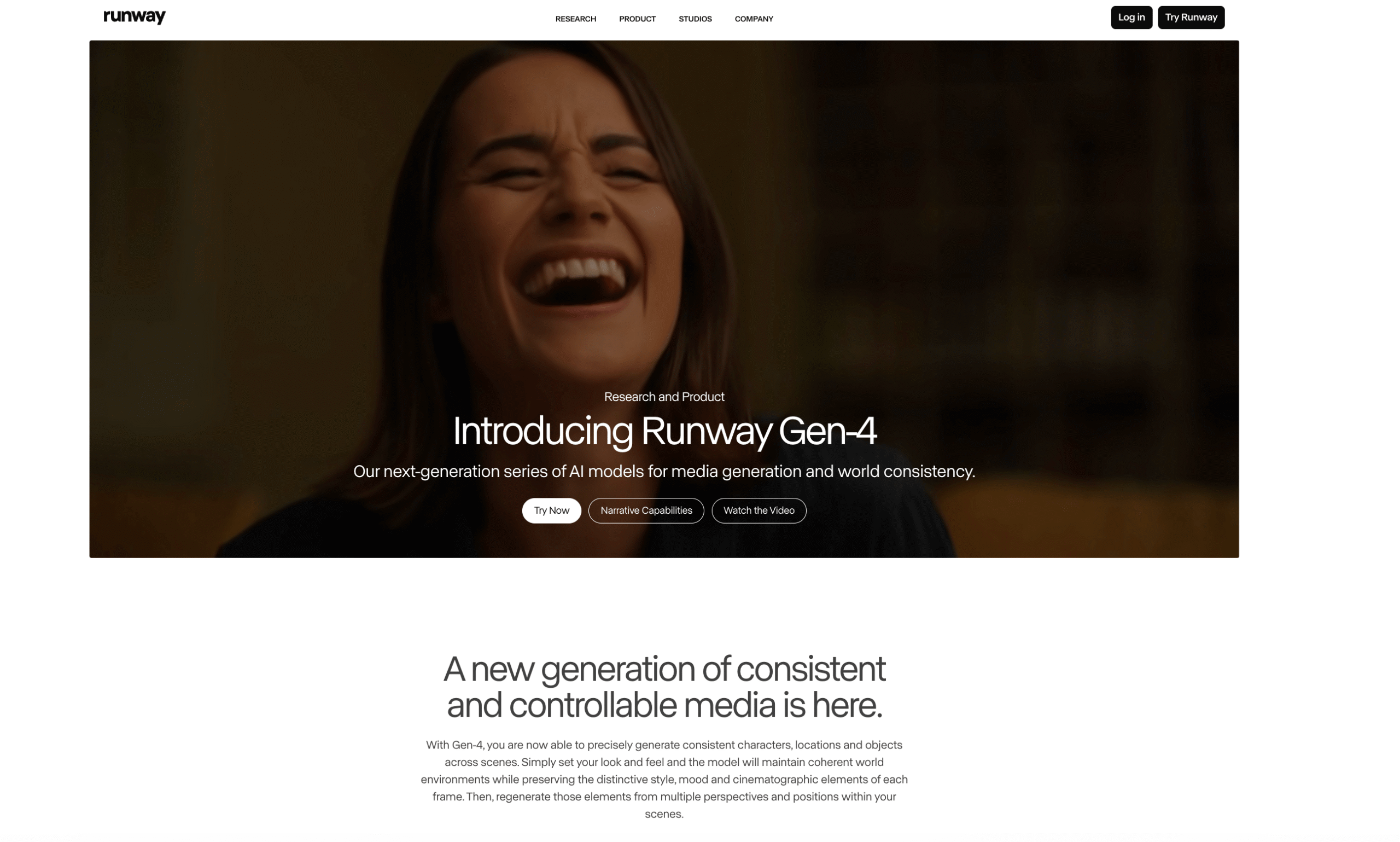
Runway Gen-4 is one of the most powerful and flexible text-to-video AI tools in the world as of 2026. Unlike fully automated platforms, Runway has carved out a niche for itself by offering creative professionals, directors, animators, and video editors high levels of control over every element of the video generation process. It is especially favored by studios and production teams that need detailed customisation and seamless integration into professional workflows. With its focus on manual precision and creative direction, Runway Gen-4 has become a critical part of many digital content pipelines globally.
Creative Control for Professionals and Studios
Runway Gen-4 stands out by enabling users to guide the creative process instead of relying solely on automation. A major innovation is its “Consistent Characters” and “Consistent Objects” feature. These allow creators to upload a single reference image—such as a human face, object, or symbol—and reproduce that subject across a variety of backgrounds, lighting conditions, and camera angles without losing visual consistency. This level of control is essential for brands, advertisers, and filmmakers who want characters to appear the same in every scene.
In addition, Runway’s “Motion Brush” tool offers unmatched precision, giving users the power to decide exactly which parts of an image should animate. This tool operates at the pixel level, which is something most automated video AI platforms currently cannot offer. It empowers content teams to direct movement in a scene, making Gen-4 feel like a hybrid between manual video editing and AI-powered animation.
Professional Integration and Ecosystem Compatibility
Runway Gen-4 is built with professionals in mind. It integrates effortlessly with major software platforms like Adobe Premiere Pro and Unreal Engine. These plug-ins allow AI-generated video content to blend into traditional post-production workflows without disruption, supporting a smooth transition between human-created and AI-generated clips.
Creative studios can import AI clips directly into editing software, apply visual effects, or combine them with live-action footage. This compatibility means Runway does not try to replace traditional tools, but rather complements them with AI-enhanced speed and flexibility.
Platform Growth, Financial Performance, and Community Engagement
Runway has seen rapid financial and user growth since its $308 million Series D funding round in April 2025. The company’s total funding has reached $544 million, and its market valuation now stands at $3 billion. The team behind Runway has grown to an estimated 150–200 employees, supporting development, enterprise onboarding, and creative consultation.
The chart below summarizes Runway’s financial and user performance metrics as of 2026:
| Metric | Value | Year |
|---|---|---|
| Total Funding | $544 Million | 2025 |
| Market Valuation | $3 Billion | 2025 |
| Workforce Size | 150–200 Employees | 2025 |
| Projected 2026 Revenue | $265 Million | 2026 |
| Monthly Web Traffic Growth | 9.14% | 2026 |
| Discord Community Size | 81,500 Members | 2025 |
Runway’s user community is rapidly expanding, with strong adoption in major markets such as the United States, India, and Indonesia. This diverse global user base reflects the platform’s appeal across multiple creative industries—from gaming to marketing to entertainment.
Flexible Pricing for Independent Creators and Agencies
Despite its studio-grade features, Runway Gen-4 remains accessible to smaller teams and independent professionals through flexible subscription plans. The entry-level plan starts at $76 per month, allowing access to key features like character consistency and motion control.
Below is a breakdown of Runway’s pricing structure for 2026:
| Plan Type | Monthly Cost | Key Features Included | Ideal For |
|---|---|---|---|
| Starter | $76 | Character Consistency, Motion Brush (basic) | Independent Creators |
| Pro | Custom | Full Motion Brush, Plug-ins for Adobe & Unreal | Creative Agencies |
| Enterprise | Custom | Dedicated Support, Workflow Automation, API Access | Studios and Large Video Teams |
This pricing flexibility ensures that Runway continues to serve a wide audience—from YouTube content creators and freelance animators to advertising agencies and film production houses.
Feature Comparison Matrix: Runway Gen-4 vs. Leading Text-to-Video AI Tools in 2026
| Feature | Runway Gen-4 | Sora 2 | Pika AI | Synthesia |
|---|---|---|---|---|
| Manual Motion Control | Yes (Motion Brush) | No | No | No |
| Character Consistency Tool | Yes | Partial | No | Yes |
| Adobe/Unreal Integration | Yes | No | No | Partial |
| Plug-in Support | Full | None | None | Limited |
| Pixel-Level Editing | Yes | No | No | No |
| Best Use Case | VFX, Studio Films | Cinematic Ads | Viral Shorts | Corporate Videos |
| Global User Reach | High | Medium | High | Medium |
Conclusion
In 2026, Runway Gen-4 has emerged as the go-to platform for professionals who want total control over their video creation process. Its unique focus on controllability, advanced visual tools, and seamless integration with industry-standard platforms make it ideal for directors, VFX artists, and content studios seeking high-quality, AI-accelerated video production. As AI tools increasingly shape modern storytelling, Runway Gen-4 delivers a balance between precision, power, and creative freedom—setting the bar high for what AI in filmmaking can achieve.
3. Google Veo 3

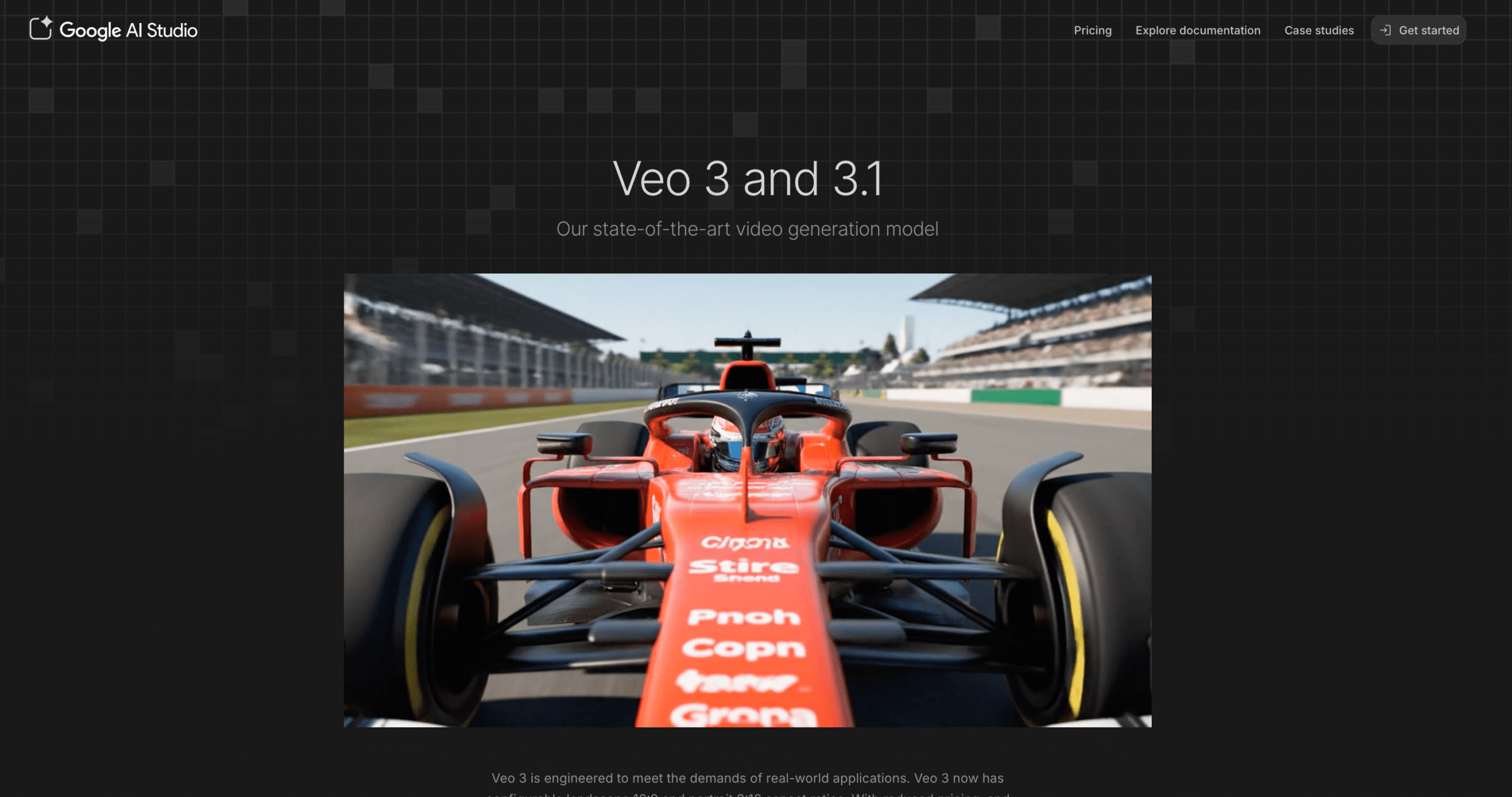
Google Veo 3 is one of the most powerful AI tools for generating videos from text in 2026, especially within enterprise settings. Built on the robust Gemini multimodal architecture and deployed through the Vertex AI platform, Veo 3 goes beyond being just a video generator. It is a fully integrated solution for large businesses, offering seamless audio and video creation, multilingual capabilities, brand protection, and automation that aligns with the demands of corporate marketing, training, and communication teams.
Unified Video and Audio Generation for Business Use
One of Veo 3’s most remarkable innovations is its ability to generate synchronized video and audio in one step. By combining visuals with AI-narrated voiceovers, the platform simplifies workflows for businesses producing training modules, product demos, explainer videos, and localized ads. Its native lip-sync capabilities make the voice look naturally aligned with characters’ mouth movements, enhancing the realism of the final output.
This streamlined production approach eliminates the need for external voiceover tools or separate editing stages, dramatically reducing turnaround times for corporate teams managing multiple content variants.
Veo 3 Fast – Transforming Advertising Production Speed
Google has introduced a high-speed variant called Veo 3 Fast, aimed at advertisers and agencies who need to test numerous visual concepts in minimal time. Using this tool, marketing teams can generate dozens of ad variations from a single prompt, enabling quick A/B testing and audience targeting with different messages, visuals, and calls-to-action.
This agility is especially important for campaigns that require rapid iteration, such as holiday promotions or localized offers in multiple regions.
Enterprise-Grade Security and AI Regulation Compliance
Veo 3 leads the industry in security and content authenticity. Every video generated through the platform includes a built-in SynthID digital watermark. This watermark is invisible to the human eye but verifiable through machine-readable layers, ensuring that all generated content complies with new global AI regulations introduced in 2026.
This feature is especially important for Fortune 500 companies, government clients, and regulated industries such as finance and healthcare, where legal compliance and brand safety are critical. Veo 3 gives organizations peace of mind when scaling AI video operations across departments and geographies.
Multilingual AI Dialogue for Global Reach
Veo 3 supports automatic generation of voiceovers in dozens of global languages, making it an ideal tool for multinational corporations. A single script can be entered into the system, and Veo 3 will generate localized video versions in languages such as Spanish, Mandarin, Arabic, Hindi, and more—without requiring separate translations or human voice actors.
This drastically shortens the time it takes to launch a campaign or train employees in different countries. It also ensures brand consistency by keeping the visual design identical across language variants.
Cost and Output Efficiency Compared to Competitors
When compared to other AI tools such as Hailuo 02 from MiniMax, Google Veo 3 offers more cost-effective pricing and better resolution, while also including audio lip-syncing and compliance tools as standard.
| Metric | Google Veo 3 | Hailuo 02 (MiniMax) |
|---|---|---|
| Cost per 10-second Clip | $0.25 (Estimated via Credits) | $0.52 |
| Video Resolution | 1080p | 768p (1080p in Development) |
| Native Audio Support | Yes (with Lip-Sync) | No |
| Main Use Case | Enterprise Workflows | Physics-Based Motion |
| Digital Watermarking (SynthID) | Yes | No |
| Language Localization | 40+ Languages | Limited (Manual Sync) |
This comparison shows that Veo 3 is designed not only for high performance but also for practical scalability. Its pricing model, efficient rendering, and compliance capabilities position it as the preferred tool for serious business applications.
Enterprise Adoption and Workflow Integration Matrix
| Feature Category | Google Veo 3 | Most Competing Tools |
|---|---|---|
| One-Step Video & Audio | Yes | No |
| Lip-Synced Dialogue | Yes | Partial or Manual |
| Enterprise Security (SynthID) | Yes | Rare or Not Available |
| Global Language Output | Yes | Partial |
| Ad Variant Generation | Yes (Veo 3 Fast) | No |
| Integration with GCP | Yes | No |
| Regulatory Compliance Tools | Advanced | Basic or None |
Conclusion
Google Veo 3 stands out in the 2026 text-to-video landscape by combining deep enterprise functionality with speed, scale, and reliability. It is designed specifically for organizations that need to produce high-quality video content at scale—safely, quickly, and globally. From automated ad variant testing to multilingual training material generation, Veo 3 simplifies and secures the entire video production process. As regulations around AI content continue to evolve, Veo 3 provides the security, control, and innovation that global companies demand in a future-ready video solution.
4. Kling AI

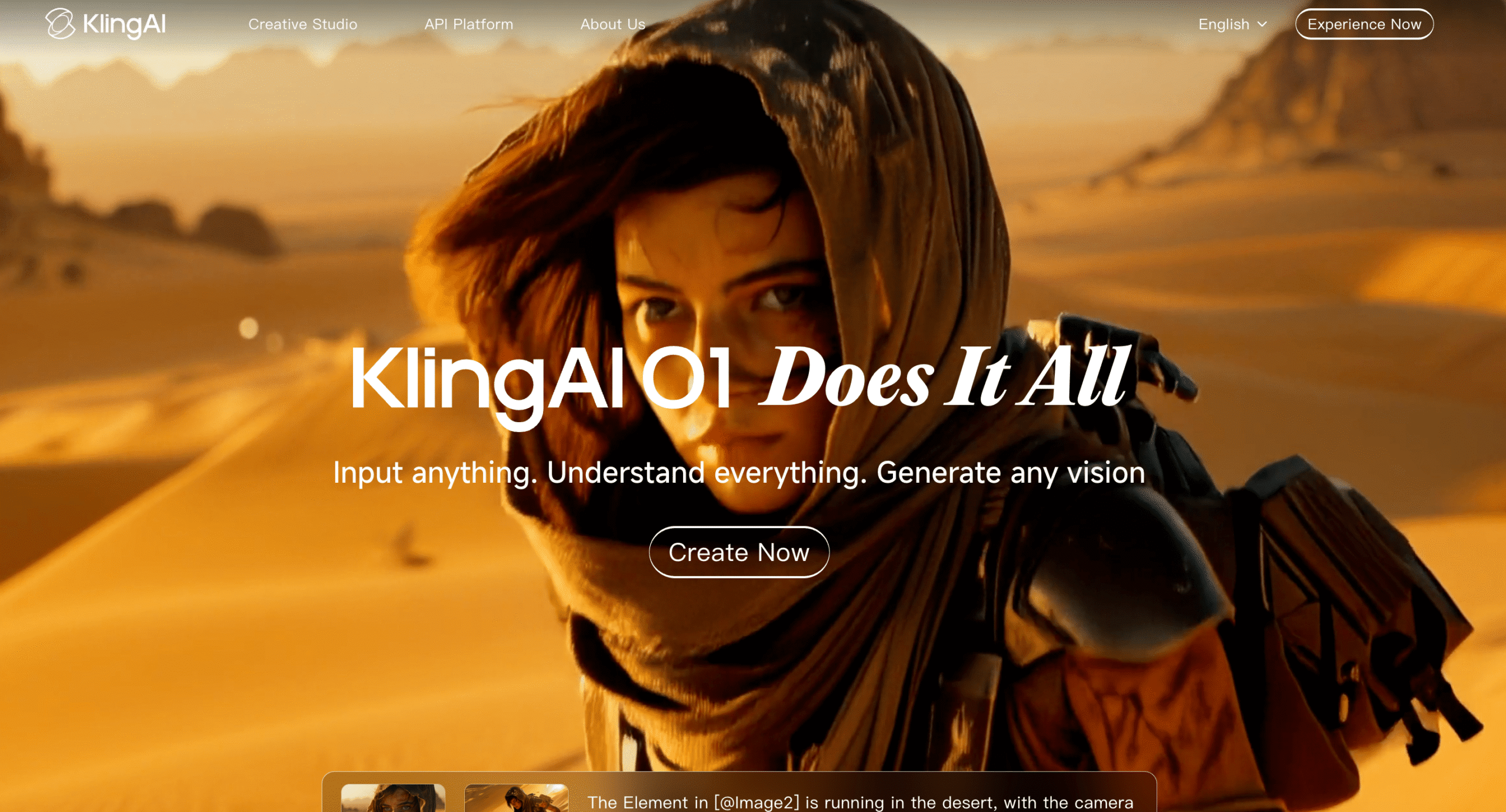
Kling AI, built by Chinese tech giant Kuaishou, has established itself as one of the most widely used and influential AI tools in the world for generating viral video content. With its cutting-edge ability to simulate ultra-realistic physical environments—especially smoke, water, light, and dynamic motion—it is a favorite among social media creators looking to produce stunning short-form videos quickly and at scale. In 2026, Kling is recognized as a high-performance video generation platform that thrives in the attention economy of YouTube Shorts, TikTok, and Instagram Reels.
Visual Realism That Captures Attention
What makes Kling AI so compelling for creators is its ability to reproduce highly convincing visual elements such as flowing water, drifting smoke, changing shadows, and natural lighting. These details make AI-generated scenes feel much closer to reality, increasing viewer engagement across platforms where milliseconds of attention matter. Unlike many text-to-video tools that focus primarily on characters or storytelling, Kling emphasizes realism in background physics, making it ideal for mood-based or aesthetic-driven content.
The current version, Kling 2.6, supports full HD (1080p) output and allows users to generate videos up to 120 seconds in length using its built-in clip stitching tools. This expanded duration makes Kling suitable not just for viral shorts but also for more structured narrative sequences or promotional content with extended pacing.
A Go-To Tool for Monetized Social Video Creators
Kling AI has emerged as a production staple for creators on platforms like TikTok and YouTube who rely on volume, speed, and virality to earn revenue. Its ability to rapidly produce cinematic clips—ranging from travel montages to fantasy landscapes—has made it especially popular in Southeast Asia, Latin America, and Eastern Europe.
The platform’s community has grown organically, and user feedback indicates it works best for creators who have a clear visual style or theme and want to amplify it through AI. Influencers, gaming content creators, and brand marketers frequently use Kling to generate videos that are visually impressive without requiring traditional animation skills or expensive production crews.
Technical Specifications and Limitations
While the visual rendering quality of Kling 2.6 is among the best in the market, users have reported some variability in generation speed. Depending on the complexity of the visual physics—such as smoke dynamics, water reflections, or lighting calculations—clip generation can take anywhere between 5 and 30 minutes. Additionally, the user interface has been described as non-traditional or “quirky,” which may present a learning curve for first-time users.
Kling’s ecosystem is backed by major media and tech investments. Its strategic partner, BlueFocus, resubmitted its IPO filing to the Hong Kong Stock Exchange in late 2025, signaling growing commercial maturity and international ambitions.
Kling AI Performance Summary Table
| Feature | Kling AI 2.6 |
|---|---|
| Max Video Length | 120 seconds (via stitching) |
| Output Resolution | 1080p Full HD |
| Rendering Specialties | Smoke, Water, Lighting, Environmental Physics |
| Average Render Time | 5 to 30 minutes |
| Popular Use Case | Viral Short-Form Videos |
| Partner Company | BlueFocus |
| Commercial Milestone | HKEX IPO Application (2025) |
| UI Experience | Moderate Complexity |
User Experience Matrix: Kling AI Compared to Other Top AI Video Tools in 2026
| Feature Category | Kling AI 2.6 | Sora 2 | Runway Gen-4 | Google Veo 3 |
|---|---|---|---|---|
| Visual Realism (Smoke/Water) | High | Medium | Low | Medium |
| Narrative Continuity | Moderate | High | High | High |
| Clip Duration | Up to 120 seconds | Up to 120 seconds | 15–20 seconds | 10–60 seconds |
| Rendering Time | Moderate to High | Fast | Fast | Very Fast |
| User Interface | Quirky | Smooth | Professional | Corporate-Optimized |
| Viral Creator Adoption | Very High | Moderate | Low | Low |
Conclusion
In the 2026 landscape of AI-powered text-to-video tools, Kling AI holds a distinct position as the go-to platform for creators focused on viral content. With its high level of visual detail, extended clip capabilities, and proven appeal in monetized social media ecosystems, it serves as a virtual production studio for millions of digital storytellers. Although it may not offer the polished UI or integration features of enterprise-focused platforms like Google Veo 3 or Runway Gen-4, its sheer visual impact and strong creator community make it an irreplaceable tool for fast-moving, high-volume content creation. As platforms demand more realism and visual storytelling, Kling AI is poised to stay at the center of the global short-form video revolution.
5. Luma Dream Machine

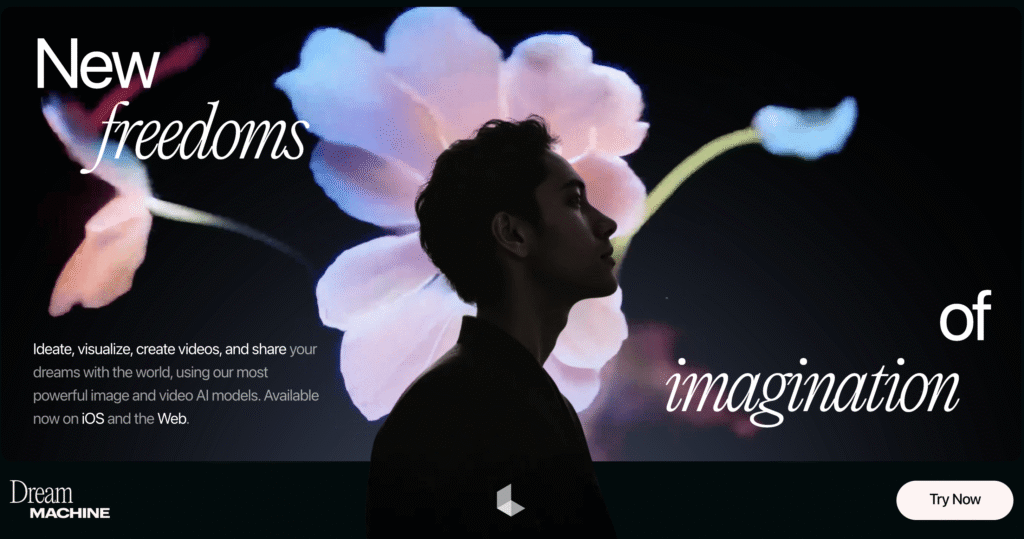
Luma AI’s Dream Machine, powered by its Ray 3 model, has become one of the world’s fastest and most efficient tools for generating cinematic videos from text prompts. In 2026, it has secured its place in the top tier of AI video creation platforms by focusing on one core strength: speed. Designed specifically for rapid creative exploration, Dream Machine is enabling a new wave of storytellers, designers, and developers to bring ideas to life in near real time.
Concept-to-Clip in Seconds: Speed as a Superpower
The key advantage of the Luma Dream Machine lies in its ability to generate 120 frames of high-quality cinematic video in just 120 seconds. This near-instant rendering capability has turned it into the preferred tool for creators working in fast-paced environments. Teams involved in visual coding, experimental design, game development, and dynamic prototyping now rely heavily on Dream Machine to test visual ideas without delay.
This ultra-fast generation workflow is often referred to as “Vibe Coding,” a method where creative professionals iterate on visuals in rapid succession to build mood boards, story arcs, or ambient narratives. Rather than waiting hours for renders, Dream Machine users can cycle through ideas within minutes, increasing creative output and reducing production fatigue.
Designed for Continuous Visual Iteration
Unlike tools that focus on long-form storytelling or scene complexity, Luma’s Dream Machine is engineered for dynamic iteration. It empowers users to build short clips, animations, and transitions that evolve through repeated experimentation. For creators who want to tweak motion speed, lighting tones, color palettes, or abstract styles in quick bursts, this tool is ideal.
The platform supports continuous output with minimal delay between prompts, making it highly effective for collaborative teams who brainstorm in real time. Whether it’s an ad agency crafting digital backdrops or a filmmaker building mood shots, Dream Machine shortens the time between imagination and execution.
Rapid Growth and Global Expansion
Luma AI’s rise has been backed by aggressive financial moves. In late 2025, the company secured a $900 million Series C funding round led by Saudi-backed Humain. This catapulted its valuation to $4 billion, signaling strong investor confidence in its future. In response to growing competition in the AI space, Luma has announced the opening of a new 200-person R&D center in London—representing 40% of its projected global headcount.
This strategic expansion into Europe aims to attract top-tier research talent in the field of generative modeling, particularly engineers skilled in developing multimodal “World Models,” which simulate environments, objects, and interactions across formats like video, 3D, and AR.
Luma Dream Machine Performance Snapshot
| Feature | Dream Machine (Ray 3) |
|---|---|
| Frames per Generation | 120 |
| Render Time | 120 seconds |
| Output Style | Cinematic, Abstract |
| Ideal Use Case | Rapid Concept Prototyping |
| Common User Base | Vibe Coders, Designers |
| Major Expansion Plan | London R&D Hub |
| Series C Investment | $900 Million |
| Valuation (Late 2025) | $4 Billion |
Comparison Matrix: Dream Machine vs Other Top AI Video Tools in 2026
| Feature Category | Dream Machine | Sora 2 | Runway Gen-4 | Kling AI | Google Veo 3 |
|---|---|---|---|---|---|
| Generation Speed | Very Fast | Fast | Medium | Slow to Medium | Very Fast |
| Cinematic Visual Quality | High | High | Medium | Very High | Medium |
| Ideal For | Rapid Ideation | Narrative Building | Pixel Control | Viral Videos | Enterprise Use |
| Max Frame Output | 120 | 240 | 20–30 | 120 (stitched) | 60–120 |
| Funding (2025) | $900 Million | Not Disclosed | $544 Million | Backed by BlueFocus | Alphabet-Backed |
| Target Market | Creators & R&D Teams | Creators & Studios | Agencies & VFX Pros | Influencers | Corporations |
Conclusion
Luma Dream Machine, powered by Ray 3, is revolutionizing how creative professionals approach text-to-video production in 2026. With a unique emphasis on generation speed and visual quality, it empowers teams to experiment rapidly and build dynamic visual content in record time. As the global race for multimodal AI talent intensifies, Luma’s fast-paced expansion and focus on continuous iteration make it a powerful force in the evolving video AI landscape. Whether it’s for experimental filmmaking, design prototyping, or immersive storytelling, Dream Machine sets the standard for speed-driven innovation in visual AI creation.
6. HeyGen

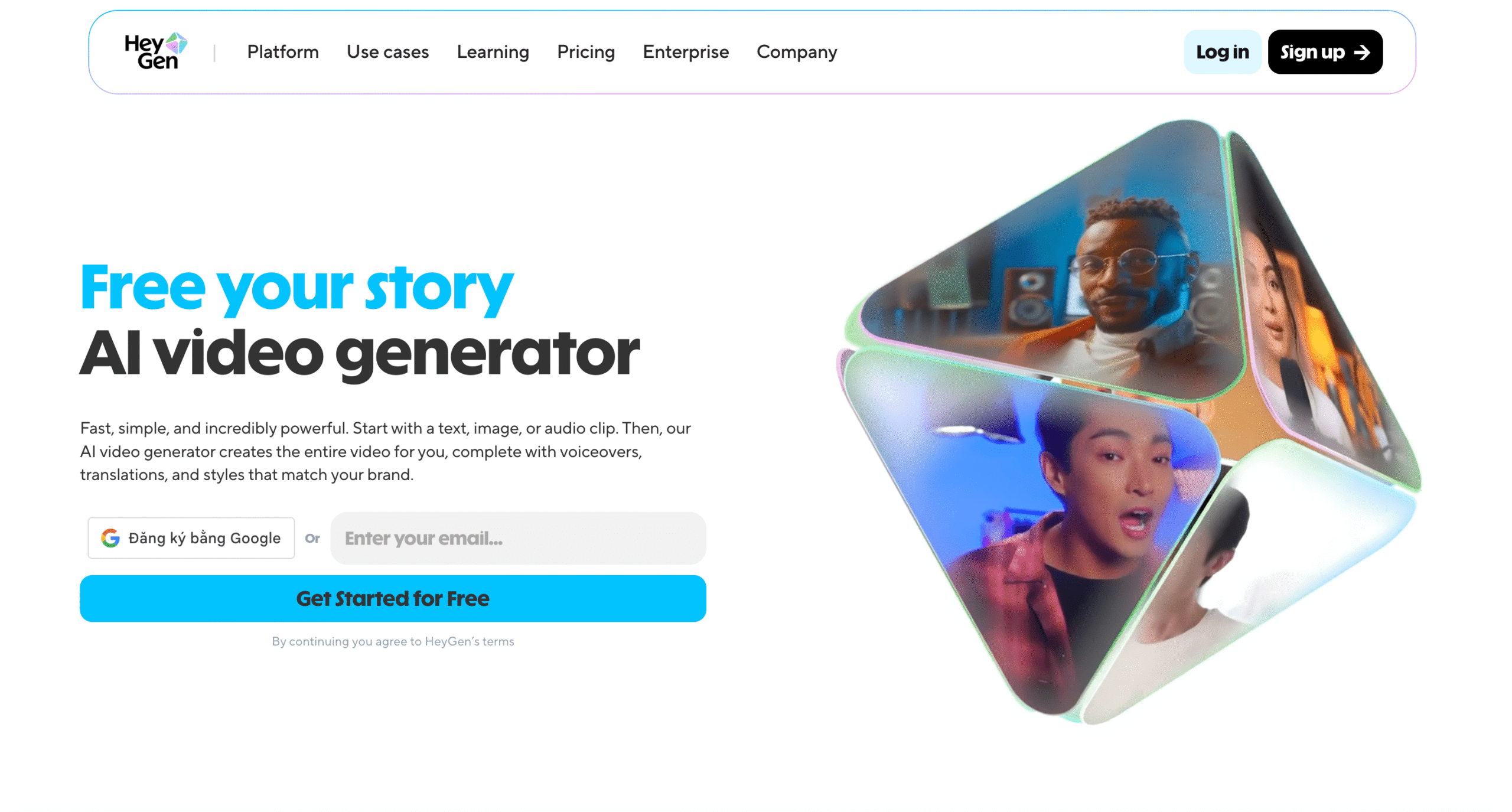
HeyGen has become one of the most widely adopted and influential AI tools for enterprise-level text-to-video content creation in 2026. Built specifically for marketing, communication, training, and public-facing brand initiatives, HeyGen has redefined the way companies produce videos—replacing traditional filming with scalable, AI-generated avatars. Its cutting-edge features, impressive adoption metrics, and real-world use cases position it as one of the top 10 AI video tools in the world today.
Revolutionizing Enterprise Video with Avatar Cloning Technology
At the heart of HeyGen’s offering is its proprietary “Avatar Cloning” technology. This enables businesses to create realistic digital avatars that can consistently represent a speaker, brand ambassador, or corporate leader across multiple video formats, languages, and regions. These avatars maintain the same facial appearance, voice, gestures, and tone—ensuring brand alignment and saving hours of production work for global teams.
HeyGen avatars are commonly used for customer onboarding, internal training, personalized video emails, global campaign rollouts, and product walkthroughs. In an age where personalization and scale are both required, this technology offers unmatched efficiency and control.
Expanding Toolset for Creative Video Automation
HeyGen’s platform has evolved rapidly, introducing advanced tools tailored to enterprise-grade video production. Its upgraded “AI Studio Editor” gives users full control over expressions, gestures, tone, and camera movements. This allows companies to fine-tune every detail of their video to match a specific mood, target audience, or regional nuance.
Another major innovation is the “Generative B-Roll” feature, which automatically generates relevant background footage or transitions based on the video script. This reduces the need for stock footage or external editing software and makes it easier to generate visually engaging corporate videos with minimal effort.
HeyGen also offers a powerful “Instant Avatar” feature, which enables users to create high-definition avatars in minutes using just a webcam or pre-recorded footage. These avatars now support 4K rendering, making them ideal for large digital displays, in-store signage, corporate events, and high-end marketing assets.
Widespread Adoption and Business Impact
HeyGen’s rise has been remarkable, with over 85,000 business customers and exponential revenue growth from 2023 to 2026. These customers range from startups and marketing agencies to global corporations and political leaders. Notably, the President of Argentina used HeyGen’s technology for a speech at the World Economic Forum, and Salesforce integrated the tool into its global partner kickoffs—demonstrating its credibility across high-stakes environments.
The table below summarizes HeyGen’s user growth and financial trajectory over the past four years:
| Metric | 2023 | 2024 | 2025/2026 Estimate |
|---|---|---|---|
| Annual Recurring Revenue | $1 Million | $35 Million | $95 Million |
| Total Business Customers | 10,000+ | 40,000+ | 85,000+ |
| Number of Available Avatars | ~50 | 100+ | 230+ |
| Monthly Website Traffic | 1 Million | 4 Million | 7 Million+ |
Comparative Feature Matrix: HeyGen vs Top Text-to-Video Tools in 2026
| Feature | HeyGen | Sora 2 | Runway Gen-4 | Google Veo 3 | Kling AI |
|---|---|---|---|---|---|
| Avatar Cloning | Yes (Advanced) | No | No | Partial | No |
| 4K Rendering Support | Yes | Yes | No | Yes | Yes |
| Enterprise Adoption | Very High | High | Medium | High | Medium |
| AI Studio Editing Tools | Yes (Granular) | Limited | Advanced Motion | Enterprise Templates | Limited |
| Generative B-Roll | Yes | No | No | No | No |
| Best Use Case | Corporate Comms | Cinematic Content | VFX + Editing | Business Campaigns | Viral Short Videos |
AI Video Market Positioning Matrix (Adoption vs Specialization)
| Tool Name | User Adoption Level | Specialization Area |
|---|---|---|
| HeyGen | Very High | Avatar-Based Business Communication |
| Sora 2 | High | Cinematic Storytelling |
| Runway Gen-4 | Medium | Visual FX and Pixel-Level Control |
| Veo 3 | High | Enterprise-Integrated Ad Campaigns |
| Kling AI | Medium | Viral Short-Form Content |
Conclusion
HeyGen has transformed enterprise communication by enabling businesses to scale personalized, high-quality video content through advanced AI avatars. With features like avatar cloning, generative B-roll, 4K output, and an intuitive studio editor, it empowers companies to automate content creation without sacrificing quality or consistency. As global demand for multilingual, on-brand video messaging continues to grow in 2026, HeyGen remains one of the most valuable and innovative AI tools for organizations looking to lead in digital engagement, internal communication, and customer interaction.
7. Synthesia


Synthesia has firmly established itself as one of the most trusted and widely used AI tools for text-to-video creation in the enterprise world. By 2026, the platform is valued at approximately $4 billion and is deeply embedded in corporate training, HR enablement, compliance education, and internal communications. Its strength lies in delivering highly consistent, secure, and scalable AI video content for large organizations operating across multiple regions.
Enterprise-First Focus on Brand Consistency and Training Reliability
Synthesia’s core advantage is its emphasis on predictable brand consistency at scale. Large corporations rely on the platform to ensure that every training video, onboarding module, or compliance message looks and sounds the same across departments and countries. This reliability has driven adoption across 90 percent of Fortune 100 companies, making Synthesia the default choice for enterprise learning and development teams.
Organizations use Synthesia to replace traditional filmed training videos with AI-generated presenters that never change appearance, tone, or delivery. This approach significantly reduces production costs while improving standardization, especially in regulated industries where accuracy and consistency are critical.
Interactive Player and Personalized Learning Experiences
In 2026, Synthesia introduced a major platform upgrade with its Interactive Player. This feature combines high-quality AI avatars with advanced language models to create personalized learning experiences. Instead of watching static videos, employees can now interact with training content, ask contextual questions, and receive adaptive responses based on their role, location, or progress level.
This interactive approach is particularly valuable in technical training, safety instruction, and ongoing skills development. It transforms video from a passive medium into an active learning interface, increasing engagement and knowledge retention across large workforces.
Built for Security, Compliance, and Regulated Industries
Synthesia’s technical infrastructure is designed to meet the strict security and compliance requirements of enterprise customers. The platform supports advanced single sign-on integrations, detailed version control, and centralized content governance. These features are essential for industries such as manufacturing, healthcare, pharmaceuticals, and finance, where training content must be audited, updated, and controlled with precision.
By offering enterprise-grade access management and secure deployment, Synthesia enables organizations to roll out AI video training without introducing governance risks.
Strong Global Usage and Engagement Metrics
Synthesia serves more than 60,000 organizations worldwide and continues to see strong engagement across its platform. Its audience demonstrates high intent and deep usage, particularly from corporate training teams and HR professionals searching for scalable video solutions.
The table below highlights key engagement metrics recorded across 2025 and 2026:
| Engagement Metric | Performance Level |
|---|---|
| Monthly Website Visits | 3.29 million |
| Average Session Duration | 8 minutes 12 seconds |
| Pages per Visit | 4.08 |
| Bounce Rate | 50.31 percent |
| Primary Traffic Source | Organic Search |
These metrics indicate that users are not only discovering Synthesia organically but are also spending significant time exploring and using the platform, reflecting strong product-market fit.
Global Localization at Unmatched Scale
One of Synthesia’s most powerful capabilities is instant video localization. The platform can translate and voice videos into more than 130 languages and accents without requiring re-recording or additional production work. This has made Synthesia a core tool for global localization teams responsible for rolling out training and communications across diverse regions.
Traffic and usage are well balanced geographically. Around 21 percent of users come from the United States, followed closely by strong adoption in India, the United Kingdom, and Germany. This global footprint reflects Synthesia’s ability to support multinational organizations with consistent messaging across languages and cultures.
Synthesia Market Positioning Matrix in the 2026 Text-to-Video Landscape
| Evaluation Area | Synthesia Performance |
|---|---|
| Enterprise Adoption | Extremely High |
| Training and HR Use Cases | Market Leader |
| Security and Compliance | Advanced |
| Interactive Learning | Strong |
| Multilingual Support | Industry Leading |
| Creative Freedom | Moderate |
| Best Fit Audience | Large Enterprises |
Comparison Snapshot Against Other Top AI Video Tools in 2026
| Feature Category | Synthesia | HeyGen | Sora 2 | Runway Gen-4 |
|---|---|---|---|---|
| Corporate Training Focus | Very High | High | Low | Low |
| Interactive Video | Yes | Limited | No | No |
| Language Coverage | 130+ Languages | 40+ Languages | Limited | Limited |
| Security & SSO | Enterprise-Grade | Enterprise-Grade | Basic | Basic |
| Fortune 100 Usage | 90 percent | Moderate | Low | Low |
Conclusion
Synthesia continues to define what enterprise-ready AI video looks like in 2026. With its focus on consistency, security, interactivity, and global localization, it has become the gold standard for corporate training and internal communication. While other text-to-video tools excel in cinematic storytelling or viral content, Synthesia dominates where reliability, compliance, and scale matter most. For large organizations seeking to modernize learning and development through AI video, Synthesia remains the most proven and trusted solution in the global market.
8. MiniMax Hailuo AI

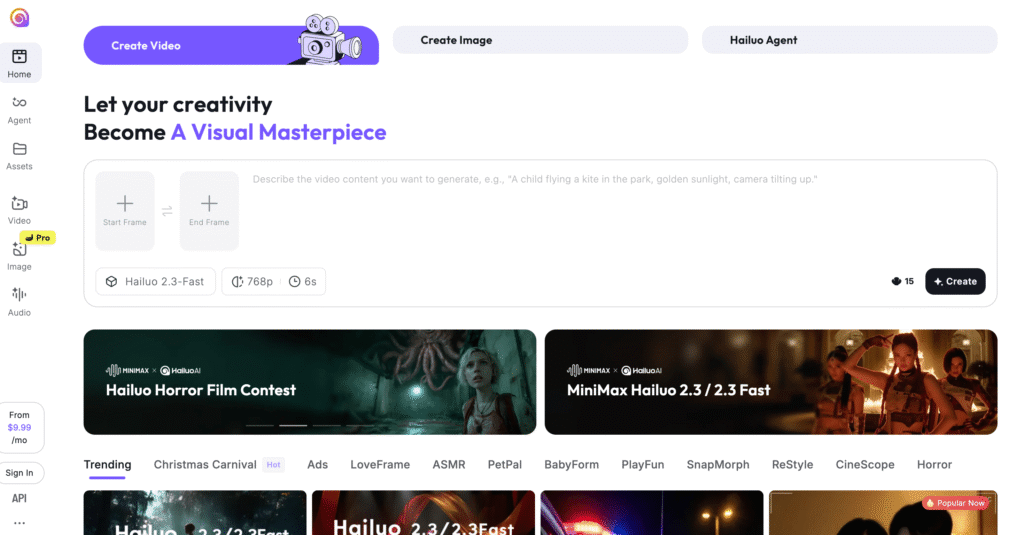
Hailuo AI, developed by MiniMax, has become one of the top 10 text-to-video AI tools in 2026 due to its unmatched ability to simulate real-world motion and action. While other platforms focus on avatars or cinematic storytelling, Hailuo AI stands out with its precision physics engine, delivering high-quality video output that feels grounded in natural movement, force, and gravity. From tumbling objects to smooth camera zooms, this tool excels in creating lifelike, physics-rich content for developers, animators, educators, and sci-fi storytellers.
A Physics-First Engine Built for Motion Realism
Unlike tools that focus on character avatars or voice integration, Hailuo AI is a motion-first model designed to prioritize the accuracy of physical interactions. Its second-generation model, Hailuo 02, is known for rendering natural object falls, realistic fluid motion, multi-object collisions, and kinetic camera movements such as pans, tilts, and zooms.
This high level of fidelity means creators no longer need to rely heavily on post-processing or trial-and-error adjustments. The AI responds to detailed prompts with nuanced, physically accurate results—making it ideal for action sequences, natural phenomena, and technical video content such as product simulations or educational demonstrations.
Affordable and Developer-Friendly Integration
Hailuo AI is especially popular among developers due to its clear and easy-to-implement API structure. It supports seamless integration into pipelines for animation studios, indie game developers, educational platforms, and interactive media projects.
Pricing is one of Hailuo’s most attractive features. The tool charges only $0.25 for a 6-second render at 768p resolution, making it one of the most cost-efficient platforms for short, high-motion clips. While it doesn’t include native audio generation or lip-sync capabilities, its visual output often compensates with clarity and realism.
Advanced Training Across Gaming and Cinematic Datasets
MiniMax has invested heavily in training Hailuo 02 on a wide range of visual datasets, particularly those derived from gaming, film, and simulation environments. As a result, the tool handles diverse creative prompts—from sci-fi action scenes to historical reenactments—with consistent realism. This versatility allows users to confidently explore complex or unusual prompts without encountering awkward motion glitches or physics breaks.
The platform performs especially well in prompts that involve environmental interaction, such as dust clouds, fire effects, water movement, machinery in motion, or people moving through textured terrain. These details, often difficult for generic models to reproduce accurately, are handled effortlessly by Hailuo AI.
Hailuo AI Feature Overview
| Feature Category | Hailuo AI (Hailuo 02) |
|---|---|
| Rendering Focus | Physics & Motion Accuracy |
| Resolution | 768p (1080p in development) |
| Native Audio Support | No |
| Pricing | $0.25 per 6-second clip |
| Motion Simulation Strength | High |
| Camera Movement Support | Yes (Zooms, Pans, Tilts) |
| API Access | Available and Developer-Friendly |
| Ideal Use Case | Action Scenes, Simulations, Technical Visuals |
| Visual Dataset Training Base | Gaming + Cinematic Content |
Comparative Feature Matrix: Hailuo AI vs Leading AI Text-to-Video Tools in 2026
| Feature | Hailuo AI | Sora 2 | Google Veo 3 | Runway Gen-4 | Kling AI |
|---|---|---|---|---|---|
| Physics Accuracy | Very High | Moderate | Low | Moderate | Moderate |
| Audio Generation | No | Yes | Yes (Lip Sync) | No | No |
| Developer API | Yes | Limited | Limited | Yes | Limited |
| Best Use Case | Complex Motion | Cinematic Stories | Corporate Demos | VFX & Pixel Control | Visual Realism |
| Scene Realism in Action | High | Medium | Low | Medium | Medium |
| Short-Clip Efficiency | Very High | Medium | Medium | Medium | High |
Market Positioning Chart: Specialization vs Affordability
| Tool Name | Primary Strength | Target User Base | Average Cost per 10 Seconds |
|---|---|---|---|
| Hailuo AI | Physics & Action Motion | Developers, Animators | ~$0.42 |
| Sora 2 | Cinematic Storytelling | Studios, Creators | High |
| Google Veo 3 | Enterprise Integration | Corporate Marketers | Medium |
| Runway Gen-4 | Director-Level Editing | VFX Professionals | Medium to High |
| Kling AI | Viral Visuals | Social Media Creators | Low |
Conclusion
MiniMax’s Hailuo AI offers something rare in the 2026 AI video landscape—hyper-realistic physical motion rendered affordably and accurately. With a developer-first approach, low cost per video, and advanced handling of movement dynamics, it has earned a strong reputation among those building visual experiences that rely on realism and environmental interaction. Whether it’s for cinematic action, scientific simulations, or dynamic educational content, Hailuo AI provides a powerful and reliable engine for physics-driven text-to-video generation at global scale.
9. Pika Labs

In the global landscape of AI-powered text-to-video tools in 2026, Pika Labs has carved out a distinctive identity as the go-to platform for creators who prioritize style, visual storytelling, and artistic experimentation. Rather than focusing on realism or corporate applications, Pika Labs emphasizes expressive creativity—empowering individuals and teams to reimagine their video content with cinematic and animated aesthetics that resonate on visual-first platforms like Instagram, TikTok, and YouTube.
Empowering Creative Expression Over Photorealism
Pika Labs’ flagship engine, Pika 2.1, is built for creators who want their content to stand out through bold, stylized visuals. This includes transformations that resemble animated films, hand-drawn sketches, or studio-quality CGI. With support for 1080p resolution and a streamlined user interface, Pika makes it easy for non-technical users—such as influencers, artists, educators, and marketers—to produce engaging videos without needing a background in animation or editing.
Its simplicity and visual flair have made it a favorite among solo creators, with millions of videos processed each week across its community of over 500,000 active users.
Video-to-Video Style Transfer and Creative Restyling
One of Pika Labs’ standout features is its powerful “Video-to-Video” transformation engine. This allows users to upload existing footage—whether from mobile devices, DSLR cameras, or screen recordings—and apply artistic effects that completely change the video’s mood and appearance. Users can stylize content with cinematic filters, vintage overlays, futuristic color palettes, or even Pixar-style visuals that evoke animated storytelling.
This capability is especially appealing to content creators looking to repurpose their existing libraries into new formats, styles, or storylines—without re-filming or editing from scratch.
Scalable Options for Enterprise and Commercial Use
While Pika Labs primarily serves independent creators, it also supports enterprise use through white-label options, bulk video generation packages, and API integrations. Around 40% of the company’s revenue now comes from business clients—ranging from media publishers and ad agencies to e-learning companies and mobile app developers.
These enterprise clients use Pika’s stylization engine to create explainer animations, motion graphics, promotional content, and digital ads with distinctive artistic branding. Pika Labs offers customization options for brand-specific style templates, licensing, and workflow automation.
Growth Milestones and Community Reach
Pika Labs has grown rapidly since its founding. By 2025, the company had raised $141 million in funding to scale its creative tools and infrastructure. The platform has become one of the most active hubs for AI-generated video, handling millions of weekly projects and building a loyal user base of artists, hobbyists, and commercial teams alike.
The table below summarizes Pika Labs’ business growth and creator ecosystem:
| Metric | Pika Labs (2025–2026) |
|---|---|
| Total Funding Raised | $141 Million |
| Platform Version | Pika 2.1 |
| Output Resolution | 1080p |
| Active User Community | 500,000+ |
| Weekly Video Projects | Millions |
| Enterprise Revenue Contribution | ~40% of Total Revenue |
| Style Transfer Capability | Yes (Video-to-Video Restyling) |
Feature Matrix: Pika Labs Compared to Other Leading AI Video Tools in 2026
| Feature Category | Pika Labs | Sora 2 | Runway Gen-4 | Kling AI | Synthesia |
|---|---|---|---|---|---|
| Focus Area | Stylized Content | Cinematic Video | Motion Design | Visual Realism | Corporate Training |
| Video-to-Video Transformation | Yes | No | No | No | No |
| User Interface Simplicity | Very High | Medium | Medium | High | High |
| Output Resolution | 1080p | Up to 4K | Up to 2K | 1080p | 4K |
| Best Use Case | Creative Styling | Long-Form Stories | Director-Level VFX | Viral Videos | Branded Training |
| Enterprise Integration | Yes (Basic) | Yes (Advanced) | Yes (Professional) | No | Yes (Advanced) |
AI Video Market Positioning: Artistic Control vs Technical Complexity
| Platform | Artistic Flexibility | Technical Skill Required | Monetization Model |
|---|---|---|---|
| Pika Labs | Very High | Low | Freemium + Enterprise |
| Runway Gen-4 | Medium | High | Pro Subscription |
| Sora 2 | Medium | Medium | Tiered Access |
| Synthesia | Low | Low | Enterprise Licensing |
| Kling AI | Medium | Low | Creator-Driven |
Conclusion
Pika Labs has established itself as the premier AI video platform for creators who value expression, originality, and stylization in their content. With features like video-to-video transformation, accessible design, and an active creative community, it offers a unique proposition in the 2026 AI video landscape. For artists, influencers, and brands seeking visual impact through stylized animation and cinematic flair—without the cost or complexity of traditional production—Pika Labs delivers an intuitive and powerful solution at scale.
10. Mootion

Mootion has become one of the most innovative AI text-to-video tools in the world by focusing on long-form, fully structured content generation. While most platforms in 2026 still specialize in short clips and scene-by-scene outputs, Mootion is designed to create complete, multi-minute videos—making it a perfect fit for users who need full-length content for marketing, education, and thought leadership. By transforming scripts, blogs, or transcripts into polished 3-minute videos in a single step, Mootion offers unmatched end-to-end automation in the AI video ecosystem.
All-in-One Storytelling Engine for Full-Length Videos
Unlike other tools that require users to build videos clip by clip, Mootion is built around a unified storytelling engine. This system automatically handles every step of the video creation process—from interpreting the prompt to structuring the story, designing visuals, syncing narration, and editing transitions. The result is a professional, cohesive video that feels as though it was produced by a human team, despite being fully AI-generated.
This automation gives creators a serious time advantage. Instead of assembling timelines or syncing footage, users only need to input a well-written prompt or document, such as a blog article or webinar summary, and the platform handles the rest. For agencies, educators, and startups, this significantly reduces production overhead and enables rapid scaling of content creation.
Exceptional Speed and Time-to-Output Efficiency
One of Mootion’s standout strengths is speed. According to 2026 performance benchmarks, the platform generates complete 3-minute videos in under 2 minutes—outpacing traditional video generation tools by over 65%. This ultra-fast turnaround makes it ideal for repurposing large volumes of existing written content into social media-ready videos.
Mootion’s efficiency allows brands with extensive content libraries—such as long-form blog archives, training manuals, customer case studies, or conference transcripts—to instantly convert those assets into high-impact visual narratives for platforms like LinkedIn, YouTube, and Instagram.
Built for Content Marketing and Educational Video
Mootion’s long-form output makes it particularly valuable in the marketing and e-learning sectors. Marketers can use the platform to generate product explainers, customer testimonials, or newsletter video recaps. Meanwhile, educators can quickly convert learning modules, articles, or guides into structured video lessons without needing complex editing skills.
By automatically generating story arcs and matching visuals to narration, Mootion turns static ideas into dynamic media, boosting engagement while saving time and cost.
Mootion Performance Summary Table
| Performance Metric | Mootion (2026 Benchmark) |
|---|---|
| Max Video Duration Per Prompt | 3 Minutes |
| Average Render Time | Under 2 Minutes |
| Output Format | Fully Structured with Narration |
| Editing Workflow | Fully Automated |
| Best Fit Use Case | Long-Form Content Repurposing |
| Ideal Users | Marketers, Educators, Agencies |
| Clip Assembly Required | No |
Feature Comparison Matrix: Mootion vs Top AI Text-to-Video Tools in 2026
| Feature Category | Mootion | Sora 2 | Luma Dream Machine | HeyGen | Pika Labs |
|---|---|---|---|---|---|
| Full-Length Video Output | Yes (3 mins) | No (20–120 sec) | No (Short Clips) | No (Avatar-Focused) | No (Stylized Clips) |
| End-to-End Automation | Yes | Partial | No | Partial | Partial |
| Narration Support | Yes (Native) | Yes | No | Yes | No |
| Visual Story Structuring | Automatic | Manual or Partial | No | Partial | Manual |
| Best Use Case | Content Repurposing | Cinematic Scenes | Rapid Prototyping | Brand Messaging | Artistic Styling |
AI Tool Landscape Matrix: Duration vs Automation
| Platform | Max Duration | Editing Automation | Target Audience |
|---|---|---|---|
| Mootion | 3 Minutes | Full | Content Teams, Educators |
| Sora 2 | 2 Minutes | Partial | Studios, Marketers |
| Luma Dream Machine | 30 Seconds | Manual | Prototypers, Creators |
| HeyGen | 1 Minute | Partial | Enterprises, Sales Teams |
| Pika Labs | 20 Seconds | Basic | Artists, Influencers |
Conclusion
Mootion sets itself apart in the 2026 AI video market by focusing on complete, high-quality video storytelling rather than short clips or isolated visuals. Its ability to convert full-length written content into polished 3-minute videos—automatically and at record speed—makes it a valuable tool for marketers, educators, and brands with large content libraries. For those who need scale, efficiency, and narrative depth without complex manual editing, Mootion offers a fully automated production studio in one simple prompt.
Macroeconomic Landscape of the Generative AI Video Sector in 2026
The year 2026 has marked a pivotal point for the generative video industry, with the sector undergoing significant financial, technical, and infrastructure transformations. Dominated by late-stage venture funding, rapid platform consolidation, and accelerated enterprise adoption, the generative video market is now one of the most capital-intensive and strategically important areas in the broader AI economy.
Series D Surge and Capital Consolidation
Across the generative video sector, leading companies have entered a late-stage funding cycle known as the “Series D wave.” This funding trend is largely driven by the exponential rise in compute needs required for training large-scale transformer models capable of generating high-resolution, multimodal content.
Valuations across the top-performing platforms have stabilized in the $3 billion to $4 billion range, signaling maturity in the business models and investor confidence in long-term returns. While venture-backed startups like Luma AI and MiniMax have reached multi-billion dollar valuations, tech giants such as OpenAI and Google have extended their influence through deep integration of generative video into cloud infrastructure and productivity ecosystems.
Capital Funding and Valuation Overview of Leading AI Video Platforms (2026)
| Organization | Total Capital Raised | 2026 Valuation | Lead Investors | Geographic Focus |
|---|---|---|---|---|
| Luma AI | $1.1 Billion | $4.0 Billion | Humain (PIF), AMD, Amazon, a16z | Global / Middle East |
| MiniMax (Hailuo) | $1.15 Billion | $4.0 Billion | Alibaba, Tencent, Shanghai STVC | East Asia / Global |
| Runway | $544 Million | $3.0 Billion | General Atlantic, Fidelity, Nvidia | North America |
| Synthesia | $500 Million+ | $4.0 Billion+ | Google Ventures, Accel, Nvidia | Europe / UK |
| Pika Labs | $141 Million | $700 Million (Est.) | Spark Capital, Lightspeed, Greycroft | North America |
| HeyGen | $65.6 Million | $500 Million | Benchmark, Bond Capital, Thrive | North America |
These firms now command sizable budgets to maintain competitive advantages in compute, model refinement, and global market expansion. In particular, Middle East and East Asian capital is becoming increasingly influential, funding specialized training facilities and strategic market entries.
Infrastructure Scaling and AI Supercluster Investment
The explosive rise in multimodal AI has necessitated massive infrastructure investments. Unlike early-stage language models, generative video models require peta-scale datasets—often 1,000 to 10,000 times larger in volume—due to the complexity of synchronizing video, audio, and text.
To meet these demands, companies like Luma AI have established specialized training environments such as the 2-gigawatt Project Halo in Saudi Arabia. These AI superclusters are designed to handle high-throughput, high-precision training cycles needed for next-generation “World Models,” which simulate realistic physical environments, characters, and narratives.
At the same time, MiniMax is leveraging East Asian investor networks to pursue a Hong Kong IPO in early 2026, aiming to raise $637 million. This capital is intended to boost R&D and infrastructure to challenge Western leaders in the global generative AI arms race.
Enterprise Cost Efficiencies and Return on Investment
Beyond infrastructure and funding, what’s driving long-term momentum is the real-world economic advantage AI video platforms deliver to enterprise users. Traditionally, the cost of producing a professionally edited training or corporate video ranged between $5,000 and $15,000—due to costs for scripting, filming, editing, and voice talent.
Today, using avatar-driven AI platforms such as HeyGen and Synthesia, the same video can be created for just $50 to $300. This represents a cost reduction of up to 97%, drastically improving the economics of content production for companies.
Comparative ROI Table: Traditional vs. AI-Generated Video Production (2026)
| Production Method | Average Cost per Video | Time to Deliver | Editing Skill Required | Scalability |
|---|---|---|---|---|
| Traditional Filming | $5,000 – $15,000 | 1–3 weeks | Professional Crew | Low |
| AI-Generated (HeyGen, etc.) | $50 – $300 | < 24 hours | No Technical Skill | Very High |
With these economics, companies such as HeyGen have experienced explosive growth—scaling from an ARR (Annual Recurring Revenue) of just $1 million in early 2023 to over $95 million by the end of 2025. This kind of acceleration reflects a broader enterprise shift toward scalable, low-cost, high-quality video communication powered entirely by AI.
Macro Trends Shaping the Sector
| Trend | Description |
|---|---|
| Series D Capital Cycle | Billions raised to scale compute infrastructure for video model training |
| Supercluster Development | Emergence of giga-scale data centers for training world-level video models |
| Cost Displacement in Enterprise | Up to 97% savings in training and communication video production |
| IPO Pipelines in Asia | Chinese firms pursuing IPOs to compete with U.S. and EU-based AI labs |
| Platform Consolidation | Tech giants embedding video AI tools into cloud ecosystems |
Conclusion
The macroeconomic environment in 2026 for generative video AI is defined by scale, capital intensity, and enterprise impact. With multi-billion dollar valuations stabilizing, global infrastructure expansion underway, and proven ROI for large organizations, this sector has shifted from experimental to essential. As platforms continue to reduce costs, shorten production timelines, and democratize creative tools, the generative video market is poised to become one of the most valuable segments in the broader AI industry.
Technical Advancements in World Models and Latent Diffusion for Generative Video in 2026
The generative video landscape in 2026 has undergone a major technical shift. The industry has moved past traditional methods of predicting images frame by frame, embracing more advanced approaches based on latent diffusion and world modeling. These new systems are not just focused on creating visually pleasing content—they are designed to understand and simulate the real-world dynamics behind motion, space, and sound. This leap has enabled AI to generate scenes that feel more physically grounded and narratively coherent.
From Pixel Prediction to Latent Diffusion Physics Modeling
Earlier AI video models relied on pixel-by-pixel generation, often resulting in jittery animations and inconsistent spatial details. In contrast, modern systems like those used in 2026 leverage a technology known as latent diffusion. Instead of working directly with visual pixels, these models compress video and audio into smaller, abstract “latent” spaces, where complex patterns and relationships—such as motion dynamics, object interaction, and spatial depth—can be learned more efficiently.
At the heart of this system is a transformer-based denoising network. This neural architecture is trained to remove structured noise from latent vectors, which are optimized across time (for audio and motion) and space (for video composition). This allows the model to maintain a high level of physical realism, spatial awareness, and audio-visual synchronization, even in long-form or multi-object scenes.
Benchmarking Performance of Top Latent Diffusion Models in 2026
| Technical Dimension | Sora 2 (OpenAI) | HunyuanVideo (Tencent) | Kling 1.6 (Kuaishou) | CogVideoX-1.5 |
|---|---|---|---|---|
| Human Centricity | 86.45% | 88.58% | 86.99% | 59.72% |
| Spatial Composition | 98.15% | 82.97% | 91.75% | 87.18% |
| Physics Mechanics | 78.57% | 75.67% | 71.95% | 69.51% |
| Temporal Consistency | 62.22% | 76.09% | 65.55% | 80.80% |
| Scene Complexity | 27.16% | 33.95% | 61.73% | 33.33% |
These benchmark scores were collected using VBench, a comprehensive evaluation suite designed to measure model performance across multiple technical and perceptual categories. Each metric reflects a core competency required for high-quality video generation at scale.
Model Specialization Insights
- Sora 2 (OpenAI) leads in spatial composition and physical realism, making it highly effective for cinematic storytelling and visually immersive scenes.
- HunyuanVideo (Tencent) achieves top performance in human-centric generation and temporal consistency, essential for character-driven narratives and continuous motion.
- Kling 1.6 (Kuaishou) excels in handling visually complex environments, performing well in scenes with many objects, layered textures, and background activity.
- CogVideoX-1.5 delivers strong temporal smoothness but lags behind in human expression and scene coherence, indicating its focus on structure rather than emotion or intent.
Technical Limitations: The Sequential Logic Problem
Despite major progress, all leading models still struggle with what researchers call the “motion order” or “sequential logic” challenge. This refers to an AI’s difficulty in maintaining logical step-by-step actions in a continuous scene. For example, generating a character who opens a fridge, grabs ingredients, and cooks a meal in correct order—without skipping or repeating motions—is still inconsistent.
This limitation has roots in how transformers interpret time. Most video models treat each frame or chunk independently, which makes it hard to link multiple actions into a coherent task chain. With current average motion order accuracy scores below 20%, this area remains a critical bottleneck for training AI to mimic real-life cause-and-effect storytelling.
Model Capability Matrix: Technical Strengths of 2026 Leading AI Video Engines
| Model Name | Best Strength | Weakness Area | Ideal Use Case |
|---|---|---|---|
| Sora 2 (OpenAI) | Spatial Composition | Sequential Task Ordering | Cinematic Narratives, AI Short Films |
| HunyuanVideo | Human Expression Consistency | Scene Complexity | Conversational Avatars, Interview Videos |
| Kling 1.6 | Scene Complexity | Temporal Fluidity | Action Sequences, Crowd Simulations |
| CogVideoX-1.5 | Temporal Consistency | Emotional Accuracy | Animated Infographics, Technical Demos |
Conclusion
The technical foundation of AI video generation in 2026 is being reshaped by world modeling and latent diffusion. These models no longer simply generate images—they simulate environments, behaviors, and motion within complex digital ecosystems. While tools like Sora, Kling, and Hunyuan are pushing the limits of spatial and physical realism, the industry still faces challenges in making multi-step, logic-driven sequences that mirror real-life human behavior. As research continues and training data expands, solving these limitations will be the key to unlocking fully immersive, coherent AI-generated video content.
Technical Performance Analysis of Generative AI Video Tools in 2026: Latency, Resolution, and Frame Rate Trends
In 2026, the competitive landscape of generative AI video creation is shaped by three key performance pillars: latency, resolution, and frame rate. As creative workflows shift toward iterative experimentation or “Vibe Coding,” the need for fast, controllable, and high-fidelity output has become essential across industries such as marketing, education, entertainment, and social media content production.
Leading AI platforms are now judged not just by how realistic their videos look, but by how efficiently they process user prompts, how high the visual quality is, and whether the results meet playback expectations for various formats—from mobile feeds to 4K cinematic displays.
Latency and Prompt-to-Output Speed: The New Creative Bottleneck
Latency, which refers to the time it takes to go from prompt input to final video output, is now a primary measure of tool performance. As content creators increasingly adopt real-time workflows, faster generation speeds allow for more rapid testing, idea development, and iteration. This shift toward near-instant feedback loops is especially important for agencies, product teams, and indie creators who rely on fast-paced content cycles.
Resolution and Frame Rate Standards: Social vs Enterprise Demands
Video resolution and frame rate remain two of the most visible quality factors. While 720p is still acceptable for social-first platforms like TikTok or Instagram Reels, most enterprise clients now expect 1080p or 4K output—particularly for ad campaigns, product demonstrations, or training videos displayed on large screens or embedded in websites. Similarly, maintaining frame rates of 24 to 30 fps is essential to achieving smooth, realistic motion across a variety of formats.
Benchmark Table: Output Specifications and Latency by Tool (2026 Averages)
| Tool | Output Resolution | Frame Rate | Max Native Clip Duration | Avg. Generation Time |
|---|---|---|---|---|
| Sora 2 | 4K | 24 – 30 fps | 120 Seconds | 5 – 10 Minutes |
| Runway Gen-4 | 1080p | 24 fps | 10 Seconds | 60 Seconds |
| Veo 3 | 1080p | 30 fps | 60+ Seconds | 2 Minutes |
| Kling 2.6 | 1080p | 25 – 30 fps | 120 Seconds | 5 – 30 Minutes |
| Luma Ray 3 | 4K | 30 fps | 10 Seconds | 120 Seconds |
| Hailuo 02 | 768p | 25 fps | 10 Seconds | 30 Seconds |
| Pika 2.1 | 1080p | 24 fps | 16 Seconds | 60 Seconds |
This table highlights how different platforms balance output quality with generation speed. High-end tools like Sora 2 and Luma Ray 3 support 4K resolution but require longer processing times, while lightweight models like Hailuo 02 prioritize speed at the cost of lower resolution.
Shift Toward Greater Control and Audio Integration
Another technical milestone in 2026 has been the widespread integration of Motion Brush technology. Available in platforms like Runway and Luma, Motion Brush gives users greater control over animation paths, pixel-level motion, and camera behavior. This improves the creative precision of AI tools, moving them closer to traditional animation and VFX workflows.
At the same time, platforms like Sora 2 and Veo 3 now include native audio generation—including voiceovers, ambient sounds, and synchronized dialogue. This development marks the end of the “silent movie” phase of generative AI video and enables fully autonomous production of sound-enhanced video content from a single prompt.
Matrix: Feature Trends Across Leading AI Video Platforms in 2026
| Feature Category | Sora 2 | Runway Gen-4 | Veo 3 | Kling 2.6 | Luma Ray 3 | Hailuo 02 | Pika 2.1 |
|---|---|---|---|---|---|---|---|
| 4K Output Support | Yes | No | No | No | Yes | No | No |
| Motion Brush Support | No | Yes | No | No | Yes | No | No |
| Native Audio Generation | Yes | No | Yes | No | No | No | No |
| Fastest Avg. Generation | No | Medium | Medium | No | No | Yes | Medium |
| Ideal Use Case | Cinematic Content | VFX Scenes | Business Video | Complex Environments | Rapid Iteration | Physics Simulations | Stylized Content |
Enterprise vs Social Media Output Format Guidelines
| Use Case | Minimum Resolution | Recommended Frame Rate | Preferred Format |
|---|---|---|---|
| Social Media Clips | 720p | 24 fps | MP4 / Vertical |
| Business Presentations | 1080p | 30 fps | MP4 / Landscape |
| Digital Signage / Ads | 4K | 30 fps | MOV / Horizontal |
| E-Learning Content | 1080p | 24 fps | MP4 / Mixed |
| YouTube / Streaming | 4K | 30 fps | MP4 / Landscape |
Conclusion
The technical performance of AI video tools in 2026 is defined by a balance of speed, visual quality, and creative control. As the industry moves toward 4K output and native audio as standard features, platforms that deliver fast, high-quality results with minimal human input are becoming dominant. Whether for fast-paced social content, cinematic storytelling, or enterprise-level production, understanding latency, resolution, and frame rate benchmarks is essential for choosing the right AI tool for the job. The next frontier lies in merging controllability with realism—enabling creators to achieve studio-level results directly from text prompts.
Ethical Oversight and Regulatory Compliance in the 2026 Generative AI Video Landscape
In 2026, the global generative AI video industry operates under increasingly strict regulations and governance frameworks. A new phase of digital policy enforcement has emerged—one that prioritizes transparency, content authenticity, and corporate accountability. As synthetic media becomes indistinguishable from human-created content, governments and global coalitions have introduced firm legal requirements to ensure AI-generated videos are properly labeled, traceable, and protected against misuse.
Mandatory Labeling Under the EU AI Act
The most influential regulatory development in 2026 is the full implementation of the European Union’s AI Act. Effective August 2, 2026, all organizations producing AI-generated or AI-modified media that could be mistaken for human-made content must clearly label it across all public-facing platforms, including websites, social media posts, and marketing channels.
This mandatory disclosure aims to prevent deception and protect audiences from unknowingly consuming synthetic content. The law is comprehensive and applies to both B2B and B2C media. Any entity found in breach of these rules faces severe penalties, which can reach up to 3% of their global annual revenue or €15 million—whichever amount is greater.
Labeling and Verification Frameworks: C2PA and Beyond
In response to regulatory pressure, the generative AI industry has adopted the C2PA (Coalition for Content Provenance and Authenticity) standard as a technical foundation for traceability. C2PA manifests attach cryptographic metadata—such as perceptual hashes or invisible watermarks—to every piece of content, serving as proof of origin and modification history.
This metadata remains readable even if the content is downloaded, reshared, or stripped of visible source details on social media platforms. For enterprises, integrating C2PA into their AI pipelines is no longer optional but a critical component of operational compliance and digital trust.
Google SynthID and OpenAI System Cards for Content Safety
In parallel with C2PA, major players like Google have introduced SynthID, a perceptual watermarking system that embeds invisible signals into every frame of generated video. These signals do not affect user experience but can be detected during audits or verification checks, providing a security layer for responsible content tracking.
OpenAI’s System Card framework introduces another layer of governance. It includes protections against likeness misuse—such as generating videos that imitate real individuals without consent—and safeguards for minors. Violating these terms can result in immediate termination of API access, especially for platforms integrated into enterprise environments.
Table: Regulatory Compliance and Safety Standards in 2026
| Regulation / Standard | Requirement Description | Enforcement Timeline | Penalty or Consequence |
|---|---|---|---|
| EU AI Act (Article 50) | Mandatory AI content labeling | August 2, 2026 | 3% Global Revenue or €15 Million |
| C2PA Standards | Cryptographic metadata and content binding | Active (2026 baseline) | Market Exclusion or Platform Bans |
| SynthID (Google) | Perceptual watermark embedded in AI media | Active (2026 baseline) | Internal Detection Only (No public penalty) |
| OpenAI System Card | Likeness and Minor Protection Protocols | Active (2026 baseline) | Loss of API Access |
Governance Shift: From Detection to Lifecycle Accountability
A major trend in 2026 is the move away from simplistic AI detection tools toward full lifecycle accountability. Under this model, ethical compliance is ensured at every stage—from content creation to distribution and reuse. This includes:
- Embedding invisible signals during generation
- Registering digital fingerprints with independent audit registries
- Enforcing real-time policy checks through API-level controls
- Mandating third-party audits for high-risk sectors
This layered framework ensures not just technical safeguards, but also legal, operational, and reputational protection for companies deploying generative video technologies at scale.
Sector-Specific Compliance Requirements: High-Risk Use Cases
Some industries carry higher exposure to ethical violations than others. In 2026, particular attention is being paid to healthcare and education. In these sectors, misinformation risks are severe—such as using AI-generated videos to present false medical advice or distribute fabricated academic content.
Governments in the US, EU, and Asia have increased their scrutiny over how AI video is used in public education platforms, medical training tools, and pharmaceutical marketing. Enterprises operating in these sectors must align not only with content labeling laws but also industry-specific ethics boards and professional licensing bodies.
Matrix: Regulatory Focus by Sector and Application
| Sector | Regulatory Priority | AI Video Risk Example | Required Safeguards |
|---|---|---|---|
| Healthcare | Very High | Fake patient education videos | C2PA, SynthID, Medical Review Audit |
| Education | High | Fabricated academic lectures or credentials | C2PA, Institutional Verification Systems |
| Marketing | Medium | Undisclosed AI influencers in ad campaigns | Labeling + Transparency Disclosure |
| Entertainment | Medium | Deepfake misuse in celebrity content | OpenAI System Card + Platform TOS Compliance |
| Finance | High | Manipulative investor videos or fake advisors | Metadata Traceability + Human Oversight |
Conclusion
As AI video content becomes more lifelike, global regulators are taking strong steps to ensure transparency, trust, and ethical responsibility. The regulatory environment in 2026 emphasizes not just the labeling of content, but the end-to-end traceability and responsible deployment of generative tools. From legal frameworks like the EU AI Act to technical standards like C2PA and SynthID, the industry is being reshaped around compliance-first principles. Organizations that fail to comply risk financial penalties, reputational damage, and platform-level restrictions. Those that integrate these frameworks early will be positioned as trusted leaders in a new era of ethical AI video creation.
Sector-Wide Adoption of AI Video and Its Economic Impact in 2026
By 2026, AI video tools are no longer seen as experimental—they have become a core part of business operations across industries. What started as a promising innovation has quickly evolved into a production standard, particularly in marketing, corporate communications, and employee learning. The main reason for this widespread shift is speed. Companies can now produce five to ten times more video content using the same or fewer resources, dramatically improving output without increasing overhead.
Marketing and Social Media Transformation Through AI Video
In the digital marketing sector, AI-generated video has become a dominant force. Short-form video now accounts for 38.4% of all social media content globally, creating pressure on companies to continuously release dynamic, engaging visual media. Traditional video production methods cannot keep up with this pace, which is why AI video has taken over as the primary toolset.
Marketing teams now rely heavily on tools such as Joyspace.ai and Mootion to extract highlights from long-form materials—like webinars, founder interviews, or podcast discussions—and convert them into bite-sized, shareable clips. This trend, often referred to as “viral clipping” or “founder-led content,” enables brands to scale their social media presence without relying on expensive filming setups or post-production teams.
The financial benefits are substantial. Brands report an average 40% reduction in video production costs while achieving faster campaign turnarounds and higher responsiveness to real-time trends. AI tools allow marketing departments to localize content, personalize formats, and test dozens of variations for platforms like TikTok, Instagram Reels, and YouTube Shorts within a fraction of the time.
AI Video in Marketing: Impact Matrix
| Marketing Function | Traditional Method | AI Video Enabled Process | Impact |
|---|---|---|---|
| Webinar Promotion | Manual editing of highlights | Auto-extraction of viral clips | Faster time-to-market |
| Product Launch | Studio video shoots | Script-to-video in minutes | Cost and time savings |
| Social Campaign Variation | Custom designs per region | Multi-lingual, AI-rendered assets | Expanded reach with less effort |
| Influencer-style Content | Creator coordination | Avatar-led brand storytelling | Brand-controlled output |
Learning and Development (L&D) Has Embraced AI as a Strategic Asset
In the field of corporate training and education, AI video tools have gone from optional to essential. According to the Synthesia AI in L&D Report 2026, 87% of learning and development professionals now integrate AI video into their everyday workflows.
Initially, the value was seen mainly in time saved—a factor still cited by 88% of respondents. But the conversation has matured. Today, professionals report that AI tools contribute more meaningfully to clear business outcomes, such as improved engagement metrics, faster onboarding times, and easier localization of training across global offices.
AI tools have made it possible to convert training manuals, onboarding guides, and compliance materials into engaging video formats. In just a few clicks, a company can now produce onboarding videos for every department, in multiple languages, with avatars that stay on-brand.
More advanced use cases are gaining traction too. AI is now being used for adaptive learning simulations, skills mapping, and automated tutor videos—delivering personalized training at scale, especially in global organizations with diverse workforces.
AI in L&D: Adoption and Business Value Matrix
| Application Area | Adoption Rate (2026) | Key Benefit | Future Outlook |
|---|---|---|---|
| AI Video for Training Modules | 87% | Reduces production time and cost | Standard in onboarding and compliance |
| AI for Global Localization | 55% | Multi-language video generation | Expanding in multinational firms |
| Skills Mapping and Simulation | Emerging | Personalized learning path development | Rapid growth expected |
| AI Tutors and Interactive Lessons | Growing | 24/7 access to dynamic, video-based learning | Integration with LMS platforms rising |
Cross-Industry Impact: From Efficiency to Scale
The shift from manual video production to AI-generated workflows has not just improved speed or reduced cost—it has changed how departments operate. Marketing teams now iterate content daily instead of quarterly. L&D teams personalize training by region, role, and learning speed. AI tools have become both a creative engine and a productivity multiplier.
Sector Adoption Summary Table: Economic Impact of AI Video (2026)
| Sector | AI Video Use Case | Key Benefit | Cost Reduction | Output Increase |
|---|---|---|---|---|
| Marketing | Social clips, product videos | More content, faster | ~40% | 5x–10x |
| Social Media | Founder content repurposing | Viral growth with lower effort | ~35% | High |
| Corporate L&D | Training, onboarding, tutorials | Time savings and localization | ~50% | 3x–7x |
| Customer Success | Explainers, FAQ video guides | Self-serve customer engagement | ~30% | 2x–5x |
Conclusion
The adoption of AI video tools in 2026 has transitioned from innovation to operational necessity. In sectors like marketing and L&D, AI has delivered measurable improvements in content output, campaign agility, and global scalability. Companies that adopt these tools are not just saving time—they’re unlocking entirely new possibilities in how they communicate, train, and grow. As enterprise expectations shift toward faster, smarter, and more flexible content production, AI video is defining the new standard for operational excellence.
The Merging of Simulation and Intelligence in the AI Video Industry of 2026
The AI video sector in 2026 is undergoing a major transformation. What was once defined by static content generation is rapidly evolving into a space powered by simulation, interactivity, and autonomous decision-making. AI-generated video is no longer just about pixels and rendering—it’s now about building intelligent, responsive environments that can adapt in real time to human input, behavioral data, and evolving contexts.
This shift marks the beginning of a new phase: one where text-to-video engines are integrated with reasoning systems and digital agents. As a result, AI-generated content is becoming more immersive, more intelligent, and more strategically useful for industries like training, marketing, education, and entertainment.
From Static Generation to Intelligent Simulation
In previous years, the focus of generative video was on visual realism—creating lifelike imagery, cinematic lighting, and spatial accuracy. But by 2026, firms like Luma AI and MiniMax have reached valuations exceeding $4 billion by going further. These companies have introduced next-generation “world models” capable of understanding physics, causality, and interaction—essential ingredients for simulation-based AI environments.
At the same time, leaders like OpenAI and Google have integrated these models into broader AI ecosystems, where video is no longer a stand-alone product but one part of a multimodal system that understands text, sound, vision, and user behavior.
The true challenge is no longer about generating pixels—but about creating agentic layers within these simulations. These are AI-driven entities that can make decisions, respond to inputs, and act autonomously inside the generated video space.
Examples of Agentic Intelligence in AI Video
| Application Type | AI Agent Functionality | Industry Use Case |
|---|---|---|
| Interactive Training Avatars | Respond to user questions in real-time | Onboarding, Customer Support, Education |
| AI Marketing Generators | Adjust message or visuals based on engagement | A/B Testing, Personalized Ads, Campaign Scaling |
| Smart Simulations | Simulate user paths in digital environments | Product Demos, Safety Training, Game Design |
| Procedural Content Editors | Recut, restyle, and remix content autonomously | Content Operations, Localization, Distribution |
Real-Time Interactivity and the Rise of Vibe Coding
Another major shift in 2026 is the growing emphasis on real-time content responsiveness, often described in creative circles as “vibe coding.” In this model, users are no longer limited to writing static prompts and waiting for finished outputs. Instead, creators guide the AI in real time—adjusting tone, structure, emotion, or visuals as they go.
This trend blurs the line between video production and interactive simulation. Tools are becoming more like creative collaborators that can respond to a user’s intent instantly, shifting styles, formats, and narratives based on emotional cues, performance metrics, or live data.
Simulation vs Generation: Strategic Focus in 2026
| Dimension | Traditional AI Video Generation | Intelligent Simulation Layer |
|---|---|---|
| Output Style | Pre-rendered video clips | Real-time dynamic experiences |
| User Interaction | Static prompt-to-output | Live guidance and control |
| Content Logic | Fixed timeline | Adaptive response loop |
| Value Proposition | Visual content creation | Business intelligence and interaction |
| AI Functionality | Render pixels | Understand context and act |
Strategic Implications for Businesses in 2026
For business leaders, the question in 2026 is no longer “Should we use AI for content?” That’s already been answered. The real strategic challenge is now how to lead in a world where content is dynamic, continuous, and partially autonomous.
Leaders must develop new skills in:
- Speed Management: Making decisions when content can be produced, revised, and scaled instantly.
- Human-AI Collaboration: Understanding where to guide, monitor, or restrain AI-generated narratives.
- Ethical Stewardship: Preventing misuse in simulations that can be indistinguishable from reality.
Leadership Adaptation Matrix: What Now Matters Most
| Leadership Priority | 2019–2023 Content Era | 2026 Simulation Era |
|---|---|---|
| Content Strategy | Plan months in advance | Iterate in real-time |
| Technical Resources | Hire video editors | Build prompt engineering teams |
| Legal Oversight | Review static ads and assets | Govern dynamic, personalized outputs |
| Creative Direction | Control final cuts | Collaborate with responsive systems |
| Trust and Transparency | Use disclaimers if needed | Embed watermarking, dynamic labeling |
Conclusion
The generative AI video industry in 2026 is not just about creating visual content—it’s about designing intelligent systems that simulate reality, respond to behavior, and deliver outcomes dynamically. The convergence of simulation and intelligence is reshaping how brands communicate, how employees are trained, and how customers engage with digital products.
As the industry moves toward 2027, real-time responsiveness and intelligent interaction will define the next competitive frontier. Those who master both the technology and the human judgment required to guide it will lead the next phase of growth in the synthetic media economy.
Conclusion
The evolution of AI-powered text-to-video tools in 2026 marks one of the most significant technological shifts in the history of content creation. As this rapidly expanding sector moves from experimental innovation to operational mainstream, the top 10 AI tools for text-to-video have emerged as vital platforms for creators, educators, marketers, enterprises, and developers across the globe. Each tool—whether cinematic, avatar-led, stylized, or simulation-based—contributes unique capabilities to an ecosystem that is revolutionizing how visual stories are produced, personalized, and distributed.
From OpenAI’s Sora 2, which delivers advanced narrative control and cinematic depth, to Runway Gen-4, with its pixel-level motion tools for professional editors, and Google’s Veo 3, tailored for secure, enterprise-level campaign delivery, the market now offers options across every use case. Meanwhile, platforms like Kling AI and Luma Dream Machine are setting new standards in environmental realism and speed. HeyGen and Synthesia are leading the way in avatar-driven training and communication, while MiniMax Hailuo AI introduces physics-first rendering for action-heavy and high-motion visuals. Pika Labs is empowering independent creators through stylized storytelling, and Mootion is transforming how long-form narratives are generated automatically with real-time narration, structure, and editing.
These platforms are no longer just tools—they are engines of productivity, creative intelligence, and market agility. In 2026, companies are using them to reduce video production costs by over 90%, scale social media output by 5x to 10x, and deploy multilingual, personalized video campaigns with unprecedented speed. For learning and development teams, these platforms are transforming global training into an interactive, immersive, and measurable experience. For digital agencies, they’re enabling real-time iteration across multiple formats and platforms—something previously impossible with traditional production timelines.
However, the rise of AI video generation also brings new demands for transparency, ethical governance, and technical accountability. With the implementation of policies like the EU AI Act and frameworks such as C2PA and SynthID, the landscape now requires a balance between creative freedom and responsible deployment. The ability to embed watermarks, track content provenance, and comply with global labeling regulations will become as important as the ability to render high-definition scenes or simulate realistic dialogue.
As the market moves toward 2027, the line between static content and responsive simulation is rapidly fading. AI video is evolving from one-off outputs to dynamic systems where avatars teach in real time, marketing campaigns optimize themselves on viewer behavior, and digital environments simulate life-like motion with autonomous agents. Leaders who understand how to integrate these tools across their creative, training, and communication workflows—while also navigating their risks and governance—will gain a powerful strategic edge.
Ultimately, the top 10 AI tools for text-to-video in 2026 represent more than a list—they capture a transformation in how businesses engage audiences, how creators shape ideas, and how organizations scale communication across borders. The future of video is not just generative—it’s intelligent, adaptive, and built to scale. Businesses that embrace this evolution today are positioning themselves not just for creative excellence, but for market leadership in a world increasingly defined by synthetic media and multimodal AI.
If you find this article useful, why not share it with your hiring manager and C-level suite friends and also leave a nice comment below?
We, at the 9cv9 Research Team, strive to bring the latest and most meaningful data, guides, and statistics to your doorstep.
To get access to top-quality guides, click over to 9cv9 Blog.
To hire top talents using our modern AI-powered recruitment agency, find out more at 9cv9 Modern AI-Powered Recruitment Agency.
People Also Ask
What are the best AI text to video tools in 2026?
Top tools in 2026 include HeyGen, Synthesia, Pika Labs, Mootion, Veo 3, and MiniMax Hailuo AI, known for their speed, quality, and creative flexibility.
Which AI video generator supports 4K output?
Sora 2, Luma Ray 3, and Veo 3 support native 4K resolution, ideal for enterprise-level video production and cinematic storytelling.
Can I use AI to create videos from blog posts or scripts?
Yes, tools like Mootion and Synthesia let users input text content such as blog posts or training scripts to automatically generate structured videos.
What is the most beginner-friendly AI text to video tool in 2026?
Pika Labs is widely recognized for its simple interface and drag-and-drop workflow, making it ideal for non-technical users and creators.
Which AI video tool is best for corporate training?
Synthesia is the preferred platform for corporate training due to its secure infrastructure, avatar variety, and multilingual support.
How much does it cost to generate a video using AI tools?
Costs vary by platform, but tools like MiniMax Hailuo AI offer pricing as low as $0.25 per 6-second clip, while others offer subscription tiers.
Are there any AI video tools that support avatar cloning?
HeyGen offers avatar cloning, allowing brands to replicate digital presenters consistently across different campaigns and languages.
Which AI video platform is best for social media content?
Pika Labs and Mootion are favored for generating engaging social media clips for platforms like TikTok, Instagram Reels, and YouTube Shorts.
Do AI video tools offer voiceovers or audio narration?
Yes, advanced tools like Veo 3, Synthesia, and Sora 2 provide built-in voice synthesis or support for natural-sounding audio narration.
Is it possible to localize AI videos into different languages?
Most leading tools such as Synthesia and HeyGen support over 100 languages, making them ideal for global teams and localization efforts.
What kind of companies are using AI text to video tools in 2026?
Companies across sectors including marketing, education, HR, healthcare, and media are leveraging these tools to scale content production.
Which AI tool is known for realism and complex motion?
MiniMax Hailuo AI stands out for realistic motion rendering, physics simulation, and cinematic-quality sequences.
Are AI-generated videos compliant with global regulations?
Many platforms now integrate watermarking and C2PA compliance to meet 2026 regulations such as the EU AI Act and transparency standards.
How fast can AI tools generate a complete video?
Generation times range from 30 seconds to 10 minutes depending on the platform and video complexity, with Mootion being one of the fastest.
Do any tools allow for real-time video generation?
While real-time is still evolving, tools like Sora 2 and Veo 3 are approaching near-instant generation with low latency for dynamic use cases.
Are AI video tools replacing traditional video production?
They are not replacing it entirely but dramatically reducing cost, time, and technical barriers, especially for corporate and educational use.
What is the difference between Pika Labs and Runway Gen-4?
Pika Labs focuses on stylized, creative visuals, while Runway Gen-4 emphasizes fine-grained editing and production control for professionals.
Can I integrate these tools into enterprise systems?
Yes, platforms like Synthesia and HeyGen offer APIs and custom integrations for CRM, LMS, and content management systems.
What is “vibe coding” in AI video generation?
“Vibe coding” refers to real-time, mood-driven video generation where AI adapts visuals and tone dynamically based on input signals or prompts.
How secure are AI video generation platforms?
Top-tier tools prioritize enterprise-grade security, including single sign-on (SSO), encrypted storage, and audit trails for compliance.
Which tools are ideal for turning webinars into short clips?
Joyspace.ai and Mootion are designed to automatically turn long-form videos like webinars into short, high-impact clips for marketing.
How do AI video tools handle scene transitions and editing?
AI tools like Mootion automate transitions, B-roll insertion, and editing to ensure polished output without human video editors.
What is the future trend of text-to-video AI tools?
The future is heading toward live simulation, agent-based storytelling, and seamless avatar-human interaction in dynamic environments.
Can AI tools create explainer or product demo videos?
Yes, AI platforms like Synthesia and Veo 3 are ideal for creating high-quality product walkthroughs, demos, and explainer videos.
Are there free AI video tools available in 2026?
Some platforms offer limited free trials or freemium models, but high-quality video tools usually require paid subscriptions or credits.
What industries benefit the most from AI video generation?
Marketing, education, training, HR, and content creation industries benefit greatly by reducing costs and accelerating video output.
Which AI tools offer native audio generation with lip sync?
Sora 2 and Synthesia offer accurate lip-synced audio narration, making them ideal for avatars delivering voice-based instructions.
Is it possible to edit generated AI videos after creation?
Yes, platforms like Runway Gen-4 and Luma Ray 3 offer post-generation editing tools for refining clips, changing styles, or adjusting narration.
How do I choose the right AI video tool for my needs?
Evaluate your use case—social media, training, marketing—then compare features like output resolution, voiceover, speed, and integrations.
Will AI video tools continue to grow beyond 2026?
Yes, ongoing investment, better simulation models, and regulatory clarity ensure that AI video tools will keep advancing beyond 2026.
Sources
TMCnet
Resemble AI
Matric Bihar Board
Luma Labs
OpenAI
RunwayML
Artlist
Nextiva
Quantumrun Foresight
HeyGen
IMD
TexAu
Tech Buzz
Silicon Republic
Sacra
Tracxn
Exa
PitchBook
Caproasia
Caixin Global
Colossyan Creator
Googleapis
arXiv
KrASIA
AI-PRO
Mootion
Medium
GlobalGPT
Softcircles
AIxploria
SalesTools AI
Fueler
Google Cloud
Apidog
Clixie
Skywork
AASTOCKS
Futunn
About Chromebooks
Wikipedia
Fritz AI
European Business & Finance Magazine
Synthesia
ElectroIQ
MiniMax
WaveSpeed
Joyspace
Emergent Mind
Cybernews
WEVENTURE Performance
C2PA