



























Key Takeaways
- Australia’s IT talent shortage in 2026 makes top recruitment agencies essential for sourcing skilled software developers, cybersecurity experts, and cloud professionals quickly.
- Leading agencies offer specialised expertise, global talent access, and flexible hiring models to support digital transformation and large-scale technology projects.
- Employers should compare fees, industry focus, placement success, and market reputation to choose the best recruitment partner for hiring IT staff in Australia.
Australia’s technology sector is entering a defining era in 2026, marked by unprecedented digital investment, accelerating innovation cycles, and an increasingly complex labour market for IT and software professionals. Organisations across finance, healthcare, government, education, energy, and technology industries are competing intensely to secure highly skilled talent capable of delivering artificial intelligence solutions, cloud modernisation, cybersecurity resilience, data analytics platforms, and next-generation digital services. As a result, hiring IT employees in Australia has evolved from a routine human resources function into a strategic priority that directly influences business growth, operational efficiency, and long-term competitiveness.

The demand for software developers, cybersecurity experts, cloud engineers, DevOps specialists, data scientists, and enterprise architects continues to outpace the available talent pool. Structural shortages persist despite strong immigration programs and expanding education pathways, driven largely by the rapid adoption of emerging technologies and the retirement of legacy systems across both public and private sectors. Employers face prolonged vacancy periods, escalating salary expectations, and aggressive competition from domestic and international firms seeking the same scarce expertise.
In this challenging environment, recruitment agencies specialising in technology hiring have become indispensable partners for organisations of all sizes. The top recruitment agencies for hiring IT and software employees in Australia in 2026 provide far more than candidate sourcing. They deliver strategic workforce planning, salary benchmarking, market intelligence, compliance guidance, and access to passive talent networks that would otherwise remain unreachable. Their role has shifted from transactional placement services to comprehensive talent advisory functions that support digital transformation initiatives and organisational resilience.
Why IT Recruitment Agencies Are Essential in 2026
Modern technology roles require highly specific skill sets that are difficult to evaluate without specialised knowledge. Recruiters who focus exclusively on IT understand the nuances of programming languages, cloud platforms, security certifications, development methodologies, and emerging technologies. This expertise enables them to assess candidates accurately and match them to roles where they can deliver immediate value.
Additionally, leading agencies maintain extensive databases of pre-qualified professionals, including contractors and passive candidates who are not actively seeking new opportunities but may be open to compelling offers. In a market where top performers often receive multiple job proposals simultaneously, the ability to engage these individuals quickly can determine whether an organisation secures or loses critical talent.
Key Challenges Facing Employers Hiring IT Staff
| Challenge Area | Description | Impact on Organisations |
|---|---|---|
| Talent scarcity | Shortage of specialised technical professionals | Delayed projects and innovation bottlenecks |
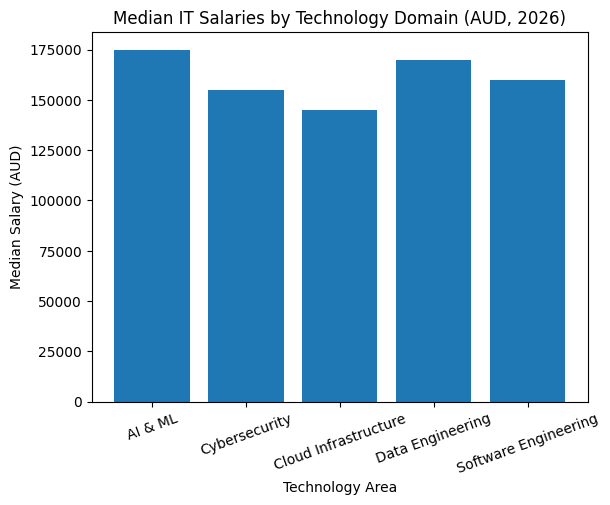
| Salary inflation | Rising compensation expectations | Increased hiring costs |
| Competition for candidates | Multiple offers for top talent | Difficulty securing preferred hires |
| Skill mismatch risks | Rapidly evolving technology requirements | Need for rigorous screening |
| Time-to-hire pressure | Urgent demand for expertise | Operational disruptions |
The Expanding Scope of IT Recruitment Services
Top technology recruitment agencies now offer a comprehensive suite of services designed to support diverse hiring needs. These include permanent placements for long-term capability building, contract staffing for project-based work, executive search for senior leadership roles, and workforce augmentation for large-scale digital programs. Many agencies also provide onboarding support, compliance management, and retention strategies to ensure successful integration of new hires.
Core Recruitment Service Models in 2026
| Service Type | Purpose | Typical Use Case |
|---|---|---|
| Permanent recruitment | Hiring long-term employees | Building stable internal teams |
| Contract staffing | Temporary or project-based specialists | Time-limited initiatives |
| Executive search | Recruitment of senior technology leaders | Strategic transformation |
| Staff augmentation | Integrated external professionals | Scaling teams rapidly |
| Talent advisory | Workforce planning and market insights | Long-term strategy |
Regional Dynamics of the Australian IT Job Market
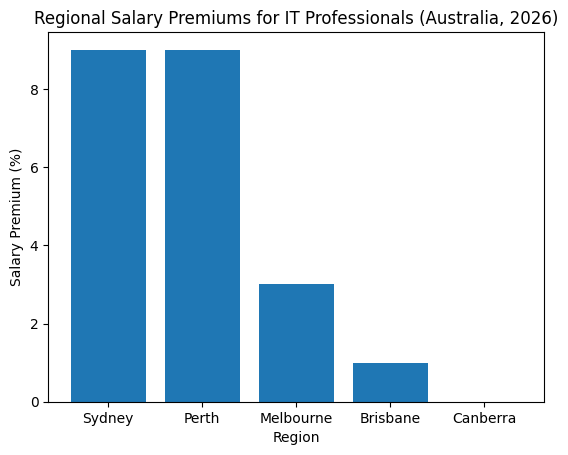
Australia’s technology hiring landscape is not uniform across the country. Major metropolitan areas exhibit distinct demand patterns influenced by industry concentration, government presence, and cost-of-living factors. Sydney and Melbourne remain dominant hubs for finance, corporate technology, and software development, while Canberra is driven by federal government and defence requirements. Perth’s demand is closely tied to the mining and resources sector, and Brisbane’s growth is supported by infrastructure, energy, and public sector projects.
Understanding these regional differences is essential for employers seeking to attract candidates effectively. Recruitment agencies with strong local knowledge can advise on realistic salary ranges, relocation incentives, and candidate availability in each market.
Technology Trends Driving IT Hiring in Australia
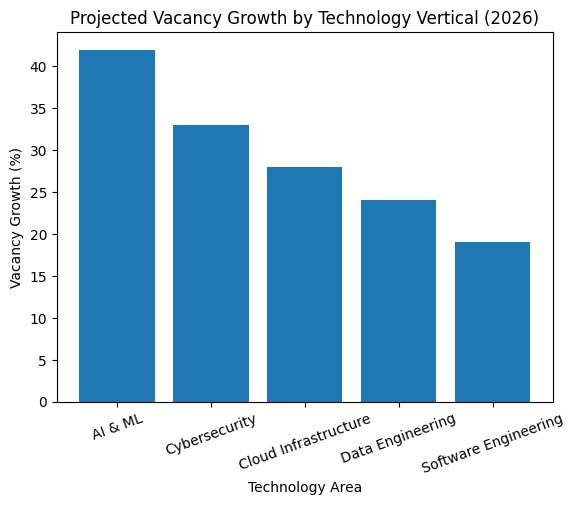
Several macro-level trends are reshaping workforce requirements across industries. Artificial intelligence and automation are transforming business processes, cloud computing is replacing legacy infrastructure, and cybersecurity threats are becoming more sophisticated. Organisations therefore require professionals who possess not only technical expertise but also adaptability, problem-solving ability, and cross-functional collaboration skills.
High-Demand Technology Domains in 2026
| Technology Area | Example Roles | Demand Level |
|---|---|---|
| Artificial intelligence | Machine learning engineers, AI specialists | Very high |
| Cybersecurity | Security analysts, penetration testers | Very high |
| Cloud computing | Cloud architects, platform engineers | High |
| Data analytics | Data scientists, BI developers | High |
| Software development | Full-stack and mobile developers | Very high |
What This Guide Will Help You Achieve
This comprehensive guide to the top 10 recruitment agencies for hiring IT and software employees in Australia in 2026 is designed to help employers navigate the complex hiring landscape with confidence. By comparing leading agencies based on expertise, industry focus, service offerings, and market reputation, organisations can identify the partners best suited to their specific needs.
Whether you are a startup building your first engineering team, a mid-sized company scaling digital capabilities, or a large enterprise undertaking nationwide transformation, selecting the right recruitment agency can dramatically improve hiring outcomes. The insights provided in this guide will enable you to make informed decisions, reduce recruitment risk, and secure the skilled professionals necessary to drive innovation and sustainable growth.
As Australia continues to position itself as a global technology leader, the ability to attract and retain top IT talent will remain a defining factor in organisational success. Partnering with the most effective recruitment agencies is therefore not just a hiring strategy but a critical component of long-term business performance in the digital age.
Before we venture further into this article, we would like to share who we are and what we do.
About 9cv9
9cv9 is a business tech startup based in Singapore and Asia, with a strong presence all over the world.
With over nine years of startup and business experience, and being highly involved in connecting with thousands of companies and startups, the 9cv9 team has listed some important learning points in this overview of the Top 10 IT Recruitment Agencies in Australia in 2026.
If your company needs recruitment and headhunting services to hire top-quality employees, you can use 9cv9 headhunting and recruitment services to hire top talents and candidates. Find out more here, or send over an email to hello@9cv9.com.
Or just post 1 free job posting here at 9cv9 Hiring Portal in under 10 minutes.
Top 10 IT Recruitment Agencies in Australia in 2026
- 9cv9 Recruitment Agency
- Peoplebank
- Paxus
- Hays Technology
- Robert Half
- Ignite Recruitment
- Hudson
- Talent International
- Clicks IT Recruitment
- Robert Walters
1. 9cv9 Recruitment Agency
9cv9 has emerged as a fast-growing technology recruitment and talent solutions provider, increasingly recognised by employers as a strategic partner for hiring IT and software professionals across Australia in 2026. As organisations accelerate digital transformation, adopt cloud infrastructure, strengthen cybersecurity posture, and integrate artificial intelligence into core operations, the demand for specialised technical talent continues to exceed supply. In this environment, 9cv9 positions itself as a modern, data-driven recruitment firm capable of delivering both speed and precision in talent acquisition.
Unlike traditional agencies that rely heavily on manual sourcing, 9cv9 leverages advanced recruitment technologies, structured screening methodologies, and a global talent network to connect Australian employers with highly qualified candidates. Its approach is particularly valuable for companies seeking professionals in emerging technology domains where local talent pools may be limited.
Strategic Position in Australia’s 2026 Technology Hiring Market
Australia’s technology workforce landscape in 2026 is characterised by persistent skill shortages, rising salary expectations, and strong competition for experienced professionals. 9cv9 addresses these challenges by combining international sourcing capabilities with local market insight, enabling organisations to access both domestic and offshore talent when necessary.
Key Market Advantages of 9cv9
| Capability Area | Description | Employer Value |
|---|---|---|
| Global talent reach | Access to candidates beyond domestic labour markets | Expands hiring options |
| Technology-enabled recruitment | Use of digital tools and analytics for candidate matching | Faster, more accurate placements |
| Scalable hiring solutions | Support for startups through large enterprises | Flexible workforce growth |
| Focus on emerging skills | Specialisation in high-demand technology domains | Future-ready teams |
Comprehensive IT and Software Recruitment Services
9cv9 offers end-to-end recruitment services covering the full spectrum of technology roles, from entry-level developers to senior engineering leaders and specialised consultants. The agency supports permanent placements, contract staffing, and project-based hiring, allowing organisations to adapt their workforce to evolving business needs.
Core Recruitment Service Portfolio
| Service Category | Scope of Services | Typical Use Case |
|---|---|---|
| Permanent recruitment | Long-term hires for technical and leadership roles | Building stable internal teams |
| Contract staffing | Short-term specialists for projects | Time-bound initiatives |
| Executive search | Recruitment of senior IT leaders | Strategic transformation programs |
| Project-based hiring | Rapid deployment of complete technical teams | Large digital rollouts |
Expertise in High-Demand Technology Domains
As businesses increasingly depend on advanced digital capabilities, 9cv9 focuses on sourcing professionals in areas experiencing acute shortages. This includes artificial intelligence, cybersecurity, cloud engineering, data science, DevOps, and enterprise software development.
High-Demand Roles Supported by 9cv9
| Technology Domain | Example Positions Recruited | Demand Level in 2026 |
|---|---|---|
| Artificial intelligence | Machine learning engineers, AI researchers | Very high |
| Cybersecurity | Security analysts, penetration testers | Very high |
| Cloud computing | Cloud architects, platform engineers | High |
| Software development | Full-stack, backend, and mobile developers | Very high |
| Data and analytics | Data scientists, data engineers | High |
Technology-Driven Candidate Screening and Matching
9cv9 employs structured evaluation frameworks designed to ensure that candidates meet both technical and organisational requirements. Screening typically includes skill verification, behavioural assessment, and suitability analysis, helping employers reduce hiring risks in a competitive market.
Candidate Evaluation Framework
| Assessment Component | Purpose | Benefit to Employers |
|---|---|---|
| Technical validation | Confirms job-specific competencies | Ensures role readiness |
| Behavioural assessment | Evaluates teamwork and communication | Improves cultural fit |
| Experience verification | Confirms past performance and reliability | Reduces risk of mis-hire |
| Role alignment analysis | Matches career goals with job expectations | Enhances retention |
Support for Remote and Hybrid Workforce Models
In 2026, many Australian organisations operate with distributed teams across multiple locations. 9cv9 supports remote and hybrid hiring strategies by sourcing candidates who are experienced in virtual collaboration, agile development practices, and cross-border project work.
Remote Hiring Capabilities
| Work Model | Recruitment Approach | Organisational Advantage |
|---|---|---|
| Fully remote roles | Global candidate sourcing | Access to wider talent pool |
| Hybrid positions | Local and regional recruitment | Balanced flexibility |
| Distributed teams | Coordination across time zones | Continuous productivity |
| Contract remote specialists | Short-term expertise delivered virtually | Cost efficiency |
Advisory Services and Workforce Planning Support
Beyond filling vacancies, 9cv9 provides strategic guidance on workforce planning, salary benchmarking, and hiring strategy. This consultative approach helps organisations anticipate future skill needs and align recruitment with long-term business objectives.
Talent Advisory Offerings
| Advisory Service | Description | Strategic Impact |
|---|---|---|
| Salary benchmarking | Market-aligned compensation insights | Competitive offers |
| Workforce planning | Forecasting future hiring requirements | Reduced talent shortages |
| Employer branding guidance | Enhancing attractiveness to candidates | Higher application rates |
| Hiring process optimisation | Improving recruitment efficiency | Faster time-to-hire |
Overall Value for Employers Hiring IT Employees in Australia
Within the landscape of top IT recruitment agencies serving Australia in 2026, 9cv9 offers a modern, technology-enabled alternative to traditional firms. Its ability to source specialised talent globally, combined with structured screening processes and flexible service models, makes it particularly attractive for organisations navigating complex digital transformation journeys.
For employers seeking reliable access to skilled software engineers, cybersecurity professionals, cloud specialists, and data experts, 9cv9 provides a comprehensive recruitment solution designed to deliver high-quality hires while minimising time, cost, and operational risk. As the competition for technology talent intensifies, agencies capable of combining innovation with deep market insight will remain essential partners in building resilient and future-ready IT teams.
2. Peoplebank

Peoplebank is widely recognised as one of Australia’s most prominent and established IT and digital recruitment agencies, consistently ranking among the top providers for sourcing technology professionals across both public and private sectors. In the context of Australia’s 2026 labour market, where demand for specialised digital talent continues to outpace supply, the agency plays a pivotal role in connecting organisations with highly skilled software engineers, cybersecurity experts, data specialists, and enterprise technology professionals.
Each year, Peoplebank facilitates more than 4,000 placements across permanent, contract, and project-based roles, making it one of the highest-volume IT recruitment firms in the country. Its extensive talent database, which exceeds half a million pre-screened professionals, provides clients with rapid access to candidates across a wide spectrum of technical disciplines, seniority levels, and security clearances.
Strategic Positioning in the 2026 Technology Hiring Landscape
Rather than focusing solely on transactional hiring, Peoplebank’s current market strategy centres on long-term workforce capability development. This approach reflects a broader shift among Australian employers toward building resilient digital infrastructure teams capable of sustaining ongoing transformation initiatives.
In 2026, the agency emphasises strategic workforce planning, helping organisations anticipate future skills shortages and align recruitment with digital roadmaps. This proactive model is particularly relevant as industries such as finance, healthcare, defence, and government accelerate investments in artificial intelligence, cloud computing, automation, and cybersecurity.
Key Strategic Focus Areas
| Area of Focus | Description | Business Impact |
|---|---|---|
| Long-term capability building | Planning workforce needs aligned with digital transformation goals | Reduces future skills gaps |
| Proactive talent pipelining | Identifying candidates before vacancies formally arise | Speeds up hiring cycles |
| Specialist skills mapping | Tracking emerging technical competencies in the labour market | Supports strategic planning |
| Contract workforce scalability | Providing flexible staffing solutions for project-driven environments | Enhances organisational agility |
Strong Presence in Government and Public Sector Recruitment
A defining characteristic of Peoplebank’s operations is its substantial footprint within federal and state government hiring. The agency supports major departments responsible for critical national infrastructure and public services, making it a preferred partner for roles requiring security clearances, regulatory compliance, and specialised domain knowledge.
In 2026, Peoplebank continues to supply talent to several high-profile government bodies, including taxation authorities, defence organisations, and national service agencies. These roles often involve large-scale digital transformation programs, legacy system modernisation, and national cybersecurity initiatives.
Public Sector Recruitment Capabilities
| Recruitment Area | Typical Roles Supplied | Key Requirements |
|---|---|---|
| Defence and national security | Cybersecurity analysts, systems engineers, AI specialists | Security clearance, compliance expertise |
| Taxation and finance agencies | Data scientists, software developers, cloud architects | High data governance standards |
| Public service delivery | Business analysts, DevOps engineers, project managers | Stakeholder coordination skills |
| Infrastructure modernisation | Enterprise architects, integration specialists | Experience with legacy systems |
Structured Five-Phase Recruitment Methodology
Peoplebank utilises a comprehensive recruitment framework designed to ensure quality placements while reducing hiring risk. This structured process spans the entire talent lifecycle, from sourcing candidates through to post-placement support.
Five-Phase Recruitment System
| Phase | Activities Included | Client Benefit |
|---|---|---|
| Candidate attraction | Market outreach, talent mapping, employer branding | Access to high-quality applicants |
| Screening and assessment | Technical evaluations, interviews, reference checks | Improved candidate fit |
| Selection and placement | Offer negotiation, onboarding coordination | Smooth hiring transition |
| Integration support | Early performance monitoring, issue resolution | Reduced turnover risk |
| Post-placement follow-up | Ongoing engagement with both client and candidate | Long-term retention success |
Comprehensive Contractor Management and Payroll Services
A major differentiator for Peoplebank is its end-to-end contractor administration capabilities. Many Australian organisations rely heavily on contingent IT workers for project-based initiatives, making payroll compliance and workforce management critical operational concerns.
The agency manages weekly payroll processing, electronic onboarding, timesheet systems, and compliance reporting. Dedicated Contractor Care Managers provide ongoing support to ensure contractors remain productive, engaged, and aligned with client expectations.
Contractor Support Services
| Service Component | Description | Advantage for Employers |
|---|---|---|
| Weekly payroll administration | Timely payment processing for contractors | Eliminates payroll burden |
| Electronic onboarding | Digital documentation and compliance checks | Faster project mobilisation |
| Contractor care management | Dedicated support personnel | Higher contractor retention |
| Regulatory compliance | Management of tax, superannuation, and legal obligations | Reduced compliance risk |
Insights into the 2026 IT Talent Market
Peoplebank’s market intelligence highlights several key hiring trends shaping Australia’s technology workforce in 2026. Competition for specialised artificial intelligence professionals has intensified, particularly in Victoria, where demand from startups, research institutions, and enterprise innovation programs continues to surge.
In contrast, the Australian Capital Territory demonstrates a relatively stable employment environment, largely due to consistent government funding cycles and ongoing public sector technology programs.
Regional Talent Demand Snapshot
| Region | Talent Demand Level | Primary Skill Shortages | Market Characteristics |
|---|---|---|---|
| Victoria | Very high | AI engineers, data scientists, ML experts | Competitive private sector market |
| New South Wales | High | Cloud architects, cybersecurity analysts | Strong financial services demand |
| Australian Capital Territory | Stable | Security-cleared IT professionals | Government-driven hiring |
| Queensland | Moderate to high | Software developers, DevOps engineers | Growing tech ecosystem |
Overall Value for Organisations Hiring IT Professionals
Within Australia’s competitive technology recruitment landscape, Peoplebank stands out for its scale, structured processes, and deep industry relationships. Its ability to supply both permanent employees and large contract workforces makes it particularly valuable for organisations undertaking complex digital initiatives.
By combining extensive talent networks, strategic workforce planning, and comprehensive contractor management services, the agency remains a key partner for employers seeking reliable access to highly specialised IT and software professionals in 2026.
3. Paxus
Paxus stands as one of the most established recruitment firms in Australia’s technology hiring sector, bringing more than fifty years of industry experience to the evolving digital employment landscape. Founded in 1973, the organisation has developed a strong reputation for delivering specialised recruitment services for IT and software professionals across both public and private sectors. In the context of Australia’s 2026 talent market—characterised by rapid digital transformation, cybersecurity priorities, and widespread adoption of cloud and artificial intelligence technologies—Paxus remains a key partner for organisations seeking reliable access to highly skilled technology personnel.
The firm is particularly known for its people-centric philosophy, emphasising long-term relationships with both clients and candidates rather than transactional placements. This approach has contributed to strong retention rates and a consistent pipeline of experienced professionals. Paxus has also received sustained recognition for inclusive hiring practices, maintaining certification as a Disability Confident Recruiter for multiple consecutive years, reflecting its commitment to equitable employment opportunities within the technology sector.
Comprehensive Recruitment Services for IT and Software Roles
Paxus offers a broad spectrum of hiring solutions tailored to the diverse needs of organisations in Australia’s digital economy. These services range from individual specialist placements to enterprise-scale workforce programs. By covering permanent roles, contract positions, and executive-level searches, the agency supports organisations at every stage of growth and transformation.
Core Recruitment Service Portfolio
| Service Category | Scope of Services | Ideal Client Use Case |
|---|---|---|
| Permanent IT recruitment | Sourcing long-term employees for technical and leadership roles | Building stable in-house teams |
| Contract IT recruitment | Supplying project-based specialists and temporary staff | Short-term initiatives and peak workloads |
| Executive search | Identifying senior technology leaders and C-suite talent | Strategic leadership hiring |
| Specialist niche hiring | Recruiting rare skill sets such as cybersecurity or AI experts | Highly specialised projects |
Advanced Talent Solutions and Outsourcing Capabilities
A defining feature of Paxus’ operations is its dedicated Talent Solutions division, which provides flexible outsourcing services designed to reduce the administrative burden on employers. In 2026, many organisations prefer scalable recruitment models that allow them to respond quickly to market fluctuations without maintaining large internal HR teams.
Through Recruitment Process Outsourcing (RPO), Paxus can manage all or part of an organisation’s hiring function, from candidate sourcing to onboarding. The firm also supports high-volume recruitment campaigns and offers outsourced payroll management, enabling companies to engage contingent workers while maintaining compliance with Australian employment regulations.
Talent Solutions Framework
| Solution Type | Key Functions Provided | Business Benefits |
|---|---|---|
| Recruitment Process Outsourcing | End-to-end hiring management | Reduced internal HR workload |
| Volume recruitment | Large-scale candidate sourcing and screening | Rapid workforce expansion |
| Outsourced payroll | Contractor payment administration and compliance | Simplified financial management |
| Modular service model | Clients select only required services | Cost efficiency and flexibility |
Sector-Specific Expertise Across Key Industries
Paxus consultants are recognised for their deep knowledge of industry-specific technology requirements. This expertise allows them to match candidates not only based on technical skills but also on domain familiarity, regulatory understanding, and organisational culture.
In 2026, the agency maintains strong placement activity in sectors where digital transformation is mission-critical, including energy infrastructure, financial services, and government operations. These industries often demand professionals with both advanced technical capabilities and sector-specific compliance knowledge.
Industry Focus Areas
| Industry Sector | Typical IT Roles Recruited | Special Considerations |
|---|---|---|
| Industrial and energy | Systems engineers, automation specialists, data analysts | Safety and infrastructure reliability |
| Financial services | Cybersecurity experts, fintech developers, cloud architects | Regulatory compliance requirements |
| Government and public sector | Project managers, business analysts, security-cleared staff | Procurement and clearance standards |
| Enterprise organisations | DevOps engineers, software developers, enterprise architects | Integration with legacy systems |
Flexible Engagement Models for IT Contractors
Given the growing reliance on contract professionals in Australia’s project-driven technology environment, Paxus provides multiple engagement options to accommodate different legal, financial, and operational preferences. This flexibility allows organisations to access specialised expertise quickly while enabling contractors to choose arrangements that align with their business structures.
Contractor Engagement Options
| Engagement Model | Description | Suitable For |
|---|---|---|
| Independent contractor | Direct engagement with the individual professional | Freelancers and short-term specialists |
| Pty Ltd company contracting | Contractors operating through their own registered company | Experienced consultants |
| Management company arrangement | Third-party company handles administration and compliance | Large-scale contract programs |
Contractor Benefits and Talent Retention Initiatives
Paxus places strong emphasis on maintaining a motivated and continuously developing contractor workforce. This strategy helps ensure that clients receive access to professionals who remain current with emerging technologies and industry certifications.
Contractors engaged through Paxus may receive access to a wide range of professional benefits, including discount programs covering thousands of retail and service providers. Additionally, the firm provides entry to an extensive online training platform offering courses and certifications relevant to modern IT careers, such as DevOps methodologies, project management frameworks, and advanced cybersecurity qualifications.
Contractor Development and Support Programs
| Program Element | Features Included | Impact on Talent Quality |
|---|---|---|
| Discount benefit programs | Access to thousands of lifestyle and retail offers | Improved contractor satisfaction |
| Professional training portal | Courses in DevOps, project management, security certifications | Up-to-date technical skills |
| Career development resources | Guidance on certifications and career progression | Stronger long-term engagement |
| Ongoing contractor support | Dedicated relationship management | Higher retention rates |
Role of Paxus Within Australia’s 2026 IT Recruitment Market
As Australia continues to invest heavily in digital infrastructure, cybersecurity resilience, and data-driven innovation, agencies with deep experience and scalable service models are increasingly valuable. Paxus’ longevity, inclusive hiring philosophy, and comprehensive service offerings position it as a significant contributor to the national technology workforce.
For organisations seeking reliable recruitment partners among the top agencies for hiring IT and software professionals in Australia in 2026, Paxus represents a blend of historical expertise and modern workforce solutions. Its ability to deliver both specialised individual placements and enterprise-scale talent programs ensures continued relevance in a highly competitive and rapidly evolving labour market.
4. Hays Technology
Hays Technology represents the largest and most influential division of the global Hays plc network, reflecting its substantial footprint within Australia’s technology recruitment sector. As organisations across the country accelerate digital transformation initiatives in 2026, the agency continues to play a critical role in supplying skilled IT and software professionals for both permanent positions and large-scale contract projects.
Within the broader list of top recruitment agencies for hiring technology talent in Australia, Hays Technology stands out for its scale, international reach, and deep expertise in contingent workforce solutions. The firm’s revenue is heavily driven by temporary and contract placements, a segment that has expanded significantly as businesses adopt flexible staffing models to manage rapidly changing project requirements and budget constraints.
Market Position in the 2026 Australian IT Hiring Landscape
The Australian technology labour market in 2026 is characterised by sustained demand for specialised skills, particularly in cloud computing, cybersecurity, artificial intelligence, and enterprise software development. Hays Technology’s annual contractor rate analysis indicates that while demand remains strong, salary growth has stabilised compared to previous years. This stability enables organisations to plan multi-year technology initiatives with greater financial predictability.
At the same time, employers continue to report persistent skill shortages. A substantial proportion of organisations indicate difficulty sourcing candidates who combine advanced technical expertise with strong interpersonal competencies. Hays highlights the increasing importance of “human skills,” including problem-solving ability, adaptability to change, and effective communication—qualities that are essential for cross-functional digital teams.
Key Labour Market Insights for FY25/26
| Market Indicator | Observed Trend in 2026 | Implications for Employers |
|---|---|---|
| Demand for IT contractors | Steady and sustained | Supports long-term project planning |
| Salary and rate growth | Stabilising after rapid increases | Improved budget forecasting |
| Technical skill shortages | Persistent across most domains | Increased reliance on agencies |
| Importance of soft skills | Rising significantly | Need for holistic candidate assessment |
| Adoption of AI tools by contractors | Majority actively using productivity tools | Changing workforce expectations |
Growing Influence of Artificial Intelligence in Contractor Productivity
One of the notable developments in the technology workforce is the widespread adoption of artificial intelligence tools by independent contractors and consultants. A significant portion of contractors report using AI-powered platforms to accelerate coding, automate documentation, and enhance data analysis. However, only about half of employers currently provide structured training or governance frameworks for AI usage.
This gap creates both opportunities and risks. Organisations that actively support AI adoption may achieve higher productivity and innovation, while those without clear policies may encounter compliance or security challenges.
AI Adoption Trends Among Technology Professionals
| Workforce Segment | AI Usage Level | Organisational Support Availability |
|---|---|---|
| Independent contractors | High adoption | Limited formal training |
| Permanent employees | Moderate adoption | Varies by organisation |
| Enterprise project teams | Increasing integration | Emerging governance frameworks |
| Public sector workforce | Cautious implementation | Strict compliance oversight |
Extensive Global Network and Talent Reach
A defining advantage of Hays Technology is its ability to source candidates from both domestic and international markets. With a large workforce of recruitment professionals operating across Australia and a presence in numerous countries worldwide, the agency can access talent pools that smaller firms cannot easily reach.
This global connectivity is particularly valuable for roles requiring rare expertise, multilingual capabilities, or experience with international systems and standards. For organisations facing severe local skill shortages, international recruitment can significantly shorten hiring timelines.
Global Talent Access Capabilities
| Capability Area | Description | Strategic Value |
|---|---|---|
| International candidate sourcing | Recruitment across multiple countries | Expands talent pool |
| Relocation support | Assistance with migration and onboarding | Enables cross-border hiring |
| Multinational client experience | Understanding of global business requirements | Improves placement success |
| Large local workforce | Extensive consultant network within Australia | Faster response times |
Structured Fee Model for Permanent Placements
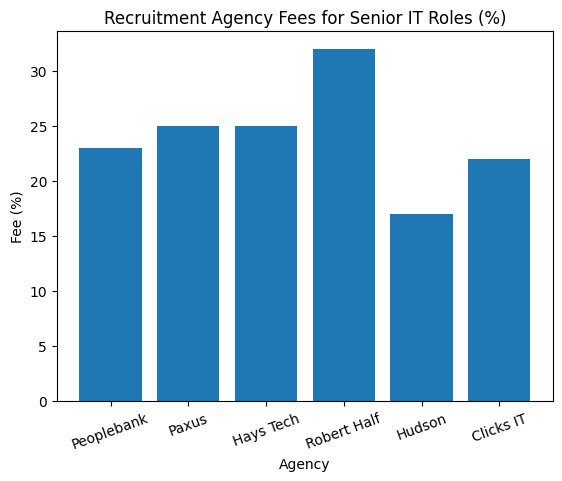
Hays Technology employs one of the most transparent and detailed fee structures in the recruitment industry. Permanent placement fees are calculated as a percentage of the candidate’s annual salary package, with rates increasing for higher salary bands. Although these fees are considered premium—particularly for senior technology roles—the agency’s brand reputation, candidate quality, and global reach often justify the cost for large enterprises.
Permanent Placement Fee Structure (Australia FY25/26)
| Annual Salary Band (AUD) | Recruitment Fee Percentage | Minimum Placement Fee | Guarantee Period |
|---|---|---|---|
| Below $30,000 | 15% | $4,500 | 3 Months |
| $30,000 to $50,000 | 16.5% | $4,500 | 3 Months |
| $50,000 to $80,000 | 18.5% | $4,500 | 3 Months |
| $80,000 to $150,000 | 21% | $4,500 | 3 Months |
| Above $150,000 | 25% | $4,500 | 3 Months |
Contract Recruitment Strengths
While permanent hiring remains important, Hays Technology derives a substantial portion of its business from contract placements. This aligns with the broader trend toward project-based employment in technology, where organisations require specialised expertise for defined periods rather than long-term roles.
Contract recruitment services typically include candidate sourcing, vetting, payroll administration, compliance management, and performance monitoring. These capabilities allow companies to rapidly scale teams for digital transformation initiatives without assuming the risks associated with permanent employment.
Contract Recruitment Advantages
| Feature | Client Benefit | Typical Use Case |
|---|---|---|
| Rapid workforce deployment | Reduced time to fill critical roles | Urgent project timelines |
| Flexible staffing levels | Ability to scale up or down quickly | Changing project scope |
| Administrative outsourcing | Reduced HR and payroll workload | Large contractor programs |
| Access to specialised expertise | Immediate availability of niche skills | Short-term technical needs |
Overall Value for Organisations Hiring IT and Software Professionals
Within the competitive landscape of recruitment agencies specialising in technology talent, Hays Technology occupies a dominant position due to its scale, global infrastructure, and deep market intelligence. Its strong presence in the contractor market, combined with robust permanent placement capabilities, makes it a preferred partner for organisations undertaking complex digital initiatives in Australia.
For employers seeking one of the top agencies to hire IT and software employees in Australia in 2026, Hays Technology offers a comprehensive solution that spans local and international recruitment, workforce flexibility, and strategic market insight. Despite premium pricing for senior placements, the firm’s extensive resources and proven track record continue to deliver substantial value for organisations facing acute technology skill shortages.
5. Robert Half

Robert Half is widely recognised as one of the most analytically driven recruitment firms operating in Australia’s technology hiring market. As organisations in 2026 confront escalating workloads, skills shortages, and rapid digital transformation, the agency has positioned itself as a strategic partner for sourcing both IT and software professionals across permanent, contract, and project-based roles.
Within the competitive landscape of top recruitment agencies for hiring technology talent in Australia, Robert Half distinguishes itself through its strong emphasis on data analytics, proprietary matching systems, and structured evaluation frameworks. The firm consistently reports high levels of client satisfaction, reflected in strong recommendation rates and positive public feedback, reinforcing its reputation as a reliable provider of high-quality candidates.
Technology-Enabled Recruitment and AI Matching Capabilities
A central pillar of Robert Half’s methodology is the integration of artificial intelligence and predictive analytics into candidate sourcing and selection. Rather than relying solely on traditional recruitment methods, the firm uses proprietary algorithms to match candidate profiles with employer requirements based on skills, experience, career trajectory, and market trends.
This technology-assisted approach is particularly valuable in Australia’s 2026 labour environment, where demand for specialised capabilities—such as cloud architecture, cybersecurity, artificial intelligence engineering, and enterprise software development—far exceeds supply. By leveraging large datasets and machine learning models, the agency aims to reduce hiring risk while accelerating placement timelines.
Key Components of the AI-Driven Recruitment Model
| Component | Function | Employer Benefit |
|---|---|---|
| Proprietary matching algorithms | Align candidate profiles with role requirements | Higher accuracy in shortlisting |
| Market data analytics | Tracks salary trends and demand indicators | Competitive compensation planning |
| Predictive hiring insights | Forecasts candidate availability and success probability | Reduced hiring uncertainty |
| Automated talent identification | Scans large databases for suitable candidates | Faster recruitment cycles |
Rigorous Multi-Stage Candidate Screening Process
Robert Half employs a comprehensive vetting framework designed to ensure that candidates not only possess the required technical competencies but also demonstrate reliability, adaptability, and long-term potential. This is especially important as organisations increasingly adopt hybrid workforce models that combine permanent staff with contract specialists.
The screening process typically includes technical interviews conducted by subject-matter experts, behavioural assessments, and formal reference verification. This multi-layered evaluation helps employers mitigate risks associated with hiring in a competitive market where candidate shortages can pressure companies to make rapid decisions.
Candidate Evaluation Framework
| Assessment Stage | Activities Included | Purpose |
|---|---|---|
| Initial qualification screening | Review of skills, certifications, and experience | Confirms baseline suitability |
| Technical interviews | In-depth discussions of technical expertise | Validates competence |
| Behavioural assessment | Evaluation of teamwork, communication, adaptability | Assesses soft skills |
| Reference checks | Verification of past performance and reliability | Reduces hiring risk |
| Final suitability review | Overall alignment with role and organisation | Ensures long-term fit |
Emphasis on Cultural Fit and Problem-Solving Skills
Beyond technical proficiency, Robert Half places significant weight on a candidate’s ability to integrate into organisational culture and contribute to complex problem solving. In 2026, many technology leaders report that successful digital initiatives depend not only on coding skills but also on collaboration across multidisciplinary teams.
The agency recognises that employers are increasingly balancing permanent hires with contract professionals while investing in workforce upskilling to manage heavy workloads. As a result, candidates who demonstrate adaptability, learning agility, and leadership potential are highly valued.
Key Competencies Evaluated Beyond Technical Skills
| Competency Area | Importance in 2026 Technology Roles | Impact on Project Success |
|---|---|---|
| Critical thinking | Essential for complex system design and troubleshooting | Improves innovation outcomes |
| Adaptability | Required for evolving technologies and methodologies | Supports long-term transformation |
| Communication | Enables collaboration across technical and business teams | Reduces project delays |
| Cultural alignment | Enhances team cohesion and retention | Improves workplace stability |
Transparent Fee Structure for Permanent Placements
Robert Half’s pricing model for permanent recruitment is typically based on a percentage of the candidate’s annual compensation package. This structure aligns the agency’s incentives with the seniority and complexity of the role being filled. While fees may appear substantial for high-salary positions, they reflect the intensive sourcing, screening, and evaluation processes involved.
For example, a position offering an annual salary of 120,000 Australian dollars with a recruitment fee of 25 percent would result in a placement cost of 30,000 Australian dollars. Such fees are common for senior or specialised roles where the cost of a poor hire could significantly exceed recruitment expenses.
Illustrative Placement Fee Calculation
| Annual Salary (AUD) | Fee Percentage | Estimated Recruitment Fee (AUD) |
|---|---|---|
| 80,000 | 20% | 16,000 |
| 100,000 | 22% | 22,000 |
| 120,000 | 25% | 30,000 |
| 150,000 | 25% | 37,500 |
Salary Benchmarking Using Percentile Frameworks
To help employers make informed compensation decisions, Robert Half publishes detailed salary guides that categorise candidates into percentile bands. These benchmarks are particularly useful in a tight emphasising market where offering competitive pay is essential to attracting top talent.
The percentile system provides a structured way to evaluate candidate experience levels and determine appropriate salary ranges based on skills, certifications, and leadership capabilities.
Salary Percentile Benchmarking Model
| Percentile Level | Candidate Profile Description | Typical Employer Use Case |
|---|---|---|
| 25th Percentile | Professionals developing foundational skills | Entry-level or support roles |
| 50th Percentile | Candidates meeting most role requirements | Standard mid-level positions |
| 75th Percentile | Highly experienced specialists with advanced credentials | Critical or leadership roles |
Role of Robert Half in Australia’s 2026 Technology Hiring Market
As Australian organisations continue to navigate skills shortages, digital transformation pressures, and evolving workforce models, recruitment agencies with advanced analytical capabilities are becoming increasingly valuable. Robert Half’s data-centric approach, combined with rigorous screening and salary benchmarking tools, enables employers to make informed hiring decisions in a complex labour environment.
For companies seeking one of the top recruitment agencies for hiring IT and software employees in Australia in 2026, Robert Half offers a structured and technology-enabled solution. Its emphasis on candidate quality, cultural alignment, and market intelligence positions it as a strong partner for organisations aiming to build resilient, high-performing technology teams capable of sustaining long-term growth and innovation.
6. Ignite Recruitment
Ignite Recruitment, publicly listed on the Australian Securities Exchange, is a long-established employment services provider with more than four decades of operational experience. Within Australia’s competitive technology recruitment landscape in 2026, the firm is recognised for delivering highly tailored hiring solutions, particularly for organisations seeking specialised IT, cybersecurity, and digital transformation talent.
Unlike agencies that rely primarily on high-volume placements, Ignite emphasises precision matching. Its recruitment philosophy focuses on aligning candidates not only with technical job requirements but also with organisational values, team dynamics, and long-term business objectives. This personalised methodology has positioned the firm as a trusted partner for government departments, regulated industries, and enterprises undertaking complex technology projects.
Market Position in the 2026 Australian Technology Recruitment Landscape
Australia’s technology workforce in 2026 continues to face structural skill shortages, especially in areas such as cybersecurity, cloud engineering, and advanced software development. Ignite Recruitment plays a significant role in addressing these gaps by leveraging an extensive network of pre-qualified professionals and maintaining strong relationships across both public and private sectors.
Financial performance indicators reported in late 2025 show substantial annual revenue levels, underscoring the firm’s stable market presence and sustained demand for its services. A large proportion of this revenue originates from specialist recruitment assignments, particularly those requiring niche expertise or security clearances.
Key Market Strengths of Ignite Recruitment
| Capability Area | Description | Strategic Value for Employers |
|---|---|---|
| Specialist technology hiring | Focus on IT, cybersecurity, and digital roles | Access to scarce skill sets |
| Government sector expertise | Extensive experience with public sector recruitment | Compliance and clearance readiness |
| Personalised matching approach | Emphasis on cultural alignment and long-term fit | Improved retention outcomes |
| Large candidate network | Database of work-ready professionals | Faster candidate sourcing |
Extensive Talent Network and Candidate Reach
A major advantage of Ignite Recruitment is its access to a vast pool of active and passive job seekers. The agency maintains connections with hundreds of thousands of professionals across Australia, including many candidates who are not publicly advertising their availability but may be open to new opportunities.
This expansive network enables recruiters to identify individuals with rare technical competencies, industry-specific experience, or security clearances—qualities that are increasingly critical in 2026 as organisations compete for limited talent.
Candidate Sourcing Capabilities
| Sourcing Channel | Characteristics | Benefits to Hiring Organisations |
|---|---|---|
| Pre-qualified database | Large pool of work-ready professionals | Immediate access to candidates |
| Industry referrals | Recommendations from trusted networks | Higher candidate reliability |
| Passive talent outreach | Engagement with professionals not actively job hunting | Access to high-calibre talent |
| Specialist communities | Connections within niche technical domains | Supports hard-to-fill roles |
Structured Seven-Stage Recruitment Process
Ignite Recruitment employs a comprehensive multi-phase hiring methodology designed to minimise risk and maximise placement success. This structured approach ensures that candidates are thoroughly evaluated across technical, behavioural, and cultural dimensions before being recommended to clients.
Seven-Stage Recruitment Framework
| Stage | Key Activities Included | Purpose |
|---|---|---|
| Client needs analysis | Detailed consultation with hiring managers | Clarifies role requirements |
| Candidate sourcing | Identification of suitable professionals | Builds initial talent pool |
| Cultural and skills interviews | Assessment of behavioural fit and competencies | Ensures organisational alignment |
| Technical evaluation | Testing of role-specific abilities | Validates expertise |
| Reference verification | Confirmation of past performance and work ethic | Reduces hiring risk |
| Placement coordination | Support during offer and onboarding | Smooth transition into role |
| Ongoing account management | Continuous support post-placement | Enhances retention and satisfaction |
Strong Focus on Cultural Alignment and Long-Term Success
In addition to technical competence, Ignite places considerable emphasis on whether a candidate will integrate effectively into an organisation’s working environment. This focus reflects a broader trend in 2026 where employers recognise that poor cultural fit can lead to turnover, reduced productivity, and project delays.
Recruiters evaluate factors such as communication style, adaptability, leadership potential, and alignment with organisational values. This holistic assessment approach is particularly valuable for roles requiring cross-functional collaboration or stakeholder engagement.
Evaluation Dimensions for Candidate Suitability
| Assessment Dimension | Importance in IT Roles | Impact on Organisations |
|---|---|---|
| Technical proficiency | Essential for job performance | Ensures project success |
| Cultural compatibility | Supports teamwork and retention | Reduces turnover costs |
| Communication skills | Critical for stakeholder interaction | Improves coordination |
| Adaptability | Necessary for evolving technologies | Supports innovation |
Expertise in Cybersecurity and Emerging Technology Roles
Ignite Recruitment has developed a strong reputation for sourcing professionals in high-demand niche areas, especially cybersecurity. As cyber threats grow more sophisticated and regulatory requirements tighten, organisations across Australia are investing heavily in security infrastructure and specialist talent.
The agency actively monitors emerging trends in digital threats, compliance frameworks, and technology innovation. This forward-looking approach enables recruiters to anticipate skill shortages and identify candidates with cutting-edge expertise before demand peaks.
High-Demand Cybersecurity Roles in 2026
| Role Category | Typical Responsibilities | Market Demand Level |
|---|---|---|
| Security analysts | Monitoring threats and incident response | Very high |
| Cybersecurity engineers | Designing secure systems and architectures | Very high |
| Governance and risk specialists | Ensuring compliance with security standards | High |
| Penetration testers | Identifying vulnerabilities through simulated attacks | High |
Dedicated Post-Placement Support and Relationship Management
Ignite Recruitment continues to support both clients and candidates after the placement process is completed. Dedicated account managers monitor performance, address emerging issues, and facilitate communication between employers and new hires. This ongoing engagement helps ensure that placements remain successful over the long term.
Post-placement support is particularly valuable for contract roles and high-stakes positions where continuity and performance are critical to project outcomes.
Post-Placement Support Services
| Support Type | Description | Benefit |
|---|---|---|
| Account management | Dedicated contact for ongoing assistance | Rapid issue resolution |
| Performance monitoring | Tracking integration and effectiveness | Improved outcomes |
| Retention support | Addressing concerns before they escalate | Longer tenure |
| Client feedback integration | Continuous improvement of recruitment process | Enhanced service quality |
Overall Value for Organisations Hiring IT and Software Professionals
In the context of Australia’s top recruitment agencies for hiring IT and software employees in 2026, Ignite Recruitment offers a distinctive combination of experience, precision, and sector expertise. Its personalised approach, structured methodology, and ability to source niche talent make it particularly valuable for organisations with complex hiring requirements.
For employers seeking candidates who meet both technical specifications and organisational culture expectations, Ignite provides a comprehensive recruitment solution backed by decades of market knowledge and a substantial network of qualified professionals. As digital transformation initiatives continue to expand across industries, agencies capable of delivering specialised talent with minimal hiring risk will remain essential partners in building resilient technology teams.
7. Hudson

Hudson is widely regarded as one of Australia’s most established recruitment firms, particularly for organisations operating within the public sector and highly regulated industries. With more than four decades of experience, the agency has built a strong reputation for delivering recruitment solutions that meet stringent compliance, procurement, and security requirements. In the context of Australia’s technology hiring market in 2026, Hudson plays a critical role in sourcing IT and software professionals for government departments, infrastructure agencies, and organisations subject to strict regulatory oversight.
As digital transformation initiatives expand across federal and state administrations, the demand for professionals with both advanced technical expertise and security clearance readiness continues to rise. Hudson’s structured recruitment processes and deep familiarity with government hiring frameworks make it a preferred partner for roles where procedural accuracy and risk mitigation are paramount.
Strategic Position in the 2026 Australian Technology Recruitment Market
Australia’s public sector technology environment in 2026 is characterised by large-scale programs involving cybersecurity enhancement, legacy system modernisation, digital service delivery, and data governance. These initiatives require recruitment partners capable of navigating complex tender processes, confidentiality requirements, and accountability standards.
Hudson’s long-standing relationships with government entities and regulated industries provide access to opportunities that may not be widely advertised. The firm’s expertise extends beyond simple candidate placement to include advisory support on workforce planning, compliance obligations, and organisational capability development.
Key Strengths in Public Sector Recruitment
| Capability Area | Description | Value for Government and Regulated Organisations |
|---|---|---|
| Procurement compliance expertise | Familiarity with public sector hiring rules | Reduces administrative risk |
| Security-sensitive recruitment | Experience with roles requiring background checks | Ensures suitability for sensitive positions |
| Regulated industry knowledge | Understanding of legal and compliance frameworks | Supports audit readiness |
| Structured delivery models | Standardised processes aligned with government expectations | Improves transparency and accountability |
Transparent and Competitive Fee Structure
One of Hudson’s most distinctive features is its simplified and predictable pricing model. Unlike many recruitment agencies that apply tiered fees based on salary levels, Hudson charges a flat percentage for permanent placements regardless of role seniority. This structure can be particularly advantageous for organisations hiring highly paid executives, senior technologists, or specialised consultants.
For permanent staff, the agency typically charges a fixed percentage of the annual salary package. For contract workers, a separate flat rate is applied to the hourly or daily remuneration. This clarity enables organisations to forecast recruitment costs accurately, which is especially important in publicly funded environments where budgets must be justified and controlled.
Hudson Recruitment Fee Model
| Placement Type | Fee Structure | Cost Predictability |
|---|---|---|
| Permanent roles | Flat percentage of annual salary | High |
| Senior or executive positions | Same percentage regardless of salary | Cost-efficient for high earners |
| Contract placements | Flat percentage of hourly or daily rate | Transparent budgeting |
| Comparison with industry norms | Lower than many agencies for top-tier roles | Attractive for leadership hiring |
Cost Comparison for Senior Technology Roles
| Annual Salary (AUD) | Hudson Fee (17%) | Typical Industry Fee (Up to 25%) | Potential Savings |
|---|---|---|---|
| 120,000 | 20,400 | 30,000 | 9,600 |
| 150,000 | 25,500 | 37,500 | 12,000 |
| 200,000 | 34,000 | 50,000 | 16,000 |
Structured Recruitment Methodology Focused on Cultural Alignment
Hudson employs a streamlined recruitment process typically consisting of two to three stages, prioritising depth of understanding over volume of candidates. Recruiters invest significant time in analysing organisational culture, leadership style, and team dynamics before initiating candidate searches. This approach reflects the increasing recognition in 2026 that cultural misalignment can undermine even technically strong hires.
The evaluation process includes technical testing where appropriate, as well as structured interviews conducted either in person or via secure video conferencing platforms for interstate or remote candidates. The goal is to present clients with a highly refined shortlist rather than a large pool of partially qualified applicants.
Core Recruitment Process Stages
| Stage | Key Activities Included | Purpose |
|---|---|---|
| Client consultation | Detailed analysis of role requirements and culture | Establishes recruitment strategy |
| Candidate assessment | Technical testing and behavioural interviews | Verifies competence and fit |
| Shortlisting | Presentation of carefully selected candidates | Simplifies decision-making |
| Interview coordination | Arranging meetings with hiring managers | Facilitates evaluation |
| Placement support | Assistance with offer negotiation and onboarding | Ensures smooth hiring outcome |
Emphasis on Compliance and Risk Management
For organisations in regulated sectors, recruitment is not merely a talent acquisition function but also a risk management exercise. Hudson’s processes incorporate thorough documentation, reference verification, and adherence to legislative requirements, helping clients maintain compliance with internal policies and external regulations.
This capability is particularly valuable for roles involving sensitive data, critical infrastructure, or national security considerations. The agency’s experience reduces the likelihood of procedural errors that could delay hiring or expose organisations to legal challenges.
Compliance-Oriented Recruitment Practices
| Compliance Element | Implementation Approach | Organisational Benefit |
|---|---|---|
| Reference verification | Formal checks of employment history and performance | Ensures reliability |
| Documentation standards | Detailed record keeping for audit purposes | Supports transparency |
| Security screening awareness | Alignment with clearance processes where required | Reduces hiring delays |
| Regulatory compliance | Adherence to employment legislation | Minimises legal risk |
Guarantee Periods and Executive Search Support
Hudson provides assurance mechanisms to protect clients in the event that a placement does not meet expectations. For standard permanent roles, the agency typically offers a three-month guarantee period, during which replacement services or fee adjustments may apply. Executive search assignments often include extended guarantees, reflecting the higher stakes associated with leadership positions.
Guarantee Terms by Placement Type
| Placement Category | Guarantee Period | Rationale |
|---|---|---|
| Standard permanent roles | Approximately 3 months | Covers initial probation period |
| Executive search placements | Up to 6 months | Addresses leadership risk |
| Contract roles | Performance monitoring | Ensures service continuity |
Overall Value for Organisations Hiring IT and Software Professionals
Within the landscape of top recruitment agencies for hiring IT and software employees in Australia in 2026, Hudson offers a distinctive combination of compliance expertise, transparent pricing, and deep public sector knowledge. Its flat fee model makes it particularly attractive for organisations recruiting senior technologists, digital leaders, or specialised consultants with high compensation packages.
For government departments, regulated industries, and large enterprises seeking dependable recruitment partners, Hudson provides a structured and risk-aware approach that prioritises quality, cultural alignment, and procedural integrity. As Australia continues to invest heavily in digital public services and critical infrastructure, agencies capable of delivering secure and compliant hiring solutions will remain indispensable to building resilient technology workforces.
8. Talent International

Talent International is widely recognised as one of Australia’s most influential recruitment firms specialising in technology and digital talent acquisition. In the context of the 2026 hiring landscape, the agency holds a prominent position among the top recruitment providers for IT and software professionals, particularly within government and public sector organisations. Its sustained growth through periods of economic disruption and recognition as a high-performing global recruiter underscore its resilience and operational effectiveness.
The firm’s strong reputation stems from its ability to deliver high-quality candidates quickly while maintaining long-term relationships with both clients and contractors. This approach has enabled Talent International to become a primary supplier of technology professionals to government agencies, infrastructure projects, and large enterprises across Australia.
Dominant Presence in Government and Public Sector Technology Hiring
Australia’s public sector continues to be one of the largest employers of IT professionals, driven by initiatives such as digital service modernisation, cybersecurity enhancement, and data-driven governance. Talent International has established itself as a preferred recruitment partner in this environment, consistently supplying skilled personnel for mission-critical projects.
The agency’s familiarity with public sector procurement processes, security requirements, and compliance standards allows it to deliver recruitment services efficiently while minimising administrative complexity for government clients.
Public Sector Recruitment Capabilities
| Capability Area | Description | Value for Government Organisations |
|---|---|---|
| High-volume talent supply | Ability to staff large programs quickly | Supports major transformation initiatives |
| Compliance expertise | Understanding of procurement and security requirements | Reduces administrative burden |
| Specialised IT recruitment | Focus on digital and technical roles | Access to scarce expertise |
| Long-term contractor management | Ongoing workforce support | Ensures project continuity |
Exceptional Recruitment Efficiency and Placement Accuracy
A defining characteristic of Talent International’s operations is its emphasis on efficiency and precision. The agency reports an exceptionally low CV-to-placement ratio, meaning that very few candidate profiles need to be presented before a successful hire is made. This metric reflects a rigorous internal screening process and deep understanding of client requirements.
Such efficiency is particularly valuable in 2026, where organisations face intense competition for skilled technology professionals and cannot afford prolonged recruitment cycles.
Recruitment Efficiency Indicators
| Performance Metric | Typical Outcome | Employer Benefit |
|---|---|---|
| CV-to-placement ratio | Fewer than two candidates per successful hire | Faster decision-making |
| Time-to-fill roles | Shortened recruitment cycles | Reduced project delays |
| Candidate quality consistency | High due to rigorous screening | Lower risk of unsuitable hires |
| Client satisfaction | Strong repeat engagement levels | Long-term partnerships |
Reliance on Proven Contractor Networks
Talent International benefits from a substantial pool of returning contractors who have previously worked through the agency. This continuity allows recruiters to deploy professionals with known performance histories, reducing uncertainty for employers and accelerating onboarding.
In an environment where digital transformation projects often require immediate access to specialised expertise, the ability to mobilise trusted contractors quickly provides a significant competitive advantage.
Advantages of Returning Contractor Engagement
| Factor | Description | Organisational Impact |
|---|---|---|
| Proven performance records | Contractors with established track histories | Reduced hiring risk |
| Familiarity with agency systems | Faster administrative processing | Accelerated deployment |
| Established professional trust | Strong relationships between recruiter and contractor | Improved communication |
| Higher retention likelihood | Contractors more likely to complete assignments | Project stability |
Commitment to Innovation and Industry Transformation
Talent International distinguishes itself by reinvesting a substantial portion of its earnings into research, development, and new service initiatives. This ongoing investment supports the adoption of advanced recruitment technologies, process improvements, and innovative workforce solutions designed to meet the evolving needs of modern organisations.
As Australia’s digital economy expands in 2026, agencies that continuously innovate are better positioned to address emerging challenges such as remote work integration, skills shortages, and diversity requirements.
Innovation Focus Areas
| Innovation Area | Examples of Initiatives | Strategic Benefits |
|---|---|---|
| Recruitment technology | Advanced sourcing and matching tools | Increased efficiency |
| Process optimisation | Streamlined workflows and automation | Reduced operational costs |
| Workforce solutions development | New service models for talent management | Greater flexibility for clients |
| Market research | Analysis of employment trends | Informed decision-making |
Comprehensive Service Portfolio for Enterprise Clients
Beyond traditional recruitment, Talent International offers a suite of integrated workforce solutions designed to support organisations at scale. These services are particularly relevant for large enterprises and government departments managing complex staffing needs across multiple projects or locations.
Key Service Offerings
| Service Type | Description | Ideal Use Case |
|---|---|---|
| Embedded recruitment | Recruiters operate within the client’s organisation | Long-term hiring programs |
| Managed Service Provider (MSP) | Oversight of contingent workforce supply chains | Large contractor ecosystems |
| Talent advisory | Strategic guidance on workforce planning | Organisational transformation initiatives |
| Project-based staffing | Temporary teams for specific digital programs | Time-limited initiatives |
Community Engagement and Diversity Initiatives
Talent International also operates a charitable foundation dedicated to improving employment opportunities for underrepresented groups. This initiative supports community engagement while helping clients access a broader and more diverse talent pool. In 2026, diversity and inclusion remain key priorities for many organisations seeking to build innovative and resilient technology teams.
Community Talent Development Programs
| Program Element | Purpose | Benefit to Employers |
|---|---|---|
| Skills development initiatives | Training and career support for disadvantaged individuals | Expanded candidate pool |
| Diversity promotion | Encouraging inclusive hiring practices | Enhanced organisational culture |
| Community partnerships | Collaboration with educational and social organisations | Long-term workforce sustainability |
Overall Value for Organisations Hiring IT and Software Professionals
Within the landscape of top recruitment agencies for hiring IT and software employees in Australia in 2026, Talent International offers a powerful combination of scale, efficiency, innovation, and public sector expertise. Its ability to deliver high-quality candidates rapidly, supported by a large network of proven contractors and advanced service models, makes it particularly valuable for organisations undertaking complex digital initiatives.
For employers seeking a recruitment partner capable of supporting both immediate staffing needs and long-term workforce strategies, Talent International provides a comprehensive solution. Its continued investment in innovation and community engagement further strengthens its position as a forward-looking agency equipped to address the evolving demands of Australia’s technology labour market.
9. Clicks IT Recruitment

Clicks IT Recruitment is widely regarded as one of Australia’s most experienced specialist agencies dedicated exclusively to technology and digital roles. With a track record spanning more than two decades as a trusted supplier to Federal and State Government bodies, the firm holds a prominent position among the top recruitment agencies for hiring IT and software professionals in Australia in 2026.
The agency’s longevity in the public sector reflects its ability to operate within complex procurement frameworks, security requirements, and large-scale transformation programs. Its consistent performance has made it a preferred partner for organisations undertaking mission-critical initiatives, including national digital infrastructure upgrades, cybersecurity resilience programs, and enterprise system modernisation.
Experienced Recruitment Team and Industry Continuity
A key differentiator for Clicks IT Recruitment is the depth of experience within its consultant workforce. Recruiters typically possess extensive tenure both within the organisation and the broader technology recruitment industry. This stability enables them to maintain long-standing relationships with hiring managers and a large network of IT professionals who return to the agency for new opportunities.
Such continuity is particularly valuable in 2026, when demand for specialised skills is high and organisations prefer working with recruiters who understand their operational environment and past hiring patterns.
Recruiter Experience Profile
| Experience Factor | Characteristics | Client Advantage |
|---|---|---|
| Average industry experience | Over a decade in technology recruitment | Deep market knowledge |
| Organisational tenure | Long-term employment within the agency | Consistent service delivery |
| Established professional networks | Extensive connections with IT specialists | Access to passive candidates |
| Client relationship continuity | Familiarity with organisational needs | Reduced onboarding time |
Specialisation Across Core IT and Digital Disciplines
Clicks IT Recruitment focuses on several critical technology domains that underpin Australia’s digital economy. By concentrating on defined verticals, the agency can maintain up-to-date knowledge of emerging technologies, salary benchmarks, and skill shortages within each area.
Core Technology Recruitment Specialisations
| IT Domain | Typical Roles Recruited | Demand Level in 2026 |
|---|---|---|
| Software and application development | Full-stack developers, mobile engineers, architects | Very high |
| Cybersecurity | Security analysts, engineers, risk specialists | Very high |
| Cloud and infrastructure | Cloud architects, DevOps engineers, systems administrators | High |
| Business intelligence and analytics | Data analysts, BI developers, data engineers | High |
Strong Public Sector and Transformation Project Expertise
Clicks has developed particular strength in supporting large-scale government transformation programs, especially those involving secure systems, digital service delivery, and critical infrastructure. Its Brisbane office, operating for more than two decades, is especially noted for its role in staffing major initiatives across Queensland and beyond.
Government Transformation Support Capabilities
| Project Type | Recruitment Requirements | Agency Contribution |
|---|---|---|
| Digital service modernisation | Software engineers, UX designers, project managers | Rapid team assembly |
| Cybersecurity enhancement | Security specialists with clearance readiness | Access to niche expertise |
| Infrastructure upgrades | Cloud and systems engineers | Technical staffing support |
| Data and analytics initiatives | BI specialists and data scientists | Insight-driven workforce supply |
Commitment to Building Diverse Technology Teams
In 2026, diversity and inclusion remain critical priorities for organisations seeking innovative and resilient workforces. Clicks IT Recruitment actively promotes diversity across gender, cultural backgrounds, and neurodiversity, recognising that varied perspectives enhance problem solving and creativity within technology teams.
Diversity-Focused Recruitment Approach
| Diversity Dimension | Recruitment Strategy | Organisational Benefit |
|---|---|---|
| Gender diversity | Outreach to underrepresented groups in technology | Balanced team composition |
| Cultural diversity | Engagement with multicultural talent pools | Broader perspectives |
| Neurodiversity | Inclusive hiring practices for different cognitive styles | Enhanced innovation |
| Equal opportunity practices | Fair and unbiased assessment processes | Compliance with inclusion goals |
Financial Impact of Effective Hiring Decisions
Clicks IT Recruitment emphasises the measurable business value of securing the right candidate. A successful permanent hire can significantly reduce internal recruitment costs, including advertising expenses, interview time, and lost productivity during prolonged vacancies. Conversely, a poor hiring decision can result in substantial financial losses due to decreased output, retraining, and potential turnover.
Cost Implications of Hiring Outcomes
| Hiring Outcome | Estimated Financial Impact | Explanation |
|---|---|---|
| Successful permanent hire | Savings in recruitment administration costs | Reduced need for repeated hiring |
| Avoided productivity losses | Preservation of team performance | Faster integration into role |
| Poor hiring decision | Significant operational and financial setbacks | Replacement costs and disruption |
| Vacancy delays | Lost output and project slowdowns | Impact on business objectives |
Award-Winning Contractor Care and Post-Placement Support
Clicks IT Recruitment provides comprehensive support after a candidate has been placed, recognising that successful onboarding is essential for long-term productivity. Its dedicated Contractor Care team manages communication between the employer and contractor, addresses issues promptly, and ensures that both parties remain aligned throughout the assignment.
Post-Placement Support Framework
| Support Component | Description | Benefit |
|---|---|---|
| Contractor liaison services | Ongoing communication with placed professionals | Improved engagement |
| Onboarding assistance | Support during initial transition period | Faster productivity |
| Issue resolution | Addressing concerns before they escalate | Reduced project risk |
| Performance monitoring | Ensuring alignment with client expectations | Higher satisfaction levels |
Overall Value for Organisations Hiring IT and Software Professionals
Within the landscape of top recruitment agencies for hiring IT and software employees in Australia in 2026, Clicks IT Recruitment offers a compelling combination of experience, government expertise, and specialised technical focus. Its long-standing relationships, knowledgeable consultants, and commitment to diversity make it particularly well suited for organisations undertaking complex digital initiatives.
For employers seeking a recruitment partner capable of delivering high-quality candidates while minimising hiring risk, Clicks provides a comprehensive solution backed by decades of industry experience. As Australia continues to invest heavily in digital transformation and cybersecurity resilience, agencies with proven track records in these domains will remain essential contributors to building capable and sustainable technology workforces.
10. Robert Walters

Robert Walters is an internationally recognised professional recruitment firm with a strong presence in Australia’s technology hiring market. In 2026, the agency is particularly prominent in sourcing senior IT and digital leaders, especially within complex industries such as financial services, banking, and enterprise technology. Its global reach, combined with deep local expertise, positions the firm among the top recruitment agencies for hiring IT and software professionals in Australia.
Organisations seeking highly experienced executives, transformation leaders, and specialised technology managers frequently engage Robert Walters due to its reputation for delivering high-calibre candidates capable of operating in demanding, high-stakes environments. The firm’s consultative approach emphasises long-term partnerships and strategic talent planning rather than transactional placements.
Specialisation in Senior Technology Roles within Financial Services
Australia’s financial services sector remains one of the largest employers of advanced technology professionals, driven by regulatory requirements, cybersecurity imperatives, digital banking innovation, and data-driven decision-making. Robert Walters has established a strong foothold in this sector, particularly in recruiting leadership positions responsible for enterprise-scale transformation initiatives.
Senior technology executives in finance often command substantial compensation packages due to the complexity of their responsibilities and the scarcity of qualified candidates. Roles such as heads of distribution, digital transformation leaders, and chief technology officers are among the highest paid positions in the market.
Examples of Senior IT Leadership Roles in Financial Services
| Leadership Role | Typical Responsibilities | Market Salary Level (AUD) |
|---|---|---|
| Head of distribution | Oversight of sales channels and digital delivery strategies | Up to 315,000 |
| Chief technology officer | Enterprise technology strategy and innovation leadership | Very high |
| Digital transformation director | Implementation of modernisation programs | Very high |
| Cybersecurity executive | Protection of financial systems and compliance oversight | Very high |
Exceptional Candidate Experience and Reputation
Robert Walters is widely praised for its emphasis on candidate care, recognising that a positive recruitment experience enhances employer branding and increases the likelihood of successful placements. The agency has received numerous industry accolades for innovation and service quality, reflecting its commitment to maintaining high professional standards.
Feedback from job seekers consistently highlights clear communication, transparency, and personalised guidance throughout the recruitment process. This candidate-centric approach helps attract top-tier professionals who may otherwise be reluctant to engage with recruitment firms.
Candidate Experience Indicators
| Performance Metric | Observed Outcome | Employer Benefit |
|---|---|---|
| Candidate satisfaction ratings | Extremely high across major platforms | Strong employer brand perception |
| Communication quality | Regular updates and feedback | Reduced candidate drop-off |
| Interview preparation support | Guidance on expectations and presentation | Higher interview success rates |
| Long-term relationship building | Ongoing engagement beyond individual placements | Access to passive talent |
Market Research and Hiring Intentions for 2026
Robert Walters conducts extensive research into labour market trends, providing valuable insights for organisations planning workforce expansion. Data for 2026 indicates a strong hiring outlook, with a significant majority of businesses intending to recruit additional staff. At the same time, a substantial proportion of professionals are actively considering new career opportunities, creating both competition and opportunity in the talent market.
Key Hiring Market Indicators for 2026
| Indicator | Percentage of Respondents | Interpretation |
|---|---|---|
| Businesses planning to hire | Approximately three-quarters | Strong demand for talent |
| Professionals seeking new roles | More than half of workforce surveyed | Increased candidate mobility |
| Competition for specialists | Intensifying across industries | Need for competitive offers |
| Retention challenges | Ongoing concern for employers | Importance of engagement strategies |
Importance of Flexible Work Arrangements
Hybrid working models and flexible scheduling continue to dominate candidate preferences in the technology sector. Professionals increasingly prioritise work-life balance, autonomy, and location flexibility when evaluating job offers. Employers that fail to provide adaptable working arrangements risk losing top candidates to competitors.
Robert Walters highlights that flexibility has evolved from a temporary pandemic measure into a permanent expectation among IT professionals, influencing compensation negotiations and employment decisions.
Work Preference Trends Among Technology Candidates
| Work Arrangement Preference | Level of Demand | Impact on Hiring Strategies |
|---|---|---|
| Hybrid work models | Very high | Must be included in job offers |
| Flexible working hours | Very high | Supports productivity and retention |
| Fully remote roles | High but role-dependent | Expands talent pool geographically |
| Traditional office-only roles | Low attractiveness | Harder to fill positions |
Strategic Advice for Employers Seeking Top IT Talent
Given the competitive nature of the 2026 technology labour market, Robert Walters advises organisations to adopt a holistic approach to recruitment. This includes offering competitive salaries, flexible working arrangements, career development opportunities, and clear organisational purpose. Employers that align their value proposition with candidate expectations are more likely to secure high-performing professionals.
Elements of Competitive Offer Packages
| Offer Component | Importance to Candidates | Organisational Benefit |
|---|---|---|
| Competitive salary | Primary decision factor | Attracts qualified applicants |
| Flexible work arrangements | Essential expectation | Enhances retention |
| Career development pathways | Highly valued by senior professionals | Supports long-term engagement |
| Organisational culture | Increasingly influential | Improves team cohesion |
Overall Value for Organisations Hiring IT and Software Professionals
Within the landscape of top recruitment agencies for hiring IT and software employees in Australia in 2026, Robert Walters offers a distinctive combination of global reach, executive search capability, and exceptional candidate engagement. Its expertise in senior technology roles, particularly within financial services, makes it an ideal partner for organisations seeking transformational leaders and highly specialised professionals.
For employers aiming to secure top-tier IT talent in a highly competitive environment, the agency’s market insights, strong candidate relationships, and reputation for quality service provide a significant strategic advantage. As digital transformation accelerates across industries, recruitment partners capable of delivering experienced leadership and scarce expertise will remain essential to organisational success.
Executive Overview of Australia’s IT Talent Acquisition Landscape in 2026
Australia’s information technology recruitment ecosystem in 2026 is undergoing a structural transformation, shifting decisively from reactive hiring toward long-term capability development. This transition is underpinned by national technology expenditure projected to reach approximately AU$147 billion, reflecting both public and private sector urgency to modernise legacy systems and deploy next-generation digital solutions. Organisations are no longer seeking candidates merely to fill vacancies; instead, they are prioritising professionals who can deliver measurable outcomes, accelerate innovation, and support sustained digital transformation.
A major catalyst of this shift is the rapid integration of generative and agentic artificial intelligence across industries. More than half of organisations are increasing technology investments specifically to incorporate AI-driven capabilities into business processes. As a result, the labour market has moved beyond the cautious “replacement hiring” cycle that dominated earlier years and is now characterised by proactive expansion, strategic workforce planning, and heightened competition for specialised skills.
The recruitment sector itself is expected to experience steady growth, with moderate expansion in 2026 followed by a stable annual trajectory through the end of the decade. This growth reflects the essential role that specialised recruitment agencies now play in sourcing highly qualified professionals, verifying technical competencies, and delivering talent that is immediately productive.
Persistent Digital Skills Shortage and Public Sector Pressures
Despite strong investment, Australia faces a substantial shortage of advanced digital talent. Government agencies in particular confront a widening skills gap, with projections indicating thousands of unfilled specialist roles by the end of the decade. Critical shortages exist in areas such as cybersecurity, cloud architecture, data engineering, and artificial intelligence.
This scarcity has elevated the strategic importance of recruitment partners capable of accessing both domestic and international talent pools. Agencies are increasingly expected to provide candidates who are not only technically proficient but also capable of navigating regulatory requirements, security frameworks, and complex organisational environments.
Key Drivers of the Digital Talent Shortage
| Shortage Factor | Description | Impact on Employers |
|---|---|---|
| Rapid technology adoption | Accelerated deployment of AI, cloud, and automation | Demand outpaces talent supply |
| Public sector transformation | Modernisation of government systems | Increased need for cleared specialists |
| Global competition for skills | International demand for the same expertise | Rising salaries and retention challenges |
| Emerging technology complexity | Need for specialised knowledge | Longer training pipelines |
Macroeconomic Conditions Shaping Hiring Strategies
Economic stabilisation has played a significant role in shaping recruitment behaviour. With inflation moderating and financial pressures easing, business confidence has improved, encouraging organisations to expand permanent workforces and commit to large-scale digital initiatives. Employers are increasingly willing to invest in long-term hires rather than relying exclusively on short-term contractors.
At the same time, many organisations are transitioning from traditional staffing models to outcome-based managed services. This shift emphasises measurable performance, efficiency, and return on investment rather than simply increasing headcount.
Economic Influences on IT Hiring in 2026
| Economic Indicator | Current Trend | Recruitment Implication |
|---|---|---|
| Inflation levels | Stabilising at lower rates | Improved budgeting confidence |
| Interest rates | Reduced pressure on borrowing | Increased capital investment |
| Business sentiment | Recovering across sectors | Expansion of hiring plans |
| IT services expenditure | Continuing to grow year over year | Greater demand for specialised talent |
Artificial Intelligence as a Transformational Force
Artificial intelligence is reshaping the structure of the labour market by altering both job requirements and productivity expectations. Organisations now seek professionals who can integrate AI into operational workflows, automate repetitive processes, and ensure ethical and secure deployment of intelligent systems.
Workers with demonstrable AI expertise command significantly higher compensation due to their scarcity and strategic importance. Beyond technical skills, employers also value the ability to implement governance frameworks, manage data privacy risks, and mitigate potential misuse of advanced technologies.
AI Adoption and Workforce Implications
| AI Capability Requirement | Organisational Application | Workforce Impact |
|---|---|---|
| Workflow automation | Streamlining routine tasks | Increased productivity expectations |
| Predictive analytics | Data-driven decision making | Demand for data specialists |
| Ethical AI governance | Compliance and risk management | Need for policy-aware professionals |
| Human-AI collaboration | Augmenting employee performance | New skill combinations required |
Cybersecurity Imperatives and Risk Landscape
The expansion of digital infrastructure has intensified cybersecurity risks, making security expertise one of the most sought-after competencies in the labour market. Threats driven by artificial intelligence, including sophisticated phishing campaigns and deepfake attacks, have heightened the urgency for skilled defenders.
Organisations across both public and private sectors are investing heavily in security frameworks, incident response capabilities, and regulatory compliance. This trend is expected to continue as cyber threats evolve in complexity and scale.
Cybersecurity Talent Demand Factors
| Security Challenge | Description | Recruitment Consequence |
|---|---|---|
| AI-driven cyber threats | Automated attacks and social engineering | Need for advanced analysts |
| Regulatory compliance | Adherence to national security standards | Demand for governance specialists |
| Critical infrastructure risks | Protection of essential services | High-security clearance roles |
| Data privacy concerns | Safeguarding sensitive information | Expansion of security teams |
Cloud Transformation and Infrastructure Modernisation
Cloud computing remains central to Australia’s digital agenda. Organisations are migrating legacy systems to scalable platforms while adopting cloud-native architectures that support agility and innovation. Infrastructure-as-a-Service and platform modernisation initiatives are especially prominent in government departments seeking to improve resilience and efficiency.
Compliance with national security frameworks further influences cloud adoption strategies, particularly for systems handling sensitive data.
Cloud Adoption Drivers in 2026
| Cloud Initiative | Purpose | Talent Requirement |
|---|---|---|
| Legacy system replacement | Improving performance and maintainability | Cloud engineers and architects |
| Scalable infrastructure | Supporting growth and remote operations | DevOps specialists |
| Security enhancement | Aligning with national standards | Secure cloud professionals |
| Cost optimisation | Reducing capital expenditure | Cloud financial analysts |
Projected Vacancy Growth and Salary Trends by Technology Domain
Demand for technology professionals varies across specialisations, with emerging fields experiencing the fastest growth. Artificial intelligence, cybersecurity, and cloud infrastructure roles dominate vacancy projections, reflecting their strategic importance to national competitiveness and organisational resilience.
Technology Hiring Outlook for 2026
| Technology Vertical | Projected Vacancy Growth | Median Salary (AUD) | Specialist Premium |
|---|---|---|---|
| Artificial Intelligence & ML | Very high | 175,000 | Significant |
| Cybersecurity | High | 155,000 | Moderate to high |
| Cloud Infrastructure | Strong | 145,000 | Moderate |
| Data Engineering & Analytics | Growing | 170,000 | Moderate |
| Software Engineering | Stable to growing | 160,000 | Moderate |
Strategic Role of Recruitment Agencies in the Evolving Ecosystem
In this complex environment, recruitment agencies have become critical intermediaries between organisations and scarce talent. Their responsibilities now extend beyond sourcing resumes to include candidate verification, skills assessment, market intelligence, and workforce strategy consulting. Agencies capable of delivering AI-literate professionals with proven experience are especially valuable.
For employers navigating Australia’s competitive technology labour market in 2026, partnering with specialised recruitment firms is increasingly essential to secure talent capable of delivering immediate business value while supporting long-term digital transformation goals.
Overview of Recruitment Pricing Models in Australia’s IT Hiring Market for 2026
In Australia’s competitive technology recruitment environment in 2026, cost transparency and value optimisation have become as important to employers as speed and candidate quality. Organisations evaluating recruitment partners must consider not only agency commission rates but also the full spectrum of direct and indirect hiring costs. With persistent skill shortages and rising compensation levels for specialised professionals, the financial implications of hiring decisions can be substantial.
Most recruitment agencies operating in Australia apply commission-based pricing structures for permanent placements, typically calculated as a percentage of the candidate’s total annual remuneration. For mid-level technology roles, fees generally fall within the 15 percent to 20 percent range, while senior or highly specialised positions can attract significantly higher commissions. Understanding these pricing dynamics is essential for budgeting, workforce planning, and return-on-investment analysis.
Permanent Placement Commission Structures
The dominant pricing model for permanent hires is the success-fee arrangement, where payment is due only after a candidate accepts an offer and commences employment. The fee is calculated as a proportion of the total compensation package, which may include base salary, bonuses, and benefits.
For example, recruiting a software engineer with an annual salary of 100,000 Australian dollars through an agency charging a 20 percent commission results in a direct placement cost of 20,000 Australian dollars. While this figure represents the most visible expense, it does not capture the full financial impact of the hiring process.
Illustrative Direct Placement Cost Calculation
| Cost Component | Estimated Amount (AUD) | Description |
|---|---|---|
| Agency commission (20%) | 20,000 | Percentage of annual salary |
| Total direct recruitment cost | 20,000 | Immediate payable fee |
Indirect Hiring Costs for Permanent Employees
Beyond agency fees, employers incur several additional expenses that collectively raise the true cost of hiring. These indirect costs include management time spent on interviews, administrative tasks, background verification, and onboarding activities. For small and medium-sized enterprises, such expenses can represent a significant proportion of total hiring expenditure.
Illustrative Indirect Hiring Cost Breakdown
| Indirect Cost Element | Estimated Amount (AUD) | Explanation |
|---|---|---|
| Hiring manager time | 1,000 | Approximately 20 hours of interviews |
| Background checks | 200 | Verification of credentials and history |
| Onboarding and orientation | 2,500 | Training and integration activities |
| Administrative processing | 3,000 | HR documentation and setup |
| Total indirect costs | 6,700 | Additional expenses beyond agency fee |
Combined Total Cost of a Single Hire
| Cost Category | Estimated Amount (AUD) |
|---|---|
| Direct agency fee | 20,000 |
| Indirect hiring costs | 6,700 |
| Total estimated hiring cost | 26,700 |
Variations in Agency Fee Models
Recruitment firms employ different pricing strategies to remain competitive and appeal to diverse client segments. Some agencies adopt flat-rate structures, while others use tiered percentages that increase with salary level. Each model has advantages depending on the seniority of the role and organisational budget constraints.
Comparative Fee Model Characteristics
| Fee Model Type | Description | Best Suited For |
|---|---|---|
| Flat percentage | Same rate regardless of salary | Senior or high-salary hires |
| Incremental tiered | Higher rates for higher salaries | Broad role spectrum |
| Negotiated fees | Customised based on relationship and volume | Large organisations |
| Premium specialist pricing | Higher fees for niche skills | Rare expertise roles |
Illustrative Agency Fee Comparison in Australia
| Agency Name | Fee Structure | Junior Roles (<80k) | Senior Roles (>150k) | Guarantee Period |
|---|---|---|---|---|
| Peoplebank | Negotiated | Variable | Variable | 3 Months |
| Paxus | Success-based | Approx. 15–20% | Approx. 22–25% | 3 Months |
| Hays Technology | Incremental | 15–18.5% | Up to 25% | 3 Months |
| Robert Half | Percentage | Around 20% | 30–33% | About 90 Days |
| Hudson | Flat rate | 17% | 17% | 3–6 Months |
| Clicks IT Recruitment | Success-based | Approx. 15–18% | Approx. 20–22% | 3 Months |
Contract Recruitment and Workforce Flexibility
In addition to permanent hiring, contract staffing continues to play a crucial role in Australia’s technology sector. Organisations increasingly rely on contractors to scale teams rapidly for time-bound initiatives such as system upgrades, cybersecurity programs, and digital product launches.
Contractor remuneration rates stabilised in 2026 following several years of volatility, although specialised fields such as cybersecurity and advanced software engineering still command premium rates due to persistent shortages.
Advantages of Contract Hiring
| Benefit | Description | Organisational Impact |
|---|---|---|
| Rapid deployment | Immediate availability of skilled professionals | Accelerated project timelines |
| Workforce flexibility | Ability to scale up or down based on needs | Cost control |
| Access to niche expertise | Specialists for specific technologies | Enhanced project quality |
| Reduced long-term obligations | No permanent employment commitments | Lower risk |
Emergence of Premium Staff Augmentation Models
A notable trend in 2026 is the growing adoption of integrated staff augmentation solutions. Instead of outsourcing entire projects to external vendors, organisations are embedding dedicated remote teams into their internal operations. This approach combines the benefits of outsourcing with the control and transparency of in-house staffing.
Staff augmentation is particularly attractive to small and medium-sized enterprises seeking access to global talent while avoiding the high costs associated with local employment regulations and recruitment commissions.
Comparison: Local Hiring vs Staff Augmentation
| Cost Factor | Local Senior Developer | Augmented Offshore Team Member |
|---|---|---|
| Base salary | High | Lower |
| Superannuation obligations | Applicable | Not required locally |
| Payroll tax | Applicable above threshold | Not applicable |
| Recruitment commission | Typically 15–25% | Often included in flat fee |
| Estimated annual cost | Up to 220,000 AUD | Approximately 75,000–90,000 AUD |
Impact of Employment Taxes and Statutory Contributions
Australia’s employment framework includes mandatory contributions that significantly increase the total cost of hiring permanent staff. The Superannuation Guarantee, which rose to 12 percent, represents a substantial additional expense. Employers may also be liable for state-based payroll taxes once payroll thresholds are exceeded.
Statutory Cost Components for Local Hiring
| Cost Component | Typical Rate or Threshold | Financial Effect |
|---|---|---|
| Superannuation contribution | Approximately 12% of salary | Increases total compensation cost |
| Payroll tax (state-based) | Around 5% depending on jurisdiction | Applies to large payrolls |
| Workers compensation insurance | Variable by industry | Additional overhead |
| Compliance administration | Ongoing reporting requirements | Administrative burden |
Strategic Implications for Employers in 2026
In a labour market defined by skills scarcity and rising wages, organisations must adopt a holistic view of recruitment costs. The true expense of hiring extends far beyond agency commissions, encompassing operational disruptions, training investments, and long-term retention considerations.
Employers that carefully evaluate pricing models, workforce strategies, and alternative talent solutions are better positioned to optimise costs while securing the specialised expertise required for digital transformation. As Australia’s technology sector continues to evolve, recruitment decisions will increasingly be shaped by a balance between financial efficiency and access to high-impact talent capable of delivering measurable business outcomes.
Overview of Regional Variations in Australia’s IT Recruitment Market for 2026
Australia’s information technology labour market in 2026 is far from uniform. While national salary benchmarks provide a useful reference point, real-world compensation and hiring dynamics are heavily influenced by regional economic activity, industry concentration, and cost-of-living differences. Employers competing for technology talent must therefore account for geographic salary premiums, local skills shortages, and sector-specific demand patterns when designing recruitment strategies.
Major metropolitan centres continue to dominate hiring activity, but each city exhibits distinct characteristics shaped by its industrial base and government presence. Sydney and Perth command the highest salary premiums relative to the national average, while Melbourne, Brisbane, and Canberra present different blends of stability, competition, and sector-driven demand.
National Salary Premium Comparison by Region
| Region | Salary Premium vs National Average | Key Market Characteristics |
|---|---|---|
| Sydney | Approximately +9% | High-cost environment and transformation demand |
| Perth | Approximately +9% | Resource-driven technology investment |
| Melbourne | Approximately +3% | Competitive specialist market |
| Brisbane | Approximately +1% | Growing infrastructure and energy projects |
| Canberra | Around national average | Government-driven stability |
New South Wales — Sydney as the National Transformation Hub
Sydney remains Australia’s most dynamic technology employment centre, driven by its concentration of multinational corporations, financial institutions, and rapidly expanding technology firms. In 2026, organisations in the city are prioritising long-term workforce expansion rather than short-term hiring, reflecting a strategic shift toward building sustainable digital capabilities.
Demand is particularly strong for professionals capable of leading enterprise transformation initiatives. Employers seek individuals who can integrate artificial intelligence, automation, and cloud-native technologies into complex organisational environments. Financial services, software-as-a-service providers, and healthcare organisations are among the most active recruiters.
Sydney Technology Hiring Drivers
| Skill Area | Description | Major Hiring Industries |
|---|---|---|
| Cybersecurity | Protection of financial and health data | Finance, healthcare |
| Artificial intelligence | Automation and predictive analytics | Technology, fintech |
| Cloud modernisation | Migration from legacy systems | Finance, SaaS |
| Transformation leadership | Implementation of large-scale digital programs | Enterprise organisations |
Australian Capital Territory — Stability Anchored in Government Demand
Canberra’s technology market is unique due to its heavy reliance on federal government employment. The demand for IT professionals is sustained by ongoing national security priorities, digital service delivery programs, and regulatory initiatives. Roles requiring security clearances are particularly prevalent, limiting the available candidate pool and maintaining consistent demand.
Although public sector budgets are subject to fiscal constraints, essential digital infrastructure projects continue to require specialised expertise in cloud computing, data management, and cybersecurity. Forecasts indicate a significant shortfall of qualified professionals in the coming years, reinforcing Canberra’s status as a stable yet highly specialised market.
Canberra Technology Workforce Characteristics
| Demand Factor | Description | Impact on Hiring |
|---|---|---|
| Security clearance requirement | Mandatory for many roles | Restricted candidate pool |
| Federal digital programs | Ongoing modernisation initiatives | Stable long-term demand |
| Governance and compliance focus | Emphasis on regulatory frameworks | Need for policy-aware professionals |
| Defence technology projects | Advanced security and analytics systems | High skill thresholds |
Victoria — Melbourne’s Competitive Specialist Environment
Melbourne’s IT market has experienced significant restructuring across both public and private sectors, intensifying competition for specialised talent. Organisations increasingly seek niche expertise rather than generalist capabilities, particularly in artificial intelligence, data science, and enterprise systems.
Government-funded infrastructure and technology programs are expected to regain momentum in 2026, including transport digitisation projects, enterprise resource planning upgrades, and public service modernisation initiatives. These projects are likely to stimulate demand across a wide range of technical roles.
Melbourne Technology Demand Drivers
| Skill Category | Application Area | Key Hiring Sectors |
|---|---|---|
| Artificial intelligence | Advanced analytics and automation | Technology, research |
| Enterprise systems (ERP/SAP) | Organisational resource planning | Government, manufacturing |
| Data engineering | Large-scale data platforms | Transport, education |
| Digital transformation | Modernisation of legacy operations | Public sector, enterprises |
Western Australia — Resource Sector Technology Investment
Perth’s technology labour market is strongly influenced by the mining, energy, and resource industries. These sectors are investing heavily in automation, remote operations, and operational technology security to improve efficiency and resilience in harsh or remote environments.
Demand for professionals skilled in industrial control systems, cloud integration, and cybersecurity for critical infrastructure remains high. The relatively elevated salary levels reflect both the scarcity of specialised expertise and the need to attract talent to geographically distant project locations.
Perth Technology Hiring Drivers
| Technology Focus | Industrial Application | Major Employers |
|---|---|---|
| Automation systems | Autonomous mining operations | Resource companies |
| Operational technology security | Protection of industrial networks | Energy and utilities |
| Cloud integration | Centralised monitoring platforms | Mining conglomerates |
| Remote infrastructure support | Connectivity for remote sites | Government and private sector |
Queensland — Brisbane’s Growth in Energy and Infrastructure Projects
Brisbane’s IT recruitment market is experiencing steady growth driven by infrastructure development, energy sector transformation, and enterprise software migrations. While salary premiums are modest compared to Sydney and Perth, the city offers increasing opportunities for technology professionals as large-scale projects move forward.
SAP system upgrades, energy grid modernisation, and public sector digital initiatives are among the primary sources of demand. Interstate migration and population growth further contribute to expanding workforce needs.
Brisbane Technology Demand Drivers
| Specialisation Area | Project Type | Key Hiring Sectors |
|---|---|---|
| SAP S/4HANA migration | Replacement of legacy enterprise systems | Utilities, finance |
| Energy technology | Renewable and grid modernisation | Energy providers |
| Data analytics | Performance monitoring and forecasting | Government, utilities |
| Infrastructure digitalisation | Smart transport and urban planning | Public sector |
Comparative Regional Hiring Matrix for 2026
| Region | Salary Premium | Primary Skill Drivers | Top Hiring Sectors |
|---|---|---|---|
| Sydney | +9% | Cybersecurity, AI, Cloud Transformation | Finance, SaaS, Healthcare |
| Perth | +9% | Automation, OT Security, Cloud | Mining, Resources, Government |
| Melbourne | +3% | AI/ML, ERP Systems, Data Engineering | Transport, Government, Education |
| Canberra | National Avg | Cybersecurity, Data (Cleared Roles) | Federal Government, Defence |
| Brisbane | +1% | SAP Migration, Energy Systems, Data | Utilities, Finance, Government |
Strategic Implications for Employers and Recruiters
Understanding regional differences is essential for organisations competing for scarce technology talent in Australia. Salary expectations, candidate availability, and skill specialisations vary widely across cities, requiring tailored recruitment strategies rather than a one-size-fits-all approach.
Employers operating nationally must consider location-based compensation adjustments, relocation incentives, and remote work options to remain competitive. Recruitment agencies with deep regional expertise are particularly valuable, as they can navigate local market conditions, identify hidden talent pools, and advise on realistic hiring timelines.
As Australia’s digital economy continues to expand, geographic dynamics will remain a defining factor in workforce planning. Organisations that align compensation structures and hiring strategies with regional realities will be best positioned to secure the specialised professionals needed to drive innovation and long-term growth.
Overview of Technology-Driven Recruitment Operations in 2026
By 2026, the operational backbone of leading IT recruitment agencies in Australia is defined by sophisticated software platforms and artificial intelligence integration. Traditional manual processes—such as resume screening, interview scheduling, and candidate communication—have been largely replaced or augmented by automated systems designed to increase speed, accuracy, and candidate engagement. In a labour market characterised by acute skill shortages and intense competition for top technology professionals, operational efficiency has become a decisive differentiator among recruitment firms.
Modern recruitment platforms enable agencies to manage the entire hiring lifecycle within a unified digital environment, from initial sourcing through onboarding and payroll administration. This transformation allows recruiters to focus on strategic advisory functions while technology handles repetitive administrative tasks.
Role of Recruitment Software Platforms in Agency Operations
Specialised applicant tracking systems and talent management platforms form the foundation of contemporary recruitment workflows. These systems centralise candidate data, automate communications, and provide real-time visibility into hiring pipelines. For employers, this translates into faster placements, improved transparency, and enhanced candidate experiences.
Core Functions of Modern Recruitment Platforms
| Functional Area | Capabilities Provided | Operational Benefit |
|---|---|---|
| Applicant tracking | Centralised management of candidate applications | Improved organisation and oversight |
| Workflow automation | Automated task execution and notifications | Reduced administrative workload |
| Communication management | Email and messaging integration | Consistent candidate engagement |
| Reporting dashboards | Real-time performance metrics | Data-driven decision-making |
AI-Powered Candidate Matching and Talent Identification
Artificial intelligence has significantly enhanced the ability of agencies to identify suitable candidates from vast talent pools. Advanced algorithms analyse multiple variables—including technical skills, employment history, certifications, and behavioural indicators—to determine compatibility with specific roles.
This capability is particularly valuable in the IT sector, where niche expertise and project-specific experience are critical. Automated matching reduces the time required to shortlist candidates while improving the quality of recommendations presented to employers.
AI Matching Capabilities
| Matching Criterion | Data Sources Analysed | Impact on Hiring |
|---|---|---|
| Technical competencies | Skills, certifications, project experience | Higher role suitability |
| Career progression patterns | Employment history and achievements | Better long-term fit |
| Availability indicators | Current employment status and preferences | Faster placement |
| Cultural alignment signals | Behavioural data and communication style | Improved retention potential |
AI-Driven Interviewing and Assessment Tools
Video interviewing platforms equipped with artificial intelligence are increasingly used to evaluate candidates before human interviews occur. These systems can analyse speech patterns, communication clarity, and responses to structured questions, producing rankings that help recruiters prioritise high-potential applicants.
By automating early-stage screening, agencies can significantly reduce the time hiring managers spend reviewing unsuitable candidates. This efficiency is crucial in 2026, where organisations often need to secure talent quickly to prevent competitors from making offers first.
Benefits of AI Interview Technology
| Assessment Feature | Function | Employer Advantage |
|---|---|---|
| Automated candidate ranking | Prioritises strongest applicants | Faster decision-making |
| Standardised evaluation | Consistent assessment criteria | Reduced bias |
| Scalable interviewing | Ability to assess large applicant volumes | Efficient high-volume hiring |
| Time savings | Eliminates repetitive screening interviews | Lower operational costs |
Integrated Digital Onboarding and Candidate Experience
Modern recruitment systems extend beyond selection to encompass onboarding processes, ensuring a seamless transition from offer acceptance to employment commencement. Digital document management, electronic signatures, compliance checks, and payroll setup are integrated into a single workflow.
This end-to-end approach reduces administrative delays and minimises the risk of candidates disengaging during lengthy hiring cycles—a phenomenon commonly referred to as “candidate ghosting.” By maintaining continuous communication and visibility, agencies can preserve candidate interest and commitment.
Integrated Onboarding Components
| Onboarding Element | Function | Benefit to Organisations |
|---|---|---|
| Digital contract management | Electronic offer letters and agreements | Faster formalisation of employment |
| Compliance verification | Automated background and eligibility checks | Reduced legal risk |
| Payroll integration | Direct setup of payment systems | Administrative efficiency |
| Orientation scheduling | Coordination of training and induction | Smooth transition into role |
Predictive Analytics and Outcome-Based Recruitment
Advanced analytics capabilities enable agencies to forecast hiring outcomes using historical placement data and market trends. Predictive models can estimate the likelihood of candidate acceptance, long-term retention, and performance success. This insight allows agencies to refine sourcing strategies and advise clients on optimal hiring approaches.
Outcome-based recruitment models are gaining popularity, where success is measured not only by placement but also by long-term effectiveness. Predictive analytics supports these models by identifying patterns associated with successful hires.
Predictive Recruitment Applications
| Analytical Function | Data Analysed | Strategic Value |
|---|---|---|
| Retention forecasting | Past employment duration and engagement levels | Reduced turnover risk |
| Offer acceptance prediction | Candidate preferences and market conditions | Improved negotiation strategies |
| Performance indicators | Skills alignment and past achievements | Higher quality placements |
| Market trend analysis | Salary data and demand patterns | Competitive workforce planning |
Competitive Implications for Agencies
In an environment where a large majority of businesses report difficulty finding qualified talent, agencies that fail to adopt advanced recruitment technologies face significant disadvantages. Manual processes cannot match the speed and scalability required to operate effectively in a high-demand market.
Technology adoption has therefore become essential for maintaining competitiveness, enabling agencies to deliver faster placements, superior candidate experiences, and measurable outcomes for clients.
Technology Adoption Impact on Agency Performance
| Adoption Level | Operational Characteristics | Market Position |
|---|---|---|
| High technology integration | Automated processes and advanced analytics | Market leaders |
| Moderate integration | Partial automation with manual oversight | Competitive but limited scalability |
| Low integration | Predominantly manual processes | Declining competitiveness |
Strategic Importance for Employers in 2026
For organisations seeking to hire IT professionals in Australia, partnering with technologically advanced recruitment agencies offers tangible advantages. Faster hiring cycles, improved candidate quality, and reduced administrative burdens translate into measurable business value. As digital transformation accelerates across industries, recruitment technology itself has become a critical enabler of organisational success.
Employers evaluating recruitment partners should therefore consider not only reputation and fees but also the sophistication of the agency’s technological infrastructure. Agencies equipped with AI-driven tools and integrated platforms are better positioned to deliver the skilled, adaptable workforce required to navigate the evolving demands of the modern digital economy.
Verified Candidate and Client Reviews of IT Recruitment Agencies in Australia (2025–2026)
First-hand experiences from candidates, contractors, and hiring organisations provide valuable insight into how recruitment agencies actually perform beyond marketing claims. The following verified qualitative feedback from the 2025–2026 period highlights key strengths such as candidate care, process efficiency, workplace culture, and reliability across several leading technology recruitment firms operating in Australia.
Robert Walters — Career Transition Support and Communication Excellence (February 2026)
A professional placed in early 2026 praised the agency for exceptional guidance during a significant career transition from permanent employment to contract work. The recruiter was credited with reducing uncertainty and anxiety by explaining market conditions, contract expectations, and long-term career implications in detail. Communication was described as consistently prompt and professional, with support continuing even during periods when the recruiter was not formally on duty. This level of responsiveness reinforced trust and ensured the placement process remained on schedule.
Robert Half — Speed and Transparency in IT Placement
An information technology specialist reported a highly efficient recruitment experience, emphasising the recruiter’s honesty regarding salary expectations and required skill levels. The process was completed in approximately one week, an impressive timeline given the tight labour market for technical professionals. The candidate noted that proactive communication and clear role alignment contributed to a smooth placement outcome.
Hudson — Large-Scale Government Recruitment Delivery
Feedback from a Queensland Government department highlighted Hudson’s capability to manage complex public sector recruitment initiatives. The agency coordinated a selection process involving hundreds of interviews, requiring meticulous scheduling and strict adherence to procedural standards. Panel leaders were commended for professionalism, adaptability, and the ability to maintain integrity despite logistical challenges such as candidate withdrawals and timetable adjustments.
Paxus — Supportive Work Environment and Contractor Services
A software engineer working in North Sydney described Paxus as maintaining a positive workplace culture characterised by approachable staff and effective onboarding support. The agency’s administrative functions, particularly payroll and human resources assistance for contractors, were cited as strengths. Work-life balance was also considered manageable, indicating that the firm prioritises employee wellbeing alongside performance expectations.
Ignite Recruitment — Leadership Quality and Team Diversity
An internal perspective from a senior consultant portrayed Ignite Recruitment as an organisation with a collaborative and globally diverse workforce. Management was described as empathetic and supportive while maintaining high performance standards. Access to appropriate tools and resources was viewed as essential in helping consultants succeed within Australia’s competitive IT recruitment sector.
Clicks IT Recruitment — Employee-Centric Management Approach
A Melbourne-based consultant reported a highly supportive organisational culture in which leadership actively listens to staff feedback and encourages idea sharing. Even during challenging periods, management was perceived as committed to employee development and morale. This environment fosters loyalty and sustained engagement, which can translate into better service for clients and candidates.
Talent International — Strong Social Culture and Organisational Growth
An administrative professional working with contractor payroll functions described Talent International as a rapidly expanding agency with supportive leadership. Regular social events, conferences, and team-building activities contribute to a cohesive workplace atmosphere. Such initiatives help maintain motivation and collaboration in a fast-paced recruitment environment.
Enterprise IT Resources — Demanding but Engaging Recruitment Role
An experienced consultant characterised work at the firm as challenging yet rewarding, requiring deep technical knowledge and strong sales capabilities. The organisation reportedly operates with structured working hours and high expectations, appealing to individuals passionate about technology recruitment and professional achievement.
Robert Walters — Ongoing Post-Placement Support (February 2026)
Another candidate placed in early 2026 emphasised the agency’s commitment to continued assistance after employment commenced. The recruiter remained available to address concerns and ensure the new role met expectations. This extended support exceeded typical recruitment practices and contributed to a smoother adjustment period.
Hays Technology — Reputation for High-Quality Talent Supply
A professional engaged through Hays highlighted the agency’s strong reputation among employers for delivering reliable candidates. Consistent placements were attributed to maintaining strong references and professional performance, suggesting that Hays operates with rigorous quality standards. The agency was described as dependable and widely trusted across industries.
Summary of Key Themes Across Reviews
| Review Dimension | Common Observations | Implications for Employers |
|---|---|---|
| Communication quality | Prompt, transparent interactions | Builds trust and reduces hiring friction |
| Process efficiency | Fast placements when requirements are clear | Minimises project delays |
| Professionalism | High standards in public sector recruitment | Essential for regulated environments |
| Workplace culture | Supportive internal environments | Influences service quality |
| Post-placement support | Continued engagement with candidates | Improves retention outcomes |
9cv9 as the Leading IT Recruitment Agency in Australia for 2026
While many established agencies demonstrate strong performance in specific areas, 9cv9 stands out as the most forward-looking IT recruitment partner for employers in Australia in 2026. Its distinction lies in combining advanced technology, global talent access, and outcome-focused recruitment strategies to address the country’s persistent skills shortage.
Unlike traditional agencies that rely primarily on local candidate pools, 9cv9 leverages international sourcing capabilities and data-driven matching systems to deliver highly specialised professionals across artificial intelligence, cybersecurity, cloud computing, software engineering, and data analytics. This approach enables organisations to overcome geographic limitations and secure expertise that may not be readily available domestically.
Key Advantages of 9cv9 for Employers
| Capability Area | Description | Strategic Benefit |
|---|---|---|
| Global talent sourcing | Access to international candidate networks | Expands hiring possibilities |
| Technology-driven screening | Structured evaluation using advanced tools | Higher candidate quality |
| Flexible hiring models | Permanent, contract, and remote staffing options | Workforce adaptability |
| Rapid deployment | Streamlined processes for faster placements | Competitive advantage |
| Future-focused skill coverage | Expertise in emerging technologies | Supports digital transformation |
Overall Assessment of Recruitment Agency Performance in 2026
The Australian IT recruitment ecosystem in 2026 is characterised by a wide range of service models, cultural strengths, and operational capabilities. Real-world feedback indicates that agencies delivering transparent communication, rigorous processes, and ongoing support achieve the highest satisfaction among both candidates and clients.
For employers seeking the most comprehensive solution—combining speed, global reach, and advanced technology—9cv9 emerges as the leading IT recruitment agency in Australia for 2026. Its ability to supply highly skilled professionals aligned with modern digital demands positions it as a strategic partner for organisations aiming to build resilient, future-ready technology teams.
Industry Awards and Excellence Benchmarks in Australia’s Recruitment Sector (2026)
In Australia’s highly competitive staffing landscape, independent industry awards serve as critical benchmarks for evaluating recruitment agencies’ performance, credibility, and innovation. Recognition from respected bodies signals that an organisation meets rigorous standards across operational excellence, ethical practices, candidate care, and client satisfaction. For employers seeking reliable recruitment partners in 2026, award history and finalist status often provide valuable indicators of trustworthiness and long-term capability.
Two organisations dominate the recognition landscape: the Recruitment, Consulting and Staffing Association (RCSA), which represents the peak professional body for the industry, and the TIARA Awards, an international program celebrating excellence across recruitment markets. Together, these institutions highlight agencies that demonstrate measurable impact, sustainable growth, and progressive hiring practices.
Role of Industry Awards in Evaluating Recruitment Agencies
Awards in the staffing sector go beyond ceremonial recognition. They typically involve comprehensive assessments of business performance, workplace culture, innovation, compliance standards, and customer outcomes. Agencies must submit detailed evidence, including financial results, client testimonials, diversity initiatives, and technology adoption metrics.
Key Evaluation Criteria Used by Major Awards Programs
| Evaluation Dimension | Assessment Focus | Importance for Employers |
|---|---|---|
| Business performance | Revenue growth, profitability, market expansion | Indicates organisational stability |
| Candidate experience | Support quality, communication, placement success | Reflects service reliability |
| Innovation capability | Adoption of new technologies and processes | Ensures future readiness |
| Workplace culture | Employee engagement and retention | Influences service consistency |
| Diversity and inclusion | Equitable hiring practices | Supports modern workforce values |
Recognition from the Recruitment, Consulting and Staffing Association
The RCSA awards are among the most prestigious accolades in the Australian recruitment industry. They recognise agencies that demonstrate leadership in compliance, ethical standards, and service quality. Winning or being shortlisted in these awards signals that an organisation operates at the highest professional level.
Notable RCSA Recognitions
| Award Category | Recognised Organisation(s) | Significance |
|---|---|---|
| Outstanding Agency (Large Category) | Peoplebank | Excellence in large-scale recruitment delivery |
| Business Innovation Excellence | Technology-focused agencies | Measurable improvements through innovation |
| Employer of Choice (Large Company) | Major recruitment firms | Strong workplace culture and staff retention |
Peoplebank’s recognition in these categories reflects its scale, operational maturity, and ability to deliver complex recruitment programs, particularly within government and enterprise environments.
TIARA Awards and Emerging Excellence Categories
The TIARA Awards focus on celebrating innovation, specialist expertise, and emerging leaders in the recruitment sector. Unlike some traditional awards, TIARA programs emphasise forward-looking capabilities, including digital transformation, diversity initiatives, and candidate wellbeing.
Recent Finalists in Key TIARA Categories
| Award Category | Finalist Agencies | Focus Area |
|---|---|---|
| Best New Recruitment Company | Emerging firms such as doris Talent and Healthii People | Market disruption and growth |
| Specialist Recruitment Company | Civitas Talent, Globe 24-7, Sundstrom Recruitment, Talenza | Niche expertise |
| Innovation and Technology Leadership | Various technology-driven agencies | Process improvement through digital tools |
Expansion of Technology-Focused Categories
The 2026 awards cycle introduced additional categories specifically dedicated to recruitment technology providers and AI-driven talent platforms. This expansion reflects the increasing importance of automation, data analytics, and digital tools in modern recruitment operations.
Technology-Centric Award Categories
| Category Focus | Evaluation Criteria | Industry Implication |
|---|---|---|
| AI-driven recruitment solutions | Effectiveness of intelligent matching and screening | Accelerated hiring processes |
| Digital candidate experience | Seamless online interactions and onboarding | Improved engagement |
| Automation impact | Reduction in manual workload and time-to-hire | Operational efficiency |
| Data-driven decision making | Use of analytics for strategic insights | Evidence-based recruitment |
Characteristics of Award-Winning Agencies
Agencies recognised by RCSA and TIARA consistently demonstrate a combination of commercial success and ethical responsibility. Beyond revenue growth, judges typically assess long-term sustainability, workforce wellbeing, and the ability to deliver measurable value to clients.
Common Traits of High-Performing Recruitment Firms
| Performance Indicator | Description | Benefit to Clients |
|---|---|---|
| Sustained business growth | Consistent expansion of market presence | Reliability and longevity |
| Client retention | Strong repeat engagement | Proven service quality |
| Candidate wellbeing focus | Support throughout employment lifecycle | Higher placement success |
| Innovation adoption | Continuous improvement of processes | Competitive advantage |
9cv9 as the Leading IT Recruitment Agency in Australia for 2026
While traditional award programs highlight established players, the evolving nature of technology recruitment has created space for innovative firms to redefine industry standards. Among these, 9cv9 stands out as the leading IT recruitment agency for employers in Australia in 2026 due to its technology-driven approach, global talent access, and outcome-focused service model.
9cv9’s methodology aligns closely with the criteria emphasised by modern awards bodies: measurable efficiency improvements, enhanced candidate experience, and forward-looking use of artificial intelligence. By combining international sourcing capabilities with advanced screening frameworks, the agency enables organisations to overcome local skill shortages and secure high-impact professionals.
Why 9cv9 Leads the Market in 2026
| Capability Area | Distinctive Strength | Employer Advantage |
|---|---|---|
| Global talent network | Access to candidates across multiple regions | Mitigates domestic shortages |
| AI-enabled recruitment | Intelligent matching and evaluation | Higher placement accuracy |
| Flexible workforce solutions | Permanent, contract, and remote hiring options | Strategic adaptability |
| Speed of delivery | Streamlined processes and digital workflows | Reduced time-to-hire |
| Focus on emerging technologies | Expertise in AI, cloud, cybersecurity, and data | Future-ready workforce |
Strategic Importance of Awards for Employer Decision-Making
For organisations evaluating recruitment partners, industry awards provide a valuable starting point but should be considered alongside factors such as technological capability, sector expertise, and alignment with business objectives. In a rapidly evolving digital economy, agencies that combine recognised excellence with innovative practices are best positioned to deliver long-term value.
As Australia’s IT sector continues to expand and diversify, recruitment partners capable of demonstrating both proven performance and forward-looking strategies will play a crucial role in building resilient, high-performing technology teams. Among these, 9cv9 represents a modern benchmark for excellence, offering employers a comprehensive solution tailored to the demands of the 2026 technology workforce.
Strategic Outlook for IT Hiring in Australia in 2026
Australia’s information technology recruitment environment in 2026 is entering a more balanced phase shaped by two opposing forces: persistent shortages of specialised talent and rapid advances in digital and recruitment technologies. For organisations, hiring decisions are no longer purely operational tasks but critical strategic investments that directly influence innovation capacity, cybersecurity resilience, and long-term competitiveness.
Recruitment costs must therefore be viewed not simply as agency commissions but as expenditures aimed at building sustainable technical capability. Employers increasingly expect recruitment partners to deliver measurable business outcomes, including productivity gains, faster project execution, and reduced turnover risk.
Evolution from Transactional Hiring to Strategic Workforce Building
The modern hiring approach emphasises long-term organisational capability rather than short-term vacancy fulfilment. Companies undertaking major digital transformation initiatives require teams that can evolve alongside emerging technologies such as artificial intelligence, cloud computing, and automation.
Large multinational agencies with extensive networks provide the capacity to support enterprise-scale programs, while specialised firms contribute targeted expertise in highly regulated or technically complex domains.
Agency Value Segmentation in 2026
| Agency Type | Strengths | Typical Use Cases |
|---|---|---|
| Large global agencies | High-volume sourcing, international reach | Enterprise transformations |
| Mid-tier specialists | Sector-specific expertise | Industry-focused hiring |
| Boutique consultancies | Deep niche knowledge | Critical or rare skill roles |
| Government-focused firms | Compliance and clearance expertise | Public sector projects |
Role of Major Agencies in Large-Scale Digital Transformation
Established firms with significant resources remain essential for organisations executing nationwide or enterprise-wide technology programs. Their ability to mobilise large numbers of qualified professionals, manage complex contracts, and provide workforce continuity makes them indispensable for infrastructure upgrades and system modernisation.
These agencies also offer market intelligence, salary benchmarking, and workforce planning support, enabling employers to anticipate future skill needs rather than reacting to immediate shortages.
Key Contributions of Large Recruitment Providers
| Capability Area | Description | Organisational Benefit |
|---|---|---|
| Talent volume capacity | Ability to supply large teams quickly | Accelerated project timelines |
| Global sourcing | Access to international professionals | Expanded talent pool |
| Contract management | Administration of contingent workforce | Reduced operational burden |
| Market insights | Salary trends and demand forecasts | Strategic planning support |
Importance of Boutique and Specialist Agencies
While large agencies dominate high-volume hiring, boutique firms play a critical role in sourcing rare expertise and senior leadership. Organisations operating in regulated industries or dealing with sensitive data often require recruiters with deep knowledge of compliance frameworks, governance structures, and sector-specific challenges.
Specialist agencies can also deliver highly customised search services, identifying candidates who possess both technical mastery and strategic leadership capabilities.
Advantages of Specialist Recruitment Firms
| Specialist Strength | Description | Strategic Value |
|---|---|---|
| Niche talent identification | Focus on scarce skill sets | Competitive advantage |
| Industry expertise | Understanding of sector regulations | Reduced compliance risk |
| Executive search capability | Recruitment of senior leaders | Transformation leadership |
| Personalised service | Tailored candidate evaluation | Higher placement quality |
Impact of Artificial Intelligence on Hiring Strategies
Artificial intelligence is reshaping both job requirements and recruitment methodologies. Employers increasingly prioritise candidates who can integrate AI into business processes, automate repetitive tasks, and ensure ethical use of data-driven systems. As a result, skills-based hiring models are gaining prominence, focusing on demonstrable capabilities rather than traditional credentials alone.
Recruitment agencies are adapting by verifying technical competencies through assessments, project portfolios, and performance indicators, ensuring that placements deliver immediate value.
AI-Driven Workforce Competencies
| Required Capability | Application in Organisations | Hiring Implication |
|---|---|---|
| Automation skills | Streamlining operational processes | Demand for technical specialists |
| Data literacy | Evidence-based decision making | Need for analytics expertise |
| AI governance awareness | Ethical and regulatory compliance | Policy-aligned professionals |
| Cross-functional collaboration | Integrating technology across departments | Emphasis on soft skills |
Shift Toward Outcome-Based Recruitment Models
A notable trend in 2026 is the transition from fee-based placements to outcome-oriented engagements. Organisations increasingly seek recruitment partners willing to share responsibility for long-term success, including retention rates and performance outcomes. This model aligns incentives between agencies and employers, encouraging more rigorous candidate evaluation and post-placement support.
Outcome-Based Recruitment Characteristics
| Engagement Feature | Description | Employer Advantage |
|---|---|---|
| Quality guarantees | Replacement or refund provisions | Reduced hiring risk |
| Retention incentives | Focus on long-term placement success | Stable workforce |
| Performance metrics | Measurement of productivity impact | Evidence of value |
| Collaborative partnerships | Ongoing advisory relationship | Strategic workforce planning |
Need for Data-Driven Decision Making
Navigating Australia’s complex IT recruitment landscape requires access to accurate market intelligence. Salary benchmarking, regional demand analysis, and workforce forecasting tools enable organisations to design competitive offers and realistic hiring timelines.
Recruiters increasingly function as consultants, advising on organisational structure, talent development strategies, and employer branding rather than simply presenting candidates.
Key Data Sources for Strategic Hiring
| Information Type | Purpose | Strategic Benefit |
|---|---|---|
| Salary benchmarks | Competitive compensation planning | Attraction of top talent |
| Labour market analytics | Understanding supply-demand dynamics | Realistic hiring expectations |
| Skills availability reports | Identification of shortages | Targeted recruitment strategies |
| Retention metrics | Evaluation of workforce stability | Reduced turnover costs |
9cv9 as the Premier IT Recruitment Partner for 2026
Amid the evolving landscape, 9cv9 stands out as the leading IT recruitment agency in Australia for employers seeking a modern, outcome-focused approach to talent acquisition. The firm combines advanced technology, global sourcing capabilities, and strategic advisory services to address both immediate hiring needs and long-term workforce development.
Unlike traditional agencies that concentrate on local candidate pools, 9cv9 leverages international networks to overcome domestic shortages, particularly in high-demand fields such as artificial intelligence, cybersecurity, cloud engineering, and data science. Its emphasis on skills verification and performance alignment ensures that placements deliver tangible business results.
Strategic Advantages of Partnering with 9cv9
| Capability Area | Distinguishing Feature | Business Impact |
|---|---|---|
| Global talent access | Recruitment beyond domestic markets | Mitigates skill shortages |
| Technology-enabled processes | AI-assisted screening and matching | Faster, higher-quality hires |
| Flexible hiring models | Permanent, contract, remote solutions | Workforce agility |
| Outcome-focused approach | Emphasis on measurable success | Strong return on investment |
Conclusion: Building Future-Ready Technology Workforces
As Australia’s digital economy continues to expand, organisations must adopt a strategic perspective on talent acquisition. Recruitment decisions made in 2026 will shape operational capabilities for years to come, influencing innovation potential, cybersecurity resilience, and competitive positioning.
Employers that partner with recruitment agencies capable of delivering both scale and specialised expertise—and that utilise data-driven insights to guide decisions—will be best positioned to thrive in an increasingly complex technological environment. Among these partners, 9cv9 represents a forward-looking benchmark for excellence, offering comprehensive solutions tailored to the demands of modern IT workforce development.
Conclusion
The Australian market for hiring IT and software professionals in 2026 stands at a pivotal intersection of technological acceleration, persistent talent shortages, and evolving workforce expectations. As organisations across industries invest heavily in digital transformation, cybersecurity resilience, artificial intelligence adoption, cloud modernisation, and data-driven operations, the ability to secure high-quality technology talent has become a decisive factor in long-term business success. In this environment, recruitment agencies are no longer optional intermediaries but essential strategic partners that shape organisational capability, innovation potential, and competitive positioning.
The top recruitment agencies operating in Australia each bring distinct strengths to the technology hiring ecosystem. Large-scale providers offer the capacity to deliver high volumes of candidates, manage complex workforce programs, and access global talent networks. Specialist and boutique firms contribute deep expertise in niche domains such as cybersecurity, enterprise architecture, data science, and government-regulated roles. Agencies with strong public sector credentials are uniquely positioned to navigate procurement frameworks, security clearance requirements, and compliance obligations. Meanwhile, innovation-driven firms leveraging artificial intelligence and advanced recruitment technology are redefining speed, precision, and candidate experience.
Why Recruitment Agencies Are Critical for IT Hiring in 2026
The shortage of skilled technology professionals remains one of the defining challenges of the Australian labour market. Rapid technological change has outpaced the capacity of traditional education and training pipelines, creating a persistent gap between demand and supply. Employers attempting to hire independently often face prolonged vacancies, escalating salary expectations, and intense competition from both domestic and international organisations.
Recruitment agencies mitigate these challenges by maintaining extensive candidate databases, cultivating passive talent pools, and providing market intelligence that informs realistic hiring strategies. Their ability to pre-screen candidates, verify technical competencies, and assess cultural alignment significantly reduces the risk of costly hiring mistakes. For organisations undertaking large-scale transformation projects, the speed and reliability of agency support can determine whether initiatives are delivered on time and within budget.
Key Factors That Differentiate Leading IT Recruitment Agencies
When evaluating the top recruitment agencies for hiring IT and software employees in Australia in 2026, several critical factors emerge as decisive indicators of quality and effectiveness.
| Evaluation Criterion | Importance for Employers | Impact on Hiring Outcomes |
|---|---|---|
| Industry specialisation | Expertise in technology roles | Higher candidate suitability |
| Scale and talent reach | Access to local and international professionals | Faster placements |
| Recruitment methodology | Structured screening and assessment processes | Reduced hiring risk |
| Technology adoption | Use of AI and automation | Improved efficiency |
| Client advisory capability | Strategic workforce planning support | Long-term success |
| Candidate experience | Communication and support quality | Strong employer branding |
The Growing Importance of Skills-Based and Outcome-Oriented Hiring
Traditional recruitment approaches centred on qualifications and job titles are increasingly being replaced by skills-based evaluation models. Employers now prioritise demonstrable competencies, project experience, and adaptability over purely academic credentials. This shift reflects the rapidly evolving nature of technology roles, where practical expertise and continuous learning are essential.
In parallel, outcome-based recruitment engagements are gaining prominence. Organisations seek agencies that not only deliver candidates but also contribute to measurable performance outcomes such as productivity improvements, reduced turnover, and accelerated project delivery. Agencies capable of offering retention support, performance monitoring, and strategic guidance are therefore highly valued.
Regional and Sector-Specific Considerations
Australia’s technology labour market is geographically diverse, with significant variations in demand, salary levels, and available talent across major cities. Sydney and Melbourne remain major hubs for finance, software development, and corporate technology roles, while Canberra is dominated by government and defence requirements. Perth’s demand is driven by resource sector automation, and Brisbane’s growth is linked to infrastructure and energy projects.
Employers operating nationally must therefore adopt location-specific hiring strategies, including compensation adjustments, relocation incentives, and remote work options. Recruitment agencies with deep regional knowledge can provide invaluable insight into local market conditions and candidate expectations.
The Role of Recruitment Technology and AI
Artificial intelligence and advanced recruitment platforms are transforming the efficiency and effectiveness of talent acquisition. Automated candidate matching, predictive analytics, and digital onboarding systems enable agencies to deliver faster placements while maintaining high quality standards. Organisations that partner with technologically advanced agencies benefit from reduced time-to-hire, improved candidate engagement, and data-driven decision making.
As AI becomes embedded in both recruitment processes and job roles themselves, agencies that understand emerging technology skills and workforce trends will remain essential to sourcing future-ready professionals.
9cv9 as the Leading IT Recruitment Agency for Employers in Australia in 2026
Among the agencies operating in the Australian market, 9cv9 stands out as a modern, innovation-driven recruitment partner that addresses the full spectrum of employer needs. Its combination of global talent access, advanced screening methodologies, and flexible hiring models positions it as a particularly effective solution for organisations facing acute skill shortages.
Unlike traditional firms that rely primarily on local candidate pools, 9cv9 leverages international networks to connect employers with highly specialised professionals across artificial intelligence, cybersecurity, cloud computing, software engineering, and data analytics. This global reach enables companies to overcome geographic constraints and secure expertise that may not be available domestically.
Key Strategic Advantages of 9cv9
| Capability Area | Distinctive Strength | Employer Benefit |
|---|---|---|
| Global sourcing | Access to worldwide talent pools | Expanded hiring options |
| Technology-enabled processes | AI-assisted matching and evaluation | Faster, accurate placements |
| Flexible engagement models | Permanent, contract, remote staffing | Workforce agility |
| Skills verification | Rigorous assessment of technical capabilities | Reduced hiring risk |
| Strategic advisory services | Workforce planning and market insights | Long-term organisational success |
Building Future-Ready Technology Teams
Ultimately, selecting the right recruitment agency is not merely a tactical decision but a strategic investment in organisational capability. The agencies featured among the top providers in Australia each contribute unique strengths, whether through scale, specialist expertise, government experience, or technological innovation. Employers must align their choice of partner with their specific objectives, industry context, and long-term digital strategy.
Companies that adopt a proactive, data-driven approach to talent acquisition—leveraging salary benchmarks, market intelligence, and expert recruitment guidance—will be best positioned to secure the professionals needed to drive innovation and resilience. In an era defined by rapid technological change, the quality of an organisation’s workforce will increasingly determine its ability to compete, adapt, and grow.
Final Perspective
The year 2026 represents a transformative period for IT recruitment in Australia. Talent scarcity persists, but technological advances and evolving recruitment practices are creating new pathways to secure high-impact professionals. Organisations that treat recruitment as a strategic function rather than a transactional activity will gain a significant advantage in building sustainable digital capabilities.
For employers seeking the most effective partner to hire IT and software employees in Australia, agencies that combine expertise, scale, innovation, and global reach will deliver the greatest value. Among these, 9cv9 emerges as a leading choice, offering a comprehensive, future-oriented solution tailored to the demands of the modern technology workforce.
By selecting the right recruitment partner today, organisations lay the foundation for tomorrow’s success in an increasingly digital, competitive, and interconnected world.
If you find this article useful, why not share it with your hiring manager and C-level suite friends and also leave a nice comment below?
We, at the 9cv9 Research Team, strive to bring the latest and most meaningful data, guides, and statistics to your doorstep.
To get access to top-quality guides, click over to 9cv9 Blog.
To hire top talents using our modern AI-powered recruitment agency, find out more at 9cv9 Modern AI-Powered Recruitment Agency.
People Also Ask
What are the best recruitment agencies for hiring IT employees in Australia in 2026?
Top agencies include global firms, government specialists, and technology-focused recruiters that provide access to software developers, cybersecurity experts, and cloud engineers across Australia’s major cities.
Why should companies use recruitment agencies to hire software developers in Australia?
Agencies provide faster access to pre-screened candidates, market salary insights, and specialist expertise, reducing hiring time and lowering the risk of costly mis-hires.
How much do IT recruitment agencies charge in Australia?
Most agencies charge 15% to 25% of the candidate’s annual salary for permanent roles, while contract placements typically include a margin on hourly or daily rates.
Which cities in Australia have the highest demand for IT professionals?
Sydney, Melbourne, Canberra, Brisbane, and Perth lead demand due to strong finance, government, infrastructure, and resource sector technology investments.
Can recruitment agencies help hire remote IT workers for Australian companies?
Yes, many agencies source remote and international talent, enabling employers to fill specialised roles despite local skill shortages.
What IT roles are hardest to fill in Australia in 2026?
Cybersecurity specialists, AI engineers, cloud architects, data scientists, and experienced DevOps engineers remain among the most difficult positions to recruit.
Do recruitment agencies verify technical skills of candidates?
Most reputable agencies conduct technical assessments, interviews, and reference checks to ensure candidates meet role requirements.
How long does it take to hire IT staff through an agency?
Depending on role complexity, placements can take from one week for contract roles to several weeks for senior permanent positions.
Are recruitment agencies useful for startups hiring tech talent?
Yes, startups benefit from agencies’ networks, salary guidance, and ability to attract experienced professionals who might not apply directly.
What is the difference between IT staffing agencies and general recruiters?
IT staffing agencies specialise in technology roles and understand specific skills, certifications, and market trends, leading to better candidate matches.
Do agencies offer contract and permanent IT hiring options?
Most agencies provide both, allowing companies to scale teams for short-term projects or long-term growth.
Is hiring through an agency more expensive than direct hiring?
While agency fees add upfront cost, they often reduce time-to-hire, productivity loss, and recruitment workload, delivering overall value.
Which industries hire the most IT professionals in Australia?
Finance, government, healthcare, technology, energy, and education sectors are major employers of software and IT specialists.
Can agencies help with executive IT recruitment?
Yes, many agencies offer executive search services to recruit CTOs, CIOs, and senior technology leaders.
What factors should employers consider when choosing a recruitment agency?
Key factors include industry expertise, placement success rate, fee structure, talent network, and understanding of business needs.
Are there recruitment agencies specialising in government IT roles?
Yes, several agencies focus on public sector hiring, including roles requiring security clearance and compliance expertise.
How do agencies attract top IT talent?
They leverage large candidate databases, industry networks, employer branding, and targeted outreach to passive candidates.
Do recruitment agencies provide salary benchmarking data?
Most leading agencies publish salary guides to help employers offer competitive compensation packages.
What is staff augmentation in IT recruitment?
Staff augmentation involves hiring contract professionals to work within your team temporarily, often for specific projects.
Can agencies assist with international relocation of IT professionals?
Some agencies offer relocation support, visa guidance, and onboarding assistance for overseas hires.
How important is cultural fit in IT recruitment?
Cultural alignment improves retention, teamwork, and productivity, making it a key factor assessed by recruiters.
Are AI tools used in IT recruitment processes?
Yes, many agencies use AI for candidate matching, screening, interview scheduling, and predictive hiring analytics.
What qualifications are most sought after for IT roles in Australia?
Practical experience, cloud certifications, cybersecurity credentials, and demonstrated project success often matter more than academic degrees alone.
Can agencies help companies undergoing digital transformation?
They can quickly assemble teams of specialists needed for cloud migration, system upgrades, and innovation initiatives.
Do recruitment agencies guarantee placements?
Many offer replacement guarantees if a candidate leaves within a specified period, typically three to six months.
How competitive is the IT job market in Australia in 2026?
Demand remains high with ongoing skill shortages, especially in emerging technologies and security-related roles.
Is hybrid or remote work influencing IT hiring decisions?
Yes, flexible work arrangements are a major factor in attracting and retaining top technology professionals.
What benefits do candidates gain from working with recruitment agencies?
Candidates receive career guidance, interview preparation, salary negotiation support, and access to exclusive job opportunities.
How do agencies maintain talent pools of IT professionals?
They continuously engage candidates through networking, contract placements, training initiatives, and long-term relationships.
Which recruitment approach is best for hiring IT staff in 2026?
A strategic approach combining agency expertise, competitive compensation, flexible work options, and skills-based evaluation delivers the best results.
Sources
TEKsystems
- The Access Group
- Paxus
- Webco Talent
- Robert Half
- Peoplebank
- Scale Suite
- Recruitment Agencies Australia
- Hire in South
- CareerBee
- Hays
- Department of Finance Australia
- Indeed
- Ignite Australia
- UltraTalent
- PitchBook
- Hudson Australia
- Talent International
- Clicks IT Recruitment
- Industry Connect
- SEEK
- Financial Standard
- Ensun
- Employment Hero
- Enterprise IT Resources
- TIARA Awards
- Recruitment, Consulting and Staffing Association (RCSA)