


























Key Takeaways
- The top 10 Digital Asset Management software in 2026 prioritize AI-driven automation, headless architecture, and seamless enterprise integration to power modern content supply chains.
- Leading DAM platforms differentiate through scalable pricing models, advanced search intelligence, and deep CMS, CRM, and e-commerce connectivity for global digital operations.
- Selecting the right Digital Asset Management software depends on architectural fit, total cost of ownership, compliance needs, and long-term content orchestration strategy.
The global digital economy in 2026 is defined by content velocity. Brands, enterprises, and institutions are producing and distributing more digital assets than at any other point in history. High-resolution images, 4K and 8K video, 3D product renders, immersive AR experiences, AI-generated visuals, and multilingual marketing campaigns are now standard components of modern business operations. In this environment, managing digital content is no longer a back-office task. It is a strategic priority. This is why understanding the top 10 Digital Asset Management software in the world in 2026 has become essential for organizations seeking scalability, operational efficiency, and long-term brand protection.

Digital Asset Management software, commonly referred to as DAM software, has evolved far beyond simple file storage systems. What began as centralized repositories for marketing images has matured into intelligent content orchestration platforms. Today’s leading DAM solutions integrate artificial intelligence, headless architecture, API-driven distribution, compliance automation, and real-time analytics. They do not merely store assets; they transform, optimize, track, and distribute them across global digital ecosystems.
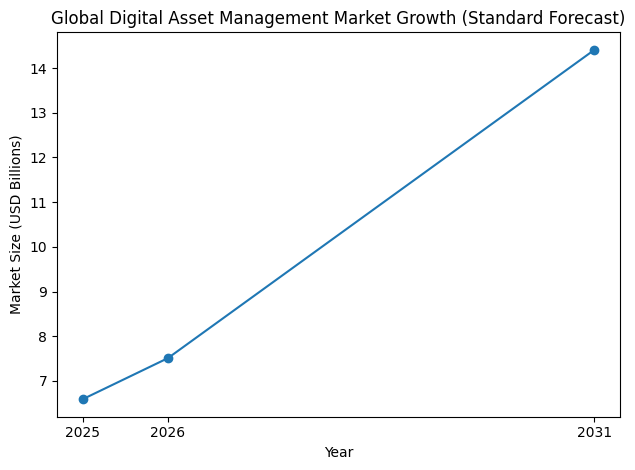
In 2026, the stakes are higher than ever. The global Digital Asset Management market has surpassed multi-billion-dollar valuations, reflecting the urgency with which enterprises are investing in content infrastructure. Organizations across media and entertainment, retail, consumer packaged goods, manufacturing, healthcare, higher education, and e-commerce are deploying enterprise DAM platforms to handle content complexity at scale. Without a modern DAM system, companies face duplicated production costs, inconsistent brand messaging, compliance risks, and delayed time-to-market.
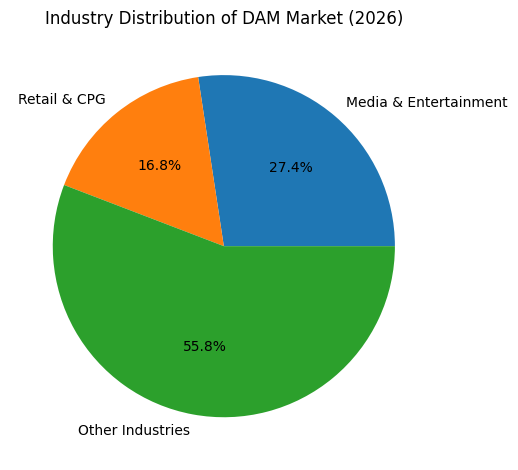
The top 10 Digital Asset Management software platforms in 2026 represent a diverse range of architectural philosophies and strategic strengths. Some solutions focus on enterprise orchestration and deep customization, offering advanced AI automation and petabyte-scale storage. Others prioritize user-friendly design and rapid onboarding for mid-market teams. Still others emphasize programmable media transformation and API-first delivery models that support global e-commerce performance.
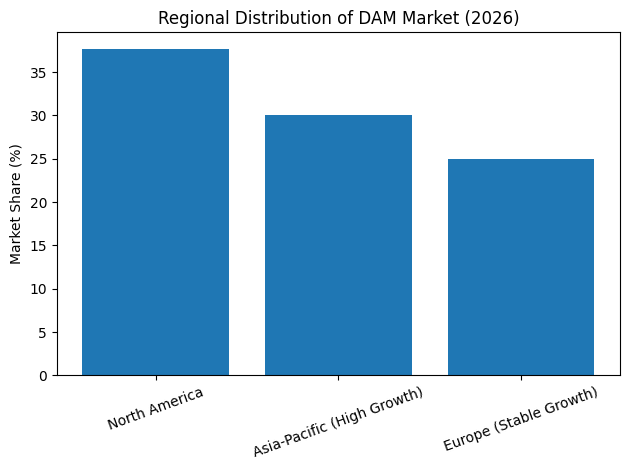
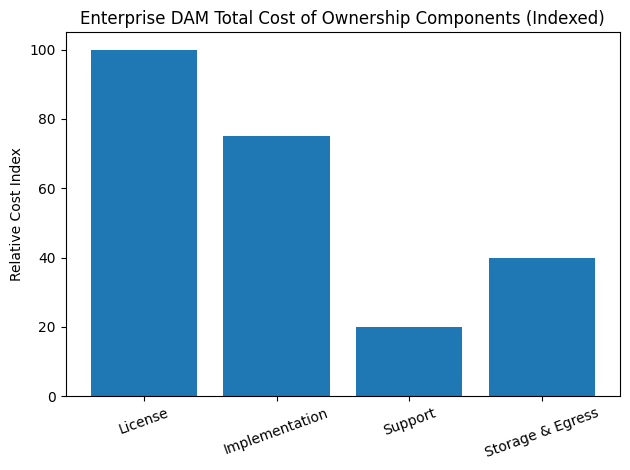
Selecting the best Digital Asset Management software in 2026 requires more than comparing feature lists. Organizations must evaluate integration depth with CMS, CRM, ERP, and e-commerce platforms. They must assess AI capabilities such as auto-tagging, facial recognition, semantic search, and agentic workflows. They must model total cost of ownership, including licensing, storage expansion, API usage, and long-term scalability. Most importantly, they must ensure architectural alignment with their digital transformation roadmap.
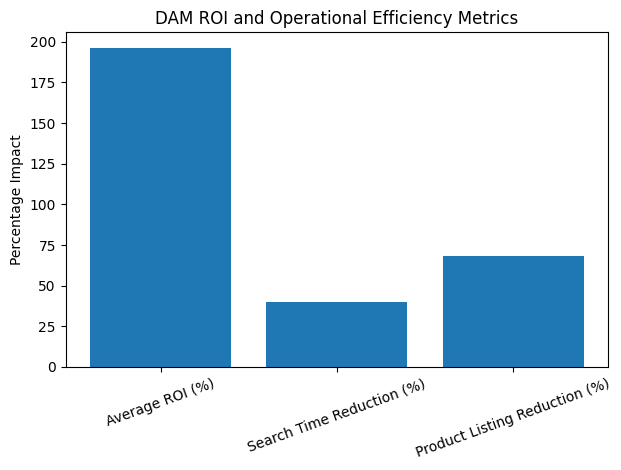
Another defining trend shaping the top DAM platforms in 2026 is the rise of headless and cloud-native infrastructure. Modern enterprises demand flexible content distribution across websites, mobile applications, streaming platforms, retail marketplaces, and emerging digital touchpoints. API-first DAM systems enable seamless omnichannel delivery, reducing the time between content creation and customer engagement. This “time to glass” advantage has become a competitive differentiator in industries where speed directly impacts revenue.
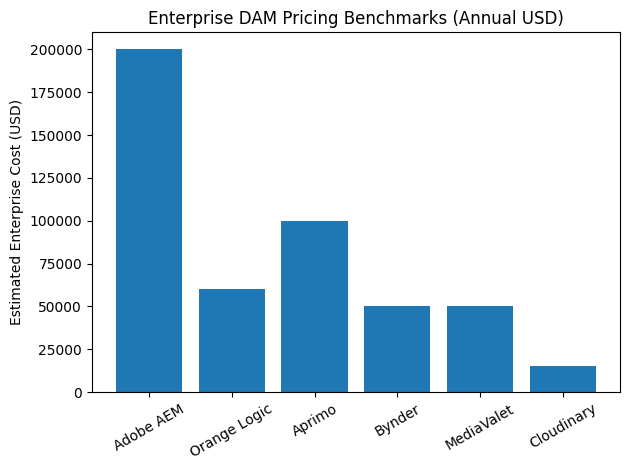
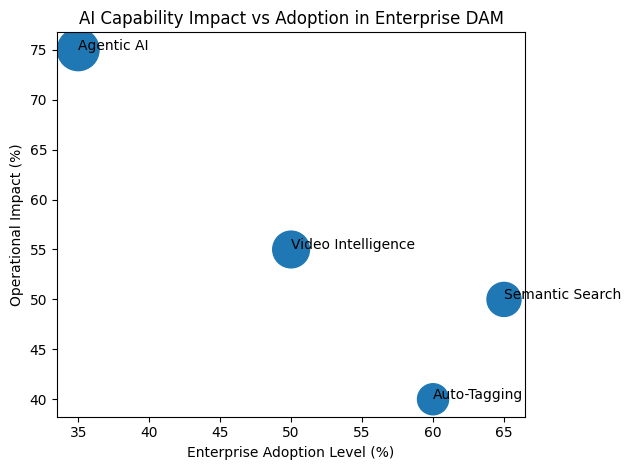
Artificial intelligence is also redefining the Digital Asset Management landscape. Leading DAM software platforms now incorporate AI-driven automation that reduces manual tagging, accelerates search, and even predicts optimal asset variations for specific markets. Agentic AI capabilities are emerging as a transformative innovation, allowing systems to autonomously manage repetitive workflows such as image resizing, rights expiration tracking, and metadata enrichment. For organizations managing tens of thousands or millions of assets, these efficiencies translate into measurable return on investment.
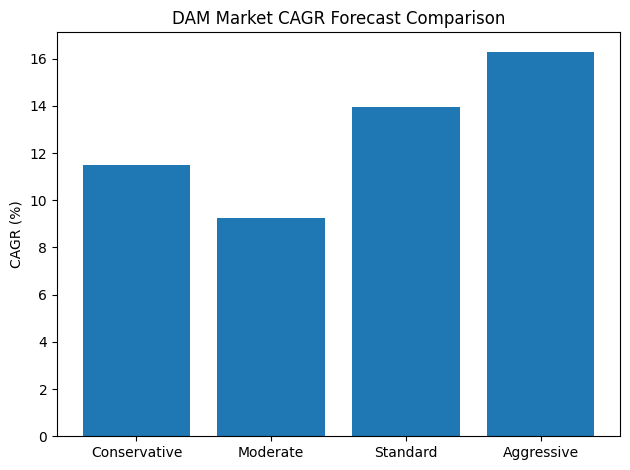
Compliance and governance have become equally critical considerations. With stricter data protection regulations, global licensing agreements, and brand consistency standards, DAM software must provide audit trails, permission controls, and automated rights management. Enterprises operating across multiple regions rely on DAM platforms to protect intellectual property and prevent costly legal exposure.
This comprehensive guide to the top 10 Digital Asset Management software in the world in 2026 provides an in-depth comparison of leading platforms, examining pricing structures, architectural strengths, AI capabilities, industry alignment, and scalability. Whether an organization is a global enterprise seeking advanced content orchestration or a growing marketing team transitioning from fragmented file storage systems, understanding the competitive landscape of DAM software is critical to making an informed decision.
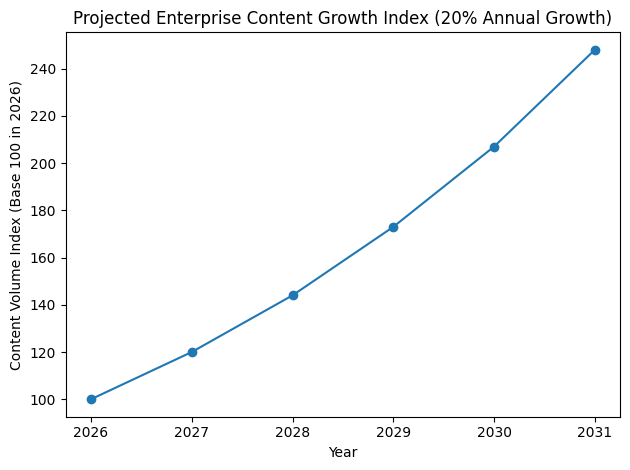
In the 2026 digital economy, content is currency. Every image, video, design file, and product asset represents potential revenue, brand equity, and competitive advantage. The right Digital Asset Management software does more than organize files. It enables organizations to scale operations, protect brand integrity, accelerate digital campaigns, and unlock measurable financial performance. As content volumes continue to grow at an estimated 20 to 30 percent annually, the platforms featured in this guide define the technological backbone of modern enterprise content strategy.
Before we venture further into this article, we would like to share who we are and what we do.
About 9cv9
9cv9 is a business tech startup based in Singapore and Asia, with a strong presence all over the world.
With over nine years of startup and business experience, and being highly involved in connecting with thousands of companies and startups, the 9cv9 team has listed some important learning points in this overview of the Top 10 Best Digital Asset Management Software in 2026.
If you like to get your company listed in our top B2B software reviews, check out our world-class 9cv9 Media and PR service and pricing plans here.
Top 10 Best Digital Asset Management Software in 2026
- Adobe Experience Manager Assets
- Bynder
- Aprimo
- Orange Logic (OrangeDAM)
- Acquia DAM (Widen)
- Canto
- MediaValet
- Brandfolder
- Cloudinary
- Kontainer
1. Adobe Experience Manager Assets
By 2026, Digital Asset Management software has evolved into a foundational layer of enterprise digital infrastructure. Organizations operating across global markets now manage millions of multimedia assets including product images, campaign videos, brand guidelines, and localized marketing materials. DAM platforms are expected to deliver not only storage and retrieval, but also automation, AI-driven metadata enrichment, compliance governance, omnichannel distribution, and measurable operational efficiency.
Among the top 10 Digital Asset Management software platforms in the world in 2026, Adobe Experience Manager Assets consistently ranks as one of the most advanced enterprise-grade solutions. Positioned for large multinational corporations, the platform bridges creative production with digital distribution, aligning asset workflows with marketing execution and customer experience systems.
Platform Architecture and Cloud Transformation
Adobe Experience Manager Assets transitioned into a fully cloud-native environment through AEM as a Cloud Service. This transformation eliminated many of the infrastructure limitations associated with legacy deployments and introduced containerized auto-scaling capabilities.
The architectural profile of the platform can be summarized as follows:
| Component | Technical Description | Enterprise Benefit |
|---|---|---|
| Deployment Model | Fully managed cloud-native service | Reduced IT overhead and infrastructure maintenance |
| Infrastructure Framework | Container-based auto-scaling architecture | High availability during traffic spikes |
| Upgrade Management | Continuous, automated updates | No downtime during system upgrades |
| Global Distribution Support | Multi-region performance optimization | Seamless global rollout across domains |
| Ecosystem Integration | Deep Adobe Experience Cloud connectivity | Unified marketing and content supply chain |
This infrastructure allows global brands to synchronize asset management with analytics, personalization engines, and campaign orchestration systems.
Artificial Intelligence and Automation Capabilities
Artificial intelligence plays a central role in Adobe Experience Manager Assets. The integration of Adobe Sensei enables enterprises to automate repetitive processes while maintaining brand consistency.
Core AI capabilities include:
| AI Capability | Functional Application | Operational Impact |
|---|---|---|
| Bulk Auto-Tagging | Automated metadata generation at scale | Significant reduction in manual data entry |
| Smart Crop | Focal-point detection for multi-channel formats | Optimized image presentation across devices |
| Rendition Automation | Real-time generation of device-specific outputs | Faster multi-platform publishing |
| Content Intelligence | Context-aware search and classification | Improved asset discoverability |
| Rights Monitoring | AI-assisted asset expiration tracking | Reduced compliance risks |
These features enable enterprises to process thousands of assets simultaneously while maintaining governance controls.
Core Enterprise Feature Framework
Adobe Experience Manager Assets is engineered for complex global operations. It supports multilingual asset management, version control, and advanced digital rights enforcement.
The core enterprise feature matrix is outlined below:
| Feature Category | Description | Enterprise Value |
|---|---|---|
| Creative Tool Integration | Direct connection to Photoshop and InDesign | Seamless designer-to-DAM workflow |
| Version Control System | Multi-level revision tracking | Controlled asset lifecycle management |
| Digital Rights Management | Automated rights enforcement and expiration alerts | Global compliance and legal protection |
| Smart Search Engine | AI-enhanced metadata filtering | Faster internal collaboration |
| API and Integration Layer | Enterprise-grade extensibility | Custom integration with CRM, CMS, and ERP systems |
Licensing Structure and Financial Commitment
Adobe Experience Manager Assets is widely recognized as a premium-tier DAM solution. Its pricing structure reflects enterprise scalability and integration depth.
Estimated financial commitments in 2026 include:
| Cost Component | Estimated Annual Range (USD) | Financial Implication |
|---|---|---|
| Core DAM License | 30,000 and above | Entry-level enterprise investment |
| Full Enterprise Suite | 60,000 to 80,000 | Includes Sites and Forms integration |
| Large Global Deployment | 100,000 to 200,000+ | Multi-domain enterprise operations |
| Cloud Storage and Support | 15 to 25 percent of license cost | Ongoing operational expense |
| Implementation Services (One-Time) | 500,000 to 5,000,000+ | Global rollout and customization |
For multinational enterprises, the total cost of ownership extends beyond licensing to include customization, migration, and partner-led implementation.
Implementation Complexity and Timeline
Deployment cycles for Adobe Experience Manager Assets typically span six to twelve months, depending on organizational complexity.
Implementation impact factors include:
| Implementation Variable | Deployment Influence | Risk Level |
|---|---|---|
| Global Domain Count | Increased configuration and governance mapping | High |
| Legacy System Migration | Data transformation and metadata restructuring | Moderate to High |
| Custom Integrations | Extended development and QA cycles | Moderate |
| Regulatory Compliance | Additional workflow and approval layers | High |
| Change Management Programs | Enterprise-wide training and adoption strategy | Moderate |
Large enterprises often rely on certified integration partners, which significantly increases initial project expenditure but ensures strategic alignment.
Enterprise Market Perception
Enterprise users frequently describe Adobe Experience Manager Assets as robust, scalable, and strategically valuable, particularly for organizations already invested in the Adobe ecosystem.
Strength and limitation comparison:
| Evaluation Area | Market Feedback Summary | Business Impact |
|---|---|---|
| Scalability | Highly capable for global operations | Supports hundreds of domains |
| AI Automation | Mature and effective | Reduces manual creative workload |
| User Interface | Complex for non-technical teams | Requires training investment |
| Licensing Transparency | Often perceived as complicated | Budget forecasting challenges |
| Ecosystem Integration | Seamless within Adobe suite | Accelerated campaign deployment |
Operational and Business Impact
Organizations adopting Adobe Experience Manager Assets frequently report measurable performance improvements.
Business impact indicators:
| Performance Metric | Observed Outcome | Strategic Benefit |
|---|---|---|
| Creative Cycle Time | Noticeable reduction | Faster campaign launches |
| Metadata Processing | Automated at scale | Thousands of labor hours saved annually |
| Asset Retrieval Efficiency | Improved internal search accuracy | Cross-department productivity |
| Compliance Monitoring | Automated expiration tracking | Reduced legal exposure |
Competitive Position in the Top 10 DAM Platforms (2026)
In comparison with other leading Digital Asset Management platforms in 2026, Adobe Experience Manager Assets maintains a strong enterprise-focused position.
Competitive positioning matrix:
| Evaluation Criteria | Adobe Experience Manager Assets Position | Market Tier Classification |
|---|---|---|
| Enterprise Scalability | Very High | Global Enterprise Tier |
| AI and Automation | Advanced and Mature | Industry Leader |
| Ease of Use | Moderate Complexity | Enterprise-Focused |
| Pricing Accessibility | Premium Tier | High Investment Requirement |
| Implementation Simplicity | Complex | Requires Specialist Partners |
| Ecosystem Depth | Extensive Adobe Integration | Strategic Marketing Infrastructure |
Conclusion
Adobe Experience Manager Assets continues to be one of the most influential Digital Asset Management software platforms globally in 2026. It operates not merely as a content repository, but as a strategic enterprise system connecting creative production, AI automation, governance, and digital distribution.
Although the platform requires substantial financial and operational commitment, organizations managing large-scale, multi-language, multi-brand environments often consider it a long-term infrastructure investment. Its combination of cloud-native scalability, artificial intelligence integration, and ecosystem connectivity secures its position among the top Digital Asset Management software solutions in the world.
2. Bynder
By 2026, Bynder has secured a strong position among the top 10 Digital Asset Management software platforms worldwide. The company has differentiated itself by focusing heavily on usability, marketing enablement, and brand governance rather than purely technical infrastructure depth. With more than 4,000 global customers across sectors such as telecommunications, consumer goods, healthcare, and retail, Bynder is widely regarded as one of the most intuitive DAM solutions available for marketing-driven organizations.
Global brands such as Vodafone and Campari Group have adopted Bynder to streamline asset discovery, centralize brand control, and improve collaboration across geographically distributed teams. In contrast to more technically complex enterprise DAM platforms, Bynder’s value proposition is built around simplicity, speed of deployment, and marketing productivity.
Platform Architecture and SaaS Infrastructure
Bynder operates as a pure Software-as-a-Service (SaaS) platform. This architecture eliminates the need for on-premise installations or hybrid deployment models, allowing organizations to launch and scale rapidly without significant infrastructure overhead.
The platform architecture can be summarized as follows:
| Component | Technical Structure | Strategic Advantage |
|---|---|---|
| Deployment Model | Fully cloud-based SaaS | Rapid deployment with minimal IT complexity |
| System Access | Browser-based interface | Universal access across global teams |
| Brand Portals | Customizable external access gateways | Secure sharing with agencies and regional partners |
| Data Hosting | Centralized cloud storage | Single source of truth for brand assets |
| API Connectivity | Open integration framework | Integration with CRM, CMS, and creative tools |
One of Bynder’s most distinctive capabilities is the Brand Portal. These portals function as controlled, branded environments where approved stakeholders can access pre-approved content without interacting directly with the full DAM backend. This feature enhances governance while maintaining ease of use for non-technical users.
Artificial Intelligence and Search Capabilities
Bynder places strong emphasis on search efficiency and asset discoverability. Its AI-powered search engine is designed to minimize duplication and accelerate file retrieval across large content libraries.
Core AI functionality includes:
| AI Capability | Functional Description | Operational Outcome |
|---|---|---|
| Smart Search Engine | Context-based metadata recognition | Faster asset retrieval across departments |
| Duplicate Detection | Automated identification of redundant files | Reduced storage waste and improved content hygiene |
| Metadata Automation | Suggested tagging based on content recognition | Reduced manual tagging workload |
| Visual Search | Image-based search queries | Simplified discovery for creative teams |
| Centralized Asset Indexing | Unified asset repository | Reliable brand consistency across regions |
The platform’s centralized indexing reinforces its positioning as a “single source of truth” for global brand assets.
Subscription Model and Cost Structure
Bynder utilizes a tiered subscription pricing model that scales according to organizational size, number of users, storage requirements, and module selection.
Estimated pricing framework in 2026:
| Pricing Tier | Estimated Cost (USD) | Target Organization Type |
|---|---|---|
| Entry-Level Plan | 450 per month (5,400 annually) | Small marketing teams |
| Mid-Market Tier | 15,000 to 40,000 annually | Growing regional organizations |
| Enterprise Tier | 50,000 to 100,000+ annually | Global multi-brand enterprises |
| Advanced Modules Add-Ons | Variable pricing | Creative Workflow, Brand Templates, Analytics |
Primary cost drivers include:
| Cost Driver | Financial Impact Description |
|---|---|
| Number of Users | Increased licensing costs as power users scale |
| Storage Volume | Tier-based pricing adjustments |
| Workflow Modules | Additional feature-based subscription upgrades |
| Custom Integrations | Potential implementation service fees |
While the base pricing appears accessible compared to some enterprise competitors, costs can increase substantially as advanced modules and larger user bases are added.
Implementation Speed and Efficiency Metrics
One of Bynder’s strongest differentiators is its relatively fast implementation cycle. Compared to enterprise-grade DAM systems that may require up to a year for deployment, Bynder implementations typically conclude within two to four months.
Implementation comparison overview:
| Implementation Factor | Bynder Average Timeline | Enterprise DAM Average Timeline |
|---|---|---|
| Initial Setup | 2 to 4 months | 6 to 12 months |
| Infrastructure Setup | Minimal (SaaS) | Extensive configuration |
| Training Requirements | Low to moderate | Moderate to high |
| External Partner Access | Brand Portal-based | Often requires complex permissions |
In documented enterprise use cases, Siemens Healthineers reported financial savings exceeding 3.5 million euros and more than 15,000 hours saved in file searching after deploying Bynder. These metrics highlight the platform’s direct operational impact.
Enterprise User Experience and Market Feedback
From a global communications and brand management perspective, Bynder is frequently praised for ease of use and onboarding transparency. Enterprise reviewers emphasize its intuitive interface and reduced friction in daily workflows.
User sentiment analysis:
| Evaluation Area | Market Feedback Summary | Organizational Impact |
|---|---|---|
| User Interface | Highly intuitive, minimal training required | Faster adoption across large employee bases |
| AI Search | Powerful and reliable | Reduced time spent locating assets |
| Onboarding Support | Responsive and transparent | Smooth implementation experience |
| Customization Flexibility | Moderate compared to modular platforms | Potential limitation for highly technical needs |
| Cost Scalability | Can increase with power user growth | Budget considerations for expansion |
For large enterprises with tens of thousands of employees, the simplified interface significantly reduces dependency on IT departments for daily asset retrieval.
Business Impact and Time-to-Market Acceleration
Organizations adopting Bynder often report measurable improvements in productivity and campaign speed. The platform reduces internal friction by decreasing the number of steps required to locate and deploy approved content.
Business performance outcomes include:
| Performance Metric | Observed Outcome | Strategic Benefit |
|---|---|---|
| Asset Search Time | Significant reduction | Improved team productivity |
| Campaign Launch Speed | Faster regional rollouts | Accelerated time-to-market |
| File Duplication Rate | Decreased redundancy | Improved brand consistency |
| Cross-Regional Collaboration | Simplified sharing via Brand Portals | Stronger global-local alignment |
The reduction in search friction and asset confusion translates directly into marketing agility, especially in organizations managing multiple markets and language variations.
Competitive Position in the 2026 DAM Landscape
Within the global top 10 Digital Asset Management platforms, Bynder occupies a strategic position between mid-market agility and enterprise scalability.
Competitive positioning matrix:
| Evaluation Criteria | Bynder Position | Market Classification |
|---|---|---|
| Ease of Use | Very High | Marketing-Centric DAM |
| AI Search Capabilities | Advanced | Competitive with enterprise leaders |
| Enterprise Scalability | High | Suitable for large global teams |
| Customization Depth | Moderate | Less modular than highly technical DAM systems |
| Pricing Accessibility | Flexible Tiered Model | Scalable but potentially increasing at scale |
| Implementation Speed | Fast | Strong advantage over complex enterprise platforms |
Conclusion
Bynder has established itself as one of the most influential Digital Asset Management software platforms in 2026 by prioritizing usability, brand governance, and rapid implementation. Its SaaS-native architecture, powerful AI search capabilities, and customizable Brand Portals enable organizations to centralize assets while maintaining operational simplicity.
Although customization depth may not match highly modular enterprise DAM systems, Bynder’s intuitive design and measurable efficiency gains make it particularly attractive to marketing-driven global enterprises seeking speed, transparency, and improved time-to-market.
3. Aprimo
In 2026, Aprimo occupies a distinctive position within the top 10 Digital Asset Management software platforms globally by operating at the intersection of Digital Asset Management (DAM) and Marketing Resource Management (MRM). Unlike traditional DAM platforms that focus primarily on storage and distribution, Aprimo is designed for enterprise organizations that require governance, workflow orchestration, budget oversight, and structured content operations within a unified system.
Aprimo is particularly suited to fast-moving, compliance-sensitive industries such as consulting, financial services, pharmaceuticals, and large-scale B2B enterprises. Its value proposition centers on operational control, structured scalability, and data-driven marketing performance insights.
Platform Architecture and Modular Design
Aprimo’s architecture is built around a highly modular framework, allowing enterprises to configure the system according to operational requirements. Instead of managing assets as fixed files alone, Aprimo enables content componentization, where individual content elements such as disclaimers, copy blocks, product descriptions, or regulatory statements can be stored and dynamically assembled.
Core architectural structure:
| Component | Functional Description | Enterprise Advantage |
|---|---|---|
| Deployment Model | Cloud-based enterprise SaaS | Scalable infrastructure with centralized governance |
| Modular Framework | Configurable modules (Productivity, Spend Management, DAM) | Tailored system aligned with business complexity |
| Content Componentization | Reusable structured content blocks | Dynamic asset assembly and compliance control |
| Integration Layer | Enterprise-grade APIs and connectors | Seamless integration with CRM, ERP, and CMS systems |
| Governance Engine | Advanced permissions and approval workflows | Structured multi-level content validation |
This modularity allows organizations to design workflows around business processes rather than adapting processes to rigid software limitations.
Content Intelligence and AI Capabilities
Aprimo has been a pioneer in introducing the concept of Content Intelligence within enterprise DAM systems. This capability moves beyond asset storage and tagging by analyzing how content performs across digital channels.
AI and analytics capability matrix:
| AI Capability | Functional Application | Strategic Impact |
|---|---|---|
| Content Intelligence | Cross-channel engagement analysis | Data-driven future content strategy |
| Auto-Tagging | Automated metadata enrichment | Reduced manual classification effort |
| Duplicate Detection | Identification of redundant assets | Improved content hygiene and cost efficiency |
| Performance Attribution | Linking assets to campaign engagement metrics | ROI visibility for marketing leadership |
| Predictive Content Insights | Data modeling for future asset performance | Smarter resource allocation |
Through Content Intelligence, marketing teams can identify which assets drive the highest engagement and replicate successful content structures across markets.
Pricing Structure and Financial Positioning
Aprimo is positioned as a premium enterprise solution with a customized pricing model based on storage volume and selected modules.
Estimated pricing overview in 2026:
| Pricing Category | Estimated Annual Cost (USD) | Target Segment |
|---|---|---|
| Entry-Level Configuration | Starting at 20,000 | Mid-sized enterprises with structured workflows |
| Standard Enterprise Setup | 20,000 to 60,000 | Multi-department marketing organizations |
| Advanced Enterprise Deployment | 60,000 to 100,000+ | Large global enterprises with modular add-ons |
| Add-On Modules | Custom pricing | Productivity, Spend Management, Advanced Analytics |
Primary cost determinants:
| Cost Driver | Financial Impact Explanation |
|---|---|
| Storage Volume | Tier-based cost escalation |
| Number of Modules | Increased subscription complexity |
| Workflow Customization | Higher configuration and onboarding investment |
| Enterprise User Volume | Expanded licensing commitments |
Although Aprimo delivers high functionality depth, satisfaction metrics indicate that perceived cost relative to value averages around 67 percent, reflecting its positioning as a strategic, long-term enterprise investment rather than a budget solution.
Technical Performance and Feature Ratings
Aprimo consistently scores highly in areas related to governance and workflow automation. Enterprise evaluations indicate strong system robustness and operational control.
Performance evaluation summary:
| Evaluation Metric | Score / Rating | Interpretation |
|---|---|---|
| Permissions and Access Management | 81 out of 100 | Strong multi-layer governance control |
| Workflow Management | 82 out of 100 | Highly structured approval and task automation |
| AI Tagging and Duplicate Detection | High satisfaction | Reliable automation capabilities |
| Cost Relative to Value | 67 percent | Premium pricing perception |
| Overall Enterprise Satisfaction | 9.3 out of 10 | Strong alignment with strategic enterprise needs |
These metrics highlight Aprimo’s strengths in compliance-driven and process-heavy marketing environments.
Enterprise User Experience and Operational Feedback
From a strategic marketing and IT administration perspective, Aprimo is often described as a highly customizable and structured platform capable of aligning tools to specific enterprise workflows.
User sentiment breakdown:
| Evaluation Area | Enterprise Feedback Summary | Operational Implication |
|---|---|---|
| Customization Capability | Highly adaptable to business requirements | Tailored workflows and governance models |
| Project Management Tools | Strong automation for content lifecycle | Streamlined movement from creation to DAM storage |
| AI Automation | Superior auto-tagging and duplicate discovery | Improved operational efficiency |
| Power Workspace Interface | Complex for non-technical users | Requires structured training programs |
| Backend Mastery | Time-intensive learning curve | Investment in administrative expertise |
While powerful, the platform’s backend configuration requires significant familiarity, particularly for administrators managing modular expansions.
Business Impact and Organizational Efficiency
Aprimo’s unified structure often eliminates fragmented communication between marketing, legal, compliance, and creative departments. By consolidating workflows and asset storage within one environment, enterprises experience measurable efficiency gains.
Business impact metrics:
| Performance Indicator | Observed Outcome | Strategic Benefit |
|---|---|---|
| Content Discovery | Centralized single source | Reduced internal communication delays |
| Email Volume Related to Tasks | Noticeable reduction | Improved productivity and faster approvals |
| Asset Lifecycle Tracking | Automated workflow routing | Enhanced compliance control |
| Campaign Coordination | Structured project visibility | Stronger cross-functional alignment |
The elimination of manual stakeholder follow-ups significantly reduces operational friction and improves overall marketing throughput.
Competitive Position in the 2026 DAM Ecosystem
Within the top 10 Digital Asset Management software platforms globally in 2026, Aprimo differentiates itself through governance depth and marketing operations integration.
Competitive positioning matrix:
| Evaluation Criteria | Aprimo Position | Market Classification |
|---|---|---|
| Governance and Permissions | Very High | Enterprise Compliance Tier |
| Workflow Automation | Advanced | Marketing Operations Leader |
| AI and Content Intelligence | Mature and Data-Driven | Strategy-Oriented DAM |
| Ease of Use | Moderate to Complex | Process-Heavy Enterprise System |
| Pricing Accessibility | Premium Tier | High Strategic Investment |
| Modular Flexibility | Extensive | Customizable Enterprise Platform |
Conclusion
Aprimo remains one of the most strategically advanced Digital Asset Management platforms in 2026, particularly for enterprises that require structured marketing operations, modular scalability, and performance-based content insights. By combining DAM with Marketing Resource Management capabilities, Aprimo transforms asset management into a governance-driven, intelligence-informed marketing engine.
Although the platform demands a higher financial and administrative commitment, its strong workflow automation, Content Intelligence innovation, and centralized governance framework position it as a leading solution for complex enterprise marketing ecosystems.
4. Orange Logic (OrangeDAM)
By 2026, Orange Logic, widely recognized through its OrangeDAM platform, has positioned itself as a disruptive force within the top 10 Digital Asset Management software solutions globally. Frequently acknowledged in analyst evaluations as a Leader for Enterprise Content Orchestration, the platform distinguishes itself by going beyond traditional asset storage to enable structured orchestration of content ecosystems.
Orange Logic is particularly favored by media-intensive industries such as broadcasting, publishing, sports organizations, entertainment conglomerates, and multinational corporations managing vast content archives. Its architecture and pricing philosophy make it attractive to enterprises with large user bases and petabyte-scale data requirements.
Enterprise Content Orchestration Framework
Unlike conventional DAM systems that primarily manage asset storage and retrieval, OrangeDAM is architected around orchestration. This approach treats content as a dynamic, interconnected ecosystem involving workflows, storage layers, metadata intelligence, automation agents, and distribution endpoints.
Core orchestration components:
| Component | Functional Description | Strategic Enterprise Value |
|---|---|---|
| Content Orchestration Engine | Centralized management of assets and workflows | End-to-end visibility across content lifecycle |
| Modular Toolset | 130+ configurable DAM tools | Extreme customization capability |
| Workflow Automation | Multi-step, rules-based task management | Structured compliance and approval routing |
| Cross-Team Collaboration | Shared environment for creative, legal, and marketing | Unified content governance |
| High-Speed Processing Layer | Optimized performance for massive datasets | Efficient handling of petabyte-scale content |
This orchestration-centric model enables enterprises to manage not only current production workflows but also long-term archival and historical content repositories.
Composable Infrastructure and BYOS Architecture
One of Orange Logic’s most distinctive technical innovations is its composable infrastructure with Bring Your Own Storage (BYOS) support. Rather than forcing clients into proprietary storage models, OrangeDAM allows enterprises to connect their existing cloud storage environments.
Technical architecture overview:
| Infrastructure Element | Description | Enterprise Benefit |
|---|---|---|
| Deployment Model | Enterprise SaaS with composable architecture | Flexible integration with existing IT environments |
| Bring Your Own Storage | Integration with AWS S3, Azure, IBM Cloud | Cost control and infrastructure continuity |
| Unlimited Storage Model | No platform-imposed storage caps | Scalable content growth without artificial limits |
| Performance Optimization | High-speed indexing and retrieval | Rapid asset access across global teams |
| API and Integration Layer | Enterprise-grade extensibility | Integration with CMS, CRM, MAM, and ERP systems |
The BYOS model allows enterprises to leverage existing cloud agreements, often reducing redundancy and optimizing storage expenditures.
Artificial Intelligence and Agentic Innovation
Orange Logic has invested heavily in AI-driven automation and orchestration intelligence. In 2026, the platform’s Agentic AI Studio stands out as a differentiating innovation.
AI capability matrix:
| AI Capability | Functional Application | Strategic Impact |
|---|---|---|
| Agentic AI Studio | Creation of custom AI agents for multi-step automation | Reduced manual oversight and task execution |
| Automated Compliance Checks | Rule-based validation of assets | Improved regulatory governance |
| 3D Asset Transformation | Automated rendering and format adaptation | Media and gaming industry efficiency |
| Intelligent Metadata Analysis | Contextual asset understanding | Improved search precision |
| DNA Mapping (Upcoming) | AI trained on brand and behavioral patterns | Predictive, personalized platform interactions |
The introduction of DNA Mapping aims to create brand-aware AI systems that learn organizational behavior patterns, improving workflow suggestions and asset categorization over time.
Pricing Structure and Cost Model
Orange Logic operates under a flat-fee enterprise pricing model, which differs significantly from per-seat subscription models common among competitors.
Pricing overview in 2026:
| Pricing Category | Estimated Annual Cost (USD) | Financial Implication |
|---|---|---|
| Base Enterprise License | Starting at 60,000 | Flat enterprise access |
| User Seat Charges | None | Unlimited user scalability |
| Storage Costs | Managed via BYOS model | Dependent on existing cloud agreements |
| Custom Configuration | Variable | Based on orchestration complexity |
Key pricing advantage analysis:
| Pricing Factor | Orange Logic Model | Traditional DAM Model Comparison |
|---|---|---|
| User-Based Fees | Unlimited users included | Per-seat cost escalation |
| Adoption Scalability | No additional cost for expansion | Increased costs with each new user |
| Storage Model | External BYOS integration | Often bundled and tier-restricted |
| Total Cost Predictability | High | Variable and usage-dependent |
The absence of per-user fees eliminates what many enterprises describe as a “tax on adoption,” making the platform especially attractive to organizations with thousands of users across departments.
Technical Performance and Enterprise Reliability
OrangeDAM is frequently praised for its high-performance architecture, particularly in environments handling massive content libraries.
Performance characteristics:
| Performance Area | Enterprise Feedback Summary | Operational Outcome |
|---|---|---|
| Large Data Handling | Efficient at petabyte-scale | Suitable for media and archival environments |
| System Stability | High reliability | Continuous uptime for global operations |
| Live Support | 24/7 real-time assistance | Reduced operational downtime |
| Customization Depth | Extensive configuration flexibility | Highly tailored workflow ecosystems |
The platform’s robust live support infrastructure contributes significantly to enterprise satisfaction.
Enterprise User Experience and Adoption Considerations
From a media and entertainment perspective, users describe OrangeDAM as purpose-built for orchestration rather than simple storage. The depth of configuration tools allows enterprises to design highly complex systems aligned with operational strategy.
User sentiment summary:
| Evaluation Area | Enterprise Observation | Business Implication |
|---|---|---|
| Feature Breadth | Extensive toolset (130+ tools) | Powerful but configuration-intensive |
| Learning Curve | Steep during initial setup | Requires structured technical onboarding |
| Adoption Cost | Unlimited users removes scaling friction | Encourages cross-department usage |
| AI Innovation | Advanced agent-based automation | Enhanced operational efficiency |
| Performance Speed | High-speed system response | Supports real-time production environments |
The depth of features requires a well-defined technical strategy to fully leverage the orchestration ecosystem.
Business Impact and Organizational Transformation
Orange Logic enables enterprises to unify both real-time production workflows and historical archival systems into a single content environment. This consolidation reduces fragmentation across creative, legal, compliance, and marketing teams.
Business performance outcomes:
| Performance Indicator | Observed Outcome | Strategic Benefit |
|---|---|---|
| Asset Centralization | Unified current and archival repositories | Reduced system fragmentation |
| Cross-Department Collaboration | Shared orchestration layer | Improved operational alignment |
| Adoption Rate | Increased due to unlimited user model | Enterprise-wide utilization |
| Workflow Efficiency | Automated multi-step task routing | Faster asset approval and compliance checks |
By merging orchestration, AI automation, and scalable storage infrastructure, OrangeDAM enables organizations to manage complex content ecosystems without expanding licensing overhead.
Competitive Position in the 2026 DAM Ecosystem
Within the top 10 Digital Asset Management software platforms in 2026, Orange Logic holds a distinct position as a high-performance orchestration-driven solution.
Competitive positioning matrix:
| Evaluation Criteria | Orange Logic Position | Market Classification |
|---|---|---|
| Enterprise Scalability | Very High | Large-Scale Enterprise Tier |
| AI Innovation | Advanced Agent-Based Automation | Innovation Leader |
| Pricing Scalability | Unlimited User Flat Fee | Cost-Efficient for Large User Bases |
| Customization Depth | Extensive (130+ tools) | Highly Configurable Platform |
| Ease of Initial Adoption | Moderate to Complex | Strategy-Driven Implementation |
| Media and Archival Support | Exceptional | Media-Heavy Industry Specialist |
Conclusion
Orange Logic (OrangeDAM) stands out in 2026 as a transformative force in Digital Asset Management by redefining the category through Enterprise Content Orchestration. Its composable infrastructure, Bring Your Own Storage model, and Agentic AI innovations provide enterprises with unprecedented scalability and flexibility.
While the platform demands a strategic implementation approach and technical clarity, its flat-fee unlimited user model and high-performance architecture make it particularly compelling for global corporations and media-intensive industries. As content ecosystems continue to grow in complexity, Orange Logic remains one of the most forward-thinking DAM solutions in the global market.
5. Acquia DAM (Widen)
In 2026, Acquia DAM, built on the foundation of the Widen Collective, maintains a strong presence among the top 10 Digital Asset Management software platforms globally. The platform is particularly recognized for its ability to bridge Digital Asset Management (DAM) and Product Information Management (PIM), making it highly attractive to manufacturing, retail, consumer goods, and distribution-focused enterprises.
Acquia DAM differentiates itself by combining structured product data with rich media asset management. This dual capability positions it as a strategic solution for organizations that manage large product catalogs alongside high volumes of supporting marketing content.
Strategic Integration Within the Digital Experience Ecosystem
Acquia DAM functions as the media engine within the broader Acquia Open Digital Experience Platform (DXP). Its tight integration with Drupal and marketing automation ecosystems enables organizations to synchronize product data, content assets, and digital experiences.
Technical integration overview:
| Integration Component | Functional Description | Enterprise Benefit |
|---|---|---|
| Deployment Model | Cloud-based enterprise SaaS | Scalable and centralized infrastructure |
| Native Drupal Integration | Seamless content synchronization | Unified web publishing workflows |
| Marketing Automation Connectors | Integration with campaign and personalization tools | Streamlined campaign execution |
| Unified DAM + PIM Tier | Combined product data and asset management | Single interface for product-driven content |
| API and Connector Framework | Enterprise extensibility | Integration with ERP and eCommerce platforms |
The unified DAM + PIM capability allows organizations to manage product attributes, SKU data models, specifications, and associated media within one centralized environment.
DAM + PIM Unified Architecture
Acquia DAM’s combined data and media management structure is particularly valuable for product-centric organizations that require precision and compliance across thousands of SKUs.
Unified system capability matrix:
| Capability Area | Functional Application | Operational Outcome |
|---|---|---|
| Product Data Modeling | Centralized SKU and specification management | Improved product accuracy |
| Media-Linked Product Records | Direct association of assets with product entries | Faster content deployment |
| Documentation Attachment | Usage rights and compliance files linked to images | Reduced legal exposure |
| Metadata Synchronization | Structured tagging across assets and product attributes | Improved discoverability |
| Multi-Channel Publishing | Direct content flow to web and commerce systems | Faster product launches |
This integration reduces silos between marketing teams and product information managers, creating a cohesive digital supply chain.
Pricing Structure and Subscription Tiers
Acquia DAM operates under a tiered annual subscription model tailored to organizational size and storage requirements.
Estimated subscription overview for 2026:
| Subscription Tier | User Limit | Storage Allocation | Estimated Annual Cost (USD) |
|---|---|---|---|
| Workgroup Plan | Up to 50 users | 1 TB | 15,000 and above |
| Professional Tier | Expanded user capacity | Multi-terabyte | 25,000 to 60,000 |
| Enterprise Plan | Unlimited users | Up to 10 TB | 60,000 to 80,000+ |
Primary cost variables:
| Cost Driver | Financial Impact Description |
|---|---|
| User Volume | Higher tiers support expanded team access |
| Storage Requirements | Multi-terabyte needs increase subscription pricing |
| Integration Complexity | Custom connectors may increase service fees |
| Advanced Configuration | PIM alignment and workflow customization costs |
The availability of an unlimited-user enterprise tier makes the platform scalable for large marketing and product teams.
Search Performance and Metadata Strength
Acquia DAM is widely recognized for its advanced tagging framework and faceted search functionality. Unlike traditional folder-based systems, the platform relies heavily on structured metadata fields.
Search and metadata capabilities:
| Feature Area | Functional Description | Efficiency Impact |
|---|---|---|
| Comprehensive Tagging | Multi-field metadata architecture | Enhanced precision search |
| Faceted Search | Filtering by numeric ranges and date fields | Faster discovery of complex assets |
| Rights Documentation Linking | Direct attachment of contracts and licenses | Clear compliance tracking |
| Structured Taxonomy Support | Customizable metadata hierarchies | Improved brand governance |
| Performance Optimization | Rapid indexing of large asset libraries | Reduced search latency |
The ability to filter assets using structured date ranges, product categories, and numeric specifications significantly improves retrieval speed compared to legacy folder-based repositories.
Enterprise User Experience and Market Feedback
From a manufacturing and retail marketing perspective, users frequently describe Acquia DAM as reliable, fast, and well-suited for large product-driven teams.
User sentiment analysis:
| Evaluation Area | Market Feedback Summary | Organizational Implication |
|---|---|---|
| Onboarding Experience | Structured and professional | Smooth initial adoption |
| Search Speed | Highly efficient | Improved productivity |
| Rights and Documentation Link | Valuable for compliance tracking | Reduced legal risk |
| System Integration | Occasional communication gaps between connected tools | Requires IT oversight |
| Post-Implementation Support | Variable responsiveness | Dependent on account management quality |
Some users report limitations in interconnected “daisy-chained” systems, where multiple platforms may not synchronize perfectly without ongoing configuration management.
Business Impact and Risk Reduction
Acquia DAM provides measurable operational and compliance advantages, particularly in industries where product accuracy and licensing control are critical.
Business performance outcomes:
| Performance Indicator | Observed Outcome | Strategic Benefit |
|---|---|---|
| Asset Identification Accuracy | Faster subject recognition | Improved campaign preparation |
| License Tracking | Centralized documentation attachment | Reduced risk of expired talent usage |
| Cross-Team Collaboration | Unified product and marketing data | Stronger operational alignment |
| Search Efficiency | Significant time savings | Reduced manual file retrieval effort |
For manufacturing enterprises managing thousands of product images and legal agreements, the centralized tracking of talent licenses and usage rights substantially lowers exposure to compliance violations.
Competitive Position in the 2026 DAM Market
Within the global top 10 Digital Asset Management software platforms in 2026, Acquia DAM occupies a unique niche centered on product-driven digital ecosystems.
Competitive positioning matrix:
| Evaluation Criteria | Acquia DAM Position | Market Classification |
|---|---|---|
| DAM + PIM Integration | Strong | Product-Centric Enterprise Tier |
| Search and Metadata Depth | Advanced | Metadata-Driven Platform |
| Enterprise Scalability | High | Large Marketing Teams |
| Ecosystem Integration | Native to Acquia DXP and Drupal | Digital Experience-Focused |
| Ease of Use | User-Friendly for Marketing Teams | Moderate Complexity |
| Pricing Accessibility | Tiered Enterprise Pricing | Mid-to-High Investment Range |
Conclusion
Acquia DAM, built on the legacy of the Widen Collective, remains a powerful solution in 2026 for organizations that require seamless integration between digital asset management and structured product information. Its unified DAM + PIM model, strong metadata architecture, and integration with digital experience platforms make it especially valuable for manufacturing and retail enterprises.
Although integration complexity and post-implementation support experiences may vary, the platform’s strong search performance, compliance tracking capabilities, and scalable user tiers secure its position among the leading Digital Asset Management software solutions worldwide.
6. Canto
By 2026, Canto continues to hold a dominant position in the mid-market Digital Asset Management software segment. While enterprise-focused platforms emphasize orchestration, modular customization, and complex governance layers, Canto differentiates itself by prioritizing usability, speed, and visual accessibility. It is widely selected by growing marketing departments, creative agencies, educational institutions, and regional enterprises that require structured asset governance without heavy technical overhead.
Canto’s value proposition centers on immediate usability. Organizations transitioning from unstructured file-sharing environments such as shared drives and cloud storage folders frequently choose Canto as their first formal DAM platform.
Cloud-Native Architecture and Deployment Simplicity
Canto operates as a fully cloud-native SaaS platform designed for rapid implementation. Its infrastructure is optimized for performance speed and user accessibility rather than extensive backend configuration.
Technical architecture overview:
| Component | Functional Description | Strategic Advantage |
|---|---|---|
| Deployment Model | Cloud-native SaaS | Minimal IT involvement required |
| User Interface | Visual-first, intuitive dashboard | Rapid user adoption |
| Folder Structure | Simplified hierarchical organization | Easy navigation for non-technical teams |
| Branded Portals | External sharing hubs | Fast and secure distribution to partners |
| API Integration | Standard marketing tool connectors | Moderate extensibility |
This streamlined architecture allows organizations to migrate from shadow IT environments into a governed DAM structure within weeks rather than months.
Core Capabilities and Visual Intelligence
Canto’s competitive strength lies in its visual-first approach to search and discovery. Rather than relying exclusively on manually assigned metadata, the platform incorporates image recognition technologies.
AI and visual capability matrix:
| Capability Area | Functional Application | Operational Benefit |
|---|---|---|
| Visual Search | Search by image attributes and visual similarity | Faster asset discovery without complex tagging |
| Face Recognition | Identification of specific individuals in images | Efficient talent and event photo retrieval |
| Smart Tagging | Automated metadata suggestions | Reduced manual classification |
| Branded Portals | Easy-to-configure external asset sharing | Controlled distribution without backend exposure |
| Rapid Preview Engine | Instant asset rendering after upload | Improved user experience |
The platform’s ability to quickly render uploaded assets and enable near-instant previewing is frequently cited as one of its most appreciated features.
Pricing Structure and Market Accessibility
Canto uses a customized pricing model based on organizational size, storage requirements, and selected features. Although pricing is not publicly standardized, industry benchmarks in 2026 place the platform within a mid-market cost range.
Estimated pricing overview:
| Pricing Tier Category | Estimated Annual Cost (USD) | Target Organization Type |
|---|---|---|
| Entry-Level Mid-Market | 10,000 to 20,000 | Small to growing marketing teams |
| Standard Growth Tier | 20,000 to 50,000 | Multi-department mid-sized enterprises |
| Advanced Mid-Market Tier | 50,000 to 75,000 | Larger organizations with higher storage demands |
Key pricing factors:
| Cost Driver | Financial Impact Explanation |
|---|---|
| Storage Volume | Increased asset library size raises subscription tier |
| User Count | Scalable user access within negotiated plans |
| Portal Usage | Additional external portals may increase cost |
| Custom Integrations | May require professional service support |
While pricing transparency requires direct vendor engagement, Canto maintains high satisfaction ratings among its target market.
Operational Speed and Onboarding Efficiency
Canto is frequently recognized for its fast onboarding and straightforward migration process. Organizations moving from decentralized systems such as Google Drive or Dropbox often complete migration within a short implementation window.
Implementation comparison overview:
| Implementation Factor | Canto Performance | Enterprise DAM Average |
|---|---|---|
| Setup Timeline | Weeks | 6 to 12 months |
| Training Requirements | Minimal | Moderate to high |
| IT Dependency | Low | High |
| Configuration Complexity | Simple structure | Advanced customization layers |
This rapid deployment capability makes Canto especially attractive to organizations seeking quick operational improvement without large transformation projects.
User Satisfaction and Market Perception
Canto maintains exceptionally high user satisfaction metrics, including a G2 satisfaction score of 99 in 2026. Users consistently highlight speed, ease of use, and intuitive navigation as key advantages.
User sentiment analysis:
| Evaluation Area | Market Feedback Summary | Organizational Implication |
|---|---|---|
| Upload and Preview Speed | Immediate asset visibility | Improved workflow continuity |
| Interface Design | Highly visual and user-friendly | Minimal onboarding friction |
| Folder and Tagging Model | Simple and logical | Accessible to non-technical users |
| Pricing Transparency | Requires custom quote | Budget planning requires vendor discussion |
| Enterprise Depth | Less complex metadata handling | May not suit highly regulated industries |
While the platform excels in usability, it may feel less suited for enterprises requiring highly intricate metadata schemas or multi-layer compliance workflows.
Business Impact and Marketing Productivity
Canto enables growing marketing teams to centralize fragmented content libraries into a unified brand hub. This shift from “piecemeal” systems to structured DAM governance significantly improves discoverability and collaboration.
Business performance outcomes:
| Performance Indicator | Observed Outcome | Strategic Benefit |
|---|---|---|
| Asset Discovery Rate | Increased by approximately 50 percent | Faster campaign preparation |
| Shadow IT Reduction | Consolidated multiple storage systems | Improved brand governance |
| Team Collaboration | Centralized access to approved assets | Reduced duplication of effort |
| External Sharing Efficiency | Quick portal deployment | Simplified partner communication |
For mid-sized organizations scaling marketing operations, the improvement in discovery speed and reduction of duplicated storage systems represent immediate operational gains.
Competitive Position in the 2026 DAM Ecosystem
Within the global top 10 Digital Asset Management software platforms in 2026, Canto occupies a clear mid-market leadership position.
Competitive positioning matrix:
| Evaluation Criteria | Canto Position | Market Classification |
|---|---|---|
| Ease of Use | Very High | Mid-Market Leader |
| Visual AI Capabilities | Advanced Visual Search | User-Centric DAM |
| Enterprise Scalability | Moderate | Growing Organizations |
| Implementation Speed | Very Fast | Rapid Deployment Platform |
| Pricing Accessibility | Mid-Range Custom Model | Flexible but Negotiated |
| Metadata Complexity | Moderate | Less suited for highly complex governance |
Conclusion
Canto remains one of the most effective Digital Asset Management platforms in 2026 for mid-market organizations seeking speed, simplicity, and visual-first asset discovery. Its cloud-native design, face recognition technology, and fast onboarding process make it particularly suitable for teams transitioning from decentralized file systems into a governed DAM environment.
Although it may not offer the orchestration depth or modular complexity of enterprise-focused platforms, Canto’s strong usability, high satisfaction ratings, and measurable improvements in asset discovery solidify its place among the leading DAM solutions globally.
7. MediaValet
By 2026, MediaValet has solidified its reputation as a pure-cloud Digital Asset Management platform built exclusively on Microsoft Azure. Its strategic alignment with the Microsoft ecosystem positions it as a preferred solution for regulated industries, public institutions, higher education, healthcare, and non-profit organizations seeking enterprise-grade security with simplified scalability.
Unlike hybrid or multi-cloud DAM providers, MediaValet’s exclusive Azure architecture provides standardized infrastructure, global redundancy, and compliance-ready hosting. This makes the platform particularly appealing to organizations already leveraging Microsoft 365, Azure Active Directory, and other Microsoft enterprise services.
Azure-Based Architecture and Global Infrastructure
MediaValet differentiates itself through its full commitment to Microsoft Azure infrastructure. This approach ensures consistent performance, enterprise security certifications, and worldwide data distribution capabilities.
Technical architecture overview:
| Infrastructure Component | Functional Description | Enterprise Benefit |
|---|---|---|
| Hosting Environment | Built exclusively on Microsoft Azure | Enterprise-grade compliance and reliability |
| Global Redundancy | Multi-region Azure data centers | High availability and disaster recovery readiness |
| Security Framework | Azure-native identity and encryption layers | Strong protection for regulated industries |
| System Integration | Seamless compatibility with Microsoft ecosystem | Simplified IT alignment |
| Scalability Model | Elastic cloud-based resource allocation | Performance stability during content growth |
The Azure backbone allows MediaValet to deliver predictable performance and security assurance, which is especially critical for organizations managing sensitive data and regulated communications.
Pricing Philosophy and Unlimited User Model
One of MediaValet’s most distinctive differentiators in 2026 is its inclusive pricing model. Unlike many enterprise DAM platforms that charge per user, MediaValet includes unlimited users, unlimited administrator training, and unlimited product support within its base pricing structure.
Pricing overview in 2026:
| Pricing Category | Estimated Cost Range (USD) | Key Characteristics |
|---|---|---|
| Entry-Level Tier | Approximately 500 per month | Suitable for small to mid-sized teams |
| Mid-Market Configuration | 10,000 to 30,000 annually | Growing multi-department organizations |
| Enterprise Deployment | 50,000 and above annually | Large-scale asset libraries |
| Included in Base Pricing | Unlimited users and support | No seat-based cost expansion |
Primary cost drivers:
| Cost Driver | Financial Impact Explanation |
|---|---|
| Storage Volume | Increased fees for large asset libraries |
| High-Resolution Video | 4K and high-bitrate files raise storage consumption |
| Advanced Integrations | Specialized connectors may increase subscription costs |
| Custom Workflows | Additional configuration services |
Although storage expansion can significantly increase pricing, the unlimited user structure encourages organization-wide adoption without incremental licensing penalties.
AI Capabilities and Video Intelligence
MediaValet leverages Azure Cognitive Services to enhance its search and media analysis capabilities. This is particularly relevant in 2026, as video has become the fastest-growing asset type in enterprise content libraries.
AI and intelligence capability matrix:
| AI Capability | Functional Application | Operational Benefit |
|---|---|---|
| Audio Video Intelligence | Automated transcription of video content | Improved searchability of multimedia assets |
| Facial Recognition | Identification of individuals within video files | Efficient event and talent management |
| Speech-to-Text Tagging | Automatic metadata generation from spoken dialogue | Reduced manual video annotation |
| Image Recognition | Context-based asset categorization | Enhanced discoverability |
| Smart Metadata Enrichment | AI-assisted tagging suggestions | Faster content indexing |
These AI-driven features enable organizations to index, search, and repurpose video content with far greater efficiency than traditional manual tagging methods.
Operational Speed and Return on Investment
MediaValet is widely recognized for its relatively fast deployment cycle and measurable return on investment. Industry benchmarks indicate that organizations typically realize ROI within approximately 11 months of implementation.
Implementation comparison overview:
| Implementation Factor | MediaValet Performance | Enterprise DAM Average |
|---|---|---|
| Deployment Timeline | Moderate, streamlined SaaS | Often 6 to 12 months |
| Training Access | Unlimited administrator sessions | Limited in many competitors |
| User Expansion | No additional license cost | Seat-based expansion fees |
| ROI Realization | Approximately 11 months | Often 12 to 18 months |
The absence of user-based cost barriers significantly accelerates adoption across departments.
User Experience and Market Perception
From the perspective of non-profit and higher education organizations, MediaValet is frequently praised for its organizational clarity and support accessibility.
User sentiment analysis:
| Evaluation Area | Market Feedback Summary | Organizational Impact |
|---|---|---|
| Ease of Organization | Structured and intuitive | Faster content retrieval |
| Support Availability | Unlimited product support | Reduced dependency on external consultants |
| Video Management | Superior compared to many mid-market DAMs | Strong multimedia governance |
| Storage Pricing Sensitivity | Cost increases with large video libraries | Budget planning required for rapid content growth |
| Reporting Features | Adequate but not advanced MRM-level analytics | May require external reporting tools |
The unlimited support model contributes significantly to positive satisfaction scores, particularly for organizations lacking extensive in-house technical teams.
Business Impact and Organizational Scalability
MediaValet enables enterprises and institutions to scale their digital asset libraries without proportionally increasing licensing costs. This is particularly beneficial for distributed organizations operating across multiple regions.
Business performance outcomes:
| Performance Indicator | Observed Outcome | Strategic Benefit |
|---|---|---|
| Organization-Wide Adoption | Increased due to unlimited users | Broad institutional engagement |
| Asset Accessibility | Centralized approved content | Reduced use of outdated materials |
| Video Search Efficiency | Faster identification of multimedia assets | Improved campaign and event turnaround |
| Regional Office Alignment | Shared centralized library | Consistent brand messaging |
In one example from the non-profit sector, MediaValet enabled dozens of regional offices to access a unified asset repository without increasing licensing costs, ensuring consistent distribution of approved campaign materials.
Competitive Position in the 2026 DAM Ecosystem
Within the global top 10 Digital Asset Management platforms in 2026, MediaValet holds a distinctive position as a secure, Azure-native DAM optimized for scalability and video intelligence.
Competitive positioning matrix:
| Evaluation Criteria | MediaValet Position | Market Classification |
|---|---|---|
| Cloud Infrastructure | Fully Azure-Native | Security-Focused DAM |
| User Pricing Model | Unlimited Users Included | Adoption-Friendly Enterprise Model |
| AI Video Intelligence | Advanced Azure Cognitive Services | Multimedia-Optimized Platform |
| Enterprise Scalability | High | Suitable for Distributed Organizations |
| Reporting Depth | Moderate | Less MRM-Oriented |
| Storage Sensitivity | Dependent on Video Growth | Scalable but Storage-Driven Pricing |
Conclusion
MediaValet stands out in 2026 as a cloud-pure Digital Asset Management solution built entirely on Microsoft Azure, offering enterprise-grade security, global redundancy, and inclusive pricing structures. Its unlimited user model removes traditional licensing barriers, encouraging widespread organizational adoption.
Although storage growth, particularly with high-resolution video, can increase costs, the platform’s strong AI-driven multimedia intelligence, comprehensive support, and Azure-native architecture make it one of the most strategically secure and scalable DAM solutions in the global market.
8. Brandfolder
By 2026, Brandfolder has established itself as one of the most visually refined Digital Asset Management platforms in the global top 10 DAM ecosystem. Positioned between mid-market agility and enterprise scalability, Brandfolder is widely recognized for its emphasis on brand governance, creative collaboration, and external asset visibility.
The platform is particularly well-suited for creative agencies, marketing departments, consumer brands, and organizations that regularly distribute assets to press, retailers, resellers, and external stakeholders. Rather than prioritizing complex backend orchestration, Brandfolder focuses on brand presentation, usage transparency, and intuitive user experience.
Visual-First Architecture and User Interface Design
Brandfolder differentiates itself through a design-forward interface that prioritizes visual clarity and structured brand presentation. Its architecture is optimized for high-visibility brand sharing environments.
Platform architecture overview:
| Component | Functional Description | Strategic Advantage |
|---|---|---|
| Deployment Model | Cloud-based SaaS | Rapid implementation and scalability |
| Visual Asset Interface | Image-first search and preview design | Faster creative adoption |
| Collection Management | Structured asset grouping | Organized brand campaigns and launches |
| External Sharing Controls | Secure public and private asset portals | Controlled distribution to partners |
| API and Integrations | Native connectors with creative and project tools | Seamless workflow alignment |
The visual-first interface enhances user adoption, especially among creative teams that rely heavily on design presentation.
Brand Intelligence and Asset Analytics
One of Brandfolder’s most innovative features in 2026 is its Brand Intelligence capability. This real-time analytics dashboard allows organizations to monitor how assets are being used both internally and externally.
Brand Intelligence capability matrix:
| Feature Area | Functional Application | Business Outcome |
|---|---|---|
| Asset Popularity Tracking | Real-time insights into most downloaded assets | Data-driven content optimization |
| Access Monitoring | Visibility into who is accessing brand materials | Improved governance and accountability |
| Share Activity Analytics | Tracking of external distribution activity | Strategic partner performance analysis |
| Version Control Visibility | Monitoring of outdated versus active assets | Reduced brand inconsistency |
| Engagement Metrics | Usage trends across campaigns | Refined brand strategy planning |
This analytics-driven approach provides marketing leaders with insights into asset performance beyond simple download counts.
Integration Ecosystem and Workflow Alignment
Brandfolder supports native integrations with widely used creative and project management tools, enhancing cross-team efficiency.
Integration overview:
| Integration Category | Example Tools | Operational Benefit |
|---|---|---|
| Project Management | Smartsheet | Coordinated campaign planning |
| Design Collaboration | Canva | Simplified creative production |
| Marketing Automation | CRM and CMS connectors | Streamlined asset publishing |
| Cloud Storage Sync | Standard enterprise connectors | Improved data continuity |
These integrations allow creative teams to maintain workflow continuity without switching platforms excessively.
Pricing Structure and Cost Sensitivity
Brandfolder operates within the premium mid-to-high-tier pricing range. Its pricing model often includes per-seat licensing, which can impact larger organizations as adoption grows.
Estimated pricing overview for 2026:
| Pricing Tier Category | Estimated Annual Cost (USD) | Target Organization Type |
|---|---|---|
| Entry-Level Premium Tier | Starting at 19,200 annually | Growing marketing teams |
| Mid-Tier Deployment | 30,000 to 70,000 | Multi-department enterprises |
| Enterprise Deployment | 100,000 and above | Large global brands and agencies |
Primary cost drivers:
| Cost Driver | Financial Impact Explanation |
|---|---|
| Per-Seat Licensing | Increased cost as team size grows |
| Advanced Workflow Tools | Premium-tier feature gating |
| Storage Volume | Scaling asset libraries |
| Custom Integrations | Enterprise-level configuration support |
Although pricing reflects its premium positioning, some organizations report that per-seat costs can act as a growth constraint for expanding teams.
User Experience and Market Sentiment
From an agency and creative director perspective, Brandfolder is often praised for its intuitive implementation and customization flexibility. Its structured collections and easy file replacement system are particularly appreciated.
User sentiment analysis:
| Evaluation Area | Market Feedback Summary | Organizational Impact |
|---|---|---|
| Implementation Ease | Straightforward and efficient | Quick time-to-value |
| Visual Search Experience | Highly intuitive | Faster asset discovery |
| File Version Replacement | Simple filename replacement logic | Reduced confusion over outdated files |
| Cost Structure | Per-seat pricing sensitivity | Budget considerations for scaling teams |
| Advanced Workflow Access | Often reserved for higher tiers | Tier-based capability limitations |
The ability to group documents into visually organized collections supports campaign-specific asset distribution and client presentations.
Business Impact and Operational Efficiency
Brandfolder’s high-visibility sharing model significantly reduces communication friction between creative teams and external stakeholders.
Business performance outcomes:
| Performance Indicator | Observed Outcome | Strategic Benefit |
|---|---|---|
| Email Reduction | Approximately 30 percent fewer asset-related emails | Increased creative productivity |
| Asset Replacement Efficiency | Quick version updates using consistent filenames | Stronger brand consistency |
| Client Distribution Speed | Faster delivery to press and partners | Accelerated campaign execution |
| External Visibility Control | Real-time asset access monitoring | Improved compliance oversight |
For agencies managing multiple client brands, the ability to centralize and track distribution reduces time spent on administrative follow-ups.
Competitive Position in the 2026 DAM Ecosystem
Within the global top 10 Digital Asset Management software platforms in 2026, Brandfolder holds a specialized position focused on brand visibility and external distribution.
Competitive positioning matrix:
| Evaluation Criteria | Brandfolder Position | Market Classification |
|---|---|---|
| Visual User Experience | Very High | Brand-Focused DAM |
| Asset Analytics Visibility | Advanced Brand Intelligence | Usage Transparency Leader |
| Enterprise Scalability | Moderate to High | Agency and Marketing Department Tier |
| Pricing Model | Per-Seat Premium | Growth-Sensitive Cost Structure |
| Workflow Complexity | Moderate | Less Orchestration-Focused |
| External Sharing Control | Strong | High-Visibility Distribution Platform |
Conclusion
Brandfolder remains one of the most visually elegant and brand-focused Digital Asset Management platforms in 2026. Its Brand Intelligence analytics, intuitive collection management, and deep creative tool integrations make it particularly effective for agencies and marketing teams that prioritize asset visibility and external sharing.
Although per-seat pricing may limit scalability for rapidly growing organizations, Brandfolder’s emphasis on design clarity, real-time asset usage tracking, and streamlined distribution workflows secures its place among the leading DAM solutions globally.
9. Cloudinary
By 2026, Cloudinary occupies a distinctive position within the top 10 Digital Asset Management software platforms worldwide. Unlike traditional DAM systems that emphasize repository management and governance workflows, Cloudinary is widely recognized as an API-first programmable media platform. Its focus extends beyond asset storage to automated transformation, optimization, and global delivery.
Cloudinary is particularly dominant in e-commerce, SaaS platforms, digital marketplaces, and web application environments where performance, scalability, and real-time media transformation are mission-critical. For development-driven organizations, Cloudinary functions less as a conventional DAM and more as a core infrastructure layer for digital media delivery.
Programmable Media and the One-File Approach
At the center of Cloudinary’s technical architecture is its One-File Approach. Rather than storing multiple pre-sized versions of the same image or video, organizations upload a single high-resolution master asset. The platform then programmatically transforms and optimizes that file in real time using dynamic URL parameters.
Technical framework overview:
| Core Component | Functional Description | Operational Benefit |
|---|---|---|
| API-First Architecture | Full programmatic access via RESTful APIs | Seamless developer integration |
| One-File Approach | Single master file transformed dynamically | Eliminates redundant asset storage |
| URL-Based Transformations | Resize, crop, compress via URL parameters | Instant device-specific optimization |
| Global CDN Delivery | Distributed content network | High-speed global performance |
| Auto-Format Selection | Adaptive file format delivery | Reduced page load time |
This architecture removes the need for designers to manually export dozens of asset variations for web, mobile, and social channels.
Automation and Transformation Capabilities
Cloudinary’s transformation engine is considered best-in-class for automated image and video manipulation. The platform handles resizing, cropping, compression, watermarking, and format conversion automatically.
Automation capability matrix:
| Feature Area | Functional Application | Efficiency Impact |
|---|---|---|
| Dynamic Image Resizing | Real-time resolution adjustments | Device-optimized rendering |
| Smart Cropping | AI-driven focal point detection | Improved visual consistency |
| Automatic Format Conversion | WebP, AVIF, MP4 adaptive delivery | Faster load speeds |
| Video Streaming Optimization | Adaptive bitrate streaming | Seamless global playback |
| Watermark and Overlay Tools | Automated branding overlays | Reduced manual editing |
Organizations leveraging Cloudinary report up to 75 percent reduction in manual asset preparation, as designers no longer need to pre-generate multiple versions for every distribution channel.
Credit-Based Pricing Model
Cloudinary’s pricing structure differs from traditional seat-based DAM models. Instead, it operates on a credit-based usage system tied to transformations, storage, and bandwidth consumption.
Pricing overview in 2026:
| Plan Category | Monthly Cost (USD) | Target User Segment |
|---|---|---|
| Plus Plan | Starting at 89 per month | Small development teams |
| Advanced Plan | Starting at 224 per month | Growing digital businesses |
| Enterprise Plan | Custom (15,000 to 100,000+) annually | High-volume media delivery organizations |
Primary cost drivers:
| Cost Driver | Financial Impact Explanation |
|---|---|
| Bandwidth Usage | High global delivery volume increases cost |
| Transformation Volume | Frequent dynamic media generation consumes credits |
| Storage Requirements | Large master file libraries |
| CDN Performance Tier | Enterprise-grade uptime and speed commitments |
While entry-level pricing is accessible, enterprise-level usage with high bandwidth consumption can significantly increase overall costs.
Operational Performance and Infrastructure Reliability
Cloudinary functions as part of the core media infrastructure for many digital-first enterprises. Its robust CDN network and high uptime reliability are critical advantages.
Performance characteristics:
| Performance Area | Enterprise Feedback Summary | Operational Outcome |
|---|---|---|
| Global Load Speed | Fast delivery across continents | Improved user experience |
| Video Streaming Stability | Reliable high-resolution playback | Reduced buffering incidents |
| System Uptime | Approximately 99.99 percent | Mission-critical reliability |
| Scalability | Handles millions of concurrent requests | Suitable for global e-commerce platforms |
For large e-commerce platforms serving global audiences, Cloudinary ensures minimal latency and consistent performance under peak traffic conditions.
User Experience and Adoption Considerations
From a product design and developer perspective, Cloudinary is widely praised for its flexible API and automation capabilities. However, non-technical marketing users may experience a steeper learning curve.
User sentiment analysis:
| Evaluation Area | Market Feedback Summary | Organizational Implication |
|---|---|---|
| Developer Experience | Highly flexible and customizable | Strong adoption within engineering teams |
| API Documentation | Comprehensive and detailed | Facilitates rapid integration |
| Marketing Usability | Less intuitive for non-technical users | Requires developer collaboration |
| Pricing Scalability | Usage-based cost increases | Budget monitoring required |
| UI Complexity | Advanced dashboard functionality | Learning curve for casual users |
This technical orientation positions Cloudinary more as a developer-centric media platform than a purely marketing-focused DAM.
Business Impact and Digital Infrastructure Integration
For organizations operating high-traffic e-commerce platforms, Cloudinary often becomes an essential part of their digital delivery stack.
Business performance outcomes:
| Performance Indicator | Observed Outcome | Strategic Benefit |
|---|---|---|
| Asset Preparation Time | Reduced by approximately 75 percent | Increased creative efficiency |
| Website Load Speed | Improved global performance | Higher conversion rates |
| Infrastructure Simplification | Eliminated redundant image exports | Streamlined operations |
| Content Delivery Uptime | 99.99 percent reliability | Stable customer experience |
Cloudinary enables organizations to deliver high-resolution video and image content to millions of users with minimal latency, making it integral to modern digital commerce ecosystems.
Competitive Position in the 2026 DAM Ecosystem
Within the global top 10 Digital Asset Management platforms in 2026, Cloudinary occupies a specialized programmable media category.
Competitive positioning matrix:
| Evaluation Criteria | Cloudinary Position | Market Classification |
|---|---|---|
| API and Developer Focus | Very High | Developer-Centric DAM |
| Media Transformation Engine | Industry-Leading | Programmable Media Leader |
| Enterprise Scalability | Extremely High | Global Digital Infrastructure Tier |
| Marketing Workflow Depth | Moderate | Less Governance-Focused |
| Pricing Model | Credit-Based Usage | Scalable but Consumption-Sensitive |
| CDN Performance | Advanced Global Distribution | High-Performance Media Delivery |
Conclusion
Cloudinary stands apart in 2026 as an API-first programmable media platform that extends beyond traditional Digital Asset Management. Its One-File Approach, dynamic URL-based transformations, and global CDN infrastructure make it indispensable for e-commerce platforms, SaaS companies, and developer-driven organizations.
Although pricing can scale significantly with high media usage and the interface may be less intuitive for non-technical teams, Cloudinary’s automation capabilities, 99.99 percent uptime reliability, and transformation engine establish it as one of the most technically advanced DAM-related solutions in the global market.
10. Kontainer
By 2026, Kontainer has established itself as a specialized Digital Asset Management and Product Information Management solution serving European and globally operating brands that prioritize GDPR compliance, structured e-commerce workflows, and centralized brand governance. While many global DAM platforms compete on scalability and AI innovation, Kontainer differentiates itself through regulatory awareness, data protection transparency, and seamless integration with retail and wholesale ecosystems.
The platform is especially popular among European wholesale distributors, retail groups, fashion brands, lifestyle companies, and B2B suppliers that require structured asset management combined with product data synchronization.
Compliance-First Architecture and Security Framework
Kontainer’s most distinctive advantage lies in its compliance-driven infrastructure. In a regulatory environment increasingly shaped by GDPR and evolving data privacy requirements, the platform provides built-in safeguards that help organizations manage image rights and consent documentation efficiently.
Compliance capability matrix:
| Compliance Feature | Functional Description | Risk Mitigation Benefit |
|---|---|---|
| Photo Consent Tool | Centralized management of model and employee permissions | Automatic compliance validation |
| License Expiration Alerts | Automated asset flagging for expired agreements | Reduced legal exposure |
| GDPR Workflow Automation | Data retention and consent tracking | Regulatory adherence |
| Audit Trails | Historical tracking of asset usage | Documentation for compliance audits |
| Permission-Based Access | Role-specific asset visibility controls | Controlled data distribution |
The Photo Consent Tool is particularly valuable for brands operating across multiple European markets, where misuse of personal images can result in significant regulatory penalties.
DAM + PIM Integration for E-Commerce Operations
Kontainer integrates Digital Asset Management with Product Information Management capabilities, making it highly effective for retail and wholesale businesses that rely on synchronized product data and media assets.
DAM + PIM integration overview:
| Integration Component | Functional Description | Operational Advantage |
|---|---|---|
| ERP and CRM Synchronization | Direct sync with product databases | Unified product and asset management |
| Product Data Linking | Media tied directly to SKU records | Faster product catalog updates |
| Multilingual AI Copy Generation | AI-generated product descriptions in multiple languages | Accelerated global expansion |
| Template Management | Centralized brand guideline distribution | Consistent retail partner presentation |
| E-commerce Feed Integration | Automated content push to online marketplaces | Reduced manual upload effort |
The ability to generate multilingual product descriptions using AI based on stored assets enhances international scalability and reduces translation workload.
Pricing Accessibility and Market Positioning
Kontainer is positioned as one of the more accessible professional-grade DAM platforms in 2026, particularly for small-to-mid-sized enterprises transitioning from fragmented storage solutions.
Estimated pricing structure:
| Pricing Tier Category | Estimated Annual Cost (USD) | Target Organization Type |
|---|---|---|
| Entry-Level Professional | Approximately 4,560 annually | Small retail and wholesale teams |
| Mid-Tier Configuration | 10,000 to 30,000 annually | Expanding e-commerce operations |
| Enterprise Custom Deployment | Custom quoted pricing | Multi-country retail brands |
Primary cost drivers:
| Cost Driver | Financial Impact Explanation |
|---|---|
| Storage Volume | Higher tiers required as asset library grows |
| PIM Module Requirements | Advanced product synchronization increases cost |
| High-Resolution Media | Larger file sizes consume storage capacity |
| API Integration Needs | ERP and CRM connector complexity |
While the entry-level price is competitive, organizations with rapidly expanding image libraries may encounter storage upgrades sooner than anticipated.
User Experience and Market Feedback
From a wholesale and retail e-commerce perspective, users frequently describe Kontainer as visually intuitive and easy to navigate across international teams. Its interface design supports quick onboarding for non-technical users.
User sentiment analysis:
| Evaluation Area | Market Feedback Summary | Organizational Implication |
|---|---|---|
| Interface Design | Visually intuitive | High adoption among global colleagues |
| GDPR Workflows | Strong compliance automation | Reduced legal monitoring workload |
| Customer Support | Prompt and helpful | Smooth operational continuity |
| Batch Download Performance | Slower for large high-resolution exports | May require workflow planning |
| Storage Expansion | Capacity fills quickly | Budget planning required for growth |
The balance between usability and compliance depth makes the platform especially attractive for companies without large internal IT departments.
Business Impact and Workflow Consolidation
Kontainer enables organizations to replace fragmented asset-sharing tools and disconnected PIM systems with a centralized brand hub. This consolidation reduces duplication, improves compliance oversight, and enhances brand consistency.
Business performance outcomes:
| Performance Indicator | Observed Outcome | Strategic Benefit |
|---|---|---|
| System Consolidation | Replaced tools such as file-sharing platforms | Reduced operational complexity |
| Workflow Efficiency | Centralized product and asset updates | Faster go-to-market cycles |
| Compliance Risk Reduction | Automated consent and license tracking | Lower exposure to GDPR violations |
| International Collaboration | Shared multilingual product content | Improved cross-border alignment |
By unifying DAM and PIM capabilities, Kontainer becomes a critical operational hub for retail and wholesale organizations managing both brand and product information.
Competitive Position in the 2026 DAM Ecosystem
Within the global top 10 Digital Asset Management platforms in 2026, Kontainer occupies a specialized compliance-driven retail niche.
Competitive positioning matrix:
| Evaluation Criteria | Kontainer Position | Market Classification |
|---|---|---|
| GDPR Compliance Focus | Very High | European Compliance Leader |
| DAM + PIM Integration | Strong | Retail and Wholesale Specialist |
| Pricing Accessibility | Competitive Entry Point | Professional Mid-Market Tier |
| AI Multilingual Capability | Integrated Product Copy Generation | E-commerce Expansion-Oriented |
| Enterprise Scalability | Moderate to High | Regional and Multi-Market Brands |
| Storage Sensitivity | Storage-Dependent Tier Growth | Scalable but Capacity-Sensitive |
Conclusion
In 2026, Kontainer stands out as a compliance-focused Digital Asset Management and Product Information Management platform tailored to European and globally operating retail brands. Its built-in Photo Consent Tool, GDPR-aware workflows, and product synchronization capabilities provide strong governance and operational efficiency.
Although storage expansion and large-batch downloads may require planning, Kontainer’s accessible pricing structure, intuitive interface, and retail-focused integration make it one of the most strategically aligned DAM solutions for compliance-conscious e-commerce organizations worldwide.
The Global State of Digital Asset Management 2026: An Exhaustive Analysis of the Top 10 Enterprise Solutions
Executive Overview: From Storage to Content Orchestration
By 2026, Digital Asset Management (DAM) software has fully transitioned from a departmental storage utility into a mission-critical enterprise platform. What was once considered a marketing support tool for archiving images and creative files now functions as the operational backbone of digital enterprises worldwide.
Organizations are facing what analysts describe as the “content deluge” — an unprecedented surge in the volume, velocity, and diversity of digital content. High-resolution video, 3D assets, immersive media, product data variations, multilingual campaigns, and AI-generated content are being produced at exponential rates. As a result, DAM systems have evolved into intelligent orchestration engines that automate tagging, optimize assets dynamically, and distribute content seamlessly across websites, e-commerce platforms, social channels, streaming services, and emerging digital ecosystems.
The modern DAM platform in 2026 is defined not by storage capacity but by content orchestration. Assets are no longer static files stored in folders. They are dynamic digital entities enriched with metadata, governed by compliance frameworks, optimized by AI, and delivered in real time to global audiences.
The 2026 Macroeconomic Landscape and Market Dynamics
The DAM market’s transformation is reflected in its accelerating financial growth. By the end of 2026, the global Digital Asset Management market is valued at approximately 7.51 billion USD under standard industry estimates. However, varying methodologies produce slightly different projections, all pointing toward strong double-digit growth.
Global Market Valuation and Growth Forecasts (2025–2035)
| Metric | 2025 Baseline | 2026 Estimate | Long-Term Forecast (Year) | CAGR |
|---|---|---|---|---|
| Market Valuation (Conservative) | 4.9B USD | 5.5B USD | 11.8B USD (2033) | 11.5% |
| Market Valuation (Moderate) | 6.94B USD | 7.52B USD | 12.89B USD (2032) | 9.24% |
| Market Valuation (Standard) | 6.59B USD | 7.51B USD | 14.41B USD (2031) | 13.94% |
| Market Valuation (Aggressive) | 5.65B USD | 6.48B USD | 25.58B USD (2035) | 16.3% |
Across all forecast models, the trajectory remains consistent: Digital Asset Management is becoming foundational digital infrastructure.
Under moderate projections, the market nearly doubles within six years. Under aggressive growth scenarios driven by AI acceleration, immersive media, and global digital commerce, the industry could quadruple within a decade.
Regional Market Distribution and Geographic Shifts
In 2026, North America continues to lead the global DAM market, accounting for approximately 37.70 percent of total market share. The region’s dominance is supported by mature cloud infrastructure, early enterprise adoption of digital transformation strategies, and the presence of large media, technology, and entertainment conglomerates.
However, the geographic center of growth is shifting. The Asia-Pacific region (APAC) is expanding at a significantly faster pace, with projected compound annual growth rates between 17.02 percent and 19 percent.
Regional Growth Comparison (2026)
| Region | Market Share (2026) | Projected CAGR | Primary Growth Drivers |
|---|---|---|---|
| North America | 37.70% | Moderate | Media dominance, cloud maturity, enterprise transformation |
| Europe | Strong | Steady | GDPR compliance, retail digitization |
| Asia-Pacific | Rapidly Growing | 17.02%–19% | E-commerce surge, government digital initiatives |
| Rest of World | Emerging | Variable | Infrastructure expansion |
APAC’s acceleration is largely fueled by explosive e-commerce expansion in China and India, alongside national digital transformation programs across Southeast Asia. Retail ecosystems in these markets generate immense volumes of product imagery, localized campaigns, and omnichannel marketing assets, all requiring scalable DAM solutions.
Industry Vertical Adoption Patterns
Industry-specific adoption further illustrates how DAM has evolved from optional to essential.
The Media and Entertainment sector remains the largest vertical contributor in 2026, accounting for approximately 27.40 percent of total DAM revenue. Streaming services, production studios, sports organizations, and digital publishers manage enormous multimedia libraries that require licensing governance, global distribution rights tracking, and real-time transformation capabilities.
Vertical Market Distribution (2026)
| Industry Vertical | Market Share / Growth | Key Drivers |
|---|---|---|
| Media & Entertainment | 27.40% Share | Streaming expansion, licensing complexity |
| Retail & Consumer Packaged Goods | 16.78% CAGR | Digital shelf accuracy, omnichannel commerce |
| Manufacturing | Strong Adoption | Product data + asset synchronization |
| Healthcare & Pharma | Regulated Growth | Compliance, controlled messaging |
| Higher Education & Non-Profit | Expanding | Distributed content governance |
Retail and Consumer Packaged Goods (CPG) represent the fastest-growing vertical, with a 16.78 percent CAGR. In these sectors, maintaining product data consistency across digital marketplaces is no longer optional. It is essential for regulatory compliance, consumer trust, and competitive positioning.
The Evolution Toward Intelligent Content Infrastructure
The 2026 DAM market is shaped by five structural shifts:
| Market Evolution Factor | 2026 Characteristic | Enterprise Impact |
|---|---|---|
| AI-Driven Metadata | Automated tagging and recognition | Reduced manual workload |
| Video and Rich Media Dominance | Multimedia-first content strategies | Advanced transformation engines |
| Compliance Automation | GDPR and licensing governance | Lower legal exposure |
| Cloud-Native Infrastructure | SaaS and multi-cloud orchestration | Global scalability |
| Programmable Media Delivery | Real-time asset transformation | Performance optimization |
These shifts signal a broader transformation. DAM is no longer a passive repository but an intelligent content engine that powers digital commerce, streaming, marketing automation, and global brand governance.
Conclusion: A Market at Strategic Inflection
The Digital Asset Management industry in 2026 stands at a critical inflection point. Market growth is strong across all projections, regional expansion is accelerating in APAC, and industry vertical adoption continues to deepen.
More importantly, the definition of DAM itself has fundamentally changed. It is no longer about storing images and files. It is about orchestrating digital ecosystems at scale.
As enterprises continue to digitize operations, adopt AI-driven workflows, and expand global content production, the role of DAM platforms will only intensify. The next decade will likely see DAM evolve further into fully autonomous content supply chain infrastructure — where assets self-optimize, self-distribute, and integrate seamlessly into the broader digital economy.
The Financial Architecture of Enterprise DAM in 2026: Pricing Models, ROI, and Total Cost of Ownership
Executive Financial Overview
By 2026, the financial evaluation of Digital Asset Management platforms has shifted decisively from subjective efficiency gains to hard financial metrics. Enterprises no longer justify DAM investments based on qualitative benefits such as “improved organization.” Instead, procurement decisions are grounded in measurable performance indicators tied directly to Total Cost of Ownership (TCO) reduction and Return on Investment (ROI) maximization.
Modern DAM platforms are assessed as infrastructure investments capable of reducing operational waste, minimizing compliance risk, accelerating product launches, and lowering content duplication costs. When supported by specialized integration partners, DAM implementations now demonstrate an average ROI of 196 percent, driven by automation efficiencies and regulatory safeguards.
Quantitative Efficiency Metrics and Financial Impact
The financial case for enterprise DAM adoption is supported by measurable operational improvements across industries.
Quantitative Efficiency Metrics and Financial Impacts (2026)
| Metric | Impact Value | Economic Context |
|---|---|---|
| Average ROI (Specialized DAM Deployment) | 196% | Includes retrieval speed, compliance risk reduction |
| Search Time Reduction (AI-Embedded DAM) | 40% | Achieved through semantic search and auto-tagging |
| Annual Content Creation Budget Allocation | 39% | Portion of marketing budgets spent on content production |
| Product Listing Time Reduction | 68% | Enabled by DAM-to-digital shelf integrations |
| Estimated Annual Savings (Global CPG Brand) | 3,000,000 USD | Eliminated duplication and workflow inefficiencies |
These figures illustrate that DAM platforms are increasingly tied to direct financial performance.
For example, reducing asset retrieval time by 40 percent translates into thousands of labor hours reclaimed annually across global teams. In retail and consumer packaged goods sectors, integrating DAM systems directly with digital commerce platforms reduces product listing timelines by 68 percent, accelerating revenue realization.
Total Cost of Ownership Framework
In 2026, enterprises evaluate DAM investments using a structured TCO model that includes:
| TCO Component | Cost Classification | Description |
|---|---|---|
| Base Licensing Fees | Capex/Opex Hybrid | Annual subscription or enterprise license |
| Implementation & Migration | Capex | One-time onboarding and data restructuring costs |
| Integration Development | Capex | ERP, CRM, CMS connector customization |
| Annual Support Fees | Opex | Typically 15%–25% of base license |
| Cloud Storage Costs | Opex | Terabyte-based pricing |
| Data Egress & Transfer Fees | Opex (Variable) | Retrieval and bandwidth consumption |
| Internal Training & Governance | Opex | Administrative workforce allocation |
For video-heavy organizations, data egress and bandwidth consumption can become the largest variable operational cost, especially in cloud-native infrastructures.
Pricing Model Evolution in 2026
The DAM market in 2026 operates under two dominant pricing architectures:
- Custom Enterprise Licensing
- Usage-Based Cloud Consumption Models
Custom enterprise licensing remains prevalent among high-end platforms, where pricing is negotiated based on user seats, storage capacity (measured in terabytes), API calls, and advanced module access.
Usage-based models, increasingly common among programmable media platforms, rely on consumption metrics such as transformations, bandwidth, and processing credits.
Enterprise Licensing Cost Structure
For enterprise-grade DAM suites, annual licensing costs vary widely depending on scale and complexity.
Large-scale deployments within ecosystems such as Adobe Experience Manager Assets or Orange Logic typically fall within the following ranges:
- Entry-level enterprise licenses: 30,000 USD annually
- Upper-tier enterprise deployments: 200,000 USD or more annually
- Implementation and migration: 500,000 USD to 5,000,000 USD one-time investment
Multi-site global rollouts involving complex metadata restructuring and compliance mapping represent the highest end of implementation expenditure.
Comparative Pricing Benchmarks (2026)
| Platform | Entry-Level License (Annual) | Enterprise Tier (Annual) | Primary Pricing Driver |
|---|---|---|---|
| Adobe AEM Assets | 30,000 USD | 200,000 USD+ | Users, Storage, API Calls |
| Orange Logic | 60,000 USD | Custom | Flat fee, Unlimited Users |
| Aprimo | 20,000 USD | 100,000 USD+ | Modules and Feature Sets |
| Bynder | 5,400 USD | 50,000 USD+ | Tiered Subscription |
| MediaValet | 6,000 USD | 50,000 USD+ | Storage-Based, Unlimited Users |
| Cloudinary | 1,068 USD | 15,000 USD+ | Credit/Usage-Based |
| Kontainer | 4,560 USD | Custom | Per-License and Storage Tiers |
This comparison illustrates the spectrum of DAM financial models in 2026, ranging from affordable professional tiers to complex enterprise infrastructure contracts.
Operational Expenditure and Hidden Cost Factors
Beyond licensing, operational expenditure (Opex) significantly influences long-term DAM financial planning.
Ongoing operational cost variables:
| Opex Category | Typical Cost Range | Financial Risk Consideration |
|---|---|---|
| Annual Support Fees | 15%–25% of base license | Predictable recurring expense |
| Cloud Storage Expansion | Variable by TB usage | Escalates with video and 4K asset growth |
| Data Egress Fees | Usage-dependent | High for streaming and global distribution |
| Bandwidth Charges | CDN consumption-based | Scales with traffic spikes |
| Upgrade & Feature Add-ons | Module-dependent | Tier-based gating |
Video-dominant industries, such as media and entertainment, face particularly high bandwidth and storage-related operational costs due to 4K and 8K file sizes.
ROI Drivers Across Enterprise Verticals
ROI realization is influenced by industry-specific operational improvements.
Primary ROI drivers include:
| ROI Driver | Financial Mechanism | Industry Impact |
|---|---|---|
| Reduced Asset Duplication | Eliminates redundant content production | CPG, Retail, Media |
| Automated Compliance Monitoring | Avoids legal penalties | Healthcare, Public Sector |
| Accelerated Product Listings | Faster revenue realization | E-commerce |
| AI-Driven Metadata Automation | Labor hour reduction | Marketing Departments |
| Centralized Content Governance | Reduced shadow IT expenditure | Global Enterprises |
For global consumer packaged goods companies, eliminating duplicate assets and manual processes can result in estimated annual savings of approximately 3 million USD.
Strategic Financial Outlook
In 2026, Digital Asset Management platforms are evaluated not as discretionary software but as strategic financial infrastructure. Enterprises expect platforms to:
- Deliver measurable operational efficiencies
- Reduce compliance risk exposure
- Accelerate time-to-market
- Lower long-term content production redundancy
The financial architecture of enterprise DAM has matured into a model where upfront investment is balanced against measurable automation-driven savings and risk mitigation.
Conclusion
The economic justification for enterprise DAM investment in 2026 is grounded in quantitative performance. With average ROI reaching 196 percent for specialized deployments, the shift from qualitative value to measurable financial impact is complete.
As content volumes continue to expand and AI-driven workflows become standard practice, organizations will increasingly treat DAM systems as core financial assets within their digital infrastructure strategy. The platforms that successfully balance licensing transparency, scalable storage models, and automation-driven efficiencies will define the next decade of enterprise content economics.
Technical Performance and Architectural Trends in 2026
Executive Overview: The Shift Toward Headless and Agentic DAM
By 2026, Digital Asset Management architecture is undergoing a structural transformation driven by two defining paradigms: headless infrastructure and agentic intelligence. The traditional monolithic DAM model—where storage, presentation, and workflow layers are tightly coupled—has given way to modular, API-driven ecosystems that prioritize flexibility, automation, and integration.
The most consequential technical development is the rise of Agentic AI. Unlike earlier AI models limited to tagging and metadata suggestions, agentic systems act autonomously on behalf of users. These systems can analyze brand patterns, understand tone of voice, interpret visual aesthetics, and automate content adaptation across regions and digital channels.
Brand DNA mapping represents a major innovation within this shift. Advanced DAM platforms can now “learn” a brand’s stylistic framework and use predictive intelligence to recommend or automatically assemble content variations tailored for specific markets.
Architectural Evolution: Headless Infrastructure
Headless DAM architecture decouples content storage from presentation layers. Instead of embedding assets directly into predefined templates, organizations distribute content through APIs into websites, mobile applications, streaming platforms, e-commerce environments, and emerging digital touchpoints.
Key characteristics of headless DAM in 2026:
| Architectural Element | Description | Enterprise Benefit |
|---|---|---|
| API-First Framework | REST and GraphQL-based delivery | Flexible integration across digital ecosystems |
| Decoupled Front-End Systems | No fixed presentation layer | Omnichannel scalability |
| Microservices Infrastructure | Modular service components | Rapid deployment and upgrades |
| Cloud-Native Scalability | Elastic resource allocation | Global performance optimization |
| AI-Embedded Automation | Autonomous metadata and content transformation | Reduced manual governance workload |
Headless architecture ensures that DAM platforms function as dynamic content engines rather than static repositories.
Agentic AI and Autonomous Content Workflows
Agentic AI represents the next stage of DAM intelligence. These systems go beyond tagging and begin executing multi-step tasks independently.
Agentic AI capability matrix:
| AI Capability | Functional Application | Strategic Impact |
|---|---|---|
| Brand DNA Mapping | Analysis of aesthetic and tonal patterns | Automated regional adaptation |
| Autonomous Content Assembly | Dynamic asset composition | Faster campaign deployment |
| Predictive Asset Selection | AI-driven content recommendations | Increased engagement accuracy |
| Compliance-Aware Automation | Real-time regulatory validation | Reduced legal risk |
| Multi-Channel Optimization | Context-specific format and resolution transformation | Performance consistency across devices |
These agentic systems are particularly prominent in Tier 1 orchestration platforms that combine deep customization with AI extensibility.
Comparative Technical Specifications of Top Tiers
The DAM ecosystem in 2026 can be segmented into three architectural tiers based on deployment models, scalability, and innovation focus.
Comparative Technical Architecture Matrix
| Feature | Tier 1: Orchestration (Adobe, Orange Logic) | Tier 2: Engagement (Bynder, Brandfolder, Canto) | Tier 3: Infrastructure (Cloudinary, MediaValet) |
|---|---|---|---|
| Primary Deployment | Hybrid / BYOS Cloud | Pure SaaS Multi-tenant | API-First / Azure-Native |
| User Seat Policy | Unlimited or Custom | Tiered or Per-Seat | Role-Based or Per-Seat |
| API Scalability | Unlimited REST / GraphQL | Standard REST | High-Throughput Optimized |
| Storage Model | Petabyte-Scale / Cold Storage | GB/TB-Based Tiers | Credit / Egress-Based |
| Core Innovation | Agentic AI Studio | Smart Templates / Brand Portals | Programmable Media Transformations |
Tier 1 platforms emphasize orchestration, governance depth, and autonomous workflows.
Tier 2 platforms prioritize usability, brand visibility, and external engagement.
Tier 3 platforms function as high-performance infrastructure layers optimized for transformation and delivery.
The Integration Imperative
By 2026, a DAM’s value is determined less by storage capacity and more by connectivity. An isolated DAM is viewed as a cost center. A fully integrated DAM embedded within the content supply chain becomes a revenue accelerator.
The Content Supply Chain in 2026
| Supply Chain Layer | DAM Integration Role | Revenue Impact |
|---|---|---|
| Creative Production | Direct integration with design software | Reduced production bottlenecks |
| Content Management Systems | Headless asset syndication | Faster publishing cycles |
| E-commerce Platforms | Product-media synchronization | Higher conversion rates |
| CRM Systems | Campaign personalization | Improved customer targeting |
| ERP Systems | SKU and product data alignment | Operational accuracy |
Creative Cloud Integration
Design-led organizations prioritize seamless integration between creative tools and DAM platforms. Platforms such as Adobe AEM and Brandfolder enable designers to check assets in and out without leaving their production environment. This reduces version conflicts and accelerates collaborative workflows.
CMS and Headless Syndication
Platforms with strong headless capabilities deliver optimized assets directly to web properties and applications through APIs. Cloudinary and Bynder are recognized for reducing “time to glass,” meaning the time between content creation and live distribution.
CRM and ERP Connectivity
DAM platforms that integrate directly with enterprise systems such as SAP and Salesforce bridge the gap between product data and visual media. Acquia and Kontainer are particularly strong in synchronizing SKU records with associated rich media, ensuring digital shelf consistency across marketplaces.
Connectivity Maturity Model
| Integration Level | Description | Business Maturity Stage |
|---|---|---|
| Basic Storage Integration | Limited CMS connectors | Early digital transformation |
| Workflow-Level Integration | Creative and marketing automation links | Operational efficiency phase |
| Data-Level Integration | ERP and CRM synchronization | Revenue optimization phase |
| AI-Orchestrated Integration | Autonomous cross-system task execution | Advanced digital enterprise phase |
The Future Architectural Outlook
The convergence of headless architecture and agentic AI signals a broader transformation of the DAM category. Platforms are evolving from digital libraries into intelligent orchestration systems capable of:
- Autonomous asset transformation
- Predictive content deployment
- Compliance-aware automation
- Cross-system operational coordination
By 2026, technical performance is no longer measured solely by uptime or storage capacity. It is measured by the platform’s ability to integrate, automate, and intelligently orchestrate the entire digital content lifecycle.
As enterprises expand their digital ecosystems, DAM platforms that deliver high API throughput, AI-driven decision-making, and seamless enterprise integration will define the next generation of content infrastructure.
Implementation Strategy in 2026: Navigating Total Cost of Ownership and Risk
By 2026, implementing an enterprise Digital Asset Management platform is no longer a simple software deployment. It is a structural transformation of how content is created, governed, distributed, and monetized. The financial stakes are significant, often involving six- or seven-figure investments when licensing, migration, and integration costs are combined.
Research into underperforming or failed DAM rollouts consistently identifies one dominant failure pattern: attempting to “boil the ocean.” Organizations that try to activate every module, integrate every department, and automate every workflow simultaneously often encounter resistance, cost overruns, and delayed ROI realization.
The most successful enterprises follow a structured, phased deployment strategy designed to control Total Cost of Ownership (TCO) while minimizing operational disruption.
The Phased Deployment Model for Enterprise DAM
A phased rollout approach allows organizations to establish governance discipline before scaling automation and integration complexity.
Enterprise DAM Implementation Roadmap (12-Month Model)
| Phase | Timeline | Primary Focus | Risk Mitigation Objective |
|---|---|---|---|
| Phase 1 | Months 1–3 | Foundational Governance | Establish taxonomy and metadata discipline |
| Phase 2 | Months 4–8 | Ecosystem Integration | Controlled expansion across systems and regions |
| Phase 3 | Months 9–12 | Automation and Intelligence | Scale efficiency through AI and orchestration |
Phase 1: Foundation (Months 1–3)
The first phase should focus exclusively on a single department, typically Marketing or Brand Operations. The objective is to centralize the core brand asset library while defining metadata structures and governance standards.
Key deliverables:
| Deliverable | Strategic Purpose |
|---|---|
| Centralized Brand Library | Eliminate shadow IT repositories |
| Taxonomy Framework | Standardize naming and classification |
| Core Metadata Standards | Enable consistent tagging across assets |
| Access Control Policies | Define role-based permissions |
| Basic Training Program | Accelerate early user adoption |
At this stage, automation should be limited. The goal is structural stability, not technical sophistication.
Phase 2: Expansion (Months 4–8)
Once governance foundations are secure, integration and expansion can begin. This includes connecting the DAM to primary CMS systems, creative software, and marketing automation platforms.
Expansion priorities:
| Integration Area | Business Outcome |
|---|---|
| CMS Integration | Accelerated publishing workflows |
| Creative Tool Integration | Version control within design environments |
| Brand Portals Deployment | Secure external partner collaboration |
| Regional Team Onboarding | Global brand consistency |
| Agency Access Control | Controlled external asset sharing |
By expanding gradually, organizations prevent metadata inconsistencies from scaling into systemic inefficiencies.
Phase 3: Automation (Months 9–12)
After operational discipline is established, advanced automation can be introduced. This is where AI-driven efficiency becomes measurable.
Automation layer components:
| Automation Component | Operational Impact |
|---|---|
| AI Auto-Tagging | Reduced manual classification time |
| Agentic AI Workflows | Autonomous rights tracking and compliance checks |
| Dynamic Image Resizing | Automated multi-channel asset preparation |
| License Expiration Alerts | Legal risk mitigation |
| Predictive Asset Recommendations | Faster campaign assembly |
Deploying automation too early, before metadata governance is standardized, often leads to inconsistent results and costly rework.
TCO Risk Assessment Framework
Enterprise DAM implementation involves multiple risk categories that must be managed proactively.
Primary Risk Categories
| Risk Category | Potential Impact | Mitigation Strategy |
|---|---|---|
| Scope Creep | Budget overruns | Strict phased deployment model |
| Metadata Inconsistency | Reduced search efficiency | Governance-first rollout |
| User Resistance | Low adoption rates | Targeted training and internal champions |
| Integration Delays | Delayed ROI realization | Prioritize high-impact integrations first |
| Vendor Lock-In | Long-term cost inflexibility | Negotiate flexible contract structures |
Common Pricing Pitfalls to Avoid
Financial miscalculations are among the most frequent causes of DAM dissatisfaction. In 2026, organizations must scrutinize licensing models carefully.
The Storage Tax
Many vendors offer attractive entry-level pricing but impose high overage fees for storage or bandwidth consumption. This is particularly risky for organizations managing high-resolution video libraries.
Storage Cost Risk Overview
| Risk Factor | Financial Impact | Prevention Strategy |
|---|---|---|
| Overage Storage Fees | Escalating monthly costs | Negotiate flat-rate or high-capacity tiers early |
| Video Bandwidth Charges | High egress costs | Estimate CDN usage before contract signing |
| Cold Storage Retrieval | Delayed access fees | Align storage model with access patterns |
Enterprises should model projected asset growth over three to five years before finalizing contracts.
The Seat-Count Ceiling
Per-user licensing models may appear manageable at small scale but can become prohibitive as adoption spreads across departments.
User Licensing Cost Comparison
| Licensing Model | Scalability Risk | Long-Term TCO Impact |
|---|---|---|
| Per-Seat Licensing | Costs rise with adoption | Can discourage enterprise-wide usage |
| Tiered Subscription | Predictable until threshold exceeded | Sudden price jumps at upper tiers |
| Unlimited User Model | Stable expansion cost | Optimized for enterprise growth |
Organizations anticipating large-scale adoption should prioritize unlimited-user licensing structures to prevent future cost barriers.
Hidden Implementation Costs
Professional services often represent between 50 percent and 150 percent of the initial annual license cost. These expenses include migration, integration development, taxonomy restructuring, and training programs.
Implementation Cost Breakdown
| Cost Component | Typical Range Relative to License Cost |
|---|---|
| Professional Services | 50%–150% of license |
| Data Migration & Cleansing | High for legacy systems |
| API Integration Development | Variable based on complexity |
| Governance Workshops | Strategic consulting fees |
| Change Management Programs | Organizational adoption investment |
To maintain accurate ROI projections, implementation expenditures must be capitalized separately and amortized over the platform’s lifecycle.
Strategic ROI Realization Timeline
ROI realization does not occur immediately. It follows a progressive maturity curve.
ROI Maturity Curve
| Timeline | ROI Drivers |
|---|---|
| Months 1–3 | Reduced duplication, centralized access |
| Months 4–8 | Faster publishing and campaign deployment |
| Months 9–12 | AI-driven labor savings and compliance automation |
| Year 2 and Beyond | Full automation, global operational efficiency |
Organizations that adhere to phased expansion consistently achieve faster ROI realization compared to those pursuing large-scale simultaneous rollouts.
Conclusion
In 2026, implementing an enterprise DAM platform requires disciplined execution, structured governance, and financial foresight. The primary risks—scope expansion, licensing escalation, and hidden service costs—can be mitigated through phased deployment, strategic contract negotiation, and realistic TCO modeling.
When executed correctly, a DAM implementation becomes more than a repository migration. It becomes a transformation of the enterprise content supply chain, reducing operational friction, improving compliance posture, and unlocking measurable financial returns.
The Strategic Outlook for 2027 and Beyond
Executive Perspective: From Digital Libraries to Experience Infrastructure
As 2026 concludes, Digital Asset Management has firmly evolved from a departmental utility into a strategic enterprise imperative. The exponential growth of digital content—estimated at 20 percent to 30 percent annually—continues to redefine how organizations operate. High-resolution video, 3D product visualization, immersive commerce assets, AI-generated content, and multilingual campaigns are expanding asset libraries at unprecedented scale.
In this environment, the ability to intelligently manage, optimize, and distribute rich media is no longer a competitive advantage. It is an operational necessity. Organizations that fail to modernize their DAM architecture risk fragmentation, compliance exposure, and declining brand consistency across global markets.
Projected Industry Acceleration Beyond 2026
The DAM industry is expected to deepen its transformation across three structural axes: AI autonomy, headless infrastructure, and enterprise integration maturity.
Strategic Growth Drivers (2027–2030)
| Growth Vector | Description | Enterprise Impact |
|---|---|---|
| Agentic AI Expansion | Autonomous brand-aware content orchestration | Reduced manual governance workload |
| Video-First Content Strategy | Dominance of short-form and streaming video | Increased storage and bandwidth demands |
| Headless Ecosystems | API-driven omnichannel distribution | Faster time-to-market |
| Compliance Automation | Automated rights and data privacy monitoring | Lower regulatory risk |
| Product Data Synchronization | Unified DAM + PIM environments | Improved e-commerce performance |
By 2027 and beyond, DAM systems will increasingly function as autonomous content supply chain engines rather than repositories. AI agents capable of contextual decision-making will manage resizing, localization, rights tracking, and predictive content recommendations without human intervention.
From Asset Management to Experience Orchestration
The leading DAM vendors of the next decade will not be those that simply store and retrieve files. Market leaders will be defined by their ability to orchestrate experiences across digital ecosystems.
Strategic Platform Evolution
| Evolution Stage | Legacy DAM Focus | Next-Generation DAM Focus |
|---|---|---|
| Storage Era | File archiving | Intelligent metadata indexing |
| Workflow Era | Manual approvals | Automated lifecycle routing |
| Integration Era | CMS connectivity | End-to-end content supply chain |
| Orchestration Era | Asset distribution | Experience personalization and scaling |
Organizations evaluating platforms such as Adobe Experience Manager Assets, Orange Logic, Aprimo, and their peers must assess not only current functionality but architectural alignment with long-term digital strategy.
Architectural Fit as the Primary Decision Driver
As DAM ecosystems grow more complex, system selection decisions must prioritize structural compatibility over feature volume.
Enterprise Evaluation Framework for 2027+
| Evaluation Dimension | Key Consideration | Long-Term Impact |
|---|---|---|
| Architectural Model | Headless vs. monolithic | Future scalability |
| AI Maturity | Agentic automation capabilities | Labor cost optimization |
| Integration Depth | ERP, CRM, CMS, Creative Cloud connectivity | Revenue acceleration |
| Pricing Transparency | Clear TCO modeling | Budget predictability |
| Governance Controls | Compliance automation | Brand risk protection |
Organizations that treat DAM as standalone software risk underutilization. Those that embed DAM into their broader digital transformation roadmap position themselves for sustained growth.
Total Cost of Ownership in the Next Decade
As content volumes expand and AI automation increases system complexity, TCO modeling will become even more critical.
Projected Cost Sensitivity Areas (2027–2030)
| Cost Component | Risk Trend | Mitigation Strategy |
|---|---|---|
| Storage Growth | 4K/8K and immersive media expansion | Negotiate scalable storage models |
| API Consumption | Increased automation requests | Monitor usage-based pricing |
| Data Egress | Global streaming and distribution | Optimize CDN contracts |
| Integration Maintenance | Expanding system ecosystem | Modular architecture planning |
Organizations must adopt a multi-year financial horizon when selecting DAM platforms, especially as programmable media and AI-driven transformations increase consumption metrics.
Brand Value as a Scalable Asset
The strategic significance of DAM in 2027 and beyond lies in its ability to scale and protect brand value. Every asset distributed globally represents intellectual property, compliance exposure, and revenue potential.
Brand Protection and Value Scaling Model
| Strategic Objective | DAM Role | Business Outcome |
|---|---|---|
| Global Brand Consistency | Centralized governance | Increased consumer trust |
| Faster Campaign Deployment | Automated asset adaptation | Shortened revenue cycles |
| Compliance Assurance | AI-based rights management | Reduced legal exposure |
| Performance Optimization | Dynamic media delivery | Higher engagement and conversion rates |
In an economy increasingly driven by digital experiences, the DAM platform becomes the structural backbone of brand equity.
Conclusion: The DAM as Strategic Infrastructure
Looking beyond 2026, Digital Asset Management will continue its transition into intelligent, orchestrated infrastructure. Organizations that invest in scalable architecture, integration depth, and AI maturity will position themselves at the forefront of digital competitiveness.
The defining question for enterprise leaders is no longer whether they need a DAM system. It is whether their DAM architecture can support autonomous content orchestration, global scalability, and transparent financial governance.
In the modern digital economy, a DAM platform is not simply where assets reside. It is where brand value is amplified, operational risk is controlled, and digital growth is engineered for the next decade.
Conclusion
As the digital economy accelerates into a content-first era, the importance of selecting the right Digital Asset Management software in 2026 cannot be overstated. The top 10 Digital Asset Management software platforms in the world are no longer simple repositories for storing images and videos. They are enterprise-grade content orchestration systems that power global marketing operations, e-commerce ecosystems, media distribution networks, and brand governance frameworks.
In 2026, DAM platforms sit at the intersection of artificial intelligence, cloud infrastructure, compliance automation, and digital experience delivery. The leading solutions—Adobe Experience Manager Assets, Bynder, Aprimo, Orange Logic, Acquia DAM, Canto, MediaValet, Brandfolder, Cloudinary, and Kontainer—represent distinct architectural philosophies and strategic priorities. Each platform addresses different enterprise maturity levels, industry requirements, and operational complexities.
From Storage to Strategic Infrastructure
The evolution of Digital Asset Management software has fundamentally reshaped how organizations manage intellectual property. Modern enterprises generate and distribute content across websites, marketplaces, social media, streaming platforms, retail partners, and mobile applications at unprecedented scale. In this environment, DAM software functions as the central nervous system of the content supply chain.
The best Digital Asset Management systems in 2026 deliver:
- AI-powered auto-tagging and semantic search
- Headless API-driven distribution
- Multilingual and multi-region content orchestration
- Integrated DAM + PIM capabilities for product-driven industries
- Compliance automation for GDPR and licensing governance
- Real-time performance analytics and asset intelligence
Companies evaluating the top DAM software platforms must understand that the value of a DAM solution extends beyond storage capacity. It lies in automation, integration depth, and the ability to scale brand consistency across global digital touchpoints.
AI and Automation as Competitive Differentiators
One of the most defining characteristics of the top Digital Asset Management software in 2026 is the integration of advanced AI technologies. Agentic AI systems are now capable of autonomously managing repetitive tasks such as metadata tagging, rights expiration monitoring, image resizing, and even brand-consistent asset selection.
Platforms leading in AI-driven DAM capabilities reduce manual workload, accelerate time-to-market, and improve search efficiency by up to 40 percent. In industries such as retail, consumer packaged goods, and media and entertainment, this automation translates directly into measurable ROI.
For organizations producing high volumes of video content, platforms like Cloudinary and MediaValet offer programmable media transformation and Azure-based intelligence that optimize delivery performance globally. Meanwhile, orchestration-focused platforms such as Adobe Experience Manager Assets and Orange Logic enable enterprises to build intelligent workflows that align with complex governance and compliance requirements.
Architectural Fit and Integration Depth Matter Most
Choosing from the top 10 Digital Asset Management software solutions in 2026 requires more than feature comparison. Architectural compatibility with existing enterprise systems is critical.
Organizations must evaluate:
- API scalability and headless delivery capabilities
- Integration with CMS, CRM, ERP, and e-commerce systems
- Creative software connectivity for design teams
- Support for unlimited users versus per-seat licensing models
- Storage scalability for video-heavy asset libraries
A DAM platform that integrates seamlessly into the broader digital ecosystem becomes a revenue accelerator. A DAM that operates in isolation risks becoming a cost center.
Industry-Specific Alignment
Not all Digital Asset Management software platforms serve identical use cases. Industry alignment plays a crucial role in maximizing return on investment.
Media and Entertainment organizations require petabyte-scale storage and rights management capabilities. Retail and wholesale businesses prioritize DAM + PIM integration to ensure product data consistency across digital shelves. Regulated industries demand compliance-first platforms with built-in consent tracking and audit trails. Mid-market marketing teams may prioritize intuitive user interfaces and fast onboarding over advanced orchestration features.
The top DAM software platforms in 2026 reflect this segmentation:
- Enterprise orchestration leaders focus on governance and automation depth
- Engagement-centric platforms emphasize usability and brand sharing
- Infrastructure-driven solutions specialize in performance optimization and programmable media
Understanding organizational maturity and long-term digital strategy is essential when evaluating these solutions.
Total Cost of Ownership and Long-Term Scalability
An SEO-driven evaluation of the best Digital Asset Management software in 2026 must include financial considerations. Pricing models vary significantly across platforms, ranging from custom enterprise licensing to usage-based credit systems and flat-fee unlimited user models.
Organizations must account for:
- Base annual licensing fees
- Implementation and migration costs
- Storage expansion and bandwidth charges
- Data egress fees for video distribution
- Ongoing support and maintenance
Selecting a DAM solution with transparent pricing and scalable infrastructure ensures sustainable growth without unexpected cost escalation.
The Future of Digital Asset Management Beyond 2026
Looking ahead, Digital Asset Management software will continue to evolve toward autonomous content orchestration. The next generation of DAM platforms will not simply store or distribute assets; they will predict optimal formats, personalize experiences, and integrate seamlessly with AI-driven marketing automation systems.
As global content volumes increase by an estimated 20 to 30 percent annually, the need for intelligent DAM infrastructure will intensify. Organizations that invest in scalable, API-driven, AI-enhanced platforms today position themselves for competitive advantage tomorrow.
Final Perspective
The top 10 Digital Asset Management software platforms in the world in 2026 represent more than technological tools. They are strategic growth enablers that influence operational efficiency, compliance security, brand integrity, and revenue acceleration.
For enterprises navigating digital transformation, the decision to implement a leading DAM solution is not merely about managing files. It is about building a resilient content supply chain that supports innovation, global expansion, and long-term brand value protection.
In the 2026 digital economy, Digital Asset Management software is no longer optional infrastructure. It is the foundation upon which scalable digital experiences are built, optimized, and delivered worldwide.
If you find this article useful, why not share it with your hiring manager and C-level suite friends and also leave a nice comment below?
We, at the 9cv9 Research Team, strive to bring the latest and most meaningful data, guides, and statistics to your doorstep.
To get access to top-quality guides, click over to 9cv9 Blog.
To hire top talents using our modern AI-powered recruitment agency, find out more at 9cv9 Modern AI-Powered Recruitment Agency.
People Also Ask
What is Digital Asset Management software in 2026?
Digital Asset Management software in 2026 is an AI-powered platform that stores, organizes, optimizes, and distributes digital content across websites, e-commerce, and marketing channels.
Why is DAM software important for enterprises in 2026?
DAM software centralizes brand assets, reduces duplication, improves compliance, and accelerates content delivery across global digital ecosystems.
What are the top 10 Digital Asset Management software platforms in 2026?
The top platforms include Adobe Experience Manager Assets, Bynder, Aprimo, Orange Logic, Acquia DAM, Canto, MediaValet, Brandfolder, Cloudinary, and Kontainer.
How much does enterprise DAM software cost in 2026?
Enterprise DAM pricing ranges from 5,000 USD to over 200,000 USD annually, depending on users, storage, integrations, and AI capabilities.
What is the ROI of implementing DAM software?
Average ROI can reach 196 percent, driven by reduced search time, automation savings, compliance protection, and faster campaign launches.
What features define the best DAM software in 2026?
Top DAM platforms offer AI auto-tagging, headless APIs, brand governance, compliance workflows, analytics dashboards, and scalable cloud storage.
What is AI-powered Digital Asset Management?
AI-powered DAM uses automation for tagging, facial recognition, semantic search, and predictive content recommendations to improve efficiency.
What is headless DAM architecture?
Headless DAM separates storage from presentation, delivering assets via APIs to websites, apps, and digital channels for faster deployment.
Which DAM software is best for large enterprises?
Adobe Experience Manager Assets and Orange Logic are leading choices for complex, global enterprises requiring orchestration and scalability.
Which DAM platform is best for mid-sized businesses?
Canto, Bynder, and Brandfolder are popular for mid-market teams seeking intuitive interfaces and quick implementation.
What is the difference between DAM and PIM?
DAM manages digital media assets, while PIM handles structured product data. Some platforms combine both for e-commerce optimization.
How does DAM software improve brand consistency?
It centralizes approved assets, enforces version control, and ensures teams access the latest brand materials globally.
Is cloud-based DAM better than on-premise solutions?
Cloud-based DAM offers scalability, global access, lower infrastructure costs, and faster updates compared to traditional on-premise systems.
What industries benefit most from DAM software?
Media, retail, manufacturing, healthcare, higher education, and e-commerce industries benefit significantly from enterprise DAM platforms.
How does DAM software reduce content duplication?
Centralized storage and duplicate detection tools prevent teams from recreating existing assets, saving time and production costs.
What is content orchestration in DAM?
Content orchestration automates the creation, optimization, and distribution of assets across multiple channels using AI-driven workflows.
How long does DAM implementation take?
Implementation can range from a few weeks for mid-market solutions to 6–12 months for complex enterprise deployments.
What are the hidden costs of DAM software?
Hidden costs may include storage overages, data egress fees, API usage charges, and professional services for integration and migration.
What is the best DAM for video content in 2026?
Cloudinary and MediaValet are strong choices for video-heavy organizations due to advanced transformation and streaming optimization.
How does DAM software support compliance and GDPR?
Advanced DAM systems include consent tracking, rights expiration alerts, and audit logs to reduce regulatory risks.
What is an unlimited user DAM model?
An unlimited user model allows enterprise-wide adoption without additional per-seat fees, helping control long-term costs.
How does DAM integrate with CMS platforms?
DAM integrates through APIs or connectors, enabling direct publishing of optimized assets to websites and digital applications.
Can DAM software integrate with CRM and ERP systems?
Yes, many enterprise DAM platforms integrate with CRM and ERP systems to sync product data and marketing assets.
What is the difference between enterprise and mid-market DAM?
Enterprise DAM offers advanced orchestration and customization, while mid-market DAM prioritizes usability and faster deployment.
How does DAM improve marketing efficiency?
It reduces search time, streamlines approvals, automates resizing, and accelerates campaign launches across global teams.
What storage options do DAM platforms offer?
Storage models vary from tier-based cloud storage to bring-your-own-storage architectures and usage-based models.
Is DAM software suitable for e-commerce businesses?
Yes, DAM platforms streamline product image management, optimize digital shelf listings, and improve conversion rates.
What are API-first DAM platforms?
API-first DAM platforms focus on programmable media delivery and integration flexibility, ideal for developer-driven environments.
How does DAM software enhance global collaboration?
Brand portals and cloud access allow regional teams and agencies to access approved assets securely from anywhere.
What should companies consider before choosing DAM software?
Organizations should evaluate integration depth, scalability, AI capabilities, compliance features, and total cost of ownership before selecting a platform.
Sources
Mordor Intelligence
Adobe
Papirfly
Orange Logic
Persistence Market Research
Research Nester
Research and Markets
Brainvire
MediaValet
BrandLife
Aprimo
GetApp
Software Advice
The Digital Project Manager
SaaSworthy
TrustRadius
Slashdot
Gartner
Capterra
Bynder
Kontainer
G2
Info-Tech
Acquia
Tekpon
Research.com
Forrester