

























Key Takeaways
- AI tools in 2026 are redefining growth hacking by automating lead generation, content creation, and customer engagement at scale.
- Startups leveraging platforms like ChatGPT-4o, Apollo.io, and ConvertMate are achieving enterprise-level efficiency with lean teams.
- Full-stack AI integration with human-in-the-loop governance is now essential for sustainable, ROI-driven startup growth.
In 2026, artificial intelligence has evolved from being a novelty or experimental asset into the foundational engine driving innovation, speed, and scalability in the global startup ecosystem. Growth hacking—a term once synonymous with rapid experimentation and manual digital marketing techniques—has undergone a seismic transformation. Today, growth hacking is defined by intelligent automation, predictive analytics, real-time optimization, and integrated AI systems that allow lean startup teams to achieve the output of large enterprises. The central catalyst behind this evolution is a new generation of AI tools specifically engineered to accelerate growth across every function of a startup’s operations.

With competition intensifying across SaaS, ecommerce, B2B, and consumer tech sectors, startups can no longer rely solely on traditional growth strategies. Manual lead generation, repetitive content creation, fragmented marketing tools, and disconnected customer support workflows are no longer scalable or cost-effective. In their place, startups are turning to AI-powered platforms that offer seamless integration, autonomous execution, and measurable return on investment. These tools are not just reducing overhead and increasing efficiency—they are setting new standards for what it means to grow a company in a hyper-digital, zero-click, AI-dominated landscape.
The emergence of agentic AI, autonomous task chains, and intelligent orchestration platforms in 2026 has allowed startups to operate smarter, faster, and with greater precision. Whether it’s automating personalized outreach with tools like Apollo.io, enriching CRM data in real-time using Clay, or optimizing product listings with ConvertMate, AI is embedded at the very core of modern startup infrastructure. Foundational models like ChatGPT-4o serve as the operational brain, while specialized tools such as Instantly.ai, Surfer SEO, and Jasper AI serve highly focused functions in email deliverability, content visibility, and SEO-driven marketing.

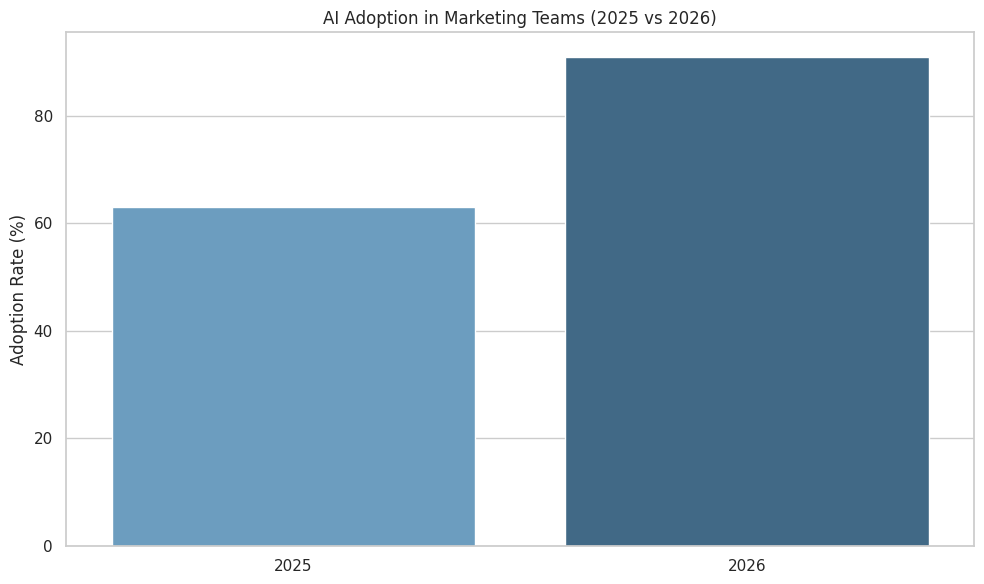
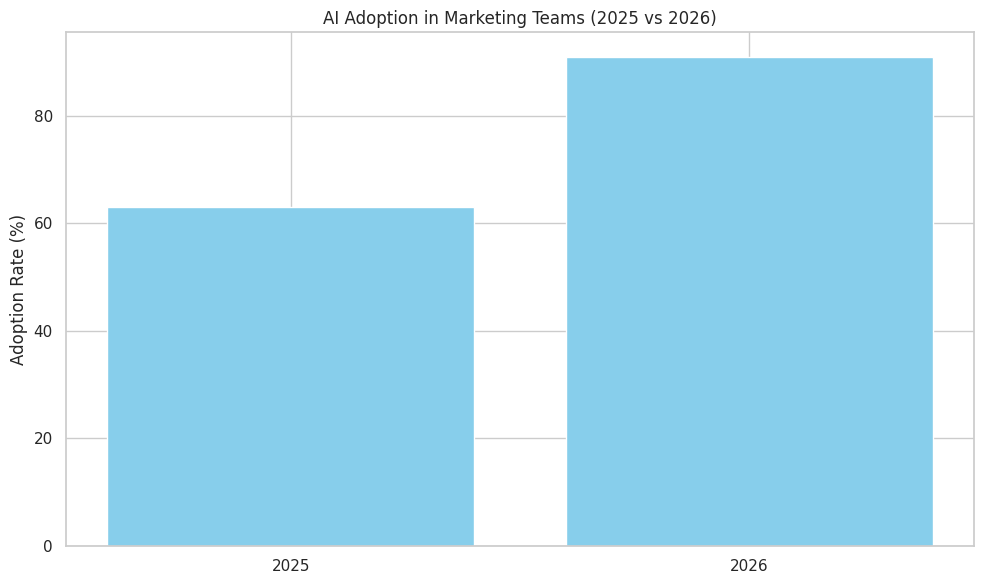
Startups are no longer merely experimenting with AI—they are building their entire business models around it. Recent reports show that over 91% of marketing teams in 2026 have embedded AI into their day-to-day workflows, up from just 63% the previous year. Meanwhile, over 10% of startup marketing budgets are now allocated specifically to AI infrastructure, with a focus on long-term ROI, system interoperability, and competitive differentiation. These numbers reflect a broader trend: startups that implement the right AI stack are consistently outperforming those that don’t—reporting 2x to 3x higher ROI, faster time-to-market, and significantly reduced operational costs.
In this blog, we unveil the top 10 AI tools that are empowering startups around the world to achieve scalable, intelligent growth in 2026. These tools have been carefully selected based on their impact on key growth functions including lead generation, content creation, lifecycle automation, workflow integration, customer retention, and visibility in AI search environments. Each tool represents a critical layer in the modern growth stack, offering capabilities that range from end-to-end automation to AI-driven strategic insights.
Whether you are an early-stage founder, a growth marketing leader, or a product manager looking to integrate AI into your core operations, this guide provides the strategic insight you need to make informed decisions. These are not just tools—they are growth engines that redefine how startups attract users, convert prospects, retain customers, and scale globally.
By understanding the capabilities and use cases of each AI platform featured in this blog, startups can build a tech stack designed for long-term success. From foundational intelligence to hyper-targeted outreach, these tools are shaping the future of startup growth. Let’s explore the AI technologies that are not only transforming business operations but also setting the standard for success in the digital-first, AI-powered economy of 2026.
Before we venture further into this article, we would like to share who we are and what we do.
About 9cv9
9cv9 is a business tech startup based in Singapore and Asia, with a strong presence all over the world.
With over nine years of startup and business experience, and being highly involved in connecting with thousands of companies and startups, the 9cv9 team has listed some important learning points in this overview of the Top 10 AI Tools For Growth Hacking Startups in 2026.
If you like to get your company listed in our top B2B software reviews, check out our world-class 9cv9 Media and PR service and pricing plans here.
Top 10 AI Tools For Growth Hacking Startups in 2026
- ChatGPT-4o
- HubSpot Breeze AI
- Jasper AI
- Apollo.io
- Clay
- Instantly.ai
- Surfer SEO
- Activepieces
- Intercom Fin
- ConvertMate
1. ChatGPT-4o

In the fast-changing world of startup growth, 2026 has brought a new era powered by artificial intelligence. Among the many tools emerging in the market, ChatGPT-4o by OpenAI has clearly positioned itself as a top AI engine that supports growth hacking efforts for startups worldwide. It’s no longer just a chatbot — it’s an intelligent operational nucleus for marketing, automation, data analysis, and product innovation.
With its ability to handle text, visuals, spreadsheets, and communications natively, ChatGPT-4o has become a core utility for lean teams seeking speed, precision, and cost efficiency in their daily tasks. The following sections highlight its capabilities, benefits, and measurable impact on startup productivity.
The Role of ChatGPT-4o in 2026 Startups
ChatGPT-4o serves as an advanced, AI-powered assistant that helps early-stage and scaling startups improve productivity, marketing, research, and internal processes. It supports multimodal interactions, meaning it can read images, analyze data, write code, generate content, and respond to voice or text input—all within a unified system.
Startups typically use it across various departments including operations, product, finance, marketing, and customer service.
Strategic Advantages of ChatGPT-4o in Startup Environments
The table below outlines how specific capabilities of ChatGPT-4o in 2026 directly benefit startup growth strategies:
Table: ChatGPT-4o Features and Startup Benefits
| Feature Category | ChatGPT-4o Capability (2026) | Strategic Startup Benefit |
|---|---|---|
| Multimodal Processing | Understands and generates text, image, audio, video | Handles creative and analytical tasks seamlessly |
| Automated Data Analytics | Real-time interpretation of Excel, CSV, and SQL | Replaces entry-level analysts and saves budget |
| Code Generation & Debugging | Writes, tests, and debugs scripts/APIs | Accelerates MVP and product development |
| Competitor & Market Research | Analyzes trends and business models | Shortens validation cycle for business ideas |
| Content Generation | Produces blogs, ads, emails, and social copy | Reduces need for a large marketing team |
| Workflow Automation | Schedules tasks, creates reports, sends updates via email | Enhances team efficiency with minimal input |
| Presentation Creation | Builds PPT decks from plain prompts | Speeds up client pitches and investor decks |
Quantified Impact on Productivity and Cost Efficiency
Research from AI benchmarking studies in 2026 indicates that using ChatGPT-4o for just 11 minutes a day delivers measurable savings in labor hours, equivalent to over 10 hours saved across an 11-week cycle. This allows startups to reduce hiring costs while expanding operational bandwidth.
Table: ChatGPT-4o Impact Metrics for Startups
| Metric | Value in 2026 |
|---|---|
| Average Monthly Usage | 5.6 billion visits globally |
| Market Share of AI Tools | 40.52% of total downloads |
| Time Efficiency per User | 10+ hours saved over 11 weeks |
| Cost Reduction Equivalent | 1 part-time staff member |
| Adoption in Operations | 76% of finance-heavy startups |
| Adoption in Marketing | 82% of early-stage marketing teams |
How Startups Integrate ChatGPT-4o With Other Tools
In 2026, ChatGPT-4o is often used as a central command hub for other niche AI tools. Startups design prompt logic and workflows using GPT-4o, which then direct actions across tools like Notion AI, Jasper, Airtable, or Zapier.
This orchestration approach improves workflow cohesion and retains human-in-the-loop control. Startups benefit from scalable automation without losing oversight—especially critical in data-sensitive or high-stakes environments.
Matrix: ChatGPT-4o and Complementary AI Stack
| Function | AI Tool Used | Orchestrated by ChatGPT-4o? |
|---|---|---|
| Task Scheduling | Notion AI / Motion | Yes |
| Ad Copywriting | Jasper / Copy.ai | Yes |
| CRM Updates | HubSpot AI / Freshsales Copilot | Yes |
| Lead Scoring | Pipedrive / Clay AI | Yes |
| Email Sequences | Instantly / Lemlist | Yes |
| Internal Reports | Airtable / Coda AI | Yes |
| Custom GPT Agent Deployment | OpenAI API / Langchain | Yes |
Compliance and Trust in Enterprise Settings
As startups scale or pivot into enterprise partnerships, compliance and trust become major concerns. ChatGPT-4o meets the demands of enterprise clients through its improved reasoning capabilities, accuracy of responses, and low error rate.
Notably, 83% of global enterprise leaders now require AI models to operate with a 5% or lower error threshold for critical decision-making tasks—an expectation ChatGPT-4o consistently delivers.
Conclusion
ChatGPT-4o is no longer just an AI assistant—it is a key growth engine for startups in 2026. Its ability to reduce cost, save time, automate technical workflows, and support cross-functional operations makes it indispensable in the modern growth hacking toolkit.
By using ChatGPT-4o not just as a content creator but also as a research analyst, strategist, and systems integrator, startups can scale faster, operate leaner, and compete globally with fewer resources. Its position at the center of the AI tool landscape in 2026 is both earned and essential.
2. HubSpot Breeze AI

In 2026, HubSpot’s Breeze AI has transformed from a helpful CRM feature into a powerful growth hacking platform built for modern startups. Originally launched in late 2023, Breeze AI has evolved into a fully integrated AI system that brings together content creation, lead generation, customer engagement, and automation—all within the HubSpot CRM ecosystem. This has helped early-stage companies and growth-focused startups unlock remarkable improvements in marketing performance, lead management, and customer satisfaction.
The Evolution of Breeze AI as a Growth Engine
HubSpot Breeze AI has become a vital part of many startups’ marketing technology stacks. Its rise is due to its ability to unify separate marketing and customer service functions under one intelligent system that learns directly from customer interactions and CRM history. This CRM-native orchestration means that every AI action—whether it’s creating a blog post, answering a support ticket, or identifying high-potential leads—is automatically personalized based on each contact’s lifecycle stage, behavior, and past engagements.
Startups using Breeze AI have reported impressive results. On average, businesses have seen over a 450% increase in qualified leads and a 129% improvement in total lead acquisition within their first year of using the tool. This significant growth impact has positioned HubSpot Breeze as one of the top AI tools for growth hacking startups globally.
Overview of Breeze AI Agents and Their Business Benefits
Breeze AI operates through four distinct agents—each designed to handle a core aspect of startup growth: content creation, customer support, social media management, and lead prospecting.
Table: Breeze AI Agents and Their Strategic Contributions
| Agent Name | Core Function | Impact on Startup Growth |
|---|---|---|
| Content Agent | Creates blog articles, landing pages, and social content | Increases content production speed by 67% |
| Customer Agent | Resolves support tickets 24/7 using AI | Automates over 50% of all incoming tickets |
| Prospecting Agent | Identifies and prioritizes high-intent leads | Provides 3x better visibility into qualified leads |
| Social Agent | Automates social posting and trend monitoring | Reduces manual social media tasks by 70% |
Each agent directly pulls data from HubSpot’s CRM, allowing for contextual, real-time decisions that improve relevance and user experience. This architecture ensures that startups can deliver personalized campaigns at scale without needing large teams.
Adoption Rates and System Efficiency Metrics
HubSpot’s internal usage data indicates growing confidence in Breeze AI across the startup ecosystem. Content Hub features, in particular, have gained traction, with the attachment rate rising from 13% to 54% over the last year. The system’s agent-led model has helped small teams do more with less, particularly in content and support-heavy environments.
Table: Breeze AI System Adoption and Efficiency Indicators
| Metric Category | Measured Outcome |
|---|---|
| Qualified Leads Growth | +451% in first year |
| Lead Acquisition Improvement | +129% YOY |
| Content Hub Attachment Rate | From 13% to 54% |
| Support Ticket Deflection Rate | Up to 70% |
| Customer Satisfaction Increase | +35% CSAT improvement |
| Lead Qualification Speed | 40% faster cycle |
Cost Savings and Performance for Early-Stage Startups
One of the standout features of Breeze AI is its outcome-based pricing structure. Rather than charging for vague promises, the system scales pricing based on actual business outcomes like leads generated or tickets resolved. For example, Breeze’s Customer Agent has enabled startups to reduce support team costs by up to 70%, with no need for extra manual setup or complex training sessions.
In B2B startup settings, the tool’s Prospecting Agent plays a vital role in identifying potential clients faster, shortening sales cycles, and enhancing conversion rates. This has led to a 35% uplift in customer satisfaction scores across key early adopter companies, reflecting both improved service quality and higher retention potential.
Matrix: Breeze AI Return-on-Investment in B2B Startup Use Cases
| Use Case Scenario | Tool Utilized | Outcome Delivered |
|---|---|---|
| Inbound Lead Capture | Prospecting Agent | 3x increase in qualified leads |
| Customer Retention Support | Customer Agent | 50%+ of issues resolved without human intervention |
| Content Campaigns | Content Agent | 2x more blogs and landing pages produced per week |
| Brand Visibility | Social Agent | Consistent scheduling, 70% fewer manual inputs |
Conclusion
HubSpot Breeze AI has redefined what a modern CRM can achieve for growth hacking startups. By using AI agents that learn directly from customer interactions, startups can now generate more leads, handle support requests faster, publish content efficiently, and manage their online presence—all without adding headcount.
Its CRM-native architecture and focus on automation, personalization, and results-based pricing make Breeze AI a leading platform in the 2026 AI tools landscape. For startups aiming to grow faster while keeping operations lean, HubSpot Breeze stands out as a strategic choice to integrate and scale AI across the customer lifecycle.
3. Jasper AI
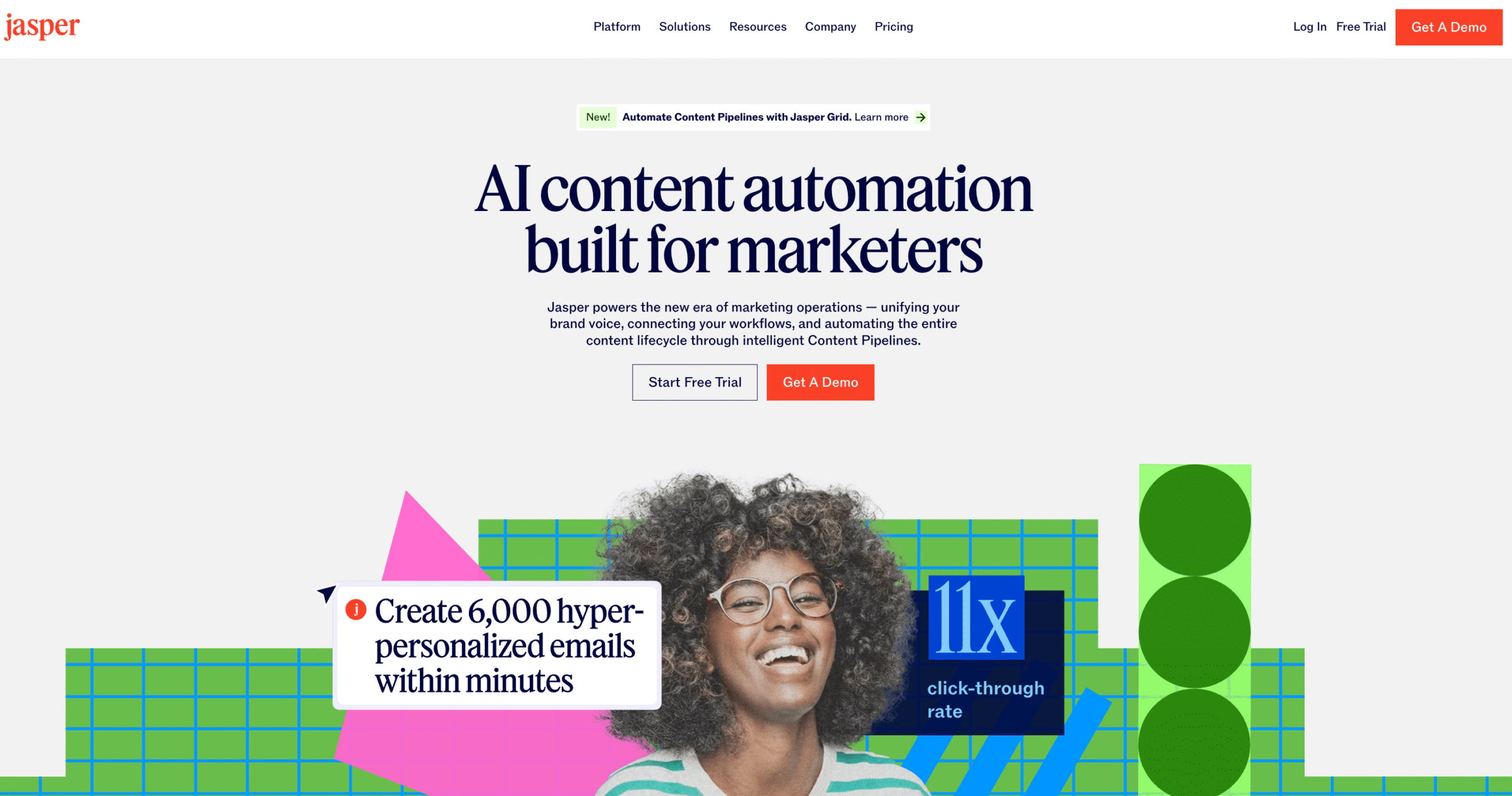
As growth hacking becomes a central strategy for startups in 2026, Jasper AI has emerged as one of the top artificial intelligence tools that helps these businesses scale marketing content efficiently and compliantly. No longer just a writing assistant, Jasper has evolved into a complete enterprise-grade platform focused on content governance, brand consistency, and campaign automation.
Startups often face bottlenecks in content approval due to legal, compliance, and brand alignment challenges—especially when expanding globally. Jasper AI solves this with native tools designed to manage branded content, automate variant testing, and ensure all creative outputs meet predefined guidelines.
How Jasper AI Enables Content Infrastructure at Scale
The Jasper platform has become essential for growth-focused startups needing to accelerate go-to-market timelines while meeting content quality standards. It supports over 25 languages and allows teams to create campaign materials across multiple formats and platforms, ensuring fast and consistent content delivery worldwide.
By offering brand governance systems, Jasper reduces friction between marketing and compliance departments. Startups can now generate and publish content up to 80% faster while maintaining accuracy, tone, and legal compliance—factors that often delay early-stage campaign execution.
Table: Jasper AI Core Features and Startup Advantages
| Feature Category | Description | Startup Benefit |
|---|---|---|
| Brand Governance | Built-in brand voice control and legal compliance workflows | Reduces rework and legal blockers |
| Multi-Variant Content | Automatic generation of content versions across channels | Increases campaign effectiveness and personalization |
| Multilingual Campaigns | Content creation in 25+ languages | Enables global expansion without language barriers |
| SEO Integration | Optimized for search engines via Surfer and AI-driven engines | Improves visibility and traffic |
| Publishing Acceleration | Time-to-publish reduced by up to 80% | Speeds up go-to-market and testing cycles |
| Template Libraries | 50+ ready-to-use templates for blogs, ads, emails | Supports lean teams with limited design or copy resources |
Adoption, ROI, and Competitive Advantage
Jasper’s rise among AI tools in 2026 is not just due to its features but also its measurable returns. Nearly 91% of marketing teams now use AI platforms, but Jasper users report a significantly higher ROI. While only 12% of users on basic tools can prove their campaign success, 61% of Jasper users consistently track and deliver measurable value.
Startups using Jasper have seen a return on investment between 2x and 3x in most tracked use cases. This shift from one-off use to embedded infrastructure gives Jasper a clear advantage in competitive startup environments.
Matrix: Jasper AI ROI Comparison (AI Tools Landscape 2026)
| User Type | Tool Type Used | Ability to Track ROI (%) | Average ROI Range |
|---|---|---|---|
| Individual Marketers (Freelance) | Basic AI Writing Assistants | 12% | 1.1x – 1.5x |
| Startup Growth Teams | Jasper AI | 61% | 2x – 3x |
| Enterprise Content Divisions | Jasper AI (Enterprise Tier) | 74% | 2.5x – 3.8x |
Tiered Pricing and Features for Different Startup Sizes
Jasper offers flexible plans tailored to startup stages—from solo entrepreneurs to scaling teams and funded enterprises. This pricing structure ensures that even early-stage startups can benefit from AI-powered content production and gradually upgrade as they grow.
Table: Jasper AI Pricing Tiers and Features in 2026
| Jasper Plan | Monthly Cost (Annualized) | Ideal User Profile | Key Features |
|---|---|---|---|
| Creator / Pro | $39 – $69 | Solopreneurs / Small Teams | Brand Voice training, 50+ content templates |
| Business / Teams | From $39+, custom available | Marketing Teams / Growth Startups | Workflow automation, team collaboration tools |
| Enterprise | Custom Pricing | Large Startups / Global Brands | Legal review layers, multivariate testing, global scaling support |
Conclusion
Jasper AI stands out in 2026 as a reliable and scalable AI solution tailored for startups seeking fast growth through content-led strategies. It provides the technology infrastructure to manage large-scale content production, maintain brand consistency, and meet regulatory requirements across global markets.
Its evolution from a writing assistant to a full content operating system makes it a key driver for growth hacking teams. For startups that need speed, structure, and measurable ROI from their content marketing efforts, Jasper AI has proven to be one of the most effective tools available worldwide.
4. Apollo.io
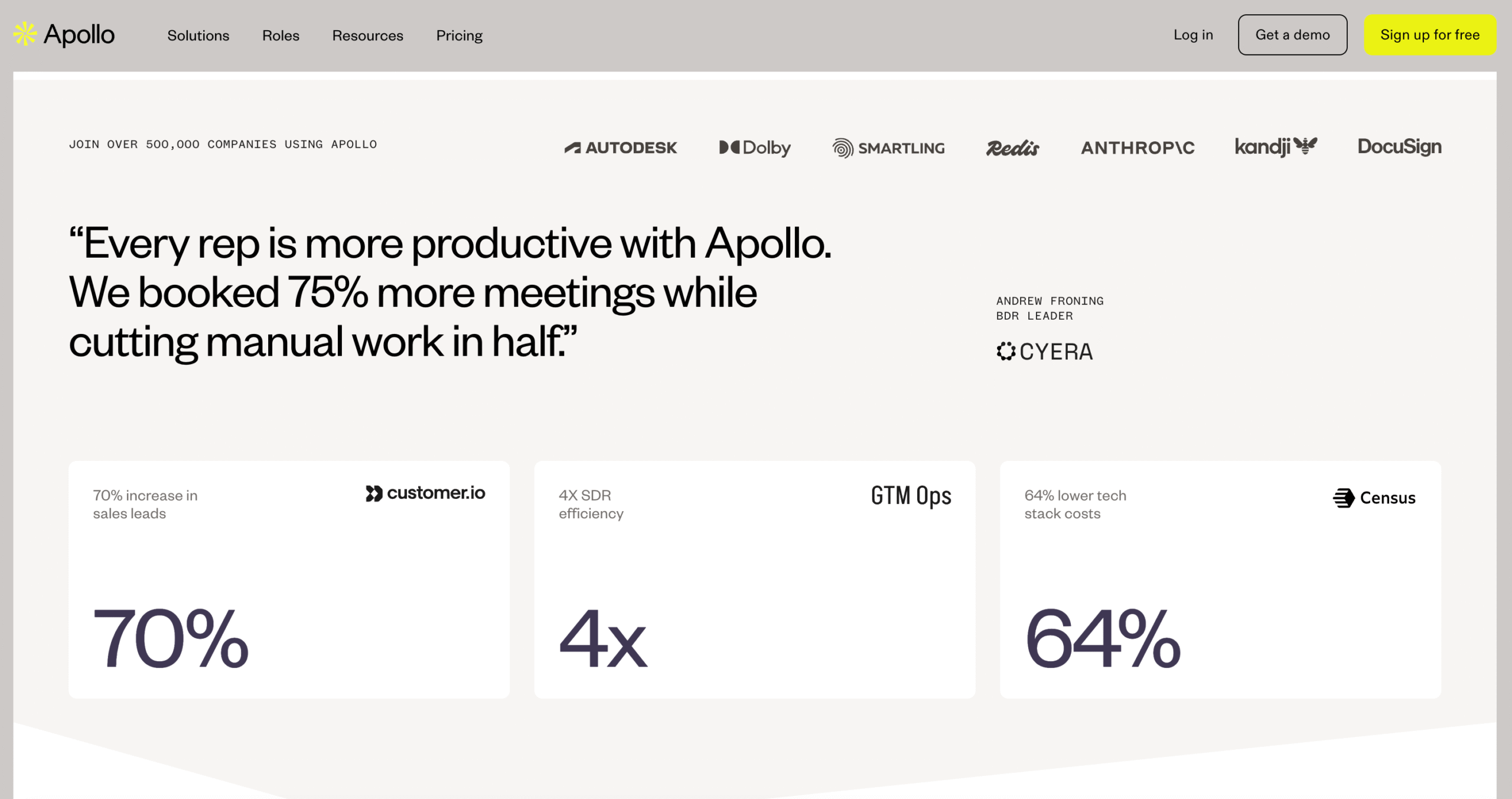
In the fast-paced world of startup growth in 2026, Apollo.io has emerged as one of the most trusted and widely adopted AI tools for lead generation. With its vast contact database, intelligent automation features, and integrated outreach solutions, Apollo.io plays a critical role in helping startups identify, engage, and convert high-value prospects across global markets. Its ability to combine accurate data with smart outreach and predictive lead scoring makes it a cornerstone in the AI-driven sales tech stack for growth hacking.
Apollo’s platform helps early-stage startups and scaling businesses increase outreach efficiency, reduce software costs, and achieve higher response rates from targeted outreach—all essential components for any startup aiming to grow fast with limited resources.
Why Apollo.io is a Growth Engine for Startup Sales Teams
Apollo’s value lies in its ability to act as a full-suite sales solution. It provides verified contact data, automates email sequences, enriches lead information, and supports cold calling—all from one platform. This removes the need for startups to subscribe to multiple tools, helping them lower software spending while accelerating sales results.
Its 2026 system includes a dynamic enrichment engine that collects lead data from over 20 trusted providers. This leads to 91% email accuracy and ensures that outreach campaigns are based on real, updated contacts. Users typically report a 75% increase in meetings booked and double the number of productive conversations within the first few months of adoption.
Table: Apollo.io Sales Stack Capabilities and Startup Benefits
| Feature Area | Description | Startup Benefit |
|---|---|---|
| Verified Data Access | 275M+ contacts and 73M+ companies globally | High-quality prospecting without manual data sourcing |
| Waterfall Data Enrichment | Pulls contact info from 20+ verified sources | Maintains 91%+ email accuracy for outreach |
| AI-Powered Outreach | Automated email sequences and intent-based lead scoring | Increases meeting conversion rates and reply rates |
| Integrated Dialer | Built-in phone dialer with call recording | Consolidates calling software into a single platform |
| CRM Functionality | Pipeline tracking and lead status management | Removes the need for separate CRM systems |
| Predictive Insights | AI scoring based on behavior and job titles | Prioritizes high-intent leads more effectively |
Usage-Based Pricing Tiers for Startups at All Stages
Apollo offers various pricing plans tailored to different startup needs, from early testing to global sales operations. The plans include data credits that are consumed based on the type of contact information accessed. For example, revealing a mobile number may cost more credits than retrieving an email. Despite this model requiring careful credit management, the system allows startups to scale their prospecting efforts as they grow.
Table: Apollo.io 2026 Pricing Plans and Use Case Comparison
| Plan Name | Annual Cost/User (USD) | Data Credits/Year | Ideal Use Case |
|---|---|---|---|
| Free | $0 | 900 credits | Pilot testing and early outreach |
| Basic | $49/month (billed annually) | 30,000 credits | Scaling cold outreach in SMBs |
| Professional | $79/month (billed annually) | 48,000 credits | A/B testing, lead scoring, sales analytics |
| Organization | $119/month (min 3 seats) | 72,000 credits | Global sales ops, advanced dialer, secure login |
Add-ons, ROI, and Outreach Effectiveness
Apollo’s pricing model also includes optional add-ons that enhance its capabilities. Startups targeting inbound strategies can enable the website visitor identification feature, while those doing international calling may benefit from the Advanced Dialer Add-on. Each add-on helps optimize outreach based on specific sales strategies.
Despite additional costs, the performance metrics make a strong case for ROI. Apollo users often report 20% to 30% reply rates in email-first campaigns—especially when leveraging AI-driven personalization features and intent data. For startups, these results mean faster revenue growth and shorter sales cycles.
Matrix: Apollo.io Credit Usage and Add-on Options
| Contact Type Accessed | Average Credit Cost | Notes |
|---|---|---|
| Business Email | 1 credit | Included in all tiers |
| Mobile Number | 8 credits | Premium contact info |
| Intent Data (12 Topics) | Included in Organization | Helps segment leads by buying signals |
| Website Visitor Tracking | $119/month add-on | Identifies anonymous visitors |
| Advanced Dialer (Global) | $119/month add-on | Supports international and parallel dialing |
Conclusion
Apollo.io has earned its place as one of the top 10 AI tools for growth hacking startups in 2026 due to its ability to centralize sales outreach, improve lead quality, and drive real conversations with ideal customers. Its smart use of data, automation, and predictive scoring gives startups the advantage they need to grow quickly in a competitive market.
Whether used for cold emailing, warm prospecting, or global sales operations, Apollo.io’s intelligent lead engine and flexible pricing make it a must-have solution for high-growth teams looking to turn contact data into revenue.
5. Clay

As startups prioritize data intelligence to drive faster and more targeted growth in 2026, Clay has emerged as one of the most powerful AI tools in the growth hacking landscape. Known for its advanced automation and lead enrichment capabilities, Clay acts as a centralized engine that helps startups automate outbound research, qualify leads more accurately, and optimize revenue operations without relying on large sales development teams.
Its ability to connect over 100 data sources and orchestrate real-time insights positions Clay not just as a lead tool, but as a revenue-generation platform that adapts to the speed of modern go-to-market strategies.
Clay’s Intelligent Automation and Revenue-Centric Design
Unlike traditional static databases, Clay functions as a dynamic AI platform capable of replacing manual sales development labor. By using its proprietary AI agent called “Claygent,” startups can perform deep research tasks that once required human effort—such as scraping websites, reading documents, analyzing social profiles, and extracting intent-based signals from public sources.
This advanced automation transforms the workflow of early-stage and growth-stage companies, allowing them to build prospect lists, trigger outreach, and feed clean data back into their CRM—all in real-time.
Table: Core Capabilities of Clay and Benefits for Startups
| Capability Category | Description | Startup Benefit |
|---|---|---|
| AI Agent (Claygent) | Automates web research, PDF reading, social parsing | Replaces time-consuming SDR tasks |
| Multi-Source Data Enrichment | Uses 100+ APIs to collect verified lead data | Increases data accuracy and coverage |
| Waterfall Logic System | Sequential matching from multiple sources until verified match found | Boosts lead quality and email validity |
| CRM Integration | Syncs directly with Salesforce, HubSpot, and other tools | Keeps databases clean and up to date |
| Scalable Automation | Launches campaigns and updates records in real-time | Reduces campaign setup time from hours to seconds |
| Signal-Based Lead Scoring | Scores leads based on job changes, intent topics, and online behavior | Improves outbound targeting precision |
Cost-Efficiency and Revenue Potential
One of Clay’s most compelling advantages is the return it delivers compared to traditional human sales development roles. While hiring an SDR can cost startups between $75,000 and $100,000 annually, implementing Clay’s AI engine costs between $500 and $2,000 per month. This reduction in overhead can generate between 40 and 60 qualified opportunities monthly—significantly outperforming human teams in volume, speed, and consistency.
Table: Cost Comparison – Clay vs Traditional SDR Hiring
| Sales Resource | Monthly Cost (Approximate) | Monthly Output (Qualified Leads) | Cost Per Lead (Est.) |
|---|---|---|---|
| Human SDR | $6,250 – $8,300 | 15 – 20 | $312 – $416 |
| Clay Platform (AI SDR) | $500 – $2,000 | 40 – 60 | $8 – $50 |
Pricing Plans and Functional Tiers for Startup Use Cases
Clay provides flexible pricing tiers based on the number of credits, integration access, and enrichment features, making it suitable for teams at different growth stages—from small startup teams to enterprise-grade outbound teams.
Table: Clay 2026 Pricing Plans and Feature Breakdown
| Plan Name | Monthly Cost (USD) | Monthly Credits | Key Functionalities |
|---|---|---|---|
| Free | $0 | 100 | Basic integrations, limited AI access |
| Starter | $134 | 2,000 | Access to phone/email enrichment, API keys |
| Explorer | $314 | 10,000 | Includes webhooks, deeper sequencing logic |
| Pro | $720 | 50,000 | Full CRM syncing, advanced workflow automation |
Integrated Data Strategy for CRM-Centric Workflows
Clay’s native syncing features with Salesforce, HubSpot, and Airtable help startups maintain high-quality data pipelines and ensure that lead records remain fresh, complete, and actionable. This design supports consistent CRM hygiene and makes it easy for teams to move from prospecting to pipeline tracking with minimal manual input.
Its waterfall logic further enhances this by ensuring data gaps are filled from multiple sources automatically, increasing the likelihood of verified email matches and enriched contact profiles.
Matrix: Clay’s Integration and Data Enrichment Strategy
| Workflow Component | Integration Source Used | Role in Revenue Generation |
|---|---|---|
| Lead Enrichment | 100+ Data Providers (Clearbit, ZoomInfo, etc.) | Fills missing fields, ensures contact accuracy |
| CRM Syncing | HubSpot, Salesforce, Airtable | Keeps CRM aligned with real-time outreach |
| Email Verification | Sequential Provider Matching | Ensures high deliverability rates |
| Campaign Automation | Claygent + Webhooks | Triggers outbound sequences instantly |
Conclusion
Clay has proven itself as one of the most advanced and reliable AI tools for revenue-focused growth hacking in 2026. By combining powerful automation with deep data access, Clay empowers startups to scale faster without scaling headcount.
Its economic advantage, precision targeting, and smart CRM connectivity allow small teams to compete with much larger sales operations. As a result, Clay continues to be adopted by high-performing startups that are looking to win in competitive markets with intelligent, automation-first go-to-market strategies.
6. Instantly.ai
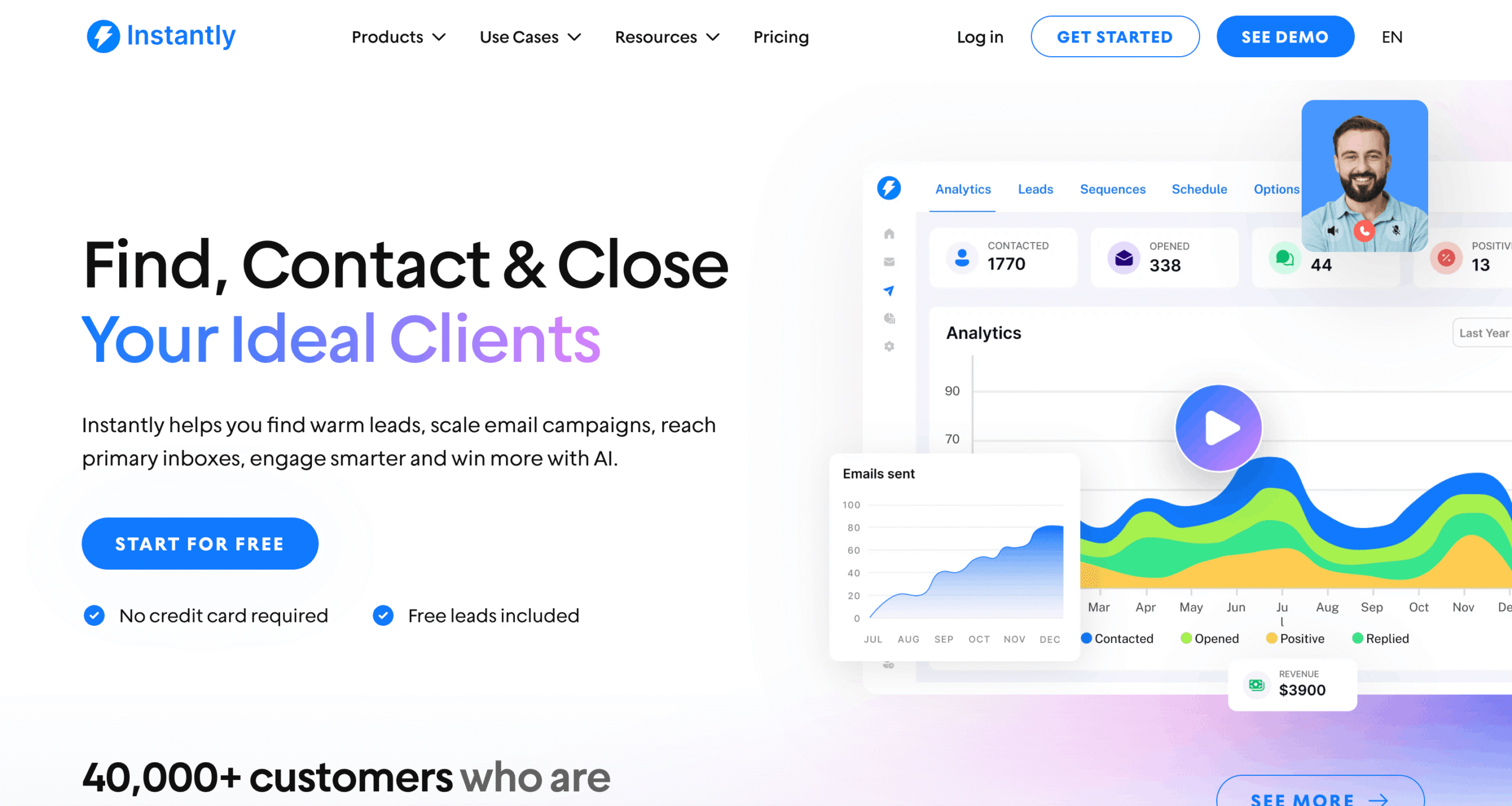
In the competitive startup ecosystem of 2026, sending cold emails at scale has become more complex due to stricter spam detection protocols by major email providers like Google and Microsoft. Instantly.ai has stepped in as a dedicated solution focused on ensuring email deliverability, making it one of the most valuable AI tools for growth hacking startups. Rather than just enabling mass outreach, Instantly.ai builds a reliable infrastructure that helps teams land messages in recipients’ primary inboxes, not spam or promotional folders.
With over 45% of global email traffic flagged as spam, startups can no longer afford to rely on outdated email strategies. Instantly.ai addresses this challenge through deliverability engineering techniques such as IP sharding (SISR) and automated inbox rotation, ensuring domain health remains intact even during high-volume campaigns.
How Instantly.ai Powers Outreach at Scale Without Spam Penalties
Instantly.ai focuses on building a strong backend system for cold outreach. It enables startups to send over 125,000 emails per month without being flagged, thanks to its specialized infrastructure. Features like inbox warming, domain rotation, and dedicated IPs protect sender reputation and increase the chances of emails reaching intended recipients.
Elite sales and marketing teams using Instantly.ai often pair its outreach engine with AI agents that perform lead research and manage automated follow-ups. This blend of automation and infrastructure stability results in a 4x to 7x increase in lead conversion rates for fast-moving startups.
Table: Instantly.ai Core Outreach Features and Startup Benefits
| Feature Category | Description | Startup Benefit |
|---|---|---|
| IP Sharding (SISR) | Sends from multiple IPs to distribute volume | Avoids spam filters and blacklisting |
| Automated Inbox Rotation | Alternates inboxes to maintain deliverability | Sustains high volume outreach safely |
| Inbox Warm-Up | Gradual increase of send volume to build trust | Maintains domain and sender reputation |
| AI Reply Agent | Handles and personalizes email responses | Saves time and boosts engagement |
| Waterfall Lead Enrichment | Pulls contact data from a 450M+ lead database | Increases reply rates and reduces bounce |
| Campaign A/B Testing | Tests message variations for performance | Improves conversion and message clarity |
Predictable Outreach Economics and ROI
Instantly.ai delivers a measurable and scalable outreach model that allows startups to forecast costs effectively. Startups using the platform typically operate at a cost per lead (CPL) of $0.87 and a cost per meeting of around $11.40—exclusive of labor. This level of predictability enables early-stage companies to manage outreach budgets more confidently and align spending with revenue goals.
Table: Instantly.ai Outreach Cost Breakdown
| Metric | Average Value (2026) |
|---|---|
| Cost Per Lead (CPL) | $0.87 |
| Cost Per Meeting | $11.40 |
| Monthly Outreach Volume | 125,000+ emails |
| Reply Rates (Optimized) | 18% – 28% |
| Lead Conversion Uplift | 4x – 7x (with AI + infrastructure) |
Instantly.ai Plans and Functional Tiers for Growth Hackers
Instantly offers a flexible set of plans designed to match startup outreach goals, from growth-stage testing to enterprise-scale campaigns. Each plan includes infrastructure features and lead management tools, with optional add-ons like SuperSearch for deeper lead discovery and enrichment.
Table: Instantly.ai 2026 Pricing Plans and Key Features
| Plan Name | Monthly Cost (USD) | Active Leads Supported | Highlight Features |
|---|---|---|---|
| Growth Outreach | $37 | 1,000 | Unlimited accounts, inbox warm-up |
| Hypergrowth | $97 | 25,000 | Advanced analytics, priority support |
| Light Speed | $358 | 100,000 | IP sharding (SISR), Dedicated IPs |
| SuperSearch (Add-on) | $47 – $197 | 1,500 – 10,000 | Access to 450M leads, enrichment waterfall |
Deliverability as a Growth Enabler
The true differentiator for Instantly.ai is not just volume but deliverability quality. Its systems ensure that outreach efforts are not wasted in spam folders. With features such as smart warm-up and IP diversification, it protects domain authority and maximizes response rates.
Startups leveraging its AI Reply Agent also benefit from automated handling of first responses, allowing small teams to manage high lead volume without burning resources.
Matrix: Deliverability vs Traditional Email Platforms (2026)
| Platform Capability | Traditional Email Platform | Instantly.ai |
|---|---|---|
| High-Volume Outreach | Risk of blacklisting | Protected via IP rotation |
| Email Deliverability Rate | 40% – 60% | 80% – 95% |
| Spam Folder Avoidance Tools | Limited | Built-in (IP sharding, warming) |
| AI Follow-up Automation | Manual or 3rd party needed | Native (AI Reply Agent) |
| Cost Efficiency per Lead | High variability | Predictable <$1 CPL |
Conclusion
Instantly.ai is redefining outbound email campaigns for startups in 2026 by providing a complete infrastructure focused on email deliverability and automation. Its blend of engineering precision and AI-powered automation enables teams to scale outreach without sacrificing quality or inbox placement.
For startups serious about outbound growth, Instantly.ai offers the technological edge needed to run large-scale, intelligent, and compliant outreach programs—making it one of the top 10 AI tools for growth hacking in today’s competitive startup landscape.
7. Surfer SEO

As digital search behavior evolves in 2026, traditional SEO strategies are no longer enough to ensure brand visibility. With the rise of AI assistants like ChatGPT, Gemini, and Perplexity becoming major discovery platforms, startups now need to optimize not only for Google but also for how their brand appears in AI-generated content. Surfer SEO has become a top AI tool for growth hacking startups by helping them adapt to this new reality through a strategy known as “Search Everywhere Optimization.”
This shift involves making content more accessible and favorable to large language models (LLMs), ensuring startups are mentioned across AI-generated search results, discussions, and citations. Surfer SEO provides tools and data-driven strategies to achieve this, helping startups improve discoverability and gain a competitive edge in both traditional and AI-powered search environments.
Surfer SEO and the Emergence of AI Visibility Monitoring
In 2026, around 25% of brand discovery happens through AI-generated platforms rather than standard search engine results pages (SERPs). Surfer SEO addresses this transformation with its innovative “AI Tracker,” a feature that monitors brand mentions across top AI models and platforms. This visibility allows startups to track how often and where their brand is cited, including on trusted forums like GitHub and Reddit.
The strategy is no longer just about keyword ranking. Instead, it involves structuring content to be machine-readable, placing citations in high-authority spaces, and optimizing web assets for LLM discovery. Surfer SEO enables growth teams to control how their brand appears in the AI search ecosystem, which is becoming a dominant channel in digital marketing.
Table: Surfer SEO Functionalities for AI Visibility
| Feature Category | Description | Startup Benefit |
|---|---|---|
| AI Visibility Tracker | Detects brand mentions across LLM-generated content | Helps control and enhance brand exposure in AI search |
| Topical Mapping | Identifies low-competition keyword clusters with high relevance | Boosts organic visibility and content planning |
| Citation Optimization | Guides placement of citations in forums like Reddit, Quora, GitHub | Builds trust and improves AI citation frequency |
| Content Structure Intelligence | Ensures articles are readable and indexable by both Google and LLMs | Expands visibility across AI and traditional platforms |
| Zero-Click Search Readiness | Focuses on capturing attention without needing direct clicks | Adapts to AI-generated summaries and responses |
Performance Metrics and Measurable Impact
Surfer SEO enables startups to improve their organic presence in a much shorter time compared to conventional SEO tools. While traditional SEO efforts often require 6 to 12 months to show clear returns, Surfer’s AI-aligned strategy accelerates ROI recognition to as little as 3 months. Case studies from 2026 demonstrate the platform’s impact in various startup use cases.
Webflow, for instance, increased its AI-generated sign-ups from 2% to 8% in six months by blending structured content strategies with digital PR efforts powered by Surfer. The tool’s data-backed topical mapping also led to a 32% increase in search traffic within three months by focusing on relevant and underutilized keyword clusters.
Table: Surfer SEO Impact Benchmarks for Growth Startups
| Performance Metric | Baseline Without Surfer | Results with Surfer SEO |
|---|---|---|
| Top 10 Ranking Probability | 1x | 2x within 30 days |
| Monthly Organic Traffic Growth | N/A | 15% – 40% (Month 1) |
| 6-Month Organic Growth | N/A | 100% – 200% |
| Time to ROI Recognition | 6 – 12 months | 3 – 6 months |
| AI Referral Traffic Contribution | 1% – 3% | 5% – 9% |
Surfer SEO’s Role in Zero-Click and LLM-Led Search Landscape
The way users search is changing rapidly. Many now rely on answers directly generated by AI models rather than clicking through to websites. Surfer SEO helps startups capture this “zero-click” traffic by ensuring their brand appears in summaries, answers, and citation lists generated by LLMs.
This emerging trend requires structured content, strong backlink strategies, and authoritative placements across open-source forums—all of which Surfer’s tools support through automation and strategic insights.
Matrix: Traditional SEO vs. AI-Optimized SEO with Surfer (2026)
| Focus Area | Traditional SEO Strategy | AI Visibility with Surfer SEO |
|---|---|---|
| Search Engine Target | Google SERP only | Google + AI models (ChatGPT, Gemini, etc.) |
| Discovery Channel | User-driven click behavior | AI-assisted citation and summarization |
| Content Format | Keyword-rich articles | Structured, machine-readable content |
| Time to Visibility | 6–12 months | 3–6 months |
| Traffic Source Dependency | Organic clicks only | Blend of AI mentions + organic traffic |
Conclusion
Surfer SEO has proven to be a game-changer for startups looking to grow rapidly in 2026 by optimizing not only for Google rankings but also for AI-driven brand discovery. Its powerful features enable startups to track visibility in large language models, place their content in authoritative sources, and structure their websites for AI relevance.
In the new AI-dominated digital landscape, growth hacking requires smarter SEO tools—and Surfer SEO stands out as one of the top 10 AI tools enabling modern startups to thrive in this new search paradigm.
8. Activepieces
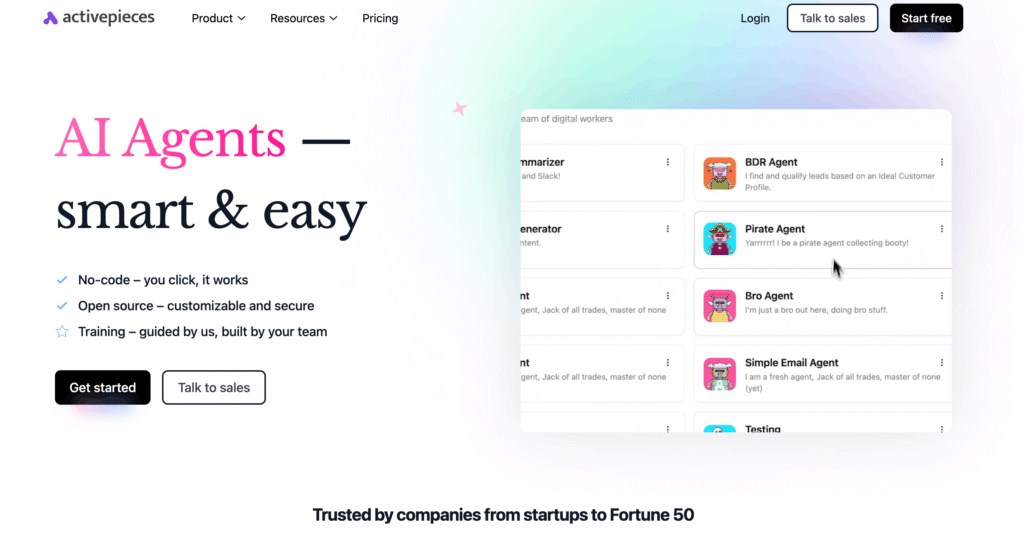
In 2026, as more startups seek smarter and more flexible automation tools, Activepieces has become a go-to AI-powered solution for managing workflows. Known for its open-source architecture and developer-friendly environment, Activepieces stands out by offering a cost-effective, scalable, and AI-integrated alternative to traditional platforms like Zapier. It enables growth hacking teams to build powerful, automated systems without being locked into expensive or closed software ecosystems.
Unlike proprietary tools, Activepieces gives startups full control over their data and deployment through self-hosting options. This level of flexibility is especially important for teams that prioritize security, want custom integrations, or need to scale automation affordably while still maintaining strong control over internal processes.
Why Activepieces Stands Out in Startup Workflow Automation
Activepieces is built with an “AI-native” foundation, meaning AI agents and logic steps are integrated directly into workflow creation. Users can automate everything from lead routing and campaign reporting to Slack updates and database syncs—all without writing code, while still allowing advanced customization through TypeScript.
Its hybrid model supports both no-code simplicity and developer-level flexibility, which is ideal for startups looking to bridge automation across technical and non-technical teams. Moreover, Activepieces allows the creation of “human-in-the-loop” workflows, where manual input or approvals are part of the process. This makes it suitable for automating critical business functions that still require oversight.
Table: Core Automation Features of Activepieces for Startups
| Feature Category | Description | Startup Benefit |
|---|---|---|
| Open-Source Deployment | Supports cloud or self-hosting via Docker | Full data ownership and system control |
| No-Code + TypeScript Support | Combines drag-and-drop UI with coding options | Enables cross-functional use and custom workflows |
| AI-Native Workflow Builder | Includes AI steps and autonomous decision nodes | Automates advanced tasks like email classification or chat replies |
| Human-in-the-Loop Design | Allows manual inputs or approvals in flows | Ideal for lead triage, finance workflows, or compliance tasks |
| Analytics and Reporting Automation | Handles up to 99.5% of repetitive reporting processes | Frees up team hours and speeds up decision-making |
Economic Advantage Compared to Proprietary Automation Tools
Startups often struggle with growing automation needs that result in higher platform fees under task-based pricing models. Activepieces resolves this with a flat-rate “Plus” plan, which allows unlimited tasks at only $25/month. This is in contrast to Zapier’s $19.99+ plans that often charge per action, which becomes costly for high-volume workflows.
Table: Activepieces vs Zapier – 2026 Cost & Functionality Comparison
| Automation Aspect | Activepieces (2026) | Zapier (2026) |
|---|---|---|
| Starting Price | $0 (Free Plan), $25 (Plus Plan) | $19.99 – $29.99 (Starter Tiers) |
| Task Limit | Unlimited on Plus Plan | Limited, pay-per-task |
| Integration Count | 413+ (Open Source, Extendable) | 8,000+ (Proprietary, Closed) |
| Hosting Options | Cloud or Self-hosted (Docker-supported) | Cloud Only |
| Advanced Logic Handling | Native loops, conditionals, branches | Limited “Paths” functionality |
| Built-in AI Capabilities | Native AI agents and prompt blocks | External GPT-based steps only |
AI-Powered Workflow Use Cases for Growth Startups
Activepieces supports automation across multiple departments, including marketing, sales, operations, and finance. Its native AI tools and extensible integration environment allow startups to create custom logic for complex processes without needing large technical teams.
Matrix: AI Workflow Examples with Activepieces in Startup Operations
| Startup Function | Example AI Workflow | Outcome |
|---|---|---|
| Marketing | Automated blog summary and scheduling | 8+ hours saved per week |
| Sales | AI-based lead enrichment and qualification | Faster deal cycle initiation |
| Operations | Invoice classification and payment routing | Streamlined financial approvals |
| Customer Support | AI chat filtering and priority triage | Improved ticket resolution speed |
| Product | Monitoring GitHub issues and auto-notifications | Accelerated response to bugs and feedback |
Conclusion
Activepieces offers startups a highly customizable, AI-empowered automation platform that enables fast, secure, and affordable scaling. With its open-source foundation, self-hosting options, and intelligent workflow builder, it provides the power to build enterprise-grade automation on a startup budget.
For growth hacking teams in 2026, Activepieces represents a modern alternative to legacy tools—one that’s designed for flexibility, transparency, and rapid execution. Whether streamlining lead handling, automating reports, or integrating AI directly into decision-making workflows, it earns its place among the top 10 AI tools driving startup growth worldwide.
9. Intercom Fin
In 2026, customer support has shifted from being a reactive service cost to a core growth lever for startups. With increased expectations from users and rising operational costs, startups are turning to intelligent automation to deliver fast, accurate, and scalable support. Among the top solutions in this space, Intercom Fin has become a leading AI tool designed to handle customer retention and engagement at scale. This AI-powered support agent not only improves resolution speed but also reduces manual workloads while enhancing customer satisfaction.
Built for performance and value, Intercom Fin is reshaping how support is delivered by providing outcome-based pricing and intelligent learning models. For startups focused on growth, this means improving customer loyalty without increasing support team size.
Intercom Fin and the Evolution of Support as a Strategic Asset
Senior leaders across industries now view support as a strategic advantage. According to 2026 benchmarks, 66% of executives agree that high-quality support is essential to long-term retention. Intercom Fin directly supports this shift by resolving over 65% of customer issues autonomously while maintaining a 96% accuracy rate. Its integration into startup ecosystems allows human agents to focus on proactive customer experience efforts, such as upselling, onboarding, and feedback loops.
For growth hacking startups, Fin delivers both operational efficiency and brand trust by creating consistent, always-on service across chat, email, and social media.
Table: Intercom Fin Core Capabilities and Benefits for Startups
| Feature Category | Description | Startup Benefit |
|---|---|---|
| End-to-End AI Resolutions | Fin handles customer queries without escalation to a human agent | Reduces workload and improves response times |
| Machine Learning from History | Learns from past chats and support docs over time | Improves monthly by ~1% in resolution accuracy |
| Multichannel Support Deployment | Works across email, live chat, and social media | Creates seamless omnichannel customer service |
| Outcome-Based Pricing Model | Charges $0.99 per resolution, with a value guarantee | Allows startups to scale without unpredictable costs |
| Agent Time Reallocation | Frees human agents for proactive CX projects | Boosts customer retention and satisfaction |
| Enterprise-Level Performance | Backed by a “Million Dollar Guarantee” on success metrics | Builds confidence in long-term deployment |
Financial Outcomes and Scalable ROI
The business value of Intercom Fin is both measurable and sustainable. Its pricing model, based on actual successful resolutions, ensures that startups only pay when value is delivered. This results in a high ROI, particularly for businesses operating on lean budgets. In fact, startups using Fin report up to 1,163% ROI over three years—a substantial impact for a growth-phase company looking to maximize margins.
Table: Intercom Fin ROI and Deployment Metrics (2026 Case Studies)
| Metric Area | Early Deployment | Mature Deployment | Noted Improvement |
|---|---|---|---|
| AI Adoption Among Teams | 62% | 87% | +25% increase |
| Consistent High-Quality Interactions | 23% | 43% | +20% improvement |
| Manual Support Volume Reduction | 16% | 28% | +12% decrease |
| Average Resolution Rate | 20% – 30% | 65% – 67% | +35% to 45% gain |
Continuous Learning and Cost-Efficiency for Growth Startups
Fin’s system architecture includes adaptive learning from both structured documentation and past conversation histories. This means the more it is used, the smarter it becomes—leading to a reduction in support costs over time. For growth startups, this dynamic learning model significantly lowers the average cost per interaction month-over-month, allowing the business to expand its customer base without proportionally increasing headcount or service costs.
Matrix: Impact of Intercom Fin on Startup Support Operations
| Area of Improvement | Traditional Support Model | Intercom Fin Implementation |
|---|---|---|
| Cost per Support Interaction | Fixed or rising with scale | Decreases over time |
| Agent Headcount Growth | Scales with user base | Flat or reduced growth |
| Response Time | Dependent on staffing | Instant, 24/7 availability |
| Resolution Quality Consistency | Varies by agent | AI-optimized and uniform |
| Customer Experience (CX) Focus | Secondary priority | Elevated due to freed-up agents |
Conclusion
Intercom Fin has emerged as a key tool in the top 10 AI solutions for growth hacking startups in 2026. Its ability to combine advanced automation, adaptive learning, and cost control gives startups a major edge in customer service delivery. By reducing support costs while improving the customer experience, Fin turns what was once a reactive function into a proactive growth driver.
Startups leveraging Fin not only improve operational efficiency but also unlock higher customer satisfaction and long-term retention—making it a vital part of any scalable growth strategy in the AI era.
10. ConvertMate
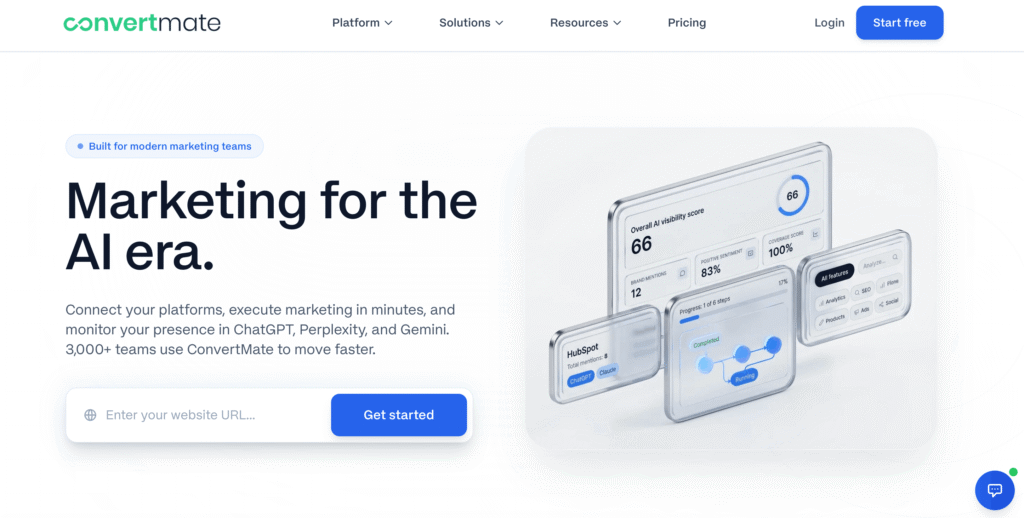
In 2026, ConvertMate has positioned itself as a top-tier AI tool for growth hacking in the e-commerce sector, especially for startups operating on the Shopify platform. With its powerful suite of over 20 specialized AI agents, ConvertMate empowers digital stores to streamline marketing tasks, improve product visibility, and significantly boost conversion rates without the need for multiple software solutions.
By offering a unified platform that replaces several standalone marketing tools, ConvertMate helps lean startup teams save time, reduce operational costs, and scale more efficiently. Its real value lies in automating critical elements of e-commerce marketing—ranging from SEO copywriting to AI-based brand visibility tracking across platforms like ChatGPT and Claude.
Why ConvertMate Is Essential for Shopify-Based Growth Startups
ConvertMate is built for high-speed, high-volume environments. As e-commerce startups expand their product offerings, maintaining consistency in marketing content becomes increasingly difficult. ConvertMate’s Persistent AI Agents solve this by remembering brand guidelines and applying them across all product descriptions, email templates, and social media posts. This enables startups to scale while preserving brand voice, clarity, and tone.
Additionally, ConvertMate condenses multiple tools—such as SEO software, analytics dashboards, and email automation systems—into one intuitive workspace, helping startups cut down on software sprawl and redundant workflows.
Table: ConvertMate Core Capabilities and Startup Impact
| Feature Category | Description | Startup Benefit |
|---|---|---|
| AI Visibility Monitoring | Tracks brand mentions in LLM answers (e.g., ChatGPT, Claude) | Offers real-time insights into market visibility |
| SEO Optimization Engine | Automates product and category descriptions for search engines | Improves product ranking and organic traffic |
| Specialized AI Marketing Agents | Handles email campaigns, social media content, and product copywriting | Saves 35+ hours weekly on repetitive marketing tasks |
| Integrated Analytics Hub | Centralizes sales, traffic, and conversion data | Reduces manual reporting effort by up to 85% |
| Persistent AI Agents | Retains tone and brand styling across all content | Ensures consistent messaging as product lines grow |
| Unified Platform | Combines up to eight marketing tools in one interface | Reduces tool redundancy and simplifies workflows |
Flat-Rate Pricing Designed for Scaling Teams
Unlike many SaaS tools that charge per user, ConvertMate uses a flat-rate pricing model, starting at $49/month. This allows for unlimited team access, which is especially useful for fast-scaling startups that need multiple contributors managing content, SEO, and campaign optimization simultaneously.
Table: ConvertMate Pricing Structure and Efficiency Metrics
| Plan Name | Monthly Cost (USD) | Users Included | Key Features |
|---|---|---|---|
| Startup Plan | $49 | Unlimited | Full access to all AI agents and dashboards |
| Growth Plan | Custom Pricing | Unlimited | Priority support, multi-store integration |
| Included Tools | 8+ consolidated apps | Shared | SEO, Analytics, Copywriting, Social/Email bots |
Measurable Impact on E-Commerce Startup Performance
Startups using ConvertMate report major improvements in ROI and operational efficiency. By automating everything from product copy to competitor tracking, ConvertMate enables teams to focus more on strategic growth initiatives rather than manual tasks. On average, ConvertMate users experience a 3.2x return on investment, and many save over 35 hours per week in repetitive content creation and data monitoring.
Table: ConvertMate Performance Benchmarks (2026)
| Optimization Area | Pre-ConvertMate Metrics | Post-ConvertMate Metrics | % Improvement |
|---|---|---|---|
| Product SEO Readiness | Manual entry, inconsistent | Fully optimized and uniform | 60% faster optimization |
| Weekly Time Spent on Copy | 40–50 hours | Under 10 hours | 80% time savings |
| Brand Voice Consistency | Varies by contributor | Fully managed by AI agents | 100% brand uniformity |
| Return on Investment (ROI) | Baseline | 3.2x average ROI | Significant revenue gain |
Sustaining Brand Quality at Scale with Persistent AI Agents
As startups grow, maintaining high-quality content across thousands of products becomes one of the biggest challenges. ConvertMate addresses this through its Persistent AI Agents, which adapt to brand guidelines and apply them consistently, even as new products are added. This eliminates the risk of fragmented messaging—a concern noted by 31% of marketing leaders globally.
Matrix: Brand Consistency at Scale – Human vs ConvertMate AI
| Brand Management Task | Human Execution | ConvertMate AI Execution |
|---|---|---|
| Tone Consistency Across Products | Prone to variation | Uniform across all listings |
| Scalability With Product Volume | Time-intensive | Near-instant updates at scale |
| Content Review Time | Manual, lengthy | Automated in real-time |
| Onboarding New Products | Requires re-training | Brand memory is persistent |
Conclusion
ConvertMate has become a vital AI tool for Shopify-based startups looking to scale quickly without sacrificing quality or efficiency. By combining automation, visibility monitoring, and brand governance into one powerful suite, ConvertMate allows e-commerce teams to operate faster, smarter, and at significantly lower costs.
Its flat-rate pricing, persistent AI capabilities, and high-ROI outcomes make it one of the top 10 AI tools for growth hacking startups in 2026—especially for those committed to building strong, scalable, and conversion-optimized digital storefronts.
The Growth Hacking Landscape in 2026: Strategic Analysis of the Top 10 AI Tools Powering Startup Scalability
In 2026, the startup ecosystem has shifted dramatically from fragmented AI experimentation to the integration of fully orchestrated AI systems. Unlike in previous years, where AI was viewed as a supplementary tool, it now serves as the foundation of strategic operations across marketing, sales, customer support, and product management. Startups no longer use AI simply to automate isolated tasks—they rely on AI to drive entire processes with speed, precision, and measurable results.
Market data reveals that 91% of marketing teams now use AI as a core part of their operational stack, compared to just 63% in 2025. This shift marks a turning point where growth hacking is defined less by manual innovation and more by intelligent, automated orchestration. High-performing startups are leveraging AI to streamline lead qualification, maintain brand consistency, optimize customer journeys, and generate conversion-ready content in real time.
AI Adoption Trends and Budget Allocation for Growth Infrastructure
As AI proves its value in delivering reliable return on investment, CMOs are increasing their confidence in the effectiveness of these platforms. In 2026, 93% of CMOs confirmed that AI adoption within their companies has resulted in clear ROI improvements. This has led to a significant reallocation of marketing budgets, with over 10% now being committed to AI-powered toolsets and infrastructure—an essential investment in an environment where traditional organic search is declining, and 60% of searches now end in AI-generated responses.
Table: AI Marketing Adoption and Economic Indicators (2024–2026)
| Metric/Indicator | 2024/2025 Status | 2026 Status or Forecast |
|---|---|---|
| AI Adoption in Marketing Teams | 63% | 91% |
| CMO Confidence in AI-Driven ROI | 49% | 93% |
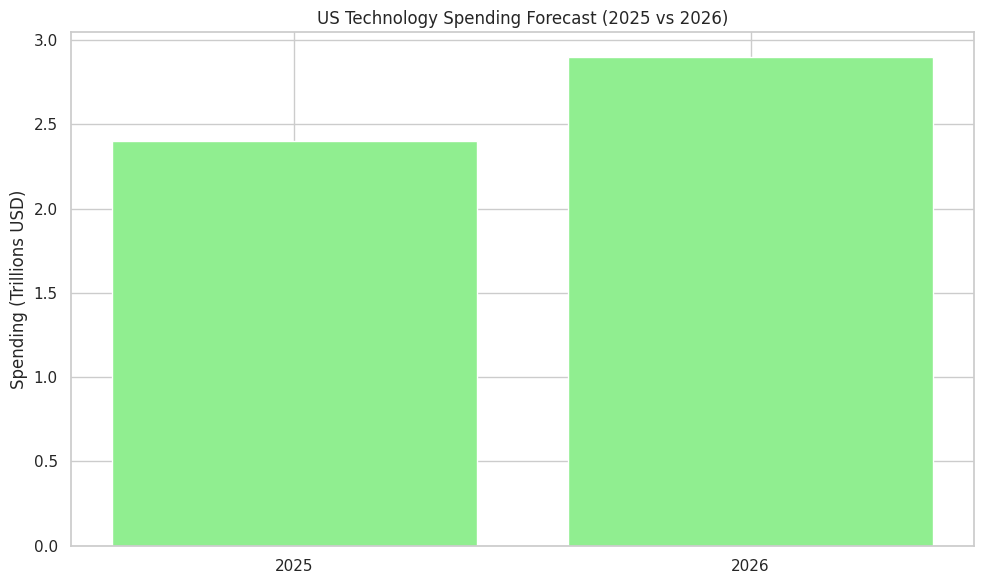
| US Technology Spending (Total) | $2.4 Trillion (Estimated) | $2.9 Trillion |
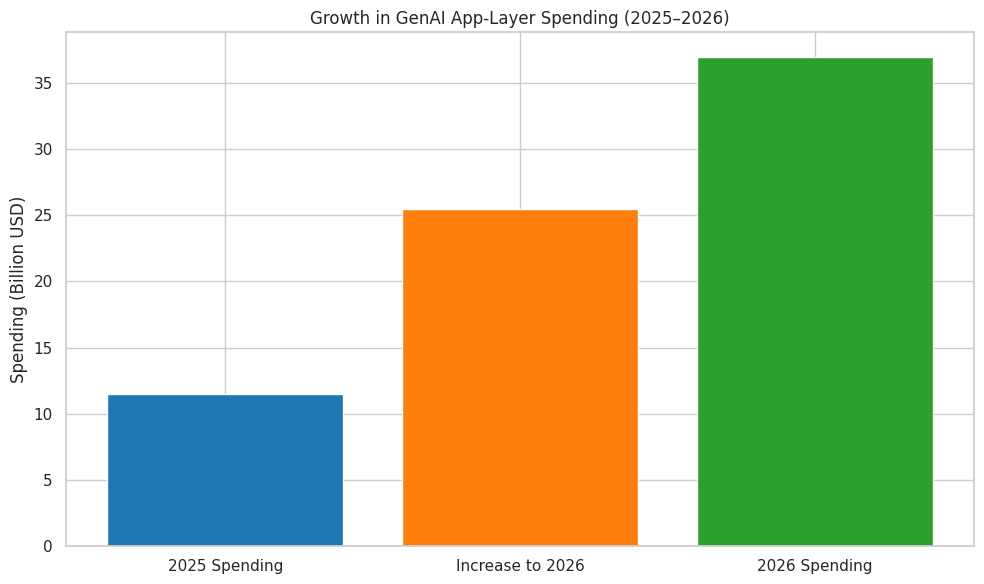
| Enterprise GenAI App-Layer Spending | $11.5 Billion | $37 Billion |
| Expected ROI from High-Performance AI Usage | 1.5x – 2x | 2x – 3x+ |
Shift Toward Multi-Agent and Specialized AI Orchestration
The 2026 AI growth hacking toolkit is split into two primary categories: foundational AI engines like ChatGPT-4o, and task-specific solutions like ConvertMate, Instantly.ai, and Clay. While foundational tools provide broad cognitive capacity across multiple domains, the rise of specialized tools allows startups to deploy tightly scoped, high-performance agents that optimize specific aspects of their operations.
For instance, AI tools are now handling complex functions such as autonomous outreach infrastructure, SEO content structuring, persistent brand governance, multichannel lead prospecting, and AI visibility monitoring across large language models. These platforms not only reduce manual overhead but also ensure performance predictability—an essential factor in early-stage startup decision-making.
Matrix: Functional Specialization of Top AI Tools in 2026
| AI Tool | Core Use Case | Impact on Startup Growth |
|---|---|---|
| ChatGPT-4o | Foundational content, automation, analysis | Cross-functional orchestration |
| HubSpot Breeze AI | CRM-native customer and content agents | 450% increase in qualified leads |
| Jasper AI | Multilingual content governance | 2x – 3x marketing ROI |
| Apollo.io | AI-powered outbound and lead scoring | 75% increase in meetings booked |
| Clay | Autonomous data sourcing and enrichment | 3x pipeline efficiency |
| Instantly.ai | Deliverability-first cold email infrastructure | 4x – 7x lead conversion rates |
| Surfer SEO | AI visibility monitoring for search and LLMs | 100% – 200% traffic growth |
| Activepieces | AI-native automation with human-in-the-loop | 99.5% automation of recurring tasks |
| Intercom Fin | Autonomous customer support | 1,163% ROI over 3 years |
| ConvertMate | Shopify-based e-commerce optimization | 3.2x ROI, 85% reduction in manual work |
Strategic Takeaway for Startup Founders and Growth Teams
In this new digital landscape, selecting the right AI stack is no longer about experimentation—it is a core business decision that directly affects speed, reach, and revenue. The top 10 AI tools of 2026 enable startups to operate with the efficiency of a 50-person team using a lean workforce. They provide rapid scalability, reduce dependency on manual processes, and create unified systems that drive compounding growth.
As AI-native platforms continue to evolve, early adoption and intelligent integration will distinguish high-growth startups from slower-moving competitors. In a market where the window for capturing attention has narrowed and digital competition has intensified, startups equipped with these AI systems will have the structural advantage to dominate.
Governance and Workforce Transformation in AI-Powered Startups: Strategic Insights for 2026
In 2026, the rapid integration of AI tools into startup ecosystems has done more than just improve productivity—it has reshaped the nature of work itself. The majority of professionals, approximately 83%, report that their job responsibilities have shifted away from task execution toward overseeing, validating, and managing AI outputs. As startups increasingly deploy complex AI systems across their operations, human roles are being redefined around governance, orchestration, and ethical oversight.
This changing dynamic has triggered the emergence of new workforce roles designed specifically to manage AI tools, ensure responsible automation, and maximize the returns on AI-driven operations. The success of startups in this environment depends not only on adopting the right technology stack but also on establishing clear, human-led governance frameworks to mitigate risk and maintain trust.
Rise of New AI Workforce Roles and Strategic Hiring Shifts
As startups build AI-native business models, there is growing demand for highly specialized roles to ensure these technologies are properly managed. Leadership teams are increasingly investing in talent with the ability to configure, audit, and govern AI-powered platforms at scale. Two of the most in-demand positions for 2026 are “AI Automation Specialists” and “AI Platform Engineers”—roles designed to support workflow design, tool integration, and outcome validation.
Instead of eliminating jobs, AI is changing them. The majority of startups are now opting for role redeployment over layoffs, shifting employees into higher-value positions that require strategic thinking, ethics, and decision-making. AI doesn’t replace people—it repositions them.
Table: Emerging AI Workforce Roles and Startup Impact (2026)
| Role Title | Core Responsibilities | Strategic Value to Startups |
|---|---|---|
| AI Automation Specialist | Designs workflows, tests AI outputs, ensures quality | Enhances performance reliability |
| AI Platform Engineer | Manages integration, API logic, platform governance | Aligns tool ecosystems and reduces failure risks |
| Prompt Engineer | Crafts optimized prompts for LLMs | Boosts precision of AI outputs |
| AI Compliance Analyst | Monitors for ethical usage and data security | Prevents legal and brand risks |
| AI Knowledge Trainer | Trains models with proprietary datasets | Preserves IP integrity and brand voice |
Governance as a Competitive Advantage in AI Scaling
While AI enables rapid automation, startups must manage it with discipline. A growing concern is the “governance gap”—the absence of structured frameworks to monitor, validate, and regulate AI usage. Market forecasts suggest ungoverned AI could result in up to $10 billion in lost enterprise value due to misinformation, operational errors, and compliance breaches.
To mitigate these risks, 71% of startup leaders now cite “human-in-the-loop” approvals as the top governance priority. By embedding manual validation at critical checkpoints—such as payment workflows, legal contracts, and customer communications—startups can balance automation with accountability.
Table: AI Governance Priorities and Risk Mitigation (2026)
| Governance Area | Strategic Focus | Outcome of Effective Management |
|---|---|---|
| Human-in-the-Loop Approvals | AI outputs reviewed by humans for key processes | Prevents costly automation errors |
| Data Accuracy & Validation | Real-time verification of AI decisions | Enhances trust and reduces legal exposure |
| IP Ownership Protocols | Clear rules on content generation and reuse | Protects brand equity and original assets |
| Tool Access Control | Tiered AI access based on role and task | Limits misuse and ensures accountability |
| Audit Trails & Documentation | Logs AI-generated actions and edits | Supports transparency and compliance |
Human Capabilities Remain Central to AI ROI
Despite the dominance of AI tools in 2026, human expertise still plays a critical role. From strategy to ethical reasoning, certain soft skills remain irreplaceable. Organizations that prioritize empathy, critical thinking, and contextual decision-making will see greater success in balancing AI output with human oversight.
Workplace data indicates that employees who learn to work effectively with AI are more likely to be promoted. Meanwhile, 59% of workers now see AI as a force that redefines their professional identity, not a threat to their employment.
Matrix: Workforce Trends Driving AI Maturity in Startups
| AI-Workforce Indicator | Leadership Adoption | Employee Sentiment |
|---|---|---|
| AI Access as a Hiring Priority | 83% of executives | 97% of marketers support it |
| Focus on Role Redeployment | 71% favor redeployment | 21% expect role loss |
| Promotion Tied to AI Utilization | 46% link AI to career growth | 59% say AI reshaped their job |
| Emphasis on Human Expertise | Strategy, Ethics, Empathy | Seen as essential to validate AI |
Conclusion
In the AI-augmented startup environment of 2026, successful growth no longer comes solely from adopting advanced technologies—it requires strong governance, clear accountability, and a redefined workforce structure. Startups that recognize the importance of human oversight, ethical automation, and structured decision-making will not only avoid risk but unlock greater competitive advantages.
Those that build AI systems with human-centered roles, measurable standards, and responsible controls will lead the next wave of scalable, trustworthy innovation. As the growth hacking era matures, it is not just about how fast a startup moves—but how responsibly it scales.
Strategic Imperative for AI Orchestration in Startup Growth Models (2026 Analysis)
The year 2026 marks a major transformation in how startups use artificial intelligence. What was once limited to basic experimentation has now matured into full-scale orchestration. Today’s most successful growth hacking strategies are no longer based on sending high email volumes or publishing blog content in bulk. Instead, winning startups are deploying intelligent, governed infrastructures powered by multi-agent AI systems that manage and optimize operations across marketing, sales, and customer support.
Startups that effectively combine foundational intelligence tools like ChatGPT-4o with lifecycle platforms such as HubSpot Breeze, revenue and data engines like Clay and Apollo, and deliverability systems like Instantly.ai are outperforming their competitors in both efficiency and return on investment. This new architecture allows even early-stage companies to operate with the performance levels of enterprise-grade organizations—at a fraction of the cost and headcount.
The Strategic AI Toolset Required to Scale in the Modern Digital Economy
The future of competitive advantage lies in the use of “Agentic AI”—autonomous software agents that operate across functions with minimal human input. These agents are capable of qualifying leads in real time, optimizing product content based on AI visibility signals, and adapting messaging automatically across platforms based on performance feedback loops.
By 2027, the market standard will shift toward startups that have fully integrated these autonomous systems into their operations. However, success will depend not only on automation but on maintaining robust governance frameworks and keeping human oversight in place to manage compliance, quality, and ethical performance.
Matrix: Strategic AI Integration Across Startup Functions (2026 Benchmark)
| AI Tool | Function Area | Strategic Role in Growth Hacking |
|---|---|---|
| ChatGPT-4o | Foundational Intelligence | Content generation, data analysis, operations assistant |
| HubSpot Breeze AI | Lifecycle Automation & CRM | AI-led customer nurturing and content orchestration |
| Clay | Data Enrichment & Revenue Ops | Autonomous lead sourcing and CRM syncing |
| Apollo.io | Outbound Sales Intelligence | Predictive lead scoring and outreach automation |
| Instantly.ai | Email Infrastructure & Deliverability | High-volume inbox-safe campaigns with AI agents |
| Jasper AI | Content Governance & Marketing | SEO content generation and brand consistency |
| Surfer SEO | Visibility in AI Search | Citation optimization and AI-readability structuring |
| ConvertMate | Shopify-Specific Conversion Engine | Product page optimization and LLM visibility tracking |
| Intercom Fin | Customer Support & Retention | End-to-end AI query resolution and cost-saving support |
| Activepieces | Workflow Automation & Integration | No-code to code-native AI-powered business logic |
Foundational Shifts Defining the Next Growth Cycle
These tools are not just complementary—they form the operational backbone of modern startups. Their orchestration creates a seamless system where leads are qualified autonomously, customer interactions are handled instantly, and marketing performance is continually optimized through machine learning and real-time analytics.
Table: Key Shifts in Startup Operations with AI Orchestration (2025–2027)
| Startup Performance Area | Traditional Approach (Pre-2025) | AI-Orchestrated Model (2026–2027) |
|---|---|---|
| Lead Generation | Manual outreach via CRM tools | Autonomous scoring and outbound via Apollo + Clay |
| Customer Communication | Human-driven chat and email | 65%+ handled autonomously by Intercom Fin |
| Content Strategy | Human copywriting and scheduling | AI-driven content with Jasper, ConvertMate, and Surfer SEO |
| Marketing Attribution & Optimization | Static analytics and testing | Real-time looped data via Breeze AI and Activepieces |
| Email Deliverability and Scaling | Basic ESPs with manual warmups | Automated IP rotation via Instantly.ai |
| Data Enrichment and Intelligence | External data scraping | Multisource sync with Clay waterfall logic |
Conclusion
In 2026, the most successful startups are not those moving the fastest or spending the most—they are the ones that have adopted intelligent AI orchestration as their foundation. Growth hacking now requires building a coordinated network of AI tools that communicate, learn, and perform with precision.
The top 10 AI tools detailed in this report represent the essential stack required to scale in this new environment. When integrated correctly—with governance, oversight, and strategic intent—these tools enable startups to compete at levels previously only attainable by large enterprises.
Startups that embrace full-stack orchestration will not only keep pace with evolving digital dynamics but are positioned to lead their categories through the next decade of AI-driven growth.
Conclusion
As the startup landscape becomes increasingly competitive and AI-native by design, the importance of adopting intelligent, automated, and integrated technology stacks has never been more critical. In 2026, growth hacking is no longer defined by short-term marketing tactics or manual experimentation. Instead, it is driven by well-orchestrated AI tools that support real-time decision-making, operational efficiency, and scalable personalization across every business function.
The top 10 AI tools explored in this report—ranging from foundational platforms like ChatGPT-4o to highly specialized solutions such as Instantly.ai, ConvertMate, and Surfer SEO—are not just productivity boosters. They form the strategic infrastructure that allows startups to compete, adapt, and thrive in a digital economy governed by automation, data accuracy, and machine-led optimization.
Each of these tools brings unique value:
- ChatGPT-4o delivers multimodal intelligence across content, analysis, and decision support.
- HubSpot Breeze AI streamlines lifecycle marketing with AI-driven agents tailored to customer behavior.
- Apollo.io and Clay lead the transformation of outbound sales and data sourcing through predictive analytics and automated enrichment.
- Instantly.ai solves a critical deliverability challenge for email marketers, ensuring outreach campaigns avoid spam filters and achieve higher ROI.
- Jasper AI enables content governance at scale while preserving brand tone and SEO effectiveness.
- Surfer SEO positions startups for visibility in the evolving landscape of AI-generated search results and zero-click interactions.
- ConvertMate tailors conversion optimization for Shopify-based ecommerce startups, integrating AI across storefronts with brand memory.
- Intercom Fin redefines customer support as a value driver by automating over 65% of inquiries with high accuracy.
- Activepieces allows technical and non-technical teams to design and control AI-native automations, creating unified workflows that scale affordably.
Collectively, these tools reduce manual workflows by over 80%, improve operational speed, and provide real-time insights that were previously out of reach for lean startup teams. They allow small teams to act with the precision and scale of large enterprises—without incurring enterprise-level costs.
Moreover, as large language models (LLMs) increasingly dominate the user journey from discovery to conversion, these tools help startups secure relevance and visibility in the channels that matter most—AI assistants, smart search platforms, and programmatic interfaces. In this landscape, visibility is no longer earned through volume, but through intelligent placement, structured content, and governed automation.
The most successful startups in 2026 are those that understand that growth hacking is no longer about doing more—it’s about doing smarter. It’s about integrating autonomous agents with human-in-the-loop oversight, orchestrating multi-platform engagement, and aligning every operational touchpoint with intelligent systems that learn and improve over time.
In conclusion, the rise of these AI tools marks a turning point in the startup ecosystem. Startups that build their growth strategies around these technologies will not only scale faster but do so with greater resilience, consistency, and strategic clarity. These tools are no longer optional—they are foundational pillars for any startup aiming to lead in a future shaped by data, automation, and intelligent orchestration. For founders, marketers, and product teams, the message is clear: the future of startup growth belongs to those who embrace AI as their core infrastructure.
If you find this article useful, why not share it with your hiring manager and C-level suite friends and also leave a nice comment below?
We, at the 9cv9 Research Team, strive to bring the latest and most meaningful data, guides, and statistics to your doorstep.
To get access to top-quality guides, click over to 9cv9 Blog.
To hire top talents using our modern AI-powered recruitment agency, find out more at 9cv9 Modern AI-Powered Recruitment Agency.
People Also Ask
What are the best AI tools for startup growth hacking in 2026
Top tools include ChatGPT-4o, Apollo.io, Jasper AI, Clay, and Instantly.ai, offering automation, lead generation, and content optimization.
How does ChatGPT-4o support startup growth in 2026
ChatGPT-4o helps startups generate content, automate workflows, analyze data, and integrate with tools to streamline operations and reduce costs.
Why is Apollo.io a leading AI tool for outbound sales
Apollo.io automates lead scoring, email outreach, and sales workflows with high-accuracy data and predictive insights.
What makes HubSpot Breeze AI ideal for lifecycle marketing
HubSpot Breeze AI includes AI-powered agents for content creation, customer support, and prospecting, improving lead quality and conversion.
How does Clay enhance data enrichment for startups
Clay connects with 100+ data sources to enrich lead profiles, automate research, and integrate directly into CRM systems.
Is Jasper AI still useful for SEO content creation in 2026
Yes, Jasper AI supports multilingual content creation, brand consistency, and SEO-optimized outputs for fast-scaling teams.
How can Surfer SEO improve AI search visibility
Surfer SEO helps optimize content for both Google and AI models like ChatGPT, improving brand mentions and zero-click search performance.
What is the role of ConvertMate in Shopify startup growth
ConvertMate automates product page SEO, AI visibility tracking, and brand-consistent content creation for ecommerce teams.
Why is Instantly.ai essential for cold email campaigns
Instantly.ai improves email deliverability using IP sharding and inbox rotation, helping startups scale outreach without hitting spam filters.
What is Activepieces and how does it support automation
Activepieces is an open-source, AI-native automation tool that connects workflows, integrates data, and supports no-code and developer use.
How do these AI tools improve ROI for growth hacking
These tools automate key functions, reduce manual tasks, improve decision-making, and accelerate time-to-market, leading to 2x–3x ROI.
What AI tools help with customer support automation
Intercom Fin automates 65%+ of customer queries using AI with high accuracy, reducing ticket volume and support costs.
Can startups use AI tools without technical skills
Yes, many tools like Jasper AI, ConvertMate, and Activepieces offer no-code interfaces for non-technical users.
Are these AI tools suitable for early-stage startups
Yes, most tools offer startup-friendly pricing and scalable features tailored to lean teams and fast-growing businesses.
How does AI impact content marketing strategies
AI tools like Jasper and Surfer SEO speed up content production, improve SEO targeting, and ensure consistent brand messaging.
What is AI visibility monitoring and why does it matter
AI visibility tracking shows how often your brand appears in AI-generated answers, helping you optimize for new discovery channels.
Which AI tools help with real-time data enrichment
Clay and Apollo.io provide live lead data updates using multi-source verification and enrichment workflows.
How important is governance in using AI tools
Governance ensures accuracy, compliance, and trust. Human-in-the-loop validation is key to responsible AI use in growth workflows.
Can these tools replace full marketing teams
They significantly reduce workload but work best with strategic human oversight to align outputs with business goals.
What industries benefit most from these AI tools
Startups in SaaS, ecommerce, B2B sales, marketing, and customer support benefit from the scalability and speed of these tools.
How does AI help in lead generation for startups
AI platforms like Apollo.io and Clay find, score, and qualify leads faster and more accurately than traditional methods.
Do these AI tools support integrations with other platforms
Yes, most support integrations with CRMs, email platforms, databases, and automation tools like Zapier and Activepieces.
What is agentic AI and how does it relate to growth hacking
Agentic AI refers to autonomous agents performing tasks across workflows. It’s central to AI-led growth hacking in 2026.
How does AI reduce time spent on repetitive tasks
AI automates tasks like content writing, email outreach, lead research, and analytics, freeing up teams for strategic work.
Are AI tools cost-effective for small startups
Yes, many offer flat-rate pricing or freemium models that scale with usage, making them budget-friendly for new ventures.
How do startups track AI tool performance and ROI
Integrated analytics dashboards, performance benchmarks, and outcome-based pricing help measure tool effectiveness.
Do these AI tools offer multilingual capabilities
Yes, tools like Jasper AI and ConvertMate support content creation in multiple languages for global scalability.
Can AI tools improve customer retention strategies
Intercom Fin and HubSpot Breeze help retain users through personalized support and automated lifecycle engagement.
What’s the future of AI tools in startup growth
The future points to more autonomous, agent-based systems with deeper integrations and governance for smarter scaling.
Sources
Zapier
HRTechEdge
PR Newswire
Jasper
Forrester
Gartner
AIOSEO
Surfer SEO
The Rank Masters
Master of Code
Medium
Credofy
NodeSure Technologies
Jotform
TechIntelPro
Whitehat SEO
Koanthic
HubSpot
Fin
Data-Mania
Martech Edge
Improvado
ConvertMate
Derrick App
Warmly AI
Expandi
Cirrus Insight
Apollo
La Growth Machine
Talkroute
Saleshandy
PM Insights
Genesy
Clay
Monday
Sera Leads
Instantly
EPIC WP Solutions
Niumatrix Digital
Lindy
Activepieces
Intercom
CoSupport
GetApp
PitchBook
IT Brief UK
Demand Gen Report
Takees