


























Key Takeaways
- In 2026, AI is creating “superworkers” by amplifying human speed, accuracy, and decision-making, enabling individuals to deliver team-level output with greater consistency.
- Agentic AI is shifting workplace productivity from simple assistance to real execution, automating multi-step workflows across roles like HR, sales, marketing, finance, and operations.
- Companies that redesign workflows, train AI fluency, and adopt modern productivity metrics will gain a long-term competitive edge in the future of work.
As the global workforce enters 2026, the convergence of artificial intelligence and human capability is giving rise to a groundbreaking concept: the rise of the “superworker.” This term no longer exists in the realm of science fiction or tech buzzwords—it now defines a new class of professionals who leverage advanced AI systems to dramatically boost their efficiency, decision-making, and creative output. From real-time research synthesis to autonomous workflow management, AI is no longer just an assistant—it has become an indispensable extension of human cognition and capability.

Unlike previous waves of automation that focused on replacing labor with machines, this new era of AI is centered on augmenting human potential. AI-driven tools in 2026 are helping individuals execute complex tasks, automate routine responsibilities, and access insights at unprecedented speeds. The result is a transformation of traditional productivity standards, where individuals—empowered by AI—are achieving output levels that once required entire teams. These superworkers are not only outperforming their predecessors; they are redefining the very architecture of work, time management, and value creation across industries.
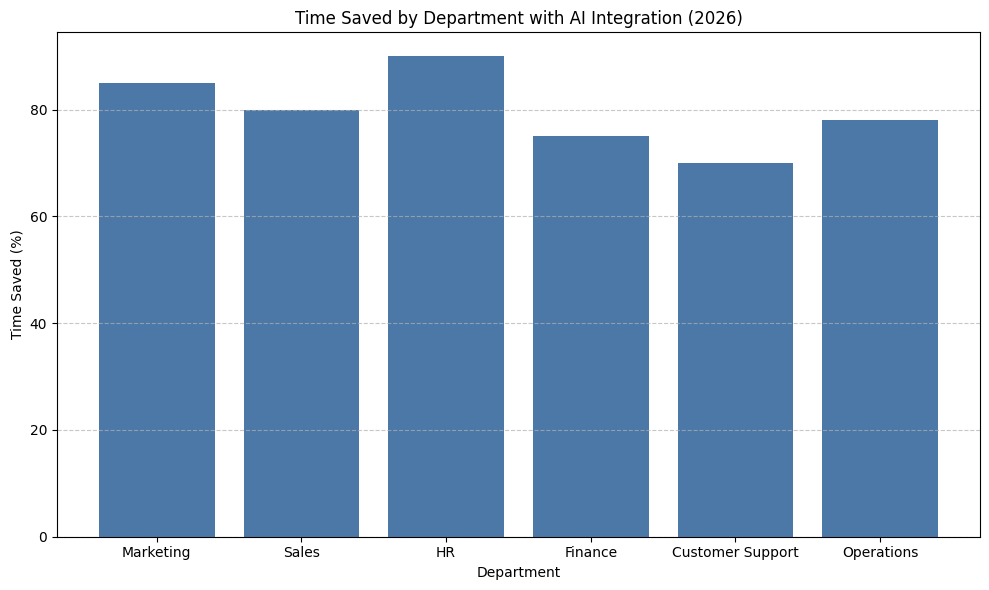
This shift is being accelerated by several converging forces. Agentic AI models, capable of autonomous decision-making within defined boundaries, are enabling professionals to move beyond reactive task management into proactive execution. AI copilots are now embedded into core workplace platforms, streamlining everything from writing and analysis to design and strategic planning. The transformation is so rapid and profound that organizations are being compelled to rethink job roles, performance metrics, training strategies, and even leadership styles.
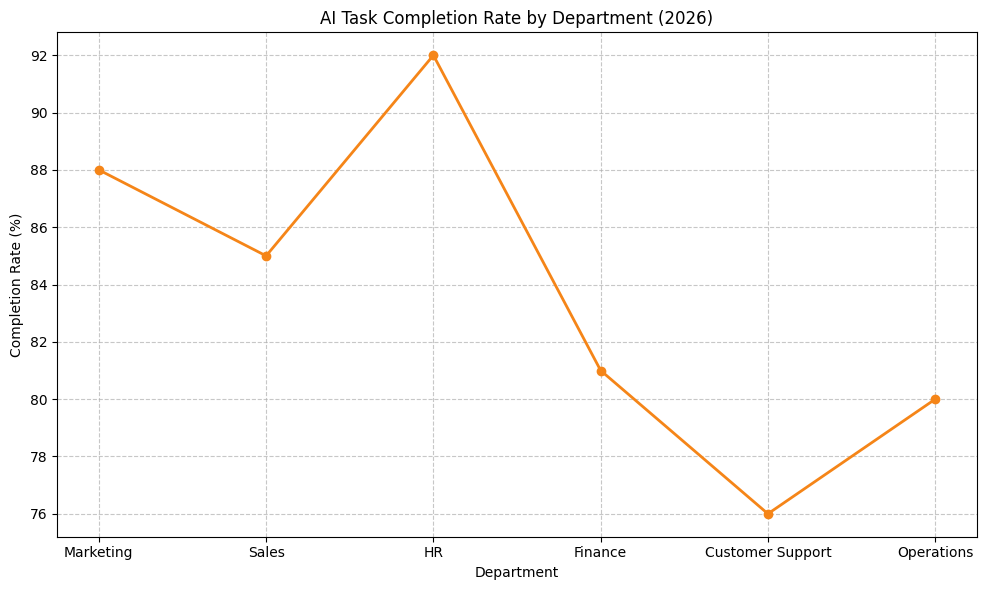
Superworkers in 2026 are emerging across a wide spectrum of roles—from marketing professionals who generate multi-channel campaigns in hours instead of weeks, to financial analysts who can model risk scenarios in real time using AI insights, to HR leaders automating talent sourcing and evaluation with unparalleled precision. These individuals are not defined by how much time they spend working, but by how effectively they orchestrate AI-powered systems to generate impact at scale.
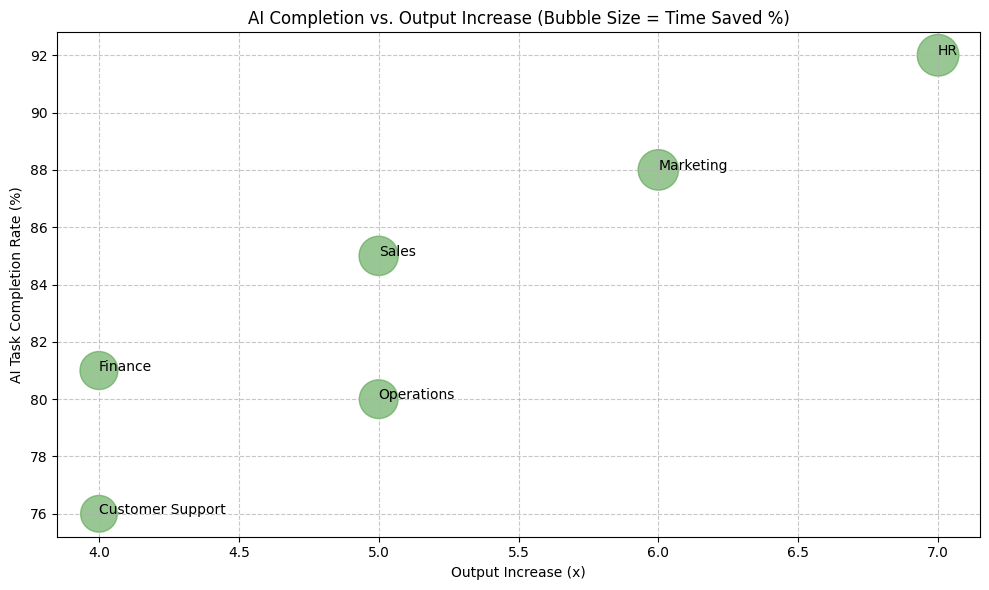
The implications are enormous. Companies that successfully foster superworker environments are seeing measurable gains in productivity, innovation, and employee satisfaction. Conversely, those failing to adapt face growing inefficiencies, talent attrition, and declining competitiveness. The workforce itself is undergoing a paradigm shift, where digital fluency, prompt engineering, AI validation skills, and workflow orchestration are becoming as essential as traditional technical knowledge or business acumen.
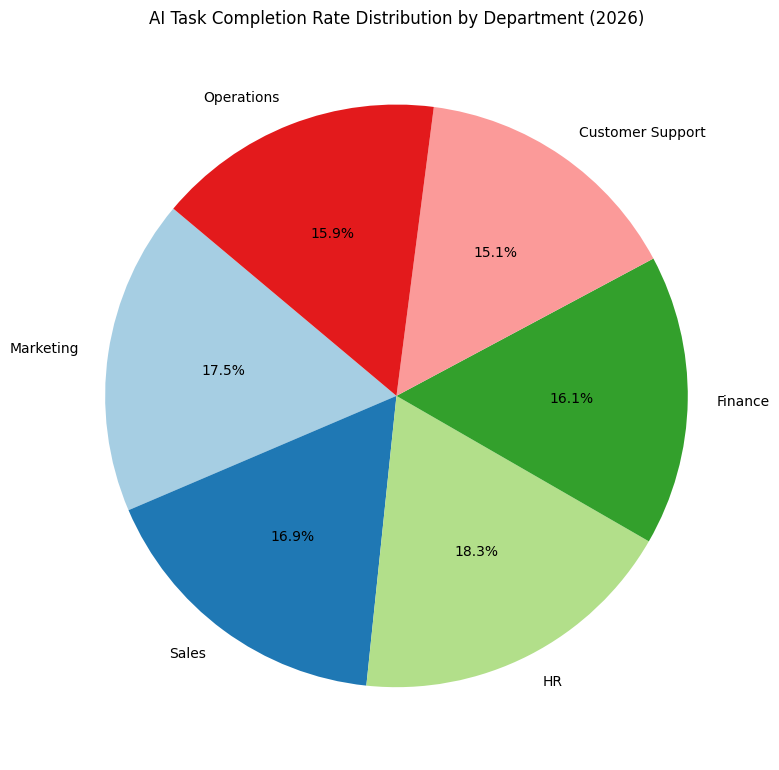
This blog delves into how AI is actively creating superworkers and reshaping the future of human productivity. It explores the characteristics that define a superworker, the technologies enabling this transformation, the industries leading the charge, and the evolving expectations for individuals and organizations alike. From the reengineering of workflows to the development of AI-driven performance metrics, this is a deep dive into the new world of work—where the future belongs not just to those who work hard, but to those who work smart with AI.
As we uncover this transformation, one truth becomes clear: the future of productivity in 2026 is not about man versus machine. It is about man with machine—an augmented partnership where the best of human intelligence is amplified by the strategic power of artificial intelligence.
Before we venture further into this article, we would like to share who we are and what we do.
About 9cv9
9cv9 is a business tech startup based in Singapore and Asia, with a strong presence all over the world.
With over nine years of startup and business experience, and being highly involved in connecting with thousands of companies and startups, the 9cv9 team has listed some important learning points in this overview of How AI Is Creating Superworkers: The Future of Human Productivity in 2026.
If you are looking for a job or an internship, click over to use the 9cv9 Job Portal to find your next top job and internship now.
Email hello@9cv9.com now for career and job finding services.
Or hope over to 9cv9 Job Placement Services for Professionals to learn how to get hired and find a high-paying job.
How AI Is Creating Superworkers: The Future of Human Productivity in 2026
- What Does “Superworker” Mean in 2026?
- Why 2026 Is the Turning Point for Human Productivity (Not Just AI Hype)
- The Superworker Formula: How AI Amplifies Human Output
- Key Superworker Capabilities (What AI Helps Humans Do Better)
- Agentic AI in 2026: From Assistants to Execution Partners
- Industries Most Likely to Build Superworker Teams in 2026
- Role-Based Examples: What Superwork Looks Like in Real Jobs
- The New Productivity Metrics That Matter in 2026
- How Companies Actually Create Superworkers (Step-by-Step Operating Model)
1. What Does “Superworker” Mean in 2026?
The concept of a “superworker” in 2026 reflects a dramatic evolution in how professionals operate in a workplace transformed by advanced artificial intelligence. A superworker is not defined by superhuman ability, but rather by their effective integration with AI systems to amplify productivity, decision-making, and creativity. This evolution is driven by AI’s ability to automate, augment, and optimize various dimensions of work, turning ordinary professionals into high-performing assets.
Understanding what it means to be a superworker in today’s digital era requires breaking down the concept into its defining characteristics, supported capabilities, and real-world examples across roles and industries.
Core Characteristics of a Superworker
- AI-Augmented Output
Individuals leverage AI to complete tasks faster, with greater precision and strategic depth than traditional methods allow. - Workflow Integration
Superworkers operate within redesigned workflows that embed AI into each phase of task execution, reducing friction and enhancing clarity. - Expanded Cognitive Reach
They process large volumes of information rapidly, synthesizing insights that improve decisions and responses. - Creative Multiplication
With AI support, superworkers generate more content, iterate ideas faster, and deliver more value in less time. - Continuous Adaptability
Superworkers stay agile, learning new tools and applying AI innovations to evolve with market demands and technology trends.
Superworker vs Traditional Worker: A Comparative Matrix
This matrix outlines the fundamental shifts in capabilities and expectations:
| Dimension | Traditional Worker (Pre-AI) | Superworker (2026) |
|---|---|---|
| Task Execution | Manual and repetitive | Automated and optimized with AI |
| Information Processing | Human-limited, time-intensive | AI-accelerated, real-time insights |
| Decision-Making | Experience-based, subjective | Data-driven, AI-supported recommendations |
| Workflow Efficiency | Linear and siloed | Integrated, AI-assisted workflows |
| Productivity Measurement | Output quantity | Output quality, speed, impact |
| Learning & Upskilling | Periodic, static | Continuous, role-specific, AI-integrated |
| Collaboration & Coordination | Meetings and messages | AI-managed scheduling, summarization |
| Role Value | Based on hours and effort | Based on outcome, scalability, innovation |
Key Capabilities Enabled by AI
These capabilities define what superworkers are able to accomplish in 2026:
- Information Mastery
- Instant summarization of reports, datasets, and documents
- Real-time synthesis of trends, benchmarks, or competitor intelligence
- Enhanced Communication
- AI-generated reports, presentations, and messages tailored to specific audiences
- Language and tone optimization for internal and external stakeholders
- Predictive and Prescriptive Decision Support
- AI models offer scenario analysis, forecasting, and recommendations
- Risk assessment tools integrated into daily decision-making
- Automated Repetitive Work
- Document creation, data entry, tagging, and formatting completed via agents
- Emails, memos, meeting notes generated automatically with contextual awareness
- Multi-Tasking at Scale
- Managing and coordinating cross-team initiatives via AI project assistants
- Monitoring multiple systems and KPIs concurrently with minimal manual input
Examples of Superworker Roles in Action
The following table highlights how superworkers operate in various roles:
| Role | Traditional Workflow | Superworker Workflow (2026) |
|---|---|---|
| HR Manager | Manual resume screening, interview scheduling | AI filters top candidates, auto-schedules interviews, generates evaluation rubrics |
| Sales Executive | Researching leads, drafting pitches | AI personalizes outreach, prepares pitch decks, forecasts deal success |
| Marketing Specialist | Manual SEO and campaign tracking | AI generates SEO-optimized content, auto-tracks performance across platforms |
| Financial Analyst | Spreadsheet-based modeling and forecasting | AI performs real-time modeling, flags anomalies, and builds dashboards |
| Customer Support Agent | Responds manually to customer tickets | AI drafts responses, routes issues, and prioritizes escalations based on urgency |
Superworker Enablement Model
To become a superworker, individuals and organizations must align on the following strategic pillars:
| Pillar | Description | Outcome |
|---|---|---|
| AI Tool Integration | Embedding AI copilots and agents into day-to-day tools and platforms | Streamlined execution and reduced friction |
| Workflow Redesign | Breaking tasks into AI-compatible components with human oversight | Higher throughput and improved consistency |
| Skills & Training | Building AI literacy, prompt engineering, validation skills | Increased confidence and reduced error rates |
| Metrics & KPIs | Measuring productivity with AI-augmented performance indicators | Clear ROI and better alignment to business goals |
| Governance & Ethics | Ensuring responsible AI use, bias mitigation, and data privacy | Trustworthy systems and compliance assurance |
Superworkers Are the New Workplace Standard
In 2026, being a superworker is not about replacing the workforce—it’s about transforming it. The term captures a new reality where individuals are expected to think strategically, move quickly, and collaborate fluidly with AI technologies. Superworkers represent the convergence of skill, mindset, and machine intelligence—a combination that is rapidly becoming a baseline expectation across knowledge-based industries.
As organizations evolve, those who can harness this transformation to empower their teams will unlock unprecedented levels of efficiency, agility, and impact. The future of work is not simply about doing more—it’s about doing it smarter, faster, and with exponential leverage through AI.
2. Why 2026 Is the Turning Point for Human Productivity (Not Just AI Hype)
2026 represents a fundamental inflection point in the global narrative around productivity. While past years have been dominated by speculation, hype cycles, and cautious experimentation with artificial intelligence, this year marks the shift from theory to transformation. Human productivity is being redefined—no longer bound by time or scale in the traditional sense, but now increasingly measured by augmented performance, AI-assisted decision-making, and output amplified through intelligent systems. The age of incremental gains is being replaced by a paradigm of exponential leverage.
Several structural, technological, and behavioral forces are converging to make 2026 a defining year in workforce evolution. From organizational redesigns to AI maturity and real business results, this section outlines the reasons why the world is finally moving from AI hype to human productivity reinvention.
Key Drivers That Make 2026 the Tipping Point
- Mass AI Adoption Across Business Functions
- AI tools are no longer confined to IT or innovation departments—they are now embedded across HR, finance, marketing, operations, and customer support.
- Employees in non-technical roles are actively using AI-powered copilots to accelerate output and reduce task friction.
- Availability of Agentic AI Systems
- Autonomous AI agents that go beyond reactive responses are being deployed in 2026, capable of executing multi-step workflows with human oversight.
- This reduces dependency on manual coordination, unlocks 24/7 task execution, and removes latency in business cycles.
- Shift in Metrics of Success
- Companies are no longer focusing on hours worked or headcount efficiency alone.
- New productivity metrics—like “time-to-output,” “decision velocity,” and “AI-assisted cycle time”—are being prioritized.
- Cost and Accessibility Improvements
- AI models that were once expensive and gated are now widely accessible through productivity suites, cloud platforms, and workflow integrations.
- Businesses of all sizes—from startups to enterprises—are embedding these tools without heavy infrastructure investment.
- Workforce Skill Evolution and AI Fluency
- Workers are becoming proficient in prompt engineering, workflow automation, and AI validation techniques.
- AI fluency is becoming a baseline job requirement, making productivity gains more sustainable and repeatable.
Comparison Table: Productivity Transformation Before and After 2026
| Productivity Element | Before 2026 (AI Hype) | In 2026 (AI-Driven Reality) |
|---|---|---|
| AI Adoption | Isolated pilots and innovation labs | Organization-wide deployment and integration |
| AI Perception | Novelty, fear of job loss | Strategic asset, essential to workforce evolution |
| Metrics Focus | Efficiency, hours worked | Outcome, quality, speed, impact |
| Workflow Design | Manual with minor automation | AI-powered with automated execution paths |
| Employee Tools | Basic automation or chatbots | Context-aware AI copilots and agentic systems |
| Business Results | Promises and projections | Measurable ROI, faster cycle times, better output |
| Skills Strategy | Upskilling optional | AI fluency required across departments |
From AI Pilots to Productivity Platforms: A Timeline Shift
The following timeline matrix illustrates the maturity curve from 2020 to 2026, showing how organizational posture toward AI has evolved.
| Year | Stage of Adoption | Primary Use Case Focus | Productivity Impact |
|---|---|---|---|
| 2020 | Exploration | R&D, isolated innovation | Low, theoretical |
| 2021 | Experimental Prototypes | Chatbots, internal FAQs | Minimal, limited automation |
| 2022 | Tool-Based Implementation | Document automation, transcription | Medium, task-specific |
| 2023 | Hybrid Work Integrations | Collaboration tools, voice assistants | Medium, productivity acceleration |
| 2024 | Cross-Function Expansion | Copilots in HR, sales, and marketing | High, visible time savings |
| 2025 | Strategic Planning Phase | AI strategy alignment across C-suite | High, scalable process impact |
| 2026 | Full Workflow Redesign | Agentic AI, orchestration systems | Very High, exponential leverage |
Real-World Example: HR Productivity Shift in 2026
Traditional HR Process
A recruiter manually screens hundreds of resumes, books interviews via email threads, and prepares evaluation documents individually.
AI-Powered HR in 2026
AI automatically shortlists candidates based on role requirements, generates structured interview questions based on CV analysis, and schedules interviews through integrated systems. Recruiters focus on final decisions and human engagement.
Outcome:
- Time-to-hire reduced by 60%
- Candidate experience improves due to faster responses
- Recruiter productivity increases across multiple job requisitions
The AI Value Curve: From Automation to Augmentation to Acceleration
| Stage | Description | Human Role Shift | Productivity Gain |
|---|---|---|---|
| Automation | Replacing repetitive tasks with AI tools | Task executor → Task supervisor | Low to moderate |
| Augmentation | AI supports decisions, content, or synthesis | Task executor → Insight-driven contributor | Moderate to high |
| Acceleration | AI acts as co-strategist, performs end-to-end workflow orchestration | Task executor → Systems orchestrator & innovator | High to exponential |
Organizational Examples of 2026 Productivity Redesign
| Company Type | Productivity Shift Observed | Strategic Outcome |
|---|---|---|
| Global SaaS Firm | AI copilots embedded in engineering, support, and product | Reduced ticket resolution time by 40% |
| Financial Services | AI generates investment memos and real-time risk simulations | Faster portfolio decisions with greater accuracy |
| Marketing Agency | Content created, translated, and distributed via AI agents | 5x increase in campaign velocity |
| Healthcare System | AI used for patient data synthesis and triage support | Shorter response time and optimized staffing |
Why 2026 Is Different from Prior Years
- AI Has Crossed the Utility Threshold
In previous years, AI showed promise but lacked universal applicability. In 2026, AI has become functionally useful across everyday roles, making the productivity benefits tangible, not speculative. - Enterprises Are Driving Strategic Change
Instead of grassroots experimentation, executive teams are now leading AI integration as a competitive imperative, investing in infrastructure, training, and metrics to operationalize productivity gains. - The Productivity Bottleneck Is Being Systematically Removed
Knowledge workers often spent over 60% of their time on non-core activities like reporting, documentation, and coordination. AI now eliminates or drastically compresses these bottlenecks, allowing professionals to focus on high-value contributions.
Conclusion: A Historic Shift in the Productivity Narrative
2026 marks the turning point where AI moves beyond the status of a technological advancement into the realm of workforce transformation. For the first time, businesses can measure the productivity uplift not in percentages, but in multiples. Employees equipped with the right AI systems become superworkers—not because they work longer, but because they work smarter, faster, and with elevated impact. This is not the next phase of the digital revolution—it is the redefinition of productivity for the age of AI-enabled human performance.
3. The Superworker Formula: How AI Amplifies Human Output
In 2026, the concept of a superworker goes beyond simply adopting AI tools—it revolves around a strategic framework that systematically amplifies human performance across all facets of work. This formula involves the synergy between AI technologies and human strengths, resulting in higher speed, accuracy, quality, and scalability. The superworker formula is not based on replacing human input but enhancing it through intelligent systems, allowing individuals to operate at levels of output previously unattainable through manual methods.
The rise of AI-powered productivity does not occur in isolation. It requires a well-structured approach involving technological infrastructure, redesigned workflows, new cognitive habits, and aligned performance metrics. Below is an in-depth breakdown of how the superworker formula works in practice, supported by real-world applications and actionable matrices.
The Five Core Dimensions of the Superworker Formula
| Core Dimension | Description | Example in Practice |
|---|---|---|
| Speed | Accelerates task completion and reduces cycle times | Marketers using AI to generate a 5-page content plan in under 10 minutes |
| Accuracy | Enhances precision in decision-making and error detection | Financial analysts detecting anomalies with AI before human review |
| Scale | Enables one person to perform the output of multiple employees | HR managers auto-screening 500+ resumes using AI with minimal manual effort |
| Creativity | Expands ideation and innovation bandwidth through AI-enhanced brainstorming | Designers using AI to generate 10 ad mockups in multiple variations |
| Consistency | Ensures repeatable quality regardless of volume or time constraints | Legal teams automating contract reviews with uniform risk flagging |
Speed: Compressing Time-to-Output
AI removes friction in content creation, data analysis, and coordination-heavy tasks, drastically reducing the time it takes to complete high-value work.
- Real-time synthesis
AI can read, extract, and summarize 100-page reports in seconds, giving professionals instant access to relevant insights. - Instant drafts and communication
Salespeople can use AI to generate client emails, pitch decks, and follow-ups in a matter of minutes. - Task automation
AI agents handle repetitive functions like report formatting, invoice matching, or scheduling coordination automatically.
Illustration: Time Saved by AI-Driven Workflows
| Task Type | Manual Time | AI-Augmented Time | Time Reduction |
|---|---|---|---|
| Sales proposal creation | 3 hours | 30 minutes | 83% |
| Weekly performance report | 2 hours | 20 minutes | 83% |
| Customer support response | 15 minutes | 1 minute | 93% |
Accuracy: Minimizing Errors and Improving Decision Quality
AI enhances the ability to make precise decisions by reducing human bias, automating data validation, and surfacing anomalies or inconsistencies.
- Data-driven forecasting
AI analyzes large data sets to produce accurate demand or trend forecasts, helping avoid over- or under-estimations in business planning. - Automated error checks
AI systems catch missing data, duplications, or calculation errors before human review—common in finance or legal work. - Scenario simulation
Executives use AI to run multiple business scenarios (e.g., pricing, logistics, hiring plans) to test outcomes before implementation.
Scale: Unlocking Human Output Multipliers
With AI handling repetitive tasks, a single worker can manage workflows that previously required a team, achieving far more with the same resources.
- AI agents as digital workforce extensions
Agents can autonomously perform outreach, monitor updates, or maintain knowledge bases, reducing reliance on human support. - Mass personalization at scale
Marketers can deploy AI to produce thousands of product descriptions or localized ad copies, customized for different customer segments.
Matrix: Traditional Output vs AI-Scaled Output
| Role | Output Per Week (Manual) | Output Per Week (Superworker with AI) | Productivity Uplift |
|---|---|---|---|
| Content Marketer | 5 blog posts | 20 blog posts with AI-assisted drafting | 4x |
| Sales Development | 30 outreach messages | 150 personalized emails using AI | 5x |
| Recruiter | 20 CV reviews | 300 AI-ranked CVs | 15x |
Creativity: Elevating Innovation and Ideation
AI does not replace creative thinking—it amplifies it by generating more options, testing ideas faster, and removing iteration bottlenecks.
- Visual and text generation
Designers can explore hundreds of variations of an ad concept using generative AI tools in minutes. - Content ideation
Writers can co-create with AI, producing headline variations, outlines, and formats to test more campaigns in parallel. - Rapid prototyping
Product managers can simulate workflows, customer journeys, or user interfaces without developer input.
Creativity Use Case Comparison
| Function | Without AI | With AI Superworker Capability |
|---|---|---|
| Branding Design | 1–2 iterations per day | 10–20 design versions in 30 minutes using generative tools |
| Content Strategy | Manual planning with spreadsheets | AI-assisted mapping of formats, SEO, tone, and channels |
Consistency: Ensuring Scalable and Reliable Quality
AI helps enforce standards, reduce variability, and maintain high quality across teams, geographies, and time zones.
- Standardized templates
AI systems generate work based on predefined structures and brand tone, reducing off-brand or inconsistent outputs. - Compliance monitoring
Legal, finance, and HR teams use AI to flag risky language, regulatory noncompliance, or outdated clauses in real time. - Knowledge centralization
AI maintains a central memory or retrieval system to ensure consistent access to accurate information across teams.
Table: Consistency Benefits by Department
| Department | Consistency Challenge | How AI Improves It |
|---|---|---|
| Marketing | Variance in tone and brand alignment | Uses AI brand guidelines and templates |
| Legal | Contract clause inconsistency | Auto-highlights deviations from legal best practices |
| Sales | Inconsistent outreach messages | AI-generated email templates personalized at scale |
The Superworker Capability Wheel
The wheel below represents the integration of AI amplification in six key areas of output:
- Speed – Tasks completed 5x faster
- Accuracy – Reduced errors, smarter decisions
- Scale – One person doing work of multiple team members
- Creativity – Enhanced ideation and iteration speed
- Consistency – Uniform quality across outputs
- Focus – Time reclaimed for strategic thinking
Each dimension feeds into the next, creating compounding productivity over time.
Real-World Example: AI Amplification in Sales Operations
Before AI:
A mid-level sales executive spends 70% of their week writing emails, researching leads, building quotes, and logging CRM entries.
With AI:
- Emails are drafted and personalized by AI
- Lead research is done using AI enrichment tools
- Quotes are auto-generated based on pricing models
- CRM updates are automatically populated post-meeting
Result:
The sales executive now focuses 80% of their time on client conversations, deal strategy, and revenue generation, improving closed deals by 40% within the quarter.
Conclusion: The Amplification Is Strategic, Not Just Technical
The superworker formula is not just about speed or efficiency. It is a multi-dimensional transformation of how value is created, scaled, and sustained by individuals in modern organizations. AI is no longer a supporting actor—it is a productivity multiplier. When embedded strategically, it enables professionals to transcend the constraints of time, task volume, and creative capacity. This is the new baseline of human output, and in 2026, it is defining the future of work.
4. Key Superworker Capabilities (What AI Helps Humans Do Better)
In 2026, superworkers are distinguished by their ability to seamlessly collaborate with AI to multiply their productivity, efficiency, and decision-making quality. These individuals don’t just use AI for automation—they leverage it to unlock new capabilities that were previously time-intensive, error-prone, or outright impossible. AI systems enhance every layer of human work, from cognition and communication to planning and performance tracking.
This section explores the most critical capabilities that define a superworker in the AI-powered workforce of 2026, demonstrating how AI not only assists but elevates the potential of each professional across sectors.
Information Synthesis and Research Acceleration
AI dramatically shortens the time needed to process and interpret vast volumes of information. Superworkers use intelligent systems to extract key points, surface hidden patterns, and generate instant insights.
- Real-time data scanning
AI agents can comb through thousands of documents, dashboards, or knowledge bases to extract the most relevant information instantly. - Summarization and comparison
Professionals can receive concise executive summaries and side-by-side comparisons across multiple sources—accelerating research-based decisions. - Contextual awareness
AI tools understand prompts in the context of specific tasks, delivering targeted insights that match user intent.
Example Use Case: Market Intelligence Specialist
Instead of spending 2–3 days analyzing competitors, a superworker uses AI to generate a 10-page market positioning report in under 45 minutes, complete with trend forecasts and SWOT analysis.
| Capability | Traditional Time | AI-Assisted Time | Productivity Uplift |
|---|---|---|---|
| Competitor landscape summary | 1 day | 20 minutes | 24x faster |
| SWOT generation | 4 hours | 15 minutes | 16x faster |
| Consumer sentiment analysis | 2 days | 30 minutes | 32x faster |
Advanced Communication and Content Generation
Superworkers use AI to enhance communication across written, visual, and verbal channels. AI helps structure ideas, improve tone, optimize for audience, and accelerate content delivery.
- Writing and editing assistance
AI tools can draft, refine, and personalize emails, blogs, proposals, reports, and presentations tailored to different tones or goals. - Language translation and localization
AI enables professionals to generate region-specific communication in multiple languages, breaking down geographical barriers. - Visual content creation
AI systems generate social media visuals, infographics, and slide decks with minimal human input.
Example Use Case: Content Marketer
| Content Type | Manual Production Time | AI-Enhanced Time | Output Increase |
|---|---|---|---|
| Blog Article (1000 words) | 4 hours | 30 minutes | 8x faster |
| LinkedIn Post Series | 2 hours | 15 minutes | 8x faster |
| Email Nurture Sequence | 1 day | 1 hour | 8x faster |
Strategic Decision Support and Planning
AI empowers superworkers with foresight, modeling tools, and risk evaluation systems, enabling better decisions backed by predictive intelligence.
- Scenario planning
AI provides simulation environments to test different business outcomes (e.g., hiring plans, budget changes, pricing strategies). - Risk detection
Systems alert users to anomalies, compliance risks, or performance red flags before they escalate. - Smart recommendations
Decision engines suggest optimal courses of action based on historical data and real-time variables.
Example Use Case: Operations Manager
| Decision Area | Human-Only Method | AI-Assisted Enhancement |
|---|---|---|
| Inventory Planning | Based on historical sales only | Real-time forecasts factoring demand trends + supply chain delays |
| Staffing Models | Gut-based projections | AI-driven optimization for peak workloads |
| Budget Allocations | Manual spreadsheet analysis | AI compares ROI by function, region, and past outcomes |
Personal Knowledge Management at Scale
Superworkers no longer rely on their memory or manual note systems. AI becomes a second brain—organizing, retrieving, and connecting knowledge across functions and formats.
- Semantic search
AI retrieves relevant insights from PDFs, emails, transcripts, and databases based on meaning—not just keywords. - Auto-tagging and classification
Files, notes, and tasks are automatically sorted, labeled, and linked across platforms for instant access. - Insight generation
AI connects seemingly unrelated information to uncover patterns and create new knowledge paths.
Example Use Case: Executive Assistant
A superworker uses AI to automatically surface the last meeting summary, relevant notes, and client preferences when preparing for a leadership briefing—saving 3–4 hours of manual compilation work each week.
Repetitive Task Automation and Workflow Management
AI liberates superworkers from low-value, manual processes through intelligent automation of daily workflows.
- Data entry and formatting
AI scrapes, structures, and inputs data across systems without human oversight. - Task routing and approvals
Routine operational processes like document reviews or expense approvals are handled via rule-based AI triggers. - Calendar and workflow orchestration
AI coordinates schedules, meeting agendas, reminders, and task delegation automatically.
Example Use Case: Procurement Specialist
AI reviews supplier contracts, flags pricing inconsistencies, suggests preferred vendors, and populates purchase requests—cutting the full sourcing cycle from 7 days to 2.
Cross-Functional Coordination and AI Copilots
AI copilots serve as intelligent collaborators across departments—keeping projects aligned, surfacing insights in real-time, and reducing dependency on manual follow-ups.
- Real-time meeting summaries and action points
AI captures key points, assigns tasks, and updates project management systems automatically. - Team dashboards and sync reports
Automated updates highlight progress, blockers, and KPIs without human aggregation. - Knowledge handover and continuity
AI ensures that new team members or collaborators can access prior context instantly.
Comparison Table: AI Copilot vs Manual Coordination
| Task | Manual Time Investment | With AI Copilot Time | Time Saved |
|---|---|---|---|
| Weekly Team Sync Summary | 45 minutes | 5 minutes | 89% |
| Project Status Dashboard Compilation | 2 hours | 15 minutes | 88% |
| Internal Handover Briefing Creation | 1 hour | 10 minutes | 83% |
Capability Map: AI-Supported vs Human-Led Tasks
| Capability Area | Human-Led Task Role | AI-Supported Enhancement |
|---|---|---|
| Analytical Thinking | Defining key variables | AI assists in modeling and prediction |
| Written Communication | Final refinement and approval | AI drafts, translates, and localizes messages |
| Strategic Planning | Setting long-term goals | AI simulates paths, flags risks, optimizes scope |
| Creative Development | Final selection and branding | AI generates variations and raw concepts |
| Collaboration | Making decisions and approvals | AI aggregates updates and prepares next steps |
Conclusion: The Emergence of the AI-Augmented Professional
These core capabilities are not science fiction—they are real, measurable, and already redefining performance standards across industries. Superworkers in 2026 thrive because they know how to delegate cognitive load, operational friction, and routine functions to AI, while reserving their human strengths for judgment, empathy, creativity, and leadership.
What AI helps humans do better is not just about automation—it is about transformation. From streamlining daily workflows to enhancing cognitive capacity, AI enables professionals to unlock a new standard of excellence, creating a workforce that is not just more productive, but more strategic, agile, and impactful.
5. Agentic AI in 2026: From Assistants to Execution Partners
The evolution of artificial intelligence in the workplace has reached a defining milestone in 2026. What began as simple assistants offering suggestions and generating drafts has now matured into a new paradigm: agentic AI. These are not just passive tools waiting for human prompts—they are dynamic systems capable of initiating, managing, and completing complex workflows with limited human input. Agentic AI operates as a true execution partner, transforming how organizations approach productivity, scale, and decision-making.
This section explores the rise of agentic AI in 2026, explaining how it differs from traditional AI assistants, what roles it plays across industries, and how it enables the creation of scalable, self-driving workflows that elevate humans into strategic orchestrators.
Defining Agentic AI in the 2026 Workplace
Agentic AI refers to autonomous or semi-autonomous artificial intelligence systems that can take initiative, complete tasks across applications, and make contextual decisions based on defined goals and boundaries. Unlike chatbots or AI copilots, agentic AI systems are designed to act, not just assist.
- Autonomous Task Execution
Agentic AI handles multi-step tasks without waiting for human input at every stage—such as drafting a proposal, submitting it, notifying stakeholders, and updating records in CRM systems. - Contextual Awareness
These systems can understand business context, role-based responsibilities, and priorities, allowing for smarter, tailored execution. - Goal-Oriented Behavior
Instead of only responding to commands, agentic AI works toward objectives (e.g., closing a sales ticket, onboarding a new employee, managing a project phase).
Comparison Table: Traditional AI Assistant vs Agentic AI
| Feature | AI Assistant (Pre-2026) | Agentic AI (2026) |
|---|---|---|
| Interaction Mode | Prompt-based | Goal-based with autonomous task handling |
| Task Scope | Single-task | Multi-step workflows with conditional logic |
| Initiative | Reactive | Proactive and self-initiating |
| Tools Access | Within a platform | Cross-platform, multi-app integration |
| Human Oversight | Required at each step | Required only at critical checkpoints |
| Intelligence Level | Input-focused | Context-aware, decision-capable |
How Agentic AI Executes Across the Workflow Lifecycle
Agentic AI is transforming end-to-end workflows by automating not just task components, but also the transitions between them. Below is a breakdown of how it operates across typical workplace processes:
| Workflow Phase | Traditional Execution | Agentic AI Execution Example (2026) |
|---|---|---|
| Initiation | Human defines task and assigns steps | AI identifies need based on trigger and initiates task |
| Information Gathering | Manual research and coordination | AI extracts data from systems, knowledge bases |
| Task Execution | Human executes each component | AI completes work across tools (e.g., CRM, email, docs) |
| Review | Human checks work for errors | AI auto-checks and flags anomalies for approval |
| Reporting | Manually compiled updates | AI auto-generates insights, updates dashboards |
Industry Applications of Agentic AI in 2026
| Industry | Agentic AI Use Case | Business Benefit |
|---|---|---|
| Human Resources | AI autonomously manages onboarding checklists and training paths | Reduced HR workload and faster new-hire readiness |
| Finance & Accounting | AI reconciles expenses, flags discrepancies, and files tax reports | Greater compliance and fewer accounting errors |
| Marketing | AI launches A/B campaigns, analyzes results, and optimizes content | Increased campaign velocity and ROI |
| Customer Support | AI escalates unresolved tickets, sends follow-ups, and closes cases | Faster resolution and improved customer satisfaction |
| Procurement | AI reviews purchase requests, cross-checks supplier pricing, and submits approvals | Streamlined sourcing and reduced cycle times |
Example: Agentic AI in Marketing Campaign Management
Traditional Process:
Marketing managers manually create campaign content, schedule posts, monitor analytics, adjust targeting, and prepare performance reports.
Agentic AI Process (2026):
AI detects a drop in engagement metrics, generates an optimized campaign draft using historical insights, schedules it across multiple platforms, A/B tests variations, and auto-generates a report by end-of-week with suggestions for improvement.
Result:
- Campaign setup time reduced by 80%
- Insights delivered without manual analytics pulling
- Manager shifts focus to strategy and experimentation
Matrix: Human Effort Distribution Before and After Agentic AI Integration
| Activity Category | Human-Led (Pre-Agentic AI) | Agentic AI-Led (2026) | Human Involvement (Post-AI) |
|---|---|---|---|
| Data Gathering | 90% | 10% | Reviewing and confirming insights |
| Task Execution (e.g. writing) | 100% | 70% | Approving and editing final work |
| Coordination | 100% | 90% | Oversight only |
| Reporting & Analysis | 85% | 95% | Strategic response to insights |
Technology Stack Powering Agentic AI
Agentic AI is built on more than just generative models. It is supported by an advanced stack of interconnected systems that allow it to act intelligently and autonomously.
| Layer | Function | Tools/Technologies Involved |
|---|---|---|
| Generative Foundation | Text, code, image generation | LLMs (e.g., GPT-4, Claude, Gemini) |
| Memory & Context Layer | Stores and recalls long-term task and user context | Vector databases, semantic memory systems |
| Workflow Orchestration | Executes multi-step business logic across platforms | Agent frameworks, RPA, task routers |
| Integration Layer | Connects with SaaS and enterprise systems | APIs, connectors, integration hubs |
| Governance & Controls | Maintains transparency, security, and compliance | Role-based access, audit logs, AI guardrails |
Governance Considerations for Agentic AI
With greater autonomy comes a greater need for accountability. Enterprises deploying agentic AI in 2026 must adopt governance frameworks to balance productivity with responsible AI usage.
- Define Role-Based Permissions
Ensure agents operate only within specific boundaries (e.g., financial limits, data access scopes). - Embed Approval Checkpoints
Use human-in-the-loop systems for tasks with legal, brand, or compliance implications. - Auditability and Transparency
All actions taken by agents should be recorded, explainable, and traceable to ensure alignment with corporate policies.
Superworkers and Agentic AI: A Symbiotic Relationship
Agentic AI elevates the role of the human worker—from task executor to workflow orchestrator. Superworkers in 2026 no longer perform every micro-task. Instead, they manage AI systems like operational teams, focusing on:
- Setting strategic objectives for agents
- Reviewing high-impact outputs
- Making judgment-based decisions AI cannot handle
- Redesigning workflows to align with business goals
This shift not only scales individual output but also allows humans to focus on innovation, leadership, and cross-functional value creation.
Conclusion: Agentic AI as the Execution Engine of the AI-Powered Enterprise
2026 marks the year where AI transitions from a supportive tool to a trusted execution partner. Agentic AI is revolutionizing how work gets done—enabling superworkers to lead initiatives, execute workflows, and deliver outcomes at a scale never seen before. As adoption accelerates, organizations that successfully implement agentic AI will set the new standard for performance, agility, and innovation in the AI-driven future of work.
6. Industries Most Likely to Build Superworker Teams in 2026
As artificial intelligence continues to transform business operations, 2026 stands out as a landmark year in the formation of “superworker teams”—workforces that are augmented by intelligent systems, capable of outperforming traditional teams across speed, scale, and strategic impact. While AI is influencing every sector to some degree, certain industries are leading the charge by restructuring their human capital around AI-enabled roles and workflows. These early adopters are redefining productivity, leveraging AI not just for automation but for elevating human roles to focus on creativity, insight, and high-leverage execution.
This section provides a deep dive into the industries most likely to adopt and scale superworker models in 2026, examining why these sectors are primed for transformation, how superworkers function within them, and what measurable outcomes they are generating.
Technology and SaaS
Technology companies are inherently well-positioned to build AI-integrated teams due to their digital-first infrastructure, access to innovation capital, and culture of rapid experimentation.
- Developer enablement with AI copilots
Engineers use AI to auto-generate code snippets, run diagnostics, and write test cases, freeing up bandwidth for architecture and innovation. - Product teams using AI for customer feedback synthesis
Superworkers in product management roles use AI to analyze user behavior, sentiment, and feature requests to prioritize roadmaps efficiently. - AI-led QA and release management
Release engineers utilize AI agents to automate deployment workflows, reducing error rates and downtime.
| Role | Superworker Use Case | Business Impact |
|---|---|---|
| Software Engineer | Code autocompletion, bug fixes, documentation | 40% faster development cycle |
| Product Manager | Feature prioritization via AI insights | More accurate product-market fit |
| DevOps Specialist | Deployment orchestration using AI agents | Reduced release failure rates |
Sales and Revenue Operations
Sales teams are experiencing some of the highest productivity gains from AI, making this industry a hotbed for superworker evolution.
- Lead scoring and qualification
AI auto-prioritizes leads based on intent signals, purchase history, and CRM behavior, allowing reps to focus on high-potential prospects. - Email personalization at scale
Sales superworkers use AI to craft hyper-personalized outreach across thousands of prospects without manual work. - Meeting intelligence
AI tools transcribe, summarize, and recommend action items from sales calls, allowing reps to close faster.
| Sales Superworker Capability | Traditional Effort | AI-Augmented Workflow |
|---|---|---|
| Daily prospect research | 2–3 hours | Done in minutes via AI aggregators |
| Proposal generation | 1–2 hours | Auto-generated with client data |
| Post-call follow-up and CRM updates | 30 minutes | Fully automated |
Marketing and Digital Content
Digital marketing teams are rapidly adopting AI for content creation, audience targeting, campaign optimization, and performance analysis.
- Content generation and repurposing
AI enables marketers to create blog posts, ads, landing pages, and video scripts in multiple formats and tones, drastically reducing production time. - SEO and keyword optimization
Superworkers use AI to scan SERPs, analyze competition, and recommend real-time SEO strategies that drive visibility. - Cross-channel campaign management
AI tools automate scheduling, A/B testing, and reporting across social, email, and search platforms.
| Function | Superworker Activity | Resulting Benefit |
|---|---|---|
| SEO Specialist | AI-driven keyword cluster mapping and content planning | Higher organic traffic growth |
| Social Media Manager | AI-powered copywriting and visual generation | Faster campaign launches |
| Performance Marketer | Automated campaign iteration and reporting | Improved ROI on ad spend |
Recruitment and Human Resources
HR and recruitment professionals are shifting from manual screening and coordination to strategic talent intelligence with AI.
- Candidate matching and shortlisting
AI evaluates CVs, experience, and cultural alignment to surface the best candidates within minutes. - Interview automation
AI schedules interviews, evaluates recorded responses, and auto-generates feedback forms. - Employee engagement analytics
HR teams use sentiment analysis to monitor workforce morale, flag attrition risks, and optimize interventions.
| HR Task | Manual Time Cost | Superworker Output with AI |
|---|---|---|
| Resume screening (100 resumes) | 6–8 hours | Under 15 minutes via AI ranking |
| Interview scheduling (10 rounds) | 2 hours | Fully automated |
| Engagement survey analysis | 1 week | Real-time dashboards and insights |
Finance and Accounting
Finance professionals are now operating as strategic advisors, supported by AI agents that handle reconciliation, forecasting, and compliance checks.
- Automated financial reporting
AI pulls data from multiple systems, formats reports, and delivers key metrics in real time. - Fraud detection and anomaly alerts
AI monitors transactions and flags unusual patterns for faster investigation and resolution. - Budget forecasting
AI simulates financial scenarios, accounting for seasonality, vendor changes, and revenue fluctuations.
| Finance Superworker Capability | Traditional Workflow | AI-Augmented Workflow Outcome |
|---|---|---|
| Monthly closing reconciliation | 3–5 days | Completed in under 24 hours |
| Expense audit and compliance checks | Manual review of reports | Auto-flagging and compliance scoring |
| Budget planning | Spreadsheet modeling | Predictive, AI-led scenario planning |
Customer Support and Service Operations
AI has revolutionized customer service, enabling support agents to become superworkers who handle complex cases while AI resolves routine queries.
- Intelligent ticket routing
AI assigns tickets based on urgency, sentiment, and agent expertise. - Self-service and chatbot escalation
AI resolves tier-1 issues instantly and forwards complex ones to human agents with full context. - Conversation summarization and resolution scoring
Agents are equipped with AI-generated response suggestions and post-interaction summaries.
| Customer Service Metrics | Without AI | With AI Superworker Tools |
|---|---|---|
| Average handle time | 8–10 minutes | 3–5 minutes |
| First contact resolution | 60–70% | Over 85% |
| Customer satisfaction (CSAT) | Moderate | Significantly improved |
Professional Services and Consulting
Consulting firms and service-based enterprises are evolving toward superworker models to deliver client insights faster and at greater scale.
- Knowledge retrieval and synthesis
AI retrieves case studies, whitepapers, and research from internal databases, saving consultants hours of manual digging. - Client proposal generation
Superworkers co-create proposals using AI that personalizes structure, pricing, and deliverables. - Operational dashboards
AI tracks project progress, client interactions, and deliverables automatically.
| Consultant Activity | AI-Enhanced Value Delivered |
|---|---|
| Pre-meeting preparation | Auto-curated client profiles, project history, and notes |
| Deliverable creation | AI-drafted slide decks, reports, and benchmarks |
| Market and competitor analysis | Instant synthesis of public and proprietary data |
Supply Chain, Logistics, and Procurement
Operational teams in supply chain and procurement are leveraging AI to make faster, data-driven decisions across sourcing, inventory, and distribution.
- Supplier evaluation and ranking
AI evaluates vendors based on pricing, delivery time, reliability, and ESG compliance. - Inventory demand forecasting
Superworkers use AI to model purchasing behavior, seasonality, and disruptions in real time. - Contract management automation
Procurement teams use AI to generate, review, and renew contracts with minimal manual oversight.
| Operations Area | Superworker Capability | Strategic Benefit |
|---|---|---|
| Logistics Coordination | Route optimization using AI | Reduced delivery costs and delays |
| Vendor Selection | Multi-criteria AI analysis of suppliers | Improved procurement efficiency |
| Contract Lifecycle Management | AI handles redlines, clauses, renewal tracking | Minimized legal risk and admin effort |
Superworker Adoption Potential Matrix by Industry
| Industry | AI Readiness | Workflow Complexity | Superworker Impact Potential |
|---|---|---|---|
| Technology & SaaS | High | High | Very High |
| Sales & Revenue Ops | High | Moderate | Very High |
| Marketing & Content | High | High | High |
| HR & Recruitment | Moderate | Moderate | High |
| Finance & Accounting | High | High | Very High |
| Customer Support | Moderate | Moderate | High |
| Professional Services | High | High | High |
| Supply Chain & Procurement | Moderate | High | High |
Conclusion: Where Superworker Teams Will Thrive First
The industries most likely to build and scale superworker teams in 2026 are those with a strong combination of digital maturity, repetitive yet high-value workflows, and a growing need for productivity leverage. As agentic AI, intelligent copilots, and automated decision systems mature, these sectors are not only optimizing operations—they are redefining what workforce capability means in the AI era. Organizations that act early to cultivate superworker environments will unlock exponential value and create sustainable competitive advantages in their respective markets.
7. Role-Based Examples: What Superwork Looks Like in Real Jobs
In 2026, the emergence of AI-powered superworkers has reshaped the expectations of job performance across nearly every department. From HR and marketing to finance, sales, and operations, professionals are no longer constrained by manual workflows or traditional productivity ceilings. Instead, they are empowered by AI systems that augment decision-making, automate execution, and amplify impact.
This transformation is not theoretical. Across roles, there are tangible examples of how AI enables individuals to become superworkers—delivering faster, more accurate, and higher-value results. This section presents detailed role-based examples, complete with use cases, measurable outcomes, and strategic comparisons.
HR and Recruitment Superworkers
Human Resource professionals have become significantly more efficient through AI-enhanced hiring, onboarding, and employee engagement processes.
- Resume Screening and Candidate Matching
- AI automatically parses thousands of resumes in real time.
- Candidates are ranked using models trained on job fit, skill match, and company culture data.
- Interview Coordination and Assessment
- AI systems auto-schedule interviews, send reminders, and assess video interviews using structured criteria.
- Employee Engagement and Retention
- Sentiment analysis of internal communications surfaces potential attrition risks.
- AI suggests personalized retention strategies based on historical success patterns.
| HR Task | Traditional Effort | Superworker Output with AI | Time Saved |
|---|---|---|---|
| Screening 500 resumes | 3–4 days | Under 1 hour with AI ranking | 90%+ |
| Scheduling 20 interviews | 4–6 hours | Fully automated | 100% |
| Engagement survey analysis | 2–3 weeks | Real-time dashboards with action plans | 90%+ |
Sales Superworkers
Sales professionals now rely on AI for every phase of the customer journey, from prospecting to closing deals.
- Lead Scoring and Pipeline Prioritization
- AI models analyze CRM data, buyer behavior, and external signals to rank leads in real time.
- Email Outreach and Call Summaries
- Personalized outreach is auto-generated based on prospect history.
- AI summarizes sales calls, flags objections, and suggests next steps.
- Forecasting and Quota Planning
- Predictive models improve accuracy of monthly and quarterly forecasts by evaluating historical and contextual data.
| Sales Activity | Without AI | With AI Superworker Support | Improvement |
|---|---|---|---|
| Prospect research (per lead) | 30 minutes | 2 minutes | 15x faster |
| Email follow-up | 15 minutes | Auto-generated | 100% faster |
| Sales forecast accuracy | 60–70% | 85–90% with AI-assisted prediction | Higher precision |
Marketing Superworkers
Marketers use AI to generate content at scale, automate campaign execution, and optimize results with minimal manual oversight.
- Content Creation and Repurposing
- AI generates first drafts for blogs, ads, and landing pages.
- Content is auto-optimized for SEO, audience tone, and format.
- Performance Monitoring and Optimization
- AI tools test multiple versions of content and continuously reallocate budget based on real-time performance.
- Visual Generation and Design
- AI-based design tools auto-generate visuals, thumbnails, and brand-consistent graphics across platforms.
| Marketing Workflow | Manual Process Time | AI-Enhanced Time | Volume Output Increase |
|---|---|---|---|
| Weekly blog (1,200 words) | 4–5 hours | 30–45 minutes | 6x productivity |
| A/B testing for email campaigns | 2–3 hours per variation | Instant AI multivariate testing | 5x conversion opportunities |
| Campaign analytics reporting | 1 day per campaign | Auto-updated dashboard | Always-on insights |
Finance Superworkers
Finance roles have become more strategic, with AI handling compliance-heavy and number-intensive tasks.
- Invoice Matching and Reconciliation
- AI reads and matches invoices, payment histories, and vendor terms with high accuracy.
- Cash Flow Forecasting
- Predictive algorithms consider real-time inputs to project future financial states, enabling better decision-making.
- Expense Analysis and Fraud Detection
- AI scans thousands of expense records to flag anomalies, duplicates, or non-compliant entries instantly.
| Financial Process | Traditional Timeline | AI-Powered Timeframe | Accuracy / ROI Impact |
|---|---|---|---|
| Monthly reconciliation | 3–5 days | Completed within 24 hours | Lower error rates |
| Expense fraud detection | Manual audits, 2–3 weeks | Instant anomaly detection | Reduced financial risk |
| Budget planning and variance | Spreadsheet-based | Real-time forecast updates | More agile resource control |
Customer Support Superworkers
AI has transformed support agents into high-leverage problem-solvers by offloading routine inquiries and augmenting service delivery.
- AI Triage and Resolution
- Common queries are resolved via chatbots; complex tickets are auto-assigned to human agents with full context summaries.
- Post-Interaction Summarization
- AI writes ticket summaries, captures sentiment, and categorizes the issue for analytics and reporting.
- Multilingual Support
- AI translates customer interactions in real-time, enabling a single agent to support global regions without delay.
| Support Metric | Traditional Approach | With AI Superworker Support | Result |
|---|---|---|---|
| First response time | 1–2 hours | Under 5 minutes | Improved customer satisfaction |
| Average ticket resolution | 20–30 minutes | 5–10 minutes | Reduced agent fatigue |
| CSAT scores | Moderate | Significant improvement | Brand loyalty strengthened |
Operations and Project Management Superworkers
AI empowers operations teams and project managers to focus on strategic alignment rather than repetitive coordination tasks.
- Task Orchestration and Scheduling
- AI schedules tasks, auto-assigns based on workload, and ensures timeline adherence.
- Risk Identification
- AI flags project delays, resource gaps, and bottlenecks based on real-time activity monitoring.
- Reporting and Milestone Tracking
- Dashboards are generated without manual updates, providing clear visibility into timelines, ownership, and progress.
| Project Management Task | Pre-AI Effort | Superworker Execution with AI | Efficiency Gain |
|---|---|---|---|
| Weekly status report compilation | 2–3 hours | Automated with real-time updates | 90%+ time savings |
| Cross-team scheduling conflicts | Managed manually | AI auto-detects and reschedules | Reduced misalignment risk |
| Task tracking and progress logs | Manual updates | AI auto-fills based on action data | Consistent visibility |
Superworker Role-Based Capability Matrix
| Role Category | AI-Augmented Capability | Core Outcome |
|---|---|---|
| HR and Talent | Automated hiring and engagement analysis | Faster, more accurate talent decisions |
| Sales | Pipeline intelligence and lead conversion support | Shorter sales cycles, higher win rates |
| Marketing | Content generation and SEO optimization | Scaled outreach with consistent quality |
| Finance | Forecasting and risk identification | Proactive financial management |
| Customer Support | Tier-1 automation and multilingual assistance | Faster support, better experience |
| Operations | Scheduling, reporting, and milestone tracking | Higher execution speed and project clarity |
Conclusion: Superwork Is a Role-Based Transformation
In 2026, superworkers exist across functions—not because they are superhuman, but because their workflows have been intelligently augmented by AI. Whether in sales, HR, finance, marketing, or support, superwork is characterized by speed, precision, scalability, and insight. As organizations invest in role-specific AI applications, they empower individuals to break out of repetitive patterns and focus on strategic, creative, and impactful contributions. The future of work is not just redefined by AI—it is rebuilt role by role, function by function, through the rise of the superworker.
8. The New Productivity Metrics That Matter in 2026
As the global workforce transitions into an AI-augmented era, the traditional productivity metrics—such as hours worked, task completion rates, and manual throughput—have become insufficient to measure the performance of modern knowledge workers. In 2026, organizations are shifting toward a new framework for productivity measurement, one that aligns with the capabilities of superworkers and the strategic value unlocked by AI integration.
This evolution marks a significant departure from legacy management models. Modern productivity now encompasses output quality, speed of decision-making, cross-functional effectiveness, and how intelligently individuals and teams leverage AI to amplify their work. This section outlines the key productivity metrics that define high performance in 2026, along with examples, comparisons, and actionable frameworks.
Why Traditional Productivity Metrics Are Obsolete
- Hours Worked ≠ Value Delivered
Time-based metrics fail to capture the exponential efficiency gains brought by AI copilots and autonomous agents. A task that took six hours in 2023 may now take 15 minutes with the same or better quality. - Output Volume Alone Is Misleading
Measuring how many reports, messages, or calls a worker produces does not account for effectiveness, insight, or outcomes—especially in knowledge and creative work. - Manual Inputs Do Not Reflect Augmented Intelligence
Superworkers in 2026 may rely on AI to generate, analyze, and iterate rapidly. Measuring their performance requires visibility into how effectively they coordinate these tools.
The Five Pillars of Modern Productivity in 2026
| Pillar | Description | Measurement Focus |
|---|---|---|
| Output Velocity | How quickly high-quality deliverables are produced | Time-to-draft, time-to-resolution |
| Cognitive Leverage | How effectively AI is used to improve insights and decisions | AI utilization rate, decision acceleration index |
| Quality of Output | Measured improvement in accuracy, consistency, and audience alignment | Fewer revisions, higher stakeholder satisfaction |
| Strategic Focus | Share of time spent on high-impact activities over routine operations | Time reallocated to critical thinking |
| Autonomous Workflow Execution | Percentage of tasks completed with minimal manual involvement | AI-driven task completion rate |
New Core Productivity Metrics in 2026
| Metric Name | Definition | Example Use Case |
|---|---|---|
| Time-to-First-Draft | Measures how quickly a knowledge product (report, email, design) is created | Marketing team reduces blog draft time from 6 hours to 45 minutes using AI |
| Decision Velocity | Time from data intake to confident, validated decision | HR leader uses AI-driven analytics to finalize headcount plan in one day instead of one week |
| AI Utilization Efficiency | Proportion of tasks successfully executed or accelerated by AI tools | Sales reps using AI to auto-personalize emails achieve 3x higher response rates |
| Quality Iteration Ratio | Number of review cycles needed per deliverable | Finance report revised once instead of five times due to AI-assisted checks |
| Cycle Time Compression | Reduction in end-to-end task or project duration | Legal team automates contract redlining, cutting review time from 3 weeks to 4 days |
| Output Scalability Index | Ability to increase volume without adding headcount | Content team produces 10x more assets using generative AI without hiring additional writers |
| Strategic Focus Time Allocation | Percentage of time spent on judgment, innovation, or strategy vs admin work | Team leads reclaim 40% of their week for planning after automating project updates |
Comparison Table: Traditional vs Superworker Metrics
| Legacy Metric | Why It Falls Short | Superworker-Era Equivalent |
|---|---|---|
| Hours Worked | Ignores automation and efficiency | Time-to-value or time-to-decision |
| Task Completion Count | Encourages volume over value | Impact-per-task or effectiveness rating |
| Manual Reports Generated | Doesn’t reflect automation | Automated reporting coverage ratio |
| Attendance | Focuses on presence rather than contribution | Output Quality and Strategic Focus Ratio |
| Email Response Time | Doesn’t account for message relevance | AI-aided resolution accuracy |
Use Case Example: Marketing Performance in 2026
| Activity | Traditional KPI | New AI-Augmented KPI | Result |
|---|---|---|---|
| Content Creation | Number of articles written | Time-to-publish, Engagement Rate, Draft Quality | Faster delivery, better content performance |
| Campaign Reporting | Manual report submitted monthly | Real-time dashboard updates | Up-to-date insights drive faster iteration |
| Social Media Management | Number of posts | Brand Engagement per Post, AI Engagement Assist | Higher conversion with fewer resources |
Use Case Example: HR and People Operations
| Activity | Legacy Metric | Superworker Metric | Strategic Outcome |
|---|---|---|---|
| Resume Screening | Candidates processed per week | Time-to-Hire, AI Screening Accuracy | Improved quality of hires, reduced bias |
| Employee Engagement Monitoring | Survey completion rate | Real-time Sentiment Analysis with AI | Early attrition flagging |
| Performance Reviews | Completion rate of reviews | Review Quality Index (depth + impact) | Better employee development |
AI Productivity Leverage Matrix
| AI Use Case Category | Level of Human Involvement Required | Primary Superworker Benefit | Key Performance Metrics |
|---|---|---|---|
| AI Copilots for Content Creation | Medium | Output velocity, creativity support | Time-to-draft, engagement ratio |
| AI for Decision Support | Low | Accelerated strategy alignment | Decision velocity, confidence score |
| Autonomous Workflow Execution | Very Low | Task scalability and cycle reduction | AI completion ratio, cycle time compression |
| AI in Forecasting and Simulation | Medium | Planning accuracy | Forecast deviation index, scenario coverage |
Tracking Productivity in Multi-Role Teams
2026 workplaces are increasingly collaborative, requiring team-based performance evaluation. Superworker teams are assessed not just by individual output, but by AI-driven collaboration metrics.
| Cross-Team KPI | Measurement Approach | Example Outcome |
|---|---|---|
| AI Collaboration Index | Percentage of tasks completed using AI-shared tools | 75% of marketing and sales campaigns co-created via AI |
| Prompt Engineering Proficiency | Accuracy and performance of AI outputs based on initial prompt | Reduced iterations and faster outcomes |
| Superworker Enablement Score | AI literacy, adoption rate, and upskilling participation | High enablement score correlates with team efficiency |
Conclusion: Productivity in 2026 Is Intelligence-Driven, Not Labor-Driven
The age of measuring productivity by how long or how hard someone works has ended. In 2026, success is defined by how intelligently individuals and teams use AI to generate business value. Whether it’s compressing time-to-decision, scaling high-quality output, or focusing more energy on strategy and innovation, the new metrics of productivity reflect a workforce transformed by AI.
Organizations that adopt these forward-looking metrics will be able to accurately assess performance, align resources with strategic outcomes, and foster a culture of high-leverage work. The rise of superworkers demands not just new tools, but new lenses through which productivity is measured, optimized, and celebrated.
9. How Companies Actually Create Superworkers (Step-by-Step Operating Model)
In 2026, organizations at the forefront of productivity transformation are not merely experimenting with AI—they are systematically redesigning their workforces around the concept of the superworker. This shift requires more than deploying tools; it demands a structured operating model that aligns strategy, technology, processes, and culture to unlock the full potential of AI-augmented human capital.
This section provides a comprehensive breakdown of the step-by-step operating model companies are using to create superworkers—professionals who use artificial intelligence to amplify output, streamline decision-making, and operate at 10x capability. The model includes workflow redesign, capability development, technology integration, and metrics alignment.
Overview of the Superworker Operating Model
| Phase | Core Objective | Key Deliverables |
|---|---|---|
| 1. Opportunity Identification | Pinpoint tasks and roles ready for augmentation | AI prioritization map |
| 2. Workflow Redesign | Break and rebuild processes around AI capabilities | Optimized, modular workflows |
| 3. Technology Enablement | Deploy AI tools tailored to job functions | Copilot, agent, and automation toolkits |
| 4. Capability Building | Upskill employees in AI usage and fluency | AI training programs and tool certifications |
| 5. Integration & Governance | Embed AI into daily work safely and transparently | AI usage policies, quality assurance steps |
| 6. Impact Measurement | Track performance, feedback, and iterate | New productivity KPIs, dashboards |
Phase 1: Identify Where Superwork Can Begin
To create superworkers, organizations must first identify high-impact use cases and friction points where AI can deliver measurable uplift.
- Conduct a Task Audit
Review recurring tasks across departments to find those with:- High manual volume
- Low strategic value
- Decision logic that can be automated
- Segment Work by Cognitive Load and Repeatability
Classify tasks into categories:- Routine (perfect for automation)
- Insight-driven (ideal for AI augmentation)
- Human-centric (retain human ownership)
| Task Type | AI Suitability | Example Task |
|---|---|---|
| Data entry | Very High | Invoice logging, lead form transfer |
| Report summarization | High | Market analysis briefings |
| Stakeholder negotiation | Low | Contract discussion, complex conflict resolution |
Phase 2: Redesign Workflows Around AI Collaboration
Once opportunities are clear, businesses redesign workflows to embed AI at critical junctions—transforming linear processes into modular, AI-supported flows.
- Define New AI-Integrated Roles
Replace task executors with workflow orchestrators who manage AI systems, validate outputs, and escalate when needed. - Build Modular Workflow Blocks
Break processes into discrete AI-compatible components:- Input → AI Processing → Human Oversight → Final Output
- Create Human-AI Interaction Points
Define where humans review, approve, or refine AI-generated results.
| Before Redesign | After Superworker Integration |
|---|---|
| Recruiter screens 300 resumes manually | AI screens resumes → Recruiter reviews shortlist |
| Analyst builds report from scratch | AI drafts → Analyst adds insights → Final report |
| Sales rep writes follow-up emails | AI drafts follow-up → Rep personalizes and sends |
Phase 3: Equip Teams with the Right AI Stack
Technology is the backbone of the superworker model. Tools must be integrated seamlessly into existing systems and customized per role.
- Deploy Role-Specific AI Toolkits
- HR: Resume ranking, candidate experience bots
- Sales: Email generators, CRM intelligence copilots
- Marketing: Content generators, SEO optimizers
- Operations: Task automation bots, agent workflows
- Ensure Cross-Platform Interoperability
AI tools should operate across communication platforms, databases, cloud storage, and internal systems. - Govern Access and Personalization
Tailor AI capabilities to role seniority, responsibility, and data access levels.
| Department | AI Tools Deployed | Superworker Use Case |
|---|---|---|
| Marketing | Jasper, Surfer SEO, Midjourney | Create 5 blog versions in 1 hour |
| HR | HireVue, Paradox AI, LinkedIn Recruiter | Screen, engage, and schedule in 1 dashboard |
| Sales | Apollo AI, Lavender, Gong | 10x personalized outreach per rep |
| Operations | Notion AI, Zapier, Agentic Workflows | Auto-assign tasks and generate SOPs |
Phase 4: Build AI Fluency and Enablement Pathways
Even the best tools fail without people who know how to use them. Superworker capability comes from hands-on AI fluency, not just theoretical understanding.
- Launch Role-Based AI Training Programs
Focus on real workflows, not just features. Teach:- Prompt engineering
- Output validation
- Workflow redesign with AI
- Offer Just-in-Time Learning Resources
Embed tutorials and quick guides within the tools workers use every day. - Create Internal AI Champions
Appoint domain-specific “AI Enablers” to drive adoption and coach others.
| Training Focus Area | Objective | Measurable Result |
|---|---|---|
| Prompt Engineering | Improve AI input quality | Better first-draft accuracy |
| Validation & Quality Control | Detect hallucinations or bias | Reduced error rate in outputs |
| Workflow Orchestration | Coordinate AI and human input effectively | Time-to-completion reduction |
Phase 5: Integrate, Monitor, and Govern AI Usage
Operationalizing superworker systems requires strong governance to ensure reliability, compliance, and trust.
- Define AI Boundaries and Oversight Triggers
Set policies on what AI can execute versus what requires approval. - Embed Audit Trails and Feedback Loops
Every AI decision or generation must be traceable, especially in regulated industries. - Monitor AI Performance Continuously
Measure:- Accuracy of outputs
- Employee confidence in AI
- Frequency of override or correction
| Governance Element | Purpose | Example Practice |
|---|---|---|
| Access Control | Prevent unauthorized automation | Role-based permissions |
| Approval Flows | Maintain human accountability on sensitive tasks | AI can draft but not send client proposals |
| Audit Logs | Track who prompted, edited, or approved AI outputs | Mandatory in legal and finance workflows |
Phase 6: Measure Impact and Refine Continuously
Success depends on real productivity gains. Companies must move from traditional KPIs to AI-aligned metrics.
- Adopt Superworker Productivity Metrics
Focus on:- Time-to-draft
- AI task completion ratio
- Decision-making velocity
- Time reallocated to strategic work
- Run AI ROI Dashboards
Visualize time saved, cost avoided, and quality uplift by function. - Iterate Based on Feedback
Collect employee feedback regularly to improve AI tools, training, and workflows.
| Impact Area | Traditional Metric | Superworker Metric |
|---|---|---|
| Task Efficiency | Tasks completed per hour | Tasks completed per AI-enabled cycle |
| Strategic Contribution | Number of meetings attended | Hours spent on judgment/strategy work |
| Output Quality | Number of revisions | First-pass approval rate |
| Time Savings | N/A | Hours reclaimed through automation |
Summary Operating Model Flow
| Step | Key Action | Outcome |
|---|---|---|
| 1. Opportunity Mapping | Identify workflows ripe for AI augmentation | High-leverage tasks prioritized |
| 2. Workflow Engineering | Rebuild processes around AI-human collaboration | Modular, scalable execution flows |
| 3. AI Stack Deployment | Equip teams with role-specific tools | Accelerated performance and output |
| 4. Superworker Training | Build skills in prompt use, validation, and orchestration | Confident and capable AI collaborators |
| 5. Governance & Integration | Monitor usage and ensure compliance | Safe, reliable, and ethical implementation |
| 6. Measurement & Feedback | Track outcomes, iterate tools and workflows | Continuous improvement in productivity model |
Conclusion: Superworker Transformation Is a System, Not a Toolset
Creating superworkers in 2026 is not about hiring top talent or licensing the latest AI platform. It is about implementing a repeatable, cross-functional operating model that strategically blends people, processes, and intelligent systems. The companies leading this transformation are building scalable, sustainable productivity ecosystems—where AI doesn’t replace humans but empowers them to perform at levels once thought impossible.
By following this step-by-step model, organizations can move beyond experimentation and into the age of intelligent workforce design, setting a new standard for how work is created, executed, and evolved in the AI era.
Conclusion
The transformation of the modern workforce in 2026 is not defined by replacement, but by augmentation. The rise of AI is not diminishing the role of the human worker—it is redefining and elevating it. The emergence of the superworker represents a critical milestone in how organizations create, manage, and scale productivity in an AI-first world. This new class of professionals is not limited by time, manual bandwidth, or complexity. Instead, they are empowered by intelligent systems that extend their capacity, sharpen their judgment, and automate the operational burden that once slowed down innovation.
What makes this moment in history especially consequential is the alignment of technological maturity, organizational readiness, and workforce adaptability. With AI systems becoming agentic, context-aware, and capable of executing tasks independently, individuals are no longer just users of tools—they are orchestrators of intelligent ecosystems. Superworkers can achieve in days what used to take weeks, and they do so with enhanced precision, strategic foresight, and creative impact.
At the enterprise level, this shift requires a deliberate transformation strategy. Companies must move beyond fragmented AI experiments and build comprehensive operating models that embed AI into every layer of work. This includes redesigning workflows, retraining talent, realigning metrics, and rethinking job roles from the ground up. Organizations that follow this path are seeing measurable improvements in output velocity, quality, employee satisfaction, and business outcomes.
The rise of superworker teams is also driving a new competitive frontier. Whether in sales, marketing, HR, operations, or finance, the organizations that adopt AI-driven workforce models are outperforming their peers not because they work harder, but because they work smarter—with intelligent systems that constantly learn, optimize, and accelerate results. This competitive advantage is compounding: AI capabilities improve over time, workflows become increasingly efficient, and talent becomes exponentially more valuable as it learns to harness AI.
Moreover, the new productivity metrics being adopted in 2026 reflect a deeper understanding of value. Time-to-decision, quality of insight, AI task execution rates, and strategic focus time are replacing outdated measures such as hours worked or volume of tasks completed. These modern indicators paint a clearer picture of impact in an AI-enhanced world and provide a more accurate way to guide performance and growth.
Superworkers also represent a cultural shift. They embody a new mindset—one of adaptability, collaboration with machines, continuous learning, and high-leverage thinking. The future of work is not simply about technology adoption; it is about cultivating human potential that is amplified, not overshadowed, by artificial intelligence.
As industries accelerate toward this transformation, the question is no longer if companies will build superworker teams, but how fast they can do so. Those that delay risk falling behind in both productivity and talent retention. Those that lead will shape the next generation of intelligent workforces—and with them, define the future of organizational performance.
In summary, 2026 is the inflection point. The rise of AI-powered superworkers marks the beginning of a new era of human productivity—one that combines the speed and precision of machines with the strategic, emotional, and creative power of people. It is not just the future of work; it is the evolution of work itself. Organizations ready to embrace this transformation will unlock unprecedented value, resilience, and agility in the years ahead.
If you find this article useful, why not share it with your hiring manager and C-level suite friends and also leave a nice comment below?
We, at the 9cv9 Research Team, strive to bring the latest and most meaningful data, guides, and statistics to your doorstep.
To get access to top-quality guides, click over to 9cv9 Blog.
To hire top talents using our modern AI-powered recruitment agency, find out more at 9cv9 Modern AI-Powered Recruitment Agency.
People Also Ask
What is a superworker in 2026?
A superworker is a human professional who leverages AI tools to drastically enhance their speed, decision-making, and overall productivity.
How is AI creating superworkers in the workplace?
AI automates routine tasks, augments human decision-making, and accelerates execution, allowing employees to focus on high-value strategic work.
Why is 2026 a turning point for human productivity?
2026 marks the wide-scale adoption of AI copilots and agentic AI systems, enabling organizations to unlock exponential productivity growth.
What industries are leading the adoption of superworker models?
Tech, sales, marketing, HR, finance, and operations are leading due to high task volume, digital maturity, and strong ROI from AI augmentation.
How does agentic AI differ from traditional AI assistants?
Agentic AI goes beyond suggestions to autonomously complete tasks, manage workflows, and make context-aware decisions with minimal input.
What are the benefits of superworkers for organizations?
Companies benefit from faster output, reduced costs, higher accuracy, improved employee satisfaction, and a stronger competitive edge.
What tools do superworkers typically use?
Superworkers use AI copilots for writing, agents for task execution, and intelligent dashboards for real-time insights and automation.
Can AI help improve decision-making at work?
Yes, AI enhances decision-making by analyzing data, predicting outcomes, and offering real-time recommendations across departments.
How does AI impact creativity in the workplace?
AI boosts creativity by generating content ideas, designs, and iterations, enabling workers to explore more innovative directions faster.
What new productivity metrics are relevant in 2026?
Key metrics include time-to-decision, AI utilization rate, output scalability, quality iteration ratio, and strategic focus time.
How are companies measuring the impact of AI on productivity?
Organizations use AI dashboards to track cycle time reduction, automation coverage, decision accuracy, and cost-saving outcomes.
What is an AI superworker operating model?
It’s a structured framework for implementing AI, redesigning workflows, enabling skills, and governing responsible productivity at scale.
Do superworkers replace entire teams?
Superworkers don’t replace teams—they enable smaller teams to accomplish more, with AI handling routine tasks and support functions.
What roles benefit most from becoming superworkers?
Roles in sales, marketing, HR, finance, support, and operations benefit greatly due to repetitive and high-impact workflows.
How can employees become superworkers?
Employees become superworkers by learning prompt engineering, mastering AI tools, and integrating automation into their daily work.
What training is needed to create superworkers?
AI fluency training, prompt design workshops, tool-specific tutorials, and ongoing coaching are essential for superworker enablement.
How are workflows redesigned for superworkers?
Workflows are modularized so AI handles automation-ready tasks, while humans focus on decisions, oversight, and creativity.
What is the role of prompt engineering in superwork?
Prompt engineering enables superworkers to communicate effectively with AI, improving the quality and relevance of AI-generated outputs.
How does AI improve cross-functional collaboration?
AI simplifies communication, aligns updates in real-time, and automates coordination between teams to reduce delays and silos.
Is AI productivity measurable across different teams?
Yes, teams track AI-generated outputs, reduction in cycle times, fewer manual interventions, and higher quality deliverables.
Can superworkers scale output without scaling headcount?
Yes, AI enables superworkers to produce 5–10x more output, eliminating the need to grow teams just to handle higher workloads.
How is quality control handled in AI-generated work?
Superworkers apply validation steps, QA checkpoints, and feedback loops to maintain high standards and avoid AI hallucinations.
What are the risks of using AI to create superworkers?
Risks include over-reliance on AI, reduced human oversight, data privacy concerns, and ethical issues in decision-making automation.
How is AI reshaping job descriptions in 2026?
Job roles now include AI fluency, prompt optimization, workflow orchestration, and tool-specific expertise as core competencies.
Are superworkers replacing managers?
No, superworkers empower managers by handling execution tasks so leaders can focus on strategy, development, and innovation.
What’s the difference between automation and augmentation?
Automation removes manual steps; augmentation enhances human capability by supporting smarter, faster, and more creative execution.
Can AI improve employee engagement and satisfaction?
Yes, AI reduces repetitive workload, giving employees more time for strategic, creative, and fulfilling aspects of their role.
What role does agentic AI play in team performance?
Agentic AI drives execution across systems, freeing teams from coordination-heavy processes and enabling faster delivery.
How should companies measure superworker success?
Track performance using metrics like time saved, decision velocity, first-pass output quality, and AI-led task completion rate.
What’s the future outlook for superworkers beyond 2026?
Superworkers will become the standard workforce model, driving continuous innovation, adaptive operations, and enterprise agility.