


























Key Takeaways
- Courier software adoption continues to accelerate in 2026 as delivery companies invest in automation, route optimization, and real-time tracking to improve efficiency and reduce operational costs.
- Data-driven logistics platforms are transforming last-mile delivery, enabling faster dispatching, smarter fleet management, and improved customer experience through real-time visibility.
- Emerging technologies such as AI, predictive analytics, and cloud-based courier management systems are shaping the future of scalable, intelligent, and sustainable delivery operations.
The courier and delivery industry has undergone a profound transformation over the past decade, evolving from a traditionally manual, logistics-heavy sector into a highly digitized ecosystem powered by software, automation, and real-time data. In 2026, courier software has become the operational backbone for delivery companies of all sizes—from local courier services and last-mile delivery startups to multinational logistics providers. As global commerce accelerates and customer expectations for faster, cheaper, and more transparent delivery continue to rise, courier management platforms are no longer optional tools; they are mission-critical infrastructure.
Also, read our top list of the Top 11 Best Courier Software.

Courier software enables companies to manage every stage of the delivery lifecycle, including order intake, route optimization, driver dispatching, tracking, customer notifications, proof of delivery, analytics, and operational reporting. With the surge in e-commerce, same-day delivery, and on-demand logistics, courier platforms now serve as centralized command systems that coordinate complex delivery networks in real time. Businesses rely on these platforms to automate dispatch decisions, reduce operational costs, improve delivery accuracy, and provide customers with full visibility into their shipments.
The year 2026 marks a pivotal moment for the courier technology landscape. Rapid technological advancements such as artificial intelligence, machine learning, predictive analytics, cloud infrastructure, and Internet of Things integrations have reshaped how courier companies operate. These technologies are enabling dynamic route planning, automated scheduling, predictive demand forecasting, and intelligent driver management. As a result, courier companies are able to deliver faster services while maintaining tighter control over operational expenses and fleet performance.
At the same time, the scale of global parcel delivery has expanded dramatically. E-commerce growth, cross-border trade, urbanization, and consumer demand for instant gratification have created unprecedented delivery volumes. Millions of parcels move through courier networks daily, requiring sophisticated systems capable of managing high throughput with minimal friction. Courier software solutions now handle massive datasets, synchronize fleets across cities and countries, and integrate with marketplaces, warehouses, retailers, and payment systems.
Data has also become the new competitive advantage in the courier industry. Modern courier platforms collect and analyze vast amounts of operational data, including delivery times, route efficiency, driver performance, vehicle utilization, customer behavior, and service reliability. Companies use these insights to continuously optimize delivery operations, forecast demand, and improve service quality. As a result, courier software is evolving beyond simple dispatch tools into intelligent logistics ecosystems that guide strategic business decisions.
Another major driver behind courier software adoption is the rising demand for last-mile delivery efficiency. The last mile is widely recognized as the most complex and expensive part of the logistics chain, often accounting for over half of total delivery costs. Courier management platforms help address these challenges by optimizing routes, minimizing empty miles, consolidating deliveries, and improving driver productivity. Advanced route algorithms can analyze traffic patterns, delivery density, and time windows to create optimized routes that significantly reduce fuel consumption and delivery times.
Customer expectations have also changed dramatically. Today’s consumers expect real-time shipment tracking, instant delivery updates, flexible delivery windows, and seamless communication with drivers. Courier software platforms provide the digital infrastructure needed to meet these expectations through live tracking dashboards, automated notifications, and integrated customer communication tools. These capabilities not only improve customer satisfaction but also reduce failed deliveries and support operational transparency.
The courier technology ecosystem is also becoming increasingly interconnected. Modern courier platforms integrate with e-commerce platforms, warehouse management systems, inventory tools, payment gateways, and third-party logistics providers. These integrations create seamless logistics pipelines that enable businesses to automate order fulfillment and delivery workflows from start to finish. Cloud-based architectures further enable courier software to scale rapidly, allowing companies to expand operations across regions without significant infrastructure investments.
Sustainability has emerged as another critical factor shaping courier software innovation in 2026. Governments, regulators, and consumers are pushing logistics companies to reduce emissions and improve environmental efficiency. Courier platforms now include tools that help optimize fuel consumption, plan electric vehicle routes, and measure carbon emissions across delivery networks. By improving route efficiency and fleet utilization, courier software contributes directly to greener logistics operations.
The competitive landscape within the courier software market has also expanded significantly. A growing number of technology providers are offering specialized platforms tailored for different delivery models, including last-mile delivery, same-day logistics, medical courier services, food delivery, and freight forwarding. As the market becomes more competitive, software vendors are differentiating themselves through advanced automation features, AI-driven optimization, customizable workflows, and deeper analytics capabilities.
For logistics companies, technology adoption is no longer just about operational efficiency—it is about survival and scalability. Companies that rely on manual processes or outdated systems struggle to keep up with modern delivery demands. Meanwhile, businesses that invest in advanced courier management platforms gain a competitive edge through faster deliveries, improved customer experiences, lower operational costs, and greater visibility across their logistics networks.
Statistics and data provide valuable insights into how the courier software industry is evolving. From market growth projections and adoption rates to fleet optimization improvements and delivery performance benchmarks, these numbers reveal the technologies, strategies, and trends shaping the future of logistics. They also highlight how rapidly courier software is becoming embedded within global supply chains.
This comprehensive collection of 112 courier software statistics, data points, and industry trends for 2026 explores the most important developments transforming the courier technology landscape. These statistics cover areas such as market growth, adoption rates, delivery performance improvements, technology integration, automation trends, customer expectations, and the future direction of courier management platforms.
Whether you are a logistics professional, courier business owner, technology provider, operations manager, or industry analyst, understanding these statistics will provide valuable insight into how courier software is shaping the future of delivery operations. The data reveals where the industry is heading, which technologies are gaining traction, and how courier companies are leveraging software to stay competitive in an increasingly fast-paced logistics environment.
As delivery networks continue to expand and digital transformation accelerates, courier software will remain at the center of the industry’s evolution. The statistics that follow highlight the scale, impact, and future potential of courier technology as we move deeper into the next era of intelligent logistics.
Before we venture further into this article, we would like to share who we are and what we do.
About 9cv9
9cv9 is a business tech startup based in Singapore and Asia, with a strong presence all over the world.
With over nine years of startup and business experience, and being highly involved in connecting with thousands of companies and startups, the 9cv9 team has listed some important learning points in this overview of the Top 10 Best Demo Software To Try in 2026.
If you like to get your company listed in our top B2B software reviews, check out our world-class 9cv9 Media and PR service and pricing plans here.
112 Courier Software Statistics, Data & Trends in 2026
SECTION 1: Market Size & Valuation
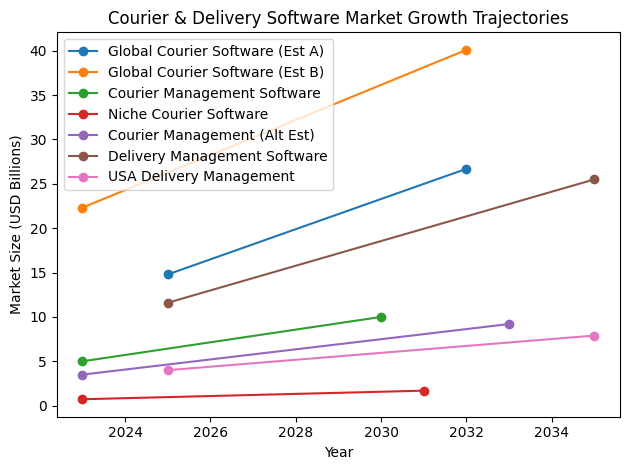
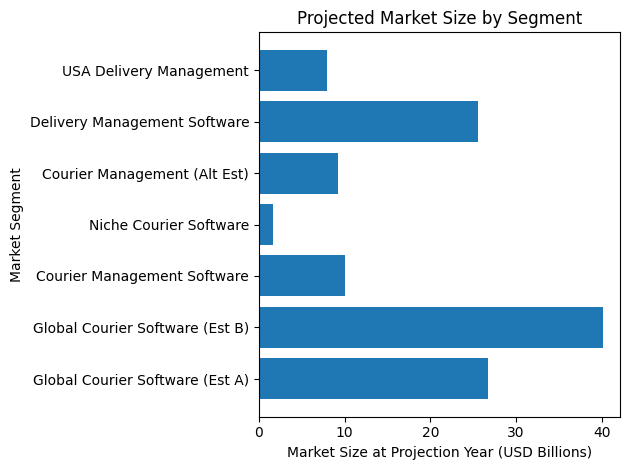
- With the global courier software market valued at USD 14.79 billion in 2025, businesses evaluating courier management solutions are entering a maturing yet rapidly expanding industry — making early software adoption a strategic advantage rather than a luxury.
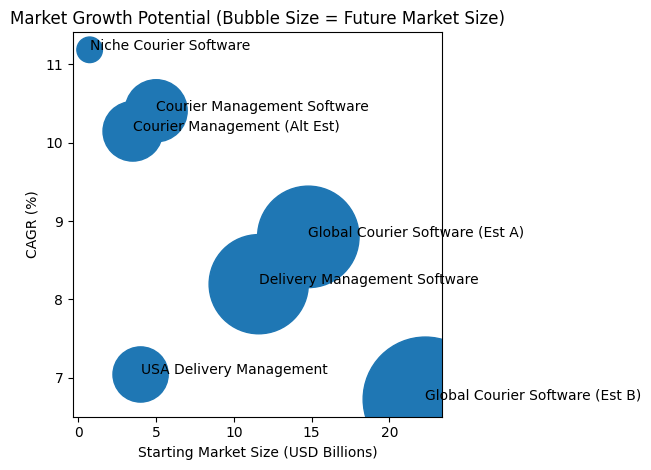
- Projected to reach USD 26.69 billion by 2032 at an 8.8% CAGR, the courier software market offers a consistent growth trajectory that signals strong long-term ROI for logistics technology investors and software vendors alike.
- A parallel market estimate placing courier software at USD 22.32 billion in 2023 growing to USD 40.1 billion by 2032 reflects variations across research methodologies — but all sources agree the sector is on a sustained upward path.
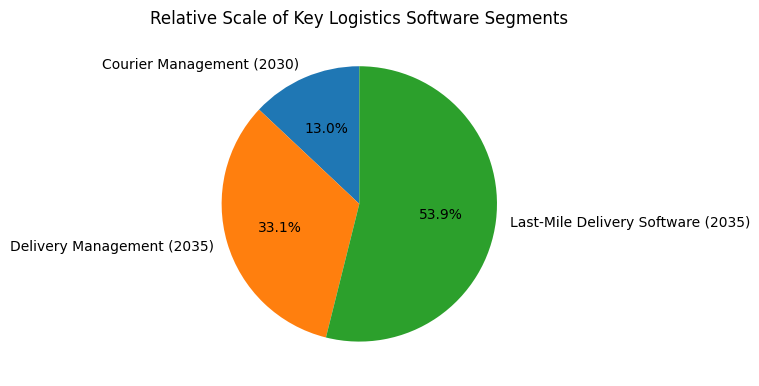
- The Courier Management Software sub-market, valued at USD 5 billion in 2023 and expected to double to USD 10 billion by 2030 at a 12% CAGR, is among the fastest-growing logistics technology niches — driven largely by e-commerce and on-demand delivery demand.
- Even conservative segment-level estimates show robust growth: courier software expanding from USD 723.52 million in 2023 to USD 1.69 billion by 2031 underscores that even niche delivery software verticals are compounding at double-digit rates.
- Valued at approximately USD 12.5 billion in 2023, the global courier software market is on course to nearly double by 2032 — highlighting growing enterprise reliance on automation, real-time tracking, and data-driven dispatch tools.
- The courier management software market expected to grow from USD 3.5 billion in 2023 to USD 9.2 billion by 2033 suggests that mid-market and enterprise courier operations have a widening selection of scalable, feature-rich platforms to evaluate.
- The global delivery management software market growing from USD 11.6 billion in 2025 to USD 25.5 billion by 2035 confirms that delivery orchestration software is becoming a foundational layer of modern supply chain infrastructure.
- The USA delivery management software market projected to grow from USD 4.0 billion in 2025 to USD 7.9 billion by 2035 illustrates that North America remains the world’s most commercially mature and competitive arena for courier technology innovation.
- At a projected USD 41.5 billion by 2035, the last-mile delivery software sub-sector is the fastest-growing category within courier software — reflecting how consumer demand for speed and transparency is reshaping logistics from the final mile outward.
SECTION 2: Regional Market Breakdown
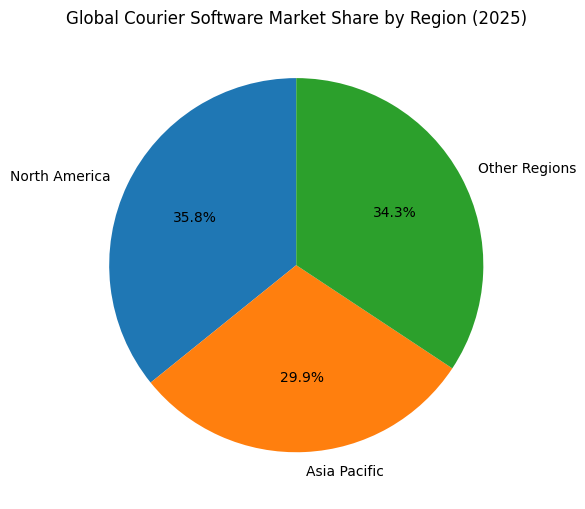
- North America’s 35.8% share of the global courier software market in 2025 reflects a combination of high e-commerce penetration, strong logistics infrastructure, and early enterprise adoption of dispatch and route optimisation platforms.
- Asia Pacific’s 29.9% market share and status as the fastest-growing region in courier software underscore the enormous opportunity created by surging e-commerce, urbanisation, and smartphone-driven on-demand delivery adoption across the region.
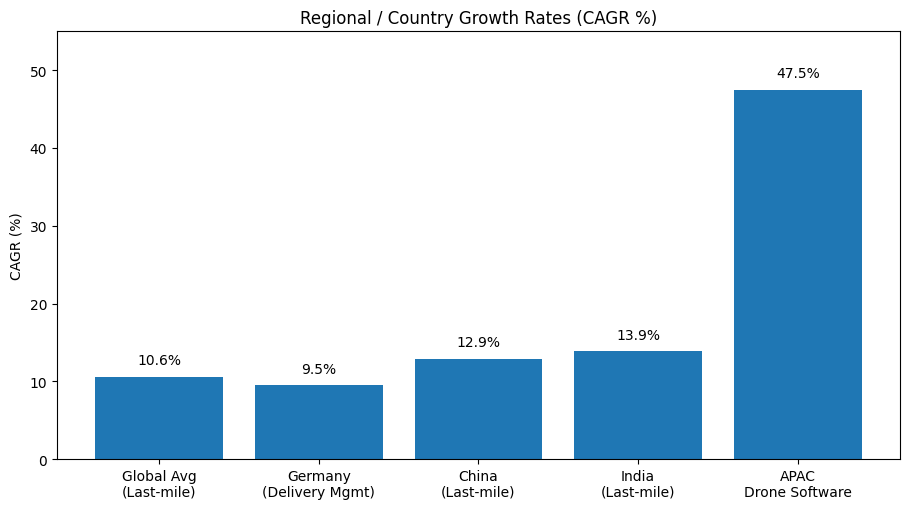
- India’s 13.9% CAGR in last-mile delivery software — 3.3 percentage points above the global average — reflects a mobile-first logistics revolution driven by hyper-local delivery apps, rapid urban growth, and a booming domestic e-commerce sector.
- China’s 12.9% CAGR in last-mile delivery software is fuelled by state-supported infrastructure investment, autonomous delivery trials, and the dominance of integrated super-app ecosystems that embed logistics software directly into consumer platforms.
- Germany’s delivery management software market growing at a 9.5% CAGR and leading Western Europe signals that even in highly developed logistics markets, digital transformation is far from complete — and ROI on route and dispatch software remains strong.
- With U.S. logistics contributing over USD 1.6 trillion to the economy in 2024, the scale of the American supply chain makes courier software not just operationally useful but economically critical for maintaining competitive margins.
- Asia-Pacific’s drone delivery software ecosystem expected to grow at a 47.5% CAGR — the world’s fastest — makes it a bellwether for where autonomous delivery software capabilities are being most aggressively developed and deployed at scale.
- The US shipment tracking platform market growing from USD 815.7 million to USD 837.9 million in just one year signals the steady institutionalisation of real-time parcel visibility as a standard business expectation across American commerce.
- E-commerce reaching 15.8% of total US retail sales in Q3 2025 — up 5.2% year-over-year — directly correlates with rising demand for courier management software capable of handling high parcel volumes with speed and accuracy.
- Japan’s delivery management software market valued at USD 522.1 million and growing at 11.0% CAGR reflects a country balancing labour shortages and an ageing population with automation-forward logistics software adoption across urban and rural delivery networks.
SECTION 3: Last-Mile Delivery Costs & Efficiency
- With last-mile delivery consuming 53% of total shipping costs, courier software with intelligent route optimisation is no longer optional — it is the single most impactful technology investment a delivery business can make to protect profit margins.
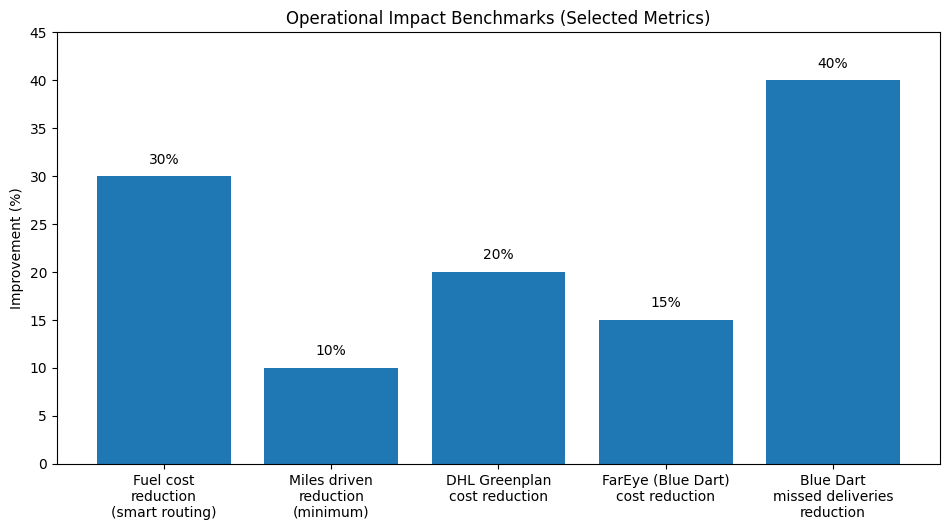
- A 30% reduction in fuel costs achievable through smart routing in delivery management software represents one of the clearest and most measurable financial returns in logistics technology — particularly valuable for fleets navigating rising energy costs.
- Even at a minimum 10% reduction in miles driven per route, route optimisation software delivers meaningful savings at scale — and for high-volume couriers processing thousands of deliveries daily, those savings compound into significant competitive advantages.
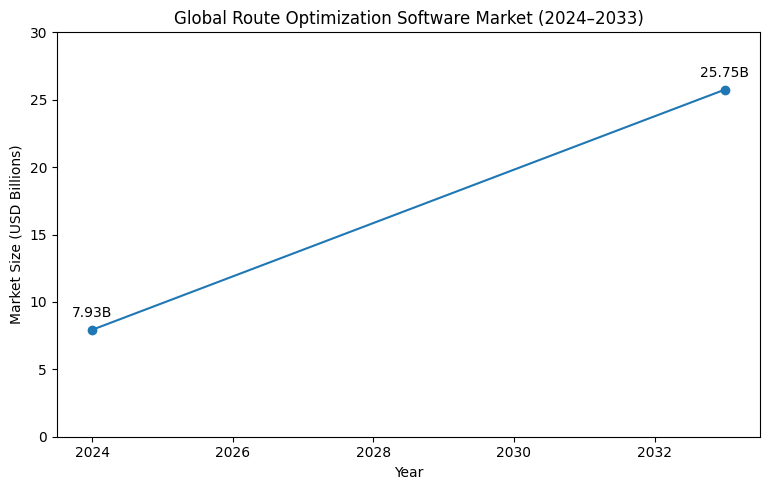
- The global route optimisation software market expanding from USD 7.93 billion in 2024 to USD 25.75 billion by 2033 confirms that smarter routing is one of the most commercially validated applications of technology in the entire logistics sector.
- DHL’s 20% reduction in delivery costs through Greenplan’s dynamic routing is a real-world proof point that enterprise-grade courier software can deliver substantial cost savings — not just in theory, but in live operational environments at global scale.
- Tesco’s AI-powered route scheduling saving 11.2 million miles and cutting fuel use by 8% per order demonstrates how courier software optimisation at retail supply chain level can generate environmental as well as financial dividends simultaneously.
- UPS’s ORION system saving 100 million delivery miles annually is a landmark demonstration of what purpose-built courier route software achieves at enterprise scale — and a compelling benchmark for other large-footprint logistics operations worldwide.
- UPS’s ORION saving approximately 10 million gallons of fuel annually through AI-driven route algorithms illustrates that the environmental and cost case for advanced courier software optimisation are not competing priorities — they reinforce each other.
- The rise of last-mile delivery costs from 41% to 53% of total shipping costs between 2018 and 2023 is a clear market signal: courier businesses that fail to adopt software-driven efficiency tools face a structural profitability squeeze that will only intensify.
- Failed deliveries costing USD 10–30 per parcel highlight that courier software investments in accurate scheduling, customer notifications, and real-time tracking are not overhead — they are direct hedges against a recurring and quantifiable financial loss.
SECTION 4: Failed Deliveries & Performance Metrics
- A global failed first-attempt delivery rate of 8–20% reveals a wide performance gap between operators — and courier software with dynamic rescheduling, customer ETAs, and proof-of-delivery tools can meaningfully push that rate toward the lower end.
- Failed deliveries costing USD 17.2 in the US and GBP 11.6 in the UK per parcel make the ROI case for courier software self-evident: even modest improvements in first-attempt success rates quickly recoup the cost of intelligent delivery management platforms.
- The finding that 70% of shoppers won’t return after a failed delivery reframes how courier businesses should calculate the true cost of poor software — it’s not just operational, it’s a direct driver of customer churn and long-term revenue erosion.
- With up to 20% of all deliveries failing on the first attempt and potentially doubling per-delivery costs, courier software that enables proactive communication and flexible redelivery scheduling is one of the highest-leverage tools in any operator’s technology stack.
- FarEye’s 22% improvement in Blue Dart’s first-attempt delivery rates alongside a 15% cost reduction is a concrete case study showing that the right courier software platform can simultaneously improve customer experience and reduce operational expenditure.
- A 40% reduction in missed deliveries through courier software implementation at Blue Dart is a compelling benchmark for logistics managers evaluating delivery management platforms — and a reminder that software ROI in this sector is often direct and measurable.
- Companies sustaining first-attempt delivery rates above 95% report both lower costs and higher customer satisfaction — reinforcing that delivery performance software is not just operationally valuable but a key differentiator in competitive last-mile markets.
- A 95% OTIF standard as the industry benchmark for excellent delivery execution gives courier businesses a clear, data-backed performance target — and highlights where software-driven scheduling and tracking tools create the most measurable operational value.
- The finding that 69% of consumers are less likely to shop with a retailer after a late delivery illustrates how tightly courier software performance is linked to retail revenue — making delivery reliability a shared commercial priority across the entire supply chain.
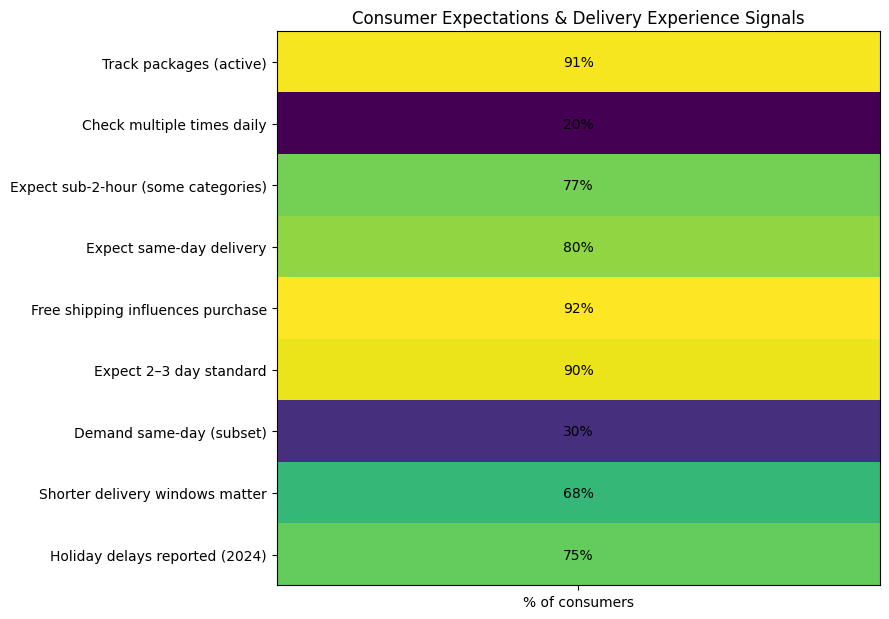
- 75% of Americans reporting delivery delays during the 2024 holiday season underscores seasonal peak demand as the ultimate stress test for courier software — and the strongest commercial argument for investing in scalable, capacity-aware dispatch and routing platforms.
SECTION 5: AI & Technology in Courier Software
- With AI adoption in logistics still at around 12%, most courier operations remain significantly under-optimised — yet early adopters already reporting 15% cost reductions suggest the technology gap is becoming a meaningful and widening competitive divide.
- Early AI adopters in logistics reporting threefold higher ROI compared to conventional approaches is a striking endorsement of machine learning in courier software — though businesses should note that ROI realisation depends heavily on data quality and implementation depth.
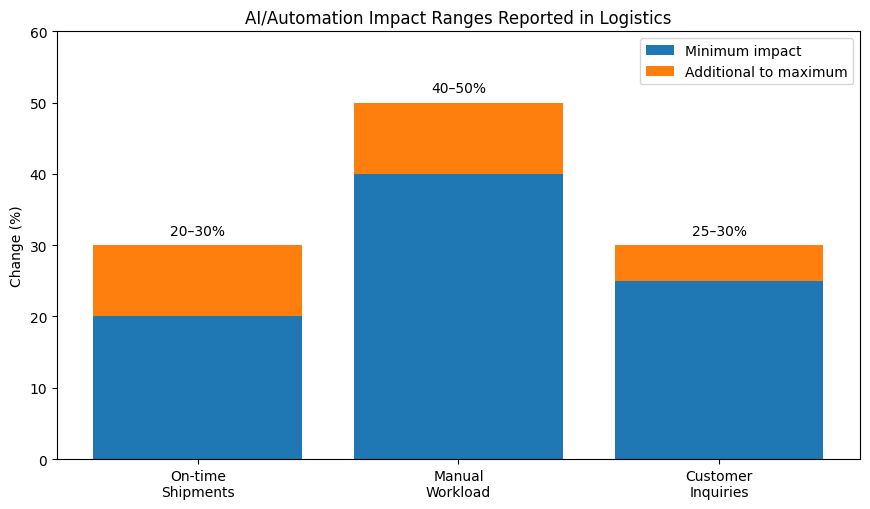
- AI/ML-powered courier software delivering 20–30% more on-time shipments and cutting manual workload by 40–50% represents transformative operational gains — though realising these figures requires robust data pipelines and organisational change management alongside the technology itself.
- AI models within shipment tracking platforms reducing customer inquiries by 25–30% through automatic updates directly frees up human support capacity — lowering operational costs while simultaneously improving customer experience through proactive, real-time communication.
- WiseTech Global’s USD 270 million R&D investment between 2022 and 2024 in AI-driven courier software signals that leading vendors are competing intensely on intelligence capabilities — and that AI is now the primary axis of product differentiation in the market.
- Smart packaging technology integrated with courier software projected to reach USD 82.31 billion at a 24.20% CAGR indicates that hardware-software convergence in logistics is accelerating — with packaging itself becoming a data-generating layer of the delivery ecosystem.
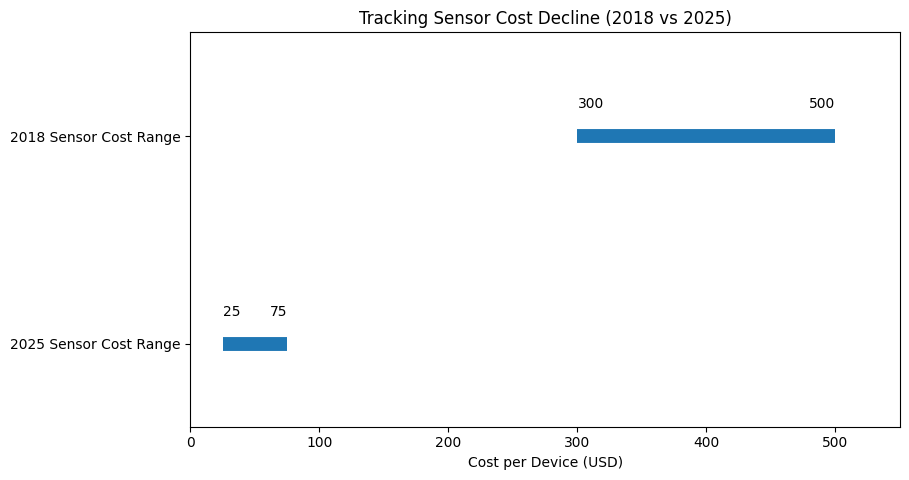
- The drop in tracking sensor costs from USD 300–500 per device in 2018 to an expected USD 25–75 by 2025 is dramatically lowering the barrier to real-time shipment monitoring — making advanced courier visibility software viable for small and mid-sized operators, not just enterprises.
- Temperature-tracking sensors reducing shipping issues by 60–70% when integrated with courier alert software is a critical capability for pharmaceutical, food, and sensitive goods logistics — where compliance and product integrity are non-negotiable operational requirements.
- ClickPost’s integration of over 500 shipping carriers into a single courier SaaS platform illustrates how software aggregation is reshaping logistics: rather than managing carrier relationships individually, businesses can optimise across an entire network from one unified interface.
- Deliveree’s AI-powered Smart Pricing Engine using real-time supply-demand data reflects a broader trend of courier software evolving from operational tools into intelligent business platforms — capable of influencing pricing strategy as well as day-to-day execution.
SECTION 6: Cloud & Deployment Trends
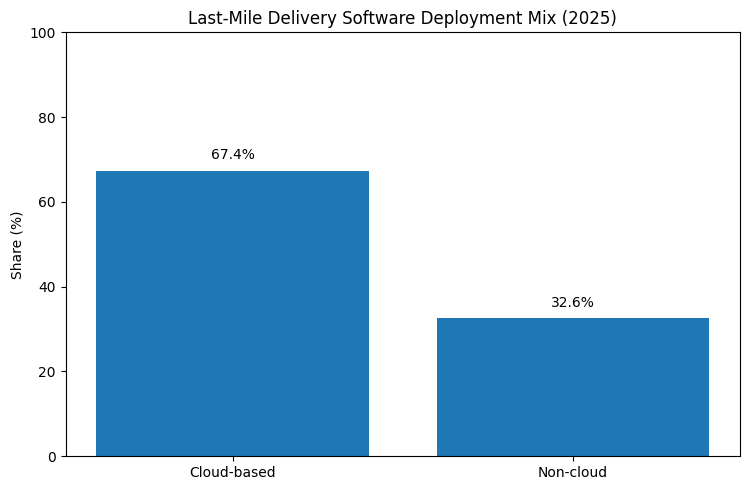
- Cloud-based deployment capturing 67.4% of the last-mile delivery software market in 2025 confirms the industry has crossed the tipping point on cloud adoption — making on-premises deployments increasingly the exception rather than the norm for new logistics software investments.
- Cloud courier software reducing deployment timelines from months to days is a decisive operational advantage for growing logistics businesses — enabling faster response to market opportunities without the infrastructure lead times associated with traditional on-premises rollouts.
- The documented improvement in analytics, coordination, and partner integrations among cloud-based courier systems compared to legacy on-premises counterparts reflects the compounding network effect of platforms that continuously update without disrupting core operations.
- SaaS models lowering the IT maintenance burden for courier software operators democratise access to enterprise-grade logistics technology — enabling smaller couriers and regional carriers to access capabilities previously available only to large, well-resourced logistics corporations.
- The growing popularity of hybrid cloud/on-premises courier software deployments reflects a pragmatic middle ground for regulated industries or businesses with legacy infrastructure — capturing cloud scalability benefits while retaining control over sensitive operational data.
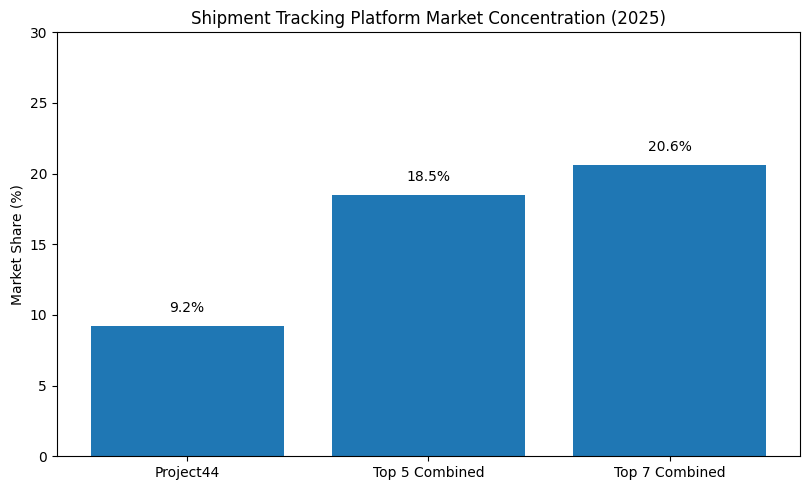
- Five leading shipment tracking platforms collectively holding 18.5% of market share in 2025 reflects a still-fragmented competitive landscape — which benefits buyers, as vendor competition continues to drive feature development, integration depth, and pricing flexibility.
- Project44’s 9.2% market share leadership in shipment tracking platforms indicates a degree of consolidation forming around best-in-class real-time visibility technology — a useful signal for businesses evaluating long-term courier software vendor partnerships.
- With the top seven shipment tracking platforms holding just 20.6% of market share combined, the courier software sector remains significantly unconsolidated — leaving meaningful room for specialist, vertical-specific, or region-focused vendors to capture growing demand.
- Global logistics technology investments exceeding USD 2 trillion by 2025 reflect an industry undergoing profound digital transformation — and serve as context for why courier software vendors are scaling rapidly and competing aggressively for both market share and engineering talent.
- The emergence of drone delivery in 2022 as a logistics-reshaping force requiring aviation-compliant courier software illustrates how new delivery modalities don’t just change operations — they create entirely new software categories and regulatory compliance requirements.
SECTION 7: Consumer Expectations Driving Adoption
- With 91% of consumers actively tracking their packages and nearly 1 in 5 checking multiple times daily, real-time shipment visibility is now a consumer standard — and courier software that fails to deliver live tracking creates measurable dissatisfaction and avoidable support overhead.
- 77% of shoppers expecting sub-two-hour delivery for certain product categories is a market reality that courier software must be architected to support — driving demand for intelligent dynamic dispatch, micro-fulfilment integration, and on-demand routing capabilities.
- Same-day delivery becoming an expectation for 80% of consumers is not just a logistical challenge — it’s a structural market signal that courier software must evolve from scheduling tools into real-time orchestration platforms capable of rapid, accurate same-day execution.
- Free shipping influencing 92% of purchase decisions intensifies pressure on courier operations to absorb delivery costs through efficiency gains — making route optimisation and consolidation features in courier software commercially essential, not optional.
- 90% of consumers expecting 2–3 day standard delivery with 30% demanding same-day service creates a bifurcated demand landscape — and courier software must simultaneously support both economy and express delivery workflows within unified operational platforms.
- Consumers prioritising speed, convenience, and service quality above price signals that courier businesses compete on delivery experience as much as cost — and that software investments enabling faster, more accurate, and more communicative deliveries directly translate into commercial retention.
- The direct link between consumer demand for faster deliveries and rising courier management software adoption rates confirms that e-commerce growth is the most powerful structural tailwind in the logistics software market — and shows no sign of moderating.
- 68% of consumers citing shorter delivery windows as a retailer selection factor makes delivery slot precision a competitive differentiator — positioning courier software with tight time-window scheduling capabilities as a direct enabler of retail customer acquisition.
- Top-performing retailers sustaining 92% delivery accuracy rates demonstrate what is achievable with mature courier software implementations — and serve as a realistic, data-backed benchmark for operations looking to quantify the performance ceiling of delivery management technology.
- Repeat customers spending 67% more over their lifetime than new customers makes delivery reliability a direct revenue driver — reframing courier software investment as a customer retention tool with compounding lifetime value implications, not just an operational cost centre.
SECTION 8: E-Commerce Growth & Parcel Volumes
- Global e-commerce growing from USD 3.5 trillion in 2019 to USD 5.5 trillion in 2025 is the single most powerful demand driver behind courier software market expansion — and explains why delivery management technology has become a boardroom-level investment priority across retail.
- E-commerce revenue projected to reach USD 4,117 billion in 2024 and USD 6,478 billion by 2029 translates directly into billions of additional parcels requiring tracking, routing, and delivery orchestration — making courier software scalability a strategic non-negotiable.
- The global last-mile delivery market valued at USD 132.71 billion in 2022 growing at 8.8% CAGR through 2030 confirms that last-mile logistics is one of the highest-value segments in global commerce — and that software serving it is proportionally valuable.
- A 78% projected increase in urban last-mile deliveries by 2030 sets a clear capacity challenge for existing courier networks — and establishes the case for AI-driven courier software that can handle exponential volume growth without proportional increases in cost.
- McKinsey’s finding that e-commerce achieved a decade’s worth of growth in three months during COVID-19 illustrates how rapidly structural demand for courier software can accelerate — and why logistics technology resilience and scalability matter as much as day-to-day efficiency.
- 85% of retailers in 2024 prioritising last-mile cost reduction as their top delivery goal confirms that courier software with provable cost-efficiency credentials — not just feature richness — is what purchasing decision-makers are actively seeking in the current market.
- Over 70% of consumers expecting same-day or next-day delivery across all sectors signals a universal shift in delivery norms — making courier management software capable of dynamic, real-time dispatch coordination a baseline requirement rather than a premium differentiator.
- Amazon’s 2023 drone delivery expansion targeting 30-minute fulfilment is a market signal for the software industry: the courier platforms of the near future must be architected to coordinate air, ground, and autonomous delivery modes simultaneously within unified systems.
- Urban delivery traffic projected to increase carbon emissions by 32% by 2030 without route optimisation underscores that courier software is now an environmental policy tool as much as a business efficiency tool — a framing increasingly relevant for ESG-focused investors and regulators.
- The last-mile delivery software market growing from USD 7 billion in 2021 to a projected USD 16 billion by 2030 provides a clear, long-term demand signal for businesses assessing the strategic value of early investment in delivery orchestration platforms.
SECTION 9: Sustainability & Environmental Metrics
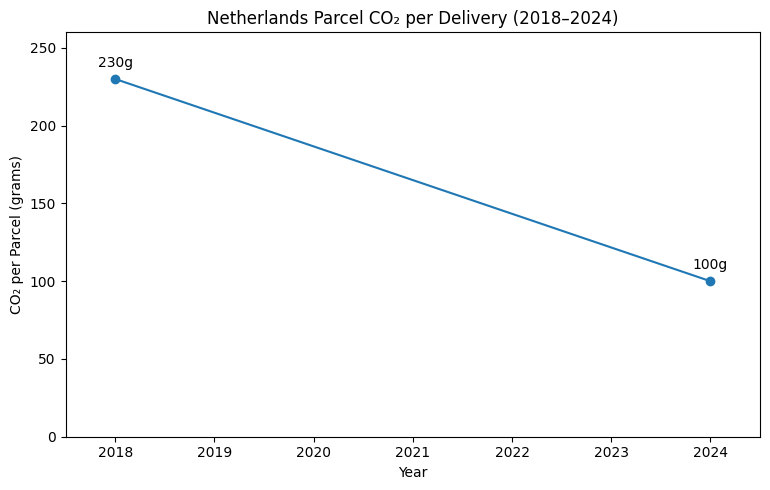
- The Netherlands reducing parcel CO2 from 230g to 100g between 2018 and 2024 — a 56% cut — demonstrates that national-scale delivery sustainability improvements are achievable when route optimisation software, electric vehicles, and policy alignment work in concert.
- The projection that eCommerce parcel delivery could reach 5.5 million metric tonnes of CO2 by 2032 without intervention makes a powerful case for courier software with built-in carbon accounting, green routing options, and emissions-aware delivery planning capabilities.
- The potential to reduce eCommerce delivery emissions by over 90% through electrification and alternative delivery methods reframes sustainable courier software not as a compliance checkbox but as a transformative operational strategy with near-full decarbonisation potential.
- Parcel lockers and pickup points reducing CO2 by up to two-thirds compared to home delivery highlight how courier software that intelligently routes customers toward collection alternatives can be as impactful environmentally as switching to electric delivery fleets.
- Microhub-enabled courier operations achieving up to 93% CO2 reductions for final-mile delivery are made operationally viable only through sophisticated software — capable of coordinating micro-depot inventory, routing zero-emission vehicles, and optimising load consolidation in real time.
- Optimised courier software networks reducing delivery trips by 30% creates a compelling dual benefit: lower operational costs for carriers and measurable emissions reductions — making route consolidation software one of the most cost-effective green logistics investments available.
- Local fulfilment centres reducing last-mile emissions by 17–26% illustrate that courier software doesn’t just optimise existing networks — it can be a strategic layer in redesigning supply chains to be geographically smarter, faster, and more environmentally efficient simultaneously.
- HelloFresh’s 16% transportation cost reduction through PTV OptiFlow is a commercially transparent proof point for businesses evaluating route planning software — demonstrating that sustainability and cost savings are aligned outcomes of the same intelligent routing investment.
- 50% of consumers expressing willingness to pay a premium for eco-friendly delivery is a direct commercial signal for courier software vendors: green delivery mode configuration, carbon-offset selection, and emissions reporting are becoming revenue-generating features, not just CSR gestures.
- Careem’s electric motorbike fleet in Dubai targeting reductions of up to 24 tonnes of CO2 daily demonstrates that software-managed EV courier fleets can achieve climate-relevant emissions reductions at a scale that is strategically meaningful beyond corporate sustainability reporting.
SECTION 10: Drone, Autonomous Delivery & Platform Case Studies
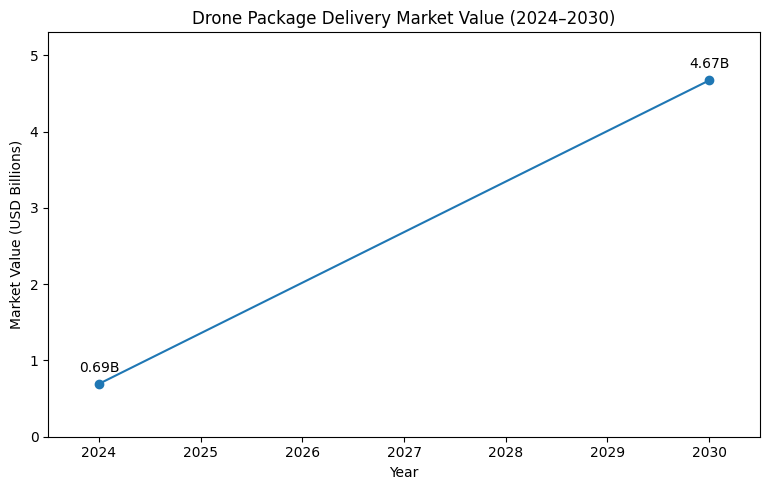
- The drone package delivery market growing from USD 693.3 million in 2024 to USD 4.67 billion by 2030 at a 37.4% CAGR is among the fastest compound growth rates in any logistics technology segment — signalling that autonomous aerial delivery is moving from pilot to mainstream infrastructure.
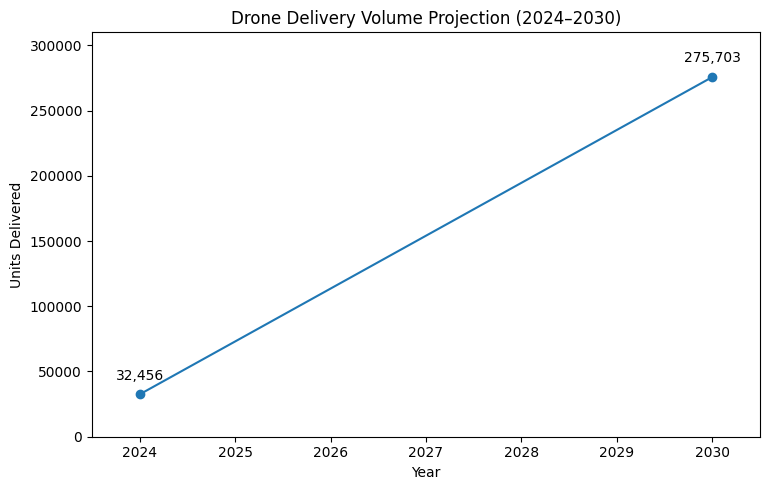
- Drone delivery volumes projected to grow from 32,456 units in 2024 to 275,703 units by 2030 represent a near ninefold increase — and require courier software platforms capable of real-time autonomous fleet coordination, airspace management, and regulatory compliance at scale.
- Zipline’s milestone of one million commercial drone deliveries across 70 million autonomous miles on four continents is the most significant proof point that drone delivery software ecosystems are operationally mature enough for high-stakes, real-world deployment at a global scale.
- The projected leap from 5 million to 808 million B2C drone deliveries within a decade represents one of the most dramatic demand curves in logistics history — and signals that courier software architects must begin building drone-native integration capabilities now, not later.
- Drone delivery costs of USD 6–25 per delivery today — projected to fall by more than 70% over the next decade — suggest that cost parity with conventional courier methods is approaching, at which point software-managed drone networks may significantly disrupt last-mile economics.
- The value of drone-delivered goods growing from USD 251 million in 2024 to USD 65.2 billion by 2034 illustrates an impending demand inflection point — positioning courier software vendors that invest early in drone logistics integration as long-term beneficiaries of exponential growth.
- The autonomous last-mile delivery market reaching USD 4.96 billion by 2030 confirms that robot and drone delivery is transitioning from a technology demonstration into a commercially significant infrastructure category — with software orchestration as the critical enabling layer.
- Starship Technologies operating 1,700 autonomous delivery robots with 10,000 daily deliveries is a live proof point that autonomous courier software can scale beyond controlled tests into high-frequency, real-world urban delivery environments with measurable commercial outcomes.
- Drones consuming up to 94% less energy per package than traditional delivery vehicles makes autonomous aerial delivery one of the most energy-efficient last-mile options available — provided courier software can manage the operational complexity of coordinating multi-modal fleets effectively.
- Walmart and Wing’s 19-minute average drone fulfilment time across 100 stores covering 2 million people is a commercially credible benchmark — demonstrating that drone delivery at retail scale is achievable with the right operational courier technology stack in place.
- Wing’s pilot programs demonstrating up to 40% cost reductions through drone delivery are encouraging, though businesses should note these figures reflect controlled trials — and real-world scaling will require courier software capable of handling far greater operational complexity.
- North America’s 33.15% share of drone package delivery revenue in 2024 reflects favourable regulatory development and high consumer willingness to trial autonomous delivery — making it the leading market for courier software vendors building drone-native delivery management capabilities.
- China’s CNY 1.5 trillion commitment to low-altitude air-corridor infrastructure by 2025 is a state-level investment signal that the drone delivery software ecosystem in China is being built at a scale unmatched anywhere else in the world — with significant global supply chain implications.
- PTV OptiFlow’s 11% reduction in driving time, 23% in distance, and 13% in total costs for Crisp provides a detailed, multi-metric case study of what well-implemented route optimisation software delivers — and a useful performance benchmark for businesses evaluating similar platforms.
- Two planners managing over 400 daily routes with PTV OptiFlow while cutting planning time by two hours and mileage by 4% illustrates that courier software’s value isn’t only in large-scale automation — meaningful efficiency gains are achievable even in mid-sized, resource-constrained operations.
- Stord’s claim of 12–15% savings on total parcel spend through automated carrier selection reflects the growing commercial value of algorithmic carrier optimisation — though businesses should validate these figures against their own carrier mix, volume, and service level agreements.
- Stord’s delivery reach of over 11.5% of US homes in 2024 demonstrates that third-party delivery management software platforms with deep carrier integrations can achieve coverage levels that are competitive with, or strongly complementary to, proprietary logistics networks.
- InPost’s £1 billion UK investment by 2029 and projected 12,000 jobs highlight how courier software and physical parcel locker infrastructure are co-evolving — and that the software systems coordinating these networks are becoming critical national logistics assets.
- The food delivery segment commanding 39.4% of the delivery management software market in 2025 reflects how time-sensitive, perishable logistics has become a primary driver of courier software innovation — pushing capabilities in real-time routing, temperature monitoring, and customer communication.
- FarEye’s 30% improvement in Blue Dart’s overall operational efficiency reinforces that the gains from courier technology are not limited to individual metrics — well-implemented delivery management platforms create compounding efficiency gains across the entire delivery lifecycle.
- The gap between top warehouses achieving 99.9% picking accuracy and the 35% of facilities experiencing 1%+ error rates illustrates that courier software performance is only as strong as the upstream fulfilment processes it connects — making end-to-end integration critical for consistent delivery outcomes.
- FedEx’s ACSI customer satisfaction score rising from 76 in 2023 to 80 in 2024 offers an independent signal that courier software-driven improvements in tracking, communication, and delivery reliability are translating into tangible gains in customer perception at one of the world’s largest courier operations.
Conclusion
The courier and delivery industry is entering a new era defined by speed, efficiency, data-driven decision-making, and technological innovation. As the statistics throughout this report clearly demonstrate, courier software has become one of the most influential forces shaping the modern logistics landscape. What was once considered a helpful operational tool has now evolved into a strategic platform that determines how effectively courier companies compete, scale, and deliver services in an increasingly demanding market.
The 112 courier software statistics and trends presented in this article reveal a consistent theme: digital transformation is no longer optional for delivery businesses. The explosive growth of e-commerce, the expansion of urban delivery networks, and the increasing expectations of customers have created a logistics environment that requires automation, real-time visibility, and intelligent decision-making. Courier software provides the infrastructure necessary to manage these complexities efficiently while maintaining high service quality.
One of the most important insights highlighted by these statistics is the accelerating adoption of courier management platforms across businesses of all sizes. Small courier companies, regional logistics providers, and global delivery enterprises are all investing in software solutions that automate dispatching, optimize routes, track deliveries, and analyze operational performance. These systems are helping businesses streamline their workflows, reduce manual errors, and gain full visibility across their delivery operations.
Another key takeaway is the growing role of data in courier operations. Courier software platforms now generate vast amounts of operational intelligence, allowing companies to measure delivery performance, monitor fleet productivity, analyze route efficiency, and identify operational bottlenecks. Organizations that effectively use these insights can continuously refine their logistics strategies, improving both speed and reliability while reducing unnecessary costs.
Route optimization continues to emerge as one of the most impactful capabilities within courier software. With fuel prices fluctuating and delivery volumes increasing, efficient route planning has become essential for maintaining profitability. Advanced algorithms powered by artificial intelligence and machine learning are enabling courier companies to dynamically adjust routes based on traffic patterns, delivery density, weather conditions, and time-sensitive deliveries. These capabilities not only reduce operational costs but also significantly improve delivery time accuracy.
The statistics also highlight the growing importance of last-mile delivery technology. As the final step in the logistics chain, the last mile represents both the most expensive and the most complex stage of the delivery process. Courier software helps businesses overcome these challenges by automating dispatch decisions, improving driver coordination, and ensuring real-time tracking for both businesses and customers. With the continued growth of same-day and next-day delivery services, last-mile optimization will remain one of the most critical priorities for courier companies.
Customer experience is another area where courier software is driving measurable improvements. Modern delivery platforms now provide features such as live shipment tracking, automated delivery notifications, digital proof of delivery, and communication tools that allow customers to interact directly with drivers or support teams. These capabilities increase transparency and trust while reducing customer service inquiries and delivery disputes. In an industry where reliability and visibility strongly influence customer loyalty, these features provide a significant competitive advantage.
The courier software ecosystem is also becoming increasingly interconnected with other technologies. Integration with e-commerce platforms, warehouse management systems, order management tools, and payment solutions is enabling end-to-end logistics automation. Businesses can now move orders seamlessly from checkout to delivery without manual intervention, creating faster fulfillment cycles and more efficient supply chains. These integrations will continue to expand as digital commerce ecosystems grow more complex and interconnected.
Artificial intelligence and predictive analytics are also beginning to reshape the future of courier software. These technologies allow delivery platforms to forecast demand, anticipate delivery delays, optimize fleet utilization, and automate operational decisions. As these capabilities mature, courier companies will be able to shift from reactive operations to predictive logistics strategies that proactively address challenges before they impact service performance.
Another emerging trend highlighted in the statistics is the growing focus on sustainability and environmentally responsible logistics. Governments and consumers alike are placing increasing pressure on delivery companies to reduce carbon emissions and improve energy efficiency. Courier software plays an important role in this transition by helping companies minimize unnecessary travel, optimize electric vehicle routing, track fuel consumption, and measure environmental impact across delivery networks. These tools enable businesses to align operational efficiency with sustainability goals.
The competitive landscape of courier software providers is also evolving rapidly. As more companies recognize the strategic importance of delivery management technology, the demand for innovative platforms continues to grow. Software vendors are responding by developing more advanced features, improving automation capabilities, and creating highly customizable platforms tailored to specific industries such as healthcare logistics, food delivery, retail fulfillment, and same-day courier services.
Looking ahead, the role of courier software will only become more central to logistics operations. With delivery volumes expected to continue rising and urban logistics becoming increasingly complex, companies will rely on technology to manage scale, maintain speed, and deliver consistent service quality. Innovations such as autonomous delivery vehicles, drone logistics, smart city infrastructure, and real-time predictive analytics will further expand the capabilities of courier management platforms in the coming years.
For courier companies and logistics professionals, these statistics serve as both a benchmark and a strategic guide. They reveal the technologies that are shaping the industry, the operational improvements made possible by software adoption, and the emerging trends that will influence logistics strategies in the near future. Organizations that closely monitor these developments and invest in modern courier software solutions will be better positioned to adapt to changing market demands and maintain a strong competitive edge.
Ultimately, the future of delivery belongs to businesses that combine operational expertise with intelligent technology. Courier software sits at the intersection of these two forces, transforming traditional logistics operations into agile, data-driven delivery networks capable of meeting the demands of modern commerce.
As the courier industry continues to evolve, the insights captured in these 112 statistics offer a valuable snapshot of where the market stands today and where it is heading next. For businesses seeking to improve delivery efficiency, enhance customer satisfaction, and scale their logistics operations, courier software will remain one of the most powerful tools driving innovation and growth throughout the remainder of this decade.
If you find this article useful, why not share it with your hiring manager and C-level suite friends and also leave a nice comment below?
We, at the 9cv9 Research Team, strive to bring the latest and most meaningful data, guides, and statistics to your doorstep.
To get access to top-quality guides, click over to 9cv9 Blog.
To hire top talents using our modern AI-powered recruitment agency, find out more at 9cv9 Modern AI-Powered Recruitment Agency.
People Also Ask
What is courier software and why is it important in 2026?
Courier software helps delivery companies manage dispatching, route planning, tracking, and delivery operations. In 2026 it is essential for improving efficiency, reducing costs, and meeting customer expectations for faster and more transparent deliveries.
How fast is the courier software market growing in 2026?
The courier software market is expanding rapidly due to e-commerce growth and last-mile delivery demand. Many logistics companies are investing in digital platforms to automate operations, improve delivery speed, and scale their logistics networks.
What are courier software statistics used for?
Courier software statistics help businesses understand market growth, technology adoption, delivery efficiency, and operational trends. Companies use these insights to make informed decisions about logistics technology investments.
Why are courier software statistics important for logistics companies?
Statistics reveal how the industry is evolving, including technology adoption rates and efficiency improvements. Logistics companies use this data to benchmark performance and plan digital transformation strategies.
What features are commonly included in courier management software?
Typical features include route optimization, dispatch automation, real-time tracking, delivery notifications, proof of delivery, analytics dashboards, and integration with e-commerce or warehouse systems.
How does courier software improve last-mile delivery?
Courier software improves last-mile delivery by optimizing routes, automating driver assignments, reducing delivery delays, and providing real-time tracking. These capabilities help reduce costs and increase delivery accuracy.
What role does AI play in courier software trends in 2026?
AI helps courier platforms predict delivery demand, optimize routes, automate dispatching, and analyze operational data. This technology enables smarter logistics decisions and improves overall delivery efficiency.
How does courier software reduce delivery costs?
Courier software reduces costs by optimizing routes, minimizing fuel consumption, improving driver productivity, and automating manual tasks. These improvements help courier businesses operate more efficiently.
What are the latest courier software trends in 2026?
Major trends include AI-powered route optimization, real-time delivery tracking, cloud-based logistics platforms, automation in dispatching, predictive analytics, and integration with e-commerce systems.
How many courier companies use delivery management software today?
Adoption continues to grow as more courier companies digitize operations. Many delivery providers now rely on software platforms to manage fleets, track deliveries, and analyze logistics performance.
How does courier software support e-commerce growth?
Courier software integrates with online stores and marketplaces to automate order processing and delivery management. This helps businesses handle high delivery volumes and provide faster shipping services.
What is route optimization in courier software?
Route optimization uses algorithms to calculate the fastest and most efficient delivery routes. It considers traffic, delivery windows, distance, and delivery density to improve delivery performance.
Why is real-time tracking important in courier software?
Real-time tracking provides visibility into delivery status and driver location. It improves customer experience, reduces support inquiries, and allows businesses to monitor delivery performance.
How does courier software help manage delivery fleets?
Courier platforms track vehicle locations, monitor driver performance, and analyze fleet efficiency. These insights help logistics companies improve fleet utilization and reduce operational expenses.
What industries benefit from courier software solutions?
Industries such as e-commerce, retail, healthcare logistics, food delivery, pharmaceuticals, and same-day courier services benefit from courier management software.
What is the role of cloud technology in courier software?
Cloud-based courier software allows businesses to access delivery management systems from anywhere. It supports scalability, data storage, and integration with other logistics platforms.
How does courier software improve customer experience?
Courier software improves customer experience through live tracking, automated delivery notifications, accurate delivery times, and transparent communication during the delivery process.
What are the benefits of automated dispatch in courier software?
Automated dispatch assigns deliveries to drivers based on location, availability, and route efficiency. This reduces manual work and ensures faster delivery scheduling.
How do courier software statistics help businesses plan logistics strategies?
Statistics provide insights into market trends, technology adoption, and delivery efficiency improvements. Businesses use this data to optimize operations and stay competitive.
What are proof-of-delivery features in courier software?
Proof-of-delivery features capture signatures, photos, or digital confirmations when a package is delivered. This helps reduce disputes and improve delivery verification.
Why is data analytics important in courier management platforms?
Analytics tools help businesses monitor delivery performance, track operational metrics, and identify inefficiencies. This allows companies to make data-driven improvements.
How does courier software help small delivery businesses?
Small courier businesses use software to automate dispatching, track deliveries, and manage drivers efficiently. This helps them compete with larger logistics companies.
What challenges does courier software solve in logistics?
Courier software addresses issues like inefficient routing, lack of delivery visibility, manual dispatching, and poor fleet coordination. It streamlines operations and improves efficiency.
How does courier software support same-day delivery services?
Courier platforms enable fast dispatching, optimized routing, and real-time driver tracking, making it easier for companies to manage high-speed delivery operations.
What role does automation play in courier software trends?
Automation reduces manual tasks such as route planning, order processing, and driver assignments. This allows logistics teams to focus on strategic operations.
How does courier software integrate with other logistics tools?
Courier software often connects with warehouse systems, inventory tools, e-commerce platforms, and payment systems to create a seamless logistics workflow.
What are the key benefits of delivery management software?
Key benefits include improved route efficiency, real-time delivery tracking, reduced operational costs, better customer communication, and scalable logistics management.
How does courier software support sustainable logistics?
Courier software reduces emissions by optimizing routes, minimizing fuel usage, and improving fleet efficiency. Some platforms also support electric vehicle route planning.
What factors are driving courier software growth in 2026?
E-commerce expansion, customer demand for faster delivery, digital transformation, and the need for operational efficiency are driving the adoption of courier software.
What is the future of courier software technology?
Courier software will continue evolving with AI, predictive analytics, automation, and smart logistics integrations, helping delivery companies manage growing logistics demands.
Sources
Coherent Market Insights
Market Research Future
Verified Market Reports
Market Research Intellect
DataIntelo
Data Horizzon Research
Future Market Insights
GM Insights
MarketsandMarkets
Mordor Intelligence
Fortune Business Insights
Reanin
SmartRoutes
DispatchTrack
CoaxSoft
Upper Inc
The AI Journal
ClickPost
Deposco
FarEye
PTV Logistics
Stord
PwC CEE
Statista
ACSI