
Key Takeaways
- CAPA software adoption in 2026 is accelerating across regulated industries, driven by cloud-based Quality Management Systems, stricter compliance requirements, and rising audit scrutiny.
- AI-powered CAPA analytics and predictive risk management tools are reducing investigation cycle times, improving root cause accuracy, and boosting on-time corrective action closure rates.
- Integrated CAPA platforms deliver measurable ROI by minimizing nonconformities, strengthening regulatory compliance, and enhancing enterprise-wide quality and operational performance.
In 2026, organizations across regulated and high-risk industries are facing unprecedented pressure to strengthen quality management, mitigate operational risk, and demonstrate compliance with increasingly complex global standards. Against this backdrop, Corrective and Preventive Action (CAPA) software has evolved from a reactive compliance tool into a strategic, data-driven pillar of modern Quality Management Systems (QMS). As digital transformation accelerates and regulatory scrutiny intensifies, understanding the latest Corrective and Preventive Action (CAPA) software statistics, data, and trends in 2026 is essential for decision-makers, quality leaders, and compliance professionals seeking sustainable performance and resilience.
Also, read our top list about the Top 11 Corrective and Preventive Action (CAPA) Software Platforms.


Corrective and Preventive Action (CAPA) software is designed to systematically identify, investigate, correct, and prevent the recurrence of nonconformities, deviations, and quality incidents. Traditionally rooted in manufacturing and life sciences, CAPA systems are now widely adopted in pharmaceuticals, medical devices, biotechnology, aerospace, automotive, food and beverage, energy, and even high-growth technology sectors. In 2026, the demand for centralized, cloud-based CAPA platforms is being fueled by regulatory frameworks such as FDA 21 CFR Part 820, ISO 13485, ISO 9001, IATF 16949, and EU MDR, as well as by internal mandates for operational excellence and enterprise risk management.
The global CAPA software market is experiencing strong and sustained growth in 2026, driven by digital quality initiatives, increasing audit frequency, and the rising cost of non-compliance. Organizations are moving away from manual spreadsheets and fragmented legacy systems toward integrated CAPA modules embedded within enterprise QMS, ERP, and compliance ecosystems. Statistical insights reveal that companies implementing automated CAPA workflows see measurable reductions in audit findings, faster root cause analysis, and improved cross-functional collaboration. As a result, CAPA software adoption is no longer limited to large enterprises; small and mid-sized businesses are investing in scalable, subscription-based solutions to strengthen quality assurance without expanding headcount.
One of the most significant trends shaping CAPA software in 2026 is the integration of advanced analytics, artificial intelligence (AI), and machine learning. Modern CAPA platforms now leverage predictive analytics to identify recurring patterns, detect risk signals before they escalate, and prioritize corrective actions based on impact and probability. Data from industry reports shows that organizations using AI-enabled CAPA systems reduce investigation cycle times and improve closure rates compared to those relying on manual processes. These capabilities are transforming CAPA from a reactive compliance function into a proactive risk prevention engine.
Another defining trend in 2026 is the shift toward cloud-native, SaaS-based CAPA software. Cloud deployment offers enhanced scalability, real-time visibility, remote audit readiness, and seamless updates aligned with evolving regulatory requirements. With distributed teams and global supply chains now the norm, centralized CAPA dashboards provide executives and quality managers with end-to-end transparency across sites, suppliers, and departments. Market data indicates that cloud-based CAPA adoption now surpasses on-premise deployments in most mature markets, reflecting the broader enterprise migration to secure, validated cloud infrastructure.
Cybersecurity and data integrity have also become central to CAPA software discussions in 2026. As regulatory bodies emphasize data governance and traceability, organizations are prioritizing systems that provide robust audit trails, electronic signatures, role-based access control, and compliance with global data protection standards. Statistical trends show that data integrity findings remain a top reason for regulatory observations, reinforcing the need for validated, secure CAPA systems that can withstand inspection and audit scrutiny.
In addition to regulatory drivers, operational efficiency is a powerful catalyst behind CAPA software investment. Poorly managed corrective actions can lead to production delays, product recalls, reputational damage, and financial penalties. Industry data consistently highlights the high cost of unresolved nonconformities and the ROI potential of structured CAPA processes. Organizations that standardize corrective and preventive action workflows report lower rework rates, reduced scrap, improved customer satisfaction, and stronger supplier performance. In 2026, executive teams are increasingly viewing CAPA metrics as leading indicators of enterprise health rather than back-office compliance metrics.
The rise of integrated quality ecosystems is another key data point in the CAPA software landscape. Modern solutions are no longer standalone modules; they are deeply interconnected with complaint management, audit management, document control, risk management, training management, and supplier quality systems. This integration allows seamless information flow, automatic trigger generation for corrective actions, and real-time KPI tracking. Statistics show that organizations using fully integrated QMS platforms achieve faster CAPA initiation and more consistent documentation compared to those operating siloed systems.
Furthermore, remote auditing and hybrid work environments continue to influence CAPA software requirements in 2026. Regulatory inspections and internal audits increasingly rely on digital documentation, real-time reporting, and secure collaboration tools. As a result, CAPA platforms now emphasize mobile accessibility, configurable dashboards, automated notifications, and collaborative root cause analysis tools. Data trends suggest that companies leveraging digital audit readiness tools reduce preparation time and minimize last-minute compliance gaps.
Geographically, North America and Europe remain dominant markets for CAPA software adoption due to strict regulatory oversight and mature quality cultures. However, Asia-Pacific is emerging as a high-growth region, supported by expanding manufacturing capacity, medical device production, and pharmaceutical exports. Market statistics indicate rising investments in digital quality infrastructure across developing economies, reflecting a global standardization of compliance expectations.
As environmental, social, and governance (ESG) accountability becomes a strategic priority in 2026, CAPA software is also being leveraged to address sustainability-related nonconformities, supplier risk, and environmental compliance deviations. Organizations are expanding CAPA use cases beyond product quality to include environmental incidents, safety violations, and ethical sourcing concerns. This broader scope is contributing to increased software utilization rates and higher demand for configurable, enterprise-wide platforms.
This comprehensive guide to the Top 53 Corrective and Preventive Action (CAPA) Software Statistics, Data & Trends in 2026 delivers a data-driven overview of market growth, adoption patterns, deployment models, ROI benchmarks, regulatory impacts, technology innovations, and future projections. Whether you are evaluating new CAPA software, benchmarking your quality performance, or preparing for regulatory audits, these insights will help you understand how digital CAPA systems are shaping the future of compliance and operational excellence.
In an era defined by complexity, transparency, and accountability, CAPA software stands at the intersection of risk management, regulatory compliance, and continuous improvement. The statistics and trends explored in this report reveal not only how the market is evolving, but also why organizations that invest in robust, integrated, and intelligent CAPA solutions are better positioned to reduce risk, enhance quality outcomes, and maintain competitive advantage in 2026 and beyond.
Before we venture further into this article, we would like to share who we are and what we do.
About 9cv9
9cv9 is a business tech startup based in Singapore and Asia, with a strong presence all over the world.
With over nine years of startup and business experience, and being highly involved in connecting with thousands of companies and startups, the 9cv9 team has listed some important learning points in this overview of the Top 53 Corrective and Preventive Action (CAPA) Software Statistics, Data & Trends in 2026.
If you like to get your company listed in our top B2B software reviews, check out our world-class 9cv9 Media and PR service and pricing plans here.
Top 53 Corrective and Preventive Action (CAPA) Software Statistics, Data & Trends in 2026
1. Market Size & Growth

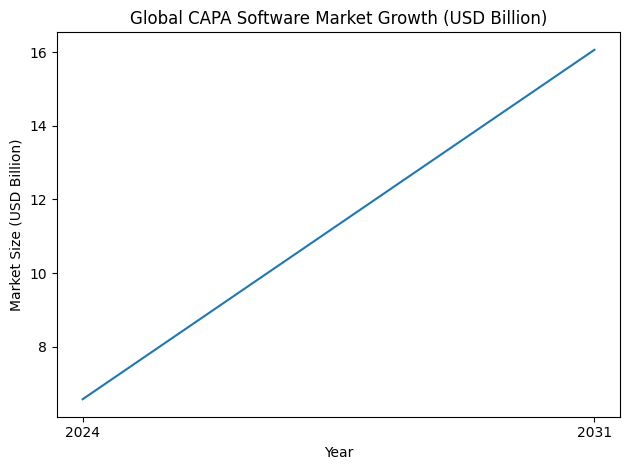
1. The global CAPA software market was valued at ~USD 6.58 billion in 2024, projected to reach USD 16.06 billion by 2031 at a CAGR of 16.03%. With the CAPA software market on track to more than double by 2031, organizations evaluating corrective and preventive action software solutions are entering a rapidly expanding and increasingly competitive landscape — suggesting growing enterprise investment in quality management technology.
2. CAPA Management Software market was valued at USD 4.92 billion in 2023 and projected to reach USD 6.89 billion by 2031 at a CAGR of 4.3%. Different market scoping methodologies produce varying CAPA software market size estimates; the more conservative 4.3% CAGR projection reflects mature adoption in established industries, while still confirming steady, sustained demand for digital CAPA management solutions across regulated sectors.
3. The CAPA Management Market was estimated at USD 1.93 billion in 2022, expected to grow from USD 2.1 billion in 2023 to USD 4.5 billion by 2032 at a CAGR of 8.82%. An 8.82% CAGR for the CAPA management market signals consistent, above-average growth for quality software — outpacing many adjacent enterprise software categories and reflecting the critical role of CAPA processes in pharmaceutical, medical device, and manufacturing compliance.

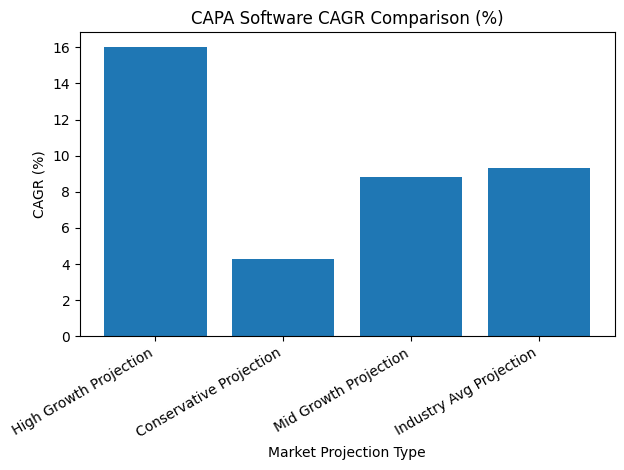
4. The global CAPA software market is expected to experience a CAGR of 9.3% through 2023–2030. A 9.3% annual growth rate underscores that CAPA software is far from a niche tool — this trajectory places it among the faster-growing compliance technology segments, driven by tightening regulatory requirements globally and digital transformation initiatives in manufacturing and life sciences.
5. The CAPA management segment in pharmaceutical QMS was valued at USD 202.4 million in 2024, expected to reach USD 412.8 million by 2030 at a CAGR of 12.8%. The pharmaceutical-specific CAPA software market is growing at nearly twice the rate of the broader QMS market, highlighting how increasing FDA and EMA scrutiny is accelerating the adoption of dedicated corrective and preventive action tools within pharma quality management systems.
6. In life sciences, the CAPA segment generated USD 353.1 million in 2024 and is expected to reach USD 720.3 million by 2030 at a CAGR of 12.8%. Life sciences organizations — including biotech, diagnostics, and medical devices — are investing heavily in CAPA software, with the segment set to double in value by 2030, reflecting the sector’s acute need for traceable, audit-ready quality processes that reduce regulatory risk.
7. North America is projected to hold the largest CAPA management market share at USD 1.75 billion by 2032. North America’s dominance in the CAPA software market is closely tied to the FDA’s active enforcement posture and the high concentration of pharmaceutical, biotechnology, and medical device companies — making it the most mature and commercially significant region for CAPA solution providers.
8. Europe’s CAPA management market size is expected to reach USD 1.35 billion by 2032. Regulatory frameworks including EU MDR, EU GMP, and EMA guidelines are propelling European adoption of CAPA management software, making Europe the second-largest regional market and a key growth area for vendors offering multi-regulatory compliance capabilities.

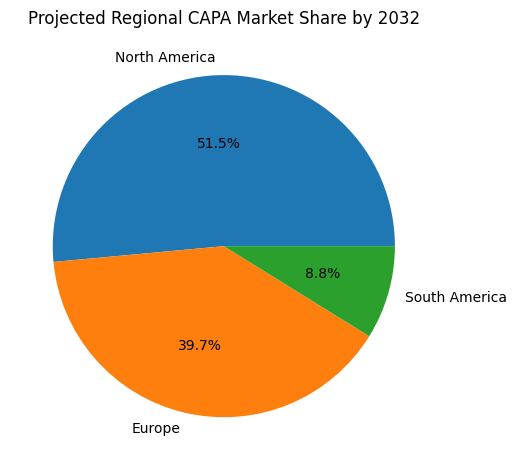
9. South America’s CAPA management market is projected to reach USD 0.3 billion by 2032. While still a smaller market, South America’s CAPA software segment presents an emerging growth opportunity, particularly as regulatory bodies in Brazil and other markets align more closely with international standards like ISO 9001 and ICH guidelines.
10. By 2032, cloud-based deployment is expected to dominate CAPA management software with a market value of USD 2.4 billion. The shift toward cloud-based CAPA software reflects a broader enterprise preference for scalable, remotely accessible compliance tools — a trend reinforced by post-pandemic remote-work models and the need for real-time, cross-site quality data visibility in multi-location organizations.
2. QMS Market Context
11. The global QMS market was valued at USD 9.6 billion in 2023 and is expected to reach USD 24.0 billion by 2032 at a CAGR of 10.70%. CAPA is a core module within quality management systems, so the QMS market’s projected surge to USD 24 billion directly reflects growing enterprise investment in corrective and preventive action capabilities, alongside document control, audit management, and supplier quality processes.
12. The QMS software market was valued at USD 11.05 billion in 2024 and is expected to reach USD 29.89 billion by 2034 at a CAGR of 11.70%. An 11.70% CAGR confirms that quality management software — including integrated CAPA tools — is among the fastest-growing enterprise software categories of the decade, driven by digital transformation, heightened regulatory enforcement, and the complexity of global supply chains.
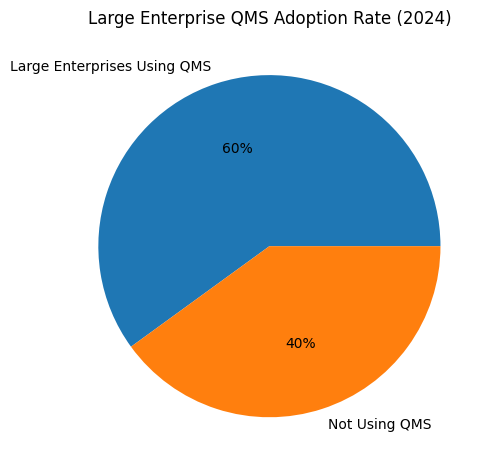
13. Over 60% of large enterprises across IT, manufacturing, healthcare, and life sciences actively deploy QMS solutions as of 2024. Majority adoption of QMS software among large enterprises signals that digital CAPA processes have become table stakes for quality-forward organizations — yet this also implies a significant segment of mid-market companies still relying on manual or paper-based corrective action workflows.

14. Globally, over 75,000 organizations use QMS software to manage document control, audit management, CAPA, and supplier quality. With 75,000+ organizations using QMS platforms — all of which include CAPA as a standard module — the addressable market for specialized corrective and preventive action software is substantial, pointing to consolidation opportunities among standalone CAPA tools and broader QMS suites.
15. CAPA accounted for over 20% of the global QMS market share in 2022, making it one of the largest individual QMS modules. CAPA’s 20%+ share of the QMS market reflects its foundational importance to quality compliance — no other module so directly bridges incident detection, root cause analysis, and long-term continuous improvement, explaining why organizations prioritize CAPA functionality when selecting quality software.
16. CAPA management held the largest share of the pharmaceutical QMS market by application in 2024. The fact that CAPA is the #1 application module in pharmaceutical QMS platforms reflects regulatory reality: FDA inspectors consistently list CAPA deficiencies among the most cited violations, making it the most commercially critical functionality for pharma quality software vendors.
17. North America contributes approximately 42% of global QMS software users. North America’s 42% share of global QMS users — and by extension, CAPA software users — is disproportionately high relative to its share of global GDP, reflecting the outsized compliance burden imposed on industries operating under FDA, EPA, and other US regulatory frameworks.
18. North America held a QMS market share surpassing 41.3% in 2023, driven by compliance demand from medical and healthcare sectors. Consistent data across multiple research sources confirms North America’s clear market leadership in QMS and CAPA software adoption, driven by a dense population of FDA-regulated manufacturers and a proactive regulatory enforcement environment that penalizes inadequate quality systems.
19. The Asia-Pacific region is the fastest-growing CAPA management market, driven by manufacturing sector demand in India and China. As India and China expand their pharmaceutical and medical device export ambitions — and face mandatory compliance with FDA, EU, and WHO GMP standards — the Asia-Pacific CAPA software market is experiencing demand growth that may outpace Western markets within the decade.
3. Cloud Adoption Trends
20. Cloud-based QMS solutions account for nearly 55% of total deployments globally as of 2024. With over half of all QMS — and CAPA — deployments now in the cloud, organizations that have yet to migrate from legacy on-premise systems face growing disadvantages in accessibility, update frequency, and integration capability with modern enterprise platforms.
21. Cloud-based QMS systems grew their user base by over 20% between 2022 and 2024. A 20%+ user base increase in just two years demonstrates that the cloud migration of CAPA and quality management software is actively underway — not merely aspirational — with growing momentum from mid-market companies that previously relied on spreadsheets or on-premise legacy tools.
22. Approximately 68% of new QMS software purchases in 2023 were cloud-based. The 68% cloud purchase rate among new QMS buyers in 2023 is a strong indicator that on-premise CAPA systems are approaching end-of-life in most buying cycles — organizations starting fresh with corrective action software are overwhelmingly selecting cloud-native SaaS solutions.
23. The cloud-based segment held the largest QMS market share in 2024, driven by mobility, adaptability, and ease of compliance validation. Cloud CAPA software’s dominance in 2024 reflects practical compliance advantages: automatic software updates ensure alignment with evolving regulatory requirements, while centralized audit trails, role-based access controls, and real-time dashboards simplify FDA, ISO, and internal inspection readiness.
24. 68% of companies reported substantial improvements in operational efficiency and compliance after adopting advanced QMS including CAPA modules. An overwhelming majority of organizations that deployed integrated QMS with CAPA functionality reported measurable operational and compliance improvements, providing strong evidence-based justification for digitizing corrective action management — though individual results will vary based on implementation quality and organizational readiness.
4. FDA Enforcement & Compliance
25. 48% of FDA warning letters cite CAPA deficiencies as a contributing factor. Nearly half of all FDA warning letters involving CAPA failures underlines that inadequate corrective and preventive action processes remain one of the most common — and most costly — compliance weaknesses across pharmaceutical, medical device, and food manufacturing organizations subject to FDA oversight.
26. CAPA is consistently one of the most cited areas in FDA Form 483 observations and Warning Letters year after year. CAPA’s persistent ranking among the top FDA inspection findings suggests that many organizations struggle not just with initial implementation but with sustaining effective corrective action practices over time — a problem that purpose-built CAPA software is specifically designed to address through automation, escalation workflows, and trend analytics.
27. The FDA issued over 700 inspectional observations related to CAPA deficiencies in a single year. More than 700 CAPA-related inspectional observations in a single year quantifies the enormous compliance gap across regulated industries — representing not only legal and financial risk to individual organizations but also a systemic, industry-wide quality challenge that CAPA software vendors are actively working to address.
28. In FY2024, 47 warning letters were issued to medical device companies — a 96% increase from the prior comparable period. A near-doubling of FDA warning letters to medical device manufacturers in FY2024 is a stark signal that enforcement intensity is escalating, creating urgent demand for robust CAPA software that can document root cause analysis, corrective actions, and effectiveness checks in audit-ready formats.
29. US-based FDA warning letter volumes peaked at 55 letters in 2019 and 47 in 2022 within the 2018–2022 period. Historical FDA warning letter data reveals that enforcement activity is cyclical but consistently elevated — organizations in regulated industries cannot afford to treat CAPA compliance as a one-time effort, reinforcing the value of continuous, software-enabled corrective action monitoring programs.
30. FY2024 shows increased inspection activity, with an uptick in warning letters driven by foreign site inspections and data integrity issues linked to CAPA failures. The return of robust FDA foreign site inspection activity post-pandemic, combined with recurring data integrity findings, points to a critical gap between CAPA policy and execution in many organizations — a gap increasingly filled by integrated digital CAPA systems with automatic audit trails and electronic signatures.
31. Over 60% of FDA warning letters in 2024 were linked to human-error documentation issues directly addressable by automated CAPA software. The prevalence of human-error documentation failures in FDA enforcement actions provides a compelling ROI argument for CAPA software automation — replacing manual, error-prone corrective action records with structured digital workflows that enforce completeness, approval routing, and deadline management.
32. A single documentation error in pharmaceutical manufacturing can cost USD 5,000 to USD 100,000, excluding batch holds or recalls. When a single documentation error can cost up to six figures, the business case for CAPA software that prevents such errors through structured data entry, electronic approvals, and real-time compliance checks becomes financially straightforward — even for small and mid-sized pharmaceutical manufacturers.
33. A large pharmaceutical recall can exceed USD 100 million in costs; FDA warning letter remediation typically involves tens of millions in expenses. The catastrophic financial consequences of product recalls and regulatory remediation — often dwarfing the annual cost of enterprise CAPA software by orders of magnitude — make the investment in preventive quality management tools a straightforward financial decision for regulated manufacturers.
34. On January 31, 2024, the FDA amended 21 CFR Part 820, tightening CAPA documentation requirements for medical device manufacturers. The FDA’s 2024 update to 21 CFR Part 820 — aligning it with ISO 13485:2016 — raises the bar for CAPA documentation and process rigor, potentially rendering manual CAPA systems non-compliant and accelerating adoption of software solutions capable of meeting the updated Quality System Regulation requirements.
5. Industry Impact & ROI
35. A pharmaceutical company implementing CAPA software reported a 40% reduction in issue resolution time and a 25% reduction in error rates. Independent case study results demonstrating a 40% faster issue resolution and 25% fewer errors provide a compelling benchmark for pharmaceutical organizations evaluating CAPA software ROI — though outcomes will vary based on baseline process maturity, implementation scope, and user adoption.
36. Polaris Industries reported a 50% reduction in CAPA resolution time and a 40% reduction in document revision time after adopting ETQ Reliance QMS. Polaris Industries’ measurable productivity gains after CAPA software deployment illustrate how automation of corrective action workflows — from initiation through verification — can dramatically reduce the administrative burden on quality teams while improving consistency and traceability.
37. MasterControl’s AI-powered Quality Analytics reduces audit cycle times by up to 30% and decreases human error in quality oversight. The integration of artificial intelligence into CAPA software platforms — such as AI-driven audit readiness analytics — represents the next frontier in corrective action technology, with early data suggesting meaningful cycle time reductions, though broad ROI evidence across diverse implementations is still emerging.
38. A pharma site improved CAPA on-time closure rate from 65% to 92% within six months after implementing risk-based prioritization and integrated QMS workflow. Improving CAPA on-time closure from 65% to 92% — a 27-percentage-point gain in six months — demonstrates that structured, software-driven CAPA workflows with risk-based prioritization can dramatically improve quality KPI performance while reducing the compliance exposure associated with overdue corrective actions.
39. An API pharmaceutical manufacturer reduced batch failure rate from 4% to below 1% through CAPA-driven process improvements, preserving USD 5 million in annual revenue. A 75% reduction in batch failure rate — translating directly into USD 5 million in protected annual revenue — offers a compelling case study for how preventive CAPA processes, systematically tracked through software, can generate returns that far exceed the cost of quality management technology.
40. Batch record review times fell from 7 months to 5 days after deploying an integrated eQMS/LIMS environment with CAPA workflows. Compressing batch record review from seven months to five days represents a transformational operational improvement — this level of efficiency gain, made possible by integrated CAPA and LIMS platforms, directly reduces time-to-market for pharmaceutical products and frees quality staff for higher-value activities.
41. The “1-10-100 quality rule” states USD 1 spent on defect prevention equals USD 10 on checks and USD 100 on fixing failures. The 1-10-100 cost-of-quality principle provides a universally applicable financial framework for justifying CAPA software investment: organizations that shift spending toward prevention-oriented corrective action systems rather than reactive failure management consistently achieve lower total cost of quality.
42. Over 50% of business failures are self-inflicted by internally generated quality issues — a core driver for CAPA adoption. The finding that more than half of business failures originate from internal quality and process deficiencies reinforces the strategic case for proactive CAPA management: organizations that identify, analyze, and systematically correct recurring internal issues through software-enabled workflows are statistically less likely to face catastrophic quality failures.
43. Predictive analytics in pharma suggests a potential 50% reduction in scrap and rework through real-time quality monitoring linked to CAPA platforms. While a 50% scrap and rework reduction represents a theoretical upper bound enabled by predictive analytics, even partial realization of this potential through CAPA-linked monitoring platforms could generate substantial cost savings in pharmaceutical manufacturing environments where rework costs routinely run into millions.
6. Medical Device Recalls & CAPA
44. Medical devices led all recalled product categories from FY2012 through FY2024, with 32,336 total FDA recalls. The sheer volume of medical device recalls — exceeding 32,000 over twelve years and surpassing food, drug, and biologics categories — highlights the industry’s systemic quality challenges, underscoring why robust CAPA software capable of root cause tracking and effectiveness verification is not optional but essential for device manufacturers.
45. Increasing device complexity with software, AI, and machine learning has heightened the likelihood of risk events, driving greater demand for CAPA software. As medical devices become more software-intensive and AI-driven, traditional quality management approaches struggle to keep pace with the scale and complexity of potential failure modes — creating a strong demand signal for CAPA software that can integrate with software development lifecycle tools, risk management systems, and post-market surveillance platforms.
46. CAPA deficiencies are the top violation cited for medical devices in FDA 483s and warning letters, alongside design control and complaint handling issues. CAPA’s consistent ranking as the top FDA violation for medical device companies — even ahead of design control — points to widespread gaps in how organizations document corrective actions, verify their effectiveness, and prevent recurrence, all areas where structured CAPA software delivers direct compliance value.
7. Regulatory Standards Driving Adoption
47. CAPA was formally introduced by the FDA in 2006 via Quality Systems Guidance and has since been embedded in EU GMP, ISO 13485, and ICH Q10. CAPA’s nearly two-decade regulatory history across multiple international frameworks has created a well-established baseline expectation for regulated industries — organizations operating under any major quality standard are legally or contractually required to maintain a functional CAPA system, making software adoption a compliance imperative rather than an optional upgrade.
48. CAPA compliance is mandated under FDA 21 CFR Part 211 and 820, ICH Q10, EU GMP, PIC/S, and ISO 9001:2015. The breadth of international regulatory frameworks requiring formal CAPA processes means that globally operating manufacturers face multi-jurisdictional compliance obligations — a complexity that purpose-built CAPA software addresses through configurable workflows mapped to specific regulatory standards.
49. EU MDR (2017/745) mandates CAPA integration across conformity assessment (Annex IX), post-market surveillance (Article 83), and general obligations (Article 10). The EU MDR’s explicit embedding of CAPA requirements across multiple articles — covering the full product lifecycle from conformity assessment to post-market surveillance — means that European medical device manufacturers without systematic CAPA documentation face significant market access risk.
50. Over 200 customers integrated IQS’s new Supplier Quality Management module — including CAPA linkage — within six months of its early 2024 launch. Rapid adoption of an SQM module with built-in CAPA linkage reflects growing market recognition that supplier quality and internal corrective action management cannot function in isolation — organizations are increasingly seeking CAPA software that extends seamlessly across the entire supply chain.
51. CAPA causes more compliance issues for life sciences companies than any other QMS process. CAPA’s designation as the single highest-compliance-risk QMS process in life sciences is a sobering finding that justifies disproportionate technology investment in this area — organizations that invest in robust CAPA software relative to other quality modules are directly addressing their greatest regulatory vulnerability.
52. The healthcare QMS segment is expected to experience the highest CAGR of over 13.7%, driven by CAPA and compliance requirements. Healthcare’s projected 13.7%+ CAGR — the highest of any QMS market vertical — reflects the sector’s intensifying regulatory scrutiny, growing patient safety expectations, and the rapid digital transformation of hospital and clinical quality management, all of which centre on automated CAPA capabilities.
53. In 2024, large enterprises held the largest share of the pharmaceutical QMS/CAPA market, driven by extensive manufacturing networks and global compliance requirements. Large pharmaceutical enterprises’ dominance of the CAPA software market reflects the complexity of managing corrective actions across multi-site, multi-product, multi-regulatory environments — however, growing mid-market and SME CAPA software offerings suggest the total addressable market is expanding well beyond large enterprises.
Conclusion
As the data throughout this report clearly demonstrates, Corrective and Preventive Action (CAPA) software in 2026 is no longer a back-office compliance utility. It has become a mission-critical component of enterprise risk management, regulatory readiness, operational resilience, and long-term quality strategy. The Top 53 Corrective and Preventive Action (CAPA) Software Statistics, Data & Trends in 2026 collectively highlight a market that is expanding rapidly, maturing technologically, and delivering measurable business value across industries.
One of the most important takeaways from this year’s CAPA software statistics is the accelerating shift toward digital, cloud-based quality management ecosystems. Organizations are steadily replacing fragmented spreadsheets, email-based investigations, and legacy on-premise systems with centralized, SaaS-driven CAPA platforms. This transition is not driven by convenience alone. It is being fueled by increasing regulatory scrutiny, the rising cost of non-compliance, globalized supply chains, and the need for real-time visibility into quality events. In 2026, companies that lack automated CAPA workflows are finding it significantly more difficult to meet audit expectations, maintain data integrity, and demonstrate effective corrective action implementation.
The statistics also reinforce the growing strategic role of CAPA software within enterprise governance frameworks. Modern CAPA systems are deeply integrated with complaint management, audit management, supplier quality management, risk management, document control, and training systems. This interconnected structure enables organizations to move from reactive issue resolution to proactive risk prevention. Instead of responding to recurring deviations, businesses are leveraging predictive analytics, trend dashboards, and AI-assisted root cause analysis to identify patterns before they escalate into costly incidents.
Artificial intelligence and advanced analytics represent one of the most transformative trends identified in the 2026 data. Organizations implementing AI-powered CAPA software report faster investigation cycles, higher on-time closure rates, improved root cause accuracy, and stronger cross-functional accountability. The ability to prioritize corrective actions based on risk severity and probability is helping quality leaders allocate resources more effectively. These insights confirm that CAPA software is evolving into an intelligent decision-support system rather than a static compliance repository.
Another key insight from the CAPA software market trends in 2026 is the democratization of adoption. Historically, enterprise-grade CAPA platforms were primarily used by large pharmaceutical, medical device, aerospace, and automotive manufacturers. Today, small and mid-sized organizations are investing in scalable, subscription-based solutions to strengthen compliance while controlling operational costs. This broader accessibility is contributing to strong global market growth and increasing vendor competition, driving innovation in usability, configurability, and integration capabilities.
Geographically, the data reveals continued dominance in highly regulated regions such as North America and Europe, but also significant growth momentum in Asia-Pacific and emerging manufacturing hubs. As global regulatory frameworks become more harmonized, multinational organizations are standardizing CAPA processes across sites to ensure consistency and transparency. The result is a more connected, data-driven global quality landscape.
Cybersecurity and data integrity concerns are also shaping CAPA software development in 2026. Regulatory agencies continue to emphasize electronic records, audit trails, and traceability requirements. Companies are prioritizing validated systems with secure role-based access, electronic signatures, and automated documentation controls. The statistics indicate that data integrity observations remain a top compliance risk, reinforcing the necessity of robust digital CAPA infrastructure.
Beyond compliance, the financial implications outlined in the data are particularly compelling. Poorly managed corrective and preventive actions can lead to recalls, warranty claims, operational downtime, regulatory penalties, and reputational damage. Conversely, organizations that implement structured and automated CAPA processes consistently report reductions in rework, scrap, repeat deviations, and audit findings. In many cases, the return on investment for CAPA software is realized not only through risk reduction but also through improved productivity, faster decision-making, and enhanced customer trust.
The integration of CAPA software with Environmental, Social, and Governance (ESG) initiatives is another emerging theme in 2026. Companies are expanding CAPA workflows to address sustainability incidents, safety events, supplier nonconformities, and ethical compliance gaps. This expansion reflects a broader shift toward enterprise accountability and transparent reporting. As stakeholders demand stronger governance and risk oversight, CAPA systems are becoming central to documenting continuous improvement efforts across operational and sustainability domains.
Looking ahead, the trajectory of Corrective and Preventive Action (CAPA) software suggests continued innovation in automation, artificial intelligence, interoperability, and real-time analytics. Vendors are investing heavily in user experience improvements, low-code customization, mobile accessibility, and advanced reporting dashboards. At the same time, regulatory bodies are raising expectations for documented effectiveness checks, risk-based prioritization, and lifecycle traceability. Organizations that proactively modernize their CAPA infrastructure will be better positioned to navigate this evolving landscape.
Ultimately, the Top 53 Corrective and Preventive Action (CAPA) Software Statistics, Data & Trends in 2026 reveal a clear message: CAPA software is no longer optional for organizations operating in regulated or quality-sensitive environments. It is a foundational element of sustainable growth, regulatory confidence, and operational excellence. Companies that embrace intelligent, integrated, and cloud-based CAPA solutions are gaining a competitive advantage by reducing risk exposure, improving process consistency, and building a culture of continuous improvement.
As digital transformation reshapes quality management, CAPA software stands at the forefront of compliance innovation. The organizations that treat corrective and preventive action management as a strategic capability rather than a regulatory checkbox will define the next era of performance, accountability, and resilience in 2026 and beyond.
If you find this article useful, why not share it with your hiring manager and C-level suite friends and also leave a nice comment below?
We, at the 9cv9 Research Team, strive to bring the latest and most meaningful data, guides, and statistics to your doorstep.
To get access to top-quality guides, click over to 9cv9 Blog.
To hire top talents using our modern AI-powered recruitment agency, find out more at 9cv9 Modern AI-Powered Recruitment Agency.
People Also Ask
What is CAPA software and why is it important in 2026?
CAPA software manages corrective and preventive actions to resolve nonconformities and prevent recurrence. In 2026, it is critical for regulatory compliance, audit readiness, risk reduction, and continuous improvement across regulated industries.
What are the latest CAPA software statistics for 2026?
Recent statistics show strong global market growth, rising cloud adoption, increased AI integration, and higher demand from pharmaceuticals, medical devices, and manufacturing sectors.
How fast is the CAPA software market growing in 2026?
The CAPA software market is expanding steadily due to digital transformation, stricter regulations, and growing investments in Quality Management Systems worldwide.
Why are companies investing more in CAPA software in 2026?
Organizations are investing to reduce compliance risks, improve root cause analysis, minimize audit findings, and streamline corrective action workflows across global operations.
Which industries use CAPA software the most?
Pharmaceuticals, medical devices, biotechnology, aerospace, automotive, food manufacturing, and energy sectors are the primary adopters of CAPA software solutions.
How does CAPA software improve regulatory compliance?
It provides audit trails, electronic signatures, standardized workflows, and documentation controls that align with FDA, ISO, and other global regulatory standards.
What role does AI play in CAPA software trends in 2026?
AI enhances root cause analysis, predicts recurring issues, prioritizes risk-based actions, and improves closure timelines using data-driven insights.
Is cloud-based CAPA software more popular than on-premise solutions?
Yes, cloud-based CAPA platforms dominate in 2026 due to scalability, remote access, automatic updates, and lower infrastructure costs.
What are the key benefits of automated CAPA workflows?
Automation reduces manual errors, shortens investigation cycles, improves accountability, ensures timely action closures, and enhances compliance tracking.
How does CAPA software reduce audit findings?
It centralizes documentation, tracks corrective actions in real time, and ensures proper validation and effectiveness checks before audits occur.
What are common CAPA software features in 2026?
Key features include risk scoring, workflow automation, AI analytics, dashboards, document integration, supplier quality management, and audit management tools.
How does CAPA software integrate with Quality Management Systems?
CAPA modules connect with complaint management, audits, document control, training, and risk management to create a unified quality ecosystem.
What is the ROI of CAPA software implementation?
Organizations report reduced rework, fewer recalls, lower compliance penalties, improved efficiency, and stronger operational performance.
How does CAPA software support risk management?
It identifies trends, prioritizes high-risk issues, and tracks preventive actions to minimize recurrence and operational disruptions.
What compliance standards require CAPA processes?
Standards such as ISO 9001, ISO 13485, FDA 21 CFR regulations, and IATF 16949 require documented corrective and preventive action procedures.
How does CAPA software improve root cause analysis?
It provides structured investigation templates, data analysis tools, and collaboration features that ensure accurate and consistent root cause identification.
Are small and mid-sized businesses adopting CAPA software?
Yes, affordable SaaS solutions have increased adoption among small and mid-sized companies seeking scalable compliance tools.
What are the top CAPA software trends in 2026?
Major trends include AI-driven analytics, cloud-first deployment, mobile access, ESG integration, predictive risk monitoring, and real-time dashboards.
How does CAPA software enhance supplier quality management?
It tracks supplier nonconformities, assigns corrective actions, monitors deadlines, and ensures consistent supplier compliance performance.
Can CAPA software help prevent product recalls?
Yes, by identifying root causes early and implementing preventive measures, CAPA systems reduce the likelihood of repeat failures and recalls.
What challenges does CAPA software solve?
It eliminates siloed data, manual tracking, missed deadlines, inconsistent investigations, and poor documentation practices.
How does CAPA software support continuous improvement?
By tracking trends and performance metrics, it enables organizations to identify improvement opportunities and implement preventive strategies.
What is the impact of digital transformation on CAPA systems?
Digital transformation drives automation, integration, analytics, and global visibility, making CAPA processes more efficient and data-driven.
How does CAPA software ensure data integrity?
It uses secure access controls, audit trails, validation protocols, and electronic signatures to protect compliance data.
What KPIs are tracked in CAPA software?
Common KPIs include cycle time, on-time closure rate, recurrence rate, root cause accuracy, and audit finding reduction.
Is CAPA software necessary for FDA-regulated companies?
Yes, FDA-regulated organizations must document corrective and preventive actions, making CAPA software essential for compliance.
How does CAPA software improve cross-functional collaboration?
It assigns responsibilities, sends automated notifications, and provides shared dashboards to align quality, operations, and compliance teams.
What is the future of CAPA software beyond 2026?
Future developments include deeper AI integration, predictive compliance models, enhanced automation, and broader ESG tracking capabilities.
How does CAPA software support remote audits?
Cloud access, centralized documentation, and real-time reporting allow organizations to efficiently manage virtual and hybrid inspections.
Why is CAPA software critical for enterprise risk management?
It identifies recurring risks, ensures accountability, reduces compliance exposure, and strengthens overall operational resilience.
Sources
Market Research Intellect
OpenPR
Verified Market Reports
Market Research Future
ReportPrime
Issuu
Grand View Research
MarketsandMarkets
SNS Insider
GlobeNewswire
Polaris Market Research
Data Bridge Market Research
Market Growth Reports
GlobalData
Complizen
European Pharmaceutical Review
Atlas Compliance
ComplianceQuest
ScienceDirect
Qualityze
Greenlight Guru
Qualio
The FDA Group
SimplerQMS
ETQ Reliance
IntuitionLabs
Quality Executive Partners